


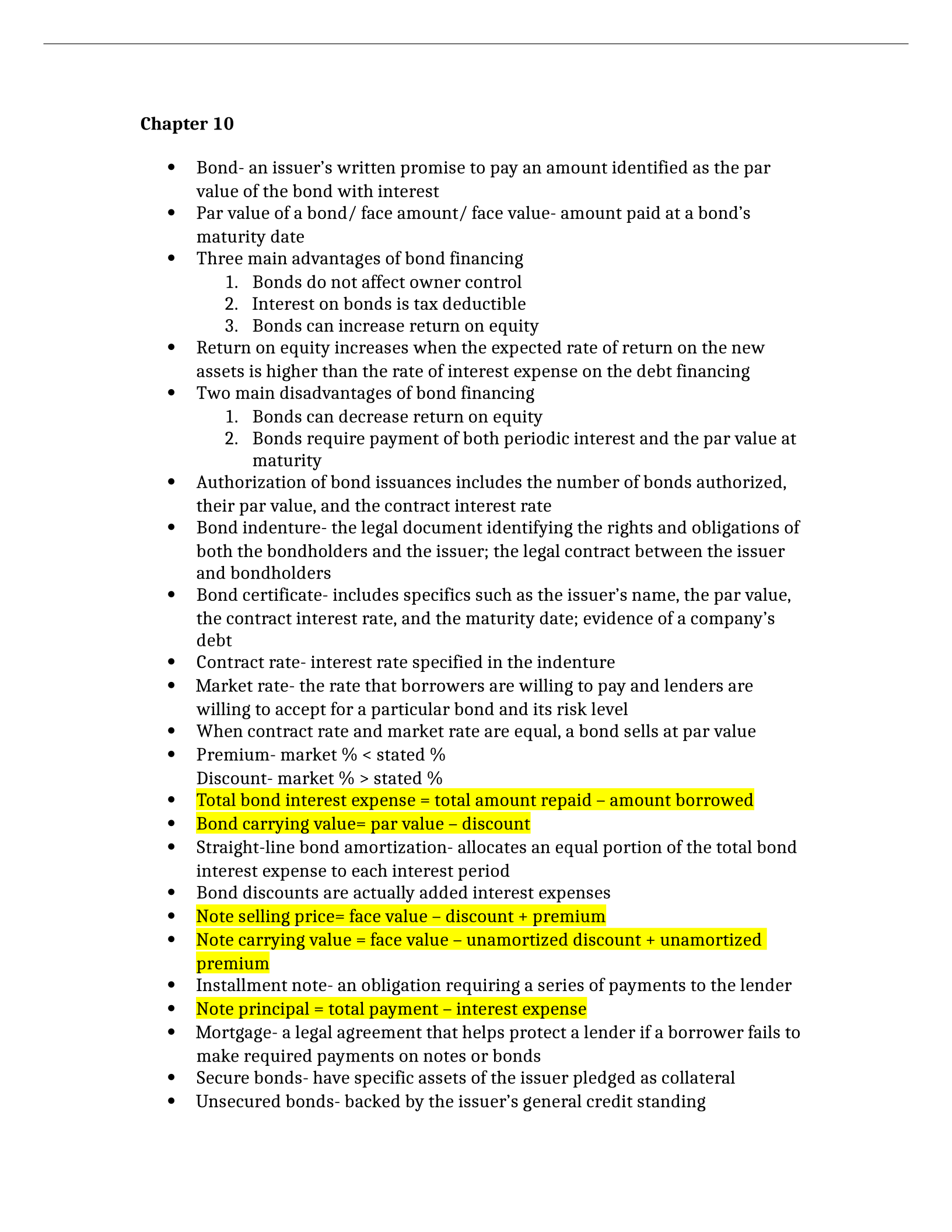
Chapter 10
Bond- an issuer’s written promise to pay an amount identified as the par
value of the bond with interest
Par value of a bond/ face amount/ face value- amount paid at a bond’s
maturity date
Three main advantages of bond financing
1. Bonds do not affect owner control
2. Interest on bonds is tax deductible
3. Bonds can increase return on equity
Return on equity increases when the expected rate of return on the new
assets is higher than the rate of interest expense on the debt financing
Two main disadvantages of bond financing
1. Bonds can decrease return on equity
2. Bonds require payment of both periodic interest and the par value at
maturity
Authorization of bond issuances includes the number of bonds authorized,
their par value, and the contract interest rate
Bond indenture- the legal document identifying the rights and obligations of
both the bondholders and the issuer; the legal contract between the issuer
and bondholders
Bond certificate- includes specifics such as the issuer’s name, the par value,
the contract interest rate, and the maturity date; evidence of a company’s
debt
Contract rate- interest rate specified in the indenture
Market rate- the rate that borrowers are willing to pay and lenders are
willing to accept for a particular bond and its risk level
When contract rate and market rate are equal, a bond sells at par value
Premium- market % < stated %
Discount- market % > stated %
Total bond interest expense = total amount repaid – amount borrowed
Bond carrying value= par value – discount
Straight-line bond amortization- allocates an equal portion of the total bond
interest expense to each interest period
Bond discounts are actually added interest expenses
Note selling price= face value – discount + premium
Note carrying value = face value – unamortized discount + unamortized
premium
Installment note- an obligation requiring a series of payments to the lender
Note principal = total payment – interest expense
Mortgage- a legal agreement that helps protect a lender if a borrower fails to
make required payments on notes or bonds
Secure bonds- have specific assets of the issuer pledged as collateral
Unsecured bonds- backed by the issuer’s general credit standing
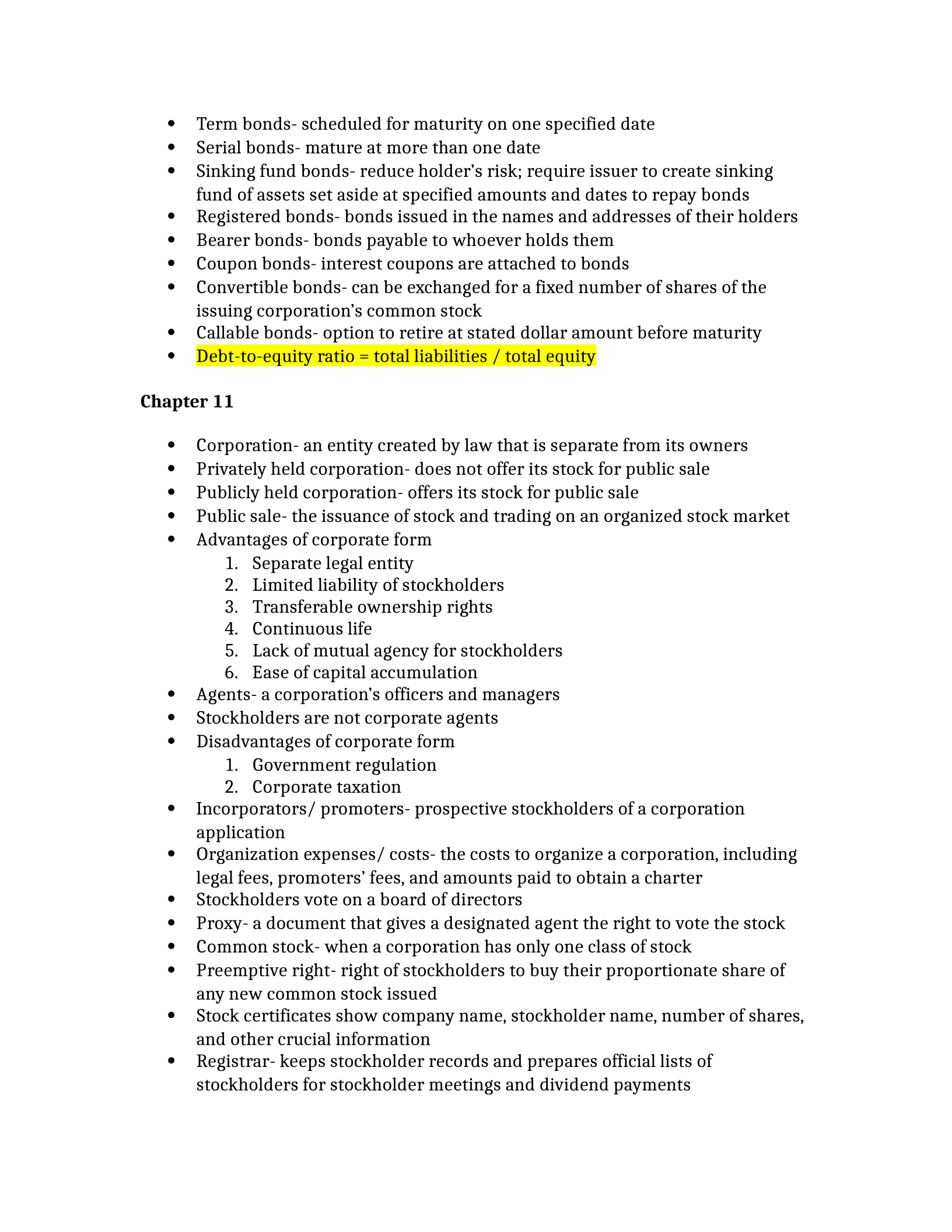
Term bonds- scheduled for maturity on one specified date
Serial bonds- mature at more than one date
Sinking fund bonds- reduce holder’s risk; require issuer to create sinking
fund of assets set aside at specified amounts and dates to repay bonds
Registered bonds- bonds issued in the names and addresses of their holders
Bearer bonds- bonds payable to whoever holds them
Coupon bonds- interest coupons are attached to bonds
Convertible bonds- can be exchanged for a fixed number of shares of the
issuing corporation’s common stock
Callable bonds- option to retire at stated dollar amount before maturity
Debt-to-equity ratio = total liabilities / total equity
Chapter 11
Corporation- an entity created by law that is separate from its owners
Privately held corporation- does not offer its stock for public sale
Publicly held corporation- offers its stock for public sale
Public sale- the issuance of stock and trading on an organized stock market
Advantages of corporate form
1. Separate legal entity
2. Limited liability of stockholders
3. Transferable ownership rights
4. Continuous life
5. Lack of mutual agency for stockholders
6. Ease of capital accumulation
Agents- a corporation’s officers and managers
Stockholders are not corporate agents
Disadvantages of corporate form
1. Government regulation
2. Corporate taxation
Incorporators/ promoters- prospective stockholders of a corporation
application
Organization expenses/ costs- the costs to organize a corporation, including
legal fees, promoters’ fees, and amounts paid to obtain a charter
Stockholders vote on a board of directors
Proxy- a document that gives a designated agent the right to vote the stock
Common stock- when a corporation has only one class of stock
Preemptive right- right of stockholders to buy their proportionate share of
any new common stock issued
Stock certificates show company name, stockholder name, number of shares,
and other crucial information
Registrar- keeps stockholder records and prepares official lists of
stockholders for stockholder meetings and dividend payments
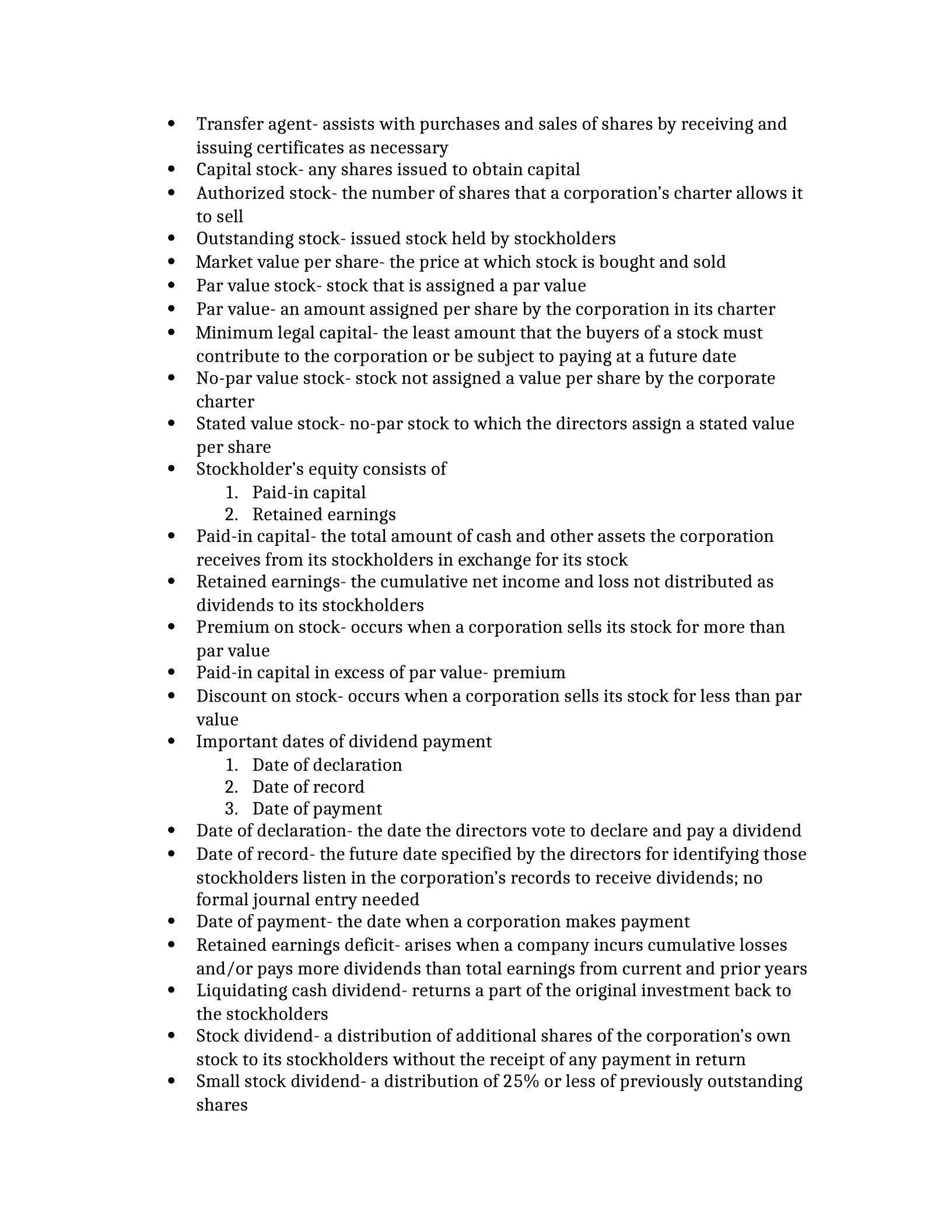
Transfer agent- assists with purchases and sales of shares by receiving and
issuing certificates as necessary
Capital stock- any shares issued to obtain capital
Authorized stock- the number of shares that a corporation’s charter allows it
to sell
Outstanding stock- issued stock held by stockholders
Market value per share- the price at which stock is bought and sold
Par value stock- stock that is assigned a par value
Par value- an amount assigned per share by the corporation in its charter
Minimum legal capital- the least amount that the buyers of a stock must
contribute to the corporation or be subject to paying at a future date
No-par value stock- stock not assigned a value per share by the corporate
charter
Stated value stock- no-par stock to which the directors assign a stated value
per share
Stockholder’s equity consists of
1. Paid-in capital
2. Retained earnings
Paid-in capital- the total amount of cash and other assets the corporation
receives from its stockholders in exchange for its stock
Retained earnings- the cumulative net income and loss not distributed as
dividends to its stockholders
Premium on stock- occurs when a corporation sells its stock for more than
par value
Paid-in capital in excess of par value- premium
Discount on stock- occurs when a corporation sells its stock for less than par
value
Important dates of dividend payment
1. Date of declaration
2. Date of record
3. Date of payment
Date of declaration- the date the directors vote to declare and pay a dividend
Date of record- the future date specified by the directors for identifying those
stockholders listen in the corporation’s records to receive dividends; no
formal journal entry needed
Date of payment- the date when a corporation makes payment
Retained earnings deficit- arises when a company incurs cumulative losses
and/or pays more dividends than total earnings from current and prior years
Liquidating cash dividend- returns a part of the original investment back to
the stockholders
Stock dividend- a distribution of additional shares of the corporation’s own
stock to its stockholders without the receipt of any payment in return
Small stock dividend- a distribution of 25% or less of previously outstanding
shares
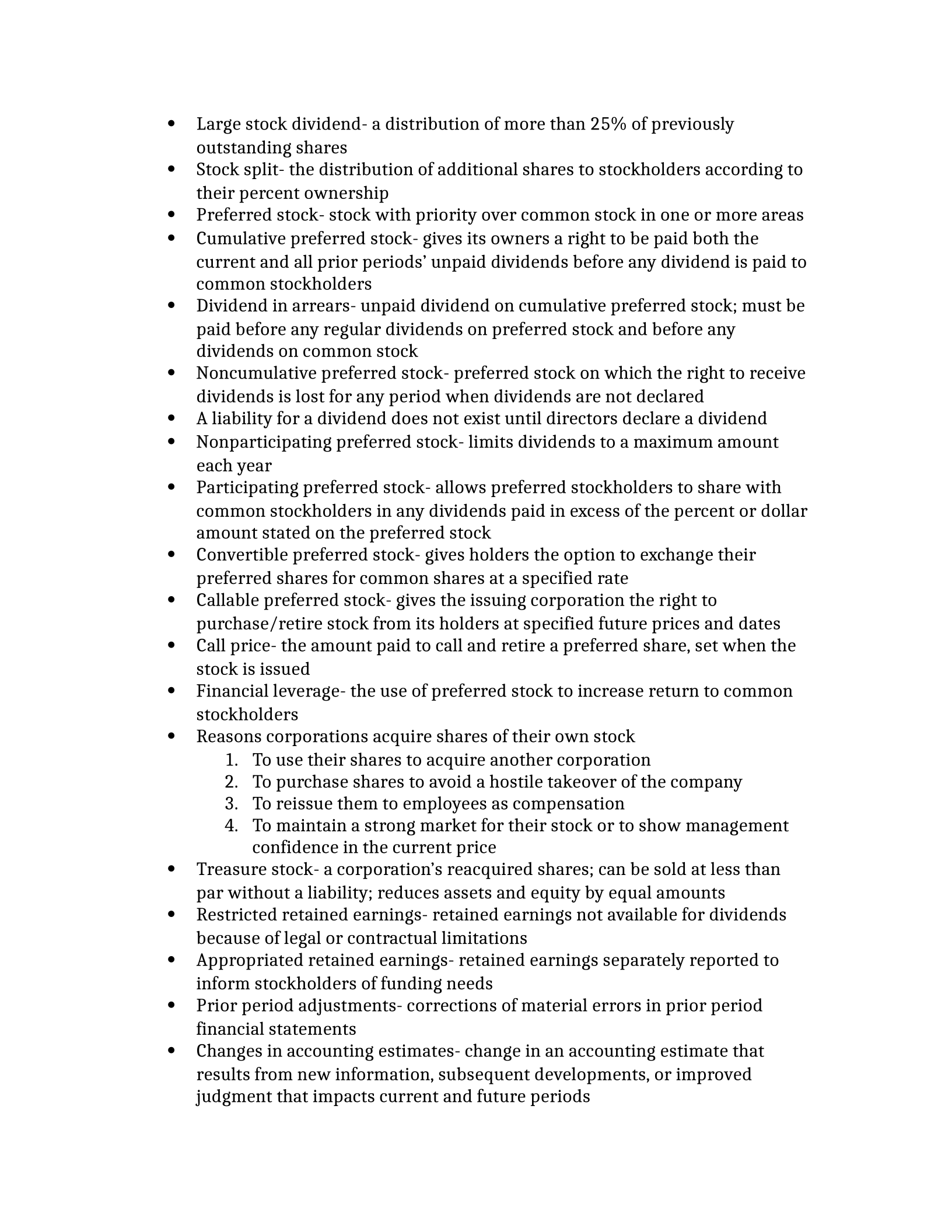
Large stock dividend- a distribution of more than 25% of previously
outstanding shares
Stock split- the distribution of additional shares to stockholders according to
their percent ownership
Preferred stock- stock with priority over common stock in one or more areas
Cumulative preferred stock- gives its owners a right to be paid both the
current and all prior periods’ unpaid dividends before any dividend is paid to
common stockholders
Dividend in arrears- unpaid dividend on cumulative preferred stock; must be
paid before any regular dividends on preferred stock and before any
dividends on common stock
Noncumulative preferred stock- preferred stock on which the right to receive
dividends is lost for any period when dividends are not declared
A liability for a dividend does not exist until directors declare a dividend
Nonparticipating preferred stock- limits dividends to a maximum amount
each year
Participating preferred stock- allows preferred stockholders to share with
common stockholders in any dividends paid in excess of the percent or dollar
amount stated on the preferred stock
Convertible preferred stock- gives holders the option to exchange their
preferred shares for common shares at a specified rate
Callable preferred stock- gives the issuing corporation the right to
purchase/retire stock from its holders at specified future prices and dates
Call price- the amount paid to call and retire a preferred share, set when the
stock is issued
Financial leverage- the use of preferred stock to increase return to common
stockholders
Reasons corporations acquire shares of their own stock
1. To use their shares to acquire another corporation
2. To purchase shares to avoid a hostile takeover of the company
3. To reissue them to employees as compensation
4. To maintain a strong market for their stock or to show management
confidence in the current price
Treasure stock- a corporation’s reacquired shares; can be sold at less than
par without a liability; reduces assets and equity by equal amounts
Restricted retained earnings- retained earnings not available for dividends
because of legal or contractual limitations
Appropriated retained earnings- retained earnings separately reported to
inform stockholders of funding needs
Prior period adjustments- corrections of material errors in prior period
financial statements
Changes in accounting estimates- change in an accounting estimate that
results from new information, subsequent developments, or improved
judgment that impacts current and future periods
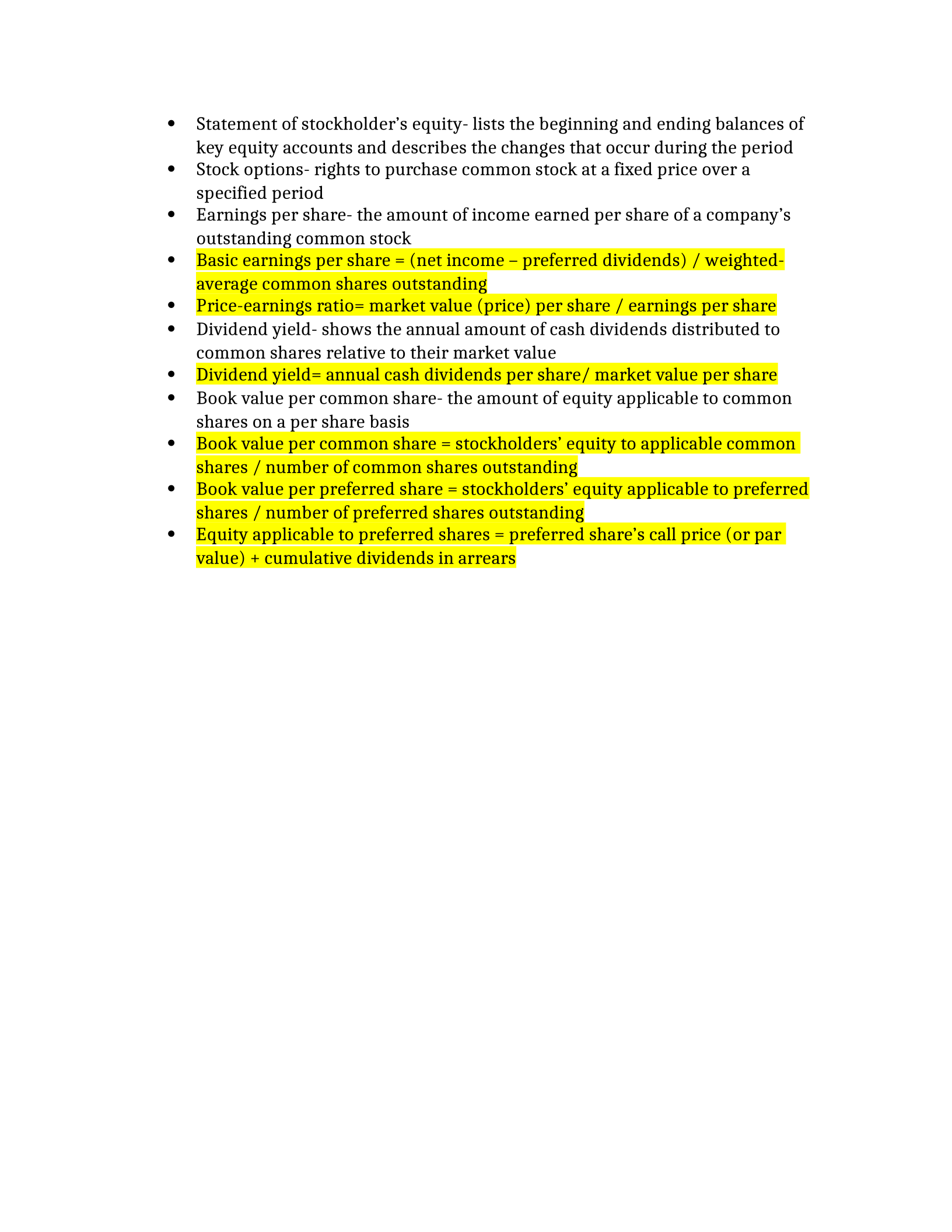
Statement of stockholder’s equity- lists the beginning and ending balances of
key equity accounts and describes the changes that occur during the period
Stock options- rights to purchase common stock at a fixed price over a
specified period
Earnings per share- the amount of income earned per share of a company’s
outstanding common stock
Basic earnings per share = (net income – preferred dividends) / weighted-
average common shares outstanding
Price-earnings ratio= market value (price) per share / earnings per share
Dividend yield- shows the annual amount of cash dividends distributed to
common shares relative to their market value
Dividend yield= annual cash dividends per share/ market value per share
Book value per common share- the amount of equity applicable to common
shares on a per share basis
Book value per common share = stockholders’ equity to applicable common
shares / number of common shares outstanding
Book value per preferred share = stockholders’ equity applicable to preferred
shares / number of preferred shares outstanding
Equity applicable to preferred shares = preferred share’s call price (or par
value) + cumulative dividends in arrears
Powered by TCPDF (www.tcpdf.org)

