


PROFESSIONAL STANDARDS IN
NURSING PRACTICE AND
NURSING PRACTICE FOCUS
PROFESSIONAL
Professional Standards of Nursing
Nursing is a form of professional service/care that is an
important part of a health service and is based on
nursing knowledge and tips aimed at healthy and sick
individuals, families, groups and communities so that it
can cover all aspects of human life (National Nurses
Association
Indonesia (PPNI), 2013).
The Definition of Nursing Professional Standards in PMK
Law No. 26 of 2019, namely the nursing professional
standard, hereinafter referred to as the professional
standard, is the minimum limit of ability in the form of
knowledge, skills, and professional behavior that must
be mastered and possessed by Nurses to be able to
practice nursing in the community independently made
by Professional Organizations.
The professional standards owned by nursing are of
course used as guidelines and measures in carrying out
each nursing service, in accordance with professional
values, ethics and professional responsibilities. So that
nurses who are registered and carry out nursing
guidelines can be a reflection of the values of the
nursing profession.
Standards Professional deep Practice Nursing
The scope of nursing practice standards includes "who",
"what", "where", "when", "why", and "how" of nursing
practice:
1

Who: Registered nurses and registered nurses with
specialized expertise or training in a particular field.
What: Nursing is a protection, promotion and
optimization of human health in preventing diseases
and injuries and facilitating human healing and
treatment through diagnosis
Where: Wherever there are patients who need help
and care
When: Whenever there is a patient who needs help and
care
Why: This profession exists to help and serve the
community in the health sector
Standards of Nursing Practice
Nursing practice standards are the level of nursing care
competency so that nurses can form the basis for
decision-making (American Nurses
Association, 2015) (Zuliani et al., 2023).
Standard 1. Assessment
Nurses collect important data and information
covering the patient's health or the situation
experienced in a systematic, concise, thorough and
continuous manner. The assessment is used as
primary information about the patient's health that
can be used in developing appropriate nursing
diagnoses and interventions.
Data collection can be carried out by interviews,
observations, physical examinations and additional
supporting data (laboratory results and diagnostic
tests) and other documents.
Standard 2. Diagnosis
Nurses analyze the data collected to formulate
diagnoses, problems and issues experienced. Proper
2

diagnostic analysis is expected to provide health
improvements for patients
Standard 3. Identification of Results
The nurse identifies the expected outcome of the
patient's condition and then plans the actions to be
taken to achieve the goal Standard 4. Nursing
Planning (Intervention)
Nursing interventions are prepared by nurses to
solve problems and improve the quality of patient
health. Interventions are determined by establishing
nursing priorities, objectives and action plans
Standard 5. Implementation
Nurses implement pre-planned actions in nursing
care and work closely with patients to achieve the
desired outcomes
Standard 5A. Nursing Coordination
Nurses coordinate with colleagues in providing care
so that every
Patient progress can be recorded
Standard 5B. Health Education and Promotion
Nurses educate and promote health and a safe
environment for patients to improve their health
Standard 6. Evaluation
Nurses evaluate the progress after being given
actions to meet the goals or not and improve
existing data and plans for the provision of further
nursing care.
Professional Performance Standards
Professional performance standards describe the level
of behavior of competent nurses in professional
performance.
Standard 7. Ethics
3

Nurses use nursing practice ethics and nursing
values so that the services provided can have a
good impact on patients
Standard 8. Cultural Practices
Nurses in carrying out their practice are carried out
in accordance with cultural diversity and principles
that apply to patients such as cultural norms and
values
Standard 9. Communication
Nurses use effective communication in all areas of
practice so that the information conveyed is clear
and there are no misunderstandings
Standard 10. Collaboration
Nurses collaborate with clients, other colleagues
and policy makers in carrying out patient care to
increase effectiveness and efficiency in patient care
Standard 11. Leadership
Leadership is needed by nurses in organizing
professional nursing practices
Standard 12. Education
Nurses always increase their knowledge and
competence in accordance with the development of
science in carrying out nursing services. The
availability of opportunities for nurses to increase
knowledge both in education and by holding a space
Discussion or training
Standar 13. Evidance-based Practice and Research
Nurses integrate existing evidence and findings in
practice with research
Standard 14. Quality of Practice
The nursing services provided must be of high
quality to have a good impact on the patient's
health
4

Standard 15. Professional Practice Evaluation
Carry out evaluations of themselves and peers in
providing Standard 16 nursing practices. Resource
Utilization
The resources are used appropriately in planning,
providing, and maintaining the quality of safe,
effective and responsible nursing services
Standard 17. Environmental Health
A safe and healthy environment for nurses will have
a good impact on the quality of nursing services
In addition, the role of nurses in general is to provide
care/services, become group leaders, educators,
managers and researchers (Indonesian National Nurses
Association (PPNI), 2013).
1. Care Provider: Apply critical thinking skills and
approach problem-solving and make nursing
decisions in comprehensive and holistic nursing
care based on professional ethics and legal aspects.
2. Pemimpin Group (Community leader):
Exercising leadership at various levels, both
professional and social levels
3. Educator: Educate clients and families who are their
responsibility
4. Manager: Applying nursing leadership and
management in client care.
5. Researcher: Conducting nursing research by
fostering curiosity in each existing problem and
finding answers to nursing and health problems that
occur and applying the results of the study in an
effort to realize Evidence Based Nursing Practice
Professional Nursing Practice Focus
Nursing practice is certainly inseparable from various
efforts to improve health in the community. The goals of
5

nursing practice should be pursued on primary
prevention, improving the health of patients, families
and the community as well as self-care and increasing
self-confidence.
In Nursing Practice covers five aspects related to health
(Berman et al., 2022) namely:
1. Health Promotion
Health improvement is an activity in the nursing
process that includes patients' self-awareness of
health, nurses' skills in providing nursing care. The
goal is to achieve optimal health status. The focus
of health improvement is aimed at improving
general health for individuals, families, and
communities.
2. Disease prevention
Disease prevention activities in general aim to
reduce the risk of disease and improve a good
quality of life and maintain optimal health.
3. Health Maintenance
Health maintenance activities aim to assist patients
in maintaining their health status and maintaining their
health status. 4. Health Reatoration
Recovery activities carried out by treatment aim to
help patients improve their health after patients
have health problems or diseases.
5. Care of patients near death
The area of nursing practice includes providing a
sense of comfort and providing care to patients in a
state of imminent death, generally this action is
carried out in health care facilities such as in
hospitals, etc., treatment can be in the form of
religious cleaning of the body or preparing the body
to be taken to the funeral home.
6

EDUCATION SYSTEM
NURSING AND NURSING
HIGHER EDUCATION
Education System
Education is a conscious and planned effort in realizing
the atmosphere of the learning process with the aim of
providing the development of actively possessed self-
potential such as religious spiritual values, self-
management, personality, intelligence, morals and
skills so that they can provide benefits for the
environment and the country. Education seeks to
provide preparation to students through several
activities such as guidance, teaching, and or training so
that it will develop in the future.
Educational resources that support the creation of a
good education system include education personnel,
operational funds, facilities and infrastructure. The
purpose of the education system is contained in the
preamble to the 1945 Constitution, which is to educate
the life of the nation and develop the whole Indonesian
people, namely human beings who believe and are
7

devoted to God Almighty and have noble ethics, have
knowledge and skills, physical and spiritual health, a
steady and independent personality and a sense of
community and national responsibility.
The education system in Indonesia if reviewed from
Education Law Number 20 of 2003 has 3 types,
including:
1. Vocational Education is a Diploma Three education
is an output of higher education which will later
produce graduates who are ready to carry out
nursing care in the work environment
2. Academic Education is higher education, both
undergraduate and postgraduate programs that
have the goal of mastering science with certain
disciplines.
3. Professional education is education that is held after
completing the undergraduate program and
preparing to have special skills. So that there are
professional nurses who have expertise in specialist
bidnadas.
Nursing Education System
A nurse is someone who has completed nursing higher
education both domestically and abroad in accordance
with the Government's recognition and in accordance
with the applicable provisions in the law. The nursing
education system is one of the efforts to provide
educational facilities and outputs for quality human
resources. Education will have an influence on the
quality of health services in the field. Health workers
who have a large number of people in providing
services in the health system are nurses. Nurses are
health professionals who have a close relationship with
patients because they are in service 24 hours a day.
Nursing education emphasizes the profession, nursing
education will shape the identity of nursing personnel.
8

The output of the education system to create
professional nurses has several foundations, including:
1. Evidence Based
Nursing must have a study case with strong
research outputs. In the implementation of nursing
education, strengthen the use of evidence in
decision-making and scientific development. So that
the development of nursing education must be
based on universities and universities with diploma,
bachelor, master, and doctoral levels so that it will
produce the profession of nurses, specialists and
consultants.
2. Quality of Practice
The quality of practice in realizing professional
nurses with the support of policies, regulations and
regulations there is a synergy between educational
institutions, government, services and professions in
developing quality clinical practices.
3. Patient Safety
To further provide a high level of professionalism, in
providing nursing services, it is necessary to pay
attention to the patient safety factor. Some of the
foundations are quality education, nursing code of
ethics, practical standards and implementation,
certification and the existence of nursing
regulations.
According to Health Law number 17 of 2023 article 199
paragraph 3, Health Workers, in this case nurses,
consist of vocational nurses, nurses, and specialist
nurses. If reviewed from the Regulation of the Minister
of Health of the Republic of Indonesia Number 26 of
2019, nurses are divided into two types, namely
Vocational Nurses and
Nurse Profession
9

a. Vocational Nurses are nurses who have technical
skills and carry out nursing practices in providing
nursing care
b. Professional Nurses/Nurses are nurses who graduate
from the nursing profession program who have
special expertise in providing nursing care.
The nursing education system in Indonesia as a means
to create quality human resources in the field of nursing
must be able to answer the rapid development of the
world. Some things that need to be considered include:
a. Technology Development
The development of technology that is so fast and
advanced is undeniable that it has become an
important part of human life. We cannot be
separated from existing technological
developments, nurses are required to be able to
take advantage of every existing development such
as telemedicine, telenursing, and several
innovations in other health worlds. The use of
technology that is developing such as the use of
smartphones, personal digital assistance artificial
intelligence, computers, the internet. Technological
developments in the future will continue to exist so
that an education system is needed that can later
be adaptive to existing technological developments.
b. Cultural changes in modern society
Globalization and modernization that occur around
the world certainly have an impact on human
behavior, especially in health services. Humans in
the modern era have a tendency to look for simple
and flexible. The development of social media that
is very rapid and easily accessible to anyone will
certainly provide challenges in providing services.
However, if this can be seen as an opportunity for
the development of vocational education in the
10

future, it is certainly very interesting by bringing up
existing innovations.
c. Demands of the Nursing Profession
Technological developments, globlastization, and
cultural changes in the rapidly developing
community will automatically give the nursing
profession even better demands. Nurses are
certainly required to have minimal standardization
with existing developments in order to provide
answers to challenges. The nursing education
system as a forum through the educational
curriculum that is prepared plays a very important
role in this progress.
History of the Development of Nursing Education
The development of nursing education in Indonesia has
a long journey and faces various dynamics and
experiences rapid development.
1. Before 1985
In 1799 Binnen Hospital was established, nurses at
that time were in charge of caring for people. During
the British colonial period under the control of
rafless, nurses focused on treating health cases of
smallpox and mental disorders. During the Dutch
colonial period, there was the construction of the
Stadverband hospital or what we know as Cipto
Hospital
Mangunkusumo after being transferred to Salemba.
During the Japanese colonial period, nurses did not
receive special treatment. In the period after
independence, precisely in 1952, the Nurse
Regulatory School (SPR) was established in the city
of Bandung at Tantja Badak Hospital Bandung /
Hasan Sadikin Hospital. In addition, SPR also
established a Health Djuru School (SDK) which has
the same level as Junior High School (SMP).
11

Furthermore, the Nurse Regulatory School (SPR)
changed into a Health Nurse School (SPK) with a
learning period of 3 years or equivalent to high
school level education in three cities, namely,
Jakarta, Bandung and Surabaya.
2. After 1985
In 1983, through the professional organization of the
Indonesian National Nurses Association (PPNI), a
declaration was held as well as a national congress
of nursing education in Indonesia. At that time, a
study began to be carried out to design and form
Indonesian nursing education. In that era, an
agreement was issued that nurse education was a
professional education and must be at the
university level. Through the support of the Ministry
of National Education and the Ministry of Health as
well as the support of the Health Sciences Education
Consortium, it was born in 1985 at the University of
Indonesia (UI) Nursing Study Program. The purpose
of its establishment is that nursing graduates are
professionals. So that they can become partners of
doctors and work scientifically, strengthening their
roles and functions as educators, implementers,
managers and researchers in nursing.
At the time of the establishment of Nursing
Education with a degree (S. Kp) had a program A for
high school graduates with a travel period of 9
semesters and a program B Transfer Diploma Level
3 with a study period of 5 semesters. In 1998
academic education and nursing profession were
separated, program A completed 8 semesters of
academic education and program B completed 4
semesters of education. At that time, there was also
a change in nomenclature from S. Kp to S. Kep. At
the level of professional education with the title of
Nurse (Ns.), nurses underwent education with a
study period of 2 semesters. In 2000 there was a
change in the designation for program A as a
12

regular class and program B was called an
Extension class. In 1999 he opened a master's
degree and in 2008 he graduated from the Doctoral
level of nursing at the University of Indonesia
Until now, the development of nursing education
has given birth to many resources from the
Diploma, Bachelor, Master, Specialist and Doctoral
education levels in supporting and realizing
professional nurses.
Higher Education in Nursing
Higher education according to Law number 12 of 2012
is a level of education that is carried out after
completing secondary education consisting of diploma
education programs, undergraduate programs, master's
programs, doctoral programs, professional programs,
specialist programs organized by universities with
reference to the culture of the Indonesian nation. Higher
education that is educated consists of two types,
namely state higher education established by the
government and private higher education established
by the community.
The level of education and length of study of Nurses
taken by educators if reviewed from the Regulation of
the Minister of Education, Culture, Research, and
Technology Number 53 of 2023 concerning Quality
Assurance of Higher Education, namely
1. Diploma Education Three Nursing
The lowest education in nursing is diploma level 3
with the title of Associate Expert in Nursing (AMD.
Kep) with a travel time of 6 (six) semesters with a
load of 108 credits. Competencies of graduates of
the third diploma program, at least understand
about:
a. Mastering theoretical concepts in their field of
knowledge as well as general skills in
Nursing
13

b. Able to complete every job in a wide scope
c. Able to solve with methods both by default and
in accordance with data analysis
2. Education Diploma Four/Bachelor
Applied Nursing
Nurse education at the Diploma Four/Bachelor of
Applied Nursing (S.Tr.Kep) level has a learning time
of 4 (four) to 5 (five) years with a load of 144
credits. Graduate competencies are at least
mastered:
a. Able to apply concepts theoretically in the field
of knowledge and skills both in general and
specifically to solve problems procedurally in the
scope of work and the field of nursing
b. Able to adapt according to changes in the
nursing field
3. Undergraduate Education
Education at the undergraduate level of nursing
education with a degree (S.Kep) has a learning time
of 4 (four) to 5 (five) years with a load of 144
credits. Graduate competencies are at least
proficient:
a. The capacity of a nurse nurse is a case manager
and advocate in accordance with scientific and
evidence-based
b. Mastering theoretical concepts in the field of
nursing knowledge and skills both in general
and specifically to solve procedural problems in
accordance with the scope of the nursing field.
c. Able to adapt according to changes in the
nursing field
4. Nursing Professional Education
14

Professional education in nursing is taken after
going through the stages of Applied Bachelor of
Nursing education and Bachelor of Nursing with an
academic degree in Nursing. The duration of
education taken is 1 (one) to 2 (two) years with a
load of 36 credits.
The professional program in nursing is at least
proficient in:
a. Applied theories and certain skills in the field of
nursing by utilizing science and technology in
the field of nursing profession
b. Able to manage and implement nursing
professional standard resources, provide
evaluations, and develop nursing organizational
strategies
5. Applied Master's Education in Nursing
Applied Master of Nursing Education with a degree
(M.Tr.Kep) has a learning load between 54 credits to
72 credits with a duration of 3-4 semesters. At least
an applied master's degree is able to develop
expertise based on an understanding of knowledge
and technology in nursing and applied in the scope
of work.
6. Master's Education in Nursing
Master of Nursing education with a degree (M.Kep)
has a learning load between 54 credits to 72 credits
with a duration of 3-4 semesters. Able to master the
theory of nursing knowledge to be used as material
for the development of science and research so that
they have innovative outputs.
7. Specialist Education
Nursing specialist education in Indonesia has been
opened and there are already several universities,
referring to the University of Indonesia website
nursing specialist education is taken 2 (two)
15

semesters within 1 (one) year with a load of 36
credits. Nursing specialist education owned by
nursing includes,
a. Medical Surgical Nursing Specialist with a
degree (Sp.MB)
b. Maternity Nursing Specialist with degree
(Sp.Kep.Mat)
c. Community Nursing Specialist with a degree
(Sp.Kep.Kom)
d. Pediatric Nursing Specialist with a degree
(Sp.Kep.
An)
e. Specialist Nursing Soul with Degree
(Sp.Kep.J)
f. Oncology Nursing Specialist with a degree
(Sp.Kep.On)
g. Critical Care Specialist (Sp.Kep.K)
h. Specialist Nursing Critical
Emergency
(Sp.Kep.GD)
Even though in nursing specialist education, all
programs have not been opened because of
challenges and specifications. However, it is hoped
that nursing specialist education can master the
field of science and develop specialist science in
professional practice supported by nursing scientific
research.
8. Nursing Doctoral Education
Doctoral Education in Nursing has a duration of 6
(six) semesters with details of 2 (two) semesters as
research support learning and 4 (four) semesters as
research. The Applied Doctoral Degree in Nursing is
expected to,
16

a. Mastering the philosophy of skills in the field of
science and certain skills
b. Able to conduct in-depth studies and expand
nursing science through original and tested
research and works.
9. Applied Doctoral Education in Nursing
Doctoral Education in Nursing has a duration of 6
(six) semesters with details of 2 (two) semesters as
research support learning and 4 (four) semesters as
research.
Nursing doctorates are expected,
a. Able to develop and improve expertise in the
field of nursing based on scientific philosophy
and nursing skills.
b. Able to deepen and expand knowledge through
research and creating innovative works to be
implemented in the scope of nursing work.
Nursing doctoral education programs and applied
nursing can become leaders in nursing both in the
educational environment and clinical practice in the
field through the development of the current era.
What about Nurse Education Qualifications
Reviewed from the Indonesian National
Qualifications Framework (KKNI)
The Indonesian National Qualifications Framework
(KKNI) is a competency qualification that aims to match,
equalize and integrate the fields of education and job
training as well as work experience in order to give
recognition in accordance with the work structure in
various sectors. The following are the levels of nurses
from the graduate level according to KKNI according to
Presidential Regulation of the Republic of Indonesia
Number 8 of
2012 as follows,
17
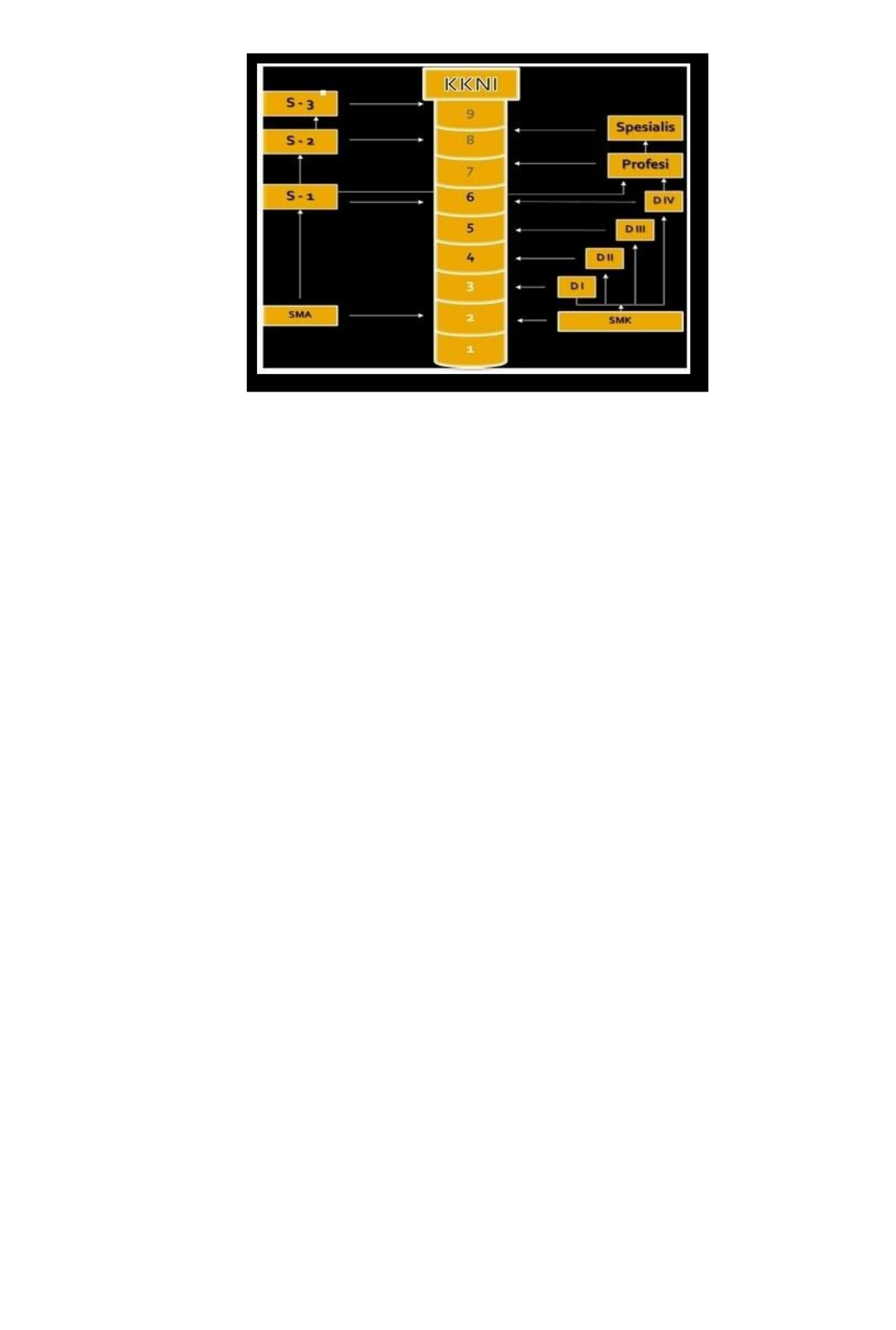
Source: Bureau of Academic Administration and Data
(umsu.ac.id)
1. Diploma Three (D3) Nursing graduates equivalent to
level 5
2. Graduates of Diploma Four (D4) Nursing or Bachelor
of Applied Nursing (S.Tr,Kep) and Bachelor of
Nursing S.Kep.Ners equivalent to level 6
3. Graduates of the Master of Applied Nursing
(M.Tr.Kep) and Master of Nursing (M.Kep) are
equivalent to level 8
4. Graduates of Applied Doctorate of Nursing and
Doctor of Nursing equivalent to level 9
5. Nursing Profession graduates are equivalent to level
7 6. Nursing Specialist graduates are equivalent to 8
The world of nursing education today has developed
very rapidly so this is the answer if nursing education is
able to adapt to answer these challenges
18

PROFESSIONAL NURSING
PRACTICE MODEL (MPKP)
Quality of Nursing Services Determines
19

Hospital Existence
Changes in the health sector in Indonesia are currently
happening so rapidly, free competition occurs in all
health settings, especially hospitals. Nursing services
are part of the health system in a hospital. Nursing
services are an activity that always exists, namely for
24 hours in the hospital, so that the good or bad of a
hospital is greatly influenced by the quality of nursing
services. To maintain its existence in this free
competition is to increase customer satisfaction.
Customer satisfaction can be achieved by improving the
quality of nursing services. The quality of nursing
services is determined by the management of nursing
care.
The quality of nursing services is determined by nursing
care management, which is a management of nursing
Human Resources (HR). In carrying out nursing
activities, the nursing process method can be used to
solve patient problems. Thus, in the management of
nursing care, there is a relationship between nurses and
patients, both directly and indirectly. There are several
important components in nursing care management,
one of which is the organizing system in the provision of
nursing care. One of these systems is the Professional
Nursing Practice Model (MPKP)
(Pratiwi et al., 1998).
Meyer et al. in (Dewi et al., 2013) said that the
Professional Nursing Practice Model (MPKP) is
developing almost in various countries and emphasizes
more on the nursing aspect, thus allowing the
implementation of comprehensive and professional
nursing care. The development of a professional nursing
practice model, IOWA Veterans Home in 1967 was
called nursing professionaliazation and self governance:
a model from long term care.
Definition of Professional Nursing Practice Model
20

(MPKP)
The Professional Nursing Practice Model is a system
with a professional structure, process, and values that
strongly emphasize the quality of nursing staff
performance. Things that are often a problem in the
implementation of the professional nursing practice
model are the limited number of nurses and facilities or
supporting facilities, the competence of nurses that has
not been standardized, and the management function
of nursing services has not been optimal. Hospitals use
professional nursing practice models to carry out the
process of the nursing care system in inpatient rooms
so as to improve and realize the optimal quality of
nursing services (Nyoman et al., 2023). This is in line
with what was conveyed by Sugiharto in (Sahmad,
2014), The approach in the form of the Professional
Nursing Practice Model (MPKP) is a management
process approach that includes the structure, process
and professional values through management functions,
namely; integrated planning, organization, direction and
control to realize the set nursing goals.
The Professional Nursing Practice Model is a
comprehensive nursing care method and is one of the
efforts to improve the quality of services in hospitals in
nursing services so as to minimize errors or omissions.
Hospitals must build a system to ensure that the
nursing services that have been provided to patients
are appropriate so as to reduce the number of
unexpected incidents due to these errors or omissions
(Nursery, Septi, 2021). The Professional Nursing Care
Model System is a framework to support professional
nurses in providing care or nursing actions. This care
provides a higher sense of responsibility for nurses so
that nurses' job satisfaction and patient satisfaction
occur (Hasfya et al., 2023).
21

Objectives of the Professional Nursing Practice
Model (MPKP)
As for Purpose of the Model Nursing Practice
Professional (MPKP) is:
1. Maintaining consistency in nursing care
2. Reduce conflicts, overlaps, and vacancies in the
implementation of nursing care by nursing teams
3. Creating independence in providing nursing care
4. Providing guidelines in determining policies and
decisions
5. Clearly explain the scope and purpose of nursing
care for each nursing team (Komang, 2017).
According to JCI in 2017 in (Sumarni & Yuli, 2023), the
implementation of the Professional Nursing Practice
Model (MPKP) aims to ensure adequate communication
between nurses and health teams, ensure continuous
nursing care, improve patient safety, and standard
nursing care services, as well as patient-focused
services with standard care and patient care.
Characteristics of Professional Nursing Practice
Models
(MPKP)
The characteristics of the Professional Nursing Practice
Model (MPKP) are:
1. Determination of the Number of Nursing Staff
Quality, effective and efficient nursing services can
be achieved if supported by the right number of
nurses according to needs. Therefore, the planning
of nurses, especially in determining the number of
manpower needs, needs to be done as well as
possible so that effective and efficient manpower
can be obtained. The number of nursing staff is
determined based on the number of clients
22

according to the degree of client dependence
(Sukardi, 2010).
Silaban & Sitorus dalam (Hasfya et al., 2023) said
that the provision of nursing care in one room is
greatly influenced by the adequacy of the number
of nursing staff, the nursing room determines how
many nurses are needed, because if the energy is
not enough, it hinders the provision of nursing care
to patients.
2. Determination of Types of Nursing Personnel
In a Professional Nursing Practice Model nursing
room, there are several types of personnel who
provide nursing care, namely Clinical Care Manager
(CCM), Primary Nurse (PP), and Associate Nurse
(PA). In addition to these types of personnel, there is
also a head of the treatment room who is
responsible for the management of nursing services
in the treatment room. The roles and functions of
each staff are in accordance with their abilities and
there are clear responsibilities in the nursing care
delivery system.
3. Establishment of Nursing Care Standard Plan
Standards for nursing care plans need to be
established, because based on observations, writing
nursing care plans is very time-consuming because
the nursing phenomenon includes 14 basic human
needs (Potter & Perry, 1997). In the Professional
Nursing Practice Model, a primary nursing
modification method is used, so that there is one
professional nurse called a primary nurse who is
responsible and responsible for the nursing care
provided. In addition, there is a Clinical Care
Manager (CCM) who directs and guides PP in
providing nursing care, CCM is expected to be the
role of specialist nurses in the future (Komang,
2017).
23

Four Pillars of Professional Nursing Practice
Model (MPKP)
1. Pillar 1: Management Nursing Approach
a. Planning
Planning activities in professional nursing
practice are an effort to improve professionalism
in nursing services so that the quality of
services can not only be maintained but can
also continue to improve until the highest
degree is reached for the recipients of the
services themselves.
The type of planning in the professional nursing
practice model consists of a long strategic plan
that is prepared for the next 5 to 10 years.
Medium-term plans are prepared for the next 1
to 5 years while short-term plans are prepared
for a period of 1 hour to 1 year. Planning
activities carried out in the MPKP room include
the formulation of vision, mission, philosophy
and policies. In addition, the type of planning
applied is a short-term plan which includes
daily, monthly and annual activity plans.
1) Short-Term Plan
Short-term plans implemented in the MPKP
room include daily, monthly and annual
plans. The daily plan is an activity carried
out by the nurse (room head, team leader
and nurse implementer) in accordance with
their role and is made for each service
schedule. The content of these activities is
adjusted to the role and function of nurses.
A daily plan is made before the guard pass
is made and is completed again when the
pass is made and the pre-conference is
made.
24

The daily plan of the head of the room
includes nursing care, supervision of the
team leader and implementing nurses as
well as supervising personnel other than
nurses and collaborating with other related
units. Meanwhile, the team leader's daily
plan includes the implementation of patient
nursing care by the team for which he is
responsible, supervising the implementing
nurse, collaborating with doctors or other
health teams, and allocating patients
according to the nurses on duty. The daily
plan of the implementing nurse contains
nursing actions for a number of patients
who are treated on their official schedule.
2) Medium-Term Plan
The monthly plan is a follow-up plan made
by the room head and team leader. The
monthly plan made by the head of the room
is to evaluate the results of the four pillars
of MPKP at the end of the month and based
on the evaluation, the head of the room will
make a follow-up plan to improve the quality
of the results.
Activities that include the monthly plan of
the head of the room are making schedules
and leading case conferences, making
schedules and leading health education for
family groups, making official schedules,
making schedules for group activity therapy
(TAK), making schedules and chairing health
team meetings, making supervision
schedules and performance assessments for
team leaders and implementing nurses,
conducting documentation audits and
making monthly reports.
Meanwhile, the monthly plan carried out by
the team leader is to evaluate the success
25

of the activities carried out by his team. The
monthly plan activities of the team leader
include presenting cases in case
conferences, leading family group health
education and supervising implementing
nurses.
3) Long-Term Plan
The annual plan is only carried out by the
head of the room, namely by evaluating
activities in the MPKP room for one year and
making it a reference for the follow-up plan
and the preparation of the next annual plan.
The annual activity plan carried out by the
head of the MPKP room is to make an annual
report containing the performance of MPKP,
both the process of the four pillars of MPKP
activities as well as the evaluation of service
quality, carrying out team rotations,
conducting coaching related to MPKP
material specifically for activities that have
low achievement and this aims to maintain
the performance that has been achieved by
MPKP and even improve in the future.
Another thing that is done is that the head
of the room develops human resources in
the form of recommendations to improve
the career path of nurses, recommendations
to continue formal education and make a
schedule for nurses to participate in
training. Long-term planning also discusses
the manpower needed in the MPKP room
(Komang, 2017).
b. Organizing
The form of organizing in the MPKP room
includes the preparation of the organization
structure, the list of room services and the list of
patients. The preparation of the organizational
26

structure was made to show the division of
labor. In addition, the organizational structure
was created to show the specialization of work
in the MPKP room.
1) Assignment Method
Nursalam (2014) stated that there are five
methods of providing professional nursing
care that already exist and will continue to
be developed in the future in the face of the
trend of nursing services.
a) Team method
This method uses a team consisting of
different members in providing nursing
care to a group of patients. Room nurses
are divided into 2-3 teams/groups
consisting of professionals, technicians,
and helpers in a small group that helps
each other.
b) Methods example
An assignment method in which one
nurse is fully responsible for 24 hours of
patient nursing care starting from the
patient entering to leaving the hospital.
Encouraging the practice of nurse
independence, there is clarity between
the creator of the care plan and the
implementer. This primary method is
characterized by a strong and
continuous connection between the
patient and the nurse who is assigned to
plan, carry out, and coordinate nursing
care during the patient's treatment.
c) Case method.
Each nurse is assigned to serve all the
needs of patients while they are in
27

office. Patients will be cared for by a
different nurse for each shift, and there
is no guarantee that patients will be
cared for by the same person the next
day. The usual case assignment method
is applied one patient per nurse, and
this is generally carried out for
private/private nurses in providing
special nursing care such as isolation
and intensive care cases.
d) Modification: Team-primary method
The Team and Primary methods are used
in combination from both systems.
2) Making Service Schedules and Patient Lists
The list of room services includes the service
schedule, the name of the nurse on duty
and the name of the nurse in charge of the
service schedule.
The list of services is compiled by team and
made for a period of 1 week. This makes it
easier for nurses to prepare and know the
tasks they will do. Each team has members
who serve in the morning, afternoon and
evening as well as those who are off duty or
on holidays. The patient list contains
information about the patient's name, the
name of the doctor who treats him, the
name of the nurse who is the team leader,
the name of the implementing nurse who is
responsible for the patient concerned and
the allocation of nurses when carrying out
the service on each guard schedule. The
patient list is a list of the names of a number
of patients who are the responsibility of
each team for 24 hours.
28

Each patient in the MPKP room has a nurse
on each service schedule who is responsible
for the patient during treatment, so that
holistic patient care is realized. The patient
list also provides information to other health
colleagues and families so that they can
collaborate on patient development and
care. The list of patients in the room is filled
by the team leader concerned before the
morning service pass to the afternoon
service. The allocation of patients to nurses
who serve in the morning, afternoon or
evening is carried out by the team leader
based on the service schedule (Komang,
2017).
c. Briefing
Directing is an effort to implement planning in
the form of actions to achieve organizational
goals that have been set previously. There are
several things that need to be done in the MPKP
indoor briefing, namely creating a culture of
motivation, conducting effective communication
on passes between official schedules, pre
conference and post conference, conflict
management, supervision and delegation. In the
MPKP room, the creation of a motivational
climate is applied in several ways, including:
1) Providing positive reinforcement is
strengthening positive behavior by providing
rewards. The reward in question is to
cultivate a culture in the team to cultivate
sincere praise between employees.
2) Pray together before starting activities
carried out at each change of office. This
aims to generate self-awareness and
spiritual encouragement.
29

3) Helping to identify and solve problems for
each personnel in a way that the head of the
room is able to communicate intensively
with all staff, both team leaders and
implementing nurses to strengthen
relationships.
4) Developing the career path and competence
of the staff.
5) Implement a fair reward system in
accordance with the performance that has
been carried out by staff. As in all
organizations, communication also plays an
important role in the implementation of
MPKP in the treatment room.
Communication that will not have a bad
impact on the continuity of the organization
in achieving goals. Communication is the
exchange of thoughts, feelings, opinions and
suggestions that occur between two or more
people who work together. There are several
forms of communication in the MPKP room,
namely operan, pre conference and post
conference.
The activities included in the briefing are:
a) Weigh in
According to (Nursalam, 2014) the definition
of weight acceptance is a way of conveying
and receiving something (report) related to
the client's situation. Weighing and
accepting is an activity that must be carried
out before the change of office. In addition
to inter-agency reports, information related
to activity plans that have been or have not
been implemented can also be submitted.
The objectives of the consideration are:
30

1) Convey the patient's condition or
circumstances in general.
2) Conveying important things that need to
be followed up by the next agency.
3) The preparation of a work plan for the
next service.
b) SBAR Communication
According to Yasminah in (Komang, 2017)
the distribution of SBAR communication is to
contain patient information about the
Situation,
Background, Assessment and
Recommendation. The explanation of each
of these parts is:
1) Situation
It is a situation that describes the
patient's condition so it needs to be reported
and it also contains information about the
patient's identity, current problems and
medical diagnosis. For example: full name,
age, gender, address, complaints of
tightness and restlessness, diagnosis of
severe asthma and others. 2) Background
It is a description of the history/things
related to the patient's current condition
or problem, for example:
(a) History of allergies
(b) Previous medical history
(c) History of medical/nursing
procedures that have been cleaned
(d) Treatment history
(e) Previous vital signs
31

(f) Supporting examinations
3) Assesment
It is a picture of the analysis of the
situation such as a picture of the
problems that are currently occurring
whether it has improved or worsened.
For example: "it looks like the client has
a pulmonary embolism".
4) Recommendation
It is a proposal about alternative actions
to be taken, when to do it and where it is
done.
For example: (a) What action will be
taken on this client; (b) When the action
was taken; (c) Where the act was carried
out. There are several advantages in
using SBAR communication, including:
(a) Menunjukkan strength
nurses in conducting effective
communication.
(b) Improving communication means
improving patient safety.
(c) Effective communication will result
in good work analysis because
nurses are well aware of the
patient's condition.
c) Supervision
Supervision is a process of facilitating the
resources that staff need to complete their
tasks (Swansburg, 2000). Azwar (1996)
added that supervision is an effort to
directly and periodically observe the work
carried out by the subordinate and provide
direct instructions or assistance for problem
solving. Based on the above understanding,
32

it can be said that supervision is one of the
effective ways to achieve organizational
goals, including the goals of health or
nursing services well.
d) Pre Conference
Pre conference is a communication between
the team leader and the implementing
nurse that is carried out after the MPKP in-
room nurse makes a pass. The
preconference discusses the nurses' activity
plans in the service schedule, including the
plans of each nurse (daily plan) and
additional plans from the team leader.
e) Post Conference
Post conference is a communication
between the team leader and the
implementing nurse who discusses the
results of activities throughout the service
schedule and is carried out before the pass
to the next service schedule. In the post
conference , the results of nursing care from
each implementing nurse were also
discussed and what important things will be
conveyed at the time of the pass as a
follow-up to nursing care.
f) Conflict Management
In an organization, conflicts are very likely to
occur between individuals who work in the
same place. This conflict occurs because a
group of people have different backgrounds,
traits, characters and perspectives. The
MPKP room is also not free from conflict for
these reasons. Conflict management can be
in the form of competition or competition,
33

collaboration, avoidance, accommodation or
compromise.
But conflict resolution is recommended by
collaborating, because this way can satisfy
both parties who are experiencing conflict.
Parties who are experiencing conflict are
encouraged to solve the problems they face
by seeking or finding common interests so
that no one of the parties feels
disadvantaged (Komang, 2017).
g) Delegation
According to (Nursalam, 2014) Delegation
can be interpreted as the completion of a
job through another person, or the
assignment of tasks to a person or group in
completing organizational goals. The
delegation in the MPKP room is carried out
in the form of delegation of the head of the
room to the primary nurse or team leader,
and the primary nurse or team leader to the
implementing nurse or associate nurse. This
delegation mechanism is the delegation of
duties and authorities, and is carried out in
stages. In its application, delegation is
divided into planned delegation and
incidental delegation (at any time). Planned
delegation is a delegation that automatically
occurs as a consequence of the assignment
system implemented in the MPKP room.
Meanwhile, incidental delegation occurs if
one of the personnel in the MPKP room is
unable to attend. Some of the principles
carried out in the MPKP room for delegation
are as follows:
(1) In the delegation of planned tasks, the
format of task delegation must be used
and the task description must be clear
34

and detailed both verbally and in
writing.
(2) Personnel who receive task assignment
must be personnel who have
competence and are equivalent to the
ability to be replaced by their duties.
(3) Officials who regulate delegation are
obliged to monitor the implementation
of their duties and are willing to be a
reference if difficulties are found in their
implementation.
(4) After the delegation is completed, the
handover of the tasks that have been
carried out along with the results will be
carried out.
d. Control
Control is the process of observing all
organizational activities to better ensure that all
work being carried out is in accordance with a
predetermined plan. Fayol (1998) defines
control as an examination of whether everything
is going according to the agreed plan, the
instructions issued, and the principles that have
been determined that aim to show shortcomings
and mistakes so that they can be corrected and
not happen again. The steps taken in control
include setting standards and methods for
measuring work performance, measuring work
performance, determining whether work
performance is in accordance with standards
and taking corrective actions. Control or
controlling includes control in general quality
indicators, patient conditions and human
resource conditions (HR). In general quality
indicators, the numbers for Bed Occupancy
Ratio (BOR), Average Lenght of Stay (ALOS),
turn over interval (TOI) and the incidence of
35

nosocomial infections must be considered as
well as the quality of the six patient safety
objectives (6 SKP). Patient safety is the latest
issue due to the increasing number of
unexpected events (KTD) or adverse events.
Patient safety incidents in hospitals will have a
detrimental impact on hospitals, staff and
patients in particular because they are service
recipients (Nursery, Septi, 2018).
2. Pillar 2: Award System
This process includes recruitment, selection,
onboarding, performance appraisal and staff
development. In the recruitment process, the thing
that must be considered is to agree on the level of
MPKP to be established and the priority of the room.
In terms of selection, a documentation review is
carried out, a written test for all MPKP pillars, an
interview test with nurses and a presentation of the
vision, mission, and activities by the prospective
head of the room.
3. Pillar 3: Professional Relationships
Professional relations is defined as the relationship
between health care delivery teams (Gillies, 1994).
This relationship includes professional
communication, teamwork and leadership skills. In
the MPKP room, the professional relationship is
manifested in a nursing team meeting which is
carried out at least once a month with a duration of
at least 1 hour and is carried out during the
exchange of morning and afternoon nursing
services. Another thing that is done for this
professional relationship is a case conference ,
where the health team discusses one of the patient
cases that occurred in the MPKP room. The health
team meeting between the room doctor, the room
head and the team leader is one of the tools for
establishing better professional relationships.
36
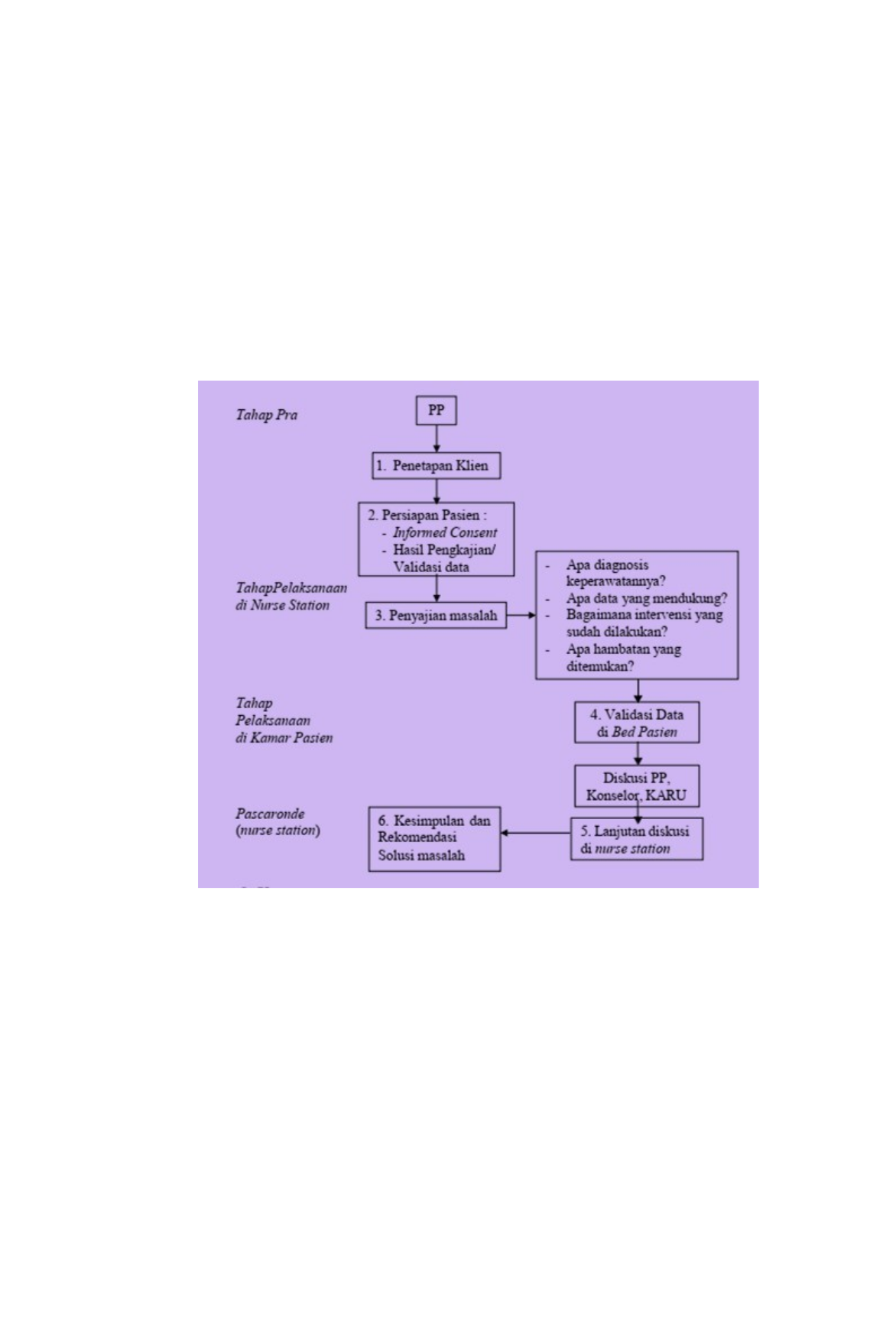
Nursing Rounds
It is an activity that aims to overcome patient
nursing problems carried out by nurses in addition
to involving patients to discuss and carry out
nursing care. In certain cases, it must be carried out
by the Primary Nurse and/or Counselor, Head of
Room, Associate Nurse which also needs to involve
all members of the health team (Nursalam, 2014).
The steps of the nursing round are:
4. Pillar 4: Nursing Care Management
Nursing care management is divided into nursing
care and continuity care. Nursing care is carried out
when the patient is still in the nursing room, while
continuity care is carried out when the patient is no
longer in the nursing room, such as at home or at a
referral hospital.
a. Nursing Documentation
37

It is a nursing action that generates written
and/or electronic accounts of related client data,
nursing clinical decisions and interventions and
client responses in health records (Rahmi,
2022).
b. Drug Centralization
Drug centralization is drug processing where all
drugs that will be given to patients are fully
processed by nurses (Nursalam, 2014).
c. Discharge Planning
Rosya Dalam (Zainuddin & Ahmad, 2023) stated
that discharge planning is a process of
preparing patients to get continuity of care both
in the healing process and in maintaining their
health status until the patient feels ready to
return to his environment and must start from
the beginning when the patient comes to health
services.
d. SAK (Standard of Nursing Care)
Nursing Service Standards are standards in
providing nursing care to patients in accordance
with the patient's disease. Nursing Care
Standards (SAK) based on disease groups:
surgical SAK, internal SAK, Pediatric SAK,
emergency SAK, and others. Each SAK group
will be described according to the type of case
in a room. Administrative standards are
standards that contain the policies of a hospital
(Komang, 2017).
38

MANAGEMENT AND
PROFESSIONAL NURSING
CARE MODEL (MAKP)
Introduction
The hospital always strives to improve the quality of
service. One way to do this is to improve the nursing
service system by implementing the most ideal and
suitable professional nursing care model for the
hospital. Several hospitals in Indonesia have developed
a professional nursing care model (MAKP) to improve
the quality of nursing services (Yuntari, et al., 2018).
Good quality will have an impact on increasing
consumer confidence, increasing job satisfaction, and
increasing the existence of hospitals (Nursalam, 2015).
Consideration Election Type Upbringing
Professional Nursing
The implementation of MAKP in hospitals considers
several things, including adjusting to the vision and
mission of the hospital, which is the main basis in
determining the nursing care model. The next
consideration is that the application of the nursing
process in nursing care is an important element in the
sustainability of nursing care for patients and is a
determinant of the success of nursing care. The next is
to consider whether the nursing care model will support
the satisfaction of patients, families and the community.
In addition to patient satisfaction, nurse satisfaction and
nurse performance are also considerations in the
selection of a professional nursing care model, the
MAKP used can increase motivation instead of
increasing the workload and frustration of nurses, with
MAKP implemented will improve adequate
communication between nurses. And an important
39
consideration in the selection of a Professional Nursing
Care model is the effective and efficient use of costs
(Nursalam 2015)
Types of Professional Nursing Care Models
There are 5 models of professional nursing care that are
applied in nursing services. This model continues to be
developed to be able to face future trends (Nursalam,
2016), Here is the explanation:
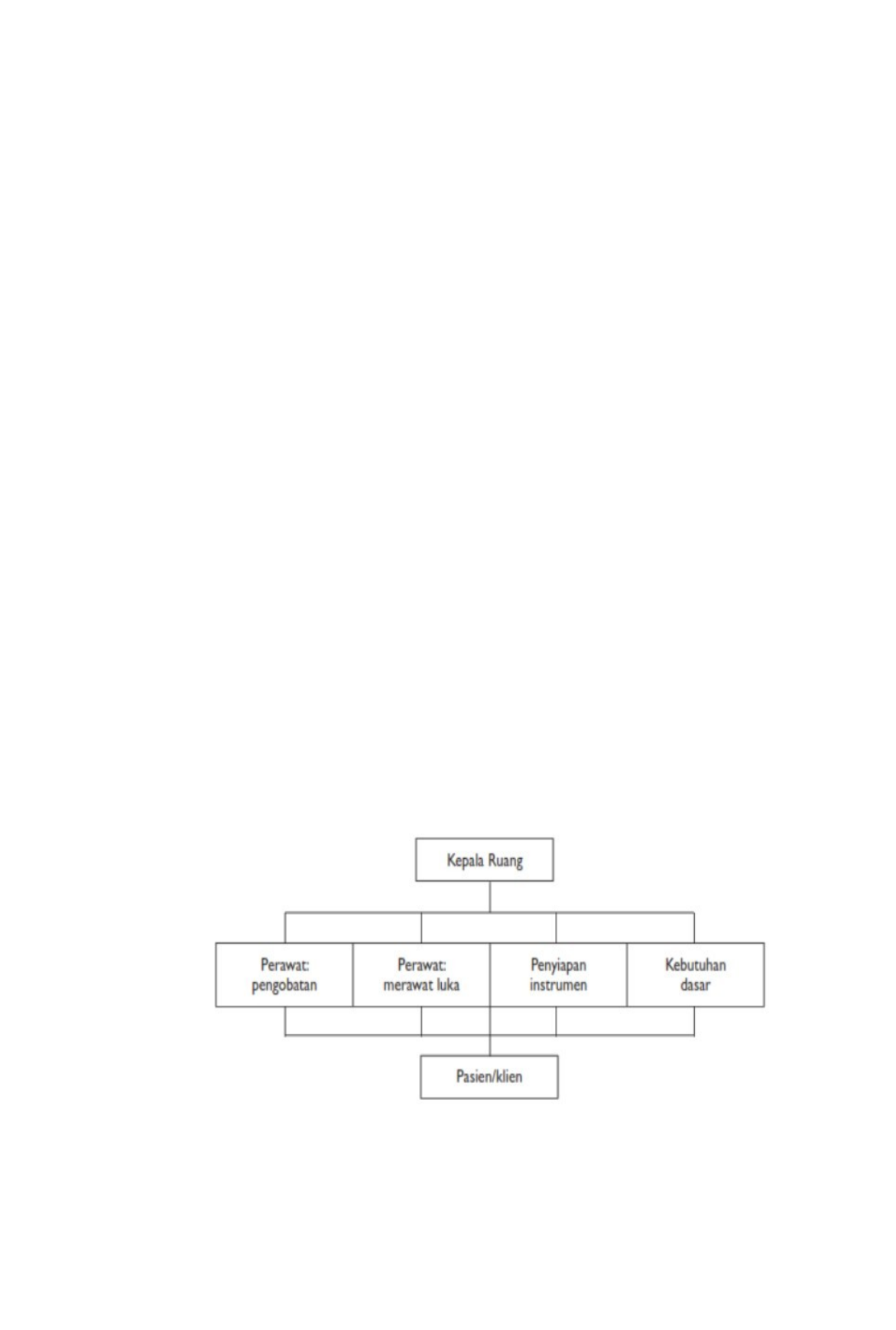
1. Functional Model (Not MAKP)
The functional model focuses on completing tasks,
and the main priority is the fulfillment of physical
needs, not comprehensive on human needs as a
whole. For example, each nurse only performs one
or two types of nursing interventions, such as
wound care, treatment, preparing instruments or
basic needs such as bathing patients. So that
patients feel less close to nurses, and cause them to
feel less satisfied with the services provided by
nurses, this is supported by the results of research
by Amalia & Lailasari (2020) which states that
patients are more satisfied with nurses who apply
team assignments than functional assignments. The
following is the organizational structure of the
implementation of the functional nursing care model
Figure 18.1 Functional nursing care model
(Nursalam, 2015)
40

2. MAKP Team
The Team model is nursing care provided by several
nurses to a group of patients. Nurses are divided
into 2 or 3 teams that help each other in providing
care for each other. In the team model, the team
leader must have the ability to carry out his
leadership, a leader who has knowledge of
professional nurses and leadership skills (Grubaugh
and Flynn, 2018) because lack of knowledge can
affect the effectiveness of the implementation of
the team method (Nkosi, 2011).
The results of the study say that the optimal
implementation of team MAKP will be achieved if all
team members cooperate with each other, respect,
respect the leadership and communicate and
coordinate with colleagues (Mogopa, 2017). In the
team, all members must pay attention to effective
communication to ensure the running of nursing
care. Team members should also respect the Team
leader as a leader in the team. In addition, the head
of the room must support the team because it will
be one of the success factors of the team model.
The team model is commonly used in inpatient
rooms, but it can also be applied in outpatient
rooms and emergency departments. The team
model allows nursing services to be comprehensive
for patients because communication between teams
and if conflicts occur, they will be easily overcome
so as to provide job satisfaction (Nursalam, 2015).
Research studies show that the better the team
model is applied in nursing care, the better the job
satisfaction of nurses will be (Rupisa, et al., 2018).
Another advantage of the Team model is that it is
able to maximize the nursing process (Nursalam,
2015).
In addition to the advantages, there are weaknesses
that can be found in the MAKP team, namely it is
difficult to carry out communication between teams
41

when they are busy doing nursing care. The
following is the organizational structure of the
implementation of the team model nursing care
model
Figure 18.2 MAKP Team (Nursalam, 2015)
3. MAKP Case
It is a nurturing model in which usually 1 nurse is
responsible for caring for 1 patient who is directly
headed by the head of the room and is ready to
serve all patient needs during service which is
generally carried out for private nurses, usually this
method is used in intensive care rooms or isolation
cases. The advantages of this model are that nurses
understand each case better and the managerial
evaluation system is easier, MAKP Kes can also
facilitate patient satisfaction with the nursing care
provided (Oktavia, Utami, and Maemunah, 2017)
but has shortcomings such as the nurse in charge
cannot be identified and requires many nurses who
also have the same skills (Nursalam, 2015).
Figure 18.3. MAKP Case
42

4. MAKP Primer
The Primary nursing care model is an assignment to
each nurse who is fully responsible for providing
nursing care to patients for 24 hours from the time
the patient enters and leaves the hospital. Primary
MAKP encourages nurses' independent practice
because nurses make nursing care plans and
implement them to patients. This model allows for a
strong and sustainable relationship between nurses
and patients (Nursalam, 2015).
The primary method is more related to the patient
and the primary nurse who is in charge of carrying
out nursing care from assessment to evaluation
while the patient is being treated assisted by
another nurse as an assistant. The concept of this
method is to have more responsibility for the
patient, autonomy, especially primary nurses, and
order of patients and their families (Nursalam,
2015).
This method has the advantage of primary nurses
having accountability in nursing care for self-
development, patient satisfaction with the
fulfillment of individual needs, continuity and
comprehensiveness (Nursalam, 2015). However,
other research results show that this model can
improve nursing services and nurse autonomy, but
does not have an impact on job satisfaction (Mattila,
et al, 2014). The weakness of the primary model is
that hospitals can only apply this model when they
already have professional nurses who have
adequate clinical experience, attitude, knowledge,
and skills (Nursalam, 2015).
43

Figur 18.4 MAKP Primer
5.MACP Moduler (Example-Team)
This model combines 2 models, namely the team
model and the primary model which is based on
several reasons, namely in hospitals there are
nurses with most of the D-3 graduates while
primary nurses must have S-1 Nursing and Nurse
education. Likewise, the Team Model cannot be
applied purely, because the responsibility for patient
nursing care becomes separate in several teams.
The team and primary models are not used purely
through the combination of these two models, it is
expected to increase the accountability and
continuity of nursing care.
The results of the study show that activities that
support nursing care in this modular model are
running well, such as the implementation of weigh-
in, preconference and postconference, drug
centralization, discharge planning and nursing
documentation, but some other activities are still
considered lacking such as the implementation of
nursing rounds (Andung, 2015). For nurses, this
method is able to increase job satisfaction, so it can
be said that in addition to having a good impact on
patients, this modular model will also increase job
satisfaction for nurses (Maemunah. et al., 2021).
This modification model is led by the head of the
room who is in charge of 1 or more primary nurses
with each primary nurse assisted by an associate
44
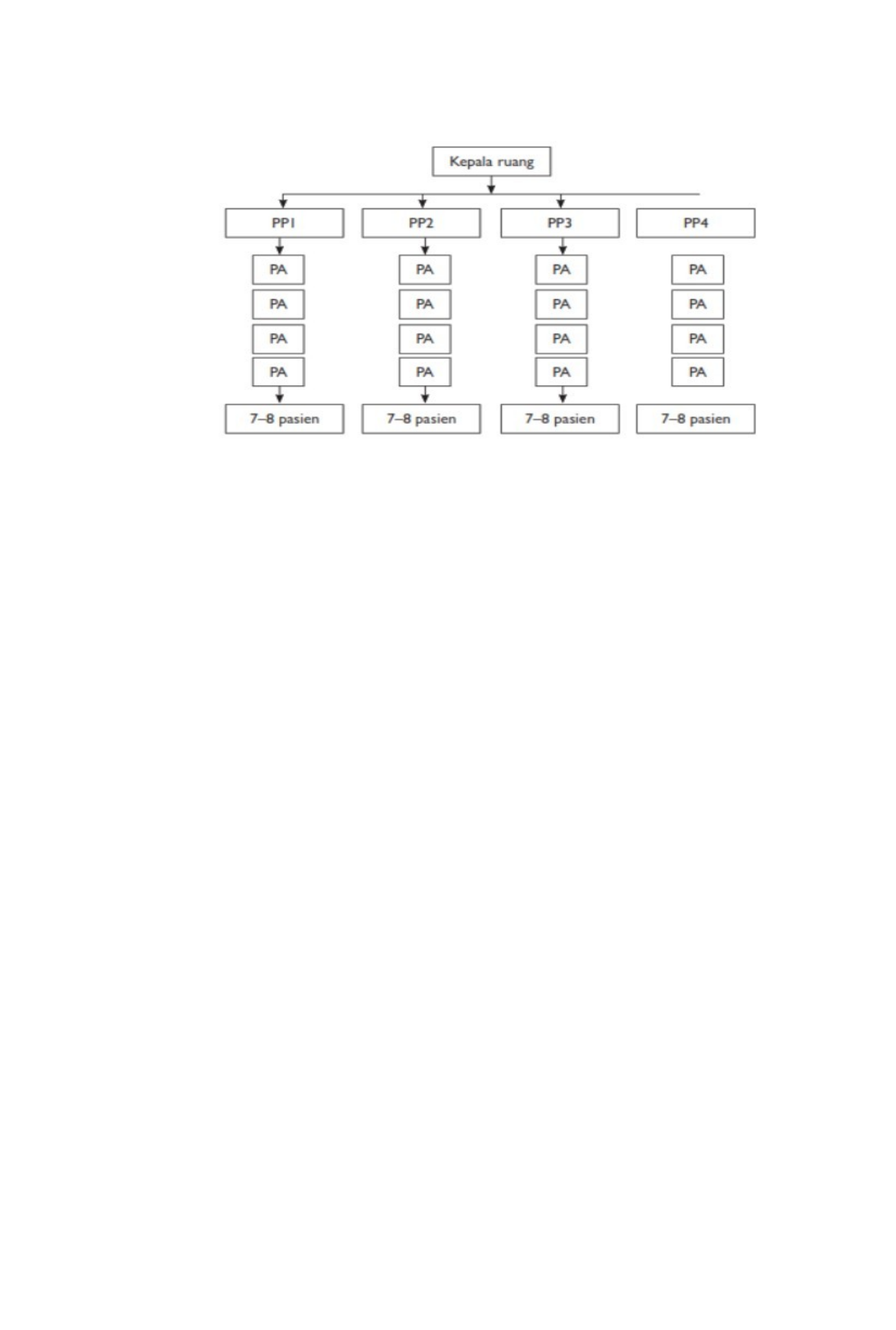
nurse to handle patients (Nursalam, 2015). The
organizational structure of the implementation of
the TimPrimer modular model is as follows:
Figur 18.5 MAKP Moduler
MAKP Management Steps
The implementation of MAKP is carried out through
several steps, namely
1. Data collection. At this stage, data will be collected
starting from human resources, namely manpower,
facilities and infrastructure, nursing care methods
related to the implementation of weighing and
accepting, drug centralization, nursing rounds,
supervision, new patient admissions, discharge
planning, and nursing documentation. In addition, it
also collects data related to finance such as income
and RAB. and finally collect data on the quality or
quality of nursing services, such as patient safety,
patient satisfaction and nurse job satisfaction, and
length of hospitalization.
2. SWOT Analysis. The next step after collecting data
is to conduct a SWOT Analysis to develop strategic
planning. Strategic planning is influenced by three
factors, namely managerial factors, environmental
factors, and organizational factors.
3. Identify the problem. Identify problems found when
collecting data related to the problems found in
45

each study such as manpower, number of nurses
and unclear division of duties. And identify each of
the causes of the problem. In determining the
problem, you can use the C-AR-L method. namely
considering 4 aspects: Capabilty
(ability/competence), Accessibility (Accessibility,
affordability), Relevancy (in accordance with needs
and urgency), legality (based on applicable
regulations).
4. Make a plan. The last stage in the management step
of the nursing care model is to prepare a MAKP plan.
Starting from the organizational structure and the
division of roles such as the head of the room,
primary nurse and associate nurse. Activities in
MAKP such as discharge planning, weigh-in,
supervision, drug centralization, nursing rounds and
nursing docmnetation.
5. Implementation. The next step is the
implementation of the MAKP that has been planned
in advance
6. Evaluation. The last stage is to evaluate the
implementation starting from the evaluation of the
structure, the evaluation of the process and the
evaluation of the results.
Factors Associated with Professional Nursing Care
Model
There are several factors related to the use of the
Professional Nursing Care model, including:
1. Quality of nursing services
Many qualities can be seen in nursing services such
as improving nursing care to patients, providing
benefits for hospitals, maintaining the existence of
hospitals, increasing nurses' job satisfaction,
increasing patient trust, and running programs
46

according to standards (Nursalam, 2015). In the
research of Firmanto, Akmal, and Kadir (2013)
entitled "Comparison of MPKP and non-MPKP on the
quality of nursing services in the inpatient room of
H. Andi Sulthan DG Hospital. Radja Bulukumba"
explained that the factors that affect respondents
on the quality of nurse services are the perception
of nurses' abilities, nurses' responsiveness, service
assurance, nursing care, and nurses' empathy.
2. Standards of nursing practice
The standard of nursing practice in Indonesia is
regulated by PPNI (2005), namely, respecting
patient rights, acceptance when patients are
admitted to the hospital, patient observation,
fulfillment of nutritional needs, care in non-
cooperative actions, administration, invasive
surgeries and procedures, education for patients
and families, and the provision of continuous care.
3. Nursing practice model
Some nursing practices carried out by nurses such
as giving nursing practices in hospitals, homes,
nursing practices in groups, and or nursing practices
individually. Nurses have different models or
methods depending on their abilities, authority, and
scope (Nursalam, 2015).
a. Hospital Nursing Practice, professional nurses
have more responsibility in conducting nursing
practices in hospitals with their expertise. This
makes it necessary to develop professional
nursing practices, especially in nursing
registration procedures and legislation
b. Nursing practice at home
The form of home nursing practice is placed as a
continuation of the implementation of servants
in hospitals. This activity is carried out by
47

hospital professionals, or professional workers
who practice in groups.
c. Group nursing practice
This form of nursing practice can overcome
various problems faced by the community. And
in the future this form of practice will be needed
d. Individual nursing practice
The pattern of individual practice approach is
almost the same as hospital nursing practice.
Professional nurses will open the practice within
a certain time to provide nursing benefits. Such
as consultation needed by the community. This
nursing practice will be very helpful to the
community, especially for remote communities
that are far from the accent of health service
facilities.
48

REGISTRATION OF NURSE
PRACTICE AND NURSING
PROFESSIONAL CAREER
PATH
Introduction
Health workers are any person who is devoted to the
health sector and has knowledge and/or skills through
education in the health sector which for certain types
requires the authority to carry out health efforts. One of
the professions that is included in the category of
Manpower
Health in the above sense is nurses (Law No. 17 of 2023
concerning Health, 2023), (Ministry of Health of the
Republic of Indonesia, 2019), (Ministry of Health, 2019).
A nurse is someone who has graduated from higher
education in Nursing, both at home and abroad that is
recognized by the Government in accordance with the
provisions of laws and regulations.
49

Vocational Nurses are nurses who graduated from the
lowest Nursing vocational education program in the
Diploma Three in Nursing program.
Professional Nurse is a nurse who graduated from
professional education
Nursing that Is program
profession
Nursing and Nursing specialist programs.
Nursing Practice is a service provided by Nurses in the
form of Nursing Care.
For safety in providing services, Medical Personnel and
Health Personnel of Indonesian citizens who graduated
abroad who will take part in adaptation to Health
Service Facilities must have STR and SIP (Ministry of
Health, 2019),
Nurse Registration and Licensing
1. Registration
a. Understanding
According to (Regulation of the Minister of
Health of the Republic of Indonesia No. 83 of
2019 concerning Registration of Health Workers,
2019) registration is the official recording of
Health Workers who already have a Certificate
of Competency or Professional Certificate and
have certain other qualifications and have legal
recognition to carry out practice. Nurses are
required to have a nurse's STR and SIP in
practicing Nursing.
The Registration Certificate, hereinafter
abbreviated as STR, is written evidence given
by the council of each Health Worker to the
registered Health Worker.
50

Some important points that need to be
considered regarding STR are (Law No. 17 of
2023 concerning Health, 2023):
1) To obtain an STR, nurses must have a
certificate of competence or professional
certificate and other requirements in
accordance with the provisions of laws and
regulations.
2) The STR is issued by the Council on behalf of
the Minister after fulfilling the requirements.
3) STR period is valid for life
4) Each medical or healthcare worker may only
have 1 STR
5) In the event of a change in the qualifications
and competencies of health workers, it is
mandatory to submit a change in the STR
6) STR does not occur when the person
concerned has passed away; deactivated or
revoked by the council on behalf of the
Minister and revoked based on a court
decision that has permanent legal force
(Law no. 17 of 2023).
b. Registration process
Before carrying out the registration process,
nurses need to prepare the requirements first.
The requirements for taking care of a new STR
are as follows:
1) have diploma education at field
Health and/or professional certificate
2) have a certificate of competence.
3) The latest formal photo size 4x6 is facing
forward, with a red background, the face is
clearly visible without a face covering with a
51

jpeg file format and a maximum size of
200kb
4) Identity Card
The requirements for lifetime STR
renewal/renewal are as follows:
1) Old STR
2) The latest formal photo size 4x6 is facing
forward, with a red background, the face is
clearly visible without a face covering with a
jpeg file format and a maximum size of
200kb
An additional requirement according to the
direction of the Minister of Health is an account
number with the aim of paying remuneration
and incentives for health workers if they
participate in related programs at the Ministry of
Health.
c. Registration of new/up/downgraded STR, change
of profession, RPL graduates and STR data
improvement are carried out through
ktki.kemkes.go.id/registrasi links while lifetime
STR extensions/renewals are carried out through
the satusehat.kemkes.go.id/sdmk page
2. License/Licensing
a. Understanding
According to (Law No. 17 of 2023 concerning
Health, 2023), certain types of medical
personnel and health workers in carrying out
their professional practices are required to have
a permit. The permit in question is given in the
form of SIP.
Some important points to note regarding SIP
are:
52

1) SIP is issued by the Regional Government of
the district/city where the Medical Personnel
or Health Personnel carry out their practice.
2) Under certain conditions, the Minister may
issue a SIP.
3) In the context of issuing SIPs, the Central
Government involves the Regency/City
Regional Government in determining quotas
for each type of Medical Personnel and
Health Workers, taking into account the
minimum criteria:
a) availability and distribution of Medical
and Health Personnel in the area
b) ratio of the population to medical
personnel and active health workers
determined by the Minister
c) workload of Medical Personnel and
Health Workers.
4) SIP is still valid as long as the place of
practice is still in accordance with what is
listed in the SIP
5) SIP is valid for 5 (five) years and can be
extended as long as it meets the
requirements.
6) Foreign Medical Personnel & Health Workers:
valid for a maximum of 2 years & can be
extended 1 time and only for the next 2
years validity period, except for foreign
Medical Personnel and Health Workers who
are employed in Special Economic Zones.
7) The management of the fulfillment of the
adequacy of professional credit units as
intended in paragraph (4) letter c is carried
out by the Minister.
53

8) SIP does not apply when:
a) expiration date
b) The person concerned passed away
c) STR revoked or disabled;
d) SIP revoked
e) where practices are changing
b. Requirement
Requirements for the new SIP management:
1) STR on
2) Practice place
SIP Renewal Requirements:
1) STR
2) Practice place
3) Old SIP
4) Proof of fulfillment of the adequacy of 50
SKP
c. Management Process
1) Health workers submit an
application to the Regency/City
government through the health
office by attaching all the
specified requirements
2) Get recommendations
3) Apply for the issuance of a
permit to the Investment and
One-Stop Integrated Service
Office of the Regency/City
where you work.
54

3. Sanctions
According to (Law No. 17 of 2023 concerning Health,
2023), witnesses for medical personnel and health
workers related to STR and SIP are:
a. Medical Personnel and Health Workers who carry
out individual practice must have a clear
identity including SIP and STR numbers at their
individual practice places.
b. In the event that Medical Personnel and Health
Workers practice at Health Service Facilities, the
leaders of Health Service Facilities are required
to inform the list of names, SIP and STR
numbers, as well as the practice schedule of
Medical Personnel and
Health Workers
c. Every Medical Personnel, Health Workers, and
Leaders of Health Service Facilities who do not
have STR and SIP are subject to administrative
sanctions in the form of: 1) verbal reprimands;
2) written warnings;
3) administrative fines; and/or
4) revocation of permits.
d. The leader of the Health Service Facility is
prohibited from utilizing Medical Personnel or
Health Workers who do not have SIP to practice
at the Health Service Facility.
e. Every Person who employs Medical Personnel
and/or Health Workers who do not have a SIP as
referred to in Article 312 letter c shall be
sentenced to imprisonment for a maximum of 5
(five) years or a maximum fine of
Rp500.0O0.000.00 (five hundred million rupiah).
f. Any person who uses an identity in the form of a
title or other form that causes an impression on
55

the community concerned is a Medical Worker or
Health Worker who already has an STR and/or
SIP as referred to in Section 1 312 letter a shall
be sentenced to imprisonment for a maximum
of 5 (five) years or a maximum fine
IDR 500,000,00O.00 (five hundred million rupiah).
g. Any person who uses tools, methods, or other
methods in providing services to the community
that gives the impression concerned is a Medical
Personnel or Health Worker who already has an
STR and/or SIP as referred to in Article 312 letter
b shall be sentenced to imprisonment for a
maximum of 5 (five) years or a maximum fine of
Rp500,000,000.00 (five hundred million rupiah).
Nurse Career Path
1. Understanding
According to (Ministry of Health of the Republic of
Indonesia, 2017) Professional career path is a
system to improve performance and
professionalism, in accordance with the field of work
through increased competence. Career path is a
vertical mobility path that is taken through
increasing competence, where the competency is
obtained from tiered formal education,
appropriate/relevant informal education as well as
recognized clinical practice experience. In other
words, a career path is a path to increase the role of
professional nurses in an institution. In its
application, career paths have a time frame for
movement from one level to another higher level
and are evaluated based on performance
assessments.
The development of a professional career path
system for nurses can be distinguished between job
duties and careers. Work as a nurse is defined as a
position or position that is given/assigned, and there
56

is an attachment of responsibility and authority
between superiors and subordinates, and gets
rewards in the form of money. A career as a nurse is
defined as a field of work that is chosen and
pursued by individuals to be able to meet individual
job satisfaction through a system and ranking
mechanism, and aims to increase job success
(performance) so that in the end it will contribute to
the chosen field of profession.
2. Career Level and Competency
The development of the professional career path
system for nurses in this guideline is intended for
clinical nurses who practice as nursing care
providers in health care facilities. In general, the
professional career path in Indonesia consists of 4
fields, including Clinical Nurse (PK), Nurse Manager
(PM), Nurse Educator (PP) and Researcher/Research
Nurse (PR). The four professional career paths of
nurses are illustrated in the following chart (Ministry
of Health of the Republic of Indonesia, 2017).
Professional Nurse Career Path Pattern
3. Career Levels of Nurses in Hospitals
a. Clinical Nurse I
57

Clinical Nurse I is a clinical nurse with the ability
to perform basic nursing care with an emphasis
on nursing technical skills under guidance
b. Clinical Nurse II
Clinical nurse II is a level of clinical nurse with
the ability to carry out holistic nursing care for
clients independently and manage
clients/groups of clients as a team and obtain
guidance for handling advanced/complex
problems.
c. Clinical Nurse III
Clinical Nurse III is a level of clinical nurse with
the ability to carry out comprehensive nursing
care in specific areas and develop nursing
services based on scientific evidence and carry
out clinical learning.
d. Clinical Nurse IV
Clinical nurse IV is a level of clinical nurse with
the ability to provide nursing care to complex
client problems in specialist areas with an
interdisciplinary, multidisciplinary approach to
clinical governance, conducting research to
develop nursing practice and developing clinical
learning.
e. Clinical Nurse V
Clinical nurse V is a clinical nurse level with the
ability to provide clinical nursing consultation in
specialist areas, carry out transdisciplinary
clinical governance, conduct clinical research for
the development of nursing practice, profession
and education.
4. Career Level of Nurses in Primary Care
Nurse competencies in primary care are currently
focused on community nurse competencies in
58

general. In the future, competencies will be
developed
Clinical nurses in primary care are divided into five
sub-fields consisting of competencies of community
nurses, family nurses, gerontic nurses, occupational
health nurses and school health nurses (Ministry of
Health of the Republic of Indonesia, 2017).
a. Clinical Nurse I
Clinical Nurse I is a level of clinical nurse with
the ability to carry out individual nursing care in
the context of the family in the primary service
order or in the RW or Hamlet area or equivalent.
b. Clinical Nurse II
Clinical Nurse II is a level of clinical nurse with
the ability to carry out family nursing care in the
village or sub-district area or equivalent.
c. Clinical Nurse III
Clinical nurse III is a level of clinical nurse with
the ability to carry out group nursing care in the
community or in special settings (schools,
industries, orphanages, LAPAS) in the sub-
district area.
d. Clinical Nurse IV
Clinical nurse IV is a level of clinical nurse with
the ability to provide public health nursing care
in the Regency or City area.
e. Clinical Nurse V
Clinical nurse V is a level of clinical nurse with
the ability to carry out community nursing care
with complex health problems at the provincial
level.
5. Nurse Professional Career Pathway System
Requirements
59

Clinical
a. Formal Education
1) Clinical Nurse I (PK I)
Clinical Nurse I (Novice) has a D-III Nursing
education background with ≥ 1 year of work
experience and undergoing a level I clinical
period for 3 - 6 years or Nurses with ≥ 1
year of work experience and undergoing a
level I clinical period for 2 -4 years. Clinical
Nurse I must have a pre-clinical certificate.
2) Clinical Nurse II
Clinical Nurse II (Advance Beginner) has a D-
III Nursing education background with ≥ 4
years of work experience and has
undergone a level II clinical period for 6 - 9
years or Nurses with ≥ 3 years of work
experience and and and a level II clinical
period for 4 - 7 years. Clinical Nurse II must
have a PK I certificate.
3) Clinical Nurse III
Clinical Nurse III (competent) has a D-III
Nursing education background with ≥ 10
years of work experience and undergoing a
level III clinical period for 9 - 12 years or
Nurses with ≥ 7 years of work experience
and undergoing a level III clinical period for
6 - 9 years or Specialist Nurse I with 0 years
of work experience and undergoing a level
III clinical period for as long as
2 - 4 years. Clinical Nurse III graduates of D-
III Nursing and Nurses must have a PK II
certificate.
4) Clinical Nurse IV
Clinical Nurse IV (Proficient) has a Nurse
education background with ≥ 13 years of
60

work experience and has undergone a level
IV clinical period for 9 – 12 years or
Specialist Nurse I with ≥ 2 years of work
experience and and has undergone a level
IV clinical period for 6 – 9 years. Clinical
Nurse IV must have a PK III certificate.
5) Clinical Nurse V
Clinical Nurse V (Expert) has an educational
background as a Specialist Nurse I with ≥ 4
years of work experience and has a PK IV
certificate or Specialist Nurse II (Consultant)
with 0 years of work experience. Clinical
nurse V underwent a level 5 clinical period
until entering retirement age.
A more concise version of the requirements
for the nurse career path system according
to formal education is seen in the following
chart (Ministry of Health of the Republic of
Indonesia, 2017):
b. Competency-Based Continuing Education
(Certification)
1) Clinical Nurse I (PK I)
Clinical Nurse I (Novice) has a D-III Nursing
background with ≥ 1 year of work
experience and has undergone a level I
61

clinical period for 3 - 6 years or Nurses with
≥ 1 year of work experience and a level I
clinical period for 2 -4 years. Clinical nurses
must have a pre-clinical certificate.
2) Clinical Nurse II
Clinical Nurse II (Advance Beginner) has a D-
III Nursing background with ≥ 4 years of
work experience and has undergone a level
II clinical period for 6 - 9 years or Nurses
with ≥ 3 years of work experience and has
undergone a level II clinical period for 4 - 7
years. Clinical nurse II must have a PK I
certificate.
3) Clinical Nurse III
Clinical nurse III (competent) has a D-III
nursing background with ≥ 10 years of work
experience and has undergone a level III
clinical period for 9 - 12 years or Nurses with
≥ 7 years of work experience and a level III
clinical period for 6 - 9 years. Clinical nurse
III must have a PK II certificate and technical
certification.
4) Clinical Nurse IV
Clinical Nurse IV (Proficient) has a D-III
Nursing background with ≥ 19 years of work
experience and undergoing a level IV clinical
period until entering retirement or Nurses
with ≥ 13 years of work experience and
undergoing a level IV clinical period for 9 –
12 years. Clinical nurse IV must have a PK III
certificate and technical certification II.
5) Clinical Nurse V
Clinical nurse V (Expert) has a Nurse
background with ≥ 22 years of work
experience and undergoes a level V clinical
62

period until entering retirement age. Clinical
nurse V must have a PK IV certificate and
technical certification II
6. Management of Nurse Professional Career Paths in
Hospitals
Quoted from (Ministry of Health of the Republic of
Indonesia, 2017) the mechanism of professional
career paths for nurses will outline the stages that
clinical nurses go through according to their career
development, as new nurses, old nurses and
transfer duties. New nurses are nurses who have
just graduated from education and or are working
for the first time with a working period of 0-1 year
and old nurses are nurses with a working period of
more than 1 year.
a. Management of New Nurse Professional Career
Paths
The implementation scheme of the new nurse
career path can be seen in the following chart:
63

The stages are as follows:
1) Recruitment and selection
2) Orientation 3)
Internship/Internship
4) Crescent:
a) Competency Assessment
b) Determination of Clinical Authority
5) Practice in hospitals
6) Clinical Career Advancement
b. Management of Nurse Professional Career Paths
Old
c. The management of the career path of old
nurses can be seen at chart next
(Ministry of Health of the Republic of
Indonesia, 2017):
64

7. Credential of Puskesmas Nurse
The stages of health center nurse credentials can be
seen in the following chart (Ministry of Health of the
Republic of Indonesia, 2020):
65

THERAPEUTIC
COMMUNICATION AND
EFFECTIVE COMMUNICATION
Definition of Therapeutic Communication and
Communication
Effective
1. Therapeutic communication is a form of interaction
carried out by health workers with the aim of
helping to solve patient health problems (Ariyanti,
2022).
2. Effective communication is the process of
exchanging ideas, thoughts, opinions, and
knowledge that is carried out clearly and
directionally, so that the individuals involved in
communication feel satisfied (Marbun et al., 2023).
Benefits of Therapeutic Communication and
Effective Communication
1. Benefits for patients and families (Popa-Velea &
Purcărea, 2014):
a. Obtain actual information on the physical and
psychological symptoms experienced by
patients, so that it can improve the accuracy of
medical and nursing diagnoses.
b. Recognize the emotional state of the patient.
c. Identify the patient's health needs.
d. Obtain information about the role of family in
patients.
66

e. Improves the patient's well-being, satisfaction,
self-esteem, physical and mental health status.
f. Increase patient and family trust in nurses.
2. Benefits for nurses and healthcare
(Khemiri et al., 2023):
a. Improve social processes between nurses and
patients.
b. Increasing the effectiveness of the nursing
process in the provision of nursing interventions
and implementation.
c. Increase self-actualization and nurses'
satisfaction with their performance.
d. Improving the quality of health services.
e. Reducing the length of stay of patients at home
Sick.
f. Increase patient loyalty to health services.
How to Conduct Therapeutic Communication
Things nurses should do when conducting therapeutic
communication to patients and families
(Vinita, 2022):
1. Communication must be done with confidence,
compassion and commitment.
2. Body posture and eye contact must be done
properly and appropriately.
3. Nurses must be able to be patient listeners.
4. Nurses must use appropriate and concise language.
5. Communication should focus on the patient in bio-
psycho-social-cultural and spiritual aspects.
Skills Basis Communication
Therapeutic
67

and Effective
The following are some basic skills in conducting
therapeutic and effective communication, which can be
applied during the interaction process between nurses
and patients, namely (Grover, 2005), (Vinitha, 2022):
1. Listen
It is the nurse's responsive attitude to a process of
interaction with patients/families. Being an active
listener requires appropriate eye contact to pay
attention to the ongoing communication process.
Communication will go well if the nurse can listen to
the explanation from the patient/family without
interrupting.
2. Showing empathy
Through an empathetic attitude, nurses can focus
more on following the communication process, so
that they better understand the situation felt by the
patient/family.
3. Ask question open (oven ended question)
Communication becomes more effective through
open-ended questions, so that patients can express
what they think and feel more freely.
4. Ask a closed-ended question (Close ended
question)
Closed questions in communication are needed to
get justification for the correctness of
data/information from patients.
5. Clarify
Clarification is communication through open-ended
questions with the aim of obtaining more
information from patients.
6. Reflect
68

Nurses can reflect on the feelings and thoughts
expressed by the patient by rearranging sentences
to ask the patient back.
7. Paraphrase
Paraphrasing is taking the original information from
the process of communication with the patient and
changing it through the interpretation of its
meaning.
8. Using body language
Therapeutic communication that becomes more
effective accompanied by appropriate body
language or non-verbal communication.
9. The information provided is real/factual information
Nurses who provide factual and honest
communication will create a better and more
intense communication process.
10. Avoid vague messages
An unclear message will cause confusion, so you will
not be able to focus on the topic of conversation.
11. Avoid giving lengthy explanations
Convoluted explanations will cause boredom, so it
cannot solve the real problem.
12. Be respectful, open, friendly and polite during the
communication process
A friendly attitude can increase the patient's trust in
the nurse during the communication process.
Communication Process
The communication process is generally divided into 2
types, namely the linear communication model and the
interactive communication model (Sibiya, 2018):
1. Linear communication model
69

Gambar.1 Linear model of communication (Sibiya, 2018)
The linear communication model is the process of
sending a message carried out by the sender to the
receiver (receiver), with the possibility of noise
(obstacles) during the process of delivering the
message.
2. Interactive communication model
Gambar. 2 Interactive model of communication
(Sibiya, 2018)
The interactive communication model is the sending
of a message or explanation from a sender to the
receiver , and is accompanied by feedback from the
receiver to the sender.
Effective Communication Over the Phone
Nurses can communicate by phone to doctors, nurses,
other medical personnel, and patients and their
families. Some of the things that are done during the
process of communication by phone are (Sibiya, 2018):
1. Say the right greetings such as good
morning/noon/afternoon/night.
2. Speak clearly through the phone's microphone.
70

3. Identify the unit or workplace.
4. Identify the nurse and the person being talked to.
5. Listen carefully to other people's messages over the
phone, if necessary, make small notes so that you
can remember important information in the course
of the conversation, and sign the notes with dates.
Therapeutic Communication Techniques
Some things that need to be done to carry out
therapeutic communication between nurses and
patients are (Vinitha, 2022):
1. Therapeutic communication techniques to obtain a
lot of information.
a. Broad opening
The broad opening technique gives the patient
the freedom to choose the topic he or she wants
to talk about to the nurse.
b. Using open ended questions
Open ended questions are a type of question
that allows patients to speak according to their
views on a certain topic. In this way, it can be
seen more clearly about what the patient
considers important and the extent of the
patient's understanding of it.
c. Sharing
Nurses can respond to patient conversations by
explaining their thoughts and perceptions to
patients.
d. Reflection
Reflection means repeating what the patient
says with the same or different words. This
71

shows that the nurse pays attention to what the
patient is expressing.
e. Encourage
This technique aims to obtain more information
about the patient's views and feelings in depth.
f. Validation
Validation is a communication technique to
ensure that what the nurse understands is in
accordance with what is conveyed by the
patient.
g. Summarizing
Summarizing is a communication technique by
summarizing the results of conversations
between nurses and patients.
2. Therapeutic communication techniques to provide
motivation.
a. Supportive remarks
Nurses can provide supportive sentences to
encourage patients to actively participate in the
conversation process.
b. Accuracy deep give Touch
(appropriately touch)
In the process of communication, nurses can
provide the right touch. This aims to convince
patients that nurses care and are present for
patients. The touch given must also consider the
patient's trust, culture and comfort.
Stages in the Implementation of Therapeutic
Communication
In carrying out therapeutic communication during the
treatment process, nurses need to carry out the
following communication sequence (Yani et al., 2022):
72

1. Pre-interaction stage
This stage begins before the first contact with the
patient. Activities that can be carried out at this
stage include nurse preparation carried out at the
nurse station in the form of secondary data
collection, nurse self-preparation and determination
of communication goals to patients.
2. Orientation stage
It is the interaction stage when the nurse first meets
the patient. Activities that can be carried out at this
stage include introducing the nurse and the patient,
explaining the purpose of the nurse's arrival to meet
the patient.
3. Work Stage
It is the stage of interaction between nurses and
patients to solve health problems experienced by
patients. Activities that can be carried out at this
stage include reviewing the complaints and
symptoms felt by patients, taking nursing actions to
overcome patient health problems.
4. Termination Stage
It is the stage of ending communication. The
termination stage is divided into 2, namely
temporary suspension and final termination.
Phase Process Therapy with Using
Effective Therapeutic Communication
During the treatment process, nurses and patients need
to interact with each other by using communication
through 4 phases, namely (Webb, 2018):
Phase k
Communicatio
n
For Patients For Nurses
1. Orientation
Phase
Seek professional
help
Fostering trusting
relationships with
patients
73

Phase k
Communicatio
n
For Patients For Nurses
Health related to
health problems
2. Identification
phase
Conveying details of
the problems that
are being
experienced
Encourage patients to
identify relevant health
issues
3. Exploitation
phase
Seek the help of a
healthcare
professional to
resolve his health
concerns
Develop
clinical competence
and facilitate the
recovery of the
patient's condition
4. Resolution
level
Patient health
issues have been
resolved
Facilitate patient
independence and
self-care.
Integrative Framework Communication Officer
Health and Patients
The following is an integrative framework on the
process
Effective communication between healthcare workers
and patients
(Danaher et al., 2023):
Figure 3. Integrative Framework for Officer Communication
Health and Patients (Danaher et al., 2023)
Integrative Framework began with communication from
sender (health workers) consisting of doctors, nurses,
pharmacy officers, physiotherapists, nutritionists, and
74

others. Communication aforementioned
Done in an integrated manner to complement
each other, namely through verbal, non-verbal
communication and active listening. This integrated
communication can cause a variety of complex changes
in the self receiver (patient) is cognitive, affective and
psychomotor changes. In the communication process, it
is still influenced by several other factors that may be
able to strengthen or weaken the ability to senderability
receiver and also from the communication process
itself.
Non-Verbal Communication Strategies
In addition to verbal communication, another thing that
is very important to support therapeutic and effective
communication is non-verbal communication (Sharkiya,
2023):
NonVerbal
Communication Explanation
Touch
In the form of skin-to-skin contact with
the aim of providing comfort, fostering
positive feelings and showing the care of
nurses. Examples of touch include hugs,
handshakes, pats on the back, cheek
touches, or other physical contact that
does not bother the patient.
Smile
Smiling as a communicative strategy to
increase patient satisfaction with
nursing services.
Eye gaze, nod of the
head, and movement
of the eyebrows
Eye contact, nod of the head, and
eyebrow movements as a means of
communication to greet patients and
their implementation are often combined
with touch and smile.
Silent and active
listening
Listening to patients is a way to show
respect, and its implementation is often
combined with touching the shoulder.
Close physical distance
or
Leaning forward
Close physical distance is done by sitting
close to the patient, accompanied by
leaning closer towards the patient.
75

Inhibitory Factors of Inter-Therapeutic
Communication
Nurses and Patients
Therapeutic communication often does not go well, this
is due to various kinds of inhibitions, including (Mersha
et al., 2023):
1. High workload of nurses
Nurses with a high workload tend not to have
enough time to communicate therapeutically and
effectively to patients.
2. Limited number of nurses
The limited number of nurses encourages nurses to
perform technical tasks only to solve patients'
physical problems, and more neglect the effective
communication process.
3. Negative behavior from the patient/family
Patients/families who have bad behavior towards
nurses such as irritability, swearing, and so on, will
trigger obstacles in carrying out an effective
communication process, because nurses will tend to
avoid communicating with patients.
4. An unpleasant nurse experience
Nurses who have bad experiences in interacting
with patients such as having received swear words
from patients/families, cause inhibition in
conducting therapeutic communication with
patients.
5. Patient non-compliance with medication
Patients who are repeatedly admitted to the hospital
due to their non-compliance with treatment, causing
nurses to be reluctant to communicate effectively,
this is often because the patient already
76

understands the previous health education carried
out by the nurse but is ignored.
6. Nurse burnout
Nurses who have a high workload for a long time
will have a significant impact in the form of burnout.
Nurses with burnout will experience emotional
exhaustion, depersonalization and decreased
personal achievement. This triggers nurses to fail in
conducting therapeutic communication to patients.
7. Limited time
The treatment situation in the Emergency
Department (IGD) and in the Intensive Care Unit
(ICU) room requires more physical treatment of
patients to help save patients' lives. This causes
therapeutic communication to not be carried out
intensively but only focuses on the patient's critical
condition.
8. Poor relationships with coworkers
Nurses who have bad relationships with colleagues
such as with fellow nurses, doctors and other health
workers, will also trigger poor communication with
patients.
9. Lack of knowledge about nursing
New nurses are often faced with difficult situations,
because they do not have much hands-on
experience in patient care and are still in the
process of adapting to new work situations. This
causes a lack of nurses' knowledge of the hospital
situation and the patient's condition, so that nurses
cannot communicate effectively with patients.
10. Inadequate knowledge of communication skills
Nurses who have inadequate communication skills,
such as quiet nurses and nurses who talk too much,
tend to be hampered in communicating with
77

patients, because it often causes misunderstandings
in the communication process.
11. Low nurse salaries
Nurses who have low salaries tend to be reluctant
to provide excellent service, this causes the
reluctance of nurses to communicate intensively
with patients, so that communication is often only
done as needed in carrying out nursing actions.
12. Lack of patient trust in nurses
Patients who lack trust in nurses will be more silent
and reluctant to communicate deeply with nurses.
This causes the treatment process to run poorly and
can have an impact on the patient's health.
13. The complexity of the complaints felt by patients
Patients who are seriously ill and have various
symptoms that interfere with their physical
functions, will experience a tendency to not talk
much and respond poorly to the nurse's
conversation. This causes the process of therapeutic
communication to dig up a lot of information from
the patient to be reduced.
14. Ethnic, cultural and language differences between
nurses and patients
Therapeutic communication cannot be effective if
there are ethnic, cultural and linguistic differences
between nurses and patients who do not
understand each other. If this happens then the
communication process requires a specific person
who can understand the ethnicity, culture and
language of both parties.
Indicator Satisfaction Patient deep
78

Therapeutic Communication
The following are some indicators that show patient
satisfaction in the therapeutic communication process
carried out by nurses effectively (Lotfi et al., 2019):
1. Nurses provide helpful advice for patients/families.
2. Nurse full attention moment carry out
their duties.
3. Nurses provide the information that
patients/families need.
4. Nurses treat patients with respect.
5. Nurses are willing to raise the patient's concerns
and complaints.
6. Nurses are friendly when communicating with
patients.
7. Nurses provide complete explanations to patients in
an easy-to-understand manner and language.
8. Nurses seem pleasant while providing care to
patients.
9. Nurses prioritize patients throughout the treatment
process.
10. Nurses are patient in dealing with patient attitudes
and behaviors.
11. Patients feel free to ask questions to the nurse
without fear.
12. Nurses respond quickly when a patient calls a nurse
and needs help.
13. If the patient needs treatment again, the patient
wants to return to the hospital, because he has
received excellent care through excellent
communication.
79

NURSING CARE STANDARDS
AND FIXED PROCEDURES IN
PROFESSIONAL NURSING
PRACTICE
Learning Objectives:
After studying this chapter, the reader is able to
understand:
1. Nursing Process Overview
2. Nursing Care Standards According to ANA
3. Nursing Care Standards According to PPNI
4. Standard Nursing Operational Procedures
Introduction
Nursing care standards and fixed procedures in
professional nursing practice are fundamental elements
in a quality healthcare system. Nursing care standards
are guidelines used by nurses to provide safe, effective,
and quality care to patients. Nursing care standards are
used as a systematic critical thinking method by
professional nurses to develop nursing care plans for
their clients, both individuals, families, groups, and
communities. Nursing care standards use a scientific
approach that is at the stage of assessment, diagnosis,
planning, implementation, and evaluation. The
effectiveness of the implementation of nursing care
80

standards depends on the knowledge of the nurses who
have established the standards, the implementation of
evidence-based practices (EBPs), and the ability of
nurses to evaluate the patient's response to the nursing
interventions that have been given (Yoost & Crawford,
2020).
Whereas a fixed procedure (protap) in nursing is a
detailed set of instructions that explain the specific
steps that must be followed in various clinical
situations. This procedure is designed to ensure that
every nursing action is carried out consistently and in
accordance with evidence-based best practices. These
two elements, nursing and pro-care standards, work
synergistically to improve the quality of health care,
reduce variation in clinical practice, and ensure patient
safety. By following the established standards and
procedures, nurses can provide structured, efficient,
and effective care, as well as maintain the integrity of
the nursing profession.
Overview of the nursing process and nurse activities
To clarify the concept of nursing care standards, nurses
need to know in general the stages of the nursing
process and nurse activities at each stage as follows:
81
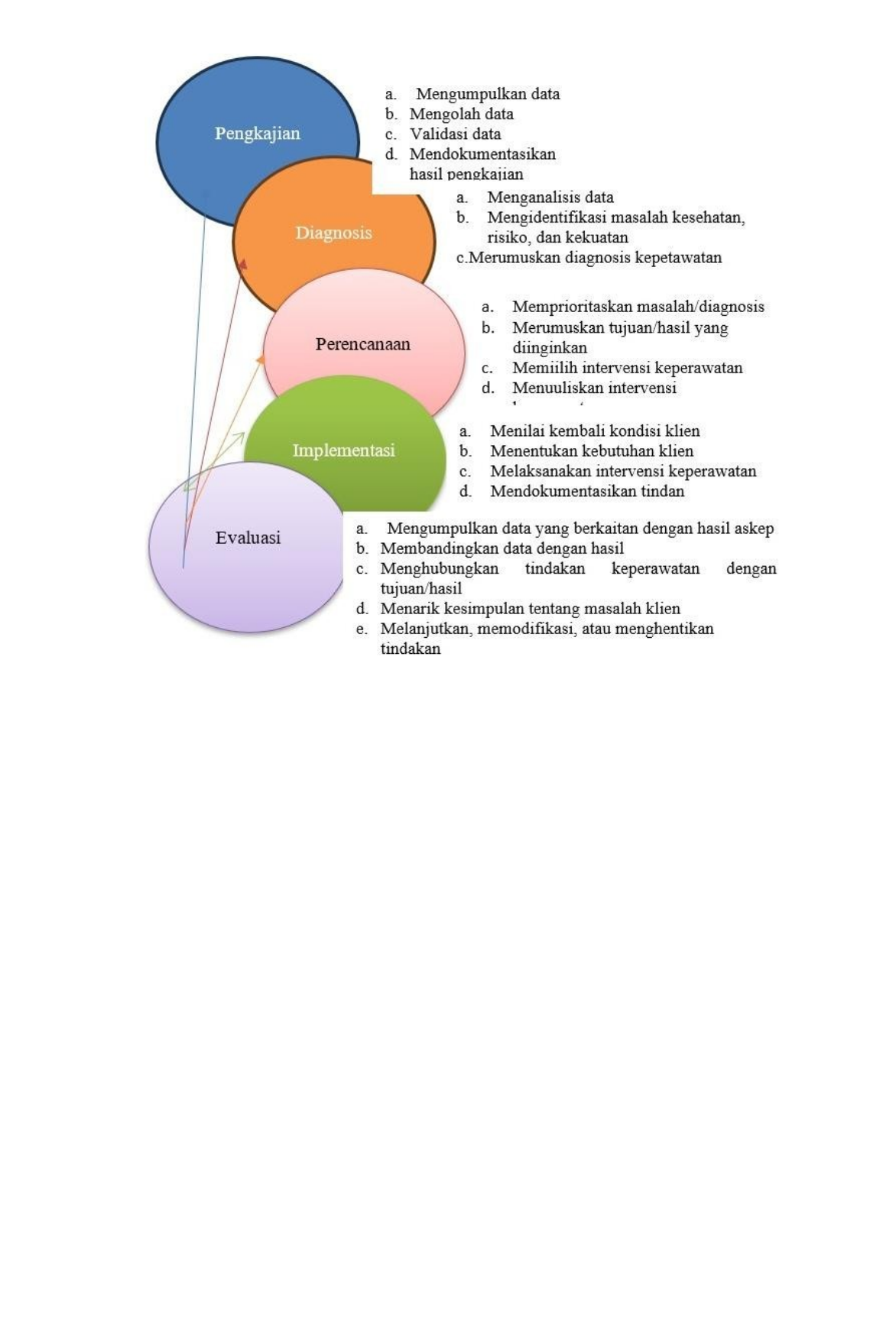
Figure 21.1. Nursing Process & Nurse Activities
Standards of Nursing Care
1. Understanding
Nursing care standards refer to a series of activities
carried out by nurses when providing nursing
services to clients either individually, family, group
or community. Nursing activities carried out include
assessment, formulation of nursing diagnoses,
planning, implementation, and evaluation. Each
stage of nursing care carried out by nurses refers to
standards that have been set by the profession and
the government (Berman et al., 2021).
Standard practice is one of the tools needed by
every professional.
82

Standard nursing practice is the minimum
expectations/expectations in providing safe,
effective and ethical nursing care. Nursing practice
standards are the commitment of the nursing
profession in protecting the community against
practices carried out by members of the profession
(Aji et al., 2018).
2. Purpose
Nursing Care Standards are used by nurses to
provide quality and consistent nursing care to
patients. This standard includes a set of guidelines,
criteria, and expectations that assist nurses in
assessing, planning, implementing, and evaluating
nursing care. The main goal is to ensure that
patients receive treatment that is safe, effective,
and tailored to their needs (Potter et al., 2020).
3. Standards of Nursing Care According to the
American Nurses Association (ANA)
The Nurse Practice Standards describe the level of
competent nursing care that nurses demonstrate
through a critical thinking model in the application
of the nursing process. The nursing process includes
components of assessment, diagnosis, planning,
implementation, and evaluation. The nursing
process includes significant actions taken by nurses
in making a treatment decision for the health and
safety of patients (ANA, 2015).
ANA (2015), grouped nursing care standards into
two, namely: 1) Nurse Practice Standards, 2) Nurse
Professional Appearance Standards. Nurse practice
standards consist of 6 (six) standards, namely:
Standard 1. Review
Nurses collect data and information related to their
clients' health conditions.
83

Standard 2. Diagnosis
Nurses analyze the study data to determine actual
or potential diagnoses.
Standard 3. Identification of Results
The nurse identifies the expected outcomes for the
individual plans she serves.
Standard 4. Planning
Nurses develop strategic plans to achieve expected
and measurable outcomes.
Standard 5. Implementation
Nurse Implement plan which was prepared.
Standard 5A. Care Coordination
Nurse terdaftar Coordinate provision of care.
Standard 5B. Health Teaching and Health Promotion
Nurses use strategies to improve the health and
safety of clients through health education and
promotion.
Standard 6. Evaluation
Nurses evaluate the client's health progress towards
achieving the goals and expected outcomes.
Standard practice Nursing
Professional is clearly depicted in Figure 25.2
84
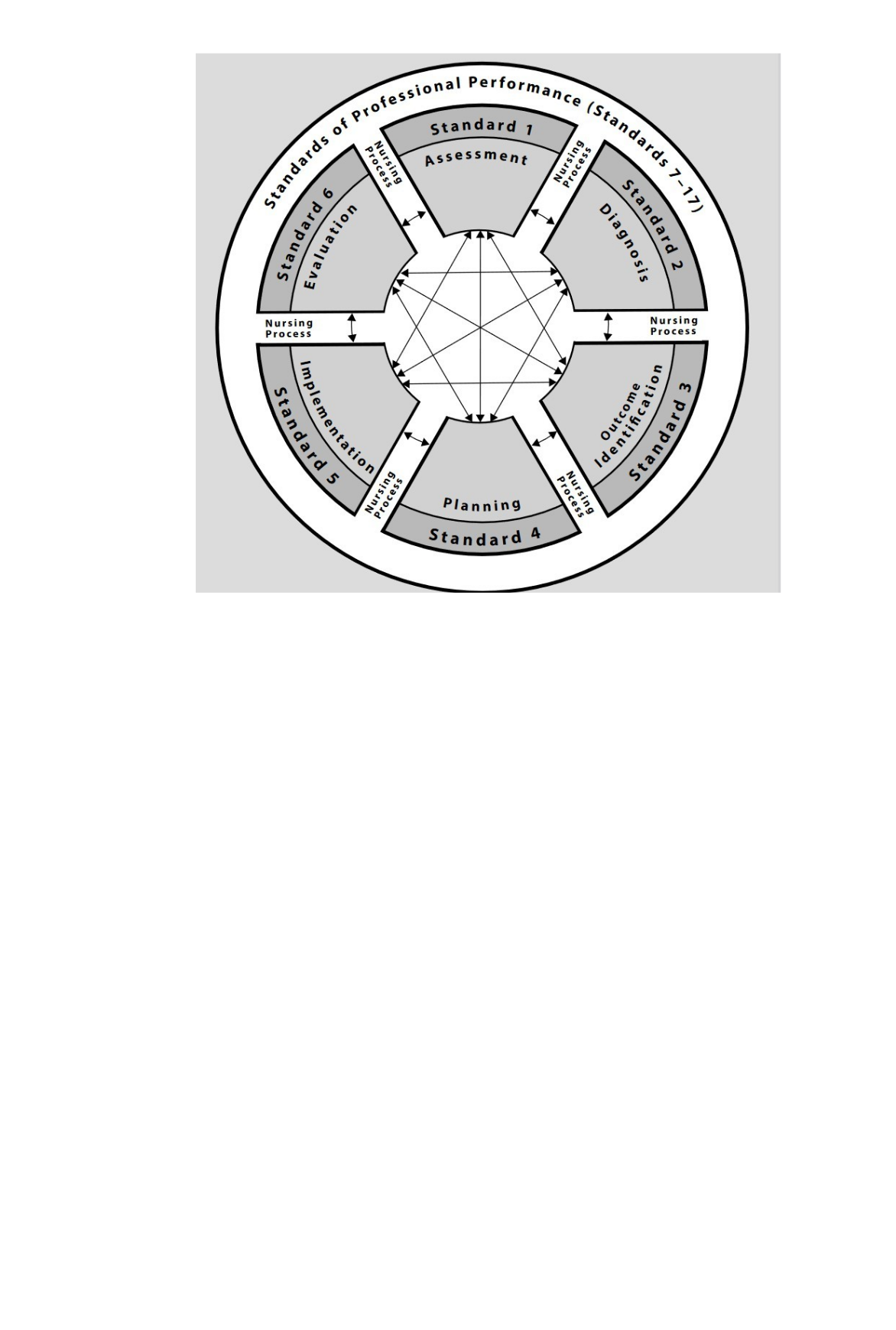
Figure 21.2. Professional Nursing Practice Standards
(ANA, 2015).
Professional appearance standards consist of:
Standard 7. Ethics
Nurses practice ethically.
Standard 8. Culturally Aligned Practices
Registered nurses practice in a way that is culturally
appropriate to the principles of diversity and
inclusion.
Standard 9. Communication
Nurses communicate effectively in all areas of
practice.
Standard 10. Collaboration
Nurses collaborate with healthcare consumers and
other key stakeholders in carrying out nursing
practices.
85

Standard 11. Leadership
Nurses lead in professional practice and professional
environments.
Standard 12. Education
Nurses seek knowledge and competencies that
reflect the present day of nursing practice and
promote futuristic thinking.
Standard 13. Evidence-Based Practice and Research
Nurses integrate research evidence and findings
into practice.
Standard 14. Quality of Practice
Nurses contribute to quality nursing practice.
Standard 15. Professional Practice Evaluation
Nurses evaluate their own nursing practices and
those of others.
Standard 16. Resource Utilization
Nurses use the right resources to plan, provide, and
maintain evidence-based nursing services that are
safe, effective, and fiscally responsible.
Standard 17. Environmental Health
Nurses practice in a way that is safe and healthy for
the environment.
Functions of Standard Nurse Practice
In general, the established nursing practice
standards guide nurses to practice according to the
standards that have been set. However, in reality, it
does not apply absolutely depending on the client's
condition. For example, a nurse providing care to an
unconscious and critical client who is taken to
hospital by an ambulance without a family has the
task of comprehensively collecting data related to
the client's health (Standard 1. Study). However, in
this condition, the nurse is unable to assess the
86

condition of family dynamics and its impact on the
health and well-being of their clients" (Starndard 1).
In the same example, Standard 5B. Health
Education and Promotion is impossible because the
client is unaware and there are no family members
(ANA, 2015).
4. Nursing Practice Standards According to the
Indonesian National Nurses Association (PPNI)
Professional nursing practice standards according to
PPNI as quoted by Aji et al., (2018) and Zuliani et al.
(2023), nursing practice standards consist of
professional practice standards and professional
performance standards.
The Professional Practice Standards consist of 5
standards, namely:
Standard I Assessment
Nurses collect data on the patient's health status in a
systematic, thorough, accurate, concise and continuous
manner.
1. Rational:
Nursing review is an important aspect of the nursing
process that aims to establish basic data on the
patient's health level that is used to formulate
patient problems and action plans.
2. Structure Criteria
The data collection method used can guarantee:
systematic and complete data collection, updating
data in existing records, ease of obtaining data, and
maintaining confidentiality. The practice order has a
nursing data collection system which is an integral
part of the patient data collection recording system.
Short, thorough, accurate and continuous.
The practice has a nursing data collection system
that is part of the patient's health record system. In
practice, there is a data storage system that can be
87

retrieved when necessary. The availability of
supporting facilities and environment.
3. Process Criteria
Data collection is carried out by means of
interviews, observations, physical examinations and
studying supporting data (the collection of
supporting data is obtained from the results of
laboratory examinations and diagnostic tests), as
well as studying other records. The data source is
the patient, family or related person, health team,
record
medical, as well as other records. Patients
participate in the data collection process.
The data collected, focused on identifying: Current
health status of patients, Past health status of
patients, Biological status (Physiological),
Psychological status (Coping patterns), Sociocultural
status, Spiritual status, response to therapy,
expectations for optimal health levels, risk of
potential problems
4. Outcome Criteria
The data collection method used can guarantee:
systematic and complete data collection, updating
data in existing records, ease of obtaining data, and
maintaining confidentiality. The practice order has a
nursing data collection system which is an integral
part of the patient data collection recording system.
Short, thorough, accurate and continuous. The
practice has a nursing data collection system that is
part of the patient's health record system. In
practice, there is a data storage system that can be
retrieved when necessary.
Availability of facilities and environments that
support Standard II Nursing Diagnosis
1. Nurses analyze and assess to formulate a nursing
diagnosis
88

a. Rational
Nursing diagnosis as the basis for developing a
nursing intervention plan in order to achieve
improvement, prevention and cure of diseases
and recovery of patient health.
b. Structure Criteria
The order of practice provides opportunities;
1) To peers, patients to validate nursing
diagnoses
2) There is a mechanism for exchanging
information about research results in
determining the right nursing diagnosis.
3) For access to related professional
development resources and programs.
4) There is a systematic recording of the
patient's diagnosis.
c. Process Criteria
The diagnosis process consists of analysis, &
interpretation of data, identification of patient
problems and formulation of nursing diagnosis.
The components of nursing diagnosis consist of
problems (P), causes (E), symptoms/signs (S) or
consist of problems with causes (PE). Work with
patients, close to patients, other healthcare
workers to validate nursing diagnoses.
2. Review and revise the diagnosis based on the latest
data.
Outcome Criteria
a. Nursing diagnosis validated by the patient when
possible
b. The nursing diagnosis made is accepted by
peers as a relevant and significant diagnosis.
89

c. Diagnoses are documented to facilitate
planning, implementation, evaluation and
research.
Standard III Planning
Nurses create a nursing action plan to cope problem
health and improve patient health.
1. Rational
Planning is developed based on nursing diagnoses.
2. Structure Criteria
The practice order provides:
a. The means needed to develop the plan.
b. There is a recording mechanism, so that it can
be communicated.
3. Process Criteria
a. Planning consists of setting problem priorities,
goals and nursing action plans.
b. Collaborate with patients in developing nursing
action plans.
c. Planning is individual (as individuals, groups and
communities) according to the patient's
condition or needs.
d. Documenting nursing plans.
4. Outcome Criteria
a. Preparation of a patient nursing care plan
b. Planning reflects the completion of a nursing
diagnosis.
c. Written planning is in a short and easy-to-get
format.
d. Planning shows evidence of a revision to achieve
the goal.
90

Standard IV Implementation of Nursing
Procedures (Implementation)
Nurses implement the actions that have been identified
in the nursing care plan
1. Rational
Nurses implement nursing care plans to achieve
predetermined goals and patient participation in
nursing actions has an effect on the expected
outcomes.
2. Structure Criteria
The practice order provides:
a. Resources for the implementation of activities.
b. Manpower patterns that suit needs.
c. There is a mechanism to review and revise the
manpower pattern periodically.
d. Coaching and improvement of nursing clinical
skills.
e. Nursing Consultation System.
3. Process Criteria
a. Collaborate with patients in the implementation
of nursing actions.
b. Collaboration with other health professions to
improve the health status of patients.
c. Performing nursing actions to address patient
problems.
d. Supervise nursing implementers under their
responsibility.
e. Become a coordinator of services and advocacy
for patients to achieve health goals.
f. Inform patients about their health status and
existing health care facilities.
91

g. Provide education to patients and families on
self-care concepts and skills and help patients
modify the environment in which they operate.
h. Review and revise the implementation of
nursing actions based on patient response
4. Outcome Criteria
a. Documented nursing actions and patient
responses are systematically and easily
retrieved.
b. Nursing treatment is acceptable to patients
c. There is measurable evidence of the
achievement of goals.
Standard V Evaluation
The nurse evaluates the patient's health progress
against actions in achieving the goals, according to the
plan that has been set and revises the basic data and
planning.
1. Rational
Nursing practice is a dynamic process that includes
various changes in data, diagnoses or planning that
have been made beforehand. The effectiveness of
nursing care depends on repeated assessments.
2. Structure Criteria
a. The practice order provides: facilities and
environment that support the implementation of
the evaluation process.
b. There is access to information that nurses can
use in improving planning
c. There is supervision and consultation to help
nurses conduct effective evaluations and
develop appropriate planning alternatives.
92

3. Process Criteria
a. Develop a plan to evaluate the results of actions
comprehensively, on time and continuously.
b. Using basic data and patient responses in
measuring progress towards achieving goals.
c. Validate and analyze new data with peers and
patients
d. Working closely with patients, families to modify
nursing care plans.
e. Documenting the results of the evaluation and
modifying the planning.
f. Conduct clinical supervision and consultation.
4. Outcome Criteria
a. The results of data revisions, diagnoses, and
action plans based on evaluation are obtained.
b. Patients participate in the process of evaluating
and revising action plans.
c. The results of the evaluation are used to take
Results
d. The evaluation of the action is documented in
such a way that it shows its contribution to the
effectiveness of nursing and research actions.
Professional Performance Standards
The Professional Performance Standards consist of 8
standards:
1. Standard I Quality Assurance
Nurses systematically evaluate the quality and
effectiveness of nursing practice.
2. Standard II Education
93

Nurses are responsible for acquiring cutting-edge
science in nursing practice.
3. Standard III of Employment Assessment
Nurses evaluate their practice against professional
practice standards and other relevant provisions.
4. Standard IV Alignment (collegial)
Nurses contribute to developing the profession of
colleagues.
5. Standard V Etik
Decisions and actions of nurses on behalf of
patients are determined in an ethical manner (in
accordance with norms, cultural values and
professional standards)
6. Collaboration VI Standard
Nurses collaborate with patients, families and all
related parties as well as multi-disciplinary health
teams in providing patient nursing.
7. Standard VII Research
Nurses use research results in nursing practice.
8. Standard VIII Utilization of Resources.
Nurses consider factors related to safety,
effectiveness and cost in planning and providing
patient care.
Procedure Remain deep Practice
Professional Nursing
Standard Operating Procedures (SOPs) are written
guidelines that define detailed steps on how to carry
out certain duties and procedures in nursing practice.
SPO aims to improve efficiency, consistency, and safety
in the provision of nursing care.
94

Components of Nursing Fixed Procedures
1. Procedure Title:
Provides clear identification of the procedures being
regulated.
2. Purpose:
Explain the purpose of the procedure.
3. Scope:
Describe the scope of the procedure application,
including who is responsible for carrying it out.
4. Definition:
Provides definitions for technical terms used in
procedures.
5. Procedure Steps:
Provides detailed instructions and the sequence of
steps to be followed in carrying out the procedure.
6. Precautions and Safety Measures:
Provide information on precautions to be taken to
ensure the safety of patients and healthcare
workers.
7. Documentation:
Describe the type of documentation required after
the implementation of the procedure.
8. Review and Revision:
Specifies when and how procedures will be reviewed
and updated.
Purpose of Nursing Permanent Procedures
1. Process Standardization: Ensuring all nurses carry
out procedures in the same way to reduce
variability and errors.
95

2. Safety and Efficiency: Improve patient safety and
nurse work efficiency.
3. Legal and Ethical Compliance: Ensuring that nursing
practices adhere to legal and ethical standards.
4. Training and Onboarding: Making it easy training
and onboarding process for new nurses.
Here is an example of a Nursing Permanent
Procedure
(Standard Operating Procedure, SOP) to
Administration of Intravenous (IV) Drugs:
Procedure Title
Intravenous (IV) Drug Administration
Purpose
Ensuring that intravenous drug administration is
carried out safely, effectively, and in accordance
with nursing standards.
Scope
This procedure applies to all nurses on duty in
hospitals or health facilities that provide intravenous
drug administration services.
Definition
Intravenous drug administration is the
administration of drugs directly into the
bloodstream through a vein using a needle or
intravenous catheter.
Steps of the Preparation Procedure
1. Medication Order Verification:
a. Make sure the medication order is in accordance
with the doctor's instructions, including the type
of medication, dosage, frequency, and route of
administration.
96

b. Check the patient's identification correctly (full
name, date of birth, and medical record
number).
2. Preparation of Tools and Materials:
a. Medication to be given (in vials or ampoules)
b. Spuit (syringe) sterile
c. Sterile syringes
d. Cotton alcohol
e. Non-sterile gloves
f. Plaster
g. Tourniket (torniquet)
Implementation
1. Hand Washing:
Wash your hands with soap and running water or
use hand sanitizer.
2. Patient Preparation:
a. Explain the procedure to the patient and make
sure the patient understands and gives consent.
b. The patient's position is in a comfortable state.
3. Drug Preparation:
a. Take the medication using a sterile syringe.
b. Replace the syringe used to take the medication
with a new, sterile syringe.
4. Vein Preparation:
a. Select the appropriate vein (usually in the
forearm).
97

b. Install the tourniquet about 5-10 cm above the
site to be injected.
c. Clean the injection area with an alcohol swab in
a circular motion from the inside out.
5. Medication Administration:
a. Attach the needle to the vein at an angle of
about 15-30 degrees.
b. Once blood appears inside the syringe, remove
the tourniquet.
c. Insert the medication slowly as directed.
d. Carefully remove the needle and cover the
injection area with an alcohol swab.
e. Secure with plaster if needed. Precautions and
Safety
1. Allergy:
Check the patient's allergy history before
administering medication.
2. Infection:
Use aseptic techniques to prevent infection.
3. Drug Reactions:
Monitor the patient during and after administration
of the drug for adverse reactions.
Documentation
1. Medical Notes:
a. Record the type of drug, dosage, time of
administration, injection location, and patient
reactions.
b. Write the initials and signature of the nurse
administering the medicine.
98

2. Incident Report:
Report and document in case of incidents or
adverse reactions.
Review and Revision
This procedure will be reviewed every 2 years or as
needed based on the development of science and
technology in nursing practice.
Conclusion
Nursing care standards and fixed procedures are key
pillars in the practice of quality professional nursing.
Through the implementation of strict standards and
detailed procedures, nurses can ensure that they are
providing consistent, safe, and evidence-based care to
patients. In Indonesia, PPNI has played an important
role in setting these standards and procedures, thereby
facilitating the improvement of the quality of nursing
care nationally. By adhering to these standards and
procedures, nurses not only contribute to the well-being
and safety of patients, but also elevate the nursing
profession to a higher level.
Effective implementation of nursing care standards and
fixed procedures also supports the professional
development of nurses, strengthens health care
systems, and ultimately improves public health
outcomes. Therefore, it is important for all nurses to
understand, apply, and continue to update their
knowledge of these standards and procedures, in order
to ensure optimal and sustainable health services.
99

FULFILLMENT OF THE NEEDS
OF COMFORT, REST AND
SLEEP
Fulfilling the Need for Comfort
1. Definition of Comfort
Comfort is a state in which a person feels
prosperous or comfortable both mentally, physically
and socially (Keliat, Windarwati,
Pawirowiyono, & Subu, 2015).
Comfort according to (Keliat et al., 2015) can be
divided into three, namely:
a. Physical comfort; is a sense of well-being or
physical comfort.
b. Environmental comfort; is a sense of well-being
or comfort felt in or with the environment
c. Social convenience; It is a state of well-being or
a sense of comfort with the social situation.
According to Potter & Perry (2006) quoted in the
book (Iqbal Mubarak, Indrawati, & Susanto, 2015),
comfort is a state of fulfillment of basic human
needs, namely the need for peace (satisfaction that
can improve daily appearance), relief (needs that
have been met), and transcendence. Comfort
should be viewed holistically which includes four
aspects, namely:
a. Physical, related to bodily sensations
b. Social, interpersonal, family, and social
100

c. Psychospirituality, related to the internal
vigilance in a person which includes self-esteem,
sexuality and the meaning of life
d. The environment, is related to the background
of human external experiences such as light,
sound, temperature, color, and other scientific
elements. Increasing the need for comfort can
be interpreted as nurses have provided
strength, hope, entertainment, support,
encouragement, and assistance.
2. Comfort Disorder
Comfort disorder is the feeling that a person feels
uncomfortable and perfect in their physical,
psychospiritual, environmental, cultural and social
conditions (Keliat et al., 2015). Dysphoria has
characteristic limitations, namely: anxiety,
complaining, sleep pattern disturbances, itching,
distress symptoms, restlessness, irritability, inability
to relask, dissatisfaction with the situation, crying,
feeling cold, feeling unhappy with the situation,
feeling warm, feeling hungry, feeling uncomfortable,
whimpering, and fear. Comfort disorder is a
disorder in which feelings of less pleasure, less
relief, and less than perfect in the physical,
psychospiritual, environmental, and social
dimensions of oneself usually have symptoms and
minor signs of complaining of nausea (PPNI, 2016).
3. Types of Comfort Disorders
According to (Mardella, Esther, Riskiyah, &
Mulyaningrum, 2013) Comfort disorders can be
divided into 3 namely:
a. Acute Pain
Acute pain is a condition in which a person
complains of discomfort and feels an
uncomfortable, unpleasant sensation for 1
second to less than six months.
101

b. Chronic Pain
Chronic pain is a condition in which an individual
complains of discomfort with the sensation of
pain felt over a period of more than six months.
c. Nauseous
Nausea is a condition when an individual
experiences an uncomfortable sensation in the
back of the throat, the epigastric area or in the
entire abdomen that can cause vomiting or not.
4. Causes of Comfort Disorders
In the book Indonesian Nursing Diagnosis Standards
(PPNI, 2016) the causes of Comfort Disorders are:
a. Symptoms of the disease.
b. Less control Circumstantial or the
environment.
c. Inadequacy of resources (e.g. financial, social
and knowledge support).
d. Lack of privacy.
e. Environmental stimulation disorders.
f. Side effects of therapy (e.g., medication,
radiation and chemotherapy).
g. Pregnancy adaptation disorders.
5. Symptoms and Signs of Comfort Disorder
Symptoms and signs of discomfort disorder
(nausea) can be divided into 2 (two), namely as
follows (PPNI, 2016):
a. Major Symptoms
Subjective Data:
1) Complaining of discomfort
2) Complaining of nausea
102

3) Complaining of wanting to vomit
4) Not interested in eating
Objective Data: (not available)
b. Minor Symptoms
Subjective Data
1) Feeling sour in the mouth
2) Hot/cold sensation
3) Frequent swallowing
Data Objektid
1) Increased saliva
2) Pale
3) Diaphoresis
4) Tachycardia
5) Dilatated pupils
Fulfillment of Rest and Sleep Needs
1. Definition
Rest and sleep are basic needs that must be met by
everyone. Adequate rest and sleep will make the
new body can function optimally. Rest and sleep
alone have different meanings for each individual.
Rest means a state of calm, relaxation, without
emotional stress, and free from disturbing feelings.
Taking a break does not mean not doing activities at
all. A walk in the park can sometimes also be said to
be a form of rest
Sleep is a state of altered consciousness when an
individual's perception and reaction to the
environment decreases. Sleep is characterized by
minimal physical activity, varying levels of
consciousness, changes in the body's physiological
103

processes, and decreased response to external
stimuli. Almost one-third of an individual's time is
spent sleeping. This is based on the belief that sleep
can restore or rest the body after a day of activity,
reduce stress and anxiety, and can improve ability
and concentration when about to carry out daily
activities.
2. Sleep Physiology
Sleep activity is regulated and controlled by two
systems in the brainstem, namely the Reticular
Activating System (RAS) and the Bulbar
Synchronizing Region (BSR). RAS at the top of the
brainstem is believed to have specialized cells that
can maintain alertness and consciousness, provide
visual, auditory, painful, and sensory stimulation, as
well as emotions and thought processes. RAS
releases catecholamines when awake, while during
sleep there is a release of serum serotonin from
BSR.
3. Ritme Srikandi
Living things have different biorhythms (biological
clocks). Biorhythm in humans is controlled by the
body and adjusted to environmental factors (e.g.,
light, darkness, gravity and electromagnetic
stimuli). The most common form of biorhythm is the
circadian rhythm that completes the 24-hour cycle.
Fluctuations in heart rate, blood pressure,
temperature, hormone secretion, metabolism, and
an individual's appearance and feelings depend on
their circadian rhythm. Sleep is one of the body's
most complex biological rhythms. Circadian
synchronization occurs when an individual has a
wake-up sleep pattern that follows his or her
biological clock: the individual will wake up at the
highest or most active physiological rhythm and will
fall asleep at the lowest rhythm.
4. Stages of Sleep
104

Research conducted with the help of electro
encephalogram (EEG), electro oculogram (EOG),
and electro cryogram (EMG), it is known that there
are two stages of sleep, namely non-rapid eye
movement (NREM) and rapid eye movement (REM).
a. Tidur NREM
NREM sleep is also referred to as short-wave
sleep because the brain waves shown by people
who sleep are shorter than the alpha and beta
waves shown by conscious people. NREM sleep
causes a decrease in a number of physiological
functions of the body. All metabolic processes
included Signs vital, metabolism, and
muscle work slow down.
NREM sleep itself is divided into 4 stages (I-IV).
Stages I-II are referred to as light sleep and
stages III-IV are referred to as deep sleep or
delta sleep.
1) Stage 1 NREM
a) Stages include the most superficial
levels of sleep
b) The stage ends in a few minutes
c) The reduction in physiological activity
begins with a gradual decline in vital
signs and metabolism
d) A person is easily awakened by sensory
stimuli such as sound
e) A person when waking up feels like he
has been daydreaming
2) Stage 2 NREM
a) Phase 2 Is era Sleep
Sounds
b) Relaxation progress
105

c) Waking up is still relatively easy
d) Stage ends 10 to 20 minutes
e) The continuation of body functions
becomes sluggish
3) Stage 3 NREM
a) Stage 3 includes the initial stages of
deep sleep
b) People who sleep have difficulty waking
up and rarely move
c) Muscles in full relaxation
d) Vital signs are declining but remain
regular
e) Stage ends 15 to 30 minutes
4) Stage 4 NREM
a) Stage 4 is the deepest stage of sleep
b) It is very difficult to wake a sleeping
person
c) Person that less sleep will spend
portion night that
balanced at this stage
d) Vital signs decreased significantly
compared to during waking hours e) The
stage ended approximately 15 to 30
minutes
f) Walking sleep and anuresis can occur
b. REM Sleep
REM sleep usually occurs every 90 minutes and
lasts for 5-30 minutes. REM sleep is not always
NREM sleep, and most dreams occur at this
stage. The brain tends to be active during REM
106

sleep and its metabolism increases by up to
20%. In this stage the individual becomes
difficult to wake up or can get up suddenly,
muscle tone is depressed, gastric secretions
increase, and heart and breathing frequencies
are often irregular.
REM sleep characteristics:
1) Colorful and life-like dreams can
occur in REM. Dreams that are
less alive can occur at other
stages.
2) This stage usually starts about 90
minutes after the start of sleep
3) Characterized with Response
autonomous from rapid
eye movements, heart
fluctuations and speed
Respiration and increased or
fluctuating blood pressure
4) Decreased skeletal muscle tone
occurs
5) Increased gastric secretion
6) It is very difficult to wake up a
sleeping person
7) The duration of REM sleep
increases with each cycle and
averages 20 minutes.
5. Sleep Cycle
Individuals go through the NREM and REM sleep
stages during sleep. A complete sleep cycle
normally lasts 1.5 hours, and each person usually
goes through four to five cycles of 78 hours of sleep.
The cycle starts from the NREM stage and continues
107

to the REM stage. The NREM stage I-III lasts for 30
minutes, then continues to stage IV for ± 20
minutes. Individuals then return through stages III
and II for 20 minutes. Stage I REM appears
afterwards and lasts for 10 minutes.
6. Factors Affecting the Quantity and Quality of Sleep
Factors that affect the quality and quantity of sleep
include disease, environment, fatigue, lifestyle,
emotional stress, stimulants and alcohol, diet,
smoking, and motivation.
a. Disease
Illness can cause pain or physical distress that
can lead to sleep disturbances. Sick individuals
need more sleep than usual. The wake-wake
cycle during illness can also be disrupted.
b. Milieu
Environmental factors can help and inhibit the
sleep process. The absence of certain stimuli or
the presence of unfamiliar stimuli can hinder
sleep effort. For example, uncomfortable
temperatures or poor ventilation can affect a
person's sleep. Over time, individuals can adapt
and are no longer affected by these conditions.
c. Fatigue
The condition of a tired body can affect a
person's sleep patterns. The more tired a person
is, the shorter the REM sleep cycle he goes
through. After resting, the REM cycle will usually
extend again.
d. Lifestyle
Individuals who often change working hours
must manage their activities so that they can
sleep at the right time.
108

e. Stress Emosional
Anxiety and depression often interfere with a
person's sleep. Anxious conditions can increase
blood norepinphrine levels through stimulation
of the sympathetic nervous system. This
condition causes reduced NREM stage IV sleep
cycles and REM sleep as well as frequent
awakening during sleep.
f. Stimulants and Alcohol
Caffeine contained in some drinks can stimulate
CNS so that it can interfere with sleep patterns.
Excessive alcohol consumption can disrupt REM
sleep cycles. The influence of alcohol that has
disappeared can cause individuals to often have
nightmares.
g. Diet
Weight loss is associated with decreased sleep
time and frequent awakening at night. Weight
gain is associated with an increase in total sleep
and fewer awake periods at night.
h. Smoke
The nicotine contained in cigarettes has a
stimulating effect on the body. Smokers often
have trouble falling asleep and wake up easily
at night.
i. Mediation
Certain medications can affect the quality of a
person's sleep. Hypnotics can interfere with
stage III and IV NREM sleep, betablockers can
cause insomnia and nightmares, while narcotics
(e.g., meperidine hydrochloride and morphine)
are known to suppress REM sleep and cause
frequent nighttime awakenings.
j. Motivation
109

The desire to stay awake can sometimes mask a
person's feeling of tiredness. Feelings of
boredom or lack of motivation to stay awake
can often lead to drowsiness.
7. Common Sleep Disorders
a. Insomnia
Insomnia is the inability to meet the needs of
sleep, both in quality and quantity. This sleep
disorder is commonly found in adult individuals.
The cause can be due to physical disorders or
due to mental factors such as feelings of anxiety
or anxiety.
b. Parasomnia
Parasomnia is a behavior that can interfere with
sleep or appear when a person sleeps. This
disorder is common in children. Some of the
derivatives of parasomnia include frequent
wakefulness (e.g., sleepwalking, night terrors),
wake-wake transition disorder (e.g., delirium),
parasomnia associated with REM sleep (e.g.,
nightmares), and others (e.g., bruxism).
c. Hypersomnia
Hypersomnia is the opposite of insomnia, which
is excess sleep, especially during the day. These
disorders can be caused by certain conditions,
such as damage to the nervous system,
disorders of the liver or kidneys, or due to
metabolic disorders (e.g.: hyperthyroidism).
Hypersomnia in certain conditions can be used
as a coping mechanism to avoid responsibility
during the day.
d. Narcolepsy
Narcolepsy is an unbearable wave of drowsiness
that appears suddenly during the day. This
disorder is also known as a "sleep attack." The
110

exact cause is not yet known. It is suspected
that it is due to genetic damage to the central
nervous system that causes uncontrolled REM
sleep periods. Alternative prevention is with
medications, such as amphetamines or
methylpenidase, hydrochlorides, or with
antidepressants such as imipramine
hydrochloride.
e. Apnea saar sleep
Sleep apnea or sleep apnea is a condition in
which breathing stops periodically during sleep.
This condition is thought to occur in people who
snore loudly, often stay awake at night,
insomnia, excessive squeezing during the day,
headaches during the day, irritability, or
experience psychological changes such as
hypertension or cardiac arrhythmias.
111

FULFILLMENT OF ACTIVITY
AND EXERCISE NEEDS
Introduction
Activity Needs are basic human needs that include the
ability to move around and perform physical activities
necessary to maintain health and well-being. From a
professional nursing perspective, it involves identifying,
planning, executing, and evaluating physical activity
that is appropriate to the patient's individual health
condition, abilities, and goals. The fulfillment of activity
needs aims to improve the patient's quality of life,
prevent complications related to immobility, and
support rehabilitation and health recovery.
Meeting the needs of activity and exercise involves a
holistic approach that considers the patient's health
condition, individual needs, and rehabilitation or care
goals. Some of the steps and strategies implemented
by nurses to meet the needs of patients' activities and
exercises are initial assessment, activity planning,
activity implementation, education and support,
monitoring and evaluation.
Exercise activity planning includes, developing an
exercise plan tailored to the patient's health condition,
abilities, and goals, and working closely with a
multidisciplinary team such as physiotherapists,
doctors, and nutritionists to design a comprehensive
exercise program.
112

The implementation of the exercise program is to set a
regular exercise schedule and ensure that patients
follow the planned program. Monitoring patients during
exercises to ensure safety and provide support and
motivation, as well as making modifications to adjust
exercises based on patient response and progress, as
well as addressing obstacles or problems that arise. At
this implementation stage, it is also important to carry
out education regarding the correct training technique
and the importance of recovery.
At the evaluation stage, patient progress is monitored
and activity programs are adjusted based on responses
and results, as well as evaluating the effectiveness of
activity programs in achieving patient health and
fitness goals.
Understanding
Activity training, according to health experts, refers to
any form of physical movement that is deliberately
done with the aim of improving a person's physical and
mental health. This can include a variety of activities,
from cardiovascular exercises such as running or
swimming, strength training such as weight lifting, to
lighter activities such as walking or yoga. The main goal
is to improve fitness, reduce the risk of disease,
improve mental well-being, and support overall quality
of life (AHA, 2020). Exercise is an activity that a person
does to improve or maintain physical fitness
(Sukadiyanto, 2010).
Body Systems That Play a Role in Needs
Activities According to (Tinungki, et al. 2023)
1. Bone
113

Figure 23.1 Bones
Bones have several important functions in the
human body. First, mechanically, bones form the
skeleton of the body and provide a place for the
muscles to attach. Second, bones act as a store for
minerals, especially calcium and phosphorus, which
are released according to the body's needs. Third,
bones also function as a place for the production of
blood cells in the bone marrow. Lastly, bones
provide protection to vital organs in the body.
2. Muscles and tendons
Figure 23.2: Muscles and Tendons
Muscles allow the body to move as it wishes through
its ability to contract. Each muscle has two
important points called origo and insertion, which
are connected to the bone through the tendon.
Tendons are strong connective tissue and are
attached to the bone at the site of the incision.
3. Ligaments
114

Figure 23.3 Ligaments
A ligament is a tissue that connects one bone to
another. In the knee, the ligament acts as a
stabilizer. If the ligament is broken, this can disrupt
the stability system and cause instability in the
joint.
4. Nervous system
Figure 23.4: Nerves
The nervous system consists of the central nervous
system (brain and spinal cord) and the peripheral
nervous system (a branch of the central nervous
system). Each nerve has a somatic and autonomous
part. The somatic part has motor and sensory
functions.
5. Joint
115
Figure 23.5 Joints
It is where two or more ends of the bones meet. The
joints make segmentation of the skeleton of the
body and allow for movement between segments
and varying degrees of bone growth.
Mobility and Immobility Needs
1. Definition of mobility
According to Widuri, 2019 Mobility is the ability of
individuals to move freely, easily and orderly.
a. Full mobility, where a person can carry out
activities freely, independently in carrying out
daily roles
b. Partial mobility, a person who performs activities
partially assisted by this occurs because there
are disturbances in the motor and sensory
systems.
2. Factors affecting mobility
a. Lifestyle
Lifestyle changes can affect a person's ability to
move because lifestyle has an impact on daily
behavior or habits. Exercisers usually have a
healthy lifestyle or habits, ranging from
adequate nutrition, good physical exercise to
regular sleep needs.
116

b. Disease/injury process
The disease process can affect a person's ability
to move because it can affect the body system.
For example, people who suffer from femur
fractures will experience limited movement in
the lower extremities.
c. Culture
The ability to carry out activities can also be
influenced by culture. For example, people who
have a culture of walking far have a stronger
ability to walk than people who have a culture
that never walks far.
d. Energy level
Energy is a source of activity. Enough energy
can encourage a person to do good activities.
An athlete is no exception, an athlete needs
good energy to keep his body fresh to stay in
tip-top shape. Excellent freshness balanced with
good technical skills and tactics is a driving
factor for athletes to obtain achievements
(Center for the Assessment and Development of
Sports Science and Technology, 1999 in
Iswahyudi 2007).
e. Age and developmental status
There are differences in activity ability at
different ages. This is because the ability or
maturity of the function of the motor apparatus
is in line with the development of age. Adult age
will be better at the ability to function in the
motor apparatus than people in the elderly.
3. Definition of immobility
Immobility is a condition of physical limitations of
the body or extremities where a person is unable to
carry out activities normally due to disturbances in
117

movement. For example, fractures, strokes, strokes,
weaknesses and so on (Nurarif and Kusuma, 2015).
Activity and Exercise Value
1. Activity capability level category
2. Range of motion
3. Degree of muscle strength
118

Nursing Action Procedures for Disorders
Activity Needs
1. Tools and Materials
Before carrying out nursing care, you must prepare
the necessary tools and materials:
a. Assessment form
b. Handwashing stations
c. Soap for hand washing
d. Towel
e. Sphygmomanometer
f. Watch
g. Stethoscope
h. Wheelchair
i. Crutch
2. SOP Moving Patients From Bed to Chair
Wheel
a. Understanding
119

Moving patients who can't/can't walk, is done
from one place to another.
b. Purpose
Reduce/avoid the patient's movement according
to his or her physical condition., Meet the needs
of consultation or move rooms.
c. Policy
The implementation is carried out by skilled
officers.
d. Tool Preparation Procedure:
a. Wheelchair
b. Handscun or gloves (if necessary)
Patient preparation
a. The patient is in bed
b. Describe the procedure to the patient
c. Set the patient's bed position to the lowest
position, until the patient's feet can touch the
floor.
d. Place the wheelchair parallel or as close to the
bed as possible, lock all the wheels
Implementation
a. Help the patient sit on the edge of the bed
b. Kaji postural hipotensi
c. Instruct the patient to move forward and sit on
the edge of the bed.
d. Instruct lean forward starting from the hips.
e. Instruct the strong leg to be placed under the
edge of the bed, while the weak leg is in front of
it.
120

f. Place the patient's hands on the surface of the
bed or on the nurse's shoulders.
g. Stand right in front of the patient, lean forward,
flex your hips, knees, and ankles. Spread your
legs with one in front and the other in the back.
h. Circle the patient's back with both hands of the
nurse.
i. Your gluteal, abdominal, leg and arm muscles
are ready to perform the movement.
j. Help the patient to stand, then move together
towards the wheelchair.
k. Help the patient to sit down, ask the patient to
have their back to the wheelchair, place both
hands on the arm of the wheelchair or stay on
the nurse's shoulder.
l. Ask the patient to slide the seat to the safest
position.
m. Lower the footrest, and place both of the
patient's feet on it.
n. Unlock the wheels on the seat
3. SOP for Using Walking Crutches
a. Definition of Crutches
Crutches, which are sticks or aids for walking,
are usually used in pairs that are created to
regulate balance when walking.
b. Purpose of Use of Crutches
1) Improves muscle strength, joint movement
and mobilization ability.
2) Lower risk Complications from
mobilization.
121

3) Lowering the dependence of patients and
others.
4) Increase client confidence.
c. Function of Crutches
1) As a walking aid.
2) Setting or balancing the running time.
3) Helps support part of the body weight.
d. Crutches User Indication
1) Patients with lower extremity fractures.
2) Patients with post op amputation of the
lower extremities.
3) Patients with leg weakness or post stroke.
e. Cons of Crutches
1) People with fever with a body temperature
of more than 37⁰ C
2) The patient is in a bedrest state.
3) Sufferers with post op.
f. Benefits of Using Crutches
1) Maintains and restores muscle function
2) Prevents deformities, such as legs becoming
bent
3) Maintains and increases muscle strength
4) Prevents complications, such as shrinking
muscles and joint stiffness.
4. According to Saputra (2013) in Adha (2017), there
are several management of mobilization
disturbances in general, including:
122

a. Semi fowler
What is meant by a semi-fowler attitude is a
posture in a half-sitting position of 15 degrees to
60 degrees.
b. Fowler
Sitting position, where the patient rests on the
bed with the body slightly raised and the degree
of altitude (75 – 90) degrees.
c. Lithotomi
The lithotomy position is a position where the
patient lies on his back with both legs raised
and pulled up to the abdomen.
d. Dorsal recubment
123

The dorsal recumbent position is a supine
position with both feet bent and the heels or
soles of the feet attached to the bed and both
legs extended.
e. SIM
The sims position is a position where the patient
lies on his side to one side, either to the right or
to the left.
f. Trendelenburg
The trendelenberg position is to give the head a
lower position than the leg position.
g. Supine
124

The supination position is the position of the
patient lying on his back with his head and
shoulders slightly elevated using a pillow.
h. Pronation
The pronation position is a position where the
client lies on the abdomen or stomach with the
head turned to the side.
i. Right tilt and left tilt
The lateral position is the position of the client
lying on one side of the body with the head
turned to the side
j. Kneechest
125

Position the client with his head and chest
resting on the bed.
126

FULFILLMENT
HYGIENE AND SELF CARE
Meeting the basic needs of patients not only creates a
personal connection between nurses and patients, but
also maintains and improves patient health. This is the
responsibility of nurses in providing the right quality of
care by regulating how much help must be provided to
patients, so that patients are able to meet their basic
needs gradually starting from fully dependent to
independent. The many disease conditions experienced
by patients, ranging from acute and chronic, infectious
and non-communicable, ranging from infancy to the
elderly, have a major impact on the existing care
system, including in personal hygiene practices.
Self Care
Self-care has been practiced in the community before
the health system was officially formed, in some cases
people rely on self-care due to the difficulty of access to
health care. With the development of chronic disease
patterns in society, the need for self-care is also
increasing, not only in chronic disease management but
also in the emergence of support groups. Actions for
self-care are starting to gain traction along with the
increasing focus on caring for elderly patients with their
various chronic diseases. Communities begin to form
support groups and motivate them in self-care
(Martínez, Connelly, Pérez, & Calero, 2021).
Self-care is a form of individual self-regulation by
considering what to do and how to perform those
actions independently to maintain health, improve
development, and well-being. Self-care must be
learned, and should be done consciously on an ongoing
basis, striving to be timely and in accordance with the
127

requirements in the individual setting. These
requirements correspond to the stage of development,
the health condition or disease experienced, the level of
energy use, and environmental factors (Taalab, Qasem,
Gamal, & Ashour, 2021).
According to WHO, self-care is the ability of individuals,
families, and communities to take action to prevent,
maintain, improve health, and overcome diseases and
disabilities with or without the help of health care
providers. Thus, economic pressures on the health care
system and inadequacy of health coverage can be
overcome. This is because more than 50% of the
world's population does not have access to health
services and more than 50% of adults have one or more
chronic diseases, so self-care is the only way to
maintain health and improve well-being (Hartweg &
Metcalfe, 2022).
WHO also defines the basic principles in self-care,
namely autonomy, self-efficacy, empowerment,
involvement, and community empowerment. The figure
who first initiated the concept of self-care in nursing
theory was Dorothea Orem. Self-care, according to
Orem, is an action that is learned and carried out
consciously to regulate the development and function
of individuals in their health. Self-care is a
developmental process that indicates the health, life,
and well-being of an individual. Individuals not only take
actions but also those who are given self-care actions.
This process is dynamic and reflects the reciprocity
between individuals and their environment. Orem's
theory of self-care has a significant influence on nursing
knowledge and directs how nursing practice is
conducted (Martínez, Connelly, Pérez, & Calero, 2021).
The Orem framework also shows that each individual
has the ability to become a self-care agent, practice
self-care actions, and that nurses are responsible for
assisting patients in achieving their self-care goals. In
nursing practice, self-care is an intervention provided by
nurses through evaluation and education so that
128

patients are able to recover their health, be able to live
independently, and become more prosperous (Martínez,
Connelly, Pérez, & Calero, 2021).
Orem explained that self-care is a daily life activity that
is carried out to meet physiological needs such as
breathing, eating and drinking, resting and sleeping,
and others. Factors that affect self-care at certain times
and certain conditions are called basic conditioning
factors, which consist of 10 factors, including age,
gender, developmental conditions, health conditions,
lifestyle, health care system, family system, socio-
culture, resource availability, and external
environmental factors (Alligood, 2013).
According to Orem, at the developmental stage of
infants and the elderly, as well as sick individuals, need
help in meeting their self-care needs. In babies, of
course, they do not have experience in dealing with
stressors, their physical, cognitive, and psychological
growth is immature, they are not able to use support
sources, and they are not skilled in terms of coping
mechanisms. Meanwhile, in the elderly, there have
been changes in the structure and physiology of various
tissues in the body that have decreased their function.
The decline in psychological function results in the
elderly having less interest in appearance, passion and
ability to take care of themselves (Dewie & Has, 2017).
The stage of late adult development is the stage in
which the individual has physical and mental maturity. If
you fail to complete developmental tasks at this stage,
it can affect emotional maturity which eventually leads
to the problem of self-care deficit
(Syahdiba et al., 2021).
Nursing system theory describes how a patient's self-
care needs are met by a nurse or the patient does it
himself. This action is not a skill that can only be
learned in a short time, but requires experience,
habituation by doing good communication. To get
excellent treatment results, nurses must always and
129

skillfully perform personal hygiene measures (Dewie &
Has, 2017). With the changes in society, health, and the
increasing complexity of practice between professions,
the development of self-care theory is very necessary.
The development of self-care theory is an ongoing
process by continuously modifying nursing practice,
research, and other areas that make it possible to
improve (Hartweg &
Metcalfe, 2022).
Defisit Self Care
Treatment of patients with total dependence is a
treatment that is studied and carried out deliberately by
other people such as family members or nurses with the
aim of maintaining physiological function and improving
well-being. Orem calls it dependent care which refers to
a series of actions taken by nurses to meet the patient's
self-care needs. Although the self-care deficit is
developed by nurses, this system is designed as a form
of collaboration between nurses, patients, and support
systems based on the patient's needs or abilities
(Taalab, Qasem, Gamal, & Ashour, 2021).
Hygiene and Self Care
Personal hygiene is the action and effort that individuals
make to maintain their physical and psychological
health (Suprajitno, Firdaus, & Sunarno, 2017).
Doing and practicing personal hygiene is very important
to improve health and prevent the occurrence of
diseases. Many factors affect how individuals perform
their personal hygiene. In addition to social,
demographic, and psychological factors, the disease
suffered affects individual productivity in carrying out
personal hygiene (Singh et al., 2023). Personal hygiene
behavior plays a very important role in reducing the
incidence of disease, where with the availability of
water and sanitation, personal hygiene is easier to do
(Bolt, 2020). Self-care will not be complete without
130

being balanced with good personal hygiene. While
personal hygiene largely explains that this behavior is
related to the prevention of the spread of disease-
causing germs, and the first step in good self-care.
Personal hygiene measures include bathing, defecating
and urinating, general body hygiene, and dressing up.
Personal hygiene is also very personal which is
determined by the values and practices carried out by
individuals, and each individual has personal hygiene
standards that have been taught or learned from their
families, exemplified by their families, friends,
caregivers, teachers and their environment (Wirata &
Ballena, 2021).Individual personal hygiene will
determine the health status that is consciously carried
out to prevent the occurrence of diseases, especially
skin problems. These include maintaining clean skin
and nails by taking a shower, getting used to washing
hands and nails, changing clothes, using towels at the
same time, and changing bed sheets. If this personal
hygiene is not done properly, there is a risk of
contracting various diseases. And the most influential
factors in disease transmission are environmental
sanitation, individual personal hygiene, and behaviors
that do not support health (Silaban & Sartika, 2024).
In patients who experience total dependence, it will
have an impact such as the emergence of physical and
psychosocial problems if personal hygiene such as
bathing is not fulfilled properly. The physical problems
that can arise include skin integrity disorders, such as
itching and eventually scratching by the patient so that
the skin becomes blistered, disorders of the oral
mucosa such as easy canker sores, bleeding gums and
cavities, eye, ear and nail infections. Meanwhile,
psychosocial problems that occur include discomfort
disorders because the body feels sticky and itchy,
feeling unloved because of the attitude of others,
feeling embarrassed and insecure because of body
odor, bad breath, dirty hair, so that social interaction
will be disrupted and the need for self-actualization will
131

not be met (Klau, Wahyudi, & Pradanie, 2020). The lack
of ability of nurses to maintain proper personal hygiene
in patients can lead to many side effects. Example :
stroke patients, especially those who are treated in the
ICU, need help in maintaining dental and oral hygiene
to prevent aspiration pneumonia or opportunistic
infections. Bathing patients regularly can prevent gram-
negative bacterial infections. Assisting in patient
personal hygiene during elimination prevents
clostridium difficile infection. Poor personal hygiene
results in many impacts on patients, such as
nosocomial infections (Alyssa L., et al., 2022).
Factors that Affect Personal Hygiene
Practices
a. Personal preferences: Every individual has desires
and choices when to shower, take care of their hair,
shave their hair, choose personal hygiene products
where this is in accordance with their needs and
financial resources.
2. Social practices: In childhood, personal hygiene
practices are influenced by family habits, entering
adolescence personal hygiene practices are
influenced by peer groups, and personal hygiene
practices in adulthood are adjusted to living
conditions and financial resources.
3. Socioeconomic status: Socioeconomic status will
influence an individual to purchase personal
hygiene equipment to be used, whether it is
affordable by his finances or not.
4. Health beliefs and motivations: Knowledge alone is
not enough for individuals to practice personal
hygiene, individuals must be motivated to always
maintain their own hygiene and motivated to
maintain their health.
5. Cultural beliefs: Each individual will practice
personal hygiene also based on the cultural values
132

and personal values he or she adheres to. Maybe for
some cultures the practice of personal hygiene is
not very important, but for other cultures it is very
important.
6. Physical condition: Doing personal hygiene requires
physical energy and for individuals with physical
limitations, it will be difficult to practice personal
hygiene so they need the help of a nurse. Such as
patients who are installed with traction, stroke
patients, patients who are equipped with medical
equipment, and others.
7. Body language: When an individual has surgery,
burns, undergoing chemotherapy and has an effect
on his physical appearance, it will affect his body
image. This will result in the body language
displayed by the individual will be different
(Nurseinfo.in, 2024) Principles of Personal
Hygiene
1. The application of personal hygiene prevents the
entry of microorganisms into the body and is the
first line of defense in an individual's health.
2. Changes in diseases and all aspects of society
throughout life affect the implementation of
personal hygiene care practices.
3. Personal hygiene practices can be learned and
carried out continuously where each individual is
very different from another.
4. The practice of personal hygiene is different for
each individual because the personal values and
cultural values of each individual are different
5. The fulfillment of personal hygiene affects the
physical, mental, social, and spiritual health of
individuals
(Nurseinfo.in, 2024)
133

Fulfillment of Hygiene and Self Care Needs
Patients with immobilization are patients who
experience an inability to move freely, change places or
change position or lie down for 3 days or more, due to
decreased anatomical movements of the body due to a
condition of the disease. This makes patients unable to
meet their hygiene needs independently. Nurses and
family members or caregivers must help in meeting
personal hygiene needs (Dewie & Has, 2017).
Self-care deficit in patients will have an impact on body
hygiene, skin integrity disorders are easily occurring,
blood circulation is not smooth, patients become less
comfortable and less confident. Based on the results of
several studies, the factor that makes nurses less able
to meet their personal hygiene needs because
performing personal hygiene measures on patients
takes a long time, while nurses have to complete other
nursing actions. In addition, nurses also consider that
meeting the personal hygiene needs of patients can be
done by families and caregivers, while nurses only help
if needed. Another reason is that nurses prioritize self-
actions such as providing treatment, wound care, fluid
monitoring and collaboration, so that the needs of
personal hygiene in patients with immobilization are
less met (Dewie & Has, 2017). The purpose of nurses in
conducting personal hygiene on patients is to make
patients clean and feel comfortable, prevent infections,
maintain the integrity of skin tissue so that patients
become calm and relaxed. Bathing is a fun personal
hygiene activity, because it makes individuals feel
refreshed. Showering can remove odors, dust, and
remove dead skin cells. The benefits of bathing are
maintaining health, maintaining an appearance that is
always clean, fresh and neat (Klau, Wahyudi, &
Pradanie, 2020). Basic personal hygiene for adult
patients includes dental and oral hygiene, bathing,
shaving, combing and styling hair. It looks like a basic
procedure but is very influential in maintaining the
patient's health
134

(Alyssa L.,et al., 2022).
Bathe
Shower in the bathroom
Showering in the bathroom can use a shower or
bathtub, and it is applied to patients who are able to
walk to the bathroom and require minimal assistance.
Assistance that can be provided by nurses includes:
a. Help patients to reach the bathroom, keep the
bathroom warm, and ensure that the water flows.
b. Make sure the water is warm and ask the patient if
the water temperature is sufficient or not.
c. Provide chairs in the bathroom if necessary, place
all toiletries in a place that is easily accessible to
patients. Stay close to the patient just in case the
patient needs help.
Shower yourself in bed
It is performed on patients who can bathe on their own
but cannot get out of bed and require minimal
assistance. The toiletries needed include clean bed
sheets, washcloths, clean clothes, basins, aprons, bath
towels, soap, wet wipes, plastic bags to remove tissues
or bent, and clean gloves.
Assistance that can be provided by nurses includes:
a. Maintain the patient's privacy when bathing,
provide clean bed sheets or blankets, explain the
bathing procedure (the patient must clean the front
of the body first, then the back of the body), explain
to the patient that the last part of the genetic area
is cleaned, provide wet wipes to clean the genetic
area and ask the patient to dispose of the tissue in
the plastic bag that has been provided. Provide a
potty and explain to the patient if a potty may be
necessary.
135

b. Prepare a basin filled three-quarters with warm
water, make sure the water temperature is
comfortable enough for the patient. Keep all
necessary toiletries closer. Help the patient if the
patient needs a ventilator to undress, then cover
the patient with a bath blanket.
c. Help the patient to clean the back of the body if
necessary, instruct the patient to lie on his side and
place a towel under it. Wash, rinse, and dry the
back. After finishing the back, proceed to the
genetalia section and finally the buttocks area.
d. If wet wipes are not available to clean the genetalia
area, you can use a new rag. Bed bath
It is carried out on patients who are unable to get out of
bed and are unable to take a bath on their own. This
requires total help from the nurse, and allows the
patient to help according to his or her level of
independence. The equipment needed is clean bed
sheets, washcloths, clean clothes, basins, aprons, bath
towels, patient's toiletries such as soap, wet wipes,
plastic bags for disposing of tissues, clean gloves, and
also prepare a toilet.
The actions of nurses in this type of bath include:
a. Keep the room warm and keep the patient's privacy
by closing doors, windows or installing sketches.
Bring the necessary toiletries closer. Adjust the
height of the patient's bed. Fill the basin using warm
or cold water, you can also use wet wipes. In elderly
patients, it is best to use soaps rich in moisturizers
to prevent dry skin or use lotions.
b. Nurses wash their hands, wear aprons and gloves.
Explain to the patient the steps to be taken, and ask
if the patient likes to use soap on the face area or
not. Remove any assistive devices worn by the
patient such as glasses or hearing aids.
136

c. Put a towel on the neck, wash the patient's face,
neck, and ears. Then pat it down as it dries the
washed part. Remove the patient's shirt and cover it
with a blanket, only opening the area to be cleaned.
Clean from the head to the feet, from the part far
from the nurse to the nearest part, also clean the
folds of the body.
d. The last part of the body is the genetalia area then
the buttocks, wash with wet wipes or savlon cotton
from front to back, then tilt the patient to the side to
clean the buttocks area, and dry.
e. Change the patient's clothes with new ones and also
replace the bed sheets with new ones.
Dental and Oral Care
a. In conscious patients: Wash hands and use gloves,
explain to the patient what the nurse will do. Place a
towel on the patient's chest, raise the head to 45o,
provide mouthwash if necessary. Instruct the patient
to gargle, place enough toothpaste on the
toothbrush and brush the entire tooth surface. Ask
the patient to rinse their mouth thoroughly.
b. Unconscious patient: Raise the head to 45o, tilt the
patient's head, place a towel next to the patient's
head, and place a bend or small basin to collect
saliva. Pull the patient's mouth by pressing the
patient's chin, brush and clean the patient's teeth
using damp gauze, wipe the patient's mouth and
tongue with a damp cotton swab. Apply moisturizer
to the patient's lips.
c. If the patient uses dentures, then the dentures need
to be cleaned. Remove the patient's dentures, use
toothpaste or denture cleaner. Clean the dentures
thoroughly, then rinse and place them in a cup filled
with denture solution.
137

Hair Care
Hair care consists of combing and shampooing, which is
an important part of a personal hygiene routine. Nurses
may ask patients and families to prepare individual
equipment owned by patients such as towels,
shampoos, conditioners, hair oils, and hair combs.
a. Wash your hands and use gloves. Fill the carafe with
warm water and bring it closer to the patient.
Position the patient's head as close to the top of the
bed as possible, place a large towel under the
patient's shoulder blades, wrap another towel
around the patient's neck.
b. Place a basin to collect water after it has been
poured over the hair under the patient's head. Put a
cotton ball in the patient's ear, close the eye with
gauze or a damp washcloth.
c. Pour warm water using a teapot gently on the
patient's hair, give shampoo and massage it all over
the scalp. Rinse the shampoo thoroughly. If
necessary, apply conditioner to the patient's hair.
Tidy up the tool, place a dry towel under the
patient's head, dry the patient's hair and put the
pillow back under the patient's head. Put the pillow
back under the patient's head. Help the patient
comb and straighten the hair again. Oil evenly.
Nail Care
The purpose of nail care is to make the patient's
appearance neater and prevent blisters on the skin
when the patient scratches, remove bacteria under the
nails so as to prevent infection. Nail care is especially
necessary in patients with diabetes.
a. Observe the fingernails and toes, noting the
presence of swelling, thick or brittle nails, changing
nail texture, the presence of wounds, and nail color.
138

Nurses remove bacteria from under the nails to help
prevent infection.
b. It is done after a bath or after soaking for 10
minutes in warm, soapy water. Once soaked, place
on a small towel, gently cut straight nails and trim
nails with a file then rub the nails with a soft brush
to remove trapped dirt and gently massage your
hands and feet using lotion.
The Role of Nurses in Personal Hygiene
1. Conduct an assessment of the physical and
emotional condition of patients, determine nursing
problems, develop nursing care plans and
implement especially hygiene care directly based on
relevant nursing care principles.
2. It is an important part of the interaction between
patients and nurses so that nurses can easily
conduct therapeutic communication.
3. Evaluate nursing care and tailor it to meet the basic
needs of dynamic patients.
4. Collaborate in carrying out the doctor's instructions
and refer to the results of observation.
5. Providing motivation to patients to increase their
independence and responsibility for treatment
according to the condition of their disease
development.
6. Applying pathophysiology theories and concepts by
integrating anatomical, physiological, and
pathological concepts to be able to provide good
personal hygiene care (Nurseinfo.in, 2024)
Fulfillment of Hygiene and Self Care Needs in
Patients with Mental Disorders
Mental disorders are chronic diseases with a long course
of illness and frequent relapses, so that the self-care
139

ability of patients with mental disorders is greatly
impaired, in addition to that most patients are older,
have suffered from the disease for a long time, and
almost half of them have physical diseases at the same
time (Chen, Chen, Huang, Yan, & Zhu, 2022). This is
caused by a decrease in interest and motivation to live,
so that patients are unable and reluctant to participate
in daily activities or social activities. In addition, the
stigma that occurs in society results in patients not
having a social identity and being severely disturbed in
their social functioning (Chen, Chen, Huang, Yan, & Zhu,
2022). In addition, the lack of personal hygiene care for
patients with mental disorders is due to changes in
thought processes and changes in assessing reality so
that the ability and willingness to carry out personal
hygiene maintenance activities decreases (Suprajitno,
Firdaus, & Sunarno, 2017).
The results of the study were obtained if the patient
with mental disorders looked unkempt, smelly body,
dirty clothes, dirty hair and skin, long and dirty nails,
dirty teeth and mouth, and unkempt appearance. Some
of the family's efforts to help meet the personal hygiene
needs of patients are by inviting and training patients to
meet their needs independently, inviting them to
decorate, choose, change, and wear clean, good and
polite clothes, maintaining cleanliness when eating and
drinking, taking their own food and drinks, and
maintaining cleanliness when defecating and urinating
(Suprajitno, Firdaus, & Sunarno, 2017)
Personal hygiene care is very important for patients
with mental disorders, it is suspected that the
comorbidities of mental disorders have a large effect on
self-care. Although the self-care theory for chronic
diseases is not explained specifically how to apply the
theory to patients with mental disorders, some
researchers explore the prerequisites for a healthy
lifestyle such as those of patients with mental disorders
and discuss the involvement of the theory in this group
(Riegel et al., 2021).
140

Hygiene and Self Care During Menstruation
Menstrual hygiene is a normal physiological process
experienced by every woman of childbearing age.
Menstrual hygiene is carried out to prevent diseases in
the reproductive system and increase comfort and
feelings of health. Menstrual hygiene activities include
taking a shower every day, keeping the genital organs
clean and dry by using and changing clean pads and
underwear, consuming nutrients with sufficient iron
content and adequate rest (Nurseinfo, 2024).
NURSE-CLIENT RIGHTS AND
OBLIGATIONS
Introduction
Nurses are role models and important partners in the
sustainable efforts for the health of their patients, as
nurses are the largest and most trusted members of the
health profession (Linton & Linton, 2020). Nurses have
important roles and responsibilities and continue to be
at the forefront of patient care in hospitals and are
actively involved in evaluation and monitoring in the
community (Fawaz et al., 2020). The role of nurses is
very large in health services. The role of nurses is very
helpful for the government in carrying out the programs
that have been set. Nurses are the front line and it is
undeniable that without nurses, the services of a
hospital will not run well. It is the nurse who works 24
hours a day who is next to the patient, providing
141

wholehearted care (Kominfo PPNI Central Java, 2022).
The nurse-client relationship as the foundation of
nursing practice is Hildegard Peplau's theory of
interpersonal relationships (Gonzalo, 2024).
Hildegard Peplau defines nursing as "the interpersonal
process of therapeutic interaction between
individuals who are sick or in need
health services and nurses who are specially
educated to recognize and respond to the need for
help." (Gonzalo, 2024). This means that in the
relationship between nurses and clients, rights and
obligations for both will arise.The right is the power
to do something (because it has been determined by
laws, rules, and so on) (Language Development and
Development Agency, 2016a). Obligation is a duty
according to the law; everything that is the duty of
human beings (fostering humanity) (Language
Development and Development Agency, 2016b). When
providing nursing services to clients, nurses must
provide professional nursing care to their
clients.Nursing Care is a series of interactions between
Nurses and Clients and their environment to achieve
the goal of meeting the needs and independence of
Clients in caring for themselves (Permenkes RI, 2019).
In the relationship between nurses and clients, the
possibility that occurs is that the nurse's obligations will
be the client's rights, and the client's obligations will be
the nurses' rights. But it could also be both. In the
practice of nursing care, nurses have the right to
demand the profession that should be obtained from
the maximum performance of duties; They also have
the right to obtain legal and professional protection
throughout their work in accordance with their
competence. Patients have the right to security, safety,
and comfort when receiving medical care. They must
also be protected from irresponsible health efforts, such
as negligence (Riasari, 2021). The results of the
research on the viewpoint between patients and nurses
142

show that there is a link between four domains
including the importance of privacy, attention to patient
autonomy, respect for patients, and communication
between nurses and patients. There are few things in
life that are just as important as health. The right to
health requires that guidelines, health care goods and
facilities are available, accessible, acceptable, and of
good quality (Sundler et al., 2020). Many cases occur
due to a lack of understanding of the relationship
between the client and the nurse. Nurses and clients do
not understand their respective rights and obligations.
There is significant controversy over whether patients
have a 'right not to know' information relevant to their
health. Some arguments for restricting such rights
attract a potential burden on others in addition to the
patient's ignorance that may arise that could have been
avoided (Davies, 2020).
According to the World Health Organization (WHO),
patient rights vary from country to country, and it is
often the prevailing cultural and social norms that
determine the catalogue of patient rights that apply in a
country. However, there is an international consensus
that all patients have fundamental rights to privacy,
confidentiality of their medical data, to consent to or
refuse treatment and to information about the risks
associated with medical procedures (Kupcewicz et al.,
2021). The following will discuss the rights and
obligations of nurses, as well as the rights and
obligations of the client.
Nurses' Rights
According to the Law of the Republic of Indonesia
Number 38
Year 2014 (2014); Permenkes RI (2019); Rokom Ministry
of Health (2023), nurses in carrying out nursing practice
have the right to:
1. Obtain legal protection while carrying out their work
in accordance with Professional Standards, service
143

standards, and operational procedure standards,
and the provisions of laws and regulations;
2. Obtain true, clear, and honest information from the
Client and/or his/her family;
3. Carry out duties in accordance with competence
and authority;
4. Receive remuneration for services for nursing
services that have been provided;
5. Rejecting the wishes of the Client or other parties
that are contrary to the code of ethics, service
standards, professional standards, operational
procedure standards, or the provisions of laws and
regulations;
6. Obtaining work facilities in accordance with
standards;
7. Obtaining protection for occupational safety and
health, treatment in accordance with human dignity
and dignity, morals, decency, and religious values;
8. Get the opportunity to develop their profession; and
9. Obtaining other rights in accordance with the
provisions of laws and regulations.
Nurse Obligations
According to the Law of the Republic of Indonesia
Number 38
Year 2014 (2014); Permenkes RI (2019); Rokom Kemkes
(2023), nurse deep Implement The practice of
nursing has the obligation:
1. Maintain the confidentiality of clients' health;
2. Obtaining consent from the Client or his/her family
for the action to be taken;
3. Completing facilities and infrastructure for Nursing
Services in accordance with Service Standards
144

Nursing and the provisions of laws and regulations for
nurses who practice independently;
4. Providing Nursing Services in accordance with the
code of ethics, Nursing Service standards,
Professional Standards, operational procedure
standards, and the provisions of laws and
regulations;
5. Referring Clients who cannot be handled to Nurses
or other health workers who are more appropriate
according to their scope and level of competence;
6. Documenting Nursing Care in accordance with
standards;
7. Provide complete, honest, true, clear, and easily
understandable information regarding Nursing
actions to the Client and/or his family in accordance
with the limits of his authority;
8. Carry out the act of delegating authority from other
health workers in accordance with the competence
of nurses; and
9. Carry out special assignments set by the
Government.
Client Rights
Patient Rights include FMD RI (2018):
1. Obtain information about the rules and regulations
that apply in the Hospital;
2. Obtain information about the Patient's rights and
obligations;
3. Obtaining services that are humane, fair, honest,
and non-discriminatory;
4. Obtaining quality health services in accordance with
professional standards and operational procedure
standards;
145

5. Obtain effective and efficient services so that
patients avoid physical and material losses;
6. Submit complaints about the quality of service
obtained;
7. Choose doctors, dentists, and treatment classes
according to their wishes and the regulations that
apply in the Hospital;
8. Asking for consultation about the disease he suffers
from to other doctors who have a Practice License
(SIP) both inside and outside the Hospital;
9. Obtain privacy and confidentiality of the disease
suffered, including its medical data;
10. Receive information that includes the diagnosis and
procedures of medical treatment, the purpose of
medical treatment, alternative actions, risks and
complications that may occur, and the prognosis of
the procedure performed and the estimated cost of
treatment;
11. Give approval or rejection of the actions that will be
taken by the Health Worker against the disease he
suffers from;
12. Accompanied by his family in critical condition;
13. Performing worship according to the religion or
belief he adheres to as long as it does not disturb
other Patients;
14. Obtain his security and safety while being treated at
the Hospital;
15. Submit proposals, suggestions, improvements to
the treatment
The hospital against him;
16. Rejecting spiritual guidance services that are not in
accordance with the religion and beliefs they
adhere;
146

17. Suing and/or suing the Hospital if the Hospital is
suspected of providing services that are not in
accordance with standards, both civil and criminal;
and
18. Complaining about hospital services that are not in
accordance with service standards through print
and electronic media in accordance with the
provisions of laws and regulations.
Liability of Sue
In receiving services from the hospital, patients have
the obligation of FMD RI (2018):
1. Comply with the regulations in force at the Hospital;
2. Use the Hospital's facilities responsibly;
3. Respect the rights of other patients, visitors and the
rights of health workers and other officers working
in the Hospital;
4. Provide honest, complete and accurate information
in accordance with his/her abilities and knowledge
of his health problems;
5. Provide information about their financial capabilities
and health insurance;
6. Comply with the therapy plan recommended by the
Health Worker at the Hospital and approved by the
patient concerned after receiving an explanation in
accordance with the provisions of laws and
regulations;
7. Accept all consequences for his/her personal
decision to refuse the therapy plan recommended
by the Health Worker and/or not comply with the
instructions given by the Health Worker for the cure
of his illness or health problem;
8. Providing service rewards for services received.
147

Personalized healthcare involves the important issue of
patient rights, which determines the status of patients
during the delivery of health services and the
obligations of medical personnel to patients and their
relatives. Consequently, the fulfillment of patient rights
by medical personnel in clinical practice is considered
an ethical obligation and a legal obligation. The concept
of patient rights was developed based on the Universal
Declaration of Human Rights adopted in 1948 by the
United Nations General Assembly (UN), which expressly
states that every human being has an inherent right to
life, freedom, privacy, freedom. development in society
and respect for their dignity. The purpose of the concept
of patient rights is to protect the patient's autonomy
from interference by others, as well as the right to
demand legitimate conditions for the exercise of those
rights.
148

NURSING COMMITTEE AND
NURSING SERVICE QUALITY
Hospital Nursing Committee: Providing Quality
Nursing Services by Improving Nursing Skills
Currently, people are increasingly aware of the
importance of health and how health greatly affects the
balance of life of individuals, families, groups and
communities. With the increasing need for health
maintenance, the role of nurse practitioners in various
practice service settings has become more significant.
In the community, there is an increase in awareness of
the role and ability of professional nurse practitioners.
The public is increasingly aware of how they want
nurses to come forward and perform in serving in terms
of their health. As a service provider to service
recipients, of course, nurses always feel that they have
tried their best, but how is the community's acceptance
and assessment of this? How can people be assured
that they are getting the professional services they
deserve?
The World Health Organization (WHO) states that
quality health services must be provided to individuals
and communities (WHO 2013). Caring in nursing is a set
of behaviors shown by professional nurses who show
care and empathy to patients. This can be evidenced by
149

the presence of nurses when needed by patients,
affection, attention, and growing in care. Caring
includes meeting the needs of patients, providing
physical and spiritual well-being, and building trust
(Karlsson & Pennbrant, 2020).
Hospital nursing committees play an important role in
improving nursing professionalism to provide quality
and safe nursing care to patients and their families. As
a non-structural forum in hospitals that has the main
function of maintaining and improving the
professionalism of nursing staff, the nursing committee
(KK) has several very important functions and
objectives. The special part of the hospital management
is important because they ensure that the nursing
services carried out by nurses are professional and
maintained.
Based on PMK No.49 of 2013 concerning the Hospital
Nursing Committee, it is stated that
The implementation of the Nursing Committee aims to
improve the professionalism of nursing staff and
regulate good clinical governance so that the quality of
nursing services and midwifery services oriented to
patient safety in the Hospital is more guaranteed and
protected.
The nursing committee is tasked with ensuring that all
actions taken by nurses are structured activities, based
on the authority given by the hospital director in a
hierarchical manner down to the implementing nurse.
This is to maintain the quality of service so that it
remains of high quality and improve patient welfare.
Main Functions of the Nursing Committee
In its implementation, the KK consists of 3 sub-
committees, each of which is responsible for certain
fields to improve nursing services. According to
Permenkes No. 49 of 2013, the KK must consist of three
sub-committees that jointly support the success of
nurses. The three are the credentials sub-committee,
150

the professional quality sub-committee and the
ethics and discipline sub-committee.
1. Credentials: the main function of the KK is to carry
out credentials, namely the evaluation process of
nursing staff to determine the feasibility of granting
clinical authority. Before being allowed to apply his
nursing knowledge, a nurse must have his or her
credentials done by the KK. Nurse credentials are a
formal process to verify and recognize a nurse's
qualifications, education, experience, and abilities.
Through this process, the skills and qualifications of
nurses can be officially recognized and properly
managed.
The importance of the nurse credential stage so that
every nurse must go through it, because this stage
means that as a structural forum at the hospital
management level, KK stated:
a. Officially recognize the skills and qualifications
of nurses, so that nurses can and are obliged to
provide quality nursing services to patients. This
recognition is important because it means that
legally the hospital gives power to nurses to
serve, becoming a functional unit that carries
out the vision and mission of the agency in the
implementation of nursing services to the
community.
b. Encouraging the development of professionalism
and improving the competence of nurses. With
the continued credentials, it is ensured that
nurses will at all times increase their scope of
responsibility and authority through an
assessment of their abilities and abilities, skills
and attitudes in serving clients and their
families. Nurses who have gone through the
credential are competent nurses.
c. Contribute to improving the quality of nursing
services and ensuring patient safety. Nurses who
151

have been certified are nurses whose quality is
maintained, namely nursing staff who have met
certain standards that have been set. This nurse
certainly meets the qualifications in all
achievements of the health and safety level of
the client and family.
So, nurse credentials are an important process to
verify and recognize the qualifications and abilities
of nurses officially, which will ultimately improve the
quality of nursing services and patient safety.
How should the process be carried out? It is
recommended that every nurse must know how the
stages of implementing this credential are to
prepare themselves better than the initial stage in
the credential and at the repetition stage in the
credential. The stages are:
a. Registration and submission of documents:
Nurses apply for credentials. The nurse prepares
and submits the relevant documents
(portfolio) to KK
b. Document review and evaluation: Submitted
documents will be examined, verified, and
evaluated by the KK. If the qualifications and
abilities of the nurse are considered to be
eligible, then they will be given credential
approval.
c. Accreditation process: After a certain period of
time, the nurse's abilities and qualifications will
be re-evaluated. This process is carried out to
ensure that the competence of nurses is
maintained and developed.
Several studies examined the benefits of nurse
credentials in hospitals. Here's a summary of the
key findings:
a. Ensuring Patient Safety:
152

Research shows that nurse credentials play a
role in realizing a system to improve the quality
of nursing services, which has an impact on
patient safety. A study by 2024 revealed that
nurses who pass the credential will provide a
better understanding to patients, thereby
increasing patient security and safety
(McCauley et al., 2024).
b. Improves Nurse Professionalism:
Credentials can improve the knowledge,
attitudes, and behaviors of nurses in nursing
practice, of course this supports the
professionalism of nurses. A study by Kinlaw
(Kinlaw et al., 2022) shows that nurses who
pass credentials by the authorized department
tend to be more confident in performing their
duties and tend to be more professional. This is
of course very important for patients as
recipients of nursing services. In any part of the
nurse on duty, both polyclinics, inpatient rooms,
special unit rooms and operating rooms patients
have the right to receive quality services
c. Clarifying a Nurse Career Path:
Qualitative research identified 7 themes that
describe the credential process and its impact
on nurse career mapping.
d. Improving the Quality of Nursing Services:
Credentials play a role in improving the quality
of nursing services in hospitals. The credential
process encourages nurses to continue to
develop competencies. After a nurse passes the
credentials and her privileges are approved, the
KK will continue to carry out the performance
monitoring method. Senior staff members
observe nurses in performing procedures or
153

managing patient cases in the clinic – either
alone or with their team.
In addition, research also shows that credentials
provide protection for patients and health
workers, as well as ensure that nurse
competence is maintained. Overall, nurse
credentials in hospitals provide a wide range of
benefits, ranging from ensuring patient safety,
improving nurse professionalism, clarifying
career paths, to improving the quality of nursing
services.
2. Maintaining professionalism: the second function
of the existence of the KK is to maintain and
improve the professionalism of nurses. Why is
professionalism a must in the world of nursing
practice?
This is related to the quality of service that will be
received.
Patient satisfaction measures how well a patient's
expectations are met. Patient satisfaction is
important for a variety of reasons, not only because
satisfaction often correlates with improved patient
outcomes, but also because patient satisfaction is
related to steps such as government financing for
hospitals and other healthcare settings
(McCauley et al., 2024) .
Patient satisfaction is usually assessed through
follow-up surveys or phone calls. Healthcare
institutions analyze data from these surveys and
use them to create action plans to improve the
institution as a whole.
Nurses play an important role in the judgments
made by society because nurses interact directly
with patients on a daily basis. In many cases, nurses
are healthcare workers who spend most of their
154

time with patients and most directly drive patient
satisfaction or dissatisfaction. This aspect of patient
satisfaction is directly influenced by nurses
including the amount of time providers spend with
patients, the clarity of the information provided, and
the accessibility of tools and strategies to improve
health.
Patient satisfaction can be improved by ensuring
that a) the facility has adequate nursing staff to
communicate effectively with patients and b) there
is an increase in the amount of time nurses spend
on each patient (nurses must be in sufficient
numbers). Patient satisfaction can also be improved
with doctors and nurses who are trained enough to
provide excellent service as well as effective
communication so that all patients get a better
understanding of their health and treatment
options.
Nurses who have been able to complete education
and training and have passed various professional
exams are those who have been able to
demonstrate qualified cognitive and psychomotor
abilities. Usually they have the characteristics of
professional nurses such as:
a. Have strong basic knowledge: Nurses must
have sufficient nursing knowledge and related
basic knowledge gained through educational
courses. A lot of nurses' knowledge comes from
supporting health sciences and other general
sciences that are adjusted to the needs of their
use in the field.
All the knowledge used by nurses is the
root of strong and steady practice and
produces good and quality services
155

b. Skilled in scientific thinking: Nurses must be
able to analyze patient situations and solve
problems based on scientific evidence.
This ability to think scientifically is an illustration
of how a nurse is a professional who uses a solid
basis of knowledge and knowledge, which has
been tested and is real, not abstract. The right
clinic decision certainly describes the success of
the nurse in using her thinking skills.
c. Maintain and improve professionalism:
Nurses must continually strive to maintain and
improve their professionalism. Several ways can
be used by nurses in this case, namely 1) being
attentive and empathetic both to clients and
families and to colleagues, 2) having a strong
desire to hone work skills, 3) having an ethical
and responsible attitude in work which if done
correctly will give a strong professional
impression to clients and instill trust in nurse
services.
d. Have ethical awareness and responsibility:
Nurses must have a high level of ethical
awareness and show a responsible attitude
towards patients. Ethical behavior carried out by
nurses will encourage fairness and equality, in
the clinic's decision-making process, creating a
harmonious work environment with clients so
that patients can feel safe and comfortable
knowing that the nurses who work with them
will not do anything to their detriment.
e. Have legal authorization and certification:
Nurses must have officially recognized
qualifications in accordance with relevant laws
and regulations. This is clearly related to the
protection of nurses and clients themselves.
f. Patient-centered care: Nurses must provide
services that prioritize the needs and desires of
156

patients. In patient-centered nursing services,
patients actively participate in their medical
care and work closely with healthcare
professionals. Sometimes, family or relatives
may be involved in the creation of a patient's
health plan.
g. Perform a variety of roles: Nurses must be
able to perform a variety of roles, including
patient care, education, counseling, and
cooperation. This is in line with the profile of
nurses expected by the Indonesian people.
h. Demonstrate expertise: Nurses must exert
their skills to the fullest to help patients recover
their health.
Like other professions, nurses in carrying out their
services also have limitations and face several
challenges so that sometimes being professional
becomes difficult and can trigger individual
dilemmas. Can these challenges hinder the
professionalism of nurses? Let's take a look at some
of these things.
a. Heavy workloads
b. Lack of support sources
c. Adaptation to change
d. Communication-collaboration errors. In
interacting with other parties involved in
services to clients, nurses need communication
skills because the exchange of information and
ideas allows for cooperation in achieving goals.
If there are mistakes and misunderstandings
due to ineffective communication, there will be
chaos in relations or mismanagement of the
organization. A study of a group of nurses who
were given an intervention in the form of
communication training showed that skills in
conveying messages using effective and
157

efficient communication can improve the
achievement of organizational targets
(Karimi et al., 2024).
Effective communication by nurses in their
workplaces includes conveying ideas or ideas in
a transparent, honest and non-contrived
manner because these actions will avoid data
manipulation and unstructured ideas where
there is a risk of chaos in achieving common
goals.
e. Issues related to self-concept and organizational
culture. Organizational culture is a factor that
affects nursing services. A study by Ta'an et al.
revealed that although not the most influential
factor, culture and working environment are
significantly correlated with the ability to
communicate both with nursing colleagues,
inter-professions and with clients and their
families (Ta'an et al., 2024). We already
understand that a supportive working
environment provides a calming effect and
provides a sense of security for nurses so that
the optimization of the role of nurses can be
achieved. It is important for the KK to ensure
that the nurse's work environment and culture
are maintained in their positivity.
Meanwhile, regarding self-concept, a nurse is a
human being who has a psychological aspect
like the clients she serves. Often the role he is in
becomes very challenging because of the
situation and conditions that must be handled.
The way of view, acceptance and values that he
adheres to can shift and change leaving what he
once believed. Because self-concept is
something very personal, the KK must ensure
that the nurse has a positive self-esteem so that
she remains the spearhead of quality service.
158

In summary, professional nurses must possess the
following characteristics: strong foundational
knowledge, scientific thinking skills, continuous
professional improvement, ethical awareness and
responsibility, formal certification, patient-centered
service, and the ability to fulfill a variety of roles.
This allows nurses to provide the best care to
patients.
3. Ethics and Discipline: The establishment and
management of ethical standards and nurse
discipline is one of the three important tasks of the
KK because:
a. The Nursing Committee guarantees the
provision of quality nursing services by
improving the professionalism of nurses.
b. improve nursing professionalism by managing
nurse qualifications, setting practice standards,
and enforcing codes of ethics.
c. This makes it possible to provide safe and high-
quality nursing services to patients and their
families.
Yanwat Nursing Ethics and Quality
If the KK ensures that nurses apply ethics well, nursing
services will remain of good quality, because 1) the
application of ethics of their knowledge and skills will be
implemented appropriately in accordance with
applicable standards. 2) This happens because the
nurse is almost 24 hours with the patient. If every
individual nurse applies ethics, patients will get their
rights well. The combination of knowledge, knowledge
and behavior in accordance with professional ethics will
put the client in a situation where quality is maintained.
159

Cooperation with the Nursing Committee and
Other Medical Staff
a. The Board of Nursing works with other medical
professionals, including doctors and pharmacists, to
provide comprehensive health services.
b. This allows us to implement integrated, patient-
centric medical services.
TELENURSING
Introduction
Technology and information (IT) are an inseparable part
of nursing services and care, especially during the
Society 5.0 era. One of the nursing technologies that
continues to develop is telehealth nursing or
telenursing. It is known that telenursing is currently
growing in different countries, with strong evidence and
benefits of its use. It proved to be an efficient tool to
help the state overcome geographical barriers and
provide health care information to the population
(Souza-Junior, Mendes, Mazzo, & Godoy, 2016).
The growth of telenursing is currently categorized as
very fast in many countries due to several influencing
factors, namely the achievement of cheaper health care
costs, increased health care coverage for long distances
such as in rural areas, small areas, or sparsely
populated areas, as well as reducing waiting times and
reducing unnecessary visits in hospitals (Mahardika et
al., 2022).
The WHO observes that the responsibilities of nurses
have increased well in recent decades, due to the wide
range of its activities, this is exemplified by the concept
160

of nurse practitioners. Nurses are described by the
International Council of Nursings (ICN) as "Registered
nurses who have acquired a knowledge base, decision-
making skills and clinical competencies for practice that
are extended apart from a registered nurse (Eren &
Webster, 2017).
Among many Benefits telenursing can help
address nursing staffing shortages, reduce distances and
save travel time, and care for patients after discharge
from the hospital (Kumar & Snooks, 2013). Telenursing
can also provide opportunities for patient education,
teleconsultations nursing, examination of medical test
results, and assistance to doctors in the implementation
of medical treatment protocols.
Telenursing can reduce the number of days of treatment
in the hospital so that it has an impact on reducing
treatment costs (effective and efficient in terms of
health costs), reducing the number of visits to health
services, increasing the number of nursing service
coverage in a wider and more equitable amount, can be
used in the field of nursing education (model distance
learning) and development research
Nursing based on health informatics and increasing
the satisfaction of nurses and patients with the nursing
services provided and improving the quality of care
services at home (home care). Moreover telenursing also
increases a sense of security (Safety) nurses and clients
(Kumar & Snooks, 2013).
Definition
Telenursing is a process of giving, arranging and
coordinating care and remote nursing services using
computerized, information and communication
technology (Anggana & Ikasari, 2019).
Telenursing is defined as the integration of
telecommunications with nursing services when there is
a large physical distance between nurses and patients,
161

between nurses and nurses. (Amudha, Nalini, Alamelu,
Badrinath, & Sharma, 2017).
The American Nurses Association (2001) states that
telenursing is a telehealth subject that focuses on the
practice of a certain profession (i.e. nursing), present
along with other health professional practices, namely
telemedicine, teleconsultation, telehomecare, ehealth
and informatics (Franciska et al., 2020).
Telenursing is the use of technology to provide nursing
care and remote nursing practices that aim to improve
nursing care (Mahardika et al., 2022)
Telenursing is becoming a new opportunity in the
COVID19 pandemic, emphasizing education and self-
care, addressing issues such as the limitation of
hospital beds and nursing staff, and reducing the cost of
care and disease transition. In addition, patient
education is a vital strategy because one of the
outstanding roles of nurses is to control disease
processes and related complications (Christoforou et al.,
2020). Telenursing has the potential to significantly
improve health service delivery once the pandemic
subsides (Le et al., 2023).
It can be concluded that Telenursing is a health
technology (telehealth) that focuses on the practice of
the nursing profession in which there is a nursing
process that includes the provision, arrangement and
coordination of remote nursing care. The provision of
nursing services through telecommunication technology
is the main characteristic of telenursing.
Through telenursing , patients and nurses do not meet
face-to-face, but through media that can be used by
patients and families. The media that can be used are
through telephone, facsimile machines, the internet via
email and computer systems (Mahardika et al., 2022).
162

Purpose
The purpose of telenursing is not to make a medical
diagnosis, but rather to provide information, support,
and care education. Nurses can monitor, provide health
education, follow up, analyze and collect data,
intervene, support families, and provide creative and
collaborative care using telenursing. Nurses also
conduct additional assessments, planning,
interventions, and evaluation of treatment outcomes
when using telenursing (Fadhila & Afriani, 2019).
Telenursing interventions offer support for nurses in
determining how to communicate with patients to
achieve optimal health outcomes. The three conceptual
foundations are family, professional interaction and
health outcomes (Fadhila & Afriani, 2019). Patient
interaction with health workers is a process/activity of
interaction that occurs between health service
providers and patients, Effective interaction or
communication between health workers and patients is
a very important process in the therapeutic process.
This determines success in helping to solve health
problems. This effective interaction can reduce patient
hesitancy, affecting the retrieval process
Telenursing will affect patient satisfaction, so the
competence of nursing staff is needed in the use of
telenursing. Competence is a necessary ability for
effective performance. Competencies consist of
knowledge, skills, abilities, personal or group
characteristics. Some of the skills used in telenursing
cannot be directly exemplified, there is a need for
special training for telenursing competence, the need
for educational standards and the integration of
telenursing in the nursing curriculum. In many
countries, competence is a must-have requirement,
such as in Germany. Based on previous research
(Rutledge et al., 2021). Explaining the competence of
telehealth for education and nursing practitioners, the
results were obtained that there are 4P domains that
163

are carried out, namely planning (planning the
implementation of telehealth programs), preparing
(preparing the telehealth implementation process),
providing (organizing remote services) and performance
evaluation (evaluating the impact and telehealth
results).
Principles of Telenursing
During telenursing, nurses must apply principles such
as improving the quality of nursing care, expanding
access to health services, eliminating unnecessary
health care, and maintaining the confidentiality of client
information. Telenursing changes the delivery of nursing
care in a small way, but does not change the basic
principles and ideas of nursing care delivery (Asiri et al.,
2016). Telenursing nurses continue to examine, plan,
manage and evaluate and document nursing care
according to the nursing process
(Sanderson, 2018).
Telenursing interventions offer support for nurses in
determining how to communicate with patients to
achieve optimal health outcomes. The three conceptual
foundations are family, professional interaction and
health outcomes (Fadhila & Afriani, 2019). Patient
interaction with health workers is a process/activity of
interaction that occurs between health service
providers and patients. This determines success in
helping to solve health problems.
This effective interaction can reduce patient doubts,
influence the decision-making process related to health
improvement and management efforts by individuals
and communities, and increase patient compliance
(Anggraini et al., 2018)
Disadvantages of Telenursing
In its application telenursing in the field also experienced
beberapa Obstacles or Disadvantages include
not being able to see patients directly, ethical dilemmas,
164

technological difficulties, problems regarding privacy,
security and confidentiality, need help technical cost
equipment tall lack of knowledge and education
that true in dealing with computers and the internet,
patient safety issues, delayed or missing information,
misinterpreted advice (Franciska et al., 2020).
Advantages of Telenursing
Telenursing get subtract cost treatment,
reducing hospital days, increasing the number of nursing
service coverage in a wider and more equitable amount,
and improving the quality of home care services.
According to Britton, Keehner, Still & Walden advantages
telenursing as follows:
1. Effective and efficient in terms of health costs,
patients and families can reduce visits to health
services (doctors' practices, emergency rooms,
hospitals and nursing homes).
2. It can be a solution to the lack of nurses and with
minimal resources can increase the coverage and
reach of nursing services without geographical
boundaries.
3. Reduce travel distance and save travel time to
health services
4. Telenursing can reduce the number of visits and the
length of hospital stays, thereby reducing the
occurrence of nosocomial infections.
5. Can increase nurse visits to chronic patients,
without incurring costs and increase the utilization
of technology
6. It can be used in the field of nursing education
(distance learning model) and the development of
nursing research based on health informatics.
Telenursing can also be used in on-campus learning,
video conferences, online learning and multimedia
165

distance learning. Nursing clinic skills can be
learned and practiced through a simulation model
through interactivity.
The use of technology in telenursing can also be the
basis of nursing data databases, which are integrated in
health/medical information systems. In daily practice,
the application of medical informatics can be seen as
follows:
a. Data processing process
Data is the backbone of the next informatics
process. In this field, it is learned how to obtain and
release data, take care of data, and others. All of
them are needed so that human decision-making
can be accelerated.
b. Telecommunications that are included in this field
are teleconsultation, teleradiology, telecardiology,
telenursing and others.
c. Medical Imaging
Included in these areas are: ultrasound, radiology,
nuclear medicine, and others
d. Information Systems
There are two major divisions of information
systems, namely those that focus on patients and
those that focus on nursing.
e. Web and internet
The development of the world of
telecommunications is so fast. Currently, web-based
applications have begun to be popular because they
are easier to use from anywhere and anytime. On
the contrary, the nature of the website has also
begun to change. If in the past it was only one-way
(broadcast), for example informing doctors' practice
hours, health articles, and others. Then it develops
166

into interactive (two-way), such as questions and
answers, and others. Lately, activities on the
website can be used as one of the tools for business
processes, such as: patient registration process,
viewing medical records and others.
The advantages telenursing others in his research
revealed the benefits of telenursing i.e. increasing
patient access to high-quality, high-impact care.
Telephone Used in broad as convenient form
of communication, and telenursing becoming more
common. This mode of delivery not only lowers costs
and improves access to care services, but also improves
the relationship between patients and health workers
(nurses) (Javanmardifard, Ghodsbin, Kaviani, &
Jahanbin, 2017).
In a 2019 study by Yang, Jiang, & Li on 'The Role of
Telenursing In the Management of Patients With
Diabetes' results that Telenursing can help patient
diabetes Increase their glycemic control,
telenursing present as a useful technique for patient
education and treatment interventions.
Based on research conducted by (Wirmando et al.,
2021), gift method telenursing can
improve Compliance mother pregnant in
consuming iron tablets. This is shown by the difference
in the average ranking in the two groups. The average
ranking result in the experimental group was 18.73, this
value was greater than the average ranking in the
control group, which was 12.27, so there was a
difference of 6.46 higher compliance levels in the
experimental group.
Telenursing Law and Ethics
Telenursing will be related to the issue of legal, ethical
regulations and patient confidentiality just like
telehealth as a whole. In many countries, and in some
states in the United States, the practice of telenursing is
167

prohibited (nurses who are online as coordinators must
be licensed in each state and patients receiving
telecare must be local) to avoid interstate nurse
malpractice. Legal issues such as accountability and
malpractice, and so on in relation to telenursing are still
under debate and difficult to resolve.
In providing nursing care remotely, a general health
policy (integrated) is needed that regulates practices,
SOPs (standard operating procedures), ethics and
professionalism, safety, patient confidentiality and
assurance of the information provided. Telenursing
activities must be integrated with strategies and
policies for the development of nursing practices, the
provision of nursing care services, and nursing
education and training systems that use the health
information model/internet-based.
Nurses have an overarching commitment to the need to
maintain patient privacy and confidentiality in
accordance with the nursing code of ethics. Some
things related to this issue, which must be
fundamentally done in the application of technology in
the health sector in caring for patients are
1. Confidentiality and service assurance of the health
information provided must be maintained
2. Patients who receive interventions via telehealth
should be informed of the potential risks (such as
limitations in ensuring the confidentiality of
information, via the internet or telephone) and the
benefits
3. Dissemination of patient data such as patient
identification (voice, image) can be controlled by
making informed consent via email
4. Individuals who abuse confidentiality, security and
regulations and misuse of information may be
subject to penalties/legal aspects.
168

By looking at the potential and development of nursing
services, health information systems and the use of the
internet in Indonesia, it is not impossible that this
underlies the development of telenursing in Indonesia
(in various forms of communication technology
applications) and various purposes. This is none other
than so that nursing care services and the development
of nursing science, research and education in Indonesia
can be at least in line with the development of health
technology, and medicine in Indonesia.
Application of Telenursing
The application of telenursing can be given to patients
by reminding them to take medication, providing
education about the importance of complete treatment,
informing them of drug side effects, asking about
complaints that patients feel and how to overcome
them (Wirmando et al., 2021)
The development of telenursing presents the latest
model in the form of a reminder-based short message
service or commonly known as N-MSI. N-MSI is carried
out by health workers by sending Short Message
Service (SMS). This method was developed by (Anggana
& Ikasari, 2019) and applied to Tuberculosis patients or
their families. SMS contains reminders to take
medication and nutrition, sent daily with a customized
frequency.
169

