


Microbial Symbioses
Symbiosis, strictly defined, refers to an intimate relationship between two organisms. Although
many people use the term to describe a relationship beneficial to both participants, the term
itself is not that specific. The relationship could be good, bad, or neutral for either partner.
A mutualistic relationship is one in which both partners benefit, while
a commensalistic relationship benefits one partner but not the other. In a pathogenic
relationship, one partner benefits at the expense of the other. This chapter looks at a few
examples of symbiosis, where microbes are one of the partners.
The Human Microbiome
The human microbiome describes the genes associated with all the microbes that live in and
on a human. All 10^14 of them! The microbes are mostly bacteria but can include archaea,
fungi, and eukartyotic microbes The locations include skin, upper respiratory tract, stomach,
intestines, and urogenital tracts. Colonization occurs soon after birth, as infants acquire
microbes from people, surfaces and objects that they come in contact with.
Gut microbes and human metabolism
Most of the microbes associated with the human body are found in the gut, particularly about
1-4 hours after eating a meal when the microbial population dramatically increases. The gut
microbiota is extremely diverse and it has been estimated that from 500-1000 species of
bacteria live in the human gastrointestinal tract (typically described as from 5-8 pounds of
bacteria!).
The gut microbes are essential for host digestion and nutrition, aiding in digestion by breaking
down carbohydrates that humans could not break down on their own, by liberating short chain
fatty acids from indigestible dietary fibers. In addition, they produce vitamins such as biotin
and vitamin K.
Gut microbes and obesity
There has been increased interest in the microbial gut population, due to the possibility that it
might play a role in obesity. Although currently hypothetical, research has shown that obese
mice have a microbial gut community that differs from the microbes found in the gut of non-
obese mice, with more Firmicutes bacteria and methanogenic Archaea. It has been suggested
that these microbes are more efficient at absorbing nutrients.

Human microbiome and disease
It has been shown that microbiota changes are associated with diseased states or dysbiosis.
Preliminary research has shown that the microbiota might be associated rheumatoid arthritis,
colorectal cancer, diabetes, in addition to obesity.
Research
The Human Microbiome Project (HMP) was an international research program based in the
U.S. that was focused on the functions of gut microbiota. Some 200 researchers used advanced
DNA-sequencing techniques to determine what microbes are present and in what populations.
Many current research projects are focused on determining the role of the human microbiome
in both health and the diseased state. There is no doubt that our knowledge will continue to
grow as we find out more about the vast populations of microbes that live in and on us.
Biofilms
Biofilms are a complex aggregation of cells that are encased within an excellular matrix and
attached to a surface. Bioforms can form on just about any surface and are common in nature
and industry, being found on the surfaces of rocks, caves, pipes, boat hulls, cooking vessels,
and medical implants, just to name a few. They have also been around a long time, since the
fossil record shows evidence for biofilms going back 3.4 billion years!
The microbial community of a biofilm can be composed of one or two species, but more
commonly contains many different species of bacteria, each influencing the others gene
expression and growth.
Biofilm development
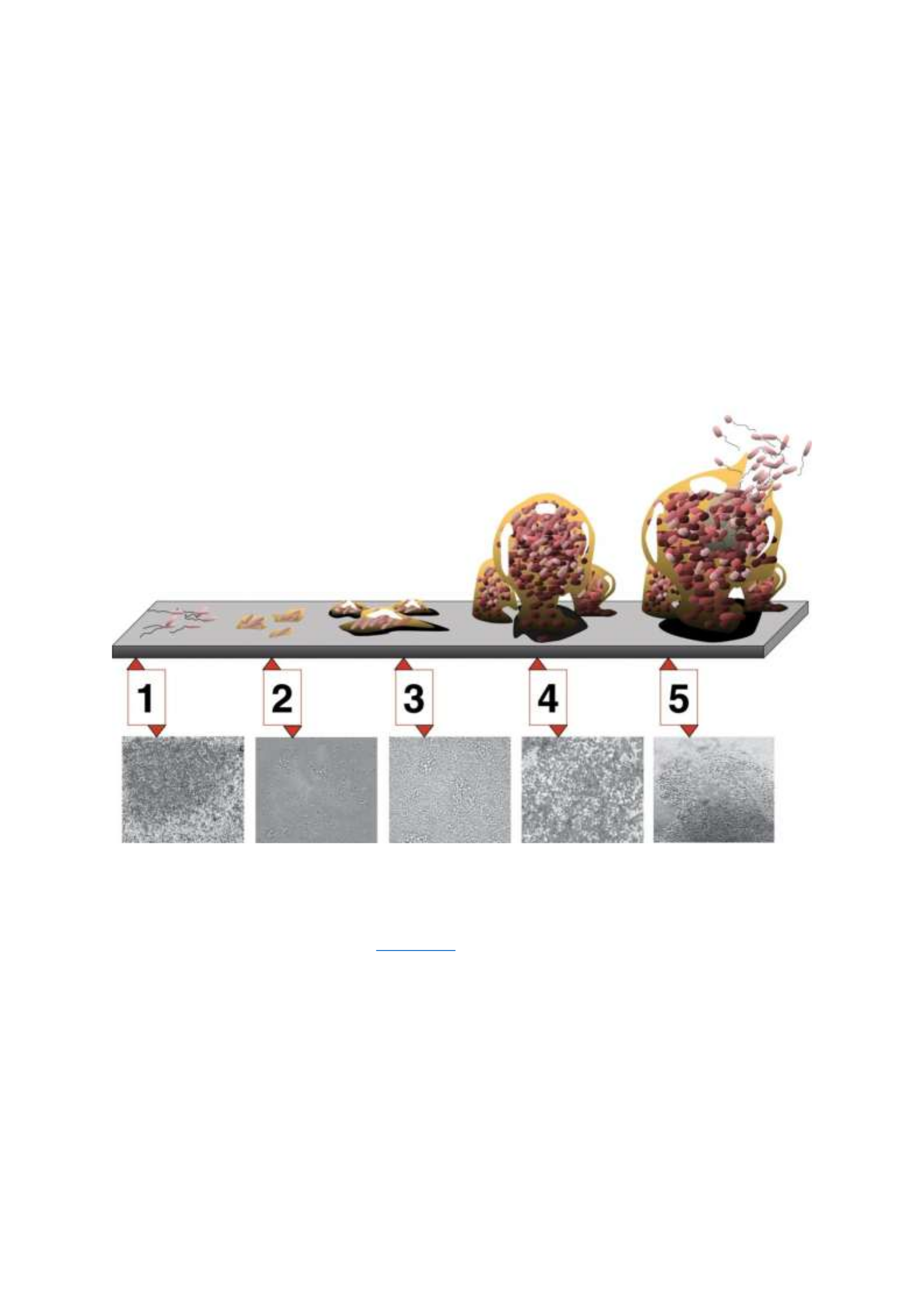
The basic steps for biofilm formation can be broken down into four steps:
1. Cell disposition and attachment – in order for biofilm development to occur, free-
floating or planktonic cells must collide with a suitable surface. Typically the surface
has been preconditioned with the deposits of environmental proteins and other
molecules.
2. Colonization – cell-to-cell signaling occurs, leading to the expression of biofilm
specific genes. These genes are associated with the communal production
of extracellular polymeric DNA released by some cells can be taken up by others,
stimulating the expression of new genes.
3. Maturation – the EPS matrix fully encases all the cells, as the biofilm continues to
thicken and grow, forming a complex, dynamic community. Water channels form
throughout the structure.
4. Detachment and sloughing – individual cells or pieces of the biofilm are released to the
environment, as a form of active dispersal. This release can be trigger by environmental
factors, such as the concentration of nutrients or oxygen.
Biofilm Development. Each stage of development in the diagram is paired with a
photomicrograph of a developing Pseudomonas aeruginosa biofilm. All photomicrographs are
shown to same scale. By D. Davis [CC BY 2.5], via Wikimedia Commons
Cellular advantages of biofilms
Why do bioforms develop? There are certain advantages that cells enjoy while in a biofilm,
over their planktonic growth. Perhaps most importantly, biofilms offer cells increased
protection from harmful conditions or substances, such as UV light, physical agitation,
antimicrobial agents, and phagocytosis. It has been shown that bacteria within a biofilm are up
to a thousand times more resistant to antibiotics than free-floating cells!

A biofilm also allows a cell population to “put down roots,” so to speak, so that they can stay
in close proximity to a nutrient-rich area. For example, a biofilm that develops on a conduit
pipe at a dairy plant will have continual access to fresh food, which is much better than being
swept away with the final product.
Lastly, biofilms allow for cells to grow in microbial populations, where they can easily benefit
from cell-to-cell communication and genetic exchange.
Biofilm impacts
Biofilms have huge impacts throughout many different types of industry. Medical implants
ranging from catheters to artificial joints are particularly susceptible to biofilm formation,
leading to huge problems for the medical industry. Biofilms are responsible for many chronic
infections, due to their increased resistance to antimicrobial compounds and antibiotics. A type
of biofilm that affects almost everyone is the formation of dental plaque, which can lead to
cavity formation.
Outside of medicine, biofilms affect just about any industry relying on pipes to convey water,
food, oil, or other liquids, where their resistance makes its particularly difficult to completely
eliminate the biofilm.
Quorum Sensing
The word quorum refers to having a minimum number of members needed for an organization
to conduct business, such as hold a vote. Quorum sensing refers to the ability of some bacteria
to communicate in a density-dependent fashion, allowing them to delay the activation of
specific genes until it is the most advantageous for the population.
Quorum sensing involves cell-to-cell communication, using small diffusible substances known
as autoinducers. An autoinducer is produced by a cell, diffusing across the plasma membrane
to be released into the environment. As the cell population increases in the environment the
concentration of autoinducer increases as well, causing the molecule to diffuse back into
individual cells where it triggers the activation of specific genes.
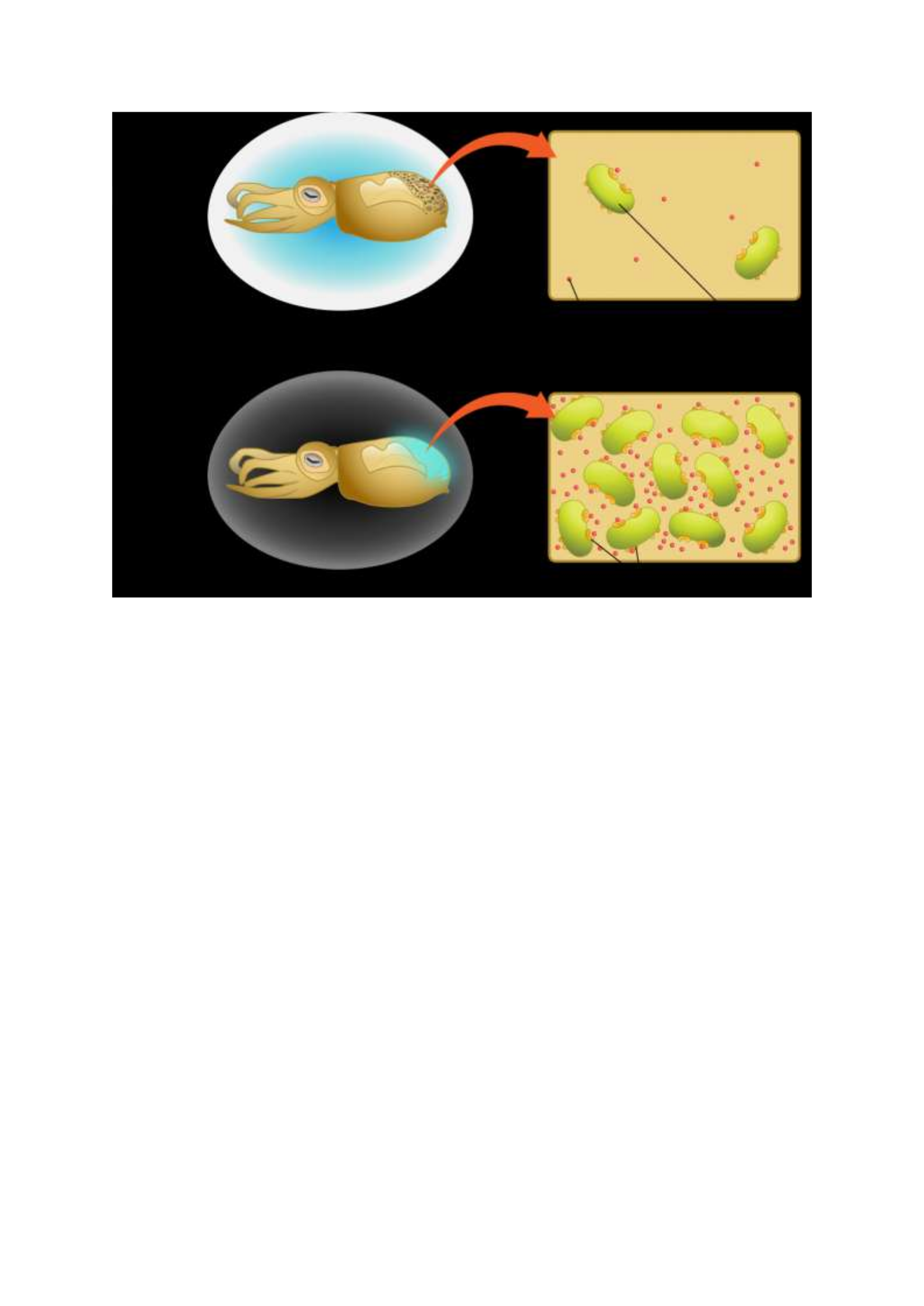
Quorum sensing in Bioluminescent Bacteria.
Quorum sensing example
One of the best studied examples of quorum sensing is the mutualistic relationship between the
bioluminescent bacterium Aliivibrio fischeriand the bobtail squid. The bobtail squid actually
has a light organ that evolved to house the bacterium, relying on its luminescence to provide a
camouflage effect against predators. At low cell density the luminescence would not provide
the desired effect, representing a waste in energy by the bacterial population. Therefore,
quorum sensing is used so that the lux gene that codes for the luciferase enzyme necessary for
luminescence is only activated when the bacterial population is at sufficient density.
Key Words
symbiosis, mutualistic, commensalistic, pathogenic relationship, human microbiome,
dysbiosis, Human Microbiome Project (HMP), biofilm, planktonic, extracellular polymeric
substances/EPS, quorum sensing, autoinducer.
Symbiosis, strictly defined, refers to an intimate relationship between two organisms. Although
many people use the term to describe a relationship beneficial to both participants, the term
itself is not that specific. The relationship could be good, bad, or neutral for either partner.

A mutualistic relationship is one in which both partners benefit, while
a commensalistic relationship benefits one partner but not the other. In a pathogenic
relationship, one partner benefits at the expense of the other. This chapter looks at a few
examples of symbiosis, where microbes are one of the partners.
The Human Microbiome
The human microbiome describes the genes associated with all the microbes that live in and
on a human. All 10^14 of them! The microbes are mostly bacteria but can include archaea,
fungi, and eukartyotic microbes The locations include skin, upper respiratory tract, stomach,
intestines, and urogenital tracts. Colonization occurs soon after birth, as infants acquire
microbes from people, surfaces and objects that they come in contact with.
Gut microbes and human metabolism
Most of the microbes associated with the human body are found in the gut, particularly about
1-4 hours after eating a meal when the microbial population dramatically increases. The gut
microbiota is extremely diverse and it has been estimated that from 500-1000 species of
bacteria live in the human gastrointestinal tract (typically described as from 5-8 pounds of
bacteria!).
The gut microbes are essential for host digestion and nutrition, aiding in digestion by breaking
down carbohydrates that humans could not break down on their own, by liberating short chain
fatty acids from indigestible dietary fibers. In addition, they produce vitamins such as biotin
and vitamin K.
Gut microbes and obesity
There has been increased interest in the microbial gut population, due to the possibility that it
might play a role in obesity. Although currently hypothetical, research has shown that obese
mice have a microbial gut community that differs from the microbes found in the gut of non-
obese mice, with more Firmicutes bacteria and methanogenic Archaea. It has been suggested
that these microbes are more efficient at absorbing nutrients.
Human microbiome and disease
It has been shown that microbiota changes are associated with diseased states or dysbiosis.
Preliminary research has shown that the microbiota might be associated rheumatoid arthritis,
colorectal cancer, diabetes, in addition to obesity.

Research
The Human Microbiome Project (HMP) was an international research program based in the
U.S. that was focused on the functions of gut microbiota. Some 200 researchers used advanced
DNA-sequencing techniques to determine what microbes are present and in what populations.
Many current research projects are focused on determining the role of the human microbiome
in both health and the diseased state. There is no doubt that our knowledge will continue to
grow as we find out more about the vast populations of microbes that live in and on us.
Biofilms
Biofilms are a complex aggregation of cells that are encased within an excellular matrix and
attached to a surface. Bioforms can form on just about any surface and are common in nature
and industry, being found on the surfaces of rocks, caves, pipes, boat hulls, cooking vessels,
and medical implants, just to name a few. They have also been around a long time, since the
fossil record shows evidence for biofilms going back 3.4 billion years!
The microbial community of a biofilm can be composed of one or two species, but more
commonly contains many different species of bacteria, each influencing the others gene
expression and growth.
Symbiosis, strictly defined, refers to an intimate relationship between two organisms. Although
many people use the term to describe a relationship beneficial to both participants, the term
itself is not that specific. The relationship could be good, bad, or neutral for either partner.
A mutualistic relationship is one in which both partners benefit, while
a commensalistic relationship benefits one partner but not the other. In a pathogenic
relationship, one partner benefits at the expense of the other. This chapter looks at a few
examples of symbiosis, where microbes are one of the partners.
The Human Microbiome
The human microbiome describes the genes associated with all the microbes that live in and
on a human. All 10^14 of them! The microbes are mostly bacteria but can include archaea,
fungi, and eukartyotic microbes The locations include skin, upper respiratory tract, stomach,
intestines, and urogenital tracts. Colonization occurs soon after birth, as infants acquire
microbes from people, surfaces and objects that they come in contact with.
Gut microbes and human metabolism

Most of the microbes associated with the human body are found in the gut, particularly about
1-4 hours after eating a meal when the microbial population dramatically increases. The gut
microbiota is extremely diverse and it has been estimated that from 500-1000 species of
bacteria live in the human gastrointestinal tract (typically described as from 5-8 pounds of
bacteria!).
The gut microbes are essential for host digestion and nutrition, aiding in digestion by breaking
down carbohydrates that humans could not break down on their own, by liberating short chain
fatty acids from indigestible dietary fibers. In addition, they produce vitamins such as biotin
and vitamin K.
Gut microbes and obesity
There has been increased interest in the microbial gut population, due to the possibility that it
might play a role in obesity. Although currently hypothetical, research has shown that obese
mice have a microbial gut community that differs from the microbes found in the gut of non-
obese mice, with more Firmicutes bacteria and methanogenic Archaea. It has been suggested
that these microbes are more efficient at absorbing nutrients.
Human microbiome and disease
It has been shown that microbiota changes are associated with diseased states or dysbiosis.
Preliminary research has shown that the microbiota might be associated rheumatoid arthritis,
colorectal cancer, diabetes, in addition to obesity.
Research
The Human Microbiome Project (HMP) was an international research program based in the
U.S. that was focused on the functions of gut microbiota. Some 200 researchers used advanced
DNA-sequencing techniques to determine what microbes are present and in what populations.
Many current research projects are focused on determining the role of the human microbiome
in both health and the diseased state. There is no doubt that our knowledge will continue to
grow as we find out more about the vast populations of microbes that live in and on us.
Biofilms
Biofilms are a complex aggregation of cells that are encased within an excellular matrix and
attached to a surface. Bioforms can form on just about any surface and are common in nature
and industry, being found on the surfaces of rocks, caves, pipes, boat hulls, cooking vessels,

and medical implants, just to name a few. They have also been around a long time, since the
fossil record shows evidence for biofilms going back 3.4 billion years!
The microbial community of a biofilm can be composed of one or two species, but more
commonly contains many different species of bacteria, each influencing the others gene
expression and growth.
Symbiosis, strictly defined, refers to an intimate relationship between two organisms. Although
many people use the term to describe a relationship beneficial to both participants, the term
itself is not that specific. The relationship could be good, bad, or neutral for either partner.
A mutualistic relationship is one in which both partners benefit, while
a commensalistic relationship benefits one partner but not the other. In a pathogenic
relationship, one partner benefits at the expense of the other. This chapter looks at a few
examples of symbiosis, where microbes are one of the partners.
The Human Microbiome
The human microbiome describes the genes associated with all the microbes that live in and
on a human. All 10^14 of them! The microbes are mostly bacteria but can include archaea,
fungi, and eukartyotic microbes The locations include skin, upper respiratory tract, stomach,
intestines, and urogenital tracts. Colonization occurs soon after birth, as infants acquire
microbes from people, surfaces and objects that they come in contact with.
Gut microbes and human metabolism
Most of the microbes associated with the human body are found in the gut, particularly about
1-4 hours after eating a meal when the microbial population dramatically increases. The gut
microbiota is extremely diverse and it has been estimated that from 500-1000 species of
bacteria live in the human gastrointestinal tract (typically described as from 5-8 pounds of
bacteria!).
The gut microbes are essential for host digestion and nutrition, aiding in digestion by breaking
down carbohydrates that humans could not break down on their own, by liberating short chain
fatty acids from indigestible dietary fibers. In addition, they produce vitamins such as biotin
and vitamin K.
Gut microbes and obesity

There has been increased interest in the microbial gut population, due to the possibility that it
might play a role in obesity. Although currently hypothetical, research has shown that obese
mice have a microbial gut community that differs from the microbes found in the gut of non-
obese mice, with more Firmicutes bacteria and methanogenic Archaea. It has been suggested
that these microbes are more efficient at absorbing nutrients.
Human microbiome and disease
It has been shown that microbiota changes are associated with diseased states or dysbiosis.
Preliminary research has shown that the microbiota might be associated rheumatoid arthritis,
colorectal cancer, diabetes, in addition to obesity.
Research
The Human Microbiome Project (HMP) was an international research program based in the
U.S. that was focused on the functions of gut microbiota. Some 200 researchers used advanced
DNA-sequencing techniques to determine what microbes are present and in what populations.
Many current research projects are focused on determining the role of the human microbiome
in both health and the diseased state. There is no doubt that our knowledge will continue to
grow as we find out more about the vast populations of microbes that live in and on us.
Biofilms
Biofilms are a complex aggregation of cells that are encased within an excellular matrix and
attached to a surface. Bioforms can form on just about any surface and are common in nature
and industry, being found on the surfaces of rocks, caves, pipes, boat hulls, cooking vessels,
and medical implants, just to name a few. They have also been around a long time, since the
fossil record shows evidence for biofilms going back 3.4 billion years!
The microbial community of a biofilm can be composed of one or two species, but more
commonly contains many different species of bacteria, each influencing the others gene
expression and growth.
Symbiosis, strictly defined, refers to an intimate relationship between two organisms. Although
many people use the term to describe a relationship beneficial to both participants, the term
itself is not that specific. The relationship could be good, bad, or neutral for either partner.
A mutualistic relationship is one in which both partners benefit, while
a commensalistic relationship benefits one partner but not the other. In a pathogenic

relationship, one partner benefits at the expense of the other. This chapter looks at a few
examples of symbiosis, where microbes are one of the partners.
The Human Microbiome
The human microbiome describes the genes associated with all the microbes that live in and
on a human. All 10^14 of them! The microbes are mostly bacteria but can include archaea,
fungi, and eukartyotic microbes The locations include skin, upper respiratory tract, stomach,
intestines, and urogenital tracts. Colonization occurs soon after birth, as infants acquire
microbes from people, surfaces and objects that they come in contact with.
Gut microbes and human metabolism
Most of the microbes associated with the human body are found in the gut, particularly about
1-4 hours after eating a meal when the microbial population dramatically increases. The gut
microbiota is extremely diverse and it has been estimated that from 500-1000 species of
bacteria live in the human gastrointestinal tract (typically described as from 5-8 pounds of
bacteria!).
The gut microbes are essential for host digestion and nutrition, aiding in digestion by breaking
down carbohydrates that humans could not break down on their own, by liberating short chain
fatty acids from indigestible dietary fibers. In addition, they produce vitamins such as biotin
and vitamin K.
Gut microbes and obesity
There has been increased interest in the microbial gut population, due to the possibility that it
might play a role in obesity. Although currently hypothetical, research has shown that obese
mice have a microbial gut community that differs from the microbes found in the gut of non-
obese mice, with more Firmicutes bacteria and methanogenic Archaea. It has been suggested
that these microbes are more efficient at absorbing nutrients.
Human microbiome and disease
It has been shown that microbiota changes are associated with diseased states or dysbiosis.
Preliminary research has shown that the microbiota might be associated rheumatoid arthritis,
colorectal cancer, diabetes, in addition to obesity.
Research

The Human Microbiome Project (HMP) was an international research program based in the
U.S. that was focused on the functions of gut microbiota. Some 200 researchers used advanced
DNA-sequencing techniques to determine what microbes are present and in what populations.
Many current research projects are focused on determining the role of the human microbiome
in both health and the diseased state. There is no doubt that our knowledge will continue to
grow as we find out more about the vast populations of microbes that live in and on us.
Biofilms
Biofilms are a complex aggregation of cells that are encased within an excellular matrix and
attached to a surface. Bioforms can form on just about any surface and are common in nature
and industry, being found on the surfaces of rocks, caves, pipes, boat hulls, cooking vessels,
and medical implants, just to name a few. They have also been around a long time, since the
fossil record shows evidence for biofilms going back 3.4 billion years!
The microbial community of a biofilm can be composed of one or two species, but more
commonly contains many different species of bacteria, each influencing the others gene
expression and growth.
Symbiosis, strictly defined, refers to an intimate relationship between two organisms. Although
many people use the term to describe a relationship beneficial to both participants, the term
itself is not that specific. The relationship could be good, bad, or neutral for either partner.
A mutualistic relationship is one in which both partners benefit, while
a commensalistic relationship benefits one partner but not the other. In a pathogenic
relationship, one partner benefits at the expense of the other. This chapter looks at a few
examples of symbiosis, where microbes are one of the partners.
The Human Microbiome
The human microbiome describes the genes associated with all the microbes that live in and
on a human. All 10^14 of them! The microbes are mostly bacteria but can include archaea,
fungi, and eukartyotic microbes The locations include skin, upper respiratory tract, stomach,
intestines, and urogenital tracts. Colonization occurs soon after birth, as infants acquire
microbes from people, surfaces and objects that they come in contact with.
Gut microbes and human metabolism

Most of the microbes associated with the human body are found in the gut, particularly about
1-4 hours after eating a meal when the microbial population dramatically increases. The gut
microbiota is extremely diverse and it has been estimated that from 500-1000 species of
bacteria live in the human gastrointestinal tract (typically described as from 5-8 pounds of
bacteria!).
The gut microbes are essential for host digestion and nutrition, aiding in digestion by breaking
down carbohydrates that humans could not break down on their own, by liberating short chain
fatty acids from indigestible dietary fibers. In addition, they produce vitamins such as biotin
and vitamin K.
Gut microbes and obesity
There has been increased interest in the microbial gut population, due to the possibility that it
might play a role in obesity. Although currently hypothetical, research has shown that obese
mice have a microbial gut community that differs from the microbes found in the gut of non-
obese mice, with more Firmicutes bacteria and methanogenic Archaea. It has been suggested
that these microbes are more efficient at absorbing nutrients.
Human microbiome and disease
It has been shown that microbiota changes are associated with diseased states or dysbiosis.
Preliminary research has shown that the microbiota might be associated rheumatoid arthritis,
colorectal cancer, diabetes, in addition to obesity.
Research
The Human Microbiome Project (HMP) was an international research program based in the
U.S. that was focused on the functions of gut microbiota. Some 200 researchers used advanced
DNA-sequencing techniques to determine what microbes are present and in what populations.
Many current research projects are focused on determining the role of the human microbiome
in both health and the diseased state. There is no doubt that our knowledge will continue to
grow as we find out more about the vast populations of microbes that live in and on us.
Biofilms
Biofilms are a complex aggregation of cells that are encased within an excellular matrix and
attached to a surface. Bioforms can form on just about any surface and are common in nature
and industry, being found on the surfaces of rocks, caves, pipes, boat hulls, cooking vessels,

and medical implants, just to name a few. They have also been around a long time, since the
fossil record shows evidence for biofilms going back 3.4 billion years!
The microbial community of a biofilm can be composed of one or two species, but more
commonly contains many different species of bacteria, each influencing the others gene
expression and growth.
Symbiosis, strictly defined, refers to an intimate relationship between two organisms. Although
many people use the term to describe a relationship beneficial to both participants, the term
itself is not that specific. The relationship could be good, bad, or neutral for either partner.
A mutualistic relationship is one in which both partners benefit, while
a commensalistic relationship benefits one partner but not the other. In a pathogenic
relationship, one partner benefits at the expense of the other. This chapter looks at a few
examples of symbiosis, where microbes are one of the partners.
The Human Microbiome
The human microbiome describes the genes associated with all the microbes that live in and
on a human. All 10^14 of them! The microbes are mostly bacteria but can include archaea,
fungi, and eukartyotic microbes The locations include skin, upper respiratory tract, stomach,
intestines, and urogenital tracts. Colonization occurs soon after birth, as infants acquire
microbes from people, surfaces and objects that they come in contact with.
Gut microbes and human metabolism
Most of the microbes associated with the human body are found in the gut, particularly about
1-4 hours after eating a meal when the microbial population dramatically increases. The gut
microbiota is extremely diverse and it has been estimated that from 500-1000 species of
bacteria live in the human gastrointestinal tract (typically described as from 5-8 pounds of
bacteria!).
The gut microbes are essential for host digestion and nutrition, aiding in digestion by breaking
down carbohydrates that humans could not break down on their own, by liberating short chain
fatty acids from indigestible dietary fibers. In addition, they produce vitamins such as biotin
and vitamin K.
Gut microbes and obesity

There has been increased interest in the microbial gut population, due to the possibility that it
might play a role in obesity. Although currently hypothetical, research has shown that obese
mice have a microbial gut community that differs from the microbes found in the gut of non-
obese mice, with more Firmicutes bacteria and methanogenic Archaea. It has been suggested
that these microbes are more efficient at absorbing nutrients.
Human microbiome and disease
It has been shown that microbiota changes are associated with diseased states or dysbiosis.
Preliminary research has shown that the microbiota might be associated rheumatoid arthritis,
colorectal cancer, diabetes, in addition to obesity.
Research
The Human Microbiome Project (HMP) was an international research program based in the
U.S. that was focused on the functions of gut microbiota. Some 200 researchers used advanced
DNA-sequencing techniques to determine what microbes are present and in what populations.
Many current research projects are focused on determining the role of the human microbiome
in both health and the diseased state. There is no doubt that our knowledge will continue to
grow as we find out more about the vast populations of microbes that live in and on us.
Biofilms
Biofilms are a complex aggregation of cells that are encased within an excellular matrix and
attached to a surface. Bioforms can form on just about any surface and are common in nature
and industry, being found on the surfaces of rocks, caves, pipes, boat hulls, cooking vessels,
and medical implants, just to name a few. They have also been around a long time, since the
fossil record shows evidence for biofilms going back 3.4 billion years!
The microbial community of a biofilm can be composed of one or two species, but more
commonly contains many different species of bacteria, each influencing the others gene
expression and growth.
Symbiosis, strictly defined, refers to an intimate relationship between two organisms. Although
many people use the term to describe a relationship beneficial to both participants, the term
itself is not that specific. The relationship could be good, bad, or neutral for either partner.
A mutualistic relationship is one in which both partners benefit, while
a commensalistic relationship benefits one partner but not the other. In a pathogenic

relationship, one partner benefits at the expense of the other. This chapter looks at a few
examples of symbiosis, where microbes are one of the partners.
The Human Microbiome
The human microbiome describes the genes associated with all the microbes that live in and
on a human. All 10^14 of them! The microbes are mostly bacteria but can include archaea,
fungi, and eukartyotic microbes The locations include skin, upper respiratory tract, stomach,
intestines, and urogenital tracts. Colonization occurs soon after birth, as infants acquire
microbes from people, surfaces and objects that they come in contact with.
Gut microbes and human metabolism
Most of the microbes associated with the human body are found in the gut, particularly about
1-4 hours after eating a meal when the microbial population dramatically increases. The gut
microbiota is extremely diverse and it has been estimated that from 500-1000 species of
bacteria live in the human gastrointestinal tract (typically described as from 5-8 pounds of
bacteria!).
The gut microbes are essential for host digestion and nutrition, aiding in digestion by breaking
down carbohydrates that humans could not break down on their own, by liberating short chain
fatty acids from indigestible dietary fibers. In addition, they produce vitamins such as biotin
and vitamin K.
Gut microbes and obesity
There has been increased interest in the microbial gut population, due to the possibility that it
might play a role in obesity. Although currently hypothetical, research has shown that obese
mice have a microbial gut community that differs from the microbes found in the gut of non-
obese mice, with more Firmicutes bacteria and methanogenic Archaea. It has been suggested
that these microbes are more efficient at absorbing nutrients.
Human microbiome and disease
It has been shown that microbiota changes are associated with diseased states or dysbiosis.
Preliminary research has shown that the microbiota might be associated rheumatoid arthritis,
colorectal cancer, diabetes, in addition to obesity.
Research

The Human Microbiome Project (HMP) was an international research program based in the
U.S. that was focused on the functions of gut microbiota. Some 200 researchers used advanced
DNA-sequencing techniques to determine what microbes are present and in what populations.
Many current research projects are focused on determining the role of the human microbiome
in both health and the diseased state. There is no doubt that our knowledge will continue to
grow as we find out more about the vast populations of microbes that live in and on us.
Biofilms
Biofilms are a complex aggregation of cells that are encased within an excellular matrix and
attached to a surface. Bioforms can form on just about any surface and are common in nature
and industry, being found on the surfaces of rocks, caves, pipes, boat hulls, cooking vessels,
and medical implants, just to name a few. They have also been around a long time, since the
fossil record shows evidence for biofilms going back 3.4 billion years!
The microbial community of a biofilm can be composed of one or two species, but more
commonly contains many different species of bacteria, each influencing the others gene
expression and growth.
Symbiosis, strictly defined, refers to an intimate relationship between two organisms. Although
many people use the term to describe a relationship beneficial to both participants, the term
itself is not that specific. The relationship could be good, bad, or neutral for either partner.
A mutualistic relationship is one in which both partners benefit, while
a commensalistic relationship benefits one partner but not the other. In a pathogenic
relationship, one partner benefits at the expense of the other. This chapter looks at a few
examples of symbiosis, where microbes are one of the partners.
The Human Microbiome
The human microbiome describes the genes associated with all the microbes that live in and
on a human. All 10^14 of them! The microbes are mostly bacteria but can include archaea,
fungi, and eukartyotic microbes The locations include skin, upper respiratory tract, stomach,
intestines, and urogenital tracts. Colonization occurs soon after birth, as infants acquire
microbes from people, surfaces and objects that they come in contact with.
Gut microbes and human metabolism

Most of the microbes associated with the human body are found in the gut, particularly about
1-4 hours after eating a meal when the microbial population dramatically increases. The gut
microbiota is extremely diverse and it has been estimated that from 500-1000 species of
bacteria live in the human gastrointestinal tract (typically described as from 5-8 pounds of
bacteria!).
The gut microbes are essential for host digestion and nutrition, aiding in digestion by breaking
down carbohydrates that humans could not break down on their own, by liberating short chain
fatty acids from indigestible dietary fibers. In addition, they produce vitamins such as biotin
and vitamin K.
Gut microbes and obesity
There has been increased interest in the microbial gut population, due to the possibility that it
might play a role in obesity. Although currently hypothetical, research has shown that obese
mice have a microbial gut community that differs from the microbes found in the gut of non-
obese mice, with more Firmicutes bacteria and methanogenic Archaea. It has been suggested
that these microbes are more efficient at absorbing nutrients.
Human microbiome and disease
It has been shown that microbiota changes are associated with diseased states or dysbiosis.
Preliminary research has shown that the microbiota might be associated rheumatoid arthritis,
colorectal cancer, diabetes, in addition to obesity.
Research
The Human Microbiome Project (HMP) was an international research program based in the
U.S. that was focused on the functions of gut microbiota. Some 200 researchers used advanced
DNA-sequencing techniques to determine what microbes are present and in what populations.
Many current research projects are focused on determining the role of the human microbiome
in both health and the diseased state. There is no doubt that our knowledge will continue to
grow as we find out more about the vast populations of microbes that live in and on us.
Biofilms
Biofilms are a complex aggregation of cells that are encased within an excellular matrix and
attached to a surface. Bioforms can form on just about any surface and are common in nature
and industry, being found on the surfaces of rocks, caves, pipes, boat hulls, cooking vessels,

and medical implants, just to name a few. They have also been around a long time, since the
fossil record shows evidence for biofilms going back 3.4 billion years!
The microbial community of a biofilm can be composed of one or two species, but more
commonly contains many different species of bacteria, each influencing the others gene
expression and growth.
Symbiosis, strictly defined, refers to an intimate relationship between two organisms. Although
many people use the term to describe a relationship beneficial to both participants, the term
itself is not that specific. The relationship could be good, bad, or neutral for either partner.
A mutualistic relationship is one in which both partners benefit, while
a commensalistic relationship benefits one partner but not the other. In a pathogenic
relationship, one partner benefits at the expense of the other. This chapter looks at a few
examples of symbiosis, where microbes are one of the partners.
The Human Microbiome
The human microbiome describes the genes associated with all the microbes that live in and
on a human. All 10^14 of them! The microbes are mostly bacteria but can include archaea,
fungi, and eukartyotic microbes The locations include skin, upper respiratory tract, stomach,
intestines, and urogenital tracts. Colonization occurs soon after birth, as infants acquire
microbes from people, surfaces and objects that they come in contact with.
Gut microbes and human metabolism
Most of the microbes associated with the human body are found in the gut, particularly about
1-4 hours after eating a meal when the microbial population dramatically increases. The gut
microbiota is extremely diverse and it has been estimated that from 500-1000 species of
bacteria live in the human gastrointestinal tract (typically described as from 5-8 pounds of
bacteria!).
The gut microbes are essential for host digestion and nutrition, aiding in digestion by breaking
down carbohydrates that humans could not break down on their own, by liberating short chain
fatty acids from indigestible dietary fibers. In addition, they produce vitamins such as biotin
and vitamin K.
Gut microbes and obesity

There has been increased interest in the microbial gut population, due to the possibility that it
might play a role in obesity. Although currently hypothetical, research has shown that obese
mice have a microbial gut community that differs from the microbes found in the gut of non-
obese mice, with more Firmicutes bacteria and methanogenic Archaea. It has been suggested
that these microbes are more efficient at absorbing nutrients.
Human microbiome and disease
It has been shown that microbiota changes are associated with diseased states or dysbiosis.
Preliminary research has shown that the microbiota might be associated rheumatoid arthritis,
colorectal cancer, diabetes, in addition to obesity.
Research
The Human Microbiome Project (HMP) was an international research program based in the
U.S. that was focused on the functions of gut microbiota. Some 200 researchers used advanced
DNA-sequencing techniques to determine what microbes are present and in what populations.
Many current research projects are focused on determining the role of the human microbiome
in both health and the diseased state. There is no doubt that our knowledge will continue to
grow as we find out more about the vast populations of microbes that live in and on us.
Biofilms
Biofilms are a complex aggregation of cells that are encased within an excellular matrix and
attached to a surface. Bioforms can form on just about any surface and are common in nature
and industry, being found on the surfaces of rocks, caves, pipes, boat hulls, cooking vessels,
and medical implants, just to name a few. They have also been around a long time, since the
fossil record shows evidence for biofilms going back 3.4 billion years!
The microbial community of a biofilm can be composed of one or two species, but more
commonly contains many different species of bacteria, each influencing the others gene
expression and growth.
Symbiosis, strictly defined, refers to an intimate relationship between two organisms. Although
many people use the term to describe a relationship beneficial to both participants, the term
itself is not that specific. The relationship could be good, bad, or neutral for either partner.
A mutualistic relationship is one in which both partners benefit, while
a commensalistic relationship benefits one partner but not the other. In a pathogenic

relationship, one partner benefits at the expense of the other. This chapter looks at a few
examples of symbiosis, where microbes are one of the partners.
The Human Microbiome
The human microbiome describes the genes associated with all the microbes that live in and
on a human. All 10^14 of them! The microbes are mostly bacteria but can include archaea,
fungi, and eukartyotic microbes The locations include skin, upper respiratory tract, stomach,
intestines, and urogenital tracts. Colonization occurs soon after birth, as infants acquire
microbes from people, surfaces and objects that they come in contact with.
Gut microbes and human metabolism
Most of the microbes associated with the human body are found in the gut, particularly about
1-4 hours after eating a meal when the microbial population dramatically increases. The gut
microbiota is extremely diverse and it has been estimated that from 500-1000 species of
bacteria live in the human gastrointestinal tract (typically described as from 5-8 pounds of
bacteria!).
The gut microbes are essential for host digestion and nutrition, aiding in digestion by breaking
down carbohydrates that humans could not break down on their own, by liberating short chain
fatty acids from indigestible dietary fibers. In addition, they produce vitamins such as biotin
and vitamin K.
Gut microbes and obesity
There has been increased interest in the microbial gut population, due to the possibility that it
might play a role in obesity. Although currently hypothetical, research has shown that obese
mice have a microbial gut community that differs from the microbes found in the gut of non-
obese mice, with more Firmicutes bacteria and methanogenic Archaea. It has been suggested
that these microbes are more efficient at absorbing nutrients.
Human microbiome and disease
It has been shown that microbiota changes are associated with diseased states or dysbiosis.
Preliminary research has shown that the microbiota might be associated rheumatoid arthritis,
colorectal cancer, diabetes, in addition to obesity.
Research

The Human Microbiome Project (HMP) was an international research program based in the
U.S. that was focused on the functions of gut microbiota. Some 200 researchers used advanced
DNA-sequencing techniques to determine what microbes are present and in what populations.
Many current research projects are focused on determining the role of the human microbiome
in both health and the diseased state. There is no doubt that our knowledge will continue to
grow as we find out more about the vast populations of microbes that live in and on us.
Biofilms
Biofilms are a complex aggregation of cells that are encased within an excellular matrix and
attached to a surface. Bioforms can form on just about any surface and are common in nature
and industry, being found on the surfaces of rocks, caves, pipes, boat hulls, cooking vessels,
and medical implants, just to name a few. They have also been around a long time, since the
fossil record shows evidence for biofilms going back 3.4 billion years!
The microbial community of a biofilm can be composed of one or two species, but more
commonly contains many different species of bacteria, each influencing the others gene
expression and growth.
Symbiosis, strictly defined, refers to an intimate relationship between two organisms. Although
many people use the term to describe a relationship beneficial to both participants, the term
itself is not that specific. The relationship could be good, bad, or neutral for either partner.
A mutualistic relationship is one in which both partners benefit, while
a commensalistic relationship benefits one partner but not the other. In a pathogenic
relationship, one partner benefits at the expense of the other. This chapter looks at a few
examples of symbiosis, where microbes are one of the partners.
The Human Microbiome
The human microbiome describes the genes associated with all the microbes that live in and
on a human. All 10^14 of them! The microbes are mostly bacteria but can include archaea,
fungi, and eukartyotic microbes The locations include skin, upper respiratory tract, stomach,
intestines, and urogenital tracts. Colonization occurs soon after birth, as infants acquire
microbes from people, surfaces and objects that they come in contact with.
Gut microbes and human metabolism

Most of the microbes associated with the human body are found in the gut, particularly about
1-4 hours after eating a meal when the microbial population dramatically increases. The gut
microbiota is extremely diverse and it has been estimated that from 500-1000 species of
bacteria live in the human gastrointestinal tract (typically described as from 5-8 pounds of
bacteria!).
The gut microbes are essential for host digestion and nutrition, aiding in digestion by breaking
down carbohydrates that humans could not break down on their own, by liberating short chain
fatty acids from indigestible dietary fibers. In addition, they produce vitamins such as biotin
and vitamin K.
Gut microbes and obesity
There has been increased interest in the microbial gut population, due to the possibility that it
might play a role in obesity. Although currently hypothetical, research has shown that obese
mice have a microbial gut community that differs from the microbes found in the gut of non-
obese mice, with more Firmicutes bacteria and methanogenic Archaea. It has been suggested
that these microbes are more efficient at absorbing nutrients.
Human microbiome and disease
It has been shown that microbiota changes are associated with diseased states or dysbiosis.
Preliminary research has shown that the microbiota might be associated rheumatoid arthritis,
colorectal cancer, diabetes, in addition to obesity.
Research
The Human Microbiome Project (HMP) was an international research program based in the
U.S. that was focused on the functions of gut microbiota. Some 200 researchers used advanced
DNA-sequencing techniques to determine what microbes are present and in what populations.
Many current research projects are focused on determining the role of the human microbiome
in both health and the diseased state. There is no doubt that our knowledge will continue to
grow as we find out more about the vast populations of microbes that live in and on us.
Biofilms
Biofilms are a complex aggregation of cells that are encased within an excellular matrix and
attached to a surface. Bioforms can form on just about any surface and are common in nature
and industry, being found on the surfaces of rocks, caves, pipes, boat hulls, cooking vessels,

and medical implants, just to name a few. They have also been around a long time, since the
fossil record shows evidence for biofilms going back 3.4 billion years!
The microbial community of a biofilm can be composed of one or two species, but more
commonly contains many different species of bacteria, each influencing the others gene
expression and growth.
Symbiosis, strictly defined, refers to an intimate relationship between two organisms. Although
many people use the term to describe a relationship beneficial to both participants, the term
itself is not that specific. The relationship could be good, bad, or neutral for either partner.
A mutualistic relationship is one in which both partners benefit, while
a commensalistic relationship benefits one partner but not the other. In a pathogenic
relationship, one partner benefits at the expense of the other. This chapter looks at a few
examples of symbiosis, where microbes are one of the partners.
The Human Microbiome
The human microbiome describes the genes associated with all the microbes that live in and
on a human. All 10^14 of them! The microbes are mostly bacteria but can include archaea,
fungi, and eukartyotic microbes The locations include skin, upper respiratory tract, stomach,
intestines, and urogenital tracts. Colonization occurs soon after birth, as infants acquire
microbes from people, surfaces and objects that they come in contact with.
Gut microbes and human metabolism
Most of the microbes associated with the human body are found in the gut, particularly about
1-4 hours after eating a meal when the microbial population dramatically increases. The gut
microbiota is extremely diverse and it has been estimated that from 500-1000 species of
bacteria live in the human gastrointestinal tract (typically described as from 5-8 pounds of
bacteria!).
The gut microbes are essential for host digestion and nutrition, aiding in digestion by breaking
down carbohydrates that humans could not break down on their own, by liberating short chain
fatty acids from indigestible dietary fibers. In addition, they produce vitamins such as biotin
and vitamin K.
Gut microbes and obesity

There has been increased interest in the microbial gut population, due to the possibility that it
might play a role in obesity. Although currently hypothetical, research has shown that obese
mice have a microbial gut community that differs from the microbes found in the gut of non-
obese mice, with more Firmicutes bacteria and methanogenic Archaea. It has been suggested
that these microbes are more efficient at absorbing nutrients.
Human microbiome and disease
It has been shown that microbiota changes are associated with diseased states or dysbiosis.
Preliminary research has shown that the microbiota might be associated rheumatoid arthritis,
colorectal cancer, diabetes, in addition to obesity.
Research
The Human Microbiome Project (HMP) was an international research program based in the
U.S. that was focused on the functions of gut microbiota. Some 200 researchers used advanced
DNA-sequencing techniques to determine what microbes are present and in what populations.
Many current research projects are focused on determining the role of the human microbiome
in both health and the diseased state. There is no doubt that our knowledge will continue to
grow as we find out more about the vast populations of microbes that live in and on us.
Biofilms
Biofilms are a complex aggregation of cells that are encased within an excellular matrix and
attached to a surface. Bioforms can form on just about any surface and are common in nature
and industry, being found on the surfaces of rocks, caves, pipes, boat hulls, cooking vessels,
and medical implants, just to name a few. They have also been around a long time, since the
fossil record shows evidence for biofilms going back 3.4 billion years!
The microbial community of a biofilm can be composed of one or two species, but more
commonly contains many different species of bacteria, each influencing the others gene
expression and growth.
Symbiosis, strictly defined, refers to an intimate relationship between two organisms. Although
many people use the term to describe a relationship beneficial to both participants, the term
itself is not that specific. The relationship could be good, bad, or neutral for either partner.
A mutualistic relationship is one in which both partners benefit, while
a commensalistic relationship benefits one partner but not the other. In a pathogenic

relationship, one partner benefits at the expense of the other. This chapter looks at a few
examples of symbiosis, where microbes are one of the partners.
The Human Microbiome
The human microbiome describes the genes associated with all the microbes that live in and
on a human. All 10^14 of them! The microbes are mostly bacteria but can include archaea,
fungi, and eukartyotic microbes The locations include skin, upper respiratory tract, stomach,
intestines, and urogenital tracts. Colonization occurs soon after birth, as infants acquire
microbes from people, surfaces and objects that they come in contact with.
Gut microbes and human metabolism
Most of the microbes associated with the human body are found in the gut, particularly about
1-4 hours after eating a meal when the microbial population dramatically increases. The gut
microbiota is extremely diverse and it has been estimated that from 500-1000 species of
bacteria live in the human gastrointestinal tract (typically described as from 5-8 pounds of
bacteria!).
The gut microbes are essential for host digestion and nutrition, aiding in digestion by breaking
down carbohydrates that humans could not break down on their own, by liberating short chain
fatty acids from indigestible dietary fibers. In addition, they produce vitamins such as biotin
and vitamin K.
Gut microbes and obesity
There has been increased interest in the microbial gut population, due to the possibility that it
might play a role in obesity. Although currently hypothetical, research has shown that obese
mice have a microbial gut community that differs from the microbes found in the gut of non-
obese mice, with more Firmicutes bacteria and methanogenic Archaea. It has been suggested
that these microbes are more efficient at absorbing nutrients.
Human microbiome and disease
It has been shown that microbiota changes are associated with diseased states or dysbiosis.
Preliminary research has shown that the microbiota might be associated rheumatoid arthritis,
colorectal cancer, diabetes, in addition to obesity.
Research

The Human Microbiome Project (HMP) was an international research program based in the
U.S. that was focused on the functions of gut microbiota. Some 200 researchers used advanced
DNA-sequencing techniques to determine what microbes are present and in what populations.
Many current research projects are focused on determining the role of the human microbiome
in both health and the diseased state. There is no doubt that our knowledge will continue to
grow as we find out more about the vast populations of microbes that live in and on us.
Biofilms
Biofilms are a complex aggregation of cells that are encased within an excellular matrix and
attached to a surface. Bioforms can form on just about any surface and are common in nature
and industry, being found on the surfaces of rocks, caves, pipes, boat hulls, cooking vessels,
and medical implants, just to name a few. They have also been around a long time, since the
fossil record shows evidence for biofilms going back 3.4 billion years!
The microbial community of a biofilm can be composed of one or two species, but more
commonly contains many different species of bacteria, each influencing the others gene
expression and growth.
Symbiosis, strictly defined, refers to an intimate relationship between two organisms. Although
many people use the term to describe a relationship beneficial to both participants, the term
itself is not that specific. The relationship could be good, bad, or neutral for either partner.
A mutualistic relationship is one in which both partners benefit, while
a commensalistic relationship benefits one partner but not the other. In a pathogenic
relationship, one partner benefits at the expense of the other. This chapter looks at a few
examples of symbiosis, where microbes are one of the partners.
The Human Microbiome
The human microbiome describes the genes associated with all the microbes that live in and
on a human. All 10^14 of them! The microbes are mostly bacteria but can include archaea,
fungi, and eukartyotic microbes The locations include skin, upper respiratory tract, stomach,
intestines, and urogenital tracts. Colonization occurs soon after birth, as infants acquire
microbes from people, surfaces and objects that they come in contact with.
Gut microbes and human metabolism

Most of the microbes associated with the human body are found in the gut, particularly about
1-4 hours after eating a meal when the microbial population dramatically increases. The gut
microbiota is extremely diverse and it has been estimated that from 500-1000 species of
bacteria live in the human gastrointestinal tract (typically described as from 5-8 pounds of
bacteria!).
The gut microbes are essential for host digestion and nutrition, aiding in digestion by breaking
down carbohydrates that humans could not break down on their own, by liberating short chain
fatty acids from indigestible dietary fibers. In addition, they produce vitamins such as biotin
and vitamin K.
Gut microbes and obesity
There has been increased interest in the microbial gut population, due to the possibility that it
might play a role in obesity. Although currently hypothetical, research has shown that obese
mice have a microbial gut community that differs from the microbes found in the gut of non-
obese mice, with more Firmicutes bacteria and methanogenic Archaea. It has been suggested
that these microbes are more efficient at absorbing nutrients.
Human microbiome and disease
It has been shown that microbiota changes are associated with diseased states or dysbiosis.
Preliminary research has shown that the microbiota might be associated rheumatoid arthritis,
colorectal cancer, diabetes, in addition to obesity.
Research
The Human Microbiome Project (HMP) was an international research program based in the
U.S. that was focused on the functions of gut microbiota. Some 200 researchers used advanced
DNA-sequencing techniques to determine what microbes are present and in what populations.
Many current research projects are focused on determining the role of the human microbiome
in both health and the diseased state. There is no doubt that our knowledge will continue to
grow as we find out more about the vast populations of microbes that live in and on us.
Biofilms
Biofilms are a complex aggregation of cells that are encased within an excellular matrix and
attached to a surface. Bioforms can form on just about any surface and are common in nature
and industry, being found on the surfaces of rocks, caves, pipes, boat hulls, cooking vessels,

and medical implants, just to name a few. They have also been around a long time, since the
fossil record shows evidence for biofilms going back 3.4 billion years!
The microbial community of a biofilm can be composed of one or two species, but more
commonly contains many different species of bacteria, each influencing the others gene
expression and growth.
Symbiosis, strictly defined, refers to an intimate relationship between two organisms. Although
many people use the term to describe a relationship beneficial to both participants, the term
itself is not that specific. The relationship could be good, bad, or neutral for either partner.
A mutualistic relationship is one in which both partners benefit, while
a commensalistic relationship benefits one partner but not the other. In a pathogenic
relationship, one partner benefits at the expense of the other. This chapter looks at a few
examples of symbiosis, where microbes are one of the partners.
The Human Microbiome
The human microbiome describes the genes associated with all the microbes that live in and
on a human. All 10^14 of them! The microbes are mostly bacteria but can include archaea,
fungi, and eukartyotic microbes The locations include skin, upper respiratory tract, stomach,
intestines, and urogenital tracts. Colonization occurs soon after birth, as infants acquire
microbes from people, surfaces and objects that they come in contact with.
Gut microbes and human metabolism
Most of the microbes associated with the human body are found in the gut, particularly about
1-4 hours after eating a meal when the microbial population dramatically increases. The gut
microbiota is extremely diverse and it has been estimated that from 500-1000 species of
bacteria live in the human gastrointestinal tract (typically described as from 5-8 pounds of
bacteria!).
The gut microbes are essential for host digestion and nutrition, aiding in digestion by breaking
down carbohydrates that humans could not break down on their own, by liberating short chain
fatty acids from indigestible dietary fibers. In addition, they produce vitamins such as biotin
and vitamin K.
Gut microbes and obesity

There has been increased interest in the microbial gut population, due to the possibility that it
might play a role in obesity. Although currently hypothetical, research has shown that obese
mice have a microbial gut community that differs from the microbes found in the gut of non-
obese mice, with more Firmicutes bacteria and methanogenic Archaea. It has been suggested
that these microbes are more efficient at absorbing nutrients.
Human microbiome and disease
It has been shown that microbiota changes are associated with diseased states or dysbiosis.
Preliminary research has shown that the microbiota might be associated rheumatoid arthritis,
colorectal cancer, diabetes, in addition to obesity.
Research
The Human Microbiome Project (HMP) was an international research program based in the
U.S. that was focused on the functions of gut microbiota. Some 200 researchers used advanced
DNA-sequencing techniques to determine what microbes are present and in what populations.
Many current research projects are focused on determining the role of the human microbiome
in both health and the diseased state. There is no doubt that our knowledge will continue to
grow as we find out more about the vast populations of microbes that live in and on us.
Biofilms
Biofilms are a complex aggregation of cells that are encased within an excellular matrix and
attached to a surface. Bioforms can form on just about any surface and are common in nature
and industry, being found on the surfaces of rocks, caves, pipes, boat hulls, cooking vessels,
and medical implants, just to name a few. They have also been around a long time, since the
fossil record shows evidence for biofilms going back 3.4 billion years!
The microbial community of a biofilm can be composed of one or two species, but more
commonly contains many different species of bacteria, each influencing the others gene
expression and growth.
Symbiosis, strictly defined, refers to an intimate relationship between two organisms. Although
many people use the term to describe a relationship beneficial to both participants, the term
itself is not that specific. The relationship could be good, bad, or neutral for either partner.
A mutualistic relationship is one in which both partners benefit, while
a commensalistic relationship benefits one partner but not the other. In a pathogenic

relationship, one partner benefits at the expense of the other. This chapter looks at a few
examples of symbiosis, where microbes are one of the partners.
The Human Microbiome
The human microbiome describes the genes associated with all the microbes that live in and
on a human. All 10^14 of them! The microbes are mostly bacteria but can include archaea,
fungi, and eukartyotic microbes The locations include skin, upper respiratory tract, stomach,
intestines, and urogenital tracts. Colonization occurs soon after birth, as infants acquire
microbes from people, surfaces and objects that they come in contact with.
Gut microbes and human metabolism
Most of the microbes associated with the human body are found in the gut, particularly about
1-4 hours after eating a meal when the microbial population dramatically increases. The gut
microbiota is extremely diverse and it has been estimated that from 500-1000 species of
bacteria live in the human gastrointestinal tract (typically described as from 5-8 pounds of
bacteria!).
The gut microbes are essential for host digestion and nutrition, aiding in digestion by breaking
down carbohydrates that humans could not break down on their own, by liberating short chain
fatty acids from indigestible dietary fibers. In addition, they produce vitamins such as biotin
and vitamin K.
Gut microbes and obesity
There has been increased interest in the microbial gut population, due to the possibility that it
might play a role in obesity. Although currently hypothetical, research has shown that obese
mice have a microbial gut community that differs from the microbes found in the gut of non-
obese mice, with more Firmicutes bacteria and methanogenic Archaea. It has been suggested
that these microbes are more efficient at absorbing nutrients.
Human microbiome and disease
It has been shown that microbiota changes are associated with diseased states or dysbiosis.
Preliminary research has shown that the microbiota might be associated rheumatoid arthritis,
colorectal cancer, diabetes, in addition to obesity.
Research

The Human Microbiome Project (HMP) was an international research program based in the
U.S. that was focused on the functions of gut microbiota. Some 200 researchers used advanced
DNA-sequencing techniques to determine what microbes are present and in what populations.
Many current research projects are focused on determining the role of the human microbiome
in both health and the diseased state. There is no doubt that our knowledge will continue to
grow as we find out more about the vast populations of microbes that live in and on us.
Biofilms
Biofilms are a complex aggregation of cells that are encased within an excellular matrix and
attached to a surface. Bioforms can form on just about any surface and are common in nature
and industry, being found on the surfaces of rocks, caves, pipes, boat hulls, cooking vessels,
and medical implants, just to name a few. They have also been around a long time, since the
fossil record shows evidence for biofilms going back 3.4 billion years!
The microbial community of a biofilm can be composed of one or two species, but more
commonly contains many different species of bacteria, each influencing the others gene
expression and growth.
Symbiosis, strictly defined, refers to an intimate relationship between two organisms. Although
many people use the term to describe a relationship beneficial to both participants, the term
itself is not that specific. The relationship could be good, bad, or neutral for either partner.
A mutualistic relationship is one in which both partners benefit, while
a commensalistic relationship benefits one partner but not the other. In a pathogenic
relationship, one partner benefits at the expense of the other. This chapter looks at a few
examples of symbiosis, where microbes are one of the partners.
The Human Microbiome
The human microbiome describes the genes associated with all the microbes that live in and
on a human. All 10^14 of them! The microbes are mostly bacteria but can include archaea,
fungi, and eukartyotic microbes The locations include skin, upper respiratory tract, stomach,
intestines, and urogenital tracts. Colonization occurs soon after birth, as infants acquire
microbes from people, surfaces and objects that they come in contact with.
Gut microbes and human metabolism

Most of the microbes associated with the human body are found in the gut, particularly about
1-4 hours after eating a meal when the microbial population dramatically increases. The gut
microbiota is extremely diverse and it has been estimated that from 500-1000 species of
bacteria live in the human gastrointestinal tract (typically described as from 5-8 pounds of
bacteria!).
The gut microbes are essential for host digestion and nutrition, aiding in digestion by breaking
down carbohydrates that humans could not break down on their own, by liberating short chain
fatty acids from indigestible dietary fibers. In addition, they produce vitamins such as biotin
and vitamin K.
Gut microbes and obesity
There has been increased interest in the microbial gut population, due to the possibility that it
might play a role in obesity. Although currently hypothetical, research has shown that obese
mice have a microbial gut community that differs from the microbes found in the gut of non-
obese mice, with more Firmicutes bacteria and methanogenic Archaea. It has been suggested
that these microbes are more efficient at absorbing nutrients.
Human microbiome and disease
It has been shown that microbiota changes are associated with diseased states or dysbiosis.
Preliminary research has shown that the microbiota might be associated rheumatoid arthritis,
colorectal cancer, diabetes, in addition to obesity.
Research
The Human Microbiome Project (HMP) was an international research program based in the
U.S. that was focused on the functions of gut microbiota. Some 200 researchers used advanced
DNA-sequencing techniques to determine what microbes are present and in what populations.
Many current research projects are focused on determining the role of the human microbiome
in both health and the diseased state. There is no doubt that our knowledge will continue to
grow as we find out more about the vast populations of microbes that live in and on us.
Biofilms
Biofilms are a complex aggregation of cells that are encased within an excellular matrix and
attached to a surface. Bioforms can form on just about any surface and are common in nature
and industry, being found on the surfaces of rocks, caves, pipes, boat hulls, cooking vessels,

and medical implants, just to name a few. They have also been around a long time, since the
fossil record shows evidence for biofilms going back 3.4 billion years!
The microbial community of a biofilm can be composed of one or two species, but more
commonly contains many different species of bacteria, each influencing the others gene
expression and growth.
Symbiosis, strictly defined, refers to an intimate relationship between two organisms. Although
many people use the term to describe a relationship beneficial to both participants, the term
itself is not that specific. The relationship could be good, bad, or neutral for either partner.
A mutualistic relationship is one in which both partners benefit, while
a commensalistic relationship benefits one partner but not the other. In a pathogenic
relationship, one partner benefits at the expense of the other. This chapter looks at a few
examples of symbiosis, where microbes are one of the partners.
The Human Microbiome
The human microbiome describes the genes associated with all the microbes that live in and
on a human. All 10^14 of them! The microbes are mostly bacteria but can include archaea,
fungi, and eukartyotic microbes The locations include skin, upper respiratory tract, stomach,
intestines, and urogenital tracts. Colonization occurs soon after birth, as infants acquire
microbes from people, surfaces and objects that they come in contact with.
Gut microbes and human metabolism
Most of the microbes associated with the human body are found in the gut, particularly about
1-4 hours after eating a meal when the microbial population dramatically increases. The gut
microbiota is extremely diverse and it has been estimated that from 500-1000 species of
bacteria live in the human gastrointestinal tract (typically described as from 5-8 pounds of
bacteria!).
The gut microbes are essential for host digestion and nutrition, aiding in digestion by breaking
down carbohydrates that humans could not break down on their own, by liberating short chain
fatty acids from indigestible dietary fibers. In addition, they produce vitamins such as biotin
and vitamin K.
Gut microbes and obesity

There has been increased interest in the microbial gut population, due to the possibility that it
might play a role in obesity. Although currently hypothetical, research has shown that obese
mice have a microbial gut community that differs from the microbes found in the gut of non-
obese mice, with more Firmicutes bacteria and methanogenic Archaea. It has been suggested
that these microbes are more efficient at absorbing nutrients.
Human microbiome and disease
It has been shown that microbiota changes are associated with diseased states or dysbiosis.
Preliminary research has shown that the microbiota might be associated rheumatoid arthritis,
colorectal cancer, diabetes, in addition to obesity.
Research
The Human Microbiome Project (HMP) was an international research program based in the
U.S. that was focused on the functions of gut microbiota. Some 200 researchers used advanced
DNA-sequencing techniques to determine what microbes are present and in what populations.
Many current research projects are focused on determining the role of the human microbiome
in both health and the diseased state. There is no doubt that our knowledge will continue to
grow as we find out more about the vast populations of microbes that live in and on us.
Biofilms
Biofilms are a complex aggregation of cells that are encased within an excellular matrix and
attached to a surface. Bioforms can form on just about any surface and are common in nature
and industry, being found on the surfaces of rocks, caves, pipes, boat hulls, cooking vessels,
and medical implants, just to name a few. They have also been around a long time, since the
fossil record shows evidence for biofilms going back 3.4 billion years!
The microbial community of a biofilm can be composed of one or two species, but more
commonly contains many different species of bacteria, each influencing the others gene
expression and growth.
Symbiosis, strictly defined, refers to an intimate relationship between two organisms. Although
many people use the term to describe a relationship beneficial to both participants, the term
itself is not that specific. The relationship could be good, bad, or neutral for either partner.
A mutualistic relationship is one in which both partners benefit, while
a commensalistic relationship benefits one partner but not the other. In a pathogenic

relationship, one partner benefits at the expense of the other. This chapter looks at a few
examples of symbiosis, where microbes are one of the partners.
The Human Microbiome
The human microbiome describes the genes associated with all the microbes that live in and
on a human. All 10^14 of them! The microbes are mostly bacteria but can include archaea,
fungi, and eukartyotic microbes The locations include skin, upper respiratory tract, stomach,
intestines, and urogenital tracts. Colonization occurs soon after birth, as infants acquire
microbes from people, surfaces and objects that they come in contact with.
Gut microbes and human metabolism
Most of the microbes associated with the human body are found in the gut, particularly about
1-4 hours after eating a meal when the microbial population dramatically increases. The gut
microbiota is extremely diverse and it has been estimated that from 500-1000 species of
bacteria live in the human gastrointestinal tract (typically described as from 5-8 pounds of
bacteria!).
The gut microbes are essential for host digestion and nutrition, aiding in digestion by breaking
down carbohydrates that humans could not break down on their own, by liberating short chain
fatty acids from indigestible dietary fibers. In addition, they produce vitamins such as biotin
and vitamin K.
Gut microbes and obesity
There has been increased interest in the microbial gut population, due to the possibility that it
might play a role in obesity. Although currently hypothetical, research has shown that obese
mice have a microbial gut community that differs from the microbes found in the gut of non-
obese mice, with more Firmicutes bacteria and methanogenic Archaea. It has been suggested
that these microbes are more efficient at absorbing nutrients.
Human microbiome and disease
It has been shown that microbiota changes are associated with diseased states or dysbiosis.
Preliminary research has shown that the microbiota might be associated rheumatoid arthritis,
colorectal cancer, diabetes, in addition to obesity.
Research

The Human Microbiome Project (HMP) was an international research program based in the
U.S. that was focused on the functions of gut microbiota. Some 200 researchers used advanced
DNA-sequencing techniques to determine what microbes are present and in what populations.
Many current research projects are focused on determining the role of the human microbiome
in both health and the diseased state. There is no doubt that our knowledge will continue to
grow as we find out more about the vast populations of microbes that live in and on us.
Biofilms
Biofilms are a complex aggregation of cells that are encased within an excellular matrix and
attached to a surface. Bioforms can form on just about any surface and are common in nature
and industry, being found on the surfaces of rocks, caves, pipes, boat hulls, cooking vessels,
and medical implants, just to name a few. They have also been around a long time, since the
fossil record shows evidence for biofilms going back 3.4 billion years!
The microbial community of a biofilm can be composed of one or two species, but more
commonly contains many different species of bacteria, each influencing the others gene
expression and growth.
Symbiosis, strictly defined, refers to an intimate relationship between two organisms. Although
many people use the term to describe a relationship beneficial to both participants, the term
itself is not that specific. The relationship could be good, bad, or neutral for either partner.
A mutualistic relationship is one in which both partners benefit, while
a commensalistic relationship benefits one partner but not the other. In a pathogenic
relationship, one partner benefits at the expense of the other. This chapter looks at a few
examples of symbiosis, where microbes are one of the partners.
The Human Microbiome
The human microbiome describes the genes associated with all the microbes that live in and
on a human. All 10^14 of them! The microbes are mostly bacteria but can include archaea,
fungi, and eukartyotic microbes The locations include skin, upper respiratory tract, stomach,
intestines, and urogenital tracts. Colonization occurs soon after birth, as infants acquire
microbes from people, surfaces and objects that they come in contact with.
Gut microbes and human metabolism

Most of the microbes associated with the human body are found in the gut, particularly about
1-4 hours after eating a meal when the microbial population dramatically increases. The gut
microbiota is extremely diverse and it has been estimated that from 500-1000 species of
bacteria live in the human gastrointestinal tract (typically described as from 5-8 pounds of
bacteria!).
The gut microbes are essential for host digestion and nutrition, aiding in digestion by breaking
down carbohydrates that humans could not break down on their own, by liberating short chain
fatty acids from indigestible dietary fibers. In addition, they produce vitamins such as biotin
and vitamin K.
Gut microbes and obesity
There has been increased interest in the microbial gut population, due to the possibility that it
might play a role in obesity. Although currently hypothetical, research has shown that obese
mice have a microbial gut community that differs from the microbes found in the gut of non-
obese mice, with more Firmicutes bacteria and methanogenic Archaea. It has been suggested
that these microbes are more efficient at absorbing nutrients.
Human microbiome and disease
It has been shown that microbiota changes are associated with diseased states or dysbiosis.
Preliminary research has shown that the microbiota might be associated rheumatoid arthritis,
colorectal cancer, diabetes, in addition to obesity.
Research
The Human Microbiome Project (HMP) was an international research program based in the
U.S. that was focused on the functions of gut microbiota. Some 200 researchers used advanced
DNA-sequencing techniques to determine what microbes are present and in what populations.
Many current research projects are focused on determining the role of the human microbiome
in both health and the diseased state. There is no doubt that our knowledge will continue to
grow as we find out more about the vast populations of microbes that live in and on us.
Biofilms
Biofilms are a complex aggregation of cells that are encased within an excellular matrix and
attached to a surface. Bioforms can form on just about any surface and are common in nature
and industry, being found on the surfaces of rocks, caves, pipes, boat hulls, cooking vessels,

and medical implants, just to name a few. They have also been around a long time, since the
fossil record shows evidence for biofilms going back 3.4 billion years!
The microbial community of a biofilm can be composed of one or two species, but more
commonly contains many different species of bacteria, each influencing the others gene
expression and growth.
Symbiosis, strictly defined, refers to an intimate relationship between two organisms. Although
many people use the term to describe a relationship beneficial to both participants, the term
itself is not that specific. The relationship could be good, bad, or neutral for either partner.
A mutualistic relationship is one in which both partners benefit, while
a commensalistic relationship benefits one partner but not the other. In a pathogenic
relationship, one partner benefits at the expense of the other. This chapter looks at a few
examples of symbiosis, where microbes are one of the partners.
The Human Microbiome
The human microbiome describes the genes associated with all the microbes that live in and
on a human. All 10^14 of them! The microbes are mostly bacteria but can include archaea,
fungi, and eukartyotic microbes The locations include skin, upper respiratory tract, stomach,
intestines, and urogenital tracts. Colonization occurs soon after birth, as infants acquire
microbes from people, surfaces and objects that they come in contact with.
Gut microbes and human metabolism
Most of the microbes associated with the human body are found in the gut, particularly about
1-4 hours after eating a meal when the microbial population dramatically increases. The gut
microbiota is extremely diverse and it has been estimated that from 500-1000 species of
bacteria live in the human gastrointestinal tract (typically described as from 5-8 pounds of
bacteria!).
The gut microbes are essential for host digestion and nutrition, aiding in digestion by breaking
down carbohydrates that humans could not break down on their own, by liberating short chain
fatty acids from indigestible dietary fibers. In addition, they produce vitamins such as biotin
and vitamin K.
Gut microbes and obesity

There has been increased interest in the microbial gut population, due to the possibility that it
might play a role in obesity. Although currently hypothetical, research has shown that obese
mice have a microbial gut community that differs from the microbes found in the gut of non-
obese mice, with more Firmicutes bacteria and methanogenic Archaea. It has been suggested
that these microbes are more efficient at absorbing nutrients.
Human microbiome and disease
It has been shown that microbiota changes are associated with diseased states or dysbiosis.
Preliminary research has shown that the microbiota might be associated rheumatoid arthritis,
colorectal cancer, diabetes, in addition to obesity.
Research
The Human Microbiome Project (HMP) was an international research program based in the
U.S. that was focused on the functions of gut microbiota. Some 200 researchers used advanced
DNA-sequencing techniques to determine what microbes are present and in what populations.
Many current research projects are focused on determining the role of the human microbiome
in both health and the diseased state. There is no doubt that our knowledge will continue to
grow as we find out more about the vast populations of microbes that live in and on us.
Biofilms
Biofilms are a complex aggregation of cells that are encased within an excellular matrix and
attached to a surface. Bioforms can form on just about any surface and are common in nature
and industry, being found on the surfaces of rocks, caves, pipes, boat hulls, cooking vessels,
and medical implants, just to name a few. They have also been around a long time, since the
fossil record shows evidence for biofilms going back 3.4 billion years!
The microbial community of a biofilm can be composed of one or two species, but more
commonly contains many different species of bacteria, each influencing the others gene
expression and growth.
Symbiosis, strictly defined, refers to an intimate relationship between two organisms. Although
many people use the term to describe a relationship beneficial to both participants, the term
itself is not that specific. The relationship could be good, bad, or neutral for either partner.
A mutualistic relationship is one in which both partners benefit, while
a commensalistic relationship benefits one partner but not the other. In a pathogenic

relationship, one partner benefits at the expense of the other. This chapter looks at a few
examples of symbiosis, where microbes are one of the partners.
The Human Microbiome
The human microbiome describes the genes associated with all the microbes that live in and
on a human. All 10^14 of them! The microbes are mostly bacteria but can include archaea,
fungi, and eukartyotic microbes The locations include skin, upper respiratory tract, stomach,
intestines, and urogenital tracts. Colonization occurs soon after birth, as infants acquire
microbes from people, surfaces and objects that they come in contact with.
Gut microbes and human metabolism
Most of the microbes associated with the human body are found in the gut, particularly about
1-4 hours after eating a meal when the microbial population dramatically increases. The gut
microbiota is extremely diverse and it has been estimated that from 500-1000 species of
bacteria live in the human gastrointestinal tract (typically described as from 5-8 pounds of
bacteria!).
The gut microbes are essential for host digestion and nutrition, aiding in digestion by breaking
down carbohydrates that humans could not break down on their own, by liberating short chain
fatty acids from indigestible dietary fibers. In addition, they produce vitamins such as biotin
and vitamin K.
Gut microbes and obesity
There has been increased interest in the microbial gut population, due to the possibility that it
might play a role in obesity. Although currently hypothetical, research has shown that obese
mice have a microbial gut community that differs from the microbes found in the gut of non-
obese mice, with more Firmicutes bacteria and methanogenic Archaea. It has been suggested
that these microbes are more efficient at absorbing nutrients.
Human microbiome and disease
It has been shown that microbiota changes are associated with diseased states or dysbiosis.
Preliminary research has shown that the microbiota might be associated rheumatoid arthritis,
colorectal cancer, diabetes, in addition to obesity.
Research

The Human Microbiome Project (HMP) was an international research program based in the
U.S. that was focused on the functions of gut microbiota. Some 200 researchers used advanced
DNA-sequencing techniques to determine what microbes are present and in what populations.
Many current research projects are focused on determining the role of the human microbiome
in both health and the diseased state. There is no doubt that our knowledge will continue to
grow as we find out more about the vast populations of microbes that live in and on us.
Biofilms
Biofilms are a complex aggregation of cells that are encased within an excellular matrix and
attached to a surface. Bioforms can form on just about any surface and are common in nature
and industry, being found on the surfaces of rocks, caves, pipes, boat hulls, cooking vessels,
and medical implants, just to name a few. They have also been around a long time, since the
fossil record shows evidence for biofilms going back 3.4 billion years!
The microbial community of a biofilm can be composed of one or two species, but more
commonly contains many different species of bacteria, each influencing the others gene
expression and growth.
Symbiosis, strictly defined, refers to an intimate relationship between two organisms. Although
many people use the term to describe a relationship beneficial to both participants, the term
itself is not that specific. The relationship could be good, bad, or neutral for either partner.
A mutualistic relationship is one in which both partners benefit, while
a commensalistic relationship benefits one partner but not the other. In a pathogenic
relationship, one partner benefits at the expense of the other. This chapter looks at a few
examples of symbiosis, where microbes are one of the partners.
The Human Microbiome
The human microbiome describes the genes associated with all the microbes that live in and
on a human. All 10^14 of them! The microbes are mostly bacteria but can include archaea,
fungi, and eukartyotic microbes The locations include skin, upper respiratory tract, stomach,
intestines, and urogenital tracts. Colonization occurs soon after birth, as infants acquire
microbes from people, surfaces and objects that they come in contact with.
Gut microbes and human metabolism

Most of the microbes associated with the human body are found in the gut, particularly about
1-4 hours after eating a meal when the microbial population dramatically increases. The gut
microbiota is extremely diverse and it has been estimated that from 500-1000 species of
bacteria live in the human gastrointestinal tract (typically described as from 5-8 pounds of
bacteria!).
The gut microbes are essential for host digestion and nutrition, aiding in digestion by breaking
down carbohydrates that humans could not break down on their own, by liberating short chain
fatty acids from indigestible dietary fibers. In addition, they produce vitamins such as biotin
and vitamin K.
Gut microbes and obesity
There has been increased interest in the microbial gut population, due to the possibility that it
might play a role in obesity. Although currently hypothetical, research has shown that obese
mice have a microbial gut community that differs from the microbes found in the gut of non-
obese mice, with more Firmicutes bacteria and methanogenic Archaea. It has been suggested
that these microbes are more efficient at absorbing nutrients.
Human microbiome and disease
It has been shown that microbiota changes are associated with diseased states or dysbiosis.
Preliminary research has shown that the microbiota might be associated rheumatoid arthritis,
colorectal cancer, diabetes, in addition to obesity.
Research
The Human Microbiome Project (HMP) was an international research program based in the
U.S. that was focused on the functions of gut microbiota. Some 200 researchers used advanced
DNA-sequencing techniques to determine what microbes are present and in what populations.
Many current research projects are focused on determining the role of the human microbiome
in both health and the diseased state. There is no doubt that our knowledge will continue to
grow as we find out more about the vast populations of microbes that live in and on us.
Biofilms
Biofilms are a complex aggregation of cells that are encased within an excellular matrix and
attached to a surface. Bioforms can form on just about any surface and are common in nature
and industry, being found on the surfaces of rocks, caves, pipes, boat hulls, cooking vessels,

and medical implants, just to name a few. They have also been around a long time, since the
fossil record shows evidence for biofilms going back 3.4 billion years!
The microbial community of a biofilm can be composed of one or two species, but more
commonly contains many different species of bacteria, each influencing the others gene
expression and growth.
Symbiosis, strictly defined, refers to an intimate relationship between two organisms. Although
many people use the term to describe a relationship beneficial to both participants, the term
itself is not that specific. The relationship could be good, bad, or neutral for either partner.
A mutualistic relationship is one in which both partners benefit, while
a commensalistic relationship benefits one partner but not the other. In a pathogenic
relationship, one partner benefits at the expense of the other. This chapter looks at a few
examples of symbiosis, where microbes are one of the partners.
The Human Microbiome
The human microbiome describes the genes associated with all the microbes that live in and
on a human. All 10^14 of them! The microbes are mostly bacteria but can include archaea,
fungi, and eukartyotic microbes The locations include skin, upper respiratory tract, stomach,
intestines, and urogenital tracts. Colonization occurs soon after birth, as infants acquire
microbes from people, surfaces and objects that they come in contact with.
Gut microbes and human metabolism
Most of the microbes associated with the human body are found in the gut, particularly about
1-4 hours after eating a meal when the microbial population dramatically increases. The gut
microbiota is extremely diverse and it has been estimated that from 500-1000 species of
bacteria live in the human gastrointestinal tract (typically described as from 5-8 pounds of
bacteria!).
The gut microbes are essential for host digestion and nutrition, aiding in digestion by breaking
down carbohydrates that humans could not break down on their own, by liberating short chain
fatty acids from indigestible dietary fibers. In addition, they produce vitamins such as biotin
and vitamin K.
Gut microbes and obesity

There has been increased interest in the microbial gut population, due to the possibility that it
might play a role in obesity. Although currently hypothetical, research has shown that obese
mice have a microbial gut community that differs from the microbes found in the gut of non-
obese mice, with more Firmicutes bacteria and methanogenic Archaea. It has been suggested
that these microbes are more efficient at absorbing nutrients.
Human microbiome and disease
It has been shown that microbiota changes are associated with diseased states or dysbiosis.
Preliminary research has shown that the microbiota might be associated rheumatoid arthritis,
colorectal cancer, diabetes, in addition to obesity.
Research
The Human Microbiome Project (HMP) was an international research program based in the
U.S. that was focused on the functions of gut microbiota. Some 200 researchers used advanced
DNA-sequencing techniques to determine what microbes are present and in what populations.
Many current research projects are focused on determining the role of the human microbiome
in both health and the diseased state. There is no doubt that our knowledge will continue to
grow as we find out more about the vast populations of microbes that live in and on us.
Biofilms
Biofilms are a complex aggregation of cells that are encased within an excellular matrix and
attached to a surface. Bioforms can form on just about any surface and are common in nature
and industry, being found on the surfaces of rocks, caves, pipes, boat hulls, cooking vessels,
and medical implants, just to name a few. They have also been around a long time, since the
fossil record shows evidence for biofilms going back 3.4 billion years!
The microbial community of a biofilm can be composed of one or two species, but more
commonly contains many different species of bacteria, each influencing the others gene
expression and growth.
Symbiosis, strictly defined, refers to an intimate relationship between two organisms. Although
many people use the term to describe a relationship beneficial to both participants, the term
itself is not that specific. The relationship could be good, bad, or neutral for either partner.
A mutualistic relationship is one in which both partners benefit, while
a commensalistic relationship benefits one partner but not the other. In a pathogenic

relationship, one partner benefits at the expense of the other. This chapter looks at a few
examples of symbiosis, where microbes are one of the partners.
The Human Microbiome
The human microbiome describes the genes associated with all the microbes that live in and
on a human. All 10^14 of them! The microbes are mostly bacteria but can include archaea,
fungi, and eukartyotic microbes The locations include skin, upper respiratory tract, stomach,
intestines, and urogenital tracts. Colonization occurs soon after birth, as infants acquire
microbes from people, surfaces and objects that they come in contact with.
Gut microbes and human metabolism
Most of the microbes associated with the human body are found in the gut, particularly about
1-4 hours after eating a meal when the microbial population dramatically increases. The gut
microbiota is extremely diverse and it has been estimated that from 500-1000 species of
bacteria live in the human gastrointestinal tract (typically described as from 5-8 pounds of
bacteria!).
The gut microbes are essential for host digestion and nutrition, aiding in digestion by breaking
down carbohydrates that humans could not break down on their own, by liberating short chain
fatty acids from indigestible dietary fibers. In addition, they produce vitamins such as biotin
and vitamin K.
Gut microbes and obesity
There has been increased interest in the microbial gut population, due to the possibility that it
might play a role in obesity. Although currently hypothetical, research has shown that obese
mice have a microbial gut community that differs from the microbes found in the gut of non-
obese mice, with more Firmicutes bacteria and methanogenic Archaea. It has been suggested
that these microbes are more efficient at absorbing nutrients.
Human microbiome and disease
It has been shown that microbiota changes are associated with diseased states or dysbiosis.
Preliminary research has shown that the microbiota might be associated rheumatoid arthritis,
colorectal cancer, diabetes, in addition to obesity.
Research

The Human Microbiome Project (HMP) was an international research program based in the
U.S. that was focused on the functions of gut microbiota. Some 200 researchers used advanced
DNA-sequencing techniques to determine what microbes are present and in what populations.
Many current research projects are focused on determining the role of the human microbiome
in both health and the diseased state. There is no doubt that our knowledge will continue to
grow as we find out more about the vast populations of microbes that live in and on us.
Biofilms
Biofilms are a complex aggregation of cells that are encased within an excellular matrix and
attached to a surface. Bioforms can form on just about any surface and are common in nature
and industry, being found on the surfaces of rocks, caves, pipes, boat hulls, cooking vessels,
and medical implants, just to name a few. They have also been around a long time, since the
fossil record shows evidence for biofilms going back 3.4 billion years!
The microbial community of a biofilm can be composed of one or two species, but more
commonly contains many different species of bacteria, each influencing the others gene
expression and growth.
Symbiosis, strictly defined, refers to an intimate relationship between two organisms. Although
many people use the term to describe a relationship beneficial to both participants, the term
itself is not that specific. The relationship could be good, bad, or neutral for either partner.
A mutualistic relationship is one in which both partners benefit, while
a commensalistic relationship benefits one partner but not the other. In a pathogenic
relationship, one partner benefits at the expense of the other. This chapter looks at a few
examples of symbiosis, where microbes are one of the partners.
The Human Microbiome
The human microbiome describes the genes associated with all the microbes that live in and
on a human. All 10^14 of them! The microbes are mostly bacteria but can include archaea,
fungi, and eukartyotic microbes The locations include skin, upper respiratory tract, stomach,
intestines, and urogenital tracts. Colonization occurs soon after birth, as infants acquire
microbes from people, surfaces and objects that they come in contact with.
Gut microbes and human metabolism

Most of the microbes associated with the human body are found in the gut, particularly about
1-4 hours after eating a meal when the microbial population dramatically increases. The gut
microbiota is extremely diverse and it has been estimated that from 500-1000 species of
bacteria live in the human gastrointestinal tract (typically described as from 5-8 pounds of
bacteria!).
The gut microbes are essential for host digestion and nutrition, aiding in digestion by breaking
down carbohydrates that humans could not break down on their own, by liberating short chain
fatty acids from indigestible dietary fibers. In addition, they produce vitamins such as biotin
and vitamin K.
Gut microbes and obesity
There has been increased interest in the microbial gut population, due to the possibility that it
might play a role in obesity. Although currently hypothetical, research has shown that obese
mice have a microbial gut community that differs from the microbes found in the gut of non-
obese mice, with more Firmicutes bacteria and methanogenic Archaea. It has been suggested
that these microbes are more efficient at absorbing nutrients.
Human microbiome and disease
It has been shown that microbiota changes are associated with diseased states or dysbiosis.
Preliminary research has shown that the microbiota might be associated rheumatoid arthritis,
colorectal cancer, diabetes, in addition to obesity.
Research
The Human Microbiome Project (HMP) was an international research program based in the
U.S. that was focused on the functions of gut microbiota. Some 200 researchers used advanced
DNA-sequencing techniques to determine what microbes are present and in what populations.
Many current research projects are focused on determining the role of the human microbiome
in both health and the diseased state. There is no doubt that our knowledge will continue to
grow as we find out more about the vast populations of microbes that live in and on us.
Biofilms
Biofilms are a complex aggregation of cells that are encased within an excellular matrix and
attached to a surface. Bioforms can form on just about any surface and are common in nature
and industry, being found on the surfaces of rocks, caves, pipes, boat hulls, cooking vessels,

and medical implants, just to name a few. They have also been around a long time, since the
fossil record shows evidence for biofilms going back 3.4 billion years!
The microbial community of a biofilm can be composed of one or two species, but more
commonly contains many different species of bacteria, each influencing the others gene
expression and growth.
Symbiosis, strictly defined, refers to an intimate relationship between two organisms. Although
many people use the term to describe a relationship beneficial to both participants, the term
itself is not that specific. The relationship could be good, bad, or neutral for either partner.
A mutualistic relationship is one in which both partners benefit, while
a commensalistic relationship benefits one partner but not the other. In a pathogenic
relationship, one partner benefits at the expense of the other. This chapter looks at a few
examples of symbiosis, where microbes are one of the partners.
The Human Microbiome
The human microbiome describes the genes associated with all the microbes that live in and
on a human. All 10^14 of them! The microbes are mostly bacteria but can include archaea,
fungi, and eukartyotic microbes The locations include skin, upper respiratory tract, stomach,
intestines, and urogenital tracts. Colonization occurs soon after birth, as infants acquire
microbes from people, surfaces and objects that they come in contact with.
Gut microbes and human metabolism
Most of the microbes associated with the human body are found in the gut, particularly about
1-4 hours after eating a meal when the microbial population dramatically increases. The gut
microbiota is extremely diverse and it has been estimated that from 500-1000 species of
bacteria live in the human gastrointestinal tract (typically described as from 5-8 pounds of
bacteria!).
The gut microbes are essential for host digestion and nutrition, aiding in digestion by breaking
down carbohydrates that humans could not break down on their own, by liberating short chain
fatty acids from indigestible dietary fibers. In addition, they produce vitamins such as biotin
and vitamin K.
Gut microbes and obesity

There has been increased interest in the microbial gut population, due to the possibility that it
might play a role in obesity. Although currently hypothetical, research has shown that obese
mice have a microbial gut community that differs from the microbes found in the gut of non-
obese mice, with more Firmicutes bacteria and methanogenic Archaea. It has been suggested
that these microbes are more efficient at absorbing nutrients.
Human microbiome and disease
It has been shown that microbiota changes are associated with diseased states or dysbiosis.
Preliminary research has shown that the microbiota might be associated rheumatoid arthritis,
colorectal cancer, diabetes, in addition to obesity.
Research
The Human Microbiome Project (HMP) was an international research program based in the
U.S. that was focused on the functions of gut microbiota. Some 200 researchers used advanced
DNA-sequencing techniques to determine what microbes are present and in what populations.
Many current research projects are focused on determining the role of the human microbiome
in both health and the diseased state. There is no doubt that our knowledge will continue to
grow as we find out more about the vast populations of microbes that live in and on us.
Biofilms
Biofilms are a complex aggregation of cells that are encased within an excellular matrix and
attached to a surface. Bioforms can form on just about any surface and are common in nature
and industry, being found on the surfaces of rocks, caves, pipes, boat hulls, cooking vessels,
and medical implants, just to name a few. They have also been around a long time, since the
fossil record shows evidence for biofilms going back 3.4 billion years!
The microbial community of a biofilm can be composed of one or two species, but more
commonly contains many different species of bacteria, each influencing the others gene
expression and growth.
Symbiosis, strictly defined, refers to an intimate relationship between two organisms. Although
many people use the term to describe a relationship beneficial to both participants, the term
itself is not that specific. The relationship could be good, bad, or neutral for either partner.
A mutualistic relationship is one in which both partners benefit, while
a commensalistic relationship benefits one partner but not the other. In a pathogenic

relationship, one partner benefits at the expense of the other. This chapter looks at a few
examples of symbiosis, where microbes are one of the partners.
The Human Microbiome
The human microbiome describes the genes associated with all the microbes that live in and
on a human. All 10^14 of them! The microbes are mostly bacteria but can include archaea,
fungi, and eukartyotic microbes The locations include skin, upper respiratory tract, stomach,
intestines, and urogenital tracts. Colonization occurs soon after birth, as infants acquire
microbes from people, surfaces and objects that they come in contact with.
Gut microbes and human metabolism
Most of the microbes associated with the human body are found in the gut, particularly about
1-4 hours after eating a meal when the microbial population dramatically increases. The gut
microbiota is extremely diverse and it has been estimated that from 500-1000 species of
bacteria live in the human gastrointestinal tract (typically described as from 5-8 pounds of
bacteria!).
The gut microbes are essential for host digestion and nutrition, aiding in digestion by breaking
down carbohydrates that humans could not break down on their own, by liberating short chain
fatty acids from indigestible dietary fibers. In addition, they produce vitamins such as biotin
and vitamin K.
Gut microbes and obesity
There has been increased interest in the microbial gut population, due to the possibility that it
might play a role in obesity. Although currently hypothetical, research has shown that obese
mice have a microbial gut community that differs from the microbes found in the gut of non-
obese mice, with more Firmicutes bacteria and methanogenic Archaea. It has been suggested
that these microbes are more efficient at absorbing nutrients.
Human microbiome and disease
It has been shown that microbiota changes are associated with diseased states or dysbiosis.
Preliminary research has shown that the microbiota might be associated rheumatoid arthritis,
colorectal cancer, diabetes, in addition to obesity.
Research

The Human Microbiome Project (HMP) was an international research program based in the
U.S. that was focused on the functions of gut microbiota. Some 200 researchers used advanced
DNA-sequencing techniques to determine what microbes are present and in what populations.
Many current research projects are focused on determining the role of the human microbiome
in both health and the diseased state. There is no doubt that our knowledge will continue to
grow as we find out more about the vast populations of microbes that live in and on us.
Biofilms
Biofilms are a complex aggregation of cells that are encased within an excellular matrix and
attached to a surface. Bioforms can form on just about any surface and are common in nature
and industry, being found on the surfaces of rocks, caves, pipes, boat hulls, cooking vessels,
and medical implants, just to name a few. They have also been around a long time, since the
fossil record shows evidence for biofilms going back 3.4 billion years!
The microbial community of a biofilm can be composed of one or two species, but more
commonly contains many different species of bacteria, each influencing the others gene
expression and growth.
Symbiosis, strictly defined, refers to an intimate relationship between two organisms. Although
many people use the term to describe a relationship beneficial to both participants, the term
itself is not that specific. The relationship could be good, bad, or neutral for either partner.
A mutualistic relationship is one in which both partners benefit, while
a commensalistic relationship benefits one partner but not the other. In a pathogenic
relationship, one partner benefits at the expense of the other. This chapter looks at a few
examples of symbiosis, where microbes are one of the partners.
The Human Microbiome
The human microbiome describes the genes associated with all the microbes that live in and
on a human. All 10^14 of them! The microbes are mostly bacteria but can include archaea,
fungi, and eukartyotic microbes The locations include skin, upper respiratory tract, stomach,
intestines, and urogenital tracts. Colonization occurs soon after birth, as infants acquire
microbes from people, surfaces and objects that they come in contact with.
Gut microbes and human metabolism

Most of the microbes associated with the human body are found in the gut, particularly about
1-4 hours after eating a meal when the microbial population dramatically increases. The gut
microbiota is extremely diverse and it has been estimated that from 500-1000 species of
bacteria live in the human gastrointestinal tract (typically described as from 5-8 pounds of
bacteria!).
The gut microbes are essential for host digestion and nutrition, aiding in digestion by breaking
down carbohydrates that humans could not break down on their own, by liberating short chain
fatty acids from indigestible dietary fibers. In addition, they produce vitamins such as biotin
and vitamin K.
Gut microbes and obesity
There has been increased interest in the microbial gut population, due to the possibility that it
might play a role in obesity. Although currently hypothetical, research has shown that obese
mice have a microbial gut community that differs from the microbes found in the gut of non-
obese mice, with more Firmicutes bacteria and methanogenic Archaea. It has been suggested
that these microbes are more efficient at absorbing nutrients.
Human microbiome and disease
It has been shown that microbiota changes are associated with diseased states or dysbiosis.
Preliminary research has shown that the microbiota might be associated rheumatoid arthritis,
colorectal cancer, diabetes, in addition to obesity.
Research
The Human Microbiome Project (HMP) was an international research program based in the
U.S. that was focused on the functions of gut microbiota. Some 200 researchers used advanced
DNA-sequencing techniques to determine what microbes are present and in what populations.
Many current research projects are focused on determining the role of the human microbiome
in both health and the diseased state. There is no doubt that our knowledge will continue to
grow as we find out more about the vast populations of microbes that live in and on us.
Biofilms
Biofilms are a complex aggregation of cells that are encased within an excellular matrix and
attached to a surface. Bioforms can form on just about any surface and are common in nature
and industry, being found on the surfaces of rocks, caves, pipes, boat hulls, cooking vessels,

and medical implants, just to name a few. They have also been around a long time, since the
fossil record shows evidence for biofilms going back 3.4 billion years!
The microbial community of a biofilm can be composed of one or two species, but more
commonly contains many different species of bacteria, each influencing the others gene
expression and growth.
Symbiosis, strictly defined, refers to an intimate relationship between two organisms. Although
many people use the term to describe a relationship beneficial to both participants, the term
itself is not that specific. The relationship could be good, bad, or neutral for either partner.
A mutualistic relationship is one in which both partners benefit, while
a commensalistic relationship benefits one partner but not the other. In a pathogenic
relationship, one partner benefits at the expense of the other. This chapter looks at a few
examples of symbiosis, where microbes are one of the partners.
The Human Microbiome
The human microbiome describes the genes associated with all the microbes that live in and
on a human. All 10^14 of them! The microbes are mostly bacteria but can include archaea,
fungi, and eukartyotic microbes The locations include skin, upper respiratory tract, stomach,
intestines, and urogenital tracts. Colonization occurs soon after birth, as infants acquire
microbes from people, surfaces and objects that they come in contact with.
Gut microbes and human metabolism
Most of the microbes associated with the human body are found in the gut, particularly about
1-4 hours after eating a meal when the microbial population dramatically increases. The gut
microbiota is extremely diverse and it has been estimated that from 500-1000 species of
bacteria live in the human gastrointestinal tract (typically described as from 5-8 pounds of
bacteria!).
The gut microbes are essential for host digestion and nutrition, aiding in digestion by breaking
down carbohydrates that humans could not break down on their own, by liberating short chain
fatty acids from indigestible dietary fibers. In addition, they produce vitamins such as biotin
and vitamin K.
Gut microbes and obesity

There has been increased interest in the microbial gut population, due to the possibility that it
might play a role in obesity. Although currently hypothetical, research has shown that obese
mice have a microbial gut community that differs from the microbes found in the gut of non-
obese mice, with more Firmicutes bacteria and methanogenic Archaea. It has been suggested
that these microbes are more efficient at absorbing nutrients.
Human microbiome and disease
It has been shown that microbiota changes are associated with diseased states or dysbiosis.
Preliminary research has shown that the microbiota might be associated rheumatoid arthritis,
colorectal cancer, diabetes, in addition to obesity.
Research
The Human Microbiome Project (HMP) was an international research program based in the
U.S. that was focused on the functions of gut microbiota. Some 200 researchers used advanced
DNA-sequencing techniques to determine what microbes are present and in what populations.
Many current research projects are focused on determining the role of the human microbiome
in both health and the diseased state. There is no doubt that our knowledge will continue to
grow as we find out more about the vast populations of microbes that live in and on us.
Biofilms
Biofilms are a complex aggregation of cells that are encased within an excellular matrix and
attached to a surface. Bioforms can form on just about any surface and are common in nature
and industry, being found on the surfaces of rocks, caves, pipes, boat hulls, cooking vessels,
and medical implants, just to name a few. They have also been around a long time, since the
fossil record shows evidence for biofilms going back 3.4 billion years!
The microbial community of a biofilm can be composed of one or two species, but more
commonly contains many different species of bacteria, each influencing the others gene
expression and growth.
Symbiosis, strictly defined, refers to an intimate relationship between two organisms. Although
many people use the term to describe a relationship beneficial to both participants, the term
itself is not that specific. The relationship could be good, bad, or neutral for either partner.
A mutualistic relationship is one in which both partners benefit, while
a commensalistic relationship benefits one partner but not the other. In a pathogenic

relationship, one partner benefits at the expense of the other. This chapter looks at a few
examples of symbiosis, where microbes are one of the partners.
The Human Microbiome
The human microbiome describes the genes associated with all the microbes that live in and
on a human. All 10^14 of them! The microbes are mostly bacteria but can include archaea,
fungi, and eukartyotic microbes The locations include skin, upper respiratory tract, stomach,
intestines, and urogenital tracts. Colonization occurs soon after birth, as infants acquire
microbes from people, surfaces and objects that they come in contact with.
Gut microbes and human metabolism
Most of the microbes associated with the human body are found in the gut, particularly about
1-4 hours after eating a meal when the microbial population dramatically increases. The gut
microbiota is extremely diverse and it has been estimated that from 500-1000 species of
bacteria live in the human gastrointestinal tract (typically described as from 5-8 pounds of
bacteria!).
The gut microbes are essential for host digestion and nutrition, aiding in digestion by breaking
down carbohydrates that humans could not break down on their own, by liberating short chain
fatty acids from indigestible dietary fibers. In addition, they produce vitamins such as biotin
and vitamin K.
Gut microbes and obesity
There has been increased interest in the microbial gut population, due to the possibility that it
might play a role in obesity. Although currently hypothetical, research has shown that obese
mice have a microbial gut community that differs from the microbes found in the gut of non-
obese mice, with more Firmicutes bacteria and methanogenic Archaea. It has been suggested
that these microbes are more efficient at absorbing nutrients.
Human microbiome and disease
It has been shown that microbiota changes are associated with diseased states or dysbiosis.
Preliminary research has shown that the microbiota might be associated rheumatoid arthritis,
colorectal cancer, diabetes, in addition to obesity.
Research

The Human Microbiome Project (HMP) was an international research program based in the
U.S. that was focused on the functions of gut microbiota. Some 200 researchers used advanced
DNA-sequencing techniques to determine what microbes are present and in what populations.
Many current research projects are focused on determining the role of the human microbiome
in both health and the diseased state. There is no doubt that our knowledge will continue to
grow as we find out more about the vast populations of microbes that live in and on us.
Biofilms
Biofilms are a complex aggregation of cells that are encased within an excellular matrix and
attached to a surface. Bioforms can form on just about any surface and are common in nature
and industry, being found on the surfaces of rocks, caves, pipes, boat hulls, cooking vessels,
and medical implants, just to name a few. They have also been around a long time, since the
fossil record shows evidence for biofilms going back 3.4 billion years!
The microbial community of a biofilm can be composed of one or two species, but more
commonly contains many different species of bacteria, each influencing the others gene
expression and growth.
Symbiosis, strictly defined, refers to an intimate relationship between two organisms. Although
many people use the term to describe a relationship beneficial to both participants, the term
itself is not that specific. The relationship could be good, bad, or neutral for either partner.
A mutualistic relationship is one in which both partners benefit, while
a commensalistic relationship benefits one partner but not the other. In a pathogenic
relationship, one partner benefits at the expense of the other. This chapter looks at a few
examples of symbiosis, where microbes are one of the partners.
The Human Microbiome
The human microbiome describes the genes associated with all the microbes that live in and
on a human. All 10^14 of them! The microbes are mostly bacteria but can include archaea,
fungi, and eukartyotic microbes The locations include skin, upper respiratory tract, stomach,
intestines, and urogenital tracts. Colonization occurs soon after birth, as infants acquire
microbes from people, surfaces and objects that they come in contact with.
Gut microbes and human metabolism

Most of the microbes associated with the human body are found in the gut, particularly about
1-4 hours after eating a meal when the microbial population dramatically increases. The gut
microbiota is extremely diverse and it has been estimated that from 500-1000 species of
bacteria live in the human gastrointestinal tract (typically described as from 5-8 pounds of
bacteria!).
The gut microbes are essential for host digestion and nutrition, aiding in digestion by breaking
down carbohydrates that humans could not break down on their own, by liberating short chain
fatty acids from indigestible dietary fibers. In addition, they produce vitamins such as biotin
and vitamin K.
Gut microbes and obesity
There has been increased interest in the microbial gut population, due to the possibility that it
might play a role in obesity. Although currently hypothetical, research has shown that obese
mice have a microbial gut community that differs from the microbes found in the gut of non-
obese mice, with more Firmicutes bacteria and methanogenic Archaea. It has been suggested
that these microbes are more efficient at absorbing nutrients.
Human microbiome and disease
It has been shown that microbiota changes are associated with diseased states or dysbiosis.
Preliminary research has shown that the microbiota might be associated rheumatoid arthritis,
colorectal cancer, diabetes, in addition to obesity.
Research
The Human Microbiome Project (HMP) was an international research program based in the
U.S. that was focused on the functions of gut microbiota. Some 200 researchers used advanced
DNA-sequencing techniques to determine what microbes are present and in what populations.
Many current research projects are focused on determining the role of the human microbiome
in both health and the diseased state. There is no doubt that our knowledge will continue to
grow as we find out more about the vast populations of microbes that live in and on us.
Biofilms
Biofilms are a complex aggregation of cells that are encased within an excellular matrix and
attached to a surface. Bioforms can form on just about any surface and are common in nature
and industry, being found on the surfaces of rocks, caves, pipes, boat hulls, cooking vessels,

and medical implants, just to name a few. They have also been around a long time, since the
fossil record shows evidence for biofilms going back 3.4 billion years!
The microbial community of a biofilm can be composed of one or two species, but more
commonly contains many different species of bacteria, each influencing the others gene
expression and growth.
Symbiosis, strictly defined, refers to an intimate relationship between two organisms. Although
many people use the term to describe a relationship beneficial to both participants, the term
itself is not that specific. The relationship could be good, bad, or neutral for either partner.
A mutualistic relationship is one in which both partners benefit, while
a commensalistic relationship benefits one partner but not the other. In a pathogenic
relationship, one partner benefits at the expense of the other. This chapter looks at a few
examples of symbiosis, where microbes are one of the partners.
The Human Microbiome
The human microbiome describes the genes associated with all the microbes that live in and
on a human. All 10^14 of them! The microbes are mostly bacteria but can include archaea,
fungi, and eukartyotic microbes The locations include skin, upper respiratory tract, stomach,
intestines, and urogenital tracts. Colonization occurs soon after birth, as infants acquire
microbes from people, surfaces and objects that they come in contact with.
Gut microbes and human metabolism
Most of the microbes associated with the human body are found in the gut, particularly about
1-4 hours after eating a meal when the microbial population dramatically increases. The gut
microbiota is extremely diverse and it has been estimated that from 500-1000 species of
bacteria live in the human gastrointestinal tract (typically described as from 5-8 pounds of
bacteria!).
The gut microbes are essential for host digestion and nutrition, aiding in digestion by breaking
down carbohydrates that humans could not break down on their own, by liberating short chain
fatty acids from indigestible dietary fibers. In addition, they produce vitamins such as biotin
and vitamin K.
Gut microbes and obesity

There has been increased interest in the microbial gut population, due to the possibility that it
might play a role in obesity. Although currently hypothetical, research has shown that obese
mice have a microbial gut community that differs from the microbes found in the gut of non-
obese mice, with more Firmicutes bacteria and methanogenic Archaea. It has been suggested
that these microbes are more efficient at absorbing nutrients.
Human microbiome and disease
It has been shown that microbiota changes are associated with diseased states or dysbiosis.
Preliminary research has shown that the microbiota might be associated rheumatoid arthritis,
colorectal cancer, diabetes, in addition to obesity.
Research
The Human Microbiome Project (HMP) was an international research program based in the
U.S. that was focused on the functions of gut microbiota. Some 200 researchers used advanced
DNA-sequencing techniques to determine what microbes are present and in what populations.
Many current research projects are focused on determining the role of the human microbiome
in both health and the diseased state. There is no doubt that our knowledge will continue to
grow as we find out more about the vast populations of microbes that live in and on us.
Biofilms
Biofilms are a complex aggregation of cells that are encased within an excellular matrix and
attached to a surface. Bioforms can form on just about any surface and are common in nature
and industry, being found on the surfaces of rocks, caves, pipes, boat hulls, cooking vessels,
and medical implants, just to name a few. They have also been around a long time, since the
fossil record shows evidence for biofilms going back 3.4 billion years!
The microbial community of a biofilm can be composed of one or two species, but more
commonly contains many different species of bacteria, each influencing the others gene
expression and growth.
Symbiosis, strictly defined, refers to an intimate relationship between two organisms. Although
many people use the term to describe a relationship beneficial to both participants, the term
itself is not that specific. The relationship could be good, bad, or neutral for either partner.
A mutualistic relationship is one in which both partners benefit, while
a commensalistic relationship benefits one partner but not the other. In a pathogenic

relationship, one partner benefits at the expense of the other. This chapter looks at a few
examples of symbiosis, where microbes are one of the partners.
The Human Microbiome
The human microbiome describes the genes associated with all the microbes that live in and
on a human. All 10^14 of them! The microbes are mostly bacteria but can include archaea,
fungi, and eukartyotic microbes The locations include skin, upper respiratory tract, stomach,
intestines, and urogenital tracts. Colonization occurs soon after birth, as infants acquire
microbes from people, surfaces and objects that they come in contact with.
Gut microbes and human metabolism
Most of the microbes associated with the human body are found in the gut, particularly about
1-4 hours after eating a meal when the microbial population dramatically increases. The gut
microbiota is extremely diverse and it has been estimated that from 500-1000 species of
bacteria live in the human gastrointestinal tract (typically described as from 5-8 pounds of
bacteria!).
The gut microbes are essential for host digestion and nutrition, aiding in digestion by breaking
down carbohydrates that humans could not break down on their own, by liberating short chain
fatty acids from indigestible dietary fibers. In addition, they produce vitamins such as biotin
and vitamin K.
Gut microbes and obesity
There has been increased interest in the microbial gut population, due to the possibility that it
might play a role in obesity. Although currently hypothetical, research has shown that obese
mice have a microbial gut community that differs from the microbes found in the gut of non-
obese mice, with more Firmicutes bacteria and methanogenic Archaea. It has been suggested
that these microbes are more efficient at absorbing nutrients.
Human microbiome and disease
It has been shown that microbiota changes are associated with diseased states or dysbiosis.
Preliminary research has shown that the microbiota might be associated rheumatoid arthritis,
colorectal cancer, diabetes, in addition to obesity.
Research

The Human Microbiome Project (HMP) was an international research program based in the
U.S. that was focused on the functions of gut microbiota. Some 200 researchers used advanced
DNA-sequencing techniques to determine what microbes are present and in what populations.
Many current research projects are focused on determining the role of the human microbiome
in both health and the diseased state. There is no doubt that our knowledge will continue to
grow as we find out more about the vast populations of microbes that live in and on us.
Biofilms
Biofilms are a complex aggregation of cells that are encased within an excellular matrix and
attached to a surface. Bioforms can form on just about any surface and are common in nature
and industry, being found on the surfaces of rocks, caves, pipes, boat hulls, cooking vessels,
and medical implants, just to name a few. They have also been around a long time, since the
fossil record shows evidence for biofilms going back 3.4 billion years!
The microbial community of a biofilm can be composed of one or two species, but more
commonly contains many different species of bacteria, each influencing the others gene
expression and growth.
Symbiosis, strictly defined, refers to an intimate relationship between two organisms. Although
many people use the term to describe a relationship beneficial to both participants, the term
itself is not that specific. The relationship could be good, bad, or neutral for either partner.
A mutualistic relationship is one in which both partners benefit, while
a commensalistic relationship benefits one partner but not the other. In a pathogenic
relationship, one partner benefits at the expense of the other. This chapter looks at a few
examples of symbiosis, where microbes are one of the partners.
The Human Microbiome
The human microbiome describes the genes associated with all the microbes that live in and
on a human. All 10^14 of them! The microbes are mostly bacteria but can include archaea,
fungi, and eukartyotic microbes The locations include skin, upper respiratory tract, stomach,
intestines, and urogenital tracts. Colonization occurs soon after birth, as infants acquire
microbes from people, surfaces and objects that they come in contact with.
Gut microbes and human metabolism

Most of the microbes associated with the human body are found in the gut, particularly about
1-4 hours after eating a meal when the microbial population dramatically increases. The gut
microbiota is extremely diverse and it has been estimated that from 500-1000 species of
bacteria live in the human gastrointestinal tract (typically described as from 5-8 pounds of
bacteria!).
The gut microbes are essential for host digestion and nutrition, aiding in digestion by breaking
down carbohydrates that humans could not break down on their own, by liberating short chain
fatty acids from indigestible dietary fibers. In addition, they produce vitamins such as biotin
and vitamin K.
Gut microbes and obesity
There has been increased interest in the microbial gut population, due to the possibility that it
might play a role in obesity. Although currently hypothetical, research has shown that obese
mice have a microbial gut community that differs from the microbes found in the gut of non-
obese mice, with more Firmicutes bacteria and methanogenic Archaea. It has been suggested
that these microbes are more efficient at absorbing nutrients.
Human microbiome and disease
It has been shown that microbiota changes are associated with diseased states or dysbiosis.
Preliminary research has shown that the microbiota might be associated rheumatoid arthritis,
colorectal cancer, diabetes, in addition to obesity.
Research
The Human Microbiome Project (HMP) was an international research program based in the
U.S. that was focused on the functions of gut microbiota. Some 200 researchers used advanced
DNA-sequencing techniques to determine what microbes are present and in what populations.
Many current research projects are focused on determining the role of the human microbiome
in both health and the diseased state. There is no doubt that our knowledge will continue to
grow as we find out more about the vast populations of microbes that live in and on us.
Biofilms
Biofilms are a complex aggregation of cells that are encased within an excellular matrix and
attached to a surface. Bioforms can form on just about any surface and are common in nature
and industry, being found on the surfaces of rocks, caves, pipes, boat hulls, cooking vessels,

and medical implants, just to name a few. They have also been around a long time, since the
fossil record shows evidence for biofilms going back 3.4 billion years!
The microbial community of a biofilm can be composed of one or two species, but more
commonly contains many different species of bacteria, each influencing the others gene
expression and growth.
Symbiosis, strictly defined, refers to an intimate relationship between two organisms. Although
many people use the term to describe a relationship beneficial to both participants, the term
itself is not that specific. The relationship could be good, bad, or neutral for either partner.
A mutualistic relationship is one in which both partners benefit, while
a commensalistic relationship benefits one partner but not the other. In a pathogenic
relationship, one partner benefits at the expense of the other. This chapter looks at a few
examples of symbiosis, where microbes are one of the partners.
The Human Microbiome
The human microbiome describes the genes associated with all the microbes that live in and
on a human. All 10^14 of them! The microbes are mostly bacteria but can include archaea,
fungi, and eukartyotic microbes The locations include skin, upper respiratory tract, stomach,
intestines, and urogenital tracts. Colonization occurs soon after birth, as infants acquire
microbes from people, surfaces and objects that they come in contact with.
Gut microbes and human metabolism
Most of the microbes associated with the human body are found in the gut, particularly about
1-4 hours after eating a meal when the microbial population dramatically increases. The gut
microbiota is extremely diverse and it has been estimated that from 500-1000 species of
bacteria live in the human gastrointestinal tract (typically described as from 5-8 pounds of
bacteria!).
The gut microbes are essential for host digestion and nutrition, aiding in digestion by breaking
down carbohydrates that humans could not break down on their own, by liberating short chain
fatty acids from indigestible dietary fibers. In addition, they produce vitamins such as biotin
and vitamin K.
Gut microbes and obesity

There has been increased interest in the microbial gut population, due to the possibility that it
might play a role in obesity. Although currently hypothetical, research has shown that obese
mice have a microbial gut community that differs from the microbes found in the gut of non-
obese mice, with more Firmicutes bacteria and methanogenic Archaea. It has been suggested
that these microbes are more efficient at absorbing nutrients.
Human microbiome and disease
It has been shown that microbiota changes are associated with diseased states or dysbiosis.
Preliminary research has shown that the microbiota might be associated rheumatoid arthritis,
colorectal cancer, diabetes, in addition to obesity.
Research
The Human Microbiome Project (HMP) was an international research program based in the
U.S. that was focused on the functions of gut microbiota. Some 200 researchers used advanced
DNA-sequencing techniques to determine what microbes are present and in what populations.
Many current research projects are focused on determining the role of the human microbiome
in both health and the diseased state. There is no doubt that our knowledge will continue to
grow as we find out more about the vast populations of microbes that live in and on us.
Biofilms
Biofilms are a complex aggregation of cells that are encased within an excellular matrix and
attached to a surface. Bioforms can form on just about any surface and are common in nature
and industry, being found on the surfaces of rocks, caves, pipes, boat hulls, cooking vessels,
and medical implants, just to name a few. They have also been around a long time, since the
fossil record shows evidence for biofilms going back 3.4 billion years!
The microbial community of a biofilm can be composed of one or two species, but more
commonly contains many different species of bacteria, each influencing the others gene
expression and growth.
Symbiosis, strictly defined, refers to an intimate relationship between two organisms. Although
many people use the term to describe a relationship beneficial to both participants, the term
itself is not that specific. The relationship could be good, bad, or neutral for either partner.
A mutualistic relationship is one in which both partners benefit, while
a commensalistic relationship benefits one partner but not the other. In a pathogenic

relationship, one partner benefits at the expense of the other. This chapter looks at a few
examples of symbiosis, where microbes are one of the partners.
The Human Microbiome
The human microbiome describes the genes associated with all the microbes that live in and
on a human. All 10^14 of them! The microbes are mostly bacteria but can include archaea,
fungi, and eukartyotic microbes The locations include skin, upper respiratory tract, stomach,
intestines, and urogenital tracts. Colonization occurs soon after birth, as infants acquire
microbes from people, surfaces and objects that they come in contact with.
Gut microbes and human metabolism
Most of the microbes associated with the human body are found in the gut, particularly about
1-4 hours after eating a meal when the microbial population dramatically increases. The gut
microbiota is extremely diverse and it has been estimated that from 500-1000 species of
bacteria live in the human gastrointestinal tract (typically described as from 5-8 pounds of
bacteria!).
The gut microbes are essential for host digestion and nutrition, aiding in digestion by breaking
down carbohydrates that humans could not break down on their own, by liberating short chain
fatty acids from indigestible dietary fibers. In addition, they produce vitamins such as biotin
and vitamin K.
Gut microbes and obesity
There has been increased interest in the microbial gut population, due to the possibility that it
might play a role in obesity. Although currently hypothetical, research has shown that obese
mice have a microbial gut community that differs from the microbes found in the gut of non-
obese mice, with more Firmicutes bacteria and methanogenic Archaea. It has been suggested
that these microbes are more efficient at absorbing nutrients.
Human microbiome and disease
It has been shown that microbiota changes are associated with diseased states or dysbiosis.
Preliminary research has shown that the microbiota might be associated rheumatoid arthritis,
colorectal cancer, diabetes, in addition to obesity.
Research

The Human Microbiome Project (HMP) was an international research program based in the
U.S. that was focused on the functions of gut microbiota. Some 200 researchers used advanced
DNA-sequencing techniques to determine what microbes are present and in what populations.
Many current research projects are focused on determining the role of the human microbiome
in both health and the diseased state. There is no doubt that our knowledge will continue to
grow as we find out more about the vast populations of microbes that live in and on us.
Biofilms
Biofilms are a complex aggregation of cells that are encased within an excellular matrix and
attached to a surface. Bioforms can form on just about any surface and are common in nature
and industry, being found on the surfaces of rocks, caves, pipes, boat hulls, cooking vessels,
and medical implants, just to name a few. They have also been around a long time, since the
fossil record shows evidence for biofilms going back 3.4 billion years!
The microbial community of a biofilm can be composed of one or two species, but more
commonly contains many different species of bacteria, each influencing the others gene
expression and growth.
Symbiosis, strictly defined, refers to an intimate relationship between two organisms. Although
many people use the term to describe a relationship beneficial to both participants, the term
itself is not that specific. The relationship could be good, bad, or neutral for either partner.
A mutualistic relationship is one in which both partners benefit, while
a commensalistic relationship benefits one partner but not the other. In a pathogenic
relationship, one partner benefits at the expense of the other. This chapter looks at a few
examples of symbiosis, where microbes are one of the partners.
The Human Microbiome
The human microbiome describes the genes associated with all the microbes that live in and
on a human. All 10^14 of them! The microbes are mostly bacteria but can include archaea,
fungi, and eukartyotic microbes The locations include skin, upper respiratory tract, stomach,
intestines, and urogenital tracts. Colonization occurs soon after birth, as infants acquire
microbes from people, surfaces and objects that they come in contact with.
Gut microbes and human metabolism

Most of the microbes associated with the human body are found in the gut, particularly about
1-4 hours after eating a meal when the microbial population dramatically increases. The gut
microbiota is extremely diverse and it has been estimated that from 500-1000 species of
bacteria live in the human gastrointestinal tract (typically described as from 5-8 pounds of
bacteria!).
The gut microbes are essential for host digestion and nutrition, aiding in digestion by breaking
down carbohydrates that humans could not break down on their own, by liberating short chain
fatty acids from indigestible dietary fibers. In addition, they produce vitamins such as biotin
and vitamin K.
Gut microbes and obesity
There has been increased interest in the microbial gut population, due to the possibility that it
might play a role in obesity. Although currently hypothetical, research has shown that obese
mice have a microbial gut community that differs from the microbes found in the gut of non-
obese mice, with more Firmicutes bacteria and methanogenic Archaea. It has been suggested
that these microbes are more efficient at absorbing nutrients.
Human microbiome and disease
It has been shown that microbiota changes are associated with diseased states or dysbiosis.
Preliminary research has shown that the microbiota might be associated rheumatoid arthritis,
colorectal cancer, diabetes, in addition to obesity.
Research
The Human Microbiome Project (HMP) was an international research program based in the
U.S. that was focused on the functions of gut microbiota. Some 200 researchers used advanced
DNA-sequencing techniques to determine what microbes are present and in what populations.
Many current research projects are focused on determining the role of the human microbiome
in both health and the diseased state. There is no doubt that our knowledge will continue to
grow as we find out more about the vast populations of microbes that live in and on us.
Biofilms
Biofilms are a complex aggregation of cells that are encased within an excellular matrix and
attached to a surface. Bioforms can form on just about any surface and are common in nature
and industry, being found on the surfaces of rocks, caves, pipes, boat hulls, cooking vessels,

and medical implants, just to name a few. They have also been around a long time, since the
fossil record shows evidence for biofilms going back 3.4 billion years!
The microbial community of a biofilm can be composed of one or two species, but more
commonly contains many different species of bacteria, each influencing the others gene
expression and growth.
Symbiosis, strictly defined, refers to an intimate relationship between two organisms. Although
many people use the term to describe a relationship beneficial to both participants, the term
itself is not that specific. The relationship could be good, bad, or neutral for either partner.
A mutualistic relationship is one in which both partners benefit, while
a commensalistic relationship benefits one partner but not the other. In a pathogenic
relationship, one partner benefits at the expense of the other. This chapter looks at a few
examples of symbiosis, where microbes are one of the partners.
The Human Microbiome
The human microbiome describes the genes associated with all the microbes that live in and
on a human. All 10^14 of them! The microbes are mostly bacteria but can include archaea,
fungi, and eukartyotic microbes The locations include skin, upper respiratory tract, stomach,
intestines, and urogenital tracts. Colonization occurs soon after birth, as infants acquire
microbes from people, surfaces and objects that they come in contact with.
Gut microbes and human metabolism
Most of the microbes associated with the human body are found in the gut, particularly about
1-4 hours after eating a meal when the microbial population dramatically increases. The gut
microbiota is extremely diverse and it has been estimated that from 500-1000 species of
bacteria live in the human gastrointestinal tract (typically described as from 5-8 pounds of
bacteria!).
The gut microbes are essential for host digestion and nutrition, aiding in digestion by breaking
down carbohydrates that humans could not break down on their own, by liberating short chain
fatty acids from indigestible dietary fibers. In addition, they produce vitamins such as biotin
and vitamin K.
Gut microbes and obesity

There has been increased interest in the microbial gut population, due to the possibility that it
might play a role in obesity. Although currently hypothetical, research has shown that obese
mice have a microbial gut community that differs from the microbes found in the gut of non-
obese mice, with more Firmicutes bacteria and methanogenic Archaea. It has been suggested
that these microbes are more efficient at absorbing nutrients.
Human microbiome and disease
It has been shown that microbiota changes are associated with diseased states or dysbiosis.
Preliminary research has shown that the microbiota might be associated rheumatoid arthritis,
colorectal cancer, diabetes, in addition to obesity.
Research
The Human Microbiome Project (HMP) was an international research program based in the
U.S. that was focused on the functions of gut microbiota. Some 200 researchers used advanced
DNA-sequencing techniques to determine what microbes are present and in what populations.
Many current research projects are focused on determining the role of the human microbiome
in both health and the diseased state. There is no doubt that our knowledge will continue to
grow as we find out more about the vast populations of microbes that live in and on us.
Biofilms
Biofilms are a complex aggregation of cells that are encased within an excellular matrix and
attached to a surface. Bioforms can form on just about any surface and are common in nature
and industry, being found on the surfaces of rocks, caves, pipes, boat hulls, cooking vessels,
and medical implants, just to name a few. They have also been around a long time, since the
fossil record shows evidence for biofilms going back 3.4 billion years!
The microbial community of a biofilm can be composed of one or two species, but more
commonly contains many different species of bacteria, each influencing the others gene
expression and growth.
Symbiosis, strictly defined, refers to an intimate relationship between two organisms. Although
many people use the term to describe a relationship beneficial to both participants, the term
itself is not that specific. The relationship could be good, bad, or neutral for either partner.
A mutualistic relationship is one in which both partners benefit, while
a commensalistic relationship benefits one partner but not the other. In a pathogenic

relationship, one partner benefits at the expense of the other. This chapter looks at a few
examples of symbiosis, where microbes are one of the partners.
The Human Microbiome
The human microbiome describes the genes associated with all the microbes that live in and
on a human. All 10^14 of them! The microbes are mostly bacteria but can include archaea,
fungi, and eukartyotic microbes The locations include skin, upper respiratory tract, stomach,
intestines, and urogenital tracts. Colonization occurs soon after birth, as infants acquire
microbes from people, surfaces and objects that they come in contact with.
Gut microbes and human metabolism
Most of the microbes associated with the human body are found in the gut, particularly about
1-4 hours after eating a meal when the microbial population dramatically increases. The gut
microbiota is extremely diverse and it has been estimated that from 500-1000 species of
bacteria live in the human gastrointestinal tract (typically described as from 5-8 pounds of
bacteria!).
The gut microbes are essential for host digestion and nutrition, aiding in digestion by breaking
down carbohydrates that humans could not break down on their own, by liberating short chain
fatty acids from indigestible dietary fibers. In addition, they produce vitamins such as biotin
and vitamin K.
Gut microbes and obesity
There has been increased interest in the microbial gut population, due to the possibility that it
might play a role in obesity. Although currently hypothetical, research has shown that obese
mice have a microbial gut community that differs from the microbes found in the gut of non-
obese mice, with more Firmicutes bacteria and methanogenic Archaea. It has been suggested
that these microbes are more efficient at absorbing nutrients.
Human microbiome and disease
It has been shown that microbiota changes are associated with diseased states or dysbiosis.
Preliminary research has shown that the microbiota might be associated rheumatoid arthritis,
colorectal cancer, diabetes, in addition to obesity.
Research

The Human Microbiome Project (HMP) was an international research program based in the
U.S. that was focused on the functions of gut microbiota. Some 200 researchers used advanced
DNA-sequencing techniques to determine what microbes are present and in what populations.
Many current research projects are focused on determining the role of the human microbiome
in both health and the diseased state. There is no doubt that our knowledge will continue to
grow as we find out more about the vast populations of microbes that live in and on us.
Biofilms
Biofilms are a complex aggregation of cells that are encased within an excellular matrix and
attached to a surface. Bioforms can form on just about any surface and are common in nature
and industry, being found on the surfaces of rocks, caves, pipes, boat hulls, cooking vessels,
and medical implants, just to name a few. They have also been around a long time, since the
fossil record shows evidence for biofilms going back 3.4 billion years!
The microbial community of a biofilm can be composed of one or two species, but more
commonly contains many different species of bacteria, each influencing the others gene
expression and growth.
Symbiosis, strictly defined, refers to an intimate relationship between two organisms. Although
many people use the term to describe a relationship beneficial to both participants, the term
itself is not that specific. The relationship could be good, bad, or neutral for either partner.
A mutualistic relationship is one in which both partners benefit, while
a commensalistic relationship benefits one partner but not the other. In a pathogenic
relationship, one partner benefits at the expense of the other. This chapter looks at a few
examples of symbiosis, where microbes are one of the partners.
The Human Microbiome
The human microbiome describes the genes associated with all the microbes that live in and
on a human. All 10^14 of them! The microbes are mostly bacteria but can include archaea,
fungi, and eukartyotic microbes The locations include skin, upper respiratory tract, stomach,
intestines, and urogenital tracts. Colonization occurs soon after birth, as infants acquire
microbes from people, surfaces and objects that they come in contact with.
Gut microbes and human metabolism

Most of the microbes associated with the human body are found in the gut, particularly about
1-4 hours after eating a meal when the microbial population dramatically increases. The gut
microbiota is extremely diverse and it has been estimated that from 500-1000 species of
bacteria live in the human gastrointestinal tract (typically described as from 5-8 pounds of
bacteria!).
The gut microbes are essential for host digestion and nutrition, aiding in digestion by breaking
down carbohydrates that humans could not break down on their own, by liberating short chain
fatty acids from indigestible dietary fibers. In addition, they produce vitamins such as biotin
and vitamin K.
Gut microbes and obesity
There has been increased interest in the microbial gut population, due to the possibility that it
might play a role in obesity. Although currently hypothetical, research has shown that obese
mice have a microbial gut community that differs from the microbes found in the gut of non-
obese mice, with more Firmicutes bacteria and methanogenic Archaea. It has been suggested
that these microbes are more efficient at absorbing nutrients.
Human microbiome and disease
It has been shown that microbiota changes are associated with diseased states or dysbiosis.
Preliminary research has shown that the microbiota might be associated rheumatoid arthritis,
colorectal cancer, diabetes, in addition to obesity.
Research
The Human Microbiome Project (HMP) was an international research program based in the
U.S. that was focused on the functions of gut microbiota. Some 200 researchers used advanced
DNA-sequencing techniques to determine what microbes are present and in what populations.
Many current research projects are focused on determining the role of the human microbiome
in both health and the diseased state. There is no doubt that our knowledge will continue to
grow as we find out more about the vast populations of microbes that live in and on us.
Biofilms
Biofilms are a complex aggregation of cells that are encased within an excellular matrix and
attached to a surface. Bioforms can form on just about any surface and are common in nature
and industry, being found on the surfaces of rocks, caves, pipes, boat hulls, cooking vessels,

and medical implants, just to name a few. They have also been around a long time, since the
fossil record shows evidence for biofilms going back 3.4 billion years!
The microbial community of a biofilm can be composed of one or two species, but more
commonly contains many different species of bacteria, each influencing the others gene
expression and growth.
Symbiosis, strictly defined, refers to an intimate relationship between two organisms. Although
many people use the term to describe a relationship beneficial to both participants, the term
itself is not that specific. The relationship could be good, bad, or neutral for either partner.
A mutualistic relationship is one in which both partners benefit, while
a commensalistic relationship benefits one partner but not the other. In a pathogenic
relationship, one partner benefits at the expense of the other. This chapter looks at a few
examples of symbiosis, where microbes are one of the partners.
The Human Microbiome
The human microbiome describes the genes associated with all the microbes that live in and
on a human. All 10^14 of them! The microbes are mostly bacteria but can include archaea,
fungi, and eukartyotic microbes The locations include skin, upper respiratory tract, stomach,
intestines, and urogenital tracts. Colonization occurs soon after birth, as infants acquire
microbes from people, surfaces and objects that they come in contact with.
Gut microbes and human metabolism
Most of the microbes associated with the human body are found in the gut, particularly about
1-4 hours after eating a meal when the microbial population dramatically increases. The gut
microbiota is extremely diverse and it has been estimated that from 500-1000 species of
bacteria live in the human gastrointestinal tract (typically described as from 5-8 pounds of
bacteria!).
The gut microbes are essential for host digestion and nutrition, aiding in digestion by breaking
down carbohydrates that humans could not break down on their own, by liberating short chain
fatty acids from indigestible dietary fibers. In addition, they produce vitamins such as biotin
and vitamin K.
Gut microbes and obesity

There has been increased interest in the microbial gut population, due to the possibility that it
might play a role in obesity. Although currently hypothetical, research has shown that obese
mice have a microbial gut community that differs from the microbes found in the gut of non-
obese mice, with more Firmicutes bacteria and methanogenic Archaea. It has been suggested
that these microbes are more efficient at absorbing nutrients.
Human microbiome and disease
It has been shown that microbiota changes are associated with diseased states or dysbiosis.
Preliminary research has shown that the microbiota might be associated rheumatoid arthritis,
colorectal cancer, diabetes, in addition to obesity.
Research
The Human Microbiome Project (HMP) was an international research program based in the
U.S. that was focused on the functions of gut microbiota. Some 200 researchers used advanced
DNA-sequencing techniques to determine what microbes are present and in what populations.
Many current research projects are focused on determining the role of the human microbiome
in both health and the diseased state. There is no doubt that our knowledge will continue to
grow as we find out more about the vast populations of microbes that live in and on us.
Biofilms
Biofilms are a complex aggregation of cells that are encased within an excellular matrix and
attached to a surface. Bioforms can form on just about any surface and are common in nature
and industry, being found on the surfaces of rocks, caves, pipes, boat hulls, cooking vessels,
and medical implants, just to name a few. They have also been around a long time, since the
fossil record shows evidence for biofilms going back 3.4 billion years!
The microbial community of a biofilm can be composed of one or two species, but more
commonly contains many different species of bacteria, each influencing the others gene
expression and growth.
Symbiosis, strictly defined, refers to an intimate relationship between two organisms. Although
many people use the term to describe a relationship beneficial to both participants, the term
itself is not that specific. The relationship could be good, bad, or neutral for either partner.
A mutualistic relationship is one in which both partners benefit, while
a commensalistic relationship benefits one partner but not the other. In a pathogenic

relationship, one partner benefits at the expense of the other. This chapter looks at a few
examples of symbiosis, where microbes are one of the partners.
The Human Microbiome
The human microbiome describes the genes associated with all the microbes that live in and
on a human. All 10^14 of them! The microbes are mostly bacteria but can include archaea,
fungi, and eukartyotic microbes The locations include skin, upper respiratory tract, stomach,
intestines, and urogenital tracts. Colonization occurs soon after birth, as infants acquire
microbes from people, surfaces and objects that they come in contact with.
Gut microbes and human metabolism
Most of the microbes associated with the human body are found in the gut, particularly about
1-4 hours after eating a meal when the microbial population dramatically increases. The gut
microbiota is extremely diverse and it has been estimated that from 500-1000 species of
bacteria live in the human gastrointestinal tract (typically described as from 5-8 pounds of
bacteria!).
The gut microbes are essential for host digestion and nutrition, aiding in digestion by breaking
down carbohydrates that humans could not break down on their own, by liberating short chain
fatty acids from indigestible dietary fibers. In addition, they produce vitamins such as biotin
and vitamin K.
Gut microbes and obesity
There has been increased interest in the microbial gut population, due to the possibility that it
might play a role in obesity. Although currently hypothetical, research has shown that obese
mice have a microbial gut community that differs from the microbes found in the gut of non-
obese mice, with more Firmicutes bacteria and methanogenic Archaea. It has been suggested
that these microbes are more efficient at absorbing nutrients.
Human microbiome and disease
It has been shown that microbiota changes are associated with diseased states or dysbiosis.
Preliminary research has shown that the microbiota might be associated rheumatoid arthritis,
colorectal cancer, diabetes, in addition to obesity.
Research

The Human Microbiome Project (HMP) was an international research program based in the
U.S. that was focused on the functions of gut microbiota. Some 200 researchers used advanced
DNA-sequencing techniques to determine what microbes are present and in what populations.
Many current research projects are focused on determining the role of the human microbiome
in both health and the diseased state. There is no doubt that our knowledge will continue to
grow as we find out more about the vast populations of microbes that live in and on us.
Biofilms
Biofilms are a complex aggregation of cells that are encased within an excellular matrix and
attached to a surface. Bioforms can form on just about any surface and are common in nature
and industry, being found on the surfaces of rocks, caves, pipes, boat hulls, cooking vessels,
and medical implants, just to name a few. They have also been around a long time, since the
fossil record shows evidence for biofilms going back 3.4 billion years!
The microbial community of a biofilm can be composed of one or two species, but more
commonly contains many different species of bacteria, each influencing the others gene
expression and growth.
Symbiosis, strictly defined, refers to an intimate relationship between two organisms. Although
many people use the term to describe a relationship beneficial to both participants, the term
itself is not that specific. The relationship could be good, bad, or neutral for either partner.
A mutualistic relationship is one in which both partners benefit, while
a commensalistic relationship benefits one partner but not the other. In a pathogenic
relationship, one partner benefits at the expense of the other. This chapter looks at a few
examples of symbiosis, where microbes are one of the partners.
The Human Microbiome
The human microbiome describes the genes associated with all the microbes that live in and
on a human. All 10^14 of them! The microbes are mostly bacteria but can include archaea,
fungi, and eukartyotic microbes The locations include skin, upper respiratory tract, stomach,
intestines, and urogenital tracts. Colonization occurs soon after birth, as infants acquire
microbes from people, surfaces and objects that they come in contact with.
Gut microbes and human metabolism

Most of the microbes associated with the human body are found in the gut, particularly about
1-4 hours after eating a meal when the microbial population dramatically increases. The gut
microbiota is extremely diverse and it has been estimated that from 500-1000 species of
bacteria live in the human gastrointestinal tract (typically described as from 5-8 pounds of
bacteria!).
The gut microbes are essential for host digestion and nutrition, aiding in digestion by breaking
down carbohydrates that humans could not break down on their own, by liberating short chain
fatty acids from indigestible dietary fibers. In addition, they produce vitamins such as biotin
and vitamin K.
Gut microbes and obesity
There has been increased interest in the microbial gut population, due to the possibility that it
might play a role in obesity. Although currently hypothetical, research has shown that obese
mice have a microbial gut community that differs from the microbes found in the gut of non-
obese mice, with more Firmicutes bacteria and methanogenic Archaea. It has been suggested
that these microbes are more efficient at absorbing nutrients.
Human microbiome and disease
It has been shown that microbiota changes are associated with diseased states or dysbiosis.
Preliminary research has shown that the microbiota might be associated rheumatoid arthritis,
colorectal cancer, diabetes, in addition to obesity.
Research
The Human Microbiome Project (HMP) was an international research program based in the
U.S. that was focused on the functions of gut microbiota. Some 200 researchers used advanced
DNA-sequencing techniques to determine what microbes are present and in what populations.
Many current research projects are focused on determining the role of the human microbiome
in both health and the diseased state. There is no doubt that our knowledge will continue to
grow as we find out more about the vast populations of microbes that live in and on us.
Biofilms
Biofilms are a complex aggregation of cells that are encased within an excellular matrix and
attached to a surface. Bioforms can form on just about any surface and are common in nature
and industry, being found on the surfaces of rocks, caves, pipes, boat hulls, cooking vessels,

and medical implants, just to name a few. They have also been around a long time, since the
fossil record shows evidence for biofilms going back 3.4 billion years!
The microbial community of a biofilm can be composed of one or two species, but more
commonly contains many different species of bacteria, each influencing the others gene
expression and growth.
Symbiosis, strictly defined, refers to an intimate relationship between two organisms. Although
many people use the term to describe a relationship beneficial to both participants, the term
itself is not that specific. The relationship could be good, bad, or neutral for either partner.
A mutualistic relationship is one in which both partners benefit, while
a commensalistic relationship benefits one partner but not the other. In a pathogenic
relationship, one partner benefits at the expense of the other. This chapter looks at a few
examples of symbiosis, where microbes are one of the partners.
The Human Microbiome
The human microbiome describes the genes associated with all the microbes that live in and
on a human. All 10^14 of them! The microbes are mostly bacteria but can include archaea,
fungi, and eukartyotic microbes The locations include skin, upper respiratory tract, stomach,
intestines, and urogenital tracts. Colonization occurs soon after birth, as infants acquire
microbes from people, surfaces and objects that they come in contact with.
Gut microbes and human metabolism
Most of the microbes associated with the human body are found in the gut, particularly about
1-4 hours after eating a meal when the microbial population dramatically increases. The gut
microbiota is extremely diverse and it has been estimated that from 500-1000 species of
bacteria live in the human gastrointestinal tract (typically described as from 5-8 pounds of
bacteria!).
The gut microbes are essential for host digestion and nutrition, aiding in digestion by breaking
down carbohydrates that humans could not break down on their own, by liberating short chain
fatty acids from indigestible dietary fibers. In addition, they produce vitamins such as biotin
and vitamin K.
Gut microbes and obesity

There has been increased interest in the microbial gut population, due to the possibility that it
might play a role in obesity. Although currently hypothetical, research has shown that obese
mice have a microbial gut community that differs from the microbes found in the gut of non-
obese mice, with more Firmicutes bacteria and methanogenic Archaea. It has been suggested
that these microbes are more efficient at absorbing nutrients.
Human microbiome and disease
It has been shown that microbiota changes are associated with diseased states or dysbiosis.
Preliminary research has shown that the microbiota might be associated rheumatoid arthritis,
colorectal cancer, diabetes, in addition to obesity.
Research
The Human Microbiome Project (HMP) was an international research program based in the
U.S. that was focused on the functions of gut microbiota. Some 200 researchers used advanced
DNA-sequencing techniques to determine what microbes are present and in what populations.
Many current research projects are focused on determining the role of the human microbiome
in both health and the diseased state. There is no doubt that our knowledge will continue to
grow as we find out more about the vast populations of microbes that live in and on us.
Biofilms
Biofilms are a complex aggregation of cells that are encased within an excellular matrix and
attached to a surface. Bioforms can form on just about any surface and are common in nature
and industry, being found on the surfaces of rocks, caves, pipes, boat hulls, cooking vessels,
and medical implants, just to name a few. They have also been around a long time, since the
fossil record shows evidence for biofilms going back 3.4 billion years!
The microbial community of a biofilm can be composed of one or two species, but more
commonly contains many different species of bacteria, each influencing the others gene
expression and growth.
Symbiosis, strictly defined, refers to an intimate relationship between two organisms. Although
many people use the term to describe a relationship beneficial to both participants, the term
itself is not that specific. The relationship could be good, bad, or neutral for either partner.
A mutualistic relationship is one in which both partners benefit, while
a commensalistic relationship benefits one partner but not the other. In a pathogenic

relationship, one partner benefits at the expense of the other. This chapter looks at a few
examples of symbiosis, where microbes are one of the partners.
The Human Microbiome
The human microbiome describes the genes associated with all the microbes that live in and
on a human. All 10^14 of them! The microbes are mostly bacteria but can include archaea,
fungi, and eukartyotic microbes The locations include skin, upper respiratory tract, stomach,
intestines, and urogenital tracts. Colonization occurs soon after birth, as infants acquire
microbes from people, surfaces and objects that they come in contact with.
Gut microbes and human metabolism
Most of the microbes associated with the human body are found in the gut, particularly about
1-4 hours after eating a meal when the microbial population dramatically increases. The gut
microbiota is extremely diverse and it has been estimated that from 500-1000 species of
bacteria live in the human gastrointestinal tract (typically described as from 5-8 pounds of
bacteria!).
The gut microbes are essential for host digestion and nutrition, aiding in digestion by breaking
down carbohydrates that humans could not break down on their own, by liberating short chain
fatty acids from indigestible dietary fibers. In addition, they produce vitamins such as biotin
and vitamin K.
Gut microbes and obesity
There has been increased interest in the microbial gut population, due to the possibility that it
might play a role in obesity. Although currently hypothetical, research has shown that obese
mice have a microbial gut community that differs from the microbes found in the gut of non-
obese mice, with more Firmicutes bacteria and methanogenic Archaea. It has been suggested
that these microbes are more efficient at absorbing nutrients.
Human microbiome and disease
It has been shown that microbiota changes are associated with diseased states or dysbiosis.
Preliminary research has shown that the microbiota might be associated rheumatoid arthritis,
colorectal cancer, diabetes, in addition to obesity.
Research

The Human Microbiome Project (HMP) was an international research program based in the
U.S. that was focused on the functions of gut microbiota. Some 200 researchers used advanced
DNA-sequencing techniques to determine what microbes are present and in what populations.
Many current research projects are focused on determining the role of the human microbiome
in both health and the diseased state. There is no doubt that our knowledge will continue to
grow as we find out more about the vast populations of microbes that live in and on us.
Biofilms
Biofilms are a complex aggregation of cells that are encased within an excellular matrix and
attached to a surface. Bioforms can form on just about any surface and are common in nature
and industry, being found on the surfaces of rocks, caves, pipes, boat hulls, cooking vessels,
and medical implants, just to name a few. They have also been around a long time, since the
fossil record shows evidence for biofilms going back 3.4 billion years!
The microbial community of a biofilm can be composed of one or two species, but more
commonly contains many different species of bacteria, each influencing the others gene
expression and growth.
Symbiosis, strictly defined, refers to an intimate relationship between two organisms. Although
many people use the term to describe a relationship beneficial to both participants, the term
itself is not that specific. The relationship could be good, bad, or neutral for either partner.
A mutualistic relationship is one in which both partners benefit, while
a commensalistic relationship benefits one partner but not the other. In a pathogenic
relationship, one partner benefits at the expense of the other. This chapter looks at a few
examples of symbiosis, where microbes are one of the partners.
The Human Microbiome
The human microbiome describes the genes associated with all the microbes that live in and
on a human. All 10^14 of them! The microbes are mostly bacteria but can include archaea,
fungi, and eukartyotic microbes The locations include skin, upper respiratory tract, stomach,
intestines, and urogenital tracts. Colonization occurs soon after birth, as infants acquire
microbes from people, surfaces and objects that they come in contact with.
Gut microbes and human metabolism

Most of the microbes associated with the human body are found in the gut, particularly about
1-4 hours after eating a meal when the microbial population dramatically increases. The gut
microbiota is extremely diverse and it has been estimated that from 500-1000 species of
bacteria live in the human gastrointestinal tract (typically described as from 5-8 pounds of
bacteria!).
The gut microbes are essential for host digestion and nutrition, aiding in digestion by breaking
down carbohydrates that humans could not break down on their own, by liberating short chain
fatty acids from indigestible dietary fibers. In addition, they produce vitamins such as biotin
and vitamin K.
Gut microbes and obesity
There has been increased interest in the microbial gut population, due to the possibility that it
might play a role in obesity. Although currently hypothetical, research has shown that obese
mice have a microbial gut community that differs from the microbes found in the gut of non-
obese mice, with more Firmicutes bacteria and methanogenic Archaea. It has been suggested
that these microbes are more efficient at absorbing nutrients.
Human microbiome and disease
It has been shown that microbiota changes are associated with diseased states or dysbiosis.
Preliminary research has shown that the microbiota might be associated rheumatoid arthritis,
colorectal cancer, diabetes, in addition to obesity.
Research
The Human Microbiome Project (HMP) was an international research program based in the
U.S. that was focused on the functions of gut microbiota. Some 200 researchers used advanced
DNA-sequencing techniques to determine what microbes are present and in what populations.
Many current research projects are focused on determining the role of the human microbiome
in both health and the diseased state. There is no doubt that our knowledge will continue to
grow as we find out more about the vast populations of microbes that live in and on us.
Biofilms
Biofilms are a complex aggregation of cells that are encased within an excellular matrix and
attached to a surface. Bioforms can form on just about any surface and are common in nature
and industry, being found on the surfaces of rocks, caves, pipes, boat hulls, cooking vessels,

and medical implants, just to name a few. They have also been around a long time, since the
fossil record shows evidence for biofilms going back 3.4 billion years!
The microbial community of a biofilm can be composed of one or two species, but more
commonly contains many different species of bacteria, each influencing the others gene
expression and growth.
Symbiosis, strictly defined, refers to an intimate relationship between two organisms. Although
many people use the term to describe a relationship beneficial to both participants, the term
itself is not that specific. The relationship could be good, bad, or neutral for either partner.
A mutualistic relationship is one in which both partners benefit, while
a commensalistic relationship benefits one partner but not the other. In a pathogenic
relationship, one partner benefits at the expense of the other. This chapter looks at a few
examples of symbiosis, where microbes are one of the partners.
The Human Microbiome
The human microbiome describes the genes associated with all the microbes that live in and
on a human. All 10^14 of them! The microbes are mostly bacteria but can include archaea,
fungi, and eukartyotic microbes The locations include skin, upper respiratory tract, stomach,
intestines, and urogenital tracts. Colonization occurs soon after birth, as infants acquire
microbes from people, surfaces and objects that they come in contact with.
Gut microbes and human metabolism
Most of the microbes associated with the human body are found in the gut, particularly about
1-4 hours after eating a meal when the microbial population dramatically increases. The gut
microbiota is extremely diverse and it has been estimated that from 500-1000 species of
bacteria live in the human gastrointestinal tract (typically described as from 5-8 pounds of
bacteria!).
The gut microbes are essential for host digestion and nutrition, aiding in digestion by breaking
down carbohydrates that humans could not break down on their own, by liberating short chain
fatty acids from indigestible dietary fibers. In addition, they produce vitamins such as biotin
and vitamin K.
Gut microbes and obesity

There has been increased interest in the microbial gut population, due to the possibility that it
might play a role in obesity. Although currently hypothetical, research has shown that obese
mice have a microbial gut community that differs from the microbes found in the gut of non-
obese mice, with more Firmicutes bacteria and methanogenic Archaea. It has been suggested
that these microbes are more efficient at absorbing nutrients.
Human microbiome and disease
It has been shown that microbiota changes are associated with diseased states or dysbiosis.
Preliminary research has shown that the microbiota might be associated rheumatoid arthritis,
colorectal cancer, diabetes, in addition to obesity.
Research
The Human Microbiome Project (HMP) was an international research program based in the
U.S. that was focused on the functions of gut microbiota. Some 200 researchers used advanced
DNA-sequencing techniques to determine what microbes are present and in what populations.
Many current research projects are focused on determining the role of the human microbiome
in both health and the diseased state. There is no doubt that our knowledge will continue to
grow as we find out more about the vast populations of microbes that live in and on us.
Biofilms
Biofilms are a complex aggregation of cells that are encased within an excellular matrix and
attached to a surface. Bioforms can form on just about any surface and are common in nature
and industry, being found on the surfaces of rocks, caves, pipes, boat hulls, cooking vessels,
and medical implants, just to name a few. They have also been around a long time, since the
fossil record shows evidence for biofilms going back 3.4 billion years!
The microbial community of a biofilm can be composed of one or two species, but more
commonly contains many different species of bacteria, each influencing the others gene
expression and growth.
Symbiosis, strictly defined, refers to an intimate relationship between two organisms. Although
many people use the term to describe a relationship beneficial to both participants, the term
itself is not that specific. The relationship could be good, bad, or neutral for either partner.
A mutualistic relationship is one in which both partners benefit, while
a commensalistic relationship benefits one partner but not the other. In a pathogenic

relationship, one partner benefits at the expense of the other. This chapter looks at a few
examples of symbiosis, where microbes are one of the partners.
The Human Microbiome
The human microbiome describes the genes associated with all the microbes that live in and
on a human. All 10^14 of them! The microbes are mostly bacteria but can include archaea,
fungi, and eukartyotic microbes The locations include skin, upper respiratory tract, stomach,
intestines, and urogenital tracts. Colonization occurs soon after birth, as infants acquire
microbes from people, surfaces and objects that they come in contact with.
Gut microbes and human metabolism
Most of the microbes associated with the human body are found in the gut, particularly about
1-4 hours after eating a meal when the microbial population dramatically increases. The gut
microbiota is extremely diverse and it has been estimated that from 500-1000 species of
bacteria live in the human gastrointestinal tract (typically described as from 5-8 pounds of
bacteria!).
The gut microbes are essential for host digestion and nutrition, aiding in digestion by breaking
down carbohydrates that humans could not break down on their own, by liberating short chain
fatty acids from indigestible dietary fibers. In addition, they produce vitamins such as biotin
and vitamin K.
Gut microbes and obesity
There has been increased interest in the microbial gut population, due to the possibility that it
might play a role in obesity. Although currently hypothetical, research has shown that obese
mice have a microbial gut community that differs from the microbes found in the gut of non-
obese mice, with more Firmicutes bacteria and methanogenic Archaea. It has been suggested
that these microbes are more efficient at absorbing nutrients.
Human microbiome and disease
It has been shown that microbiota changes are associated with diseased states or dysbiosis.
Preliminary research has shown that the microbiota might be associated rheumatoid arthritis,
colorectal cancer, diabetes, in addition to obesity.
Research

The Human Microbiome Project (HMP) was an international research program based in the
U.S. that was focused on the functions of gut microbiota. Some 200 researchers used advanced
DNA-sequencing techniques to determine what microbes are present and in what populations.
Many current research projects are focused on determining the role of the human microbiome
in both health and the diseased state. There is no doubt that our knowledge will continue to
grow as we find out more about the vast populations of microbes that live in and on us.
Biofilms
Biofilms are a complex aggregation of cells that are encased within an excellular matrix and
attached to a surface. Bioforms can form on just about any surface and are common in nature
and industry, being found on the surfaces of rocks, caves, pipes, boat hulls, cooking vessels,
and medical implants, just to name a few. They have also been around a long time, since the
fossil record shows evidence for biofilms going back 3.4 billion years!
The microbial community of a biofilm can be composed of one or two species, but more
commonly contains many different species of bacteria, each influencing the others gene
expression and growth.
Symbiosis, strictly defined, refers to an intimate relationship between two organisms. Although
many people use the term to describe a relationship beneficial to both participants, the term
itself is not that specific. The relationship could be good, bad, or neutral for either partner.
A mutualistic relationship is one in which both partners benefit, while
a commensalistic relationship benefits one partner but not the other. In a pathogenic
relationship, one partner benefits at the expense of the other. This chapter looks at a few
examples of symbiosis, where microbes are one of the partners.
The Human Microbiome
The human microbiome describes the genes associated with all the microbes that live in and
on a human. All 10^14 of them! The microbes are mostly bacteria but can include archaea,
fungi, and eukartyotic microbes The locations include skin, upper respiratory tract, stomach,
intestines, and urogenital tracts. Colonization occurs soon after birth, as infants acquire
microbes from people, surfaces and objects that they come in contact with.
Gut microbes and human metabolism

Most of the microbes associated with the human body are found in the gut, particularly about
1-4 hours after eating a meal when the microbial population dramatically increases. The gut
microbiota is extremely diverse and it has been estimated that from 500-1000 species of
bacteria live in the human gastrointestinal tract (typically described as from 5-8 pounds of
bacteria!).
The gut microbes are essential for host digestion and nutrition, aiding in digestion by breaking
down carbohydrates that humans could not break down on their own, by liberating short chain
fatty acids from indigestible dietary fibers. In addition, they produce vitamins such as biotin
and vitamin K.
Gut microbes and obesity
There has been increased interest in the microbial gut population, due to the possibility that it
might play a role in obesity. Although currently hypothetical, research has shown that obese
mice have a microbial gut community that differs from the microbes found in the gut of non-
obese mice, with more Firmicutes bacteria and methanogenic Archaea. It has been suggested
that these microbes are more efficient at absorbing nutrients.
Human microbiome and disease
It has been shown that microbiota changes are associated with diseased states or dysbiosis.
Preliminary research has shown that the microbiota might be associated rheumatoid arthritis,
colorectal cancer, diabetes, in addition to obesity.
Research
The Human Microbiome Project (HMP) was an international research program based in the
U.S. that was focused on the functions of gut microbiota. Some 200 researchers used advanced
DNA-sequencing techniques to determine what microbes are present and in what populations.
Many current research projects are focused on determining the role of the human microbiome
in both health and the diseased state. There is no doubt that our knowledge will continue to
grow as we find out more about the vast populations of microbes that live in and on us.
Biofilms
Biofilms are a complex aggregation of cells that are encased within an excellular matrix and
attached to a surface. Bioforms can form on just about any surface and are common in nature
and industry, being found on the surfaces of rocks, caves, pipes, boat hulls, cooking vessels,

and medical implants, just to name a few. They have also been around a long time, since the
fossil record shows evidence for biofilms going back 3.4 billion years!
The microbial community of a biofilm can be composed of one or two species, but more
commonly contains many different species of bacteria, each influencing the others gene
expression and growth.
Symbiosis, strictly defined, refers to an intimate relationship between two organisms. Although
many people use the term to describe a relationship beneficial to both participants, the term
itself is not that specific. The relationship could be good, bad, or neutral for either partner.
A mutualistic relationship is one in which both partners benefit, while
a commensalistic relationship benefits one partner but not the other. In a pathogenic
relationship, one partner benefits at the expense of the other. This chapter looks at a few
examples of symbiosis, where microbes are one of the partners.
The Human Microbiome
The human microbiome describes the genes associated with all the microbes that live in and
on a human. All 10^14 of them! The microbes are mostly bacteria but can include archaea,
fungi, and eukartyotic microbes The locations include skin, upper respiratory tract, stomach,
intestines, and urogenital tracts. Colonization occurs soon after birth, as infants acquire
microbes from people, surfaces and objects that they come in contact with.
Gut microbes and human metabolism
Most of the microbes associated with the human body are found in the gut, particularly about
1-4 hours after eating a meal when the microbial population dramatically increases. The gut
microbiota is extremely diverse and it has been estimated that from 500-1000 species of
bacteria live in the human gastrointestinal tract (typically described as from 5-8 pounds of
bacteria!).
The gut microbes are essential for host digestion and nutrition, aiding in digestion by breaking
down carbohydrates that humans could not break down on their own, by liberating short chain
fatty acids from indigestible dietary fibers. In addition, they produce vitamins such as biotin
and vitamin K.
Gut microbes and obesity

There has been increased interest in the microbial gut population, due to the possibility that it
might play a role in obesity. Although currently hypothetical, research has shown that obese
mice have a microbial gut community that differs from the microbes found in the gut of non-
obese mice, with more Firmicutes bacteria and methanogenic Archaea. It has been suggested
that these microbes are more efficient at absorbing nutrients.
Human microbiome and disease
It has been shown that microbiota changes are associated with diseased states or dysbiosis.
Preliminary research has shown that the microbiota might be associated rheumatoid arthritis,
colorectal cancer, diabetes, in addition to obesity.
Research
The Human Microbiome Project (HMP) was an international research program based in the
U.S. that was focused on the functions of gut microbiota. Some 200 researchers used advanced
DNA-sequencing techniques to determine what microbes are present and in what populations.
Many current research projects are focused on determining the role of the human microbiome
in both health and the diseased state. There is no doubt that our knowledge will continue to
grow as we find out more about the vast populations of microbes that live in and on us.
Biofilms
Biofilms are a complex aggregation of cells that are encased within an excellular matrix and
attached to a surface. Bioforms can form on just about any surface and are common in nature
and industry, being found on the surfaces of rocks, caves, pipes, boat hulls, cooking vessels,
and medical implants, just to name a few. They have also been around a long time, since the
fossil record shows evidence for biofilms going back 3.4 billion years!
The microbial community of a biofilm can be composed of one or two species, but more
commonly contains many different species of bacteria, each influencing the others gene
expression and growth.
Symbiosis, strictly defined, refers to an intimate relationship between two organisms. Although
many people use the term to describe a relationship beneficial to both participants, the term
itself is not that specific. The relationship could be good, bad, or neutral for either partner.
A mutualistic relationship is one in which both partners benefit, while
a commensalistic relationship benefits one partner but not the other. In a pathogenic

relationship, one partner benefits at the expense of the other. This chapter looks at a few
examples of symbiosis, where microbes are one of the partners.
The Human Microbiome
The human microbiome describes the genes associated with all the microbes that live in and
on a human. All 10^14 of them! The microbes are mostly bacteria but can include archaea,
fungi, and eukartyotic microbes The locations include skin, upper respiratory tract, stomach,
intestines, and urogenital tracts. Colonization occurs soon after birth, as infants acquire
microbes from people, surfaces and objects that they come in contact with.
Gut microbes and human metabolism
Most of the microbes associated with the human body are found in the gut, particularly about
1-4 hours after eating a meal when the microbial population dramatically increases. The gut
microbiota is extremely diverse and it has been estimated that from 500-1000 species of
bacteria live in the human gastrointestinal tract (typically described as from 5-8 pounds of
bacteria!).
The gut microbes are essential for host digestion and nutrition, aiding in digestion by breaking
down carbohydrates that humans could not break down on their own, by liberating short chain
fatty acids from indigestible dietary fibers. In addition, they produce vitamins such as biotin
and vitamin K.
Gut microbes and obesity
There has been increased interest in the microbial gut population, due to the possibility that it
might play a role in obesity. Although currently hypothetical, research has shown that obese
mice have a microbial gut community that differs from the microbes found in the gut of non-
obese mice, with more Firmicutes bacteria and methanogenic Archaea. It has been suggested
that these microbes are more efficient at absorbing nutrients.
Human microbiome and disease
It has been shown that microbiota changes are associated with diseased states or dysbiosis.
Preliminary research has shown that the microbiota might be associated rheumatoid arthritis,
colorectal cancer, diabetes, in addition to obesity.
Research

The Human Microbiome Project (HMP) was an international research program based in the
U.S. that was focused on the functions of gut microbiota. Some 200 researchers used advanced
DNA-sequencing techniques to determine what microbes are present and in what populations.
Many current research projects are focused on determining the role of the human microbiome
in both health and the diseased state. There is no doubt that our knowledge will continue to
grow as we find out more about the vast populations of microbes that live in and on us.
Biofilms
Biofilms are a complex aggregation of cells that are encased within an excellular matrix and
attached to a surface. Bioforms can form on just about any surface and are common in nature
and industry, being found on the surfaces of rocks, caves, pipes, boat hulls, cooking vessels,
and medical implants, just to name a few. They have also been around a long time, since the
fossil record shows evidence for biofilms going back 3.4 billion years!
The microbial community of a biofilm can be composed of one or two species, but more
commonly contains many different species of bacteria, each influencing the others gene
expression and growth.
Symbiosis, strictly defined, refers to an intimate relationship between two organisms. Although
many people use the term to describe a relationship beneficial to both participants, the term
itself is not that specific. The relationship could be good, bad, or neutral for either partner.
A mutualistic relationship is one in which both partners benefit, while
a commensalistic relationship benefits one partner but not the other. In a pathogenic
relationship, one partner benefits at the expense of the other. This chapter looks at a few
examples of symbiosis, where microbes are one of the partners.
The Human Microbiome
The human microbiome describes the genes associated with all the microbes that live in and
on a human. All 10^14 of them! The microbes are mostly bacteria but can include archaea,
fungi, and eukartyotic microbes The locations include skin, upper respiratory tract, stomach,
intestines, and urogenital tracts. Colonization occurs soon after birth, as infants acquire
microbes from people, surfaces and objects that they come in contact with.
Gut microbes and human metabolism

Most of the microbes associated with the human body are found in the gut, particularly about
1-4 hours after eating a meal when the microbial population dramatically increases. The gut
microbiota is extremely diverse and it has been estimated that from 500-1000 species of
bacteria live in the human gastrointestinal tract (typically described as from 5-8 pounds of
bacteria!).
The gut microbes are essential for host digestion and nutrition, aiding in digestion by breaking
down carbohydrates that humans could not break down on their own, by liberating short chain
fatty acids from indigestible dietary fibers. In addition, they produce vitamins such as biotin
and vitamin K.
Gut microbes and obesity
There has been increased interest in the microbial gut population, due to the possibility that it
might play a role in obesity. Although currently hypothetical, research has shown that obese
mice have a microbial gut community that differs from the microbes found in the gut of non-
obese mice, with more Firmicutes bacteria and methanogenic Archaea. It has been suggested
that these microbes are more efficient at absorbing nutrients.
Human microbiome and disease
It has been shown that microbiota changes are associated with diseased states or dysbiosis.
Preliminary research has shown that the microbiota might be associated rheumatoid arthritis,
colorectal cancer, diabetes, in addition to obesity.
Research
The Human Microbiome Project (HMP) was an international research program based in the
U.S. that was focused on the functions of gut microbiota. Some 200 researchers used advanced
DNA-sequencing techniques to determine what microbes are present and in what populations.
Many current research projects are focused on determining the role of the human microbiome
in both health and the diseased state. There is no doubt that our knowledge will continue to
grow as we find out more about the vast populations of microbes that live in and on us.
Biofilms
Biofilms are a complex aggregation of cells that are encased within an excellular matrix and
attached to a surface. Bioforms can form on just about any surface and are common in nature
and industry, being found on the surfaces of rocks, caves, pipes, boat hulls, cooking vessels,

and medical implants, just to name a few. They have also been around a long time, since the
fossil record shows evidence for biofilms going back 3.4 billion years!
The microbial community of a biofilm can be composed of one or two species, but more
commonly contains many different species of bacteria, each influencing the others gene
expression and growth.
Symbiosis, strictly defined, refers to an intimate relationship between two organisms. Although
many people use the term to describe a relationship beneficial to both participants, the term
itself is not that specific. The relationship could be good, bad, or neutral for either partner.
A mutualistic relationship is one in which both partners benefit, while
a commensalistic relationship benefits one partner but not the other. In a pathogenic
relationship, one partner benefits at the expense of the other. This chapter looks at a few
examples of symbiosis, where microbes are one of the partners.
The Human Microbiome
The human microbiome describes the genes associated with all the microbes that live in and
on a human. All 10^14 of them! The microbes are mostly bacteria but can include archaea,
fungi, and eukartyotic microbes The locations include skin, upper respiratory tract, stomach,
intestines, and urogenital tracts. Colonization occurs soon after birth, as infants acquire
microbes from people, surfaces and objects that they come in contact with.
Gut microbes and human metabolism
Most of the microbes associated with the human body are found in the gut, particularly about
1-4 hours after eating a meal when the microbial population dramatically increases. The gut
microbiota is extremely diverse and it has been estimated that from 500-1000 species of
bacteria live in the human gastrointestinal tract (typically described as from 5-8 pounds of
bacteria!).
The gut microbes are essential for host digestion and nutrition, aiding in digestion by breaking
down carbohydrates that humans could not break down on their own, by liberating short chain
fatty acids from indigestible dietary fibers. In addition, they produce vitamins such as biotin
and vitamin K.
Gut microbes and obesity

There has been increased interest in the microbial gut population, due to the possibility that it
might play a role in obesity. Although currently hypothetical, research has shown that obese
mice have a microbial gut community that differs from the microbes found in the gut of non-
obese mice, with more Firmicutes bacteria and methanogenic Archaea. It has been suggested
that these microbes are more efficient at absorbing nutrients.
Human microbiome and disease
It has been shown that microbiota changes are associated with diseased states or dysbiosis.
Preliminary research has shown that the microbiota might be associated rheumatoid arthritis,
colorectal cancer, diabetes, in addition to obesity.
Research
The Human Microbiome Project (HMP) was an international research program based in the
U.S. that was focused on the functions of gut microbiota. Some 200 researchers used advanced
DNA-sequencing techniques to determine what microbes are present and in what populations.
Many current research projects are focused on determining the role of the human microbiome
in both health and the diseased state. There is no doubt that our knowledge will continue to
grow as we find out more about the vast populations of microbes that live in and on us.
Biofilms
Biofilms are a complex aggregation of cells that are encased within an excellular matrix and
attached to a surface. Bioforms can form on just about any surface and are common in nature
and industry, being found on the surfaces of rocks, caves, pipes, boat hulls, cooking vessels,
and medical implants, just to name a few. They have also been around a long time, since the
fossil record shows evidence for biofilms going back 3.4 billion years!
The microbial community of a biofilm can be composed of one or two species, but more
commonly contains many different species of bacteria, each influencing the others gene
expression and growth.
Symbiosis, strictly defined, refers to an intimate relationship between two organisms. Although
many people use the term to describe a relationship beneficial to both participants, the term
itself is not that specific. The relationship could be good, bad, or neutral for either partner.
A mutualistic relationship is one in which both partners benefit, while
a commensalistic relationship benefits one partner but not the other. In a pathogenic

relationship, one partner benefits at the expense of the other. This chapter looks at a few
examples of symbiosis, where microbes are one of the partners.
The Human Microbiome
The human microbiome describes the genes associated with all the microbes that live in and
on a human. All 10^14 of them! The microbes are mostly bacteria but can include archaea,
fungi, and eukartyotic microbes The locations include skin, upper respiratory tract, stomach,
intestines, and urogenital tracts. Colonization occurs soon after birth, as infants acquire
microbes from people, surfaces and objects that they come in contact with.
Gut microbes and human metabolism
Most of the microbes associated with the human body are found in the gut, particularly about
1-4 hours after eating a meal when the microbial population dramatically increases. The gut
microbiota is extremely diverse and it has been estimated that from 500-1000 species of
bacteria live in the human gastrointestinal tract (typically described as from 5-8 pounds of
bacteria!).
The gut microbes are essential for host digestion and nutrition, aiding in digestion by breaking
down carbohydrates that humans could not break down on their own, by liberating short chain
fatty acids from indigestible dietary fibers. In addition, they produce vitamins such as biotin
and vitamin K.
Gut microbes and obesity
There has been increased interest in the microbial gut population, due to the possibility that it
might play a role in obesity. Although currently hypothetical, research has shown that obese
mice have a microbial gut community that differs from the microbes found in the gut of non-
obese mice, with more Firmicutes bacteria and methanogenic Archaea. It has been suggested
that these microbes are more efficient at absorbing nutrients.
Human microbiome and disease
It has been shown that microbiota changes are associated with diseased states or dysbiosis.
Preliminary research has shown that the microbiota might be associated rheumatoid arthritis,
colorectal cancer, diabetes, in addition to obesity.
Research

The Human Microbiome Project (HMP) was an international research program based in the
U.S. that was focused on the functions of gut microbiota. Some 200 researchers used advanced
DNA-sequencing techniques to determine what microbes are present and in what populations.
Many current research projects are focused on determining the role of the human microbiome
in both health and the diseased state. There is no doubt that our knowledge will continue to
grow as we find out more about the vast populations of microbes that live in and on us.
Biofilms
Biofilms are a complex aggregation of cells that are encased within an excellular matrix and
attached to a surface. Bioforms can form on just about any surface and are common in nature
and industry, being found on the surfaces of rocks, caves, pipes, boat hulls, cooking vessels,
and medical implants, just to name a few. They have also been around a long time, since the
fossil record shows evidence for biofilms going back 3.4 billion years!
The microbial community of a biofilm can be composed of one or two species, but more
commonly contains many different species of bacteria, each influencing the others gene
expression and growth.
Symbiosis, strictly defined, refers to an intimate relationship between two organisms. Although
many people use the term to describe a relationship beneficial to both participants, the term
itself is not that specific. The relationship could be good, bad, or neutral for either partner.
A mutualistic relationship is one in which both partners benefit, while
a commensalistic relationship benefits one partner but not the other. In a pathogenic
relationship, one partner benefits at the expense of the other. This chapter looks at a few
examples of symbiosis, where microbes are one of the partners.
The Human Microbiome
The human microbiome describes the genes associated with all the microbes that live in and
on a human. All 10^14 of them! The microbes are mostly bacteria but can include archaea,
fungi, and eukartyotic microbes The locations include skin, upper respiratory tract, stomach,
intestines, and urogenital tracts. Colonization occurs soon after birth, as infants acquire
microbes from people, surfaces and objects that they come in contact with.
Gut microbes and human metabolism

Most of the microbes associated with the human body are found in the gut, particularly about
1-4 hours after eating a meal when the microbial population dramatically increases. The gut
microbiota is extremely diverse and it has been estimated that from 500-1000 species of
bacteria live in the human gastrointestinal tract (typically described as from 5-8 pounds of
bacteria!).
The gut microbes are essential for host digestion and nutrition, aiding in digestion by breaking
down carbohydrates that humans could not break down on their own, by liberating short chain
fatty acids from indigestible dietary fibers. In addition, they produce vitamins such as biotin
and vitamin K.
Gut microbes and obesity
There has been increased interest in the microbial gut population, due to the possibility that it
might play a role in obesity. Although currently hypothetical, research has shown that obese
mice have a microbial gut community that differs from the microbes found in the gut of non-
obese mice, with more Firmicutes bacteria and methanogenic Archaea. It has been suggested
that these microbes are more efficient at absorbing nutrients.
Human microbiome and disease
It has been shown that microbiota changes are associated with diseased states or dysbiosis.
Preliminary research has shown that the microbiota might be associated rheumatoid arthritis,
colorectal cancer, diabetes, in addition to obesity.
Research
The Human Microbiome Project (HMP) was an international research program based in the
U.S. that was focused on the functions of gut microbiota. Some 200 researchers used advanced
DNA-sequencing techniques to determine what microbes are present and in what populations.
Many current research projects are focused on determining the role of the human microbiome
in both health and the diseased state. There is no doubt that our knowledge will continue to
grow as we find out more about the vast populations of microbes that live in and on us.
Biofilms
Biofilms are a complex aggregation of cells that are encased within an excellular matrix and
attached to a surface. Bioforms can form on just about any surface and are common in nature
and industry, being found on the surfaces of rocks, caves, pipes, boat hulls, cooking vessels,

and medical implants, just to name a few. They have also been around a long time, since the
fossil record shows evidence for biofilms going back 3.4 billion years!
The microbial community of a biofilm can be composed of one or two species, but more
commonly contains many different species of bacteria, each influencing the others gene
expression and growth.
Symbiosis, strictly defined, refers to an intimate relationship between two organisms. Although
many people use the term to describe a relationship beneficial to both participants, the term
itself is not that specific. The relationship could be good, bad, or neutral for either partner.
A mutualistic relationship is one in which both partners benefit, while
a commensalistic relationship benefits one partner but not the other. In a pathogenic
relationship, one partner benefits at the expense of the other. This chapter looks at a few
examples of symbiosis, where microbes are one of the partners.
The Human Microbiome
The human microbiome describes the genes associated with all the microbes that live in and
on a human. All 10^14 of them! The microbes are mostly bacteria but can include archaea,
fungi, and eukartyotic microbes The locations include skin, upper respiratory tract, stomach,
intestines, and urogenital tracts. Colonization occurs soon after birth, as infants acquire
microbes from people, surfaces and objects that they come in contact with.
Gut microbes and human metabolism
Most of the microbes associated with the human body are found in the gut, particularly about
1-4 hours after eating a meal when the microbial population dramatically increases. The gut
microbiota is extremely diverse and it has been estimated that from 500-1000 species of
bacteria live in the human gastrointestinal tract (typically described as from 5-8 pounds of
bacteria!).
The gut microbes are essential for host digestion and nutrition, aiding in digestion by breaking
down carbohydrates that humans could not break down on their own, by liberating short chain
fatty acids from indigestible dietary fibers. In addition, they produce vitamins such as biotin
and vitamin K.
Gut microbes and obesity

There has been increased interest in the microbial gut population, due to the possibility that it
might play a role in obesity. Although currently hypothetical, research has shown that obese
mice have a microbial gut community that differs from the microbes found in the gut of non-
obese mice, with more Firmicutes bacteria and methanogenic Archaea. It has been suggested
that these microbes are more efficient at absorbing nutrients.
Human microbiome and disease
It has been shown that microbiota changes are associated with diseased states or dysbiosis.
Preliminary research has shown that the microbiota might be associated rheumatoid arthritis,
colorectal cancer, diabetes, in addition to obesity.
Research
The Human Microbiome Project (HMP) was an international research program based in the
U.S. that was focused on the functions of gut microbiota. Some 200 researchers used advanced
DNA-sequencing techniques to determine what microbes are present and in what populations.
Many current research projects are focused on determining the role of the human microbiome
in both health and the diseased state. There is no doubt that our knowledge will continue to
grow as we find out more about the vast populations of microbes that live in and on us.
Biofilms
Biofilms are a complex aggregation of cells that are encased within an excellular matrix and
attached to a surface. Bioforms can form on just about any surface and are common in nature
and industry, being found on the surfaces of rocks, caves, pipes, boat hulls, cooking vessels,
and medical implants, just to name a few. They have also been around a long time, since the
fossil record shows evidence for biofilms going back 3.4 billion years!
The microbial community of a biofilm can be composed of one or two species, but more
commonly contains many different species of bacteria, each influencing the others gene
expression and growth.
Symbiosis, strictly defined, refers to an intimate relationship between two organisms. Although
many people use the term to describe a relationship beneficial to both participants, the term
itself is not that specific. The relationship could be good, bad, or neutral for either partner.
A mutualistic relationship is one in which both partners benefit, while
a commensalistic relationship benefits one partner but not the other. In a pathogenic

relationship, one partner benefits at the expense of the other. This chapter looks at a few
examples of symbiosis, where microbes are one of the partners.
The Human Microbiome
The human microbiome describes the genes associated with all the microbes that live in and
on a human. All 10^14 of them! The microbes are mostly bacteria but can include archaea,
fungi, and eukartyotic microbes The locations include skin, upper respiratory tract, stomach,
intestines, and urogenital tracts. Colonization occurs soon after birth, as infants acquire
microbes from people, surfaces and objects that they come in contact with.
Gut microbes and human metabolism
Most of the microbes associated with the human body are found in the gut, particularly about
1-4 hours after eating a meal when the microbial population dramatically increases. The gut
microbiota is extremely diverse and it has been estimated that from 500-1000 species of
bacteria live in the human gastrointestinal tract (typically described as from 5-8 pounds of
bacteria!).
The gut microbes are essential for host digestion and nutrition, aiding in digestion by breaking
down carbohydrates that humans could not break down on their own, by liberating short chain
fatty acids from indigestible dietary fibers. In addition, they produce vitamins such as biotin
and vitamin K.
Gut microbes and obesity
There has been increased interest in the microbial gut population, due to the possibility that it
might play a role in obesity. Although currently hypothetical, research has shown that obese
mice have a microbial gut community that differs from the microbes found in the gut of non-
obese mice, with more Firmicutes bacteria and methanogenic Archaea. It has been suggested
that these microbes are more efficient at absorbing nutrients.
Human microbiome and disease
It has been shown that microbiota changes are associated with diseased states or dysbiosis.
Preliminary research has shown that the microbiota might be associated rheumatoid arthritis,
colorectal cancer, diabetes, in addition to obesity.
Research

The Human Microbiome Project (HMP) was an international research program based in the
U.S. that was focused on the functions of gut microbiota. Some 200 researchers used advanced
DNA-sequencing techniques to determine what microbes are present and in what populations.
Many current research projects are focused on determining the role of the human microbiome
in both health and the diseased state. There is no doubt that our knowledge will continue to
grow as we find out more about the vast populations of microbes that live in and on us.
Biofilms
Biofilms are a complex aggregation of cells that are encased within an excellular matrix and
attached to a surface. Bioforms can form on just about any surface and are common in nature
and industry, being found on the surfaces of rocks, caves, pipes, boat hulls, cooking vessels,
and medical implants, just to name a few. They have also been around a long time, since the
fossil record shows evidence for biofilms going back 3.4 billion years!
The microbial community of a biofilm can be composed of one or two species, but more
commonly contains many different species of bacteria, each influencing the others gene
expression and growth.
Symbiosis, strictly defined, refers to an intimate relationship between two organisms. Although
many people use the term to describe a relationship beneficial to both participants, the term
itself is not that specific. The relationship could be good, bad, or neutral for either partner.
A mutualistic relationship is one in which both partners benefit, while
a commensalistic relationship benefits one partner but not the other. In a pathogenic
relationship, one partner benefits at the expense of the other. This chapter looks at a few
examples of symbiosis, where microbes are one of the partners.
The Human Microbiome
The human microbiome describes the genes associated with all the microbes that live in and
on a human. All 10^14 of them! The microbes are mostly bacteria but can include archaea,
fungi, and eukartyotic microbes The locations include skin, upper respiratory tract, stomach,
intestines, and urogenital tracts. Colonization occurs soon after birth, as infants acquire
microbes from people, surfaces and objects that they come in contact with.
Gut microbes and human metabolism

Most of the microbes associated with the human body are found in the gut, particularly about
1-4 hours after eating a meal when the microbial population dramatically increases. The gut
microbiota is extremely diverse and it has been estimated that from 500-1000 species of
bacteria live in the human gastrointestinal tract (typically described as from 5-8 pounds of
bacteria!).
The gut microbes are essential for host digestion and nutrition, aiding in digestion by breaking
down carbohydrates that humans could not break down on their own, by liberating short chain
fatty acids from indigestible dietary fibers. In addition, they produce vitamins such as biotin
and vitamin K.
Gut microbes and obesity
There has been increased interest in the microbial gut population, due to the possibility that it
might play a role in obesity. Although currently hypothetical, research has shown that obese
mice have a microbial gut community that differs from the microbes found in the gut of non-
obese mice, with more Firmicutes bacteria and methanogenic Archaea. It has been suggested
that these microbes are more efficient at absorbing nutrients.
Human microbiome and disease
It has been shown that microbiota changes are associated with diseased states or dysbiosis.
Preliminary research has shown that the microbiota might be associated rheumatoid arthritis,
colorectal cancer, diabetes, in addition to obesity.
Research
The Human Microbiome Project (HMP) was an international research program based in the
U.S. that was focused on the functions of gut microbiota. Some 200 researchers used advanced
DNA-sequencing techniques to determine what microbes are present and in what populations.
Many current research projects are focused on determining the role of the human microbiome
in both health and the diseased state. There is no doubt that our knowledge will continue to
grow as we find out more about the vast populations of microbes that live in and on us.
Biofilms
Biofilms are a complex aggregation of cells that are encased within an excellular matrix and
attached to a surface. Bioforms can form on just about any surface and are common in nature
and industry, being found on the surfaces of rocks, caves, pipes, boat hulls, cooking vessels,

and medical implants, just to name a few. They have also been around a long time, since the
fossil record shows evidence for biofilms going back 3.4 billion years!
The microbial community of a biofilm can be composed of one or two species, but more
commonly contains many different species of bacteria, each influencing the others gene
expression and growth.
Symbiosis, strictly defined, refers to an intimate relationship between two organisms. Although
many people use the term to describe a relationship beneficial to both participants, the term
itself is not that specific. The relationship could be good, bad, or neutral for either partner.
A mutualistic relationship is one in which both partners benefit, while
a commensalistic relationship benefits one partner but not the other. In a pathogenic
relationship, one partner benefits at the expense of the other. This chapter looks at a few
examples of symbiosis, where microbes are one of the partners.
The Human Microbiome
The human microbiome describes the genes associated with all the microbes that live in and
on a human. All 10^14 of them! The microbes are mostly bacteria but can include archaea,
fungi, and eukartyotic microbes The locations include skin, upper respiratory tract, stomach,
intestines, and urogenital tracts. Colonization occurs soon after birth, as infants acquire
microbes from people, surfaces and objects that they come in contact with.
Gut microbes and human metabolism
Most of the microbes associated with the human body are found in the gut, particularly about
1-4 hours after eating a meal when the microbial population dramatically increases. The gut
microbiota is extremely diverse and it has been estimated that from 500-1000 species of
bacteria live in the human gastrointestinal tract (typically described as from 5-8 pounds of
bacteria!).
The gut microbes are essential for host digestion and nutrition, aiding in digestion by breaking
down carbohydrates that humans could not break down on their own, by liberating short chain
fatty acids from indigestible dietary fibers. In addition, they produce vitamins such as biotin
and vitamin K.
Gut microbes and obesity

There has been increased interest in the microbial gut population, due to the possibility that it
might play a role in obesity. Although currently hypothetical, research has shown that obese
mice have a microbial gut community that differs from the microbes found in the gut of non-
obese mice, with more Firmicutes bacteria and methanogenic Archaea. It has been suggested
that these microbes are more efficient at absorbing nutrients.
Human microbiome and disease
It has been shown that microbiota changes are associated with diseased states or dysbiosis.
Preliminary research has shown that the microbiota might be associated rheumatoid arthritis,
colorectal cancer, diabetes, in addition to obesity.
Research
The Human Microbiome Project (HMP) was an international research program based in the
U.S. that was focused on the functions of gut microbiota. Some 200 researchers used advanced
DNA-sequencing techniques to determine what microbes are present and in what populations.
Many current research projects are focused on determining the role of the human microbiome
in both health and the diseased state. There is no doubt that our knowledge will continue to
grow as we find out more about the vast populations of microbes that live in and on us.
Biofilms
Biofilms are a complex aggregation of cells that are encased within an excellular matrix and
attached to a surface. Bioforms can form on just about any surface and are common in nature
and industry, being found on the surfaces of rocks, caves, pipes, boat hulls, cooking vessels,
and medical implants, just to name a few. They have also been around a long time, since the
fossil record shows evidence for biofilms going back 3.4 billion years!
The microbial community of a biofilm can be composed of one or two species, but more
commonly contains many different species of bacteria, each influencing the others gene
expression and growth.
Symbiosis, strictly defined, refers to an intimate relationship between two organisms. Although
many people use the term to describe a relationship beneficial to both participants, the term
itself is not that specific. The relationship could be good, bad, or neutral for either partner.
A mutualistic relationship is one in which both partners benefit, while
a commensalistic relationship benefits one partner but not the other. In a pathogenic

relationship, one partner benefits at the expense of the other. This chapter looks at a few
examples of symbiosis, where microbes are one of the partners.
The Human Microbiome
The human microbiome describes the genes associated with all the microbes that live in and
on a human. All 10^14 of them! The microbes are mostly bacteria but can include archaea,
fungi, and eukartyotic microbes The locations include skin, upper respiratory tract, stomach,
intestines, and urogenital tracts. Colonization occurs soon after birth, as infants acquire
microbes from people, surfaces and objects that they come in contact with.
Gut microbes and human metabolism
Most of the microbes associated with the human body are found in the gut, particularly about
1-4 hours after eating a meal when the microbial population dramatically increases. The gut
microbiota is extremely diverse and it has been estimated that from 500-1000 species of
bacteria live in the human gastrointestinal tract (typically described as from 5-8 pounds of
bacteria!).
The gut microbes are essential for host digestion and nutrition, aiding in digestion by breaking
down carbohydrates that humans could not break down on their own, by liberating short chain
fatty acids from indigestible dietary fibers. In addition, they produce vitamins such as biotin
and vitamin K.
Gut microbes and obesity
There has been increased interest in the microbial gut population, due to the possibility that it
might play a role in obesity. Although currently hypothetical, research has shown that obese
mice have a microbial gut community that differs from the microbes found in the gut of non-
obese mice, with more Firmicutes bacteria and methanogenic Archaea. It has been suggested
that these microbes are more efficient at absorbing nutrients.
Human microbiome and disease
It has been shown that microbiota changes are associated with diseased states or dysbiosis.
Preliminary research has shown that the microbiota might be associated rheumatoid arthritis,
colorectal cancer, diabetes, in addition to obesity.
Research

The Human Microbiome Project (HMP) was an international research program based in the
U.S. that was focused on the functions of gut microbiota. Some 200 researchers used advanced
DNA-sequencing techniques to determine what microbes are present and in what populations.
Many current research projects are focused on determining the role of the human microbiome
in both health and the diseased state. There is no doubt that our knowledge will continue to
grow as we find out more about the vast populations of microbes that live in and on us.
Biofilms
Biofilms are a complex aggregation of cells that are encased within an excellular matrix and
attached to a surface. Bioforms can form on just about any surface and are common in nature
and industry, being found on the surfaces of rocks, caves, pipes, boat hulls, cooking vessels,
and medical implants, just to name a few. They have also been around a long time, since the
fossil record shows evidence for biofilms going back 3.4 billion years!
The microbial community of a biofilm can be composed of one or two species, but more
commonly contains many different species of bacteria, each influencing the others gene
expression and growth.
Symbiosis, strictly defined, refers to an intimate relationship between two organisms. Although
many people use the term to describe a relationship beneficial to both participants, the term
itself is not that specific. The relationship could be good, bad, or neutral for either partner.
A mutualistic relationship is one in which both partners benefit, while
a commensalistic relationship benefits one partner but not the other. In a pathogenic
relationship, one partner benefits at the expense of the other. This chapter looks at a few
examples of symbiosis, where microbes are one of the partners.
The Human Microbiome
The human microbiome describes the genes associated with all the microbes that live in and
on a human. All 10^14 of them! The microbes are mostly bacteria but can include archaea,
fungi, and eukartyotic microbes The locations include skin, upper respiratory tract, stomach,
intestines, and urogenital tracts. Colonization occurs soon after birth, as infants acquire
microbes from people, surfaces and objects that they come in contact with.
Gut microbes and human metabolism

Most of the microbes associated with the human body are found in the gut, particularly about
1-4 hours after eating a meal when the microbial population dramatically increases. The gut
microbiota is extremely diverse and it has been estimated that from 500-1000 species of
bacteria live in the human gastrointestinal tract (typically described as from 5-8 pounds of
bacteria!).
The gut microbes are essential for host digestion and nutrition, aiding in digestion by breaking
down carbohydrates that humans could not break down on their own, by liberating short chain
fatty acids from indigestible dietary fibers. In addition, they produce vitamins such as biotin
and vitamin K.
Gut microbes and obesity
There has been increased interest in the microbial gut population, due to the possibility that it
might play a role in obesity. Although currently hypothetical, research has shown that obese
mice have a microbial gut community that differs from the microbes found in the gut of non-
obese mice, with more Firmicutes bacteria and methanogenic Archaea. It has been suggested
that these microbes are more efficient at absorbing nutrients.
Human microbiome and disease
It has been shown that microbiota changes are associated with diseased states or dysbiosis.
Preliminary research has shown that the microbiota might be associated rheumatoid arthritis,
colorectal cancer, diabetes, in addition to obesity.
Research
The Human Microbiome Project (HMP) was an international research program based in the
U.S. that was focused on the functions of gut microbiota. Some 200 researchers used advanced
DNA-sequencing techniques to determine what microbes are present and in what populations.
Many current research projects are focused on determining the role of the human microbiome
in both health and the diseased state. There is no doubt that our knowledge will continue to
grow as we find out more about the vast populations of microbes that live in and on us.
Biofilms
Biofilms are a complex aggregation of cells that are encased within an excellular matrix and
attached to a surface. Bioforms can form on just about any surface and are common in nature
and industry, being found on the surfaces of rocks, caves, pipes, boat hulls, cooking vessels,

and medical implants, just to name a few. They have also been around a long time, since the
fossil record shows evidence for biofilms going back 3.4 billion years!
The microbial community of a biofilm can be composed of one or two species, but more
commonly contains many different species of bacteria, each influencing the others gene
expression and growth.
Symbiosis, strictly defined, refers to an intimate relationship between two organisms. Although
many people use the term to describe a relationship beneficial to both participants, the term
itself is not that specific. The relationship could be good, bad, or neutral for either partner.
A mutualistic relationship is one in which both partners benefit, while
a commensalistic relationship benefits one partner but not the other. In a pathogenic
relationship, one partner benefits at the expense of the other. This chapter looks at a few
examples of symbiosis, where microbes are one of the partners.
The Human Microbiome
The human microbiome describes the genes associated with all the microbes that live in and
on a human. All 10^14 of them! The microbes are mostly bacteria but can include archaea,
fungi, and eukartyotic microbes The locations include skin, upper respiratory tract, stomach,
intestines, and urogenital tracts. Colonization occurs soon after birth, as infants acquire
microbes from people, surfaces and objects that they come in contact with.
Gut microbes and human metabolism
Most of the microbes associated with the human body are found in the gut, particularly about
1-4 hours after eating a meal when the microbial population dramatically increases. The gut
microbiota is extremely diverse and it has been estimated that from 500-1000 species of
bacteria live in the human gastrointestinal tract (typically described as from 5-8 pounds of
bacteria!).
The gut microbes are essential for host digestion and nutrition, aiding in digestion by breaking
down carbohydrates that humans could not break down on their own, by liberating short chain
fatty acids from indigestible dietary fibers. In addition, they produce vitamins such as biotin
and vitamin K.
Gut microbes and obesity

There has been increased interest in the microbial gut population, due to the possibility that it
might play a role in obesity. Although currently hypothetical, research has shown that obese
mice have a microbial gut community that differs from the microbes found in the gut of non-
obese mice, with more Firmicutes bacteria and methanogenic Archaea. It has been suggested
that these microbes are more efficient at absorbing nutrients.
Human microbiome and disease
It has been shown that microbiota changes are associated with diseased states or dysbiosis.
Preliminary research has shown that the microbiota might be associated rheumatoid arthritis,
colorectal cancer, diabetes, in addition to obesity.
Research
The Human Microbiome Project (HMP) was an international research program based in the
U.S. that was focused on the functions of gut microbiota. Some 200 researchers used advanced
DNA-sequencing techniques to determine what microbes are present and in what populations.
Many current research projects are focused on determining the role of the human microbiome
in both health and the diseased state. There is no doubt that our knowledge will continue to
grow as we find out more about the vast populations of microbes that live in and on us.
Biofilms
Biofilms are a complex aggregation of cells that are encased within an excellular matrix and
attached to a surface. Bioforms can form on just about any surface and are common in nature
and industry, being found on the surfaces of rocks, caves, pipes, boat hulls, cooking vessels,
and medical implants, just to name a few. They have also been around a long time, since the
fossil record shows evidence for biofilms going back 3.4 billion years!
The microbial community of a biofilm can be composed of one or two species, but more
commonly contains many different species of bacteria, each influencing the others gene
expression and growth.
Symbiosis, strictly defined, refers to an intimate relationship between two organisms. Although
many people use the term to describe a relationship beneficial to both participants, the term
itself is not that specific. The relationship could be good, bad, or neutral for either partner.
A mutualistic relationship is one in which both partners benefit, while
a commensalistic relationship benefits one partner but not the other. In a pathogenic

relationship, one partner benefits at the expense of the other. This chapter looks at a few
examples of symbiosis, where microbes are one of the partners.
The Human Microbiome
The human microbiome describes the genes associated with all the microbes that live in and
on a human. All 10^14 of them! The microbes are mostly bacteria but can include archaea,
fungi, and eukartyotic microbes The locations include skin, upper respiratory tract, stomach,
intestines, and urogenital tracts. Colonization occurs soon after birth, as infants acquire
microbes from people, surfaces and objects that they come in contact with.
Gut microbes and human metabolism
Most of the microbes associated with the human body are found in the gut, particularly about
1-4 hours after eating a meal when the microbial population dramatically increases. The gut
microbiota is extremely diverse and it has been estimated that from 500-1000 species of
bacteria live in the human gastrointestinal tract (typically described as from 5-8 pounds of
bacteria!).
The gut microbes are essential for host digestion and nutrition, aiding in digestion by breaking
down carbohydrates that humans could not break down on their own, by liberating short chain
fatty acids from indigestible dietary fibers. In addition, they produce vitamins such as biotin
and vitamin K.
Gut microbes and obesity
There has been increased interest in the microbial gut population, due to the possibility that it
might play a role in obesity. Although currently hypothetical, research has shown that obese
mice have a microbial gut community that differs from the microbes found in the gut of non-
obese mice, with more Firmicutes bacteria and methanogenic Archaea. It has been suggested
that these microbes are more efficient at absorbing nutrients.
Human microbiome and disease
It has been shown that microbiota changes are associated with diseased states or dysbiosis.
Preliminary research has shown that the microbiota might be associated rheumatoid arthritis,
colorectal cancer, diabetes, in addition to obesity.
Research

The Human Microbiome Project (HMP) was an international research program based in the
U.S. that was focused on the functions of gut microbiota. Some 200 researchers used advanced
DNA-sequencing techniques to determine what microbes are present and in what populations.
Many current research projects are focused on determining the role of the human microbiome
in both health and the diseased state. There is no doubt that our knowledge will continue to
grow as we find out more about the vast populations of microbes that live in and on us.
Biofilms
Biofilms are a complex aggregation of cells that are encased within an excellular matrix and
attached to a surface. Bioforms can form on just about any surface and are common in nature
and industry, being found on the surfaces of rocks, caves, pipes, boat hulls, cooking vessels,
and medical implants, just to name a few. They have also been around a long time, since the
fossil record shows evidence for biofilms going back 3.4 billion years!
The microbial community of a biofilm can be composed of one or two species, but more
commonly contains many different species of bacteria, each influencing the others gene
expression and growth.
Symbiosis, strictly defined, refers to an intimate relationship between two organisms. Although
many people use the term to describe a relationship beneficial to both participants, the term
itself is not that specific. The relationship could be good, bad, or neutral for either partner.
A mutualistic relationship is one in which both partners benefit, while
a commensalistic relationship benefits one partner but not the other. In a pathogenic
relationship, one partner benefits at the expense of the other. This chapter looks at a few
examples of symbiosis, where microbes are one of the partners.
The Human Microbiome
The human microbiome describes the genes associated with all the microbes that live in and
on a human. All 10^14 of them! The microbes are mostly bacteria but can include archaea,
fungi, and eukartyotic microbes The locations include skin, upper respiratory tract, stomach,
intestines, and urogenital tracts. Colonization occurs soon after birth, as infants acquire
microbes from people, surfaces and objects that they come in contact with.
Gut microbes and human metabolism

Most of the microbes associated with the human body are found in the gut, particularly about
1-4 hours after eating a meal when the microbial population dramatically increases. The gut
microbiota is extremely diverse and it has been estimated that from 500-1000 species of
bacteria live in the human gastrointestinal tract (typically described as from 5-8 pounds of
bacteria!).
The gut microbes are essential for host digestion and nutrition, aiding in digestion by breaking
down carbohydrates that humans could not break down on their own, by liberating short chain
fatty acids from indigestible dietary fibers. In addition, they produce vitamins such as biotin
and vitamin K.
Gut microbes and obesity
There has been increased interest in the microbial gut population, due to the possibility that it
might play a role in obesity. Although currently hypothetical, research has shown that obese
mice have a microbial gut community that differs from the microbes found in the gut of non-
obese mice, with more Firmicutes bacteria and methanogenic Archaea. It has been suggested
that these microbes are more efficient at absorbing nutrients.
Human microbiome and disease
It has been shown that microbiota changes are associated with diseased states or dysbiosis.
Preliminary research has shown that the microbiota might be associated rheumatoid arthritis,
colorectal cancer, diabetes, in addition to obesity.
Research
The Human Microbiome Project (HMP) was an international research program based in the
U.S. that was focused on the functions of gut microbiota. Some 200 researchers used advanced
DNA-sequencing techniques to determine what microbes are present and in what populations.
Many current research projects are focused on determining the role of the human microbiome
in both health and the diseased state. There is no doubt that our knowledge will continue to
grow as we find out more about the vast populations of microbes that live in and on us.
Biofilms
Biofilms are a complex aggregation of cells that are encased within an excellular matrix and
attached to a surface. Bioforms can form on just about any surface and are common in nature
and industry, being found on the surfaces of rocks, caves, pipes, boat hulls, cooking vessels,

and medical implants, just to name a few. They have also been around a long time, since the
fossil record shows evidence for biofilms going back 3.4 billion years!
The microbial community of a biofilm can be composed of one or two species, but more
commonly contains many different species of bacteria, each influencing the others gene
expression and growth.
Symbiosis, strictly defined, refers to an intimate relationship between two organisms. Although
many people use the term to describe a relationship beneficial to both participants, the term
itself is not that specific. The relationship could be good, bad, or neutral for either partner.
A mutualistic relationship is one in which both partners benefit, while
a commensalistic relationship benefits one partner but not the other. In a pathogenic
relationship, one partner benefits at the expense of the other. This chapter looks at a few
examples of symbiosis, where microbes are one of the partners.
The Human Microbiome
The human microbiome describes the genes associated with all the microbes that live in and
on a human. All 10^14 of them! The microbes are mostly bacteria but can include archaea,
fungi, and eukartyotic microbes The locations include skin, upper respiratory tract, stomach,
intestines, and urogenital tracts. Colonization occurs soon after birth, as infants acquire
microbes from people, surfaces and objects that they come in contact with.
Gut microbes and human metabolism
Most of the microbes associated with the human body are found in the gut, particularly about
1-4 hours after eating a meal when the microbial population dramatically increases. The gut
microbiota is extremely diverse and it has been estimated that from 500-1000 species of
bacteria live in the human gastrointestinal tract (typically described as from 5-8 pounds of
bacteria!).
The gut microbes are essential for host digestion and nutrition, aiding in digestion by breaking
down carbohydrates that humans could not break down on their own, by liberating short chain
fatty acids from indigestible dietary fibers. In addition, they produce vitamins such as biotin
and vitamin K.
Gut microbes and obesity

There has been increased interest in the microbial gut population, due to the possibility that it
might play a role in obesity. Although currently hypothetical, research has shown that obese
mice have a microbial gut community that differs from the microbes found in the gut of non-
obese mice, with more Firmicutes bacteria and methanogenic Archaea. It has been suggested
that these microbes are more efficient at absorbing nutrients.
Human microbiome and disease
It has been shown that microbiota changes are associated with diseased states or dysbiosis.
Preliminary research has shown that the microbiota might be associated rheumatoid arthritis,
colorectal cancer, diabetes, in addition to obesity.
Research
The Human Microbiome Project (HMP) was an international research program based in the
U.S. that was focused on the functions of gut microbiota. Some 200 researchers used advanced
DNA-sequencing techniques to determine what microbes are present and in what populations.
Many current research projects are focused on determining the role of the human microbiome
in both health and the diseased state. There is no doubt that our knowledge will continue to
grow as we find out more about the vast populations of microbes that live in and on us.
Biofilms
Biofilms are a complex aggregation of cells that are encased within an excellular matrix and
attached to a surface. Bioforms can form on just about any surface and are common in nature
and industry, being found on the surfaces of rocks, caves, pipes, boat hulls, cooking vessels,
and medical implants, just to name a few. They have also been around a long time, since the
fossil record shows evidence for biofilms going back 3.4 billion years!
The microbial community of a biofilm can be composed of one or two species, but more
commonly contains many different species of bacteria, each influencing the others gene
expression and growth.
Symbiosis, strictly defined, refers to an intimate relationship between two organisms. Although
many people use the term to describe a relationship beneficial to both participants, the term
itself is not that specific. The relationship could be good, bad, or neutral for either partner.
A mutualistic relationship is one in which both partners benefit, while
a commensalistic relationship benefits one partner but not the other. In a pathogenic

relationship, one partner benefits at the expense of the other. This chapter looks at a few
examples of symbiosis, where microbes are one of the partners.
The Human Microbiome
The human microbiome describes the genes associated with all the microbes that live in and
on a human. All 10^14 of them! The microbes are mostly bacteria but can include archaea,
fungi, and eukartyotic microbes The locations include skin, upper respiratory tract, stomach,
intestines, and urogenital tracts. Colonization occurs soon after birth, as infants acquire
microbes from people, surfaces and objects that they come in contact with.
Gut microbes and human metabolism
Most of the microbes associated with the human body are found in the gut, particularly about
1-4 hours after eating a meal when the microbial population dramatically increases. The gut
microbiota is extremely diverse and it has been estimated that from 500-1000 species of
bacteria live in the human gastrointestinal tract (typically described as from 5-8 pounds of
bacteria!).
The gut microbes are essential for host digestion and nutrition, aiding in digestion by breaking
down carbohydrates that humans could not break down on their own, by liberating short chain
fatty acids from indigestible dietary fibers. In addition, they produce vitamins such as biotin
and vitamin K.
Gut microbes and obesity
There has been increased interest in the microbial gut population, due to the possibility that it
might play a role in obesity. Although currently hypothetical, research has shown that obese
mice have a microbial gut community that differs from the microbes found in the gut of non-
obese mice, with more Firmicutes bacteria and methanogenic Archaea. It has been suggested
that these microbes are more efficient at absorbing nutrients.
Human microbiome and disease
It has been shown that microbiota changes are associated with diseased states or dysbiosis.
Preliminary research has shown that the microbiota might be associated rheumatoid arthritis,
colorectal cancer, diabetes, in addition to obesity.
Research

The Human Microbiome Project (HMP) was an international research program based in the
U.S. that was focused on the functions of gut microbiota. Some 200 researchers used advanced
DNA-sequencing techniques to determine what microbes are present and in what populations.
Many current research projects are focused on determining the role of the human microbiome
in both health and the diseased state. There is no doubt that our knowledge will continue to
grow as we find out more about the vast populations of microbes that live in and on us.
Biofilms
Biofilms are a complex aggregation of cells that are encased within an excellular matrix and
attached to a surface. Bioforms can form on just about any surface and are common in nature
and industry, being found on the surfaces of rocks, caves, pipes, boat hulls, cooking vessels,
and medical implants, just to name a few. They have also been around a long time, since the
fossil record shows evidence for biofilms going back 3.4 billion years!
The microbial community of a biofilm can be composed of one or two species, but more
commonly contains many different species of bacteria, each influencing the others gene
expression and growth.
Symbiosis, strictly defined, refers to an intimate relationship between two organisms. Although
many people use the term to describe a relationship beneficial to both participants, the term
itself is not that specific. The relationship could be good, bad, or neutral for either partner.
A mutualistic relationship is one in which both partners benefit, while
a commensalistic relationship benefits one partner but not the other. In a pathogenic
relationship, one partner benefits at the expense of the other. This chapter looks at a few
examples of symbiosis, where microbes are one of the partners.
The Human Microbiome
The human microbiome describes the genes associated with all the microbes that live in and
on a human. All 10^14 of them! The microbes are mostly bacteria but can include archaea,
fungi, and eukartyotic microbes The locations include skin, upper respiratory tract, stomach,
intestines, and urogenital tracts. Colonization occurs soon after birth, as infants acquire
microbes from people, surfaces and objects that they come in contact with.
Gut microbes and human metabolism

Most of the microbes associated with the human body are found in the gut, particularly about
1-4 hours after eating a meal when the microbial population dramatically increases. The gut
microbiota is extremely diverse and it has been estimated that from 500-1000 species of
bacteria live in the human gastrointestinal tract (typically described as from 5-8 pounds of
bacteria!).
The gut microbes are essential for host digestion and nutrition, aiding in digestion by breaking
down carbohydrates that humans could not break down on their own, by liberating short chain
fatty acids from indigestible dietary fibers. In addition, they produce vitamins such as biotin
and vitamin K.
Gut microbes and obesity
There has been increased interest in the microbial gut population, due to the possibility that it
might play a role in obesity. Although currently hypothetical, research has shown that obese
mice have a microbial gut community that differs from the microbes found in the gut of non-
obese mice, with more Firmicutes bacteria and methanogenic Archaea. It has been suggested
that these microbes are more efficient at absorbing nutrients.
Human microbiome and disease
It has been shown that microbiota changes are associated with diseased states or dysbiosis.
Preliminary research has shown that the microbiota might be associated rheumatoid arthritis,
colorectal cancer, diabetes, in addition to obesity.
Research
The Human Microbiome Project (HMP) was an international research program based in the
U.S. that was focused on the functions of gut microbiota. Some 200 researchers used advanced
DNA-sequencing techniques to determine what microbes are present and in what populations.
Many current research projects are focused on determining the role of the human microbiome
in both health and the diseased state. There is no doubt that our knowledge will continue to
grow as we find out more about the vast populations of microbes that live in and on us.
Biofilms
Biofilms are a complex aggregation of cells that are encased within an excellular matrix and
attached to a surface. Bioforms can form on just about any surface and are common in nature
and industry, being found on the surfaces of rocks, caves, pipes, boat hulls, cooking vessels,

and medical implants, just to name a few. They have also been around a long time, since the
fossil record shows evidence for biofilms going back 3.4 billion years!
The microbial community of a biofilm can be composed of one or two species, but more
commonly contains many different species of bacteria, each influencing the others gene
expression and growth.
Symbiosis, strictly defined, refers to an intimate relationship between two organisms. Although
many people use the term to describe a relationship beneficial to both participants, the term
itself is not that specific. The relationship could be good, bad, or neutral for either partner.
A mutualistic relationship is one in which both partners benefit, while
a commensalistic relationship benefits one partner but not the other. In a pathogenic
relationship, one partner benefits at the expense of the other. This chapter looks at a few
examples of symbiosis, where microbes are one of the partners.
The Human Microbiome
The human microbiome describes the genes associated with all the microbes that live in and
on a human. All 10^14 of them! The microbes are mostly bacteria but can include archaea,
fungi, and eukartyotic microbes The locations include skin, upper respiratory tract, stomach,
intestines, and urogenital tracts. Colonization occurs soon after birth, as infants acquire
microbes from people, surfaces and objects that they come in contact with.
Gut microbes and human metabolism
Most of the microbes associated with the human body are found in the gut, particularly about
1-4 hours after eating a meal when the microbial population dramatically increases. The gut
microbiota is extremely diverse and it has been estimated that from 500-1000 species of
bacteria live in the human gastrointestinal tract (typically described as from 5-8 pounds of
bacteria!).
The gut microbes are essential for host digestion and nutrition, aiding in digestion by breaking
down carbohydrates that humans could not break down on their own, by liberating short chain
fatty acids from indigestible dietary fibers. In addition, they produce vitamins such as biotin
and vitamin K.
Gut microbes and obesity

There has been increased interest in the microbial gut population, due to the possibility that it
might play a role in obesity. Although currently hypothetical, research has shown that obese
mice have a microbial gut community that differs from the microbes found in the gut of non-
obese mice, with more Firmicutes bacteria and methanogenic Archaea. It has been suggested
that these microbes are more efficient at absorbing nutrients.
Human microbiome and disease
It has been shown that microbiota changes are associated with diseased states or dysbiosis.
Preliminary research has shown that the microbiota might be associated rheumatoid arthritis,
colorectal cancer, diabetes, in addition to obesity.
Research
The Human Microbiome Project (HMP) was an international research program based in the
U.S. that was focused on the functions of gut microbiota. Some 200 researchers used advanced
DNA-sequencing techniques to determine what microbes are present and in what populations.
Many current research projects are focused on determining the role of the human microbiome
in both health and the diseased state. There is no doubt that our knowledge will continue to
grow as we find out more about the vast populations of microbes that live in and on us.
Biofilms
Biofilms are a complex aggregation of cells that are encased within an excellular matrix and
attached to a surface. Bioforms can form on just about any surface and are common in nature
and industry, being found on the surfaces of rocks, caves, pipes, boat hulls, cooking vessels,
and medical implants, just to name a few. They have also been around a long time, since the
fossil record shows evidence for biofilms going back 3.4 billion years!
The microbial community of a biofilm can be composed of one or two species, but more
commonly contains many different species of bacteria, each influencing the others gene
expression and growth.
Symbiosis, strictly defined, refers to an intimate relationship between two organisms. Although
many people use the term to describe a relationship beneficial to both participants, the term
itself is not that specific. The relationship could be good, bad, or neutral for either partner.
A mutualistic relationship is one in which both partners benefit, while
a commensalistic relationship benefits one partner but not the other. In a pathogenic

relationship, one partner benefits at the expense of the other. This chapter looks at a few
examples of symbiosis, where microbes are one of the partners.
The Human Microbiome
The human microbiome describes the genes associated with all the microbes that live in and
on a human. All 10^14 of them! The microbes are mostly bacteria but can include archaea,
fungi, and eukartyotic microbes The locations include skin, upper respiratory tract, stomach,
intestines, and urogenital tracts. Colonization occurs soon after birth, as infants acquire
microbes from people, surfaces and objects that they come in contact with.
Gut microbes and human metabolism
Most of the microbes associated with the human body are found in the gut, particularly about
1-4 hours after eating a meal when the microbial population dramatically increases. The gut
microbiota is extremely diverse and it has been estimated that from 500-1000 species of
bacteria live in the human gastrointestinal tract (typically described as from 5-8 pounds of
bacteria!).
The gut microbes are essential for host digestion and nutrition, aiding in digestion by breaking
down carbohydrates that humans could not break down on their own, by liberating short chain
fatty acids from indigestible dietary fibers. In addition, they produce vitamins such as biotin
and vitamin K.
Gut microbes and obesity
There has been increased interest in the microbial gut population, due to the possibility that it
might play a role in obesity. Although currently hypothetical, research has shown that obese
mice have a microbial gut community that differs from the microbes found in the gut of non-
obese mice, with more Firmicutes bacteria and methanogenic Archaea. It has been suggested
that these microbes are more efficient at absorbing nutrients.
Human microbiome and disease
It has been shown that microbiota changes are associated with diseased states or dysbiosis.
Preliminary research has shown that the microbiota might be associated rheumatoid arthritis,
colorectal cancer, diabetes, in addition to obesity.
Research

The Human Microbiome Project (HMP) was an international research program based in the
U.S. that was focused on the functions of gut microbiota. Some 200 researchers used advanced
DNA-sequencing techniques to determine what microbes are present and in what populations.
Many current research projects are focused on determining the role of the human microbiome
in both health and the diseased state. There is no doubt that our knowledge will continue to
grow as we find out more about the vast populations of microbes that live in and on us.
Biofilms
Biofilms are a complex aggregation of cells that are encased within an excellular matrix and
attached to a surface. Bioforms can form on just about any surface and are common in nature
and industry, being found on the surfaces of rocks, caves, pipes, boat hulls, cooking vessels,
and medical implants, just to name a few. They have also been around a long time, since the
fossil record shows evidence for biofilms going back 3.4 billion years!
The microbial community of a biofilm can be composed of one or two species, but more
commonly contains many different species of bacteria, each influencing the others gene
expression and growth.
Symbiosis, strictly defined, refers to an intimate relationship between two organisms. Although
many people use the term to describe a relationship beneficial to both participants, the term
itself is not that specific. The relationship could be good, bad, or neutral for either partner.
A mutualistic relationship is one in which both partners benefit, while
a commensalistic relationship benefits one partner but not the other. In a pathogenic
relationship, one partner benefits at the expense of the other. This chapter looks at a few
examples of symbiosis, where microbes are one of the partners.
The Human Microbiome
The human microbiome describes the genes associated with all the microbes that live in and
on a human. All 10^14 of them! The microbes are mostly bacteria but can include archaea,
fungi, and eukartyotic microbes The locations include skin, upper respiratory tract, stomach,
intestines, and urogenital tracts. Colonization occurs soon after birth, as infants acquire
microbes from people, surfaces and objects that they come in contact with.
Gut microbes and human metabolism

Most of the microbes associated with the human body are found in the gut, particularly about
1-4 hours after eating a meal when the microbial population dramatically increases. The gut
microbiota is extremely diverse and it has been estimated that from 500-1000 species of
bacteria live in the human gastrointestinal tract (typically described as from 5-8 pounds of
bacteria!).
The gut microbes are essential for host digestion and nutrition, aiding in digestion by breaking
down carbohydrates that humans could not break down on their own, by liberating short chain
fatty acids from indigestible dietary fibers. In addition, they produce vitamins such as biotin
and vitamin K.
Gut microbes and obesity
There has been increased interest in the microbial gut population, due to the possibility that it
might play a role in obesity. Although currently hypothetical, research has shown that obese
mice have a microbial gut community that differs from the microbes found in the gut of non-
obese mice, with more Firmicutes bacteria and methanogenic Archaea. It has been suggested
that these microbes are more efficient at absorbing nutrients.
Human microbiome and disease
It has been shown that microbiota changes are associated with diseased states or dysbiosis.
Preliminary research has shown that the microbiota might be associated rheumatoid arthritis,
colorectal cancer, diabetes, in addition to obesity.
Research
The Human Microbiome Project (HMP) was an international research program based in the
U.S. that was focused on the functions of gut microbiota. Some 200 researchers used advanced
DNA-sequencing techniques to determine what microbes are present and in what populations.
Many current research projects are focused on determining the role of the human microbiome
in both health and the diseased state. There is no doubt that our knowledge will continue to
grow as we find out more about the vast populations of microbes that live in and on us.
Biofilms
Biofilms are a complex aggregation of cells that are encased within an excellular matrix and
attached to a surface. Bioforms can form on just about any surface and are common in nature
and industry, being found on the surfaces of rocks, caves, pipes, boat hulls, cooking vessels,

and medical implants, just to name a few. They have also been around a long time, since the
fossil record shows evidence for biofilms going back 3.4 billion years!
The microbial community of a biofilm can be composed of one or two species, but more
commonly contains many different species of bacteria, each influencing the others gene
expression and growth.
Symbiosis, strictly defined, refers to an intimate relationship between two organisms. Although
many people use the term to describe a relationship beneficial to both participants, the term
itself is not that specific. The relationship could be good, bad, or neutral for either partner.
A mutualistic relationship is one in which both partners benefit, while
a commensalistic relationship benefits one partner but not the other. In a pathogenic
relationship, one partner benefits at the expense of the other. This chapter looks at a few
examples of symbiosis, where microbes are one of the partners.
The Human Microbiome
The human microbiome describes the genes associated with all the microbes that live in and
on a human. All 10^14 of them! The microbes are mostly bacteria but can include archaea,
fungi, and eukartyotic microbes The locations include skin, upper respiratory tract, stomach,
intestines, and urogenital tracts. Colonization occurs soon after birth, as infants acquire
microbes from people, surfaces and objects that they come in contact with.
Gut microbes and human metabolism
Most of the microbes associated with the human body are found in the gut, particularly about
1-4 hours after eating a meal when the microbial population dramatically increases. The gut
microbiota is extremely diverse and it has been estimated that from 500-1000 species of
bacteria live in the human gastrointestinal tract (typically described as from 5-8 pounds of
bacteria!).
The gut microbes are essential for host digestion and nutrition, aiding in digestion by breaking
down carbohydrates that humans could not break down on their own, by liberating short chain
fatty acids from indigestible dietary fibers. In addition, they produce vitamins such as biotin
and vitamin K.
Gut microbes and obesity

There has been increased interest in the microbial gut population, due to the possibility that it
might play a role in obesity. Although currently hypothetical, research has shown that obese
mice have a microbial gut community that differs from the microbes found in the gut of non-
obese mice, with more Firmicutes bacteria and methanogenic Archaea. It has been suggested
that these microbes are more efficient at absorbing nutrients.
Human microbiome and disease
It has been shown that microbiota changes are associated with diseased states or dysbiosis.
Preliminary research has shown that the microbiota might be associated rheumatoid arthritis,
colorectal cancer, diabetes, in addition to obesity.
Research
The Human Microbiome Project (HMP) was an international research program based in the
U.S. that was focused on the functions of gut microbiota. Some 200 researchers used advanced
DNA-sequencing techniques to determine what microbes are present and in what populations.
Many current research projects are focused on determining the role of the human microbiome
in both health and the diseased state. There is no doubt that our knowledge will continue to
grow as we find out more about the vast populations of microbes that live in and on us.
Biofilms
Biofilms are a complex aggregation of cells that are encased within an excellular matrix and
attached to a surface. Bioforms can form on just about any surface and are common in nature
and industry, being found on the surfaces of rocks, caves, pipes, boat hulls, cooking vessels,
and medical implants, just to name a few. They have also been around a long time, since the
fossil record shows evidence for biofilms going back 3.4 billion years!
The microbial community of a biofilm can be composed of one or two species, but more
commonly contains many different species of bacteria, each influencing the others gene
expression and growth.
Symbiosis, strictly defined, refers to an intimate relationship between two organisms. Although
many people use the term to describe a relationship beneficial to both participants, the term
itself is not that specific. The relationship could be good, bad, or neutral for either partner.
A mutualistic relationship is one in which both partners benefit, while
a commensalistic relationship benefits one partner but not the other. In a pathogenic

relationship, one partner benefits at the expense of the other. This chapter looks at a few
examples of symbiosis, where microbes are one of the partners.
The Human Microbiome
The human microbiome describes the genes associated with all the microbes that live in and
on a human. All 10^14 of them! The microbes are mostly bacteria but can include archaea,
fungi, and eukartyotic microbes The locations include skin, upper respiratory tract, stomach,
intestines, and urogenital tracts. Colonization occurs soon after birth, as infants acquire
microbes from people, surfaces and objects that they come in contact with.
Gut microbes and human metabolism
Most of the microbes associated with the human body are found in the gut, particularly about
1-4 hours after eating a meal when the microbial population dramatically increases. The gut
microbiota is extremely diverse and it has been estimated that from 500-1000 species of
bacteria live in the human gastrointestinal tract (typically described as from 5-8 pounds of
bacteria!).
The gut microbes are essential for host digestion and nutrition, aiding in digestion by breaking
down carbohydrates that humans could not break down on their own, by liberating short chain
fatty acids from indigestible dietary fibers. In addition, they produce vitamins such as biotin
and vitamin K.
Gut microbes and obesity
There has been increased interest in the microbial gut population, due to the possibility that it
might play a role in obesity. Although currently hypothetical, research has shown that obese
mice have a microbial gut community that differs from the microbes found in the gut of non-
obese mice, with more Firmicutes bacteria and methanogenic Archaea. It has been suggested
that these microbes are more efficient at absorbing nutrients.
Human microbiome and disease
It has been shown that microbiota changes are associated with diseased states or dysbiosis.
Preliminary research has shown that the microbiota might be associated rheumatoid arthritis,
colorectal cancer, diabetes, in addition to obesity.
Research

The Human Microbiome Project (HMP) was an international research program based in the
U.S. that was focused on the functions of gut microbiota. Some 200 researchers used advanced
DNA-sequencing techniques to determine what microbes are present and in what populations.
Many current research projects are focused on determining the role of the human microbiome
in both health and the diseased state. There is no doubt that our knowledge will continue to
grow as we find out more about the vast populations of microbes that live in and on us.
Biofilms
Biofilms are a complex aggregation of cells that are encased within an excellular matrix and
attached to a surface. Bioforms can form on just about any surface and are common in nature
and industry, being found on the surfaces of rocks, caves, pipes, boat hulls, cooking vessels,
and medical implants, just to name a few. They have also been around a long time, since the
fossil record shows evidence for biofilms going back 3.4 billion years!
The microbial community of a biofilm can be composed of one or two species, but more
commonly contains many different species of bacteria, each influencing the others gene
expression and growth.
Symbiosis, strictly defined, refers to an intimate relationship between two organisms. Although
many people use the term to describe a relationship beneficial to both participants, the term
itself is not that specific. The relationship could be good, bad, or neutral for either partner.
A mutualistic relationship is one in which both partners benefit, while
a commensalistic relationship benefits one partner but not the other. In a pathogenic
relationship, one partner benefits at the expense of the other. This chapter looks at a few
examples of symbiosis, where microbes are one of the partners.
The Human Microbiome
The human microbiome describes the genes associated with all the microbes that live in and
on a human. All 10^14 of them! The microbes are mostly bacteria but can include archaea,
fungi, and eukartyotic microbes The locations include skin, upper respiratory tract, stomach,
intestines, and urogenital tracts. Colonization occurs soon after birth, as infants acquire
microbes from people, surfaces and objects that they come in contact with.
Gut microbes and human metabolism

Most of the microbes associated with the human body are found in the gut, particularly about
1-4 hours after eating a meal when the microbial population dramatically increases. The gut
microbiota is extremely diverse and it has been estimated that from 500-1000 species of
bacteria live in the human gastrointestinal tract (typically described as from 5-8 pounds of
bacteria!).
The gut microbes are essential for host digestion and nutrition, aiding in digestion by breaking
down carbohydrates that humans could not break down on their own, by liberating short chain
fatty acids from indigestible dietary fibers. In addition, they produce vitamins such as biotin
and vitamin K.
Gut microbes and obesity
There has been increased interest in the microbial gut population, due to the possibility that it
might play a role in obesity. Although currently hypothetical, research has shown that obese
mice have a microbial gut community that differs from the microbes found in the gut of non-
obese mice, with more Firmicutes bacteria and methanogenic Archaea. It has been suggested
that these microbes are more efficient at absorbing nutrients.
Human microbiome and disease
It has been shown that microbiota changes are associated with diseased states or dysbiosis.
Preliminary research has shown that the microbiota might be associated rheumatoid arthritis,
colorectal cancer, diabetes, in addition to obesity.
Research
The Human Microbiome Project (HMP) was an international research program based in the
U.S. that was focused on the functions of gut microbiota. Some 200 researchers used advanced
DNA-sequencing techniques to determine what microbes are present and in what populations.
Many current research projects are focused on determining the role of the human microbiome
in both health and the diseased state. There is no doubt that our knowledge will continue to
grow as we find out more about the vast populations of microbes that live in and on us.
Biofilms
Biofilms are a complex aggregation of cells that are encased within an excellular matrix and
attached to a surface. Bioforms can form on just about any surface and are common in nature
and industry, being found on the surfaces of rocks, caves, pipes, boat hulls, cooking vessels,

and medical implants, just to name a few. They have also been around a long time, since the
fossil record shows evidence for biofilms going back 3.4 billion years!
The microbial community of a biofilm can be composed of one or two species, but more
commonly contains many different species of bacteria, each influencing the others gene
expression and growth.
Symbiosis, strictly defined, refers to an intimate relationship between two organisms. Although
many people use the term to describe a relationship beneficial to both participants, the term
itself is not that specific. The relationship could be good, bad, or neutral for either partner.
A mutualistic relationship is one in which both partners benefit, while
a commensalistic relationship benefits one partner but not the other. In a pathogenic
relationship, one partner benefits at the expense of the other. This chapter looks at a few
examples of symbiosis, where microbes are one of the partners.
The Human Microbiome
The human microbiome describes the genes associated with all the microbes that live in and
on a human. All 10^14 of them! The microbes are mostly bacteria but can include archaea,
fungi, and eukartyotic microbes The locations include skin, upper respiratory tract, stomach,
intestines, and urogenital tracts. Colonization occurs soon after birth, as infants acquire
microbes from people, surfaces and objects that they come in contact with.
Gut microbes and human metabolism
Most of the microbes associated with the human body are found in the gut, particularly about
1-4 hours after eating a meal when the microbial population dramatically increases. The gut
microbiota is extremely diverse and it has been estimated that from 500-1000 species of
bacteria live in the human gastrointestinal tract (typically described as from 5-8 pounds of
bacteria!).
The gut microbes are essential for host digestion and nutrition, aiding in digestion by breaking
down carbohydrates that humans could not break down on their own, by liberating short chain
fatty acids from indigestible dietary fibers. In addition, they produce vitamins such as biotin
and vitamin K.
Gut microbes and obesity

There has been increased interest in the microbial gut population, due to the possibility that it
might play a role in obesity. Although currently hypothetical, research has shown that obese
mice have a microbial gut community that differs from the microbes found in the gut of non-
obese mice, with more Firmicutes bacteria and methanogenic Archaea. It has been suggested
that these microbes are more efficient at absorbing nutrients.
Human microbiome and disease
It has been shown that microbiota changes are associated with diseased states or dysbiosis.
Preliminary research has shown that the microbiota might be associated rheumatoid arthritis,
colorectal cancer, diabetes, in addition to obesity.
Research
The Human Microbiome Project (HMP) was an international research program based in the
U.S. that was focused on the functions of gut microbiota. Some 200 researchers used advanced
DNA-sequencing techniques to determine what microbes are present and in what populations.
Many current research projects are focused on determining the role of the human microbiome
in both health and the diseased state. There is no doubt that our knowledge will continue to
grow as we find out more about the vast populations of microbes that live in and on us.
Biofilms
Biofilms are a complex aggregation of cells that are encased within an excellular matrix and
attached to a surface. Bioforms can form on just about any surface and are common in nature
and industry, being found on the surfaces of rocks, caves, pipes, boat hulls, cooking vessels,
and medical implants, just to name a few. They have also been around a long time, since the
fossil record shows evidence for biofilms going back 3.4 billion years!
The microbial community of a biofilm can be composed of one or two species, but more
commonly contains many different species of bacteria, each influencing the others gene
expression and growth.
Symbiosis, strictly defined, refers to an intimate relationship between two organisms. Although
many people use the term to describe a relationship beneficial to both participants, the term
itself is not that specific. The relationship could be good, bad, or neutral for either partner.
A mutualistic relationship is one in which both partners benefit, while
a commensalistic relationship benefits one partner but not the other. In a pathogenic

relationship, one partner benefits at the expense of the other. This chapter looks at a few
examples of symbiosis, where microbes are one of the partners.
The Human Microbiome
The human microbiome describes the genes associated with all the microbes that live in and
on a human. All 10^14 of them! The microbes are mostly bacteria but can include archaea,
fungi, and eukartyotic microbes The locations include skin, upper respiratory tract, stomach,
intestines, and urogenital tracts. Colonization occurs soon after birth, as infants acquire
microbes from people, surfaces and objects that they come in contact with.
Gut microbes and human metabolism
Most of the microbes associated with the human body are found in the gut, particularly about
1-4 hours after eating a meal when the microbial population dramatically increases. The gut
microbiota is extremely diverse and it has been estimated that from 500-1000 species of
bacteria live in the human gastrointestinal tract (typically described as from 5-8 pounds of
bacteria!).
The gut microbes are essential for host digestion and nutrition, aiding in digestion by breaking
down carbohydrates that humans could not break down on their own, by liberating short chain
fatty acids from indigestible dietary fibers. In addition, they produce vitamins such as biotin
and vitamin K.
Gut microbes and obesity
There has been increased interest in the microbial gut population, due to the possibility that it
might play a role in obesity. Although currently hypothetical, research has shown that obese
mice have a microbial gut community that differs from the microbes found in the gut of non-
obese mice, with more Firmicutes bacteria and methanogenic Archaea. It has been suggested
that these microbes are more efficient at absorbing nutrients.
Human microbiome and disease
It has been shown that microbiota changes are associated with diseased states or dysbiosis.
Preliminary research has shown that the microbiota might be associated rheumatoid arthritis,
colorectal cancer, diabetes, in addition to obesity.
Research

The Human Microbiome Project (HMP) was an international research program based in the
U.S. that was focused on the functions of gut microbiota. Some 200 researchers used advanced
DNA-sequencing techniques to determine what microbes are present and in what populations.
Many current research projects are focused on determining the role of the human microbiome
in both health and the diseased state. There is no doubt that our knowledge will continue to
grow as we find out more about the vast populations of microbes that live in and on us.
Biofilms
Biofilms are a complex aggregation of cells that are encased within an excellular matrix and
attached to a surface. Bioforms can form on just about any surface and are common in nature
and industry, being found on the surfaces of rocks, caves, pipes, boat hulls, cooking vessels,
and medical implants, just to name a few. They have also been around a long time, since the
fossil record shows evidence for biofilms going back 3.4 billion years!
The microbial community of a biofilm can be composed of one or two species, but more
commonly contains many different species of bacteria, each influencing the others gene
expression and growth.
Symbiosis, strictly defined, refers to an intimate relationship between two organisms. Although
many people use the term to describe a relationship beneficial to both participants, the term
itself is not that specific. The relationship could be good, bad, or neutral for either partner.
A mutualistic relationship is one in which both partners benefit, while
a commensalistic relationship benefits one partner but not the other. In a pathogenic
relationship, one partner benefits at the expense of the other. This chapter looks at a few
examples of symbiosis, where microbes are one of the partners.
The Human Microbiome
The human microbiome describes the genes associated with all the microbes that live in and
on a human. All 10^14 of them! The microbes are mostly bacteria but can include archaea,
fungi, and eukartyotic microbes The locations include skin, upper respiratory tract, stomach,
intestines, and urogenital tracts. Colonization occurs soon after birth, as infants acquire
microbes from people, surfaces and objects that they come in contact with.
Gut microbes and human metabolism

Most of the microbes associated with the human body are found in the gut, particularly about
1-4 hours after eating a meal when the microbial population dramatically increases. The gut
microbiota is extremely diverse and it has been estimated that from 500-1000 species of
bacteria live in the human gastrointestinal tract (typically described as from 5-8 pounds of
bacteria!).
The gut microbes are essential for host digestion and nutrition, aiding in digestion by breaking
down carbohydrates that humans could not break down on their own, by liberating short chain
fatty acids from indigestible dietary fibers. In addition, they produce vitamins such as biotin
and vitamin K.
Gut microbes and obesity
There has been increased interest in the microbial gut population, due to the possibility that it
might play a role in obesity. Although currently hypothetical, research has shown that obese
mice have a microbial gut community that differs from the microbes found in the gut of non-
obese mice, with more Firmicutes bacteria and methanogenic Archaea. It has been suggested
that these microbes are more efficient at absorbing nutrients.
Human microbiome and disease
It has been shown that microbiota changes are associated with diseased states or dysbiosis.
Preliminary research has shown that the microbiota might be associated rheumatoid arthritis,
colorectal cancer, diabetes, in addition to obesity.
Research
The Human Microbiome Project (HMP) was an international research program based in the
U.S. that was focused on the functions of gut microbiota. Some 200 researchers used advanced
DNA-sequencing techniques to determine what microbes are present and in what populations.
Many current research projects are focused on determining the role of the human microbiome
in both health and the diseased state. There is no doubt that our knowledge will continue to
grow as we find out more about the vast populations of microbes that live in and on us.
Biofilms
Biofilms are a complex aggregation of cells that are encased within an excellular matrix and
attached to a surface. Bioforms can form on just about any surface and are common in nature
and industry, being found on the surfaces of rocks, caves, pipes, boat hulls, cooking vessels,

and medical implants, just to name a few. They have also been around a long time, since the
fossil record shows evidence for biofilms going back 3.4 billion years!
The microbial community of a biofilm can be composed of one or two species, but more
commonly contains many different species of bacteria, each influencing the others gene
expression and growth.
Symbiosis, strictly defined, refers to an intimate relationship between two organisms. Although
many people use the term to describe a relationship beneficial to both participants, the term
itself is not that specific. The relationship could be good, bad, or neutral for either partner.
A mutualistic relationship is one in which both partners benefit, while
a commensalistic relationship benefits one partner but not the other. In a pathogenic
relationship, one partner benefits at the expense of the other. This chapter looks at a few
examples of symbiosis, where microbes are one of the partners.
The Human Microbiome
The human microbiome describes the genes associated with all the microbes that live in and
on a human. All 10^14 of them! The microbes are mostly bacteria but can include archaea,
fungi, and eukartyotic microbes The locations include skin, upper respiratory tract, stomach,
intestines, and urogenital tracts. Colonization occurs soon after birth, as infants acquire
microbes from people, surfaces and objects that they come in contact with.
Gut microbes and human metabolism
Most of the microbes associated with the human body are found in the gut, particularly about
1-4 hours after eating a meal when the microbial population dramatically increases. The gut
microbiota is extremely diverse and it has been estimated that from 500-1000 species of
bacteria live in the human gastrointestinal tract (typically described as from 5-8 pounds of
bacteria!).
The gut microbes are essential for host digestion and nutrition, aiding in digestion by breaking
down carbohydrates that humans could not break down on their own, by liberating short chain
fatty acids from indigestible dietary fibers. In addition, they produce vitamins such as biotin
and vitamin K.
Gut microbes and obesity

There has been increased interest in the microbial gut population, due to the possibility that it
might play a role in obesity. Although currently hypothetical, research has shown that obese
mice have a microbial gut community that differs from the microbes found in the gut of non-
obese mice, with more Firmicutes bacteria and methanogenic Archaea. It has been suggested
that these microbes are more efficient at absorbing nutrients.
Human microbiome and disease
It has been shown that microbiota changes are associated with diseased states or dysbiosis.
Preliminary research has shown that the microbiota might be associated rheumatoid arthritis,
colorectal cancer, diabetes, in addition to obesity.
Research
The Human Microbiome Project (HMP) was an international research program based in the
U.S. that was focused on the functions of gut microbiota. Some 200 researchers used advanced
DNA-sequencing techniques to determine what microbes are present and in what populations.
Many current research projects are focused on determining the role of the human microbiome
in both health and the diseased state. There is no doubt that our knowledge will continue to
grow as we find out more about the vast populations of microbes that live in and on us.
Biofilms
Biofilms are a complex aggregation of cells that are encased within an excellular matrix and
attached to a surface. Bioforms can form on just about any surface and are common in nature
and industry, being found on the surfaces of rocks, caves, pipes, boat hulls, cooking vessels,
and medical implants, just to name a few. They have also been around a long time, since the
fossil record shows evidence for biofilms going back 3.4 billion years!
The microbial community of a biofilm can be composed of one or two species, but more
commonly contains many different species of bacteria, each influencing the others gene
expression and growth.
Symbiosis, strictly defined, refers to an intimate relationship between two organisms. Although
many people use the term to describe a relationship beneficial to both participants, the term
itself is not that specific. The relationship could be good, bad, or neutral for either partner.
A mutualistic relationship is one in which both partners benefit, while
a commensalistic relationship benefits one partner but not the other. In a pathogenic

relationship, one partner benefits at the expense of the other. This chapter looks at a few
examples of symbiosis, where microbes are one of the partners.
The Human Microbiome
The human microbiome describes the genes associated with all the microbes that live in and
on a human. All 10^14 of them! The microbes are mostly bacteria but can include archaea,
fungi, and eukartyotic microbes The locations include skin, upper respiratory tract, stomach,
intestines, and urogenital tracts. Colonization occurs soon after birth, as infants acquire
microbes from people, surfaces and objects that they come in contact with.
Gut microbes and human metabolism
Most of the microbes associated with the human body are found in the gut, particularly about
1-4 hours after eating a meal when the microbial population dramatically increases. The gut
microbiota is extremely diverse and it has been estimated that from 500-1000 species of
bacteria live in the human gastrointestinal tract (typically described as from 5-8 pounds of
bacteria!).
The gut microbes are essential for host digestion and nutrition, aiding in digestion by breaking
down carbohydrates that humans could not break down on their own, by liberating short chain
fatty acids from indigestible dietary fibers. In addition, they produce vitamins such as biotin
and vitamin K.
Gut microbes and obesity
There has been increased interest in the microbial gut population, due to the possibility that it
might play a role in obesity. Although currently hypothetical, research has shown that obese
mice have a microbial gut community that differs from the microbes found in the gut of non-
obese mice, with more Firmicutes bacteria and methanogenic Archaea. It has been suggested
that these microbes are more efficient at absorbing nutrients.
Human microbiome and disease
It has been shown that microbiota changes are associated with diseased states or dysbiosis.
Preliminary research has shown that the microbiota might be associated rheumatoid arthritis,
colorectal cancer, diabetes, in addition to obesity.
Research

The Human Microbiome Project (HMP) was an international research program based in the
U.S. that was focused on the functions of gut microbiota. Some 200 researchers used advanced
DNA-sequencing techniques to determine what microbes are present and in what populations.
Many current research projects are focused on determining the role of the human microbiome
in both health and the diseased state. There is no doubt that our knowledge will continue to
grow as we find out more about the vast populations of microbes that live in and on us.
Biofilms
Biofilms are a complex aggregation of cells that are encased within an excellular matrix and
attached to a surface. Bioforms can form on just about any surface and are common in nature
and industry, being found on the surfaces of rocks, caves, pipes, boat hulls, cooking vessels,
and medical implants, just to name a few. They have also been around a long time, since the
fossil record shows evidence for biofilms going back 3.4 billion years!
The microbial community of a biofilm can be composed of one or two species, but more
commonly contains many different species of bacteria, each influencing the others gene
expression and growth.
Symbiosis, strictly defined, refers to an intimate relationship between two organisms. Although
many people use the term to describe a relationship beneficial to both participants, the term
itself is not that specific. The relationship could be good, bad, or neutral for either partner.
A mutualistic relationship is one in which both partners benefit, while
a commensalistic relationship benefits one partner but not the other. In a pathogenic
relationship, one partner benefits at the expense of the other. This chapter looks at a few
examples of symbiosis, where microbes are one of the partners.
The Human Microbiome
The human microbiome describes the genes associated with all the microbes that live in and
on a human. All 10^14 of them! The microbes are mostly bacteria but can include archaea,
fungi, and eukartyotic microbes The locations include skin, upper respiratory tract, stomach,
intestines, and urogenital tracts. Colonization occurs soon after birth, as infants acquire
microbes from people, surfaces and objects that they come in contact with.
Gut microbes and human metabolism

Most of the microbes associated with the human body are found in the gut, particularly about
1-4 hours after eating a meal when the microbial population dramatically increases. The gut
microbiota is extremely diverse and it has been estimated that from 500-1000 species of
bacteria live in the human gastrointestinal tract (typically described as from 5-8 pounds of
bacteria!).
The gut microbes are essential for host digestion and nutrition, aiding in digestion by breaking
down carbohydrates that humans could not break down on their own, by liberating short chain
fatty acids from indigestible dietary fibers. In addition, they produce vitamins such as biotin
and vitamin K.
Gut microbes and obesity
There has been increased interest in the microbial gut population, due to the possibility that it
might play a role in obesity. Although currently hypothetical, research has shown that obese
mice have a microbial gut community that differs from the microbes found in the gut of non-
obese mice, with more Firmicutes bacteria and methanogenic Archaea. It has been suggested
that these microbes are more efficient at absorbing nutrients.
Human microbiome and disease
It has been shown that microbiota changes are associated with diseased states or dysbiosis.
Preliminary research has shown that the microbiota might be associated rheumatoid arthritis,
colorectal cancer, diabetes, in addition to obesity.
Research
The Human Microbiome Project (HMP) was an international research program based in the
U.S. that was focused on the functions of gut microbiota. Some 200 researchers used advanced
DNA-sequencing techniques to determine what microbes are present and in what populations.
Many current research projects are focused on determining the role of the human microbiome
in both health and the diseased state. There is no doubt that our knowledge will continue to
grow as we find out more about the vast populations of microbes that live in and on us.
Biofilms
Biofilms are a complex aggregation of cells that are encased within an excellular matrix and
attached to a surface. Bioforms can form on just about any surface and are common in nature
and industry, being found on the surfaces of rocks, caves, pipes, boat hulls, cooking vessels,

and medical implants, just to name a few. They have also been around a long time, since the
fossil record shows evidence for biofilms going back 3.4 billion years!
The microbial community of a biofilm can be composed of one or two species, but more
commonly contains many different species of bacteria, each influencing the others gene
expression and growth.
Symbiosis, strictly defined, refers to an intimate relationship between two organisms. Although
many people use the term to describe a relationship beneficial to both participants, the term
itself is not that specific. The relationship could be good, bad, or neutral for either partner.
A mutualistic relationship is one in which both partners benefit, while
a commensalistic relationship benefits one partner but not the other. In a pathogenic
relationship, one partner benefits at the expense of the other. This chapter looks at a few
examples of symbiosis, where microbes are one of the partners.
The Human Microbiome
The human microbiome describes the genes associated with all the microbes that live in and
on a human. All 10^14 of them! The microbes are mostly bacteria but can include archaea,
fungi, and eukartyotic microbes The locations include skin, upper respiratory tract, stomach,
intestines, and urogenital tracts. Colonization occurs soon after birth, as infants acquire
microbes from people, surfaces and objects that they come in contact with.
Gut microbes and human metabolism
Most of the microbes associated with the human body are found in the gut, particularly about
1-4 hours after eating a meal when the microbial population dramatically increases. The gut
microbiota is extremely diverse and it has been estimated that from 500-1000 species of
bacteria live in the human gastrointestinal tract (typically described as from 5-8 pounds of
bacteria!).
The gut microbes are essential for host digestion and nutrition, aiding in digestion by breaking
down carbohydrates that humans could not break down on their own, by liberating short chain
fatty acids from indigestible dietary fibers. In addition, they produce vitamins such as biotin
and vitamin K.
Gut microbes and obesity

There has been increased interest in the microbial gut population, due to the possibility that it
might play a role in obesity. Although currently hypothetical, research has shown that obese
mice have a microbial gut community that differs from the microbes found in the gut of non-
obese mice, with more Firmicutes bacteria and methanogenic Archaea. It has been suggested
that these microbes are more efficient at absorbing nutrients.
Human microbiome and disease
It has been shown that microbiota changes are associated with diseased states or dysbiosis.
Preliminary research has shown that the microbiota might be associated rheumatoid arthritis,
colorectal cancer, diabetes, in addition to obesity.
Research
The Human Microbiome Project (HMP) was an international research program based in the
U.S. that was focused on the functions of gut microbiota. Some 200 researchers used advanced
DNA-sequencing techniques to determine what microbes are present and in what populations.
Many current research projects are focused on determining the role of the human microbiome
in both health and the diseased state. There is no doubt that our knowledge will continue to
grow as we find out more about the vast populations of microbes that live in and on us.
Biofilms
Biofilms are a complex aggregation of cells that are encased within an excellular matrix and
attached to a surface. Bioforms can form on just about any surface and are common in nature
and industry, being found on the surfaces of rocks, caves, pipes, boat hulls, cooking vessels,
and medical implants, just to name a few. They have also been around a long time, since the
fossil record shows evidence for biofilms going back 3.4 billion years!
The microbial community of a biofilm can be composed of one or two species, but more
commonly contains many different species of bacteria, each influencing the others gene
expression and growth.
Symbiosis, strictly defined, refers to an intimate relationship between two organisms. Although
many people use the term to describe a relationship beneficial to both participants, the term
itself is not that specific. The relationship could be good, bad, or neutral for either partner.
A mutualistic relationship is one in which both partners benefit, while
a commensalistic relationship benefits one partner but not the other. In a pathogenic

relationship, one partner benefits at the expense of the other. This chapter looks at a few
examples of symbiosis, where microbes are one of the partners.
The Human Microbiome
The human microbiome describes the genes associated with all the microbes that live in and
on a human. All 10^14 of them! The microbes are mostly bacteria but can include archaea,
fungi, and eukartyotic microbes The locations include skin, upper respiratory tract, stomach,
intestines, and urogenital tracts. Colonization occurs soon after birth, as infants acquire
microbes from people, surfaces and objects that they come in contact with.
Gut microbes and human metabolism
Most of the microbes associated with the human body are found in the gut, particularly about
1-4 hours after eating a meal when the microbial population dramatically increases. The gut
microbiota is extremely diverse and it has been estimated that from 500-1000 species of
bacteria live in the human gastrointestinal tract (typically described as from 5-8 pounds of
bacteria!).
The gut microbes are essential for host digestion and nutrition, aiding in digestion by breaking
down carbohydrates that humans could not break down on their own, by liberating short chain
fatty acids from indigestible dietary fibers. In addition, they produce vitamins such as biotin
and vitamin K.
Gut microbes and obesity
There has been increased interest in the microbial gut population, due to the possibility that it
might play a role in obesity. Although currently hypothetical, research has shown that obese
mice have a microbial gut community that differs from the microbes found in the gut of non-
obese mice, with more Firmicutes bacteria and methanogenic Archaea. It has been suggested
that these microbes are more efficient at absorbing nutrients.
Human microbiome and disease
It has been shown that microbiota changes are associated with diseased states or dysbiosis.
Preliminary research has shown that the microbiota might be associated rheumatoid arthritis,
colorectal cancer, diabetes, in addition to obesity.
Research

The Human Microbiome Project (HMP) was an international research program based in the
U.S. that was focused on the functions of gut microbiota. Some 200 researchers used advanced
DNA-sequencing techniques to determine what microbes are present and in what populations.
Many current research projects are focused on determining the role of the human microbiome
in both health and the diseased state. There is no doubt that our knowledge will continue to
grow as we find out more about the vast populations of microbes that live in and on us.
Biofilms
Biofilms are a complex aggregation of cells that are encased within an excellular matrix and
attached to a surface. Bioforms can form on just about any surface and are common in nature
and industry, being found on the surfaces of rocks, caves, pipes, boat hulls, cooking vessels,
and medical implants, just to name a few. They have also been around a long time, since the
fossil record shows evidence for biofilms going back 3.4 billion years!
The microbial community of a biofilm can be composed of one or two species, but more
commonly contains many different species of bacteria, each influencing the others gene
expression and growth.
Symbiosis, strictly defined, refers to an intimate relationship between two organisms. Although
many people use the term to describe a relationship beneficial to both participants, the term
itself is not that specific. The relationship could be good, bad, or neutral for either partner.
A mutualistic relationship is one in which both partners benefit, while
a commensalistic relationship benefits one partner but not the other. In a pathogenic
relationship, one partner benefits at the expense of the other. This chapter looks at a few
examples of symbiosis, where microbes are one of the partners.
The Human Microbiome
The human microbiome describes the genes associated with all the microbes that live in and
on a human. All 10^14 of them! The microbes are mostly bacteria but can include archaea,
fungi, and eukartyotic microbes The locations include skin, upper respiratory tract, stomach,
intestines, and urogenital tracts. Colonization occurs soon after birth, as infants acquire
microbes from people, surfaces and objects that they come in contact with.
Gut microbes and human metabolism

Most of the microbes associated with the human body are found in the gut, particularly about
1-4 hours after eating a meal when the microbial population dramatically increases. The gut
microbiota is extremely diverse and it has been estimated that from 500-1000 species of
bacteria live in the human gastrointestinal tract (typically described as from 5-8 pounds of
bacteria!).
The gut microbes are essential for host digestion and nutrition, aiding in digestion by breaking
down carbohydrates that humans could not break down on their own, by liberating short chain
fatty acids from indigestible dietary fibers. In addition, they produce vitamins such as biotin
and vitamin K.
Gut microbes and obesity
There has been increased interest in the microbial gut population, due to the possibility that it
might play a role in obesity. Although currently hypothetical, research has shown that obese
mice have a microbial gut community that differs from the microbes found in the gut of non-
obese mice, with more Firmicutes bacteria and methanogenic Archaea. It has been suggested
that these microbes are more efficient at absorbing nutrients.
Human microbiome and disease
It has been shown that microbiota changes are associated with diseased states or dysbiosis.
Preliminary research has shown that the microbiota might be associated rheumatoid arthritis,
colorectal cancer, diabetes, in addition to obesity.
Research
The Human Microbiome Project (HMP) was an international research program based in the
U.S. that was focused on the functions of gut microbiota. Some 200 researchers used advanced
DNA-sequencing techniques to determine what microbes are present and in what populations.
Many current research projects are focused on determining the role of the human microbiome
in both health and the diseased state. There is no doubt that our knowledge will continue to
grow as we find out more about the vast populations of microbes that live in and on us.
Biofilms
Biofilms are a complex aggregation of cells that are encased within an excellular matrix and
attached to a surface. Bioforms can form on just about any surface and are common in nature
and industry, being found on the surfaces of rocks, caves, pipes, boat hulls, cooking vessels,

and medical implants, just to name a few. They have also been around a long time, since the
fossil record shows evidence for biofilms going back 3.4 billion years!
The microbial community of a biofilm can be composed of one or two species, but more
commonly contains many different species of bacteria, each influencing the others gene
expression and growth.
Symbiosis, strictly defined, refers to an intimate relationship between two organisms. Although
many people use the term to describe a relationship beneficial to both participants, the term
itself is not that specific. The relationship could be good, bad, or neutral for either partner.
A mutualistic relationship is one in which both partners benefit, while
a commensalistic relationship benefits one partner but not the other. In a pathogenic
relationship, one partner benefits at the expense of the other. This chapter looks at a few
examples of symbiosis, where microbes are one of the partners.
The Human Microbiome
The human microbiome describes the genes associated with all the microbes that live in and
on a human. All 10^14 of them! The microbes are mostly bacteria but can include archaea,
fungi, and eukartyotic microbes The locations include skin, upper respiratory tract, stomach,
intestines, and urogenital tracts. Colonization occurs soon after birth, as infants acquire
microbes from people, surfaces and objects that they come in contact with.
Gut microbes and human metabolism
Most of the microbes associated with the human body are found in the gut, particularly about
1-4 hours after eating a meal when the microbial population dramatically increases. The gut
microbiota is extremely diverse and it has been estimated that from 500-1000 species of
bacteria live in the human gastrointestinal tract (typically described as from 5-8 pounds of
bacteria!).
The gut microbes are essential for host digestion and nutrition, aiding in digestion by breaking
down carbohydrates that humans could not break down on their own, by liberating short chain
fatty acids from indigestible dietary fibers. In addition, they produce vitamins such as biotin
and vitamin K.
Gut microbes and obesity

There has been increased interest in the microbial gut population, due to the possibility that it
might play a role in obesity. Although currently hypothetical, research has shown that obese
mice have a microbial gut community that differs from the microbes found in the gut of non-
obese mice, with more Firmicutes bacteria and methanogenic Archaea. It has been suggested
that these microbes are more efficient at absorbing nutrients.
Human microbiome and disease
It has been shown that microbiota changes are associated with diseased states or dysbiosis.
Preliminary research has shown that the microbiota might be associated rheumatoid arthritis,
colorectal cancer, diabetes, in addition to obesity.
Research
The Human Microbiome Project (HMP) was an international research program based in the
U.S. that was focused on the functions of gut microbiota. Some 200 researchers used advanced
DNA-sequencing techniques to determine what microbes are present and in what populations.
Many current research projects are focused on determining the role of the human microbiome
in both health and the diseased state. There is no doubt that our knowledge will continue to
grow as we find out more about the vast populations of microbes that live in and on us.
Biofilms
Biofilms are a complex aggregation of cells that are encased within an excellular matrix and
attached to a surface. Bioforms can form on just about any surface and are common in nature
and industry, being found on the surfaces of rocks, caves, pipes, boat hulls, cooking vessels,
and medical implants, just to name a few. They have also been around a long time, since the
fossil record shows evidence for biofilms going back 3.4 billion years!
The microbial community of a biofilm can be composed of one or two species, but more
commonly contains many different species of bacteria, each influencing the others gene
expression and growth.
Symbiosis, strictly defined, refers to an intimate relationship between two organisms. Although
many people use the term to describe a relationship beneficial to both participants, the term
itself is not that specific. The relationship could be good, bad, or neutral for either partner.
A mutualistic relationship is one in which both partners benefit, while
a commensalistic relationship benefits one partner but not the other. In a pathogenic

relationship, one partner benefits at the expense of the other. This chapter looks at a few
examples of symbiosis, where microbes are one of the partners.
The Human Microbiome
The human microbiome describes the genes associated with all the microbes that live in and
on a human. All 10^14 of them! The microbes are mostly bacteria but can include archaea,
fungi, and eukartyotic microbes The locations include skin, upper respiratory tract, stomach,
intestines, and urogenital tracts. Colonization occurs soon after birth, as infants acquire
microbes from people, surfaces and objects that they come in contact with.
Gut microbes and human metabolism
Most of the microbes associated with the human body are found in the gut, particularly about
1-4 hours after eating a meal when the microbial population dramatically increases. The gut
microbiota is extremely diverse and it has been estimated that from 500-1000 species of
bacteria live in the human gastrointestinal tract (typically described as from 5-8 pounds of
bacteria!).
The gut microbes are essential for host digestion and nutrition, aiding in digestion by breaking
down carbohydrates that humans could not break down on their own, by liberating short chain
fatty acids from indigestible dietary fibers. In addition, they produce vitamins such as biotin
and vitamin K.
Gut microbes and obesity
There has been increased interest in the microbial gut population, due to the possibility that it
might play a role in obesity. Although currently hypothetical, research has shown that obese
mice have a microbial gut community that differs from the microbes found in the gut of non-
obese mice, with more Firmicutes bacteria and methanogenic Archaea. It has been suggested
that these microbes are more efficient at absorbing nutrients.
Human microbiome and disease
It has been shown that microbiota changes are associated with diseased states or dysbiosis.
Preliminary research has shown that the microbiota might be associated rheumatoid arthritis,
colorectal cancer, diabetes, in addition to obesity.
Research

The Human Microbiome Project (HMP) was an international research program based in the
U.S. that was focused on the functions of gut microbiota. Some 200 researchers used advanced
DNA-sequencing techniques to determine what microbes are present and in what populations.
Many current research projects are focused on determining the role of the human microbiome
in both health and the diseased state. There is no doubt that our knowledge will continue to
grow as we find out more about the vast populations of microbes that live in and on us.
Biofilms
Biofilms are a complex aggregation of cells that are encased within an excellular matrix and
attached to a surface. Bioforms can form on just about any surface and are common in nature
and industry, being found on the surfaces of rocks, caves, pipes, boat hulls, cooking vessels,
and medical implants, just to name a few. They have also been around a long time, since the
fossil record shows evidence for biofilms going back 3.4 billion years!
The microbial community of a biofilm can be composed of one or two species, but more
commonly contains many different species of bacteria, each influencing the others gene
expression and growth.
Symbiosis, strictly defined, refers to an intimate relationship between two organisms. Although
many people use the term to describe a relationship beneficial to both participants, the term
itself is not that specific. The relationship could be good, bad, or neutral for either partner.
A mutualistic relationship is one in which both partners benefit, while
a commensalistic relationship benefits one partner but not the other. In a pathogenic
relationship, one partner benefits at the expense of the other. This chapter looks at a few
examples of symbiosis, where microbes are one of the partners.
The Human Microbiome
The human microbiome describes the genes associated with all the microbes that live in and
on a human. All 10^14 of them! The microbes are mostly bacteria but can include archaea,
fungi, and eukartyotic microbes The locations include skin, upper respiratory tract, stomach,
intestines, and urogenital tracts. Colonization occurs soon after birth, as infants acquire
microbes from people, surfaces and objects that they come in contact with.
Gut microbes and human metabolism

Most of the microbes associated with the human body are found in the gut, particularly about
1-4 hours after eating a meal when the microbial population dramatically increases. The gut
microbiota is extremely diverse and it has been estimated that from 500-1000 species of
bacteria live in the human gastrointestinal tract (typically described as from 5-8 pounds of
bacteria!).
The gut microbes are essential for host digestion and nutrition, aiding in digestion by breaking
down carbohydrates that humans could not break down on their own, by liberating short chain
fatty acids from indigestible dietary fibers. In addition, they produce vitamins such as biotin
and vitamin K.
Gut microbes and obesity
There has been increased interest in the microbial gut population, due to the possibility that it
might play a role in obesity. Although currently hypothetical, research has shown that obese
mice have a microbial gut community that differs from the microbes found in the gut of non-
obese mice, with more Firmicutes bacteria and methanogenic Archaea. It has been suggested
that these microbes are more efficient at absorbing nutrients.
Human microbiome and disease
It has been shown that microbiota changes are associated with diseased states or dysbiosis.
Preliminary research has shown that the microbiota might be associated rheumatoid arthritis,
colorectal cancer, diabetes, in addition to obesity.
Research
The Human Microbiome Project (HMP) was an international research program based in the
U.S. that was focused on the functions of gut microbiota. Some 200 researchers used advanced
DNA-sequencing techniques to determine what microbes are present and in what populations.
Many current research projects are focused on determining the role of the human microbiome
in both health and the diseased state. There is no doubt that our knowledge will continue to
grow as we find out more about the vast populations of microbes that live in and on us.
Biofilms
Biofilms are a complex aggregation of cells that are encased within an excellular matrix and
attached to a surface. Bioforms can form on just about any surface and are common in nature
and industry, being found on the surfaces of rocks, caves, pipes, boat hulls, cooking vessels,

and medical implants, just to name a few. They have also been around a long time, since the
fossil record shows evidence for biofilms going back 3.4 billion years!
The microbial community of a biofilm can be composed of one or two species, but more
commonly contains many different species of bacteria, each influencing the others gene
expression and growth.
Symbiosis, strictly defined, refers to an intimate relationship between two organisms. Although
many people use the term to describe a relationship beneficial to both participants, the term
itself is not that specific. The relationship could be good, bad, or neutral for either partner.
A mutualistic relationship is one in which both partners benefit, while
a commensalistic relationship benefits one partner but not the other. In a pathogenic
relationship, one partner benefits at the expense of the other. This chapter looks at a few
examples of symbiosis, where microbes are one of the partners.
The Human Microbiome
The human microbiome describes the genes associated with all the microbes that live in and
on a human. All 10^14 of them! The microbes are mostly bacteria but can include archaea,
fungi, and eukartyotic microbes The locations include skin, upper respiratory tract, stomach,
intestines, and urogenital tracts. Colonization occurs soon after birth, as infants acquire
microbes from people, surfaces and objects that they come in contact with.
Gut microbes and human metabolism
Most of the microbes associated with the human body are found in the gut, particularly about
1-4 hours after eating a meal when the microbial population dramatically increases. The gut
microbiota is extremely diverse and it has been estimated that from 500-1000 species of
bacteria live in the human gastrointestinal tract (typically described as from 5-8 pounds of
bacteria!).
The gut microbes are essential for host digestion and nutrition, aiding in digestion by breaking
down carbohydrates that humans could not break down on their own, by liberating short chain
fatty acids from indigestible dietary fibers. In addition, they produce vitamins such as biotin
and vitamin K.
Gut microbes and obesity

There has been increased interest in the microbial gut population, due to the possibility that it
might play a role in obesity. Although currently hypothetical, research has shown that obese
mice have a microbial gut community that differs from the microbes found in the gut of non-
obese mice, with more Firmicutes bacteria and methanogenic Archaea. It has been suggested
that these microbes are more efficient at absorbing nutrients.
Human microbiome and disease
It has been shown that microbiota changes are associated with diseased states or dysbiosis.
Preliminary research has shown that the microbiota might be associated rheumatoid arthritis,
colorectal cancer, diabetes, in addition to obesity.
Research
The Human Microbiome Project (HMP) was an international research program based in the
U.S. that was focused on the functions of gut microbiota. Some 200 researchers used advanced
DNA-sequencing techniques to determine what microbes are present and in what populations.
Many current research projects are focused on determining the role of the human microbiome
in both health and the diseased state. There is no doubt that our knowledge will continue to
grow as we find out more about the vast populations of microbes that live in and on us.
Biofilms
Biofilms are a complex aggregation of cells that are encased within an excellular matrix and
attached to a surface. Bioforms can form on just about any surface and are common in nature
and industry, being found on the surfaces of rocks, caves, pipes, boat hulls, cooking vessels,
and medical implants, just to name a few. They have also been around a long time, since the
fossil record shows evidence for biofilms going back 3.4 billion years!
The microbial community of a biofilm can be composed of one or two species, but more
commonly contains many different species of bacteria, each influencing the others gene
expression and growth.
Symbiosis, strictly defined, refers to an intimate relationship between two organisms. Although
many people use the term to describe a relationship beneficial to both participants, the term
itself is not that specific. The relationship could be good, bad, or neutral for either partner.
A mutualistic relationship is one in which both partners benefit, while
a commensalistic relationship benefits one partner but not the other. In a pathogenic

relationship, one partner benefits at the expense of the other. This chapter looks at a few
examples of symbiosis, where microbes are one of the partners.
The Human Microbiome
The human microbiome describes the genes associated with all the microbes that live in and
on a human. All 10^14 of them! The microbes are mostly bacteria but can include archaea,
fungi, and eukartyotic microbes The locations include skin, upper respiratory tract, stomach,
intestines, and urogenital tracts. Colonization occurs soon after birth, as infants acquire
microbes from people, surfaces and objects that they come in contact with.
Gut microbes and human metabolism
Most of the microbes associated with the human body are found in the gut, particularly about
1-4 hours after eating a meal when the microbial population dramatically increases. The gut
microbiota is extremely diverse and it has been estimated that from 500-1000 species of
bacteria live in the human gastrointestinal tract (typically described as from 5-8 pounds of
bacteria!).
The gut microbes are essential for host digestion and nutrition, aiding in digestion by breaking
down carbohydrates that humans could not break down on their own, by liberating short chain
fatty acids from indigestible dietary fibers. In addition, they produce vitamins such as biotin
and vitamin K.
Gut microbes and obesity
There has been increased interest in the microbial gut population, due to the possibility that it
might play a role in obesity. Although currently hypothetical, research has shown that obese
mice have a microbial gut community that differs from the microbes found in the gut of non-
obese mice, with more Firmicutes bacteria and methanogenic Archaea. It has been suggested
that these microbes are more efficient at absorbing nutrients.
Human microbiome and disease
It has been shown that microbiota changes are associated with diseased states or dysbiosis.
Preliminary research has shown that the microbiota might be associated rheumatoid arthritis,
colorectal cancer, diabetes, in addition to obesity.
Research

The Human Microbiome Project (HMP) was an international research program based in the
U.S. that was focused on the functions of gut microbiota. Some 200 researchers used advanced
DNA-sequencing techniques to determine what microbes are present and in what populations.
Many current research projects are focused on determining the role of the human microbiome
in both health and the diseased state. There is no doubt that our knowledge will continue to
grow as we find out more about the vast populations of microbes that live in and on us.
Biofilms
Biofilms are a complex aggregation of cells that are encased within an excellular matrix and
attached to a surface. Bioforms can form on just about any surface and are common in nature
and industry, being found on the surfaces of rocks, caves, pipes, boat hulls, cooking vessels,
and medical implants, just to name a few. They have also been around a long time, since the
fossil record shows evidence for biofilms going back 3.4 billion years!
The microbial community of a biofilm can be composed of one or two species, but more
commonly contains many different species of bacteria, each influencing the others gene
expression and growth.
Symbiosis, strictly defined, refers to an intimate relationship between two organisms. Although
many people use the term to describe a relationship beneficial to both participants, the term
itself is not that specific. The relationship could be good, bad, or neutral for either partner.
A mutualistic relationship is one in which both partners benefit, while
a commensalistic relationship benefits one partner but not the other. In a pathogenic
relationship, one partner benefits at the expense of the other. This chapter looks at a few
examples of symbiosis, where microbes are one of the partners.
The Human Microbiome
The human microbiome describes the genes associated with all the microbes that live in and
on a human. All 10^14 of them! The microbes are mostly bacteria but can include archaea,
fungi, and eukartyotic microbes The locations include skin, upper respiratory tract, stomach,
intestines, and urogenital tracts. Colonization occurs soon after birth, as infants acquire
microbes from people, surfaces and objects that they come in contact with.
Gut microbes and human metabolism

Most of the microbes associated with the human body are found in the gut, particularly about
1-4 hours after eating a meal when the microbial population dramatically increases. The gut
microbiota is extremely diverse and it has been estimated that from 500-1000 species of
bacteria live in the human gastrointestinal tract (typically described as from 5-8 pounds of
bacteria!).
The gut microbes are essential for host digestion and nutrition, aiding in digestion by breaking
down carbohydrates that humans could not break down on their own, by liberating short chain
fatty acids from indigestible dietary fibers. In addition, they produce vitamins such as biotin
and vitamin K.
Gut microbes and obesity
There has been increased interest in the microbial gut population, due to the possibility that it
might play a role in obesity. Although currently hypothetical, research has shown that obese
mice have a microbial gut community that differs from the microbes found in the gut of non-
obese mice, with more Firmicutes bacteria and methanogenic Archaea. It has been suggested
that these microbes are more efficient at absorbing nutrients.
Human microbiome and disease
It has been shown that microbiota changes are associated with diseased states or dysbiosis.
Preliminary research has shown that the microbiota might be associated rheumatoid arthritis,
colorectal cancer, diabetes, in addition to obesity.
Research
The Human Microbiome Project (HMP) was an international research program based in the
U.S. that was focused on the functions of gut microbiota. Some 200 researchers used advanced
DNA-sequencing techniques to determine what microbes are present and in what populations.
Many current research projects are focused on determining the role of the human microbiome
in both health and the diseased state. There is no doubt that our knowledge will continue to
grow as we find out more about the vast populations of microbes that live in and on us.
Biofilms
Biofilms are a complex aggregation of cells that are encased within an excellular matrix and
attached to a surface. Bioforms can form on just about any surface and are common in nature
and industry, being found on the surfaces of rocks, caves, pipes, boat hulls, cooking vessels,

and medical implants, just to name a few. They have also been around a long time, since the
fossil record shows evidence for biofilms going back 3.4 billion years!
The microbial community of a biofilm can be composed of one or two species, but more
commonly contains many different species of bacteria, each influencing the others gene
expression and growth.
Symbiosis, strictly defined, refers to an intimate relationship between two organisms. Although
many people use the term to describe a relationship beneficial to both participants, the term
itself is not that specific. The relationship could be good, bad, or neutral for either partner.
A mutualistic relationship is one in which both partners benefit, while
a commensalistic relationship benefits one partner but not the other. In a pathogenic
relationship, one partner benefits at the expense of the other. This chapter looks at a few
examples of symbiosis, where microbes are one of the partners.
The Human Microbiome
The human microbiome describes the genes associated with all the microbes that live in and
on a human. All 10^14 of them! The microbes are mostly bacteria but can include archaea,
fungi, and eukartyotic microbes The locations include skin, upper respiratory tract, stomach,
intestines, and urogenital tracts. Colonization occurs soon after birth, as infants acquire
microbes from people, surfaces and objects that they come in contact with.
Gut microbes and human metabolism
Most of the microbes associated with the human body are found in the gut, particularly about
1-4 hours after eating a meal when the microbial population dramatically increases. The gut
microbiota is extremely diverse and it has been estimated that from 500-1000 species of
bacteria live in the human gastrointestinal tract (typically described as from 5-8 pounds of
bacteria!).
The gut microbes are essential for host digestion and nutrition, aiding in digestion by breaking
down carbohydrates that humans could not break down on their own, by liberating short chain
fatty acids from indigestible dietary fibers. In addition, they produce vitamins such as biotin
and vitamin K.
Gut microbes and obesity

There has been increased interest in the microbial gut population, due to the possibility that it
might play a role in obesity. Although currently hypothetical, research has shown that obese
mice have a microbial gut community that differs from the microbes found in the gut of non-
obese mice, with more Firmicutes bacteria and methanogenic Archaea. It has been suggested
that these microbes are more efficient at absorbing nutrients.
Human microbiome and disease
It has been shown that microbiota changes are associated with diseased states or dysbiosis.
Preliminary research has shown that the microbiota might be associated rheumatoid arthritis,
colorectal cancer, diabetes, in addition to obesity.
Research
The Human Microbiome Project (HMP) was an international research program based in the
U.S. that was focused on the functions of gut microbiota. Some 200 researchers used advanced
DNA-sequencing techniques to determine what microbes are present and in what populations.
Many current research projects are focused on determining the role of the human microbiome
in both health and the diseased state. There is no doubt that our knowledge will continue to
grow as we find out more about the vast populations of microbes that live in and on us.
Biofilms
Biofilms are a complex aggregation of cells that are encased within an excellular matrix and
attached to a surface. Bioforms can form on just about any surface and are common in nature
and industry, being found on the surfaces of rocks, caves, pipes, boat hulls, cooking vessels,
and medical implants, just to name a few. They have also been around a long time, since the
fossil record shows evidence for biofilms going back 3.4 billion years!
The microbial community of a biofilm can be composed of one or two species, but more
commonly contains many different species of bacteria, each influencing the others gene
expression and growth.
Symbiosis, strictly defined, refers to an intimate relationship between two organisms. Although
many people use the term to describe a relationship beneficial to both participants, the term
itself is not that specific. The relationship could be good, bad, or neutral for either partner.
A mutualistic relationship is one in which both partners benefit, while
a commensalistic relationship benefits one partner but not the other. In a pathogenic

relationship, one partner benefits at the expense of the other. This chapter looks at a few
examples of symbiosis, where microbes are one of the partners.
The Human Microbiome
The human microbiome describes the genes associated with all the microbes that live in and
on a human. All 10^14 of them! The microbes are mostly bacteria but can include archaea,
fungi, and eukartyotic microbes The locations include skin, upper respiratory tract, stomach,
intestines, and urogenital tracts. Colonization occurs soon after birth, as infants acquire
microbes from people, surfaces and objects that they come in contact with.
Gut microbes and human metabolism
Most of the microbes associated with the human body are found in the gut, particularly about
1-4 hours after eating a meal when the microbial population dramatically increases. The gut
microbiota is extremely diverse and it has been estimated that from 500-1000 species of
bacteria live in the human gastrointestinal tract (typically described as from 5-8 pounds of
bacteria!).
The gut microbes are essential for host digestion and nutrition, aiding in digestion by breaking
down carbohydrates that humans could not break down on their own, by liberating short chain
fatty acids from indigestible dietary fibers. In addition, they produce vitamins such as biotin
and vitamin K.
Gut microbes and obesity
There has been increased interest in the microbial gut population, due to the possibility that it
might play a role in obesity. Although currently hypothetical, research has shown that obese
mice have a microbial gut community that differs from the microbes found in the gut of non-
obese mice, with more Firmicutes bacteria and methanogenic Archaea. It has been suggested
that these microbes are more efficient at absorbing nutrients.
Human microbiome and disease
It has been shown that microbiota changes are associated with diseased states or dysbiosis.
Preliminary research has shown that the microbiota might be associated rheumatoid arthritis,
colorectal cancer, diabetes, in addition to obesity.
Research

The Human Microbiome Project (HMP) was an international research program based in the
U.S. that was focused on the functions of gut microbiota. Some 200 researchers used advanced
DNA-sequencing techniques to determine what microbes are present and in what populations.
Many current research projects are focused on determining the role of the human microbiome
in both health and the diseased state. There is no doubt that our knowledge will continue to
grow as we find out more about the vast populations of microbes that live in and on us.
Biofilms
Biofilms are a complex aggregation of cells that are encased within an excellular matrix and
attached to a surface. Bioforms can form on just about any surface and are common in nature
and industry, being found on the surfaces of rocks, caves, pipes, boat hulls, cooking vessels,
and medical implants, just to name a few. They have also been around a long time, since the
fossil record shows evidence for biofilms going back 3.4 billion years!
The microbial community of a biofilm can be composed of one or two species, but more
commonly contains many different species of bacteria, each influencing the others gene
expression and growth.
Symbiosis, strictly defined, refers to an intimate relationship between two organisms. Although
many people use the term to describe a relationship beneficial to both participants, the term
itself is not that specific. The relationship could be good, bad, or neutral for either partner.
A mutualistic relationship is one in which both partners benefit, while
a commensalistic relationship benefits one partner but not the other. In a pathogenic
relationship, one partner benefits at the expense of the other. This chapter looks at a few
examples of symbiosis, where microbes are one of the partners.
The Human Microbiome
The human microbiome describes the genes associated with all the microbes that live in and
on a human. All 10^14 of them! The microbes are mostly bacteria but can include archaea,
fungi, and eukartyotic microbes The locations include skin, upper respiratory tract, stomach,
intestines, and urogenital tracts. Colonization occurs soon after birth, as infants acquire
microbes from people, surfaces and objects that they come in contact with.
Gut microbes and human metabolism

Most of the microbes associated with the human body are found in the gut, particularly about
1-4 hours after eating a meal when the microbial population dramatically increases. The gut
microbiota is extremely diverse and it has been estimated that from 500-1000 species of
bacteria live in the human gastrointestinal tract (typically described as from 5-8 pounds of
bacteria!).
The gut microbes are essential for host digestion and nutrition, aiding in digestion by breaking
down carbohydrates that humans could not break down on their own, by liberating short chain
fatty acids from indigestible dietary fibers. In addition, they produce vitamins such as biotin
and vitamin K.
Gut microbes and obesity
There has been increased interest in the microbial gut population, due to the possibility that it
might play a role in obesity. Although currently hypothetical, research has shown that obese
mice have a microbial gut community that differs from the microbes found in the gut of non-
obese mice, with more Firmicutes bacteria and methanogenic Archaea. It has been suggested
that these microbes are more efficient at absorbing nutrients.
Human microbiome and disease
It has been shown that microbiota changes are associated with diseased states or dysbiosis.
Preliminary research has shown that the microbiota might be associated rheumatoid arthritis,
colorectal cancer, diabetes, in addition to obesity.
Research
The Human Microbiome Project (HMP) was an international research program based in the
U.S. that was focused on the functions of gut microbiota. Some 200 researchers used advanced
DNA-sequencing techniques to determine what microbes are present and in what populations.
Many current research projects are focused on determining the role of the human microbiome
in both health and the diseased state. There is no doubt that our knowledge will continue to
grow as we find out more about the vast populations of microbes that live in and on us.
Biofilms
Biofilms are a complex aggregation of cells that are encased within an excellular matrix and
attached to a surface. Bioforms can form on just about any surface and are common in nature
and industry, being found on the surfaces of rocks, caves, pipes, boat hulls, cooking vessels,

and medical implants, just to name a few. They have also been around a long time, since the
fossil record shows evidence for biofilms going back 3.4 billion years!
The microbial community of a biofilm can be composed of one or two species, but more
commonly contains many different species of bacteria, each influencing the others gene
expression and growth.
Symbiosis, strictly defined, refers to an intimate relationship between two organisms. Although
many people use the term to describe a relationship beneficial to both participants, the term
itself is not that specific. The relationship could be good, bad, or neutral for either partner.
A mutualistic relationship is one in which both partners benefit, while
a commensalistic relationship benefits one partner but not the other. In a pathogenic
relationship, one partner benefits at the expense of the other. This chapter looks at a few
examples of symbiosis, where microbes are one of the partners.
The Human Microbiome
The human microbiome describes the genes associated with all the microbes that live in and
on a human. All 10^14 of them! The microbes are mostly bacteria but can include archaea,
fungi, and eukartyotic microbes The locations include skin, upper respiratory tract, stomach,
intestines, and urogenital tracts. Colonization occurs soon after birth, as infants acquire
microbes from people, surfaces and objects that they come in contact with.
Gut microbes and human metabolism
Most of the microbes associated with the human body are found in the gut, particularly about
1-4 hours after eating a meal when the microbial population dramatically increases. The gut
microbiota is extremely diverse and it has been estimated that from 500-1000 species of
bacteria live in the human gastrointestinal tract (typically described as from 5-8 pounds of
bacteria!).
The gut microbes are essential for host digestion and nutrition, aiding in digestion by breaking
down carbohydrates that humans could not break down on their own, by liberating short chain
fatty acids from indigestible dietary fibers. In addition, they produce vitamins such as biotin
and vitamin K.
Gut microbes and obesity

There has been increased interest in the microbial gut population, due to the possibility that it
might play a role in obesity. Although currently hypothetical, research has shown that obese
mice have a microbial gut community that differs from the microbes found in the gut of non-
obese mice, with more Firmicutes bacteria and methanogenic Archaea. It has been suggested
that these microbes are more efficient at absorbing nutrients.
Human microbiome and disease
It has been shown that microbiota changes are associated with diseased states or dysbiosis.
Preliminary research has shown that the microbiota might be associated rheumatoid arthritis,
colorectal cancer, diabetes, in addition to obesity.
Research
The Human Microbiome Project (HMP) was an international research program based in the
U.S. that was focused on the functions of gut microbiota. Some 200 researchers used advanced
DNA-sequencing techniques to determine what microbes are present and in what populations.
Many current research projects are focused on determining the role of the human microbiome
in both health and the diseased state. There is no doubt that our knowledge will continue to
grow as we find out more about the vast populations of microbes that live in and on us.
Biofilms
Biofilms are a complex aggregation of cells that are encased within an excellular matrix and
attached to a surface. Bioforms can form on just about any surface and are common in nature
and industry, being found on the surfaces of rocks, caves, pipes, boat hulls, cooking vessels,
and medical implants, just to name a few. They have also been around a long time, since the
fossil record shows evidence for biofilms going back 3.4 billion years!
The microbial community of a biofilm can be composed of one or two species, but more
commonly contains many different species of bacteria, each influencing the others gene
expression and growth.
Symbiosis, strictly defined, refers to an intimate relationship between two organisms. Although
many people use the term to describe a relationship beneficial to both participants, the term
itself is not that specific. The relationship could be good, bad, or neutral for either partner.
A mutualistic relationship is one in which both partners benefit, while
a commensalistic relationship benefits one partner but not the other. In a pathogenic

relationship, one partner benefits at the expense of the other. This chapter looks at a few
examples of symbiosis, where microbes are one of the partners.
The Human Microbiome
The human microbiome describes the genes associated with all the microbes that live in and
on a human. All 10^14 of them! The microbes are mostly bacteria but can include archaea,
fungi, and eukartyotic microbes The locations include skin, upper respiratory tract, stomach,
intestines, and urogenital tracts. Colonization occurs soon after birth, as infants acquire
microbes from people, surfaces and objects that they come in contact with.
Gut microbes and human metabolism
Most of the microbes associated with the human body are found in the gut, particularly about
1-4 hours after eating a meal when the microbial population dramatically increases. The gut
microbiota is extremely diverse and it has been estimated that from 500-1000 species of
bacteria live in the human gastrointestinal tract (typically described as from 5-8 pounds of
bacteria!).
The gut microbes are essential for host digestion and nutrition, aiding in digestion by breaking
down carbohydrates that humans could not break down on their own, by liberating short chain
fatty acids from indigestible dietary fibers. In addition, they produce vitamins such as biotin
and vitamin K.
Gut microbes and obesity
There has been increased interest in the microbial gut population, due to the possibility that it
might play a role in obesity. Although currently hypothetical, research has shown that obese
mice have a microbial gut community that differs from the microbes found in the gut of non-
obese mice, with more Firmicutes bacteria and methanogenic Archaea. It has been suggested
that these microbes are more efficient at absorbing nutrients.
Human microbiome and disease
It has been shown that microbiota changes are associated with diseased states or dysbiosis.
Preliminary research has shown that the microbiota might be associated rheumatoid arthritis,
colorectal cancer, diabetes, in addition to obesity.
Research

The Human Microbiome Project (HMP) was an international research program based in the
U.S. that was focused on the functions of gut microbiota. Some 200 researchers used advanced
DNA-sequencing techniques to determine what microbes are present and in what populations.
Many current research projects are focused on determining the role of the human microbiome
in both health and the diseased state. There is no doubt that our knowledge will continue to
grow as we find out more about the vast populations of microbes that live in and on us.
Biofilms
Biofilms are a complex aggregation of cells that are encased within an excellular matrix and
attached to a surface. Bioforms can form on just about any surface and are common in nature
and industry, being found on the surfaces of rocks, caves, pipes, boat hulls, cooking vessels,
and medical implants, just to name a few. They have also been around a long time, since the
fossil record shows evidence for biofilms going back 3.4 billion years!
The microbial community of a biofilm can be composed of one or two species, but more
commonly contains many different species of bacteria, each influencing the others gene
expression and growth.
Symbiosis, strictly defined, refers to an intimate relationship between two organisms. Although
many people use the term to describe a relationship beneficial to both participants, the term
itself is not that specific. The relationship could be good, bad, or neutral for either partner.
A mutualistic relationship is one in which both partners benefit, while
a commensalistic relationship benefits one partner but not the other. In a pathogenic
relationship, one partner benefits at the expense of the other. This chapter looks at a few
examples of symbiosis, where microbes are one of the partners.
The Human Microbiome
The human microbiome describes the genes associated with all the microbes that live in and
on a human. All 10^14 of them! The microbes are mostly bacteria but can include archaea,
fungi, and eukartyotic microbes The locations include skin, upper respiratory tract, stomach,
intestines, and urogenital tracts. Colonization occurs soon after birth, as infants acquire
microbes from people, surfaces and objects that they come in contact with.
Gut microbes and human metabolism

Most of the microbes associated with the human body are found in the gut, particularly about
1-4 hours after eating a meal when the microbial population dramatically increases. The gut
microbiota is extremely diverse and it has been estimated that from 500-1000 species of
bacteria live in the human gastrointestinal tract (typically described as from 5-8 pounds of
bacteria!).
The gut microbes are essential for host digestion and nutrition, aiding in digestion by breaking
down carbohydrates that humans could not break down on their own, by liberating short chain
fatty acids from indigestible dietary fibers. In addition, they produce vitamins such as biotin
and vitamin K.
Gut microbes and obesity
There has been increased interest in the microbial gut population, due to the possibility that it
might play a role in obesity. Although currently hypothetical, research has shown that obese
mice have a microbial gut community that differs from the microbes found in the gut of non-
obese mice, with more Firmicutes bacteria and methanogenic Archaea. It has been suggested
that these microbes are more efficient at absorbing nutrients.
Human microbiome and disease
It has been shown that microbiota changes are associated with diseased states or dysbiosis.
Preliminary research has shown that the microbiota might be associated rheumatoid arthritis,
colorectal cancer, diabetes, in addition to obesity.
Research
The Human Microbiome Project (HMP) was an international research program based in the
U.S. that was focused on the functions of gut microbiota. Some 200 researchers used advanced
DNA-sequencing techniques to determine what microbes are present and in what populations.
Many current research projects are focused on determining the role of the human microbiome
in both health and the diseased state. There is no doubt that our knowledge will continue to
grow as we find out more about the vast populations of microbes that live in and on us.
Biofilms
Biofilms are a complex aggregation of cells that are encased within an excellular matrix and
attached to a surface. Bioforms can form on just about any surface and are common in nature
and industry, being found on the surfaces of rocks, caves, pipes, boat hulls, cooking vessels,

and medical implants, just to name a few. They have also been around a long time, since the
fossil record shows evidence for biofilms going back 3.4 billion years!
The microbial community of a biofilm can be composed of one or two species, but more
commonly contains many different species of bacteria, each influencing the others gene
expression and growth.
Symbiosis, strictly defined, refers to an intimate relationship between two organisms. Although
many people use the term to describe a relationship beneficial to both participants, the term
itself is not that specific. The relationship could be good, bad, or neutral for either partner.
A mutualistic relationship is one in which both partners benefit, while
a commensalistic relationship benefits one partner but not the other. In a pathogenic
relationship, one partner benefits at the expense of the other. This chapter looks at a few
examples of symbiosis, where microbes are one of the partners.
The Human Microbiome
The human microbiome describes the genes associated with all the microbes that live in and
on a human. All 10^14 of them! The microbes are mostly bacteria but can include archaea,
fungi, and eukartyotic microbes The locations include skin, upper respiratory tract, stomach,
intestines, and urogenital tracts. Colonization occurs soon after birth, as infants acquire
microbes from people, surfaces and objects that they come in contact with.
Gut microbes and human metabolism
Most of the microbes associated with the human body are found in the gut, particularly about
1-4 hours after eating a meal when the microbial population dramatically increases. The gut
microbiota is extremely diverse and it has been estimated that from 500-1000 species of
bacteria live in the human gastrointestinal tract (typically described as from 5-8 pounds of
bacteria!).
The gut microbes are essential for host digestion and nutrition, aiding in digestion by breaking
down carbohydrates that humans could not break down on their own, by liberating short chain
fatty acids from indigestible dietary fibers. In addition, they produce vitamins such as biotin
and vitamin K.
Gut microbes and obesity

There has been increased interest in the microbial gut population, due to the possibility that it
might play a role in obesity. Although currently hypothetical, research has shown that obese
mice have a microbial gut community that differs from the microbes found in the gut of non-
obese mice, with more Firmicutes bacteria and methanogenic Archaea. It has been suggested
that these microbes are more efficient at absorbing nutrients.
Human microbiome and disease
It has been shown that microbiota changes are associated with diseased states or dysbiosis.
Preliminary research has shown that the microbiota might be associated rheumatoid arthritis,
colorectal cancer, diabetes, in addition to obesity.
Research
The Human Microbiome Project (HMP) was an international research program based in the
U.S. that was focused on the functions of gut microbiota. Some 200 researchers used advanced
DNA-sequencing techniques to determine what microbes are present and in what populations.
Many current research projects are focused on determining the role of the human microbiome
in both health and the diseased state. There is no doubt that our knowledge will continue to
grow as we find out more about the vast populations of microbes that live in and on us.
Biofilms
Biofilms are a complex aggregation of cells that are encased within an excellular matrix and
attached to a surface. Bioforms can form on just about any surface and are common in nature
and industry, being found on the surfaces of rocks, caves, pipes, boat hulls, cooking vessels,
and medical implants, just to name a few. They have also been around a long time, since the
fossil record shows evidence for biofilms going back 3.4 billion years!
The microbial community of a biofilm can be composed of one or two species, but more
commonly contains many different species of bacteria, each influencing the others gene
expression and growth.
Symbiosis, strictly defined, refers to an intimate relationship between two organisms. Although
many people use the term to describe a relationship beneficial to both participants, the term
itself is not that specific. The relationship could be good, bad, or neutral for either partner.
A mutualistic relationship is one in which both partners benefit, while
a commensalistic relationship benefits one partner but not the other. In a pathogenic

relationship, one partner benefits at the expense of the other. This chapter looks at a few
examples of symbiosis, where microbes are one of the partners.
The Human Microbiome
The human microbiome describes the genes associated with all the microbes that live in and
on a human. All 10^14 of them! The microbes are mostly bacteria but can include archaea,
fungi, and eukartyotic microbes The locations include skin, upper respiratory tract, stomach,
intestines, and urogenital tracts. Colonization occurs soon after birth, as infants acquire
microbes from people, surfaces and objects that they come in contact with.
Gut microbes and human metabolism
Most of the microbes associated with the human body are found in the gut, particularly about
1-4 hours after eating a meal when the microbial population dramatically increases. The gut
microbiota is extremely diverse and it has been estimated that from 500-1000 species of
bacteria live in the human gastrointestinal tract (typically described as from 5-8 pounds of
bacteria!).
The gut microbes are essential for host digestion and nutrition, aiding in digestion by breaking
down carbohydrates that humans could not break down on their own, by liberating short chain
fatty acids from indigestible dietary fibers. In addition, they produce vitamins such as biotin
and vitamin K.
Gut microbes and obesity
There has been increased interest in the microbial gut population, due to the possibility that it
might play a role in obesity. Although currently hypothetical, research has shown that obese
mice have a microbial gut community that differs from the microbes found in the gut of non-
obese mice, with more Firmicutes bacteria and methanogenic Archaea. It has been suggested
that these microbes are more efficient at absorbing nutrients.
Human microbiome and disease
It has been shown that microbiota changes are associated with diseased states or dysbiosis.
Preliminary research has shown that the microbiota might be associated rheumatoid arthritis,
colorectal cancer, diabetes, in addition to obesity.
Research

The Human Microbiome Project (HMP) was an international research program based in the
U.S. that was focused on the functions of gut microbiota. Some 200 researchers used advanced
DNA-sequencing techniques to determine what microbes are present and in what populations.
Many current research projects are focused on determining the role of the human microbiome
in both health and the diseased state. There is no doubt that our knowledge will continue to
grow as we find out more about the vast populations of microbes that live in and on us.
Biofilms
Biofilms are a complex aggregation of cells that are encased within an excellular matrix and
attached to a surface. Bioforms can form on just about any surface and are common in nature
and industry, being found on the surfaces of rocks, caves, pipes, boat hulls, cooking vessels,
and medical implants, just to name a few. They have also been around a long time, since the
fossil record shows evidence for biofilms going back 3.4 billion years!
The microbial community of a biofilm can be composed of one or two species, but more
commonly contains many different species of bacteria, each influencing the others gene
expression and growth.
Symbiosis, strictly defined, refers to an intimate relationship between two organisms. Although
many people use the term to describe a relationship beneficial to both participants, the term
itself is not that specific. The relationship could be good, bad, or neutral for either partner.
A mutualistic relationship is one in which both partners benefit, while
a commensalistic relationship benefits one partner but not the other. In a pathogenic
relationship, one partner benefits at the expense of the other. This chapter looks at a few
examples of symbiosis, where microbes are one of the partners.
The Human Microbiome
The human microbiome describes the genes associated with all the microbes that live in and
on a human. All 10^14 of them! The microbes are mostly bacteria but can include archaea,
fungi, and eukartyotic microbes The locations include skin, upper respiratory tract, stomach,
intestines, and urogenital tracts. Colonization occurs soon after birth, as infants acquire
microbes from people, surfaces and objects that they come in contact with.
Gut microbes and human metabolism

Most of the microbes associated with the human body are found in the gut, particularly about
1-4 hours after eating a meal when the microbial population dramatically increases. The gut
microbiota is extremely diverse and it has been estimated that from 500-1000 species of
bacteria live in the human gastrointestinal tract (typically described as from 5-8 pounds of
bacteria!).
The gut microbes are essential for host digestion and nutrition, aiding in digestion by breaking
down carbohydrates that humans could not break down on their own, by liberating short chain
fatty acids from indigestible dietary fibers. In addition, they produce vitamins such as biotin
and vitamin K.
Gut microbes and obesity
There has been increased interest in the microbial gut population, due to the possibility that it
might play a role in obesity. Although currently hypothetical, research has shown that obese
mice have a microbial gut community that differs from the microbes found in the gut of non-
obese mice, with more Firmicutes bacteria and methanogenic Archaea. It has been suggested
that these microbes are more efficient at absorbing nutrients.
Human microbiome and disease
It has been shown that microbiota changes are associated with diseased states or dysbiosis.
Preliminary research has shown that the microbiota might be associated rheumatoid arthritis,
colorectal cancer, diabetes, in addition to obesity.
Research
The Human Microbiome Project (HMP) was an international research program based in the
U.S. that was focused on the functions of gut microbiota. Some 200 researchers used advanced
DNA-sequencing techniques to determine what microbes are present and in what populations.
Many current research projects are focused on determining the role of the human microbiome
in both health and the diseased state. There is no doubt that our knowledge will continue to
grow as we find out more about the vast populations of microbes that live in and on us.
Biofilms
Biofilms are a complex aggregation of cells that are encased within an excellular matrix and
attached to a surface. Bioforms can form on just about any surface and are common in nature
and industry, being found on the surfaces of rocks, caves, pipes, boat hulls, cooking vessels,

and medical implants, just to name a few. They have also been around a long time, since the
fossil record shows evidence for biofilms going back 3.4 billion years!
The microbial community of a biofilm can be composed of one or two species, but more
commonly contains many different species of bacteria, each influencing the others gene
expression and growth.
Symbiosis, strictly defined, refers to an intimate relationship between two organisms. Although
many people use the term to describe a relationship beneficial to both participants, the term
itself is not that specific. The relationship could be good, bad, or neutral for either partner.
A mutualistic relationship is one in which both partners benefit, while
a commensalistic relationship benefits one partner but not the other. In a pathogenic
relationship, one partner benefits at the expense of the other. This chapter looks at a few
examples of symbiosis, where microbes are one of the partners.
The Human Microbiome
The human microbiome describes the genes associated with all the microbes that live in and
on a human. All 10^14 of them! The microbes are mostly bacteria but can include archaea,
fungi, and eukartyotic microbes The locations include skin, upper respiratory tract, stomach,
intestines, and urogenital tracts. Colonization occurs soon after birth, as infants acquire
microbes from people, surfaces and objects that they come in contact with.
Gut microbes and human metabolism
Most of the microbes associated with the human body are found in the gut, particularly about
1-4 hours after eating a meal when the microbial population dramatically increases. The gut
microbiota is extremely diverse and it has been estimated that from 500-1000 species of
bacteria live in the human gastrointestinal tract (typically described as from 5-8 pounds of
bacteria!).
The gut microbes are essential for host digestion and nutrition, aiding in digestion by breaking
down carbohydrates that humans could not break down on their own, by liberating short chain
fatty acids from indigestible dietary fibers. In addition, they produce vitamins such as biotin
and vitamin K.
Gut microbes and obesity

There has been increased interest in the microbial gut population, due to the possibility that it
might play a role in obesity. Although currently hypothetical, research has shown that obese
mice have a microbial gut community that differs from the microbes found in the gut of non-
obese mice, with more Firmicutes bacteria and methanogenic Archaea. It has been suggested
that these microbes are more efficient at absorbing nutrients.
Human microbiome and disease
It has been shown that microbiota changes are associated with diseased states or dysbiosis.
Preliminary research has shown that the microbiota might be associated rheumatoid arthritis,
colorectal cancer, diabetes, in addition to obesity.
Research
The Human Microbiome Project (HMP) was an international research program based in the
U.S. that was focused on the functions of gut microbiota. Some 200 researchers used advanced
DNA-sequencing techniques to determine what microbes are present and in what populations.
Many current research projects are focused on determining the role of the human microbiome
in both health and the diseased state. There is no doubt that our knowledge will continue to
grow as we find out more about the vast populations of microbes that live in and on us.
Biofilms
Biofilms are a complex aggregation of cells that are encased within an excellular matrix and
attached to a surface. Bioforms can form on just about any surface and are common in nature
and industry, being found on the surfaces of rocks, caves, pipes, boat hulls, cooking vessels,
and medical implants, just to name a few. They have also been around a long time, since the
fossil record shows evidence for biofilms going back 3.4 billion years!
The microbial community of a biofilm can be composed of one or two species, but more
commonly contains many different species of bacteria, each influencing the others gene
expression and growth.
Symbiosis, strictly defined, refers to an intimate relationship between two organisms. Although
many people use the term to describe a relationship beneficial to both participants, the term
itself is not that specific. The relationship could be good, bad, or neutral for either partner.
A mutualistic relationship is one in which both partners benefit, while
a commensalistic relationship benefits one partner but not the other. In a pathogenic

relationship, one partner benefits at the expense of the other. This chapter looks at a few
examples of symbiosis, where microbes are one of the partners.
The Human Microbiome
The human microbiome describes the genes associated with all the microbes that live in and
on a human. All 10^14 of them! The microbes are mostly bacteria but can include archaea,
fungi, and eukartyotic microbes The locations include skin, upper respiratory tract, stomach,
intestines, and urogenital tracts. Colonization occurs soon after birth, as infants acquire
microbes from people, surfaces and objects that they come in contact with.
Gut microbes and human metabolism
Most of the microbes associated with the human body are found in the gut, particularly about
1-4 hours after eating a meal when the microbial population dramatically increases. The gut
microbiota is extremely diverse and it has been estimated that from 500-1000 species of
bacteria live in the human gastrointestinal tract (typically described as from 5-8 pounds of
bacteria!).
The gut microbes are essential for host digestion and nutrition, aiding in digestion by breaking
down carbohydrates that humans could not break down on their own, by liberating short chain
fatty acids from indigestible dietary fibers. In addition, they produce vitamins such as biotin
and vitamin K.
Gut microbes and obesity
There has been increased interest in the microbial gut population, due to the possibility that it
might play a role in obesity. Although currently hypothetical, research has shown that obese
mice have a microbial gut community that differs from the microbes found in the gut of non-
obese mice, with more Firmicutes bacteria and methanogenic Archaea. It has been suggested
that these microbes are more efficient at absorbing nutrients.
Human microbiome and disease
It has been shown that microbiota changes are associated with diseased states or dysbiosis.
Preliminary research has shown that the microbiota might be associated rheumatoid arthritis,
colorectal cancer, diabetes, in addition to obesity.
Research

The Human Microbiome Project (HMP) was an international research program based in the
U.S. that was focused on the functions of gut microbiota. Some 200 researchers used advanced
DNA-sequencing techniques to determine what microbes are present and in what populations.
Many current research projects are focused on determining the role of the human microbiome
in both health and the diseased state. There is no doubt that our knowledge will continue to
grow as we find out more about the vast populations of microbes that live in and on us.
Biofilms
Biofilms are a complex aggregation of cells that are encased within an excellular matrix and
attached to a surface. Bioforms can form on just about any surface and are common in nature
and industry, being found on the surfaces of rocks, caves, pipes, boat hulls, cooking vessels,
and medical implants, just to name a few. They have also been around a long time, since the
fossil record shows evidence for biofilms going back 3.4 billion years!
The microbial community of a biofilm can be composed of one or two species, but more
commonly contains many different species of bacteria, each influencing the others gene
expression and growth.
Symbiosis, strictly defined, refers to an intimate relationship between two organisms. Although
many people use the term to describe a relationship beneficial to both participants, the term
itself is not that specific. The relationship could be good, bad, or neutral for either partner.
A mutualistic relationship is one in which both partners benefit, while
a commensalistic relationship benefits one partner but not the other. In a pathogenic
relationship, one partner benefits at the expense of the other. This chapter looks at a few
examples of symbiosis, where microbes are one of the partners.
The Human Microbiome
The human microbiome describes the genes associated with all the microbes that live in and
on a human. All 10^14 of them! The microbes are mostly bacteria but can include archaea,
fungi, and eukartyotic microbes The locations include skin, upper respiratory tract, stomach,
intestines, and urogenital tracts. Colonization occurs soon after birth, as infants acquire
microbes from people, surfaces and objects that they come in contact with.
Gut microbes and human metabolism

Most of the microbes associated with the human body are found in the gut, particularly about
1-4 hours after eating a meal when the microbial population dramatically increases. The gut
microbiota is extremely diverse and it has been estimated that from 500-1000 species of
bacteria live in the human gastrointestinal tract (typically described as from 5-8 pounds of
bacteria!).
The gut microbes are essential for host digestion and nutrition, aiding in digestion by breaking
down carbohydrates that humans could not break down on their own, by liberating short chain
fatty acids from indigestible dietary fibers. In addition, they produce vitamins such as biotin
and vitamin K.
Gut microbes and obesity
There has been increased interest in the microbial gut population, due to the possibility that it
might play a role in obesity. Although currently hypothetical, research has shown that obese
mice have a microbial gut community that differs from the microbes found in the gut of non-
obese mice, with more Firmicutes bacteria and methanogenic Archaea. It has been suggested
that these microbes are more efficient at absorbing nutrients.
Human microbiome and disease
It has been shown that microbiota changes are associated with diseased states or dysbiosis.
Preliminary research has shown that the microbiota might be associated rheumatoid arthritis,
colorectal cancer, diabetes, in addition to obesity.
Research
The Human Microbiome Project (HMP) was an international research program based in the
U.S. that was focused on the functions of gut microbiota. Some 200 researchers used advanced
DNA-sequencing techniques to determine what microbes are present and in what populations.
Many current research projects are focused on determining the role of the human microbiome
in both health and the diseased state. There is no doubt that our knowledge will continue to
grow as we find out more about the vast populations of microbes that live in and on us.
Biofilms
Biofilms are a complex aggregation of cells that are encased within an excellular matrix and
attached to a surface. Bioforms can form on just about any surface and are common in nature
and industry, being found on the surfaces of rocks, caves, pipes, boat hulls, cooking vessels,

and medical implants, just to name a few. They have also been around a long time, since the
fossil record shows evidence for biofilms going back 3.4 billion years!
The microbial community of a biofilm can be composed of one or two species, but more
commonly contains many different species of bacteria, each influencing the others gene
expression and growth.
Symbiosis, strictly defined, refers to an intimate relationship between two organisms. Although
many people use the term to describe a relationship beneficial to both participants, the term
itself is not that specific. The relationship could be good, bad, or neutral for either partner.
A mutualistic relationship is one in which both partners benefit, while
a commensalistic relationship benefits one partner but not the other. In a pathogenic
relationship, one partner benefits at the expense of the other. This chapter looks at a few
examples of symbiosis, where microbes are one of the partners.
The Human Microbiome
The human microbiome describes the genes associated with all the microbes that live in and
on a human. All 10^14 of them! The microbes are mostly bacteria but can include archaea,
fungi, and eukartyotic microbes The locations include skin, upper respiratory tract, stomach,
intestines, and urogenital tracts. Colonization occurs soon after birth, as infants acquire
microbes from people, surfaces and objects that they come in contact with.
Gut microbes and human metabolism
Most of the microbes associated with the human body are found in the gut, particularly about
1-4 hours after eating a meal when the microbial population dramatically increases. The gut
microbiota is extremely diverse and it has been estimated that from 500-1000 species of
bacteria live in the human gastrointestinal tract (typically described as from 5-8 pounds of
bacteria!).
The gut microbes are essential for host digestion and nutrition, aiding in digestion by breaking
down carbohydrates that humans could not break down on their own, by liberating short chain
fatty acids from indigestible dietary fibers. In addition, they produce vitamins such as biotin
and vitamin K.
Gut microbes and obesity

There has been increased interest in the microbial gut population, due to the possibility that it
might play a role in obesity. Although currently hypothetical, research has shown that obese
mice have a microbial gut community that differs from the microbes found in the gut of non-
obese mice, with more Firmicutes bacteria and methanogenic Archaea. It has been suggested
that these microbes are more efficient at absorbing nutrients.
Human microbiome and disease
It has been shown that microbiota changes are associated with diseased states or dysbiosis.
Preliminary research has shown that the microbiota might be associated rheumatoid arthritis,
colorectal cancer, diabetes, in addition to obesity.
Research
The Human Microbiome Project (HMP) was an international research program based in the
U.S. that was focused on the functions of gut microbiota. Some 200 researchers used advanced
DNA-sequencing techniques to determine what microbes are present and in what populations.
Many current research projects are focused on determining the role of the human microbiome
in both health and the diseased state. There is no doubt that our knowledge will continue to
grow as we find out more about the vast populations of microbes that live in and on us.
Biofilms
Biofilms are a complex aggregation of cells that are encased within an excellular matrix and
attached to a surface. Bioforms can form on just about any surface and are common in nature
and industry, being found on the surfaces of rocks, caves, pipes, boat hulls, cooking vessels,
and medical implants, just to name a few. They have also been around a long time, since the
fossil record shows evidence for biofilms going back 3.4 billion years!
The microbial community of a biofilm can be composed of one or two species, but more
commonly contains many different species of bacteria, each influencing the others gene
expression and growth.
Symbiosis, strictly defined, refers to an intimate relationship between two organisms. Although
many people use the term to describe a relationship beneficial to both participants, the term
itself is not that specific. The relationship could be good, bad, or neutral for either partner.
A mutualistic relationship is one in which both partners benefit, while
a commensalistic relationship benefits one partner but not the other. In a pathogenic

relationship, one partner benefits at the expense of the other. This chapter looks at a few
examples of symbiosis, where microbes are one of the partners.
The Human Microbiome
The human microbiome describes the genes associated with all the microbes that live in and
on a human. All 10^14 of them! The microbes are mostly bacteria but can include archaea,
fungi, and eukartyotic microbes The locations include skin, upper respiratory tract, stomach,
intestines, and urogenital tracts. Colonization occurs soon after birth, as infants acquire
microbes from people, surfaces and objects that they come in contact with.
Gut microbes and human metabolism
Most of the microbes associated with the human body are found in the gut, particularly about
1-4 hours after eating a meal when the microbial population dramatically increases. The gut
microbiota is extremely diverse and it has been estimated that from 500-1000 species of
bacteria live in the human gastrointestinal tract (typically described as from 5-8 pounds of
bacteria!).
The gut microbes are essential for host digestion and nutrition, aiding in digestion by breaking
down carbohydrates that humans could not break down on their own, by liberating short chain
fatty acids from indigestible dietary fibers. In addition, they produce vitamins such as biotin
and vitamin K.
Gut microbes and obesity
There has been increased interest in the microbial gut population, due to the possibility that it
might play a role in obesity. Although currently hypothetical, research has shown that obese
mice have a microbial gut community that differs from the microbes found in the gut of non-
obese mice, with more Firmicutes bacteria and methanogenic Archaea. It has been suggested
that these microbes are more efficient at absorbing nutrients.
Human microbiome and disease
It has been shown that microbiota changes are associated with diseased states or dysbiosis.
Preliminary research has shown that the microbiota might be associated rheumatoid arthritis,
colorectal cancer, diabetes, in addition to obesity.
Research

The Human Microbiome Project (HMP) was an international research program based in the
U.S. that was focused on the functions of gut microbiota. Some 200 researchers used advanced
DNA-sequencing techniques to determine what microbes are present and in what populations.
Many current research projects are focused on determining the role of the human microbiome
in both health and the diseased state. There is no doubt that our knowledge will continue to
grow as we find out more about the vast populations of microbes that live in and on us.
Biofilms
Biofilms are a complex aggregation of cells that are encased within an excellular matrix and
attached to a surface. Bioforms can form on just about any surface and are common in nature
and industry, being found on the surfaces of rocks, caves, pipes, boat hulls, cooking vessels,
and medical implants, just to name a few. They have also been around a long time, since the
fossil record shows evidence for biofilms going back 3.4 billion years!
The microbial community of a biofilm can be composed of one or two species, but more
commonly contains many different species of bacteria, each influencing the others gene
expression and growth.
Symbiosis, strictly defined, refers to an intimate relationship between two organisms. Although
many people use the term to describe a relationship beneficial to both participants, the term
itself is not that specific. The relationship could be good, bad, or neutral for either partner.
A mutualistic relationship is one in which both partners benefit, while
a commensalistic relationship benefits one partner but not the other. In a pathogenic
relationship, one partner benefits at the expense of the other. This chapter looks at a few
examples of symbiosis, where microbes are one of the partners.
The Human Microbiome
The human microbiome describes the genes associated with all the microbes that live in and
on a human. All 10^14 of them! The microbes are mostly bacteria but can include archaea,
fungi, and eukartyotic microbes The locations include skin, upper respiratory tract, stomach,
intestines, and urogenital tracts. Colonization occurs soon after birth, as infants acquire
microbes from people, surfaces and objects that they come in contact with.
Gut microbes and human metabolism

Most of the microbes associated with the human body are found in the gut, particularly about
1-4 hours after eating a meal when the microbial population dramatically increases. The gut
microbiota is extremely diverse and it has been estimated that from 500-1000 species of
bacteria live in the human gastrointestinal tract (typically described as from 5-8 pounds of
bacteria!).
The gut microbes are essential for host digestion and nutrition, aiding in digestion by breaking
down carbohydrates that humans could not break down on their own, by liberating short chain
fatty acids from indigestible dietary fibers. In addition, they produce vitamins such as biotin
and vitamin K.
Gut microbes and obesity
There has been increased interest in the microbial gut population, due to the possibility that it
might play a role in obesity. Although currently hypothetical, research has shown that obese
mice have a microbial gut community that differs from the microbes found in the gut of non-
obese mice, with more Firmicutes bacteria and methanogenic Archaea. It has been suggested
that these microbes are more efficient at absorbing nutrients.
Human microbiome and disease
It has been shown that microbiota changes are associated with diseased states or dysbiosis.
Preliminary research has shown that the microbiota might be associated rheumatoid arthritis,
colorectal cancer, diabetes, in addition to obesity.
Research
The Human Microbiome Project (HMP) was an international research program based in the
U.S. that was focused on the functions of gut microbiota. Some 200 researchers used advanced
DNA-sequencing techniques to determine what microbes are present and in what populations.
Many current research projects are focused on determining the role of the human microbiome
in both health and the diseased state. There is no doubt that our knowledge will continue to
grow as we find out more about the vast populations of microbes that live in and on us.
Biofilms
Biofilms are a complex aggregation of cells that are encased within an excellular matrix and
attached to a surface. Bioforms can form on just about any surface and are common in nature
and industry, being found on the surfaces of rocks, caves, pipes, boat hulls, cooking vessels,

and medical implants, just to name a few. They have also been around a long time, since the
fossil record shows evidence for biofilms going back 3.4 billion years!
The microbial community of a biofilm can be composed of one or two species, but more
commonly contains many different species of bacteria, each influencing the others gene
expression and growth.
Symbiosis, strictly defined, refers to an intimate relationship between two organisms. Although
many people use the term to describe a relationship beneficial to both participants, the term
itself is not that specific. The relationship could be good, bad, or neutral for either partner.
A mutualistic relationship is one in which both partners benefit, while
a commensalistic relationship benefits one partner but not the other. In a pathogenic
relationship, one partner benefits at the expense of the other. This chapter looks at a few
examples of symbiosis, where microbes are one of the partners.
The Human Microbiome
The human microbiome describes the genes associated with all the microbes that live in and
on a human. All 10^14 of them! The microbes are mostly bacteria but can include archaea,
fungi, and eukartyotic microbes The locations include skin, upper respiratory tract, stomach,
intestines, and urogenital tracts. Colonization occurs soon after birth, as infants acquire
microbes from people, surfaces and objects that they come in contact with.
Gut microbes and human metabolism
Most of the microbes associated with the human body are found in the gut, particularly about
1-4 hours after eating a meal when the microbial population dramatically increases. The gut
microbiota is extremely diverse and it has been estimated that from 500-1000 species of
bacteria live in the human gastrointestinal tract (typically described as from 5-8 pounds of
bacteria!).
The gut microbes are essential for host digestion and nutrition, aiding in digestion by breaking
down carbohydrates that humans could not break down on their own, by liberating short chain
fatty acids from indigestible dietary fibers. In addition, they produce vitamins such as biotin
and vitamin K.
Gut microbes and obesity

There has been increased interest in the microbial gut population, due to the possibility that it
might play a role in obesity. Although currently hypothetical, research has shown that obese
mice have a microbial gut community that differs from the microbes found in the gut of non-
obese mice, with more Firmicutes bacteria and methanogenic Archaea. It has been suggested
that these microbes are more efficient at absorbing nutrients.
Human microbiome and disease
It has been shown that microbiota changes are associated with diseased states or dysbiosis.
Preliminary research has shown that the microbiota might be associated rheumatoid arthritis,
colorectal cancer, diabetes, in addition to obesity.
Research
The Human Microbiome Project (HMP) was an international research program based in the
U.S. that was focused on the functions of gut microbiota. Some 200 researchers used advanced
DNA-sequencing techniques to determine what microbes are present and in what populations.
Many current research projects are focused on determining the role of the human microbiome
in both health and the diseased state. There is no doubt that our knowledge will continue to
grow as we find out more about the vast populations of microbes that live in and on us.
Biofilms
Biofilms are a complex aggregation of cells that are encased within an excellular matrix and
attached to a surface. Bioforms can form on just about any surface and are common in nature
and industry, being found on the surfaces of rocks, caves, pipes, boat hulls, cooking vessels,
and medical implants, just to name a few. They have also been around a long time, since the
fossil record shows evidence for biofilms going back 3.4 billion years!
The microbial community of a biofilm can be composed of one or two species, but more
commonly contains many different species of bacteria, each influencing the others gene
expression and growth.
Symbiosis, strictly defined, refers to an intimate relationship between two organisms. Although
many people use the term to describe a relationship beneficial to both participants, the term
itself is not that specific. The relationship could be good, bad, or neutral for either partner.
A mutualistic relationship is one in which both partners benefit, while
a commensalistic relationship benefits one partner but not the other. In a pathogenic

relationship, one partner benefits at the expense of the other. This chapter looks at a few
examples of symbiosis, where microbes are one of the partners.
The Human Microbiome
The human microbiome describes the genes associated with all the microbes that live in and
on a human. All 10^14 of them! The microbes are mostly bacteria but can include archaea,
fungi, and eukartyotic microbes The locations include skin, upper respiratory tract, stomach,
intestines, and urogenital tracts. Colonization occurs soon after birth, as infants acquire
microbes from people, surfaces and objects that they come in contact with.
Gut microbes and human metabolism
Most of the microbes associated with the human body are found in the gut, particularly about
1-4 hours after eating a meal when the microbial population dramatically increases. The gut
microbiota is extremely diverse and it has been estimated that from 500-1000 species of
bacteria live in the human gastrointestinal tract (typically described as from 5-8 pounds of
bacteria!).
The gut microbes are essential for host digestion and nutrition, aiding in digestion by breaking
down carbohydrates that humans could not break down on their own, by liberating short chain
fatty acids from indigestible dietary fibers. In addition, they produce vitamins such as biotin
and vitamin K.
Gut microbes and obesity
There has been increased interest in the microbial gut population, due to the possibility that it
might play a role in obesity. Although currently hypothetical, research has shown that obese
mice have a microbial gut community that differs from the microbes found in the gut of non-
obese mice, with more Firmicutes bacteria and methanogenic Archaea. It has been suggested
that these microbes are more efficient at absorbing nutrients.
Human microbiome and disease
It has been shown that microbiota changes are associated with diseased states or dysbiosis.
Preliminary research has shown that the microbiota might be associated rheumatoid arthritis,
colorectal cancer, diabetes, in addition to obesity.
Research

The Human Microbiome Project (HMP) was an international research program based in the
U.S. that was focused on the functions of gut microbiota. Some 200 researchers used advanced
DNA-sequencing techniques to determine what microbes are present and in what populations.
Many current research projects are focused on determining the role of the human microbiome
in both health and the diseased state. There is no doubt that our knowledge will continue to
grow as we find out more about the vast populations of microbes that live in and on us.
Biofilms
Biofilms are a complex aggregation of cells that are encased within an excellular matrix and
attached to a surface. Bioforms can form on just about any surface and are common in nature
and industry, being found on the surfaces of rocks, caves, pipes, boat hulls, cooking vessels,
and medical implants, just to name a few. They have also been around a long time, since the
fossil record shows evidence for biofilms going back 3.4 billion years!
The microbial community of a biofilm can be composed of one or two species, but more
commonly contains many different species of bacteria, each influencing the others gene
expression and growth.
Symbiosis, strictly defined, refers to an intimate relationship between two organisms. Although
many people use the term to describe a relationship beneficial to both participants, the term
itself is not that specific. The relationship could be good, bad, or neutral for either partner.
A mutualistic relationship is one in which both partners benefit, while
a commensalistic relationship benefits one partner but not the other. In a pathogenic
relationship, one partner benefits at the expense of the other. This chapter looks at a few
examples of symbiosis, where microbes are one of the partners.
The Human Microbiome
The human microbiome describes the genes associated with all the microbes that live in and
on a human. All 10^14 of them! The microbes are mostly bacteria but can include archaea,
fungi, and eukartyotic microbes The locations include skin, upper respiratory tract, stomach,
intestines, and urogenital tracts. Colonization occurs soon after birth, as infants acquire
microbes from people, surfaces and objects that they come in contact with.
Gut microbes and human metabolism

Most of the microbes associated with the human body are found in the gut, particularly about
1-4 hours after eating a meal when the microbial population dramatically increases. The gut
microbiota is extremely diverse and it has been estimated that from 500-1000 species of
bacteria live in the human gastrointestinal tract (typically described as from 5-8 pounds of
bacteria!).
The gut microbes are essential for host digestion and nutrition, aiding in digestion by breaking
down carbohydrates that humans could not break down on their own, by liberating short chain
fatty acids from indigestible dietary fibers. In addition, they produce vitamins such as biotin
and vitamin K.
Gut microbes and obesity
There has been increased interest in the microbial gut population, due to the possibility that it
might play a role in obesity. Although currently hypothetical, research has shown that obese
mice have a microbial gut community that differs from the microbes found in the gut of non-
obese mice, with more Firmicutes bacteria and methanogenic Archaea. It has been suggested
that these microbes are more efficient at absorbing nutrients.
Human microbiome and disease
It has been shown that microbiota changes are associated with diseased states or dysbiosis.
Preliminary research has shown that the microbiota might be associated rheumatoid arthritis,
colorectal cancer, diabetes, in addition to obesity.
Research
The Human Microbiome Project (HMP) was an international research program based in the
U.S. that was focused on the functions of gut microbiota. Some 200 researchers used advanced
DNA-sequencing techniques to determine what microbes are present and in what populations.
Many current research projects are focused on determining the role of the human microbiome
in both health and the diseased state. There is no doubt that our knowledge will continue to
grow as we find out more about the vast populations of microbes that live in and on us.
Biofilms
Biofilms are a complex aggregation of cells that are encased within an excellular matrix and
attached to a surface. Bioforms can form on just about any surface and are common in nature
and industry, being found on the surfaces of rocks, caves, pipes, boat hulls, cooking vessels,

and medical implants, just to name a few. They have also been around a long time, since the
fossil record shows evidence for biofilms going back 3.4 billion years!
The microbial community of a biofilm can be composed of one or two species, but more
commonly contains many different species of bacteria, each influencing the others gene
expression and growth.
Symbiosis, strictly defined, refers to an intimate relationship between two organisms. Although
many people use the term to describe a relationship beneficial to both participants, the term
itself is not that specific. The relationship could be good, bad, or neutral for either partner.
A mutualistic relationship is one in which both partners benefit, while
a commensalistic relationship benefits one partner but not the other. In a pathogenic
relationship, one partner benefits at the expense of the other. This chapter looks at a few
examples of symbiosis, where microbes are one of the partners.
The Human Microbiome
The human microbiome describes the genes associated with all the microbes that live in and
on a human. All 10^14 of them! The microbes are mostly bacteria but can include archaea,
fungi, and eukartyotic microbes The locations include skin, upper respiratory tract, stomach,
intestines, and urogenital tracts. Colonization occurs soon after birth, as infants acquire
microbes from people, surfaces and objects that they come in contact with.
Gut microbes and human metabolism
Most of the microbes associated with the human body are found in the gut, particularly about
1-4 hours after eating a meal when the microbial population dramatically increases. The gut
microbiota is extremely diverse and it has been estimated that from 500-1000 species of
bacteria live in the human gastrointestinal tract (typically described as from 5-8 pounds of
bacteria!).
The gut microbes are essential for host digestion and nutrition, aiding in digestion by breaking
down carbohydrates that humans could not break down on their own, by liberating short chain
fatty acids from indigestible dietary fibers. In addition, they produce vitamins such as biotin
and vitamin K.
Gut microbes and obesity

There has been increased interest in the microbial gut population, due to the possibility that it
might play a role in obesity. Although currently hypothetical, research has shown that obese
mice have a microbial gut community that differs from the microbes found in the gut of non-
obese mice, with more Firmicutes bacteria and methanogenic Archaea. It has been suggested
that these microbes are more efficient at absorbing nutrients.
Human microbiome and disease
It has been shown that microbiota changes are associated with diseased states or dysbiosis.
Preliminary research has shown that the microbiota might be associated rheumatoid arthritis,
colorectal cancer, diabetes, in addition to obesity.
Research
The Human Microbiome Project (HMP) was an international research program based in the
U.S. that was focused on the functions of gut microbiota. Some 200 researchers used advanced
DNA-sequencing techniques to determine what microbes are present and in what populations.
Many current research projects are focused on determining the role of the human microbiome
in both health and the diseased state. There is no doubt that our knowledge will continue to
grow as we find out more about the vast populations of microbes that live in and on us.
Biofilms
Biofilms are a complex aggregation of cells that are encased within an excellular matrix and
attached to a surface. Bioforms can form on just about any surface and are common in nature
and industry, being found on the surfaces of rocks, caves, pipes, boat hulls, cooking vessels,
and medical implants, just to name a few. They have also been around a long time, since the
fossil record shows evidence for biofilms going back 3.4 billion years!
The microbial community of a biofilm can be composed of one or two species, but more
commonly contains many different species of bacteria, each influencing the others gene
expression and growth.
Symbiosis, strictly defined, refers to an intimate relationship between two organisms. Although
many people use the term to describe a relationship beneficial to both participants, the term
itself is not that specific. The relationship could be good, bad, or neutral for either partner.
A mutualistic relationship is one in which both partners benefit, while
a commensalistic relationship benefits one partner but not the other. In a pathogenic

relationship, one partner benefits at the expense of the other. This chapter looks at a few
examples of symbiosis, where microbes are one of the partners.
The Human Microbiome
The human microbiome describes the genes associated with all the microbes that live in and
on a human. All 10^14 of them! The microbes are mostly bacteria but can include archaea,
fungi, and eukartyotic microbes The locations include skin, upper respiratory tract, stomach,
intestines, and urogenital tracts. Colonization occurs soon after birth, as infants acquire
microbes from people, surfaces and objects that they come in contact with.
Gut microbes and human metabolism
Most of the microbes associated with the human body are found in the gut, particularly about
1-4 hours after eating a meal when the microbial population dramatically increases. The gut
microbiota is extremely diverse and it has been estimated that from 500-1000 species of
bacteria live in the human gastrointestinal tract (typically described as from 5-8 pounds of
bacteria!).
The gut microbes are essential for host digestion and nutrition, aiding in digestion by breaking
down carbohydrates that humans could not break down on their own, by liberating short chain
fatty acids from indigestible dietary fibers. In addition, they produce vitamins such as biotin
and vitamin K.
Gut microbes and obesity
There has been increased interest in the microbial gut population, due to the possibility that it
might play a role in obesity. Although currently hypothetical, research has shown that obese
mice have a microbial gut community that differs from the microbes found in the gut of non-
obese mice, with more Firmicutes bacteria and methanogenic Archaea. It has been suggested
that these microbes are more efficient at absorbing nutrients.
Human microbiome and disease
It has been shown that microbiota changes are associated with diseased states or dysbiosis.
Preliminary research has shown that the microbiota might be associated rheumatoid arthritis,
colorectal cancer, diabetes, in addition to obesity.
Research

The Human Microbiome Project (HMP) was an international research program based in the
U.S. that was focused on the functions of gut microbiota. Some 200 researchers used advanced
DNA-sequencing techniques to determine what microbes are present and in what populations.
Many current research projects are focused on determining the role of the human microbiome
in both health and the diseased state. There is no doubt that our knowledge will continue to
grow as we find out more about the vast populations of microbes that live in and on us.
Biofilms
Biofilms are a complex aggregation of cells that are encased within an excellular matrix and
attached to a surface. Bioforms can form on just about any surface and are common in nature
and industry, being found on the surfaces of rocks, caves, pipes, boat hulls, cooking vessels,
and medical implants, just to name a few. They have also been around a long time, since the
fossil record shows evidence for biofilms going back 3.4 billion years!
The microbial community of a biofilm can be composed of one or two species, but more
commonly contains many different species of bacteria, each influencing the others gene
expression and growth.
Symbiosis, strictly defined, refers to an intimate relationship between two organisms. Although
many people use the term to describe a relationship beneficial to both participants, the term
itself is not that specific. The relationship could be good, bad, or neutral for either partner.
A mutualistic relationship is one in which both partners benefit, while
a commensalistic relationship benefits one partner but not the other. In a pathogenic
relationship, one partner benefits at the expense of the other. This chapter looks at a few
examples of symbiosis, where microbes are one of the partners.
The Human Microbiome
The human microbiome describes the genes associated with all the microbes that live in and
on a human. All 10^14 of them! The microbes are mostly bacteria but can include archaea,
fungi, and eukartyotic microbes The locations include skin, upper respiratory tract, stomach,
intestines, and urogenital tracts. Colonization occurs soon after birth, as infants acquire
microbes from people, surfaces and objects that they come in contact with.
Gut microbes and human metabolism

Most of the microbes associated with the human body are found in the gut, particularly about
1-4 hours after eating a meal when the microbial population dramatically increases. The gut
microbiota is extremely diverse and it has been estimated that from 500-1000 species of
bacteria live in the human gastrointestinal tract (typically described as from 5-8 pounds of
bacteria!).
The gut microbes are essential for host digestion and nutrition, aiding in digestion by breaking
down carbohydrates that humans could not break down on their own, by liberating short chain
fatty acids from indigestible dietary fibers. In addition, they produce vitamins such as biotin
and vitamin K.
Gut microbes and obesity
There has been increased interest in the microbial gut population, due to the possibility that it
might play a role in obesity. Although currently hypothetical, research has shown that obese
mice have a microbial gut community that differs from the microbes found in the gut of non-
obese mice, with more Firmicutes bacteria and methanogenic Archaea. It has been suggested
that these microbes are more efficient at absorbing nutrients.
Human microbiome and disease
It has been shown that microbiota changes are associated with diseased states or dysbiosis.
Preliminary research has shown that the microbiota might be associated rheumatoid arthritis,
colorectal cancer, diabetes, in addition to obesity.
Research
The Human Microbiome Project (HMP) was an international research program based in the
U.S. that was focused on the functions of gut microbiota. Some 200 researchers used advanced
DNA-sequencing techniques to determine what microbes are present and in what populations.
Many current research projects are focused on determining the role of the human microbiome
in both health and the diseased state. There is no doubt that our knowledge will continue to
grow as we find out more about the vast populations of microbes that live in and on us.
Biofilms
Biofilms are a complex aggregation of cells that are encased within an excellular matrix and
attached to a surface. Bioforms can form on just about any surface and are common in nature
and industry, being found on the surfaces of rocks, caves, pipes, boat hulls, cooking vessels,

and medical implants, just to name a few. They have also been around a long time, since the
fossil record shows evidence for biofilms going back 3.4 billion years!
The microbial community of a biofilm can be composed of one or two species, but more
commonly contains many different species of bacteria, each influencing the others gene
expression and growth.
Symbiosis, strictly defined, refers to an intimate relationship between two organisms. Although
many people use the term to describe a relationship beneficial to both participants, the term
itself is not that specific. The relationship could be good, bad, or neutral for either partner.
A mutualistic relationship is one in which both partners benefit, while
a commensalistic relationship benefits one partner but not the other. In a pathogenic
relationship, one partner benefits at the expense of the other. This chapter looks at a few
examples of symbiosis, where microbes are one of the partners.
The Human Microbiome
The human microbiome describes the genes associated with all the microbes that live in and
on a human. All 10^14 of them! The microbes are mostly bacteria but can include archaea,
fungi, and eukartyotic microbes The locations include skin, upper respiratory tract, stomach,
intestines, and urogenital tracts. Colonization occurs soon after birth, as infants acquire
microbes from people, surfaces and objects that they come in contact with.
Gut microbes and human metabolism
Most of the microbes associated with the human body are found in the gut, particularly about
1-4 hours after eating a meal when the microbial population dramatically increases. The gut
microbiota is extremely diverse and it has been estimated that from 500-1000 species of
bacteria live in the human gastrointestinal tract (typically described as from 5-8 pounds of
bacteria!).
The gut microbes are essential for host digestion and nutrition, aiding in digestion by breaking
down carbohydrates that humans could not break down on their own, by liberating short chain
fatty acids from indigestible dietary fibers. In addition, they produce vitamins such as biotin
and vitamin K.
Gut microbes and obesity

There has been increased interest in the microbial gut population, due to the possibility that it
might play a role in obesity. Although currently hypothetical, research has shown that obese
mice have a microbial gut community that differs from the microbes found in the gut of non-
obese mice, with more Firmicutes bacteria and methanogenic Archaea. It has been suggested
that these microbes are more efficient at absorbing nutrients.
Human microbiome and disease
It has been shown that microbiota changes are associated with diseased states or dysbiosis.
Preliminary research has shown that the microbiota might be associated rheumatoid arthritis,
colorectal cancer, diabetes, in addition to obesity.
Research
The Human Microbiome Project (HMP) was an international research program based in the
U.S. that was focused on the functions of gut microbiota. Some 200 researchers used advanced
DNA-sequencing techniques to determine what microbes are present and in what populations.
Many current research projects are focused on determining the role of the human microbiome
in both health and the diseased state. There is no doubt that our knowledge will continue to
grow as we find out more about the vast populations of microbes that live in and on us.
Biofilms
Biofilms are a complex aggregation of cells that are encased within an excellular matrix and
attached to a surface. Bioforms can form on just about any surface and are common in nature
and industry, being found on the surfaces of rocks, caves, pipes, boat hulls, cooking vessels,
and medical implants, just to name a few. They have also been around a long time, since the
fossil record shows evidence for biofilms going back 3.4 billion years!
The microbial community of a biofilm can be composed of one or two species, but more
commonly contains many different species of bacteria, each influencing the others gene
expression and growth.
Symbiosis, strictly defined, refers to an intimate relationship between two organisms. Although
many people use the term to describe a relationship beneficial to both participants, the term
itself is not that specific. The relationship could be good, bad, or neutral for either partner.
A mutualistic relationship is one in which both partners benefit, while
a commensalistic relationship benefits one partner but not the other. In a pathogenic

relationship, one partner benefits at the expense of the other. This chapter looks at a few
examples of symbiosis, where microbes are one of the partners.
The Human Microbiome
The human microbiome describes the genes associated with all the microbes that live in and
on a human. All 10^14 of them! The microbes are mostly bacteria but can include archaea,
fungi, and eukartyotic microbes The locations include skin, upper respiratory tract, stomach,
intestines, and urogenital tracts. Colonization occurs soon after birth, as infants acquire
microbes from people, surfaces and objects that they come in contact with.
Gut microbes and human metabolism
Most of the microbes associated with the human body are found in the gut, particularly about
1-4 hours after eating a meal when the microbial population dramatically increases. The gut
microbiota is extremely diverse and it has been estimated that from 500-1000 species of
bacteria live in the human gastrointestinal tract (typically described as from 5-8 pounds of
bacteria!).
The gut microbes are essential for host digestion and nutrition, aiding in digestion by breaking
down carbohydrates that humans could not break down on their own, by liberating short chain
fatty acids from indigestible dietary fibers. In addition, they produce vitamins such as biotin
and vitamin K.
Gut microbes and obesity
There has been increased interest in the microbial gut population, due to the possibility that it
might play a role in obesity. Although currently hypothetical, research has shown that obese
mice have a microbial gut community that differs from the microbes found in the gut of non-
obese mice, with more Firmicutes bacteria and methanogenic Archaea. It has been suggested
that these microbes are more efficient at absorbing nutrients.
Human microbiome and disease
It has been shown that microbiota changes are associated with diseased states or dysbiosis.
Preliminary research has shown that the microbiota might be associated rheumatoid arthritis,
colorectal cancer, diabetes, in addition to obesity.
Research

The Human Microbiome Project (HMP) was an international research program based in the
U.S. that was focused on the functions of gut microbiota. Some 200 researchers used advanced
DNA-sequencing techniques to determine what microbes are present and in what populations.
Many current research projects are focused on determining the role of the human microbiome
in both health and the diseased state. There is no doubt that our knowledge will continue to
grow as we find out more about the vast populations of microbes that live in and on us.
Biofilms
Biofilms are a complex aggregation of cells that are encased within an excellular matrix and
attached to a surface. Bioforms can form on just about any surface and are common in nature
and industry, being found on the surfaces of rocks, caves, pipes, boat hulls, cooking vessels,
and medical implants, just to name a few. They have also been around a long time, since the
fossil record shows evidence for biofilms going back 3.4 billion years!
The microbial community of a biofilm can be composed of one or two species, but more
commonly contains many different species of bacteria, each influencing the others gene
expression and growth.
Symbiosis, strictly defined, refers to an intimate relationship between two organisms. Although
many people use the term to describe a relationship beneficial to both participants, the term
itself is not that specific. The relationship could be good, bad, or neutral for either partner.
A mutualistic relationship is one in which both partners benefit, while
a commensalistic relationship benefits one partner but not the other. In a pathogenic
relationship, one partner benefits at the expense of the other. This chapter looks at a few
examples of symbiosis, where microbes are one of the partners.
The Human Microbiome
The human microbiome describes the genes associated with all the microbes that live in and
on a human. All 10^14 of them! The microbes are mostly bacteria but can include archaea,
fungi, and eukartyotic microbes The locations include skin, upper respiratory tract, stomach,
intestines, and urogenital tracts. Colonization occurs soon after birth, as infants acquire
microbes from people, surfaces and objects that they come in contact with.
Gut microbes and human metabolism

Most of the microbes associated with the human body are found in the gut, particularly about
1-4 hours after eating a meal when the microbial population dramatically increases. The gut
microbiota is extremely diverse and it has been estimated that from 500-1000 species of
bacteria live in the human gastrointestinal tract (typically described as from 5-8 pounds of
bacteria!).
The gut microbes are essential for host digestion and nutrition, aiding in digestion by breaking
down carbohydrates that humans could not break down on their own, by liberating short chain
fatty acids from indigestible dietary fibers. In addition, they produce vitamins such as biotin
and vitamin K.
Gut microbes and obesity
There has been increased interest in the microbial gut population, due to the possibility that it
might play a role in obesity. Although currently hypothetical, research has shown that obese
mice have a microbial gut community that differs from the microbes found in the gut of non-
obese mice, with more Firmicutes bacteria and methanogenic Archaea. It has been suggested
that these microbes are more efficient at absorbing nutrients.
Human microbiome and disease
It has been shown that microbiota changes are associated with diseased states or dysbiosis.
Preliminary research has shown that the microbiota might be associated rheumatoid arthritis,
colorectal cancer, diabetes, in addition to obesity.
Research
The Human Microbiome Project (HMP) was an international research program based in the
U.S. that was focused on the functions of gut microbiota. Some 200 researchers used advanced
DNA-sequencing techniques to determine what microbes are present and in what populations.
Many current research projects are focused on determining the role of the human microbiome
in both health and the diseased state. There is no doubt that our knowledge will continue to
grow as we find out more about the vast populations of microbes that live in and on us.
Biofilms
Biofilms are a complex aggregation of cells that are encased within an excellular matrix and
attached to a surface. Bioforms can form on just about any surface and are common in nature
and industry, being found on the surfaces of rocks, caves, pipes, boat hulls, cooking vessels,

and medical implants, just to name a few. They have also been around a long time, since the
fossil record shows evidence for biofilms going back 3.4 billion years!
The microbial community of a biofilm can be composed of one or two species, but more
commonly contains many different species of bacteria, each influencing the others gene
expression and growth.
Symbiosis, strictly defined, refers to an intimate relationship between two organisms. Although
many people use the term to describe a relationship beneficial to both participants, the term
itself is not that specific. The relationship could be good, bad, or neutral for either partner.
A mutualistic relationship is one in which both partners benefit, while
a commensalistic relationship benefits one partner but not the other. In a pathogenic
relationship, one partner benefits at the expense of the other. This chapter looks at a few
examples of symbiosis, where microbes are one of the partners.
The Human Microbiome
The human microbiome describes the genes associated with all the microbes that live in and
on a human. All 10^14 of them! The microbes are mostly bacteria but can include archaea,
fungi, and eukartyotic microbes The locations include skin, upper respiratory tract, stomach,
intestines, and urogenital tracts. Colonization occurs soon after birth, as infants acquire
microbes from people, surfaces and objects that they come in contact with.
Gut microbes and human metabolism
Most of the microbes associated with the human body are found in the gut, particularly about
1-4 hours after eating a meal when the microbial population dramatically increases. The gut
microbiota is extremely diverse and it has been estimated that from 500-1000 species of
bacteria live in the human gastrointestinal tract (typically described as from 5-8 pounds of
bacteria!).
The gut microbes are essential for host digestion and nutrition, aiding in digestion by breaking
down carbohydrates that humans could not break down on their own, by liberating short chain
fatty acids from indigestible dietary fibers. In addition, they produce vitamins such as biotin
and vitamin K.
Gut microbes and obesity

There has been increased interest in the microbial gut population, due to the possibility that it
might play a role in obesity. Although currently hypothetical, research has shown that obese
mice have a microbial gut community that differs from the microbes found in the gut of non-
obese mice, with more Firmicutes bacteria and methanogenic Archaea. It has been suggested
that these microbes are more efficient at absorbing nutrients.
Human microbiome and disease
It has been shown that microbiota changes are associated with diseased states or dysbiosis.
Preliminary research has shown that the microbiota might be associated rheumatoid arthritis,
colorectal cancer, diabetes, in addition to obesity.
Research
The Human Microbiome Project (HMP) was an international research program based in the
U.S. that was focused on the functions of gut microbiota. Some 200 researchers used advanced
DNA-sequencing techniques to determine what microbes are present and in what populations.
Many current research projects are focused on determining the role of the human microbiome
in both health and the diseased state. There is no doubt that our knowledge will continue to
grow as we find out more about the vast populations of microbes that live in and on us.
Biofilms
Biofilms are a complex aggregation of cells that are encased within an excellular matrix and
attached to a surface. Bioforms can form on just about any surface and are common in nature
and industry, being found on the surfaces of rocks, caves, pipes, boat hulls, cooking vessels,
and medical implants, just to name a few. They have also been around a long time, since the
fossil record shows evidence for biofilms going back 3.4 billion years!
The microbial community of a biofilm can be composed of one or two species, but more
commonly contains many different species of bacteria, each influencing the others gene
expression and growth.
Symbiosis, strictly defined, refers to an intimate relationship between two organisms. Although
many people use the term to describe a relationship beneficial to both participants, the term
itself is not that specific. The relationship could be good, bad, or neutral for either partner.
A mutualistic relationship is one in which both partners benefit, while
a commensalistic relationship benefits one partner but not the other. In a pathogenic

relationship, one partner benefits at the expense of the other. This chapter looks at a few
examples of symbiosis, where microbes are one of the partners.
The Human Microbiome
The human microbiome describes the genes associated with all the microbes that live in and
on a human. All 10^14 of them! The microbes are mostly bacteria but can include archaea,
fungi, and eukartyotic microbes The locations include skin, upper respiratory tract, stomach,
intestines, and urogenital tracts. Colonization occurs soon after birth, as infants acquire
microbes from people, surfaces and objects that they come in contact with.
Gut microbes and human metabolism
Most of the microbes associated with the human body are found in the gut, particularly about
1-4 hours after eating a meal when the microbial population dramatically increases. The gut
microbiota is extremely diverse and it has been estimated that from 500-1000 species of
bacteria live in the human gastrointestinal tract (typically described as from 5-8 pounds of
bacteria!).
The gut microbes are essential for host digestion and nutrition, aiding in digestion by breaking
down carbohydrates that humans could not break down on their own, by liberating short chain
fatty acids from indigestible dietary fibers. In addition, they produce vitamins such as biotin
and vitamin K.
Gut microbes and obesity
There has been increased interest in the microbial gut population, due to the possibility that it
might play a role in obesity. Although currently hypothetical, research has shown that obese
mice have a microbial gut community that differs from the microbes found in the gut of non-
obese mice, with more Firmicutes bacteria and methanogenic Archaea. It has been suggested
that these microbes are more efficient at absorbing nutrients.
Human microbiome and disease
It has been shown that microbiota changes are associated with diseased states or dysbiosis.
Preliminary research has shown that the microbiota might be associated rheumatoid arthritis,
colorectal cancer, diabetes, in addition to obesity.
Research

The Human Microbiome Project (HMP) was an international research program based in the
U.S. that was focused on the functions of gut microbiota. Some 200 researchers used advanced
DNA-sequencing techniques to determine what microbes are present and in what populations.
Many current research projects are focused on determining the role of the human microbiome
in both health and the diseased state. There is no doubt that our knowledge will continue to
grow as we find out more about the vast populations of microbes that live in and on us.
Biofilms
Biofilms are a complex aggregation of cells that are encased within an excellular matrix and
attached to a surface. Bioforms can form on just about any surface and are common in nature
and industry, being found on the surfaces of rocks, caves, pipes, boat hulls, cooking vessels,
and medical implants, just to name a few. They have also been around a long time, since the
fossil record shows evidence for biofilms going back 3.4 billion years!
The microbial community of a biofilm can be composed of one or two species, but more
commonly contains many different species of bacteria, each influencing the others gene
expression and growth.
Symbiosis, strictly defined, refers to an intimate relationship between two organisms. Although
many people use the term to describe a relationship beneficial to both participants, the term
itself is not that specific. The relationship could be good, bad, or neutral for either partner.
A mutualistic relationship is one in which both partners benefit, while
a commensalistic relationship benefits one partner but not the other. In a pathogenic
relationship, one partner benefits at the expense of the other. This chapter looks at a few
examples of symbiosis, where microbes are one of the partners.
The Human Microbiome
The human microbiome describes the genes associated with all the microbes that live in and
on a human. All 10^14 of them! The microbes are mostly bacteria but can include archaea,
fungi, and eukartyotic microbes The locations include skin, upper respiratory tract, stomach,
intestines, and urogenital tracts. Colonization occurs soon after birth, as infants acquire
microbes from people, surfaces and objects that they come in contact with.
Gut microbes and human metabolism

Most of the microbes associated with the human body are found in the gut, particularly about
1-4 hours after eating a meal when the microbial population dramatically increases. The gut
microbiota is extremely diverse and it has been estimated that from 500-1000 species of
bacteria live in the human gastrointestinal tract (typically described as from 5-8 pounds of
bacteria!).
The gut microbes are essential for host digestion and nutrition, aiding in digestion by breaking
down carbohydrates that humans could not break down on their own, by liberating short chain
fatty acids from indigestible dietary fibers. In addition, they produce vitamins such as biotin
and vitamin K.
Gut microbes and obesity
There has been increased interest in the microbial gut population, due to the possibility that it
might play a role in obesity. Although currently hypothetical, research has shown that obese
mice have a microbial gut community that differs from the microbes found in the gut of non-
obese mice, with more Firmicutes bacteria and methanogenic Archaea. It has been suggested
that these microbes are more efficient at absorbing nutrients.
Human microbiome and disease
It has been shown that microbiota changes are associated with diseased states or dysbiosis.
Preliminary research has shown that the microbiota might be associated rheumatoid arthritis,
colorectal cancer, diabetes, in addition to obesity.
Research
The Human Microbiome Project (HMP) was an international research program based in the
U.S. that was focused on the functions of gut microbiota. Some 200 researchers used advanced
DNA-sequencing techniques to determine what microbes are present and in what populations.
Many current research projects are focused on determining the role of the human microbiome
in both health and the diseased state. There is no doubt that our knowledge will continue to
grow as we find out more about the vast populations of microbes that live in and on us.
Biofilms
Biofilms are a complex aggregation of cells that are encased within an excellular matrix and
attached to a surface. Bioforms can form on just about any surface and are common in nature
and industry, being found on the surfaces of rocks, caves, pipes, boat hulls, cooking vessels,

and medical implants, just to name a few. They have also been around a long time, since the
fossil record shows evidence for biofilms going back 3.4 billion years!
The microbial community of a biofilm can be composed of one or two species, but more
commonly contains many different species of bacteria, each influencing the others gene
expression and growth.
Symbiosis, strictly defined, refers to an intimate relationship between two organisms. Although
many people use the term to describe a relationship beneficial to both participants, the term
itself is not that specific. The relationship could be good, bad, or neutral for either partner.
A mutualistic relationship is one in which both partners benefit, while
a commensalistic relationship benefits one partner but not the other. In a pathogenic
relationship, one partner benefits at the expense of the other. This chapter looks at a few
examples of symbiosis, where microbes are one of the partners.
The Human Microbiome
The human microbiome describes the genes associated with all the microbes that live in and
on a human. All 10^14 of them! The microbes are mostly bacteria but can include archaea,
fungi, and eukartyotic microbes The locations include skin, upper respiratory tract, stomach,
intestines, and urogenital tracts. Colonization occurs soon after birth, as infants acquire
microbes from people, surfaces and objects that they come in contact with.
Gut microbes and human metabolism
Most of the microbes associated with the human body are found in the gut, particularly about
1-4 hours after eating a meal when the microbial population dramatically increases. The gut
microbiota is extremely diverse and it has been estimated that from 500-1000 species of
bacteria live in the human gastrointestinal tract (typically described as from 5-8 pounds of
bacteria!).
The gut microbes are essential for host digestion and nutrition, aiding in digestion by breaking
down carbohydrates that humans could not break down on their own, by liberating short chain
fatty acids from indigestible dietary fibers. In addition, they produce vitamins such as biotin
and vitamin K.
Gut microbes and obesity

There has been increased interest in the microbial gut population, due to the possibility that it
might play a role in obesity. Although currently hypothetical, research has shown that obese
mice have a microbial gut community that differs from the microbes found in the gut of non-
obese mice, with more Firmicutes bacteria and methanogenic Archaea. It has been suggested
that these microbes are more efficient at absorbing nutrients.
Human microbiome and disease
It has been shown that microbiota changes are associated with diseased states or dysbiosis.
Preliminary research has shown that the microbiota might be associated rheumatoid arthritis,
colorectal cancer, diabetes, in addition to obesity.
Research
The Human Microbiome Project (HMP) was an international research program based in the
U.S. that was focused on the functions of gut microbiota. Some 200 researchers used advanced
DNA-sequencing techniques to determine what microbes are present and in what populations.
Many current research projects are focused on determining the role of the human microbiome
in both health and the diseased state. There is no doubt that our knowledge will continue to
grow as we find out more about the vast populations of microbes that live in and on us.
Biofilms
Biofilms are a complex aggregation of cells that are encased within an excellular matrix and
attached to a surface. Bioforms can form on just about any surface and are common in nature
and industry, being found on the surfaces of rocks, caves, pipes, boat hulls, cooking vessels,
and medical implants, just to name a few. They have also been around a long time, since the
fossil record shows evidence for biofilms going back 3.4 billion years!
The microbial community of a biofilm can be composed of one or two species, but more
commonly contains many different species of bacteria, each influencing the others gene
expression and growth.
Symbiosis, strictly defined, refers to an intimate relationship between two organisms. Although
many people use the term to describe a relationship beneficial to both participants, the term
itself is not that specific. The relationship could be good, bad, or neutral for either partner.
A mutualistic relationship is one in which both partners benefit, while
a commensalistic relationship benefits one partner but not the other. In a pathogenic

relationship, one partner benefits at the expense of the other. This chapter looks at a few
examples of symbiosis, where microbes are one of the partners.
The Human Microbiome
The human microbiome describes the genes associated with all the microbes that live in and
on a human. All 10^14 of them! The microbes are mostly bacteria but can include archaea,
fungi, and eukartyotic microbes The locations include skin, upper respiratory tract, stomach,
intestines, and urogenital tracts. Colonization occurs soon after birth, as infants acquire
microbes from people, surfaces and objects that they come in contact with.
Gut microbes and human metabolism
Most of the microbes associated with the human body are found in the gut, particularly about
1-4 hours after eating a meal when the microbial population dramatically increases. The gut
microbiota is extremely diverse and it has been estimated that from 500-1000 species of
bacteria live in the human gastrointestinal tract (typically described as from 5-8 pounds of
bacteria!).
The gut microbes are essential for host digestion and nutrition, aiding in digestion by breaking
down carbohydrates that humans could not break down on their own, by liberating short chain
fatty acids from indigestible dietary fibers. In addition, they produce vitamins such as biotin
and vitamin K.
Gut microbes and obesity
There has been increased interest in the microbial gut population, due to the possibility that it
might play a role in obesity. Although currently hypothetical, research has shown that obese
mice have a microbial gut community that differs from the microbes found in the gut of non-
obese mice, with more Firmicutes bacteria and methanogenic Archaea. It has been suggested
that these microbes are more efficient at absorbing nutrients.
Human microbiome and disease
It has been shown that microbiota changes are associated with diseased states or dysbiosis.
Preliminary research has shown that the microbiota might be associated rheumatoid arthritis,
colorectal cancer, diabetes, in addition to obesity.
Research

The Human Microbiome Project (HMP) was an international research program based in the
U.S. that was focused on the functions of gut microbiota. Some 200 researchers used advanced
DNA-sequencing techniques to determine what microbes are present and in what populations.
Many current research projects are focused on determining the role of the human microbiome
in both health and the diseased state. There is no doubt that our knowledge will continue to
grow as we find out more about the vast populations of microbes that live in and on us.
Biofilms
Biofilms are a complex aggregation of cells that are encased within an excellular matrix and
attached to a surface. Bioforms can form on just about any surface and are common in nature
and industry, being found on the surfaces of rocks, caves, pipes, boat hulls, cooking vessels,
and medical implants, just to name a few. They have also been around a long time, since the
fossil record shows evidence for biofilms going back 3.4 billion years!
The microbial community of a biofilm can be composed of one or two species, but more
commonly contains many different species of bacteria, each influencing the others gene
expression and growth.
Symbiosis, strictly defined, refers to an intimate relationship between two organisms. Although
many people use the term to describe a relationship beneficial to both participants, the term
itself is not that specific. The relationship could be good, bad, or neutral for either partner.
A mutualistic relationship is one in which both partners benefit, while
a commensalistic relationship benefits one partner but not the other. In a pathogenic
relationship, one partner benefits at the expense of the other. This chapter looks at a few
examples of symbiosis, where microbes are one of the partners.
The Human Microbiome
The human microbiome describes the genes associated with all the microbes that live in and
on a human. All 10^14 of them! The microbes are mostly bacteria but can include archaea,
fungi, and eukartyotic microbes The locations include skin, upper respiratory tract, stomach,
intestines, and urogenital tracts. Colonization occurs soon after birth, as infants acquire
microbes from people, surfaces and objects that they come in contact with.
Gut microbes and human metabolism

Most of the microbes associated with the human body are found in the gut, particularly about
1-4 hours after eating a meal when the microbial population dramatically increases. The gut
microbiota is extremely diverse and it has been estimated that from 500-1000 species of
bacteria live in the human gastrointestinal tract (typically described as from 5-8 pounds of
bacteria!).
The gut microbes are essential for host digestion and nutrition, aiding in digestion by breaking
down carbohydrates that humans could not break down on their own, by liberating short chain
fatty acids from indigestible dietary fibers. In addition, they produce vitamins such as biotin
and vitamin K.
Gut microbes and obesity
There has been increased interest in the microbial gut population, due to the possibility that it
might play a role in obesity. Although currently hypothetical, research has shown that obese
mice have a microbial gut community that differs from the microbes found in the gut of non-
obese mice, with more Firmicutes bacteria and methanogenic Archaea. It has been suggested
that these microbes are more efficient at absorbing nutrients.
Human microbiome and disease
It has been shown that microbiota changes are associated with diseased states or dysbiosis.
Preliminary research has shown that the microbiota might be associated rheumatoid arthritis,
colorectal cancer, diabetes, in addition to obesity.
Research
The Human Microbiome Project (HMP) was an international research program based in the
U.S. that was focused on the functions of gut microbiota. Some 200 researchers used advanced
DNA-sequencing techniques to determine what microbes are present and in what populations.
Many current research projects are focused on determining the role of the human microbiome
in both health and the diseased state. There is no doubt that our knowledge will continue to
grow as we find out more about the vast populations of microbes that live in and on us.
Biofilms
Biofilms are a complex aggregation of cells that are encased within an excellular matrix and
attached to a surface. Bioforms can form on just about any surface and are common in nature
and industry, being found on the surfaces of rocks, caves, pipes, boat hulls, cooking vessels,

and medical implants, just to name a few. They have also been around a long time, since the
fossil record shows evidence for biofilms going back 3.4 billion years!
The microbial community of a biofilm can be composed of one or two species, but more
commonly contains many different species of bacteria, each influencing the others gene
expression and growth.
Symbiosis, strictly defined, refers to an intimate relationship between two organisms. Although
many people use the term to describe a relationship beneficial to both participants, the term
itself is not that specific. The relationship could be good, bad, or neutral for either partner.
A mutualistic relationship is one in which both partners benefit, while
a commensalistic relationship benefits one partner but not the other. In a pathogenic
relationship, one partner benefits at the expense of the other. This chapter looks at a few
examples of symbiosis, where microbes are one of the partners.
The Human Microbiome
The human microbiome describes the genes associated with all the microbes that live in and
on a human. All 10^14 of them! The microbes are mostly bacteria but can include archaea,
fungi, and eukartyotic microbes The locations include skin, upper respiratory tract, stomach,
intestines, and urogenital tracts. Colonization occurs soon after birth, as infants acquire
microbes from people, surfaces and objects that they come in contact with.
Gut microbes and human metabolism
Most of the microbes associated with the human body are found in the gut, particularly about
1-4 hours after eating a meal when the microbial population dramatically increases. The gut
microbiota is extremely diverse and it has been estimated that from 500-1000 species of
bacteria live in the human gastrointestinal tract (typically described as from 5-8 pounds of
bacteria!).
The gut microbes are essential for host digestion and nutrition, aiding in digestion by breaking
down carbohydrates that humans could not break down on their own, by liberating short chain
fatty acids from indigestible dietary fibers. In addition, they produce vitamins such as biotin
and vitamin K.
Gut microbes and obesity

There has been increased interest in the microbial gut population, due to the possibility that it
might play a role in obesity. Although currently hypothetical, research has shown that obese
mice have a microbial gut community that differs from the microbes found in the gut of non-
obese mice, with more Firmicutes bacteria and methanogenic Archaea. It has been suggested
that these microbes are more efficient at absorbing nutrients.
Human microbiome and disease
It has been shown that microbiota changes are associated with diseased states or dysbiosis.
Preliminary research has shown that the microbiota might be associated rheumatoid arthritis,
colorectal cancer, diabetes, in addition to obesity.
Research
The Human Microbiome Project (HMP) was an international research program based in the
U.S. that was focused on the functions of gut microbiota. Some 200 researchers used advanced
DNA-sequencing techniques to determine what microbes are present and in what populations.
Many current research projects are focused on determining the role of the human microbiome
in both health and the diseased state. There is no doubt that our knowledge will continue to
grow as we find out more about the vast populations of microbes that live in and on us.
Biofilms
Biofilms are a complex aggregation of cells that are encased within an excellular matrix and
attached to a surface. Bioforms can form on just about any surface and are common in nature
and industry, being found on the surfaces of rocks, caves, pipes, boat hulls, cooking vessels,
and medical implants, just to name a few. They have also been around a long time, since the
fossil record shows evidence for biofilms going back 3.4 billion years!
The microbial community of a biofilm can be composed of one or two species, but more
commonly contains many different species of bacteria, each influencing the others gene
expression and growth.
Symbiosis, strictly defined, refers to an intimate relationship between two organisms. Although
many people use the term to describe a relationship beneficial to both participants, the term
itself is not that specific. The relationship could be good, bad, or neutral for either partner.
A mutualistic relationship is one in which both partners benefit, while
a commensalistic relationship benefits one partner but not the other. In a pathogenic

relationship, one partner benefits at the expense of the other. This chapter looks at a few
examples of symbiosis, where microbes are one of the partners.
The Human Microbiome
The human microbiome describes the genes associated with all the microbes that live in and
on a human. All 10^14 of them! The microbes are mostly bacteria but can include archaea,
fungi, and eukartyotic microbes The locations include skin, upper respiratory tract, stomach,
intestines, and urogenital tracts. Colonization occurs soon after birth, as infants acquire
microbes from people, surfaces and objects that they come in contact with.
Gut microbes and human metabolism
Most of the microbes associated with the human body are found in the gut, particularly about
1-4 hours after eating a meal when the microbial population dramatically increases. The gut
microbiota is extremely diverse and it has been estimated that from 500-1000 species of
bacteria live in the human gastrointestinal tract (typically described as from 5-8 pounds of
bacteria!).
The gut microbes are essential for host digestion and nutrition, aiding in digestion by breaking
down carbohydrates that humans could not break down on their own, by liberating short chain
fatty acids from indigestible dietary fibers. In addition, they produce vitamins such as biotin
and vitamin K.
Gut microbes and obesity
There has been increased interest in the microbial gut population, due to the possibility that it
might play a role in obesity. Although currently hypothetical, research has shown that obese
mice have a microbial gut community that differs from the microbes found in the gut of non-
obese mice, with more Firmicutes bacteria and methanogenic Archaea. It has been suggested
that these microbes are more efficient at absorbing nutrients.
Human microbiome and disease
It has been shown that microbiota changes are associated with diseased states or dysbiosis.
Preliminary research has shown that the microbiota might be associated rheumatoid arthritis,
colorectal cancer, diabetes, in addition to obesity.
Research

The Human Microbiome Project (HMP) was an international research program based in the
U.S. that was focused on the functions of gut microbiota. Some 200 researchers used advanced
DNA-sequencing techniques to determine what microbes are present and in what populations.
Many current research projects are focused on determining the role of the human microbiome
in both health and the diseased state. There is no doubt that our knowledge will continue to
grow as we find out more about the vast populations of microbes that live in and on us.
Biofilms
Biofilms are a complex aggregation of cells that are encased within an excellular matrix and
attached to a surface. Bioforms can form on just about any surface and are common in nature
and industry, being found on the surfaces of rocks, caves, pipes, boat hulls, cooking vessels,
and medical implants, just to name a few. They have also been around a long time, since the
fossil record shows evidence for biofilms going back 3.4 billion years!
The microbial community of a biofilm can be composed of one or two species, but more
commonly contains many different species of bacteria, each influencing the others gene
expression and growth.
Symbiosis, strictly defined, refers to an intimate relationship between two organisms. Although
many people use the term to describe a relationship beneficial to both participants, the term
itself is not that specific. The relationship could be good, bad, or neutral for either partner.
A mutualistic relationship is one in which both partners benefit, while
a commensalistic relationship benefits one partner but not the other. In a pathogenic
relationship, one partner benefits at the expense of the other. This chapter looks at a few
examples of symbiosis, where microbes are one of the partners.
The Human Microbiome
The human microbiome describes the genes associated with all the microbes that live in and
on a human. All 10^14 of them! The microbes are mostly bacteria but can include archaea,
fungi, and eukartyotic microbes The locations include skin, upper respiratory tract, stomach,
intestines, and urogenital tracts. Colonization occurs soon after birth, as infants acquire
microbes from people, surfaces and objects that they come in contact with.
Gut microbes and human metabolism

Most of the microbes associated with the human body are found in the gut, particularly about
1-4 hours after eating a meal when the microbial population dramatically increases. The gut
microbiota is extremely diverse and it has been estimated that from 500-1000 species of
bacteria live in the human gastrointestinal tract (typically described as from 5-8 pounds of
bacteria!).
The gut microbes are essential for host digestion and nutrition, aiding in digestion by breaking
down carbohydrates that humans could not break down on their own, by liberating short chain
fatty acids from indigestible dietary fibers. In addition, they produce vitamins such as biotin
and vitamin K.
Gut microbes and obesity
There has been increased interest in the microbial gut population, due to the possibility that it
might play a role in obesity. Although currently hypothetical, research has shown that obese
mice have a microbial gut community that differs from the microbes found in the gut of non-
obese mice, with more Firmicutes bacteria and methanogenic Archaea. It has been suggested
that these microbes are more efficient at absorbing nutrients.
Human microbiome and disease
It has been shown that microbiota changes are associated with diseased states or dysbiosis.
Preliminary research has shown that the microbiota might be associated rheumatoid arthritis,
colorectal cancer, diabetes, in addition to obesity.
Research
The Human Microbiome Project (HMP) was an international research program based in the
U.S. that was focused on the functions of gut microbiota. Some 200 researchers used advanced
DNA-sequencing techniques to determine what microbes are present and in what populations.
Many current research projects are focused on determining the role of the human microbiome
in both health and the diseased state. There is no doubt that our knowledge will continue to
grow as we find out more about the vast populations of microbes that live in and on us.
Biofilms
Biofilms are a complex aggregation of cells that are encased within an excellular matrix and
attached to a surface. Bioforms can form on just about any surface and are common in nature
and industry, being found on the surfaces of rocks, caves, pipes, boat hulls, cooking vessels,

and medical implants, just to name a few. They have also been around a long time, since the
fossil record shows evidence for biofilms going back 3.4 billion years!
The microbial community of a biofilm can be composed of one or two species, but more
commonly contains many different species of bacteria, each influencing the others gene
expression and growth.
Symbiosis, strictly defined, refers to an intimate relationship between two organisms. Although
many people use the term to describe a relationship beneficial to both participants, the term
itself is not that specific. The relationship could be good, bad, or neutral for either partner.
A mutualistic relationship is one in which both partners benefit, while
a commensalistic relationship benefits one partner but not the other. In a pathogenic
relationship, one partner benefits at the expense of the other. This chapter looks at a few
examples of symbiosis, where microbes are one of the partners.
The Human Microbiome
The human microbiome describes the genes associated with all the microbes that live in and
on a human. All 10^14 of them! The microbes are mostly bacteria but can include archaea,
fungi, and eukartyotic microbes The locations include skin, upper respiratory tract, stomach,
intestines, and urogenital tracts. Colonization occurs soon after birth, as infants acquire
microbes from people, surfaces and objects that they come in contact with.
Gut microbes and human metabolism
Most of the microbes associated with the human body are found in the gut, particularly about
1-4 hours after eating a meal when the microbial population dramatically increases. The gut
microbiota is extremely diverse and it has been estimated that from 500-1000 species of
bacteria live in the human gastrointestinal tract (typically described as from 5-8 pounds of
bacteria!).
The gut microbes are essential for host digestion and nutrition, aiding in digestion by breaking
down carbohydrates that humans could not break down on their own, by liberating short chain
fatty acids from indigestible dietary fibers. In addition, they produce vitamins such as biotin
and vitamin K.
Gut microbes and obesity

There has been increased interest in the microbial gut population, due to the possibility that it
might play a role in obesity. Although currently hypothetical, research has shown that obese
mice have a microbial gut community that differs from the microbes found in the gut of non-
obese mice, with more Firmicutes bacteria and methanogenic Archaea. It has been suggested
that these microbes are more efficient at absorbing nutrients.
Human microbiome and disease
It has been shown that microbiota changes are associated with diseased states or dysbiosis.
Preliminary research has shown that the microbiota might be associated rheumatoid arthritis,
colorectal cancer, diabetes, in addition to obesity.
Research
The Human Microbiome Project (HMP) was an international research program based in the
U.S. that was focused on the functions of gut microbiota. Some 200 researchers used advanced
DNA-sequencing techniques to determine what microbes are present and in what populations.
Many current research projects are focused on determining the role of the human microbiome
in both health and the diseased state. There is no doubt that our knowledge will continue to
grow as we find out more about the vast populations of microbes that live in and on us.
Biofilms
Biofilms are a complex aggregation of cells that are encased within an excellular matrix and
attached to a surface. Bioforms can form on just about any surface and are common in nature
and industry, being found on the surfaces of rocks, caves, pipes, boat hulls, cooking vessels,
and medical implants, just to name a few. They have also been around a long time, since the
fossil record shows evidence for biofilms going back 3.4 billion years!
The microbial community of a biofilm can be composed of one or two species, but more
commonly contains many different species of bacteria, each influencing the others gene
expression and growth.
Symbiosis, strictly defined, refers to an intimate relationship between two organisms. Although
many people use the term to describe a relationship beneficial to both participants, the term
itself is not that specific. The relationship could be good, bad, or neutral for either partner.
A mutualistic relationship is one in which both partners benefit, while
a commensalistic relationship benefits one partner but not the other. In a pathogenic

relationship, one partner benefits at the expense of the other. This chapter looks at a few
examples of symbiosis, where microbes are one of the partners.
The Human Microbiome
The human microbiome describes the genes associated with all the microbes that live in and
on a human. All 10^14 of them! The microbes are mostly bacteria but can include archaea,
fungi, and eukartyotic microbes The locations include skin, upper respiratory tract, stomach,
intestines, and urogenital tracts. Colonization occurs soon after birth, as infants acquire
microbes from people, surfaces and objects that they come in contact with.
Gut microbes and human metabolism
Most of the microbes associated with the human body are found in the gut, particularly about
1-4 hours after eating a meal when the microbial population dramatically increases. The gut
microbiota is extremely diverse and it has been estimated that from 500-1000 species of
bacteria live in the human gastrointestinal tract (typically described as from 5-8 pounds of
bacteria!).
The gut microbes are essential for host digestion and nutrition, aiding in digestion by breaking
down carbohydrates that humans could not break down on their own, by liberating short chain
fatty acids from indigestible dietary fibers. In addition, they produce vitamins such as biotin
and vitamin K.
Gut microbes and obesity
There has been increased interest in the microbial gut population, due to the possibility that it
might play a role in obesity. Although currently hypothetical, research has shown that obese
mice have a microbial gut community that differs from the microbes found in the gut of non-
obese mice, with more Firmicutes bacteria and methanogenic Archaea. It has been suggested
that these microbes are more efficient at absorbing nutrients.
Human microbiome and disease
It has been shown that microbiota changes are associated with diseased states or dysbiosis.
Preliminary research has shown that the microbiota might be associated rheumatoid arthritis,
colorectal cancer, diabetes, in addition to obesity.
Research

The Human Microbiome Project (HMP) was an international research program based in the
U.S. that was focused on the functions of gut microbiota. Some 200 researchers used advanced
DNA-sequencing techniques to determine what microbes are present and in what populations.
Many current research projects are focused on determining the role of the human microbiome
in both health and the diseased state. There is no doubt that our knowledge will continue to
grow as we find out more about the vast populations of microbes that live in and on us.
Biofilms
Biofilms are a complex aggregation of cells that are encased within an excellular matrix and
attached to a surface. Bioforms can form on just about any surface and are common in nature
and industry, being found on the surfaces of rocks, caves, pipes, boat hulls, cooking vessels,
and medical implants, just to name a few. They have also been around a long time, since the
fossil record shows evidence for biofilms going back 3.4 billion years!
The microbial community of a biofilm can be composed of one or two species, but more
commonly contains many different species of bacteria, each influencing the others gene
expression and growth.
Symbiosis, strictly defined, refers to an intimate relationship between two organisms. Although
many people use the term to describe a relationship beneficial to both participants, the term
itself is not that specific. The relationship could be good, bad, or neutral for either partner.
A mutualistic relationship is one in which both partners benefit, while
a commensalistic relationship benefits one partner but not the other. In a pathogenic
relationship, one partner benefits at the expense of the other. This chapter looks at a few
examples of symbiosis, where microbes are one of the partners.
The Human Microbiome
The human microbiome describes the genes associated with all the microbes that live in and
on a human. All 10^14 of them! The microbes are mostly bacteria but can include archaea,
fungi, and eukartyotic microbes The locations include skin, upper respiratory tract, stomach,
intestines, and urogenital tracts. Colonization occurs soon after birth, as infants acquire
microbes from people, surfaces and objects that they come in contact with.
Gut microbes and human metabolism

Most of the microbes associated with the human body are found in the gut, particularly about
1-4 hours after eating a meal when the microbial population dramatically increases. The gut
microbiota is extremely diverse and it has been estimated that from 500-1000 species of
bacteria live in the human gastrointestinal tract (typically described as from 5-8 pounds of
bacteria!).
The gut microbes are essential for host digestion and nutrition, aiding in digestion by breaking
down carbohydrates that humans could not break down on their own, by liberating short chain
fatty acids from indigestible dietary fibers. In addition, they produce vitamins such as biotin
and vitamin K.
Gut microbes and obesity
There has been increased interest in the microbial gut population, due to the possibility that it
might play a role in obesity. Although currently hypothetical, research has shown that obese
mice have a microbial gut community that differs from the microbes found in the gut of non-
obese mice, with more Firmicutes bacteria and methanogenic Archaea. It has been suggested
that these microbes are more efficient at absorbing nutrients.
Human microbiome and disease
It has been shown that microbiota changes are associated with diseased states or dysbiosis.
Preliminary research has shown that the microbiota might be associated rheumatoid arthritis,
colorectal cancer, diabetes, in addition to obesity.
Research
The Human Microbiome Project (HMP) was an international research program based in the
U.S. that was focused on the functions of gut microbiota. Some 200 researchers used advanced
DNA-sequencing techniques to determine what microbes are present and in what populations.
Many current research projects are focused on determining the role of the human microbiome
in both health and the diseased state. There is no doubt that our knowledge will continue to
grow as we find out more about the vast populations of microbes that live in and on us.
Biofilms
Biofilms are a complex aggregation of cells that are encased within an excellular matrix and
attached to a surface. Bioforms can form on just about any surface and are common in nature
and industry, being found on the surfaces of rocks, caves, pipes, boat hulls, cooking vessels,

and medical implants, just to name a few. They have also been around a long time, since the
fossil record shows evidence for biofilms going back 3.4 billion years!
The microbial community of a biofilm can be composed of one or two species, but more
commonly contains many different species of bacteria, each influencing the others gene
expression and growth.
Symbiosis, strictly defined, refers to an intimate relationship between two organisms. Although
many people use the term to describe a relationship beneficial to both participants, the term
itself is not that specific. The relationship could be good, bad, or neutral for either partner.
A mutualistic relationship is one in which both partners benefit, while
a commensalistic relationship benefits one partner but not the other. In a pathogenic
relationship, one partner benefits at the expense of the other. This chapter looks at a few
examples of symbiosis, where microbes are one of the partners.
The Human Microbiome
The human microbiome describes the genes associated with all the microbes that live in and
on a human. All 10^14 of them! The microbes are mostly bacteria but can include archaea,
fungi, and eukartyotic microbes The locations include skin, upper respiratory tract, stomach,
intestines, and urogenital tracts. Colonization occurs soon after birth, as infants acquire
microbes from people, surfaces and objects that they come in contact with.
Gut microbes and human metabolism
Most of the microbes associated with the human body are found in the gut, particularly about
1-4 hours after eating a meal when the microbial population dramatically increases. The gut
microbiota is extremely diverse and it has been estimated that from 500-1000 species of
bacteria live in the human gastrointestinal tract (typically described as from 5-8 pounds of
bacteria!).
The gut microbes are essential for host digestion and nutrition, aiding in digestion by breaking
down carbohydrates that humans could not break down on their own, by liberating short chain
fatty acids from indigestible dietary fibers. In addition, they produce vitamins such as biotin
and vitamin K.
Gut microbes and obesity

There has been increased interest in the microbial gut population, due to the possibility that it
might play a role in obesity. Although currently hypothetical, research has shown that obese
mice have a microbial gut community that differs from the microbes found in the gut of non-
obese mice, with more Firmicutes bacteria and methanogenic Archaea. It has been suggested
that these microbes are more efficient at absorbing nutrients.
Human microbiome and disease
It has been shown that microbiota changes are associated with diseased states or dysbiosis.
Preliminary research has shown that the microbiota might be associated rheumatoid arthritis,
colorectal cancer, diabetes, in addition to obesity.
Research
The Human Microbiome Project (HMP) was an international research program based in the
U.S. that was focused on the functions of gut microbiota. Some 200 researchers used advanced
DNA-sequencing techniques to determine what microbes are present and in what populations.
Many current research projects are focused on determining the role of the human microbiome
in both health and the diseased state. There is no doubt that our knowledge will continue to
grow as we find out more about the vast populations of microbes that live in and on us.
Biofilms
Biofilms are a complex aggregation of cells that are encased within an excellular matrix and
attached to a surface. Bioforms can form on just about any surface and are common in nature
and industry, being found on the surfaces of rocks, caves, pipes, boat hulls, cooking vessels,
and medical implants, just to name a few. They have also been around a long time, since the
fossil record shows evidence for biofilms going back 3.4 billion years!
The microbial community of a biofilm can be composed of one or two species, but more
commonly contains many different species of bacteria, each influencing the others gene
expression and growth.
Symbiosis, strictly defined, refers to an intimate relationship between two organisms. Although
many people use the term to describe a relationship beneficial to both participants, the term
itself is not that specific. The relationship could be good, bad, or neutral for either partner.
A mutualistic relationship is one in which both partners benefit, while
a commensalistic relationship benefits one partner but not the other. In a pathogenic

relationship, one partner benefits at the expense of the other. This chapter looks at a few
examples of symbiosis, where microbes are one of the partners.
The Human Microbiome
The human microbiome describes the genes associated with all the microbes that live in and
on a human. All 10^14 of them! The microbes are mostly bacteria but can include archaea,
fungi, and eukartyotic microbes The locations include skin, upper respiratory tract, stomach,
intestines, and urogenital tracts. Colonization occurs soon after birth, as infants acquire
microbes from people, surfaces and objects that they come in contact with.
Gut microbes and human metabolism
Most of the microbes associated with the human body are found in the gut, particularly about
1-4 hours after eating a meal when the microbial population dramatically increases. The gut
microbiota is extremely diverse and it has been estimated that from 500-1000 species of
bacteria live in the human gastrointestinal tract (typically described as from 5-8 pounds of
bacteria!).
The gut microbes are essential for host digestion and nutrition, aiding in digestion by breaking
down carbohydrates that humans could not break down on their own, by liberating short chain
fatty acids from indigestible dietary fibers. In addition, they produce vitamins such as biotin
and vitamin K.
Gut microbes and obesity
There has been increased interest in the microbial gut population, due to the possibility that it
might play a role in obesity. Although currently hypothetical, research has shown that obese
mice have a microbial gut community that differs from the microbes found in the gut of non-
obese mice, with more Firmicutes bacteria and methanogenic Archaea. It has been suggested
that these microbes are more efficient at absorbing nutrients.
Human microbiome and disease
It has been shown that microbiota changes are associated with diseased states or dysbiosis.
Preliminary research has shown that the microbiota might be associated rheumatoid arthritis,
colorectal cancer, diabetes, in addition to obesity.
Research

The Human Microbiome Project (HMP) was an international research program based in the
U.S. that was focused on the functions of gut microbiota. Some 200 researchers used advanced
DNA-sequencing techniques to determine what microbes are present and in what populations.
Many current research projects are focused on determining the role of the human microbiome
in both health and the diseased state. There is no doubt that our knowledge will continue to
grow as we find out more about the vast populations of microbes that live in and on us.
Biofilms
Biofilms are a complex aggregation of cells that are encased within an excellular matrix and
attached to a surface. Bioforms can form on just about any surface and are common in nature
and industry, being found on the surfaces of rocks, caves, pipes, boat hulls, cooking vessels,
and medical implants, just to name a few. They have also been around a long time, since the
fossil record shows evidence for biofilms going back 3.4 billion years!
The microbial community of a biofilm can be composed of one or two species, but more
commonly contains many different species of bacteria, each influencing the others gene
expression and growth.
Symbiosis, strictly defined, refers to an intimate relationship between two organisms. Although
many people use the term to describe a relationship beneficial to both participants, the term
itself is not that specific. The relationship could be good, bad, or neutral for either partner.
A mutualistic relationship is one in which both partners benefit, while
a commensalistic relationship benefits one partner but not the other. In a pathogenic
relationship, one partner benefits at the expense of the other. This chapter looks at a few
examples of symbiosis, where microbes are one of the partners.
The Human Microbiome
The human microbiome describes the genes associated with all the microbes that live in and
on a human. All 10^14 of them! The microbes are mostly bacteria but can include archaea,
fungi, and eukartyotic microbes The locations include skin, upper respiratory tract, stomach,
intestines, and urogenital tracts. Colonization occurs soon after birth, as infants acquire
microbes from people, surfaces and objects that they come in contact with.
Gut microbes and human metabolism

Most of the microbes associated with the human body are found in the gut, particularly about
1-4 hours after eating a meal when the microbial population dramatically increases. The gut
microbiota is extremely diverse and it has been estimated that from 500-1000 species of
bacteria live in the human gastrointestinal tract (typically described as from 5-8 pounds of
bacteria!).
The gut microbes are essential for host digestion and nutrition, aiding in digestion by breaking
down carbohydrates that humans could not break down on their own, by liberating short chain
fatty acids from indigestible dietary fibers. In addition, they produce vitamins such as biotin
and vitamin K.
Gut microbes and obesity
There has been increased interest in the microbial gut population, due to the possibility that it
might play a role in obesity. Although currently hypothetical, research has shown that obese
mice have a microbial gut community that differs from the microbes found in the gut of non-
obese mice, with more Firmicutes bacteria and methanogenic Archaea. It has been suggested
that these microbes are more efficient at absorbing nutrients.
Human microbiome and disease
It has been shown that microbiota changes are associated with diseased states or dysbiosis.
Preliminary research has shown that the microbiota might be associated rheumatoid arthritis,
colorectal cancer, diabetes, in addition to obesity.
Research
The Human Microbiome Project (HMP) was an international research program based in the
U.S. that was focused on the functions of gut microbiota. Some 200 researchers used advanced
DNA-sequencing techniques to determine what microbes are present and in what populations.
Many current research projects are focused on determining the role of the human microbiome
in both health and the diseased state. There is no doubt that our knowledge will continue to
grow as we find out more about the vast populations of microbes that live in and on us.
Biofilms
Biofilms are a complex aggregation of cells that are encased within an excellular matrix and
attached to a surface. Bioforms can form on just about any surface and are common in nature
and industry, being found on the surfaces of rocks, caves, pipes, boat hulls, cooking vessels,

and medical implants, just to name a few. They have also been around a long time, since the
fossil record shows evidence for biofilms going back 3.4 billion years!
The microbial community of a biofilm can be composed of one or two species, but more
commonly contains many different species of bacteria, each influencing the others gene
expression and growth.
Symbiosis, strictly defined, refers to an intimate relationship between two organisms. Although
many people use the term to describe a relationship beneficial to both participants, the term
itself is not that specific. The relationship could be good, bad, or neutral for either partner.
A mutualistic relationship is one in which both partners benefit, while
a commensalistic relationship benefits one partner but not the other. In a pathogenic
relationship, one partner benefits at the expense of the other. This chapter looks at a few
examples of symbiosis, where microbes are one of the partners.
The Human Microbiome
The human microbiome describes the genes associated with all the microbes that live in and
on a human. All 10^14 of them! The microbes are mostly bacteria but can include archaea,
fungi, and eukartyotic microbes The locations include skin, upper respiratory tract, stomach,
intestines, and urogenital tracts. Colonization occurs soon after birth, as infants acquire
microbes from people, surfaces and objects that they come in contact with.
Gut microbes and human metabolism
Most of the microbes associated with the human body are found in the gut, particularly about
1-4 hours after eating a meal when the microbial population dramatically increases. The gut
microbiota is extremely diverse and it has been estimated that from 500-1000 species of
bacteria live in the human gastrointestinal tract (typically described as from 5-8 pounds of
bacteria!).
The gut microbes are essential for host digestion and nutrition, aiding in digestion by breaking
down carbohydrates that humans could not break down on their own, by liberating short chain
fatty acids from indigestible dietary fibers. In addition, they produce vitamins such as biotin
and vitamin K.
Gut microbes and obesity

There has been increased interest in the microbial gut population, due to the possibility that it
might play a role in obesity. Although currently hypothetical, research has shown that obese
mice have a microbial gut community that differs from the microbes found in the gut of non-
obese mice, with more Firmicutes bacteria and methanogenic Archaea. It has been suggested
that these microbes are more efficient at absorbing nutrients.
Human microbiome and disease
It has been shown that microbiota changes are associated with diseased states or dysbiosis.
Preliminary research has shown that the microbiota might be associated rheumatoid arthritis,
colorectal cancer, diabetes, in addition to obesity.
Research
The Human Microbiome Project (HMP) was an international research program based in the
U.S. that was focused on the functions of gut microbiota. Some 200 researchers used advanced
DNA-sequencing techniques to determine what microbes are present and in what populations.
Many current research projects are focused on determining the role of the human microbiome
in both health and the diseased state. There is no doubt that our knowledge will continue to
grow as we find out more about the vast populations of microbes that live in and on us.
Biofilms
Biofilms are a complex aggregation of cells that are encased within an excellular matrix and
attached to a surface. Bioforms can form on just about any surface and are common in nature
and industry, being found on the surfaces of rocks, caves, pipes, boat hulls, cooking vessels,
and medical implants, just to name a few. They have also been around a long time, since the
fossil record shows evidence for biofilms going back 3.4 billion years!
The microbial community of a biofilm can be composed of one or two species, but more
commonly contains many different species of bacteria, each influencing the others gene
expression and growth.
Symbiosis, strictly defined, refers to an intimate relationship between two organisms. Although
many people use the term to describe a relationship beneficial to both participants, the term
itself is not that specific. The relationship could be good, bad, or neutral for either partner.
A mutualistic relationship is one in which both partners benefit, while
a commensalistic relationship benefits one partner but not the other. In a pathogenic

relationship, one partner benefits at the expense of the other. This chapter looks at a few
examples of symbiosis, where microbes are one of the partners.
The Human Microbiome
The human microbiome describes the genes associated with all the microbes that live in and
on a human. All 10^14 of them! The microbes are mostly bacteria but can include archaea,
fungi, and eukartyotic microbes The locations include skin, upper respiratory tract, stomach,
intestines, and urogenital tracts. Colonization occurs soon after birth, as infants acquire
microbes from people, surfaces and objects that they come in contact with.
Gut microbes and human metabolism
Most of the microbes associated with the human body are found in the gut, particularly about
1-4 hours after eating a meal when the microbial population dramatically increases. The gut
microbiota is extremely diverse and it has been estimated that from 500-1000 species of
bacteria live in the human gastrointestinal tract (typically described as from 5-8 pounds of
bacteria!).
The gut microbes are essential for host digestion and nutrition, aiding in digestion by breaking
down carbohydrates that humans could not break down on their own, by liberating short chain
fatty acids from indigestible dietary fibers. In addition, they produce vitamins such as biotin
and vitamin K.
Gut microbes and obesity
There has been increased interest in the microbial gut population, due to the possibility that it
might play a role in obesity. Although currently hypothetical, research has shown that obese
mice have a microbial gut community that differs from the microbes found in the gut of non-
obese mice, with more Firmicutes bacteria and methanogenic Archaea. It has been suggested
that these microbes are more efficient at absorbing nutrients.
Human microbiome and disease
It has been shown that microbiota changes are associated with diseased states or dysbiosis.
Preliminary research has shown that the microbiota might be associated rheumatoid arthritis,
colorectal cancer, diabetes, in addition to obesity.
Research

The Human Microbiome Project (HMP) was an international research program based in the
U.S. that was focused on the functions of gut microbiota. Some 200 researchers used advanced
DNA-sequencing techniques to determine what microbes are present and in what populations.
Many current research projects are focused on determining the role of the human microbiome
in both health and the diseased state. There is no doubt that our knowledge will continue to
grow as we find out more about the vast populations of microbes that live in and on us.
Biofilms
Biofilms are a complex aggregation of cells that are encased within an excellular matrix and
attached to a surface. Bioforms can form on just about any surface and are common in nature
and industry, being found on the surfaces of rocks, caves, pipes, boat hulls, cooking vessels,
and medical implants, just to name a few. They have also been around a long time, since the
fossil record shows evidence for biofilms going back 3.4 billion years!
The microbial community of a biofilm can be composed of one or two species, but more
commonly contains many different species of bacteria, each influencing the others gene
expression and growth.

