


Microbial Nutrition
All microbes have a need for three things: carbon, energy, and electrons. There are specific
terms associated with the source of each of these items, to help define organisms.
Let us focus on carbon first. All organisms are carbon-based with macromolecules – proteins,
carbohydrates, lipids, nucleic acid – having a fundamental core of carbon. On one hand,
organisms can use reduced, preformed organic substances as a carbon source. These are
the heterotrophs or “other eaters.” Alternatively, they can rely on carbon dioxide (CO2) as a
carbon source, reducing or “fixing” it this inorganic form of carbon into an organic molecule.
These are the autotrophs or “self feeders.”
For energy, there are two possibilities as well: light energy or chemical energy. Light energy
comes from the sun, while chemical energy can come from either organic or inorganic
chemicals. Those organisms that use light energy are called phototrophs (“light eaters”), while
those that use chemical energy are called chemotrophs (“chemical eaters”). Chemical energy
can come from inorganic sources or organic sources. An organism that uses inorganic sources
is known as a lithotroph (“rock eater”), while an organism that uses organic sources is called
an organotroph (“organic eater”).
These terms can all be combined, to derive a single term that gives you an idea of what an
organism is using to meet its basic needs for energy, electrons, and carbon.
Macronutrients

In addition to carbon, hydrogen and oxygen, cells need a few other elements in sufficient
quantity. In particular, cells need nitrogen for the formation of proteins, nucleic acids, and a
few other cell components. Cells also need phosphorous, which is a crucial component of
nucleic acids (think sugar-phosphate backbone!), phospholipids, and adenosine
triphosphate or ATP. Sulfur is necessary for a few amino acids, as well as several vitamins,
while potassium is needed for enzymes, and magnesium is used to stabilize ribosomes and
membrane. Collectively these elements (including C, H, and O) are referred to as
the macronutrients.
Growth Factors
Some microbes can synthesize certain organic molecules that they need from scratch, as long
as they are provided with carbon source and inorganic salts. Other microbes require that certain
organic compounds exist within their environment. These organic molecules essential for
growth are called growth factors and fall in three categories: 1) amino acids (building blocks
of protein), 2) purines and pyrimidines (building blocks of nucleic acid), and 3) vitamins
(enzyme cofactors).
Uptake of Nutrients
In order to support its’ activities, a cell must bring in nutrients from the external environment
across the cell membrane. In bacteria and archaea, several different transport mechanisms exist.
Passive Diffusion
Passive or simple diffusion allows for the passage across the cell membrane of simple
molecules and gases, such as CO2, O2, and H2O. In this case, a concentration gradient must
exist, where there is higher concentration of the substance outside of the cell than there is inside
the cell. As more of the substance is transported into the cell the concentration gradient
decreases, slowing the rate of diffusion.
Facilitated Diffusion
Facilitated diffusion also involves the use of a concentration gradient, where the concentration
of the substance is higher outside the cell, but differs with the use of carrier
proteins (sometimes called permeases). These proteins are embedded within the cell
membrane and provide a channel or pore across the membrane barrier, allowing for the passage
of larger molecules. If the concentration gradient dissipates, the passage of molecules into the
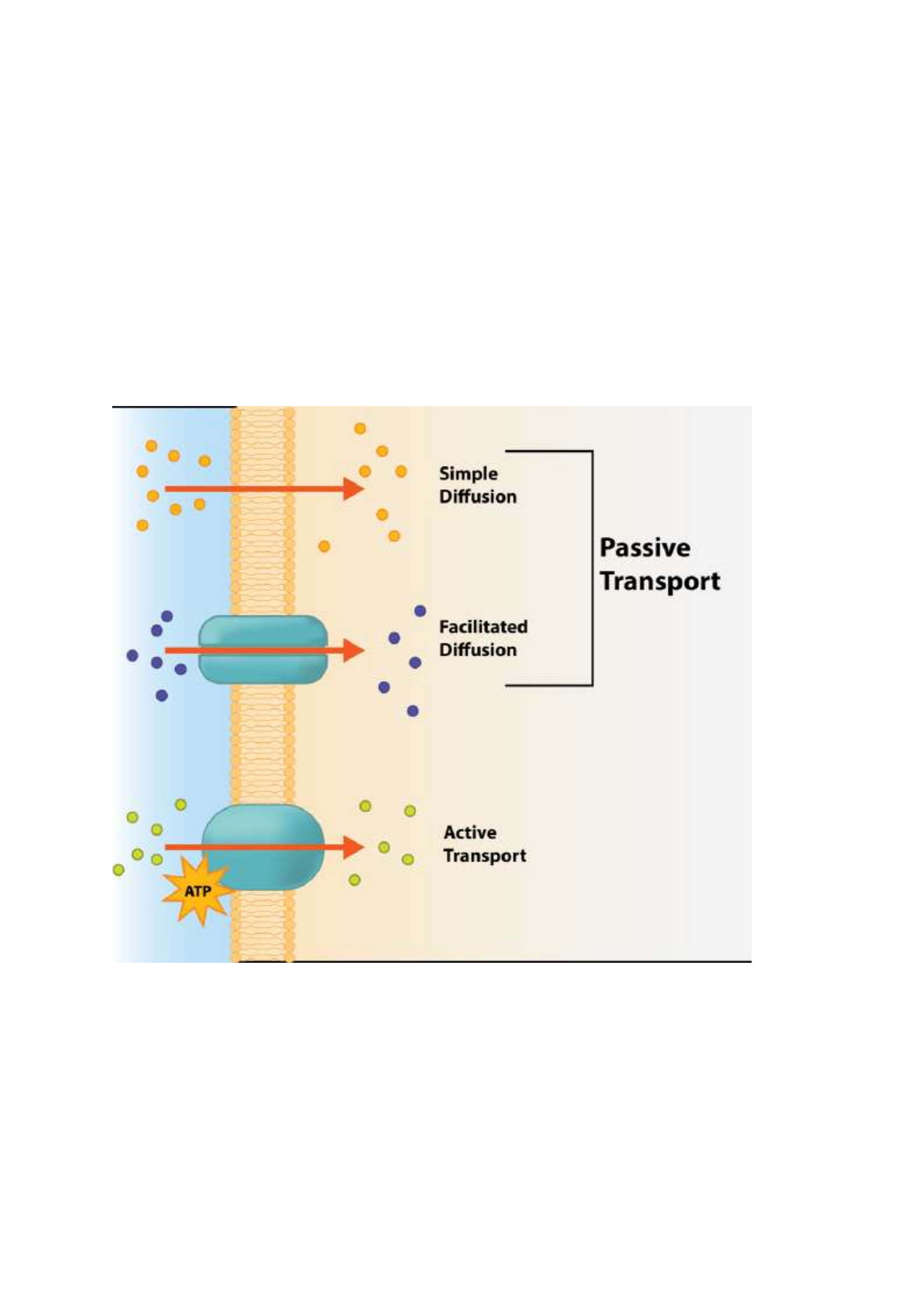
cell stops. Each carrier protein typically exhibits specificity, only transporting in a particular
type of molecule or closely related molecules.
Active Transport
Many types of nutrient uptake require that a cell be able to transport substances against a
concentration gradient (i.e. with a higher concentration inside the cell than outside). In order to
do this, a cell must utilize metabolic energy for the transport of the substance through carrier
proteins embedded in the membrane. This is known as active transport. All types of active
transport utilize carrier proteins.
Active Transport Versus Facilitated Diffusion.
Primary active transport
Primary active transport involves the use of chemical energy, such as ATP, to drive the
transport. One example is the ABC system, which utilizes ATP-Binding Cassette
transporters. Each ABC transporter is composed of three different components: 1)
membrane-spanning proteins that form a pore across the cell membrane (i.e. carrier protein),
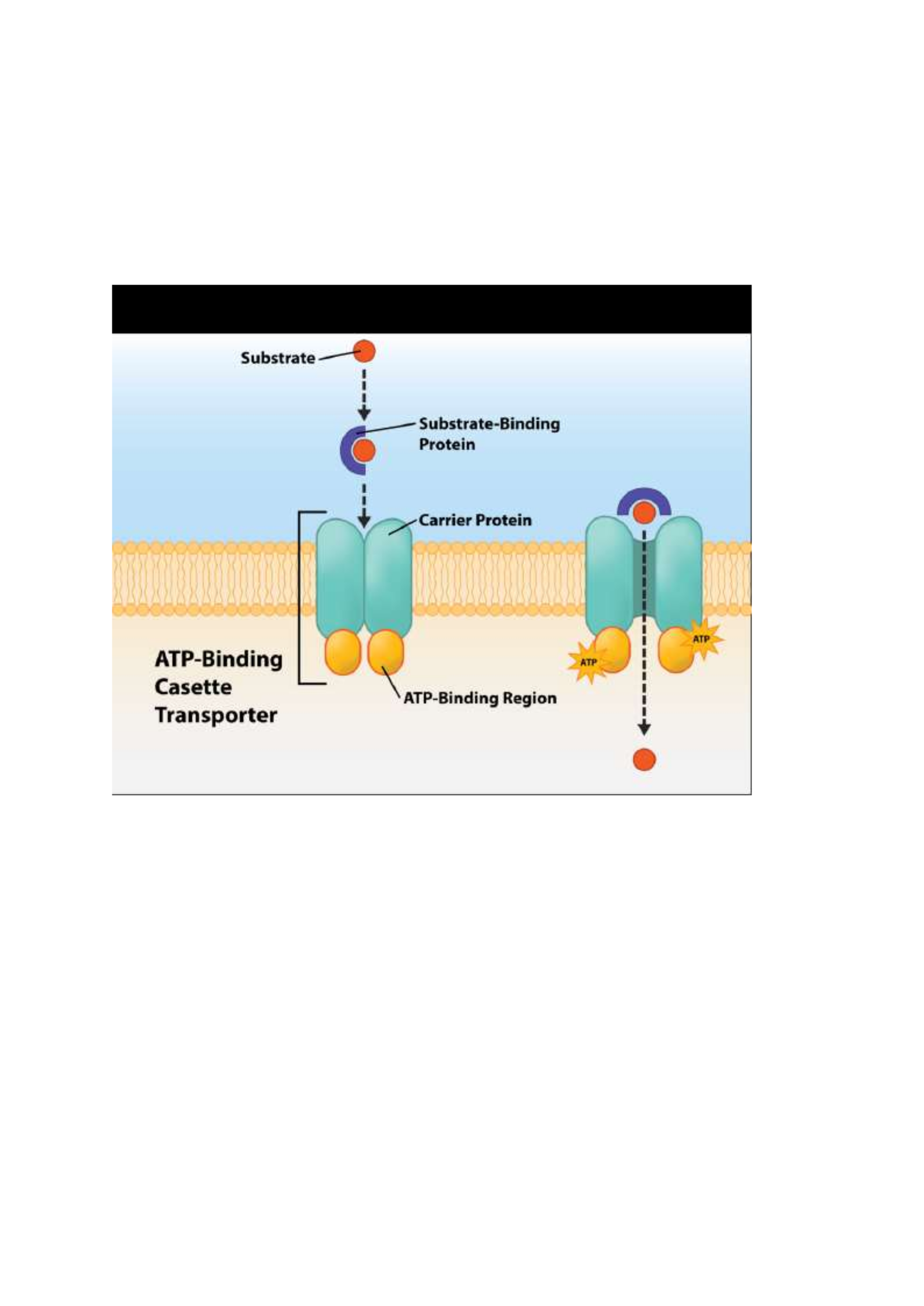
2) an ATP binding region that hydrolyzes ATP, providing the energy for the passage across the
membrane, and 3) a substrate-binding protein, a peripheral protein that binds to the appropriate
substance to be transporter and ferries it to the membrane-spanning proteins. In gram negative
bacteria the substrate-binding protein is located in the cell’s periplasm, while in gram positive
bacteria the substrate-binding protein is attached to the outside of the cell membrane.
ABC Transporter Structure.
Secondary active transport
Secondary active transport utilizes energy from a proton motive force (PMF). A PMF is an
ion gradient that develops when the cell transports electrons during energy-conserving
processes. Positively charged protons accumulate along the outside of the negatively charged
cell, creating a proton gradient between the outside of the cell and the inside.
There are three different types of transport events for simple transport: uniport, symport,
and antiport and each mechanism utilizes a different protein porter. Uniporters transport a
single substance across the membrane, either in or out. Symporters transport two substances
across the membrane at the same time, typically a proton paired with another

molecule. Antiporters transport two substances across the membrane as well, but in opposite
directions. As one substance enters the cell, the other substance is transported out.
Uniport Synport Antiport. By Lupask (Own work) [Public domain], via Wikimedia Commons
Group Translocation
Group translocation is a distinct type of active transport, using energy from an energy-rich
organic compound that is not ATP. Group translocation also differs from both simple transport
and ABC transporters in that the substance being transported is chemically modified in the
process.
One of the best studied examples of group translocation is the phosphoenolpyruvate: sugar
phosphotransferase system (PTS), which uses energy from the high-energy
molecule phosphoenolpyruvate (PEP) to transport sugars into the cell. A phosphate is
transferred from the PEP to the incoming sugar during the process of transportation.
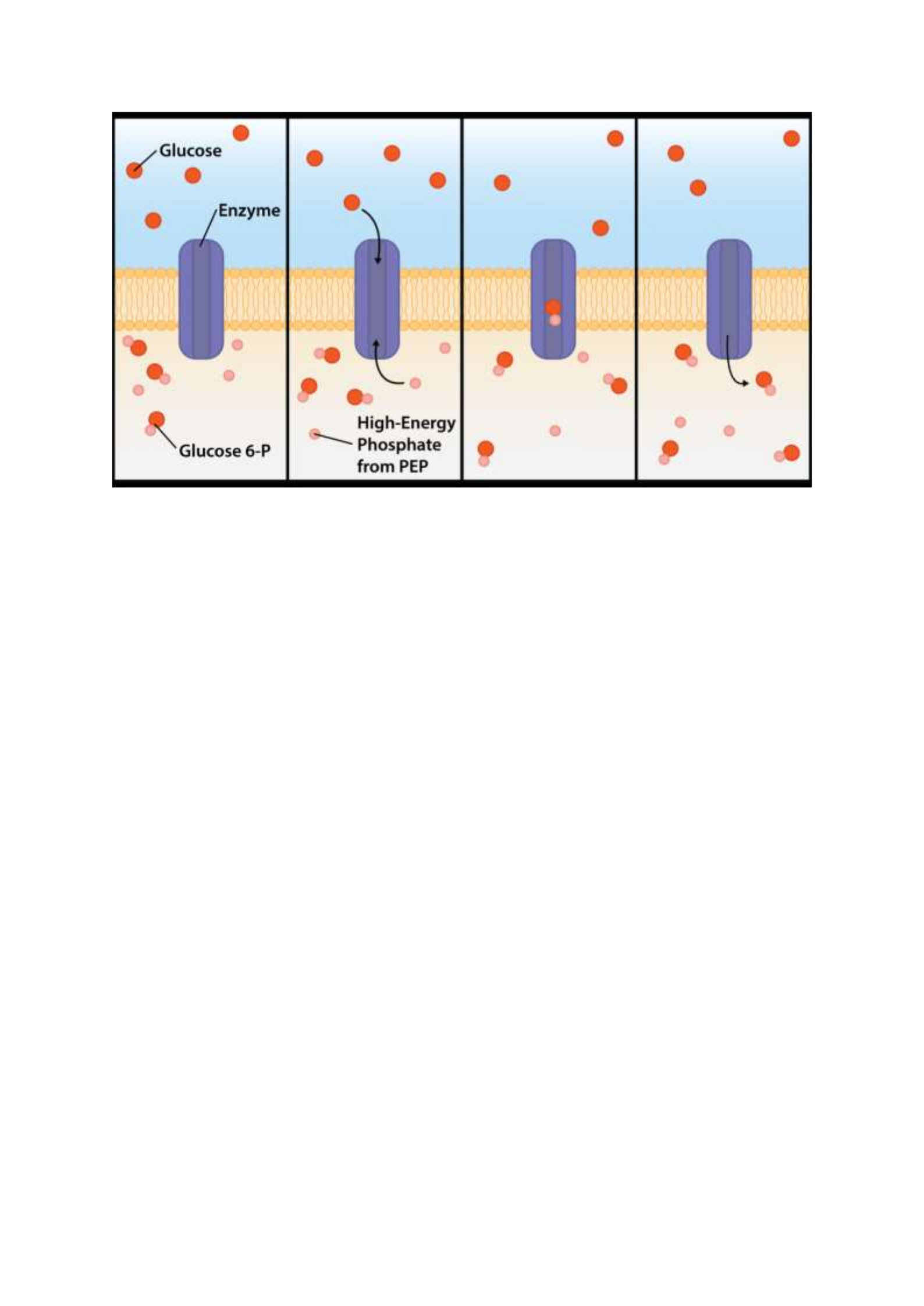
Group Translocation via PTS.
Iron Uptake
Iron is required by microbes for the function of their cytochromes and enzymes, resulting in it
being a growth-limiting micronutrient. However, little free iron is available in environments,
due to its insolubility. Many bacteria have evolved siderophores, organic molecules that
chelate or bind ferric iron with high affinity. Siderophores are released by the organism to the
surrounding environment, whereby they bind any available ferric iron. The iron-siderophore
complex is then bound by a specific receptor on the outside of the cell, allowing the iron to be
transported into the cell.

Siderophores and Receptor Sites.
Key Words
heterotroph, autotroph, phototroph, chemotroph, lithotroph, organotroph, photolithoautotroph,
photoorganoheterotroph, chemoorganoheterotroph, chemolithoautotroph,
chemolithoheterotroph, macronutrients, growth factors, passive/simple diffusion, facilitated
diffusion, carrier protein/permease, active transport, primary active transport, ABC system,
ATP-binding cassette transporter, ABC transporter, secondary active transport, proton motive
force (PMF), uniport, symport, antiport, porter, uniporter, symporter, antiporter, group
translocation, phosphoenolpyruvate: sugar phosphotransferase system (PTS),
phosphoenolpyruvate (PEP), siderophore.
Macronutrients
In addition to carbon, hydrogen and oxygen, cells need a few other elements in sufficient
quantity. In particular, cells need nitrogen for the formation of proteins, nucleic acids, and a
few other cell components. Cells also need phosphorous, which is a crucial component of
nucleic acids (think sugar-phosphate backbone!), phospholipids, and adenosine
triphosphate or ATP. Sulfur is necessary for a few amino acids, as well as several vitamins,

while potassium is needed for enzymes, and magnesium is used to stabilize ribosomes and
membrane. Collectively these elements (including C, H, and O) are referred to as
the macronutrients.
Growth Factors
Some microbes can synthesize certain organic molecules that they need from scratch, as long
as they are provided with carbon source and inorganic salts. Other microbes require that certain
organic compounds exist within their environment. These organic molecules essential for
growth are called growth factors and fall in three categories: 1) amino acids (building blocks
of protein), 2) purines and pyrimidines (building blocks of nucleic acid), and 3) vitamins
(enzyme cofactors).
Uptake of Nutrients
In order to support its’ activities, a cell must bring in nutrients from the external environment
across the cell membrane. In bacteria and archaea, several different transport mechanisms exist.
Passive Diffusion
Passive or simple diffusion allows for the passage across the cell membrane of simple
molecules and gases, such as CO2, O2, and H2O. In this case, a concentration gradient must
exist, where there is higher concentration of the substance outside of the cell than there is inside
the cell. As more of the substance is transported into the cell the concentration gradient
decreases, slowing the rate of diffusion.
Facilitated Diffusion
Facilitated diffusion also involves the use of a concentration gradient, where the concentration
of the substance is higher outside the cell, but differs with the use of carrier
proteins (sometimes called permeases). These proteins are embedded within the cell
membrane and provide a channel or pore across the membrane barrier, allowing for the passage
of larger molecules. If the concentration gradient dissipates, the passage of molecules into the
cell stops. Each carrier protein typically exhibits specificity, only transporting in a particular
type of molecule or closely related molecules.
Macronutrients
In addition to carbon, hydrogen and oxygen, cells need a few other elements in sufficient
quantity. In particular, cells need nitrogen for the formation of proteins, nucleic acids, and a

few other cell components. Cells also need phosphorous, which is a crucial component of
nucleic acids (think sugar-phosphate backbone!), phospholipids, and adenosine
triphosphate or ATP. Sulfur is necessary for a few amino acids, as well as several vitamins,
while potassium is needed for enzymes, and magnesium is used to stabilize ribosomes and
membrane. Collectively these elements (including C, H, and O) are referred to as
the macronutrients.
Growth Factors
Some microbes can synthesize certain organic molecules that they need from scratch, as long
as they are provided with carbon source and inorganic salts. Other microbes require that certain
organic compounds exist within their environment. These organic molecules essential for
growth are called growth factors and fall in three categories: 1) amino acids (building blocks
of protein), 2) purines and pyrimidines (building blocks of nucleic acid), and 3) vitamins
(enzyme cofactors).
Uptake of Nutrients
In order to support its’ activities, a cell must bring in nutrients from the external environment
across the cell membrane. In bacteria and archaea, several different transport mechanisms exist.
Passive Diffusion
Passive or simple diffusion allows for the passage across the cell membrane of simple
molecules and gases, such as CO2, O2, and H2O. In this case, a concentration gradient must
exist, where there is higher concentration of the substance outside of the cell than there is inside
the cell. As more of the substance is transported into the cell the concentration gradient
decreases, slowing the rate of diffusion.
Facilitated Diffusion
Facilitated diffusion also involves the use of a concentration gradient, where the concentration
of the substance is higher outside the cell, but differs with the use of carrier
proteins (sometimes called permeases). These proteins are embedded within the cell
membrane and provide a channel or pore across the membrane barrier, allowing for the passage
of larger molecules. If the concentration gradient dissipates, the passage of molecules into the
cell stops. Each carrier protein typically exhibits specificity, only transporting in a particular
type of molecule or closely related molecules.

Macronutrients
In addition to carbon, hydrogen and oxygen, cells need a few other elements in sufficient
quantity. In particular, cells need nitrogen for the formation of proteins, nucleic acids, and a
few other cell components. Cells also need phosphorous, which is a crucial component of
nucleic acids (think sugar-phosphate backbone!), phospholipids, and adenosine
triphosphate or ATP. Sulfur is necessary for a few amino acids, as well as several vitamins,
while potassium is needed for enzymes, and magnesium is used to stabilize ribosomes and
membrane. Collectively these elements (including C, H, and O) are referred to as
the macronutrients.
Growth Factors
Some microbes can synthesize certain organic molecules that they need from scratch, as long
as they are provided with carbon source and inorganic salts. Other microbes require that certain
organic compounds exist within their environment. These organic molecules essential for
growth are called growth factors and fall in three categories: 1) amino acids (building blocks
of protein), 2) purines and pyrimidines (building blocks of nucleic acid), and 3) vitamins
(enzyme cofactors).
Uptake of Nutrients
In order to support its’ activities, a cell must bring in nutrients from the external environment
across the cell membrane. In bacteria and archaea, several different transport mechanisms exist.
Passive Diffusion
Passive or simple diffusion allows for the passage across the cell membrane of simple
molecules and gases, such as CO2, O2, and H2O. In this case, a concentration gradient must
exist, where there is higher concentration of the substance outside of the cell than there is inside
the cell. As more of the substance is transported into the cell the concentration gradient
decreases, slowing the rate of diffusion.
Facilitated Diffusion
Facilitated diffusion also involves the use of a concentration gradient, where the concentration
of the substance is higher outside the cell, but differs with the use of carrier
proteins (sometimes called permeases). These proteins are embedded within the cell
membrane and provide a channel or pore across the membrane barrier, allowing for the passage

of larger molecules. If the concentration gradient dissipates, the passage of molecules into the
cell stops. Each carrier protein typically exhibits specificity, only transporting in a particular
type of molecule or closely related molecules.
All microbes have a need for three things: carbon, energy, and electrons. There are specific
terms associated with the source of each of these items, to help define organisms.
Let us focus on carbon first. All organisms are carbon-based with macromolecules – proteins,
carbohydrates, lipids, nucleic acid – having a fundamental core of carbon. On one hand,
organisms can use reduced, preformed organic substances as a carbon source. These are
the heterotrophs or “other eaters.” Alternatively, they can rely on carbon dioxide (CO2) as a
carbon source, reducing or “fixing” it this inorganic form of carbon into an organic molecule.
These are the autotrophs or “self feeders.”
For energy, there are two possibilities as well: light energy or chemical energy. Light energy
comes from the sun, while chemical energy can come from either organic or inorganic
chemicals. Those organisms that use light energy are called phototrophs (“light eaters”), while
those that use chemical energy are called chemotrophs (“chemical eaters”). Chemical energy
can come from inorganic sources or organic sources. An organism that uses inorganic sources
is known as a lithotroph (“rock eater”), while an organism that uses organic sources is called
an organotroph (“organic eater”).
All microbes have a need for three things: carbon, energy, and electrons. There are specific
terms associated with the source of each of these items, to help define organisms.
Let us focus on carbon first. All organisms are carbon-based with macromolecules – proteins,
carbohydrates, lipids, nucleic acid – having a fundamental core of carbon. On one hand,
organisms can use reduced, preformed organic substances as a carbon source. These are
the heterotrophs or “other eaters.” Alternatively, they can rely on carbon dioxide (CO2) as a
carbon source, reducing or “fixing” it this inorganic form of carbon into an organic molecule.
These are the autotrophs or “self feeders.”
For energy, there are two possibilities as well: light energy or chemical energy. Light energy
comes from the sun, while chemical energy can come from either organic or inorganic
chemicals. Those organisms that use light energy are called phototrophs (“light eaters”), while
those that use chemical energy are called chemotrophs (“chemical eaters”). Chemical energy
can come from inorganic sources or organic sources. An organism that uses inorganic sources

is known as a lithotroph (“rock eater”), while an organism that uses organic sources is called
an organotroph (“organic eater”).
All microbes have a need for three things: carbon, energy, and electrons. There are specific
terms associated with the source of each of these items, to help define organisms.
Let us focus on carbon first. All organisms are carbon-based with macromolecules – proteins,
carbohydrates, lipids, nucleic acid – having a fundamental core of carbon. On one hand,
organisms can use reduced, preformed organic substances as a carbon source. These are
the heterotrophs or “other eaters.” Alternatively, they can rely on carbon dioxide (CO2) as a
carbon source, reducing or “fixing” it this inorganic form of carbon into an organic molecule.
These are the autotrophs or “self feeders.”
For energy, there are two possibilities as well: light energy or chemical energy. Light energy
comes from the sun, while chemical energy can come from either organic or inorganic
chemicals. Those organisms that use light energy are called phototrophs (“light eaters”), while
those that use chemical energy are called chemotrophs (“chemical eaters”). Chemical energy
can come from inorganic sources or organic sources. An organism that uses inorganic sources
is known as a lithotroph (“rock eater”), while an organism that uses organic sources is called
an organotroph (“organic eater”).
Macronutrients
In addition to carbon, hydrogen and oxygen, cells need a few other elements in sufficient
quantity. In particular, cells need nitrogen for the formation of proteins, nucleic acids, and a
few other cell components. Cells also need phosphorous, which is a crucial component of
nucleic acids (think sugar-phosphate backbone!), phospholipids, and adenosine
triphosphate or ATP. Sulfur is necessary for a few amino acids, as well as several vitamins,
while potassium is needed for enzymes, and magnesium is used to stabilize ribosomes and
membrane. Collectively these elements (including C, H, and O) are referred to as
the macronutrients.
Growth Factors
Some microbes can synthesize certain organic molecules that they need from scratch, as long
as they are provided with carbon source and inorganic salts. Other microbes require that certain
organic compounds exist within their environment. These organic molecules essential for
growth are called growth factors and fall in three categories: 1) amino acids (building blocks

of protein), 2) purines and pyrimidines (building blocks of nucleic acid), and 3) vitamins
(enzyme cofactors).
Uptake of Nutrients
In order to support its’ activities, a cell must bring in nutrients from the external environment
across the cell membrane. In bacteria and archaea, several different transport mechanisms exist.
Passive Diffusion
Passive or simple diffusion allows for the passage across the cell membrane of simple
molecules and gases, such as CO2, O2, and H2O. In this case, a concentration gradient must
exist, where there is higher concentration of the substance outside of the cell than there is inside
the cell. As more of the substance is transported into the cell the concentration gradient
decreases, slowing the rate of diffusion.
Facilitated Diffusion
Facilitated diffusion also involves the use of a concentration gradient, where the concentration
of the substance is higher outside the cell, but differs with the use of carrier
proteins (sometimes called permeases). These proteins are embedded within the cell
membrane and provide a channel or pore across the membrane barrier, allowing for the passage
of larger molecules. If the concentration gradient dissipates, the passage of molecules into the
cell stops. Each carrier protein typically exhibits specificity, only transporting in a particular
type of molecule or closely related molecules.
Macronutrients
In addition to carbon, hydrogen and oxygen, cells need a few other elements in sufficient
quantity. In particular, cells need nitrogen for the formation of proteins, nucleic acids, and a
few other cell components. Cells also need phosphorous, which is a crucial component of
nucleic acids (think sugar-phosphate backbone!), phospholipids, and adenosine
triphosphate or ATP. Sulfur is necessary for a few amino acids, as well as several vitamins,
while potassium is needed for enzymes, and magnesium is used to stabilize ribosomes and
membrane. Collectively these elements (including C, H, and O) are referred to as
the macronutrients.
Growth Factors

Some microbes can synthesize certain organic molecules that they need from scratch, as long
as they are provided with carbon source and inorganic salts. Other microbes require that certain
organic compounds exist within their environment. These organic molecules essential for
growth are called growth factors and fall in three categories: 1) amino acids (building blocks
of protein), 2) purines and pyrimidines (building blocks of nucleic acid), and 3) vitamins
(enzyme cofactors).
Uptake of Nutrients
In order to support its’ activities, a cell must bring in nutrients from the external environment
across the cell membrane. In bacteria and archaea, several different transport mechanisms exist.
Passive Diffusion
Passive or simple diffusion allows for the passage across the cell membrane of simple
molecules and gases, such as CO2, O2, and H2O. In this case, a concentration gradient must
exist, where there is higher concentration of the substance outside of the cell than there is inside
the cell. As more of the substance is transported into the cell the concentration gradient
decreases, slowing the rate of diffusion.
Facilitated Diffusion
Facilitated diffusion also involves the use of a concentration gradient, where the concentration
of the substance is higher outside the cell, but differs with the use of carrier
proteins (sometimes called permeases). These proteins are embedded within the cell
membrane and provide a channel or pore across the membrane barrier, allowing for the passage
of larger molecules. If the concentration gradient dissipates, the passage of molecules into the
cell stops. Each carrier protein typically exhibits specificity, only transporting in a particular
type of molecule or closely related molecules.
Macronutrients
In addition to carbon, hydrogen and oxygen, cells need a few other elements in sufficient
quantity. In particular, cells need nitrogen for the formation of proteins, nucleic acids, and a
few other cell components. Cells also need phosphorous, which is a crucial component of
nucleic acids (think sugar-phosphate backbone!), phospholipids, and adenosine
triphosphate or ATP. Sulfur is necessary for a few amino acids, as well as several vitamins,
while potassium is needed for enzymes, and magnesium is used to stabilize ribosomes and

membrane. Collectively these elements (including C, H, and O) are referred to as
the macronutrients.
Growth Factors
Some microbes can synthesize certain organic molecules that they need from scratch, as long
as they are provided with carbon source and inorganic salts. Other microbes require that certain
organic compounds exist within their environment. These organic molecules essential for
growth are called growth factors and fall in three categories: 1) amino acids (building blocks
of protein), 2) purines and pyrimidines (building blocks of nucleic acid), and 3) vitamins
(enzyme cofactors).
Uptake of Nutrients
In order to support its’ activities, a cell must bring in nutrients from the external environment
across the cell membrane. In bacteria and archaea, several different transport mechanisms exist.
Passive Diffusion
Passive or simple diffusion allows for the passage across the cell membrane of simple
molecules and gases, such as CO2, O2, and H2O. In this case, a concentration gradient must
exist, where there is higher concentration of the substance outside of the cell than there is inside
the cell. As more of the substance is transported into the cell the concentration gradient
decreases, slowing the rate of diffusion.
Facilitated Diffusion
Facilitated diffusion also involves the use of a concentration gradient, where the concentration
of the substance is higher outside the cell, but differs with the use of carrier
proteins (sometimes called permeases). These proteins are embedded within the cell
membrane and provide a channel or pore across the membrane barrier, allowing for the passage
of larger molecules. If the concentration gradient dissipates, the passage of molecules into the
cell stops. Each carrier protein typically exhibits specificity, only transporting in a particular
type of molecule or closely related molecules.
All microbes have a need for three things: carbon, energy, and electrons. There are specific
terms associated with the source of each of these items, to help define organisms.
Let us focus on carbon first. All organisms are carbon-based with macromolecules – proteins,
carbohydrates, lipids, nucleic acid – having a fundamental core of carbon. On one hand,

organisms can use reduced, preformed organic substances as a carbon source. These are
the heterotrophs or “other eaters.” Alternatively, they can rely on carbon dioxide (CO2) as a
carbon source, reducing or “fixing” it this inorganic form of carbon into an organic molecule.
These are the autotrophs or “self feeders.”
For energy, there are two possibilities as well: light energy or chemical energy. Light energy
comes from the sun, while chemical energy can come from either organic or inorganic
chemicals. Those organisms that use light energy are called phototrophs (“light eaters”), while
those that use chemical energy are called chemotrophs (“chemical eaters”). Chemical energy
can come from inorganic sources or organic sources. An organism that uses inorganic sources
is known as a lithotroph (“rock eater”), while an organism that uses organic sources is called
an organotroph (“organic eater”).
All microbes have a need for three things: carbon, energy, and electrons. There are specific
terms associated with the source of each of these items, to help define organisms.
Let us focus on carbon first. All organisms are carbon-based with macromolecules – proteins,
carbohydrates, lipids, nucleic acid – having a fundamental core of carbon. On one hand,
organisms can use reduced, preformed organic substances as a carbon source. These are
the heterotrophs or “other eaters.” Alternatively, they can rely on carbon dioxide (CO2) as a
carbon source, reducing or “fixing” it this inorganic form of carbon into an organic molecule.
These are the autotrophs or “self feeders.”
For energy, there are two possibilities as well: light energy or chemical energy. Light energy
comes from the sun, while chemical energy can come from either organic or inorganic
chemicals. Those organisms that use light energy are called phototrophs (“light eaters”), while
those that use chemical energy are called chemotrophs (“chemical eaters”). Chemical energy
can come from inorganic sources or organic sources. An organism that uses inorganic sources
is known as a lithotroph (“rock eater”), while an organism that uses organic sources is called
an organotroph (“organic eater”).
All microbes have a need for three things: carbon, energy, and electrons. There are specific
terms associated with the source of each of these items, to help define organisms.
Let us focus on carbon first. All organisms are carbon-based with macromolecules – proteins,
carbohydrates, lipids, nucleic acid – having a fundamental core of carbon. On one hand,
organisms can use reduced, preformed organic substances as a carbon source. These are

the heterotrophs or “other eaters.” Alternatively, they can rely on carbon dioxide (CO2) as a
carbon source, reducing or “fixing” it this inorganic form of carbon into an organic molecule.
These are the autotrophs or “self feeders.”
For energy, there are two possibilities as well: light energy or chemical energy. Light energy
comes from the sun, while chemical energy can come from either organic or inorganic
chemicals. Those organisms that use light energy are called phototrophs (“light eaters”), while
those that use chemical energy are called chemotrophs (“chemical eaters”). Chemical energy
can come from inorganic sources or organic sources. An organism that uses inorganic sources
is known as a lithotroph (“rock eater”), while an organism that uses organic sources is called
an organotroph (“organic eater”).
Macronutrients
In addition to carbon, hydrogen and oxygen, cells need a few other elements in sufficient
quantity. In particular, cells need nitrogen for the formation of proteins, nucleic acids, and a
few other cell components. Cells also need phosphorous, which is a crucial component of
nucleic acids (think sugar-phosphate backbone!), phospholipids, and adenosine
triphosphate or ATP. Sulfur is necessary for a few amino acids, as well as several vitamins,
while potassium is needed for enzymes, and magnesium is used to stabilize ribosomes and
membrane. Collectively these elements (including C, H, and O) are referred to as
the macronutrients.
Growth Factors
Some microbes can synthesize certain organic molecules that they need from scratch, as long
as they are provided with carbon source and inorganic salts. Other microbes require that certain
organic compounds exist within their environment. These organic molecules essential for
growth are called growth factors and fall in three categories: 1) amino acids (building blocks
of protein), 2) purines and pyrimidines (building blocks of nucleic acid), and 3) vitamins
(enzyme cofactors).
Uptake of Nutrients
In order to support its’ activities, a cell must bring in nutrients from the external environment
across the cell membrane. In bacteria and archaea, several different transport mechanisms exist.
Passive Diffusion

Passive or simple diffusion allows for the passage across the cell membrane of simple
molecules and gases, such as CO2, O2, and H2O. In this case, a concentration gradient must
exist, where there is higher concentration of the substance outside of the cell than there is inside
the cell. As more of the substance is transported into the cell the concentration gradient
decreases, slowing the rate of diffusion.
Facilitated Diffusion
Facilitated diffusion also involves the use of a concentration gradient, where the concentration
of the substance is higher outside the cell, but differs with the use of carrier
proteins (sometimes called permeases). These proteins are embedded within the cell
membrane and provide a channel or pore across the membrane barrier, allowing for the passage
of larger molecules. If the concentration gradient dissipates, the passage of molecules into the
cell stops. Each carrier protein typically exhibits specificity, only transporting in a particular
type of molecule or closely related molecules.
Macronutrients
In addition to carbon, hydrogen and oxygen, cells need a few other elements in sufficient
quantity. In particular, cells need nitrogen for the formation of proteins, nucleic acids, and a
few other cell components. Cells also need phosphorous, which is a crucial component of
nucleic acids (think sugar-phosphate backbone!), phospholipids, and adenosine
triphosphate or ATP. Sulfur is necessary for a few amino acids, as well as several vitamins,
while potassium is needed for enzymes, and magnesium is used to stabilize ribosomes and
membrane. Collectively these elements (including C, H, and O) are referred to as
the macronutrients.
Growth Factors
Some microbes can synthesize certain organic molecules that they need from scratch, as long
as they are provided with carbon source and inorganic salts. Other microbes require that certain
organic compounds exist within their environment. These organic molecules essential for
growth are called growth factors and fall in three categories: 1) amino acids (building blocks
of protein), 2) purines and pyrimidines (building blocks of nucleic acid), and 3) vitamins
(enzyme cofactors).
Uptake of Nutrients

In order to support its’ activities, a cell must bring in nutrients from the external environment
across the cell membrane. In bacteria and archaea, several different transport mechanisms exist.
Passive Diffusion
Passive or simple diffusion allows for the passage across the cell membrane of simple
molecules and gases, such as CO2, O2, and H2O. In this case, a concentration gradient must
exist, where there is higher concentration of the substance outside of the cell than there is inside
the cell. As more of the substance is transported into the cell the concentration gradient
decreases, slowing the rate of diffusion.
Facilitated Diffusion
Facilitated diffusion also involves the use of a concentration gradient, where the concentration
of the substance is higher outside the cell, but differs with the use of carrier
proteins (sometimes called permeases). These proteins are embedded within the cell
membrane and provide a channel or pore across the membrane barrier, allowing for the passage
of larger molecules. If the concentration gradient dissipates, the passage of molecules into the
cell stops. Each carrier protein typically exhibits specificity, only transporting in a particular
type of molecule or closely related molecules.
Macronutrients
In addition to carbon, hydrogen and oxygen, cells need a few other elements in sufficient
quantity. In particular, cells need nitrogen for the formation of proteins, nucleic acids, and a
few other cell components. Cells also need phosphorous, which is a crucial component of
nucleic acids (think sugar-phosphate backbone!), phospholipids, and adenosine
triphosphate or ATP. Sulfur is necessary for a few amino acids, as well as several vitamins,
while potassium is needed for enzymes, and magnesium is used to stabilize ribosomes and
membrane. Collectively these elements (including C, H, and O) are referred to as
the macronutrients.
Growth Factors
Some microbes can synthesize certain organic molecules that they need from scratch, as long
as they are provided with carbon source and inorganic salts. Other microbes require that certain
organic compounds exist within their environment. These organic molecules essential for
growth are called growth factors and fall in three categories: 1) amino acids (building blocks

of protein), 2) purines and pyrimidines (building blocks of nucleic acid), and 3) vitamins
(enzyme cofactors).
Uptake of Nutrients
In order to support its’ activities, a cell must bring in nutrients from the external environment
across the cell membrane. In bacteria and archaea, several different transport mechanisms exist.
Passive Diffusion
Passive or simple diffusion allows for the passage across the cell membrane of simple
molecules and gases, such as CO2, O2, and H2O. In this case, a concentration gradient must
exist, where there is higher concentration of the substance outside of the cell than there is inside
the cell. As more of the substance is transported into the cell the concentration gradient
decreases, slowing the rate of diffusion.
Facilitated Diffusion
Facilitated diffusion also involves the use of a concentration gradient, where the concentration
of the substance is higher outside the cell, but differs with the use of carrier
proteins (sometimes called permeases). These proteins are embedded within the cell
membrane and provide a channel or pore across the membrane barrier, allowing for the passage
of larger molecules. If the concentration gradient dissipates, the passage of molecules into the
cell stops. Each carrier protein typically exhibits specificity, only transporting in a particular
type of molecule or closely related molecules.
All microbes have a need for three things: carbon, energy, and electrons. There are specific
terms associated with the source of each of these items, to help define organisms.
Let us focus on carbon first. All organisms are carbon-based with macromolecules – proteins,
carbohydrates, lipids, nucleic acid – having a fundamental core of carbon. On one hand,
organisms can use reduced, preformed organic substances as a carbon source. These are
the heterotrophs or “other eaters.” Alternatively, they can rely on carbon dioxide (CO2) as a
carbon source, reducing or “fixing” it this inorganic form of carbon into an organic molecule.
These are the autotrophs or “self feeders.”
For energy, there are two possibilities as well: light energy or chemical energy. Light energy
comes from the sun, while chemical energy can come from either organic or inorganic
chemicals. Those organisms that use light energy are called phototrophs (“light eaters”), while

those that use chemical energy are called chemotrophs (“chemical eaters”). Chemical energy
can come from inorganic sources or organic sources. An organism that uses inorganic sources
is known as a lithotroph (“rock eater”), while an organism that uses organic sources is called
an organotroph (“organic eater”).
All microbes have a need for three things: carbon, energy, and electrons. There are specific
terms associated with the source of each of these items, to help define organisms.
Let us focus on carbon first. All organisms are carbon-based with macromolecules – proteins,
carbohydrates, lipids, nucleic acid – having a fundamental core of carbon. On one hand,
organisms can use reduced, preformed organic substances as a carbon source. These are
the heterotrophs or “other eaters.” Alternatively, they can rely on carbon dioxide (CO2) as a
carbon source, reducing or “fixing” it this inorganic form of carbon into an organic molecule.
These are the autotrophs or “self feeders.”
For energy, there are two possibilities as well: light energy or chemical energy. Light energy
comes from the sun, while chemical energy can come from either organic or inorganic
chemicals. Those organisms that use light energy are called phototrophs (“light eaters”), while
those that use chemical energy are called chemotrophs (“chemical eaters”). Chemical energy
can come from inorganic sources or organic sources. An organism that uses inorganic sources
is known as a lithotroph (“rock eater”), while an organism that uses organic sources is called
an organotroph (“organic eater”).
All microbes have a need for three things: carbon, energy, and electrons. There are specific
terms associated with the source of each of these items, to help define organisms.
Let us focus on carbon first. All organisms are carbon-based with macromolecules – proteins,
carbohydrates, lipids, nucleic acid – having a fundamental core of carbon. On one hand,
organisms can use reduced, preformed organic substances as a carbon source. These are
the heterotrophs or “other eaters.” Alternatively, they can rely on carbon dioxide (CO2) as a
carbon source, reducing or “fixing” it this inorganic form of carbon into an organic molecule.
These are the autotrophs or “self feeders.”
For energy, there are two possibilities as well: light energy or chemical energy. Light energy
comes from the sun, while chemical energy can come from either organic or inorganic
chemicals. Those organisms that use light energy are called phototrophs (“light eaters”), while
those that use chemical energy are called chemotrophs (“chemical eaters”). Chemical energy

can come from inorganic sources or organic sources. An organism that uses inorganic sources
is known as a lithotroph (“rock eater”), while an organism that uses organic sources is called
an organotroph (“organic eater”).
Macronutrients
In addition to carbon, hydrogen and oxygen, cells need a few other elements in sufficient
quantity. In particular, cells need nitrogen for the formation of proteins, nucleic acids, and a
few other cell components. Cells also need phosphorous, which is a crucial component of
nucleic acids (think sugar-phosphate backbone!), phospholipids, and adenosine
triphosphate or ATP. Sulfur is necessary for a few amino acids, as well as several vitamins,
while potassium is needed for enzymes, and magnesium is used to stabilize ribosomes and
membrane. Collectively these elements (including C, H, and O) are referred to as
the macronutrients.
Growth Factors
Some microbes can synthesize certain organic molecules that they need from scratch, as long
as they are provided with carbon source and inorganic salts. Other microbes require that certain
organic compounds exist within their environment. These organic molecules essential for
growth are called growth factors and fall in three categories: 1) amino acids (building blocks
of protein), 2) purines and pyrimidines (building blocks of nucleic acid), and 3) vitamins
(enzyme cofactors).
Uptake of Nutrients
In order to support its’ activities, a cell must bring in nutrients from the external environment
across the cell membrane. In bacteria and archaea, several different transport mechanisms exist.
Passive Diffusion
Passive or simple diffusion allows for the passage across the cell membrane of simple
molecules and gases, such as CO2, O2, and H2O. In this case, a concentration gradient must
exist, where there is higher concentration of the substance outside of the cell than there is inside
the cell. As more of the substance is transported into the cell the concentration gradient
decreases, slowing the rate of diffusion.
Facilitated Diffusion

Facilitated diffusion also involves the use of a concentration gradient, where the concentration
of the substance is higher outside the cell, but differs with the use of carrier
proteins (sometimes called permeases). These proteins are embedded within the cell
membrane and provide a channel or pore across the membrane barrier, allowing for the passage
of larger molecules. If the concentration gradient dissipates, the passage of molecules into the
cell stops. Each carrier protein typically exhibits specificity, only transporting in a particular
type of molecule or closely related molecules.
Macronutrients
In addition to carbon, hydrogen and oxygen, cells need a few other elements in sufficient
quantity. In particular, cells need nitrogen for the formation of proteins, nucleic acids, and a
few other cell components. Cells also need phosphorous, which is a crucial component of
nucleic acids (think sugar-phosphate backbone!), phospholipids, and adenosine
triphosphate or ATP. Sulfur is necessary for a few amino acids, as well as several vitamins,
while potassium is needed for enzymes, and magnesium is used to stabilize ribosomes and
membrane. Collectively these elements (including C, H, and O) are referred to as
the macronutrients.
Growth Factors
Some microbes can synthesize certain organic molecules that they need from scratch, as long
as they are provided with carbon source and inorganic salts. Other microbes require that certain
organic compounds exist within their environment. These organic molecules essential for
growth are called growth factors and fall in three categories: 1) amino acids (building blocks
of protein), 2) purines and pyrimidines (building blocks of nucleic acid), and 3) vitamins
(enzyme cofactors).
Uptake of Nutrients
In order to support its’ activities, a cell must bring in nutrients from the external environment
across the cell membrane. In bacteria and archaea, several different transport mechanisms exist.
Passive Diffusion
Passive or simple diffusion allows for the passage across the cell membrane of simple
molecules and gases, such as CO2, O2, and H2O. In this case, a concentration gradient must
exist, where there is higher concentration of the substance outside of the cell than there is inside

the cell. As more of the substance is transported into the cell the concentration gradient
decreases, slowing the rate of diffusion.
Facilitated Diffusion
Facilitated diffusion also involves the use of a concentration gradient, where the concentration
of the substance is higher outside the cell, but differs with the use of carrier
proteins (sometimes called permeases). These proteins are embedded within the cell
membrane and provide a channel or pore across the membrane barrier, allowing for the passage
of larger molecules. If the concentration gradient dissipates, the passage of molecules into the
cell stops. Each carrier protein typically exhibits specificity, only transporting in a particular
type of molecule or closely related molecules.
Macronutrients
In addition to carbon, hydrogen and oxygen, cells need a few other elements in sufficient
quantity. In particular, cells need nitrogen for the formation of proteins, nucleic acids, and a
few other cell components. Cells also need phosphorous, which is a crucial component of
nucleic acids (think sugar-phosphate backbone!), phospholipids, and adenosine
triphosphate or ATP. Sulfur is necessary for a few amino acids, as well as several vitamins,
while potassium is needed for enzymes, and magnesium is used to stabilize ribosomes and
membrane. Collectively these elements (including C, H, and O) are referred to as
the macronutrients.
Growth Factors
Some microbes can synthesize certain organic molecules that they need from scratch, as long
as they are provided with carbon source and inorganic salts. Other microbes require that certain
organic compounds exist within their environment. These organic molecules essential for
growth are called growth factors and fall in three categories: 1) amino acids (building blocks
of protein), 2) purines and pyrimidines (building blocks of nucleic acid), and 3) vitamins
(enzyme cofactors).
Uptake of Nutrients
In order to support its’ activities, a cell must bring in nutrients from the external environment
across the cell membrane. In bacteria and archaea, several different transport mechanisms exist.
Passive Diffusion

Passive or simple diffusion allows for the passage across the cell membrane of simple
molecules and gases, such as CO2, O2, and H2O. In this case, a concentration gradient must
exist, where there is higher concentration of the substance outside of the cell than there is inside
the cell. As more of the substance is transported into the cell the concentration gradient
decreases, slowing the rate of diffusion.
Facilitated Diffusion
Facilitated diffusion also involves the use of a concentration gradient, where the concentration
of the substance is higher outside the cell, but differs with the use of carrier
proteins (sometimes called permeases). These proteins are embedded within the cell
membrane and provide a channel or pore across the membrane barrier, allowing for the passage
of larger molecules. If the concentration gradient dissipates, the passage of molecules into the
cell stops. Each carrier protein typically exhibits specificity, only transporting in a particular
type of molecule or closely related molecules.
All microbes have a need for three things: carbon, energy, and electrons. There are specific
terms associated with the source of each of these items, to help define organisms.
Let us focus on carbon first. All organisms are carbon-based with macromolecules – proteins,
carbohydrates, lipids, nucleic acid – having a fundamental core of carbon. On one hand,
organisms can use reduced, preformed organic substances as a carbon source. These are
the heterotrophs or “other eaters.” Alternatively, they can rely on carbon dioxide (CO2) as a
carbon source, reducing or “fixing” it this inorganic form of carbon into an organic molecule.
These are the autotrophs or “self feeders.”
For energy, there are two possibilities as well: light energy or chemical energy. Light energy
comes from the sun, while chemical energy can come from either organic or inorganic
chemicals. Those organisms that use light energy are called phototrophs (“light eaters”), while
those that use chemical energy are called chemotrophs (“chemical eaters”). Chemical energy
can come from inorganic sources or organic sources. An organism that uses inorganic sources
is known as a lithotroph (“rock eater”), while an organism that uses organic sources is called
an organotroph (“organic eater”).
All microbes have a need for three things: carbon, energy, and electrons. There are specific
terms associated with the source of each of these items, to help define organisms.

Let us focus on carbon first. All organisms are carbon-based with macromolecules – proteins,
carbohydrates, lipids, nucleic acid – having a fundamental core of carbon. On one hand,
organisms can use reduced, preformed organic substances as a carbon source. These are
the heterotrophs or “other eaters.” Alternatively, they can rely on carbon dioxide (CO2) as a
carbon source, reducing or “fixing” it this inorganic form of carbon into an organic molecule.
These are the autotrophs or “self feeders.”
For energy, there are two possibilities as well: light energy or chemical energy. Light energy
comes from the sun, while chemical energy can come from either organic or inorganic
chemicals. Those organisms that use light energy are called phototrophs (“light eaters”), while
those that use chemical energy are called chemotrophs (“chemical eaters”). Chemical energy
can come from inorganic sources or organic sources. An organism that uses inorganic sources
is known as a lithotroph (“rock eater”), while an organism that uses organic sources is called
an organotroph (“organic eater”).
All microbes have a need for three things: carbon, energy, and electrons. There are specific
terms associated with the source of each of these items, to help define organisms.
Let us focus on carbon first. All organisms are carbon-based with macromolecules – proteins,
carbohydrates, lipids, nucleic acid – having a fundamental core of carbon. On one hand,
organisms can use reduced, preformed organic substances as a carbon source. These are
the heterotrophs or “other eaters.” Alternatively, they can rely on carbon dioxide (CO2) as a
carbon source, reducing or “fixing” it this inorganic form of carbon into an organic molecule.
These are the autotrophs or “self feeders.”
For energy, there are two possibilities as well: light energy or chemical energy. Light energy
comes from the sun, while chemical energy can come from either organic or inorganic
chemicals. Those organisms that use light energy are called phototrophs (“light eaters”), while
those that use chemical energy are called chemotrophs (“chemical eaters”). Chemical energy
can come from inorganic sources or organic sources. An organism that uses inorganic sources
is known as a lithotroph (“rock eater”), while an organism that uses organic sources is called
an organotroph (“organic eater”).
Macronutrients
In addition to carbon, hydrogen and oxygen, cells need a few other elements in sufficient
quantity. In particular, cells need nitrogen for the formation of proteins, nucleic acids, and a

few other cell components. Cells also need phosphorous, which is a crucial component of
nucleic acids (think sugar-phosphate backbone!), phospholipids, and adenosine
triphosphate or ATP. Sulfur is necessary for a few amino acids, as well as several vitamins,
while potassium is needed for enzymes, and magnesium is used to stabilize ribosomes and
membrane. Collectively these elements (including C, H, and O) are referred to as
the macronutrients.
Growth Factors
Some microbes can synthesize certain organic molecules that they need from scratch, as long
as they are provided with carbon source and inorganic salts. Other microbes require that certain
organic compounds exist within their environment. These organic molecules essential for
growth are called growth factors and fall in three categories: 1) amino acids (building blocks
of protein), 2) purines and pyrimidines (building blocks of nucleic acid), and 3) vitamins
(enzyme cofactors).
Uptake of Nutrients
In order to support its’ activities, a cell must bring in nutrients from the external environment
across the cell membrane. In bacteria and archaea, several different transport mechanisms exist.
Passive Diffusion
Passive or simple diffusion allows for the passage across the cell membrane of simple
molecules and gases, such as CO2, O2, and H2O. In this case, a concentration gradient must
exist, where there is higher concentration of the substance outside of the cell than there is inside
the cell. As more of the substance is transported into the cell the concentration gradient
decreases, slowing the rate of diffusion.
Facilitated Diffusion
Facilitated diffusion also involves the use of a concentration gradient, where the concentration
of the substance is higher outside the cell, but differs with the use of carrier
proteins (sometimes called permeases). These proteins are embedded within the cell
membrane and provide a channel or pore across the membrane barrier, allowing for the passage
of larger molecules. If the concentration gradient dissipates, the passage of molecules into the
cell stops. Each carrier protein typically exhibits specificity, only transporting in a particular
type of molecule or closely related molecules.

Macronutrients
In addition to carbon, hydrogen and oxygen, cells need a few other elements in sufficient
quantity. In particular, cells need nitrogen for the formation of proteins, nucleic acids, and a
few other cell components. Cells also need phosphorous, which is a crucial component of
nucleic acids (think sugar-phosphate backbone!), phospholipids, and adenosine
triphosphate or ATP. Sulfur is necessary for a few amino acids, as well as several vitamins,
while potassium is needed for enzymes, and magnesium is used to stabilize ribosomes and
membrane. Collectively these elements (including C, H, and O) are referred to as
the macronutrients.
Growth Factors
Some microbes can synthesize certain organic molecules that they need from scratch, as long
as they are provided with carbon source and inorganic salts. Other microbes require that certain
organic compounds exist within their environment. These organic molecules essential for
growth are called growth factors and fall in three categories: 1) amino acids (building blocks
of protein), 2) purines and pyrimidines (building blocks of nucleic acid), and 3) vitamins
(enzyme cofactors).
Uptake of Nutrients
In order to support its’ activities, a cell must bring in nutrients from the external environment
across the cell membrane. In bacteria and archaea, several different transport mechanisms exist.
Passive Diffusion
Passive or simple diffusion allows for the passage across the cell membrane of simple
molecules and gases, such as CO2, O2, and H2O. In this case, a concentration gradient must
exist, where there is higher concentration of the substance outside of the cell than there is inside
the cell. As more of the substance is transported into the cell the concentration gradient
decreases, slowing the rate of diffusion.
Facilitated Diffusion
Facilitated diffusion also involves the use of a concentration gradient, where the concentration
of the substance is higher outside the cell, but differs with the use of carrier
proteins (sometimes called permeases). These proteins are embedded within the cell
membrane and provide a channel or pore across the membrane barrier, allowing for the passage

of larger molecules. If the concentration gradient dissipates, the passage of molecules into the
cell stops. Each carrier protein typically exhibits specificity, only transporting in a particular
type of molecule or closely related molecules.
Macronutrients
In addition to carbon, hydrogen and oxygen, cells need a few other elements in sufficient
quantity. In particular, cells need nitrogen for the formation of proteins, nucleic acids, and a
few other cell components. Cells also need phosphorous, which is a crucial component of
nucleic acids (think sugar-phosphate backbone!), phospholipids, and adenosine
triphosphate or ATP. Sulfur is necessary for a few amino acids, as well as several vitamins,
while potassium is needed for enzymes, and magnesium is used to stabilize ribosomes and
membrane. Collectively these elements (including C, H, and O) are referred to as
the macronutrients.
Growth Factors
Some microbes can synthesize certain organic molecules that they need from scratch, as long
as they are provided with carbon source and inorganic salts. Other microbes require that certain
organic compounds exist within their environment. These organic molecules essential for
growth are called growth factors and fall in three categories: 1) amino acids (building blocks
of protein), 2) purines and pyrimidines (building blocks of nucleic acid), and 3) vitamins
(enzyme cofactors).
Uptake of Nutrients
In order to support its’ activities, a cell must bring in nutrients from the external environment
across the cell membrane. In bacteria and archaea, several different transport mechanisms exist.
Passive Diffusion
Passive or simple diffusion allows for the passage across the cell membrane of simple
molecules and gases, such as CO2, O2, and H2O. In this case, a concentration gradient must
exist, where there is higher concentration of the substance outside of the cell than there is inside
the cell. As more of the substance is transported into the cell the concentration gradient
decreases, slowing the rate of diffusion.
Facilitated Diffusion

Facilitated diffusion also involves the use of a concentration gradient, where the concentration
of the substance is higher outside the cell, but differs with the use of carrier
proteins (sometimes called permeases). These proteins are embedded within the cell
membrane and provide a channel or pore across the membrane barrier, allowing for the passage
of larger molecules. If the concentration gradient dissipates, the passage of molecules into the
cell stops. Each carrier protein typically exhibits specificity, only transporting in a particular
type of molecule or closely related molecules.
All microbes have a need for three things: carbon, energy, and electrons. There are specific
terms associated with the source of each of these items, to help define organisms.
Let us focus on carbon first. All organisms are carbon-based with macromolecules – proteins,
carbohydrates, lipids, nucleic acid – having a fundamental core of carbon. On one hand,
organisms can use reduced, preformed organic substances as a carbon source. These are
the heterotrophs or “other eaters.” Alternatively, they can rely on carbon dioxide (CO2) as a
carbon source, reducing or “fixing” it this inorganic form of carbon into an organic molecule.
These are the autotrophs or “self feeders.”
For energy, there are two possibilities as well: light energy or chemical energy. Light energy
comes from the sun, while chemical energy can come from either organic or inorganic
chemicals. Those organisms that use light energy are called phototrophs (“light eaters”), while
those that use chemical energy are called chemotrophs (“chemical eaters”). Chemical energy
can come from inorganic sources or organic sources. An organism that uses inorganic sources
is known as a lithotroph (“rock eater”), while an organism that uses organic sources is called
an organotroph (“organic eater”).
All microbes have a need for three things: carbon, energy, and electrons. There are specific
terms associated with the source of each of these items, to help define organisms.
Let us focus on carbon first. All organisms are carbon-based with macromolecules – proteins,
carbohydrates, lipids, nucleic acid – having a fundamental core of carbon. On one hand,
organisms can use reduced, preformed organic substances as a carbon source. These are
the heterotrophs or “other eaters.” Alternatively, they can rely on carbon dioxide (CO2) as a
carbon source, reducing or “fixing” it this inorganic form of carbon into an organic molecule.
These are the autotrophs or “self feeders.”

For energy, there are two possibilities as well: light energy or chemical energy. Light energy
comes from the sun, while chemical energy can come from either organic or inorganic
chemicals. Those organisms that use light energy are called phototrophs (“light eaters”), while
those that use chemical energy are called chemotrophs (“chemical eaters”). Chemical energy
can come from inorganic sources or organic sources. An organism that uses inorganic sources
is known as a lithotroph (“rock eater”), while an organism that uses organic sources is called
an organotroph (“organic eater”).
All microbes have a need for three things: carbon, energy, and electrons. There are specific
terms associated with the source of each of these items, to help define organisms.
Let us focus on carbon first. All organisms are carbon-based with macromolecules – proteins,
carbohydrates, lipids, nucleic acid – having a fundamental core of carbon. On one hand,
organisms can use reduced, preformed organic substances as a carbon source. These are
the heterotrophs or “other eaters.” Alternatively, they can rely on carbon dioxide (CO2) as a
carbon source, reducing or “fixing” it this inorganic form of carbon into an organic molecule.
These are the autotrophs or “self feeders.”
For energy, there are two possibilities as well: light energy or chemical energy. Light energy
comes from the sun, while chemical energy can come from either organic or inorganic
chemicals. Those organisms that use light energy are called phototrophs (“light eaters”), while
those that use chemical energy are called chemotrophs (“chemical eaters”). Chemical energy
can come from inorganic sources or organic sources. An organism that uses inorganic sources
is known as a lithotroph (“rock eater”), while an organism that uses organic sources is called
an organotroph (“organic eater”).
Macronutrients
In addition to carbon, hydrogen and oxygen, cells need a few other elements in sufficient
quantity. In particular, cells need nitrogen for the formation of proteins, nucleic acids, and a
few other cell components. Cells also need phosphorous, which is a crucial component of
nucleic acids (think sugar-phosphate backbone!), phospholipids, and adenosine
triphosphate or ATP. Sulfur is necessary for a few amino acids, as well as several vitamins,
while potassium is needed for enzymes, and magnesium is used to stabilize ribosomes and
membrane. Collectively these elements (including C, H, and O) are referred to as
the macronutrients.

Growth Factors
Some microbes can synthesize certain organic molecules that they need from scratch, as long
as they are provided with carbon source and inorganic salts. Other microbes require that certain
organic compounds exist within their environment. These organic molecules essential for
growth are called growth factors and fall in three categories: 1) amino acids (building blocks
of protein), 2) purines and pyrimidines (building blocks of nucleic acid), and 3) vitamins
(enzyme cofactors).
Uptake of Nutrients
In order to support its’ activities, a cell must bring in nutrients from the external environment
across the cell membrane. In bacteria and archaea, several different transport mechanisms exist.
Passive Diffusion
Passive or simple diffusion allows for the passage across the cell membrane of simple
molecules and gases, such as CO2, O2, and H2O. In this case, a concentration gradient must
exist, where there is higher concentration of the substance outside of the cell than there is inside
the cell. As more of the substance is transported into the cell the concentration gradient
decreases, slowing the rate of diffusion.
Facilitated Diffusion
Facilitated diffusion also involves the use of a concentration gradient, where the concentration
of the substance is higher outside the cell, but differs with the use of carrier
proteins (sometimes called permeases). These proteins are embedded within the cell
membrane and provide a channel or pore across the membrane barrier, allowing for the passage
of larger molecules. If the concentration gradient dissipates, the passage of molecules into the
cell stops. Each carrier protein typically exhibits specificity, only transporting in a particular
type of molecule or closely related molecules.
Macronutrients
In addition to carbon, hydrogen and oxygen, cells need a few other elements in sufficient
quantity. In particular, cells need nitrogen for the formation of proteins, nucleic acids, and a
few other cell components. Cells also need phosphorous, which is a crucial component of
nucleic acids (think sugar-phosphate backbone!), phospholipids, and adenosine
triphosphate or ATP. Sulfur is necessary for a few amino acids, as well as several vitamins,

while potassium is needed for enzymes, and magnesium is used to stabilize ribosomes and
membrane. Collectively these elements (including C, H, and O) are referred to as
the macronutrients.
Growth Factors
Some microbes can synthesize certain organic molecules that they need from scratch, as long
as they are provided with carbon source and inorganic salts. Other microbes require that certain
organic compounds exist within their environment. These organic molecules essential for
growth are called growth factors and fall in three categories: 1) amino acids (building blocks
of protein), 2) purines and pyrimidines (building blocks of nucleic acid), and 3) vitamins
(enzyme cofactors).
Uptake of Nutrients
In order to support its’ activities, a cell must bring in nutrients from the external environment
across the cell membrane. In bacteria and archaea, several different transport mechanisms exist.
Passive Diffusion
Passive or simple diffusion allows for the passage across the cell membrane of simple
molecules and gases, such as CO2, O2, and H2O. In this case, a concentration gradient must
exist, where there is higher concentration of the substance outside of the cell than there is inside
the cell. As more of the substance is transported into the cell the concentration gradient
decreases, slowing the rate of diffusion.
Facilitated Diffusion
Facilitated diffusion also involves the use of a concentration gradient, where the concentration
of the substance is higher outside the cell, but differs with the use of carrier
proteins (sometimes called permeases). These proteins are embedded within the cell
membrane and provide a channel or pore across the membrane barrier, allowing for the passage
of larger molecules. If the concentration gradient dissipates, the passage of molecules into the
cell stops. Each carrier protein typically exhibits specificity, only transporting in a particular
type of molecule or closely related molecules.
Macronutrients
In addition to carbon, hydrogen and oxygen, cells need a few other elements in sufficient
quantity. In particular, cells need nitrogen for the formation of proteins, nucleic acids, and a

few other cell components. Cells also need phosphorous, which is a crucial component of
nucleic acids (think sugar-phosphate backbone!), phospholipids, and adenosine
triphosphate or ATP. Sulfur is necessary for a few amino acids, as well as several vitamins,
while potassium is needed for enzymes, and magnesium is used to stabilize ribosomes and
membrane. Collectively these elements (including C, H, and O) are referred to as
the macronutrients.
Growth Factors
Some microbes can synthesize certain organic molecules that they need from scratch, as long
as they are provided with carbon source and inorganic salts. Other microbes require that certain
organic compounds exist within their environment. These organic molecules essential for
growth are called growth factors and fall in three categories: 1) amino acids (building blocks
of protein), 2) purines and pyrimidines (building blocks of nucleic acid), and 3) vitamins
(enzyme cofactors).
Uptake of Nutrients
In order to support its’ activities, a cell must bring in nutrients from the external environment
across the cell membrane. In bacteria and archaea, several different transport mechanisms exist.
Passive Diffusion
Passive or simple diffusion allows for the passage across the cell membrane of simple
molecules and gases, such as CO2, O2, and H2O. In this case, a concentration gradient must
exist, where there is higher concentration of the substance outside of the cell than there is inside
the cell. As more of the substance is transported into the cell the concentration gradient
decreases, slowing the rate of diffusion.
Facilitated Diffusion
Facilitated diffusion also involves the use of a concentration gradient, where the concentration
of the substance is higher outside the cell, but differs with the use of carrier
proteins (sometimes called permeases). These proteins are embedded within the cell
membrane and provide a channel or pore across the membrane barrier, allowing for the passage
of larger molecules. If the concentration gradient dissipates, the passage of molecules into the
cell stops. Each carrier protein typically exhibits specificity, only transporting in a particular
type of molecule or closely related molecules.

All microbes have a need for three things: carbon, energy, and electrons. There are specific
terms associated with the source of each of these items, to help define organisms.
Let us focus on carbon first. All organisms are carbon-based with macromolecules – proteins,
carbohydrates, lipids, nucleic acid – having a fundamental core of carbon. On one hand,
organisms can use reduced, preformed organic substances as a carbon source. These are
the heterotrophs or “other eaters.” Alternatively, they can rely on carbon dioxide (CO2) as a
carbon source, reducing or “fixing” it this inorganic form of carbon into an organic molecule.
These are the autotrophs or “self feeders.”
For energy, there are two possibilities as well: light energy or chemical energy. Light energy
comes from the sun, while chemical energy can come from either organic or inorganic
chemicals. Those organisms that use light energy are called phototrophs (“light eaters”), while
those that use chemical energy are called chemotrophs (“chemical eaters”). Chemical energy
can come from inorganic sources or organic sources. An organism that uses inorganic sources
is known as a lithotroph (“rock eater”), while an organism that uses organic sources is called
an organotroph (“organic eater”).
All microbes have a need for three things: carbon, energy, and electrons. There are specific
terms associated with the source of each of these items, to help define organisms.
Let us focus on carbon first. All organisms are carbon-based with macromolecules – proteins,
carbohydrates, lipids, nucleic acid – having a fundamental core of carbon. On one hand,
organisms can use reduced, preformed organic substances as a carbon source. These are
the heterotrophs or “other eaters.” Alternatively, they can rely on carbon dioxide (CO2) as a
carbon source, reducing or “fixing” it this inorganic form of carbon into an organic molecule.
These are the autotrophs or “self feeders.”
For energy, there are two possibilities as well: light energy or chemical energy. Light energy
comes from the sun, while chemical energy can come from either organic or inorganic
chemicals. Those organisms that use light energy are called phototrophs (“light eaters”), while
those that use chemical energy are called chemotrophs (“chemical eaters”). Chemical energy
can come from inorganic sources or organic sources. An organism that uses inorganic sources
is known as a lithotroph (“rock eater”), while an organism that uses organic sources is called
an organotroph (“organic eater”).

All microbes have a need for three things: carbon, energy, and electrons. There are specific
terms associated with the source of each of these items, to help define organisms.
Let us focus on carbon first. All organisms are carbon-based with macromolecules – proteins,
carbohydrates, lipids, nucleic acid – having a fundamental core of carbon. On one hand,
organisms can use reduced, preformed organic substances as a carbon source. These are
the heterotrophs or “other eaters.” Alternatively, they can rely on carbon dioxide (CO2) as a
carbon source, reducing or “fixing” it this inorganic form of carbon into an organic molecule.
These are the autotrophs or “self feeders.”
For energy, there are two possibilities as well: light energy or chemical energy. Light energy
comes from the sun, while chemical energy can come from either organic or inorganic
chemicals. Those organisms that use light energy are called phototrophs (“light eaters”), while
those that use chemical energy are called chemotrophs (“chemical eaters”). Chemical energy
can come from inorganic sources or organic sources. An organism that uses inorganic sources
is known as a lithotroph (“rock eater”), while an organism that uses organic sources is called
an organotroph (“organic eater”).
Macronutrients
In addition to carbon, hydrogen and oxygen, cells need a few other elements in sufficient
quantity. In particular, cells need nitrogen for the formation of proteins, nucleic acids, and a
few other cell components. Cells also need phosphorous, which is a crucial component of
nucleic acids (think sugar-phosphate backbone!), phospholipids, and adenosine
triphosphate or ATP. Sulfur is necessary for a few amino acids, as well as several vitamins,
while potassium is needed for enzymes, and magnesium is used to stabilize ribosomes and
membrane. Collectively these elements (including C, H, and O) are referred to as
the macronutrients.
Growth Factors
Some microbes can synthesize certain organic molecules that they need from scratch, as long
as they are provided with carbon source and inorganic salts. Other microbes require that certain
organic compounds exist within their environment. These organic molecules essential for
growth are called growth factors and fall in three categories: 1) amino acids (building blocks
of protein), 2) purines and pyrimidines (building blocks of nucleic acid), and 3) vitamins
(enzyme cofactors).

Uptake of Nutrients
In order to support its’ activities, a cell must bring in nutrients from the external environment
across the cell membrane. In bacteria and archaea, several different transport mechanisms exist.
Passive Diffusion
Passive or simple diffusion allows for the passage across the cell membrane of simple
molecules and gases, such as CO2, O2, and H2O. In this case, a concentration gradient must
exist, where there is higher concentration of the substance outside of the cell than there is inside
the cell. As more of the substance is transported into the cell the concentration gradient
decreases, slowing the rate of diffusion.
Facilitated Diffusion
Facilitated diffusion also involves the use of a concentration gradient, where the concentration
of the substance is higher outside the cell, but differs with the use of carrier
proteins (sometimes called permeases). These proteins are embedded within the cell
membrane and provide a channel or pore across the membrane barrier, allowing for the passage
of larger molecules. If the concentration gradient dissipates, the passage of molecules into the
cell stops. Each carrier protein typically exhibits specificity, only transporting in a particular
type of molecule or closely related molecules.
Macronutrients
In addition to carbon, hydrogen and oxygen, cells need a few other elements in sufficient
quantity. In particular, cells need nitrogen for the formation of proteins, nucleic acids, and a
few other cell components. Cells also need phosphorous, which is a crucial component of
nucleic acids (think sugar-phosphate backbone!), phospholipids, and adenosine
triphosphate or ATP. Sulfur is necessary for a few amino acids, as well as several vitamins,
while potassium is needed for enzymes, and magnesium is used to stabilize ribosomes and
membrane. Collectively these elements (including C, H, and O) are referred to as
the macronutrients.
Growth Factors
Some microbes can synthesize certain organic molecules that they need from scratch, as long
as they are provided with carbon source and inorganic salts. Other microbes require that certain
organic compounds exist within their environment. These organic molecules essential for

growth are called growth factors and fall in three categories: 1) amino acids (building blocks
of protein), 2) purines and pyrimidines (building blocks of nucleic acid), and 3) vitamins
(enzyme cofactors).
Uptake of Nutrients
In order to support its’ activities, a cell must bring in nutrients from the external environment
across the cell membrane. In bacteria and archaea, several different transport mechanisms exist.
Passive Diffusion
Passive or simple diffusion allows for the passage across the cell membrane of simple
molecules and gases, such as CO2, O2, and H2O. In this case, a concentration gradient must
exist, where there is higher concentration of the substance outside of the cell than there is inside
the cell. As more of the substance is transported into the cell the concentration gradient
decreases, slowing the rate of diffusion.
Facilitated Diffusion
Facilitated diffusion also involves the use of a concentration gradient, where the concentration
of the substance is higher outside the cell, but differs with the use of carrier
proteins (sometimes called permeases). These proteins are embedded within the cell
membrane and provide a channel or pore across the membrane barrier, allowing for the passage
of larger molecules. If the concentration gradient dissipates, the passage of molecules into the
cell stops. Each carrier protein typically exhibits specificity, only transporting in a particular
type of molecule or closely related molecules.
Macronutrients
In addition to carbon, hydrogen and oxygen, cells need a few other elements in sufficient
quantity. In particular, cells need nitrogen for the formation of proteins, nucleic acids, and a
few other cell components. Cells also need phosphorous, which is a crucial component of
nucleic acids (think sugar-phosphate backbone!), phospholipids, and adenosine
triphosphate or ATP. Sulfur is necessary for a few amino acids, as well as several vitamins,
while potassium is needed for enzymes, and magnesium is used to stabilize ribosomes and
membrane. Collectively these elements (including C, H, and O) are referred to as
the macronutrients.
Growth Factors

Some microbes can synthesize certain organic molecules that they need from scratch, as long
as they are provided with carbon source and inorganic salts. Other microbes require that certain
organic compounds exist within their environment. These organic molecules essential for
growth are called growth factors and fall in three categories: 1) amino acids (building blocks
of protein), 2) purines and pyrimidines (building blocks of nucleic acid), and 3) vitamins
(enzyme cofactors).
Uptake of Nutrients
In order to support its’ activities, a cell must bring in nutrients from the external environment
across the cell membrane. In bacteria and archaea, several different transport mechanisms exist.
Passive Diffusion
Passive or simple diffusion allows for the passage across the cell membrane of simple
molecules and gases, such as CO2, O2, and H2O. In this case, a concentration gradient must
exist, where there is higher concentration of the substance outside of the cell than there is inside
the cell. As more of the substance is transported into the cell the concentration gradient
decreases, slowing the rate of diffusion.
Facilitated Diffusion
Facilitated diffusion also involves the use of a concentration gradient, where the concentration
of the substance is higher outside the cell, but differs with the use of carrier
proteins (sometimes called permeases). These proteins are embedded within the cell
membrane and provide a channel or pore across the membrane barrier, allowing for the passage
of larger molecules. If the concentration gradient dissipates, the passage of molecules into the
cell stops. Each carrier protein typically exhibits specificity, only transporting in a particular
type of molecule or closely related molecules.
All microbes have a need for three things: carbon, energy, and electrons. There are specific
terms associated with the source of each of these items, to help define organisms.
Let us focus on carbon first. All organisms are carbon-based with macromolecules – proteins,
carbohydrates, lipids, nucleic acid – having a fundamental core of carbon. On one hand,
organisms can use reduced, preformed organic substances as a carbon source. These are
the heterotrophs or “other eaters.” Alternatively, they can rely on carbon dioxide (CO2) as a

carbon source, reducing or “fixing” it this inorganic form of carbon into an organic molecule.
These are the autotrophs or “self feeders.”
For energy, there are two possibilities as well: light energy or chemical energy. Light energy
comes from the sun, while chemical energy can come from either organic or inorganic
chemicals. Those organisms that use light energy are called phototrophs (“light eaters”), while
those that use chemical energy are called chemotrophs (“chemical eaters”). Chemical energy
can come from inorganic sources or organic sources. An organism that uses inorganic sources
is known as a lithotroph (“rock eater”), while an organism that uses organic sources is called
an organotroph (“organic eater”).
All microbes have a need for three things: carbon, energy, and electrons. There are specific
terms associated with the source of each of these items, to help define organisms.
Let us focus on carbon first. All organisms are carbon-based with macromolecules – proteins,
carbohydrates, lipids, nucleic acid – having a fundamental core of carbon. On one hand,
organisms can use reduced, preformed organic substances as a carbon source. These are
the heterotrophs or “other eaters.” Alternatively, they can rely on carbon dioxide (CO2) as a
carbon source, reducing or “fixing” it this inorganic form of carbon into an organic molecule.
These are the autotrophs or “self feeders.”
For energy, there are two possibilities as well: light energy or chemical energy. Light energy
comes from the sun, while chemical energy can come from either organic or inorganic
chemicals. Those organisms that use light energy are called phototrophs (“light eaters”), while
those that use chemical energy are called chemotrophs (“chemical eaters”). Chemical energy
can come from inorganic sources or organic sources. An organism that uses inorganic sources
is known as a lithotroph (“rock eater”), while an organism that uses organic sources is called
an organotroph (“organic eater”).
All microbes have a need for three things: carbon, energy, and electrons. There are specific
terms associated with the source of each of these items, to help define organisms.
Let us focus on carbon first. All organisms are carbon-based with macromolecules – proteins,
carbohydrates, lipids, nucleic acid – having a fundamental core of carbon. On one hand,
organisms can use reduced, preformed organic substances as a carbon source. These are
the heterotrophs or “other eaters.” Alternatively, they can rely on carbon dioxide (CO2) as a

carbon source, reducing or “fixing” it this inorganic form of carbon into an organic molecule.
These are the autotrophs or “self feeders.”
For energy, there are two possibilities as well: light energy or chemical energy. Light energy
comes from the sun, while chemical energy can come from either organic or inorganic
chemicals. Those organisms that use light energy are called phototrophs (“light eaters”), while
those that use chemical energy are called chemotrophs (“chemical eaters”). Chemical energy
can come from inorganic sources or organic sources. An organism that uses inorganic sources
is known as a lithotroph (“rock eater”), while an organism that uses organic sources is called
an organotroph (“organic eater”).
Macronutrients
In addition to carbon, hydrogen and oxygen, cells need a few other elements in sufficient
quantity. In particular, cells need nitrogen for the formation of proteins, nucleic acids, and a
few other cell components. Cells also need phosphorous, which is a crucial component of
nucleic acids (think sugar-phosphate backbone!), phospholipids, and adenosine
triphosphate or ATP. Sulfur is necessary for a few amino acids, as well as several vitamins,
while potassium is needed for enzymes, and magnesium is used to stabilize ribosomes and
membrane. Collectively these elements (including C, H, and O) are referred to as
the macronutrients.
Growth Factors
Some microbes can synthesize certain organic molecules that they need from scratch, as long
as they are provided with carbon source and inorganic salts. Other microbes require that certain
organic compounds exist within their environment. These organic molecules essential for
growth are called growth factors and fall in three categories: 1) amino acids (building blocks
of protein), 2) purines and pyrimidines (building blocks of nucleic acid), and 3) vitamins
(enzyme cofactors).
Uptake of Nutrients
In order to support its’ activities, a cell must bring in nutrients from the external environment
across the cell membrane. In bacteria and archaea, several different transport mechanisms exist.
Passive Diffusion

Passive or simple diffusion allows for the passage across the cell membrane of simple
molecules and gases, such as CO2, O2, and H2O. In this case, a concentration gradient must
exist, where there is higher concentration of the substance outside of the cell than there is inside
the cell. As more of the substance is transported into the cell the concentration gradient
decreases, slowing the rate of diffusion.
Facilitated Diffusion
Facilitated diffusion also involves the use of a concentration gradient, where the concentration
of the substance is higher outside the cell, but differs with the use of carrier
proteins (sometimes called permeases). These proteins are embedded within the cell
membrane and provide a channel or pore across the membrane barrier, allowing for the passage
of larger molecules. If the concentration gradient dissipates, the passage of molecules into the
cell stops. Each carrier protein typically exhibits specificity, only transporting in a particular
type of molecule or closely related molecules.
Macronutrients
In addition to carbon, hydrogen and oxygen, cells need a few other elements in sufficient
quantity. In particular, cells need nitrogen for the formation of proteins, nucleic acids, and a
few other cell components. Cells also need phosphorous, which is a crucial component of
nucleic acids (think sugar-phosphate backbone!), phospholipids, and adenosine
triphosphate or ATP. Sulfur is necessary for a few amino acids, as well as several vitamins,
while potassium is needed for enzymes, and magnesium is used to stabilize ribosomes and
membrane. Collectively these elements (including C, H, and O) are referred to as
the macronutrients.
Growth Factors
Some microbes can synthesize certain organic molecules that they need from scratch, as long
as they are provided with carbon source and inorganic salts. Other microbes require that certain
organic compounds exist within their environment. These organic molecules essential for
growth are called growth factors and fall in three categories: 1) amino acids (building blocks
of protein), 2) purines and pyrimidines (building blocks of nucleic acid), and 3) vitamins
(enzyme cofactors).
Uptake of Nutrients

In order to support its’ activities, a cell must bring in nutrients from the external environment
across the cell membrane. In bacteria and archaea, several different transport mechanisms exist.
Passive Diffusion
Passive or simple diffusion allows for the passage across the cell membrane of simple
molecules and gases, such as CO2, O2, and H2O. In this case, a concentration gradient must
exist, where there is higher concentration of the substance outside of the cell than there is inside
the cell. As more of the substance is transported into the cell the concentration gradient
decreases, slowing the rate of diffusion.
Facilitated Diffusion
Facilitated diffusion also involves the use of a concentration gradient, where the concentration
of the substance is higher outside the cell, but differs with the use of carrier
proteins (sometimes called permeases). These proteins are embedded within the cell
membrane and provide a channel or pore across the membrane barrier, allowing for the passage
of larger molecules. If the concentration gradient dissipates, the passage of molecules into the
cell stops. Each carrier protein typically exhibits specificity, only transporting in a particular
type of molecule or closely related molecules.
Macronutrients
In addition to carbon, hydrogen and oxygen, cells need a few other elements in sufficient
quantity. In particular, cells need nitrogen for the formation of proteins, nucleic acids, and a
few other cell components. Cells also need phosphorous, which is a crucial component of
nucleic acids (think sugar-phosphate backbone!), phospholipids, and adenosine
triphosphate or ATP. Sulfur is necessary for a few amino acids, as well as several vitamins,
while potassium is needed for enzymes, and magnesium is used to stabilize ribosomes and
membrane. Collectively these elements (including C, H, and O) are referred to as
the macronutrients.
Growth Factors
Some microbes can synthesize certain organic molecules that they need from scratch, as long
as they are provided with carbon source and inorganic salts. Other microbes require that certain
organic compounds exist within their environment. These organic molecules essential for
growth are called growth factors and fall in three categories: 1) amino acids (building blocks

of protein), 2) purines and pyrimidines (building blocks of nucleic acid), and 3) vitamins
(enzyme cofactors).
Uptake of Nutrients
In order to support its’ activities, a cell must bring in nutrients from the external environment
across the cell membrane. In bacteria and archaea, several different transport mechanisms exist.
Passive Diffusion
Passive or simple diffusion allows for the passage across the cell membrane of simple
molecules and gases, such as CO2, O2, and H2O. In this case, a concentration gradient must
exist, where there is higher concentration of the substance outside of the cell than there is inside
the cell. As more of the substance is transported into the cell the concentration gradient
decreases, slowing the rate of diffusion.
Facilitated Diffusion
Facilitated diffusion also involves the use of a concentration gradient, where the concentration
of the substance is higher outside the cell, but differs with the use of carrier
proteins (sometimes called permeases). These proteins are embedded within the cell
membrane and provide a channel or pore across the membrane barrier, allowing for the passage
of larger molecules. If the concentration gradient dissipates, the passage of molecules into the
cell stops. Each carrier protein typically exhibits specificity, only transporting in a particular
type of molecule or closely related molecules.
All microbes have a need for three things: carbon, energy, and electrons. There are specific
terms associated with the source of each of these items, to help define organisms.
Let us focus on carbon first. All organisms are carbon-based with macromolecules – proteins,
carbohydrates, lipids, nucleic acid – having a fundamental core of carbon. On one hand,
organisms can use reduced, preformed organic substances as a carbon source. These are
the heterotrophs or “other eaters.” Alternatively, they can rely on carbon dioxide (CO2) as a
carbon source, reducing or “fixing” it this inorganic form of carbon into an organic molecule.
These are the autotrophs or “self feeders.”
For energy, there are two possibilities as well: light energy or chemical energy. Light energy
comes from the sun, while chemical energy can come from either organic or inorganic
chemicals. Those organisms that use light energy are called phototrophs (“light eaters”), while

those that use chemical energy are called chemotrophs (“chemical eaters”). Chemical energy
can come from inorganic sources or organic sources. An organism that uses inorganic sources
is known as a lithotroph (“rock eater”), while an organism that uses organic sources is called
an organotroph (“organic eater”).
All microbes have a need for three things: carbon, energy, and electrons. There are specific
terms associated with the source of each of these items, to help define organisms.
Let us focus on carbon first. All organisms are carbon-based with macromolecules – proteins,
carbohydrates, lipids, nucleic acid – having a fundamental core of carbon. On one hand,
organisms can use reduced, preformed organic substances as a carbon source. These are
the heterotrophs or “other eaters.” Alternatively, they can rely on carbon dioxide (CO2) as a
carbon source, reducing or “fixing” it this inorganic form of carbon into an organic molecule.
These are the autotrophs or “self feeders.”
For energy, there are two possibilities as well: light energy or chemical energy. Light energy
comes from the sun, while chemical energy can come from either organic or inorganic
chemicals. Those organisms that use light energy are called phototrophs (“light eaters”), while
those that use chemical energy are called chemotrophs (“chemical eaters”). Chemical energy
can come from inorganic sources or organic sources. An organism that uses inorganic sources
is known as a lithotroph (“rock eater”), while an organism that uses organic sources is called
an organotroph (“organic eater”).
All microbes have a need for three things: carbon, energy, and electrons. There are specific
terms associated with the source of each of these items, to help define organisms.
Let us focus on carbon first. All organisms are carbon-based with macromolecules – proteins,
carbohydrates, lipids, nucleic acid – having a fundamental core of carbon. On one hand,
organisms can use reduced, preformed organic substances as a carbon source. These are
the heterotrophs or “other eaters.” Alternatively, they can rely on carbon dioxide (CO2) as a
carbon source, reducing or “fixing” it this inorganic form of carbon into an organic molecule.
These are the autotrophs or “self feeders.”
For energy, there are two possibilities as well: light energy or chemical energy. Light energy
comes from the sun, while chemical energy can come from either organic or inorganic
chemicals. Those organisms that use light energy are called phototrophs (“light eaters”), while
those that use chemical energy are called chemotrophs (“chemical eaters”). Chemical energy

can come from inorganic sources or organic sources. An organism that uses inorganic sources
is known as a lithotroph (“rock eater”), while an organism that uses organic sources is called
an organotroph (“organic eater”).
Macronutrients
In addition to carbon, hydrogen and oxygen, cells need a few other elements in sufficient
quantity. In particular, cells need nitrogen for the formation of proteins, nucleic acids, and a
few other cell components. Cells also need phosphorous, which is a crucial component of
nucleic acids (think sugar-phosphate backbone!), phospholipids, and adenosine
triphosphate or ATP. Sulfur is necessary for a few amino acids, as well as several vitamins,
while potassium is needed for enzymes, and magnesium is used to stabilize ribosomes and
membrane. Collectively these elements (including C, H, and O) are referred to as
the macronutrients.
Growth Factors
Some microbes can synthesize certain organic molecules that they need from scratch, as long
as they are provided with carbon source and inorganic salts. Other microbes require that certain
organic compounds exist within their environment. These organic molecules essential for
growth are called growth factors and fall in three categories: 1) amino acids (building blocks
of protein), 2) purines and pyrimidines (building blocks of nucleic acid), and 3) vitamins
(enzyme cofactors).
Uptake of Nutrients
In order to support its’ activities, a cell must bring in nutrients from the external environment
across the cell membrane. In bacteria and archaea, several different transport mechanisms exist.
Passive Diffusion
Passive or simple diffusion allows for the passage across the cell membrane of simple
molecules and gases, such as CO2, O2, and H2O. In this case, a concentration gradient must
exist, where there is higher concentration of the substance outside of the cell than there is inside
the cell. As more of the substance is transported into the cell the concentration gradient
decreases, slowing the rate of diffusion.
Facilitated Diffusion

Facilitated diffusion also involves the use of a concentration gradient, where the concentration
of the substance is higher outside the cell, but differs with the use of carrier
proteins (sometimes called permeases). These proteins are embedded within the cell
membrane and provide a channel or pore across the membrane barrier, allowing for the passage
of larger molecules. If the concentration gradient dissipates, the passage of molecules into the
cell stops. Each carrier protein typically exhibits specificity, only transporting in a particular
type of molecule or closely related molecules.
Macronutrients
In addition to carbon, hydrogen and oxygen, cells need a few other elements in sufficient
quantity. In particular, cells need nitrogen for the formation of proteins, nucleic acids, and a
few other cell components. Cells also need phosphorous, which is a crucial component of
nucleic acids (think sugar-phosphate backbone!), phospholipids, and adenosine
triphosphate or ATP. Sulfur is necessary for a few amino acids, as well as several vitamins,
while potassium is needed for enzymes, and magnesium is used to stabilize ribosomes and
membrane. Collectively these elements (including C, H, and O) are referred to as
the macronutrients.
Growth Factors
Some microbes can synthesize certain organic molecules that they need from scratch, as long
as they are provided with carbon source and inorganic salts. Other microbes require that certain
organic compounds exist within their environment. These organic molecules essential for
growth are called growth factors and fall in three categories: 1) amino acids (building blocks
of protein), 2) purines and pyrimidines (building blocks of nucleic acid), and 3) vitamins
(enzyme cofactors).
Uptake of Nutrients
In order to support its’ activities, a cell must bring in nutrients from the external environment
across the cell membrane. In bacteria and archaea, several different transport mechanisms exist.
Passive Diffusion
Passive or simple diffusion allows for the passage across the cell membrane of simple
molecules and gases, such as CO2, O2, and H2O. In this case, a concentration gradient must
exist, where there is higher concentration of the substance outside of the cell than there is inside

the cell. As more of the substance is transported into the cell the concentration gradient
decreases, slowing the rate of diffusion.
Facilitated Diffusion
Facilitated diffusion also involves the use of a concentration gradient, where the concentration
of the substance is higher outside the cell, but differs with the use of carrier
proteins (sometimes called permeases). These proteins are embedded within the cell
membrane and provide a channel or pore across the membrane barrier, allowing for the passage
of larger molecules. If the concentration gradient dissipates, the passage of molecules into the
cell stops. Each carrier protein typically exhibits specificity, only transporting in a particular
type of molecule or closely related molecules.
Macronutrients
In addition to carbon, hydrogen and oxygen, cells need a few other elements in sufficient
quantity. In particular, cells need nitrogen for the formation of proteins, nucleic acids, and a
few other cell components. Cells also need phosphorous, which is a crucial component of
nucleic acids (think sugar-phosphate backbone!), phospholipids, and adenosine
triphosphate or ATP. Sulfur is necessary for a few amino acids, as well as several vitamins,
while potassium is needed for enzymes, and magnesium is used to stabilize ribosomes and
membrane. Collectively these elements (including C, H, and O) are referred to as
the macronutrients.
Growth Factors
Some microbes can synthesize certain organic molecules that they need from scratch, as long
as they are provided with carbon source and inorganic salts. Other microbes require that certain
organic compounds exist within their environment. These organic molecules essential for
growth are called growth factors and fall in three categories: 1) amino acids (building blocks
of protein), 2) purines and pyrimidines (building blocks of nucleic acid), and 3) vitamins
(enzyme cofactors).
Uptake of Nutrients
In order to support its’ activities, a cell must bring in nutrients from the external environment
across the cell membrane. In bacteria and archaea, several different transport mechanisms exist.
Passive Diffusion

Passive or simple diffusion allows for the passage across the cell membrane of simple
molecules and gases, such as CO2, O2, and H2O. In this case, a concentration gradient must
exist, where there is higher concentration of the substance outside of the cell than there is inside
the cell. As more of the substance is transported into the cell the concentration gradient
decreases, slowing the rate of diffusion.
Facilitated Diffusion
Facilitated diffusion also involves the use of a concentration gradient, where the concentration
of the substance is higher outside the cell, but differs with the use of carrier
proteins (sometimes called permeases). These proteins are embedded within the cell
membrane and provide a channel or pore across the membrane barrier, allowing for the passage
of larger molecules. If the concentration gradient dissipates, the passage of molecules into the
cell stops. Each carrier protein typically exhibits specificity, only transporting in a particular
type of molecule or closely related molecules.
All microbes have a need for three things: carbon, energy, and electrons. There are specific
terms associated with the source of each of these items, to help define organisms.
Let us focus on carbon first. All organisms are carbon-based with macromolecules – proteins,
carbohydrates, lipids, nucleic acid – having a fundamental core of carbon. On one hand,
organisms can use reduced, preformed organic substances as a carbon source. These are
the heterotrophs or “other eaters.” Alternatively, they can rely on carbon dioxide (CO2) as a
carbon source, reducing or “fixing” it this inorganic form of carbon into an organic molecule.
These are the autotrophs or “self feeders.”
For energy, there are two possibilities as well: light energy or chemical energy. Light energy
comes from the sun, while chemical energy can come from either organic or inorganic
chemicals. Those organisms that use light energy are called phototrophs (“light eaters”), while
those that use chemical energy are called chemotrophs (“chemical eaters”). Chemical energy
can come from inorganic sources or organic sources. An organism that uses inorganic sources
is known as a lithotroph (“rock eater”), while an organism that uses organic sources is called
an organotroph (“organic eater”).
All microbes have a need for three things: carbon, energy, and electrons. There are specific
terms associated with the source of each of these items, to help define organisms.

Let us focus on carbon first. All organisms are carbon-based with macromolecules – proteins,
carbohydrates, lipids, nucleic acid – having a fundamental core of carbon. On one hand,
organisms can use reduced, preformed organic substances as a carbon source. These are
the heterotrophs or “other eaters.” Alternatively, they can rely on carbon dioxide (CO2) as a
carbon source, reducing or “fixing” it this inorganic form of carbon into an organic molecule.
These are the autotrophs or “self feeders.”
For energy, there are two possibilities as well: light energy or chemical energy. Light energy
comes from the sun, while chemical energy can come from either organic or inorganic
chemicals. Those organisms that use light energy are called phototrophs (“light eaters”), while
those that use chemical energy are called chemotrophs (“chemical eaters”). Chemical energy
can come from inorganic sources or organic sources. An organism that uses inorganic sources
is known as a lithotroph (“rock eater”), while an organism that uses organic sources is called
an organotroph (“organic eater”).
All microbes have a need for three things: carbon, energy, and electrons. There are specific
terms associated with the source of each of these items, to help define organisms.
Let us focus on carbon first. All organisms are carbon-based with macromolecules – proteins,
carbohydrates, lipids, nucleic acid – having a fundamental core of carbon. On one hand,
organisms can use reduced, preformed organic substances as a carbon source. These are
the heterotrophs or “other eaters.” Alternatively, they can rely on carbon dioxide (CO2) as a
carbon source, reducing or “fixing” it this inorganic form of carbon into an organic molecule.
These are the autotrophs or “self feeders.”
For energy, there are two possibilities as well: light energy or chemical energy. Light energy
comes from the sun, while chemical energy can come from either organic or inorganic
chemicals. Those organisms that use light energy are called phototrophs (“light eaters”), while
those that use chemical energy are called chemotrophs (“chemical eaters”). Chemical energy
can come from inorganic sources or organic sources. An organism that uses inorganic sources
is known as a lithotroph (“rock eater”), while an organism that uses organic sources is called
an organotroph (“organic eater”).
Macronutrients
In addition to carbon, hydrogen and oxygen, cells need a few other elements in sufficient
quantity. In particular, cells need nitrogen for the formation of proteins, nucleic acids, and a

few other cell components. Cells also need phosphorous, which is a crucial component of
nucleic acids (think sugar-phosphate backbone!), phospholipids, and adenosine
triphosphate or ATP. Sulfur is necessary for a few amino acids, as well as several vitamins,
while potassium is needed for enzymes, and magnesium is used to stabilize ribosomes and
membrane. Collectively these elements (including C, H, and O) are referred to as
the macronutrients.
Growth Factors
Some microbes can synthesize certain organic molecules that they need from scratch, as long
as they are provided with carbon source and inorganic salts. Other microbes require that certain
organic compounds exist within their environment. These organic molecules essential for
growth are called growth factors and fall in three categories: 1) amino acids (building blocks
of protein), 2) purines and pyrimidines (building blocks of nucleic acid), and 3) vitamins
(enzyme cofactors).
Uptake of Nutrients
In order to support its’ activities, a cell must bring in nutrients from the external environment
across the cell membrane. In bacteria and archaea, several different transport mechanisms exist.
Passive Diffusion
Passive or simple diffusion allows for the passage across the cell membrane of simple
molecules and gases, such as CO2, O2, and H2O. In this case, a concentration gradient must
exist, where there is higher concentration of the substance outside of the cell than there is inside
the cell. As more of the substance is transported into the cell the concentration gradient
decreases, slowing the rate of diffusion.
Facilitated Diffusion
Facilitated diffusion also involves the use of a concentration gradient, where the concentration
of the substance is higher outside the cell, but differs with the use of carrier
proteins (sometimes called permeases). These proteins are embedded within the cell
membrane and provide a channel or pore across the membrane barrier, allowing for the passage
of larger molecules. If the concentration gradient dissipates, the passage of molecules into the
cell stops. Each carrier protein typically exhibits specificity, only transporting in a particular
type of molecule or closely related molecules.

Macronutrients
In addition to carbon, hydrogen and oxygen, cells need a few other elements in sufficient
quantity. In particular, cells need nitrogen for the formation of proteins, nucleic acids, and a
few other cell components. Cells also need phosphorous, which is a crucial component of
nucleic acids (think sugar-phosphate backbone!), phospholipids, and adenosine
triphosphate or ATP. Sulfur is necessary for a few amino acids, as well as several vitamins,
while potassium is needed for enzymes, and magnesium is used to stabilize ribosomes and
membrane. Collectively these elements (including C, H, and O) are referred to as
the macronutrients.
Growth Factors
Some microbes can synthesize certain organic molecules that they need from scratch, as long
as they are provided with carbon source and inorganic salts. Other microbes require that certain
organic compounds exist within their environment. These organic molecules essential for
growth are called growth factors and fall in three categories: 1) amino acids (building blocks
of protein), 2) purines and pyrimidines (building blocks of nucleic acid), and 3) vitamins
(enzyme cofactors).
Uptake of Nutrients
In order to support its’ activities, a cell must bring in nutrients from the external environment
across the cell membrane. In bacteria and archaea, several different transport mechanisms exist.
Passive Diffusion
Passive or simple diffusion allows for the passage across the cell membrane of simple
molecules and gases, such as CO2, O2, and H2O. In this case, a concentration gradient must
exist, where there is higher concentration of the substance outside of the cell than there is inside
the cell. As more of the substance is transported into the cell the concentration gradient
decreases, slowing the rate of diffusion.
Facilitated Diffusion
Facilitated diffusion also involves the use of a concentration gradient, where the concentration
of the substance is higher outside the cell, but differs with the use of carrier
proteins (sometimes called permeases). These proteins are embedded within the cell
membrane and provide a channel or pore across the membrane barrier, allowing for the passage

of larger molecules. If the concentration gradient dissipates, the passage of molecules into the
cell stops. Each carrier protein typically exhibits specificity, only transporting in a particular
type of molecule or closely related molecules.
Macronutrients
In addition to carbon, hydrogen and oxygen, cells need a few other elements in sufficient
quantity. In particular, cells need nitrogen for the formation of proteins, nucleic acids, and a
few other cell components. Cells also need phosphorous, which is a crucial component of
nucleic acids (think sugar-phosphate backbone!), phospholipids, and adenosine
triphosphate or ATP. Sulfur is necessary for a few amino acids, as well as several vitamins,
while potassium is needed for enzymes, and magnesium is used to stabilize ribosomes and
membrane. Collectively these elements (including C, H, and O) are referred to as
the macronutrients.
Growth Factors
Some microbes can synthesize certain organic molecules that they need from scratch, as long
as they are provided with carbon source and inorganic salts. Other microbes require that certain
organic compounds exist within their environment. These organic molecules essential for
growth are called growth factors and fall in three categories: 1) amino acids (building blocks
of protein), 2) purines and pyrimidines (building blocks of nucleic acid), and 3) vitamins
(enzyme cofactors).
Uptake of Nutrients
In order to support its’ activities, a cell must bring in nutrients from the external environment
across the cell membrane. In bacteria and archaea, several different transport mechanisms exist.
Passive Diffusion
Passive or simple diffusion allows for the passage across the cell membrane of simple
molecules and gases, such as CO2, O2, and H2O. In this case, a concentration gradient must
exist, where there is higher concentration of the substance outside of the cell than there is inside
the cell. As more of the substance is transported into the cell the concentration gradient
decreases, slowing the rate of diffusion.
Facilitated Diffusion

Facilitated diffusion also involves the use of a concentration gradient, where the concentration
of the substance is higher outside the cell, but differs with the use of carrier
proteins (sometimes called permeases). These proteins are embedded within the cell
membrane and provide a channel or pore across the membrane barrier, allowing for the passage
of larger molecules. If the concentration gradient dissipates, the passage of molecules into the
cell stops. Each carrier protein typically exhibits specificity, only transporting in a particular
type of molecule or closely related molecules.
All microbes have a need for three things: carbon, energy, and electrons. There are specific
terms associated with the source of each of these items, to help define organisms.
Let us focus on carbon first. All organisms are carbon-based with macromolecules – proteins,
carbohydrates, lipids, nucleic acid – having a fundamental core of carbon. On one hand,
organisms can use reduced, preformed organic substances as a carbon source. These are
the heterotrophs or “other eaters.” Alternatively, they can rely on carbon dioxide (CO2) as a
carbon source, reducing or “fixing” it this inorganic form of carbon into an organic molecule.
These are the autotrophs or “self feeders.”
For energy, there are two possibilities as well: light energy or chemical energy. Light energy
comes from the sun, while chemical energy can come from either organic or inorganic
chemicals. Those organisms that use light energy are called phototrophs (“light eaters”), while
those that use chemical energy are called chemotrophs (“chemical eaters”). Chemical energy
can come from inorganic sources or organic sources. An organism that uses inorganic sources
is known as a lithotroph (“rock eater”), while an organism that uses organic sources is called
an organotroph (“organic eater”).
All microbes have a need for three things: carbon, energy, and electrons. There are specific
terms associated with the source of each of these items, to help define organisms.
Let us focus on carbon first. All organisms are carbon-based with macromolecules – proteins,
carbohydrates, lipids, nucleic acid – having a fundamental core of carbon. On one hand,
organisms can use reduced, preformed organic substances as a carbon source. These are
the heterotrophs or “other eaters.” Alternatively, they can rely on carbon dioxide (CO2) as a
carbon source, reducing or “fixing” it this inorganic form of carbon into an organic molecule.
These are the autotrophs or “self feeders.”

For energy, there are two possibilities as well: light energy or chemical energy. Light energy
comes from the sun, while chemical energy can come from either organic or inorganic
chemicals. Those organisms that use light energy are called phototrophs (“light eaters”), while
those that use chemical energy are called chemotrophs (“chemical eaters”). Chemical energy
can come from inorganic sources or organic sources. An organism that uses inorganic sources
is known as a lithotroph (“rock eater”), while an organism that uses organic sources is called
an organotroph (“organic eater”).
All microbes have a need for three things: carbon, energy, and electrons. There are specific
terms associated with the source of each of these items, to help define organisms.
Let us focus on carbon first. All organisms are carbon-based with macromolecules – proteins,
carbohydrates, lipids, nucleic acid – having a fundamental core of carbon. On one hand,
organisms can use reduced, preformed organic substances as a carbon source. These are
the heterotrophs or “other eaters.” Alternatively, they can rely on carbon dioxide (CO2) as a
carbon source, reducing or “fixing” it this inorganic form of carbon into an organic molecule.
These are the autotrophs or “self feeders.”
For energy, there are two possibilities as well: light energy or chemical energy. Light energy
comes from the sun, while chemical energy can come from either organic or inorganic
chemicals. Those organisms that use light energy are called phototrophs (“light eaters”), while
those that use chemical energy are called chemotrophs (“chemical eaters”). Chemical energy
can come from inorganic sources or organic sources. An organism that uses inorganic sources
is known as a lithotroph (“rock eater”), while an organism that uses organic sources is called
an organotroph (“organic eater”).
Macronutrients
In addition to carbon, hydrogen and oxygen, cells need a few other elements in sufficient
quantity. In particular, cells need nitrogen for the formation of proteins, nucleic acids, and a
few other cell components. Cells also need phosphorous, which is a crucial component of
nucleic acids (think sugar-phosphate backbone!), phospholipids, and adenosine
triphosphate or ATP. Sulfur is necessary for a few amino acids, as well as several vitamins,
while potassium is needed for enzymes, and magnesium is used to stabilize ribosomes and
membrane. Collectively these elements (including C, H, and O) are referred to as
the macronutrients.

Growth Factors
Some microbes can synthesize certain organic molecules that they need from scratch, as long
as they are provided with carbon source and inorganic salts. Other microbes require that certain
organic compounds exist within their environment. These organic molecules essential for
growth are called growth factors and fall in three categories: 1) amino acids (building blocks
of protein), 2) purines and pyrimidines (building blocks of nucleic acid), and 3) vitamins
(enzyme cofactors).
Uptake of Nutrients
In order to support its’ activities, a cell must bring in nutrients from the external environment
across the cell membrane. In bacteria and archaea, several different transport mechanisms exist.
Passive Diffusion
Passive or simple diffusion allows for the passage across the cell membrane of simple
molecules and gases, such as CO2, O2, and H2O. In this case, a concentration gradient must
exist, where there is higher concentration of the substance outside of the cell than there is inside
the cell. As more of the substance is transported into the cell the concentration gradient
decreases, slowing the rate of diffusion.
Facilitated Diffusion
Facilitated diffusion also involves the use of a concentration gradient, where the concentration
of the substance is higher outside the cell, but differs with the use of carrier
proteins (sometimes called permeases). These proteins are embedded within the cell
membrane and provide a channel or pore across the membrane barrier, allowing for the passage
of larger molecules. If the concentration gradient dissipates, the passage of molecules into the
cell stops. Each carrier protein typically exhibits specificity, only transporting in a particular
type of molecule or closely related molecules.
Macronutrients
In addition to carbon, hydrogen and oxygen, cells need a few other elements in sufficient
quantity. In particular, cells need nitrogen for the formation of proteins, nucleic acids, and a
few other cell components. Cells also need phosphorous, which is a crucial component of
nucleic acids (think sugar-phosphate backbone!), phospholipids, and adenosine
triphosphate or ATP. Sulfur is necessary for a few amino acids, as well as several vitamins,

while potassium is needed for enzymes, and magnesium is used to stabilize ribosomes and
membrane. Collectively these elements (including C, H, and O) are referred to as
the macronutrients.
Growth Factors
Some microbes can synthesize certain organic molecules that they need from scratch, as long
as they are provided with carbon source and inorganic salts. Other microbes require that certain
organic compounds exist within their environment. These organic molecules essential for
growth are called growth factors and fall in three categories: 1) amino acids (building blocks
of protein), 2) purines and pyrimidines (building blocks of nucleic acid), and 3) vitamins
(enzyme cofactors).
Uptake of Nutrients
In order to support its’ activities, a cell must bring in nutrients from the external environment
across the cell membrane. In bacteria and archaea, several different transport mechanisms exist.
Passive Diffusion
Passive or simple diffusion allows for the passage across the cell membrane of simple
molecules and gases, such as CO2, O2, and H2O. In this case, a concentration gradient must
exist, where there is higher concentration of the substance outside of the cell than there is inside
the cell. As more of the substance is transported into the cell the concentration gradient
decreases, slowing the rate of diffusion.
Facilitated Diffusion
Facilitated diffusion also involves the use of a concentration gradient, where the concentration
of the substance is higher outside the cell, but differs with the use of carrier
proteins (sometimes called permeases). These proteins are embedded within the cell
membrane and provide a channel or pore across the membrane barrier, allowing for the passage
of larger molecules. If the concentration gradient dissipates, the passage of molecules into the
cell stops. Each carrier protein typically exhibits specificity, only transporting in a particular
type of molecule or closely related molecules.
Macronutrients
In addition to carbon, hydrogen and oxygen, cells need a few other elements in sufficient
quantity. In particular, cells need nitrogen for the formation of proteins, nucleic acids, and a

few other cell components. Cells also need phosphorous, which is a crucial component of
nucleic acids (think sugar-phosphate backbone!), phospholipids, and adenosine
triphosphate or ATP. Sulfur is necessary for a few amino acids, as well as several vitamins,
while potassium is needed for enzymes, and magnesium is used to stabilize ribosomes and
membrane. Collectively these elements (including C, H, and O) are referred to as
the macronutrients.
Growth Factors
Some microbes can synthesize certain organic molecules that they need from scratch, as long
as they are provided with carbon source and inorganic salts. Other microbes require that certain
organic compounds exist within their environment. These organic molecules essential for
growth are called growth factors and fall in three categories: 1) amino acids (building blocks
of protein), 2) purines and pyrimidines (building blocks of nucleic acid), and 3) vitamins
(enzyme cofactors).
Uptake of Nutrients
In order to support its’ activities, a cell must bring in nutrients from the external environment
across the cell membrane. In bacteria and archaea, several different transport mechanisms exist.
Passive Diffusion
Passive or simple diffusion allows for the passage across the cell membrane of simple
molecules and gases, such as CO2, O2, and H2O. In this case, a concentration gradient must
exist, where there is higher concentration of the substance outside of the cell than there is inside
the cell. As more of the substance is transported into the cell the concentration gradient
decreases, slowing the rate of diffusion.
Facilitated Diffusion
Facilitated diffusion also involves the use of a concentration gradient, where the concentration
of the substance is higher outside the cell, but differs with the use of carrier
proteins (sometimes called permeases). These proteins are embedded within the cell
membrane and provide a channel or pore across the membrane barrier, allowing for the passage
of larger molecules. If the concentration gradient dissipates, the passage of molecules into the
cell stops. Each carrier protein typically exhibits specificity, only transporting in a particular
type of molecule or closely related molecules.

All microbes have a need for three things: carbon, energy, and electrons. There are specific
terms associated with the source of each of these items, to help define organisms.
Let us focus on carbon first. All organisms are carbon-based with macromolecules – proteins,
carbohydrates, lipids, nucleic acid – having a fundamental core of carbon. On one hand,
organisms can use reduced, preformed organic substances as a carbon source. These are
the heterotrophs or “other eaters.” Alternatively, they can rely on carbon dioxide (CO2) as a
carbon source, reducing or “fixing” it this inorganic form of carbon into an organic molecule.
These are the autotrophs or “self feeders.”
For energy, there are two possibilities as well: light energy or chemical energy. Light energy
comes from the sun, while chemical energy can come from either organic or inorganic
chemicals. Those organisms that use light energy are called phototrophs (“light eaters”), while
those that use chemical energy are called chemotrophs (“chemical eaters”). Chemical energy
can come from inorganic sources or organic sources. An organism that uses inorganic sources
is known as a lithotroph (“rock eater”), while an organism that uses organic sources is called
an organotroph (“organic eater”).
All microbes have a need for three things: carbon, energy, and electrons. There are specific
terms associated with the source of each of these items, to help define organisms.
Let us focus on carbon first. All organisms are carbon-based with macromolecules – proteins,
carbohydrates, lipids, nucleic acid – having a fundamental core of carbon. On one hand,
organisms can use reduced, preformed organic substances as a carbon source. These are
the heterotrophs or “other eaters.” Alternatively, they can rely on carbon dioxide (CO2) as a
carbon source, reducing or “fixing” it this inorganic form of carbon into an organic molecule.
These are the autotrophs or “self feeders.”
For energy, there are two possibilities as well: light energy or chemical energy. Light energy
comes from the sun, while chemical energy can come from either organic or inorganic
chemicals. Those organisms that use light energy are called phototrophs (“light eaters”), while
those that use chemical energy are called chemotrophs (“chemical eaters”). Chemical energy
can come from inorganic sources or organic sources. An organism that uses inorganic sources
is known as a lithotroph (“rock eater”), while an organism that uses organic sources is called
an organotroph (“organic eater”).

All microbes have a need for three things: carbon, energy, and electrons. There are specific
terms associated with the source of each of these items, to help define organisms.
Let us focus on carbon first. All organisms are carbon-based with macromolecules – proteins,
carbohydrates, lipids, nucleic acid – having a fundamental core of carbon. On one hand,
organisms can use reduced, preformed organic substances as a carbon source. These are
the heterotrophs or “other eaters.” Alternatively, they can rely on carbon dioxide (CO2) as a
carbon source, reducing or “fixing” it this inorganic form of carbon into an organic molecule.
These are the autotrophs or “self feeders.”
For energy, there are two possibilities as well: light energy or chemical energy. Light energy
comes from the sun, while chemical energy can come from either organic or inorganic
chemicals. Those organisms that use light energy are called phototrophs (“light eaters”), while
those that use chemical energy are called chemotrophs (“chemical eaters”). Chemical energy
can come from inorganic sources or organic sources. An organism that uses inorganic sources
is known as a lithotroph (“rock eater”), while an organism that uses organic sources is called
an organotroph (“organic eater”).
Macronutrients
In addition to carbon, hydrogen and oxygen, cells need a few other elements in sufficient
quantity. In particular, cells need nitrogen for the formation of proteins, nucleic acids, and a
few other cell components. Cells also need phosphorous, which is a crucial component of
nucleic acids (think sugar-phosphate backbone!), phospholipids, and adenosine
triphosphate or ATP. Sulfur is necessary for a few amino acids, as well as several vitamins,
while potassium is needed for enzymes, and magnesium is used to stabilize ribosomes and
membrane. Collectively these elements (including C, H, and O) are referred to as
the macronutrients.
Growth Factors
Some microbes can synthesize certain organic molecules that they need from scratch, as long
as they are provided with carbon source and inorganic salts. Other microbes require that certain
organic compounds exist within their environment. These organic molecules essential for
growth are called growth factors and fall in three categories: 1) amino acids (building blocks
of protein), 2) purines and pyrimidines (building blocks of nucleic acid), and 3) vitamins
(enzyme cofactors).

Uptake of Nutrients
In order to support its’ activities, a cell must bring in nutrients from the external environment
across the cell membrane. In bacteria and archaea, several different transport mechanisms exist.
Passive Diffusion
Passive or simple diffusion allows for the passage across the cell membrane of simple
molecules and gases, such as CO2, O2, and H2O. In this case, a concentration gradient must
exist, where there is higher concentration of the substance outside of the cell than there is inside
the cell. As more of the substance is transported into the cell the concentration gradient
decreases, slowing the rate of diffusion.
Facilitated Diffusion
Facilitated diffusion also involves the use of a concentration gradient, where the concentration
of the substance is higher outside the cell, but differs with the use of carrier
proteins (sometimes called permeases). These proteins are embedded within the cell
membrane and provide a channel or pore across the membrane barrier, allowing for the passage
of larger molecules. If the concentration gradient dissipates, the passage of molecules into the
cell stops. Each carrier protein typically exhibits specificity, only transporting in a particular
type of molecule or closely related molecules.
Macronutrients
In addition to carbon, hydrogen and oxygen, cells need a few other elements in sufficient
quantity. In particular, cells need nitrogen for the formation of proteins, nucleic acids, and a
few other cell components. Cells also need phosphorous, which is a crucial component of
nucleic acids (think sugar-phosphate backbone!), phospholipids, and adenosine
triphosphate or ATP. Sulfur is necessary for a few amino acids, as well as several vitamins,
while potassium is needed for enzymes, and magnesium is used to stabilize ribosomes and
membrane. Collectively these elements (including C, H, and O) are referred to as
the macronutrients.
Growth Factors
Some microbes can synthesize certain organic molecules that they need from scratch, as long
as they are provided with carbon source and inorganic salts. Other microbes require that certain
organic compounds exist within their environment. These organic molecules essential for

growth are called growth factors and fall in three categories: 1) amino acids (building blocks
of protein), 2) purines and pyrimidines (building blocks of nucleic acid), and 3) vitamins
(enzyme cofactors).
Uptake of Nutrients
In order to support its’ activities, a cell must bring in nutrients from the external environment
across the cell membrane. In bacteria and archaea, several different transport mechanisms exist.
Passive Diffusion
Passive or simple diffusion allows for the passage across the cell membrane of simple
molecules and gases, such as CO2, O2, and H2O. In this case, a concentration gradient must
exist, where there is higher concentration of the substance outside of the cell than there is inside
the cell. As more of the substance is transported into the cell the concentration gradient
decreases, slowing the rate of diffusion.
Facilitated Diffusion
Facilitated diffusion also involves the use of a concentration gradient, where the concentration
of the substance is higher outside the cell, but differs with the use of carrier
proteins (sometimes called permeases). These proteins are embedded within the cell
membrane and provide a channel or pore across the membrane barrier, allowing for the passage
of larger molecules. If the concentration gradient dissipates, the passage of molecules into the
cell stops. Each carrier protein typically exhibits specificity, only transporting in a particular
type of molecule or closely related molecules.
Macronutrients
In addition to carbon, hydrogen and oxygen, cells need a few other elements in sufficient
quantity. In particular, cells need nitrogen for the formation of proteins, nucleic acids, and a
few other cell components. Cells also need phosphorous, which is a crucial component of
nucleic acids (think sugar-phosphate backbone!), phospholipids, and adenosine
triphosphate or ATP. Sulfur is necessary for a few amino acids, as well as several vitamins,
while potassium is needed for enzymes, and magnesium is used to stabilize ribosomes and
membrane. Collectively these elements (including C, H, and O) are referred to as
the macronutrients.
Growth Factors

Some microbes can synthesize certain organic molecules that they need from scratch, as long
as they are provided with carbon source and inorganic salts. Other microbes require that certain
organic compounds exist within their environment. These organic molecules essential for
growth are called growth factors and fall in three categories: 1) amino acids (building blocks
of protein), 2) purines and pyrimidines (building blocks of nucleic acid), and 3) vitamins
(enzyme cofactors).
Uptake of Nutrients
In order to support its’ activities, a cell must bring in nutrients from the external environment
across the cell membrane. In bacteria and archaea, several different transport mechanisms exist.
Passive Diffusion
Passive or simple diffusion allows for the passage across the cell membrane of simple
molecules and gases, such as CO2, O2, and H2O. In this case, a concentration gradient must
exist, where there is higher concentration of the substance outside of the cell than there is inside
the cell. As more of the substance is transported into the cell the concentration gradient
decreases, slowing the rate of diffusion.
Facilitated Diffusion
Facilitated diffusion also involves the use of a concentration gradient, where the concentration
of the substance is higher outside the cell, but differs with the use of carrier
proteins (sometimes called permeases). These proteins are embedded within the cell
membrane and provide a channel or pore across the membrane barrier, allowing for the passage
of larger molecules. If the concentration gradient dissipates, the passage of molecules into the
cell stops. Each carrier protein typically exhibits specificity, only transporting in a particular
type of molecule or closely related molecules.
All microbes have a need for three things: carbon, energy, and electrons. There are specific
terms associated with the source of each of these items, to help define organisms.
Let us focus on carbon first. All organisms are carbon-based with macromolecules – proteins,
carbohydrates, lipids, nucleic acid – having a fundamental core of carbon. On one hand,
organisms can use reduced, preformed organic substances as a carbon source. These are
the heterotrophs or “other eaters.” Alternatively, they can rely on carbon dioxide (CO2) as a

carbon source, reducing or “fixing” it this inorganic form of carbon into an organic molecule.
These are the autotrophs or “self feeders.”
For energy, there are two possibilities as well: light energy or chemical energy. Light energy
comes from the sun, while chemical energy can come from either organic or inorganic
chemicals. Those organisms that use light energy are called phototrophs (“light eaters”), while
those that use chemical energy are called chemotrophs (“chemical eaters”). Chemical energy
can come from inorganic sources or organic sources. An organism that uses inorganic sources
is known as a lithotroph (“rock eater”), while an organism that uses organic sources is called
an organotroph (“organic eater”).
All microbes have a need for three things: carbon, energy, and electrons. There are specific
terms associated with the source of each of these items, to help define organisms.
Let us focus on carbon first. All organisms are carbon-based with macromolecules – proteins,
carbohydrates, lipids, nucleic acid – having a fundamental core of carbon. On one hand,
organisms can use reduced, preformed organic substances as a carbon source. These are
the heterotrophs or “other eaters.” Alternatively, they can rely on carbon dioxide (CO2) as a
carbon source, reducing or “fixing” it this inorganic form of carbon into an organic molecule.
These are the autotrophs or “self feeders.”
For energy, there are two possibilities as well: light energy or chemical energy. Light energy
comes from the sun, while chemical energy can come from either organic or inorganic
chemicals. Those organisms that use light energy are called phototrophs (“light eaters”), while
those that use chemical energy are called chemotrophs (“chemical eaters”). Chemical energy
can come from inorganic sources or organic sources. An organism that uses inorganic sources
is known as a lithotroph (“rock eater”), while an organism that uses organic sources is called
an organotroph (“organic eater”).
All microbes have a need for three things: carbon, energy, and electrons. There are specific
terms associated with the source of each of these items, to help define organisms.
Let us focus on carbon first. All organisms are carbon-based with macromolecules – proteins,
carbohydrates, lipids, nucleic acid – having a fundamental core of carbon. On one hand,
organisms can use reduced, preformed organic substances as a carbon source. These are
the heterotrophs or “other eaters.” Alternatively, they can rely on carbon dioxide (CO2) as a

carbon source, reducing or “fixing” it this inorganic form of carbon into an organic molecule.
These are the autotrophs or “self feeders.”
For energy, there are two possibilities as well: light energy or chemical energy. Light energy
comes from the sun, while chemical energy can come from either organic or inorganic
chemicals. Those organisms that use light energy are called phototrophs (“light eaters”), while
those that use chemical energy are called chemotrophs (“chemical eaters”). Chemical energy
can come from inorganic sources or organic sources. An organism that uses inorganic sources
is known as a lithotroph (“rock eater”), while an organism that uses organic sources is called
an organotroph (“organic eater”).
Macronutrients
In addition to carbon, hydrogen and oxygen, cells need a few other elements in sufficient
quantity. In particular, cells need nitrogen for the formation of proteins, nucleic acids, and a
few other cell components. Cells also need phosphorous, which is a crucial component of
nucleic acids (think sugar-phosphate backbone!), phospholipids, and adenosine
triphosphate or ATP. Sulfur is necessary for a few amino acids, as well as several vitamins,
while potassium is needed for enzymes, and magnesium is used to stabilize ribosomes and
membrane. Collectively these elements (including C, H, and O) are referred to as
the macronutrients.
Growth Factors
Some microbes can synthesize certain organic molecules that they need from scratch, as long
as they are provided with carbon source and inorganic salts. Other microbes require that certain
organic compounds exist within their environment. These organic molecules essential for
growth are called growth factors and fall in three categories: 1) amino acids (building blocks
of protein), 2) purines and pyrimidines (building blocks of nucleic acid), and 3) vitamins
(enzyme cofactors).
Uptake of Nutrients
In order to support its’ activities, a cell must bring in nutrients from the external environment
across the cell membrane. In bacteria and archaea, several different transport mechanisms exist.
Passive Diffusion

Passive or simple diffusion allows for the passage across the cell membrane of simple
molecules and gases, such as CO2, O2, and H2O. In this case, a concentration gradient must
exist, where there is higher concentration of the substance outside of the cell than there is inside
the cell. As more of the substance is transported into the cell the concentration gradient
decreases, slowing the rate of diffusion.
Facilitated Diffusion
Facilitated diffusion also involves the use of a concentration gradient, where the concentration
of the substance is higher outside the cell, but differs with the use of carrier
proteins (sometimes called permeases). These proteins are embedded within the cell
membrane and provide a channel or pore across the membrane barrier, allowing for the passage
of larger molecules. If the concentration gradient dissipates, the passage of molecules into the
cell stops. Each carrier protein typically exhibits specificity, only transporting in a particular
type of molecule or closely related molecules.
Macronutrients
In addition to carbon, hydrogen and oxygen, cells need a few other elements in sufficient
quantity. In particular, cells need nitrogen for the formation of proteins, nucleic acids, and a
few other cell components. Cells also need phosphorous, which is a crucial component of
nucleic acids (think sugar-phosphate backbone!), phospholipids, and adenosine
triphosphate or ATP. Sulfur is necessary for a few amino acids, as well as several vitamins,
while potassium is needed for enzymes, and magnesium is used to stabilize ribosomes and
membrane. Collectively these elements (including C, H, and O) are referred to as
the macronutrients.
Growth Factors
Some microbes can synthesize certain organic molecules that they need from scratch, as long
as they are provided with carbon source and inorganic salts. Other microbes require that certain
organic compounds exist within their environment. These organic molecules essential for
growth are called growth factors and fall in three categories: 1) amino acids (building blocks
of protein), 2) purines and pyrimidines (building blocks of nucleic acid), and 3) vitamins
(enzyme cofactors).
Uptake of Nutrients

In order to support its’ activities, a cell must bring in nutrients from the external environment
across the cell membrane. In bacteria and archaea, several different transport mechanisms exist.
Passive Diffusion
Passive or simple diffusion allows for the passage across the cell membrane of simple
molecules and gases, such as CO2, O2, and H2O. In this case, a concentration gradient must
exist, where there is higher concentration of the substance outside of the cell than there is inside
the cell. As more of the substance is transported into the cell the concentration gradient
decreases, slowing the rate of diffusion.
Facilitated Diffusion
Facilitated diffusion also involves the use of a concentration gradient, where the concentration
of the substance is higher outside the cell, but differs with the use of carrier
proteins (sometimes called permeases). These proteins are embedded within the cell
membrane and provide a channel or pore across the membrane barrier, allowing for the passage
of larger molecules. If the concentration gradient dissipates, the passage of molecules into the
cell stops. Each carrier protein typically exhibits specificity, only transporting in a particular
type of molecule or closely related molecules.
Macronutrients
In addition to carbon, hydrogen and oxygen, cells need a few other elements in sufficient
quantity. In particular, cells need nitrogen for the formation of proteins, nucleic acids, and a
few other cell components. Cells also need phosphorous, which is a crucial component of
nucleic acids (think sugar-phosphate backbone!), phospholipids, and adenosine
triphosphate or ATP. Sulfur is necessary for a few amino acids, as well as several vitamins,
while potassium is needed for enzymes, and magnesium is used to stabilize ribosomes and
membrane. Collectively these elements (including C, H, and O) are referred to as
the macronutrients.
Growth Factors
Some microbes can synthesize certain organic molecules that they need from scratch, as long
as they are provided with carbon source and inorganic salts. Other microbes require that certain
organic compounds exist within their environment. These organic molecules essential for
growth are called growth factors and fall in three categories: 1) amino acids (building blocks

of protein), 2) purines and pyrimidines (building blocks of nucleic acid), and 3) vitamins
(enzyme cofactors).
Uptake of Nutrients
In order to support its’ activities, a cell must bring in nutrients from the external environment
across the cell membrane. In bacteria and archaea, several different transport mechanisms exist.
Passive Diffusion
Passive or simple diffusion allows for the passage across the cell membrane of simple
molecules and gases, such as CO2, O2, and H2O. In this case, a concentration gradient must
exist, where there is higher concentration of the substance outside of the cell than there is inside
the cell. As more of the substance is transported into the cell the concentration gradient
decreases, slowing the rate of diffusion.
Facilitated Diffusion
Facilitated diffusion also involves the use of a concentration gradient, where the concentration
of the substance is higher outside the cell, but differs with the use of carrier
proteins (sometimes called permeases). These proteins are embedded within the cell
membrane and provide a channel or pore across the membrane barrier, allowing for the passage
of larger molecules. If the concentration gradient dissipates, the passage of molecules into the
cell stops. Each carrier protein typically exhibits specificity, only transporting in a particular
type of molecule or closely related molecules.
All microbes have a need for three things: carbon, energy, and electrons. There are specific
terms associated with the source of each of these items, to help define organisms.
Let us focus on carbon first. All organisms are carbon-based with macromolecules – proteins,
carbohydrates, lipids, nucleic acid – having a fundamental core of carbon. On one hand,
organisms can use reduced, preformed organic substances as a carbon source. These are
the heterotrophs or “other eaters.” Alternatively, they can rely on carbon dioxide (CO2) as a
carbon source, reducing or “fixing” it this inorganic form of carbon into an organic molecule.
These are the autotrophs or “self feeders.”
For energy, there are two possibilities as well: light energy or chemical energy. Light energy
comes from the sun, while chemical energy can come from either organic or inorganic
chemicals. Those organisms that use light energy are called phototrophs (“light eaters”), while

those that use chemical energy are called chemotrophs (“chemical eaters”). Chemical energy
can come from inorganic sources or organic sources. An organism that uses inorganic sources
is known as a lithotroph (“rock eater”), while an organism that uses organic sources is called
an organotroph (“organic eater”).
All microbes have a need for three things: carbon, energy, and electrons. There are specific
terms associated with the source of each of these items, to help define organisms.
Let us focus on carbon first. All organisms are carbon-based with macromolecules – proteins,
carbohydrates, lipids, nucleic acid – having a fundamental core of carbon. On one hand,
organisms can use reduced, preformed organic substances as a carbon source. These are
the heterotrophs or “other eaters.” Alternatively, they can rely on carbon dioxide (CO2) as a
carbon source, reducing or “fixing” it this inorganic form of carbon into an organic molecule.
These are the autotrophs or “self feeders.”
For energy, there are two possibilities as well: light energy or chemical energy. Light energy
comes from the sun, while chemical energy can come from either organic or inorganic
chemicals. Those organisms that use light energy are called phototrophs (“light eaters”), while
those that use chemical energy are called chemotrophs (“chemical eaters”). Chemical energy
can come from inorganic sources or organic sources. An organism that uses inorganic sources
is known as a lithotroph (“rock eater”), while an organism that uses organic sources is called
an organotroph (“organic eater”).
All microbes have a need for three things: carbon, energy, and electrons. There are specific
terms associated with the source of each of these items, to help define organisms.
Let us focus on carbon first. All organisms are carbon-based with macromolecules – proteins,
carbohydrates, lipids, nucleic acid – having a fundamental core of carbon. On one hand,
organisms can use reduced, preformed organic substances as a carbon source. These are
the heterotrophs or “other eaters.” Alternatively, they can rely on carbon dioxide (CO2) as a
carbon source, reducing or “fixing” it this inorganic form of carbon into an organic molecule.
These are the autotrophs or “self feeders.”
For energy, there are two possibilities as well: light energy or chemical energy. Light energy
comes from the sun, while chemical energy can come from either organic or inorganic
chemicals. Those organisms that use light energy are called phototrophs (“light eaters”), while
those that use chemical energy are called chemotrophs (“chemical eaters”). Chemical energy

can come from inorganic sources or organic sources. An organism that uses inorganic sources
is known as a lithotroph (“rock eater”), while an organism that uses organic sources is called
an organotroph (“organic eater”).
Macronutrients
In addition to carbon, hydrogen and oxygen, cells need a few other elements in sufficient
quantity. In particular, cells need nitrogen for the formation of proteins, nucleic acids, and a
few other cell components. Cells also need phosphorous, which is a crucial component of
nucleic acids (think sugar-phosphate backbone!), phospholipids, and adenosine
triphosphate or ATP. Sulfur is necessary for a few amino acids, as well as several vitamins,
while potassium is needed for enzymes, and magnesium is used to stabilize ribosomes and
membrane. Collectively these elements (including C, H, and O) are referred to as
the macronutrients.
Growth Factors
Some microbes can synthesize certain organic molecules that they need from scratch, as long
as they are provided with carbon source and inorganic salts. Other microbes require that certain
organic compounds exist within their environment. These organic molecules essential for
growth are called growth factors and fall in three categories: 1) amino acids (building blocks
of protein), 2) purines and pyrimidines (building blocks of nucleic acid), and 3) vitamins
(enzyme cofactors).
Uptake of Nutrients
In order to support its’ activities, a cell must bring in nutrients from the external environment
across the cell membrane. In bacteria and archaea, several different transport mechanisms exist.
Passive Diffusion
Passive or simple diffusion allows for the passage across the cell membrane of simple
molecules and gases, such as CO2, O2, and H2O. In this case, a concentration gradient must
exist, where there is higher concentration of the substance outside of the cell than there is inside
the cell. As more of the substance is transported into the cell the concentration gradient
decreases, slowing the rate of diffusion.
Facilitated Diffusion

Facilitated diffusion also involves the use of a concentration gradient, where the concentration
of the substance is higher outside the cell, but differs with the use of carrier
proteins (sometimes called permeases). These proteins are embedded within the cell
membrane and provide a channel or pore across the membrane barrier, allowing for the passage
of larger molecules. If the concentration gradient dissipates, the passage of molecules into the
cell stops. Each carrier protein typically exhibits specificity, only transporting in a particular
type of molecule or closely related molecules.
Macronutrients
In addition to carbon, hydrogen and oxygen, cells need a few other elements in sufficient
quantity. In particular, cells need nitrogen for the formation of proteins, nucleic acids, and a
few other cell components. Cells also need phosphorous, which is a crucial component of
nucleic acids (think sugar-phosphate backbone!), phospholipids, and adenosine
triphosphate or ATP. Sulfur is necessary for a few amino acids, as well as several vitamins,
while potassium is needed for enzymes, and magnesium is used to stabilize ribosomes and
membrane. Collectively these elements (including C, H, and O) are referred to as
the macronutrients.
Growth Factors
Some microbes can synthesize certain organic molecules that they need from scratch, as long
as they are provided with carbon source and inorganic salts. Other microbes require that certain
organic compounds exist within their environment. These organic molecules essential for
growth are called growth factors and fall in three categories: 1) amino acids (building blocks
of protein), 2) purines and pyrimidines (building blocks of nucleic acid), and 3) vitamins
(enzyme cofactors).
Uptake of Nutrients
In order to support its’ activities, a cell must bring in nutrients from the external environment
across the cell membrane. In bacteria and archaea, several different transport mechanisms exist.
Passive Diffusion
Passive or simple diffusion allows for the passage across the cell membrane of simple
molecules and gases, such as CO2, O2, and H2O. In this case, a concentration gradient must
exist, where there is higher concentration of the substance outside of the cell than there is inside

the cell. As more of the substance is transported into the cell the concentration gradient
decreases, slowing the rate of diffusion.
Facilitated Diffusion
Facilitated diffusion also involves the use of a concentration gradient, where the concentration
of the substance is higher outside the cell, but differs with the use of carrier
proteins (sometimes called permeases). These proteins are embedded within the cell
membrane and provide a channel or pore across the membrane barrier, allowing for the passage
of larger molecules. If the concentration gradient dissipates, the passage of molecules into the
cell stops. Each carrier protein typically exhibits specificity, only transporting in a particular
type of molecule or closely related molecules.
Macronutrients
In addition to carbon, hydrogen and oxygen, cells need a few other elements in sufficient
quantity. In particular, cells need nitrogen for the formation of proteins, nucleic acids, and a
few other cell components. Cells also need phosphorous, which is a crucial component of
nucleic acids (think sugar-phosphate backbone!), phospholipids, and adenosine
triphosphate or ATP. Sulfur is necessary for a few amino acids, as well as several vitamins,
while potassium is needed for enzymes, and magnesium is used to stabilize ribosomes and
membrane. Collectively these elements (including C, H, and O) are referred to as
the macronutrients.
Growth Factors
Some microbes can synthesize certain organic molecules that they need from scratch, as long
as they are provided with carbon source and inorganic salts. Other microbes require that certain
organic compounds exist within their environment. These organic molecules essential for
growth are called growth factors and fall in three categories: 1) amino acids (building blocks
of protein), 2) purines and pyrimidines (building blocks of nucleic acid), and 3) vitamins
(enzyme cofactors).
Uptake of Nutrients
In order to support its’ activities, a cell must bring in nutrients from the external environment
across the cell membrane. In bacteria and archaea, several different transport mechanisms exist.
Passive Diffusion

Passive or simple diffusion allows for the passage across the cell membrane of simple
molecules and gases, such as CO2, O2, and H2O. In this case, a concentration gradient must
exist, where there is higher concentration of the substance outside of the cell than there is inside
the cell. As more of the substance is transported into the cell the concentration gradient
decreases, slowing the rate of diffusion.
Facilitated Diffusion
Facilitated diffusion also involves the use of a concentration gradient, where the concentration
of the substance is higher outside the cell, but differs with the use of carrier
proteins (sometimes called permeases). These proteins are embedded within the cell
membrane and provide a channel or pore across the membrane barrier, allowing for the passage
of larger molecules. If the concentration gradient dissipates, the passage of molecules into the
cell stops. Each carrier protein typically exhibits specificity, only transporting in a particular
type of molecule or closely related molecules.
All microbes have a need for three things: carbon, energy, and electrons. There are specific
terms associated with the source of each of these items, to help define organisms.
Let us focus on carbon first. All organisms are carbon-based with macromolecules – proteins,
carbohydrates, lipids, nucleic acid – having a fundamental core of carbon. On one hand,
organisms can use reduced, preformed organic substances as a carbon source. These are
the heterotrophs or “other eaters.” Alternatively, they can rely on carbon dioxide (CO2) as a
carbon source, reducing or “fixing” it this inorganic form of carbon into an organic molecule.
These are the autotrophs or “self feeders.”
For energy, there are two possibilities as well: light energy or chemical energy. Light energy
comes from the sun, while chemical energy can come from either organic or inorganic
chemicals. Those organisms that use light energy are called phototrophs (“light eaters”), while
those that use chemical energy are called chemotrophs (“chemical eaters”). Chemical energy
can come from inorganic sources or organic sources. An organism that uses inorganic sources
is known as a lithotroph (“rock eater”), while an organism that uses organic sources is called
an organotroph (“organic eater”).
All microbes have a need for three things: carbon, energy, and electrons. There are specific
terms associated with the source of each of these items, to help define organisms.

Let us focus on carbon first. All organisms are carbon-based with macromolecules – proteins,
carbohydrates, lipids, nucleic acid – having a fundamental core of carbon. On one hand,
organisms can use reduced, preformed organic substances as a carbon source. These are
the heterotrophs or “other eaters.” Alternatively, they can rely on carbon dioxide (CO2) as a
carbon source, reducing or “fixing” it this inorganic form of carbon into an organic molecule.
These are the autotrophs or “self feeders.”
For energy, there are two possibilities as well: light energy or chemical energy. Light energy
comes from the sun, while chemical energy can come from either organic or inorganic
chemicals. Those organisms that use light energy are called phototrophs (“light eaters”), while
those that use chemical energy are called chemotrophs (“chemical eaters”). Chemical energy
can come from inorganic sources or organic sources. An organism that uses inorganic sources
is known as a lithotroph (“rock eater”), while an organism that uses organic sources is called
an organotroph (“organic eater”).
All microbes have a need for three things: carbon, energy, and electrons. There are specific
terms associated with the source of each of these items, to help define organisms.
Let us focus on carbon first. All organisms are carbon-based with macromolecules – proteins,
carbohydrates, lipids, nucleic acid – having a fundamental core of carbon. On one hand,
organisms can use reduced, preformed organic substances as a carbon source. These are
the heterotrophs or “other eaters.” Alternatively, they can rely on carbon dioxide (CO2) as a
carbon source, reducing or “fixing” it this inorganic form of carbon into an organic molecule.
These are the autotrophs or “self feeders.”
For energy, there are two possibilities as well: light energy or chemical energy. Light energy
comes from the sun, while chemical energy can come from either organic or inorganic
chemicals. Those organisms that use light energy are called phototrophs (“light eaters”), while
those that use chemical energy are called chemotrophs (“chemical eaters”). Chemical energy
can come from inorganic sources or organic sources. An organism that uses inorganic sources
is known as a lithotroph (“rock eater”), while an organism that uses organic sources is called
an organotroph (“organic eater”).
Macronutrients
In addition to carbon, hydrogen and oxygen, cells need a few other elements in sufficient
quantity. In particular, cells need nitrogen for the formation of proteins, nucleic acids, and a

few other cell components. Cells also need phosphorous, which is a crucial component of
nucleic acids (think sugar-phosphate backbone!), phospholipids, and adenosine
triphosphate or ATP. Sulfur is necessary for a few amino acids, as well as several vitamins,
while potassium is needed for enzymes, and magnesium is used to stabilize ribosomes and
membrane. Collectively these elements (including C, H, and O) are referred to as
the macronutrients.
Growth Factors
Some microbes can synthesize certain organic molecules that they need from scratch, as long
as they are provided with carbon source and inorganic salts. Other microbes require that certain
organic compounds exist within their environment. These organic molecules essential for
growth are called growth factors and fall in three categories: 1) amino acids (building blocks
of protein), 2) purines and pyrimidines (building blocks of nucleic acid), and 3) vitamins
(enzyme cofactors).
Uptake of Nutrients
In order to support its’ activities, a cell must bring in nutrients from the external environment
across the cell membrane. In bacteria and archaea, several different transport mechanisms exist.
Passive Diffusion
Passive or simple diffusion allows for the passage across the cell membrane of simple
molecules and gases, such as CO2, O2, and H2O. In this case, a concentration gradient must
exist, where there is higher concentration of the substance outside of the cell than there is inside
the cell. As more of the substance is transported into the cell the concentration gradient
decreases, slowing the rate of diffusion.
Facilitated Diffusion
Facilitated diffusion also involves the use of a concentration gradient, where the concentration
of the substance is higher outside the cell, but differs with the use of carrier
proteins (sometimes called permeases). These proteins are embedded within the cell
membrane and provide a channel or pore across the membrane barrier, allowing for the passage
of larger molecules. If the concentration gradient dissipates, the passage of molecules into the
cell stops. Each carrier protein typically exhibits specificity, only transporting in a particular
type of molecule or closely related molecules.

Macronutrients
In addition to carbon, hydrogen and oxygen, cells need a few other elements in sufficient
quantity. In particular, cells need nitrogen for the formation of proteins, nucleic acids, and a
few other cell components. Cells also need phosphorous, which is a crucial component of
nucleic acids (think sugar-phosphate backbone!), phospholipids, and adenosine
triphosphate or ATP. Sulfur is necessary for a few amino acids, as well as several vitamins,
while potassium is needed for enzymes, and magnesium is used to stabilize ribosomes and
membrane. Collectively these elements (including C, H, and O) are referred to as
the macronutrients.
Growth Factors
Some microbes can synthesize certain organic molecules that they need from scratch, as long
as they are provided with carbon source and inorganic salts. Other microbes require that certain
organic compounds exist within their environment. These organic molecules essential for
growth are called growth factors and fall in three categories: 1) amino acids (building blocks
of protein), 2) purines and pyrimidines (building blocks of nucleic acid), and 3) vitamins
(enzyme cofactors).
Uptake of Nutrients
In order to support its’ activities, a cell must bring in nutrients from the external environment
across the cell membrane. In bacteria and archaea, several different transport mechanisms exist.
Passive Diffusion
Passive or simple diffusion allows for the passage across the cell membrane of simple
molecules and gases, such as CO2, O2, and H2O. In this case, a concentration gradient must
exist, where there is higher concentration of the substance outside of the cell than there is inside
the cell. As more of the substance is transported into the cell the concentration gradient
decreases, slowing the rate of diffusion.
Facilitated Diffusion
Facilitated diffusion also involves the use of a concentration gradient, where the concentration
of the substance is higher outside the cell, but differs with the use of carrier
proteins (sometimes called permeases). These proteins are embedded within the cell
membrane and provide a channel or pore across the membrane barrier, allowing for the passage

of larger molecules. If the concentration gradient dissipates, the passage of molecules into the
cell stops. Each carrier protein typically exhibits specificity, only transporting in a particular
type of molecule or closely related molecules.
Macronutrients
In addition to carbon, hydrogen and oxygen, cells need a few other elements in sufficient
quantity. In particular, cells need nitrogen for the formation of proteins, nucleic acids, and a
few other cell components. Cells also need phosphorous, which is a crucial component of
nucleic acids (think sugar-phosphate backbone!), phospholipids, and adenosine
triphosphate or ATP. Sulfur is necessary for a few amino acids, as well as several vitamins,
while potassium is needed for enzymes, and magnesium is used to stabilize ribosomes and
membrane. Collectively these elements (including C, H, and O) are referred to as
the macronutrients.
Growth Factors
Some microbes can synthesize certain organic molecules that they need from scratch, as long
as they are provided with carbon source and inorganic salts. Other microbes require that certain
organic compounds exist within their environment. These organic molecules essential for
growth are called growth factors and fall in three categories: 1) amino acids (building blocks
of protein), 2) purines and pyrimidines (building blocks of nucleic acid), and 3) vitamins
(enzyme cofactors).
Uptake of Nutrients
In order to support its’ activities, a cell must bring in nutrients from the external environment
across the cell membrane. In bacteria and archaea, several different transport mechanisms exist.
Passive Diffusion
Passive or simple diffusion allows for the passage across the cell membrane of simple
molecules and gases, such as CO2, O2, and H2O. In this case, a concentration gradient must
exist, where there is higher concentration of the substance outside of the cell than there is inside
the cell. As more of the substance is transported into the cell the concentration gradient
decreases, slowing the rate of diffusion.
Facilitated Diffusion

Facilitated diffusion also involves the use of a concentration gradient, where the concentration
of the substance is higher outside the cell, but differs with the use of carrier
proteins (sometimes called permeases). These proteins are embedded within the cell
membrane and provide a channel or pore across the membrane barrier, allowing for the passage
of larger molecules. If the concentration gradient dissipates, the passage of molecules into the
cell stops. Each carrier protein typically exhibits specificity, only transporting in a particular
type of molecule or closely related molecules.
All microbes have a need for three things: carbon, energy, and electrons. There are specific
terms associated with the source of each of these items, to help define organisms.
Let us focus on carbon first. All organisms are carbon-based with macromolecules – proteins,
carbohydrates, lipids, nucleic acid – having a fundamental core of carbon. On one hand,
organisms can use reduced, preformed organic substances as a carbon source. These are
the heterotrophs or “other eaters.” Alternatively, they can rely on carbon dioxide (CO2) as a
carbon source, reducing or “fixing” it this inorganic form of carbon into an organic molecule.
These are the autotrophs or “self feeders.”
For energy, there are two possibilities as well: light energy or chemical energy. Light energy
comes from the sun, while chemical energy can come from either organic or inorganic
chemicals. Those organisms that use light energy are called phototrophs (“light eaters”), while
those that use chemical energy are called chemotrophs (“chemical eaters”). Chemical energy
can come from inorganic sources or organic sources. An organism that uses inorganic sources
is known as a lithotroph (“rock eater”), while an organism that uses organic sources is called
an organotroph (“organic eater”).
All microbes have a need for three things: carbon, energy, and electrons. There are specific
terms associated with the source of each of these items, to help define organisms.
Let us focus on carbon first. All organisms are carbon-based with macromolecules – proteins,
carbohydrates, lipids, nucleic acid – having a fundamental core of carbon. On one hand,
organisms can use reduced, preformed organic substances as a carbon source. These are
the heterotrophs or “other eaters.” Alternatively, they can rely on carbon dioxide (CO2) as a
carbon source, reducing or “fixing” it this inorganic form of carbon into an organic molecule.
These are the autotrophs or “self feeders.”

For energy, there are two possibilities as well: light energy or chemical energy. Light energy
comes from the sun, while chemical energy can come from either organic or inorganic
chemicals. Those organisms that use light energy are called phototrophs (“light eaters”), while
those that use chemical energy are called chemotrophs (“chemical eaters”). Chemical energy
can come from inorganic sources or organic sources. An organism that uses inorganic sources
is known as a lithotroph (“rock eater”), while an organism that uses organic sources is called
an organotroph (“organic eater”).
All microbes have a need for three things: carbon, energy, and electrons. There are specific
terms associated with the source of each of these items, to help define organisms.
Let us focus on carbon first. All organisms are carbon-based with macromolecules – proteins,
carbohydrates, lipids, nucleic acid – having a fundamental core of carbon. On one hand,
organisms can use reduced, preformed organic substances as a carbon source. These are
the heterotrophs or “other eaters.” Alternatively, they can rely on carbon dioxide (CO2) as a
carbon source, reducing or “fixing” it this inorganic form of carbon into an organic molecule.
These are the autotrophs or “self feeders.”
For energy, there are two possibilities as well: light energy or chemical energy. Light energy
comes from the sun, while chemical energy can come from either organic or inorganic
chemicals. Those organisms that use light energy are called phototrophs (“light eaters”), while
those that use chemical energy are called chemotrophs (“chemical eaters”). Chemical energy
can come from inorganic sources or organic sources. An organism that uses inorganic sources
is known as a lithotroph (“rock eater”), while an organism that uses organic sources is called
an organotroph (“organic eater”).
Macronutrients
In addition to carbon, hydrogen and oxygen, cells need a few other elements in sufficient
quantity. In particular, cells need nitrogen for the formation of proteins, nucleic acids, and a
few other cell components. Cells also need phosphorous, which is a crucial component of
nucleic acids (think sugar-phosphate backbone!), phospholipids, and adenosine
triphosphate or ATP. Sulfur is necessary for a few amino acids, as well as several vitamins,
while potassium is needed for enzymes, and magnesium is used to stabilize ribosomes and
membrane. Collectively these elements (including C, H, and O) are referred to as
the macronutrients.

Growth Factors
Some microbes can synthesize certain organic molecules that they need from scratch, as long
as they are provided with carbon source and inorganic salts. Other microbes require that certain
organic compounds exist within their environment. These organic molecules essential for
growth are called growth factors and fall in three categories: 1) amino acids (building blocks
of protein), 2) purines and pyrimidines (building blocks of nucleic acid), and 3) vitamins
(enzyme cofactors).
Uptake of Nutrients
In order to support its’ activities, a cell must bring in nutrients from the external environment
across the cell membrane. In bacteria and archaea, several different transport mechanisms exist.
Passive Diffusion
Passive or simple diffusion allows for the passage across the cell membrane of simple
molecules and gases, such as CO2, O2, and H2O. In this case, a concentration gradient must
exist, where there is higher concentration of the substance outside of the cell than there is inside
the cell. As more of the substance is transported into the cell the concentration gradient
decreases, slowing the rate of diffusion.
Facilitated Diffusion
Facilitated diffusion also involves the use of a concentration gradient, where the concentration
of the substance is higher outside the cell, but differs with the use of carrier
proteins (sometimes called permeases). These proteins are embedded within the cell
membrane and provide a channel or pore across the membrane barrier, allowing for the passage
of larger molecules. If the concentration gradient dissipates, the passage of molecules into the
cell stops. Each carrier protein typically exhibits specificity, only transporting in a particular
type of molecule or closely related molecules.
Macronutrients
In addition to carbon, hydrogen and oxygen, cells need a few other elements in sufficient
quantity. In particular, cells need nitrogen for the formation of proteins, nucleic acids, and a
few other cell components. Cells also need phosphorous, which is a crucial component of
nucleic acids (think sugar-phosphate backbone!), phospholipids, and adenosine
triphosphate or ATP. Sulfur is necessary for a few amino acids, as well as several vitamins,

while potassium is needed for enzymes, and magnesium is used to stabilize ribosomes and
membrane. Collectively these elements (including C, H, and O) are referred to as
the macronutrients.
Growth Factors
Some microbes can synthesize certain organic molecules that they need from scratch, as long
as they are provided with carbon source and inorganic salts. Other microbes require that certain
organic compounds exist within their environment. These organic molecules essential for
growth are called growth factors and fall in three categories: 1) amino acids (building blocks
of protein), 2) purines and pyrimidines (building blocks of nucleic acid), and 3) vitamins
(enzyme cofactors).
Uptake of Nutrients
In order to support its’ activities, a cell must bring in nutrients from the external environment
across the cell membrane. In bacteria and archaea, several different transport mechanisms exist.
Passive Diffusion
Passive or simple diffusion allows for the passage across the cell membrane of simple
molecules and gases, such as CO2, O2, and H2O. In this case, a concentration gradient must
exist, where there is higher concentration of the substance outside of the cell than there is inside
the cell. As more of the substance is transported into the cell the concentration gradient
decreases, slowing the rate of diffusion.
Facilitated Diffusion
Facilitated diffusion also involves the use of a concentration gradient, where the concentration
of the substance is higher outside the cell, but differs with the use of carrier
proteins (sometimes called permeases). These proteins are embedded within the cell
membrane and provide a channel or pore across the membrane barrier, allowing for the passage
of larger molecules. If the concentration gradient dissipates, the passage of molecules into the
cell stops. Each carrier protein typically exhibits specificity, only transporting in a particular
type of molecule or closely related molecules.
Macronutrients
In addition to carbon, hydrogen and oxygen, cells need a few other elements in sufficient
quantity. In particular, cells need nitrogen for the formation of proteins, nucleic acids, and a

few other cell components. Cells also need phosphorous, which is a crucial component of
nucleic acids (think sugar-phosphate backbone!), phospholipids, and adenosine
triphosphate or ATP. Sulfur is necessary for a few amino acids, as well as several vitamins,
while potassium is needed for enzymes, and magnesium is used to stabilize ribosomes and
membrane. Collectively these elements (including C, H, and O) are referred to as
the macronutrients.
Growth Factors
Some microbes can synthesize certain organic molecules that they need from scratch, as long
as they are provided with carbon source and inorganic salts. Other microbes require that certain
organic compounds exist within their environment. These organic molecules essential for
growth are called growth factors and fall in three categories: 1) amino acids (building blocks
of protein), 2) purines and pyrimidines (building blocks of nucleic acid), and 3) vitamins
(enzyme cofactors).
Uptake of Nutrients
In order to support its’ activities, a cell must bring in nutrients from the external environment
across the cell membrane. In bacteria and archaea, several different transport mechanisms exist.
Passive Diffusion
Passive or simple diffusion allows for the passage across the cell membrane of simple
molecules and gases, such as CO2, O2, and H2O. In this case, a concentration gradient must
exist, where there is higher concentration of the substance outside of the cell than there is inside
the cell. As more of the substance is transported into the cell the concentration gradient
decreases, slowing the rate of diffusion.
Facilitated Diffusion
Facilitated diffusion also involves the use of a concentration gradient, where the concentration
of the substance is higher outside the cell, but differs with the use of carrier
proteins (sometimes called permeases). These proteins are embedded within the cell
membrane and provide a channel or pore across the membrane barrier, allowing for the passage
of larger molecules. If the concentration gradient dissipates, the passage of molecules into the
cell stops. Each carrier protein typically exhibits specificity, only transporting in a particular
type of molecule or closely related molecules.

All microbes have a need for three things: carbon, energy, and electrons. There are specific
terms associated with the source of each of these items, to help define organisms.
Let us focus on carbon first. All organisms are carbon-based with macromolecules – proteins,
carbohydrates, lipids, nucleic acid – having a fundamental core of carbon. On one hand,
organisms can use reduced, preformed organic substances as a carbon source. These are
the heterotrophs or “other eaters.” Alternatively, they can rely on carbon dioxide (CO2) as a
carbon source, reducing or “fixing” it this inorganic form of carbon into an organic molecule.
These are the autotrophs or “self feeders.”
For energy, there are two possibilities as well: light energy or chemical energy. Light energy
comes from the sun, while chemical energy can come from either organic or inorganic
chemicals. Those organisms that use light energy are called phototrophs (“light eaters”), while
those that use chemical energy are called chemotrophs (“chemical eaters”). Chemical energy
can come from inorganic sources or organic sources. An organism that uses inorganic sources
is known as a lithotroph (“rock eater”), while an organism that uses organic sources is called
an organotroph (“organic eater”).
All microbes have a need for three things: carbon, energy, and electrons. There are specific
terms associated with the source of each of these items, to help define organisms.
Let us focus on carbon first. All organisms are carbon-based with macromolecules – proteins,
carbohydrates, lipids, nucleic acid – having a fundamental core of carbon. On one hand,
organisms can use reduced, preformed organic substances as a carbon source. These are
the heterotrophs or “other eaters.” Alternatively, they can rely on carbon dioxide (CO2) as a
carbon source, reducing or “fixing” it this inorganic form of carbon into an organic molecule.
These are the autotrophs or “self feeders.”
For energy, there are two possibilities as well: light energy or chemical energy. Light energy
comes from the sun, while chemical energy can come from either organic or inorganic
chemicals. Those organisms that use light energy are called phototrophs (“light eaters”), while
those that use chemical energy are called chemotrophs (“chemical eaters”). Chemical energy
can come from inorganic sources or organic sources. An organism that uses inorganic sources
is known as a lithotroph (“rock eater”), while an organism that uses organic sources is called
an organotroph (“organic eater”).

All microbes have a need for three things: carbon, energy, and electrons. There are specific
terms associated with the source of each of these items, to help define organisms.
Let us focus on carbon first. All organisms are carbon-based with macromolecules – proteins,
carbohydrates, lipids, nucleic acid – having a fundamental core of carbon. On one hand,
organisms can use reduced, preformed organic substances as a carbon source. These are
the heterotrophs or “other eaters.” Alternatively, they can rely on carbon dioxide (CO2) as a
carbon source, reducing or “fixing” it this inorganic form of carbon into an organic molecule.
These are the autotrophs or “self feeders.”
For energy, there are two possibilities as well: light energy or chemical energy. Light energy
comes from the sun, while chemical energy can come from either organic or inorganic
chemicals. Those organisms that use light energy are called phototrophs (“light eaters”), while
those that use chemical energy are called chemotrophs (“chemical eaters”). Chemical energy
can come from inorganic sources or organic sources. An organism that uses inorganic sources
is known as a lithotroph (“rock eater”), while an organism that uses organic sources is called
an organotroph (“organic eater”).
Macronutrients
In addition to carbon, hydrogen and oxygen, cells need a few other elements in sufficient
quantity. In particular, cells need nitrogen for the formation of proteins, nucleic acids, and a
few other cell components. Cells also need phosphorous, which is a crucial component of
nucleic acids (think sugar-phosphate backbone!), phospholipids, and adenosine
triphosphate or ATP. Sulfur is necessary for a few amino acids, as well as several vitamins,
while potassium is needed for enzymes, and magnesium is used to stabilize ribosomes and
membrane. Collectively these elements (including C, H, and O) are referred to as
the macronutrients.
Growth Factors
Some microbes can synthesize certain organic molecules that they need from scratch, as long
as they are provided with carbon source and inorganic salts. Other microbes require that certain
organic compounds exist within their environment. These organic molecules essential for
growth are called growth factors and fall in three categories: 1) amino acids (building blocks
of protein), 2) purines and pyrimidines (building blocks of nucleic acid), and 3) vitamins
(enzyme cofactors).

Uptake of Nutrients
In order to support its’ activities, a cell must bring in nutrients from the external environment
across the cell membrane. In bacteria and archaea, several different transport mechanisms exist.
Passive Diffusion
Passive or simple diffusion allows for the passage across the cell membrane of simple
molecules and gases, such as CO2, O2, and H2O. In this case, a concentration gradient must
exist, where there is higher concentration of the substance outside of the cell than there is inside
the cell. As more of the substance is transported into the cell the concentration gradient
decreases, slowing the rate of diffusion.
Facilitated Diffusion
Facilitated diffusion also involves the use of a concentration gradient, where the concentration
of the substance is higher outside the cell, but differs with the use of carrier
proteins (sometimes called permeases). These proteins are embedded within the cell
membrane and provide a channel or pore across the membrane barrier, allowing for the passage
of larger molecules. If the concentration gradient dissipates, the passage of molecules into the
cell stops. Each carrier protein typically exhibits specificity, only transporting in a particular
type of molecule or closely related molecules.
Macronutrients
In addition to carbon, hydrogen and oxygen, cells need a few other elements in sufficient
quantity. In particular, cells need nitrogen for the formation of proteins, nucleic acids, and a
few other cell components. Cells also need phosphorous, which is a crucial component of
nucleic acids (think sugar-phosphate backbone!), phospholipids, and adenosine
triphosphate or ATP. Sulfur is necessary for a few amino acids, as well as several vitamins,
while potassium is needed for enzymes, and magnesium is used to stabilize ribosomes and
membrane. Collectively these elements (including C, H, and O) are referred to as
the macronutrients.
Growth Factors
Some microbes can synthesize certain organic molecules that they need from scratch, as long
as they are provided with carbon source and inorganic salts. Other microbes require that certain
organic compounds exist within their environment. These organic molecules essential for

growth are called growth factors and fall in three categories: 1) amino acids (building blocks
of protein), 2) purines and pyrimidines (building blocks of nucleic acid), and 3) vitamins
(enzyme cofactors).
Uptake of Nutrients
In order to support its’ activities, a cell must bring in nutrients from the external environment
across the cell membrane. In bacteria and archaea, several different transport mechanisms exist.
Passive Diffusion
Passive or simple diffusion allows for the passage across the cell membrane of simple
molecules and gases, such as CO2, O2, and H2O. In this case, a concentration gradient must
exist, where there is higher concentration of the substance outside of the cell than there is inside
the cell. As more of the substance is transported into the cell the concentration gradient
decreases, slowing the rate of diffusion.
Facilitated Diffusion
Facilitated diffusion also involves the use of a concentration gradient, where the concentration
of the substance is higher outside the cell, but differs with the use of carrier
proteins (sometimes called permeases). These proteins are embedded within the cell
membrane and provide a channel or pore across the membrane barrier, allowing for the passage
of larger molecules. If the concentration gradient dissipates, the passage of molecules into the
cell stops. Each carrier protein typically exhibits specificity, only transporting in a particular
type of molecule or closely related molecules.
Macronutrients
In addition to carbon, hydrogen and oxygen, cells need a few other elements in sufficient
quantity. In particular, cells need nitrogen for the formation of proteins, nucleic acids, and a
few other cell components. Cells also need phosphorous, which is a crucial component of
nucleic acids (think sugar-phosphate backbone!), phospholipids, and adenosine
triphosphate or ATP. Sulfur is necessary for a few amino acids, as well as several vitamins,
while potassium is needed for enzymes, and magnesium is used to stabilize ribosomes and
membrane. Collectively these elements (including C, H, and O) are referred to as
the macronutrients.
Growth Factors

Some microbes can synthesize certain organic molecules that they need from scratch, as long
as they are provided with carbon source and inorganic salts. Other microbes require that certain
organic compounds exist within their environment. These organic molecules essential for
growth are called growth factors and fall in three categories: 1) amino acids (building blocks
of protein), 2) purines and pyrimidines (building blocks of nucleic acid), and 3) vitamins
(enzyme cofactors).
Uptake of Nutrients
In order to support its’ activities, a cell must bring in nutrients from the external environment
across the cell membrane. In bacteria and archaea, several different transport mechanisms exist.
Passive Diffusion
Passive or simple diffusion allows for the passage across the cell membrane of simple
molecules and gases, such as CO2, O2, and H2O. In this case, a concentration gradient must
exist, where there is higher concentration of the substance outside of the cell than there is inside
the cell. As more of the substance is transported into the cell the concentration gradient
decreases, slowing the rate of diffusion.
Facilitated Diffusion
Facilitated diffusion also involves the use of a concentration gradient, where the concentration
of the substance is higher outside the cell, but differs with the use of carrier
proteins (sometimes called permeases). These proteins are embedded within the cell
membrane and provide a channel or pore across the membrane barrier, allowing for the passage
of larger molecules. If the concentration gradient dissipates, the passage of molecules into the
cell stops. Each carrier protein typically exhibits specificity, only transporting in a particular
type of molecule or closely related molecules.
All microbes have a need for three things: carbon, energy, and electrons. There are specific
terms associated with the source of each of these items, to help define organisms.
Let us focus on carbon first. All organisms are carbon-based with macromolecules – proteins,
carbohydrates, lipids, nucleic acid – having a fundamental core of carbon. On one hand,
organisms can use reduced, preformed organic substances as a carbon source. These are
the heterotrophs or “other eaters.” Alternatively, they can rely on carbon dioxide (CO2) as a

carbon source, reducing or “fixing” it this inorganic form of carbon into an organic molecule.
These are the autotrophs or “self feeders.”
For energy, there are two possibilities as well: light energy or chemical energy. Light energy
comes from the sun, while chemical energy can come from either organic or inorganic
chemicals. Those organisms that use light energy are called phototrophs (“light eaters”), while
those that use chemical energy are called chemotrophs (“chemical eaters”). Chemical energy
can come from inorganic sources or organic sources. An organism that uses inorganic sources
is known as a lithotroph (“rock eater”), while an organism that uses organic sources is called
an organotroph (“organic eater”).
All microbes have a need for three things: carbon, energy, and electrons. There are specific
terms associated with the source of each of these items, to help define organisms.
Let us focus on carbon first. All organisms are carbon-based with macromolecules – proteins,
carbohydrates, lipids, nucleic acid – having a fundamental core of carbon. On one hand,
organisms can use reduced, preformed organic substances as a carbon source. These are
the heterotrophs or “other eaters.” Alternatively, they can rely on carbon dioxide (CO2) as a
carbon source, reducing or “fixing” it this inorganic form of carbon into an organic molecule.
These are the autotrophs or “self feeders.”
For energy, there are two possibilities as well: light energy or chemical energy. Light energy
comes from the sun, while chemical energy can come from either organic or inorganic
chemicals. Those organisms that use light energy are called phototrophs (“light eaters”), while
those that use chemical energy are called chemotrophs (“chemical eaters”). Chemical energy
can come from inorganic sources or organic sources. An organism that uses inorganic sources
is known as a lithotroph (“rock eater”), while an organism that uses organic sources is called
an organotroph (“organic eater”).
All microbes have a need for three things: carbon, energy, and electrons. There are specific
terms associated with the source of each of these items, to help define organisms.
Let us focus on carbon first. All organisms are carbon-based with macromolecules – proteins,
carbohydrates, lipids, nucleic acid – having a fundamental core of carbon. On one hand,
organisms can use reduced, preformed organic substances as a carbon source. These are
the heterotrophs or “other eaters.” Alternatively, they can rely on carbon dioxide (CO2) as a

carbon source, reducing or “fixing” it this inorganic form of carbon into an organic molecule.
These are the autotrophs or “self feeders.”
For energy, there are two possibilities as well: light energy or chemical energy. Light energy
comes from the sun, while chemical energy can come from either organic or inorganic
chemicals. Those organisms that use light energy are called phototrophs (“light eaters”), while
those that use chemical energy are called chemotrophs (“chemical eaters”). Chemical energy
can come from inorganic sources or organic sources. An organism that uses inorganic sources
is known as a lithotroph (“rock eater”), while an organism that uses organic sources is called
an organotroph (“organic eater”).
Macronutrients
In addition to carbon, hydrogen and oxygen, cells need a few other elements in sufficient
quantity. In particular, cells need nitrogen for the formation of proteins, nucleic acids, and a
few other cell components. Cells also need phosphorous, which is a crucial component of
nucleic acids (think sugar-phosphate backbone!), phospholipids, and adenosine
triphosphate or ATP. Sulfur is necessary for a few amino acids, as well as several vitamins,
while potassium is needed for enzymes, and magnesium is used to stabilize ribosomes and
membrane. Collectively these elements (including C, H, and O) are referred to as
the macronutrients.
Growth Factors
Some microbes can synthesize certain organic molecules that they need from scratch, as long
as they are provided with carbon source and inorganic salts. Other microbes require that certain
organic compounds exist within their environment. These organic molecules essential for
growth are called growth factors and fall in three categories: 1) amino acids (building blocks
of protein), 2) purines and pyrimidines (building blocks of nucleic acid), and 3) vitamins
(enzyme cofactors).
Uptake of Nutrients
In order to support its’ activities, a cell must bring in nutrients from the external environment
across the cell membrane. In bacteria and archaea, several different transport mechanisms exist.
Passive Diffusion

Passive or simple diffusion allows for the passage across the cell membrane of simple
molecules and gases, such as CO2, O2, and H2O. In this case, a concentration gradient must
exist, where there is higher concentration of the substance outside of the cell than there is inside
the cell. As more of the substance is transported into the cell the concentration gradient
decreases, slowing the rate of diffusion.
Facilitated Diffusion
Facilitated diffusion also involves the use of a concentration gradient, where the concentration
of the substance is higher outside the cell, but differs with the use of carrier
proteins (sometimes called permeases). These proteins are embedded within the cell
membrane and provide a channel or pore across the membrane barrier, allowing for the passage
of larger molecules. If the concentration gradient dissipates, the passage of molecules into the
cell stops. Each carrier protein typically exhibits specificity, only transporting in a particular
type of molecule or closely related molecules.
Macronutrients
In addition to carbon, hydrogen and oxygen, cells need a few other elements in sufficient
quantity. In particular, cells need nitrogen for the formation of proteins, nucleic acids, and a
few other cell components. Cells also need phosphorous, which is a crucial component of
nucleic acids (think sugar-phosphate backbone!), phospholipids, and adenosine
triphosphate or ATP. Sulfur is necessary for a few amino acids, as well as several vitamins,
while potassium is needed for enzymes, and magnesium is used to stabilize ribosomes and
membrane. Collectively these elements (including C, H, and O) are referred to as
the macronutrients.
Growth Factors
Some microbes can synthesize certain organic molecules that they need from scratch, as long
as they are provided with carbon source and inorganic salts. Other microbes require that certain
organic compounds exist within their environment. These organic molecules essential for
growth are called growth factors and fall in three categories: 1) amino acids (building blocks
of protein), 2) purines and pyrimidines (building blocks of nucleic acid), and 3) vitamins
(enzyme cofactors).
Uptake of Nutrients

In order to support its’ activities, a cell must bring in nutrients from the external environment
across the cell membrane. In bacteria and archaea, several different transport mechanisms exist.
Passive Diffusion
Passive or simple diffusion allows for the passage across the cell membrane of simple
molecules and gases, such as CO2, O2, and H2O. In this case, a concentration gradient must
exist, where there is higher concentration of the substance outside of the cell than there is inside
the cell. As more of the substance is transported into the cell the concentration gradient
decreases, slowing the rate of diffusion.
Facilitated Diffusion
Facilitated diffusion also involves the use of a concentration gradient, where the concentration
of the substance is higher outside the cell, but differs with the use of carrier
proteins (sometimes called permeases). These proteins are embedded within the cell
membrane and provide a channel or pore across the membrane barrier, allowing for the passage
of larger molecules. If the concentration gradient dissipates, the passage of molecules into the
cell stops. Each carrier protein typically exhibits specificity, only transporting in a particular
type of molecule or closely related molecules.
Macronutrients
In addition to carbon, hydrogen and oxygen, cells need a few other elements in sufficient
quantity. In particular, cells need nitrogen for the formation of proteins, nucleic acids, and a
few other cell components. Cells also need phosphorous, which is a crucial component of
nucleic acids (think sugar-phosphate backbone!), phospholipids, and adenosine
triphosphate or ATP. Sulfur is necessary for a few amino acids, as well as several vitamins,
while potassium is needed for enzymes, and magnesium is used to stabilize ribosomes and
membrane. Collectively these elements (including C, H, and O) are referred to as
the macronutrients.
Growth Factors
Some microbes can synthesize certain organic molecules that they need from scratch, as long
as they are provided with carbon source and inorganic salts. Other microbes require that certain
organic compounds exist within their environment. These organic molecules essential for
growth are called growth factors and fall in three categories: 1) amino acids (building blocks

of protein), 2) purines and pyrimidines (building blocks of nucleic acid), and 3) vitamins
(enzyme cofactors).
Uptake of Nutrients
In order to support its’ activities, a cell must bring in nutrients from the external environment
across the cell membrane. In bacteria and archaea, several different transport mechanisms exist.
Passive Diffusion
Passive or simple diffusion allows for the passage across the cell membrane of simple
molecules and gases, such as CO2, O2, and H2O. In this case, a concentration gradient must
exist, where there is higher concentration of the substance outside of the cell than there is inside
the cell. As more of the substance is transported into the cell the concentration gradient
decreases, slowing the rate of diffusion.
Facilitated Diffusion
Facilitated diffusion also involves the use of a concentration gradient, where the concentration
of the substance is higher outside the cell, but differs with the use of carrier
proteins (sometimes called permeases). These proteins are embedded within the cell
membrane and provide a channel or pore across the membrane barrier, allowing for the passage
of larger molecules. If the concentration gradient dissipates, the passage of molecules into the
cell stops. Each carrier protein typically exhibits specificity, only transporting in a particular
type of molecule or closely related molecules.
All microbes have a need for three things: carbon, energy, and electrons. There are specific
terms associated with the source of each of these items, to help define organisms.
Let us focus on carbon first. All organisms are carbon-based with macromolecules – proteins,
carbohydrates, lipids, nucleic acid – having a fundamental core of carbon. On one hand,
organisms can use reduced, preformed organic substances as a carbon source. These are
the heterotrophs or “other eaters.” Alternatively, they can rely on carbon dioxide (CO2) as a
carbon source, reducing or “fixing” it this inorganic form of carbon into an organic molecule.
These are the autotrophs or “self feeders.”
For energy, there are two possibilities as well: light energy or chemical energy. Light energy
comes from the sun, while chemical energy can come from either organic or inorganic
chemicals. Those organisms that use light energy are called phototrophs (“light eaters”), while

those that use chemical energy are called chemotrophs (“chemical eaters”). Chemical energy
can come from inorganic sources or organic sources. An organism that uses inorganic sources
is known as a lithotroph (“rock eater”), while an organism that uses organic sources is called
an organotroph (“organic eater”).
All microbes have a need for three things: carbon, energy, and electrons. There are specific
terms associated with the source of each of these items, to help define organisms.
Let us focus on carbon first. All organisms are carbon-based with macromolecules – proteins,
carbohydrates, lipids, nucleic acid – having a fundamental core of carbon. On one hand,
organisms can use reduced, preformed organic substances as a carbon source. These are
the heterotrophs or “other eaters.” Alternatively, they can rely on carbon dioxide (CO2) as a
carbon source, reducing or “fixing” it this inorganic form of carbon into an organic molecule.
These are the autotrophs or “self feeders.”
For energy, there are two possibilities as well: light energy or chemical energy. Light energy
comes from the sun, while chemical energy can come from either organic or inorganic
chemicals. Those organisms that use light energy are called phototrophs (“light eaters”), while
those that use chemical energy are called chemotrophs (“chemical eaters”). Chemical energy
can come from inorganic sources or organic sources. An organism that uses inorganic sources
is known as a lithotroph (“rock eater”), while an organism that uses organic sources is called
an organotroph (“organic eater”).
All microbes have a need for three things: carbon, energy, and electrons. There are specific
terms associated with the source of each of these items, to help define organisms.
Let us focus on carbon first. All organisms are carbon-based with macromolecules – proteins,
carbohydrates, lipids, nucleic acid – having a fundamental core of carbon. On one hand,
organisms can use reduced, preformed organic substances as a carbon source. These are
the heterotrophs or “other eaters.” Alternatively, they can rely on carbon dioxide (CO2) as a
carbon source, reducing or “fixing” it this inorganic form of carbon into an organic molecule.
These are the autotrophs or “self feeders.”
For energy, there are two possibilities as well: light energy or chemical energy. Light energy
comes from the sun, while chemical energy can come from either organic or inorganic
chemicals. Those organisms that use light energy are called phototrophs (“light eaters”), while
those that use chemical energy are called chemotrophs (“chemical eaters”). Chemical energy

can come from inorganic sources or organic sources. An organism that uses inorganic sources
is known as a lithotroph (“rock eater”), while an organism that uses organic sources is called
an organotroph (“organic eater”).
Macronutrients
In addition to carbon, hydrogen and oxygen, cells need a few other elements in sufficient
quantity. In particular, cells need nitrogen for the formation of proteins, nucleic acids, and a
few other cell components. Cells also need phosphorous, which is a crucial component of
nucleic acids (think sugar-phosphate backbone!), phospholipids, and adenosine
triphosphate or ATP. Sulfur is necessary for a few amino acids, as well as several vitamins,
while potassium is needed for enzymes, and magnesium is used to stabilize ribosomes and
membrane. Collectively these elements (including C, H, and O) are referred to as
the macronutrients.
Growth Factors
Some microbes can synthesize certain organic molecules that they need from scratch, as long
as they are provided with carbon source and inorganic salts. Other microbes require that certain
organic compounds exist within their environment. These organic molecules essential for
growth are called growth factors and fall in three categories: 1) amino acids (building blocks
of protein), 2) purines and pyrimidines (building blocks of nucleic acid), and 3) vitamins
(enzyme cofactors).
Uptake of Nutrients
In order to support its’ activities, a cell must bring in nutrients from the external environment
across the cell membrane. In bacteria and archaea, several different transport mechanisms exist.
Passive Diffusion
Passive or simple diffusion allows for the passage across the cell membrane of simple
molecules and gases, such as CO2, O2, and H2O. In this case, a concentration gradient must
exist, where there is higher concentration of the substance outside of the cell than there is inside
the cell. As more of the substance is transported into the cell the concentration gradient
decreases, slowing the rate of diffusion.
Facilitated Diffusion

Facilitated diffusion also involves the use of a concentration gradient, where the concentration
of the substance is higher outside the cell, but differs with the use of carrier
proteins (sometimes called permeases). These proteins are embedded within the cell
membrane and provide a channel or pore across the membrane barrier, allowing for the passage
of larger molecules. If the concentration gradient dissipates, the passage of molecules into the
cell stops. Each carrier protein typically exhibits specificity, only transporting in a particular
type of molecule or closely related molecules.
Macronutrients
In addition to carbon, hydrogen and oxygen, cells need a few other elements in sufficient
quantity. In particular, cells need nitrogen for the formation of proteins, nucleic acids, and a
few other cell components. Cells also need phosphorous, which is a crucial component of
nucleic acids (think sugar-phosphate backbone!), phospholipids, and adenosine
triphosphate or ATP. Sulfur is necessary for a few amino acids, as well as several vitamins,
while potassium is needed for enzymes, and magnesium is used to stabilize ribosomes and
membrane. Collectively these elements (including C, H, and O) are referred to as
the macronutrients.
Growth Factors
Some microbes can synthesize certain organic molecules that they need from scratch, as long
as they are provided with carbon source and inorganic salts. Other microbes require that certain
organic compounds exist within their environment. These organic molecules essential for
growth are called growth factors and fall in three categories: 1) amino acids (building blocks
of protein), 2) purines and pyrimidines (building blocks of nucleic acid), and 3) vitamins
(enzyme cofactors).
Uptake of Nutrients
In order to support its’ activities, a cell must bring in nutrients from the external environment
across the cell membrane. In bacteria and archaea, several different transport mechanisms exist.
Passive Diffusion
Passive or simple diffusion allows for the passage across the cell membrane of simple
molecules and gases, such as CO2, O2, and H2O. In this case, a concentration gradient must
exist, where there is higher concentration of the substance outside of the cell than there is inside

the cell. As more of the substance is transported into the cell the concentration gradient
decreases, slowing the rate of diffusion.
Facilitated Diffusion
Facilitated diffusion also involves the use of a concentration gradient, where the concentration
of the substance is higher outside the cell, but differs with the use of carrier
proteins (sometimes called permeases). These proteins are embedded within the cell
membrane and provide a channel or pore across the membrane barrier, allowing for the passage
of larger molecules. If the concentration gradient dissipates, the passage of molecules into the
cell stops. Each carrier protein typically exhibits specificity, only transporting in a particular
type of molecule or closely related molecules.
Macronutrients
In addition to carbon, hydrogen and oxygen, cells need a few other elements in sufficient
quantity. In particular, cells need nitrogen for the formation of proteins, nucleic acids, and a
few other cell components. Cells also need phosphorous, which is a crucial component of
nucleic acids (think sugar-phosphate backbone!), phospholipids, and adenosine
triphosphate or ATP. Sulfur is necessary for a few amino acids, as well as several vitamins,
while potassium is needed for enzymes, and magnesium is used to stabilize ribosomes and
membrane. Collectively these elements (including C, H, and O) are referred to as
the macronutrients.
Growth Factors
Some microbes can synthesize certain organic molecules that they need from scratch, as long
as they are provided with carbon source and inorganic salts. Other microbes require that certain
organic compounds exist within their environment. These organic molecules essential for
growth are called growth factors and fall in three categories: 1) amino acids (building blocks
of protein), 2) purines and pyrimidines (building blocks of nucleic acid), and 3) vitamins
(enzyme cofactors).
Uptake of Nutrients
In order to support its’ activities, a cell must bring in nutrients from the external environment
across the cell membrane. In bacteria and archaea, several different transport mechanisms exist.
Passive Diffusion

Passive or simple diffusion allows for the passage across the cell membrane of simple
molecules and gases, such as CO2, O2, and H2O. In this case, a concentration gradient must
exist, where there is higher concentration of the substance outside of the cell than there is inside
the cell. As more of the substance is transported into the cell the concentration gradient
decreases, slowing the rate of diffusion.
Facilitated Diffusion
Facilitated diffusion also involves the use of a concentration gradient, where the concentration
of the substance is higher outside the cell, but differs with the use of carrier
proteins (sometimes called permeases). These proteins are embedded within the cell
membrane and provide a channel or pore across the membrane barrier, allowing for the passage
of larger molecules. If the concentration gradient dissipates, the passage of molecules into the
cell stops. Each carrier protein typically exhibits specificity, only transporting in a particular
type of molecule or closely related molecules.
All microbes have a need for three things: carbon, energy, and electrons. There are specific
terms associated with the source of each of these items, to help define organisms.
Let us focus on carbon first. All organisms are carbon-based with macromolecules – proteins,
carbohydrates, lipids, nucleic acid – having a fundamental core of carbon. On one hand,
organisms can use reduced, preformed organic substances as a carbon source. These are
the heterotrophs or “other eaters.” Alternatively, they can rely on carbon dioxide (CO2) as a
carbon source, reducing or “fixing” it this inorganic form of carbon into an organic molecule.
These are the autotrophs or “self feeders.”
For energy, there are two possibilities as well: light energy or chemical energy. Light energy
comes from the sun, while chemical energy can come from either organic or inorganic
chemicals. Those organisms that use light energy are called phototrophs (“light eaters”), while
those that use chemical energy are called chemotrophs (“chemical eaters”). Chemical energy
can come from inorganic sources or organic sources. An organism that uses inorganic sources
is known as a lithotroph (“rock eater”), while an organism that uses organic sources is called
an organotroph (“organic eater”).
All microbes have a need for three things: carbon, energy, and electrons. There are specific
terms associated with the source of each of these items, to help define organisms.

Let us focus on carbon first. All organisms are carbon-based with macromolecules – proteins,
carbohydrates, lipids, nucleic acid – having a fundamental core of carbon. On one hand,
organisms can use reduced, preformed organic substances as a carbon source. These are
the heterotrophs or “other eaters.” Alternatively, they can rely on carbon dioxide (CO2) as a
carbon source, reducing or “fixing” it this inorganic form of carbon into an organic molecule.
These are the autotrophs or “self feeders.”
For energy, there are two possibilities as well: light energy or chemical energy. Light energy
comes from the sun, while chemical energy can come from either organic or inorganic
chemicals. Those organisms that use light energy are called phototrophs (“light eaters”), while
those that use chemical energy are called chemotrophs (“chemical eaters”). Chemical energy
can come from inorganic sources or organic sources. An organism that uses inorganic sources
is known as a lithotroph (“rock eater”), while an organism that uses organic sources is called
an organotroph (“organic eater”).
All microbes have a need for three things: carbon, energy, and electrons. There are specific
terms associated with the source of each of these items, to help define organisms.
Let us focus on carbon first. All organisms are carbon-based with macromolecules – proteins,
carbohydrates, lipids, nucleic acid – having a fundamental core of carbon. On one hand,
organisms can use reduced, preformed organic substances as a carbon source. These are
the heterotrophs or “other eaters.” Alternatively, they can rely on carbon dioxide (CO2) as a
carbon source, reducing or “fixing” it this inorganic form of carbon into an organic molecule.
These are the autotrophs or “self feeders.”
For energy, there are two possibilities as well: light energy or chemical energy. Light energy
comes from the sun, while chemical energy can come from either organic or inorganic
chemicals. Those organisms that use light energy are called phototrophs (“light eaters”), while
those that use chemical energy are called chemotrophs (“chemical eaters”). Chemical energy
can come from inorganic sources or organic sources. An organism that uses inorganic sources
is known as a lithotroph (“rock eater”), while an organism that uses organic sources is called
an organotroph (“organic eater”).
Macronutrients
In addition to carbon, hydrogen and oxygen, cells need a few other elements in sufficient
quantity. In particular, cells need nitrogen for the formation of proteins, nucleic acids, and a

few other cell components. Cells also need phosphorous, which is a crucial component of
nucleic acids (think sugar-phosphate backbone!), phospholipids, and adenosine
triphosphate or ATP. Sulfur is necessary for a few amino acids, as well as several vitamins,
while potassium is needed for enzymes, and magnesium is used to stabilize ribosomes and
membrane. Collectively these elements (including C, H, and O) are referred to as
the macronutrients.
Growth Factors
Some microbes can synthesize certain organic molecules that they need from scratch, as long
as they are provided with carbon source and inorganic salts. Other microbes require that certain
organic compounds exist within their environment. These organic molecules essential for
growth are called growth factors and fall in three categories: 1) amino acids (building blocks
of protein), 2) purines and pyrimidines (building blocks of nucleic acid), and 3) vitamins
(enzyme cofactors).
Uptake of Nutrients
In order to support its’ activities, a cell must bring in nutrients from the external environment
across the cell membrane. In bacteria and archaea, several different transport mechanisms exist.
Passive Diffusion
Passive or simple diffusion allows for the passage across the cell membrane of simple
molecules and gases, such as CO2, O2, and H2O. In this case, a concentration gradient must
exist, where there is higher concentration of the substance outside of the cell than there is inside
the cell. As more of the substance is transported into the cell the concentration gradient
decreases, slowing the rate of diffusion.
Facilitated Diffusion
Facilitated diffusion also involves the use of a concentration gradient, where the concentration
of the substance is higher outside the cell, but differs with the use of carrier
proteins (sometimes called permeases). These proteins are embedded within the cell
membrane and provide a channel or pore across the membrane barrier, allowing for the passage
of larger molecules. If the concentration gradient dissipates, the passage of molecules into the
cell stops. Each carrier protein typically exhibits specificity, only transporting in a particular
type of molecule or closely related molecules.

Macronutrients
In addition to carbon, hydrogen and oxygen, cells need a few other elements in sufficient
quantity. In particular, cells need nitrogen for the formation of proteins, nucleic acids, and a
few other cell components. Cells also need phosphorous, which is a crucial component of
nucleic acids (think sugar-phosphate backbone!), phospholipids, and adenosine
triphosphate or ATP. Sulfur is necessary for a few amino acids, as well as several vitamins,
while potassium is needed for enzymes, and magnesium is used to stabilize ribosomes and
membrane. Collectively these elements (including C, H, and O) are referred to as
the macronutrients.
Growth Factors
Some microbes can synthesize certain organic molecules that they need from scratch, as long
as they are provided with carbon source and inorganic salts. Other microbes require that certain
organic compounds exist within their environment. These organic molecules essential for
growth are called growth factors and fall in three categories: 1) amino acids (building blocks
of protein), 2) purines and pyrimidines (building blocks of nucleic acid), and 3) vitamins
(enzyme cofactors).
Uptake of Nutrients
In order to support its’ activities, a cell must bring in nutrients from the external environment
across the cell membrane. In bacteria and archaea, several different transport mechanisms exist.
Passive Diffusion
Passive or simple diffusion allows for the passage across the cell membrane of simple
molecules and gases, such as CO2, O2, and H2O. In this case, a concentration gradient must
exist, where there is higher concentration of the substance outside of the cell than there is inside
the cell. As more of the substance is transported into the cell the concentration gradient
decreases, slowing the rate of diffusion.
Facilitated Diffusion
Facilitated diffusion also involves the use of a concentration gradient, where the concentration
of the substance is higher outside the cell, but differs with the use of carrier
proteins (sometimes called permeases). These proteins are embedded within the cell
membrane and provide a channel or pore across the membrane barrier, allowing for the passage

of larger molecules. If the concentration gradient dissipates, the passage of molecules into the
cell stops. Each carrier protein typically exhibits specificity, only transporting in a particular
type of molecule or closely related molecules.
Macronutrients
In addition to carbon, hydrogen and oxygen, cells need a few other elements in sufficient
quantity. In particular, cells need nitrogen for the formation of proteins, nucleic acids, and a
few other cell components. Cells also need phosphorous, which is a crucial component of
nucleic acids (think sugar-phosphate backbone!), phospholipids, and adenosine
triphosphate or ATP. Sulfur is necessary for a few amino acids, as well as several vitamins,
while potassium is needed for enzymes, and magnesium is used to stabilize ribosomes and
membrane. Collectively these elements (including C, H, and O) are referred to as
the macronutrients.
Growth Factors
Some microbes can synthesize certain organic molecules that they need from scratch, as long
as they are provided with carbon source and inorganic salts. Other microbes require that certain
organic compounds exist within their environment. These organic molecules essential for
growth are called growth factors and fall in three categories: 1) amino acids (building blocks
of protein), 2) purines and pyrimidines (building blocks of nucleic acid), and 3) vitamins
(enzyme cofactors).
Uptake of Nutrients
In order to support its’ activities, a cell must bring in nutrients from the external environment
across the cell membrane. In bacteria and archaea, several different transport mechanisms exist.
Passive Diffusion
Passive or simple diffusion allows for the passage across the cell membrane of simple
molecules and gases, such as CO2, O2, and H2O. In this case, a concentration gradient must
exist, where there is higher concentration of the substance outside of the cell than there is inside
the cell. As more of the substance is transported into the cell the concentration gradient
decreases, slowing the rate of diffusion.
Facilitated Diffusion

Facilitated diffusion also involves the use of a concentration gradient, where the concentration
of the substance is higher outside the cell, but differs with the use of carrier
proteins (sometimes called permeases). These proteins are embedded within the cell
membrane and provide a channel or pore across the membrane barrier, allowing for the passage
of larger molecules. If the concentration gradient dissipates, the passage of molecules into the
cell stops. Each carrier protein typically exhibits specificity, only transporting in a particular
type of molecule or closely related molecules.
All microbes have a need for three things: carbon, energy, and electrons. There are specific
terms associated with the source of each of these items, to help define organisms.
Let us focus on carbon first. All organisms are carbon-based with macromolecules – proteins,
carbohydrates, lipids, nucleic acid – having a fundamental core of carbon. On one hand,
organisms can use reduced, preformed organic substances as a carbon source. These are
the heterotrophs or “other eaters.” Alternatively, they can rely on carbon dioxide (CO2) as a
carbon source, reducing or “fixing” it this inorganic form of carbon into an organic molecule.
These are the autotrophs or “self feeders.”
For energy, there are two possibilities as well: light energy or chemical energy. Light energy
comes from the sun, while chemical energy can come from either organic or inorganic
chemicals. Those organisms that use light energy are called phototrophs (“light eaters”), while
those that use chemical energy are called chemotrophs (“chemical eaters”). Chemical energy
can come from inorganic sources or organic sources. An organism that uses inorganic sources
is known as a lithotroph (“rock eater”), while an organism that uses organic sources is called
an organotroph (“organic eater”).
All microbes have a need for three things: carbon, energy, and electrons. There are specific
terms associated with the source of each of these items, to help define organisms.
Let us focus on carbon first. All organisms are carbon-based with macromolecules – proteins,
carbohydrates, lipids, nucleic acid – having a fundamental core of carbon. On one hand,
organisms can use reduced, preformed organic substances as a carbon source. These are
the heterotrophs or “other eaters.” Alternatively, they can rely on carbon dioxide (CO2) as a
carbon source, reducing or “fixing” it this inorganic form of carbon into an organic molecule.
These are the autotrophs or “self feeders.”

For energy, there are two possibilities as well: light energy or chemical energy. Light energy
comes from the sun, while chemical energy can come from either organic or inorganic
chemicals. Those organisms that use light energy are called phototrophs (“light eaters”), while
those that use chemical energy are called chemotrophs (“chemical eaters”). Chemical energy
can come from inorganic sources or organic sources. An organism that uses inorganic sources
is known as a lithotroph (“rock eater”), while an organism that uses organic sources is called
an organotroph (“organic eater”).
All microbes have a need for three things: carbon, energy, and electrons. There are specific
terms associated with the source of each of these items, to help define organisms.
Let us focus on carbon first. All organisms are carbon-based with macromolecules – proteins,
carbohydrates, lipids, nucleic acid – having a fundamental core of carbon. On one hand,
organisms can use reduced, preformed organic substances as a carbon source. These are
the heterotrophs or “other eaters.” Alternatively, they can rely on carbon dioxide (CO2) as a
carbon source, reducing or “fixing” it this inorganic form of carbon into an organic molecule.
These are the autotrophs or “self feeders.”
For energy, there are two possibilities as well: light energy or chemical energy. Light energy
comes from the sun, while chemical energy can come from either organic or inorganic
chemicals. Those organisms that use light energy are called phototrophs (“light eaters”), while
those that use chemical energy are called chemotrophs (“chemical eaters”). Chemical energy
can come from inorganic sources or organic sources. An organism that uses inorganic sources
is known as a lithotroph (“rock eater”), while an organism that uses organic sources is called
an organotroph (“organic eater”).
Macronutrients
In addition to carbon, hydrogen and oxygen, cells need a few other elements in sufficient
quantity. In particular, cells need nitrogen for the formation of proteins, nucleic acids, and a
few other cell components. Cells also need phosphorous, which is a crucial component of
nucleic acids (think sugar-phosphate backbone!), phospholipids, and adenosine
triphosphate or ATP. Sulfur is necessary for a few amino acids, as well as several vitamins,
while potassium is needed for enzymes, and magnesium is used to stabilize ribosomes and
membrane. Collectively these elements (including C, H, and O) are referred to as
the macronutrients.

Growth Factors
Some microbes can synthesize certain organic molecules that they need from scratch, as long
as they are provided with carbon source and inorganic salts. Other microbes require that certain
organic compounds exist within their environment. These organic molecules essential for
growth are called growth factors and fall in three categories: 1) amino acids (building blocks
of protein), 2) purines and pyrimidines (building blocks of nucleic acid), and 3) vitamins
(enzyme cofactors).
Uptake of Nutrients
In order to support its’ activities, a cell must bring in nutrients from the external environment
across the cell membrane. In bacteria and archaea, several different transport mechanisms exist.
Passive Diffusion
Passive or simple diffusion allows for the passage across the cell membrane of simple
molecules and gases, such as CO2, O2, and H2O. In this case, a concentration gradient must
exist, where there is higher concentration of the substance outside of the cell than there is inside
the cell. As more of the substance is transported into the cell the concentration gradient
decreases, slowing the rate of diffusion.
Facilitated Diffusion
Facilitated diffusion also involves the use of a concentration gradient, where the concentration
of the substance is higher outside the cell, but differs with the use of carrier
proteins (sometimes called permeases). These proteins are embedded within the cell
membrane and provide a channel or pore across the membrane barrier, allowing for the passage
of larger molecules. If the concentration gradient dissipates, the passage of molecules into the
cell stops. Each carrier protein typically exhibits specificity, only transporting in a particular
type of molecule or closely related molecules.
Macronutrients
In addition to carbon, hydrogen and oxygen, cells need a few other elements in sufficient
quantity. In particular, cells need nitrogen for the formation of proteins, nucleic acids, and a
few other cell components. Cells also need phosphorous, which is a crucial component of
nucleic acids (think sugar-phosphate backbone!), phospholipids, and adenosine
triphosphate or ATP. Sulfur is necessary for a few amino acids, as well as several vitamins,

while potassium is needed for enzymes, and magnesium is used to stabilize ribosomes and
membrane. Collectively these elements (including C, H, and O) are referred to as
the macronutrients.
Growth Factors
Some microbes can synthesize certain organic molecules that they need from scratch, as long
as they are provided with carbon source and inorganic salts. Other microbes require that certain
organic compounds exist within their environment. These organic molecules essential for
growth are called growth factors and fall in three categories: 1) amino acids (building blocks
of protein), 2) purines and pyrimidines (building blocks of nucleic acid), and 3) vitamins
(enzyme cofactors).
Uptake of Nutrients
In order to support its’ activities, a cell must bring in nutrients from the external environment
across the cell membrane. In bacteria and archaea, several different transport mechanisms exist.
Passive Diffusion
Passive or simple diffusion allows for the passage across the cell membrane of simple
molecules and gases, such as CO2, O2, and H2O. In this case, a concentration gradient must
exist, where there is higher concentration of the substance outside of the cell than there is inside
the cell. As more of the substance is transported into the cell the concentration gradient
decreases, slowing the rate of diffusion.
Facilitated Diffusion
Facilitated diffusion also involves the use of a concentration gradient, where the concentration
of the substance is higher outside the cell, but differs with the use of carrier
proteins (sometimes called permeases). These proteins are embedded within the cell
membrane and provide a channel or pore across the membrane barrier, allowing for the passage
of larger molecules. If the concentration gradient dissipates, the passage of molecules into the
cell stops. Each carrier protein typically exhibits specificity, only transporting in a particular
type of molecule or closely related molecules.
Macronutrients
In addition to carbon, hydrogen and oxygen, cells need a few other elements in sufficient
quantity. In particular, cells need nitrogen for the formation of proteins, nucleic acids, and a

few other cell components. Cells also need phosphorous, which is a crucial component of
nucleic acids (think sugar-phosphate backbone!), phospholipids, and adenosine
triphosphate or ATP. Sulfur is necessary for a few amino acids, as well as several vitamins,
while potassium is needed for enzymes, and magnesium is used to stabilize ribosomes and
membrane. Collectively these elements (including C, H, and O) are referred to as
the macronutrients.
Growth Factors
Some microbes can synthesize certain organic molecules that they need from scratch, as long
as they are provided with carbon source and inorganic salts. Other microbes require that certain
organic compounds exist within their environment. These organic molecules essential for
growth are called growth factors and fall in three categories: 1) amino acids (building blocks
of protein), 2) purines and pyrimidines (building blocks of nucleic acid), and 3) vitamins
(enzyme cofactors).
Uptake of Nutrients
In order to support its’ activities, a cell must bring in nutrients from the external environment
across the cell membrane. In bacteria and archaea, several different transport mechanisms exist.
Passive Diffusion
Passive or simple diffusion allows for the passage across the cell membrane of simple
molecules and gases, such as CO2, O2, and H2O. In this case, a concentration gradient must
exist, where there is higher concentration of the substance outside of the cell than there is inside
the cell. As more of the substance is transported into the cell the concentration gradient
decreases, slowing the rate of diffusion.
Facilitated Diffusion
Facilitated diffusion also involves the use of a concentration gradient, where the concentration
of the substance is higher outside the cell, but differs with the use of carrier
proteins (sometimes called permeases). These proteins are embedded within the cell
membrane and provide a channel or pore across the membrane barrier, allowing for the passage
of larger molecules. If the concentration gradient dissipates, the passage of molecules into the
cell stops. Each carrier protein typically exhibits specificity, only transporting in a particular
type of molecule or closely related molecules.

All microbes have a need for three things: carbon, energy, and electrons. There are specific
terms associated with the source of each of these items, to help define organisms.
Let us focus on carbon first. All organisms are carbon-based with macromolecules – proteins,
carbohydrates, lipids, nucleic acid – having a fundamental core of carbon. On one hand,
organisms can use reduced, preformed organic substances as a carbon source. These are
the heterotrophs or “other eaters.” Alternatively, they can rely on carbon dioxide (CO2) as a
carbon source, reducing or “fixing” it this inorganic form of carbon into an organic molecule.
These are the autotrophs or “self feeders.”
For energy, there are two possibilities as well: light energy or chemical energy. Light energy
comes from the sun, while chemical energy can come from either organic or inorganic
chemicals. Those organisms that use light energy are called phototrophs (“light eaters”), while
those that use chemical energy are called chemotrophs (“chemical eaters”). Chemical energy
can come from inorganic sources or organic sources. An organism that uses inorganic sources
is known as a lithotroph (“rock eater”), while an organism that uses organic sources is called
an organotroph (“organic eater”).
All microbes have a need for three things: carbon, energy, and electrons. There are specific
terms associated with the source of each of these items, to help define organisms.
Let us focus on carbon first. All organisms are carbon-based with macromolecules – proteins,
carbohydrates, lipids, nucleic acid – having a fundamental core of carbon. On one hand,
organisms can use reduced, preformed organic substances as a carbon source. These are
the heterotrophs or “other eaters.” Alternatively, they can rely on carbon dioxide (CO2) as a
carbon source, reducing or “fixing” it this inorganic form of carbon into an organic molecule.
These are the autotrophs or “self feeders.”
For energy, there are two possibilities as well: light energy or chemical energy. Light energy
comes from the sun, while chemical energy can come from either organic or inorganic
chemicals. Those organisms that use light energy are called phototrophs (“light eaters”), while
those that use chemical energy are called chemotrophs (“chemical eaters”). Chemical energy
can come from inorganic sources or organic sources. An organism that uses inorganic sources
is known as a lithotroph (“rock eater”), while an organism that uses organic sources is called
an organotroph (“organic eater”).

All microbes have a need for three things: carbon, energy, and electrons. There are specific
terms associated with the source of each of these items, to help define organisms.
Let us focus on carbon first. All organisms are carbon-based with macromolecules – proteins,
carbohydrates, lipids, nucleic acid – having a fundamental core of carbon. On one hand,
organisms can use reduced, preformed organic substances as a carbon source. These are
the heterotrophs or “other eaters.” Alternatively, they can rely on carbon dioxide (CO2) as a
carbon source, reducing or “fixing” it this inorganic form of carbon into an organic molecule.
These are the autotrophs or “self feeders.”
For energy, there are two possibilities as well: light energy or chemical energy. Light energy
comes from the sun, while chemical energy can come from either organic or inorganic
chemicals. Those organisms that use light energy are called phototrophs (“light eaters”), while
those that use chemical energy are called chemotrophs (“chemical eaters”). Chemical energy
can come from inorganic sources or organic sources. An organism that uses inorganic sources
is known as a lithotroph (“rock eater”), while an organism that uses organic sources is called
an organotroph (“organic eater”).
Macronutrients
In addition to carbon, hydrogen and oxygen, cells need a few other elements in sufficient
quantity. In particular, cells need nitrogen for the formation of proteins, nucleic acids, and a
few other cell components. Cells also need phosphorous, which is a crucial component of
nucleic acids (think sugar-phosphate backbone!), phospholipids, and adenosine
triphosphate or ATP. Sulfur is necessary for a few amino acids, as well as several vitamins,
while potassium is needed for enzymes, and magnesium is used to stabilize ribosomes and
membrane. Collectively these elements (including C, H, and O) are referred to as
the macronutrients.
Growth Factors
Some microbes can synthesize certain organic molecules that they need from scratch, as long
as they are provided with carbon source and inorganic salts. Other microbes require that certain
organic compounds exist within their environment. These organic molecules essential for
growth are called growth factors and fall in three categories: 1) amino acids (building blocks
of protein), 2) purines and pyrimidines (building blocks of nucleic acid), and 3) vitamins
(enzyme cofactors).

Uptake of Nutrients
In order to support its’ activities, a cell must bring in nutrients from the external environment
across the cell membrane. In bacteria and archaea, several different transport mechanisms exist.
Passive Diffusion
Passive or simple diffusion allows for the passage across the cell membrane of simple
molecules and gases, such as CO2, O2, and H2O. In this case, a concentration gradient must
exist, where there is higher concentration of the substance outside of the cell than there is inside
the cell. As more of the substance is transported into the cell the concentration gradient
decreases, slowing the rate of diffusion.
Facilitated Diffusion
Facilitated diffusion also involves the use of a concentration gradient, where the concentration
of the substance is higher outside the cell, but differs with the use of carrier
proteins (sometimes called permeases). These proteins are embedded within the cell
membrane and provide a channel or pore across the membrane barrier, allowing for the passage
of larger molecules. If the concentration gradient dissipates, the passage of molecules into the
cell stops. Each carrier protein typically exhibits specificity, only transporting in a particular
type of molecule or closely related molecules.
Macronutrients
In addition to carbon, hydrogen and oxygen, cells need a few other elements in sufficient
quantity. In particular, cells need nitrogen for the formation of proteins, nucleic acids, and a
few other cell components. Cells also need phosphorous, which is a crucial component of
nucleic acids (think sugar-phosphate backbone!), phospholipids, and adenosine
triphosphate or ATP. Sulfur is necessary for a few amino acids, as well as several vitamins,
while potassium is needed for enzymes, and magnesium is used to stabilize ribosomes and
membrane. Collectively these elements (including C, H, and O) are referred to as
the macronutrients.
Growth Factors
Some microbes can synthesize certain organic molecules that they need from scratch, as long
as they are provided with carbon source and inorganic salts. Other microbes require that certain
organic compounds exist within their environment. These organic molecules essential for

growth are called growth factors and fall in three categories: 1) amino acids (building blocks
of protein), 2) purines and pyrimidines (building blocks of nucleic acid), and 3) vitamins
(enzyme cofactors).
Uptake of Nutrients
In order to support its’ activities, a cell must bring in nutrients from the external environment
across the cell membrane. In bacteria and archaea, several different transport mechanisms exist.
Passive Diffusion
Passive or simple diffusion allows for the passage across the cell membrane of simple
molecules and gases, such as CO2, O2, and H2O. In this case, a concentration gradient must
exist, where there is higher concentration of the substance outside of the cell than there is inside
the cell. As more of the substance is transported into the cell the concentration gradient
decreases, slowing the rate of diffusion.
Facilitated Diffusion
Facilitated diffusion also involves the use of a concentration gradient, where the concentration
of the substance is higher outside the cell, but differs with the use of carrier
proteins (sometimes called permeases). These proteins are embedded within the cell
membrane and provide a channel or pore across the membrane barrier, allowing for the passage
of larger molecules. If the concentration gradient dissipates, the passage of molecules into the
cell stops. Each carrier protein typically exhibits specificity, only transporting in a particular
type of molecule or closely related molecules.
Macronutrients
In addition to carbon, hydrogen and oxygen, cells need a few other elements in sufficient
quantity. In particular, cells need nitrogen for the formation of proteins, nucleic acids, and a
few other cell components. Cells also need phosphorous, which is a crucial component of
nucleic acids (think sugar-phosphate backbone!), phospholipids, and adenosine
triphosphate or ATP. Sulfur is necessary for a few amino acids, as well as several vitamins,
while potassium is needed for enzymes, and magnesium is used to stabilize ribosomes and
membrane. Collectively these elements (including C, H, and O) are referred to as
the macronutrients.
Growth Factors

Some microbes can synthesize certain organic molecules that they need from scratch, as long
as they are provided with carbon source and inorganic salts. Other microbes require that certain
organic compounds exist within their environment. These organic molecules essential for
growth are called growth factors and fall in three categories: 1) amino acids (building blocks
of protein), 2) purines and pyrimidines (building blocks of nucleic acid), and 3) vitamins
(enzyme cofactors).
Uptake of Nutrients
In order to support its’ activities, a cell must bring in nutrients from the external environment
across the cell membrane. In bacteria and archaea, several different transport mechanisms exist.
Passive Diffusion
Passive or simple diffusion allows for the passage across the cell membrane of simple
molecules and gases, such as CO2, O2, and H2O. In this case, a concentration gradient must
exist, where there is higher concentration of the substance outside of the cell than there is inside
the cell. As more of the substance is transported into the cell the concentration gradient
decreases, slowing the rate of diffusion.
Facilitated Diffusion
Facilitated diffusion also involves the use of a concentration gradient, where the concentration
of the substance is higher outside the cell, but differs with the use of carrier
proteins (sometimes called permeases). These proteins are embedded within the cell
membrane and provide a channel or pore across the membrane barrier, allowing for the passage
of larger molecules. If the concentration gradient dissipates, the passage of molecules into the
cell stops. Each carrier protein typically exhibits specificity, only transporting in a particular
type of molecule or closely related molecules.
All microbes have a need for three things: carbon, energy, and electrons. There are specific
terms associated with the source of each of these items, to help define organisms.
Let us focus on carbon first. All organisms are carbon-based with macromolecules – proteins,
carbohydrates, lipids, nucleic acid – having a fundamental core of carbon. On one hand,
organisms can use reduced, preformed organic substances as a carbon source. These are
the heterotrophs or “other eaters.” Alternatively, they can rely on carbon dioxide (CO2) as a

carbon source, reducing or “fixing” it this inorganic form of carbon into an organic molecule.
These are the autotrophs or “self feeders.”
For energy, there are two possibilities as well: light energy or chemical energy. Light energy
comes from the sun, while chemical energy can come from either organic or inorganic
chemicals. Those organisms that use light energy are called phototrophs (“light eaters”), while
those that use chemical energy are called chemotrophs (“chemical eaters”). Chemical energy
can come from inorganic sources or organic sources. An organism that uses inorganic sources
is known as a lithotroph (“rock eater”), while an organism that uses organic sources is called
an organotroph (“organic eater”).
All microbes have a need for three things: carbon, energy, and electrons. There are specific
terms associated with the source of each of these items, to help define organisms.
Let us focus on carbon first. All organisms are carbon-based with macromolecules – proteins,
carbohydrates, lipids, nucleic acid – having a fundamental core of carbon. On one hand,
organisms can use reduced, preformed organic substances as a carbon source. These are
the heterotrophs or “other eaters.” Alternatively, they can rely on carbon dioxide (CO2) as a
carbon source, reducing or “fixing” it this inorganic form of carbon into an organic molecule.
These are the autotrophs or “self feeders.”
For energy, there are two possibilities as well: light energy or chemical energy. Light energy
comes from the sun, while chemical energy can come from either organic or inorganic
chemicals. Those organisms that use light energy are called phototrophs (“light eaters”), while
those that use chemical energy are called chemotrophs (“chemical eaters”). Chemical energy
can come from inorganic sources or organic sources. An organism that uses inorganic sources
is known as a lithotroph (“rock eater”), while an organism that uses organic sources is called
an organotroph (“organic eater”).
All microbes have a need for three things: carbon, energy, and electrons. There are specific
terms associated with the source of each of these items, to help define organisms.
Let us focus on carbon first. All organisms are carbon-based with macromolecules – proteins,
carbohydrates, lipids, nucleic acid – having a fundamental core of carbon. On one hand,
organisms can use reduced, preformed organic substances as a carbon source. These are
the heterotrophs or “other eaters.” Alternatively, they can rely on carbon dioxide (CO2) as a

carbon source, reducing or “fixing” it this inorganic form of carbon into an organic molecule.
These are the autotrophs or “self feeders.”
For energy, there are two possibilities as well: light energy or chemical energy. Light energy
comes from the sun, while chemical energy can come from either organic or inorganic
chemicals. Those organisms that use light energy are called phototrophs (“light eaters”), while
those that use chemical energy are called chemotrophs (“chemical eaters”). Chemical energy
can come from inorganic sources or organic sources. An organism that uses inorganic sources
is known as a lithotroph (“rock eater”), while an organism that uses organic sources is called
an organotroph (“organic eater”).
Macronutrients
In addition to carbon, hydrogen and oxygen, cells need a few other elements in sufficient
quantity. In particular, cells need nitrogen for the formation of proteins, nucleic acids, and a
few other cell components. Cells also need phosphorous, which is a crucial component of
nucleic acids (think sugar-phosphate backbone!), phospholipids, and adenosine
triphosphate or ATP. Sulfur is necessary for a few amino acids, as well as several vitamins,
while potassium is needed for enzymes, and magnesium is used to stabilize ribosomes and
membrane. Collectively these elements (including C, H, and O) are referred to as
the macronutrients.
Growth Factors
Some microbes can synthesize certain organic molecules that they need from scratch, as long
as they are provided with carbon source and inorganic salts. Other microbes require that certain
organic compounds exist within their environment. These organic molecules essential for
growth are called growth factors and fall in three categories: 1) amino acids (building blocks
of protein), 2) purines and pyrimidines (building blocks of nucleic acid), and 3) vitamins
(enzyme cofactors).
Uptake of Nutrients
In order to support its’ activities, a cell must bring in nutrients from the external environment
across the cell membrane. In bacteria and archaea, several different transport mechanisms exist.
Passive Diffusion

Passive or simple diffusion allows for the passage across the cell membrane of simple
molecules and gases, such as CO2, O2, and H2O. In this case, a concentration gradient must
exist, where there is higher concentration of the substance outside of the cell than there is inside
the cell. As more of the substance is transported into the cell the concentration gradient
decreases, slowing the rate of diffusion.
Facilitated Diffusion
Facilitated diffusion also involves the use of a concentration gradient, where the concentration
of the substance is higher outside the cell, but differs with the use of carrier
proteins (sometimes called permeases). These proteins are embedded within the cell
membrane and provide a channel or pore across the membrane barrier, allowing for the passage
of larger molecules. If the concentration gradient dissipates, the passage of molecules into the
cell stops. Each carrier protein typically exhibits specificity, only transporting in a particular
type of molecule or closely related molecules.
Macronutrients
In addition to carbon, hydrogen and oxygen, cells need a few other elements in sufficient
quantity. In particular, cells need nitrogen for the formation of proteins, nucleic acids, and a
few other cell components. Cells also need phosphorous, which is a crucial component of
nucleic acids (think sugar-phosphate backbone!), phospholipids, and adenosine
triphosphate or ATP. Sulfur is necessary for a few amino acids, as well as several vitamins,
while potassium is needed for enzymes, and magnesium is used to stabilize ribosomes and
membrane. Collectively these elements (including C, H, and O) are referred to as
the macronutrients.
Growth Factors
Some microbes can synthesize certain organic molecules that they need from scratch, as long
as they are provided with carbon source and inorganic salts. Other microbes require that certain
organic compounds exist within their environment. These organic molecules essential for
growth are called growth factors and fall in three categories: 1) amino acids (building blocks
of protein), 2) purines and pyrimidines (building blocks of nucleic acid), and 3) vitamins
(enzyme cofactors).
Uptake of Nutrients

In order to support its’ activities, a cell must bring in nutrients from the external environment
across the cell membrane. In bacteria and archaea, several different transport mechanisms exist.
Passive Diffusion
Passive or simple diffusion allows for the passage across the cell membrane of simple
molecules and gases, such as CO2, O2, and H2O. In this case, a concentration gradient must
exist, where there is higher concentration of the substance outside of the cell than there is inside
the cell. As more of the substance is transported into the cell the concentration gradient
decreases, slowing the rate of diffusion.
Facilitated Diffusion
Facilitated diffusion also involves the use of a concentration gradient, where the concentration
of the substance is higher outside the cell, but differs with the use of carrier
proteins (sometimes called permeases). These proteins are embedded within the cell
membrane and provide a channel or pore across the membrane barrier, allowing for the passage
of larger molecules. If the concentration gradient dissipates, the passage of molecules into the
cell stops. Each carrier protein typically exhibits specificity, only transporting in a particular
type of molecule or closely related molecules.
Macronutrients
In addition to carbon, hydrogen and oxygen, cells need a few other elements in sufficient
quantity. In particular, cells need nitrogen for the formation of proteins, nucleic acids, and a
few other cell components. Cells also need phosphorous, which is a crucial component of
nucleic acids (think sugar-phosphate backbone!), phospholipids, and adenosine
triphosphate or ATP. Sulfur is necessary for a few amino acids, as well as several vitamins,
while potassium is needed for enzymes, and magnesium is used to stabilize ribosomes and
membrane. Collectively these elements (including C, H, and O) are referred to as
the macronutrients.
Growth Factors
Some microbes can synthesize certain organic molecules that they need from scratch, as long
as they are provided with carbon source and inorganic salts. Other microbes require that certain
organic compounds exist within their environment. These organic molecules essential for
growth are called growth factors and fall in three categories: 1) amino acids (building blocks

of protein), 2) purines and pyrimidines (building blocks of nucleic acid), and 3) vitamins
(enzyme cofactors).
Uptake of Nutrients
In order to support its’ activities, a cell must bring in nutrients from the external environment
across the cell membrane. In bacteria and archaea, several different transport mechanisms exist.
Passive Diffusion
Passive or simple diffusion allows for the passage across the cell membrane of simple
molecules and gases, such as CO2, O2, and H2O. In this case, a concentration gradient must
exist, where there is higher concentration of the substance outside of the cell than there is inside
the cell. As more of the substance is transported into the cell the concentration gradient
decreases, slowing the rate of diffusion.
Facilitated Diffusion
Facilitated diffusion also involves the use of a concentration gradient, where the concentration
of the substance is higher outside the cell, but differs with the use of carrier
proteins (sometimes called permeases). These proteins are embedded within the cell
membrane and provide a channel or pore across the membrane barrier, allowing for the passage
of larger molecules. If the concentration gradient dissipates, the passage of molecules into the
cell stops. Each carrier protein typically exhibits specificity, only transporting in a particular
type of molecule or closely related molecules.
All microbes have a need for three things: carbon, energy, and electrons. There are specific
terms associated with the source of each of these items, to help define organisms.
Let us focus on carbon first. All organisms are carbon-based with macromolecules – proteins,
carbohydrates, lipids, nucleic acid – having a fundamental core of carbon. On one hand,
organisms can use reduced, preformed organic substances as a carbon source. These are
the heterotrophs or “other eaters.” Alternatively, they can rely on carbon dioxide (CO2) as a
carbon source, reducing or “fixing” it this inorganic form of carbon into an organic molecule.
These are the autotrophs or “self feeders.”
For energy, there are two possibilities as well: light energy or chemical energy. Light energy
comes from the sun, while chemical energy can come from either organic or inorganic
chemicals. Those organisms that use light energy are called phototrophs (“light eaters”), while

those that use chemical energy are called chemotrophs (“chemical eaters”). Chemical energy
can come from inorganic sources or organic sources. An organism that uses inorganic sources
is known as a lithotroph (“rock eater”), while an organism that uses organic sources is called
an organotroph (“organic eater”).
All microbes have a need for three things: carbon, energy, and electrons. There are specific
terms associated with the source of each of these items, to help define organisms.
Let us focus on carbon first. All organisms are carbon-based with macromolecules – proteins,
carbohydrates, lipids, nucleic acid – having a fundamental core of carbon. On one hand,
organisms can use reduced, preformed organic substances as a carbon source. These are
the heterotrophs or “other eaters.” Alternatively, they can rely on carbon dioxide (CO2) as a
carbon source, reducing or “fixing” it this inorganic form of carbon into an organic molecule.
These are the autotrophs or “self feeders.”
For energy, there are two possibilities as well: light energy or chemical energy. Light energy
comes from the sun, while chemical energy can come from either organic or inorganic
chemicals. Those organisms that use light energy are called phototrophs (“light eaters”), while
those that use chemical energy are called chemotrophs (“chemical eaters”). Chemical energy
can come from inorganic sources or organic sources. An organism that uses inorganic sources
is known as a lithotroph (“rock eater”), while an organism that uses organic sources is called
an organotroph (“organic eater”).
All microbes have a need for three things: carbon, energy, and electrons. There are specific
terms associated with the source of each of these items, to help define organisms.
Let us focus on carbon first. All organisms are carbon-based with macromolecules – proteins,
carbohydrates, lipids, nucleic acid – having a fundamental core of carbon. On one hand,
organisms can use reduced, preformed organic substances as a carbon source. These are
the heterotrophs or “other eaters.” Alternatively, they can rely on carbon dioxide (CO2) as a
carbon source, reducing or “fixing” it this inorganic form of carbon into an organic molecule.
These are the autotrophs or “self feeders.”
For energy, there are two possibilities as well: light energy or chemical energy. Light energy
comes from the sun, while chemical energy can come from either organic or inorganic
chemicals. Those organisms that use light energy are called phototrophs (“light eaters”), while
those that use chemical energy are called chemotrophs (“chemical eaters”). Chemical energy

can come from inorganic sources or organic sources. An organism that uses inorganic sources
is known as a lithotroph (“rock eater”), while an organism that uses organic sources is called
an organotroph (“organic eater”).
Macronutrients
In addition to carbon, hydrogen and oxygen, cells need a few other elements in sufficient
quantity. In particular, cells need nitrogen for the formation of proteins, nucleic acids, and a
few other cell components. Cells also need phosphorous, which is a crucial component of
nucleic acids (think sugar-phosphate backbone!), phospholipids, and adenosine
triphosphate or ATP. Sulfur is necessary for a few amino acids, as well as several vitamins,
while potassium is needed for enzymes, and magnesium is used to stabilize ribosomes and
membrane. Collectively these elements (including C, H, and O) are referred to as
the macronutrients.
Growth Factors
Some microbes can synthesize certain organic molecules that they need from scratch, as long
as they are provided with carbon source and inorganic salts. Other microbes require that certain
organic compounds exist within their environment. These organic molecules essential for
growth are called growth factors and fall in three categories: 1) amino acids (building blocks
of protein), 2) purines and pyrimidines (building blocks of nucleic acid), and 3) vitamins
(enzyme cofactors).
Uptake of Nutrients
In order to support its’ activities, a cell must bring in nutrients from the external environment
across the cell membrane. In bacteria and archaea, several different transport mechanisms exist.
Passive Diffusion
Passive or simple diffusion allows for the passage across the cell membrane of simple
molecules and gases, such as CO2, O2, and H2O. In this case, a concentration gradient must
exist, where there is higher concentration of the substance outside of the cell than there is inside
the cell. As more of the substance is transported into the cell the concentration gradient
decreases, slowing the rate of diffusion.
Facilitated Diffusion

Facilitated diffusion also involves the use of a concentration gradient, where the concentration
of the substance is higher outside the cell, but differs with the use of carrier
proteins (sometimes called permeases). These proteins are embedded within the cell
membrane and provide a channel or pore across the membrane barrier, allowing for the passage
of larger molecules. If the concentration gradient dissipates, the passage of molecules into the
cell stops. Each carrier protein typically exhibits specificity, only transporting in a particular
type of molecule or closely related molecules.
Macronutrients
In addition to carbon, hydrogen and oxygen, cells need a few other elements in sufficient
quantity. In particular, cells need nitrogen for the formation of proteins, nucleic acids, and a
few other cell components. Cells also need phosphorous, which is a crucial component of
nucleic acids (think sugar-phosphate backbone!), phospholipids, and adenosine
triphosphate or ATP. Sulfur is necessary for a few amino acids, as well as several vitamins,
while potassium is needed for enzymes, and magnesium is used to stabilize ribosomes and
membrane. Collectively these elements (including C, H, and O) are referred to as
the macronutrients.
Growth Factors
Some microbes can synthesize certain organic molecules that they need from scratch, as long
as they are provided with carbon source and inorganic salts. Other microbes require that certain
organic compounds exist within their environment. These organic molecules essential for
growth are called growth factors and fall in three categories: 1) amino acids (building blocks
of protein), 2) purines and pyrimidines (building blocks of nucleic acid), and 3) vitamins
(enzyme cofactors).
Uptake of Nutrients
In order to support its’ activities, a cell must bring in nutrients from the external environment
across the cell membrane. In bacteria and archaea, several different transport mechanisms exist.
Passive Diffusion
Passive or simple diffusion allows for the passage across the cell membrane of simple
molecules and gases, such as CO2, O2, and H2O. In this case, a concentration gradient must
exist, where there is higher concentration of the substance outside of the cell than there is inside

the cell. As more of the substance is transported into the cell the concentration gradient
decreases, slowing the rate of diffusion.
Facilitated Diffusion
Facilitated diffusion also involves the use of a concentration gradient, where the concentration
of the substance is higher outside the cell, but differs with the use of carrier
proteins (sometimes called permeases). These proteins are embedded within the cell
membrane and provide a channel or pore across the membrane barrier, allowing for the passage
of larger molecules. If the concentration gradient dissipates, the passage of molecules into the
cell stops. Each carrier protein typically exhibits specificity, only transporting in a particular
type of molecule or closely related molecules.
Macronutrients
In addition to carbon, hydrogen and oxygen, cells need a few other elements in sufficient
quantity. In particular, cells need nitrogen for the formation of proteins, nucleic acids, and a
few other cell components. Cells also need phosphorous, which is a crucial component of
nucleic acids (think sugar-phosphate backbone!), phospholipids, and adenosine
triphosphate or ATP. Sulfur is necessary for a few amino acids, as well as several vitamins,
while potassium is needed for enzymes, and magnesium is used to stabilize ribosomes and
membrane. Collectively these elements (including C, H, and O) are referred to as
the macronutrients.
Growth Factors
Some microbes can synthesize certain organic molecules that they need from scratch, as long
as they are provided with carbon source and inorganic salts. Other microbes require that certain
organic compounds exist within their environment. These organic molecules essential for
growth are called growth factors and fall in three categories: 1) amino acids (building blocks
of protein), 2) purines and pyrimidines (building blocks of nucleic acid), and 3) vitamins
(enzyme cofactors).
Uptake of Nutrients
In order to support its’ activities, a cell must bring in nutrients from the external environment
across the cell membrane. In bacteria and archaea, several different transport mechanisms exist.
Passive Diffusion

Passive or simple diffusion allows for the passage across the cell membrane of simple
molecules and gases, such as CO2, O2, and H2O. In this case, a concentration gradient must
exist, where there is higher concentration of the substance outside of the cell than there is inside
the cell. As more of the substance is transported into the cell the concentration gradient
decreases, slowing the rate of diffusion.
Facilitated Diffusion
Facilitated diffusion also involves the use of a concentration gradient, where the concentration
of the substance is higher outside the cell, but differs with the use of carrier
proteins (sometimes called permeases). These proteins are embedded within the cell
membrane and provide a channel or pore across the membrane barrier, allowing for the passage
of larger molecules. If the concentration gradient dissipates, the passage of molecules into the
cell stops. Each carrier protein typically exhibits specificity, only transporting in a particular
type of molecule or closely related molecules.
All microbes have a need for three things: carbon, energy, and electrons. There are specific
terms associated with the source of each of these items, to help define organisms.
Let us focus on carbon first. All organisms are carbon-based with macromolecules – proteins,
carbohydrates, lipids, nucleic acid – having a fundamental core of carbon. On one hand,
organisms can use reduced, preformed organic substances as a carbon source. These are
the heterotrophs or “other eaters.” Alternatively, they can rely on carbon dioxide (CO2) as a
carbon source, reducing or “fixing” it this inorganic form of carbon into an organic molecule.
These are the autotrophs or “self feeders.”
For energy, there are two possibilities as well: light energy or chemical energy. Light energy
comes from the sun, while chemical energy can come from either organic or inorganic
chemicals. Those organisms that use light energy are called phototrophs (“light eaters”), while
those that use chemical energy are called chemotrophs (“chemical eaters”). Chemical energy
can come from inorganic sources or organic sources. An organism that uses inorganic sources
is known as a lithotroph (“rock eater”), while an organism that uses organic sources is called
an organotroph (“organic eater”).
All microbes have a need for three things: carbon, energy, and electrons. There are specific
terms associated with the source of each of these items, to help define organisms.

Let us focus on carbon first. All organisms are carbon-based with macromolecules – proteins,
carbohydrates, lipids, nucleic acid – having a fundamental core of carbon. On one hand,
organisms can use reduced, preformed organic substances as a carbon source. These are
the heterotrophs or “other eaters.” Alternatively, they can rely on carbon dioxide (CO2) as a
carbon source, reducing or “fixing” it this inorganic form of carbon into an organic molecule.
These are the autotrophs or “self feeders.”
For energy, there are two possibilities as well: light energy or chemical energy. Light energy
comes from the sun, while chemical energy can come from either organic or inorganic
chemicals. Those organisms that use light energy are called phototrophs (“light eaters”), while
those that use chemical energy are called chemotrophs (“chemical eaters”). Chemical energy
can come from inorganic sources or organic sources. An organism that uses inorganic sources
is known as a lithotroph (“rock eater”), while an organism that uses organic sources is called
an organotroph (“organic eater”).
All microbes have a need for three things: carbon, energy, and electrons. There are specific
terms associated with the source of each of these items, to help define organisms.
Let us focus on carbon first. All organisms are carbon-based with macromolecules – proteins,
carbohydrates, lipids, nucleic acid – having a fundamental core of carbon. On one hand,
organisms can use reduced, preformed organic substances as a carbon source. These are
the heterotrophs or “other eaters.” Alternatively, they can rely on carbon dioxide (CO2) as a
carbon source, reducing or “fixing” it this inorganic form of carbon into an organic molecule.
These are the autotrophs or “self feeders.”
For energy, there are two possibilities as well: light energy or chemical energy. Light energy
comes from the sun, while chemical energy can come from either organic or inorganic
chemicals. Those organisms that use light energy are called phototrophs (“light eaters”), while
those that use chemical energy are called chemotrophs (“chemical eaters”). Chemical energy
can come from inorganic sources or organic sources. An organism that uses inorganic sources
is known as a lithotroph (“rock eater”), while an organism that uses organic sources is called
an organotroph (“organic eater”).
Macronutrients
In addition to carbon, hydrogen and oxygen, cells need a few other elements in sufficient
quantity. In particular, cells need nitrogen for the formation of proteins, nucleic acids, and a

few other cell components. Cells also need phosphorous, which is a crucial component of
nucleic acids (think sugar-phosphate backbone!), phospholipids, and adenosine
triphosphate or ATP. Sulfur is necessary for a few amino acids, as well as several vitamins,
while potassium is needed for enzymes, and magnesium is used to stabilize ribosomes and
membrane. Collectively these elements (including C, H, and O) are referred to as
the macronutrients.
Growth Factors
Some microbes can synthesize certain organic molecules that they need from scratch, as long
as they are provided with carbon source and inorganic salts. Other microbes require that certain
organic compounds exist within their environment. These organic molecules essential for
growth are called growth factors and fall in three categories: 1) amino acids (building blocks
of protein), 2) purines and pyrimidines (building blocks of nucleic acid), and 3) vitamins
(enzyme cofactors).
Uptake of Nutrients
In order to support its’ activities, a cell must bring in nutrients from the external environment
across the cell membrane. In bacteria and archaea, several different transport mechanisms exist.
Passive Diffusion
Passive or simple diffusion allows for the passage across the cell membrane of simple
molecules and gases, such as CO2, O2, and H2O. In this case, a concentration gradient must
exist, where there is higher concentration of the substance outside of the cell than there is inside
the cell. As more of the substance is transported into the cell the concentration gradient
decreases, slowing the rate of diffusion.
Facilitated Diffusion
Facilitated diffusion also involves the use of a concentration gradient, where the concentration
of the substance is higher outside the cell, but differs with the use of carrier
proteins (sometimes called permeases). These proteins are embedded within the cell
membrane and provide a channel or pore across the membrane barrier, allowing for the passage
of larger molecules. If the concentration gradient dissipates, the passage of molecules into the
cell stops. Each carrier protein typically exhibits specificity, only transporting in a particular
type of molecule or closely related molecules.

Macronutrients
In addition to carbon, hydrogen and oxygen, cells need a few other elements in sufficient
quantity. In particular, cells need nitrogen for the formation of proteins, nucleic acids, and a
few other cell components. Cells also need phosphorous, which is a crucial component of
nucleic acids (think sugar-phosphate backbone!), phospholipids, and adenosine
triphosphate or ATP. Sulfur is necessary for a few amino acids, as well as several vitamins,
while potassium is needed for enzymes, and magnesium is used to stabilize ribosomes and
membrane. Collectively these elements (including C, H, and O) are referred to as
the macronutrients.
Growth Factors
Some microbes can synthesize certain organic molecules that they need from scratch, as long
as they are provided with carbon source and inorganic salts. Other microbes require that certain
organic compounds exist within their environment. These organic molecules essential for
growth are called growth factors and fall in three categories: 1) amino acids (building blocks
of protein), 2) purines and pyrimidines (building blocks of nucleic acid), and 3) vitamins
(enzyme cofactors).
Uptake of Nutrients
In order to support its’ activities, a cell must bring in nutrients from the external environment
across the cell membrane. In bacteria and archaea, several different transport mechanisms exist.
Passive Diffusion
Passive or simple diffusion allows for the passage across the cell membrane of simple
molecules and gases, such as CO2, O2, and H2O. In this case, a concentration gradient must
exist, where there is higher concentration of the substance outside of the cell than there is inside
the cell. As more of the substance is transported into the cell the concentration gradient
decreases, slowing the rate of diffusion.
Facilitated Diffusion
Facilitated diffusion also involves the use of a concentration gradient, where the concentration
of the substance is higher outside the cell, but differs with the use of carrier
proteins (sometimes called permeases). These proteins are embedded within the cell
membrane and provide a channel or pore across the membrane barrier, allowing for the passage

of larger molecules. If the concentration gradient dissipates, the passage of molecules into the
cell stops. Each carrier protein typically exhibits specificity, only transporting in a particular
type of molecule or closely related molecules.
Macronutrients
In addition to carbon, hydrogen and oxygen, cells need a few other elements in sufficient
quantity. In particular, cells need nitrogen for the formation of proteins, nucleic acids, and a
few other cell components. Cells also need phosphorous, which is a crucial component of
nucleic acids (think sugar-phosphate backbone!), phospholipids, and adenosine
triphosphate or ATP. Sulfur is necessary for a few amino acids, as well as several vitamins,
while potassium is needed for enzymes, and magnesium is used to stabilize ribosomes and
membrane. Collectively these elements (including C, H, and O) are referred to as
the macronutrients.
Growth Factors
Some microbes can synthesize certain organic molecules that they need from scratch, as long
as they are provided with carbon source and inorganic salts. Other microbes require that certain
organic compounds exist within their environment. These organic molecules essential for
growth are called growth factors and fall in three categories: 1) amino acids (building blocks
of protein), 2) purines and pyrimidines (building blocks of nucleic acid), and 3) vitamins
(enzyme cofactors).
Uptake of Nutrients
In order to support its’ activities, a cell must bring in nutrients from the external environment
across the cell membrane. In bacteria and archaea, several different transport mechanisms exist.
Passive Diffusion
Passive or simple diffusion allows for the passage across the cell membrane of simple
molecules and gases, such as CO2, O2, and H2O. In this case, a concentration gradient must
exist, where there is higher concentration of the substance outside of the cell than there is inside
the cell. As more of the substance is transported into the cell the concentration gradient
decreases, slowing the rate of diffusion.
Facilitated Diffusion

Facilitated diffusion also involves the use of a concentration gradient, where the concentration
of the substance is higher outside the cell, but differs with the use of carrier
proteins (sometimes called permeases). These proteins are embedded within the cell
membrane and provide a channel or pore across the membrane barrier, allowing for the passage
of larger molecules. If the concentration gradient dissipates, the passage of molecules into the
cell stops. Each carrier protein typically exhibits specificity, only transporting in a particular
type of molecule or closely related molecules.
All microbes have a need for three things: carbon, energy, and electrons. There are specific
terms associated with the source of each of these items, to help define organisms.
Let us focus on carbon first. All organisms are carbon-based with macromolecules – proteins,
carbohydrates, lipids, nucleic acid – having a fundamental core of carbon. On one hand,
organisms can use reduced, preformed organic substances as a carbon source. These are
the heterotrophs or “other eaters.” Alternatively, they can rely on carbon dioxide (CO2) as a
carbon source, reducing or “fixing” it this inorganic form of carbon into an organic molecule.
These are the autotrophs or “self feeders.”
For energy, there are two possibilities as well: light energy or chemical energy. Light energy
comes from the sun, while chemical energy can come from either organic or inorganic
chemicals. Those organisms that use light energy are called phototrophs (“light eaters”), while
those that use chemical energy are called chemotrophs (“chemical eaters”). Chemical energy
can come from inorganic sources or organic sources. An organism that uses inorganic sources
is known as a lithotroph (“rock eater”), while an organism that uses organic sources is called
an organotroph (“organic eater”).
All microbes have a need for three things: carbon, energy, and electrons. There are specific
terms associated with the source of each of these items, to help define organisms.
Let us focus on carbon first. All organisms are carbon-based with macromolecules – proteins,
carbohydrates, lipids, nucleic acid – having a fundamental core of carbon. On one hand,
organisms can use reduced, preformed organic substances as a carbon source. These are
the heterotrophs or “other eaters.” Alternatively, they can rely on carbon dioxide (CO2) as a
carbon source, reducing or “fixing” it this inorganic form of carbon into an organic molecule.
These are the autotrophs or “self feeders.”

For energy, there are two possibilities as well: light energy or chemical energy. Light energy
comes from the sun, while chemical energy can come from either organic or inorganic
chemicals. Those organisms that use light energy are called phototrophs (“light eaters”), while
those that use chemical energy are called chemotrophs (“chemical eaters”). Chemical energy
can come from inorganic sources or organic sources. An organism that uses inorganic sources
is known as a lithotroph (“rock eater”), while an organism that uses organic sources is called
an organotroph (“organic eater”).
All microbes have a need for three things: carbon, energy, and electrons. There are specific
terms associated with the source of each of these items, to help define organisms.
Let us focus on carbon first. All organisms are carbon-based with macromolecules – proteins,
carbohydrates, lipids, nucleic acid – having a fundamental core of carbon. On one hand,
organisms can use reduced, preformed organic substances as a carbon source. These are
the heterotrophs or “other eaters.” Alternatively, they can rely on carbon dioxide (CO2) as a
carbon source, reducing or “fixing” it this inorganic form of carbon into an organic molecule.
These are the autotrophs or “self feeders.”
For energy, there are two possibilities as well: light energy or chemical energy. Light energy
comes from the sun, while chemical energy can come from either organic or inorganic
chemicals. Those organisms that use light energy are called phototrophs (“light eaters”), while
those that use chemical energy are called chemotrophs (“chemical eaters”). Chemical energy
can come from inorganic sources or organic sources. An organism that uses inorganic sources
is known as a lithotroph (“rock eater”), while an organism that uses organic sources is called
an organotroph (“organic eater”).
Macronutrients
In addition to carbon, hydrogen and oxygen, cells need a few other elements in sufficient
quantity. In particular, cells need nitrogen for the formation of proteins, nucleic acids, and a
few other cell components. Cells also need phosphorous, which is a crucial component of
nucleic acids (think sugar-phosphate backbone!), phospholipids, and adenosine
triphosphate or ATP. Sulfur is necessary for a few amino acids, as well as several vitamins,
while potassium is needed for enzymes, and magnesium is used to stabilize ribosomes and
membrane. Collectively these elements (including C, H, and O) are referred to as
the macronutrients.

Growth Factors
Some microbes can synthesize certain organic molecules that they need from scratch, as long
as they are provided with carbon source and inorganic salts. Other microbes require that certain
organic compounds exist within their environment. These organic molecules essential for
growth are called growth factors and fall in three categories: 1) amino acids (building blocks
of protein), 2) purines and pyrimidines (building blocks of nucleic acid), and 3) vitamins
(enzyme cofactors).
Uptake of Nutrients
In order to support its’ activities, a cell must bring in nutrients from the external environment
across the cell membrane. In bacteria and archaea, several different transport mechanisms exist.
Passive Diffusion
Passive or simple diffusion allows for the passage across the cell membrane of simple
molecules and gases, such as CO2, O2, and H2O. In this case, a concentration gradient must
exist, where there is higher concentration of the substance outside of the cell than there is inside
the cell. As more of the substance is transported into the cell the concentration gradient
decreases, slowing the rate of diffusion.
Facilitated Diffusion
Facilitated diffusion also involves the use of a concentration gradient, where the concentration
of the substance is higher outside the cell, but differs with the use of carrier
proteins (sometimes called permeases). These proteins are embedded within the cell
membrane and provide a channel or pore across the membrane barrier, allowing for the passage
of larger molecules. If the concentration gradient dissipates, the passage of molecules into the
cell stops. Each carrier protein typically exhibits specificity, only transporting in a particular
type of molecule or closely related molecules.
Macronutrients
In addition to carbon, hydrogen and oxygen, cells need a few other elements in sufficient
quantity. In particular, cells need nitrogen for the formation of proteins, nucleic acids, and a
few other cell components. Cells also need phosphorous, which is a crucial component of
nucleic acids (think sugar-phosphate backbone!), phospholipids, and adenosine
triphosphate or ATP. Sulfur is necessary for a few amino acids, as well as several vitamins,

while potassium is needed for enzymes, and magnesium is used to stabilize ribosomes and
membrane. Collectively these elements (including C, H, and O) are referred to as
the macronutrients.
Growth Factors
Some microbes can synthesize certain organic molecules that they need from scratch, as long
as they are provided with carbon source and inorganic salts. Other microbes require that certain
organic compounds exist within their environment. These organic molecules essential for
growth are called growth factors and fall in three categories: 1) amino acids (building blocks
of protein), 2) purines and pyrimidines (building blocks of nucleic acid), and 3) vitamins
(enzyme cofactors).
Uptake of Nutrients
In order to support its’ activities, a cell must bring in nutrients from the external environment
across the cell membrane. In bacteria and archaea, several different transport mechanisms exist.
Passive Diffusion
Passive or simple diffusion allows for the passage across the cell membrane of simple
molecules and gases, such as CO2, O2, and H2O. In this case, a concentration gradient must
exist, where there is higher concentration of the substance outside of the cell than there is inside
the cell. As more of the substance is transported into the cell the concentration gradient
decreases, slowing the rate of diffusion.
Facilitated Diffusion
Facilitated diffusion also involves the use of a concentration gradient, where the concentration
of the substance is higher outside the cell, but differs with the use of carrier
proteins (sometimes called permeases). These proteins are embedded within the cell
membrane and provide a channel or pore across the membrane barrier, allowing for the passage
of larger molecules. If the concentration gradient dissipates, the passage of molecules into the
cell stops. Each carrier protein typically exhibits specificity, only transporting in a particular
type of molecule or closely related molecules.
Macronutrients
In addition to carbon, hydrogen and oxygen, cells need a few other elements in sufficient
quantity. In particular, cells need nitrogen for the formation of proteins, nucleic acids, and a

few other cell components. Cells also need phosphorous, which is a crucial component of
nucleic acids (think sugar-phosphate backbone!), phospholipids, and adenosine
triphosphate or ATP. Sulfur is necessary for a few amino acids, as well as several vitamins,
while potassium is needed for enzymes, and magnesium is used to stabilize ribosomes and
membrane. Collectively these elements (including C, H, and O) are referred to as
the macronutrients.
Growth Factors
Some microbes can synthesize certain organic molecules that they need from scratch, as long
as they are provided with carbon source and inorganic salts. Other microbes require that certain
organic compounds exist within their environment. These organic molecules essential for
growth are called growth factors and fall in three categories: 1) amino acids (building blocks
of protein), 2) purines and pyrimidines (building blocks of nucleic acid), and 3) vitamins
(enzyme cofactors).
Uptake of Nutrients
In order to support its’ activities, a cell must bring in nutrients from the external environment
across the cell membrane. In bacteria and archaea, several different transport mechanisms exist.
Passive Diffusion
Passive or simple diffusion allows for the passage across the cell membrane of simple
molecules and gases, such as CO2, O2, and H2O. In this case, a concentration gradient must
exist, where there is higher concentration of the substance outside of the cell than there is inside
the cell. As more of the substance is transported into the cell the concentration gradient
decreases, slowing the rate of diffusion.
Facilitated Diffusion
Facilitated diffusion also involves the use of a concentration gradient, where the concentration
of the substance is higher outside the cell, but differs with the use of carrier
proteins (sometimes called permeases). These proteins are embedded within the cell
membrane and provide a channel or pore across the membrane barrier, allowing for the passage
of larger molecules. If the concentration gradient dissipates, the passage of molecules into the
cell stops. Each carrier protein typically exhibits specificity, only transporting in a particular
type of molecule or closely related molecules.

All microbes have a need for three things: carbon, energy, and electrons. There are specific
terms associated with the source of each of these items, to help define organisms.
Let us focus on carbon first. All organisms are carbon-based with macromolecules – proteins,
carbohydrates, lipids, nucleic acid – having a fundamental core of carbon. On one hand,
organisms can use reduced, preformed organic substances as a carbon source. These are
the heterotrophs or “other eaters.” Alternatively, they can rely on carbon dioxide (CO2) as a
carbon source, reducing or “fixing” it this inorganic form of carbon into an organic molecule.
These are the autotrophs or “self feeders.”
For energy, there are two possibilities as well: light energy or chemical energy. Light energy
comes from the sun, while chemical energy can come from either organic or inorganic
chemicals. Those organisms that use light energy are called phototrophs (“light eaters”), while
those that use chemical energy are called chemotrophs (“chemical eaters”). Chemical energy
can come from inorganic sources or organic sources. An organism that uses inorganic sources
is known as a lithotroph (“rock eater”), while an organism that uses organic sources is called
an organotroph (“organic eater”).
All microbes have a need for three things: carbon, energy, and electrons. There are specific
terms associated with the source of each of these items, to help define organisms.
Let us focus on carbon first. All organisms are carbon-based with macromolecules – proteins,
carbohydrates, lipids, nucleic acid – having a fundamental core of carbon. On one hand,
organisms can use reduced, preformed organic substances as a carbon source. These are
the heterotrophs or “other eaters.” Alternatively, they can rely on carbon dioxide (CO2) as a
carbon source, reducing or “fixing” it this inorganic form of carbon into an organic molecule.
These are the autotrophs or “self feeders.”
For energy, there are two possibilities as well: light energy or chemical energy. Light energy
comes from the sun, while chemical energy can come from either organic or inorganic
chemicals. Those organisms that use light energy are called phototrophs (“light eaters”), while
those that use chemical energy are called chemotrophs (“chemical eaters”). Chemical energy
can come from inorganic sources or organic sources. An organism that uses inorganic sources
is known as a lithotroph (“rock eater”), while an organism that uses organic sources is called
an organotroph (“organic eater”).

All microbes have a need for three things: carbon, energy, and electrons. There are specific
terms associated with the source of each of these items, to help define organisms.
Let us focus on carbon first. All organisms are carbon-based with macromolecules – proteins,
carbohydrates, lipids, nucleic acid – having a fundamental core of carbon. On one hand,
organisms can use reduced, preformed organic substances as a carbon source. These are
the heterotrophs or “other eaters.” Alternatively, they can rely on carbon dioxide (CO2) as a
carbon source, reducing or “fixing” it this inorganic form of carbon into an organic molecule.
These are the autotrophs or “self feeders.”
For energy, there are two possibilities as well: light energy or chemical energy. Light energy
comes from the sun, while chemical energy can come from either organic or inorganic
chemicals. Those organisms that use light energy are called phototrophs (“light eaters”), while
those that use chemical energy are called chemotrophs (“chemical eaters”). Chemical energy
can come from inorganic sources or organic sources. An organism that uses inorganic sources
is known as a lithotroph (“rock eater”), while an organism that uses organic sources is called
an organotroph (“organic eater”).
Macronutrients
In addition to carbon, hydrogen and oxygen, cells need a few other elements in sufficient
quantity. In particular, cells need nitrogen for the formation of proteins, nucleic acids, and a
few other cell components. Cells also need phosphorous, which is a crucial component of
nucleic acids (think sugar-phosphate backbone!), phospholipids, and adenosine
triphosphate or ATP. Sulfur is necessary for a few amino acids, as well as several vitamins,
while potassium is needed for enzymes, and magnesium is used to stabilize ribosomes and
membrane. Collectively these elements (including C, H, and O) are referred to as
the macronutrients.
Growth Factors
Some microbes can synthesize certain organic molecules that they need from scratch, as long
as they are provided with carbon source and inorganic salts. Other microbes require that certain
organic compounds exist within their environment. These organic molecules essential for
growth are called growth factors and fall in three categories: 1) amino acids (building blocks
of protein), 2) purines and pyrimidines (building blocks of nucleic acid), and 3) vitamins
(enzyme cofactors).

Uptake of Nutrients
In order to support its’ activities, a cell must bring in nutrients from the external environment
across the cell membrane. In bacteria and archaea, several different transport mechanisms exist.
Passive Diffusion
Passive or simple diffusion allows for the passage across the cell membrane of simple
molecules and gases, such as CO2, O2, and H2O. In this case, a concentration gradient must
exist, where there is higher concentration of the substance outside of the cell than there is inside
the cell. As more of the substance is transported into the cell the concentration gradient
decreases, slowing the rate of diffusion.
Facilitated Diffusion
Facilitated diffusion also involves the use of a concentration gradient, where the concentration
of the substance is higher outside the cell, but differs with the use of carrier
proteins (sometimes called permeases). These proteins are embedded within the cell
membrane and provide a channel or pore across the membrane barrier, allowing for the passage
of larger molecules. If the concentration gradient dissipates, the passage of molecules into the
cell stops. Each carrier protein typically exhibits specificity, only transporting in a particular
type of molecule or closely related molecules.
Macronutrients
In addition to carbon, hydrogen and oxygen, cells need a few other elements in sufficient
quantity. In particular, cells need nitrogen for the formation of proteins, nucleic acids, and a
few other cell components. Cells also need phosphorous, which is a crucial component of
nucleic acids (think sugar-phosphate backbone!), phospholipids, and adenosine
triphosphate or ATP. Sulfur is necessary for a few amino acids, as well as several vitamins,
while potassium is needed for enzymes, and magnesium is used to stabilize ribosomes and
membrane. Collectively these elements (including C, H, and O) are referred to as
the macronutrients.
Growth Factors
Some microbes can synthesize certain organic molecules that they need from scratch, as long
as they are provided with carbon source and inorganic salts. Other microbes require that certain
organic compounds exist within their environment. These organic molecules essential for

growth are called growth factors and fall in three categories: 1) amino acids (building blocks
of protein), 2) purines and pyrimidines (building blocks of nucleic acid), and 3) vitamins
(enzyme cofactors).
Uptake of Nutrients
In order to support its’ activities, a cell must bring in nutrients from the external environment
across the cell membrane. In bacteria and archaea, several different transport mechanisms exist.
Passive Diffusion
Passive or simple diffusion allows for the passage across the cell membrane of simple
molecules and gases, such as CO2, O2, and H2O. In this case, a concentration gradient must
exist, where there is higher concentration of the substance outside of the cell than there is inside
the cell. As more of the substance is transported into the cell the concentration gradient
decreases, slowing the rate of diffusion.
Facilitated Diffusion
Facilitated diffusion also involves the use of a concentration gradient, where the concentration
of the substance is higher outside the cell, but differs with the use of carrier
proteins (sometimes called permeases). These proteins are embedded within the cell
membrane and provide a channel or pore across the membrane barrier, allowing for the passage
of larger molecules. If the concentration gradient dissipates, the passage of molecules into the
cell stops. Each carrier protein typically exhibits specificity, only transporting in a particular
type of molecule or closely related molecules.
Macronutrients
In addition to carbon, hydrogen and oxygen, cells need a few other elements in sufficient
quantity. In particular, cells need nitrogen for the formation of proteins, nucleic acids, and a
few other cell components. Cells also need phosphorous, which is a crucial component of
nucleic acids (think sugar-phosphate backbone!), phospholipids, and adenosine
triphosphate or ATP. Sulfur is necessary for a few amino acids, as well as several vitamins,
while potassium is needed for enzymes, and magnesium is used to stabilize ribosomes and
membrane. Collectively these elements (including C, H, and O) are referred to as
the macronutrients.
Growth Factors

Some microbes can synthesize certain organic molecules that they need from scratch, as long
as they are provided with carbon source and inorganic salts. Other microbes require that certain
organic compounds exist within their environment. These organic molecules essential for
growth are called growth factors and fall in three categories: 1) amino acids (building blocks
of protein), 2) purines and pyrimidines (building blocks of nucleic acid), and 3) vitamins
(enzyme cofactors).
Uptake of Nutrients
In order to support its’ activities, a cell must bring in nutrients from the external environment
across the cell membrane. In bacteria and archaea, several different transport mechanisms exist.
Passive Diffusion
Passive or simple diffusion allows for the passage across the cell membrane of simple
molecules and gases, such as CO2, O2, and H2O. In this case, a concentration gradient must
exist, where there is higher concentration of the substance outside of the cell than there is inside
the cell. As more of the substance is transported into the cell the concentration gradient
decreases, slowing the rate of diffusion.
Facilitated Diffusion
Facilitated diffusion also involves the use of a concentration gradient, where the concentration
of the substance is higher outside the cell, but differs with the use of carrier
proteins (sometimes called permeases). These proteins are embedded within the cell
membrane and provide a channel or pore across the membrane barrier, allowing for the passage
of larger molecules. If the concentration gradient dissipates, the passage of molecules into the
cell stops. Each carrier protein typically exhibits specificity, only transporting in a particular
type of molecule or closely related molecules.
All microbes have a need for three things: carbon, energy, and electrons. There are specific
terms associated with the source of each of these items, to help define organisms.
Let us focus on carbon first. All organisms are carbon-based with macromolecules – proteins,
carbohydrates, lipids, nucleic acid – having a fundamental core of carbon. On one hand,
organisms can use reduced, preformed organic substances as a carbon source. These are
the heterotrophs or “other eaters.” Alternatively, they can rely on carbon dioxide (CO2) as a

carbon source, reducing or “fixing” it this inorganic form of carbon into an organic molecule.
These are the autotrophs or “self feeders.”
For energy, there are two possibilities as well: light energy or chemical energy. Light energy
comes from the sun, while chemical energy can come from either organic or inorganic
chemicals. Those organisms that use light energy are called phototrophs (“light eaters”), while
those that use chemical energy are called chemotrophs (“chemical eaters”). Chemical energy
can come from inorganic sources or organic sources. An organism that uses inorganic sources
is known as a lithotroph (“rock eater”), while an organism that uses organic sources is called
an organotroph (“organic eater”).
All microbes have a need for three things: carbon, energy, and electrons. There are specific
terms associated with the source of each of these items, to help define organisms.
Let us focus on carbon first. All organisms are carbon-based with macromolecules – proteins,
carbohydrates, lipids, nucleic acid – having a fundamental core of carbon. On one hand,
organisms can use reduced, preformed organic substances as a carbon source. These are
the heterotrophs or “other eaters.” Alternatively, they can rely on carbon dioxide (CO2) as a
carbon source, reducing or “fixing” it this inorganic form of carbon into an organic molecule.
These are the autotrophs or “self feeders.”
For energy, there are two possibilities as well: light energy or chemical energy. Light energy
comes from the sun, while chemical energy can come from either organic or inorganic
chemicals. Those organisms that use light energy are called phototrophs (“light eaters”), while
those that use chemical energy are called chemotrophs (“chemical eaters”). Chemical energy
can come from inorganic sources or organic sources. An organism that uses inorganic sources
is known as a lithotroph (“rock eater”), while an organism that uses organic sources is called
an organotroph (“organic eater”).
All microbes have a need for three things: carbon, energy, and electrons. There are specific
terms associated with the source of each of these items, to help define organisms.
Let us focus on carbon first. All organisms are carbon-based with macromolecules – proteins,
carbohydrates, lipids, nucleic acid – having a fundamental core of carbon. On one hand,
organisms can use reduced, preformed organic substances as a carbon source. These are
the heterotrophs or “other eaters.” Alternatively, they can rely on carbon dioxide (CO2) as a

carbon source, reducing or “fixing” it this inorganic form of carbon into an organic molecule.
These are the autotrophs or “self feeders.”
For energy, there are two possibilities as well: light energy or chemical energy. Light energy
comes from the sun, while chemical energy can come from either organic or inorganic
chemicals. Those organisms that use light energy are called phototrophs (“light eaters”), while
those that use chemical energy are called chemotrophs (“chemical eaters”). Chemical energy
can come from inorganic sources or organic sources. An organism that uses inorganic sources
is known as a lithotroph (“rock eater”), while an organism that uses organic sources is called
an organotroph (“organic eater”).
Macronutrients
In addition to carbon, hydrogen and oxygen, cells need a few other elements in sufficient
quantity. In particular, cells need nitrogen for the formation of proteins, nucleic acids, and a
few other cell components. Cells also need phosphorous, which is a crucial component of
nucleic acids (think sugar-phosphate backbone!), phospholipids, and adenosine
triphosphate or ATP. Sulfur is necessary for a few amino acids, as well as several vitamins,
while potassium is needed for enzymes, and magnesium is used to stabilize ribosomes and
membrane. Collectively these elements (including C, H, and O) are referred to as
the macronutrients.
Growth Factors
Some microbes can synthesize certain organic molecules that they need from scratch, as long
as they are provided with carbon source and inorganic salts. Other microbes require that certain
organic compounds exist within their environment. These organic molecules essential for
growth are called growth factors and fall in three categories: 1) amino acids (building blocks
of protein), 2) purines and pyrimidines (building blocks of nucleic acid), and 3) vitamins
(enzyme cofactors).
Uptake of Nutrients
In order to support its’ activities, a cell must bring in nutrients from the external environment
across the cell membrane. In bacteria and archaea, several different transport mechanisms exist.
Passive Diffusion

Passive or simple diffusion allows for the passage across the cell membrane of simple
molecules and gases, such as CO2, O2, and H2O. In this case, a concentration gradient must
exist, where there is higher concentration of the substance outside of the cell than there is inside
the cell. As more of the substance is transported into the cell the concentration gradient
decreases, slowing the rate of diffusion.
Facilitated Diffusion
Facilitated diffusion also involves the use of a concentration gradient, where the concentration
of the substance is higher outside the cell, but differs with the use of carrier
proteins (sometimes called permeases). These proteins are embedded within the cell
membrane and provide a channel or pore across the membrane barrier, allowing for the passage
of larger molecules. If the concentration gradient dissipates, the passage of molecules into the
cell stops. Each carrier protein typically exhibits specificity, only transporting in a particular
type of molecule or closely related molecules.
Macronutrients
In addition to carbon, hydrogen and oxygen, cells need a few other elements in sufficient
quantity. In particular, cells need nitrogen for the formation of proteins, nucleic acids, and a
few other cell components. Cells also need phosphorous, which is a crucial component of
nucleic acids (think sugar-phosphate backbone!), phospholipids, and adenosine
triphosphate or ATP. Sulfur is necessary for a few amino acids, as well as several vitamins,
while potassium is needed for enzymes, and magnesium is used to stabilize ribosomes and
membrane. Collectively these elements (including C, H, and O) are referred to as
the macronutrients.
Growth Factors
Some microbes can synthesize certain organic molecules that they need from scratch, as long
as they are provided with carbon source and inorganic salts. Other microbes require that certain
organic compounds exist within their environment. These organic molecules essential for
growth are called growth factors and fall in three categories: 1) amino acids (building blocks
of protein), 2) purines and pyrimidines (building blocks of nucleic acid), and 3) vitamins
(enzyme cofactors).
Uptake of Nutrients

In order to support its’ activities, a cell must bring in nutrients from the external environment
across the cell membrane. In bacteria and archaea, several different transport mechanisms exist.
Passive Diffusion
Passive or simple diffusion allows for the passage across the cell membrane of simple
molecules and gases, such as CO2, O2, and H2O. In this case, a concentration gradient must
exist, where there is higher concentration of the substance outside of the cell than there is inside
the cell. As more of the substance is transported into the cell the concentration gradient
decreases, slowing the rate of diffusion.
Facilitated Diffusion
Facilitated diffusion also involves the use of a concentration gradient, where the concentration
of the substance is higher outside the cell, but differs with the use of carrier
proteins (sometimes called permeases). These proteins are embedded within the cell
membrane and provide a channel or pore across the membrane barrier, allowing for the passage
of larger molecules. If the concentration gradient dissipates, the passage of molecules into the
cell stops. Each carrier protein typically exhibits specificity, only transporting in a particular
type of molecule or closely related molecules.
Macronutrients
In addition to carbon, hydrogen and oxygen, cells need a few other elements in sufficient
quantity. In particular, cells need nitrogen for the formation of proteins, nucleic acids, and a
few other cell components. Cells also need phosphorous, which is a crucial component of
nucleic acids (think sugar-phosphate backbone!), phospholipids, and adenosine
triphosphate or ATP. Sulfur is necessary for a few amino acids, as well as several vitamins,
while potassium is needed for enzymes, and magnesium is used to stabilize ribosomes and
membrane. Collectively these elements (including C, H, and O) are referred to as
the macronutrients.
Growth Factors
Some microbes can synthesize certain organic molecules that they need from scratch, as long
as they are provided with carbon source and inorganic salts. Other microbes require that certain
organic compounds exist within their environment. These organic molecules essential for
growth are called growth factors and fall in three categories: 1) amino acids (building blocks

of protein), 2) purines and pyrimidines (building blocks of nucleic acid), and 3) vitamins
(enzyme cofactors).
Uptake of Nutrients
In order to support its’ activities, a cell must bring in nutrients from the external environment
across the cell membrane. In bacteria and archaea, several different transport mechanisms exist.
Passive Diffusion
Passive or simple diffusion allows for the passage across the cell membrane of simple
molecules and gases, such as CO2, O2, and H2O. In this case, a concentration gradient must
exist, where there is higher concentration of the substance outside of the cell than there is inside
the cell. As more of the substance is transported into the cell the concentration gradient
decreases, slowing the rate of diffusion.
Facilitated Diffusion
Facilitated diffusion also involves the use of a concentration gradient, where the concentration
of the substance is higher outside the cell, but differs with the use of carrier
proteins (sometimes called permeases). These proteins are embedded within the cell
membrane and provide a channel or pore across the membrane barrier, allowing for the passage
of larger molecules. If the concentration gradient dissipates, the passage of molecules into the
cell stops. Each carrier protein typically exhibits specificity, only transporting in a particular
type of molecule or closely related molecules.
All microbes have a need for three things: carbon, energy, and electrons. There are specific
terms associated with the source of each of these items, to help define organisms.
Let us focus on carbon first. All organisms are carbon-based with macromolecules – proteins,
carbohydrates, lipids, nucleic acid – having a fundamental core of carbon. On one hand,
organisms can use reduced, preformed organic substances as a carbon source. These are
the heterotrophs or “other eaters.” Alternatively, they can rely on carbon dioxide (CO2) as a
carbon source, reducing or “fixing” it this inorganic form of carbon into an organic molecule.
These are the autotrophs or “self feeders.”
For energy, there are two possibilities as well: light energy or chemical energy. Light energy
comes from the sun, while chemical energy can come from either organic or inorganic
chemicals. Those organisms that use light energy are called phototrophs (“light eaters”), while

those that use chemical energy are called chemotrophs (“chemical eaters”). Chemical energy
can come from inorganic sources or organic sources. An organism that uses inorganic sources
is known as a lithotroph (“rock eater”), while an organism that uses organic sources is called
an organotroph (“organic eater”).
All microbes have a need for three things: carbon, energy, and electrons. There are specific
terms associated with the source of each of these items, to help define organisms.
Let us focus on carbon first. All organisms are carbon-based with macromolecules – proteins,
carbohydrates, lipids, nucleic acid – having a fundamental core of carbon. On one hand,
organisms can use reduced, preformed organic substances as a carbon source. These are
the heterotrophs or “other eaters.” Alternatively, they can rely on carbon dioxide (CO2) as a
carbon source, reducing or “fixing” it this inorganic form of carbon into an organic molecule.
These are the autotrophs or “self feeders.”
For energy, there are two possibilities as well: light energy or chemical energy. Light energy
comes from the sun, while chemical energy can come from either organic or inorganic
chemicals. Those organisms that use light energy are called phototrophs (“light eaters”), while
those that use chemical energy are called chemotrophs (“chemical eaters”). Chemical energy
can come from inorganic sources or organic sources. An organism that uses inorganic sources
is known as a lithotroph (“rock eater”), while an organism that uses organic sources is called
an organotroph (“organic eater”).
All microbes have a need for three things: carbon, energy, and electrons. There are specific
terms associated with the source of each of these items, to help define organisms.
Let us focus on carbon first. All organisms are carbon-based with macromolecules – proteins,
carbohydrates, lipids, nucleic acid – having a fundamental core of carbon. On one hand,
organisms can use reduced, preformed organic substances as a carbon source. These are
the heterotrophs or “other eaters.” Alternatively, they can rely on carbon dioxide (CO2) as a
carbon source, reducing or “fixing” it this inorganic form of carbon into an organic molecule.
These are the autotrophs or “self feeders.”
For energy, there are two possibilities as well: light energy or chemical energy. Light energy
comes from the sun, while chemical energy can come from either organic or inorganic
chemicals. Those organisms that use light energy are called phototrophs (“light eaters”), while
those that use chemical energy are called chemotrophs (“chemical eaters”). Chemical energy

can come from inorganic sources or organic sources. An organism that uses inorganic sources
is known as a lithotroph (“rock eater”), while an organism that uses organic sources is called
an organotroph (“organic eater”).
Macronutrients
In addition to carbon, hydrogen and oxygen, cells need a few other elements in sufficient
quantity. In particular, cells need nitrogen for the formation of proteins, nucleic acids, and a
few other cell components. Cells also need phosphorous, which is a crucial component of
nucleic acids (think sugar-phosphate backbone!), phospholipids, and adenosine
triphosphate or ATP. Sulfur is necessary for a few amino acids, as well as several vitamins,
while potassium is needed for enzymes, and magnesium is used to stabilize ribosomes and
membrane. Collectively these elements (including C, H, and O) are referred to as
the macronutrients.
Growth Factors
Some microbes can synthesize certain organic molecules that they need from scratch, as long
as they are provided with carbon source and inorganic salts. Other microbes require that certain
organic compounds exist within their environment. These organic molecules essential for
growth are called growth factors and fall in three categories: 1) amino acids (building blocks
of protein), 2) purines and pyrimidines (building blocks of nucleic acid), and 3) vitamins
(enzyme cofactors).
Uptake of Nutrients
In order to support its’ activities, a cell must bring in nutrients from the external environment
across the cell membrane. In bacteria and archaea, several different transport mechanisms exist.
Passive Diffusion
Passive or simple diffusion allows for the passage across the cell membrane of simple
molecules and gases, such as CO2, O2, and H2O. In this case, a concentration gradient must
exist, where there is higher concentration of the substance outside of the cell than there is inside
the cell. As more of the substance is transported into the cell the concentration gradient
decreases, slowing the rate of diffusion.
Facilitated Diffusion

Facilitated diffusion also involves the use of a concentration gradient, where the concentration
of the substance is higher outside the cell, but differs with the use of carrier
proteins (sometimes called permeases). These proteins are embedded within the cell
membrane and provide a channel or pore across the membrane barrier, allowing for the passage
of larger molecules. If the concentration gradient dissipates, the passage of molecules into the
cell stops. Each carrier protein typically exhibits specificity, only transporting in a particular
type of molecule or closely related molecules.
Macronutrients
In addition to carbon, hydrogen and oxygen, cells need a few other elements in sufficient
quantity. In particular, cells need nitrogen for the formation of proteins, nucleic acids, and a
few other cell components. Cells also need phosphorous, which is a crucial component of
nucleic acids (think sugar-phosphate backbone!), phospholipids, and adenosine
triphosphate or ATP. Sulfur is necessary for a few amino acids, as well as several vitamins,
while potassium is needed for enzymes, and magnesium is used to stabilize ribosomes and
membrane. Collectively these elements (including C, H, and O) are referred to as
the macronutrients.
Growth Factors
Some microbes can synthesize certain organic molecules that they need from scratch, as long
as they are provided with carbon source and inorganic salts. Other microbes require that certain
organic compounds exist within their environment. These organic molecules essential for
growth are called growth factors and fall in three categories: 1) amino acids (building blocks
of protein), 2) purines and pyrimidines (building blocks of nucleic acid), and 3) vitamins
(enzyme cofactors).
Uptake of Nutrients
In order to support its’ activities, a cell must bring in nutrients from the external environment
across the cell membrane. In bacteria and archaea, several different transport mechanisms exist.
Passive Diffusion
Passive or simple diffusion allows for the passage across the cell membrane of simple
molecules and gases, such as CO2, O2, and H2O. In this case, a concentration gradient must
exist, where there is higher concentration of the substance outside of the cell than there is inside

the cell. As more of the substance is transported into the cell the concentration gradient
decreases, slowing the rate of diffusion.
Facilitated Diffusion
Facilitated diffusion also involves the use of a concentration gradient, where the concentration
of the substance is higher outside the cell, but differs with the use of carrier
proteins (sometimes called permeases). These proteins are embedded within the cell
membrane and provide a channel or pore across the membrane barrier, allowing for the passage
of larger molecules. If the concentration gradient dissipates, the passage of molecules into the
cell stops. Each carrier protein typically exhibits specificity, only transporting in a particular
type of molecule or closely related molecules.
Macronutrients
In addition to carbon, hydrogen and oxygen, cells need a few other elements in sufficient
quantity. In particular, cells need nitrogen for the formation of proteins, nucleic acids, and a
few other cell components. Cells also need phosphorous, which is a crucial component of
nucleic acids (think sugar-phosphate backbone!), phospholipids, and adenosine
triphosphate or ATP. Sulfur is necessary for a few amino acids, as well as several vitamins,
while potassium is needed for enzymes, and magnesium is used to stabilize ribosomes and
membrane. Collectively these elements (including C, H, and O) are referred to as
the macronutrients.
Growth Factors
Some microbes can synthesize certain organic molecules that they need from scratch, as long
as they are provided with carbon source and inorganic salts. Other microbes require that certain
organic compounds exist within their environment. These organic molecules essential for
growth are called growth factors and fall in three categories: 1) amino acids (building blocks
of protein), 2) purines and pyrimidines (building blocks of nucleic acid), and 3) vitamins
(enzyme cofactors).
Uptake of Nutrients
In order to support its’ activities, a cell must bring in nutrients from the external environment
across the cell membrane. In bacteria and archaea, several different transport mechanisms exist.
Passive Diffusion

Passive or simple diffusion allows for the passage across the cell membrane of simple
molecules and gases, such as CO2, O2, and H2O. In this case, a concentration gradient must
exist, where there is higher concentration of the substance outside of the cell than there is inside
the cell. As more of the substance is transported into the cell the concentration gradient
decreases, slowing the rate of diffusion.
Facilitated Diffusion
Facilitated diffusion also involves the use of a concentration gradient, where the concentration
of the substance is higher outside the cell, but differs with the use of carrier
proteins (sometimes called permeases). These proteins are embedded within the cell
membrane and provide a channel or pore across the membrane barrier, allowing for the passage
of larger molecules. If the concentration gradient dissipates, the passage of molecules into the
cell stops. Each carrier protein typically exhibits specificity, only transporting in a particular
type of molecule or closely related molecules.
All microbes have a need for three things: carbon, energy, and electrons. There are specific
terms associated with the source of each of these items, to help define organisms.
Let us focus on carbon first. All organisms are carbon-based with macromolecules – proteins,
carbohydrates, lipids, nucleic acid – having a fundamental core of carbon. On one hand,
organisms can use reduced, preformed organic substances as a carbon source. These are
the heterotrophs or “other eaters.” Alternatively, they can rely on carbon dioxide (CO2) as a
carbon source, reducing or “fixing” it this inorganic form of carbon into an organic molecule.
These are the autotrophs or “self feeders.”
For energy, there are two possibilities as well: light energy or chemical energy. Light energy
comes from the sun, while chemical energy can come from either organic or inorganic
chemicals. Those organisms that use light energy are called phototrophs (“light eaters”), while
those that use chemical energy are called chemotrophs (“chemical eaters”). Chemical energy
can come from inorganic sources or organic sources. An organism that uses inorganic sources
is known as a lithotroph (“rock eater”), while an organism that uses organic sources is called
an organotroph (“organic eater”).
All microbes have a need for three things: carbon, energy, and electrons. There are specific
terms associated with the source of each of these items, to help define organisms.

Let us focus on carbon first. All organisms are carbon-based with macromolecules – proteins,
carbohydrates, lipids, nucleic acid – having a fundamental core of carbon. On one hand,
organisms can use reduced, preformed organic substances as a carbon source. These are
the heterotrophs or “other eaters.” Alternatively, they can rely on carbon dioxide (CO2) as a
carbon source, reducing or “fixing” it this inorganic form of carbon into an organic molecule.
These are the autotrophs or “self feeders.”
For energy, there are two possibilities as well: light energy or chemical energy. Light energy
comes from the sun, while chemical energy can come from either organic or inorganic
chemicals. Those organisms that use light energy are called phototrophs (“light eaters”), while
those that use chemical energy are called chemotrophs (“chemical eaters”). Chemical energy
can come from inorganic sources or organic sources. An organism that uses inorganic sources
is known as a lithotroph (“rock eater”), while an organism that uses organic sources is called
an organotroph (“organic eater”).
All microbes have a need for three things: carbon, energy, and electrons. There are specific
terms associated with the source of each of these items, to help define organisms.
Let us focus on carbon first. All organisms are carbon-based with macromolecules – proteins,
carbohydrates, lipids, nucleic acid – having a fundamental core of carbon. On one hand,
organisms can use reduced, preformed organic substances as a carbon source. These are
the heterotrophs or “other eaters.” Alternatively, they can rely on carbon dioxide (CO2) as a
carbon source, reducing or “fixing” it this inorganic form of carbon into an organic molecule.
These are the autotrophs or “self feeders.”
For energy, there are two possibilities as well: light energy or chemical energy. Light energy
comes from the sun, while chemical energy can come from either organic or inorganic
chemicals. Those organisms that use light energy are called phototrophs (“light eaters”), while
those that use chemical energy are called chemotrophs (“chemical eaters”). Chemical energy
can come from inorganic sources or organic sources. An organism that uses inorganic sources
is known as a lithotroph (“rock eater”), while an organism that uses organic sources is called
an organotroph (“organic eater”).
Macronutrients
In addition to carbon, hydrogen and oxygen, cells need a few other elements in sufficient
quantity. In particular, cells need nitrogen for the formation of proteins, nucleic acids, and a

few other cell components. Cells also need phosphorous, which is a crucial component of
nucleic acids (think sugar-phosphate backbone!), phospholipids, and adenosine
triphosphate or ATP. Sulfur is necessary for a few amino acids, as well as several vitamins,
while potassium is needed for enzymes, and magnesium is used to stabilize ribosomes and
membrane. Collectively these elements (including C, H, and O) are referred to as
the macronutrients.
Growth Factors
Some microbes can synthesize certain organic molecules that they need from scratch, as long
as they are provided with carbon source and inorganic salts. Other microbes require that certain
organic compounds exist within their environment. These organic molecules essential for
growth are called growth factors and fall in three categories: 1) amino acids (building blocks
of protein), 2) purines and pyrimidines (building blocks of nucleic acid), and 3) vitamins
(enzyme cofactors).
Uptake of Nutrients
In order to support its’ activities, a cell must bring in nutrients from the external environment
across the cell membrane. In bacteria and archaea, several different transport mechanisms exist.
Passive Diffusion
Passive or simple diffusion allows for the passage across the cell membrane of simple
molecules and gases, such as CO2, O2, and H2O. In this case, a concentration gradient must
exist, where there is higher concentration of the substance outside of the cell than there is inside
the cell. As more of the substance is transported into the cell the concentration gradient
decreases, slowing the rate of diffusion.
Facilitated Diffusion
Facilitated diffusion also involves the use of a concentration gradient, where the concentration
of the substance is higher outside the cell, but differs with the use of carrier
proteins (sometimes called permeases). These proteins are embedded within the cell
membrane and provide a channel or pore across the membrane barrier, allowing for the passage
of larger molecules. If the concentration gradient dissipates, the passage of molecules into the
cell stops. Each carrier protein typically exhibits specificity, only transporting in a particular
type of molecule or closely related molecules.

Macronutrients
In addition to carbon, hydrogen and oxygen, cells need a few other elements in sufficient
quantity. In particular, cells need nitrogen for the formation of proteins, nucleic acids, and a
few other cell components. Cells also need phosphorous, which is a crucial component of
nucleic acids (think sugar-phosphate backbone!), phospholipids, and adenosine
triphosphate or ATP. Sulfur is necessary for a few amino acids, as well as several vitamins,
while potassium is needed for enzymes, and magnesium is used to stabilize ribosomes and
membrane. Collectively these elements (including C, H, and O) are referred to as
the macronutrients.
Growth Factors
Some microbes can synthesize certain organic molecules that they need from scratch, as long
as they are provided with carbon source and inorganic salts. Other microbes require that certain
organic compounds exist within their environment. These organic molecules essential for
growth are called growth factors and fall in three categories: 1) amino acids (building blocks
of protein), 2) purines and pyrimidines (building blocks of nucleic acid), and 3) vitamins
(enzyme cofactors).
Uptake of Nutrients
In order to support its’ activities, a cell must bring in nutrients from the external environment
across the cell membrane. In bacteria and archaea, several different transport mechanisms exist.
Passive Diffusion
Passive or simple diffusion allows for the passage across the cell membrane of simple
molecules and gases, such as CO2, O2, and H2O. In this case, a concentration gradient must
exist, where there is higher concentration of the substance outside of the cell than there is inside
the cell. As more of the substance is transported into the cell the concentration gradient
decreases, slowing the rate of diffusion.
Facilitated Diffusion
Facilitated diffusion also involves the use of a concentration gradient, where the concentration
of the substance is higher outside the cell, but differs with the use of carrier
proteins (sometimes called permeases). These proteins are embedded within the cell
membrane and provide a channel or pore across the membrane barrier, allowing for the passage

of larger molecules. If the concentration gradient dissipates, the passage of molecules into the
cell stops. Each carrier protein typically exhibits specificity, only transporting in a particular
type of molecule or closely related molecules.
Macronutrients
In addition to carbon, hydrogen and oxygen, cells need a few other elements in sufficient
quantity. In particular, cells need nitrogen for the formation of proteins, nucleic acids, and a
few other cell components. Cells also need phosphorous, which is a crucial component of
nucleic acids (think sugar-phosphate backbone!), phospholipids, and adenosine
triphosphate or ATP. Sulfur is necessary for a few amino acids, as well as several vitamins,
while potassium is needed for enzymes, and magnesium is used to stabilize ribosomes and
membrane. Collectively these elements (including C, H, and O) are referred to as
the macronutrients.
Growth Factors
Some microbes can synthesize certain organic molecules that they need from scratch, as long
as they are provided with carbon source and inorganic salts. Other microbes require that certain
organic compounds exist within their environment. These organic molecules essential for
growth are called growth factors and fall in three categories: 1) amino acids (building blocks
of protein), 2) purines and pyrimidines (building blocks of nucleic acid), and 3) vitamins
(enzyme cofactors).
Uptake of Nutrients
In order to support its’ activities, a cell must bring in nutrients from the external environment
across the cell membrane. In bacteria and archaea, several different transport mechanisms exist.
Passive Diffusion
Passive or simple diffusion allows for the passage across the cell membrane of simple
molecules and gases, such as CO2, O2, and H2O. In this case, a concentration gradient must
exist, where there is higher concentration of the substance outside of the cell than there is inside
the cell. As more of the substance is transported into the cell the concentration gradient
decreases, slowing the rate of diffusion.
Facilitated Diffusion

Facilitated diffusion also involves the use of a concentration gradient, where the concentration
of the substance is higher outside the cell, but differs with the use of carrier
proteins (sometimes called permeases). These proteins are embedded within the cell
membrane and provide a channel or pore across the membrane barrier, allowing for the passage
of larger molecules. If the concentration gradient dissipates, the passage of molecules into the
cell stops. Each carrier protein typically exhibits specificity, only transporting in a particular
type of molecule or closely related molecules.
All microbes have a need for three things: carbon, energy, and electrons. There are specific
terms associated with the source of each of these items, to help define organisms.
Let us focus on carbon first. All organisms are carbon-based with macromolecules – proteins,
carbohydrates, lipids, nucleic acid – having a fundamental core of carbon. On one hand,
organisms can use reduced, preformed organic substances as a carbon source. These are
the heterotrophs or “other eaters.” Alternatively, they can rely on carbon dioxide (CO2) as a
carbon source, reducing or “fixing” it this inorganic form of carbon into an organic molecule.
These are the autotrophs or “self feeders.”
For energy, there are two possibilities as well: light energy or chemical energy. Light energy
comes from the sun, while chemical energy can come from either organic or inorganic
chemicals. Those organisms that use light energy are called phototrophs (“light eaters”), while
those that use chemical energy are called chemotrophs (“chemical eaters”). Chemical energy
can come from inorganic sources or organic sources. An organism that uses inorganic sources
is known as a lithotroph (“rock eater”), while an organism that uses organic sources is called
an organotroph (“organic eater”).
All microbes have a need for three things: carbon, energy, and electrons. There are specific
terms associated with the source of each of these items, to help define organisms.
Let us focus on carbon first. All organisms are carbon-based with macromolecules – proteins,
carbohydrates, lipids, nucleic acid – having a fundamental core of carbon. On one hand,
organisms can use reduced, preformed organic substances as a carbon source. These are
the heterotrophs or “other eaters.” Alternatively, they can rely on carbon dioxide (CO2) as a
carbon source, reducing or “fixing” it this inorganic form of carbon into an organic molecule.
These are the autotrophs or “self feeders.”

For energy, there are two possibilities as well: light energy or chemical energy. Light energy
comes from the sun, while chemical energy can come from either organic or inorganic
chemicals. Those organisms that use light energy are called phototrophs (“light eaters”), while
those that use chemical energy are called chemotrophs (“chemical eaters”). Chemical energy
can come from inorganic sources or organic sources. An organism that uses inorganic sources
is known as a lithotroph (“rock eater”), while an organism that uses organic sources is called
an organotroph (“organic eater”).
All microbes have a need for three things: carbon, energy, and electrons. There are specific
terms associated with the source of each of these items, to help define organisms.
Let us focus on carbon first. All organisms are carbon-based with macromolecules – proteins,
carbohydrates, lipids, nucleic acid – having a fundamental core of carbon. On one hand,
organisms can use reduced, preformed organic substances as a carbon source. These are
the heterotrophs or “other eaters.” Alternatively, they can rely on carbon dioxide (CO2) as a
carbon source, reducing or “fixing” it this inorganic form of carbon into an organic molecule.
These are the autotrophs or “self feeders.”
For energy, there are two possibilities as well: light energy or chemical energy. Light energy
comes from the sun, while chemical energy can come from either organic or inorganic
chemicals. Those organisms that use light energy are called phototrophs (“light eaters”), while
those that use chemical energy are called chemotrophs (“chemical eaters”). Chemical energy
can come from inorganic sources or organic sources. An organism that uses inorganic sources
is known as a lithotroph (“rock eater”), while an organism that uses organic sources is called
an organotroph (“organic eater”).
Macronutrients
In addition to carbon, hydrogen and oxygen, cells need a few other elements in sufficient
quantity. In particular, cells need nitrogen for the formation of proteins, nucleic acids, and a
few other cell components. Cells also need phosphorous, which is a crucial component of
nucleic acids (think sugar-phosphate backbone!), phospholipids, and adenosine
triphosphate or ATP. Sulfur is necessary for a few amino acids, as well as several vitamins,
while potassium is needed for enzymes, and magnesium is used to stabilize ribosomes and
membrane. Collectively these elements (including C, H, and O) are referred to as
the macronutrients.

Growth Factors
Some microbes can synthesize certain organic molecules that they need from scratch, as long
as they are provided with carbon source and inorganic salts. Other microbes require that certain
organic compounds exist within their environment. These organic molecules essential for
growth are called growth factors and fall in three categories: 1) amino acids (building blocks
of protein), 2) purines and pyrimidines (building blocks of nucleic acid), and 3) vitamins
(enzyme cofactors).
Uptake of Nutrients
In order to support its’ activities, a cell must bring in nutrients from the external environment
across the cell membrane. In bacteria and archaea, several different transport mechanisms exist.
Passive Diffusion
Passive or simple diffusion allows for the passage across the cell membrane of simple
molecules and gases, such as CO2, O2, and H2O. In this case, a concentration gradient must
exist, where there is higher concentration of the substance outside of the cell than there is inside
the cell. As more of the substance is transported into the cell the concentration gradient
decreases, slowing the rate of diffusion.
Facilitated Diffusion
Facilitated diffusion also involves the use of a concentration gradient, where the concentration
of the substance is higher outside the cell, but differs with the use of carrier
proteins (sometimes called permeases). These proteins are embedded within the cell
membrane and provide a channel or pore across the membrane barrier, allowing for the passage
of larger molecules. If the concentration gradient dissipates, the passage of molecules into the
cell stops. Each carrier protein typically exhibits specificity, only transporting in a particular
type of molecule or closely related molecules.
Macronutrients
In addition to carbon, hydrogen and oxygen, cells need a few other elements in sufficient
quantity. In particular, cells need nitrogen for the formation of proteins, nucleic acids, and a
few other cell components. Cells also need phosphorous, which is a crucial component of
nucleic acids (think sugar-phosphate backbone!), phospholipids, and adenosine
triphosphate or ATP. Sulfur is necessary for a few amino acids, as well as several vitamins,

while potassium is needed for enzymes, and magnesium is used to stabilize ribosomes and
membrane. Collectively these elements (including C, H, and O) are referred to as
the macronutrients.
Growth Factors
Some microbes can synthesize certain organic molecules that they need from scratch, as long
as they are provided with carbon source and inorganic salts. Other microbes require that certain
organic compounds exist within their environment. These organic molecules essential for
growth are called growth factors and fall in three categories: 1) amino acids (building blocks
of protein), 2) purines and pyrimidines (building blocks of nucleic acid), and 3) vitamins
(enzyme cofactors).
Uptake of Nutrients
In order to support its’ activities, a cell must bring in nutrients from the external environment
across the cell membrane. In bacteria and archaea, several different transport mechanisms exist.
Passive Diffusion
Passive or simple diffusion allows for the passage across the cell membrane of simple
molecules and gases, such as CO2, O2, and H2O. In this case, a concentration gradient must
exist, where there is higher concentration of the substance outside of the cell than there is inside
the cell. As more of the substance is transported into the cell the concentration gradient
decreases, slowing the rate of diffusion.
Facilitated Diffusion
Facilitated diffusion also involves the use of a concentration gradient, where the concentration
of the substance is higher outside the cell, but differs with the use of carrier
proteins (sometimes called permeases). These proteins are embedded within the cell
membrane and provide a channel or pore across the membrane barrier, allowing for the passage
of larger molecules. If the concentration gradient dissipates, the passage of molecules into the
cell stops. Each carrier protein typically exhibits specificity, only transporting in a particular
type of molecule or closely related molecules.
Macronutrients
In addition to carbon, hydrogen and oxygen, cells need a few other elements in sufficient
quantity. In particular, cells need nitrogen for the formation of proteins, nucleic acids, and a

few other cell components. Cells also need phosphorous, which is a crucial component of
nucleic acids (think sugar-phosphate backbone!), phospholipids, and adenosine
triphosphate or ATP. Sulfur is necessary for a few amino acids, as well as several vitamins,
while potassium is needed for enzymes, and magnesium is used to stabilize ribosomes and
membrane. Collectively these elements (including C, H, and O) are referred to as
the macronutrients.
Growth Factors
Some microbes can synthesize certain organic molecules that they need from scratch, as long
as they are provided with carbon source and inorganic salts. Other microbes require that certain
organic compounds exist within their environment. These organic molecules essential for
growth are called growth factors and fall in three categories: 1) amino acids (building blocks
of protein), 2) purines and pyrimidines (building blocks of nucleic acid), and 3) vitamins
(enzyme cofactors).
Uptake of Nutrients
In order to support its’ activities, a cell must bring in nutrients from the external environment
across the cell membrane. In bacteria and archaea, several different transport mechanisms exist.
Passive Diffusion
Passive or simple diffusion allows for the passage across the cell membrane of simple
molecules and gases, such as CO2, O2, and H2O. In this case, a concentration gradient must
exist, where there is higher concentration of the substance outside of the cell than there is inside
the cell. As more of the substance is transported into the cell the concentration gradient
decreases, slowing the rate of diffusion.
Facilitated Diffusion
Facilitated diffusion also involves the use of a concentration gradient, where the concentration
of the substance is higher outside the cell, but differs with the use of carrier
proteins (sometimes called permeases). These proteins are embedded within the cell
membrane and provide a channel or pore across the membrane barrier, allowing for the passage
of larger molecules. If the concentration gradient dissipates, the passage of molecules into the
cell stops. Each carrier protein typically exhibits specificity, only transporting in a particular
type of molecule or closely related molecules.

All microbes have a need for three things: carbon, energy, and electrons. There are specific
terms associated with the source of each of these items, to help define organisms.
Let us focus on carbon first. All organisms are carbon-based with macromolecules – proteins,
carbohydrates, lipids, nucleic acid – having a fundamental core of carbon. On one hand,
organisms can use reduced, preformed organic substances as a carbon source. These are
the heterotrophs or “other eaters.” Alternatively, they can rely on carbon dioxide (CO2) as a
carbon source, reducing or “fixing” it this inorganic form of carbon into an organic molecule.
These are the autotrophs or “self feeders.”
For energy, there are two possibilities as well: light energy or chemical energy. Light energy
comes from the sun, while chemical energy can come from either organic or inorganic
chemicals. Those organisms that use light energy are called phototrophs (“light eaters”), while
those that use chemical energy are called chemotrophs (“chemical eaters”). Chemical energy
can come from inorganic sources or organic sources. An organism that uses inorganic sources
is known as a lithotroph (“rock eater”), while an organism that uses organic sources is called
an organotroph (“organic eater”).
All microbes have a need for three things: carbon, energy, and electrons. There are specific
terms associated with the source of each of these items, to help define organisms.
Let us focus on carbon first. All organisms are carbon-based with macromolecules – proteins,
carbohydrates, lipids, nucleic acid – having a fundamental core of carbon. On one hand,
organisms can use reduced, preformed organic substances as a carbon source. These are
the heterotrophs or “other eaters.” Alternatively, they can rely on carbon dioxide (CO2) as a
carbon source, reducing or “fixing” it this inorganic form of carbon into an organic molecule.
These are the autotrophs or “self feeders.”
For energy, there are two possibilities as well: light energy or chemical energy. Light energy
comes from the sun, while chemical energy can come from either organic or inorganic
chemicals. Those organisms that use light energy are called phototrophs (“light eaters”), while
those that use chemical energy are called chemotrophs (“chemical eaters”). Chemical energy
can come from inorganic sources or organic sources. An organism that uses inorganic sources
is known as a lithotroph (“rock eater”), while an organism that uses organic sources is called
an organotroph (“organic eater”).

All microbes have a need for three things: carbon, energy, and electrons. There are specific
terms associated with the source of each of these items, to help define organisms.
Let us focus on carbon first. All organisms are carbon-based with macromolecules – proteins,
carbohydrates, lipids, nucleic acid – having a fundamental core of carbon. On one hand,
organisms can use reduced, preformed organic substances as a carbon source. These are
the heterotrophs or “other eaters.” Alternatively, they can rely on carbon dioxide (CO2) as a
carbon source, reducing or “fixing” it this inorganic form of carbon into an organic molecule.
These are the autotrophs or “self feeders.”
For energy, there are two possibilities as well: light energy or chemical energy. Light energy
comes from the sun, while chemical energy can come from either organic or inorganic
chemicals. Those organisms that use light energy are called phototrophs (“light eaters”), while
those that use chemical energy are called chemotrophs (“chemical eaters”). Chemical energy
can come from inorganic sources or organic sources. An organism that uses inorganic sources
is known as a lithotroph (“rock eater”), while an organism that uses organic sources is called
an organotroph (“organic eater”).
Macronutrients
In addition to carbon, hydrogen and oxygen, cells need a few other elements in sufficient
quantity. In particular, cells need nitrogen for the formation of proteins, nucleic acids, and a
few other cell components. Cells also need phosphorous, which is a crucial component of
nucleic acids (think sugar-phosphate backbone!), phospholipids, and adenosine
triphosphate or ATP. Sulfur is necessary for a few amino acids, as well as several vitamins,
while potassium is needed for enzymes, and magnesium is used to stabilize ribosomes and
membrane. Collectively these elements (including C, H, and O) are referred to as
the macronutrients.
Growth Factors
Some microbes can synthesize certain organic molecules that they need from scratch, as long
as they are provided with carbon source and inorganic salts. Other microbes require that certain
organic compounds exist within their environment. These organic molecules essential for
growth are called growth factors and fall in three categories: 1) amino acids (building blocks
of protein), 2) purines and pyrimidines (building blocks of nucleic acid), and 3) vitamins
(enzyme cofactors).

Uptake of Nutrients
In order to support its’ activities, a cell must bring in nutrients from the external environment
across the cell membrane. In bacteria and archaea, several different transport mechanisms exist.
Passive Diffusion
Passive or simple diffusion allows for the passage across the cell membrane of simple
molecules and gases, such as CO2, O2, and H2O. In this case, a concentration gradient must
exist, where there is higher concentration of the substance outside of the cell than there is inside
the cell. As more of the substance is transported into the cell the concentration gradient
decreases, slowing the rate of diffusion.
Facilitated Diffusion
Facilitated diffusion also involves the use of a concentration gradient, where the concentration
of the substance is higher outside the cell, but differs with the use of carrier
proteins (sometimes called permeases). These proteins are embedded within the cell
membrane and provide a channel or pore across the membrane barrier, allowing for the passage
of larger molecules. If the concentration gradient dissipates, the passage of molecules into the
cell stops. Each carrier protein typically exhibits specificity, only transporting in a particular
type of molecule or closely related molecules.
Macronutrients
In addition to carbon, hydrogen and oxygen, cells need a few other elements in sufficient
quantity. In particular, cells need nitrogen for the formation of proteins, nucleic acids, and a
few other cell components. Cells also need phosphorous, which is a crucial component of
nucleic acids (think sugar-phosphate backbone!), phospholipids, and adenosine
triphosphate or ATP. Sulfur is necessary for a few amino acids, as well as several vitamins,
while potassium is needed for enzymes, and magnesium is used to stabilize ribosomes and
membrane. Collectively these elements (including C, H, and O) are referred to as
the macronutrients.
Growth Factors
Some microbes can synthesize certain organic molecules that they need from scratch, as long
as they are provided with carbon source and inorganic salts. Other microbes require that certain
organic compounds exist within their environment. These organic molecules essential for

growth are called growth factors and fall in three categories: 1) amino acids (building blocks
of protein), 2) purines and pyrimidines (building blocks of nucleic acid), and 3) vitamins
(enzyme cofactors).
Uptake of Nutrients
In order to support its’ activities, a cell must bring in nutrients from the external environment
across the cell membrane. In bacteria and archaea, several different transport mechanisms exist.
Passive Diffusion
Passive or simple diffusion allows for the passage across the cell membrane of simple
molecules and gases, such as CO2, O2, and H2O. In this case, a concentration gradient must
exist, where there is higher concentration of the substance outside of the cell than there is inside
the cell. As more of the substance is transported into the cell the concentration gradient
decreases, slowing the rate of diffusion.
Facilitated Diffusion
Facilitated diffusion also involves the use of a concentration gradient, where the concentration
of the substance is higher outside the cell, but differs with the use of carrier
proteins (sometimes called permeases). These proteins are embedded within the cell
membrane and provide a channel or pore across the membrane barrier, allowing for the passage
of larger molecules. If the concentration gradient dissipates, the passage of molecules into the
cell stops. Each carrier protein typically exhibits specificity, only transporting in a particular
type of molecule or closely related molecules.
Macronutrients
In addition to carbon, hydrogen and oxygen, cells need a few other elements in sufficient
quantity. In particular, cells need nitrogen for the formation of proteins, nucleic acids, and a
few other cell components. Cells also need phosphorous, which is a crucial component of
nucleic acids (think sugar-phosphate backbone!), phospholipids, and adenosine
triphosphate or ATP. Sulfur is necessary for a few amino acids, as well as several vitamins,
while potassium is needed for enzymes, and magnesium is used to stabilize ribosomes and
membrane. Collectively these elements (including C, H, and O) are referred to as
the macronutrients.
Growth Factors

Some microbes can synthesize certain organic molecules that they need from scratch, as long
as they are provided with carbon source and inorganic salts. Other microbes require that certain
organic compounds exist within their environment. These organic molecules essential for
growth are called growth factors and fall in three categories: 1) amino acids (building blocks
of protein), 2) purines and pyrimidines (building blocks of nucleic acid), and 3) vitamins
(enzyme cofactors).
Uptake of Nutrients
In order to support its’ activities, a cell must bring in nutrients from the external environment
across the cell membrane. In bacteria and archaea, several different transport mechanisms exist.
Passive Diffusion
Passive or simple diffusion allows for the passage across the cell membrane of simple
molecules and gases, such as CO2, O2, and H2O. In this case, a concentration gradient must
exist, where there is higher concentration of the substance outside of the cell than there is inside
the cell. As more of the substance is transported into the cell the concentration gradient
decreases, slowing the rate of diffusion.
Facilitated Diffusion
Facilitated diffusion also involves the use of a concentration gradient, where the concentration
of the substance is higher outside the cell, but differs with the use of carrier
proteins (sometimes called permeases). These proteins are embedded within the cell
membrane and provide a channel or pore across the membrane barrier, allowing for the passage
of larger molecules. If the concentration gradient dissipates, the passage of molecules into the
cell stops. Each carrier protein typically exhibits specificity, only transporting in a particular
type of molecule or closely related molecules.
All microbes have a need for three things: carbon, energy, and electrons. There are specific
terms associated with the source of each of these items, to help define organisms.
Let us focus on carbon first. All organisms are carbon-based with macromolecules – proteins,
carbohydrates, lipids, nucleic acid – having a fundamental core of carbon. On one hand,
organisms can use reduced, preformed organic substances as a carbon source. These are
the heterotrophs or “other eaters.” Alternatively, they can rely on carbon dioxide (CO2) as a

carbon source, reducing or “fixing” it this inorganic form of carbon into an organic molecule.
These are the autotrophs or “self feeders.”
For energy, there are two possibilities as well: light energy or chemical energy. Light energy
comes from the sun, while chemical energy can come from either organic or inorganic
chemicals. Those organisms that use light energy are called phototrophs (“light eaters”), while
those that use chemical energy are called chemotrophs (“chemical eaters”). Chemical energy
can come from inorganic sources or organic sources. An organism that uses inorganic sources
is known as a lithotroph (“rock eater”), while an organism that uses organic sources is called
an organotroph (“organic eater”).
All microbes have a need for three things: carbon, energy, and electrons. There are specific
terms associated with the source of each of these items, to help define organisms.
Let us focus on carbon first. All organisms are carbon-based with macromolecules – proteins,
carbohydrates, lipids, nucleic acid – having a fundamental core of carbon. On one hand,
organisms can use reduced, preformed organic substances as a carbon source. These are
the heterotrophs or “other eaters.” Alternatively, they can rely on carbon dioxide (CO2) as a
carbon source, reducing or “fixing” it this inorganic form of carbon into an organic molecule.
These are the autotrophs or “self feeders.”
For energy, there are two possibilities as well: light energy or chemical energy. Light energy
comes from the sun, while chemical energy can come from either organic or inorganic
chemicals. Those organisms that use light energy are called phototrophs (“light eaters”), while
those that use chemical energy are called chemotrophs (“chemical eaters”). Chemical energy
can come from inorganic sources or organic sources. An organism that uses inorganic sources
is known as a lithotroph (“rock eater”), while an organism that uses organic sources is called
an organotroph (“organic eater”).
All microbes have a need for three things: carbon, energy, and electrons. There are specific
terms associated with the source of each of these items, to help define organisms.
Let us focus on carbon first. All organisms are carbon-based with macromolecules – proteins,
carbohydrates, lipids, nucleic acid – having a fundamental core of carbon. On one hand,
organisms can use reduced, preformed organic substances as a carbon source. These are
the heterotrophs or “other eaters.” Alternatively, they can rely on carbon dioxide (CO2) as a

carbon source, reducing or “fixing” it this inorganic form of carbon into an organic molecule.
These are the autotrophs or “self feeders.”
For energy, there are two possibilities as well: light energy or chemical energy. Light energy
comes from the sun, while chemical energy can come from either organic or inorganic
chemicals. Those organisms that use light energy are called phototrophs (“light eaters”), while
those that use chemical energy are called chemotrophs (“chemical eaters”). Chemical energy
can come from inorganic sources or organic sources. An organism that uses inorganic sources
is known as a lithotroph (“rock eater”), while an organism that uses organic sources is called
an organotroph (“organic eater”).
Macronutrients
In addition to carbon, hydrogen and oxygen, cells need a few other elements in sufficient
quantity. In particular, cells need nitrogen for the formation of proteins, nucleic acids, and a
few other cell components. Cells also need phosphorous, which is a crucial component of
nucleic acids (think sugar-phosphate backbone!), phospholipids, and adenosine
triphosphate or ATP. Sulfur is necessary for a few amino acids, as well as several vitamins,
while potassium is needed for enzymes, and magnesium is used to stabilize ribosomes and
membrane. Collectively these elements (including C, H, and O) are referred to as
the macronutrients.
Growth Factors
Some microbes can synthesize certain organic molecules that they need from scratch, as long
as they are provided with carbon source and inorganic salts. Other microbes require that certain
organic compounds exist within their environment. These organic molecules essential for
growth are called growth factors and fall in three categories: 1) amino acids (building blocks
of protein), 2) purines and pyrimidines (building blocks of nucleic acid), and 3) vitamins
(enzyme cofactors).
Uptake of Nutrients
In order to support its’ activities, a cell must bring in nutrients from the external environment
across the cell membrane. In bacteria and archaea, several different transport mechanisms exist.
Passive Diffusion

Passive or simple diffusion allows for the passage across the cell membrane of simple
molecules and gases, such as CO2, O2, and H2O. In this case, a concentration gradient must
exist, where there is higher concentration of the substance outside of the cell than there is inside
the cell. As more of the substance is transported into the cell the concentration gradient
decreases, slowing the rate of diffusion.
Facilitated Diffusion
Facilitated diffusion also involves the use of a concentration gradient, where the concentration
of the substance is higher outside the cell, but differs with the use of carrier
proteins (sometimes called permeases). These proteins are embedded within the cell
membrane and provide a channel or pore across the membrane barrier, allowing for the passage
of larger molecules. If the concentration gradient dissipates, the passage of molecules into the
cell stops. Each carrier protein typically exhibits specificity, only transporting in a particular
type of molecule or closely related molecules.
Macronutrients
In addition to carbon, hydrogen and oxygen, cells need a few other elements in sufficient
quantity. In particular, cells need nitrogen for the formation of proteins, nucleic acids, and a
few other cell components. Cells also need phosphorous, which is a crucial component of
nucleic acids (think sugar-phosphate backbone!), phospholipids, and adenosine
triphosphate or ATP. Sulfur is necessary for a few amino acids, as well as several vitamins,
while potassium is needed for enzymes, and magnesium is used to stabilize ribosomes and
membrane. Collectively these elements (including C, H, and O) are referred to as
the macronutrients.
Growth Factors
Some microbes can synthesize certain organic molecules that they need from scratch, as long
as they are provided with carbon source and inorganic salts. Other microbes require that certain
organic compounds exist within their environment. These organic molecules essential for
growth are called growth factors and fall in three categories: 1) amino acids (building blocks
of protein), 2) purines and pyrimidines (building blocks of nucleic acid), and 3) vitamins
(enzyme cofactors).
Uptake of Nutrients

In order to support its’ activities, a cell must bring in nutrients from the external environment
across the cell membrane. In bacteria and archaea, several different transport mechanisms exist.
Passive Diffusion
Passive or simple diffusion allows for the passage across the cell membrane of simple
molecules and gases, such as CO2, O2, and H2O. In this case, a concentration gradient must
exist, where there is higher concentration of the substance outside of the cell than there is inside
the cell. As more of the substance is transported into the cell the concentration gradient
decreases, slowing the rate of diffusion.
Facilitated Diffusion
Facilitated diffusion also involves the use of a concentration gradient, where the concentration
of the substance is higher outside the cell, but differs with the use of carrier
proteins (sometimes called permeases). These proteins are embedded within the cell
membrane and provide a channel or pore across the membrane barrier, allowing for the passage
of larger molecules. If the concentration gradient dissipates, the passage of molecules into the
cell stops. Each carrier protein typically exhibits specificity, only transporting in a particular
type of molecule or closely related molecules.
Macronutrients
In addition to carbon, hydrogen and oxygen, cells need a few other elements in sufficient
quantity. In particular, cells need nitrogen for the formation of proteins, nucleic acids, and a
few other cell components. Cells also need phosphorous, which is a crucial component of
nucleic acids (think sugar-phosphate backbone!), phospholipids, and adenosine
triphosphate or ATP. Sulfur is necessary for a few amino acids, as well as several vitamins,
while potassium is needed for enzymes, and magnesium is used to stabilize ribosomes and
membrane. Collectively these elements (including C, H, and O) are referred to as
the macronutrients.
Growth Factors
Some microbes can synthesize certain organic molecules that they need from scratch, as long
as they are provided with carbon source and inorganic salts. Other microbes require that certain
organic compounds exist within their environment. These organic molecules essential for
growth are called growth factors and fall in three categories: 1) amino acids (building blocks

of protein), 2) purines and pyrimidines (building blocks of nucleic acid), and 3) vitamins
(enzyme cofactors).
Uptake of Nutrients
In order to support its’ activities, a cell must bring in nutrients from the external environment
across the cell membrane. In bacteria and archaea, several different transport mechanisms exist.
Passive Diffusion
Passive or simple diffusion allows for the passage across the cell membrane of simple
molecules and gases, such as CO2, O2, and H2O. In this case, a concentration gradient must
exist, where there is higher concentration of the substance outside of the cell than there is inside
the cell. As more of the substance is transported into the cell the concentration gradient
decreases, slowing the rate of diffusion.
Facilitated Diffusion
Facilitated diffusion also involves the use of a concentration gradient, where the concentration
of the substance is higher outside the cell, but differs with the use of carrier
proteins (sometimes called permeases). These proteins are embedded within the cell
membrane and provide a channel or pore across the membrane barrier, allowing for the passage
of larger molecules. If the concentration gradient dissipates, the passage of molecules into the
cell stops. Each carrier protein typically exhibits specificity, only transporting in a particular
type of molecule or closely related molecules.
All microbes have a need for three things: carbon, energy, and electrons. There are specific
terms associated with the source of each of these items, to help define organisms.
Let us focus on carbon first. All organisms are carbon-based with macromolecules – proteins,
carbohydrates, lipids, nucleic acid – having a fundamental core of carbon. On one hand,
organisms can use reduced, preformed organic substances as a carbon source. These are
the heterotrophs or “other eaters.” Alternatively, they can rely on carbon dioxide (CO2) as a
carbon source, reducing or “fixing” it this inorganic form of carbon into an organic molecule.
These are the autotrophs or “self feeders.”
For energy, there are two possibilities as well: light energy or chemical energy. Light energy
comes from the sun, while chemical energy can come from either organic or inorganic
chemicals. Those organisms that use light energy are called phototrophs (“light eaters”), while

those that use chemical energy are called chemotrophs (“chemical eaters”). Chemical energy
can come from inorganic sources or organic sources. An organism that uses inorganic sources
is known as a lithotroph (“rock eater”), while an organism that uses organic sources is called
an organotroph (“organic eater”).
All microbes have a need for three things: carbon, energy, and electrons. There are specific
terms associated with the source of each of these items, to help define organisms.
Let us focus on carbon first. All organisms are carbon-based with macromolecules – proteins,
carbohydrates, lipids, nucleic acid – having a fundamental core of carbon. On one hand,
organisms can use reduced, preformed organic substances as a carbon source. These are
the heterotrophs or “other eaters.” Alternatively, they can rely on carbon dioxide (CO2) as a
carbon source, reducing or “fixing” it this inorganic form of carbon into an organic molecule.
These are the autotrophs or “self feeders.”
For energy, there are two possibilities as well: light energy or chemical energy. Light energy
comes from the sun, while chemical energy can come from either organic or inorganic
chemicals. Those organisms that use light energy are called phototrophs (“light eaters”), while
those that use chemical energy are called chemotrophs (“chemical eaters”). Chemical energy
can come from inorganic sources or organic sources. An organism that uses inorganic sources
is known as a lithotroph (“rock eater”), while an organism that uses organic sources is called
an organotroph (“organic eater”).
All microbes have a need for three things: carbon, energy, and electrons. There are specific
terms associated with the source of each of these items, to help define organisms.
Let us focus on carbon first. All organisms are carbon-based with macromolecules – proteins,
carbohydrates, lipids, nucleic acid – having a fundamental core of carbon. On one hand,
organisms can use reduced, preformed organic substances as a carbon source. These are
the heterotrophs or “other eaters.” Alternatively, they can rely on carbon dioxide (CO2) as a
carbon source, reducing or “fixing” it this inorganic form of carbon into an organic molecule.
These are the autotrophs or “self feeders.”
For energy, there are two possibilities as well: light energy or chemical energy. Light energy
comes from the sun, while chemical energy can come from either organic or inorganic
chemicals. Those organisms that use light energy are called phototrophs (“light eaters”), while
those that use chemical energy are called chemotrophs (“chemical eaters”). Chemical energy

can come from inorganic sources or organic sources. An organism that uses inorganic sources
is known as a lithotroph (“rock eater”), while an organism that uses organic sources is called
an organotroph (“organic eater”).
Macronutrients
In addition to carbon, hydrogen and oxygen, cells need a few other elements in sufficient
quantity. In particular, cells need nitrogen for the formation of proteins, nucleic acids, and a
few other cell components. Cells also need phosphorous, which is a crucial component of
nucleic acids (think sugar-phosphate backbone!), phospholipids, and adenosine
triphosphate or ATP. Sulfur is necessary for a few amino acids, as well as several vitamins,
while potassium is needed for enzymes, and magnesium is used to stabilize ribosomes and
membrane. Collectively these elements (including C, H, and O) are referred to as
the macronutrients.
Growth Factors
Some microbes can synthesize certain organic molecules that they need from scratch, as long
as they are provided with carbon source and inorganic salts. Other microbes require that certain
organic compounds exist within their environment. These organic molecules essential for
growth are called growth factors and fall in three categories: 1) amino acids (building blocks
of protein), 2) purines and pyrimidines (building blocks of nucleic acid), and 3) vitamins
(enzyme cofactors).
Uptake of Nutrients
In order to support its’ activities, a cell must bring in nutrients from the external environment
across the cell membrane. In bacteria and archaea, several different transport mechanisms exist.
Passive Diffusion
Passive or simple diffusion allows for the passage across the cell membrane of simple
molecules and gases, such as CO2, O2, and H2O. In this case, a concentration gradient must
exist, where there is higher concentration of the substance outside of the cell than there is inside
the cell. As more of the substance is transported into the cell the concentration gradient
decreases, slowing the rate of diffusion.
Facilitated Diffusion

Facilitated diffusion also involves the use of a concentration gradient, where the concentration
of the substance is higher outside the cell, but differs with the use of carrier
proteins (sometimes called permeases). These proteins are embedded within the cell
membrane and provide a channel or pore across the membrane barrier, allowing for the passage
of larger molecules. If the concentration gradient dissipates, the passage of molecules into the
cell stops. Each carrier protein typically exhibits specificity, only transporting in a particular
type of molecule or closely related molecules.
Macronutrients
In addition to carbon, hydrogen and oxygen, cells need a few other elements in sufficient
quantity. In particular, cells need nitrogen for the formation of proteins, nucleic acids, and a
few other cell components. Cells also need phosphorous, which is a crucial component of
nucleic acids (think sugar-phosphate backbone!), phospholipids, and adenosine
triphosphate or ATP. Sulfur is necessary for a few amino acids, as well as several vitamins,
while potassium is needed for enzymes, and magnesium is used to stabilize ribosomes and
membrane. Collectively these elements (including C, H, and O) are referred to as
the macronutrients.
Growth Factors
Some microbes can synthesize certain organic molecules that they need from scratch, as long
as they are provided with carbon source and inorganic salts. Other microbes require that certain
organic compounds exist within their environment. These organic molecules essential for
growth are called growth factors and fall in three categories: 1) amino acids (building blocks
of protein), 2) purines and pyrimidines (building blocks of nucleic acid), and 3) vitamins
(enzyme cofactors).
Uptake of Nutrients
In order to support its’ activities, a cell must bring in nutrients from the external environment
across the cell membrane. In bacteria and archaea, several different transport mechanisms exist.
Passive Diffusion
Passive or simple diffusion allows for the passage across the cell membrane of simple
molecules and gases, such as CO2, O2, and H2O. In this case, a concentration gradient must
exist, where there is higher concentration of the substance outside of the cell than there is inside

the cell. As more of the substance is transported into the cell the concentration gradient
decreases, slowing the rate of diffusion.
Facilitated Diffusion
Facilitated diffusion also involves the use of a concentration gradient, where the concentration
of the substance is higher outside the cell, but differs with the use of carrier
proteins (sometimes called permeases). These proteins are embedded within the cell
membrane and provide a channel or pore across the membrane barrier, allowing for the passage
of larger molecules. If the concentration gradient dissipates, the passage of molecules into the
cell stops. Each carrier protein typically exhibits specificity, only transporting in a particular
type of molecule or closely related molecules.
Macronutrients
In addition to carbon, hydrogen and oxygen, cells need a few other elements in sufficient
quantity. In particular, cells need nitrogen for the formation of proteins, nucleic acids, and a
few other cell components. Cells also need phosphorous, which is a crucial component of
nucleic acids (think sugar-phosphate backbone!), phospholipids, and adenosine
triphosphate or ATP. Sulfur is necessary for a few amino acids, as well as several vitamins,
while potassium is needed for enzymes, and magnesium is used to stabilize ribosomes and
membrane. Collectively these elements (including C, H, and O) are referred to as
the macronutrients.
Growth Factors
Some microbes can synthesize certain organic molecules that they need from scratch, as long
as they are provided with carbon source and inorganic salts. Other microbes require that certain
organic compounds exist within their environment. These organic molecules essential for
growth are called growth factors and fall in three categories: 1) amino acids (building blocks
of protein), 2) purines and pyrimidines (building blocks of nucleic acid), and 3) vitamins
(enzyme cofactors).
Uptake of Nutrients
In order to support its’ activities, a cell must bring in nutrients from the external environment
across the cell membrane. In bacteria and archaea, several different transport mechanisms exist.
Passive Diffusion

Passive or simple diffusion allows for the passage across the cell membrane of simple
molecules and gases, such as CO2, O2, and H2O. In this case, a concentration gradient must
exist, where there is higher concentration of the substance outside of the cell than there is inside
the cell. As more of the substance is transported into the cell the concentration gradient
decreases, slowing the rate of diffusion.
Facilitated Diffusion
Facilitated diffusion also involves the use of a concentration gradient, where the concentration
of the substance is higher outside the cell, but differs with the use of carrier
proteins (sometimes called permeases). These proteins are embedded within the cell
membrane and provide a channel or pore across the membrane barrier, allowing for the passage
of larger molecules. If the concentration gradient dissipates, the passage of molecules into the
cell stops. Each carrier protein typically exhibits specificity, only transporting in a particular
type of molecule or closely related molecules.
All microbes have a need for three things: carbon, energy, and electrons. There are specific
terms associated with the source of each of these items, to help define organisms.
Let us focus on carbon first. All organisms are carbon-based with macromolecules – proteins,
carbohydrates, lipids, nucleic acid – having a fundamental core of carbon. On one hand,
organisms can use reduced, preformed organic substances as a carbon source. These are
the heterotrophs or “other eaters.” Alternatively, they can rely on carbon dioxide (CO2) as a
carbon source, reducing or “fixing” it this inorganic form of carbon into an organic molecule.
These are the autotrophs or “self feeders.”
For energy, there are two possibilities as well: light energy or chemical energy. Light energy
comes from the sun, while chemical energy can come from either organic or inorganic
chemicals. Those organisms that use light energy are called phototrophs (“light eaters”), while
those that use chemical energy are called chemotrophs (“chemical eaters”). Chemical energy
can come from inorganic sources or organic sources. An organism that uses inorganic sources
is known as a lithotroph (“rock eater”), while an organism that uses organic sources is called
an organotroph (“organic eater”).
All microbes have a need for three things: carbon, energy, and electrons. There are specific
terms associated with the source of each of these items, to help define organisms.

Let us focus on carbon first. All organisms are carbon-based with macromolecules – proteins,
carbohydrates, lipids, nucleic acid – having a fundamental core of carbon. On one hand,
organisms can use reduced, preformed organic substances as a carbon source. These are
the heterotrophs or “other eaters.” Alternatively, they can rely on carbon dioxide (CO2) as a
carbon source, reducing or “fixing” it this inorganic form of carbon into an organic molecule.
These are the autotrophs or “self feeders.”
For energy, there are two possibilities as well: light energy or chemical energy. Light energy
comes from the sun, while chemical energy can come from either organic or inorganic
chemicals. Those organisms that use light energy are called phototrophs (“light eaters”), while
those that use chemical energy are called chemotrophs (“chemical eaters”). Chemical energy
can come from inorganic sources or organic sources. An organism that uses inorganic sources
is known as a lithotroph (“rock eater”), while an organism that uses organic sources is called
an organotroph (“organic eater”).
All microbes have a need for three things: carbon, energy, and electrons. There are specific
terms associated with the source of each of these items, to help define organisms.
Let us focus on carbon first. All organisms are carbon-based with macromolecules – proteins,
carbohydrates, lipids, nucleic acid – having a fundamental core of carbon. On one hand,
organisms can use reduced, preformed organic substances as a carbon source. These are
the heterotrophs or “other eaters.” Alternatively, they can rely on carbon dioxide (CO2) as a
carbon source, reducing or “fixing” it this inorganic form of carbon into an organic molecule.
These are the autotrophs or “self feeders.”
For energy, there are two possibilities as well: light energy or chemical energy. Light energy
comes from the sun, while chemical energy can come from either organic or inorganic
chemicals. Those organisms that use light energy are called phototrophs (“light eaters”), while
those that use chemical energy are called chemotrophs (“chemical eaters”). Chemical energy
can come from inorganic sources or organic sources. An organism that uses inorganic sources
is known as a lithotroph (“rock eater”), while an organism that uses organic sources is called
an organotroph (“organic eater”).
Macronutrients
In addition to carbon, hydrogen and oxygen, cells need a few other elements in sufficient
quantity. In particular, cells need nitrogen for the formation of proteins, nucleic acids, and a

few other cell components. Cells also need phosphorous, which is a crucial component of
nucleic acids (think sugar-phosphate backbone!), phospholipids, and adenosine
triphosphate or ATP. Sulfur is necessary for a few amino acids, as well as several vitamins,
while potassium is needed for enzymes, and magnesium is used to stabilize ribosomes and
membrane. Collectively these elements (including C, H, and O) are referred to as
the macronutrients.
Growth Factors
Some microbes can synthesize certain organic molecules that they need from scratch, as long
as they are provided with carbon source and inorganic salts. Other microbes require that certain
organic compounds exist within their environment. These organic molecules essential for
growth are called growth factors and fall in three categories: 1) amino acids (building blocks
of protein), 2) purines and pyrimidines (building blocks of nucleic acid), and 3) vitamins
(enzyme cofactors).
Uptake of Nutrients
In order to support its’ activities, a cell must bring in nutrients from the external environment
across the cell membrane. In bacteria and archaea, several different transport mechanisms exist.
Passive Diffusion
Passive or simple diffusion allows for the passage across the cell membrane of simple
molecules and gases, such as CO2, O2, and H2O. In this case, a concentration gradient must
exist, where there is higher concentration of the substance outside of the cell than there is inside
the cell. As more of the substance is transported into the cell the concentration gradient
decreases, slowing the rate of diffusion.
Facilitated Diffusion
Facilitated diffusion also involves the use of a concentration gradient, where the concentration
of the substance is higher outside the cell, but differs with the use of carrier
proteins (sometimes called permeases). These proteins are embedded within the cell
membrane and provide a channel or pore across the membrane barrier, allowing for the passage
of larger molecules. If the concentration gradient dissipates, the passage of molecules into the
cell stops. Each carrier protein typically exhibits specificity, only transporting in a particular
type of molecule or closely related molecules.

Macronutrients
In addition to carbon, hydrogen and oxygen, cells need a few other elements in sufficient
quantity. In particular, cells need nitrogen for the formation of proteins, nucleic acids, and a
few other cell components. Cells also need phosphorous, which is a crucial component of
nucleic acids (think sugar-phosphate backbone!), phospholipids, and adenosine
triphosphate or ATP. Sulfur is necessary for a few amino acids, as well as several vitamins,
while potassium is needed for enzymes, and magnesium is used to stabilize ribosomes and
membrane. Collectively these elements (including C, H, and O) are referred to as
the macronutrients.
Growth Factors
Some microbes can synthesize certain organic molecules that they need from scratch, as long
as they are provided with carbon source and inorganic salts. Other microbes require that certain
organic compounds exist within their environment. These organic molecules essential for
growth are called growth factors and fall in three categories: 1) amino acids (building blocks
of protein), 2) purines and pyrimidines (building blocks of nucleic acid), and 3) vitamins
(enzyme cofactors).
Uptake of Nutrients
In order to support its’ activities, a cell must bring in nutrients from the external environment
across the cell membrane. In bacteria and archaea, several different transport mechanisms exist.
Passive Diffusion
Passive or simple diffusion allows for the passage across the cell membrane of simple
molecules and gases, such as CO2, O2, and H2O. In this case, a concentration gradient must
exist, where there is higher concentration of the substance outside of the cell than there is inside
the cell. As more of the substance is transported into the cell the concentration gradient
decreases, slowing the rate of diffusion.
Facilitated Diffusion
Facilitated diffusion also involves the use of a concentration gradient, where the concentration
of the substance is higher outside the cell, but differs with the use of carrier
proteins (sometimes called permeases). These proteins are embedded within the cell
membrane and provide a channel or pore across the membrane barrier, allowing for the passage

of larger molecules. If the concentration gradient dissipates, the passage of molecules into the
cell stops. Each carrier protein typically exhibits specificity, only transporting in a particular
type of molecule or closely related molecules.
Macronutrients
In addition to carbon, hydrogen and oxygen, cells need a few other elements in sufficient
quantity. In particular, cells need nitrogen for the formation of proteins, nucleic acids, and a
few other cell components. Cells also need phosphorous, which is a crucial component of
nucleic acids (think sugar-phosphate backbone!), phospholipids, and adenosine
triphosphate or ATP. Sulfur is necessary for a few amino acids, as well as several vitamins,
while potassium is needed for enzymes, and magnesium is used to stabilize ribosomes and
membrane. Collectively these elements (including C, H, and O) are referred to as
the macronutrients.
Growth Factors
Some microbes can synthesize certain organic molecules that they need from scratch, as long
as they are provided with carbon source and inorganic salts. Other microbes require that certain
organic compounds exist within their environment. These organic molecules essential for
growth are called growth factors and fall in three categories: 1) amino acids (building blocks
of protein), 2) purines and pyrimidines (building blocks of nucleic acid), and 3) vitamins
(enzyme cofactors).
Uptake of Nutrients
In order to support its’ activities, a cell must bring in nutrients from the external environment
across the cell membrane. In bacteria and archaea, several different transport mechanisms exist.
Passive Diffusion
Passive or simple diffusion allows for the passage across the cell membrane of simple
molecules and gases, such as CO2, O2, and H2O. In this case, a concentration gradient must
exist, where there is higher concentration of the substance outside of the cell than there is inside
the cell. As more of the substance is transported into the cell the concentration gradient
decreases, slowing the rate of diffusion.
Facilitated Diffusion

Facilitated diffusion also involves the use of a concentration gradient, where the concentration
of the substance is higher outside the cell, but differs with the use of carrier
proteins (sometimes called permeases). These proteins are embedded within the cell
membrane and provide a channel or pore across the membrane barrier, allowing for the passage
of larger molecules. If the concentration gradient dissipates, the passage of molecules into the
cell stops. Each carrier protein typically exhibits specificity, only transporting in a particular
type of molecule or closely related molecules.
All microbes have a need for three things: carbon, energy, and electrons. There are specific
terms associated with the source of each of these items, to help define organisms.
Let us focus on carbon first. All organisms are carbon-based with macromolecules – proteins,
carbohydrates, lipids, nucleic acid – having a fundamental core of carbon. On one hand,
organisms can use reduced, preformed organic substances as a carbon source. These are
the heterotrophs or “other eaters.” Alternatively, they can rely on carbon dioxide (CO2) as a
carbon source, reducing or “fixing” it this inorganic form of carbon into an organic molecule.
These are the autotrophs or “self feeders.”
For energy, there are two possibilities as well: light energy or chemical energy. Light energy
comes from the sun, while chemical energy can come from either organic or inorganic
chemicals. Those organisms that use light energy are called phototrophs (“light eaters”), while
those that use chemical energy are called chemotrophs (“chemical eaters”). Chemical energy
can come from inorganic sources or organic sources. An organism that uses inorganic sources
is known as a lithotroph (“rock eater”), while an organism that uses organic sources is called
an organotroph (“organic eater”).
All microbes have a need for three things: carbon, energy, and electrons. There are specific
terms associated with the source of each of these items, to help define organisms.
Let us focus on carbon first. All organisms are carbon-based with macromolecules – proteins,
carbohydrates, lipids, nucleic acid – having a fundamental core of carbon. On one hand,
organisms can use reduced, preformed organic substances as a carbon source. These are
the heterotrophs or “other eaters.” Alternatively, they can rely on carbon dioxide (CO2) as a
carbon source, reducing or “fixing” it this inorganic form of carbon into an organic molecule.
These are the autotrophs or “self feeders.”

For energy, there are two possibilities as well: light energy or chemical energy. Light energy
comes from the sun, while chemical energy can come from either organic or inorganic
chemicals. Those organisms that use light energy are called phototrophs (“light eaters”), while
those that use chemical energy are called chemotrophs (“chemical eaters”). Chemical energy
can come from inorganic sources or organic sources. An organism that uses inorganic sources
is known as a lithotroph (“rock eater”), while an organism that uses organic sources is called
an organotroph (“organic eater”).
All microbes have a need for three things: carbon, energy, and electrons. There are specific
terms associated with the source of each of these items, to help define organisms.
Let us focus on carbon first. All organisms are carbon-based with macromolecules – proteins,
carbohydrates, lipids, nucleic acid – having a fundamental core of carbon. On one hand,
organisms can use reduced, preformed organic substances as a carbon source. These are
the heterotrophs or “other eaters.” Alternatively, they can rely on carbon dioxide (CO2) as a
carbon source, reducing or “fixing” it this inorganic form of carbon into an organic molecule.
These are the autotrophs or “self feeders.”
For energy, there are two possibilities as well: light energy or chemical energy. Light energy
comes from the sun, while chemical energy can come from either organic or inorganic
chemicals. Those organisms that use light energy are called phototrophs (“light eaters”), while
those that use chemical energy are called chemotrophs (“chemical eaters”). Chemical energy
can come from inorganic sources or organic sources. An organism that uses inorganic sources
is known as a lithotroph (“rock eater”), while an organism that uses organic sources is called
an organotroph (“organic eater”).
Macronutrients
In addition to carbon, hydrogen and oxygen, cells need a few other elements in sufficient
quantity. In particular, cells need nitrogen for the formation of proteins, nucleic acids, and a
few other cell components. Cells also need phosphorous, which is a crucial component of
nucleic acids (think sugar-phosphate backbone!), phospholipids, and adenosine
triphosphate or ATP. Sulfur is necessary for a few amino acids, as well as several vitamins,
while potassium is needed for enzymes, and magnesium is used to stabilize ribosomes and
membrane. Collectively these elements (including C, H, and O) are referred to as
the macronutrients.

Growth Factors
Some microbes can synthesize certain organic molecules that they need from scratch, as long
as they are provided with carbon source and inorganic salts. Other microbes require that certain
organic compounds exist within their environment. These organic molecules essential for
growth are called growth factors and fall in three categories: 1) amino acids (building blocks
of protein), 2) purines and pyrimidines (building blocks of nucleic acid), and 3) vitamins
(enzyme cofactors).
Uptake of Nutrients
In order to support its’ activities, a cell must bring in nutrients from the external environment
across the cell membrane. In bacteria and archaea, several different transport mechanisms exist.
Passive Diffusion
Passive or simple diffusion allows for the passage across the cell membrane of simple
molecules and gases, such as CO2, O2, and H2O. In this case, a concentration gradient must
exist, where there is higher concentration of the substance outside of the cell than there is inside
the cell. As more of the substance is transported into the cell the concentration gradient
decreases, slowing the rate of diffusion.
Facilitated Diffusion
Facilitated diffusion also involves the use of a concentration gradient, where the concentration
of the substance is higher outside the cell, but differs with the use of carrier
proteins (sometimes called permeases). These proteins are embedded within the cell
membrane and provide a channel or pore across the membrane barrier, allowing for the passage
of larger molecules. If the concentration gradient dissipates, the passage of molecules into the
cell stops. Each carrier protein typically exhibits specificity, only transporting in a particular
type of molecule or closely related molecules.
Macronutrients
In addition to carbon, hydrogen and oxygen, cells need a few other elements in sufficient
quantity. In particular, cells need nitrogen for the formation of proteins, nucleic acids, and a
few other cell components. Cells also need phosphorous, which is a crucial component of
nucleic acids (think sugar-phosphate backbone!), phospholipids, and adenosine
triphosphate or ATP. Sulfur is necessary for a few amino acids, as well as several vitamins,

while potassium is needed for enzymes, and magnesium is used to stabilize ribosomes and
membrane. Collectively these elements (including C, H, and O) are referred to as
the macronutrients.
Growth Factors
Some microbes can synthesize certain organic molecules that they need from scratch, as long
as they are provided with carbon source and inorganic salts. Other microbes require that certain
organic compounds exist within their environment. These organic molecules essential for
growth are called growth factors and fall in three categories: 1) amino acids (building blocks
of protein), 2) purines and pyrimidines (building blocks of nucleic acid), and 3) vitamins
(enzyme cofactors).
Uptake of Nutrients
In order to support its’ activities, a cell must bring in nutrients from the external environment
across the cell membrane. In bacteria and archaea, several different transport mechanisms exist.
Passive Diffusion
Passive or simple diffusion allows for the passage across the cell membrane of simple
molecules and gases, such as CO2, O2, and H2O. In this case, a concentration gradient must
exist, where there is higher concentration of the substance outside of the cell than there is inside
the cell. As more of the substance is transported into the cell the concentration gradient
decreases, slowing the rate of diffusion.
Facilitated Diffusion
Facilitated diffusion also involves the use of a concentration gradient, where the concentration
of the substance is higher outside the cell, but differs with the use of carrier
proteins (sometimes called permeases). These proteins are embedded within the cell
membrane and provide a channel or pore across the membrane barrier, allowing for the passage
of larger molecules. If the concentration gradient dissipates, the passage of molecules into the
cell stops. Each carrier protein typically exhibits specificity, only transporting in a particular
type of molecule or closely related molecules.
Macronutrients
In addition to carbon, hydrogen and oxygen, cells need a few other elements in sufficient
quantity. In particular, cells need nitrogen for the formation of proteins, nucleic acids, and a

few other cell components. Cells also need phosphorous, which is a crucial component of
nucleic acids (think sugar-phosphate backbone!), phospholipids, and adenosine
triphosphate or ATP. Sulfur is necessary for a few amino acids, as well as several vitamins,
while potassium is needed for enzymes, and magnesium is used to stabilize ribosomes and
membrane. Collectively these elements (including C, H, and O) are referred to as
the macronutrients.
Growth Factors
Some microbes can synthesize certain organic molecules that they need from scratch, as long
as they are provided with carbon source and inorganic salts. Other microbes require that certain
organic compounds exist within their environment. These organic molecules essential for
growth are called growth factors and fall in three categories: 1) amino acids (building blocks
of protein), 2) purines and pyrimidines (building blocks of nucleic acid), and 3) vitamins
(enzyme cofactors).
Uptake of Nutrients
In order to support its’ activities, a cell must bring in nutrients from the external environment
across the cell membrane. In bacteria and archaea, several different transport mechanisms exist.
Passive Diffusion
Passive or simple diffusion allows for the passage across the cell membrane of simple
molecules and gases, such as CO2, O2, and H2O. In this case, a concentration gradient must
exist, where there is higher concentration of the substance outside of the cell than there is inside
the cell. As more of the substance is transported into the cell the concentration gradient
decreases, slowing the rate of diffusion.
Facilitated Diffusion
Facilitated diffusion also involves the use of a concentration gradient, where the concentration
of the substance is higher outside the cell, but differs with the use of carrier
proteins (sometimes called permeases). These proteins are embedded within the cell
membrane and provide a channel or pore across the membrane barrier, allowing for the passage
of larger molecules. If the concentration gradient dissipates, the passage of molecules into the
cell stops. Each carrier protein typically exhibits specificity, only transporting in a particular
type of molecule or closely related molecules.

All microbes have a need for three things: carbon, energy, and electrons. There are specific
terms associated with the source of each of these items, to help define organisms.
Let us focus on carbon first. All organisms are carbon-based with macromolecules – proteins,
carbohydrates, lipids, nucleic acid – having a fundamental core of carbon. On one hand,
organisms can use reduced, preformed organic substances as a carbon source. These are
the heterotrophs or “other eaters.” Alternatively, they can rely on carbon dioxide (CO2) as a
carbon source, reducing or “fixing” it this inorganic form of carbon into an organic molecule.
These are the autotrophs or “self feeders.”
For energy, there are two possibilities as well: light energy or chemical energy. Light energy
comes from the sun, while chemical energy can come from either organic or inorganic
chemicals. Those organisms that use light energy are called phototrophs (“light eaters”), while
those that use chemical energy are called chemotrophs (“chemical eaters”). Chemical energy
can come from inorganic sources or organic sources. An organism that uses inorganic sources
is known as a lithotroph (“rock eater”), while an organism that uses organic sources is called
an organotroph (“organic eater”).
All microbes have a need for three things: carbon, energy, and electrons. There are specific
terms associated with the source of each of these items, to help define organisms.
Let us focus on carbon first. All organisms are carbon-based with macromolecules – proteins,
carbohydrates, lipids, nucleic acid – having a fundamental core of carbon. On one hand,
organisms can use reduced, preformed organic substances as a carbon source. These are
the heterotrophs or “other eaters.” Alternatively, they can rely on carbon dioxide (CO2) as a
carbon source, reducing or “fixing” it this inorganic form of carbon into an organic molecule.
These are the autotrophs or “self feeders.”
For energy, there are two possibilities as well: light energy or chemical energy. Light energy
comes from the sun, while chemical energy can come from either organic or inorganic
chemicals. Those organisms that use light energy are called phototrophs (“light eaters”), while
those that use chemical energy are called chemotrophs (“chemical eaters”). Chemical energy
can come from inorganic sources or organic sources. An organism that uses inorganic sources
is known as a lithotroph (“rock eater”), while an organism that uses organic sources is called
an organotroph (“organic eater”).

All microbes have a need for three things: carbon, energy, and electrons. There are specific
terms associated with the source of each of these items, to help define organisms.
Let us focus on carbon first. All organisms are carbon-based with macromolecules – proteins,
carbohydrates, lipids, nucleic acid – having a fundamental core of carbon. On one hand,
organisms can use reduced, preformed organic substances as a carbon source. These are
the heterotrophs or “other eaters.” Alternatively, they can rely on carbon dioxide (CO2) as a
carbon source, reducing or “fixing” it this inorganic form of carbon into an organic molecule.
These are the autotrophs or “self feeders.”
For energy, there are two possibilities as well: light energy or chemical energy. Light energy
comes from the sun, while chemical energy can come from either organic or inorganic
chemicals. Those organisms that use light energy are called phototrophs (“light eaters”), while
those that use chemical energy are called chemotrophs (“chemical eaters”). Chemical energy
can come from inorganic sources or organic sources. An organism that uses inorganic sources
is known as a lithotroph (“rock eater”), while an organism that uses organic sources is called
an organotroph (“organic eater”).
Macronutrients
In addition to carbon, hydrogen and oxygen, cells need a few other elements in sufficient
quantity. In particular, cells need nitrogen for the formation of proteins, nucleic acids, and a
few other cell components. Cells also need phosphorous, which is a crucial component of
nucleic acids (think sugar-phosphate backbone!), phospholipids, and adenosine
triphosphate or ATP. Sulfur is necessary for a few amino acids, as well as several vitamins,
while potassium is needed for enzymes, and magnesium is used to stabilize ribosomes and
membrane. Collectively these elements (including C, H, and O) are referred to as
the macronutrients.
Growth Factors
Some microbes can synthesize certain organic molecules that they need from scratch, as long
as they are provided with carbon source and inorganic salts. Other microbes require that certain
organic compounds exist within their environment. These organic molecules essential for
growth are called growth factors and fall in three categories: 1) amino acids (building blocks
of protein), 2) purines and pyrimidines (building blocks of nucleic acid), and 3) vitamins
(enzyme cofactors).

Uptake of Nutrients
In order to support its’ activities, a cell must bring in nutrients from the external environment
across the cell membrane. In bacteria and archaea, several different transport mechanisms exist.
Passive Diffusion
Passive or simple diffusion allows for the passage across the cell membrane of simple
molecules and gases, such as CO2, O2, and H2O. In this case, a concentration gradient must
exist, where there is higher concentration of the substance outside of the cell than there is inside
the cell. As more of the substance is transported into the cell the concentration gradient
decreases, slowing the rate of diffusion.
Facilitated Diffusion
Facilitated diffusion also involves the use of a concentration gradient, where the concentration
of the substance is higher outside the cell, but differs with the use of carrier
proteins (sometimes called permeases). These proteins are embedded within the cell
membrane and provide a channel or pore across the membrane barrier, allowing for the passage
of larger molecules. If the concentration gradient dissipates, the passage of molecules into the
cell stops. Each carrier protein typically exhibits specificity, only transporting in a particular
type of molecule or closely related molecules.
Macronutrients
In addition to carbon, hydrogen and oxygen, cells need a few other elements in sufficient
quantity. In particular, cells need nitrogen for the formation of proteins, nucleic acids, and a
few other cell components. Cells also need phosphorous, which is a crucial component of
nucleic acids (think sugar-phosphate backbone!), phospholipids, and adenosine
triphosphate or ATP. Sulfur is necessary for a few amino acids, as well as several vitamins,
while potassium is needed for enzymes, and magnesium is used to stabilize ribosomes and
membrane. Collectively these elements (including C, H, and O) are referred to as
the macronutrients.
Growth Factors
Some microbes can synthesize certain organic molecules that they need from scratch, as long
as they are provided with carbon source and inorganic salts. Other microbes require that certain
organic compounds exist within their environment. These organic molecules essential for

growth are called growth factors and fall in three categories: 1) amino acids (building blocks
of protein), 2) purines and pyrimidines (building blocks of nucleic acid), and 3) vitamins
(enzyme cofactors).
Uptake of Nutrients
In order to support its’ activities, a cell must bring in nutrients from the external environment
across the cell membrane. In bacteria and archaea, several different transport mechanisms exist.
Passive Diffusion
Passive or simple diffusion allows for the passage across the cell membrane of simple
molecules and gases, such as CO2, O2, and H2O. In this case, a concentration gradient must
exist, where there is higher concentration of the substance outside of the cell than there is inside
the cell. As more of the substance is transported into the cell the concentration gradient
decreases, slowing the rate of diffusion.
Facilitated Diffusion
Facilitated diffusion also involves the use of a concentration gradient, where the concentration
of the substance is higher outside the cell, but differs with the use of carrier
proteins (sometimes called permeases). These proteins are embedded within the cell
membrane and provide a channel or pore across the membrane barrier, allowing for the passage
of larger molecules. If the concentration gradient dissipates, the passage of molecules into the
cell stops. Each carrier protein typically exhibits specificity, only transporting in a particular
type of molecule or closely related molecules.
Macronutrients
In addition to carbon, hydrogen and oxygen, cells need a few other elements in sufficient
quantity. In particular, cells need nitrogen for the formation of proteins, nucleic acids, and a
few other cell components. Cells also need phosphorous, which is a crucial component of
nucleic acids (think sugar-phosphate backbone!), phospholipids, and adenosine
triphosphate or ATP. Sulfur is necessary for a few amino acids, as well as several vitamins,
while potassium is needed for enzymes, and magnesium is used to stabilize ribosomes and
membrane. Collectively these elements (including C, H, and O) are referred to as
the macronutrients.
Growth Factors

Some microbes can synthesize certain organic molecules that they need from scratch, as long
as they are provided with carbon source and inorganic salts. Other microbes require that certain
organic compounds exist within their environment. These organic molecules essential for
growth are called growth factors and fall in three categories: 1) amino acids (building blocks
of protein), 2) purines and pyrimidines (building blocks of nucleic acid), and 3) vitamins
(enzyme cofactors).
Uptake of Nutrients
In order to support its’ activities, a cell must bring in nutrients from the external environment
across the cell membrane. In bacteria and archaea, several different transport mechanisms exist.
Passive Diffusion
Passive or simple diffusion allows for the passage across the cell membrane of simple
molecules and gases, such as CO2, O2, and H2O. In this case, a concentration gradient must
exist, where there is higher concentration of the substance outside of the cell than there is inside
the cell. As more of the substance is transported into the cell the concentration gradient
decreases, slowing the rate of diffusion.
Facilitated Diffusion
Facilitated diffusion also involves the use of a concentration gradient, where the concentration
of the substance is higher outside the cell, but differs with the use of carrier
proteins (sometimes called permeases). These proteins are embedded within the cell
membrane and provide a channel or pore across the membrane barrier, allowing for the passage
of larger molecules. If the concentration gradient dissipates, the passage of molecules into the
cell stops. Each carrier protein typically exhibits specificity, only transporting in a particular
type of molecule or closely related molecules.
All microbes have a need for three things: carbon, energy, and electrons. There are specific
terms associated with the source of each of these items, to help define organisms.
Let us focus on carbon first. All organisms are carbon-based with macromolecules – proteins,
carbohydrates, lipids, nucleic acid – having a fundamental core of carbon. On one hand,
organisms can use reduced, preformed organic substances as a carbon source. These are
the heterotrophs or “other eaters.” Alternatively, they can rely on carbon dioxide (CO2) as a

carbon source, reducing or “fixing” it this inorganic form of carbon into an organic molecule.
These are the autotrophs or “self feeders.”
For energy, there are two possibilities as well: light energy or chemical energy. Light energy
comes from the sun, while chemical energy can come from either organic or inorganic
chemicals. Those organisms that use light energy are called phototrophs (“light eaters”), while
those that use chemical energy are called chemotrophs (“chemical eaters”). Chemical energy
can come from inorganic sources or organic sources. An organism that uses inorganic sources
is known as a lithotroph (“rock eater”), while an organism that uses organic sources is called
an organotroph (“organic eater”).
All microbes have a need for three things: carbon, energy, and electrons. There are specific
terms associated with the source of each of these items, to help define organisms.
Let us focus on carbon first. All organisms are carbon-based with macromolecules – proteins,
carbohydrates, lipids, nucleic acid – having a fundamental core of carbon. On one hand,
organisms can use reduced, preformed organic substances as a carbon source. These are
the heterotrophs or “other eaters.” Alternatively, they can rely on carbon dioxide (CO2) as a
carbon source, reducing or “fixing” it this inorganic form of carbon into an organic molecule.
These are the autotrophs or “self feeders.”
For energy, there are two possibilities as well: light energy or chemical energy. Light energy
comes from the sun, while chemical energy can come from either organic or inorganic
chemicals. Those organisms that use light energy are called phototrophs (“light eaters”), while
those that use chemical energy are called chemotrophs (“chemical eaters”). Chemical energy
can come from inorganic sources or organic sources. An organism that uses inorganic sources
is known as a lithotroph (“rock eater”), while an organism that uses organic sources is called
an organotroph (“organic eater”).
All microbes have a need for three things: carbon, energy, and electrons. There are specific
terms associated with the source of each of these items, to help define organisms.
Let us focus on carbon first. All organisms are carbon-based with macromolecules – proteins,
carbohydrates, lipids, nucleic acid – having a fundamental core of carbon. On one hand,
organisms can use reduced, preformed organic substances as a carbon source. These are
the heterotrophs or “other eaters.” Alternatively, they can rely on carbon dioxide (CO2) as a

carbon source, reducing or “fixing” it this inorganic form of carbon into an organic molecule.
These are the autotrophs or “self feeders.”
For energy, there are two possibilities as well: light energy or chemical energy. Light energy
comes from the sun, while chemical energy can come from either organic or inorganic
chemicals. Those organisms that use light energy are called phototrophs (“light eaters”), while
those that use chemical energy are called chemotrophs (“chemical eaters”). Chemical energy
can come from inorganic sources or organic sources. An organism that uses inorganic sources
is known as a lithotroph (“rock eater”), while an organism that uses organic sources is called
an organotroph (“organic eater”).
Macronutrients
In addition to carbon, hydrogen and oxygen, cells need a few other elements in sufficient
quantity. In particular, cells need nitrogen for the formation of proteins, nucleic acids, and a
few other cell components. Cells also need phosphorous, which is a crucial component of
nucleic acids (think sugar-phosphate backbone!), phospholipids, and adenosine
triphosphate or ATP. Sulfur is necessary for a few amino acids, as well as several vitamins,
while potassium is needed for enzymes, and magnesium is used to stabilize ribosomes and
membrane. Collectively these elements (including C, H, and O) are referred to as
the macronutrients.
Growth Factors
Some microbes can synthesize certain organic molecules that they need from scratch, as long
as they are provided with carbon source and inorganic salts. Other microbes require that certain
organic compounds exist within their environment. These organic molecules essential for
growth are called growth factors and fall in three categories: 1) amino acids (building blocks
of protein), 2) purines and pyrimidines (building blocks of nucleic acid), and 3) vitamins
(enzyme cofactors).
Uptake of Nutrients
In order to support its’ activities, a cell must bring in nutrients from the external environment
across the cell membrane. In bacteria and archaea, several different transport mechanisms exist.
Passive Diffusion

Passive or simple diffusion allows for the passage across the cell membrane of simple
molecules and gases, such as CO2, O2, and H2O. In this case, a concentration gradient must
exist, where there is higher concentration of the substance outside of the cell than there is inside
the cell. As more of the substance is transported into the cell the concentration gradient
decreases, slowing the rate of diffusion.
Facilitated Diffusion
Facilitated diffusion also involves the use of a concentration gradient, where the concentration
of the substance is higher outside the cell, but differs with the use of carrier
proteins (sometimes called permeases). These proteins are embedded within the cell
membrane and provide a channel or pore across the membrane barrier, allowing for the passage
of larger molecules. If the concentration gradient dissipates, the passage of molecules into the
cell stops. Each carrier protein typically exhibits specificity, only transporting in a particular
type of molecule or closely related molecules.
Macronutrients
In addition to carbon, hydrogen and oxygen, cells need a few other elements in sufficient
quantity. In particular, cells need nitrogen for the formation of proteins, nucleic acids, and a
few other cell components. Cells also need phosphorous, which is a crucial component of
nucleic acids (think sugar-phosphate backbone!), phospholipids, and adenosine
triphosphate or ATP. Sulfur is necessary for a few amino acids, as well as several vitamins,
while potassium is needed for enzymes, and magnesium is used to stabilize ribosomes and
membrane. Collectively these elements (including C, H, and O) are referred to as
the macronutrients.
Growth Factors
Some microbes can synthesize certain organic molecules that they need from scratch, as long
as they are provided with carbon source and inorganic salts. Other microbes require that certain
organic compounds exist within their environment. These organic molecules essential for
growth are called growth factors and fall in three categories: 1) amino acids (building blocks
of protein), 2) purines and pyrimidines (building blocks of nucleic acid), and 3) vitamins
(enzyme cofactors).
Uptake of Nutrients

In order to support its’ activities, a cell must bring in nutrients from the external environment
across the cell membrane. In bacteria and archaea, several different transport mechanisms exist.
Passive Diffusion
Passive or simple diffusion allows for the passage across the cell membrane of simple
molecules and gases, such as CO2, O2, and H2O. In this case, a concentration gradient must
exist, where there is higher concentration of the substance outside of the cell than there is inside
the cell. As more of the substance is transported into the cell the concentration gradient
decreases, slowing the rate of diffusion.
Facilitated Diffusion
Facilitated diffusion also involves the use of a concentration gradient, where the concentration
of the substance is higher outside the cell, but differs with the use of carrier
proteins (sometimes called permeases). These proteins are embedded within the cell
membrane and provide a channel or pore across the membrane barrier, allowing for the passage
of larger molecules. If the concentration gradient dissipates, the passage of molecules into the
cell stops. Each carrier protein typically exhibits specificity, only transporting in a particular
type of molecule or closely related molecules.
Macronutrients
In addition to carbon, hydrogen and oxygen, cells need a few other elements in sufficient
quantity. In particular, cells need nitrogen for the formation of proteins, nucleic acids, and a
few other cell components. Cells also need phosphorous, which is a crucial component of
nucleic acids (think sugar-phosphate backbone!), phospholipids, and adenosine
triphosphate or ATP. Sulfur is necessary for a few amino acids, as well as several vitamins,
while potassium is needed for enzymes, and magnesium is used to stabilize ribosomes and
membrane. Collectively these elements (including C, H, and O) are referred to as
the macronutrients.
Growth Factors
Some microbes can synthesize certain organic molecules that they need from scratch, as long
as they are provided with carbon source and inorganic salts. Other microbes require that certain
organic compounds exist within their environment. These organic molecules essential for
growth are called growth factors and fall in three categories: 1) amino acids (building blocks

of protein), 2) purines and pyrimidines (building blocks of nucleic acid), and 3) vitamins
(enzyme cofactors).
Uptake of Nutrients
In order to support its’ activities, a cell must bring in nutrients from the external environment
across the cell membrane. In bacteria and archaea, several different transport mechanisms exist.
Passive Diffusion
Passive or simple diffusion allows for the passage across the cell membrane of simple
molecules and gases, such as CO2, O2, and H2O. In this case, a concentration gradient must
exist, where there is higher concentration of the substance outside of the cell than there is inside
the cell. As more of the substance is transported into the cell the concentration gradient
decreases, slowing the rate of diffusion.
Facilitated Diffusion
Facilitated diffusion also involves the use of a concentration gradient, where the concentration
of the substance is higher outside the cell, but differs with the use of carrier
proteins (sometimes called permeases). These proteins are embedded within the cell
membrane and provide a channel or pore across the membrane barrier, allowing for the passage
of larger molecules. If the concentration gradient dissipates, the passage of molecules into the
cell stops. Each carrier protein typically exhibits specificity, only transporting in a particular
type of molecule or closely related molecules.
All microbes have a need for three things: carbon, energy, and electrons. There are specific
terms associated with the source of each of these items, to help define organisms.
Let us focus on carbon first. All organisms are carbon-based with macromolecules – proteins,
carbohydrates, lipids, nucleic acid – having a fundamental core of carbon. On one hand,
organisms can use reduced, preformed organic substances as a carbon source. These are
the heterotrophs or “other eaters.” Alternatively, they can rely on carbon dioxide (CO2) as a
carbon source, reducing or “fixing” it this inorganic form of carbon into an organic molecule.
These are the autotrophs or “self feeders.”
For energy, there are two possibilities as well: light energy or chemical energy. Light energy
comes from the sun, while chemical energy can come from either organic or inorganic
chemicals. Those organisms that use light energy are called phototrophs (“light eaters”), while

those that use chemical energy are called chemotrophs (“chemical eaters”). Chemical energy
can come from inorganic sources or organic sources. An organism that uses inorganic sources
is known as a lithotroph (“rock eater”), while an organism that uses organic sources is called
an organotroph (“organic eater”).
All microbes have a need for three things: carbon, energy, and electrons. There are specific
terms associated with the source of each of these items, to help define organisms.
Let us focus on carbon first. All organisms are carbon-based with macromolecules – proteins,
carbohydrates, lipids, nucleic acid – having a fundamental core of carbon. On one hand,
organisms can use reduced, preformed organic substances as a carbon source. These are
the heterotrophs or “other eaters.” Alternatively, they can rely on carbon dioxide (CO2) as a
carbon source, reducing or “fixing” it this inorganic form of carbon into an organic molecule.
These are the autotrophs or “self feeders.”
For energy, there are two possibilities as well: light energy or chemical energy. Light energy
comes from the sun, while chemical energy can come from either organic or inorganic
chemicals. Those organisms that use light energy are called phototrophs (“light eaters”), while
those that use chemical energy are called chemotrophs (“chemical eaters”). Chemical energy
can come from inorganic sources or organic sources. An organism that uses inorganic sources
is known as a lithotroph (“rock eater”), while an organism that uses organic sources is called
an organotroph (“organic eater”).
All microbes have a need for three things: carbon, energy, and electrons. There are specific
terms associated with the source of each of these items, to help define organisms.
Let us focus on carbon first. All organisms are carbon-based with macromolecules – proteins,
carbohydrates, lipids, nucleic acid – having a fundamental core of carbon. On one hand,
organisms can use reduced, preformed organic substances as a carbon source. These are
the heterotrophs or “other eaters.” Alternatively, they can rely on carbon dioxide (CO2) as a
carbon source, reducing or “fixing” it this inorganic form of carbon into an organic molecule.
These are the autotrophs or “self feeders.”
For energy, there are two possibilities as well: light energy or chemical energy. Light energy
comes from the sun, while chemical energy can come from either organic or inorganic
chemicals. Those organisms that use light energy are called phototrophs (“light eaters”), while
those that use chemical energy are called chemotrophs (“chemical eaters”). Chemical energy

can come from inorganic sources or organic sources. An organism that uses inorganic sources
is known as a lithotroph (“rock eater”), while an organism that uses organic sources is called
an organotroph (“organic eater”).
Macronutrients
In addition to carbon, hydrogen and oxygen, cells need a few other elements in sufficient
quantity. In particular, cells need nitrogen for the formation of proteins, nucleic acids, and a
few other cell components. Cells also need phosphorous, which is a crucial component of
nucleic acids (think sugar-phosphate backbone!), phospholipids, and adenosine
triphosphate or ATP. Sulfur is necessary for a few amino acids, as well as several vitamins,
while potassium is needed for enzymes, and magnesium is used to stabilize ribosomes and
membrane. Collectively these elements (including C, H, and O) are referred to as
the macronutrients.
Growth Factors
Some microbes can synthesize certain organic molecules that they need from scratch, as long
as they are provided with carbon source and inorganic salts. Other microbes require that certain
organic compounds exist within their environment. These organic molecules essential for
growth are called growth factors and fall in three categories: 1) amino acids (building blocks
of protein), 2) purines and pyrimidines (building blocks of nucleic acid), and 3) vitamins
(enzyme cofactors).
Uptake of Nutrients
In order to support its’ activities, a cell must bring in nutrients from the external environment
across the cell membrane. In bacteria and archaea, several different transport mechanisms exist.
Passive Diffusion
Passive or simple diffusion allows for the passage across the cell membrane of simple
molecules and gases, such as CO2, O2, and H2O. In this case, a concentration gradient must
exist, where there is higher concentration of the substance outside of the cell than there is inside
the cell. As more of the substance is transported into the cell the concentration gradient
decreases, slowing the rate of diffusion.
Facilitated Diffusion

Facilitated diffusion also involves the use of a concentration gradient, where the concentration
of the substance is higher outside the cell, but differs with the use of carrier
proteins (sometimes called permeases). These proteins are embedded within the cell
membrane and provide a channel or pore across the membrane barrier, allowing for the passage
of larger molecules. If the concentration gradient dissipates, the passage of molecules into the
cell stops. Each carrier protein typically exhibits specificity, only transporting in a particular
type of molecule or closely related molecules.
Macronutrients
In addition to carbon, hydrogen and oxygen, cells need a few other elements in sufficient
quantity. In particular, cells need nitrogen for the formation of proteins, nucleic acids, and a
few other cell components. Cells also need phosphorous, which is a crucial component of
nucleic acids (think sugar-phosphate backbone!), phospholipids, and adenosine
triphosphate or ATP. Sulfur is necessary for a few amino acids, as well as several vitamins,
while potassium is needed for enzymes, and magnesium is used to stabilize ribosomes and
membrane. Collectively these elements (including C, H, and O) are referred to as
the macronutrients.
Growth Factors
Some microbes can synthesize certain organic molecules that they need from scratch, as long
as they are provided with carbon source and inorganic salts. Other microbes require that certain
organic compounds exist within their environment. These organic molecules essential for
growth are called growth factors and fall in three categories: 1) amino acids (building blocks
of protein), 2) purines and pyrimidines (building blocks of nucleic acid), and 3) vitamins
(enzyme cofactors).
Uptake of Nutrients
In order to support its’ activities, a cell must bring in nutrients from the external environment
across the cell membrane. In bacteria and archaea, several different transport mechanisms exist.
Passive Diffusion
Passive or simple diffusion allows for the passage across the cell membrane of simple
molecules and gases, such as CO2, O2, and H2O. In this case, a concentration gradient must
exist, where there is higher concentration of the substance outside of the cell than there is inside

the cell. As more of the substance is transported into the cell the concentration gradient
decreases, slowing the rate of diffusion.
Facilitated Diffusion
Facilitated diffusion also involves the use of a concentration gradient, where the concentration
of the substance is higher outside the cell, but differs with the use of carrier
proteins (sometimes called permeases). These proteins are embedded within the cell
membrane and provide a channel or pore across the membrane barrier, allowing for the passage
of larger molecules. If the concentration gradient dissipates, the passage of molecules into the
cell stops. Each carrier protein typically exhibits specificity, only transporting in a particular
type of molecule or closely related molecules.
Macronutrients
In addition to carbon, hydrogen and oxygen, cells need a few other elements in sufficient
quantity. In particular, cells need nitrogen for the formation of proteins, nucleic acids, and a
few other cell components. Cells also need phosphorous, which is a crucial component of
nucleic acids (think sugar-phosphate backbone!), phospholipids, and adenosine
triphosphate or ATP. Sulfur is necessary for a few amino acids, as well as several vitamins,
while potassium is needed for enzymes, and magnesium is used to stabilize ribosomes and
membrane. Collectively these elements (including C, H, and O) are referred to as
the macronutrients.
Growth Factors
Some microbes can synthesize certain organic molecules that they need from scratch, as long
as they are provided with carbon source and inorganic salts. Other microbes require that certain
organic compounds exist within their environment. These organic molecules essential for
growth are called growth factors and fall in three categories: 1) amino acids (building blocks
of protein), 2) purines and pyrimidines (building blocks of nucleic acid), and 3) vitamins
(enzyme cofactors).
Uptake of Nutrients
In order to support its’ activities, a cell must bring in nutrients from the external environment
across the cell membrane. In bacteria and archaea, several different transport mechanisms exist.
Passive Diffusion

Passive or simple diffusion allows for the passage across the cell membrane of simple
molecules and gases, such as CO2, O2, and H2O. In this case, a concentration gradient must
exist, where there is higher concentration of the substance outside of the cell than there is inside
the cell. As more of the substance is transported into the cell the concentration gradient
decreases, slowing the rate of diffusion.
Facilitated Diffusion
Facilitated diffusion also involves the use of a concentration gradient, where the concentration
of the substance is higher outside the cell, but differs with the use of carrier
proteins (sometimes called permeases). These proteins are embedded within the cell
membrane and provide a channel or pore across the membrane barrier, allowing for the passage
of larger molecules. If the concentration gradient dissipates, the passage of molecules into the
cell stops. Each carrier protein typically exhibits specificity, only transporting in a particular
type of molecule or closely related molecules.
All microbes have a need for three things: carbon, energy, and electrons. There are specific
terms associated with the source of each of these items, to help define organisms.
Let us focus on carbon first. All organisms are carbon-based with macromolecules – proteins,
carbohydrates, lipids, nucleic acid – having a fundamental core of carbon. On one hand,
organisms can use reduced, preformed organic substances as a carbon source. These are
the heterotrophs or “other eaters.” Alternatively, they can rely on carbon dioxide (CO2) as a
carbon source, reducing or “fixing” it this inorganic form of carbon into an organic molecule.
These are the autotrophs or “self feeders.”
For energy, there are two possibilities as well: light energy or chemical energy. Light energy
comes from the sun, while chemical energy can come from either organic or inorganic
chemicals. Those organisms that use light energy are called phototrophs (“light eaters”), while
those that use chemical energy are called chemotrophs (“chemical eaters”). Chemical energy
can come from inorganic sources or organic sources. An organism that uses inorganic sources
is known as a lithotroph (“rock eater”), while an organism that uses organic sources is called
an organotroph (“organic eater”).
All microbes have a need for three things: carbon, energy, and electrons. There are specific
terms associated with the source of each of these items, to help define organisms.

Let us focus on carbon first. All organisms are carbon-based with macromolecules – proteins,
carbohydrates, lipids, nucleic acid – having a fundamental core of carbon. On one hand,
organisms can use reduced, preformed organic substances as a carbon source. These are
the heterotrophs or “other eaters.” Alternatively, they can rely on carbon dioxide (CO2) as a
carbon source, reducing or “fixing” it this inorganic form of carbon into an organic molecule.
These are the autotrophs or “self feeders.”
For energy, there are two possibilities as well: light energy or chemical energy. Light energy
comes from the sun, while chemical energy can come from either organic or inorganic
chemicals. Those organisms that use light energy are called phototrophs (“light eaters”), while
those that use chemical energy are called chemotrophs (“chemical eaters”). Chemical energy
can come from inorganic sources or organic sources. An organism that uses inorganic sources
is known as a lithotroph (“rock eater”), while an organism that uses organic sources is called
an organotroph (“organic eater”).
All microbes have a need for three things: carbon, energy, and electrons. There are specific
terms associated with the source of each of these items, to help define organisms.
Let us focus on carbon first. All organisms are carbon-based with macromolecules – proteins,
carbohydrates, lipids, nucleic acid – having a fundamental core of carbon. On one hand,
organisms can use reduced, preformed organic substances as a carbon source. These are
the heterotrophs or “other eaters.” Alternatively, they can rely on carbon dioxide (CO2) as a
carbon source, reducing or “fixing” it this inorganic form of carbon into an organic molecule.
These are the autotrophs or “self feeders.”
For energy, there are two possibilities as well: light energy or chemical energy. Light energy
comes from the sun, while chemical energy can come from either organic or inorganic
chemicals. Those organisms that use light energy are called phototrophs (“light eaters”), while
those that use chemical energy are called chemotrophs (“chemical eaters”). Chemical energy
can come from inorganic sources or organic sources. An organism that uses inorganic sources
is known as a lithotroph (“rock eater”), while an organism that uses organic sources is called
an organotroph (“organic eater”).
Macronutrients
In addition to carbon, hydrogen and oxygen, cells need a few other elements in sufficient
quantity. In particular, cells need nitrogen for the formation of proteins, nucleic acids, and a

few other cell components. Cells also need phosphorous, which is a crucial component of
nucleic acids (think sugar-phosphate backbone!), phospholipids, and adenosine
triphosphate or ATP. Sulfur is necessary for a few amino acids, as well as several vitamins,
while potassium is needed for enzymes, and magnesium is used to stabilize ribosomes and
membrane. Collectively these elements (including C, H, and O) are referred to as
the macronutrients.
Growth Factors
Some microbes can synthesize certain organic molecules that they need from scratch, as long
as they are provided with carbon source and inorganic salts. Other microbes require that certain
organic compounds exist within their environment. These organic molecules essential for
growth are called growth factors and fall in three categories: 1) amino acids (building blocks
of protein), 2) purines and pyrimidines (building blocks of nucleic acid), and 3) vitamins
(enzyme cofactors).
Uptake of Nutrients
In order to support its’ activities, a cell must bring in nutrients from the external environment
across the cell membrane. In bacteria and archaea, several different transport mechanisms exist.
Passive Diffusion
Passive or simple diffusion allows for the passage across the cell membrane of simple
molecules and gases, such as CO2, O2, and H2O. In this case, a concentration gradient must
exist, where there is higher concentration of the substance outside of the cell than there is inside
the cell. As more of the substance is transported into the cell the concentration gradient
decreases, slowing the rate of diffusion.
Facilitated Diffusion
Facilitated diffusion also involves the use of a concentration gradient, where the concentration
of the substance is higher outside the cell, but differs with the use of carrier
proteins (sometimes called permeases). These proteins are embedded within the cell
membrane and provide a channel or pore across the membrane barrier, allowing for the passage
of larger molecules. If the concentration gradient dissipates, the passage of molecules into the
cell stops. Each carrier protein typically exhibits specificity, only transporting in a particular
type of molecule or closely related molecules.

Macronutrients
In addition to carbon, hydrogen and oxygen, cells need a few other elements in sufficient
quantity. In particular, cells need nitrogen for the formation of proteins, nucleic acids, and a
few other cell components. Cells also need phosphorous, which is a crucial component of
nucleic acids (think sugar-phosphate backbone!), phospholipids, and adenosine
triphosphate or ATP. Sulfur is necessary for a few amino acids, as well as several vitamins,
while potassium is needed for enzymes, and magnesium is used to stabilize ribosomes and
membrane. Collectively these elements (including C, H, and O) are referred to as
the macronutrients.
Growth Factors
Some microbes can synthesize certain organic molecules that they need from scratch, as long
as they are provided with carbon source and inorganic salts. Other microbes require that certain
organic compounds exist within their environment. These organic molecules essential for
growth are called growth factors and fall in three categories: 1) amino acids (building blocks
of protein), 2) purines and pyrimidines (building blocks of nucleic acid), and 3) vitamins
(enzyme cofactors).
Uptake of Nutrients
In order to support its’ activities, a cell must bring in nutrients from the external environment
across the cell membrane. In bacteria and archaea, several different transport mechanisms exist.
Passive Diffusion
Passive or simple diffusion allows for the passage across the cell membrane of simple
molecules and gases, such as CO2, O2, and H2O. In this case, a concentration gradient must
exist, where there is higher concentration of the substance outside of the cell than there is inside
the cell. As more of the substance is transported into the cell the concentration gradient
decreases, slowing the rate of diffusion.
Facilitated Diffusion
Facilitated diffusion also involves the use of a concentration gradient, where the concentration
of the substance is higher outside the cell, but differs with the use of carrier
proteins (sometimes called permeases). These proteins are embedded within the cell
membrane and provide a channel or pore across the membrane barrier, allowing for the passage

of larger molecules. If the concentration gradient dissipates, the passage of molecules into the
cell stops. Each carrier protein typically exhibits specificity, only transporting in a particular
type of molecule or closely related molecules.
Macronutrients
In addition to carbon, hydrogen and oxygen, cells need a few other elements in sufficient
quantity. In particular, cells need nitrogen for the formation of proteins, nucleic acids, and a
few other cell components. Cells also need phosphorous, which is a crucial component of
nucleic acids (think sugar-phosphate backbone!), phospholipids, and adenosine
triphosphate or ATP. Sulfur is necessary for a few amino acids, as well as several vitamins,
while potassium is needed for enzymes, and magnesium is used to stabilize ribosomes and
membrane. Collectively these elements (including C, H, and O) are referred to as
the macronutrients.
Growth Factors
Some microbes can synthesize certain organic molecules that they need from scratch, as long
as they are provided with carbon source and inorganic salts. Other microbes require that certain
organic compounds exist within their environment. These organic molecules essential for
growth are called growth factors and fall in three categories: 1) amino acids (building blocks
of protein), 2) purines and pyrimidines (building blocks of nucleic acid), and 3) vitamins
(enzyme cofactors).
Uptake of Nutrients
In order to support its’ activities, a cell must bring in nutrients from the external environment
across the cell membrane. In bacteria and archaea, several different transport mechanisms exist.
Passive Diffusion
Passive or simple diffusion allows for the passage across the cell membrane of simple
molecules and gases, such as CO2, O2, and H2O. In this case, a concentration gradient must
exist, where there is higher concentration of the substance outside of the cell than there is inside
the cell. As more of the substance is transported into the cell the concentration gradient
decreases, slowing the rate of diffusion.
Facilitated Diffusion

Facilitated diffusion also involves the use of a concentration gradient, where the concentration
of the substance is higher outside the cell, but differs with the use of carrier
proteins (sometimes called permeases). These proteins are embedded within the cell
membrane and provide a channel or pore across the membrane barrier, allowing for the passage
of larger molecules. If the concentration gradient dissipates, the passage of molecules into the
cell stops. Each carrier protein typically exhibits specificity, only transporting in a particular
type of molecule or closely related molecules.
All microbes have a need for three things: carbon, energy, and electrons. There are specific
terms associated with the source of each of these items, to help define organisms.
Let us focus on carbon first. All organisms are carbon-based with macromolecules – proteins,
carbohydrates, lipids, nucleic acid – having a fundamental core of carbon. On one hand,
organisms can use reduced, preformed organic substances as a carbon source. These are
the heterotrophs or “other eaters.” Alternatively, they can rely on carbon dioxide (CO2) as a
carbon source, reducing or “fixing” it this inorganic form of carbon into an organic molecule.
These are the autotrophs or “self feeders.”
For energy, there are two possibilities as well: light energy or chemical energy. Light energy
comes from the sun, while chemical energy can come from either organic or inorganic
chemicals. Those organisms that use light energy are called phototrophs (“light eaters”), while
those that use chemical energy are called chemotrophs (“chemical eaters”). Chemical energy
can come from inorganic sources or organic sources. An organism that uses inorganic sources
is known as a lithotroph (“rock eater”), while an organism that uses organic sources is called
an organotroph (“organic eater”).
All microbes have a need for three things: carbon, energy, and electrons. There are specific
terms associated with the source of each of these items, to help define organisms.
Let us focus on carbon first. All organisms are carbon-based with macromolecules – proteins,
carbohydrates, lipids, nucleic acid – having a fundamental core of carbon. On one hand,
organisms can use reduced, preformed organic substances as a carbon source. These are
the heterotrophs or “other eaters.” Alternatively, they can rely on carbon dioxide (CO2) as a
carbon source, reducing or “fixing” it this inorganic form of carbon into an organic molecule.
These are the autotrophs or “self feeders.”

For energy, there are two possibilities as well: light energy or chemical energy. Light energy
comes from the sun, while chemical energy can come from either organic or inorganic
chemicals. Those organisms that use light energy are called phototrophs (“light eaters”), while
those that use chemical energy are called chemotrophs (“chemical eaters”). Chemical energy
can come from inorganic sources or organic sources. An organism that uses inorganic sources
is known as a lithotroph (“rock eater”), while an organism that uses organic sources is called
an organotroph (“organic eater”).
All microbes have a need for three things: carbon, energy, and electrons. There are specific
terms associated with the source of each of these items, to help define organisms.
Let us focus on carbon first. All organisms are carbon-based with macromolecules – proteins,
carbohydrates, lipids, nucleic acid – having a fundamental core of carbon. On one hand,
organisms can use reduced, preformed organic substances as a carbon source. These are
the heterotrophs or “other eaters.” Alternatively, they can rely on carbon dioxide (CO2) as a
carbon source, reducing or “fixing” it this inorganic form of carbon into an organic molecule.
These are the autotrophs or “self feeders.”
For energy, there are two possibilities as well: light energy or chemical energy. Light energy
comes from the sun, while chemical energy can come from either organic or inorganic
chemicals. Those organisms that use light energy are called phototrophs (“light eaters”), while
those that use chemical energy are called chemotrophs (“chemical eaters”). Chemical energy
can come from inorganic sources or organic sources. An organism that uses inorganic sources
is known as a lithotroph (“rock eater”), while an organism that uses organic sources is called
an organotroph (“organic eater”).
Macronutrients
In addition to carbon, hydrogen and oxygen, cells need a few other elements in sufficient
quantity. In particular, cells need nitrogen for the formation of proteins, nucleic acids, and a
few other cell components. Cells also need phosphorous, which is a crucial component of
nucleic acids (think sugar-phosphate backbone!), phospholipids, and adenosine
triphosphate or ATP. Sulfur is necessary for a few amino acids, as well as several vitamins,
while potassium is needed for enzymes, and magnesium is used to stabilize ribosomes and
membrane. Collectively these elements (including C, H, and O) are referred to as
the macronutrients.

Growth Factors
Some microbes can synthesize certain organic molecules that they need from scratch, as long
as they are provided with carbon source and inorganic salts. Other microbes require that certain
organic compounds exist within their environment. These organic molecules essential for
growth are called growth factors and fall in three categories: 1) amino acids (building blocks
of protein), 2) purines and pyrimidines (building blocks of nucleic acid), and 3) vitamins
(enzyme cofactors).
Uptake of Nutrients
In order to support its’ activities, a cell must bring in nutrients from the external environment
across the cell membrane. In bacteria and archaea, several different transport mechanisms exist.
Passive Diffusion
Passive or simple diffusion allows for the passage across the cell membrane of simple
molecules and gases, such as CO2, O2, and H2O. In this case, a concentration gradient must
exist, where there is higher concentration of the substance outside of the cell than there is inside
the cell. As more of the substance is transported into the cell the concentration gradient
decreases, slowing the rate of diffusion.
Facilitated Diffusion
Facilitated diffusion also involves the use of a concentration gradient, where the concentration
of the substance is higher outside the cell, but differs with the use of carrier
proteins (sometimes called permeases). These proteins are embedded within the cell
membrane and provide a channel or pore across the membrane barrier, allowing for the passage
of larger molecules. If the concentration gradient dissipates, the passage of molecules into the
cell stops. Each carrier protein typically exhibits specificity, only transporting in a particular
type of molecule or closely related molecules.
Macronutrients
In addition to carbon, hydrogen and oxygen, cells need a few other elements in sufficient
quantity. In particular, cells need nitrogen for the formation of proteins, nucleic acids, and a
few other cell components. Cells also need phosphorous, which is a crucial component of
nucleic acids (think sugar-phosphate backbone!), phospholipids, and adenosine
triphosphate or ATP. Sulfur is necessary for a few amino acids, as well as several vitamins,

while potassium is needed for enzymes, and magnesium is used to stabilize ribosomes and
membrane. Collectively these elements (including C, H, and O) are referred to as
the macronutrients.
Growth Factors
Some microbes can synthesize certain organic molecules that they need from scratch, as long
as they are provided with carbon source and inorganic salts. Other microbes require that certain
organic compounds exist within their environment. These organic molecules essential for
growth are called growth factors and fall in three categories: 1) amino acids (building blocks
of protein), 2) purines and pyrimidines (building blocks of nucleic acid), and 3) vitamins
(enzyme cofactors).
Uptake of Nutrients
In order to support its’ activities, a cell must bring in nutrients from the external environment
across the cell membrane. In bacteria and archaea, several different transport mechanisms exist.
Passive Diffusion
Passive or simple diffusion allows for the passage across the cell membrane of simple
molecules and gases, such as CO2, O2, and H2O. In this case, a concentration gradient must
exist, where there is higher concentration of the substance outside of the cell than there is inside
the cell. As more of the substance is transported into the cell the concentration gradient
decreases, slowing the rate of diffusion.
Facilitated Diffusion
Facilitated diffusion also involves the use of a concentration gradient, where the concentration
of the substance is higher outside the cell, but differs with the use of carrier
proteins (sometimes called permeases). These proteins are embedded within the cell
membrane and provide a channel or pore across the membrane barrier, allowing for the passage
of larger molecules. If the concentration gradient dissipates, the passage of molecules into the
cell stops. Each carrier protein typically exhibits specificity, only transporting in a particular
type of molecule or closely related molecules.
Macronutrients
In addition to carbon, hydrogen and oxygen, cells need a few other elements in sufficient
quantity. In particular, cells need nitrogen for the formation of proteins, nucleic acids, and a

few other cell components. Cells also need phosphorous, which is a crucial component of
nucleic acids (think sugar-phosphate backbone!), phospholipids, and adenosine
triphosphate or ATP. Sulfur is necessary for a few amino acids, as well as several vitamins,
while potassium is needed for enzymes, and magnesium is used to stabilize ribosomes and
membrane. Collectively these elements (including C, H, and O) are referred to as
the macronutrients.
Growth Factors
Some microbes can synthesize certain organic molecules that they need from scratch, as long
as they are provided with carbon source and inorganic salts. Other microbes require that certain
organic compounds exist within their environment. These organic molecules essential for
growth are called growth factors and fall in three categories: 1) amino acids (building blocks
of protein), 2) purines and pyrimidines (building blocks of nucleic acid), and 3) vitamins
(enzyme cofactors).
Uptake of Nutrients
In order to support its’ activities, a cell must bring in nutrients from the external environment
across the cell membrane. In bacteria and archaea, several different transport mechanisms exist.
Passive Diffusion
Passive or simple diffusion allows for the passage across the cell membrane of simple
molecules and gases, such as CO2, O2, and H2O. In this case, a concentration gradient must
exist, where there is higher concentration of the substance outside of the cell than there is inside
the cell. As more of the substance is transported into the cell the concentration gradient
decreases, slowing the rate of diffusion.
Facilitated Diffusion
Facilitated diffusion also involves the use of a concentration gradient, where the concentration
of the substance is higher outside the cell, but differs with the use of carrier
proteins (sometimes called permeases). These proteins are embedded within the cell
membrane and provide a channel or pore across the membrane barrier, allowing for the passage
of larger molecules. If the concentration gradient dissipates, the passage of molecules into the
cell stops. Each carrier protein typically exhibits specificity, only transporting in a particular
type of molecule or closely related molecules.

All microbes have a need for three things: carbon, energy, and electrons. There are specific
terms associated with the source of each of these items, to help define organisms.
Let us focus on carbon first. All organisms are carbon-based with macromolecules – proteins,
carbohydrates, lipids, nucleic acid – having a fundamental core of carbon. On one hand,
organisms can use reduced, preformed organic substances as a carbon source. These are
the heterotrophs or “other eaters.” Alternatively, they can rely on carbon dioxide (CO2) as a
carbon source, reducing or “fixing” it this inorganic form of carbon into an organic molecule.
These are the autotrophs or “self feeders.”
For energy, there are two possibilities as well: light energy or chemical energy. Light energy
comes from the sun, while chemical energy can come from either organic or inorganic
chemicals. Those organisms that use light energy are called phototrophs (“light eaters”), while
those that use chemical energy are called chemotrophs (“chemical eaters”). Chemical energy
can come from inorganic sources or organic sources. An organism that uses inorganic sources
is known as a lithotroph (“rock eater”), while an organism that uses organic sources is called
an organotroph (“organic eater”).
All microbes have a need for three things: carbon, energy, and electrons. There are specific
terms associated with the source of each of these items, to help define organisms.
Let us focus on carbon first. All organisms are carbon-based with macromolecules – proteins,
carbohydrates, lipids, nucleic acid – having a fundamental core of carbon. On one hand,
organisms can use reduced, preformed organic substances as a carbon source. These are
the heterotrophs or “other eaters.” Alternatively, they can rely on carbon dioxide (CO2) as a
carbon source, reducing or “fixing” it this inorganic form of carbon into an organic molecule.
These are the autotrophs or “self feeders.”
For energy, there are two possibilities as well: light energy or chemical energy. Light energy
comes from the sun, while chemical energy can come from either organic or inorganic
chemicals. Those organisms that use light energy are called phototrophs (“light eaters”), while
those that use chemical energy are called chemotrophs (“chemical eaters”). Chemical energy
can come from inorganic sources or organic sources. An organism that uses inorganic sources
is known as a lithotroph (“rock eater”), while an organism that uses organic sources is called
an organotroph (“organic eater”).

All microbes have a need for three things: carbon, energy, and electrons. There are specific
terms associated with the source of each of these items, to help define organisms.
Let us focus on carbon first. All organisms are carbon-based with macromolecules – proteins,
carbohydrates, lipids, nucleic acid – having a fundamental core of carbon. On one hand,
organisms can use reduced, preformed organic substances as a carbon source. These are
the heterotrophs or “other eaters.” Alternatively, they can rely on carbon dioxide (CO2) as a
carbon source, reducing or “fixing” it this inorganic form of carbon into an organic molecule.
These are the autotrophs or “self feeders.”
For energy, there are two possibilities as well: light energy or chemical energy. Light energy
comes from the sun, while chemical energy can come from either organic or inorganic
chemicals. Those organisms that use light energy are called phototrophs (“light eaters”), while
those that use chemical energy are called chemotrophs (“chemical eaters”). Chemical energy
can come from inorganic sources or organic sources. An organism that uses inorganic sources
is known as a lithotroph (“rock eater”), while an organism that uses organic sources is called
an organotroph (“organic eater”).
Macronutrients
In addition to carbon, hydrogen and oxygen, cells need a few other elements in sufficient
quantity. In particular, cells need nitrogen for the formation of proteins, nucleic acids, and a
few other cell components. Cells also need phosphorous, which is a crucial component of
nucleic acids (think sugar-phosphate backbone!), phospholipids, and adenosine
triphosphate or ATP. Sulfur is necessary for a few amino acids, as well as several vitamins,
while potassium is needed for enzymes, and magnesium is used to stabilize ribosomes and
membrane. Collectively these elements (including C, H, and O) are referred to as
the macronutrients.
Growth Factors
Some microbes can synthesize certain organic molecules that they need from scratch, as long
as they are provided with carbon source and inorganic salts. Other microbes require that certain
organic compounds exist within their environment. These organic molecules essential for
growth are called growth factors and fall in three categories: 1) amino acids (building blocks
of protein), 2) purines and pyrimidines (building blocks of nucleic acid), and 3) vitamins
(enzyme cofactors).

Uptake of Nutrients
In order to support its’ activities, a cell must bring in nutrients from the external environment
across the cell membrane. In bacteria and archaea, several different transport mechanisms exist.
Passive Diffusion
Passive or simple diffusion allows for the passage across the cell membrane of simple
molecules and gases, such as CO2, O2, and H2O. In this case, a concentration gradient must
exist, where there is higher concentration of the substance outside of the cell than there is inside
the cell. As more of the substance is transported into the cell the concentration gradient
decreases, slowing the rate of diffusion.
Facilitated Diffusion
Facilitated diffusion also involves the use of a concentration gradient, where the concentration
of the substance is higher outside the cell, but differs with the use of carrier
proteins (sometimes called permeases). These proteins are embedded within the cell
membrane and provide a channel or pore across the membrane barrier, allowing for the passage
of larger molecules. If the concentration gradient dissipates, the passage of molecules into the
cell stops. Each carrier protein typically exhibits specificity, only transporting in a particular
type of molecule or closely related molecules.
Macronutrients
In addition to carbon, hydrogen and oxygen, cells need a few other elements in sufficient
quantity. In particular, cells need nitrogen for the formation of proteins, nucleic acids, and a
few other cell components. Cells also need phosphorous, which is a crucial component of
nucleic acids (think sugar-phosphate backbone!), phospholipids, and adenosine
triphosphate or ATP. Sulfur is necessary for a few amino acids, as well as several vitamins,
while potassium is needed for enzymes, and magnesium is used to stabilize ribosomes and
membrane. Collectively these elements (including C, H, and O) are referred to as
the macronutrients.
Growth Factors
Some microbes can synthesize certain organic molecules that they need from scratch, as long
as they are provided with carbon source and inorganic salts. Other microbes require that certain
organic compounds exist within their environment. These organic molecules essential for

growth are called growth factors and fall in three categories: 1) amino acids (building blocks
of protein), 2) purines and pyrimidines (building blocks of nucleic acid), and 3) vitamins
(enzyme cofactors).
Uptake of Nutrients
In order to support its’ activities, a cell must bring in nutrients from the external environment
across the cell membrane. In bacteria and archaea, several different transport mechanisms exist.
Passive Diffusion
Passive or simple diffusion allows for the passage across the cell membrane of simple
molecules and gases, such as CO2, O2, and H2O. In this case, a concentration gradient must
exist, where there is higher concentration of the substance outside of the cell than there is inside
the cell. As more of the substance is transported into the cell the concentration gradient
decreases, slowing the rate of diffusion.
Facilitated Diffusion
Facilitated diffusion also involves the use of a concentration gradient, where the concentration
of the substance is higher outside the cell, but differs with the use of carrier
proteins (sometimes called permeases). These proteins are embedded within the cell
membrane and provide a channel or pore across the membrane barrier, allowing for the passage
of larger molecules. If the concentration gradient dissipates, the passage of molecules into the
cell stops. Each carrier protein typically exhibits specificity, only transporting in a particular
type of molecule or closely related molecules.
Macronutrients
In addition to carbon, hydrogen and oxygen, cells need a few other elements in sufficient
quantity. In particular, cells need nitrogen for the formation of proteins, nucleic acids, and a
few other cell components. Cells also need phosphorous, which is a crucial component of
nucleic acids (think sugar-phosphate backbone!), phospholipids, and adenosine
triphosphate or ATP. Sulfur is necessary for a few amino acids, as well as several vitamins,
while potassium is needed for enzymes, and magnesium is used to stabilize ribosomes and
membrane. Collectively these elements (including C, H, and O) are referred to as
the macronutrients.
Growth Factors

Some microbes can synthesize certain organic molecules that they need from scratch, as long
as they are provided with carbon source and inorganic salts. Other microbes require that certain
organic compounds exist within their environment. These organic molecules essential for
growth are called growth factors and fall in three categories: 1) amino acids (building blocks
of protein), 2) purines and pyrimidines (building blocks of nucleic acid), and 3) vitamins
(enzyme cofactors).
Uptake of Nutrients
In order to support its’ activities, a cell must bring in nutrients from the external environment
across the cell membrane. In bacteria and archaea, several different transport mechanisms exist.
Passive Diffusion
Passive or simple diffusion allows for the passage across the cell membrane of simple
molecules and gases, such as CO2, O2, and H2O. In this case, a concentration gradient must
exist, where there is higher concentration of the substance outside of the cell than there is inside
the cell. As more of the substance is transported into the cell the concentration gradient
decreases, slowing the rate of diffusion.
Facilitated Diffusion
Facilitated diffusion also involves the use of a concentration gradient, where the concentration
of the substance is higher outside the cell, but differs with the use of carrier
proteins (sometimes called permeases). These proteins are embedded within the cell
membrane and provide a channel or pore across the membrane barrier, allowing for the passage
of larger molecules. If the concentration gradient dissipates, the passage of molecules into the
cell stops. Each carrier protein typically exhibits specificity, only transporting in a particular
type of molecule or closely related molecules.
All microbes have a need for three things: carbon, energy, and electrons. There are specific
terms associated with the source of each of these items, to help define organisms.
Let us focus on carbon first. All organisms are carbon-based with macromolecules – proteins,
carbohydrates, lipids, nucleic acid – having a fundamental core of carbon. On one hand,
organisms can use reduced, preformed organic substances as a carbon source. These are
the heterotrophs or “other eaters.” Alternatively, they can rely on carbon dioxide (CO2) as a

carbon source, reducing or “fixing” it this inorganic form of carbon into an organic molecule.
These are the autotrophs or “self feeders.”
For energy, there are two possibilities as well: light energy or chemical energy. Light energy
comes from the sun, while chemical energy can come from either organic or inorganic
chemicals. Those organisms that use light energy are called phototrophs (“light eaters”), while
those that use chemical energy are called chemotrophs (“chemical eaters”). Chemical energy
can come from inorganic sources or organic sources. An organism that uses inorganic sources
is known as a lithotroph (“rock eater”), while an organism that uses organic sources is called
an organotroph (“organic eater”).
All microbes have a need for three things: carbon, energy, and electrons. There are specific
terms associated with the source of each of these items, to help define organisms.
Let us focus on carbon first. All organisms are carbon-based with macromolecules – proteins,
carbohydrates, lipids, nucleic acid – having a fundamental core of carbon. On one hand,
organisms can use reduced, preformed organic substances as a carbon source. These are
the heterotrophs or “other eaters.” Alternatively, they can rely on carbon dioxide (CO2) as a
carbon source, reducing or “fixing” it this inorganic form of carbon into an organic molecule.
These are the autotrophs or “self feeders.”
For energy, there are two possibilities as well: light energy or chemical energy. Light energy
comes from the sun, while chemical energy can come from either organic or inorganic
chemicals. Those organisms that use light energy are called phototrophs (“light eaters”), while
those that use chemical energy are called chemotrophs (“chemical eaters”). Chemical energy
can come from inorganic sources or organic sources. An organism that uses inorganic sources
is known as a lithotroph (“rock eater”), while an organism that uses organic sources is called
an organotroph (“organic eater”).
All microbes have a need for three things: carbon, energy, and electrons. There are specific
terms associated with the source of each of these items, to help define organisms.
Let us focus on carbon first. All organisms are carbon-based with macromolecules – proteins,
carbohydrates, lipids, nucleic acid – having a fundamental core of carbon. On one hand,
organisms can use reduced, preformed organic substances as a carbon source. These are
the heterotrophs or “other eaters.” Alternatively, they can rely on carbon dioxide (CO2) as a

carbon source, reducing or “fixing” it this inorganic form of carbon into an organic molecule.
These are the autotrophs or “self feeders.”
For energy, there are two possibilities as well: light energy or chemical energy. Light energy
comes from the sun, while chemical energy can come from either organic or inorganic
chemicals. Those organisms that use light energy are called phototrophs (“light eaters”), while
those that use chemical energy are called chemotrophs (“chemical eaters”). Chemical energy
can come from inorganic sources or organic sources. An organism that uses inorganic sources
is known as a lithotroph (“rock eater”), while an organism that uses organic sources is called
an organotroph (“organic eater”).
Macronutrients
In addition to carbon, hydrogen and oxygen, cells need a few other elements in sufficient
quantity. In particular, cells need nitrogen for the formation of proteins, nucleic acids, and a
few other cell components. Cells also need phosphorous, which is a crucial component of
nucleic acids (think sugar-phosphate backbone!), phospholipids, and adenosine
triphosphate or ATP. Sulfur is necessary for a few amino acids, as well as several vitamins,
while potassium is needed for enzymes, and magnesium is used to stabilize ribosomes and
membrane. Collectively these elements (including C, H, and O) are referred to as
the macronutrients.
Growth Factors
Some microbes can synthesize certain organic molecules that they need from scratch, as long
as they are provided with carbon source and inorganic salts. Other microbes require that certain
organic compounds exist within their environment. These organic molecules essential for
growth are called growth factors and fall in three categories: 1) amino acids (building blocks
of protein), 2) purines and pyrimidines (building blocks of nucleic acid), and 3) vitamins
(enzyme cofactors).
Uptake of Nutrients
In order to support its’ activities, a cell must bring in nutrients from the external environment
across the cell membrane. In bacteria and archaea, several different transport mechanisms exist.
Passive Diffusion

Passive or simple diffusion allows for the passage across the cell membrane of simple
molecules and gases, such as CO2, O2, and H2O. In this case, a concentration gradient must
exist, where there is higher concentration of the substance outside of the cell than there is inside
the cell. As more of the substance is transported into the cell the concentration gradient
decreases, slowing the rate of diffusion.
Facilitated Diffusion
Facilitated diffusion also involves the use of a concentration gradient, where the concentration
of the substance is higher outside the cell, but differs with the use of carrier
proteins (sometimes called permeases). These proteins are embedded within the cell
membrane and provide a channel or pore across the membrane barrier, allowing for the passage
of larger molecules. If the concentration gradient dissipates, the passage of molecules into the
cell stops. Each carrier protein typically exhibits specificity, only transporting in a particular
type of molecule or closely related molecules.
Macronutrients
In addition to carbon, hydrogen and oxygen, cells need a few other elements in sufficient
quantity. In particular, cells need nitrogen for the formation of proteins, nucleic acids, and a
few other cell components. Cells also need phosphorous, which is a crucial component of
nucleic acids (think sugar-phosphate backbone!), phospholipids, and adenosine
triphosphate or ATP. Sulfur is necessary for a few amino acids, as well as several vitamins,
while potassium is needed for enzymes, and magnesium is used to stabilize ribosomes and
membrane. Collectively these elements (including C, H, and O) are referred to as
the macronutrients.
Growth Factors
Some microbes can synthesize certain organic molecules that they need from scratch, as long
as they are provided with carbon source and inorganic salts. Other microbes require that certain
organic compounds exist within their environment. These organic molecules essential for
growth are called growth factors and fall in three categories: 1) amino acids (building blocks
of protein), 2) purines and pyrimidines (building blocks of nucleic acid), and 3) vitamins
(enzyme cofactors).
Uptake of Nutrients

In order to support its’ activities, a cell must bring in nutrients from the external environment
across the cell membrane. In bacteria and archaea, several different transport mechanisms exist.
Passive Diffusion
Passive or simple diffusion allows for the passage across the cell membrane of simple
molecules and gases, such as CO2, O2, and H2O. In this case, a concentration gradient must
exist, where there is higher concentration of the substance outside of the cell than there is inside
the cell. As more of the substance is transported into the cell the concentration gradient
decreases, slowing the rate of diffusion.
Facilitated Diffusion
Facilitated diffusion also involves the use of a concentration gradient, where the concentration
of the substance is higher outside the cell, but differs with the use of carrier
proteins (sometimes called permeases). These proteins are embedded within the cell
membrane and provide a channel or pore across the membrane barrier, allowing for the passage
of larger molecules. If the concentration gradient dissipates, the passage of molecules into the
cell stops. Each carrier protein typically exhibits specificity, only transporting in a particular
type of molecule or closely related molecules.
Macronutrients
In addition to carbon, hydrogen and oxygen, cells need a few other elements in sufficient
quantity. In particular, cells need nitrogen for the formation of proteins, nucleic acids, and a
few other cell components. Cells also need phosphorous, which is a crucial component of
nucleic acids (think sugar-phosphate backbone!), phospholipids, and adenosine
triphosphate or ATP. Sulfur is necessary for a few amino acids, as well as several vitamins,
while potassium is needed for enzymes, and magnesium is used to stabilize ribosomes and
membrane. Collectively these elements (including C, H, and O) are referred to as
the macronutrients.
Growth Factors
Some microbes can synthesize certain organic molecules that they need from scratch, as long
as they are provided with carbon source and inorganic salts. Other microbes require that certain
organic compounds exist within their environment. These organic molecules essential for
growth are called growth factors and fall in three categories: 1) amino acids (building blocks

of protein), 2) purines and pyrimidines (building blocks of nucleic acid), and 3) vitamins
(enzyme cofactors).
Uptake of Nutrients
In order to support its’ activities, a cell must bring in nutrients from the external environment
across the cell membrane. In bacteria and archaea, several different transport mechanisms exist.
Passive Diffusion
Passive or simple diffusion allows for the passage across the cell membrane of simple
molecules and gases, such as CO2, O2, and H2O. In this case, a concentration gradient must
exist, where there is higher concentration of the substance outside of the cell than there is inside
the cell. As more of the substance is transported into the cell the concentration gradient
decreases, slowing the rate of diffusion.
Facilitated Diffusion
Facilitated diffusion also involves the use of a concentration gradient, where the concentration
of the substance is higher outside the cell, but differs with the use of carrier
proteins (sometimes called permeases). These proteins are embedded within the cell
membrane and provide a channel or pore across the membrane barrier, allowing for the passage
of larger molecules. If the concentration gradient dissipates, the passage of molecules into the
cell stops. Each carrier protein typically exhibits specificity, only transporting in a particular
type of molecule or closely related molecules.
All microbes have a need for three things: carbon, energy, and electrons. There are specific
terms associated with the source of each of these items, to help define organisms.
Let us focus on carbon first. All organisms are carbon-based with macromolecules – proteins,
carbohydrates, lipids, nucleic acid – having a fundamental core of carbon. On one hand,
organisms can use reduced, preformed organic substances as a carbon source. These are
the heterotrophs or “other eaters.” Alternatively, they can rely on carbon dioxide (CO2) as a
carbon source, reducing or “fixing” it this inorganic form of carbon into an organic molecule.
These are the autotrophs or “self feeders.”
For energy, there are two possibilities as well: light energy or chemical energy. Light energy
comes from the sun, while chemical energy can come from either organic or inorganic
chemicals. Those organisms that use light energy are called phototrophs (“light eaters”), while

those that use chemical energy are called chemotrophs (“chemical eaters”). Chemical energy
can come from inorganic sources or organic sources. An organism that uses inorganic sources
is known as a lithotroph (“rock eater”), while an organism that uses organic sources is called
an organotroph (“organic eater”).
All microbes have a need for three things: carbon, energy, and electrons. There are specific
terms associated with the source of each of these items, to help define organisms.
Let us focus on carbon first. All organisms are carbon-based with macromolecules – proteins,
carbohydrates, lipids, nucleic acid – having a fundamental core of carbon. On one hand,
organisms can use reduced, preformed organic substances as a carbon source. These are
the heterotrophs or “other eaters.” Alternatively, they can rely on carbon dioxide (CO2) as a
carbon source, reducing or “fixing” it this inorganic form of carbon into an organic molecule.
These are the autotrophs or “self feeders.”
For energy, there are two possibilities as well: light energy or chemical energy. Light energy
comes from the sun, while chemical energy can come from either organic or inorganic
chemicals. Those organisms that use light energy are called phototrophs (“light eaters”), while
those that use chemical energy are called chemotrophs (“chemical eaters”). Chemical energy
can come from inorganic sources or organic sources. An organism that uses inorganic sources
is known as a lithotroph (“rock eater”), while an organism that uses organic sources is called
an organotroph (“organic eater”).
All microbes have a need for three things: carbon, energy, and electrons. There are specific
terms associated with the source of each of these items, to help define organisms.
Let us focus on carbon first. All organisms are carbon-based with macromolecules – proteins,
carbohydrates, lipids, nucleic acid – having a fundamental core of carbon. On one hand,
organisms can use reduced, preformed organic substances as a carbon source. These are
the heterotrophs or “other eaters.” Alternatively, they can rely on carbon dioxide (CO2) as a
carbon source, reducing or “fixing” it this inorganic form of carbon into an organic molecule.
These are the autotrophs or “self feeders.”
For energy, there are two possibilities as well: light energy or chemical energy. Light energy
comes from the sun, while chemical energy can come from either organic or inorganic
chemicals. Those organisms that use light energy are called phototrophs (“light eaters”), while
those that use chemical energy are called chemotrophs (“chemical eaters”). Chemical energy

can come from inorganic sources or organic sources. An organism that uses inorganic sources
is known as a lithotroph (“rock eater”), while an organism that uses organic sources is called
an organotroph (“organic eater”).
Macronutrients
In addition to carbon, hydrogen and oxygen, cells need a few other elements in sufficient
quantity. In particular, cells need nitrogen for the formation of proteins, nucleic acids, and a
few other cell components. Cells also need phosphorous, which is a crucial component of
nucleic acids (think sugar-phosphate backbone!), phospholipids, and adenosine
triphosphate or ATP. Sulfur is necessary for a few amino acids, as well as several vitamins,
while potassium is needed for enzymes, and magnesium is used to stabilize ribosomes and
membrane. Collectively these elements (including C, H, and O) are referred to as
the macronutrients.
Growth Factors
Some microbes can synthesize certain organic molecules that they need from scratch, as long
as they are provided with carbon source and inorganic salts. Other microbes require that certain
organic compounds exist within their environment. These organic molecules essential for
growth are called growth factors and fall in three categories: 1) amino acids (building blocks
of protein), 2) purines and pyrimidines (building blocks of nucleic acid), and 3) vitamins
(enzyme cofactors).
Uptake of Nutrients
In order to support its’ activities, a cell must bring in nutrients from the external environment
across the cell membrane. In bacteria and archaea, several different transport mechanisms exist.
Passive Diffusion
Passive or simple diffusion allows for the passage across the cell membrane of simple
molecules and gases, such as CO2, O2, and H2O. In this case, a concentration gradient must
exist, where there is higher concentration of the substance outside of the cell than there is inside
the cell. As more of the substance is transported into the cell the concentration gradient
decreases, slowing the rate of diffusion.
Facilitated Diffusion

Facilitated diffusion also involves the use of a concentration gradient, where the concentration
of the substance is higher outside the cell, but differs with the use of carrier
proteins (sometimes called permeases). These proteins are embedded within the cell
membrane and provide a channel or pore across the membrane barrier, allowing for the passage
of larger molecules. If the concentration gradient dissipates, the passage of molecules into the
cell stops. Each carrier protein typically exhibits specificity, only transporting in a particular
type of molecule or closely related molecules.
Macronutrients
In addition to carbon, hydrogen and oxygen, cells need a few other elements in sufficient
quantity. In particular, cells need nitrogen for the formation of proteins, nucleic acids, and a
few other cell components. Cells also need phosphorous, which is a crucial component of
nucleic acids (think sugar-phosphate backbone!), phospholipids, and adenosine
triphosphate or ATP. Sulfur is necessary for a few amino acids, as well as several vitamins,
while potassium is needed for enzymes, and magnesium is used to stabilize ribosomes and
membrane. Collectively these elements (including C, H, and O) are referred to as
the macronutrients.
Growth Factors
Some microbes can synthesize certain organic molecules that they need from scratch, as long
as they are provided with carbon source and inorganic salts. Other microbes require that certain
organic compounds exist within their environment. These organic molecules essential for
growth are called growth factors and fall in three categories: 1) amino acids (building blocks
of protein), 2) purines and pyrimidines (building blocks of nucleic acid), and 3) vitamins
(enzyme cofactors).
Uptake of Nutrients
In order to support its’ activities, a cell must bring in nutrients from the external environment
across the cell membrane. In bacteria and archaea, several different transport mechanisms exist.
Passive Diffusion
Passive or simple diffusion allows for the passage across the cell membrane of simple
molecules and gases, such as CO2, O2, and H2O. In this case, a concentration gradient must
exist, where there is higher concentration of the substance outside of the cell than there is inside

the cell. As more of the substance is transported into the cell the concentration gradient
decreases, slowing the rate of diffusion.
Facilitated Diffusion
Facilitated diffusion also involves the use of a concentration gradient, where the concentration
of the substance is higher outside the cell, but differs with the use of carrier
proteins (sometimes called permeases). These proteins are embedded within the cell
membrane and provide a channel or pore across the membrane barrier, allowing for the passage
of larger molecules. If the concentration gradient dissipates, the passage of molecules into the
cell stops. Each carrier protein typically exhibits specificity, only transporting in a particular
type of molecule or closely related molecules.
Macronutrients
In addition to carbon, hydrogen and oxygen, cells need a few other elements in sufficient
quantity. In particular, cells need nitrogen for the formation of proteins, nucleic acids, and a
few other cell components. Cells also need phosphorous, which is a crucial component of
nucleic acids (think sugar-phosphate backbone!), phospholipids, and adenosine
triphosphate or ATP. Sulfur is necessary for a few amino acids, as well as several vitamins,
while potassium is needed for enzymes, and magnesium is used to stabilize ribosomes and
membrane. Collectively these elements (including C, H, and O) are referred to as
the macronutrients.
Growth Factors
Some microbes can synthesize certain organic molecules that they need from scratch, as long
as they are provided with carbon source and inorganic salts. Other microbes require that certain
organic compounds exist within their environment. These organic molecules essential for
growth are called growth factors and fall in three categories: 1) amino acids (building blocks
of protein), 2) purines and pyrimidines (building blocks of nucleic acid), and 3) vitamins
(enzyme cofactors).
Uptake of Nutrients
In order to support its’ activities, a cell must bring in nutrients from the external environment
across the cell membrane. In bacteria and archaea, several different transport mechanisms exist.
Passive Diffusion

Passive or simple diffusion allows for the passage across the cell membrane of simple
molecules and gases, such as CO2, O2, and H2O. In this case, a concentration gradient must
exist, where there is higher concentration of the substance outside of the cell than there is inside
the cell. As more of the substance is transported into the cell the concentration gradient
decreases, slowing the rate of diffusion.
Facilitated Diffusion
Facilitated diffusion also involves the use of a concentration gradient, where the concentration
of the substance is higher outside the cell, but differs with the use of carrier
proteins (sometimes called permeases). These proteins are embedded within the cell
membrane and provide a channel or pore across the membrane barrier, allowing for the passage
of larger molecules. If the concentration gradient dissipates, the passage of molecules into the
cell stops. Each carrier protein typically exhibits specificity, only transporting in a particular
type of molecule or closely related molecules.
All microbes have a need for three things: carbon, energy, and electrons. There are specific
terms associated with the source of each of these items, to help define organisms.
Let us focus on carbon first. All organisms are carbon-based with macromolecules – proteins,
carbohydrates, lipids, nucleic acid – having a fundamental core of carbon. On one hand,
organisms can use reduced, preformed organic substances as a carbon source. These are
the heterotrophs or “other eaters.” Alternatively, they can rely on carbon dioxide (CO2) as a
carbon source, reducing or “fixing” it this inorganic form of carbon into an organic molecule.
These are the autotrophs or “self feeders.”
For energy, there are two possibilities as well: light energy or chemical energy. Light energy
comes from the sun, while chemical energy can come from either organic or inorganic
chemicals. Those organisms that use light energy are called phototrophs (“light eaters”), while
those that use chemical energy are called chemotrophs (“chemical eaters”). Chemical energy
can come from inorganic sources or organic sources. An organism that uses inorganic sources
is known as a lithotroph (“rock eater”), while an organism that uses organic sources is called
an organotroph (“organic eater”).
All microbes have a need for three things: carbon, energy, and electrons. There are specific
terms associated with the source of each of these items, to help define organisms.

Let us focus on carbon first. All organisms are carbon-based with macromolecules – proteins,
carbohydrates, lipids, nucleic acid – having a fundamental core of carbon. On one hand,
organisms can use reduced, preformed organic substances as a carbon source. These are
the heterotrophs or “other eaters.” Alternatively, they can rely on carbon dioxide (CO2) as a
carbon source, reducing or “fixing” it this inorganic form of carbon into an organic molecule.
These are the autotrophs or “self feeders.”
For energy, there are two possibilities as well: light energy or chemical energy. Light energy
comes from the sun, while chemical energy can come from either organic or inorganic
chemicals. Those organisms that use light energy are called phototrophs (“light eaters”), while
those that use chemical energy are called chemotrophs (“chemical eaters”). Chemical energy
can come from inorganic sources or organic sources. An organism that uses inorganic sources
is known as a lithotroph (“rock eater”), while an organism that uses organic sources is called
an organotroph (“organic eater”).
All microbes have a need for three things: carbon, energy, and electrons. There are specific
terms associated with the source of each of these items, to help define organisms.
Let us focus on carbon first. All organisms are carbon-based with macromolecules – proteins,
carbohydrates, lipids, nucleic acid – having a fundamental core of carbon. On one hand,
organisms can use reduced, preformed organic substances as a carbon source. These are
the heterotrophs or “other eaters.” Alternatively, they can rely on carbon dioxide (CO2) as a
carbon source, reducing or “fixing” it this inorganic form of carbon into an organic molecule.
These are the autotrophs or “self feeders.”
For energy, there are two possibilities as well: light energy or chemical energy. Light energy
comes from the sun, while chemical energy can come from either organic or inorganic
chemicals. Those organisms that use light energy are called phototrophs (“light eaters”), while
those that use chemical energy are called chemotrophs (“chemical eaters”). Chemical energy
can come from inorganic sources or organic sources. An organism that uses inorganic sources
is known as a lithotroph (“rock eater”), while an organism that uses organic sources is called
an organotroph (“organic eater”).
Macronutrients
In addition to carbon, hydrogen and oxygen, cells need a few other elements in sufficient
quantity. In particular, cells need nitrogen for the formation of proteins, nucleic acids, and a

few other cell components. Cells also need phosphorous, which is a crucial component of
nucleic acids (think sugar-phosphate backbone!), phospholipids, and adenosine
triphosphate or ATP. Sulfur is necessary for a few amino acids, as well as several vitamins,
while potassium is needed for enzymes, and magnesium is used to stabilize ribosomes and
membrane. Collectively these elements (including C, H, and O) are referred to as
the macronutrients.
Growth Factors
Some microbes can synthesize certain organic molecules that they need from scratch, as long
as they are provided with carbon source and inorganic salts. Other microbes require that certain
organic compounds exist within their environment. These organic molecules essential for
growth are called growth factors and fall in three categories: 1) amino acids (building blocks
of protein), 2) purines and pyrimidines (building blocks of nucleic acid), and 3) vitamins
(enzyme cofactors).
Uptake of Nutrients
In order to support its’ activities, a cell must bring in nutrients from the external environment
across the cell membrane. In bacteria and archaea, several different transport mechanisms exist.
Passive Diffusion
Passive or simple diffusion allows for the passage across the cell membrane of simple
molecules and gases, such as CO2, O2, and H2O. In this case, a concentration gradient must
exist, where there is higher concentration of the substance outside of the cell than there is inside
the cell. As more of the substance is transported into the cell the concentration gradient
decreases, slowing the rate of diffusion.
Facilitated Diffusion
Facilitated diffusion also involves the use of a concentration gradient, where the concentration
of the substance is higher outside the cell, but differs with the use of carrier
proteins (sometimes called permeases). These proteins are embedded within the cell
membrane and provide a channel or pore across the membrane barrier, allowing for the passage
of larger molecules. If the concentration gradient dissipates, the passage of molecules into the
cell stops. Each carrier protein typically exhibits specificity, only transporting in a particular
type of molecule or closely related molecules.

Macronutrients
In addition to carbon, hydrogen and oxygen, cells need a few other elements in sufficient
quantity. In particular, cells need nitrogen for the formation of proteins, nucleic acids, and a
few other cell components. Cells also need phosphorous, which is a crucial component of
nucleic acids (think sugar-phosphate backbone!), phospholipids, and adenosine
triphosphate or ATP. Sulfur is necessary for a few amino acids, as well as several vitamins,
while potassium is needed for enzymes, and magnesium is used to stabilize ribosomes and
membrane. Collectively these elements (including C, H, and O) are referred to as
the macronutrients.
Growth Factors
Some microbes can synthesize certain organic molecules that they need from scratch, as long
as they are provided with carbon source and inorganic salts. Other microbes require that certain
organic compounds exist within their environment. These organic molecules essential for
growth are called growth factors and fall in three categories: 1) amino acids (building blocks
of protein), 2) purines and pyrimidines (building blocks of nucleic acid), and 3) vitamins
(enzyme cofactors).
Uptake of Nutrients
In order to support its’ activities, a cell must bring in nutrients from the external environment
across the cell membrane. In bacteria and archaea, several different transport mechanisms exist.
Passive Diffusion
Passive or simple diffusion allows for the passage across the cell membrane of simple
molecules and gases, such as CO2, O2, and H2O. In this case, a concentration gradient must
exist, where there is higher concentration of the substance outside of the cell than there is inside
the cell. As more of the substance is transported into the cell the concentration gradient
decreases, slowing the rate of diffusion.
Facilitated Diffusion
Facilitated diffusion also involves the use of a concentration gradient, where the concentration
of the substance is higher outside the cell, but differs with the use of carrier
proteins (sometimes called permeases). These proteins are embedded within the cell
membrane and provide a channel or pore across the membrane barrier, allowing for the passage

of larger molecules. If the concentration gradient dissipates, the passage of molecules into the
cell stops. Each carrier protein typically exhibits specificity, only transporting in a particular
type of molecule or closely related molecules.
Macronutrients
In addition to carbon, hydrogen and oxygen, cells need a few other elements in sufficient
quantity. In particular, cells need nitrogen for the formation of proteins, nucleic acids, and a
few other cell components. Cells also need phosphorous, which is a crucial component of
nucleic acids (think sugar-phosphate backbone!), phospholipids, and adenosine
triphosphate or ATP. Sulfur is necessary for a few amino acids, as well as several vitamins,
while potassium is needed for enzymes, and magnesium is used to stabilize ribosomes and
membrane. Collectively these elements (including C, H, and O) are referred to as
the macronutrients.
Growth Factors
Some microbes can synthesize certain organic molecules that they need from scratch, as long
as they are provided with carbon source and inorganic salts. Other microbes require that certain
organic compounds exist within their environment. These organic molecules essential for
growth are called growth factors and fall in three categories: 1) amino acids (building blocks
of protein), 2) purines and pyrimidines (building blocks of nucleic acid), and 3) vitamins
(enzyme cofactors).
Uptake of Nutrients
In order to support its’ activities, a cell must bring in nutrients from the external environment
across the cell membrane. In bacteria and archaea, several different transport mechanisms exist.
Passive Diffusion
Passive or simple diffusion allows for the passage across the cell membrane of simple
molecules and gases, such as CO2, O2, and H2O. In this case, a concentration gradient must
exist, where there is higher concentration of the substance outside of the cell than there is inside
the cell. As more of the substance is transported into the cell the concentration gradient
decreases, slowing the rate of diffusion.
Facilitated Diffusion

Facilitated diffusion also involves the use of a concentration gradient, where the concentration
of the substance is higher outside the cell, but differs with the use of carrier
proteins (sometimes called permeases). These proteins are embedded within the cell
membrane and provide a channel or pore across the membrane barrier, allowing for the passage
of larger molecules. If the concentration gradient dissipates, the passage of molecules into the
cell stops. Each carrier protein typically exhibits specificity, only transporting in a particular
type of molecule or closely related molecules.
All microbes have a need for three things: carbon, energy, and electrons. There are specific
terms associated with the source of each of these items, to help define organisms.
Let us focus on carbon first. All organisms are carbon-based with macromolecules – proteins,
carbohydrates, lipids, nucleic acid – having a fundamental core of carbon. On one hand,
organisms can use reduced, preformed organic substances as a carbon source. These are
the heterotrophs or “other eaters.” Alternatively, they can rely on carbon dioxide (CO2) as a
carbon source, reducing or “fixing” it this inorganic form of carbon into an organic molecule.
These are the autotrophs or “self feeders.”
For energy, there are two possibilities as well: light energy or chemical energy. Light energy
comes from the sun, while chemical energy can come from either organic or inorganic
chemicals. Those organisms that use light energy are called phototrophs (“light eaters”), while
those that use chemical energy are called chemotrophs (“chemical eaters”). Chemical energy
can come from inorganic sources or organic sources. An organism that uses inorganic sources
is known as a lithotroph (“rock eater”), while an organism that uses organic sources is called
an organotroph (“organic eater”).
All microbes have a need for three things: carbon, energy, and electrons. There are specific
terms associated with the source of each of these items, to help define organisms.
Let us focus on carbon first. All organisms are carbon-based with macromolecules – proteins,
carbohydrates, lipids, nucleic acid – having a fundamental core of carbon. On one hand,
organisms can use reduced, preformed organic substances as a carbon source. These are
the heterotrophs or “other eaters.” Alternatively, they can rely on carbon dioxide (CO2) as a
carbon source, reducing or “fixing” it this inorganic form of carbon into an organic molecule.
These are the autotrophs or “self feeders.”

For energy, there are two possibilities as well: light energy or chemical energy. Light energy
comes from the sun, while chemical energy can come from either organic or inorganic
chemicals. Those organisms that use light energy are called phototrophs (“light eaters”), while
those that use chemical energy are called chemotrophs (“chemical eaters”). Chemical energy
can come from inorganic sources or organic sources. An organism that uses inorganic sources
is known as a lithotroph (“rock eater”), while an organism that uses organic sources is called
an organotroph (“organic eater”).
All microbes have a need for three things: carbon, energy, and electrons. There are specific
terms associated with the source of each of these items, to help define organisms.
Let us focus on carbon first. All organisms are carbon-based with macromolecules – proteins,
carbohydrates, lipids, nucleic acid – having a fundamental core of carbon. On one hand,
organisms can use reduced, preformed organic substances as a carbon source. These are
the heterotrophs or “other eaters.” Alternatively, they can rely on carbon dioxide (CO2) as a
carbon source, reducing or “fixing” it this inorganic form of carbon into an organic molecule.
These are the autotrophs or “self feeders.”
For energy, there are two possibilities as well: light energy or chemical energy. Light energy
comes from the sun, while chemical energy can come from either organic or inorganic
chemicals. Those organisms that use light energy are called phototrophs (“light eaters”), while
those that use chemical energy are called chemotrophs (“chemical eaters”). Chemical energy
can come from inorganic sources or organic sources. An organism that uses inorganic sources
is known as a lithotroph (“rock eater”), while an organism that uses organic sources is called
an organotroph (“organic eater”).
Macronutrients
In addition to carbon, hydrogen and oxygen, cells need a few other elements in sufficient
quantity. In particular, cells need nitrogen for the formation of proteins, nucleic acids, and a
few other cell components. Cells also need phosphorous, which is a crucial component of
nucleic acids (think sugar-phosphate backbone!), phospholipids, and adenosine
triphosphate or ATP. Sulfur is necessary for a few amino acids, as well as several vitamins,
while potassium is needed for enzymes, and magnesium is used to stabilize ribosomes and
membrane. Collectively these elements (including C, H, and O) are referred to as
the macronutrients.

Growth Factors
Some microbes can synthesize certain organic molecules that they need from scratch, as long
as they are provided with carbon source and inorganic salts. Other microbes require that certain
organic compounds exist within their environment. These organic molecules essential for
growth are called growth factors and fall in three categories: 1) amino acids (building blocks
of protein), 2) purines and pyrimidines (building blocks of nucleic acid), and 3) vitamins
(enzyme cofactors).
Uptake of Nutrients
In order to support its’ activities, a cell must bring in nutrients from the external environment
across the cell membrane. In bacteria and archaea, several different transport mechanisms exist.
Passive Diffusion
Passive or simple diffusion allows for the passage across the cell membrane of simple
molecules and gases, such as CO2, O2, and H2O. In this case, a concentration gradient must
exist, where there is higher concentration of the substance outside of the cell than there is inside
the cell. As more of the substance is transported into the cell the concentration gradient
decreases, slowing the rate of diffusion.
Facilitated Diffusion
Facilitated diffusion also involves the use of a concentration gradient, where the concentration
of the substance is higher outside the cell, but differs with the use of carrier
proteins (sometimes called permeases). These proteins are embedded within the cell
membrane and provide a channel or pore across the membrane barrier, allowing for the passage
of larger molecules. If the concentration gradient dissipates, the passage of molecules into the
cell stops. Each carrier protein typically exhibits specificity, only transporting in a particular
type of molecule or closely related molecules.
Macronutrients
In addition to carbon, hydrogen and oxygen, cells need a few other elements in sufficient
quantity. In particular, cells need nitrogen for the formation of proteins, nucleic acids, and a
few other cell components. Cells also need phosphorous, which is a crucial component of
nucleic acids (think sugar-phosphate backbone!), phospholipids, and adenosine
triphosphate or ATP. Sulfur is necessary for a few amino acids, as well as several vitamins,

while potassium is needed for enzymes, and magnesium is used to stabilize ribosomes and
membrane. Collectively these elements (including C, H, and O) are referred to as
the macronutrients.
Growth Factors
Some microbes can synthesize certain organic molecules that they need from scratch, as long
as they are provided with carbon source and inorganic salts. Other microbes require that certain
organic compounds exist within their environment. These organic molecules essential for
growth are called growth factors and fall in three categories: 1) amino acids (building blocks
of protein), 2) purines and pyrimidines (building blocks of nucleic acid), and 3) vitamins
(enzyme cofactors).
Uptake of Nutrients
In order to support its’ activities, a cell must bring in nutrients from the external environment
across the cell membrane. In bacteria and archaea, several different transport mechanisms exist.
Passive Diffusion
Passive or simple diffusion allows for the passage across the cell membrane of simple
molecules and gases, such as CO2, O2, and H2O. In this case, a concentration gradient must
exist, where there is higher concentration of the substance outside of the cell than there is inside
the cell. As more of the substance is transported into the cell the concentration gradient
decreases, slowing the rate of diffusion.
Facilitated Diffusion
Facilitated diffusion also involves the use of a concentration gradient, where the concentration
of the substance is higher outside the cell, but differs with the use of carrier
proteins (sometimes called permeases). These proteins are embedded within the cell
membrane and provide a channel or pore across the membrane barrier, allowing for the passage
of larger molecules. If the concentration gradient dissipates, the passage of molecules into the
cell stops. Each carrier protein typically exhibits specificity, only transporting in a particular
type of molecule or closely related molecules.
Macronutrients
In addition to carbon, hydrogen and oxygen, cells need a few other elements in sufficient
quantity. In particular, cells need nitrogen for the formation of proteins, nucleic acids, and a

few other cell components. Cells also need phosphorous, which is a crucial component of
nucleic acids (think sugar-phosphate backbone!), phospholipids, and adenosine
triphosphate or ATP. Sulfur is necessary for a few amino acids, as well as several vitamins,
while potassium is needed for enzymes, and magnesium is used to stabilize ribosomes and
membrane. Collectively these elements (including C, H, and O) are referred to as
the macronutrients.
Growth Factors
Some microbes can synthesize certain organic molecules that they need from scratch, as long
as they are provided with carbon source and inorganic salts. Other microbes require that certain
organic compounds exist within their environment. These organic molecules essential for
growth are called growth factors and fall in three categories: 1) amino acids (building blocks
of protein), 2) purines and pyrimidines (building blocks of nucleic acid), and 3) vitamins
(enzyme cofactors).
Uptake of Nutrients
In order to support its’ activities, a cell must bring in nutrients from the external environment
across the cell membrane. In bacteria and archaea, several different transport mechanisms exist.
Passive Diffusion
Passive or simple diffusion allows for the passage across the cell membrane of simple
molecules and gases, such as CO2, O2, and H2O. In this case, a concentration gradient must
exist, where there is higher concentration of the substance outside of the cell than there is inside
the cell. As more of the substance is transported into the cell the concentration gradient
decreases, slowing the rate of diffusion.
Facilitated Diffusion
Facilitated diffusion also involves the use of a concentration gradient, where the concentration
of the substance is higher outside the cell, but differs with the use of carrier
proteins (sometimes called permeases). These proteins are embedded within the cell
membrane and provide a channel or pore across the membrane barrier, allowing for the passage
of larger molecules. If the concentration gradient dissipates, the passage of molecules into the
cell stops. Each carrier protein typically exhibits specificity, only transporting in a particular
type of molecule or closely related molecules.

All microbes have a need for three things: carbon, energy, and electrons. There are specific
terms associated with the source of each of these items, to help define organisms.
Let us focus on carbon first. All organisms are carbon-based with macromolecules – proteins,
carbohydrates, lipids, nucleic acid – having a fundamental core of carbon. On one hand,
organisms can use reduced, preformed organic substances as a carbon source. These are
the heterotrophs or “other eaters.” Alternatively, they can rely on carbon dioxide (CO2) as a
carbon source, reducing or “fixing” it this inorganic form of carbon into an organic molecule.
These are the autotrophs or “self feeders.”
For energy, there are two possibilities as well: light energy or chemical energy. Light energy
comes from the sun, while chemical energy can come from either organic or inorganic
chemicals. Those organisms that use light energy are called phototrophs (“light eaters”), while
those that use chemical energy are called chemotrophs (“chemical eaters”). Chemical energy
can come from inorganic sources or organic sources. An organism that uses inorganic sources
is known as a lithotroph (“rock eater”), while an organism that uses organic sources is called
an organotroph (“organic eater”).
All microbes have a need for three things: carbon, energy, and electrons. There are specific
terms associated with the source of each of these items, to help define organisms.
Let us focus on carbon first. All organisms are carbon-based with macromolecules – proteins,
carbohydrates, lipids, nucleic acid – having a fundamental core of carbon. On one hand,
organisms can use reduced, preformed organic substances as a carbon source. These are
the heterotrophs or “other eaters.” Alternatively, they can rely on carbon dioxide (CO2) as a
carbon source, reducing or “fixing” it this inorganic form of carbon into an organic molecule.
These are the autotrophs or “self feeders.”
For energy, there are two possibilities as well: light energy or chemical energy. Light energy
comes from the sun, while chemical energy can come from either organic or inorganic
chemicals. Those organisms that use light energy are called phototrophs (“light eaters”), while
those that use chemical energy are called chemotrophs (“chemical eaters”). Chemical energy
can come from inorganic sources or organic sources. An organism that uses inorganic sources
is known as a lithotroph (“rock eater”), while an organism that uses organic sources is called
an organotroph (“organic eater”).

All microbes have a need for three things: carbon, energy, and electrons. There are specific
terms associated with the source of each of these items, to help define organisms.
Let us focus on carbon first. All organisms are carbon-based with macromolecules – proteins,
carbohydrates, lipids, nucleic acid – having a fundamental core of carbon. On one hand,
organisms can use reduced, preformed organic substances as a carbon source. These are
the heterotrophs or “other eaters.” Alternatively, they can rely on carbon dioxide (CO2) as a
carbon source, reducing or “fixing” it this inorganic form of carbon into an organic molecule.
These are the autotrophs or “self feeders.”
For energy, there are two possibilities as well: light energy or chemical energy. Light energy
comes from the sun, while chemical energy can come from either organic or inorganic
chemicals. Those organisms that use light energy are called phototrophs (“light eaters”), while
those that use chemical energy are called chemotrophs (“chemical eaters”). Chemical energy
can come from inorganic sources or organic sources. An organism that uses inorganic sources
is known as a lithotroph (“rock eater”), while an organism that uses organic sources is called
an organotroph (“organic eater”).
Macronutrients
In addition to carbon, hydrogen and oxygen, cells need a few other elements in sufficient
quantity. In particular, cells need nitrogen for the formation of proteins, nucleic acids, and a
few other cell components. Cells also need phosphorous, which is a crucial component of
nucleic acids (think sugar-phosphate backbone!), phospholipids, and adenosine
triphosphate or ATP. Sulfur is necessary for a few amino acids, as well as several vitamins,
while potassium is needed for enzymes, and magnesium is used to stabilize ribosomes and
membrane. Collectively these elements (including C, H, and O) are referred to as
the macronutrients.
Growth Factors
Some microbes can synthesize certain organic molecules that they need from scratch, as long
as they are provided with carbon source and inorganic salts. Other microbes require that certain
organic compounds exist within their environment. These organic molecules essential for
growth are called growth factors and fall in three categories: 1) amino acids (building blocks
of protein), 2) purines and pyrimidines (building blocks of nucleic acid), and 3) vitamins
(enzyme cofactors).

Uptake of Nutrients
In order to support its’ activities, a cell must bring in nutrients from the external environment
across the cell membrane. In bacteria and archaea, several different transport mechanisms exist.
Passive Diffusion
Passive or simple diffusion allows for the passage across the cell membrane of simple
molecules and gases, such as CO2, O2, and H2O. In this case, a concentration gradient must
exist, where there is higher concentration of the substance outside of the cell than there is inside
the cell. As more of the substance is transported into the cell the concentration gradient
decreases, slowing the rate of diffusion.
Facilitated Diffusion
Facilitated diffusion also involves the use of a concentration gradient, where the concentration
of the substance is higher outside the cell, but differs with the use of carrier
proteins (sometimes called permeases). These proteins are embedded within the cell
membrane and provide a channel or pore across the membrane barrier, allowing for the passage
of larger molecules. If the concentration gradient dissipates, the passage of molecules into the
cell stops. Each carrier protein typically exhibits specificity, only transporting in a particular
type of molecule or closely related molecules.
Macronutrients
In addition to carbon, hydrogen and oxygen, cells need a few other elements in sufficient
quantity. In particular, cells need nitrogen for the formation of proteins, nucleic acids, and a
few other cell components. Cells also need phosphorous, which is a crucial component of
nucleic acids (think sugar-phosphate backbone!), phospholipids, and adenosine
triphosphate or ATP. Sulfur is necessary for a few amino acids, as well as several vitamins,
while potassium is needed for enzymes, and magnesium is used to stabilize ribosomes and
membrane. Collectively these elements (including C, H, and O) are referred to as
the macronutrients.
Growth Factors
Some microbes can synthesize certain organic molecules that they need from scratch, as long
as they are provided with carbon source and inorganic salts. Other microbes require that certain
organic compounds exist within their environment. These organic molecules essential for

growth are called growth factors and fall in three categories: 1) amino acids (building blocks
of protein), 2) purines and pyrimidines (building blocks of nucleic acid), and 3) vitamins
(enzyme cofactors).
Uptake of Nutrients
In order to support its’ activities, a cell must bring in nutrients from the external environment
across the cell membrane. In bacteria and archaea, several different transport mechanisms exist.
Passive Diffusion
Passive or simple diffusion allows for the passage across the cell membrane of simple
molecules and gases, such as CO2, O2, and H2O. In this case, a concentration gradient must
exist, where there is higher concentration of the substance outside of the cell than there is inside
the cell. As more of the substance is transported into the cell the concentration gradient
decreases, slowing the rate of diffusion.
Facilitated Diffusion
Facilitated diffusion also involves the use of a concentration gradient, where the concentration
of the substance is higher outside the cell, but differs with the use of carrier
proteins (sometimes called permeases). These proteins are embedded within the cell
membrane and provide a channel or pore across the membrane barrier, allowing for the passage
of larger molecules. If the concentration gradient dissipates, the passage of molecules into the
cell stops. Each carrier protein typically exhibits specificity, only transporting in a particular
type of molecule or closely related molecules.
Macronutrients
In addition to carbon, hydrogen and oxygen, cells need a few other elements in sufficient
quantity. In particular, cells need nitrogen for the formation of proteins, nucleic acids, and a
few other cell components. Cells also need phosphorous, which is a crucial component of
nucleic acids (think sugar-phosphate backbone!), phospholipids, and adenosine
triphosphate or ATP. Sulfur is necessary for a few amino acids, as well as several vitamins,
while potassium is needed for enzymes, and magnesium is used to stabilize ribosomes and
membrane. Collectively these elements (including C, H, and O) are referred to as
the macronutrients.
Growth Factors

Some microbes can synthesize certain organic molecules that they need from scratch, as long
as they are provided with carbon source and inorganic salts. Other microbes require that certain
organic compounds exist within their environment. These organic molecules essential for
growth are called growth factors and fall in three categories: 1) amino acids (building blocks
of protein), 2) purines and pyrimidines (building blocks of nucleic acid), and 3) vitamins
(enzyme cofactors).
Uptake of Nutrients
In order to support its’ activities, a cell must bring in nutrients from the external environment
across the cell membrane. In bacteria and archaea, several different transport mechanisms exist.
Passive Diffusion
Passive or simple diffusion allows for the passage across the cell membrane of simple
molecules and gases, such as CO2, O2, and H2O. In this case, a concentration gradient must
exist, where there is higher concentration of the substance outside of the cell than there is inside
the cell. As more of the substance is transported into the cell the concentration gradient
decreases, slowing the rate of diffusion.
Facilitated Diffusion
Facilitated diffusion also involves the use of a concentration gradient, where the concentration
of the substance is higher outside the cell, but differs with the use of carrier
proteins (sometimes called permeases). These proteins are embedded within the cell
membrane and provide a channel or pore across the membrane barrier, allowing for the passage
of larger molecules. If the concentration gradient dissipates, the passage of molecules into the
cell stops. Each carrier protein typically exhibits specificity, only transporting in a particular
type of molecule or closely related molecules.
All microbes have a need for three things: carbon, energy, and electrons. There are specific
terms associated with the source of each of these items, to help define organisms.
Let us focus on carbon first. All organisms are carbon-based with macromolecules – proteins,
carbohydrates, lipids, nucleic acid – having a fundamental core of carbon. On one hand,
organisms can use reduced, preformed organic substances as a carbon source. These are
the heterotrophs or “other eaters.” Alternatively, they can rely on carbon dioxide (CO2) as a

carbon source, reducing or “fixing” it this inorganic form of carbon into an organic molecule.
These are the autotrophs or “self feeders.”
For energy, there are two possibilities as well: light energy or chemical energy. Light energy
comes from the sun, while chemical energy can come from either organic or inorganic
chemicals. Those organisms that use light energy are called phototrophs (“light eaters”), while
those that use chemical energy are called chemotrophs (“chemical eaters”). Chemical energy
can come from inorganic sources or organic sources. An organism that uses inorganic sources
is known as a lithotroph (“rock eater”), while an organism that uses organic sources is called
an organotroph (“organic eater”).
All microbes have a need for three things: carbon, energy, and electrons. There are specific
terms associated with the source of each of these items, to help define organisms.
Let us focus on carbon first. All organisms are carbon-based with macromolecules – proteins,
carbohydrates, lipids, nucleic acid – having a fundamental core of carbon. On one hand,
organisms can use reduced, preformed organic substances as a carbon source. These are
the heterotrophs or “other eaters.” Alternatively, they can rely on carbon dioxide (CO2) as a
carbon source, reducing or “fixing” it this inorganic form of carbon into an organic molecule.
These are the autotrophs or “self feeders.”
For energy, there are two possibilities as well: light energy or chemical energy. Light energy
comes from the sun, while chemical energy can come from either organic or inorganic
chemicals. Those organisms that use light energy are called phototrophs (“light eaters”), while
those that use chemical energy are called chemotrophs (“chemical eaters”). Chemical energy
can come from inorganic sources or organic sources. An organism that uses inorganic sources
is known as a lithotroph (“rock eater”), while an organism that uses organic sources is called
an organotroph (“organic eater”).
All microbes have a need for three things: carbon, energy, and electrons. There are specific
terms associated with the source of each of these items, to help define organisms.
Let us focus on carbon first. All organisms are carbon-based with macromolecules – proteins,
carbohydrates, lipids, nucleic acid – having a fundamental core of carbon. On one hand,
organisms can use reduced, preformed organic substances as a carbon source. These are
the heterotrophs or “other eaters.” Alternatively, they can rely on carbon dioxide (CO2) as a

carbon source, reducing or “fixing” it this inorganic form of carbon into an organic molecule.
These are the autotrophs or “self feeders.”
For energy, there are two possibilities as well: light energy or chemical energy. Light energy
comes from the sun, while chemical energy can come from either organic or inorganic
chemicals. Those organisms that use light energy are called phototrophs (“light eaters”), while
those that use chemical energy are called chemotrophs (“chemical eaters”). Chemical energy
can come from inorganic sources or organic sources. An organism that uses inorganic sources
is known as a lithotroph (“rock eater”), while an organism that uses organic sources is called
an organotroph (“organic eater”).
Macronutrients
In addition to carbon, hydrogen and oxygen, cells need a few other elements in sufficient
quantity. In particular, cells need nitrogen for the formation of proteins, nucleic acids, and a
few other cell components. Cells also need phosphorous, which is a crucial component of
nucleic acids (think sugar-phosphate backbone!), phospholipids, and adenosine
triphosphate or ATP. Sulfur is necessary for a few amino acids, as well as several vitamins,
while potassium is needed for enzymes, and magnesium is used to stabilize ribosomes and
membrane. Collectively these elements (including C, H, and O) are referred to as
the macronutrients.
Growth Factors
Some microbes can synthesize certain organic molecules that they need from scratch, as long
as they are provided with carbon source and inorganic salts. Other microbes require that certain
organic compounds exist within their environment. These organic molecules essential for
growth are called growth factors and fall in three categories: 1) amino acids (building blocks
of protein), 2) purines and pyrimidines (building blocks of nucleic acid), and 3) vitamins
(enzyme cofactors).
Uptake of Nutrients
In order to support its’ activities, a cell must bring in nutrients from the external environment
across the cell membrane. In bacteria and archaea, several different transport mechanisms exist.
Passive Diffusion

Passive or simple diffusion allows for the passage across the cell membrane of simple
molecules and gases, such as CO2, O2, and H2O. In this case, a concentration gradient must
exist, where there is higher concentration of the substance outside of the cell than there is inside
the cell. As more of the substance is transported into the cell the concentration gradient
decreases, slowing the rate of diffusion.
Facilitated Diffusion
Facilitated diffusion also involves the use of a concentration gradient, where the concentration
of the substance is higher outside the cell, but differs with the use of carrier
proteins (sometimes called permeases). These proteins are embedded within the cell
membrane and provide a channel or pore across the membrane barrier, allowing for the passage
of larger molecules. If the concentration gradient dissipates, the passage of molecules into the
cell stops. Each carrier protein typically exhibits specificity, only transporting in a particular
type of molecule or closely related molecules.
Macronutrients
In addition to carbon, hydrogen and oxygen, cells need a few other elements in sufficient
quantity. In particular, cells need nitrogen for the formation of proteins, nucleic acids, and a
few other cell components. Cells also need phosphorous, which is a crucial component of
nucleic acids (think sugar-phosphate backbone!), phospholipids, and adenosine
triphosphate or ATP. Sulfur is necessary for a few amino acids, as well as several vitamins,
while potassium is needed for enzymes, and magnesium is used to stabilize ribosomes and
membrane. Collectively these elements (including C, H, and O) are referred to as
the macronutrients.
Growth Factors
Some microbes can synthesize certain organic molecules that they need from scratch, as long
as they are provided with carbon source and inorganic salts. Other microbes require that certain
organic compounds exist within their environment. These organic molecules essential for
growth are called growth factors and fall in three categories: 1) amino acids (building blocks
of protein), 2) purines and pyrimidines (building blocks of nucleic acid), and 3) vitamins
(enzyme cofactors).
Uptake of Nutrients

In order to support its’ activities, a cell must bring in nutrients from the external environment
across the cell membrane. In bacteria and archaea, several different transport mechanisms exist.
Passive Diffusion
Passive or simple diffusion allows for the passage across the cell membrane of simple
molecules and gases, such as CO2, O2, and H2O. In this case, a concentration gradient must
exist, where there is higher concentration of the substance outside of the cell than there is inside
the cell. As more of the substance is transported into the cell the concentration gradient
decreases, slowing the rate of diffusion.
Facilitated Diffusion
Facilitated diffusion also involves the use of a concentration gradient, where the concentration
of the substance is higher outside the cell, but differs with the use of carrier
proteins (sometimes called permeases). These proteins are embedded within the cell
membrane and provide a channel or pore across the membrane barrier, allowing for the passage
of larger molecules. If the concentration gradient dissipates, the passage of molecules into the
cell stops. Each carrier protein typically exhibits specificity, only transporting in a particular
type of molecule or closely related molecules.
Macronutrients
In addition to carbon, hydrogen and oxygen, cells need a few other elements in sufficient
quantity. In particular, cells need nitrogen for the formation of proteins, nucleic acids, and a
few other cell components. Cells also need phosphorous, which is a crucial component of
nucleic acids (think sugar-phosphate backbone!), phospholipids, and adenosine
triphosphate or ATP. Sulfur is necessary for a few amino acids, as well as several vitamins,
while potassium is needed for enzymes, and magnesium is used to stabilize ribosomes and
membrane. Collectively these elements (including C, H, and O) are referred to as
the macronutrients.
Growth Factors
Some microbes can synthesize certain organic molecules that they need from scratch, as long
as they are provided with carbon source and inorganic salts. Other microbes require that certain
organic compounds exist within their environment. These organic molecules essential for
growth are called growth factors and fall in three categories: 1) amino acids (building blocks

of protein), 2) purines and pyrimidines (building blocks of nucleic acid), and 3) vitamins
(enzyme cofactors).
Uptake of Nutrients
In order to support its’ activities, a cell must bring in nutrients from the external environment
across the cell membrane. In bacteria and archaea, several different transport mechanisms exist.
Passive Diffusion
Passive or simple diffusion allows for the passage across the cell membrane of simple
molecules and gases, such as CO2, O2, and H2O. In this case, a concentration gradient must
exist, where there is higher concentration of the substance outside of the cell than there is inside
the cell. As more of the substance is transported into the cell the concentration gradient
decreases, slowing the rate of diffusion.
Facilitated Diffusion
Facilitated diffusion also involves the use of a concentration gradient, where the concentration
of the substance is higher outside the cell, but differs with the use of carrier
proteins (sometimes called permeases). These proteins are embedded within the cell
membrane and provide a channel or pore across the membrane barrier, allowing for the passage
of larger molecules. If the concentration gradient dissipates, the passage of molecules into the
cell stops. Each carrier protein typically exhibits specificity, only transporting in a particular
type of molecule or closely related molecules.
All microbes have a need for three things: carbon, energy, and electrons. There are specific
terms associated with the source of each of these items, to help define organisms.
Let us focus on carbon first. All organisms are carbon-based with macromolecules – proteins,
carbohydrates, lipids, nucleic acid – having a fundamental core of carbon. On one hand,
organisms can use reduced, preformed organic substances as a carbon source. These are
the heterotrophs or “other eaters.” Alternatively, they can rely on carbon dioxide (CO2) as a
carbon source, reducing or “fixing” it this inorganic form of carbon into an organic molecule.
These are the autotrophs or “self feeders.”
For energy, there are two possibilities as well: light energy or chemical energy. Light energy
comes from the sun, while chemical energy can come from either organic or inorganic
chemicals. Those organisms that use light energy are called phototrophs (“light eaters”), while

those that use chemical energy are called chemotrophs (“chemical eaters”). Chemical energy
can come from inorganic sources or organic sources. An organism that uses inorganic sources
is known as a lithotroph (“rock eater”), while an organism that uses organic sources is called
an organotroph (“organic eater”).
All microbes have a need for three things: carbon, energy, and electrons. There are specific
terms associated with the source of each of these items, to help define organisms.
Let us focus on carbon first. All organisms are carbon-based with macromolecules – proteins,
carbohydrates, lipids, nucleic acid – having a fundamental core of carbon. On one hand,
organisms can use reduced, preformed organic substances as a carbon source. These are
the heterotrophs or “other eaters.” Alternatively, they can rely on carbon dioxide (CO2) as a
carbon source, reducing or “fixing” it this inorganic form of carbon into an organic molecule.
These are the autotrophs or “self feeders.”
For energy, there are two possibilities as well: light energy or chemical energy. Light energy
comes from the sun, while chemical energy can come from either organic or inorganic
chemicals. Those organisms that use light energy are called phototrophs (“light eaters”), while
those that use chemical energy are called chemotrophs (“chemical eaters”). Chemical energy
can come from inorganic sources or organic sources. An organism that uses inorganic sources
is known as a lithotroph (“rock eater”), while an organism that uses organic sources is called
an organotroph (“organic eater”).
All microbes have a need for three things: carbon, energy, and electrons. There are specific
terms associated with the source of each of these items, to help define organisms.
Let us focus on carbon first. All organisms are carbon-based with macromolecules – proteins,
carbohydrates, lipids, nucleic acid – having a fundamental core of carbon. On one hand,
organisms can use reduced, preformed organic substances as a carbon source. These are
the heterotrophs or “other eaters.” Alternatively, they can rely on carbon dioxide (CO2) as a
carbon source, reducing or “fixing” it this inorganic form of carbon into an organic molecule.
These are the autotrophs or “self feeders.”
For energy, there are two possibilities as well: light energy or chemical energy. Light energy
comes from the sun, while chemical energy can come from either organic or inorganic
chemicals. Those organisms that use light energy are called phototrophs (“light eaters”), while
those that use chemical energy are called chemotrophs (“chemical eaters”). Chemical energy

can come from inorganic sources or organic sources. An organism that uses inorganic sources
is known as a lithotroph (“rock eater”), while an organism that uses organic sources is called
an organotroph (“organic eater”).
Macronutrients
In addition to carbon, hydrogen and oxygen, cells need a few other elements in sufficient
quantity. In particular, cells need nitrogen for the formation of proteins, nucleic acids, and a
few other cell components. Cells also need phosphorous, which is a crucial component of
nucleic acids (think sugar-phosphate backbone!), phospholipids, and adenosine
triphosphate or ATP. Sulfur is necessary for a few amino acids, as well as several vitamins,
while potassium is needed for enzymes, and magnesium is used to stabilize ribosomes and
membrane. Collectively these elements (including C, H, and O) are referred to as
the macronutrients.
Growth Factors
Some microbes can synthesize certain organic molecules that they need from scratch, as long
as they are provided with carbon source and inorganic salts. Other microbes require that certain
organic compounds exist within their environment. These organic molecules essential for
growth are called growth factors and fall in three categories: 1) amino acids (building blocks
of protein), 2) purines and pyrimidines (building blocks of nucleic acid), and 3) vitamins
(enzyme cofactors).
Uptake of Nutrients
In order to support its’ activities, a cell must bring in nutrients from the external environment
across the cell membrane. In bacteria and archaea, several different transport mechanisms exist.
Passive Diffusion
Passive or simple diffusion allows for the passage across the cell membrane of simple
molecules and gases, such as CO2, O2, and H2O. In this case, a concentration gradient must
exist, where there is higher concentration of the substance outside of the cell than there is inside
the cell. As more of the substance is transported into the cell the concentration gradient
decreases, slowing the rate of diffusion.
Facilitated Diffusion

Facilitated diffusion also involves the use of a concentration gradient, where the concentration
of the substance is higher outside the cell, but differs with the use of carrier
proteins (sometimes called permeases). These proteins are embedded within the cell
membrane and provide a channel or pore across the membrane barrier, allowing for the passage
of larger molecules. If the concentration gradient dissipates, the passage of molecules into the
cell stops. Each carrier protein typically exhibits specificity, only transporting in a particular
type of molecule or closely related molecules.
Macronutrients
In addition to carbon, hydrogen and oxygen, cells need a few other elements in sufficient
quantity. In particular, cells need nitrogen for the formation of proteins, nucleic acids, and a
few other cell components. Cells also need phosphorous, which is a crucial component of
nucleic acids (think sugar-phosphate backbone!), phospholipids, and adenosine
triphosphate or ATP. Sulfur is necessary for a few amino acids, as well as several vitamins,
while potassium is needed for enzymes, and magnesium is used to stabilize ribosomes and
membrane. Collectively these elements (including C, H, and O) are referred to as
the macronutrients.
Growth Factors
Some microbes can synthesize certain organic molecules that they need from scratch, as long
as they are provided with carbon source and inorganic salts. Other microbes require that certain
organic compounds exist within their environment. These organic molecules essential for
growth are called growth factors and fall in three categories: 1) amino acids (building blocks
of protein), 2) purines and pyrimidines (building blocks of nucleic acid), and 3) vitamins
(enzyme cofactors).
Uptake of Nutrients
In order to support its’ activities, a cell must bring in nutrients from the external environment
across the cell membrane. In bacteria and archaea, several different transport mechanisms exist.
Passive Diffusion
Passive or simple diffusion allows for the passage across the cell membrane of simple
molecules and gases, such as CO2, O2, and H2O. In this case, a concentration gradient must
exist, where there is higher concentration of the substance outside of the cell than there is inside

the cell. As more of the substance is transported into the cell the concentration gradient
decreases, slowing the rate of diffusion.
Facilitated Diffusion
Facilitated diffusion also involves the use of a concentration gradient, where the concentration
of the substance is higher outside the cell, but differs with the use of carrier
proteins (sometimes called permeases). These proteins are embedded within the cell
membrane and provide a channel or pore across the membrane barrier, allowing for the passage
of larger molecules. If the concentration gradient dissipates, the passage of molecules into the
cell stops. Each carrier protein typically exhibits specificity, only transporting in a particular
type of molecule or closely related molecules.
Macronutrients
In addition to carbon, hydrogen and oxygen, cells need a few other elements in sufficient
quantity. In particular, cells need nitrogen for the formation of proteins, nucleic acids, and a
few other cell components. Cells also need phosphorous, which is a crucial component of
nucleic acids (think sugar-phosphate backbone!), phospholipids, and adenosine
triphosphate or ATP. Sulfur is necessary for a few amino acids, as well as several vitamins,
while potassium is needed for enzymes, and magnesium is used to stabilize ribosomes and
membrane. Collectively these elements (including C, H, and O) are referred to as
the macronutrients.
Growth Factors
Some microbes can synthesize certain organic molecules that they need from scratch, as long
as they are provided with carbon source and inorganic salts. Other microbes require that certain
organic compounds exist within their environment. These organic molecules essential for
growth are called growth factors and fall in three categories: 1) amino acids (building blocks
of protein), 2) purines and pyrimidines (building blocks of nucleic acid), and 3) vitamins
(enzyme cofactors).
Uptake of Nutrients
In order to support its’ activities, a cell must bring in nutrients from the external environment
across the cell membrane. In bacteria and archaea, several different transport mechanisms exist.
Passive Diffusion

Passive or simple diffusion allows for the passage across the cell membrane of simple
molecules and gases, such as CO2, O2, and H2O. In this case, a concentration gradient must
exist, where there is higher concentration of the substance outside of the cell than there is inside
the cell. As more of the substance is transported into the cell the concentration gradient
decreases, slowing the rate of diffusion.
Facilitated Diffusion
Facilitated diffusion also involves the use of a concentration gradient, where the concentration
of the substance is higher outside the cell, but differs with the use of carrier
proteins (sometimes called permeases). These proteins are embedded within the cell
membrane and provide a channel or pore across the membrane barrier, allowing for the passage
of larger molecules. If the concentration gradient dissipates, the passage of molecules into the
cell stops. Each carrier protein typically exhibits specificity, only transporting in a particular
type of molecule or closely related molecules.
All microbes have a need for three things: carbon, energy, and electrons. There are specific
terms associated with the source of each of these items, to help define organisms.
Let us focus on carbon first. All organisms are carbon-based with macromolecules – proteins,
carbohydrates, lipids, nucleic acid – having a fundamental core of carbon. On one hand,
organisms can use reduced, preformed organic substances as a carbon source. These are
the heterotrophs or “other eaters.” Alternatively, they can rely on carbon dioxide (CO2) as a
carbon source, reducing or “fixing” it this inorganic form of carbon into an organic molecule.
These are the autotrophs or “self feeders.”
For energy, there are two possibilities as well: light energy or chemical energy. Light energy
comes from the sun, while chemical energy can come from either organic or inorganic
chemicals. Those organisms that use light energy are called phototrophs (“light eaters”), while
those that use chemical energy are called chemotrophs (“chemical eaters”). Chemical energy
can come from inorganic sources or organic sources. An organism that uses inorganic sources
is known as a lithotroph (“rock eater”), while an organism that uses organic sources is called
an organotroph (“organic eater”).
All microbes have a need for three things: carbon, energy, and electrons. There are specific
terms associated with the source of each of these items, to help define organisms.

Let us focus on carbon first. All organisms are carbon-based with macromolecules – proteins,
carbohydrates, lipids, nucleic acid – having a fundamental core of carbon. On one hand,
organisms can use reduced, preformed organic substances as a carbon source. These are
the heterotrophs or “other eaters.” Alternatively, they can rely on carbon dioxide (CO2) as a
carbon source, reducing or “fixing” it this inorganic form of carbon into an organic molecule.
These are the autotrophs or “self feeders.”
For energy, there are two possibilities as well: light energy or chemical energy. Light energy
comes from the sun, while chemical energy can come from either organic or inorganic
chemicals. Those organisms that use light energy are called phototrophs (“light eaters”), while
those that use chemical energy are called chemotrophs (“chemical eaters”). Chemical energy
can come from inorganic sources or organic sources. An organism that uses inorganic sources
is known as a lithotroph (“rock eater”), while an organism that uses organic sources is called
an organotroph (“organic eater”).
All microbes have a need for three things: carbon, energy, and electrons. There are specific
terms associated with the source of each of these items, to help define organisms.
Let us focus on carbon first. All organisms are carbon-based with macromolecules – proteins,
carbohydrates, lipids, nucleic acid – having a fundamental core of carbon. On one hand,
organisms can use reduced, preformed organic substances as a carbon source. These are
the heterotrophs or “other eaters.” Alternatively, they can rely on carbon dioxide (CO2) as a
carbon source, reducing or “fixing” it this inorganic form of carbon into an organic molecule.
These are the autotrophs or “self feeders.”
For energy, there are two possibilities as well: light energy or chemical energy. Light energy
comes from the sun, while chemical energy can come from either organic or inorganic
chemicals. Those organisms that use light energy are called phototrophs (“light eaters”), while
those that use chemical energy are called chemotrophs (“chemical eaters”). Chemical energy
can come from inorganic sources or organic sources. An organism that uses inorganic sources
is known as a lithotroph (“rock eater”), while an organism that uses organic sources is called
an organotroph (“organic eater”).
Macronutrients
In addition to carbon, hydrogen and oxygen, cells need a few other elements in sufficient
quantity. In particular, cells need nitrogen for the formation of proteins, nucleic acids, and a

few other cell components. Cells also need phosphorous, which is a crucial component of
nucleic acids (think sugar-phosphate backbone!), phospholipids, and adenosine
triphosphate or ATP. Sulfur is necessary for a few amino acids, as well as several vitamins,
while potassium is needed for enzymes, and magnesium is used to stabilize ribosomes and
membrane. Collectively these elements (including C, H, and O) are referred to as
the macronutrients.
Growth Factors
Some microbes can synthesize certain organic molecules that they need from scratch, as long
as they are provided with carbon source and inorganic salts. Other microbes require that certain
organic compounds exist within their environment. These organic molecules essential for
growth are called growth factors and fall in three categories: 1) amino acids (building blocks
of protein), 2) purines and pyrimidines (building blocks of nucleic acid), and 3) vitamins
(enzyme cofactors).
Uptake of Nutrients
In order to support its’ activities, a cell must bring in nutrients from the external environment
across the cell membrane. In bacteria and archaea, several different transport mechanisms exist.
Passive Diffusion
Passive or simple diffusion allows for the passage across the cell membrane of simple
molecules and gases, such as CO2, O2, and H2O. In this case, a concentration gradient must
exist, where there is higher concentration of the substance outside of the cell than there is inside
the cell. As more of the substance is transported into the cell the concentration gradient
decreases, slowing the rate of diffusion.
Facilitated Diffusion
Facilitated diffusion also involves the use of a concentration gradient, where the concentration
of the substance is higher outside the cell, but differs with the use of carrier
proteins (sometimes called permeases). These proteins are embedded within the cell
membrane and provide a channel or pore across the membrane barrier, allowing for the passage
of larger molecules. If the concentration gradient dissipates, the passage of molecules into the
cell stops. Each carrier protein typically exhibits specificity, only transporting in a particular
type of molecule or closely related molecules.

Macronutrients
In addition to carbon, hydrogen and oxygen, cells need a few other elements in sufficient
quantity. In particular, cells need nitrogen for the formation of proteins, nucleic acids, and a
few other cell components. Cells also need phosphorous, which is a crucial component of
nucleic acids (think sugar-phosphate backbone!), phospholipids, and adenosine
triphosphate or ATP. Sulfur is necessary for a few amino acids, as well as several vitamins,
while potassium is needed for enzymes, and magnesium is used to stabilize ribosomes and
membrane. Collectively these elements (including C, H, and O) are referred to as
the macronutrients.
Growth Factors
Some microbes can synthesize certain organic molecules that they need from scratch, as long
as they are provided with carbon source and inorganic salts. Other microbes require that certain
organic compounds exist within their environment. These organic molecules essential for
growth are called growth factors and fall in three categories: 1) amino acids (building blocks
of protein), 2) purines and pyrimidines (building blocks of nucleic acid), and 3) vitamins
(enzyme cofactors).
Uptake of Nutrients
In order to support its’ activities, a cell must bring in nutrients from the external environment
across the cell membrane. In bacteria and archaea, several different transport mechanisms exist.
Passive Diffusion
Passive or simple diffusion allows for the passage across the cell membrane of simple
molecules and gases, such as CO2, O2, and H2O. In this case, a concentration gradient must
exist, where there is higher concentration of the substance outside of the cell than there is inside
the cell. As more of the substance is transported into the cell the concentration gradient
decreases, slowing the rate of diffusion.
Facilitated Diffusion
Facilitated diffusion also involves the use of a concentration gradient, where the concentration
of the substance is higher outside the cell, but differs with the use of carrier
proteins (sometimes called permeases). These proteins are embedded within the cell
membrane and provide a channel or pore across the membrane barrier, allowing for the passage

of larger molecules. If the concentration gradient dissipates, the passage of molecules into the
cell stops. Each carrier protein typically exhibits specificity, only transporting in a particular
type of molecule or closely related molecules.
Macronutrients
In addition to carbon, hydrogen and oxygen, cells need a few other elements in sufficient
quantity. In particular, cells need nitrogen for the formation of proteins, nucleic acids, and a
few other cell components. Cells also need phosphorous, which is a crucial component of
nucleic acids (think sugar-phosphate backbone!), phospholipids, and adenosine
triphosphate or ATP. Sulfur is necessary for a few amino acids, as well as several vitamins,
while potassium is needed for enzymes, and magnesium is used to stabilize ribosomes and
membrane. Collectively these elements (including C, H, and O) are referred to as
the macronutrients.
Growth Factors
Some microbes can synthesize certain organic molecules that they need from scratch, as long
as they are provided with carbon source and inorganic salts. Other microbes require that certain
organic compounds exist within their environment. These organic molecules essential for
growth are called growth factors and fall in three categories: 1) amino acids (building blocks
of protein), 2) purines and pyrimidines (building blocks of nucleic acid), and 3) vitamins
(enzyme cofactors).
Uptake of Nutrients
In order to support its’ activities, a cell must bring in nutrients from the external environment
across the cell membrane. In bacteria and archaea, several different transport mechanisms exist.
Passive Diffusion
Passive or simple diffusion allows for the passage across the cell membrane of simple
molecules and gases, such as CO2, O2, and H2O. In this case, a concentration gradient must
exist, where there is higher concentration of the substance outside of the cell than there is inside
the cell. As more of the substance is transported into the cell the concentration gradient
decreases, slowing the rate of diffusion.
Facilitated Diffusion

Facilitated diffusion also involves the use of a concentration gradient, where the concentration
of the substance is higher outside the cell, but differs with the use of carrier
proteins (sometimes called permeases). These proteins are embedded within the cell
membrane and provide a channel or pore across the membrane barrier, allowing for the passage
of larger molecules. If the concentration gradient dissipates, the passage of molecules into the
cell stops. Each carrier protein typically exhibits specificity, only transporting in a particular
type of molecule or closely related molecules.
All microbes have a need for three things: carbon, energy, and electrons. There are specific
terms associated with the source of each of these items, to help define organisms.
Let us focus on carbon first. All organisms are carbon-based with macromolecules – proteins,
carbohydrates, lipids, nucleic acid – having a fundamental core of carbon. On one hand,
organisms can use reduced, preformed organic substances as a carbon source. These are
the heterotrophs or “other eaters.” Alternatively, they can rely on carbon dioxide (CO2) as a
carbon source, reducing or “fixing” it this inorganic form of carbon into an organic molecule.
These are the autotrophs or “self feeders.”
For energy, there are two possibilities as well: light energy or chemical energy. Light energy
comes from the sun, while chemical energy can come from either organic or inorganic
chemicals. Those organisms that use light energy are called phototrophs (“light eaters”), while
those that use chemical energy are called chemotrophs (“chemical eaters”). Chemical energy
can come from inorganic sources or organic sources. An organism that uses inorganic sources
is known as a lithotroph (“rock eater”), while an organism that uses organic sources is called
an organotroph (“organic eater”).
All microbes have a need for three things: carbon, energy, and electrons. There are specific
terms associated with the source of each of these items, to help define organisms.
Let us focus on carbon first. All organisms are carbon-based with macromolecules – proteins,
carbohydrates, lipids, nucleic acid – having a fundamental core of carbon. On one hand,
organisms can use reduced, preformed organic substances as a carbon source. These are
the heterotrophs or “other eaters.” Alternatively, they can rely on carbon dioxide (CO2) as a
carbon source, reducing or “fixing” it this inorganic form of carbon into an organic molecule.
These are the autotrophs or “self feeders.”

For energy, there are two possibilities as well: light energy or chemical energy. Light energy
comes from the sun, while chemical energy can come from either organic or inorganic
chemicals. Those organisms that use light energy are called phototrophs (“light eaters”), while
those that use chemical energy are called chemotrophs (“chemical eaters”). Chemical energy
can come from inorganic sources or organic sources. An organism that uses inorganic sources
is known as a lithotroph (“rock eater”), while an organism that uses organic sources is called
an organotroph (“organic eater”).
All microbes have a need for three things: carbon, energy, and electrons. There are specific
terms associated with the source of each of these items, to help define organisms.
Let us focus on carbon first. All organisms are carbon-based with macromolecules – proteins,
carbohydrates, lipids, nucleic acid – having a fundamental core of carbon. On one hand,
organisms can use reduced, preformed organic substances as a carbon source. These are
the heterotrophs or “other eaters.” Alternatively, they can rely on carbon dioxide (CO2) as a
carbon source, reducing or “fixing” it this inorganic form of carbon into an organic molecule.
These are the autotrophs or “self feeders.”
For energy, there are two possibilities as well: light energy or chemical energy. Light energy
comes from the sun, while chemical energy can come from either organic or inorganic
chemicals. Those organisms that use light energy are called phototrophs (“light eaters”), while
those that use chemical energy are called chemotrophs (“chemical eaters”). Chemical energy
can come from inorganic sources or organic sources. An organism that uses inorganic sources
is known as a lithotroph (“rock eater”), while an organism that uses organic sources is called
an organotroph (“organic eater”).
Macronutrients
In addition to carbon, hydrogen and oxygen, cells need a few other elements in sufficient
quantity. In particular, cells need nitrogen for the formation of proteins, nucleic acids, and a
few other cell components. Cells also need phosphorous, which is a crucial component of
nucleic acids (think sugar-phosphate backbone!), phospholipids, and adenosine
triphosphate or ATP. Sulfur is necessary for a few amino acids, as well as several vitamins,
while potassium is needed for enzymes, and magnesium is used to stabilize ribosomes and
membrane. Collectively these elements (including C, H, and O) are referred to as
the macronutrients.

Growth Factors
Some microbes can synthesize certain organic molecules that they need from scratch, as long
as they are provided with carbon source and inorganic salts. Other microbes require that certain
organic compounds exist within their environment. These organic molecules essential for
growth are called growth factors and fall in three categories: 1) amino acids (building blocks
of protein), 2) purines and pyrimidines (building blocks of nucleic acid), and 3) vitamins
(enzyme cofactors).
Uptake of Nutrients
In order to support its’ activities, a cell must bring in nutrients from the external environment
across the cell membrane. In bacteria and archaea, several different transport mechanisms exist.
Passive Diffusion
Passive or simple diffusion allows for the passage across the cell membrane of simple
molecules and gases, such as CO2, O2, and H2O. In this case, a concentration gradient must
exist, where there is higher concentration of the substance outside of the cell than there is inside
the cell. As more of the substance is transported into the cell the concentration gradient
decreases, slowing the rate of diffusion.
Facilitated Diffusion
Facilitated diffusion also involves the use of a concentration gradient, where the concentration
of the substance is higher outside the cell, but differs with the use of carrier
proteins (sometimes called permeases). These proteins are embedded within the cell
membrane and provide a channel or pore across the membrane barrier, allowing for the passage
of larger molecules. If the concentration gradient dissipates, the passage of molecules into the
cell stops. Each carrier protein typically exhibits specificity, only transporting in a particular
type of molecule or closely related molecules.
Macronutrients
In addition to carbon, hydrogen and oxygen, cells need a few other elements in sufficient
quantity. In particular, cells need nitrogen for the formation of proteins, nucleic acids, and a
few other cell components. Cells also need phosphorous, which is a crucial component of
nucleic acids (think sugar-phosphate backbone!), phospholipids, and adenosine
triphosphate or ATP. Sulfur is necessary for a few amino acids, as well as several vitamins,

while potassium is needed for enzymes, and magnesium is used to stabilize ribosomes and
membrane. Collectively these elements (including C, H, and O) are referred to as
the macronutrients.
Growth Factors
Some microbes can synthesize certain organic molecules that they need from scratch, as long
as they are provided with carbon source and inorganic salts. Other microbes require that certain
organic compounds exist within their environment. These organic molecules essential for
growth are called growth factors and fall in three categories: 1) amino acids (building blocks
of protein), 2) purines and pyrimidines (building blocks of nucleic acid), and 3) vitamins
(enzyme cofactors).
Uptake of Nutrients
In order to support its’ activities, a cell must bring in nutrients from the external environment
across the cell membrane. In bacteria and archaea, several different transport mechanisms exist.
Passive Diffusion
Passive or simple diffusion allows for the passage across the cell membrane of simple
molecules and gases, such as CO2, O2, and H2O. In this case, a concentration gradient must
exist, where there is higher concentration of the substance outside of the cell than there is inside
the cell. As more of the substance is transported into the cell the concentration gradient
decreases, slowing the rate of diffusion.
Facilitated Diffusion
Facilitated diffusion also involves the use of a concentration gradient, where the concentration
of the substance is higher outside the cell, but differs with the use of carrier
proteins (sometimes called permeases). These proteins are embedded within the cell
membrane and provide a channel or pore across the membrane barrier, allowing for the passage
of larger molecules. If the concentration gradient dissipates, the passage of molecules into the
cell stops. Each carrier protein typically exhibits specificity, only transporting in a particular
type of molecule or closely related molecules.
Macronutrients
In addition to carbon, hydrogen and oxygen, cells need a few other elements in sufficient
quantity. In particular, cells need nitrogen for the formation of proteins, nucleic acids, and a

few other cell components. Cells also need phosphorous, which is a crucial component of
nucleic acids (think sugar-phosphate backbone!), phospholipids, and adenosine
triphosphate or ATP. Sulfur is necessary for a few amino acids, as well as several vitamins,
while potassium is needed for enzymes, and magnesium is used to stabilize ribosomes and
membrane. Collectively these elements (including C, H, and O) are referred to as
the macronutrients.
Growth Factors
Some microbes can synthesize certain organic molecules that they need from scratch, as long
as they are provided with carbon source and inorganic salts. Other microbes require that certain
organic compounds exist within their environment. These organic molecules essential for
growth are called growth factors and fall in three categories: 1) amino acids (building blocks
of protein), 2) purines and pyrimidines (building blocks of nucleic acid), and 3) vitamins
(enzyme cofactors).
Uptake of Nutrients
In order to support its’ activities, a cell must bring in nutrients from the external environment
across the cell membrane. In bacteria and archaea, several different transport mechanisms exist.
Passive Diffusion
Passive or simple diffusion allows for the passage across the cell membrane of simple
molecules and gases, such as CO2, O2, and H2O. In this case, a concentration gradient must
exist, where there is higher concentration of the substance outside of the cell than there is inside
the cell. As more of the substance is transported into the cell the concentration gradient
decreases, slowing the rate of diffusion.
Facilitated Diffusion
Facilitated diffusion also involves the use of a concentration gradient, where the concentration
of the substance is higher outside the cell, but differs with the use of carrier
proteins (sometimes called permeases). These proteins are embedded within the cell
membrane and provide a channel or pore across the membrane barrier, allowing for the passage
of larger molecules. If the concentration gradient dissipates, the passage of molecules into the
cell stops. Each carrier protein typically exhibits specificity, only transporting in a particular
type of molecule or closely related molecules.

All microbes have a need for three things: carbon, energy, and electrons. There are specific
terms associated with the source of each of these items, to help define organisms.
Let us focus on carbon first. All organisms are carbon-based with macromolecules – proteins,
carbohydrates, lipids, nucleic acid – having a fundamental core of carbon. On one hand,
organisms can use reduced, preformed organic substances as a carbon source. These are
the heterotrophs or “other eaters.” Alternatively, they can rely on carbon dioxide (CO2) as a
carbon source, reducing or “fixing” it this inorganic form of carbon into an organic molecule.
These are the autotrophs or “self feeders.”
For energy, there are two possibilities as well: light energy or chemical energy. Light energy
comes from the sun, while chemical energy can come from either organic or inorganic
chemicals. Those organisms that use light energy are called phototrophs (“light eaters”), while
those that use chemical energy are called chemotrophs (“chemical eaters”). Chemical energy
can come from inorganic sources or organic sources. An organism that uses inorganic sources
is known as a lithotroph (“rock eater”), while an organism that uses organic sources is called
an organotroph (“organic eater”).
All microbes have a need for three things: carbon, energy, and electrons. There are specific
terms associated with the source of each of these items, to help define organisms.
Let us focus on carbon first. All organisms are carbon-based with macromolecules – proteins,
carbohydrates, lipids, nucleic acid – having a fundamental core of carbon. On one hand,
organisms can use reduced, preformed organic substances as a carbon source. These are
the heterotrophs or “other eaters.” Alternatively, they can rely on carbon dioxide (CO2) as a
carbon source, reducing or “fixing” it this inorganic form of carbon into an organic molecule.
These are the autotrophs or “self feeders.”
For energy, there are two possibilities as well: light energy or chemical energy. Light energy
comes from the sun, while chemical energy can come from either organic or inorganic
chemicals. Those organisms that use light energy are called phototrophs (“light eaters”), while
those that use chemical energy are called chemotrophs (“chemical eaters”). Chemical energy
can come from inorganic sources or organic sources. An organism that uses inorganic sources
is known as a lithotroph (“rock eater”), while an organism that uses organic sources is called
an organotroph (“organic eater”).

All microbes have a need for three things: carbon, energy, and electrons. There are specific
terms associated with the source of each of these items, to help define organisms.
Let us focus on carbon first. All organisms are carbon-based with macromolecules – proteins,
carbohydrates, lipids, nucleic acid – having a fundamental core of carbon. On one hand,
organisms can use reduced, preformed organic substances as a carbon source. These are
the heterotrophs or “other eaters.” Alternatively, they can rely on carbon dioxide (CO2) as a
carbon source, reducing or “fixing” it this inorganic form of carbon into an organic molecule.
These are the autotrophs or “self feeders.”
For energy, there are two possibilities as well: light energy or chemical energy. Light energy
comes from the sun, while chemical energy can come from either organic or inorganic
chemicals. Those organisms that use light energy are called phototrophs (“light eaters”), while
those that use chemical energy are called chemotrophs (“chemical eaters”). Chemical energy
can come from inorganic sources or organic sources. An organism that uses inorganic sources
is known as a lithotroph (“rock eater”), while an organism that uses organic sources is called
an organotroph (“organic eater”).
Macronutrients
In addition to carbon, hydrogen and oxygen, cells need a few other elements in sufficient
quantity. In particular, cells need nitrogen for the formation of proteins, nucleic acids, and a
few other cell components. Cells also need phosphorous, which is a crucial component of
nucleic acids (think sugar-phosphate backbone!), phospholipids, and adenosine
triphosphate or ATP. Sulfur is necessary for a few amino acids, as well as several vitamins,
while potassium is needed for enzymes, and magnesium is used to stabilize ribosomes and
membrane. Collectively these elements (including C, H, and O) are referred to as
the macronutrients.
Growth Factors
Some microbes can synthesize certain organic molecules that they need from scratch, as long
as they are provided with carbon source and inorganic salts. Other microbes require that certain
organic compounds exist within their environment. These organic molecules essential for
growth are called growth factors and fall in three categories: 1) amino acids (building blocks
of protein), 2) purines and pyrimidines (building blocks of nucleic acid), and 3) vitamins
(enzyme cofactors).

Uptake of Nutrients
In order to support its’ activities, a cell must bring in nutrients from the external environment
across the cell membrane. In bacteria and archaea, several different transport mechanisms exist.
Passive Diffusion
Passive or simple diffusion allows for the passage across the cell membrane of simple
molecules and gases, such as CO2, O2, and H2O. In this case, a concentration gradient must
exist, where there is higher concentration of the substance outside of the cell than there is inside
the cell. As more of the substance is transported into the cell the concentration gradient
decreases, slowing the rate of diffusion.
Facilitated Diffusion
Facilitated diffusion also involves the use of a concentration gradient, where the concentration
of the substance is higher outside the cell, but differs with the use of carrier
proteins (sometimes called permeases). These proteins are embedded within the cell
membrane and provide a channel or pore across the membrane barrier, allowing for the passage
of larger molecules. If the concentration gradient dissipates, the passage of molecules into the
cell stops. Each carrier protein typically exhibits specificity, only transporting in a particular
type of molecule or closely related molecules.
Macronutrients
In addition to carbon, hydrogen and oxygen, cells need a few other elements in sufficient
quantity. In particular, cells need nitrogen for the formation of proteins, nucleic acids, and a
few other cell components. Cells also need phosphorous, which is a crucial component of
nucleic acids (think sugar-phosphate backbone!), phospholipids, and adenosine
triphosphate or ATP. Sulfur is necessary for a few amino acids, as well as several vitamins,
while potassium is needed for enzymes, and magnesium is used to stabilize ribosomes and
membrane. Collectively these elements (including C, H, and O) are referred to as
the macronutrients.
Growth Factors
Some microbes can synthesize certain organic molecules that they need from scratch, as long
as they are provided with carbon source and inorganic salts. Other microbes require that certain
organic compounds exist within their environment. These organic molecules essential for

growth are called growth factors and fall in three categories: 1) amino acids (building blocks
of protein), 2) purines and pyrimidines (building blocks of nucleic acid), and 3) vitamins
(enzyme cofactors).
Uptake of Nutrients
In order to support its’ activities, a cell must bring in nutrients from the external environment
across the cell membrane. In bacteria and archaea, several different transport mechanisms exist.
Passive Diffusion
Passive or simple diffusion allows for the passage across the cell membrane of simple
molecules and gases, such as CO2, O2, and H2O. In this case, a concentration gradient must
exist, where there is higher concentration of the substance outside of the cell than there is inside
the cell. As more of the substance is transported into the cell the concentration gradient
decreases, slowing the rate of diffusion.
Facilitated Diffusion
Facilitated diffusion also involves the use of a concentration gradient, where the concentration
of the substance is higher outside the cell, but differs with the use of carrier
proteins (sometimes called permeases). These proteins are embedded within the cell
membrane and provide a channel or pore across the membrane barrier, allowing for the passage
of larger molecules. If the concentration gradient dissipates, the passage of molecules into the
cell stops. Each carrier protein typically exhibits specificity, only transporting in a particular
type of molecule or closely related molecules.
Macronutrients
In addition to carbon, hydrogen and oxygen, cells need a few other elements in sufficient
quantity. In particular, cells need nitrogen for the formation of proteins, nucleic acids, and a
few other cell components. Cells also need phosphorous, which is a crucial component of
nucleic acids (think sugar-phosphate backbone!), phospholipids, and adenosine
triphosphate or ATP. Sulfur is necessary for a few amino acids, as well as several vitamins,
while potassium is needed for enzymes, and magnesium is used to stabilize ribosomes and
membrane. Collectively these elements (including C, H, and O) are referred to as
the macronutrients.
Growth Factors

Some microbes can synthesize certain organic molecules that they need from scratch, as long
as they are provided with carbon source and inorganic salts. Other microbes require that certain
organic compounds exist within their environment. These organic molecules essential for
growth are called growth factors and fall in three categories: 1) amino acids (building blocks
of protein), 2) purines and pyrimidines (building blocks of nucleic acid), and 3) vitamins
(enzyme cofactors).
Uptake of Nutrients
In order to support its’ activities, a cell must bring in nutrients from the external environment
across the cell membrane. In bacteria and archaea, several different transport mechanisms exist.
Passive Diffusion
Passive or simple diffusion allows for the passage across the cell membrane of simple
molecules and gases, such as CO2, O2, and H2O. In this case, a concentration gradient must
exist, where there is higher concentration of the substance outside of the cell than there is inside
the cell. As more of the substance is transported into the cell the concentration gradient
decreases, slowing the rate of diffusion.
Facilitated Diffusion
Facilitated diffusion also involves the use of a concentration gradient, where the concentration
of the substance is higher outside the cell, but differs with the use of carrier
proteins (sometimes called permeases). These proteins are embedded within the cell
membrane and provide a channel or pore across the membrane barrier, allowing for the passage
of larger molecules. If the concentration gradient dissipates, the passage of molecules into the
cell stops. Each carrier protein typically exhibits specificity, only transporting in a particular
type of molecule or closely related molecules.
All microbes have a need for three things: carbon, energy, and electrons. There are specific
terms associated with the source of each of these items, to help define organisms.
Let us focus on carbon first. All organisms are carbon-based with macromolecules – proteins,
carbohydrates, lipids, nucleic acid – having a fundamental core of carbon. On one hand,
organisms can use reduced, preformed organic substances as a carbon source. These are
the heterotrophs or “other eaters.” Alternatively, they can rely on carbon dioxide (CO2) as a

carbon source, reducing or “fixing” it this inorganic form of carbon into an organic molecule.
These are the autotrophs or “self feeders.”
For energy, there are two possibilities as well: light energy or chemical energy. Light energy
comes from the sun, while chemical energy can come from either organic or inorganic
chemicals. Those organisms that use light energy are called phototrophs (“light eaters”), while
those that use chemical energy are called chemotrophs (“chemical eaters”). Chemical energy
can come from inorganic sources or organic sources. An organism that uses inorganic sources
is known as a lithotroph (“rock eater”), while an organism that uses organic sources is called
an organotroph (“organic eater”).
All microbes have a need for three things: carbon, energy, and electrons. There are specific
terms associated with the source of each of these items, to help define organisms.
Let us focus on carbon first. All organisms are carbon-based with macromolecules – proteins,
carbohydrates, lipids, nucleic acid – having a fundamental core of carbon. On one hand,
organisms can use reduced, preformed organic substances as a carbon source. These are
the heterotrophs or “other eaters.” Alternatively, they can rely on carbon dioxide (CO2) as a
carbon source, reducing or “fixing” it this inorganic form of carbon into an organic molecule.
These are the autotrophs or “self feeders.”
For energy, there are two possibilities as well: light energy or chemical energy. Light energy
comes from the sun, while chemical energy can come from either organic or inorganic
chemicals. Those organisms that use light energy are called phototrophs (“light eaters”), while
those that use chemical energy are called chemotrophs (“chemical eaters”). Chemical energy
can come from inorganic sources or organic sources. An organism that uses inorganic sources
is known as a lithotroph (“rock eater”), while an organism that uses organic sources is called
an organotroph (“organic eater”).
All microbes have a need for three things: carbon, energy, and electrons. There are specific
terms associated with the source of each of these items, to help define organisms.
Let us focus on carbon first. All organisms are carbon-based with macromolecules – proteins,
carbohydrates, lipids, nucleic acid – having a fundamental core of carbon. On one hand,
organisms can use reduced, preformed organic substances as a carbon source. These are
the heterotrophs or “other eaters.” Alternatively, they can rely on carbon dioxide (CO2) as a

carbon source, reducing or “fixing” it this inorganic form of carbon into an organic molecule.
These are the autotrophs or “self feeders.”
For energy, there are two possibilities as well: light energy or chemical energy. Light energy
comes from the sun, while chemical energy can come from either organic or inorganic
chemicals. Those organisms that use light energy are called phototrophs (“light eaters”), while
those that use chemical energy are called chemotrophs (“chemical eaters”). Chemical energy
can come from inorganic sources or organic sources. An organism that uses inorganic sources
is known as a lithotroph (“rock eater”), while an organism that uses organic sources is called
an organotroph (“organic eater”).
Macronutrients
In addition to carbon, hydrogen and oxygen, cells need a few other elements in sufficient
quantity. In particular, cells need nitrogen for the formation of proteins, nucleic acids, and a
few other cell components. Cells also need phosphorous, which is a crucial component of
nucleic acids (think sugar-phosphate backbone!), phospholipids, and adenosine
triphosphate or ATP. Sulfur is necessary for a few amino acids, as well as several vitamins,
while potassium is needed for enzymes, and magnesium is used to stabilize ribosomes and
membrane. Collectively these elements (including C, H, and O) are referred to as
the macronutrients.
Growth Factors
Some microbes can synthesize certain organic molecules that they need from scratch, as long
as they are provided with carbon source and inorganic salts. Other microbes require that certain
organic compounds exist within their environment. These organic molecules essential for
growth are called growth factors and fall in three categories: 1) amino acids (building blocks
of protein), 2) purines and pyrimidines (building blocks of nucleic acid), and 3) vitamins
(enzyme cofactors).
Uptake of Nutrients
In order to support its’ activities, a cell must bring in nutrients from the external environment
across the cell membrane. In bacteria and archaea, several different transport mechanisms exist.
Passive Diffusion

Passive or simple diffusion allows for the passage across the cell membrane of simple
molecules and gases, such as CO2, O2, and H2O. In this case, a concentration gradient must
exist, where there is higher concentration of the substance outside of the cell than there is inside
the cell. As more of the substance is transported into the cell the concentration gradient
decreases, slowing the rate of diffusion.
Facilitated Diffusion
Facilitated diffusion also involves the use of a concentration gradient, where the concentration
of the substance is higher outside the cell, but differs with the use of carrier
proteins (sometimes called permeases). These proteins are embedded within the cell
membrane and provide a channel or pore across the membrane barrier, allowing for the passage
of larger molecules. If the concentration gradient dissipates, the passage of molecules into the
cell stops. Each carrier protein typically exhibits specificity, only transporting in a particular
type of molecule or closely related molecules.
Macronutrients
In addition to carbon, hydrogen and oxygen, cells need a few other elements in sufficient
quantity. In particular, cells need nitrogen for the formation of proteins, nucleic acids, and a
few other cell components. Cells also need phosphorous, which is a crucial component of
nucleic acids (think sugar-phosphate backbone!), phospholipids, and adenosine
triphosphate or ATP. Sulfur is necessary for a few amino acids, as well as several vitamins,
while potassium is needed for enzymes, and magnesium is used to stabilize ribosomes and
membrane. Collectively these elements (including C, H, and O) are referred to as
the macronutrients.
Growth Factors
Some microbes can synthesize certain organic molecules that they need from scratch, as long
as they are provided with carbon source and inorganic salts. Other microbes require that certain
organic compounds exist within their environment. These organic molecules essential for
growth are called growth factors and fall in three categories: 1) amino acids (building blocks
of protein), 2) purines and pyrimidines (building blocks of nucleic acid), and 3) vitamins
(enzyme cofactors).
Uptake of Nutrients

In order to support its’ activities, a cell must bring in nutrients from the external environment
across the cell membrane. In bacteria and archaea, several different transport mechanisms exist.
Passive Diffusion
Passive or simple diffusion allows for the passage across the cell membrane of simple
molecules and gases, such as CO2, O2, and H2O. In this case, a concentration gradient must
exist, where there is higher concentration of the substance outside of the cell than there is inside
the cell. As more of the substance is transported into the cell the concentration gradient
decreases, slowing the rate of diffusion.
Facilitated Diffusion
Facilitated diffusion also involves the use of a concentration gradient, where the concentration
of the substance is higher outside the cell, but differs with the use of carrier
proteins (sometimes called permeases). These proteins are embedded within the cell
membrane and provide a channel or pore across the membrane barrier, allowing for the passage
of larger molecules. If the concentration gradient dissipates, the passage of molecules into the
cell stops. Each carrier protein typically exhibits specificity, only transporting in a particular
type of molecule or closely related molecules.
Macronutrients
In addition to carbon, hydrogen and oxygen, cells need a few other elements in sufficient
quantity. In particular, cells need nitrogen for the formation of proteins, nucleic acids, and a
few other cell components. Cells also need phosphorous, which is a crucial component of
nucleic acids (think sugar-phosphate backbone!), phospholipids, and adenosine
triphosphate or ATP. Sulfur is necessary for a few amino acids, as well as several vitamins,
while potassium is needed for enzymes, and magnesium is used to stabilize ribosomes and
membrane. Collectively these elements (including C, H, and O) are referred to as
the macronutrients.
Growth Factors
Some microbes can synthesize certain organic molecules that they need from scratch, as long
as they are provided with carbon source and inorganic salts. Other microbes require that certain
organic compounds exist within their environment. These organic molecules essential for
growth are called growth factors and fall in three categories: 1) amino acids (building blocks

of protein), 2) purines and pyrimidines (building blocks of nucleic acid), and 3) vitamins
(enzyme cofactors).
Uptake of Nutrients
In order to support its’ activities, a cell must bring in nutrients from the external environment
across the cell membrane. In bacteria and archaea, several different transport mechanisms exist.
Passive Diffusion
Passive or simple diffusion allows for the passage across the cell membrane of simple
molecules and gases, such as CO2, O2, and H2O. In this case, a concentration gradient must
exist, where there is higher concentration of the substance outside of the cell than there is inside
the cell. As more of the substance is transported into the cell the concentration gradient
decreases, slowing the rate of diffusion.
Facilitated Diffusion
Facilitated diffusion also involves the use of a concentration gradient, where the concentration
of the substance is higher outside the cell, but differs with the use of carrier
proteins (sometimes called permeases). These proteins are embedded within the cell
membrane and provide a channel or pore across the membrane barrier, allowing for the passage
of larger molecules. If the concentration gradient dissipates, the passage of molecules into the
cell stops. Each carrier protein typically exhibits specificity, only transporting in a particular
type of molecule or closely related molecules.
All microbes have a need for three things: carbon, energy, and electrons. There are specific
terms associated with the source of each of these items, to help define organisms.
Let us focus on carbon first. All organisms are carbon-based with macromolecules – proteins,
carbohydrates, lipids, nucleic acid – having a fundamental core of carbon. On one hand,
organisms can use reduced, preformed organic substances as a carbon source. These are
the heterotrophs or “other eaters.” Alternatively, they can rely on carbon dioxide (CO2) as a
carbon source, reducing or “fixing” it this inorganic form of carbon into an organic molecule.
These are the autotrophs or “self feeders.”
For energy, there are two possibilities as well: light energy or chemical energy. Light energy
comes from the sun, while chemical energy can come from either organic or inorganic
chemicals. Those organisms that use light energy are called phototrophs (“light eaters”), while

those that use chemical energy are called chemotrophs (“chemical eaters”). Chemical energy
can come from inorganic sources or organic sources. An organism that uses inorganic sources
is known as a lithotroph (“rock eater”), while an organism that uses organic sources is called
an organotroph (“organic eater”).
All microbes have a need for three things: carbon, energy, and electrons. There are specific
terms associated with the source of each of these items, to help define organisms.
Let us focus on carbon first. All organisms are carbon-based with macromolecules – proteins,
carbohydrates, lipids, nucleic acid – having a fundamental core of carbon. On one hand,
organisms can use reduced, preformed organic substances as a carbon source. These are
the heterotrophs or “other eaters.” Alternatively, they can rely on carbon dioxide (CO2) as a
carbon source, reducing or “fixing” it this inorganic form of carbon into an organic molecule.
These are the autotrophs or “self feeders.”
For energy, there are two possibilities as well: light energy or chemical energy. Light energy
comes from the sun, while chemical energy can come from either organic or inorganic
chemicals. Those organisms that use light energy are called phototrophs (“light eaters”), while
those that use chemical energy are called chemotrophs (“chemical eaters”). Chemical energy
can come from inorganic sources or organic sources. An organism that uses inorganic sources
is known as a lithotroph (“rock eater”), while an organism that uses organic sources is called
an organotroph (“organic eater”).
All microbes have a need for three things: carbon, energy, and electrons. There are specific
terms associated with the source of each of these items, to help define organisms.
Let us focus on carbon first. All organisms are carbon-based with macromolecules – proteins,
carbohydrates, lipids, nucleic acid – having a fundamental core of carbon. On one hand,
organisms can use reduced, preformed organic substances as a carbon source. These are
the heterotrophs or “other eaters.” Alternatively, they can rely on carbon dioxide (CO2) as a
carbon source, reducing or “fixing” it this inorganic form of carbon into an organic molecule.
These are the autotrophs or “self feeders.”
For energy, there are two possibilities as well: light energy or chemical energy. Light energy
comes from the sun, while chemical energy can come from either organic or inorganic
chemicals. Those organisms that use light energy are called phototrophs (“light eaters”), while
those that use chemical energy are called chemotrophs (“chemical eaters”). Chemical energy

can come from inorganic sources or organic sources. An organism that uses inorganic sources
is known as a lithotroph (“rock eater”), while an organism that uses organic sources is called
an organotroph (“organic eater”).
Macronutrients
In addition to carbon, hydrogen and oxygen, cells need a few other elements in sufficient
quantity. In particular, cells need nitrogen for the formation of proteins, nucleic acids, and a
few other cell components. Cells also need phosphorous, which is a crucial component of
nucleic acids (think sugar-phosphate backbone!), phospholipids, and adenosine
triphosphate or ATP. Sulfur is necessary for a few amino acids, as well as several vitamins,
while potassium is needed for enzymes, and magnesium is used to stabilize ribosomes and
membrane. Collectively these elements (including C, H, and O) are referred to as
the macronutrients.
Growth Factors
Some microbes can synthesize certain organic molecules that they need from scratch, as long
as they are provided with carbon source and inorganic salts. Other microbes require that certain
organic compounds exist within their environment. These organic molecules essential for
growth are called growth factors and fall in three categories: 1) amino acids (building blocks
of protein), 2) purines and pyrimidines (building blocks of nucleic acid), and 3) vitamins
(enzyme cofactors).
Uptake of Nutrients
In order to support its’ activities, a cell must bring in nutrients from the external environment
across the cell membrane. In bacteria and archaea, several different transport mechanisms exist.
Passive Diffusion
Passive or simple diffusion allows for the passage across the cell membrane of simple
molecules and gases, such as CO2, O2, and H2O. In this case, a concentration gradient must
exist, where there is higher concentration of the substance outside of the cell than there is inside
the cell. As more of the substance is transported into the cell the concentration gradient
decreases, slowing the rate of diffusion.
Facilitated Diffusion

Facilitated diffusion also involves the use of a concentration gradient, where the concentration
of the substance is higher outside the cell, but differs with the use of carrier
proteins (sometimes called permeases). These proteins are embedded within the cell
membrane and provide a channel or pore across the membrane barrier, allowing for the passage
of larger molecules. If the concentration gradient dissipates, the passage of molecules into the
cell stops. Each carrier protein typically exhibits specificity, only transporting in a particular
type of molecule or closely related molecules.
Macronutrients
In addition to carbon, hydrogen and oxygen, cells need a few other elements in sufficient
quantity. In particular, cells need nitrogen for the formation of proteins, nucleic acids, and a
few other cell components. Cells also need phosphorous, which is a crucial component of
nucleic acids (think sugar-phosphate backbone!), phospholipids, and adenosine
triphosphate or ATP. Sulfur is necessary for a few amino acids, as well as several vitamins,
while potassium is needed for enzymes, and magnesium is used to stabilize ribosomes and
membrane. Collectively these elements (including C, H, and O) are referred to as
the macronutrients.
Growth Factors
Some microbes can synthesize certain organic molecules that they need from scratch, as long
as they are provided with carbon source and inorganic salts. Other microbes require that certain
organic compounds exist within their environment. These organic molecules essential for
growth are called growth factors and fall in three categories: 1) amino acids (building blocks
of protein), 2) purines and pyrimidines (building blocks of nucleic acid), and 3) vitamins
(enzyme cofactors).
Uptake of Nutrients
In order to support its’ activities, a cell must bring in nutrients from the external environment
across the cell membrane. In bacteria and archaea, several different transport mechanisms exist.
Passive Diffusion
Passive or simple diffusion allows for the passage across the cell membrane of simple
molecules and gases, such as CO2, O2, and H2O. In this case, a concentration gradient must
exist, where there is higher concentration of the substance outside of the cell than there is inside

the cell. As more of the substance is transported into the cell the concentration gradient
decreases, slowing the rate of diffusion.
Facilitated Diffusion
Facilitated diffusion also involves the use of a concentration gradient, where the concentration
of the substance is higher outside the cell, but differs with the use of carrier
proteins (sometimes called permeases). These proteins are embedded within the cell
membrane and provide a channel or pore across the membrane barrier, allowing for the passage
of larger molecules. If the concentration gradient dissipates, the passage of molecules into the
cell stops. Each carrier protein typically exhibits specificity, only transporting in a particular
type of molecule or closely related molecules.
Macronutrients
In addition to carbon, hydrogen and oxygen, cells need a few other elements in sufficient
quantity. In particular, cells need nitrogen for the formation of proteins, nucleic acids, and a
few other cell components. Cells also need phosphorous, which is a crucial component of
nucleic acids (think sugar-phosphate backbone!), phospholipids, and adenosine
triphosphate or ATP. Sulfur is necessary for a few amino acids, as well as several vitamins,
while potassium is needed for enzymes, and magnesium is used to stabilize ribosomes and
membrane. Collectively these elements (including C, H, and O) are referred to as
the macronutrients.
Growth Factors
Some microbes can synthesize certain organic molecules that they need from scratch, as long
as they are provided with carbon source and inorganic salts. Other microbes require that certain
organic compounds exist within their environment. These organic molecules essential for
growth are called growth factors and fall in three categories: 1) amino acids (building blocks
of protein), 2) purines and pyrimidines (building blocks of nucleic acid), and 3) vitamins
(enzyme cofactors).
Uptake of Nutrients
In order to support its’ activities, a cell must bring in nutrients from the external environment
across the cell membrane. In bacteria and archaea, several different transport mechanisms exist.
Passive Diffusion

Passive or simple diffusion allows for the passage across the cell membrane of simple
molecules and gases, such as CO2, O2, and H2O. In this case, a concentration gradient must
exist, where there is higher concentration of the substance outside of the cell than there is inside
the cell. As more of the substance is transported into the cell the concentration gradient
decreases, slowing the rate of diffusion.
Facilitated Diffusion
Facilitated diffusion also involves the use of a concentration gradient, where the concentration
of the substance is higher outside the cell, but differs with the use of carrier
proteins (sometimes called permeases). These proteins are embedded within the cell
membrane and provide a channel or pore across the membrane barrier, allowing for the passage
of larger molecules. If the concentration gradient dissipates, the passage of molecules into the
cell stops. Each carrier protein typically exhibits specificity, only transporting in a particular
type of molecule or closely related molecules.
All microbes have a need for three things: carbon, energy, and electrons. There are specific
terms associated with the source of each of these items, to help define organisms.
Let us focus on carbon first. All organisms are carbon-based with macromolecules – proteins,
carbohydrates, lipids, nucleic acid – having a fundamental core of carbon. On one hand,
organisms can use reduced, preformed organic substances as a carbon source. These are
the heterotrophs or “other eaters.” Alternatively, they can rely on carbon dioxide (CO2) as a
carbon source, reducing or “fixing” it this inorganic form of carbon into an organic molecule.
These are the autotrophs or “self feeders.”
For energy, there are two possibilities as well: light energy or chemical energy. Light energy
comes from the sun, while chemical energy can come from either organic or inorganic
chemicals. Those organisms that use light energy are called phototrophs (“light eaters”), while
those that use chemical energy are called chemotrophs (“chemical eaters”). Chemical energy
can come from inorganic sources or organic sources. An organism that uses inorganic sources
is known as a lithotroph (“rock eater”), while an organism that uses organic sources is called
an organotroph (“organic eater”).
All microbes have a need for three things: carbon, energy, and electrons. There are specific
terms associated with the source of each of these items, to help define organisms.

Let us focus on carbon first. All organisms are carbon-based with macromolecules – proteins,
carbohydrates, lipids, nucleic acid – having a fundamental core of carbon. On one hand,
organisms can use reduced, preformed organic substances as a carbon source. These are
the heterotrophs or “other eaters.” Alternatively, they can rely on carbon dioxide (CO2) as a
carbon source, reducing or “fixing” it this inorganic form of carbon into an organic molecule.
These are the autotrophs or “self feeders.”
For energy, there are two possibilities as well: light energy or chemical energy. Light energy
comes from the sun, while chemical energy can come from either organic or inorganic
chemicals. Those organisms that use light energy are called phototrophs (“light eaters”), while
those that use chemical energy are called chemotrophs (“chemical eaters”). Chemical energy
can come from inorganic sources or organic sources. An organism that uses inorganic sources
is known as a lithotroph (“rock eater”), while an organism that uses organic sources is called
an organotroph (“organic eater”).
All microbes have a need for three things: carbon, energy, and electrons. There are specific
terms associated with the source of each of these items, to help define organisms.
Let us focus on carbon first. All organisms are carbon-based with macromolecules – proteins,
carbohydrates, lipids, nucleic acid – having a fundamental core of carbon. On one hand,
organisms can use reduced, preformed organic substances as a carbon source. These are
the heterotrophs or “other eaters.” Alternatively, they can rely on carbon dioxide (CO2) as a
carbon source, reducing or “fixing” it this inorganic form of carbon into an organic molecule.
These are the autotrophs or “self feeders.”
For energy, there are two possibilities as well: light energy or chemical energy. Light energy
comes from the sun, while chemical energy can come from either organic or inorganic
chemicals. Those organisms that use light energy are called phototrophs (“light eaters”), while
those that use chemical energy are called chemotrophs (“chemical eaters”). Chemical energy
can come from inorganic sources or organic sources. An organism that uses inorganic sources
is known as a lithotroph (“rock eater”), while an organism that uses organic sources is called
an organotroph (“organic eater”).

