



Module 05 Material
4 Retailing Options
●
Brick and Mortar - All products and services are sold to customers
from physical stores. Example: McDonald’s
●
Online - All products and services are sold to customers through an online
website. Example: Amazon.com
●
Bricks and Clicks - Products can be bought from a physical store or from
an online system. Example: Barnes and Noble and BN.com
●
Clicks and Calls - In addition to taking orders via the company website, some
companies will also offer sales via the phone. Examples: Lands’ End and L.L.
Bean
Omni-Channel Retailing
●
Retailers that are fully committed to engaging customers via catalogs,
phone calls, websites, email, internet chat rooms, social media sites or
mobile apps, and of course also in stores.
3
Retail Sources of Supply
●
Manufacturers - These are the companies that actually create the
finished goods. Retailers then buy the goods and that retailer is
responsible for distribution and storage.
●
Wholesalers - These organizations purchase goods from manufacturers.
Typically they purchase an assortment of goods from many manufacturers,
thus a retail company could purchase all of their electronics from a single
wholesaler versus having to purchase from each individual manufacturer.
●
Drop Shippers - Organization that ties manufacturers and/or wholesalers
directly to customers.
Chargebacks
●
These are effectively penalties charged by retail organizations to their
suppliers/vendors for any number of minor and major supply chain
offenses.
CPFR (Collaborative, Planning, Forecasting, and Rescheduling)
●
A formalized effort by supply chain partners to share data and
collectively develop forecasts in an effort to reduce supply chain costs
through better planning.
VMI
●
An arrangement where retailers allow vendors to monitor in-store
inventories, initiate orders/shipments to the store when inventories are low,
and also bring the items into the store and onto the shelf.
Last Mile

●
In supply chain the last mile typically refers to the portion of the supply chain
between the final inventory holding facility and the end consumer.
4
Types of Retail Ownership
●
Independents - One store, one owner. Usually they are trying to satisfy a
very specialized market or locale. Example: Family owned corner stores,
Boutique store that is run by the owner
●
Chains - Multiple stores/facilities, one owner/company. Example: Home Depot,
Wal-Mart, Costco, Gap, Macy’s, Safeway (Amazon.com probably best fits this
category)
●
Franchise - A franchisor owns the rights to a company and the name. A
franchisee is allowed to open an outlet under that name. The franchisee must
abide by the rules and processes of the franchise. Examples:
J
i
ff
y
Lube,
McDonald’s, 7-eleven, Buffalo Wild Wings, Massage Envy
●
Cooperatives - Retailer that is owned by its customer members. These
organizations typically try and fit the very special needs of the consumers
that organized the cooperative. Examples: REI (Recreational Equipment Inc.)
Prototype Stores
●
A series of stores that have common design, construction and
layout. Rationalized Retailing
●
This retail strategy has retail chains develop rigid control structures to
develop and manage processes such that all the retail outlets are managed
in
the same way.
Planogram
●
A map of where every product goes on a retail store
shelf. 4 Store Security Issues
●
Stores are responsible for protecting:
○
Employees
○
Store
Assets
○
Customers and their Assets
○
Data
Goal of Waiting Line Management
●
Balance the cost paid by the customers (time) with the cost paid by the
company (money paid to maintain the system)
Parts of a Waiting Line System
●
Input Source - This is the population of people that might want service
●
Waiting Line - The area in which customers wait for service
●
Service Facility - The area in which customers actually receive
service 4 Managerial Considerations in Queues
●
Customers - How many are there? How quickly are they arriving?
●
The Waiting Line - What types of lines? How many lines?
●
Employees - Who is working in the system? How many? Skill level and speed?
●
Service Facilities - How effective and efficient is the process?
Tools? Basic Waiting Line Terminology
●
Queue - Line
●
Channel - Line (refers to the number of lines at each step)
●
Phase - A single step in a process

●
Infinite Population of Customers - The number of possible customers that
may come into the store is very high (or unlimited).
●
Finite Population of Customers - The number of customers is limited
●
Balking - When a potential customer sees the line, but never joins the
line because they think it looks too long and/or too slow.
●
Reneging - When a customer joins the line, gets frustrated and leaves the
line.
PowerPoint/Lectures
Goals of a Sales Oriented Process/Environment
●
Ingredients/goals of a good sales environment – Relationship to SCM
○
Consider the Customer (Comfort Level and Value Perception)
■
Product selection, Product availability, Product location
■
Customer service, Customer service availability, Product
information
■
Convenience and Easy Factor (finding/returning product, paying)
■
Value - Price, Quality, Speed, and Flexibility
■
Five senses: Look, feel, smell, taste, sound
○
Organizational Concerns (Long Term Goals, Consistent Branding)
■
Profit: Sales - Costs
■
Control costs but deliver value – Costs like HR,
Energy, Inventory, Operations
■
Avoid Shrinkage – Theft, defects, obsolescence
Facilities Design and Layouts Considerations
●
Retail layout considerations
○
Building Size/Layout – Revenue Generating Space, Non-Rev Space
○
Appearance, Functionality
○
Driving Sales, Improving Satisfaction and Value Perception
●
Grocery store layouts
○
Produce (Fruits & Vegetables) Section - Usually first thing you see
upon entering - 2nd most profitable item
○
Meat, Fish, and Poultry at the Rear of the Store (most profitable item in
the store)
○
Long Aisles hold smaller per unit profit items
○
Dairy and Bakery at farthest point from main entrance (all together
because they are why people go to the store often)
●
Lecture examples of different retail and restaurant layout strategies
○
IKEA - make you walk through entire store to see everything
○
Target - go to specific areas in the store - put all of the most
profitable
items in the middle of the store (clothing is the most)
●
Facilitating goods
○
Items that need to be kept in inventory to maintain operations.
Important to customer experience.
Vendor Managed Inventory
●
What is VMI?

○
Inventory planning and replenishment system where supplier
(vendor) accepts negotiated responsibilities that typically include
monitoring and restocking.
●
Impact of VMI on different stakeholders
○
Retailer: fewer responsibilities, decreased costs
○
Vendor: better understanding of demand rates, fewer retailer
errors, responsive
●
Challenges of VMI agreements
○
Goal Alignment – Vendor, Retailer, Customer
○
Everything must be defined and discussed prior to arrangement
○
Process Related – Different ways of getting things done
○
Schedule Related – When should things get done?
○
Performance and Quality Related – Metrics, Motivation,
Discipline, Reliability, Consistency
○
People Related – Everyone must BUY-IN, Culture clashes, Equity issues,
attire, professionalism
○
IT compatibility, Sharing Concerns
Terms, Concepts, and Philosophy Behind Waiting Line
●
Importance of waiting lines in running a business.
○
People demand equality in America (first come, first serve).
●
Goals and Tradeoffs for Queuing system
○
The goal of a successful waiting line is finding a balance between
long lines and unhappy customers OR idle staff and high costs
○
In a waiting line, one of either the customer or company pays
(customer pays with time, company pays with money).
●
What do managers have control over in a queuing system?
○
The amount of time people spend in the system and the queue
○
How to serve the customers (types of lines)
○
How many servers there are
●
Why do customers have some degree of control over service rates?
○
Some customers are unprepared, others are ready when they get
to the counter - can affect the amount of time others wait in line
●
Define and discuss: Arrival and Service Rates, Single and Multiple Line
Systems, Discipline/Priority Rules, Finite vs. Infinite Populations, Balking,
Reneging,
J
o
c
k
e
yi
n
g
○
Arrival and Service Rates
■
Arrival Rates - Steady stream of customers? Busy and slow time
periods? Busy and slow days of week? Seasonal trends?
■
Service Rates - Are all servers equal? Are they motivated? Do
they get tired/bored? Stressed? What happens if we add more
employees? Full-time, part-time, seasonal? Experienced? Type
of customers – Prepared/unprepared customer, Big/small orders,
high/low maintenance customers, Paying cash vs. check
○
Single and Multiple Line Systems
■
Single - first come, first served - sense of fairness
■
Multiple - line jockeying (people can go to multiple lines,
some faster)

○
Finite vs. Infinite Populations
■
Finite - Few potential customers. Every customer in the store
significantly decreases the chance of another customer
arriving.
Example: Retail store that sells jumbo jet airplanes.
■
Infinite - Many potential customers. Odds barely affected by
new arrivals. Example: McDonald’s
○
Balking, Reneging, and
J
o
c
k
e
y
i
n
g
■
Balking - people who see the line, and leave before joining
■
Reneging - people who get in line, then decide to leave
■
J
o
c
k
e
yi
n
g
- line jumping with multiple lines
Module 06 Material
eNotes
Recap of Supply Chain Basics
●
Focus on People - Good supply chain decisions positively impact
customers, employees, and investors.
●
Competitive Priorities - Good supply chains deliver the right mix of cost,
quality, speed, and flexibility to their target market.
●
Measuring Success - The best supply chains are effective, efficient,
and adaptable.
○
Effective - Creating and delivering great products and services
customers want.
○
Efficient - Using minimal resources and eliminating waste.
○
Adaptable - Ready for change, constantly evolving.
●
Maximize Value - Provide customers the best possible product and service
bundle at the lowest possible cost and in the most convenient way
possible.
●
Productivity - Maximize a company’s high quality output using the fewest
resources
possible.
Eight Supply Chain Processes
1.
Product development and commercialization - What does the customer
want? When? Can we organize the right suppliers, manufacturers,
distributors, and retail organizations to get the job done right?
2.
Supplier Relationship Management - Finding suppliers. Developing
relationships. Managing present and future purchases from the suppliers.
Working together to improve quality.
3.
Manufacturing Flow Management - Making the right items to meet customer
expectations. Doing this using the least amount of resources possible.

4.
Demand Management - Utilize forecasting to understand likely demand.
Once a forecast is available manage the firm’s facilities and resources to
meet expected demand.
5.
Order Fulfillment - If proper demand management has taken place, then it will
be time to fulfill orders. This might include picking, packing, and shipping
items to the customer.
6.
Customer Relationship Management - Utilizing information to better
understand the needs and desires of your customers today and into the
future.
7.
Customer Service Management - Communication between customers and the
supply chain. Providing customers with product availability details
and tracking information. Providing customers with product
assistance and maintenance opportunities.
8.
Returns Management - Dealing with reverse logistics issues such as damaged
and unwanted products, product recalls, the return of pallets to the
distribution center, etc. Understanding problems so customers can be made
happier and resources can be used more efficiently in the future.
Shrinkage
Calculation
●
Helps to estimate the number of products that are needed at each stage
of
the supply chain to account for theft, damage, etc.
●
Order Size Required = Actual Demand / Proportion of Acceptable Product per
Order
●
Performed at every stage of the supply chain in an upstream direction
(from
retailer to supplier)
Square Root Rule (and Calculation) - Risk Pooling
●
Determining how many storage facilities are necessary.
●
Future Inventory = Present Inventory * (sqrt of Future Warehouses/sqrt
of
Present Warehouses)
Importance of Supply Chain Integration
●
Helps the supply chain to be more effective and
efficient
Obstacles to Supply Chain Integration
●
Diverse groups working together and having to coordinate plans and
work methods - poor communication, unwillingness to share, lack of trust
Bullwhip Effect
●
The bullwhip effect is a supply chain phenomenon where fairly stable
demand
results in a proliferation in the amount of inventory that is carried
as one travels upstream in the supply chain.
4
Causes of the Bullwhip Effect
●
Order Batching - When companies place large and infrequent orders
from their suppliers. Creates uncertainties about future orders for the
suppliers.
●
Forward Buying - Result of suppliers offering sales. Buyers then only buy a
certain item when it is on sale. Creates uncertainty for the suppliers about
how much the buyer will get each time.
●
Rationing - Sometimes, despite their best efforts,suppliers do not have
enough inventory to satisfy the demand of all of their customers. If this is the

case, suppliers may ration their inventory and send each of their customers
only a fraction of the inventory that was ordered. For example, if a company
receives orders for 1,000 total units from their customers, but only has 800
units of inventory available, that company might only send each of their
customers 80% of their orders. These smaller than expected deliveries
introduce doubt into the system and thus may trigger negative behaviors in
the future.
●
Shortage Gaming - Rationing leads to this. Attempt to game the system.
5
Methods for Controlling the Bullwhip Effect
●
Everyday Low Pricing - customers know that the price will be the same
every time the come to the store.
●
VMI Systems - suppliers stock the shelves, the store is less likely to
experience stock outs.
●
Information sharing between supply chain partners.
●
Develop strong buyer-supplier relationships that share supply
chain responsibilities.
●
Practice lean manufacturing.
Push System and its Characteristics
●
A system in which consumer demand is known and expected. As a result
a supply chain will preemptively buy materials, manufacture finished
goods, and even deliver them to a store or a picking and packing facility
where consumers can buy them at a later date. Inventory is “pushed”
toward the consumer in anticipation of consumer demand.
●
Characteristics
(Apple)
○
High finished goods demand readily available for buyers
○
Opportunities to take advantage of quantity discounts
○
End items are standardized with little customization
○
Vulnerable to obsolescence of inventory, high holding costs, and
poor demand forecasts
Pull Systems and its Characteristics
●
A system that is activated by consumer demand. As a result a supply chain
will not make and store finished goods inventory. Instead, the supply chain
will wait for the consumer to place a specific order and only then will the
supply chain react by perhaps buying raw materials and/or parts, and then
assembling the desired goods, before quickly delivering them to the
consumer. Inventory is “pulled” by the consumer by communicating a specific
desire to those in the supply chain.
●
Characteristics
(Dell)
○
High raw materials inventory readily available to produce a
specific customer order
○
End items offer a wider range of customization options
○
Vulnerable to increases in demand, poor
forecasts Postponement
●
A system that combines push and pull - pushing product elements that
are considered standard and then allowing customers to pull product
elements hkthat can be customized. Those product elements that are
standard will be

produced in advanced, and then final production will be delayed (postponed)
until the consumer places an order that specifies the customized elements.
Rocks and Water Analogy
●
Remove the rocks instead of hiding them by covering them up with
water Lean Manufacturing
●
A production philosophy that strives to meet consumer demand and
desires but with minimal inventory levels and minimal supply chain waste.
Keys to Lean Manufacturing
●
High Performance Quality
●
Consistent
Quality
●
Quality at the Source (routine checks, instead of a final check at the end)
●
Continuous
Improvement
●
Poka-Yoke (mistake proofing - make it impossible to make a mistake)
●
Close Supplier Ties
●
Small Lot Sizes
●
Standardized Components and Work Methods
●
Dedication to the Workforce
●
Use of Automation when Appropriate
●
Short Setup/Change Over
PowerPoint/Lectures
SCM Basics
●
Basic responsibilities of a supply chain
○
Meet customer demand, contribute to profitability, and continuous
improvement
●
Understand the following terms - front-end, back-end, upstream, downstream
○
Front End - visible to the customer
○
Back End - out of sight to the customer
○
Upstream - in the direction of the supplier
○
Downstream - in the direction of the
consumer Push vs. Pull
●
Understand the basics of Push and Pull systems and when each is appropriate
○
Push - inventory is pushed to the consumer in anticipation of demand
○
Pull - system is activated because of customer demand
●
Strengths and weaknesses of Push and Pull, Trade-offs involved in utilizing
either a Push or Pull system
○
Push
■
Pros - high inventories, low ordering costs, less likely to run
out of product, shorter lead times, mistakes and defects
tolerable
■
Cons - High holding costs, low customization flexibility, mistakes
and defects tolerable, forecasting miscalculations can be costly
○
Pull
■
Pros - low inventories, low holding costs, decreased
handling, make only what is required, minimize waste,
higher customer satisfaction, closer supplier ties are
developed
■
Cons - high inventory costs, lead times may be long, tougher
sell, the customer needs to be more educated about what
they are buying, forecasting miscalculations can be costly
Lean Manufacturing (JIT Manufacturing is the same)
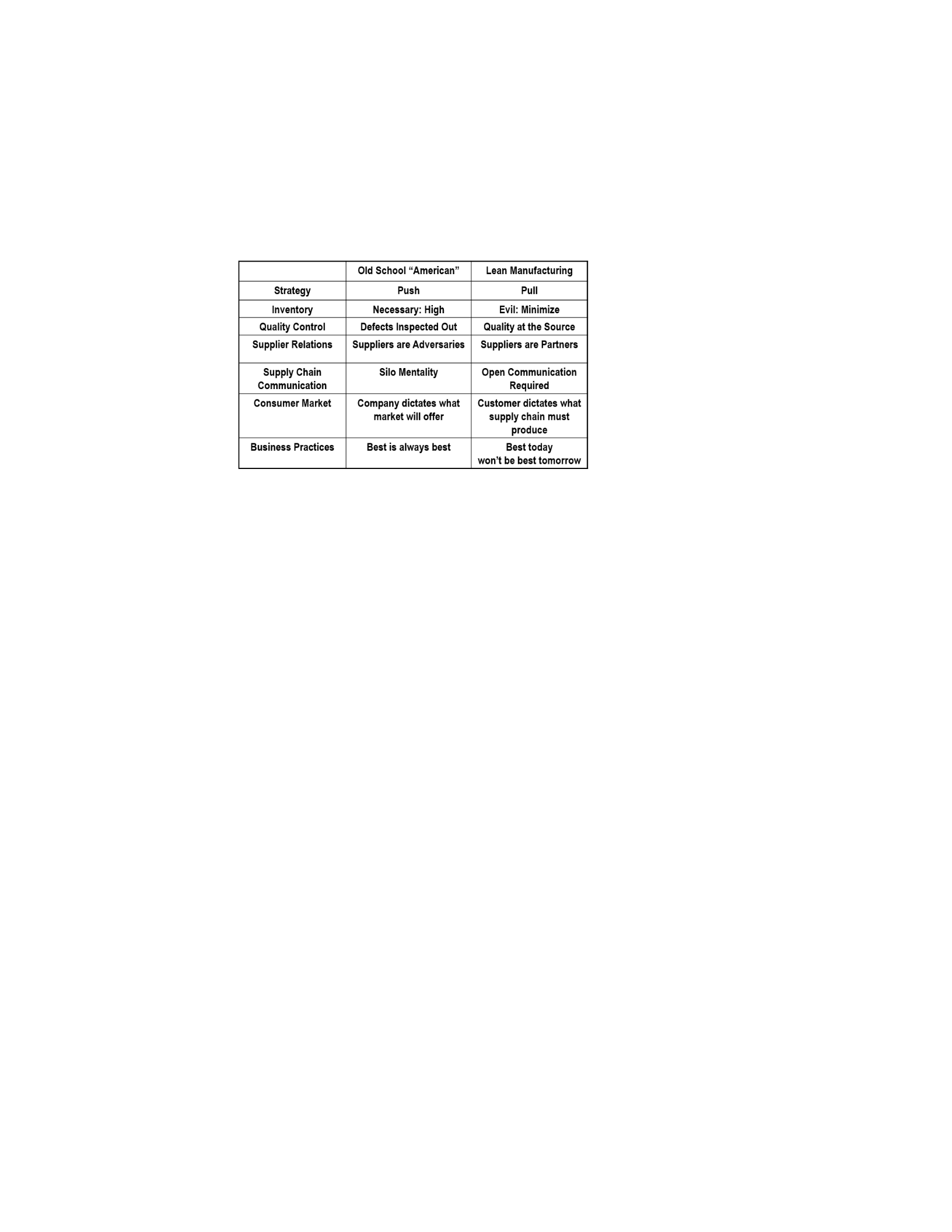
●
Differences between “Old School American” business philosophy and
Lean Manufacturing philosophies
○
●
Explain basic elements of Lean manufacturing
○
Primary Goals
■
Minimize
Inventory
■
Eliminate all Types of Waste
●
Explain relationship between lean manufacturing and Japan
○
Lean manufacturing was developed in Japan. Japan was low on space
and needed to have small inventories. Japan is more about “we”,
whereas America is more about the “me”
Supply Chain Strategy Trade Offs
●
How are the drawings used in lecture helpful in understanding the
tradeoffs of each strategy depicted
○
It helped to show problems that each tradeoff created.
●
Understand how Time, Flexibility, Quality, and Cost are traded in any
supply chain strategy.
○
Time - Amount of Automation? Maximum Output/Capacity Required?
Line Balancing, Bottlenecks, Lead Times
○
Flexibility - Volume flexibility vs. Customization flexibility? Automation
and/or Workforce Capabilities - Postponement
○
Quality - Consistency and High Performance - Training, Automation.
J
i
d
o
k
a
- Everyone is Responsible for Quality
○
Cost - Inventory, Defects, Loss, Damage, Labor, Facilities, Packaging…
Product, Service, Support system
●
Define Postponement. How can it be helpful to companies? Relationship to
push and pull systems

○
Combination of push and pull strategies. It delays the final assembly
of the end item.
○
Push through the standardized portions.
○
Pull the customization options offered.
○
Computer power cord example from
class. Supply Chain Strategy and Solutions
●
Impact of shrinkage and other operational shortcomings on supply chains.
○
Shrinkage starts at the front end of the supply chain and
moves upstream progressively.
●
Bullwhip effect - Define/explain. Causes. How can it be minimized?
○
Very high and very low supply levels despite fairly consistent
demand levels.
○
Causes
■
Poor forecasting, analysis, and communication
■
Order Batching - trying to place large orders
■
Price Fluctuations - promotions, quantity discounts,
special pricing
■
Rationing - demand higher than supply. Promotes rationing by
the distributor. Retailers can get less than they ordered
■
Shortage Gaming - result of rationing, retailers inflate order
sizes
to counteract rationing
Module 07 Material
eNotes
Global Profit Motivations
●
In business, most company decisions are directly or indirectly related to
corporate profit. Companies want to maximize profit. Profit is equal to
revenue minus cost. So, as a company considers globalizing its supply
chain, both revenue and cost issues must be considered.
●
Revenue Opportunities - reach new customers, manage risk of low sales by
selling in multiple locations, etc.
Global Brand Strategy
●
May have to deal with new laws, practices, cultures, in other
countries.
Intellectual Property

●
In business, intellectual property often refers to copyrights, patents,
trademarks, and other designations that protect the creative ideas of a
company, an artist, or other creator of goods, ideas, and other output.
Intellectual property laws provide the owner of the idea a monopoly on that
idea and all works that derive from it.
Benefits and Risks of External Partners
●
Benefits
○
Speed
○
Expertise
○
Better Resource Utilization
○
Focus on Core Competencies
●
Risks
○
Loss of Quality Control
○
Theft of Intellectual Property
○
Legal Business Practices?
○
Loss of Strategic Flexibility
Offshoring, Outsourcing, and Both
●
Offshoring - A strategy where a company moves manufacturing out of
its “home” country to another country.
●
Outsourcing - When a company contracts an outside firm to perform services,
operations, or business processes that could be or were previously
performed in-house.
●
Both - A strategy where a company utilizes a contractor in another country to
perform services and/or operations.
Contract Manufacturers
●
A company that produces goods on behalf of another
organization. Near-Sourcing
●
Refers to a type of offshoring or offshoring and outsourcing where the
location of the manufacturing facility is relatively close to the location of the
consumer.
Manufacturing
Compliance
●
The business behaviors of a manufacturer associated with following
the regulations, practices, and other requirements that their clients
have established.
Manufacturing
Audits
●
A process whereby companies examine whether or not their
manufacturing contractors are abiding by the legal and agreed upon
regulations, business practices, and other established manufacturing
requirements.
Currency Exchange Considerations
●
Need to consider the costs of goods if you are selling them or
manufacturing them in other countries. The currency exchange rates may
be different.
Infrastructure
●
In logistics, infrastructure typically refers to the physical structures and
equipment utilized to move goods. In addition, it could also refer to the
organizations that support the movement of goods.

Customs and Regulations
●
Governments establish customs agencies to control the goods that enter
and leave a country, i.e. imports and exports. These customs agencies
monitor whether importers and exports are adhering to the customs
regulations established by the government.
C-TPAT
●
A voluntary program developed by US Customs and Border Protection for
companies importing goods into the US. The program requires member
organizations to report a significant level of detail related to supply chain
partners and actions for each imported shipment. In exchange for
providing this information to US Customs, member companies are allowed
opportunities for speedier and more hassle-free customs clearance.
3PL
●
A contractor that performs one or more logistics functions for their client in
an effort to facilitate effective and efficient movement in the supply chain.
This third-party contractor can neither be the buyer nor the seller of the items
being moved.
Freight Forwarder
●
A contractor (company or person) that helps companies organize the
efficient and effective shipment of goods from one point in the supply chain
to another. Freight forwarders do not actually transport the goods, instead
they negotiate and arrange for one or more logistics companies to prepare,
secure, store, track, and move the cargo.(OUT)
Customs House Brokers
●
A contractor (company or person) that helps a client’s goods clear customs
in a foreign country. (IN)
FTZ
●
A geographic area sanctioned by the government where items are not
under the control of customs authorities. As such, goods can be imported
into a country, brought into an FTZ and then stored, displayed, and/or
manipulated before being re-exported without ever being inspected or
taxed by customs
officials.
Incoterms - What are they?
●
A series of commercial terms, often depicted as three letter acronyms,
established by the International Chamber of Commerce (ICC) to
facilitate communication in commercial transactions.
Shipping Documents - Why are they needed?
●
They serve 3 important purposes:
○
Transportation - Documents are proof that cargo was received, where
it originated, where it is going, and it can also represent a binding
contract between different supply chain parties.
○
Financial - Shipping documents can provide proof that goods were
received according to the terms of sale and that monies can be
released to the other party.

○
International Shipments - When goods cross borders, customs
officials look to shipping documentation to check for legal infractions
and also to assess duties.
Commercial
Invoice
●
A vital document that provides a reasonable summation of the items being
shipped, the parties involved, cargo values, and other information important
to supply chain members and customs officials.
Packing
List
●
Describes all items in a box, including dimensions and weight. In some
cases it may even provide location of items in a box or container.
Bill of Lading
●
Serves three main purposes: contract between shipper and carrier, receipt
of goods for the shipper, and it acts as the certificate of ownership.
Shipper's Export Declaration
●
A document used by the US government to track all items that exported
from the US in order to develop a census of US exports each year.
Validated Export License
●
A special export license required for items that are heavily policed by the
US government, such as weapons, advanced technologies, goods related
to nuclear technology, and even goods related to the agricultural industry.
Certificate of Origin
●
Certifies that the goods were in fact manufactured in the country specified.
Custom Manufacturing Solutions Organizations
●
Organizations that provide data on suppliers in a region or country. They
may be able to report on product quality, reliability, and even on the financial
stability of the suppliers.
Business Process Outsourcing
●
The outsourcing of office activities like accounting, human
resources, customer service activities (like call centers and
customer chat).
PowerPoint/Lectures
Globalization
Basics
●
Global SCM diagrams discussion
○ ????
●
Global SCM Cost and Revenue opportunities
○
Increase revenues globally, decrease costs
globally. Manufacturing and Outsourcing Issues
●
Describe the EMS industry and how they can be beneficial.
○
Companies that can take on numerous primary supply chain
responsibilities associated with the manufacturing of
electronic components assembled end-items
○
Fast Start, Cost advantages, total supply chain services, higher quality,
flexibility, focus on strengths

●
Provide examples of why American companies would want to manufacture
in foreign countries.
○
Cheaper labor, lower taxes, new markets, easier distribution, etc.
●
Provide examples of why foreign companies would want to manufacture
in the United States.
○
Lower import costs, closer to certain markets, etc.
●
Be able to calculate profits in strong and weak currency scenarios.
○ LOOK AT SLIDES
●
Outsourcing, offshoring, near-sourcing, etc.
○ LOOK AT MODULE NOTES ABOVE
Global
Logistics
● C-TPAT
○
Voluntary, corporations assume responsibility for their supply
chains, three different tiers. In tier 3, you have one of the best
supply chains
●
Utilizing Mexican ports to bring products into the US
○
Easier access to Kansas City distribution centers, use NAFTA
●
Importing and Exporting “tricks”
○
Use a third party importer, ship whole item as unassembled parts,
ship only required parts, domesticating products (enough parts are
made in America)
●
Duty Drawback, FTZ
○
Duty Drawback - can get a refund of up to 99% when an item
is
imported then re-exported
○
FTZ - Area where acceptable items can enter the country duty free for
storage, display, manufacturing, transformation, assembly,
repackaging, etc.
●
Freight forwarder, Custom house broker
○
Freight Forwarder - on the US side of exports
○
Custom House Broker - on the foreign side of
exports Global Procurement
●
What were some of the general lessons learned from the
procurement perceptions study discussed in class?
○
Low cost vs. high intellectual property protection
●
What are some of the challenges of procuring products and services at
the global level?
○
Building relationships, certifying suppliers and second tier suppliers,
risks and tradeoffs understanding, legal issues, financial
issues, difference between materials and services purchasing.
Case Studies
Rapid Fire Fulfillment - Zara Case
1.
What were the key lessons Ortega took away from his early scare?
a.
Control what happens to your product until the customer buys it.
2.
What are some of the things Zara can do because of the super-
responsive supply chain it has built?

a.
The can get a new product from the design phase to the store in
as little as 15 days.
3.
How is Zara’s supply chain different from most other supply chains in their
industry?
a.
They have three separate design channels: women, men, kids. They
allow retailers to change 40 to 50% of their orders per year, while the
industry average is 20%. They don’t worry about stockouts - it can
help them to sell other items. They keep almost half of their production
in house. They ship orders twice a week, with the clothes already on
hangers, and price tags already on the clothes.
4.
What are the three principles Zara lives by? Know what these principles mean
and how they are carried out.
a.
Close the Communication Loop - transfer data quickly, track
materials and products real time. Goal is to close information loop
between end users and the upstream operations.
b.
Stick to a Rhythm - spend money on anything to increase and enforce
the speed and responsiveness of the supply chain.
c.
Leverage Capital Assets to Increase Supply Chain Visibility - produces
complicated products in house and outsources the simple ones
(sweaters)
5.
Describe Zara’s Design and Production center in La Coruna.
a.
Large floor to ceiling windows, three separate lines for men,
women, and kids. All designers sit in the middle of the production
process. Small prototype shops that encourage people to comment
on new garments as they evolve.
6.
How does Zara control the bullwhip effect?
a.
By having a constant flow of data.
7.
What are some positive customer behaviors Zara sees because of
its operational plan?
a.
Zara sees an increase of customer visits per year (17), as compared to
other retail stores (4 or 5).
8.
Why does Zara prefer to own production assets? What types of products
does Zara produce themselves? Which items do they outsource?
a.
It gives them more control over schedules and capacities. They
produce the more complex items, while they outsource the more
simple products, like sweaters.
Module 08 Material
eNotes
3 Parts of Social Responsibility
●
Legal and Ethical Behavior
●
(Environmental)Sustainability
●
Commitment to the
community
4 Reasons to bSocially Responsible

●
Avoid Government Fines and Regulations
●
Seek Positive Public Image
●
Demonstrate Company Goals and Values
●
Protect Company Interests
3
Links between SCM and Social Responsibility
●
Eliminate Waste
●
Legal and Ethical Business Practices
●
Improve Quality of Life
Challenges of Being Socially Responsible
●
What is the Right thing to do?
●
Monitoring all of your Supply Chain Partners
●
Tracking Outcomes across the Supply Chain
Examples of Ethical Issues in SCM
●
Obey Laws
●
Choosing Ethical Business Partners
●
Not Bullying Supply Chain Partners
●
Conflicts of Interest within the Company
●
Protecting the Environment, Customers, and Workers
●
Data Breaches
Legal and Ethical SC- Issues and examples
Employee abuse
Promoting sustainability
Humanitarian Programs
4
Tools for Managing Ethical Supply Chain
●
Continuous Education and Awareness Programs
●
Security across the Supply Chain
●
Have a Whistleblower Program
●
Have Monitoring and Auditing Techniques and Programs
SA8000
●
Developed by Social Accountability International, SA8000 is certification
that focuses on social responsibility in the workplace. May be of value to
companies seeking the approval. Companies must subject themselves to
audits that will investigate workplaces in 9 categories.
Sustainability
●
Sustainable development is development that meets the needs of the
present without compromising the ability of future generations to meet their
needs.
Sustainability Framework (Terms/Concepts)
●
Triple Bottom Line - Companies should consider the possible
economic,
environmental, and social outcomes associated with business
decisions.
●
Reduce, Reuse, Recycle - Rather than have everything end up in a landfill as
garbage, companies should consider ways to conserve materials and energy,
maximize the use of their resources, and find new uses for items that are no
longer valuable.
●
Cradle to Grave vs. Cradle to Cradle - No thought of what happens to to
components of a product in the former. In cradle to cradle, designers consider
what will happen once the item is no longer of use.
●
Closed Loop Supply Chains - Supply chains that seek to create a loop of
materials through sustainable procurement, manufacturing, logistics, as well
as reverse logistics.

eer
merge
To
Challenges of Being Sustainable

●
Motivating Supply Chain Partners
●
Customers want things that Last
●
Local vs. Global Management
●
Lack of Understanding/Knowledge
●
Metrics
●
Managerial
Support
Ways the Supply Chain can be More Sustainable
●
Procurement - Purchasing better materials, fewer materials, safer materials
●
Logistics - Transportation efficiencies, reduce fuel consumption
●
Manufacturing and Operations, Facilities - Energy consumption,
defect reduction, minimize emissions
●
Reverse Logistics - Recovery of packaging, damaged items, parts, etc. for
reuse, refurbishing, resale, recycling
●
Supply Chain Sustainability Catalysts - Large powerful companies can
become catalysts often have the power to motivate thousands of suppliers
to
become sustainable.
●
Rethink Design - Poor design will always yield poor outcomes. Sometimes
companies need to start from scratch and develop a new design.
●
Sustainability Accounting - With the help of accounting supply chains can
identify primary areas of costs related to unsustainable business
practices.
●
Develop Sustainability Metrics - Metrics help companies find problems, track
improvement, and they can also motivate employees to change their
behavior.
●
Life Cycle Analysis - A systematic approach that attempts to quantify the
environmental impact of every step in the supply chain.
ISO
14000
●
A series of certifications offered by the International Organization for
Standardization in the area of sustainable business practices and
management. ISO 14000 certification of your company can prove to
other companies/potential supply chain partners as well as customers
that your company is committed to sustainability at an organizational
level.
Different Phases of Humanitarian SCM
●
Securing Supply Chain Partners
●
The Disaster
●
The Arena of Disaster
●
Aftermath
●
Investment in Prevention
PowerPoint/Lectures
Social Responsibility Basics
●
According to SCM 300 what might constitute a SR firm?
○
Legal and ethical practices, community/society, environmental
sustainability
●
Arguments for behaving in a SR manner

○
Responsibility as a citizen, avoid legal issues, government
regulation, and fines, public relations, business risk, increased
profits
●
Ties between SR and SCM.
○
Eliminate waste, proliferation of ethical business practices, improve
the
quality of lives
●
Barriers to/arguments against companies acting in a SR manner
○
Reduced profits, takes away focus from business, too much
social power, problems are solved using Western values
Legal and Ethical Supply Chains
●
Ethical issues that global supply chains confront.
○ LOOK AT SLIDE 6, MODULE 08
Humanitarian Supply Chains
●
Humanitarian challenges that can be aided by good SCM
○
Lots of stuff.
●
Challenges to running efficient and effective humanitarian supply chains
○
Money and metrics, types of disasters, stakeholders,
poor infrastructure, legal or cultural issues
SCM Sustainability Basics
●
Why is the supply chain a logical place to look to when trying to “green up” a
company?
○
Because the supply chain is always looking to eliminate waste
●
Benefits of having a green supply chain
○
Lower costs, lower taxes, better for the environment, etc.
●
Define sustainable development/design.
○
Development that meets the needs of the present without
compromising the ability of future generations to meet their own needs
●
Basic definitions for the environmental terminology discussed in lecture
○
Cradle to Grave - Designing products and services with only the
useful life of the product/service and its materials in mind.
Manufacture to disposal.
○
Cradle to Cradle - Ecologically intelligent design that considers not only
the useful life of the product but also the recovery, disposal, and reuse
of the materials and components that make up the product.
Supply Chain Sustainability Program and Methods
●
Discuss how each supply chain function has a stake in defining
the sustainability of the organization
○ LOOK AT SLIDE 21, MODULE 08.
●
IMPORTANT: What are some options for companies seeking to become green?
Consider measurement, design, and other issues. Be able to discuss how
that program can help companies develop a more successful and
sustainable supply chain.
○
Waste elimination (consider disassembly), triple bottom line thinking.
Reduce, reuse, recycle.
Case Studies

Starbucks Corp: Building a Sustainable Supply Chain
1.
From which parts of the world is coffee sourced? Why is that a concern
for Starbucks?
a.
Most of the world’s coffee comes from Latin America, the Pacific Rim,
and East Africa. This is a concern because most of the coffee
comes from developing countries - there is a risk of supply
shortage due to instability.
2.
Describe their supply chain: suppliers, processors…
a.
Farms to processors, to suppliers, to Starbucks.
3.
What is CAFÉ practices and what is its purpose? What are the benefits
to Starbucks?
a.
Way to ensure a sustainable supply of high quality coffee beans. It
helped Starbucks to ensure they were receiving high quality coffee,
helped them to establish a relationship with the coffee farmers,
provided them with new marketing opportunities, allowed their supply
chain to be more visible, and helped create corporate social
responsibility.
4.
How does a company join CAFÉ practices(requirements)? What are the
benefits once they join?
a.
Coffee quality and economic transparency must be met first.
Suppliers are graded on coffee growing. The more points a grower
receives, the more money they can get, and it is more likely
Starbucks will keep them as a supplier. Benefits included that the
coffee growing and processing practices contributed positively to the
conservation of soil, water, energy, and biological diversity, and had a
minimal impact on the environment. CAFÉ practices also encouraged
farmers and others to make sure that workers' wages met or
exceeded the minimum required by law.
5.
What are some of the challenges Starbucks faced in implementing CAFÉ
practices?
a.
Some of the suppliers had poor information systems, which made it
difficult for transparency along the supply chain. Also, when new
practices were updated, it may be difficult to communicate them with
suppliers and farmers. They also had to deal with auditors going to
remote regions to audit the coffee farmers.

