


Relationship Between Information
Technology Integration, Senior Leadership
Involvement in Postmerger Integration, and
Merger Performance
Section 1: Background and Context
Mergers and acquisitions (M&A) are a common occurrence among businesses of
every type and across different industries. Organizations employ M&A as a strategy for
securing competitive advantage, market positioning, acquiring new competencies and
knowledge, survival, improving efficiency, and many more reasons (Osarenkhoe &
Hyder, 2015). However, M&A can be complicated and hardly guaranteed to be successful
(Galpin, 2018; Rebner & Yeganeh, 2019). In health care, where hospitals are increasingly
merging or acquired as a strategic response to the more challenging business and
regulatory environment, successful mergers are vital for the social good (Frakt, 2015).
The goal of this study was to evaluate the relationship between information technology
(IT) integration, senior leadership involvement in postmerger integration (PMI), and the
postmerger performance of hospitals. The results from the study could be useful in
assisting hospital leaders to lead their organizations more effectively in achieving
postmerger success.
Historical Background
Hospitals and other health care organizations are vital parts of the U.S. economy
and integral to the well-being of the communities in which they operate. In an analysis of
a 2016 survey of U.S. hospitals, American Hospital Association (AHA, 2018) reported
that approximately 5.9 million people were employed by hospitals with additional 10.6

million jobs provided through businesses supporting health care, making a total of 16.5
million jobs through hospitals. The economic impact, according to the AHA report, is
approximately $3.0 trillion (AHA, 2018). However, hospitals’ influence goes beyond
their economic value as the health and well-being of people transcend monetary value.
The reality, for health care providers, is that policy and economic changes create
demanding environments necessitating health care organization leaders to seek ways to
thrive financially as well as fulfill their socially responsible goals of caring for their
communities. M&A are strategic growth tools that an increasing number of organizations
use, including hospitals (Alaranta & Henningsson, 2008; Fleishon, Itri, Boland, &
Duszak, 2017; Osarenkhoe & Hyder, 2015). Research, however, indicates a high rate of
failure of M&A (Alaranta & Henningsson, 2008; Gomes, Angwin, Weber, & Yedidia
Tarba, 2013). Understanding the relationship between factors impacting M&A outcomes
would be beneficial to health care business leaders.
Problem Statement
M&A are on the rise among hospitals in the United States compared with the
decade before 2010 (Fleishon et al., 2017; Schmitt, 2017). In its September 2017 report,
the Agency for Healthcare Research and Quality of the U.S. Department of Health and
Human Services stated that up to 70% of hospitals belong to a hospital system, an
increase from the 2013 figure of 62% of hospitals in a system or merger. The general
business problem that I addressed in this study is that a hospital merger does not easily
translate to profitability or improved performance. The specific business problem that I
addressed in this study is that some hospital leaders do not understand the relationship

between IT integration, senior leadership involvement in PMI, and postmerger
performance.
Purpose Statement
The purpose of this quantitative ex post facto study was to examine the
relationship between hospitals’ (a) IT integration, (b) senior leadership involvement in
PMI, and (c) postmerger performance. The independent variables were hospitals’ IT
integration and senior leadership involvement in PMI. The dependent variable was
postmerger performance. The targeted population consisted of senior leaders of general
acute care hospitals and hospital systems located in the midwestern states of Ohio,
Michigan, Indiana, Illinois, and Wisconsin with prior involvement in a merger or
acquisition. The results from this study may enhance hospital leaders’ understanding of
achieving desirable results from M&A. The implications for social change include the
potential to have a better understanding of how to improve postmerger hospital
performance, thereby enhancing the ability of hospitals and health systems to provide
quality care for their communities, increase positive patient outcomes and the overall
well-being of their communities, and create positive economic impact.
Target Audience
The target audience for this portfolio was business leaders of hospitals in the
midwestern United States who manage the M&A, and postmerger functions of their
hospitals. These stakeholders are senior executives, directors, and other mid- to
seniorlevel officers who are involved in the strategic decision-making process and
implementation of mergers. Though focused on the midwestern states of Ohio, Michigan,

Indiana, Illinois, and Wisconsin, the study is applicable to other hospital business leaders
across the United States. Obtaining a better understanding of the relationship between the
variables of IT integration and senior leadership engagement in PMI can enable a better
management of the M&A process and enhance M&A outcomes among hospitals. The
continued high propensity for the poor performance and failure of mergers increased the
necessity for leaders to understand how to improve M&A integration outcomes.
Research Question and Hypotheses
The goal of this study was to examine the relationship between IT integration,
senior leadership involvement in PMI, and postmerger performance of hospitals. The
study includes two independent variables (IT integration and senior leadership
involvement in PMI) and one dependent variable (postmerger performance). The research
question for this study was: What is the relationship between IT integration, senior
leadership involvement in PMI, and postmerger performance?
The null and alternate hypotheses were as follows:
(H0): There is no statistically significant relationship between IT integration,
senior leadership involvement in PMI, and postmerger performance.
(Ha): There is a statistically significant relationship between IT integration, senior
leadership involvement in PMI, and postmerger performance.
Significance
Health care organizations, particularly hospitals, will derive value from this study.
Successfully navigating an M&A provides hospitals with opportunities for growth and
continuous service to their communities.

Contribution to Business Practice
In a value-based care environment, hospital leaders face the challenge of
providing high-quality care while reimbursements and payment rates are lower than in the
previous fee-for-service climate (Frakt, 2015). The industry trend of employing the
business strategy of M&A demands that hospital leaders transform M&A into improved
performance and profitability. Achieving the performance objectives of an M&A depends
on a successful PMI of IT systems and resources (Alaranta & Mathiassen, 2014). This
study may contribute to the practice of business in some ways. First, it may provide
health care business leaders with a model for understanding the relationship between IT
integration, senior leadership involvement in PMI, and merger performance. The model
can be a viable tool in enhancing the success of M&A among hospitals. Second, the study
may contribute to existing literature on M&A practice specific to hospitals and health
care organizations, which has been sparsely studied to date.
Implications for Social Change
A hospital failure potentially has significant negative consequences for the
community in which it operates because avenues for caring for the population’s health
can be hampered or limited. Also, because hospitals have a significant economic impact
on their communities through direct and indirect employment, the failure of a hospital
may have dire economic and social consequences. The implications for positive social
change include the potential of providing a better understanding of ways to improve
postmerger performance and enhance sustainability. When performance improves,

hospital systems can offer better quality care, remain in business, support research, and
contribute to the well-being of their communities.
Theoretical Framework
The theoretical framework for this study was the postacquisition integration
model developed by Haspeslagh and Jemison (1991). Haspeslagh and Jemison developed
the theory after researching for more than 8 years into 20 organizations in the United
States, Japan, and Europe (Haspeslagh & Jemison, 1991). Haspeslagh and Jemison
proposed that value creation in a merger or acquisition takes place after the acquisition
event, essentially stating that the performance of a merger is dependent on a good PMI
process. Haspeslagh and Jemison also proposed that a business leader’s ability to
envision the strategic objective of an M&A will affect the decision-making process, the
postacquisition approach, and ultimately the performance of the combined company after
the acquisition. Haspeslagh and Jemison’s framework outlined the two factors that
influence the path to integration as (a) the need for strategic interdependence and (b)
organizational autonomy. Through their model, Haspeslagh and Jemison suggested that
the degree to which either of these factors is prevalent will determine if the integration
approach will be absorption, preservation, symbiosis or holding (Haspeslagh & Jemison,
1991). I used this model to derive a better understanding of the different approaches to
integration health care organization leaders employ and evaluate the relationship with
postmerger performance. Figure 1 depicts Haspeslagh and Jemison’s PMI model.
Need for Strategic Interdependence

Low High
Figure 1. Haspeslagh and Jemison’s types of acquisition integration approaches. From
Managing acquisitions: Creating value through corporate renewal (p. 145) by P. C.
Haspeslagh and D. B. Jemison, 1991, New York, NY: Free Press. Copyright 1991 by P.
C. Haspeslagh and D. B. Jemison. Reprinted with permission.
Value creation from a merger takes place during the integration process. Central
to Haspeslagh and Jemison’s framework is the theory that PMI is the source of value
creation in M&A. Haspeslagh and Jemison (1991) theorized that leaders must be engaged
in shaping and guiding the integration process, ensuring that the requisite environment
exists for a smooth transfer of capabilities to derive value and achieve the planned
objective of the M&A. The capabilities for transfer between the merging firms are
strategic and are resources, assets, and skills, including IT, that are combined to improve
the competitive advantage of the newly formed organization. Figure 2 shows an overview
of the acquisition process, as outlined by Haspeslagh and Jemison.
Holding Absorption
Preservation Symbiosis
High
Low
Need for
Organizational
Autonomy

Figure 2. The Acquisition Process. Reprinted from Managing acquisitions: Creating
value through corporate renewal (p. 107) by P. C. Haspeslagh and D. B. Jemison, 1991,
New York, NY: Free Press. Copyright 1991 by P. C. Haspeslagh and D. B. Jemison.
Reprinted with permission.
Central to the integration process are the interactions of the constructs of the atmosphere
for capability transfer and the strategic capabilities to be transferred. Figure 3 shows the
alignment between the constructs of Haspeslagh and Jemison’s framework and the
variables for this study.

Figure 3. Alignment of the Acquisition Process Constructs and Variables. Adapted from
Adapted from Managing acquisitions: Creating value through corporate renewal (p.
107) by P. C. Haspeslagh and D. B. Jemison, 1991, New York, NY: Free Press.
Copyright 1991 by P. C. Haspeslagh and D. B. Jemison.
Representative Literature Review
Business leaders pursue M&A as a growth and competitive strategy. Companies
utilize M&A to acquire new skills and resources, derive financial synergies, achieve
economies of scale, minimize competition, improve market positioning, diversify, and
facilitate growth (Brueller, Carmeli, & Markman, 2018; Burns et al., 2015; Osarenkhoe &
Hyder, 2015). Attesting to the prevalence of M&A activity as a growth strategy,
Thomson Reuters reported an increase of 37%, amounting to $3.3 trillion within the first

9 months of 2018, compared with the same period the previous year (Thomson Reuters,
2018). This trend of increasing M&A activity is expected to continue during the next decade,
primarily due to advances in technology (Chang, Chang, & Wang, 2014; Rebner & Yeganeh,
2019). Despite the volume of activity, ample evidence exists of failure of
M&A to increase shareholder value or achieve the premerger objectives (Friedman,
Carmeli, Tishler, & Shimizu, 2016; Galpin, 2018; King, 2017; Rebner & Yeganeh, 2019).
The need exists for further research that goes beyond conceptual analyses of M&A
approaches and provides empirical support that may be beneficial to business practice
(Lu, 2018). Business leaders will find great value in having a better understanding of the
M&A process and how to derive the desired benefits from it. The growth in M&A and
the challenges associated with them are pervasive across many business sectors.
M&A is prevalent in the health care industry. Like other businesses, hospitals and
health systems embark on M&A in pursuit of growth, to achieve a competitive advantage,
prevent closures, and shore up decreasing revenues in an increasingly demanding
business climate with reducing reimbursement rates for services rendered (Frakt, 2015).
However, achieving the profitability or performance objectives of M&A seems to be
difficult, and studies on the crucial factors and methods for successful hospital mergers
and PMI are limited (Reddy, Qamar, & Yahanpath, 2019). According to Lineen (2014),
M&A activities among hospitals rarely achieve the desired results without a systems
integration. Integrating merged organizations is more crucial to merger success than other
strategic initiatives (Osarenkhoe & Hyder, 2015). It is, therefore, vital for leaders of

hospitals and hospital systems to understand the intricacies of managing M&A and PMI
to achieve business objectives.
This section includes a review of literature from scholarly peer-reviewed journals,
periodicals, and seminal works relevant to the research question: What is the relationship
between IT integration, senior leadership involvement in PMI, and postmerger
performance? I organized this review into six main headings. These categories are M&A
in health care, making mergers work, Haspeslagh and Jemison’s PMI framework,
leadership, IT integration, and postmerger performance. Under the first heading M&A in
health care, I provided an overview of the extant literature on M&A in health care. The
intent of this segment was to articulate the strategic importance of M&A to hospitals in
the United States. In the next segment, making mergers work, I present a review of M&A
typologies and postacquisition integration frameworks, provide some insight into the
constraints or challenges that they present, and discuss the reason that I chose to use
Haspeslagh and Jemison’s PMI framework. The subsequent segments include an
elaboration of Haspeslagh and Jemison’s PMI framework, a discussion of some of the
constructs, and a review of the critical concepts of leadership, IT systems integration
postmerger, and performance.
To identify relevant sources for this review, I searched several databases through
the Walden University Library. The databases that I used for the study include
ABI/INFORM Collection, Business Source Complete, Emerald Insight, SAGE Journals,
ScienceDirect, IEEE Xplore Digital Library, and Google Scholar. Keywords that I used
in the searches included a mix of the following: merger, acquisition, post-merger,

postacquisition, integration, post-acquisition integration, post-merger integration,
healthcare, leadership, performance, post-merger integration theory, Haspeslagh and
Jemison framework, information technology integration, information systems integration,
healthcare IT, M&A, and M&A framework. The literature review contains 139 selected
resources. Of these 139 resources, 102 are peer-reviewed journal articles published after
2015. The other 37 resources are seminal works and peer-reviewed journal articles
published before 2015.
M&A in Health Care
Hospitals are vital to the well-being of their communities. Beyond attending to the
physical and mental health of the population, the economic impact of hospitals in the
United States is more than $3 trillion, and hospitals support more than 16.5 million jobs
(AHA, 2018). Despite the significant reach, the high cost of health care in the United
States, currently about 18% of the gross domestic product (GDP), is a source of concern
for practitioners and policymakers (King, 2017). The Centers for Medicare & Medicaid
Services (CMS) projected that the cost of health care in the United States would rise to
about 20% of GDP by 2027, raising the call for improvements on how care is delivered.
Understanding the reasons health care organizations merge is fundamental to a
useful analysis of what enhances the performance of a merger. Policy changes in the
health care industry and the increasing pressure to reduce health care costs while
improving quality of care and patient outcomes are forcing health care organizations to
move towards mergers, acquisitions, and consolidation (Fleishon et al., 2017; King,
2017). With the implementation of the value-based care and reimbursement models under

the Affordable Care Act (ACA) and subsequent policy changes, hospitals and clinicians
are challenged to reevaluate their processes and develop new approaches to care
coordination and delivery (Rajaram et al., 2015; Srinivasan & Desai, 2017). Fleishon et
al. (2017) found that due to the changes in the industry, there is a growing trend toward
M&A. The drive for M&A opportunities is a conscious strategic objective of leaders with
the primary intent of creating value and improving profitability (Fleishon et al., 2017;
Rahman & Lambkin, 2015). Despite the established trend toward M&A among hospitals,
the performance results have been varied, necessitating the need to improve practices in
the areas of governance, change management, culture, operations, finances, productivity,
and compensation (Fleishon et al., 2017; Henningsson & Kettinger, 2016). A good
understanding of how to achieve M&A objectives is, therefore, vital for business leaders
in the health care industry.
Industry fragmentation is another reason for the growth of M&A in health care.
West, Johnson, and Ashish (2017) stated that a high degree of fragmentation exists in the
U.S. health care industry, which has increased provider consolidation and acquisition of
physician practices. Hospitals proffer better care coordination, improved quality of care,
and better operational efficiency as reasons driving the acquisitions of physician practices
(West et al., 2017). However, evidence from available research showed that financial
objectives are the primary motivators for the acquisitions (West et al., 2017). Noles,
Reiter, Boortz-Marx, and Pink (2015) similarly identified financial performance as a
driver for M&A activity. Hospitals with weaker financial performance are more

susceptible to M&A (Noles et al., 2015; Zand, 2018). The desire for a stronger market
position and improving the quality of services offered to patients are other drivers for
M&A in health care (Postma & Roos, 2016; Schmitt, 2017). Achieving economies of
scale, a higher purchasing power, reduction of staffing costs, achieving leverage with
payers, and deriving synergy from integrating resources and systems are additional
reasons why M&A activities are on the increase amongst hospitals and health care
providers (Hauptman, Bookman, & Heinig, 2017; Schmitt, 2017; Zand, 2018). However,
M&A can be disruptive to business operations, and problems can arise from the activity,
failing to achieve the acquisition objectives.
Making Mergers Work
Making mergers work is a challenge that goes beyond signing the agreement to
acquire or merge with another business. Despite the promise of potentially faster growth,
increased capabilities, and resources, most M&A fall short of their objectives (Brueller et
al., 2018; Klar & Shufelt, 2015). Nevertheless, business organizations continue to utilize
M&A as a growth strategy regardless of the evidence of a high probability of failure to
achieve their performance or growth objectives (Frantz, 2018; Nandi & Nandi, 2017).
M&A occurs when two organizations combine resources and capabilities to form a new
company. M&A take different forms, depending on the goals of the parties involved
(Brueller et al., 2018). M&A may be vertical or horizontal, related, or unrelated, as well
as other forms (Brueller et al., 2018; Chatterjee & Brueller, 2015). Brueller et al. (2018)
suggested a classification of M&A into three main groups: annex and assimilate, harvest
and protect, and link and promote. Annex and assimilate are acquisitions where the target

firm’s core assets are taking over or absorbed by the acquiring firm (Brueller et al., 2018).
Harvest and protect are M&A that focused on integrating and expanding capabilities to
enhance productivity, innovation, and entrance into different markets (Brueller et al.,
2018; Swaminathan, Groening, Mittal, & Thomaz, 2014). According to Brueller et al.
(2018), link and promote describes acquisitions focused on creating shared value and
growth of both firms. By grouping M&A in this manner, Brueller et al. (2018) essentially
tied Haspeslagh and Jemison’s PMI approaches to each merger category. However, other
scholars have suggested different theories and approaches that may apply to PMI as well.
M&A offers leaders a path toward renewing and rejuvenating their organizations.
M&A is a strategy for corporate renewal that is predicated on a solid understanding of the
firm’s business domain, as well as clarity on the M&A would impact renewal (Dao,
Strobl, Bauer, & Tarba; 2017; Haspeslagh & Jemison, 1991). Organizations may pursue
M&A to eliminate management inefficiencies, achieve synergy, diversify, expand market
reach, and to encourage favorable assets expansion (Haspeslagh & Jemison, 1991).
Central to the idea of synergy creation through M&A is the concept of strategic fit
(Bauer, Strobl, Dao, Matzler, & Rudolf, 2018; Haspeslagh & Jemison, 1991). Bauer et al.
(2018) described strategic fit as an organization’s orientation toward synergy creation via
exploration and exploitation. Exploration refers to the creation of new knowledge,
whereas exploitation implies modifying and improving existing processes for a better
outcome (Bauer et al., 2018). A strategic fit analysis is required prior to an M&A to
ensure there is an alignment between the merging firms.

PMI Theories and Frameworks
Ideas and approaches abound on how to effectively integrate companies
postmerger. Scholars have identified effective postacquisition integration as a key to
ensuring M&A success (Henningsson & Kettinger, 2016). A crucial question then is:
What is the right approach to PMI? Haspeslagh and Jemison (1991) proposed a PMI
framework, which is the theoretical foundation for this doctoral study. However, other
scholars have suggested different theories and approaches that may be applied as well.
Nandi and Nandi (2017) evaluated and proposed the activity theory as an approach to
manage the M&A process and improve PMI. Contingent to Nandi and Nandi’s (2017)
proposition is the understanding that the social identity perspective or the people aspect of
an M&A is crucial to any postmerger success. The activity theory originated from the
work of Russian psychologists, Vygotsky, Leont’ev, and others from the 1920s
(Engestrom, 2000). According to Nandi and Nandi (2017), the activity theory posits that
all human learning takes place in the form of activities because people cannot be treated
in isolation from their social and cultural environments. The activity theory is mainly
descriptive and provides a means of uniting human consciousness and cognitive abilities
with action (Karanasios & Allen, 2018; Karanasios, Allen, & Finnegan, 2015). Nandi and
Nandi (2017) found the activity theory to be a useful framework for organizational
learning, interactions, and process integrations. The activity theory offers a way to
manage multiple activities, remove hindrances to operating in smaller, more integral units
while maintaining ordered processes, and emphasize the provision of tools for
organizational effectiveness (Nandi & Nandi, 2017). Although the activity theory

provides a path to PMI, it does not provide an overarching methodology for information
systems integration. Researchers have suggested other theoretical approaches.
The extent to which the organizational units and employees coalesce into a single,
unified, cohesive, and functional organization impacts M&A success. The meso-unit
theory, proposed by Frantz (2018), offers another lens through which to implement PMI.
Integrating to form a unified and cohesive organization is a necessary process that
includes knowledge transfer (Frantz, 2018; Sarala, Junni, Cooper, & Tarba, 2016).
Knowledge transfer is crucial for postmerger performance (Ahammad, Tarba, Liu, &
Glaister, 2016; Frantz, 2018). Total count of work units and teams in the merging
organizations are indicative of the complexity of the integration process (Frantz, 2018;
Lauser, 2010; Turner & Baker, 2019). The meso-unit theory of PMI postulates that the
number of work units to be integrated in a merged organization has a significantly higher
negative impact on the time to achieve integration than the total number of people
involved (Frantz, 2018). The imperative of aligning IT integration and business strategies
is validated through research and provides a foundation for Frantz’s analysis (Frantz,
2018; Reynolds & Yelton’ 2015). The research by Frantz (2018) showed support for the
proposition that the number of work units that must integrate negatively affects the
integration performance of the merged organization. Frantz (2018) also found that the
number of players in the work units negatively affects integration performance, and the
amount of knowledge transfer per work unit negatively impacts the integration
performance of the merged organization. The findings indicate that the organizational
structure has a more significant impact on the difficulty of integration than the number of

employees affected by a merger (Frantz, 2018). The significance of the theory is that PMI
can be more successful if practitioners work at effecting better organizational structures
and enhance communications across teams. Regardless of the organizational structure of
the merging firms, defining the strategic vision for a merger is essential and foundational
to successful integration. Also, though crucial, achieving a successful PMI goes beyond
work unit cohesion. Therefore, a more comprehensive lens for PMI is preferred.
The effectiveness of the PMI phase of an M&A determines the merger outcome.
Researchers and practitioners commonly accept the criticality of the PMI for value
creation from an M&A (Angwin & Meadows, 2015). Value creation, a measure of
postmerger performance, implies the collective value of the newly created firm is higher
than the addition of the values of the individual companies (Barney, 1991; Rahman,
Lambkin, & Hussain, 2016; Sarala et al., 2016). Value creation enhances the firm’s
competitive advantage and improves long-term performance (Barney, 1991; Martin,
Butler, & Bolton, 2017). However, Angwin and Meadows (2015) stressed the need for a
critical review of the available approaches given what they perceived as limited empirical
evidence provided in the studies that proposed the approaches, as well as the largely
conceptual nature of the methodologies. Angwin and Meadows stated that the failure of
pre-merger approaches in predicting postmerger performance was a significant reason for
the development of PMI typologies. Clougherty and Duso (2011) implied that the need
for additional typologies is a result of researchers identifying that synergy creation and
the subsequent value addition from a merger, comes from multiple means. Angwin and
Meadows identified Haspeslagh and Jemison’s framework as the most renowned

typology for PMI in literature. They also opined that there are potentially four to five
additional approaches spanning cultural, psychological, and resource-based integration
approaches. To evaluate the occurrences of the different approaches to postacquisition
integration, Angwin and Meadows conducted a mixed-method study of M&A, which
they described as a novel for the field at the time of the research. The population for the
study was executives of UK companies who have completed an M&A within
approximately 2 years of the study. Analysis of the findings revealed support for
Haspeslagh and Jemison’s PMI approaches of absorption, preservation, and symbiotic, as
well as approaches Angwin and Meadows referred to as intensive care and re-orientation,
which aligns with the resource-based view. A key premise of Haspeslagh and Jemison’s
PMI framework is the resource-based view.
The resource-based view (RBV) is another theoretical lens for viewing PMI. The
RBV of the firm, based on the work of Wernerfelt (1984), postulates that businesses that
have resources that are unique, valued, difficult to imitate, and that other resources cannot
substitute, will experience continuous competitive advantage and sustained growth
(Henningsson & Øhrgaard, 2016; Nason & Wiklund, 2018; Wernerfelt, 1984). In their
work on approaches to PMI, Bodner and Capron (2018) broadly classified the approaches
to PMI into two: reconfiguration and organization design. Reconfiguration incorporates
the tools used for reassigning or combining resources, product lines, or organizational
units (Bodner & Capron, 2018). The implication is that resources drive the
reconfiguration process, which is an application of the RBV (Bodner & Capron, 2018).
The premise of the RBV is that value creation in a merger can only occur through

capabilities transfer (Angwin & Meadows, 2015; Bodner & Capron, 2018). Capabilities
represent the unique resources possessed by the firm that enable its operations,
decisionmaking, and business activities (Henningsson & Øhrgaard, 2016; Nason &
Wiklund, 2018; Newmeyer, Swaminathan, & Hulland, 2016). The RBV approach
provides firms a way to combine resources from different organizations or units to create
value and is premised on the idea that resources drive organizational reconfiguration
during PMI, and that the reconfiguration of the resources occurs continuously (Bodner &
Capron, 2018). Reconfiguration of the merging companies occurs when their resources
are redistributed and reorganized within the newly formed firm. Henningsson and
Øhrgaard (2016) also identified the use of RBV as a theoretical approach to PMI of IT.
According to Henningsson and Øhrgaard, the resource-based view helps to outline how
IT resources could create value postacquisition. A key limitation of RBV is that it
positions a firm in a combative association with its external environment, does not foster
collaboration, and assumes that only the uniqueness of resources drives mergers (Nason
& Wiklund, 2018).
These challenges raised the need for a different approach to PMI.
The resource dependence theory (RDT) is another theoretical perspective
applicable to PMI. According to Wei and Clegg (2017), RDT is complementary to the
RBV. Based on the work of Pfeffer and Salancik (1978), RDT postulates that
organizations are limited and impacted by their environments and act to manage their
resource dependencies (Hillman, Withers, & Collins, 2009). In their study of the sources
of value destruction postmerger, Wei and Clegg integrated RDT and RBV to develop new

insights on how strategic resources are identified in acquired firms and redistributed after
the merger. Applying RDT to PMI is based on the proposition that businesses are systems
with dependencies on their external environments, and therefore, develop strategies for
integration that are reactive or aimed at limiting their external dependence (Gaffney,
Kedia, Clampit, 2013; Wei & Clegg, 2017). Applying RDT to M&A, Pfeffer (1976)
proposed that a firm seeks merger for three primary reasons, which are (a) to reduce
competition by absorbing a competitor, (b) to manage dependence on suppliers or buyers
by acquiring them, and (c) to diversify operations to lessen dependence on organizations
with which it interacts (Pfeffer, 1976; Wei & Clegg, 2017). The crux of RDT, therefore,
is the need for firms to acquire resources that will reduce their dependence on other
organizations or the uncertainties of their environments (Wei & Clegg, 2017). This core
principle is essential to M&A but limits many mergers and subsequent integration efforts
to just eliminating dependencies. In addition to evaluating the use of RDT and RBV in
PMI, the social identity theory is another approach to PMI proposed by researchers.
The social identity theory offers a people perspective to PMI. The social identity
theory, based on the original work of Henri Tajfel, focuses on group processes and
intergroup dynamics (Abrams & Hogg, 1990; Wei & Clegg, 2018). Wei and Clegg
(2018) described the central proposition of the social identity theory as the perception of
the social world as existing in social categories, and membership of these social
categories can impact an individual’s self-definition. Applying the social identity theory
to M&A can assist in understanding the complex organizational change associated with

PMI (Elstak, Bhatt, Van Riel, Pratt, & Berens, 2015; Wei & Clegg, 2018). Through their
study of social identity theory and how it impacts organizational identity during PMI,
Wei and Clegg (2018) found that different levels of organizational dominance, i.e., low or
high, create different responses and conformity to the new identity. Wei and Clegg (2018)
proposed that defining and sorting out the organizational identity issues is a prerequisite
to successful PMI. Wei and Clegg (2018) went further to assert that the findings from
their study suggest the need for an alignment between levels of organizational dominance
and overall integration approach. Though the theory provides a strong foundation for
integrating people and teams, it does not provide an overarching strategy that may be
applied to holistically to all aspects of the merging organizations.
Haspeslagh and Jemison’s PMI Framework
Different factors influence an organization’s approach to PMI. Haspeslagh and
Jemison (1991) suggested that these reasons may include the acquiring firm executives’
perception of performance, the size of the target firm, types of synergies desired, acquired
firm’s profitability, strategic or organizational task needs, culture, and the political
characteristics of the firm. Haspeslagh and Jemison (1991) stated that how these factors
influence PMI is contingent on the strategic intent for the merger and how value will be
created postmerger. The main objective of the PMI process is to identify and implement
the best way of creating value from the resources available from the merging firms
(Bodner & Capron, 2018; Haspeslagh & Jemison; 1991). In their seminal work on PMI,
Haspeslagh and Jemison (1991) described integration as a flexible or adaptive process of
interaction which occurs when companies merge in an environment that supports the

transfer of capability. This process is vital to making mergers successful but fraught with
challenges that make it an uncomfortable endeavor for leaders (Haspeslagh & Jemison,
1991; Steigenberger, 2017). The transfer of strategic capabilities is the crux of the
integration process (Bodner & Capron, 2018; Haspeslagh & Jemison, 1991). However, a
successful PMI requires the creation of an environment that supports cooperation,
collaboration, and learning by the individuals in the merging organizations. Figure 2 is an
overview of the acquisition process flow outlined by Haspeslagh and Jemison.
Steigenberger (2017) described the process of PMI as the degree of interaction and
coordination between the merged firms.
Using a two-dimensional matrix, Haspeslagh and Jemison (1991) described the
core dimensions of PMI as strategic interdependence between the acquiring and target
firms, and organizational autonomy. The extent of the need for either of the two factors,
determine the approach to postacquisition integration and yield the four approaches:
absorption, symbiosis, preservation, and holding (Haspeslagh & Jemison, 1991; Malik &
Bebenroth, 2018; Marchand, 2015). Strategic interdependence describes how value
creation through resource sharing, practical skill transfer, and management capability
transfer (Haspeslagh & Jemison, 1991; Schönreiter, 2018). Organizational autonomy
describes the degree to which it is necessary to preserve the strategic capabilities of the
acquired firm, particularly in areas such as organizational culture (Brueller et al., 2018;
Haspeslagh & Jemison, 1991). Understanding and implementing PMI based on a firm’s
need for autonomy or strategic interdependence is vital for postacquisition success.

Strategic and organizational fit are two vital pre-requisites in the premerger phase
of an M&A. Strategic fit describes the means of potential synergy creation in a merger
(Bauer et al., 2018; Haspeslagh & Jemison, 1991). Strategic fit indicates a merger’s
value-creation probability and how the acquired firm complements the parent company
(Bauer et al., 2018; Haspeslagh & Jemison, 1991). According to Bauer and Matzler
(2014), three elements determining the strategic fit for M&A are premerger relatedness of
the organizations, similarity, and complementarity. Though evaluating the strategic and
organizational fit is vital before the merger, these two attributes alone do not indicate how
the merger will proceed, or if there will be value created (Bauer & Matzler, 2014;
Haspeslagh & Jemison, 1991). Cultural and political fit are other determinants of M&A
outcomes evaluated by researchers during the premerger phase (Bauer & Matzler, 2014;
Sarala et al., 2016). Though very impactful, neither the premerger nor the postmerger
phase can unilaterally determine the outcome of an M&A (Bauer & Matzler, 2014).
Effective implementation of both phases is vital. The premerger decision making and
PMI processes present different challenges that should be managed appropriately to
derive value from the acquisition.
Researchers consider the postmerger phase as the more critical stage of an M&A.
Many studies emphasize the criticality of the PMI phase (Bauer & Matzler, 2014;
Graebner, Heimeriks, Huy, & Vaara, 2017; Yoon & Kim, 2015). Confusion, stress,
communication break-down, and poor performance increases when the PMI is poorly
executed (Yoon & Kim, 2015). Scholars have generally described PMI from two
perspectives: the organizational behavior or strategic perspective, and the process

perspective (Bauer & Matzler, 2014; Graebner et al., 2017; Yoon & Kim, 2015).
Haspeslagh and Jemison (1991), and more recently Bauer and Matzler (2014), identified
four prevailing perspectives as the capital markets school, strategic school, organizational
behavior school, and the process perspective. Graebner, Heimeriks, Huy, and Vaara
(2017) align with the processual view of PMI, describing it as a dynamic
multidimensional process through which the merging organizations combine to form one
new company. For integration to be successful, every process requires to be managed
while allowing for the flexibility to respond to unplanned events during the integration
process (Graebner et al., 2017). M&A success therefore depends on the core constructs of
the respective school of thought, and may include business reconfiguration,
organizational integration, cultural and strategic fit, relatedness, leadership, and
postmerger outcomes (Bauer & Matzler, 2014; Bodner & Capron, 2018; Brueller et al.,
2018; Henningsson, Yetton, & Wynne, 2018; Zollo & Singh, 2004). Haspeslagh and
Jemison’s PMI framework closely aligns with the process perspective (Haspeslagh &
Jemison, 1991). Haspeslagh and Jemison (1991) suggested a positive M&A outcome
depends on (a) a clear understanding of an appropriate integration approach, (b)
flexibility and ability to adjust as needed, and (c) ability to execute and deliver as
intended.
Achieving a timely and successful postacquisition integration is crucial to
attaining the objectives of an M&A. Validating Haspeslagh and Jemison’s approaches,
Steigenberger (2017) described them as the most influential of PMI models. Similarly, in
their mixed methods analyses of postacquisition strategies, Angwin and Meadows (2015)

acknowledged Haspeslagh and Jemison’s approaches as the most prominent strategy but
pointed out that the methods lack enough empirical evidence for or against the typologies.
This reasoning formed the basis of the work done by Angwin and Meadows (2015). The
research data obtained by Angwin and Meadows (2015), showed empirical support for
Haspeslagh and Jemison’s PMI strategies of preservation, symbiosis, and absorption.
However, the framework has some limitations.
No singular theoretical framework can account for all potential variabilities in
M&A practice. Though highly reviewed and recommended by scholars and practitioners,
Haspeslagh and Jemison’s PMI has some limitations (Angwin & Meadows, 2015; Bauer
et al., 2018; Calipha, Brock, Rosenfeld, & Dvir, 2018). A limitation of the framework is
its foundation on the RBV, implying that value creation is only possible through
capability transfer (Angwin & Meadows, 2015; Calipha et al., 2018). According to
Angwin and Meadows (2015), value creation based on RBV, as proposed by Haspeslagh
and Jemison, neglects M&A between organizations with unrelated businesses. Also,
Zaheer, Castañer, and Souder (2013) suggested that the relationship between integration
derived from the need for strategic interdependence, and autonomy, may be more
dynamic and fluid, than as suggested by Haspeslagh and Jemison. Another potential
limitation is the thought proposed by Henningsson et al. (2018) that it is preferable, and
likely more productive, to adapt a collection of methods when implementing IT
integration postmerger or acquisition.

Leadership in M&A
Effective leadership is integral to the success of an organization. Leadership is a
complex multi-dimensional process that is crucial to an organization’s survival and
ability to achieve its mission (Madanchian, Hussein, Noordin, & Taherdoost, 2017;
Northouse, 2016). Leadership is a crucial factor in the success of M&A (Bodner &
Capron, 2018; Haspeslagh & Jemison, 1991; Rouzies, Colman, & Angwin, 2018;
Sapkota, Ivanov, & Bachman, 2019). However, employees’ perceptions of leadership
impact organizational performance significantly, and not necessarily the leader’s
behavior or the intended leadership effect (Jacobsen & Bøgh Andersen, 2015). M&A are
periods of organizational change that can introduce a significant level of stress on
employees as well as leaders that can impact the merger outcome (Rebner & Yeganeh,
2019; Sapkota et al., 2019; Yoon & Kim, 2015). The role and importance of leadership in
M&A have been mainly ignored historically (Sitkin & Pablo, 2005). Recent studies point
to a new focus on the role leadership plays in M&A (Naranjo-Gil, 2015). However, gaps
remain, and more studies would be beneficial to understanding leadership impact on the
outcome of M&A (Junni & Sarala, 2014). A goal of this study is to provide additional
insight into leadership impact in M&A through an examination of the relationship
between leadership and postmerger performance.
Existing studies on leadership in M&A are limited. Despite the preponderance of
research on business leadership, focus on the area of M&A has received little attention
(Junni & Sarala, 2014; Northouse, 2016; Osarenkhoe & Hyder, 2015). Junni and Sarala
(2014) conducted a meta-analysis of recent empirical studies between 2000 and 2013 on

the role and impact of leadership on M&A. Of the 69 studies identified, no specific health
care industry-focused research was identified. Rather, the focus of most recent studies of
leadership in M&A was on the service, high-tech, and manufacturing industries (Junni &
Sarala, 2014). This doctoral study focused on M&A leadership in the hospital and
hospital system setting.
Leadership is vital to the success of M&A. Junni and Sarala (2014) identified five
main M&A leadership perspectives summing up the direction of prior research into the
role of leadership in M&A. These perspectives include the behavior of M&A leaders,
critical studies like gender impact on M&A leadership, traits, and power and politics in
M&A leadership. According to Junni and Sarala (2014), significant evidence exists in
support of leadership impact on M&A performance, integration outcomes, and
employee/manager reactions. Similarly, Steigenberger (2017), in a meta-analysis of the
challenge of M&A integration over the prior 30 years, found that leadership
interventions, communications, and structural interventions in the form of integration
depth and speed are crucial to M&A success. Steigenberger (2017) further emphasized
the need for additional research on the impact of leadership and structural interventions in
M&A. Steigenberger (2017) posited that such an examination would provide a better
understanding of the factors for the success or failure of M&A integrations. The
qualitative case study by Jap, Gould, and Liu (2017) affirmed the findings of Junni and
Sarala (2014) as well as Steigenberger (2017). In their study of a merger to form a global
bank, Jap et al. (2017) found that a deliberate and strategic approach to the M&A process
involved leadership planning, internal and external stakeholder involvement, brand

repositioning, and planning for IT integration. Jap et al. (2017) identified that these
factors, in addition to effective leadership, a customer-focused approach, and
organizational flexibility as critical to M&A integration success.
M&A leadership studies have been more focused on pre-merger roles of leaders,
and less on the integration or postagreement phase. According to Osarenkhoe and Hyder
(2015), executive leaders of organizations agree that integrating newly merged firms is
very crucial to the success of the merger, and of greater importance than other strategic
efforts at such periods. The PMI phase places a significant amount of pressure on leaders’
organizational, personal, and crisis management abilities (Appelbaum, Gandell, Shapiro,
Belisle, & Hoeven, 2000). Researchers have found that postmerger stress and leadership
have a statistically significant impact on PMI and postmerger performance (Yoon & Kim,
2015). The uncertainties and stress introduced as a result of the organizational transition
occasioned by a merger or acquisition dictate the need for effective leadership to lessen
the people impact, communicate, create the right environment, and successfully
implement the transition (Bradley, 2016; Savovic, 2017; Yoon & Kim, 2015). The
available evidence suggests a positive leadership impact on PMI. Despite the evidence,
studies are limited and more research into how leadership impacts the postmerger process
would enhance available knowledge and increase the probability of achieving successful
M&A integration.
Understanding how leadership impacts postmerger performance (PMP) is crucial
to enhancing the success of M&A. Leaders provide direction, ensure alignment across the
organization, and commitment to the corporate goal (Clay-Williams, Ludlow, Testa, Li,

& Braithwaite; 2017). A thorough understanding of the impact of leadership on the M&A
process and outcome is limited amongst scholars and practitioners (Gomes et al., 2013).
In a study of the impact of the dimensions of transformational leadership on PMP,
Savovic (2017) found that leadership, and specifically transformational leadership,
positively impacts PMP. Savovic (2017) carried out a quantitative study to assess the
impact that inspirational motivation, idealized influence, individual consideration, and
intellectual stimulation, the dimensions of transformational leadership have on PMP.
Savovic (2017) hypothesized that transformational leadership positively influences PMP
and that transformational leaders encourage workers to accept change, which in turn
impacts PMP positively. Savovic (2017) also hypothesized that transformational leaders
could positively impact PMP through individual consideration of each employee. Using
Bass and Avolio’s (2000) Multifactor Leadership Questionnaire to survey participants,
analysis of the findings by Savovic (2017) showed that all the four dimensions of
transformational leadership evaluated have a positive impact on PMP. Similarly,
Vasilaki, Tarba, Ahammad, and Glaister (2016) found that the leadership style impacts
the approach to people integration into the new organization postmerger. Human
integration and organizational identity impacts employee behavior, which ultimately
impacts PMP (Vasilaki et al., 2016). The implication of the studies by Savovic (2017)
and Vasilaki et al. (2016) is that leadership impacts performance in a merger. The
effectiveness of leadership is, therefore, crucial and integral to achieve the desired
outcomes from M&A.

Successful PMI is vital to the outcome or performance of a merger and
researchers have found evidence supporting the criticality of clinical leadership in PMI in
a hospital setting. Through systematic research of multiple studies, Ingebrigtsen et al.
(2014) found evidence that showed that clinical leadership impacts the outcome of health
care IT adoption. According to Ingebrigtsen et al. (2014), health care IT adoption and
integration impacts cost-effectiveness, patient care, and ultimately, a hospital’s
performance. Emphasizing the importance and impact of health care leadership on
performance, Sarto and Veronesi (2016) evaluated the subject through a systematic
analysis of existing studies. According to Sarto and Veronesi (2016), most research has
focused disproportionately on financial and operational resources. Sarto and Veronesi
(2016) amplified the need to focus on other areas of study, such as social performance
and quality of care as measures of performance. Sarto and Veronesi (2016) found that
clinical leadership enhance hospital efficiency and effectiveness, improve
decisionmaking, and provide significant benefit to the hospital. The point by Sarto and
Veronesi
(2016) emphasize the need to evaluate the impact of leadership on the PMI performance.
Further supporting the findings of Ingebrigtsen et al. (2014) and Sarto and Veronesi
(2016) is the quantitative study by Naranjo-Gil (2015) on the role of top management
teams in hospitals facing strategic change and the impact on performance. Naranjo-Gil
(2015) found that the quality, experience, and diversity of senior leadership impacts the
ability of an organization to manage the short-term performance challenges that may
result from a merger and effectively strategized for improved long-term results.

There is consensus on the importance of effective strategic leadership in
influencing M&A outcomes. Strategic leadership, in this instance, refers to executive or
senior-level leaders of organizations. Haspeslagh and Jemison (1991) stated that
seniorlevel leaders tended to pass on the management of the PMI phase to mid or lower-
level managers, a situation that potentially creates a gap or limitation to the smooth
implementation of the postmerger phase. A correlation exists between leadership type and
M&A approach (Angwin & Meadows, 2009). Specifically, Angwin and Meadows (2009)
found that alignment exists between the kind of executive and the strategic
interdependence approach to M&A, while no such alignment exists for the holding
approach to M&A. The finding implies a direct impact on the integration approach and,
ultimately, PMP. Furthermore, the criticality of leadership to postmerger success is
accentuated by the impact of the choice of PMI strategies, speed of integration,
communication, corporate culture, human resource management, and other leadership
decisions on M&A outcomes (Gomes et al., 2013; Rouzies et al., 2018). A seemingly
obvious implication of these studies is that leadership needs to be engaged and involved
in the PMI process and should be effective.
Leadership Involvement
Measuring leadership involvement in M&A is not something researchers have
done in the past. Despite the well-acknowledged criticality of the postmerger phase of an
M&A, gaps in literature and research into this phase of M&A persist (Angwin &
Meadows, 2015; Weber & Tarba, 2013). Dahl and Olsen (2013) suggested that leadership
involvement is a quality based mainly on employees’ perception of leadership. Dahl and

Olsen (2013) and Henningsson, et al. (2018) argued that leadership involvement (LI)
reflects workers’ perception of the extent to which leaders engage in the planning and
execution of work operations, in this regard PMI, and participate in creating a facilitating
environment for collaboration, communication, and quality or safety compliance. Other
researchers have stated that leadership is central to an organization’s drive toward quality
and excellence, regardless of the industry (Birken et al., 2015; Kanji, 2008). Leadership
that is participative or involved is essential to continuous quality improvement and
enhance organizational excellence (Kanji, 2008). Other researchers have linked
leadership involvement as predictors of organizational excellence, stating that
organizational excellence implies the efficiency of operations and effectiveness in service
(Thürer, Tomašević, Stevenson, Fredendall, & Protzman, 2018). Leadership effectiveness
can be determined by how much an organization’s performance is enhanced under the
direction of a leader (Datta, 2015; Yukl, 2013). Similarly, patient outcomes provide a
means of measuring the effectiveness of service in hospital settings (Porter, Larsson, &
Lee, 2016). Better hospital quality index scores are indicative of leadership effectiveness
and involvement in activities impacting quality outcomes (Datta, 2015; Goff et al., 2015;
Parand, Dopson, Renz, & Vincent, 2014; Tasi, Keswani, & Bozic, 2019; Vaughn et al.,
2006). Quality patient outcomes or hospital quality are, therefore, indicative of LI.
Safety or quality leadership reflects LI. Quality leadership reflects participative
management (O’Dea & Flin, 2001). Participative management essentially means LI (Dahl
& Olsen, 2013; O’Dea & Flin, 2001). Quality delivery is a useful measure of LI in health
care delivery (McKean & Snyderman, 2019). Evidence from research shows that senior,

executive, or strategic leadership directly impacts safety climate and patient outcomes
(Kelloway, Mullen, & Francis, 2006; McFadden, Stock, & Gowen, 2015). Leadership
that is involved enables improvements in patient safety and quality outcomes (Barling,
Loughlin, & Kelloway, 2002; Kelloway et al., 2006; McFadden et al., 2015; Rankin et
al., 2016; Sandberg, 2018). Involved leadership is crucial to any business or process
implementation (Richter et al., 2016; Sandberg, 2018). Therefore, quality metrics are
viable and credible measures of LI. Also, senior leadership involvement has a moderating
effect on the quality of care and patient safety outcomes.
M&A activity impacts patient quality of care outcomes. In a study of the impact
of hospital mergers on treatment intensity and patient outcomes, Hayford (2012) found a
negative impact on patient health outcomes. Using data from California’s Office of
Statewide Health Planning and Development (OSHPD) for 1990 through 2006, which
included 40 mergers, Hayford (2012) identified an increase in patient mortality rate and
the use of bypass surgery and angioplasty in patients with heart disease (Hayford, 2012).
This study showed a clear association between the quality of patient outcomes and
hospital M&A activity. This finding and the direct relationship between LI and quality
provided a viable argument for the direction of this study. Another research crucial to this
study's direction was the work of Arvonen and Pettersson (2002) on leadership as a
predictor of cost and change effectiveness. In a study of 49 departments of a Swedish
firm, Arvonen and Pettersson (2002) found evidence supporting leadership involvement
as a predictor of cost and efficiency. This finding is informative on the use of cost
reduction and efficiency measures to measure leadership involvement in creating a

supporting and productive postmerger environment. Reinforcing this direction is the
evidence that attaining cost efficiencies is an underlying driver for hospital mergers
(Hayford, 2012; Schmitt, 2017). Cost reduction and efficiency is also an essential metric
in the Center for Medicare and Medicaid's hospital value-based purchasing program.
Another vital consideration is that M&A typically involves efforts at achieving synergy
through resource sharing or transfer (Brueller et al., 2018; Hayford, 2012; Osarenkhoe &
Hyder, 2015). A product of synergy creation is potential service consolidation, which
theoretically, should result in improved patient outcomes, cost efficiency, and cost
reduction (Avdic, Lundborg, & Vikström, 2019; Colla, Bynum, Austin, & Skinner, 2016;
Hayford, 2012; Schmitt, 2017). The implication is that using quality improvements as a
measure of LI and a factor in health care M&A is a practice supported by research.
IT Integration
IT integration is critical to achieving efficiencies and providing access to better
patient care. IT provides hospitals with a means of making health care delivery systems
safer, more accessible, efficient, and affordable (Agarwal, Gao, DesRodes, & Jha, 2010;
Bowens, Frye, & Jones’ 2010; Ross, Stevenson, Lau, & Murray, 2016; Singh & Sittig,
2016). Though questions remain on the relationship between health care IT (HIT) and
hospital performance, researchers have found that HIT contributes to improving
profitability, providing competitive advantage, reducing cost, minimizing errors, and
significantly reducing waste (Mello, Chandra, Gawande, & Studdert, 2010; Wang, Wang,
& McLeod, 2018). An integrated HIT system enables hospitals to improve the quality of
care, productivity, and financial performance (Kohli & Tan, 2016; Wang et al., 2018).

With the strategic objectives of many hospitals and health care M&A being to improve
market positioning, achieve efficiencies, improve and consolidate care delivery, ensuring
an efficient integration of the IT systems of the merging hospitals is therefore vital to the
overall success (Bradley, 2016). However, achieving a successful integration does not
come easily.
Integrating the IT systems of merging organizations poses a significant challenge.
PMI significantly determines the success or otherwise of M&A (Angwin & Meadows,
2015; Baker & Niederman, 2014; Chang et al., 2014; Henningsson et al., 2018;
Steigenberger, 2017). Researchers identified IT integration as essentially the most
challenging and crucial of all areas pertinent to the outcome of the M&A due mainly to
the dependence of businesses on their information systems, particularly in health care
(Baker & Niederman, 2014; Bradley, 2016; Chang et al., 2014; Henningsson et al., 2018).
It, therefore, seems imperative to develop an effective plan for the integration process,
with a considerable focus on IT. However, the gaps in the literature on the relationship
between IT integration and postmerger performance present an opportunity for further
research that will be beneficial to business practice.
Defining the IT integration strategy is a necessity for an effective PMI. A clear
business strategy that aligns with the IT integration strategy is vital for success (Baker &
Niederman, 2014; Bradley, 2016). Misaligned business and IT strategy create a challenge
that may not be easily overcome (Baker & Niederman, 2014). IT integration strategies
must incorporate IT infrastructures, applications and data systems, IT management,
policies, and support (Chang et al., 2014; Wijnhoven, Spil, Stegwee, & Fa; 2006). Using

three case studies of hospitals in M&A, Wijnhoven et al. (2006) proposed a business-IT
alignment model based on Haspeslagh and Jemison’s PMI framework. According to
Wijnhoven et al. (2006), if the merger objective is absorption, a situation where the
acquired firm is fully absorbed into the acquiring company, IT integration objective
would be a complete integration of all IT resources. If symbiosis or preservation are the
M&A objectives, IT integration goals would be partial integration or a co-existence of the
firms’ IT resources, respectively (Chang et al., 2014; Lohrke, Frownfelter-Lohrke, &
Ketchen, 2016; Wijnhoven et al., 2006). Wijnhoven et al. (2006) further stated that
possible IT integration approaches are (a) renewal, (b) takeover, (c) standardization, and
(d) synchronization. Table 1 shows the M&A goals and the aligned IT integration
strategies, as identified by Wijnhoven et al. (2006). Baker and Niederman (2014)
described these strategies as transformation, consolidation, combination, or co-existence,
while Henningsson and Kettinger (2016) similarly categorized the IT integration
approaches as renewal, absorption, best of the breed, and co-existence. Renewal or
transformation implies the formation of a new IT entity with new designs and processes
(Baker & Niederman, 2014; Wijnhoven et al., 2006). When the IT integration is a
takeover, the IT systems of one of the merging firms are wholly absorbed by the other,
while standardization and synchronization involve integrating comparable IT operations
and minimal integration, preserving the IT entities, respectively (Wijnhoven et al., 2006).

Table 1
M&A Strategies and IT Integration Approaches
M&A integration
ambition
M&A objectives IT integration
objectives
IT integration
approaches
High Absorption Complete IT
integration
Renewal
Takeover
Standardization
Moderate Symbiosis Partial IT integration Standardization
Low Preservation IT coexistence Synchronization
Note. Adapted from “Post-merger IT integration strategies: An IT alignment perspective,”
by F. Wijnhoven, T. Spil, R. Stegwee, and R. T. A. Fa, 2006, The Journal of Strategic
Information Systems, 15, p. 10. Copyright 2006 by Elsevier.
In examining the criticality of IT integration to the outcome of M&A, Henningsson and
Kettinger (2016) stated that possible outcomes of failed integration efforts include
business inefficiencies, business disruption, unrealized potential, staff reaction, delay, and
overspending. Furthermore, Henningsson and Kettinger (2016) found five contextual
factors for IS integration failure as time pressure, complexity, inflexibility or merger
unreadiness, sociotechnical differences, and power relations. Mitigating IT integration
and PMI failure requires a significant reliance on organizational leadership (Henningsson
& Kettinger, 2016). This finding supported a key premise of this study. Other researchers
have provided health care-specific insights on postmerger IT integration.

M&A in the health care provider space transcends activities between hospitals and
hospital systems. In a mixed study of M&A activity between hospitals and physician
practices, West et al. (2017) found that though clinical integration was limited between
the hospitals and the practices, all hospitals fully integrated their HIT systems. This
finding by West et al. (2017) is significant in the light of Haspeslagh and Jemison’s
(1991) PMI framework through which they asserted that organizations would either
pursue a strategic interdependence or organizational autonomy approach to integration.
According to Haspeslagh and Jemison (1991), whichever of the two approaches is
preferred or implemented determines the level of the integration achieved. When there is
a high desire for strategic interdependence and a low appetite for organizational
autonomy, the outcome is absorption. Absorption occurs when the processes, resources,
and assets of the acquired firm are fully taken over and replaced with the acquiring
company’s systems without any deference to which of the organizations may have the
superior system (Haspeslagh & Jemison, 1991). On the opposite end of absorption is
preservation, which occurs when strategic interdependence (SI) is a low priority while
maintaining organizational autonomy (OA) is of a higher priority (Haspeslagh &
Jemison, 1991). Symbiosis, a third possible outcome of the mix of the two approaches,
occurs when SI is high, and OA is a top priority as well. The findings by West et al.
(2017) on minimal clinical integration with fully integrated IT systems, point to
Symbiosis as the approach taken by all the hospitals in their study and makes
understanding the relationship between health IT integration and postmerger performance
vital.

The impact of IT on organizational performance has been the subject of several
studies. Rivard, Raymond, and Verreault (2006) used an integrated model that comprised
of a resource-based approach and a competitive strategy framework to evaluate the
contributions of IT to business. Using a mixed approach for their study, Rivard et al.
(2006) found significant support for their integrated model and evidence affirming the
vital role of IT for more excellent organizational performance. According to Rivard et al.
(2006), the results show a significant correlation between IT support for strategy and
market performance. Similarly, Rivard et al. (2006) found a meaningful relationship
between IT support for firm assets and profitability. These findings show that IT is
critical to organizational performance. In a study of the relationship between IS strategy
and organizational performance, Leidner and Preston (2011) similarly found that IT is
crucial to business performance and that performance diminishes where there was no
clear IT strategy. Therefore, ensuring proper planning and implementation of IT changes
during a merger and acquisition is vital merger performance. Williams, Mayer, Chien,
and Williams (2015) conducted a qualitative phenomenological study of the factors that
impact IT integration in a postmerger environment. Williams et al. (2015) stated that they
intended to derive information that may be a useful guide for business leaders tasked with
leading IT integration efforts, and for strategic decision-makers. Also, Williams et al.
(2015) sought to understand the relationship between entropy and the five postmerger
factors of leadership, communication, organizational culture, people, and strategy.
Though the researchers showed a relationship between the factors identified and
postmerger IT integration, the extent of the impact was not fully defined. The researchers

suggested that further research might help with providing the desired clarity and
measures.
Beyond IT integration and leadership, researchers have identified several other
factors that impact M&A outcomes. Integration speed and a people-first approach toward
integration are crucial factors (Jap, Gould, & Liu, 2017; Uzelac, Bauer, Matzler, &
Waschak, 2016). Additional factors identified in the literature include communication and
interactions between merging firms, alignment, knowledge transfer, geography, and
economic value (Graebner et al., 2017; McCarthy & Aalbers, 2016). The divergent views
amplify the need for clarity and more empirical study of factors impacting postmerger
performance (PMP).
Postmerger Performance
Evaluating postmerger performance (PMP) of businesses is an area of significant
interest to scholars and researchers. Reddy et al. (2019) evaluated mergers in India and
China from 2004 to 2006 to determine if these mergers created value. According to
Reddy et al. (2019), value creation is a measure of PMP. Using a representative sample of
140 M&A events, with 70 randomly selected from the Shanghai and Shenzhen Index in
China and 70 randomly chosen from the BSE 100 Index in India, respectively, Reddy et
al. (2019) conducted a quantitative study of the activities to assess the PMP. Relying on
existing empirical studies, Reddy et al. (2019) chose the use of abnormal returns, other
financial metrics like the return on equity (ROE) and return on assets (ROA), and
volatility to test if M&A created value postmerger. The results from the study showed
that M&A did not initially generate value in Chinese firms but added significant value

later. Analyses of Indian firms showed that M&A did not create value initially or later
postmerger. The results observed from the Indian market diverged from the Chinese
market and is a pointer to the implication that profiting from an M&A cannot be
assumed. Leaders need to effectively evaluate their firm’s market and dynamics before
embarking on an M&A. In another investigation of sources of value creation or
destruction in a merger or acquisition, Ibrahimi and Meghouar (2019) evaluated
horizontal M&A using quantitative methods. Ibrahimi and Meghouar (2019) identified
several factors that should provide useful information to business leaders on the factors
that enhance effective PMP. Ibrahimi and Meghouar (2019) found that the value creators
included business turnover, operational cost, savings or profit from tax, and reduction in
fixed assets. Postmerger value destroyers identified included debts, operating expenses,
and significant variations in finance charges (Ibrahimi & Meghouar, 2019). The results
from these studies may also be considered a testament to the fact that there are many
determinants of the outcome of a merger.
Improving business performance is an important strategic objective of M&A. The
evidence, however, suggests mixed results in performance (Henningsson & Kettinger,
2016; Jap, Gould, & Liu, 2017; Rahman & Lambkin, 2015). Zhang, Wang, Li, Chen, and
Wang (2018) reported that studies on the performance results of acquiring firms had
shown inconsistent results. In a study of the performance impact of M&A on firms in
emerging economies, Zhang et al. (2018) found a positive correlation between the type of
M&A and business performance, which they evaluated in financial terms like return on
assets and price-earnings ratio. According to Zhang et al. (2018), a positive relationship

exists for value-chain-extension and technology-driven mergers. This finding, according
to Zhang et al. (2018), supports the need for firms to focus on resource integration
postM&A to achieve better results. Schmitt (2017), on the other hand, posited that
hospital mergers should result in a reduction of costs. In a quantitative study of hospital
mergers in the United States between 2000 and 2010, Schmitt (2017) found that acquired
hospitals achieved a cost reduction between 4 and 7% in the years after the merger. Cost
reduction impacts performance positively (King, 2017; Schmitt, 2017). Schmitt’s
findings support the theory that cost reductions achieved through M&A will enhance
performance in a merger focused on extending the value-chain through expansion or
entry into new markets (Zhang et al., 2018). Other factors impact M&A outcomes.
Researchers have used different metrics to assess and measure the factors that
impact the performance of hospitals. Indicators such as financial performance, efficiency,
effectiveness, patient safety, quality, employee satisfaction, work-life balance, mortality
rates, cost, readmission rates, and many more, have been used by researchers to evaluate
the performance of hospitals (Davis et al., 2013; Gu & Itoh, 2016; Markazi-Moghaddam
et al., 2016). Wang et al. (2018) conducted a quantitative study of the impact of
investments in HIT on hospital performance and productivity. Wang et al. (2018) found
that investments in HIT correlate positively with a hospital’s financial performance.
Pourmohammadi, Hatam, Shojaei, and Bastani (2018) took a holistic approach in their
meta-analysis of existing studies on hospital performance, to determine the critical
performance indicators. Pourmohammadi et al. (2018) found that factors impacting
hospital performance may fall into three categories: efficiency or utilization, financial,

and effectiveness. Efficiency and utilization are further dependent on cost, the number of
hospital beds as well as human resources, technology utilization, and clinical resource
utilization. Effectiveness, on the other hand, is a measure of quality, safety, and
responsiveness to patient needs, the employees, and the community at large. In a review
of the literature on hospital performance from 1977 to 2014, Markazi-Moghaddam et al.
(2016) found significant references to quality, safety, mortality, readmission rates, and
patient satisfaction as indicators of hospital performance, in addition to efficiency and
effectiveness. In their work on the role of service quality on hospital performance, Lim et
al. (2018) found evidence supporting a relationship between service quality, patient
satisfaction, and hospital financial performance. Hospital performance is, therefore,
multi-dimensional and goes beyond financial results (Lim et al., 2018; Markazi-
Moghaddam et al. , 2016; Pourmohammadi et al., 2018).
Determining the PMP of a hospital system is essential to understanding if the
merger achieved the expected benefits and the implications the change may have on the
merged organization’s future direction. Traditional performance measures focus mainly
on the financial metrics of an organization postmerger (Rahman & Lambkin, 2015).
Measuring hospitals’ PMP provides a different challenge because they are primarily
involved in providing care to their patients and communities (Gu & Itoh, 2016;
Pourmohammadi et al.; 2018). In a study of health system frameworks across eight
countries, Braithwaite et al. (2017) identified key performance indicators used by
governments, regulatory, and professional bodies to measure how well a hospital is
doing. Braithwaite et al. (2017) conducted a systematic review of the available literature

first to identify comparable nations using performance indicators for monitoring health
care. The eight countries identified were England, Canada, United States, Denmark,
Australia, New Zealand, Scotland, and The Netherlands. Next, Braithwaite et al. (2017)
determined the specific indicators, assessed each for applicability, and then compared the
frameworks for each country. The results of the study showed that the leading
performance indicators are access to care, patient experience, safety and quality,
efficiency, and population health outcomes. According to Braithwaite et al. (2017), these
internationally recognized indicators provide a universal and logical method of measuring
a hospital’s performance. Monitoring these qualities provide the necessary pressure on
hospitals to improve and achieve better outcomes (Braithwaite et al., 2017; Parand et al.,
2014). Applying these non-financial metrics to measuring a hospital’s PMP will,
therefore, be consistent with research. King (2017) agreed with the value of quality
metrics as identified by Braithwaite et al. (2017) but went a little further to stress the
importance of other parameters, mainly to regulatory authorities in the U.S. Federal Trade
Commission (FTC), which monitors mergers between hospitals. In an article analyzing
the current state of health care in the United States, King (2017) stated that the FTC
imposed restrictions on mergers forced a halt on transactions that are perceived to
undermine the quality of clinical care and severely impact health care costs for the
consumer through a potential increase in prices. The focus of the FTC on quality of
clinical care is an indicator of the importance of using quality metrics like those identified
by Braithwaite et al. (2017) in determining PMP. However, other views exist among
researchers. Greaney (2018) agreed that achieving efficiencies through vertical mergers

and integrated care delivery systems is vital but seems to dissent on the relative
importance when compared with the economic impacts from such alliances. Greaney
(2018) opined that gaps exist in current antitrust laws and measurements of the effects of
health care mergers, stating that the economic and market impact of vertical mergers
needs careful monitoring. The authors of all three studies reviewed help to emphasize the
importance of appropriate PMP measurements to all stakeholders.
Performance diminishes when M&A impacts organizational effectiveness. In an
article presenting the results of their study of exergy destruction in mergers, Olcay, Öner,
and Olcay (2019) raised some valid points about the mixed outcomes of M&A. Exergy is
the maximum amount of useful work possible (Kalogirou, Karellas, Badescu, &
Braimakis, 2016). According to Olcay et al. (2019), research shows that M&A often
results in reduced innovation and multiple failures (Federico, Langus, & Valletti, 2018).
Though much debate continues, Olcay et al. (2019) approached assessing the subject by
conceptualizing M&A performance as exergy, using the principles of thermodynamics
analysis of mixing physical systems as the basis of their approach. According to Olcay et
al. (2019), horizontal mergers typically develop out of the desire to reduce cost, increase
negotiation, and market power, and diminish competition. Vertical mergers, on the other
hand, seek to maximize benefits through synergy (Koch, Wendling, & Wilson, 2017;
Olcay et al., 2019). Using a mixed-methods approach that relied on secondary data
sources, Olcay et al. (2019) summarized factors that influence pre-merger performance as
cultural fit, strategic fit, and company and industry attributes. Olcay et al. (2019) stated
that these considerations are as vital to successful M&A performance as other postmerger

factors that researchers have studied with varied results. Applying the principles of
thermodynamics to M&A, Olcay et al. (2019) found that the exergy of the newly formed
firm is lower than the sum of the exergies of the companies before the merger or
acquisition. When the merged firms are less compatible culturally or strategically, the
exergy loss from a merger is higher (Olcay et al., 2019). A potential implication of the
findings of Olcay et al. (2019) is a reduction in performance in the newly formed
company, due to a loss of exergy. Insights from Olcay et al. (2019) align with the views
expressed by Zaheer et al. (2013) on synergy sources and PMIs. Zaheer et al. (2013)
found that firms may disaffect employees of acquired companies when they seek to
leverage similarities and complementarity through a high level of PMI. Employee
disaffection may invariably lead to loss of effort and work performance. Bereskin, Byun,
Officer, and Oh (2018), in their quantitative analysis of the effect of cultural similarity on
M&A outcomes, found that a higher cultural fit bodes well for the performance of an
M&A. Considering the cultural fit and strategic fit as critical pre-merger factors enables
the improvement of the postmerger performance of the newly formed company (Bereskin
et al., 2018; Olcay et al., 2019). For leaders, these studies imply that careful analyses of
factors beyond financial or market metrics should go into the decision-making and review
process for M&A. Multiple influences determine postmerger performance, which
business leaders need to be aware of and integrate into their planning.
Transition
Hospital business leaders need to understand how to maximize the postmerger
performance of their organizations. This need becomes even more critical as the rate of

M&A among hospitals will grow over the next several years, and evidence abounds that a
significant percentage of M&A fail to achieve pre-merger goals (Chang et al., 2014;
Friedman et al., 2016; Rebner & Yeganeh, 2019). Better performing hospitals imply
better care delivery, improved patient outcomes, business viability, and profitability
(Fleishon et al., 2017). Understanding the relationship between IT integration, senior
leadership involvement in the merger process, and postmerger performance would
contribute to the industry knowledge and help business leaders to lead their organizations
more effectively through M&A.
This section included the purpose of this study, the research question and
hypotheses, and a review of representative literature relevant to the study. The subsequent
sections expand on the study. Section 2 provides information on the research method and
design, while Section 3 includes the study, the findings, and conclusions.
Section 2: Project Design and Process
Successful M&A are crucial to hospitals and health care organizations.
Understanding the relationship between critical factors could be pivotal in determining
how well a hospital is able to continue to serve its patients and community. Section 2
includes detailed information about the study method and design. This section also
includes a discussion on the sources of data, the data analysis, and important ethical
considerations.

Method and Design
Aligning research method and design to the type of study is essential to the
research process and outcome. The following subsection includes an evaluation of the
research methodology and the reasoning informing the choice.
Method
The purpose of this quantitative ex post facto study was to examine the
relationship between IT integration, senior leadership involvement in PMI, and
postmerger performance of hospitals. The population consisted of senior leaders of
general acute care hospitals and hospital systems located in the midwestern states of
Ohio, Michigan, Indiana, Illinois, and Wisconsin with prior involvement in a successful
merger or acquisition. The results of this study may enhance hospital leaders’
understanding of achieving desirable results from M&A. The implications for social
change include the potential to have a better understanding of how to improve postmerger
hospital performance, thereby enhancing the ability of health care organizations to
provide quality care for their communities, increase positive patient outcomes, and
encourage the overall well-being of their communities.
I chose to use a quantitative research methodology for this study. The quantitative
research methodology is fact driven, relies on measurements and numeric data, and is
more akin to the positivist philosophy (McCusker & Gunaydin, 2015; Saunders, Lewis, &
Thornhill, 2015). The problem of study points to the existence of factors that impact the
outcome of a business decision, which lends to positivism as a philosophical approach
and partly informed the choice of a quantitative methodology. Also, quantitative research

is best suited for testing theories or hypotheses and for explaining a business or social
change through impartial measurements and factual analysis of data (Fassinger &
Morrow, 2013; Firestone, 1987; McCusker & Gunaydin, 2015). Quantitative research is
suitable for determining the relationships between two or more variables, which was the
goal of this study. Some of the disadvantages of quantitative methods include their
limitation in propelling a deeper understanding of a phenomenon beyond what the
numerical data show (Barnham, 2015). Quantitative methods are not useful for evaluating
the experiences of participants or for assessing their meanings (Barnham, 2015; Saunders
et al., 2015). Qualitative methods would be more appropriate in such cases. Qualitative
research is exploratory and uses open-ended and nonnumeric data (Barnham, 2015;
Saunders et al., 2015). Qualitative research is appropriate for developing an
understanding of a social phenomenon and interpreting experiences (Sumskis &
Moxham, 2017). A qualitative research approach would have been fitting for this study if
the goal were to discover the strategies that can enhance the performance of an M&A.
The primary research question for the study is: What is the relationship between IT
integration, senior leadership involvement in PMI, and postmerger performance in hospitals?
H0: There is no statistically significant relationship between IT integration, senior
leadership involvement in PMI, and postmerger performance.
Ha: There is a statistically significant relationship between IT integration, senior
leadership involvement in PMI, and postmerger performance.

Design
Secondary data analysis affords a researcher with a cost-effective way of using
archival data to evaluate new research questions. Secondary data analysis is a reliable
research option for answering new research questions when the source and process of
data collection are reliable and credible, and the original study fits the new inquiry (Boo
& Froelicher, 2013; Johnston, 2017). Advances in technology have enhanced the ability
to gather and transfer large quantities of data, usable for secondary data analysis;
however, it does not minimize the need for quality and a reasoned theoretical approach to
the research (Boo & Froelicher, 2013; Johnston, 2017). I used secondary data analysis for
this study.
The ex post facto research design is a nonexperimental design commonly used in
social research. The ex post facto design allows for a study to begin after the event has
occurred (Giuffre, 1997; Salkind, 2010). A benefit of this design is the absence of
influence over events or data captured since it occurs after the fact, and the event
measured is real (Giuffre, 1997; Salkind, 2010). Another advantage of the ex post facto
design is that it enhances ethically acceptable research because it eliminates the exposure
of participants or study subjects to potentially harmful experiments. However, a potential
shortcoming of the design is in the area of internal validity. This limitation is due to a
lack of control over the independent variables and participant selection (Salkind, 2010).
Lack of internal validity will limit the ability to determine causality (Ittner, 2014;
Salkind, 2010). Internal validity issues may be overcome or minimized by controlling for
influences that may impact the outcomes of the study (Ittner, 2014). The goal of this

study was not a determination of the causal effect of a variable or its impact, but to
establish if a relationship exists among crucial variables, resulting in specific, measurable
facts. An experimental design would have been inappropriate for the timeframe and scope
of this study.
Data Analysis
The AHA and Irving Levin Associates are health care industry-recognized sources
of information and M&A intelligence. Researchers have widely used data from AHA and
Irving Levin Associates (King. 2017; Schmitt, 2017). I utilized data from Irving Levin
Associates and AHA to identify the target hospitals with a history of M&A from 2013 to
2017 in the midwestern states of Ohio, Illinois, Indiana, Michigan, and Wisconsin.
Archival data from the Center for Medicare and Medicaid Services and
AHA’s annual survey of hospitals (ASDB) and its supplemental IT survey (ITDB) were
the primary sources of data for the analysis. The AHA data included responses to AHA’s
annual survey and supplemental IT survey of hospital chief executives. Researchers
support the use of an archival data collection technique as a viable, credible, and practical
approach to data collection (Ellram & Tate, 2016; Schmitt, 2017; Shultz, Hoffman, &
Reiter-Palmon, 2005). The AHA data are valid, reliable, and credible (AHA, 2020;
Schmitt, 2017). The data source is relied on by the Office of the National Coordinator for
Health Information Technology (ONC), a governmental policy making agency of the
Office of the Secretary for the U.S. Department of Health and Human Services (HHS), as
well as the U.S. Census Bureau and Center for Medicare and Medicaid Services (AHA,
2020). I linked the data from AHA with the Hospital Compare data (HCDB) from the

Center for Medicare and Medicaid Services (CMS). The Medicare Provider Identifier
links the two data sets. All Medicare-certified providers, which is essentially almost
every hospital in the United States, are required to submit annual costs and operational
reports to CMS (Center for Medicare & Medicaid Services, 2016; Schmitt, 2017). This
report, in addition to the results from the survey of patient’s experiences by CMS,
culminates in the Hospital Compare data (Center for Medicare & Medicaid Services,
2016). A vital measure of the Hospital Compare information is CMS’ Total Performance
Score (TPS). The TPS, according to CMS, is a composite score that links hospital quality
to Medicare payment and measures a hospital’s performance in (a) clinical care, (b)
patient and caregiver-centered experience of care, (c) safety, and (d) efficiency and cost
reduction. A few essential assumptions regarding the archival data were that (a) the data
were not manipulated in any way to portray specific results, (b) all data were truthful and
accurately reflect the state of the hospitals at the point of data collection, and (c) the
information was obtained ethically from the chief executives or designated leaders of the
respective hospitals. Missing data present a potential problem that impacts research
reliability. Data analysis for this study included only complete data.
Data source mapping
The AHA ITDB is a supplement of the ASDB. The survey instruments are
complementary and both data contain the same hospital demographics and primary
identifiers. Figure 4 shows the study approach, with the incorporation of TPS data from
CMS’ HCDB. The HCDB contains general hospital information, results from the survey
of patients’ experiences, measures of the quality of care, payment, and value of care
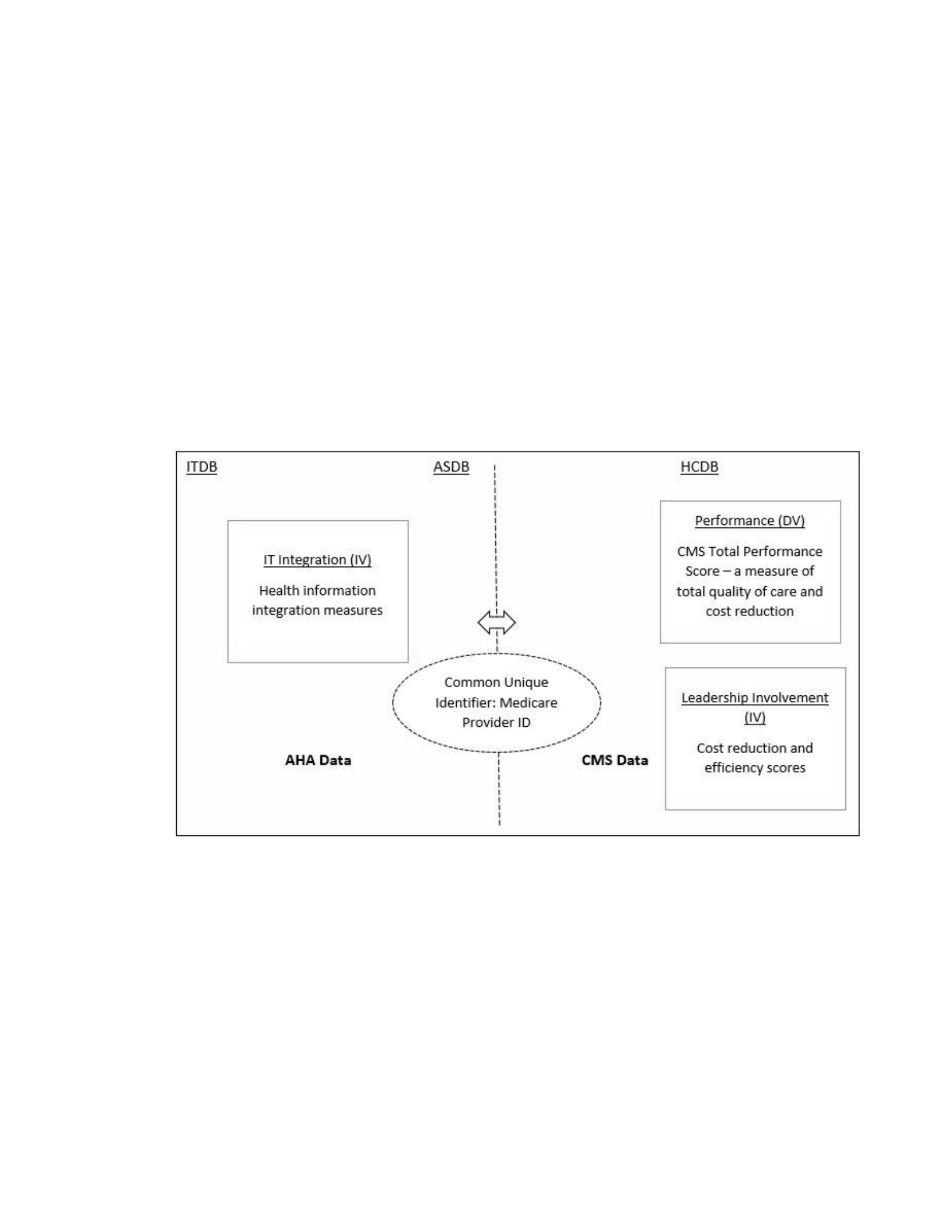
received. The HCDB contains information that could provide valuable data for the
variables for my study but has limitations as a singular source of comprehensive data for
the study. The independent variables (IVs) for my study were IT integration and senior
leadership involvement. The dependent variable (DV) was postmerger performance. The
IT integration predictor variable was nominal (categorical), whereas senior leadership
involvement (IV) and postmerger performance (DV) were of the ratio scale of
measurement (continuous).
Figure 4. Data source mapping. AHA data supplemented with CMS total performance
score.
Data Analysis Techniques
Several data analysis techniques are available and utilized by researchers for
quantitative and qualitative studies. I leveraged the multiple linear regression data
analysis technique for this study. Other quantitative analysis methods include the t-test

and the analysis of variance (ANOVA). According to Green and Salkind (2017), the t-test
is useful for evaluating hypotheses that involve a single mean or the difference between
two means. The ANOVA is a tool for assessing the relationship between one or more
factors and a dependent variable (Green & Salkind, 2017). The type of ANOVA
appropriate for analysis depends on the number of factors available per case, in addition
to the dependent variable (Green & Salkind, 2017). The multiple linear regression
analysis is an extension of a bivariate linear regression, which is useful to predict the
relationship between two variables; that is, one variable forecasts another. Unlike the
bivariate linear regression, the multiple linear regression is useful for evaluating the
relationship between multiple independent variables and a dependent variable (Green &
Salkind, 2017). Acikkar and Sivrikaya (2018) described the multiple linear regression as
a flexible, easy to use, and powerful tool for statistical analysis. In addition to affirming
the importance of multiple linear regression in research, Nimon and Oswald (2013)
stressed the value of adding alternative indices like validity coefficients, structure
coefficients, and relative weights to compensate for the effect of multicollinearity due to
intercorrelation between predictors. Green and Salkind identified some vital assumptions
for the use of multiple linear regression. These assumptions include normality of
distribution of the dependent variable, equality of variances for all levels of the
independent variables, and random sampling of the population. Data assumptions for the
use of multiple linear regression for this study included lack of multicollinearity,
homoscedasticity, normality, linearity, absence of any significant outliers, and
independence of residuals. A violation of these assumptions may result in an inaccurate
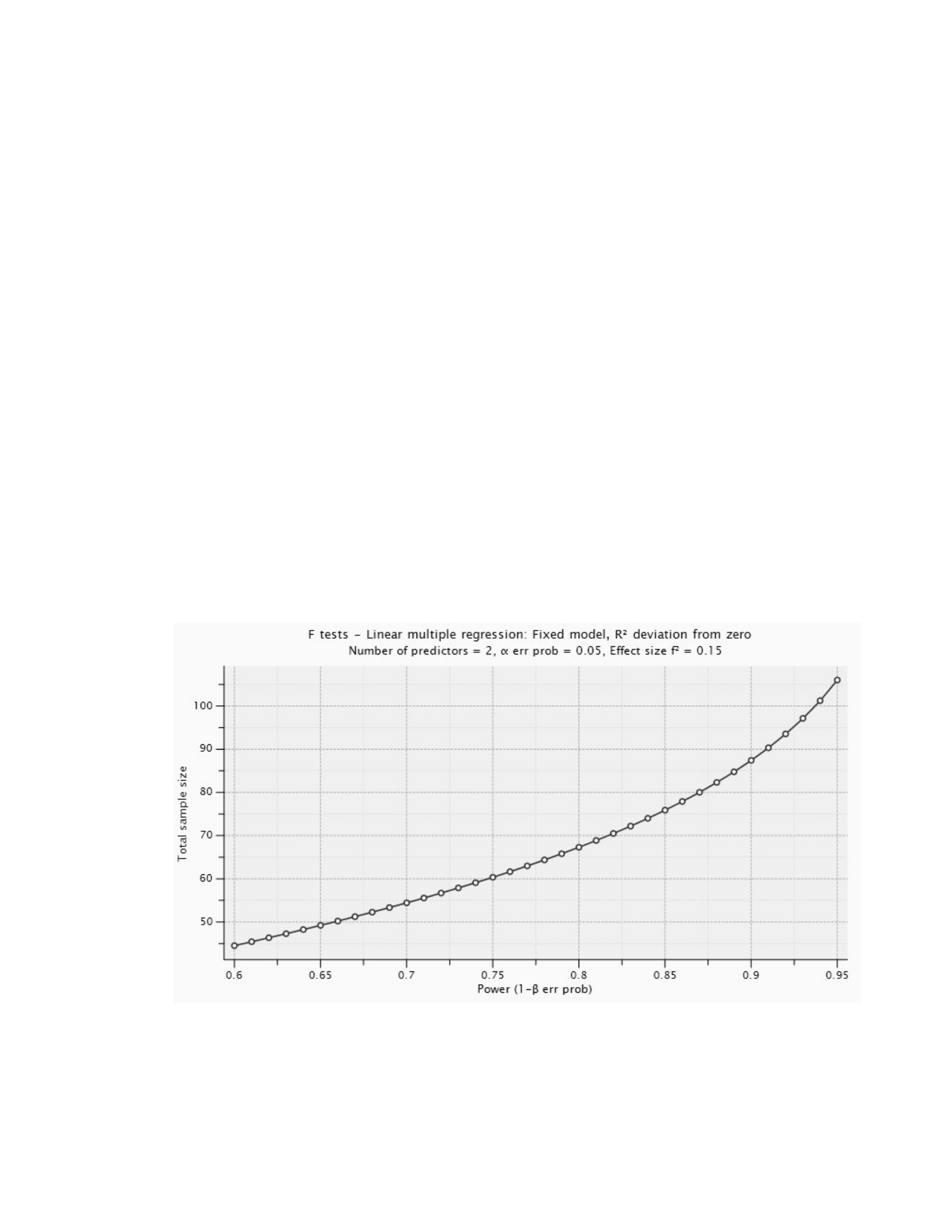
analysis. A thorough evaluation of each assumption was necessary to ensure the validity
of results. I used the multiple linear regression for this study, to evaluate the relationship
between IT integration, senior leadership involvement in PMI, and postmerger
performance in hospital systems.
Determining and using an appropriate sample size is vital to research quality. A
priori power analysis is useful in determining the minimum required sample size. With
the use of a G power analysis to derive the appropriate sample size, the appropriate or
minimum sample size was 68 participants. I assumed medium effect size of 0.15, an alpha
of 0.05, and a power of 0.80. The statistical power of 0.80 sufficiently handles Type I and
Type II errors (Perugini, Gallucci, & Costantini, 2018). Figure 5 shows a graphical model
of the sample size for multiple linear regression, with the parameters defined previously.
Figure 5. Graphical model of a priori power analysis for linear multiple regression using
the free G*Power 3.1 software by F. Faul, E. Erdfelder, A. Buchner, and A. Lang, 2009.

Ethics
Maintaining ethical standards in research is crucial for the well-being of the
participants. The Belmont principles for ethical research emphasized respect for
participants, beneficence, and justice as crucial elements for acceptable research that is
humane and factors in the well-being of the participants (Brakewood & Poldrack, 2013;
Vitak, Shilton, & Ashktorab; 2016). According to Brakewood and Poldrack (2013),
studies using secondary data typically align with the Belmont principles for protecting
human participants. Though the data for this study was from archival records, adhering to
these principles enhances the ethical quality of the study, and ensures compliance with
the standards of Walden University’s Institutional Review Board (IRB). Scrubbing of the
data for this study to remove personally identifiable characteristics like the name of the
participant or hospital ensures adherence to ethical principles of research. Storing the data
on a secure, encrypted device for 5 years is crucial for safeguarding the data and adhering
to ethical standards of research. These vital steps were essential parts of this study. AHA
obtains its extensive hospital data from an annual survey of hospital chief executives.
AHA encourages executives to participate voluntarily through a letter and communicates
the importance of the responses in providing a picture of health care practice in the
United States and information that may assist policy makers, researchers, and various
stakeholders in the health care industry. AHA attests to a response rate of more than 75%
to its annual surveys. The data collection instruments for the AHA annual survey of
hospitals and the supplemental IT survey are publicly available through its websites. The
collaboration with federal and state health care agencies, industry recognition and

participation, lend to support the assumption that the data was collected ethically.
Reporting requirements for all hospitals and providers participating in Medicare demands
that hospitals provide crucial performance information to CMS through the Hospital
Inpatient Quality Reporting and Hospital Outpatient Quality Reporting programs. These
reports follow an ethical standard, are assumed to be truthful, and verifiable (Center for
Medicare & Medicaid Services, 2016). The Hospital Compare data are publicly available.
The Walden University IRB approval number for this study is 06-24-20-0971438.
Transition and Summary
Section 2 began with a restatement of the purpose of this study, followed by a
detailed description of the research method and design. The section also included a
thorough evaluation of the data sources, the role of the researcher, and ethical
contemplations. The following section, Section 3, will contain findings from the analysis
of the data, the interpretation of the data and possible applications to the postmerger
performance of hospital systems.

Section 3: The Deliverable
Executive Summary
Hospitals play a vital role in the well-being of their communities. Modern-day
health care challenges make it imperative that health care organizations are effective in
discharging their primary responsibilities. A good understanding of variables impacting
the successful implementations of M&A will enable health care firms and their leaders to
respond to society's health needs more effectively. In this section, I present a summary of
my findings and the potential implications for social change.
Purpose of the Study
The purpose of this quantitative ex post facto study was to examine the
relationship between hospitals’ (a) IT integration, (b) senior leadership involvement in
PMI, and (c) postmerger performance. The independent variables were hospitals’ IT
integration and senior leadership involvement in PMI. The dependent variable was
postmerger performance. The targeted population consisted of senior leaders of general
acute care hospitals and hospital systems in the midwestern states of Ohio, Michigan,
Indiana, Illinois, and Wisconsin, with prior involvement in a merger or acquisition. This
study’s results could be beneficial to hospitals as it may enhance the leaders’
understanding of how to achieve desired results from M&A. The social change
ramifications of the project include the potential to enable better postmerger hospital
performance, thereby enhancing hospitals’ ability to provide quality care for their
communities, achieve better patient outcomes, create positive economic impact, and the
enhance overall well-being of their communities.

Goals and Objectives
The goal of this secondary data analysis was to determine if a relationship exists
between IT integration, senior leadership involvement in the process of integrating the
hospitals and systems brought together via an M&A, and postmerger performance.
Understanding if a relationship exists and its impact could be valuable in managing the
M&A process for better outcomes. Better postmerger performance could invariably lead
to positive contributions to society and better patient outcomes. My objective for this
study was to offer a fresh perspective to leaders of health care organizations on how to
steer their firms to success in M&A.
Overview of Findings
Using data from Irving Levin Associates and the AHA Annual Survey of
Hospitals, I identified acute care hospitals from the targeted midwestern states of Ohio,
Michigan, Illinois, Indiana, and Wisconsin with M&A activity (i.e., acquired), between
2013 and 2017. A total of 89 hospitals matched the criteria of acute care, nonfederal, and
general medical-surgery hospitals. Table 2 shows the total count by state.
Table 2

Hospital M&A Count by State
State
Count
Ohio 18
Michigan 27
Indiana 11
Illinois 24
Wisconsin 9
The focus on acquired hospitals presented some challenges for this study. One is
that some hospitals lose their unique identifiers after they are acquired and absorbed into
an existing system to form a larger organization. Consequently, determining the
performance of the acquired hospital becomes difficult postmerger. Despite this
challenge, focusing on the acquired hospital instead of the acquiring hospital was the
intent of this study because it presented a unique perspective for evaluating the research
question. I eliminated acquired hospitals without unique system identifiers postmerger
from the final sample population for analysis, including only hospitals with an individual
identifier before and after the M&A in the study. The effect was the elimination of a total
of 17 hospitals from the initial sample. Table 3 shows the final breakdown of the target
hospital count by state.
Table 3
Target Hospitals Count With M&A Count by State

State
Count
Ohio 16
Michigan 20
Indiana 6
Illinois 24
Wisconsin 6
Note. Total count of target hospitals, N = 72.
For the data analysis, I used archived data from the CMS Hospital Compare
Database. Specifically, the 2018 total performance score and the efficiency and cost
reduction scores from the hospital value-based purchasing data for postmerger
performance and leadership involvement measures, respectively. I linked the CMS data to
the data from the AHA annual survey IT supplement for 2018. The two records are linked
using the Medicare Provider ID, which is unique to each hospital. The AHA IT survey
included questions on IT systems interoperability, integration, and implementation
challenges. For data on IT integration, I used responses to Question 23a, “Do you use the
same primary inpatient EMR/EHR system vendor for your primary outpatient EMR/EHR
system?” EMR is “electronic medical records,” and EHR means “electronic health
records.” AHA defined the primary system as the system used for the largest number of
patients or that which represents the hospital’s single most substantial investment. AHA
captured responses to the question using a 5-point scale from 1 to 5, mapped to “yes,
share a single instance,” “yes, but do not share the single instance,” “no,” “do not know,”
and “not applicable.” Number 1 represents the highest level of integration, which is
sharing a single instance or full integration. Number 2 is indicative of partial integration

(i.e., “yes, but do not share the single instance”), whereas 3 indicates limited to no
integration.
Recommendations
My research findings indicate that senior leaders may have a great effect on the
outcome of M&A in hospitals. A significant relationship exists between senior leadership
involvement in the PMI process and postmerger performance. To derive value from
M&A and achieve improved performance, senior leaders of health care organizations
would benefit from understanding how to stay engaged in the PMI process and provide
guidance that will shepherd process leaders through the merger implementation.
Presentation of the Findings
The main research question for this study was as follows: What is the relationship
between IT integration, senior leadership involvement in PMI, and postmerger
performance? Using SPSS, I conducted a multiple linear regression analysis to if a
relationship exists between the independent variables (a) IT integration and (b) senior
leadership involvement in integration, and the dependent variable, postmerger
performance (PMP).
This section includes the findings of the statistical tests, the testing of the
assumptions, and an inferential analysis of the findings.
Descriptive Statistics
A total of 72 cases were included in the analysis. All cases evaluated included
complete sets of data for the predictor and criterion variables. One of the predictor
variables, IT Integration, is polytomous with five possible categories or levels. To use

polytomous variables in a standard multiple linear regression require dummy variables
(Laerd Statistics, 2018). I created a dummy variable for each of the three categories of
responses in the data for IT Integration levels (IT_Int_Full=Yes single instance,
IT_Int_Part=Yes but not single instance, and IT_Int_No=No). The fourth category with
two responses (“Do not know”), was ignored. No participant provided a response
matching the fifth level, “not applicable.” The reference group for the dummy variables
was IT_Int_Full=Yes single instance. Table 4 shows the frequency of responses to the IT
Integration question.
Table 4
IT Integration Response Frequency
Valid Yes, single instance Frequency 48
Percent
66.7
Valid percent
Cumulative
percent
66.7 66.7
Yes, but not single
instance
3 4.2 4.2 70.8
No 19 26.4 26.4 97.2
Do not know 2 2.8 2.8 100.0
Total 72 100.0 100.0
Table 5 shows the descriptive statistics. Analysis of the deidentified data for the hospitals
in the dataset included the dependent variable, postmerger performance (mean, 39.31;
standard deviation, 10.54) and senior leadership involvement (mean, .98; standard
deviation, .056).
Table 5

Descriptive Statistics
Mean
Std.
Deviation
Postmerger
performance
39.31 10.54
Leadership involvement .98 .056
IT_Int_Full=Yes single
instance
.67 .48
IT_Int_Part=Yes but
not single instance
.04 .20
IT_Int_No=No .26 .44
Note. N = 72.
Testing of Assumptions
The testing of assumptions is essential to determine if the multiple linear
regression model is a good fit for the data analysis. Assumption testing is a necessary step
before answering the research question. Using the SPSS software, I evaluated for the
independence of residuals, linearity, homoscedasticity, multicollinearity, outliers, and
normality of distribution. The data and variables for the study already met the other core
requirements for using multiple linear regression: a continuous dependent variable and
two or more independent variables, which may be continuous or nominal.
Independence of residuals. The test for the independence of residuals (or
observations), is a test to determine if there is serial correlation or 1st-order
autocorrelation. Serial correlation implies that the residuals are not independent, and
contiguous residuals are correlated (Chen, 2016; Laerd Statistics, 2018). I ran the
DurbinWatson test to evaluate the independence of residuals. Results from the Durbin-

Watson statistic can range in value from 0 to 4 (Fields, 2009; Laerd Statistics, 2018). A
value close or equal to 2 indicates independence of the residuals. For my analysis, there
was independence of residuals, as assessed by a Durbin-Watson statistic of 2.073. Table 6
depicts the model summary with the Durbin-Watson statistic.
Table 6
Model Summaryb
Adjusted R Std. Error of Durbin-
Model R R Square Square the Estimate Watson
1 .631a .399 .372 8.3507136 2.073
Note. a. Predictors: (Constant), IT_Int_No=No, IT_Int_Part=Yes but not single instance,
Leadership Involvement.
b. Dependent Variable: Postmerger Performance.
Linearity. To evaluate linearity between the independent variables and the
dependent variable, I used the SPSS scatterplot procedure to generate a Scatter/Dot plot
of the unstandardized predicted values and the studentized residuals. A careful analysis of
the plot points to a linear relationship between the independent variables and the
dependent variable. See Figure 6. I also evaluated for linearity between the dependent
variable and each of the independent variables using partial regression plots. I ignored the
partial plot between the dummy variables of the categorical independent variable (IT
Integration) and the dependent variable, a standard approach in regression analysis (Laerd
Statistics, 2018). Figure 7 shows the partial regression plot for total performance score
and leadership involvement. Figures 6 and 7 show the linearity of the relationships.

Figure 6. Scatter plot of studentized residuals by unstandardized predicted value showing
a linear relationship.

Figure 7. Partial regression plot of leadership involvement and total performance score
showing a linear relationship.
Figures 8 and 9 show the partial regression plots for the dummy variables. I did not
consider these plots in determining linearity as the dummy variables are categorical.
Figure 8. Partial regression plot of IT_Int_Part=Yes but not single instance and total
performance score showing a non-linear relationship.
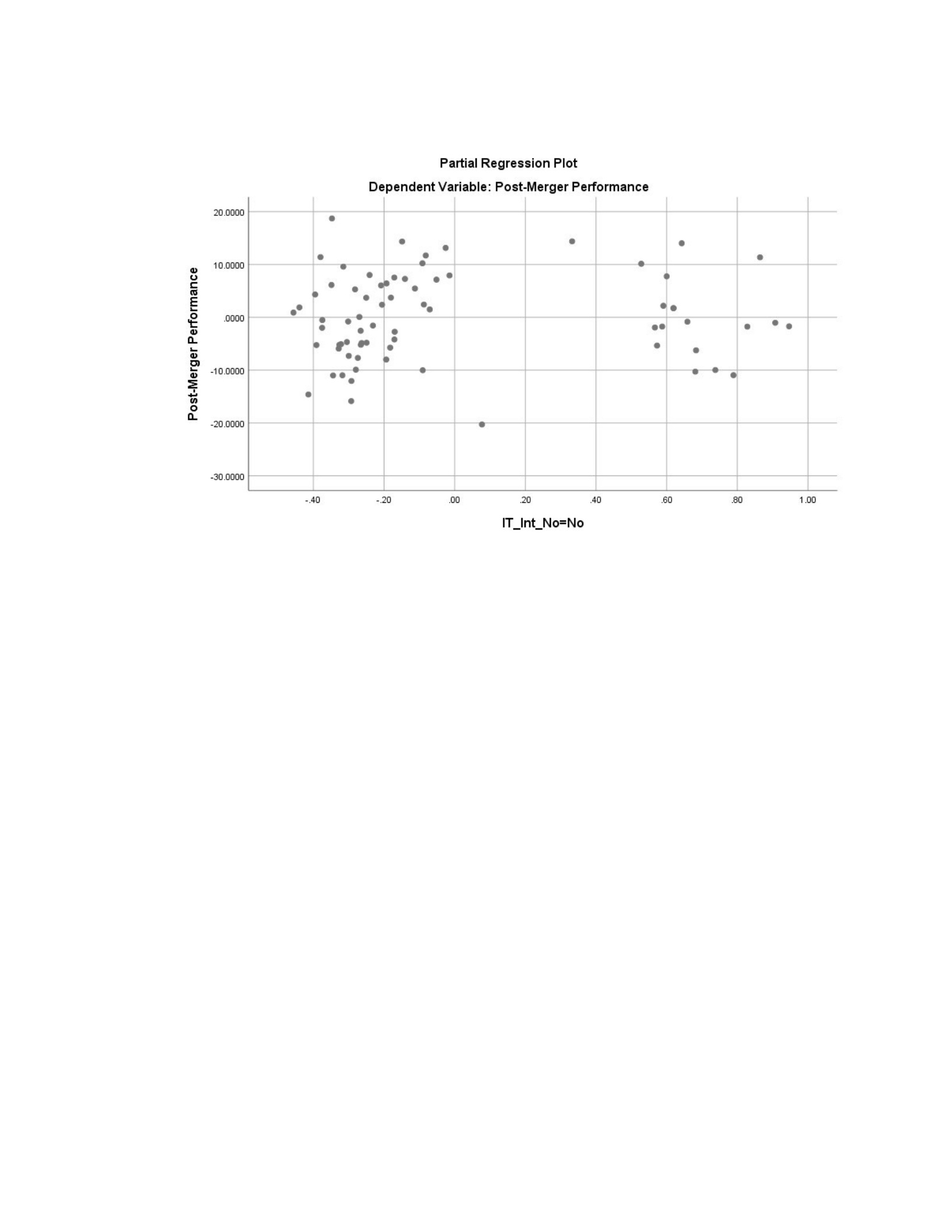
Figure 9. Partial regression plot of IT_Int_No=No and total performance score showing a
non-linear relationship.
Outliers. Testing for outliers allows for checking for data points that are well
outside their predicted values. Running the SPSS Casewise diagnostics did not produce
any results, implying that there were no standardized residuals greater than ±3 standard
deviation. The result suggested the absence of outliers. Further analysis using studentized
deleted residuals did not reveal any residual that needed further investigation as a
potential outlier. The examinations indicated there were no major violations of this
assumption. Additional tests for leverage and influential points did not reveal any cases
with high leverage or that are influential. Results observed were within normal and
acceptable ranges (Cook & Weisberg, 1982; Huber, 1981). See Table 7.
Table 7
Residuals Statisticsa

Predicted Value
Minimum
17.871
Maximum
53.843
Mean
Std.
Deviation N
39.312 6.654 72
Std. Predicted Value -3.222 2.184 .000 1.000 72
Standard Error of
Predicted Value
1.182 4.867 1.802 .797 72
Adjusted Predicted
Value
14.880 53.138 39.265 7.073 72
Residual -20.348 19.0289 .000 8.172 72
Std. Residual -2.437 2.279 .000 .979 72
Stud. Residual -2.999 2.313 .003 1.032 72
Deleted Residual -30.816 19.775 .047 9.183 72
Stud. Deleted Residual -3.195 2.391 .002 1.049 72
Mahal. Distance .435 23.132 2.958 4.626 72
Cook's Distance .000 1.156 .036 .147 72
Centered Leverage
Value
.006 .326 .042 .065 72
Note. a. Dependent Variable: Postmerger Performance.
Homoscedasticity. The assumption of homoscedasticity refers to the absence of a
clear pattern in the spread of residuals. The existence of an increasing or decreasing
pattern would indicate the likelihood of heteroscedasticity, which would be a violation of
the assumption and increase the possibility of a Type I error (Rosopa, Schaffer, &
Schroeder, 2013). The examination of the studentized residuals against the
unstandardized predicted values showed homoscedasticity, as no clear pattern was
observed (see Figure 6).
Multicollinearity. Multicollinearity occurs when there is a high degree of
correlation between two or more predictor variables. I used the Pearson Correlation
statistic to evaluate the correlation between the predictor variables. Table 8 shows the
results. The bivariate correlations were mostly small to medium. However, I observed a

relatively high negative correlation of -.847 between two dummy variables representing
the highest and lowest levels of IT integration. To eliminate the situation described by
Disatnik and Sivan (2014) as an illusion of multicollinearity, I examined the tolerance
and variance inflation factor (VIF) values in the collinearity statistics created by SPSS
(see Table 9). All tolerance values are greater than .1 and VIF values less than 10,
signifying that there was no violation of the assumption of multicollinearity (Hair, Black,
Babin, & Anderson, 2014).
Table 8
Correlations
IT_Int_Part
Postmerger Leadership =Yes but
Performanc Involveme not single IT_Int_No
e nt instance =No
Pearson Correlation Postmerger
Performance
1.000 -.627 -.027 -.131
Leadership
Involvement
-.627 1.000 .147 .248
IT_Int_Part=Yes
but not single
instance
-.027 .147 1.000 -.125
IT_Int_No=No -.131 .248 -.125 1.000
Sig. (1-tailed) Postmerger
Performance
. .000 .410 .136
Leadership
Involvement
.000 . .109 .018
IT_Int_Part=Yes .410 .109 . .148

but not single
instance
IT_Int_No=No .136 .018 .148 .
Note. N = 72.
Table 9
Collinearity Statisticsa
Collinearity Statistics
Model Tolerance VIF
1 (Constant)
Leadership Involvement
.907 1.103
IT_Int_Part=Yes but not
single instance
.951 1.052
IT_Int_No=No .912 1.096
Note. a. Dependent Variable: Postmerger Performance.
Normality. To confirm that the assumption of normality was not violated, I
examined the distribution of the standardized residuals using the histogram depicted in
Figure 10. The results suggested that the residuals are normally distributed.

Figure 10. Histogram showing normality of distribution.
The P-P plot of regression standardized residual further confirmed the observation that
the assumption of normality was not violated (see Figure 11).
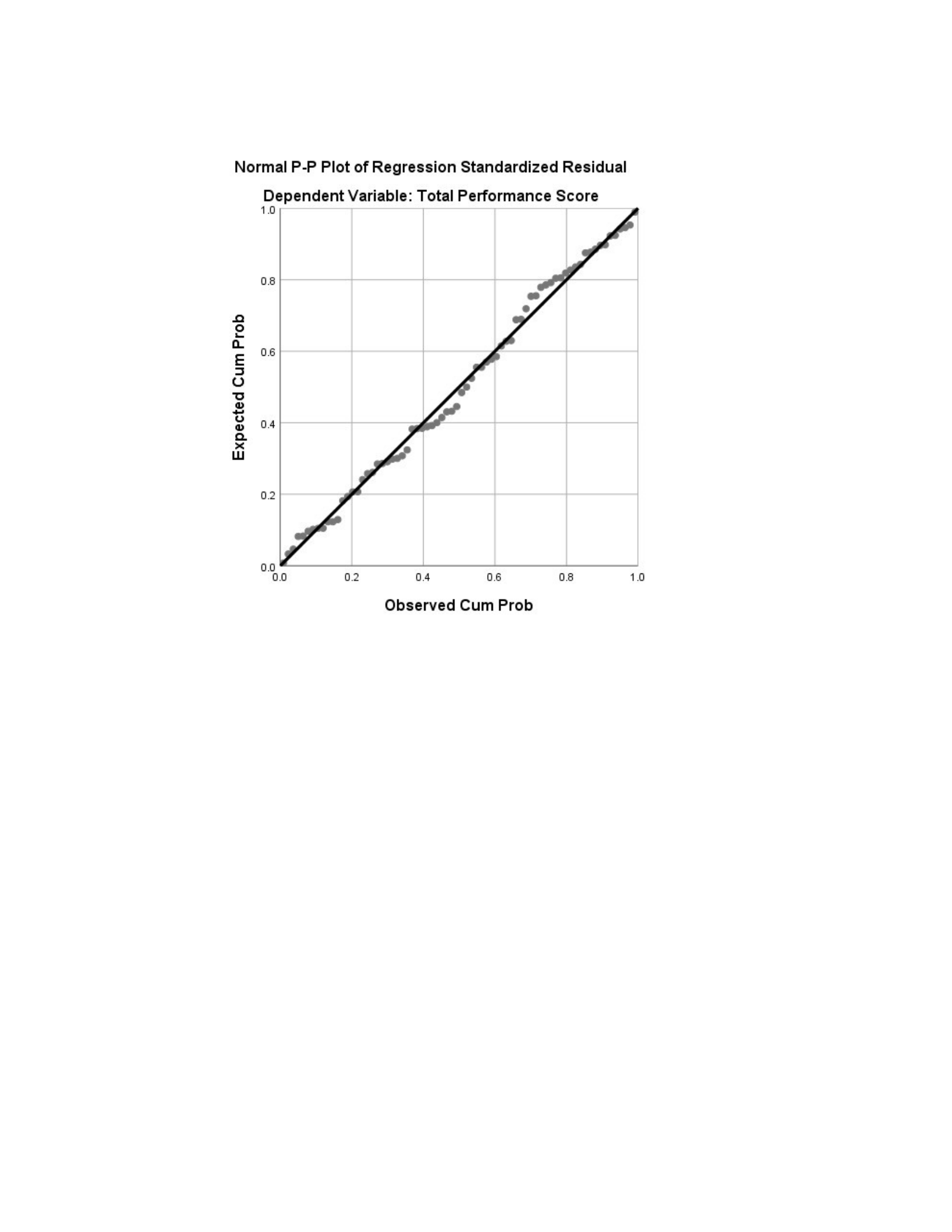
Figure 11. The normal P-P plot of regression standardized residual.
To affirm the conclusion of normality, I used SPSS to generate a Q-Q plot of studentized
residual. Figure 12 shows the result, which also confirms that the assumption of
normality was not violated.
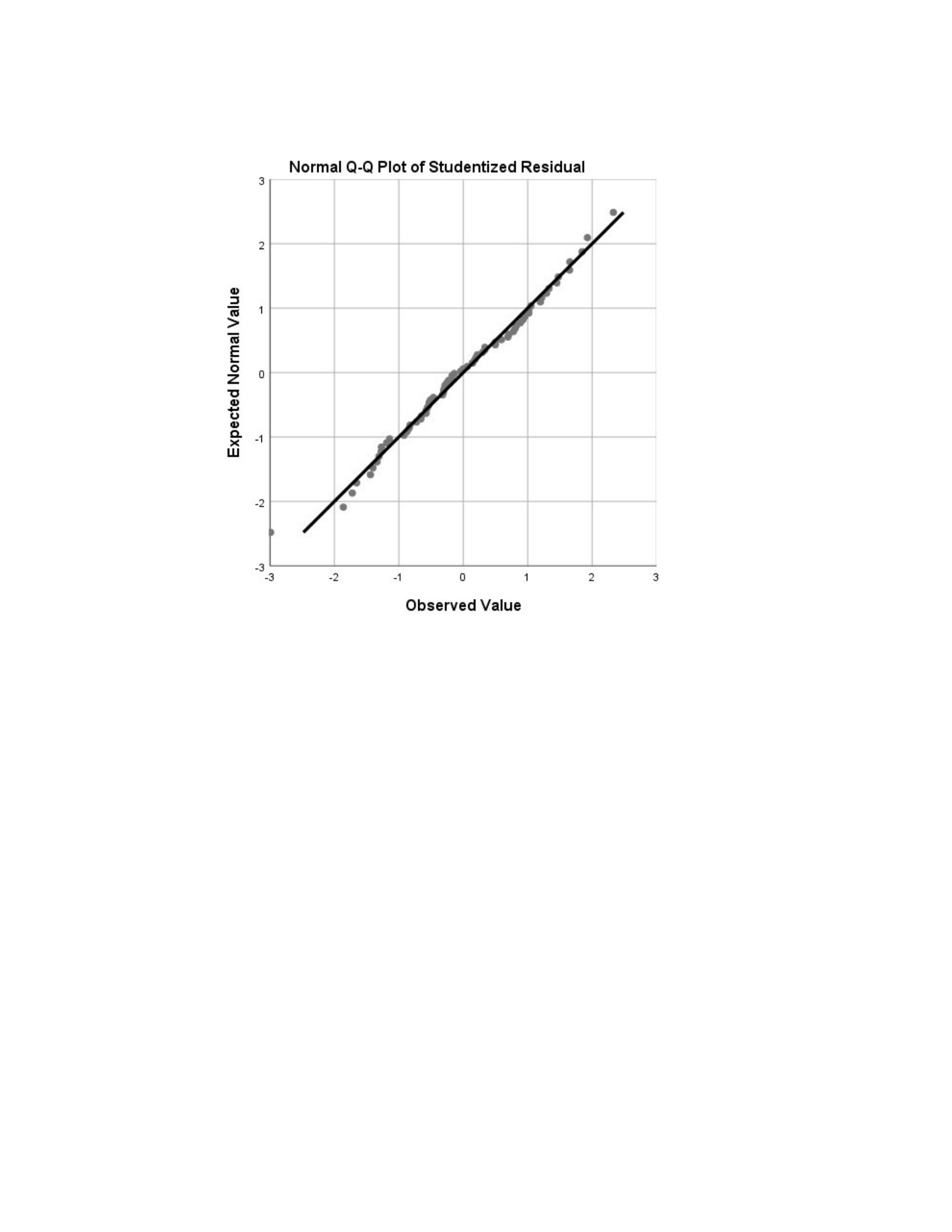
Figure 12. Q-Q of studentized residual showing normality.
Inferential Results
Standard multiple linear regression, α = .05 (two-tailed), was used to examine the
usefulness of IT integration and senior leadership involvement in PMI in predicting
postmerger performance of hospitals. The independent variables were IT integration and
senior leadership involvement (SLI). IT integration was reclassified into three dummy
independent variables; full integration (IT_Int_Full), partial integration (IT_Int_Part), and
no integration (IT_Int_No). The dependent variable was postmerger performance (PMP).
The null hypothesis was that there is no statistically significant relationship between IT
integration, senior leadership involvement in PMI, and PMP. The alternative hypothesis
was that there is a statistically significant relationship between IT integration, senior

leadership involvement in PMI, and PMP. I conducted preliminary analyses to assess
whether the assumptions of multicollinearity, outliers, normality, linearity,
homoscedasticity, and independence of residuals were met; no serious violations were
noted (see Testing of Assumptions). The model was able to significantly predict PMP:
F(3, 68) = 15.026, p < .001, R2 = .399. The R2 (.399) value indicated that approximately
40% of variations in PMP is accounted for by the linear combination of the predictor
variables (SLI, IT_Int_Full, IT_Int_Part, and IT_Int_No). The adjusted R2 was 37.2%.
Senior leadership involvement was statistically significant to the prediction (t = -6.55, p <
.001, β = -.647). The dummy variables for the levels of IT integration, IT_Int_Part (t
= .751, p = .455, β = .072), and IT_Int_No (t = .386, p = .700, β = .038) were not
statistically significant (see Table 11).
Table 10
Anovaa
Model
Sum of
Squares df Mean Square F Sig.
1 Regression 3143.472 3 1047.824 15.026 .000b
Residual 4741.940 68 69.734
Total 7885.412 71
Note. a. Dependent Variable: Postmerger Performance.
b. Predictors: (Constant), IT_Int_No=No, IT_Int_Part=Yes but not single instance,
Leadership Involvement.

Table 11
Regression Analysis Summary for Predictor Variables
Variable Β SE Β β t p
Leadership
Involvement -121.363 18.527 -.647 -6.550 <.001
Partial IT
Integration 3.794 5.051 .072 .751 .455
No IT Integration .903 2.338 .038 .386 .700
Note. N= 72. Dependent Variable: Postmerger Performance.
The hypotheses for this study were:
(H0): There is no statistically significant relationship between IT integration,
senior leadership involvement in PMI, and postmerger performance.
(Ha): There is a statistically significant relationship between IT integration, senior
leadership involvement in PMI, and postmerger performance.
The results of the study showed that the null hypothesis can be rejected for senior
leadership involvement in PMI because a statistically significant relationship with
postmerger performance exists. The null hypothesis cannot be rejected for IT integration
because there was no statistically significant relationship. The alternate hypothesis was
rejected for IT integration because there was no statistically significant relationship with
postmerger performance. However, the alternate hypothesis was accepted for senior
leadership involvement in PMI because there was a statistically significant relationship
with postmerger performance.

Despite the findings that the dummy categorical predictors were not statistically
significant, the magnitude of the slope coefficients for these categorical variables
and the observed ranges of the 95% confidence intervals, -6.285 to 13.873 for
partial integration, and -3.762 to 5.569 for no integration, warranted their
inclusion in the final model. This approach to modeling categorical variables in
the regression equation is supported in statistical analysis (Gunter, Chernick, &
Jiajing Sun, 2011; Laerd Statistics, 2018). The slope coefficients (B) for
IT_Int_Part (partial IT integration) and IT_Int_No (no IT integration) compare
the mean of each variable with the reference group, IT_Int_Full
(full IT integration).
Table 12
Coefficientsa
Standardi
zed
Unstandardized Coefficie
Coefficients nts
95.0% Confidence
Interval for B
Model B Std. Error Beta t Sig.
Lower
Bound
Upper
Bound
1 (Constant) 158.134 18.032 8.769 .000 122.151 194.117
Leadership
Involvement
-121.363 18.527 -.647 -6.550 .000 -158.334 -84.392
IT_Int_Part=Yes but
not single instance
3.794 5.051 .072 .751 .455 -6.285 13.873
IT_Int_No=No .903 2.338 .038 .386 .700 -3.762 5.569

The negative slope for leadership involvement (-121.363) indicates a
corresponding increase in PMP for each 1-point decrease in each variable. Similarly, the
positive regression coefficient for partial IT integration (3.794) indicates that better
integration would result in a corresponding increase in PMP. The negative slope (coefficient)
for leadership involvement may be explained by the nature of the data evaluated.
Measurement of the CMS data was against a baseline developed from prior efficiency and
cost reduction. Therefore, an increasing value signified a departure from the baseline, i.e., a
departure from the expected level of efficiency, which reflected senior leadership involvement
for this study. Overall, the regression model shows that leadership significantly impacts
postmerger performance, aligning with the PMI framework by Haspeslagh and Jemison
(1991). The model substantively supports the PMI framework by Haspeslagh and Jemison
(1991) on senior leadership's influence and the integration of resources on postmerger
outcomes. Haspeslagh and Jemison (1991) posited that leaders must be engaged in shaping
and guiding the integration process, ensuring that the requisite environment exists for a
smooth transfer of capabilities to derive value and achieve the planned objective of the M&A.
The results from this study support the theory on the impact of leadership on M&A outcomes.
Recommendations for Action
This study's findings can assist senior leaders and managers of hospitals in
understanding how to guide the postmerger process for better results effectively. The
results affirmed that senior leadership involvement in the PMI phase has a significant
relationship with postmerger performance. Health care industry leaders may benefit from

understanding the criticality of engagement in the postmerger phase of an M&A and not
only in the initial deal-making phase. Further research may be helpful to determine the
type of leadership and the scope of involvement that would be more beneficial in the
postmerger phase. The study also adds credence to the criticality of resource integration
to enhancing value creation from an M&A. To a lesser degree than senior leadership
involvement in PMI, IT integration could improve value creation. This insight would be
beneficial to senior and mid-level managers who involved in PMI activities. Though
industry practices may vary, this study's findings may find applicability in other business
sectors beyond health care as M&A activity is pervasive across industries despite the high
rate of failure to create value (Alaranta & Henningsson, 2008; Rebner & Yeganeh, 2019).
The criticality of senior leadership involvement and resource integration to M&A
outcomes suggests the need for senior business leaders to develop a roadmap for periodic
check-ins and engagement with mid-tier leaders who manage the PMI process. This plan
may ensure continued involvement and provide an opportunity for prompt course
correction if necessary. My goal is to communicate the findings of this study through
health care industry organizations and professional bodies. I would also seek
opportunities for sharing the insights gained from the study at appropriate conferences or
industry-related events.
Implications for Social Change
Hospitals are crucial to societal wellbeing. Apart from the extremely critical role
of caring for the sick and health care research, hospitals play a significant role in their
communities' economic wellbeing. Hospitals account for providing more than 16 million

jobs in the United States alone, with an economic impact of $3.0 trillion (AHA, 2018).
Therefore, providing leaders of such an essential part of the society with insight on how
better to achieve their objectives of value creation through mergers is vital and has
significant ramifications for social wellbeing. Current developments in health care have
further amplified the implications of this study for social change. The coronavirus disease
(COVID-19) has exacerbated the financial, patient care, and resource pressures on
hospitals and their leaders (Dauner, Perlman, & Dougherty, 2020). The findings of this
study may help equip health care leaders with the knowledge that will help to eliminate a
potential source of additional pressure. Assisting hospital leaders to understand the
relationship between IT integration, senior leadership involvement in merger integration,
and postmerger performance, may help them to achieve the desired efficiencies, cost
reduction, and transfer of competencies and knowledge that they desire from M&A. The
ultimate implication for society is better patient care and outcomes.
Skills and Competencies
The DBA program was a journey of intense learning and development for me.
Throughout the journey, I have acquired skills and competencies that will make me a
better practitioner and leader. My professional experience in health care IT and the
awareness of its role in patient care contributed to my decision to study M&A and the
role of leadership and health care IT in determining its outcome. Through the process of
literature review and analysis of secondary data, I learned more about M&A, the different
phases, and factors that are crucial to its success and impact the postmerger performance
of the newly formed organization. Sharing the insights garnered through this process may

be beneficial to health care leaders specifically and other business leaders as well across
other industries, with interest in M&A. My DBA portfolio, including my skills, and
competencies as a business leader, can be accessed through waldenu.optimalresume.com.

