


Basic concepts of cells and organel functions
Concept of cells
Cells are the smallest, structural and functional unit for every living thing.
Sel composes the body of living things. As the smallest unit of living
things, cells are at the lowest level in the preparation of the body of living
things.
The order of the body of the body of living things is cells, networks,
organs, organ systems and individuals. As a functional unit, cells have
organelles with different functions in supporting cell activity. Example:
Mitochondria functions as a cell producer of cell energy because it
produces energy through respiration. Cells are also a hereditary unit,
which means cells have genetic material in the form of chromosy that can
be inherited to the next generation.
The organism whose body is composed of a single cell is called an
unicellular organism. Although it only consists of one cell, it is still able to
carry out life activities and some chemical reactions for metabolism.
Examples of unicellular organisms are bacteria and amoeba.
The organism composed of many cells is called a multicellular organism.
Various types of cells owned by multicellular organisms will be
specialized according to their respective functions.
Cells with the same type will form the network.
The network collection with the same form and function forms various
organs.
A collection of organs will form an organ system. With this concept it is
not surprising that the multicellular organisms of their body structure are
more complex than unicellular organisms. Examples of multicellular
organisms are plants, animals and humans.
Cell
Cell wall
The outer part of a cell is the cell wall. Components compiling cell walls
on living things differ from one another. Bacterial cell walls are composed
of peptiliskan and lipopolysaccharides.
In mushrooms, the cell wall is composed of chitin compounds, glucan
and protein.
Cell walls in plants are composed of cellulose, hemicellulose and lignin.
On cell animal cells cell walls not found
The function of the cell wall is as follows:
1. Protect cells from physical damage and pathogen attacks.
2. Give cell form and maintain cell strength. Cell walls in plants tend to be
rigid and hard. This is because it is composed of various glucose
molecules and lignin which causes strong and sturdy plant cell walls
Of transport
On plant cell walls there is a plasmodesmata, which is an open channel on
the cell wall that allows the exchange of substances, gas exchanges or
communication between cells.
Cell membrane
The cell membrane is a barrier / barier between the inside of the cell with
the outside of the cell. The component component of the cell membrane
consists of 20% of water and the remaining 80% are lipids, sterols,
proteins, carbohydrates and ions.
Lipid
Lipid binds to phosphate groups so that it is known as phospholipid.
Lipid is ampifilic which means it has the properties of polar (hydrophilic)
and non-polar (hydrophobic).
Hydrophilic lipids lies in the section of the cell membrane while lipid
hydrophobic is located at the bottom of the membrane (tail).
Not all molecules are able to pass the tail of cell membranes, because not
all molecules are nonpolar.
Only a few certain molecules are able to pass the layer so that the cell
membrane is said to be a selective permiel.
Protein
Based on the location of the constituent of cell membrane is divided into 3,
namely:
1. Integral proteins, proteins are embedded in the membrane and are able
to penetrate the portion of the membrane surface.
2. Peripheral protein, protein located on the inner surface and the outer
surface of the membrane and does not interact with lipid hydrophobic
parts
3. Afford protein, protein that is bound to lipids through an anchor bond.
Cell membrane function:
1. Transportation routes
Cell membranes acts as a substance transport path that will enter and exit
the cell. Transportation mechanism that occurs in cell membranes
namely
a. Passive transport, transportation passes the cell membrane that does
not involve energy. Passive transport types, namely:
1) Simple diffusion, is a displacement of solute from high
concentration (hypertonis) to low conditions (hypotonic) so that the
same concentration is obtained (isotonist). Example: spray perfume
throughout the room.
2) Final diffusion, is a molecular displacement into cells that require
membrane proteins to pass the cell membrane. Example: glucose
transfer that requires transporter protein.
3) Osmosis, is a solvent / water transfer from hypertonic
concentration to the concentration of hypotonic examples:
Crenation in red blood cells
breakfast. Active transport
Active transport is transport through cell membranes that require
Energy in the form of ATP to pump molecules against Grandien
concentration. The active transport is divided into 2, namely:
1) Endocytosis, mechanism for entry of molecules such as protein,
electrolyte fluid, and also pathogens into cells. Endocystosis events begin
with the folding of cell membranes forming endocytic vaguoles. Vamuoles
are filled with substances that will be put in the cell. After all entry
substances then the cell membrane will close. The next digestive process
will be taken over by Lisosomes. The endocytosis process in cells includes:
a. Phagocytosis, the process of "swallowing" foreign particles into cells
with the help of plasma membranes. The initial stage of phagocytosis is
plasma membrane surrounding foreign particles (> 0.5
μ
m) that will be
swallowed and forming a fagosome. Lisosomes then blend with
fagosomes and secrete the lizozyme enzyme to digest these particles.
After being digested, the particles are removed through the exocytosis.
Example: Amoeba sp when digesting food. macrophages that digest
viruses / bacteria
b. Pinocytosis, the process of "drinking" Liquid particles that are liquid by
cells. Particles that experience pineocytosis include ions, glucose,
amino acids. Example: pinocytosis in the layer of blood capillary cells
and plant root cells.
c. Endocytosis mediated by endocytosis receptors mediated more
efficient receptors compared pinositosis to obtain foreign
particles or makromolecules. This is because Because of the protein
complex and receptors involved in the endocytosis process.
2) Exocitosis, the mechanism of the issuance of substances in the cell that
has been wrapped in a bag-shaped vesicle. The vesicles then blend with
the membrane. This causes an open cell membrane so that the substance
molecule is removed from the cell.
Cell communication
The cell membrane has receptors on the surface that allows
communication between cells.
Signals received by receptors in the form of hormones, peptide
compounds, toxins, or signals from the environment will be received by
membrane surface receptors. The signal is then forwarded into the cell
and triggers the activation of certain genes that match the received signal.
This causes cellular immune responses to be active. For example, the
pathogenic microbes that infect the plant will release signal molecules
(elisitors). The signal will be recognized by membrane surface receptors
found in plant cells. The interaction between elisitors and receptors
causes activation of phytoaleksin forming genes (antimicrobial
compounds in plants).
Fitoalasekin will be released by plants around infected and regional areas
far from the source of infection. One example of phytoaleksin in plants is
a scopoletin compound.
The cytoplasm
The liquid contained in the cell and is located outside this cell is called
cytoplasm.
The cytoplasmic components are in the form of solids and liquids. The
solids on the cytoplasma in the form of cell organelles such as ribosomes,
mitochondria, endoplasmic reticulum and so on.
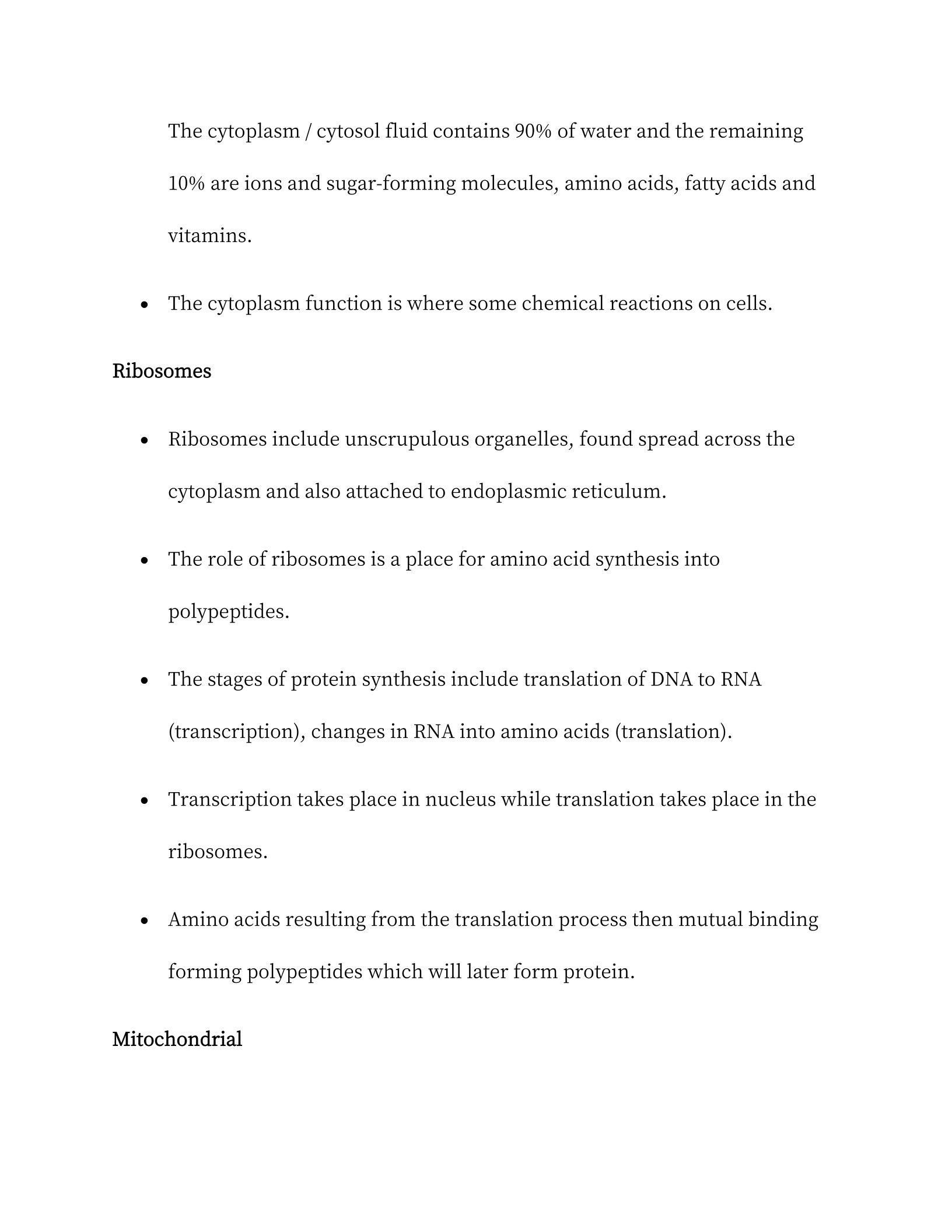
The cytoplasm / cytosol fluid contains 90% of water and the remaining
10% are ions and sugar-forming molecules, amino acids, fatty acids and
vitamins.
The cytoplasm function is where some chemical reactions on cells.
Ribosomes
Ribosomes include unscrupulous organelles, found spread across the
cytoplasm and also attached to endoplasmic reticulum.
The role of ribosomes is a place for amino acid synthesis into
polypeptides.
The stages of protein synthesis include translation of DNA to RNA
(transcription), changes in RNA into amino acids (translation).
Transcription takes place in nucleus while translation takes place in the
ribosomes.
Amino acids resulting from the translation process then mutual binding
forming polypeptides which will later form protein.
Mitochondrial
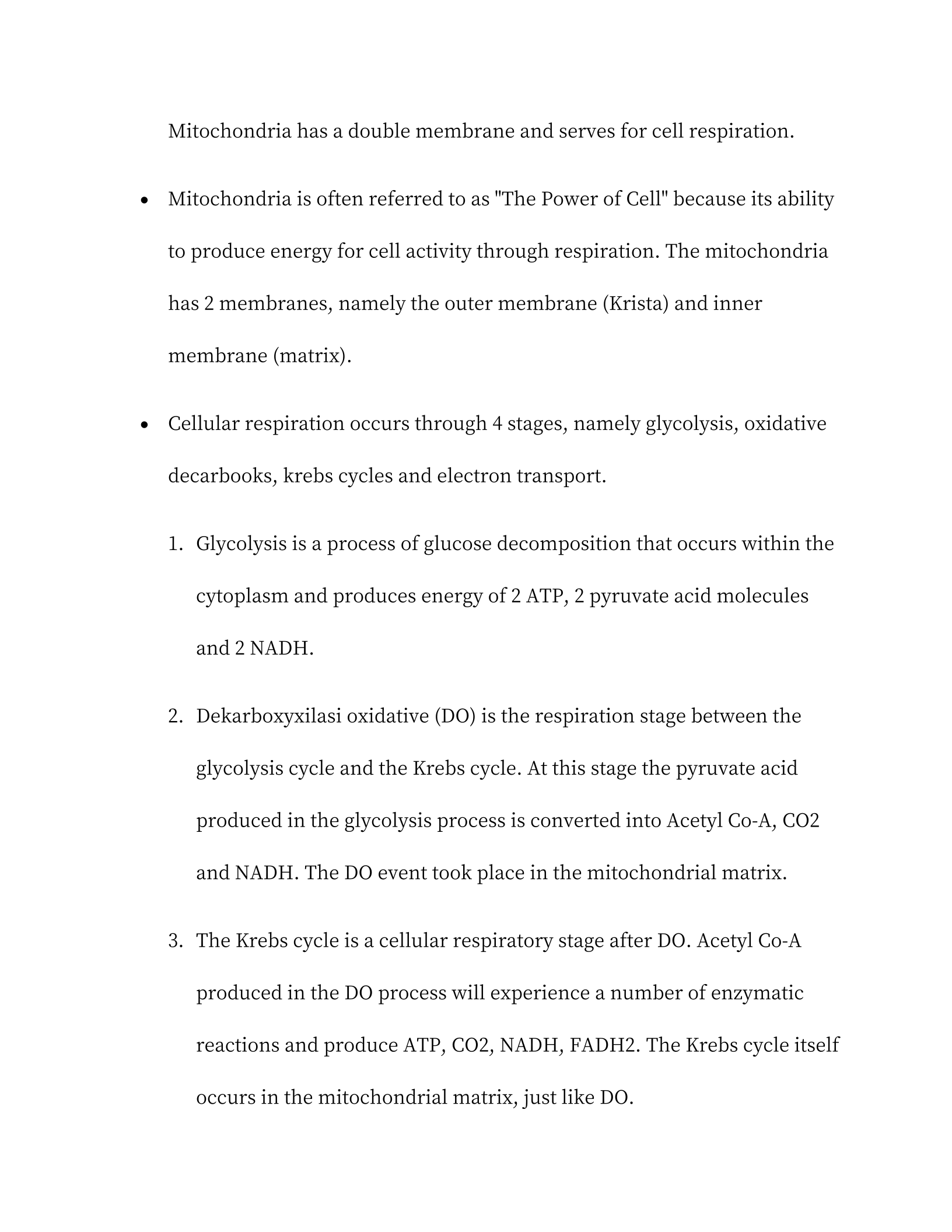
Mitochondria has a double membrane and serves for cell respiration.
Mitochondria is often referred to as "The Power of Cell" because its ability
to produce energy for cell activity through respiration. The mitochondria
has 2 membranes, namely the outer membrane (Krista) and inner
membrane (matrix).
Cellular respiration occurs through 4 stages, namely glycolysis, oxidative
decarbooks, krebs cycles and electron transport.
1. Glycolysis is a process of glucose decomposition that occurs within the
cytoplasm and produces energy of 2 ATP, 2 pyruvate acid molecules
and 2 NADH.
2. Dekarboxyxilasi oxidative (DO) is the respiration stage between the
glycolysis cycle and the Krebs cycle. At this stage the pyruvate acid
produced in the glycolysis process is converted into Acetyl Co-A, CO2
and NADH. The DO event took place in the mitochondrial matrix.
3. The Krebs cycle is a cellular respiratory stage after DO. Acetyl Co-A
produced in the DO process will experience a number of enzymatic
reactions and produce ATP, CO2, NADH, FADH2. The Krebs cycle itself
occurs in the mitochondrial matrix, just like DO.
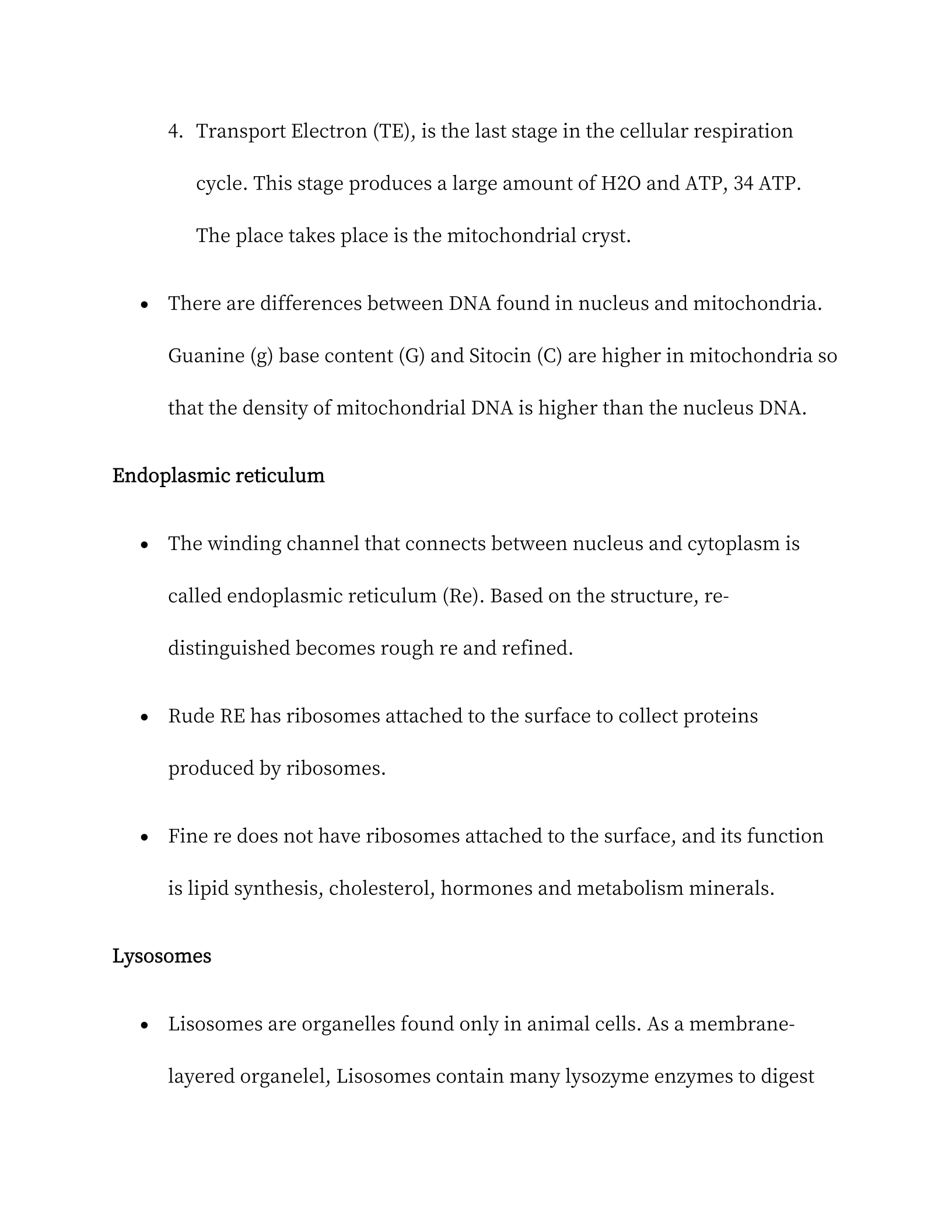
4. Transport Electron (TE), is the last stage in the cellular respiration
cycle. This stage produces a large amount of H2O and ATP, 34 ATP.
The place takes place is the mitochondrial cryst.
There are differences between DNA found in nucleus and mitochondria.
Guanine (g) base content (G) and Sitocin (C) are higher in mitochondria so
that the density of mitochondrial DNA is higher than the nucleus DNA.
Endoplasmic reticulum
The winding channel that connects between nucleus and cytoplasm is
called endoplasmic reticulum (Re). Based on the structure, re-
distinguished becomes rough re and refined.
Rude RE has ribosomes attached to the surface to collect proteins
produced by ribosomes.
Fine re does not have ribosomes attached to the surface, and its function
is lipid synthesis, cholesterol, hormones and metabolism minerals.
Lysosomes
Lisosomes are organelles found only in animal cells. As a membrane-
layered organelel, Lisosomes contain many lysozyme enzymes to digest
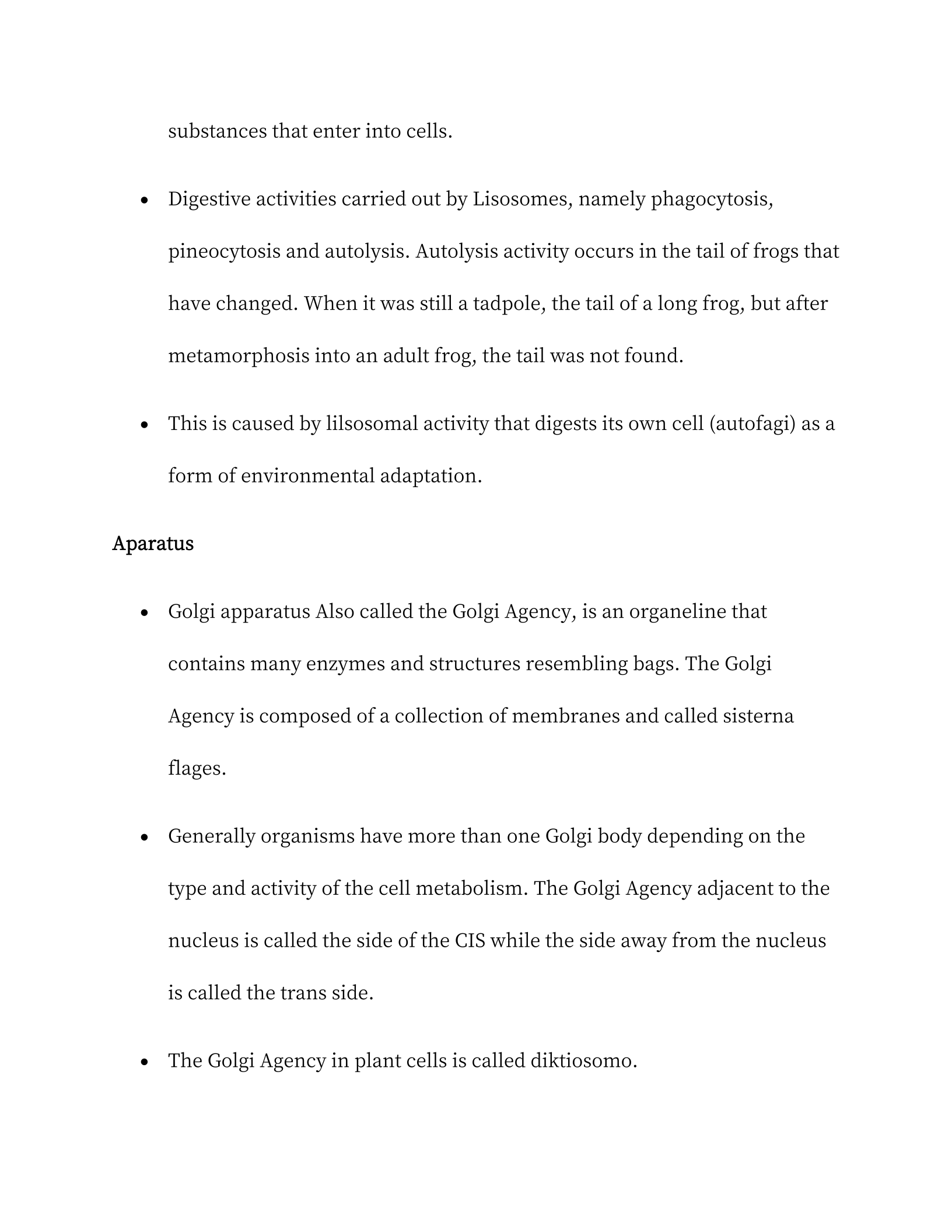
substances that enter into cells.
Digestive activities carried out by Lisosomes, namely phagocytosis,
pineocytosis and autolysis. Autolysis activity occurs in the tail of frogs that
have changed. When it was still a tadpole, the tail of a long frog, but after
metamorphosis into an adult frog, the tail was not found.
This is caused by lilsosomal activity that digests its own cell (autofagi) as a
form of environmental adaptation.
Aparatus
Golgi apparatus Also called the Golgi Agency, is an organeline that
contains many enzymes and structures resembling bags. The Golgi
Agency is composed of a collection of membranes and called sisterna
flages.
Generally organisms have more than one Golgi body depending on the
type and activity of the cell metabolism. The Golgi Agency adjacent to the
nucleus is called the side of the CIS while the side away from the nucleus
is called the trans side.
The Golgi Agency in plant cells is called diktiosomo.
The function of the Golgi body is to form organelles such as secretory
vesicles, plasma membranes, cell walls and acrosomes in sperm.
Nucleus
Nucleus or cell core is the largest organel in the cell (± 5
μ
m diameter)
and has a double membrane. As a vital component, the nucleus plays a
role in managing all cell organelic activities.
Nucleus contains chromosomes containing DNA (genetic information
carrier structure) which will be inherited to the next generation through
the reproductive process. Because it has DNA, it is indirectly nucleus
involved in protein synthesis.
As is known before that protein synthesis requires DNA as a raw material.
DNA molecules will be transcribed into RNA in the cytoplasm, RNA
formed will be removed from the cytoplasm and transported to ribosomes
for protein synthesis.
Vacuole
Vamuoles are the largest membrane-plated organelels contained in plant
cells and animal cells. In plant cells, the vaguole found only one but has a
large size. Unlike animal cells that have many vaguoles but small sizes.
Vamuole function, namely:
1. Storage storage of various organic and inorganic molecules (water, ions,
nutrients, enzymes and plant pigments)
2. Food reserves for growing plant embryos
3. The place to store the remaining metabolism is unused
4. Maintain the pressure of turgor plant cells. Turgor pressure is pressure to
maintain cell shapes and balance.
In prokaryotic organisms there are 2 types of vaguoles, namely food vakoula
and contractil vaguoles. Food Vamuoles serve to digest food intracellular while
contractil vakola serves to maintain the osmotic cell pressure (osmoregulator).
Peroksisom
Peroxisomom is also called a micro body because of its small size. Even
though it is small but the peroxisom function is very important. When
sunlight received by excess plants, it will be a photorespiration, namely
the respiration of plants triggered by light.
Fotorespiration activities are carried out by peroxisomom and
mitochondria, thus plants avoid damage due to excess sunlight. In
addition, peroxisom is also able to decompose peroxide poisons to H2O
and O2.
Plastida
Plastida is a dual-echoed organelel found in plant cells and algae.
The type of plastide is:
1. Chloroplast
Chloroplasts, plastids containing green pigments (chlorophyll) and
function for photosynthesis. Many are found in leaves and stems of moss,
nails, and high-level plants. Plastides consist of deep membranes, outer
membranes, tilakoid and stromas.
Tilakoid comes from the folding of the membrane in the chloroplast and
forms flat slabs resembling discs. The tilakoid function is as a place for
the bright reaction of photosynthesis. Tilakoid is able to capture sunlight
energy and turn it into chemical energy with chlorophyll assistance.
Stroma is a liquid contained in the chloroplasts that surround grana.
Stroma serves as a place for a dark reaction / Calvin cycle. The dark
reaction in photosynthesis does not require solar light energy but requires
Rubisco enzymes to produce carbohydrates.
2. Chromoplasts, colored pigments other than green. Examples of chromoplas
are as follows:
a. Carotene (yellowish red). Found in carrots
b. Xanthophil (brown / yellow). Found on flowers and fruit
c. LIKOPEN (red). Found on tomatoes
3. Leukoplas, do not contain piments so they are not involved in
photorSnsintesis. Leukoplas's main function is as a place to store food reserves
in plants. Leukoplasts include:
a. Amyloplas, saving food reserves in the form of starch. Found at the stem,
seeds and bulbs
b. Elaoplas, to save food reserves in the form of fat. Found on seeds
c. Proteoplasts, to store food reserves in the form of protein. Found in seeds.
Sentriol
Centriol was found only on animal cells and numbered a pair. In cell division,
the centriol will produce spindle threads (cytoplasmic threads) which will
attract chromosomes to different poles so that it triggers cytoplasm cliffness.
Cell classification
Based on the presence or absence of core membranes, cells are distinguished
into 2, namely prokaryotic cells and eukaryotic cells.
Prokaryotic cell
Prokaryotic cells are cells that do not have core membranes, so DNA is
concentrated on the nucleoid. Organeles in prokaryotic cells are still simple
compared to eukaryotic cells with smaller cell size (diameter of 0.7-2
μ
m). The
type of organelle commonly found in prokaryotic cells is cell walls, cell
membranes, cytoplasms, nucleoids, ribosomes, flagel and pili.
1. Flagel, is a cell organelle composed of proteins, the shape is long
resembling a whip and attached to the cell wall. The Flagel function is to
support cell motility
2. Capsules, are mucous membranes lining the cell wall. The capsule
function is to protect cells from environmental stress and also as a
virulence factor. Only a few prokaryotic organisms have capsules.
3. Pili, is fine hair on the surface of the cell wall. The structure of the pile
resembles flagel, but its size is shorter. The Pili function is to attach the
substrate (adhesion) and for reproduction (confusion).
4. Plasmid, is an extracromosomal DNA found in bacteria. Even though it is
outside the chromosome and has a little DNA, the plasmid can replicate
itself so that it is widely used as a vector in recombination of DNA.
Eukaryotic cells
Eukaryotic cells are cells with clear core membranes. The presence of
core membranes causes the DNA to be stored in the nucleus.
Eukaryotic cells have more complex organelles with greater size than
prokaryotic cells.
One organel that is owned by prokaryotic cells and eukaryotic is
ribosomes.
Even though the function is the same but it turns out the structure is
different.
Ribosomes in prokaryotic cells include the size of 70s while in eukaryotic
cells the size of the ribosome is 80s.
The difference in ribosomes shows more complex functions in eukaryotic
cells than prokaryotic cells. In addition, some eukaryotic cell organelets
have DNA, such as nucleus, mitochondria and plastide.
In prokatiotic cells, DNA is only found in nucleoids and plasmids.
Examples of eukaryotic organisms are fungi, animals and plants.
Animal cells and plant cells
Animal cells and plant cells are different either place and the structure of
the cell constituent. Based on the place it is very clear, animal cells are
found in animals while plant cells are found in plants.
Another difference is in terms of the component of the constituent of the
cell. Some organeles are found in plant cells but are not found in animal
cells.
The existence of chloroplast in plants is very important, because it is used
to synthesize food. In this case the organism that has chloroplasts is
referred to as an autotroph organism (auto = itself; trof = food) is an
organism that is able to make its own food.
Organisms that do not have chloroplasts and cannot afford their own food
called heterotroph organisms. Examples are animals.
Vamuoles are found in animal cells but there are several small and small
size. In contrast to plant cells, which have one vaguole but its size is large
(almost fulfilling 90% volume of plant cells). Vamuoles in plants function
as food storage and maintain cell turgor pressure, as explained earlier.

