


Introduction International Small businesses within
Small businesses within the United States are essential to continue economic
growth (Shoraka, 2014a; U.S. Small Business Administration, 2015). A deficiency in
research addressing contracts awarded through public procurement to small- and
medium-sized enterprises (SMEs) establishes a need for further exploration. Findings
from this study may provide the strategies SMEs’ business leaders have used successfully
to obtain contracts awarded through public procurement. The findings could also
highlight any barriers to attaining contract awards.
Background of the Problem
Regardless of the existence of a formal procurement department in an
organization, business leaders continue their participation in the procurement and
acquisition of goods and services. Organizations that integrate a procurement department
into their infrastructure move toward a centralized platform allowing increased
accountability (Azmi & Rahman, 2015). Centralization is essential to businesses because
business leaders use centralization to create standardization, increase buying power,
develop areas of expertise and specialization, reduce personnel and related work, secure
prices, and heighten control (Thomas, 1919). The United States government outlined the
requirements of proper procurement etiquette under the Federal Acquisition Regulation
(FAR).
The FAR, issued under the Office of Federal Procurement Policy Act of 1974,
included uniform policies and procedures for acquisitions, contract formations, and
contract administration (Contract Cost Principles and Procedures, 2001). As shown in the

Contract Cost Principles and Procedures (2001), the requirements of the FAR are in
government regulation 48 C.F.R. 31. At the state level, Florida must comply with the
government requirements of statute 287.057, which includes details related to the
procurement of commodities or services regarding bidding, new contracts, or contract
renewals (Procurement of Commodities or Contractual Services Act of 2015). Some
Florida SMEs’ business leaders lacking knowledge of the public procurement process and
guidelines miss the opportunity to obtain state government public contracts.
Problem Statement
The dominance of federal and state contracts by large enterprises reduces the
share of contracts SMEs’ business leaders obtain (Spiler, Kvrgic, & Vujadin, 2016). As of
the last census reading in 2016, while SMEs in the United States constituted 99.7% of all
businesses, SMEs only received 23% of contracts (Mijid, 2017; U.S. Census Bureau,
2016). The general business problem was that SMEs were not taking advantage of the
opportunity to gain contracts awarded through federal or state public procurement,
negatively affecting SMEs’ revenue. The specific business problem was that some south
Florida SMEs’ business leaders lacked strategies to obtain state contracts awarded
through public procurement.
Purpose Statement
The purpose of this qualitative multiple case study was to reveal strategies that
south Florida SME business leaders used to obtain state contracts awarded through public
procurement. I explored the strategies of three SME business leaders from three
companies in south Florida; the leaders possessed successful and consistent experience

(i.e., three consecutive years) in obtaining state contracts awarded to their organizations
through public procurement. The implications for positive social change included the
potential opportunity for business leaders, in any sector, to acquire state procurement
contracts; increasing their revenue and enhancing the lifestyles of their communities’
members. An increase in revenue leads to innovative activities, collaboration, and a more
competitive market (Bouhdary, 2014). Every dollar spent at an SME in the local
community stays in the community, generating improved economic value (Robu, 2013).
According to Bouhdary (2014), well performing SMEs in a community lead to more
charitable giving and promote neighborhoods with a unique atmosphere such as knowing
the people behind the products and services, developing one-of-a-kind businesses instead
of chains, keeping dollars in the local economy, and experiencing a better level of service.
Nature of the Study
The three common research methodologies are qualitative, quantitative, and
mixed methods. I chose the qualitative method for this study. Researchers use the
qualitative method to provide rich, thorough descriptions and interpretations of the
phenomena (Sousa, 2014). The quantitative method was not appropriate for this study
because, according to Yin (2017), researchers use the quantitative method to examine
relationships, identify cause and effect, differentiate among variables, and compile
numerical data. Yin also noted using the mixed-methods research method requires both
qualitative and quantitative research methods, more resources, and extensive time. The
mixed-methods research was not appropriate to address the purpose of my study because
I did not need the quantitative aspect of the method.

I considered three research designs: case study, phenomenology, and ethnography.
I chose the case study design for this study. The objective of a case study is to provide in-
depth data collection through the interaction of participants in their physical space (Hyett,
Kenny, & Dickson-Swift, 2014; Stake, 1998). As noted by Yin (2017), researchers use the
case study design because they seek a level of flexibility (i.e., the ability to modify the
study based on new information or discovery during data collection). Phenomenological
researchers seek to capture the meanings of lived experiences and worldviews of the
participants (Moustakas, 1994). The phenomenological design was not suitable because I
did not want to capture the lived experiences of the participants. Ethnographic researchers
must immerse themselves in the culture, continuously observing and interacting with
participants (Yin, 2017). I did not intend to study the culture of a group and did not use
the ethnographic research design.
The most appropriate design for this research was a case study.
Research Question
The overarching research question for this study was as follows: What strategies
do south Florida SMEs’ business leaders use to obtain state contracts awarded through
public procurement?
Interview Questions
1. What were the strategies you used to increase the number of state contracts
awarded through public procurement?
2. What strategies worked best when you initially applied for a state contract
through public procurement?

3. What barriers did you experience when you first attempted to increase the number
of state contracts awarded to your company?
4. How did your organization address the barriers to obtaining state contracts
through public procurement?
5. How has your business performance improved since increasing the number of
state contracts through public procurement?
6. What documents can you share with me that will help me understand your
strategies for obtaining state contracts?
7. What strategies do you use to maintain contract compliance?
8. What strategies, if any, do you use to maintain bargaining power?
9. What, if any, additional strategies have you found to be helpful in gaining state
contracts through public procurement?
10. Is there something that I have not asked you that you think is important regarding
effective strategies to obtain state contracts awarded through public procurement?
Conceptual Framework
Jensen and Meckling (1976) formalized the principal-agent theory. The
principalagent theory is a variation of the theory of the firm and the combined theories of
economic and institutional, developed concurrently in 1972 by Stephen Ross and Barry
Mitnick, respectively (Mitnick, 1973; Ross, 1973). The principal-agent theory includes
two constructs concerning the relationship and general contractual obligations between
buyer and supplier. According to Laffont and Martimort (2001), under the principal-agent
theory, two assumptions exist: (a) the principal makes the contract, removing bargaining

power, and (b) the courts will impose penalties if the principal or agent fails to uphold the
contract terms.
Zardkoohi, Harrison, and Josefy (2017) expanded on the opportunism possible in
a principal-agent relationship without penalties or checks and balance. The principal can
behave opportunistically against the agent, the agent can behave opportunistically against
the principal, and when the principal and agent have a shared interest, this interest can
affect third-party stakeholders. The principal-agent theory applied to this study because
the buyer-supplier relationship found in public procurement was analogous to the
principal-agent relationship identified in the principal-agent theory. While the state holds
the procurement contracts, as the contracting authority, buyer, or principal, the SMEs’
business leaders were the suppliers or agents that bid on the contracts. The agents or
SMEs’ business leaders must meet the needs of the state’s or principals’ procurement
contracts.
Operational Definitions
Adversarial contract: An adversarial contract is a short-term contract in which the
principal maintains primary control, resulting in increased principal-agent friction
(Regan, Love, & Smith, 2015).
Contracting authority: Contracting authority is the body (i.e., a public institution,
state, regional, or local authority) governed by public law; contracting authorities provide
rules and other relevant information for bidding on a contract (Panagiotidou &
Intzesilglou, 2016; Panagoret & Ivanoff, 2016).

Information asymmetry: Information asymmetry occurs when one party to an
economic transaction possesses greater knowledge than the other party (Neupane, Soar, &
Vaidya, 2015).
Nonadversarial contract: Nonadversarial contracts are used by individuals to
encourage the principal and agent to work together for a resolution that benefits both
parties, and the contracts are long-term (Regan et al., 2015).
Organizational resiliency: Organizational resiliency is the ability of organizational
leaders to anticipate, respond, and adapt to changes and sudden disruptions internal and
external to the organization (Valero, Jung, & Andrew, 2015).
Pareto efficiency: Pareto efficiency, also known as Pareto optimality, is the
economic state in which one party’s situation cannot improve without making the other
party’s situation worse (Shang, Feng, Ke, & Chan, 2016).
Public-private partnerships (PPP): Public-private partnerships are cooperative
business relationships between private sector companies and government agencies to
complete projects that serve the public (Vinogradov, Shadrina, & Kokareva, 2015).
Public procurement: Public procurement is the process that any government
agencies or departments of the public sector use to purchase goods, services, or work
(Panagiotidou & Intzesilglou, 2016).
Small- and medium-sized enterprise (SME): Small- and medium-sized enterprise
is a business that employs a small number of workers and does not have a high volume of
sales; usually privately owned and operated sole proprietorships, corporations or
partnerships (Richards-Gustafson, 2017).

Transformational leader: A transformational leader works with subordinates to
identify needed change, individually and socially; creating a vision to guide positive
changes with the end goal of developing followers into leaders (Valero et al., 2015).
Assumptions, Limitations, and Delimitations
Assumptions and limitations are out of the control of the researcher and
delimitations are within the control (Grant, 2014; Manescu, 2014). Assumptions are
accepted as true but cannot be confirmed and if they disappear the study irrelevant
(Marshall & Rossman, 2016). Limitations are the possible weaknesses of the study out of
the researcher’s control (Manescu, 2014). Manescu (2014) also noted that delimitations
are used by the researcher to define the boundaries of the study.
Assumptions
Assumptions are the uncontrollable elements of a study (Grant, 2014). Though the
researcher cannot verify, assumptions are things that the researcher considered true
(Marshall & Rossman, 2016). Researchers assume that research participants will present
their authentic voice related to their lived experience (Grant, 2014). I assumed the
participants would answer the interview questions honestly. Based on the completed
interviews the participants were knowledgeable and provided honest answers about the
procurement field and their methods for obtaining state contracts.
Another assumption was that the participants were bias-free in their responses.
According to Marshall and Rossman (2016), researchers are taking their best guesses and
hunches about the behaviors of the participants. During the interviews the three
participants shared the positive and negative experiences of both leading a SME and

working with various agencies. The participants appeared to share information not to
create bias but to illustrate the details of the full contracting process through public
procurement. Information was provided based on the participants’ experience and sharing
their knowledge.
Limitations
Limitations are significant to acknowledge within a study because they are the
potential weaknesses not within the control of the researcher (Bailey, 2014; Marshall &
Rossman, 2016). Limitations can negatively affect the study methodology and
conclusions. The limitations of this study were access to all three participants company
procurement documents, the condensed geographic area for selecting participants, and
industry confinement.
Only one of the three participants could share procurement documents. P1 shared
the company’s capability statement and government catalog, which provided an
administrative overview of the public procurement process tailored to each contract bids
that were submitted. The other two participants were unable to share any procurement
documents because the information was proprietary but the two participants advised me
to review their websites for general information. All three participants confirmed they
also abide by the guidelines of the federal and state public procurement process. The
geographic area was limited to south Florida and the industries of the three participants
were marketing and promotion, medical, and consulting services.

Delimitations
Delimitations are controllable and include factors such as the chosen objectives,
research questions, theoretical perspective and selected population (Manescu, 2014). The
delimitations of this study included the sample size of only three SME business leaders in
south Florida and the business leaders possessing knowledge of successful business
strategies that positively affect state contracts awarded through public procurement. The
restriction of participants to SMEs’ business leaders meant that the participants’
subordinates could not participate in the study.
Significance of the Study
The findings from this study may be of value because organizational leaders could
use the findings to identify successful strategies employed by SMEs’ business leaders to
obtain state contracts through public procurement. Improved contracting performance can
positively affect the profitability of a company and economic growth. The innovative and
entrepreneurial actions of SMEs stimulate the economy (Leyden, 2016). The application
of the study findings could also improve internal procurement procedures, increase
awareness of state public procurement policies, and enhance community lifestyles.
Contribution to Business Practice
The contribution to the practice of business could enable business leaders to
enhance their understanding of the state procurement process, recognize potential barriers
in contracts awarded, and find ways to implement the identified strategies as possible
solutions to those obstacles. The information could help SME business leaders and
contracting officers to improve their decision-making. My articulated findings may also

provide strategies that some south Florida SME business leaders use to obtain state
contracts awarded through public procurement to present opportunities to other business
leaders.
Implications for Social Change
The strategies the SMEs’ business leader participants use to obtain state contracts
through public procurement are significant to the growth of the economy. The
implications for positive social change include a potential increase in the number of state
contracts through public procurement awarded to all SMEs, led by male or female
leaders, minorities, and other underrepresented populations, growing their revenue and
presenting new chances. The second implication for positive social change is the potential
for increased diversity of SMEs within the local communities, increasing local
employment opportunities and benefiting the local economies. SME diversification
occurs when all business leaders have access to the same information and prospects
because of the awarding of state contracts through public procurement to the most
qualified business.
An increase in revenue leads to innovative activities, collaboration, and a more
competitive market (Bouhdary, 2014). SME business leaders help to enhance the
lifestyles of their communities’ members. Every dollar spent at an SME in the local
community stays in the community, generating improved economic value (Robu, 2013).
According to Bouhdary (2014), well performing SMEs’ in a community lead to more
charitable giving and promote neighborhoods with a unique atmosphere such as knowing

the people behind the products and services, developing one-of-a-kind businesses instead
of chains, keeping dollars in the local economy, and experiencing a better level of service.
A Review of the Professional and Academic Literature
Thomas (1919) noted the primary concerns for government leaders, since the 20th
century, were profits and savings. Organizational leaders established goals based on
finding methods to reduce costs. Strategization in the decision-making process for
purchases and vendor application was either minimal or nonexistent (Lianbo, Zhuqiang,
Pengfei, & Wenzhong, 2014).
The introduction of purchasing departments led to increased attention on
organizations buying without accurate, in-depth analysis of the transactions (Mogre,
Lindgreen, & Hingley, 2017). According to Lee and Rim (2016), the establishment of the
procurement process within organizations was to increase transparency in contract
activity, permit equal access to contracts, enhance accountability, and improve analytical
data. Lianbo et al. (2014) added that the implementation of procurement processes
maximizes quality and minimizes costs.
Organization of the Review of Literature
The research question of this qualitative multiple case study was: What strategies
do south Florida business leaders use to obtain state contracts awarded through public
procurement? Based on the organization of related topics, the literature review began with
(a) a brief overview of procurement, (b) information on the search strategy, (c) summary
of the frequency and percentages of peer-reviewed articles, (d) the application to the
applied business problem, (e) analysis of the conceptual framework, (f) critical analysis

of small- and medium-sized enterprises, and (g) overview of government purchasing and
public procurement. Onwuegbuzie and Weinbaum (2017) stated that the literature review
is a systematic way to summarize and critique the literature, providing a foundation and
inspiration for substantial research.
Search Strategy
The purpose of the search strategy was to illustrate its application to the business
problem. I used the Walden University Online Library for gathering the sources,
searching the business and management databases. I conducted a critical analysis and
synthesis of potential themes associated with public procurement contracts. I used key
search words in the Academic Search Complete database.
Other databases I searched included ProQuest, ABI/INFORM Complete, and
government databases. The primary government database used was the Small Business
Administration (SBA) site, sba.gov. The SBA site included resources and rules,
regulations, policies, and procedures for small business owners. I included seminal books
and doctoral studies from Walden University to the literature review.
I also used online search engines such as Google and Google Scholar. Though the
peer-reviewed literature consisted of thorough research, the studies included few
publications about SMEs and public procurement contracts. However, many works of
literature were available regarding SME business practices, procurement, and federal
contracts in general. The key word search included combinations of public procurement,
small- and medium-sized enterprises, purchasing, government contracts, state contracts,
principal-agent, leadership, innovation, sustainability, and governance.

Summary of Frequencies and Percentages of Peer Reviewed Articles
This study includes 169 references within the literature review, of which 86% are
peer-reviewed, and 91% are within five years of expected CAO approval in 2018.
Illustrated in Table 1 are the percentages of all sources including peer-reviewed journals
and seminal books. Other references within Table 1 are websites, papers, and reports,
which comprise 14% of total references. I used the references not peer-reviewed or within
the five years of CAO approval for the added historic perspective and to supplement
context to the more recent findings.
Table 1
Type, Total, and Percentages of References
Reference Type
Scholarly and peer-reviewed
journals
Total
145
% of
references
86%
Less than
five years
More than
five years
133 12
Other sources (i.e., seminal
books, papers and reports,
government, company, and
international websites) 24 14% 20 4
Total 169 100% 153 16
Application to the Applied Business Problem
The objective of this qualitative multiple case study was to learn strategies some
SMEs’ business leaders used to obtain state contracts through public procurement. As of
1997, per Federal Government mandate, the State of Florida requires that SMEs acquire
at least 23% of public procurement contracts. My critical analysis and synthesis of the
literature about public procurement contracts included supporting and contrasting theories

and possible themes concerning the public procurement contract phenomena using other
researchers' perspectives.
Principal-Agent Theory
Agency relationships are standard (i.e., employee and employer, the state and the
governed, and contractor and contractee). Ross (1973) posited that an agency relationship
occurred between two or more parties when one, designated as the agent, acts on behalf
of the other, named the principal. According to Ross, all contractual arrangements
comprise a principal and agent relationship; though, Mitnick (1973) suggested a
sociological conception of agency theory rather than the economic paradigm.
Mitnick (1973) identified the fiduciary norm as a standard social norm, noting
how such norms economized on agency cost. Mitnick focused on social relationships
such as lawyers negotiating with one another, diplomats negotiating with foreign
governments, and advisers and clients. The principal-agent theory, which was formalized
by Jensen and Meckling (1976), is a variation of the theory of the firm (Casson, 2014)
and a combination of Ross’ (1973) economic theory and Mitnick’s institutional theory.
Some individuals refer to the principal-agent theory as agency theory (Eisenhardt, 1989;
Pouryousefi & Frooman, 2017; Yukins, 2010). According to Eisenhardt (1989) and
Yukins (2010), the principal-agent relationship is found in many areas, such as
accounting, economics, finance, marketing, political science, organizational behavior, and
sociology; explaining successes and failures in organizations.
The principal-agent theory, as an economic theory, is opportunistic (“How to bid,”
2018; Steinle, Schiele, & Ernst, 2014). The relational characteristics of the principal-

agent theory results in both parties pursuing their separate interests. The principal should
monitor the agent to ensure alignment with the principal’s interest. Gailmard (2014)
posited that while the principal may place restrictions on the agent, the limits may be
counterproductive to the principal’s interest.
The principal lacked the expertise and resources to produce a service in-house and
selected an agent to enter a contract. The principal-agent theory was an appropriate
construct for describing SMEs’ business leaders strategization in obtaining contracts
through public procurement. According to Steinle et al. (2014), the principal-agent theory
was used to explain the relationship between the two parties regarding contract
management. The principal-agent theory is a derivative of contract law and can best
define the contractual relationship between buyers and suppliers.
Salehyan, Siroky, and Wood (2014) used the principal-agent theory to analyze
rebel groups in wartime atrocities and civilian abuse. Salehyan et al. explained Foreign
funding of rebel groups in principal-agent terms. Salehyan et al. also found that the
principal, democracies and states with strong human rights lobbies, characteristics
influence agent, rebel groups, actions. Sng (2014) also used the principal-agent theory for
analysis on the dictatorship in imperial China. Sng posited that a ruler governing a vast
country encounters agent problems because of difficulties with agent transparency.
Without transparency, the agents can extort taxpayers. Sng found that the principal,
China, during its imperial years, taxed sparingly to minimize agents’ corruption. Both the
principal and agent can become corrupt and opportunistic (“How to bid,” 2018; Kauppi &
Van Raaij, 2015).

Rehmatulla and Smith (2015) studied the principal-agent problem in shipping.
Rehmatulla and Smith posited that inefficiencies in cost-effective measures and shipping
contracts led to difficulties between the principal (i.e., charterer) and agent (i.e.,
shipowner). Rehmatulla and Smith identified two problems: (a) the split incentives
problem, where the goals of the principal and agent divide and (b) the informational
problem, where the principal cannot verify the agent’s actions. Sng (2014) also noted the
informational problem of the principal-agent relationship in the dictatorship in the
imperial China study. Rehmatulla and Smith advised the first step in overcoming
challenges in the principal-agent relationship are to identify the situations where a
problem could occur and determine resolutions in alignment with both parties.
A mutually beneficial principal-agent relationship was achievable in government
procurement with these three procedures: monitoring, training, and guidance (Kauppi &
Van Raaij, 2015). Principal-agent problems arise because one or both parties may have
information not provided to the other side. Kauppi and Van Raaij (2015) found guidance
and training help to reduce employees’ noncompliance in government procurement.
Supplementary theory. Another theory to consider when analyzing the
principalagent theory and public procurement was transactional costs theory. This theory
is not a rival to the principal-agent but supplementary. To reduce costs and increase
costeffectiveness in public procurement, business leaders need to understand transactional
costs (Jasko, Jovanovic, & Cudanov, 2015; Patrucco, Luzzini, & Ronchi, 2017). Ronald
Coase discussed the concept of transaction costs in the 1937 paper, The Nature of the
Firm, though the term was made official in the 1970s.

Through Oliver Williamson’s 1987 work, Transaction Cost Economics,
transaction cost became widely known. Some researchers use transactional cost theory as
a contractual approach to studying economic organizations (Coase, 1973; Williamson,
1987). According to Williamson (1987), transaction cost economics (a) is microanalytic,
(b) is aware of behavioral assumptions, (c) introduces and develops the economic
importance of asset specificity, (d) relies on comparative institutional analysis, (e) regards
the organization as a governance structure and not a production function, (f) places
greater weight on ex post institutions of contracts, and (g) uses a combined law,
economic, and organization perspective. Jasko et al. (2015) and Strange (2016) concluded
that the transactional costs theory could serve as a benchmark for organizations to
increase efficiency by monitoring and rewarding agents for obeying directives.
Individuals use contractual relationships to define governance, and public
procurement is central to the process (Roman, 2015). Public procurement specialists are
fundamental in shaping the practice (Brooks & Rich, 2016; Roman, 2015; 2017).
According to Roman (2015), public procurement specialists have responsibilities that
were once out outside of their decision-making capabilities and can provide valuable
information.
Procurement is a subfield of the supply chain management (SCM) field. Within
SCM and procurement, the principal and agent identified in the principal-agent theory
were revealed as interdependent because they often switch roles within the relationship
(Fayezi, O’Loughlin, & Zutshi, 2012). Kavak, Tunçel, and Özyörük (2015) concluded
that the principal-agent relationship should provide transparency, loyalty, and

communication quality. The reduction of transaction costs between the principal and
agent was a benefit of using the procurement process (Neupane et al., 2015).
Resource-based view theory versus principal-agent theory. Birger Wernerfelt
introduced the resource-based view (RBV) theory to mainstream attention in 1984.
Though Wernerfelt officially named the theory, elements of the theory were in the earlier
works of Coase (1973) and Williamson (1975) in which the emphasis was on the value of
resources for organizational performance. Under RBV, tangible and intangible resources
within the organization are measured to determine the value and influence they have on
the organization's competitive advantage (Hussain, 2018; Min, Homaid, Minai, & Md
Zain, 2016). According to Almarri and Gardiner (2014) and Sodhi (2015), the RBV
theory received increased attention for its influence on the strategic management field and
enabling leaders to understand how unique resources drive competitive advantage.
SMEs’ leaders could use the RBV theory to improve marketing performance
through product innovation and the ability to adapt to changes in the business
environment (Meutia & Ismail, 2015). Almarri and Gardner (2014) and Kellermanns,
Walter, Crook, Kemmerer, and Narayan (2014) did raise an issue with the lack of
definitional criteria and generalizability of the RBV theory. Business leaders can use
RBV theory to identify unique assets such as diverse human resources which have
valuable knowledge (Hashimoto & Nassif, 2014) or to discover small business strategy
and innovation (Montiel-Campos, Haces-Atondo, & Ruisenor-Quintero, 2014). Nadkarni
(2017) surmised that the RBV theory supports management of resources while the
principal-agent theory supports management or control of business relationships.

Rival theory. A rival theory to the principal-agent is the theory of auction. Paul
Milgrom and Robert Weber founded the theory of auction in 1982. The elements of the
theory of auction are the bid format, the scoring rule, and the settlement rule (Chao, 2015;
Milgrom & Weber, 1982; Patrucco et al., 2017). The bid format is the sealed bid an
organization submits that consists of the unit price bid reflecting the marginal cost and the
fixed priced bid reflecting the fixed cost (Chao, 2015). The scoring rule converts the two-
part bid (unit price and fixed price) into a score.
The settlement rule is the selection of the winning bidder and settlement of the
payment (Chao, 2015). Under the theory of auctions, the development of a model of
competitive bidding detailed the payoff for the winning bidder may depend on their
preference, the preferences of others, and the fundamental quality of the item up for sale
(Milgrom & Weber, 1982). Auctions benefit business leaders not risk-averse and can
outbid their competitors. According to Chao (2015), an assumption exists that the
regulations of the theory of auction commit to all the details of the procurement process.
The theory of auction pertains more to an efficient market organization for
awarding to monopoly franchises than to SMEs. Chao noted that the two-stage auction
design (ex-ante and ex-post efficiency) ensured that the company with the best
technology was selected, operating at the least cost and priced at the marginal cost.
Auction environments tend to have costly entry fees (Gentry & Li, 2014). The auction
design enables larger enterprises to reap the most benefits. The theory of the auction was
not applicable to this study because SMEs’ business leaders were not paying entry fees to
obtain contracts through public procurement. The principal-agent theory was valid for

this study in identifying the relationship between the contracting authority (principal) and
SME (agent).
Principal-agent theory in contracting. The principal-agent theory is the most
applicable theory to understand the dynamics of public procurement processes involving
the government and the selected suppliers (Neupane et al., 2015). Principals use contracts
to define their scope of work for acquiring goods and services from agents. Ross (1973)
determined the level of which each participant holds perfect information without making
anyone worse off. Pareto efficiency specifies the calculation of the level at which both
parties maintain ideal information.
Pareto efficiency is an economic state where resources are allocated optimally
among all parties (Ross, 1973; Shang et al., 2016). The contracting authority or principal
must have rules, regulations, and processes in place that enable SMEs or agents to have
equal access to contracts like larger enterprises. Pareto efficiency increased the chances of
SMEs obtaining contracts in public procurement.
The principal has difficulty monitoring the agent at any given time, and if many
agents have a contract, the fees may be the only detail available for information (Ross,
1973; Schneeweiss, 2003). Public procurement regulations enable the leaders of
government entities to monitor contracts awarded to suppliers (Schneeweiss, 2003); in
which government leaders are the principal and suppliers are the agents. Jensen and
Meckling (1976) sought a structured contractual relationship between the principal and
the agent. A structured contract between the principal and agent increase transparency and
accountability. According to Hussain, Rigoni, and Orij (2018) and Neupane et al. (2015),

incomplete contracts lead to information asymmetry. When the principal has more
information than the agent or vice versa, information asymmetry is evident.
Information asymmetry is the unequal distribution of information.
Two forms of contracting exist, classical and relational (Never & de Leon, 2014).
Classical contracts are short-term and specific, clarifying how conflicts are resolved in
the future and hold that actions can separate from connected actions, both in the present
and in the future (Never & de Leon, 2014; Van de Walle, 2017). The resolution of
disputes in classical contracts occurs through formal arbitration. Andrews and Barron
(2016), Baldenius, Glover, and Xue (2016), and Never and de Leon (2014) agreed that
relational contracts are more complex and may or may not include the original contract,
with adjustments required that one cannot plan. Negotiations under relational contracts
require trusting that all parties will operate in good faith and find mutually beneficial
solutions.
Two contracting methods exist, adversarial and collaborative or non-adversarial.
Regan et al. (2015) found that the adversarial contracting method was most common in
public infrastructure procurement. Owida, Byrne, Heavey, Blake, and El-Kilany (2016)
and Regan et al. noted that adversarial contracting includes the following characteristics:
principal ownership, short-term contracts, agent selection, defined scope of work, and
penalties. Regan et al. posited that adversarial contracts increase principal-agent friction.
Non-adversarial contracting methods deliver a better procurement outcome for the
government. According to Regan et al. (2015), non-adversarial contracts improve
longterm relationship management for capital-intensive services such as infrastructure

services. Traditional or classical procurement contracts are the default option for the
government (Regan et al., 2015; U.S. Small Business Administration, 2017a; Van de
Walle, 2017). According to Kai, Wei, and Meng-lin (2014), the principal-agent model
provided a framework to establish the goals of a contract. Goal alignment and rapport are
essential factors in the principal-agent relationship because of the increase in satisfactory
performance. Regan et al. (2015) stated that the typical procurement contract has the
principal, owner or client contract with the agent or main contractor, managing the
subcontractors carrying out the work.
Well-developed counties, such as the United States and the United Kingdom, have
legislation on public procurement with related bylaws; however, developing countries
that include Ghana, Thailand, and Kenya, must adopt special laws (Vinogradov et al.,
2015). Because developing countries adopt special laws, Vinogradov et al. (2015) posited
that developing countries are more apt to implement public-private partnerships (PPP)
regulations as an unofficial form of public procurement. According to Torvinen and
Ulkuniemi (2016) and Vinogradov et al., PPP permits projects not feasible through public
procurement, providing access to additional resources, increasing end-user value, and
minimizing bureaucratic burden.
Lewis and Bajari (2014) focused on the use of proper contract terms to incentivize
the principal-agent relationship. Deadlines and late penalty terms are used by the
principal to encourage higher effort from agents. Agents adjust their effort level
throughout the contract dependent on unexpected delays and other circumstances (Lewis
& Bajari, 2014). Obtaining contracts through the procurement process includes more

transparency of actions than what is typically realized by principals. According to
Feldman (2018) and McCue, Prier, and Swanson (2015), the minimization of the
principal-agent problem within procurement contracts occur by creating incentives for the
agent to act in the best interest of the principal; assisted by guidelines that include a code
of ethics, internal policies, and statutes.
Principal-agent theory and incentives. Incentives within the principal-agent
relationship enable the parties to work hard, save, invest, or produce quality products and
service. Laffont and Martimort (2001) noted what was missing from principal-agent
relationships was incentivizing economic agents. Chang (2014) expanded on Laffont and
Martimort's view, positing that high-powered incentives tap into the principal's efficiency
improvement potential. The principal may not witness the agent's true ability pre-contract
and cannot predict the level of effort the agent will expend post-contract (Chang, 2014;
Laffont & Martimort, 2001). The tasks delegated to agents turn problematic when the
agent has different objectives from the principal (Steinle et al., 2014).
Contracts between the principal and the agent created some control over the
agents. According to Chang (2014) and Till and Yount (2018), incentives were used to
develop incentive compatibility constraint, increasing agent output. Full disclosure from
the agent to the principal was not possible and, to overcome this lack of knowledge, the
principal could either try to improve the state of information or moderate the
consequences of not being informed (Schneeweiss, 2003; Yukins, 2010).
According to Schneeweiss (2003) and Till and Yount (2018), decision makers
should also screen the environment for additional information as the environment was

actively disclosing (correct or incorrect) information. Alternatively, Chang (2014) posited
that the principal-agent model might lead to biased decision-making with incentives in
procurement because incentives are used to help reduce costs for the principal. Chang
also found that contract termination, another aspect of any agreement, was not entirely
addressed in the principal-agent literature. Ramifications were necessary to address the
poor performance of either the principal, agent, or both.
According to Korman (2014), the government used a termination for convenience
clause in traditional contracts, legally enabling them to breach contract terms and recover
certain costs. Literature published since 2011 listed advantages of applying the
principalagent theory to government contracting. Flynn and Davis (2014) noted
opportunities to present viable frameworks to study public procurement. Numerous
scholars applied the principal-agent theory to government contracting and cited many
advantages.
Yukins (2010) reviewed the principal-agent model to assess its influence on the
procurement system and procurement rules. Under the principal-agent theory, the
principal entered a contract with an agent to achieve a specific goal. According to
Hussain et al. (2018) and Yukins, the principal used various monitoring methods to
reduce conflict of interests. A residual loss exists in any principal-agent relationship
(Never & de Leon, 2014; Schneeweiss, 2003; Yukins, 2010). Yukins concluded that the
principal-agent model enhanced understanding of procurement (i.e., breaking down
barriers between legal policies).

Principal-agent theory and corruption. Neupane, Soar, Vaidya, and Yong
(2014) reviewed the relationship of the principal-agent theory to reducing corruption in
the public procurement process. According to Alzola (2018), Neupane et al., Okubena
(2016), and Steinle et al. (2014), public procurement can aid in minimizing power
dominance, information asymmetry (one party possessing more information than the
other), and increase transparency and accountability. Steinle et al. explored the
opportunism in supplier selection, which often favors larger organizations. Politics tend to
dominate contracts awarded (Keulemans & Van de Walle, 2017; Krahmann, 2016;
Roman, 2017; Thomas, 1919) in public procurement.
Beale (2014) noted another reason for SMEs lack of access to federal procurement
contracts is that the government often relies on larger and well-known organizations. But
Tammi, Saastamoinen, and Reijonen (2014) suggested that SMEs failure to secure
procurement contracts could stem from limitations of capacity, lack of relatable skills, or
apathetic attitude about public procurement. SME business leaders may fear a loss of
autonomy and will avoid government contract bidding (Nicholas & Fruhmann, 2014).
Small businesses sometimes fail to plan and apply to formal bidding processes (Mosoti &
Kaman, 2014; Taneja, Pryor, & Hayek, 2016). SME resources are often limited,
especially in technology. According to Harris and Patten (2014), the submission of most
contract bids happens with the use of technology (i.e., computers) on a secure website;
SME business leaders with limited technological know-how and capabilities become
crippled in competing for contracts.

Organizations use government contracts to gain legitimacy and stabilization of
revenue (Never & de Leon, 2014). Never and de Leon (2014) questioned the
effectiveness of partnerships via contracts if some organizations cut salaries and jobs
because of a reliance on government contracts, which impedes trust. Never and de Leon
and Kavak et al. (2015) believed trust was essential for the principal-agent relationship in
contracting.
Agents may attempt to expand their organization and increase their power and
influence at the principal’s expense (Krahmann, 2016). Krahmann (2016) and
O’Donoghue and Somerville (2018) posited that principals could increase control through
checks and balances systems, incentives, and the threat and imposition of sanctions.
Neupane et al. (2015) noted that finding practical measures to increase the trust between
the government and suppliers is an anticorruption factor. Principals need a balance of
control and entrustment.
Principal-agent influence on relationships. The building of alliances with the
principal would facilitate positive aspects of successful organizational performance and
alignment with the principal-agent theory framework. Achieving success in procurement
creates value for both the stakeholders and the principal (Latham, 2014). Grudinschi,
Sintonen, and Hallikas (2014) added that partnerships were indispensable to public
procurement. Collaborative relationships provide value to both buyers and suppliers in
public procurement. Procurement plays a positive role in the principal-agent relationship
in reducing transaction costs, shortening procurement cycles, increasing information
availability, and enabling a common management framework (Neupane et al., 2015).

According to Taneja et al. (2016), developing relationships and partnerships
strengthen competitive advantage, improve business performance, and increases
innovation. SME business leaders must be professional and flexible when collaborating
with others (Nicholas & Fruhmann, 2014; Taneja et al., 2016). Flexibility increases SME
business leaders’ chances of obtaining contracts through public procurement. While
agents should follow rigorous procedures to win a contract award, Taneja et al. (2016)
noted that vendor adaptability and flexibility are also essential to quickly respond to
changing circumstances.
Also, business leaders that support their local communities and maintain a high
standing are more likely to be successful (George, Dahlander, Graffin, & Sim, 2016;
Taneja et al., 2016). Hayakawa and Ito (2018) and Taneja et al. (2016) posited SME
business leaders collaborating with external organizations, such as other local businesses,
charities, or government programs, enhance the strategization and performance of the
organization. Business leaders are the force behind successful partnership outcomes; their
knowledge management ensures unity in communications, vision, mission, marketing
strategies, and consistent branding (Kihl, Tainsky, Babiak, & Bang, 2014). Knowledge
management is essential to SME success. Garriga (2014) stated that knowledge
management is necessary for the appraisal of business capabilities, evaluation of
practices, and obtaining feedback to enhance performance and profit.
Small- and Medium-Sized Enterprises
Small- and medium-sized enterprises (SMEs) have an essential role in the United
States economic development (Bressler, Campbell, & Elliot, 2014; Chamberland &

Witchel, 2016; Williams, 2016); but SMEs rarely dominate their respective industries.
SMEs encourage diversification, which is often missing from large enterprises, as many
minorities and women make significant contributions to the small business world (Clark
& Moutray, 2004; Richards-Gustafson, 2017; Schimpp, 2016). Though Caucasian men
account for much of SME ownership (Bressler et al., 2014), diverse demographics,
including age, gender, and race, has increased in the entrepreneurial landscape (Williams,
2016). Schimpp (2016) expanded on the changes in the SME culture, noting that different
funds outperformed non-diverse competitors, diverse teams out-innovated their peers, and
the fastest growing sectors are women and minority-owned businesses. According to
Richards-Gustafson (2017), SMEs range from mom-and-pop shops to manufacturing
plants, law firms, inns, construction, and restaurants, a mix as diverse as the owners.
SME business leaders employ a small number of workers and do not have a high
volume of sales; SMEs are privately owned and operated (Richards-Gustafson, 2017;
U.S. Small Business Administration, 2017b). The definition of SME varies by country
(see Table 2) and industry. Of the 5.73 million employers in the United States, SMEs
account for 99.7%, employing a staff of 500 individuals or less (SBE Council, 2017; U.S.
Census Bureau, 2016).
Table 2
SME Size by Country
COUNTRY NUMBER OF
EMPLOYEES
U.S. 500 <
Australia 15 <
Europe 250 <
Asia 100 <

Africa 50 <
Richards-Gustafson (2017)
The recognition of SME business leaders increased because of the value their
businesses afford the economy. For SMEs that only operate for a short term, the longevity
of these businesses was the center of other research studies (Bressler et al.,
2014; Loo, 2015; Williams, 2016). Financial difficulty is the primary reason for most
SME failures. The owners' use checking, savings, or a personal loan from the bank
secured by the owners' assets as collateral for the SME start-up funds (Jagtiani &
Lemieux, 2016). Massa, Farneti, and Scappini (2015) and Miller, Hoffer, and Wille
(2016) observed that after the 2008 financial crisis bank loans became harder for SME
owners to acquire.
SMEs business leaders who can build long-term relationships with their banks can
significantly alleviate financial difficulties (Han, Benson, Chen & Zhang, 2014). But
according to Miller et al. (2016), most SME business leaders seek out internal sources
such as friends and family to minimize dependence on external sources. SME growth
signifies customer loyalty, service quality, product quality, market position, revenue
generation, and effective leadership (Singh & Pattanayak, 2014).
While SMEs represent a high percent of the employers in the United States
(99.7%); the business leaders experience challenges related to growth, sustainability, and
profits (Loo, 2015; Massa et al., 2015; Williams, 2016). According to Bressler et al.
(2014), Massa et al. (2015), and Williams (2016), multistrategic initiatives could assist
SME business leaders to achieve a higher probability of revenue generation and meeting

growth objectives. Rice, Liao, Galvin, and Martin (2015) emphasized dynamic
capabilities and that business performance links to purposeful strategies. Oyeku,
Oduyoye, Olalekan, Kabuoh, and Elemo (2014) noted that a few factors contribute to
business performance: leadership, industry, geography, and business history.
According to Walsh and Cunningham (2016), the blame for small business failure
lies in the nature of the business rather than the business owner. Chamberland and
Witchel (2016) disagreed, stating a lack of managerial skills and limited financial
resources are factors of small business failures. SME business leaders encounter
numerous internal and external barriers to success. Bressler et al. (2014) noted the top
five barriers as misaligned goals and objectives, lack of formal business education,
limited access to capital, possible discrimination, and poor communication skills. Fear,
lack of support, and insufficient education and training are also factors of small business
failures (Walsh & Cunningham, 2016). Birt, Scott, Cavers, Campbell, and Walter (2016)
and Loi, Castriotta, and Di Guardo (2016) agreed that experiential and collaborative
learning is necessary for successful business owners because owners with more education
are more likely to maintain a long-lasting business.
A gap in the literature is relevant to entrepreneurial exits. According to Wennberg
and DeTienne (2014), entrepreneurial exits are planned exits by business owners wanting
to fulfill a short-term goal. Wennberg and DeTienne explained that empirical models do
not account for entrepreneurial exits and calculations and estimates regarding small
business failures are not accurate. Mason and Botelho (2016) highlighted the need for

further studies on entrepreneurial exits, using the findings to distinguish the concept from
small business failures.
The Small Business Act of 1953 include free competition as necessary to free
markets and the government must ensure small businesses receive a fair portion of their
total purchases and contracts (Beale, 2014; Clark & Moutray, 2004). When reviewing the
Small Business Act of 1953, evidence showed the progress that small businesses have
made and the challenges that still lie ahead. Clark and Moutray (2004) also highlighted
the reforms of the 1990s that affected the small business community, such as the Federal
Acquisition Streamlining Act of 1994 (FASA), the Federal Acquisition Reform Act
(FARA), the Clinger-Cohen Act of 1996, and the Small Business Reauthorization Act of
1997. These reforms excluded SMEs’ business leaders’ participation and continue to
influence the government procurement marketplace. Additional information is available
for review in Figure 1, which displays a brief description of each reform and the effect on
small business.
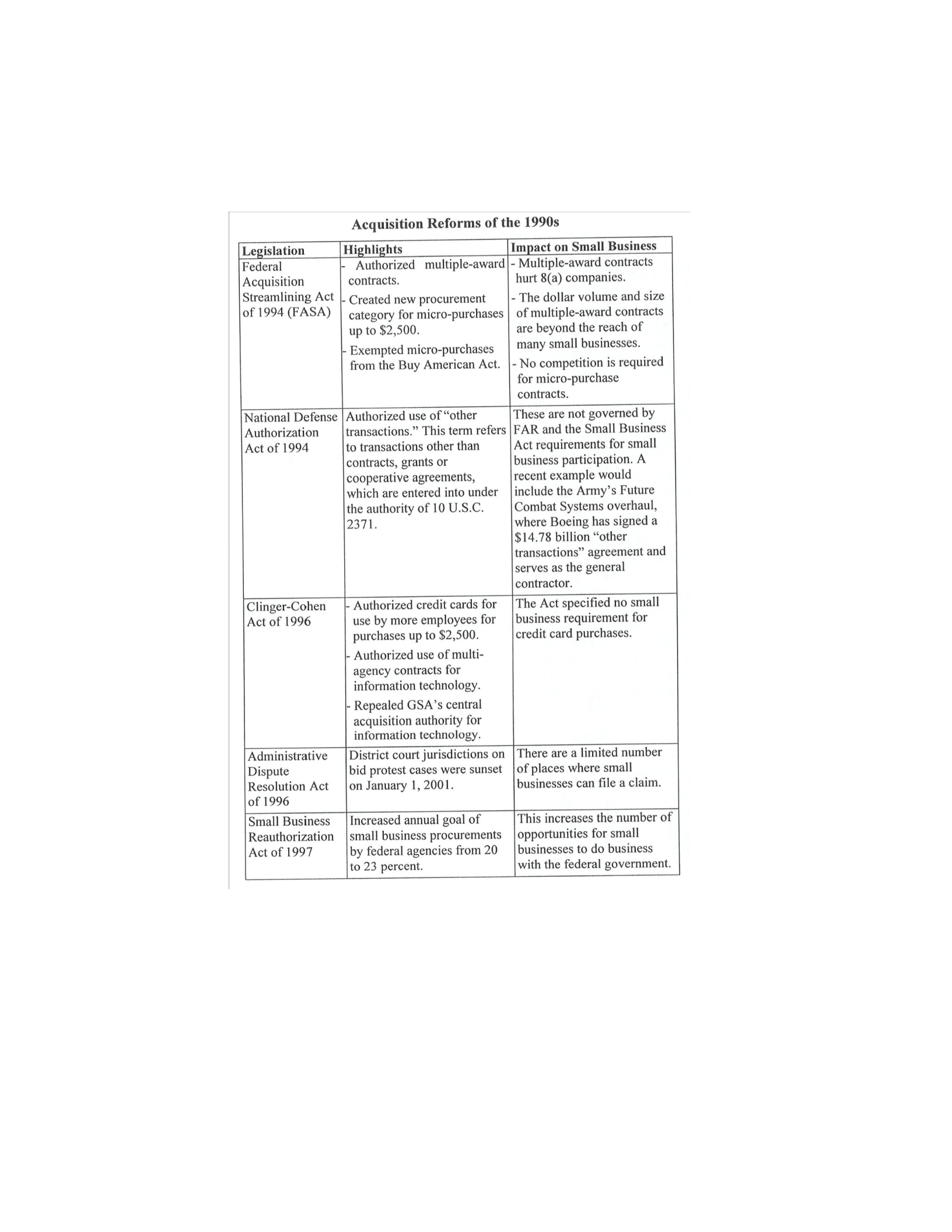
Note. From “The future of small businesses in the U.S. federal government marketplace,” by M. Clark and C. Moutray, 2004, Journal
of Public Procurement, 4, 453. Copyright 2004 by PrAcademics Press. Reprinted with permission.
Figure 1. Acquisition Reforms of the 1990s.
The United States federal government implemented various initiatives to meet
public procurement goals for small businesses, women-owned businesses, minorityowned
businesses, and veteran-owned businesses. Clark and Moutray (2004) detailed how

contract bundling and purchase cards restricted small business opportunities even further
because the business leaders had no requirements for the use of credit cards. According to
the researchers, the five steps that small business leaders should pursue to remain viable
and robust are (a) train new acquisition workforce and retrain on the latest acquisition
tools, (b) ensure that task orders issued under multiaward contracts are within scope, (c)
step up from subcontracting level to prime contractor as contracts become more
substantial and longer in duration, (d) reinvigorate and fortify the various SME sectors
and develop federal mandates that sustain long-term initiatives, and (e) have the Small
Business Administration (SBA) and federal government reevaluate the definition of small
business. If SMEs are the backbone of the economy, the time has come to structure
programs accordingly.
According to Badal (2013), in Gulf Cooperation Council (GCC) countries, SMEs
are 90% of the private sector; yet only contribute less than 40% to the respective gross
domestic products (GDPs). Robu (2013) and Silva and Scott (2014) noted that in Latin
America, the United States, and the United Kingdom, SMEs accounted for 95% to 99%
of businesses. SMEs have the potential to generate jobs but encounter limitations because
of the dominance of government opportunities by large organizations. Badal, Bouhdary
(2014), and Robu posited that SMEs are the backbone of economies and when
governments implement policies, which encourage SMEs to compete for contracts
against larger enterprises; the policies help to increase SME growth, strategization, and
profits.

According to Badal (2013), the low GDP contribution of SMEs was because of
locations in less profitable, less capital-intensive, and low-tech sectors. SMEs foster an
improved economy and large corporations benefit from their success as well. Badal
determined the four steps large enterprises should follow to help SMEs as (a) identify and
support talent, (b) provide financial help, (c) create a transparent procurement process,
and (d) simplify the application and selection process. Barber, Metcalfe, and Porteous
(2016), Flynn and Davis (2016), and Robu (2013) posited that SMEs could rapidly
respond to environmental changes because of their sizes; but without the implementation
of programs, SMEs are at a disadvantage to obtain additional resources and external
financial assistance.
Large enterprise leaders had the advantage of inclusive networks providing access
to information that SME business leaders were not privy. The standardization of
ecommerce for goods and services has provided unlimited access to SMEs. E-commerce
is a commercial transaction conducted electronically on the Internet. Bouhdary (2014)
noted that the use of e-commerce in business networks enable companies to create a
shared community, increasing access to information and improving efficiency. Business
networking increased collaboration opportunities, which drove innovation and
competition (Bouhdary, 2014; do Carmo Farinha, de Matos Ferreira, & Borges Gouveia,
2014). Business networks provided SME business leaders with current leads to qualified
buyers, enhanced customer retention, increased transaction visibility, and insight into
better decision-making.
The SBA was established in 1953 to assist SME business leaders in obtaining
more federal procurement contracts and contribute to the economy (Shoraka, 2014b). 15

U.S. Code § 644 mandated the awarding of an annual goal of 23% of all federal contracts
for SMEs, effective since 1997 (Shoraka, 2014b; 2015). Before the mandate in 1997 the
annual target goal was 20%. Small business goals, enacted under the Small Business Act
of 1953, are the driving force behind SME participation in public procurement. Deficient
contracting opportunities for SMEs in the 1940s led to the implementation of small
business goals (SBA, 2014). For the first time since the annual target of 23% was set in
1997, that goal was met and exceeded four consecutive years with 23.39% in 2013,
24.99% in 2014, 25.75% in 2015, and 24.34% in 2016 (see Table 3 for additional data).
Table 3
10-Year Review of SME Procurement Scorecard
YEAR % DOLLARS (in
billions)
2007 22% $83.27
2008 21.50% $93.30
2009 21.89% $96.83
2010 22.66% $97.95
2011 21.65% $91.50
2012 22.25% $89.90
2013 23.39% $83.10
2014 24.99% $91.70
2015 25.75% $90.70
2016 24.34% $100
U.S. Small Business Administration (2017c)
According to Silva and Scott (2014), SME business leaders bring innovations to
market but are limited in international markets because larger enterprises have the
resources and capability to compete internationally. do Carmo Farinha et al. (2014) and
Jalali, Jaafar, and Ramayah (2014) expanded on the need for SMEs to have an
international presence, stating collaboration with SME business leaders increase

networking access, innovation, strategization, and competition. According to Tan and
Ding (2015), from the start of the twenty-first century, economic globalization, fast
development of technical innovation and the introduction of the information age made
strategic management a requirement. The unions of public and private sector businesses
create new standards of competitiveness, and SME business leaders play a central role in
promoting competition and market dynamism (Cruz & da Cruz, 2017; do Carmo Farinha
et al., 2014; Hodge & Greve, 2017; Silva & Scott, 2014). While change can produce
positive outcomes, resistance to change is universal among all organizations, large and
small; business leaders need to emphasize adaptability (Barber et al., 2016; Ceptureanu,
2015). According to Sykes (2017), the problem SME business leaders encounter is that
while entrepreneurship is attractive, growing a business is hard work and small
businesses need consistent work to hire employees and grow the economy.
Organizational leaders’ willingness to move their companies in new directions
enable growth and advancement. Public procurement opportunities open the door to
changes for SMEs. Equal access to contracts awarded through public procurement
ensures fairness and a level competitive field (Davis & Brady, 2015; U.S. Small Business
Administration, 2017a). Procurement is a form of strategic sourcing permitting tracking
of organizations’ purchases, storage, quality control, invoicing, and other activities (Azmi
& Rahman, 2015; Davis & Brady, 2015; Lianbo et al., 2014). The awarding of
government contracts was a significant opportunity for SMEs to obtain sales and revenue
(Never & de Leon, 2014; U.S. Small Business Administration, 2017a). The four primary
objectives of government contracting are (a) encouraging fair and open competition, (b)

competitively pricing products and services, (c) ensuring the government receives what
they pay for, and (d) confirming that both government and contractors remain compliant
with the law (U.S. Small Business Administration, 2017a).
Government contracting professionals offer breaks to SMEs ensuring (a) large
businesses do not dominate contracts, (b) the government has access to new ideas from
small companies, (c) support of small businesses as engines of economic development,
and (d) disadvantaged socioethnic groups receive equal opportunities (U.S. Small
Business Administration, 2017a). The compliance of public buyers toward SMEs under
public procurement require periodic evaluation. Compliance was high in open tendering
and self-declaring financial capacity, but low in contract division and consortium building
(Flynn & Davis, 2016).
According to Flynn and Davis (2016), Panagoret and Ivanoff (2016), and Usai
(2014), SME access to public procurement could achieve a higher priority with policies
having more competitive terms and less as public sector organizations lending assistance.
A conflict exists between SME friendly public procurement objectives and the economic
and regulatory truths facing public buyers. Economists made the justification that
increasing the number of public procurement contracts awarded to SMEs will encourage
innovation (Nicholas & Fruhmann, 2014).
SME business leaders who seek growth will actively pursue public procurement
contracts. SMEs are the backbone of the United States economy; SMEs are critical for
jobs, entrepreneurial spirit, innovation, and competitiveness (Bissola, Imperatori, & Biffi,
2016; Leyden, 2016; Nicholas & Fruhmann, 2014). Improving SME participation in

public procurement and awarding more procurement contracts is necessary for economic
growth (Nicholas & Fruhmann, 2014).
The SBA publishes data, categorized by agencies, showing the procurement rates
(U.S. Small Business Administration, 2015). Beale (2014) and Tammi et al. (2014)
believed that small business’ failure to meet contract award goals was because of
underutilization and underrepresentation. According to Beal, Congress, to determine why
small business goals were unrealized, ordered an independent assessment. Beale and
Fergusson and Kerr (2014) noted the assessment, completed under the National Defense
Authorization Act of 2013, included: (a) description of the domestic industries, sizes, and
socioeconomic compositions of federal prime contractors and subcontractors; (b)
processes used to establish procurement goals; (c) the quality and availability of data on
contracting and subcontracting; and (d) barriers to procurement practices that prohibit
small businesses from implementing.
Stakeholders demand accountability from organizations of all sizes and measure
this through innovation, entrepreneurship, and responsible social actions (Hadad &
Gauca, 2014). Stakeholders (internal and external), involved in the decision-making and
strategic direction, determine organizational growth (Burga & Rezania, 2016; Van Looy
& Shafagatova, 2016). Stakeholders also recognized the need for corporate sustainability
as a means for organizational development (Maletic, Maletic, Dahlgaard, DahlgaardPark,
& Gomiscek, 2015). Some organizations regard sustainability as a strategic business
opportunity to increase profits and market share (Bulgacov, Ometto, & May, 2015). The
ability of SMEs to secure more public procurement contracts leads to improved

sustainability. According to Maletic et al. (2015), a boost in sustainable activities and
practice can lead to heightened innovative performance, which leads to value-added
financial and market performance.
Understanding the factors that contribute to buyer decision-making in public
procurement is important for the process. According to McKevitt, Flynn, and Davis
(2014), to maximize SME participation in public procurement business leaders need an
understanding of the processes and conditions that support different supply arrangements.
McKevitt et al. believed the transition of public organizations to strategic procurement
and supplier engagement helped to promote equality for SME participation. SMEs do not
usually have a separate purchasing department to channel the attainment of public
procurement contracts (Kavak et al., 2015). For the most part, the owner takes on the role
of purchaser. According to Barber et al. (2016) and Lee, Lin, and Pasari (2014), SME
growth is dependent on leadership adaptability, market awareness, technological
development, and maximization of internal and external sources.
Technology. Sun and Ifeanyi (2014) posited the optimization of technology could
help small businesses compete across a variety of industries. The use of technology
improves efficiency and productivity. The Internet enables access to other sources of
capital and revenue generation (Miller et al., 2016). Technology increases flexibility with
expanded services to a broader market, more options, and instant access to the business
and consumer (Alijani, Mancuso, Kwun, & Topcuoglu, 2014; Sun & Ifeanyi, 2014).
Sun and Ifeanyi (2014) promoted the implementation of e-business tools to
increase efficiency and revenue generation for SMEs. E-Business strategization led to

higher levels of interactivity between buyers and suppliers, increased opportunities to
unite businesses, and reduction in operating costs (Alijani et al., 2014; Sun & Ifeanyi,
2014; Taneja et al., 2016). Information technology is a significant part of strategization to
help business leaders manage rapid change (Novikov, Pykhtin, Gureva, Sozinova, &
Prokhorova, 2016). The success of any business, large or small, is dependent on how
quickly business leaders respond to change.
Government Purchasing and Public Procurement
The advancement of SMEs in public procurement is reliant on teamwork and
access. Public procurement opportunities must be equally accessible to businesses of all
sizes, ensuring fairness with a level competitive field (Davis & Brady, 2015). The SBA
and other federal agencies have collaborated to help build an environment in which SMEs
can progress (Shoraka, 2014a). Laws such as the Small Business Job Act of 2010 and the
National Defense Authorization Act of 2013, enable SMEs to grow. According to Shoraka
(2014a) and Tammi et al. (2014), SMEs were underrepresented in the awarding of public
procurement contracts. Tammi et al. added that the benefits to the government for
awarding contracts to SMEs include an increase in efficiency, better access to market
knowledge, and growth in innovative ideas and solutions.
Procurement is the combination of different methods for buying goods and
services (i.e., contracts); involves many participants; and variables, such as demand,
supply, and price (Lee et al., 2014). When uncertainty exists in the supply chain,
indecision occurs in procurement decision-making. According to Lianbo et al. (2014), the

optimization of procurement strategies leads to improved coordination internally and
externally of the business. Procurement has an essential role in supply chain resilience.
Supply chain resilience is the alternative way management can develop strategies
for preventing and coping with different disruptions (Roberta-Pereira, Christopher, &
Silva, 2014). Procurement is more than a sales function; procurement is cross-functional
and includes the collaboration and information sharing side of the buyer-supplier
relationship. Procurement is a source of strategic sourcing and enabler of economic
growth (Davis & Brady, 2015). According to O’Donoghue and Somerville (2018), risk
aversion is relevant in principal-agent models as an incentive source for trade-offs. Lack
of commitment from business leaders, lack of monitoring, contrasting political agendas,
and a risk-averse culture were some of the causes of ignored procurement
implementations.
The awarding of contracts required strategization from SME leadership. SME
business leaders must have a market orientation (MO), and the ability to obtain
information on competitors and consumers for competitive advantage (Tammi et al.,
2014). A strong MO allows SME business leaders to find information about business
opportunities in public procurement. Procurement integrated with business functions such
as strategization, marketing, supply chain management, and decision-making (Lee et al.,
2014; Lee & Rim, 2016; Mogre et al., 2017; Roberta-Pereira et al., 2014).
According to Mogre et al. (2017), the merger of procurement and other strategic
functions within the organization help to identify trends in purchasing practice. Business
leaders must be cognizant of sustainable purchasing, ethical purchasing, and purchasing

in the digital economy (Mogre et al., 2017; Ruparathan & Hewage, 2015). Ruparathan
and Hewage (2015) found that sustainability can aid in improving procurement practices
and heighten sustainable performance.
The cohesiveness of any organization is reliant on common goals. A centralized
administration will have a positive effect on the functionality of procurement (Jenkins,
2016; Roberta-Pereira et al., 2014). The purpose of the procurement department was to
analyze transactions (i.e., buying behavior, vendors, and costs) and enhance competitive
advantage with suppliers to improve the purchase decision-making process (Cresswell et
al., 2013; Gillett, Fink, & Johnson, 1997). Davis and Brady (2015) identified the
functions of procurement as purchasing, storage, quality control, invoicing, and other
activities.
Challenges. Procurement has numerous benefits, but the problems also require
acknowledgment. Cresswell et al. (2013) and McCue et al. (2015) noted the following
challenges: (a) lack of change management expertise, (b) delegating purchasing
responsibility while maintaining control and accountability, (c) limiting fraud while
reducing operational constraints, (d) increasing economic efficiency as political demands
for minority/small/local and women-owned business participation achieve fulfillment, (e)
increasing transparency while attaining best value, and (f) applying best practices while
meeting legal limitations. Public procurement law, an economic and social system,
involves purchasers and bidders (Spiler et al., 2016). Large business organizations use
public procurement as a strategy for the growth and development of the organization,

while SME business leaders use public procurement strategies to encourage innovation
and domestic harmonization (Spiler et al., 2016).
Miller et al. (2016) noted SME business leaders might not endure the same
pressure placed on leaders of larger organizations because SMEs have limited capital and
less human resources. The ability to have systems and processes implemented for
purchasing activities increases an organization’s efficiency. Fazekas and Toth (2016),
Milosavljevic, Milanovic, and Benkovic (2016), and Qiao, Thai, and Cummings (2009)
analyzed the range of equality and efficiency in public procurement within various
government, examining patterns of practices and trends.
Procurement is an integral part of obtaining contracts. Business owners, provided
with a procurement strategy for guidance, can maneuver the complicated process of
public procurement (Sandada, Pooe, & Dhurup, 2014; Sonfield, 2014a). Bublak (2014)
noted that SME business owners' limited knowledge about contracting resulted in their
complacent attitudes. Williams (2016) also indicated that SME business owners were
concerned about the barriers in the procurement process. According to Olang and Gerald
(2014), adequate procurement procedures are still in the development phase.
Business leaders establishing the proper public procurement process could enable
implementation of efficient practices and trends within the organization, but a struggle
exists with inequality and inefficiency in the public procurement processes. Qiao et al.
(2009) and Neupane et al. (2014) agreed individuals use purchasing power to achieve
social and political gain within the government. The creation of preferential procurement
programs increased access to the disadvantaged. The programs included the promotion of

fair labor conditions, promoting the use of local businesses to prevent discrimination
against minority groups, and encouraging equality between men and women
(Milosavljevic et al., 2016; Qiao et al., 2009; Sonfield, 2014b). The preferential programs
were not without controversy.
As Qiao et al. (2009) explained, the application of preferential laws can create
disorder in competition, and many view preferential laws as a violation of the principles
(i.e., impartiality, open competition, and cost efficient to the consumer) of public
purchasing. According to Nicholas and Fruhmann (2014), the economic justification for
small business policies arises from the premise that awarding government contracts to
small businesses promotes entrepreneurship and innovation that leads to job creation and
economic growth. Mentoring programs would help SME business leaders compete for
government contracts (Williams, 2016), with mentors sharing experience, expertise, and
resources (Small Business Administration, 2015) to enhance competitive advantage.
Mentors work closely with business leaders to address gaps in the business (Boxer,
Perren, & Berry, 2016). According to Giacomin, Janssen, and Shinnar (2016), Lahti
(2014), and Martin and Wilson (2016), mentors were industry professionals
knowledgeable in their field and provide valuable information.
Separation of departments. Gillett et al. (1997), Jenkins (2016), and Thomas
(1919) noted a necessary efficiency practice was the separation of purchasing and
accounting departments. Thomas believed restrictions on purchasing officers would be a
necessity for both public and private organizations. The centralization of purchasing
mitigated other departments creating agreements with suppliers, in some cases even

offering favoritism (Thomas, 1919). According to Thomas, the purchasing department
employees issued orders and the accounting department staff were responsible for
receiving the invoices, reviewing the purchase order for any discrepancies, and making
the payment. The role of the purchasing and accounting departments ensured a checks
and balances system. If there were no boundaries, the accounting staff may contribute to a
dysfunctional public procurement accountability system (Jenkins, 2016).
The scope of public procurement transitioned from the traditional goal of cost and
value to broader economic, social, environmental, and ethical concerns (McKevitt et al.,
2014; Steinfeld, Prier, & McCue, 2015). The procurement process plays a vital role in
ensuring supplies or services are received in a timely manner, at the best price, and free
from bribery (Mohd Izhan, 2018). Procurement is no longer a single focused system but a
complex and interactive process. To achieve organizational outcomes the structure and
organization of procurement are fundamental (McKevitt et al., 2014). McKevitt et al.
(2014) found that centralized buying decisions can polarize SME involvement and those
supply arrangements which are efficient, adapted, central, and balanced support SME
participation in public procurement. The government has a yearly expenditure of
approximately half a trillion dollars on goods and services (Shoraka, 2015). SME
business leaders deserve the same access as larger enterprises to the contracts available
from the government, federal and state, for goods and services.
Shoraka (2015) reviewed the procurement contracting goal established by the
2008 executive administration and referenced the minimum of 23% of the half a trillion
dollars spent with SMEs. Shoraka stated SME business leaders who acquire the ability to

have an integral role in the national supply chain is a win for the American economy.
Shoraka determined the collaboration of the SBA, the President’s administration, and
federal agencies led to the enhancement of small business access to federal contracts.
Flynn and Davis (2016) and Williams (2016) added that support for small businesses
stimulates innovation and job creation, leading to a healthier economy.
The role of leadership in public procurement. SME business leaders often hold
multiple positions within their organizations. Owners of SMEs were usually the managers
(Barber, Metcalfe, & Porteous, 2016). Owners of SMEs are sole proprietors who own and
operate all facet of the business. SMEs with more than one employee need leaders who
do more than delegate by also serving and working alongside their subordinates.
Personoriented leaders are the link between employees and organizational effectiveness
(Acevedo, 2018). According to Acevedo (2018) and McCann and Sweet (2014), effective
leaders improve organizational performance and resiliency, helping the company to affect
the economy positively.
Service and visionary leaders attract and inspire followers to pursue shared goals,
shaping organizational culture, and enabling the efficient handling of future disruptions
(Howard & Ulferts, 2017; Strand, 2014; Valero et al., 2015). According to Lourenco,
Callen, Branco, and Curto (2014) and Valero et al. (2015), stakeholders found inspiration
in leaders who believed in and work toward cohesively accomplishing goals. Leaders
must possess traits that help them to respond better and adapt to catastrophe.
Organizational resiliency is one of the outcomes of a visionary or transformational leader
at the forefront.

According to Jaouen and Lasch (2015), the traits of SME business leaders will
affect (either negatively or positively) the business, strategization, and profitability.
Leaders should efficiently use all available resources to achieve organizational goals and
objectives (Khan & Adnan, 2014). A successful business starts with a strategic and
transformational leader. Jayawarna, Jones, and Macpherson (2014) posited that SME
success was dependent on owners’ knowledge, experience, and managerial skills, and
Davee, Hannon, and Penaluna (2016) suggested entrepreneurial education to enhance
leadership traits of SME business leaders. Williams (2016) considered educational
courses, association memberships, and planning strategies as success oriented approaches
for continuous leader and organizational improvement.
Summary
After an extensive literature review, I found studies conducted on public
procurement contracts and small businesses; but a gap existed in the research on
strategies for SME business leaders to obtain contracts through public procurement. In
2016, SMEs received 24.34% of public procurement contracts, and larger enterprises
awarded 75.66% (U.S. Small Business administration, 2017c). Researchers addressed
aspects related to participation of SMEs in public procurement and lack of SME
representation in public procurement. The conceptual framework for the study is the
principal-agent theory, which I used to illustrate the principal-agent relationship regarding
contracts. The objective of this study was to identify the strategies that some SMEs’
business leaders use to obtain public procurement contracts from the state (i.e., buyer-
supplier relationship); and the principal-agent theory was appropriate.

I did not find a solution to the central research question in the selected articles.
The themes that emerged from conducting a literature review include (a) SME business
leaders aligning goals with the principal, (b) networking and implementing other actions
to create value and growth, (c) building collaborative partnerships, (d) identifying and
overcoming barriers, and (e) stakeholder influence. Using the information from the
literature review and data collected allowed me to answer the research question.
Transition
Section 1 began with the foundation and background of the study to provide a
historic understanding of the research topic. Next, the problem and purpose statements
expanded the scope and direction of the study. The nature of the study included a brief
synopsis for selecting a qualitative case study. Section 1 also consisted of the research
and interview questions; conceptual framework; operational definitions for technical
terminology; assumptions, limitations, delimitations; and significance of the study. I
concluded the section with a review of the literature, which included the following
subsections: organization of the review, search strategy, summary of frequencies and
percentages of peer-reviewed articles, application to the applied business problem,
principal-agent theory, small- and medium-sized enterprises, government purchasing and
public procurement, and summary.
In Section 2, I clarified the rationale for the procedures followed to conduct a
systemic study. Section 2 includes the purpose statement, role of the researcher, the
participants, research methodology and design, population and sampling, ethical research,
data collection instruments, data collection technique, data organization technique, data

analysis, and reliability and validity. Section 3 comprises the findings with an overview
of the prospect for application in professional practice, implications for social change,
recommendations, reflections, and study conclusion.

Section 2: The Project
In Section 2 a summation of the research process for this qualitative case study is
available. The information will serve as a roadmap for describing how I identified the
strategies SMEs' business leaders used to obtain state contracts through public
procurement. I discuss participant selection, the research design and method, how I
ensured data saturation and explain in the population and sampling subsection how and
why the participants will benefit from the study. I also provide clarification on the
selected sampling technique, give a synopsis on adhering to ethical research, specify the
data collection instruments, data collection technique, data organization technique, data
analysis, and reliability and validity.
Purpose Statement
The purpose of this qualitative multiple case study was to reveal strategies that
south Florida SME business leaders used to obtain state contracts awarded through public
procurement. I explored the strategies of three SME business leaders from three
companies in south Florida; the leaders possessed successful and consistent experience
(i.e., three consecutive years) in obtaining state contracts awarded to their organizations
through public procurement. The implications for positive social change included the
potential opportunity for business leaders, in any sector, to acquire state procurement
contracts; increasing their revenue and enhancing the lifestyles of their communities’
members. An increase in revenue leads to innovative activities, collaboration, and a more
competitive market (Bouhdary, 2014). Every dollar spent at an SME in the local
community stays in the community, generating improved economic value (Robu, 2013).

According to Bouhdary (2014), well performing SMEs in a community lead to more
charitable giving and promote neighborhoods with a unique atmosphere such as knowing
the people behind the products and services, developing one-of-a-kind businesses instead
of chains, keeping dollars in the local economy, and experiencing a better level of service.
Role of the Researcher
The data collection process consisted of semistructured interview questions, notes,
recordings, and company procurement documents provided by the participants. In a
qualitative study, the researcher is the primary data collection instrument (Denzin, 2014;
Marshall & Rossman, 2016). I was the primary data collection instrument for this study.
Researchers use semistructured interviews to help discover unforeseen information with
opportunities for further exploration (Leko, 2014). Semistructured interviews were used
to find new insights. My role involved obtaining data by following a systematic method
of collecting, organizing, and analyzing information to answer my central research
question.
Researchers are susceptible to bias if they allow cultural or social assumptions or
relationships to influence the interview (Ibrahim & Edgley, 2015). Regarding my
relationship with the topic and participants, I am not currently a business leader or
employed by any SME. I live in south Florida but have not met the business leaders that
participated in this study. This topic was of interest to me because the individuals who
work in my department, Business Services and Resource Management, work closely with
the Procurement Department, which was a field I planned to advance in the future.

The Belmont Report of 1979 outlines the role of ethics in human research
(National Commission for the Protection of Human Subjects of Biomedical and
Behavioral Research (NCPHSBBR), 1979). The purpose of the Belmont Report is to
protect the rights of all research subjects or participants (Miracle, 2016; NCPHSBBR,
1979). The three ethical principles involving human subjects to abide by during this study
are (a) respect of persons, (b) beneficence, and (c) justice (NCPHSBBR, 1979).
According to Miracle (2016), respect of persons consists of the researcher allowing
participants' autonomy and making allowances for vulnerable persons. Under
beneficence, the researcher does not harm the participants' and aims to decrease risks
while increasing benefits. Finally, in abiding by justice, the researcher must provide equal
treatment to all participants.
Researcher bias must not diminish the study. According to Ibrahim and Edgley
(2015), researchers need the ability to be open and honest about their presumptions.
Yazan (2015) noted that recognizing bias enhances the validity of a study. Cairney and St
Denny (2015) posited that researcher bias, if not identified and documented with
protocols established beforehand, could negatively influence the information received,
verbal or behavioral, during an interview. To mitigate bias the interview questions did not
incur a reaction, I had no previous relationship with the participants, and the interview
protocol (see Appendix A) was the same with each participant. Dikko (2016) and
Castillo-Montoya (2016) noted the interview protocol is a tool for limiting bias by
achieving consistency and accuracy within a study. The interview protocol mitigated bias
and enhanced the reliability of this study.

Participants
A researcher selects a participant based on the assumption the individual possesses
the knowledge to answer the research question (Palinkas et al., 2015). The participants
eligible for this study were business leaders of SMEs in south Florida, 21 years old and
older. The business leader held a leadership position for a minimum of five years. The
SME met a minimum requirement of not employing over 250 employees and open at
least three years. The methodology used determine the number of participants as each
method has different expectations and standards (Palinkas et al., 2015).
The participants for this study were three business leaders from three SMEs in
south Florida. The meaning participants give to their strategization will allow access to
the participants’ decision-making (Malagon-Maldonado, 2014). A crucial component of
successful access in a study is the researcher knowing an individual or individuals, known
as gatekeepers; these gatekeepers can help the research by providing contacts (Hoyland,
Hollund, & Olsen, 2015). According to Creswell and Poth (2017), the gatekeepers have
trusted relationships with their contacts and can refer the contacts as potential study
participants. Access to participants occurred using Broward College’s, my place of
employment, public supplier database. Having created the database, the staff in the office
of Supplier Diversity maintained the information and were the gatekeepers. The
information kept in the database included the SME names, business leader names,
addresses, phone numbers, and email addresses.
Before the interview, a researcher must obtain participant permission (Creswell &

Poth, 2017). Once the study is approved, the researcher contacts the potential participants
(Brayda & Boyce, 2014). The business leaders of the companies I selected received an
introductory email from myself to participate in the study. The use of email as a research
tool is essential to the interview process (James, 2017). Initially, the business leaders
received an invite to participate in the study via email (see Appendix B). Once
participants responded in the affirmative to move forward with the study another email
was sent to schedule the interview date and time. One step in the interview process is
building rapport with the participants (Creswell & Poth, 2017). To establish rapport for a
working relationship with participants, established guidelines and open communication
were important. Email use enabled the forwarding and exchange of necessary forms such
as the invitation to participate and informed consent, which provided an overview of the
research and process, or procurement documents. The procurement documents were any
written processes, guidelines, or rules in which the organization abided. Informed consent
is a guiding principle for conducting research that researchers use to promote
participants’ autonomy and protect them from harm (Check, Wolf, Dame, & Beskow,
2014; Tam et al., 2015). According to Kaiser (2009), the use of informed consent enables
participants to present rich and detailed accounts of their experiences.
Preliminary discussions between the researcher and potential participants will
determine the participants’ ability to relate to the research study (Hoyland et al., 2015).
Business leaders were desirable as participants because they were the organizations’
decision-makers and possessed the knowledge to answer the overarching research
question. The ability to study the experiences and responses of the participants will

provide insight into the research topic (Kitto, Chesters, & Grbich, 2008). The participants
selected for this study aligned with the overarching research question because they had
the required characteristics of (a) a business in south Florida and had successful and
consistent experience (i.e., three consecutive years) obtaining state contracts awarded to
their business through public procurement, (b) the business was open for at least three
years, and (c) the business leaders had strategies used to obtain state contracts awarded
through public procurement.
Research Method and Design
Research Method
I selected the qualitative research method because according to Yin (2017),
researchers use the qualitative research method to bridge the research question and
literature review with the data collection and analysis. Throughout the years, the use of
procurement enabled innovative initiatives that enhance operational and administrative
excellence within an organization (Lee & Rim, 2016). Researchers use the qualitative
research method to formulate open-ended questions, permitting the collection of in-depth
answers.
According to Yin (2017) and Leko (2014), the use of open-ended questions and
face-to-face interviews is the appropriate means to obtain the data needed to understand
participants' viewpoints and opinions. Cairney and St. Denny (2015) found the use of
quantitative research methodology as a hindrance for in-depth analysis because
researchers use this method to test variables and their relationships, typically reporting
findings using statistics. Cairney and St. Denny explained further that a purely

quantitative approach would not capture details in a meaningful way through observation
and the encouragement of interviewee expression, which is evident in the qualitative
approach. The quantitative method was not appropriate because I was not testing the
relationship between variables or reporting statistical findings.
The mixed-methods, which combine both quantitative and qualitative methods,
require more time and resources (Yin, 2017). The time commitment and integration of the
quantitative method within the mixed-methods were not feasible for this study. The
detailed analysis of the qualitative method was the appropriate method to conduct this
study.
Research Design
I considered three different research designs, which were case study, ethnographic,
and phenomenological. The research design I chose for this study was a multiple case
study. Researchers use case studies for empirical inquiries to explain, explore, or describe
a phenomenon; a case study is especially beneficial in supporting previously developed
theories (Amerson, 2011; Cronin, 2014; Dasgupta, 2015). Using a multiple case study
showed the strategies business leaders used to obtain public procurement contracts.
The design of the initial questions is to build rapport and inspire the interviewees
to speak freely and is a guideline of the case study design (Comi, Bischof, & Eppler,
2014). The ethnographic research design is a method that requires continuous and
ongoing observation by the researcher, who fully immerses themselves in the cultural
lives of the participants, as the researcher does not rely on simulations or personal
accounts (Hampshire, 2014; Lopez-Dicastillo & Belintxon, 2014). The ethnographic

design was not appropriate for this study because I did not immerse myself in the lives of
the participants.
The phenomenological design captures the lived experiences or worldviews of the
participants and has a longitudinal scope (Bevan, 2014; Gill, 2014; Snelgrove, 2014). The
phenomenological design was not suitable because I did not capture the worldviews of
the participants. My use of a multiple case study design helped in the identification of
data saturation. Data saturation occurs when the participants reiterate the same
information without the presentation of new data (Morse, Lowery, & Steury, 2014). Once
each participant received and reviewed my transcribed interpretation of the interview,
confirmed my understanding was correct, and had no corrections or new information then
data saturation was met.
Population and Sampling
The use of purposeful sampling in this qualitative multiple case study ensured the
appropriate population answered the central research question. Purposeful sampling
supports a qualitative case study and enables the selection of information-rich cases to
explore strategization (Gentles, Charles, Ploeg, & McKibbon, 2015; Palinkas et al.,
2015). According to Robinson (2014), researchers must delineate a sample population
coherent with the study purpose, questions, and available resources. The sample of three
business leaders were selected with the supposition they understood the topic under study
and had valuable strategies to share. Access to participants occurred using Broward
College’s, my place of employment, public supplier database. The participants eligible for
this study were business leaders of SMEs in south Florida, 21 years old and older. The

business leader held a leadership position for a minimum of 5 years. The leaders
possessed successful and consistent experience (i.e., three consecutive years) in obtaining
state contracts awarded to their organizations through public procurement. At a minimum,
the SME had at least 3 years of consistent operation, and the business was currently open.
The participants acknowledged meeting the criteria when they accepted the informed
consent form, which lists the participation requirements.
Creswell (2003) recommended 3-5 participants for case study research, along with
other types of data. Three business leaders from three SMEs in south Florida were
selected to participate in this study. Interview researchers with an idiographic aim use a
sample of 3-16 participants to give each a defined identity within the study, provide scope
for developing cross-case generalities, and prevent data overload for the researcher
(Robinson, 2014). The selection of too many business leaders for my case study could
lead to an inefficient study. Limitations to the sample size occur because the researchers'
time available for data gathering is restricted, not enough resources, and constrained
objectives (Baker & Edwards, 2012). The selection of three business leaders for this
multiple case study was because of time constraints and available resources.
Business leaders were those who had roles as CEOs, presidents, owners, or
executives and were recipients of at least three public procurement contracts.
Interviewing leaders employed by SMEs that obtained public procurement contracts
helped to identify themes in strategies as they pertain to contracting opportunities. The
target population and sample size were critical to answering the central question of
exploring strategies used to obtain public procurement contracting opportunities.

Data saturation is one of the factors that determine most qualitative sample sizes
(Morse et al., 2014). To reach data saturation, the use of member checking confirmed my
interpretation of each participants' response to the interview questions. Data saturation
happened once the participants confirmed the accuracy of my paraphrase of their
responses and gave no new information. Data saturation is not the number of participants
interviewed but the clear understanding that once the participants start repeating
information, then no new thematic codes exist (Morse et al., 2014; Roy, Zvonkovic,
Goldberg, Sharp, & LaRossa, 2015). Data saturation is an ideal guideline for purposeful
sampling (Palinkas et al., 2015). Data saturation was the confirmation that I could not
gather new information from my purposeful sample of participants. According to Roy et
al. (2015) and Fugard and Potts (2015), a high likelihood exists of reaching data
saturation and finding sufficient themes when participants’ rich information becomes
repetitive and predictable.
According to Anderson and Hartzler (2014) and Robinson (2014), participants
possessing knowledge about the specific subject provide expert insight into the general
structure even with their identities protected. Semistructured interviews occurred with
three SME business leaders with the collection of procurement documents used by each
leader in their respective organizations. The business leaders I selected were 21 years old
and older, came from a mix of industries, and possessed public procurement experience.
Consideration of the interview place and setting are necessary, as they can affect the
relationship between the interviewer and the participant and data collection
(NamageyoFuna et al., 2014). Participants need an environment where they are

comfortable in sharing openly and honestly (Brewis, 2014). The selection of a location
was the participants' choosing to ensure their comfort during the interview. The second
option was for the interview to occur over a securely recorded telephone line, for anyone
unable to meet face-to-face. Ideally, the location will have minimal background noise to
lessen distractions, allow for precise recording, and foster a safe and nonthreatening
environment that enable participants to feel comfortable opening up (Brewis, 2014; Hess
et al., 2017). For this study, a familiar setting to the participant provided the most
advantageous environment conducive to sharing.
Ethical Research
To adhere to ethical considerations, I educated myself on ethical principles in
research by completing the National Institutes of Health Office of Extramural Research
(NIHOER) Human Research Protections training (see Appendix C). According to
Hammersley (2014), researchers’ use of ethical principles in a study ensures minimal
harm, respect for autonomy, preservation of privacy, and acting equitably. Researchers
have a responsibility to ensure adherence to ethical practices (Hammersley, 2014; Morse
& Coulehan, 2015).
The procedures for obtaining participants’ voluntary informed consent included
steps for participants to withdraw from the study and maintain confidentiality. The use of
informed consent forms increases research quality by preserving protection for
participants (Hammersley, 2014; Morse & Coulehan, 2015; Pletcher, Lo, & Grady, 2015).
The informed consent form consisted of details including disclosure of the purpose and
use of the study to participants; the need of the participant consenting to participate in the

study by replying “I consent” via email; the ability to withdraw from the study by sending
an email to [email protected]; the voluntary nature of the study, with no
offer of incentives for participation; safekeeping of the data for five years; and the
confidentiality of the findings.
According to Hammersley (2014), participants should always have the freedom to
withdraw or modify their consent and to ask for the destruction of all or part of the data
they have contributed. Participants could withdraw from the study in writing or verbally
but no participants withdrew from the study. While incentives may increase study
participation, a downside is an increase in participant fabrication of answers to receive the
incentive (Robinson, 2014). I did not offer an incentive for study participation because I
did not want to encourage false responses.
Walden University's Institutional Review Board (IRB) received communication of
the information pertinent to the study and my plan of action. The role of the IRB was to
oversee human studies research is in alignment with federal and state regulations and
with their policies and regulations (Check et al., 2014; Cseko & Tremaine, 2013). Upon
completion of the IRB form, I directed attention to the identified principles that addressed
ethical concerns explicit to the research topic. Information, such as the location,
participation time, population, instruments for data collection, and methodology were
relevant facts requiring identification for the IRB. A checklist included information
regarding the release of results to the participants, with an explanation on the use of the
data collected. Researchers and review boards must ensure adequate provisions are in
place to protect participant privacy and maintain confidentiality (Kaiser, 2009). I used the

letter-number combination of P1, P2, and P3 to identify the three participants, preserving
confidentiality. The data will remain in a safe place for five years to safeguard
participants' privacy. After five years, I will destroy the consent forms and interview
documentation. My final doctoral study included the Walden IRB email with the approval
number (see Appendix D).
Data Collection Instruments
The primary data collection instrument for a qualitative study is the researcher
(Denzin, 2014; Marshall & Rossman, 2016). As the researcher, I was the primary data
collection instrument for this study. Denzin (2014) and Marshall and Rossman (2016)
posited the researcher, as the data collection instrument, sees, hears, and interprets the
data. The researcher sets the appropriate boundaries and protocol for the study (Stuckey,
2014). The secondary and tertiary data collection instruments were semistructured
interviews and company procurement documents, respectively. I used the interview
protocol (see Appendix A) in conducting the face-to-face interviews. According to Fusch
and Ness (2015), the use of open-ended questions during the interview will aid in the
quest for data saturation.
Member checking is a quality control process that ensures the reliability and
validity of the research findings by using a participant validation technique for
demonstrating the credibility of a study’s findings, conclusions, and recommendations
(Andraski, Chandler, Powell, Humes, & Wakefield, 2014; Harland, 2014; Harper & Cole,
2012). To enhance the reliability and validity of the data collection instrument process, I
used member checking. Member checking occurs when the researcher interprets what the

participants stated when answering interview questions and shares that interpretation with
participants for validation and confirmation of accuracy (Harvey, 2015). Participants
reviewed and verified the accuracy of my written interpretation of the interview.
The use of interview protocols will increase the consistency and accuracy of the
interviews (Castillo-Montoya, 2016; Dikko, 2016). The interview protocol enhanced the
reliability of the study. Printed documents and other materials are essential to address the
researchers' need to mine data (Harland, 2014; Yin, 2017). Acquiring procurement
documents from each participant, I gained an understanding of organizational processes.
The participants' responses to the ten semistructured interview questions were audio
recorded, as I wrote notes on a notepad. For member checking purposes, I wrote my
interpretation of each participant’s interview responses in a Microsoft® Word document.
Data Collection Technique
According to several researchers (Gravlee, Maxwell, Jacobsohn, & Bernard, 2017;
Guterbock, Benson, & Lavrakas, 2018), face-to-face and telephone interviews are
suitable techniques to obtain in-depth information in qualitative studies. The data
collection techniques for this study were semistructured interviews and company
procurement documents. Before the scheduled interviews, each participant received a
request to provide procurement documentation sharing information on any of the
following: the company’s procurement process, procurement rules, regulations, or
methods for obtaining public procurement contracts.
P1 shared a clean copy of the capability statement and government catalog, which
provided an administrative overview of the public procurement process and filled in

based on the needs of each agency requesting bids for contracts. P2 and P3 were not able
to provide any documentation, advising the information proprietary, but they offered a
verbal summary of their internal documents, procedures, and referred me to their
company websites to view general information, which was not proprietary. P2’s website
included contact information, an overview of services offered, a two-minute video
synopsis of business and government contracts in the public and private sectors, and
customer feedback. P3’s site also included contact information, a list of available
products, service partners, customer reviews, buyers guide process, a blog, and contract
details available to those with an account.
Reviewing the websites helped to answer the overarching research question for
this study: What strategies do south Florida SMEs’ business leaders use to obtain state
contracts through public procurement? The website content provided a visual
representation of some of the strategies discussed by P2 and P3. Both websites for P2 and
P3 aligned with the major theme of strategic initiatives.
The video overview on P2’s website included information to external and internal
stakeholders on how the company operates with business and government contracts in the
public and private sectors. P2 listed services available as consulting, training, and
licensing. P2 collaborated with partners to offer sustainable and innovative processes for
a global reach. P2’s website highlighted the following steps taken when the company
obtained a contract for consulting services related to performance and process
improvement: (a) focusing on improving engagement in management teams, (b)

streamlining processes, (c) obtaining buy-in from the top executives, and (d) creating
customized training.
P3’s website listed 48 agencies that are service partners and illustrated the
importance to the organization of building and maintaining relationships. Other
organizational leaders desiring to work with P3 also have the option to complete an
online application. The buyer’s guide section of the site described the different medical
items available, providing detailed knowledge to external customers about the products.
The inventory was searchable by category or brand. P3’s blog covered the latest
innovations and gave expert medical tips from skilled personnel within the company.
All three participants confirmed they also abide by the federal and state public
procurement statutes and regulations. The use of semistructured interviews, the collection
of P1’s capability statement and government catalog, and review of P2 and P3’s company
websites comprised enough information to answer the central research question regarding
what strategies do south Florida SME business leaders use to obtain state contracts
awarded through public procurement.
The interview protocol contains the outlined steps of the interview including the
introduction and explanation of the process, presentation of the consent form,
acknowledgment of voice recording device, interview questions, wrap up, and scheduling
of member checking interview for confirmation of interpretation (Guetterman, 2015;
Morse et al., 2014; Roy et al., 2015). The interview protocol (see Appendix A) served as
a guide in conducting the semistructured interviews. The following paragraphs describe
the step-by-step data collection technique.

First, I gained access to participants using Broward College’s public supplier
database. Participants received an introductory email (see Appendix B) providing an
overview of the study and requesting participation. According to Brandon, Long, Loraas,
Mueller-Phillips, and Vansant (2014), email recruitment increases access to interviewees.
The introductory email ensured participants understood the criteria for involvement in the
study.
To establish a working relationship, participants who responded in the affirmative
to move forward with the study, received a second email to schedule the interview date
and time. Following the participants' confirmation to take part in the study, each
participant received the details of the study and interview questions. P1 was able to meet
face-to-face and chose P1’s business office. Because of busy schedules, P2 and P3 were
not able to meet face-to-face and, consequently, I conducted phone interviews with P2
and P3. The interview process consisted of 10 predetermined interview questions with 45
minutes allotted for the interviews, but all three participants answered the questions
within 30 minutes. The participants were knowledgeable and eager to share the
information they learned over the years for the public procurement process and obtaining
state contracts. Incentives were not offered for study participation because I did not want
to encourage false responses.
MP3 recorders, digital recorders, ipads or tablets, and cell phones enable
researchers to record the audio from interviews (Flint et al., 2016; Oates, 2015). I used
my cellphone, an Apple iPhone X as an audio recorder to capture details my note taking
missed and took notes of key terms, phrases, and participants’ behaviors on a notepad.

Note taking is suitable for general comments but to ensure no details are missed audio
recording equipment is essential and must be fully charged (Flint et al., 2016).
My Apple iPhone X had a full charge before each interview with the charger
easily accessible. For the two phone interviews, I called each participant from a landline
in a private office. I placed the landline on speakerphone, and after advising the
participants, I activated the Apple iPhone X audio recorder. Lastly, I conducted member
checking. The participants were given three days to review my transcribed interpretation;
however, one participant was out of town on a business trip and responded in five days.
Member checking ensured validity by enabling participants to review, correct, and
approve the data collection before data organization and data analysis. The three
participants confirmed I provided an accurate interpretation of the interview.
According to Yin (2017), the advantages of the data collection techniques include
control, direct observation is not required, and words of the participants are obtained
serving as written evidence, which saves time and money. The interviews were audio
recorded, and after our face-to-face meeting, P1 emailed a clean copy of the company’s
capability statement and government catalog, which provided an administrative overview
of the public procurement process. I preserved the data in audio and print. I used the
interview protocol (see Appendix A) for structure and provided each participant with a
copy of the interview questions. Moustakas (1994) and Yin (2017) noted well thought out
questions, and interview structure allows the researcher to obtain comprehensive
accounts from participants. My ten interview questions and my use of an interview
protocol enabled me to get rich details from the participants.

The disadvantages of the data collection techniques are that participants may not
articulate their responses clearly, documentation may not be available for external review,
and participants may indirectly filter information (Yin, 2017). The three participants were
knowledgeable about the research topic and articulated themselves well. Only one of the
three participants could provide documentation used in the company’s procurement
process, but the details provided by the other two participants on the procedures their
companies abide were succinct in presenting a clear understanding. P1 could share the
company’s capability statement and government catalog, which provided an
administrative overview of the public procurement process. P2 and P3 advised their
procurement documents were proprietary and unavailable for sharing, but they offered a
verbal summary of their internal documents, procedures, and recommended visiting the
company websites. P2’s website included contact information, an overview of services
offered, a two-minute video synopsis of business and government contracts in the public
and private sectors, and customer feedback. P3’s site also included contact information, a
list of available products, service partners, customer reviews, buyers guide process, a
blog, and contract details available to those with an account. Reviewing the participating
organizations’ websites helped to answer the overarching research question of this study:
What strategies do south Florida SMEs’ business leaders use to obtain state contracts
through public procurement? The website content included a visual representation of
some of the strategies discussed by P2 and P3.
Both websites for P2 and P3 aligned with the major theme of strategic initiatives. All
three participants confirmed they also abide by the guidelines of the federal and state

public procurement process. The rapport I built with the participants encouraged a less
filtered dialogue during the interview.
Member checking is the process of obtaining participant validation to confirm
reliability and validity (Andraski et al., 2014; Harland, 2014). According to Harvey
(2015), member checking occurs when the researcher interprets what the participants
stated when answering interview questions and shares that interpretation with participants
for validation and confirmation of accuracy. I emailed each participant a copy of my
transcribed interpretation of their interview to review to ensure I had an accurate
understanding. The participants were given three days to review my transcribed
interpretation; however, one participant was out of town on a business trip and responded
in five days. The participants confirmed my interpretations were accurate.
Data Organization Technique
Data organization is the way researchers organize and document data (i.e., audio
recorders, transcripts) and plan the procedures for analysis (Moustakas, 1994; Yin, 2017).
Gibbins, Bhatia, Forbes, and Reid (2014) agreed organized interviews should have an
audio recording, verbatim transcription, and are anonymized. I labeled my participants as
P1, P2, and P3. The data organization also consisted of individual participant notes with a
short-hand summary of the business leaders’ response to each interview question. Other
files included P1’s capability statement and government catalog, my transcribed
interpretations from the interviews, and the audio recordings. The electronic information
was organized on a password-protected USB into files labeled audio recordings,

interview transcription, and documents. The hand-written notes were transcribed in a new
notepad, which was stored in a locked file cabinet with the USB.
Notes are the written highlights from the interview that summarize participant
answers and capture researcher observations (Marshall & Rossman, 2016). Note taking is
crucial in research. I used a notebook to record the day, time, and location of the
interview. During one face-to-face and two phone interviews, I looked and listened to
note how comfortable each participant was in discussing the topic. The participants’
knowledge of the subject was evident with their ease and comfort in answering the
questions, and the richness of information detailed. The discussions occurred without any
rush and the participants were surprised at how quickly the time passed. Each participant
was gracious and unanimous with thanking me for allowing them to be a part of my study
and requesting an update on when they can access the full study.
The NVivo software is useful to researchers with the management and
organization of data (Sotiriadou, Brouwers, & Le, 2014). I imported my interpretations of
the interviews into the NVivo 12 software, creating electronic folders that identified
themes from participants' responses. According to Margarian (2014), software is
appropriate for documentation and development of systematic folder systems.
The storage of data should adhere to common standards (Margarian, 2014). To
ensure compliance, I followed Walden's IRB requirements for data collection and storage.
Walden University requires participants’ information to remain confidential and all data,
electronic and hard copies, stored securely for five years. For qualitative researchers, the
preservation of participant confidentiality is critical (Kaiser, 2009). I was the only person

with access to the participants’ data. The written and electronic data is in a secure file
cabinet and the electronic data saved on a password-protected USB.
Planning for data destruction is an integral part of data organization (Tammi et al., 2014).
I will keep all data, paper and electronic, for 5 years and after that time destroy the
information. After shredding the paper data in a shredder, I plan to throw away the
remnants in the trash. The selection of the reformat option on the USB storage device, for
the electronic data, will erase the data after which water submersion of the reformatted
USB will ensure the destruction of the data. I plan to also dispose of the reformatted and
water submerged USB in the trash.
Data Analysis
Yin (2017) noted the five stages of data analysis as data collection, separating the
data into groups, regrouping the data into themes, assessing the information, developing
conclusions. A researcher’s use of methodological triangulation for data analysis
increases validity and expands readers’ understanding because it affords multiperspective
metainterpretations by using more than one option to gather data (Fusch & Ness, 2015;
Marshall & Rossman, 2016; Modell, 2015). I used methodological triangulation for this
multiple case study. I created the interview questions to align with the central research
question to collect the appropriate data. I gathered and analyzed data from the interviews,
audio recordings, and P1’s capability statement and government catalog document.
P1’s capability statement and government catalog, which provided an
administrative overview of the public procurement process. P1’s capability statement and
government catalog were similar to the statement of work P2, and P3 discussed, as well

as the comparable templates used by other organizations. P2 and P3 were unable to share
any procurement documents because the information was proprietary, but they advised
me to review their websites for general information. P2’s website included contact
information, an overview of services offered, a two-minute video synopsis of business
and government contracts in the public and private sectors, and customer feedback. P3’s
site also included contact information, a list of available products, service partners,
customer reviews, buyers guide process, a blog, and contract details available to those
with an account.
Reviewing the websites helped to answer the overarching research question of
what strategies do south Florida SMEs’ business leaders use to obtain state contracts
through public procurement. The website content provided a visual representation of
some of the strategies discussed by P2 and P3. Both websites for P2 and P3 aligned with
the major theme of strategic initiatives.
The video overview on P2’s website included information to external and internal
stakeholders on how the company operates with business and government contracts in the
public and private sectors. P2 listed services available as consulting, training, and
licensing. P2 collaborated with partners to offer sustainable and innovative processes for
a global reach. P2’s website highlighted the following steps taken when the company
obtained a contract for consulting services related to performance and process
improvement: (a) focusing on improving engagement in management teams, (b)
streamlining processes, (c) obtaining buy-in from the top executives, and (d) creating
customized training.

P3’s website listed 48 agencies that are service partners and illustrated the
importance to the organization of building and maintaining relationships. Other
organizational leaders desiring to work with P3 also have the option to complete an
online application. The buyer’s guide section of the site described the different medical
items available, providing detailed knowledge to external customers about the products.
The inventory was searchable by category or brand. P3’s blog covered the latest
innovations and gave expert medical tips from skilled personnel within the company. The
three participants confirmed they also abide by the guidelines of the federal and state
public procurement process.
According to Bailey (2014), member checking ensures the meaning and word
choice are correct. After completing the interviews, I interpreted the audio recordings,
and each participant received an email of the electronic copy of my interpretations and
reviewed my interpretation of their responses for accuracy. The participants reviewed and
returned the interpretation of their responses within three days. Member checking
increases the reliability of a study by enabling participants to validate or correct the
researcher’s interpretation (Anney, 2014; Morse, 2015). Once each participant confirmed
the accuracy of the interview via member checking, the audio recording was uploaded to
a password protected USB for storage.
NVivo is beneficial for analyzing nonnumerical and unstructured data (Sotiriadou
et al., 2014; Woods, Paulus, Atkins, & Macklin, 2015; Zamawe, 2015). I used the NVivo
12 software to organize the data I collected. Feng et al. (2018) successfully used NVivo
12 to group verbal comments and find keywords frequency. Marathe and Toyama (2018)

added the use of automated coding software, such as NVivo 12, to assist in the
transparency of recommendations.
NVivo software is one of the longest used qualitative data analysis software
(Woods et al., 2015). Researchers’ use of the NVivo software enables them to understand
the data in greater depth, which is paramount in qualitative studies (Sotiriadou et al.,
2014). Using NVivo 12, I analyzed my written interpretation of the interviews and the
recorded audio files to find themes and subthemes. I used the ideas found in the literature
review to help in the composition of my primary themes from my findings for analysis. I
recommend NVivo 12 to other researchers because of the organization and analysis
capabilities. I used NVivo 12 to upload my files, group comments, identify themes and
subthemes, and graph words frequency.
The data analysis process is progressive, beginning informally and continuing
until themes become evident based on participant responses (Denzin, 2014). Within the
literature review section, I conducted a critical analysis and synthesis of potential themes
associated with public procurement contracts. Data cleansing removes any irrelevant
information not conforming to the search criteria (Harvey, 2015). The themes revealed in
the literature review included (a) SME business leaders aligning goals with the principal,
(b) networking and implementing other actions to create value and growth, (c) building
collaborative partnerships, (d) identifying and overcoming barriers, and (e) stakeholder
influence. Items B, C, and D aligned with the three primary themes identified from the
NVivo analysis; and A and E aligned with the subthemes of the study, discussed further in
Section 3.

The information reviewed in combination with the data collected helped me
answer the overarching research question of this study. After the interviews were
completed, I used member checking to confirm my interpretation of participants’ answers.
The participants received a copy of my transcribed interpretation of the interview via
email and responded within three business days, except for one participant who was out
of town on business and replied in five days. According to Thapa et al. (2017), assessing
the data against the conceptual framework and previous literature should lead to
significant findings for a research topic. I analyzed data, and three primary themes and 12
subthemes emerged. I correlated the themes and subthemes with the conceptual
framework and current research studies.
Reliability and Validity
Reliability
In this qualitative multiple case study, I demonstrated my research as dependable,
credible, and transferable; establishing the study's confirmability by maintaining notes of
the interviews, assessments of my steps and processes, and member checking. Creating
quality and dependability in a doctoral study is pertinent to ensuring reliability and
validity. According to Anney (2014) and Fan and Sun (2014), reliability includes
measures of consistency, strategies used to measure, and analysis of the findings. A
technique that ensured dependability in this study was member checking.
Member checking increases the trustworthiness of data collected (Anney, 2014;
Birt et al., 2016). I used member checking to interpret what the participants stated when
answering interview questions and shared that interpretation with participants for

validation and confirmation of accuracy. Fan and Sun (2014) noted that generalizability is
a comprehensive framework for measuring reliability and validity by including other
methods. I aimed for generalizability through thorough context descriptions. According to
Guetterman (2015), Morse et al. (2014), and Roy et al. (2015), the use of an interview
protocol reduces bias in the collection of meaningful information from participants in a
systematic way and reaching data saturation will help to confirm the dependability of the
findings. I used an interview protocol (see Appendix A) to minimize bias and member
checking to check the accuracy of my interpretations of the participants' responses.
Validity
Credibility. Validity is a central issue in qualitative research (Gregori-Giralt &
Menendez-Varela, 2015). Member checking increased credibility. Credibility is the
confidence readers have regarding the truthfulness of the findings and the plausibility of
interpretations and conclusions drawn from the research (Anney, 2014; Hyett et al.,
2014). Research experts recommend strategies such as purposeful sampling, peer review,
methodological triangulation, member checking, and interview protocols to enhance
credibility (Anney, 2014; Eno & Dammak, 2014; Takyi, 2015; Yazan, 2015). I used the
above-recommended strategies within my study.
Recognizing bias increases credibility (Yazan, 2015). Prior experience with the
subject help to facilitate purposeful sampling that also adds to credibility (Palinkas et al.,
2015). My use of peer reviewed literature promoted transparency and openness to other
points of view. According to Anney (2014), peer review involves scholarly guidance from
committee members, review boards, and other research experts, who work to improve the

improve the credibility of the research process, findings, and conclusion. Methodological
triangulation is the collection of different data that will enhance the study, leading to more
accurate and insightful results (Yazan, 2015). Anney stated member checking is essential
to eliminate researcher bias during the data collection and organization.
Transferability. Transferability is how the results of the study appropriately
transfer to readers and future research (Anney, 2014; Morse, 2015). Transferability is
dependent on how well the researcher conducts the study. According to Morse (2015) and
Palinkas et al. (2015), the detailed descriptions and documentation of the study help
readers to make an informed decision about the appropriate transferability. I used rich
descriptions in areas such as population and sampling, research method and design, and
incorporated the proper documentation to ensure readers had the opportunity to make an
informed decision about my study findings. Another researcher can use the same process
in another setting by following my interview protocol and reviewing the detailed
description of procedures outlined in my study.
Confirmability. The representation of confirmability in research occurs through
activities such as audit trail, triangulation, or peer review to amplify credibility (Anney,
2014; McDermid, Peters, Jackson, & Daly, 2014; Morse, 2015). I addressed
confirmability by by maintaining notes of the interviews, assessments of my steps and
processes, and member checking. Data saturation is the point where no new information
is discovered from the additional data collected (Fugard & Potts, 2015; Morse et al.,
2014; Roy et al., 2015). The interviews continued until the information became repetitive,
indicating I had reached data saturation.

Transition and Summary
I summarized the research process in Section 2. I provided an overview of the role
of the researcher, a description of the participants, and a detailed justification for the
research method and design sections. I also covered population and sampling, completing
ethical research, data collection instruments, data collection technique, data organization,
data analysis, and reliability and validity. In Section 3, I summarize the themes and
strategies SME business leaders used to obtain contracts awarded through public
procurement. Section 3 includes a presentation of the findings, application to professional
practice, the implication to social change, recommendations for action, recommendations
for future research, reflections, and conclusion.
Section 3: Application to Professional Practice and Implications for Change
Introduction
The objective of this qualitative multiple case study was to identify strategies that
south Florida SME business leaders used to obtain state contracts awarded through public
procurement. The data came from business leader interviews and company procurement
documentation at three SMEs in south Florida. The findings include strategies the
business leaders used to obtain state contracts awarded to their organizations through
public procurement.
Presentation of the Findings
The overarching research question for this study was: What strategies do south
Florida SMEs’ business leaders use to obtain state contracts awarded through public
procurement? I used qualitative data analysis to identify the three major themes in this

section. Three participants completed the informed consent process and answered the
interview questions. I downloaded the recorded audio from the interviews onto a
password-protected USB and transcribed the audio into my interpretation of the
participants’ answers from the interviews.
My interpretation of the participants’ answers was written in a Microsoft® Word
document, providing each participant with the opportunity to edit if necessary. None of
the participants had any changes after completing member checking, which occurred after
the interviews, and each confirmed my interpretation was accurate. I used NVivo 12 to
support my identification and coding of the themes and subthemes.
Selection of the three participants were because of their established success in
obtaining state contracts through public procurement. Topics discussed as additional data
for triangulation included personal biographies, business plans, and resources (financial,
time management, and personnel). The discussions of the thematic findings for this study
occur with consideration of the conceptual framework, the principal-agent theory. The
data gathered from the three SME business leaders found three overall themes associated
with the findings from the study. The major themes identified were (a) business
performance, (b) overcoming barriers, and (c) strategic initiatives. The three themes and
twelve subthemes were in alignment with the five themes identified in the literature
review section.
Table 4
Literature Review Themes vs Interview Themes
Literature Review Themes Interview Themes
Networking and implementing other actions to create value and
growth
Business
performance

Building collaborative partnerships Strategic initiatives
Identifying and overcoming barriers
SME business leaders aligning goals with the principal
Stakeholder influence
Overcoming barriers
Theme 1: Business Performance
The major business performance theme includes subthemes relevant to revenue,
company reputation, pricing, and compliance. Two of the three participants were not able
to provide any documentation in support of business performance, but P1 allowed me to
view on a computer terminal the newest contracts awarded to the company, including
how much the contracts were worth and current statuses. P1 also provided a clean copy of
the company’s capability statement and government catalog, filled in based on the need of
each contracting authority or agency requesting bids for contracts. As previously noted,
P2 and P3 were not able to provide any documentation for proprietary reasons and I
reviewed the company websites to view general information about the product and
services offered and procurement process. Table 5 includes the findings that led to the
first major theme. There were four references to the idea of business performance.
Table 5
References to Business Performance
Major Theme Subtheme Frequencies
Theme 1: Business
performance 4
Revenue 2
Company reputation 4

Pricing 6
Compliance
5
The notion of enabling proper business performance protocols benefitted the three
participants as a strategy for successfully winning state contracts. Regarding state
contracts improving business performance, P1 said, “businesses with local, state, and
government contracts are perceived as more reliable, and business leaders receive respect;
the company is also stabilized with the consistent income.” P2 added about their
improved business performance, “we have adopted a strategy . . . use the master service
agreement contract to ensure if work goes to another company there are still other
contracts coming down the line that we can quote on and win.” P2’s business used the
public procurement process to get vetted with a specific agency enabling them to sign on
as a vendor through a master service agreement. The master service agreement includes a
number of preapproved businesses and departments within the agency can source the
preapproved businesses for various projects that arise in the future. P3 simply stated
business performance had “significantly” improved since increasing the number of state
contracts obtained through public procurement. Rice et al. (2015) emphasized the concept
that business performance improved in part from purposeful strategies, consistent with
the findings in this study. The three participants noted the importance of planning a
purposeful and strategic approach to obtaining contracts.
Considering the principal-agent theory and the findings of Kauppi and Van Raaij
(2015), I found the participants’ use of strategic posturing to improve business

performance as mutually beneficial when there is monitoring, training, and guidance. For
example, P1 monitors all contracts in an internal database that lists the employee assigned
to the contract, includes status, value, and a link to the full agreement. With this system in
place, P1 can readily provide updates to the agency when requested. P3 has regular
training sessions that ensure the representatives have the knowledge base to work with
the various agencies effectively and remain compliant. And vice versa the agencies also
hold networking events and conferences, providing information and training opportunities
to suppliers who wish to bid on contracts. Regarding guidance, both parties, buyer and
seller, have documentation in place (i.e., request for bids, statements of work, and so on)
that outline processes and procedures, increasing transparency thus minimizing
opportunism.
Revenue. Diversification is essential for strong SME business performance and
increased revenue. P3 advised, “the company is 70% federal, state, and local government
contracting and the remaining balance commercial and nongovernment entities.” P1 also
has a portfolio that includes a larger number of federal contracts and local contracts over
state contracts. P2 stated, “our company is comparable to Deloitte or BearingPoint
because that type of business model and level of consultancy and training is in practice
here . . . we educate clients that size does not matter because we are able to compete
against some of the larger firms.”
Diverse demographics, including age, gender, and race, have increased in the
entrepreneurial landscape (Williams, 2016). Richards-Gustafson (2017) and Schimpp
(2016) stated minorities and women make significant contributions to the small business

world. Solely relying on state contracts will not expand SMEs’ revenue pool. State
contracts are limited. Florida statute 287.09451 includes the stipulation that small
businesses be awarded a minimum 24% of the contracts available through the public
procurement process (Procurement of Personal Property and Services, 2017).
The participants discussed contract diversification. All participants encouraged
obtaining contracts from a variety of agencies (i.e., federal, state, local, and
nongovernment), not limiting the growth potential of the company. The participants did
not emphasize product or service diversification. Instead, the focus was on creating
specialized products and services to win state contracts and improve revenue. P2 uses
master service agreements to find buyer needs. P3 researches potential agencies to,
“identify products our company can offer potential agencies, investigates if there is an
incumbent currently providing the product, and if so, determine how our company is
better.” P1 was also in the position of providing niche products based on client needs.
According to Nicholas and Fruhmann (2014), pursuing 99% of a market is
unrealistic. As a business leader with a company specializing in marketing and
promotional materials, P1 offers specialized products for government agencies based on
contract requirements. The creativity and authenticity of P1’s products have created an
increasing influx in revenue.
Company reputation. P1’s company is five years old and caters to the marketing
and promotional sector. P2 owns a consulting business and open 28 years. P3’s company
supplies products to the medical field and open over 20 years. All three participants
agreed that providing quality service and products enhanced company reputation.

According to P1, a strong reputation provides “credibility,” “and reliability,” and P2
added, “you must be somewhat of a known entity to your buyers.” P3 said, “the company
stands out from the competition by understanding the needs of the customer.” According
to Cruz and da Cruz (2017) and Hodge and Greve (2017), SME business leaders play a
central role in promoting competition and market dynamism. The quality products and
services offered from P1, P2, and P3 have enabled these leaders to compete and beat out
large companies for state contracts.
Pricing. Knowing internal and external pricing is necessary for SMEs’ business
leaders to make effective and strategic decisions that will improve performance and the
companies bottom line. P2 stated:
Understanding pricing in the marketplace is a necessity when presenting services.
The reputation built eliminates the need to negotiate or haggle over pricing.
Knowing thresholds helps to determine the cost to participate as well as an
opportunity to educate clients.
One primary objective of government contracting is to competitively price
products and services (U.S. Small Business Administration, 2017a). Suppliers should
have a grasp on how contract prices are determined and what factors contribute.
According to P1, SME business leaders should “understand the difference between retail
pricing and wholesale pricing.” P3 added, “it is important to determine how the state
buys, what procurement methodology is used to buy, and who are they buying for.”
Organizational leaders use procurement as a tool for economic development. The
procurement process is a combination of different methods for buying goods and

services; involves numerous participants; and variables, such as demand, supply, and
price (Woldesenbet & Worthington, 2018). The participants illustrated the scope of the
public procurement process through P1’s offering of various products, P2’s use of
external partners when the contract requires more human resources, and P3’s initiative in
studying demand and supply in the medical field to ensure the best customer service to
buyers.
Compliance. Participants referred to compliance in five instances during the
interviews. P1 said compliance was maintained “through the agencies because the
regulations and policies were established by the government entity.” The SBA also helps
to ensure compliance between the agencies and SMEs with periodic evaluations of the
public procurement process (U.S. Small Business Administration, 2017a). P2 stated their
business used the “master services contracts to go in and present value proposition and
get vetted, which in turn provides a formal license to market with the organization and
win business.”
Both P2 and P3 noted the importance of carefully reading solicitation documents
to address intricacies of client requests and complying with solicitation or request for
proposal (RFP) guidelines. The establishment of the procurement process within
organizations was to increase transparency in contract activity, permit equal access to
contracts, enhance accountability, and improve analytical data (Lee & Rim, 2016). Also,
P3 advised compliance is “maintained through internal processes overseen by
Compliance Department . . . all must act within the confines of the FAR and or state
regulations.” FAR outlines the requirements of the proper procurement process.

Findings related to the conceptual framework. The findings noted in Theme 1
aligned with the findings of Regan et al. (2015) that collaborative contracts advance
longterm relationship management. The three participants agreed collaborative contracts
improve business performance because the contracts are structured for the benefit of both
parties. Collaborative contracts between the principal and agent foster an accountability
culture, influence policies and performance, and the ability of the agent to meet the
principal’s need positively impact the agent’s reputation (Williamson, 2018). P1, P2, and
P3’s compliance with public procurement contracts and their understanding of internal
and external pricing also led to an improved company reputation and increased revenues.
According to Kai et al. (2014), the principal-agent model outlines the creation of
goals for a contract. Kai et al. explored the effect of various parameters change on the
contract formation conditions. Information asymmetry is a nonfactor when contracts are
structured and transparent. The principal shares the product demand information and the
agent shares the production technology and production process, sharing knowledge
mutually and maintaining compliance (Kai et al., 2014). The equal distribution of
information boosts compliance. Ensuring compliance with written policies and strategies
decreases risks (Wanga, 2017) and the sharing of information from both sides, principal
and agent is complementary (Kai et al., 2014). P3 heightened the compliance required
within the public procurement process by creating a department to oversee the
compliance of employees.
Revenue growth is a byproduct of the SME business leaders’ decisions to bid and
take on specific state contracts. An objective of the principal-agent relationship is making

decisions to maximize wealth (Hussain et al., 2018). The strategic decision making of the
three participants led to obtaining additional contracts which in turn increases the revenue
of the company, built a strong company reputation, and enhanced compliance with the
principals or buyers.
Theme 2: Overcoming Barriers
Some SME business leaders experience preferential treatment from state or
government support, but others encounter barriers. Table 6 includes a summary of the
subthemes that emerged from the data that led to the identification of the third major
theme. Participants discussed the idea of overcoming barriers nine times.
Table 6
References to Overcoming Barriers
Major Theme Subtheme Frequencies
Theme 2: Overcoming
barriers 9
Access 3
Bargaining power 5
Funding 1
Labels 2
The participants first identified the barriers they experienced. P1 discussed
funding as a barrier; P2 discussed being identified as a SME, minority ownership, and
being female as barriers; and P3 discussed connecting with clients as a barrier. These
barrier discussions led to the identification of the following subthemes in overcoming
those barriers: access, bargaining power, funding, and labels.

Access. All three participants agreed on the importance of gaining access to state
contracts. P3 stated, “engaging in significant preplanning homework to learn how best to
approach or create an opportunity” is necessary to gain access. The benefits of increased
contracts awarded to small businesses include heightened efficiency, improved access to
market knowledge, and a more substantial number of innovative solutions (Hansen,
Langevang, Rutashobya, & Urassa, 2018). Access can pose an issue for business leaders
both externally and internally.
SMEs’ business leaders can circumvent external and internal access issues by
educating themselves on the processes and requirements of public procurement and the
specific client organization. SME business leaders access to obtaining contracts,
according to Hansen et al. (2018), is blocked by the inability to network correctly.
Continued Bouhdary, business networking increased collaboration opportunities. The
three participants emphasized the importance of collaboration and building relationships
several times throughout the interviews.
Bargaining power. The three participants confirmed having limited to no
bargaining power. Bargaining power, according to P1, is “usually held by the agency
unless there is something proprietary our business owns.” Additionally, P1 stated
“however, in cases where the government agency requests a voluntary reduction of price,
we now have the option to adjust or decline.” P2 stated, “The reputation we have built
eliminates the need to negotiate or haggle over pricing.”

P2 continued, “Understanding pricing in the marketplace is a necessity when
presenting services. Clients procure our company’s services already understanding the
value.” Bargaining power, P3 added, is “achieved through relationships.” Concurred
Mijid (2017) partnerships were indispensable to public procurement.
Funding. P1 confirmed the company has “partnered with vendors, manufacturers,
or service providers to obtain 30 to 60-day lines of credit or opted to pay half the cost
upfront and the other half later.” According to Song, Yu, and Lu (2018), SMEs business
leaders who can build long-term relationships with their banks can significantly alleviate
financial difficulties. While SME business leaders want to have access to state contracts
and receive the award, business leaders must recognize they may need to decline some
offers if the contract is not feasible.
P3 stated the importance of “ensuring the company has the resources to fulfill
contract obligations.” To reduce costs and increase cost-effectiveness in public
procurement, business leaders need to understand transactional costs (Jasko et al., 2015;
Patrucco et al., 2017). The costs related to fulfilling a contract may be more than the SME
can handle. P3 declines a contract if the company does not have the resources to complete
the work accurately. P1 does not bid on a contract if the expenses outweigh the potential
profit.
Labels. To bypass labels such as minority business owner or women-owned or
small business, P2 noted the importance of gaining “expertise” and showing “a proven
track record” of the business’ success. P2 also advised, “we educate clients that size does
not matter because we are able to compete against some of the larger firms.” Business

success and innovation originate when diversity and knowledge sharing are present
(Chen, Wang, & Wang, 2018). According to Bressler et al. (2014), women, minority,
military veteran, and disabled business owners are increasing the number of small
businesses opened. The three participants were minority owners, two female and one
male.
P1 found it beneficial to capitalize on the labels to overcome the barrier.
Registration with the different agencies exclusive to small businesses, minorities, women,
veterans, and the disabled creates an opportunity to obtain more contracts and increase
networking. According to P1, registration “opens more doors.” P1 registered with several
agencies including SBA, US Business Leadership Network (USBLN), state of Florida,
National Minority Supplier Development Council (NMSDC), and others. According to
Gibbons (2015), small business owners collaborating with governmental programs may
experience feelings of a more productive purpose in their roles. P1 confirmed the
company has an increased purpose, splitting into two divisions to handle the influx of
local, state, and federal contracts.
Findings related to the conceptual framework. The findings noted in Theme 2
aligned with the findings of Rehmatulla and Smith (2015) that the first step in
overcoming challenges in the principal-agent relationship is to identify the situations
where a problem could occur and determine resolutions in alignment with both parties.
One of the objectives of the principal-agent model was to enhance the understanding of
procurement by breaking down the barriers between legal policies (Yukins, 2010). SMEs’

business leaders encounter with barriers can lead to negative business performance and
subsequently lost opportunities to obtain state contracts through public procurement.
Wang (2017) found training and skills development was a necessity to a
successful principal-agent relationship, and thus overcoming barriers. Both buyers and
suppliers need training and reciprocity. Williams (2016) stated small business
representatives and government officials need more training and access to information.
Access for SME business leaders has improved because of the requirements of federal
and state laws ensuring SMEs receive a percentage of public procurement contracts.
Quality products and services and word of mouth improved access for the three
participants. The annual public procurement contract goals for SMEs at the federal and
state level are 23% and 24% respectively (Procurement of Personal Property and
Services, 2017; Shoraka, 2015). Williams added the government increased funding to
SMEs with tax dollars available through contracting opportunities.
The principal-agent theory includes the premise that because the principal made
the contract, bargaining power is removed (Turkina, 2018) from the agent. The three
participants’ responses aligned with the premise of the principal-agent theory, noting
minimal to no bargaining power. However, SME business leaders have the power to
determine whether or not they will accept a contract if not mutually beneficial. The
principal-agent theory helps with limiting and determining power in organizations and
identifying contractual expectations and performance measures (Williamson, 2018). The
findings of the study highlight areas of improvement between buyers and suppliers such

as the barriers mentioned above the study participants experienced. Contract transparency
and equal access help to advance the principal-agent dynamic.
Theme 3: Strategic Initiatives
The development of strategic initiatives appeared from the data as a third major
theme. Table 7 lists the subthemes falling under the major theme of strategic initiatives.
The four subthemes identified were knowledge, relationship building, skilled personnel,
and taking action. Participants discussed strategic initiatives 25 times, which the
participants also related to relationship building, cited 13 times. P1 shared a document
supporting this theme, a generic bid packet template outlining the company’s capability
statement and government catalog, which provided an administrative overview of the
public procurement process.
Table 7
References to Strategies Used
Major Theme Subtheme Frequencies
Theme 3: Strategic
initiatives 25
Knowledge 6
Relationship building 13
Skilled personnel 3
Taking action 3
Knowledge. The participants used their knowledge as an asset to obtain state
contracts through public procurement. P1 said, “knowing how to bid, understanding the

difference between retail pricing and wholesale pricing, learning the terminologies, and
creating a template to form bid packets” is how they use knowledge as a strategy. P2
stated they “research the contract itself to see if it is a fit, ensuring external strategic
partners are in place to fulfill the requirements of the contract if in-house associates are
not sufficient.” Knowledge management is necessary for the appraisal of business
capabilities, evaluation of practices, and obtaining feedback to enhance performance and
profit (Chen et al., 2018). P2 continued “we also confirm someone on the team has a
relationship built with someone within the buyers’ organization or understands the
organization.”
Like P1’s view on pricing, P2 added, “understanding pricing in the marketplace is
a necessity when presenting services. Knowing the thresholds helps to determine the cost
to participate as well as an opportunity to educate clients.” P3 said the following about
using knowledge as a strategy, “As part of a stringent planning process we review
individuals and agencies . . . identify products our company can offer potential agencies,
investigate if there is an incumbent currently providing the product and if so determine
how our company is better.” Understanding the bureaucracy of the government is
necessary; agents must be flexible, compliant, and competent with strong interpersonal
skills to navigate the public procurement process.
When networking events happen, P3 “touches base with the agency before the
event or conference to provide an overview of the company, all of this is designed to
familiarize the agency with our products and services before the official face-to-face
meeting takes place at the event.” Business networks enable companies to create a shared

community, increasing access to information and improving efficiency (Turkina, 2018).
P3 posited, “If you do not know your customers’ challenges, goals, and strategies, then
you cannot communicate effectively, nor do you know how your product or service will
fulfill a specific need.”
Relationship building. The three participants had much to say about the
importance of relationship building, partnerships, and networking as a major strategic
initiative for their business. The principal-agent theory centers on the relationship
between the principal or buyer and the agent or supplier. All contracts comprise a
principal-agent relationship. Till and Yount (2018) and Zardkoohi et al. (2017) all
discussed the opportunism that could impact one or both parties in a principal-agent
relationship. However, the three participants shared information on the successful
relationships they forged with the various principals they have obtained contracts.
To build relationships P1 stated it is necessary to “attend discovery days,
community outreaches, prebid conferences, and other similar events hosted by the
agencies.” P3 agreed and said, “there are many outreach activities the different local,
state, and federal agencies host.” P2 stated obtaining contracts “is about the relationship.”
P2 advised “get to know the buyers before the solicitation goes public. Reach out to make
introductions or send information to the company letting them know you will respond to
the solicitation request.”
Success for SMEs occurs from the cultivation of networks and relationships with
a focus on strategic sustainability (Hussain et al., 2018). P2 stated, “we have strategic
partnerships, teaming with former executives in corporate America and government.” P3

added “we are partnered with over 2,000 manufacturers. We sell our government
experience and specialization to the manufacturers to outsource federal and state
procurement activities to the company.” P3 continued, “we build relationships with state
customers, buyers, and technical users.”
According to P2, a relationship should not end if no contract is awarded. P2 said,
“ask for feedback if you don’t win the bid. Ask where you fell short.” Developing
relationships and partnerships strengthen competitive advantage, improve business
performance, and increases innovation (Taneja et al., 2016). P3 concluded, “we
understand the importance of building and sustaining relationships.” Getting feedback
helps to strengthen your chances of winning the next time around by being supplied with
vital information.
The knowledge received from aligning with external partners can enhance
business performance (Pitsis, van Marrewijk, Ybema, Smits, & Clegg, 2016). The three
participants expressed the same thought process as Pitsis et al. during the interviews.
Surmised P2, “organizations obtain repeat contract awards because relationships were
built. SMEs do not grow when they do not partner and only have one person doing
everything.”
Skilled personnel. Personnel are a major resource. P1 employs a local staff of
two and seven internationally. P2 has a total of three employees and works with external
strategic partners when additional staff is needed. P3 has a team of 200. Attracting the
right people, retaining them, and properly training them increases the business’ success.
P3’s business uses “Alternate Site Reps, they are assigned specific geographic territory

and are responsible for the state bids within that segment.” According to Turkina (2018),
leaders should efficiently use all available resources to achieve organizational goals and
objectives.
P3 continued, “we work with the sales reps to ensure success by enacting the
anatomy of the sales call method, focusing on the importance of listening to the customer
to tailor solutions to their needs, and helping them to understand which set of products or
services will meet the specific need of the potential customer.” Continuous organizational
improvement boosts the business’ competitive edge. Guidance and training help to reduce
employees’ noncompliance in procurement (Kauppi & Van Raaij, 2015). Adding to this
subtheme, P3 concluded, “Sales reps are encouraged to stand out by asking questions or
making a relevant comment or otherwise connect with key decision makers when in
attendance at a conference.”
Taking action. Without action, growth is not possible. P1 advised the primary
strategy used to increase the number of state contracts obtained through public
procurement is taking actions “such as increasing the number of bids we submit and
registering with the appropriate agencies (i.e., DemandStar or BidSync).” P3 echoed the
sentiment stating, “it is important to be proactive rather than merely reactive to bids.”
According to Leyden (2016), the innovative and entrepreneurial actions of SMEs
business leaders stimulate the economy. P1 noted another important strategy in obtaining
state contracts is “certification.” Educational courses and association memberships
increase organizational improvement (Williams, 2016).

SME business leaders aligning with mentors place the business in a position to
succeed. SME growth signifies customer loyalty, service quality, product quality, market
position, revenue generation, and effective leadership (Woldesenbet and Worthington,
2018). Mentors share experience, expertise, and resources to help the SME business
leader to compete for government contracts. P3 is also a mentor to other business leaders,
leaders in a variety of stages within their respective businesses.
Findings related to the conceptual framework. The findings noted in Theme 3
aligned with the findings of Steinle et al. (2014) that the principal-agent theory has broad
implications, but the primary focus is on the respective relational assignments. The
relational characteristics of the principal-agent theory are advantageous when both
parties’ interests are aligned. Placing limitations on the agent may be counterproductive
for the principal (Gailmard, 2014). The principal lacks expertise in an area in which the
agent has the knowledge and resources. P1, P2, and P3 have won state contracts with
various agencies because they have a commodity (i.e., marketing and promotional items,
medical devices, or consulting services) the buyer was missing. The three participants
agreed relationship building and maintenance were also an integral part of obtaining
contracts through public procurement.
To successfully execute the requirements of a contract according to Buchanan
(2017), the business leader cannot be oblivious to the scope and demands of the project.
The three participants confirmed the first step completed when deciding to bid on a state
contract is to review the requirements of the project thoroughly. SME business leaders
need skill and competence to execute the requests in public procurement contracts

effectively. Added Chen et al. (2018), guidance and training increase employee
compliance and knowledge base with government procurement.
SME business leaders taking action to bid on state contracts do so for strategic
decision-making. Public procurement can aid to minimize dominance of power and
information asymmetry, and increase transparency and accountability (Neupane et al.,
2014; Okubena, 2016; Steinle et al., 2014). The principal-agent theory supports control of
business relationships. The buyer-supplier relationship requires according to Kavak et al.
(2015), transparency, loyalty, and communication as evidenced in the principal-agent
model. The three participants keep communication open and transparent with the
agencies even with no contracts awarded. Goal alignment and rapport are necessary
factors in the principal-agent relationship because both lead to an increase in satisfactory

