


1
Chapter 1: Introduction to the Study
Deploying information security has become a necessity for organizations
implementing information technology. Ensuring employees follow information security
policies is a challenge for management. The purpose of this study was to examine the
effect of an individual’s perspectives on information security policy compliance
behavioral intention. Individuals received a survey, and responses to their perspectives
and behaviors were statistically analyzed. The results of the study could be useful to
management responsible for implementing information security. Reliance on information
technology to support public infrastructure is increasing. An improvement in information
security compliance could be achieved by examining information technology
professionals’ perceptions regarding information security policies. Improved information
security compliance could encourage positive social change in information security and
contribute to securing the public’s information technology infrastructure.
In Chapter 1, I present background information regarding the development of a
study designed to examine information security compliance behavioral intention. This
chapter also includes a statement of the problem, the purpose of the study, research
questions, hypotheses, and theoretical foundation. The chapter concludes with a
discussion on the nature of the study definition, assumptions, scope, delimitation,
limitations, and the significance of the research study.
Background of the Study
Information security has become an increasing concern for management
(Padayachee, 2012). Researchers who have examined information security have focused

2
on the technical aspects of information security (Crossler et al., 2013). Technical aspects
of information security are the hardware and software measures integrated into an
organization’s information system infrastructure. Standard information security measures
include firewalls, antivirus software, data backup, access controls, encryption, and
continuous monitoring (Ifinedo, 2012). Ifinedo (2012) found that organizations
incorporating both technical and nontechnical information security measures are more
successful at protecting their information assets. Management should implement a
multifaceted approach to information asset protection to achieve an improved level of
information security (Ifinedo, 2012). Management should incorporate individual and
organizational issues in addition to information security technology implementation
(Ifinedo, 2014). Because of the need to address nontechnical information security
measures, researchers have incorporated sociology, psychology, and organizational
behavior approaches into their information security studies (Chu & Chau, 2014).
Improving information security policy compliance is one method that could improve
information asset protection. When users do not comply with information security
policies, implemented information security measures lose their effectiveness (Puhakainen
& Siponen, 2010). Information security policies are those guidelines, requirements, and
rules established by management to direct the behaviors of their employees (Ifinedo,
2014). Crossler et al. (2013) identified areas of information security behavioral research
to be examined in future research. Future research topics should consider
deviant behavior versus misbehavior of insiders;
revealing the world of the hacker;

3
information security compliance improvement; and
information security across cultures.
Because of the importance of information security compliance behaviors, researchers
have examined behavioral intention by adapting theories from sociology and psychology
as theoretical foundations.
Protection motivation theory originated in the field of psychology, and
researchers have adapted this theory to information security compliance behavioral
research (Kim, Yang, & Park, 2014). The basis of protection motivation theory is when
an individual confronts a threat in which the result is a response (Anderson & Argawal,
2010). This threat is a fear appeal and contains information communicating the severity
and possibility of a threat along with a recommended response. Once a fear appeal is
received, a cognitive mediating process begins, and an individual appraises the threat and
the recommended response. At the conclusion of the appraisal process, the individual
takes action because the level of fear has motivated him or her or he or she takes no
action because there is no perception of a threat (Johnston & Warkentin, 2010). Because
a fear appeal could motivate an individual to take action, researchers in information
technology behavior frequently use protection motivation theory as a theoretical
foundation for their studies.
Vance, Siponen, and Pahnila (2012) used protection motivation theory to examine
information security compliance among Finnish municipal employees. Ifinedo (2012)
integrated the constructs of protection motivation theory and the theory of planned
behavior to examine information security policy compliance behavioral intention in

4
Canadian noninformation system managers. Siponen, Mahmood, and Pahnila (2014) also
used protection motivation theory in a study of information security policy behavioral
intention. Siponen et al. expanded protection motivation theory by including constructs
from the theory of reasoned action and cognitive evaluation theory. Protection motivation
theory served as the basis for all of these studies, but each developed a unique research
model. There were other opinions on the application of protection motivation theory was
inadequate for the study of information security compliance behavioral intention.
Johnston, Warkentin, and Siponen (2015) contended that the results of studies
using protection motivation theory as a theoretical foundation were inconsistent. Johnston
et al. developed a new research model merging deterrence theory with protection
motivation theory to examine information security compliance behavioral intention. The
merged theories were intended to address the inadequacies regarding protection
motivation theory. Deterrence theory is a theoretical view based in criminology, and
according to the theory, people make reasoned decisions (D’Arcy & Herath, 2011).
Before committing a crime, an individual performs a cost-benefit analysis. If the risk of
getting caught is high and the punishment is severe, an individual will not commit the
crime (Siponen & Vance, 2010). Because an individual is less likely to commit an
unwanted behavior when the probability of getting caught is high and the punishment is
severe, researchers examining information security policy compliance have used
deterrence theory as a theoretical foundation (Son, 2011).
Siponen and Vance (2010) combined the constructs of neutralization theory and
deterrence theory to create a research model to examine information security policy

5
violations. Son (2011) focused on the constructs of deterrence theory for a research
model examining information security policy compliance behavioral intention. Cheng, Li,
Li, Holm, and Zhai (2013) conducted a study examining information security policy
violation behavioral intention using deterrence theory and social bond theory.
Although there have been some studies on information security compliance
behavioral intention using protection motivation theory and deterrence theory
individually or combined with other behavioral theory constructs, there is a gap in the
knowledge regarding the merging of protection motivation theory and deterrence theory
to examine information security policy compliance behavioral intention. Johnston et al.
(2015) merged protection motivation theory and deterrence theory in the literature, but
examined password, USB, and data theft. The population for the Johnston et al. study was
Finnish government employees. To address this gap in knowledge, I conducted a study
examining information security policy compliance behavioral intention of individuals
located in the United States using protection motivation theory and deterrence theory.
This study is needed to increase information asset security through the improvement of
information security policy compliance behavioral intention.
Problem Statement
An information security breach at Target resulted in compromised customer
information and is expected to cost in excess of $1 billion (Stanwick & Stanwick, 2014).
Information security policy compliance is crucial to information security success (Furnell
& Rajendran, 2012). Management’s general problem is the inability to implement

6
adequate information security, which results in compromised data and financial losses
(Posey, Roberts, Lowry, & Hightower, 2014).
Implementing information security using only a technical approach is insufficient
(Ifinedo, 2012). Information security policy compliance is a nontechnical security method
(Vance et al., 2012). Chu and Chau (2014) examined behavioral intentions to understand
how perceptions affect information security compliance. There is a gap in the literature
related to studies of information security policy compliance behavioral intention merging
protection motivation theory and deterrence theory. The behavior of information
technology professionals that results in noncompliance with information security policy
resulting in inadequate information security leads to data compromise
Energy, transportation, communication, and civil protection infrastructure
supporting society is increasingly dependent on information technology (Piggin, 2014).
Inadequate information security puts this infrastructure at risk. An examination of
behavioral intention to comply with information security policies by information
technology professionals could result in information security compliance and could
encourage positive social change in information security and contribute to securing
society’s information technology infrastructure.
Purpose of the Study
The purpose of the quantitative, experimental study was to examine the
relationship between information security policy compliance behavioral intention and the
merged constructs from protection motivation theory and deterrence theory. The
constructs from protection motivation theory and deterrence theory (perceived threat

7
vulnerability, perceived threat severity, response efficacy, self-efficacy, informal sanction
certainty, informal sanction severity, formal sanction certainty, and formal sanction
severity) were the independent variables. Information security policy compliance
behavioral intention was the dependent variable. Information technology professionals in
intermediate and entry level positions were randomly selected from the SurveyMonkey
audience. Control and intervening variables were not applicable to the study because the
focus was on the relationship between the independent and dependent variables.
Research Questions and Hypotheses
Siponen et al. (2014) identified protection motivation theory as “the leading
theory in the area of health behavior motivation” (p. 218). Constructs from protection
motivation theory were included in the research model to examine information security
compliance behavioral intention. Siponen et al. hypothesized that perceived threat
vulnerability, perceived threat severity, response efficacy, and self-efficacy would
influence information security policy compliance behavioral intention. Johnston et al.
(2015) recognized that protection motivation theory served as the theoretical foundation
in information security compliance research, but the results were mixed. Constructs from
protection motivation theory were merged with constructs from deterrence theory to
address the inconsistent results. The research model included the protection motivation
theory constructs perceived threat vulnerability, perceived threat severity, response
efficacy, and self-efficacy. Deterrence theory constructs, informal sanction certainty,
informal sanction severity, formal sanction certainty, formal sanction severity, and
sanction celerity were also included in the research model examining information

8
security policy compliance behavioral intention. The research model developed by
Johnston et al. served as the basis for the development of the research model for this
dissertation. One of the deterrence theory constructs, sanction celerity, was excluded
from the dissertation research model. Johnston et al. argued that sanction celerity was
more relevant to animal behavior and voiced concerns about its relevance. Johnston et al.
indicated that sanction celerity was not a significant influence on information security
compliance behavioral intention. Due to the Johnston et al.’s concern about the relevance
of sanction celerity and the nonsignificant results, the construct sanction celerity was
omitted from the dissertation research model. These factors led to the development of the
following research questions:
RQ1–What is the effect of informal sanction certainty on an individual’s
information security policy compliance behavioral?
H01: Informal sanction certainty will have a nonpositive affect on an individual’s
information security policy compliance behavioral intention.
Ha1: Informal sanction certainty will have a statistically significant positive affect
on an individual’s information security policy compliance behavioral intention.
RQ2–What is the effect of informal sanction severity on an individual’s
behavioral intention to comply with information security policies?
H02: Informal sanction severity will have a nonpositive affect on an individual’s
information security policy compliance behavioral intention.
Ha 2: Informal sanction severity will have a statistically significant positive affect
on an individual’s information security policy compliance behavioral intention.

9
RQ3–What is the effect of formal sanction certainty on an individual’s behavioral
intention to comply with information security policies?
H03: Formal sanction certainty will have a nonpositive affect on an individual’s
information security policy compliance behavioral intention.
Ha3: Formal sanction certainty will have a statistically significant positive affect
on an individual’s information security policy compliance behavioral intention.
RQ4–What is the effect of formal sanction severity on an individual’s behavioral
intention to comply with information security policies?
H04: Formal sanction severity will have a nonpositive affect on an individual’s
information security policy compliance behavioral intention.
Ha4: Formal sanction severity will have a statistically significant positive affect
on an individual’s information security policy compliance behavioral intention.
RQ5–What is the effect of perceived threat vulnerability on an individual’s
behavioral intention to comply with information security policies?
H05: Perceived threat vulnerability will have a nonpositive affect on an
individual’s information security policy compliance behavioral intention.
Ha5: Perceived threat vulnerability will have a statistically significant positive
affect on an individual’s information security policy compliance behavioral intention.
RQ6–What is the effect of perceived threat severity on an individual’s behavioral
intention to comply with information security policies?
H06: Perceived threat severity will have a nonpositive affect on an individual’s
information security policy compliance behavioral intention.

10
Ha6: Perceived threat severity will have a statistically significant positive affect
on an individual’s information security policy compliance behavioral intention.
RQ7–What is the effect of response efficacy on an individual’s behavioral
intention to comply with information security policies?
H07: Response efficacy will have a nonpositive affect on an individual’s
information security policy compliance behavioral intention.
Ha7: Response efficacy will have a statistically significant positive affect on an
individual’s information security policy compliance behavioral intention.
RQ8–What is the effect of self-efficacy on an individual’s behavioral intention to
comply with information security policies?
H08: Self-efficacy will have a nonpositive affect on an individual’s information
security policy compliance behavioral intention.
Ha8: Self-efficacy will have a statistically significant positive affect on an
individual’s information security policy compliance behavioral intention.
Theoretical Foundation
Scholars who have examined information security behavior have incorporated
theories from criminology and psychology (Vance et al., 2012). Neutralization theory and
deterrence theory from the study of criminology have been used to examine information
security policy compliance (Siponen & Vance, 2010). Researchers used theories from the
field of psychology to study information security behaviors. Meso, Ding, and Zu (2013)
developed a research model based on protection motivation theory to examine how
course lecture knowledge and hands-on project experience affect student information

11
security behavioral intention. Bulgurcu, Cavusoglu, and Benbast (2010) examined
information security compliance behavior using a research model based on the theory of
planned behavior.
Researchers have also expanded the theoretical foundations used in information
security behavior studies by combining theories. Ifinedo (2012) combined protection
motivation theory and the theory of planned behavior to examine information security
compliance behavior. Yoon and Kim (2013) combined protection motivation theory and
the theory of planned behavior to examine information security behavioral intention.
Siponen and Vance (2010) researched information security policy violations using a
theoretical foundation combining neutralization theory and deterrence theory. Johnston et
al. (2015) identified deficiencies and inconsistent results in prior research using
protection motivation theory. To address these issues, Johnston et al. extended protection
motivation theory by integrating the constructs of deterrence theory to examine
information security policy compliance behavioral intention. The Johnston et al.
theoretical foundation served as the basis for the research model developed for this
dissertation. As the Johnston et al. study was the only one identified during a search of
the literature combining protection motivation theory and deterrence theory, each theory
will be introduced separately.
Protection Motivation Theory
Rogers (1975) proposed protection motivation theory in the seminal research on
how a fear appeal can change attitudes. A fear appeal is a persuasive communication
intended to modify a behavior (Johnston & Warkentin, 2010). Witte (1992) identified two

12
components in a fear appeal. The first part contains information regarding the severity of
a threat and the chance of the threat occurring. A recommendation is included in the
second part and provides an action to avoid the threat and the value of performing the
recommended action. Rogers (1983) expanded on protection motivation theory to define
the perceptions associated with the cognitive mediating processes initiated by the fear
appeal. Once the information regarding a threat is received, a cognitive mediating process
begins an appraisal process that will produce positive or negative responses. There is a
threat appraisal process and a coping appraisal process. Within the threat appraisal
process are the constructs perceived threat vulnerability, perceived threat severity, and
rewards. Constructs in the coping appraisal process include response efficacy, self-
efficacy, and response cost. Each construct is hypothesized to either positively or
negatively affect an individual’s behavioral intention. Perceived threat vulnerability,
perceived threat severity, response efficacy, and self-efficacy were hypothesized to have
a positive effect. Reward and response cost were hypothesized to have a negative effect
(Vance et al., 2012).
Deterrence Theory
According to deterrence theory, before committing a crime, a person will perform
a cost-benefit analysis. If the individual believes the risk of getting caught is high and the
associated punishment if caught is equally high, there is less motivation to commit the
violation (Johnston et al., 2015). Onwudiwe, Odo, and Onyeozili (2004) found the
constructs of deterrence theory in the works of Hobbes, Beccaria, and Bentham. There
are three constructs included in deterrence theory: perceived severity, perceived certainty,

13
and perceived celerity. When an individual perceives the punishment for an activity to be
severe, committing an undesirable act is a less likely possibility. If a person perceives a
punishment for an undesirable act is certain, an individual is less likely to commit an
undesirable action. A swift punishment will also reduce the possibility of committing an
undesirable action. Siponen and Vance (2010) hypothesized that within an organization
there could be external and internal punishments and personal shame associated with an
information security policy violation. Each of these could have a negative effect on
information security policy violations.
Researchers examining information security behaviors used protection motivation
theory and deterrence theory as theoretical foundations. Anderson and Agarwal (2010)
found several information security behavior studies that included protection motivation
theory as a theoretical foundation. D’Arcy and Devaraj (2012) identified that the
deterrence theory constructs, perceived sanction severity and perceived sanction
certainty, were frequently used in information security behavior research. Because the
focus of this dissertation was on an examination of information security compliance
behavioral intention, using a quantitative research methodology combining protection
motivation theory and deterrence theory assisted in answering the research questions.
Chapter 2 includes a more detailed examination of protection motivation theory and
deterrence theory.
Nature of the Study
Much of the literature on investigating information security behaviors used a
nonexperimental, correlational research design. Posey et al. (2014) identified a need to

14
examine the difference between groups as opposed to additional protection motivation
theory relationship validation. Johnston et al. (2015) conducted a study of information
security compliance behaviors using the mixed-methods research. The quantitative
portion of the research included a posttest-only control group experimental design. Study
participants were assigned randomly to either the experimental or control groups.
Participants in the experimental group received an experimental treatment and a posttest
survey. The control group only received a posttest survey and did not receive the
treatment. A two group research design allowed for an additional level of statistical
analysis. Any change between groups can be attributed to the information provided in the
treatment.
Key study variables for the dissertation study were those constructs from
protection motivation theory and deterrence theory. These theoretical constructs were the
research model independent variables. Independent variables from protection motivation
theory were perceived threat vulnerability, perceived threat severity, response efficacy,
and self-efficacy. Deterrence theory independent variables were formal sanction
certainty, formal sanction severity, informal sanction certainty, and informal sanction
severity. Information security compliance behavioral intention was the dependent
variable. Because the focus of the dissertation research was on the independent and
dependent variables, no mediating or covariate variables are included.
Each variable was examined individually. An examination of the interaction of
variables was beyond the scope of this study. Each variable was measured using a 5-point
Likert scale. Questions related to protection motivation theory used a Likert-type level of

15
agreement scale and included the following responses 1=strongly disagree, 2=disagree,
3=neither agree or disagree, 4=agree, and 5=strongly agree (Vagias, 2006). For
questions related to deterrence theory, a level of probability scale was used and included
the responses 1=not probable, 2=somewhat improbable, 3=neutral, 4=somewhat
probable, and 5=very probable (Vagias, 2006).
Johnston et al. (2015) used the mixed-methods research to examine information
security behaviors, and the quantitative portion of the study included a posttest-only
control group research design. Singleton and Straits (2010) identified the posttest-only
control group design as “the simplest of the true experimental designs” (p. 239). All of
the necessary elements for an experimental design, random assignment of participants to
the experimental and control groups, the introduction of an experimental treatment, and a
posttreatment survey, are included in the research design. Because additional information
regarding the experimental treatment can be obtained, I only used a posttest-only control
group experimental design. Using a true experimental design requires the random
selection of participants. Individuals self-reporting their job function as information
technology and their job level as intermediate or entry level professionals, over the age of
18, and located in the United States were selected from the SurveyMonkey audience.
Individuals participating in the study were asked if they had received information security
policy training. Participants for this dissertation were randomly selected from the
SurveyMonkey audience population and randomly assigned to either the experimental
group or control group. SurveyMonkey performed the random selection process and
forwarded an e-mail to each participant with a link to the survey. After the survey had

16
been completed, response and demographic data were downloaded from the
SurveyMonkey website. Descriptive statistical analysis was performed on the data. A
partial least squares-structural equation model analysis was conducted to validate the
research model and perform hypotheses analysis.
Definition of Terms
Appeal to higher loyalties: The belief the only method of protection is by
complying with information security policies (Kim et al., 2014).
Behavioral intention: “[A] judgment call about how an individual will behave
toward complying with information security policies” (Siponen et al., 2015, p. 219).
Condemnation of the condemners: The amount an individual places the blame for
an information security policy violation on those judging the action (Kim et al., 2014).
Defense of the necessity: The belief that there is no guilt associated with an
information security policy violation because it was unavoidable (Kim et al., 2014).
Defense of ubiquity: The belief an information security policy violation is
acceptable because everyone violates the policy (Kim et al., 2014).
Denial of injury: The amount an individual denies an information security policy
violation causes any harm (Kim et al., 2014).
Denial of responsibility: The amount an individual denies responsibility for an
information security policy compliance violation (Kim et al., 2014).
Denial of the victim: The belief that the victim deserves the outcome of an
information security policy violation (Siponen & Vance, 2010).

17
Formal sanction certainty: A perception that organizational punishment will be
imposed (Johnston et al., 2015).
Formal sanction severity: A perception that organizational punishment will be
harsh (Johnston et al., 2015).
Informal sanction certainty: A perception that punishment from friends and peers
will be imposed (Johnston et al., 2015).
Informal sanction severity: A perception that punishment from friends and peers
will be harsh (Johnston et al., 2015).
Metaphor of the ledger: The belief an information security policy violation would
be excused because of previous good behavior (Kim et al., 2014).
Perceived threat severity: “[T]he severity of the consequences of the event”
(Meso et al., 2013, p. 53).
Perceived threat vulnerability: “[A]n individual's assessment of the probability of
threatening events” (Meso et al., 2013, p. 53).
Response costs: “[T]he costs associated with the recommended behavior” (Meso
et al., 2013, p. 53).
Response efficacy: “[T]he effectiveness of the recommended behavior in
removing or preventing possible harm” (Meso et al., 2013, p. 53).
Reward: A method used to encourage information security policy compliance
(Padayachee, 2012, p. 677).
Self-efficacy: “[T]he belief that one can successfully enact the recommended
behavior” (Meso et al., 2013, p. 53).

18
Sanction celerity: A perception that punishment will be quick (Johnston et al.,
2015).
Assumptions
For this study, certain assumptions about the cognitive mediating process
associated with a fear appeal communication were made. I assumed that the fear appeal
communication was sufficient to motivate a change in the participant. It was also
assumed that the responses provided by the participant reflected his or her actual
perceptions to the survey questions and statements. The accuracy of the participants’
demographic information used to select the sample and their willingness to complete the
survey was also assumed.
Scope and Delimitations
For this study, the population was information technology professionals in
intermediate or entry-level position professionals who are over the age of 18 located in
the United States and who were members of the SurveyMonkey audience. Study
participants were asked if they had received information security policy training. These
demographics served as the parameters provided to SurveyMonkey to select study
participants. SurveyMonkey recruits individuals to become SurveyMonkey audience
members willing to participate in responding to surveys. With more than 45 million
members, the SurveyMonkey audience offers a diverse population to academic
researchers (SurveyMonkey Audience for Academics, 2016). Individuals who were not
SurveyMonkey members were excluded from the study. SurveyMonkey performs the
participant sample selection based on the provided demographics. Because participant

19
selection was from the SurveyMonkey audience and not the general population,
generalization is limited. A random sample was selected from the population to increase
the ability to generalize the results.
Various other behavioral theories have been used in whole or in part for
information security compliance studies. The theory of reasoned action, the theory of
planned behavior, neutralization theory, social bond theory, and cognitive evaluation
theory were not considered and were excluded from the study.
A delimitation of the study is related to the availability of literature supporting the
theoretical foundation. After a review of the literature, only a single study was found that
included a combination of protection motivation theory and deterrence theory as a
theoretical foundation. Because of a lack of similar literature, the formulation of the
research model relied on multiple information security studies using protection
motivation theory as the theoretical foundation. These studies were combined with
information security compliance studies using deterrence theory to develop a research
model used to examine information security policy compliance behavioral intention.
Limitations
A limitation of the study was the reliance on respondents’ self-reported responses
to the survey. Although obtaining actual measures of behavioral intention could be an
improvement, obtaining these actual measures could not be possible. The study sample
was selected based on the demographic information provided by the SurveyMonkey
audience member. Because the demographic information provided to SurveyMonkey by
the member was not verifiable, determining the accuracy of the demographic data was

20
not possible. The introduction of bias was possible by using the SurveyMonkey audience.
Because SurveyMonkey audience members were familiar with the use of information
technology required for online survey participation, this increased information
technology awareness may introduce bias. Individuals regularly using information
technology may have additional information security policy awareness that the general
population does not possess.
Significance of the Study
This research may fill a gap in the literature regarding management’s
understanding of information security policy behavioral intention by integrating
deterrence theory and protection motivation theory to examine behavioral intention to
comply with information security policy. The results of this study could provide
contributions to the theories on behavioral intention and practical applications that can be
used by an organization’s management to address the problem of information security
policy noncompliance. There is a growing threat to the United States’s critical cyber
infrastructure from cybercriminals (Shackelford, Proia, Martell, & Craig, 2015). The
results of the study could add to the body of knowledge on the problem of information
security noncompliance. Examining the behavioral intention to comply with information
security policies by information technology professionals could result in improved
information security compliance and could foster positive social change in information
security and contribute to securing the nation’s cyber infrastructure.

21
Significance to Theory
Rogers’s (1975) seminal work on fear appeals and proposing protection
motivation theory identified a limitation to the theory. Because the proposed theory did
not include all possible elements affecting attitude change, there may be other variables
that affect attitude change. Rogers acknowledged that protection motivation theory
possesses a limited number of elements used to explain model variance and other
variables may determine attitude change. Rogers suggested the development of a
comprehensive theoretical foundation through “theory building and empirical research”
(p. 110).
Rogers’s (1975) suggestion of elaborating on protection motivation theory by
conducting research and developing a new theoretical foundation has served as
motivation for subsequent research. Studies on information security compliance using
protection motivation theory have expanded the theoretical foundation by integrating
additional constructs. Lee (2011) included the constructs of moral obligation and social
influence with protection motivation theory to examine antiplagiarism software adoption.
Ifinedo (2012) combined the constructs from the theory of planned behavior with
protection motivation theory to examine information security policy compliance
behavioral intention. Johnston et al. (2015) combined deterrence theory and protection
motivation theory to develop an enhanced fear appeal theoretical framework. The
theoretical foundation developed by Johnston et al. served as the theoretical foundation
for this dissertation.

22
This study will advance theory by refining the Johnston et al.’s (2015) theoretical
model, selecting a different population, and selecting information security policy
compliance behavioral intention as the dependent variable. Research on the effect of a
fear appeal on information security compliance behavioral intention was limited to the
research conducted by Johnston et al. Contributions to advancing the theory are possible
through validating the theoretical foundation, determining the ability of the theoretical
foundation to be generalized, and building on prior research through refinement of the
research model.
Significance to Practice
Information security management confronts daily threats to information assets,
information system infrastructure, and personal computers (Johnston & Warkentin,
2010). Because organizations have become reliant on information technology,
management must deploy both technical and nontechnical information security measures
(Ifinedo, 2012). Over half of the information security breaches are the result of
employees not complying with information security policy. Management has become
concerned about the criticality of information security policy compliance by employees
(Vance et al., 2012).
Implications for practice contribution made by this dissertation include improving
information security policy compliance, understanding how perceptions influence
information security policy compliance, and development of effective communications to
enhance the information security environment. Ifinedo (2012) noted the importance of
self-efficacy and response efficacy to information security policy compliance.

23
Management can use the information in this dissertation to determine employee self-
efficacy and response efficacy and develop the knowledge and skills necessary to protect
the information assets. Management can also use the dissertation survey technique of
surveying two groups and providing an information security communication to only one
group. Comparing two groups could give management the ability to determine the
effectiveness of an information security communication before distributing the
communication through the entire organization.
Significance to Social Change
Society has become reliant on information technology for providing critical
services. Transportation, civil infrastructure, power delivery, and medical treatment all
rely on information technology. Organizations responsible for operating these technology
infrastructures are also responsible for their protection. These organizations are
responsible to society for the safe and reliable delivery of the services provided by these
infrastructures. The public has become more aware of the information security risks
associated with an industrial control system with the release of information regarding the
Stuxnet malware (Piggin, 2014). Positive social change can be achieved through
increasing the information security policy compliance of employees responsible for
operating the information technology controlling society’s critical infrastructure. A
majority of the information security breaches occur as the result of information security
policy noncompliance (Vance et al., 2012). Compliance with information security policy
will improve organizational information asset protection. Improved information security
policy compliance could promote positive social change in information technology

24
security and contribute to securing society’s critical information technology
infrastructure.
Summary and Transition
Because of noncompliance with information security policy, the problem of
inadequate information security is an issue for management. I conducted a study to
examine individuals’ perceptions and their influence on behavioral intention to fill a gap
in the knowledge regarding information security policy compliance behavioral intention.
I used a theoretical foundation combining the constructs of protection motivation and
deterrence theory to examine information security policy behavioral intention. In much of
the literature reviewed, researchers conducted nonexperimental studies to examine
information security compliance. A posttest-only control group research design was used
to expand on the research design used in prior studies. Many of the security breaches
organizations experience are the result of insufficient information security policy
compliance. An organization can achieve information asset protection improvement
through information security compliance.
Chapter 2 is a review of the literature regarding the topic of information security
compliance and associated theories. Because the theories used to study information
security compliance come from the fields of criminology and psychology, seminal work
on the development of protection motivation theory and deterrence theory is discussed. A
discussion of studies using various theoretical foundations to examine information
security policy behavioral intention follows an introduction to the theories. The review

25
concludes with an examination of literature regarding using a survey service provider to
conduct web-based surveys.

26
Chapter 2: Literature Review
A single information security breach at Target resulted in 40 million customers
having their credit and debit card information compromised and is expected to cost more
than $1 billion (Stanwick & Stanwick, 2014). Information security risks carry severe
consequences that include corporate liability, loss of reputation, and monetary loss
(Bulgurcu et al., 2010). Acceptance and compliance with an organization’s information
security policies by employees are crucial to a successful information security
implementation (Furnell & Rajendran, 2012). The problem of information security policy
noncompliance was analyzed through an approach combining protection motivation
theory and deterrence theory to investigate behavioral intention. The purpose of this
study was to examine behavioral intention to comply with information security policy. To
better understand how behaviors affect information security compliance, research was
conducted examining behavioral effects (Chu & Chau, 2014; Humaidi & Balakrishnan,
2015; Kim et al., 2014; Safa, Von Solms, & Furnell, 2016; Shropshire, Warkentin, &
Sharma, 2015).
Because protection motivation theory and deterrence theory served as the
theoretical foundation, current literature on both theories are discussed. Literature on the
genesis of protection motivation theory and deterrence theory will start the literature
review. Following the seminal study discussion are summaries of research studies on
information security compliance using protection motivation theory as the theoretical
foundation. Protection motivation theory study summaries are followed by additional
studies using deterrence theory to examine information security policy behavioral

27
intention. I will demonstrate how researchers have used constructs from these theories to
develop research models used to examine information security compliance behavior.
Neutralization theory and the theory of planned behavior have also been used in studies
to examine information security compliance and are discussed to provide a complete
view of the current literature. Concluding the literature review is a review of the literature
related to survey service providers. Because I used a survey process provider, a review of
research studies using a survey service provider is presented.
Literature Search Strategy
I obtained literature for this review from databases in the Walden University
Library and Google Scholar. Stockton University library was also used to obtain books
and copies of printed articles. The search did not include individual databases in the
Walden University Library. Searches were performed using Thoreau to search multiple
databases. All searches were limited to peer-reviewed scholarly journals. The scope of
the initial literature search included the years 2006 to 2016 to gain a broader perspective.
As the search continued, the search was limited to include the years 2010 to 2016. Initial
search terms included information security compliance, information security behavior,
and information security policy compliance. After reviewing the initial set of literature,
the search was expanded to include search terms related to theories used in these studies
and included protection motivation theory, deterrence theory, the theory of planned
behavior, the theory of reasoned action, and neutralization theory. To further narrow the
search criteria, the theory terms protection motivation theory, deterrence theory, the
theory of planned behavior, the theory of reasoned action, and neutralization theory were

28
combined with topic terms information security compliance, information security
behavior, and information security policy compliance in pairs. Searches were performed
using one theory and one topic term. As the research study review progressed, the search
scope was expanded to gather seminal research on protection motivation theory. Because
deterrence theory was also used in criminology studies, the terms deterrence theory and
criminology were included in the search to identify seminal work. Peer-reviewed articles
were used to obtain literature on information security behavior studies and their
associated theoretical foundations. A final search was performed using the term
SurveyMonkey to identify research studies using the SurveyMonkey survey service. A
combination of peer-reviewed articles and websites were used to gather literature related
to SurveyMonkey.
Theoretical Foundation
Organizations relying on information systems to store valuable information
implement information security measures to protect their information assets. Frequently
these measures include technical information security measures that may include
firewalls and antivirus software. Although technical information security measures
provide a certain level of protection, management should include nontechnical security
measures in their information security portfolio. One example of a nontechnical
information security measure is an information security policy. Information security
policy can influence an individual’s behavior (Ifinedo, 2012). Scholars examining these
behaviors have used theories from social psychology and criminology. Vance et al.
(2012) suggested the use of the sociocognitive protection motivation theory as a

29
theoretical foundation for examining information security policy compliance behavior.
Johnston et al. (2015) disagreed and found protection motivation theory as inadequate
and suggested an enhanced research model incorporating constructs from deterrence
theory into a protection motivation theory research model. The theoretical foundation for
the quantitative dissertation study incorporated constructs from protection motivation
theory and deterrence theory.
Seminal Work
Rogers (1975) examined the effect of fear appeals ability to change attitudes and
proposed protection motivation theory. A fear appeal is a persuasive communication that
invokes a fear arousal response to eliminate actions that could produce an adverse result
or take an action that would prevent a harmful event. The contents of the communication
describe an unfavorable event that will occur if the receiver fails to implement the
recommendation included in the communication. Communications with a high level of
fear arousal are more persuasive than those with a low level of fear arousal. The level of
fear arousal is dependent on the value the recipient attaches to the communication, the
seriousness of the event, the perceived vulnerability, avoidance importance, and event
apprehension.
Protection motivation theorists established a set of variables related to a fear
appeal and those actions taken to implement the provided recommendation. Variables
associated with a fear appeal include the degree of harm, occurrence probability, and
value of the recommendation. Each of the fear appeal variables will produce an
associated thoughtful response. The degree of harm will cause the individual to determine

30
the severity of the fear appeal. An analysis of the occurrence probability will result in
determining the expected exposure to harm. A determination of the value of the
recommendation will produce a perception regarding the efficacy of the coping response.
After developing the thoughtful response to the fear appeal, an attitude change may
occur. This attitude change is the protection motivation that affects the individual’s
intention to implement the recommended response (Rogers, 1975).
The origins of deterrence theory can be found in “the works of classical
philosophers such as Thomas Hobbes (1588-1678), Ceasare Beccaria (1738-1794), and
Jeremy Bentham (1748-1832)” (Onwudiwe et al., 2004, p. 2). Hobbes (1651/1904) did
not define men as either good or bad. Instead, they were viewed as individuals with their
feelings who will want things and will fight to obtain them. People are interested in their
self-interest that will result in conflict without a governing authority. Because people are
rational, the pursuit of self-interest would result in crime and conflict (Onwudiwe et al.,
2004). This realization would result in the development of a social contract with the
government to avoid crime and conflict (Onwudiwe et al., 2004). It becomes the
responsibility of the government to enforce the social contract, but crime will still occur.
When crimes do occur, the punishment must exceed the benefits associated with
committing a crime. Punishment acts as a deterrent for violations of the social contract to
maintain the social contract (Onwudiwe et al., 2004).
Beccaria (1764/1819) elaborated on the concept of the social contract and
challenged the right of the government to punish crimes. Because people are rational,
committing crimes would not occur if the cost of the punishment exceeds the benefits.

31
Also if the level of punishment exceeded what was necessary to deter crime, crime would
not be reduced (Onwudiwe et al., 2004). The best method of preventing crime was with
swift and certain punishment. Beccaria also asserted that laws should be published to
inform the people of the purpose and intent of the law.
Bentham (1780/1907) was concerned about the arbitrary administration of
punishment and the brutality found in the criminal laws. It is the responsibility of the
state to encourage happiness through the use of rewards and punishment. The objective of
laws is to increase happiness through increased pleasure and decreased pain in the
community. Bentham felt that punishment more than what was necessary to maintain
deterrence was unjustified.
The work of Hobbes, Beccaria, and Bentham resulted in the three components of
deterrence theory. Any punishment for a crime should have the elements of severity,
certainty, and celerity (Onwudiwe et al., 2004). Punishment should be severe enough to
keep a rational person from committing a crime. Punishment should be certain because if
a person believes punishment will occur, they would be less likely to commit a crime.
Swift punishment is also necessary to deter crime. When the punishment is administered
close to the time of a criminal act, there is an increased realization that crime does not
pay (Onwudiwe et al., 2004).
Straub (1990) used deterrence theory as a theoretical foundation for a study
examining the effect of deterrents on computer misuse. Straub and Nance (1990)
contended that information technology misuse could be minimized if these activities are
detected and punished. A reduction in activities regarding information technology abuse

32
is related to the use of information system security deterrents (Straub, 1990). In an
examination of the prevention of cheating among programming students, Straub, Carlson,
and Jones (1993) used deterrence theory as a theoretical foundation. These studies led to
the application of deterrence theory constructs to the study of information systems.
Siponen et al. (2007) applied the deterrence theory constructs informal sanctions and
formal sanctions to a study on information system security policy compliance.
Compliance
Organizations both public and private increasingly rely on information
technology. Protection of these information assets has become a concern and a priority
for management (Ifinedo, 2014). Information security software methods include virus,
malware, spam, phishing, and spyware prevention systems. Hardware security
technology measures include firewalls and intrusion protection systems. Implementing all
of these measures will not ensure a secure information system (Safa et al., 2016).
Information system users are frequently identified as a weak link in information security
(Bulgurcu et al., 2010). These users become an internal threat to information security
(Ifinedo, 2014). A serious threat to the organization is leaving removable storage
unattended and the use of unauthorized applications (Chu & Chau, 2014). Prevention of
breaches in information security caused by users is not probable using only technical
measures (Wall, Palvia, & Lowry, 2013). Because organizations cannot rely solely on
technology to provide adequate security, compliance with information security policies
has increased in importance (Kim et al., 2014). Information security policies typically
contain management defined principles, requirements, and guidelines. The information

33
contained in these policies include the acceptable use of information assets, violation
consequences, information security responsibilities, and training opportunities
(Sommestad, Hallberg, Lundholm, & Bengtsson, 2014). Organizations influence their
employees’ behaviors through the use of requirements, rules, and guidelines incorporated
into information security policies. Although an organization may have put information
security policies into practice, employee adherence is not guaranteed (Ifinedo, 2014).
Management has implemented both positive and negative measures to gain
compliance to improve information security policy compliance among users. Negative
measures are based in criminology where a system of sanctions and penalties are used to
prevent information system misuse (Ifinedo, 2014). Positive measures include
information security policy training and education to persuade an individual to comply
with information security policies through knowledge and awareness. Continuous
communication of information security policy reinforces training and improves policy
compliance (Puhakainen & Siponen, 2010). Information security policy compliant
behavior refers to those activities a user performs to ensure information security is
maintained. These information security activities are defined in the organization’s
information security policies (Padayachee, 2012). Because user behaviors play a role in
information security, various behavioral models are used to examine security behaviors.
Scholars who have conducted studies on information security policy compliance
behavior have incorporated various social psychological theories. Bulgurcu et al. (2010)
suggested that the attitude of the employee is influenced by the benefit and cost of
compliance, the cost of noncompliance, and information security awareness. The theory

34
of planned behavior and rational choice theory are combined to serve as the theoretical
foundation for the Bulgurcu et al. study. Attitude, subjective norms, and perceived
behavioral control are constructs taken from the theory of planned behavior and were
included in the Bulgurcu et al. study. The rational choice theory was previously applied
to studies on economic and social behaviors. Based on neo-classical economics, the
rational choice theory provides insight into the decision-making process when choices are
offered. Puhakainen and Siponen (2010) created a research model incorporating the
elaboration likelihood model and universal constructive instructional model to examine
the effect of training on information security policy compliance. The universal
constructive instructional model includes a framework for developing information
security policy compliance training. Complementing the universal constructive
instructional model, the elaboration likelihood model assists practitioners with how and
why the training is expected to perform. Wall et al. (2013) suggested control-related
motivations can explain information security policy compliance behavior. Self-
determination theory was used to study intrinsic motivations influencing behavior
intention to comply with information security policies. Kim et al. (2014) developed a
research model merging planned action theory, rational choice theory, neutralization
theory, and protection motivation theory. Constructs from each of the theories were
examined to determine both the combined and individual effect on behavioral intention.
Ifinedo (2014) combined constructs from the theory of planned behavior, social cognitive
theory, and social bond theory. Elements of the social bond theory were hypothesized to
influence constructs from the theory of planned behavior in the Ifinedo (2014) study.

35
Both the constructs from the theory of planned behavior and social cognitive theory
would affect information security policy compliance behavioral intention. Crossler, Long,
Loraas, and Trinkle (2014) focused on a single theory for their research model. Self-
efficacy, response efficacy, and threat severity are constructs from protection motivation
theory and were incorporated into a research model examining information security
compliance behavioral intention.
Protection Motivation Theory Studies
Rogers (1983) expanded and revised the original protection motivation theory to
identify additional sources of information that begin the coping process;
include additional cognitive mediating processes; and
provide clarification on coping modes.
Original elements of protection motivation theory remain intact and the fear appeal
persuasive communication was included as a verbal persuasion source of information.
In addition to the original fear appeal identified as a verbal persuasion, Rogers
(1983) included observational learning as an environmental source of information.
Observational learning occurs when an individual “sees what happens to others” (Roger,
1983, p. 167). Interpersonal sources of information include personality variables and any
previous experience with a similar situation. This previous experience would include a
learned response from a prior coping activity. Upon receiving any of the sources of
information, an individual would start the cognitive mediating process. Cognitive
mediating processes are the central concept of protection motivation theory.

36
Protection motivation theory cognitive mediating processes include two appraisal
methods: threat appraisal and coping appraisal. A threat appraisal includes factors related
to a maladaptive response. These factors either increase or decrease the probability of
initiating a response. Maladaptive responses are a continuation of the current behavior.
Intrinsic and extrinsic rewards increase the probability of a maladaptive response, and the
perceived severity and perceived vulnerability to the source of information decreases the
probability of a maladaptive response (Rogers, 1983). Contrary to the maladaptive
response, the adaptive response is the perception the recommended response is effective.
During the coping appraisal process, an individual evaluates his or her ability to respond
to the identified threat (Rogers, 1983). Both response efficacy and self-efficacy increase
the probability of affecting the adaptive response and the cost associated with the
adaptive response decrease the probability of affecting the adaptive response (Rogers,
1983). The result of the threat appraisal and coping appraisal process determines the level
of protection motivation. Although there are different methods to measure protection
motivation, the best measurement is behavioral intention. When an individual generates a
sufficient level of motivation, the behavioral intention is to perform the activities
associated with the coping mode (Rogers, 1983).
Rogers (1983) stated that the behavioral intention generated by protection
motivation would result in an individual taking some action, or no action. If the decision
is to perform an activity to cope with the threat, the activity could involve a single action,
repeated single actions, multiple actions, or repeated multiple actions. The purpose of the

37
source of information is to identify the threat and a persuasion to perform an activity. The
persuasion could also be a form of prevention to prevent an activity.
Rogers’ (1983) protection motivation theory model of examining the factors
affecting the threat appraisal and coping appraisal cognitive processes resulting in a
protection motivation behavioral intention serve as the basis of the theoretical foundation
for studies examining information security behavior. These information security behavior
studies can be categorized into one of three different protection motivation theory model
use types. The first type of protection motivation theory model uses all of the constructs
of the Rogers’ model. The second type of theoretical foundation based on protection
motivation theory is a combination of theory constructs. In this theoretical foundation
model type, including constructs from other behavioral theories enhance protection
motivation theory. Finally, the last theoretical foundation type is a reverse of the second
model type. Here a behavioral theory is enhanced by integrating constructs from
protection motivation theory.
Six Theory Constructs
Studies conducted by Boss, Galletta, Lowry, Moody, and Polak (2015); Dang-
Pham and Pittayachawan (2015); Posey et al (2014); and Vance et al. (2012) developed
research models using all six of the protection motivation theory constructs. Although all
four studies used all of the protection motivation theory constructs, there were no other
similarities among the studies. There were differences in sources of information, research
design, and population.

38
Vance et al. (2012) investigated compliance with information security procedures
through the integration of two socio-cognitive theories. Habit theory was integrated with
protection motivation theory to explain compliance behavior. In Habit theory, a habit is a
type of routine behavior. Vance et al. hypothesized the protection motivation theory
constructs perceived threat vulnerability, perceived threat severity, response efficacy, and
self-efficacy would positively affect an employee’s behavioral intention to comply with
information security policy. Protection motivation theory constructs rewards and
response cost were hypothesized to negatively affect an employee’s behavioral intention
to comply with information security policy. Vance et al. further hypothesized habit would
positively affect all of the protection motivation theory constructs.
To test the research model, Vance et al. (2012) invited clerical and administrative
staff of a Finnish municipal organization to complete a web-based survey. A total of 210
responses to the survey were received and used for data analysis. All survey responses
were recorded using an 11-point Likert scale. A one-way ANOVA test was used to
evaluate the hypothesized information security policy behavioral intention.
Theoretical model analysis indicated results that differed from the hypotheses.
Habit’s effect on the protection motivation theory constructs was positive as
hypothesized and statistically significant at the p < 0.01 level. Perceived threat
vulnerability did not have a significant effect on information security policy behavioral
intention. Perceived threat severity, rewards, self-efficacy, and response cost affected
information security policy behavioral intention as hypothesized. Response efficacy also

39
had a significant effect on information security policy behavioral intention, but the result
was negative instead of positive as hypothesized (Vance et al., 2012).
Posey et al. (2014) examined the perception of information security between
information security professionals and organizational insiders. Because information
security is important for most organizations and technical information security methods
cannot solve behavior problems, understanding user behavior is essential. Posey et al.
selected protection motivation theory as the theoretical foundation because of its focus on
understanding behavioral intention. Prior research has examined information security
adoption behaviors and validated constructs. Posey et al. identified a lack of research
conducting a thorough comparison of information security understanding between
information security professionals and organizational insiders.
Posey et al. (2014) used a qualitative research method to gather data from study
participants. Posey et al. recruited participants from different industries and
organizational positions. Interview questions were derived from protection motivation
theory and other possible motivators. Posey et al. conducted a total of 33 interviews with
22 organizational insiders and 11 information security professionals as study participants.
Each interview lasted approximately 30 minutes. If necessary, follow-up questions were
asked to gather more information from the participant. All of the interviews were
recorded and professionally transcribed. Qualitative data analysis was performed using
the NVivo 8 software program. Common themes within each of the protection motivation
theory constructs were identified, coded, and counted for each participant group.

40
Thematic frequencies for each unique response were calculated for group comparison
(Posey et al., 2014).
Posey et al. (2014) found both inconsistencies and consistencies between the two
participant groups. Posey et al. identified a major difference between the groups
regarding information security protection behavior. This difference could result in
organizational information security deficiencies. These deficiencies direct management to
include both technical and behavioral elements into their information security
environment.
Dang-Pham and Pittayachawan (2015) identified the increased use of mobile
devices in a bring your own device (BYOD) environment and the information risk
associated with these devices. Insecure BYODs pose a risk to the individual user,
wireless service provider, and other wireless service users. A specific risk identified by
Dang-Pham and Pittayachawan (2015) was the threat posed by malware. Malware
infections can originate on social media, e-mail, and videos. Because of the rise in
malware targeting mobile devices, there is a possibility a nonwork related Internet
activity can affect work-related activities in a BYOD work environment. Implementation
of BYOD policies and antimalware software implementation could mitigate malware
infections.
Complying with BYOD security policies and the implementation of antimalware
software rely on the behaviors of the user. Dang-Pham and Pittayachawan (2015)
conducted a research study focusing on the behavioral intention to implement
antimalware software. Dang-Pham and Pittayachawan constructed a research model

41
based on protection motivation theory to examine the behavioral intention of university
students to avoid malware.
Dang-Pham and Pittayachawan (2015) hypothesized the constructs of protection
motivation theory would affect behavioral intention to avoid malware on mobile devices.
A survey of 56 questions was developed to gather data on malware avoidance behavioral
intention to test these hypotheses. A 6-point Likert scale was used to record responses to
each question. Dang-Pham and Pittayachawan noted the 6-point Likert scale was used to
disallow neutral responses. Students from an Australian university were recruited to
participate in the survey. Surveys were distributed both online and in person. A total of
252 responses obtained from both survey distribution methods were used for data
analysis. The data analysis method included four steps beginning with exploratory factor
analysis, followed by model measurement, structural equation modeling, and ending with
hypotheses testing. All of the protection motivation theory hypotheses tested significantly
supported the behavioral intention to avoid malware. The effect of perceived rewards was
very small, and self-efficacy had a large effect on malware avoidance behavioral
intention.
Boss et al. (2015) identified information security violations as a common problem
in personal and work surroundings. Information security research has previously
conducted studies to find methods to motivate protection of information assets. Protection
motivation theory is frequently used in information security research. Boss et al.
identified the use of all protection motivation theory constructs in information security
research as a gap in the literature. To address this gap, Boss et al. developed a research

42
model including the central protection motivation theory constructs and the constructs
perceived fear and maladaptive rewards. Boss et al. hypothesized the constructs
perceived threat severity and perceived threat vulnerability would positively affect
perceived fear. Boss et al. also hypothesized that all of the model constructs would affect
protection motivation. Maladaptive rewards and response costs would have a negative
effect while the remaining constructs would have a positive effect.
Two fear appeal scenarios were developed to test the research model and
hypotheses. Each of the fear appeals had a different level of threat severity. Boss et al.
(2015) used data loss and mitigation with backups for the low severity fear appeal, and a
virus infection message was used for the high severity fear appeal. To validate the
effectiveness of the fear appeal, Boss et al. included a control group in the research
design. Each threat severity research design produced a research design resulting in two
independent studies. Students enrolled in the MBA program were selected for the low
severity study. Participants for the high severity study were taken from undergraduate
psychology students. Questionnaires were provided to the participants and responses to
the statements were recorded on a 7-point Likert scale. The low severity study used 104
participant responses, and the high severity study used 327 participant responses for data
analysis (Boss et al., 2015). Confirmatory factor analysis was used for model validity and
was supported at the p < .001 level. Composite factor reliability scores exceeded the
suggested 0.70 level. A comparison of the two severity studies indicated a high fear
appeal had twice the influence on motivation intention over the low fear appeal.
Construct influence on behavioral intention was mixed. For the high fear appeal model,

43
all of the constructs had a significant influence on behavioral intention. Some of the
constructs in the low fear appeal model had a nonsignificant influence on behavioral
intention. These constructs included perceived threat severity, response efficacy, and self-
efficacy (Boss et al., 2015).
To better understand how researchers are using protection motivation theory to
examine information security compliance behaviors, a brief review of prior studies is
discussed. The discussion begins with studies using research models with five protection
motivation theory constructs. These studies also had a combination of protection
motivation theory constructs and constructs from other theories.
Five Theory Constructs
Research studies using less than the full complement of protection motivation
theory constructs as a theoretical foundation comprised a majority of the literature
reviewed. The number of protection motivation theory constructs used in the theoretical
foundation varied from a high of five to a low of two. Ifinedo (2012); Lee (2011); Meso
et al. (2013); Yoon, Hwang, and Kim (2012); and others included five protection
motivation theory constructs. Researchers used protection motivation theory constructs
either in conjunction with other constructs or no additional constructs.
Crossler and Bélanger (2014) develop a unified measure of security to empirically
test the behavioral intention to implement a collection of information security measures
using protection motivation theory. The unified measure of security includes multiple
information security behaviors to identify a complete view of an individual’s security
posture. Using a unified measure differs from previous research where only the

44
behavioral intention to implement a single information security method was measured.
Examining an individual information security behavior does not align with the measures
people must implement to secure their computer and network infrastructure. This
information security behavior necessitated the development of a unified security practices
measure that included technical security measures implemented to protect information
assets and operational security measures involving the daily information security
activities. Examining behavioral intention is a strength of protection motivation theory.
Researchers used protection motivation theory for their theoretical foundation
because of its usefulness in understanding the information security decision process. The
outcome of this decision-making process is guided by the threat and coping appraisal
processes. Within the threat appraisal process is an individual’s perceived threat severity
and perceived threat vulnerability to the threat. Response efficacy, self-efficacy, and
response cost are elements of the coping appraisal process and are the remaining research
model constructs. Crossler and Bélanger (2014) hypothesized that perceived threat
severity perceived threat vulnerability, response efficacy, and self-efficacy would
positively influence the unified security practice. Crossler and Bélanger also
hypothesized response cost would negatively influence unified security practices.
Testing of these hypotheses began with the development of a unified security
practices instrument. Before deployment of the instrument, it was subject to both a pre-
test and pilot test. Once validated, the instrument was placed online, and professionals,
students, and small business employees received invitations to participate in the study.
Data from a total of 279 responses were used for data analysis. Data analysis was

45
performed using partial least squares, and the results were used in hypotheses testing.
Perceived threat severity, perceived threat vulnerability, response efficacy, and self-
efficacy all significantly influenced the unified security practices. Although perceived
threat vulnerability significantly influenced unified security practices, the result was in
the opposite direction of the hypothesis. Additionally, response cost did not significantly
influence unified security practices (Crossler & Bélanger, 2014).
Although Crossler and Bélanger (2014) contended the unified security practices
measure would benefit information security practitioners, it is unclear if a broad measure
of information security behavior would be beneficial in a normal organization operational
environment. Because the unified security practice measure is a broad brush, it may not
measure those items associated with an individual’s activities. Some security measures
may be completely transparent to the user. Two of the items included in the unified
security practice were antivirus software and back-ups. In many organizations these
activities are transparent to the individual user and including these activities in the
measure would not provide an accurate measure of the user’s security practice. A multi-
activity measure may be beneficial to information security practitioners, but the measure
would have to be tailored to the information security environment of the organization.
Crossler et al. (2014) conducted a seminal study investigating the compliance
behaviors related to bring your own device (BYOD) policies. Management permitting
BYODs should understand the risks to information security and privacy associated with
these devices. Crossler et al. used protection motivation theory as a theoretical foundation
because of its use in social psychology and information security research. The constructs

46
perceived threat vulnerability, perceived threat severity, response efficacy, self-efficacy,
and response costs were hypothesized to influence both the intention to comply with
policies and the actual policy compliance. Including actual policy compliance differs
from the established use of protection motivation theory that only includes behavioral
intention. Prior studies conducted by Lee (2011) and Ifinedo (2012) augmented
protection motivation theory with the inclusion of different behavioral constructs. A
nonenhanced protection motivation theory served as the theoretical foundation for the
Crossler et al. (2014) study, and no additional behavioral constructs were incorporated
into the research model.
Testing of the research model and hypotheses began with submitting invitations to
complete online surveys to two different samples. One sample was used to test policy
compliance behavioral intention and the other actual policy compliance. Students were
used for the policy compliance behavioral intention, and white collar workers were used
for the actual policy compliance group. Survey responses included 250 students and 194
white collar workers and were analyzed using descriptive statistics and partial least
squares analysis (Crossler et al., 2014).
Demographic descriptive statistics included age, gender, BYOD use experience,
and work experience. Construct variable means for each of the group's responses were
also provided. Policy behavioral intention hypotheses were analyzed using partial least
squares. Results indicated both self-efficacy and response efficacy were positively related
to behavioral intention. In contrast, the data did not support a relationship between
perceived threat severity, perceived threat vulnerability, and response cost with

47
behavioral intention. Analysis for actual policy compliance showed support for perceived
threat severity, self-efficacy, response efficacy, and response cost. Perceived threat
vulnerability did not have a significant contribution to actual policy compliance (Crossler
et al., 2014).
Several studies used five protection motivation theory constructs expanded by
incorporating additional behavioral constructs. In some research studies, researchers
incorporated a single or multiple construct design into the research model. Ifinedo (2012)
went a step further by combining constructs from protection motivation theory and the
theory of planned behavior into a single research model. Several of these research studies
are discussed to understand how researchers incorporated additional constructs into their
protection motivation theory research models.
Lee (2011) noted many colleges and universities are trying to deal with Internet
plagiarism. Adopting honor codes, promoting awareness, strong enforcement policies,
and antiplagiarism software are some of the methods institutions are enacting. One of the
issues associated with these measures is the lack of antiplagiarism software adoption. A
study was conducted to examine the behaviors affecting this decision to investigate the
issue of antiplagiarism software adoption. Lee selected protection motivation theory
because of its use investigating factors related to decision making. Lee proposed the
faculty members would adopt antiplagiarism software when they perceive Internet
plagiarism as a threat, find the software is an effective tool, and are capable of using the
software. Lee expanded protection motivation theory for this study by including the
effect of behavioral constructs moral obligation and social influence on behavioral

48
intention. Actual adoption of the antiplagiarism software is also examined as part of the
research model. Lee hypothesized the constructs perceived threat severity, perceived
threat vulnerability, response efficacy, self-efficacy, moral obligation, and social
influence would positively influence the behavioral intention to adopt the antiplagiarism
software. Response cost was hypothesized to influence behavioral intention negatively.
Behavioral intention was also hypothesized to affect actual adoption, and the behavioral
intention to implement antiplagiarism software would be higher than the actual adoption
(Lee, 2011).
Testing of the model and hypotheses began by recruiting faculty members from
two universities. Data from 218 survey responses were analyzed using partial least
squares. Analysis of the data revealed the perceived severity of negative consequences,
the probability of plagiarism occurring, software benefits, individual adoption capability,
and implementation cost influenced the decision to adopt the antiplagiarism software.
Threat appraisals had a strong influence on adoption behavioral intention. With
knowledge gained from this study, universities could develop programs to increase the
adoption of antiplagiarism software (Lee, 2011).
Yoon et al. (2012) examined the information security behaviors of students using
an extended version of protection motivation theory. Subjective norm, a construct from
the theory of reasoned action, was incorporated into the research model along with
constructs from protection motivation theory. Subjective norm is an individual’s action
that is influenced by friends and peers. Protection motivation theory constructs included
in the research model were perceived threat vulnerability, perceived threat severity,

49
response efficacy, self-efficacy, and response cost. Yoon et al. hypothesized these
constructs would influence information security behavioral intention. Also, Yoon et al.
hypothesized information security behavioral intention and security habits would
influence actual information security behaviors. Security habits are those routine
information security actions an individual develops through repeated action.
Yoon et al. (2012) surveyed students from a Korean university using an
instrument recording responses using a 7-point Likert scale. Data gathered from the 202
completed surveys were analyzed using partial least squares methods. Hypotheses testing
indicated perceived severity, response efficacy, and self-efficacy were a significant
positive influence on behavioral intention. Response cost was also significant but was a
negative influence. Perceived vulnerability and subjective norm were positive influences
on behavioral intention but were not significant. Lastly, security habit was a significant
positive influence on information security behaviors.
Meso et al. (2013) examined information security awareness and behavior of
students after completing information security courses. Results from a preliminary survey
indicated a 28% increase in information security attack awareness and 18% increase in
malware attack awareness. However, the increase students’ information security skill was
only 8%, and information security behavior improved even less at a 4% increase. These
results were motivation to conduct a study, using a theoretical foundation, to compare
information security awareness and behavior improvements after course lectures and
hands-on projects.

50
Meso et al. (2013) selected protection motivation theory as the theoretical
foundation because of its ability to explain the behavioral intention to perform a
protective activity. Threat appraisal protection motivation theory constructs included in
the research model were perceived threat severity and perceived threat vulnerability.
Coping appraisal protection motivation theory constructs response efficacy, self-efficacy
and response cost were also included in the research model. Meso et al. hypothesized
lecture knowledge would positively influence perceived threat severity, perceived threat
vulnerability, response efficacy, and self-efficacy. Hands-on project experience was
hypothesized to have a positive influence on perceived threat severity, perceived threat
vulnerability, response efficacy, self-efficacy, and response cost. Perceived threat
severity, perceived threat vulnerability, response efficacy, and self-efficacy were
hypothesized to influence behavioral intention positively. Response cost was
hypothesized to be a negative influence on behavioral intention (Meso et al., 2013).
A web-based survey was used to collect data from students taking an introductory
computer course. Two groups of students were used as study participants. One group had
only participated in course lectures on information security and the second had attended
lectures and completed hands-on projects. Data obtained from the surveys was analyzed
using partial least squares-structural equation modeling. Measurement model assessment
indicated both reliability and validity as all values exceeded the recommended threshold
values. Results from the hypotheses analysis were mixed with several of the hypotheses
not supported by the data. Lecture knowledge hypotheses were marginally supported for
perceived threat severity and perceived threat vulnerability and not supported for

51
response efficacy and self-efficacy. Hands-on experience hypotheses were supported for
perceived threat vulnerability, response efficacy, self-efficacy, and response cost and not
supported for perceived threat severity. Behavioral intention hypotheses perceived
severity, response efficacy, and self-efficacy were supported, response cost was
marginally supported, and perceived vulnerability was not supported (Meso et al., 2013).
Tsai et al. (2016) examined home computer online information security behaviors
using a protection motivation theory as a theoretical foundation. Although researchers
have previously examined home computer information security behavior using protection
motivation theory, additional constructs were included in the research model. In addition
to the protection motivation theory constructs, prior experience, subjective norms,
personal responsibility, perceived security support, and habit strength were incorporated
into the research model. Tsai et al. hypothesized all of the constructs, except response
cost, would positively predict information security behavioral intention. Tsai et al.
hypothesized response cost to predict information security behavioral intention
negatively.
Tsai et al. (2016) posted a request for 1000 participants on Amazon’s Mechanical
Turk to test the proposed research model. Each participant receved an incentive of 76
cents at the conclusion of the survey. A total of 988 survey responses was received. Each
survey item response was scored on a 5-point Likert scale. A hierarchical regression
analysis was performed to test the hypotheses. Regression analyses were performed on
three different models. The first model included only the constructs from protection
motivation theory. In the second iteration of the model analysis, the constructs prior

52
experience, subjective norms, personal responsibility, perceived security support, and
habit strength were included in the regression analysis. In the final iteration, demographic
information was added to the regression analysis. Hypotheses tests revealed perceived
threat severity, perceived threat vulnerability, self-efficacy, and perceived security
support were not supported by the data. Analysis results of the construct threat severity
did produce a significant result, but the result was negative and not positive as
hypothesized. The remaining construct hypotheses prior experience, response efficacy,
subjective norms, response costs, safety habit, personal responsibility were all supported
by the data.
Tsai et al. (2016) took an unusual approach not found in other studies.
Participants received an incentive of 76 cents after completing the survey. There was no
discussion if this incentive was communicated to the participants before starting the
survey. Tsai et al. indicated the institutional review board approved the study. Although
providing an incentive could introduce some bias in the results, the amount of money
paid may be small enough to avoid the bias problem.
Ifinedo (2012) investigated information security policy compliance with a
research model combining the constructs from protection motivation theory and the
theory of planned behavior. The research model includes the threat appraisal constructs
perceived threat vulnerability and perceived threat severity and the coping appraisal
constructs response efficacy, response cost, and self-efficacy from protection motivation
theory. Coping appraisal constructs from the theory of planned behavior in the model
were self-efficacy, attitude, and subjective norms. One of the constructs, self-efficacy, is

53
a coping appraisal behavior found in both theories. Ifinedo hypothesized each of these
constructs would influence information security policy compliance behavioral intention.
Testing of the research model began by collecting data using two different
approaches. In the first approach, noninformation technology managers from
InfoCANADA were mailed a cover letter, survey, and a self-addressed, stamped
envelope. A total of 68 survey responses was received. A second approach used a sample
taken from Information Systems Audit and Control Association (ISACA) members.
ISACA members were directed to an online version of the same survey. A total of 56
information technology professionals provided responses. In both cases, participants were
encouraged to respond with an offer of four $100 gift certificates and a summary of the
research results (Ifinedo, 2012).
Analysis of the data used partial least squares-structural equation modeling. Using
this analysis provided an assessment of both the measurement and structural model. Of
the seven hypotheses, only two were unsupported by the data. The protection motivation
theory constructs perceived threat vulnerability, perceived threat severity, response
efficacy, and self-efficacy significantly influenced information security policy
compliance behavioral intention. Although the perceived threat severity relationship to
information security policy compliance behavior was significant, the influence was
negative and not positive as hypothesized. Response cost did not significantly influence
information security policy compliance behavioral intention. Both hypotheses related to
perceived threat severity and response cost were not supported and were rejected.
Hypotheses regarding perceived threat vulnerability, response efficacy, and self-efficacy

54
were not rejected. The remaining theory of planned behavior constructs, attitude and
subjective norms, had a significant influence on information security policy compliance
behavior intention and the associated hypotheses were not rejected. (Ifinedo, 2012).
In a similar manner as studies incorporating five protection motivation theory
constructs, studies incorporating four protection motivation theory constructs create new
research models by incorporating additional behavioral constructs. A few of these
research models merge constructs from one or more theories to create a new theoretical
foundation. Theories used in combination with protection motivation theory include the
theory of planned behavior, the theory of reasoned action, cognitive evaluation theory,
and deterrence theory. Some research studies are briefly discussed to develop an
understanding of how researchers develop new research models by merging different
behavioral theories.
Four Theory Constructs
Researchers including four protection theory constructs eliminated the constructs
response cost and reward from their research model. Johnston et al. (2015); Johnston and
Warkentin (2010); Siponen et al. (2014); and Yoon and Kim (2013) created research
models with four protection motivation theory constructs. Researchers expanded on
protection motivation theory by including additional constructs from other theories into
their research models.
Johnston and Warkentin (2010) examined the effect of fear appeals on an
individual’s behavioral intention to comply with an information security
recommendation. A fear appeal is an existing external stimulus or threat either perceived

55
or not perceived by an individual. Communications including a fear appeal induce
perceptions that a threat exists, indicates the threat severity, and the individual’s threat
vulnerability. A fear appeals research model was developed to study the effect of a fear
appeal indicating an information security threat and implementation of a security
remediation. Constructs from protection motivation theory served as the basis, and a
social influence construct was added to the model. Social influence was considered a
direct cause of behavioral intention and would contribute to determining the acceptance
of a recommended information security remediation. Hypotheses derived from the model
indicated the protection motivation constructs perceived threat severity and perceived
threat vulnerability would have a negative influence on response efficacy and self-
efficacy. Response efficacy, self-efficacy, and social influence would have a positive
effect on behavioral intention.
Johnston and Warkentin (2010) developed a research model to test the fear
appeals model and examine the effect of a fear appeal on implementing an information
security threat mitigation. Because university faculty, staff, and students are vulnerable to
spyware, this population was selected for the experiment. A fear appeal treatment
communicating the severity and individual vulnerability related to spyware and
recommended security mediation was developed. Participants were randomly selected
from the population and placed into one of three different groups. The first group served
as the experimental group and received a pretest survey, given the fear appeal treatment,
and a posttest survey. Group two served as the control group and did not receive the fear
appeal treatment. This group was provided both the pretest and posttest surveys. A third

56
group received the fear appeal treatment and a posttest survey to provide some assertion
of testing internal validity (Johnston & Warkentin, 2010).
Results from the structural model analysis indicated support for the fear appeals
model, with one exception. The data analysis did not support the hypothesized negative
effect of perceived threat vulnerability. This data analysis result had demonstrated an
inconsistency regarding protection motivation theory. Other researchers have found
users’ perception to be one of invulnerability and are less likely to be the target of an
attack (Johnston & Warkentin, 2010). Johnston and Warkentin (2010) suggested a fear
appeal should strongly indicate the probability of a security attack and the negative
consequences to counter the perception of invulnerability.
Yoon and Kim (2013) developed a unique research model incorporating
constructs from different theoretical foundations. Constructs from the theory of reasoned
action were combined with protection motivation theory to examine information security
behavioral intentions. Yoon and Kim hypothesized the constructs from protection
motivation theory perceived threat severity, perceived threat vulnerability, response
efficacy, and self-efficacy would influence attitude. Constructs moral obligation,
organizational and subjective norms taken from the theory of reasoned action along with
attitude were hypothesized to influence information security behavioral intention.
Yoon and Kim (2013) collected data from graduate business students employed in
Korean companies. An e-mail invitation to the web-based survey was distributed to the
participants. Responses from 162 surveys were used in the data analysis. The analysis
was performed using partial least squares. Yoon and Kim noted using this approach was

57
well suited for complex models with latent variables and has minimal sample size
requirements. Hypotheses testing indicated subjective norm, attitude, and moral
obligation had a significant influence on behavioral intentions. In contrast, subjective
norm did not have a significant influence on behavioral intentions. Three of the
protection motivation theory constructs, perceived severity, response efficacy, and self-
efficacy significantly influenced attitude. Perceived vulnerability did not have a
significant influence on attitude.
Siponen et al. (2014) studied information security policy compliance behavior
using a new research model. Siponen et al. combined the constructs from protection
motivation theory, the theory of reasoned action, and the cognitive evaluation theory into
a theoretical foundation. Protection motivation theory constructs perceived threat
severity, perceived threat vulnerability, response efficacy, and self-efficacy were
hypothesized to influence behavioral intention to comply with information security
policies. The theory of reasoned action constructs attitude and normative beliefs were
hypothesized to influence behavioral intention to comply with information security
policies. The rewards construct taken from cognitive evaluation theory was also
hypothesized to influence behavioral intention to comply with information security
policies. Lastly, Siponen et al. hypothesized that behavioral intention would influence
actual information security policy compliance.
Employees from Finnish companies served as the population for this research
study. An invitation to complete an online survey was given to 2892 respondents. A total
of 669 completed responses were analyzed and tested using structural equation modeling.

58
All of the construct variables, except response efficacy and rewards, had a significant
contribution to the behavioral intention to comply with information security policies.
Siponen et al. (2014) identified normative beliefs as having a highly significant affect on
information security policy compliance intention. Response efficacy and rewards did not
significantly influence the behavioral intention to comply with information security
policies. Behavioral intention to comply with information security policies had a highly
significant effect on actual information security policy compliance (Siponen et al., 2014).
Johnston et al. (2015) contended the typical fear appeal and protection motivation
theory framework is deficient when used for information security research. An enhanced
research framework integrating constructs from protection motivation theory and
deterrence theory was proposed to address this deficiency. This framework expands on
the work of Johnston and Warkentin (2010) and incorporates the constructs formal
sanction certainty, formal sanction severity, informal sanction certainty, informal
sanction severity, and sanction celerity (Johnston et al., 2015). The new model also
includes additional protection motivation theory construct relationships not included in
the Johnston and Warkentin (2010) research model. Johnston et al. suggested formal
sanctions will have a different effect on compliance intention than informal sanctions.
Johnston et al. (2015) used a sequential mixed-methods research design to test the
newly created research model. The quantitative portion of the research study incorporated
an experimental and control group posttest-only research design with randomized
participant selection. Only the experimental group received the fear appeal treatment, and
both groups received the survey. Interviews with organizational managers were used for

59
the qualitative portion of the research study. Employees of a Finish municipal
government served as the study population.
Data collection began by inviting 2,475 employees to participate in the study. A
total of 559 employees indicated a willingness to participate and were randomly assigned
to the experimental and control groups. Participants received an online web-based survey.
A multi-stage data analysis was performed using structured equation modeling. The first
stage data analysis included only the control variables. Protection motivation theory
constructs were added for the second stage data analysis, and deterrence theory constructs
were added for the third stage data analysis (Johnston et al., 2015). Because of the
complexity of the model and the number of data analysis stages, only those constructs
with insignificant results are presented for this discussion. Perceived threat vulnerability
from protection motivation theory and formal sanction severity, formal sanction certainty,
and sanction celerity results were not significant.
Three and Fewer Theory Constructs
The next set of research studies incorporating protection motivation theory
constructs included a smaller subset of the constructs. Safa et al. (2015) and Tu, Turel,
Yuan, and Archer (2015) included three protection motivation theory constructs and
constructs from other theories for their research model. Menard, Gatlin, and Warkentin
(2014) used a research model comprised of two protection motivation theory constructs
and two convenience constructs to examine the behavioral intention to use a cloud-based
backup. Research studies integrating three or two protection motivation theory constructs
could be considered hybrid models because these models include an equal number of

60
constructs from protection motivation theory and the second set of theoretical constructs.
It is unclear if these models should be considered protection motivation theory research
models because they include only half, or less, of the total protection motivation theory
constructs. Examples of these equally balanced construct models are presented to
understand how these model types are used in information security behavior studies.
Safa et al. (2015) contended technology alone could not provide a secure
information system environment. In addition to technology, the human element related to
information security should be understood. Safa et al. developed a research model and
included constructs from the theory of planned behavior and protection motivation theory
to examine the attitude toward having an information security environment. Safa et al.
hypothesized the protection motivation theory threat appraisal constructs perceived threat
vulnerability and perceived threat severity would positively affect information security
behavioral intention. Self-efficacy related to information security activities would also
have a positive effect on information security behavioral intention. Constructs from the
theory of planned behavior hypothesized to affect information security behavior included
in the research model were attitude, subjective norms, and perceived behavioral control.
Safa et al. also hypothesized that information security awareness would affect attitude,
the organizational policy would affect subjective norms, and experience would affect
perceived behavioral control. Testing of the research model began with collecting data
from study participants.
Safa et al. (2015) developed a survey to measure each construct in the research
model. The questionnaire included 43 questions and responses were recorded on a 5-

61
point Likert scale. Participants for the research study were selected from information
security and information technology professionals employed in Malaysian companies. At
the conclusion of the survey process, responses from 212 completed questionnaires were
statistically analyzed. Confirmatory factor analysis was used to test the variable
measurements. Structural equation modeling was used to test the research model and
hypotheses. All hypotheses, except one hypothesis, significantly contributed to the
information security behavioral intention. Perceived behavioral control did not
significantly affect information security behavioral intention, and its hypothesis was
rejected.
Tu et al. (2015) developed a research model integrating the constructs from
protection motivation theory and social learning theory to examine coping intentions
related to the loss or theft of a mobile device. One of the threat appraisal protection
motivation theory constructs, perceived threat, was hypothesized to influence coping
intentions positively. Protection motivation theory coping appraisal constructs self-
efficacy and self-efficacy were hypothesized to influence coping intention positively.
Sources of information used for protection motivation theory constructs were taken from
social learning theory. Response knowledge was hypothesized to influence self-efficacy
and response efficacy positively. Threat experience was hypothesized to have a positive
effect on perceived threat. Social influence was hypothesized to have a positive influence
on response knowledge, perceived threat, and coping intentions. Tu et al. contended the
various environmental exposures to information regarding the loss of theft of a mobile
device is a source of information. Rogers (1983) established these sources of information

62
as the initiator of the cognitive threat appraisal and coping appraisal processes. Tu et al.
identified knowledge of information security measures, prior loss of theft experience, and
social influence as sources of information.
To test their hypotheses and research model, Tu et al. (2015) engaged the services
of a survey company to administer an online survey. A total of 339 completed responses
were used for data analysis. Confirmatory factor analysis was used to determine model
fit. Although the model was aligned with the data, the result was not significant.
Covariance-based structural equation modeling was used to test the hypotheses. The data
significantly supported all tested hypotheses. The research model explained coping
intention variance of 59%.
Tu et al. (2015) took an unusual approach to the development of their research
model. In Rogers’ (1983) expanded and revised version of protection motivation theory,
the threat appraisal process included the constructs perceived threat severity, perceived
threat vulnerability, and response cost. Tu et al. combined perceived threat severity and
perceived threat vulnerability into a single construct, perceived threat. Tu et al.
acknowledged previous research supported the use of perceived threat severity and
perceived threat vulnerability to examine behavioral intention but provided no
explanation for the combining of constructs. By combining two constructs into one, some
level of granularity in the analysis is lost.
Menard et al. (2014) identified data loss as a threat to data availability.
Availability is a component of the security triad defined by the protection, integrity, and
availability of information assets. The use of a cloud-based data backup solution was

63
suggested to mitigate this risk. However, it is unclear if the automatic nature or
convenience of a backup solution affects the implementation decision. To examine the
effect of a user’s perception on the behavioral intention to implement a cloud-based data
backup solution, Menard et al. developed a research model based on protection
motivation theory and convenience factors. The constructs perceived threat severity and
perceived threat vulnerability from protection motivation theory were used to examine
the threat appraisal component of the research model. Menard et al. excluded the
protection motivation theory constructs response efficacy and self-efficacy because their
effect would be minimal. Ease of use of the cloud-based data backup was given as the
reason for their exclusion. Perceived automaticity and perceived concurrency were the
constructs used to examine the convenience factors. Perceived automaticity is the belief a
user has about how easy the cloud-based data backup is to use. Perceived concurrency is
the belief the cloud base data backup will make the data available to all user devices.
University students were invited to participate in a research survey to test the
hypotheses that the four constructs would positively affect a cloud-based data backup
implementation. A total of 152 responses were used for data analysis. Partial least
squares-structural equation modeling analysis was used to test the hypotheses. The data
supported all four hypotheses, but the dependent variable variance explained by the
model was .091, lower than expected (Menard et al., 2014).
Theoretical Foundation Expansion
The final category of research model is the expansion of behavioral theory by
integrating protection motivation theory constructs. In this example, neutralization theory

64
is expanded by integrating constructs from multiple theories. Kim, Yang, and Park (2014)
take a unique approach to their development of a research model by integrating
constructs from four theoretical foundations. Planned action theory, rational choice
theory, neutralization theory, and protection motivation theory are combined to explain
the behavioral intention to comply with information security policies. Neutralization
theory constructs denial of responsibility, denial of injury, condemnation, metaphor of
ledger, appeal to loyalty, defense of necessity, and defense of ubiquity are hypothesized
to influence behavioral intention. Rational choice constructs benefit of compliance, cost
of compliance, and cost of noncompliance are hypothesized to influence an individual’s
attitude. From planned action theory attitude and subjective norms are hypothesized to
influence behavioral intention. Lastly, self-efficacy and response efficacy constructs from
protection motivation theory are hypothesized to influence behavioral intention.
Researchers visited randomly selected companies, presented the study’s intentions
and selected a few individuals from different organizational levels in the company. Each
participant was provided a survey to gather responses regarding the behavioral intention
to comply with information security policies. A total of 194 completed surveys were used
for data analysis. Variable reliability and validity testing were performed using structural
equation model analysis. Partial least squares analysis was used for reliability, validity,
and hypotheses testing. Results of the hypotheses testing were mixed with the rejection of
self-efficacy as an indicator of behavioral intention (Kim et al., 2014).
Although the study was described as a combination of four theories, not all of the
constructs from all four theories were included in the research model. Only two of the

65
protection motivation theory constructs were included in the research model. A key
element of protection motivation theory is the use of a fear appeal or source of
information. A source of information was not included as part of the research model. An
augmented neutralization theory model may be a better description of the theoretical
foundation. Also, all of the neutralization techniques were combined into one hypothesis
and not individually tested.
Sources of Information
In his seminal work examining fear appeals and developing protection motivation
theory, Rogers (1975) stated that a persuasive communication containing the fear appeal
would initiate the cognitive mediating process of evaluating and acting on the
information in the communication. Rogers (1983) expanded on the fear appeal initiator of
the cognitive mediating process by defining sources of information that would be the
initiators of the cognitive mediating process. These sources of information would include
verbal persuasion, observational learning, personality variables, and prior experience.
Rogers included a fear appeal as a verbal persuasion. Although a source of information is
necessary to begin the cognitive mediating process, not all of the research studies found
in the literature define their sources of information.
Tu et al. (2015) provide a detailed discussion on sources of information in their
study of mobile device loss or theft. Some examples of sources of information are
presented and discussed. These include prior experience, social influence, verbal
persuasion, and observational learning. Although a source of information is necessary for
a cognitive mediating process to begin, some researchers use the original fear appeal

66
concept. Johnston and Warkentin (2010) use a fear appeal in their study of information
security behaviors. A message communicating the effect, probability, and recommended
remediation of spyware were provided to the survey participants at the start of the survey.
Boss et al. (2015) expanded the use of fear appeal by developing a high and low fear
appeal treatment. By having two levels of fear appeal, an analysis of the more effective
fear appeal is possible. Johnston et al. (2015) incorporated two different fear appeals, one
regarding password theft and another on USB theft, into their examination of the
effectiveness of sanctions on behavioral intention. Another common element of these
studies is their use of an experimental or quasi-experimental research design and the use
of a control group.
Most research studies using a nonexperimental correlational research design did
not specify a source of information as the initiator of the cognitive mediating process.
Lee (2011); Ifinedo (2012); and Yoon et al. (2012) discuss different possible sources of
information that would initiate the cognitive mediating process. Other researchers
identified a specific source of information in their nonexperimental correlational studies.
Vance et al. (2012) identified habit as the source of information used to initiate the
cognitive mediating process. Meso et al. (2013) use information security course lectures
and information security hands on projects as the source of information.
When conducting a research study using protection motivation theory as the
theoretical foundation, defining a source of information is important to establishing the
initiator of the cognitive mediating process. Articles found in the literature using a
nonexperimental correlation research design seem to place less emphasis on defining the

67
source of information. Those studies using an experimental or quasi-experimental
research design, defining the source of information is critical. In these studies, the source
of information becomes the treatment provided to the experimental group. Using two
groups in a study allows me to test the effectiveness of the treatment used in the study.
Study Results
Research studies found in the literature using protection motivation theory as their
theoretical foundation incorporated from six to two of the protection motivation theory
constructs. Because many of the protection motivation theory research models developed
for these studies are unique, making a direct comparison of the results was difficult.
Frequently constructs from different theories are incorporated along with protection
motivation theory to develop a research model. Performing a side by side comparison
would leave some gaps when one construct is present in one research model but not in the
other.
Only protection motivation theory constructs used in the research model will be
compared to facilitate a comparison of results. Also, studies will be grouped by the
number of common protection motivation theory constructs used in the research model to
permit a more direct comparison of results. This technique was also used in the prior
discussion of study reviews. For this discussion, only the results from studies using six,
five, or four protection motivation theory constructs will be included in the comparisons.
Research studies using three or fewer constructs will be removed from the comparison
because these studies either combine constructs or the protection motivation theory
constructs are used to enhance another theoretical foundation.

68
Studies conducted by Boss et al. (2015); Dang-Pham and Pittayachawan (2015);
Posey et al. (2014); and Vance et al. (2012) all included six protection motivation theory
constructs. Because the Posey et al. (2014) study was qualitative, the study will not be
included in the results comparison. The hypotheses for the remaining three quantitative
studies were similar. Perceived threat vulnerability, perceived threat severity, response
efficacy, and self-efficacy were all hypothesized to have a positive influence on
behavioral intention. Rewards and response cost were hypothesized to have a negative
influence on behavioral intention. A comparison of the results was mixed. Perceived
threat vulnerability was not significant for all three studies. Response cost was significant
for all studies. For the remaining protection motivation theory constructs, there was no
agreement on the significance of the results.
Studies using five of the protection motivation theory constructs included studies
by Crossler and Bélanger (2014); Crossler et al. (2014); Ifinedo (2012); Lee (2011);
Meso et al. (2013); Tsai et al. (2016); and Yoon et al. (2012). All of the studies included
the same protection motivation theory constructs and excluded the construct rewards.
Hypotheses for all of the constructs were similar for all studies. Perceived threat
vulnerability, perceived threat severity, response efficacy, and self-efficacy were
hypothesized to have a positive effect on behavioral intention. Response cost was
hypothesized to have a negative effect on behavioral intention. Only the response
efficacy result was significant for all studies. For the remaining studies, the results were
mixed. Examining the results for a common results trend found self-efficacy to be
significant for all but one study. Other constructs had mixed significant and

69
nonsignificant results. Siponen et al. (2014) used a research model with five constructs
but used a different model structure. The construct reward was included in the research
model, and response cost was excluded. Because the Siponen et al. study was the only
study using this research model form, it was excluded from the results comparison.
Johnston and Warkentin (2010); Yoon and Kim (2013); and Johnson et al. (2015)
used a research model including four protection motivation theory constructs. Both
rewards and resource costs were excluded from the research model. Johnston and
Warkentin (2010) developed a unique research model, and two of the constructs were not
hypothesized to influence behavioral intention and was excluded from the results
comparison. Studies by Yoon and Kim (2013) and Johnson et al. had similar results.
Perceived threat vulnerability was not significant for both studies. Perceived threat
vulnerability, response efficacy, and self-efficacy results were significant for both
studies.
Protection Motivation Theory Review
Protection motivation theory has been widely applied to the problem of
information security compliance. Research models using constructs from protection
motivation theory have various formulations. Research models have integrated from six
to two protection motivation theory constructs. Constructs from multiple theoretical
foundations have been integrated with protection motivation to create unique theoretical
foundations. These new theoretical foundations served as the research models used to
examine information security compliance behavioral intention. Because of the uniqueness
of the research models, a comparison of results was difficult. Studies were grouped by

70
common constructs to facilitate a comparison of protection motivation theory studies. A
common grouping permitted a comparison of studies using similar research models.
Although there were some result commonalities among some studies, the differing results
can be motivation for additional protection motivation theory studies.
Deterrence Theory Studies
Deterrence theory is based on the premise that before an individual decides to
commit a crime, a risk-benefit analysis is conducted. If the benefits are greater than the
risks, then the decision is to commit the crime (Johnston et al., 2015). When deciding to
commit a crime if the person believes there is a high risk of getting caught, the
punishment is severe (Siponen & Vance, 2010), and the punishment will be quick the
motivation to commit the crime is diminished (Johnston et al., 2015). Deterrence theory
has been applied to information security research because of the relevance of perceived
sanction severity and perceived sanction certainty (D’Arcy & Devaraj, 2012). Siponen
and Vance (2010) suggested the detection and punishment of computer violations will
minimize the occurrence of computer abuse. Because of its relevance to information
security research, studies examining information security compliance behavioral
intention have incorporated deterrence theory constructs into their research models.
Siponen and Vance (2010) stated information security policy noncompliance is a
problem for information system managers. Constructs from neutralization theory were
merged with constructs from deterrence theory to examine the problem of information
security policy noncompliance. Although prior research examining information security
policy noncompliance has used deterrence theory as a theoretical foundation,

71
neutralization theory has not been used in these types of studies. Both deterrence theory
and neutralization theory are taken from the field of criminology. Neutralization theory
indicates individuals who violate the rules use the excuse an activity did no harm to
justify their actions. Constructs from neutralization theory include theory defense of
necessity, appeal to higher loyalties, condemn the condemners, metaphor of the ledger,
denial of injury, and denial of responsibility were incorporated into the research model.
Details on neutralization theory are discussed in a separate section of the literature
review. Siponen and Vance (2010) included the deterrence theory constructs formal
sanctions, informal sanctions, and shame in their research model. Siponen and Vance
hypothesized neutralization, a combination of the six neutralization theory constructs,
would have a positive effect on information security policy violation behavioral intention
and the three deterrence theory constructs would negatively affect information security
policy violation behavioral intention.
Data collection began with the development of an instrument based on prior
validated instruments. Responses to the survey items were recorded on an eleven-point
scale. Participants were selected from a population of organizations in Finland. Surveys
were distributed to the participants, and 1449 responses were received. Theoretical model
and hypotheses tests were performed using partial least squares-structural equation
modeling. Hypotheses tests began with the deterrence theory constructs, and only
informal sanctions had a significant effect on information security policy violation
behavioral intention. In the second phase of hypotheses testing, neutralization constructs
were incorporated and had a significantly strong effect on information security policy

72
violation behavioral intention. However, when the neutralization constructs were added
to the analysis, the deterrence theory constructs were not significant.
Son (2011) identified an organization’s employees as the weakest link in
information security. Information security policy violations such as not changing a
password or not logging off a computer put the organization at risk. Because deterrent
certainty and deterrent severity have been identified as effective methods to prevent
information asset misuse, deterrence theory was selected as the theoretical foundation to
examine information security policy compliance behavioral intention. Deterrence theory
constructs were categorized as either extrinsic or intrinsic motivation models. In the
extrinsic motivation model are the constructs perceived deterrent certainty and perceived
deterrent severity. Perceived legitimacy and perceived value congruence are part of the
intrinsic motivation model. Son (2011) hypothesized all four of the deterrence theory
constructs would have a positive effect on information security policy compliance
behavioral intention.
To test the research model and hypotheses, Son (2011) used full-time employees
as the target population. Panel members from a professional data collection company
were used to gather the study sample. Invitations to participate in the study were sent to
2000 panel members using e-mail. Included in the e-mail was a link to an online web-
based survey. Responses to the survey were recorded using a 7-point Likert scale. A total
of 602 completed surveys were used in the study data analysis. Partial least squares-
structural equation modeling was used for data analysis to validate the measurements and
test research model. Son’s (2011) analysis of the results indicated significant support for

73
the hypotheses related to perceived legitimacy and perceived value congruence.
However, the hypotheses perceived deterrent certainty and perceived deterrent severity
did not significantly support information security policy compliance.
Chen, Ramamurthy, and Wen (2013) identified information security policy
compliance as a priority for information security management. Management strategies for
ensuring information security compliance have included both negative and positive
measures for enforcement. Management supporting a negative strategy suggests
punishment for information security policy violations. Deterrence theory suggests that an
increase in punishment and severity will discourage unwanted behaviors. Management
advocating for a positive strategy use a reward as an incentive for information security
policy compliance. Organizational theories include a reward as motivation to reinforce
information security policy compliance positively. Finally, an argument could be made
that both a reward and punishment could affect the cost-benefit decision an individual
makes before performing a noncompliance behavior.
Chen et al. (2013) identified a gap in the literature examining the effects of two
information security compliance enforcement strategies. To examine how incorporating
both a negative and positive enforcement strategy would affect information security
compliance, a research model incorporating these elements was developed. Chen et al.
hypothesized punishment for noncompliance would have a positive effect on information
security compliance, a reward for compliance would have a positive effect on
information security compliance, and certainty of control would have a positive effect on
information security compliance. Chen et al. also hypothesized that the certainty of

74
control would moderate the effect of both punishment and reward and reward moderates
the effect of punishment. Participants were asked to review the policies related to four
different scenarios and answer a series of questions to test the research model.
Chen et al. (2013) recruited employees from two mid-west companies to
participate in the study. Using a web-based system, participants read each of the four
information security policy questions and provide responses to the survey questions.
Responses to the scenarios questions were recorded using a 7-point Likert scale. Several
control variables were included in the survey. Organizational security culture responses
were recorded using an 8-point Likert scale. Information security policy and information
security training questions were recorded using a 4-point Likert scale. Responses related
to security monitoring questions were scored using a 7-point Likert scale (Chen et al.,
2013).
Data analysis began with exploratory factor analysis to test for model validity.
Testing of the hypotheses used a one-way ANOVA. Because the study also examined the
interaction of the independent variables, three one-way ANOVA analyses were
performed. Analysis of the results indicated the severity of punishment, the significance
of reward, and certainty of control all significantly contributed to information security
policy compliance. These results also found severity of punishment and certainty of
punishment acted as a deterrence to information security policy violations (Chen et al.,
2013).
D’Arcy and Devaraj (2012) acknowledged that employees pose a significant risk
to information technology security. Because deterrence theory has played an important

75
role in technology misuse research, deterrence theory was selected as the theoretical
foundation for the study. D’Arcy and Devaraj suggested the deterrence theory constructs
perceived certainty of sanctions and perceived severity of sanctions, along with informal
sanctions and employment context would influence an individual’s intention to misuse
information technology. D’Arcy and Devaraj also investigated the relationship between
formal and informal sanctions. A two-level research model was used to examine the
influence of these constructs on intention to misuse information technology. The model is
composed using three categories of constructs, formal sanction, informal sanctions, and
employment context. Included in the formal sanctions category are perceived certainty of
sanctions and perceived severity of sanctions. Social desirability pressure and moral
beliefs comprise the informal sanctions category. Employment context includes virtual
status and employment level constructs. A survey was developed and distributed to
computer users in the United States to test the research model.
D’Arcy and Devaraj (2012) selected a sample of participants from a population of
individuals using computers on a daily basis. Two groups of participants were used in the
sample. The first group included employees from organizations in the United States and
the second group was employed individuals participating in an evening MBA program.
D’Arcy and Devaraj suggested using the employee participants would reduce the possible
bias in the MBA responses. Invitations were extended to 600 employees, and 228
completed responses were received. Surveys were distributed in class to 273 MBA
students and 183 completed responses were received. Responses from the survey were
analyzed using partial least squares and covariance-based structural equation modeling.

76
Analysis of the results demonstrated model reliability and the hypotheses all
indicated a significant influence on intention to misuse information technology. A
goodness of fit test value of 0.54 exceeded the cutoff value of 0.36. Examining the
relationship between formal and informal sanctions demonstrated both formal sanctions
and informal sanctions had a direct and indirect significant effect on intention to misuse
information technology (D’Arcy & Devaraj, 2012).
Because culture has an influential effect on attitude and behavior, Hovav and
D’Arcy (2012) examined information technology misuse behavior between the United
States and South Korean cultures. An extended version of deterrence theory was used as
the theoretical foundation for the research study. Deterrence theory was augmented with
information security countermeasures and cultural constructs. Prior studies found
information security countermeasures influenced information system misuse behavior.
These security countermeasures included both procedural and technical countermeasure
constructs. Cultural constructs included power distance, individualism/collectivism,
uncertainty avoidance, and long-term orientation. The deterrence theory construct, moral
belief, was used as an informal sanction and perceived certainty of sanctions and
perceived severity of sanctions were used as formal sanctions. Age and gender were used
as social status constructs. Hovav and D’Arcy (2012) hypothesized procedural and
technical countermeasures would have a positive influence on moral beliefs, perceived
certainty of sanctions, and perceived severity of sanctions. Hovav and D’Arcy also
hypothesized the influence would be greater for individuals from the United States than
from South Korea. Formal sanctions, informal sanctions, and social status were

77
hypothesized to influence information technology misuse intention, and the effect would
be greater for individuals from the United States than from South Korea.
Two samples were taken from part-time MBA students and company employees.
One sample was taken from United States organizations and the second from South
Korean organizations. For the United States sample, 269 completed responses were
received from employees and 97 completed responses were received from part-time
MBA students. For the South Korean sample, 145 usable responses were received from
employees and 215 completed responses were received from MBA students (Hovav &
D’Arcy, 2012). Hovav and D’Arcy noted the response rates from both countries were
similar.
Hovav and D’Arcy (2012) conducted an analysis of the response data using
partial least squares-structural equation modeling. Testing model convergent validity
resulted in a value of 0.7 and exceeded the recommended value of 0.5. A
multicollinearity test produced a result less than 2.2 for both samples and was below the
3.0 cutoff value. Hypotheses testing for the United States and South Korean samples
were performed separately. There were significant statistical differences between
perceived certainty of sanctions and perceived severity of sanctions between the two
cultures. The perceived certainty of sanctions was stronger for the South Korean sample,
and perceived severity of sanctions was stronger for the United States sample. Their
combined influence on information technology misuse intention was greater for the South
Korean sample but was not statistically significant. The effect of countermeasures was
also greater for the South Korean sample but was not statistically significant. Because

78
perceived certainty of sanctions had a greater influence on information technology
misuse intention with the South Korean sample and perceived severity of sanctions had a
greater influence on information technology misuse intention with the United States
sample, Hovav and D’Arcy (2012) contended that deterrence theory is culturally biased.
Cheng et al. (2013) found that prior research into information security compliance
behavior failed to include participants from China. A theoretical model incorporating
social control and deterrence theory was developed to examine the behaviors of Chinese
employees to address this gap. Because an organization is considered a social group,
Cheng et al. contended social control constructs apply to an organization. Social control
in organizations is represented by policies the organization enact to discourage improper
behaviors. Formal controls from deterrence theory serve to discourage behaviors through
the use of sanctions.
Constructs used to develop the research model fall into either the formal control
or information control categories. The deterrence theory constructs perceived certainty of
sanctions and perceived severity of sanctions were included as formal controls. Social
bond constructs include attachment, commitment, involvement, and belief. Subjective
norm and co-worker behavior are social pressure constructs and are also informal
controls (Cheng et al., 2013). Cheng et al. (2013) hypothesized all of the constructs, with
the exception of co-worker behavior, would have a negative influence on the intention to
violate information security policy. Co-worker behavior was hypothesized to have a
positive influence on the intention to violate information security policy. Surveys were
distributed on paper and through an online web-site to test the research model. Paper

79
surveys were distributed to Chinese employees and 87 completed responses were
received. Invitations were e-mail through a professional survey website to 300
employees. A sample of 185 completed online surveys was included with the hard copy
responses for data analysis.
To test both the measurement model and the structural model, Cheng et al. (2013)
selected partial least squares-structural equation model analysis. Reliability testing scores
for all constructs exceeded the recommended 0.7 level. Model validity tests exceed the
0.5 level, and construct correlations were lower than the 0.9 threshold. Structural model
testing produced a result of 75.2% explanation of the variance related to the intention to
violate information security policy. Hypotheses analysis indicated perceived severity of
sanctions, attachment to job, attachment to the organization, commitment, belief, and
subjective norm had a statistically significant negative relationship with the intention to
violate information security policy. Co-worker behavior had a statistically significant
negative relationship with the intention to violate information security policy. These
results supported seven of the 11 hypotheses. The remaining four hypotheses related to
perceived certainty of sanctions, attachment to immediate supervisor, attachment to co-
workers, and involvement did not have a statistically significant relationship with the
intention to violate information security policy.
Cheng, Li, Zhai, and Smyth (2014) conducted a study to examine the behavioral
intention of an individual to use the Internet for personal purposes while at work. A
research model incorporating deterrence theory constructs into neutralization theory was
developed to examine this behavior. Cheng et al. hypothesized neutralization techniques

80
would have a positive effect on a person’s behavioral intention to use the Internet for
personal purposes while at work. These neutralization techniques include denial of
responsibility, denial of injury, denial of victim, condemnation of condemner’s, and
appeal to higher loyalties. Deterrence theory constructs perceived severity of sanction and
perceived certainty of sanction would have a negative influence, and perceived benefits
will have a positive influence on a person’s behavioral intention to use the Internet for
personal purposes while at work.
A sample was selected from an organization’s employees to test this model. These
organizations also had Internet use policies stating no personal use of the Internet is
permitted. Participants were invited to participate in the study either by receiving a paper
survey or an e-mail with a link to the survey. A total of 230 completed surveys were
received, 118 from the paper survey and 112 from the online survey. Responses to the
survey were recorded using a 7-point Likert scale (Cheng et al., 2014).
Cheng et al. (2014) used partial least squares-structural equation modeling to
analyze the measurement scales and test the hypotheses. Reliability results of the latent
variables exceeded the 0.7 threshold and construct validity exceeded the 0.5 threshold.
All construct validities were less than the 0.9 threshold. The model explained 65% of the
variance of a person's behavioral intention to use the Internet for personal purposes while
at work. Both neutralization and perceived benefits had a positive effect on a person’s
behavioral intention to use the Internet for personal purposes while at work. The
perceived certainty of sanction was negatively related to a person’s behavioral intention
to use the Internet for personal purposes while at work. Contrary to the original

81
hypothesis, perceived severity of sanction did not have a significant relationship with a
person’s behavioral intention to use the Internet for personal purposes while at work.
Results Comparison
In a review of the literature regarding the use of deterrence theory to examine
information system security behavior, D’Arcy and Herath (2011) found “inconsistent and
sometimes contradictory findings” (p. 656). This inconsistency was also found in the
results of the studies previously discussed in the literature review. First, there was a lack
of commonality among the studies regarding deterrence theory constructs used in the
research model. Constructs of deterrence theory include severity, certainty, and celerity
of sanction (Onwudiwe et al., 2004). Only the study by Johnston, Warkentin, and
Siponen (2015) included sanction severity, sanction certainty, and sanction celerity. For
the remaining studies, research models included the deterrence theory constructs sanction
severity, sanction certainty, or a construct combining both sanction severity and sanction
certainty. Siponen and Vance (2010) used the combined deterrence theory construct
sanction and divided the sanction into formal and informal sanctions. Results of the study
indicated both constructs did not introduce a statistically significant influence on
information security policy violation. D'Arcy and Devaraj (2012) used the combined
deterrence theory construct formal sanction in a study examining information technology
misuse. The combined construct resulted in formal sanction having a significant influence
on information technology misuse.; Cheng et al. (2013); Cheng et al. (2014); and Hovav
and D'Arcy (2012) included perceived sanction certainty and perceived sanction severity
in their research models examining information security violation. Results were

82
inconsistent with perceived sanction certainty and had a significant effect for Cheng et al.
(2014) and a nonsignificant effect for Hovav and D'Arcy and Cheng et al. (2013).
Perceived sanction severity had a significant effect for Hovav and D'Arcy and Cheng et
al. (2013) and a nonsignificant effect for Cheng et al. (2014). Son (2011) and Johnston,
Warkentin, and Siponen (2015) hypothesized the deterrent theory constructs would have
a positive effect on compliance but the manner in which there were used differed between
the two studies. Son used perceived sanction certainty and perceived sanction severity
and found them both had a nonsignificant effect on compliance. Johnston et al. divided
sanction severity and sanction certainty into formal and informal sanctions. Only the
informal sanctions had a significant result, and formal sanctions had a nonsignificant
result. The third deterrence theory construct, sanction celerity was also nonsignificant.
Another issue regarding the results comparison was the formulation of the hypotheses.
Some studies examined compliance while others examined violations. Studies examining
violations with deterrence theory constructs would have a negative influence (Siponen &
Vance, 2010) and hypotheses regarding compliance would have a positive influence
(Son, 2011).
Deterrence Theory Review
Deterrence theory is another behavioral theory used in studies examining
information security compliance behavioral intention. Because deterrence theory
originated in the field of criminology, studies reviewed from the literature examine the
effect of sanctions on information security compliance behavioral intention. Several
studies were briefly discussed to demonstrate how researchers used deterrence theory as a

83
theoretical foundation. Most of the studies reviewed created a unique research model
using the constructs from deterrence theory and other behavioral constructs. These
studies also differed in their hypotheses. Some studies examined the positive effect on
compliance, others the negative effect on violations. Because of these differences, a
direct comparison of results was open to interpretation on how to compare construct
results. A review of the results did indicate mixed outcomes for those studies using the
same constructs. Mixed results in the studies provide an opportunity for future research
studies.
Neutralization Theory
Neutralization theory is based on the concept that people who obey the law and
those who break the law “believe in the norms and values of the community in general”
(Siponen & Vance, 2010, p. 489). When an individual decides to break the law or engage
in antisocial behavior, using neutralization techniques allows them to perform the action.
When someone uses neutralization techniques, they dismiss norms by justifying their
improper behavior. In their seminal work on neutralization theory, Sykes and Matza
(1957) proposed denial of responsibility, denial of injury, denial of the victim,
condemnation of the condemners, and appeal to higher loyalties as neutralization
techniques. Later neutralization techniques were expanded when Klockars (1974)
included metaphor of the ledger and Minor (1981) contributed the defense of the
necessity.
In their examination of information security policy violations, Siponen and Vance
(2010) used a combination of neutralization theory and deterrence theory as the study’s

84
theoretical foundation. Six of the neutralization theory techniques denial of responsibility,
denial of injury, condemnation of the condemners, appeal to higher loyalties, metaphor of
the ledger, and the defense of the necessity were integrated with deterrence theory
constructs to create a research model. A research model based on neutralization theory
was also developed by Kim, Yang, and Park (2014) and included all seven neutralization
techniques. This research model also included constructs from protection motivation
theory, rational choice theory, planned action theory, and the theory of planned behavior.
Results from the Siponen and Vance (2010) study using the neutralization
techniques indicated all of the constructs were a statistically significant contributor to
information security policy violation behavioral intention. Additional details of the study
were previously discussed in the discussion of deterrence theory. Kim et al. (2014)
combined all of the neutralization techniques into a single construct. Results indicated
neutralization significantly contributed to information security compliance behavioral
intention. A prior discussion on protection motivation theory constructs included
additional study details.
Theory of Planned Behavior
Fishbein and Ajzen (1975) proposed the theory of planned behavior as an
extension of the theory of reasoned action. Ajzen (1991) suggested the theory of planned
behavior can forecast an individual’s behavioral intention based on “attitudes toward the
behavior, subjective norms, and perceived behavioral control” (p. 179). Constructs of the
theory of planned behavior include behavioral beliefs, normative beliefs, and self-
efficacy and are considered “antecedents of attitudes, subjective norms, and perceived

85
behavioral control” (Bulgurcu et al., 2010, p. 527). Because of its theorized ability to
forecast behavioral intentions, the theory of planned behavior has served as the
theoretical foundation for studies examining information security compliance behavioral
intention.
Bulgurcu et al. (2010) suggested that the attitude of the employee is influenced by
the benefit and cost of compliance, the cost of noncompliance, and information security
awareness. The theory of planned behavior and rational choice theory are combined to
serve as the theoretical foundation for the study. Attitude, subjective norms, and
perceived behavioral control are constructs taken from the theory of planned behavior
and included in the study. Godlove (2012) suggested the lack of information security risk
awareness by teleworkers makes it difficult for management to maintain the security of
the organization’s information assets. Godlove proposed a study to examine the
teleworker’s attitude to information security compliance behavior using the theory of
planned behavior as the theoretical foundation. Ifinedo (2012) recognized the construct
self-efficacy overlapped protection motivation theory and the theory of planned behavior
and combined the two theories to examine information security policy behavioral
intention. Sommestad, Karlzén, and Hallberg (2015) expanded the theory of planned
behavior to include constructs from protection motivation theory and anticipated regret.
Sommestad et al. hypothesized the constructs attitude, perceived norm, and perceived
behavioral control from the theory of planned behavior combined with the constructs
perceived vulnerability, perceived severity, response efficacy, self-efficacy, and response
costs from protection motivation theory and anticipated regret would affect information

86
security policy behavioral intentions. Al-Mukahal and Alshare (2015) developed a
research model based on deterrence theory, neutralization theory, and the theory of
planned behavior. Al-Mukahal and Alshare hypothesized that information security policy
awareness, employee trust, information security policy simplicity, and policy effect on
work environment would be related to the quantity of information security policy
violations.
Survey Service Provider
Obtaining a sufficient number of research study participants can be a challenge.
Some researchers use students from their academic institutions. Boss et al. (2015)
surveyed MBA and psychology students for a study examining information security
behaviors. Yoon, Hwang, and Kim (2012) created a study of students examining
perceptions affecting information security behaviors. Crossler and Bélanger (2014)
developed an information security practice index and surveyed business students to
examine behaviors related to information security. A scholar-practitioner conducting
research without a relationship with an academic institution would have difficulty using
students as participants. An alternative would be to enlist the services of a survey service
provider.
Using a survey service provider offers researchers another source of research
participants. Son (2011) obtained participants from a survey company for a research
study. Tsai et al. (2016) used Amazon’s Mechanical Turk to obtain participants for a
study examining home security behaviors. Bulgurcu et al. (2010) used the services of a
research company to provide participants for a study examining information security

87
policy compliance. Although a specific survey service provider was not mentioned in the
literature reviewed, SurveyMonkey offers an online web-based survey service.
SurveyMonkey offers a suite of survey services to a wide variety of customers,
including academic researchers. Symonds (2011) examined the applicability of
SurveyMonkey to be used as a library assessment tool. Because there was little budget
available, library staff used SurveyMonkey low-cost services for online surveys.
Although a formal study was not conducted, the assessment and resource planning team
found SurveyMonkey to be an adequate question-based assessment tool.
Although SurveyMonkey use was not explicitly stated in prior information
security behavioral research, the SurveyMonkey service has been used in other studies.
Studies in the medical field have used SurveyMonkey as a service provider. Reitz and
Anderson (2013) identified the ease of developing a survey using SurveyMonkey and its
ability to reach a large population for nurse workforce studies. SurveyMonkey was used
to appraise the effectiveness of the Robert Wood Johnson Foundation Nurse Faculty
Scholars program (Hickey et al., 2014). SurveyMonkey has also been used in behavioral
studies. Wright and Khatri (2015) used SurveyMonkey to recruit 1,078 nurses to
participate in their study of bullying psychological and behavioral responses.
Summary and Conclusions
Using purely technical measures to implement information security is inadequate.
Nontechnical measures should be included to ensure a secure information system
environment. Because nontechnical security measures involve people, researchers have
conducted studies to examine how an individual’s perceptions can affect information

88
security compliance behavioral intention. Theories from criminology and psychology
have served as the theoretical foundation for studies examining information security
compliance. These theories include deterrence theory and neutralization theory from
criminology and protection motivation theory and the theory of planned behavior from
psychology. Protection motivation theory and deterrence theory were frequently used in
the reviewed literature. These two theories will also serve as the theoretical foundation
for this dissertation. Several studies using protection motivation theory and deterrence
theory were reviewed to demonstrate how these theories were enhanced and expanded to
study information security compliance. Studies using neutralization theory and the theory
of planned behavior were summarized to complete the review of the literature regarding
information security compliance. Because this dissertation will use SurveyMonkey, a
brief review of information security compliance studies using a survey service provider
was provided. An additional discussion on the use of SurveyMonkey in research studies
provided insight on how a survey service provider was used in research.
A generalization of the literature reviewed is a lack of common research models
among studies examining information security compliance behavioral intention. Using a
theory as the basis of a theoretical foundation, researchers have developed unique
research models by combining constructs from one or more theories. The use of unique
research models poses a problem for a direct comparison of results. Although it is
possible to compare the results of similar constructs used in multiple studies, it is
unknown if the other constructs used in the research model influence the main theoretical

89
constructs. Because of these unique research models and a lack of comparative studies,
researchers have a large amount of material available for use in future research.
Chapter 3 will describe the experimental study used to examine information
security policy behavioral intention. A discussion of the research design and study
methodology will be discussed to provide the steps used to conduct the study. The
research design discussion is followed by the data analysis plan and the methods used to
mitigate threats to study validity. Because of the need to protect study participants, the
chapter concludes with those ethical procedures used to protect the participants and the
associated research data.

90
Chapter 3: Research Method
The purpose of this quantitative, experimental study was to examine the
relationship of constructs from a combination of protection motivation theory and
deterrence theory and information security compliance behavioral intention. The
constructs from protection motivation of perceived threat vulnerability, perceived threat
severity, response efficacy, and self-efficacy were the first half of the independent
variables. The second half of the independent variables, informal sanction certainty,
informal sanction severity, formal sanction certainty, and formal sanction severity, are
constructs from deterrence theory. The relationship between the independent variables
and the dependent variable information security policy behavioral intention was
examined in this dissertation. The participants for this study were individuals indicating
that their job function is information technology and their job level is intermediate or
entry-level professionals who are SurveyMonkey audience members. Control and
intervening variables were not applicable to the study because the focus was on the
relationship between the independent and dependent variables.
The purpose of this chapter is to describe the research tools and techniques used
in this dissertation. A description of the research method is provided along with a
discussion supporting the selected research design method. The study population and
methods of selecting participants are also provided. Data collected from the participants
were recorded on an instrument. Details on the data collection method and instrument use
are described. Methods relevant to the protection of participants and their personally
identifiable information were implemented during the study. With the data collection

91
process defined, the focus will move to the data analysis methods. The previously
presented research questions are included with the relevant statistical methods used to
analyze each variable. Descriptive and inferential statistical methods were used to
provide an analysis of the data represented by each variable.
Research Design and Rationale
A quantitative, experimental, posttest-only control group design was selected as
the research design for this dissertation. This research design includes two groups: one
experimental group and one control group. A survey was provided to the experimental
group after receiving an experimental treatment. When the experimental group receives
their survey, the control group also receives a survey, but the control group does not
receive the experimental treatment. In addition to including two groups and an
experimental treatment, participants must be randomly selected and assigned to one of
the two groups. See Figure 1 for a diagram of the research design.
On = observation at time n
X = experimental treatment
R = random assignment of participants
X O1 Experimental group
R
O1 Control group
Figure 1. Research design.
A similar research design without the random assignment of participants is a quasi-
experimental design (Singleton & Straits, 2010).

92
A version of the posttest-only control group design was used by Johnston and
Warkentin (2010) in their examination of fear appeals effect on information security
compliance behavioral intention. A posttest only design was incorporated into the pretest-
posttest control group research design. Singleton and Straits (2010) defined true
experimental research designs as designs containing two or more groups, and participants
are randomly selected. Designs incorporating these elements contribute to the
minimization of internal validity. The posttest-only control group design is a true
experimental design and includes random assignment of participants and two groups. An
experimental treatment is introduced to the experimental group before the administration
of a survey. A control group is the second group, and only the survey is administered to
the group. Johnston et al. (2015) used a posttest-only control group research design in a
mixed-method study of information security compliance behavioral intention.
Participants were randomly selected and assigned to the experimental and control groups.
Each of the participants in the experimental group received a fear appeal treatment
followed by the survey. Control group participants did not receive the experimental
treatment and only received the survey. Johnston and Warkentin (2010) selected this
design to determine if any changes in the group observation during the posttest were
related to the experimental treatment and not some external influence. Siponen and
Vance (2010) encouraged the use of a posttest measure after an information
communication to examine behavior changes.
Variables included in the research design included the eight independent variables
derived from the theoretical foundation and the dependent variable information security
93
policy compliance behavioral intention. A research model diagram is presented in Figure
2.
Perceived
Threat
Vulnerability
Perceived
Threat
Severity
Response
Efficacy
Self-Efficacy
Informal
Sanction
Certainty
Informal
Sanction
Severity
Formal
Sanction
Certainty
Formal
Sanction
Severity
Information
Security
Policy
Compliance
Behavioral
Intention
Deterrence Theory
Protection Motivation
Theory
Figure 2. Research model.
Four of the independent variables, perceived threat vulnerability, perceived threat
severity, response efficacy, and self-efficacy, are constructs from protection motivation
theory. The remaining four independent variables, formal sanction certainty, formal
sanction severity, informal sanction certainty, and informal sanction severity, are
constructs taken from deterrence theory. Because the focus of the research was on the
independent and dependent variables, no mediating or moderating variables were
included in the research design.

94
Methodology
In this section, the methodology developed to conduct the research study is
discussed. Elements of the methodology include the population, sample determination,
participant recruitment, survey instrument, and the experimental treatment.
SurveyMonkey was used as the survey service provider, and many of the aspects related
to population, sampling, and recruitment were determined by the processes and
procedures of SurveyMonkey. I determined the study elements that included establishing
the sampling criteria, instrument development, and providing the experimental treatment.
Details of each element are described to define the methodology used in the study.
Population
The population for this study was information technology professionals in
intermediate or entry-level position professionals who were over the age of 18 located in
the United States and were members of the SurveyMonkey audience. Respondent
members of this population were recruited to participate in SurveyMonkey surveys.
There are more than 45 million members in the SurveyMonkey audience. SurveyMonkey
offers a diverse population of respondents to academic researchers. After a member joins
the SurveyMonkey community, they become a SurveyMonkey contribute member. When
joining the SurveyMonkey audience, members complete an individual profile and
provide gender, age, location, and other possible characteristics used to select a survey
sample. After a SurveyMonkey contribute member completes a survey, a contribution is
made to a charity selected by the member. Members are also eligible to enter a
sweepstake (SurveyMonkey Audience for Academics, 2016).

95
Sampling and Sampling Procedures
A random sample of participants was selected from the SurveyMonkey audience.
SurveyMonkey performed the random selection of participants. Eligible participants were
selected by matching the dissertation sample criteria to the profile information provided
by the SurveyMonkey contribute member. Dissertation sample inclusion criteria included
individuals self-reporting their job function as information technology and their job level
as intermediate or entry-level professionals, over the age of 18, and located in the United
States. This sample criteria were provided to SurveyMonkey for participant selection.
Siponen and Warkentin (2010) used a random sample for participant group assignment in
their study of information security policy violation behavioral intention.
Scholars who have examined information security policy compliance behavioral
intention indicated that there was no agreement on how to calculate a sample size for
studies using partial least squares-structural equation modeling data analysis. Most
researchers invited a large number of individuals to participate in a study and used all of
the completed survey responses in their data analysis. For these studies, the number of
completed surveys became the sample size. Urbach and Ahlemann (2010) suggested that
the sample size should be within the range of 30 to 100 participants. Hair, Sarstedt,
Pieper, and Ringle (2012) recommended a rule of thumb that establishes a minimum
sample size equal to 10 times the number of independent variables. Ringle, Sarstedt, and
Straub (2012) conducted a review of partial least squares-structural equation modeling
research published in MIS Quarterly and found a wide variety of sample sizes ranging
from 17 to 1,449. A total of 109 models were reviewed, and the sample size mean was

96
238.12 and median was 198. There was no recommended method of calculating a sample
size included in the review. Dang-Pham and Pittayachawan (2015) noted the difficulty in
determining a sample size for partial least squares-structural equation modeling. Hair et
al. (2017) provided a table of recommended partial least squares-structural equation
modeling sample size based on an 80% statistical power. Other factors used to determine
sample size are significance level, the number of independent variables, and a minimum
R2. Hair et al. stated that an R2 value of 0.20 would be considered high for behavior
studies. Because I examined behaviors, a minimum R2 of 0.25 was selected from the
table. A value of 0.25 is close to the Hair et al. stated value of 0.20. Using the R2 value of
0.25, a significance level of 5%, and eight independent variables, a sample size of 54
were used for both the experimental group and the control group.
Procedures for Recruitment, Participation, and Data Collection
I decided to use a survey service provider for the recruitment, participation, and
data collection. SurveyMonkey has recruited over 45 million people who are willing to
participate in surveys. SurveyMonkey randomly selected participants matching the
dissertation sample criteria. Participants received an e-mail from SurveyMonkey inviting
them to complete a survey. Included in the e-mail were instructions to begin the survey.
A link to a web-based survey was included in the invitation that linked to the additional
instructions or survey questions (SurveyMonkey Audience’s Answers to the ESOMAR
28 Questions, 2013). Before beginning the survey, all participants received an informed
consent document online, and they must affirmatively indicate that they were willing to
participate in the survey before beginning the survey. If they are not willing to

97
participate, they can exit from the survey process. Participants completed the online
survey, and SurveyMonkey collected the response data. Those participants randomly
assigned by SurveyMonkey to the experimental group received the experimental
treatment online before beginning the posttest survey. Once they had completed the
survey process, the participant exieds from the study. There was no poststudy follow-up.
Instrumentation and Operationalization of Constructs
For this dissertation, instruments from two different studies were combined.
Because the research model merges the constructs from protection motivation theory and
deterrence theory, two prior instruments were merged. Appendix A includes the
constructs, statements, questions, and their associated sources used to develop the
instrument. The first half of the merged instrument was used in a study conducted by
Siponen et al. (2014). A copy of the permitted use letter is provided in Appendix B.
Siponen et al. conducted a study on behavioral intention to comply with information
security policies. A population of Finnish corporate employees was used for the study.
Protection motivation theory was used as the theoretical foundation. Four protection
motivation theory constructs, perceived threat severity, perceived threat vulnerability,
response efficacy, and self-efficacy, were used in the research model. These are the same
protection motivation theory constructs used in this dissertation model. Because Siponen
et al. examined information security policy behavioral intention using four constructs
from protection motivation theory and I examined the same outcome using the same
constructs, this use of the instrument was appropriate.

98
Siponen et al. (2014) performed content validation of the instrument during a pilot
test and reported the reliability and validity tests supported all of the instrument
constructs. Convergent validity was assessed using confirmatory factor analysis for each
of the constructs. Factor loadings were calculated for all constructs, and all factor
loadings exceeded the 0.5 threshold. Discriminant validity was determined using
correlations between all pairs of constructs. All correlations exceeded the 0.9 threshold
value. Variance extracted values exceeded the threshold value of 0.5 for all constructs.
Cronbach’s alphas were calculated to determine internal consistency. All values exceeded
the recommended threshold value of 0.6. Composite reliability was calculated, and all
results exceeded the 0.7 threshold value. These results indicated all constructs had a high
internal consistency.
Siponen and Vance (2010) conducted a study on the behavioral intention to
violate information security policy using deterrence theory as a theoretical foundation.
The instrument used by Siponen and Vance was used as the second half of the merged
instrument used for this dissertation. A copy of the permission of use letter is provided in
Appendix C. A population of Finnish administrative personnel was used for the survey.
Siponen and Vance created a research model using the constructs of formal sanctions and
informal sanctions from deterrence theory. Deterrence theory constructs included in the
instrument were formal sanction certainty, formal sanction severity, informal sanction
certainty, and informal sanction severity. These four constructs were merged to create
constructs of formal sanctions and informal sanctions used in the research model.
Because the instrument included all four deterrence theory constructs, all four of the

99
deterrence theory constructs were used for this dissertation model. Siponen and Vance
examined information security policy behavioral intention using constructs from
deterrence theory, and I was also examining information security policy compliance
behavioral intention using the same deterrence theory constructs. Using the Siponen and
Vance instrument was appropriate for this dissertation.
Siponen and Vance (2010) performed a bootstrap analysis to test convergent
validity. When the indicators load values have a significant t test with their latent
constructs, convergent validity is demonstrated. All indicator loadings were significant at
the .001 level indicating convergent validity. Another test of convergent validity is an
analysis of the average variance extracted values. Average variance extracted is a
measure of variance explained by latent constructs. This variance should exceed the
threshold value of 0.5 for all measurement items. All construct average variance extracted
values exceeded the threshold value and indicated convergent validity.
Experimental Treatment
An experimental treatment is a basic element of experimental research design. By
using an experimental treatment, a researcher is examining the effect of the treatment on
the participants. An experimental group receives the experimental treatment, and the
control group does not receive the experimental treatment to measure this effect. A
posttest survey is administered to both groups of participants. If analysis of the survey
groups indicates a difference, this difference can be attributed to the experimental
treatment (Singleton & Straits, 2010). Scholars using protection motivation theory use a
fear appeal as an experimental treatment. Johnston et al. (2015) used scenarios related to

100
information security measures as a fear appeal in a study on information security
compliance behavioral intention. For this dissertation, a fear appeal explaining an
information security policy was used as an experimental treatment. Son (2011) used a
communication defining an information security policy and employee responsibilities as
an experimental treatment. This information security policy communication was used in
Son’s study of information security policy compliance. Full-time employees taken from a
national data collection company were participants used in the Son study. Son’s
information security policy communication was used in this dissertation as the
experimental treatment. Appendix D contains a copy of the permission of use letter. The
experimental treatment for this research study is presented in Appendix E.
Data Analysis Plan
The data analysis included descriptive and inferential statistics. Descriptive
statistics were calculated for research question survey responses and demographic data.
Partial least squares-structural equation modeling was the method for calculating
inferential statistics and was used to examine any relationships between the independent
and dependent variables. Smart PLS software, version 3.0 was used for statistical
calculations. Research questions and hypotheses, threats to validity, and ethical
consideration are also discussed as part of the data analysis plan.
Research Questions and Hypotheses
This dissertation focuses on the following research questions:
RQ1–What is the effect of informal sanction certainty on an individual’s
information security policy compliance behavioral?

101
H01: Informal sanction certainty will have a nonpositive affect on an individual’s
information security policy compliance behavioral intention.
Ha1: Informal sanction certainty will have a statistically significant positive affect
on an individual’s information security policy compliance behavioral intention.
RQ2–What is the effect of informal sanction severity on an individual’s
behavioral intention to comply with information security policies?
H02: Informal sanction severity will have a nonpositive affect on an individual’s
information security policy compliance behavioral intention.
Ha2: Informal sanction severity will have a statistically significant positive affect
on an individual’s information security policy compliance behavioral intention.
RQ3–What is the effect of formal sanction certainty on an individual’s behavioral
intention to comply with information security policies?
H03: Formal sanction certainty will have a nonpositive affect on an individual’s
information security policy compliance behavioral intention.
Ha3: Formal sanction certainty will have a statistically significant positive affect
on an individual’s information security policy compliance behavioral intention.
RQ4–What is the effect of formal sanction severity on an individual’s behavioral
intention to comply with information security policies?
H04: Formal sanction severity will have a nonpositive affect on an individual’s
information security policy compliance behavioral intention.
Ha4: Formal sanction severity will have a statistically significant positive affect
on an individual’s information security policy compliance behavioral intention.

102
RQ5– What is the effect of perceived threat vulnerability on an individual’s
behavioral intention to comply with information security policies?
H05: Perceived threat vulnerability will have a nonpositive affect on an
individual’s information security policy compliance behavioral intention.
Ha5: Perceived threat vulnerability will have a statistically significant positive
affect on an individual’s information security policy compliance behavioral intention.
RQ6–What is the effect of perceived threat severity on an individual’s behavioral
intention to comply with information security policies?
H06: Perceived threat severity will have a nonpositive affect on an individual’s
information security policy compliance behavioral intention.
Ha6: Perceived threat severity will have a statistically significant positive affect
on an individual’s information security policy compliance behavioral intention.
RQ7–What is the effect of response efficacy on an individual’s behavioral
intention to comply with information security policies?
H07: Response efficacy will have a nonpositive affect on an individual’s
information security policy compliance behavioral intention.
Ha7: Response efficacy will have a statistically significant positive affect on an
individual’s information security policy compliance behavioral intention.
RQ8–What is the effect of self-efficacy on an individual’s behavioral intention to
comply with information security policies?
H08: Self-efficacy will have a nonpositive affect on an individual’s information
security policy compliance behavioral intention.

103
Ha8: Self-efficacy will have a statistically significant positive affect on an
individual’s information security policy compliance behavioral intention.
Analysis Plan
Descriptive statistics were calculated for responses from survey research
questions and participant demographic data. Descriptive statistical calculations included
mean, median, frequency, and standard deviation. The first step in the data analysis
process was model validation. Gefen and Straub (2005) suggested a method for
examining model validity. Confirmatory factor analysis calculates the model
measurement item loadings of the latent constructs. Convergent validity is demonstrated
when the measurement item loads on latent constructs are significant at the 0.05 level.
Discriminant validity is demonstrated when the average variance extracted for each latent
construct is larger than the correlation between latent construct pairs. A bootstrap
technique is used to generate average variance expected values, and the results should
exceed the 0.50 threshold value. Composite reliability scores, calculated during the
partial least squares analysis, should exceed the threshold values of 0.7 to demonstrate
construct measurement reliability (Johnston et al., 2015).
Partial least squares-structural equation modeling analysis was used to test the
hypotheses. Siponen and Vance (2010) suggested that partial least squares analysis is
preferred for model prediction rather than testing theory. A complete partial least
squares-structural equation modeling analysis was conducted to analyze the relationships
between the independent and dependent variable. All tests for significance were
measured at the 0.05 level.

104
Threats to Validity
Singleton and Straits (2010) identified three threats to validity, measurement
validity, internal validity, and external validity. A description of each type of validity is
provided to explain how each threat affects the research analysis. Along with a
description, methods used to mitigate the different threats are discussed.
Measurement Validity
Singleton and Straits (2010) found measurement threat as an effect that occurs
during the response process because of self-censoring. Although this is a problem in
laboratory experiments, the reactive measurement effect also occurs during survey and
field research. Research participants are often placed in a situation they have not
previously experienced. Participants become aware that they may be asked to do
something unusual and suspect they have not been informed of the actual purpose of the
research. When participants become aware of perceiving expected behaviors, these
perceptions may influence their behavior.
Singleton and Straits (2010) suggested that participants may misunderstand the
communicated expectations. A method reducing the bias introduced by the
misunderstanding is to measure the dependent variable after the independent variable
manipulation. Because a control group was used in this dissertation research, the control
group could contribute to the reduction of bias. Johnston et al. (2015) used partial least
squares-structural equation modeling to validate the measurement model. Partial least
squares composite reliability scores greater than 0.70 indicates construct measurement
reliability. These validity tests also include convergent and discriminant validity tests.

105
External Validity
External validity is described by Singleton and Straits (2010) as the generalization
of the study results. Generalization refers to the ability of study results applicability
outside of the study framework. If a study is generalizable, results of the study would be
similar for participants with different populations and locations. If a study lacks internal
validity, it cannot be inferred that the manipulated independent variable caused a change
in the dependent variable and it would not be logical the results can be generalized.
Because sample selection can limit external validity, care should be taken when
generalizing results to different groups. By replicating a study, the generalization of the
theories and hypotheses increases.
Johnston et al. (2015) determined convergent validity by calculating the loading
of indicators of their respective latent constructs. Indicator loadings must be significant at
the 0.05 level to demonstrate convergent validity. Convergent validity is also determined
by the amount of variance found in latent construct measurements. Average variance
extracted values for all constructs should exceed 0.50 to indicate a high level of
convergent validity. Discriminant validity is demonstrated when the indicator loadings
differences between an intended construct and other constructs are 0.10 or greater.
Internal Validity
Singleton and Straits (2010) identified internal validity as a threat to establishing a
causal relationship. When a study has high internal validity, there is confidence the
independent variable causes a change in the dependent variable. The research design

106
establishes internal validity, and a true experiment includes the following design
requirements
random assignment;
independent variable manipulation;
dependent variable measurement;
a minimum of one control group; and
consistent conditions for all groups.
Research designs with the previously defined requirements eliminate the possibility of
extraneous variables affecting the study results. Studies incorporating these requirements
are internally valid. Random assignment of participants to the experimental and control
groups establish approximate equal groups and nullifies any difference between
participants. Group equivalence is also achieved by treating the experimental and control
groups in the same manner.
This dissertation used a posttest-only control group research design. Participants
were randomly assigned to the experimental group and control group satisfying the first
requirement. Independent variable manipulation is achieved through the use of an
experimental treatment and a posttest survey. The survey included elements to measure
the dependent variable. A control group was used, and participants assigned to this group
will receive the posttest survey but did not receive the experimental treatment. Finally, all
groups will experience consistent conditions of completing a web-based survey. Through
the incorporation of true experiment requirements, this dissertation research model could
achieve internal validity.

107
Construct Validity
Construct validity is complex because it requires assessment using statistical
analysis and practical procedures. Demonstrating construct validity involves determining
if the results from an instrument are “significant, meaningful, useful, and have a purpose”
(Creswell, 2008, p. 173). Statistical analysis includes
examining results relationships;
results support the theory as expected; and
correlate results with other variables for similarities and differences (Creswell,
2008).
If the statistical analysis results indicate there is a good fit between the theoretical
model and the study data is an indicator construct validity has been achieved (Da Veiga
& Eloff, 2010). Using confirmatory factor analysis to determine construct validity is
achieved by analyzing item loading for each construct. Construct validity is verified if the
loading values exceed 0.6 (Meso et al., 2013). Construct validity also includes reliability,
convergent validity, and discriminant validity (Chu & Chau, 2014).
Practical procedures can be used for understanding the results and include
examining the significances of data interpretation;
examining data relevance and use; and
examining the significance of using the study results (Creswell, 2008).
Ethical Procedures
Several precautionary measures were taken to ensure the ethical treatment of
individuals participating in the research study. Before any activities that involve

108
participants, Institutional Review Board approval was obtained. An application with all
necessary materials was submitted to the Institutional Review Board to initiate the
approval process (Walden IRB approval no. 03-02-17-0117835).
Because a survey service provider was used for recruitment and data collection, I
am removed from direct communications with the participants. This separation does not
relieve me from ensuring the survey service provider is conducting business in an ethical
manner. SurveyMonkey was used as the survey service provider, and a review of their
policies and privacy guidelines was conducted.
All potential participants were required to provide informed consent by
acknowledging in the affirmative that they agree to participate in the study and
understand their responsibilities needed to complete the survey. Any potential participant
who does not agree with the information in the informed consent form can indicate they
do not wish to participate and the survey process will terminate. The participant also had
the ability to exit from the survey process at any point in the survey.
Data collected from the survey did not contain any personally identifiable
information. As part of completing the SurveyMonkey profile process, SurveyMonkey
contribute members may have provided SurveyMonkey personally identifiable
information. This information remained with SurveyMonkey and was not be provided to
me. At the conclusion of the survey process, survey response data and participant
demographics were downloaded from SurveyMonkey. Survey data was stored in a
password-protected file on a password protected computer. Survey data was archived on

109
optical media in a password protected file. Data stored on the computer and archived on
optical media will be destroyed seven years after the publication of the dissertation.
SurveyMonkey will collect survey data, and I will have no knowledge or
influence on the selection of participants. Using a third-party survey service provider
eliminates the possibility of a conflict of interest between the participants and me.
SurveyMonkey does offer an incentive to their SurveyMonkey contribute members in the
form of a contribution to a charity selected by the member. Because this arrangement is
between SurveyMonkey and the survey participant, there is no conflict of interest with
me.
Summary
The research method presented in the chapter described the research design,
methodology, data analysis plan, and threats to validity. A quantitative experimental
posttest-only control group research design was used for this dissertation. A description
of the methodology included the elements population, sampling, participant recruitment,
instrument development, and experimental treatment. The data analysis plan begins with
the research questions and hypotheses describing the independent and dependent
variables and their relationships. Analysis of the data included descriptive and inferential
statistics. Variable relationships were analyzed using partial least squares-structural
equation modeling and SmartPLS 3.0 software. Threats to validity include measurement,
external, internal, and construct validity. Methods used to determine these validity factors
were discussed. Concluding the chapter is a discussion on those ethical procedures
implemented to protect study participants.

110
Chapter 4: Results
The purpose of this quantitative, experimental study was to examine the
relationship between constructs from protection motivation theory and deterrence theory
and information security policy compliance behavioral intention. Protection motivation
theory constructs were merged with constructs from deterrence theory to develop a
research model. Protection motivation theory constructs included in the research model
were perceived threat vulnerability, perceived threat severity, response efficacy, and self-
efficacy. Included in the research model were the deterrence theory constructs: formal
sanction certainty, formal sanction severity, informal sanction certainty, and informal
sanction severity. The following research questions were developed to examine the
theory constructs effect on information security policy compliance behavioral intention:
RQ1–What is the effect of informal sanction certainty on individual’s behavioral
intention to comply with information security policies?
H01: Informal sanction certainty will have a nonpositive affect on an individual’s
information security policy compliance behavioral intention.
Ha1: Informal sanction certainty will have a statistically significant positive affect
on an individual’s information security policy compliance behavioral intention.
RQ2–What is the effect of informal sanction severity on an individual’s
behavioral intention to comply with information security policies?
H02: Informal sanction severity will have a nonpositive affect on an individual’s
information security policy compliance behavioral intention.

111
Ha 2: Informal sanction severity will have a statistically significant positive affect
on an individual’s information security policy compliance behavioral intention.
RQ3–What is the effect of formal sanction certainty on an individual’s behavioral
intention to comply with information security policies?
H03: Formal sanction certainty will have a nonpositive affect on an individual’s
information security policy compliance behavioral intention.
Ha3: Formal sanction certainty will have a statistically significant positive affect
on an individual’s information security policy compliance behavioral intention.
RQ4–What is the effect of formal sanction severity on an individual’s behavioral
intention to comply with information security policies?
H04: Formal sanction severity will have a nonpositive affect on an individual’s
information security policy compliance behavioral intention.
Ha4: Formal sanction severity will have a statistically significant positive affect
on an individual’s information security policy compliance behavioral intention.
RQ5–What is the effect of perceived threat vulnerability on an individual’s
behavioral intention to comply with information security policies?
H05: Perceived threat vulnerability will have a nonpositive affect on an
individual’s information security policy compliance behavioral intention.
Ha5: Perceived threat vulnerability will have a statistically significant positive
affect on an individual’s information security policy compliance behavioral intention.
RQ6–What is the effect of perceived threat severity on an individual’s behavioral
intention to comply with information security policies?

112
H06: Perceived threat severity will have a nonpositive affect on an individual’s
information security policy compliance behavioral intention.
Ha6: Perceived threat severity will have a statistically significant positive affect
on an individual’s information security policy compliance behavioral intention.
RQ7–What is the effect of response efficacy on an individual’s behavioral
intention to comply with information security policies?
H07: Response efficacy will have a nonpositive affect on an individual’s
information security policy compliance behavioral intention.
Ha7: Response efficacy will have a statistically significant positive affect on an
individual’s information security policy compliance behavioral intention.
RQ8–What is the effect of self-efficacy on an individual’s behavioral intention to
comply with information security policies?
H08: Self-efficacy will have a nonpositive affect on an individual’s information
security policy compliance behavioral intention.
Ha8: Self-efficacy will have a statistically significant positive affect on an
individual’s information security policy compliance behavioral intention.
Chapter 4 begins with a review of the data collection process used to gather
survey responses. Following the data collection process discussion is a description of the
experimental treatment implementation and study results. The study results include the
descriptive statistics of the survey responses, a partial least squares-structural equation
modeling model analysis, and the hypotheses analysis.

113
Data Collection
Data collection for the study began with the development of the web-based
SurveyMonkey survey. Appendix A includes the statements and questions used to create
the survey. On March 4, 2017, the SurveyMonkey audience population described in
Chapter 3 received the survey, and the data collection concluded on March 9, 2017. A
sample size of 54 responses for the experimental group and 54 responses for the control
group was the plan described in Chapter 3, but SurveyMonkey suspended the survey
before receiving 54 completed responses for each group. SurveyMonkey has a policy
where surveys with an above-average abandonment rate are paused (Buying Responses
with SurveyMonkey Audience, 2017). The number of individuals beginning the survey
but not completing the survey determines the abandonment rate. Restarting a survey a
second time is possible, but a second paused survey resulted in suspending the survey.
SurveyMonkey support notified me that the survey had an above-average abandonment
rate causing a survey pause. SurveyMonkey restarted the survey, but a second above-
average abandonment rate caused the survey suspension. At the conclusion of the survey,
there were 34 completed survey responses from the experimental group, and 33
completed survey responses from the control group. Because the number of responses did
not equal the sample size, the survey was relaunched to gather additional responses. The
survey was distributed a second time to the SurveyMonkey audience population on
March 14, 2017, and the data collection concluded on March 21, 2017. This survey
experienced a similar abandonment rate as the first survey. An additional 39 responses
for the experimental group and 40 responses for the control group were received. A total

114
of 73 responses for the experimental group and 73 responses for the control group were
received. The recommendations section of Chapter 5 includes a discussion on the
feedback received from SurveyMonkey regarding the causes of a high abandonment rate
and suggestions for improvement.
Basic demographic information for the control and experimental group responses
included age and gender. Age information provided by SurveyMonkey is in age ranges
and not individual ages. For the control group, 13 respondents were aged 18 to 29, 22
were aged 30 to 44, 33 were aged 45 to 59, and five were 60 and older. Experimental
group respondents had three aged 18 to 29, 15 aged 30 to 44, 36 aged 45 to 59, and 19
aged 60 and older. Gender for the control group was 33 female respondents and 40 male
respondents. For the experimental group, 28 respondents were female, and 45 were male.
A description was not provided regarding sample population representation or
proportionality to the larger population because of the random selection of participants.
The study results section includes additional demographic descriptive statistics.
Experimental Treatment
Each experimental group participant received an experimental treatment regarding
information security policies and associated employee responsibilities. Appendix E
presents the full text of the experimental treatment. Administration of the experimental
treatment was completed as planned. Before the start of the survey, participants in the
experimental group were asked to read the experimental treatment. After reading the
experimental treatment, the experimental group participant began the survey. There were
no adverse events associated with the experimental treatment reported.

115
Study Results
The process of data analysis started with a download of the survey responses from
SurveyMonkey. Before initiating a download, the responses were filtered to include only
completed responses. This filter is a part of the SurveyMonkey response analysis process.
Although the intention of applying the filter was to provide only completed responses,
some of the responses were not complete. Several survey responses were removed from
the dataset because they had missing data items. I removed three survey responses from
the dataset, two from the control group and one from the experimental group. The data
set included a respondent ID field used to identify each survey response uniquely. The
respondent IDs were examined using Microsoft Excel to identify any duplicate
respondent IDs. No duplicate respondent IDs were identified indicating no individual
provided more than one survey response. Adding data variable names to the data set
uniquely identified each dataset field. The constructs column of Appendix A contains the
data variable name used for each of the individual survey responses.
Demographic Information
Demographic information provided by SurveyMonkey included gender and age
group. SurveyMonkey does not provide individual ages. I included two additional
demographic questions regarding information security policy training and awareness.
Because there were two groups of respondents, each of the demographic descriptive
statistics is provided by the participant group. Gender for the control group was 43.7%
female and 56.3% male. For the experimental group, the gender was 38.9% female and
61.1% male. Table 1 presents additional gender frequency information.

116
Table 1
Participant Gender Frequency
Participant Gender Frequency
Group
Female
Male
Total
Control
31
40
71
43.7%
56.3%
Experimental
28
44
72
38.9%
61.1%
Age groups were divided into ranges of 18 to 29 years, 30 to 44 years, 45 to 59 years, and
60 years and older. Ages for the control group were 13 aged 18 to 29, 22 aged 30 to 44,
31 aged 45 to 59, and five for 60 and over. Experimental group participants age groups
were three aged 18 to 29, 14 aged 30 to 44, 36 aged 45 to 59, and 19 for 60 and over.
Table 2 contains both age group counts and percentages.
Table 2
Participant Ages by Group
Participant Ages
Group
18 - 29
30 - 44
45 - 59
60+
Total
Control
13
22
31
5
71
18.3%
31.0%
43.7%
7.0%
Experimental
3
14
36
19
72
4.2%
19.4%
50.0%
26.4%
The survey included two additional questions regarding information security policy
training and awareness. Each participant responded to questions about his or her
information security policy training and awareness of his or her organization’s
information security policy. The control group respondents indicated that 93.0% had
received information security policy training, and 7.0% did not receive any training. For

117
the experimental group, 86.1% indicated that they had received training, and 13.9% did
not receive any training. Table 3 presents additional information on group counts and
percentages.
Table 3
Information Security Policy Training
Received Training
Group
No
Yes
Control
5
66
71
7.0%
93.0%
Experimental
10
62
72
13.9%
86.1%
Table 4 presents participant information security policy awareness counts and
percentages. This information indicates that 95.8% of the control group and 93.1% of the
experimental group were aware of their organization’s information security policy.
Table 4
Information Security Policy Awareness
Policy Awareness
Group
No
Yes
Control
3
68
71
4.2%
95.8%
Experimental
5
67
72
6.9%
93.1%
The next step in the data analysis process was the partial least squares-structural equation
modeling analysis of the survey responses.

118
Model Development
The steps used to conduct a partial least squares-structural equation modeling
analysis follow the method described by Hair et al. (2017). Steps included in the Hair et
al. method were used to develop the structural model, specify the measurement model,
data collection, model estimation, measurement model evaluation, and assessing results.
Because the study included two groups, the process was performed twice, once for the
control group responses and a second time for the experimental group responses. I used
the SmartPLS 3.0 software package to perform all partial least squares-structural equation
modeling calculations.
Structural model. Development of the structural model began with creating the
model variables and variable relationships. The research model presented in Figure 1
served as the theoretical framework for the structural model. Each box of the research
model became a structural model variable, and the relationships of the research model
were replicated in the structural model. Figure 3 displays a diagram of the structural.
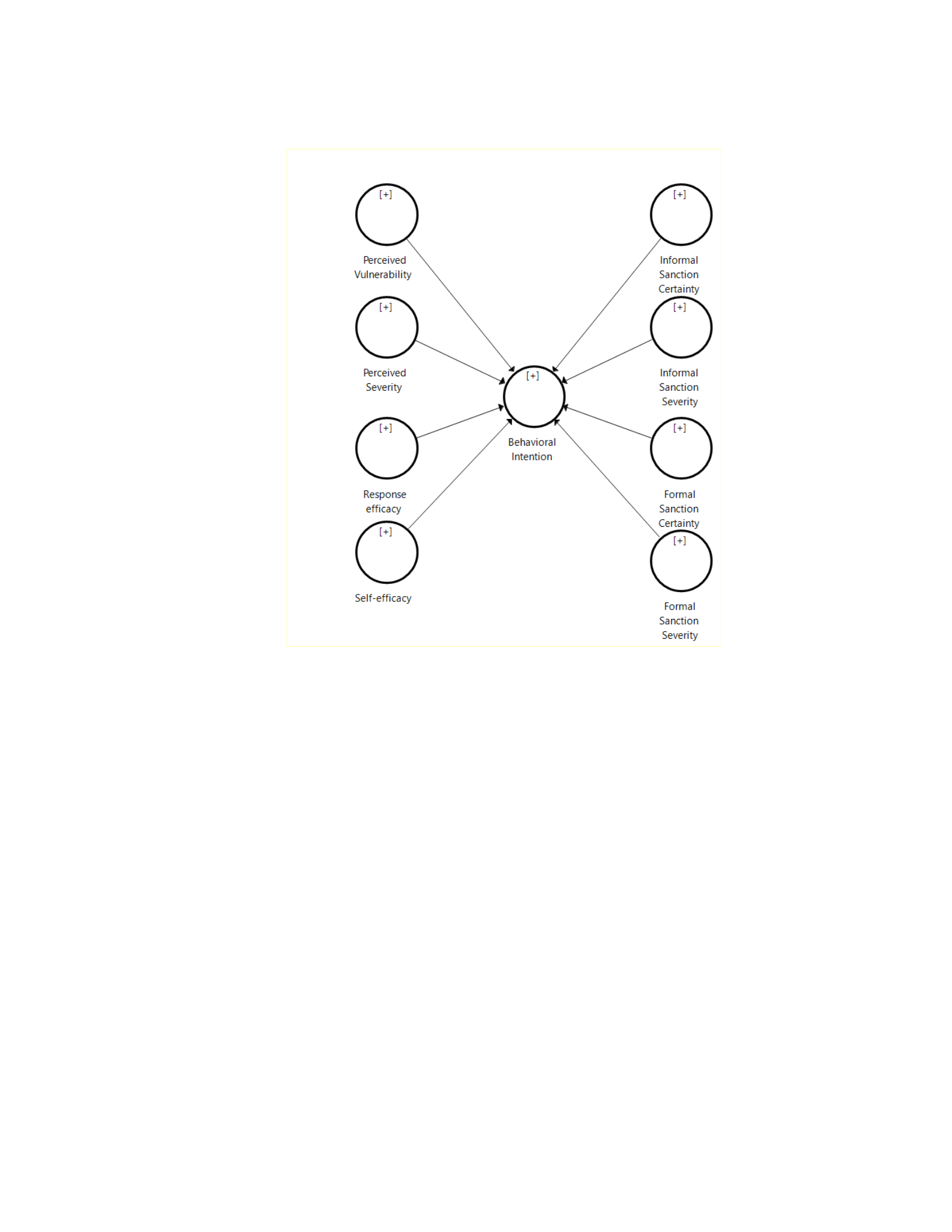
119
Figure 3. Partial least squares-structural equation modeling structural model.
Measurement model. Developing the measurement model was the next step and
required assigning constructs to the variables. Constructs used in the model are described
in Appendix A and were assigned to the associated variable. Figure 4 displays the
measurement model diagram.

120
Figure 4. Partial least squares-structural equation modeling measurement model.
Because there were two groups included in the study, I created two models in SmartPLS,
one for the control group and a second model for the experimental group. The structural
model in Figure 3 and the measurement model in Figure 4 were identical for both groups.
Assigning the constructs to the variable establishes a connection between the variable and
the survey response data. Data collection concluded before the development of the partial
least squares-structural equation modeling model. For the data collection step of the
process, the corresponding response data were imported into each model. Calculation of
the survey response descriptive statistics occurred as part of the data importation process.

121
Descriptive Statistics
Table 5 presents the construct descriptive statistics of the control group data, and
Table 6 presents the experimental group data construct descriptive statistics.
Table 5
Control Group Descriptive Statistics
Control Group
Mean
Median
Standard
Deviation
Behavioral_intention_1
4.704
5
0.758
Behavioral_intention_2
4.676
5
0.765
Behavioral_intention_3
4.521
5
0.853
Self-efficacy_1
4.479
5
0.802
Self-efficacy_2
4.366
5
0.953
Self-efficacy_3
4.31
5
1.001
Perceived_Severity_1
4.211
5
1.006
Perceived_Severity_2
4.437
5
0.945
Perceived_Severity_3
4.577
5
0.725
Perceived_Vulnerability_1
3.887
4
1.015
Perceived_Vulnerability_2
4.183
4
0.969
Perceived_Vulnerability_3
3.93
4
1.117
Response_efficacy_1
4.127
4
0.933
Response_efficacy_2
4.535
5
0.766
Response_efficacy_3
4.521
5
0.767
Formal_sanctions_certainty_1
4.014
4
1.193
Formal_sanctions_certainty_2
4.07
4
1.142
Formal_sanctions_certainty_3
4.268
5
1.034
Formal_sanctions_severity_1
4.366
5
1.065
Formal_sanctions_severity_2
4.38
5
1.053
Formal_sanctions_severity_3
4.296
5
1.093
Informal_sanctions_certainty_1
4.113
4
1.082
Informal_sanctions_certainty_2
4.155
5
1.109
Informal_sanctions_certainty_3
4.268
5
1.006
Informal_sanctions_severity_1
4.042
5
1.261
Informal_sanctions_severity_2
4.268
5
1.174
Informal_sanctions_severity_3
4.099
5
1.246

122
Table 6
Experimental Group Descriptive Statistics
Experimental Group
Mean
Median
Standard
Deviation
Behavioral_intention_1
4.611
5
0.657
Behavioral_intention_2
4.431
5
0.779
Behavioral_intention_3
4.375
5
0.716
Self-efficacy_1
4.542
5
0.644
Self-efficacy_2
4.125
4
0.849
Self-efficacy_3
4.153
4
0.952
Perceived_Severity_1
4.153
4
0.908
Perceived_Severity_2
4.458
5
0.744
Perceived_Severity_3
4.347
5
0.819
Perceived_Vulnerability_1
3.667
4
1.041
Perceived_Vulnerability_2
4.319
4
0.779
Perceived_Vulnerability_3
3.819
4
0.962
Response_efficacy_1
3.875
4
0.985
Response_efficacy_2
4.472
5
0.707
Response_efficacy_3
4.278
4
0.768
Formal_sanctions_certainty_1
4.125
4
0.957
Formal_sanctions_certainty_2
4.181
4
0.918
Formal_sanctions_certainty_3
4.194
4
0.892
Formal_sanctions_severity_1
4.236
4
0.874
Formal_sanctions_severity_2
4.042
4
1.020
Formal_sanctions_severity_3
4.000
4
0.943
Informal_sanctions_certainty_1
3.903
4
1.069
Informal_sanctions_certainty_2
4.181
5
1.058
Informal_sanctions_certainty_3
4.181
5
0.976
Informal_sanctions_severity_1
3.917
4
1.010
Informal_sanctions_severity_2
4.000
4
1.080
Informal_sanctions_severity_3
3.903
4
1.095
With the structural and measurement models created in SmartPLS and data imported into
the models, the next step in the process is the model estimation.

123
Model Estimation
Model estimation is the process of applying the partial least squares-structural
equation modeling algorithm to the model and data. The SmartPLS calculate function
initiates the model estimation. Hair et al. (2017) recommend using a stop criterion of 1 x
10-7 and 300 maximum iterations. Results of the model estimation include the path
coefficients and quality criteria. Table 7 presents the path coefficients for the control and
experimental groups.
Table 7
Variable Path Coefficients
Control
Group
Experimental
Group
Behavioral
Intention
Behavioral
Intention
Formal Sanction Certainty
-0.220
0.066
Formal Sanction Severity
0.148
-0.353
Informal Sanction
Certainty
0.063
0.248
Informal Sanction
Severity
-0.012
0.124
Perceived Severity
0.084
0.245
Perceived Vulnerability
0.160
0.050
Response efficacy
0.332
0.115
Self-efficacy
0.467
0.373
Quality criteria of the results are presented in the measurement model validation and
assessing results discussion.
Measurement Model Validation
A quality criteria evaluation of the measurement and structural models examines
the metrics indicating the predictive abilities of the model. An evaluation of the

124
measurement model includes examining internal consistency, convergent validity, and
discriminant validity (Hair et al., 2017). Internal consistency includes calculating
Cronbach’s alpha and composite reliability. Calculations of Cronbach’s alpha and
composite reliability are part of the SmartPLS quality criteria calculations. Table 8
presents the Cronbach’s alpha for both the control and experimental groups.
Table 8
Variable Cronbach's Alpha
Control
Group
Experimental
Group
Cronbach's
Alpha
Cronbach's
Alpha
Behavioral Intention
0.929
0.884
Formal Sanction Certainty
0.924
0.938
Formal Sanction Severity
0.942
0.938
Informal Sanction Certainty
0.912
0.921
Informal Sanction Severity
0.914
0.902
Perceived Severity
0.817
0.717
Perceived Vulnerability
0.874
0.695
Response efficacy
0.816
0.781
Self-efficacy
0.741
0.725
Cronbach’s alpha values of 0.70 and greater are considered acceptable (Hair et al., 2017).
All the Cronbach’s alpha values for the control group were acceptable. The experimental
group’s Cronbach’s alpha value for Perceived Vulnerability was not acceptable. All the
remaining experimental group Cronbach’s alpha values were acceptable. Table 9 presents
the composite reliability values for the control and experimental groups.

125
Table 9
Variable Composite Reliability
Control
Group
Experimental
Group
Composite
Reliability
Composite
Reliability
Behavioral Intention
0.955
0.928
Formal Sanction Certainty
0.952
0.960
Formal Sanction Severity
0.963
0.960
Informal Sanction Certainty
0.944
0.950
Informal Sanction Severity
0.946
0.938
Perceived Severity
0.889
0.838
Perceived Vulnerability
0.922
0.828
Response efficacy
0.890
0.873
Self-efficacy
0.852
0.840
Composite reliability values in the range between 0.70 and 0.90 are acceptable. Values
exceeding 0.95 are not acceptable (Hair et al., 2017). Several of the composite reliability
values fall into the unacceptable range.
Examining convergent validity includes calculating indicator reliability and
average variance extracted. Indicator reliability is also called outer loadings, and all
indicators should be statistically significant. Outer loading values greater than .708 are
considered significant (Hair et al., 2017). Table 10 presents the outer loading values for
both the control and experimental groups.

126
Table 10
Construct Outer Loadings
Control
Group
Experimental
Group
Outer
Loadings
Outer
Loadings
Behavioral_intention_1
0.937
0.886
Behavioral_intention_2
0.972
0.916
Behavioral_intention_3
0.899
0.900
Formal_sanctions_certainty_1
0.931
0.922
Formal_sanctions_certainty_2
0.959
0.954
Formal_sanctions_certainty_3
0.906
0.954
Formal_sanctions_severity_1
0.957
0.938
Formal_sanctions_severity_2
0.958
0.959
Formal_sanctions_severity_3
0.924
0.930
Informal_sanctions_certainty_1
0.923
0.894
Informal_sanctions_certainty_2
0.911
0.937
Informal_sanctions_certainty_3
0.930
0.956
Informal_sanctions_severity_1
0.956
0.913
Informal_sanctions_severity_2
0.867
0.936
Informal_sanctions_severity_3
0.947
0.892
Perceived_Severity_1
0.800
0.850
Perceived_Severity_2
0.878
0.776
Perceived_Severity_3
0.879
0.759
Perceived_Vulnerability_1
0.874
0.678
Perceived_Vulnerability_2
0.904
0.866
Perceived_Vulnerability_3
0.899
0.805
Response_efficacy_1
0.621
0.671
Response_efficacy_2
0.955
0.915
Response_efficacy_3
0.954
0.900
Self-efficacy_1
0.621
0.802
Self-efficacy_2
0.920
0.761
Self-efficacy_3
0.870
0.828
All the outer loading values are significant except response_efficacy_1 and self-
efficacy_1 for the control group and perceived_vulnerability_1 and response_efficacy_1

127
for the experimental group indicating these constructs do not demonstrate convergent
validity. Table 11 presents the average variance extracted values for the control and
experimental groups.
Table 11
Variable Average Variance Extracted
Control
Group
Experimental
Group
Average
Variance
Extracted
Average
Variance
Extracted
Behavioral Intention
0.876
0.812
Formal Sanction Certainty
0.869
0.890
Formal Sanction Severity
0.895
0.888
Informal Sanction Certainty
0.849
0.864
Informal Sanction Severity
0.854
0.835
Perceived Severity
0.728
0.634
Perceived Vulnerability
0.797
0.619
Response efficacy
0.736
0.699
Self-efficacy
0.663
0.636
Average variance extracted values exceeding 0.50 indicate the construct explains more
than half the indicator variance (Hair et al., 2017). All the average variance extracted
values exceed the 0.50 threshold and are acceptable.
Examining a model’s cross loadings and Fornell-Larcker criterion determines
discriminant validity. Demonstration of discriminant validity occurs when the construct’s
correlation is greater than the other construct’s correlation. In this case, the construct’s
outer loadings would be greater than the cross loadings of the other constructs. The
bolded values in the tables identify the construct’s outer loadings. These values should be

128
greater than the other construct’s cross loadings. Table 12 presents the cross loadings for
the control group.

129
Table 12
Control Group Constructs Cross Loadings
Control Group
Behavioral
Intention
Formal
Sanction
Certainty
Formal
Sanction
Severity
Informal
Sanction
Certainty
Informal
Sanction
Severity
Perceived
Severity
Perceived
Vulnerability
Response
efficacy
Self-
efficacy
Behavioral_intention_1
0.937
0.296
0.447
0.439
0.409
0.682
0.537
0.694
0.682
Behavioral_intention_2
0.972
0.282
0.443
0.454
0.468
0.689
0.554
0.694
0.689
Behavioral_intention_3
0.899
0.315
0.367
0.442
0.497
0.706
0.526
0.632
0.660
Formal_sanctions_certainty_1
0.258
0.931
0.552
0.688
0.515
0.387
0.504
0.490
0.195
Formal_sanctions_certainty_2
0.311
0.959
0.641
0.692
0.506
0.365
0.461
0.448
0.263
Formal_sanctions_certainty_3
0.313
0.906
0.733
0.744
0.528
0.295
0.465
0.437
0.239
Formal_sanctions_severity_1
0.400
0.699
0.957
0.765
0.619
0.457
0.461
0.462
0.233
Formal_sanctions_severity_2
0.448
0.686
0.958
0.769
0.682
0.513
0.523
0.498
0.254
Formal_sanctions_severity_3
0.423
0.588
0.924
0.812
0.734
0.461
0.504
0.420
0.255
Informal_sanctions_certainty_1
0.454
0.734
0.744
0.923
0.761
0.469
0.595
0.649
0.262
Informal_sanctions_certainty_2
0.340
0.744
0.762
0.911
0.717
0.371
0.489
0.350
0.225
Informal_sanctions_certainty_3
0.493
0.644
0.780
0.930
0.748
0.543
0.619
0.547
0.292
Informal_sanctions_severity_1
0.457
0.474
0.603
0.746
0.956
0.518
0.489
0.525
0.311
Informal_sanctions_severity_2
0.463
0.615
0.783
0.781
0.867
0.505
0.471
0.453
0.354
Informal_sanctions_severity_3
0.429
0.438
0.595
0.704
0.947
0.514
0.464
0.514
0.261
Perceived_Severity_1
0.453
0.374
0.497
0.498
0.533
0.800
0.613
0.598
0.395
Perceived_Severity_2
0.639
0.274
0.363
0.351
0.459
0.878
0.524
0.512
0.562
Perceived_Severity_3
0.742
0.325
0.456
0.478
0.459
0.879
0.606
0.728
0.585
Perceived_Vulnerability_1
0.468
0.501
0.440
0.613
0.515
0.601
0.874
0.649
0.270
Perceived_Vulnerability_2
0.599
0.414
0.497
0.516
0.427
0.658
0.904
0.566
0.277
Perceived_Vulnerability_3
0.450
0.465
0.462
0.556
0.447
0.529
0.899
0.600
0.233
Response_efficacy_1
0.336
0.537
0.521
0.612
0.531
0.431
0.700
0.621
0.219
Response_efficacy_2
0.753
0.432
0.427
0.485
0.482
0.708
0.568
0.955
0.510
Response_efficacy_3
0.669
0.389
0.397
0.494
0.451
0.679
0.585
0.954
0.445
Self-efficacy_1
0.377
0.151
0.032
0.100
0.155
0.197
0.054
0.195
0.621
Self-efficacy_2
0.734
0.253
0.311
0.344
0.397
0.653
0.370
0.500
0.920
Self-efficacy_3
0.589
0.197
0.223
0.197
0.217
0.550
0.212
0.416
0.870

130
All the control group outer loadings are greater than the other cross loadings except
response_efficacy_1 and self-efficacy_1 indicating these constructs do not demonstrate
discriminant validity. Table 13 presents the experimental group cross loadings.

131
Table 13
Experimental Group Constructs Cross Loadings
Experimental Group
Behavioral
Intention
Formal
Sanction
Certainty
Formal
Sanction
Severity
Informal
Sanction
Certainty
Informal
Sanction
Severity
Perceived
Severity
Perceived
Vulnerability
Response
efficacy
Self-
efficacy
Behavioral_intention_1
0.886
0.397
0.279
0.527
0.314
0.494
0.349
0.510
0.604
Behavioral_intention_2
0.916
0.428
0.307
0.443
0.400
0.465
0.337
0.430
0.553
Behavioral_intention_3
0.900
0.355
0.258
0.364
0.316
0.572
0.431
0.512
0.507
Formal_sanctions_certainty_1
0.400
0.922
0.504
0.708
0.580
0.401
0.250
0.511
0.361
Formal_sanctions_certainty_2
0.400
0.954
0.594
0.706
0.621
0.331
0.223
0.470
0.370
Formal_sanctions_certainty_3
0.434
0.954
0.647
0.782
0.600
0.401
0.256
0.526
0.373
Formal_sanctions_severity_1
0.327
0.568
0.938
0.716
0.719
0.514
0.230
0.493
0.336
Formal_sanctions_severity_2
0.315
0.580
0.959
0.705
0.789
0.572
0.345
0.493
0.348
Formal_sanctions_severity_3
0.217
0.611
0.930
0.663
0.786
0.544
0.365
0.444
0.246
Informal_sanctions_certainty_1
0.421
0.735
0.650
0.894
0.728
0.471
0.311
0.468
0.373
Informal_sanctions_certainty_2
0.482
0.740
0.727
0.937
0.702
0.497
0.313
0.516
0.423
Informal_sanctions_certainty_3
0.479
0.697
0.684
0.956
0.700
0.515
0.306
0.557
0.356
Informal_sanctions_severity_1
0.364
0.599
0.675
0.717
0.913
0.453
0.391
0.438
0.274
Informal_sanctions_severity_2
0.371
0.618
0.806
0.731
0.936
0.517
0.347
0.520
0.279
Informal_sanctions_severity_3
0.298
0.518
0.732
0.632
0.892
0.397
0.278
0.398
0.262
Perceived_Severity_1
0.554
0.436
0.530
0.559
0.483
0.850
0.474
0.588
0.478
Perceived_Severity_2
0.378
0.305
0.490
0.404
0.439
0.776
0.472
0.570
0.298
Perceived_Severity_3
0.387
0.174
0.336
0.261
0.255
0.759
0.513
0.490
0.448
Perceived_Vulnerability_1
0.227
0.132
0.181
0.196
0.283
0.314
0.678
0.293
0.143
Perceived_Vulnerability_2
0.365
0.271
0.266
0.261
0.255
0.476
0.866
0.422
0.279
Perceived_Vulnerability_3
0.359
0.186
0.301
0.314
0.353
0.594
0.805
0.418
0.348
Response_efficacy_1
0.316
0.488
0.598
0.612
0.610
0.598
0.430
0.671
0.352
Response_efficacy_2
0.550
0.430
0.319
0.387
0.307
0.587
0.416
0.915
0.428
Response_efficacy_3
0.447
0.459
0.457
0.476
0.437
0.581
0.405
0.900
0.403
Self-efficacy_1
0.609
0.391
0.301
0.423
0.273
0.459
0.268
0.404
0.802
Self-efficacy_2
0.405
0.224
0.255
0.243
0.217
0.388
0.239
0.354
0.761
Self-efficacy_3
0.406
0.278
0.235
0.277
0.203
0.377
0.312
0.356
0.828

132
For the experimental group, all the outer loadings exceeded the other construct’s cross
loadings demonstrating discriminant validity. The other measure of discriminant validity
is the Fornell-Larcker criterion. The Table 14 and Table 15 presents the Fornell-Larcker
criterion results for the control group and experimental group, respectively.

133
Table 14
Control Group Fornell-Larcker Criterion
Behavioral
Intention
Formal
Sanction
Certainty
Formal
Sanction
Severity
Informal
Sanction
Certainty
Informal
Sanction
Severity
Perceived
Severity
Perceived
Vulnerability
Response
efficacy
Self-
efficacy
Behavioral Intention
0.936
Formal Sanction
Certainty
0.318
0.932
Formal Sanction
Severity
0.449
0.695
0.946
Informal Sanction
Certainty
0.476
0.761
0.826
0.922
Informal Sanction
Severity
0.488
0.554
0.718
0.807
0.924
Perceived Severity
0.739
0.372
0.505
0.511
0.555
0.853
Perceived
Vulnerability
0.576
0.510
0.525
0.625
0.515
0.674
0.892
Response efficacy
0.720
0.490
0.487
0.575
0.539
0.723
0.673
0.858
Self-efficacy
0.723
0.252
0.262
0.286
0.336
0.617
0.293
0.482
0.814

134
Table 15
Experimental Group Fornell-Larcker Criterion
Experimental Group
Behavioral
Intention
Formal
Sanction
Certainty
Formal
Sanction
Severity
Informal
Sanction
Certainty
Informal
Sanction
Severity
Perceived
Severity
Perceived
Vulnerability
Response
efficacy
Self-
efficacy
Behavioral Intention
0.901
Formal Sanction
Certainty
0.437
0.943
Formal Sanction
Severity
0.312
0.618
0.942
Informal Sanction
Certainty
0.497
0.778
0.740
0.929
Informal Sanction
Severity
0.380
0.636
0.807
0.762
0.914
Perceived Severity
0.566
0.401
0.575
0.532
0.503
0.796
Perceived
Vulnerability
0.413
0.258
0.325
0.333
0.374
0.604
0.787
Response efficacy
0.539
0.533
0.509
0.554
0.498
0.690
0.488
0.836
Self-efficacy
0.618
0.390
0.337
0.414
0.297
0.521
0.342
0.471
0.797

135
Bolded items in the table are the square root of the construct’s average variance expected.
This value should be greater than the construct’s correlation with the other constructs.
This condition is satisfied for both groups because the square root of the average variance
expected is greater than the other constructs demonstrating discriminant validity. All the
measurement model evaluation methods provide insight into construct measure validity.
Structural model evaluation methods examine the model's ability to predict dependent
variable variance (Hair et al., 2017).
Structural Model Validation
In assessing the results of the structural model, the coefficients of determination,
predictive relevance, size and significance of the path coefficients, and f 2 and q2 effect
sizes were included (Hair et al., 2017). The primary analysis method for structural model
validation is the coefficients of determination or R2 values. Table 16 presents the R2
values for the control and experimental groups.
Table 16
Coefficients of Determination
Control Group
Experimental Group
R Square
R Square
Adjusted
R Square
R Square
Adjusted
Behavioral Intention
0.752
0.720
0.540
0.482
In addition to the R2 value is the R2 adjusted value. An R2 adjusted calculation takes
model complexity and sample size into consideration to avoid complex model bias (Hair
et al., 2017). Hair et al. (2017) stated defining an acceptable R2 is dependent on model
complexity and research discipline. Model complexity and research discipline variability

136
make defining a rule for acceptable R2 values difficult. Hair et al. identified an R2 value
of 0.20 as high for consumer behavior research. Hair et al. also defined R2 values of 0.75,
0.50, and 0.25 respectively as substantial, moderate, and weak values for marketing
research. Predictive relevance, or Q2, is the next step in the analysis of the structural
model.
A blindfolding calculation was performed on the model to determine predictive
relevance. The output from the blindfolding calculation was a construct crossvalidated
redundancy report. Table 17 presents a construct crossvalidated redundancy report for the
control and experimental groups.
Table 17
Construct Crossvalidated Redundancy Report
Construct Crossvalidated Redundancy
Control Group
Experimental Group
SSO
SSE
Q² (=1-SSE/SSO)
SSO
SSE
Q² (=1-SSE/SSO)
Behavioral Intention
213
93.246
0.562
216
140.105
0.351
Formal Sanction Certainty
213
213
216
216
Formal Sanction Severity
213
213
216
216
Informal Sanction Certainty
213
213
216
216
Informal Sanction Severity
213
213
216
216
Perceived Severity
213
213
216
216
Perceived Vulnerability
213
213
216
216
Response efficacy
213
213
216
216
Self-efficacy
213
213
216
216
The Q2 value for the variable Behavioral Intention is greater than zero for both the
control and experimental groups. The Q2 value for Behavioral Intention is 0.562 and
0.351 for the control and experimental groups respectively. Although the path coefficient

137
calculations are part of the partial least squares algorithm, an additional calculation is
necessary to compute path coefficient significance.
A bootstrapping process calculates additional statistical information on the path
coefficients. The output from the bootstrapping calculation includes the path coefficients,
t values, and p-values for each variable. Each of the path coefficient’s p-value is used to
determine if the path coefficient is statistically significant. Bootstrapping calculation
results for the control group are presented in Table 18. Table 19 presents the
experimental group bootstrapping results.

138
Table 18
Control Group Path Coefficient Statistics
Control Group
Original
Sample (O)
Sample
Mean (M)
Standard
Deviation
(STDEV)
t Statistics
(|O/STDEV|)
p Values
Significance
(p < 0.05)
Formal Sanction Certainty -> Behavioral Intention
-0.22
-0.205
0.112
1.964
0.050
No
Formal Sanction Severity -> Behavioral Intention
0.148
0.139
0.135
1.092
0.276
No
Informal Sanction Certainty -> Behavioral Intention
0.063
0.065
0.162
0.392
0.695
No
Informal Sanction Severity -> Behavioral Intention
-0.012
0.002
0.123
0.100
0.920
No
Perceived Severity -> Behavioral Intention
0.084
0.088
0.126
0.668
0.505
No
Perceived Vulnerability -> Behavioral Intention
0.16
0.149
0.109
1.470
0.142
No
Response efficacy -> Behavioral Intention
0.332
0.306
0.133
2.495
0.013
Yes
Self-efficacy -> Behavioral Intention
0.467
0.472
0.103
4.524
0.000
Yes

139
Table 19
Experimental Group Path Coefficient Statistics
Experimental Group
Original
Sample (O)
Sample
Mean (M)
Standard
Deviation
(STDEV)
t Statistics
(|O/STDEV|)
p Values
Significance
(p < 0.05)
Formal Sanction Certainty -> Behavioral Intention
0.066
0.061
0.158
0.416
0.678
No
Formal Sanction Severity -> Behavioral Intention
-0.353
-0.344
0.182
1.943
0.053
No
Informal Sanction Certainty -> Behavioral Intention
0.248
0.207
0.203
1.222
0.222
No
Informal Sanction Severity -> Behavioral Intention
0.124
0.152
0.198
0.629
0.53
No
Perceived Severity -> Behavioral Intention
0.245
0.244
0.165
1.479
0.14
No
Perceived Vulnerability -> Behavioral Intention
0.05
0.044
0.111
0.454
0.65
No
Response efficacy -> Behavioral Intention
0.115
0.12
0.203
0.568
0.57
No
Self-efficacy -> Behavioral Intention
0.373
0.381
0.143
2.599
0.01
Yes

140
A 95% significance level was used to determine path coefficient significance. A p-value
less than 0.05 would indicate a statistically significant path coefficient. Examining the
bootstrapping results tables indicates only the self-efficacy path coefficient for the control
group and self-efficacy and response efficacy path coefficients for the experimental
group are significant. The final step in the model structure analysis is the calculation of
the f 2 and q2 effect sizes.
The f 2 and q2 effect sizes provide additional information about the quality of the
model estimations (Hair et al., 2017). A change in the R2 value when a construct is
removed is analyzed to determine if the change has a substantive effect. The
measurement of this change is the f 2 effect size. Values of 0.02, 0.15, and 0.35 are
considered small, medium, and large effect sizes, respectively. Table 20 presents the f 2
effect size calculations results for the control and experimental group variables.
Table 20
Variable f 2 Effect Size
Control Group
Experimental Group
Behavioral
Intention
Effect
Size
Behavioral
Intention
Effect
Size
Formal Sanction Certainty
0.073
Medium
0.003
Small
Formal Sanction Severity
0.025
Medium
0.076
Medium
Informal Sanction Certainty
0.002
Small
0.033
Medium
Informal Sanction Severity
0.000
Small
0.009
Small
Perceived Severity
0.008
Small
0.044
Medium
Perceived Vulnerability
0.038
Medium
0.003
Small
Response efficacy
0.167
Large
0.012
Small
Self-efficacy
0.496
Large
0.202
Large

141
Only the Self-efficacy variable for the experimental group has a large effect size. For the
control group, the response efficacy and self-efficacy variables had a large effect size.
The remaining variables for both groups had either small or medium effect sizes.
Calculation of the q2 effect sizes is calculated using the previously defined Q2 values.
Because the q2 effect size calculation uses the difference in the Q2 values and only one
variable had a positive Q2 value, calculation of the q2 effect sizes was not possible. A
final inter-group response difference statistical analysis will be the final step of the study
results.
Group Difference Analysis
Because the study includes two groups of participants, a comparison of group
survey responses was performed to analyze statistical differences between the groups. For
each construct, a comparison was made between the response mean and the standard
deviation. An algorithm described by Aczel and Sounderpandian (2006) for calculating a
Z test statistic compared the statistical difference between two means. The mean
statistical difference test used a null hypothesis assuming there was no statistical
difference between the means. Elements included in the algorithm were construct mean
and standard deviation, significance level, and sample size. A 95% significance level and
sample size of 71 and 72 for the control and experimental groups, respectively, were used
for all calculations. Table 21 presents a summary of the mean statistical difference Z test
calculations.

142
Table 21
Construct Mean Statistical Difference Comparison
Control Group
Experimental Group
Mean
µ1
Standard
Deviation
Mean
µ2
Standard
Deviation
p-value
µ1-µ2=0
Behavioral_intention_1
4.704
0.758
4.611
0.657
0.433
Not Reject
Behavioral_intention_2
4.676
0.765
4.431
0.779
0.058
Not Reject
Behavioral_intention_3
4.521
0.853
4.375
0.716
0.268
Not Reject
Self-efficacy_1
4.479
0.802
4.542
0.644
0.605
Not Reject
Self-efficacy_2
4.366
0.953
4.125
0.849
0.110
Not Reject
Self-efficacy_3
4.310
1.001
4.153
0.952
0.337
Not Reject
Perceived_Severity_1
4.211
1.006
4.153
0.908
0.718
Not Reject
Perceived_Severity_2
4.437
0.945
4.458
0.744
0.883
Not Reject
Perceived_Severity_3
4.577
0.725
4.347
0.819
0.075
Not Reject
Perceived_Vulnerability_1
3.887
1.015
3.667
1.041
0.201
Not Reject
Perceived_Vulnerability_2
4.183
0.969
4.319
0.779
0.355
Not Reject
Perceived_Vulnerability_3
3.930
1.117
3.819
0.962
0.525
Not Reject
Response_efficacy_1
4.127
0.933
3.875
0.985
0.116
Not Reject
Response_efficacy_2
4.535
0.766
4.472
0.707
0.609
Not Reject
Response_efficacy_3
4.521
0.767
4.278
0.768
0.058
Not Reject
Formal_sanctions_certainty_1
4.014
1.193
4.125
0.957
0.540
Not Reject
Formal_sanctions_certainty_2
4.070
1.142
4.181
0.918
0.522
Not Reject
Formal_sanctions_certainty_3
4.268
1.034
4.194
0.892
0.647
Not Reject
Formal_sanctions_severity_1
4.366
1.065
4.236
0.874
0.425
Not Reject
Formal_sanctions_severity_2
4.380
1.053
4.042
1.020
0.051
Not Reject
Formal_sanctions_severity_3
4.296
1.093
4.000
0.943
0.083
Not Reject
Informal_sanctions_certainty_1
4.113
1.082
3.903
1.069
0.243
Not Reject
Informal_sanctions_certainty_2
4.155
1.109
4.181
1.058
0.886
Not Reject
Informal_sanctions_certainty_3
4.268
1.006
4.181
0.976
0.600
Not Reject
Informal_sanctions_severity_1
4.042
1.261
3.917
1.010
0.513
Not Reject
Informal_sanctions_severity_2
4.268
1.174
4.000
1.080
0.156
Not Reject
Informal_sanctions_severity_3
4.099
1.246
3.903
1.095
0.318
Not Reject
Results of the Z test statistic indicated no p-value was less than 0.05 indicating there was
no statistical difference between the means and could not reject the null hypothesis for all
constructs.

143
Hypotheses Testing
Path coefficient values and their corresponding statistical significance were used
for hypotheses testing. These values would determine if a null hypothesis was rejected or
not rejected. For the reader's convenience Table 22 and Table 23 repeat the presentation
of the path coefficient values of the control and experimental groups, respectively.

144
Table 22
Control Group Path Coefficient Statistics
Control Group
Original
Sample (O)
Sample
Mean (M)
Standard
Deviation
(STDEV)
t Statistics
(|O/STDEV|)
p Values
Significance
(p < 0.05)
Formal Sanction Certainty -> Behavioral Intention
-0.22
-0.205
0.112
1.964
0.050
No
Formal Sanction Severity -> Behavioral Intention
0.148
0.139
0.135
1.092
0.276
No
Informal Sanction Certainty -> Behavioral Intention
0.063
0.065
0.162
0.392
0.695
No
Informal Sanction Severity -> Behavioral Intention
-0.012
0.002
0.123
0.100
0.920
No
Perceived Severity -> Behavioral Intention
0.084
0.088
0.126
0.668
0.505
No
Perceived Vulnerability -> Behavioral Intention
0.16
0.149
0.109
1.470
0.142
No
Response efficacy -> Behavioral Intention
0.332
0.306
0.133
2.495
0.013
Yes
Self-efficacy -> Behavioral Intention
0.467
0.472
0.103
4.524
0.000
Yes

145
Table 23
Experimental Group Path Coefficient Statistics
Experimental Group
Original
Sample (O)
Sample
Mean (M)
Standard
Deviation
(STDEV)
t Statistics
(|O/STDEV|)
p Values
Significance
(p < 0.05)
Formal Sanction Certainty -> Behavioral Intention
0.066
0.061
0.158
0.416
0.678
No
Formal Sanction Severity -> Behavioral Intention
-0.353
-0.344
0.182
1.943
0.053
No
Informal Sanction Certainty -> Behavioral Intention
0.248
0.207
0.203
1.222
0.222
No
Informal Sanction Severity -> Behavioral Intention
0.124
0.152
0.198
0.629
0.53
No
Perceived Severity -> Behavioral Intention
0.245
0.244
0.165
1.479
0.14
No
Perceived Vulnerability -> Behavioral Intention
0.05
0.044
0.111
0.454
0.65
No
Response efficacy -> Behavioral Intention
0.115
0.12
0.203
0.568
0.57
No
Self-efficacy -> Behavioral Intention
0.373
0.381
0.143
2.599
0.01
Yes

146
Hypotheses analysis begins with the control group.
RQ1–What is the effect of informal sanction certainty on individual’s behavioral
intention to comply with information security policies?
H01: Informal sanction certainty will have a nonpositive affect on an individual’s
information security policy compliance behavioral intention.
Ha1: Informal sanction certainty will have a statistically significant positive affect
on an individual’s information security policy compliance behavioral intention.
Each of the constructs used a 5-point Likert scale for participant responses. The
path coefficient for informal sanction certainty was -0.063 with a p-value of .392
indicating the path coefficient was not significant. Because the path coefficient was not
significant, Ha1 was rejected, and H01 was not rejected. This result indicated informal
sanction certainty did not have an effect on an individual’s information security policy
compliance behavioral intention.
RQ2–What is the effect of informal sanction severity on an individual’s
behavioral intention to comply with information security policies?
H02: Informal sanction severity will have a nonpositive affect on an individual’s
information security policy compliance behavioral intention.
Ha2: Informal sanction severity will have a statistically significant positive affect
on an individual’s information security policy compliance behavioral intention.
The path coefficient for informal sanction severity was -0.012 with a p-value of
.920 indicating the path coefficient was not significant. Because the path coefficient was

147
not significant, Ha2 was rejected, and H02 was not rejected. This result indicated informal
sanction severity did not have a positive effect on an individual’s information security
policy compliance behavioral intention.
RQ3–What is the effect of formal sanction certainty on an individual’s behavioral
intention to comply with information security policies?
H03: Formal sanction certainty will have a nonpositive affect on an individual’s
information security policy compliance behavioral intention.
Ha3: Formal sanction certainty will have a statistically significant positive affect
on an individual’s information security policy compliance behavioral intention.
The path coefficient for formal sanction certainty was -0.220 with a p-value of
.050 indicating the path coefficient was not significant. Because the path coefficient was
not significant, Ha3 was rejected, and H03 was not rejected. This result indicated formal
sanction certainty did not have a positive effect on an individual’s information security
policy compliance behavioral intention.
RQ4–What is the effect of formal sanction severity on an individual’s behavioral
intention to comply with information security policies?
H04: Formal sanction severity will have a nonpositive affect on an individual’s
information security policy compliance behavioral intention.
Ha4: Formal sanction severity will have a statistically significant positive affect
on an individual’s information security policy compliance behavioral intention.
The path coefficient for formal sanction severity was 0.148 with a p-value of .276
indicating the path coefficient was not significant. Because the path coefficient was not

148
significant, Ha4 was rejected, and H04 was not rejected. This result indicated formal
sanction severity did not have a positive effect on an individual’s information security
policy compliance behavioral intention.
RQ5–What is the effect of perceived threat vulnerability on an individual’s
behavioral intention to comply with information security policies?
H05: Perceived threat vulnerability will have a nonpositive affect on an
individual’s information security policy compliance behavioral intention.
Ha5: Perceived threat vulnerability will have a statistically significant positive
affect on an individual’s information security policy compliance behavioral intention.
The path coefficient for perceived threat vulnerability was 0.160 with a p-value of
.142 indicating the path coefficient was not significant. Because the path coefficient was
not significant, Ha5 was rejected, and H05 was not rejected. This result perceived threat
vulnerability did not have a positive effect on an individual’s information security policy
compliance behavioral intention.
RQ6–What is the effect of perceived threat severity on an individual’s behavioral
intention to comply with information security policies?
H06: Perceived threat severity will have a nonpositive affect on an individual’s
information security policy compliance behavioral intention.
Ha6: Perceived threat severity will have a statistically significant positive affect
on an individual’s information security policy compliance behavioral intention.
The path coefficient for perceived threat severity was 0.084 with a p-value of .505
indicating the path coefficient was not significant. Because the path coefficient was not

149
significant, Ha6 was rejected, and H06 was not rejected. This result indicated perceived
threat severity did not have a positive effect on an individual’s information security
policy compliance behavioral intention.
RQ7–What is the effect of response efficacy on an individual’s behavioral
intention to comply with information security policies?
H07: Response efficacy will have a nonpositive affect on an individual’s
information security policy compliance behavioral intention.
Ha7: Response efficacy will have a statistically significant positive affect on an
individual’s information security policy compliance behavioral intention.
The path coefficient for response efficacy was 0.332 with a p-value of .013
indicating the path coefficient was significant. Because the path coefficient was
significant, Ha7 was not rejected, and H07 was rejected. This result indicated response
efficacy did have a positive effect on an individual’s information security policy
compliance behavioral intention.
RQ8–What is the effect of self-efficacy on an individual’s behavioral intention to
comply with information security policies?
H08: Self-efficacy will have a nonpositive affect on an individual’s information
security policy compliance behavioral intention.
Ha8: Self-efficacy will have a statistically significant positive affect on an
individual’s information security policy compliance behavioral intention.
The path coefficient for self-efficacy was 0.467 with a p-value of 0.000 indicating
the path coefficient was significant. Because the path coefficient was significant, Ha8 was

150
not rejected, and H08 was rejected. This result indicated self-efficacy did have a positive
effect on an individual’s information security policy compliance behavioral intention.
Hypotheses analysis continues with the experimental group.
RQ1–What is the effect of informal sanction certainty on individual’s behavioral
intention to comply with information security policies?
H01: Informal sanction certainty will have a nonpositive affect on an individual’s
information security policy compliance behavioral intention.
Ha1: Informal sanction certainty will have a statistically significant positive affect
on an individual’s information security policy compliance behavioral intention.
The path coefficient for informal sanction certainty was 0.248 with a p-value of
.222 indicating the path coefficient was not significant. Because the path coefficient was
not significant, Ha1 was rejected, and H01 was not rejected. This result indicated informal
sanction certainty did not have an effect on an individual’s information security policy
compliance behavioral intention.
RQ2–What is the effect of informal sanction severity on an individual’s
behavioral intention to comply with information security policies?
H02: Informal sanction severity will have a nonpositive affect on an individual’s
information security policy compliance behavioral intention.
Ha 2: Informal sanction severity will have a statistically significant positive affect
on an individual’s information security policy compliance behavioral intention.
The path coefficient for informal sanction severity was 0.124 with a p-value of
.530 indicating the path coefficient was not significant. Because the path coefficient was

151
not significant, Ha2 was rejected, and H02 was not rejected. This result indicated informal
sanction severity did not have an effect on an individual’s information security policy
compliance behavioral intention.
RQ3–What is the effect of formal sanction certainty on an individual’s behavioral
intention to comply with information security policies?
H03: Formal sanction certainty will have a nonpositive affect on an individual’s
information security policy compliance behavioral intention.
Ha3: Formal sanction certainty will have a statistically significant positive affect
on an individual’s information security policy compliance behavioral intention.
The path coefficient for formal sanction certainty was 0.660 with a p-value of
0.678 indicating the path coefficient was not significant. Because the path coefficient was
not significant, Ha3 was rejected, and H03 was not rejected. This result indicated formal
sanction certainty did not have an effect on an individual’s information security policy
compliance behavioral intention.
RQ4–What is the effect of formal sanction severity on an individual’s behavioral
intention to comply with information security policies?
H04: Formal sanction severity will have a nonpositive affect on an individual’s
information security policy compliance behavioral intention.
Ha4: Formal sanction severity will have a statistically significant positive affect
on an individual’s information security policy compliance behavioral intention.
The path coefficient for formal sanction severity was -0.353 with a p-value of
.053 indicating the path coefficient was not significant. Because the path coefficient was

152
not significant, Ha4 was rejected, and H04 was not rejected. This result indicated formal
sanction severity did not have a positive effect on an individual’s information security
policy compliance behavioral intention.
RQ5–What is the effect of perceived threat vulnerability on an individual’s
behavioral intention to comply with information security policies?
H05: Perceived threat vulnerability will have a nonpositive affect on an
individual’s information security policy compliance behavioral intention.
Ha5: Perceived threat vulnerability will have a statistically significant positive
affect on an individual’s information security policy compliance behavioral intention.
The path coefficient for perceived threat vulnerability was 0.050 with a p-value of
.650 indicating the path coefficient was not significant. Because the path coefficient was
not significant, Ha5 was rejected, and H05 was not rejected. This result perceived threat
vulnerability did not have a positive effect on an individual’s information security policy
compliance behavioral intention.
RQ6–What is the effect of perceived threat severity on an individual’s behavioral
intention to comply with information security policies?
H06: Perceived threat severity will have a nonpositive affect on an individual’s
information security policy compliance behavioral intention.
Ha6: Perceived threat severity will have a statistically significant positive affect
on an individual’s information security policy compliance behavioral intention.
The path coefficient for perceived threat severity was 0.245 with a p-value of .140
indicating the path coefficient was not significant. Because the path coefficient was not

153
significant, Ha6 was rejected, and H06 was not rejected. This result indicated perceived
threat severity did not have a positive effect on an individual’s information security
policy compliance behavioral intention.
RQ7–What is the effect of response efficacy on an individual’s behavioral
intention to comply with information security policies?
H07: Response efficacy will have a nonpositive affect on an individual’s
information security policy compliance behavioral intention.
Ha7: Response efficacy will have a statistically significant positive affect on an
individual’s information security policy compliance behavioral intention.
The path coefficient for response efficacy was 0.115 with a p-value of .570
indicating the path coefficient was not significant. Because the path coefficient was not
significant, Ha7 was rejected, and H07 was not rejected. This result indicated response
efficacy did not have a positive effect on an individual’s information security policy
compliance behavioral intention.
RQ8–What is the effect of self-efficacy on an individual’s behavioral intention to
comply with information security policies?
H08: Self-efficacy will have a nonpositive affect on an individual’s information
security policy compliance behavioral intention.
Ha8: Self-efficacy will have a statistically significant positive affect on an
individual’s information security policy compliance behavioral intention.
The path coefficient for self-efficacy was 0.373 with a p-value of 0.010 indicating
the path coefficient was significant. Because the path coefficient was significant, Ha8 was

154
not rejected, and H08 was rejected. This result indicated self-efficacy did have a positive
effect on an individual’s information security policy compliance behavioral intention.
Summary
Data collection began with the development of an online survey and distributed to
SurveyMonkey audience participants. A suspension of the survey occurred because of
excessive survey abandonment, and an insufficient number of completed responses were
received. The survey was distributed to SurveyMonkey audience participants a second
time to obtain additional responses. Data analysis started with descriptive statistics of the
control and experimental groups’ demographics and responses. Survey responses were
further analyzed using partial least squares-structural equation modeling. Results from
this analysis provided information related to the quality of the measurement and
structural models. Path coefficients calculated during the partial least squares-structural
equation modeling process were used to test each research question and hypothesis.
Hypotheses testing indicated the response efficacy and self-efficacy research questions in
the control group and the self-efficacy research questions in the experimental group were
statistically significant. Results of the hypotheses testing also indicated the remaining
hypotheses were not statistically significant for both participant groups and not supported
by the data.
Chapter 5 includes a summary of the statistical results and interpretation of the
findings. The interpretation also includes a discussion on the lack of statistically
significant results for many of the variables. Following the interpretation of the findings
is a discussion on study limitations, recommendations, and implications. Included in the

155
implication discussion is a description of the effect of this research on social change.
Chapter 5 closes with the conclusions developed as a result of this study.

156
Chapter 5: Discussion, Conclusions, and Recommendations
Interpretation of Findings
Interpretation of the findings begins where the data analysis ended, examining the
statistical differences between the two study groups. These statistical differences may
provide a basis for understanding the finding of other areas of the study. Table 21
presents a comparison of the construct response means. For all of the study constructs,
there was no statistically significant difference between the responses from the control
and experimental groups. One reason for this lack of statistically significant difference
between the groups could be the fear appeal presented in the experimental treatment did
not invoke a change in motivation to comply with an organization’s information security
policies. Rogers (1975) noted a communication with a high level of fear appeal has a
greater influence on motivation than a low level of fear appeal. Because there was no
statistically significant difference between the group receiving the experimental treatment
and the group that did not receive the experimental treatment, the fear appeal contained in
the experimental treatment may not have aroused an emotion sufficient enough to
influence an individual’s behavior. A similar outcome was identified by Boss et al.
(2015) in a study incorporating a high and a low-level fear appeal. Boss et al. found that a
high-level fear appeal had two times the influence on behavioral intention than a low-
level fear appeal. The Boss et al. high-level fear appeal model constructs all had a
significant influence on behavioral intention. The high-level fear appeal significance
contrasted with the Boss et al. low-level fear appeal model where some of the constructs
did not have a significant influence on behavioral intention.

157
Another reason for the lack of construct response statistically significant
difference could have been the selected population of information technology
professionals. Construct responses from the control group indicated a high level of
information security policy compliance. Many of the control group construct response
averages were between four and five. Both groups had a high level of information
security policy awareness, 95.8% for the control group and 93.1% for the experimental
group. Given this high level of information security policy awareness, the fear appeal in
the experimental treatment may not have been sufficient enough to increase information
security policy behavioral intention for information technology professionals. The next
step in the interpretation of the findings was examining the validity of the partial least
squares-structural equation modeling model, starting with the measurement model.
Determining measurement model validity includes examining the results from
Cronbach’s alpha, composite reliability, indicator reliability, average variance extracted,
cross loadings, and Fornell-Larcker criteria calculations (Hair et al., 2017). Table 8
presents the Cronbach’s alpha calculation results. All of the results, except one variable
in one group, exceeded the 0.700 threshold. The value of the single exception was .695
close enough to be considered acceptable. All of the composite reliability results
presented in Table 9 exceeded the 0.700 threshold and are considered acceptable. Several
of the composite reliability values exceeded the 0.950 threshold. All of the constructs are
measuring the same thing and may not be a valid measure (Hair et al., 2017). Given the
one item that was only slightly below the threshold and the remaining Cronbach’s alpha

158
and composite reliability values exceeded the recommended thresholds, demonstrating
internal consistency of the model.
Indicator reliability and average variance extracted value results are used to
determine convergent validity. Indicator reliability, or outer loadings, results were
presented in Table 10. Except for three outer loadings results, all of the outer loadings
exceeded the recommended 0.708 threshold. Indicators with a value of 0.40 to 0.70
should be considered for removal. Removal of an indicator should be done to ensure that
there are no reductions in the composite reliability and average variances values (Hair et
al., 2017). Removal of indicators to determine the effects of their removal was beyond
the scope of this study. Table 11 presents the average variance extracted values. All of
the values exceed the recommended 0.50 threshold. Except three of the outer loadings, all
of the values exceeded their respective threshold and demonstrated convergent validity.
Construct cross loadings and Fornell-Larcker criterion analyses are used to
determine discriminant validity. A review of the cross loadings presented in Table 12 and
Table 13 indicated that all but two cross loadings were greater than their corresponding
variable cross loadings. This result demonstrates discriminant validity for a majority of
the constructs. A second approach to determining discriminant validity is the Fornell-
Larcker criterion. When the indicator values are greater than the correlation with the
remaining variables, discriminant validity is demonstrated (Hair et al., 2017). All control
group Fornell-Larcker criterion presented in Table 14 and all experimental group Fornell-
Larcker criterion presented in Table 15 have indicator values that are greater than the
remaining variable correlation values demonstrating discriminant validity.

159
Taking a holistic view of the measurement model validity analyses, with a few
exceptions, internal consistency, convergent validity, and discriminant validity
demonstrated model validity. The measurement model was validated by a majority of the
analyses conducted. Several individual calculations were outside the acceptable range
with some inconsistencies between the control and experimental groups and between
tests. These inconsistencies offer an opportunity for investigation by future researchers.
Following the interpretation of the measurement model is an interpretation of the results
from the structural model analysis.
Analysis of the structural model included calculating coefficients of
determination, predictive relevance, size and significance of the path coefficients, and f 2
and q2 effect sizes. Calculating the R2 determines the coefficient of determination value
for the model. For this study, the R2 value for the control group was 0.752 and 0.540 for
the experimental group. An R2 value of 0.20 is considered acceptable for behavioral
studies (Hair et al., 2017). Johnston et al. (2015) examined the effect of a fear appeal
using constructs from both protection motivation theory and deterrence theory. An R2
value of 0.32 was the result of the calculation for the model examining compliance
behavioral intention (Johnston et al., 2015). In another study using protection motivation
theory, the model used by Johnston and Warkentin (2010) had an R2 value of 0.271.
Siponen and Vance (2010) developed a model using deterrence theory and the model
analysis produced an R2 value of 0.470. The R2 value of both the control and
experimental groups exceeded the level recommended by Hair et al. and the other model

160
values found in the literature. Because the study R2 values exceeded these benchmark
values, both the control and experimental groups R2 values are considered acceptable.
The model Q2 values determine predictive relevance. Table 15 presents the
construct crossvalidated redundancy report. The Q2 value for behavioral intention is
0.562 for the control group and 0.351 for the experimental group. Values of Q2 greater
than zero indicate the model’s predictive relevance is acceptable (Hair et al., 2017).
Because both the control and experimental groups’ Q2 values exceed zero, the model’s
predictive relevance is acceptable. Other studies examined for comparison of results did
not report a Q2 value.
Tables 16 and 17 presents the model path coefficients and their associated
statistical significance. For the control group, the path coefficients for response efficacy
and self-efficacy are statistically significant. For the experimental group, only the self-
efficacy path coefficient is statistically significant. Boss et al. (2015) had a similar result
in a study examining a fear appeal. Two levels of fear appeal, high and low, were used as
an experimental treatment to examine their effect on students. Results of the low fear
appeal model analysis indicated nonsignificant path coefficients for most of the
relationships. A similar situation could be occurring with this dissertation study. The fear
appeal included in the experimental treatment could be considered low for the
information technology population used in the study. A low fear appeal could have a
small effect on the study population producing nonsignificant model path coefficients.
Table 18 presents the model f 2effect sizes. Both response efficacy and self-
efficacy had a large effect size for the control group. For the experimental group, self-

161
efficacy had a large effect size. In both cases, variables with large effect sizes matched
the significant path coefficients of each model. No effect size calculation for q2 was
possible because the individual variable Q2 values were not greater than zero.
Although the model had an acceptable R2 value and predictive relevance, the path
coefficient relevance and the effect sizes indicated the self-efficacy variable made a
statistically significant contribution and the remaining seven variables did not make a
statistically significant contribute to the model. Self-efficacy’s statistically significant
contribution could be related to information technology professional confidence in
complying with information security policies. A possible explanation for the
nonstatistcally significant findings could be the fear appeal communication did not cause
a change in the participants’ motivation because the effect of the fear appeal was low. An
analysis of the intergroup responses indicated there was not a statistically significant
difference between the groups’ responses. Information technology professionals could
already possess a high level of information security policy awareness, and a low level
fear appeal communication may not change an individual’s compliance intention.
Limitations of the Study
Study limitations described in Chapter 1 included relying on participants self-
reporting their responses, demographic accuracy, and possible bias introduced by the
study population. Participants self-reported their responses to the survey and actual
measure of behavioral attention were not included in the study. The survey did not
request additional participant demographic information. SurveyMonkey provided all
participant demographic information. Because the study population was information

162
technology professionals, this might introduce bias into the results. Information
technology professionals could have a higher level of information security policy
awareness. An analysis of the participant responses indicated there was not a statistically
significant difference in the construct responses. A lack of statistically significant
differences between the group responses could support the argument that information
technology professionals could have a higher level of information security policy
awareness. The introduction of this information security policy awareness bias is a
limitation of the study. These results may not be generalizable to the general public
because information technology professionals could possess a greater behavioral
intention to comply with information security policies. Another limitation discovered
during the study is the possible low-level fear appeal communication. A low level fear
appeal would not provide sufficient motivation to change an individual’s behavior.
Because a low-level fear appeal would not change an individual’s behavior, this could
also account for the lack of statistically significant difference between the control and
experimental groups’ construct responses.
Recommendations
Results of the measurement model and the structural model analysis indicated the
model was acceptable. Participant construct response analysis indicated there was not a
statistically significant difference between the groups. It is recommended future research
include a different population to address this issue. Selecting a population that does not
include information technology professionals may eliminate the possible bias introduced
by this population. Because information technology professionals may possess a greater

163
level of information security policy compliance behavioral intention, excluding
information technology professionals from the population may result in statistically
significant differences between the group responses. The lack of a statistically significant
difference between the study groups may also be related to using a low-level fear appeal.
A recommendation to resolve this problem could be to develop a more strongly worded
fear appeal communication. This type of fear appeal could provide a greater emotional
response to motivate a change in behavior. It may be difficult to determine if a fear
appeal communication is strong enough to get the required response. A recommendation
to verify the effect of a fear appeal communication is to conduct one or more pilot
studies. Pilot studies could help to develop a strong fear appeal communication. Another
recommendation addresses the problems encountered during the data collection process.
During the data collection process, SurveyMonkey identified some problems with
the survey and survey process. A problem with the survey identified by SurveyMonkey
support was the length of the consent form. SurveyMonkey provides survey construction
guidelines, and one guideline is the length of the consent form. The SurveyMonkey
guideline recommends a maximum of 250 characters for the consent form
(SurveyMonkey Audience for Academics, 2016). The consent form used in the survey
contained about 500 words. SurveyMonkey support recommended changing the consent
form, but because the survey used an Institutional Review Board (IRB) approved consent
form, the consent form was not modified. A recommendation to develop a smaller
consent form for studies using the SurveyMonkey audience could mitigate this problem.
A smaller consent form may reduce the number of abandoned surveys. If the

164
abandonment rate is excessive, SurveyMonkey will suspend the survey. Another issue
identified by SurveyMonkey support was the applicability of using the SurveyMonkey
audience for academic surveys. It is difficult to determine if the consent form length or
the appropriateness of the SurveyMonkey audience contributed to the high survey
abandonment rate. I anticipated SurveyMonkey audience members would be more
receptive to completing surveys because they have volunteered to become survey
recipients. A recommendation for future research is to not use SurveyMonkey audience
participants for academic research. Selecting a group outside of the SurveyMonkey
audience may be a better population for academic research. A change in the demographic
information collection is also recommended to increase the level of data analysis.
SurveyMonkey provides a limited amount of respondent demographic
information. By requesting demographic information as part of the survey, obtaining
additional detail information on the participants is possible. Age demographic
information provided in the SurveyMonkey information was age ranges and not the
participant’s age in years. By analyzing individual ages instead of age ranges may allow
researchers greater insight to the respondents.
The discussion included several recommendations for future researchers. These
recommendations included changes to the study population, stronger fear appeal
communication, and survey changes. A change in the population away from information
technology professionals may reduce information security policy compliance bias. A
strongly worded fear appeal communication may produce the emotion needed to change
an individual’s behavior. If possible, modify the consent form to meet the SurveyMonkey

165
guidelines. Changing the survey participants to a population outside of the
SurveyMonkey audience may improve the survey response rate. Adding additional
demographic information requests to the survey may provide additional details about the
participant. All of the recommendations suggested are intended to improve the research
and data analysis of future studies.
Implications
An information technology professional’s noncompliance with information
security policy could result in inadequate information security. Threats to the United
States’ critical cyber infrastructure from cybercriminals are constantly increasing. By
conducting this study, information could be added to the body of knowledge and assist
with mitigating the problem of information security noncompliance. Information security
policy compliance by information technology professionals is crucial to the security of
electronic data. An examination of information security policy compliance behavioral
intention could promote social change in information security and contribute to securing
the country’s critical cyber infrastructure.
A gap in the literature existed related to studies of information security policy
compliance behavioral intention combining protection motivation theory and deterrence
theory. This study provided a theoretical contribution by demonstrating the applicability
of research models merging the constructs of protection motivation theory and deterrence
theory to exam information security compliance behavioral intention. An experimental
contribution made by the study is how important a fear appeal communication is to
motivating behavioral change. As was demonstrated in the study, a low level fear appeal

166
communication will not produce the necessary behavioral change. Identifying the level of
a fear appeal communication also has practical implications.
Management using a fear appeal communication to motivate a change in
information security policy compliance should ensure the communication produces the
desired results. A low level fear appeal communication will have little to no effect on
motivating an individual to change his or her behavior. This study has a practical
implication for the development of an appropriate fear appeal communication. A
methodology was presented for testing a fear appeal communication before
implementation. Through the use of two groups, a fear appeal communication, and a
survey, management can test the fear appeal communication appropriateness to verify the
fear appeal results. There are also implications for future academic researchers.
Some recommendations were made to assist future researchers. In addition to the
theoretical contributions and practical implications, future researchers should incorporate
some of the recommendations to improve their online survey technique. Creating a
survey that complies with the online survey provider guidelines can improve the survey
response rate. Determining the appropriateness of the population and survey respondents
is important to a successful online survey data collection process. Learning more about
the expectations of the survey participants may help in the design of an online survey.
Improving information security is an important management objective.
Conducting a study examining information security policy compliance behavioral
intention has both theoretical and practical implications. Conducting this study made a
contribution to the theoretical knowledge base. This study also provided a practical

167
methodology for developing information security policy compliance communications.
Researchers also benefited from the study by learning from the recommendations to
improve future research.
Social Change Impact
Vance et al. (2012) identified information security policy noncompliance as the
cause for a majority of the information security breaches. Positive social change could be
achieved by changing the information security behaviors of information technology
professionals. Increasing the information security policy compliance behaviors of
information technology professionals could result in improved information security and
information asset protection. Improved information security policy compliance behavior
could promote positive social change in information technology security and contribute
to securing society’s critical information assets.
Conclusions
Encountering an unexpected outcome may provide a greater learning experience
than an expected outcome. Building on the work of others is the foundation of academic
research. The purpose of this quantitative experimental study was to examine a
combination of protection motivation theory and deterrence theory constructs that relate
to the information security policy behavioral intention of information technology
professionals. A research model was developed to test the effect of a fear appeal
communication on motivating a behavioral change. Testing of the research model
indicated it was appropriate for the study, but achieved an unintended result. The data
analysis indicated there was no change in behavior. Although this was not the expected

168
result, the result provided insight into the effect of the fear appeal communication. By not
obtaining the desired result, more was learned about the topic. Sharing this information
improved insight with the desire to increase the knowledge on information security policy
compliance behavior. Future researchers can build on the knowledge to offer additional
information security behavior improvements and contribute to the information security
knowledgebase.

