


Introduction The completion of the Human Genome
The completion of the Human Genome Project in 2003 opened many doors for
scientists and health professionals to identify and potentially prevent common disorders
through gene analysis. Over the last decade, this progress has not only impacted clinical
medicine and individual patients but has also shown the ability to reduce morbidity and
mortality of susceptible populations through more personalized public health
programming (Auffray et al., 2016; Cragun, Lewis, Camperlengo, & Pal, 2016).
Unfortunately, translation and implementation of genomic advances has been slow, both
in clinical medicine and public health (National Academies of Sciences, Engineering,
2016). Most research in this area has been focused on implementation in the clinic;
however, evidence supports the use of genomic technology for population-wide chronic
disease prevention. Therefore, gaining an understanding of the opportunities and
challenges to public health genomic implementation is prudent at this time.
In this study, I conducted a quantitative survey of state and territorial chronic
disease directors (CDDs) in the United States to examine what genomic activities are
currently being achieved and determine if there is an association between these state
activities and what these CDDs know or are interested about in chronic disease genomics.
This study was important at this time because of recent evidence-based recommendations
for screening at-risk individuals and their family members for hereditary forms of three
chronic diseases; breast cancer, colon cancer, and cardiovascular disease. Identification of
this group of individuals and subsequent treatment or preventative measures could reduce

the morbidity and mortality from these conditions and allow for positive social change
through increased health and quality of life for those affected.
This introduction to the study will include background information leading to the
current landscape, the purpose of this study and why it is important, and a description of
the problem. I will also provide an explanation of the research questions and hypothesis, a
description and justification of the theoretical framework, and outline the nature and
significance of the study. Finally, I will define terms specific to this study and clarify the
study’s assumptions, scope, delimitations, and limitations.
Background
The Healthy People 2020 initiative has included genomic activities for the first
time, signifying increasing evidence that family history and genetic testing can be used to
promote health benefits in clinical and public health capacities (Valdez, Yoon, Qureshi,
Green, & Khoury, 2010; Weir et al., 2015). State public health genomics activities have
traditionally been focused on newborn screening (NBS); however, evidence and test
availability has prompted recommendations for adult population screening initiatives
(Green, Dotson, Bowen, Kolor, & Khoury, 2015). The expansion of public health
genomics from newborn screening into chronic disease is important and timely
considering the impact of new molecular technology and research advances in the field
(Bowen, Kolor, Dotson, Ned, & Khoury, 2012). Pilot public health genomics programs in
chronic disease have showed that advances can be made by conducting evaluations and
examinations that support use of genomic information and family history for disease
prevention efforts; integrating this information into existing programs; and developing

and circulating educational materials for health care providers, policy makers, and the
public (St Pierre et al., 2014).
The last time a survey of state genetic activities was performed was in 2001
(Coalition of State Genetics Coordinators, 2002; Piper et al., 2001). Also at that time,
Kaye et al. (2001) made very specific recommendations regarding the need for the
integration of genetics into public health and how genomic activities were connected to
the core functions of assessment, assurance, and policy development. These authors also
provided the rationale for and details of responsibilities for a state genetics coordinator
position in order manage activities and facilitate collaborations in genomics. Another
analysis of the role of genetics in the provision of essential public health functions found
that these programs provide for many public health obligations including diagnosing and
investigating health problems and hazards in the community (NBS), mobilizing
community partnerships with genetics professionals and other health care providers, and
linking the population to needed personal health services (Wang & Watts, 2007).
Although these studies support the use of genomics as a public health tool outside
of NBS, implementation beyond the pilot programs has been slow. In 2010, the
Association of State and Territorial Health Officials (ASTHO) published a State Public
Health Genomics Resource Guide outlining novel approaches for public health
departments to translate genomic science into public health practice using examples from
a limited collection of states with innovative programs (ASTHO, 2010). Although this
toolbox was created to help other states find ways to integrate genomics into public
health, the slow adoption requires investigation into why genomic services for chronic

diseases at the state level is not supported. A 2006 survey of state health officers
confirmed important emerging public health functions; however, genomics was not one of
them (Beitsch, Brooks, Grigg, & Menachemi, 2006). Moreover, a 2011 survey of chronic
disease public health professionals about their training needs did not include any
questions about genomics (Wilcox, Majestic, Ayele, Strasser, & Weaver, 2014). Until
public health practitioners begin to think about genomics as a viable tool for public health
prevention, implementation of state programs will likely not become a priority. This study
was needed at this time to assess the current status of knowledge and interests in
genomics by state CDDs and identify opportunities and challenges to increasing
awareness of the importance of genomics by this group in light of the new chronic
disease genomic testing recommendations.
Problem Statement
The Centers for Disease Control and Prevention (CDC) Office of Public Health
Genomics (OPHG), the U.S. Preventive Services Task Force (USPSTF), and others have
evaluated evidence and formulated recommendations for hereditary forms of chronic
disease conditions that would benefit from patient genetic counseling, testing, and
cascade screening of family members (Dotson et al., 2014). These applications are
divided into a three-tier classification system with Tier 1 genomic applications having
clear evidence for practical implementation (Khoury, Coates, & Evans, 2010). Initial
Tier1 applications have been identified as hereditary breast and ovarian cancer (HBOC),
Lynch syndrome (LS), and familial hypercholesterolemia (FH; Bowen et al., 2012).

Despite recommendations and evidence to support screening for these conditions, only a
limited number of states are working in this area (Green et al., 2015).
Federal funding from the CDC OPHG and the Division of Cancer Prevention and
Control (DCPC) to support state chronic disease genomics infrastructure development,
surveillance activities, and implementation of evidence-based recommendations has been
limited to a small number of states since 2003: Michigan, Minnesota, Oregon, Utah,
Connecticut, Colorado, Georgia, and Ohio (CDC, 2016; Green et al., 2015; St Pierre et
al., 2014). Furthermore, to date, most implementation strategies have been focused
specifically to address initiatives in HBOC, less often on LS, and limited activity on FH.
((Laufman, Duquette, & Trepanier, 2012; Nordestgaard et al., 2013; Trivers, Rodriguez,
Cox, Crane, & Duquette, 2015). Other states, such as Washington, Hawaii, Illinois, and
New York, have made incremental strides in state genomics planning without CDC
funding ((ASTHO, 2010; Trivers et al., 2015)).
The ability to utilize these evidence-based initiatives under the current climate
could be problematic and negatively impact our public’s health if citizens have limited
access to these screening programs. Although studies have shown that chronic disease
departments are hindered by poor collaborations, shifting goals, lack of organizational
support, limited resources, alternating priorities, and competency by the public health
workforce (Allen et al., 2013; Alongi, 2015), understanding and leadership by CDDs
could also impact program implementation. Examining this group to evaluate their
knowledge and interests in genomics is important in order to assess their ability to engage
in these new technologies and support promotion of funding opportunities. Additionally,

establishing an association between certain current state genomic activities and the
knowledge and interests of CDDs could provide the evidence needed for increased
coordination and funding to the states.
Purpose of the Study
The purpose of this quantitative survey design was to determine whether there is
an association between current state genomics funding or specific state genomic activities
and the level of knowledge and interests in genomics by state CDDs. In this quantitative
survey design study, I analyzed the results of a survey of CDDs in all U.S. states and
territories. My intent with this study was to identify and describe particular activities or
particular states that may be associated with an increased level of knowledge and interest
in genomics by CDDs and which may also influence implementation of Tier 1 genetic
tests at the state level.
Research Questions and Hypothesis
Research Question 1: To what extent, if any, is there an association between states
that have received funding for chronic disease genomics and the level of knowledge and
interests in genomics by state and territorial CDDs?
H01: There is no association between states that have received funding for chronic
disease genomics and the level of knowledge and interests in genomics by state and
territorial CDDs.
H11: There is an association between states that have received funding for chronic
disease genomics and the level of knowledge and interests in genomics by state and
territorial CDDs.

Research Question 2: To what extent, if any, is there an association between
current state genomic activities and the level of knowledge and interests in genomics by
state and territorial CDDs?
H02: There is no association between any current state genomic activities and the
level of knowledge and interests in genomics by state and territorial CDDs.
H12: There is an association between one or more current state genomic activities
and the level of knowledge and interests in genomics by state and territorial CDDs.
Current state genomic activities that were seen as having a potential impact on
chronic disease public health genomics program implementation were queried. These
included (a) a state genetics needs assessment, (b) a state genetics needs assessment that
includes chronic disease conditions, (c) inclusion of genetics in the state public health
action plan, (d) genetic educational programs, (e) genomics topics on the BRFSS, (f)
analysis of state cancer registries or other vital records data to identify citizens with
hereditary cancer syndromes, (g) frequency of collaborations or partnerships with outside
entities related to genomics, and (h) presence of legislation and/or regulation specifically
related to genomics. To determine the knowledge and interests in genomics by the CDDs,
they were asked about their (a) awareness of contact information for clinical genetic
services for potential referral or consultation, (b) knowledge of Tier 1 recommended
conditions, (c) agreement with genomic statements, and (d) interest in the integration of
genomic activities.

Theoretical Framework
In this study, I used the theoretical framework of the diffusion of innovations
theory to explore the adoption of chronic disease genomics at the state level. According to
Rogers (2003), adoption of new innovations in organizations can be challenging even if
the advancements have clear, evidence-based rewards as in the current climate of Tier 1
recommendations. Diffusion is a process that occurs over time through communication
between members of a social system and culminates with a modification of the structure
and function of the social system (Rogers, 2003). The four main elements of this theory
include the characteristics of the innovation itself, communication channels, time, and a
social system that supports adoption (Rogers, 2003)
In this study, I examined the social system that supports adoption of chronic
disease genomics, particularly looking at specific state genomic activities that may be
associated with the level of knowledge and interests in genomics by CDDs. Moreover,
based on Roger’s (2003) theory, adoption of chronic disease genomics is ready to move
into more states at this time; I will discuss this topic in more detail in Chapter 2. This
adoption could be connected to genomic champions who have worked to secure funding
for genomic activities in their states. My determination of whether or not there was an
association of greater knowledge and interests in genomics by the CDDs in the few states
that have received funding could influence the need to identify a genomic champion in
each state and secure more funding for state genomic activities.

Nature of the Study
In this study, I used a nonexperimental, cross-sectional, correlational quantitative
survey design to examine current state genomic activities and possible associations with
the level of knowledge and interests in genomics by CDDs from all U.S. states and
territories. This survey was originally developed by a subcommittee of the American
Public Health Association (APHA) Genomics Forum Policy Committee (GFPC), of
which I am a member, in order to determine opportunities and challenges of state CDDs
in genomics and possibly create a position statement by the APHA. The survey design
was chosen because it would be fairly easy to administer to the study group via e-mail
web-link, be simple to develop at little or no cost, and could ask a number of pertinent
questions to obtain a broad range of data (see Frankfort-Nachmias & Nachmias, 2008).
With the first half of the survey, I collected information about the presence of
specific state genomic activities and in the second half inquired about knowledge and
interests in genomic topics among CDDs. State genomic activities were either present
(Yes), absent (No), or unknown (Don’t know). One question was framed to inquire about
frequency of collaborations with outside entities and was measured on a Likert scale.
Knowledge and interests about genomic topics were also measured on a Likert scale;
however, these results were converted to a numerical product for analysis of the level of
knowledge or interest (e.g. Agreement with genomic statements: 1= strongly disagree
through 5= strongly agree). I performed statistical analysis to determine the relationship
between the variables to see if state funding or any particular activity was associated with
an increased level of knowledge and interests in genomics by the CDDs.

Definition of Terms
I am providing the following definitions to ensure uniformity and understanding
of these terms throughout the study:
Cascade screening: The systematic identification and testing of family members
of an individual who has a particular disease of interest (Ned & Sijbrands, 2011).
Diffusion: The process by which an innovation is communicated through certain
channels over time among members of a social system (Rogers, 2003).
Evidence-based medicine: Health technologies and practices supported by sound
research evidence (Greenhalgh, Robert, Macfarlane, Bate, & Kyriakidou, 2004)
Genetics: The study of heredity with a focus on a specific and limited number of
genes with known function in disease (Manolio, 2016).
Genomics: The study of an individual’s entire genetic makeup, the genome, while
also examining how the genome interacts with environmental or behavioral factors. This
is especially important in the study of complex chronic diseases that affect large factions
of the population (Cragun et al., 2016)
Innovation: A novel set of behaviors, routines, and ways of working, which are
directed at improving health outcomes, administrative efficiency, cost-effectiveness, or
user experience, and which are implemented by means of planned or coordinated action
(Greenhalgh, Robert, & Bate, 2005).
Precision medicine: Tailoring medical therapies to subcategories of disease based
on genomics (Ashley, 2015).

Precision public health: Providing the right intervention to the right population at
the right time (Khoury, Iademarco, & Riley, 2016).
Public health genomics: The study and application of knowledge about the
elements of the human genome and its functions, including interactions with the
environment, in relation to health and disease in populations (Cleeren, Van der Heyden,
Brand, & Van Oyen, 2011).
Scope and Delimitations
The scope of this study consisted of all state and territorial CDDs in the United
States. To date, this group had not been surveyed specifically about knowledge in
genomics and its connection to chronic disease nor the possible association with current
state genomic activities. Each state and territory has one director and all are members of
the National Association of Chronic Disease Directors (NACDD), which was my point of
contact and access to this study group. The total possible participants for this study was
58, and each chronic disease director had an equal chance to participate in this study. To
encourage participation, I limited the quantitative survey design to mostly closed-ended
questions and took place in a 6-week timeframe.
I explored a range of theoretical models to provide a framework for this study.
Consideration was given to the transformational leadership and transtheoretical models,
utilization management, attribution, and complex adaptive theories. Upon discussion with
my committee, I decided to use Rogers’ diffusion of innovations theory to explain the
current state of chronic disease public health genomics.

Assumptions
One assumption I made in this study was that the database provided for the target
population by the NACDD was current and accurate. The CEO of the NACDD explained
that the database is updated yearly and frequent e-mails are sent each month ensuring
accuracy (J. Robitscher, personal communication, January 5, 2017). Another assumption
was that the sample of survey responses is representative of the whole population of
CDDs being studied. Because one question on the survey asked about what state the
chronic disease director practices in, this helped determine if the study population resided
in different parts of the country (heterogeneous sample) or from states that have received
some type of funding for state genomic activities related to chronic disease. A final
assumption was that respondents answered the questions truthfully. As this is a
confidential, voluntary questionnaire, it would be more likely that these directors would
be honest in their responses.
Limitations
Due to the small sample size available for the study, results may not be
generalizable beyond the specific population from which the sample was drawn. Because
the number of CDDs in the United States and territories is limited, a small response rate
impacted the power of the analysis (< 80%) by introduction of Type II errors and not
allowing for generalizability to the study population (Field, 2013). The nonresponse bias
is also important; the nonresponse bias is how different or similar those who do not
respond are from the whole survey population (Johnson & Wislar, 2012). Those who
chose to complete the survey may have had more knowledge and interest about genomics

and vice versa. Also, because the subcommittee and I conducted this study voluntarily,
there was no monetary compensation for the directors to complete the survey, which may
have also impacted the response rate (Cho, Johnson, & VanGeest, 2013). This survey was
a web-based instrument with a short completion time (6 weeks), which could have
affected participation if the CDDs did not find the time or remember to complete it in the
allotted window. A final limitation was that, although this was a confidential web-based
survey, this did not assure that the chronic disease director who received the survey was
the one who completed it in part or in totality.
Significance
Data from this study could provide public health leaders at the federal, state, and
local levels with information as to what specific genomic activities are associated with
increased levels of knowledge and interest in genomics by state CDDs. This information
could be starting point for states to increase genomic activities to conform to the new
Healthy People 2020 objectives, Precision Medicine Initiative, and Tier 1 genetic testing
and screening recommendations (Auffray et al., 2016; Dotson et al., 2014; Weir et al.,
2015). These results could also support and provide rationale for public and private
funding for state genomic activities and identify states that are ready to begin genomics
implementation. Finally, the results of this survey could provide a small snapshot of what
is and is not being done in the states today in regards to genomics as well as highlight the
level of knowledge and interest in specific genomic topics by CDDs.

Implications for Social Change
Walden University defines positive social change as “a deliberate process of
creating and applying ideas, strategies, and actions to promote worth, dignity, and
development of individuals, communities, organizations, institutions, cultures, and
societies” (Walden University, 2016, para. 2). This definition is expected to provide a
foundation for student research that will result in the betterment of human and social
conditions. In the context of this study, the implications for social change relate to the
rights of the public to have access to evidence-based technology that has the ability to
reduce morbidity and mortality of certain hereditary diseases. Gaining an understanding
of the opportunities and barriers to Tier 1 chronic disease genomics implementation could
provide the “ideas, strategies, and actions” for increasing this work in more states
(Walden University, 2016, para. 2). If there is a connection between particular state
genomic activities and how knowledgeable and interested the CDDs are in this area, this
finding could encourage funding for more state activities. This funding could provide a
ripple effect of engagement for chronic disease departments, state health departments, and
other stakeholders.
Summary
Individuals who work in public health have a responsibility to ensure that the
communities they serve are healthy by assuring safe, accurate, and accessible chronic
disease genomic services (Cragun et al., 2016). Expansion of state chronic disease
genomics to a larger proportion of states is prudent at this time in light of the Healthy
People 2020 objectives, the Precision Medicine Initiative, and evidence-based Tier 1

genetic testing and screening recommendations (Auffray et al., 2016; Modell, Greendale,
Citrin, & Kardia, 2016; Weir et al., 2015). The purpose of this study was to identify some
possible opportunities and challenges to reach that goal. This foundation will support
ideas to facilitate implementation of chronic disease public health genomics in more
states.
In this introduction, I presented the statement of the problem, research questions,
definition of terms, scope, nature, and significance of the study, as well as study
limitations. In Chapter 2, I will provide a review of the literature in the field of public
health genomics from its inception to the present day and connect what is currently
happening through Roger’s diffusion of innovations theory. I will outline the
methodology and data collection procedures in Chapter 3 and describe the data analysis
and findings in Chapter 4. Finally, Chapter 5 will include my summary and discussion of
the findings along with conclusions and recommendations for future studies.
Chapter 2: Literature Review

Introduction
The problem I addressed with this study was the need for public health genomic
programming to move beyond traditional NBS and into the chronic disease arena in the
United States and its territories (Bowen et al., 2012). Current evidence is available to
encourage genomic risk assessment through the screening and testing of individuals and
cascade follow-up and testing of at-risk family members for hereditary forms of breast,
ovarian, and colon cancer as well as cardiovascular disease (Dotson et al., 2014). Public
health practitioners, especially at the state level, are poised to be the leaders in facilitating
evidence-based genomic surveillance and screening for certain hereditary chronic
diseases (Green et al., 2015).
This chapter will include a narrative of the birth of public health genomics
through the present day including how public health genomics ties into the core public
health functions, the role of genomics in population health, a definition of precision
public health, Tier 1 genetic testing recommendations, and the burden of each condition.
Finally, I will describe the role of state chronic disease departments in Tier 1
implementation and the current landscape. Through my review and discussion of the
literature on the framework of this study, Rogers’ diffusion of innovations theory, I will
demonstrate where public health genomics is today and how it is poised to move to the
next level, what translation barriers exist, and how collaboration is crucial to
implementation success.
The purpose of this quantitative survey design was to determine whether there is
an association between current state genomics funding or specific state genomic activities

and the level of knowledge and interests in genomics by state CDDs. Using this
quantitative survey design, I analyzed results of a survey of CDDs in all U.S. states and
territories. The intent of this study was to identify and describe particular activities or
particular states that may be associated with an increased level of knowledge and interest
in genomics by CDDs, which may also influence implementation of Tier 1 genetic tests
at the state level.
Literature Search Strategy
I conducted a review of the literature using the Walden University Library,
Google Scholar, and the World Wide Web. I searched the CINAHL,
MEDLINE/PubMed, Science Direct, EBSCO, and ProQuest Central databases for
peerreviewed, English language journal articles focusing on articles of interest in the last
5 to 6 years (2010–2016). Key search terms used included public health, genetics or
genomics, chronic disease directors, knowledge of genomics, population genomics,
champion, and diffusion of innovations. These searches yielded 326 scholarly journal
articles, four books, and two dissertations related to the topic of this study.
Theoretical Foundation
At the time of this study, very few states are doing any significant work in chronic
disease public health genomics with a majority of states incorporating these activities on
a limited basis and predominantly focusing on the core function of assurance (Laufman et
al., 2012). Those few states who are leading the implementation of Tier 1 testing play an
important role in the diffusion of these new evidence-based public health applications by
modeling activities, providing public health outcome data, and championing the cause as

an opinion leader or change agent. In this literature review, I investigated how Rogers’
diffusion of innovations theory could be used to explain the development of the field of
chronic disease public health genomics and ways that this theory could be used with the
results of this study to identify clear avenues to increase adaptation across more states
throughout the country.
Rogers’s Theory
Diffusion is “the process by which an innovation is communicated through certain
channels over time among members of a social system” (Rogers, 2003, p. 5). The four
main components are (1) the innovation, (2) communication channels, (3) time, and (4)
the social system. An innovation is a new idea that will likely bring forth a certain degree
of uncertainty to the social system depending on the number of alternatives available and
the probability that the new innovation is superior to or enhances current practices
(Rogers, 2003). Communication of the benefits of the new innovation is a two-way
process that occurs over many cycles of information exchange to reach a mutual
understanding (Rogers, 2003). Time is an important component of the diffusion process
whether to understand the innovation decision process from first knowledge to
acceptance or rejection, why certain individuals adopt the innovation earlier or later in the
process, and the innovation’s rate of adoption in a system (Rogers, 2003). Finally,
diffusion has the capability of altering the structure or function of a social system when a
new idea is conceived, diffused, and either incorporated or rejected leading to
consequences that change the social system (Rogers, 2003).

The five adopter categories are (1) innovators, (2) early adopters, (3) early
majority, (4) late majority, and (5) laggards (Rogers, 2003). Innovators, the first to adopt
a new idea into a system, actively seek new ideas, often reach outside their own locale for
information and support, and are able to handle greater amounts of uncertainty (Rogers,
2003). These individuals often serve as change agents who influence others in the social
system to adopt the innovation (Rogers, 2003).
Early adopters are also enthusiastic about new innovations while still being
selective about what they adopt (Rogers, 2003). This group also has a great degree of
opinion leadership; however, they examine both the positive and negative aspects of an
innovation, so buy-in from this group is critical to adoption success (Rogers, 2003).
These individuals are often consulted by others for advice and information about the
innovation, serve as role models, and help decrease uncertainty by others (Rogers, 2003).
The early majority adopts new innovations before the average members of the system;
however, adoption comes only after lengthy deliberation (Rogers, 2003). This group is an
important link to the diffusion process by connecting the enthusiastic leaders with the
typical members of the group who are inclined to be more resistant to adoption (Rogers,
2003).
The late majority are skeptical and only adopt innovations due to economic or
system pressures even after they have been persuaded of the utility of the new idea; most
if not all of the uncertainty of adoption must be removed before this group will join
(Rogers, 2003). Finally, laggards are the last to adopt a new innovation because they
traditionally live in the past, are resistant to change, and are suspicious of new ideas

(Rogers, 2003). Rogers (2003) explained that by the time laggards adopt a new
innovation, it may already be out of date and surpassed by a newer method.
How fast an innovation is adopted by the members of a social system is
contingent on its perceived characteristics, type of innovation decision and
communication channels used, inherent nature of the social system, and the extent of
effort by change agents in diffusing the innovation (Rogers, 2003). The diffusion effect
explains the important relationship between the rate of knowledge about an innovation
and the rate of its adoption by those in the system (Rogers, 2003). As the level of
innovation knowledge increases to the 20–30% range, only small amounts of adoption
occur; however, once this threshold passes the tipping point (which can be slightly
different depending on the innovation and system), the rate of adoption increases
exponentially (Griliches, 1957). This threshold is often contingent on the point at which
opinion leaders in a system begin to look favorably on the innovation and activate peer
networks in the social system.
How Roger’s Theory Has Been Used in Previous Research
According to Schon (1963), resistance to change is normal and may also seem
desirable in many instances to assure stability in organizations. In order to promote
changes that are in the best interests of the organization and those they serve, a champion
will often emerge to fight for the introduction and development of a new innovation.
These champions are most often emergent leaders from within the organization who are
effective at influencing the leadership process to produce the desired change (Taylor,
Cocklin, Brown, & Wilson-Evered, 2011). Champions are intrinsically motivated,

energetic and enthusiastic, and committed to the cause; either the new advancement finds
a champion or dies (Schon, 1963).
Previous researchers have examined the use of champions on diffusion of
innovations in health care settings. A 2006 study on the implementation of the MOVE!
weight-management program in the Veteran’s Health Administration found that
organizational readiness for change and the presence of an innovation champion were key
factors in the success of this program (Weiner, Haynes-Maslow, Kahwati, Kinsinger, &
Campbell, 2011). Novick et al. (2015) also found that champions who advocated for the
enactment of a new model for prenatal care were instrumental in successful
implementation and sustainability at group practices. Finally, a study about the adoption
of the Agency of Healthcare Research Quality tools to assess pharmacy’s health literacy
practices also found that a change champion would have a positive impact (Shoemaker,
Staub-DeLong, Wasserman, & Spranca, 2013).
Roger’s Theory and Public Health Genomics
The field of public health genomics outside of NBS has seen some great successes
in model states since the establishment of the Office of Public Health Genomics at the
CDC in 1997, the completion of the Human Genome Project in 2003, and the
formalization of the field in 2005 (Green et al., 2015; Modell et al., 2016). These model
states have all received some kind of funding for genomic activities and assessments
(ASTHO, 2010; CDC, 2016; Green et al., 2015; St Pierre et al., 2014; Trivers et al.,

2015) Table 1 shows the model states and their category of adoption. At this time, the
field appears to be at or over the tipping point and is ready for integration of chronic
disease genomics into more states (19–20) in the early majority category.
Table 1
Current Status of Chronic Disease Public Health Genomics Programming Adoption
Adoption category
% expected
N based on 58 states
and territories
States involved
Innovators
2.5%
1–2
Michigana,b,c
Oregona,b,c
Early Adopters
13.5%
7–8
Connecticuta,b,c
Utaha,b,c
Minnesotaa,b
Georgiaa,b
Coloradoc,d
Ohioa
Washingtone
Early Majority
34%
19–20
Late Majority
34%
19–20
Laggards
16%
9–10
Note. (a) St Pierre et al., 2014, (b) Green et al., 2015 (c) CDC, 2016, (d) ASTHO, 2011a,
(e) ASTHO, 2011b.
Innovativeness refers to how quickly or reluctantly an individual or system unit
adopts an innovation (Rogers, 2003). New innovations are often proposed by opinion
leaders, such as the OPHG, who maintain a high degree of credibility regarding the
technical and theoretical aspects of the innovation (Rogers, 2003). Change agents, who
are often in the early adopter category, work alongside opinion leaders to champion the

adoption of an innovation (Rogers, 2003). In this case, the change agents would
champion the diffusion of chronic disease genomics at the state level.
One area that has been shown to impact an innovation’s adoption is the
communication and influence that occurs through social networks, peer and expert
opinion, champions, and change agents (Greenhalgh et al., 2004). Currently, model states
that are doing work in chronic disease public health genomics have at least one individual
who devotes time to initiate agendas, develop and assess programs, seek and obtain
funding, provide education, and facilitate stakeholder collaborations (ASTHO, 2010; St
Pierre et al., 2014). As Rogers (2003) explained, the “presence of an innovation champion
contributes to the success of an innovation in an organization” through communication of
the benefits of an innovation over a period of time and numerous conversations to
influence the rate of adoption (p. 414). Schon (1963) clearly stated that without a
champion, new ideas will likely die from normal and somewhat desirable resistance to
change. Having a genomic champion at the state level that is knowledgeable and
committed to chronic disease genomics could positively impact the rate of adoption of
genomics in state health departments.
Although evidence exists to support chronic disease genomics in the states, only a
handful of states are working to that end. Diffusion of this new innovation and the rate of
adoption by more states can be encouraged by a variety of factors such as the level of
communication and influence provided to stakeholders, which includes state and
territorial CDDs. Innovator and early adopter states have at least one genomics champion

who has likely impacted the rate of adoption in their states and this can be a model to
increase implementation in additional states.
History of Public Heath Genomics
In 1990, the National Institutes of Health and Department of Energy launched the
Human Genome Project to develop technology that could analyze DNA, map and
sequence the human genome, and investigate associated ethical, legal, and social issues
(National Human Genome Research Institute (NHGRI), 2015). In order to address the
population health impact of the HGP, the CDC established the Office of Genetics and
Disease Prevention (now the OPHG) and created a strategic plan to address the
translation of genomic advances into population health (Zimmern & Khoury, 2012).
Since its inception in 1997, the OPHG has involved many partners to anticipate, evaluate,
and demonstrate the translation of genomics into population health practices (OPHG,
2011). A meeting in Bellagio, Italy in 2005 resulted in the formal definition of public
health genomics as “a multidisciplinary field concerned with the responsible and effective
translation of genome-based knowledge and technologies into health care practices to
improve population health” (Bellagio Report, 2005; CDC, 2007, p. 1). Public health
genomics seeks to use population data of genetic variation and environmental influences
to establish evidence-based interventions for disease prevention and health improvement.
Use of genome-based knowledge for public health interventions has been around
long before the term public health genomics was first defined. In 1961, Dr. Robert
Guthrie developed the first NBS test to identify infants with phenylketonuria resulting in
the institution of mandatory state screening programs in 1963 (NHGRI, 2016). Today,

virtually all babies born in the United States undergo NBS in state run programs to detect a
variety of endocrine, metabolic, and hematologic conditions that are genetic in nature and
was named one of the 10 Great Public Health Achievements of the 20th century (CDC,
2011; Ross, 2010). Universal screening of newborns highlights the ability of public health
to reduce morbidity and mortality of hereditary conditions through state-run programs.
Recently, there has been increasing momentum from the national level to
encourage the integration of genomics into public health programming. In December of
2010, the Office of Disease Prevention and Health Promotion included genomics in the
Healthy People 2020 objectives for the first time (Office of Disease Prevention and
Health Promotion, 2016). These new objectives reflect increasing evidence to support the
use of genetic tests and family health history in clinical medicine and public health. The
first two recommendations include (a) Women with a high familial risk of breast, ovarian,
tubal, or peritoneal cancer could benefit from genetic counseling to learn more about
genetic testing for the breast cancer susceptibility gene (BRCA) 1/2 mutations and post-
test surgical options to reduce risk, and (b) All newly-diagnosed colorectal cancer patients
should receive information regarding genetic testing to identify a hereditary form of this
cancer (LS), which could benefit family members by reducing their risk of colorectal
cancer caused by LS through screening and interventions.
In January 2015, President Obama announced his support for the Precision
Medicine Initiative, which aims to link researchers, providers, and patients to focus
disease prevention and treatments based on individual differences in genetics,
environment, and lifestyle (The White House, 2015). His $215 million, 2016 budget

financing is to be a collaborative public and private investment in genomic advances,
tools for managing and analyzing large sets of data while protecting patient privacy, and
health information technology. This initiative is also designed to engage at least a million
Americans to volunteer their health information to study health outcomes, develop new
treatments, and introduce a more precise and personalized healthcare system. Of course,
all of these promises are at-risk under the new administration.
How Public Health Genomics Fulfills the Core Public Health Functions
The mission of public health is “fulfilling society’s interest in assuring conditions
in which people can be healthy” (Institute of Medicine Committe for the Study of the
Future of Public Health, 1988, p. 7). This mission is to be carried out through public and
private partnerships, however, public agencies have a responsibility to assure that
essential components are in place to address the mission effectively. Along with that
mission are three core public health functions; assessment which includes collection and
analysis of population health data, assurance of quality services to all, and policy
development based on sound scientific knowledge and use of the democratic political
process. Table 2 provides some examples of genomics in relation to these core public
health functions.
Table 2

Role of Genomics in the Delivery of Essential Public Health Services
Core Function
Description
Examples
Assurance
Link to /
Provide Care
Assure A
Competent
Workforce
Evaluate
•
•
Collaborate with other public and private
entities and educate public health staff and
private health-care workers about the use of
genetic information to improve healtha
Incorporate genomics into the curricula of
medical schools, nursing schools, and
schools of public health and provide
opportunities for continuing education
around genomicsb
•
Evaluate genomic tests, services, and
information to ensure availability, efficacy,
accessibility, safety, quality, and ethical
practices while also enforcing the policies
and standards enacted to ensure thisb
•
Identify and analyze the factors that
influence the impact of genetic information
and the delivery, utilization and quality of
genetic tests and servicesa

Assessment
Monitor Health
Diagnose &
Investigate
•
•
Utilize family history or genetic testing to
identify at-risk individualsb
Perform epidemiologic studies on the
prevalence of genetic risks factors /
variants within the community to
determine their contribution to identified
health problemsa
•
Study gene-gene and gene- environment
interactionb
•
Assess the availability, appropriateness,
and accessibility of quality genetics
resources in the communitya
•
Assess the impact of genetic information
and its value in improving healtha
•
Research the community’s and health care
providers’ knowledge of the use of
genetics to improve healthc
(table continues)
Core Function
Description
Examples
Policy Development
Inform, •
Educate, &
Empower
Mobilize
Community
Partnerships
•
Develop
Policies
Enforce Laws
Improve genomic literacy of the public,
health care practitioners, policy makers, and
other stakeholders through audiencespecific
educational initiatives about the integration
of genomics into health promotion and
disease prevention programsb
In collaboration with stakeholders,
implement regulatory policies and
guidelines for clinical applications, test
implementation, use, impact, and protection
of genomic information, and accessibility
and quality of genomic technologya,b
•
Identify and analyze the economic, social,
ethical and political implications of
advances in human genetics, including the
information and communications needs of
stakeholdersb
•
Assure insurance coverage for high risk
individualsb
•
Develop, enhance and sustain partnerships
with key partnersa
Note: (a) Khoury, 2011, (b) McWalter & Gaviglio, 2015, (c) ASTHO, 2010.

The Role of Genomics in Population Heath
During the last 20 years, the OPHG at the CDC and other multidisciplinary groups
have been trying to use the knowledge gained from the HGP and other scientific advances
and translate this into activities for population health (Zimmern & Khoury, 2012).
Beyond the ever-expanding state universal newborn screening panels, public health
genomics is going to play a significant role in epidemiological studies, infectious disease,
chronic disease, and environmental health (Roberts, Dolinoy, & Tarini, 2014).
Implications will also be felt in areas such as biostatistics, health policy and regulation,
health education, health behavior responses to genomic information, and equitable
distribution of the costs and benefits from genomic discoveries and applications. The
integration of genomics into this wide variety of activities will require complex
structures, processes, and collaborations by a diverse range of stakeholders to fully realize
the translation of genomic findings into improved population health.
Family Health History
The original genomic tool used in medicine and public health has been the use of
family health history (FHH). A large majority of chronic diseases of public health
significance including diabetes, cardiovascular disease, several cancers, osteoporosis, and
asthma have been shown to have a strong family history component (Yoon et al., 2002).
FHH is a combination of shared genetic susceptibility, environment, and behaviors and,
prior to the availability of genetic testing, chronic disease programs and clinical health
practitioners have traditionally focused their efforts on the environmental and behavioral
components (OPHG, 2011). Use of FHH and possible genetic screening and testing could

complete a three-legged stool of disease prevention targets. Public health leaders can be
effective advocates in educating others about the link between FHH and chronic disease,
especially to minority groups, and can use this tool as a surveillance method to identify
at-risk individuals and their family members, and evaluate the impact on population
interventions (Butty et al., 2012; Khoury et al., 2011; Powell, Edleson, O’Leary,
Christianson, & Henrich, 2011; Senier et al., 2015). Although FHH will continue to be a
valuable primary prevention tool, issues with collection, standardization, interpretation,
and integration with electronic health records exist and will need to be addressed (Bowen
et al., 2012; Modell, Kardia, & Citrin, 2014; Valdez et al., 2010; Williams, 2012).
From Precision Medicine to Precision Public Health
Precision medicine, sometimes referred to as personalized medicine, is a concept
that implies prevention or treatments based on individual differences (Collins & Varmus,
2015). Pharmacogenomics, the most recognized precision medicine mechanism, is aimed
at providing the right drug to the right patient at the right time based on an individual
patient’s genetic makeup (Auffray et al., 2016). Precision public health, on the other
hand, focuses on individuals within a defined population for “providing the right
intervention to the right population at the right time” (Khoury, Iademarco, & Riley, 2016,
p. 398). Long before advances in genomics, Rose (1985) explained that populations
would be healthier and costs contained if prevention efforts were targeted at those in the
population who are at greatest risk for an identified disease. Identifying and explaining
why some individuals, or groups of individuals, get sick while others don’t is an excellent
guide to public health prevention efforts. Targeted public health screening programs not

only seek to protect susceptible individuals, but try to discover and control the cause of
incidence; susceptibility will not exist if causes are removed or circumvented.
The completion of the Human Genome Project has enabled a significant
opportunity to practice clinical medicine and public health in a novel way. Acquiring the
ability to identify disease in individuals and populations based on genetic components
will permit us to target prevention efforts and treatments based on heredity and individual
or population susceptibility. This has been highlighted by inclusion of genomics for the
first time in the Healthy People 2020 objectives and support for the Precision Medicine
Initiative. The field of public health genomics fulfills the core public health functions,
supports delivery of essential health services, and will play an active role in furthering
use of genomic advancements in population health.
Tier 1 Genetic Testing Recommendations
Due to advances from the Human Genome Project and genomic applications,
evidence-based recommendations are now available to move public health genomics from
reducing morbidity, mortality, and disability in the newborn period to identification of
genetic influences across the lifespan (Bowen et al., 2012). Although a large proportion of
applications will be delivered in the clinical care setting, state public health agencies are
poised to be the leaders in targeted population screening programs (Khoury et al., 2011).
These leaders will be responsible for program development and implementation, delivery,
assessment, reduction of potential harms, equitable access, and creation of a
multidisciplinary infrastructure for program support and future use of genomic
applications. Public health professionals, who are focused on population health and

reduction of health disparities, can successfully gather these stakeholders without bias or
another agenda.
Tier Classifications
In 2005, the CDC OPHG established the Evaluation of Genomic Applications in
Practice and Prevention (EGAPP) Initiative to develop a process for an evidence-based
evaluation of genomic tests in clinical medicine and public health practice (Teutsch et al.,
2009). Recommendations for test readiness come from a multidisciplinary expert group
of nonfederal, independent individuals who evaluate a test’s (a) analytic validity (ability
to accurately and reliably measure the genotype of interest); (b) clinical validity (ability
to detect or predict the disorder or phenotype of interest); (c) clinical utility (evidence of
improved measurable clinical outcomes and usefulness to patient management); and (d)
associated ethical, legal, and social implications before suggesting its use (Green et al.,
2015; Secretary’s Advisory Committe on Genetic Testing, 2000). These tests have been
classified into a three tiered, color-coded system to indicate what tests are ready to be
integrated into clinical care and public health practice (Dotson et al., 2014; see Table 3).
Table 3
Tier Classification System of Genomic Tests
Tier 1
Tier 2
Tier 3

Genomic and Family
Health History
applications have a base of
synthesized evidence to
support integration into
practice.
Genomic and Family
Health History applications
have insufficient evidence to
support routine
implementation into
practice.
These applications do have
the potential to provide
information for informed
decision making by
patients and providers or
for informing selective use
strategies (e.g. clinical
trails) through clinical or
public health policy
decision making.
Genomics and Family
Health History applications
have evidence that either
results in recommendations
against use OR no relevant
evidence is available at this
time. Tier 3 applications are
not ready for routine use but
may be used for clinical or
population research.
Note. Adapted from Dotson, W. D., Douglas, M. P., Kolor, K., Stewart, a C., Bowen, M.
S., Gwinn, M., … Khoury, M. J. (2014). Prioritizing genomic applications for action by
level of evidence: A horizon-scanning method. Clinical Pharmacology and Therapeutics,
95(4), 394–402. http://doi.org/10.1038/clpt.2013.226.
As of April 2016, 46 tests have been classified as Tier 1, 105 are Tier 2, and nine
are in Tier 3 (OPHG, 2016c). Although most of the Tier 1 genomic tests are related to
pharmacogenomics, tests also include the 31 core newborn screening conditions and three
chronic disease conditions. Applications for these conditions include cascade DNA and
LDL (low-density lipoprotein) testing of relatives of patients identified with FH,
diagnostic screening for LS for colorectal cancer patients and cascade screening for their
family members, and risk prediction and referral to genetic counseling for BRCA testing
for those with a risk of HBOC.
Classifications for these Tier 1 genomic applications are based on the
recommendations of the National Institute for Health Care Excellence, EGAPP, and the
U.S. Preventive Services Task Force (Evaluations of Genomic Applications in Practice

and Prevention Working Group, 2009; National Institute of Health and Care Excellence,
2008; U.S. Preventative Services Task Force, 2014). All three disorders are autosomal
dominant (only one defective gene is required to inherit the disease); have lifelong health
implications; and use family health history to identify those at risk and cascade screening
to connect to family members who could benefit from further follow-up (Bowen et al.,
2012). FH also includes a rarer homozygous variant (two mutations are inherited) which
increases the severity of the disorder (Nordestgaard et al., 2013).
Public Health Burden of Tier 1 Conditions
There are over two million individuals who carry the mutational genes for HBOC,
LS, and FH in the United States today (George, Kovak, & Cox, 2015). Considering that
cancer and heart disease are currently the top two burdens in our health care system,
costing an estimated $75 and $320 billion respectively per year, finding ways to identify
and reduce the incidence of these diseases should be a key public health focus (American
Cancer Society, 2016; American Heart Association, 2015). At present, these conditions
are poorly identified by the healthcare system so targeted Tier 1 genetic testing programs
and potential cascade screening of family members implemented through state public
health departments in collaboration with health care practitioners could offer significant
reduction in health risks from these diseases and their associated costs (OPHG, 2014).
Table 4 displays the potential impact of Tier 1 genetic testing on the conditions identified.
Table 4
Public Health Prevalence and Burden of Tier 1 Conditions
Condition

Breast cancer
Colon
Ovarian cancer cancer
Cardiovascular
disease
3rd most
Estimated total new
adult cases 2016
Prevalence of
mutation in new
cases
(table continues)
Conditi
on
Breast
cancer
Ovarian
cancer
Colo
n
cance
r
Cardiovascul
ar
disease
Potential
identification
per
year through
Tier 1
recommendatio
nsb
Risk of disease
with
mutation
4932–
17,26
2
perso
ns
2,228–
3,342
persons
2858–
4763
perso
ns
N/A
40–
80%3
11–40%3
80%
6
50% men
–
30%
women7
1:300–
1:500 3*
1:300–1:500
3*
1:370
5
1:250c–
1:5007
Most common
in women1
2nd highest
cause of cancer
death1
5% of cancer
deaths in
women1
common in
men and
women1
3rd highest
cause of
death1
Leading cause
of death in both
men and
women
246,6601
women
2,600 men1
22,2801
95,2701
73.5 million
in pop (31.4%)
2–7% 2a
10–15%2a
3–5%4
N/A

Estimated
prevalence
of
mutation in
US
population
Estimated
US population
carrying
mutationd
Yearly deaths
648,000
–
1,080,0
00
648,000–
1,080,000
875,67
5
600,000–
1.2
million8
40,450
women
1
440
men1
14,4201
49,190
1
370,0009
Note: (a) Significantly higher rates in Ashkenazi Jewish population, (b) Based on calculation of total new
cases and % new mutation prevalence. Does not include family members potentially identified through
cascade screening, (c) Estimated higher rates in European Caucasian populations, (d) Based on estimated
current U.S. population of 324 million (United States Census Bureau, 2016b).
1. (American Cancer Society, 2016), 2. (D’Andrea et al., 2016), 3. (Petrucelli, Daly, & Feldman, 2013),
4. (American Cancer Society, 2014), 5. (Hampel & De La Chapelle, 2011), 6. (Guillén-Ponce,
MolinaGarrido, & Carrato, 2012), 7. (National Organization for Rare Disorders, 2016), 8. (Ned &
Sijbrands, 2011), 11. (American Heart Association, 2015)
Description of Tier 1 Conditions
Hereditary breast and ovarian cancer (HBOC). HBOC syndrome is caused by
mutations in the BRCA1 and BRCA2 genes, which not only cause an increased risk for
breast (40–80%) and ovarian (11–40%) cancers, but also pancreatic and prostate cancers
(Petrucelli et al., 2013). Mutations in BRCA 1/2 are passed in an autosomal dominant
fashion and cluster in families (U.S. Preventative Services Task Force, 2014). Prognosis
of these cancers is based on when the cancer is detected, so identification of increased
susceptibility through genetic testing and subsequent preventative monitoring and/or
prophylactic surgery could impact the morbidity and mortality triggered by these
mutations. For women with these mutations, surgery could reduce the risk of breast and
ovarian cancer by 69% (U.S. Preventative Services Task Force, 2014).

Current USPSTF recommendations are to screen women for a strong family
history of increased risk for harmful BRCA 1/2 mutations and those identified should be
offered genetic counseling and potential BRCA 1/2 mutation testing. USPSTF gives this
recommendation a ‘B’ rating which means that they recommend provision of this service
because there is a high certainty that the net benefit of this service is moderate and a
moderate certainty that the net benefit is moderate to substantial (U.S. Preventative
Services Task Force, 2016). This ‘B’ rating is significant because this allows coverage by
the Affordable Care Act (Henry J. Kaiser Foundation, 2016). Beyond the USPSTF
recommendations, some authors propose that population screening for the BRCA 1/2
mutation would be cost-effective in the high-risk Ashkenazi Jewish population
(D’Andrea et al., 2016).
Lynch syndrome (LS). LS, also called hereditary nonpolyposis colorectal cancer
(HNPCC), is the most common cause of hereditary colon cancer accounting for 3–5% of
all colorectal cancers (American Cancer Society, 2014; Guillén-Ponce et al., 2012). These
individuals and their families are also at greater risk for other cancers including
endometrial, ovarian, and stomach (Guillén-Ponce et al., 2012). LS is an autosomal
dominant cancer syndrome caused by mutations in DNA mismatch repair (MMR) genes
MLH1, MSH2, MSH6, and PMS2, which function to correct mismatched base pairs as
well as tiny insertions and deletions that occur during DNA replication (Mange et al.,
2015). These corrections are needed to decrease genomic instability which occurs during
DNA synthesis and mutations in these genes will lead to rapid tumor growth
(GuillénPonce et al., 2012). Evidence also shows involvement by an epithelial cell

adhesion molecule (EPCAM), which indirectly affects DNA repair by causing the MSH2
gene to be turned off (Kempers et al., 2011).
Screening for LS consists of tumor testing by either immunohistochemistry (IHC)
or microsatellite instability (MSI) followed by genetic sequencing and deletion analysis
of the MMR genes depending on the results of IHC and MSI (Mange et al., 2015). A
hallmark of LS is the early-onset of colon cancer diagnosis (< 45 years), so prompt
identification of patients, tumor testing, and cascade screening of their family members
could lead to a reduction in LS-caused colorectal cancer incidence and related mortality.
At this time, evidence supports the integration of Tier 1 condition identification
and prevention into clinical and public health practice. Tier 1 conditions have been shown
to have genomic and family health history validation to support inclusion of Tier 1
genetic testing and screening for susceptible individuals and their family members. Tier 1
conditions include HBOC, LS, and FH, which are all contributing to the large
prevalence and burden of cancer and heart disease experienced in the United States today.
Familial hypercholesterolemia (FH). FH is an autosomal co-dominant disorder
expressed with abnormally high concentrations of low-density lipoprotein cholesterol
(LDL-C), which increases an individuals’ risk of premature coronary heart disease (CHD)
from atherosclerosis (Ned & Sijbrands, 2011). FH is caused by loss-of-function mutations
in the LDL receptor (LDLR) and apolipoprotein (APOB) genes and gain-offunction
mutations in the proprotein convertase-subtil-sin/kexin type 9 (PCSK9) gene (Austin,
Hutter, Zimmern, & Humphries, 2004). Untreated, FH poses an approximate overall 20-
fold increase in CHD from the general population, which includes a 50% CHD risk in

men by age 50 and a 30% risk of CHD in women by age 60 (Marks, Thorogood, Neil, &
Humphries, 2016).
Elevated LDL-C levels in affected individuals begin even before birth and those
with two abnormal genes (FH homozygotes) can develop CHD very early in life and die
before age 20 if left untreated (Nordestgaard et al., 2013). FH is as common as Type I
diabetes, and more common than cystic fibrosis or Down’s syndrome, however, it is
estimated that only 1-25% of all cases are diagnosed (Knowles et al., 2014; Modell et al.,
2016; Ned & Sijbrands, 2011; Nordestgaard et al., 2013). Identification of individuals at
risk for FH includes high levels of cholesterol and family and/or personal history of early
onset CHD. Targeted screening of these individuals for the FH mutation, subsequent
treatment with lipid lowering pharmaceuticals, and a program of diet and exercise could
lead to the prevention of tens of thousands of heart attacks over these individual’s
lifetimes.
Implementation of Tier 1 Tests: Current Landscape In 2002, a
Chronic Disease Directors’ Summit was convened to begin the dialogue and develop a
plan to move genomics out of NBS and into chronic disease units (Association of State
and Territiorial Health Officials, 2002). These experts asked the CDC to help states
respond to the resulting information and applications from the Human
Genome Project. In 2003, the CDC funded four states, Michigan, Minnesota, Oregon, and
Utah in 5-year cooperative agreements to integrate genomics into their state public health
programs (ASTHO, 2010; Green et al., 2015). With annual awards of between
$150,000$250,000, these states were able to use internal and external planning to

integrate FHH and genetic testing results into existing genetics and chronic disease
policies and programs (St Pierre et al., 2014). In addition, they formed partnerships,
evaluated public data, developed workforce capacity and leadership, and established
justifiable interventions using FHH, assessments, and educational curricula. After the
infrastructure was built in the first round, the CDC issued new 3-year cooperative
agreements to Michigan and Oregon in 2008 in order to shift the focus from capacity
building to translational activities in public health genomics (ASTHO, 2010). The
program focus for these agreements was on HBOC surveillance, education, and policy
development in support of the USPSTF 2005 recommendations.
In 2011, the OPHG shifted state funding of genomic activities to the Division of
Cancer Prevention and Control (DCPC) at the CDC to highlight the focus on cancer
genomics by the Healthy People 2020 objectives. The DCPC granted $300,000 per year
from 2011–2014 to Michigan, Oregon, and Georgia for HBOC activities and by the end
of the three-year period, each had an established, effectively operating breast cancer
genomics program (Trivers et al., 2015). Recently, Utah, Connecticut, and Colorado have
been included in the support of implementation of evidence-based cancer genomics
recommendations (OPHG, 2016a). Also in 2011, the Connecticut Department of Public
Health Genomics Branch received a Healthy People 2020 Action Award to facilitate
cancer genomics in that state (Connecticut Department of Public Health, 2012). Other
states (Ohio, Hawaii, Illinois, and Washington) have fostered state genomic activities
through implementation grants, academic centers, and collaborations with outside
stakeholders, but none have been funded to the extent that these model programs have

(Green et al., 2015).
Examples of Cancer Genomics Translation by Model States
The following list describes some ways that model states have integrated cancer
genomics into their public health programming:
• Addition of breast cancer questions to the Behavioral Risk Factor Surveillance
System (BRFSS).
• Analysis of state cancer registry data and using this information to communicate
and educate providers and patients about potential HBOC counseling and testing
of patients and their family members.
• Development of new surveillance systems with key stakeholders and genetics
clinics to evaluate uptake of HBOC genetic counseling, testing and follow-up.
• Collaboration with public health clinics to integrate HBOC risk screening into the
clinical intake process.
• Analysis of and collaboration with insurance companies to assure coverage for
genetic counseling and testing for HBOC.
• Education of health providers and the public about Tier 1 tests.
(Trivers et al., 2015)
National Resources for State Public Health Genomics
In 2010, ASTHO developed a State Public Health Genomics Resource Guide
highlighting the issues, strategies, and challenges to state genomic implementation with
links to appropriate resources (ASTHO, 2010). This publication also described specific
activities and tactics that model states were accomplishing to meet clearly defined

genomic objectives. In 2014, the OPHG published an online Genomic Application Toolkit
to share the public health genomics methods of these model programs and give other
states some ideas and advice for development and application of genomic programs in
their own states (OPHG, 2016a, 2016b). The website explains what the Tier 1 genomic
applications are, their importance to population health, and how state and local health
departments can play an important role in the application of Tier 1 tests by identifying
people who could benefit from testing and extending that benefit to their family members.
This toolkit also provides links to implementation videos and other resources to help.
The Role of State Chronic Disease Departments in Tier 1 Implementation
Because the current Tier 1 genetic testing recommendations outside of NBS and
pharmacogenomics are all identified as hereditary forms of chronic diseases, state and
territorial CDDs and the personnel who work in these departments should be educated
about and engaged in Tier 1 genetic testing program implementation (Zimmern &
Khoury, 2012). Currently, most genomic expertise in state and territorial health
departments falls within maternal and child health as it relates to NBS issues, however,
there now needs to be a greater understanding in chronic disease departments about the
impact of genetics on population health and how to use evidence-based recommendations
to implement new practices. Unfortunately, many chronic disease programs across the
country are being reduced, are often underfunded, and are not standardized or as
comprehensive as they need to be, especially as they relate to genomics (Allen et al.,
2013; Maylahn, Fleming, & Birkhead, 2013). Moreover, it is agreed that a majority of
public health professionals have not been educated adequately on genomics, whether

through public health education or on-the-job training (Department of Health and Human
Services, 2011; Marzuillo et al., 2014). It will be important for CDDs to play a leadership
role in the integration of genomics into state chronic disease plans, assessment of
program effectiveness, education of their workforce and the communities they serve, and
initiation and facilitation of collaborations with stakeholders.
By 2010, all states had a Comprehensive Cancer Control (CCC) plan in place and
one study found a significant increase in genomics-related terms in these plans from
2005-2010 (Laufman et al., 2012). These CCC plans included goals and strategies related
to FHH, public and provider awareness of genetics and genomics (education), breast
cancer referrals, access to genetic services, support and expansion of partnerships,
development and promotion of screening (diabetes), and increased research funding
(Alzheimer’s disease). The increase in genomic activities could have been in response to
the Healthy People 2020 goals and/or evidence-based recommendations for cancer
genomics; however, this study found that genomics still hasn’t grown as a priority at most
state levels (Laufman et al., 2012). Although evidence-based public health genomic
strategies have been shown to have a significant impact on population health, the
commitment for genomics at the state level has been slow due to a shortage of
organizational leadership and support, lack of understanding, and limited resources for
competing priorities (Allen et al., 2013)
Currently there a small number of model states doing work in the area of chronic
disease public health genomics and most are accomplishing their goals in small
increments with minimal funding. That being said, the role of state public health

departments, specifically chronic disease units, in light of the Healthy People 2020
objectives, Precision Medicine Initiative, and Tier 1 recommendations can and should
increase to meet these imperatives. Providing evidence of successful programming and
studying models that work could help obtain funding from sources who may benefit from
such integration.
Challenges and Opportunities
Implementation Barriers
Since the completion of the Human Genome Project in 2003, the fields of genetics
and genomics have developed rapidly, yet translation “from bench to bedside” and more
so from “bench to community” has been a slow process (Cornel, Van El, & Borry, 2014).
Studies show that the translational process, from research evidence to clinical practice, is
17 years, however, only 14% of all discoveries actually make it there (Khoury et al.,
2007). Calculating from the date of gene discovery of the Tier 1 tests, FH (1985), LS
(1987), and HBOC (1995), places the translational timeline to clinical and public health
application as 2002, 2004, and 2012 respectively (Brown & Goldstein, 1986; Krainer et
al., 1997; Lynch et al., 2009; Morris, Wooding, & Grant, 2011). As was discussed
previously, clinical practice guidelines and public health recommendations have been in
place for some time, yet clinical medicine and public health practitioners are slow to
adopt suggested practices.
An expected reason for slow adoption is funding. Ninety-eight percent of genomic
funding is in the research discovery phase and “bench to bedside” applications while <

2% is devoted to population translation and outcomes research (Khoury, Gwinn, Bowen,
& Dotson, 2012; Laurence, 2012). Lack of evidence and data showing health outcomes
makes it hard to advocate for genomics program funding in the states and outcome data
from model states is limited. Ironically, governmental support is often based on
translational research data and translational research cannot be accomplished without
governmental support (Modell et al., 2014). Moreover, many state chronic disease
programs have been reduced including a 57% reduction in state funding by the CDC from
2013–2014 (Allen et al., 2013; Khoury et al., 2011; Maylahn et al., 2013). These limited
resources along with a lack of organizational support and leadership due to competing
priorities and an opinion that genomics is a low-yield investment compared to current
practices will certainly slow or hinder state adoption rates (Allen et al., 2013; Khoury et
al., 2007). Without strong health data analysis to encourage these evidence-based
intervention (EBI) applications, it will be difficult to encourage states to move beyond
their current chronic disease practices.
Other barriers to genomic translation in state chronic disease departments is the
lack of awareness and education by public health practitioners, health care providers, and
the public (American Public Health Association, 2013; Williams, 2012). Many of the
model states have included genomics educational assessments and/or programs to
increase knowledge and awareness about genomics and recommended health practices (St
Pierre et al., 2014; Trivers et al., 2015). Reimbursement for Tier 1 recommendations and
other genetic services also limits what states are willing to support (Williams, 2012).
Cancer genomics is not a mandated public health program like NBS and, without a

nationalized healthcare system, reimbursement will be dependent on the patient and their
insurance availability (which may vary widely or depend on the recommendation level)
(Bowen et al., 2012). Finally, the limitations of our current electronic health records
system to collect, analyze, and store the large volumes of data could impact health
outcomes data (Williams, 2012). As this is one of the goals of the Precision Medicine
Initiative, this data should be easier to ascertain once a better system is in place.
The Need for Collaboration
Implementation of public health genomics is difficult and the need for
collaboration within state public health departments and external stakeholders is the key
to success (Genetic Alliance, 2014; OPHG, 2011). State public health departments are in
a unique position to foster these collaborations and mobilize partnerships that will ensure
a competent public health and clinical medicine workforce as well as assure accessible
and quality genetic services (Cragun et al., 2016). Because public health departments are
also the only ones who have the legal authority to collect population data in some
jurisdictions, they will need to lead the accumulation of this information and tabulate
health outcome figures (Maylahn et al., 2013). The public health, clinical medicine, and
genetic service providers’ connection needs to be especially strong to assure individual
patients and susceptible populations have the information about and access to pertinent
genetic services. Other important external stakeholders reside in hospitals, academic
centers, local public health organizations, and advocacy organizations (Laufman et al.,
2012). Advocacy organizations are especially important because they help to establish
buy-in from the public and other organizations (Modell et al., 2016).

Some states have a state genetics coordinator who’s scope of practice is beyond
NBS (Coalition of State Genetics Coordinators, 2007). Success in novel public health
interventions implementation has been tied to strong leadership and champions who are
passionate about the program (Milat, Bauman, & Redman, 2015). All of the model states
who have accomplished strides in public health genomics have someone who works part
or full-time in that capacity at the state level or at an associated academic university. This
individual can and should be the leader of the coordination, collaboration, and
communication of state public health genomic services. In addition, collaboration should
occur between public health agencies at the national, state, and local level as well as
regional collaboratives to share ideas and challenges (Alexander, Keehn, Kaye, &
O’Leary, 2016; Bowen et al., 2012).
Translating genomic advances from the discovery phase to population
implementation and subsequent improvement in health outcomes is not a small task.
Many barriers exist including funding, awareness, knowledge, competing priorities,
reimbursement, and lack of organizational support. In order to overcome these barriers,
state public health professionals need to collaborate with other stakeholders to assure
these advances are accessible to the populations they serve.
Summary and Conclusions
With fully validated and clinical practice guidelines for screening of Tier 1 tests in
place, implementation of screening programs for individuals and their family members at
risk for HBOC, LS, and FH is ready to be launched through collaborations by public
health agencies, clinical medicine practitioners, and advocacy groups (Modell et al.,

2016). Because prevention of population morbidity and mortality is a key public health
endeavor, Tier 1 genetic testing and cascade screening of family members illustrates how
family health history can be modifiable. State chronic disease departments will be
instrumental in the delivery of these programs through the formation of strong
partnerships with many different sectors of the communities they serve.
CDDs are poised to be the leaders of the dissemination and coordination of these
new health promotion practices while assuring a focus on the needs of underserved
populations (American Public Health Association, 2013; Senier et al., 2015). Because of
this, they will need to understand and help facilitate implementation of Tier 1 genetic
testing recommendations. Rogers’s diffusion of innovations theory explains that
communication and influence are impactful to the rate of adoption; encouraging states to
have an individual who can be the champion for chronic disease genomics would help
more states adopt this new innovation.
In Chapter 3, I will outline the methods that were used to perform this study. This
will include a description of the instrument, participants that were studied, and procedures
for data collection, coding, and analysis. The analysis will be specifically explained
through a detailed presentation of the specific variables and statistical tests to be used.

Chapter 3: Research Methods
Introduction
Following Tier 1 genetic screening and testing recommendations, leaders in state
and territorial health departments will be called upon to coordinate, collaborate, and
communicate these initiatives in their areas (Green et al., 2015). This is especially true for
CDDs, who oversee the areas touched by these recommendations for breast cancer, colon
cancer, and cardiovascular health. The main purpose of this study was to determine
whether certain state genomic activities or current genomics funding is associated with

the level of knowledge and interests in genomics by state and territorial CDDs. This could
lead to identification of state activities which may help CDDs to be more informed and
prepared to lead Tier 1 testing and screening in their states. These results may also shed
light on present knowledge and interests by CDDs providing opportunities and insight on
challenges for Tier 1 program implementation in the states and a baseline for future
research. The purpose of this chapter will be for me to describe the research questions and
hypotheses, survey instrument used, participants, study variables, procedures for data
collection and coding, and specific data analysis techniques. Finally, I will also define
potential threats to the validity of the study.
Research Design and Rationale
In this quantitative research study, I employed a nonexperimental, cross-sectional,
correlational survey design to investigate whether there is an association between current
state funding in genomics and/or specific state genomic activities and the level of
knowledge and interests in genomics by current CDDs in all U.S. states and territories.
This study was initiated by a subcommittee of the APHA GFPC, of which I am a member,
in order to determine the current status of state CDDs in regards to readiness for
implementation of Tier 1 testing and identify opportunities and challenges to that end.
The committee agreed that I could perform a secondary analysis of the results of this
survey to answer the research questions about the possible connection between state
genomics activities and CDDs knowledge and interests in genomics.
The survey committee also determined that a quantitative, web-based,
selfadministered questionnaire format would be a quick, efficient, and cost-effective

design to obtain the information sought (see Frankfort-Nachmias & Nachmias, 2008).
Using a quantitative, cross-sectional survey would allow me to collect important
information from the study group at a single point in time and delivery via a free web-
based service that would eliminate costs. The other committee members and I were
conducting this study voluntarily with no outside funding. Because this is a new
instrument developed by the GFPC subcommittee members, there was no known
reliability or validity at the time of this study. Content validity was determined based on
the expertise of the committee members and other experts in areas which were thought to
impact state Tier 1 implementation. A pilot study of the survey was not performed before
delivery to the CDDs.
Quantitative surveys have been used in the past to identify issues in public health
services delivery (Jacobs, Dodson, Baker, Deshpande, & Brownson, 2010; Stamatakis et
al., 2012; Wilcox et al., 2014). Survey response rates have also been studied showing that
multiple methods (mail, Internet, telephone), incentives, and follow-up attempts can
impact response rate (Cho et al., 2013; Dillman, 2015; Millar & Dillman, 2011; Pit,
Hansen, & Ewald, 2013). Moreover, the advent of personal hand-held devices also seems
to be having a negative impact on the completion of surveys (Stern, Bilgen, & Dillman,
2014). Because this was a project taken on voluntarily by the GFPC subcommittee (four
members with no financial support), there was no availability for incentives, mailings, or
telephone calls. The subcommittee decided to deliver the survey via e-mail link to the
Internet with a 6-week timeline during which two follow up e-mail requests would be

made. The benefit of using the Internet includes lower costs, decreased time, and easier
data entry and analysis (Ahern, 2005).
The Chronic Disease Directors Survey consisted of 16 dichotomous, Likert scale,
limited contingency, and demographic questions to determine age, educational degree,
and state or territory (see Appendix). Some questions included a response of “Don’t
know” if respondents were unable to accurately answer the question. The first half of the
survey (nine total questions) contained inquiries about the extent of each state’s activities
in genomics. The second half of the questionnaire was comprised of questions to gauge
the participants’ knowledge and interests of genomic topics specifically as they relate to
chronic disease (four total questions, 18 different topics). Three of these questions were
based on a Likert scale and were, therefore, used to determine the level of knowledge and
interests in genomics (1 (very poor) – 5 (very good)) rating of knowledge of Tier 1
conditions; 1(strongly disagree) – 5(strongly agree) of agreement with genomic
statements and interest in genomic topics.
Methodology
Population
The selected population for a given methodology is the “aggregate of all cases that
conform to some designated set of specifications” (Maruyama & Ryan, 2014, p. 231). For
this study, participants were CDDs from all U.S. states, territories (Guam, Marshall
Islands, Micronesia, Palau, Puerto Rico, Samoa, and U.S. Virgin Islands), and the District
of Columbia (N = 58). This was a select group with a defined number of participants. I
was provided with e-mail contact information for the directors and delivery of the survey

link by the NACDD located in Atlanta, GA (NACDD, 2016b). Founded in 1988, the
NACDD is a nonprofit, public health organization dedicated to supporting CDDs in each
state and territory by connecting over 6,000 chronic disease practitioners to create
partnerships, develop policies, implement programs, and share knowledge about chronic
disease prevention and health promotion (NACDD, 2016a).
Sampling and Sampling Procedures
In this study, I employed a simple random convenience sampling of all CDDs in
the United States and territories (N = 58), and each director had an equal chance to
complete the survey. The survey was disseminated to these directors through their
employee e-mail. I conducted a G*power analysis for the sample size using the t-test
difference between two dependent means (matched pairs), two tailed, with a medium
effect size (0.2), 0.05 a, and 0.80 power, which yielded a sample size of 199. As this
was much greater than the total sample of the population, sample size analysis could not
be used in this case (see Faul, Erdfelder, Buchner, & Lang, 2009).
Procedures for Recruitment, Participation, and Data Collection
In this study, I used data that was originally collected from a quantitative survey
instrument delivered via the Qualtrics survey platform to the membership of the NACDD
(N = 58) from February 11, 2016 through March 31, 2016(Qualtrics, 2015). Each
participant had an equal chance to voluntarily complete the survey with no monetary or
other compensation provided for doing so. One of the GFPC members provided access to
the Qualtrics platform through the University of Michigan Medical School Information
Services with a specific survey link for respondents to connect to the survey

(https://umichumhs.ut1.qualtrics.com/jfe/form/SV_d6IJGrKYOzZZDb7). The other
committee members and I obtained access to this dataset from this committee member.
The CEO of NACDD and the NACDD policy chair were our points of contact in
the organization, authors of the cover letter, and distributors of the survey link via e-mail.
The cover letter explained the purpose and importance of the survey to chronic disease
public health genomics, encouraged participation, and assured confidentiality of
individual results (see Frankfort-Nachmias & Nachmias, 2008). This method was
employed for two reminder e-mails (sent on February 25 and March 21, 2016) during the
survey period.
Instrumentation and Operationalization of Constructs
The Qualtrics survey platform allowed for coding of the survey questions within
the program, automatically assigning a quantitative answer choice value to each selection
within a question (first answer choice = 1, second choice = 2, etc.). The program also
allowed for variable naming and assignment of a label for each question. In order to
measure the variables, I named variables by the question number (Q1, Q2, etc.) and
identified those with subtopics (e.g. Q9_1, Q9_2, etc.). All of this information was easily
downloaded into SPSS for analysis. When this survey was originally entered into the
Qualtrics system, each question was given a number; however, after committee input,
some questions were relocated on the survey and the numbers were not reordered in the
Qualtrics system. Therefore, the final survey questions did not follow in numerical order,
but were identified correctly in SPSS. The Appendix shows the final survey and coding
scheme that I used.

In this survey, I assigned the responses for state genomic activities a number (1 =
Yes, 2 = No, 3 = Don’t know) for all questions except for the frequency of collaborations,
which was based on a Likert scale (1 = In the past quarter, 2 = In the past year, 3 =
Rarely, 4 = Never, 5 = Never but potentially in the future). Additionally, question
subtopics were also coded 1–5 (Q8), 1–7 (Q9), 1–4 (Q13), and 1–9 (Q25) to correspond
to each subtopic from top to bottom. Except for the question regarding awareness of
contact information for clinical genetic services (Yes/No), a Likert scaling method was
used to identify the varying levels of knowledge and interest in genomics by CDDs on a
5-point continuum (knowledge of Tier 1 conditions rated 1–5 (Q10); agreement with
genomic statements (Q11) or interest in genomic topics (Q12) rated 1 = Strongly
disagree, 2 = Disagree, 3 = Neither agree nor disagree, 4 = Agree, 5 = Strongly agree,
6=Don’t know (Q11) or 6 = We already do this (Q12). Each Likert scale response was
given a quantitative number to correspond with the result and this had a direct correlation
to the level of knowledge and interest in genomics of each survey participant; the higher
the number, the greater level of knowledge and interest and vice versa. Responses of
“Don’t know” were identified and removed as outliers during initial statistical analysis
and then run again to include these results to examine their potential impact.
The purpose of this study was to determine possible associations between state
genomic funding as well as specific state genomic activities and the level of knowledge
and interests in genomics by state and territorial CDDs. Because of this, I considered each
variable potentially dependent on the other. In other words, no variable was considered as
an independent or causative variable. All questions in this survey were categorical

(nominal); however, Likert scaled questions (Q22, Q23, Q24, and Q25) were converted to
continuous values (1–5 or 6) for statistical analysis to allow for determination of a level
of knowledge, interest, or frequency of collaboration by each respondent and the study
group as a whole; the higher the number, the greater the level of knowledge and interest
except for levels of collaboration, which employed a reverse numbering scheme (see
Appendix).
I considered multiple choice questions with a response of “Yes” (1) present and
responses of “No” (2) or “Don’t know” (3) were considered absent initially. “Don’t
know” responses for state activities were changed to (2) to analyze them as not present.
These results were then returned to their original states to analyze the impact of the
“Don’t know” responses. Finally, the “Don’t know” response for Q23 (agreement with
genomic statements) was removed (* in dataset), so it would not be analyzed and impact
the mean value of interest by the CDDs. Tables 5 and 6 explain the variable types and
which statistical tests that I used for each association. Finally, I tested data validity and
reliability with exploratory analysis and Cronbach’s alpha.
Research Question 1 Variables
I identified the following variables and subvariables for Research Question 1:
1. State funding for chronic disease genomics
2. Level of knowledge and interests in genomics by CDDs
Subvariables:
2a. Awareness of contact information for clinical genetic services
2b. Knowledge of Tier 1 recommended conditions

2c. Agreement with genomic statements
2d. Interest in genomic activities
Table 5
Operationalization of Variables for Research Question 1
Variable pair
Question type
Variables included
State genomic funding
Categorical
Identified states with funding
Knowledge and interest
Categorical
Continuous
2a
2b, 2c, 2d
Research Question 2 Variables
I identified the following variables and subvariables for Research Questions 2:
1. State genomic activities.
Subvariables:
1a. State genetics needs assessment
1b. State genetics needs assessment includes chronic disease conditions
1c. Genetics in state action plan
1d. Genetics education
1e. Genomics in BRFSS
1f. Analysis of state cancer registries
1g. Genetic legislation
1h. Frequency of collaborations
2. Level of knowledge and interests in genomics by CDDs
Subvariables:
2a. Awareness of contact information for clinical genetic services
2b. Knowledge of Tier 1 recommended conditions

2c. Agreement with genomic statements
2d. Interest in genomic activities
Table 6
Operationalization of Variables for Research Question 2
Variable pairs
Question type
Variables included
State genomic activities
Knowledge and interest
Categorical
Categorical
1-2, 1a-2a, 1b-2a, 1c-2a, 1d-2a,
1e-2a, 1f-2a, 1g-2a
State genomic activities
Knowledge and interest
Categorical
Continuous
1a-2b, 1a-2c, 1b-2b, 1b-2c, 1c2b,
1c-2c, 1d-2b, 1d-2c, 1e-2b,
1e-2c, 1f-2b, 1f-2c, 1g-2b, 1g-2c
State genomic activities
Knowledge and interest
Continuous
Categorical
1h-2a
State genomic activities
Knowledge and interest
Continuous
Continuous
1h-2b, 1h-2c
Data Analysis
All survey data were obtained through the Qualtrics survey platform and directly
exported into IBM SPSS version 23.0 software to perform statistical analysis, which is
the most appropriate platform for analysis of quantitative survey data (IBM, 2016). The
raw data was only available to the committee and myself and first examined for and
cleaned of incomplete or duplicate entries or any other potential abnormalities. Assigned
variable names and numerical values were also transferred in the statistical report
downloaded for data analysis. Numerical values for “Don’t know” responses were
changed to “2” to assure they were not included in the statistical analysis and treated as
“No” (not present) initially for this study. “Don’t know” values were then returned to
their original numbers to see what impact, if any, they had on the analysis.

Descriptive statistics were performed first to identify means, standard deviations,
and range of values for all variables (Creswell, 2009). Construction of frequency
distributions looked at response patterns for all variables with nominal questions showing
modes and interval questions providing median, mean, range, standard deviation, and
coefficient of variation (Frankfort-Nachmias & Nachmias, 2008). Frequencies were
converted into percentages for meaningful interpretation and comparison and visually
displayed in the results section through tables and graphs.
Research Question 1
To what extent, if any, is there an association between states that have received
funding for chronic disease genomics and the level of knowledge and interests in
genomics by state and territorial CDDs?
H01: There is no association between states that have received funding for chronic
disease genomics and the level of knowledge and interests in genomics by state and
territorial CDDs.
H11: There is an association between states that have received funding for chronic
disease genomics and the level of knowledge and interests in genomics by state and
territorial CDDs.
To determine possible associations of the variables in Research Question 1, I used
Chi-square analysis, the independent t test, and multiple linear regression. Chi-square
analysis examined possible associations between current state genomic funding and
whether CDDs knew how to contact genetics professionals if they needed to refer a
patient or required professional consultation. The independent t test was used to analyze

whether or not state genomic funding had a possible association with CDDs level of
knowledge and interest in genomics determined on a continuous scale. Finally, multiple
linear regression determined possible associations using current state genomic funding as
the independent variable and the level of knowledge and interest in genomics by CDDs
(determined on a continuous scale) as the dependent variable.
Research Question 2
To what extent, if any, is there an association between current state genomic
activities and the level of knowledge and interests in genomics by state and territorial
CDDs?
H02: There is no association between any current state genomic activities and the
level of knowledge and interests in genomics by state and territorial CDDs.
H12: There is an association between one or more current state genomic activities
and the level of knowledge and interests in genomics by state and territorial CDDs.
Current state genomic activities that were seen as having a potential impact on
chronic disease public health genomics program implementation were queried. These
included (a) a state genetics needs assessment, (b) a state genetics needs assessment that
includes chronic disease conditions, (c) inclusion of genetics in the state public health
action plan, (d) genetic educational programs, (e) genomics topics on the BRFSS, (f)
analysis of state cancer registries or other vital records data to identify citizens with
hereditary cancer syndromes, (g) frequency of collaborations or partnerships with outside
entities related to genomics, and (h) presence of legislation and/or regulation specifically
related to genomics. To determine the knowledge and interests in genomics by the CDDs,

they were asked about their (a) awareness of contact information for clinical genetic
services for potential referral or consultation, (b) knowledge of Tier 1 recommended
conditions, (c) agreement with genomic statements, and (d) interest in integration of
genomic activities.
The examination of possible associations between the variables for Research
Question 2 was determined by Chi-square analysis (categorical/categorical), independent
t test (categorical/continuous), multiple linear regression (continuous/categorical), and
Pearson’s correlation coefficient (continuous/continuous). Covariation means that “two or
more phenomena vary together” (Frankfort-Nachmias & Nachmias, 2008, p. 93) and this
was the basis for the analysis. The null hypothesis will either be rejected or retained based
on this information. It is important to note that an association of two variables does not
show causation of why the two variables are related through cause and effect (Green &
Salkind, 2011).
It could be possible to determine whether the association is directional (e.g., an
increase in state genomic activities will cause an increase in knowledge and interests in
genomics by CDDs) by selection of a one-tailed test, however, a two-tailed test was used
to assure detection of an effect in either direction if it exists (Field, 2013). Significance of
association was determined by a p-value of < .05 and a medium effect size (coefficient of
determination) was set at 0.20 to examine the amount of variability from the relationship
of the two variables. Because the sample size was already known in this secondary
dataset (N = 16), G* Power calculations provide a power (1-b error probability) of

0.116 with 15 degrees of freedom for this study (see Faul, Erdfelder, Lang, & Buchner,
2007).
Threats to Validity
External threats to validity are indicative of the level of generalizability the results
have to the population being studied (Creswell, 2009). Due to the small number of CDDs
in the United States and territories (N = 58), it was critical to obtain as many completed
surveys as possible. Sample size ultimately has an effect on the power of the analysis and
significance of the results as an indication of the population being studied.
There can be a variety of reasons why the CDDs did not respond to the survey
request. Dillman (2015) explains that the age of Internet surveys is similar to the days of
telephone surveys when individuals were inundated with phone calls seeking information
to help better understand a group of individuals or population. Today, the volume of
emails an individual receives at home and at work lends itself to rapid deletion in order to
clean inboxes with only the most crucial information being saved. Completion of surveys
for someone else’s benefit can be a difficult undertaking especially without an incentive
(even altruistic) that would encourage participation.
The most significant error that will likely have an impact on this study will be the
nonresponse error from those CDDs that do not respond to the survey. Nonresponse can
also be due to a variety of factors including the type of population, the data retrieval
method, types of questions, and the number of attempts to get respondents to complete
the survey (Frankfort-Nachmias & Nachmias, 2008). Because of the significant bias and

lack of generalizability that can be introduced by nonresponders, it was important to get
as many responses as possible.
Because this is a correlational study and does not show causation, internal threats
to validity are not relevant in this case. Internal threats to validity pertain only to
experimental studies, which this is not. Moreover, as this is a new study that has never
been performed before; statistical conclusion validity is unknown at this time.
Ethical Procedures
Access to the study population of state and territorial CDDs was facilitated
through contact with the CEO and policy liaison of the NACDD. Because this study was
originally performed by the APHA GFPC subcommittee and not connected with any
organization or university, Institutional Review Board (IRB) approval was not attained
prior to the original study; it was performed as an exploratory endeavor and not for
research purposes. IRB approval for secondary analysis of the data for this study was
obtained through Walden University (02-17-17-0282497). The state and territorial CDDs
are all adult professionals and, therefore, are not considered a part of a vulnerable
population for study.
Data for this study were anonymous and had no identifying information that could
link the results to the participant who answered the survey. There was information
regarding which states replied, however, this will remain confidential and no information
regarding individual states' current activities or future plans will be shared. Knowing
which states participate was only needed to determine the geographic regions represented

and analyze activities and knowledge and interests from states who have received funding
against those who have not.
Once the survey results were downloaded from the Qualtrics system by the
Genomics Forum Policy subcommittee member who had access, only the other
subcommittee members had visibility to these results. Data are kept on secure computers
and will be destroyed after 5 years. Findings will be shared with the NAACD leadership
and possibly presented in future publications in scholarly journals.
Summary
The purpose of this chapter was to outline the specific steps that occurred in order
to conduct this study of state and territorial CDDs to look at whether current genomic
funding or certain genomic activities in each state and territory are associated with the
level of knowledge and interests in genomics by these study participants. This analysis
looked at each state genomic activity to see if one or more had an impact on the level of
knowledge and interests in genomics by the CDDs. Furthermore, an analysis of the level
of knowledge and interests in genomics by CDDs from the states that have received
funding sought to see if there is an association between these two.
In Chapter 4, I will describe the research findings and data analysis in detail. The
chapter will include the data collection procedures, analysis, descriptive statistics, and
outcomes as they relate to the research questions and theoretical framework. Finally, I
will provide an interpretation of the findings and how consistent they are to this study.

Chapter 4: Results
Introduction
The purpose of this study was to determine whether there is an association
between any current state genomic activities or chronic disease genomics funding and the
level of knowledge and interests in genomics by state and territorial CDDs. In order to
establish this, I analyzed data from a survey of CDDs using various statistical analyses
depending on the type of survey question asked to assess possible associations. In this
chapter, I will report the results of this quantitative survey of CDDs by first describing the
recruitment, time frame, and response rate for this survey before presenting baseline

descriptive and demographic statistics of the sample. I will then provide basic univariate
analysis to show the variables under review. Finally, I will explain the results of the
statistical analysis performed to answer the research question.
Data Collection
Between February 11, and March 31, 2016, all United States and territorial CDDs
(N = 58) were invited to participate in a voluntary survey regarding genomics. During the
6-week timeframe for the study, two reminder e-mails were sent to all potential
participants on February 25 and March 21, 2016. A total of 18 surveys were completed;
however, two states submitted two separate surveys, so only one from each state was
selected to be in the study. I based the decision about which survey to use on the
credentials of the person submitting the survey; the higher credentialed participant was
presumed to be the chronic disease director. Also, one participant did not answer the
question about which state or territory he or she worked in; however, I was able to use the
geolocation platform from the Qualtrics system to determine what state the response came
from. I used a total of 16 completed surveys for analysis with a response rate of 27.6%.
Survey Results
The study sample of CDDs from state and territorial health departments yielded
responses from 15 states and one territory and represented all geographic regions of the
United States except for the South-West South Central Region (see Figure 1). Six (38%)
of the 16 responses were from states previously identified as innovators and early
adopters of genomics and that had been provided funding for genomic activities either
currently or in the past. The largest majority of CDDs were between 51–60 years of age

(40%), while 26.7% were in both the 41–50 and 31–40 age range, and one director was
over 60. All respondents had obtained at least a Master of Public Health or other master’s
degree with six participants also attaining the level of either MD or PhD. One state did
not provide information regarding age or level of education (total N=15).
Survey Representation by Region
Territory
W---Pacific
W---Mountain
MW---West North
Central
MW---East North
Central
S---West South
Central
S---East South
Central
S---South
Atlantic
NE---Mid
Atlantic
NE---New
England
0
1
2
3
4
Figure 1. Survey representation by region. United States Census Bureau. (2016a).
Regions and Divisions. Retrieved October 24, 2016, from
http://www.census.gov/econ/census/help/geography/regions_and_divisions.html
16a).

State Activities
Overall, based on these survey results, I found that there were very few states
actively engaging in genomic activities. Of the total number of questions regarding state
activities, only 20–30% of respondents’ states engaged in less than half of the actions
(9/22) considered important in light of Tier 1 genetic testing recommendations. It is also
worthy to note that most activities currently being conducted relate to breast and colon
cancer and very few are focused on cardiovascular disease or FH. Furthermore, it appears
that the same few states are the ones involved in these genomic activities. Figure 2 shows
the greatest percentage (more than three states) of state activities being performed as
reported by the CDDs.
Most Frequent State
Genomic Activities
6
Genetic non---
discrimination laws
Genetic education for
breast cancer in
state programming
Genetic education for
ovarian, and colorectal
cancer in state
programming
Engaged in partnerships or
collaborations related to
genomics outside of the public
health department in …
Privacy rules
Cancer control in state
action plan
Questions on BRFSS in breast,
cervical, and
colorectal cancer
screening
Used state cancer registry to
determine citizens who may be
affected by hereditary cancer
syndromes
0 1 2 3 4 5
Number of States
Figure 2. Most frequent state genomic activities currently occurring as reported by
CDDs.
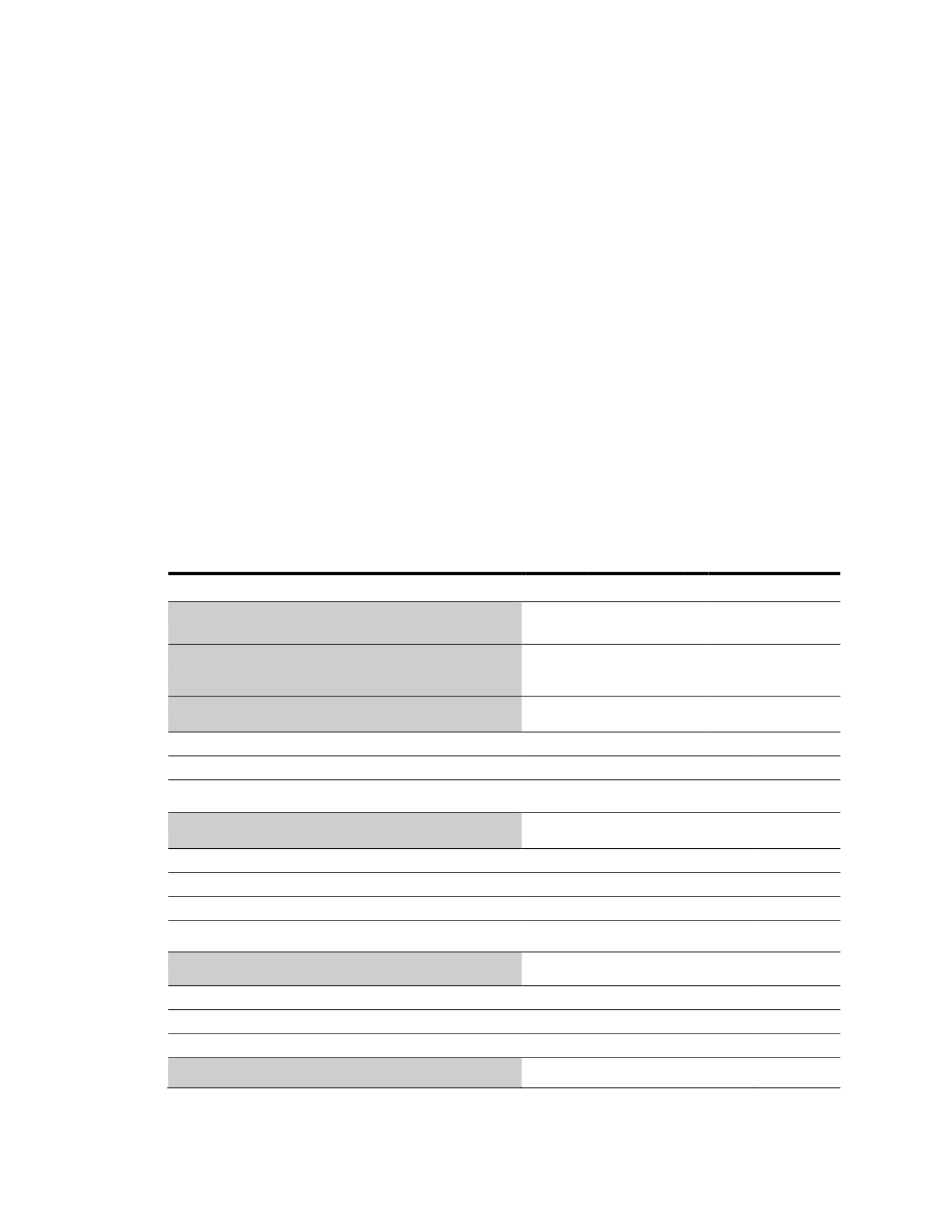
Table 7 describes frequencies and percentages of state genomic activities as reported
“Yes” by the survey respondents.
Table 7
State Genomics Activities
Activity Frequency (N) Percentage (%)
Conducted genetic needs assessment
1
6
Genetic needs assessment includes action
around chronic disease
1
6
Genetics in state action plan for:
Chronic disease
2
12
Cancer control
4
25
Cardiovascular health
2
12
Genetic education integrated in:
Breast cancer
5
31
Colorectal cancer
4
25
Ovarian cancer
4
25
Cardiovascular disease
1
6
Questions on BRFSS
Breast/cervical cancer screening
3
19
Colorectal cancer screening
3
19
Health care access
1
6
Cancer registry analysis
3
19

Legislation/regulations
Nondiscrimination laws
5
31
Privacy rules
4
25
Informed consent
1
6
Provision of genetic services to uninsured
and low income individuals
1
6
Note. Only “Yes” results are provided in this table due to the quantity of potential
answers.
Frequency of Collaborations
In the survey, CDDs were asked how often they engaged in collaborations or
partnerships in relation to genomics with groups outside of the state health department.
Only 20–30% of CDDs are collaborating with any regularity and it appears that the same
4–5 CDDs have been collaborating across the board. Table 8 illustrates the frequency of
collaborations and partnerships occurring with each of these entities.
Table 8
Frequency of Collaborations or Partnerships Related to Genomics with Outside Entities
In the past
quarter
In the past
year
Rarely
Never
Never but
potentially in
the future
N %
N %
N %
N %
N %
Academic
institutions
5
31
1
6
4
25
3
19
3
19
Primary care
providers
5
31
1
6
7
44
1
6
Genetic counselors
4
25
1
6
3
19
6
38
2
13
Other clinicians
4
25
1
6
3
19
5
31
1
6
Advocacy groups
4
25
2
13
6
38
1
6

Hospitals and
healthcare systems
3
19
1
6
2
13
7
44
2
13
Third party payers
3
19
1
6
3
19
6
38
1
6
Local and
county health departments 1 6 1 6 3 19
8 50 2 13 Knowledge and Interest in Genomics by CDDs
Knowledge of genetics professionals. CDDs were asked if they knew how to
contact genetics professionals in their state/territory if they needed genetic expertise
consultation or patient referral for genetic services. Sixty-three percent acknowledged
that they would be able to contact genetics professionals if the situation presented itself;
the other 37% said they did not. This question did not include a response of “Don’t
know.”
Knowledge of Tier 1 conditions. CDDs were asked to rate their level of knowledge
of the recommended Tier 1 conditions: HBOC, LS, and FH. The rating scale was from 1
= very poor to 5 = very good. Knowledge was greatest in HBOC (M = 3.13, SD = 1.46),
and “somewhat poor” for FH (M = 2.50, SD = 1.27) and LS (M = 2.13, SD =
1.20).
Agreement with genomic statements. CDDs were given six different genomic
statements and asked about their level of agreement with each one. Responses ranged
from 1 (strongly disagree) to 5 (strongly agree). A value of 6 (Don’t know) was also an
option; however, these results were removed when calculating the mean values to avoid
skew. Table 9 represents the results from each of these statements.

Table 9
Agreement with Genomic Statements Regarding Importance of Genomics
To what extent do you agree or disagree with the
following statements?
N
M
Range
SD
Genetic counseling and testing for hereditary cancer
conditions can improve a patient's health outcomes
Integrating genetics into public health planning for
chronic disease programming would benefit residents of
16
4.00
3–5
0.73
our state.
Genetics is an important component of public health
16
3.88
1–5
1.09
initiatives
Legal protections against genetic discrimination are
15
3.73
3–5
0.80
adequate in our state.
As a whole, staff in the Chronic Disease Program
8
3.13
2–4
0.64
understands how genetics relates to chronic disease
Citizens in our state understand how family history or
15
2.87
1–4
1.19
genetics influences risk of chronic disease
15
2.67
1–4
1.18
Note. Results greater than 3.00 were considered positive agreement. Results of 6 (Don’t
know) were removed to avoid skew.
Level of interest in genomic activities. Providers were questioned on nine
activities considered important to genomics integration and asked how strongly they
agreed or disagreed with their existence. Responses ranged from 1 = strongly disagree to
5 = strongly agree. An option of 6 (We already do this) was included in mean value

calculation as it supports agreement of the importance of an activity. Table 10 provides
the results of the level of agreement for each statement.
Table 10
Level of Interest in Incorporating Genomic Activities
In my role as a CDD, I would be
interested in:
N
M
Range
SD
Incorporating genomics into our
comprehensive action plan
15
4.33
2–6
1.23
Incorporating genomics into other
cancer policies and initiatives
15
4.20
1–6
1.37
Utilizing Cancer Registry data to
identify high risk patients with the goal
of reducing morbidity and mortality
15
3.93
3–5
0.70
Promoting or enhancing genomics
awareness among medical providers
15
3.93
3–5
0.70
Incorporating cancer genomics into our
state's Breast and Cervical Early
Detection Program
14
3.86
2–5
0.95
Promoting or enhancing genomics
awareness among the general public
15
3.73
1–5
0.96
Finding funding to hire an individual to
focus on genomics and chronic disease
programming
15
3.53
1–5
1.25

Incorporating ID of individuals/cascade
screening for FH into Cardiac Disease
Prevention Program
15
3.40
1–5
0.91
Recommending the addition of
genomics questions to the BRFSS
cancer modules
15
3.33
1–5
1.11
Note. Results greater than 3.00 were considered a positive interest. Results included a
value of 6 (We already do this) as an indication of a positive interest.
Data Analysis Results
I performed statistical analysis to determine possible associations on all variables
provided through the survey results as well as evidence of state genomic funding.
Chisquare, t test, ANOVA, multiple regression, and Pearson’s correlation were used
depending on the type of variables examined. I also performed analysis in duplicate, once
with the “Don’t know” responses included and again after changing these results to “No.”
This was to acknowledge the “Don’t know” responses as possible presence of an activity
and then to recognize that the “Don’t know” responses could mean the activity did not
exist.
Research Question 1
Research Question 1: To what extent, if any, is there an association between states
that have received funding for chronic disease genomics and the level of knowledge and
interests in genomics by state and territorial CDDs ?
H01: There is no association between states that have received funding for chronic
disease genomics and the level of knowledge and interests in genomics by state and
territorial CDDs.

H11: There is an association between states that have received funding for chronic
disease genomics and the level of knowledge and interests in genomics by state and
territorial CDDs.
Chi-Square
Part of Research Question 1 was analyzed using Chi-square analysis to determine
a possible association between state genomic funding and the level of knowledge and
interests in genomics by the directors. An assumption of the Chi-square test is that all
results are independent of one another and will only provide one piece of data to one cell
of the contingency table; no data will be used repeatedly (Field, 2013). Moreover,
expected frequencies should be no lower than 5, which could be troublesome with a small
sample size, and could have a large impact on test power.
This analysis specifically looked at whether or not a state had been identified as a
funded state and if the CDD knew how to refer patients for genomic services or find
expert genomic consultation in their state (Q16). Chi-square analysis showed no
association with these variables (X2(1)=.071, p=.790, phi=.067; Likelihood ratio
X2(1)=.072, p=.789, phi=.067). These results, therefore, accept the null hypothesis for
Research Question 1 and indicate there is no association between these variables.
Independent t test
Part of Research Question 1 was also analyzed by the independent t test to see if
funding was associated with CDDs’ level of knowledge about Tier 1 conditions, interest
in genomic topics, and agreement with genomic statements (Q22_1–3, Q23_1–6, Q24_1–
9). The independent t test is a parametric test that assumes normality of the sampling

distribution, outcome variables are related linearly to predictor variables, and the samples
will come from a population with the same variance regardless of the level of predictor
variable (Field, 2013). The final assumption is that the samples are all independent of one
another. This analysis again accepted the null hypothesis for Research Question 1 and
showed no association with these variables (see Table 11).
Table 11
Presence of State Genomic Funding vs. Knowledge or Interest of Genomic Topics
Knowledge or Interest
t
p value
95% CI
HBOC
t(14) = 1.17
.263
-.726 – 2.46
LS
t(14) = 2.00
.066
-.085-2.35
FH
t(14) = .807
.433
-.884-1.95
Citizens understand
genomics and chronic
disease
t(11) = -.693*
.502
-1.67 - .865
Staff understands
genomics and chronic
disease
t(13) = -.519
.613
-1.72 – 1.06
Genetic counseling
improves outcomes
t(14) = .695
.499
-.557 – 1.09
Integrating genetics
benefits state residents
t(14) = .822
.425
-.751 – 1.69
Legal protections are
adequate
t(6) = -.685
.519
-1.53 - .858
Genetics is very
important to public
health
t(13) = .221
.829
-.879 – 1.08
Add BRFSS genomics to
cancer modules
t(13) = .158
.877
-1.27 – 1.47
Use of cancer registry to
ID at-risk individuals
t(13) = 1.04
.317
-.430 – 1.23

Incorporating genomics
into cancer action plan
t(13) = 1.04
.318
-.757 – 2.16
Incorporating genomics in
other cx policies
t(13) = 1.22
.245
-.698 – 2.50
Incorporating genomics
into breast/cervical cancer
early detection
t(12) = .406
.692
-.970 – 1.42
Incorporating ID of FH in
cardiac screen
t(13) = .587
.567
-.803 – 1.40
Promote public
awareness
t(13) = .183
.857
-1.08 – 1.28
(table continues)
Knowledge or Interest
t
p value
95% CI
Promote provider
awareness
t(13) = .251
.806
.762 - .962
Funding state genetics
coordinator position
t(13) = .572
.577
-1.11 – 1.91
Note. CI = Confidence Interval. Negative t values suggests the sample mean was below
the hypothesized mean (see Field, 2013).
*Levine’s statistic was significant; therefore, t statistic is from variances not assumed.
Multiple Linear Regression
Finally, part of research question one was also analyzed by multiple linear
regression to examine the “flip” of the independent t test. This analysis looked at funding
as the independent, categorical variable, and knowledge and interest in genomics by the
CDDs as the dependent, continuous variable (Q22_1–3, Q23_1–6, Q24_1–9). The linear
model assumes that the outcome variable is linearly related to the predictor variable, the
samples have a constant variance, and are normally distributed (Field, 2013). Predictors
should also be independent and uncorrelated to any external variables or linear to another
predictor. This analysis provided a single association, rejecting the null hypothesis for

Research Question 1, with funding and CDDs agreement with the statement “Citizens in
our state understand how family history or genetics influences risk of chronic disease”
F(1,13) = 16.20, p = .028.
Research Question 2
Research Question 2: To what extent, if any, is there an association between
current state genomic activities and the level of knowledge and interests in genomics by
state and territorial CDDs ?
H02: There is no association between any current state genomic activities and the
level of knowledge and interests in genomics by state and territorial CDDs.
H12: There is an association between one or more current state genomic activities
and the level of knowledge and interests in genomics by state and territorial CDDs.
Chi-Square
This analysis and looked at possible associations between state genomic activities
and knowledge and interest in genomics by CDDs. Specifically, this analysis looked at
presence or absence of state genomic activities (Q11, 29, 13_1–4. 8_1–5, 9_1–7, 10,
15_1–5) and whether the chronic disease director knew how to refer patients for genomic
services or find expert genomic consultation in their state (Q16). The first analysis
included the “Don’t know” results and identified seven state genomic activities that were
associated with referral and consultation knowledge by the CDDs. Table 12 depicts the
results that reject the null hypothesis for Research Question 2 and are significant
associations. Note that only two activities had a significant Pearson Chi-square and all
other results were based on the Likelihood ratio, which is an alternative to Pearson’s

(Field, 2013). Also, one of the significant Pearson results (Education – Other) only had a
sample size of four.
Table 12
Presence of State Activity vs. Knowledge of Genomic Referrals or Consultations-
“Don’t Know” Included
SGA
Pearson’s Chi square
Likelihood ratio
Action plan -
cancer control
X2(2, N = 16) = 7.71, p = .021,
phi = .60
Action plan -
other
X2(1, N = 14) = 4.39, p = .036,
phi = - 47
Education - breast
cancer
X2(2, N = 16) = 6.26, p = .044,
phi = .54
Education -
other
X2(1, N = 4) = 4.00, p = .046,
phi = -1.00
X2(1, N = 4) = 5.55, p = .019,
phi = -1.00
Regulations -
discrimination
X2(1, N = 16) = 4.36, p =
.037, phi = .52
X2(1, N = 16) = 6.01, p = .014,
phi = .52
Regulations -
privacy
X2(1, N = 16) = 4.53, p = .033,
phi = .45
Regulations -
genetic services
X2(2, N = 16) = 7.71, p = .021,
phi = .62
Note. SGA = State genomic activity
Table 13 provides results of the same analysis; however, the “Don’t Know’ results
were changed to “No” in the data set. This analysis provided six different associations
including two Pearson Chi-square results. The following state genomic activities were

found signficantly associated with knowledge of genomic referral or consultation and
reject the null hypothesis for Research Question 2.
Table 13
Presence of State Activity vs. Knowledge of Genomic Referrals or Consultations
“Don’t Know” Changed to “No”
SGA
Pearson’s Chi square
Likelihood ratio
Action plan -
cancer control
X2(1, N = 16) = 4.53, p =.033,
phi = .45
Education –
breast cancer
X2(1, N = 16) = 4.36, p = .037,
phi = .52
X2(1, N = 16) = 6.01, p = .014,
phi = .52
Education –
colorectal cancer
X2(1, N = 16) = 4.53, p = .033,
phi = .45
Education –
ovarian cancer
X2(1, N = 15) = 5.03, p = .025,
phi = .49
Regulations -
discrimination
X2(1, N = 16) = 4.36, p = .037,
phi = .52
X2(1, N = 16) = 6.01, p = .014,
phi = .52
Regulations -
privacy
X2(1, N = 16) = 4.53, p = .033,
phi = .45
Note. SGA = State genomic activity
Independent t test
The independent t test was used to identify a possible association between the
presence or absence of state genomic activities (Q11, 29, 13_1–4. 8_1-5, 9_1–7, 10,
15_1–5) and the level of chronic disease director knowledge of Tier 1 conditions, interest

in genomic topics, and agreement with genomic statements (Q22_1–3, Q23_1–6, Q24_1–
9). This test was also used to study potential associations between frequency of genomic
collaborations (Q25_1–9) and whether the CDD knew how to refer patients for genomic
services or find expert genomic consultation in their state (Q16). Tables 14 and 15
represent the significant associations that reject the null hypothesis for Research Question
2. Note that some results had a statistically significant Levine’s statistic, which means
that the sample variances may not be equal. In others, no Levine statistic was provided
and the t value was negative suggesting that the sample mean is below the hypothesized
mean (Field, 2013).
Table 14
Frequency of Genomic Collaborations vs. Knowledge of Genomic Referrals or
Consultations
Collaborations
t
p value
95% CI
Primary care providers
t(10) = -3.71*
.004
-3.16 - -0.80
Other clinicians
t(12) = -3.31*
.006
-2.95 - -0.61
Advocacy groups
t(9) = -3.68*
.005
-3.15 - -.075
Hospital/ health systems
t(12) = -2.76*
.018
-2.51 - -0.29
Third party payers
t(11) = -3.83*
.003
-2.76 - -0.75
Note. CI = Confidence Interval. All t values were negative and suggests the sample mean
was below the hypothesized mean (Field, 2013).
*Levine’s statistic was significant; therefore, t statistic is from variances not assumed.
Table 15
State Genomic Activities vs. Level of Knowledge or Interest of Genomic Topics “Don’t
Know” Changed to “No”

SGA
Knowledge or interest
t
p value
95% CI
Action plan –
cardiovascular
health
LS
t(13) = = 7.81*
.000
1.55-2.74
FH t(13) = 5.33* .000
1.02
(table continues)
SGA
Knowledge or interest
t
p value
95% CI
Education –
colorectal cancer
LS
t(14) = 3.48
.004
0.70-2.96
Education –
ovarian
LS
t(13) = 2.38
.033
0.13-2.61
Education –
cardiovascular
disease
Legal protections are
adequate
t(6) = - 2.47**
.049
-2.56 --.009
BRFSS questions–
health care access
Regulations –
privacy
Legal protections are
adequate
t(6) = - 2.47**
.049
-2.56 --.009
LS
t14) = 2.51
.025
0.22-2.78
Interest in FH screen
t(13) = 2.26
.042
.050-2.28
Staff understands genomics
and chronic disease
t(12) = 3.90*
.002
0.59
Legal protections are
adequate
t(6) = -2.47
.049
-2.56- -.009
Education –
breast cancer
LS
t(14) = 2.97
.010
0.43-2.69

Promoting provider
awareness
t(13) = 2.31
.038
.059-1.78
Note. CI = Confidence Interval. Negative t values suggest the sample mean was below the
hypothesized mean (see Field, 2013) SGA = State genomic activity.
*Levine’s statistic was significant; therefore, t statistic is from variances not assumed. **
No Levine statistic was provided.
ANOVA
Analysis of variance was used to analyze the same previous set of data (presence
or absence of state genomic activities (Q11, 29, 13_1–4. 8_1–5, 9_1–7, 10, 15_1–5) and
the level of chronic disease director knowledge of Tier 1 conditions, interest in genomic
topics, and agreement with genomic statements (Q22_1–3, Q23_1–6, Q24_1–9) only
with inclusion of the “Don’t know” responses. ANOVA was required to analyze this
association because the factor (state genomic activity) is now in three groups. The
oneway ANOVA is performed with three assumptions; the dependent variable is normally
distributed, the population from which the dependent variable samples come from have
equal variances, and the sample set is random and provided independent observations
(Green & Salkind, 2011). Table 16 provides the results of this analysis and significant
associations that reject the null hypothesis for Research Question 2.
Table 16
State Genomic Activities vs. Level of Knowledge or Interest of Genomic Topics “Don’t
Know” Included
SGA
Knowledge or interest
F
p value
Genomics needs
assessment
Recommend genomics in
BRFSS cancer modules
F(1,13) = 16.26
.001
Incorporating genomics into
cancer policies
F(1,12) = 4.82
.048

Promoting public awareness
F(1,13) = 5.89
.030
Genomics needs
assessment &
chronic disease
Recommend genomics in
BRFSS cancer modules
F(1,11) = 5.58
.038
Action plan –
cardiovascular
health
LS
F(2,13) = 3.85
.049
Education –
breast cancer
LS
F(2,13) = 5.97
.015
FH
F(2,13) = 13.33
.001
Interest in FH screen
F(2,12) = 5.06
.025
Education –
colorectal cancer
LS
F(2,13) = 12.61
.001
FH
F(2,13) = 4.33
.036
Interest in FH screen
F(2,12) = 4.71
.031
Education –
ovarian cancer
LS
F(2,12) = 7.50
.008
FH
F(2,12) = 4.12
.043
BRFSS
questions–
breast/cervical
cancer screening
Legal protections are adequate
F(2,13) = 4.66
.030
(table continues)
SGA
Knowledge or interest
F
p value
Genetics is very
important in public health
F(2,13) = 4.02
.044
BRFSS
questions–
cardiovascular
health
Genetics is VIP in PH
F(1,14) = 7.21
.018
BRFSS
questions –
colorectal cancer
Legal protections are adequate
F(2,13) = 3.97
.045
BRFSS
questions–
genetic
discrimination
Genetics is very
important in public health
F(1,14) = 7.21
.018

BRFSS
questions-
privacy
Genetics is very
important in public health
F(1,14) = 7.21
.018
BRFSS
questions
direct to
consumer ads
Genetics is very
important in public health
F(1,14) = 7.21
.018
Use of cancer
registry
Legal protections are adequate
F(2,13) = 4.01
.044
Regulations –
privacy
LS
F(1,14) = 6.30
.025
Legal protections are adequate
F(1,14) = 7.96
.014
Interest in FH screen
F(1,13) = 5.07
.042
Promoting provider awareness
F(1,13) = 5.33
.038
Regulations –
funding state
genetics
coordinator
Funding state genetics
coordinator position
F(1,13) = 5.43
.037
Regulations –
access to genetic
services
Promoting provider awareness
F(2,12) = 6.24
.014
Funding state genetics
coordinator position
F(2,12) = 4.03
.046
Note. SGA = State genomic activity Multiple Linear Regression
Multiple linear regression was used to analyze continuous and categorical
variables from the survey much like the independent t-test for possible associations
between categorical state genomic activities (Q11, 29, 13_1–4. 8_1–5, 9_1–7, 10, 15_1–
5) and the level of chronic disease director knowledge of Tier 1 conditions, interest in
genomic topics, and agreement with genomic statements (Q22_1–3, Q23_1–6, Q24_1–9).
Responses of “Don’t know” were included. This analysis resulted in no associations and
accept the null hypothesis for Research Question 2.

This analysis was also used to identify potential associations of frequency of
genomic collaborations and CDD knowledge of genomic referrals and consultations. This
again, was a reverse analysis of the independent t-test performed earlier. This analysis
found one association with primary care providers F(1,15) = 7.71, p = .039; the multiple
correlation coefficient was 0.78. This was the only significant association to reject the
null hypothesis for Research Question 2.
Pearson’s Correlation Coefficient
The Pearson’s correlation coefficient was used to analyze possible associations
with survey questions that were both continuous (State genomic activity – Q25 –
frequency of collaborations; KI - Q22_1–3, Q23_1–6, Q24_1–9 - level of CDD
knowledge of Tier 1 conditions, interest in genomic topics, and agreement with genomic
statements). Only collaborations in the past quarter or past year were included as they
suggest more frequent partnerships. Pearson’s r is significant if the two variables are
linearly related (Green & Salkind, 2011). This test assumes that each variable is normally
distributed while ignoring the other variable and is normally distributed at all levels of the
other variable. Another assumption is that all variables are sampled randomly and
independent of one another. Table 17 presents all signifcant results from the Pearson
correlation coefficient analysis that reject the null hypothesis for Research
Question 2.
Table 17
Frequency of Collaborations vs. Level of Knowledge or Interest of Genomic Topics
Collaboration
Knowledge or Interest
r
p value

Academic
institutions
HBOC
r(14) =.59
0.016
LS
r(14) =.54
0.031
Genomics into comprehensive
cancer plan
r(13) =.55
0.034
Genomics into other cancer
policies
r(13) =.56
0.030
Primary care
providers
LS
r(12) = .73
0.003
FH
r(12) = .59
0.026
ID of FH individuals and family
members
r(11) = .57
0.044
Genetic
counselors
HBOC
r(14) = .54
0.32
Other clinicians
LS
r(12) = .73
0.003
FH
r(12) = .58
0.029
Using cancer registry data
r(11) = .57
0.042
Advocacy groups
LS
r(11) = .69
0.010
Hospitals and
healthcare systems
LS
r(13) = .69
0.021
Using cancer registry data
r(12) = .56
0.038
Third party
payers
LS
r(12) = .58
0.031
Local and county
health
departments
Interested in promoting or enhancing
genomic awareness among medical
providers
r(12) = .59
0.027
Note. Only responses of collaborations within the last quarter and last year were included.
Summary
Analysis of data for Research Question 1, which looked at the possible association
of current state genomic funding and the level of knowledge and interest in genomics by
CDDs showed only one association; CDDs agreement with the statement “Citizens in our
state understand how family history or genetics influences risk of chronic disease.” This

single association demonstrates that current state genomic funding has very little impact
on the level of knowledge and interest in genomics by CDDs.
Analysis of associations for Research Question 2 however, presence of state
genomics activities and level of knowledge and interests in genomics by CDDs, showed
many significant associations. Existence of cancer control action plans, breast, ovarian,
and colorectal education, and regulations pertaining to non-discrimination and privacy
were significantly associated with CDDs knowledge of genomic referrals for patients or
consultation for themselves. These associations were intact whether “Don’t know”
responses were included or not.
ANOVA and independent t test results found that breast, ovarian, and colorectal
education is associated with CDD’s knowledge of LS, FH, interest in incorporating
identification of individuals/cascade screening for FH in the state Cardiac Disease
Prevention Program, and agreement that legal protections against genetic discrimination
are adequate in their states. Questions related to the presence of genomic topics on the
BRFSS were associated with CDDs agreement that genetics is an important component of
public health initiatives and that legal protections against genetic discrimination are
adequate in their states. Having a genetic needs assessment (N = 1) was associated with
interest in recommending the addition of genomics questions to the BRFSS cancer
modules, incorporating genomics into other cancer polices and initiatives, and promoting
or enhancing genomics awareness among the general public. Having a state action plan in
cardiovascular health was associated with knowledge of LS and FH and agreement that
legal protections against genetic discrimination are adequate in their states. Finally,

current state regulations for genetic privacy, providing genetic services to uninsured or
low income residents, and funding a state genetics coordinator position were associated
with CDD’s agreement that legal protections against genetic discrimination are adequate
in their states, and interest in incorporating identification of individuals/cascade screening
for FH in the state Cardiac Disease Prevention Program, promoting or enhancing
genomics awareness among medical providers, as well as funding for a state genetics
coordinator position.
Pearson’s correlation discovered that CDD knowledge of Tier 1 conditions was
associated with more frequent collaborations with academic institutions (HBOC, LS),
other clinicians (LS, FH), genetic counselors (HBOC), and primary care providers,
advocacy groups, hospitals and healthcare systems, and third party payers (LS). CDDs
were more interested in incorporating genomics into the comprehensive cancer action
plan and other cancer policies and initiatives when they collaborated frequently with
academic institutions and would be more likely to want to incorporate the use of the state
cancer registry to identify high risk patients if they collaborated with other clinicians or
hospitals and healthcare systems. Lastly, CDDs would be interested in incorporating
identification of individuals/cascade screening for FH into their state Cardiac Disease
Prevention Program if they collaborated with primary care providers and were interested
in promoting or enhancing genomic awareness among medical providers if they
connected with local and county health departments.
In this results chapter, I provided specifics about the data collection used in this
study, results of the statistical analysis, and a summary of the findings of the survey of

state and territorial CDDs. These findings showed a number of significant associations
with specific state genomic activies and the level of knowledge and interest in genomics
by state and territorial CDDs. In the final chapter of this dissertation, I will provide an
interpretation of the findings, limitations of the study, recommendations for further
research, and implications for social change.
Chapter 5: Discussion, Conclusions and Recommendations
Introduction
Given the potential that genomic technologies have for identifying individuals and
their families at risk of heritable chronic disease and targeting public health prevention
efforts, I have been puzzled at the slow uptake of these interventions. As state public
health organizations are essential in the national effort to promote the use of genomic

information to reduce morbidity and mortality and save lives (Green et al., 2015),
examining what might be impacting this slow integration could shed light on future steps.
In order to do this, I performed a secondary analysis of a survey of state and territorial
CDDs about current state genomic activities and their level of knowledge and interest in
genomic topics believing CDD’s familiarity with genomics could impact their leadership
in this area. To date, only a small number of states have received funding to incorporate
genomics into their chronic disease programming, so one purpose of this study was to see
if this funding was associated with an increased level of knowledge and interest in
genomics by CDDs. The second purpose of this study was to examine if any current state
genomic activities were linked to the level of knowledge and interest in genomics by
these CDDs.
Based on the results of this survey, it appears that state chronic disease genomics
funding has almost no impact on the level of knowledge and interest in genomics by the
CDDs. There were, however, many significant associations with respect to specific state
genomic activities and CDDs’ knowledge and interest. State activities that were
associated with a higher level of knowledge and interest by CDDs include a state
genomics needs assessment (n = 1); genetics inclusion in cancer control and
cardiovascular health action plans; breast, ovarian, and colorectal cancer genetics
education; and state laws or regulations pertaining to genetic nondiscrimination, privacy,
providing genetic services to uninsured or low-income residents, and funding a state
genetics coordinator position. Inclusion of genomics on BRFSS topics related to
breast/cervical cancer screening, cardiovascular health, colorectal cancer, genetic

discrimination, and privacy were also associated with a higher level of knowledge and
interest in genomics by the CDDs. Finally, frequent collaborations (in the past
quarter/year) with outside entities, mainly academic institutions, primary care providers,
and other clinicians were associated with greater levels of knowledge and interest,
especially for knowledge of Tier 1 conditions and particularly LS.
Interpretation of Findings
The framework from the literature on Rogers’ diffusion of innovations theory
indicated that disseminating, implementing, and sustaining new innovations depends
largely on sufficient knowledge of the innovation to progress through the phases of
adoption (Rogers, 2003). According to this theory, individuals’ knowledge can impact
their attitudes which, in turn, influence their decision to adopt and implement an
innovation. Rogers also explained that those who adopt later in the process will require a
longer innovation-decision period. This is particularly important as more states adopt
chronic disease genomics programming. Therefore, pinpointing associations between
specific activities and a greater knowledge or interest in genomics by CDDs could help
identify actions that might be associated with this desired outcome, chronic disease
genomics implementation.
However, initially in this study I examined the potential association of state
genomic funding and the level of knowledge and interest in genomics by the CDDs. An
individual would imagine that states with chronic disease genomics funding would have
more state activities and CDDs with a greater interest in genomic integration. Six (38%)
of the 16 surveys received were from states identified as funded for chronic disease

genomic activities; however, statistical analysis did not show a significant association
with funding and the level of knowledge and interest in genomics by the CDDs of those
states. As I was looking at an association and could not show causality in this study, one
conclusion that can be made is that the greater knowledge and interest in genomics was
driven by the CDD(s) themselves and was not related in any way to the funding provided
to individual states. There were, in fact, some states that did not receive funding and had
little or no state genomic activities, yet the CDDs were more knowledgeable and
interested than others.
This also leads into the prior described theory that the genomics champion in the
funded states is influential in integrating genomics into state chronic disease programs
(Schon, 1963; Taylor et al., 2011). Rogers (2003) is clear that this champion is
instrumental to the success of an innovation and has a positive impact on the rate of
adoption. As these funded states often have at least one person, the champion, seeking
this funding, driving the work, and producing evaluative data, this model seems like it
would be conducive to increased knowledge and interest in genomics by the CDDs.
Because the statistical analysis showed no association, a possible conclusion is that those
CDDs with increased knowledge and interest in genomics could, themselves, become that
genomics champion that is integral to adoption of this innovation in their states.
In this study, I identified that there are, in fact, specific state genomic activities
that are associated with greater knowledge and interest in genomics by state and
territorial CDDs. Educational programs related to the Tier 1 conditions were associated
with greater knowledge and interests by the CDDs; however, this was only for LS and

FH. Interestingly, HBOC was not associated with increased knowledge and interest in
HBOC. This mismatch is likely due to the small sample size; however, using educational
endeavors to increase knowledge in genomics is not a new concept (Khoury, Gwinn,
Dotson, & Schully, 2012; Talwar, Tseng, Foster, Xu, & Chen, 2016).
The BRFSS is used to survey U.S. residents concerning health-related risk
behaviors, chronic diseases, and prevention measure utilization (CDC, 2017). Responses
to questions on the BRFSS are used by CDDs and others as one of the indicators of state
and selected metropolitan-level chronic diseases and risk factors that impact public health
(Holt et al., 2015). This system is not only used for surveillance but for prioritizing and
evaluating public health interventions. The fact that BRFSS genomics-related questions
were found to be significantly associated with greater knowledge and interest in genomics
by the CDDs is, therefore, potentially meaningful if CDDs translate that interest into
leadership to prioritizing genomics into chronic disease programming.
One of the six components of successful public health program implementation
has been found to be collaborations and partnerships with public and private entities
(Frieden, 2014). In this study, I found that CDDs who collaborated with academic
institutions and medical professionals significantly increased their knowledge and interest
in genomics. Academic institutions are often where genetics professionals (geneticists,
genetic counselors) and researchers are based and these individuals can provide a wealth
of knowledge in this area. The fact that collaborations with genetic counselors was not
determined to be a significant factor in increased knowledge and interest could be

because of the limited number of these professional nationwide (Wicklund & Trepanier,
2014).
Using Rogers’ Theory to Diffuse Chronic Disease Genomics in More States
Although prevention is usually cheaper than treatments, new prevention efforts in
public health frequently diffuse slowly due to the delay in observance of clear health
outcomes and perception of the relative advantage by public health leadership (Rogers
2002). One factor impacting the rate of adoption is the complexity, or perceived difficulty
of and innovation among members of a social system. Increasing the knowledge and
interest in chronic disease genomics by CDDs will impact their perception of the
complexity of these applications and help them gain a greater understanding of the
potential health impact to their populations. In this study, I have identified specific
genomics activities currently being performed by states that are having an impact on this
knowledge and interest by CDDs. When trying to identify ways to diffuse chronic disease
genomics in more states, these activities would be the ones to start with.
Rogers (2002) also mentions the importance of the early adopters to the diffusion
process and their role as opinion leaders of the social system. The next segment in the
diffusion of chronic disease genomics, the early majority, will be looking towards these
states for modelling, information, and advice. Based on the current landscape, I had
previously identified seven early adopter states; however, results of this survey show that
there are other states that are already doing work in this area and could also be
instrumental opinion leaders and models on how to do this work without funding specific
to chronic disease genomics.

Limitations of the Study
As I previously described in the Introduction, one of the limitations of this study
was the small sample size of the study group and subsequent limited number of CDDs (N
= 16) who responded to the survey. The total response correlates to published survey
response rates; however, had the APHA GFPC subcommittee decided to extend the
survey timeframe to longer than 6 weeks or sought alternative follow-up contact (such as
phone calls or mailings), this may or may not have had an impact on the number of final
responses received. I cannot know whether a delivery of this survey at an alternate time
or under different circumstances would impact the survey response rate. It is known that
limited datasets can impact study power and external validity (generalizability; Field,
2013); nevertheless, my analysis was able to find significant associations that can be
informative to the study topic.
Another threat to external validity was not knowing who actually filled out the
survey. Although this was a confidential survey, there was no way to prove that the CDD
was the one who answered all or some of the questions. Moreover, there may be external
conditions such as personal stress, other work deadlines, topic knowledge, no
compensation, or the short survey time frame that might have impacted their desire to
participate.
According to Shadish, Cook, and Campbell (2002), one threat to internal validity
is ambiguous temporal precedence. What this means is that, based on the study design,
causality cannot be determined and that a researcher cannot conclude with certainty
which variable causes another; the researcher is only showing that the variables have an

association to one another. This often occurs in situations involving ongoing processes
that interact with one another and, in turn, be affected by one another (Trochim, 2006).
This phenomenon was evident in the discussion about state genomic funding and the
level of knowledge and interests in genomics by the CDDs in this study. The fact that
genomics funding was not significantly associated with CDD knowledge and interest
means that the higher knowledge and interest is occurring regardless and, at this point in
time, is not causing an increase in funding for genomics implementation. Finally, there is
always the possibility that a third variable that was not explored in this study could be the
causative agent for the results seen (Trochim, 2006).
Recommendations
Because state and territorial CDDs will likely be instrumental leaders in the
success of chronic disease genomics implementation, further research of this group is
warranted. Although the results of this study showed some significant associations, had
there been a larger sample size, findings that were not significant at the .05 level could
have been statistically significant (Rudestam & Newton, 2015). It would be prudent to
perform both further quantitative as well as qualitative studies of this group to gather a
more detailed profile of what they know and what they feel they need to know in order to
be familiar enough with public health genomics; chronic disease genomics programming;
identification and contact with collaborators, partners, and stakeholders; and possible
implications to lead these efforts. Gaining an understanding of what CDDs see as
potential barriers to implementation or why some CDDs have greater knowledge without
funding or activities would also be important.

Another area to examine would be to study current state genomic activities in
depth to find out exactly what states are doing what, who the champions are, and what, if
any, partnerships are being formed within the states or among the states. This could be
instrumental in determining who the next 19–20 states are that might be more successful
in implementing chronic disease genomics programming based on Rogers’ theory (early
majority). The states that are ready to move forward could be the focus of educational
interventions, financial support, and collaborative efforts. This investigation could be
performed with a more extensive state activity survey or possible phone interview.
Assessing organizational readiness for chronic disease genomics implementation
by state health departments could identify other areas that may hinder genomics
implementation (Stamatakis et al., 2012). State health departments will have a greater
impact on population health if they are effectively run, have adequate resources,
competent staff, and utilize evidence-based decision making (Alongi, 2015; Maylahn et
al., 2013). Innovation adoption doesn’t occur, however, without individual and
organizational changes based on clear effectiveness and cost effectiveness of the
innovation (Greenhalgh et al., 2004), so continued research and dissemination of the
benefits of Tier 1 genomic applications will be important. Finally, investigating
organizational innovativeness and support structure for genomics implementation (Oishi
et al., 2015) could help identify avenues for adoption in more states.
St Pierre et al. (2014) explained that chronic disease genomics implementation
will have a greater chance of success if leadership capacity is developed, incorporated
into population-based assessment, surveillance, and disease prevention programming, and

genomic education is provided to public health and healthcare practitioners, policy
makers, and the public. Of course, all of these endeavors require funding. One of the
problems in the current climate is that most funding for genomic research is in the
discovery phase (T1) and very little is provided towards implementation (T4;Glasgow et
al., 2012; Schully, Benedicto, Gillanders, Wang, & Khoury, 2011). More research must be
done to show the benefits of chronic disease genomics programming for state and
territorial populations to encourage funding to that end.
Implications for Social Change
It could be argued that inheritance of genetic mutations that predispose an
individual to an increased susceptibility of certain chronic diseases would eventually
impact their feelings of health and well-being. The manifestation of these conditions, of
course, is not only due to these genetic mutations, but also impacted by many other
social, environmental, cultural, economic, and political circumstances. Public health
professionals have a responsibility to safeguard the health of people and the communities
in which they live by working to “assure the conditions in which people can be healthy”
(APHA, 2017, para. 3). Social change can, and will, happen when public health
professionals improve population health through program and policy implementation that
targets vulnerable communities and other stakeholders while also developing and
delivering education to assure understanding of potential effects (Godwin & Heymann,
2015).
The overarching goal of my research in this study and beyond is to find
opportunities and barriers to genomic technology implementation in healthcare and public

health. The results of this study showed some opportunities to increased knowledge and
interest in genomics by CDDs and putting those in place in more states could lead to an
increase in chronic disease genomics programming. That would lead to greater access to
identification of individuals at risk of these conditions and possible prevention or
reduction of manifestations. Once an individual has been documented, this could then
have a ripple effect of identification for their family members, communities as well as
whole populations and have a larger impact on morbidity and mortality from these
hereditary conditions.
Conclusion
The completion of the Human Genome Project in 2003 has allowed public health
to practice in a more personalized and precise manner and has also been shown to
improve health outcomes (Auffray et al., 2016). Evidence exists for population screening
of affected individuals and their family members for three common chronic diseases with
a known hereditary component, yet only a small number of states are currently doing any
work in this area (St Pierre et al., 2014). State and territorial CDDs are in a very
influential position to lead chronic disease genomic programming in their states and it is
important to identify ways to help them reach that goal.
Rogers’ diffusion of innovations theory demonstrates that adoption of chronic
disease genomics programming is ready to move into more states. Rogers’ (2003) theory
also explains that this next group (early majority) is an important link in the diffusion
process, between the risk-takers and the skeptics, but may take somewhat longer to adopt
these processes. Determination of what states will be involved in this next phase will be

critical to overall chronic disease genomic adoption success. The results of this study
could identify some of those next 19–20 states, particularly those who already have
CDDs with a greater knowledge and interest in genomics, to address integration of
particular activities (as I found in this study) or focus funding.
In order to fulfill the promise of precision medicine through genomics, more
research needs to be done to understand what is hindering the translation of this promise
into reality. Unfortunately, existing knowledge is limited and implementation continues to
be slow ( Manolio et al., 2013; Roberts, Kennedy, Chambers, & Khoury, 2017). Increased
integration of evidence-based genomic applications, such as Tier 1 chronic disease
conditions, to diverse populations will increase the empirical evidence needed to show
the impact this technology can have on population health. State and territorial
CDDs can and should be the leaders in that endeavor.

