


INTRODUCTION GROWTH IN RELATIONSHIPS
Romantic partners and dedicated discount seekers Becca and Andy scroll through a
coupon application on their shared laptop computer. Becca is excited when she reaches a coupon
for 45% off dance lessons near their town, but an uneasy Andy ultimately thinks a half price
discount on their favourite restaurant is something he would prefer. The couple discusses which
coupon they should purchase, and Becca argues they should try new things together more often,
whereas Andy responds that fostering traditions in their relationship is what matters. In
relationships, there are always these dilemmas – do we go to a new restaurant, or to an old
favourite? Do we move across town or stay in our neighbourhood?
Preferences for these decisions could be explained by self-regulatory motivations that
function to achieve goals consistent with preferences for advancement or stability and influence
relationship well-being. In the present research, we test the hypothesis that the presence of
indicators (e.g., traits in partners, characteristics in the self) that are consistent with regulatory
motivations influence relationship well-being. In particular, and in line with prior research
(Higgins, 1997; Higgins, Roney, Crowe, & Hymes, 1994; Molden, Lee, & Higgins, 2008;
Molden, Olson, & Lucas, 2012; Molden & Winterheld, 2013), we suggest that for individuals
who are eager to attain advancement or growth, like Becca, the presence of characteristics in
their relationship consistent with their motivational orientations (e.g., growth and advancement)
enhances relationship well-being. In contrast, if the same growth related characteristics are
present but the individual’s motivational orientation stresses stability and security, like Andy,
these characteristics should have less influence on relationship well-being. Although the
foundation of most relationships is based on the presence of security related traits (Hazen &
Shaver, 1987), if an individual’s motivational orientation prioritizes relationship stability and
responsibility more than growth and advancement, that individual’s relationship well-being
should be higher.

In three experimental studies, we examine how the presence of growth characteristics in
one’s romantic relationship interacts with chronic and induced regulatory focus to predict
relationship well-being. As detailed shortly, the impact of regulatory focus and the presence of
security and stability on relationship well-being is well established, but the presence of growth
may influence relationship well-being more strongly than has been previously believed.
Relationship Success: Safety and Security
There are two broad themes researchers have used to define relationship success: security
and growth (Aron & Aron, 1986; Murray, Holmes, & Griffin, 2000). Existing theorizing in close
relationships has long emphasized the importance of maintaining security for the success and
well-being of relationships. Attachment theory (Bowlby, 1982), for example, posits that forming
secure attachment bonds with close others, that is, experiencing a sense of security and trust in a
partner, fosters relationship success and well-being through the lifespan (e.g., Brennan & Shaver,
1995; Feeney, 1996; Hazan & Shaver, 1987; Kobak & Hazan, 1991). Feeling secure in one’s
relationships is comprised of experiencing intimacy and interdependence, while also being
trusting of others and viewing both others and the self in a positive light. Given that secure
attachment is defined as the absence of anxiety and avoidance (Ainsworth, 1979; Bowlby, 1982;
Hazan & Shaver, 1987), high quality bonds (i.e., successful relationships) are often measured by
quantifying the absence of relationship insecurity. Indeed, insecurely-attached people (i.e., those
high in anxiety or avoidance) tend to experience hardships such as increased conflict,
engagement in maladaptive conflict behaviours, and shorter relationship longevity (Feeney &
Noller, 1992; Shi, 2003; Simpson, Rholes, & Phillips, 1996).
Similarly, risk regulation theorizing (Murray, Griffin, Rose, & Bellavia, 2003; Murray,
Holmes, & Collins, 2006; Cavallo, Murray, & Holmes, 2013) also emphasizes the importance of
felt security in close relationships. For example, several lines of work have focused on the
negative downstream consequences of experiencing threats to relationship security (Cavallo,

Fitzsimons, & Holmes, 2009; Cavallo, Holmes, Fitzsimons, Murray, & Wood, 2012; Murray,
2005; Murray, Rose, Bellavia, Holmes, & Kusche, 2002), particularly for those who are
chronically prone to distrusting others (e.g., low self-esteem individuals). When people with
chronic relational insecurity experience situated relationship threats, they often behave in
selfprotective ways by cognitively and behaviourally distancing themselves from their partners.
This pattern of self-protective behaviour ironically undermines relationship satisfaction and
results in greater conflict between partners, enhancing the likelihood of the relationship ending
(Murray et al., 2002; Murray, Holmes, & Griffin, 1996).
The presence of security itself fosters high quality relationships but has also been
theorized as a pre-requisite for experiencing other beneficial relationship factors. According to
attachment theory, security is needed as a foundation in order for exploration and growth to
occur (Hazan & Shaver, 1987). Attachment figures serve as a secure base from which individuals
can explore the environment, knowing they can return to the secure base if difficulties arise.
Research examining the role of exploration in adult attachment has stressed that secure partners
tend to foster exploration outside of the dyad (Green & Campbell, 2000; Feeney & Thrush,
2010). For example, people with secure partners spent more time persisting at a solitary novel
puzzle task than did those with insecure partners, suggesting that security also plays a role in
fostering intrapersonal growth.
The emphasis on the importance of security to relationship success can also be seen in
research that has focused on ways to increase people’s relationship security (e.g., see Murray,
2005 for a review). For example, various security-enhancing primes have been used to try to
increase relationship security in the long-term (see Gillath, Selcuk, & Shaver, 2008). Increases in
relationship security have been shown to improve relationship outcomes such as compassionate
responding, empathic behaviour, and cognitive openness (Mikulincer et al., 2001; Mikulincer,
Shaver, Gillath, & Nitzberg, 2005), as well as relationship well-being more broadly. Taken
together, the overarching theme of many of these research programs is that the presence of

security and absence of insecurity is critical for maintaining high quality, long-lasting
relationships.
Relationship Success: Growth and Advancement
It is clear that security is a critical component of relationship success. However,
historically less attention has been paid to the potentially powerful role of growth, in its own
right, as necessary for relationship success. Growth-related qualities are conceptualized as the
presence of positive characteristics that facilitate relationship development. Unlike security,
which is required at some minimum level to maintain a relationship, the focus on growth-related
qualities emphasizes the need for progress (including adopting new values, standards and
experiences) within the relationship. There is a growing body of research highlighting the critical
role of growth-related qualities in enhancing relationship well-being (e.g., Aron, Aron, &
Smollan, 1992; MacDonald, Locke, Spielmann, & Joel, 2013; Spielmann, MacDonald, &
Tackett, 2012).
For example, couples that engage in new and arousing activities have more positive
relationship outcomes (Aron et al., 2000); by definition, novel activities are expanding to the self
and the arousal felt is associated with past rapid expansion experiences. This experience mirrors
that of rapid self-expansion at the beginning of a relationship that fosters initial positive affect
and physiological arousal (Aron, Norman, & Aron, 1998). As the relationship progresses, further
rapid expansion is slow or nonexistent and this leads to boredom and loss of enjoyable emotion
in the relationship. If, however, the couple engages in shared self-expanding activities (ones that
are novel or arousing), rapid self-expansion and the positive outcomes attributed to it will remain
associated with the relationship (Aron et al., 2000).
In one illustration of this, Aron and colleagues (2000) asked couples to complete one of
two tasks. Half the couples undertook a novel task in which they were told to complete an
obstacle course done tied together while holding a pillow between them. The other half of
couples was randomly assigned to complete a mundane task in which they rolled and retrieved a

ball to and from each other. Couples had a greater increase in relationship quality from before to
after participating in the novel task compared to the mundane task. In another variation, when
couples completed a similar novel task individually, relationship quality increased when the
participant’s partner was explicitly salient to them throughout the course compared to when the
partner was not explicitly salient (Aron, Aron, & Norman, 1999).
There is the possibility that the success of any novel or arousing task could be a
significant contributor to a couple’s increased relationship quality, as opposed to just the novelty
of the task itself. For instance, if a couple tries doubles tennis together and loses, their ratings of
relationship quality may be lower than if they had won. In order to rule out this possibility,
Reissman, Aron, and Bergen (1993) recruited married couples for a 10-week study and randomly
assigned them to spend 1.5 hours per week doing an exciting activity (e.g., attending a concert,
skiing, or dancing), a pleasant activity (e.g., visiting friends, attending a movie, or eating out), or
to do nothing. Importantly, each of the suggested tasks did not require winning or losing. At the
end of the 10 weeks, there was a significantly greater increase in satisfaction in the exciting
activities group compared to the pleasant or no-activity group, even when controlling for social
desirability. This study not only demonstrated that the success of a task is not necessary for
positive relationship outcomes, but that even outside of a controlled laboratory environment,
couple engagement in novel activities positively influences their relationship quality. This is
important because a portion of the manipulations in each of the current studies used to influence
growth include the mentioning of novel and exciting activities that participants do not have to
excel at in order for them to predict positive relationship outcomes.
In summation, safety and security, along with advancement are both basic needs central
to physical and social well-being (Maslow, 1955). Each is important for relationship success, and
normative concerns about reciprocation of affection and commitment can determine which of
these needs are prioritized in romantic relationships. If an individual is fearful about rejection or
is looking for commitment and their partner shows no signs of reciprocation, this individual may

prioritize safety and security. However, if an individual has evidence of reciprocated affections,
they may prioritize advancement or growth in the form of novel experiences. Although it is not
necessary that these two needs be in opposition, personality variables or situational factors may
influence one’s prioritization, and thus these factors are the focus of this paper.
Regulatory Focus Theory
Regulatory focus theory (Higgins, 1997) describes the differences in the manner with
which people pursue goals. It distinguishes between two kinds of desired end states, namely, (a)
aspirations and accomplishments (promotion-focus) and (b) responsibilities and safety
(prevention-focus). A promotion-focus involves sensitivity to the presence or absence of positive
outcomes and an inclination to approach matches to desired end states; there is eagerness to attain
advancement and gains. In contrast, a prevention-focus involves sensitivity to the presence or
absence of negative outcomes and an inclination to avoid mismatches to desired end states.
With a prevention-focus, there is vigilance to assure safety and non-loss (Higgins et al., 1994).
A person’s regulatory focus broadly influences the manner in which people carry out a
variety of self-regulatory activities. For example, using signal detection (Tanner & Swets, 1954;
Trope & Liberman, 1996), Roney, Higgins, and Shah (1995) hypothesized that individuals in a
state of eagerness from a promotion-focus should want to accomplish “hits” and avoid errors of
omission, as this is a loss of accomplishment. Alternatively, those in a state of vigilance from a
prevention-focus should want to attain correct rejections and avoid errors of commission, as this
would be making a mistake. They found that, when solving anagrams, promotion-focus
individuals were eager to find words and to avoid omitting any possible words. This yielded high
persistence and a strong desire to find words after a failure to find any. In contrast,
preventionfocus individuals were vigilant against non-words and avoided committing the error of
producing them. After failure, they were more likely to quit to avoid committing subsequent
errors.

Promotion and prevention-focus are motivational states that can be elicited by situations,
but can also be stable and chronic preferences for how to act in a given situation. When
concerned with promotion, people focus on hopes, accomplishments, and advancement needs
and they prefer gains to non-gains. In contrast, when concerned with prevention-focus, people
focus on safety, responsibility, and security needs, and non-losses are preferred to losses.
Research on these motivational states in the context of relationships and trust development,
conflict resolution, relationship initiation, self-disclosure, relationship maintenance, commitment
levels, and attention to alternative partners has been abundant (Molden & Winterheld, 2013).
Given that promotion-focused individuals are concerned with pursuing gains even at the
risk of losses, it is assumed that these individuals should develop trust more rapidly, and should
recover trust following a betrayal faster than prevention-focused individuals. Molden, Olson, and
Lucas (2012) tested theory this by asking participants to play a multi-round investment game in
which they transferred money to an anonymous partner. When promotion-focused individuals
transferred money to their partner (a display of trust) but their partner did not transfer money to
them (a display of betrayal) they were more likely to recover from this betrayal in later rounds of
the game compared to prevention-focused individuals experiencing the same situation.
Recovering faster from betrayal gives promotion-focused people the opportunity for future gains,
which are more important to them than potential losses.
In another program of studies, it was found that promotion-focused individuals eagerly
pursue opportunities to grow and advance in relationships whereas prevention-focused people
prefer to uphold obligations that relationships bring and focus on the security provided by the
relationship (Molden & Winterheld, 2013). Given these opposite goal-pursuit strategies, it is
surprising to note that they are complementary to each other. Specifically, the pairing of a partner
who prefers to pursue goals eagerly with a partner who prefers to utilize vigilant strategies can
lead to positive relationship outcomes (Bohns et al., 2013). Finally, in the context of romantic
alternatives, it was shown that promotion-focused individuals attended to and pursued

alternatives more than prevention-focused people (Finkel, Molden, Johnson, & Eastwick, 2009).
Given these results, it could be reasoned that pursuing alternatives is similar to change or gain
(preferred by promotion-focused individuals) and remaining with one’s partner symbolizes non-
loss and stability (preferred by prevention-focused individuals). For a promotion-focused
individual, leaving the relationship might be akin to pursuing novelty and growth more so than
staying in the relationship when it lacks those necessary features of excitement and change that
promotion-focused individuals seek.
While attempting to develop meaningful interpersonal attachment, individuals often
pursue felt security, reciprocated affection, closeness, and commitment from a partner. The
presence of these qualities, in our opinion, would ideally be balanced with experiencing novel
activities together, learning new things about each other, and generally moving forward together
in the relationship. Each is important for relationship success, but one’s motivational orientation
towards promotion-focus or prevention-focus can determine which of these qualities (i.e., growth
or security) is prioritized in romantic relationships. People who have a promotion-focus toward
improving their relationships will represent their advancement goals as engaging in novel
activities with their partner and avoiding missed social opportunities. In contrast, people who
have a prevention-focus towards securing their relationship would represent this goal as
maintaining habits or traditions with their partner and would protect social connections from
threats (Higgins, 1997; Molden, Lee, & Higgins, 2008). Therefore, individuals should be
sensitive to information about growth or security in their romantic relationship as a function of
their regulatory focus.
Overall, given promotion-focused individuals’ preference for gains to non-gains, the
concept of growth or advancement should be a large component of what these individuals deem a
relationship success. Due to the fact that prevention-focused individuals emphasize security,
these individuals may not be as sensitive to growth related qualities when contemplating
relationship success, but would instead prefer stability and safety. Therefore, the current studies

will examine the influence of individual’s chronic and induced regulatory focus on relationship
well-being.
Overview of the Present Studies
Three experimental studies were conducted to test the hypothesis that promotion-focused
individuals would experience better relationship well-being (e.g., satisfaction, commitment,
optimism) when they believed their relationship offered greater opportunity for growth compared
to when it portrayed greater opportunity for security. This hypothesis was tested using three
different paradigms and operationalizations of growth in relationships. Given the focus on the
absence or presence of growth in each study and promotion-focused individuals’ sensitivity to
growth-related concepts, findings for prevention-focused individuals who are sensitive to the
presence and absence of security-related concepts are reported, but are not the focus of this
thesis.
Study 1 included data from an online questionnaire about potential partners and used an
experimental manipulation of regulatory focus to predict partner and trait preferences for growth.
In studies 2-3, chronic regulatory focus was measured and we manipulated participants’ beliefs
about the potential for growth in their current romantic relationship using a temporal distance
task (Study 2) and through the use of false feedback (Study 3). We then examined participants’
subjective perceptions of their relationship well-being.
Study 1
Study 1 sought to test our hypothesis by examining how regulatory focus shapes peoples’
judgments about relationships that offer greater (vs. lesser) opportunities for growth. In this
study, we experimentally manipulated participants’ regulatory focus using a well-validated
induction procedure (Freitas & Higgins, 2002; Freitas, Liberman, & Higgins, 2002; Higgins,
Bond, Klein, & Strauman, 1986; Higgins et al., 1994). Following this, they were asked to make
judgments about two hypothetical relationship partners, one of whom afforded greater

opportunity for growth, whereas the other afforded greater opportunity for security. All study
materials for the present study can be found in Appendix A.
It was anticipated that those who were experimentally induced into a promotion-focus
would prefer the partner who offered potential growth to a greater extent than would those who
were induced into a prevention-focus or those in the control condition. The reverse was predicted
to be true when evaluating the partner who offered potential security, such that
preventioninduced participants would prefer the partner who offered potential security to a
greater extent than would those who were induced into a promotion-focus or those in the control
condition.
Method
Participants. One hundred and nine participants from Amazon’s Mechanical Turk
participated in the study. One participant was excluded for spending only 1 minute completing
the questionnaire, leaving a final sample of 108 participants (45 male, 62 female, 1 unknown;
Mage = 34.15, SD = 11.62). MTurk is a website containing an integrated participant compensation
system, large participant pool, and a streamlined process of study design, participant recruitment,
and data collection. This demographically diverse participant pool has been shown to provide
data that is at least as reliable as data obtained using traditional methods (Buhrmester, Kwang, &
Gosling, 2011). Participants were compensated $0.50 for their participation, which is customary
for MTurk participants completing a 30-minute study and were asked to only complete the study
if they were involved in a romantic relationship (MLength = 67.65 months, SD = 76.84).
Participants indicated they were in an exclusive dating relationship (43.5%), were married
(44.4%), were living common- law (4.6%), were in a nonexclusive dating relationship (4.6%),
were single (1.0%), or were engaged (0.9%). Although a sample of participants involved in a
romantic relationship was sought, given the hypothetical nature of this study, a romantic partner
was not required. Therefore, all participants were included in the analyses.

Procedure. After completing demographic (i.e., age, gender) and relationship (i.e.,
length, status) information, participants were randomly assigned to one of three regulatory focus
conditions (Freitas & Higgins, 2002; Higgins, Roney, Crowe, & Hymes, 1994). In the promotion
induction condition (n = 32), participants were asked to write brief essays on their current
aspirations, hopes, and ideals, and how these have changed over time since childhood. A
prevention-focus was induced by asking participants to write brief essays on their current
obligation, duties, and responsibilities, and how these have changed over time since childhood (n
= 31). This manipulation has been used in previous work and has been shown to successfully
induce promotion and prevention motivational states (Freitas & Higgins, 2002; Higgins, Roney,
Crowe, & Hymes, 1994). Those assigned to the control condition (n = 45), completed the
dependent measures without first doing any writing task, and were randomly assigned to
complete one of the two writing tasks at the end of study.2
Following this, participants were asked to read a brief paragraph about a fictitious person
named “Taylor”, who was stuck in a love triangle between two potential partners. They were
asked to read dating profiles of both partners before making a choice about which partner Taylor
should choose. These profiles contained information about the target’s occupation, hobbies,
values and goals, which were crafted to convey either growth- or security-related information.
For example, the growth target’s occupation was listed as managing partner in a skydiving
school, and this person indicated one of their core values as, “I want to always find joy in life
and continue to try new things”. They also described their relationship goals in growth terms by
suggesting “I change my hobbies often and hope my partner will change with me”. Skydiving is
considered a novel, exciting, and arousal inducing activity and phrases alluding to preference for
novelty in activities and continued changes in hobbies portray growth and advancement. In
contrast, the security target was described as owning a personal finance firm and expressed their
core values by saying “I work hard in order to remain comfortable and secure in my life”. They
described their relationship goals in security terms, by suggesting, “It’s important to establish

different traditions and rituals in my relationship”. Owning a finance firm is a stable and secure
career that lacks outward excitement and novelty. Working hard and maintaining traditions or
rituals suggests this partner prioritizes security and stability in their life. Participants read both
profiles, which were presented in a counter balanced order. For each profile, participants used
7point scales to indicate how happy, satisfied, and committed Taylor would likely be, as well as
saw the partner profiles and were excluded, as they did not complete any subsequent scales.
When the remaining control participants finished the dependent measures and were randomly
assigned to complete one of the two writing tasks, 9 participants dropped out but were still
included in the analysis as they had completed all of the scales. One participant in the control
condition took less than one minute to complete all of the scales, therefore, was eliminated from
the sample. This leaves a final sample of 108.
how much fun Taylor would have in each relationship and how long each relationship might last
as an index of predicted relationship well-being (growth target α = .85; security target α = .90).
After reading and evaluating both profiles, participants were asked to make a binary
choice about whether Taylor should date the growth target or security target and indicated on a 7-
point scale how difficult they found it to reach a decision. To ensure participants were perceiving
growth and security related traits in the profiles as we intended, participants were then asked to
evaluate each target on the extent to which seven growth related traits (e.g., fun, exciting,
spontaneous; growth target α = .96, security target α = .94), seven security related traits (e.g.,
secure, stable, reliable; growth target α =.97, security target α = .97) and four positive

interpersonal traits (e.g., trustworthy, loyal, supportive; growth target α =.94, security target α =
.97), were characteristic of that person (1 = not at all; 7 = extremely). It is believed that the
presence of trust, support, loyalty, and respect are interpersonal traits that can be present in all
relationships and are not more related to security than growth or vice versa. Participants were
then thanked and debriefed electronically.
Results and Discussion
Manipulation Check. We first examined whether participants accurately detected the
presence of growth and security traits in each of the respective profiles by running paired
sampled t-tests on ratings of security, growth, and overall positive characteristics between the
two targets. As intended, participants indicated that the growth target possessed growth traits (M
= 5.60, SD = 1.20) to a greater extent than did the security target (M = 4.47, SD = 1.29), t(107) =
5.29, p < .001, d = .915. Conversely, they saw the growth target possessing fewer security traits
(M = 3.51, SD = 1.76) than did the secure target (M = 5.49, SD = 1.44), t(107) = -6.99, p < .001,
d = -1.243. Participants also saw the growth target as possessing fewer positive interpersonal
qualities (M = 4.44, SD = 1.36) than the secure target (M = 5.64, SD = 1.31), t(107) = -6.03, p <
.001, d = -.986. Although this was unexpected, it is consistent with prior research demonstrating
the importance of felt security in interpersonal functioning (Murray, Holmes, & Collins, 2006)
and not surprising given the high correlation between security trait and interpersonal relationship
traits (see Table 1).
To determine if participants’ ratings of the profiles differed based on regulatory
focuscondition, a 3 (trait: growth vs. secure vs. interpersonal) x 2 (target: growth vs. secure) x 3
(regulatory focus condition: promotion vs. prevention vs. control) Mixed Measures ANOVA was
conducted (See Table 2). The two-way interaction between trait and condition was not
significant, F(4,105) = .69, p = .597, 𝜂!! = .013, suggesting participants did not see the profiles
differently based on the condition they were in, but the two-way target by condition interaction

was significant, F(2,105) = 3.20, p = .045, 𝜂!! = .057, reaffirming that participant’s preference for
each target differed based on condition. However, the target x trait x condition interaction was
significant, F(4,105) = 3.02, p = .019, 𝜂!! = .054 and further analysis revealed that regulatory
focus condition did not seem to change interpersonal or growth ratings, but it did change security
ratings between target.
Perhaps unsurprisingly, prevention-induced participants saw the growth target as
possessing fewer security traits (M = 2.83, SD = 1.44) than those in the control condition (M =
3.89, SD = 1.86), t(74) = -2.65, p = .010, d = -.609. They also saw the growth target as
possessing fewer security traits than those in the promotion condition (M = 3.64, SD = 1.76),
t(61) = -1.99, p = .050, d = .503. These ratings did not significantly differ between the
promotion and control conditions, t(75) = -.58, p = .564, d = -.115.
For the security target, prevention-oriented participants viewed this person as possessing
more security traits than control participants (M = 6.01, SD = 1.04; M = 5.10, SD = 1.61
respectively), t(74) = 2.78, p = .007, d = .652. They also saw the security target as possessing
more security traits than those in the promotion condition, although marginal (M = 5.53, SD =
1.37), t(61) = 1.57, p = .121, d = -.394. These ratings did not significantly differ between the
promotion and control conditions, t(75) = 1.22, p = .226, d = .268.
When controlling for participants’ ratings of the security traits of each target, the target by
condition interaction was reduced to marginal in significance, F(2,103) = 2.52, p = .085, 𝜂!! =
.047. However, the general pattern of results was virtually identical, meaning that participant’s
preference for each target still differs based on condition.
Relationship Well-being. We next examined whether the regulatory focus manipulation
affected judgments of what the quality of Taylor’s relationship would be with each target. It was
hypothesized that promotion (vs. prevention) induced participants would predict Taylor’s

relationship to be of higher quality with the growth target, relative to the secure target. This
hypothesis was tested using a 3 (regulatory focus condition: promotion vs. prevention vs.
control) X 2 (target: growth vs. security) mixed measures ANOVA. Although there was no main
effect of regulatory focus condition, F(2,105) = .06, p = .943, 𝜂!! = .001, a main effect of target
profile emerged such that participants were more positive about a relationship with the secure
target (M = 5.4, SE = .99) than the growth target (M = 4.83, SE = .98), F(1,105) = 20.81, p <
.001, 𝜂!! = .165. The two-way interaction comparing relationship well-being ratings across targets
in the three experimental conditions was also significant, F(2,105) = 3.30, p = .041, 𝜂!! = .059. As
depicted in Figure 1, examination of the simple effects revealed that participants in the
promotion-induced condition rated a relationship with the growth target more positively (M =
5.01, SD = .86) than did participants in the prevention-induced condition (M = 4.65, SD = .97),
though this direct comparison did not reach statistical significance (β = .16, p = .155). The
reverse was true about the security target, such that those in the promotion-induced condition
rated a relationship with the security target less positively (M = 5.15, SD = .98) than did
participants in the prevention-induced condition (M = 5.60, SD = .83), but was only marginal in
significance (β = -.21, p = .069). In comparison to the control group, promotion-induced
participants did not differ from control participants in terms of rating relationship well-being
differently among both targets. Interestingly, prevention-induced participants were significantly
less positive about a relationship with the growth target versus a secure target, relative to control
participants. Prevention-induced participants saw the secure target as slightly higher in wellbeing
(M = 5.45, SD = 1.06) and the growth target as slightly lower (M = 4.82, SD = 1.04). See Table 3
for a summary of the comparisons. No gender effects were found in Study 1 or subsequent
studies, thus they are not discussed.
Growth versus Secure Partner Preference. We then tested if our manipulation of
regulatory focus influenced whether participants recommended Taylor date the partner who

offered growth or the partner who offered security. Overall, 32.4% of participants reported
preferring the growth target, whereas 67.6% preferred the security target. However, as predicted,
promotion-focused people were more likely to choose the growth partner over the secure partner
compared to those in the prevention-focused condition (OR = 3.56, p = .036, 95% CI [1.08,
11.68]). Prevention-focused participants were also marginally more likely to choose the secure
partner than were people in the control condition, OR = 3.16, p = .046, 95% CI [1.02, 9.78].
Promotion-focused participants did not differ significantly from control participants in their
partner choices, OR = 1.13, p = .801, 95% CI [.45, 2.85]. When it came to preferring the profile
emphasizing growth characteristics, 16.1% chose the growth partner in the prevention condition,
37.8% in the control condition, and 40.6% in the promotion condition. See Figure 2. As can be
seen in Table 4, participants did not express difficulty in reaching these decisions, F(2,105) =
1.24, p = .292.
These results preliminarily demonstrate a differential preference for a partner offering
potential for growth among promotion-focused participants relative to prevention-focused
participants. However, given the main effect of security across all conditions, we cannot yet be
confident in our conclusions about promotion-focused individual’s preference for romantic
partners offering growth over security. The 3-way interaction between partner preference,
regulatory focus condition, and relationship status suggests that given a larger sample size of
dating participants, the main effect of security might have been less pronounced or eliminated.
However, this main effect of partner security could imply that individuals prefer partners
exhibiting security related qualities in comparison to growth related qualities. We know from
Hazan and Shaver (1987) that the presence of security in a romantic partner is a pre-requisite for
the occurrence of exploration and growth with that partner. Perhaps if both hypothetical partners
exhibited secure traits and in addition, one partner also possessed growth characteristics, the
main effect of partner security would not have been so distinct. Participants would have been
comfortable knowing that each potential partner offered security as a base offering and could

have then decided on their preference for the addition of growth traits or not. Moving forward,
two subsequent experimental manipulations attempt to eliminate the comparison between
security and growth and instead are used to converge solely on this concept of growth in
relationships.
The result showing that promotion-focused participants did not differ from control
participants in terms of rating relationship well-being differently between both targets might
suggest that the promotion-induction was unsuccessful and that the prevention-induction was.
Indeed there is a larger difference between target preferences and rated relationship well-being
for those who were prevention-induced compared to those who were promotion-induced.
Including a control condition is advantageous in that it allows for a better understanding of how
preferences might differ from baseline. However, a control condition in this case can also be
difficult to interpret given that people’s chronic regulatory focus are still at play. This means that
a control condition is not “system-neutral” or evenly leveled on both promotion and prevention.
Given that North America is predominantly promotion-focused (Lee, Aaker, & Gardner, 2000;
Uskul, Sherman, & Fitzgibbon, 2008), interpreting data from the control condition may be
misrepresented, as the promotion system will still influence variables of interest. Thus, it is
perhaps unsurprising that the strongest differences arose between the prevention and control
condition and not between the promotion and control condition, which may have looked similar
in promotion strength. Many regulatory focus studies do not employ a control condition for this
reason, therefore in the present study the most useful comparison may be between the promotion
and prevention condition where the strongest difference in focus exists and where there is more
evidence for a clean comparison.
Another limitation worth noting is the addition of two individuals who participated that
were single. The study instructions asked for individuals to only participate if they were involved
in a romantic relationship. This might indicate a lack of validity in the results gathered using
MTurk samples such that individuals recruited from MTurk may not follow instructions to the

same extent that traditional samples do. MTurk is known for being demographically diverse and
has been shown to provide data that is at least as reliable as data acquired using traditional
methods (Buhrmester et al., 2011). Thankfully, the demographics questionnaire was able to
categorize the differences in participant’s relationship status, and when analyses were run
without these participants, results were virtually identical. Due to the marginal three-way
interaction between partner type, regulatory focus condition, and relationship status, we use
exclusively dating samples in the studies moving forward, as our hypothesized effects seem to be
occurring primarily for dating individuals.
The nature of the manipulation may have also caused differential attrition in the sample
that may have affected the results. An almost equal number of participants dropped out of the
promotion (n = 20) and prevention-induction (n = 21) conditions when presented with the
induction-writing task. However, only 13 participants dropped out of the control condition (4
when presented with the target descriptions and 9 when presented with the writing task). The 9
participants in the control condition who dropped out when presented with the writing task at the
end of the study were included in all analyses as they had completed each of the dependent
measure scales. This explains the difference in sample size per condition. This differential
attrition might mean there are certain characteristics of the participants who dropped out that
differ from those who were retained. This could introduce bias in the results and might mean the
results attributed to the manipulation and those due to the differential attrition are confounded.
There were 161 individuals who clicked to participate and 7 dropped out without answering any
demographics. Of those who remained in the sample, there are demographical differences
between those who then went on to complete the writing task and those who did not (See Table
5). The age of participants who completed the writing task (Myears = 34.18; SD = 11.17) was
significantly higher than those who did not complete the writing task (Myears = 29.89; SD =
10.64), F(1, 153) = 5.05, p = .026, d = .39, suggesting younger participants were more likely to
drop out of the study. As well, the relationship length of participants who completed the writing

task (Mmonths = 69.53; SD = 78.12) was significantly higher than those who did not complete the
writing task (Mmonths = 35.43; SD = 44.35), F(1, 148) = 8.04, p = .005, d = .37. We do not
anticipate that this would have affected the results because although the relationships of those
who dropped out were shorter in duration than those who remained in the study, their
relationships were still well established and this would not have been an emerging difference in
sample. Regarding age, there is no theoretical reason to expect that only young adults would be
dropping out. Therefore, we expect for their inclusion in the results to have made no differences.
In order to establish the preliminary effect of people’s preferences for growth or security
traits based on their regulatory focus motivations, we used a hypothetical dating profile
manipulation in this study. Therefore, we don’t yet know about people’s preferences in actual
dating relationships. In the next study, we manipulate the perceived temporal distance of
relationship growth events in participants’ actual dating relationships to investigate the difference
in predicted relationship well-being as influenced by an individual’s regulatory focus.
In the upcoming studies we focused on the relation between promotion-focus and
relationship well-being as a function of the presence of growth related traits, rather than the role
of prevention-focus. We are primarily interested in growth because it is important to relationships
(e.g., Aron et al., 2000), as can be seen in participants’ reports of relationship wellbeing, and it
has been investigated to a lesser extent than has the importance of security in relationships.
Therefore, because all subsequent manipulations focus on the presence or absence of growth and
not security, it is expected that promotion strength (but not prevention strength) would be most
predictive of relationship well-being.
Study 2
The purpose of Study 2 was to experimentally manipulate people’s perceptions of
whether their committed relationships were characterized by continued growth. In this study,
people in exclusive romantic relationships were recruited and we measured their chronic
promotion and prevention-focus. We then asked participants to either write about a recent or

relatively distant growth experience they had with their current relationship partner. By
manipulating the temporal distance of this event (Ross & Wilson, 2002), we hoped to manipulate
people’s perceptions that they would continually learn new things about, participate in novel
activities with, and maintain levels of excitement and arousal for their partner in their
relationship. Participant’s judgment of their relationship well-being should be influenced by their
temporal self comparisons formed during the writing task and their regulatory focus orientations.
See Appendix B for all the materials used in the present study.
Recent literature has examined the influence of past selves on perceptions of the current
self (Broemer, Grabowski, Gebauer, Ermel, & Diehl, 2008; Gebauer, Broemer, Haddock, & von
Hecker, 2008) using Schwarz and Bless’ (1992, 2007) inclusion/exclusion model. The
inclusion/exclusion model provides a framework for understanding the occurrence of
assimilation and contrast effects in context-dependent evaluative judgment. Distant past selves or
events are typically used in current evaluations as standards of comparison and produce contrast
effects whereas recent past selves or events are more likely to become incorporated into current
judgments, producing assimilation. We hypothesized that participants who were assigned to
recall a recent growth experience would construe that event as generally consistent with the
current state of their romantic relationship (Broemer et al., 2008; Gebauer, Broemer, Haddock, &
Von Hecker, 2008), and would incorporate that event into their current relationship evaluations,
causing assimilation. In contrast, we expected that participants who were assigned to recall a
distant growth experience would construe that event as distinct from their current representation
of their relationship, and would use it as a standard of comparison when evaluating their current
relationship, causing contrast.
We then hypothesized that participants’ chronic regulatory focus would interact with this
temporal distance manipulation and influence feelings of relationship well-being, thereby
conceptually replicating the pattern of data observed in Study 1. When highly promotion-focused
individuals who are sensitive to advancement and gains experience assimilation in the recent past

comparison, they should judge their relationship well-being to be higher than those who
experience contrast in the distant past comparison. It was not expected that prevention-focused
individual’s relationship well-being would differ as a function of the temporal distance
manipulation, as prevention-focused participants are not sensitive to growth concerns.
Method
Participants. One hundred and forty-one individuals (104 female, 36 male; 1 undisclosed
Mage = 20.8 years, SD = 4.13) recruited from a public concourse at Wilfrid Laurier University
who were currently in exclusive dating relationships (Mlength = 22.85 months, SD = 30.85)
participated in this study in exchange for a full-size chocolate bar.
Procedure. Individuals voluntarily approached a researcher sitting at a table after reading
signs posted in a busy university common area that asked if they were in a romantic relationship
and had 15 minutes to spare, in exchange for a full-size chocolate bar. Each individual was asked
to read a letter of information and to sign a consent form. Participants then completed
demographic (i.e., age, gender) and relationship (i.e., length, status) information as well as the
regulatory focus questionnaire (RFQ; Higgins et al., 2001).
Next, participants were asked to read and evaluate a brief paragraph about growth in
relationships. This passage was ostensibly based on actual research, and participants were told
that it might appear in the Close Relationships section of a Social Psychology textbook. The
passage describes how scientific research has verified that continuing to grow is important in all
romantic relationships and how relationship satisfaction comes from advancing, developing, and
deepening the relationship over time. Participants were then asked to rate how readable and
understandable the text was (e.g., How readable did you find the excerpt?) and if they would
recommend the paragraph for inclusion in an undergraduate psychology textbook. This was done
to make the concept of continued growth in relationships and its benefits salient to participants.
Following this, participants were randomly assigned to recall a specific growth event
previously occurring in their relationship. In the recent past condition (n = 80), participants were

asked to describe a time in their relationship in the recent past when they learned something new
about their partner, when they felt their relationship grew, or when they did something new
together. Participants chose one of these events to write about in detail to focus them on events
that occurred in the recent past of their relationship. In the distant past condition (n = 64),
participants completed the same task, but were focused on events occurring “all the way back at
the beginning” of their relationship. All relationship events possessed the type of growth and
advancement themes promotion-focused individuals would be sensitive to.
After this, participants completed measures of relationship satisfaction, commitment,
optimism, and a single question about their relationship’s potential for continued growth (i.e.,
growth potential). It was hypothesized that participants would think they had greater growth
potential after writing about recent growth events compared to distant growth events, because
their perceptions of the presence of current growth in their relationship should carry over to how
individuals think about the future of their relationship.
Measures
Regulatory Focus. Participants completed the regulatory focus questionnaire (RFQ;
Higgins et al., 2001) to assess chronic promotion and prevention-focus. The RFQ is an 11-item
measure that captures chronic regulatory focus orientations by assessing participant’s history
with promotion and prevention success. Using a 5-point scale from 1 (never or seldom) to 5
(very often), participants answered six promotion-focus items (e.g., “Do you often do well at
different things that you try?”) and five prevention-focus items (e.g., “How often did you avoid
rules and regulations that were established by your parents?”). The internal reliability of the
prevention scale was good (α = .80) but lower than ideal for the promotion scale (α = .50) in this
particular sample. Four of the most cited articles using the regulatory focus questionnaire
(Haws, Dholakia, & Bearden, 2010; Lalwani, Shrum, & Chiu, 2009; Lockwood, Jordan, &
Kunda, 2002; Semin, Higgins, de Montes, Estourget, & Valencia, 2005) yielded promotion
subscale alpha levels ranging from .55 to .81 (M= .64, SD = .09) and calculations from 4 of our

own studies not discussed in this thesis produced alpha levels ranging from .51 to .68 (M = .61,
SD = .07). Therefore, given the established validity of the RFQ (Haws, Dholakia, & Bearden,
2010) and its wide use across many investigations of regulatory focus (e.g., Camacho, Higgins,
&
Luger, 2003; Cesario, Grant, & Higgins, 2004; Haws, Dholakia, & Bearden, 2010; Hui, Molden,
& Finkel, 2013; Sassenberg & Hansen, 2007), the promotion and prevention subscales were
computed as traditionally done.
Relationship Commitment. This 7-item scale (Rusbult, Martz, & Agnew, 1988) assessed
participants’ relationship commitment (e.g., “I am committed to maintaining my relationship
with my partner”). Participants responded to these items on a 7-point scale (1 = do not agree at
all, 7 = agree completely). The internal reliability of this scale was good (α = .89).
Relationship Optimism. Participants indicated their relationship optimism by indicating
how likely it was they would remain with their partner over 7 time periods ranging from two
months to a lifetime (e.g., “How likely is it that you are your partner will still be together in 6
months?”). Participants responded to these 7 items (MacDonald & Ross, 1999) on a scale
ranging from 1 (not at all likely) to 7 (extremely likely). The internal reliability of this scale was
good (α = .93).
Relationship Satisfaction. Five items adapted from Rusbult, Martz, and Agnew (1998)
provided a measure of satisfaction (e.g., “Our relationship makes me very happy” 1 = do not
agree at all; 7 = agree completely). The internal reliability of this scale was good (α = .82).
Growth Potential. One item, created for the purposes of this study, measured participant’s
felt growth potential (e.g., “How much growth potential do you think you and your partner
have?”) on scale ranging from 1 (No growth potential at all) and 7 (An extreme amount of growth
potential).

Results and Discussion
To test our hypothesis that promotion-focused individuals who wrote about relationship
events in the recent past would have better relationship well-being relative to those who wrote
about an event in the distant past, a composite measure of relationship well-being was created by
averaging measures of satisfaction, commitment, and optimism (α = .85), each transformed to a
z-score. The dependent measures composite was submitted to a hierarchical regression where
condition (dummy-coded such that 0 = distant past, 1 = recent past) and centered promotion and
prevention scores were entered into the first step, and the two-way interactions were entered on
the second step. Following Aiken and West (1991), simple effects were calculated at one
standard deviation above and below the mean for the continuous variables.
Relationship Well-being. Analysis revealed a main effect of condition, β = .17, t(135) =
2.11, p = .037, such that participants in the recent past condition had better relationship wellbeing
than those in the distant past condition. There was also a main effect of chronic prevention-focus,
β = .20, t(135) = 2.48, p = .014, but not of chronic promotion-focus, β = .03, t(135) = 0.31, p =
.755. A strong prevention-focus was more associated with relationship wellbeing than was a
weak prevention-focus. As well, there was a marginal two-way interaction between condition
and promotion strength, β = .21, t(135) = 1.93, p = .055. See Table 6 for the estimated means of
the relationship well-being composite.
Although this interaction was not conventionally significant, it was decomposed and the
simple effects were examined. As can be seen in Figure 3, assimilation and contrast effects
occurred in participants with strong promotion orientations, such that they showed better
relationship well-being when they were asked to write about relationship events in the recent past
than did those who wrote about events in the distant past, β = .33, t(135) = 2.91, p = .004. In
contrast, those with weaker promotion orientations did not differ in relationship well-being as a
function of condition, β = .01, t(135) = .10, p = .918. Examination of the simple slopes revealed

that in the recent past condition, those high in promotion strength had marginally better
relationship well-being than those low in promotion strength, β = .21, t(59) = 1.76, p = .083.
However, promotion strength did not affect responses in the distant past condition, β = -.12, t(76)
= -1.05, p = .295. As hypothesized, there was no two-way interaction between condition and
prevention strength, β = .14, t(135) = 1.32, p = .187 (See Figure 4).
In breaking down the relationship well-being composite term into its parts (e.g.,
optimism, satisfaction, and commitment; See Table 7 for estimated means) it appears that in the
two-way interaction between condition and promotion strength, optimism is driving the action in
relationship well-being, β = .80, t(134) = 1.89, p = .060, more so than commitment, β = .53,
t(134) = 1.65, p = .100, and satisfaction, β = .37, t(134) = 1.50, p = .135.
Growth Potential. Regarding growth potential, participants in the recent past (M = 6.13,
SD = .87) condition did not believe their relationship had any more or less growth potential than
participants in the distant past (M = 6.01, SD = .91) condition, F (1, 139) = .584, p = .446, d =
.134. Possible explanations are discussed below.
The results of Study 2 showed that highly promotion-focused individuals have better
relationship well-being when asked to write about growth events occurring in the recent past
compared to when they are asked to write about the growth events in the distant past of their
relationship. Individuals high in promotion-focus assimilate their current relationship views to
their recent past relationship views, but contrast their current relationship views away from their
distant past relationship views. Regarding growth potential, participants answered that question
after all other dependent measures in the study, and it is possible that effects felt after the
temporal distance manipulation may have been extinguished. Additionally, the effects could have
been occurring below the level of conscious awareness such that participants might have “felt”
differently without having been able to cognitively report on their feelings of growth potential.
See Appendix C1 for evidence from a follow up study of a potential alternate mechanism of the
temporal distance manipulation.

Taken together, Studies 1 and 2 demonstrate that a promotion-focused motivational
orientation predicts valuing differential relationship traits (growth versus security), and that
[while the presence or absence of security in relationships has been the main focus of
relationship well-being (Hazan & Shaver, 1987; Murray, Bellavia, Rose, & Griffin, 2003), it has
been shown that in fact] the presence or absence of growth in relationships is predictive of
relationship well-being for some people; namely, those who are promotion-focused.
Regulatory focus has been manipulated (Study 1) and measured (Study 2), predicting
valued relationship traits and relationship well-being as a function of the perceived presence or
absence of those traits in one’s own romantic relationship. Both studies have used manipulations
that lead participants to infer the presence of growth qualities in hypothetical others, or in their
own relationships using temporal distance of growth events. Specifically, because Study 2
focused on judged relationship well-being based on the temporal distance of past growth events,
and predictions about future growth in relationships are likely even more important to
participants’ well-being, in Study 3 we focus on perceptions of relationship well-being based on
the perceived growth potential participants have in the future of their relationship. Given the lack
of variance between conditions on the single-item growth potential measure, we use an elaborate
false feedback paradigm to better investigate the concept of future growth potential.
Study 3
The purpose of Study 3 was to experimentally manipulate perceptions of future growth
potential within a romantic relationship. In this study, people in exclusive romantic relationships
were recruited, their chronic promotion and prevention-focus was measured and we used a
falsefeedback paradigm to create differential perceptions of participant’s relational growth
potential. Participants either received feedback stating that their relationships had a lot of
potential for future growth, or little potential for future growth. Individual’s perceived
relationship well-being was then examined.

A measure of affect was also included after the experimental manipulation in this study to
examine whether promotion-focus would interact with the growth-related relationship feedback
to predict positive or negative feelings after participants rated their relationship well-being. It is
possible that after learning their relationships have ample (vs. little) opportunity for growth,
highly promotion-focused people (relative to people low in promotion-focus) would feel greater
positive affect after rating their relationship well-being as high. Therefore, we examined whether
growth condition interacted with promotion-focus to predict affect, and also whether relationship
well-being could potentially play a mediating role in these effects. The growth feedback should
not affect feelings in the prevention system since they are likely more sensitive to the security
and not growth traits in their relationships.
Method
Participants. One hundred and three undergraduates (75 female, 28 male; Mage = 18.9
years, SD = 1.49) who were currently in exclusive dating relationships (Mlength = 17.84 months,
SD = 15.15) participated in a laboratory study in exchange for course credit.
Procedure. Upon arrival to the laboratory, participants were seated at a computer that
guided them through the study. Participants first completed the same regulatory focus
questionnaire (RFQ; Higgins et al., 2001) used in Study 2 to assess promotion (α = .60) and
prevention (α = .78) focus.
They were then told that they would be answering questions about their romantic
relationships, and were told that their responses would be compared with results from a large
database of undergraduate students who had previously participated in the study. Participants
were instructed that these questions assessed relationship well-being and the amount of growth
they had experienced in their relationships to date. See Appendix D for each of the study
materials and for a full description of the manipulation.
After providing demographic information about themselves and their relationship (e.g.,
age, gender, relationship length), participants were presented with 53 activities and asked to

indicate “Yes” if they and their partner had experienced the event in their relationship and “No”
if they had not. A wide range of events were presented such that some would be relatively
common and participants would uniformly answer yes (e.g., saw a movie), some would be
relatively uncommon (e.g., bought a home) and elicit primarily “no” responses, and others were
designed to be somewhat ambiguous (e.g., taken a hot air balloon ride). This was done so that
participants would vary their yes and no responses, therefore making it difficult to infer their
own ‘score’ on the test. This would also help to ensure that the false feedback was credible.
Participants also completed an 8-item scale that presented a number of bogus statements that
were ostensibly part of an accompanying personality test (e.g., “I am the kind of person who
corrects my partner’s flaws” 1=definitely false, 7=definitely true).
Following this, participants were presented with a screen indicating that the computer
was tabulating their score. They were told that a sophisticated statistical algorithm was being
applied to compare their score to those obtained in a sample of 21 000 undergraduates, and a
progress bar flashed for approximately 20 seconds before indicating the analysis had finished.
Participants were then presented with false feedback that served to manipulate beliefs about the
presence of growth traits in their relationships. To minimize the likelihood that this manipulation
would inadvertently serve as a relationship threat, participants in both conditions first received a
paragraph subtitled “Relationship Quality” in which they were told that testing revealed that their
relationship quality was above average and in the 85th percentile.
The second paragraph was subtitled “Relationship Growth”. Those in the high growth
potential condition were told:
“The analysis has determined that your relationship has not yet reached its peak amount of growth.
You and your partner will likely experience new events in the future, and the fundamental nature
of your relationship has room to grow. Based on your responses to our survey, it appears you have
ample opportunity for further connection with your partner.”

They were then shown a graph to illustrate the ostensible findings. Participants were
presented with a scatter plot with the y-axis labeled “Satisfaction” and the x-axis labeled
“Percentage of Total Growth”. A red arrow labeled “Your Relationship” pointed to a dot on the
scatter plot that was relatively high on satisfaction, but relatively low on total growth. Two labels
clearly demarcated the space on the x-axis that was below the participant’s score as “Growth
Currently Experienced” and the space above it as “Opportunity for Growth in the Future”. This
visual representation indicated that participants had currently experienced approximately 20% of
the total growth they could potentially obtain.
Those in the low growth potential condition read:
“The analysis has determined that your relationship has likely reached its peak amount of growth.
Even though you and your partner will likely experience new events in the future, the fundamental
nature of your relationship is not likely to change. Based on your responses to our survey, it appears
the opportunity for further connection with your partner is limited.”
Participants were then presented with the same scatter plot, only the red arrow pointed to
a dot that was approximately equally high on satisfaction as in the high growth condition, but
was much further along the x-axis. This representation suggested that participants experienced
approximately 80% of the total growth they could potentially obtain.
After receiving this feedback, participants completed measures of relationship
satisfaction, relationship commitment, relationship optimism, and affect.
To eliminate any potentially detrimental lasting effects of the manipulation, participants
were asked to list and describe something positive about their partner and relationship before a
funneled debriefing was performed to assess suspicion. Participants were initially asked how
they felt about the study, and then were prompted to disclose if the cover story and feedback they
received was believable or not. Only two participants raised concerns about the manipulation,
citing past experiences in psychological studies and the feedback being irrelevant to them for
reasons why they did not believe the computer generated results. Analyses were run with and

without these two participants and results were virtually identical, therefore they remained in the
final sample.
Measures
The same measures of relationship satisfaction (α = .83), commitment (α = .91), and
optimism (α = .94) as in Study 2 were used here. An additional 6-item measure of relationship
satisfaction (Hendrick, 1988) with good reliability (α = .81) was used to further assess
participant’s relationship satisfaction (e.g., “How satisfied are you with your relationship?”).
Participants responded to these items on a 7-point scale (1 = not at all, 7 = a great deal).
Affect. Participants were asked to indicate the degree to which they felt six positive
emotions (e.g., active, energetic, lively, enthusiastic, inspired, excited) and six negative emotions
(e.g., tense, nervous, anxious, hostile, irritable, upset). Eight of the items were taken from
Watson, Clark, and Tellegen (1988) and were completed on scales ranging from 1 (not at all) to 5
(a great deal). Four items were added to capture feeling tense, energetic, anxious, and lively
which the original scale did not explicitly measure. We added these specific items because we
wanted to capture a wider range of potential emotions we thought might be relevant following
our manipulation. Negative emotions were reverse scored and items were averaged (α = .82) to
create an overall index of positive affect.
Results
To test our hypothesis that promotion-focused individuals who believed they had ample
room for future growth in their relationship would evaluate their relationships more positively
relative to those who believed they had less opportunity for growth, a composite measure of
relationship well-being was created by averaging measures of satisfaction, commitment and
optimism (α = .92), each transformed to a z-score. The dependent measures composite was
submitted to a hierarchical regression where condition (dummy-coded such that 0 = low growth
potential, 1 = high growth potential) and centered promotion and prevention scores were entered
into the first step, and the two-way interactions were entered on the second step. Following

Aiken and West (1991), simple effects were calculated at one standard deviation above and
below the mean for our continuous variables.
Relationship Well-being. Analyses revealed no main effects of condition or prevention
scores (ts < .53, ps > .14,) on participants’ ratings of relationship well-being. The promotion
main effect was significant, t(97) = 2.75, p = .007, indicating that promotion-focused people
evaluated their relationships more positively. This is not surprising given past studies that have
shown this relationship (Hui, Molden, & Finkel, 2013). However, critical to our predictions,
there was a significant two-way interaction between condition and promotion focus, β = -.38,
t(97) = 2.34, p = .021. As predicted, participants with strong promotion orientations rated their
relationship more positively when they were told their relationship had high growth potential
than did those who were told their relationship had low growth potential, β = -.47, t(97) = 2.99, p
= .004. In contrast, those with weaker promotion orientations did not differ in their ratings of
relationship well-being as a function of condition, β = .14, t(97) = .90, p = .370. See Figure 7.
Examination of the simple slopes revealed that in the high growth potential condition, those high
in promotion strength were more positive than were those low in promotion strength, β = .49,
t(97) = 2.97, p = .004. However, promotion strength did not affect responses in the low growth
potential condition, β =.01, t(97) = .04, p = .971. Estimated cell means can be seen in Table 11
(relationship well-being composite) and Table 12 (each individual dependent variable). As we
hypothesized, there was no two-way interaction between condition and prevention strength, β =
.09, t(97) = -.66, p = .512 (See Figure 8).
Affect. We next examined whether regulatory focus influenced people’s affect depending
on the growth potential manipulation. Results revealed a main effect of promotion focus, β = .54,
t(99) = 6.16, p < .001, that was qualified by a significant two-way interaction between condition
and promotion focus, β = -.36, t(97) = -2.56, p = .012. This interaction revealed that people high
(vs. low) in promotion focus experienced more positive affect after receiving high growth
potential relationship feedback relative to low growth potential relationship feedback.

Decomposing this interaction revealed that participants high in promotion focus did not differ in
affect as a function of condition, β = .11 t(97) = .89, p = .378. Unexpectedly, and as can be seen
in Figure 9, those low in promotion focus reported less positive affect in the high growth
potential condition than did those in the low growth potential condition, β = -.29, t(97) = -2.28, p
= .022. This finding suggests that those low in promotion focus may have seen the higher growth
potential manipulation as somewhat threatening. Those who do value gains less strongly may
have interpreted the results as indicating a lack of sufficient progress rather than affording
opportunity for growth. Importantly, however, those high in promotion focus were not negatively
affected in this way. Analysis of simple slopes revealed that, as expected, among those assigned
to the high growth potential condition, those high in promotion focus had more positive affect
than did those lower in promotion focus, β = .76, t(97) = 5.14, p < .001. This was also true
among participants assigned to the low growth potential condition, although the effect was less
pronounced, β = .36, t(97) = 3.22, p < .001. There was no two-way interaction between condition
and prevention strength, β = .02, t(97) = .16, p = .871 (See Figure 10). See Table 13 for estimated
cell means for participant ratings of affect.
Testing Mediated Moderation. Given that the pattern of means for both relationship
well-being and affect were similar, we then tested whether the differential influence that
regulatory focus had on affect as a function of condition was mediated by ratings of relationship
well-being. Using Preacher’s (2013) PROCESS macro to test this mediated moderation
hypothesis, it was found that the variance in affect was fully explained by relationship well-being
and that when reversing this pattern, the variance in relationship well-being was only partially
explained by affect. The conditional indirect effect of our promotion-focus X condition
interaction was tested on affect as mediated through relationship well-being using a
bootstrapping analysis with 5000 iterations. The indirect effect of this interaction term through
relationship well-being was estimated to lie between -.37 and -.02 with a confidence interval of
95%. This range does not include zero, indicating that the indirect effect is significant and that

relationship well-being mediated the influence of promotion-focus and condition on participants’
affect.
Therefore, as outlined in Figure 11, highly promotion-oriented people had better
relationship well-being when they were presented with feedback suggesting their relationship
had ample opportunity to grow, and this accounted for their more positive affect.
The current study demonstrated that it was possible to alter people’s perceptions of their
relationship well-being by experimentally manipulating whether their relationship had ample or
little potential for future growth. People high (vs. low) in promotion-focus perceived their
relationship well-being as higher when led to believe their relationship had plenty of opportunity
for future growth. It was also found that relationship well-being played a mediating role in the
link between growth trait feedback, promotion-focus, and affect. This suggests that when highly
promotion-focused people perceive their relationships to afford growth potential, which they
value as a relationship characteristic, they experience better relationship well-being and rate their
mood states positively as a result.
A potential limitation to this study is the believability of the feedback given the
technology used for the analysis and presentation of it. Although only two participants indicated
their skepticism of the computer generated feedback, steps should be taken to utilize more
sophisticated technology and stringent tests for believability. In any case, these findings offer
evidence towards the importance of perceived growth potential in overall relationship wellbeing.
It was found that regulatory focus influences a preference for the presence of growth potential in
a couple’s relationship, such that promotion goals prompt greater need for growth potential to aid
in sustaining positive relationship well-being.
General Discussion
Over three experiments, differences in regulatory focus consistently predicted
relationship well-being after manipulating the presence or absence of growth traits in others
(Study 1) and growth potential in participants’ own (Study 2-3) relationships. In Study 1, there

was a differential preference for a partner possessing growth traits (vs. security traits) among
promotion-induced participants relative to prevention-induced participants. When measuring
chronic regulatory focus, Study 2 and 3 demonstrated that perceiving evidence of growth events
or growth potential within a romantic relationship enhanced relationship well-being among
highly promotion-focused participants. That is, promotion-focused people felt more positively
about their relationships after writing about recent past relationship growth events (Study 2) and
after receiving feedback indicating ample opportunity for future growth in their relationship
(Study 3) relative to those low in promotion-focus. Study 3 also indicates that the association
between the interaction of promotion-focus and condition with affect is fully mediated by
relationship well-being.
In addition to providing evidence for the hypothesized effect of regulatory focus and
growth on relationship well-being, each study also developed and demonstrated the potential of
three novel laboratory experimental paradigms for studying growth concepts in general, as well
as for future research specifically exploring more deeply the underlying mechanism for the effect
that is the focus of this paper.
The obtained consistent support for the basic hypothesized effect is significant from both
a theoretical and applied perspective. It is important from a broad theoretical perspective because
it addresses a gap in the literature where only the absence of safety and security (or presence of
rejection) is detrimental and systematically shows that the absence of growth can also be harmful
in romantic relationships. There is a largely different set of issues that have previously been
addressed by most of the major lines of thinking in the regulatory focus and relationship area,
such as trust development, conflict resolution, relationship initiation, self-disclosure, relationship
maintenance, commitment levels, and attention to alternative partners. The implications of these
are particularly important for understanding the promotion and prevention-focus motivational
states and how they fluctuate in prioritization in these areas, but our results suggest that
relationship researchers may benefit from attending to theoretical models that specifically

emphasize growth potential concepts that promotion-focused individuals are sensitive to as
opposed to peripheral concepts (e.g., eagerness, accomplishment, and future gains).
The present research was generated in the context of theories that focused on motivation,
excitement, and arousal. Regarding motivation, regulatory focus theory proposes that with a
promotion-focus there is a will to attain advancements and growth but with a prevention-focus
there is a preference to assure safety and security. The self-expansion model concerns excitement
and arousal, and suggests that after entering a relationship, self-disclosure allows couples to
“expand their selves” such that they find commonalities between their perspectives and identities
that creates a high degree of positive affect and arousal if it happens quickly (Aron et al., 1998).
After time, opportunities for further expansion become limited and loss of enjoyable emotion
may occur, leading to a decreased relationship well-being. Taken together, regulatory focus
theory and the self-expansion model might suggest that individually rated relationship well-being
after initial self-expansion might depend on each individual’s motivations.
For instance, if one partner’s desired end state is safety and security, then the ceasing of
novel and arousing self-expanding activities might result in better relationship well-being than if
those activities continued. Alternatively, if a partner’s desired end state is accomplishment and
advancement, then engaging in shared self-expanding activities that are novel and arousing
would result in better relationship well-being than if the activities ceased. It was this kind of
theorizing that generated the initial hypotheses.
The present studies demonstrate an effect that is specific to our personal
conceptualizations of growth traits and growth potential as learning new things about each other,
becoming closer to, participating in novel activities with, and maintaining levels of excitement
and arousal for a romantic partner. To our knowledge, this research is the first to begin
operationalizing the concept of growth potential in romantic relationships. Indeed, we hope that
the present research, as well as the novel laboratory research paradigms, will open the way for

researchers with varied orientations to explore the particular mechanism behind this fairly
consistent effect.
In sum, we think the key theoretical importance of these findings is their demonstration
that perceptions of growth traits and potential in relationships can have a substantial impact on
relationship well-being based on one’s chronic or induced regulatory focus motivation. This is
novel and different from what has previously been explored, such that most literature typically
has shown that felt safety and security with a partner leads to better relationship well-being. To
the contrary, we have shown that this is not accurate in all cases, and that for individuals who
prioritize advancement and gains, the presence of growth is influential for relationship wellbeing.
Therefore, regulatory focus motivations serve as important and influential relationship functions
that can dictate relationship satisfaction, optimism, and commitment based on the traits perceived
in the relationship, and the growth potential that is felt.
Implications
The potential practical implications are quite meaningful. Should further work in a more
applied context support this foundational finding, prioritizing shared participation in novel and
arousing activities, and continually learning new things about a partner (i.e., striving for
continued growth), would represent an easily managed route for improving experienced
relationship well-being that could be adopted by anyone with a chronic promotion-focused
orientation, or those who are induced to prioritize promotion goals. This method could be easily
disseminated through relationship or marriage courses and through the general media.
There are also considerable clinical implications. Increasing caring and generally positive
behaviours has been a consistent focus of relationship assessment (e.g., Inventory of Rewarding
Activities: Birchler & Weiss, 1977) and treatment (e.g., Baucom, Epstein, Kirby, & LaTaillade,
2002) for many years. Many therapists recommend novelty and variation to defend against
‘reinforcement erosion’ which is the slow progression of couples showing less positive

behaviour towards each other and the deterioration of their relationship over time (Jacobson &
Margolin, 1979). The results of this study would suggest that an effective strategy in counseling
would be based on the motivation orientations of each individual and their regulatory fit.
Individuals experience a regulatory fit when they use goal pursuit strategies that fit, or match
with, their regulatory orientation, and this regulatory fit increases the value of what they are
doing (Higgins, 2005). If couples were largely promotion-focused, such that each partner values
advancement and gain, then increased novelty and arousal in activities would be a better
regulatory fit. People will be more inclined toward goal means that have a higher regulatory fit,
and their motivation during goal pursuit will be stronger when the regulatory fit is higher
(Higgins, 2000). We hope the results of this study will continue to revive the interest and
investigation of the complementary need for advancement and growth in successful
relationships, particularly because the operationalizations of these concepts (e.g., novel and
arousing activities, learning new things about a partner, breaking traditions) are easy to use and
can provide some immediate positive feelings in couples beginning difficult therapy.
It is worth noting that the promotion and prevention-focus goal pursuit strategies are
complementary of each other, and that although one’s motivational strategy can be chronic and
lasting, situational factors and concerns about reciprocation of affection and commitment can
determine which strategy is prioritized. We stress that safety and security, with growth and
advancement, are important for relationship success and social well-being, and that they need not
be in opposition. Each individual at different times possesses both prevention and
promotionfocus, and an optimal amount of each would depend on the desired end states of that
specific situation (e.g., one’s romantic relationship outcomes, cultivating new friendships).
Strengths and Limitations
These studies, of course, have methodological strengths and weaknesses. The strengths
include convergence among different novel and creative experimental paradigms; the use of
different participants from online samples, real-life exclusively dating individuals in the

community, and in a controlled laboratory setting; a combination of measured relationship
outcomes that include satisfaction, commitment, and optimism; and the overall complementary
nature of the three studies focus on either hypothetical others’ relationship outcomes and
participants own relationship outcomes. Taken together, each study clearly shows that
promotion-focused individuals’ sensitivity to a number of different growth stimuli constitutes an
effect that is far-reaching. Although there is not yet any longitudinal evidence using these
experimental paradigms, these studies have shown casually that thinking about relationships in
growth terms or not means something to people.
There are, of course, potential limitations. First, Study 1’s results could have been
strengthened with an exclusively dating participant sample. Given the significant interaction
between regulatory focus condition and partner type for dating participants but not for nondating
participants, it is unclear whether the same conclusions about promotion-induced participants
and their lack of preference for the growth partner compared to the secure partner would be
drawn. Perhaps, with a larger sample size of dating participants, the main effect of participants’
preference for security would not have been so strong. When looking exclusively at the dating
participants (n = 54), we find that promotion-induced individuals (n = 19) do prefer the growth
target over the secure target, F(2, 51) = 6.35, p = .003, 𝜂!! = .199. However, given the small
sample size in this condition, we must interpret this with some caution.
More broadly, there are limitations surrounding the operationalization of growth in these
studies. The operationalization of growth and growth potential in these studies was created based
off of the established depiction of promotion-focused individual’s preference for gains,
advancement, and novelty given by regulatory focus theory to be appealing for these individuals.
We are unaware of any other studies that have established a concept of growth in this way aside
from preferences for novel and arousing activities used by Aron et al., (1999, 2000). Our
definition of growth is not explicitly described in either of the studies, but instead is assumed to

be inferred by participants using a number of traits in partner profiles, and in prompts created
based off of our definition of events present in participants’ own relationships. This may have
been a problem such that, in Study 2, participants’ belief about the amount of growth potential
they had in their relationship did not differ between distance conditions. We speculate that given
the lack of description as to what growth potential actually refers to, participants might have
interpreted this term differently than what we anticipated. This could account for the lack of
effects seen on this question. Although the function of the temporal distance manipulation has
been partially explained by behaviour identification, a clearer operationalization of growth
potential in this study may have confirmed our original hypothesis – that recent growth
comparisons are not only assimilated into participants’ relationship, but also serve as evidence
for the presence of growth potential more than do distant growth comparisons, which is
something that promotion-focused individuals value.
Future Research
Future studies should ensure participants understand the researcher’s operationalization
of growth and growth potential by presenting clear definitions of these terms before the questions
containing them, or by openly measuring participants’ own definitions of the terms. As this
concept in research is new, clarification around what growth and growth potential implies in the
context of future studies is warranted.
Future research should also explore behavioural outcomes in real-world couples
following manipulations of growth potential. This program of studies has demonstrated a link
between regulatory focus, growth potential, and relationship well-being. Therefore, the next step
may be to create a growth potential ‘intervention’ that couples experience before coding their
behaviour for effort, motivation, and engagement during a conflict resolution discussion or
video-making task.
We believe that the present series of studies makes a strong case for a phenomenon of
potentially great theoretical and practical significance as well as introduces several laboratory

paradigms for studying its underlying processes. We hope that this research will bring to the
foreground of relationship research the importance of the role of growth potential and traits in
experienced relationship well-being for promotion and prevention-focused individuals to
complement that of felt safety and security.
Appendix A
Study 1 Material
MTurk Recruitment Ad
Title: Memory and decision making
Description: In this 30-minute study, participants will be asked to complete two tasks. You will
first complete a basic demographic questionnaire and an essay task that requires you to compare
events from your past, present, and future. Next, in an unrelated task, participants will view two
profiles on prospective dating partners for “Taylor”, a fictional character. They will be asked to
evaluate there dating partners on a number of dimensions.
Participants must be at least 18 years of age.
Participants must be involved in a romantic relationship.
Keywords: survey, psychology, questionnaire, relationships, romantic, goals
HIT Description

MEMORY AND DECISION MAKING
Investigators: Amanda Kohler (kohl8430@mylaurier.ca) and Dr. Justin Cavallo (jcav[email protected])
Note: Please do not participate if you have already done so previously. I am seeking 100
participants for this survey. Compensation is $0.50 as indicated on the description of the HIT.
Participants must be at least 18 years of age and be involved in a romantic relationship.
Also, please ensure that you have 30 minutes available to complete the study. It may take you
less time, but I would like you to complete the study in one sitting. If you do not currently have
30 minutes, please return at a later date to complete it.
This project has been reviewed and approved by the University Research Ethics Board (REB #
2909) at Wilfrid Laurier University.
When you are ready to begin, please click the following link or enter it into your web browser:
<link provided>
WILFRID LAURIER UNIVERSITY – DEPARTMENT OF PSYCHOLOGY
INFORMED CONSENT STATEMENT – MTURK PARTICIPANTS
Memory and decision making
Research Investigators: Amanda Kohler and Dr. Justin Cavallo
You are invited to participate in two short online research studies that have been combined into
one HIT for the sake of efficiency. The purpose of the first study is to examine people’s past,
current and future life events. The second study investigates people’s evaluations of dating
profiles. This research is being carried out by Amanda Kohler as part of her Master’s research at
Wilfrid Laurier University in the department of psychology. She is being supervised by Dr. Justin
Cavallo, professor of psychology at Wilfrid Laurier University.
INFORMATION
Participants will be individuals recruited via MTurk and will complete the study online. The
study will take approximately 30 minutes to complete. For the first study, participants will be
instructed to fill out a brief demographic questionnaire and write about past, current, and future
life events. In the second study, they will encounter two short dating profiles and will be asked to
answer questions about each one. Participants will then be electronically debriefed. If you do not
complete the study, you will have to contact the primary researcher Amanda Kohler via E-mail
kohl8430@mylaurier.ca to receive a copy of the debriefing form.

Participants must be at least 18 years of age and involved in a romantic relationship.
There are no right or wrong answers to these questions. The purpose of the research cannot be
fully explained at this time, but a full explanation will be provided at the conclusion of the study.
Data from approximately 100 research participants will be collected for this study.
RISKS
Some people may experience discomfort, anxiety, or negative emotions while completing some
of the tasks or filling out questionnaires that ask self-related questions. Writing about past,
current or future experiences may also lead to uncomfortable emotions. These feelings are
normal and should be temporary. Participants are free to discontinue the study at any time
without loss of compensation. Participants are also free to choose not to respond to any question
or not to complete any task assigned. If participants experience any negative feelings that persist
or worsen after the study is over, they are encouraged to contact the primary researcher (Amanda
Kohler).
BENEFITS
Participants will experience social psychology research first-hand and have the opportunity to
directly observe and learn about methods commonly used in social psychology (e.g., how
researchers design studies and explore concepts). Participant responses will also help researchers
understand how people think about memory and decision making.
COMPENSATION
MTurk participants will be awarded the $0.50 for completion of the 30 minute study. Participants
will receive a code at the conclusion of the survey that will need to be entered prior to
submission of the HIT. Participation is voluntary, refusal to take part in the study involves no
penalty or loss of benefits to which participants are otherwise entitled, and participants may
withdraw from the study at any time without penalty or loss of benefits to which they are
otherwise entitled.
CONFIDENTIALITY
All data will remain confidential. No information collected from participants will be disclosed to
any parties outside of the researcher (Amanda Kohler) and supervisor (Dr. Justin Cavallo).
Because the data are being collected using an online external site (i.e., Qualtrics) that stores all
data (even if the file is incomplete), if a participant begins the study but withdraws from the
study before completion, or wishes to withdraw their data after completing the study, they will
have to contact Amanda Kohler (kohl8430@mylaurier.ca) in order to have the data destroyed
manually. However, data cannot be withdrawn once data collection is complete because they are
stored without identifiers. While participants’ information is in transition on the internet, it may
not remain confidential. The researchers acknowledge that the host of the online survey
(Qualtrics) may automatically collect participant data without their knowledge (i.e., IP
addresses). Although this information may be provided or made accessible, the researchers will
not use or save this information without participants' consent. Upon reception, the anonymous
electronic data will be encrypted and stored on a password protected computer in a key-secured
lab (N2067) at Wilfrid Laurier University. The data will be destroyed by Dr. Justin Cavallo by
August 30, 2021.
CONTACT
If you have questions at any time about the study or the procedures, or you experience adverse
effects as a result of participating in this study, you may contact the primary researcher Amanda

Kohler by E-mail at kohl8430@mylaurier.ca or her supervisor Dr. Justin Cavallo at
jcavallo@wlu.ca. This project has been reviewed and approved by the University Research
Ethics Board (REB #2909). If you feel you have not been treated according to the descriptions in
this form, or your rights as a participant in research have been violated during the course of this
project, you may contact Dr. Robert Basso, Chair, University Research Ethics Board, Wilfrid
Laurier University at [email protected] or 519-884-1970 X4994.
PARTICIPATION
Participation in this study is voluntary; participants may decline to participate without penalty.
Participants may also withdraw from the study at any time without penalty and without loss of
benefits to which they are otherwise entitled. If a participant begins the study but withdraws
from the study before completion, or wishes to withdraw their data after completing the study,
they will have to contact Amanda Kohler by E-mail at kohl8430@mylaurier.ca in order to have
the data destroyed manually. Participants have the right to omit any question(s)/ procedure(s)
they choose. However, data cannot be withdrawn once data collection is complete because they
are stored without identifiers.
FEEDBACK/PUBLICATION
The results will be written up by Amanda Kohler, potentially as part of her Master’s thesis. The
results of the study may also be presented at research conferences and/or written up for
publication in a peer reviewed journal. Please contact the primary researcher after August 30,
2014 should you wish to have a copy of the study results.
CONSENT
If you are at least 18 years of age, understand the statements above, and freely consent to
participate in the study, click on the "I Agree" button to begin the study. You should save and/or
print a copy of this consent form for you records.
I agree to participate
I do not agree to participate (this will exit the survey)

Demographics
1. Are you male or female? (Check one).
________ Male
________ Female
________ Other
2. How old are you? ________
3. How many months have you dated your current partner? _________
4. What is your current dating status? (Check one).
________ dating my current partner and others
________ dating my current partner and no one else
________ common-law
________ engaged
________ married
________ single

Regulatory Focus Induction
Freitas and Higgins (2002); Higgins, Roney, Crowe, and Hymes (1994).
Randomly assign half of participants to each condition. Participants should be blind to which
condition they are in. Within each condition, participants write a short essay for approximately 5-7
minutes (roughly 1 page).
Promotion:
Hopes and Aspirations
For this task, we would like you to think about how your current hopes and aspirations are
different now from what they were when you were growing up. In other words, what
accomplishments would you ideally like to meet at this point in your life? What
accomplishments did you ideally want to meet when you were a child? In the space below,
please write a brief essay describing how your hopes and aspirations have changed from when
you were a child to now.
Prevention:
Duties and Obligations
For this task, we would like you to think about how your current duties and obligations are
different now from what they were when you were growing up. In other words, what
responsibilities do you think you ought to meet at this point in your life? What responsibilities
did you think you ought to meet when you were a child? In the space below, please write a brief
essay describing how your duties and obligations have changed from when you were a child to
now.
Control:
Participants will just complete the demographics, the following task, and the dependent
measures. Participants will be randomly assigned to complete one of the two writing tasks after
the dependent measures.

Manipulation
Developed for the purpose of this study.
We would like you to read about Taylor and her two potential romantic partners. After this task,
you will be asked to fill out a number of short personality questionnaires.
Taylor is stuck in a love triangle. Taylor has met two potential romantic relationship partners and
needs help deciding which to choose. Please read the following character profiles for Taylor’s
two potential partners. After each description there are 5 questions to answer. When you have
finished reading both profiles and answering the related questions, please make a final judgment
on which you think Taylor should choose.
Potential Partner 1 (Growing):
Potential Partner 2 (Stable):

Age: 28
Current Occupation: Managing partner in
parachute/skydiving school
Salary: $ 74 360 /year
Appearance:
• Blonde hair
• Blue eyes
• Athletic Body Type
Described by friends as: outgoing, clever,
and spontaneous.
Hobbies: running marathons,
snowboarding, cooking, enjoys animals
Values in Life: To stay open to new
experiences, and take advantage of
opportunities that arise. I want to try and
always find joy in life and continue to try
new things.
Relationship Goals: It’s important to try
new things together and ‘change it up’
every once in a while in a relationship. I
change my hobbies often and hope my
partner will change with me. I want to look
forward to where my relationship will take
me next, and I enjoy having one that is
different and a bit unpredictable.
Age: 28
Current Occupation: Owns personal
finance and accounting firm
Salary: $ 72 690 /year
Appearance:
• Dark brown hair
• Blue eyes
• Fit Body Type
Described by friends as: calm, intelligent,
and reliable.
Hobbies: taking nature walks, going to the
movies, reading, listening to music Values
in Life: To work hard in order to remain
comfortable and secure in my life. I
believe you can create your own
opportunities and choose your path in life. I
will always strive for peace within myself
and think about the decisions life throws at
me.
Relationship Goals: It’s important to
establish different traditions and rituals in
my ideal relationship- like having special
homemade 3-course meal date nights once a
month, or attending annual fairs and
festivals together. I am looking for a stable
relationship that is consistent and
dependable.
Dependent Measures
Please use the above character profile to answer the following questions.
1. In your opinion, how happy will Taylor be with Potential Partner 1/2?
1 2 3 4 5 6 7
Not at all Moderately Extremely
happy Happy Happy
2. In your opinion, how satisfied will Taylor be with Potential Partner 1/2?
1 2 3 4 5 6 7
Not at all Moderately Extremely satisfied satisfied satisfied

3. In your opinion, how much fun will Taylor have in her relationship with Potential
Partner 1/2?
1 2 3 4 5 6 7
2.No fun at I Moderate An extreme
3 all Fun amount of fun
4. In your opinion, how long might Taylor’s relationship last with Potential Partner 1/2?
1 2 3 4 5 6 7
A few A few A few Forever weeks months
years
5. In your opinion, how committed do you believe Taylor and Potential Partner 1/2 will
be to each other?
1 2 3 4 5 6 7
Not at all Moderately Extremely committed committed committed
Now please consider each character profile carefully and decide which partner Taylor should
choose. Indicate your answer by checking one of the boxes below.
• Potential Partner 1
• Potential Partner 2
How hard was it for you to make a decision between Potential Partner 1 and Potential Partner 2?
1 2 3 4 5 6 7
Not at all Moderately Extremely hard
hard hard
Manipulation Check
Using the scale below, indicate to what degree do you feel the following adjectives describe
Potential Partner 1/2.
1 2 3 4 5 6 7
Not at all Moderately Extremely
• Fun
• Exciting
• Adventurous
• Humorous
• Spontaneous
• Playful
• Opportunistic
• Traditional

• Secure
• Stable
• Reliable
• Consistent
• Predictable
• Unchanging
• Trustworthy
• Loyal
• Supporting
• Respectful
WILFRID LAURIER UNIVERSITY
Department of Psychology
DEBRIEFING LETTER - MTURK
Regulatory focus and growth (aka “Memory and decision making”)
Research Investigators: Amanda Kohler and Dr. Justin Cavallo
Thank you for completing the survey!
MTURK HIT CODE: ####
Thank you for taking part in this study! Your participation is sincerely appreciated, and we hope
that you have found your experience to be interesting.

The purpose of this study was to explore how people’s regulatory focus – the extent to which
their goal pursuit focuses on positive outcomes or negative outcomes - would affect their
preference for a partner who symbolized an opportunity for continued growth in their
relationship or one who symbolized stability and security. Both ‘studies’ you participated in were
in fact part of the same study. This deception was necessary so as not to alert you to our
hypotheses.
Our previous studies have revealed that having a promotion or prevention focused disposition
effects how individuals feel toward their relationships when there is a likelihood of growing or
remaining stagnant. We were studying whether these regulatory focus differences affect the way
that people experience their romantic relationship. Specifically, we hypothesized that a focus on
positive or negative outcomes would affect how people felt about their relationship and their
partner when they were asked to decide between potential romantic partners who had very much
or very little potential for growth in the future.
This exploratory study used an experimental design, where participants were randomly assigned
to one of three conditions (prevention focused, promotion focused, or a control condition) and
were asked to describe their hopes and aspirations, duties and obligations, or nothing. After
describing these events, we asked participants to read two character profiles describing someone
who seemed fun and exciting (symbolizing a partner with ample opportunity for growth) and
secure and stable (symbolizing a partner without opportunity for substantial growth). Participants
were then asked questions about each potential partner and were asked to make a decision
between which partner seemed better. Because it is also possible that personality and
demographic variables will interact with taking the different perspectives, we also asked you to
provide us with information regarding those variables.
When you began this study, the full purpose was not revealed to you because knowing the
purpose of the study beforehand might change the way you respond to the measures, and this
could influence our results. It is also possible that the deception and concealment involved in this
research might have made you somewhat anxious or upset. Some people may have experienced
discomfort, anxiety, or negative emotions while completing some of the tasks or filling out
questionnaires that ask self-related questions. Writing about past experiences may have also lead
to uncomfortable emotions. These feelings are normal and should be temporary. We wish to
remind you that you may withdraw from the study at this point without penalty and without loss
of benefits to which you are otherwise entitled. Also, if, after the completion of the study, you
continue to feel badly about any aspect of the study, we encourage you to immediately contact
the primary researcher (Amanda Kohler). However, it is worth noting that if you find yourself
troubled with any lasting or severe negative emotions or have concerns about any feelings
induced in this study, you may want to consider contacting your local mental health facility. If
you have any questions or concerns about this study, please contact one of the investigators,
Amanda Kohler, kohl8430@mylaurier.ca, or Dr. Justin Cavallo, [email protected]. This project
has been reviewed and approved by the University Research Ethics Board (REB #2909). If you
feel you have not been treated according to the descriptions in this form, or your rights as a
participant in research have been violated during the course of this project, you may contact Dr.
Robert Basso, Chair, University Research Ethics Board, Wilfrid Laurier University, (519)
8841970, x4994 or [email protected].
If you are interested in learning more about this topic, you can find additional information in the
following journal articles (if you are not able to gain access please contact the researcher):
Higgins, E. T. (2011). Beyond pleasure and pain: How motivation works. Oxford University
Press, USA.

If you would like to be notified about the results of this study (available by August 30, 2014),
please e-mail the researcher, Amanda Kohler, kohl8430@mylaurier.ca (your e-mail address will
be deleted as soon as the findings have been sent to you).
Thank you again for your participation!
Appendix B
Study 2 Materials
Advertisement
Department of Psychology Wilfrid Laurier University
VOLUNTEERS NEEDED FOR RESEARCH SURVEY ABOUT
LAURIER UNIVERSITY STUDENTS
We are looking for volunteers who are currently in a romantic relationship to take part in a study
about various life events. As a participant in this study, you would be asked to complete an
anonymous questionnaire package about aspects of your personality, your relationship, and your
opinion about the readability of a short text book paragraph.
Your participation would take approximately 15 minutes. In appreciation for your time, you will

receive a chocolate bar of your choice.
If you are interested, please inquire here. Thank you!
This study has been reviewed by, and received ethics clearance through, the
Office of Research Ethics, Wilfrid Laurier University REB # 4176.
WILFRID LAURIER UNIVERSITY – DEPARTMENT OF
PSYCHOLOGYINFORMED CONSENT STATEMENT Reading Comprehension
and Life Events Researchers: Amanda Kohler (MA student) and Dr. Justin Cavallo
(Faculty Supervisor)
Please note: You must currently be in a romantic relationship lasting at least three months to
participate in this study.
You are invited to participate in a research project that is composed of two studies. The purpose
of the study is to examine reading comprehension and how individuals write about different life
events. All details about the study cannot be fully explained at this time, but a full explanation
will be provided at the end of the study. You will be asked to fill out questionnaires about your
personality, relationship, and demographic information. Approximately 150 Laurier students will
participate in this study.
The study will take about 30 min to complete and you will receive 0.5 research credit for your
participation. If you choose to withdraw, you will still receive the same amount of credit. An
alternative way to earn research credits is by completing a critical review of a research article
(visit http://www.wlu.ca/docsnpubs_detail.php?grp_id=44&doc_id=50647). Your participation is
voluntary and you may choose to skip any question or procedure, or completely withdraw from
the study at any time without penalty or loss of benefits to which you are otherwise entitled.
Please note that once data collection is complete, your data cannot be withdrawn because they
are stored without identifiers.
By participating in this study you will learn about and experience social psychology research
first-hand. Your responses will also help researchers design further studies on this topic. You may

experience discomfort, anxiety, or negative emotions while completing some of the tasks or
answering self-related questions. These feelings are normal and should be temporary. If any
negative feelings persist after the study is over, please contact the researchers and/or Counselling
Services/Wellness Centre at 519-884-0710 x2338, [email protected], 2nd floor of Student Services
Building.
Your Laurier email address will be collected to assign PREP credits. This information will be
securely stored separate from the data and will be destroyed by Amanda Kohler by April 30,
2015. Only Amanda Kohler and Dr. Justin Cavallo will have access to the data, which will be
stored in Dr. Justin Cavallo’s locked research lab. Amanda Kohler will transfer the hardcopy data
to a password-protected computer, where the anonymous files will be stored indefinitely.
Hardcopy data and consent forms will be stored in a safe for 10 years (until April 30, 2025) and
will then be destroyed by Dr. Justin Cavallo.
Research findings may be presented at professional conferences or reported in academic
publications, and may be included in Amanda Kohler’s thesis; however, only aggregated data
(group means) will be presented. If you would like a summary of the findings, please contact the
Amanda Kohler after August 30, 2015. The results will be also posted on the board outside of
N2006.
If you have questions at any time about the study or the procedures, (or you experience adverse
effects as a result of participating in this study) you may contact Amanda Kohler at 519-8840710
x2983, or by email at kohl8430@mylaurier.ca, or Dr. Justin Cavallo at office N2065 or 519-
884-0710 x4563, or by email at jcavallo@wlu.ca. This project has been reviewed and approved
by the Laurier Research Ethics Board (REB # 4176). If you feel you have not been treated
according to the descriptions in this form, or your rights as a participant in research have been
violated during the course of this project, you may contact Dr. Robert Basso, REB Chair, 519-
884-0710 x4994, or [email protected].
CONSENT:
I have read and understand the information in this form, and have received a copy for my
records. I agree to participate in this study.
Participant signature: __________________________________________ Date:
________________
Laurier email address:
_______________________________________________________________
Researcher signature: _________________________________________ Date:
________________

Demographics
1. Are you male or female? (Check one).
________ Male
________ Female
________ Other
2. How old are you? ________
3. How many months have you dated your current partner? _________
4. What is your current dating status? (Check one).
________ dating my current partner and others
________ dating my current partner and no one else
________ common-law
________ engaged
________ married
________ single

Chronic Regulatory Focus
Higgins, Friedman, Harlow, Idson, Ayduk, and Taylor (2001).
This set of questions asks you HOW FREQUENTLY specific events actually occur or have
occurred in your life. Please indicate your answer to each question by circling the appropriate
number below it
1. Compared to most people, are you typically unable to get what you want out of life?
1 2 3 4 5
Never or seldom Sometimes Very often
2. Growing up, would you ever “cross the line” by doing things that your parents would not
tolerate?
1 2 3 4 5
Never or seldom Sometimes Very often
3. How often have you accomplished things that got you “psyched” to work even harder?
1 2 3 4 5
Never or seldom Sometimes Very often
4. Did you get on your parents’ nerves often when you were growing up?
1 2 3 4 5
Never or seldom Sometimes Very often
5. How often did you obey rules and regulations that were established by your parents?

1 2 3 4 5
Never or seldom Sometimes Very often
6. Growing up, did you ever act in ways that your parents thought were objectionable?
1 2 3 4
5
Never or seldom Sometimes
7. Do you often do well at different things that you try?
Very often
1 2 3 4
5
Never or seldom Sometimes
8. Not being careful enough has gotten me into trouble at times.
Very often
1 2 3 4
5
Never or seldom Sometimes Very often
9. When it comes to achieving things that are important to me, I find that I do not perform as
well as I ideally would like to do.
1 2 3 4 5
Never true Sometimes true Very often true
10. I feel like I have made progress toward being successful in my life.
1 2 3 4 5
Certainly false Certainly true
11. I have found very few hobbies or activities in my life that capture my interest or motivate me
to put effort into them.
1 2 3 4 5
Certainly false Certainly true Manipulation
Developed for the purpose of this study.
This study examines people’s reading comprehension. On the next page there is an excerpt from
a Social Psychology textbook that is scheduled to be published in 2016. This section comes from
the chapter on “Close Relationships” and concerns the importance of growth in romantic
relationships. We would like to know how readable scholarly text appears to students when there
are errors in writing. Please read the passage carefully and thoroughly and try to ensure you are
clear on the content. Following this, please answer the questions about the passage using the
scale provided.
“When relationships grow, couples experience new things together, learn more about each other,
and generally move forward from where they are now. Most people would say this was a good
thing and new scientific research has verified that continuing to grow is important in all romantic

relationships. People do not often realize how experiencing new events or finding new ways to
look at old ones can lead partners to grow closer. Even if couples are happy and satisfied right
now, relationships that keep growing in the future result in even greater emotional and physical
wellbeing. To experience the best that a romantic relationship has to offer, it is not enough that
romantic partners just stay together. They must advance, develop, and deepen their relationship
over time so that they can keep moving forward. Relationships that don’t grow may become stale
and may ultimately make both partners unhappy.”
Questions
1. How readable did you find the excerpt? (Scale of 1 to 7)
Not Extremely Readable
Readable at all
1 2 3 4 5 6 7
2. How easy was it for you to understand the paragraph? (Scale of 1 to 7)
Not easy Extremely
at all easy
1 2 3 4 5 6 7
3. Would you recommend this paragraph for inclusion in an undergraduate psychology
textbook (Circle your answer)?
YES NO
We are interested in your own personal experiences of growth. The following questions ask you
to reflect and describe times in your relationship where you experienced some growth with your
romantic partner. Please select and circle ONE of the three items to respond to. Describe the
event and how you felt at the time in as much detail as you can.
A. Describe a time all the way back at the beginning/in the recent past of your relationship
when you learned something new about your partner.
B. Describe a time all the way back at the beginning/in the recent past of your relationship
when you felt that your relationship grew.
C. Describe a time all the way back at the beginning/in the recent past of your relationship
when you did something new together.
Participants are given ¾ of a page to write about the event they choose.

Commitment
Rusbult, Martz, and Agnew (1988).
Please use the scale provided to indicate your agreement with the following statements:
1
2 3 4 5 6 7
Do not
agree
at all
Agree completely
_____
1.
I want our relationship to last a very long time.
_____
2.
I am committed to maintaining my relationship with my partner.
_____
3.
I would feel very upset if our relationship were to end in the near future.

_____
4.
It is likely that I will date someone other than my partner within the next year.
_____
5.
I feel very attached to our relationship – very strongly linked to my partner.
_____
6.
I want our relationship to last forever.
_____
7.
I am oriented toward the long-term future of my relationship (for example, I
imagine being with my partner several years from now).
Satisfaction
Rusbult, Martz, and Agnew (1988).
_____ 8. I feel satisfied with our relationship.
_____ 9. My relationship is much better than others’ relationships.
_____ 10. My relationship is close to ideal.
_____ 11. Our relationship makes me very happy.
_____ 12. Our relationship does a good job of fulfilling my needs for intimacy,
companionship, etc.
Optimism
MacDonald and Ross (1999).
Please use the scale provided to indicate the likelihood of the following statements:
1 2 3 4 5 6
7

Not at all
likely
1. _____ How likely is it that you and your partner will still be together in 2 months?
2. _____ How likely is it that you and your partner will still be together in 6 months?
3. _____ How likely is it that you and your partner will still be together in 1 year?
4. _____ How likely is it that you and your partner will still be together in 2 years?
5. _____ How likely is it that you and your partner will still be together in 5 years?
6. _____ How likely is it that you and your partner will get married?
7. _____ How likely is it that your relationship will last a lifetime?
Growth Potential
How much growth potential do you think you and your partner have?
Extremely
likely
1 2 3 4 5 6
7
No growth
potential at all
An extreme
amount of
growth
potential
Appendix C1

Study 2 Follow-Up
The following study was conducted as a follow-up to Study 2 in order to replicate the
results using a different sample and to explore alternate mechanisms of the temporal distance
manipulation.
Method
Participants.
One hundred and seventy eight exclusively dating participants from Amazon’s
Mechanical Turk (MTurk) participated in this study (70 male; Mage = 32.89 years, SD = 9.81).
MTurk instructions asked individuals to participate only if they were currently involved in a
romantic relationship lasting a minimum of three months. This 3-month criterion ensured
participants were in a committed and exclusive relationship to match the criterion of Study 2.
Procedure and Measures.
The procedure was the same as in Study 2 with the addition of the Behaviour
Identification Form (BIF; Vallacher & Wegner, 1989) that was given to participants directly after
the distance manipulation and before the relationship outcome measures. The 25-item BIF
measures participant’s preference for low- and high-level actions by presenting a behaviour (e.g.,
making a list) and asking participants to check mark which identification best describes the
behaviour for them (e.g., getting organized vs. writing things down). We also wanted to
determine whether or not the significance of the events participants wrote about would differ
based on when the event occurred (i.e., recent or distant). Using a 7-point scale (1 – Not at all
significant; 7 – Very significant), participants were asked to identify how significant the
occurrence of the event they chose to write about was to their relationship. As a manipulation
check and to ensure that events being wrote about in the recent past vs. distant past condition
actually occurred recently or distantly in participant’s relationships, objective time was measured
by asking the participant to record the month and year of the event that they choose to write
about. Additionally, a measure of subjective temporal distance was included and asked

participants to indicate on an 11-point scale (1 – Almost like yesterday; 11 – Very distant past)
how close or far away the event they wrote about felt to them. Each of these study materials can
be seen in Appendix D.
Results and Discussion
Event Significance and Distance
The significance of the events participants chose to write about did not differ between the
recent (M = 5.65, SD = 1.37) or distant past (M = 5.62, SD = 1.36) condition, F (1, 176) = .01, p
= .910, d = -.043. Participants in the recent past condition wrote about events that were
objectively recent (Mmonths = 13.63, SD = 28.98) and that felt subjectively recent (M = 3.96, SD =
2.79) whereas those in the distant past condition wrote about events that were objectively distant
(Mmonths = 72.52, SD = 72.89), F (1, 176) = 48.45, p < .001, d = -1.06, and felt subjectively
distant (M = 4.81, SD = 3.06), F (1, 176) = 3.64, p = .058, d = -.29. The temporal distance
manipulation caused participants to write about growth events that felt recent or distant even
when controlling for actual distance, F (1, 175) = 4.03, p = .046, d = -.29, but the significance of
the events to participants’ relationships was not affected.
To determine if there were differences in rated event significance based on participant’s
regulatory focus motivations, event significance was submitted to a hierarchical regression where
condition (dummy-coded such that 0 = distant past, 1 = recent past) and centered promotion and
prevention scores were entered into the first step, and the two-way interactions were entered on
the second step. Analysis revealed a main effect of chronic promotion-focus, β = .24, t(196) =
2.31, p = .022, but not of prevention-focus, β = -.05, t(135) = -.56, p = .573, such that a strong
promotion-focus was more associated with event significance than was a weak promotion-focus.
However, there were no two-way interactions between condition and promotion, β = -.06, t(196)
= -.59, p = .554, or prevention-focus, β = -.04, t(96) = -.49, p = .622.
Relationship Well-being.

Identical analyses to that of Study 2 were performed in hopes of replicating the reported
effects of regulatory focus and condition on relationship well-being (e.g., optimism,
commitment, satisfaction), but replication was unsuccessful (See Table 8). This may be due to
potential order issues with the addition of the BIF before the relationship well-being measures or
to the difference in sample (e.g., Students vs. MTurkers).
In terms of relationship length between samples, it might be expected that undergraduate
student’s romantic relationships (Mlength = 22.85 months, SD = 30.85) are shorter than the
diversely populated MTurk sample of participants (Mlength = 67.58 months, SD = 83.23). Events
occurring in the ‘distant past’ in the undergraduate sample might have taken place around the
same time as events that occurred in the ‘recent past’ of the MTurk sample. The self-reported
time when events happened in the MTurk sample ranged from 382 months (January, 1982) to
less than a month (January, 2015). Even though objective time of the event occurrence was not
measured in the undergraduate sample, the sample’s maximum relationship length was 276
months (and minimum length of 2 months). Therefore, the effect of the temporal distance
manipulation may only lead to changes in predicted relationship well-being for less established
relationships because events are closer in time. These events might be easier to recall and are
more effectively used for assimilation with -- or contrast from -- the current self.
Behavioural Identification Form.
A significant two-way interaction between condition and promotion strength on the BIF
was found, β = -.23, t(172) = -1.97, p = .050. The interaction was decomposed and participants
with strong promotion orientations exhibited higher-order behaviour identification when they
were asked to write about relationship events in the recent past compared to those who wrote
about events in the distant past, β = -.28, t(172) = -2.23, p = .026. In contrast, those with weaker
promotion orientations did not differ in behaviour identification as a function of condition, β =
.21, t(172) = 1.64, p = .102. See Figure 5. Examination of the simple slopes revealed that in the
recent past condition, those high in promotion strength exhibited higher-order behaviour

identification than those low in promotion strength, β = .33, t(82) = 3.17, p = .002. However,
promotion strength did not affect responses in the distant past condition, β = .08, t(82) = .78, p =
.435. As well, there was no two-way interaction between condition and prevention strength, β =
.06, t(172) = .61, p = .539 (See Figure 6). Estimated cell means for promotion and prevention
strength on the BIF can be seen in Table 9.
This study shows that the temporal distance manipulation used in Study 2 may have
induced different levels of construal of the growth events participants wrote about, such that for
participants high in promotion-focus, the recalling of a recent past growth event induced
higherorder, or more abstract thinking than did recalling a distant past growth event. This is
intriguing because past temporal construal literature has consistently shown the opposite
(Liberman,
Sagristano, & Trope, 2002; Liberman, Trope, McCrea, & Sherman, 2007, Trope & Liberman,
2003; 2010), such that the greater the temporal distance, the more likely events are to be
represented in terms of their abstract features through high-level construals as opposed to their
concrete details using low-level construals.
Appendix C2
Study 2 Follow-up Material
WILFRID LAURIER UNIVERSITY DEPARTMENT OF PSYCHOLOGY PROJECT
SUMMARY
Distance and Growth (aka Reading Comprehension and Life Events) Investigator:
Amanda Kohler. Supervisor: Dr. Justin Cavallo
Thank you for your participation in the study! Your participation is appreciated, and we hope you
had an interesting experience.
Although we told you at the outset of this experiment that this study was investigating people’s
reading comprehension and life events the current research is actually investigating how people
feel about their relationship after writing about events that happened in the recent past versus the
distant past when told that growth in relationships is important. You were also led to believe that
this study was made up of two separate studies, when it is actually one study. This deception was
included so that you would not know the true purpose of the study. Unfortunately, it was
necessary not to inform you of the true purpose of study at the beginning of this session.
Sometimes if participants are aware of the true intent of the research, it may inadvertently bias

their responses. In some studies, if participants are told the true purpose of the study and what
researchers believe will happen in certain conditions at the very beginning of the study, it can
affect how they behave during the study. Because the researchers need to understand how people
will act in a real situation, it is essential for participants to believe they are in a real situation, and
therefore, sometimes researchers cannot tell participants the true purpose of the study right away.
Prior research has shown that writing about relationship events in the recent past versus distant
past can effect people’s perceptions of their relationship. Specifically, we hypothesized that
listing events that happened in the recent past would symbolize growth potential and writing
about events from the distant past would symbolize no future growth potential. We think these
differences will influence how people think about their relationship quality.
To investigate this, participants were randomly assigned to either write about 2 relationship
events occurring in the recent past or the distant past. All participants also wrote about two
neutral scenarios. Keep in mind that the feelings created by this manipulation were intended to
be temporary and to affect everyone, regardless of how they actually feel about their relationship.
In reality, we have no basis for judging your relationship and the information you read should not
be applied to your own romantic life.
Demographic data was collected in order to explore the possibility that individual differences
(e.g., gender) impact the relation between how people feel about their relationships and relational
growth threat.
Some people may have experienced temporary discomfort when completing some questionnaires
that asked self-related questions. It is possible that this deception might have made you
somewhat anxious or upset. These feelings are normal and should be temporary. If you
experience negative feelings that persist and worsen after the study, please contact the
researchers and/or WLU Counselling Services (Student Wellness Centre) at 519-884-0710
x2338, [email protected], 2nd floor of Student Services Building. If, after you leave the study,
you continue to feel badly about any aspect of the study, we encourage you to immediately
contact the primary researcher or Counselling Services.
If you have any questions or concerns about this study, please contact one of the principal
investigators, Amanda Kohler, at kohl8430@mylaurier.ca or Dr. Justin Cavallo at (519) 8840710
extension 4563 or [email protected]. This project has been reviewed and approved by the
University Research Ethics Board (REB # 4176). If you feel you have not been treated according
to the descriptions in this form, or your rights as a participant in research have been violated
during the course of this project, you may contact Dr. Robert Basso, Chair, University Research
Ethics Board, Wilfrid Laurier University, (519) 884-0710, extension 4994 or [email protected].
Please do not tell other students about the purposes or methodologies of this study.
The results of this study will be emailed to you through the SONA system by April 30, 2015 if
requested. Additionally, the results of this study will be posted on the bulletin board in the
hallway outside of the psychology general office, N2006, on or before August 30, 2015. If you
are interested in learning more about the science of close relationships, please refer to Chapter 16
of your Introductory Psychology textbook. If you would like to know more about this research in
particular, the following papers may be of interest to you:

Cavallo, J. V., Murray, S. L., & Holmes, J. G. (2013). Regulating interpersonal risk. In J. A.
Simpson & L. Campbell (Eds.), Oxford handbook of close relationships (pp. 116-134). New
York, NY: Oxford University Press.
Corcoran, K., & Peetz, J. (2013). Looking towards the past or the future: Regulatory focus
determines the direction of temporal comparisons and motivational consequences. Self and
Identity -
http://www.tandfonline.com/doi/abs/10.1080/15298868.2012.762614#.U9FF8_ldWs4
If you would like to be notified about the results of this study (available by August 30, 2015),
please e-mail the researcher, Amanda Kohler, kohl8430@mylaurier.ca (your e-mail address will
be deleted as soon as the findings have been sent to you).
Thank you again for your participation!
MTurk Recruitment Ad
Title: Reading Comprehension and Life Events
Description: In this 30-minute survey, participants will be asked to complete two tasks. You will
first complete personality questionnaires and then read a short paragraph and rate its readability.
Then you will be asked to write about an event that happened in your life. Finally, participants
will answer some questions about their romantic relationship.
Participants must be at least 18 years of age.
Participants must be currently involved in a romantic relationship for a minimum of 3 months.
HIT Description
Reading Comprehension and Life Events
Investigator: Amanda Kohler (kohl8430@mylaurier.ca)
Note: Please do not participate if you have already done so previously. I am seeking 150
participants for this survey. Compensation is $0.50 as indicated on the description of the HIT.
Participants must be at least 18 years of age. Participants must be currently involved in a
romantic relationship for a minimum of 3 months.

Also, please ensure that you have 30 minutes available to complete the survey. It may take you
less time, but I would like you to complete the survey in one sitting. If you do not currently have
30 minutes, please return at a later date to complete it.
This project has been reviewed and approved by the University Research Ethics Board (REB #
4176) at Wilfrid Laurier University.
When you are ready to begin, please click the following link or enter it into your web browser:
<link provided>
WILFRID LAURIER UNIVERSITY – DEPARTMENT OF
PSYCHOLOGYINFORMED CONSENT STATEMENT – MTURK PARTICIPANTS
Reading Comprehension and Life Events
Research Investigators: Amanda Kohler and Dr. Justin Cavallo
You are invited to participate in a short online research study. The purpose of the study is to
examine how people rate the readability of a short paragraph and respond to life events. This
research is being carried out by Amanda Kohler as part of her Master’s research at Wilfrid
Laurier University in the department of psychology. She is being supervised by Dr. Justin
Cavallo, professor of psychology at Wilfrid Laurier University.
INFORMATION
Participants will be individuals recruited via MTurk and complete the study online. The study
will take approximately 30 minutes to complete. Participants will be instructed to fill out two
brief personality questionnaires and a short questionnaire indicating your demographic
information. Then participants will be asked to read a paragraph from a social psychology
textbook and write about a life event. Finally, participants will be asked to answer questins about
their romantic relationship. Participants will then be electronically debriefed. If you do not
complete the study, you will have to contact the primary researcher Amanda Kohler via E-mail
kohl8430@mylaurier.ca to receive a copy of the debriefing form.
Participants must be at least 18 years of age.

Participants must be currently involved in a romantic relationship for a minimum of 3 months.
There are no right or wrong answers to these questions. The purpose of the research cannot be
fully explained at this time, but a full explanation will be provided at the conclusion of the study.
Data from approximately 150 research participants will be collected for this study.
RISKS
Some people may experience discomfort, anxiety, or negative emotions while completing some
of the tasks or filling out questionnaires that ask self-related questions. These feelings are normal
and should be temporary. Participants are free to discontinue the study at any time without loss
of compensation. Participants are also free to choose not to respond to any question or not to
complete any task assigned. If participants experience any negative feelings that persist or
worsen after the study is over, they are encouraged to contact the primary researcher (Amanda
Kohler).
BENEFITS
Participants will experience social psychology research first-hand and have the opportunity to
directly observe and learn about methods commonly used in social psychology (e.g., how
researchers design studies and explore concepts). Participant responses will also help researchers
understand how people analyze different kinds of relationships.
COMPENSATION
MTurk participants will be awarded the $0.50 for completion of the 30 minute study. Participants
will receive a code at the conclusion of the survey that will need to be entered prior to
submission of the HIT. Participation is voluntary, refusal to take part in the study involves no
penalty or loss of benefits to which participants are otherwise entitled, and participants may
withdraw from the study at any time without penalty or loss of benefits to which they are
otherwise entitled.
CONFIDENTIALITY
All data will remain confidential. No information collected from participants will be disclosed to
any parties outside of the researcher (Amanda Kohler) and supervisor (Dr. Justin Cavallo).
Because the data are being collected using an online external site (i.e., Qualtrics) that stores all
data (even if the file is incomplete), if a participant begins the study but withdraws from the
study before completion, or wishes to withdraw their data after completing the study, they will
have to contact Amanda Kohler (kohl8430@mylaurier.ca) in order to have the data destroyed
manually. However, data cannot be withdrawn once data collection is complete because they are
stored without identifiers. While participants’ information is in transition on the internet, it may
not remain confidential. The researchers acknowledge that the host of the online survey
(Qualtrics) may automatically collect participant data without their knowledge (i.e., IP
addresses). Although this information may be provided or made accessible, the researchers will
not use or save this information without participants' consent. Upon reception, the anonymous
electronic data will be encrypted and stored indefinitely on a password protected computer in a
key-secured lab (N2067).
CONTACT
If you have questions at any time about the study or the procedures, or you experience adverse
effects as a result of participating in this study, you may contact the primary researcher Amanda

Kohler by E-mail at kohl8430@mylaurier.ca or her supervisor Dr. Justin Cavallo at
jcavallo@wlu.ca. This project has been reviewed and approved by the University Research
Ethics Board (REB #4176). If you feel you have not been treated according to the descriptions in
this form, or your rights as a participant in research have been violated during the course of this
project, you may contact Dr. Robert Basso, Chair, University Research Ethics Board, Wilfrid
Laurier University at [email protected] or 519-884-1970 X4994.
PARTICIPATION
Participation in this study is voluntary; participants may decline to participate without penalty.
Participants may also withdraw from the study at any time without penalty and without loss of
benefits to which they are otherwise entitled. If a participant begins the study but withdraws
from the study before completion, or wishes to withdraw their data after completing the study,
they will have to contact Amanda Kohler by E-mail at kohl8430@mylaurier.ca in order to have
the data destroyed manually. Participants have the right to omit any question(s)/ procedure(s)
they choose. However, data cannot be withdrawn once data collection is complete because they
are stored without identifiers.
FEEDBACK/PUBLICATION
The results will be written up by Amanda Kohler, potentially as part of her Master’s thesis. The
results of the study may also be presented a research conference and/or written up for publication
in a peer reviewed journal. Please contact the primary researcher after August. 30th, 2015 should
you wish to have a copy of the study results.
CONSENT
If you are at least 18 years of age, understand the statements above, and freely consent to
participate in the study, click on the "I Agree" button to begin the study. You should save and/or
print a copy of this consent form for you records.
I agree to participate
I do not agree to participate (this will exit the survey)

Behaviour Identification Form Vallacher
and Wegner (1989).
Any behaviour can be described in many ways. For example, one person might describe a
behaviour as "writing a paper," while another person might describe the same behaviour as
"pushing keys on the keyboard." Yet another person might describe it as "expressing thoughts."
This form focuses on your personal preferences for how a number of different behaviours should
be described. Below you will find several behaviours listed. After each behaviour will be two
different ways in which the behaviour might be identified.
For example:
1 Attending class a sitting in a
chair b looking at a
teacher
Your task is to choose the identification, a or b, that best describes the behaviour for you. Simply
place a checkmark next to the option you prefer. Be sure to respond to every item. Please mark
only one alternative for each pair. Remember, mark the description that you personally believe is
more appropriate for each pair.
1 Making a list a Getting
organized* b Writing things
down
2 Reading
a Following lines of print b
Gaining knowledge*
3 Joining the Army a Helping the
Nation's defense*
b Signing up
4 Washing clothes a Removing
odors from clothes* b Putting
clothes into the machine

5 Picking an apple a Getting
something to eat* b Pulling an
apple off a branch
6 Chopping down a tree a Wielding
an axe b Getting firewood*
7 Measuring a room for carpeting a
Getting ready to remodel* b
Using a yard stick
8 Cleaning the house a Showing
one's cleanliness* b Vacuuming
the floor
9 Painting a room a Applying
brush strokes b Making the room
look fresh*
10 Paying the rent a Maintaining a
place to live* b Writing a check
11 Caring for houseplants a
Watering plants b Making the
room look nice*
12 Locking a door a Putting a key in
the lock b Securing the house*
13 Voting a Influencing the
election* b Marking a ballot
14 Climbing a tree a Getting a good
view* b Holding on to branches
15 Filling out a personality test a
Answering questions b Revealing
what you're like*
16 Toothbrushing a Preventing tooth
decay* b Moving a brush around
in one's mouth
17 Taking a test a Answering
questions b Showing one's
knowledge*
18 Greeting someone a Saying hello
b Showing friendliness*
19 Resisting temptation a Saying
"no" b Showing moral courage*
20 Eating a Getting nutrition* b
Chewing and swallowing
21 Growing a garden a Planting
seeds b Getting fresh vegetables*
22 Traveling by car a Following a
map b Seeing countryside*
23 Having a cavity filled a
Protecting your teeth* b Going to
the dentist

24 Talking to a child a Teaching a
child something* b Using simple
words
25 Pushing a doorbell a Moving a
finger
b Seeing if someone's home*
Manipulation Check
1. Sometimes, points in time in the past feel very far away, while other times they feel very
close, almost like yesterday. How far away does the event you wrote about FEEL to you?
◦ 11-point scale (0 = almost like yesterday to 10 = very distant past)
2. When considering the event you wrote about, how significant was its occurrence to your
relationship?
◦ (1 = not at all significant; 7 = very significant)
3. In which month did this event occur? (Please approximate if you are unsure)
4. In which year did this event occur (e.g., 1987)? (Please approximate if you are unsure)
WILFRID LAURIER UNIVERSITY
Department of Psychology
DEBRIEFING LETTER - MTURK
Reading Comprehension and Life Events
Research Investigators: Amanda Kohler and Dr. Justin Cavallo
Thank you for completing the survey!
MTURK HIT CODE: DGPAK2015
Thank you for taking part in this study! Your participation is sincerely appreciated, and we hope
that you have found your experience to be interesting.
Although we told you at the outset of this experiment that this study was investigating people’s
reading comprehension and life events the current research is actually investigating how people
feel about their relationship after writing about events that happened in the recent past versus the
distant past when told that growth in relationships is important. This deception was included so
that you would not know the true purpose of the study. Unfortunately, it was necessary not to
inform you of the true purpose of study at the beginning of this session. Sometimes if
participants are aware of the true intent of the research, it may inadvertently bias their responses.
In some studies, if participants are told the true purpose of the study and what researchers believe
will happen in certain conditions at the very beginning of the study, it can affect how they behave
during the study. Because the researchers need to understand how people will act in a real
situation, it is essential for participants to believe they are in a real situation, and therefore,
sometimes researchers cannot tell participants the true purpose of the study right away.

Prior research has shown that writing about relationship events in the recent past versus distant
past can effect people’s perceptions of their relationship. Specifically, we hypothesized that
listing events that happened in the recent past would symbolize growth potential and writing
about events from the distant past would symbolize no future growth potential. We think these
differences will influence how people think about their relationship quality.
To investigate this, participants were randomly assigned to either write about one relationship
events occurring in the recent past or the distant past. Keep in mind that the feelings created by
this manipulation were intended to be temporary and to affect everyone, regardless of how they
actually feel about their relationship. In reality, we have no basis for judging your relationship
and the information you read should not be applied to your own romantic life.
Demographic data was collected in order to explore the possibility that individual differences
(e.g., gender) impact the relation between how people feel about their relationships and relational
growth threat.
When you began this study, the full purpose was not revealed to you because knowing the
purpose of the study beforehand might change the way you respond to the measures, and this
could influence our results. It is also possible that the concealment involved in this research
might have made you somewhat anxious or upset. These feelings are normal and should be
temporary. It is also possible that thinking in detail about your future may lead you to experience
feelings of anxiety or stress. We wish to remind you that you may withdraw from the study at
this point without penalty and without loss of benefits to which you are otherwise entitled. Also,
if, after the completion of the study, you continue to feel badly about any aspect of the study, we
encourage you to immediately contact the primary researcher (Amanda Kohler). However, it is
worth noting that if you find yourself troubled with any lasting or severe negative emotions or
have concerns about any feelings induced in this study, you may want to consider contacting
your local mental health facility.
If you have any questions or concerns about this study, please contact one of the principal
investigators, Amanda Kohler, kohl8430@mylaurier.ca, or Dr. Justin Cavallo, [email protected].
This project has been reviewed and approved by the University Research Ethics Board (REB
#4176). If you feel you have not been treated according to the descriptions in this form, or your
rights as a participant in research have been violated during the course of this project, you may
contact Dr. Robert Basso, Chair, University Research Ethics Board, Wilfrid Laurier University,
(519) 884-1970, x4994 or [email protected].
If you are interested in learning more about this topic, you can find additional information in the
following journal articles (if you are not able to gain access please contact the researcher):
Higgins, E. T. (2011). Beyond pleasure and pain: How motivation works. Oxford University
Press, USA.
If you would like to be notified about the results of this study (available by December 13, 2014),
please e-mail the researcher, Amanda Kohler, kohl8430@mylaurier.ca (your e-mail address will
be deleted as soon as the findings have been sent to you).
Thank you again for your participation!

Appendix D
Study 3 Material
Information posted on SONA website for participant recruitment:
Project Title: The science of romantic relationships: how do you compare?
Primary Researchers: Amanda Kohler and Dr. Justin Cavallo
REB Number: 3808
Credit: 0.5
Duration: 30 minutes
Location: Wait outside Psychology Main Office (N2006)
Number of Participants: 100
Description:
This research is being conducted by a Master’s student, Amanda Kohler
(kohl8430@mylaurier.ca), under the supervision of Dr. Justin Cavallo ([email protected]). The
purpose of this study is to investigate people’s romantic relationships. Participants will be asked
to fill out several questionnaires. Participants will be asked to provide demographic information
such as age, cultural background, and gender. The study will take approximately 30 minutes and
you will receive 0.5 research credit for your participation. 100 participants will be included in the
study. Wait outside the Psychology Main Office (N2006) at the time you are scheduled.
Participants will be tested individually in lab on the Waterloo campus. All participants must
currently be in a romantic relationship lasting at least 3 months. If you have participated in the
study titled: Growth and Relationships, you are not eligible to sign up for the current study.

WILFRID LAURIER UNIVERSITY DEPARTMENT OF PSYCHOLOGY INFORMED
CONSENT STATEMENT
The science of romantic relationships: how do you compare?
Investigator: Amanda Kohler Supervisor: Dr. Justin Cavallo
You are invited to participate in a research study investigating people’s romantic
relationships. The purpose of this study is to gather data on the amount of growth experienced as
compared to past and present students at Laurier. Dr. Justin Cavallo is a faculty member and
researcher in the Psychology Department at Wilfrid Laurier, and Amanda Kohler is a Masters
student in the Psychology Department at Wilfrid Laurier.
INFORMATION
Participants will be asked to fill out computer-based questionnaires via Qualtrics and Media Lab
about their romantic relationships. Participants will be asked to provide demographic
information such as age, cultural background, and gender. There are no right or wrong answers to
these questions. The purpose of the research cannot be fully explained at this time, but a full
explanation will be provided at the conclusion of the study. This study will take about 30 minutes
to complete and participants will receive 0.5 research credit. Data from approximately 100
Wilfrid Laurier University students will be collected for this study. Participants must currently be
in a romantic relationship lasting at least three months.
Please note that if you participated in our other study “Growth in Relationships” you are not
eligible to participate in the current study.
RISKS
Some people may experience temporary discomfort when completing some questionnaires about
their romantic relationships. These feelings are normal and temporary. Keep in mind that you are
free to discontinue the study at any time without loss of compensation. You are also free to
choose not to respond to any question. For students who may feel any negative emotions as a
result of participating in the study or in the case that any negative thoughts or feeling persist as a
result of your participation in this study, the debriefing statement provided to you at the
conclusion of the study will contain the contact information for counseling services.
BENEFITS
Participants will experience social psychology research first-hand which will enhance their
educational experience. You will have the opportunity to directly observe and learn about

methods commonly used in social psychology. Specifically, you will learn how researchers
design studies to address psychological issues, thus enhancing your understanding of research
methods. Overall, participants will benefit as they learn more about psychological research while
doing the study and during the debriefing session and feedback form received upon completion
of the study.
CONFIDENTIALITY
Due to the nature of the internet, we cannot guarantee the confidentiality of your information
while being transmitted over the internet. However, we have taken the best precautions possible
to protect your information. No information will be disclosed to any parties outside of the
researcher, Amanda Kohler, or supervisor Dr. Justin Cavallo. Justin Cavallo and Amanda Kohler
will have access to the data. The electronic data will be stored on a password protected research
drive. The anonymous electronic data will not be erased and will be stored indefinitely.
STUDENT EMAILS WILL BE COLLECTED TEMPORAILITY TO ASSIGN PREP
CREDITS AND WILL BE DESTROYED ONCE THE CREDIT IS GIVEN BY AMANDA
KOHLER (MAXIMUM 1 WEEK AFTER PARTICIPATION, OR NO LATER THAN APRIL
30, 2014). Research findings may be presented at professional conferences or reported in
academic publications: Participants will not be individually identified in reports of the research
findings; only aggregated data (group means) will be presented. Consent forms will be securely
stored within a locked cabinet in Justin Cavallo’s locker lab, and will be shredded by Justin
Cavallo by APRIL 30, 2021.
____________
Participant’s initials
The anonymous electronic data will not be erased and will be stored indefinitely. Research
findings may be presented at professional conferences or reported in academic publications:
Participants will not be individually identified in reports of the research findings; only
aggregated data (group means) will be presented.
COMPENSATION
For participating in this study you will receive 0.5 research credits. If you choose to withdraw
from the study prior to its completion, or ask to have your responses deleted, you will still
receive your 0.5 research credit. Another way to earn the same amount of credit is to complete a
critical review of a journal article (guidelines are available in the general office, N2006, or in the
Psychology syllabus).
CONTACT
If you have questions at any time about the study or the procedures, (or you experience adverse
effects as a result of participating in this study) you may contact the researcher, Amanda Kohler,
at the psychology department in Wilfrid Laurier University, and (519) 884-0710 EXTENSION
2983 or by email at kohl8430@mylaurier.ca. You can also contact her supervisor Dr. Justin
Cavallo at N2065 or (519) 884-0710 extension 4563 or by email at [email protected] project
has been reviewed and approved by the University Research Ethics Board (REB # 3808). If you
feel you have not been treated according to the descriptions in this form, or your rights as a
participant in research have been violated during the course of this project, you may contact Dr.
Robert Basso, Chair, University Research Ethics Board, Wilfrid Laurier University, (519)
8840710, extension 4994 or [email protected].

PARTICIPATION
Your participation in this study is voluntary; you may decline to participate without penalty. If
you decide to participate, you may withdraw from the study at any time without penalty and
without loss of benefits to which you are otherwise entitled. If you withdraw from the study
before data collection is completed your data will be destroyed. After data collection is complete,
your data cannot be withdrawn because the data will be stored without identifiers. You have the
right to omit any question(s)/procedure(s) you choose.
FEEDBACK AND PUBLICATION
Results of the research may be written up in Amanda Kohler’s PS699 Thesis project, presented at
professional research conferences and published in journal articles. Only aggregated data and no
individual responses will be reported. The results of this study will be emailed to you through the
SONA system. Feedback about the study will also be posted on the Research Feedback board in
the Science Building, opposite N2006 no later than April 30, 2014. You can also request the
feedback summary by emailing kohl8430@mylaurier.ca.
CONSENT
I have read and understand the above information. I have received a copy of this form. I agree
to participate in this study.
Participant's signature____________________________________ Date _________________
Researcher’s signature___________________________________ Date _________________
We ask that you indicate your name, as it appears on PREP, in order to correctly assign you your
credit.
Name: ______________________________________________________________
Student ID Number: ___________________________________________________
Self-Esteem
Rosenberg (1965)
Please clearly indicate the answer that best represents how you feel right now. Using the 9-point
scale provided below enter the appropriate number beside the question.
1 2 3 4 5 6 7 8 9
__________________________________________________ strongly
moderately moderately strongly disagree
disagree agree agree
1. I take a positive attitude toward myself.
2. On the whole, I am satisfied with myself.

3. All in all, I am inclined to think that I am a failure.
4. I am able to do things as well as most other people.
5. I feel that I do not have much to be proud of.
6. I feel that I’m a person of worth, at least on an equal basis with others.
7. At times I think I am no good at all.
8. I wish I could have more respect for myself.
9. I feel that I have a number of good qualities.
10. I certainly feel useless at times.
Adult Attachment
Brennan, Clark, and Shaver (1988)
The following statements concern how you feel in romantic relationships. We are interested in
how you generally experience relationships, not just in what is happening in a current
relationship. Respond to each statement by indicating how much you agree or disagree with it
using the following rating scale:
1 2 3 4 5 6 7
Disagree Neutral/ Agree
Strongly Mixed Strongly
1. I prefer not to show a partner how I feel deep down.
2. I worry about being abandoned.
3. I am very comfortable being close to romantic partners.
4. I worry a lot about my relationships.
5. Just when my partner starts to get close to me I find myself pulling away.

6. I worry that romantic partners won't care about me as mush as I care about them.
7. I get uncomfortable when a romantic partner wants to be very close.
8. I worry a fair amount about losing my partner.
9. I don't feel comfortable opening up to romantic partners.
10. I often wish that my partner's feelings for me were as strong as my feelings for him/her.
11. I want to get close to my partner, but I keep pulling back.
12. I often want to merge completely with romantic partners, and this sometimes scares them
away.
13. I am nervous when partners get too close to me.
14. I worry about being alone.
15. I feel comfortable sharing my private thoughts and feeling with my partner.
16. My desire to be very close sometimes scares people away.
17. I try to avoid getting too close to my partner.
18. I need a lot of reassurance that I am loved by my partner.
19. I find it relatively easy to get close to my partner.
20. Sometimes I feel that I force my partners to show more feeling, more commitment.
21. I find it difficult to allow myself to depend on romantic partners.
22. I do not often worry about being abandoned.
23. I prefer not to be too close to romantic partners.
24. If I can't get my partner to show interest in me, I get upset or angry.
25. I tell my partner just about everything.
26. I find that my partner(s) don't want to get as close as I would like.
27. I usually discuss my problems and concerns with my partner.
28. When I'm not involved in a relationship, I feel somewhat anxious and insecure.
29. I feel comfortable depending on romantic partners.
30. I get frustrated when my partner is not around as much as I would like.
31. I don't mind asking romantic partners for comfort, advice, or help.
32. I get frustrated if romantic partners are not available when I need them.
33. It helps to turn to my romantic partners in times of need.
34. When romantic partners disapprove of me, I feel really bad about myself.
35. I turn to my partner for many things, including comfort and reassurance.
36. I resent it when my partner spends time away from me.

Chronic Regulatory Focus
Higgins, Friedman, Harlow, Idson, Ayduk, and Taylor (2001).
This set of questions asks you HOW FREQUENTLY specific events actually occur or have
occurred in your life. Please indicate your answer to each question by circling the appropriate
number below it
1. Compared to most people, are you typically unable to get what you want out of life?
1 2 3 4 5
Never or seldom Sometimes Very often
2. Growing up, would you ever “cross the line” by doing things that your parents would not
tolerate?
1 2 3 4 5
Never or seldom Sometimes Very often
3. How often have you accomplished things that got you “psyched” to work even harder?
1 2 3 4 5
Never or seldom Sometimes Very often
4. Did you get on your parents’ nerves often when you were growing up?
1 2 3 4 5
Never or seldom Sometimes Very often

5. How often did you obey rules and regulations that were established by your parents?
1 2 3 4 5
Never or seldom Sometimes Very often
6. Growing up, did you ever act in ways that your parents thought were objectionable?
1 2 3 4
5
Never or seldom Sometimes
7. Do you often do well at different things that you try?
Very often
1 2 3 4
5
Never or seldom Sometimes
8. Not being careful enough has gotten me into trouble at times.
Very often
1 2 3 4
5
Never or seldom Sometimes Very often
9. When it comes to achieving things that are important to me, I find that I do not perform as
well as I ideally would like to do.
1 2 3 4 5
Never true Sometimes true Very often true
10. I feel like I have made progress toward being successful in my life.
1 2 3 4 5
Certainly false Certainly true
11. I have found very few hobbies or activities in my life that capture my interest or motivate me
to put effort into them.
1 2 3 4 5
Certainly false Certainly true Manipulation
Developed for the purpose of this study.
We have collected romantic relationship data on over 21,000 past and present students at
Laurier. The data collected is anonymous and is used campus-wide for a variety of statistical
purposes. We have been studying the science of romantic relationships for over 25 years here at
Laurier, and would like you to help by adding your generation’s data to the database. For this
study, our database will be used to compare the amount of growth your partner and you have
experienced throughout the course of your relationship compared to other past and present
students at Laurier. At the end of the study, you will receive personal results that will indicate the

amount of growth you have thus far experienced and the amount you are likely to experience in
the future based on follow-up data from previous students.
Please answer the following questions pertaining to you and your partner's romantic relationship.
Indicate how true or false the following statements are using the scale below.
1 2 3 4 5 6
Definitely Slightly Slightly Definitely
False False True True
1. I am the kind of person who corrects my partner’s flaws.
2. I can think of many ways to solve a problem.
3. I energetically pursue my goals.
4. I have had pretty successful past relationships.
5. I exert effort to keep my partner interested in our relationship.
6. When my partner and I argue, I get discouraged.
7. I meet the goals I set for myself
8. I can think of many ways to get what I want out of my relationship
For the next set of questions: Read the list of activities and indicate (yes or no) if you and your
partner have done together.
1. Taken dance lessons
2. Been skydiving
3. Gotten into an argument
4. Been on a tropical vacation by yourselves
5. Been on a tropical vacation with friends or family
6. Taken cooking lessons
7. Bought a home
8. Had a child
9. Lied to each other
10. Saw a movie
11. Eaten dinner in a public place
12. Cooked dinner for one another at home
13. Spent more than 24 consecutive hours together
14. Argued in a public place
15. Bought or adopted a pet

16. Exercised
17. Gone for a walk
18. Cried in front of each other
19. Played an organized sport
20. Taken a hot air balloon ride
21. Deliberately kept something from each other
22. Shared a bed
23. Received jewelry
24. Bought jewelry
25. Taken a ‘break’ from the relationship
26. Got engaged
27. Got married
28. Been stargazing
29. Travelled somewhere other than your hometown by yourselves
30. Travelled somewhere other than your hometown with friends
31. Broken up for a period of time, and gotten back together
32. Been to a wedding
33. Shared a couples cellular phone plan
34. Been mad at each other for more than 24 hours
35. Seen a play or musical
36. Been to a festival or fair
37. Broken something of each others
38. Been camping
39. Have lived together for more than 1 year
40. Have split the cost of a large purchase (TV, computer, cell phone, camera, furniture, car,
appliance)
41. Not agreed on something
42. Share a car
43. Celebrated Halloween
44. Exchanged holiday gifts
45. Had different opinions on something
46. Been bowling, rock climbing, mini golfing, or paint balling
47. Been to a zoo, museum, or science center
48. Been laid off
49. Been to a concert
50. Been to another country
51. Changed jobs
52. Been on an airplane
53. Been to New York City
Feedback
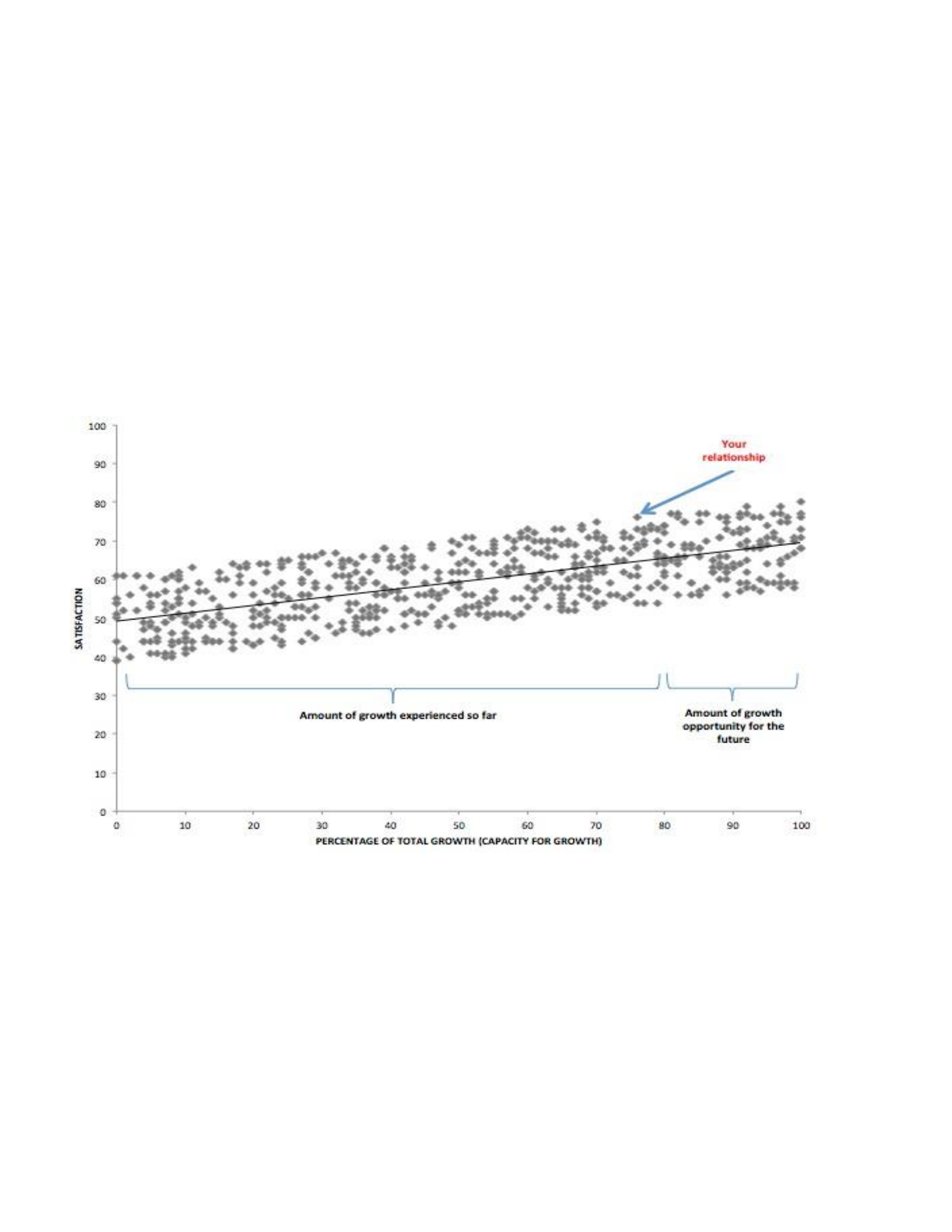
Relationship Quality
The overall quality of your current relationship is excellent. You have experienced high
levels of intimacy, satisfaction, agreeableness, and independence. Your relationship is above
average (85th percentile) based on our sample of over 21 000 Laurier students.
Relationship Growth (Low Growth Potential)
A two-level multilevel model was tested, where individuals (Level 1) were nested within
couples (Level 2). Slopes were models as fixed across couples and intercepts were modeled as
randomly varying across couples. Using this technique, we compared your answers to those in
our Laurier student database.
This analysis has determined that your relationship has likely reached its peak amount of
growth. Even though you and your partner will likely experience new events in the future, the
fundamental nature of your relationship is not likely to change. Based on your responses to our
survey, it appears the opportunity for further connection with your partner is limited. Please refer
to the graph below.
Relationship Growth (High Growth Potential)
A two-level multilevel model was tested, where individuals (Level 1) were nested within
couples (Level 2). Slopes were models as fixed across couples and intercepts were modeled as
randomly varying across couples. Using this technique, we compared your answers to those in
our Laurier student database.
This analysis has determined that your relationship has not yet reached its peak amount of
growth. You and your partner will likely experience new events in the future, and the
fundamental nature of your relationship has room to grow. Based on your responses to our
survey, it appears you have ample opportunity for further connection with your partner. Please
refer to the graph below.
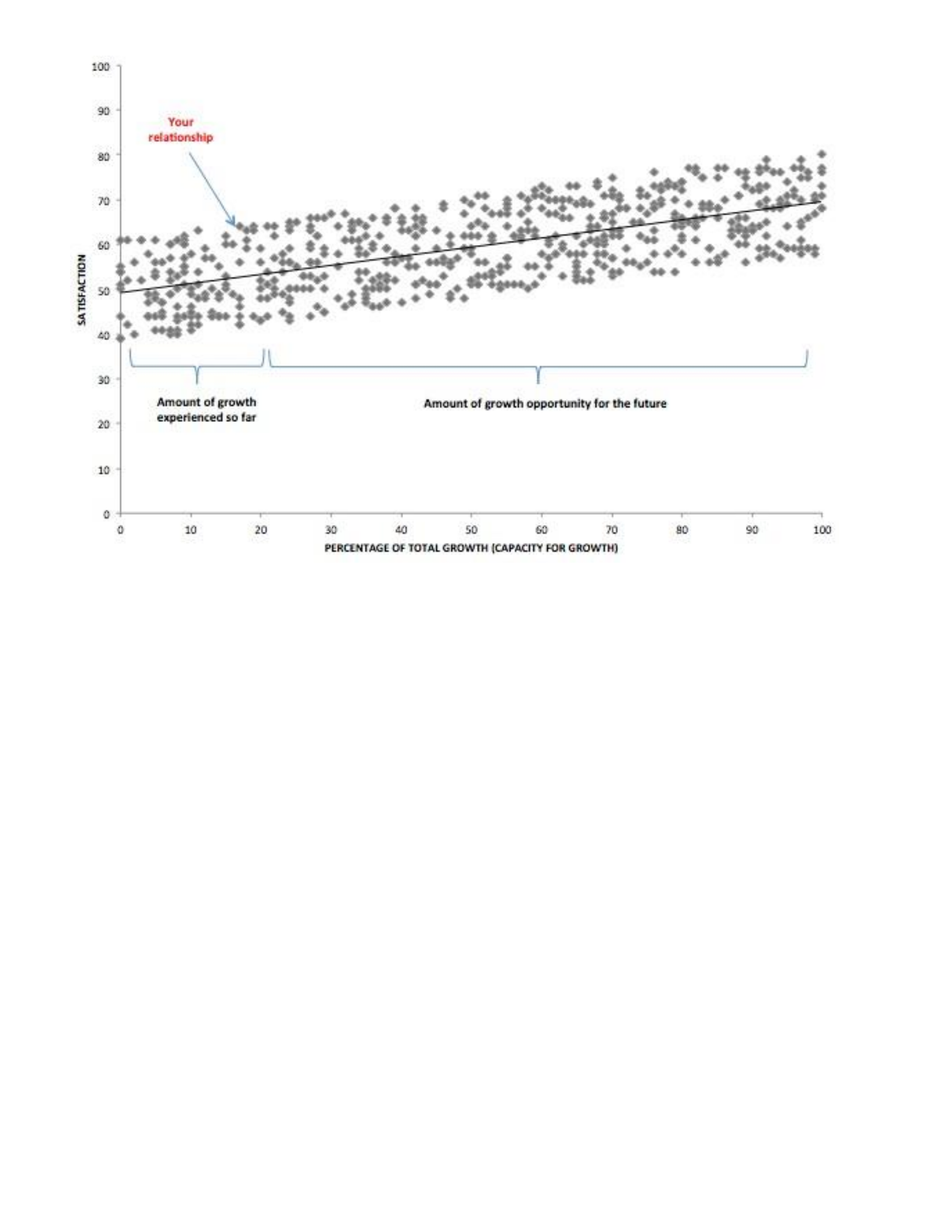
Commitment
Rusbult, Martz, and Agnew (1988).
Please use the scale provided to indicate your agreement with the following statements:
1 2 3 4 5 6 7
Do not agree Agree
at all completely
_____ 13. I want our relationship to last a very long time.
_____ 14. I am committed to maintaining my relationship with my partner.
_____ 15. I would feel very upset if our relationship were to end in the near future.

_____ 16. It is likely that I will date someone other than my partner within the next year.
_____ 17. I feel very attached to our relationship – very strongly linked to my partner.
_____ 18. I want our relationship to last forever.
_____ 19. I am oriented toward the long-term future of my relationship (for example, I
imagine being with my partner several years from now).
Satisfaction
Rusbult, Martz, and Agnew (1988).
_____ 20. I feel satisfied with our relationship.
_____ 21. My relationship is much better than others’ relationships.
_____ 22. My relationship is close to ideal.
_____ 23. Our relationship makes me very happy.
_____ 24. Our relationship does a good job of fulfilling my needs for intimacy,
companionship, etc.
Optimism
MacDonald and Ross (1999).
Please use the scale provided to indicate the likelihood of the following statements:
1 2 3 4 5 6 7
Not at all Extremely
likely likely
8. _____ How likely is it that you and your partner will still be together in 2 months?
9. _____ How likely is it that you and your partner will still be together in 6 months?
10. _____ How likely is it that you and your partner will still be together in 1 year?

11. _____ How likely is it that you and your partner will still be together in 2 years?
12. _____ How likely is it that you and your partner will still be together in 5 years?
13. _____ How likely is it that you and your partner will get married?
14. _____ How likely is it that your relationship will last a lifetime?
Relationship Satisfaction Hendrick
(1988).
Please answer the questions using the following scale. These questions ask about your
perceptions of your relationship.
1 2 3 4 5
Not at all/ A great deal/extremely poor good
1. How well does your partner meet your needs?
2. In general, how satisfied are you with your relationship?
3. How good is your relationship compared to most?
4. How often do you wish you hadn’t gotten into this relationship?
5. To what extent has your relationship met your original expectations?
6. How much do you love your partner?
Perceived Regard
Cavallo et al., (2013)
Please answer the questions using the following scale.
1 2 3 4 5 6 7
Do not Agree
agree at all completely
_____ 1. My partner loves and accepts me unconditionally
_____ 2. My partner gets irritated or impatient with some of my personal qualities
_____ 3. I am confident my partner will always want to look beyond my faults and see the
best in me
_____ 4. My partner believes I have many good qualities.
_____ 5. My partner regards me as very important in his/her life.
_____ 6. My partner values and admires my personal qualities and abilities.

_____ 7. Though times may change and the future is uncertain, I know my partner will
always be ready and willing to offer me strength and support.
_____ 8. My partner is never concerned that unpredictable conflicts and serious tensions may
damage our relationship because he/she knows we can weather any storm.
_____ 9. Whenever we have to make an important decision in a situation we have never
encountered before, I know my partner will be concerned about my welfare.
Interpersonal Qualities Scale
Murray, Holmes, and Griffin (1996)
Below are a number of personality traits that may or may not apply to your partner. Please
indicate the extent to which you feel each trait is characteristic of your partner.
1 2 3 4 5 6 7 Not at all Moderately Completely
Characteristi Characteris Characteris c of him/her tic of tic
him/her of him/her
1. _______ kind
2. _______ tolerant and accepting
3. _______ intelligent
4. _______ critical and judgmental
5. _______ thoughtless
6. _______ self-assured

7. _______ patient
8. _______ witty and humorous
9. _______ sociable; extroverted
10. _______ open and disclosing
11. _______ rational
12. _______ moody
13. _______ warm
14. _______ understanding
15. _______ lazy
16. _______ assertive
17. _______ responsive; supportive
18. _______ distant
19. _______ controlling
20. _______ complaining
21. _______ attractive
22. _______ interesting
Affect
Bolded items taken directly from Watson, Clark, and Tellegen (1988)
Using the scale below, indicate to what degree do you feel _____ right now?
1 2 3 4 5
Not at all A great deal
Tense
Active
Energetic
Nervous
Anxious
Lively
Enthusiastic Hostile Irritable Inspired Excited Upset
Willingness to Try New Things
Adapted from Kashdan, Gallagher, and Silvia (2009)

Rate the statements using the scale below for how accurately they reflect the way you generally
feel and behave in relationships. Do not rate what you think you should do, or wish to do, or
things you no longer do. Be as honest as possible.
1 2 3 4 5
Not at all/ A little Moderately Quite a bit Extremely
Very slightly
1. I actively try to learn as much as possible about my partner
2. I am the type of person who enjoys learning new things about my partner
3. Everywhere I go, I am out looking for new things or experiences to do with my partner
4. I view challenging situations as an opportunity to grow and learn
5. I prefer unpredictable situations
6. I am the kind of person who embraces the flaws my partner has
7. My partner and I frequently try new activities together
8. I like to do things that are a little frightening
9. I am the type of person who really enjoys the uncertainties of everyday life Self-
Affirmation Task
In the space below it, write down a positive trait, quality, and attribute about your partner and
your relationship. For example, it could be that you and your partner have a lot of fun together
and laugh a lot, or that your partner is really loving and caring. List this attribute and describe
what it means to you in your relationship.

WILFRID LAURIER UNIVERSITY DEPARTMENT OF PSYCHOLOGY PROJECT
SUMMARY
Growth and relationships
Investigator: Amanda Kohler. Supervisor: Dr. Justin Cavallo
Thank you for your participation in the study! Your participation is appreciated, and we hope you
had an interesting experience.
Although we told you at the outset of this experiment that this study was investigating people’s
romantic relationships and the title of the study was “The science of romantic relationships: how
do you compare?” the current research is actually investigating the effect of relational growth
threats on how individuals feel about their relationship. This deception was included so that you
would not know the true purpose of the study. Unfortunately, it was necessary not to inform you
of the true purpose of study at the beginning of this session. Sometimes if participants are aware
of the true intent of the research, it may inadvertently bias their responses. In some studies, if
participants are told the true purpose of the study and what researchers believe will happen in
certain conditions at the very beginning of the study, it can affect how they behave during the
study. Because the researchers need to understand how people will act in a real situation, it is
essential for participants to believe they are in a real situation, and therefore, sometimes
researchers cannot tell participants the true purpose of the study right away.
Prior research has shown that people differ in the extent to which they focus on positive
outcomes or negative outcomes when pursuing their goals. We were studying whether these
differences affect the way that people experience their romantic relationship. Specifically, we
hypothesized that a focus on positive or negative outcomes would affect how people felt about
their relationship and their partner when they were made to feel their relationship had very much
or very little potential for growth in the future.
To investigate this, participants were randomly assigned to either receive feedback containing
information indicating that they have reached their peak amount of relational growth and that

opportunity for further connection with their partner is limited, or that they have not yet reached
their peak amount of growth, and there is ample opportunity for further connections with their
partner. It is important that you know that the feedback that you received was fabricated by the
researchers for the purposes of this study. This feedback was designed in a way to make
participants feel like their relationship had very little or very much room to grow and to do this
without their conscious awareness. The “test” that you took was made for this study and does not
accurately measure anything, and you were never compared to any other people in any study.
Moreover, your data will be completely confidential and will never be used for comparison with
other participants. Keep in mind that the feelings created by this manipulation were intended to
be temporary and to affect everyone, regardless of how they actually feel about their relationship.
In reality, we have no basis for judging your relationship and the information you read should not
be applied to your own romantic life.
Demographic data was collected in order to explore the possibility that individual differences
(e.g., gender) impact the relation between how people feel about their relationships and relational
growth threat.
Some people may have experienced temporary discomfort when completing some questionnaires
that asked self-related questions. It is possible that this deception might have made you
somewhat anxious or upset. These feelings are normal and should be temporary. If you
experience negative feelings that persist and worsen after the study, please contact the
researchers and/or Counselling Services. Wilfrid Laurier University offers confidential
counselling services to its students. An appointment with Counselling Services can be made
either by calling (519) 884-0710 extension 2338, through email at [email protected] or by
dropping by their office located in the Student Services building across from Health Services.
You can also contact Counselling Services about a wide array of study skills materials and
workshops. If, after you leave the study, you continue to feel badly about any aspect of the study,
we encourage you to immediately contact the primary researcher or Counselling Services.
If you have any questions or concerns about this study, please contact one of the principal
investigators, Amanda Kohler, at (905) 716-7855 or kohl8430@mylaurier.ca or Dr. Justin
Cavallo at (519) 884-0710 extension 4563 or [email protected]. This project has been reviewed
and approved by the University Research Ethics Board (REB # 3808). If you feel you have not
been treated according to the descriptions in this form, or your rights as a participant in research
have been violated during the course of this project, you may contact Dr. Robert Basso, Chair,
University Research Ethics Board, Wilfrid Laurier University, (519) 884-0710, extension 4994
Please do not tell other students about the purposes or methodologies of this study. If you do not
keep this feedback sheet, please dispose of it or recycle it rather than leaving it somewhere that
other students might read it.
The results of this study will be emailed to you through the SONA system by April 30, 2014.
Additionally, the results of this study will be posted on the bulletin board in the hallway outside
of the psychology general office, N2006, on or before April 30, 2014
If you are interested in learning more about the science of close relationships, please refer to
Chapter 16 of your Introductory Psychology textbook. If you would like to know more about this
research in particular, the following papers may be of interest to you:

Cavallo, J. V., Murray, S. L., & Holmes, J. G. (2013). Regulating interpersonal risk. In J. A.
Simpson & L. Campbell (Eds.), Oxford handbook of close relationships (pp. 116-134).
New York, NY: Oxford University Press.
Molden, D. C., Lee, A. Y., & Higgins, E. T. (2008). Motivations for promotion and prevention. In
J. Shah & W. Gardner (Eds.) Handbook of motivation science (pp. 169-187). New York:
Guilford Press.
Thank you again for participating!

