


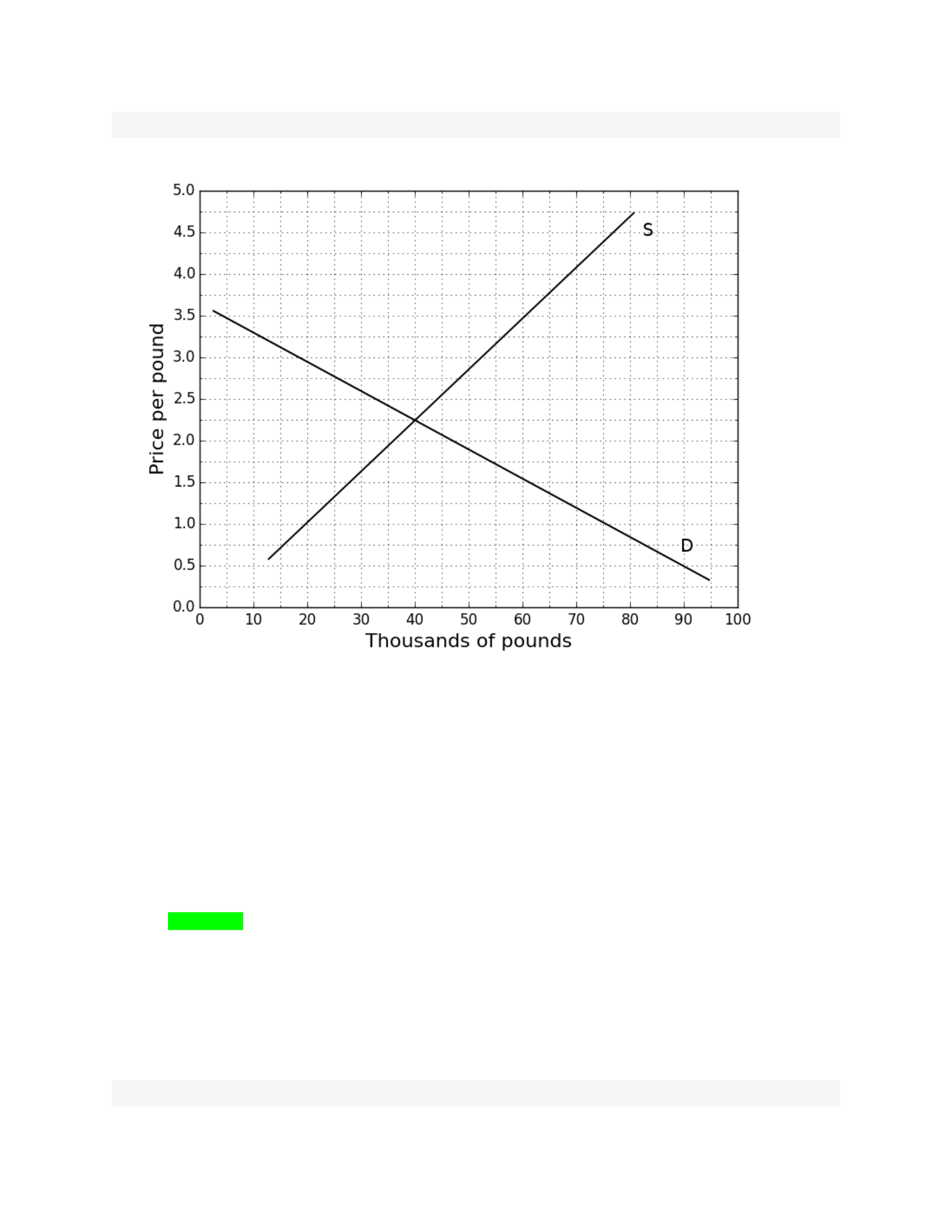
Question 1
Suppose the figure above represent the market for peaches. Who is hurt by a price floor of
$3 per pound?
I. Consumers who purchase peaches at the controlled price.
II. Producers who sell peaches at the controlled price.
III. Consumers who would like to buy peaches at the equilibrium price, but are unable to do
so.
IV. Producers who would like to sell peaches at the equilibrium price, but are unable to do
so.
a. I, III and IV
b. I and III
c. II and III
d. I,II, III and IV
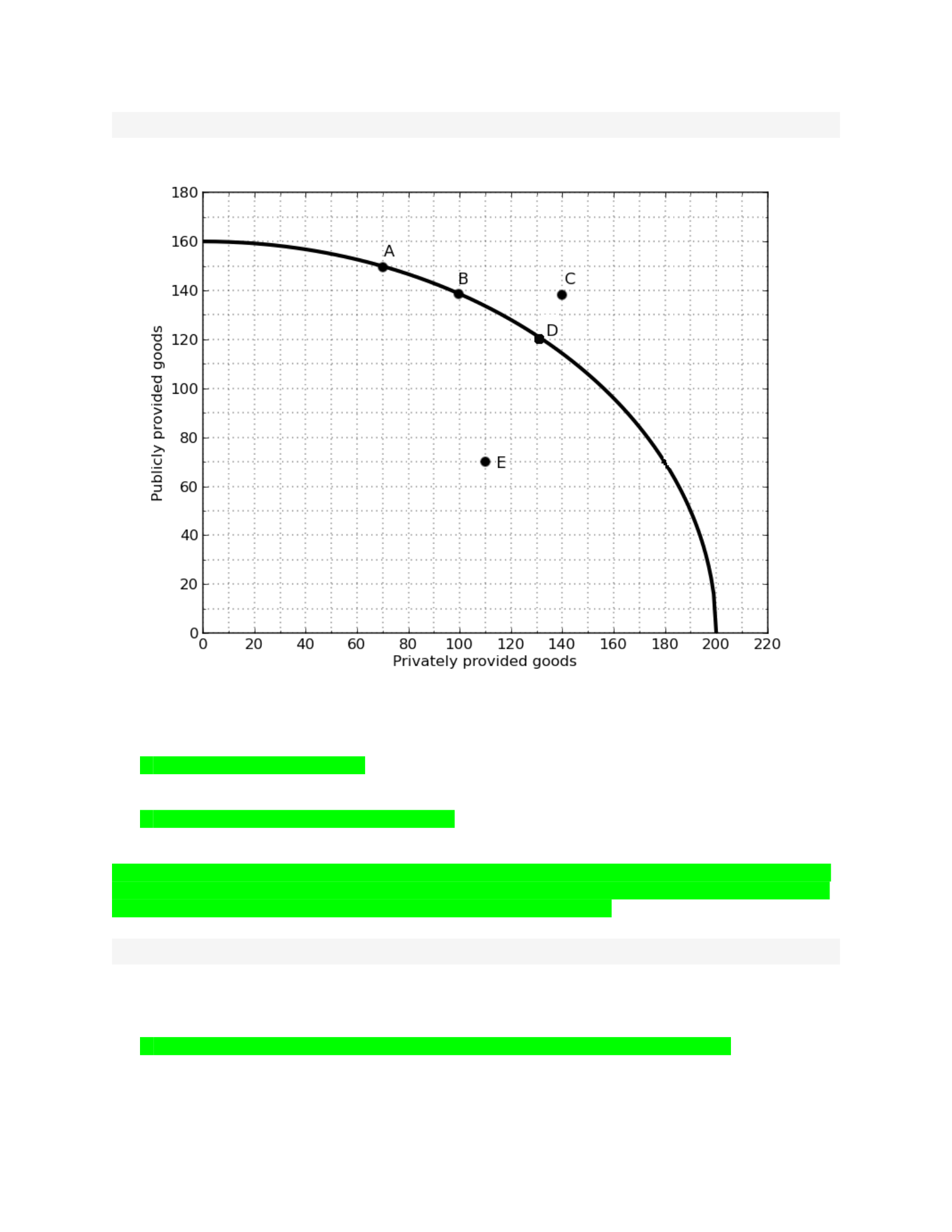
Question 2
Refer to the figure. Suppose the economy is producing at point "D". Which of the following would allow
the economy to produce at point C? CHECK ALL THAT APPLY
C !
a. Increase level of technology
b. Pay workers higher wages.
c. Improve quantity and quality of resources
d. Choose a different allocation of resources
Correct! At point D, the economy is already utilizing its resources fully and efficiently and paying workers
more would not increase their efficiently beyond maximum. The only way to advance beyond the PPC is
to improve quantity and or quality of resources or technological increase.
Question 3
In the circular-flow diagram,
a. factors of production flow from government to firms.
b. goods and services flow from households to firms.
c. income paid to the factors of production flows from firms to households.
d. spending on goods and services flows from firms to households.

Question 4
Which of the following transactions takes place in the markets for the factors of production
in the circular-flow diagram?
a. Dylan receives a salary for his work as a financial analyst for an investment firm.
b. Kristin buys two business suits to wear to her job as a Chief Information Officer.
c. Jim receives clean water in his home in exchange for paying his water bill.
d. Caroline owns a nail salon and receives payments from her clients for her services.
Question 5
Assume that Greece has a comparative advantage in fish and Germany has a comparative
advantage in cars. Also assume that Germany has an absolute advantage in both fish and
cars. If these two countries specialize and trade so as to maximize the benefits of
specialization and trade, then
a. the two countries’ combined output of both goods will be higher than it would be in
the absence of trade.
b. Greece will produce more fish than it would produce in the absence of trade.
c. Germany will produce more cars than it would produce in the absence of trade.
d. All are correct.
Question 6
Which of the following statements is not correct?
a. Comparative advantage is the basis for mutually beneficial trade.
b. Trade has the potential to benefit all nations.
c. Trade allows nations to consume outside of their production possibilities curves.
d. Absolute advantage is the basis for mutually beneficial trade.
Question 7
Flights to Paris are a normal good and people's incomes rise. At the same time, the price of jet fuel rises.
The equilibrium price of a flight to Paris ________ and the equilibrium quantity of flights to Paris
________.
a. might rise, fall, or not change; increases
b. falls; decreases.
c. rises; increases!
d. rises; might increase, decrease, or not change
Question 8

If mayonnaise and Miracle Whip are substitutes, then which of the following would increase
the demand for Miracle Whip?
a. a decrease in the price of Miracle Whip!
b. an increase in the price of mayonnaise
c. a decrease in the price of mayonnaise
d. an increase in the price of Miracle Whip
Question 9
If a study by medical researchers finds that eating brown rice causes weight loss while
eating white rice causes weight gain, then we likely would see!
a. an increase in demand for brown rice and a decrease in demand for white rice.
b. a decrease in demand for brown rice and an increase in demand for white rice.
c. an increase in demand for both brown and white rice.
d. no change in demand for either type of rice because weight loss is not a determinant
of demand.
Question 10
Which of the following correctly describes how price adjustments eliminate a shortage?
a. As the price rises, the quantity demanded decreases while the quantity supplied
increases.
b. As the price rises, the quantity demanded increases while the quantity supplied
decreases.
c. As the price falls, the quantity demanded decreases while the quantity supplied
increases.
d. As the price falls, the quantity demanded increases while the quantity supplied
decreases.
Question 11
The French have lower GDP per capita relative to the United States and spend more time producing
goods in the home for consumption. French real GDP per capita _____ the standard of living in France
relative to the United States.
a. underestimates
b. is a perfect measure
c. overestimates
Question 12
The table below displays data from the Bureau of Economic Analysis for the United States in 2012.
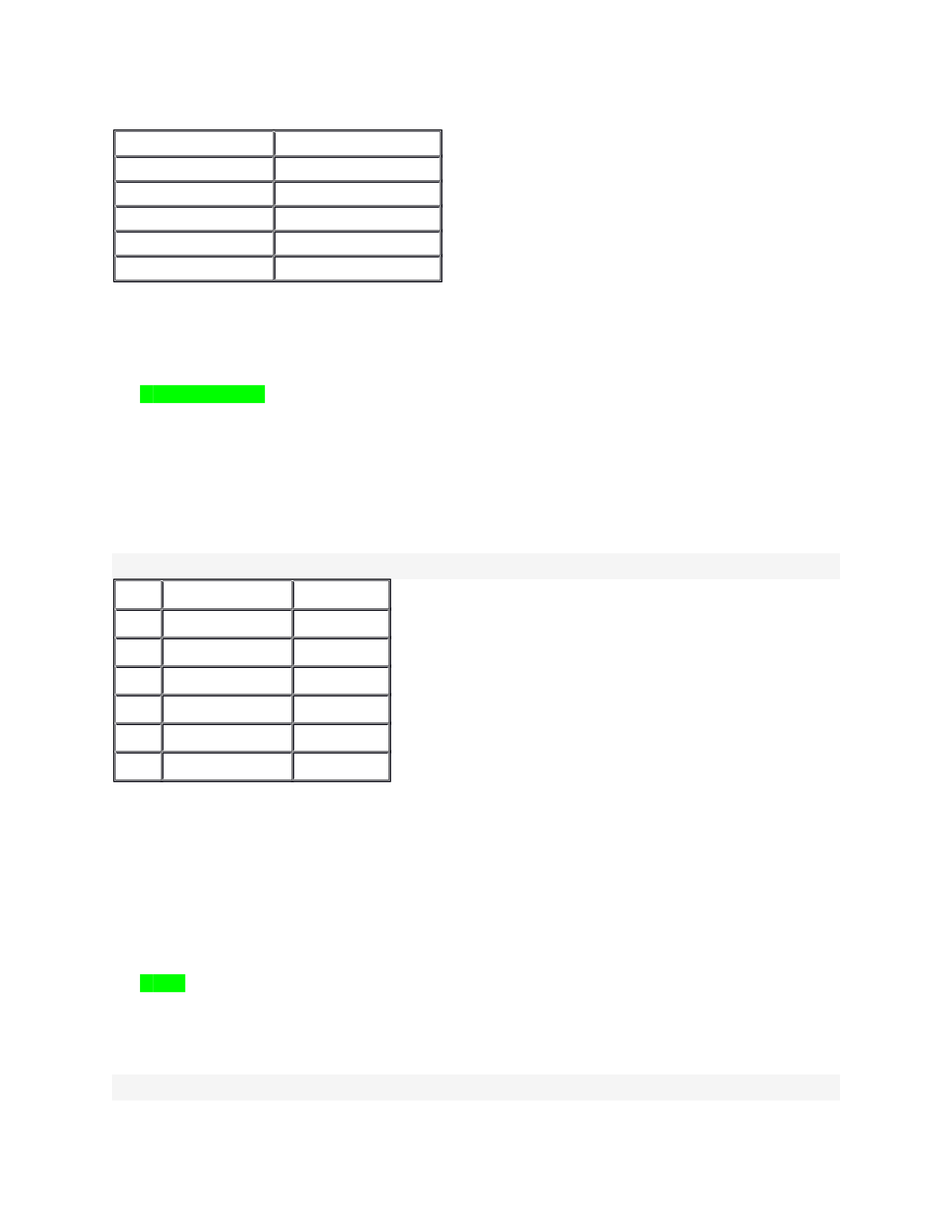
Expenditure category Trillions of U.S. Dollars
Consumption 11.14
Investment 2.48
Government Purchases 3.17
Exports 2.20
Imports 2.74
Calculate nominal GDP in 2012
a. $17.33 Trillion!
b. $16.25 Trillion
c. $21.70 Trillion
d. $13.94 Trillion
e. cannot be determined from the information given
Question 13
year Nominal GDP Real GDP
2000 $9,952 $11,216
2005 $12,623 $12,623
2008 $14,292 $13,162
2009 $13,939 $12,703
2010 $14,527 $13,088
2011 $15,088 $13,313
Source: Bureau of Economic Analysis
Refer to the table above. What is the value of the GDP deflator in 2000?
a. cannot be determined
b. 100
c. 105
d. 89
e. 113
Question 14
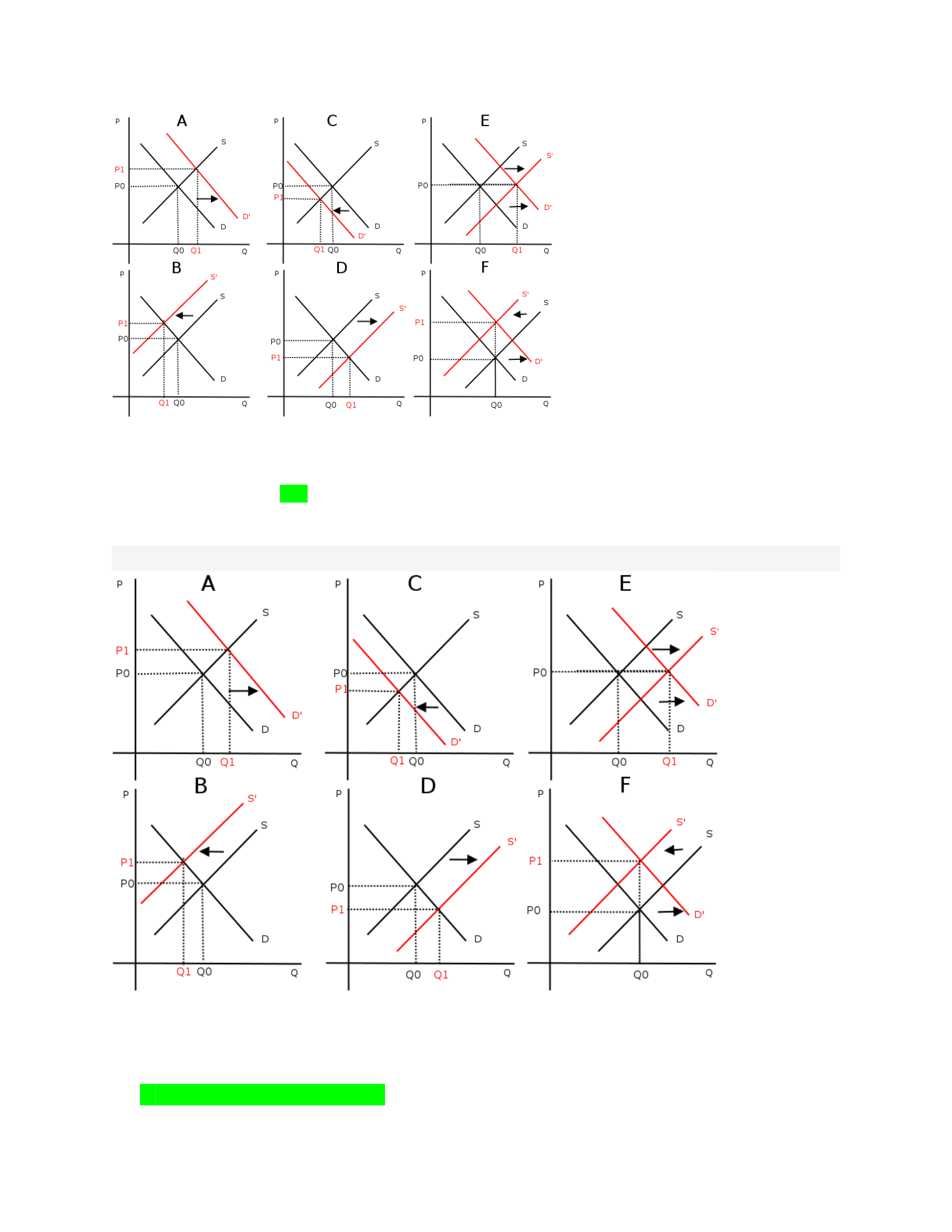
Refer to the figure above. Suppose apple farmers decide to sell some of their orchard land for housing
developments. What best describes the effect in the market for fresh apples?
a. A b. B c. C d. D e. E f. F
Question 15
Assume the figures above represent the market for sports cars. Which of the following
best describes graph A?
a. The price of gasoline falls.
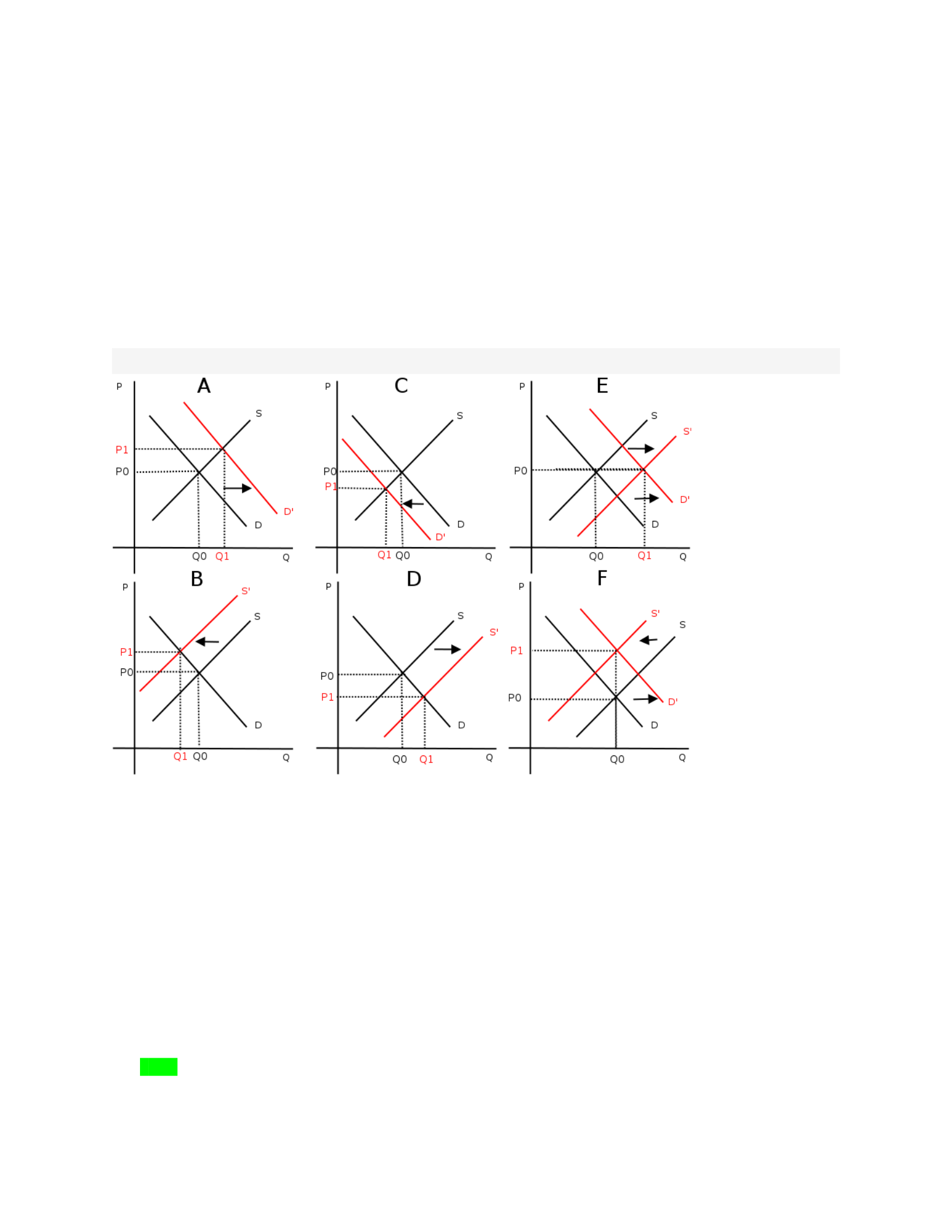
b. The price of full size sedans falls.
c. Income decreases.
d. The number of firms producing sports cars increases.
e. none of these.
Question 16
Refer to the figure above. What best describes the change in the diamond market if both
consumers and diamond producers expect the price of diamonds to rise in the future.
a. A
b. B
c. C
d. D
e. E !
f. F

Question 17
When two variables have a positive correlation,
a. when the x-variable increases, the y-variable decreases.
b. when the x-variable decreases, the y-variable increases.
c. when the x-variable increases, the y-variable increases.
d. More than one of the above is correct.
Question 18
Which of the following is true?
C !
a. For an inferior good, when income increases, the demand curve shifts leftward.
b. The demand curve for a good shifts leftward when the price of a substitute rises.
c. If consumers expect the price of a good will rise in the future, the demand curve
shifts leftward.
d. An increase in population shifts the demand curve for most goods leftward.
Question 19
A downward-sloping demand curve illustrates
a. that demand decreases over time.
b. that prices fall over time.
c. the relationship between income and quantity demanded.
d. the law of demand.
Question 20
A movement along the supply curve might be caused by a change in
a. production technology.
b. input prices.
c. expectations about future prices. !
d. the price of the good or service that is being supplied.
Question 21
The signals that guide the allocation of resources in a market economy are
Y A
a. surpluses and shortages.

b. quantities.
c. government policies.
d. prices.
Question 22
Which of the following would lead to an increase in GDP for the United States in 2013?
I. Toyota, a Japanese firm, produces cars in Kentucky in the first quarter of 2013.
II. A 2013 model year Ford Fiesta is produced, but sits on a dealer lot until February 2014.
III. $10,000 worth of new-crop Washington-grown wheat is exported to Japan in October 2013.
IV. An international student purchases a ham sandwich from a Tempe Subway sandwich shop in May
2013
Y A
a. III and IV
b. I and II
c. I, II, and III
d. II and III
e. I, II, III and IV
Question 23
Recently, a gluten free diet has gained popularity among those looking to eat healthily and
lose weight. The supply and demand model in class predicts
a. a fall in the equilibrium price of gluten free food an increase in quantity consumed.
b. a rise in the equilibrium price of gluten free food and a decrease in quantity consumed.
c. a rise in the price of gluten free food offered for sale and an increase in quantity consumed.
d. an uncertain change in the price of gluten free food a an increase in the quantity consumed.
Question 24
Suppose the income of buyers in a market for an inferior good decreases and a technological
advancement occurs also. What would we expect to happen in the market?
Y A
a. Equilibrium price would decrease, but the impact on equilibrium quantity would be
ambiguous.
b. Equilibrium quantity would increase, but the impact on equilibrium price would be
ambiguous.
c. Equilibrium quantity would decrease, but the impact on equilibrium price would be
ambiguous.

d. None of the above is correct.
Question 25
Which of the following would cause price to decrease?
Y A
a. a decrease in supply
b. an increase in demand
c. an increase in supply
d. a shortage of the good
Question 26
Which the following in an example of positive economic analysis?
a. Policy makers decide to spend more on education.
b. A simple study is conducted that shows people should finish their college degrees.
c. Policy makers believe that education is currently a more important issue than
inflation.
d. A simple study is conducted that shows annual earnings increase with education
level.
Question 27
In economics, the cost of something is
a. the dollar amount you must pay to obtain it.
b. the time you had to spend to obtain it.
c. the value of the next-best alternative forgone to get it.
d. often impossible to quantify, even in principle.
Question 28
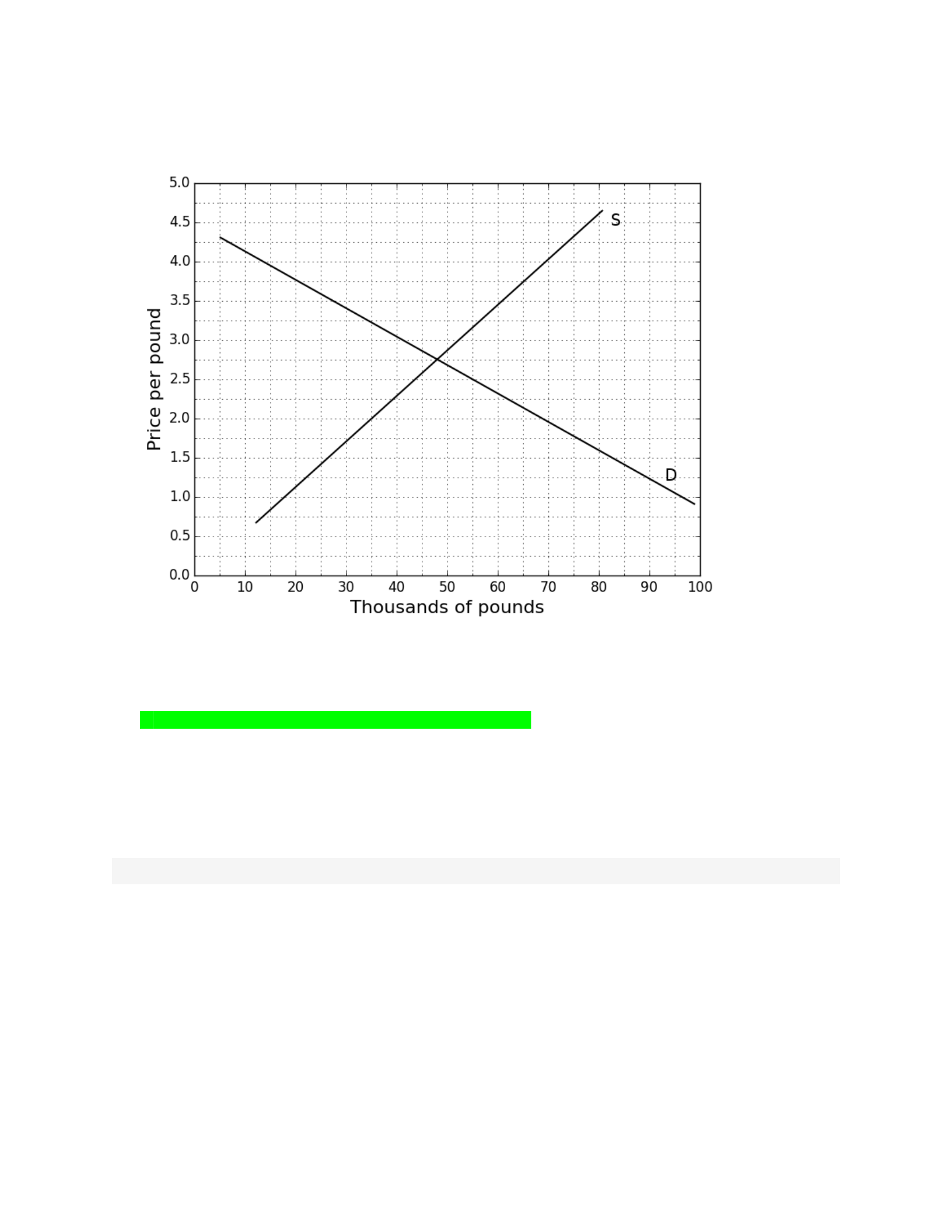
Suppose the figure above represents the market for apples. Suppose a price ceiling of $2 per pound is
imposed. As a result,
C !
a. there is a shortage of 35 thousand pounds of apples.
b. there is a surplus of 35 thousand pounds of apples.
c. there is a shortage of about 14 thousand pounds of apples.
d. the market remains in equilibrium because the price ceiling is not binding.
Question 29
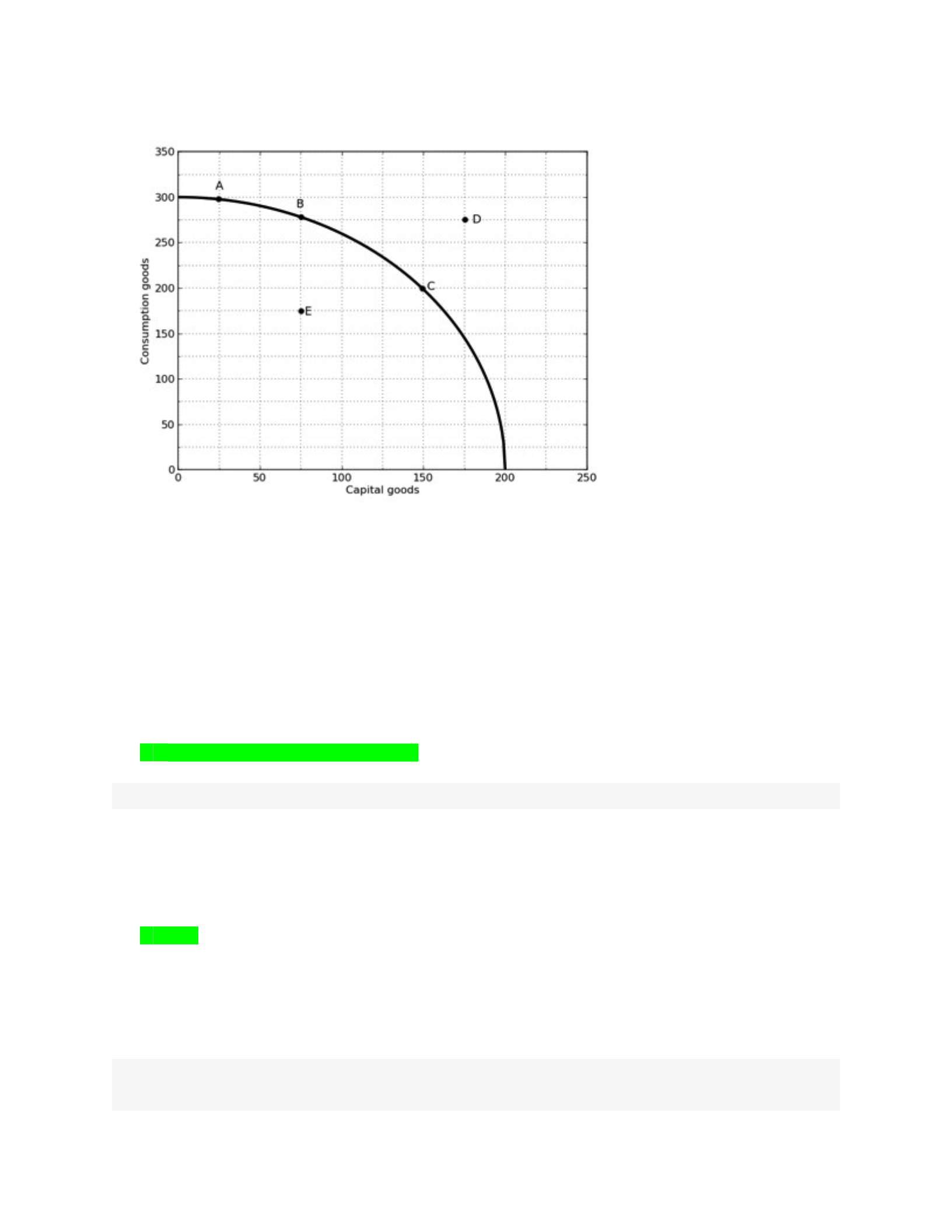
Refer to the figure above. Suppose the economy is producing at point C. What is the
opportunity cost of increasing production of capital goods by 50 units?
Y A
a. 150 units of consumption goods.
b. 75 units of capital goods
c. 50 units of consumption goods.
d. It depends on the preferences of society.
e. 200 units of consumption goods
Question 30
It takes Suzi 6 hours to sew a shirt and 4 hours to bake a cake. Anna can sew a shirt in 3 hours and bake
a cake in 1 hour.
If Anna and Suzi decide to specialize and trade, who should make shirts?
a. Anna
b. Suzi
c. both
d. neither

Question 31
Rational individuals
a. have complete and correct information
b. make the same decisions as other rational individuals
c. are right most of the time
d. are all of these
e. weigh the costs and benefits of every action
Question 32
Which of the following describes the difference between "scarcity" and "shortage"?
a. There is no difference; either word can be used to describe the situation that exists
when there is less of a good or service available than people want. !
b. In the economic sense, almost everything is scarce. A shortage of a good or service
occurs when the quantity demanded is greater than the quantity supplied at the
current market price.
c. There is a shortage of almost everything. Scarcity occurs only if the quantity
demanded of a good or service is greater than the quantity supplied at the current
market price.
d. In the economic sense, almost everything is scarce. A shortage of a good or service
occurs when the quantity demanded is greater than the quantity supplied at the
equilibrium price.
Question 33
This question is equivalent to three exam questions. Select the answer to each question
from the drop-down menu. Partial credit is awarded.
Country A Country B
Bicycles Wheat Bicycles Wheat
100 0 50 0
80 40 40 30
60 80 30 60
40 120 20 90
20 160 10 120
0 200 0 150
The table above is a production possibilities schedule for countries A and B.
The opportunity cost of producing one unit of bicycles in country A is 20 units of wheat.

The opportunity cost of producing one unit of bicycles in country Bis 5 units of wheat.
Country A has a comparative advantage in the production of bicycles and wheat
Country B has a comparative advantage in the production of nothing
Suppose that before countries A and B decided to trade, country A produced 60 units of bicycles and 80
units of wheat. Country B produced 30 units of bicycles and 60 units of wheat. If country A and B decide
to specialize and trade, this would result in an increase in total production of bicycles in the amount
of 10 units and an increase in the total production of wheat in the amount of 2 units.
Answer 1: Correct Answer 2
Answer 2:Correct Answer 3
Answer 3: Correct Answer bicycles
A
Answer 4: Correct Answer wheat
Answer 5: 10
Answer 6: Correct Answer 10
Question 34
Which of the following would cause a movement along the supply curve for cupcakes?
a. an improvement in technology for commercial mixers
b. a decrease in the price of cupcakes
c. an increase in the price of cake flour
d. All of the above are correct.
Question 35
Suppliers will be willing to supply a product in all of the following situations except
a. the price received is greater than the additional cost of producing the product.
b. the price received is at least equal to the additional cost of producing the product.
c. the price received is equal to the additional cost of producing the product.
d. the price received is less than the additional cost of producing the product.
Question 36
Which of the following would lead to a leftward shift in the supply curve for iPads (a normal good)?
a. A decrease in the price of the applications that run on iPads
b. A decrease in the value of household wealth
c. A decrease in the price of laptop computers

d. The price of silicon, an input in production, increases
e. A decrease in the price of iPads
Question 37
Which of the following is the most likely explanation for the imposition of a price ceiling on
the market for milk?
a. Policymakers have studied the effects of the price ceiling carefully, and they
recognize that the price ceiling is advantageous for society as a whole.!
b. Buyers of milk, recognizing that the price ceiling is good for them, have pressured
policymakers into imposing the price ceiling.
c. Sellers of milk, recognizing that the price ceiling is good for them, have pressured
policymakers into imposing the price ceiling.
d. Buyers and sellers of milk have agreed that the price ceiling is good for both of them
and have therefore pressured policymakers into imposing the price ceiling.
Question 38
A price floor is
a. a legal minimum on the price at which a good can be sold.
b. often imposed when sellers of a good are successful in their attempts to convince the
government that the market outcome is unfair without a price floor.
c. a source of inefficiency in a market.
d. All of the above are correct.

