


CON 252: Methods, Materials, and Equipment Spring 2020
1
HO: Tuesday, February 25th, 2020
Homework #3 DUE: Tuesday, March 3, 2020 at 12:00 PM
Name(s): Zach Mattson
Directions for Completion and Submission:
All homework assignments are to be typed on a word processor and submitted electronically
via canvas no later than 12:00 PM on Tuesday, March 3rd, 2020. Be sure to show all work
and to highlight your answers. This homework is to be turned in individually, though you may
work with classmates.
Hints: Steel and Wood were discussed in the Structural Systems 2 lectures in class (Feb. 20 and
25). If you are struggling, Chapters 3, 5, 11, and 12 of the textbook deal with Wood and Steel
Construction and may be a good resource. Of course, you can also visit office hours if you have
questions.
Part I: Steel
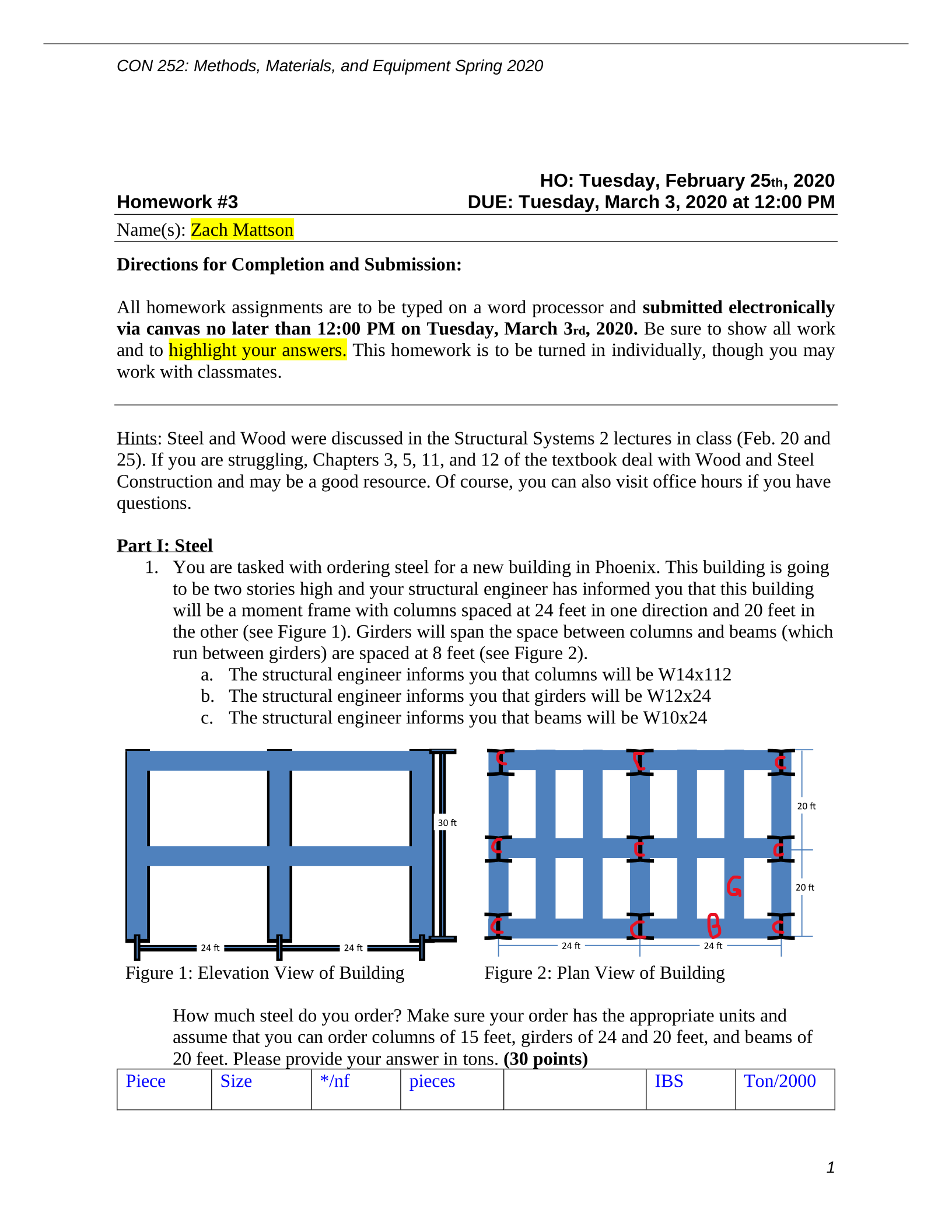
1. You are tasked with ordering steel for a new building in Phoenix. This building is going
to be two stories high and your structural engineer has informed you that this building
will be a moment frame with columns spaced at 24 feet in one direction and 20 feet in
the other (see Figure 1). Girders will span the space between columns and beams (which
run between girders) are spaced at 8 feet (see Figure 2).
a. The structural engineer informs you that columns will be W14x112
b. The structural engineer informs you that girders will be W12x24
c. The structural engineer informs you that beams will be W10x24
Figure 1: Elevation View of Building
Figure 2: Plan View of Building
How much steel do you order? Make sure your order has the appropriate units and
assume that you can order columns of 15 feet, girders of 24 and 20 feet, and beams of
20 feet. Please provide your answer in tons. (30 points)
Piece
Size
*/nf
pieces
IBS
Ton/2000
24 24
30
Structural Systems 2 – Steel and Wood
CON 252: Methods, Materials, and Equipment Spring 2020
2
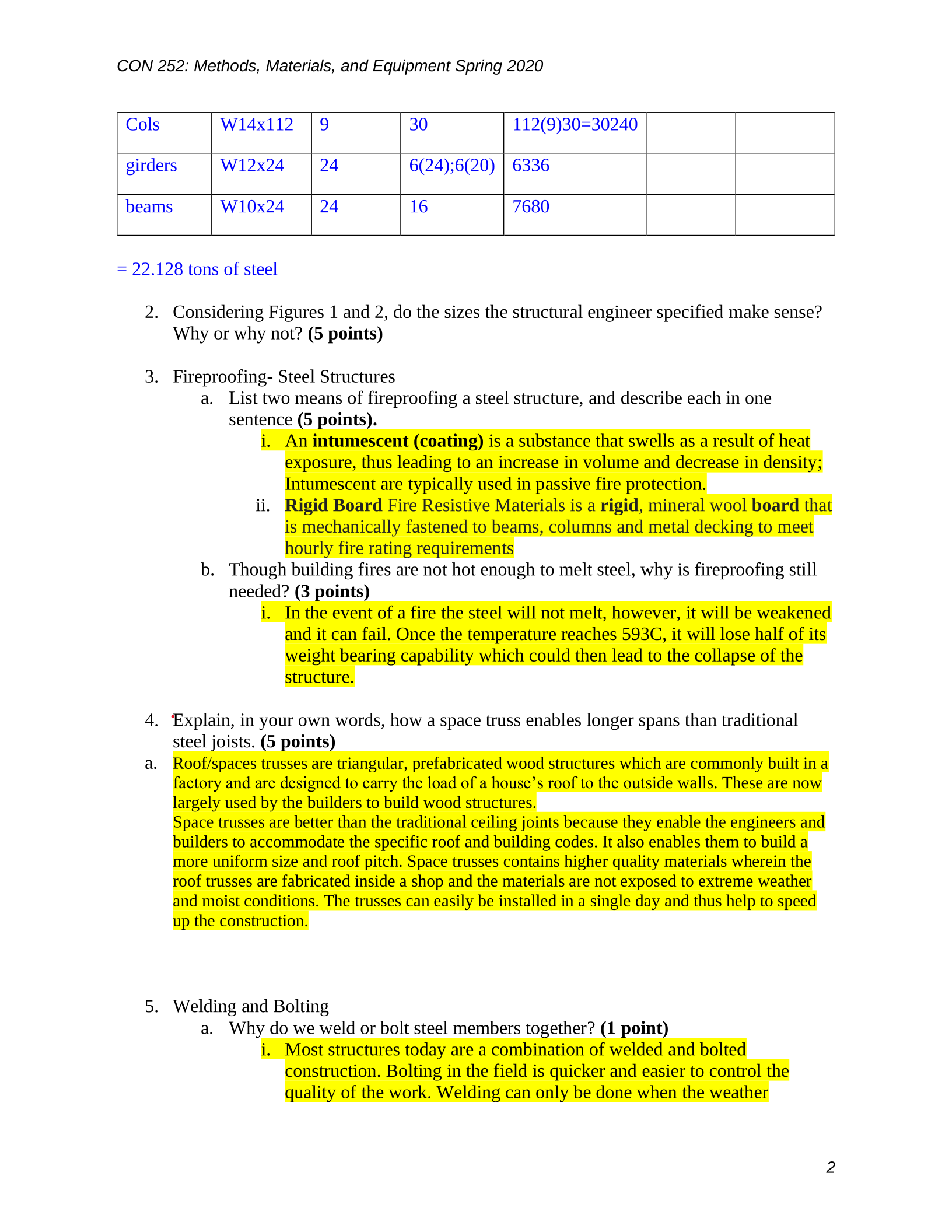
Cols
W14x112
9
30
112(9)30=30240
girders
W12x24
24
6(24);6(20)
6336
beams
W10x24
24
16
7680
= 22.128 tons of steel
2. Considering Figures 1 and 2, do the sizes the structural engineer specified make sense?
Why or why not? (5 points)
3. Fireproofing- Steel Structures
a. List two means of fireproofing a steel structure, and describe each in one
sentence (5 points).
i. An intumescent (coating) is a substance that swells as a result of heat
exposure, thus leading to an increase in volume and decrease in density;
Intumescent are typically used in passive fire protection.
ii. Rigid Board Fire Resistive Materials is a rigid, mineral wool board that
is mechanically fastened to beams, columns and metal decking to meet
hourly fire rating requirements
b. Though building fires are not hot enough to melt steel, why is fireproofing still
needed? (3 points)
i. In the event of a fire the steel will not melt, however, it will be weakened
and it can fail. Once the temperature reaches 593C, it will lose half of its
weight bearing capability which could then lead to the collapse of the
structure.
4. Explain, in your own words, how a space truss enables longer spans than traditional
steel joists. (5 points)
a. Roof/spaces trusses are triangular, prefabricated wood structures which are commonly built in a
factory and are designed to carry the load of a house’s roof to the outside walls. These are now
largely used by the builders to build wood structures.
Space trusses are better than the traditional ceiling joints because they enable the engineers and
builders to accommodate the specific roof and building codes. It also enables them to build a
more uniform size and roof pitch. Space trusses contains higher quality materials wherein the
roof trusses are fabricated inside a shop and the materials are not exposed to extreme weather
and moist conditions. The trusses can easily be installed in a single day and thus help to speed
up the construction.
5. Welding and Bolting
a. Why do we weld or bolt steel members together? (1 point)
i. Most structures today are a combination of welded and bolted
construction. Bolting in the field is quicker and easier to control the
quality of the work. Welding can only be done when the weather
CON 252: Methods, Materials, and Equipment Spring 2020
3
conditions permit. High wind and rain make quality welding difficult to
produce
b. What is the difference between a fillet and a penetration weld? (1 point)
i. Fillet welds are suitable for lap joints and Tee joints and groove
welds for butt and corner joints. Butt welds can be of complete
penetration or incomplete penetration depending upon whether the
penetration is complete through the thickness or partial.
c. Why are load indicator washers beneficial? (1 point)
i. Load indicating washers are used to develop the correct tension when
installing A325 or A490 structural bolts. The Load Indicators are
specially hardened washers carrying 4 to 7 protrusions, depending on
bolt diameter and are assembled with the protrusions bearing against the
under side of the bolt head, leaving a gap.
d. Is bolting more expensive than welding? (1 point) Why or why not? (1 point)
i. Welded splices are generally more expensive than bolted splices on site,
take longer to complete, and introduce an element of program risk from
bad weather and/or the possible repair of defects.
Part II: Wood
6. What is the difference between a hardwood and a softwood? (5 points)
Evergreens(softwoods) do tend to be less dense than deciduous trees(hardwood), and therefore
easier to cut, while most hardwoods tend to be more dense, and therefore sturdier. This
denseness also means that the wood will split if you pound a nail into it therefore you need to
drill screw or bolt holes to fasten hardwood together.
7. Use the table below to list at least five types of fasteners, as well as a one-sentence
description of an application for each. (10 points)
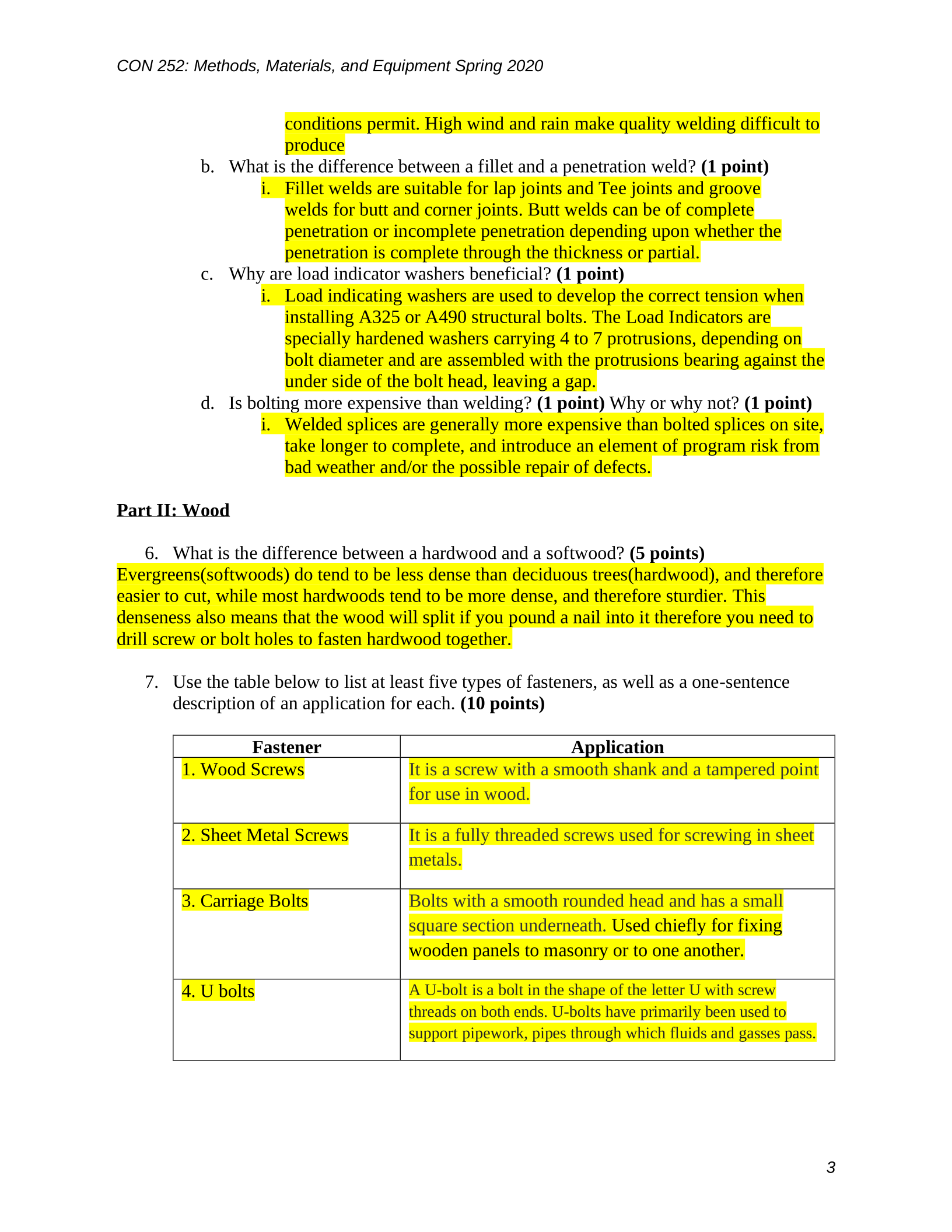
Fastener
Application
1. Wood Screws
It is a screw with a smooth shank and a tampered point
for use in wood.
2. Sheet Metal Screws
It is a fully threaded screws used for screwing in sheet
metals.
3. Carriage Bolts
Bolts with a smooth rounded head and has a small
square section underneath. Used chiefly for fixing
wooden panels to masonry or to one another.
4. U bolts
A U-bolt is a bolt in the shape of the letter U with screw
threads on both ends. U-bolts have primarily been used to
support pipework, pipes through which fluids and gasses pass.
CON 252: Methods, Materials, and Equipment Spring 2020
4
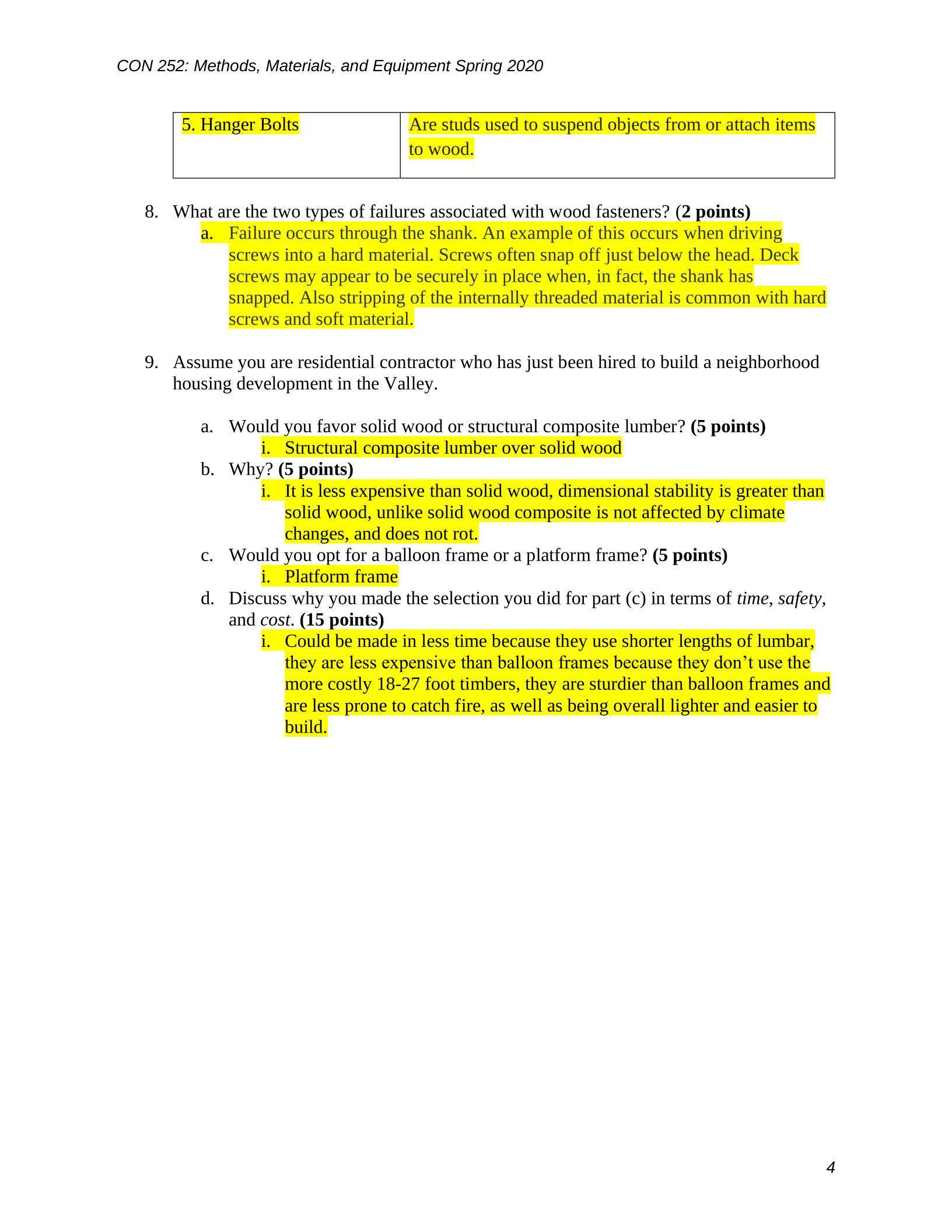
5. Hanger Bolts
Are studs used to suspend objects from or attach items
to wood.
8. What are the two types of failures associated with wood fasteners? (2 points)
a. Failure occurs through the shank. An example of this occurs when driving
screws into a hard material. Screws often snap off just below the head. Deck
screws may appear to be securely in place when, in fact, the shank has
snapped. Also stripping of the internally threaded material is common with hard
screws and soft material.
9. Assume you are residential contractor who has just been hired to build a neighborhood
housing development in the Valley.
a. Would you favor solid wood or structural composite lumber? (5 points)
i. Structural composite lumber over solid wood
b. Why? (5 points)
i. It is less expensive than solid wood, dimensional stability is greater than
solid wood, unlike solid wood composite is not affected by climate
changes, and does not rot.
c. Would you opt for a balloon frame or a platform frame? (5 points)
i. Platform frame
d. Discuss why you made the selection you did for part (c) in terms of time, safety,
and cost. (15 points)
i. Could be made in less time because they use shorter lengths of lumbar,
they are less expensive than balloon frames because they don’t use the
more costly 18-27 foot timbers, they are sturdier than balloon frames and
are less prone to catch fire, as well as being overall lighter and easier to
build.
Powered by TCPDF (www.tcpdf.org)

