


RHETORIC AND PERSUASION
(In Defense of Rhetoric)
• “Rhetoric” – A Much Maligned Term
The practice of “rhetoric” has been long been held in either low or high regard:
oThe term has been maligned because of its frequent detrimental practice
oThe term has been extolled because of its significant potential for positive influence
Ancient meanings attributed to the term “rhetoric”:
oNegative – the art of verbal “flattery” (according to Plato)
Taught by Sophists (public speaking trainers) without regard for truth
Feel-good talk akin to savory cooking that simply gratifies the appetite
oPositive – the art of persuading people to believe and act upon the truth (according to
his student, Aristotle)
Rhetorical skills proved essential in democratic societies
Imperative in public debate regarding issues that cannot be proven to a level of
certainty (e.g., policy, law, and justice)
Over the centuries, positive and negative meanings for the term “rhetoric” have persisted
– modern meanings attributed to the term “rhetoric”:
oNegative – “just rhetoric” (according to popular usage)
All talk and no action, misleading spin, propaganda, or outright deceit
The self-serving language of some preachers, politicians, lawyers, and advertisers
oPositive – audience impact (according to Herbert Wichelns)
Rhetoric is not literature or poetry that seek to please all audiences in all places
and at all times – they are judged on the qualities of permanence and beauty
Rhetoric is persuasive communication that seeks a targeted change in a specific,
intended audience – it is judged on the qualities of effects and effectiveness
• Defining Persuasion – A Unique Form of Interpersonal Influence
Persuasion is not the application of force, violence, or power – “the pen is mightier than
the sword”
Two dimensions of non-forceful interpersonal influence:
oEnds or goals of influence
Convincing – seeking mental transformation (targeting a specific change of mind)
Compliance-gaining – seeking behavioral modification (targeting only a specific
change in action)
oMeans or methods of influence
Communicating – employing currencies of expression (inducing adherence
through use of influential language symbols)
Controlling – employing currencies of power (inducing adherence through use of
influential rewards and punishments)
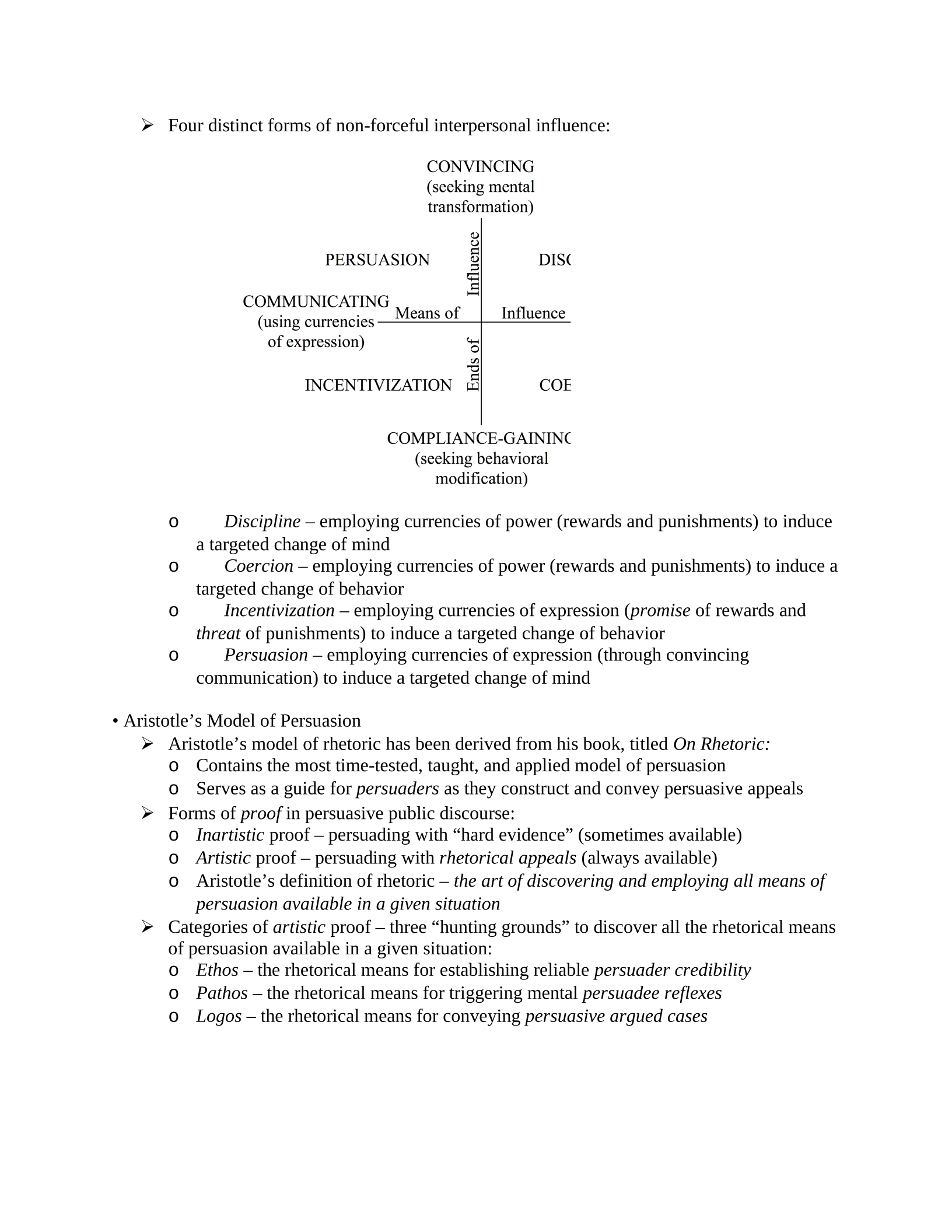
Four distinct forms of non-forceful interpersonal influence:
oDiscipline – employing currencies of power (rewards and punishments) to induce
a targeted change of mind
oCoercion – employing currencies of power (rewards and punishments) to induce a
targeted change of behavior
oIncentivization – employing currencies of expression (promise of rewards and
threat of punishments) to induce a targeted change of behavior
oPersuasion – employing currencies of expression (through convincing
communication) to induce a targeted change of mind
• Aristotle’s Model of Persuasion
Aristotle’s model of rhetoric has been derived from his book, titled On Rhetoric:
oContains the most time-tested, taught, and applied model of persuasion
oServes as a guide for persuaders as they construct and convey persuasive appeals
Forms of proof in persuasive public discourse:
oInartistic proof – persuading with “hard evidence” (sometimes available)
oArtistic proof – persuading with rhetorical appeals (always available)
oAristotle’s definition of rhetoric – the art of discovering and employing all means of
persuasion available in a given situation
Categories of artistic proof – three “hunting grounds” to discover all the rhetorical means
of persuasion available in a given situation:
oEthos – the rhetorical means for establishing reliable persuader credibility
oPathos – the rhetorical means for triggering mental persuadee reflexes
oLogos – the rhetorical means for conveying persuasive argued cases
Ethos, pathos, and logos as rhetorical means of persuasion:
oEthos – Greek term meaning “character”
Consists of rhetorical elements of a persuasive appeal that can establish reliable
persuader credibility (or believability)
Aristotle focused on three indicators within an appeal that can lend to attributions
of persuader credibility:
•Knowledge of the addressed subject
•Good will toward the addressed audience
•Virtuous character qualities that are admirable to the addressed
audience
oPathos – Greek term meaning “passion”
Consists of rhetorical elements of a persuasive appeal that can trigger mental
persuadee reflexes
Aristotle focused on how an appeal can trigger various audience emotions that are
conducive to the persuader’s goals
oLogos – Greek term meaning “message”
Consists of rhetorical elements of a persuasive appeal that can convey a
persuasive argued case
Aristotle focused on how to construct a persuasive argued case with two forms of
logical rationale:
•Deductive reasoning using assumed propositions
•Inductive reasoning using multiple examples
• Roman Model of Persuasion
Roman “canon” (standard of measure) for persuasive public oratory:
oOrganized Aristotle’s guidelines for persuasion into five criteria for effective public
address
oHas stood the test of time – still widely taught in in public speaking classes today
Five crucial considerations for effective public address:
oInvention of proofs – comprehensively developing rhetorical proofs comprised of
ethos, pathos, and logos
oArrangement of proofs – effectively organizing rhetorical proofs into introduction
(ethos), arguments (logos), and conclusion (pathos)
oVerbal delivery style – adjusting language style (e.g., ornate and eloquent, plain and
folksy, oppositional and debating) to appropriately fit situation and audience
oNonverbal delivery style – supplying vocalics, kinesics, and oculesics that foster
convincing persuasion
oMnemonic strategies – effectively employing speech memory devices ranging from
formal to informal (e.g., memorized, manuscripted, extemporaneous, impromptu)
-
3-6
p
~--
0
OO
Oe
oe
~
pee
ree
ener
ee
eet
-
Se
PERSUASIVE
APPEAL
PERSUADEE
PREDISPOSITIONS
PERSUADEE
RESPONSE
GOALS
PERSUADEE
PROCESSING
ROUTES
ATTENDED
PERSUASION
COMPONENTS
PERSUASION
OUTCOMES
COMMUNICATION
that
seeks
to
CONVINCE
either
low
both
high
APTITUDE
ATTITUDE
¢
Capability
¢
Salience
¢
Cognizance
¢
Valence
Seek
EXPEDIENT,
Seek
ACCURATE,
ECONOMIC
response
RELIABLE
response
PERIPHERAL,
CENTRAL,
HEURISTIC
SYSTEMATIC
PROCESSING PROCESSING
(casual
thought)
(careful
thought)
SITUATIONAL
CUES
ARGUED
MESSAGES
¢
ETHOS
(persuader
¢
LOGOS
(assertions
credibility
cues)
supported
by
evidence,
¢e
PATHOS
(persuadee
psychological
cues)
Smaller,
shorter
effects
reasons,
or
rationale)
'
Larger,
longer
effects
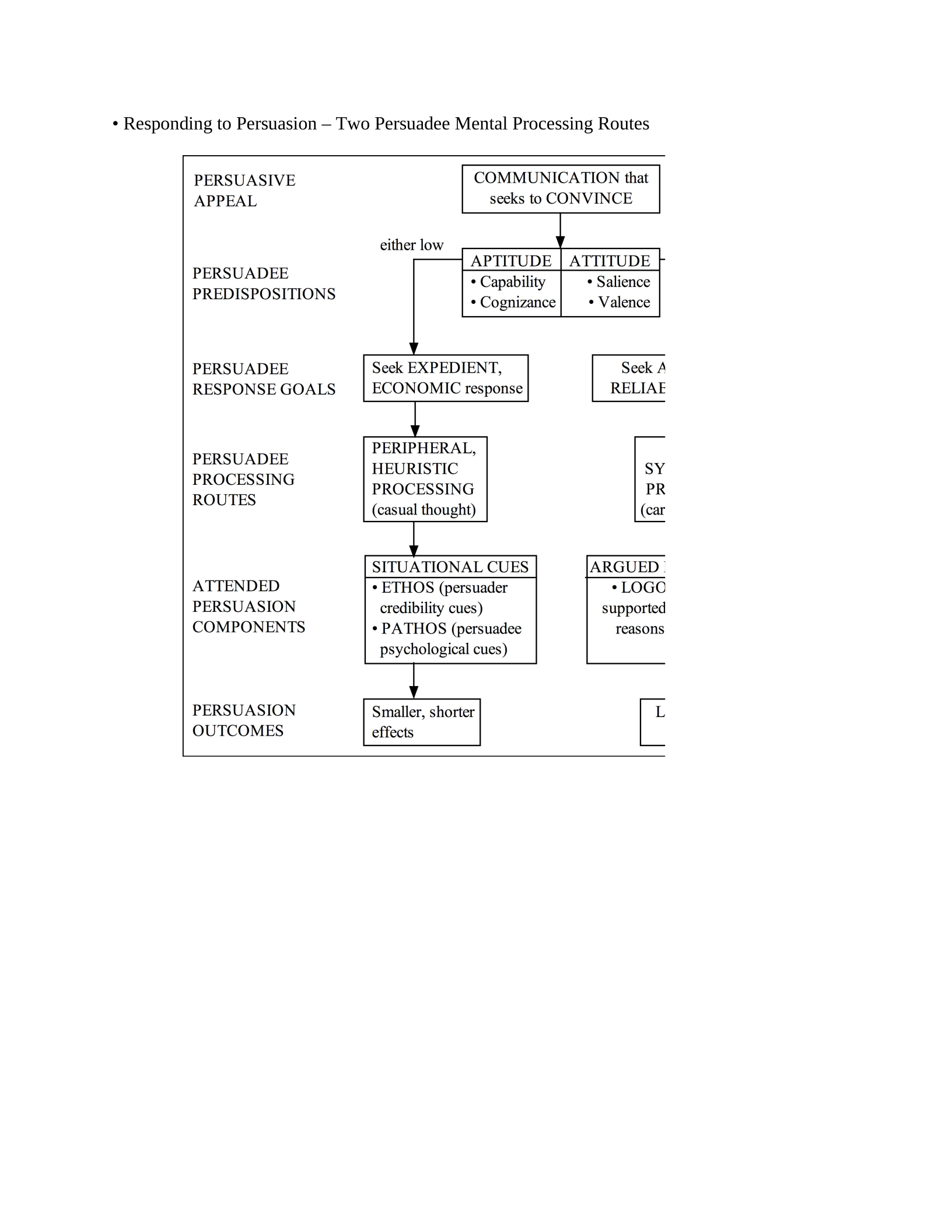
• Responding to Persuasion – Two Persuadee Mental Processing Routes
Powered by TCPDF (www.tcpdf.org)

