


• Communication Studies – What, Where, and How
Distinctions between “communications” and “communication”
oCommunication‘s’
Sending a message from one point to another
oCommunication
Any facet of the complex process of human interaction
Symbolic activity – how people engage in the use of language symbols
Nature and benefits of studying human symbolic activity
oUnderstand and learn from each other = growth
oConnect and relate with each other = relationships
oInfluence and impact each other = making change
• Language, Meanings, and Messages
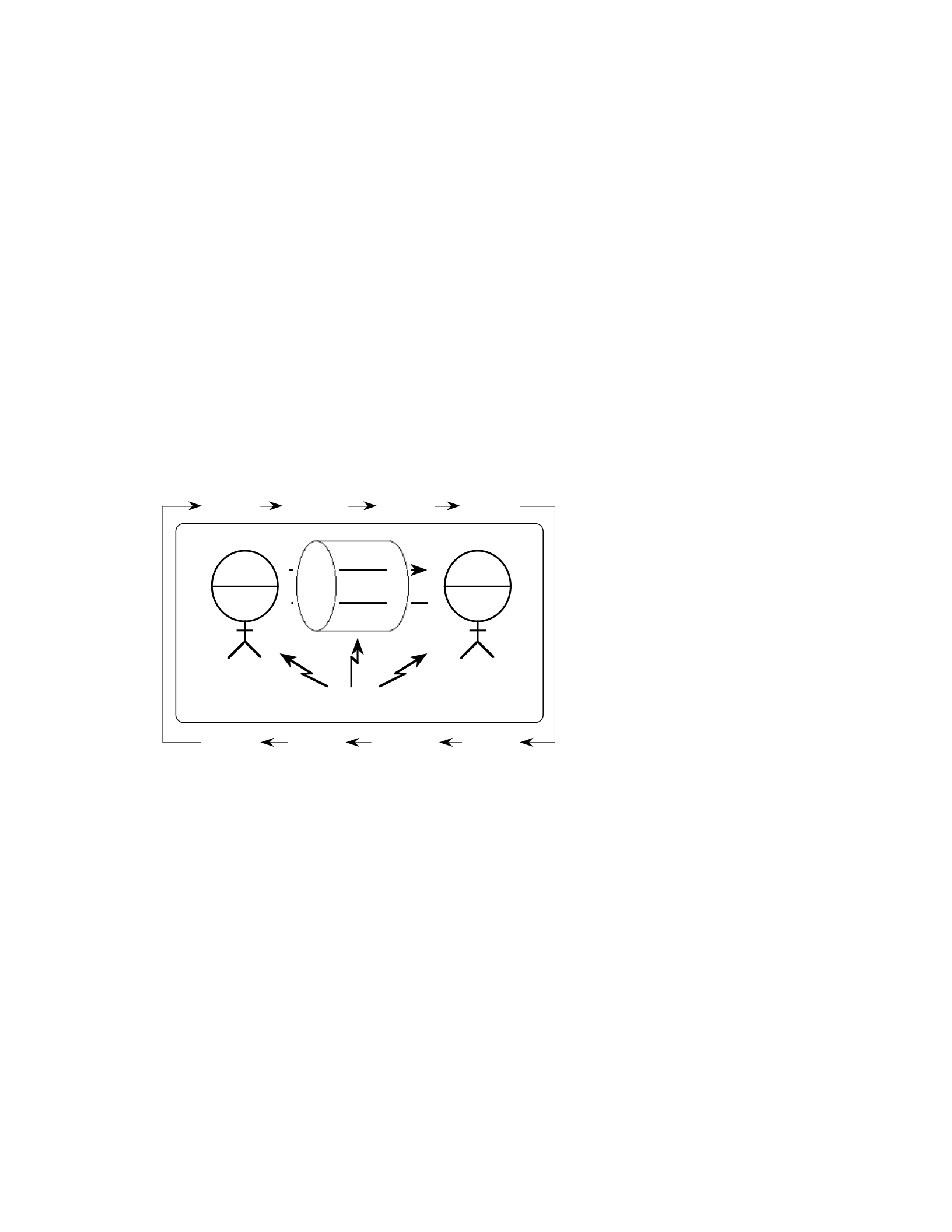
Components of the communication process and how they complicate mutual understanding
o
"Ed" "De"
E
D
D
E
Noise Context
Channel
Messages
MEANING
MEANING
MEANING
MEANING
encode transmit receive decode
decode receive transmit encode
oLanguage is reductionistic
Nature of language, messages, and meanings in communication
oLanguage is the set of symbols shared by a community that are exchanged through messages
of packaged symbols
oMessages move outside of people, how we get across what we are trying to communicate
oMeaning is what we actually mean. No one will understand completely because language is
reductionistic.
How miscommunicating and misunderstanding can be minimized
oExpress meaning and frequently seek feedback
oListen for meaning and frequently offer feedback
oTalk in person/skype/phone instead of texting
• Communication Competence
Relationship between fundamental human needs and human communication
oCommunication competence is essential to satisfy fundamental human needs
Outline of Testable Material from Unit 1 – Communication Fundamentals

o
oSafety – need to feel protected
oSecurity – need to feel relationally accepted
oSelf-efficacy – need to feel that we have made a difference
oSignificance – need to feel appreciated
Nature of communication competence components:
oFour prerequisite factors for competent communication
Knowledge and skill (capabilities)
Passion and compassion (motivations)
oTwo subsequent outcomes of competent communication
Appropriateness – satisfies our expectations
Effectiveness – accomplishes my goals
Implications of two competency dimensions of every communicated message
oRelationship and Content
o
Relationship
Content
high
high
low
low
frank
fearful friendly
competent
Communication Ethics
Three communication characteristics necessitating ethical communication
oCommunication is unavoidable, irrevocable, and consequential
Distinctions between ethicality and legality
oEthicality
Internally rooted convictions that convince and inspire
Potent absent of enforcement with enduring effects
Dynamic and flexible principles that guide and direct
Enables wise situational discernment
oLegality
Externally imposed codes that command and require
Impotent unless enforced with only short-lived effects

Static and inflexible rules that mandate and prohibit
Demands rote behavioral compliance
Dialectics of ethical communication
oConveying messages
Sincere truthfulness and caring respect
oResponding to messages
Thoughtful evaluation and humble teach ability.
• Verbal Communication
Two functions of verbal communication
oConveying perceptions of reality – to share (perceptions vs. reality)
oCreating perceptions of reality – to shape (vocabulary level and cognitive complexity)
Distinctions between denotative and connotative semantics
oDenotative – commonly shared perceptions of reality, found in dictionaries, consistent and
universal, convey ideas and shared understanding
oConnotative – unique meanings, minds of each individual, personal meanings, used to shape
and create
Function of syntax in verbal communication
oImportant to use correct punctuation and word placement
Guidelines for competently conveying and creating perceptions of reality
oConvey perceptions of reality
Correctly by using proper pronunciation, punctuation, grammar, and spelling
Sensibly by eliminating confusing syntax and using denotive words
Precisely by defining abstract terms and illustrating
AVOID: unfamiliar language
oCreating perceptions of reality
Evocative words with connotative meaning
Figurative language like stories and metaphors that help people relate
Vivid verbal accounts
Use uncommon insights
• Nonverbal Communication
Role and importance of nonverbal communication in seeking mutual understanding
oWhen verbal and non-verbal messages conflict, people believe the nonverbal
oMost of meaning comes from nonverbal
Characteristics of six dimensions of nonverbal communication
oVocalics – communicating with your voice (tone)
oKinesics – using your movements (facial expression, body language)
oOculesics – using your eyes (eye contact)
oProxemics – giving the right amount of space (space – flight, territory – fight)
oHaptics – using physical contact

oObjectics – using objects
• Perception, Learning, and Listening
Purposes for listening
oInterpretation – to understand others
oIdentification – to create relational connections
oInspiration - to impact
oEvaluation – to assess ideas
oCoordination – to organize efforts
oEducation – to learn and grow
Levels of listening and learning
oTo remember
Recognizing - identify
Recalling – generate message elements without prompting
oTo comprehend
Analyzing – infer meanings
Synthesizing – summarize what has been said
oTo implement
Evaluating – critically assessing implications
Applying - creatively generating practical uses
Barriers to listening
oDistractions – things making you not focus on what you are talking about
oLanguage – not being able to understand what is being said
oSpeaking rate – we listen a lot faster than we speak
oPerceptual heuristics – jumping to a conclusion about something
Stereotyping, prejudice, polarizing, halo effect, authority, primacy effect, single
observation error
Model for dialogic listening
oSIT – Serve, Identify, and Temporarily suspend judgment
oLISTEN – Look, Interpret, Silence, Talk nonverbally, Evaluate, Notes
oENSURE – Explore, iNterpret, Synthesize, Uncover, Reveal, Evaluate
Outline of Testable Material from Unit 2 – Communication in Relational and Group Contexts:
• Relational Development and Fostering Closeness
Three levels of relational closeness
oAcquaintances, Friends, or Intimates
Knapp’s stages of relational formation/dissolution
oFormation: Initiating, Experimenting, Intensifying, Integrating, Bonding
oDissolution: Differentiating, Circumscribing, Stagnating, Avoiding, Terminating
Three theories explaining why people seek relational closeness
oSocial exchange – you’re a real bargain, but I will retain you only as long as you pay off
Cost-Reward
oSocial reciprocity – our relationship has worth only as long as you uphold your end of the deal
Contract
oPersonal needs- as long as they make you feel secure and significant they can be friend
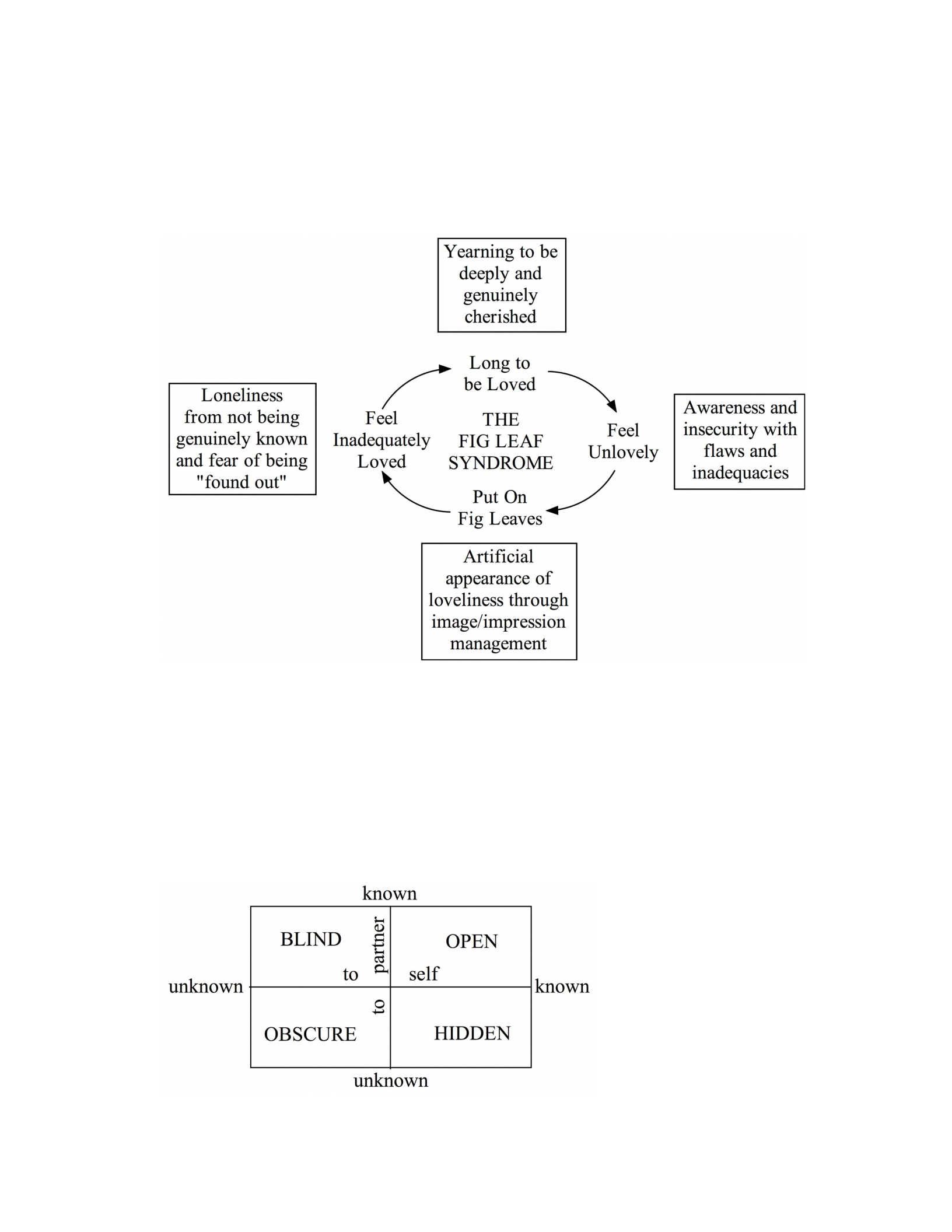
The “fig leaf syndrome”
o
Relational cover-up
oExposure prevention – keeping your flaws hidden, show your strength
oDeflection practices – blame others, explain flaws, discredit the accuser
Social Penetration Theory and the characteristics of effective of self-disclosure
oLike two onions
oRelational closeness requires self-disclosure
Reciprocal, Progressive, Voluntary, Vulnerable
The JoHari window and three communication practices for “dropping fig leaves” in relationships
o
oThe hidden pane – volunteer self-disclosure
oThe blind pane – invite feedback
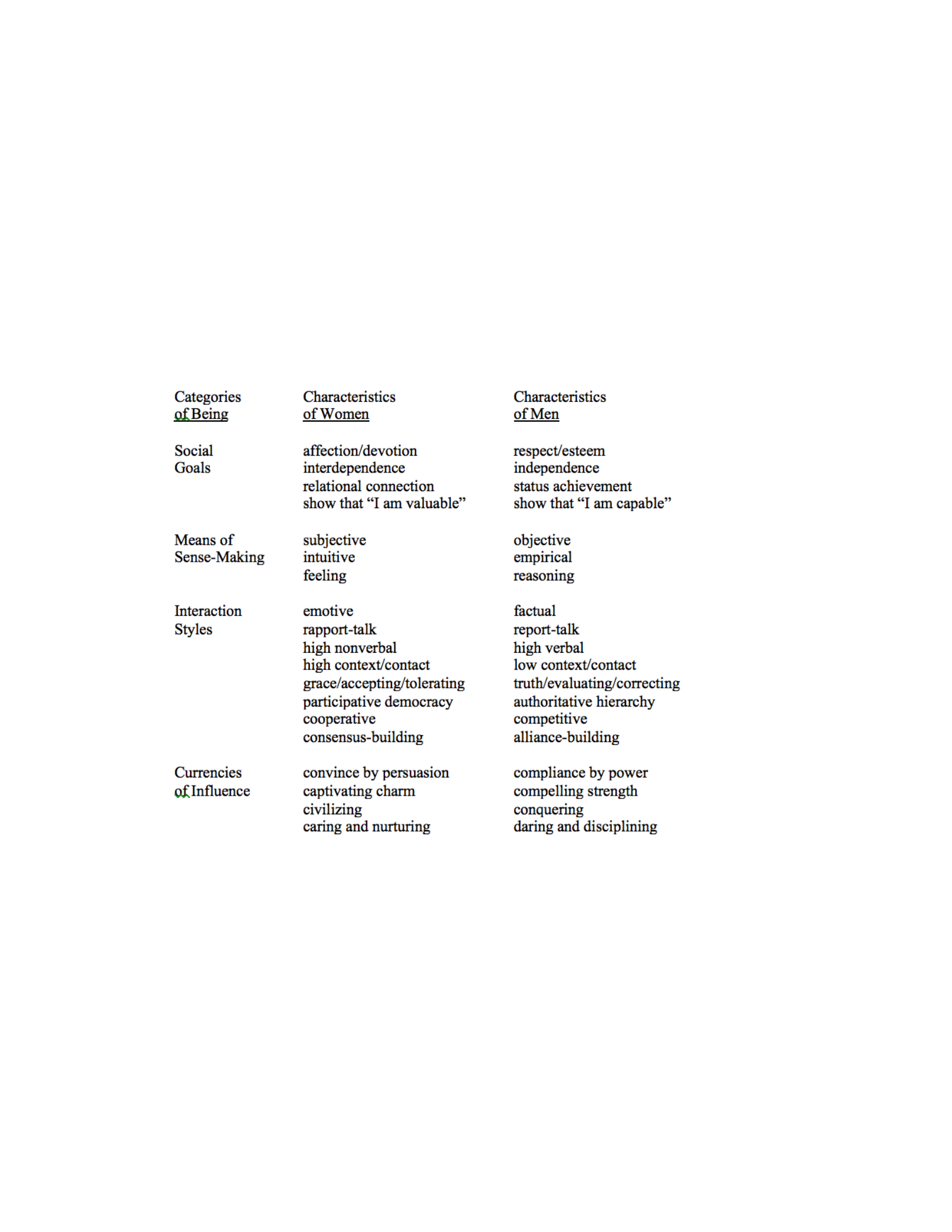
oThe obscure pane – explore the dark cellar together
• Sex, Gender, and Love in Communication
Difference between the terms “sex” and “gender”
oSex refers to the physical parts of the human
oGender refers to the masculine or feminine traits given off by the person
Radical and liberal feminist perspectives on sex and gender
oRadical feminist – there are no genetic psychological difference between women and men,
want revision
oLiberal feminists – there are some psychological and identity difference between women and
men, want inclusion
Constructively dealing with communication differences between women and men
o
Common love terms, and how they are ambiguous, distorting, and misleading
o“Love” – is it just a magical spell or can it be chosen
o“In Love” – is it a cage that traps you or is it selected place you live
o“Fall in love” – was it on accident or is it something you climb into
o“True love” – is love a state of bliss or is it something that is hard but thrilling
Sternberg’s seven types of love in relationships
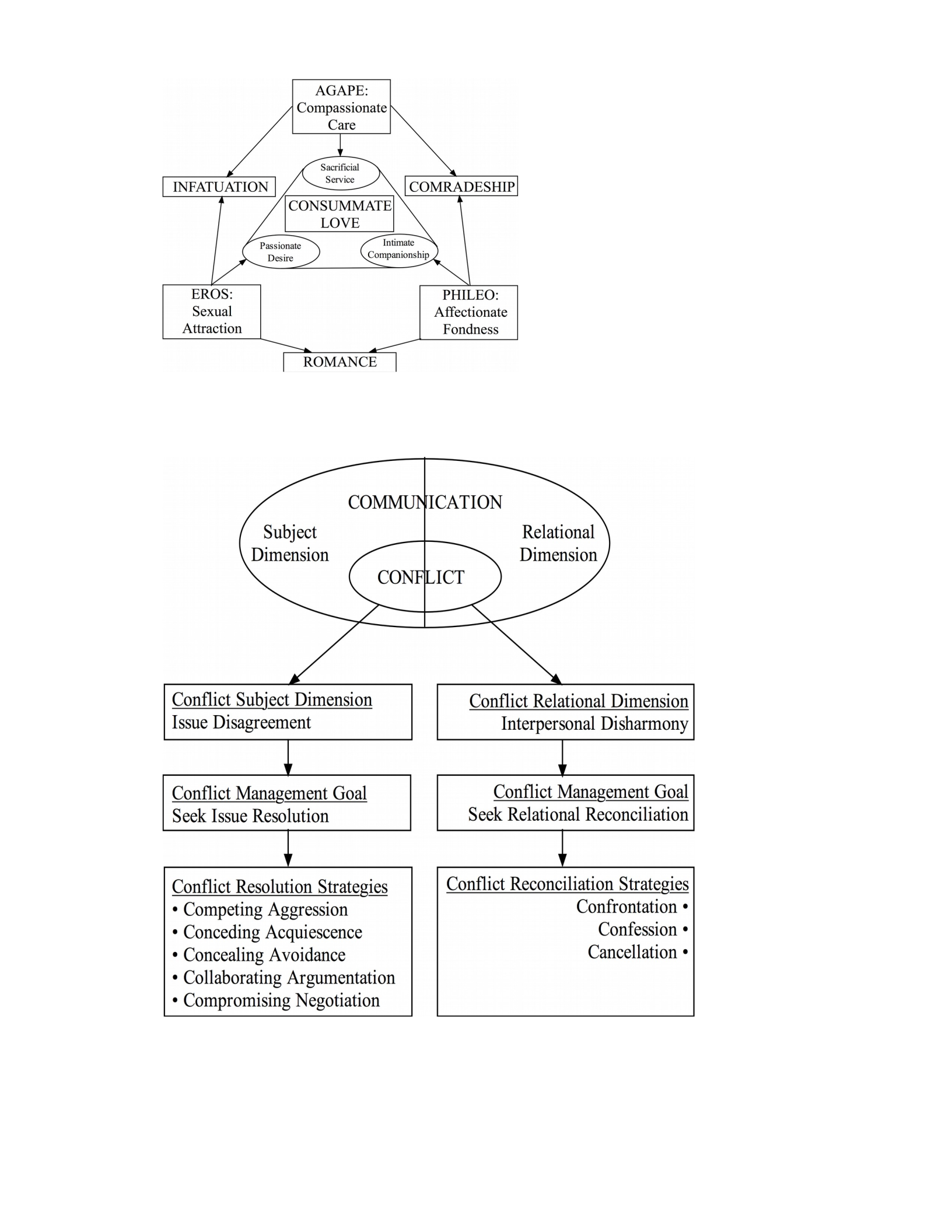
o
• Managing Relational Conflict
The dual dimensions and goals of conflict communication
o
Characteristics of the five conflict resolution strategies for issue disagreement

o
Components of the three conflict reconciliation strategies for relational disharmony
• Team Characteristics and Functions
Distinctions between groups and teams, and four essential characteristics of a team
oGroup is just a bunch of random people with shared similarities doing things
oA team requires a shared cause, contribution, communication, and consequences
Advantages of individual work and teamwork
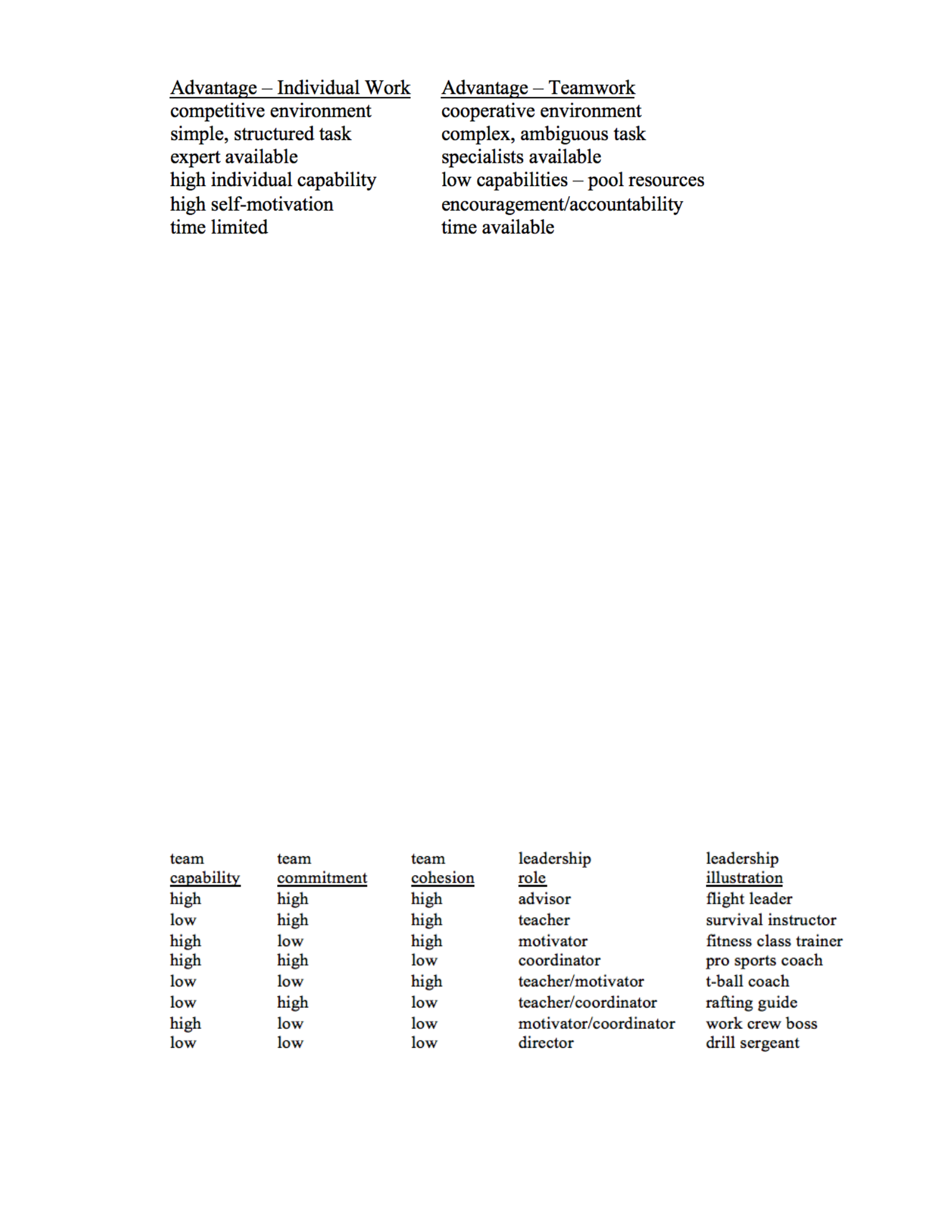
o
Team staffing and size considerations
oAs group size increases participation and satisfaction decrease but resource increases
Characteristics and procedures of three team functions
oIdea generation – brainstorm together
oDecision making – Autocratic – only one person (Ugly), Democratic - majority (Bad),
Consensus – everyone (Good)
oProblem solving – Define problem, Establish solution criteria, Generate possible solutions,
Evaluate possible solutions, Choose best solution, Test/implement solution – Does it work to
solve the problem?
• Team and Organizational Leadership
Dealing with the challenges of unproductive teammates
oSlackers (communicate how valuable everyone is)
oAchievers (make sure everyone wants to be apart of the team)
oFriends (Don’t show favoritism)
Situational team leadership
oTwo critical competencies (assess and adapt)
oThree “script” dimensions (capability, commitment, and cohesion)
oEight possible leadership roles
Leading teams through the four phases of development
oForm – there is a shared goal or task
oStorm – find respect and willingness to work with each other

oNorm – show encouragement and mutual accountability
oPerform – work together
Natural traits approach to organizational leadership
oCognitive Clarity – intelligence on the topic
oConfident conviction – belief in self
oCommitment to cause – determined to succeed
oCommunication Competence – knows how to make others work together
oCredible Character – overall, person is moral and has integrity
Mastered skills approach to organizational leadership
oSupervisory – regulating bureau (Direct, Inspect, correct)
oManagerial – production engine (Plan, organize, control)
oStrategic – growing creature (see direction, secure alignment, sustain leadership)
• Culture and Communication
Factors impacting need for cultural awareness
oBi-polar political powers to multi-polar political powers (i.e., disintegration of the Soviet
Union)
oMilitary divisions (e.g., NATO vs. Warsaw Pact) to economic alliances (e.g., European Union)
oIndependent national economies to interdependent global economy (e.g., 51 of the top 100
world economies are multinational corporations)
oCultural isolation to cultural integration (e.g., advancements in transportation and
communication technologies leading to “global society”)
o“minority of minorities” to “majority of minorities”
Culture-related terms and their definitions
oCulture – how the group thinks (shared beliefs and values), how the group talks (shared
language and expressions), and how the group acts (shared customs and rituals)
oCo- or sub-cultures – unique cultures co-existing within a greater cultural framework
oRace – distinguishing features shared in common by biological heritage
oNationality – distinguishing features shared in common by territorial situation
oEthnicity – can encompass aspects of cultural, racial, and national characteristics
Culture-related issues and their implications
oEnculturation – Acculturation
oImporting culture – Exporting culture
oCultural enrichment – Cultural imperialism
oEthnocentrism – Ethnorelativism
oEvolving but fractured attitudes toward cultural differences in U.S.
Cultural homogeneity (Eurocentric “mold”)
Cultural melting pot (“super-alloy”)
Cultural diversity (“tossed salad”)
Cultural fusion (“casserole”)
Dimensions of intercultural communication
oIndividualism – Collectivism
oLow power distance – High power distance
oLow context – High context

oLow contact – High contact
oMonochronic – Polychronic
Outline of Testable Material from Unit 3 – Communication and Public Discourse
• Part 1: Persuasion and Rhetoric
Nature of rhetoric and persuasion
oFrench and Raven’s typology of power – means and modes
Means: Reward, Punishment
Modes: Positional Power (Police Officer), Informational Power (Doctor), Relational Power
(Kid’s on a playground)
oDimensions of non-forceful interpersonal influence – two available ends of influence, and two
available means of influence
Ends of influence: Convincing (changing how they think), Compliance-gaining (changing
how they act)
Mean of influence: Communication (using your words), Controlling (using power)
oDistinctions among four types of non-forceful interpersonal influence
Discipline (Convincing/Controlling) – using power to change thoughts
Coercion (Compliance-gaining/Controlling) – using power to change actions
Incentivization (Compliance-gainging/Communicating) – using words to change action
Persuasion (Convincing/Communicating) – using words to change thoughts
oNature and characteristics of rhetoric as a positive form of influence
The art of persuading people to believe and act upon the truth (Aristotle)
Not literature or poetry that seek to please all audiences (judged on permanence and
beauty)
It is persuasive communication (judged on effects and effectiveness)
oComponents of Aristotle’s model of rhetoric
Inartistic Proof – using hard evidence
Artistic Proof – using rhetorical appeals
Ethos – Reputation/Ethics
Pathos – Appeal to Emotion
Logos – Logic
Ethos – establishing persuader credibility
oFour initial and two intermediate attributions that lead to credibility
Expertise (Being knowledgeable and skillful)
Knowledgeable (knowing that you are talking about) (Authority Cues)
Degrees
Skillfulness (knowing how to say it)
Presentation skills
Trustworthiness (Being passionate and compassionate)

Passion (caring about what you’re saying) (Authenticity Cues)
Personal Chronicles, Confessions, and Convictions
Compassion (caring about who you’re saying it to) (Attraction Cues)
Being excited about it
Pathos – triggering persuadee reflexes
oMaterial reflex cues (minimizes loss or maximizes gain)
Contrast Cues – Door-in the face, Red Slash Sale, Dealer Options, But that’s not all
Scarcity Cues – Fleeting Opportunity, Rare/Limited Opportunity
oSocial reflex cues (desires to foster relational wellness)
Conformity Cues – Avoid abnormalities, fit in with others
Reciprocity Cues – absolve indebtedness, making them feel like they owe you
oPersonal reflex cues (foster “good feelings” about self)
Consistency Cues – stable self-identity, foot in the door
Emotion Cues – relief from distressing emotions, Shame/Anger/Anxiety/Sorrow/Envy/
Sympathy Appeals
Logos – arguing persuasive cases
oThree common views of argumentation and the view that corresponds with logos in a
persuasive appeal
Argument as war – having and argument, you want to win
Argument as thought – to think things out, creates a proof for something
Argument as persuasion – to convince someone of something
oThree core characteristics of argumentation – argument, evidence, and faith
Persuader-supplied argument – has to have evidence, reasons, or rationale
Evidence-supplied measure of certainty – evidence must show certainty in it
Persuadee-supplied leap of faith – supply a measure of faith leading to your own
conclusions
oThree components of argumentation that correlate with hunting analogy:
Animal – specific argued issue that springs from a fundamental life question
Armament – accurate and reliable argued case constructed from a unique form of human
rationality
Ammunition – potent and effective type of argued evidence that comports with armament
and animal
Animal - (solvency, sanctification, or signification)
Armament - (reason, conscience, or imagination)
Ammunition - (scientific, sacred, or similitudic)
oThree effectiveness requirements for argumentation
Argued evidence must work with the persuade question, predisposition, latitudes of
attitude toward the addressed topic
• Part 2: Public Address
Clarify your purpose:
oRoman canon of effective public oratory – five concerns of public speakers
Invention, Arrangement, Verbal, Nonverbal, Mnemonic (I always vacuum, not mop)
oProcess for preparing a speech – eight steps
Clarify your purpose, Analyze your audience, gather your support material, organize your
ideas, prepare your audio-visual aids, compose your speaking notes, rehearse your
delivery, manage your speaking anxiety
oThree functions of speech
Informative (to inform), Persuasive (to persuade), Ceremonial (to entertain)
oNarrowing the topic
General focus (what topic), specific focus (what topic in your topic), aiming point (what
you’re trying to get out of it)
oComposing a speech claim
A thesis statement focuses on the specific topic to be addressed
A speech claim focuses on the specific effect on the audience sought by the speech
Analyze your audience:
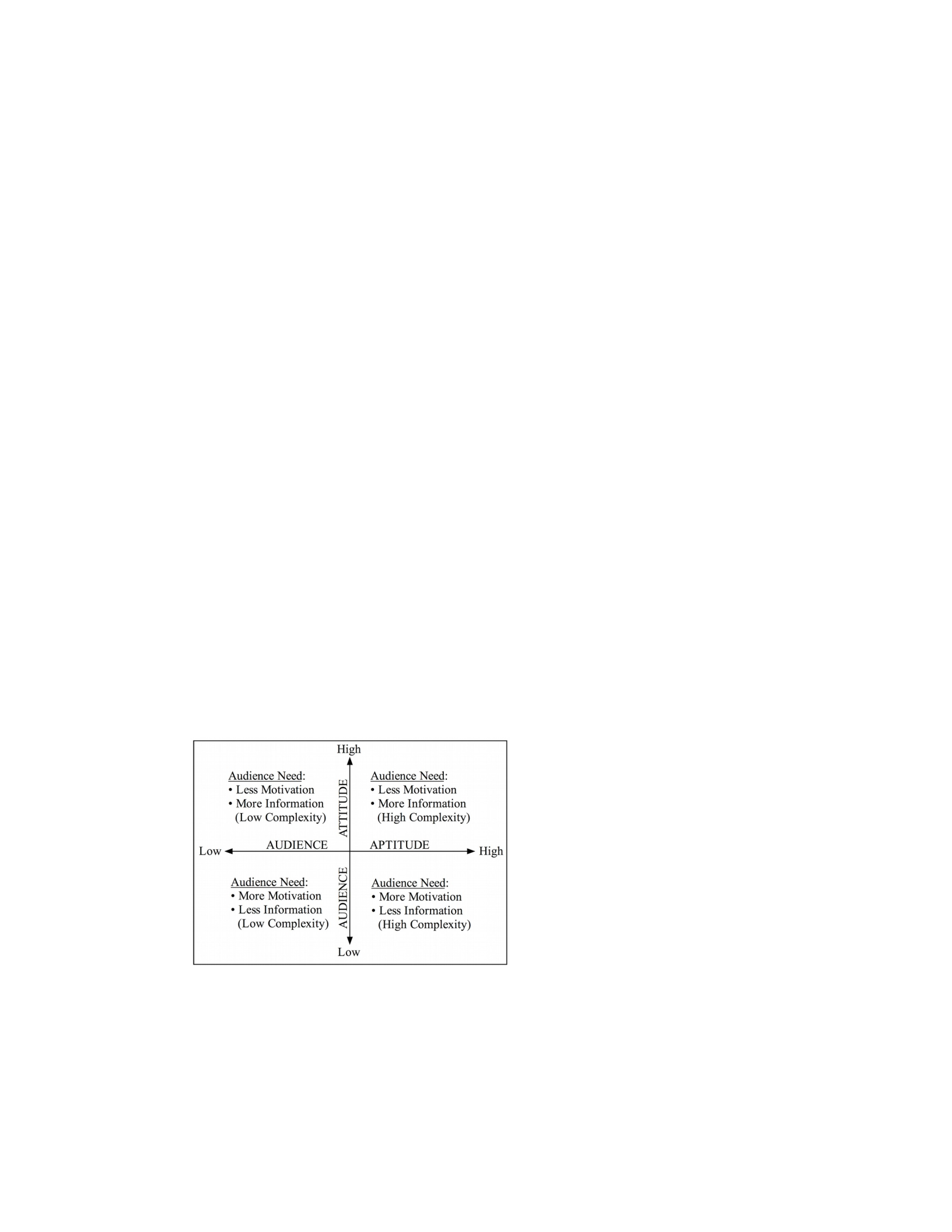
oAudience predispositions toward your topic
oComposing audience survey questions that measure….
Aptitude
Capability – what your audience can grasp
Cognizance – what your audience already knows
Attitude
Salience – how much they care
Valence – how much they agree/disagree
oResponse to audience analysis
Provide the right amount of motivation and information
Gather your material:
oSources of relevant and reliable support material
Personal knowledge, experience, expertise, interviewing others, library, non-library
oReliability criteria for non-library Internet support material
Authority (their credentials), Objectivity (biases it may have), Accuracy (reliability),
Coverage (thought out carefully), Currency (up-to-date)

All Online Account Can’t [be] Correct
oCautions regarding web-based information sources
If they don’t follow one of the criteria
Organize your ideas:
oElements of introduction
Attention, Make your claim, why is it important, show your credibility, preview main
points
oElements of main points
Specify, Support, Cite
oCiting information sources
Must site to show credibility
oElements of transitions
Review, relate, preview
oElements of conclusion
Review, re-assert, reason to remember
Create your visuals:
oBenefits of audio-visual aids
Help stimulate, explain, summarize, and establish credibility
oTypes of audio-visual aids to use and not use
Objects, Projected media, main points
NOT – hand-held pictures, drawings, poster boards, tables, articles
oCreating effective audio-visual aids
Simplify the appearance, trim the text, minimize extras, avoid too much info, check to
make everything works before presentation, create a back-up
oGuidelines for using audio-visual aids
Speak to your audience, guide them, use only when neede
Compose your notes:
oImportance of speaking notes
Creates a confident presenter
oCharacteristics of effective speaking notes
Full page notes, type and print, only short phrases, organize, and uses highlights
oContent of effective speaking notes
Introduction, All information for each main point, give credit where credit is due,
transitions, each part of the conclusion, where the audio-visual aids are, keep time
Rehearse your delivery:
oEffective verbal delivery
Manuscripted (reading word for word), EXTEMPORANEOUS (prepared but
conversational), impromptu (unprepared)
oEffective nonverbal delivery
Vocalics, Kinesics, Oculesics, Objectics

oImportant speech delivery considerations
Practice, use a podium, know starting and closing lines
Manage your anxiety:
oNature of public speaking anxiety
Anxiety cannot be completely eliminated, having a moderate amount is ideal
oFive techniques for managing public speaking anxiety
Anxiety can be tamed, public speaking is a choice, you are able to do it, you don’t look
nervous, the audience isn’t how you want them to be

