


Exercise
11-1
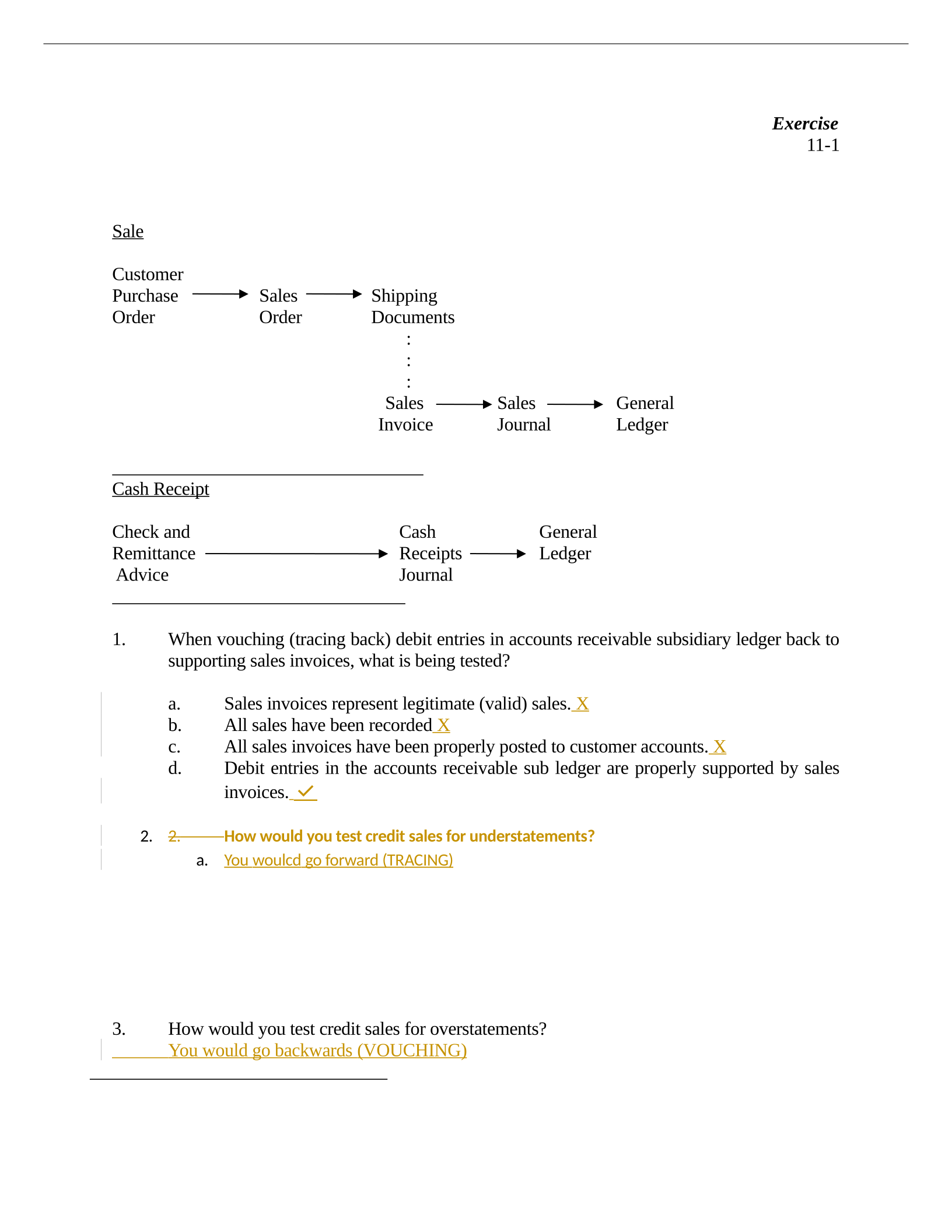
Sale
Customer
Purchase Sales Shipping
Order Order Documents
:
:
:
Sales Sales General
Invoice Journal Ledger
Cash Receipt
Check and Cash General
Remittance Receipts Ledger
Advice Journal
1. When vouching (tracing back) debit entries in accounts receivable subsidiary ledger back to
supporting sales invoices, what is being tested?
a. Sales invoices represent legitimate (valid) sales. X
b. All sales have been recorded X
c. All sales invoices have been properly posted to customer accounts. X
d. Debit entries in the accounts receivable sub ledger are properly supported by sales
invoices. ✅
2. 2. How would you test credit sales for understatements?
a. You woulcd go forward (TRACING)
3. How would you test credit sales for overstatements?
You would go backwards (VOUCHING)
Brief Example of Revenue Cycle
Exercise
11-2
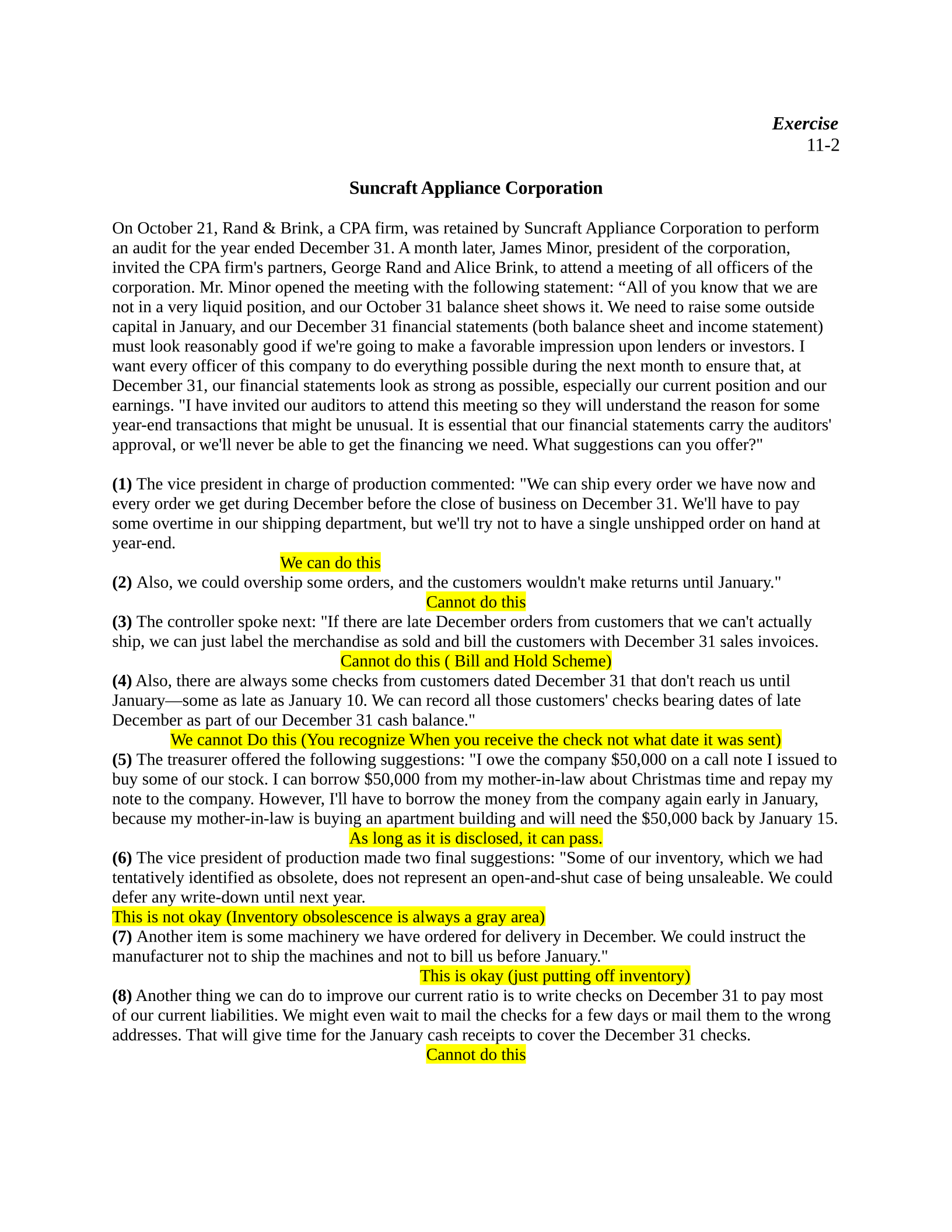
Suncraft Appliance Corporation
On October 21, Rand & Brink, a CPA firm, was retained by Suncraft Appliance Corporation to perform
an audit for the year ended December 31. A month later, James Minor, president of the corporation,
invited the CPA firm's partners, George Rand and Alice Brink, to attend a meeting of all officers of the
corporation. Mr. Minor opened the meeting with the following statement: “All of you know that we are
not in a very liquid position, and our October 31 balance sheet shows it. We need to raise some outside
capital in January, and our December 31 financial statements (both balance sheet and income statement)
must look reasonably good if we're going to make a favorable impression upon lenders or investors. I
want every officer of this company to do everything possible during the next month to ensure that, at
December 31, our financial statements look as strong as possible, especially our current position and our
earnings. "I have invited our auditors to attend this meeting so they will understand the reason for some
year-end transactions that might be unusual. It is essential that our financial statements carry the auditors'
approval, or we'll never be able to get the financing we need. What suggestions can you offer?"
(1) The vice president in charge of production commented: "We can ship every order we have now and
every order we get during December before the close of business on December 31. We'll have to pay
some overtime in our shipping department, but we'll try not to have a single unshipped order on hand at
year-end.
We can do this
(2) Also, we could overship some orders, and the customers wouldn't make returns until January."
Cannot do this
(3) The controller spoke next: "If there are late December orders from customers that we can't actually
ship, we can just label the merchandise as sold and bill the customers with December 31 sales invoices.
Cannot do this ( Bill and Hold Scheme)
(4) Also, there are always some checks from customers dated December 31 that don't reach us until
January—some as late as January 10. We can record all those customers' checks bearing dates of late
December as part of our December 31 cash balance."
We cannot Do this (You recognize When you receive the check not what date it was sent)
(5) The treasurer offered the following suggestions: "I owe the company $50,000 on a call note I issued to
buy some of our stock. I can borrow $50,000 from my mother-in-law about Christmas time and repay my
note to the company. However, I'll have to borrow the money from the company again early in January,
because my mother-in-law is buying an apartment building and will need the $50,000 back by January 15.
As long as it is disclosed, it can pass.
(6) The vice president of production made two final suggestions: "Some of our inventory, which we had
tentatively identified as obsolete, does not represent an open-and-shut case of being unsaleable. We could
defer any write-down until next year.
This is not okay (Inventory obsolescence is always a gray area)
(7) Another item is some machinery we have ordered for delivery in December. We could instruct the
manufacturer not to ship the machines and not to bill us before January."
This is okay (just putting off inventory)
(8) Another thing we can do to improve our current ratio is to write checks on December 31 to pay most
of our current liabilities. We might even wait to mail the checks for a few days or mail them to the wrong
addresses. That will give time for the January cash receipts to cover the December 31 checks.
Cannot do this
Exercise
11-3
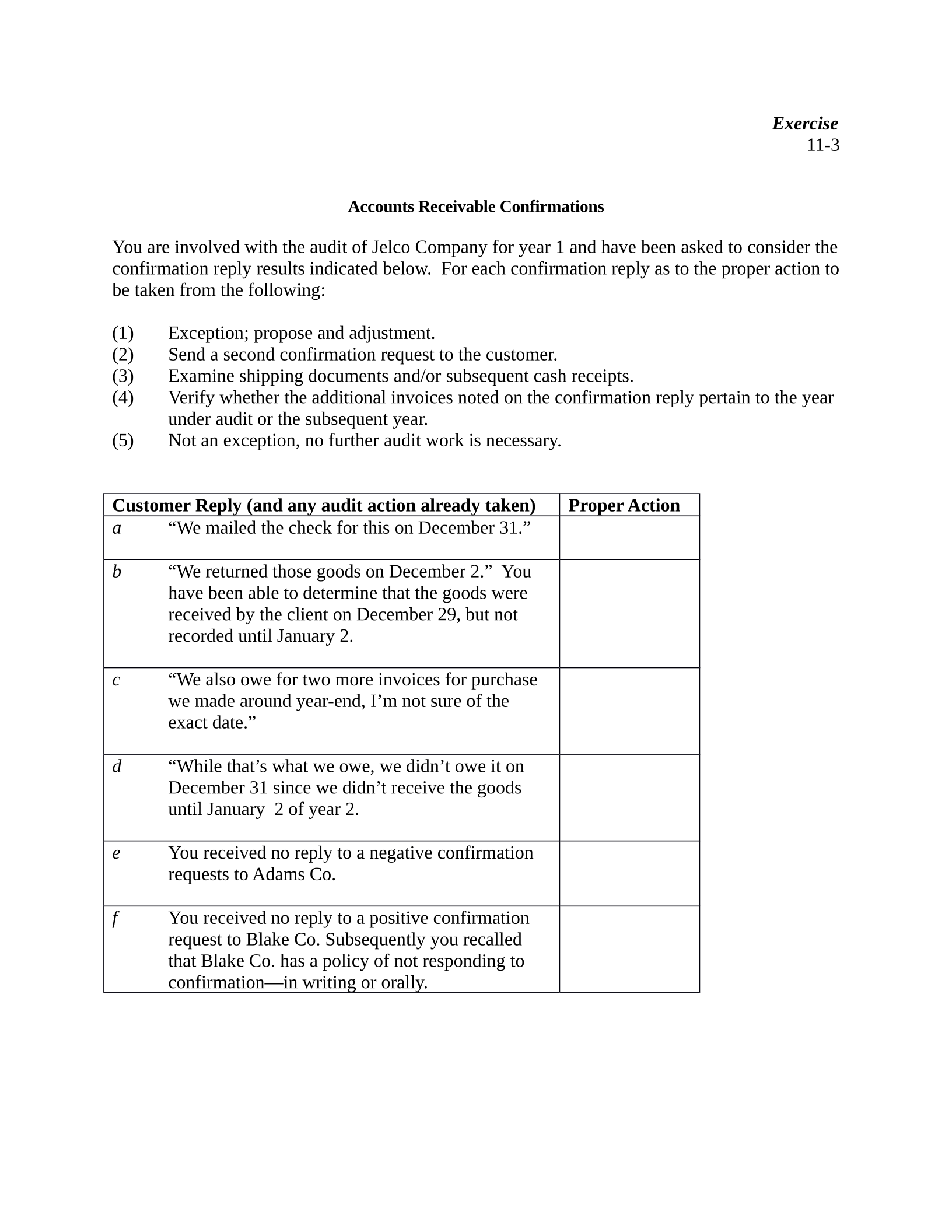
Accounts Receivable Confirmations
You are involved with the audit of Jelco Company for year 1 and have been asked to consider the
confirmation reply results indicated below. For each confirmation reply as to the proper action to
be taken from the following:
(1) Exception; propose and adjustment.
(2) Send a second confirmation request to the customer.
(3) Examine shipping documents and/or subsequent cash receipts.
(4) Verify whether the additional invoices noted on the confirmation reply pertain to the year
under audit or the subsequent year.
(5) Not an exception, no further audit work is necessary.
Customer Reply (and any audit action already taken) Proper Action
a “We mailed the check for this on December 31.”
b “We returned those goods on December 2.” You
have been able to determine that the goods were
received by the client on December 29, but not
recorded until January 2.
c “We also owe for two more invoices for purchase
we made around year-end, I’m not sure of the
exact date.”
d “While that’s what we owe, we didn’t owe it on
December 31 since we didn’t receive the goods
until January 2 of year 2.
e You received no reply to a negative confirmation
requests to Adams Co.
f You received no reply to a positive confirmation
request to Blake Co. Subsequently you recalled
that Blake Co. has a policy of not responding to
confirmation—in writing or orally.
Exercise
11-4
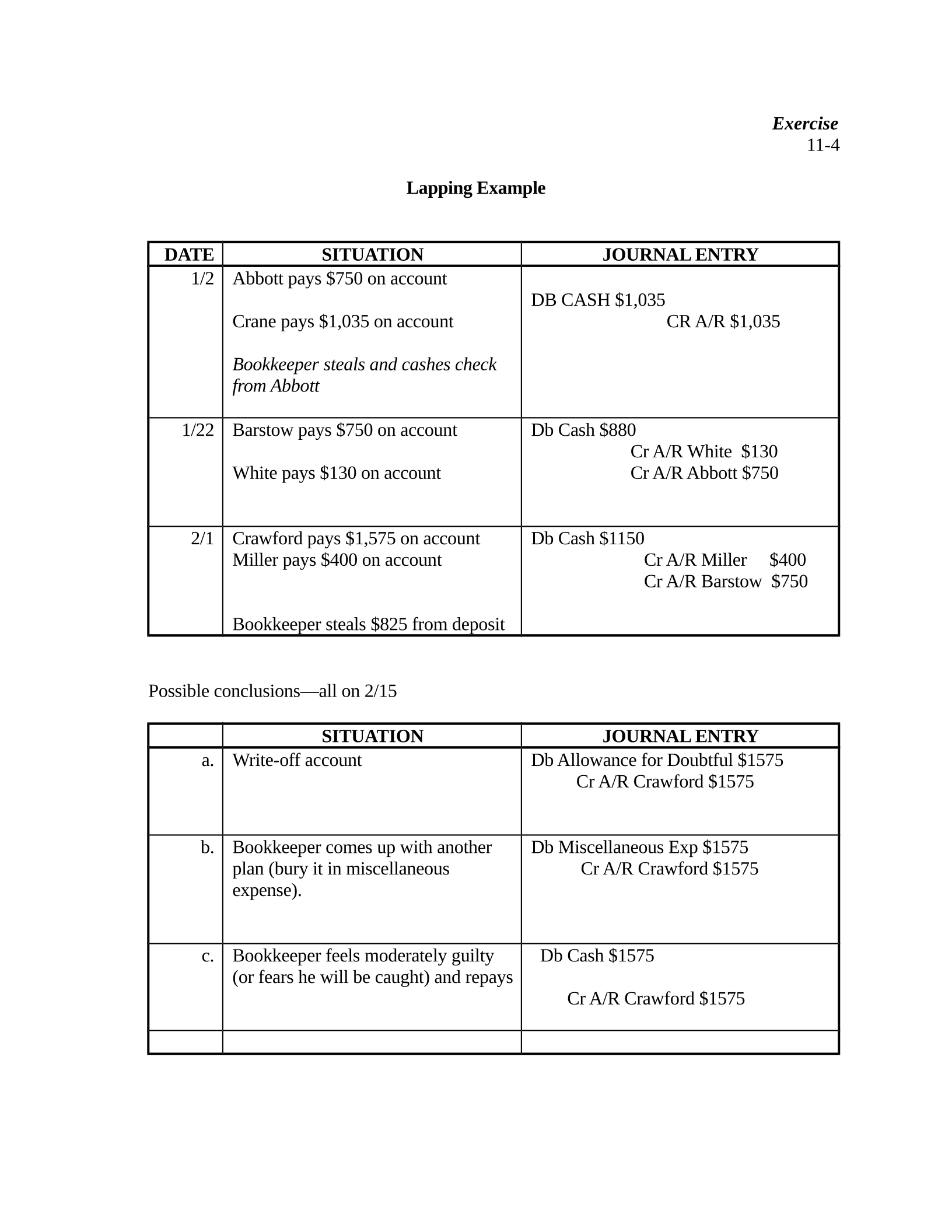
Lapping Example
DATE SITUATION JOURNAL ENTRY
1/2 Abbott pays $750 on account
Crane pays $1,035 on account
Bookkeeper steals and cashes check
from Abbott
DB CASH $1,035
CR A/R $1,035
1/22 Barstow pays $750 on account
White pays $130 on account
Db Cash $880
Cr A/R White $130
Cr A/R Abbott $750
2/1 Crawford pays $1,575 on account
Miller pays $400 on account
Bookkeeper steals $825 from deposit
Db Cash $1150
Cr A/R Miller $400
Cr A/R Barstow $750
Possible conclusions—all on 2/15
SITUATION JOURNAL ENTRY
a. Write-off account Db Allowance for Doubtful $1575
Cr A/R Crawford $1575
b. Bookkeeper comes up with another
plan (bury it in miscellaneous
expense).
Db Miscellaneous Exp $1575
Cr A/R Crawford $1575
c. Bookkeeper feels moderately guilty
(or fears he will be caught) and repays
Db Cash $1575
Cr A/R Crawford $1575
Powered by TCPDF (www.tcpdf.org)

