


FINAL PROJECT b b b b b b b b b b b b b b b b b b b b b b b b b b b b b b b b b b b b b b b b b b b b b b b b b b b b b b b b b b b b b b b b b b b
b b b b b b b b b b b b b b b b b b b b b b b b b b b b b b b b b b b b b b b b b b b b b b b b b b b b b b b b b b b b b b b 1
Final Project Report
December 16,2023

FINAL PROJECT b b b b b b b b b b b b b b b b b b b b b b b b b b b b b b b b b b b b b b b b b b b b b b b b b b b b b b b b b b b b b b b b b b b
b b b b b b b b b b b b b b b b b b b b b b b b b b b b b b b b b b b b b b b b b b b b b b b b b b b b b b b b b b b b b b b 2
Introduction/ Problem area
The marketing initiatives by businesses take into consideration all kinds of customer
preferences while creating customer profiles. The customer preferences give an insight into
their likings and the offerings that they will probably purchase.
In this project we consider data set from a b bank who plans to introduce a new product in
the market which is called the ‘Personal Equity Plan.’ The bank engaged with its customers
via diverse communication channels so that the new product could be sold.The bank wans
to identify the factors that drive the sale of new product.We setup hypotheses and determine
relations between various variables .We shall be using R programming language for our
analysis which is an open source and available online.
Hypotheses
The main hypotheses we are testing in this b analysis are:
• ‘Personal Equity Plan’ and the type of customer bank account have a direct relation
• Gender, marriage, car, loan, region, number of kids, etc., have a direct impact on the
purchase of the ‘Personal Equity Plan’ offering b b
Data Load
For conducting the in-depth analysis, data has been gathered from GitHub’s WEKA
Learning database (Bluenex, 2021).
The data was loaded in the variable bank, and it was read in the form of the csv file. The
read.csv command was used for this purpose.

FINAL PROJECT b b b b b b b b b b b b b b b b b b b b b b b b b b b b b b b b b b b b b b b b b b b b b b b b b b b b b b b b b b b b b b b b b b b
b b b b b b b b b b b b b b b b b b b b b b b b b b b b b b b b b b b b b b b b b b b b b b b b b b b b b b b b b b b b b b b 3
bank <- read.csv(file="bank-data.csv", head=TRUE, sep=",")
Description of data
In the marketing context, bank data set is considered to be highly beneficial for marketing
departments of varying financial institutions. It is essential to maintain all the relevant
customer records starting from their demographics to the number of accounts that they hold.
When a new offering is introduced by a financial institution in the market, the availability
of bank data can assist in determining the response of the customers, including the ones who
purchase the new product (Bluenex, 2021). The information can help to uncover meaning
relating to how consumers behave in the context of the new product. Based on the past
experience of the financial institution, the managers can ascertain how to deploy appropriate
data mining approaches and techniques that can help in creating proper customer profile
models. A diverse range of fields is integrated into bank data, such as id, gender, age,
income level, region, marital status, car, children, mortgage, the type of account and PEP.
The detailed customer records can be used by the marketing departments of banks for the
purpose of acquiring potential customers. The data can help the financial institution to target
potential customers. The fundamental aim of utilizing bank data is to determine whether a
customer is likely to be interested in availing a specific financial product or not. The
financial product typically encompasses the term deposits of banks.
Age – The ’age’ field captures the age of customers in numerical form. It is vital
information that can be used by the marketing department. For instance, if the customer is
below 65 years, there is a high possibility that he or she will choose term deposits. On the
contrary, if a customer is over 65 years, he is unlikely to choose term deposits. The age of

FINAL PROJECT b b b b b b b b b b b b b b b b b b b b b b b b b b b b b b b b b b b b b b b b b b b b b b b b b b b b b b b b b b b b b b b b b b b
b b b b b b b b b b b b b b b b b b b b b b b b b b b b b b b b b b b b b b b b b b b b b b b b b b b b b b b b b b b b b 4
customers can also enable financial institutions to make the decision on whether life
insurance plans or retirement plans can be offered to elderly customers. influence b b b
Region – The ‘region’ field informs the marketing department about the location in which
the customers stay as well as their living conditions. Based on location in which they reside
i.e., rural regions or urban regions, financial institutions and banks can offer relevant and
suitable financial products and services to potential customers. b b
Income level – The income level of the customers, is another vital field that can give the
marketing department of banks valuable insights. It basically gives a glimpse into the
financial health and position of the customers. The information can enable the marketing
department of banks to ascertain the suitable financial offerings that can be made for
consumers. The information can help banks to fulfill the needs of consumers while meeting
their business goals and objectives. Thus, a win-win situation can be created. The level of
income of the customers can help banks to ascertain whether a customer is in need of loan
products or not.
Marital status and children – Details pertaining to marital status and the number of
children that a married couple has is an important field that can be used by the marketing
department of banks. For example, the possibility of married customers purchasing financial
products, such as insurance products, is higher as compared to unmarried customers. This is
because they may purchase the financial offerings for their spouses or for their children. By
knowing whether bank customers are married or not, it is possible for financial institutions
to understand their needs in a better way and offer the right kind of products and services
that can satisfy their needs.

FINAL PROJECT b b b b b b b b b b b b b b b b b b b b b b b b b b b b b b b b b b b b b b b b b b b b b b b b b b b b b b b b b b b b b b b b b b b
b b b b b b b b b b b b b b b b b b b b b b b b b b b b b b b b b b b b b b b b b b b b b b b b b b b b b b b b b b b b b 5
Account type and the number of accounts – Marketing departments of financial
institutions can also derive rich insights from details such as the account details of their
customers. Typically, individuals who work as professionals maintain savings accounts. On
the other hand, individuals who are into business maintain current accounts (Bank Marketing
Data Set, 2019). Based on account details, marketing departments are able to get an insight
into the financial status of their customers. It can help to make suitable offerings to them.
For example, in case a customer owns a car, a bank can offer him vehicle insurance.
Each of the fields relating to the bank set gives valuable insight as well as information. The
information can be used by banks and financial institutions to make the best offers to the
customers and fulfill their unfulfilled needs and wants. In the captured dataset, there are a
total of 600 observations and 12 variables:
id, age, sex, region, income, married, children, car, save_act, current_act, mortgage and
PEP (dependent variable).
From the available data, it can be observed that the income, age, and the number of children
categories are in numerical form. The other elements are factor variables. The summary
command was run to check the summary for the data set. There is a balance between males

FINAL PROJECT b b b b b b b b b b b b b b b b b b b b b b b b b b b b b b b b b b b b b b b b b b b b b b b b b b b b b b b b b b b b b b b b b b b
b b b b b b b b b b b b b b b b b b b b b b b b b b b b b b b b b b b b b b b b b b b b b b b b b b b b b b b b b b b b b 6
and females. A considerable number of customers have responded ‘No’ for the new PEP
product. Furthermore, it can also be observed that a large number of respondents are married.
b
Preprocessing of data
In the data analysis process, preprocessing of data is a vital component. This activity must
be carried out since it can help to eliminate irrelevant variables. It can also help to process
the variables that are missing. Initially, the id variable was removed since it was just being
used for identifying the customers of the bank. It did not serve any purpose in the data
analysis process and so it was removed.
bank <- bank[,-1]
A summary command had been run at an earlier stage in the data description section.
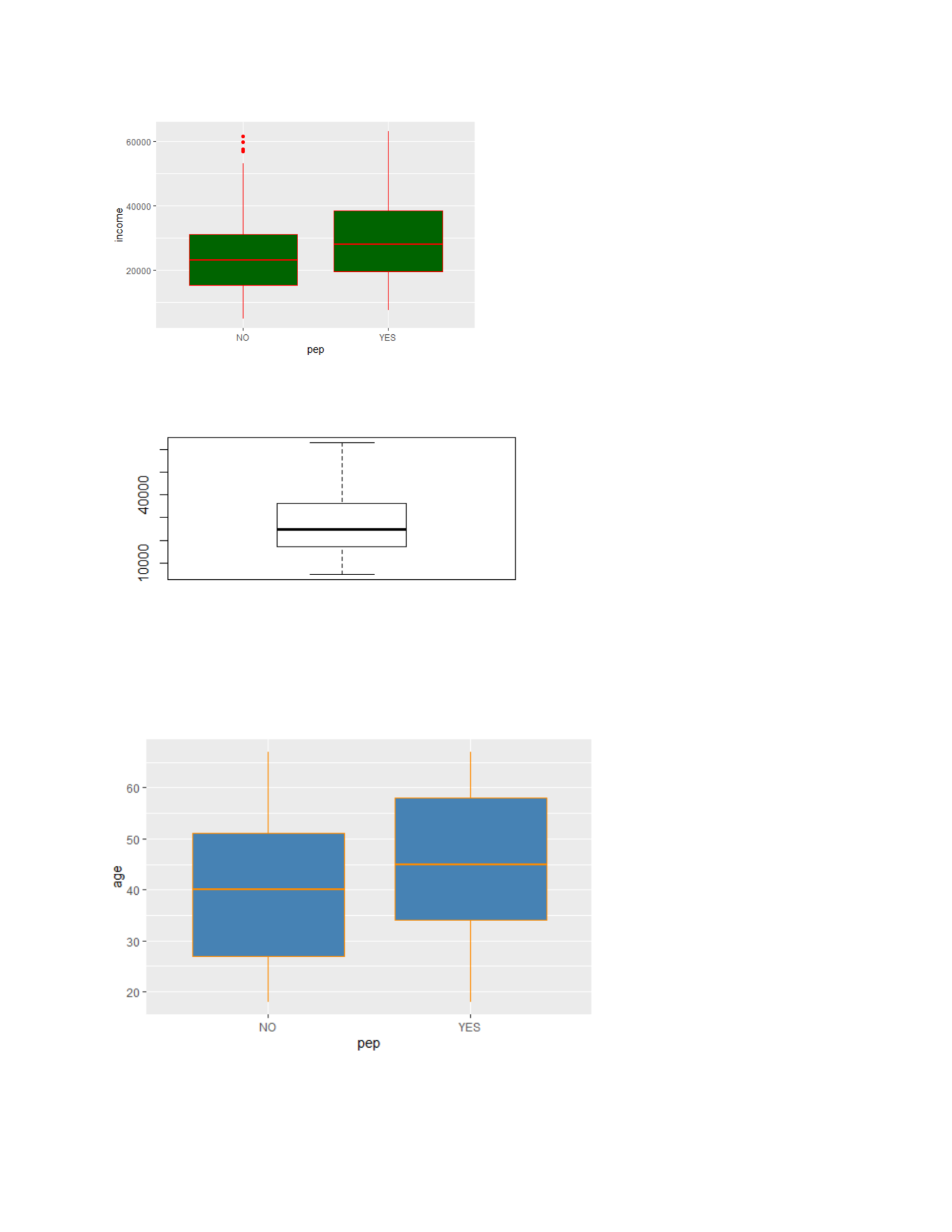
No missing values (NA) were found. A box plot highlighting income in relation to the
PEP variable has been constructed. It can be observed that there exist a few points
belonging to the ‘No’ category, and they are above IQR. But when the income box
plot has been constructed alone, it can be observed that there exist no outliers. The
income values that act as outliers have been removed.
FINAL PROJECT b b b b b b b b b b b b b b b b b b b b b b b b b b b b b b b b b b b b b b b b b b b b b b b b b b b b b b b b b b b b b b b b b b b
b b b b b b b b b b b b b b b b b b b b b b b b b b b b b b b b b b b b b b b b b b b b b b b b b b b b b b b b b b b b b 7
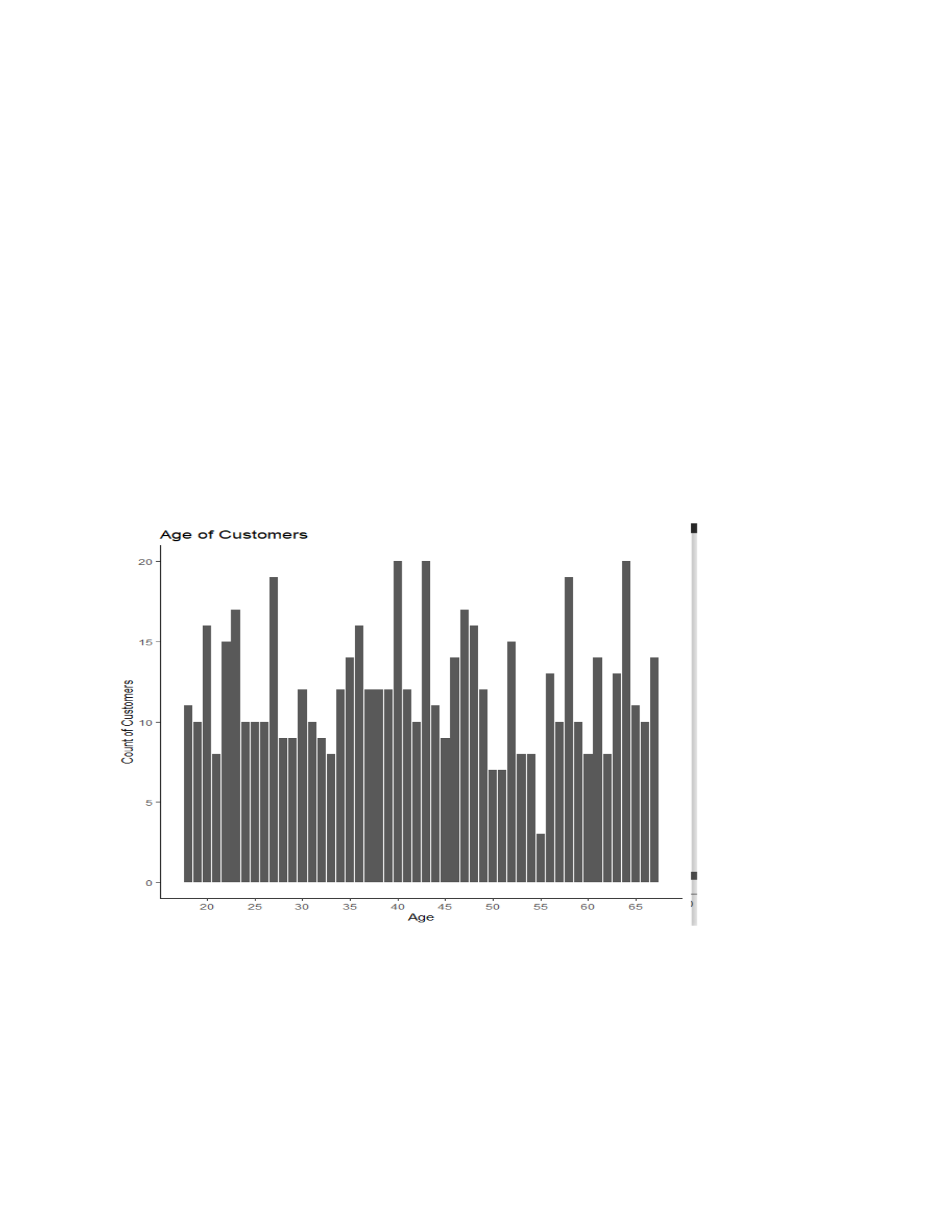
In the next stage of data analysis, the outliers in the age category were checked, and it was
identified that there were no outliers.
FINAL PROJECT b b b b b b b b b b b b b b b b b b b b b b b b b b b b b b b b b b b b b b b b b b b b b b b b b b b b b b b b b b b b b b b b b b b
b b b b b b b b b b b b b b b b b b b b b b b b b b b b b b b b b b b b b b b b b b b b b b b b b b b b b b b b b b b b b 8
The numeric variables were further discretized so that the apriori algorithm could be used
for the analysis process.
Inferences
In the specific study context,exploratory analysis has helped to get valuable insights relating
to the variables and locate vital associations between them.
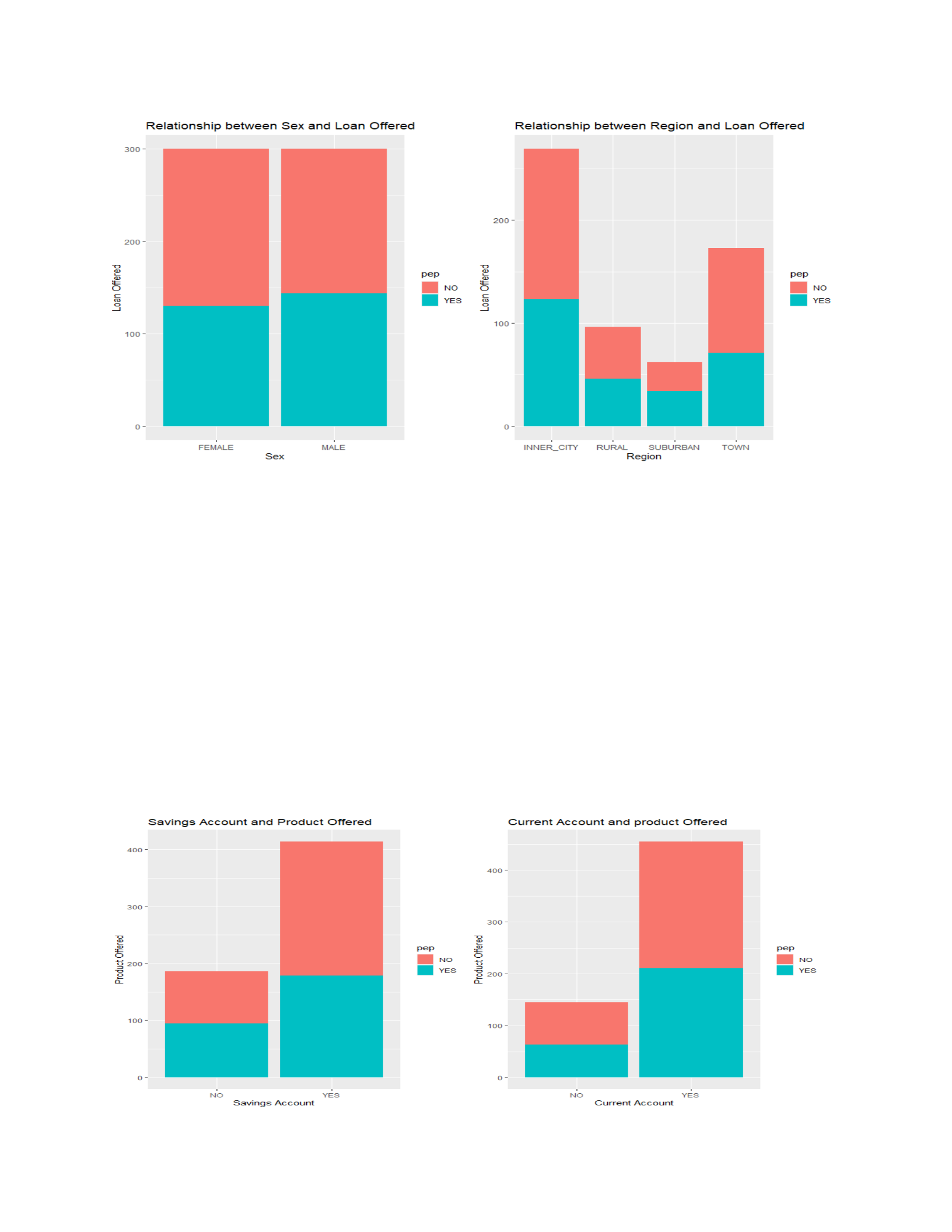
Initially, the graph relating to age versus the number of customers was thoroughly checked.
The chief observation that was made was that the age of the customers was evenly
distributed (Bedford & Malmi, 2015).
The association between gender and region was also checked with respect to the ‘Personal
Equity Plan’ loan product that was being offered by the bank.
FINAL PROJECT b b b b b b b b b b b b b b b b b b b b b b b b b b b b b b b b b b b b b b b b b b b b b b b b b b b b b b b b b b b b b b b b b b b
b b b b b b b b b b b b b b b b b b b b b b b b b b b b b b b b b b b b b b b b b b b b b b b b b b b b b b b b b b b b b 9
It has been identified that gender does not have any kind of impact on the preference
relating to the new PEP product. Furthermore, it has also been revealed that in the suburban
region, over 50 % of individuals who had been approached showed a positive response
towards the purchase of the new PEP product.
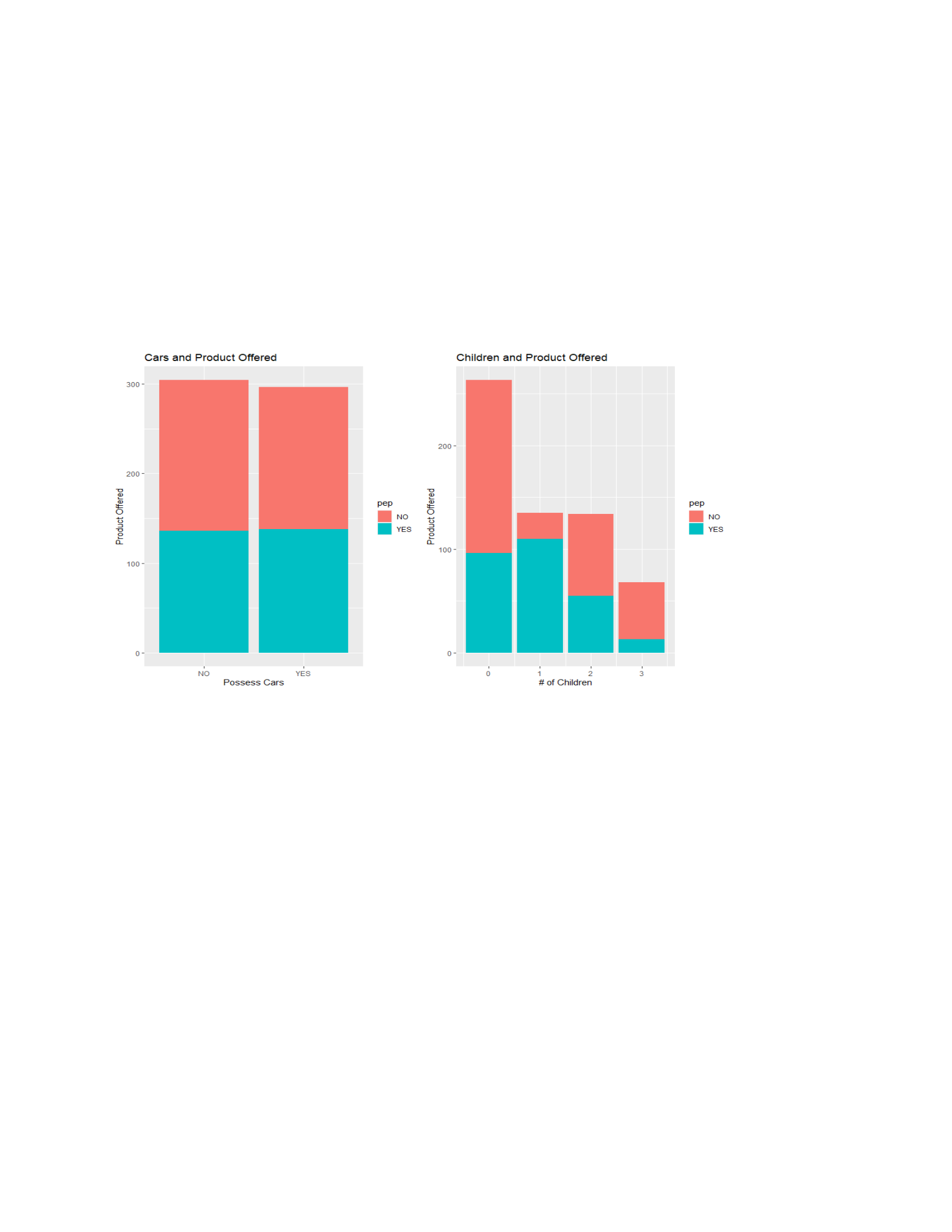
While checking the relationship between the type of account (savings or current) to purchase
PEP, it was found that there existed no association. But customers with a savings or current
account have taken PEP as compared to individuals who do not have such accounts.
FINAL PROJECT b b b b b b b b b b b b b b b b b b b b b b b b b b b b b b b b b b b b b b b b b b b b b b b b b b b b b b b b b b b b b b b b b b b
b b b b b b b b b b b b b b b b b b b b b b b b b b b b b b b b b b b b b b b b b b b b b b b b b b b b b b b b b b b b b 10
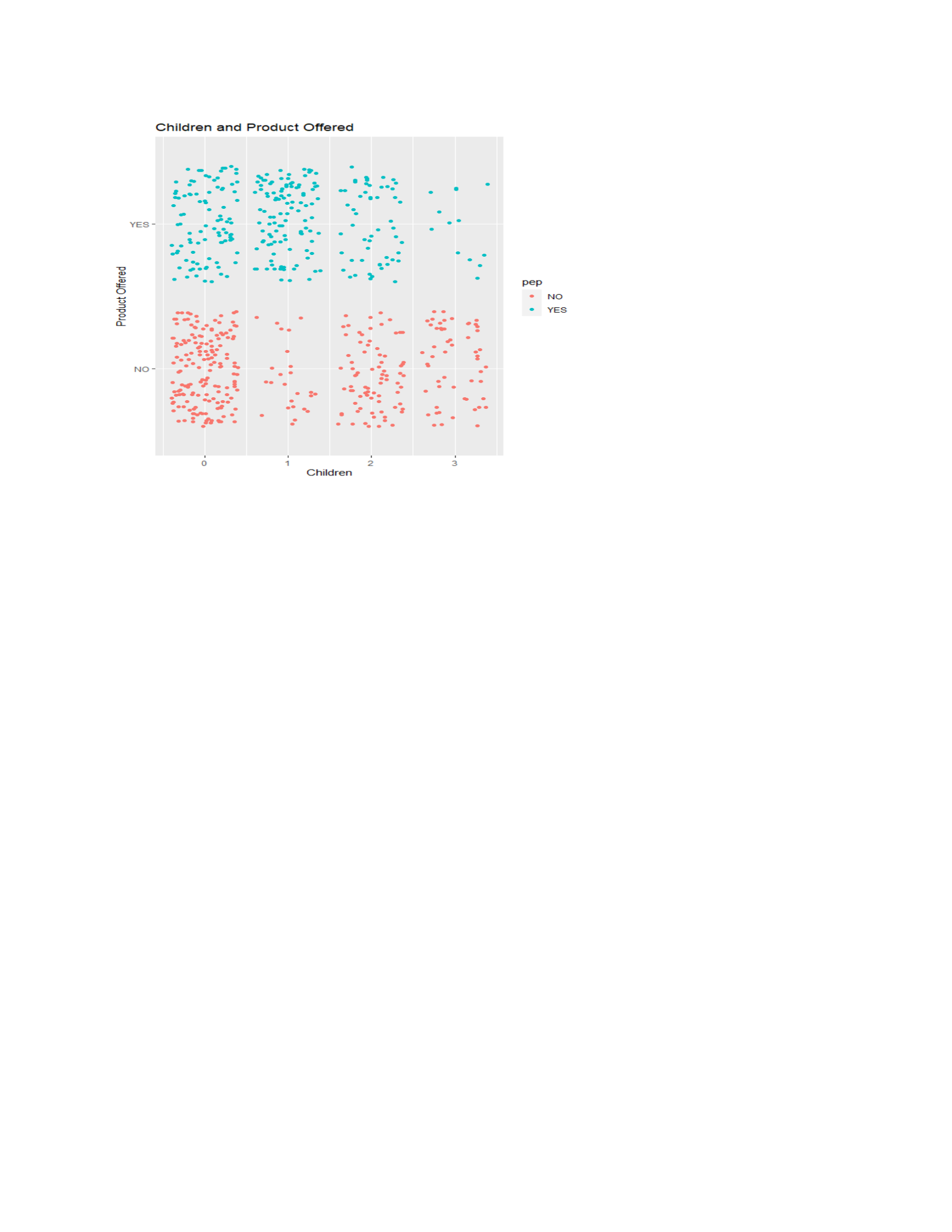
The association between car and PEP purchasing intention was identified. The association
between the children number and purchasing PEP was ascertained. It has been ascertained
that owning a car does not impact the decision to purchase PEP. In regards to children,
families with no children or 1 child are more likely to buy PEP as compared to families
with 2 or more kids. b
The effect of income on the purchase of the PEP product has also been ascertained. It can
be observed that for families with lower income, there exists no interline between their
income and intention to purchase PEP. But as income rises, the intention to purchase PEP
also increases. During preprocessing of data, it was identified that higher age and income
are associated with higher purchase intention of PEP.

FINAL PROJECT b b b b b b b b b b b b b b b b b b b b b b b b b b b b b b b b b b b b b b b b b b b b b b b b b b b b b b b b b b b b b b b b b b b
b b b b b b b b b b b b b b b b b b b b b b b b b b b b b b b b b b b b b b b b b b b b b b b b b b b b b b b b b b b b b 11
The association between married status and PEP purchase shows that 50 % of unmarried
customers purchased PEP, whereas less than 50 % of married customers purchased PEP.
The association between the number of kids and PEP purchase intention shown below shows
that when the number of children is one, customers buy PEP as it is considered an
investment. But when the number of children increases, the intention to buy PEP diminishes.
FINAL PROJECT b b b b b b b b b b b b b b b b b b b b b b b b b b b b b b b b b b b b b b b b b b b b b b b b b b b b b b b b b b b b b b b b b b b
b b b b b b b b b b b b b b b b b b b b b b b b b b b b b b b b b b b b b b b b b b b b b b b b b b b b b b b b b b b b b 12
References
Bluenex. (2021). WekaLearningDataset/bank-data.csv at master ·
bluenex/wekalearningdataset. GitHub. Retrieved December 16, 2022, from
https://github.com/bluenex/WekaLearningDataset/blob/master/bank/bank-data.csv

