


1
Chapter 1: Introduction to the Study
Background
Health information technology (HIT) is critical not only for local health care
organizations but also for national, regional, and international health care organizations.
The U.S. Congress has made investment in HIT a central component for national
improvement of health care delivery (Los Angeles Care Health Plan, 2010). Health care
systems in the United Kingdom are also challenged by HIT (Rosenback & Young, 2008).
There are continual improvements in medical technologies, greater levels of patient
awareness, and increasing demands for the variety of health care sources available within
health services. Health information technology has the potential to improve health care
quality, reduce health care costs, and enhance productivity. Outside of the health care
sector, several researchers have documented the use of information technology (IT) and
its relationship to organizational effectiveness in macroeconomic studies (Duncombe,
2011; Islam & Gronlund, 2011; Rosenback & Young, 2008; Sparks, 2014). Other
researchers have demonstrated the effects of HIT through case studies focusing on a
range of individual companies and hospitals (Bates & Bitton, 2010; Shields, Lewis &
Oldach, 2010). Yet, investment in health care technology and its subsequent adoption
remain low (Onway & Terrell, 2010).
Three major HIT applications commonly adopted in health care organizations are
electronic medical records, picture archiving and communications systems, and
computerized physician order entry. Some nations have yet to incorporate HIT into health
services. This has been attributed to a lack of evidence regarding the contribution of HIT

2
to improved organizational performance, effectiveness, or positive return on investment
(American Association of Family Physicians, 2010). There has been considerable
research on HIT adoption and benefits since the early 2000s, yet the results do not always
lead to a compelling business case for hospital boards or business leaders (Shortell,
2012). The lack of a compelling business case is particularly problematic given the
multimillion-dollar investment required to purchase and install specialized HIT
applications that support clinical practice. The sample of hospitals studied for the positive
impacts of HIT also limits prior research in the health care sector. Researchers have
indicated HIT may even lead to higher billing and declines in provider productivity
(Rosenback & Young, 2008).
Health information technology is an umbrella term that encompasses several
technologies including Meditech, telemedicine, iportal, iNotify, GE Centricity, and
iTriage. The performance of a health care organization depends on the links among
structures, processes, and outcomes (Enthoven, 2009). From a business perspective,
organizations’ structures have an impact on their processes, which further affect
organization outcomes. The connection between organizational effectiveness and HIT
remains unsettled, with many researchers unable to connect conclusions to health care
organizations and providers.
In this research I attempt to bridge the gap in the available literature and reduce
doubts expressed by organizational leaders and policy makers on the adoption of HIT. In
this study I investigated the relationship between HIT adoption and organizational

3
performance with regard to its effectiveness. The second chapter contains a more indepth
discussion on previous research in order to build a foundation for the study.
Problem Statement
The ineffectiveness of organizational processes and resources resulting in low
quality of health care outcomes has presented health care organizational leaders with new
challenges. The specific problem addressed in this study was uncertainty surrounding the
benefits of HIT adoption relative to healthcare delivery processes and outcomes. In an
effort to enhance effectiveness, leaders of health care organizations have adopted various
HITs to facilitate the delivery of health care services. However, the challenges faced by
health care providers in implementing and assimilating HIT into their daily processes
often do not allow the organizations to receive the full benefit of, and return on, their
investments in HIT. These challenges associated with the implementation of HIT have
direct and indirect impacts on health care delivery outcomes, as well as on the
effectiveness of organizations. Researchers such as Rosenback and Young (2008), Onway
and Terrell (2010), and Shortell (2012), focused on institutions that are not representative
of hospitals, which made the findings somewhat irrelevant to hospitals. Bodenheimer
(2010) and Enthoven (2009) reported general findings instead of clearly identifying the
stakeholders affected by HIT adoption in the health care chain.
The findings within available literature addressing HIT investment and its
associated benefit are debatable because potential benefits are difficult to link to specific
health care organizations. Hence, some providers remain reluctant to embrace the HIT
concept, while patients generally do not know enough to select one health care

4
organization over another based on HIT. Further, the rate of error reduction in the health
care sector is still inconsistent, despite some organizations already having HIT that are
supposed to help reduce medical errors. This implies that there is something wrong within
the framework of HIT adoption. The problem can include inappropriate selection of a
HIT system, inappropriate use of the adopted system, inadequate allocation of funds to
the HIT adoption, or poor implementation of the adoption process.
Hospital executives may question whether an investment in HIT will pay off, how
sizable an investment is necessary, and how long it will take to realize a return. In turn,
organizational leaders may question how HIT can help them realize significant quality as
well as measurable cost-related benefits. Health practitioners are concerned with how
their organization compares to others and whether existing HIT infrastructure is
delivering at an optimal level (Gorman, 2011; Pizzitola, 2008). These questions directly
link to factors that impact the quality of health care delivery. Thus, the focus of the study
was to objectively reconcile unresolved speculation on HIT adoption. The study included
only current employees from a selected north Florida health care organization.
Nature of Study
The study was a quantitative correlational study. The study was designed to
explore whether, and to what extent, a relationship exists between the independent
variable (HIT) and the dependent variables (organizational effectiveness, organizational
exchange of information, organizational process, organizational productivity, and direct
personal care). Data collected through an electronic survey was analyzed to answer the
above questions (Creswell, 2009; Simon, 2006).

5
Correlation analysis was selected as the appropriate methodology for quantifying
the degree of correlation between the dependent and independent variables in the study
because a causal model could not be easily determined. Causation analysis (such as
regression) is difficult because of the numerous variables that may influence HIT
effectiveness. Also, one survey is correlated to another, which further made regression
very difficult. For instance, there may have been moderating and mediating variables.
Qualitative research approaches such as phenomenological, case study, grounded
theory, and action research were considered but not judged appropriate for the study, as
further explained in Chapter 3. The phenomenological method was not utilized as its
focus is an individual perspective and includes individual interpretation (May, 2002).
Similarly a case study was not appropriate because that would elicit interpretive
responses to a particular variable relationship, and the proposed study involved many
such relationships. Further, a case study would have entailed exploring causation to
determine principles related to the study (Leedy & Ormrod, 2005). Grounded theory was
not utilized as its objective is to generate new theories or expound on current ones using
inductive methods (Creswell, 2002). Using grounded theory in the study would have
required me not to argue with the findings of previous studies (Woolley, 2008). Action
research method needs active cooperation between the client (HIT adopters) and the
researcher, as well as continual adjustment processes (Cozby, 2009) that should be in line
with the new information and responses to initiated intervention. Analytically, action
research method was not appropriate in the study. This study was not about health care
organizational problems, but rather how the adoption of HIT relates to organizational

6
effectiveness. To use the inductive approach of the field work method, researchers need to
have direct and concrete experiences based on real-world observations on how HIT
relates to organizational effectiveness. Against this background, correlational analysis
was selected as a first step towards understanding where to focus and what variables to
consider in a future causal analysis.
A series of Spearman rho correlations were conducted to assess the relationship
among HIT and other variables such as organizational effectiveness, organizational
exchange of information, organizational process, organizational productivity, and direct
personal care. The Spearman rho is measured with the Spearman rho coefficient.
Coefficient values range from negative one to positive one. Negative coefficients suggest
an inverse relationship while positive coefficients suggest a direct relationship.
The independent variable in the study was HIT. Health Information Technology
consists of the following set of systems: Computerizd Physician Order Entry (CPOE),
Clinical Decision Support System (CDSS), Electronic Health Record System (EHR),
Picture Archiving and Communications Systems (PACS), and HIT applications. The
dependent variables in the study were organizational effectiveness, organizational
exchange of information, organizational process, organizational productivity, and direct
personal care. I explored the relationship between HIT and each one of these variables
(organizational effectiveness, exchange of information, process, productivity, and
personal care). Each one of these was measured separately and was included in a different
correlation or hypothesis. For example, Hypothesis 1 examined the relationship between
HIT and organizational effectiveness.

7
Organizational effectiveness is an abstract construct that is very difficult to
measure. Literature on organizational effectiveness reveals a lack of consensus as to the
meaning of organizational effectiveness. To understand what constitutes an effective
organization as well as the link between organization effectiveness and productivity,
researchers have emphasized the relationship between organizational structure, strategy,
organizational roles, people systems, leadership, organizational culture and values, and
employee engagement (Vilamovska, 2010). Therefore, organizational effectiveness is a
situation whereby all these elements exist in harmony and support one another for the
overall benefit of the organization. Organizational effectiveness was measured using the
5-facet scale of the Organizational Effectiveness Scale (OES) developed by Rotondi
(1975) to measure employee effectiveness within an organization. The scale items
relating to effectiveness are stability, integration, voluntarism, and achievement. See
more detail in Chapter 3.
Organizational exchange of information captures the flow and direction of
information within the organization. Exchange of information in organizations is
multidirectional from the top down, bottom up, and across sections. Organizational
exchange of information was measured using five scale items adapted from the initial 13
dimensions of the Communication Questionnaire (CQ). According to Roberts and
O'Reilly (1974), the purpose of the Communication Questionnaire is to allow respondents
to summarize their own communication over time. Communication Questionnaire is a 35
Likert-type item, self-report measure of respondent perceptions of communication
dimensions. Communication Questionnaire scale items include trust, influence, mobility,

8
desire for interaction, directionality of communication, accuracy, summarization,
gatekeeping, overload, satisfaction, and modalities including written, face-to-face,
telephone, and other. More detail follows in Chapter 3.
Organizational processes are those workflow activities of organizational subunits
that enable consistent process performance across an organization. Hylton (2013)
described organizational processes as an interconnected series of tasks that are executed
as the organization pursues its objectives. These tasks include the division of labor, the
specialization of skills, the individual steps and decision points within the organization's
operations, as well as their interrelatedness as they impact all levels of organizational
operations. Organizational processes were measured using five scale items adapted from
the Organizational Process Survey (OPS). The research conducted by Hylton (2013)
indicated that the purpose of the OPS is to obtain an assessment of formal, documented,
organizational processes and leadership behaviors relative to those processes. The OPS is
a 14 item, 10 point Likert-type scale instrument. The objective is to improve the
understanding of organizational leadership behaviors relative to organizational process.
The results from OPS were used to evaluate organizational commitment to following
processes. More detail about organizational process and the survey instrument is provided
in Chapter 3.
Organizational productivity has been defined in a variety of ways. As Pritchard
(1991) discovered, the term productivity has been used in various ways ranging from
organizational efficiency, individual performance, cost effectiveness, production
profitability, efficiency, output, and motivation, to performance appraisal. According to

9
Harris (1994), in the systems model of organizational performance, productivity is one of
the seven interrelated and interdependent criteria of organizational performance, which
also include efficiency, effectiveness, quality, profitability, innovation, and quality of
work life. The Productivity Scale (PS) developed by McNeese-Smith (1995) was adapted
to measure organizational productivity. The research by McNeese-Smith (1995) indicated
that productivity should be measured by multiple indicators including goal attainment,
cost of labor and supplies, quality of service, employee growth, hours of care per unit of
service, amount of work, deadlines, work organization, errors, sick leave, turnover, and
problem solving. More detail follows in Chapter 3.
Personal care describes the types of patient–practitioner relations in health care
settings. The personal care or patient-centered approach focuses on collaboration,
empathy, caring, shared meaning, mutual dependence, and family and patient
involvement. The focus of the paternalistic or traditional approaches is on the practitioner
or physician as the expert who motivates and directs patients toward compliance.
According to Krupat, Hiam, Fleming, and Freeman (1999), sharing reflects the extent to
which the respondent believes that (a) practitioners and patients should share power and
control on a relatively equal basis, and (b) that practitioners should share as much
information with their patients as possible. Caring refers to the extent respondents believe
that (a) caring about emotions and good interpersonal relations is a key aspect of the
medical encounter, and (b) that practitioners should care about the patient as a whole
person rather than as a medical condition. Personal care was measured by utilizing five
scale items adapted from Patient Practitioner Orientation Scale developed by Krupat et al.

10
(1999). Permission to use the instrument was granted (see Appendix A). Chapter 3
provides more information on the variables, and the measurement instruments.
To collect data, I used an electronic survey. In social science research, researchers
commonly use surveys to collect data from a sample population for the purpose of
generalizing findings to a larger population (Cresswell, 2009). The advantages of using
an electronic survey include cost-effectiveness, time savings, and data collection efficacy.
The study population consisted of practicing doctors, nurses, radiologists, and
administrative staff who use health care information technologies. The basis for
participant selection was convenience sampling. No demographic data was collected and
no personal identifying information was collected. Data from the survey questionnaires
were entered into and analyzed with Statistics Pro version V1.14.12.16. Chapter 3
provides a more detailed discussion of the research methodology, sample design, survey
instruments, data collection, and analysis procedures.
Research Questions and Hypotheses
I developed the research questions based on existing doubts regarding the
adoption of HIT and in line with background information. Thus, the following research
questions were formulated to test the hypotheses:
Research Question 1: What is the relationship, if any, between the adoption of
HIT and organizational effectiveness?
H10: There is no statistically significant relationship between the adoption of HIT
and organizational effectiveness.

11
H1a: There is a statistically significant relationship between the adoption of HIT
and organizational effectiveness.
Research Question 2: What is the relationship, if any, between the adoption of
HIT and exchange of information?
H20: There is no statistically significant relationship between the adoption of HIT
and exchange of information.
H2a: There is a statistically significant relationship between the adoption of HIT
and exchange of information.
Research Question 3: What is the relationship, if any, between the adoption of
HIT and organizational process?
H30: There is no statistically significant relationship between the adoption of HIT
and organizational process.
H3a: There is a statistically significant relationship between the adoption of HIT
and organizational process.
Research Question 4: What is the relationship, if any, between the adoption of
HIT and organizational productivity?
H40: There is no statistically significant relationship between the adoption of HIT
and organizational productivity.
H4a: There is a statistically significant relationship between the adoption of HIT
and organizational productivity.
Research Question 5: What is the relationship, if any, between the adoption of
HIT and patients’ direct personal care?

12
H50: There is no statistically significant relationship between the adoption of HIT
and patients’ direct personal care.
H5a: There is a statistically significant relationship between the adoption of HIT
and patients’ direct personal care.
Purpose of the Study
The purpose of this quantitative study was to explore the potential relationship
among the variables HIT, organizational effectiveness, organizational exchange of
information, organizational process, organizational productivity, and direct personal care,
based on a survey of health care providers. Unlike previous studies that narrowly
addressed only certain aspects of HIT, the study included conclusions on whether HIT
significantly improves organization effectiveness. Hence, the study provided a strong
foundation for reconciling the conflicting interests of health care providers, patients, and
policy makers with regard to using HIT in health care delivery. Thus, the study may help
to bridge large academic gaps identified in the problem statement as well as to influence
the major stakeholders in health care sector (providers and patients) to develop a positive
attitude toward HIT adoption. Health care providers and patients will find the results
useful in making wise and cost-effective choices about adopting and using HIT.
Rationale for the Study
The study may help provide answers for both health care providers and patients
regarding the relationship between HIT and organizational effectiveness. Toward this end,
the study attempted to identify the major and current HIT applications and technologies
that both providers and patients should use to enhance value creation in the organization

13
and health care fraternity. Ultimately, through the presentation of empirical evidence on
the relationship between HIT and organizational effectiveness, the study might lead
health care industry stakeholders to make more informed and appropriate decisions,
which includes helping health care organizations achieve sustainable operations through
the improved delivery of services to their clients.
Theoretical Base
The basis of the study was the theory that a positive link exists between the use of
HIT in the health care sector and organizational effectiveness. The study involved
examining the link using conventional theoretical frameworks in health care quality,
particularly the sociotechnical systems theory (STS) and Donabedian’s framework. Based
on this theoretical relationship, judging organizational effectiveness involves not only
reviewing how internal stakeholders may view HIT, but also how external people
(clients) view it in terms of the quality, cost, and outcomes of service or product delivery.
The study used STS and Donabedian’s framework in designing research questions to rate
positive aspects of HIT in achieving desired organizational goals. Such aspects formed a
secondary link of theory between elements of organizational effectiveness and both
internal and external parameters as further explained in Chapter 2. Hospital executives
treat HIT as an umbrella term whose subtechnologies need investigating separately at
certain points within the two theoretical frameworks.

14
Operational Definitions
Clinical decision support systems (CDSS): application systems that assist the
clinician in applying new information to patient care through the analysis of
patientspecific clinical variables (Payne, 2010).
Computerized Physician Order Entry (CPOE): refers to a variety of
computerbased systems of ordering medications, which share the common features of
automating the medication ordering process (Shojania, Duncan, McDonald, 2011).
Electronic health record (EHR): electronic record of health-related information on
an individual that conforms to nationally recognized interoperability standards (Peek &
Oftedahl, 2010) and that authorized clinicians and staff can create, manage, and consult
across more than one health care organization (Congressional Budget Office, 2013).
GE centricity: medical software system used to acquire and store medical images
as well as other information objects generated by the acquisition equipment (modalities)
and other devices in the postprocessing workstations (National Association of County &
City Health Officials, 2010).
Health information exchange: electronic movement of health-related information
among health care organizations according to nationally recognized standards (Conway
& Terrell, 2010).
Health information technology (HIT): general framework for explaining the
complete management of health information in computerized systems as well as its secure
exchange among health care providers, consumers, government, and insurers.

15
Health information technology refers to the tangible technical aspects of a health
information system (National Association of County & City Health Officials, 2010).
iNotify: technology that provides opportunities for substantial improvement of health care
processes through a unified communication framework between providers and patients
(Halamka, 2013).
iPortal: technology that looks much like a website and offers a secure, compliant,
two-way communication pathway between patients and their health care providers
(Spear, 2012).
iTriage: technology that helps patients get answers to the most common medical
questions in health care sectors (Peek & Oftedahl, 2010).
MediTech: group of medical technologies that help health care providers, patients,
and caregivers accomplish various health care practices (National Association of County
& City Health Officials, 2010).
Primary care practice: practice that serves as the patient’s first point of entry into
the health care system and as the continuing focal point for all needed health care
services (U.S. Department of Health and Human Services, 2008).
Telemedicine: methods for the electronic transmission of medical information to
sustain and enhance the health status of a patient (Hogg Foundation for Mental Health,
2008).

16
Assumptions
The basis of this quantitative study was an assumption of a socioeconomic and
technical paradigm in which technological advances interact with socioeconomic
outcomes. The study included a few assumptions as follows:
1. Patients’ needs are increasing, while the number of health care providers hardly
changes.
2. Sectors of the economy are slowly becoming more global; hence, there is a need
for workers in the health care sector to change their attitude and use
technologybased health care solutions.
3. The best way to achieve sustainable growth in the health care sector is through
improved organizational effectiveness.
4. Not all health care providers make appropriate and adequate use of available HIT
solutions due to lack of knowledge about their existence and proper use.
5. Certain challenges associated with HIT can adversely affect its adoption by health
care providers.
Limitations, Scope, and Delimitation
Limitations
The study included a health care organization in one country, which limited the
adoption of the findings in other countries that do not share similar attributes with that
country. I used a convenience sample, which may not be very representative of the target
population. Using a convenience sample may limit the generalizability of the result. I

17
considered only profit-making private health care institutions, which limited the adoption
of the findings in governmental and nonprofit health care institutions.
Scope and Delimitations
In this study I investigated the potential relationship between information
technology investment and healthcare delivery effectiveness. For the purpose of the study
HIT was limited to health information and clinical decision support technologies such as:
Meditech, GE-Centricity, iTriage, iNotify, telemedicine, and iPortal that were in use by
the study population. The scope was limited to healthcare providers in the north Florida
area. A unique composition of respondents helped to ensure a professionally dimensional
balance. The sample drew from all levels and departments within the selected sample
health care organization. The participants had at least one year of service in the health
care organization, which helped ensure strong and reliable findings.
Significance and Social Change Implications of the Study The
social impact of this research included an improved, quality, timely, accessible, and
effective health care delivery system. The health care delivery system will lead to
patients’ engagement in their wellness and health care through proactive use of various
patient portals. Further, by using the findings, leaders of health care organizations,
practitioners, and other stakeholders will properly target investments in HIT to maximize
their use, benefits, and return on investment.
The study is important to health care providers. Organizational leaders who have
not adopted advanced and current HIT solutions are likely to make a bold move to adopt
them with strong optimism that they will pay off. Patients and the general community

18
may develop a positive attitude toward using HIT solutions and visit organizations with
HIT solutions. The result may be a healthy society and population with improved
understanding and use of technology in health care delivery.
Summary and Transition
The study background depicts how the health care sector is behind other industries
adopting information technology and using it in a patient-centered manner due to
uncertainty in the value of the technology. The delay in adopting HIT in the health care
sector and using it in a patient-centered manner led to a well-informed problem statement
for the study, which I attempted to reconcile through approaches that are different from
previous studies. Given the nature of the study and the problem statement, the study
included five research questions that guided the scope of the study. The study also
included five assumptions and five hypotheses.
The purpose of the study was not only to achieve academic goals but also to
impact social change through improved health care. The theoretical basis for the study
linked HIT and organization effectiveness and direct personal care. To achieve more
clarity with the terms used, this chapter included a separate section to explain relevant
operational terms used in the study and the assumptions made before the study proceeded.
Just like any study, the research had limitations and delimitations associated with its
methodology. However, the result of the result may lead to significant social change
having established and tested the relationship between HIT and organizational
effectiveness from the formulated hypotheses. The next chapter contains a review of
relevant literature that laid a foundation for the entire study.

19

20
Chapter 2: Literature Review
Introduction
The problem addressed in the study was the low quality of health care outcomes
due to the ineffectiveness of organizational processes and resources. The purpose of the
quantitative study was to investigate the potential relationship between HIT and
organizational effectiveness, based on a survey of health care providers. The literature
review provided a strong foundation for studies such as this one. A literature review
involves description, summary, evaluation, and integration of previous reports of original
research, as well as a foundation for designing and justifying new research (Ridley,
2012). The review revealed the gaps I filled with this study. Thus, the literature review
became a platform to help formulate the study objectives and questions. Through the
review, I was able to identify how past studies failed to include certain variables that
could help readers fully understand the impact of HIT on health care delivery. Therefore,
quite a number of areas received consideration for the review.
As the key concepts of this study, the review included HIT and organization
effectiveness, as well as patient-centered care. The theoretical frameworks underpinning
the study underwent review, which was in line with the sociotechnical theory and the
Donabedian theory. Because the primary concern of the study was the link between health
care delivery and HIT, the review revealed the link between various variables based on
previous publications. In particular, the focus of the review was on the link between HIT
and health care quality, health care outcome, personal care, and health care effectiveness.
Because HIT is an umbrella term, the review substantiated various technologies under

21
this term, including mediTech, telemedicine, GE Centricity, iTriage, iPortal, and iNotify.
Arriving at the best method involved reviewing different research methods from which I
chose the final method. Finally, I summarized the literature review and identified gaps to
justify the type of method and approach adopted for the study.
Literature Review Strategy
The strategy for the literature review involved relying on a comprehensive
approach to get diverse and quality information from the literature that could help to
prove or disapprove stated hypotheses, achieve study objectives, and answer research
questions. The systemic literature review process employed by Brereton, Kitchenham,
Budgen, Turner, and Khalil, (2007) helped to locate, evaluate, and summarize studies
related to the impact of IT on organizational effectiveness. The major categories of
literature considered for the study were published books, peer-reviewed journal articles,
magazines, corporate studies and reports, academic studies, government and state
publications, and other primary data including from the World Wide Web. The online
database Business Source Premier served as a means of collecting journal articles less
than 5 years old. The process involved reviewing the literature retrieved from different
sources and using a screening review form that contained a sequence of categorization
questions created to track the right literature sources, content, and quality. Key search
terms and combinations included health information technology and effectiveness,
technology and productivity, technology and care delivery, health IT and dehumanization,
HIT and depersonalization of health care, and technology and personal care.

22
The study design did not restrain the initial search criterion. I employed a critical
analysis of scientific literature, including evidence from sources with several different
study designs (Webster & Watson, 2002). I also divided the retrieved literature from
different sources and with different designs into four categories: hypothesis-testing
studies, reviews, predictive reports, and descriptive reports.
I categorized the sources as either nonsystematic or systematic by checking the
methods used in the literature sources to verify whether the researchers employed an
acceptable method to arrive at the claimed evidence. The hypothesis-testing studies were
among the studies whose authors compared data between cohorts or across fixed time
spans to answer a study question using statistical tests. The review also included
hypothesis-testing studies that involved intervention with a concurrent comparison group
and intervention without a concurrent group for comparison. These included time-series
studies, pre–post studies, and historical control group studies (Moore, McCabe, & Craig,
2007). A third strategy applied to accomplish the literature review involved considering
studies with predictive analyses.
These studies included modeling techniques to forecast what might take place
with a HIT implementation instead of what actually happened. This strategy was
consistent with the HIT elements of cost-benefit and cost-effectiveness analyses
(Zikmund, Babin, Carr, & Griffin, 2008). The strategy also involved accessing data from
many studies with a variety of assumptions. The literature considered was produced by
both private and public institutions. The year of publication was a significant factor in

23
this review, as the intent was to use only literature published between 2008 and 2015 to
obtain current information.
Health Information Technology
Health information technology provides a general framework to explain the
complete management of health information in computerized systems as well as its secure
exchange among health care providers, consumers, government, and insurers (Peek &
Oftedahl, 2010). Health information technology may be the most promising tool for
enhancing the overall efficiency, quality, and safety of the health care delivery system.
Benefits of broad and consistent use of HIT will include improved health care
effectiveness or quality, increased health care efficiency or productivity, fewer medical
errors, and reduced health care procedural errors and inaccuracy (Kumar, 2011). Other
improvements will include reduced health care costs, enhanced efficiency in health care
work processes and administrative efficiencies, reduced paperwork and unproductive
work time (White & Danis, 2013), extended real-time communications among health care
professionals, and increased access to affordable health care (Lagu, Lezzoni &
Lindenaur, 2014). Health information technology benefits and potentials are far-reaching;
interoperable HIT enhances individual patient care and involves other public benefits
including early detection of contagious infection outbreaks (Kumar, 2011), enhanced
tracking of chronic disease management, and assessment of health care (White & Danis,
2013). Further, HIT permits health care providers to gather, keep, retrieve, and transfer
information electronically (Varkey, Horne, & Bennet, 2010). However, HIT is not without
challenges, as it lacks precise definition, which challenges its use owing to the large

24
volume of technological applications and the rapid pace of technological changes (Baker,
Gustafson, & Shah, 2014). Terms that fall under HIT define diverse products; hence, the
exact functions of a HIT system will rely on the limits of its implementation in a given
health care setting. A primary concern for HIT is patient security. The most significant
aspect of HIT is the steps taken to safeguard patients’ confidentiality (Lansisalmi,
Kivimaki, Aalto, & Ruoranen, 2010). The private details of patients regarding their
medical history, account number, social security number, and credit card numbers, among
others, should remain confidential in a good working system of HIT (Lehoux, 2010).
Hospitals therefore depend on both health care providers and technology professionals to
ensure that the systems used to link patients and health care providers are safe from
unconcerned parties.
Organizational Effectiveness
Organizational effectiveness is vital to economic success, including the success of
profit-based health care institutions nonprofit organizations, alike. To realize increased
and sustainable business outcomes, organizational leaders should implement a strategy in
which employees engage with the organization. Employees should also have the right
skills to use available organizational resources and systems (Vilamovska, 2010). The
leaders of many organizations struggle to achieve effectiveness through adopting new
processes and systems of work which they perceive to have links with organizational
productivity. To understand what constitutes an effective organization as well as the link
between organizational effectiveness and productivity, researchers have emphasized the
relationship between organizational structure, strategy, organizational roles, people

25
systems, leadership, organizational culture and values, and employee engagement
(Vilamovska, 2010). Therefore, organizational effectiveness is a situation whereby all
these elements exist in harmony and support one another for the overall benefit of the
organization.
The performance level of various organization systems and functions contributes
to its effectiveness. Health information technology in the context of organizational
effectiveness implies a situation in which the system supports organizational structure,
strategy, roles, people systems, leadership, organizational culture, values, and employees
to perform and interact in the required manner, electronically (Kumar, 2011). A more
effective execution of business strategy would lead to improved financial performance.
Organizations whose leaders do not fully engage the workforce in organization business
strategy are bound to have difficulty in achieving effectiveness owing to an inability to
realize reliable and sustainable business outcomes (Los Angeles Care Health Plan, 2010).
The goal of health care organizational leaders is to make a profit. Towards this end,
effectiveness in providing services to their clients is instrumental to success. The
connection between successful HIT strategy implementation and workforce engagement
factors is therefore vital.
When the workforce engages, organizational elements usually work together to
achieve a sound strategy. The result of this strategy is strong performance, great customer
experience, and profitability (Galy & Sauceda, 2014; Rosenback & Young, 2008).
Therefore, the level at which the organization is able to achieve more profits, enhance
performance, improve customer experience and produce customer loyalty determines

26
organizational effectiveness. In the health care sector, the tendency of repeated visits or
engagement with the same physician or the recurrent use or preference for the same
health care system or organization can gauge such loyalty (Suki, 2011). Thus, a
relationship exists among customer loyalty, organizational performance, and profits.
Organizations with high performance and profits tend to grow and develop. In the
health care sector, investments into more advanced and techno-savvy equipment and
systems signify this, which in turn improves the quality of health care services. Notably,
patient treatments alone do not offer a comprehensive answer to health care needs and
effectiveness. Instead, diagnostic processes and activities, together with patient followup,
should equally receive appropriate emphasis (Vilamovska, 2010). Hence, health care
organizations need holistic improvements in their performance.
Theoretical Frameworks Underpinning This Study
The study included STS and Donabedian’s framework for health care quality
evaluation. Sociotechnical systems theory relates to a scenario in which people employ
information and communication technology (ICT) as a communication medium (Shortell,
2012). Sociotechnical systems theory helps to understand how the use of ICT brings
about autonomous work groups, job enrichment, and workplace democracy to enhance
organizational performance. The basis of the conceptual framework of the study was also
on Donabedian’s classic organizational structure, process, and outcome model of quality
assessment (Donabedian, 2005). The structure, process, and outcome model is a tool for
assessing health care quality.

27
Sociotechnical Theory
The basis of STS is the use of ICT. Adoption of STS development leads to
systems that are more acceptable and deliver better value to organization (Baxter &
Sommerville, 2011).The Tavistock Institute of Human Relations in the 1950s employed
STS in work systems in organizations. The theory’s concepts are organizational. Thus a
socio-technical approach, which is not organizational, is not fit for consideration. STS
offers an explanatory framework for organizational life (Baxter & Sommerville, 2011).
Basing this study on STS therefore involved an exploration of both ICT use in the health
care sector and the history of such health care organizations.
Sociotechnical systems theory offers a foundation on which to design an
organization. It includes a theoretical framework for understanding the complex way in
which the workforce cooperates and interacts with tools and technology to do work
(Vespignani, 2012). Using STS in this study facilitated understanding of how realities in
health care operations help or such organizations achieve goals. The theory treats the
organizational collection of human and technical resources as a system that yields work.
It emphasizes the link between the people in their respective work roles and technical
artifacts used to get the work done (Vespignani, 2012). Using the sociotechnical systems
theory in this study helped to reveal how the health care system actually functions, how
using HIT helps people solve health problems, and if HIT affects how the work of one
person impacts another.

28
Donabedian Theory
In his first three elements of the theory on methodologies used in health services
research, Donabedian (2003) identified three dimensions to help examine quality of
health care. These include structure, process, and outcome (Donabedian, 2003). The three
elements later formed the core blocks of his model for assessing the quality of medical
care, thereby leading to its widespread acceptance. The three elements are not quality
attributes but instead are the classifications for the kinds of information that both health
care organizations and the population can use to judge health care quality. Health care
quality can be poor, fair, or good (Donabedian, 2003). The theory suggests that making
conclusions about health care quality needs an established relationship between structure,
process, and outcome and that the link between the three elements should be a probability
instead of a certainty (Donabedian, 2003). Therefore, this study involved considering how
HIT relates to the health care structure, process, and outcomes as measures of quality
within Donabedian’s theory.
The study involved evaluating the use of HIT based on how it influences the
organizational health care structures, processes, and outcomes. The structural influence of
HIT encompasses hospital buildings, health care equipment, financing, and staffing issues
(Donabedian, 2005). In Donabedian’s model, researchers can deduce information
regarding the quality of care from organizational structure, process, and outcomes
(Donabedian, 2005). Organizational process in the study related to the transactions that
take place between health care providers and patients throughout the health care delivery

29
process. Organizational outcomes in the study referred to the impact of health care on the
patients’ and populations’ health status.
In the theoretical model of Donabedian’s (2005) quality assessment, a chain of the
three elements linked by unidirectional arrows represents quality measures and indicators.
Here, structure is the first element linked to process, which again links to outcomes
(Donabedian, 2005). The framework depicts that HIT would first influence organization
structure, which in turn influences health care processes, hence leading to the desirable or
undesirable health care outcomes.
In employing a structural assessment of health care quality, it is important to
consider all factors that affect the background in which health care organizations provide
care. These context factors in structure entail human resources, physical facility and
equipment, and organizational characteristics such as payment methods and employee
training (Dahlgaard, Pettersen, & Dahlgaard-Park, 2011). Employing a structural
assessment of health care quality implies that HIT in one way or another can affect how
and when health care organizations conduct their human resources programs, such as
recruitment capacity and training needs, establishment of physical facility and equipment,
and payment methods. Through these structural elements, this study will involve an
attempt to reveal how health care providers and patients operate within a health care
facility or system. Based on the unidirectional link among the three elements of quality
assessment, any problem that emerges in the health care process correlates to the
structural element.

30
Health care process can imply actions committed by patients or their family
members. Processes can be technical or interpersonal relative to the delivery of care.
Process sums all the actions that comprise health care, including diagnosis, preventive
care, patient education, and treatment (Donabedian, 2005). In view of Donabedian’s
(2005) theory, measuring health care process is almost equivalent to quality measurement
given that process involves all acts of health care delivery (Rosenback & Young, 2008).
To access information about process, one can make use of medical records, interviews
with health care providers and patients, and direct observations on health care visits
(Donabedian, 2003).
Process relates to outcome
At times, outcomes are the most significant indicators of health care quality, since
improvement of health status is the fundamental goal of any health care. Health care
outcomes entail all effects of health care on patients, including changes in patients’
behavior or knowledge, health status, and subsequent satisfaction (Onway & Terrell,
2010). Deducing the relationship between health care process and outcomes requires a
large sample size adjusted by case mix as well as long-term follow-ups owing to the
length of time that some health care outcomes take to become evident.
Donabedian’s theory explains that the three elements necessitate researchers to
deduce the link between them to develop a chain of causation that can conceptually help
us understand health care systems. Evaluating Donabedian’s process of outcomes
involves five steps: planning, goal setting, implementation, analysis, and feedback

31
(Rosenback & Young, 2008). Follow-up on a patient examination by a health care
provider would therefore require the provider to formulate a problem list, mutual goals,
and a care plan. The patient must also respond appropriately. Favorable and appropriate
responses from the patient signify the fulfillment of health care goals. Providers need to
communicate and document the favorable response. Patients’ failure to respond favorably
calls for the provider to make adjustments, change programs, and begin the process again.
Using Donabedian’s theory, I attempted to reveal how HIT impacts these outcome
processes, which amounts to health care quality.
The Variables and the Linkages Explained
Health Information Technology and Quality
Safety and efficiency in health care provision are factors that contribute to health
care quality as developed by various health care organizations. Health information
technology is IT based, which has the potential to enhance the quality, safety, and
efficiency of health care services (Varkey, Horne, & Bennet., 2010). Treatment adherence,
weight loss, smoking cessation, diet and physical activity, postoperative hematoma,
disease management and hemorrhage are examples of conditions that frequently occur
which HIT can positively help to control, thereby leading to improved quality outcome
(Riley et al., 2011). Clinical experts posit that the conditions partly capture HIT’s
potential value, but the link between HIT and quality is best understood by evaluating the
level of safety and efficiency that patients have after and before treatments and follow-up
processes.

32
Health information technology offers health care providers and patients new ways
to access and use health information. Thus, HIT is capable of improving the quality of
health care through improved safety and efficiency in the system (Lehoux, 2010).
Delivery of quality health care through HIT requires the providers as well as patients to
integrate complex information from diverse sources (National Association of County &
City Health Officials, 2010). Thus, the quality of health care accrued from HIT links to
the efficient access and appropriate use of health care information. Likewise, quality
health care outcomes attributed to HIT result from patients’ ability to access information,
which helps them to manage their health condition as well as communicate with the
health care system more effectively (Omachonu, 2010). Beyond delivery and outcome, an
association exists between HIT and cost reduction.
The low cost associated with using HIT to provide health care signifies that it
improves the economic quality of health care provision. Policy makers have debated the
ability of HIT to help health care organizations, providers, and patients save on health
care costs through quality improvements and efficiencies (Omachonu, 2010). Based on
the savings accrued from HIT implementation, leaders of health care institutions would
be able to invest in more advanced technologies to further improve the quality of health
care provision as well as patient outcome.
Health Information Technology and Outcome
Health care outcome entails various elements including not only patient-centered
outcomes but also organizational ones concerning structures and processes. Using HIT to
deliver health care ensures appropriate information is available to various stakeholders

33
within the health care system at all stages of the health care process (Cutler & Everett,
2010). Improved outcomes between health care providers and the patients, as well as
between patients and caregivers, are achievable. Every stakeholder in the health care
system, including patients, patients’ family members, and health care providers, needs
access to key information to make transitions of health care safe and effective.
Health information technology improves outcomes in a variety of ways. Using
HIT helps to improve communication during transitions between health care providers,
caregivers, community support groups, and patients (Lansisalmi et al., 2010). This adds
up to improved health care outcomes. Using HIT facilitates the development of
standardized processes for reconciling medication needs and coordinating patients’ care.
The improvement in health care outcomes results from HIT’s potential in helping to
account for receiving, sending, or acting upon certain health care information for safe and
effective transitions of care (Baker, Gustafson & Shah, 2014; Blumenthal & Tavenner,
2010). Improved health care outcomes also link to: (a) increased use of case management
as well as professional care coordination, (b) expanded role of pharmacists in medication
reconciliation in transitions of care, (c) development of performance indicators to
encourage strong transitions of care, and (d) implementation of payment systems that
bring into line incentives in the entire health care system (Kumar, 2011). Further, HIT
tends to enhance health care emergency response and outcome.
Health information technology is essential for emergency response (Halamka,
2013). The technology provides the community, health providers, patients, and family
caregivers standardized and integrated approaches and steps to respond to health

34
emergencies (Vilamovska, 2010). Beginning from the conventional use of telephones,
organizations have integrated communication technology to achieve improved health care
outcomes with internet-based applications through mobile handsets and systems
(Halamka, 2013). Health care outcomes can link to job design. Health information
technology plays a key role in advising how to align members of the workforce with their
health care roles, systems, and resources (Mitchell et al., 2012; Vespignani, 2012). Unlike
many applications in which IT and job design are cumbersome to compare, proponents of
emergency response systems recognize the implementation of decentralized IT systems to
facilitate job design, which when properly done leads to enhanced health care outcomes.
Health Information Technology and Cost
Cost is a critical and sometimes limiting factor in HIT deployment. Health
information technology tends to reduce the cost of health care (Agarwal, Gao,
DesRoches, & Jha, 2010; Menachemi & Collum, 2011). However, this should not always
be the case because the development, implementation, and adoption of HIT is an
expensive undertaking that should be considered with care. Investment in HIT
significantly affects business performance (Bhattercherjee et al., 2010). Whether in
developed or developing nations, HIT is an expensive investment that affects the
operations of health care institutions. However, the higher levels of IT investment help
organizational leaders reduce operating expenses, especially in acute care hospitals,
though this can be realized only after the hospital has reached the threshold investment
level. At lower levels of HIT investment, leaders of health care providers’ institutions
encounter rising operating expenses, and not all health care institutions reap the same

35
benefit from their HIT investments (Lapointe, Mignerat, & Vedel, 2011). In return for
HIT investment and applications, leaders of non-profit health care institutions and
hospitals seem to realize a smaller cost-reduction impact compared to profit-making
hospitals, thus reaching the tipping point at higher levels of HIT capital (Vilamovska,
2010). There are cost benefits related to HIT investments.
Hospitals whose leaders invest in HIT derive more cost benefits over time. This
impact can cause investments in nonprofit hospitals to shift from cost increases to cost
reduction. In the short term, preferably over a 1-year period, the contribution of HIT to
productivity is generally equal to the capital cost invested in it (Vilamovska, 2010).
However, between 5 and 7 years, the contribution of HIT to health care output and
productivity is five times its capital input costs. This depicts the significance of analyzing
time-lag impacts of HIT investments in health care provision. Health information
technology investments generally initiate large organizational changes and consume large
amounts of the organization’s time and human capital. This can make the entire process
costly, though it has a positive impact on health care provision.
Health Information Technology and Direct Personal Care
Patient centeredness, care depersonalization, personal care, dehumanized care,
and impersonal care are some of the terms researchers have used to describe the types of
patient–practitioner relations in health care settings. The personal care or patient-centered
approach focuses on collaboration, empathy, caring, shared meaning, mutual dependence,
and family and patient involvement. The focus of the paternalistic or traditional approach

36
is on the practitioner or physician as the expert who motivates and directs patients toward
compliance.
Effective use of HIT tools and health communication processes has the potential
to change the way health care practitioners receive, process, and evaluate health
information. According to Healthy People 2020 (2012), continual feedback, productive
interactions, and access to evidence on the effectiveness of treatments and interventions
will likely transform the traditional patient–provider relationship. Integration of the
various elements of health care service is critical to such information sharing, as it
enables a greater degree of process automation of routine tasks, comprehensive data
analysis, and reporting capabilities, thus improving physician and management decisions,
medications, laboratory tests, and other services.
The proliferation in the variety of clinical and medical information technologies
has resulted in a new generation of providers giving specialized but very impersonal care.
There is growing concern about technology interfering with patient–doctor relationships.
Practitioner reports have also drawn attention to the fact that critical issues affecting
physicians’ use of information systems are not necessarily technical but social (Martin &
Omari, 2015). The new breed of clinical information systems interferes with health care
practitioners’ traditional practice routines and requires physicians to change the
traditional ways they have recorded, retrieved, and used clinical data. Also, clinical
information systems may require practitioners to change the ways they have examined
and interacted with their patients. The loss of these individual characteristics may make

37
physicians resistant to using electronic systems because they see the new technology as a
threat to their professional autonomy and control.
According to Bailey (2011), the main concern about HIT is not the technology
itself, but the design principles and implementation. Bailey (2011) posited that how
people choose to use a new technology has everything to do with whether the technology
adds to their humanity or detracts from it. Therefore, patients may likely see their visits as
depersonalized because of the limited time that the practitioners may have for their
personal care, after spending most of the time reading and documenting patient
information on a computer. From the patient’s perspective, whether the patient feels
satisfied with the level of interaction and care given by the physician or nurse determines
the benefit of HIT.
The only consistent part of patient care is the direct connection between the care
provider and the patient. Tulu, Burkhard, and Horan (2011) discussed the importance of
factors such as physician time and the physician–patient interaction; both ingredients are
necessary for improved quality. One of the benefits expected from the implementation of
electronic health record systems is a positive influence on accessibility and
communication of information to improve the quality of personal direct care. Much of the
HIT literature begins with a discussion regarding the consensus among policy makers,
health care researchers, and quality experts that widespread adoption of HIT will lead to
increased efficiency and improved patient care (Blumenthal, 2010; Institute of Medicine,
2011; Office of the National Coordinator for Health Information, 2013). The enthusiasm
regarding the potential benefits of HIT on improving the delivery of health care has led to

38
a national policy urging providers to adopt HIT. The relationship of HIT on direct
personal care is part of the questions under study.
Application of Health Information Technology in Care Delivery
MediTech
Health information technology as an umbrella term comprises many technologies.
MediTech refers to a group of medical technologies that helps health care providers,
patients, and caregivers accomplish various health care practices (CFR Parts 412, 413,
422, et al., 2010). Several health care providers have invested in MediTech systems to
help them accomplish various purposes regarding information management, electronic
medical records, long-term care, home care, behavioral health, and a wide range of
solutions for physician practices. The MediTech systems are the best in their class,
although they have at times posed challenges to health care business as well as clinical
intelligence when incorporating with a non-MediTech third-party system. Further, this
technology has challenges associated with inherent complexities, the time-intensive
nature of reporting, and the lack of speed and usability, which prevent health care
executives, medical analysts, and clinicians from enhancing their decision-making
process and discovering diagnostic and treatment outcomes.
Telemedicine
Telemedicine is a term in HIT that describes methods for the electronic
transmission of medical information to sustain and enhance the health status of a patient.
The methods that support this concept can include technologies for storing and

39
forwarding medical documents and images (Halamka, 2013), secure messaging, data
exchange, remote monitoring of patient’s health status, medical reminders, and alerts
(Kumar, 2011). The technology also offers physicians the ability to observe and diagnose
a patient’s condition through videoconference and make appropriate recommendations for
treatment (Agarwal & Lau, 2010). A number of products and services, as well as their
respective industries, support the development of diverse applications that support
telemedicine. These include medical device manufacturers, IT vendors, hospitals, venture
capitalists, nursing homes, and pharmacies (Lehoux, 2010). A reliance on remote
communication via electronic devices is common to all these industries involved in
developing various telemedicine applications.
The concept of telemedicine best suits medical environments with shortages of
health care professionals, increased cases of chronic health conditions, and growing
health care costs for patients. Telemedicine offers a better way to enhance efficiency in
the delivery of health care. Other factors that compound the need for telemedicine include
rising population growth rates; a shortage of trained and licensed medical professionals; a
need for proper health care for older adults; an increased presence of physically
challenged patients (Omachonu, 2010); a shortage of health care facilities, especially in
rural areas; and an overall need to improve community health (Varkey et al., 2010, Song
& Vong, 2014). Telemedicine can assist in solving these health challenges.
Telemedicine ensures the maximum use of available health care specialists
because the technology permits them to not only remotely diagnose and monitor but also
recommend appropriate treatment for patients in remote and rural areas. The technology

40
reduces exposure of patients to infections by limiting, if not eliminating, visits to a health
care facility, institution, or physician’s office. The technology can alleviate the gaps in
health care provision associated with underserved patients owing to a shortage of
subspecialty providers. The use of telemedicine, telecommunications technologies, and
connectivity has shown real-world positive impacts on patients, which has amounted to
observable outcomes (Washington State Department of Health, 2010). These include
reduced use of emergency rooms, improved health care outcomes, cost savings, improved
access to health care providers, and increased patient satisfaction.
Now the focus has shifted to innovation and the implementation of advanced
technology platforms to improve the delivery of health care services through telemedicine
technology. Two major platforms that have found an application in telemedicine are
wireless technologies and telemonitoring technologies, both of which promise a
significant development in the delivery of quality telemedical care (Halamka, 2013). The
success of telemedicine in delivering health care services entails the development and
installation of super-speed wireless telecommunications networks integrated with large-
scale search engines as well as mobile devices, which permit realtime diagnosis and
communication with patients without their necessarily visiting a health care facility. The
approach enables health care professionals to address the problems of the patient before
engaging in major interventions, hence creating a patientcentered approach that can
change people’s expectations of health care systems.
Developments in wireless and mobile applications have been the driving force
that allow patients to access their doctors, irrespective of geographical distances or

41
physical barriers between them (Washington State Department of Health, 2010).
Technological development coupled with health challenges indicate that patients want to
consult with their physicians at times when they cannot physically reach the available
health care facilities, even at odd hours. With computer information services, in
telemedicine, it has been possible for physicians to gather health information and store
and forward it as text, video interactions, and still images (Washington State Department
of Health, 2010). In developed nations, it is a common practice for patients to meet with
their physician through real-time teleconferencing. This is still a feat in developing
nations. Through such data exchanges, as well as real-time discussions with the patient,
physicians can treat and manage several specific and routine medical problems. In
developing telemedicine further, patient-side diagnostic instruments such as cameras,
stethoscopes, blood tests, and skilled medical technicians can expand the range of
medical services provided.
Smart phones offer a more powerful personal computing and mobile device
connected to a global, high-speed network. Although this mobile series is still widespread
in developed countries (Washington State Department of Health, 2010), its widespread
adoption in other nations would fully revolutionize delivery of health care across the
world. With Wi-Fi or Bluetooth technologies, health care providers can configure the
smart phone to special health care sensors (Halamka, 2013). The underlying hardware of
emerging mobile phone devices enables them to network with both local and distant
devices, which opens a range of health care potentials. Apart from increased access to
medical care, an association exists between telemedicine and a reduced cost for health

42
care services. Developments in sensor networks technology also make remote monitoring
of patients’ conditions feasible, hence contributing to a high level of quality health care.
GE Centricity
GE Centricity allows multiple users to access remotely stored medical images
from compatible computers on a network. Radiologists can use the images for
manipulating, interpreting diagnostic results, and postdiagnostic review of the images and
other stored objects (Deloitte, 2010). GE Centricity is a medical software system used to
acquire and store medical images as well as other information and objects generated by
the acquisition equipment (modalities) and other devices in the postprocessing
workstations (Halamka, 2013). The software in both the client and server of GE
Centricity works only with off-the-shelf hardware technology with defined minimum
specifications (Spear, 2012).
GE Centricity operates within an environment that meets defined minimum
specifications. The technology permits different users with various methods of exporting
information to send images and other objects to external systems over the network. GE
Centricity uses a protocol to save images on CD and other proprietary formats and to
print key medical images (Washington State Department of Health, 2010). The
technology achieves storing and sharing of digital patient records by accepting patients’
order and report information from health care information systems through the HL7
protocol and by sending notifications to system users (patients and physicians) about the
creation of notes within the GE system, change of study status, and arrival of new studies.

43
GE Centricity provides integration capabilities with other types of information
systems in the health care, dictation, and voice recognition systems. The system supports
desktop integration with different information systems via a browser-based application
system to invoke and display any study identified by the external system via different
mechanisms and different degree of control of the viewer (Deloitte, 2010). GE Centricity
also supports desktop integration with different information systems to invoke modules of
such systems for display of supplementary information associated with the study selected
within GE Centricity (Deloitte, 2010). The technology supports desktop integration with
various advanced visualization and processing software packages to invoke them for
additional processing of imaging information stored within GE Centricity (Halamka,
2013). The information within the GE Centricity system may pertain to a specific study,
order, visit, or patient. In addition, radiologists, physicians and nurses use the desktop
integration to perform certain operations, including the dictation of diagnostic reports
within external systems using information provided by GE
Centricity. iTriage
The iTriage technology helps to link patients and health care providers with
respect to the patients' health conditions. The iTriage technological initiative is a global
health care technology company launched to help patients get answers to most common
medical questions in the health care sector (Halamka, 2013). For instance, the technology
helps patients know what could be wrong with their health and where to go for treatment.
People can download the free iTriage application to their iPhone and Android devices,
and millions of people around the world (Spear, 2012) have already done so. Thousands

44
of health care providers use the technology to help them realize and achieve financial
goals as well as to set care coordination and meet patient satisfaction goals.
Through iTriage Appointment Setting, patients can conveniently schedule
appointments with their health care providers. iTriage Appointment Setting increases
patient traffic, enhances patients’ experience, and attracts patients seeking specific
medical services (iTriage, 2010). Allowing patients to set appointments also increases
operational efficiencies, satisfaction, retention, and competitive advantage. In addition to
being a free mobile application, iTriage is a website patients can log into, check
symptoms, and learn about possible causes and treatments. Both patients and health care
providers can search the symptom directory by selecting a body part, or browse from an
alphabetical list. Users of this technology can research specific diseases and conditions to
learn about the treatment options and procedures, as well as costs and common
complications.
Physicians at Harvard Medical School created and reviewed the medical
information in iTriage. The purpose is to update information on research for particular
medications, including use instructions, possible side effects, and overdoses. The iTriage
website offers a wide array of options for treatment destinations, including a trip to the
health care facility, urgent care center, or retail clinic with consideration of a cost
effective option (iTriage, 2010). Patients can learn which specialists are appropriate to
address their health condition. Patients are able, through this technology, to locate and
compare nearby health care options, including nearby hospital emergency rooms, urgent
care centers, physicians, pharmacies, retail clinics, and outpatient clinics (Washington

45
State Department of Health, 2010). Patients can carry out the following activities while
making their choices: sort physicians by distance or ratings, check the hospital emergency
room wait times, and view the health care facilities and offices on maps. Patients can log
into the website, which includes directions on how to choose a medical provider, check
into emergency rooms and urgent care centers, set appointments, and make phone calls
(iTriage, 2010).
The iTriage technology also features My iTriage, which offers a place to store and
retrieve personal health information. My iTriage, as an application within the main
technology, helps patients to manage their health as well as the health of their loved ones
easily (Case Study, 2012). Patients are able to store information on insurance and health
condition information, in addition to procedures and preferred doctors and facilities
information (Case Study, 2012). Further benefits associated with this technology include
saving medication and dosage information, saving money on medications with the iTriage
pharmacy discount program, accessing personal health records, and efficiently managing
appointments (Case Study, 2012). Beyond iTriage, there are other Web-based gateways
into medical practice and care such as iPortal.
iPortal iPortal offers a secure and compliant two-way communication pathway between
patients and their respective health care providers (Emont, 2011). Unlike office
operations, iPortal provides a convenient, 24-hour, self-service option for patients
(Washington State Department of Health, 2010). The technology permits patients to
handle business as well as clinical interactions with their practice at their own
convenience and permits the health care staff to respond when it suits them. The features

46
of iPortals vary, though the available options in the technology can typically allow
patients to complete, manage, and interact with their health care provider. iPortal allows
registration, appointment scheduling and confirmations, financial clearance, specialty
referrals, medical history, and preventive care (Emont, 2011). Other features include test
result notification and tracking, patient and health care provider communication,
prescription renewal, and online bill payment (Washington State Department of Health,
2010). The best patient iPortals permit hospitals staff and administrators to engage
communities as well as health care providers in care plan management and health
maintenance.
Through the use of iPortal, leaders of health care organizations can better
integrate patients and their providers (Harris, 2012), realize meaningful use, develop a
strong basis for more integrated and accountable health care (Wellness Portal, 2010), and
have enhanced efficiency when patients participate in at least some of the timeconsuming
tasks before coming to the hospital (Emont, 2011). The portal helps move patients into
ambulatory care, which helps them to avoid steep inpatient and readmission costs. The
technology simplifies patient care through provider–patient efficiency and sustains the
patient-centric focus needed in medical homes. iPortal delivers functions such as clinical
messaging, electronic prescription requests and refills, patient demographic updating, test
result alerts, secure posting of medical information, and automatic appointment
scheduling (Emont, 2011).
The portal has the potential to align processes across the continuum of care, care
plans, and admissions; motivate patients to manage medications; reduce costly

47
readmissions; enhance population health management; and facilitate ambulatory care
expansion. It also enhances the recognition of a health system brand through patient
outreach (Harris, 2012). The design of iPortals includes patients first and is built around
the lives, priorities, and workflow needs of both patients and providers (Harris, 2012).
The health care providers who use patients’ iPortals gain more power to streamline health
care scheduling (Wellness Portal, 2010), accelerate the preadmission process, update
patient care plans, and reduce the costs of admissions and readmissions (Emont, 2011).
Irrespective of specific functionalities, patients find value in a well‐designed and
functional patient portal because they feel involved in their care process and have a
greater menu of choices from which to choose (Harris, 2012). Additional benefits
associated with the use of iPortal include strengthening physician–patient relationships,
sharing information securely, connecting referring physicians, saving costs on practice
operations, improving accuracy, enhancing access, and improving transparency
(Washington State Department of Health, 2010). The portal can also streamline patients'
access to their doctors by offering self‐serve access to the functions and information they
most value from health care providers.
iNotify iNotify provides opportunities for substantial improvement of health care
processes through a unified communication framework between providers and patients.
Quality patient care can result from better monitoring of patient conditions (Spear, 2012),
which can occur most effectively through precise and prompt communication among
health care providers (Halamka, 2013), enhanced coordination among providers in
delivering on daily tasks, and improved access to information for decision making. These

48
processes require the application of iNotify. Wireless technology helps to achieve the
functionalities of iNotify, especially in the latest generation of iPhones. Technological
advances in communication security, patient privacy, and push data delivery through
automatic prompt notification in the event of medical crises or urgent situations have
strengthened the process of health care provision (Halamka, 2013). Patients with iNotify
receive notifications and reminders on what to do to fulfill an entire treatment process
(Washington State Department of Health, 2010). Providers can also receive notification
messages about patients’ in-wait and the actions to take. The use of iNotify ensures
patients have efficient, appropriate, and timely health care attendance and practices
(Washington State Department of Health, 2010). With the variables and linkages
explained, the next section contains a discussion on gaps in the literature and on how the
current study may fill some of the gaps.
Gaps in the Literature
The literature review revealed that many of the studies reviewed had a limited
scope. The focus of the studies was either on organization data or on one or two
technologies in HIT. A focus on organization health data does not result in a
comprehensive picture on the influence of HIT across the United States or around the
world, because such a study includes only one type of sample. A focus on one or two
HITs can also prevent researchers from making comprehensive conclusions about the
impact on health care outcomes. Using respondents from only profit-making health care
organizations in the reviewed literature also contributed to the literature gaps because this
results in findings being unsuitable for non-profit-making health care organizations. Most

49
of the studies presented only the positive side of the impact that HIT has on health care
delivery, without considering how the use of HIT can impact health care delivery
negatively.
In a majority of the literature, the researchers employed a qualitative approach.
Even though a qualitative approach could fit the nature of a research topic regarding the
impact of HIT on health care delivery, the approach would limit the level of validity of
the findings, because a qualitative study can support only a few respondents. Lastly, most
of the studies included secondary data as provided by HIT vendors, health care databases,
or patients’ responses, but failed to report the same from the primary views of health care
providers. This made the findings inappropriate in countries or organizations where
providers have no experiences similar to those reported in the studies and in other HIT
publications. There was a clear lack of literature on the relationship between HIT and
health care delivery from the providers’ point of view.
No study or collection of studies existed that would allow readers to make
determined decisions and gain generalized knowledge of the reported benefits of HIT.
Apart from studies from HIT leaders, no other researchers have assessed HIT systems
with comprehensive functionality while also including data on costs, relevant
organizational context, and organizational process change, as well as data on
implementation. The limitation in generalizable knowledge is not a simple matter of
study design and internal validity. Notably, the generalizability of study evidence will
remain low if respondents make no more comprehensive, relevant, and systematic
descriptions and measurements regarding the use of HIT, the individuals who use HIT,

50
and the environment in which they use HIT. I considered all these and developed a
comprehensive approach that filled most of the identified gaps.
Literature Review Summary
In summary, the chapter began with a discussion on health information technology
(HIT) and organizational effectiveness, and personal care. A review of literature was
conducted that contained the findings of similar research that indicated where gaps exist.
A discussion of the theoretical frameworks followed, to build a foundation on the
framework used to explain organizational life and models used to assess health care
quality. The review also included an explanation of the variables and linkages which
included HIT and quality, HIT and outcome, HIT and cost, and HIT and direct personal
care. I also discussed the application of HIT/HIS including MediTech, telemedicine, GE
Centricity, iTriage, iPortal, and iNotify in care delivery. The chapter was concluded by
identifying gaps in the literature that revealed a need for further study. I provided diverse
and quality information that helped to prove or disprove the study hypotheses, achieved
the objectives, answered the research questions through critical analysis of scientific
literature, and categorized the literature as nonsystematic or systematic and descriptive or
predictive.
Health information technology has a general framework to explain the complete
management of health information in computerized systems as well as its secure
exchange among health care providers, consumers, government, and insurers. Many
researchers have associated HIT with (a) improved health care effectiveness or quality,

51
(b) increased health care efficiency or productivity, (c) prevention of medical errors and
reduction in health care procedural correctness and accuracy, (d) reduced health care
costs, (e) enhanced efficiency in the health care work processes and administrative
efficiencies, (f) reduced paperwork and unproductive work time, (g) extended real-time
communications among health care professionals, and (h) increased access to affordable
health care. Health information technology permits health care providers to gather, keep,
retrieve, and transfer information electronically.
The review revealed that organizational effectiveness is vital to any economic
success, including organizations in the health care sector. Health information technology
in the context of organization effectiveness implies a situation where organizational
structure, strategy, roles, people systems, leadership, organizational culture, values, and
employees receive electronic support to perform and interact in the required manner.
Many organizational leaders struggle to achieve this effectiveness through adopting new
processes and systems of work, which they perceive to have links with organizational
productivity. HIT adoption has required organizational elements to work together to
achieve a sound strategy, especially with an engaged workforce, thereby yielding high
performance, great customer experience, and profitability.
The theoretical frameworks that underpinned the study were STS and
Donabedian’s (2005) theory. The sociotechnical theory, although historically seen as
relating to manufacturing, remains relevant. The model helped to understand how using
information communication technology ICT brings about autonomous work groups,
worker democracy, and job enrichment. Donabedian’s theory of quality assessment

52
addressed organizational structure, process, and outcome. The three elements of the
theory serve as the classifications for the kinds of information used to judge health care
quality. A chain of the three elements linked by unidirectional arrows represents
Donabedian’s quality assessment, quality measures, and indicators. Structural assessment
of health care quality, all factors that impact the background in which health care
providers give care, needs consideration. Process sums all the actions that comprise
health care, including diagnosis, preventive care, patient education, and treatment.
Outcome assessment entails all impacts of health care on patients.
With HIT as the main variable in the study, the literature review showed varying
relationships between HIT and variables like health care quality, outcome, and cost. The
review showed that HIT has the potential to enhance the quality of health care services
through enhanced safety and efficiency. Health information technology improves the
health care outcome, which entails various elements including not only patient-centered
outcomes but also organizational goals and objectives about structures and processes.
Using HIT ensures appropriate information is available to various stakeholders within the
health care system at all stages of the health care process.
Health information technology helps to improve communication during
transitions between health care providers, caregivers, community support groups, and
patients. Health information technology impacts health care outcomes around emergency
response and positively impacts job design by creating a framework for aligning members
of the workforce with their roles, systems, and resources. Health information technology
also reduces the cost of health care, though its development, implementation, and

53
adoption are an equally expensive undertaking. At lower levels and short-term periods of
HIT investment, health care providers’ institutions encounter rising operating expenses as
opposed to higher levels and long-term period of HIT’s adoption. In return for HIT
investment and applications, leaders of non-profit-making health care institutions and
hospitals seem to realize a smaller cost-reduction impact than leaders of profitmaking
hospitals.
Various HIT applications in the literature included MediTech, telemedicine, GE
Centricity, iTriage, and iPortal. MediTech refers to the electronic transmission of medical
information to sustain and enhance the health status of patients through its technologies
for storing and forwarding medical documents and images, secure messaging, data
exchange, remote monitoring of patients’ health status, medical reminders, and alerts.
Telemedicine best suits the current medical environment due to the shortage of health
care professionals and increased cases of chronic health conditions, as well as increasing
health care costs on the patient’s side to ensure maximum use of available health care
specialists through real-time videoconferencing or teleconferencing. Using telemedicine
and telecommunications leads to reduced use of emergency rooms, improved health care
outcomes, cost savings, improved access to health care providers, and increased patient
satisfaction, all based on wireless and telemonitoring technologies.
GE Centricity is software used to acquire and store medical images as well as
other information objects. The software allows different users to have various methods of
exporting information, including sending images and other objects to external systems
over the network, as well as desktop integration with different information systems. The

54
iTriage technology helps patients to get answers to common medical questions in health
care sectors, including knowing what could be wrong with one’s health and where to go
for the treatment. Using the iTriage Appointment Setting helps health care providers to
have convenient appointment scheduling, thereby driving more patient traffic; enhancing
patients’ experience; increasing the number of patients seeking specific medical services;
increasing operational efficiencies, satisfaction, and retention; and improving competitive
advantage over competitors.
The iPortal offers a secure, compliant, two-way communication pathway between
patients and their respective health care providers and provides a convenient, 24-hour,
self-service option for the patients. The iPortal delivers functions such as clinical
messaging, electronic prescription requests and refills, patient demographic updating, test
result alerts, secure provider posting of medical information, and automatic appointment
scheduling. iNotify provides opportunities for substantial improvement of health care
processes through a unified communication framework between providers and patients.
The technology provides precise and prompt communication among health care
providers, enhanced coordination among providers in delivering daily tasks, and
improved access to information for decision making.
A large amount of clinical literature included discussions on the benefits of rapid
medical intervention for health outcomes. Research outside the health care sector on the
impact of IT on organizational performance and effectiveness provided a compelling
argument for the potentials of IT. The studies showed that the impact grows over a period

55
of years after the initial IT investment. Health information technology has the potential to
revolutionize health care delivery by making it more effective, more efficient, and safer.
The next chapter includes a discussion of the research method selected, various
research approaches, and a synthesis of alternative research methods. Additionally, the
chapter contains a description of the methods considered for the research, the research
design, and instrumentation. Finally, the chapter contains a discussion of data types,
collection procedures, ethical considerations, and the expected outcomes of the study.

56
Chapter 3: Research Method
Introduction
The purpose of this study was to explore the potential relationship between HIT
and organizational effectiveness, based on a survey of health care providers. The previous
chapter that contained a review of literature relevant to the study topic included a
discussion of objectives and questions. This chapter includes a discussion on (a) research
questions and hypotheses, (b) research design, (c) appropriateness of design, (d)
population and sampling procedure, (e) ethical protection of research participants, (f) data
collection and instrumentation, (g) reliability and validity, and (h) data analysis. Also
discussed is the usefulness of the study to the field of management in general and health
care in particular, and an explanation of why alternative methods would not be
appropriate. Additionally, the discussion included the approaches that researchers use to
arrive at various conclusions, followed by a synthesis of alternative research methods,
which leads to selecting the quantitative correlational design in this study to achieve the
research goals of understanding the relationship between HIT and organizational
effectiveness from health care providers’ perspectives.
The research questions and hypotheses for this study were as follows: Research
Question 1: What is the relationship, if any, between the adoption of HIT and
organizational effectiveness?
H10: There is no statistically significant relationship between the adoption of HIT
and organizational effectiveness.

57
H1a: There is a statistically significant relationship between the adoption of HIT
and organizational effectiveness.
Research Question 2: What is the relationship, if any, between the adoption of
HIT and exchange of information?
H20: There is no statistically significant relationship between the adoption of HIT
and exchange of information.
H2a: There is a statistically significant relationship between the adoption of HIT
and exchange of information.
Research Question 3: What is the relationship, if any, between the adoption of
HIT and organizational process?
H30: There is no statistically significant relationship between the adoption of HIT
and organizational process.
H3a: There is a statistically significant relationship between the adoption of HIT
and organizational process.
Research Question 4: What is the relationship, if any, between the adoption of
HIT and organizational productivity?
H40: There is no statistically significant relationship between the adoption of HIT
and organizational productivity.
H4a: There is a statistically significant relationship between the adoption of HIT
and organizational productivity.
Research Question 5: What is the relationship, if any, between the adoption of
HIT and patients’ direct personal care?

58
H50: The There is no statistically significant relationship between the adoption of
HIT and patients’ direct personal care.
H5a: There is a statistically significant relationship between the adoption of HIT
and patients’ direct personal care.
Research Design
Researchers broadly categorize research approaches as quantitative and
qualitative. Within the two categories are sub-approaches that include interpretive,
subjective, objective, and philosophical methods (Saunders et al., 2003). Philosophical
use of theory refers to an empirical phenomenon that is not easy to measure. I employed
an objective approach. An objective approach allows for generalization of the
participants’ responses in line with the research question. This generalization is common
with a quantitative approach in which researchers use survey questionnaires to gather
participants’ views. Using an objective approach leads to strong research outcomes
because researchers make the conclusions based on what actually exists rather than on
subjective speculations of their subjects’ thoughts.
The interpretive, subjective, and philosophical approaches are not appropriate for
this study. The basis of the argument for interpretive, subjective, and philosophical
approaches is that people can best understand a social phenomenon by considering
feelings and insights that exist only in the mind rather than using laws of nature
(Saunders et al., 2003). However, understanding the relationship between IT and
organizational effectiveness requires concrete proof of evidence. Therefore, an objective
approach was more appropriate for the study.

59
Quantitative study involves quantitative data. Quantitative data can be a product
of many research strategies ranging from simple counts such as frequency of occurrence
to more complex data such as test scores or prices. Researchers can collect and
subsequently code data for quantitative analysis at different levels of numerical
measurement (Myers, 2009). Quantitative studies follow a generalization approach to
make conclusions based on expressed views, and researchers use questionnaires and
physical counts to enter numerical values against expressed ideas. This type of study
includes statistical software tools and functionalities to process and analyze data to arrive
at generalized results.
The quantitative design in this research involved utilizing a questionnaire to
collect answers to research questions testing how the various variables correlate to one
another in the delivery of health care and other organizational roles and functions. The
study variables were HIT, organizational effectiveness, organizational productivity,
organizational process, organizational exchange of information, and personal care. The
quantitative approach mainly involves numbers to yield specific estimates and
differences. The study involved gathering, summarizing, filtering, and analyzing data to
find answers to the study research questions and thus meet the study objectives. Toward
that end, the study included a quantitative correlational design utilizing a convenience
sampling technique. A convenience sampling method was cost efficient and more
practical for the study due to financial and time constraints. Sampling is further discussed
under population and sampling.

60
Appropriatenesss of Design
Correlational analysis was selected as a first step towards understanding where to
focus and what variables to consider in a future causal analysis because there is a need to
show the relationship between HIT and organizational effectiveness, but a causal model
cannot be easily determined without this first step. The correlational design, being
quantitative in nature, also matches the nature of the quantitative data type in the study.
Hence, a quantitative correlational design was appropriate for investigating the
relationship between the use of HIT and organizational effectiveness. The study did not
involve making predictions or looking at causes and effects. The following section
contains highlights of some alternative research approaches that received consideration
for the study.
Field Work
I did not use the fieldwork method in this study. Enquiry or the inductive
approach (Saunders, Lewis & Thornhill, 2007) is the basis of the fieldwork approach that
can be scientific or traditional (McBurney & White, 2009). Fieldwork was not
appropriate for the study because the study did not require direct and concrete
experiences based on real-world observations.
Action Research
I did not use action research in the study. Action research involves the engagement
of a researcher with an aim to influence change in a situation (Myers, 2012). The action
researcher aims to monitor and assess the outcomes of the situation. Action research was
not be appropriate for the study because my goal was not to change the way leaders of

61
health care organizations perceive, understand, adopt, and sustain HIT and its
organizational effectiveness. Further, the action research method needs active cooperation
between the clients (HIT adopters) and the researcher, as well as continual adjustment
processes (Cozby, 2009). The study did not include such interactions but will maintain a
focus on determining the relationship, if any, between HIT and organization effectiveness.
Grounded Theory
I did not use grounded theory in this study. Grounded theory method includes a
major focus on generating theory from collected and analyzed data (Miller & Fredericks,
2006). Using grounded theory does not involve challenging already-established theories
regarding a certain practice or situation (Woolley, 2008). Rather, researchers develop
theory from their actual observations and do not make assumptions before conducting the
study. Thus, the grounded theory method does not support using assumptions and
hypotheses to arrive at conclusions, which made it unsuitable for this study.
Ethnography
The ethnographic research method entails a researcher using participant
observations and becoming a working member of the group or situation under
observation (Sarantakos, 2005). This method was not appropriate for this study due to
time, financial, legal, and business constraints. Ethnography includes an aim to
understand the participants and situation from inside based on the views of the involved
parties. This paradigm is only suitable in studying small firms and small groups
(Creswell, 2009), which would not be appropriate in this study because participants from
large health care organizations were expected to participate.

62
Critical Theory
Critical theory method was not appropriate for this study, as its basis is the
concept that humans are potentially active agents in the construction of their social world
as well as their personal lives (Suri & Clarke, 2009). The method does not rely on
assumptions and subjective conceptualizations, but on active and reflective reasoning
(Saunders et al., 2009). The method does not employ any preformed assumptions and
theories, but involves developing conclusions at the end of the study through reflective
approaches (Denzin & Lincoln, 2006). A reliable critical theory development in this study
would therefore require a dialogue between the health care providers and the researcher.
For the above reasons, critical theory method was not appropriate for the study.
Case Study
I did not use case study method in this study. Case studies are analyses of persons,
events, decisions, periods, projects, policies, institutions, or other systems that researchers
study holistically using one or more methods (Thomas, 2011). A descriptive case study
did not make sense for this study because it would involve exploring causation to
determine the principles related to the study (Leedy & Ormrod, 2005). A case study was
not appropriate because that would only elicit interpretive responses to a particular
variable relationship and the proposed study involves many such relationships.
Additionally, a case study involves exploring answers to questions of why or how
(Simon, 2011), whereas this study involved an attempt to answer questions about the
relationship, if any, among variables.

63
Population and Sampling
The participants were selected from a population of 1,375 healthcare workers who
are using HIT. HIT consisted of these set of systems: Computerized Physician Order
Entry (CPOE), Clinical Decision Support System (CDSS), Electronic Health Record
System (EHR), Picture Archiving and Communications Systems (PACS), and
applications such as Meditech, GE-Centricity, iPortal, telemedicine, iNotify, and iTriage.
Administrators at the research site gave me a set of users who are using these systems. It
was imperative to choose pioneer health care organizations as well as those with recent
establishment history. The focus was on not for-profit health care organizations. A
convenience sampling of workers who meet the following criteria were eligible to
participate in the study: (a) are 18 years or older ,(b) perform work for the organization
on a full time or part time basis, (c) are either a physician, nurse, pharmacist, dentist,
radiologist, managerial staff, subordinate staff, (d) and are using HIT. The participants
received a link to an anonymous self-administered online survey.
I used a convenience sampling method, which is a form of non-probability
sampling, to conduct the study. A convenience sampling method was efficient because the
sample was from the available pool of self-selected responders (Gay et al., 2006). The
advantage was that there were more participants in the study (Gay et al., 2006).
Additionally, convenience sampling is practical when determining a relationship between
different characteristics is necessary. A convenience sampling method was also cost
efficient and more practical for the study due to financial and time constraints.

64
Other sampling methods that I considered but did not use include snowball
sampling, random sampling, stratified sampling, and cluster sampling methods. Snowball
sampling would have required a small sample to get more participants with the same
qualifications (McBurney & White, 2009). The study did not need one participant to refer
another, and then another participant to refer still another participant (Simon, 2011). The
random sampling technique involves selecting the population in such a way that each
participant has an equal and nonzero chance of selection. According to Simon (2011),
random sampling needs a lot of planning time to get the sampling right. Stratified
sampling, in which researchers group participants into different subpopulations, was not
appropriate for this study. Additionally, cluster sampling was not appropriate because
there was no need to separate the participants into different clusters from which a
researcher can randomly select them.
The study used the convenience sampling method because it was efficient, and the
sample was derived from available self-selected responders (Gay et al., 2006, p. 569).
The advantage of convenience sampling is there would be more participants in the study
(Gay et al., 2006, p. 112). I preferred to use convenience sampling because of lower cost.
Sample size calculations can be complex and are a function of alpha, effect size,
and statistical power. The type of statistics that was applied to the sample data and the
number of variables also were factors considered. I utilized G*Power 3.1.3 software tool
to calculate sample size for the Spearman rho correlation. According to Siegel (1988), the
power for a Spearman correlation is approximately 91% as efficient as a Pearson
correlation. I selected the a priori option and a medium effect size, alpha of .05, and an
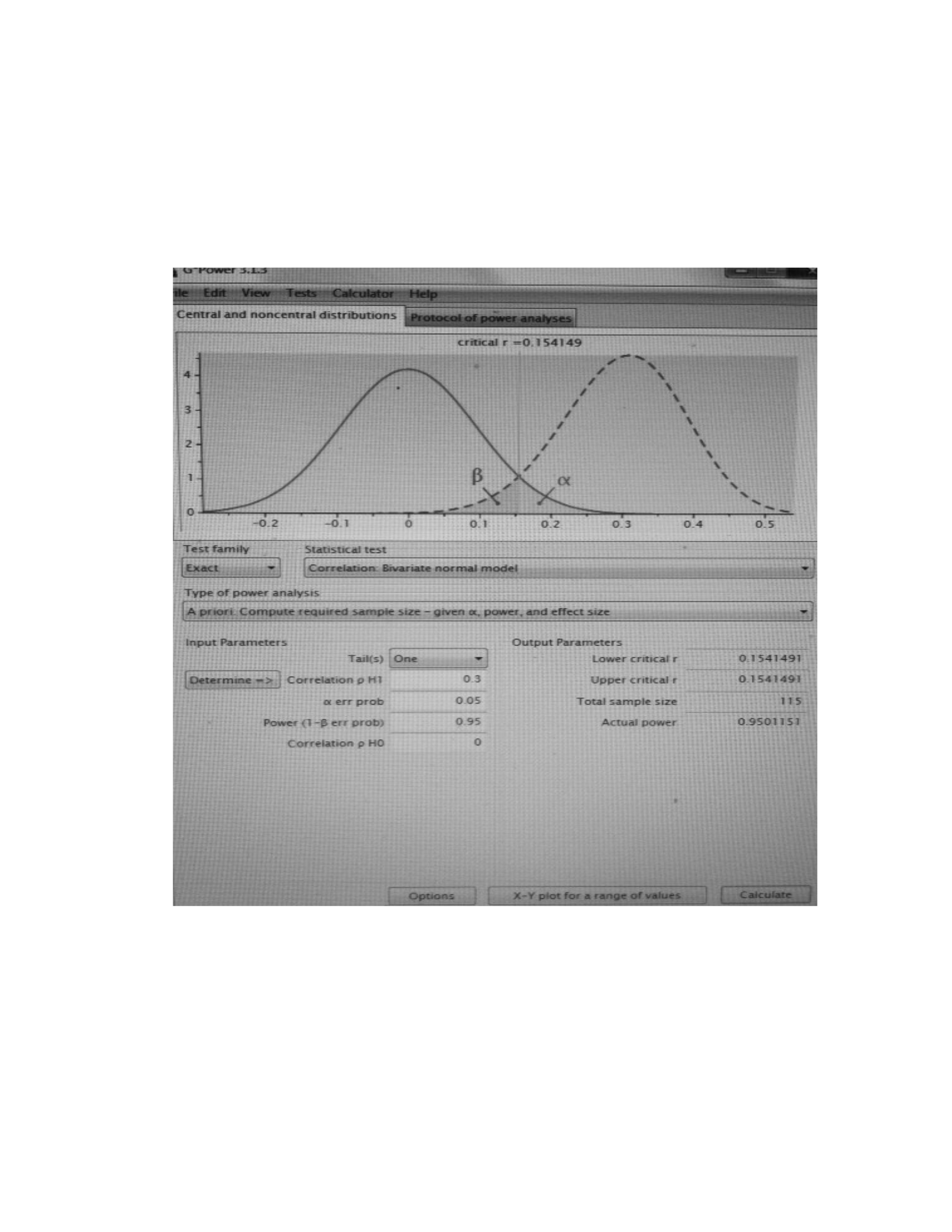
65
increased power of 0.95 to have a requirement of 115 participants. Thus, 115 participants
was the sample size.
Figure 1. G*Power Calculation
Typical survey response rates are around 20%. Kittleson (1997, p. 196)
emphasized the effectiveness of follow-up notices to electronic survey efforts, stating that
“one can expect between a 25 and 30% response rate from an e-mail survey when no

66
follow-up takes place." Follow-up reminders will approximately double the response rate
for e-mail surveys (Kittleson, 1997, p. 196). I sent out 1,375 surveys. With one follow-up
reminder, I got a response rate of approximately 13%. The sample population was
representative of the whole population.
To ease the analysis process, I worked with a small, but adequate, sample instead
of an unnecessarily large sample (Saunders et al., 2009). The first step in the sampling
process required brainstorming on the types of stakeholders who might have an interest in
adopting HIT, as well as those who have reliable experience while using HIT in providing
health care services. This prompted me to develop a list of stakeholders in health care
provision, including primary and secondary providers. I considered primary health care
providers such as nurses, physicians, and pharmacists because they directly interact with
HIT. Secondary providers considered included other health care staff and management
whose use of HIT systems in one way or another can contribute to organizational
effectiveness. The mix of participants was appropriate given that primary health care
providers, as well as secondary players in the providers’ organizations, should notice any
impact of HIT on health care outcomes. The internal stakeholder was from a for-profit
health care institution with a long history of HIT adoption and use.
While choosing the participants for the study, my focus was on those people who
have served in the health care sector for at least 1 year, as I perceived them to have
experience with technological advancement and adoption in the health care sector. I chose
116 participants from various health care departments such as paediatric care, ambulatory

67
care, and cardiac-related care. The subordinate staff and managerial staff were also from
various departments as is the case of the primary participants.
Ethical Protection of Research Participants
Because the data needed to complete this study may be sensitive to the operations
of hospitals as well as to the safety and privacy of patients, the study needed to proceed
carefully with regard to ethical conduct and approach (Srivastava & Hopwood, 2009).
Therefore, I conducted the study in an ethical and responsible manner and in accordance
with Walden University’s Institutional Review Board guidelines. This study only included
respondents who voluntarily agreed to participate. To assure this goal, every respondent
received a consent form for participation to ascertain voluntary participation in the
survey. I asked the respondents to consent by clicking consent on the survey link and by
completing the survey. In the consent letter, the participants were also able to opt out
from the survey if they wished. Emergency assistance program numbers were made
available for participants on the consent form.
I ensured complete anonymity and privacy of the respondents. No individual
response was available to the public. I reported and published only general findings based
on the analysis and summary of all the data. I also explained to every participant that this
was academic research and I used participants’ responses only for academic purposes and
not any other purpose that may reflect on the hospital’s, organization’s, or a participant’s
personal image in any manner. I protected the privacy of all respondents by not revealing
the accessed data to any third party. The introductory note in the questionnaire included
this assurance. I ensured the anonymity of the hospitals and other health care institutions

68
used in the study. To achieve anonymity and privacy, I employed a strong coding
framework so that no third party could use the reported results to identify the details of
respondents and their organizations. I ensured the raw data collected from the survey
questionnaires remained saved in a secured password protected personal computer for at
least five years to await further analysis.
Instrumentation
Items measuring the variables in the study were derived from an extensive review
of past research on organizational relationship in IT. Scale items adapted from multiple
instruments with established reliability and validity were utilized. I explored the
relationship between Health IT (HIT) and each one of these variables (organizational
effectiveness, exchange of information, process, productivity, and personal care). Each
one of these was measured separately and was included in a different
correlation/hypothesis. For example, hypothesis 1 examined the relationship between
HIT and organizational effectiveness.
OES
Organizational effectiveness was operationalized using the 5-facet scale of the
Organizational Effectiveness Scale (OES). OES was developed by Rotondi (1975) to
measure employee effectiveness within organizations. The instrument may be reproduced
and used for non-commercial research and educational purposes without seeking written
permission (See Appendix D). OES uses Likert-type scale items to assess organizational
effectiveness of employees. The scale items relating to effectiveness are Stability,
Integration, Voluntarism, and Achievement. The effectiveness score was computed by

69
combining and averaging the judgments of all the raters. Organizational Effectiveness
Scale is a validated instrument extensively used in organizational and academic research
studies. Using non-managerial personnel for the sample, the scale reliability is acceptable
(r = .73). The scale items that were used to measure organizational effectiveness are
presented in Table 1.
Table 1
Organizational Effectiveness Scale Items
1. Efficiency of co-workers in carrying out task assignments
2. Adaptability of co-workers to changes in task requirements
3. Involvement of co-workers in interpersonal conflicts impeding task progress
4. Job satisfaction expressed by co-workers
5. Success of co-workers in achieving task goals
CQ
Organizational exchange of information captures the flow and direction of
information within the organization. Exchange of information in organizations is
bidirectional from the top down, bottom up, and across sections. Organizational exchange
of information was measured using five scale items adapted from O'Reilly (1974).
Permission is not required to use the instrument for research and teaching purposes (see
Appendix E). According to Roberts and O'Reilly (1974), the purpose of the
Communication Questionnaire is to allow respondents to summarize their own
communication over time. CQ is a 35 Likert-type item, self-report measure of respondent
Organizational effectiveness

70
perceptions of communication dimensions. CQ scale items include trust, influence,
mobility, desire for interaction, directionality of communication, accuracy,
summarization, gate-keeping, overload, satisfaction, & modalities - written, face-to-face,
telephone & other. Items were scored on 7-point scales. A mean score was calculated for
exchange of information. Reliability and validity were established. Table 2 depicts the
scale items for the study.
Table 2
Organizational Exchange of Information Scale Items
1. Of the total time you engage in communications, what percentage of the time do you
use the following methods to communicate:
2. When receiving information from the sources listed below how accurate would you
estimate it usually is:
3. How often do you find the amount of available information hinders rather than helps
your performance in this organization?
4. Do you feel that you receive more information than you can efficiently use in this
organization.
5. How desirable do you feel it is in your department to interact frequently with:
OPS
Organizational processes are those workflow activities of organizational sub-units
that enable consistent process performance across an organization. Organizational process
was measured using five scale items adapted from Hylton (2013) and presented
in Table 3. According to Hylton (2013), the instrument was designed to aid in closing a
gap in the field of leadership studies relative to the impact that a leader's commitment to
Exchange of information

71
following processes has upon organizational success. Permission to use the instrument
was granted (see Appendix B).The research conducted by Hylton (2013) indicated that
the purpose of the OPS is to obtain an assessment of formal, documented, organizational
processes and leadership behaviors relative to those processes. The OPS is a 14 item,
10point Likert-type scale instrument. The scale items for the current study were scored on
5-point scales. The objective was to improve the understanding of organizational
leadership behaviors relative to organizational process. The results from OPS were used
to evaluate organizational commitment to following processes as measured by
stakeholder perceptions. The instrument was applied in a test-retest sequence to a sample
of participants from the business or industrial arena without regard to age, gender, or
ethnicity. The data were analyzed consistent with approaches developed by leaders in the
development of measurement instruments to examine the instrument for content validity
and temporal reliability. The average of all the items was taken to create an organizational
process score. The higher the OPS score, the higher the commitment to organizational
process.
Table 3
Organizational Process Scale Items
1. To what extent does your organization have a set of organizational processes,
that is, a documented series of logically related tasks or steps which describe the
division of labor, the specialization of skills, the individual steps, and the decision
points, which guide your organizational operations through a structured set of
activities designed to achieve a desired result
2. To what extent do you believe that closely adhering to a set of fixed
organizational processes would benefit or not benefit your organization in its efforts
to meet its goals and objectives
Organizational Process

72
3. To what extent does your organization's leadership ensure that set
organizational processes are adhered to
4. To what extent does the leadership of your organization demonstrate a
philosophy of commitment to continuous improvement of fixed processes and to
following the fixed processes which are in place
5. To what extent does following fixed organizational processes benefit or not
benefit your organization's efforts to obtain customer satisfaction
PS
Organizational productivity has no appropriate concept and definition that
scholars can agree on. Pritchard (1991) discovered that the term productivity was used
diversely ranging from organizational efficiency, individual performance, cost
effectiveness, production profitability, efficiency, output, motivation, to performance
appraisal. According to Harris (1994), in the systems model of organizational
performance, productivity is one of the seven interrelated and interdependent criteria of
organizational performance, which include productivity, efficiency, effectiveness, quality,
profitability, innovation, and quality of work life. Organizational productivity was
measured using five scale items adapted from McNeese-Smith (1995). Permission to use
the instrument was granted (see Appendix C). McNeese-Smith (1995) indicated that
productivity should be measured by multiple indicators including goal attainment, cost of
labor and supplies, quality of service, employee growth, hours of care per unit of service,
amount of work, deadlines, work organization, errors, sick leave, turnover, and problem
solving. The items were constructed into 15 statements about employee's contribution to
productivity, using a 5-point Likert-type scale (1 = slight contribution; 5 = high

73
contribution). The questionnaire went through several iterations with feedback from the
original panel of judges, other department managers, and a cross-section of hospital staff.
Finally, a test for reliability was conducted among a sample of 20 hospital employees,
followed by a retest after 7 weeks. Stability was demonstrated with test-retest reliability
at r= 0.95. Internal consistency also was demonstrated using Cronbach's alpha (0.90 to
0.93). The mean of all the items was taken to create a productivity score. Higher score
means higher productivity. Table 4 depicts the scale items used to score the organizational
productivity.
Table 4
Organizational Productivity Scale Items
1. Helping to meet overall hospital goal
2. Providing a high quality of service in my department
3. Assisting my department to meet its productivity goal
4. Helping to accomplish a large amount of work in my department
5. Helping my department to be accurate/free of errors.
PPOS
Personal care describes the types of patient–practitioner relations in health care
settings. Five scale items adapted from Krupat et al. (1999) were used to measure
personal care. Permission to use the instrument was granted (see Appendix A). The 6point
scale is laid out from left to right as strongly disagree (scored 6) to strongly agree (scored
1). One mean score was calculated for the five items. The Total Score ranges from
Organizational Productivity

74
“patient-centered” to “doctor-” or “disease-centered.” The higher the score shows the
more patient-centered the orientation. Item 4 is reverse- worded, and scoring was
reversed. Previous research has shown that the PPOS has good reliability (α = 0.75 to
0.88) and validity. Table 5 depicts the scale items used to measure direct personal care.
Table 5
Personal Care Scale Items
1. Although health care is less personal these days, this is a small price to pay for
medical advances
2. Patients should rely on their doctors' knowledge and not try to find out about their
conditions on their own
3. The doctor is the one who should decide what gets talked about during a visit 4.
Patients should be treated as if they were partners with the doctor, equal in power and
status
5. When patients look up medical information on their own, this usually confuses more
than it helps
Data Collection
Data was a crucial part of the success of the study. The types and amount of data
collected created a foundation on which I made conclusions. In fact, it was not only the
data types and sources that helped the study realize success, but also the data collection
approach that helped to achieve high accuracy and reliability.
I used the survey questionnaire to carry out the survey among the respondents.
The self-administered electronic survey used to collect data included Organizational
Effectiveness Scale survey, Communication Questionnaire, Organizational Process Scale,
Patient-Practitioner Orientation Scale, and the Productivity Scale instrument. Using a
survey questionnaire offered a relatively less expensive and more convenient data
Personal care

75
collection option, as I sent the questionnaires to the participants to complete in my
absence, in order to avoid disruption of their normal operations. The questionnaire was
appropriate as a data collection technique for the study because of the quantitative nature
of data needed and the benefits of questionnaires over other methods (Rubin & Rubin,
2005). Using a survey questionnaire can bring flexibility and convenience to a study, and
electronic survey technologies helped me save resources.
The study instrument was adapted from five existing survey questionnaires used
with permission from the authors (Appendices A-E). These instruments included lists of
closed-ended questions (Srivastava & Hopwood, 2009) formed using a Likert-type scale,
which provided a ranking mode for respondents to give their opinion. Participants
selfadministered the survey (Srivastava & Hopwood, 2009). Every respondent received a
questionnaire through e-mail with a link to the survey and then answered the questions in
my absence. The online approach was used to administer and receive all the completed
survey questionnaires. I employed the online approach, as some respondents may not
have been accessible in person for the study. The online approach offered increased
flexibility and availability of respondents. The online approach also helped save time and
cost (Zikmund, 2003). The hospital administrators e-mailed the questionnaire, which took
a short time, and there was no need to travel to the respondents’ place of work to conduct
the survey.
The design of the survey questionnaire served to capture study information.
Frequency and percentages were used to measure categorically scaled variables, and
range to measure continuously scaled variables. The questionnaire captured respondents’

76
perceptions on the general impact of HIT on organizational effectiveness and direct
patient personal care. More specifically, the second part of the questionnaire captured the
providers’ views on the impact of HIT on health care cost, outcome, and quality. The
design of the questionnaire required much attention in making the questions as simple
and as self-explanatory as possible (Saunders et al., 2009) so that they would not result in
difficulties in interpretation in the absence of the researcher. Thus, I formulated the
questions in simple English using familiar health care, personal care, HIT, and
organization effectiveness terms that enabled the respondents to provide adequate and
reliable responses to every survey question. The questionnaire had closed-ended
questions to reduce or prevent irrelevant responses. The survey consisted of the electronic
survey factors listed in Table 1.
Table 6
Factors of the electronic survey
Factor Description
Organizational effectiveness Organizational Effectiveness scale
Organizational exchange of information Communication questionnaire
Organizational process Organizational Process survey
Organizational productivity Productivity Scale
Personal care Patient-Practitioner Orientation Scale
Data Analysis
I entered the data from the survey questionnaires into Statistics Solutions Pro
version v1.14.12.16 and conducted statistical analysis. Frequencies and percentages were
used to calculate nominal data. Means and standard deviations helped to calculate
continuous data, such as organizational effectiveness, personal care, and organizational

77
process. Again, I looked at the relationship between Health IT (HIT) and each one of
these variables (organizational effectiveness, exchange of information, process,
productivity, and personal care). Each one of these was measured separately and was
included in a different correlation/hypothesis. For example, hypothesis 1 examined the
relationship between HIT and organizational effectiveness.
To examine hypotheses, I conducted a series Spearman rho correlation to assess
the relationships among health information technology and organizational effectiveness.
A Spearman correlation was the appropriate analysis to conduct when the goal was to
assess the relationship between two variables when at least one of them is ordinal
(Pallant, 2010). Adoption of HIT is an ordinal variable measured by a Likert-type scale,
where 1 = strongly disagree up to 5 = strongly agree. Organizational effectiveness,
exchange of information, organizational process, organizational productivity, and direct
personal care are continuous variables.
The Spearman rho correlation served to measure the Spearman rho coefficient.
Coefficient values range from -1 to +1. Negative coefficients indicate an inverse
relationship, whereas positive coefficients indicate a direct relationship. Cohen’s (1988)
standards for correlation coefficients helped to assess the strength of the relationship.
Coefficients less than .10 are very weak, those less than .30 are weak, those less than .50
are moderate, and those greater than .50 are strong.
The hypotheses related to each research question and the means of testing them are as
follows:

78
H10: There is no statistically significant relationship between the adoption of HIT
and organizational effectiveness.
H1a: There is a statistically relationship between the adoption of HIT and organizational
effectiveness.
To examine Hypotheses 1, I conducted a Spearman rho correlation to assess the
relationship between the adoption of HIT and organizational effectiveness. A Spearman
correlation is the appropriate analysis to conduct when the goal is to assess the
relationship between two variables when at least one of them is ordinal (Pallant, 2010).
Adoption of HIT is an ordinal variable measured by a Likert-type scale, where 1 =
strongly disagree up to 5 = strongly agree. Organizational effectiveness is a continuous
variable measured by the Organizational Effectiveness Scale survey. The average of the
combined score provided an organizational effectiveness score.
H20: There is no statistically significant a relationship between the adoption of
HIT and exchange of information.
H2a: There is a statistically significant relationship between the adoption of HIT
and exchange of information.
Examining Hypotheses 2 involved conducting a series of Spearman rho
correlations to assess the relationship between adopting HIT and exchanging information.
A Spearman correlation is the appropriate analysis when the goal is to assess the
relationship between two variables when at least one of them is ordinal (Pallant, 2010).
Adoption of HIT is an ordinal variable measured by a Likert-type scale, where 1 =
strongly disagree up to 5 = strongly agree. Exchange of information is a set of continuous

79
variables measured by the Communication Questionnaire. Five indices in the
Communication Questionnaire used are desire for interaction, directionality—upward,
directionality—downward, directionality—lateral, accuracy, overload, and satisfaction. I
measured each index on a 7-point scale. The mean of all the items provided an exchange
of information score.
H30: There is no statistically significant relationship between the adoption of HIT
and organizational process.
H3a: There is a statistically significant relationship between the adoption of HIT
and organizational process.
To examine Hypotheses 3, a Spearman rho correlation was suitable to assess the
relationship between adopting HIT and organizational process. A Spearman correlation is
the appropriate analysis to conduct when the goal is to assess the relationship between
two variables when at least one of them is ordinal (Pallant, 2010). Adopting HIT is an
ordinal variable measured by a Likert-type scale, where 1 = strongly disagree up to 5 =
strongly agree. Organizational process is a continuous variable measured by the
Organizational Process survey. The questionnaire included five questions, with each
measured on a 7-point scale. The average of all the items provided an organizational
process score.
H40: There is no statistically significant relationship between the adoption of HIT
and organizational productivity.
H4a: There is a statistically significant relationship between the adoption of HIT
and organizational productivity.

80
To examine Hypotheses 4, a series of Spearman rho correlations was suitable to
assess the relationship between adopting HIT and organizational productivity. A
Spearman correlation is the appropriate analysis to conduct when the goal is to assess the
relationship between two variables when at least one of them is ordinal (Pallant, 2010).
Adopting HIT is an ordinal variable measured by a Likert-type scale, where 1 = slight
contribution up to 5 = very high contribution. Organizational productivity is a continuous
variable measured by the Productivity scale. The questionnaire included five scale items,
with each measured on a 5-point scale. Taking the mean of all the items provided an
organizational productivity score. Higher score means higher productivity. The items
included in the questionnaire are goal attainment, quality of service, productivity goal,
accuracy/ and free of errors.
H50: The There is no statistically significant relationship between the adoption of
HIT and patients’ direct personal care.
H5a: There is a statistically significant relationship between the adoption of HIT
and patients’ direct personal care.
To examine Hypotheses 5, a series of Spearman rho correlations was suitable to
assess the relationship between adopting HIT and direct personal care. A Spearman
correlation is the appropriate analysis to conduct when the goal is to assess the
relationships between two variables when at least one of them is ordinal (Pallant, 2010).
Adopting HIT is an ordinal variable measured by a Likert-type scale, where 1 = strongly
disagree up to 6 = strongly agree. Personal care is a continuous variable measured by the
Patient-Practitioner Orientation scale. The questionnaire included five scale items, each

81
measured on a 6-point scale. I calculated one total mean score for the 18 items. The
higher the PPOS score the more patient-centered the orientation.
Usefulness to the Field
The findings from the study may offer helpful information to the field of
management in general and health care organizations in particular as they address the
relationship between IT adoption or implementation and organizational effectiveness. The
result of this study may be positive correlation between IT and organizational
effectiveness, organizational productivity, organizational exchange of information, and
process. The results may lead to improved, quality, timely, and effective delivery of
health care to patients; enhanced access to patients; and the promotion of patients’
engagement in their approach to wellness and health care.
Summary
Chapter 3 contained support for the research design, instrumentation, sample size,
data collection, data analysis procedure, and interpretation and presentation of results.
Further, the chapter included a brief discussion on the expected outcomes of the study
and ethical issues pertaining to the study. Chapter 4 contains the detailed data analysis
and results of the study and Chapter 5 includes an interpretation of the research findings,
conclusions, implications for social change, and recommendations for future studies.
Chapter 4: Results
The purpose of the quantitative correlational study was to explore the potential
relationship between HIT and organizational effectiveness. The specific problem was the
doubts and uncertainty about the benefits of HIT adoption relative to healthcare delivery

82
processes and outcomes. Chapter 4 includes a detailed description of how the study was
conducted, the data collection measures performed, and the data analysis technique
utilized. Chapter 4 also includes the data analysis results and how the findings were used
to answer the research questions and to test the hypotheses.
Data Collection Process
All 1,375 members of the organization who use HIT received an invitation to
participate in the study. During the following 2 weeks, 120 people attempted to complete
the online survey, but only 87 respondents fully completed the survey. To achieve the
needed sample size, a reminder e-mail was sent out, and paper surveys giving the
SurveyMonkey link were distributed at the nursing stations. During the next 7 days, 61
more respondents attempted to complete the survey. Among the 181 total respondents, 9
declined informed consent and were omitted from the analysis. Of the remaining 172
respondents, 56 were missing items, while 116 completed the entire survey. Thus, the
usable sample size for this study was n = 116. At 13% response rate, 116 exceeded the
minimum G*Power calculation requirement of 115.
Analysis of Data
The online questionnaire data were downloaded from SurveyMonkey in an Excel
spreadsheet in a comma separated values (CSV) format. The spreadsheet file was
uploaded into Statistics Pro version V1.14.12.16 for analysis and narrative interpretation.
The analysis was reported in the following order:
1. Cronbach's Alpha for the Independent and Dependent Variables.
2. Descriptive statistics for independent and dependent variables.

83
3. Spearman's correlation analysis.
4. Data analysis and results.
5. Research Question 1 and Hypothesis 1. 5. Research Question 2 and Hypothesis
2.
5. Research Question 3 and Hypothesis 3.
5. Research Question 4 and Hypothesis 4.
5. Research Question 5 and Hypothesis 5.
6. Multiple linear regression analysis.
Cronbach's Alpha for the Independent and Dependent Variables
Cronbach's alphas were conducted for each of the independent and dependent
variables. Results of Cronbach alpha reliability testing presented in Table 7 shows all
variables except personal care had scale scores above .7, indicating good reliability. The
Cronbach's alphas ranged from .70 to 92, and personal care had a questionable alpha
score of .68. The alpha value is consistent with the variations of the respondents and
demographic characteristics. Cronbach's alpha reliability was assessed using George and
Mallery’s (2010) guidelines on reliability, where alpha values greater than .90 indicate
excellent reliability, alpha values greater than .80 indicate good reliability, alpha values
greater than .70 indicate acceptable reliability, alpha values greater than .60 indicate
questionable reliability, and alpha values less than .60 indicate unacceptable reliability.
Table 7
Cronbach's Alpha Reliability Testing Results for the Variables
Variable Cronbach's alpha (n = Number of items
116)

84
Organizational Effectiveness .83 5
Exchange of Information .83 8
Organizational Process .83 5
Organizational Productivity .92 5
Personal Care .68 4
Descriptive Statistics for the Independent and Dependent Variables Table 8
shows descriptive statistics for organizational effectiveness, exchange of information,
organizational process, organizational productivity, personal care, and health information
technology scores. For Organizational Effectiveness, observations ranged from 1.00 to
5.00, with an average observation of 3.49 (SD = 0.76). For Exchange of
Information, observations ranged from 2.75 to 7.00, with an average observation of 5.27
(SD = 1.03). For Organizational Process, observations ranged from 2.20 to 7.00, with an
average observation of 5.34 (SD = 1.04). For Organizational Productivity, observations
ranged from 1.20 to 5.00, with an average observation of 3.83 (SD = 0.81). For Personal
Care, observations ranged from 1.20 to 5.00, with an average observation of 2.98 (SD =
0.91). For Health Information Technology, observations ranged from 1.00 to 5.00, with
an average observation of 3.79 (SD = 0.85). Means and standard deviations for
continuous variables are presented in Table 7.
Table 8
Descriptive statistics for Dependent and Independent Variables (N = 116)
Variable Mean SD Min Max
Organizational
Exchange of ffectiveness
3.49
5.27
0.76
1.03
1.00
2.75
5.00
7.00

85
InformationOrganizationa
l
Process
5.34 1.04 2.20 7.00
Organizational
Productivity
3.83 0.81 1.20 5.00
Personal Care 2.98 0.91 1.20 5.00
Health
Information
Technology
3.79 0.85 1.00 5.00
Spearman Correlation Analysis
A Spearman correlation matrix was created among organizational effectiveness,
exchange of information, organizational process, organizational productivity, personal
care, and health information technology. Since each variable was used five times, a
Bonferroni correction to the alpha level was used; thus the new alpha level is .010 (.050 /
5). It was shown that organizational effectiveness was significantly positively correlated
with organizational process, organizational productivity, and health information
technology. Exchange of information was significantly positively correlated with
organizational process and health information technology. Organizational process was
significantly positively correlated with organizational productivity and health information
technology. Table 9 shows the full correlation matrix. Figure 2 shows the scatter plot
matrix among the variables.
A significant positive correlation indicates that as one variable tends to increase,
the other variable also tends to increase.

86
Table 9
1 2 3 5 6
=
Organizational
Effectiveness
-
= Exchange of
Information
.16 -
=
Organizational
Process
.29* .43* -
=
Organizational
Productivity
.32* .15 .37* -
= Personal
Care
.19 -.06 -.09 .01 -
= Health
Information
Technology
.80* .26* .32* .23 .10 -
Correlation Matrix Among Organizational Effectiveness, Exchange of Information,
Organizational Process, Organizational Productivity, Personal Care, and Health
Information Technology

87
Figure 2. Scatter plot matrix between Organizational Effectiveness, Exchange of
Information, Organizational Process, Organizational Productivity, Personal Care, and
Health Information Technology
Data Analysis and Results

88
Research Question 1 and Hypothesis 1
Research Question 1: What is the relationship, if any, between the adoption of HIT and
organizational effectiveness?
H10: There is no statistically significant relationship between the adoption of HIT
and organizational effectiveness.
H1a: There is a statistically significant relationship between the adoption of HIT
and organizational effectiveness.
A Spearman correlation matrix was created among Organizational Effectiveness
and Health Information Technology. It was shown that Organizational Effectiveness was
significantly positively correlated with Health Information Technology. Table 10 shows
the full correlation matrix. Figure 3 shows the scatter plot matrix among the variables.
A significant positive correlation indicates that as one variable tends to increase, the
other variable also tends to increase.
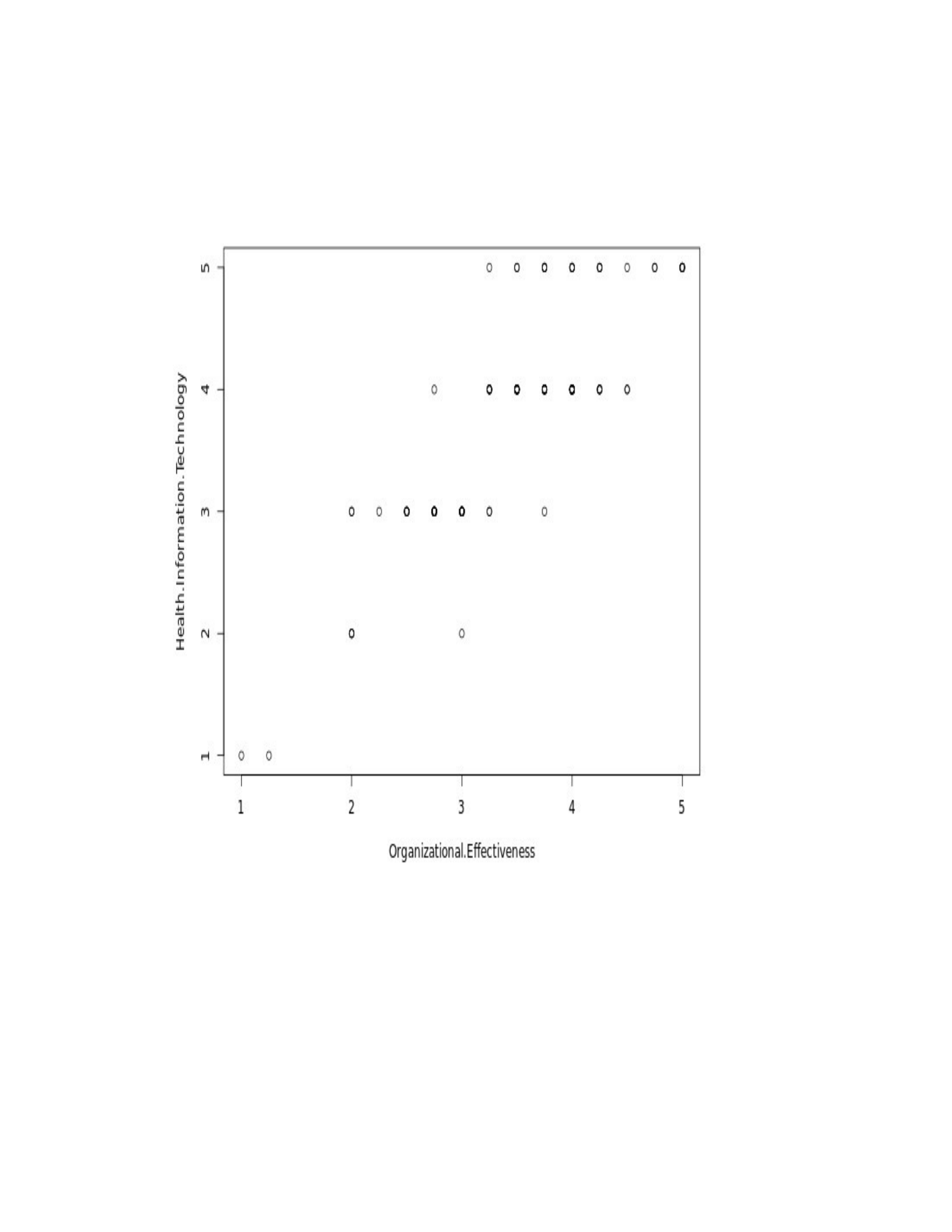
89
Figure 3. Scatter plot matrix between Organizational Effectiveness, and Health
Information Technology.
Table 10 shows there was a statistically significant positive correlation between
organizational effectiveness score and health information technology score, r = .80, p
<.001. Therefore, the null hypothesis was rejected. It was concluded that healthcare

90
providers who perceive greater adoption of HIT tend to perceive their organization to
have a greater level of organizational effectiveness.
Table 10
Correlation Matrix between Organizational Effectiveness and Health Information
Technology
Spearman's Correlation Statistic for Organizational Effectiveness
Versus Health Information Technology
Correlation coefficient for organizational effectiveness .80
P value <.001
N 116
Research Question 2 and hypothesis 2
Research Question 2: What is the relationship, if any, between the adoption of
HIT and exchange of information?
H20: There is no statistically significant relationship between the adoption of HIT
and exchange of information.
H2a: There is a statistically significant relationship between the adoption of HIT
and exchange of information.
A Spearman correlation matrix was created among Exchange of Information and
Health Information Technology. It was shown that Exchange of Information was
significantly positively correlated with Health Information Technology. Table 11 shows
the full correlation matrix. Figure 4 shows the scatter plot matrix among the variables.
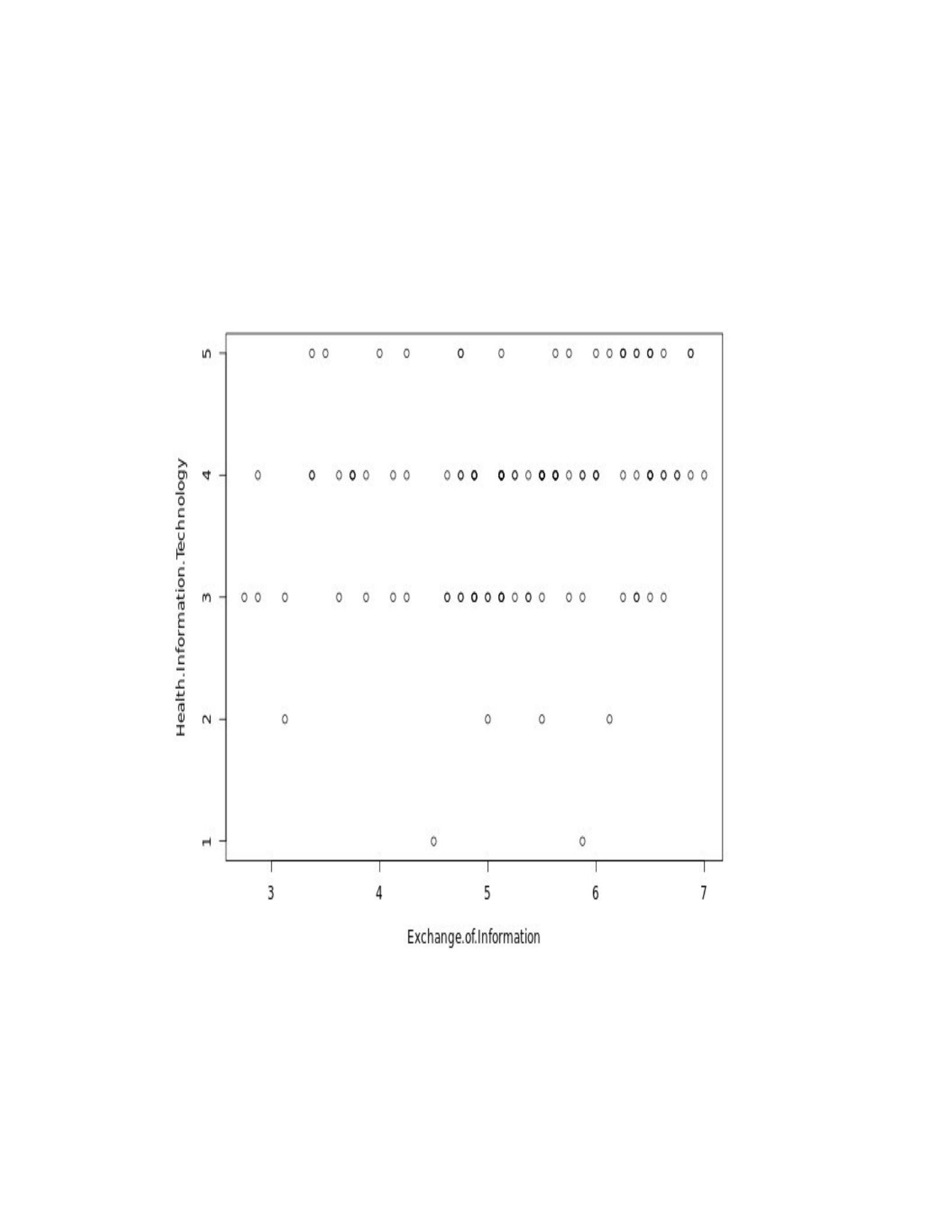
91
A significant positive correlation indicates that as one variable tends to increase,
the other variable also tends to increase.
Figure 4. Scatter plot matrix between Exchange of Information, and Health Information
Technology.

92
Table 11 shows a statistically significant positive correlation between the
exchange of information score and health information technology score, r = .26, p = .005.
Therefore, the null hypothesis was rejected and it was concluded that there is strong
evidence to suggest that healthcare providers who perceive themselves to have a strong
HIT adoption tend to have a better organizational communication.
Table 11
Correlation Matrix between Exchange of Information and Health Information
Technology
Spearman's Correlation Statistic for Exchange of Information
Versus Health Information Technology
Correlation coefficient for exchange of information .26
P value .005
N 116
Research Question 3 and Hypothesis 3
Research Question 3: What is the relationship, if any, between the adoption of
HIT and organizational process?
H30: There is no statistically significant relationship between the adoption of HIT
and organizational process.
H3a: There is a statistically significant relationship between the adoption of HIT
and organizational process.
A Spearman correlation matrix was created among Organizational Process and

93
Health Information Technology. It was shown that Organizational Process was
significantly positively correlated with Health Information Technology. Table 12 shows
the full correlation matrix. Figure 5 shows the scatter plot matrix among the variables.
A significant positive correlation indicates that as one variable tends to increase, the other
variable also tends to increase.
Figure 5. Scatter plot matrix between Organizational Process, and Health Information

94
Technology.
Table 12 shows a statistically significant positive correlation between
organizational process score and health information technology score, r = .32, p < .001.
Therefore, the null hypothesis was rejected and it was concluded that there is strong
evidence to suggest that healthcare providers who adopt HIT tend to have a better
organizational process.
Table 12
Correlation Matrix between Organizational Process and Health Information Technology
Spearman's Correlation Statistic for Organizational Process Versus
Health Information Technology
Correlation coefficient for organizational process .32
P value <.001
N 116
Research Question 4 and Hypothesis 4
Research Question 4: What is the relationship, if any, between the adoption of
HIT and organizational productivity?
H40: There is no statistically significant relationship between the adoption of HIT
and organizational productivity.
H4a: There is a statistically significant relationship between the adoption of HIT
and organizational productivity.
A Spearman correlation matrix was created among Organizational Productivity
and Health Information Technology. It was shown that Organizational Productivity was

95
significantly positively correlated with Health Information Technology. Table 13 shows
the full correlation matrix. Figure 6 shows the scatter plot matrix among the variables.
A significant positive correlation indicates that as one variable tends to increase, the other
variable also tends to increase.
Figure 6. Scatter plot matrix between Organizational Productivity, and Health
Information Technology.

96
Table 13 shows a statistically significant positive correlation between
organizational productivity score and health information technology score, r = .23, p
= .004. Therefore, the null hypothesis was rejected and it was concluded that there is
strong evidence to suggest that healthcare providers who adopt HIT tend to have a higher
organizational productivity.
Table 13
Correlation Matrix between Organizational Productivity and Health Information
Technology
Spearman's Correlation Statistic for Organizational Productivity
Versus Health Information Technology
Correlation coefficient for organizational productivity .23
P value .004
N 116
Research Question 5 and Hypothesis 5
Research Question 5: What is the relationship, if any, between the adoption of
HIT and patients’ direct personal care?
H50: There is no statistically significant relationship between the adoption of HIT
and patients’ direct personal care.
H5a: There is a statistically significant relationship between the adoption of HIT
and patients’ direct personal care.
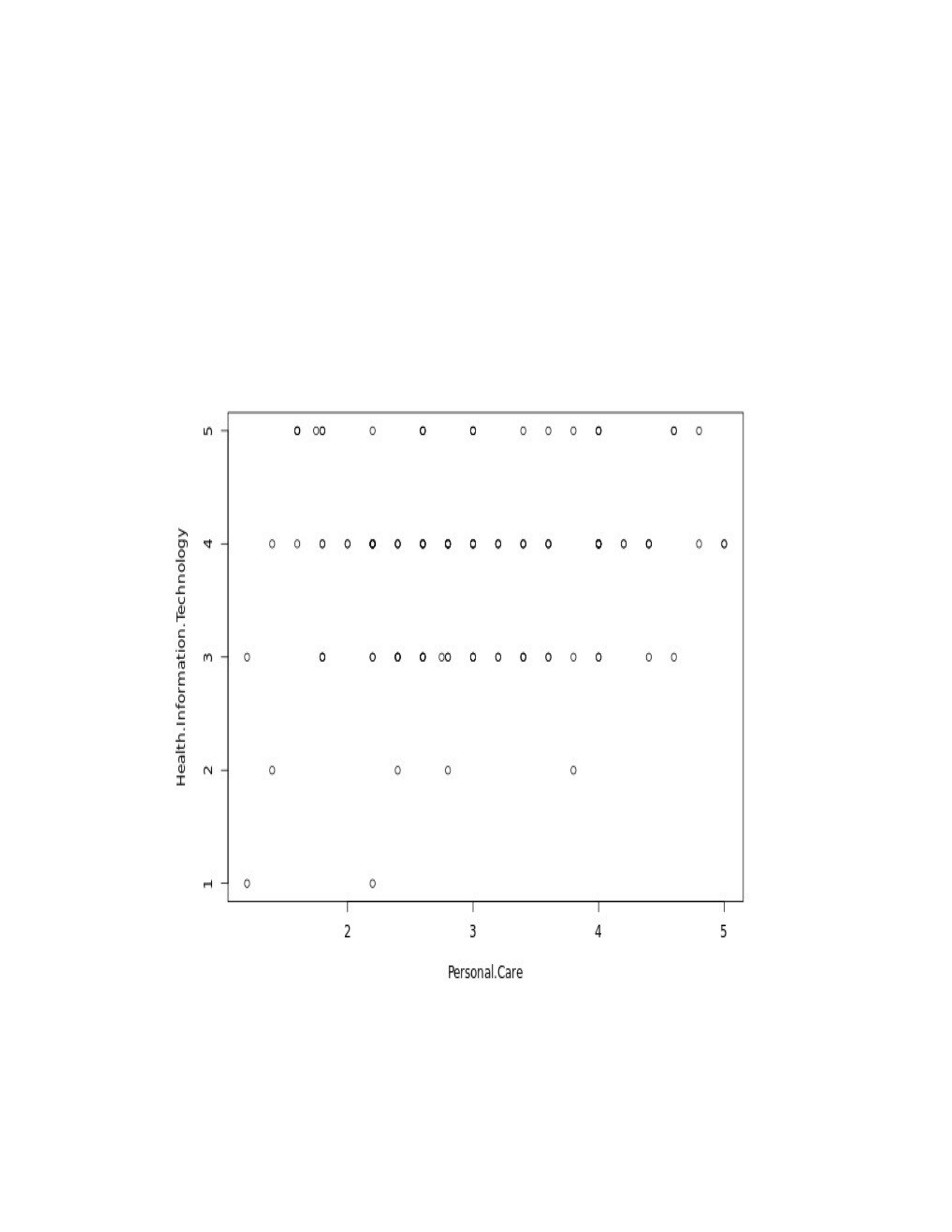
97
A Spearman correlation matrix was created among Personal Care and Health
Information Technology. It was shown that none of the research variables in question
were significantly correlated. Table 14 shows the full correlation matrix. Figure 7 shows
the scatter plot matrix among the variables.
Figure 7. Scatter plot matrix between Personal Care, and Health Information Technology.
Table 14 shows no statistically significant correlation existed between personal
care score and health information technology score, r = .10, p = .290. Therefore, the null

98
hypothesis was not rejected and it was concluded that among healthcare providers, there
is no statistically significant correlation between perceived personal care and HIT
adoption.
Table 14
Correlation Matrix between Personal Care and Health Information Technology
Spearman's Correlation Statistic for Personal Care versus
Health Information Technology
Correlation coefficient for personal care .10
P value .290
N 116
Multiple Linear Regression Analysis
To further explore the relationship between the dependent variable and the
independent variables, a stepwise multiple linear regression analysis was conducted.
Using the stepwise method, Organizational Effectiveness, Exchange of Information,
Organizational Process, and Organizational Productivity scores were still included in the
model. Prior to analysis, the assumption of normality was assessed with a P-P scatter plot
(see Figure 8). The assumption was met because the points did not deviate strongly from
the normality line. The assumption of homoscedasticity was assessed with a residuals
scatter plot (see Figure 9). The assumption was met because the points are rectangularly
distributed and the curvature line is approximately straight. Independence of observations
was assessed with the Durbin-Watson statistic. The value was 2.11, which is close to the

99
2.00 value of all points being independent, and thus the assumption was met.
Multicollinearity was assessed through the correlations conducted. No correlation among
the predictors exceeded .80, suggesting no presence of multicollinearity.
The results of the linear regression were significant, F(4,111) = 78.50, p < .001,
R2 = 0.74, suggesting that Organizational Effectiveness, Exchange of Information,
Organizational Process, and Organizational Productivity accounted for 74% of the
variance in Health Information Technology. The individual predictors were examined
further. Organizational Effectiveness was a significant predictor of Health Information
Technology, B = 0.92, p < .001, suggesting that for every one unit increase in
Organizational Effectiveness, Health Information Technology increased by 0.92 units.
Exchange of Information was not found to be a significant predictor of Health
Information Technology. Organizational Process was a significant predictor of Health
Information Technology, B = 0.10, p = .021, suggesting that for every one unit increase in
Organizational Process, Health Information Technology increased by 0.10 units.
Organizational Productivity was a significant predictor of Health Information
Technology, B = -0.13, p = .015, suggesting that for every one unit increase in
Organizational Productivity, Health Information Technology decreased by 0.13 units.
Results of the stepwise multiple linear regressions are presented in Table 15.
Table 15
Results for Multiple Linear Regression with Organizational Effectiveness, Exchange of
Information, Organizational Process, and Organizational Productivity Predicting Health
Information Technology.
Source B SE β t P
Organizational
Effectiveness
0.92
0.06
.83
15.92
.001
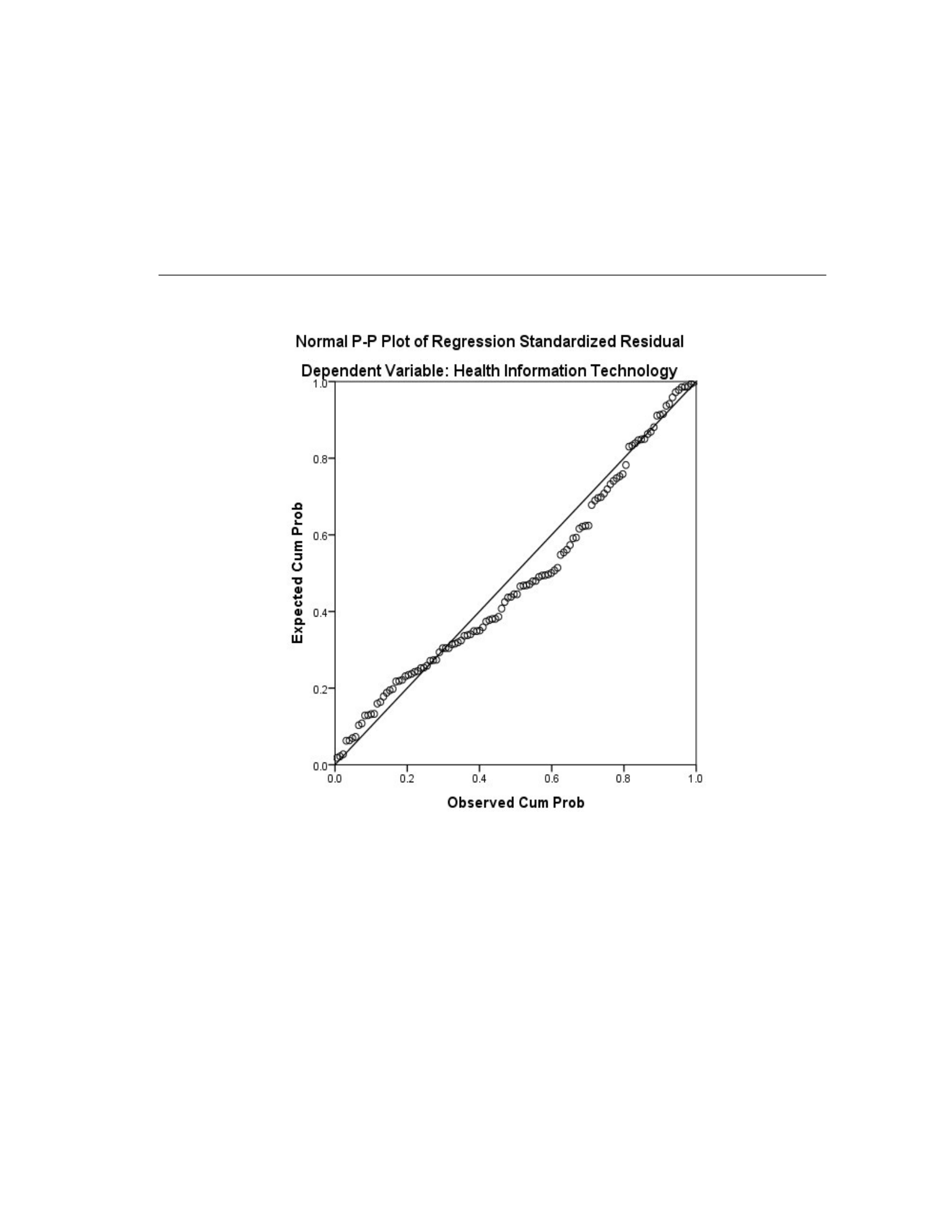
100
Exchange of
Information
0.07 0.04 .08 1.57 .120
Organizational Process 0.10 0.04 .13 2.33 .021
Organizational Productivity -0.13 0.05 -.13 -2.48 .015
Note. F(4,111) = 78.50, p < .001, R2 = 0.74
Figure 8. P-P scatter plot for normality for Organizational Effectiveness, Exchange of
Information, Organizational Process, and Organizational Productivity predicting Health
Information Technology.
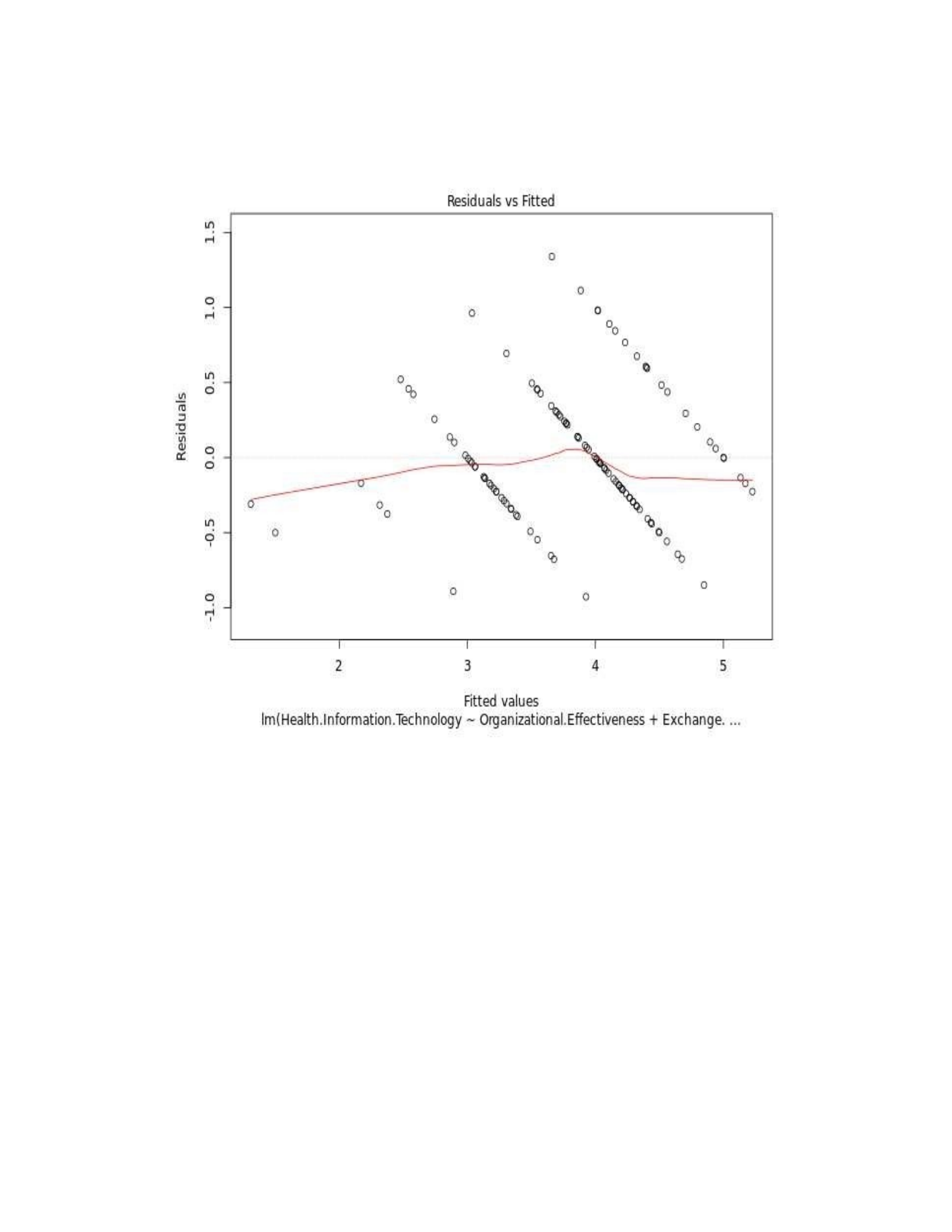
101
Figure 9. Residuals scatter plot for homoscedasticity for Organizational Effectiveness,
Exchange of Information, Organizational Process, and Organizational Productivity
predicting Health Information Technology.
Summary
The purpose of this quantitative study was to explore the potential relationship
among the variables HIT, organizational effectiveness, organizational exchange of
information, organizational process, organizational productivity, and direct personal care,
based on a survey of health care providers.

102
Spearman's rho statistics was performed to test the hypotheses. Results showed
that among healthcare providers, organizational effectiveness, organizational exchange of
information, organizational process and organizational productivity had a statistically
significant, correlation with health information technology. No evidence of a relationship
existed between personal care and health information technology. Therefore, it was
concluded that healthcare providers who adopt health information technology tend to
perceive their organization to be more effective, to have better communication, to be
more productive, to have strongly established processes, but the adoption of HIT did not
have a positive correlation on healthcare providers regarding the issue of personal care.
Chapter 5 contains an interpretation of the study results. Chapter 5 also contains
an explanation of the limitations of the study, recommendations for action, and
suggestions for future research. Finally, chapter 5 includes implications for social change
and a discussion on how the findings of the current study aligns or diverge from prior
research studies in the literature review.
Chapter 5: Discussions, Conclusion, and Recommendations
Overview
The purpose of this quantitative study is to explore the potential relationship
among the variables HIT, organizational effectiveness, organizational exchange of
information, organizational process, organizational productivity, and direct personal care,
based on a survey of health care providers. Typically when a new technology is adopted
in a workplace, a positive or negative disruption occurs. Researchers are either focusing
on institutions that are not representative of hospitals, which made the findings somewhat

103
irrelevant to hospitals, or reporting general findings instead of clearly identifying the
stakeholders affected by HIT adoption in the health care chain.
Chapter 4 included details of the statistical analysis and the results. Chapter 5
contains the overall results of the study, the limitations, implications for social change,
recommendations for further study, and the conclusions. Chapter 5 also includes a
discussion of the answers to the research questions and results of the hypothesis testing.
Data were collected using SurveyMonkey and a participant pool. Data were
collected within 3 weeks. The results of the study showed that Organizational
Effectiveness was significantly positively correlated with Organizational Process,
Organizational Productivity, and Health Information Technology. Exchange of
Information was significantly positively correlated with Organizational Process and
Health Information Technology. Organizational Process was significantly positively
correlated with Organizational Productivity and Health Information Technology.

