


ACC206
Preview: ACC206 : Accounting II
Course Guide
Prerequisites
ACC100
Course Description
Provides an understanding of accounting concepts, assumptions, and principles. Progresses to
evaluation of accounting data for plant assets, current liabilities, deferrals and accruals, intangibles,
payables, and payroll. Introduces accounting for corporations as related to stocks, bonds, and
corporate earnings. Introduces partnership accounting and the statement of cash flows.
Instructional Materials
Required Resources
Jerry J. Weygandt. 2020. Accounting Principles. ACC206 Blackboard course.
WileyPLUS. No date. ACC206 Wiley Access Code. ACC206 Blackboard course.
See WileyPLUS in the left-hand menu for technical support and other student-facing
information about this resource.
AICPA. No date. AICPA | American Institute of CPAs. https://www.aicpa.org/
FASB. No date. FASB | Financial Accounting Standards Board. https://fasb.org/home
Online Resources Available Through the Strayer Library
For your convenience, the required online resources are provided by the Strayer Library at no cost.
Links to the online library resources are also available in Blackboard via the Course Info page. You
may also search by title in the online Strayer Library.
Ⓒ 2020 Strayer University. All Rights Reserved. This document contains Strayer University Confidential and Proprietary
information and may not be copied, further distributed, or otherwise disclosed in whole or in part, without the expressed written
permission of Strayer University.
Ⓒ 2022 Strategic Education, Inc., Version 3

Steven Mintz. March 2018. Accounting in the Public Interest. http://libdatab.strayer.edu/login?
url=https://search.ebscohost.com/login.aspx?direct=true&db=bth&AN=128446872&site=eds-
live&scope=site
Optional Resources
PwC. No date. PwC. https://www.pwc.com/us/en.html
EY. No date. EY. https://www.ey.com/en_us
Deloitte. No date. Deloitte. https://www2.deloitte.com/us/en.html
American Accounting Association. No date. AAA | American Accounting Association.
https://aaahq.org/
KPMG. No date. KPMG. https://home.kpmg/xx/en/home.html
AICPA. No date. AICPA Code of Professional Conduct.
https://us.aicpa.org/research/standards/codeofconduct
Online Resources Available Through the Strayer Library
For your convenience, the optional online resources are provided by the Strayer Library at no cost.
Links to the online library resources are also available in Blackboard via the Course Info page. You
may also search by title in the online Strayer Library.
BarCharts. 2016. PowerPoint 2016 Tips & Tricks. http://libdatab.strayer.edu/login?
url=https://search.ebscohost.com/login.aspx?direct=true&db=nlebk&AN=1534132&site=eds-
live&scope=site&ebv=EB&ppid=pp_6
Jamie Emerson. January 2021. PowerPoint design in presentation skills classes.
http://libdatab.strayer.edu/login?url=https://search.ebscohost.com/login.aspx?
direct=true&db=eue&AN=148597908&site=eds-live&scope=site
Donna Gilliland. 2019. How to Design Visually Engaging PowerPoint Presentations.
http://libdatab.strayer.edu/login?url=https://search.ebscohost.com/login.aspx?
direct=true&db=bth&AN=133821053&site=eds-live&scope=site
Richard Goring. March 2019. PowerPoint Tricks That Will Save You Time.
http://libdatab.strayer.edu/login?url=https://search.ebscohost.com/login.aspx?
direct=true&db=bth&AN=135100639&site=eds-live&scope=site
Ⓒ 2020 Strayer University. All Rights Reserved. This document contains Strayer University Confidential and Proprietary
information and may not be copied, further distributed, or otherwise disclosed in whole or in part, without the expressed written
permission of Strayer University.
Ⓒ 2022 Strategic Education, Inc., Version 3
Course Learning Outcomes
1Develop depreciation schedules for various asset types using straight line,
declining balance, and units of activity.
2Discuss the role of ethics in reporting accounting information on financial
statements.
3Calculate a ratio analysis to evaluate business performance.
Ⓒ 2020 Strayer University. All Rights Reserved. This document contains Strayer University Confidential and Proprietary
information and may not be copied, further distributed, or otherwise disclosed in whole or in part, without the expressed written
permission of Strayer University.
Ⓒ 2022 Strategic Education, Inc., Version 3
Weekly Course Schedule
W 1 - T D L
Lab: Complete the WileyPLUS Chapter 10 reading.
Learn: Read the Chapter 10 PowerPoint.
Lab: Watch the WileyPLUS Chapter 10 video.
Discuss: Introduce yourself and complete the discussion, Introductions.
Lab: Complete the WileyPLUS Chapter 10 practice.
Lab: Complete the WileyPLUS Chapter 10 homework.
W 2 - T D L
Lab: Complete the WileyPLUS Chapter 11 reading .
Learn: Read the Chapter 11 PowerPoint.
Lab: Watch the WileyPLUS Chapter 11 video.
Discuss: Complete the discussion, Unearned Revenue.
Lab: Complete the WileyPLUS Chapter 11 practice.

W 2 - T D L
Lab: Complete the WileyPLUS Chapter 11 homework.
Lab: Complete the WileyPLUS Chapter 11 quiz.
W 3 - T D L
Lab: Complete the WileyPLUS Chapter 12 reading.
Learn: Read the Chapter 12 PowerPoint.
Lab: Watch the WileyPLUS Chapter 12 video.
Discuss: Complete the discussion, Dividing Net Income or Net Losses.
Lab: Complete the WileyPLUS Chapter 12 practice.
Lab: Complete the WileyPLUS Chapter 12 homework.
Lab: Complete the WileyPLUS Chapter 12 quiz.
W 4 - T D L
Lab: Complete the WileyPLUS Chapter 13 reading .
Learn: Read the Chapter 13 PowerPoint.
Lab: Watch the WileyPLUS Chapter 13 video.
Discuss: Complete the discussion, Preferred Stock vs. Common Stock.
Lab: Complete the WileyPLUS Chapter 13 practice.
Lab: Complete the WileyPLUS Chapter 13 homework.
Lab: Complete the WileyPLUS Chapter 13 quiz.
Assignment: Complete the WileyPLUS Assignment: Depreciation.
Ⓒ 2020 Strayer University. All Rights Reserved. This document contains Strayer University Confidential and Proprietary
information and may not be copied, further distributed, or otherwise disclosed in whole or in part, without the expressed written
permission of Strayer University.
Ⓒ 2022 Strategic Education, Inc., Version 3

WW 55 -- TT D D L L
Lab: Complete the WileyPLUS Chapter 14 reading .
Learn: Read the Chapter 14 PowerPoint.
Lab: Watch the WileyPLUS Chapter 14 video.
Discuss: Complete the discussion, Record Date for Cash Dividends
Lab: Complete the WileyPLUS Chapter 14 practice.
Lab: Complete the WileyPLUS Chapter 14 homework.
Lab: Complete the WileyPLUS Chapter 14 quiz.
W 6 - T D L
Lab: Complete the WileyPLUS Chapter 15 reading .
Learn: Read the Chapter 15 PowerPoint.
Lab: Watch the WileyPLUS Chapter 15 video.
Discuss: Complete the discussion, Ethical Decision Making: Part 1.
Lab: Complete the WileyPLUS Chapter 15 practice.
Lab: Complete the WileyPLUS Chapter 15 homework.
Lab: Complete the WileyPLUS Chapter 15 quiz.
Prepare: Read the instructions for the Ethical Decisions in Accounting assignment due in Week 8.
W 7 - T D L
Lab: Complete the WileyPLUS Chapter 16 reading .
Learn: Read the Chapter 16 PowerPoint.
Ⓒ 2020 Strayer University. All Rights Reserved. This document contains Strayer University Confidential and Proprietary
information and may not be copied, further distributed, or otherwise disclosed in whole or in part, without the expressed written
permission of Strayer University.
Ⓒ 2022 Strategic Education, Inc., Version 3
W 7 - T D L
Lab: Watch the WileyPLUS Chapter 16 video.
Discuss: Complete the discussion, Ethical Decision Making: Part 2.
Lab: Complete the WileyPLUS Chapter 16 practice.
Lab: Complete the WileyPLUS Chapter 16 homework.
Lab: Complete the WileyPLUS Chapter 16 quiz.
Prepare: Read the instructions for the Ethical Decisions in Accounting assignment due next week.
W 8 - T D L
Learn: Read the article, Accounting in the Public Interest.
Assignment: Complete the Ethical Decisions in Accounting assignment.
W 9 - T D L
Lab: Complete the WileyPLUS Chapter 18 reading.
Learn: Read the Chapter 18 PowerPoint.
Lab: Watch the WileyPLUS Chapter 18 video.
Discuss: Complete the discussion, Accounting Changes.
Lab: Complete the WileyPLUS Chapter 18 practice.
Lab: Complete the WileyPLUS Chapter 18 homework.
Lab: Complete the WileyPLUS Chapter 18 quiz.
W 10 - T D L
Discuss: Complete the discussion, Managerial Cost Systems.
Ⓒ 2020 Strayer University. All Rights Reserved. This document contains Strayer University Confidential and Proprietary
information and may not be copied, further distributed, or otherwise disclosed in whole or in part, without the expressed written
permission of Strayer University.
Ⓒ 2022 Strategic Education, Inc., Version 3
W 10 - T D L
Assignment: Complete the WileyPLUS Assignment: Ratio Analysis.
W 11 - T D L
Discuss: Complete the discussion, Balance Sheet and Financial Statement.
Grading Scale
P
T P % G
Discussion Participation
150 15%
A
T P % G
Week 1 - Practice: Chapter 10
20 2%
Week 1 - Homework: Chapter 10
25 2.5%
Week 2 - Practice: Chapter 11
20 2%
Week 2 - Homework: Chapter 11
25 2.5%
Week 2 - Quiz: Chapter 11
20 2%
Week 3 - Practice: Chapter 12
20 2%
Week 3 - Homework: Chapter 12
25 2.5%
Week 3 - Quiz: Chapter 12
20 2%
Week 4 - Practice: Chapter 13
20 2%
Week 4 - Homework: Chapter 13
25 2.5%
Week 4 - Quiz: Chapter 13
20 2%
Week 4 - Assignment: Depreciation
100 10%
Ⓒ 2020 Strayer University. All Rights Reserved. This document contains Strayer University Confidential and Proprietary
information and may not be copied, further distributed, or otherwise disclosed in whole or in part, without the expressed written
permission of Strayer University.
Ⓒ 2022 Strategic Education, Inc., Version 3
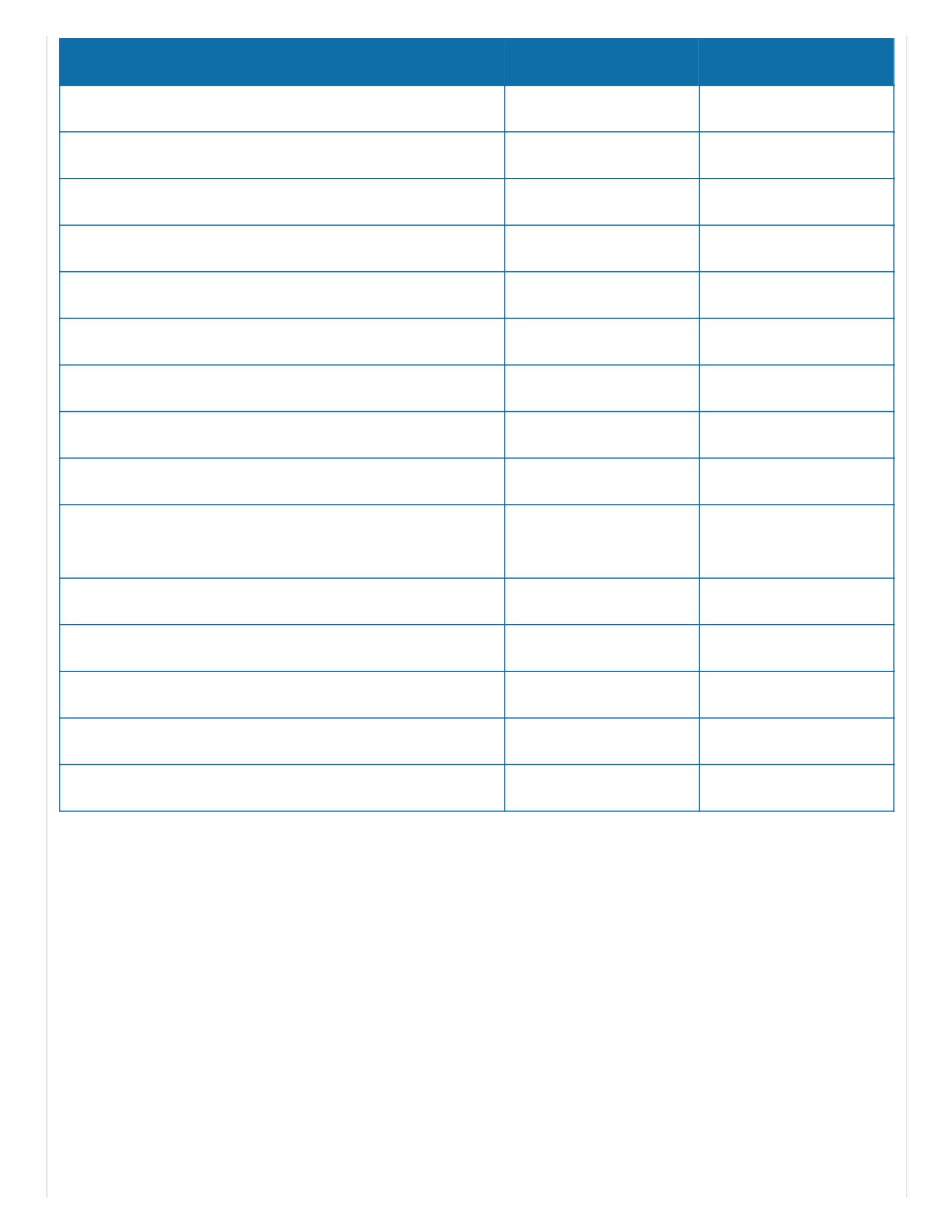
A
T P % G
Week 5 - Practice: Chapter 14
20 2%
Week 5 - Homework: Chapter 14
25 2.5%
Week 5 - Quiz: Chapter 14
20 2%
Week 6 - Practice: Chapter 15
20 2%
Week 6 - Homework: Chapter 15
25 2.5%
Week 6 - Quiz: Chapter 15
20 2%
Week 7 - Practice: Chapter 16
20 2%
Week 7 - Homework: Chapter 16
25 2.5%
Week 7 - Quiz: Chapter 16
20 2%
Week 8 Assignment - Ethical Decisions in
Accounting
150 15%
Week 9 - Practice: Chapter 18
20 2%
Week 9 - Homework: Chapter 18
25 2.5%
Week 9 - Quiz: Chapter 18
20 2%
Week 10 - Assignment: Ratio Analysis
100 10%
Totals 1000 100%
Ⓒ 2020 Strayer University. All Rights Reserved. This document contains Strayer University Confidential and Proprietary
information and may not be copied, further distributed, or otherwise disclosed in whole or in part, without the expressed written
permission of Strayer University.
Ⓒ 2022 Strategic Education, Inc., Version 3
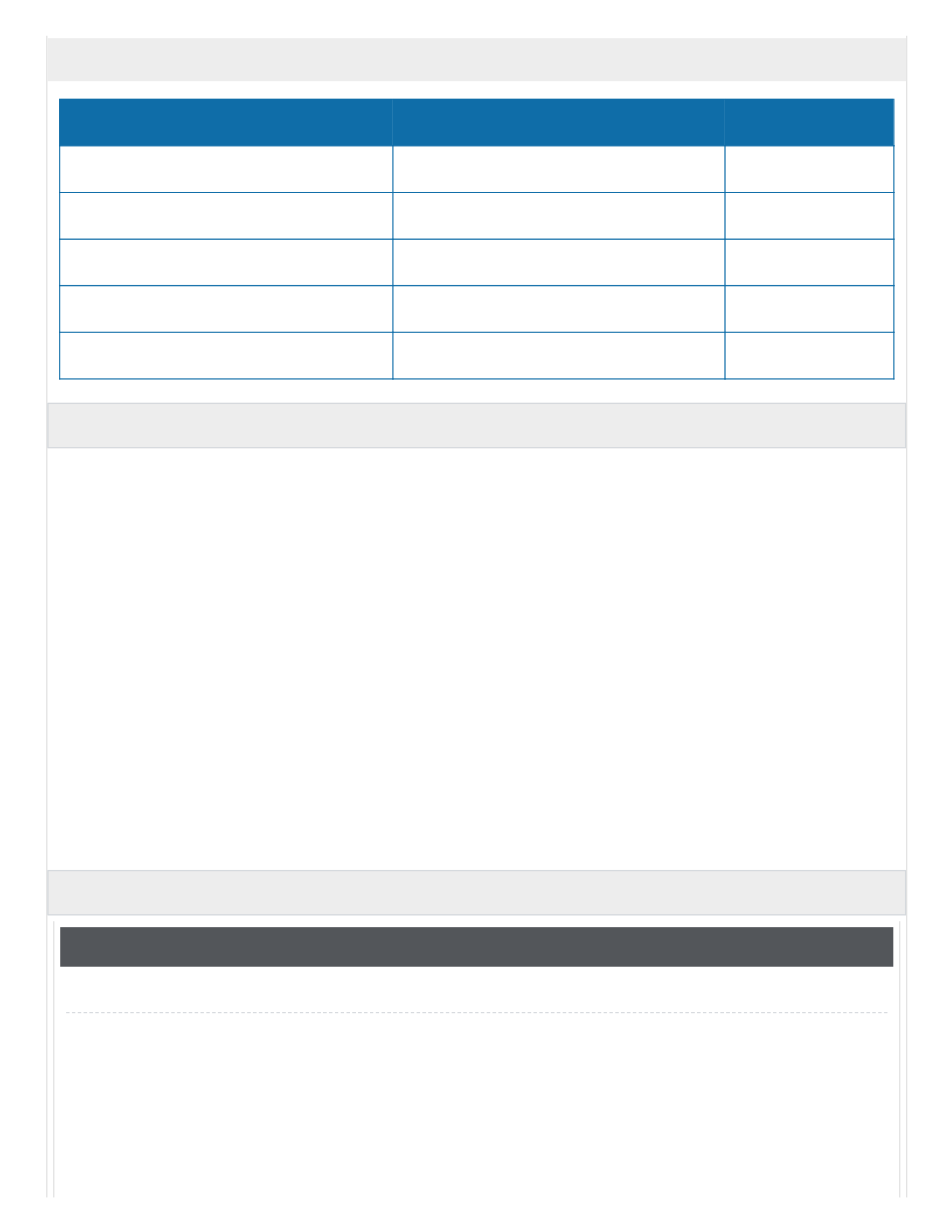
Final Course Grade
P P G
900 - 1000 90% - 100%
A
800 - 899 80% - 89%
B
700 - 799 70% - 79%
C
600 - 699 60% - 69%
D
0 - 599 59% and below
F
Unique Course Features
Grading Scale Notation
Please consult the University Catalog and your academic advisor to determine the final grade needed
in this class to satisfy your specific degree conferral requirements.
Academic Integrity
Please be sure to review the entire Academic Integrity Policy in the Student Handbook before
submitting anything in this course. In order to enforce its Academic Integrity Policy, the University
reserves the right to review any work (draft or otherwise) or exam submitted by a student during his or
her entire academic career at Strayer.
Lab Participation and Attendance Policy
NOTE: This course uses WileyPLUS to support your learning in this course . Graded activities in
WileyPLUS will count for attendance.
Assignments
W 8 A - E D A
Summary
Ⓒ 2020 Strayer University. All Rights Reserved. This document contains Strayer University Confidential and Proprietary
information and may not be copied, further distributed, or otherwise disclosed in whole or in part, without the expressed written
permission of Strayer University.
Ⓒ 2022 Strategic Education, Inc., Version 3

Click the linked activity title to access this assignment.
Text
Scenario
Paige Carter is the controller for a public organization in Nashville, TN. She has just completed a
meeting with the organization's CFO, Tommy Rich. Tommy Rich tried to convince Paige to classify
some inventory items as fixed assets in an attempt to depreciate more assets for the upcoming
accounting reporting period. Tommy Rich's proposal would depreciate more assets by misclassifying
inventory as fixed assets in an attempt to reduce net income. Paige knows it is her responsibility to
ensure that all items on the organization's financial statements are recorded properly as required by
the Financial Accounting Standards Board (FASB) and the AICPA Code of Professional Conduct.
She has a great deal of pressure to reduce net income to reduce corporate income taxes and qualify
for a company bonus. She does not want to disappoint the CFO, and her job may be at stake.
What would you do in this case? Why?
What is Paige's obligation to the organization and the AICPA professional rules of conduct and
reporting requirements?
What are the differences between inventory and fixed assets? Are the characteristics the
same? Why or why not?
What would motivate you to speak up? What would cause you to stay silent? Would it make a
difference if this was only a one-time request from the CFO?
Instructions
Complete the ACC206 Ethical Decisions in Accounting Template [PPTX] and address each
requirement as instructed below:
1. Slide 1: The title "Paige Carter and the CFO," has already been provided for you. Add the date,
course name and number, date of submission, and your professor's name to this slide.
Title page should look professional.
2. Slide 2: Summarize the scenario for the CFO. Do not copy and past the information given in the
scenario. Explain the scenario in your own words.
Provide all details including the nature of the request to Paige Carter, your obligations
to the organization and the accounting profession, and your predictable outcome if
Ⓒ 2020 Strayer University. All Rights Reserved. This document contains Strayer University Confidential and Proprietary
information and may not be copied, further distributed, or otherwise disclosed in whole or in part, without the expressed written
permission of Strayer University.
Ⓒ 2022 Strategic Education, Inc., Version 3

the request from Tommy Rich is honored.
Summary should include authoritative language (FASB, SEC, AICPA, etc.).
3. Slide 3: Outline at least three advantages of accurate reporting and why inventory should or
should not be classified as a fixed asset.
Make sure you briefly define what the advantages are in your outline.
Outline should include authoritative language (FASB, SEC, AICPA, etc.).
4. Slide 4: Outline at least three disadvantages of accurate reporting and why inventory should or
should not be classified as a fixed asset.
Make sure you briefly define what the disadvantages are in your outline
Outline should include authoritative language (FASB, SEC, AICPA, etc.).
5. Slide 5: List at least three of the major differences between inventory and fixed assets.
Compare and contrast attributes or characteristics of fixed assets and inventory.
Provide at least two types of inventory and fixed assets
6. Slide 6: Describe the primary ways in which both classifications would affect the future of the
business and why we should classify inventory and fixed assets in the same account or
separate accounts.
Include how inventory and fixed assets would affect income or an overstatement of
assets within financial statements.
Defend your position using authoritative language to support your decision on
classifying fixed assets or inventory in the same account or separate accounts.
7. Slide 7: Recommend which option should be pursued. Justify your reporting decision.
Provide a definitive answer regarding whether you would classify inventory items in the
inventory account, or if you would classify inventory as a fixed asset.
8. Slide 8: Sources. Use at least three quality sources to support your writing.
Choose sources that are credible, relevant, and appropriate. Cite each source listed on
your source page at least one time within your assignment. For help with research,
writing, and citation, access the library or review library guides.
This course requires the use of Strayer Writing Standards. For assistance and information, please
refer to the Strayer Writing Standards link in the left-hand menu of your course. Check with your
professor for any additional instructions.
The specific course learning outcome associated with this assignment is:
Ⓒ 2020 Strayer University. All Rights Reserved. This document contains Strayer University Confidential and Proprietary
information and may not be copied, further distributed, or otherwise disclosed in whole or in part, without the expressed written
permission of Strayer University.
Ⓒ 2022 Strategic Education, Inc., Version 3
Discuss the role of ethics in reporting accounting information on financial statements.
Resources
Financial Accounting Standards Board (FASB).
AICPA Code of Professional Conduct.
These videos will help you create and edit your PowerPoint slides and improve your PowerPoint
skills.
Start Quickly with a Theme or Template (2m 31s).
Add, Remove, or Rearrange Slides (4m 4s).
Scoring Guide
Slide 1: Include the title "Paige Carter and the CFO," the date, course name and number, date of
submission, and your professor's name. 5 %
Unacceptable
(Below 60%)
Did not submit
the required
details for Slide
1.
Needs
Improvement (60-
69%)
Provided two of
the required
details for Slide
1.
Satisfactory (70-
79%)
Provided three of
the required
details for Slide
1.
Competent (80-
89%)
Included case
title, the name of
the course taken,
the day of
submission and
the professor’s
name in the
submission.
Exemplary (90-
100%)
Included case
title, the name of
the course taken,
the day of
submission and
the professor’s
name in the
submission.
Provided a
professional
looking title
page.
Ⓒ 2020 Strayer University. All Rights Reserved. This document contains Strayer University Confidential and Proprietary
information and may not be copied, further distributed, or otherwise disclosed in whole or in part, without the expressed written
permission of Strayer University.
Ⓒ 2022 Strategic Education, Inc., Version 3

Slide 2: Summarize the scenario for the CFO. 5 %
Unacceptable
(Below 60%)
Did not submit or
did not
summarize the
scenario for the
CFO.
Needs
Improvement (60-
69%)
Summarized the
scenario for the
CFO but missed
key details about
the organization
or accounting
industry; or, did
not provide
predictable
outcome for
Tommy Rich
request.
Satisfactory (70-
79%)
Summarized the
scenario for the
CFO but missed
at least one key
detail.
Competent (80-
89%)
Summary
provided all
details including
the nature of the
request to Paige
Carter, your
obligations to the
organization and
the accounting
profession, and
your predictable
outcome if the
request from
Tommy Rich is
honored.
Exemplary (90-
100%)
Summary
provided all
details including
the nature of the
request to Paige
Carter, your
obligations to the
organization and
the accounting
profession, and
your predictable
outcome if the
request from
Tommy Rich is
honored.
Included
authoritative
language (FASB,
SEC, AICPA,
etc.).
Ⓒ 2020 Strayer University. All Rights Reserved. This document contains Strayer University Confidential and Proprietary
information and may not be copied, further distributed, or otherwise disclosed in whole or in part, without the expressed written
permission of Strayer University.
Ⓒ 2022 Strategic Education, Inc., Version 3

Slide 3: Outline at least three advantages of accurate reporting and why inventory should or should
not be classified as a fixed asset. 15 %
Unacceptable
(Below 60%)
Did not outline
the advantages
of accurate
reporting and
why inventory
should or should
not be classified
as a fixed asset.
Needs
Improvement (60-
69%)
Outline defined
one advantage of
accurate
financial
reporting and
defined the
classifications of
inventory and
fixed assets as
well as how they
should be
reported in
financial
statements.
Satisfactory (70-
79%)
Outline defined
two advantages
of accurate
financial
reporting and
defined the
classifications of
inventory and
fixed assets as
well as how they
should be
reported in
financial
statements.
Competent (80-
89%)
Outline defined
at least three
advantages of
accurate
financial
reporting and
defined the
classifications of
inventory and
fixed assets as
well as how they
should be
reported in
financial
statements.
Exemplary (90-
100%)
Outline defined
at least three
advantages of
accurate
financial
reporting and
defined the
classifications of
inventory and
fixed assets as
well as how they
should be
reported in
financial
statements.
Outline included
authoritative
language (FASB,
SEC, AICPA,
etc.).
Ⓒ 2020 Strayer University. All Rights Reserved. This document contains Strayer University Confidential and Proprietary
information and may not be copied, further distributed, or otherwise disclosed in whole or in part, without the expressed written
permission of Strayer University.
Ⓒ 2022 Strategic Education, Inc., Version 3

Slide 4: Outline at least three disadvantages of accurate reporting and why inventory should or should
not be classified as a fixed asset. 15 %
Unacceptable
(Below 60%)
Did not outline
the
disadvantages of
accurate
reporting and
why inventory
should or should
not be classified
as a fixed asset.
Needs
Improvement (60-
69%)
Outline defined
one
disadvantage of
accurate
financial
reporting and
defined the
classifications of
inventory and
fixed assets as
well as how they
should be
reported in
financial
statements.
Satisfactory (70-
79%)
Outline defined
two
disadvantages of
accurate
financial
reporting and
defined the
classifications of
inventory and
fixed assets as
well as how they
should be
reported in
financial
statements.
Competent (80-
89%)
Outline defined
at least three
disadvantages of
accurate
financial
reporting and
defined the
classifications of
inventory and
fixed assets as
well as how they
should be
reported in
financial
statements.
Exemplary (90-
100%)
Outline defined
at least three
disadvantages of
accurate
financial
reporting and
defined the
classifications of
inventory and
fixed assets as
well as how they
should be
reported in
financial
statements.
Outline included
authoritative
language (FASB,
SEC, AICPA,
etc.).
Ⓒ 2020 Strayer University. All Rights Reserved. This document contains Strayer University Confidential and Proprietary
information and may not be copied, further distributed, or otherwise disclosed in whole or in part, without the expressed written
permission of Strayer University.
Ⓒ 2022 Strategic Education, Inc., Version 3

Slide 5: List at least three of the major differences between inventory and fixed assets. 10 %
Unacceptable
(Below 60%)
Did not submit or
did not list the
major differences
between
inventory and
fixed assets.
Needs
Improvement (60-
69%)
Prepared a
comparison and
contrast list of
one attribute or
characteristic of
fixed assets and
inventory.
Satisfactory (70-
79%)
Prepared a
comparison and
contrast list of
two attributes or
characteristics of
fixed assets and
inventory.
Competent (80-
89%)
Prepared a
comparison and
contrast list of at
least three
attributes or
characteristics of
fixed assets and
inventory.
Exemplary (90-
100%)
Prepared a
comparison and
contrast list of at
least three
attributes or
characteristics of
fixed assets and
inventory, and
provided at least
two types of fixed
assets and
inventory.
Ⓒ 2020 Strayer University. All Rights Reserved. This document contains Strayer University Confidential and Proprietary
information and may not be copied, further distributed, or otherwise disclosed in whole or in part, without the expressed written
permission of Strayer University.
Ⓒ 2022 Strategic Education, Inc., Version 3
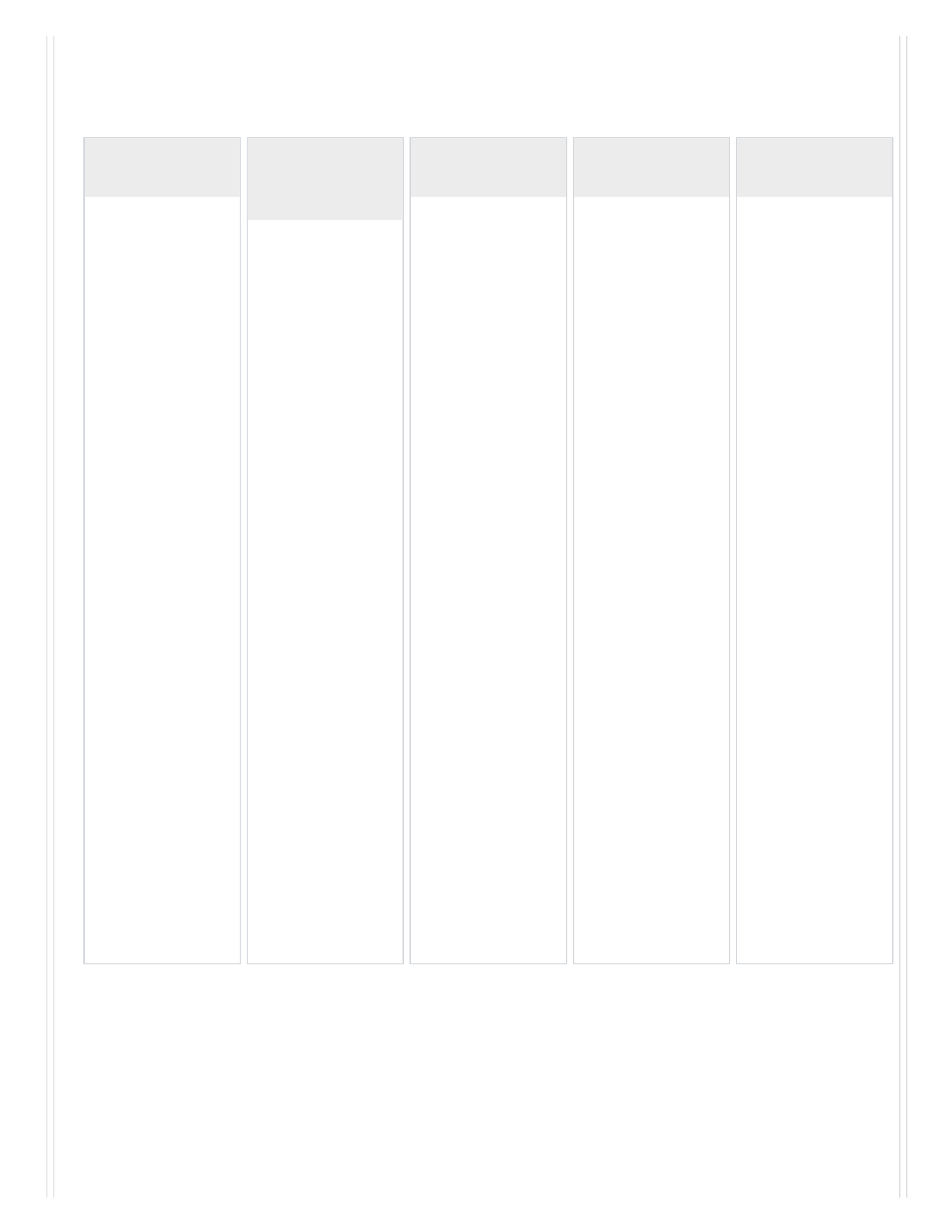
Slide 6: Describe the primary ways in which both classifications would affect the future of the
business and why we should classify inventory and fixed assets in the same account or separate
accounts. 15 %
Unacceptable
(Below 60%)
Did not submit or
did not describe
the primary ways
in which both
classifications
would affect the
future of the
business. Did not
answer why we
should classify
inventory and
fixed assets in
the same
account or
separate
accounts.
Needs
Improvement (60-
69%)
Described how
inventory and
fixed assets
would affect
income or an
overstatement of
assets within
financial
statements, but
did not defend
your position
using
authoritative
language to
support your
decision on
classifying fixed
assets or
inventory in the
same account or
separate
accounts.
Satisfactory (70-
79%)
Described how
inventory and
fixed assets
would affect
income or an
overstatement of
assets within
financial
statements.
Defended your
position, but did
not use
authoritative
language to
support your
decision on
classifying fixed
assets or
inventory in the
same account or
separate
accounts.
Competent (80-
89%)
Described how
inventory and
fixed assets
would affect
income or an
overstatement of
assets within
financial
statements.
Defended your
position using
authoritative
language to
support your
decision on
classifying fixed
assets or
inventory in the
same account or
separate
accounts.
Exemplary (90-
100%)
Described how
inventory and
fixed assets
would affect
income or an
overstatement of
assets within
financial
statements.
Defended your
position using
authoritative
language to
support your
decision on
classifying fixed
assets or
inventory in the
same account or
separate
accounts.
Included
authoritative
citation from at
least one of the
following: FASB,
SEC, or AICPA.
Ⓒ 2020 Strayer University. All Rights Reserved. This document contains Strayer University Confidential and Proprietary
information and may not be copied, further distributed, or otherwise disclosed in whole or in part, without the expressed written
permission of Strayer University.
Ⓒ 2022 Strategic Education, Inc., Version 3

Slide 7: Recommend which option should be pursued. Justify your reporting decision. 20 %
Unacceptable
(Below 60%)
Did not
recommend
which option
should be
pursued. Did not
justify your
reporting
decision.
Needs
Improvement (60-
69%)
Defined
inventory and
fixed assets, but
did not give a
definitive
recommendation
on how you
would classify
the accounts.
Satisfactory (70-
79%)
Provided an
answer whether
you would
classify inventory
items in the
inventory
account, or if you
would classify
inventory as a
fixed asset, but
did not justify
your reporting
decision.
Competent (80-
89%)
Provided a
definitive answer
whether you
would classify
inventory items
in the inventory
account or if you
would classify
inventory as a
fixed asset, and
justified your
reporting
decision.
Exemplary (90-
100%)
Provided a
definitive answer
whether you
would classify
inventory items
in the inventory
account or if you
would classify
inventory as a
fixed asset, and
justified your
reporting
decision with
authoritative
language
included to
defend your
decision.
Slide 8: Sources. Use at least three quality sources to support your writing. 10 %
Unacceptable
(Below 60%)
No sources
provided.
Needs
Improvement (60-
69%)
Used fewer than
three sources; all
sources are
poor-quality
choices.
Satisfactory (70-
79%)
Used fewer than
three sources;
some sources
are poor-quality
choices.
Competent (80-
89%)
Used at least
three sources; all
sources are high-
quality choices,
but some
sources did not
clearly support
the writing.
Exemplary (90-
100%)
Used three or
more sources; all
sources are high-
quality choices
and all support
the writing.
Ⓒ 2020 Strayer University. All Rights Reserved. This document contains Strayer University Confidential and Proprietary
information and may not be copied, further distributed, or otherwise disclosed in whole or in part, without the expressed written
permission of Strayer University.
Ⓒ 2022 Strategic Education, Inc., Version 3

Produce writing that contains accurate grammar, mechanics, and spelling in accordance with SWS
style. 5 %
Unacceptable
(Below 60%)
Produced writing
that lacks clarity
or organization,
or does not apply
SWS style.
There are
significant issues
with grammar,
mechanics, and
spelling. Overall,
errors are
significant in
number (7 or
more), and the
reader will have
difficulty
understanding
the writing.
Needs
Improvement (60-
69%)
Produced writing
that has
noticeable issues
with clarity,
organization, and
the application of
SWS style.
Errors in
grammar,
mechanics, and
spelling detract
from readability.
Overall, there
were frequent
errors (5–6) that
have a definite
impact on the
ability of the
reader to
understand the
writing.
Satisfactory (70-
79%)
Produced writing
that attempts to
be clear and well
organized and to
apply
appropriate SWS
style. Writing
contains some
errors in
grammar,
mechanics, and
spelling. There
are multiple
errors (3–4) that
distract from the
reader's ability to
understand the
writing.
Competent (80-
89%)
Produced writing
that attempts to
be clear and well
organized and to
apply
appropriate SWS
style. Writing
contains some
errors in
grammar,
mechanics, and
spelling. There
may be
occasional errors
(1–2), but they
do not impact the
ability of the
reader to
understand the
writing.
Exemplary (90-
100%)
Produced writing
that is clear and
well organized
and applies
appropriate SWS
style. Writing
contains
accurate
grammar,
mechanics, and
spelling with no
errors.
Ⓒ 2020 Strayer University. All Rights Reserved. This document contains Strayer University Confidential and Proprietary
information and may not be copied, further distributed, or otherwise disclosed in whole or in part, without the expressed written
permission of Strayer University.
Ⓒ 2022 Strategic Education, Inc., Version 3

