


Final Project
IT 510 – Advanced Info Technology

Table of Contents
Introduction ........................................................................................................................................... 3
Background ....................................................................................................................................... 3
Problem Statement ......................................................................................................................... 4
Audience ............................................................................................................................................ 4
System Requirement ........................................................................................................................... 5
Requirements Modelling ................................................................................................................ 6
Data Process Model ...................................................................................................................... 8
Data Flow Diagram ...................................................................................................................... 9
Data Dictionary ............................................................................................................................. 10
Object Modelling .......................................................................................................................... 13
Use Case Diagram ....................................................................................................................... 14
System Design .................................................................................................................................... 15
Specifications ................................................................................................................................... 15
Data Design .................................................................................................................................... 15
User Interface Design ................................................................................................................. 16
System Architecture ..................................................................................................................... 16
Feasibility Analysis ....................................................................................................................... 18
Project Plan ....................................................................................................................................... 19
Work Breakdown Structure (WBS) ....................................................................................... 19
Project Monitoring and Control Plan .................................................................................. 20
Timeline ........................................................................................................................................... 21
CONCLUSION ................................................................................................................................... 23
References ............................................................................................................................................ 24

Introduction
The business case proposal presents a summary of URCovered Inc. which
is a reputed business entity. It is known to be one of the largest auto insurance
entities in North America. There is scope for the organization to enhance the
customer service in the claim management area. The objective is to present the
problem that lies before the business and capture its impact on the entire
business enterprise. Ultimately, the audience of the system proposal has been
highlighted in the proposal so that they can be properly communicated about the
changes.
Background
URCovered Inc. has designed a new and innovative mobile application that
can help the business to strengthen the level of communication and engagement
with its customers. After conducting the information study of the new mobile
application, a number of limitations and problems have been identified. Initially,
the entire management team was in favour of the application but after intricate
details were captured, the new mobile application seemed to be a poor model
that could limit the personalized approach towards the customers of URCovered
Inc.
In the digitalized times, every business undertaking must try to implement
new techniques in order to enhance the quality of customer engagement. In the
case of the URCovered business, there is the need to establish and clear and
transparent means of communication so that the customer can reach the business

entity without facing any challenges and hurdles. Adapting to the latest mobile
technologies could be fruitful for the concern provided it could manage the
customer claims effectively (Mobile and mobility, 2019, p 1).
Problem Statement
The URCovered Inc. business has designed a new mobile application with
the fundamental intention to improve the quality of the customer service in the
claims management area. The innovative approach would play a vital role to
influence the customer relations of the business. But after the detailed
Information Technology study of the new model, a number of limitations have
been captured which could adversely affect the customer relationship (Sevilla,
2019).
Even though the new system is properly integrated with accessibility via
the internet and can be used by people who are involved in the claim process,
it could affect the quality of the personalized contact. There is the possibility
that the customers of the auto insurance business would feel disconnected as
they would be interacting with software instead of interacting with the case
managers (Sevilla, 2019). The loss in the personal connection could adversely
affect the business performance in the long run.
Audience
In order to introduce the new system in the claims management area, it
is necessary to identify the key audience that would be involved in the process.
The main audience in the system proposal are the customers of the business

who make claims and the case managers (PAREEK, 2017). The other audience
members who would play a vital role in the system setting include the car
repair shops, the paint shops, and the auto body shops. Since the business
basically deals with the auto insurance activity the various kinds of auto service
providing companies would form a part of the system.
During the type of change, it is extremely important to keep in mind all
the members of the audience that would be affected in the process. The details
of the mobile application that has been designed to make changes in the
customer service model in the claim management must be carefully communicated
with the identified audience members (Beatty, 2015). Communication is the key
that can enhance the overall outcome of a change process in a business setting.
In the case of URCovered Inc., the personalized connection would be substituted
by an innovative and technology-based business model (Beatty, 2015). Thus in
order to communicate the details of the system proposal with the supplier side,
it could use the business website. Similarly, it could also hold public events so
that they could get a thorough insight into the new claim management model. aaa
URCovered Inc. must carefully design the communication approach with
the customers who make the claims as they are the key stakeholders and
audience of the business undertaking. It could conduct workshops so that they
could understand how the technology-based tool could simplify their experience
(Beatty, 2015, p 8). In addition to this engagement model, it could also
introduce simple demo options in the mobile app so that they could have an
enriched experience while using the new system.
System Requirement

Requirements Modelling
Information is collected by using various fact-finding techniques, such as
interviews, surveys, feedbacks from the customers, observation, analysis of the
existing system, etc. to create system requirements checklist.
Outputs
• The mobile application must be the extension, not a replacement of the
current process.
• The system must have the options for two-way communication (voice
calls and chat) so that the customers and case managers can directly
communicate through the app.
• The application must be compatible with key platforms.
• The system must alert the customers to new information.
Inputs
• Security IDs and levels must be the same as already exist in the web
application.
• Same user IDs and passwords as web application will be used to access
the mobile application.
• Each customer input must include client ID, name, address, age, sex,
contact information, insurance ID, vehicle information, etc. to proceed
further for any claim management.
• The mobile application will integrate with the current database of the
claim management system.
Processes

• The system must record the information in the existing database of the
claim management system.
• The system must provide the information or status of a claim in the
same manner that a case manager would.
• The system must have the case manager’s online business card with an
option to immediately dial the case manager from the mobile application.
• The system must update the customers for any change in the status of a
claim.
Performance
• The system must support at least 25 customers simultaneously.
• Response time must not exceed 4 seconds.
• The system must be operational 24 x 7 and 365 days a year.
Controls
• The system must provide access to all the services of the application to
the customers after providing login information.
• The SSN and other information of the customers must be secured properly.
• The login information of the customers must be encrypted.
• The status of a claim to the customers must only be provided by the
case managers.
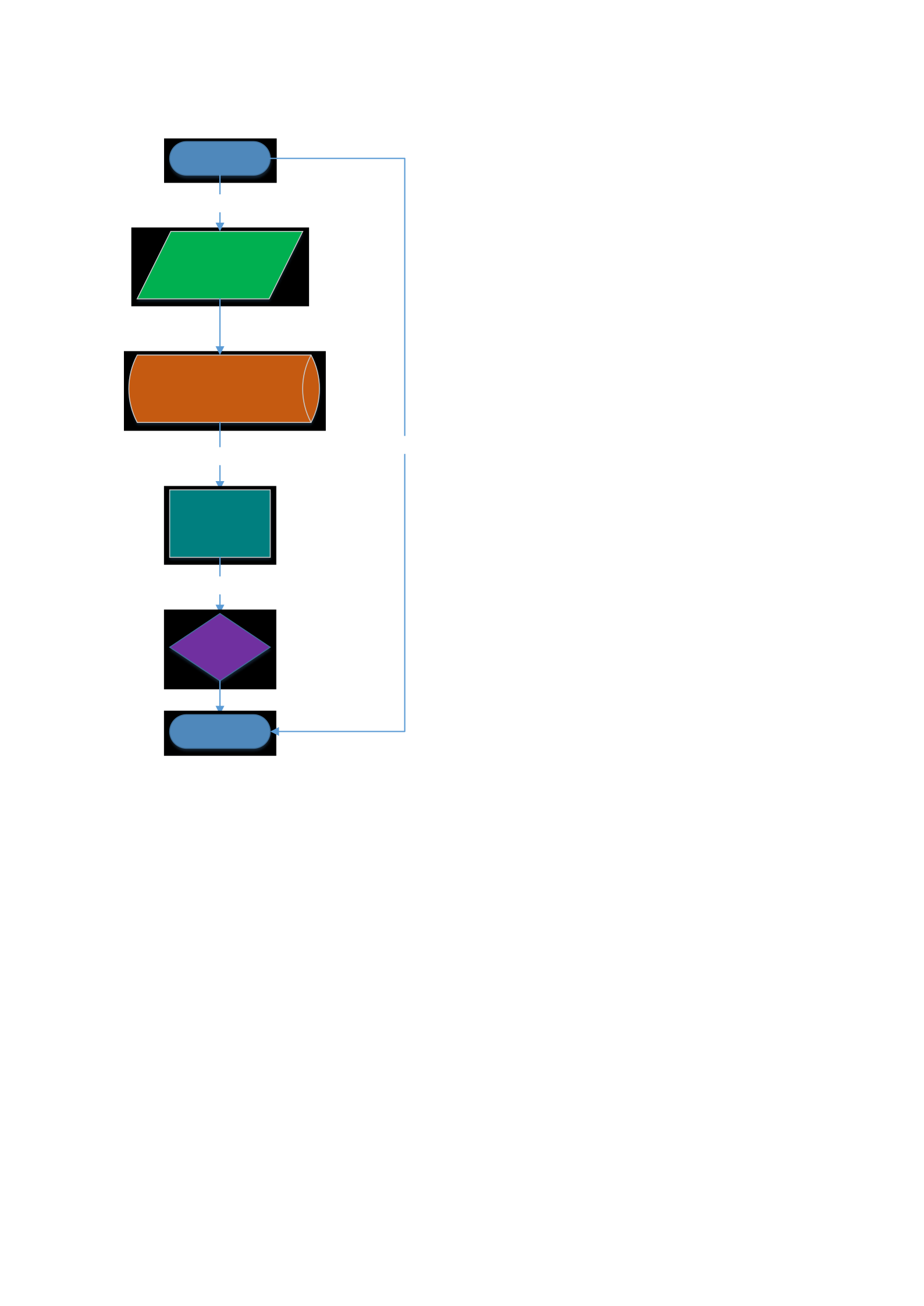
Data Process Model
Login
Information
Input
Success
Claim Management
System Database
Case Manager
Claim
Processing
Status to Customer
Decision
Log out/ End
Failure
Figure 1: A data process model for the
mobile application.
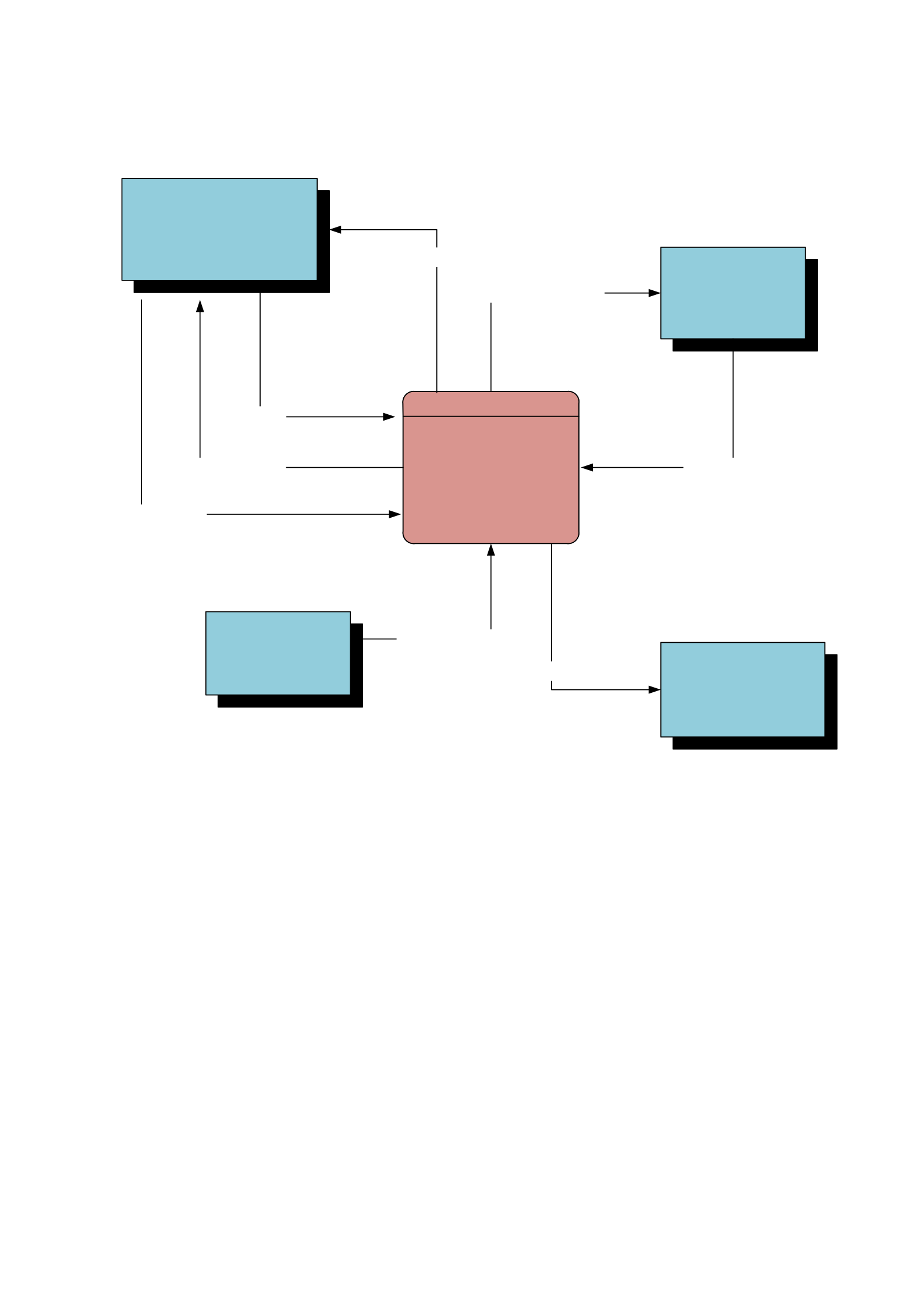
Data Flow Diagram
0
CLAIM
MANAGEMENT
SYSTEM
0
CLAIM
MANAGEMENT
SYSTEM
CUSTOMER
CASE MANAGER
BANK
CAR REPAIR SHOP
CLAIM
CLAIM PROCESSING
COMPLETED STATUS
DECISIONPENDING STATUS
FEEDBACK
BANK PROCESSING
PAYMENT AS THE CLAIM
Figure 2: Context diagram DFD for claim management system of the mobile
application
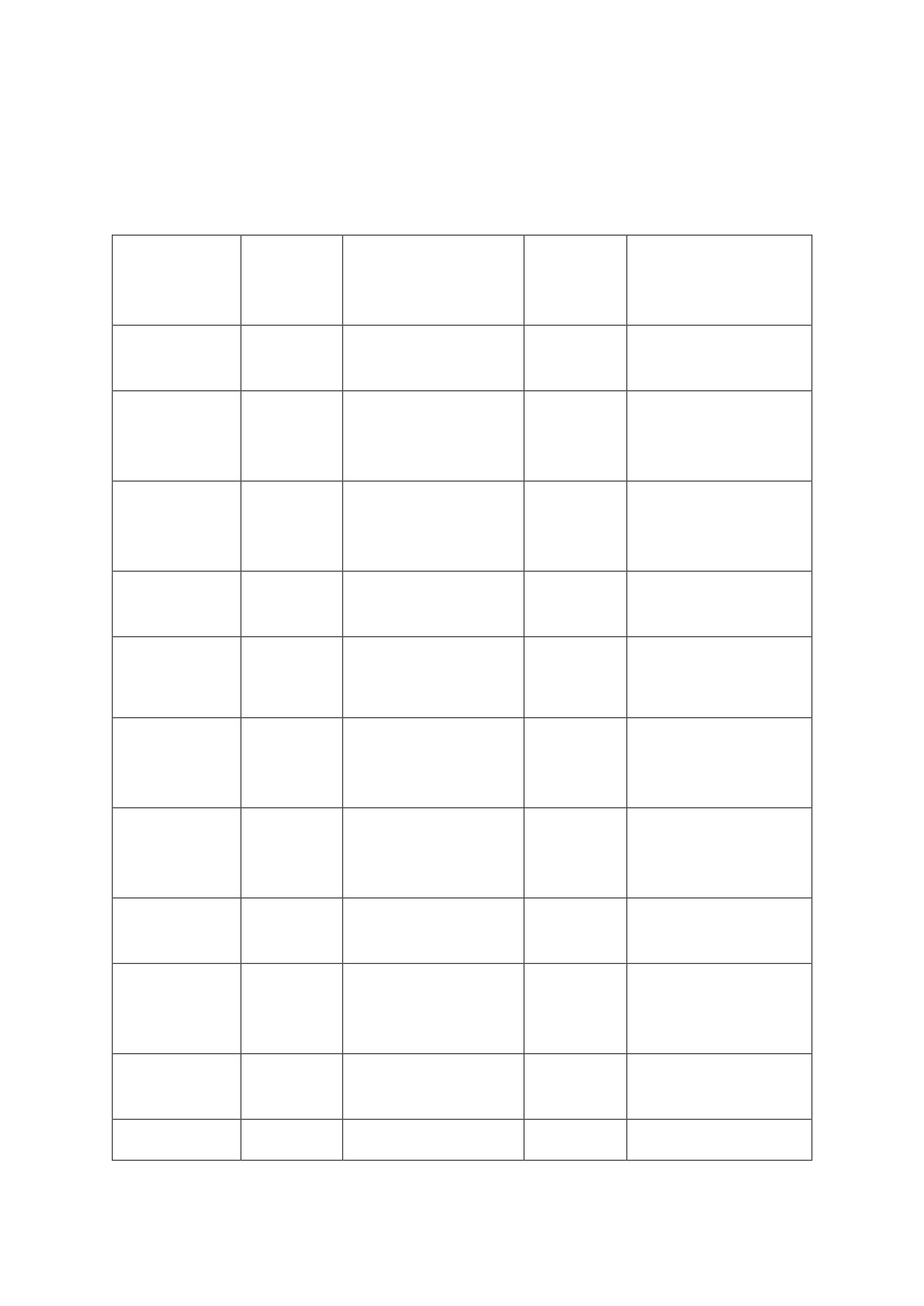
Data Dictionary
Data Elements
Data
Element
Name
Data
Type &
Length
Description
Required
(Y/N)
Acceptable Values
CUSTOMER
ID
Integer
Primary Key,
Unique identifier
Y
System generated
FIRST
NAME
Character
(20)
Customer’s First
Name
Y
Must start with A
– Z. No numbers
allowed to start.
LAST
NAME
Character
(20)
Customer’s Last
Name
Y
Must start with A
– Z. No numbers
allowed to start.
DOB
Date
Customer’s date
of birth
N
Cannot be a date
in future.
PHONE
Integer
Customer’s phone
number
N
Various formats
(xxx)-xxx-xxxx
EMAIL
Character
(50)
Customer’s email
address
N
Must have “@”
symbol.
Alphanumeric
ADDRESS
Character
(100)
Customer’s address
Y
Alphanumeric.
Must be valid
USA address
SSN
9N
Customer’s Social
Security Number
Y
Any nine-digit
number
VEHICLE
Character
(50)
Customer’s vehicle
type, make and
model
Y
Alphanumeric
DATE
Date
The date of
record entry
Y
System generated
today’s date.
ACTIVE
Boolean
1 for Active (Yes)
Y
0 or 1
0 for Inactive (No)
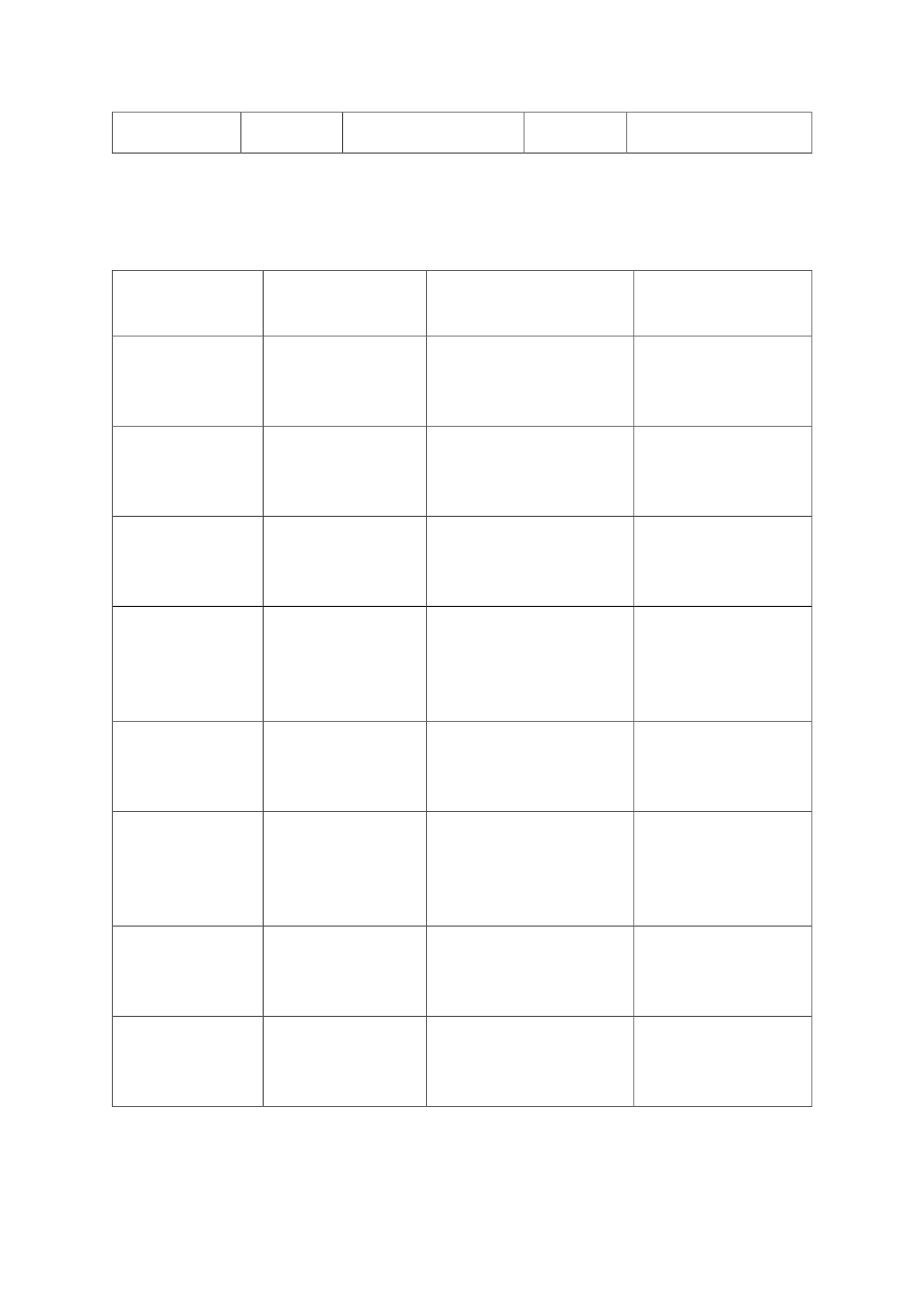
Data Flows
Data Flow
Name
Description
Origin
Destination
CLAIM
Insurance claim
by customer
CUSTOMER entity
CLAIM
MANAGEMENT
SYSTEM process
CLAIM
PROCESSING
Claim on
processing by
case manager
CLAIM
MANAGEMENT
SYSTEM process
CASE
MANAGER entity
PENDING
STATUS
Status to
customer about
the claim.
CLAIM
MANAGEMENT
SYSTEM process
CUSTOMER entity
DECISION
Decision made
by case
manager about
the claim
CASE MANAGER
entity
CLAIM
MANAGEMENT
SYSTEM process
COMPLETED
STATUS
Completed status
of the claim to
the customer
CLAIM
MANAGEMENT
SYSTEM process
CUSTOMER entity
FEEDBACK
Feedback by
the customer
about overall
system
CUSTOMER entity
CLAIM
MANAGEMENT
SYSTEM process
BANK
PROCESSING
Bank processing
for payment as
the claim
BANK entity
CLAIM
MANAGEMENT
SYSTEM process
PAYMENT
AS THE
CLAIM
Payment to the
car repair shop
as the claim
CLAIM
MANAGEMENT
SYSTEM process
CAR REPAIR
SHOP entity
Processes
Process Name
Description
Process
Number
Process Description
CLAIM
MANAGEMENT
SYSTEM
A process
to manage
auto
insurance
claim
0
Input data flows: CLAIM,
DECISION, FEEDBACK,
BANK PROCESSING.
Output data flows: PENDING
STATUS, CLAIM
PROCESSING, COMPLETED
STATUS, PAYMENT AS
THE CLAIM
Entities
Entity Name
Description
Input Data Flows
Output Data
Flows
CUSTOMER
Auto insurance
customer
PENDING STATUS,
COMPLETED
STATUS
CLAIM,
FEEDBACK
CASE
MANAGER
Case manager of
the auto insurance
company
CLAIM
PROCESSING
DECISION
BANK
For banking services
of the auto
insurance company
---
BANK
PROCESSING
CAR
REPAIR
SHOP
For maintenance of
the insured vehicles
PAYMENT AS
THE CLAIM
---
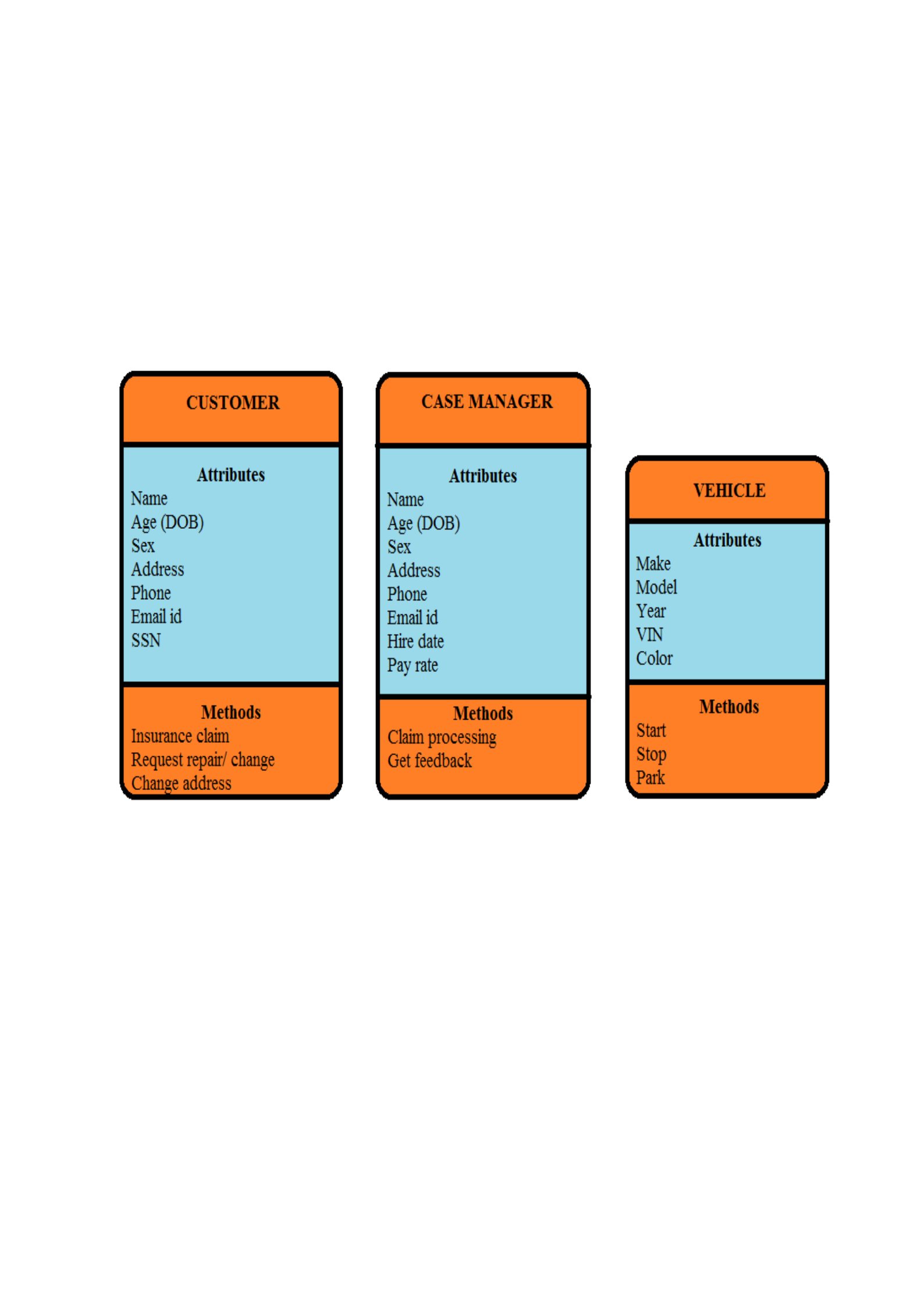
Object Modelling
Figure 3: Diagrams showing three objects, CUSTOMER, CASE MANAGER, and
VEHICLE with their attributes and methods for the mobile application of the
claim management system.
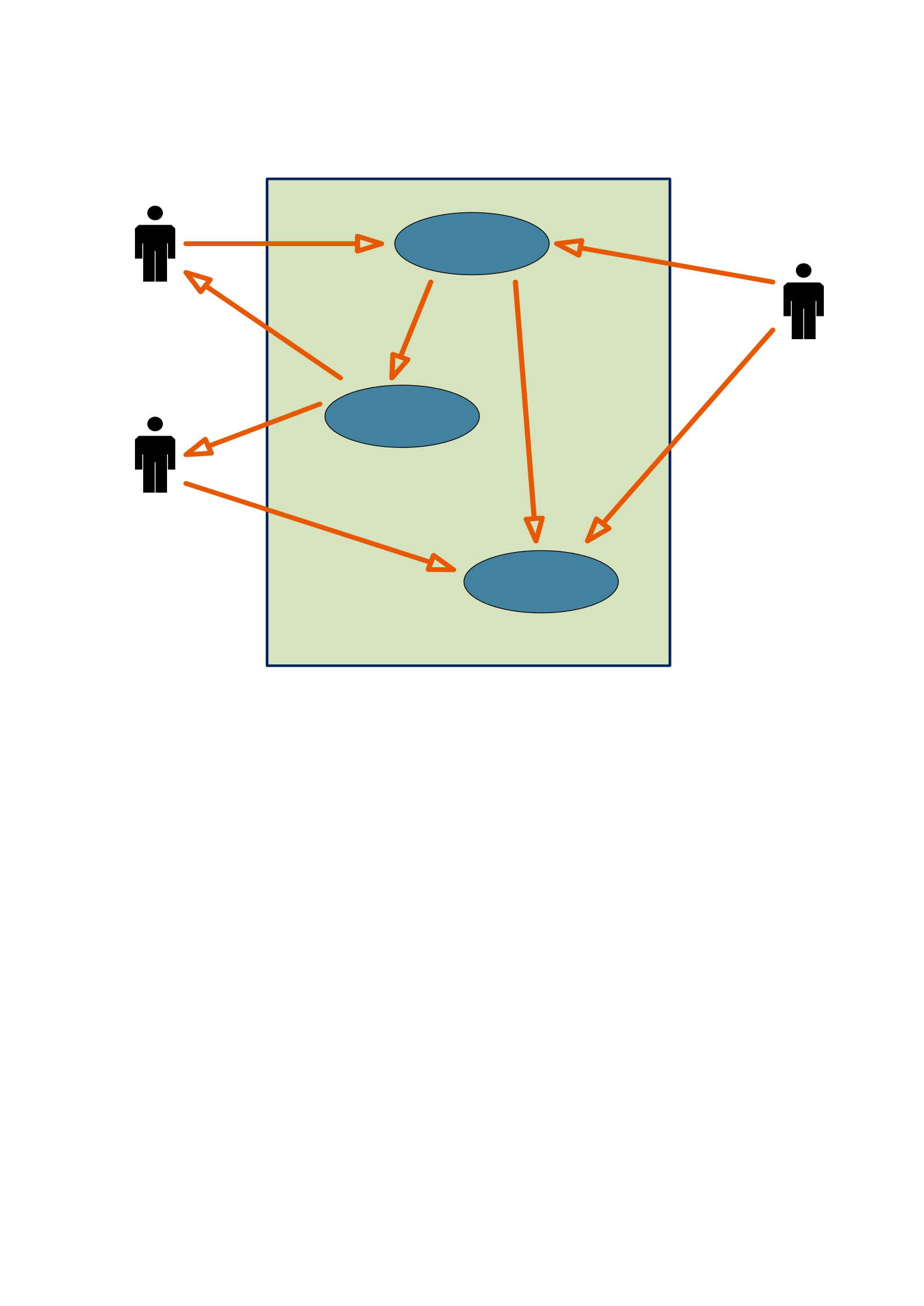
Use Case Diagram
Analyze
Information
Claims
insurance Investigates
information
Checks
Update Decision
Makes Payment
Update
Update
Notifies
Asks for
detail
Provides
expenses
Customer
Car Repair
Shop
Case Manager
Figure 4: Use case diagram showing claim management system for the mobile
application.
System Design
Specifications
Case Manager
Information Systems
Customers
Error Reports
Case Inquiry Case Inquiry
Update In Case
Update in Case
RecordKeeping
Data Design
C M
C App
C
Work ID#
First Name
Last Name
Email
Phone#
Case Manager ID# CASE ID#
Date
Time
Shipping Date
Case Info
Request Rep
Customer Number
Case ID
Name
Address
Phone #
User Interface Design
Case Information
EXIT
FAQ
Help
URCASE Inc. Customer Case App(UI)
System Architecture
Name
CEO
Name
Commercal
Name
Legal
Name
Accounting
Name
MIS/IT
Name
Human Resounce
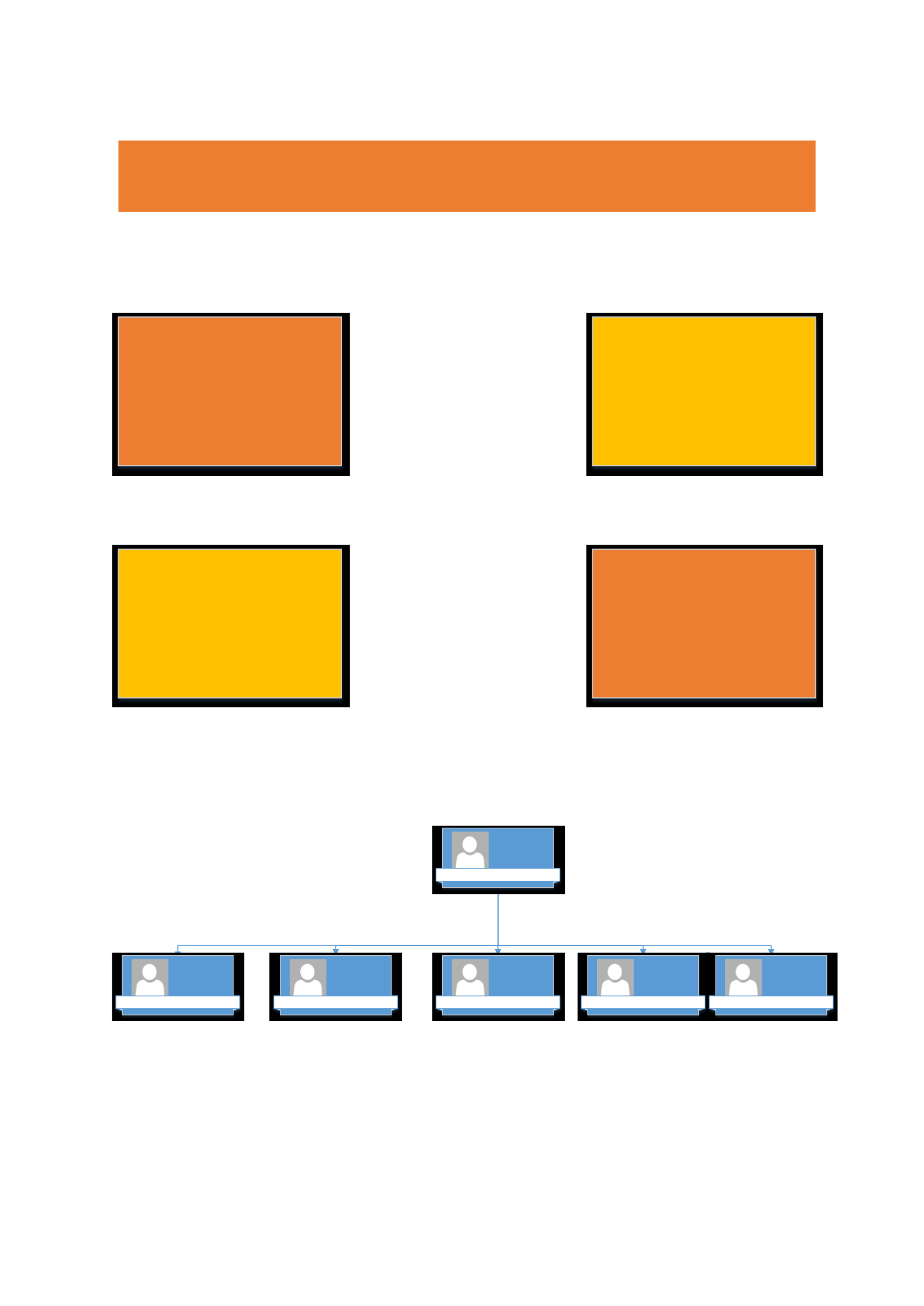
The Chart above shows the corporate layout for URCovered Inc.,
Customer
Customer
Request Case
Info
Case Database
System Looks
for Answer
Case Manager
Database
Process
Request
Case Question
Database
Display Case
Information
Display Case Info on APP
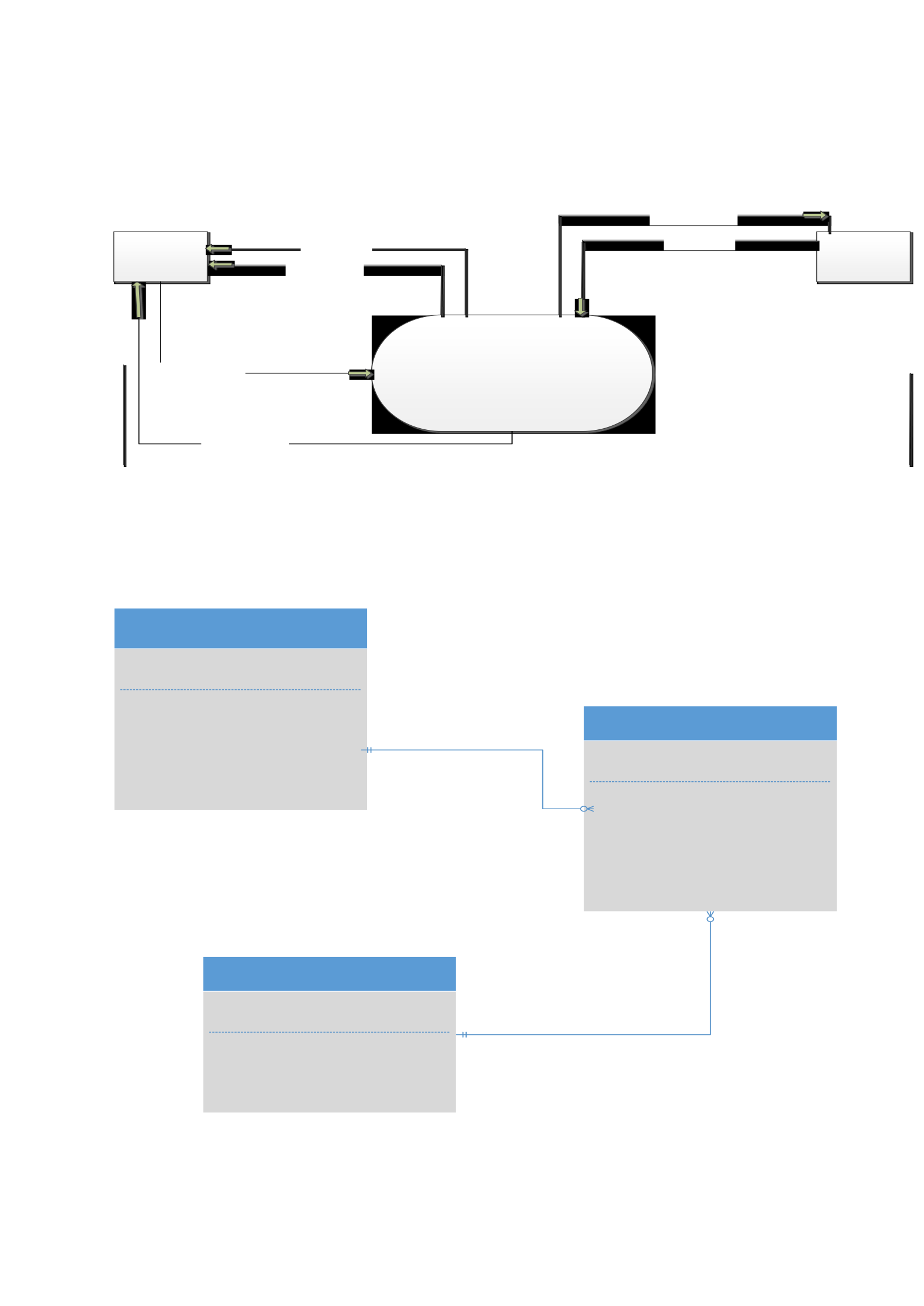
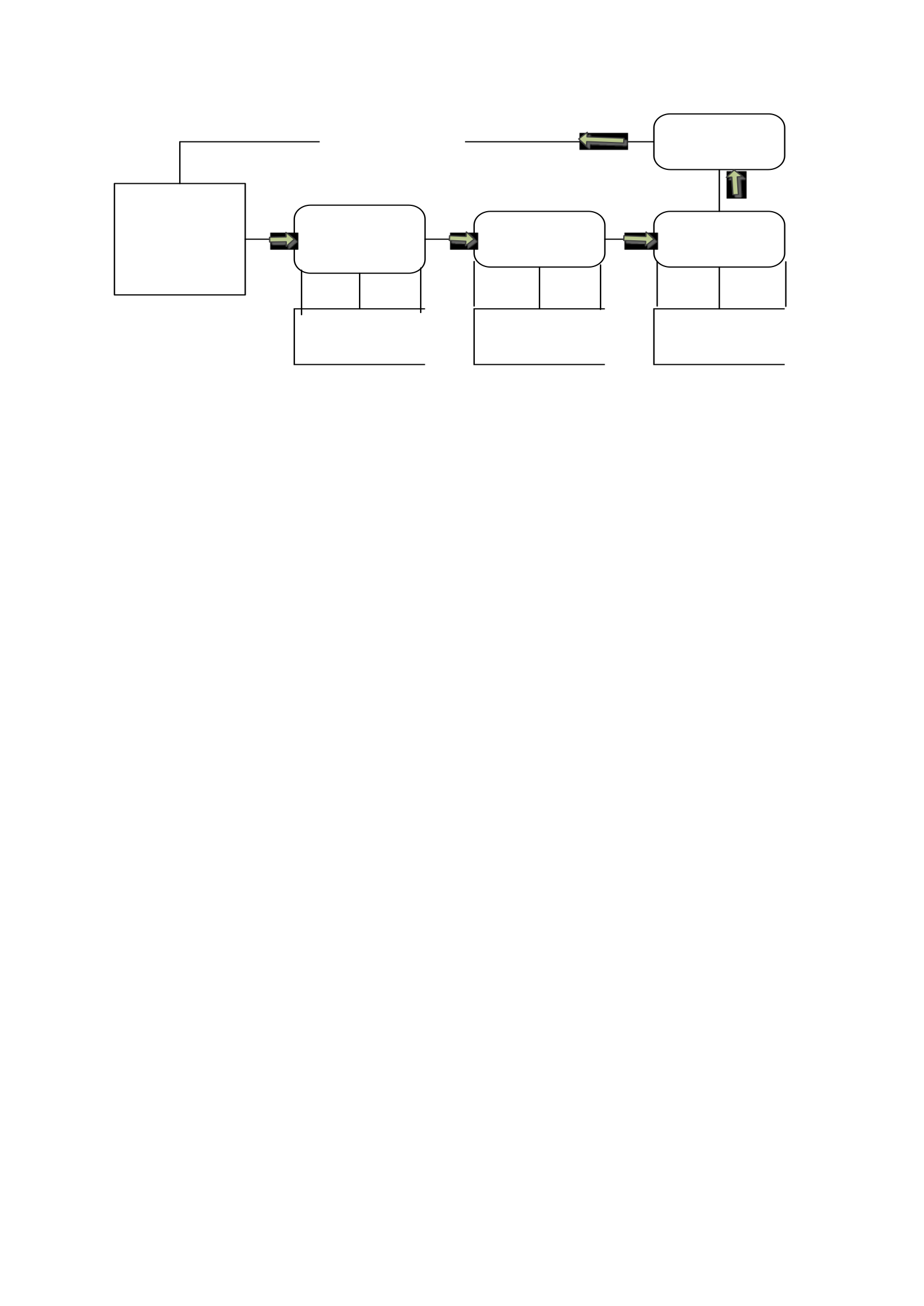
The ER model for this case shows the process for the Case Manager and
how the customer looks up the order and the steps that follow it. The total
cost of ownership for URCovered INC, will include training staff on the new
software, updates to current servers, software, and hardware (if needed). If the
app takes off, we will have to invest more money into the cloud servers to
support the incoming traffic. Scalability for URCovered Inc., is built to handle
anywhere from 1-50,000 request at any given moment. The network provides to
flexibility to shut down servers when traffic is low and go to the backup
servers the traffic is at an high volume to provide a fast response to consumers
when inquiring on Case information. Integration and interface requirements for
URCase Inc., mobile application is maintained at HQ where the servers will
process the requests from both the web page and mobile app. We will have
backup servers located off campus in the case the main servers fail. Security
will focus on preventing DOS attacks and user information being taken. We
will continue to focus on security while keeping cost down.

Feasibility Analysis
Operational Feasibility
• Switching to a mobile application will give our users the information the
request on the go. No longer having to use the web page.
• Users can see the app status right on their phone screen as a
replacement for the web page. aa
• There will be hiccups at the start of the process, but users won’t notice
much as the web page is still available.
• The mobile app will allow the company to reach a wider base of users
then currently being reach by the web system.
Technical Feasibility
• URCovered Inc., will need to purchase new software and some hardware.
Management requested the app resemble the web page. With the in the
mind the transition for users will be smooth.
• After training on the mobile application, staff will be well of to solve
any issues that may arise.
Economic Feasibility
Total Cost of Ownership
• Training current staff on new mobile app
• Update to the Main Servers, Cloud,Software, and hardware
• Repairs to the system

Tangible Benefits
• New mobile app allows user push notification on updates in the
case process.
• Users are now able to submit claims via the app
• Users can call case manager directly from the app when they want.
Intangible Benefits
• The app allows Case Managers more time to focus on other task
around the office instead of constant phone calls. aaa
• With a mobile application and push notifications, the user is able
to closely follow their case progress.
Schedule Feasibility
• Proper staffing to train case managers on the new mobile
application.
Project Plan
Work Breakdown Structure (WBS)
The first step for the project plan to be initiated would be done by the
project manager and review the project notes, then the project manager will
create the business case document. In the next step, with the help of system
analyst, the project manager will work together to find the system requirements.
To do that they will have to do some fact finding and reviewing existing
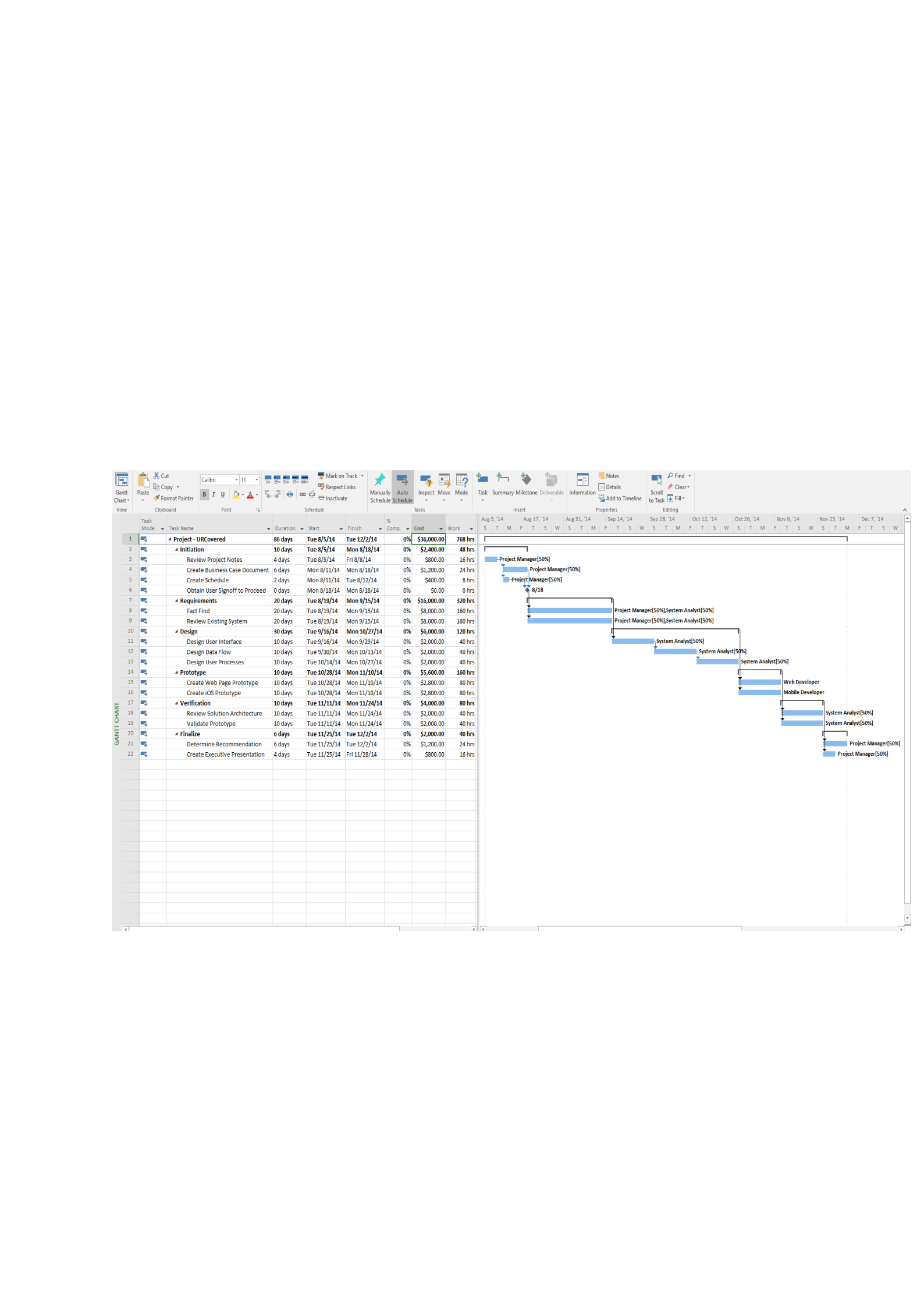
system. The system analyst will be working on designing the system, in which
he will first design the user interface, then the data flow diagrams, and last but
not the least the user processes. After designing phase, the web developer will
be attending to create a web page prototype and mobile developer will be
responsible for creating iOS prototype. The system analyst will be doing the
verification where the solution architecture will be reviewed, and the prototype
will be validated. Project manager will finalize the project by determining
recommendation and creating executive presentation.
Figure 1: Gantt Chart showing the project plan of the URCovered Mobile
Application.
Project Monitoring and Control Plan
The project manager will oversee and track the progress of the project.
By outlining the strategy, this will provide the rise of elimination. Project

manager will verify the completion of the project milestones. The project plan
must be ensured that it is under schedule control. By conducting group meetings
once every day to get the estimated completion of the project. The project
manager must set standards that will be followed by the systems analysts.
Project manager will ensure the tasks on the critical path will be completed on
time too. a And, the cost control plan will ensure that the project remains within
the allotted budged given.
Timeline
The estimated amount of time for implementation of the project is 768
hours and the total duration will be 69 days. The start date of the project is
August 8, 2014 and it is expected to finish on December 2, 2014. The work
breakdown structure with the amount of time for each task is shown in the
above Gantt Chart. The Gantt Chart showing timeline for the overall project is
shown in the screenshot below.
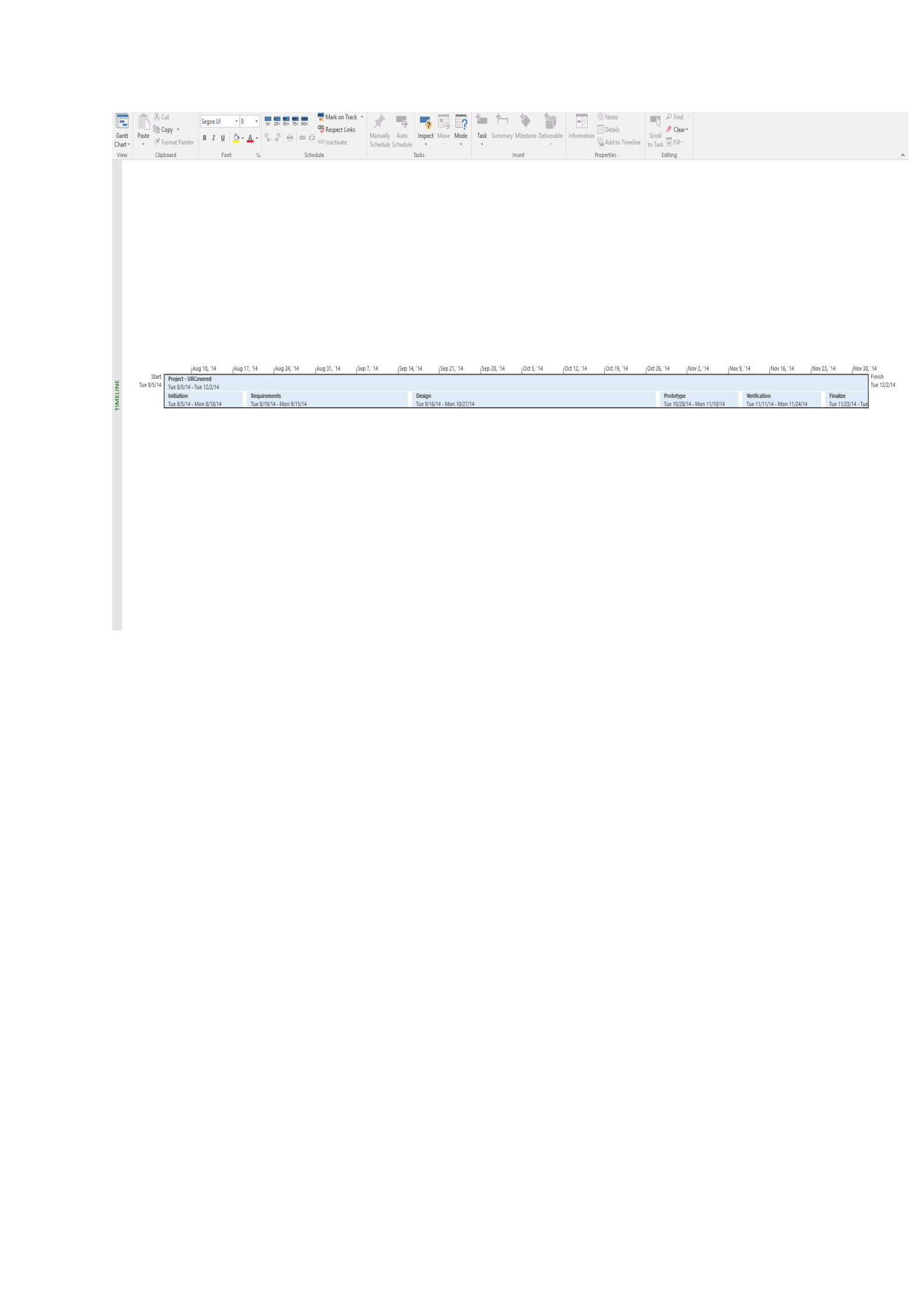
Figure 2: Timeline in the Gantt Chart shows the progress for the overall
mobile application project.

Conclusion
aaa aaa aaa aa aaa aaa aaa aaa a aaa aaa
A framework for mobile application development was proposed in order to make
the customer support easier. This framework solves the problem of delayed
response which existed through the web-based application. The iPhone app
developed has a calling feature to support 24/7 support service. The framework
addresses a set of issues in the product development by allocating certain tasks
to certain departments towards achieving the efficient mobile app. Also, it
suggests a set of test scenarios to be attended to particularly and highlights a
mechanism for usability test. The benefit for product quality from them can be
easily understood. It provides a quick way to estimate the cost of app
development projects. This prototype could also serve as an experience database
and thus allow for more precise estimates and benchmarking of the project.

References
Beatty, C. A. (2015). Communicating During an Organizational Change.
Organization Studies, 15(3), 337-352.
IT 510 Module two case study. (n.d.). Southern New Hampshire University,
Manchester NH
Mobile and mobility. (2019). New opportunities to improve customer engagement
Retrieved fromhttps://ec.europa.eu/growth/tools-
databases/dem/monitor/sites/default/files/DTM_Mobile%20and%20mobility%20v1.pdf
PAREEK, M. (2017). Creation of new Insurance Distribution Channel-Motor
Insurance Service Provider (MISP)-Impact on stakeholders in General
Insurance Sector in India. IIB, 1.
Rosenblatt, Harry J. (2014). Systems Analysis and Design, 10th Edition.
[VitalSource Bookshelf Online]. Retrieved from
https://mbsdirect.vitalsource.com/#/books/9781285633190/
https://pattersonsupport.custhelp.com/app/answers/detail/a_id/3319/~/definition-of-an-
interface-vs-integration
Sevilla, V. (2019). The Pros And Cons Of Building A Mobile App for your
Business. Retrieved from https://webdesignledger.com/mobile-apps-pros-cons/
Tilley, S., & Rosenblatt, H. (2016). Systems analysis and design (11th ed.).
Boston, MA: Cengage Learning.


