


Running Head: CULTURAL ARTIFACTS a a a a a a a a a a a a a a a a a a a a a a a a a a a a a a a a a a a a a a a a a a a a a a a a a a a a a a a a a a a a a a a a a a a a a a 1
4-4 Project Part One: Rough Draft
HUM 200
January 30,2022
SNHU
CULTURAL ARTIFACTS a a a a a a a a a a a a a a a a a a a a a a a a a a a a a a a a a a a a a a a a a a a a a a a a a a a a a a a a a a a a a a a a a a a a a a a a a a a a a a a a a a a a a a a a a a a a a a a a a a a a a
a a a a a a a a a a 2
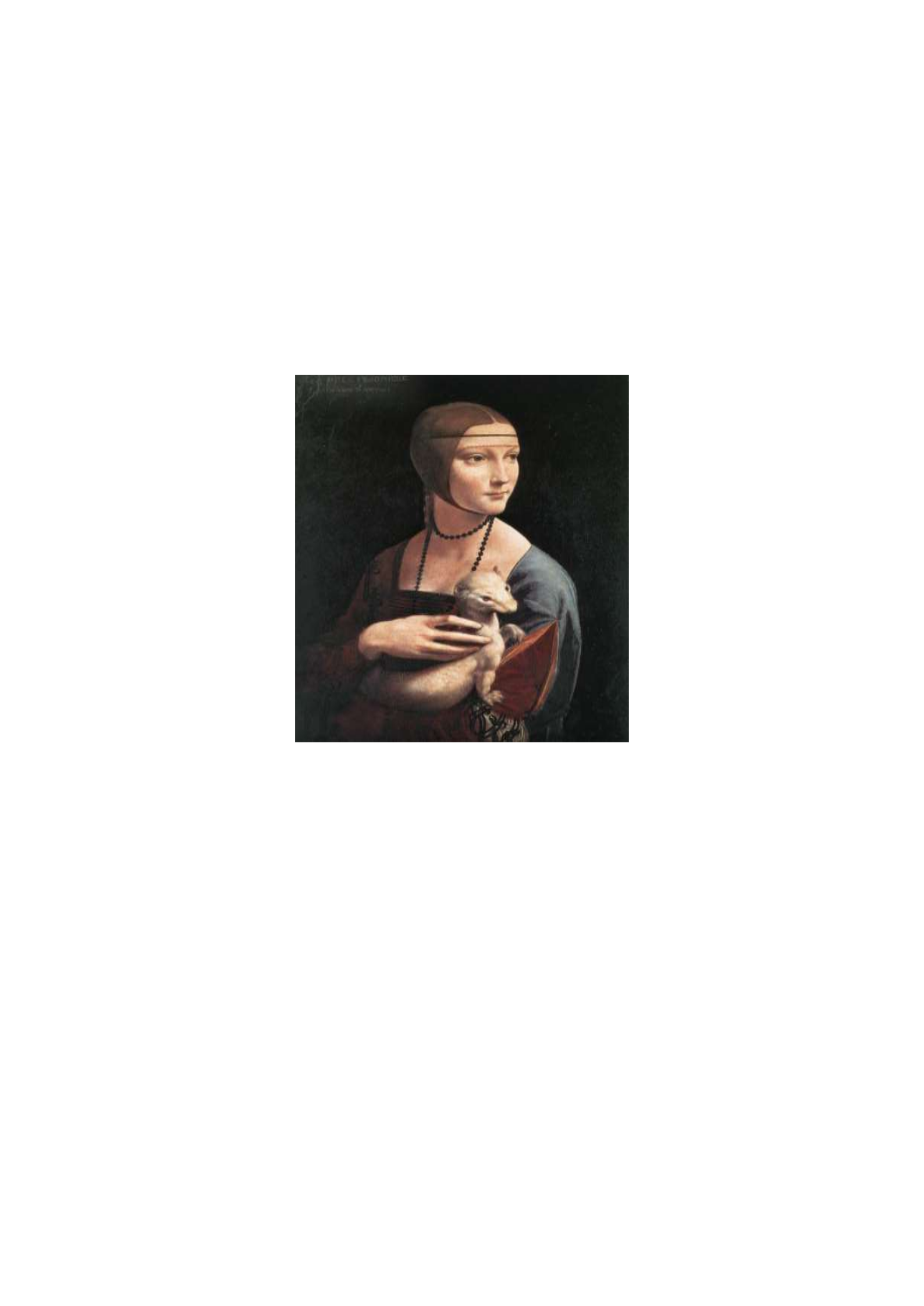
The first cultural artifact that has been chosen is the ‘Lady with the Ermine’ portrait
painting by Leonardo da Vinci. The artifact is from around 1489 – 1490. It is 54.8 cm high
and 40.3 cm wide. The subject of the artifact has been identified as Cecilia Gallerani and the
painting was done when she was the mistress of Lodovico Sforza, the Duke of Milan. It can
be seen in Czartoryski Museum in Krakow, Poland (Lady with an ermine - by Leonardo da
Vinci. Lady with an Ermine - by Leonardo da Vinci, 2021).
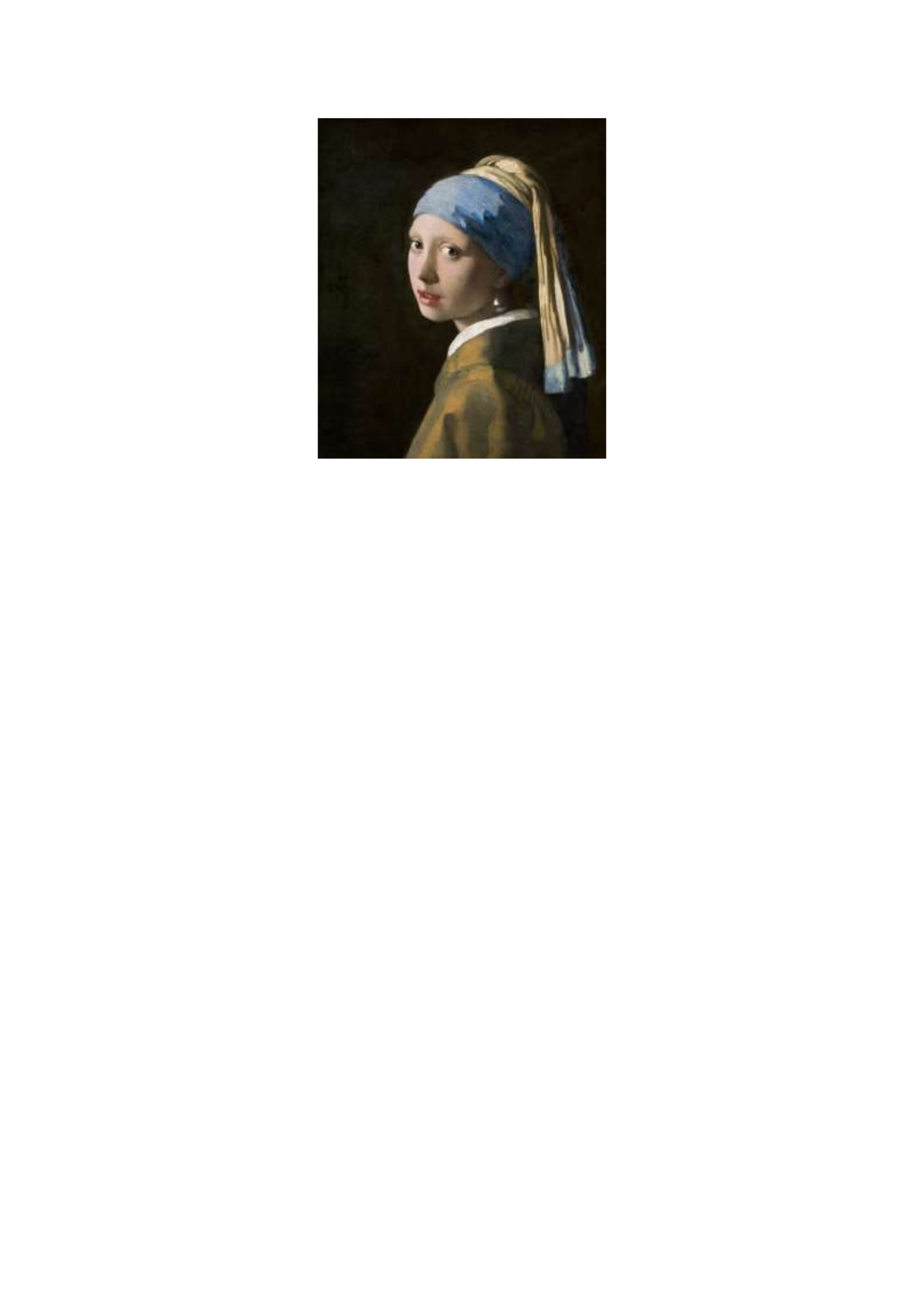
The second cultural artifact that is chosen is the ‘Girl with a pearl earring’ oil painting
by Johannes Vermeer. It was created in 1665. The work is 44.5 cm high and 39 cm wide and
it shows a European female in an exotic dress, a turban and a large earning. It can be seen in
Mauritshuis, an art museum in The Hague, in the Netherlands (Nolan, 1963).
CULTURAL ARTIFACTS a a a a a a a a a a a a a a a a a a a a a a a a a a a a a a a a a a a a a a a a a a a a a a a a a a a a a a a a a a a a a a a a a a a a a a a a a a a a a a a a a a a a a a a a a a a a a a a a a a a a a
a a a a a a a a a a 3
Common theme
The common theme between these works is that both the artists have been able to
showcase the representation of women in the respective era by using art. In both the paintings,
the subjects are women and each of them exhibits grace and give a glimpse into the specific
times.
Personal experience
The identified theme is related to my personal experience because it makes me realize
the evolution that women have undergone over the years. Through painting both the artists
have focused on women and shown how they have undergone evolution.
Profession that could be impacted by the theme
A profession that can be impacted by the theme is photography. The theme can inspire
a photographer to capture the constant evolution of people, or women in the society.
Photographers can utilize their skills to capture how women have been moving away from
their conventional roles and changing in terms of dressing, independence, etc. The working
knowledge of humanities relating to art can be used to explore the society in the historic
times. a
Humanities resources

CULTURAL ARTIFACTS a a a a a a a a a a a a a a a a a a a a a a a a a a a a a a a a a a a a a a a a a a a a a a a a a a a a a a a a a a a a a a a a a a a a a a a a a a a a a a a a a a a a a a a a a a a a a a a a a a a a a
a a a a a a a a a a 4
The three humanities resources that can be used for investigating the identified theme
and the chosen artifacts are the Journal of Religion and Society, Bibliography of the History
of Art and JSTOR Digital Library (Humanities: Resources. LibGuides, 2021). These
resources have been chosen as they can shed light not only on the identified pieces of artifacts
but on the theme that has been identified relating to women. The selection of suitable
humanities resources was a challenging activity as I had to make sure that the resources were
credible in nature and they could add value to the chosen piece of work and theme. I
overcame the challenge by focusing on the theme and then conducting the search process so
that proper alignment would exist and I could locate appropriate humanities resources.
Historical context
The Lady with the Ermine painting was created during the late 1400s and thus it
encompasses conventional attributes relating to Italian portraiture. One of the distinctive
elements is the color of the work. It reminds the audience of Florentine Quattrocento tradition
that existed during the 15th century (Shell & Sironi, 1992). In the case of the ‘Girl with a pearl
earring’ painting, since the subject is imaginary in nature many historians consider the piece
of art to be a form of interaction between imaged beauty that is represented on canvas and
real-life experiences. One of the distinctive elements that give an insight into the historical
context of the artifact is the exotic dress that she is wearing as her costume (Chevalier, 2001). a
Similarities and differences
There exist a number of similarities as well as differences between both the chosen
artifacts that is hard to ignore. Some of the main similarities are both are paintings are done
by renounced artists of the respective era. In both the works, the women have been used as
subjects to give a glimpse into their beauty or appearance, and dressing sense. The paintings
serve as the pathway that gives a glimpse into women during the specific ages. A major
difference between both the works is that while the subject of the ‘Lady with the Ermine’

CULTURAL ARTIFACTS a a a a a a a a a a a a a a a a a a a a a a a a a a a a a a a a a a a a a a a a a a a a a a a a a a a a a a a a a a a a a a a a a a a a a a a a a a a a a a a a a a a a a a a a a a a a a a a a a a a a a
a a a a a a a a a a 5
portrait painting was real, the subject of the ‘Girl with a pearl earring’ painting was
imaginary. While the ‘Lady with the Ermine’ gives a glimpse into women from Italy, the
‘Girl with a pearl earring’ painting was set in the Netherlands (Vandivere et al., 2019). Thus
the cultural context of both the paintings is starkly different.
Medium
Both the artifacts that have been selected are paintings that have been done by artists
to portray women belonging to the specific periods of time. While the ‘Lady with the Ermine’
is a portrait painting, the ‘Girl with a pearl earring’ is an oil painting. The creators of the work
have used colors in their painting that enhances the overall beauty of their work and make
them seem livelier. High attention has been given to the facial attributes which make the
paintings more life-like in nature a
Thesis statement
The ancient paintings that have been chosen as the artifacts gives a glimpse into
women of the respective eras and how they are represented in the society.
Identification of an audience
The audience group that will be most interested in the identified theme, as well as the
thesis statement that has been created include feminists. Feminists are the individuals who
believe that women must be treated equally as men in every context including the social,
political and economic concepts. Thus the topic might be of high interest of them as they can
get a glimpse into how women were represented in the former times in the society and they
can compare how their role in the society has changed in the current times. The information
can be both informative and insightful for them as they can understand to what extent women
have been able to grow and develop over the decades.
Tailoring the message to the audience

CULTURAL ARTIFACTS a a a a a a a a a a a a a a a a a a a a a a a a a a a a a a a a a a a a a a a a a a a a a a a a a a a a a a a a a a a a a a a a a a a a a a a a a a a a a a a a a a a a a a a a a a a a a a a a a a a a a
a a a a a a a a a a 6
The message relating to the chosen artifacts and the identified themes need to be
tailored so that it can make sense for the identified audience group. For example, while
making use of specific humanities terminology and principles that are used by scholars, the
information can be presented in a simpler manner so that they can easily comprehend the
information that is being presented. Similarly while capturing information about specific
historical era, the date range will also be provided so that the audience group can understand
the exact time period that is being discussed. For effectively communicating with the
audience it is highly critical to ensure that engaging information and content is integrated into
the research. It can arouse their interest in the humanities area as well as the theme and
artifacts that serve as the foundation of the work.

CULTURAL ARTIFACTS a a a a a a a a a a a a a a a a a a a a a a a a a a a a a a a a a a a a a a a a a a a a a a a a a a a a a a a a a a a a a a a a a a a a a a a a a a a a a a a a a a a a a a a a a a a a a a a a a a a a a
a a a a a a a a a a 7
References
Chevalier, T. (2001). Girl with a pearl earring. Penguin.
Humanities: Resources. LibGuides. (2021). Retrieved January 28, 2022, from
https://libguides.umgc.edu/humanities
Lady with an ermine - by Leonardo da Vinci. Lady with an Ermine - by Leonardo da Vinci.
(2021). Retrieved January 28, 2022, from https://www.leonardodavinci.net/lady-with-
an-ermine.jsp
Nolan, J. (1963). Girl with the pearl earring. The Journal of Aesthetics and Art Criticism,
22(2).
Shell, J., & Sironi, G. (1992). Cecilia Gallerani: Leonardo's Lady with an Ermine. Artibus et
historiae, 47-66.
Vandivere, A., Wadum, J., van den Berg, K. J., & van Loon, A. (2019). From ‘Vermeer
Illuminated’to ‘The Girl in the Spotlight’: approaches and methodologies for the
scientific (re-) examination of Vermeer’s Girl with a Pearl Earring. Heritage Science,
7(1), 1-14.

