The ICD-10-PCS: How to Build a Procedure Code
The process for accurately assigning an ICD-10-PCS code uses an index in
the same manner as the other coding classification systems such as CPT and
ICD-10-CM. However, the format and structure are different, as each of the
seven characters are categorized into tables. In this module, we will break
down each of the seven categories on how to build an ICD-10-PCS code.
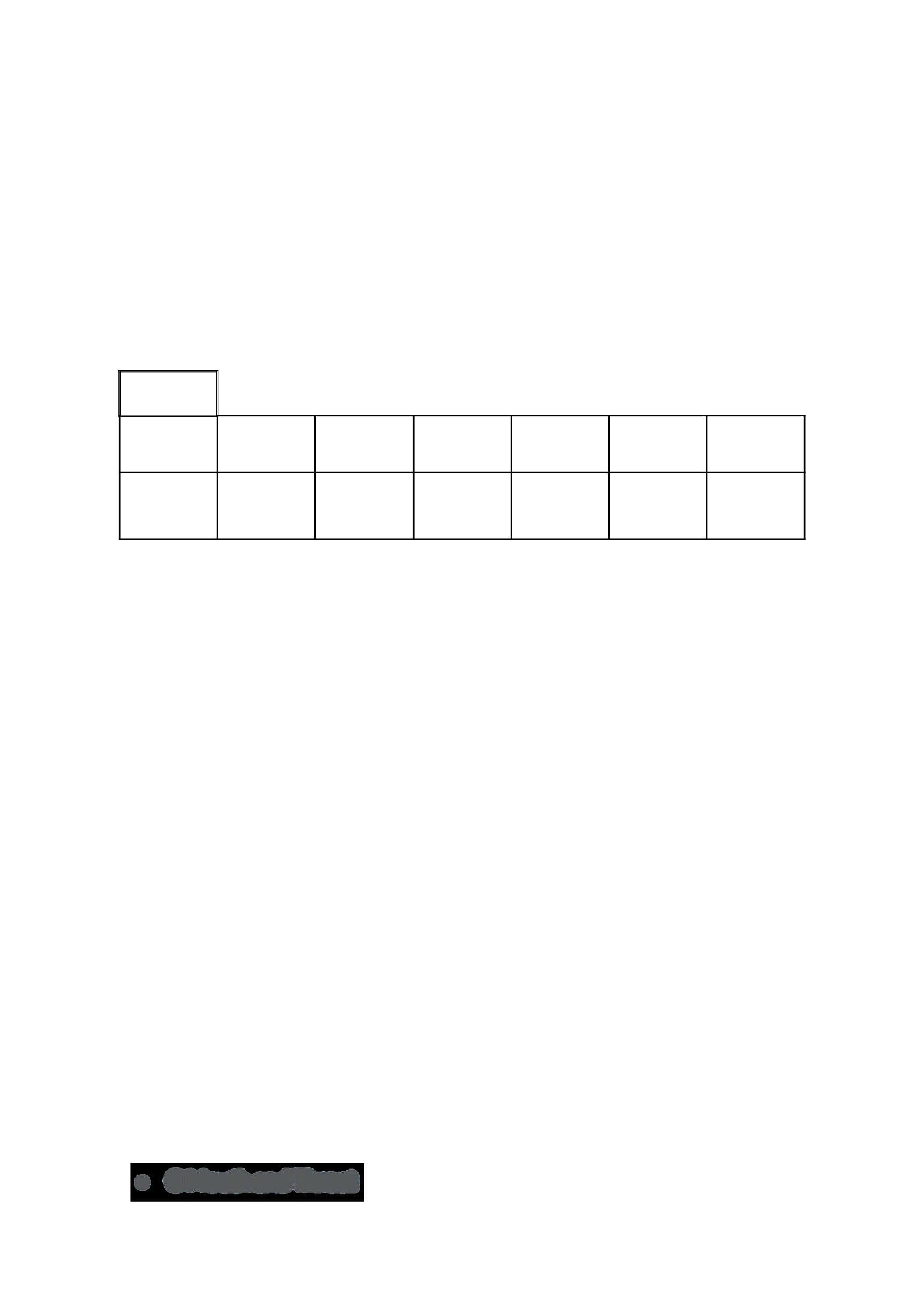
ICD-10-PCS Code Structure
Character
1
Character
2
Character
3
Character
4
Character
5
Character
6
Character
7
Section Body
System
Root
Operation
Body Part Approach Device Qualifier
Character One: Section
The first character in an ICD-10-PCS code determines the procedure
category, or the section where the code is found. There are 17 different
sections that are categorized as either Medical and Surgical (0-9) or
Ancillary (B, C, D, F, G, H, or X).
Character Two: Body System
The second character defines the body system, general physiological
system, or anatomical region involved. The body systems for the Medical
and Surgical section are broken down in the following format:
0 Central Nervous System
1 Peripheral Nervous System
Heart and Great Vessels
3 Upper Arteries
4 Lower Arteries
5 Upper Veins
6 Lower Veins
7 Lymphatic and Hemic System
8 Eye
9 Ear, Nose, Sinus
B Respiratory System