Chapter 2
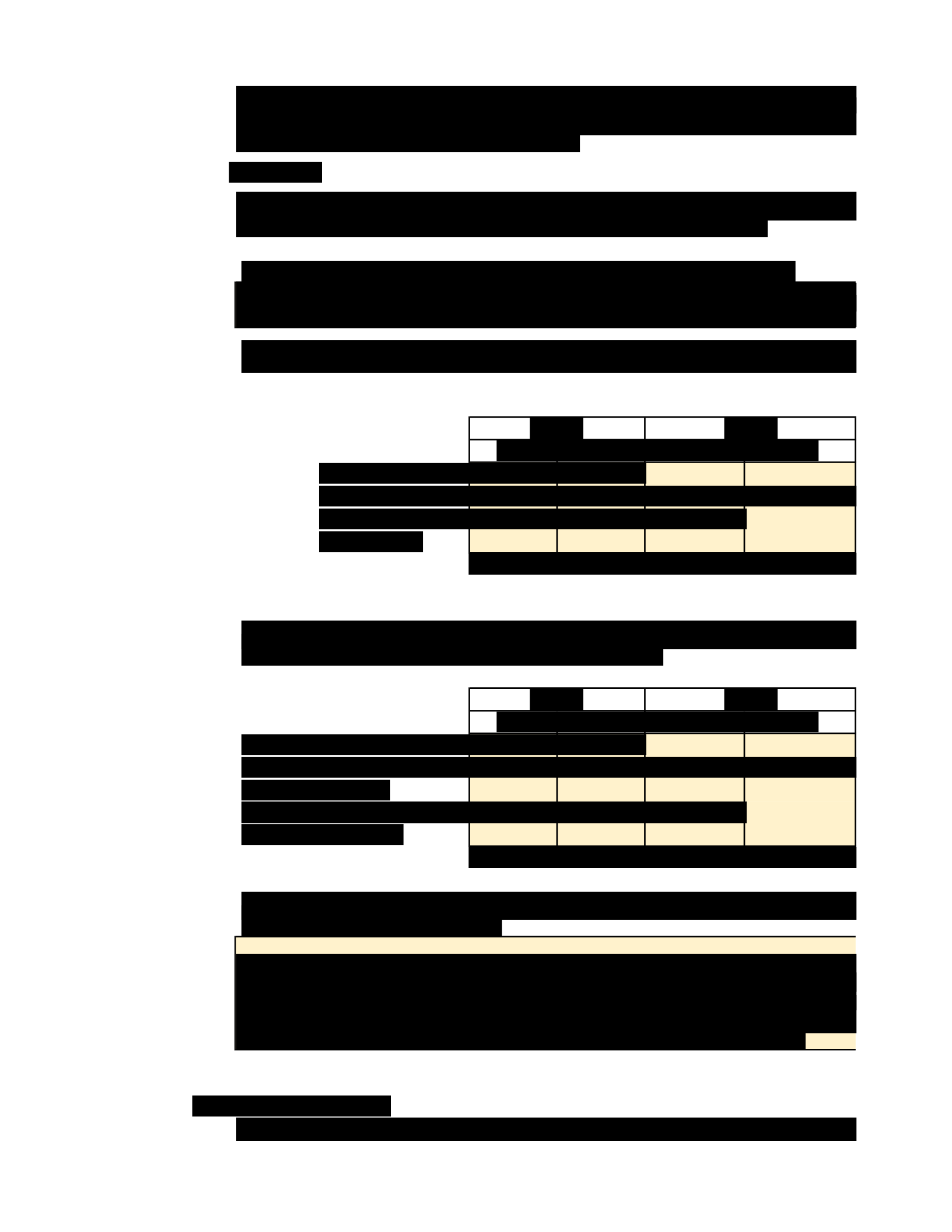
2.4 Income Flows Versus Cash Flows
Transaction or Event
Cash Equipment
Common
Stock
Cash Contributed by Owners 1,00,000
Purchase of Machine for Cash
(1,00,000)
Recognition of Rent Revenue 1,25,000
Recognition of Operating Expenses (30,000)
Recognition of Depreciation (80,000)
Sale of Machine 2,000
Totals 97,000$ (80,000)$ -$
2.8 Fair Value Measurements
(a) common stocks
(b) bonds
(c) real estate
(d) timber investments
(e) private equity funds
(f) illiquid asset-backed securities
2.12 Effect of Valuation Method for Nonmonetary Asset on Balance Sheet and Income State
Level 3
The text discusses inputs managers might use to determine fair values of assets and liabi
classifications of assets identified in SFAS No. 157. Suppose a major university endowme
assets, including (a) common stocks; (b) bonds; (c) real estate; (d) timber investments, w
timber, private equity funds, and illiquid asset-backed securities. Consider how the portfo
values of each of those classes of assets, and characterize the inputs you identify as Leve
The text states, "Over sufficiently long time periods, net income equals cash inflows minu
flows with owners." Demonstrate the accuracy of this statement in the following scenari
each to form a new business. The owners used the amounts contributed to purchase a m
estimated that the useful life of the machine was five years and the salvage value was $2
to a customer for an annual rental of $25,000 a year for five years. Annual cash operatin
other items totaled $6,000 annually. At the end of the fifth year, the owners sold the equ
$20,000 salvage value initially estimated. (Hint: Compute the total net income and the to
with owners for the five-year period as a whole. If it doesn't impact Net Income, don't in
Level 1
Level 1
Level 2
Level 2
Level 3