


Meriton Suites: The Risk Management

Executive Summary
The report aims to assess and characterize Meriton Suites’ risks that may develop throughout
business activities. A risk report will help better understand the business, social, political, and
economic situation and offer recommendations on risk management. The overall findings
include stakeholder analysis, business philosophy overview, business risk register, business
policies and procedures, and risk radar diagram. Such tools as risk register and templates,
namely risk policy and risk procedure examples, will help shareholders assess and evaluate
current risks. Risk methodology includes identifying significant risks, using the PESOTEL
framework via the business risk register, and adding risks specific to Meriton Suites’ company.
According to the risk registry, the Meriton Suites’ total risk score is 65 percent.
Based on the risk radar diagram, the most critical risks are R&D, competitive landscape,
environmental footprint, and training; the overall risk score is 74%. The risk approach in
assessing the business from seven risk categories using the “risk register” excel spreadsheet
included a systematic literature review, peer-evaluated papers, articles, and governmental
policies. The primary recommendation for shareholders is to invest in training to overcome
intense competition in the hotel business and provide high-quality services. Furthermore,
technological and digital advancements may improve the whole hotel experience. Personnel
should be taught about new technology regularly and informed on health and safety procedures
and legislation. The business risk score, the average of the two separate scores from the risk
register (65) and risks radar (74), equals 69.5%.
Introduction and Business Overview
The risk plan aims to identify, analyze, and describe possible risks for the selected company
that may arise during business operations. The overall structure includes stakeholder analysis,
business philosophy overview, business risk register, business policies and procedures, and risk
radar diagram. The business’s name is Meriton Suites, and it is located in Australia, with the
headquarters in Sydney; the business type is privately held. Meriton Suites was founded in
2003 as Meriton Serviced Apartments and has seen tremendous development in its range of
premium apartment-style hotel accommodation (“Your home, away from home,” n.d.). The
company has become Australia’s largest owner of hotel rooms and one of the biggest private
hotel operators, with nineteen locations and a stunning total of approximately five thousand
suites. It offers top-quality, professional services combined with smart and modern amenities
(“Your home, away from home,” n.d.). Meriton Suites, a luxury lodging brand, is part of

Meriton Group, founded in 1963, Australia’s most prominent privately-owned apartment
developer (“About Merton,” n.d.). According to the official company’s LinkedIn page, the
company size is 201-501 employees (LinkedIn, n.d.). The head office is located at Meriton
Tower, 528 Kent St, Sydney (See Figure 1).
Figure 1. Head Office of Meriton Suites (Meriton Australia, n.d.)
Stakeholder Analysis
Stakeholder Discussion
The key stakeholders that are critical for the operation and functions of the business are owners,
staff, and media. Wijtenburn (2020) states that the deal sponsor heads the ownership group with
a joint venture partner or a syndicate of limited partners. The job is similar to any other standard
real estate owning group but with a hospitality focus. Owners are accountable for ensuring that
the brand and operator have a high-quality asset that commands the maximum feasible income
(Wijtenburg, 2020). Owners require a financial investment and the use of resources to present
the hotel in the best light possible. Hence, the most significant stakeholders are owners who
play the most crucial function in the hotel transaction structure. According to Wijtenburg
(2020), the staff monitors the hotel’s day-to-day operations, including guest experience,
demand planning, sales, and property maintenance. Media delivers value by increasing sales,
advertising, and industry best practices (Wijtenburg, 2020). Additionally, hotel positioning in
the market is heavily influenced by guests’ perceptions of the company.

Stakeholder List and Diagram
Table 1. Stakeholders’ list
Stakeholder #
Stakeholder
Internal/ External
Interest
Influence
1
Customers
External
1
2
2
Staff
Internal
1
1
3
Suppliers
External
5
6
4
Contractors
External
5
7
5
Professional Services
Internal
5
5
6
Government – L/S/F
External
5
1
7
Media
External
3
3
8
Investors
External
1
1
9
Financial Services
Internal
6
4
10
Security Services
Internal
6
4
11
Utility Providers
External
6
4
12
Insurers
External
7
6
13
Unions
External
7
4

14
Community
External
4
5
15
Waste Services
Internal
8
9
16
Training Providers
External
5
2
17
Educational Providers
External
6
3
18
Owners
Internal
1
1
19
Consultants
External
3
3
20
Compliance Agencies
External
5
6
Business Philosophy
Business Name
Business Vision

The business vision of Meriton Suites is to be regarded as the industry leader in Australian
suite-hotel accommodation. Meriton Suites aims to provide outstanding value for money and
offer the best service that matches the brand and visitors (“Careers,” n.d.). Additionally, the
firm aspires to be renowned for having a diverse and inclusive workforce that appreciates all
individuals and provides opportunities for advancement in a fast-paced hospitality sector.
Business Mission
The mission is to provide greater levels of service perfection, create unforgettable moments,
and surpass all expectations in order to attract brand ambassadors and visitors for life
(“Careers,” n.d.).
Business Organizational Chart
Figure 2. Business organization
Business SWOT Diagram
The SWOT analysis was prepared as shown in Figure 3. The strengths of the Meriton Suites
include luxury accommodations and high-quality services. Moreover, Meriton Suites is
Australia’s largest owner of hotel rooms, and it offers comfort and convenience to its guests.
Weaknesses include lack of training, especially in crises like COVID-19, and the difficulty of
retaining staff. The opportunities are innovative technologies, safety, and health practices to

attract more clients and build mutually-trustful relationships. Meriton Suites may also develop
special offers to customers to increase awareness and focus on sustainability. Threats are
disparities of COVID-19, economic shockwave, loss of customers’ trust due to the pandemic,
and the competitive landscape.
Figure 3. SWOT
Business Risk Register
Risk methodology included identifying the critical risks, applying the PESOTEL framework
via the business risk register, and incorporating risks pertaining to Meriton Suites business.
Table 2 illustrates the top 10 risks and the degree of influence of each risk incident. The political
risk category includes travel restrictions; the closure of state and territorial borders and the
prohibition of non-essential travel have a significant influence on the hotel business (Baudille
& Rodrigues, 2021). The economic risk category involves fluctuating taxes, whereas the social
category includes the following risks: discrimination, layoffs, and lack of skilled staff. For
instance, a high incidence of racial discrimination leads to lower job satisfaction in the
hospitality sector (Shum et al., 2019). As a result, diversity management and education are
critical in the hotel industry.
Notably, the COVID-19 epidemic has substantially impacted the tourist and hospitality
industries; hotel managers must deal unpredictably to thrive in this environment. The
pandemic’s implications, including travel restrictions, border closures, and quarantine
regulations, have resulted in many businesses in the tourist and hospitality industries reducing

their operations via layoffs (Japutra & Situmorang, 2021). Employee layoffs are the quickest
approach to cutting operational costs. At the same time, hotels should consider workers as
intangible assets (Japutra & Situmorang, 2021). Therefore, the necessity of layoffs is a
significant risk for both managers and staff.
Operational risks involve misleading or deceptive conduct and workplace injury. Baudille and
Rodrigues (2021) claim hotels should not participate in fraudulent or misleading behavior.
Reviews, room quality, facilities, rates, and refund rights are examples of representations
commonly on complaints and investigations (Baudille & Rodrigues, 2021). Misleading or
deceptive conduct is a risk that may negatively impact a hotel’s reputation. Workplace injuries
are a crucial risk and may occasionally happen; thus, the personnel should be trained on health
and safety measures and regulations. Technological risk is cyber-crime attacks; the managers
should ensure to update the software used by the hotel.
The environmental category includes CO2 emissions, and the legal type involves criminal
attacks. Owners and shareholders are the most potent influences in the Australian hotel business
because their investments prioritize ecologically sustainable policies and practices (ESPPs)
(Khatter et al., 2021). CO2 emissions are seen as a critical risk; thus, Meriton takes excellent
care and confidence in how the hotel is designed and built to have the least possible
environmental footprint (“Sustainable living,” n.d.). Finally, the possibility of criminal attacks
should be assessed and investigated because the safety of guests and personnel is the primary
responsibility of any hotel, including Meriton Suites.
Table 2. Risk Register (top 10), Meriton Suites, total score = 65%
Business Policy and Procedure Examples
The fundamental purpose of the Risk Management Policy is to provide information and
guidance on risk management. Risk is the influence of uncertainty on goals; risk management
implements consistent processes within a complete framework to guarantee that risk is handled
effectively, promptly, and coherently throughout an organization (Tourism Australia, n.d.). The
Risk Management Policy template is attached as Appendix 1. The business is dedicated to
identifying, analyzing, and managing risks regularly in the spirit of good governance to
maximize the possibility of the hotel reaching its objectives.
A risk management procedure is a systematic method of creating the environment in which the
organization, business unit, or project operates and identifying, analyzing, assessing, and

treating the risks that may raise doubts about the company’s capacity to fulfill its goals. The
Risk Management Procedure template is attached as Appendix 2. A risk management approach
also offers a framework for ensuring that identified risks are constantly monitored and
evaluated. Communication and feedback are ongoing activities at all phases of the risk
management process to deliver, exchange, or collect information and participate in discourse
with internal and external stakeholders (Tourism Australia, n.d.). The company has committed
to reviewing its risk management framework on an annual basis to ensure that risk management
is efficient and continues to promote organizational success.
Risk Radar Diagram
The most crucial risks are R&D, competitive landscape, environmental footprint, and training.
COVID-19 has provided the hospitality industry with an unprecedented challenge. Despite
being a popular tourist destination globally, Australia was unable to match consumer
expectations, especially at its top-tier luxury hotels (Mehta et al., 2021). It also conveys a lack
of preparedness and adaptability in the hospitality industry. During COVID-19, Mehta et al.
(2021) contend that top leadership in the continent’s hotels is relatively slow in learning and
adjusting to altering consumer demands. Thus, it is vital to focus on training to overcome tough
competition in the hotel industry and ensure high-quality services at Meriton Suites. Bonfati et
al. (2021) claim that technology and digital improvements enhance the whole hotel experience
by allowing customers to obtain speedy and effective service. Consequently, according to the
World Economic Forum, R&D carries a significant risk of developing new services and
receiving positive customer feedback and a high level of service satisfaction. (2021),
technology-enabled services may aid in developing new business ecosystems and the
advancement of possibilities. Sustainability plays a vital role in modern society; thus, Meriton
Suites should assess its sustainability goals and environmental footprint.
Table 3. Risk rating, Meriton Suites
#
Risk
Rating
1
Location
8
2
Competitive landscape
4

3
Compliance
5
4
Social media presence
7
5
Products & services
7
6
Business cultural environment
8
7
Financial performance
8
8
Environmental footprint
3
9
Training
4
8
Gender equality ratio
9
9
R&D
3
10
Governance
8
Total Risk Score
74

Figure 4. Meriton Suites, Risk Radar
Report Conclusion
The main recommendation for shareholders is to invest in personnel training in order to
compete in the hotel industry and deliver high-quality services. Furthermore, technical and
digital improvements have the potential to improve the whole hotel experience. Employees
should be trained on new technologies regularly and updated on health and safety procedures
and regulations. Shareholders should emphasize environmentally sustainable policies and
practices. Essentially, the business risk score, the average of the two separate scores from the
risk register, namely 65%, and risk radar, 74%, equals 69.5%.
Introduction and Business Overview
The risk plan aims to identify, analyze, and describe possible risks for the selected company
that may arise during business operations. The overall structure includes stakeholder analysis,
business philosophy overview, business risk register, business policies and procedures, and risk
radar diagram. The business’s name is Meriton Suites, and it is located in Australia, with the
headquarters in Sydney; the business type is privately held. Meriton Suites was founded in
2003 as Meriton Serviced Apartments and has seen tremendous development in its range of
premium apartment-style hotel accommodation (“Your home, away from home,” n.d.). The
company has become Australia’s largest owner of hotel rooms and one of the biggest private
hotel operators, with nineteen locations and a stunning total of approximately five thousand

suites. It offers top-quality, professional services combined with smart and modern amenities
(“Your home, away from home,” n.d.). Meriton Suites, a luxury lodging brand, is part of
Meriton Group, founded in 1963, Australia’s most prominent privately-owned apartment
developer (“About Merton,” n.d.). According to the official company’s LinkedIn page, the
company size is 201-501 employees (LinkedIn, n.d.). The head office is located at Meriton
Tower, 528 Kent St, Sydney (See Figure 1).
Figure 1. Head Office of Meriton Suites (Meriton Australia, n.d.)
Stakeholder Analysis
Stakeholder Discussion
The key stakeholders that are critical for the operation and functions of the business are owners,
staff, and media. Wijtenburn (2020) states that the deal sponsor heads the ownership group with
a joint venture partner or a syndicate of limited partners. The job is similar to any other standard
real estate owning group but with a hospitality focus. Owners are accountable for ensuring that
the brand and operator have a high-quality asset that commands the maximum feasible income
(Wijtenburg, 2020). Owners require a financial investment and the use of resources to present
the hotel in the best light possible. Hence, the most significant stakeholders are owners who
play the most crucial function in the hotel transaction structure. According to Wijtenburg
(2020), the staff monitors the hotel’s day-to-day operations, including guest experience,
demand planning, sales, and property maintenance. Media delivers value by increasing sales,
advertising, and industry best practices (Wijtenburg, 2020). Additionally, hotel positioning in
the market is heavily influenced by guests’ perceptions of the company.
Stakeholder List and Diagram
Table 1. Stakeholders’ list
Stakeholder #
Stakeholder
Internal/ External
Interest
Influence
1
Customers
External
1
2
2
Staff
Internal
1
1
3
Suppliers
External
5
6
4
Contractors
External
5
7
5
Professional Services
Internal
5
5
6
Government – L/S/F
External
5
1
7
Media
External
3
3
8
Investors
External
1
1
9
Financial Services
Internal
6
4
10
Security Services
Internal
6
4
11
Utility Providers
External
6
4
12
Insurers
External
7
6

13
Unions
External
7
4
14
Community
External
4
5
15
Waste Services
Internal
8
9
16
Training Providers
External
5
2
17
Educational Providers
External
6
3
18
Owners
Internal
1
1
19
Consultants
External
3
3
20
Compliance Agencies
External
5
6
Business Philosophy
Business Name

Business Vision
The business vision of Meriton Suites is to be regarded as the industry leader in Australian
suite-hotel accommodation. Meriton Suites aims to provide outstanding value for money and
offer the best service that matches the brand and visitors (“Careers,” n.d.). Additionally, the
firm aspires to be renowned for having a diverse and inclusive workforce that appreciates all
individuals and provides opportunities for advancement in a fast-paced hospitality sector.
Business Mission
The mission is to provide greater levels of service perfection, create unforgettable moments,
and surpass all expectations in order to attract brand ambassadors and visitors for life
(“Careers,” n.d.).
Business Organizational Chart
Figure 2. Business organization
Business SWOT Diagram
The SWOT analysis was prepared as shown in Figure 3. The strengths of the Meriton Suites
include luxury accommodations and high-quality services. Moreover, Meriton Suites is
Australia’s largest owner of hotel rooms, and it offers comfort and convenience to its guests.

Weaknesses include lack of training, especially in crises like COVID-19, and the difficulty of
retaining staff. The opportunities are innovative technologies, safety, and health practices to
attract more clients and build mutually-trustful relationships. Meriton Suites may also develop
special offers to customers to increase awareness and focus on sustainability. Threats are
disparities of COVID-19, economic shockwave, loss of customers’ trust due to the pandemic,
and the competitive landscape.
Figure 3. SWOT
Business Risk Register
Risk methodology included identifying the critical risks, applying the PESOTEL framework
via the business risk register, and incorporating risks pertaining to Meriton Suites business.
Table 2 illustrates the top 10 risks and the degree of influence of each risk incident. The political
risk category includes travel restrictions; the closure of state and territorial borders and the
prohibition of non-essential travel have a significant influence on the hotel business (Baudille
& Rodrigues, 2021). The economic risk category involves fluctuating taxes, whereas the social
category includes the following risks: discrimination, layoffs, and lack of skilled staff. For
instance, a high incidence of racial discrimination leads to lower job satisfaction in the
hospitality sector (Shum et al., 2019). As a result, diversity management and education are
critical in the hotel industry.
Notably, the COVID-19 epidemic has substantially impacted the tourist and hospitality
industries; hotel managers must deal unpredictably to thrive in this environment. The

pandemic’s implications, including travel restrictions, border closures, and quarantine
regulations, have resulted in many businesses in the tourist and hospitality industries reducing
their operations via layoffs (Japutra & Situmorang, 2021). Employee layoffs are the quickest
approach to cutting operational costs. At the same time, hotels should consider workers as
intangible assets (Japutra & Situmorang, 2021). Therefore, the necessity of layoffs is a
significant risk for both managers and staff.
Operational risks involve misleading or deceptive conduct and workplace injury. Baudille and
Rodrigues (2021) claim hotels should not participate in fraudulent or misleading behavior.
Reviews, room quality, facilities, rates, and refund rights are examples of representations
commonly on complaints and investigations (Baudille & Rodrigues, 2021). Misleading or
deceptive conduct is a risk that may negatively impact a hotel’s reputation. Workplace injuries
are a crucial risk and may occasionally happen; thus, the personnel should be trained on health
and safety measures and regulations. Technological risk is cyber-crime attacks; the managers
should ensure to update the software used by the hotel.
The environmental category includes CO2 emissions, and the legal type involves criminal
attacks. Owners and shareholders are the most potent influences in the Australian hotel business
because their investments prioritize ecologically sustainable policies and practices (ESPPs)
(Khatter et al., 2021). CO2 emissions are seen as a critical risk; thus, Meriton takes excellent
care and confidence in how the hotel is designed and built to have the least possible
environmental footprint (“Sustainable living,” n.d.). Finally, the possibility of criminal attacks
should be assessed and investigated because the safety of guests and personnel is the primary
responsibility of any hotel, including Meriton Suites.
Table 2. Risk Register (top 10), Meriton Suites, total score = 65%
Business Policy and Procedure Examples
The fundamental purpose of the Risk Management Policy is to provide information and
guidance on risk management. Risk is the influence of uncertainty on goals; risk management
implements consistent processes within a complete framework to guarantee that risk is handled
effectively, promptly, and coherently throughout an organization (Tourism Australia, n.d.). The
Risk Management Policy template is attached as Appendix 1. The business is dedicated to
identifying, analyzing, and managing risks regularly in the spirit of good governance to
maximize the possibility of the hotel reaching its objectives.

A risk management procedure is a systematic method of creating the environment in which the
organization, business unit, or project operates and identifying, analyzing, assessing, and
treating the risks that may raise doubts about the company’s capacity to fulfill its goals. The
Risk Management Procedure template is attached as Appendix 2. A risk management approach
also offers a framework for ensuring that identified risks are constantly monitored and
evaluated. Communication and feedback are ongoing activities at all phases of the risk
management process to deliver, exchange, or collect information and participate in discourse
with internal and external stakeholders (Tourism Australia, n.d.). The company has committed
to reviewing its risk management framework on an annual basis to ensure that risk management
is efficient and continues to promote organizational success.
Risk Radar Diagram
The most crucial risks are R&D, competitive landscape, environmental footprint, and training.
COVID-19 has provided the hospitality industry with an unprecedented challenge. Despite
being a popular tourist destination globally, Australia was unable to match consumer
expectations, especially at its top-tier luxury hotels (Mehta et al., 2021). It also conveys a lack
of preparedness and adaptability in the hospitality industry. During COVID-19, Mehta et al.
(2021) contend that top leadership in the continent’s hotels is relatively slow in learning and
adjusting to altering consumer demands. Thus, it is vital to focus on training to overcome tough
competition in the hotel industry and ensure high-quality services at Meriton Suites. Bonfati et
al. (2021) claim that technology and digital improvements enhance the whole hotel experience
by allowing customers to obtain speedy and effective service. Consequently, according to the
World Economic Forum, R&D carries a significant risk of developing new services and
receiving positive customer feedback and a high level of service satisfaction. (2021),
technology-enabled services may aid in developing new business ecosystems and the
advancement of possibilities. Sustainability plays a vital role in modern society; thus, Meriton
Suites should assess its sustainability goals and environmental footprint.
Table 3. Risk rating, Meriton Suites
#
Risk
Rating
1
Location
8

2
Competitive landscape
4
3
Compliance
5
4
Social media presence
7
5
Products & services
7
6
Business cultural environment
8
7
Financial performance
8
8
Environmental footprint
3
9
Training
4
8
Gender equality ratio
9
9
R&D
3
10
Governance
8
Total Risk Score
74

Figure 4. Meriton Suites, Risk Radar
Report Conclusion
The main recommendation for shareholders is to invest in personnel training in order to
compete in the hotel industry and deliver high-quality services. Furthermore, technical and
digital improvements have the potential to improve the whole hotel experience. Employees
should be trained on new technologies regularly and updated on health and safety procedures
and regulations. Shareholders should emphasize environmentally sustainable policies and
practices. Essentially, the business risk score, the average of the two separate scores from the
risk register, namely 65%, and risk radar, 74%, equals 69.5%.
Introduction and Business Overview
The risk plan aims to identify, analyze, and describe possible risks for the selected company
that may arise during business operations. The overall structure includes stakeholder analysis,
business philosophy overview, business risk register, business policies and procedures, and risk
radar diagram. The business’s name is Meriton Suites, and it is located in Australia, with the
headquarters in Sydney; the business type is privately held. Meriton Suites was founded in
2003 as Meriton Serviced Apartments and has seen tremendous development in its range of
premium apartment-style hotel accommodation (“Your home, away from home,” n.d.). The
company has become Australia’s largest owner of hotel rooms and one of the biggest private
hotel operators, with nineteen locations and a stunning total of approximately five thousand

suites. It offers top-quality, professional services combined with smart and modern amenities
(“Your home, away from home,” n.d.). Meriton Suites, a luxury lodging brand, is part of
Meriton Group, founded in 1963, Australia’s most prominent privately-owned apartment
developer (“About Merton,” n.d.). According to the official company’s LinkedIn page, the
company size is 201-501 employees (LinkedIn, n.d.). The head office is located at Meriton
Tower, 528 Kent St, Sydney (See Figure 1).
Figure 1. Head Office of Meriton Suites (Meriton Australia, n.d.)
Stakeholder Analysis
Stakeholder Discussion
The key stakeholders that are critical for the operation and functions of the business are owners,
staff, and media. Wijtenburn (2020) states that the deal sponsor heads the ownership group with
a joint venture partner or a syndicate of limited partners. The job is similar to any other standard
real estate owning group but with a hospitality focus. Owners are accountable for ensuring that
the brand and operator have a high-quality asset that commands the maximum feasible income
(Wijtenburg, 2020). Owners require a financial investment and the use of resources to present
the hotel in the best light possible. Hence, the most significant stakeholders are owners who
play the most crucial function in the hotel transaction structure. According to Wijtenburg
(2020), the staff monitors the hotel’s day-to-day operations, including guest experience,
demand planning, sales, and property maintenance. Media delivers value by increasing sales,

advertising, and industry best practices (Wijtenburg, 2020). Additionally, hotel positioning in
the market is heavily influenced by guests’ perceptions of the company.
Stakeholder List and Diagram
Table 1. Stakeholders’ list
Stakeholder #
Stakeholder
Internal/ External
Interest
Influence
1
Customers
External
1
2
2
Staff
Internal
1
1
3
Suppliers
External
5
6
4
Contractors
External
5
7
5
Professional Services
Internal
5
5
6
Government – L/S/F
External
5
1
7
Media
External
3
3
8
Investors
External
1
1
9
Financial Services
Internal
6
4
10
Security Services
Internal
6
4
11
Utility Providers
External
6
4
12
Insurers
External
7
6

13
Unions
External
7
4
14
Community
External
4
5
15
Waste Services
Internal
8
9
16
Training Providers
External
5
2
17
Educational Providers
External
6
3
18
Owners
Internal
1
1
19
Consultants
External
3
3
20
Compliance Agencies
External
5
6
Business Philosophy
Business Name

Business Vision
The business vision of Meriton Suites is to be regarded as the industry leader in Australian
suite-hotel accommodation. Meriton Suites aims to provide outstanding value for money and
offer the best service that matches the brand and visitors (“Careers,” n.d.). Additionally, the
firm aspires to be renowned for having a diverse and inclusive workforce that appreciates all
individuals and provides opportunities for advancement in a fast-paced hospitality sector.
Business Mission
The mission is to provide greater levels of service perfection, create unforgettable moments,
and surpass all expectations in order to attract brand ambassadors and visitors for life
(“Careers,” n.d.).
Business Organizational Chart
Figure 2. Business organization
Business SWOT Diagram
The SWOT analysis was prepared as shown in Figure 3. The strengths of the Meriton Suites
include luxury accommodations and high-quality services. Moreover, Meriton Suites is
Australia’s largest owner of hotel rooms, and it offers comfort and convenience to its guests.

Weaknesses include lack of training, especially in crises like COVID-19, and the difficulty of
retaining staff. The opportunities are innovative technologies, safety, and health practices to
attract more clients and build mutually-trustful relationships. Meriton Suites may also develop
special offers to customers to increase awareness and focus on sustainability. Threats are
disparities of COVID-19, economic shockwave, loss of customers’ trust due to the pandemic,
and the competitive landscape.
Figure 3. SWOT
Business Risk Register
Risk methodology included identifying the critical risks, applying the PESOTEL framework
via the business risk register, and incorporating risks pertaining to Meriton Suites business.
Table 2 illustrates the top 10 risks and the degree of influence of each risk incident. The political
risk category includes travel restrictions; the closure of state and territorial borders and the
prohibition of non-essential travel have a significant influence on the hotel business (Baudille
& Rodrigues, 2021). The economic risk category involves fluctuating taxes, whereas the social
category includes the following risks: discrimination, layoffs, and lack of skilled staff. For
instance, a high incidence of racial discrimination leads to lower job satisfaction in the
hospitality sector (Shum et al., 2019). As a result, diversity management and education are
critical in the hotel industry.
Notably, the COVID-19 epidemic has substantially impacted the tourist and hospitality
industries; hotel managers must deal unpredictably to thrive in this environment. The

pandemic’s implications, including travel restrictions, border closures, and quarantine
regulations, have resulted in many businesses in the tourist and hospitality industries reducing
their operations via layoffs (Japutra & Situmorang, 2021). Employee layoffs are the quickest
approach to cutting operational costs. At the same time, hotels should consider workers as
intangible assets (Japutra & Situmorang, 2021). Therefore, the necessity of layoffs is a
significant risk for both managers and staff.
Operational risks involve misleading or deceptive conduct and workplace injury. Baudille and
Rodrigues (2021) claim hotels should not participate in fraudulent or misleading behavior.
Reviews, room quality, facilities, rates, and refund rights are examples of representations
commonly on complaints and investigations (Baudille & Rodrigues, 2021). Misleading or
deceptive conduct is a risk that may negatively impact a hotel’s reputation. Workplace injuries
are a crucial risk and may occasionally happen; thus, the personnel should be trained on health
and safety measures and regulations. Technological risk is cyber-crime attacks; the managers
should ensure to update the software used by the hotel.
The environmental category includes CO2 emissions, and the legal type involves criminal
attacks. Owners and shareholders are the most potent influences in the Australian hotel business
because their investments prioritize ecologically sustainable policies and practices (ESPPs)
(Khatter et al., 2021). CO2 emissions are seen as a critical risk; thus, Meriton takes excellent
care and confidence in how the hotel is designed and built to have the least possible
environmental footprint (“Sustainable living,” n.d.). Finally, the possibility of criminal attacks
should be assessed and investigated because the safety of guests and personnel is the primary
responsibility of any hotel, including Meriton Suites.
Table 2. Risk Register (top 10), Meriton Suites, total score = 65%
Business Policy and Procedure Examples
The fundamental purpose of the Risk Management Policy is to provide information and
guidance on risk management. Risk is the influence of uncertainty on goals; risk management
implements consistent processes within a complete framework to guarantee that risk is handled
effectively, promptly, and coherently throughout an organization (Tourism Australia, n.d.). The
Risk Management Policy template is attached as Appendix 1. The business is dedicated to
identifying, analyzing, and managing risks regularly in the spirit of good governance to
maximize the possibility of the hotel reaching its objectives.

A risk management procedure is a systematic method of creating the environment in which the
organization, business unit, or project operates and identifying, analyzing, assessing, and
treating the risks that may raise doubts about the company’s capacity to fulfill its goals. The
Risk Management Procedure template is attached as Appendix 2. A risk management approach
also offers a framework for ensuring that identified risks are constantly monitored and
evaluated. Communication and feedback are ongoing activities at all phases of the risk
management process to deliver, exchange, or collect information and participate in discourse
with internal and external stakeholders (Tourism Australia, n.d.). The company has committed
to reviewing its risk management framework on an annual basis to ensure that risk management
is efficient and continues to promote organizational success.
Risk Radar Diagram
The most crucial risks are R&D, competitive landscape, environmental footprint, and training.
COVID-19 has provided the hospitality industry with an unprecedented challenge. Despite
being a popular tourist destination globally, Australia was unable to match consumer
expectations, especially at its top-tier luxury hotels (Mehta et al., 2021). It also conveys a lack
of preparedness and adaptability in the hospitality industry. During COVID-19, Mehta et al.
(2021) contend that top leadership in the continent’s hotels is relatively slow in learning and
adjusting to altering consumer demands. Thus, it is vital to focus on training to overcome tough
competition in the hotel industry and ensure high-quality services at Meriton Suites. Bonfati et
al. (2021) claim that technology and digital improvements enhance the whole hotel experience
by allowing customers to obtain speedy and effective service. Consequently, according to the
World Economic Forum, R&D carries a significant risk of developing new services and
receiving positive customer feedback and a high level of service satisfaction. (2021),
technology-enabled services may aid in developing new business ecosystems and the
advancement of possibilities. Sustainability plays a vital role in modern society; thus, Meriton
Suites should assess its sustainability goals and environmental footprint.
Table 3. Risk rating, Meriton Suites
#
Risk
Rating
1
Location
8

2
Competitive landscape
4
3
Compliance
5
4
Social media presence
7
5
Products & services
7
6
Business cultural environment
8
7
Financial performance
8
8
Environmental footprint
3
9
Training
4
8
Gender equality ratio
9
9
R&D
3
10
Governance
8
Total Risk Score
74

Figure 4. Meriton Suites, Risk Radar
Report Conclusion
The main recommendation for shareholders is to invest in personnel training in order to
compete in the hotel industry and deliver high-quality services. Furthermore, technical and
digital improvements have the potential to improve the whole hotel experience. Employees
should be trained on new technologies regularly and updated on health and safety procedures
and regulations. Shareholders should emphasize environmentally sustainable policies and
practices. Essentially, the business risk score, the average of the two separate scores from the
risk register, namely 65%, and risk radar, 74%, equals 69.5%.
Introduction and Business Overview
The risk plan aims to identify, analyze, and describe possible risks for the selected company
that may arise during business operations. The overall structure includes stakeholder analysis,
business philosophy overview, business risk register, business policies and procedures, and risk
radar diagram. The business’s name is Meriton Suites, and it is located in Australia, with the
headquarters in Sydney; the business type is privately held. Meriton Suites was founded in
2003 as Meriton Serviced Apartments and has seen tremendous development in its range of
premium apartment-style hotel accommodation (“Your home, away from home,” n.d.). The
company has become Australia’s largest owner of hotel rooms and one of the biggest private
hotel operators, with nineteen locations and a stunning total of approximately five thousand

suites. It offers top-quality, professional services combined with smart and modern amenities
(“Your home, away from home,” n.d.). Meriton Suites, a luxury lodging brand, is part of
Meriton Group, founded in 1963, Australia’s most prominent privately-owned apartment
developer (“About Merton,” n.d.). According to the official company’s LinkedIn page, the
company size is 201-501 employees (LinkedIn, n.d.). The head office is located at Meriton
Tower, 528 Kent St, Sydney (See Figure 1).
Figure 1. Head Office of Meriton Suites (Meriton Australia, n.d.)
Stakeholder Analysis
Stakeholder Discussion
The key stakeholders that are critical for the operation and functions of the business are owners,
staff, and media. Wijtenburn (2020) states that the deal sponsor heads the ownership group with
a joint venture partner or a syndicate of limited partners. The job is similar to any other standard
real estate owning group but with a hospitality focus. Owners are accountable for ensuring that
the brand and operator have a high-quality asset that commands the maximum feasible income
(Wijtenburg, 2020). Owners require a financial investment and the use of resources to present
the hotel in the best light possible. Hence, the most significant stakeholders are owners who
play the most crucial function in the hotel transaction structure. According to Wijtenburg
(2020), the staff monitors the hotel’s day-to-day operations, including guest experience,
demand planning, sales, and property maintenance. Media delivers value by increasing sales,

advertising, and industry best practices (Wijtenburg, 2020). Additionally, hotel positioning in
the market is heavily influenced by guests’ perceptions of the company.
Stakeholder List and Diagram
Table 1. Stakeholders’ list
Stakeholder #
Stakeholder
Internal/ External
Interest
Influence
1
Customers
External
1
2
2
Staff
Internal
1
1
3
Suppliers
External
5
6
4
Contractors
External
5
7
5
Professional Services
Internal
5
5
6
Government – L/S/F
External
5
1
7
Media
External
3
3
8
Investors
External
1
1
9
Financial Services
Internal
6
4
10
Security Services
Internal
6
4
11
Utility Providers
External
6
4
12
Insurers
External
7
6

13
Unions
External
7
4
14
Community
External
4
5
15
Waste Services
Internal
8
9
16
Training Providers
External
5
2
17
Educational Providers
External
6
3
18
Owners
Internal
1
1
19
Consultants
External
3
3
20
Compliance Agencies
External
5
6
Business Philosophy
Business Name

Business Vision
The business vision of Meriton Suites is to be regarded as the industry leader in Australian
suite-hotel accommodation. Meriton Suites aims to provide outstanding value for money and
offer the best service that matches the brand and visitors (“Careers,” n.d.). Additionally, the
firm aspires to be renowned for having a diverse and inclusive workforce that appreciates all
individuals and provides opportunities for advancement in a fast-paced hospitality sector.
Business Mission
The mission is to provide greater levels of service perfection, create unforgettable moments,
and surpass all expectations in order to attract brand ambassadors and visitors for life
(“Careers,” n.d.).
Business Organizational Chart
Figure 2. Business organization
Business SWOT Diagram
The SWOT analysis was prepared as shown in Figure 3. The strengths of the Meriton Suites
include luxury accommodations and high-quality services. Moreover, Meriton Suites is
Australia’s largest owner of hotel rooms, and it offers comfort and convenience to its guests.

Weaknesses include lack of training, especially in crises like COVID-19, and the difficulty of
retaining staff. The opportunities are innovative technologies, safety, and health practices to
attract more clients and build mutually-trustful relationships. Meriton Suites may also develop
special offers to customers to increase awareness and focus on sustainability. Threats are
disparities of COVID-19, economic shockwave, loss of customers’ trust due to the pandemic,
and the competitive landscape.
Figure 3. SWOT
Business Risk Register
Risk methodology included identifying the critical risks, applying the PESOTEL framework
via the business risk register, and incorporating risks pertaining to Meriton Suites business.
Table 2 illustrates the top 10 risks and the degree of influence of each risk incident. The political
risk category includes travel restrictions; the closure of state and territorial borders and the
prohibition of non-essential travel have a significant influence on the hotel business (Baudille
& Rodrigues, 2021). The economic risk category involves fluctuating taxes, whereas the social
category includes the following risks: discrimination, layoffs, and lack of skilled staff. For
instance, a high incidence of racial discrimination leads to lower job satisfaction in the
hospitality sector (Shum et al., 2019). As a result, diversity management and education are
critical in the hotel industry.
Notably, the COVID-19 epidemic has substantially impacted the tourist and hospitality
industries; hotel managers must deal unpredictably to thrive in this environment. The

pandemic’s implications, including travel restrictions, border closures, and quarantine
regulations, have resulted in many businesses in the tourist and hospitality industries reducing
their operations via layoffs (Japutra & Situmorang, 2021). Employee layoffs are the quickest
approach to cutting operational costs. At the same time, hotels should consider workers as
intangible assets (Japutra & Situmorang, 2021). Therefore, the necessity of layoffs is a
significant risk for both managers and staff.
Operational risks involve misleading or deceptive conduct and workplace injury. Baudille and
Rodrigues (2021) claim hotels should not participate in fraudulent or misleading behavior.
Reviews, room quality, facilities, rates, and refund rights are examples of representations
commonly on complaints and investigations (Baudille & Rodrigues, 2021). Misleading or
deceptive conduct is a risk that may negatively impact a hotel’s reputation. Workplace injuries
are a crucial risk and may occasionally happen; thus, the personnel should be trained on health
and safety measures and regulations. Technological risk is cyber-crime attacks; the managers
should ensure to update the software used by the hotel.
The environmental category includes CO2 emissions, and the legal type involves criminal
attacks. Owners and shareholders are the most potent influences in the Australian hotel business
because their investments prioritize ecologically sustainable policies and practices (ESPPs)
(Khatter et al., 2021). CO2 emissions are seen as a critical risk; thus, Meriton takes excellent
care and confidence in how the hotel is designed and built to have the least possible
environmental footprint (“Sustainable living,” n.d.). Finally, the possibility of criminal attacks
should be assessed and investigated because the safety of guests and personnel is the primary
responsibility of any hotel, including Meriton Suites.
Table 2. Risk Register (top 10), Meriton Suites, total score = 65%
Business Policy and Procedure Examples
The fundamental purpose of the Risk Management Policy is to provide information and
guidance on risk management. Risk is the influence of uncertainty on goals; risk management
implements consistent processes within a complete framework to guarantee that risk is handled
effectively, promptly, and coherently throughout an organization (Tourism Australia, n.d.). The
Risk Management Policy template is attached as Appendix 1. The business is dedicated to
identifying, analyzing, and managing risks regularly in the spirit of good governance to
maximize the possibility of the hotel reaching its objectives.

A risk management procedure is a systematic method of creating the environment in which the
organization, business unit, or project operates and identifying, analyzing, assessing, and
treating the risks that may raise doubts about the company’s capacity to fulfill its goals. The
Risk Management Procedure template is attached as Appendix 2. A risk management approach
also offers a framework for ensuring that identified risks are constantly monitored and
evaluated. Communication and feedback are ongoing activities at all phases of the risk
management process to deliver, exchange, or collect information and participate in discourse
with internal and external stakeholders (Tourism Australia, n.d.). The company has committed
to reviewing its risk management framework on an annual basis to ensure that risk management
is efficient and continues to promote organizational success.
Risk Radar Diagram
The most crucial risks are R&D, competitive landscape, environmental footprint, and training.
COVID-19 has provided the hospitality industry with an unprecedented challenge. Despite
being a popular tourist destination globally, Australia was unable to match consumer
expectations, especially at its top-tier luxury hotels (Mehta et al., 2021). It also conveys a lack
of preparedness and adaptability in the hospitality industry. During COVID-19, Mehta et al.
(2021) contend that top leadership in the continent’s hotels is relatively slow in learning and
adjusting to altering consumer demands. Thus, it is vital to focus on training to overcome tough
competition in the hotel industry and ensure high-quality services at Meriton Suites. Bonfati et
al. (2021) claim that technology and digital improvements enhance the whole hotel experience
by allowing customers to obtain speedy and effective service. Consequently, according to the
World Economic Forum, R&D carries a significant risk of developing new services and
receiving positive customer feedback and a high level of service satisfaction. (2021),
technology-enabled services may aid in developing new business ecosystems and the
advancement of possibilities. Sustainability plays a vital role in modern society; thus, Meriton
Suites should assess its sustainability goals and environmental footprint.
Table 3. Risk rating, Meriton Suites
#
Risk
Rating
1
Location
8

2
Competitive landscape
4
3
Compliance
5
4
Social media presence
7
5
Products & services
7
6
Business cultural environment
8
7
Financial performance
8
8
Environmental footprint
3
9
Training
4
8
Gender equality ratio
9
9
R&D
3
10
Governance
8
Total Risk Score
74

Figure 4. Meriton Suites, Risk Radar
Report Conclusion
The main recommendation for shareholders is to invest in personnel training in order to
compete in the hotel industry and deliver high-quality services. Furthermore, technical and
digital improvements have the potential to improve the whole hotel experience. Employees
should be trained on new technologies regularly and updated on health and safety procedures
and regulations. Shareholders should emphasize environmentally sustainable policies and
practices. Essentially, the business risk score, the average of the two separate scores from the
risk register, namely 65%, and risk radar, 74%, equals 69.5%.
Introduction and Business Overview
The risk plan aims to identify, analyze, and describe possible risks for the selected company
that may arise during business operations. The overall structure includes stakeholder analysis,
business philosophy overview, business risk register, business policies and procedures, and risk
radar diagram. The business’s name is Meriton Suites, and it is located in Australia, with the
headquarters in Sydney; the business type is privately held. Meriton Suites was founded in
2003 as Meriton Serviced Apartments and has seen tremendous development in its range of
premium apartment-style hotel accommodation (“Your home, away from home,” n.d.). The
company has become Australia’s largest owner of hotel rooms and one of the biggest private
hotel operators, with nineteen locations and a stunning total of approximately five thousand

suites. It offers top-quality, professional services combined with smart and modern amenities
(“Your home, away from home,” n.d.). Meriton Suites, a luxury lodging brand, is part of
Meriton Group, founded in 1963, Australia’s most prominent privately-owned apartment
developer (“About Merton,” n.d.). According to the official company’s LinkedIn page, the
company size is 201-501 employees (LinkedIn, n.d.). The head office is located at Meriton
Tower, 528 Kent St, Sydney (See Figure 1).
Figure 1. Head Office of Meriton Suites (Meriton Australia, n.d.)
Stakeholder Analysis
Stakeholder Discussion
The key stakeholders that are critical for the operation and functions of the business are owners,
staff, and media. Wijtenburn (2020) states that the deal sponsor heads the ownership group with
a joint venture partner or a syndicate of limited partners. The job is similar to any other standard
real estate owning group but with a hospitality focus. Owners are accountable for ensuring that
the brand and operator have a high-quality asset that commands the maximum feasible income
(Wijtenburg, 2020). Owners require a financial investment and the use of resources to present
the hotel in the best light possible. Hence, the most significant stakeholders are owners who
play the most crucial function in the hotel transaction structure. According to Wijtenburg
(2020), the staff monitors the hotel’s day-to-day operations, including guest experience,
demand planning, sales, and property maintenance. Media delivers value by increasing sales,

advertising, and industry best practices (Wijtenburg, 2020). Additionally, hotel positioning in
the market is heavily influenced by guests’ perceptions of the company.
Stakeholder List and Diagram
Table 1. Stakeholders’ list
Stakeholder #
Stakeholder
Internal/ External
Interest
Influence
1
Customers
External
1
2
2
Staff
Internal
1
1
3
Suppliers
External
5
6
4
Contractors
External
5
7
5
Professional Services
Internal
5
5
6
Government – L/S/F
External
5
1
7
Media
External
3
3
8
Investors
External
1
1
9
Financial Services
Internal
6
4
10
Security Services
Internal
6
4
11
Utility Providers
External
6
4
12
Insurers
External
7
6

13
Unions
External
7
4
14
Community
External
4
5
15
Waste Services
Internal
8
9
16
Training Providers
External
5
2
17
Educational Providers
External
6
3
18
Owners
Internal
1
1
19
Consultants
External
3
3
20
Compliance Agencies
External
5
6
Business Philosophy
Business Name

Business Vision
The business vision of Meriton Suites is to be regarded as the industry leader in Australian
suite-hotel accommodation. Meriton Suites aims to provide outstanding value for money and
offer the best service that matches the brand and visitors (“Careers,” n.d.). Additionally, the
firm aspires to be renowned for having a diverse and inclusive workforce that appreciates all
individuals and provides opportunities for advancement in a fast-paced hospitality sector.
Business Mission
The mission is to provide greater levels of service perfection, create unforgettable moments,
and surpass all expectations in order to attract brand ambassadors and visitors for life
(“Careers,” n.d.).
Business Organizational Chart
Figure 2. Business organization
Business SWOT Diagram
The SWOT analysis was prepared as shown in Figure 3. The strengths of the Meriton Suites
include luxury accommodations and high-quality services. Moreover, Meriton Suites is
Australia’s largest owner of hotel rooms, and it offers comfort and convenience to its guests.

Weaknesses include lack of training, especially in crises like COVID-19, and the difficulty of
retaining staff. The opportunities are innovative technologies, safety, and health practices to
attract more clients and build mutually-trustful relationships. Meriton Suites may also develop
special offers to customers to increase awareness and focus on sustainability. Threats are
disparities of COVID-19, economic shockwave, loss of customers’ trust due to the pandemic,
and the competitive landscape.
Figure 3. SWOT
Business Risk Register
Risk methodology included identifying the critical risks, applying the PESOTEL framework
via the business risk register, and incorporating risks pertaining to Meriton Suites business.
Table 2 illustrates the top 10 risks and the degree of influence of each risk incident. The political
risk category includes travel restrictions; the closure of state and territorial borders and the
prohibition of non-essential travel have a significant influence on the hotel business (Baudille
& Rodrigues, 2021). The economic risk category involves fluctuating taxes, whereas the social
category includes the following risks: discrimination, layoffs, and lack of skilled staff. For
instance, a high incidence of racial discrimination leads to lower job satisfaction in the
hospitality sector (Shum et al., 2019). As a result, diversity management and education are
critical in the hotel industry.
Notably, the COVID-19 epidemic has substantially impacted the tourist and hospitality
industries; hotel managers must deal unpredictably to thrive in this environment. The

pandemic’s implications, including travel restrictions, border closures, and quarantine
regulations, have resulted in many businesses in the tourist and hospitality industries reducing
their operations via layoffs (Japutra & Situmorang, 2021). Employee layoffs are the quickest
approach to cutting operational costs. At the same time, hotels should consider workers as
intangible assets (Japutra & Situmorang, 2021). Therefore, the necessity of layoffs is a
significant risk for both managers and staff.
Operational risks involve misleading or deceptive conduct and workplace injury. Baudille and
Rodrigues (2021) claim hotels should not participate in fraudulent or misleading behavior.
Reviews, room quality, facilities, rates, and refund rights are examples of representations
commonly on complaints and investigations (Baudille & Rodrigues, 2021). Misleading or
deceptive conduct is a risk that may negatively impact a hotel’s reputation. Workplace injuries
are a crucial risk and may occasionally happen; thus, the personnel should be trained on health
and safety measures and regulations. Technological risk is cyber-crime attacks; the managers
should ensure to update the software used by the hotel.
The environmental category includes CO2 emissions, and the legal type involves criminal
attacks. Owners and shareholders are the most potent influences in the Australian hotel business
because their investments prioritize ecologically sustainable policies and practices (ESPPs)
(Khatter et al., 2021). CO2 emissions are seen as a critical risk; thus, Meriton takes excellent
care and confidence in how the hotel is designed and built to have the least possible
environmental footprint (“Sustainable living,” n.d.). Finally, the possibility of criminal attacks
should be assessed and investigated because the safety of guests and personnel is the primary
responsibility of any hotel, including Meriton Suites.
Table 2. Risk Register (top 10), Meriton Suites, total score = 65%
Business Policy and Procedure Examples
The fundamental purpose of the Risk Management Policy is to provide information and
guidance on risk management. Risk is the influence of uncertainty on goals; risk management
implements consistent processes within a complete framework to guarantee that risk is handled
effectively, promptly, and coherently throughout an organization (Tourism Australia, n.d.). The
Risk Management Policy template is attached as Appendix 1. The business is dedicated to
identifying, analyzing, and managing risks regularly in the spirit of good governance to
maximize the possibility of the hotel reaching its objectives.

A risk management procedure is a systematic method of creating the environment in which the
organization, business unit, or project operates and identifying, analyzing, assessing, and
treating the risks that may raise doubts about the company’s capacity to fulfill its goals. The
Risk Management Procedure template is attached as Appendix 2. A risk management approach
also offers a framework for ensuring that identified risks are constantly monitored and
evaluated. Communication and feedback are ongoing activities at all phases of the risk
management process to deliver, exchange, or collect information and participate in discourse
with internal and external stakeholders (Tourism Australia, n.d.). The company has committed
to reviewing its risk management framework on an annual basis to ensure that risk management
is efficient and continues to promote organizational success.
Risk Radar Diagram
The most crucial risks are R&D, competitive landscape, environmental footprint, and training.
COVID-19 has provided the hospitality industry with an unprecedented challenge. Despite
being a popular tourist destination globally, Australia was unable to match consumer
expectations, especially at its top-tier luxury hotels (Mehta et al., 2021). It also conveys a lack
of preparedness and adaptability in the hospitality industry. During COVID-19, Mehta et al.
(2021) contend that top leadership in the continent’s hotels is relatively slow in learning and
adjusting to altering consumer demands. Thus, it is vital to focus on training to overcome tough
competition in the hotel industry and ensure high-quality services at Meriton Suites. Bonfati et
al. (2021) claim that technology and digital improvements enhance the whole hotel experience
by allowing customers to obtain speedy and effective service. Consequently, according to the
World Economic Forum, R&D carries a significant risk of developing new services and
receiving positive customer feedback and a high level of service satisfaction. (2021),
technology-enabled services may aid in developing new business ecosystems and the
advancement of possibilities. Sustainability plays a vital role in modern society; thus, Meriton
Suites should assess its sustainability goals and environmental footprint.
Table 3. Risk rating, Meriton Suites
#
Risk
Rating
1
Location
8

2
Competitive landscape
4
3
Compliance
5
4
Social media presence
7
5
Products & services
7
6
Business cultural environment
8
7
Financial performance
8
8
Environmental footprint
3
9
Training
4
8
Gender equality ratio
9
9
R&D
3
10
Governance
8
Total Risk Score
74

Figure 4. Meriton Suites, Risk Radar
Report Conclusion
The main recommendation for shareholders is to invest in personnel training in order to
compete in the hotel industry and deliver high-quality services. Furthermore, technical and
digital improvements have the potential to improve the whole hotel experience. Employees
should be trained on new technologies regularly and updated on health and safety procedures
and regulations. Shareholders should emphasize environmentally sustainable policies and
practices. Essentially, the business risk score, the average of the two separate scores from the
risk register, namely 65%, and risk radar, 74%, equals 69.5%.
Introduction and Business Overview
The risk plan aims to identify, analyze, and describe possible risks for the selected company
that may arise during business operations. The overall structure includes stakeholder analysis,
business philosophy overview, business risk register, business policies and procedures, and risk
radar diagram. The business’s name is Meriton Suites, and it is located in Australia, with the
headquarters in Sydney; the business type is privately held. Meriton Suites was founded in
2003 as Meriton Serviced Apartments and has seen tremendous development in its range of
premium apartment-style hotel accommodation (“Your home, away from home,” n.d.). The
company has become Australia’s largest owner of hotel rooms and one of the biggest private
hotel operators, with nineteen locations and a stunning total of approximately five thousand

suites. It offers top-quality, professional services combined with smart and modern amenities
(“Your home, away from home,” n.d.). Meriton Suites, a luxury lodging brand, is part of
Meriton Group, founded in 1963, Australia’s most prominent privately-owned apartment
developer (“About Merton,” n.d.). According to the official company’s LinkedIn page, the
company size is 201-501 employees (LinkedIn, n.d.). The head office is located at Meriton
Tower, 528 Kent St, Sydney (See Figure 1).
Figure 1. Head Office of Meriton Suites (Meriton Australia, n.d.)
Stakeholder Analysis
Stakeholder Discussion
The key stakeholders that are critical for the operation and functions of the business are owners,
staff, and media. Wijtenburn (2020) states that the deal sponsor heads the ownership group with
a joint venture partner or a syndicate of limited partners. The job is similar to any other standard
real estate owning group but with a hospitality focus. Owners are accountable for ensuring that
the brand and operator have a high-quality asset that commands the maximum feasible income
(Wijtenburg, 2020). Owners require a financial investment and the use of resources to present
the hotel in the best light possible. Hence, the most significant stakeholders are owners who
play the most crucial function in the hotel transaction structure. According to Wijtenburg
(2020), the staff monitors the hotel’s day-to-day operations, including guest experience,
demand planning, sales, and property maintenance. Media delivers value by increasing sales,

advertising, and industry best practices (Wijtenburg, 2020). Additionally, hotel positioning in
the market is heavily influenced by guests’ perceptions of the company.
Stakeholder List and Diagram
Table 1. Stakeholders’ list
Stakeholder #
Stakeholder
Internal/ External
Interest
Influence
1
Customers
External
1
2
2
Staff
Internal
1
1
3
Suppliers
External
5
6
4
Contractors
External
5
7
5
Professional Services
Internal
5
5
6
Government – L/S/F
External
5
1
7
Media
External
3
3
8
Investors
External
1
1
9
Financial Services
Internal
6
4
10
Security Services
Internal
6
4
11
Utility Providers
External
6
4
12
Insurers
External
7
6

13
Unions
External
7
4
14
Community
External
4
5
15
Waste Services
Internal
8
9
16
Training Providers
External
5
2
17
Educational Providers
External
6
3
18
Owners
Internal
1
1
19
Consultants
External
3
3
20
Compliance Agencies
External
5
6
Business Philosophy
Business Name

Business Vision
The business vision of Meriton Suites is to be regarded as the industry leader in Australian
suite-hotel accommodation. Meriton Suites aims to provide outstanding value for money and
offer the best service that matches the brand and visitors (“Careers,” n.d.). Additionally, the
firm aspires to be renowned for having a diverse and inclusive workforce that appreciates all
individuals and provides opportunities for advancement in a fast-paced hospitality sector.
Business Mission
The mission is to provide greater levels of service perfection, create unforgettable moments,
and surpass all expectations in order to attract brand ambassadors and visitors for life
(“Careers,” n.d.).
Business Organizational Chart
Figure 2. Business organization
Business SWOT Diagram
The SWOT analysis was prepared as shown in Figure 3. The strengths of the Meriton Suites
include luxury accommodations and high-quality services. Moreover, Meriton Suites is
Australia’s largest owner of hotel rooms, and it offers comfort and convenience to its guests.

Weaknesses include lack of training, especially in crises like COVID-19, and the difficulty of
retaining staff. The opportunities are innovative technologies, safety, and health practices to
attract more clients and build mutually-trustful relationships. Meriton Suites may also develop
special offers to customers to increase awareness and focus on sustainability. Threats are
disparities of COVID-19, economic shockwave, loss of customers’ trust due to the pandemic,
and the competitive landscape.
Figure 3. SWOT
Business Risk Register
Risk methodology included identifying the critical risks, applying the PESOTEL framework
via the business risk register, and incorporating risks pertaining to Meriton Suites business.
Table 2 illustrates the top 10 risks and the degree of influence of each risk incident. The political
risk category includes travel restrictions; the closure of state and territorial borders and the
prohibition of non-essential travel have a significant influence on the hotel business (Baudille
& Rodrigues, 2021). The economic risk category involves fluctuating taxes, whereas the social
category includes the following risks: discrimination, layoffs, and lack of skilled staff. For
instance, a high incidence of racial discrimination leads to lower job satisfaction in the
hospitality sector (Shum et al., 2019). As a result, diversity management and education are
critical in the hotel industry.
Notably, the COVID-19 epidemic has substantially impacted the tourist and hospitality
industries; hotel managers must deal unpredictably to thrive in this environment. The

pandemic’s implications, including travel restrictions, border closures, and quarantine
regulations, have resulted in many businesses in the tourist and hospitality industries reducing
their operations via layoffs (Japutra & Situmorang, 2021). Employee layoffs are the quickest
approach to cutting operational costs. At the same time, hotels should consider workers as
intangible assets (Japutra & Situmorang, 2021). Therefore, the necessity of layoffs is a
significant risk for both managers and staff.
Operational risks involve misleading or deceptive conduct and workplace injury. Baudille and
Rodrigues (2021) claim hotels should not participate in fraudulent or misleading behavior.
Reviews, room quality, facilities, rates, and refund rights are examples of representations
commonly on complaints and investigations (Baudille & Rodrigues, 2021). Misleading or
deceptive conduct is a risk that may negatively impact a hotel’s reputation. Workplace injuries
are a crucial risk and may occasionally happen; thus, the personnel should be trained on health
and safety measures and regulations. Technological risk is cyber-crime attacks; the managers
should ensure to update the software used by the hotel.
The environmental category includes CO2 emissions, and the legal type involves criminal
attacks. Owners and shareholders are the most potent influences in the Australian hotel business
because their investments prioritize ecologically sustainable policies and practices (ESPPs)
(Khatter et al., 2021). CO2 emissions are seen as a critical risk; thus, Meriton takes excellent
care and confidence in how the hotel is designed and built to have the least possible
environmental footprint (“Sustainable living,” n.d.). Finally, the possibility of criminal attacks
should be assessed and investigated because the safety of guests and personnel is the primary
responsibility of any hotel, including Meriton Suites.
Table 2. Risk Register (top 10), Meriton Suites, total score = 65%
Business Policy and Procedure Examples
The fundamental purpose of the Risk Management Policy is to provide information and
guidance on risk management. Risk is the influence of uncertainty on goals; risk management
implements consistent processes within a complete framework to guarantee that risk is handled
effectively, promptly, and coherently throughout an organization (Tourism Australia, n.d.). The
Risk Management Policy template is attached as Appendix 1. The business is dedicated to
identifying, analyzing, and managing risks regularly in the spirit of good governance to
maximize the possibility of the hotel reaching its objectives.

A risk management procedure is a systematic method of creating the environment in which the
organization, business unit, or project operates and identifying, analyzing, assessing, and
treating the risks that may raise doubts about the company’s capacity to fulfill its goals. The
Risk Management Procedure template is attached as Appendix 2. A risk management approach
also offers a framework for ensuring that identified risks are constantly monitored and
evaluated. Communication and feedback are ongoing activities at all phases of the risk
management process to deliver, exchange, or collect information and participate in discourse
with internal and external stakeholders (Tourism Australia, n.d.). The company has committed
to reviewing its risk management framework on an annual basis to ensure that risk management
is efficient and continues to promote organizational success.
Risk Radar Diagram
The most crucial risks are R&D, competitive landscape, environmental footprint, and training.
COVID-19 has provided the hospitality industry with an unprecedented challenge. Despite
being a popular tourist destination globally, Australia was unable to match consumer
expectations, especially at its top-tier luxury hotels (Mehta et al., 2021). It also conveys a lack
of preparedness and adaptability in the hospitality industry. During COVID-19, Mehta et al.
(2021) contend that top leadership in the continent’s hotels is relatively slow in learning and
adjusting to altering consumer demands. Thus, it is vital to focus on training to overcome tough
competition in the hotel industry and ensure high-quality services at Meriton Suites. Bonfati et
al. (2021) claim that technology and digital improvements enhance the whole hotel experience
by allowing customers to obtain speedy and effective service. Consequently, according to the
World Economic Forum, R&D carries a significant risk of developing new services and
receiving positive customer feedback and a high level of service satisfaction. (2021),
technology-enabled services may aid in developing new business ecosystems and the
advancement of possibilities. Sustainability plays a vital role in modern society; thus, Meriton
Suites should assess its sustainability goals and environmental footprint.
Table 3. Risk rating, Meriton Suites
#
Risk
Rating
1
Location
8

2
Competitive landscape
4
3
Compliance
5
4
Social media presence
7
5
Products & services
7
6
Business cultural environment
8
7
Financial performance
8
8
Environmental footprint
3
9
Training
4
8
Gender equality ratio
9
9
R&D
3
10
Governance
8
Total Risk Score
74

Figure 4. Meriton Suites, Risk Radar
Report Conclusion
The main recommendation for shareholders is to invest in personnel training in order to
compete in the hotel industry and deliver high-quality services. Furthermore, technical and
digital improvements have the potential to improve the whole hotel experience. Employees
should be trained on new technologies regularly and updated on health and safety procedures
and regulations. Shareholders should emphasize environmentally sustainable policies and
practices. Essentially, the business risk score, the average of the two separate scores from the
risk register, namely 65%, and risk radar, 74%, equals 69.5%.
Introduction and Business Overview
The risk plan aims to identify, analyze, and describe possible risks for the selected company
that may arise during business operations. The overall structure includes stakeholder analysis,
business philosophy overview, business risk register, business policies and procedures, and risk
radar diagram. The business’s name is Meriton Suites, and it is located in Australia, with the
headquarters in Sydney; the business type is privately held. Meriton Suites was founded in
2003 as Meriton Serviced Apartments and has seen tremendous development in its range of
premium apartment-style hotel accommodation (“Your home, away from home,” n.d.). The
company has become Australia’s largest owner of hotel rooms and one of the biggest private
hotel operators, with nineteen locations and a stunning total of approximately five thousand

suites. It offers top-quality, professional services combined with smart and modern amenities
(“Your home, away from home,” n.d.). Meriton Suites, a luxury lodging brand, is part of
Meriton Group, founded in 1963, Australia’s most prominent privately-owned apartment
developer (“About Merton,” n.d.). According to the official company’s LinkedIn page, the
company size is 201-501 employees (LinkedIn, n.d.). The head office is located at Meriton
Tower, 528 Kent St, Sydney (See Figure 1).
Figure 1. Head Office of Meriton Suites (Meriton Australia, n.d.)
Stakeholder Analysis
Stakeholder Discussion
The key stakeholders that are critical for the operation and functions of the business are owners,
staff, and media. Wijtenburn (2020) states that the deal sponsor heads the ownership group with
a joint venture partner or a syndicate of limited partners. The job is similar to any other standard
real estate owning group but with a hospitality focus. Owners are accountable for ensuring that
the brand and operator have a high-quality asset that commands the maximum feasible income
(Wijtenburg, 2020). Owners require a financial investment and the use of resources to present
the hotel in the best light possible. Hence, the most significant stakeholders are owners who
play the most crucial function in the hotel transaction structure. According to Wijtenburg
(2020), the staff monitors the hotel’s day-to-day operations, including guest experience,
demand planning, sales, and property maintenance. Media delivers value by increasing sales,

advertising, and industry best practices (Wijtenburg, 2020). Additionally, hotel positioning in
the market is heavily influenced by guests’ perceptions of the company.
Stakeholder List and Diagram
Table 1. Stakeholders’ list
Stakeholder #
Stakeholder
Internal/ External
Interest
Influence
1
Customers
External
1
2
2
Staff
Internal
1
1
3
Suppliers
External
5
6
4
Contractors
External
5
7
5
Professional Services
Internal
5
5
6
Government – L/S/F
External
5
1
7
Media
External
3
3
8
Investors
External
1
1
9
Financial Services
Internal
6
4
10
Security Services
Internal
6
4
11
Utility Providers
External
6
4
12
Insurers
External
7
6

13
Unions
External
7
4
14
Community
External
4
5
15
Waste Services
Internal
8
9
16
Training Providers
External
5
2
17
Educational Providers
External
6
3
18
Owners
Internal
1
1
19
Consultants
External
3
3
20
Compliance Agencies
External
5
6
Business Philosophy
Business Name

Business Vision
The business vision of Meriton Suites is to be regarded as the industry leader in Australian
suite-hotel accommodation. Meriton Suites aims to provide outstanding value for money and
offer the best service that matches the brand and visitors (“Careers,” n.d.). Additionally, the
firm aspires to be renowned for having a diverse and inclusive workforce that appreciates all
individuals and provides opportunities for advancement in a fast-paced hospitality sector.
Business Mission
The mission is to provide greater levels of service perfection, create unforgettable moments,
and surpass all expectations in order to attract brand ambassadors and visitors for life
(“Careers,” n.d.).
Business Organizational Chart
Figure 2. Business organization
Business SWOT Diagram
The SWOT analysis was prepared as shown in Figure 3. The strengths of the Meriton Suites
include luxury accommodations and high-quality services. Moreover, Meriton Suites is
Australia’s largest owner of hotel rooms, and it offers comfort and convenience to its guests.

Weaknesses include lack of training, especially in crises like COVID-19, and the difficulty of
retaining staff. The opportunities are innovative technologies, safety, and health practices to
attract more clients and build mutually-trustful relationships. Meriton Suites may also develop
special offers to customers to increase awareness and focus on sustainability. Threats are
disparities of COVID-19, economic shockwave, loss of customers’ trust due to the pandemic,
and the competitive landscape.
Figure 3. SWOT
Business Risk Register
Risk methodology included identifying the critical risks, applying the PESOTEL framework
via the business risk register, and incorporating risks pertaining to Meriton Suites business.
Table 2 illustrates the top 10 risks and the degree of influence of each risk incident. The political
risk category includes travel restrictions; the closure of state and territorial borders and the
prohibition of non-essential travel have a significant influence on the hotel business (Baudille
& Rodrigues, 2021). The economic risk category involves fluctuating taxes, whereas the social
category includes the following risks: discrimination, layoffs, and lack of skilled staff. For
instance, a high incidence of racial discrimination leads to lower job satisfaction in the
hospitality sector (Shum et al., 2019). As a result, diversity management and education are
critical in the hotel industry.
Notably, the COVID-19 epidemic has substantially impacted the tourist and hospitality
industries; hotel managers must deal unpredictably to thrive in this environment. The

pandemic’s implications, including travel restrictions, border closures, and quarantine
regulations, have resulted in many businesses in the tourist and hospitality industries reducing
their operations via layoffs (Japutra & Situmorang, 2021). Employee layoffs are the quickest
approach to cutting operational costs. At the same time, hotels should consider workers as
intangible assets (Japutra & Situmorang, 2021). Therefore, the necessity of layoffs is a
significant risk for both managers and staff.
Operational risks involve misleading or deceptive conduct and workplace injury. Baudille and
Rodrigues (2021) claim hotels should not participate in fraudulent or misleading behavior.
Reviews, room quality, facilities, rates, and refund rights are examples of representations
commonly on complaints and investigations (Baudille & Rodrigues, 2021). Misleading or
deceptive conduct is a risk that may negatively impact a hotel’s reputation. Workplace injuries
are a crucial risk and may occasionally happen; thus, the personnel should be trained on health
and safety measures and regulations. Technological risk is cyber-crime attacks; the managers
should ensure to update the software used by the hotel.
The environmental category includes CO2 emissions, and the legal type involves criminal
attacks. Owners and shareholders are the most potent influences in the Australian hotel business
because their investments prioritize ecologically sustainable policies and practices (ESPPs)
(Khatter et al., 2021). CO2 emissions are seen as a critical risk; thus, Meriton takes excellent
care and confidence in how the hotel is designed and built to have the least possible
environmental footprint (“Sustainable living,” n.d.). Finally, the possibility of criminal attacks
should be assessed and investigated because the safety of guests and personnel is the primary
responsibility of any hotel, including Meriton Suites.
Table 2. Risk Register (top 10), Meriton Suites, total score = 65%
Business Policy and Procedure Examples
The fundamental purpose of the Risk Management Policy is to provide information and
guidance on risk management. Risk is the influence of uncertainty on goals; risk management
implements consistent processes within a complete framework to guarantee that risk is handled
effectively, promptly, and coherently throughout an organization (Tourism Australia, n.d.). The
Risk Management Policy template is attached as Appendix 1. The business is dedicated to
identifying, analyzing, and managing risks regularly in the spirit of good governance to
maximize the possibility of the hotel reaching its objectives.

A risk management procedure is a systematic method of creating the environment in which the
organization, business unit, or project operates and identifying, analyzing, assessing, and
treating the risks that may raise doubts about the company’s capacity to fulfill its goals. The
Risk Management Procedure template is attached as Appendix 2. A risk management approach
also offers a framework for ensuring that identified risks are constantly monitored and
evaluated. Communication and feedback are ongoing activities at all phases of the risk
management process to deliver, exchange, or collect information and participate in discourse
with internal and external stakeholders (Tourism Australia, n.d.). The company has committed
to reviewing its risk management framework on an annual basis to ensure that risk management
is efficient and continues to promote organizational success.
Risk Radar Diagram
The most crucial risks are R&D, competitive landscape, environmental footprint, and training.
COVID-19 has provided the hospitality industry with an unprecedented challenge. Despite
being a popular tourist destination globally, Australia was unable to match consumer
expectations, especially at its top-tier luxury hotels (Mehta et al., 2021). It also conveys a lack
of preparedness and adaptability in the hospitality industry. During COVID-19, Mehta et al.
(2021) contend that top leadership in the continent’s hotels is relatively slow in learning and
adjusting to altering consumer demands. Thus, it is vital to focus on training to overcome tough
competition in the hotel industry and ensure high-quality services at Meriton Suites. Bonfati et
al. (2021) claim that technology and digital improvements enhance the whole hotel experience
by allowing customers to obtain speedy and effective service. Consequently, according to the
World Economic Forum, R&D carries a significant risk of developing new services and
receiving positive customer feedback and a high level of service satisfaction. (2021),
technology-enabled services may aid in developing new business ecosystems and the
advancement of possibilities. Sustainability plays a vital role in modern society; thus, Meriton
Suites should assess its sustainability goals and environmental footprint.
Table 3. Risk rating, Meriton Suites
#
Risk
Rating
1
Location
8

2
Competitive landscape
4
3
Compliance
5
4
Social media presence
7
5
Products & services
7
6
Business cultural environment
8
7
Financial performance
8
8
Environmental footprint
3
9
Training
4
8
Gender equality ratio
9
9
R&D
3
10
Governance
8
Total Risk Score
74

Figure 4. Meriton Suites, Risk Radar
Report Conclusion
The main recommendation for shareholders is to invest in personnel training in order to
compete in the hotel industry and deliver high-quality services. Furthermore, technical and
digital improvements have the potential to improve the whole hotel experience. Employees
should be trained on new technologies regularly and updated on health and safety procedures
and regulations. Shareholders should emphasize environmentally sustainable policies and
practices. Essentially, the business risk score, the average of the two separate scores from the
risk register, namely 65%, and risk radar, 74%, equals 69.5%.
Introduction and Business Overview
The risk plan aims to identify, analyze, and describe possible risks for the selected company
that may arise during business operations. The overall structure includes stakeholder analysis,
business philosophy overview, business risk register, business policies and procedures, and risk
radar diagram. The business’s name is Meriton Suites, and it is located in Australia, with the
headquarters in Sydney; the business type is privately held. Meriton Suites was founded in
2003 as Meriton Serviced Apartments and has seen tremendous development in its range of
premium apartment-style hotel accommodation (“Your home, away from home,” n.d.). The
company has become Australia’s largest owner of hotel rooms and one of the biggest private
hotel operators, with nineteen locations and a stunning total of approximately five thousand

suites. It offers top-quality, professional services combined with smart and modern amenities
(“Your home, away from home,” n.d.). Meriton Suites, a luxury lodging brand, is part of
Meriton Group, founded in 1963, Australia’s most prominent privately-owned apartment
developer (“About Merton,” n.d.). According to the official company’s LinkedIn page, the
company size is 201-501 employees (LinkedIn, n.d.). The head office is located at Meriton
Tower, 528 Kent St, Sydney (See Figure 1).
Figure 1. Head Office of Meriton Suites (Meriton Australia, n.d.)
Stakeholder Analysis
Stakeholder Discussion
The key stakeholders that are critical for the operation and functions of the business are owners,
staff, and media. Wijtenburn (2020) states that the deal sponsor heads the ownership group with
a joint venture partner or a syndicate of limited partners. The job is similar to any other standard
real estate owning group but with a hospitality focus. Owners are accountable for ensuring that
the brand and operator have a high-quality asset that commands the maximum feasible income
(Wijtenburg, 2020). Owners require a financial investment and the use of resources to present
the hotel in the best light possible. Hence, the most significant stakeholders are owners who
play the most crucial function in the hotel transaction structure. According to Wijtenburg
(2020), the staff monitors the hotel’s day-to-day operations, including guest experience,
demand planning, sales, and property maintenance. Media delivers value by increasing sales,

advertising, and industry best practices (Wijtenburg, 2020). Additionally, hotel positioning in
the market is heavily influenced by guests’ perceptions of the company.
Stakeholder List and Diagram
Table 1. Stakeholders’ list
Stakeholder #
Stakeholder
Internal/ External
Interest
Influence
1
Customers
External
1
2
2
Staff
Internal
1
1
3
Suppliers
External
5
6
4
Contractors
External
5
7
5
Professional Services
Internal
5
5
6
Government – L/S/F
External
5
1
7
Media
External
3
3
8
Investors
External
1
1
9
Financial Services
Internal
6
4
10
Security Services
Internal
6
4
11
Utility Providers
External
6
4
12
Insurers
External
7
6

13
Unions
External
7
4
14
Community
External
4
5
15
Waste Services
Internal
8
9
16
Training Providers
External
5
2
17
Educational Providers
External
6
3
18
Owners
Internal
1
1
19
Consultants
External
3
3
20
Compliance Agencies
External
5
6
Business Philosophy
Business Name

Business Vision
The business vision of Meriton Suites is to be regarded as the industry leader in Australian
suite-hotel accommodation. Meriton Suites aims to provide outstanding value for money and
offer the best service that matches the brand and visitors (“Careers,” n.d.). Additionally, the
firm aspires to be renowned for having a diverse and inclusive workforce that appreciates all
individuals and provides opportunities for advancement in a fast-paced hospitality sector.
Business Mission
The mission is to provide greater levels of service perfection, create unforgettable moments,
and surpass all expectations in order to attract brand ambassadors and visitors for life
(“Careers,” n.d.).
Business Organizational Chart
Figure 2. Business organization
Business SWOT Diagram
The SWOT analysis was prepared as shown in Figure 3. The strengths of the Meriton Suites
include luxury accommodations and high-quality services. Moreover, Meriton Suites is
Australia’s largest owner of hotel rooms, and it offers comfort and convenience to its guests.

Weaknesses include lack of training, especially in crises like COVID-19, and the difficulty of
retaining staff. The opportunities are innovative technologies, safety, and health practices to
attract more clients and build mutually-trustful relationships. Meriton Suites may also develop
special offers to customers to increase awareness and focus on sustainability. Threats are
disparities of COVID-19, economic shockwave, loss of customers’ trust due to the pandemic,
and the competitive landscape.
Figure 3. SWOT
Business Risk Register
Risk methodology included identifying the critical risks, applying the PESOTEL framework
via the business risk register, and incorporating risks pertaining to Meriton Suites business.
Table 2 illustrates the top 10 risks and the degree of influence of each risk incident. The political
risk category includes travel restrictions; the closure of state and territorial borders and the
prohibition of non-essential travel have a significant influence on the hotel business (Baudille
& Rodrigues, 2021). The economic risk category involves fluctuating taxes, whereas the social
category includes the following risks: discrimination, layoffs, and lack of skilled staff. For
instance, a high incidence of racial discrimination leads to lower job satisfaction in the
hospitality sector (Shum et al., 2019). As a result, diversity management and education are
critical in the hotel industry.
Notably, the COVID-19 epidemic has substantially impacted the tourist and hospitality
industries; hotel managers must deal unpredictably to thrive in this environment. The

pandemic’s implications, including travel restrictions, border closures, and quarantine
regulations, have resulted in many businesses in the tourist and hospitality industries reducing
their operations via layoffs (Japutra & Situmorang, 2021). Employee layoffs are the quickest
approach to cutting operational costs. At the same time, hotels should consider workers as
intangible assets (Japutra & Situmorang, 2021). Therefore, the necessity of layoffs is a
significant risk for both managers and staff.
Operational risks involve misleading or deceptive conduct and workplace injury. Baudille and
Rodrigues (2021) claim hotels should not participate in fraudulent or misleading behavior.
Reviews, room quality, facilities, rates, and refund rights are examples of representations
commonly on complaints and investigations (Baudille & Rodrigues, 2021). Misleading or
deceptive conduct is a risk that may negatively impact a hotel’s reputation. Workplace injuries
are a crucial risk and may occasionally happen; thus, the personnel should be trained on health
and safety measures and regulations. Technological risk is cyber-crime attacks; the managers
should ensure to update the software used by the hotel.
The environmental category includes CO2 emissions, and the legal type involves criminal
attacks. Owners and shareholders are the most potent influences in the Australian hotel business
because their investments prioritize ecologically sustainable policies and practices (ESPPs)
(Khatter et al., 2021). CO2 emissions are seen as a critical risk; thus, Meriton takes excellent
care and confidence in how the hotel is designed and built to have the least possible
environmental footprint (“Sustainable living,” n.d.). Finally, the possibility of criminal attacks
should be assessed and investigated because the safety of guests and personnel is the primary
responsibility of any hotel, including Meriton Suites.
Table 2. Risk Register (top 10), Meriton Suites, total score = 65%
Business Policy and Procedure Examples
The fundamental purpose of the Risk Management Policy is to provide information and
guidance on risk management. Risk is the influence of uncertainty on goals; risk management
implements consistent processes within a complete framework to guarantee that risk is handled
effectively, promptly, and coherently throughout an organization (Tourism Australia, n.d.). The
Risk Management Policy template is attached as Appendix 1. The business is dedicated to
identifying, analyzing, and managing risks regularly in the spirit of good governance to
maximize the possibility of the hotel reaching its objectives.

A risk management procedure is a systematic method of creating the environment in which the
organization, business unit, or project operates and identifying, analyzing, assessing, and
treating the risks that may raise doubts about the company’s capacity to fulfill its goals. The
Risk Management Procedure template is attached as Appendix 2. A risk management approach
also offers a framework for ensuring that identified risks are constantly monitored and
evaluated. Communication and feedback are ongoing activities at all phases of the risk
management process to deliver, exchange, or collect information and participate in discourse
with internal and external stakeholders (Tourism Australia, n.d.). The company has committed
to reviewing its risk management framework on an annual basis to ensure that risk management
is efficient and continues to promote organizational success.
Risk Radar Diagram
The most crucial risks are R&D, competitive landscape, environmental footprint, and training.
COVID-19 has provided the hospitality industry with an unprecedented challenge. Despite
being a popular tourist destination globally, Australia was unable to match consumer
expectations, especially at its top-tier luxury hotels (Mehta et al., 2021). It also conveys a lack
of preparedness and adaptability in the hospitality industry. During COVID-19, Mehta et al.
(2021) contend that top leadership in the continent’s hotels is relatively slow in learning and
adjusting to altering consumer demands. Thus, it is vital to focus on training to overcome tough
competition in the hotel industry and ensure high-quality services at Meriton Suites. Bonfati et
al. (2021) claim that technology and digital improvements enhance the whole hotel experience
by allowing customers to obtain speedy and effective service. Consequently, according to the
World Economic Forum, R&D carries a significant risk of developing new services and
receiving positive customer feedback and a high level of service satisfaction. (2021),
technology-enabled services may aid in developing new business ecosystems and the
advancement of possibilities. Sustainability plays a vital role in modern society; thus, Meriton
Suites should assess its sustainability goals and environmental footprint.
Table 3. Risk rating, Meriton Suites
#
Risk
Rating
1
Location
8

2
Competitive landscape
4
3
Compliance
5
4
Social media presence
7
5
Products & services
7
6
Business cultural environment
8
7
Financial performance
8
8
Environmental footprint
3
9
Training
4
8
Gender equality ratio
9
9
R&D
3
10
Governance
8
Total Risk Score
74

Figure 4. Meriton Suites, Risk Radar
Report Conclusion
The main recommendation for shareholders is to invest in personnel training in order to
compete in the hotel industry and deliver high-quality services. Furthermore, technical and
digital improvements have the potential to improve the whole hotel experience. Employees
should be trained on new technologies regularly and updated on health and safety procedures
and regulations. Shareholders should emphasize environmentally sustainable policies and
practices. Essentially, the business risk score, the average of the two separate scores from the
risk register, namely 65%, and risk radar, 74%, equals 69.5%.
Introduction and Business Overview
The risk plan aims to identify, analyze, and describe possible risks for the selected company
that may arise during business operations. The overall structure includes stakeholder analysis,
business philosophy overview, business risk register, business policies and procedures, and risk
radar diagram. The business’s name is Meriton Suites, and it is located in Australia, with the
headquarters in Sydney; the business type is privately held. Meriton Suites was founded in
2003 as Meriton Serviced Apartments and has seen tremendous development in its range of
premium apartment-style hotel accommodation (“Your home, away from home,” n.d.). The
company has become Australia’s largest owner of hotel rooms and one of the biggest private
hotel operators, with nineteen locations and a stunning total of approximately five thousand

suites. It offers top-quality, professional services combined with smart and modern amenities
(“Your home, away from home,” n.d.). Meriton Suites, a luxury lodging brand, is part of
Meriton Group, founded in 1963, Australia’s most prominent privately-owned apartment
developer (“About Merton,” n.d.). According to the official company’s LinkedIn page, the
company size is 201-501 employees (LinkedIn, n.d.). The head office is located at Meriton
Tower, 528 Kent St, Sydney (See Figure 1).
Figure 1. Head Office of Meriton Suites (Meriton Australia, n.d.)
Stakeholder Analysis
Stakeholder Discussion
The key stakeholders that are critical for the operation and functions of the business are owners,
staff, and media. Wijtenburn (2020) states that the deal sponsor heads the ownership group with
a joint venture partner or a syndicate of limited partners. The job is similar to any other standard
real estate owning group but with a hospitality focus. Owners are accountable for ensuring that
the brand and operator have a high-quality asset that commands the maximum feasible income
(Wijtenburg, 2020). Owners require a financial investment and the use of resources to present
the hotel in the best light possible. Hence, the most significant stakeholders are owners who
play the most crucial function in the hotel transaction structure. According to Wijtenburg
(2020), the staff monitors the hotel’s day-to-day operations, including guest experience,
demand planning, sales, and property maintenance. Media delivers value by increasing sales,

advertising, and industry best practices (Wijtenburg, 2020). Additionally, hotel positioning in
the market is heavily influenced by guests’ perceptions of the company.
Stakeholder List and Diagram
Table 1. Stakeholders’ list
Stakeholder #
Stakeholder
Internal/ External
Interest
Influence
1
Customers
External
1
2
2
Staff
Internal
1
1
3
Suppliers
External
5
6
4
Contractors
External
5
7
5
Professional Services
Internal
5
5
6
Government – L/S/F
External
5
1
7
Media
External
3
3
8
Investors
External
1
1
9
Financial Services
Internal
6
4
10
Security Services
Internal
6
4
11
Utility Providers
External
6
4
12
Insurers
External
7
6

13
Unions
External
7
4
14
Community
External
4
5
15
Waste Services
Internal
8
9
16
Training Providers
External
5
2
17
Educational Providers
External
6
3
18
Owners
Internal
1
1
19
Consultants
External
3
3
20
Compliance Agencies
External
5
6
Business Philosophy
Business Name
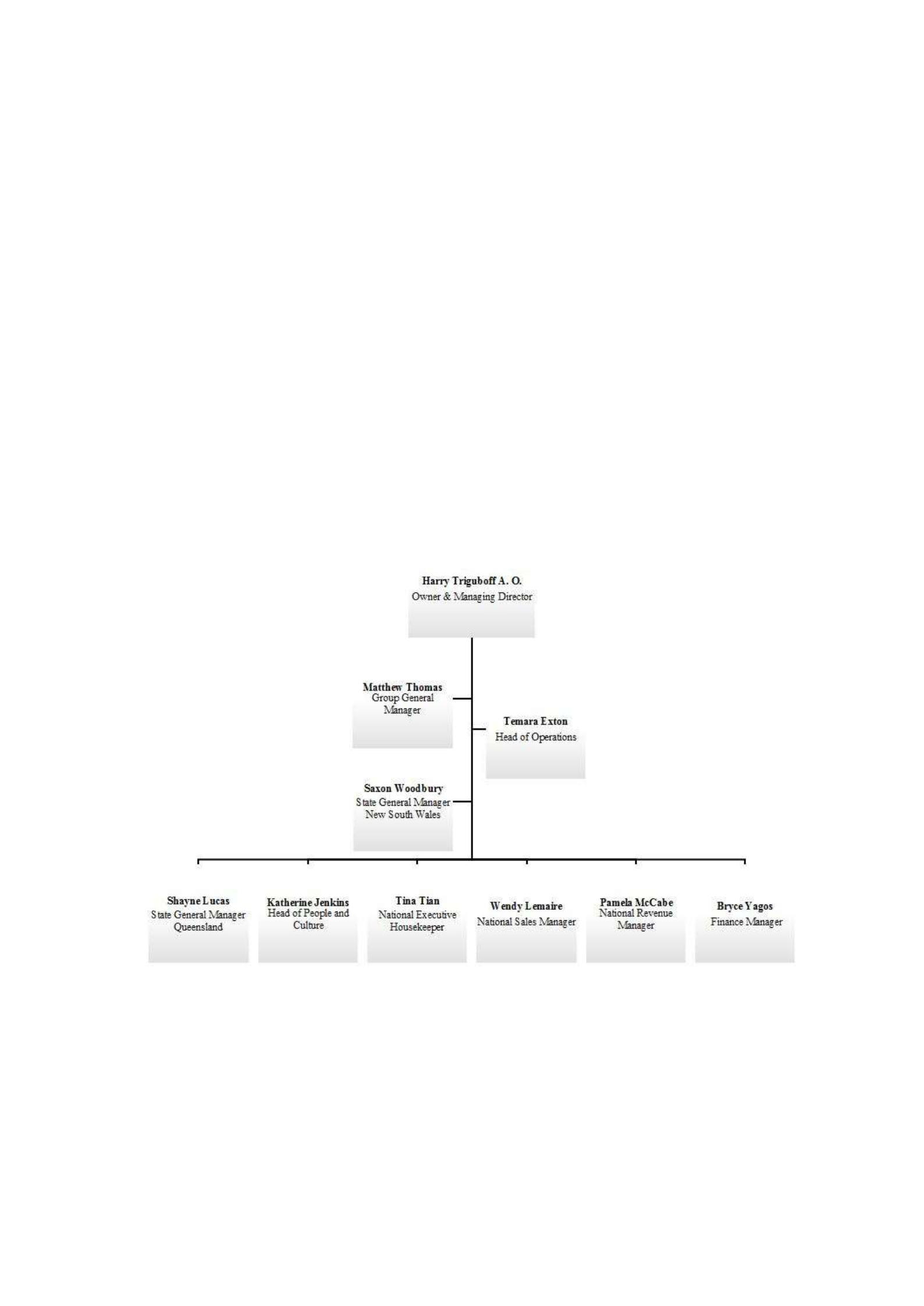
Business Vision
The business vision of Meriton Suites is to be regarded as the industry leader in Australian
suite-hotel accommodation. Meriton Suites aims to provide outstanding value for money and
offer the best service that matches the brand and visitors (“Careers,” n.d.). Additionally, the
firm aspires to be renowned for having a diverse and inclusive workforce that appreciates all
individuals and provides opportunities for advancement in a fast-paced hospitality sector.
Business Mission
The mission is to provide greater levels of service perfection, create unforgettable moments,
and surpass all expectations in order to attract brand ambassadors and visitors for life
(“Careers,” n.d.).
Business Organizational Chart
Figure 2. Business organization
Business SWOT Diagram
The SWOT analysis was prepared as shown in Figure 3. The strengths of the Meriton Suites
include luxury accommodations and high-quality services. Moreover, Meriton Suites is
Australia’s largest owner of hotel rooms, and it offers comfort and convenience to its guests.

Weaknesses include lack of training, especially in crises like COVID-19, and the difficulty of
retaining staff. The opportunities are innovative technologies, safety, and health practices to
attract more clients and build mutually-trustful relationships. Meriton Suites may also develop
special offers to customers to increase awareness and focus on sustainability. Threats are
disparities of COVID-19, economic shockwave, loss of customers’ trust due to the pandemic,
and the competitive landscape.
Figure 3. SWOT
Business Risk Register
Risk methodology included identifying the critical risks, applying the PESOTEL framework
via the business risk register, and incorporating risks pertaining to Meriton Suites business.
Table 2 illustrates the top 10 risks and the degree of influence of each risk incident. The political
risk category includes travel restrictions; the closure of state and territorial borders and the
prohibition of non-essential travel have a significant influence on the hotel business (Baudille
& Rodrigues, 2021). The economic risk category involves fluctuating taxes, whereas the social
category includes the following risks: discrimination, layoffs, and lack of skilled staff. For
instance, a high incidence of racial discrimination leads to lower job satisfaction in the
hospitality sector (Shum et al., 2019). As a result, diversity management and education are
critical in the hotel industry.
Notably, the COVID-19 epidemic has substantially impacted the tourist and hospitality
industries; hotel managers must deal unpredictably to thrive in this environment. The

pandemic’s implications, including travel restrictions, border closures, and quarantine
regulations, have resulted in many businesses in the tourist and hospitality industries reducing
their operations via layoffs (Japutra & Situmorang, 2021). Employee layoffs are the quickest
approach to cutting operational costs. At the same time, hotels should consider workers as
intangible assets (Japutra & Situmorang, 2021). Therefore, the necessity of layoffs is a
significant risk for both managers and staff.
Operational risks involve misleading or deceptive conduct and workplace injury. Baudille and
Rodrigues (2021) claim hotels should not participate in fraudulent or misleading behavior.
Reviews, room quality, facilities, rates, and refund rights are examples of representations
commonly on complaints and investigations (Baudille & Rodrigues, 2021). Misleading or
deceptive conduct is a risk that may negatively impact a hotel’s reputation. Workplace injuries
are a crucial risk and may occasionally happen; thus, the personnel should be trained on health
and safety measures and regulations. Technological risk is cyber-crime attacks; the managers
should ensure to update the software used by the hotel.
The environmental category includes CO2 emissions, and the legal type involves criminal
attacks. Owners and shareholders are the most potent influences in the Australian hotel business
because their investments prioritize ecologically sustainable policies and practices (ESPPs)
(Khatter et al., 2021). CO2 emissions are seen as a critical risk; thus, Meriton takes excellent
care and confidence in how the hotel is designed and built to have the least possible
environmental footprint (“Sustainable living,” n.d.). Finally, the possibility of criminal attacks
should be assessed and investigated because the safety of guests and personnel is the primary
responsibility of any hotel, including Meriton Suites.
Table 2. Risk Register (top 10), Meriton Suites, total score = 65%
Business Policy and Procedure Examples
The fundamental purpose of the Risk Management Policy is to provide information and
guidance on risk management. Risk is the influence of uncertainty on goals; risk management
implements consistent processes within a complete framework to guarantee that risk is handled
effectively, promptly, and coherently throughout an organization (Tourism Australia, n.d.). The
Risk Management Policy template is attached as Appendix 1. The business is dedicated to
identifying, analyzing, and managing risks regularly in the spirit of good governance to
maximize the possibility of the hotel reaching its objectives.

A risk management procedure is a systematic method of creating the environment in which the
organization, business unit, or project operates and identifying, analyzing, assessing, and
treating the risks that may raise doubts about the company’s capacity to fulfill its goals. The
Risk Management Procedure template is attached as Appendix 2. A risk management approach
also offers a framework for ensuring that identified risks are constantly monitored and
evaluated. Communication and feedback are ongoing activities at all phases of the risk
management process to deliver, exchange, or collect information and participate in discourse
with internal and external stakeholders (Tourism Australia, n.d.). The company has committed
to reviewing its risk management framework on an annual basis to ensure that risk management
is efficient and continues to promote organizational success.
Risk Radar Diagram
The most crucial risks are R&D, competitive landscape, environmental footprint, and training.
COVID-19 has provided the hospitality industry with an unprecedented challenge. Despite
being a popular tourist destination globally, Australia was unable to match consumer
expectations, especially at its top-tier luxury hotels (Mehta et al., 2021). It also conveys a lack
of preparedness and adaptability in the hospitality industry. During COVID-19, Mehta et al.
(2021) contend that top leadership in the continent’s hotels is relatively slow in learning and
adjusting to altering consumer demands. Thus, it is vital to focus on training to overcome tough
competition in the hotel industry and ensure high-quality services at Meriton Suites. Bonfati et
al. (2021) claim that technology and digital improvements enhance the whole hotel experience
by allowing customers to obtain speedy and effective service. Consequently, according to the
World Economic Forum, R&D carries a significant risk of developing new services and
receiving positive customer feedback and a high level of service satisfaction. (2021),
technology-enabled services may aid in developing new business ecosystems and the
advancement of possibilities. Sustainability plays a vital role in modern society; thus, Meriton
Suites should assess its sustainability goals and environmental footprint.
Table 3. Risk rating, Meriton Suites
#
Risk
Rating
1
Location
8

2
Competitive landscape
4
3
Compliance
5
4
Social media presence
7
5
Products & services
7
6
Business cultural environment
8
7
Financial performance
8
8
Environmental footprint
3
9
Training
4
8
Gender equality ratio
9
9
R&D
3
10
Governance
8
Total Risk Score
74

Figure 4. Meriton Suites, Risk Radar
Report Conclusion
The main recommendation for shareholders is to invest in personnel training in order to
compete in the hotel industry and deliver high-quality services. Furthermore, technical and
digital improvements have the potential to improve the whole hotel experience. Employees
should be trained on new technologies regularly and updated on health and safety procedures
and regulations. Shareholders should emphasize environmentally sustainable policies and
practices. Essentially, the business risk score, the average of the two separate scores from the
risk register, namely 65%, and risk radar, 74%, equals 69.5%.
Introduction and Business Overview
The risk plan aims to identify, analyze, and describe possible risks for the selected company
that may arise during business operations. The overall structure includes stakeholder analysis,
business philosophy overview, business risk register, business policies and procedures, and risk
radar diagram. The business’s name is Meriton Suites, and it is located in Australia, with the
headquarters in Sydney; the business type is privately held. Meriton Suites was founded in
2003 as Meriton Serviced Apartments and has seen tremendous development in its range of
premium apartment-style hotel accommodation (“Your home, away from home,” n.d.). The
company has become Australia’s largest owner of hotel rooms and one of the biggest private
hotel operators, with nineteen locations and a stunning total of approximately five thousand

suites. It offers top-quality, professional services combined with smart and modern amenities
(“Your home, away from home,” n.d.). Meriton Suites, a luxury lodging brand, is part of
Meriton Group, founded in 1963, Australia’s most prominent privately-owned apartment
developer (“About Merton,” n.d.). According to the official company’s LinkedIn page, the
company size is 201-501 employees (LinkedIn, n.d.). The head office is located at Meriton
Tower, 528 Kent St, Sydney (See Figure 1).
Figure 1. Head Office of Meriton Suites (Meriton Australia, n.d.)
Stakeholder Analysis
Stakeholder Discussion
The key stakeholders that are critical for the operation and functions of the business are owners,
staff, and media. Wijtenburn (2020) states that the deal sponsor heads the ownership group with
a joint venture partner or a syndicate of limited partners. The job is similar to any other standard
real estate owning group but with a hospitality focus. Owners are accountable for ensuring that
the brand and operator have a high-quality asset that commands the maximum feasible income
(Wijtenburg, 2020). Owners require a financial investment and the use of resources to present
the hotel in the best light possible. Hence, the most significant stakeholders are owners who
play the most crucial function in the hotel transaction structure. According to Wijtenburg
(2020), the staff monitors the hotel’s day-to-day operations, including guest experience,
demand planning, sales, and property maintenance. Media delivers value by increasing sales,

advertising, and industry best practices (Wijtenburg, 2020). Additionally, hotel positioning in
the market is heavily influenced by guests’ perceptions of the company.
Stakeholder List and Diagram
Table 1. Stakeholders’ list
Stakeholder #
Stakeholder
Internal/ External
Interest
Influence
1
Customers
External
1
2
2
Staff
Internal
1
1
3
Suppliers
External
5
6
4
Contractors
External
5
7
5
Professional Services
Internal
5
5
6
Government – L/S/F
External
5
1
7
Media
External
3
3
8
Investors
External
1
1
9
Financial Services
Internal
6
4
10
Security Services
Internal
6
4
11
Utility Providers
External
6
4
12
Insurers
External
7
6

13
Unions
External
7
4
14
Community
External
4
5
15
Waste Services
Internal
8
9
16
Training Providers
External
5
2
17
Educational Providers
External
6
3
18
Owners
Internal
1
1
19
Consultants
External
3
3
20
Compliance Agencies
External
5
6
Business Philosophy
Business Name

Business Vision
The business vision of Meriton Suites is to be regarded as the industry leader in Australian
suite-hotel accommodation. Meriton Suites aims to provide outstanding value for money and
offer the best service that matches the brand and visitors (“Careers,” n.d.). Additionally, the
firm aspires to be renowned for having a diverse and inclusive workforce that appreciates all
individuals and provides opportunities for advancement in a fast-paced hospitality sector.
Business Mission
The mission is to provide greater levels of service perfection, create unforgettable moments,
and surpass all expectations in order to attract brand ambassadors and visitors for life
(“Careers,” n.d.).
Business Organizational Chart
Figure 2. Business organization
Business SWOT Diagram
The SWOT analysis was prepared as shown in Figure 3. The strengths of the Meriton Suites
include luxury accommodations and high-quality services. Moreover, Meriton Suites is
Australia’s largest owner of hotel rooms, and it offers comfort and convenience to its guests.

Weaknesses include lack of training, especially in crises like COVID-19, and the difficulty of
retaining staff. The opportunities are innovative technologies, safety, and health practices to
attract more clients and build mutually-trustful relationships. Meriton Suites may also develop
special offers to customers to increase awareness and focus on sustainability. Threats are
disparities of COVID-19, economic shockwave, loss of customers’ trust due to the pandemic,
and the competitive landscape.
Figure 3. SWOT
Business Risk Register
Risk methodology included identifying the critical risks, applying the PESOTEL framework
via the business risk register, and incorporating risks pertaining to Meriton Suites business.
Table 2 illustrates the top 10 risks and the degree of influence of each risk incident. The political
risk category includes travel restrictions; the closure of state and territorial borders and the
prohibition of non-essential travel have a significant influence on the hotel business (Baudille
& Rodrigues, 2021). The economic risk category involves fluctuating taxes, whereas the social
category includes the following risks: discrimination, layoffs, and lack of skilled staff. For
instance, a high incidence of racial discrimination leads to lower job satisfaction in the
hospitality sector (Shum et al., 2019). As a result, diversity management and education are
critical in the hotel industry.
Notably, the COVID-19 epidemic has substantially impacted the tourist and hospitality
industries; hotel managers must deal unpredictably to thrive in this environment. The

pandemic’s implications, including travel restrictions, border closures, and quarantine
regulations, have resulted in many businesses in the tourist and hospitality industries reducing
their operations via layoffs (Japutra & Situmorang, 2021). Employee layoffs are the quickest
approach to cutting operational costs. At the same time, hotels should consider workers as
intangible assets (Japutra & Situmorang, 2021). Therefore, the necessity of layoffs is a
significant risk for both managers and staff.
Operational risks involve misleading or deceptive conduct and workplace injury. Baudille and
Rodrigues (2021) claim hotels should not participate in fraudulent or misleading behavior.
Reviews, room quality, facilities, rates, and refund rights are examples of representations
commonly on complaints and investigations (Baudille & Rodrigues, 2021). Misleading or
deceptive conduct is a risk that may negatively impact a hotel’s reputation. Workplace injuries
are a crucial risk and may occasionally happen; thus, the personnel should be trained on health
and safety measures and regulations. Technological risk is cyber-crime attacks; the managers
should ensure to update the software used by the hotel.
The environmental category includes CO2 emissions, and the legal type involves criminal
attacks. Owners and shareholders are the most potent influences in the Australian hotel business
because their investments prioritize ecologically sustainable policies and practices (ESPPs)
(Khatter et al., 2021). CO2 emissions are seen as a critical risk; thus, Meriton takes excellent
care and confidence in how the hotel is designed and built to have the least possible
environmental footprint (“Sustainable living,” n.d.). Finally, the possibility of criminal attacks
should be assessed and investigated because the safety of guests and personnel is the primary
responsibility of any hotel, including Meriton Suites.
Table 2. Risk Register (top 10), Meriton Suites, total score = 65%
Business Policy and Procedure Examples
The fundamental purpose of the Risk Management Policy is to provide information and
guidance on risk management. Risk is the influence of uncertainty on goals; risk management
implements consistent processes within a complete framework to guarantee that risk is handled
effectively, promptly, and coherently throughout an organization (Tourism Australia, n.d.). The
Risk Management Policy template is attached as Appendix 1. The business is dedicated to
identifying, analyzing, and managing risks regularly in the spirit of good governance to
maximize the possibility of the hotel reaching its objectives.

A risk management procedure is a systematic method of creating the environment in which the
organization, business unit, or project operates and identifying, analyzing, assessing, and
treating the risks that may raise doubts about the company’s capacity to fulfill its goals. The
Risk Management Procedure template is attached as Appendix 2. A risk management approach
also offers a framework for ensuring that identified risks are constantly monitored and
evaluated. Communication and feedback are ongoing activities at all phases of the risk
management process to deliver, exchange, or collect information and participate in discourse
with internal and external stakeholders (Tourism Australia, n.d.). The company has committed
to reviewing its risk management framework on an annual basis to ensure that risk management
is efficient and continues to promote organizational success.
Risk Radar Diagram
The most crucial risks are R&D, competitive landscape, environmental footprint, and training.
COVID-19 has provided the hospitality industry with an unprecedented challenge. Despite
being a popular tourist destination globally, Australia was unable to match consumer
expectations, especially at its top-tier luxury hotels (Mehta et al., 2021). It also conveys a lack
of preparedness and adaptability in the hospitality industry. During COVID-19, Mehta et al.
(2021) contend that top leadership in the continent’s hotels is relatively slow in learning and
adjusting to altering consumer demands. Thus, it is vital to focus on training to overcome tough
competition in the hotel industry and ensure high-quality services at Meriton Suites. Bonfati et
al. (2021) claim that technology and digital improvements enhance the whole hotel experience
by allowing customers to obtain speedy and effective service. Consequently, according to the
World Economic Forum, R&D carries a significant risk of developing new services and
receiving positive customer feedback and a high level of service satisfaction. (2021),
technology-enabled services may aid in developing new business ecosystems and the
advancement of possibilities. Sustainability plays a vital role in modern society; thus, Meriton
Suites should assess its sustainability goals and environmental footprint.
Table 3. Risk rating, Meriton Suites
#
Risk
Rating
1
Location
8

2
Competitive landscape
4
3
Compliance
5
4
Social media presence
7
5
Products & services
7
6
Business cultural environment
8
7
Financial performance
8
8
Environmental footprint
3
9
Training
4
8
Gender equality ratio
9
9
R&D
3
10
Governance
8
Total Risk Score
74

Figure 4. Meriton Suites, Risk Radar
Report Conclusion
The main recommendation for shareholders is to invest in personnel training in order to
compete in the hotel industry and deliver high-quality services. Furthermore, technical and
digital improvements have the potential to improve the whole hotel experience. Employees
should be trained on new technologies regularly and updated on health and safety procedures
and regulations. Shareholders should emphasize environmentally sustainable policies and
practices. Essentially, the business risk score, the average of the two separate scores from the
risk register, namely 65%, and risk radar, 74%, equals 69.5%.
Introduction and Business Overview
The risk plan aims to identify, analyze, and describe possible risks for the selected company
that may arise during business operations. The overall structure includes stakeholder analysis,
business philosophy overview, business risk register, business policies and procedures, and risk
radar diagram. The business’s name is Meriton Suites, and it is located in Australia, with the
headquarters in Sydney; the business type is privately held. Meriton Suites was founded in
2003 as Meriton Serviced Apartments and has seen tremendous development in its range of
premium apartment-style hotel accommodation (“Your home, away from home,” n.d.). The
company has become Australia’s largest owner of hotel rooms and one of the biggest private
hotel operators, with nineteen locations and a stunning total of approximately five thousand

suites. It offers top-quality, professional services combined with smart and modern amenities
(“Your home, away from home,” n.d.). Meriton Suites, a luxury lodging brand, is part of
Meriton Group, founded in 1963, Australia’s most prominent privately-owned apartment
developer (“About Merton,” n.d.). According to the official company’s LinkedIn page, the
company size is 201-501 employees (LinkedIn, n.d.). The head office is located at Meriton
Tower, 528 Kent St, Sydney (See Figure 1).
Figure 1. Head Office of Meriton Suites (Meriton Australia, n.d.)
Stakeholder Analysis
Stakeholder Discussion
The key stakeholders that are critical for the operation and functions of the business are owners,
staff, and media. Wijtenburn (2020) states that the deal sponsor heads the ownership group with
a joint venture partner or a syndicate of limited partners. The job is similar to any other standard
real estate owning group but with a hospitality focus. Owners are accountable for ensuring that
the brand and operator have a high-quality asset that commands the maximum feasible income
(Wijtenburg, 2020). Owners require a financial investment and the use of resources to present
the hotel in the best light possible. Hence, the most significant stakeholders are owners who
play the most crucial function in the hotel transaction structure. According to Wijtenburg
(2020), the staff monitors the hotel’s day-to-day operations, including guest experience,
demand planning, sales, and property maintenance. Media delivers value by increasing sales,

advertising, and industry best practices (Wijtenburg, 2020). Additionally, hotel positioning in
the market is heavily influenced by guests’ perceptions of the company.
Stakeholder List and Diagram
Table 1. Stakeholders’ list
Stakeholder #
Stakeholder
Internal/ External
Interest
Influence
1
Customers
External
1
2
2
Staff
Internal
1
1
3
Suppliers
External
5
6
4
Contractors
External
5
7
5
Professional Services
Internal
5
5
6
Government – L/S/F
External
5
1
7
Media
External
3
3
8
Investors
External
1
1
9
Financial Services
Internal
6
4
10
Security Services
Internal
6
4
11
Utility Providers
External
6
4
12
Insurers
External
7
6

13
Unions
External
7
4
14
Community
External
4
5
15
Waste Services
Internal
8
9
16
Training Providers
External
5
2
17
Educational Providers
External
6
3
18
Owners
Internal
1
1
19
Consultants
External
3
3
20
Compliance Agencies
External
5
6
Business Philosophy
Business Name

Business Vision
The business vision of Meriton Suites is to be regarded as the industry leader in Australian
suite-hotel accommodation. Meriton Suites aims to provide outstanding value for money and
offer the best service that matches the brand and visitors (“Careers,” n.d.). Additionally, the
firm aspires to be renowned for having a diverse and inclusive workforce that appreciates all
individuals and provides opportunities for advancement in a fast-paced hospitality sector.
Business Mission
The mission is to provide greater levels of service perfection, create unforgettable moments,
and surpass all expectations in order to attract brand ambassadors and visitors for life
(“Careers,” n.d.).
Business Organizational Chart
Figure 2. Business organization
Business SWOT Diagram
The SWOT analysis was prepared as shown in Figure 3. The strengths of the Meriton Suites
include luxury accommodations and high-quality services. Moreover, Meriton Suites is
Australia’s largest owner of hotel rooms, and it offers comfort and convenience to its guests.

Weaknesses include lack of training, especially in crises like COVID-19, and the difficulty of
retaining staff. The opportunities are innovative technologies, safety, and health practices to
attract more clients and build mutually-trustful relationships. Meriton Suites may also develop
special offers to customers to increase awareness and focus on sustainability. Threats are
disparities of COVID-19, economic shockwave, loss of customers’ trust due to the pandemic,
and the competitive landscape.
Figure 3. SWOT
Business Risk Register
Risk methodology included identifying the critical risks, applying the PESOTEL framework
via the business risk register, and incorporating risks pertaining to Meriton Suites business.
Table 2 illustrates the top 10 risks and the degree of influence of each risk incident. The political
risk category includes travel restrictions; the closure of state and territorial borders and the
prohibition of non-essential travel have a significant influence on the hotel business (Baudille
& Rodrigues, 2021). The economic risk category involves fluctuating taxes, whereas the social
category includes the following risks: discrimination, layoffs, and lack of skilled staff. For
instance, a high incidence of racial discrimination leads to lower job satisfaction in the
hospitality sector (Shum et al., 2019). As a result, diversity management and education are
critical in the hotel industry.
Notably, the COVID-19 epidemic has substantially impacted the tourist and hospitality
industries; hotel managers must deal unpredictably to thrive in this environment. The

pandemic’s implications, including travel restrictions, border closures, and quarantine
regulations, have resulted in many businesses in the tourist and hospitality industries reducing
their operations via layoffs (Japutra & Situmorang, 2021). Employee layoffs are the quickest
approach to cutting operational costs. At the same time, hotels should consider workers as
intangible assets (Japutra & Situmorang, 2021). Therefore, the necessity of layoffs is a
significant risk for both managers and staff.
Operational risks involve misleading or deceptive conduct and workplace injury. Baudille and
Rodrigues (2021) claim hotels should not participate in fraudulent or misleading behavior.
Reviews, room quality, facilities, rates, and refund rights are examples of representations
commonly on complaints and investigations (Baudille & Rodrigues, 2021). Misleading or
deceptive conduct is a risk that may negatively impact a hotel’s reputation. Workplace injuries
are a crucial risk and may occasionally happen; thus, the personnel should be trained on health
and safety measures and regulations. Technological risk is cyber-crime attacks; the managers
should ensure to update the software used by the hotel.
The environmental category includes CO2 emissions, and the legal type involves criminal
attacks. Owners and shareholders are the most potent influences in the Australian hotel business
because their investments prioritize ecologically sustainable policies and practices (ESPPs)
(Khatter et al., 2021). CO2 emissions are seen as a critical risk; thus, Meriton takes excellent
care and confidence in how the hotel is designed and built to have the least possible
environmental footprint (“Sustainable living,” n.d.). Finally, the possibility of criminal attacks
should be assessed and investigated because the safety of guests and personnel is the primary
responsibility of any hotel, including Meriton Suites.
Table 2. Risk Register (top 10), Meriton Suites, total score = 65%
Business Policy and Procedure Examples
The fundamental purpose of the Risk Management Policy is to provide information and
guidance on risk management. Risk is the influence of uncertainty on goals; risk management
implements consistent processes within a complete framework to guarantee that risk is handled
effectively, promptly, and coherently throughout an organization (Tourism Australia, n.d.). The
Risk Management Policy template is attached as Appendix 1. The business is dedicated to
identifying, analyzing, and managing risks regularly in the spirit of good governance to
maximize the possibility of the hotel reaching its objectives.

A risk management procedure is a systematic method of creating the environment in which the
organization, business unit, or project operates and identifying, analyzing, assessing, and
treating the risks that may raise doubts about the company’s capacity to fulfill its goals. The
Risk Management Procedure template is attached as Appendix 2. A risk management approach
also offers a framework for ensuring that identified risks are constantly monitored and
evaluated. Communication and feedback are ongoing activities at all phases of the risk
management process to deliver, exchange, or collect information and participate in discourse
with internal and external stakeholders (Tourism Australia, n.d.). The company has committed
to reviewing its risk management framework on an annual basis to ensure that risk management
is efficient and continues to promote organizational success.
Risk Radar Diagram
The most crucial risks are R&D, competitive landscape, environmental footprint, and training.
COVID-19 has provided the hospitality industry with an unprecedented challenge. Despite
being a popular tourist destination globally, Australia was unable to match consumer
expectations, especially at its top-tier luxury hotels (Mehta et al., 2021). It also conveys a lack
of preparedness and adaptability in the hospitality industry. During COVID-19, Mehta et al.
(2021) contend that top leadership in the continent’s hotels is relatively slow in learning and
adjusting to altering consumer demands. Thus, it is vital to focus on training to overcome tough
competition in the hotel industry and ensure high-quality services at Meriton Suites. Bonfati et
al. (2021) claim that technology and digital improvements enhance the whole hotel experience
by allowing customers to obtain speedy and effective service. Consequently, according to the
World Economic Forum, R&D carries a significant risk of developing new services and
receiving positive customer feedback and a high level of service satisfaction. (2021),
technology-enabled services may aid in developing new business ecosystems and the
advancement of possibilities. Sustainability plays a vital role in modern society; thus, Meriton
Suites should assess its sustainability goals and environmental footprint.
Table 3. Risk rating, Meriton Suites
#
Risk
Rating
1
Location
8

2
Competitive landscape
4
3
Compliance
5
4
Social media presence
7
5
Products & services
7
6
Business cultural environment
8
7
Financial performance
8
8
Environmental footprint
3
9
Training
4
8
Gender equality ratio
9
9
R&D
3
10
Governance
8
Total Risk Score
74

Figure 4. Meriton Suites, Risk Radar
Report Conclusion
The main recommendation for shareholders is to invest in personnel training in order to
compete in the hotel industry and deliver high-quality services. Furthermore, technical and
digital improvements have the potential to improve the whole hotel experience. Employees
should be trained on new technologies regularly and updated on health and safety procedures
and regulations. Shareholders should emphasize environmentally sustainable policies and
practices. Essentially, the business risk score, the average of the two separate scores from the
risk register, namely 65%, and risk radar, 74%, equals 69.5%.
Introduction and Business Overview
The risk plan aims to identify, analyze, and describe possible risks for the selected company
that may arise during business operations. The overall structure includes stakeholder analysis,
business philosophy overview, business risk register, business policies and procedures, and risk
radar diagram. The business’s name is Meriton Suites, and it is located in Australia, with the
headquarters in Sydney; the business type is privately held. Meriton Suites was founded in
2003 as Meriton Serviced Apartments and has seen tremendous development in its range of
premium apartment-style hotel accommodation (“Your home, away from home,” n.d.). The
company has become Australia’s largest owner of hotel rooms and one of the biggest private
hotel operators, with nineteen locations and a stunning total of approximately five thousand

suites. It offers top-quality, professional services combined with smart and modern amenities
(“Your home, away from home,” n.d.). Meriton Suites, a luxury lodging brand, is part of
Meriton Group, founded in 1963, Australia’s most prominent privately-owned apartment
developer (“About Merton,” n.d.). According to the official company’s LinkedIn page, the
company size is 201-501 employees (LinkedIn, n.d.). The head office is located at Meriton
Tower, 528 Kent St, Sydney (See Figure 1).
Figure 1. Head Office of Meriton Suites (Meriton Australia, n.d.)
Stakeholder Analysis
Stakeholder Discussion
The key stakeholders that are critical for the operation and functions of the business are owners,
staff, and media. Wijtenburn (2020) states that the deal sponsor heads the ownership group with
a joint venture partner or a syndicate of limited partners. The job is similar to any other standard
real estate owning group but with a hospitality focus. Owners are accountable for ensuring that
the brand and operator have a high-quality asset that commands the maximum feasible income
(Wijtenburg, 2020). Owners require a financial investment and the use of resources to present
the hotel in the best light possible. Hence, the most significant stakeholders are owners who
play the most crucial function in the hotel transaction structure. According to Wijtenburg
(2020), the staff monitors the hotel’s day-to-day operations, including guest experience,
demand planning, sales, and property maintenance. Media delivers value by increasing sales,

advertising, and industry best practices (Wijtenburg, 2020). Additionally, hotel positioning in
the market is heavily influenced by guests’ perceptions of the company.
Stakeholder List and Diagram
Table 1. Stakeholders’ list
Stakeholder #
Stakeholder
Internal/ External
Interest
Influence
1
Customers
External
1
2
2
Staff
Internal
1
1
3
Suppliers
External
5
6
4
Contractors
External
5
7
5
Professional Services
Internal
5
5
6
Government – L/S/F
External
5
1
7
Media
External
3
3
8
Investors
External
1
1
9
Financial Services
Internal
6
4
10
Security Services
Internal
6
4
11
Utility Providers
External
6
4
12
Insurers
External
7
6

13
Unions
External
7
4
14
Community
External
4
5
15
Waste Services
Internal
8
9
16
Training Providers
External
5
2
17
Educational Providers
External
6
3
18
Owners
Internal
1
1
19
Consultants
External
3
3
20
Compliance Agencies
External
5
6
Business Philosophy
Business Name

Business Vision
The business vision of Meriton Suites is to be regarded as the industry leader in Australian
suite-hotel accommodation. Meriton Suites aims to provide outstanding value for money and
offer the best service that matches the brand and visitors (“Careers,” n.d.). Additionally, the
firm aspires to be renowned for having a diverse and inclusive workforce that appreciates all
individuals and provides opportunities for advancement in a fast-paced hospitality sector.
Business Mission
The mission is to provide greater levels of service perfection, create unforgettable moments,
and surpass all expectations in order to attract brand ambassadors and visitors for life
(“Careers,” n.d.).
Business Organizational Chart
Figure 2. Business organization
Business SWOT Diagram
The SWOT analysis was prepared as shown in Figure 3. The strengths of the Meriton Suites
include luxury accommodations and high-quality services. Moreover, Meriton Suites is
Australia’s largest owner of hotel rooms, and it offers comfort and convenience to its guests.

Weaknesses include lack of training, especially in crises like COVID-19, and the difficulty of
retaining staff. The opportunities are innovative technologies, safety, and health practices to
attract more clients and build mutually-trustful relationships. Meriton Suites may also develop
special offers to customers to increase awareness and focus on sustainability. Threats are
disparities of COVID-19, economic shockwave, loss of customers’ trust due to the pandemic,
and the competitive landscape.
Figure 3. SWOT
Business Risk Register
Risk methodology included identifying the critical risks, applying the PESOTEL framework
via the business risk register, and incorporating risks pertaining to Meriton Suites business.
Table 2 illustrates the top 10 risks and the degree of influence of each risk incident. The political
risk category includes travel restrictions; the closure of state and territorial borders and the
prohibition of non-essential travel have a significant influence on the hotel business (Baudille
& Rodrigues, 2021). The economic risk category involves fluctuating taxes, whereas the social
category includes the following risks: discrimination, layoffs, and lack of skilled staff. For
instance, a high incidence of racial discrimination leads to lower job satisfaction in the
hospitality sector (Shum et al., 2019). As a result, diversity management and education are
critical in the hotel industry.
Notably, the COVID-19 epidemic has substantially impacted the tourist and hospitality
industries; hotel managers must deal unpredictably to thrive in this environment. The

pandemic’s implications, including travel restrictions, border closures, and quarantine
regulations, have resulted in many businesses in the tourist and hospitality industries reducing
their operations via layoffs (Japutra & Situmorang, 2021). Employee layoffs are the quickest
approach to cutting operational costs. At the same time, hotels should consider workers as
intangible assets (Japutra & Situmorang, 2021). Therefore, the necessity of layoffs is a
significant risk for both managers and staff.
Operational risks involve misleading or deceptive conduct and workplace injury. Baudille and
Rodrigues (2021) claim hotels should not participate in fraudulent or misleading behavior.
Reviews, room quality, facilities, rates, and refund rights are examples of representations
commonly on complaints and investigations (Baudille & Rodrigues, 2021). Misleading or
deceptive conduct is a risk that may negatively impact a hotel’s reputation. Workplace injuries
are a crucial risk and may occasionally happen; thus, the personnel should be trained on health
and safety measures and regulations. Technological risk is cyber-crime attacks; the managers
should ensure to update the software used by the hotel.
The environmental category includes CO2 emissions, and the legal type involves criminal
attacks. Owners and shareholders are the most potent influences in the Australian hotel business
because their investments prioritize ecologically sustainable policies and practices (ESPPs)
(Khatter et al., 2021). CO2 emissions are seen as a critical risk; thus, Meriton takes excellent
care and confidence in how the hotel is designed and built to have the least possible
environmental footprint (“Sustainable living,” n.d.). Finally, the possibility of criminal attacks
should be assessed and investigated because the safety of guests and personnel is the primary
responsibility of any hotel, including Meriton Suites.
Table 2. Risk Register (top 10), Meriton Suites, total score = 65%
Business Policy and Procedure Examples
The fundamental purpose of the Risk Management Policy is to provide information and
guidance on risk management. Risk is the influence of uncertainty on goals; risk management
implements consistent processes within a complete framework to guarantee that risk is handled
effectively, promptly, and coherently throughout an organization (Tourism Australia, n.d.). The
Risk Management Policy template is attached as Appendix 1. The business is dedicated to
identifying, analyzing, and managing risks regularly in the spirit of good governance to
maximize the possibility of the hotel reaching its objectives.

A risk management procedure is a systematic method of creating the environment in which the
organization, business unit, or project operates and identifying, analyzing, assessing, and
treating the risks that may raise doubts about the company’s capacity to fulfill its goals. The
Risk Management Procedure template is attached as Appendix 2. A risk management approach
also offers a framework for ensuring that identified risks are constantly monitored and
evaluated. Communication and feedback are ongoing activities at all phases of the risk
management process to deliver, exchange, or collect information and participate in discourse
with internal and external stakeholders (Tourism Australia, n.d.). The company has committed
to reviewing its risk management framework on an annual basis to ensure that risk management
is efficient and continues to promote organizational success.
Risk Radar Diagram
The most crucial risks are R&D, competitive landscape, environmental footprint, and training.
COVID-19 has provided the hospitality industry with an unprecedented challenge. Despite
being a popular tourist destination globally, Australia was unable to match consumer
expectations, especially at its top-tier luxury hotels (Mehta et al., 2021). It also conveys a lack
of preparedness and adaptability in the hospitality industry. During COVID-19, Mehta et al.
(2021) contend that top leadership in the continent’s hotels is relatively slow in learning and
adjusting to altering consumer demands. Thus, it is vital to focus on training to overcome tough
competition in the hotel industry and ensure high-quality services at Meriton Suites. Bonfati et
al. (2021) claim that technology and digital improvements enhance the whole hotel experience
by allowing customers to obtain speedy and effective service. Consequently, according to the
World Economic Forum, R&D carries a significant risk of developing new services and
receiving positive customer feedback and a high level of service satisfaction. (2021),
technology-enabled services may aid in developing new business ecosystems and the
advancement of possibilities. Sustainability plays a vital role in modern society; thus, Meriton
Suites should assess its sustainability goals and environmental footprint.
Table 3. Risk rating, Meriton Suites
#
Risk
Rating
1
Location
8

2
Competitive landscape
4
3
Compliance
5
4
Social media presence
7
5
Products & services
7
6
Business cultural environment
8
7
Financial performance
8
8
Environmental footprint
3
9
Training
4
8
Gender equality ratio
9
9
R&D
3
10
Governance
8
Total Risk Score
74

Figure 4. Meriton Suites, Risk Radar
Report Conclusion
The main recommendation for shareholders is to invest in personnel training in order to
compete in the hotel industry and deliver high-quality services. Furthermore, technical and
digital improvements have the potential to improve the whole hotel experience. Employees
should be trained on new technologies regularly and updated on health and safety procedures
and regulations. Shareholders should emphasize environmentally sustainable policies and
practices. Essentially, the business risk score, the average of the two separate scores from the
risk register, namely 65%, and risk radar, 74%, equals 69.5%.
Introduction and Business Overview
The risk plan aims to identify, analyze, and describe possible risks for the selected company
that may arise during business operations. The overall structure includes stakeholder analysis,
business philosophy overview, business risk register, business policies and procedures, and risk
radar diagram. The business’s name is Meriton Suites, and it is located in Australia, with the
headquarters in Sydney; the business type is privately held. Meriton Suites was founded in
2003 as Meriton Serviced Apartments and has seen tremendous development in its range of
premium apartment-style hotel accommodation (“Your home, away from home,” n.d.). The
company has become Australia’s largest owner of hotel rooms and one of the biggest private
hotel operators, with nineteen locations and a stunning total of approximately five thousand

suites. It offers top-quality, professional services combined with smart and modern amenities
(“Your home, away from home,” n.d.). Meriton Suites, a luxury lodging brand, is part of
Meriton Group, founded in 1963, Australia’s most prominent privately-owned apartment
developer (“About Merton,” n.d.). According to the official company’s LinkedIn page, the
company size is 201-501 employees (LinkedIn, n.d.). The head office is located at Meriton
Tower, 528 Kent St, Sydney (See Figure 1).
Figure 1. Head Office of Meriton Suites (Meriton Australia, n.d.)
Stakeholder Analysis
Stakeholder Discussion
The key stakeholders that are critical for the operation and functions of the business are owners,
staff, and media. Wijtenburn (2020) states that the deal sponsor heads the ownership group with
a joint venture partner or a syndicate of limited partners. The job is similar to any other standard
real estate owning group but with a hospitality focus. Owners are accountable for ensuring that
the brand and operator have a high-quality asset that commands the maximum feasible income
(Wijtenburg, 2020). Owners require a financial investment and the use of resources to present
the hotel in the best light possible. Hence, the most significant stakeholders are owners who
play the most crucial function in the hotel transaction structure. According to Wijtenburg
(2020), the staff monitors the hotel’s day-to-day operations, including guest experience,
demand planning, sales, and property maintenance. Media delivers value by increasing sales,

advertising, and industry best practices (Wijtenburg, 2020). Additionally, hotel positioning in
the market is heavily influenced by guests’ perceptions of the company.
Stakeholder List and Diagram
Table 1. Stakeholders’ list
Stakeholder #
Stakeholder
Internal/ External
Interest
Influence
1
Customers
External
1
2
2
Staff
Internal
1
1
3
Suppliers
External
5
6
4
Contractors
External
5
7
5
Professional Services
Internal
5
5
6
Government – L/S/F
External
5
1
7
Media
External
3
3
8
Investors
External
1
1
9
Financial Services
Internal
6
4
10
Security Services
Internal
6
4
11
Utility Providers
External
6
4
12
Insurers
External
7
6

13
Unions
External
7
4
14
Community
External
4
5
15
Waste Services
Internal
8
9
16
Training Providers
External
5
2
17
Educational Providers
External
6
3
18
Owners
Internal
1
1
19
Consultants
External
3
3
20
Compliance Agencies
External
5
6
Business Philosophy
Business Name

Business Vision
The business vision of Meriton Suites is to be regarded as the industry leader in Australian
suite-hotel accommodation. Meriton Suites aims to provide outstanding value for money and
offer the best service that matches the brand and visitors (“Careers,” n.d.). Additionally, the
firm aspires to be renowned for having a diverse and inclusive workforce that appreciates all
individuals and provides opportunities for advancement in a fast-paced hospitality sector.
Business Mission
The mission is to provide greater levels of service perfection, create unforgettable moments,
and surpass all expectations in order to attract brand ambassadors and visitors for life
(“Careers,” n.d.).
Business Organizational Chart
Figure 2. Business organization
Business SWOT Diagram
The SWOT analysis was prepared as shown in Figure 3. The strengths of the Meriton Suites
include luxury accommodations and high-quality services. Moreover, Meriton Suites is
Australia’s largest owner of hotel rooms, and it offers comfort and convenience to its guests.

Weaknesses include lack of training, especially in crises like COVID-19, and the difficulty of
retaining staff. The opportunities are innovative technologies, safety, and health practices to
attract more clients and build mutually-trustful relationships. Meriton Suites may also develop
special offers to customers to increase awareness and focus on sustainability. Threats are
disparities of COVID-19, economic shockwave, loss of customers’ trust due to the pandemic,
and the competitive landscape.
Figure 3. SWOT
Business Risk Register
Risk methodology included identifying the critical risks, applying the PESOTEL framework
via the business risk register, and incorporating risks pertaining to Meriton Suites business.
Table 2 illustrates the top 10 risks and the degree of influence of each risk incident. The political
risk category includes travel restrictions; the closure of state and territorial borders and the
prohibition of non-essential travel have a significant influence on the hotel business (Baudille
& Rodrigues, 2021). The economic risk category involves fluctuating taxes, whereas the social
category includes the following risks: discrimination, layoffs, and lack of skilled staff. For
instance, a high incidence of racial discrimination leads to lower job satisfaction in the
hospitality sector (Shum et al., 2019). As a result, diversity management and education are
critical in the hotel industry.
Notably, the COVID-19 epidemic has substantially impacted the tourist and hospitality
industries; hotel managers must deal unpredictably to thrive in this environment. The

pandemic’s implications, including travel restrictions, border closures, and quarantine
regulations, have resulted in many businesses in the tourist and hospitality industries reducing
their operations via layoffs (Japutra & Situmorang, 2021). Employee layoffs are the quickest
approach to cutting operational costs. At the same time, hotels should consider workers as
intangible assets (Japutra & Situmorang, 2021). Therefore, the necessity of layoffs is a
significant risk for both managers and staff.
Operational risks involve misleading or deceptive conduct and workplace injury. Baudille and
Rodrigues (2021) claim hotels should not participate in fraudulent or misleading behavior.
Reviews, room quality, facilities, rates, and refund rights are examples of representations
commonly on complaints and investigations (Baudille & Rodrigues, 2021). Misleading or
deceptive conduct is a risk that may negatively impact a hotel’s reputation. Workplace injuries
are a crucial risk and may occasionally happen; thus, the personnel should be trained on health
and safety measures and regulations. Technological risk is cyber-crime attacks; the managers
should ensure to update the software used by the hotel.
The environmental category includes CO2 emissions, and the legal type involves criminal
attacks. Owners and shareholders are the most potent influences in the Australian hotel business
because their investments prioritize ecologically sustainable policies and practices (ESPPs)
(Khatter et al., 2021). CO2 emissions are seen as a critical risk; thus, Meriton takes excellent
care and confidence in how the hotel is designed and built to have the least possible
environmental footprint (“Sustainable living,” n.d.). Finally, the possibility of criminal attacks
should be assessed and investigated because the safety of guests and personnel is the primary
responsibility of any hotel, including Meriton Suites.
Table 2. Risk Register (top 10), Meriton Suites, total score = 65%
Business Policy and Procedure Examples
The fundamental purpose of the Risk Management Policy is to provide information and
guidance on risk management. Risk is the influence of uncertainty on goals; risk management
implements consistent processes within a complete framework to guarantee that risk is handled
effectively, promptly, and coherently throughout an organization (Tourism Australia, n.d.). The
Risk Management Policy template is attached as Appendix 1. The business is dedicated to
identifying, analyzing, and managing risks regularly in the spirit of good governance to
maximize the possibility of the hotel reaching its objectives.

A risk management procedure is a systematic method of creating the environment in which the
organization, business unit, or project operates and identifying, analyzing, assessing, and
treating the risks that may raise doubts about the company’s capacity to fulfill its goals. The
Risk Management Procedure template is attached as Appendix 2. A risk management approach
also offers a framework for ensuring that identified risks are constantly monitored and
evaluated. Communication and feedback are ongoing activities at all phases of the risk
management process to deliver, exchange, or collect information and participate in discourse
with internal and external stakeholders (Tourism Australia, n.d.). The company has committed
to reviewing its risk management framework on an annual basis to ensure that risk management
is efficient and continues to promote organizational success.
Risk Radar Diagram
The most crucial risks are R&D, competitive landscape, environmental footprint, and training.
COVID-19 has provided the hospitality industry with an unprecedented challenge. Despite
being a popular tourist destination globally, Australia was unable to match consumer
expectations, especially at its top-tier luxury hotels (Mehta et al., 2021). It also conveys a lack
of preparedness and adaptability in the hospitality industry. During COVID-19, Mehta et al.
(2021) contend that top leadership in the continent’s hotels is relatively slow in learning and
adjusting to altering consumer demands. Thus, it is vital to focus on training to overcome tough
competition in the hotel industry and ensure high-quality services at Meriton Suites. Bonfati et
al. (2021) claim that technology and digital improvements enhance the whole hotel experience
by allowing customers to obtain speedy and effective service. Consequently, according to the
World Economic Forum, R&D carries a significant risk of developing new services and
receiving positive customer feedback and a high level of service satisfaction. (2021),
technology-enabled services may aid in developing new business ecosystems and the
advancement of possibilities. Sustainability plays a vital role in modern society; thus, Meriton
Suites should assess its sustainability goals and environmental footprint.
Table 3. Risk rating, Meriton Suites
#
Risk
Rating
1
Location
8

2
Competitive landscape
4
3
Compliance
5
4
Social media presence
7
5
Products & services
7
6
Business cultural environment
8
7
Financial performance
8
8
Environmental footprint
3
9
Training
4
8
Gender equality ratio
9
9
R&D
3
10
Governance
8
Total Risk Score
74

Figure 4. Meriton Suites, Risk Radar
Report Conclusion
The main recommendation for shareholders is to invest in personnel training in order to
compete in the hotel industry and deliver high-quality services. Furthermore, technical and
digital improvements have the potential to improve the whole hotel experience. Employees
should be trained on new technologies regularly and updated on health and safety procedures
and regulations. Shareholders should emphasize environmentally sustainable policies and
practices. Essentially, the business risk score, the average of the two separate scores from the
risk register, namely 65%, and risk radar, 74%, equals 69.5%.
Introduction and Business Overview
The risk plan aims to identify, analyze, and describe possible risks for the selected company
that may arise during business operations. The overall structure includes stakeholder analysis,
business philosophy overview, business risk register, business policies and procedures, and risk
radar diagram. The business’s name is Meriton Suites, and it is located in Australia, with the
headquarters in Sydney; the business type is privately held. Meriton Suites was founded in
2003 as Meriton Serviced Apartments and has seen tremendous development in its range of
premium apartment-style hotel accommodation (“Your home, away from home,” n.d.). The
company has become Australia’s largest owner of hotel rooms and one of the biggest private
hotel operators, with nineteen locations and a stunning total of approximately five thousand

suites. It offers top-quality, professional services combined with smart and modern amenities
(“Your home, away from home,” n.d.). Meriton Suites, a luxury lodging brand, is part of
Meriton Group, founded in 1963, Australia’s most prominent privately-owned apartment
developer (“About Merton,” n.d.). According to the official company’s LinkedIn page, the
company size is 201-501 employees (LinkedIn, n.d.). The head office is located at Meriton
Tower, 528 Kent St, Sydney (See Figure 1).
Figure 1. Head Office of Meriton Suites (Meriton Australia, n.d.)
Stakeholder Analysis
Stakeholder Discussion
The key stakeholders that are critical for the operation and functions of the business are owners,
staff, and media. Wijtenburn (2020) states that the deal sponsor heads the ownership group with
a joint venture partner or a syndicate of limited partners. The job is similar to any other standard
real estate owning group but with a hospitality focus. Owners are accountable for ensuring that
the brand and operator have a high-quality asset that commands the maximum feasible income
(Wijtenburg, 2020). Owners require a financial investment and the use of resources to present
the hotel in the best light possible. Hence, the most significant stakeholders are owners who
play the most crucial function in the hotel transaction structure. According to Wijtenburg
(2020), the staff monitors the hotel’s day-to-day operations, including guest experience,
demand planning, sales, and property maintenance. Media delivers value by increasing sales,

advertising, and industry best practices (Wijtenburg, 2020). Additionally, hotel positioning in
the market is heavily influenced by guests’ perceptions of the company.
Stakeholder List and Diagram
Table 1. Stakeholders’ list
Stakeholder #
Stakeholder
Internal/ External
Interest
Influence
1
Customers
External
1
2
2
Staff
Internal
1
1
3
Suppliers
External
5
6
4
Contractors
External
5
7
5
Professional Services
Internal
5
5
6
Government – L/S/F
External
5
1
7
Media
External
3
3
8
Investors
External
1
1
9
Financial Services
Internal
6
4
10
Security Services
Internal
6
4
11
Utility Providers
External
6
4
12
Insurers
External
7
6

13
Unions
External
7
4
14
Community
External
4
5
15
Waste Services
Internal
8
9
16
Training Providers
External
5
2
17
Educational Providers
External
6
3
18
Owners
Internal
1
1
19
Consultants
External
3
3
20
Compliance Agencies
External
5
6
Business Philosophy
Business Name

Business Vision
The business vision of Meriton Suites is to be regarded as the industry leader in Australian
suite-hotel accommodation. Meriton Suites aims to provide outstanding value for money and
offer the best service that matches the brand and visitors (“Careers,” n.d.). Additionally, the
firm aspires to be renowned for having a diverse and inclusive workforce that appreciates all
individuals and provides opportunities for advancement in a fast-paced hospitality sector.
Business Mission
The mission is to provide greater levels of service perfection, create unforgettable moments,
and surpass all expectations in order to attract brand ambassadors and visitors for life
(“Careers,” n.d.).
Business Organizational Chart
Figure 2. Business organization
Business SWOT Diagram
The SWOT analysis was prepared as shown in Figure 3. The strengths of the Meriton Suites
include luxury accommodations and high-quality services. Moreover, Meriton Suites is
Australia’s largest owner of hotel rooms, and it offers comfort and convenience to its guests.

Weaknesses include lack of training, especially in crises like COVID-19, and the difficulty of
retaining staff. The opportunities are innovative technologies, safety, and health practices to
attract more clients and build mutually-trustful relationships. Meriton Suites may also develop
special offers to customers to increase awareness and focus on sustainability. Threats are
disparities of COVID-19, economic shockwave, loss of customers’ trust due to the pandemic,
and the competitive landscape.
Figure 3. SWOT
Business Risk Register
Risk methodology included identifying the critical risks, applying the PESOTEL framework
via the business risk register, and incorporating risks pertaining to Meriton Suites business.
Table 2 illustrates the top 10 risks and the degree of influence of each risk incident. The political
risk category includes travel restrictions; the closure of state and territorial borders and the
prohibition of non-essential travel have a significant influence on the hotel business (Baudille
& Rodrigues, 2021). The economic risk category involves fluctuating taxes, whereas the social
category includes the following risks: discrimination, layoffs, and lack of skilled staff. For
instance, a high incidence of racial discrimination leads to lower job satisfaction in the
hospitality sector (Shum et al., 2019). As a result, diversity management and education are
critical in the hotel industry.
Notably, the COVID-19 epidemic has substantially impacted the tourist and hospitality
industries; hotel managers must deal unpredictably to thrive in this environment. The

pandemic’s implications, including travel restrictions, border closures, and quarantine
regulations, have resulted in many businesses in the tourist and hospitality industries reducing
their operations via layoffs (Japutra & Situmorang, 2021). Employee layoffs are the quickest
approach to cutting operational costs. At the same time, hotels should consider workers as
intangible assets (Japutra & Situmorang, 2021). Therefore, the necessity of layoffs is a
significant risk for both managers and staff.
Operational risks involve misleading or deceptive conduct and workplace injury. Baudille and
Rodrigues (2021) claim hotels should not participate in fraudulent or misleading behavior.
Reviews, room quality, facilities, rates, and refund rights are examples of representations
commonly on complaints and investigations (Baudille & Rodrigues, 2021). Misleading or
deceptive conduct is a risk that may negatively impact a hotel’s reputation. Workplace injuries
are a crucial risk and may occasionally happen; thus, the personnel should be trained on health
and safety measures and regulations. Technological risk is cyber-crime attacks; the managers
should ensure to update the software used by the hotel.
The environmental category includes CO2 emissions, and the legal type involves criminal
attacks. Owners and shareholders are the most potent influences in the Australian hotel business
because their investments prioritize ecologically sustainable policies and practices (ESPPs)
(Khatter et al., 2021). CO2 emissions are seen as a critical risk; thus, Meriton takes excellent
care and confidence in how the hotel is designed and built to have the least possible
environmental footprint (“Sustainable living,” n.d.). Finally, the possibility of criminal attacks
should be assessed and investigated because the safety of guests and personnel is the primary
responsibility of any hotel, including Meriton Suites.
Table 2. Risk Register (top 10), Meriton Suites, total score = 65%
Business Policy and Procedure Examples
The fundamental purpose of the Risk Management Policy is to provide information and
guidance on risk management. Risk is the influence of uncertainty on goals; risk management
implements consistent processes within a complete framework to guarantee that risk is handled
effectively, promptly, and coherently throughout an organization (Tourism Australia, n.d.). The
Risk Management Policy template is attached as Appendix 1. The business is dedicated to
identifying, analyzing, and managing risks regularly in the spirit of good governance to
maximize the possibility of the hotel reaching its objectives.

A risk management procedure is a systematic method of creating the environment in which the
organization, business unit, or project operates and identifying, analyzing, assessing, and
treating the risks that may raise doubts about the company’s capacity to fulfill its goals. The
Risk Management Procedure template is attached as Appendix 2. A risk management approach
also offers a framework for ensuring that identified risks are constantly monitored and
evaluated. Communication and feedback are ongoing activities at all phases of the risk
management process to deliver, exchange, or collect information and participate in discourse
with internal and external stakeholders (Tourism Australia, n.d.). The company has committed
to reviewing its risk management framework on an annual basis to ensure that risk management
is efficient and continues to promote organizational success.
Risk Radar Diagram
The most crucial risks are R&D, competitive landscape, environmental footprint, and training.
COVID-19 has provided the hospitality industry with an unprecedented challenge. Despite
being a popular tourist destination globally, Australia was unable to match consumer
expectations, especially at its top-tier luxury hotels (Mehta et al., 2021). It also conveys a lack
of preparedness and adaptability in the hospitality industry. During COVID-19, Mehta et al.
(2021) contend that top leadership in the continent’s hotels is relatively slow in learning and
adjusting to altering consumer demands. Thus, it is vital to focus on training to overcome tough
competition in the hotel industry and ensure high-quality services at Meriton Suites. Bonfati et
al. (2021) claim that technology and digital improvements enhance the whole hotel experience
by allowing customers to obtain speedy and effective service. Consequently, according to the
World Economic Forum, R&D carries a significant risk of developing new services and
receiving positive customer feedback and a high level of service satisfaction. (2021),
technology-enabled services may aid in developing new business ecosystems and the
advancement of possibilities. Sustainability plays a vital role in modern society; thus, Meriton
Suites should assess its sustainability goals and environmental footprint.
Table 3. Risk rating, Meriton Suites
#
Risk
Rating
1
Location
8

2
Competitive landscape
4
3
Compliance
5
4
Social media presence
7
5
Products & services
7
6
Business cultural environment
8
7
Financial performance
8
8
Environmental footprint
3
9
Training
4
8
Gender equality ratio
9
9
R&D
3
10
Governance
8
Total Risk Score
74

Figure 4. Meriton Suites, Risk Radar
Report Conclusion
The main recommendation for shareholders is to invest in personnel training in order to
compete in the hotel industry and deliver high-quality services. Furthermore, technical and
digital improvements have the potential to improve the whole hotel experience. Employees
should be trained on new technologies regularly and updated on health and safety procedures
and regulations. Shareholders should emphasize environmentally sustainable policies and
practices. Essentially, the business risk score, the average of the two separate scores from the
risk register, namely 65%, and risk radar, 74%, equals 69.5%.
Introduction and Business Overview
The risk plan aims to identify, analyze, and describe possible risks for the selected company
that may arise during business operations. The overall structure includes stakeholder analysis,
business philosophy overview, business risk register, business policies and procedures, and risk
radar diagram. The business’s name is Meriton Suites, and it is located in Australia, with the
headquarters in Sydney; the business type is privately held. Meriton Suites was founded in
2003 as Meriton Serviced Apartments and has seen tremendous development in its range of
premium apartment-style hotel accommodation (“Your home, away from home,” n.d.). The
company has become Australia’s largest owner of hotel rooms and one of the biggest private
hotel operators, with nineteen locations and a stunning total of approximately five thousand

suites. It offers top-quality, professional services combined with smart and modern amenities
(“Your home, away from home,” n.d.). Meriton Suites, a luxury lodging brand, is part of
Meriton Group, founded in 1963, Australia’s most prominent privately-owned apartment
developer (“About Merton,” n.d.). According to the official company’s LinkedIn page, the
company size is 201-501 employees (LinkedIn, n.d.). The head office is located at Meriton
Tower, 528 Kent St, Sydney (See Figure 1).
Figure 1. Head Office of Meriton Suites (Meriton Australia, n.d.)
Stakeholder Analysis
Stakeholder Discussion
The key stakeholders that are critical for the operation and functions of the business are owners,
staff, and media. Wijtenburn (2020) states that the deal sponsor heads the ownership group with
a joint venture partner or a syndicate of limited partners. The job is similar to any other standard
real estate owning group but with a hospitality focus. Owners are accountable for ensuring that
the brand and operator have a high-quality asset that commands the maximum feasible income
(Wijtenburg, 2020). Owners require a financial investment and the use of resources to present
the hotel in the best light possible. Hence, the most significant stakeholders are owners who
play the most crucial function in the hotel transaction structure. According to Wijtenburg
(2020), the staff monitors the hotel’s day-to-day operations, including guest experience,
demand planning, sales, and property maintenance. Media delivers value by increasing sales,

advertising, and industry best practices (Wijtenburg, 2020). Additionally, hotel positioning in
the market is heavily influenced by guests’ perceptions of the company.
Stakeholder List and Diagram
Table 1. Stakeholders’ list
Stakeholder #
Stakeholder
Internal/ External
Interest
Influence
1
Customers
External
1
2
2
Staff
Internal
1
1
3
Suppliers
External
5
6
4
Contractors
External
5
7
5
Professional Services
Internal
5
5
6
Government – L/S/F
External
5
1
7
Media
External
3
3
8
Investors
External
1
1
9
Financial Services
Internal
6
4
10
Security Services
Internal
6
4
11
Utility Providers
External
6
4
12
Insurers
External
7
6

13
Unions
External
7
4
14
Community
External
4
5
15
Waste Services
Internal
8
9
16
Training Providers
External
5
2
17
Educational Providers
External
6
3
18
Owners
Internal
1
1
19
Consultants
External
3
3
20
Compliance Agencies
External
5
6
Business Philosophy
Business Name

Business Vision
The business vision of Meriton Suites is to be regarded as the industry leader in Australian
suite-hotel accommodation. Meriton Suites aims to provide outstanding value for money and
offer the best service that matches the brand and visitors (“Careers,” n.d.). Additionally, the
firm aspires to be renowned for having a diverse and inclusive workforce that appreciates all
individuals and provides opportunities for advancement in a fast-paced hospitality sector.
Business Mission
The mission is to provide greater levels of service perfection, create unforgettable moments,
and surpass all expectations in order to attract brand ambassadors and visitors for life
(“Careers,” n.d.).
Business Organizational Chart
Figure 2. Business organization
Business SWOT Diagram
The SWOT analysis was prepared as shown in Figure 3. The strengths of the Meriton Suites
include luxury accommodations and high-quality services. Moreover, Meriton Suites is
Australia’s largest owner of hotel rooms, and it offers comfort and convenience to its guests.

Weaknesses include lack of training, especially in crises like COVID-19, and the difficulty of
retaining staff. The opportunities are innovative technologies, safety, and health practices to
attract more clients and build mutually-trustful relationships. Meriton Suites may also develop
special offers to customers to increase awareness and focus on sustainability. Threats are
disparities of COVID-19, economic shockwave, loss of customers’ trust due to the pandemic,
and the competitive landscape.
Figure 3. SWOT
Business Risk Register
Risk methodology included identifying the critical risks, applying the PESOTEL framework
via the business risk register, and incorporating risks pertaining to Meriton Suites business.
Table 2 illustrates the top 10 risks and the degree of influence of each risk incident. The political
risk category includes travel restrictions; the closure of state and territorial borders and the
prohibition of non-essential travel have a significant influence on the hotel business (Baudille
& Rodrigues, 2021). The economic risk category involves fluctuating taxes, whereas the social
category includes the following risks: discrimination, layoffs, and lack of skilled staff. For
instance, a high incidence of racial discrimination leads to lower job satisfaction in the
hospitality sector (Shum et al., 2019). As a result, diversity management and education are
critical in the hotel industry.
Notably, the COVID-19 epidemic has substantially impacted the tourist and hospitality
industries; hotel managers must deal unpredictably to thrive in this environment. The

pandemic’s implications, including travel restrictions, border closures, and quarantine
regulations, have resulted in many businesses in the tourist and hospitality industries reducing
their operations via layoffs (Japutra & Situmorang, 2021). Employee layoffs are the quickest
approach to cutting operational costs. At the same time, hotels should consider workers as
intangible assets (Japutra & Situmorang, 2021). Therefore, the necessity of layoffs is a
significant risk for both managers and staff.
Operational risks involve misleading or deceptive conduct and workplace injury. Baudille and
Rodrigues (2021) claim hotels should not participate in fraudulent or misleading behavior.
Reviews, room quality, facilities, rates, and refund rights are examples of representations
commonly on complaints and investigations (Baudille & Rodrigues, 2021). Misleading or
deceptive conduct is a risk that may negatively impact a hotel’s reputation. Workplace injuries
are a crucial risk and may occasionally happen; thus, the personnel should be trained on health
and safety measures and regulations. Technological risk is cyber-crime attacks; the managers
should ensure to update the software used by the hotel.
The environmental category includes CO2 emissions, and the legal type involves criminal
attacks. Owners and shareholders are the most potent influences in the Australian hotel business
because their investments prioritize ecologically sustainable policies and practices (ESPPs)
(Khatter et al., 2021). CO2 emissions are seen as a critical risk; thus, Meriton takes excellent
care and confidence in how the hotel is designed and built to have the least possible
environmental footprint (“Sustainable living,” n.d.). Finally, the possibility of criminal attacks
should be assessed and investigated because the safety of guests and personnel is the primary
responsibility of any hotel, including Meriton Suites.
Table 2. Risk Register (top 10), Meriton Suites, total score = 65%
Business Policy and Procedure Examples
The fundamental purpose of the Risk Management Policy is to provide information and
guidance on risk management. Risk is the influence of uncertainty on goals; risk management
implements consistent processes within a complete framework to guarantee that risk is handled
effectively, promptly, and coherently throughout an organization (Tourism Australia, n.d.). The
Risk Management Policy template is attached as Appendix 1. The business is dedicated to
identifying, analyzing, and managing risks regularly in the spirit of good governance to
maximize the possibility of the hotel reaching its objectives.

A risk management procedure is a systematic method of creating the environment in which the
organization, business unit, or project operates and identifying, analyzing, assessing, and
treating the risks that may raise doubts about the company’s capacity to fulfill its goals. The
Risk Management Procedure template is attached as Appendix 2. A risk management approach
also offers a framework for ensuring that identified risks are constantly monitored and
evaluated. Communication and feedback are ongoing activities at all phases of the risk
management process to deliver, exchange, or collect information and participate in discourse
with internal and external stakeholders (Tourism Australia, n.d.). The company has committed
to reviewing its risk management framework on an annual basis to ensure that risk management
is efficient and continues to promote organizational success.
Risk Radar Diagram
The most crucial risks are R&D, competitive landscape, environmental footprint, and training.
COVID-19 has provided the hospitality industry with an unprecedented challenge. Despite
being a popular tourist destination globally, Australia was unable to match consumer
expectations, especially at its top-tier luxury hotels (Mehta et al., 2021). It also conveys a lack
of preparedness and adaptability in the hospitality industry. During COVID-19, Mehta et al.
(2021) contend that top leadership in the continent’s hotels is relatively slow in learning and
adjusting to altering consumer demands. Thus, it is vital to focus on training to overcome tough
competition in the hotel industry and ensure high-quality services at Meriton Suites. Bonfati et
al. (2021) claim that technology and digital improvements enhance the whole hotel experience
by allowing customers to obtain speedy and effective service. Consequently, according to the
World Economic Forum, R&D carries a significant risk of developing new services and
receiving positive customer feedback and a high level of service satisfaction. (2021),
technology-enabled services may aid in developing new business ecosystems and the
advancement of possibilities. Sustainability plays a vital role in modern society; thus, Meriton
Suites should assess its sustainability goals and environmental footprint.
Table 3. Risk rating, Meriton Suites
#
Risk
Rating
1
Location
8

2
Competitive landscape
4
3
Compliance
5
4
Social media presence
7
5
Products & services
7
6
Business cultural environment
8
7
Financial performance
8
8
Environmental footprint
3
9
Training
4
8
Gender equality ratio
9
9
R&D
3
10
Governance
8
Total Risk Score
74

Figure 4. Meriton Suites, Risk Radar
Report Conclusion
The main recommendation for shareholders is to invest in personnel training in order to
compete in the hotel industry and deliver high-quality services. Furthermore, technical and
digital improvements have the potential to improve the whole hotel experience. Employees
should be trained on new technologies regularly and updated on health and safety procedures
and regulations. Shareholders should emphasize environmentally sustainable policies and
practices. Essentially, the business risk score, the average of the two separate scores from the
risk register, namely 65%, and risk radar, 74%, equals 69.5%.
Introduction and Business Overview
The risk plan aims to identify, analyze, and describe possible risks for the selected company
that may arise during business operations. The overall structure includes stakeholder analysis,
business philosophy overview, business risk register, business policies and procedures, and risk
radar diagram. The business’s name is Meriton Suites, and it is located in Australia, with the
headquarters in Sydney; the business type is privately held. Meriton Suites was founded in
2003 as Meriton Serviced Apartments and has seen tremendous development in its range of
premium apartment-style hotel accommodation (“Your home, away from home,” n.d.). The
company has become Australia’s largest owner of hotel rooms and one of the biggest private
hotel operators, with nineteen locations and a stunning total of approximately five thousand
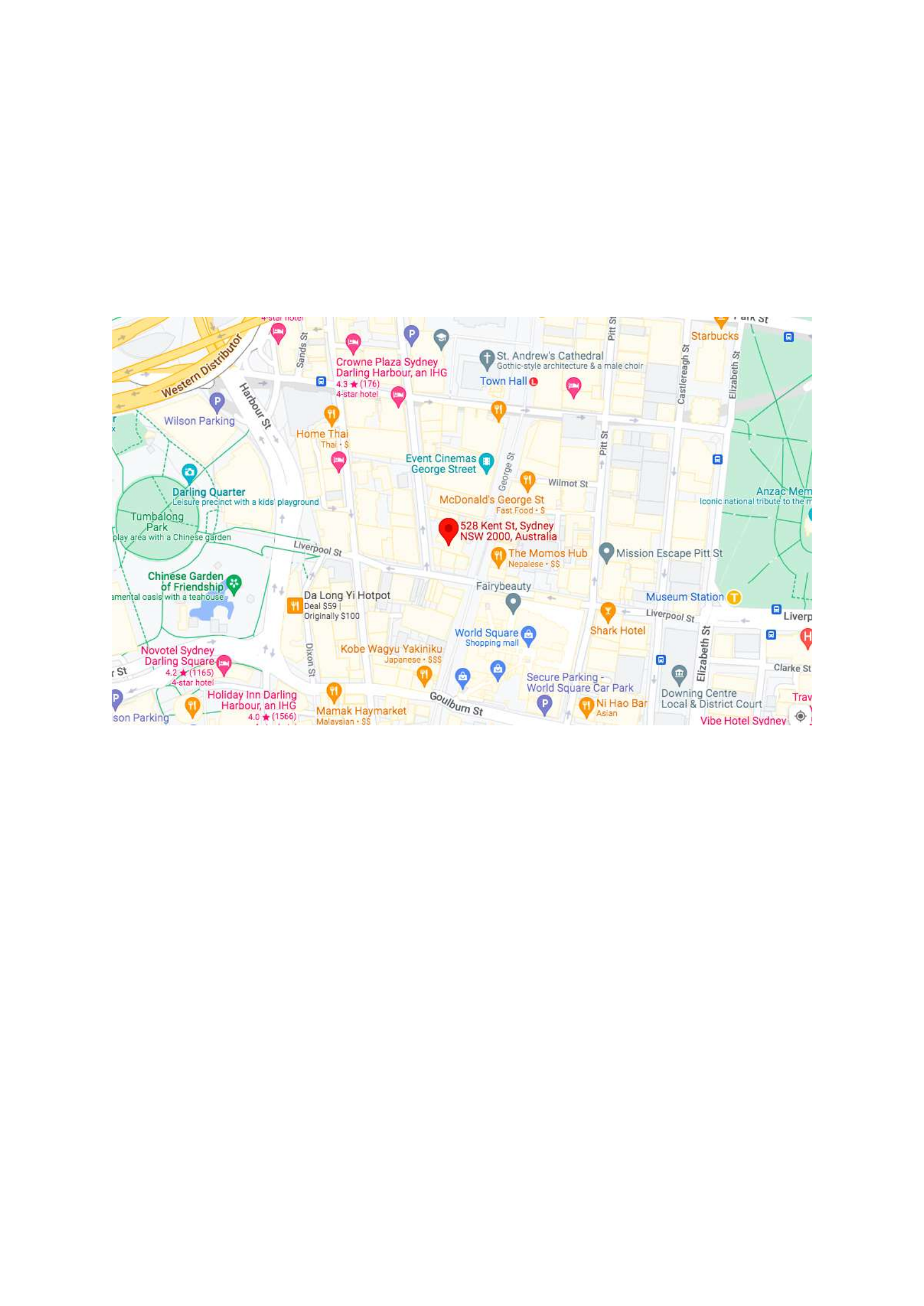
suites. It offers top-quality, professional services combined with smart and modern amenities
(“Your home, away from home,” n.d.). Meriton Suites, a luxury lodging brand, is part of
Meriton Group, founded in 1963, Australia’s most prominent privately-owned apartment
developer (“About Merton,” n.d.). According to the official company’s LinkedIn page, the
company size is 201-501 employees (LinkedIn, n.d.). The head office is located at Meriton
Tower, 528 Kent St, Sydney (See Figure 1).
Figure 1. Head Office of Meriton Suites (Meriton Australia, n.d.)
Stakeholder Analysis
Stakeholder Discussion
The key stakeholders that are critical for the operation and functions of the business are owners,
staff, and media. Wijtenburn (2020) states that the deal sponsor heads the ownership group with
a joint venture partner or a syndicate of limited partners. The job is similar to any other standard
real estate owning group but with a hospitality focus. Owners are accountable for ensuring that
the brand and operator have a high-quality asset that commands the maximum feasible income
(Wijtenburg, 2020). Owners require a financial investment and the use of resources to present
the hotel in the best light possible. Hence, the most significant stakeholders are owners who
play the most crucial function in the hotel transaction structure. According to Wijtenburg
(2020), the staff monitors the hotel’s day-to-day operations, including guest experience,
demand planning, sales, and property maintenance. Media delivers value by increasing sales,

advertising, and industry best practices (Wijtenburg, 2020). Additionally, hotel positioning in
the market is heavily influenced by guests’ perceptions of the company.
Stakeholder List and Diagram
Table 1. Stakeholders’ list
Stakeholder #
Stakeholder
Internal/ External
Interest
Influence
1
Customers
External
1
2
2
Staff
Internal
1
1
3
Suppliers
External
5
6
4
Contractors
External
5
7
5
Professional Services
Internal
5
5
6
Government – L/S/F
External
5
1
7
Media
External
3
3
8
Investors
External
1
1
9
Financial Services
Internal
6
4
10
Security Services
Internal
6
4
11
Utility Providers
External
6
4
12
Insurers
External
7
6

13
Unions
External
7
4
14
Community
External
4
5
15
Waste Services
Internal
8
9
16
Training Providers
External
5
2
17
Educational Providers
External
6
3
18
Owners
Internal
1
1
19
Consultants
External
3
3
20
Compliance Agencies
External
5
6
Business Philosophy
Business Name

Business Vision
The business vision of Meriton Suites is to be regarded as the industry leader in Australian
suite-hotel accommodation. Meriton Suites aims to provide outstanding value for money and
offer the best service that matches the brand and visitors (“Careers,” n.d.). Additionally, the
firm aspires to be renowned for having a diverse and inclusive workforce that appreciates all
individuals and provides opportunities for advancement in a fast-paced hospitality sector.
Business Mission
The mission is to provide greater levels of service perfection, create unforgettable moments,
and surpass all expectations in order to attract brand ambassadors and visitors for life
(“Careers,” n.d.).
Business Organizational Chart
Figure 2. Business organization
Business SWOT Diagram
The SWOT analysis was prepared as shown in Figure 3. The strengths of the Meriton Suites
include luxury accommodations and high-quality services. Moreover, Meriton Suites is
Australia’s largest owner of hotel rooms, and it offers comfort and convenience to its guests.

Weaknesses include lack of training, especially in crises like COVID-19, and the difficulty of
retaining staff. The opportunities are innovative technologies, safety, and health practices to
attract more clients and build mutually-trustful relationships. Meriton Suites may also develop
special offers to customers to increase awareness and focus on sustainability. Threats are
disparities of COVID-19, economic shockwave, loss of customers’ trust due to the pandemic,
and the competitive landscape.
Figure 3. SWOT
Business Risk Register
Risk methodology included identifying the critical risks, applying the PESOTEL framework
via the business risk register, and incorporating risks pertaining to Meriton Suites business.
Table 2 illustrates the top 10 risks and the degree of influence of each risk incident. The political
risk category includes travel restrictions; the closure of state and territorial borders and the
prohibition of non-essential travel have a significant influence on the hotel business (Baudille
& Rodrigues, 2021). The economic risk category involves fluctuating taxes, whereas the social
category includes the following risks: discrimination, layoffs, and lack of skilled staff. For
instance, a high incidence of racial discrimination leads to lower job satisfaction in the
hospitality sector (Shum et al., 2019). As a result, diversity management and education are
critical in the hotel industry.
Notably, the COVID-19 epidemic has substantially impacted the tourist and hospitality
industries; hotel managers must deal unpredictably to thrive in this environment. The

pandemic’s implications, including travel restrictions, border closures, and quarantine
regulations, have resulted in many businesses in the tourist and hospitality industries reducing
their operations via layoffs (Japutra & Situmorang, 2021). Employee layoffs are the quickest
approach to cutting operational costs. At the same time, hotels should consider workers as
intangible assets (Japutra & Situmorang, 2021). Therefore, the necessity of layoffs is a
significant risk for both managers and staff.
Operational risks involve misleading or deceptive conduct and workplace injury. Baudille and
Rodrigues (2021) claim hotels should not participate in fraudulent or misleading behavior.
Reviews, room quality, facilities, rates, and refund rights are examples of representations
commonly on complaints and investigations (Baudille & Rodrigues, 2021). Misleading or
deceptive conduct is a risk that may negatively impact a hotel’s reputation. Workplace injuries
are a crucial risk and may occasionally happen; thus, the personnel should be trained on health
and safety measures and regulations. Technological risk is cyber-crime attacks; the managers
should ensure to update the software used by the hotel.
The environmental category includes CO2 emissions, and the legal type involves criminal
attacks. Owners and shareholders are the most potent influences in the Australian hotel business
because their investments prioritize ecologically sustainable policies and practices (ESPPs)
(Khatter et al., 2021). CO2 emissions are seen as a critical risk; thus, Meriton takes excellent
care and confidence in how the hotel is designed and built to have the least possible
environmental footprint (“Sustainable living,” n.d.). Finally, the possibility of criminal attacks
should be assessed and investigated because the safety of guests and personnel is the primary
responsibility of any hotel, including Meriton Suites.
Table 2. Risk Register (top 10), Meriton Suites, total score = 65%
Business Policy and Procedure Examples
The fundamental purpose of the Risk Management Policy is to provide information and
guidance on risk management. Risk is the influence of uncertainty on goals; risk management
implements consistent processes within a complete framework to guarantee that risk is handled
effectively, promptly, and coherently throughout an organization (Tourism Australia, n.d.). The
Risk Management Policy template is attached as Appendix 1. The business is dedicated to
identifying, analyzing, and managing risks regularly in the spirit of good governance to
maximize the possibility of the hotel reaching its objectives.

A risk management procedure is a systematic method of creating the environment in which the
organization, business unit, or project operates and identifying, analyzing, assessing, and
treating the risks that may raise doubts about the company’s capacity to fulfill its goals. The
Risk Management Procedure template is attached as Appendix 2. A risk management approach
also offers a framework for ensuring that identified risks are constantly monitored and
evaluated. Communication and feedback are ongoing activities at all phases of the risk
management process to deliver, exchange, or collect information and participate in discourse
with internal and external stakeholders (Tourism Australia, n.d.). The company has committed
to reviewing its risk management framework on an annual basis to ensure that risk management
is efficient and continues to promote organizational success.
Risk Radar Diagram
The most crucial risks are R&D, competitive landscape, environmental footprint, and training.
COVID-19 has provided the hospitality industry with an unprecedented challenge. Despite
being a popular tourist destination globally, Australia was unable to match consumer
expectations, especially at its top-tier luxury hotels (Mehta et al., 2021). It also conveys a lack
of preparedness and adaptability in the hospitality industry. During COVID-19, Mehta et al.
(2021) contend that top leadership in the continent’s hotels is relatively slow in learning and
adjusting to altering consumer demands. Thus, it is vital to focus on training to overcome tough
competition in the hotel industry and ensure high-quality services at Meriton Suites. Bonfati et
al. (2021) claim that technology and digital improvements enhance the whole hotel experience
by allowing customers to obtain speedy and effective service. Consequently, according to the
World Economic Forum, R&D carries a significant risk of developing new services and
receiving positive customer feedback and a high level of service satisfaction. (2021),
technology-enabled services may aid in developing new business ecosystems and the
advancement of possibilities. Sustainability plays a vital role in modern society; thus, Meriton
Suites should assess its sustainability goals and environmental footprint.
Table 3. Risk rating, Meriton Suites
#
Risk
Rating
1
Location
8

2
Competitive landscape
4
3
Compliance
5
4
Social media presence
7
5
Products & services
7
6
Business cultural environment
8
7
Financial performance
8
8
Environmental footprint
3
9
Training
4
8
Gender equality ratio
9
9
R&D
3
10
Governance
8
Total Risk Score
74

Figure 4. Meriton Suites, Risk Radar
Report Conclusion
The main recommendation for shareholders is to invest in personnel training in order to
compete in the hotel industry and deliver high-quality services. Furthermore, technical and
digital improvements have the potential to improve the whole hotel experience. Employees
should be trained on new technologies regularly and updated on health and safety procedures
and regulations. Shareholders should emphasize environmentally sustainable policies and
practices. Essentially, the business risk score, the average of the two separate scores from the
risk register, namely 65%, and risk radar, 74%, equals 69.5%.
Introduction and Business Overview
The risk plan aims to identify, analyze, and describe possible risks for the selected company
that may arise during business operations. The overall structure includes stakeholder analysis,
business philosophy overview, business risk register, business policies and procedures, and risk
radar diagram. The business’s name is Meriton Suites, and it is located in Australia, with the
headquarters in Sydney; the business type is privately held. Meriton Suites was founded in
2003 as Meriton Serviced Apartments and has seen tremendous development in its range of
premium apartment-style hotel accommodation (“Your home, away from home,” n.d.). The
company has become Australia’s largest owner of hotel rooms and one of the biggest private
hotel operators, with nineteen locations and a stunning total of approximately five thousand

suites. It offers top-quality, professional services combined with smart and modern amenities
(“Your home, away from home,” n.d.). Meriton Suites, a luxury lodging brand, is part of
Meriton Group, founded in 1963, Australia’s most prominent privately-owned apartment
developer (“About Merton,” n.d.). According to the official company’s LinkedIn page, the
company size is 201-501 employees (LinkedIn, n.d.). The head office is located at Meriton
Tower, 528 Kent St, Sydney (See Figure 1).
Figure 1. Head Office of Meriton Suites (Meriton Australia, n.d.)
Stakeholder Analysis
Stakeholder Discussion
The key stakeholders that are critical for the operation and functions of the business are owners,
staff, and media. Wijtenburn (2020) states that the deal sponsor heads the ownership group with
a joint venture partner or a syndicate of limited partners. The job is similar to any other standard
real estate owning group but with a hospitality focus. Owners are accountable for ensuring that
the brand and operator have a high-quality asset that commands the maximum feasible income
(Wijtenburg, 2020). Owners require a financial investment and the use of resources to present
the hotel in the best light possible. Hence, the most significant stakeholders are owners who
play the most crucial function in the hotel transaction structure. According to Wijtenburg
(2020), the staff monitors the hotel’s day-to-day operations, including guest experience,
demand planning, sales, and property maintenance. Media delivers value by increasing sales,

advertising, and industry best practices (Wijtenburg, 2020). Additionally, hotel positioning in
the market is heavily influenced by guests’ perceptions of the company.
Stakeholder List and Diagram
Table 1. Stakeholders’ list
Stakeholder #
Stakeholder
Internal/ External
Interest
Influence
1
Customers
External
1
2
2
Staff
Internal
1
1
3
Suppliers
External
5
6
4
Contractors
External
5
7
5
Professional Services
Internal
5
5
6
Government – L/S/F
External
5
1
7
Media
External
3
3
8
Investors
External
1
1
9
Financial Services
Internal
6
4
10
Security Services
Internal
6
4
11
Utility Providers
External
6
4
12
Insurers
External
7
6

13
Unions
External
7
4
14
Community
External
4
5
15
Waste Services
Internal
8
9
16
Training Providers
External
5
2
17
Educational Providers
External
6
3
18
Owners
Internal
1
1
19
Consultants
External
3
3
20
Compliance Agencies
External
5
6
Business Philosophy
Business Name

Business Vision
The business vision of Meriton Suites is to be regarded as the industry leader in Australian
suite-hotel accommodation. Meriton Suites aims to provide outstanding value for money and
offer the best service that matches the brand and visitors (“Careers,” n.d.). Additionally, the
firm aspires to be renowned for having a diverse and inclusive workforce that appreciates all
individuals and provides opportunities for advancement in a fast-paced hospitality sector.
Business Mission
The mission is to provide greater levels of service perfection, create unforgettable moments,
and surpass all expectations in order to attract brand ambassadors and visitors for life
(“Careers,” n.d.).
Business Organizational Chart
Figure 2. Business organization
Business SWOT Diagram
The SWOT analysis was prepared as shown in Figure 3. The strengths of the Meriton Suites
include luxury accommodations and high-quality services. Moreover, Meriton Suites is
Australia’s largest owner of hotel rooms, and it offers comfort and convenience to its guests.

Weaknesses include lack of training, especially in crises like COVID-19, and the difficulty of
retaining staff. The opportunities are innovative technologies, safety, and health practices to
attract more clients and build mutually-trustful relationships. Meriton Suites may also develop
special offers to customers to increase awareness and focus on sustainability. Threats are
disparities of COVID-19, economic shockwave, loss of customers’ trust due to the pandemic,
and the competitive landscape.
Figure 3. SWOT
Business Risk Register
Risk methodology included identifying the critical risks, applying the PESOTEL framework
via the business risk register, and incorporating risks pertaining to Meriton Suites business.
Table 2 illustrates the top 10 risks and the degree of influence of each risk incident. The political
risk category includes travel restrictions; the closure of state and territorial borders and the
prohibition of non-essential travel have a significant influence on the hotel business (Baudille
& Rodrigues, 2021). The economic risk category involves fluctuating taxes, whereas the social
category includes the following risks: discrimination, layoffs, and lack of skilled staff. For
instance, a high incidence of racial discrimination leads to lower job satisfaction in the
hospitality sector (Shum et al., 2019). As a result, diversity management and education are
critical in the hotel industry.
Notably, the COVID-19 epidemic has substantially impacted the tourist and hospitality
industries; hotel managers must deal unpredictably to thrive in this environment. The

pandemic’s implications, including travel restrictions, border closures, and quarantine
regulations, have resulted in many businesses in the tourist and hospitality industries reducing
their operations via layoffs (Japutra & Situmorang, 2021). Employee layoffs are the quickest
approach to cutting operational costs. At the same time, hotels should consider workers as
intangible assets (Japutra & Situmorang, 2021). Therefore, the necessity of layoffs is a
significant risk for both managers and staff.
Operational risks involve misleading or deceptive conduct and workplace injury. Baudille and
Rodrigues (2021) claim hotels should not participate in fraudulent or misleading behavior.
Reviews, room quality, facilities, rates, and refund rights are examples of representations
commonly on complaints and investigations (Baudille & Rodrigues, 2021). Misleading or
deceptive conduct is a risk that may negatively impact a hotel’s reputation. Workplace injuries
are a crucial risk and may occasionally happen; thus, the personnel should be trained on health
and safety measures and regulations. Technological risk is cyber-crime attacks; the managers
should ensure to update the software used by the hotel.
The environmental category includes CO2 emissions, and the legal type involves criminal
attacks. Owners and shareholders are the most potent influences in the Australian hotel business
because their investments prioritize ecologically sustainable policies and practices (ESPPs)
(Khatter et al., 2021). CO2 emissions are seen as a critical risk; thus, Meriton takes excellent
care and confidence in how the hotel is designed and built to have the least possible
environmental footprint (“Sustainable living,” n.d.). Finally, the possibility of criminal attacks
should be assessed and investigated because the safety of guests and personnel is the primary
responsibility of any hotel, including Meriton Suites.
Table 2. Risk Register (top 10), Meriton Suites, total score = 65%
Business Policy and Procedure Examples
The fundamental purpose of the Risk Management Policy is to provide information and
guidance on risk management. Risk is the influence of uncertainty on goals; risk management
implements consistent processes within a complete framework to guarantee that risk is handled
effectively, promptly, and coherently throughout an organization (Tourism Australia, n.d.). The
Risk Management Policy template is attached as Appendix 1. The business is dedicated to
identifying, analyzing, and managing risks regularly in the spirit of good governance to
maximize the possibility of the hotel reaching its objectives.

A risk management procedure is a systematic method of creating the environment in which the
organization, business unit, or project operates and identifying, analyzing, assessing, and
treating the risks that may raise doubts about the company’s capacity to fulfill its goals. The
Risk Management Procedure template is attached as Appendix 2. A risk management approach
also offers a framework for ensuring that identified risks are constantly monitored and
evaluated. Communication and feedback are ongoing activities at all phases of the risk
management process to deliver, exchange, or collect information and participate in discourse
with internal and external stakeholders (Tourism Australia, n.d.). The company has committed
to reviewing its risk management framework on an annual basis to ensure that risk management
is efficient and continues to promote organizational success.
Risk Radar Diagram
The most crucial risks are R&D, competitive landscape, environmental footprint, and training.
COVID-19 has provided the hospitality industry with an unprecedented challenge. Despite
being a popular tourist destination globally, Australia was unable to match consumer
expectations, especially at its top-tier luxury hotels (Mehta et al., 2021). It also conveys a lack
of preparedness and adaptability in the hospitality industry. During COVID-19, Mehta et al.
(2021) contend that top leadership in the continent’s hotels is relatively slow in learning and
adjusting to altering consumer demands. Thus, it is vital to focus on training to overcome tough
competition in the hotel industry and ensure high-quality services at Meriton Suites. Bonfati et
al. (2021) claim that technology and digital improvements enhance the whole hotel experience
by allowing customers to obtain speedy and effective service. Consequently, according to the
World Economic Forum, R&D carries a significant risk of developing new services and
receiving positive customer feedback and a high level of service satisfaction. (2021),
technology-enabled services may aid in developing new business ecosystems and the
advancement of possibilities. Sustainability plays a vital role in modern society; thus, Meriton
Suites should assess its sustainability goals and environmental footprint.
Table 3. Risk rating, Meriton Suites
#
Risk
Rating
1
Location
8

2
Competitive landscape
4
3
Compliance
5
4
Social media presence
7
5
Products & services
7
6
Business cultural environment
8
7
Financial performance
8
8
Environmental footprint
3
9
Training
4
8
Gender equality ratio
9
9
R&D
3
10
Governance
8
Total Risk Score
74

Figure 4. Meriton Suites, Risk Radar
Report Conclusion
The main recommendation for shareholders is to invest in personnel training in order to
compete in the hotel industry and deliver high-quality services. Furthermore, technical and
digital improvements have the potential to improve the whole hotel experience. Employees
should be trained on new technologies regularly and updated on health and safety procedures
and regulations. Shareholders should emphasize environmentally sustainable policies and
practices. Essentially, the business risk score, the average of the two separate scores from the
risk register, namely 65%, and risk radar, 74%, equals 69.5%.
Introduction and Business Overview
The risk plan aims to identify, analyze, and describe possible risks for the selected company
that may arise during business operations. The overall structure includes stakeholder analysis,
business philosophy overview, business risk register, business policies and procedures, and risk
radar diagram. The business’s name is Meriton Suites, and it is located in Australia, with the
headquarters in Sydney; the business type is privately held. Meriton Suites was founded in
2003 as Meriton Serviced Apartments and has seen tremendous development in its range of
premium apartment-style hotel accommodation (“Your home, away from home,” n.d.). The
company has become Australia’s largest owner of hotel rooms and one of the biggest private
hotel operators, with nineteen locations and a stunning total of approximately five thousand

suites. It offers top-quality, professional services combined with smart and modern amenities
(“Your home, away from home,” n.d.). Meriton Suites, a luxury lodging brand, is part of
Meriton Group, founded in 1963, Australia’s most prominent privately-owned apartment
developer (“About Merton,” n.d.). According to the official company’s LinkedIn page, the
company size is 201-501 employees (LinkedIn, n.d.). The head office is located at Meriton
Tower, 528 Kent St, Sydney (See Figure 1).
Figure 1. Head Office of Meriton Suites (Meriton Australia, n.d.)
Stakeholder Analysis
Stakeholder Discussion
The key stakeholders that are critical for the operation and functions of the business are owners,
staff, and media. Wijtenburn (2020) states that the deal sponsor heads the ownership group with
a joint venture partner or a syndicate of limited partners. The job is similar to any other standard
real estate owning group but with a hospitality focus. Owners are accountable for ensuring that
the brand and operator have a high-quality asset that commands the maximum feasible income
(Wijtenburg, 2020). Owners require a financial investment and the use of resources to present
the hotel in the best light possible. Hence, the most significant stakeholders are owners who
play the most crucial function in the hotel transaction structure. According to Wijtenburg
(2020), the staff monitors the hotel’s day-to-day operations, including guest experience,
demand planning, sales, and property maintenance. Media delivers value by increasing sales,

advertising, and industry best practices (Wijtenburg, 2020). Additionally, hotel positioning in
the market is heavily influenced by guests’ perceptions of the company.
Stakeholder List and Diagram
Table 1. Stakeholders’ list
Stakeholder #
Stakeholder
Internal/ External
Interest
Influence
1
Customers
External
1
2
2
Staff
Internal
1
1
3
Suppliers
External
5
6
4
Contractors
External
5
7
5
Professional Services
Internal
5
5
6
Government – L/S/F
External
5
1
7
Media
External
3
3
8
Investors
External
1
1
9
Financial Services
Internal
6
4
10
Security Services
Internal
6
4
11
Utility Providers
External
6
4
12
Insurers
External
7
6

13
Unions
External
7
4
14
Community
External
4
5
15
Waste Services
Internal
8
9
16
Training Providers
External
5
2
17
Educational Providers
External
6
3
18
Owners
Internal
1
1
19
Consultants
External
3
3
20
Compliance Agencies
External
5
6
Business Philosophy
Business Name

Business Vision
The business vision of Meriton Suites is to be regarded as the industry leader in Australian
suite-hotel accommodation. Meriton Suites aims to provide outstanding value for money and
offer the best service that matches the brand and visitors (“Careers,” n.d.). Additionally, the
firm aspires to be renowned for having a diverse and inclusive workforce that appreciates all
individuals and provides opportunities for advancement in a fast-paced hospitality sector.
Business Mission
The mission is to provide greater levels of service perfection, create unforgettable moments,
and surpass all expectations in order to attract brand ambassadors and visitors for life
(“Careers,” n.d.).
Business Organizational Chart
Figure 2. Business organization
Business SWOT Diagram
The SWOT analysis was prepared as shown in Figure 3. The strengths of the Meriton Suites
include luxury accommodations and high-quality services. Moreover, Meriton Suites is
Australia’s largest owner of hotel rooms, and it offers comfort and convenience to its guests.

Weaknesses include lack of training, especially in crises like COVID-19, and the difficulty of
retaining staff. The opportunities are innovative technologies, safety, and health practices to
attract more clients and build mutually-trustful relationships. Meriton Suites may also develop
special offers to customers to increase awareness and focus on sustainability. Threats are
disparities of COVID-19, economic shockwave, loss of customers’ trust due to the pandemic,
and the competitive landscape.
Figure 3. SWOT
Business Risk Register
Risk methodology included identifying the critical risks, applying the PESOTEL framework
via the business risk register, and incorporating risks pertaining to Meriton Suites business.
Table 2 illustrates the top 10 risks and the degree of influence of each risk incident. The political
risk category includes travel restrictions; the closure of state and territorial borders and the
prohibition of non-essential travel have a significant influence on the hotel business (Baudille
& Rodrigues, 2021). The economic risk category involves fluctuating taxes, whereas the social
category includes the following risks: discrimination, layoffs, and lack of skilled staff. For
instance, a high incidence of racial discrimination leads to lower job satisfaction in the
hospitality sector (Shum et al., 2019). As a result, diversity management and education are
critical in the hotel industry.
Notably, the COVID-19 epidemic has substantially impacted the tourist and hospitality
industries; hotel managers must deal unpredictably to thrive in this environment. The

pandemic’s implications, including travel restrictions, border closures, and quarantine
regulations, have resulted in many businesses in the tourist and hospitality industries reducing
their operations via layoffs (Japutra & Situmorang, 2021). Employee layoffs are the quickest
approach to cutting operational costs. At the same time, hotels should consider workers as
intangible assets (Japutra & Situmorang, 2021). Therefore, the necessity of layoffs is a
significant risk for both managers and staff.
Operational risks involve misleading or deceptive conduct and workplace injury. Baudille and
Rodrigues (2021) claim hotels should not participate in fraudulent or misleading behavior.
Reviews, room quality, facilities, rates, and refund rights are examples of representations
commonly on complaints and investigations (Baudille & Rodrigues, 2021). Misleading or
deceptive conduct is a risk that may negatively impact a hotel’s reputation. Workplace injuries
are a crucial risk and may occasionally happen; thus, the personnel should be trained on health
and safety measures and regulations. Technological risk is cyber-crime attacks; the managers
should ensure to update the software used by the hotel.
The environmental category includes CO2 emissions, and the legal type involves criminal
attacks. Owners and shareholders are the most potent influences in the Australian hotel business
because their investments prioritize ecologically sustainable policies and practices (ESPPs)
(Khatter et al., 2021). CO2 emissions are seen as a critical risk; thus, Meriton takes excellent
care and confidence in how the hotel is designed and built to have the least possible
environmental footprint (“Sustainable living,” n.d.). Finally, the possibility of criminal attacks
should be assessed and investigated because the safety of guests and personnel is the primary
responsibility of any hotel, including Meriton Suites.
Table 2. Risk Register (top 10), Meriton Suites, total score = 65%
Business Policy and Procedure Examples
The fundamental purpose of the Risk Management Policy is to provide information and
guidance on risk management. Risk is the influence of uncertainty on goals; risk management
implements consistent processes within a complete framework to guarantee that risk is handled
effectively, promptly, and coherently throughout an organization (Tourism Australia, n.d.). The
Risk Management Policy template is attached as Appendix 1. The business is dedicated to
identifying, analyzing, and managing risks regularly in the spirit of good governance to
maximize the possibility of the hotel reaching its objectives.

A risk management procedure is a systematic method of creating the environment in which the
organization, business unit, or project operates and identifying, analyzing, assessing, and
treating the risks that may raise doubts about the company’s capacity to fulfill its goals. The
Risk Management Procedure template is attached as Appendix 2. A risk management approach
also offers a framework for ensuring that identified risks are constantly monitored and
evaluated. Communication and feedback are ongoing activities at all phases of the risk
management process to deliver, exchange, or collect information and participate in discourse
with internal and external stakeholders (Tourism Australia, n.d.). The company has committed
to reviewing its risk management framework on an annual basis to ensure that risk management
is efficient and continues to promote organizational success.
Risk Radar Diagram
The most crucial risks are R&D, competitive landscape, environmental footprint, and training.
COVID-19 has provided the hospitality industry with an unprecedented challenge. Despite
being a popular tourist destination globally, Australia was unable to match consumer
expectations, especially at its top-tier luxury hotels (Mehta et al., 2021). It also conveys a lack
of preparedness and adaptability in the hospitality industry. During COVID-19, Mehta et al.
(2021) contend that top leadership in the continent’s hotels is relatively slow in learning and
adjusting to altering consumer demands. Thus, it is vital to focus on training to overcome tough
competition in the hotel industry and ensure high-quality services at Meriton Suites. Bonfati et
al. (2021) claim that technology and digital improvements enhance the whole hotel experience
by allowing customers to obtain speedy and effective service. Consequently, according to the
World Economic Forum, R&D carries a significant risk of developing new services and
receiving positive customer feedback and a high level of service satisfaction. (2021),
technology-enabled services may aid in developing new business ecosystems and the
advancement of possibilities. Sustainability plays a vital role in modern society; thus, Meriton
Suites should assess its sustainability goals and environmental footprint.
Table 3. Risk rating, Meriton Suites
#
Risk
Rating
1
Location
8

2
Competitive landscape
4
3
Compliance
5
4
Social media presence
7
5
Products & services
7
6
Business cultural environment
8
7
Financial performance
8
8
Environmental footprint
3
9
Training
4
8
Gender equality ratio
9
9
R&D
3
10
Governance
8
Total Risk Score
74

Figure 4. Meriton Suites, Risk Radar
Report Conclusion
The main recommendation for shareholders is to invest in personnel training in order to
compete in the hotel industry and deliver high-quality services. Furthermore, technical and
digital improvements have the potential to improve the whole hotel experience. Employees
should be trained on new technologies regularly and updated on health and safety procedures
and regulations. Shareholders should emphasize environmentally sustainable policies and
practices. Essentially, the business risk score, the average of the two separate scores from the
risk register, namely 65%, and risk radar, 74%, equals 69.5%.
Introduction and Business Overview
The risk plan aims to identify, analyze, and describe possible risks for the selected company
that may arise during business operations. The overall structure includes stakeholder analysis,
business philosophy overview, business risk register, business policies and procedures, and risk
radar diagram. The business’s name is Meriton Suites, and it is located in Australia, with the
headquarters in Sydney; the business type is privately held. Meriton Suites was founded in
2003 as Meriton Serviced Apartments and has seen tremendous development in its range of
premium apartment-style hotel accommodation (“Your home, away from home,” n.d.). The
company has become Australia’s largest owner of hotel rooms and one of the biggest private
hotel operators, with nineteen locations and a stunning total of approximately five thousand

suites. It offers top-quality, professional services combined with smart and modern amenities
(“Your home, away from home,” n.d.). Meriton Suites, a luxury lodging brand, is part of
Meriton Group, founded in 1963, Australia’s most prominent privately-owned apartment
developer (“About Merton,” n.d.). According to the official company’s LinkedIn page, the
company size is 201-501 employees (LinkedIn, n.d.). The head office is located at Meriton
Tower, 528 Kent St, Sydney (See Figure 1).
Figure 1. Head Office of Meriton Suites (Meriton Australia, n.d.)
Stakeholder Analysis
Stakeholder Discussion
The key stakeholders that are critical for the operation and functions of the business are owners,
staff, and media. Wijtenburn (2020) states that the deal sponsor heads the ownership group with
a joint venture partner or a syndicate of limited partners. The job is similar to any other standard
real estate owning group but with a hospitality focus. Owners are accountable for ensuring that
the brand and operator have a high-quality asset that commands the maximum feasible income
(Wijtenburg, 2020). Owners require a financial investment and the use of resources to present
the hotel in the best light possible. Hence, the most significant stakeholders are owners who
play the most crucial function in the hotel transaction structure. According to Wijtenburg
(2020), the staff monitors the hotel’s day-to-day operations, including guest experience,
demand planning, sales, and property maintenance. Media delivers value by increasing sales,

advertising, and industry best practices (Wijtenburg, 2020). Additionally, hotel positioning in
the market is heavily influenced by guests’ perceptions of the company.
Stakeholder List and Diagram
Table 1. Stakeholders’ list
Stakeholder #
Stakeholder
Internal/ External
Interest
Influence
1
Customers
External
1
2
2
Staff
Internal
1
1
3
Suppliers
External
5
6
4
Contractors
External
5
7
5
Professional Services
Internal
5
5
6
Government – L/S/F
External
5
1
7
Media
External
3
3
8
Investors
External
1
1
9
Financial Services
Internal
6
4
10
Security Services
Internal
6
4
11
Utility Providers
External
6
4
12
Insurers
External
7
6

13
Unions
External
7
4
14
Community
External
4
5
15
Waste Services
Internal
8
9
16
Training Providers
External
5
2
17
Educational Providers
External
6
3
18
Owners
Internal
1
1
19
Consultants
External
3
3
20
Compliance Agencies
External
5
6
Business Philosophy
Business Name

Business Vision
The business vision of Meriton Suites is to be regarded as the industry leader in Australian
suite-hotel accommodation. Meriton Suites aims to provide outstanding value for money and
offer the best service that matches the brand and visitors (“Careers,” n.d.). Additionally, the
firm aspires to be renowned for having a diverse and inclusive workforce that appreciates all
individuals and provides opportunities for advancement in a fast-paced hospitality sector.
Business Mission
The mission is to provide greater levels of service perfection, create unforgettable moments,
and surpass all expectations in order to attract brand ambassadors and visitors for life
(“Careers,” n.d.).
Business Organizational Chart
Figure 2. Business organization
Business SWOT Diagram
The SWOT analysis was prepared as shown in Figure 3. The strengths of the Meriton Suites
include luxury accommodations and high-quality services. Moreover, Meriton Suites is
Australia’s largest owner of hotel rooms, and it offers comfort and convenience to its guests.

Weaknesses include lack of training, especially in crises like COVID-19, and the difficulty of
retaining staff. The opportunities are innovative technologies, safety, and health practices to
attract more clients and build mutually-trustful relationships. Meriton Suites may also develop
special offers to customers to increase awareness and focus on sustainability. Threats are
disparities of COVID-19, economic shockwave, loss of customers’ trust due to the pandemic,
and the competitive landscape.
Figure 3. SWOT
Business Risk Register
Risk methodology included identifying the critical risks, applying the PESOTEL framework
via the business risk register, and incorporating risks pertaining to Meriton Suites business.
Table 2 illustrates the top 10 risks and the degree of influence of each risk incident. The political
risk category includes travel restrictions; the closure of state and territorial borders and the
prohibition of non-essential travel have a significant influence on the hotel business (Baudille
& Rodrigues, 2021). The economic risk category involves fluctuating taxes, whereas the social
category includes the following risks: discrimination, layoffs, and lack of skilled staff. For
instance, a high incidence of racial discrimination leads to lower job satisfaction in the
hospitality sector (Shum et al., 2019). As a result, diversity management and education are
critical in the hotel industry.
Notably, the COVID-19 epidemic has substantially impacted the tourist and hospitality
industries; hotel managers must deal unpredictably to thrive in this environment. The

pandemic’s implications, including travel restrictions, border closures, and quarantine
regulations, have resulted in many businesses in the tourist and hospitality industries reducing
their operations via layoffs (Japutra & Situmorang, 2021). Employee layoffs are the quickest
approach to cutting operational costs. At the same time, hotels should consider workers as
intangible assets (Japutra & Situmorang, 2021). Therefore, the necessity of layoffs is a
significant risk for both managers and staff.
Operational risks involve misleading or deceptive conduct and workplace injury. Baudille and
Rodrigues (2021) claim hotels should not participate in fraudulent or misleading behavior.
Reviews, room quality, facilities, rates, and refund rights are examples of representations
commonly on complaints and investigations (Baudille & Rodrigues, 2021). Misleading or
deceptive conduct is a risk that may negatively impact a hotel’s reputation. Workplace injuries
are a crucial risk and may occasionally happen; thus, the personnel should be trained on health
and safety measures and regulations. Technological risk is cyber-crime attacks; the managers
should ensure to update the software used by the hotel.
The environmental category includes CO2 emissions, and the legal type involves criminal
attacks. Owners and shareholders are the most potent influences in the Australian hotel business
because their investments prioritize ecologically sustainable policies and practices (ESPPs)
(Khatter et al., 2021). CO2 emissions are seen as a critical risk; thus, Meriton takes excellent
care and confidence in how the hotel is designed and built to have the least possible
environmental footprint (“Sustainable living,” n.d.). Finally, the possibility of criminal attacks
should be assessed and investigated because the safety of guests and personnel is the primary
responsibility of any hotel, including Meriton Suites.
Table 2. Risk Register (top 10), Meriton Suites, total score = 65%
Business Policy and Procedure Examples
The fundamental purpose of the Risk Management Policy is to provide information and
guidance on risk management. Risk is the influence of uncertainty on goals; risk management
implements consistent processes within a complete framework to guarantee that risk is handled
effectively, promptly, and coherently throughout an organization (Tourism Australia, n.d.). The
Risk Management Policy template is attached as Appendix 1. The business is dedicated to
identifying, analyzing, and managing risks regularly in the spirit of good governance to
maximize the possibility of the hotel reaching its objectives.

A risk management procedure is a systematic method of creating the environment in which the
organization, business unit, or project operates and identifying, analyzing, assessing, and
treating the risks that may raise doubts about the company’s capacity to fulfill its goals. The
Risk Management Procedure template is attached as Appendix 2. A risk management approach
also offers a framework for ensuring that identified risks are constantly monitored and
evaluated. Communication and feedback are ongoing activities at all phases of the risk
management process to deliver, exchange, or collect information and participate in discourse
with internal and external stakeholders (Tourism Australia, n.d.). The company has committed
to reviewing its risk management framework on an annual basis to ensure that risk management
is efficient and continues to promote organizational success.
Risk Radar Diagram
The most crucial risks are R&D, competitive landscape, environmental footprint, and training.
COVID-19 has provided the hospitality industry with an unprecedented challenge. Despite
being a popular tourist destination globally, Australia was unable to match consumer
expectations, especially at its top-tier luxury hotels (Mehta et al., 2021). It also conveys a lack
of preparedness and adaptability in the hospitality industry. During COVID-19, Mehta et al.
(2021) contend that top leadership in the continent’s hotels is relatively slow in learning and
adjusting to altering consumer demands. Thus, it is vital to focus on training to overcome tough
competition in the hotel industry and ensure high-quality services at Meriton Suites. Bonfati et
al. (2021) claim that technology and digital improvements enhance the whole hotel experience
by allowing customers to obtain speedy and effective service. Consequently, according to the
World Economic Forum, R&D carries a significant risk of developing new services and
receiving positive customer feedback and a high level of service satisfaction. (2021),
technology-enabled services may aid in developing new business ecosystems and the
advancement of possibilities. Sustainability plays a vital role in modern society; thus, Meriton
Suites should assess its sustainability goals and environmental footprint.
Table 3. Risk rating, Meriton Suites
#
Risk
Rating
1
Location
8

2
Competitive landscape
4
3
Compliance
5
4
Social media presence
7
5
Products & services
7
6
Business cultural environment
8
7
Financial performance
8
8
Environmental footprint
3
9
Training
4
8
Gender equality ratio
9
9
R&D
3
10
Governance
8
Total Risk Score
74

Figure 4. Meriton Suites, Risk Radar
Report Conclusion
The main recommendation for shareholders is to invest in personnel training in order to
compete in the hotel industry and deliver high-quality services. Furthermore, technical and
digital improvements have the potential to improve the whole hotel experience. Employees
should be trained on new technologies regularly and updated on health and safety procedures
and regulations. Shareholders should emphasize environmentally sustainable policies and
practices. Essentially, the business risk score, the average of the two separate scores from the
risk register, namely 65%, and risk radar, 74%, equals 69.5%.
Introduction and Business Overview
The risk plan aims to identify, analyze, and describe possible risks for the selected company
that may arise during business operations. The overall structure includes stakeholder analysis,
business philosophy overview, business risk register, business policies and procedures, and risk
radar diagram. The business’s name is Meriton Suites, and it is located in Australia, with the
headquarters in Sydney; the business type is privately held. Meriton Suites was founded in
2003 as Meriton Serviced Apartments and has seen tremendous development in its range of
premium apartment-style hotel accommodation (“Your home, away from home,” n.d.). The
company has become Australia’s largest owner of hotel rooms and one of the biggest private
hotel operators, with nineteen locations and a stunning total of approximately five thousand

suites. It offers top-quality, professional services combined with smart and modern amenities
(“Your home, away from home,” n.d.). Meriton Suites, a luxury lodging brand, is part of
Meriton Group, founded in 1963, Australia’s most prominent privately-owned apartment
developer (“About Merton,” n.d.). According to the official company’s LinkedIn page, the
company size is 201-501 employees (LinkedIn, n.d.). The head office is located at Meriton
Tower, 528 Kent St, Sydney (See Figure 1).
Figure 1. Head Office of Meriton Suites (Meriton Australia, n.d.)
Stakeholder Analysis
Stakeholder Discussion
The key stakeholders that are critical for the operation and functions of the business are owners,
staff, and media. Wijtenburn (2020) states that the deal sponsor heads the ownership group with
a joint venture partner or a syndicate of limited partners. The job is similar to any other standard
real estate owning group but with a hospitality focus. Owners are accountable for ensuring that
the brand and operator have a high-quality asset that commands the maximum feasible income
(Wijtenburg, 2020). Owners require a financial investment and the use of resources to present
the hotel in the best light possible. Hence, the most significant stakeholders are owners who
play the most crucial function in the hotel transaction structure. According to Wijtenburg
(2020), the staff monitors the hotel’s day-to-day operations, including guest experience,
demand planning, sales, and property maintenance. Media delivers value by increasing sales,

advertising, and industry best practices (Wijtenburg, 2020). Additionally, hotel positioning in
the market is heavily influenced by guests’ perceptions of the company.
Stakeholder List and Diagram
Table 1. Stakeholders’ list
Stakeholder #
Stakeholder
Internal/ External
Interest
Influence
1
Customers
External
1
2
2
Staff
Internal
1
1
3
Suppliers
External
5
6
4
Contractors
External
5
7
5
Professional Services
Internal
5
5
6
Government – L/S/F
External
5
1
7
Media
External
3
3
8
Investors
External
1
1
9
Financial Services
Internal
6
4
10
Security Services
Internal
6
4
11
Utility Providers
External
6
4
12
Insurers
External
7
6

13
Unions
External
7
4
14
Community
External
4
5
15
Waste Services
Internal
8
9
16
Training Providers
External
5
2
17
Educational Providers
External
6
3
18
Owners
Internal
1
1
19
Consultants
External
3
3
20
Compliance Agencies
External
5
6
Business Philosophy
Business Name

Business Vision
The business vision of Meriton Suites is to be regarded as the industry leader in Australian
suite-hotel accommodation. Meriton Suites aims to provide outstanding value for money and
offer the best service that matches the brand and visitors (“Careers,” n.d.). Additionally, the
firm aspires to be renowned for having a diverse and inclusive workforce that appreciates all
individuals and provides opportunities for advancement in a fast-paced hospitality sector.
Business Mission
The mission is to provide greater levels of service perfection, create unforgettable moments,
and surpass all expectations in order to attract brand ambassadors and visitors for life
(“Careers,” n.d.).
Business Organizational Chart
Figure 2. Business organization
Business SWOT Diagram
The SWOT analysis was prepared as shown in Figure 3. The strengths of the Meriton Suites
include luxury accommodations and high-quality services. Moreover, Meriton Suites is
Australia’s largest owner of hotel rooms, and it offers comfort and convenience to its guests.

Weaknesses include lack of training, especially in crises like COVID-19, and the difficulty of
retaining staff. The opportunities are innovative technologies, safety, and health practices to
attract more clients and build mutually-trustful relationships. Meriton Suites may also develop
special offers to customers to increase awareness and focus on sustainability. Threats are
disparities of COVID-19, economic shockwave, loss of customers’ trust due to the pandemic,
and the competitive landscape.
Figure 3. SWOT
Business Risk Register
Risk methodology included identifying the critical risks, applying the PESOTEL framework
via the business risk register, and incorporating risks pertaining to Meriton Suites business.
Table 2 illustrates the top 10 risks and the degree of influence of each risk incident. The political
risk category includes travel restrictions; the closure of state and territorial borders and the
prohibition of non-essential travel have a significant influence on the hotel business (Baudille
& Rodrigues, 2021). The economic risk category involves fluctuating taxes, whereas the social
category includes the following risks: discrimination, layoffs, and lack of skilled staff. For
instance, a high incidence of racial discrimination leads to lower job satisfaction in the
hospitality sector (Shum et al., 2019). As a result, diversity management and education are
critical in the hotel industry.
Notably, the COVID-19 epidemic has substantially impacted the tourist and hospitality
industries; hotel managers must deal unpredictably to thrive in this environment. The

pandemic’s implications, including travel restrictions, border closures, and quarantine
regulations, have resulted in many businesses in the tourist and hospitality industries reducing
their operations via layoffs (Japutra & Situmorang, 2021). Employee layoffs are the quickest
approach to cutting operational costs. At the same time, hotels should consider workers as
intangible assets (Japutra & Situmorang, 2021). Therefore, the necessity of layoffs is a
significant risk for both managers and staff.
Operational risks involve misleading or deceptive conduct and workplace injury. Baudille and
Rodrigues (2021) claim hotels should not participate in fraudulent or misleading behavior.
Reviews, room quality, facilities, rates, and refund rights are examples of representations
commonly on complaints and investigations (Baudille & Rodrigues, 2021). Misleading or
deceptive conduct is a risk that may negatively impact a hotel’s reputation. Workplace injuries
are a crucial risk and may occasionally happen; thus, the personnel should be trained on health
and safety measures and regulations. Technological risk is cyber-crime attacks; the managers
should ensure to update the software used by the hotel.
The environmental category includes CO2 emissions, and the legal type involves criminal
attacks. Owners and shareholders are the most potent influences in the Australian hotel business
because their investments prioritize ecologically sustainable policies and practices (ESPPs)
(Khatter et al., 2021). CO2 emissions are seen as a critical risk; thus, Meriton takes excellent
care and confidence in how the hotel is designed and built to have the least possible
environmental footprint (“Sustainable living,” n.d.). Finally, the possibility of criminal attacks
should be assessed and investigated because the safety of guests and personnel is the primary
responsibility of any hotel, including Meriton Suites.
Table 2. Risk Register (top 10), Meriton Suites, total score = 65%
Business Policy and Procedure Examples
The fundamental purpose of the Risk Management Policy is to provide information and
guidance on risk management. Risk is the influence of uncertainty on goals; risk management
implements consistent processes within a complete framework to guarantee that risk is handled
effectively, promptly, and coherently throughout an organization (Tourism Australia, n.d.). The
Risk Management Policy template is attached as Appendix 1. The business is dedicated to
identifying, analyzing, and managing risks regularly in the spirit of good governance to
maximize the possibility of the hotel reaching its objectives.

A risk management procedure is a systematic method of creating the environment in which the
organization, business unit, or project operates and identifying, analyzing, assessing, and
treating the risks that may raise doubts about the company’s capacity to fulfill its goals. The
Risk Management Procedure template is attached as Appendix 2. A risk management approach
also offers a framework for ensuring that identified risks are constantly monitored and
evaluated. Communication and feedback are ongoing activities at all phases of the risk
management process to deliver, exchange, or collect information and participate in discourse
with internal and external stakeholders (Tourism Australia, n.d.). The company has committed
to reviewing its risk management framework on an annual basis to ensure that risk management
is efficient and continues to promote organizational success.
Risk Radar Diagram
The most crucial risks are R&D, competitive landscape, environmental footprint, and training.
COVID-19 has provided the hospitality industry with an unprecedented challenge. Despite
being a popular tourist destination globally, Australia was unable to match consumer
expectations, especially at its top-tier luxury hotels (Mehta et al., 2021). It also conveys a lack
of preparedness and adaptability in the hospitality industry. During COVID-19, Mehta et al.
(2021) contend that top leadership in the continent’s hotels is relatively slow in learning and
adjusting to altering consumer demands. Thus, it is vital to focus on training to overcome tough
competition in the hotel industry and ensure high-quality services at Meriton Suites. Bonfati et
al. (2021) claim that technology and digital improvements enhance the whole hotel experience
by allowing customers to obtain speedy and effective service. Consequently, according to the
World Economic Forum, R&D carries a significant risk of developing new services and
receiving positive customer feedback and a high level of service satisfaction. (2021),
technology-enabled services may aid in developing new business ecosystems and the
advancement of possibilities. Sustainability plays a vital role in modern society; thus, Meriton
Suites should assess its sustainability goals and environmental footprint.
Table 3. Risk rating, Meriton Suites
#
Risk
Rating
1
Location
8

2
Competitive landscape
4
3
Compliance
5
4
Social media presence
7
5
Products & services
7
6
Business cultural environment
8
7
Financial performance
8
8
Environmental footprint
3
9
Training
4
8
Gender equality ratio
9
9
R&D
3
10
Governance
8
Total Risk Score
74

Figure 4. Meriton Suites, Risk Radar
Report Conclusion
The main recommendation for shareholders is to invest in personnel training in order to
compete in the hotel industry and deliver high-quality services. Furthermore, technical and
digital improvements have the potential to improve the whole hotel experience. Employees
should be trained on new technologies regularly and updated on health and safety procedures
and regulations. Shareholders should emphasize environmentally sustainable policies and
practices. Essentially, the business risk score, the average of the two separate scores from the
risk register, namely 65%, and risk radar, 74%, equals 69.5%.

