CHANGING CULTURE 2
When developing competency models for specific individual qualities, it is important to
understand what competency models are and why they are important to workplace training and
development. Competency models are a list of competencies with clear definitions that are
required for a specific responsibility. When evaluating employees for a particular job, human
resources can use the competency models as a guide to determine which employee is best
equipped for the responsibility. Since competency models contain multiple qualities, they allow
the model organizers to visualize what specific areas among the individual need to be developed.
However, it can additionally be used to identify if an individual is qualified for a specific
position or not (Noe et al., 2022).
A topic that is currently prevalent in the professional industry is the development of a
healthy workplace culture. A workplace that has a positive culture can lead to increased
employee retention and productivity (Marenus et al., 2023). When working full-time, it is easy to
view the workplace as a location of obligation and exhaustion. This mindset can negatively
affect the workplace culture which can increase employee turnover. If a company has high
employee turnover, they will be spending a significant amount of money in training the new
employees, but they will complete the job as efficiently as an employee who has been with the
company for a substantial amount of time and has bought into the company mission. Due to the
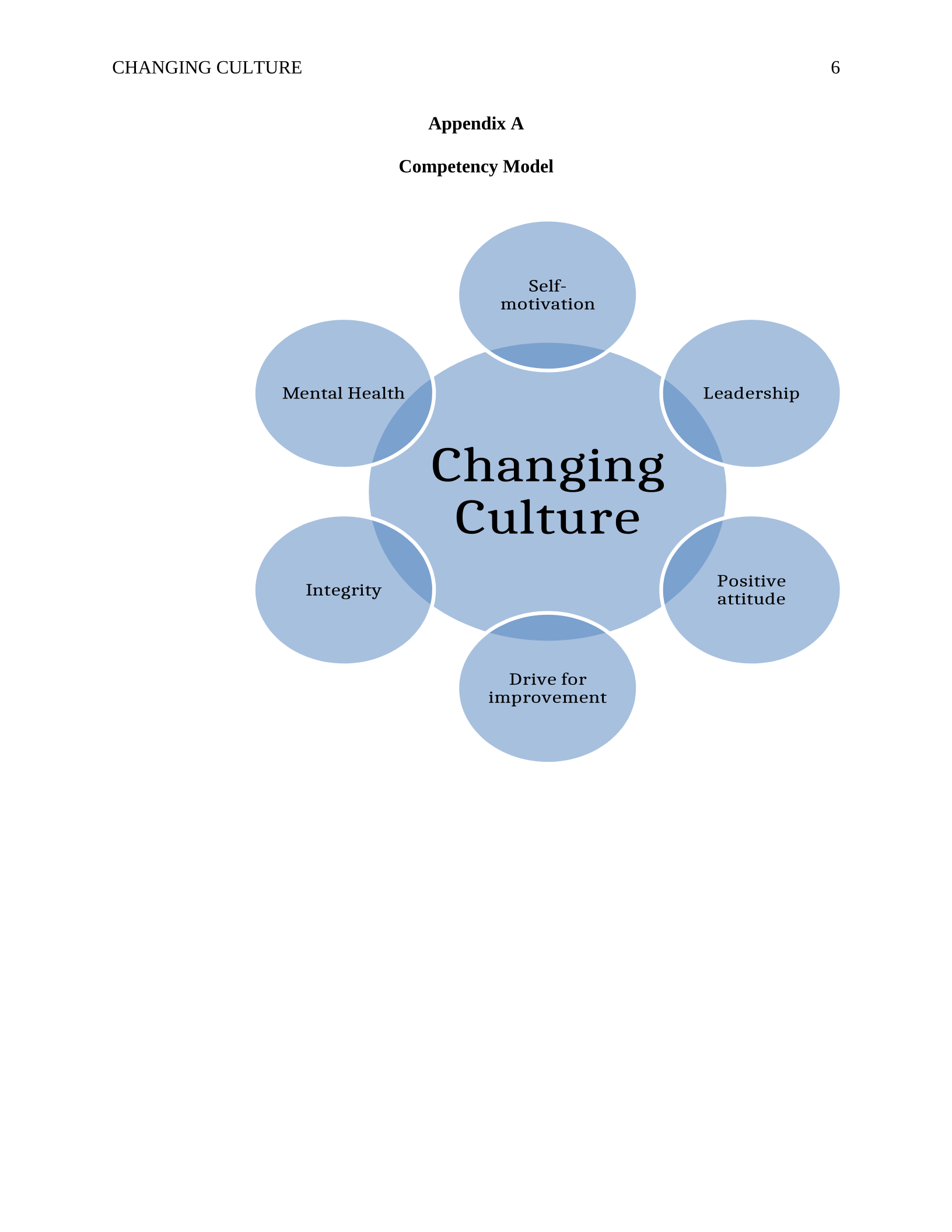
reasons above, the development of proper cultural training is essential. The competencies that are
necessary for everyone to improve the workplace culture are divided into two categories:
psychological and physical. The psychological qualities include self-motivation, leadership, a
positive attitude, drive for improvement, integrity, and mental health.
While changing the culture among an established company may be difficult, it is possible
with time and persistence. In the evaluation of the competency model, the quality that I believe is
CHANGING CULTURE 3
a strength of mine is drive for improvement. After a clear foundation of knowledge of the
company is laid and settle, it is critical for the growth of the company and individual that ways to
improve are consistently sought after. This mindset can be hard at times when individuals are
comfortable in their current situation. However, settling is an extremely harmful mindset due to
the inability to view ways to be better. Individuals will never know how they can improve if they
do not seek after it first. A quality I need to improve on is a positive attitude. In my current
workplace, I consistently work my other individuals through virtual and in-person
communication. While I do love my job, it can be difficult to keep a positive mindset when
dealing with the variety of attitudes that are faced every day. To improve my ability to maintain a
positive attitude, I should increase my desire to understand the other individual’s attitude and
personality. When a sense of understanding is heightened, I will have the increased ability to
comprehend how to navigate my interaction with the individual without letting it affect my own
attitude. An example of this situation can be found in a situation when an individual’s personal
life interferes with their professional life. In a situation that a family suffers a family tragedy, an
individual may display negative emotions to another individual. However, this is not due to the
other individual doing anything wrong, but it is because they do not know how to handle their
emotions in a healthy way. When an individual is displaying these emotions, a simple question
of “Is everything okay?” can changed the whole situation. Once the reasoning is discovered, the
health course of action can start to be developed to better help the individual and the company.
When evaluating the concept of changing the workplace culture through a Biblical
worldview, individuals can be directed to Romans 12:2 (New International Version, 2011) which
states, “Do not conform to the pattern of this world but be transformed by the renewing of your
mind. Then you will be able to test and approve what God’s will is – his good, pleasing, and
CHANGING CULTURE 4
perfect will”. The verse instructs Christians that they should not changing themselves to fit in
with the surrounding culture but changing themselves in the image of God. When apply this
verse to changing a workplace culture, individuals should not change themselves to fit in with
the culture of the company it is worldly. However, Christians should have a mindset of changing
the culture to best represent God’s image.
CHANGING CULTURE 5
References
Marenus, M. W., Marzec, M., Kilbourne, A., Colabianchi, N., & Chen, W. (2023). The validity
and reliability of the workplace culture of health scale–short form.DJournal of
Occupational and Environmental Medicine.,65(10), e626–e630.
https://doi.org/10.1097/JOM.0000000000002949
New International Bible. (2011). The NIV Bible. https://www.thenivbible.comn
Noe, R. (2022). Employee Training & Development (9th ed.). McGraw-Hill Higher Education
(US). https://mbsdirect.vitalsource.com/books/9781265925802