


In this study, researchers examined the levels of depression that
participants experienced over the past week. The research variables
consisted of nominal measures with a total of 29 participants who
participated in this study: 69% identifying as biological females and 31%
identifying as biological males. Figure 1 shows the relations between
gender and spirituality, and Figure 2 shows the relation between gender
and feeling sad.
%%%%%%%%%%%%The purpose of this study is to determine if there is a relationship
between intrinsic spirituality and levels of depression. To determine this
relationship between intrinsic spirituality and depression, researchers
used paired samples t-tests in spss, Figure 1. A paired samples t-test was
conducted to determine the correlation between “my spirituality” and “felt
sad”, df= 28, SD= 3.61, with a 95% confidence interval (1.00, 3.75),
(mean= 2.38), one sided p< .001 and two-sided p= .001. This was found
to be statistically significant and reject the null hypothesis. Looking at
Table 1, you will see the information provided about the relationship
between, “My Spirituality” and “How Sad I Felt.”
%
Table 1
The Relationship Between My Spirituality and How Sad I Felt
%%%%%%%%%%%%%%%%%%%%%%%%%%%%%%%%%%%%%%%%%%%%%%%%%%%%%%%%%%%%Paired Samples Test
Pair 1
%%%%%%%%%%%%%%%%%%%%%%%%%%%%%%%%%%%%%%%%%%%%%%%%Mean%%%SD%%%%%%%SD error%%%%%%95%
CI%%%%df%%%%%%significance
%%%%%%%%%%%%My spirituality
%%%%%%%%%%%%Felt Sad%%%%%%%%%%%%%%%%%%%%%%2.38%%%%%3.61%%%%%%%%%.670%%%%%%1.00-
3.75%%%%%28%%%<.001 -%%.001
Note. This table demonstrates the relationship between intrinsic
spirituality and one of the lowest levels for the depression scale questions.
Figure 1
Relation between Gender and spirituality
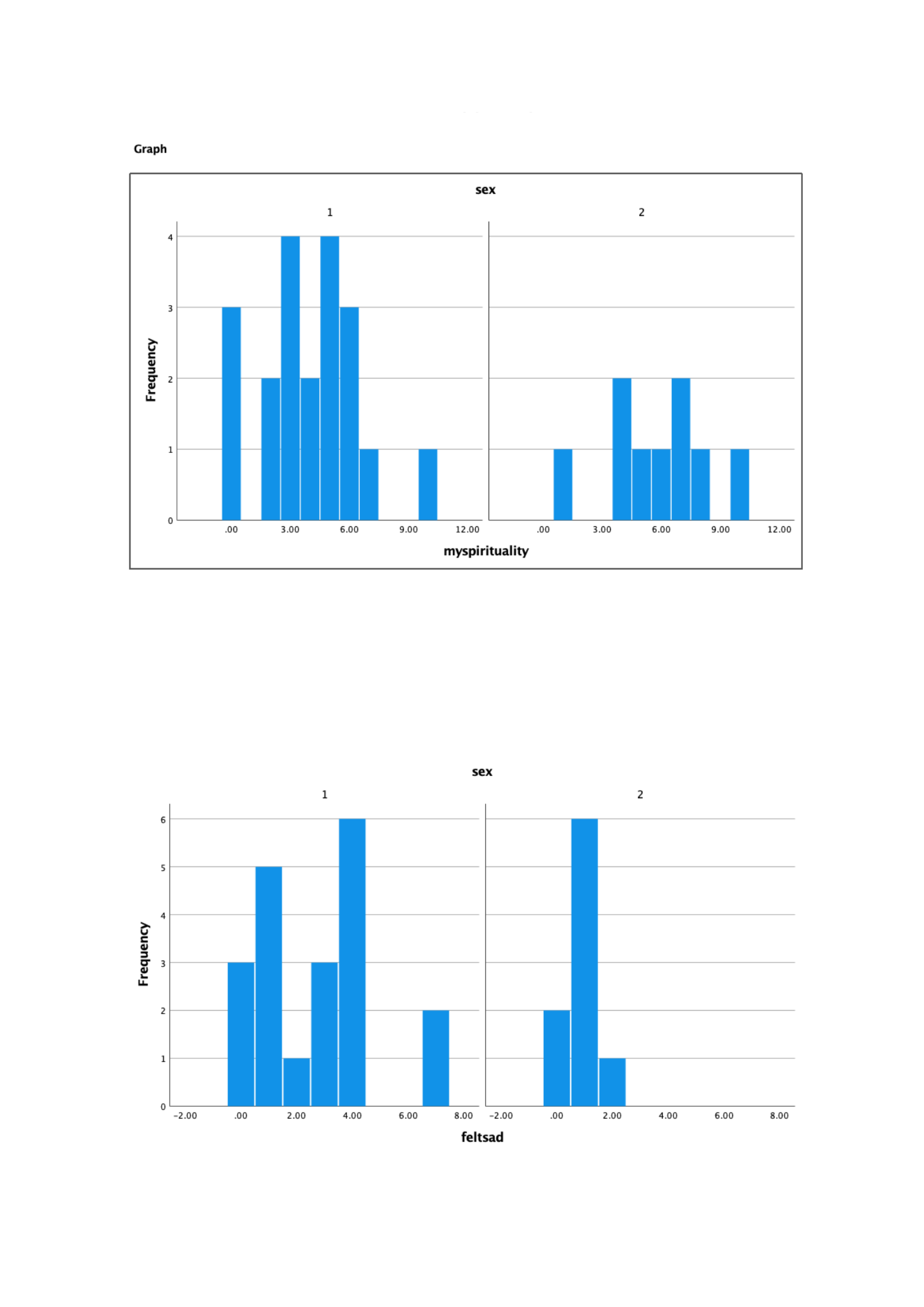
Note. The above figure shows the relationship between females (1) and
males (2) based on intrinsic spirituality.
Figure 2.
Relation between gender and feeling sad.

Note. The above figure shows the relationship between females (1) and
males (2) based on how sad they felt on a scale of 0-6.
%
%
Discussion
%%%%%%The goal of this study was to determine if there was a relationship
between intrinsic spirituality and levels of depression. A paired samples t-
test was conducted to determine the correlation between “my spirituality”
and “felt sad”, df= 28, SD= 3.61, with a 95% confidence interval (1.00,
3.75), (mean= 2.38), one sided p< .001 and two-sided p= .001. Some of
the limitations of this study included there being a short amount of time to
collect data and only having self-reported data. Going forward, this study
could allow for there to be more research into how religion and spirituality
may help to improve a person’s depression and may help to improve their
lifestyle. This could also help the general public to lean more towards
spirituality as a way of dealing and coping with depression, since therapy
and taking prescribed medications are typically the most common. This
would be another way for people to be able to find themselves again and
could improve their happiness over time. For future studies being
conducted similar to this one, I would suggest that there would be more
questions related to actions taken during the week (such as activities they
were involved in and how they felt while doing these activities). This could
also help to determine if the person was more depressed if they laid in
bed more often since they reported being sad or if they were more active
after they went to church or prayed that morning. This is important to the
field of psychology since depression is such a highly known mental health
issues that such a large number of people struggle with. Allowing more
research between these two variables could possibly change psychology
in general for those helping others deal with depression. This study was
similar to other research studies that have been previously conducted.
%%%%%%Religion has been such a powerful contributor to mental and physical
well-being over time. The results of this study shown between mental
health and religion found that there is a unique role between the two
variables which play a huge part in personality (Haney & Rollock, 2020).
The researchers found that there was a strong statistical significance
between intrinsic and extrinsic religion when it came to depression.
However, there was found to be no significance when it came to intrinsic
and extrinsic religion for the satisfaction with life (Haney & Rollock, 2020).
This research showed there was a huge significance between intrinsic
spirituality and levels of depression however this did not determine how
satisfied the person was with their life. The study had a target population
of large public university students with about 580 total participants, who
ranged in ages from 18 to 29 years of age. What does no specific data
about gender in this research. Meaning that it contradicted the study that
was conducted above.

%%%%%%Looking at may cause levels of depression can be a huge factor when
it comes to the outcome of the study. The awareness of a diagnosis for a
terminally ill patient with cancer may have a different outlook on life and
there are levels of depression that come with this. There was a total of
299 patients who are terminally ill with cancer that participated in the
study (Lai et al., 2016). This study did not include anything specific about.
Researchers used the hospital anxiety and depression scale to collect the
necessary data. Based on the information collected the researchers were
able to determine if there was a statistical significance inpatient who were
aware of their diagnosis versus those who are not. The participants who
were aware of their diagnosis were also found to have statistical
significance with Intrinsic spirituality. However, when it came to the
statistical significance found between spirituality and psychological
symptoms such as anxiety and depression, they were found to be no
significance (Lai et al., 2016). In this case, they were still found to be
lower levels of depression and anxiety in terminally ill patient with cancer
who were aware of their diagnosis than those who were not.
Lastly, the correlation of spirituality and other women was conducted to
look at mental health and successful aging. The total of 3653 surveys sent
out to participants, however, only 1942 that were received were able to
be used for the study (Vahia et al., 2010). Humane measures of the study
looked at spirituality and successful aging, meaning depression was not as
much of a concern as the other studies were. The study found that there
was I statistical significance in spirituality when it was associated with
more demographic variables. The participants used were from all around
but recruited through San Diego clinical Center for women’s Health
initiative (Vahia et al., 2010). Since this study looked at older women and
women only there was not much for demographics and participant options
related in the data.
%
%
References
%
Vahia, I. V., Depp, C. A., Palmer, B. W., Fellows, I., Golshan, S., Thompson,
W., Allison, M., & Jeste, D. V. (2010). Correlates of spirituality in older
women.%Aging & Mental Health,%15(1), 97–102.
https://doi.org/10.1080/13607863.2010.501069%
Lai, C., Luciani, M., Galli, F., Morelli, E., Del Prete, F., Ginobbi, P., Penco, I.,
Aceto, P., & Lombardo, L. (2016). Spirituality and awareness of diagnoses
in terminally ill patients with cancer.%American Journal of Hospice and
Palliative Medicine®,%34(6), 505–509.
https://doi.org/10.1177/1049909116630985%
Haney, A. M., & Rollock, D. (2020). A matter of faith: The role of religion,
doubt, and personality in emerging adult mental health.%Psychology of

Religion and Spirituality,%12(2), 247–253.
https://doi.org/10.1037/rel0000231%

