1
Procrastination as a Behavior Modification: Treatment Phase Report
Target Behavior
The chosen behavior for this study was procrastination, which has been a challenge for
the participant over an extended period. Procrastination is defined as the deliberate postponement
of a planned and essential activity, even though one anticipates more negative outcomes than
positive ones as a result of the delay (Hailikari et al., 2021).
Treatment Method
The treatment method used to modify this behavior was positive reinforcement. The
participant has the task of scanning a set of documents provided by her supervisor daily. If the
participant scans the documents promptly upon receiving them, she will be given a sip of water
as a reward. While this may seem like an odd incentive, the participant is on medication that
causes excessive thirst, leading her to frequently take sips of water throughout the day. When she
goes for extended periods without drinking any water, she experiences discomfort.
Treatment Period and Dimensions
The beginning of treatment for the behavior, the first baseline, occurred on July 24th,
2023, immediately after the completion of behavior measurement, and concluded on August 4th,
2023, spanning a duration of ten days. This first baseline and first treatment period was broken
up into three days. The second baseline and the second round of treatment lasted only two days
2
due the limited time frame. This study could only be conducted on workdays. The dimension of
duration is what was observed by recording how long it took the participant to complete the task
knowing that a sip of water was the reward.
Experiment Narrative
Using the timer feature on a clock app in the participant’s phone, she started a timer once
the documents were received by her supervisor. The participants intentionally concealed the
phone by placing it inside a drawer, ensuring that they could focus on the task without being
distracted by the timer and having the urge to beat it. The goal was for the act of scanning the
documents to be as organic as possible. Once the timer was completed, the participant wrote
down how long it took to complete the task. The documents were given in the mornings
consistently. The treatment was split into two different time periods, with a period of baseline
observation in between.
3
24-Jul 25-Jul 26-Jul 27-Jul 28-Jul 31-Jul 1-Aug 2-Aug 3-Aug 4-Aug
0
5
10
15
20
25
30
35
40
Beh a vi o r Mo d ifi cati o n: P r ocr a s ti o na ti on
Baseline 1 Treatment 1 Baseline 2 Treatment 2
Days Experiment Was Conducted
Duration of Scanning: In Minutes
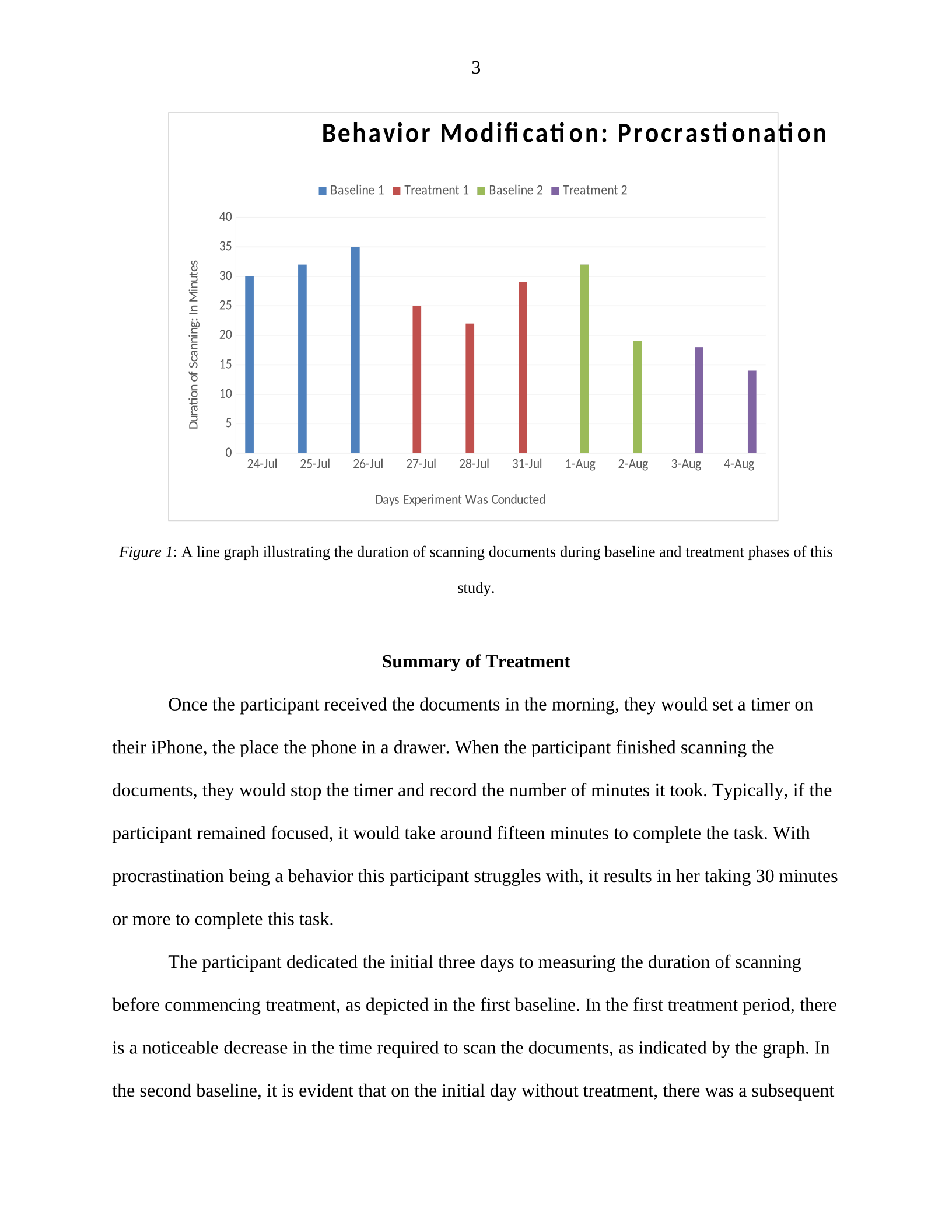
Figure 1: A line graph illustrating the duration of scanning documents during baseline and treatment phases of this
study.
Summary of Treatment
Once the participant received the documents in the morning, they would set a timer on
their iPhone, the place the phone in a drawer. When the participant finished scanning the
documents, they would stop the timer and record the number of minutes it took. Typically, if the
participant remained focused, it would take around fifteen minutes to complete the task. With
procrastination being a behavior this participant struggles with, it results in her taking 30 minutes
or more to complete this task.
The participant dedicated the initial three days to measuring the duration of scanning
before commencing treatment, as depicted in the first baseline. In the first treatment period, there
is a noticeable decrease in the time required to scan the documents, as indicated by the graph. In
the second baseline, it is evident that on the initial day without treatment, there was a subsequent
4
increase in activity. However, in the following two days, there was a decrease observed. It is
worth noting that Mondays tend to be busier at the participants' workplace compared to the other
days of the week. During the experiment, the measurement of the second round of treatment was
limited to weekdays for only two days. However, there was a noticeable significant decrease
observed from the beginning of the experiment.
During treatment, the participant kept her hydro flask filled with cold water in proximity.
The water also contained a hydration packet inside with a desirable taste to make the positive
reinforcement more incising. An observation was noted that due to this tactic, it made the
participant want to stay on task more so she could get to her water quicker. In the first baseline
and first treatment period, it was also noted that throughout the study, the participant thought
about the fact that she was being timed, but throughout the second baseline and treatment, it
became habit.
Based on the study completed, the participant gained an understanding of the importance
of promptly scanning the documents. Not only did she receive a rewarding incentive of cold,
refreshing water, but she also had fewer tasks to complete towards the end of her shift. This
motivated her to accomplish other tasks in a timely manner throughout the day as the study
progressed. The participant also highlighted the gratifying feeling of being on top of all her
responsibilities. Completing tasks on time has numerous benefits, including reduced stress, a
lighter workload, and more opportunities for breaks throughout the day.