


Behavior Modification Ch. 1 & Ch. 2
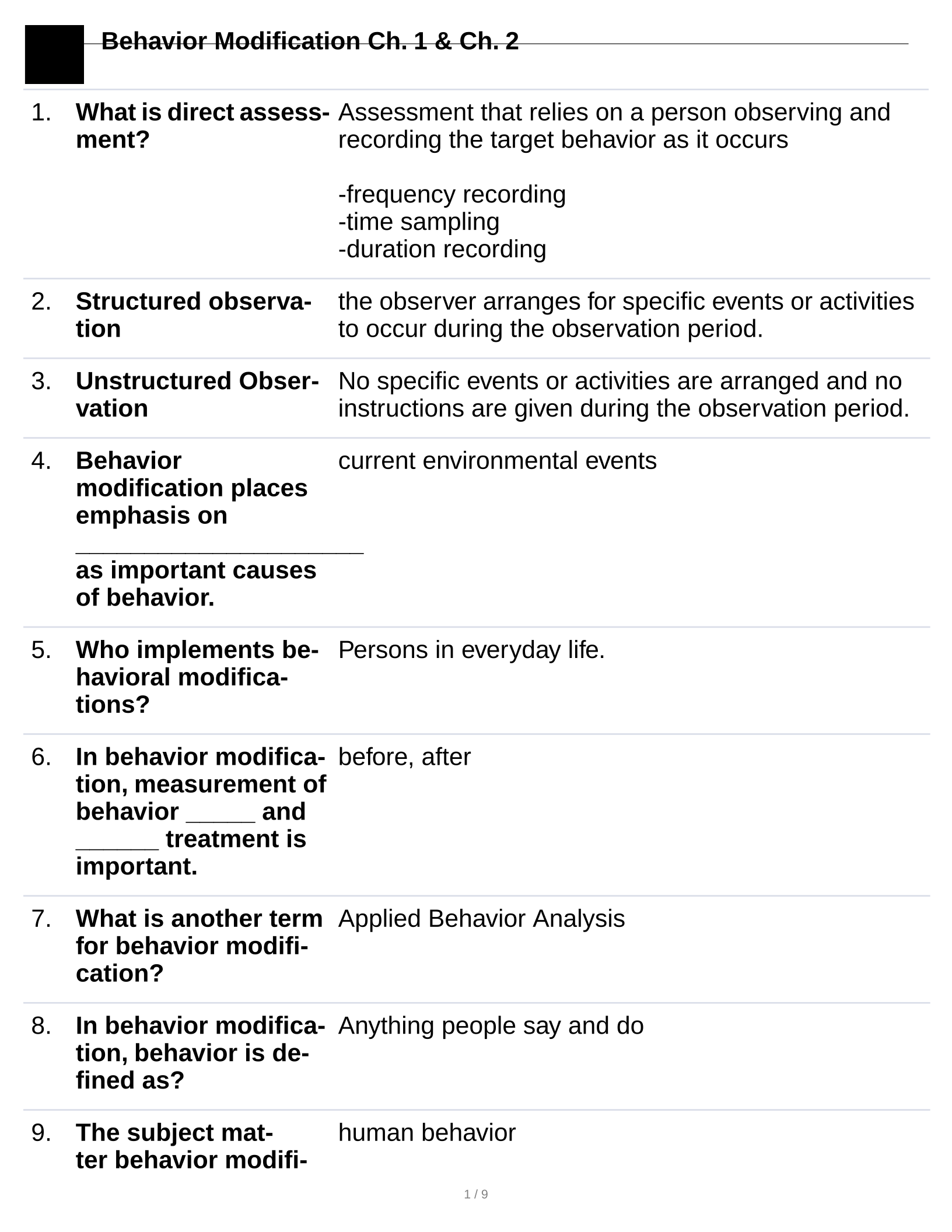
1. What is direct assess-
ment? Assessment that relies on a person observing and
recording the target behavior as it occurs
-frequency recording
-time sampling
-duration recording
2. Structured observa-
tion the observer arranges for specific events or activities
to occur during the observation period.
3. Unstructured Obser-
vation No specific events or activities are arranged and no
instructions are given during the observation period.
4. Behavior
modification places
emphasis on
_____________________
as important causes
of behavior.
current environmental events
5. Who implements be-
havioral modifica-
tions?
Persons in everyday life.
6. In behavior modifica-
tion, measurement of
behavior _____ and
______ treatment is
important.
before, after
7. What is another term
for behavior modifi-
cation?
Applied Behavior Analysis
8. In behavior modifica-
tion, behavior is de-
fined as?
Anything people say and do
9. The subject mat-
ter behavior modifi- human behavior
1 / 9
Behavior Modification Ch. 1 & Ch. 2
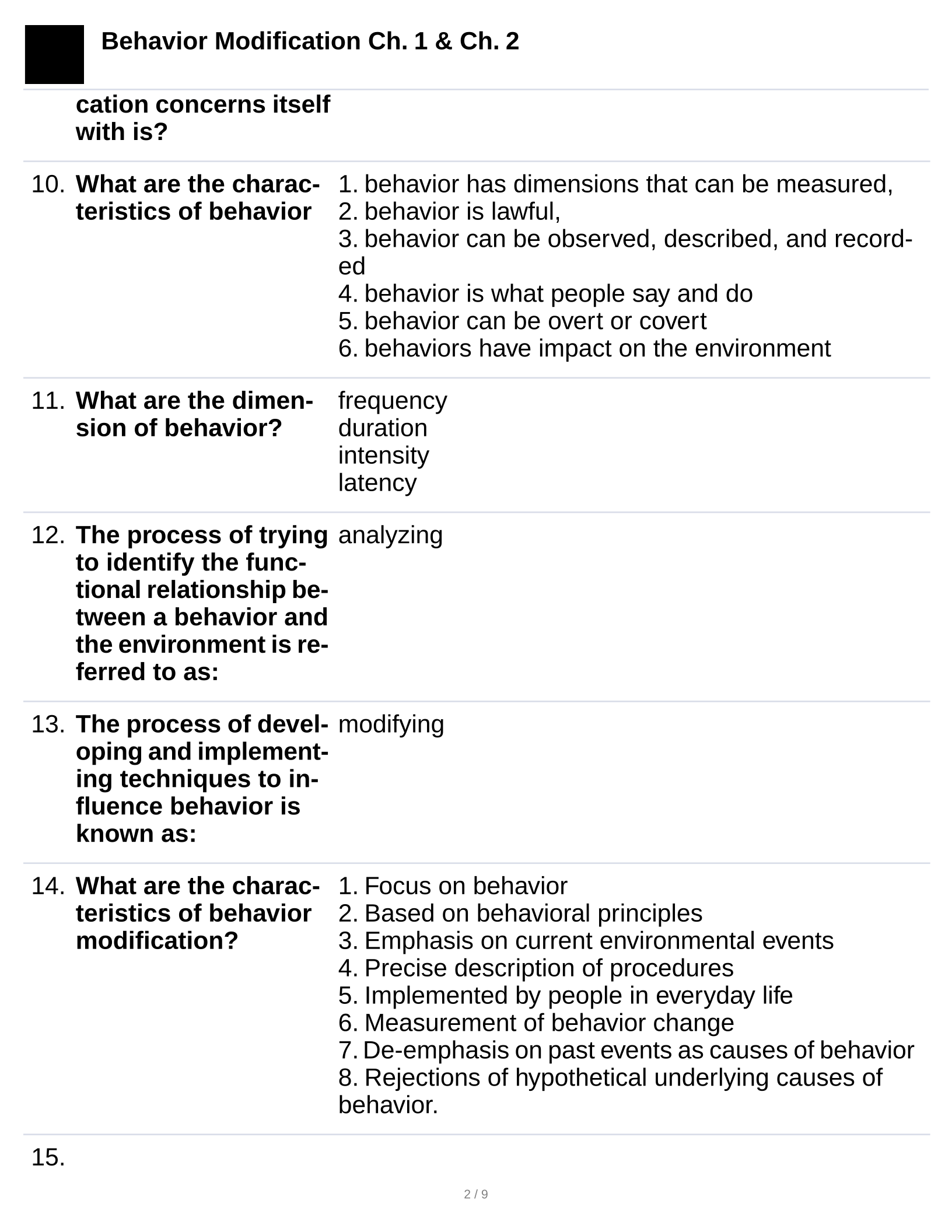
cation concerns itself
with is?
10. What are the charac-
teristics of behavior 1. behavior has dimensions that can be measured,
2. behavior is lawful,
3. behavior can be observed, described, and record-
ed
4. behavior is what people say and do
5. behavior can be overt or covert
6. behaviors have impact on the environment
11. What are the dimen-
sion of behavior? frequency
duration
intensity
latency
12. The process of trying
to identify the func-
tional relationship be-
tween a behavior and
the environment is re-
ferred to as:
analyzing
13. The process of devel-
oping and implement-
ing techniques to in-
fluence behavior is
known as:
modifying
14. What are the charac-
teristics of behavior
modification?
1. Focus on behavior
2. Based on behavioral principles
3. Emphasis on current environmental events
4. Precise description of procedures
5. Implemented by people in everyday life
6. Measurement of behavior change
7. De-emphasis on past events as causes of behavior
8. Rejections of hypothetical underlying causes of
behavior.
15.
2 / 9
Behavior Modification Ch. 1 & Ch. 2
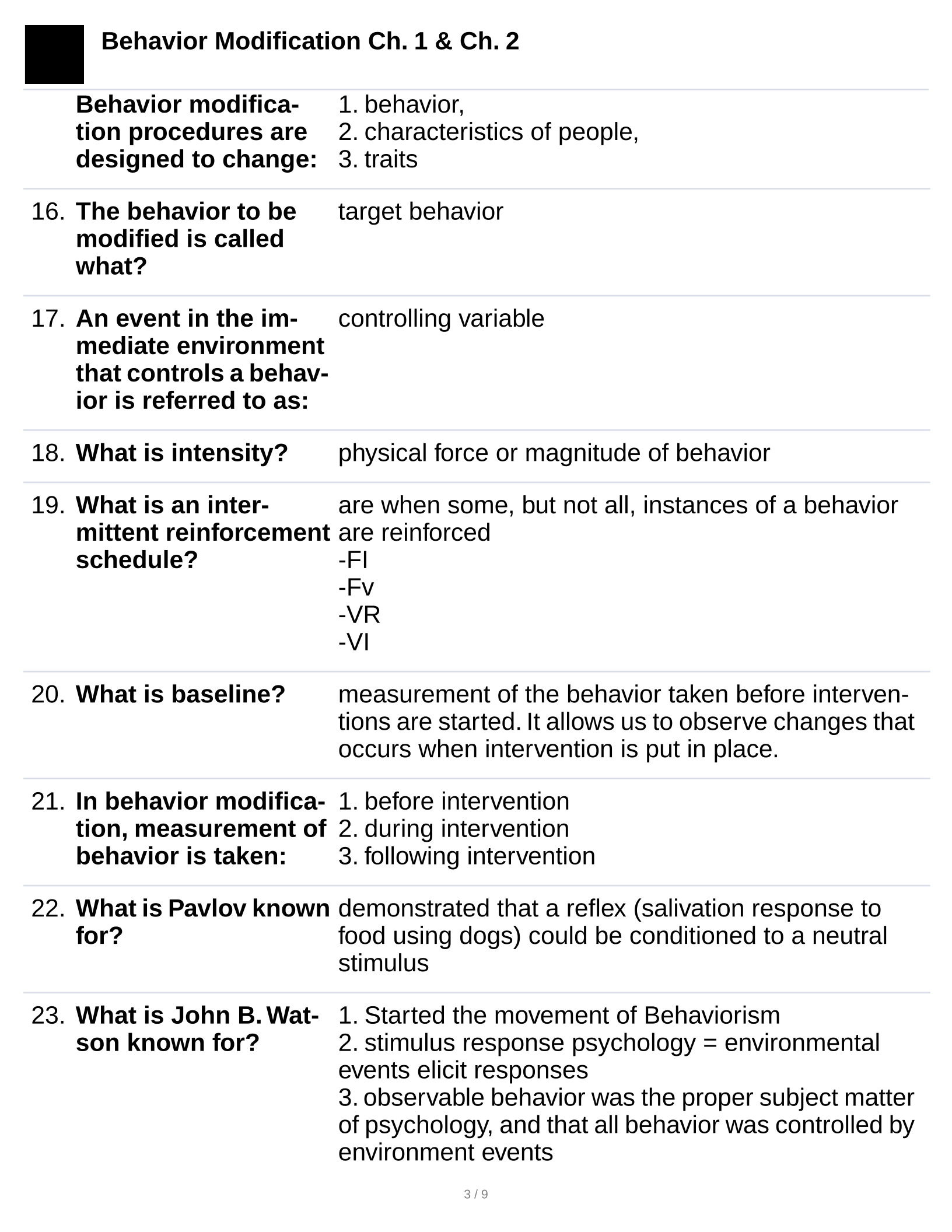
Behavior modifica-
tion procedures are
designed to change:
1. behavior,
2. characteristics of people,
3. traits
16. The behavior to be
modified is called
what?
target behavior
17. An event in the im-
mediate environment
that controls a behav-
ior is referred to as:
controlling variable
18. What is intensity? physical force or magnitude of behavior
19. What is an inter-
mittent reinforcement
schedule?
are when some, but not all, instances of a behavior
are reinforced
-FI
-Fv
-VR
-VI
20. What is baseline? measurement of the behavior taken before interven-
tions are started. It allows us to observe changes that
occurs when intervention is put in place.
21. In behavior modifica-
tion, measurement of
behavior is taken:
1. before intervention
2. during intervention
3. following intervention
22. What is Pavlov known
for? demonstrated that a reflex (salivation response to
food using dogs) could be conditioned to a neutral
stimulus
23. What is John B. Wat-
son known for? 1. Started the movement of Behaviorism
2. stimulus response psychology = environmental
events elicit responses
3. observable behavior was the proper subject matter
of psychology, and that all behavior was controlled by
environment events
3 / 9
Behavior Modification Ch. 1 & Ch. 2
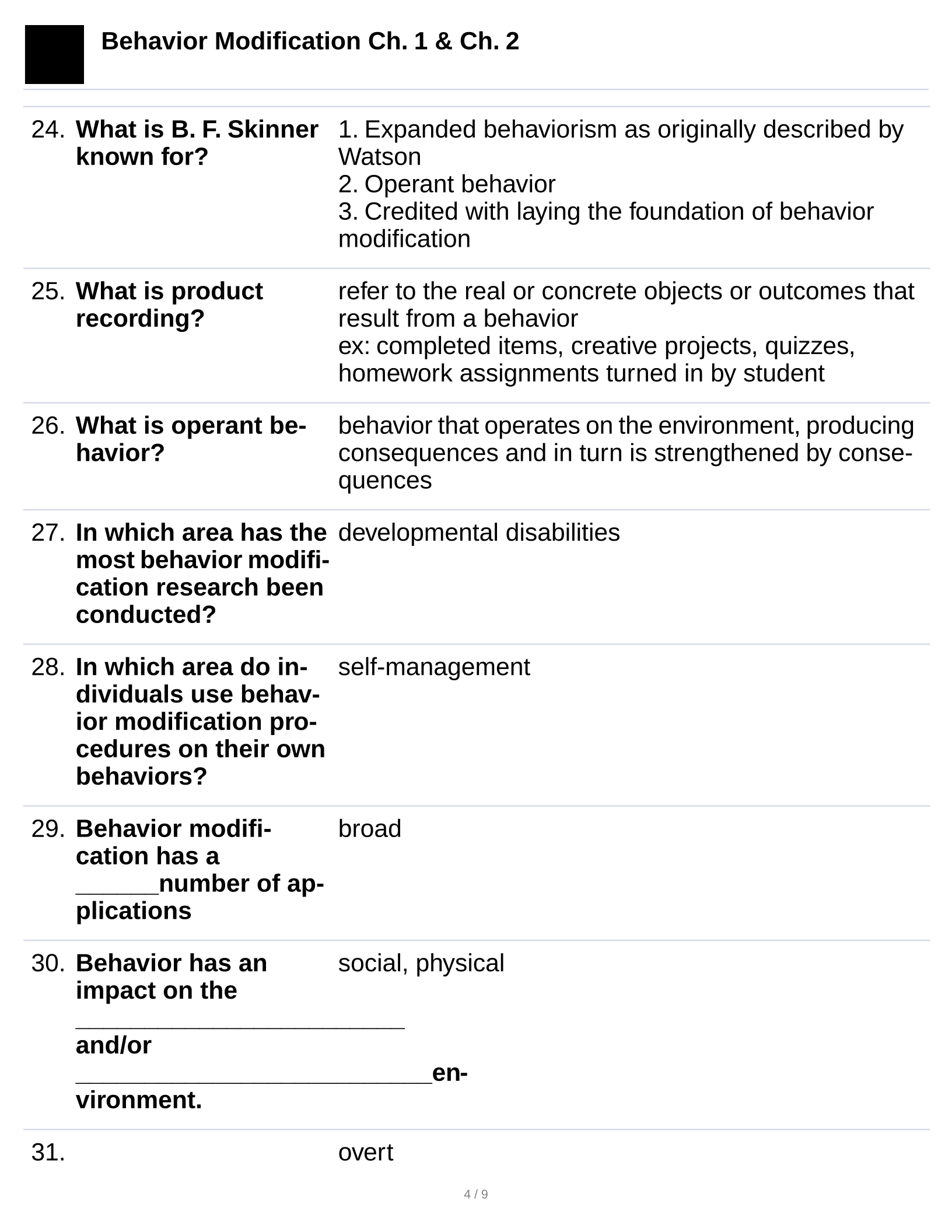
24. What is B. F. Skinner
known for? 1. Expanded behaviorism as originally described by
Watson
2. Operant behavior
3. Credited with laying the foundation of behavior
modification
25. What is product
recording? refer to the real or concrete objects or outcomes that
result from a behavior
ex: completed items, creative projects, quizzes,
homework assignments turned in by student
26. What is operant be-
havior? behavior that operates on the environment, producing
consequences and in turn is strengthened by conse-
quences
27. In which area has the
most behavior modifi-
cation research been
conducted?
developmental disabilities
28. In which area do in-
dividuals use behav-
ior modification pro-
cedures on their own
behaviors?
self-management
29. Behavior modifi-
cation has a
______number of ap-
plications
broad
30. Behavior has an
impact on the
________________________
and/or
__________________________en-
vironment.
social, physical
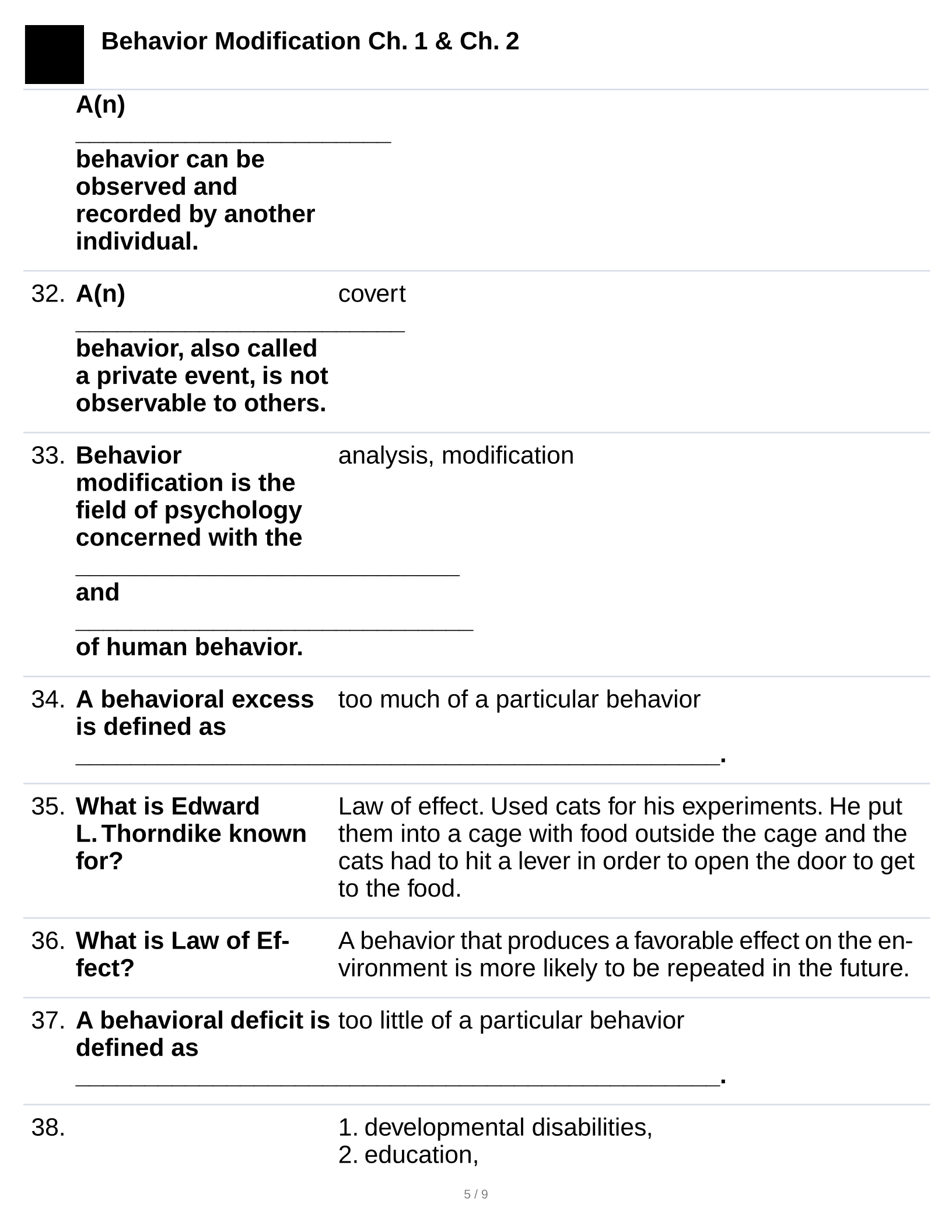
31. overt
4 / 9
Behavior Modification Ch. 1 & Ch. 2
A(n)
_______________________
behavior can be
observed and
recorded by another
individual.
32. A(n)
________________________
behavior, also called
a private event, is not
observable to others.
covert
33. Behavior
modification is the
field of psychology
concerned with the
____________________________
and
_____________________________
of human behavior.
analysis, modification
34. A behavioral excess
is defined as
_______________________________________________.
too much of a particular behavior
35. What is Edward
L.Thorndike known
for?
Law of effect. Used cats for his experiments. He put
them into a cage with food outside the cage and the
cats had to hit a lever in order to open the door to get
to the food.
36. What is Law of Ef-
fect? A behavior that produces a favorable effect on the en-
vironment is more likely to be repeated in the future.
37. A behavioral deficit is
defined as
_______________________________________________.
too little of a particular behavior
38. 1. developmental disabilities,
2. education,
5 / 9
Behavior Modification Ch. 1 & Ch. 2
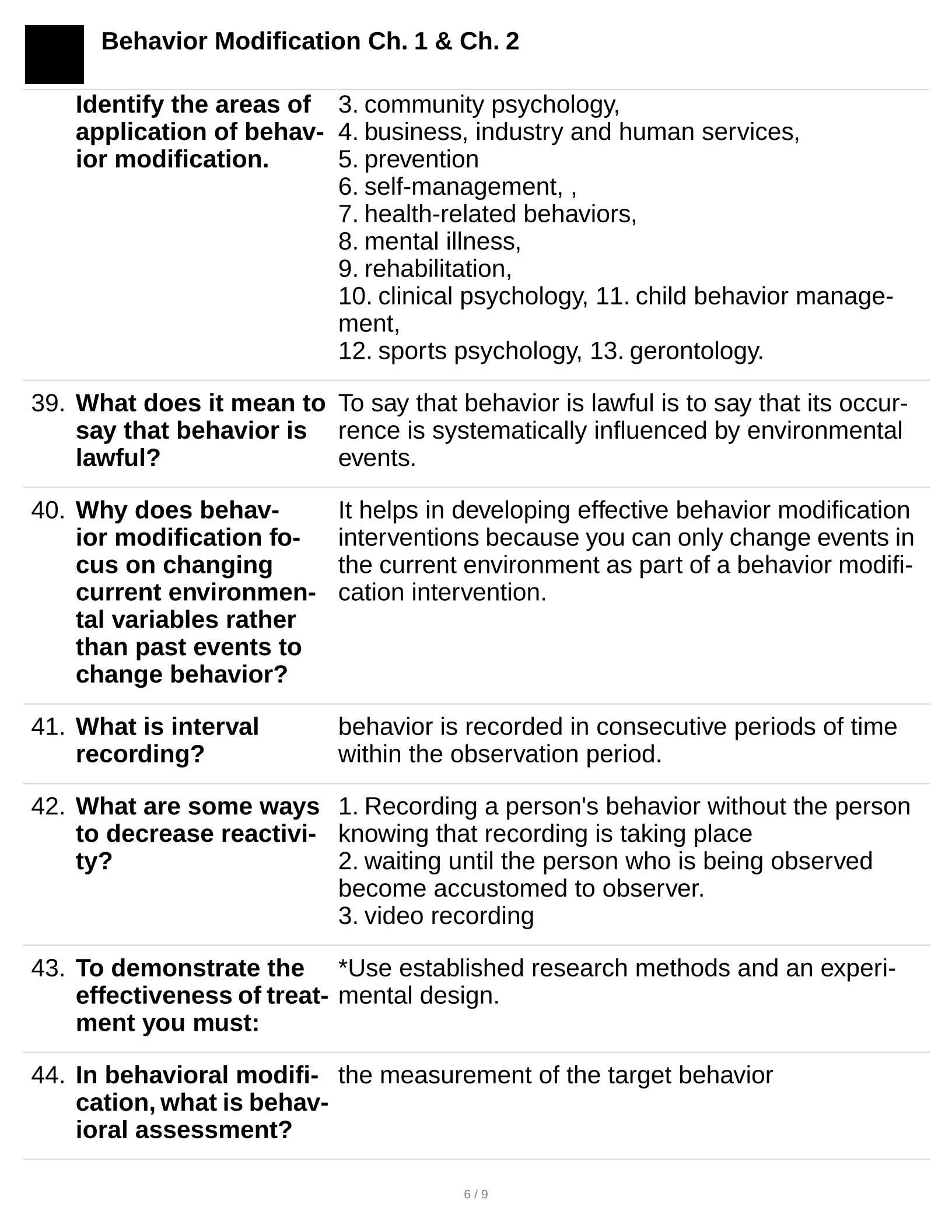
Identify the areas of
application of behav-
ior modification.
3. community psychology,
4. business, industry and human services,
5. prevention
6. self-management, ,
7. health-related behaviors,
8. mental illness,
9. rehabilitation,
10. clinical psychology, 11. child behavior manage-
ment,
12. sports psychology, 13. gerontology.
39. What does it mean to
say that behavior is
lawful?
To say that behavior is lawful is to say that its occur-
rence is systematically influenced by environmental
events.
40. Why does behav-
ior modification fo-
cus on changing
current environmen-
tal variables rather
than past events to
change behavior?
It helps in developing effective behavior modification
interventions because you can only change events in
the current environment as part of a behavior modifi-
cation intervention.
41. What is interval
recording? behavior is recorded in consecutive periods of time
within the observation period.
42. What are some ways
to decrease reactivi-
ty?
1. Recording a person's behavior without the person
knowing that recording is taking place
2. waiting until the person who is being observed
become accustomed to observer.
3. video recording
43. To demonstrate the
effectiveness of treat-
ment you must:
*Use established research methods and an experi-
mental design.
44. In behavioral modifi-
cation, what is behav-
ioral assessment?
the measurement of the target behavior
6 / 9
Behavior Modification Ch. 1 & Ch. 2
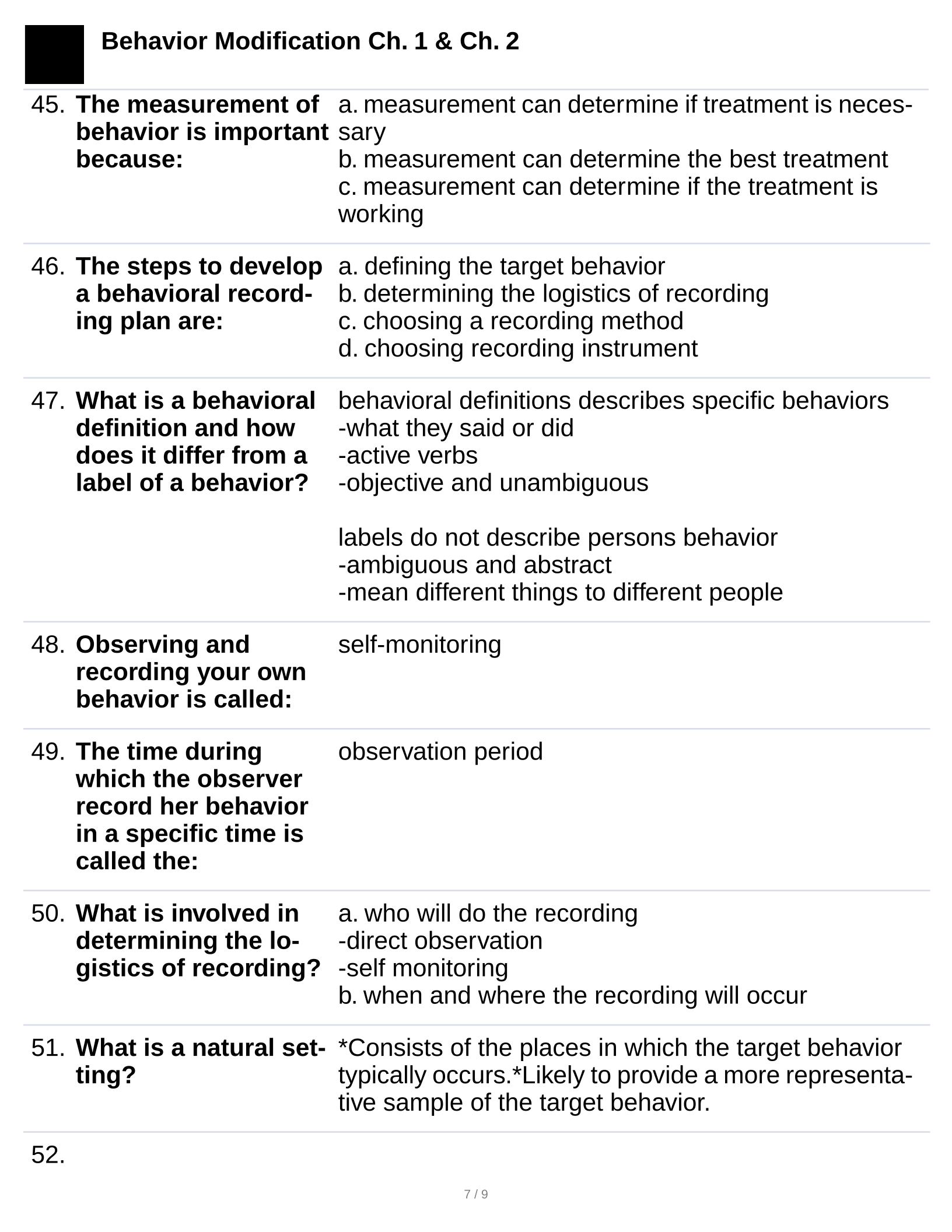
45. The measurement of
behavior is important
because:
a. measurement can determine if treatment is neces-
sary
b. measurement can determine the best treatment
c. measurement can determine if the treatment is
working
46. The steps to develop
a behavioral record-
ing plan are:
a. defining the target behavior
b. determining the logistics of recording
c. choosing a recording method
d. choosing recording instrument
47. What is a behavioral
definition and how
does it differ from a
label of a behavior?
behavioral definitions describes specific behaviors
-what they said or did
-active verbs
-objective and unambiguous
labels do not describe persons behavior
-ambiguous and abstract
-mean different things to different people
48. Observing and
recording your own
behavior is called:
self-monitoring
49. The time during
which the observer
record her behavior
in a specific time is
called the:
observation period
50. What is involved in
determining the lo-
gistics of recording?
a. who will do the recording
-direct observation
-self monitoring
b. when and where the recording will occur
51. What is a natural set-
ting? *Consists of the places in which the target behavior
typically occurs.*Likely to provide a more representa-
tive sample of the target behavior.
52.
7 / 9
Behavior Modification Ch. 1 & Ch. 2
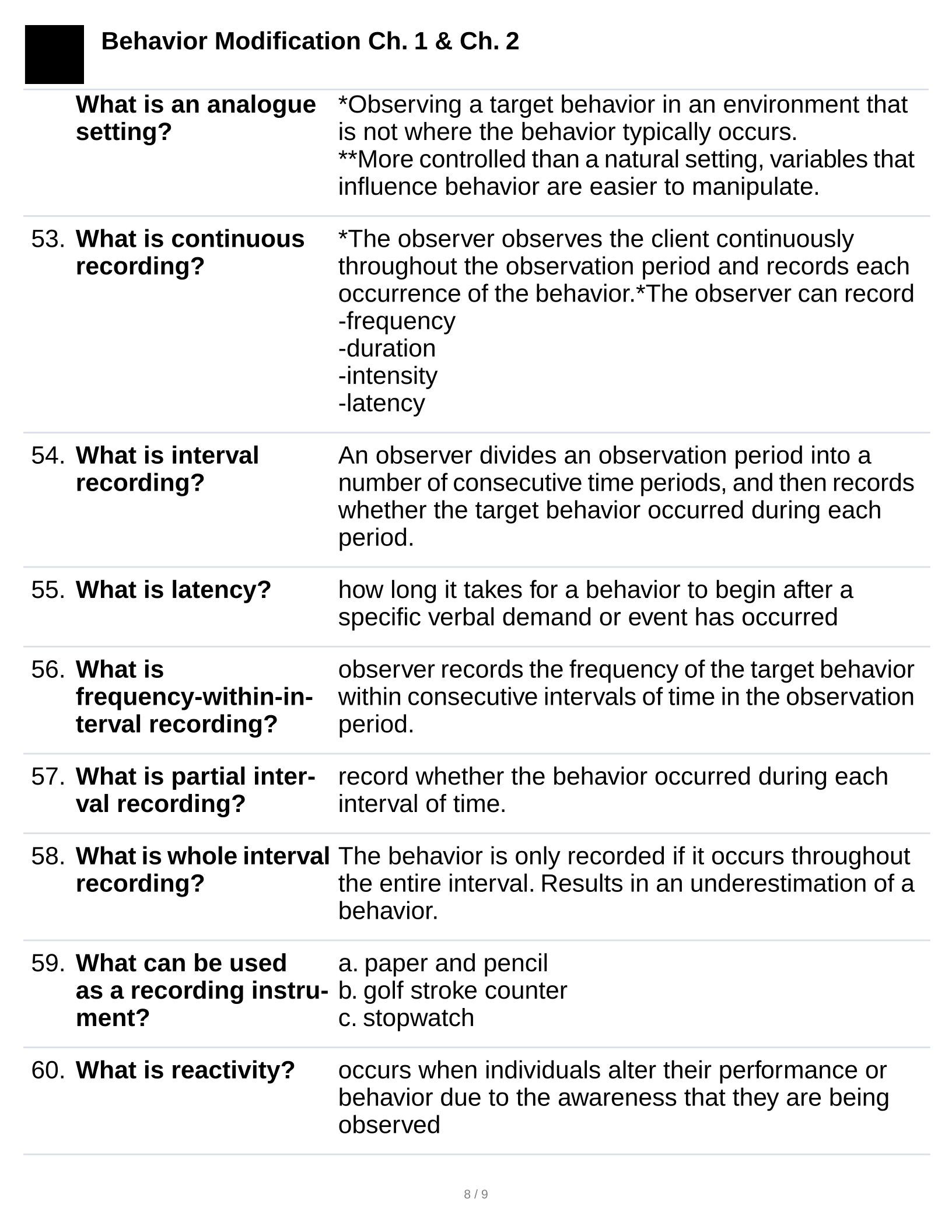
What is an analogue
setting? *Observing a target behavior in an environment that
is not where the behavior typically occurs.
**More controlled than a natural setting, variables that
influence behavior are easier to manipulate.
53. What is continuous
recording? *The observer observes the client continuously
throughout the observation period and records each
occurrence of the behavior.*The observer can record
-frequency
-duration
-intensity
-latency
54. What is interval
recording? An observer divides an observation period into a
number of consecutive time periods, and then records
whether the target behavior occurred during each
period.
55. What is latency? how long it takes for a behavior to begin after a
specific verbal demand or event has occurred
56. What is
frequency-within-in-
terval recording?
observer records the frequency of the target behavior
within consecutive intervals of time in the observation
period.
57. What is partial inter-
val recording? record whether the behavior occurred during each
interval of time.
58. What is whole interval
recording? The behavior is only recorded if it occurs throughout
the entire interval. Results in an underestimation of a
behavior.
59. What can be used
as a recording instru-
ment?
a. paper and pencil
b. golf stroke counter
c. stopwatch
60. What is reactivity? occurs when individuals alter their performance or
behavior due to the awareness that they are being
observed
8 / 9
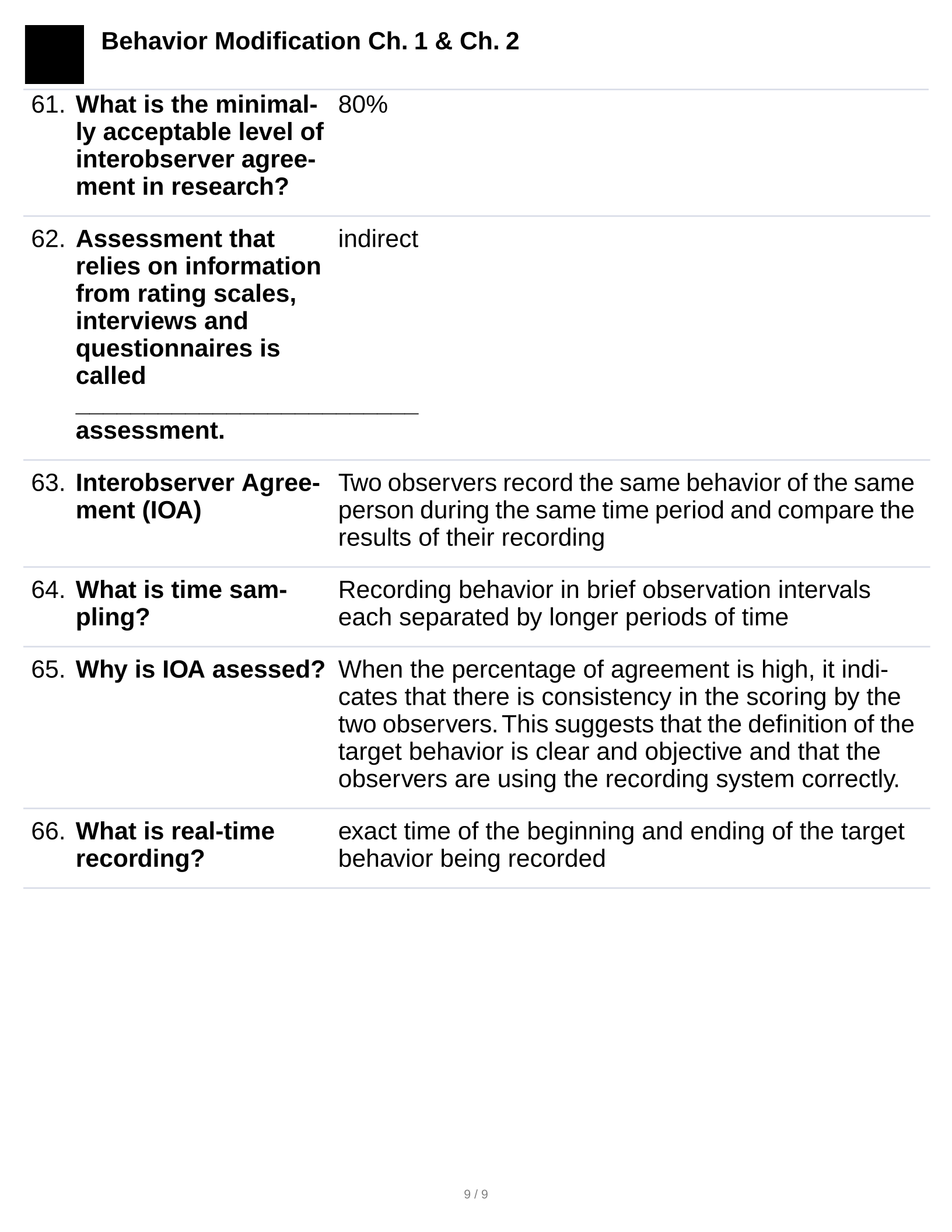
Behavior Modification Ch. 1 & Ch. 2
61. What is the minimal-
ly acceptable level of
interobserver agree-
ment in research?
80%
62. Assessment that
relies on information
from rating scales,
interviews and
questionnaires is
called
_________________________
assessment.
indirect
63. Interobserver Agree-
ment (IOA) Two observers record the same behavior of the same
person during the same time period and compare the
results of their recording
64. What is time sam-
pling? Recording behavior in brief observation intervals
each separated by longer periods of time
65. Why is IOA asessed? When the percentage of agreement is high, it indi-
cates that there is consistency in the scoring by the
two observers. This suggests that the definition of the
target behavior is clear and objective and that the
observers are using the recording system correctly.
66. What is real-time
recording? exact time of the beginning and ending of the target
behavior being recorded
9 / 9
Powered by TCPDF (www.tcpdf.org)

