


Collisions
Collisions occur when two or more bodies exert forces on each other for a short
duration. The nature of a collision depends on the conservation of momentum and
kinetic energy.
1. Types of Collisions
● Elastic Collision: Both momentum and kinetic energy are conserved.
● Inelastic Collision: Momentum is conserved, but kinetic energy is not.
● Perfectly Inelastic Collision: The colliding objects stick together after the
collision.
2. Conservation of Momentum in Collisions
The total momentum before and after a collision remains the same if no external forces
act on the system.
m1v1 + m2v2 = m1v′1 + m2v′2
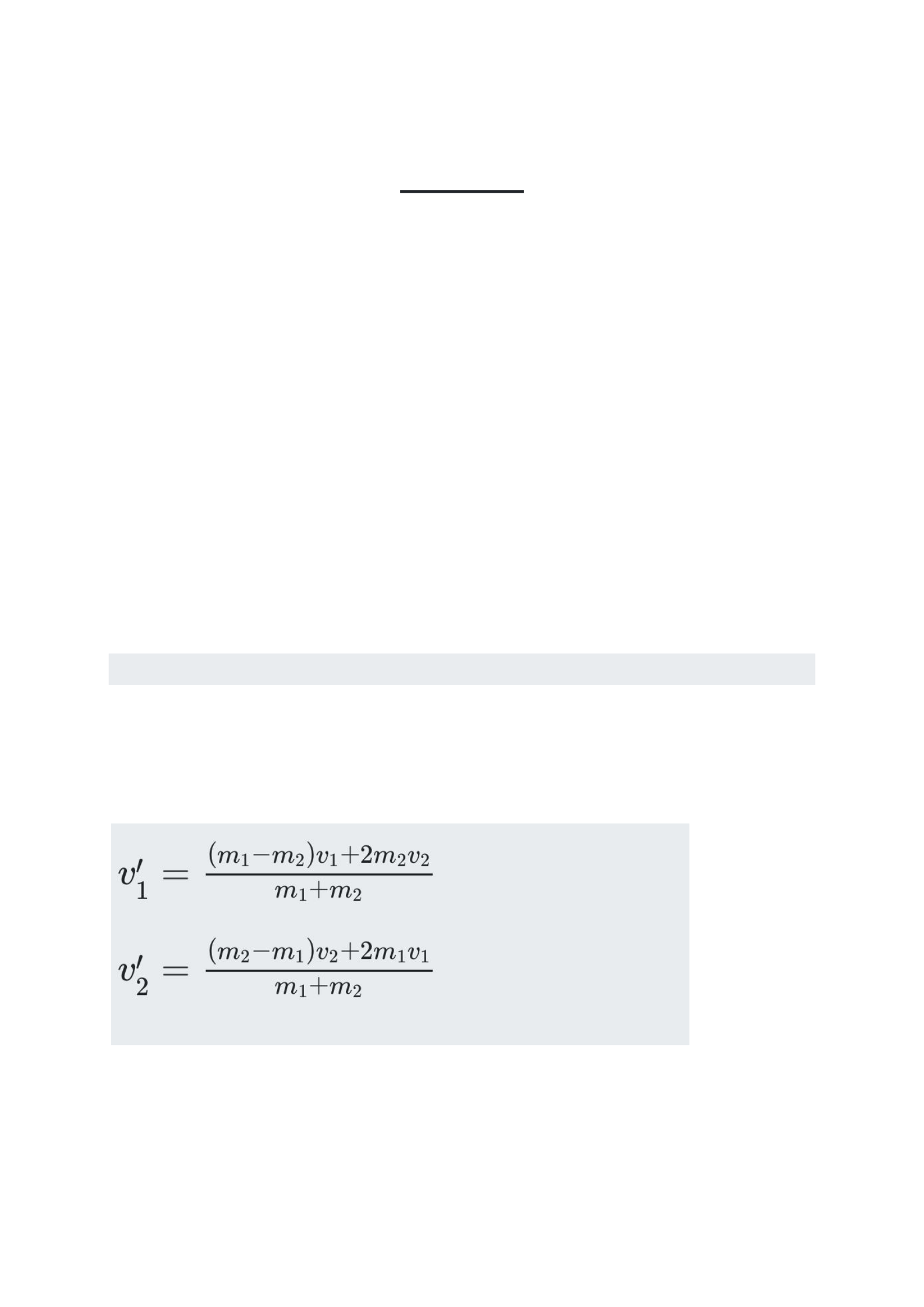
3. Elastic Collision Equations
For a one-dimensional elastic collision:
4. Inelastic Collisions
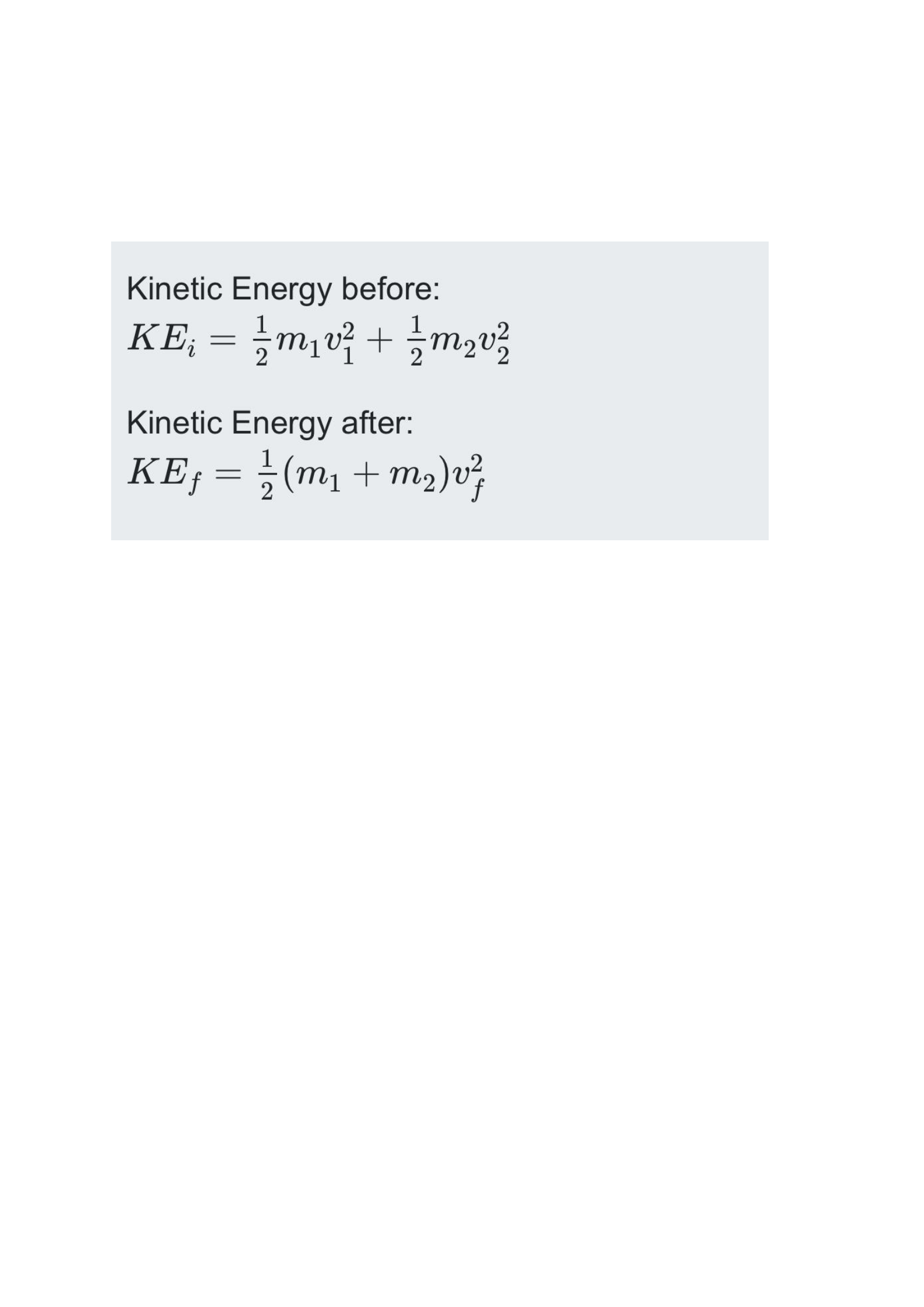
In inelastic collisions, some kinetic energy is converted into other forms, such as heat or
sound.
where vf is the final velocity after a perfectly inelastic collision.
5. Applications of Collisions
● Car crash analysis in safety engineering.
● Collisions between atoms and molecules in physics and chemistry.
● Sports mechanics, such as billiards and baseball.
Conclusion
Collisions are fundamental to understanding momentum and energy conservation in
physics. The different types of collisions play key roles in engineering, astrophysics, and
everyday physical interactions.

