


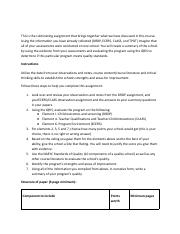

Essay Instructions
In this module/week, we have been discussing arguments for the existence of God, as
well as the chief argument against God – the “problem of evil.” (It is assumed you have
read ch. 13 in Dew & Gould before beginning this assignment.) In this essay, you will
consider three additional articles related to the problem of evil in theism:
“The Absurdity of Life without God,” by Craig
“Suffering: Richard Dawkins Contra Jesus,” by Thomas
“The Plight of the New Atheism: A Critique” (only pages 822–823), by Habermas
Your assignment is to read these three items and then write an essay of at least 600
words (in current MLA, APA, or Turabian format). While you are free to quote from
sources, and you must cite at minimum the 3 above readings, quotations will not count
towards the minimum word count. Your essay must address each of the questions
below:
Compare and contrast the three readings: what are some philosophical
similarities and differences?
Can life have objective meaning without God? Defend your answer making
reference (pro or con) to the reading(s).
Could life be “good” without objective meaning? Defend your answer making
reference (pro or con) to the reading(s).
What effect do your conclusions regarding the problem of evil have, in your view,
on the philosophical case for God’s existence? Explain how and why.

PHIL 201
ESSAY INSTRUCTIONS
In this module/week, we have been discussing arguments for the existence of God, as well as the
chief argument against God – the “problem of evil.” (It is assumed you have read ch. 13 in Dew
& Gould before beginning this assignment.) In this essay, you will consider three additional
articles related to the problem of evil in theism:
“The Absurdity of Life without God,” by Craig
“Suffering: Richard Dawkins Contra Jesus,” by Thomas
“The Plight of the New Atheism: A Critique” (only pages 822–823), by Habermas
Your assignment is to read these three items and then write an essay of at least 600 words (in
current MLA, APA, or Turabian format). While you are free to quote from sources, and you
must cite at minimum the 3 above readings, quotations will not count towards the minimum
word count. Your essay must address each of the questions below:
1. Compare and contrast the three readings: what are some philosophical similarities and
differences?
2. Can life have objective meaning without God? Defend your answer making reference
(pro or con) to the reading(s).
3. Could life be “good” without objective meaning? Defend your answer making reference
(pro or con) to the reading(s).
4. What effect do your conclusions regarding the problem of evil have, in your view, on the
philosophical case for God’s existence? Explain how and why.
Submit this assignment by 11:59 p.m. (ET) on Monday of Module/Week 7.
Your assignment will be checked for originality via the SafeAssign plagiarism tool. Plagiarism
of any kind will result in a 0 for the assignment and may result in being dropped from the course.

The Absurdity of Life without God
1. Compare and contrast the three readings: what are some philosophical
similarities and differences?
According to Craig (n.d.), without God's existence, life is considered to miss its
meaning, worth, and purpose completely. Primarily, Craig's (n.d.) motive is the proposition
that, in the absence of God, then immortality ceases to exist. And, in the absence of
immortality, then every human being is doomed to die at some point in their lifetime.
Can life have objective meaning without God? Defend your answer, referring
(pro or con) to the reading(s).
Plainly put, in the absence of God, then life becomes absurd (Craig, n.d.). An entity
cannot have an objective meaning without God.
Could life be "good" without objective meaning? Defend your answer, making
reference (pro or con) to the reading(s).
Most Christians embrace the view that humankind cannot make meaning of goodness
and any objective moral principles and values without God's existence.
2. What effect do your conclusions regarding the problem of evil have, in your
view, on the philosophical case for God's existence? Explain how and why?
Atheists who continue to claim that humanity can find meaning, value, and purpose
without God are proposing a fallacy and an absolute contradiction.

Running head: THE ABSURDITY OF LIFE WITHOUT GOD 1
The Absurdity of Life without God
Name
Institution
Date

THE ABSURDITY OF LIFE WITHOUT GOD 2
The Absurdity of Life without God
1. Compare and contrast the three readings: what are some philosophical
similarities and differences?
According to Craig (n.d.), without God's existence, life is considered to miss its
meaning, worth, and purpose completely. Primarily, Craig's (n.d.) motive is the proposition
that, in the absence of God, then immortality ceases to exist. And, in the absence of
immortality, then every human being is doomed to die at some point in their lifetime.
Additionally, Craig (n.d.) articulates that life is merely an abbreviated changeover from
oblivion and back to obscurity. On the other hand, Habermas (2008) argues that most
religious orientations now come before their congregations armed with ingratiating smugness
and scorn, and extended hands to receive. Habermas (2008) proceeds to reply to various New
Atheist controversies that focus more on rhetoric and inadequate substantive discussion
against religion. Thomas' (2018) ideology posits that pain, bodily suffering, and distress
continue to bedevil humankind. The issue has been ill-touching humankind’s well-nigh
unsounded for a long time (Thomas, 2018). According to Thomas (2018), suffering continues
to post more questions than answers to human life. Evolution theories like that of the Neo-
Darwinist Richard Dawkins and the opposite bent of Jesus Christ do not provide adequate
information on why human beings have to suffer but are instead illustrative and thought-
provoking (Thomas, 2018).
Comparatively, the philosophical ideas by the three readings differ in terms of
approach. While Craig (n.d.) and Habermas (2008) focus on the superiority of God, Thomas
(2018) is more interested in establishing answers to the suffering of humanity. Nonetheless,
all three philosophical ideas have a significant impact on spiritual and religious subjects over
recent years. All three readings revolve around the religion and the relationship between

THE ABSURDITY OF LIFE WITHOUT GOD 3
immortality, suffering, and God's existence. Also, the three philosophical arguments
converge at the agreement that life is meaningless if we are all doomed to die.
2. Can life have objective meaning without God? Defend your answer, referring
(pro or con) to the reading(s).
Plainly put, in the absence of God, then life becomes absurd (Craig, n.d.). An entity
cannot have an objective meaning without God. Additionally, value and purpose lack of
living a life without God. By attesting that something has meaning, it does not mean that it, in
reality, has value and purpose in the objective or real world. According to Habermas (2008),
both atheists and theists are inclined to believe that in the absence of God, human living lacks
an objective meaning. Thomas (2018) can be used to conclude differently. By finding value
and purpose in other things around us, we are likely to appreciate God's presence and acquire
meaning to life (Thomas, 2018). Although Habermas (2008) agrees to thoughts proposed by
new atheists, many of them lack substantive arguments on how life can have meaning
without God.
3. Could life be "good" without objective meaning? Defend your answer, making
reference (pro or con) to the reading(s).
Most Christians embrace the view that humankind cannot make meaning of goodness
and any objective moral principles and values without God's existence. Additionally, various
atheists have been recorded to concede to the opinion that moral realism requires a surpassing
and supernatural source (Habermas, 2008). The life of Christians is mainly referenced by the
values and virtues promoted in Biblical or Godly orientation. From this analysis of realism, a
morally accepted or 'good' and purposeful life entrenches God's existence. Therefore, life
could not be 'good' without objective meaning. Thus, the moral argument championed by
Craig (n.d.) with its foundation on the argument that if God does not exist, objective moral
values also cease to exist is true.

THE ABSURDITY OF LIFE WITHOUT GOD 4
4. What effect do your conclusions regarding the problem of evil have, in your
view, on the philosophical case for God's existence? Explain how and why?
Atheists who continue to claim that humanity can find meaning, value, and purpose
without God are proposing a fallacy and an absolute contradiction. The philosophical
existence of God's existence is manifested in what lives around us. This is because the
environment provides us with opportunities to find objective meaning through other objects,
such as fellow human beings, plants, animals, and lifeless objects. Additionally, the
philosophical existence of God can be articulated using a two-storeyed world. In the lower
level, God does not exist, and everything if formless and lacks meaning. In the upper level,
God exists, and life has meaning, value, and purpose. A world without form and definition
lacks life.

THE ABSURDITY OF LIFE WITHOUT GOD 5
References List
Craig, L. W. (n.d.). The absurdity of life without God. Reasonable Faith.
Available at https://www.reasonablefaith.org/writings/popular-writings/existence-
nature-of-god/the-absurdity-of-life-without-god/
Habermas, G. R. (2008). The plight of the new atheism: a critique. Virginia, USA: Liberty
University, Faculty Publications and Presentations. Extract from the Journal of the
Evangelical Theological Society.
Available at
https://digitalcommons.liberty.edu/cgi/viewcontent.cgi?article=1009&context=sor_fa
c_pubs
Thomas, T. (2018). Suffering: Richard Dawkins Contra Jesus. Moral Apologetics.
Available at https://www.moralapologetics.com/wordpress/2018/9/19/suffering-
richard-dawkins-contra-jesus

huu
by Hgg Hbb
Submission date: 29-Jun-2020 12:54PM (UTC-0500)
Submission ID: 1351421853
File name: 20200629133956600_word_essay.docx (31.11K)
Word count: 809
Character count: 4752

Running
head:
THE
ABSURDITY
OF
LIFE
WITHOUT
GOD
The
Absurdity
of
Life
without
God
Name
Institution
Date

THE
ABSURDITY
OF
LIFE
WITHOUT
GOD
2
The
Absurdity
of
Life
without
God
1.
Compare
and
contrast
the
three
readings:
what
are
some
philosophical
similarities
and
differences?
According
to
Craig
(n.d.),
without
God's
existence,
life
is
considered
to
miss
its
meaning,
worth,
and
purpose
completely.
Primarily,
Craig's
(n.d.)
motive
1s
the
proposition
that,
in
the
absence
of
God,
then
immortality
ceases
to
exist.
And,
in
the
absence
of
immortality,
then
every
human
being
is
doomed
to
die
at
some
point
in
their
lifetime.
Additionally,
Craig
(n.d.)
articulates
that
life
is
merely
an
abbreviated
changeover
from
oblivion
and
back
to
obscurity.
On
the
other
hand,
Habermas
(2008)
argues
that
most
religious
orientations
now
come
before
their
congregations
armed
with
ingratiating
smugness
and
scorn,
and
extended
hands
to
receive.
Habermas
(2008)
proceeds
to
reply
to
various
New
Atheist
controversies
that
focus
more
on
rhetoric
and
inadequate
substantive
discussion
against
religion.
Thomas’
(2018)
ideology
posits
that
pain,
bodily
suffering,
and
distress
continue
to
bedevil
humankind.
The
issue
has
been
ill-touching
humankind’s
well-nigh
unsounded
for
a
long
time
(Thomas,
2018).
According
to
Thomas
(2018),
suffering
continues
to
post
more
questions
than
answers
to
human
life.
Evolution
theories
like that
of
the
Neo-
Darwinist
Richard
Dawkins
and
the
opposite
bent
of
Jesus
Christ
do
not
provide
adequate
information
on
why
human
beings
have
to
suffer
but
are
instead
illustrative
and
thought-
provoking
(Thomas,
2018).
Comparatively,
the
philosophical
ideas
by
the
three
readings
differ
in
terms
of
approach.
While
Craig
(n.d.)
and
Habermas
(2008)
focus
on
the
superiority
of
God,
Thomas
(2018)
is
more
interested
in
establishing
answers
to
the
suffering
of
humanity.
Nonetheless,
all
three
philosophical
ideas
have
a
significant
impact
on
spiritual
and
religious
subjects
over
recent
years.
All
three
readings
revolve
around
the
religion
and
the
relationship
between

THE
ABSURDITY
OF
LIFE
WITHOUT
GOD
3
immortality,
suffering,
and
God's
existence.
Also,
the
three
philosophical
arguments
converge
at
the
agreement
that
life
is
meaningless
if
we
are
all
doomed
to
die.
2.
Can
life
have
objective
meaning
without
God?
Defend
your
answer,
referring
(pro
or
con)
to
the
reading(s).
Plainly
put,
in
the
absence
of
God,
then
life
becomes
absurd
(Craig,
n.d.).
An
entity
cannot
have
an
objective
meaning
without
God.
Additionally,
value
and
purpose
lack
of
living
a
life
without
God.
By
attesting
that
something
has
meaning,
it
does
not
mean
that
it,
in
reality,
has
value
and
purpose
in
the
objective
or
real
world.
According
to
Habermas
(2008),
both
atheists
and
theists
are
inclined
to
believe
that
in
the
absence
of
God,
human
living
lacks
an
objective
meaning.
Thomas
(2018)
can
be
used
to
conclude
differently.
By
finding
value
and
purpose
in
other
things
around
us,
we
are
likely
to
appreciate
God's
presence
and
acquire
meaning
to
life
(Thomas,
2018).
Although
Habermas
(2008)
agrees
to
thoughts
proposed
by
new
atheists,
many
of
them
lack
substantive
arguments
on
how
life
can
have
meaning
without
God.
3.
Could
life
be
"good"
without
objective
meaning?
Defend
your
answer,
making
reference
(pro
or
con)
to
the
reading(s).
Most
Christians
embrace
the
view
that
humankind
cannot
make
meaning
of
goodness
and any
objective
moral
principles
and
values
without
God's
existence.
Additionally,
various
atheists
have
been
recorded
to
concede
to
the
opinion
that
moral
realism
requires
a
surpassing
and
supernatural
source
(Habermas,
2008).
The
life
of
Christians
is
mainly
referenced
by
the
values
and
virtues
promoted
in
Biblical
or
Godly
orientation.
From
this
analysis
of
realism,
a
morally
accepted
or
'good'
and
purposeful
life
entrenches
God's
existence.
Therefore,
life
could
not
be
'good'
without
objective
meaning.
Thus,
the
moral
argument
championed
by
Craig
(n.d.)
with
its
foundation
on
the
argument
that
does
not
exist,
objective
moral
values
also
cease
to
exist
is
true.

THE
ABSURDITY
OF
LIFE
WITHOUT
GOD
q
4.
What
effect
do
your
conclusions
regarding
the
problem
of
evil
have,
in
your
view,
on
the
philosophical
case
for
God's
existence?
Explain
how
and
why?
Atheists
who
continue
to
claim
that
humanity
can
find
meaning,
value,
and
purpose
without
God
are
proposing
a
fallacy
and
an
absolute
contradiction.
The
philosophical
existence
of
God's
existence
is
manifested
in
what
lives
around
us.
This
is
because
the
environment
provides
us
with
opportunities
to
find
objective
meaning
through
other
objects,
such
as
fellow
human
beings,
plants,
animals,
and
lifeless
objects.
Additionally,
the
philosophical
existence
of
God
can
be
articulated
using
a
two-storeyed
world.
In
the
lower
level,
God
does
not
exist,
and
everything
if
formless
and
lacks
meaning.
In
the
upper
level,
God
exists,
and
life
has
meaning,
value,
and
purpose.
A
world
without
form
and
definition
lacks
life.

THE
ABSURDITY
OF
LIFE
WITHOUT
GOD
References
List
Craig,
L.
W.
(n.d.).
The
absurdity
of
life
without
God.
Reasonable
Faith.
Available
at
https://www
seasonablefaith.org/writings/popular-writings/existence-
nature-of-god/the-absurdity-of-life-without-god/
Habermas,
G.
R.
(2008).
The
plight
of
the
new
atheism:
a
critique.
Virginia,
USA:
Liberty
University,
Faculty
Publications
and
Presentations.
Extract
from
the
Journal
of
the
Evangelical
Theological
Society.
Available
at
https://digitalcommons
liberty.edu/cgi/viewcontent.cgi?article=1009&context=sor_fa
c_pubs
Thomas,
T.
(2018).
Suffering:
Richard
Dawkins
Contra
Jesus.
Moral
Apologetics.
Available
at
https://www
moralapologetics.com/wordpress/2018/9/19/suffering
-
richard-dawkins-contra-jesus

7%
SIMILARITY INDEX
2%
INTERNET SOURCES
0%
PUBLICATIONS
6%
STUDENT PAPERS
16%
21%
Exclude quotes On
Exclude bibliography On
Exclude matches Off
huu
ORIGINALITY REPORT
PRIMARY SOURCES
Submitted to Regis University
Student Paper
www.reasonablefaithperth.org
Internet Source

