



Introduction to Crisis Counseling
Crisis often refers to a person’s internal reaction to an external hazard
James and Gilliland describe five different types of crises an individual can experience
oDevelopmental crisis – natural and expected human experiences at critical phases of
development
oSituational crisis – sudden, unexpected events of which a person has no control
oExistential crisis – inner conflicts regarding a person’s core values
oInterpersonal crisis – occur between individuals and groups as a result between problems
with communication and unresolved conflict
oSpiritual crisis – occur when an individual struggles with issues related to their faith
The impact of a crisis is influenced by several variables:
oThe person’s coping skills
oPerception of the event
oThe social support system the person receives from others
oThe number of additional stressors experienced by the individual in crisis
The Normal Crisis Pattern
Journeying with someone through their pain is not for the faint of heart
oA pastoral crisis care giver is someone who possesses special gifts and talents
Pastoral crisis counseling is brief pastoral care that focuses on single or recurrent problems that are
overwhelming or traumatic
Michael Conner shares there are universal “elements” in the process by which a pastoral crisis
counselor can help people face and move past distressing and traumatic events in their lives
There is a natural ability within most people to recover from a crisis provided they have the support,
guidance, and resources they need

A crisis can be the result of not recognizing the impact behavior has on others as well as the impact
it has on the individual in crisis
Every crisis represents an opportunity for personal growth
oOften the greatest treasures are discovered when we are facing tragedy and the
“inevitables” of life
It is the fundamental intention of all people to do the best they can with the resources and abilities
they have during a crisis
One important aspect of pastoral crisis counseling is to provide a social “container” to express,
explore, examine, and become active in ways that help ensure the crisis is not prolonged
Few people, during times of crisis, have the necessary skills to fully examine what they are thinking,
what they assume, and what they expect from their self and from others
One cannot know how they feel and what they truly want if their feelings are modified by chemicals,
medications, alcohol, and other drugs
During a crisis, it is often helpful to form brief relationships with others in order to gain support
A crisis is usually a time of fear or sadness
oHow individuals respond is important
oFacing emotional pain is the healthiest response
Faith and personal growth are crucial to surviving a crisis
Crisis Counseling from a Biblical Perspective
An important observation we can make about Jesus’ ministry model is that His work with people was
a process
One characteristic of Jesus’ approach was His compassion for others
When Jesus first met people, He accepted them as they were
oHe believed in them and what they would become
Jesus gave people high priority in His ministry by putting their needs before rules and regulations the
religious leaders had constructed
Jesus has the ability to see the needs of people and speak directly to them, regardless of what they
might have brought to this attention
Jesus used the right words and emphasized the importance of the right behavior
Jesus encouraged people to accept responsibility for their actions
Jesus provided hope and encouragement to those in the midst of crisis
Jesus helped reshape people’s thinking
When ministering to people in crisis, Jesus possessed crucial qualities that the pastoral crisis care
giver needs to integrate into their life
oHe was obedient to God and following His lead
oHe was faithful and able to put things into proper perspective through God’s eyes
oHe was a prayer warrior
oHe had the power of the Holy Spirit, allowing Him to be effective in the midst of chaos
Applying these qualities of Christ in pastoral crisis care begins with understanding one of the crucial
elements of crisis care – listening
Knowing when to speak and when to keep quiet is crucial for effective pastoral crisis care
When a person is in crisis, our words, tone of voice and suggestions have a far greater impact than at
other times in life

As a pastoral crisis care giver, you will need to give direction, advice, and help on impending
decisions or problems that need to be resolved
Another biblical application to consider is the use of empathy
oEmpathy is viewing their current crisis through their eyes, feeling the pain they are
experiencing
For empathy to occur, we must connect with the individual in crisis
oTo connect with an individual, you must first establish rapport by meeting people where they
are
So as to not cause harm, there are several ineffective approaches of crisis care we need to avoid
Other ineffective approaches of crisis intervention include:
o Interrogation
oFalse reassurance
o Judgment
We must remember, for some people in crisis, change will be very slow
oThese individuals need our encouragement and faith to move them along
Models of Crisis Care
Pastoral Crisis Intervention model is built around a crisis care algorithm titled “SAFER-R”
oStabilize – involves introducing yourself to the person in a crisis and your role in it
oAcknowledge – the event by listening to the who, what, and when of the event story
oFacilitate understanding – involves encouraging the expression of difficult emotions and
helping them understand the impact of the critical event
oEncourage effective coping – here is the time to identify personal stress management tools
oRecover – portrays the concept that the individual after the crisis experiences personal
growth, discovers new meaning in life, or perceives living life from a “new normal” mindset
Psychological First Aid (PFA) Model is an evidence-informed modular approach for assisting children,
adolescents, adults, and families in the immediate aftermath of disaster and terrorism
oBased upon eight core actions provided by the crisis care giver:
Contact and engagement
Safety and comfort
Stabilization
Information gathering
Practical assistance
Connection with social supports
Information on coping
Linkage with community resources
oThe first contact with a survivor is important
If managed in a respectful and compassionate way, it can help establish an effective
helping relationship and increase the person’s receptiveness to further help
oRestoration of a sense of safety is an important goal in the immediate aftermath of a crisis
oMost individuals affected by a disaster or other traumatic incident will not require
stabilization
oGathering and clarifying information begins immediately after contact and is ongoing
throughout PFA

oAssisting the survivor with current or anticipated problems is a central component of PFA
oAn immediate concern for most affected persons is being able to communicate with
individuals with whom they have a primary relationship and social support can play a strong
role in recovery from trauma
oCrisis events can be disorienting, confusing, and overwhelming
Various types of information can help to re-orient individuals to their situation
oProviding information should be accompanied by a discussion about which of the survivor’s
needs and current concerns require additional information or services
Pastoral Crisis Intervention (http://www.icisf.org/) and Psychological First Aid
(http://www.ptsd.va.gov/professional/manuals/psych-first-aid.asp)
Pastoral Crisis Ministry
The functional integration of religious, spiritual, and pastoral resources with the assessment and
intervention technologies of connected with the practice of emergency mental health
Critical elements of pastoral crisis ministry:
oFaith-based social support system
oProblem-solving abilities
oOpen, honest communication
oExpression of the feelings and thoughts
There are distinctive tools of pastoral crisis ministry:
oSpiritual insight and education
oA belief in the power of intercessory prayer
oA unifying and explanatory spiritual worldview which may restore order to otherwise
incomprehensible events
o Confession
oThe use of holy sacraments
oAn ocean of divine forgiveness
oA belief in life after death
oThe ministry of the Holy Spirit
Goals of pastoral crisis ministry:
oRestore functioning
oAddress theological aspects of the crisis
Ministers may take a number of measures to increase their effectiveness in pastoral crisis ministry
No matter how much help ministers provide, they may struggle, thinking they should have done
more
A minister is of greatest benefit when he or she understands recovery takes time and support is
necessary far beyond the first few days after an individual experiences a crisis
A crucial component of pastoral crisis ministry is confidentiality
There are certain circumstances when confidentiality will need to be breached
oWhen an individual may be a danger to themselves or another person
oWhen required by the legal system to disclose information in a counseling session
While ministers can provide much needed help to those experiencing crisis, there are occasions
when the minister will need to make a referral to a licensed professional counselor

Pastoral crisis ministry tends to be more intense, requiring a different set of skills than other
elements of pastoral ministry
Pastoral crisis ministry is often performed in a single session and sometimes the minister may never
see the individual again
Due to these challenges, the minister should be aware of and avoid making some of the common
mistakes related to pastoral crisis ministry
oNot everyone experiencing a crisis will require intervention
oAvoid trying to alleviate the sufferer’s pain
oAvoid overwhelming the individual by trying to move too quickly through the recovery
process
oUnderstand crisis impacts a person on many levels, and the best approach to recover takes
into account the whole person
oAvoid imposing any model of functioning on an individual where it does not fit
The minister must seek out and care for those experiencing personally disturbing events
Children/Adolescents and Crises
Children may experience the same crisis as an adult, but respond differently
oThey feel the same emotions, but may not outwardly display them
The response of a child to a crisis event depends upon the child’s personality and their
developmental stage
A child often deals with traumatic events through play
Following crisis events, a child might regress to previous stages of functioning
After a crisis event, a child may experience a variety of emotions ranging from sadness to anger
Following a crisis, a child may become passive and withdrawn while another child may act out
Parents, relatives, and the church community are vital to helping a child adjust to experiencing a
crisis
Physical contact with parents and adult caregivers is comforting following a crisis
Following traumatic events, children can be compelled into positions of adult duties
A crucial task of helping a child cope is communicating with the child about the events which have
taken place and about how the child is doing
When communicating with children, it is best to be truthful
Children are fragile and resilient
Moving from children to adolescence and crisis requires additional insight and a specific set of
pastoral ministry skills
The fact that teenagers experience rapid growth and development over a period of several years has
important implications for how they experience crisis
Adolescents are susceptible to a wider range of crisis events than are children
The crisis of parental divorce is likely to produce feelings of shame and embarrassment for the
teenager
Trying to help adolescents journey through crisis is a daunting task
When teens experience crises, they may feel like they’re walking a path while dodging boulders
falling from above
Marital Crisis

When a couple is experiencing a marital crisis, a number of myths may surface
oA sign the marriage is over
oIt is best to hold feelings inside until a spouse has made a clear decision whether or not to
divorce
oIf the partner’s commitment is uncertain, then the spouse must let the other spouse know
how much you love him or her
Causes for marital crises:
o Lifecycle
Marriage
Remarriage
Birth of children
Grown children
Retirement/aging
o Communication
One of the major causes of misunderstanding a marital crisis
o Children
Can distract couples from focusing on meeting the needs of each other
oPersonality differences
In the early months of a relationship, differences in personalities often draw a couple
together
o Finances
Many people have been influenced by our materialistic society so that their self-
worth is tied to their financial status
oExtramarital affair
Years ago, infidelity was often thought to be only a physical act against one’s spouse
Emotional infidelity is also a more recent development with pornography and the
internet
When a couple seeks counsel from a minister in the midst of a marital crisis, often the couple can
have one-sided motivations, different agendas, and dissimilar expectations for the minister
In a marital crisis, one partner could be described as the rejected spouse and the other as the
ambivalent spouse
A minister can provide specific strategies in helping a couple survive a martial crisis
To assist the couple in making good decisions during the marital crisis, couples need to be reminded
that good decisions take time
A marital crisis is not a sign that the marriage is over
Crises of Loss
Dr. Scott Floyd defines loss as the “separation from or removal of something meaningful to an
individual”
A second element of loss includes the value associated with the loss

Some losses are concrete and tangible, such as the death of a loved one
The crises of loss impact individuals emotionally, cognitively, behaviorally, and spiritually
A person may not recognize the connection between the loss and the impact upon their emotions,
beliefs, behaviors, and faith
Identifying the needs of a person experiencing loss is crucial to their recovery
oAn individual needs the opportunity to share their emotions and thoughts in a safe, non-
judgmental environment
oA person needs affirmation of their self-worth
oA person experiencing loss needs to reinvest their emotions and energies into new
experiences, honoring the person or object which was lost
oAn individual experiencing loss needs to rediscover meaning to life as a result of
experiencing the loss
Loss is often easily identified; however, there are times when loss is subtle
Helping Others Recover from Loss
Grief is a personal experience, and it is a natural, normal, predictable, and expected reaction to a
loss
A variety of models exist regarding understanding grief and loss
Many grief researchers today recognize limitations in their interpretation and application in many of
these grief models
Karen Humphrey, author of Human Development Across the Lifespan, shares a contemporary
perspective of nine essential guidelines for conceptualizing loss and grief
Loss and grief do not occur in a vacuum, as a variety of influences affect a person’s grief
Grieving styles simply reflect the natural differences among individuals that result from personality
traits as well as cultural, family, developmental, and social influences
Instead of demanding disconnection, a more helpful and humane approach is to assist grievers in
revising, redefining, or altering their relationship with their lost objects to allow enduring connection
Grief, in and of itself, is neither abnormal nor a disease nor dysfunctional

Studying religious responses to disasters, Dr. Koenig concluded that faith involvement is related
to greater social support, better mental health, and faster adaptation
Two-thirds of Americans are members of faith communities
Loss often leads people to make necessary changes in their life to live with loss in healthy ways
Many people operate under the mistaken belief that grief ends
Once we assume the uniqueness rather than the universality or sameness of every grieving
individual and his or her experience of loss and grief, it becomes clear that there can be no one-size-
fits-all treatment
Crisis and Disasters in the Church and Community
A disaster is a large scale crisis that generally occurs with little or no warning and impacts a specific
segment of a community
When a community experiences a crisis, Charles Figley, author and traumatologist, has identified
seven different phases a community may experience
oPre-disaster phase where the community functions with a general lack of awareness
oImpact phase resembles the impact which may be felt by an individual: fear, numbness, and
disbelief
oThe heroic response phase when particular individuals in the community display heroic
efforts
oThe inventory phase where the people focus on the needs concerning safety and well-being
oThe honeymoon phase where the community receives a lot of attention
oDisillusioned phase when the community becomes tired and irritable
oThe reconstruction phase where the community rebuilds to before when the crisis began
Dr. Harold G. Koenig has identified several worldview questions that disaster survivors may ask
oIs there a caring God who is in control?
oIf God is in control, why did God allow this?
Without adequate social, psychological, and spiritual support, Dr. Koenig reports that several
negative psychological consequences may result after experiencing a community disaster
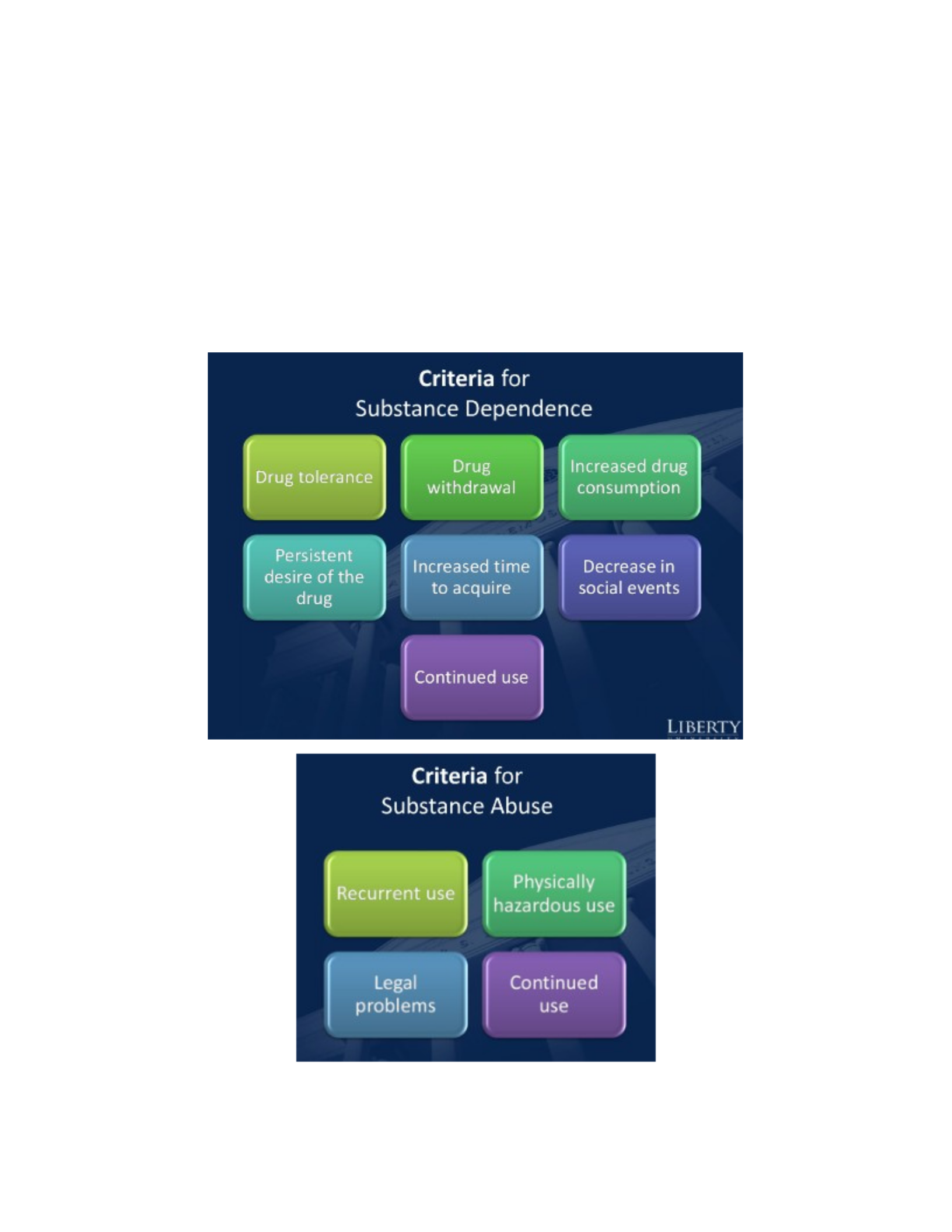
Alcohol is the most abused drug in the United States
The church can be involved in disaster recovery in different arenas
Once the crisis stabilizes, the church can be involved in the relief effort by providing the necessities
of food and shelter to those displaced by the disaster
A broad range of ministry opportunities are available following a disaster
The church that makes plans and carries out a disaster response ministry has the greatest likelihood
ministering, in Christ’s name, but ultimately of generating appreciation for the church
Substance Abuse and Crisis Care
As a minister, you need general knowledge about drugs, their use, abuse, and the ability to identify a
person who is dependent on or abusing drugs

Cocaine is a central nervous system stimulant, possessing both anesthetic and vasoconstricting
properties
Speed or methamphetamine is another highly addictive illegal drug
Lysergic Acid Diethylamide (LSD) is also known as acid and is taken orally in a tablet form or licked off
paper
Heroin is a depressant that is injected or snorted and is highly addictive
Crises related to substance abuse: medical, legal, psychological, and spiritual
Drug users have different levels of tolerance for pain
Confrontation is the process whereby drug-using behavior is acknowledged by others and fully
exposed
Confrontation begins with “open acceptance”
Assigning responsibility to the drug user for the consequences of the behavior
When the minister suspects or becomes aware of an addiction, they should not proceed until all of
the facts are known
Helping the Trauma Victim
Trauma is very specific and connected to a particular event
There are two types of traumas that individuals can experience:
oSingle event – a sudden, unexpected event, such as major crash incidents, natural disasters,
crime victims, or sudden death of a family member or friend
oMulti-event – often occurs through repeated exposure to similar traumatic events
The outcomes of exposure to trauma impacts individuals holistically
Survivors often feel overwhelmed by their own emotions and struggle to make sense of the event
Exposure to personally disturbing incidents can lead to some individuals to develop PTSD
Evidence-based interventions:
o Debriefing
o Defusing
o Demobilization
Trauma often tends to keep the memories frozen
oProvide a safe environment to discuss the trauma and reframe the emotions relating to the
emotionally disturbing incident
Another effective strategy to help the trauma survivor to identify and remove the triggers associated
with the personally disturbing event
Detrimental coping methods:
o Avoidance/escape
oConfrontational coping
oAccepting responsibility
o Self-control
o Distancing
Matsakis Phases of Trauma Recovery:
o Cognitive
o Emotional
o Mastery
The ultimate goal for trauma care is to help individuals move toward a new “normal” in their life

The Crisis of Death
The different elements of a death crisis:
oNature of death
oCause of death
oAge
oPlace of death
oSurvivor reaction
oLast contact
oAfter-death rituals
When ministering to the surviving family, grief ministry will be a challenge because each family
member will grieve differently
Anger is a common response to death – especially sudden unexpected death
Iserson’s death notification protocol:
o Prepare
o Inform
o Support
o Afterwards
It is important for the minister to pray for the bereaved and provide tangible support with visitation,
sending cards, making phone calls, and providing meals
The minister should be aware of cultural differences when dealing with a death crisis
80% of grief caregivers fall in to the trap of using non-helpful clichés
Worden’s Tasks of Mourning:
oAccepting the reality
oExperience the pain
oAdjusting the environment
o Reinvesting
People who experience grief share common manifestations
Ministering to someone experiencing a death crisis can be difficult
oHelp the survivors actualize the death by talking
oHelp the bereaved identify and share their feelings in a safe environment
oUtilize a problem solving approach to assist the survivor to live without the deceased
oAllow the survivors sufficient time to grieve
oEducate individuals about customary grieving reactions and normalize their grief experience
“Perhaps what most people need in order to minister effectively to others is a clear understanding of
what death is.”
Pastoral Grief Ministry
Grief is universal, but the way individuals handle it is unique
Christ has changed the meaning of grieving, as believers in Christ are given hope, even in times of
sorrow
Although it is rarely possible to identify one cause for pathological grief, several influences seem to
determine how one will react to a loss
Grieving often begins with a period of shock, numbness, denial, and intense crying

Normal grief is difficult, but ministers can help the bereaved in several ways:
oEncourage discussions about death before it occurs
oThe ministry of presence during the time of grief is extremely helpful
oEncourage the expressions of feelings and thoughts related to grief
oThe minister can encourage the grieving person to postpone major decisions until a few
months have passed
Ministers are often called to assist people who are showing pathological grief reactions
The minister can also help the bereaved understand the grief process
The minister can assist with the prevention of unhealthy grief reactions
Should the minister ever cry when ministering to the bereaved?
oThe minister may need to dismiss himself when he cannot control himself or provide the
necessary help to the survivors
Working with the bereaved can be very draining emotionally, physically, and spiritually
The Crisis of Suicide
Suicide rates are the highest among the divorced, separated, and widowed, and lowest among the
married
oIt is estimated there are about 25 attempts for every completed suicide
Unmet Psychological Needs of Suicidal Individuals:
oUnfilled love/acceptance
oNeed for control
oDamaged self-image
oShattered relationships
oUncontrolled rage
Warning Signs of Suicide:
oIS PATH WARM?
Ideation
Substance Abuse
Purposelessness
Anxiety
Trapped
Hopelessness
Withdrawal
Anger
Recklessness
Mood Changes
30% of people in the general public have, at some point of their lives, had suicidal thoughts
A minister can perform a suicide assessment to ascertain the seriousness of an individual’s suicidal
intent and ideation
“In respect for the biblical tradition, it is important for pastoral counselors to approach a suicide
situation non-judgmentally...”
When a suicide is completed, the minister may be called to provide pastoral care in the midst of the
tragedy
The shock, denial, and embarrassment are overwhelming for the survivors

Self-care and Pastoral Crisis Intervention
Stress results in accelerated wear and tear on the body
Learn to recognize the difference between a crisis and a situation which can wait
The longer one works during the day without a break, the tougher it is to stay focused as the day
moves on
oProductivity is increased if one can take a 15 minute break every 3 hours with a minimum of
a half hour lunch
The minister must learn to entrust and empower others with tasks
Encourage everybody working on the team, as encouragement breeds motivation
One of the dangers in working in the ministry can be the tendency to become immune to the
traumatic stories and situations one comes in contact with on a daily basis
oBe aware it is possible to take on the traumatization of others if one has personally
experienced the trauma
It is possible to become so tired of working with others that losing compassion becomes a reality
oCompassion fatigue leads to bitterness and frustration
It can be difficult to help others become aware of themselves when not aware of one’s own self
The minister should develop a close relationship with a same gender minister
Learning how to relax is often a skill that is neglected in the ministry
oTechniques may include deep breathing, meditation, long walks, music, baths, family
outings, or reading books
Ministers have a hard time enjoying life when others around them are suffering
oMinisters may experience guilt and anxiety because others are experiencing pain
Suffering and Pain in Spiritual Formation
Suffering is “to submit to or be force to endure inevitable or unavoidable circumstances;” whereas
pain is “localized physical suffering associated with bodily disorder, acute mental or emotional
distress”
When attempting to understanding suffering and pain, Dr. Russ Bush shares eight motifs of suffering:
oSatan is the one who accuses humans before God and provokes humans to accuse one
another
oEschatology indicates, in the end of time, God will vindicate the righteous
oPunishment and retribution is for obedience and disobedience to God, such as the judgment
found in Acts 5
oProbation is a period of waiting on God in which our faith is being tested to reveal the true
character of faith
oSuffering allows for a fuller knowledge of God, or revelation
oSuffering simply remains a mystery to our minds
oSuffering is substitutionary for the benefit of others
C.S. Lewis shares there are two primary outcomes for suffering: rebelling or adjusting
oRebelling is a refusal to accept suffering; whereas, adjusting is adapting oneself to the
suffering, often leading to greater faith
The key to suffering is transformation, as God desires to form new people into the likeness of Christ

A minister’s response to an individual experiencing suffering and pain can be a catalyst in helping an
individual recover, learn spiritual lessons, and attain physical, mental, and psychological healing
The minister should be to provide a calm demeanor of comfort through the ministry of presence
Encouraging individuals to seek what is God’s lesson for them in their suffering
Difficult circumstances can distract the follower of Christ from their future destination of real hope
in heaven
“Followers of Christ will flinch at times from the pain of wounds . . . but that is the cost of the
contract of [following God’s] calling and the way of the cross.”

