


8/28/22, 3:39 PM
Quiz: Basic Principles of Biochemistry: NUTR641: Nutritional Biochemistry I (B01)
https://canvas.liberty.edu/courses/318794/quizzes/1674752
1/20
Attempt History
Attempt Time Score
LATEST Attempt 1 90 minutes 60 out of 80
Score for this attempt: 60 out of 80
Submitted Aug 28 at 3:37pm
This attempt took 90 minutes.
2 / 2 pts
Question 1
The major difference between prokaryotes and eukaryotes is that:
prokaryotes have a nucleus, while eukaryotes do not.
eukaryotes have a nucleus, while prokaryotes do not.
Correct!
Correct!
eukaryotes have double-stranded DNA, while prokaryotes have
single-stranded DNA.
prokaryotes have double-stranded DNA, while eukaryotes have
single-stranded DNA.
prokaryotes do not have ribosomes.
2 / 2 pts
Question 2
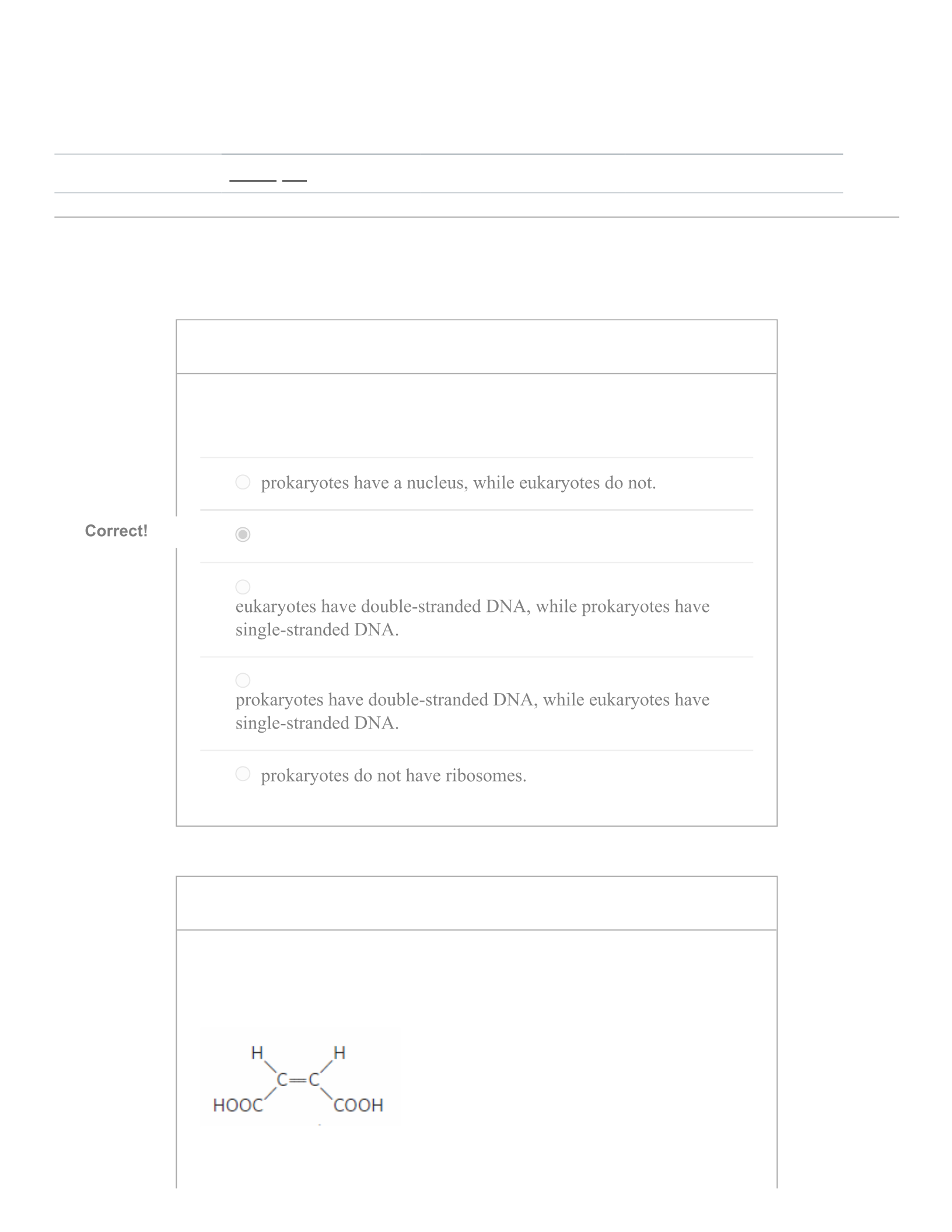
What is the CORRECT name for the configuration of the molecule
shown in the figure?
8/28/22, 3:39 PM
Quiz: Basic Principles of Biochemistry: NUTR641: Nutritional Biochemistry I (B01)
https://canvas.liberty.edu/courses/318794/quizzes/1674752
2/20
orthogonal
trans
cis
Correct!
Correct!
zis
chiros
2 / 2 pts
Question 3
Accurate folding of a protein does NOT depend on:
proper pH.
correct ionic strength.
correct temperature.
correct metal ion concentration.
All of the conditions listed are important for correct folding of a
protein.
Correct!
Correct!
2 / 2 pts
Question 4
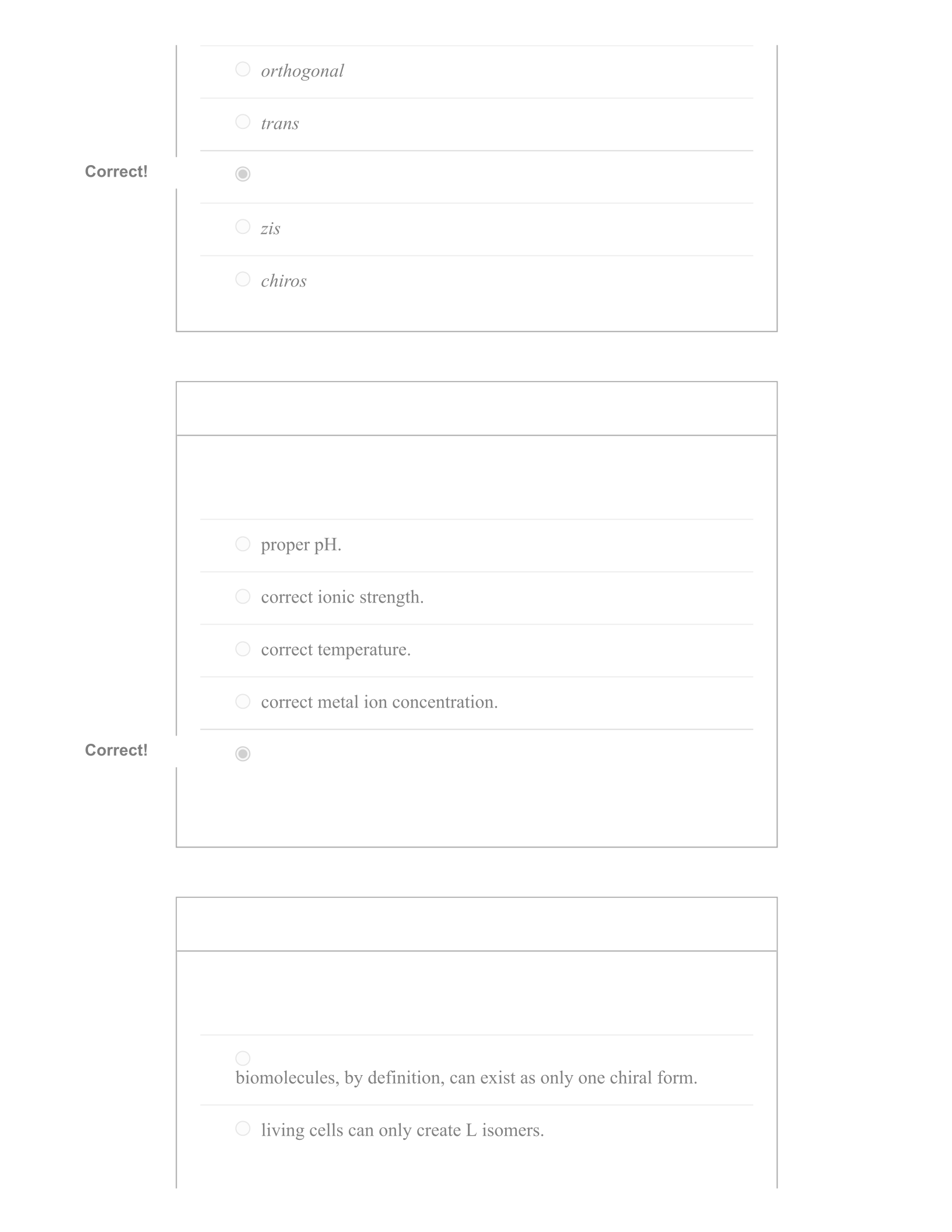
Living cells produce only one chiral form of a biomolecule because:
biomolecules, by definition, can exist as only one chiral form.
living cells can only create L isomers.
8/28/22, 3:39 PM
Quiz: Basic Principles of Biochemistry: NUTR641: Nutritional Biochemistry I (B01)
https://canvas.liberty.edu/courses/318794/quizzes/1674752
3/20
living cells choose to express only the correct isomer.
living cells have enzymes that are also chiral.
Correct!
Correct!
living cells can produce the opposite chiral form only under
certain metabolic conditions.
2 / 2 pts
Question 5
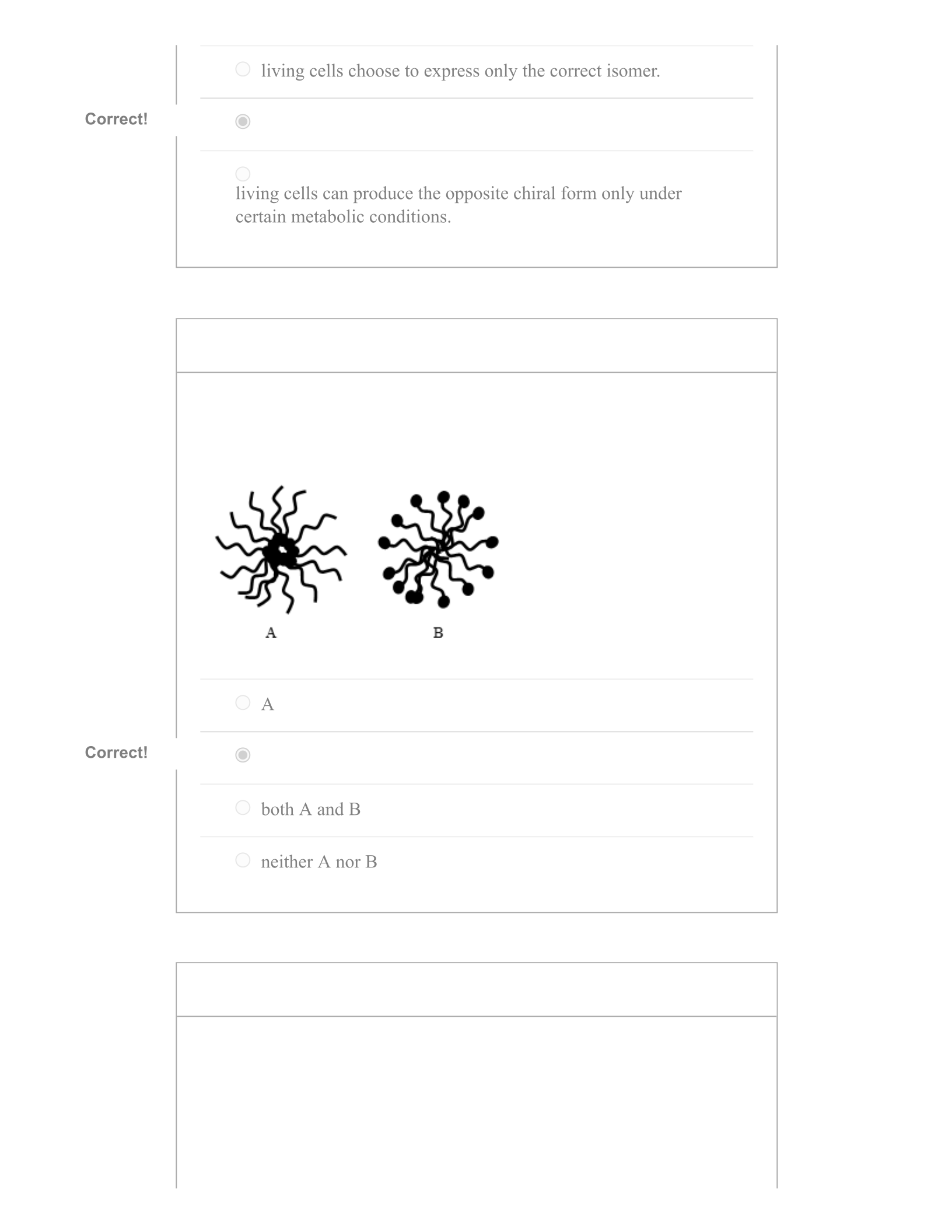
Which diagram CORRECTLY illustrates the clustering of lipids in the
formation of a micelle?
A
B
Correct!
Correct!
both A and B
neither A nor B
0 / 2 pts
Question 6
Use the terms a) chemoautotrophs, b) chemoheterotrophs, c)
photoautotrophs, and d) photoheterotrophs and identify the answer that
CORRECTLY finishes the statement:
Carnivores are _____ and herbivores are _____.
8/28/22, 3:39 PM
Quiz: Basic Principles of Biochemistry: NUTR641: Nutritional Biochemistry I (B01)
https://canvas.liberty.edu/courses/318794/quizzes/1674752
4/20
b; c
b; d
b; b
Correct Answer
Correct Answer
a; b
You Answered
You Answered
a; a
2 / 2 pts
Question 7
In an oxidation-reduction reaction, the oxidized reagent _____, and the
reduced reagent _____.
is energized; is deenergized
is deenergized; is energized
loses electrons; gains electrons
Correct!
Correct!
gains electrons; loses electrons
maintains the same number of electrons; loses electrons
2 / 2 pts
Question 8
Which result influences the lower limit for an atom's van der Waals
radius?
The electron clouds begin to repel each other.
Correct!
Correct!
The nuclei begin to repel each other.
8/28/22, 3:39 PM
Quiz: Basic Principles of Biochemistry: NUTR641: Nutritional Biochemistry I (B01)
https://canvas.liberty.edu/courses/318794/quizzes/1674752
5/20
The transient dipole is cancelled out by the neighboring atom.
The electron clouds begin to attract each other.
The nuclei begin to attract each other.
2 / 2 pts
Question 9
Which force plays the GREATEST role in stabilizing biological
structures in membranes?
hydrogen bonding, because it a strong non-covalent bond
hydrophobic interactions that increase solvent entropy
Correct!
Correct!
covalent interactions, because they are very stable interactions
electrostatic interactions between oppositely charged ions
van der Waals interactions, because of the attraction between
transient dipoles
2 / 2 pts
Question 10
A hydronium ion:
has the structure H O .
3+
is a hydrated hydrogen ion.
is a hydrated proton.

8/28/22, 3:39 PM
Quiz: Basic Principles of Biochemistry: NUTR641: Nutritional Biochemistry I (B01)
https://canvas.liberty.edu/courses/318794/quizzes/1674752
6/20
is the usual form of one of the dissociation products of water in
solution.
All of the answers are correct.
Correct!
Correct!
2 / 2 pts
Question 11
Biological buffering systems include:
histidine.
bicarbonate.
phosphate.
bicarbonate and phosphate.
histidine, bicarbonate, and phosphate.
Correct!
Correct!
2 / 2 pts
Question 12
Water can act as _____ in biological reactions.
a solvent
a reactant
a product
both a solvent and reactant
a solvent, reactant, and product
Correct!
Correct!
8/28/22, 3:39 PM
Quiz: Basic Principles of Biochemistry: NUTR641: Nutritional Biochemistry I (B01)
https://canvas.liberty.edu/courses/318794/quizzes/1674752
7/20
2 / 2 pts
Question 13
Which statement is NOT true about genetic mutations?
Mutations arise from an unrepaired mistake in DNA replication.
Mutations arise from incorrectly repaired damage to one of the
DNA strands.
Mutations in reproductive cells can be passed on to offspring.
Mutations may better equip an organism or cell to survive in its
environment.
All of the statements are true.
Correct!
Correct!
2 / 2 pts
Question 14
If heat energy is absorbed by the system during a chemical reaction, the
reaction is said to be:
at equilibrium.
endergonic.
endothermic.
Correct!
Correct!
exergonic.
exothermic.

8/28/22, 3:39 PM
Quiz: Basic Principles of Biochemistry: NUTR641: Nutritional Biochemistry I (B01)
https://canvas.liberty.edu/courses/318794/quizzes/1674752
8/20
0 / 2 pts
Question 15
It is possible to separate a racemic mixture by:
combustion.
crystallization.
Correct Answer
Correct Answer
centrifugation.
You Answered
You Answered
distillation.
magnetism.
2 / 2 pts
Question 16
Which statement regarding long-chain fatty acids in aqueous solution is
NOT true?
Fatty acids in small concentrations are surrounded by highly
ordered water molecules in a "cage-like" structure.
Fatty acids will cluster together to minimize the lipid surface
area.
Fatty acids will form micelles to sequester hydrophobic groups
from water.
The driving force of solubilizing fatty acids is increasing
entropy of the fatty acid.
Correct!
Correct!
All the statements are true.
8/28/22, 3:39 PM
Quiz: Basic Principles of Biochemistry: NUTR641: Nutritional Biochemistry I (B01)
https://canvas.liberty.edu/courses/318794/quizzes/1674752
9/20
0 / 2 pts
Question 17
Which reason is MOST probable for why carbon is used in living
organisms but not silicon?
Carbon can make four bonds, whereas silicon can only make
three.
Carbon can make double bonds, but silicon cannot.
Carbon can form more preferred geometries when bonding.
You Answered
You Answered
Carbon is lighter, and therefore its bonds are stronger.
Correct Answer
Correct Answer
Silicon is heavier, and therefore its bonds are stronger.
0 / 2 pts
Question 18
Which statement is TRUE regarding energy sources used by organisms?
Phototrophs can use carbon dioxide as a carbon source.
Correct Answer
Correct Answer
Phototrophs can use carbon dioxide as an energy source.
You Answered
You Answered
All phototrophs are autotrophs.
All chemotrophs are heterotrophs.
All phototrophs are autotrophs that can use carbon dioxide as a
carbon source.
0 / 2 pts
Question 19

8/28/22, 3:39 PM
Quiz: Basic Principles of Biochemistry: NUTR641: Nutritional Biochemistry I (B01)
https://canvas.liberty.edu/courses/318794/quizzes/1674752
10/20
When energy is used by a system, can it be "used up"?
Yes, it is used up when the energy source is depleted.
Yes, it is used up when all energy is converted into chemical
energy.
You Answered
You Answered
No, all energy is converted into potential energy.
No, all energy is converted into kinetic energy.
No, energy can be converted into kinetic and potential energy.
Correct Answer
Correct Answer
2 / 2 pts
Question 20
Which group includes the four most abundant elements in living
organisms?
carbon, hydrogen, oxygen, iron
carbon, hydrogen, nitrogen, oxygen
Correct!
Correct!
carbon, hydrogen, phosphorous, oxygen
carbon, nitrogen, phosphorous, oxygen
carbon, hydrogen, sulfur, oxygen
2 / 2 pts
Question 21
If a scientist wanted to know whether a particular hydrocarbon was in use
in a cell's plasma membrane, they could search the organism's:
8/28/22, 3:39 PM
Quiz: Basic Principles of Biochemistry: NUTR641: Nutritional Biochemistry I (B01)
https://canvas.liberty.edu/courses/318794/quizzes/1674752
11/20
metabolome.
lipidome.
Correct!
Correct!
glycome.
proteome.
genome.
2 / 2 pts
Question 22
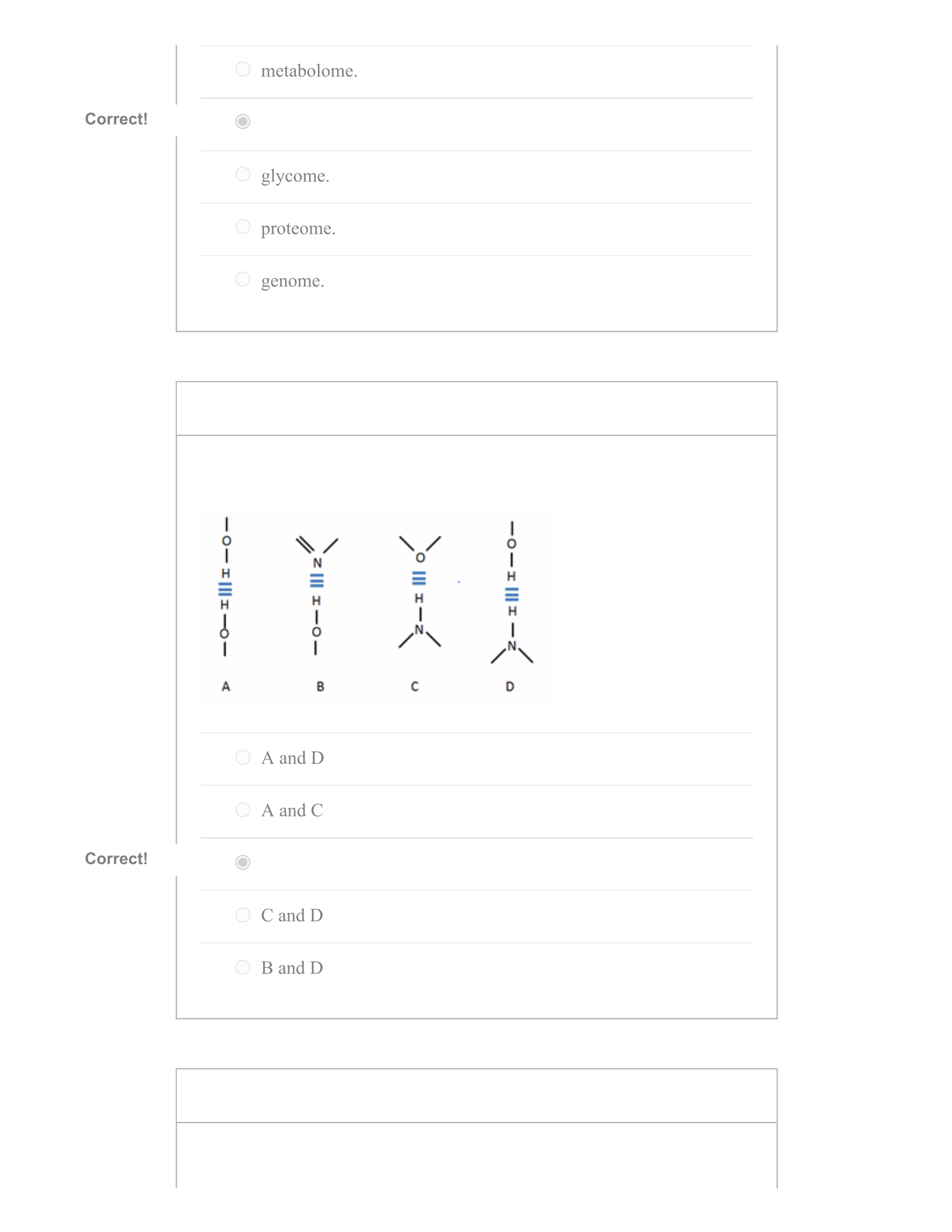
Which diagram CORRECTLY represent a hydrogen bond?
A and D
A and C
B and C
Correct!
Correct!
C and D
B and D
2 / 2 pts
Question 23
The three-dimensional structure of a protein is determined primarily by:

8/28/22, 3:39 PM
Quiz: Basic Principles of Biochemistry: NUTR641: Nutritional Biochemistry I (B01)
https://canvas.liberty.edu/courses/318794/quizzes/1674752
12/20
electrostatic guidance from nucleic acid structure.
how many amino acids are in the protein.
hydrophobic interaction with lipids that provide a folding
framework.
modification during interactions with ribosomes.
the sequence of amino acids in the protein.
Correct!
Correct!
2 / 2 pts
Question 24
In eukaryotes, the nucleus is enclosed by a double membrane called the:
cell membrane.
nuclear envelope.
Correct!
Correct!
nucleolus.
nucleoplasm.
nucleosome.
2 / 2 pts
Question 25
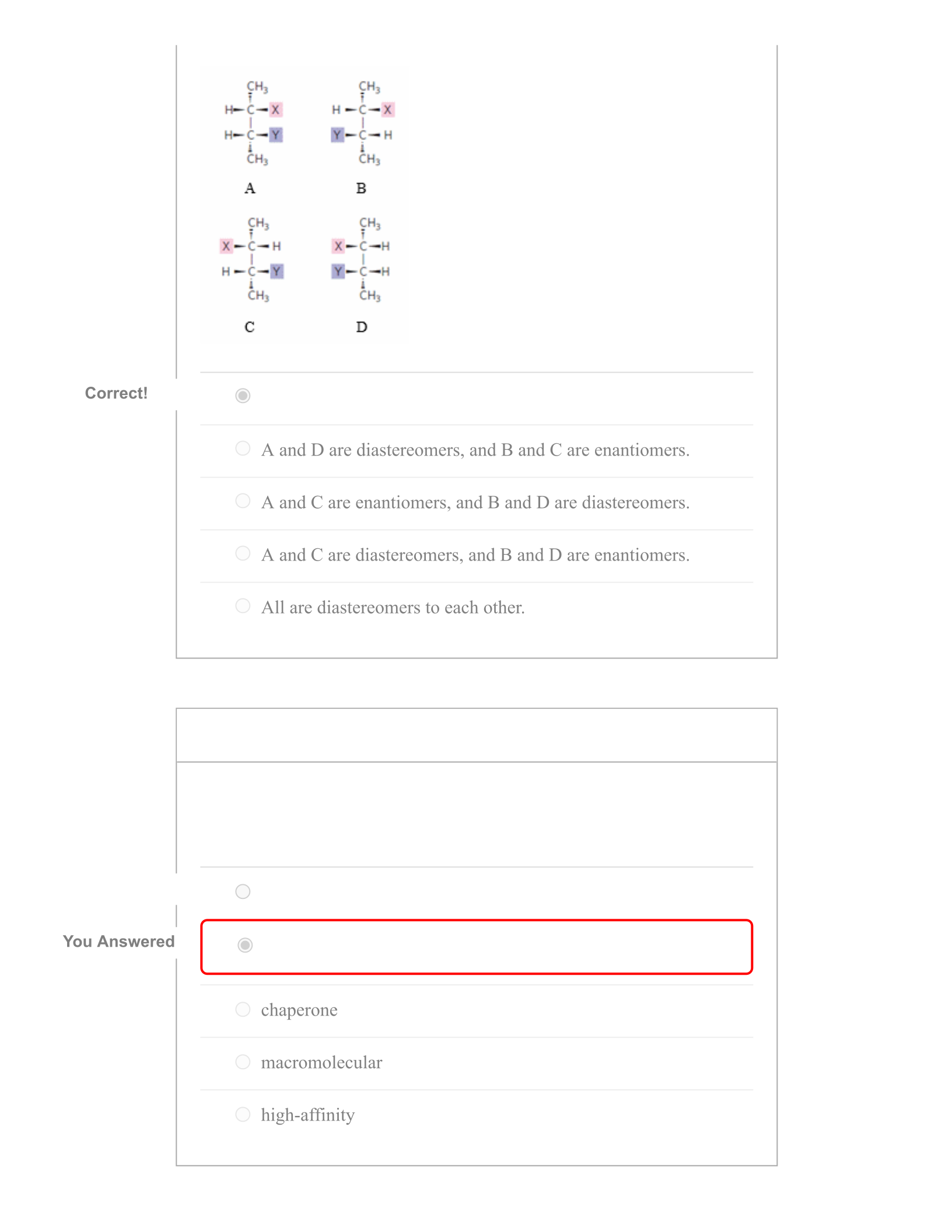
Which statement CORRECTLY describes the molecules shown in the
figure?
8/28/22, 3:39 PM
Quiz: Basic Principles of Biochemistry: NUTR641: Nutritional Biochemistry I (B01)
https://canvas.liberty.edu/courses/318794/quizzes/1674752
13/20
A and D are enantiomers, and B and C are diastereomers.
Correct!
Correct!
A and D are diastereomers, and B and C are enantiomers.
A and C are enantiomers, and B and D are diastereomers.
A and C are diastereomers, and B and D are enantiomers.
All are diastereomers to each other.
0 / 2 pts
Question 26
The precise three-dimensional structure, or _____ conformation, is
critical to a protein's function.
native
Correct Answer
Correct Answer
molecular
You Answered
You Answered
chaperone
macromolecular
high-affinity

8/28/22, 3:39 PM
Quiz: Basic Principles of Biochemistry: NUTR641: Nutritional Biochemistry I (B01)
https://canvas.liberty.edu/courses/318794/quizzes/1674752
14/20
2 / 2 pts
Question 27
Which types of molecules can serve as informational macromolecules in
cells?
proteins
nucleic acids
oligosaccharides
both proteins and nucleic acids
proteins, nucleic acids, and oligosaccharides
Correct!
Correct!
2 / 2 pts
Question 28
Energy requiring metabolic pathways that yield complex molecules from
simpler precursors are:
amphibolic.
anabolic.
Correct!
Correct!
autotrophic.
catabolic.
heterotrophic.
2 / 2 pts
Question 29
The ionization of water is due to the strongly electronegative element:

8/28/22, 3:39 PM
Quiz: Basic Principles of Biochemistry: NUTR641: Nutritional Biochemistry I (B01)
https://canvas.liberty.edu/courses/318794/quizzes/1674752
15/20
hydrogen donating an electron to oxygen.
oxygen donating an electron to hydrogen.
hydrogen receiving an electron from oxygen.
oxygen receiving an electron from hydrogen.
Correct!
Correct!
None of the answers is correct.
2 / 2 pts
Question 30
Which factor can be changed WITHOUT breaking covalent bonds?
conformation
Correct!
Correct!
configuration
chirality
stereochemistry
None of the answers is correct.
0 / 2 pts
Question 31
In a bacterial cell, the DNA is in the:
cell envelope.
cell membrane.
nucleoid.
Correct Answer
Correct Answer
8/28/22, 3:39 PM
Quiz: Basic Principles of Biochemistry: NUTR641: Nutritional Biochemistry I (B01)
https://canvas.liberty.edu/courses/318794/quizzes/1674752
16/20
nucleus.
You Answered
You Answered
ribosomes.
2 / 2 pts
Question 32
Which list has the cellular components arranged in order of
INCREASING size?
amino acid < protein < mitochondrion < ribosome
amino acid < protein < ribosome < mitochondrion
Correct!
Correct!
amino acid < ribosome < protein < mitochondrion
protein < amino acid < mitochondrion < ribosome
protein < ribosome < mitochondrion < amino acid
2 / 2 pts
Question 33
Which factor contributes to the bent shape of a water molecule?
the dipole moment in a water molecule
the unshared electron pairs on the oxygen atom
Correct!
Correct!
the electronegativity difference between hydrogen and oxygen
the unequal electron sharing between hydrogen and oxygen
All of the answers are correct.

8/28/22, 3:39 PM
Quiz: Basic Principles of Biochemistry: NUTR641: Nutritional Biochemistry I (B01)
https://canvas.liberty.edu/courses/318794/quizzes/1674752
17/20
2 / 2 pts
Question 34
Which organelle does NOT consist of a double membrane?
mitochondrion
ribosome
Correct!
Correct!
chloroplast
endoplasmic reticulum
Golgi body
2 / 2 pts
Question 35
The four covalent bonds in methane (CH ) are arranged around carbon to
give which geometry?
4
linear
tetrahedral
Correct!
Correct!
trigonal bipyramidal
trigonal planar
trigonal pyramidal
2 / 2 pts
Question 36
Dissolving a nonpolar solute in water _____ the order of the solvent and
_____ the dynamic interplay among water molecules that occurs in pure
water.
8/28/22, 3:39 PM
Quiz: Basic Principles of Biochemistry: NUTR641: Nutritional Biochemistry I (B01)
https://canvas.liberty.edu/courses/318794/quizzes/1674752
18/20
increases; decreases
Correct!
Correct!
increases; increases
decreases; decreases
decreases; increases
decreases; stabilizes
0 / 2 pts
Question 37
Which statement does NOT describe a strategy used by multicellular
animals to maintain osmotic balance with their surroundings?
Cells have a contractile vacuole, an organelle that pumps water
out of the cell.
Correct Answer
Correct Answer
Animals have a high concentration of albumin and other
proteins in blood plasma.
Cells actively pump out Na and other ions.
+
Cells store fuel as a polysaccharide instead of as simple sugars.
All of the statements describe a strategy to maintain osmotic
balance.
You Answered
You Answered
0 / 2 pts
Question 38
Which discipline uses an approach that tries to integrate information to
give a molecular picture of all the activities of a cell under certain
conditions?
8/28/22, 3:39 PM
Quiz: Basic Principles of Biochemistry: NUTR641: Nutritional Biochemistry I (B01)
https://canvas.liberty.edu/courses/318794/quizzes/1674752
19/20
metabolomics
You Answered
You Answered
genomics
systems biology
Correct Answer
Correct Answer
proteomics
lipidomics
2 / 2 pts
Question 39
Which property of water does NOT contribute to the fitness of the
aqueous environment for living organisms?
cohesion of liquid water due to hydrogen bonding
high heat of vaporization
high specific heat
the density of water being greater than the density of ice
the very low molecular weight of water
Correct!
Correct!
0 / 2 pts
Question 40
Which statement CORRECTLY describes the forces that drive micelle
formation from amphipathic molecules, such as fatty acids, dissolved in
water?
Head groups of the molecules are sequestered in the interior of
the micelle, maximizing hydrogen bonding of the hydrophobic
tail with surrounding solvent molecules.
8/28/22, 3:39 PM
Quiz: Basic Principles of Biochemistry: NUTR641: Nutritional Biochemistry I (B01)
https://canvas.liberty.edu/courses/318794/quizzes/1674752
20/20
Head groups of the molecules are exposed on the outer surface
of the micelle, maximizing hydrogen bonding between
hydrophobic tails.
Head groups of the molecules are exposed on the outer surface
of the micelle, minimizing the order of the surrounding solvent
molecules.
Correct Answer
Correct Answer
Hydrophilic tails are exposed on the outer surface of the
micelle, maximizing hydrogen bonding between the tails and
surrounding solvent molecules.
Hydrophobic tails are exposed on the outer surface of the
micelle, maximizing hydrogen bonding between head groups.
You Answered
You Answered

