


1
Running head: DEVELOPMENT OF A PICO QUESTION
Development of a PICO Question
Liberty University
2
DEVELOPMENT OF A PICO QUESTION
Development of a PICO Question
Annotated Bibliography
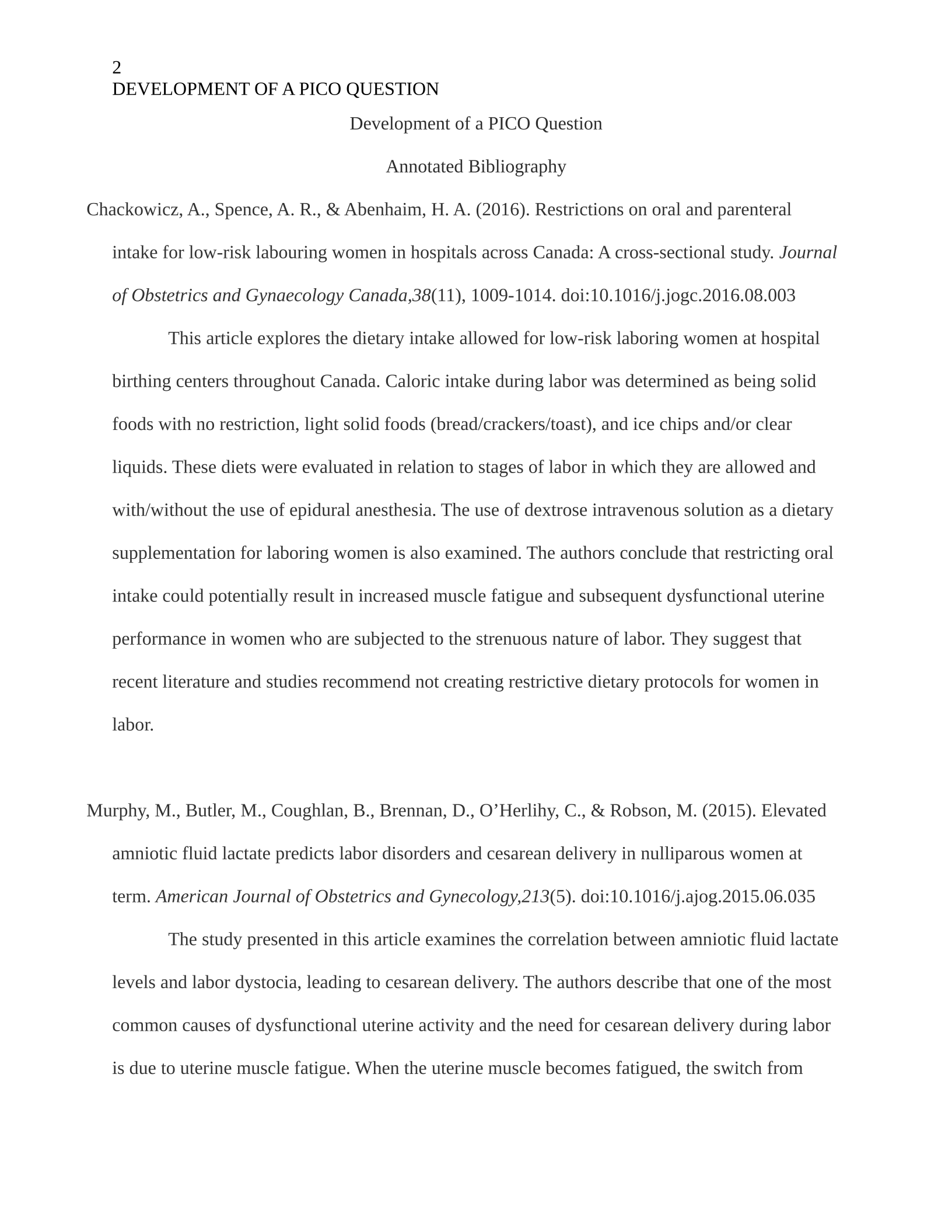
Chackowicz, A., Spence, A. R., & Abenhaim, H. A. (2016). Restrictions on oral and parenteral
intake for low-risk labouring women in hospitals across Canada: A cross-sectional study. Journal
of Obstetrics and Gynaecology Canada,38(11), 1009-1014. doi:10.1016/j.jogc.2016.08.003
This article explores the dietary intake allowed for low-risk laboring women at hospital
birthing centers throughout Canada. Caloric intake during labor was determined as being solid
foods with no restriction, light solid foods (bread/crackers/toast), and ice chips and/or clear
liquids. These diets were evaluated in relation to stages of labor in which they are allowed and
with/without the use of epidural anesthesia. The use of dextrose intravenous solution as a dietary
supplementation for laboring women is also examined. The authors conclude that restricting oral
intake could potentially result in increased muscle fatigue and subsequent dysfunctional uterine
performance in women who are subjected to the strenuous nature of labor. They suggest that
recent literature and studies recommend not creating restrictive dietary protocols for women in
labor.
Murphy, M., Butler, M., Coughlan, B., Brennan, D., O’Herlihy, C., & Robson, M. (2015). Elevated
amniotic fluid lactate predicts labor disorders and cesarean delivery in nulliparous women at
term. American Journal of Obstetrics and Gynecology,213(5). doi:10.1016/j.ajog.2015.06.035
The study presented in this article examines the correlation between amniotic fluid lactate
levels and labor dystocia, leading to cesarean delivery. The authors describe that one of the most
common causes of dysfunctional uterine activity and the need for cesarean delivery during labor
is due to uterine muscle fatigue. When the uterine muscle becomes fatigued, the switch from
3
DEVELOPMENT OF A PICO QUESTION
aerobic to anaerobic metabolism occurs and results in the accumulation of lactic acid. Lactate
levels then flow into the intracellular and extracellular spaces, such as the amniotic fluid.
Measuring these levels can assist in the diagnosis and potential management of labor dystocia.
The authors found that higher levels of amniotic fluid lactate were associated with higher
cesarean rates.
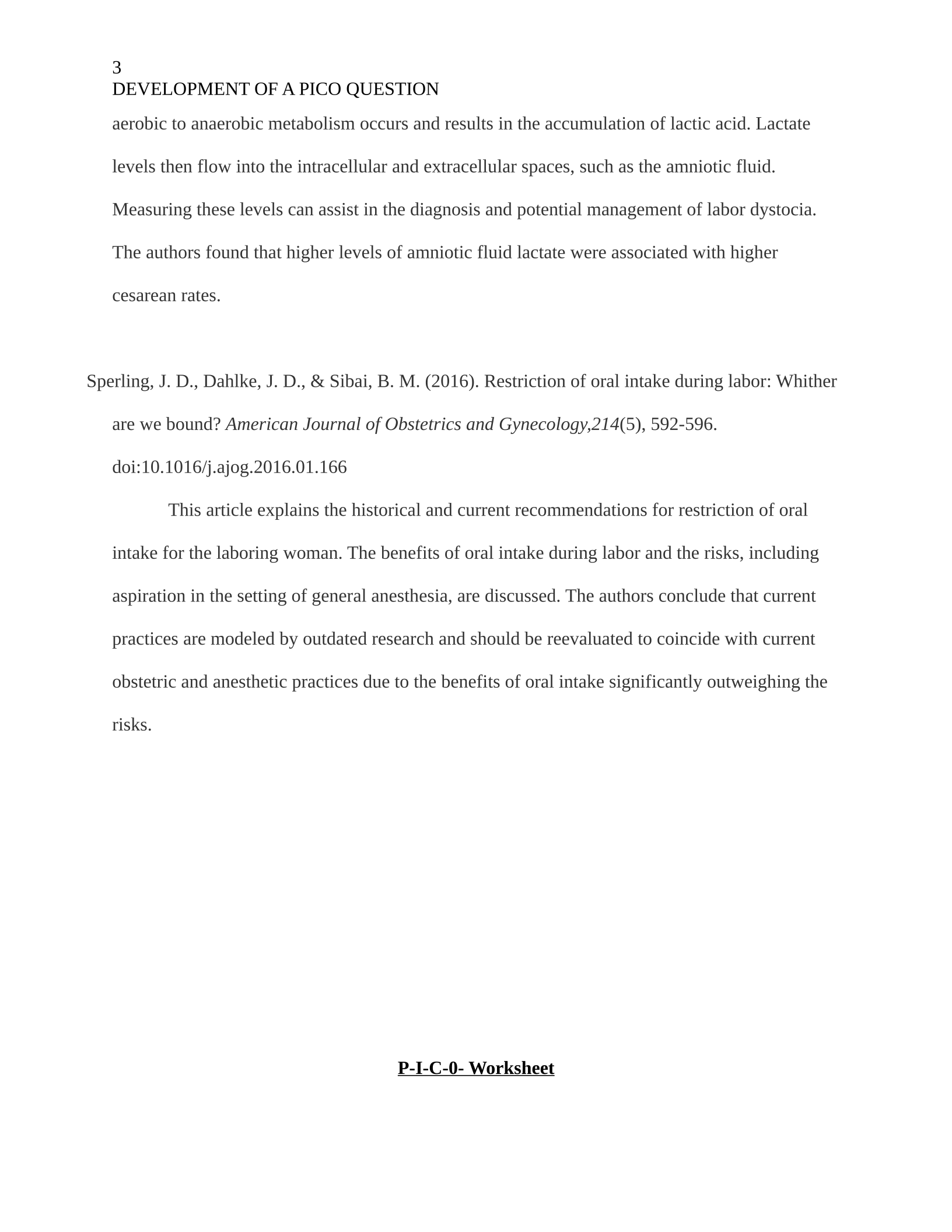
Sperling, J. D., Dahlke, J. D., & Sibai, B. M. (2016). Restriction of oral intake during labor: Whither
are we bound? American Journal of Obstetrics and Gynecology,214(5), 592-596.
doi:10.1016/j.ajog.2016.01.166
This article explains the historical and current recommendations for restriction of oral
intake for the laboring woman. The benefits of oral intake during labor and the risks, including
aspiration in the setting of general anesthesia, are discussed. The authors conclude that current
practices are modeled by outdated research and should be reevaluated to coincide with current
obstetric and anesthetic practices due to the benefits of oral intake significantly outweighing the
risks.
P-I-C-0- Worksheet
4
DEVELOPMENT OF A PICO QUESTION
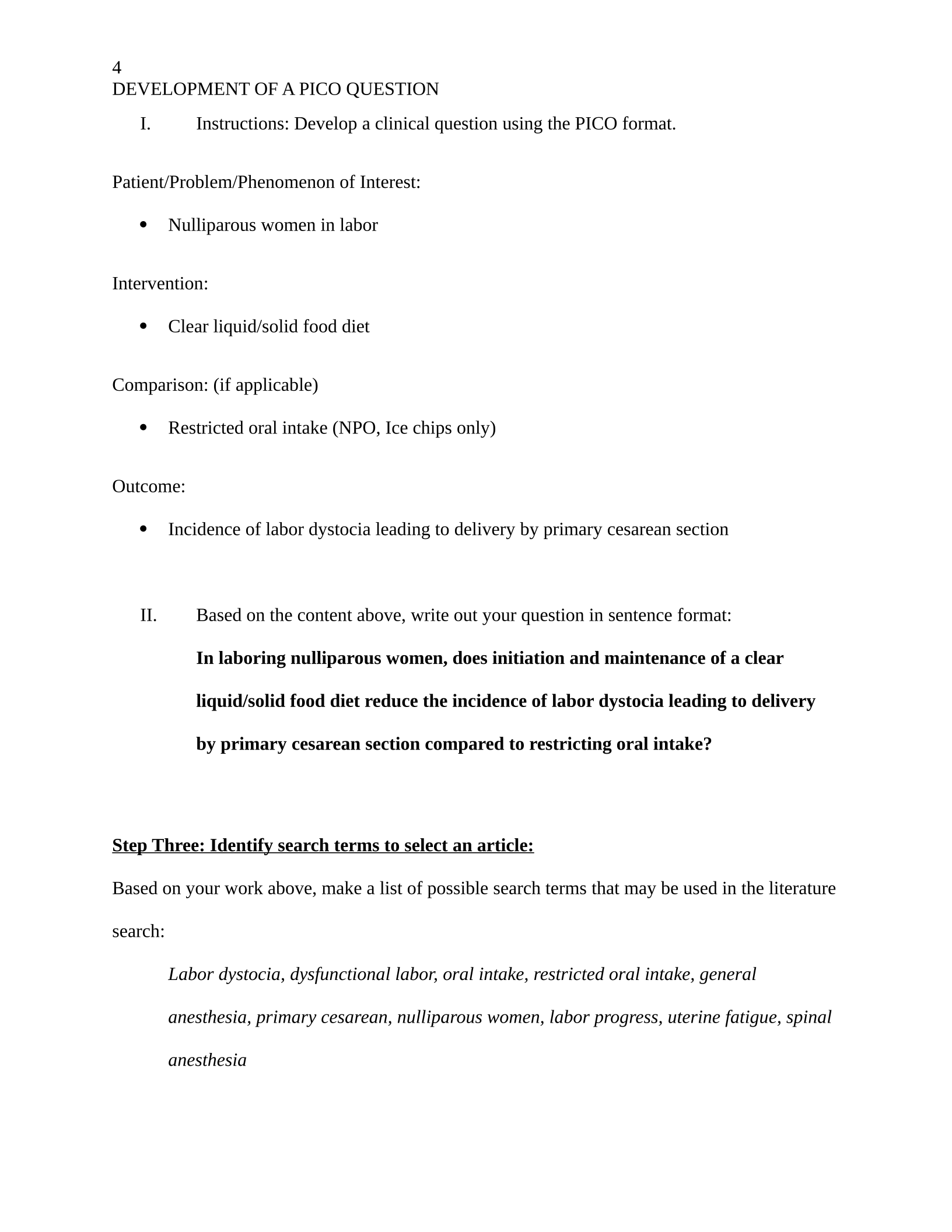
I. Instructions: Develop a clinical question using the PICO format.
Patient/Problem/Phenomenon of Interest:
Nulliparous women in labor
Intervention:
Clear liquid/solid food diet
Comparison: (if applicable)
Restricted oral intake (NPO, Ice chips only)
Outcome:
Incidence of labor dystocia leading to delivery by primary cesarean section
II. Based on the content above, write out your question in sentence format:
In laboring nulliparous women, does initiation and maintenance of a clear
liquid/solid food diet reduce the incidence of labor dystocia leading to delivery
by primary cesarean section compared to restricting oral intake?
Step Three: Identify search terms to select an article:
Based on your work above, make a list of possible search terms that may be used in the literature
search:
Labor dystocia, dysfunctional labor, oral intake, restricted oral intake, general
anesthesia, primary cesarean, nulliparous women, labor progress, uterine fatigue, spinal
anesthesia
Powered by TCPDF (www.tcpdf.org)

