


NURS501
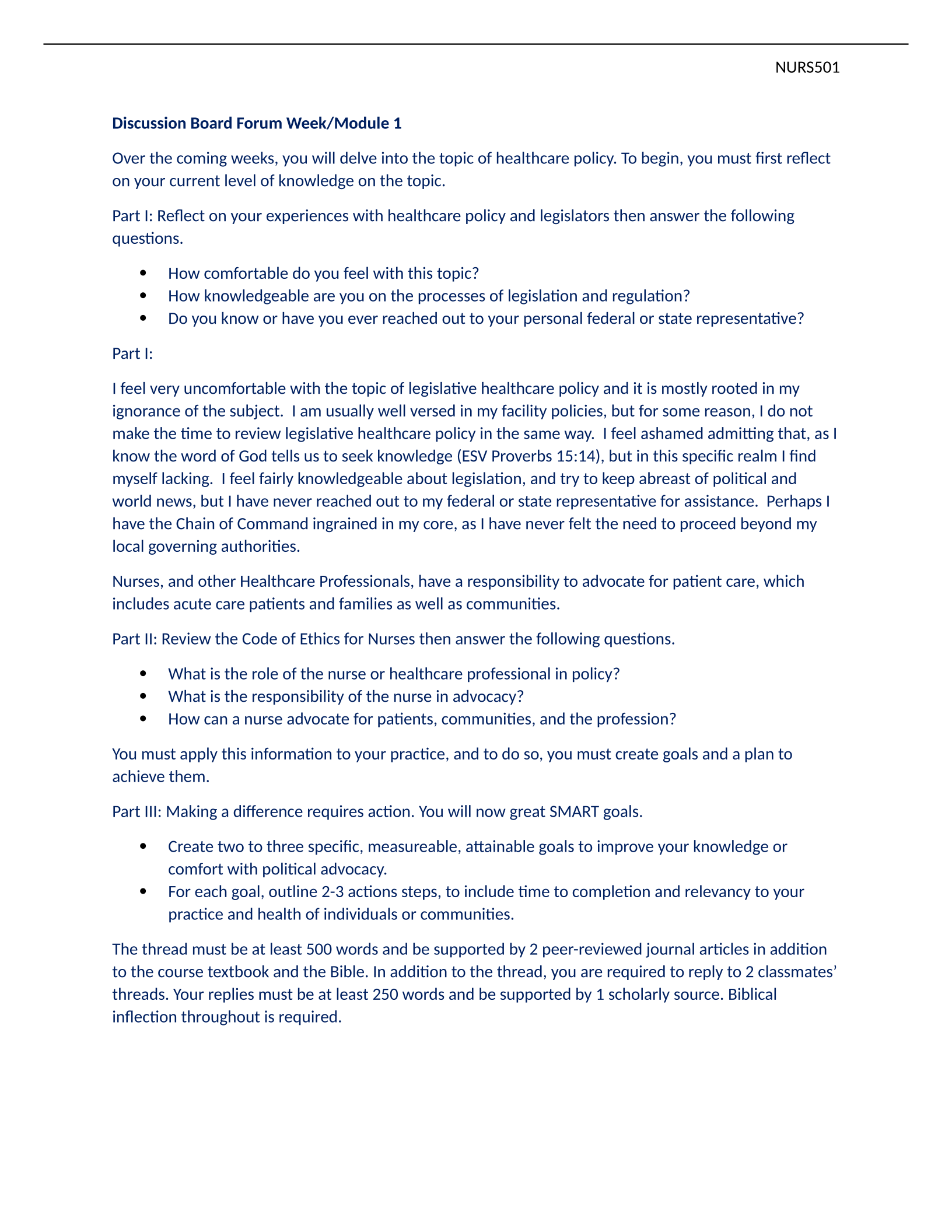
Discussion Board Forum Week/Module 1
Over the coming weeks, you will delve into the topic of healthcare policy. To begin, you must first reflect
on your current level of knowledge on the topic.
Part I: Reflect on your experiences with healthcare policy and legislators then answer the following
questions.
How comfortable do you feel with this topic?
How knowledgeable are you on the processes of legislation and regulation?
Do you know or have you ever reached out to your personal federal or state representative?
Part I:
I feel very uncomfortable with the topic of legislative healthcare policy and it is mostly rooted in my
ignorance of the subject. I am usually well versed in my facility policies, but for some reason, I do not
make the time to review legislative healthcare policy in the same way. I feel ashamed admitting that, as I
know the word of God tells us to seek knowledge (ESV Proverbs 15:14), but in this specific realm I find
myself lacking. I feel fairly knowledgeable about legislation, and try to keep abreast of political and
world news, but I have never reached out to my federal or state representative for assistance. Perhaps I
have the Chain of Command ingrained in my core, as I have never felt the need to proceed beyond my
local governing authorities.
Nurses, and other Healthcare Professionals, have a responsibility to advocate for patient care, which
includes acute care patients and families as well as communities.
Part II: Review the Code of Ethics for Nurses then answer the following questions.
What is the role of the nurse or healthcare professional in policy?
What is the responsibility of the nurse in advocacy?
How can a nurse advocate for patients, communities, and the profession?
You must apply this information to your practice, and to do so, you must create goals and a plan to
achieve them.
Part III: Making a difference requires action. You will now great SMART goals.
Create two to three specific, measureable, attainable goals to improve your knowledge or
comfort with political advocacy.
For each goal, outline 2-3 actions steps, to include time to completion and relevancy to your
practice and health of individuals or communities.
The thread must be at least 500 words and be supported by 2 peer-reviewed journal articles in addition
to the course textbook and the Bible. In addition to the thread, you are required to reply to 2 classmates’
threads. Your replies must be at least 250 words and be supported by 1 scholarly source. Biblical
inflection throughout is required.
NURS501
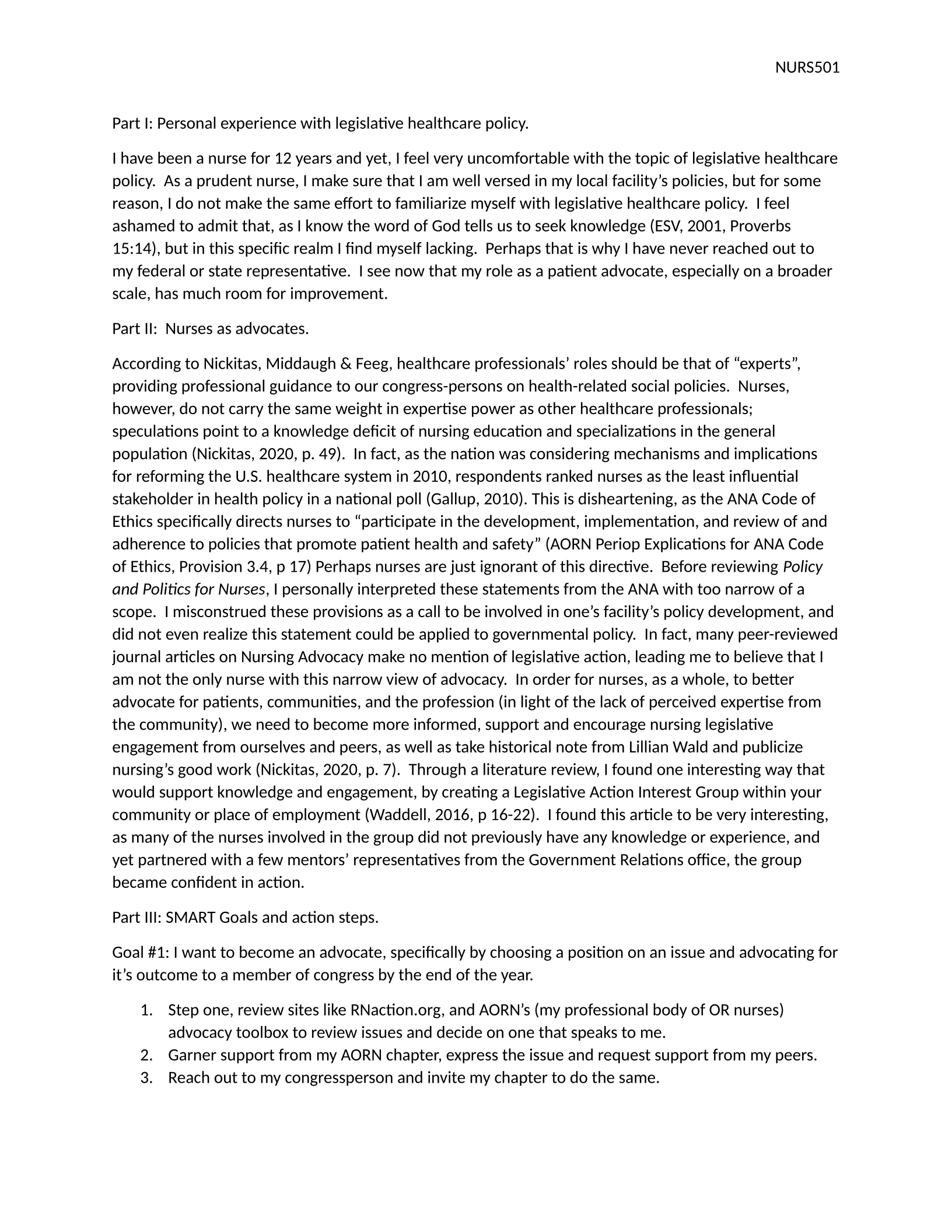
Part I: Personal experience with legislative healthcare policy.
I have been a nurse for 12 years and yet, I feel very uncomfortable with the topic of legislative healthcare
policy. As a prudent nurse, I make sure that I am well versed in my local facility’s policies, but for some
reason, I do not make the same effort to familiarize myself with legislative healthcare policy. I feel
ashamed to admit that, as I know the word of God tells us to seek knowledge (ESV, 2001, Proverbs
15:14), but in this specific realm I find myself lacking. Perhaps that is why I have never reached out to
my federal or state representative. I see now that my role as a patient advocate, especially on a broader
scale, has much room for improvement.
Part II: Nurses as advocates.
According to Nickitas, Middaugh & Feeg, healthcare professionals’ roles should be that of “experts”,
providing professional guidance to our congress-persons on health-related social policies. Nurses,
however, do not carry the same weight in expertise power as other healthcare professionals;
speculations point to a knowledge deficit of nursing education and specializations in the general
population (Nickitas, 2020, p. 49). In fact, as the nation was considering mechanisms and implications
for reforming the U.S. healthcare system in 2010, respondents ranked nurses as the least influential
stakeholder in health policy in a national poll (Gallup, 2010). This is disheartening, as the ANA Code of
Ethics specifically directs nurses to “participate in the development, implementation, and review of and
adherence to policies that promote patient health and safety” (AORN Periop Explications for ANA Code
of Ethics, Provision 3.4, p 17) Perhaps nurses are just ignorant of this directive. Before reviewing Policy
and Politics for Nurses, I personally interpreted these statements from the ANA with too narrow of a
scope. I misconstrued these provisions as a call to be involved in one’s facility’s policy development, and
did not even realize this statement could be applied to governmental policy. In fact, many peer-reviewed
journal articles on Nursing Advocacy make no mention of legislative action, leading me to believe that I
am not the only nurse with this narrow view of advocacy. In order for nurses, as a whole, to better
advocate for patients, communities, and the profession (in light of the lack of perceived expertise from
the community), we need to become more informed, support and encourage nursing legislative
engagement from ourselves and peers, as well as take historical note from Lillian Wald and publicize
nursing’s good work (Nickitas, 2020, p. 7). Through a literature review, I found one interesting way that
would support knowledge and engagement, by creating a Legislative Action Interest Group within your
community or place of employment (Waddell, 2016, p 16-22). I found this article to be very interesting,
as many of the nurses involved in the group did not previously have any knowledge or experience, and
yet partnered with a few mentors’ representatives from the Government Relations office, the group
became confident in action.
Part III: SMART Goals and action steps.
Goal #1: I want to become an advocate, specifically by choosing a position on an issue and advocating for
it’s outcome to a member of congress by the end of the year.
1. Step one, review sites like RNaction.org, and AORN’s (my professional body of OR nurses)
advocacy toolbox to review issues and decide on one that speaks to me.
2. Garner support from my AORN chapter, express the issue and request support from my peers.
3. Reach out to my congressperson and invite my chapter to do the same.
NURS501
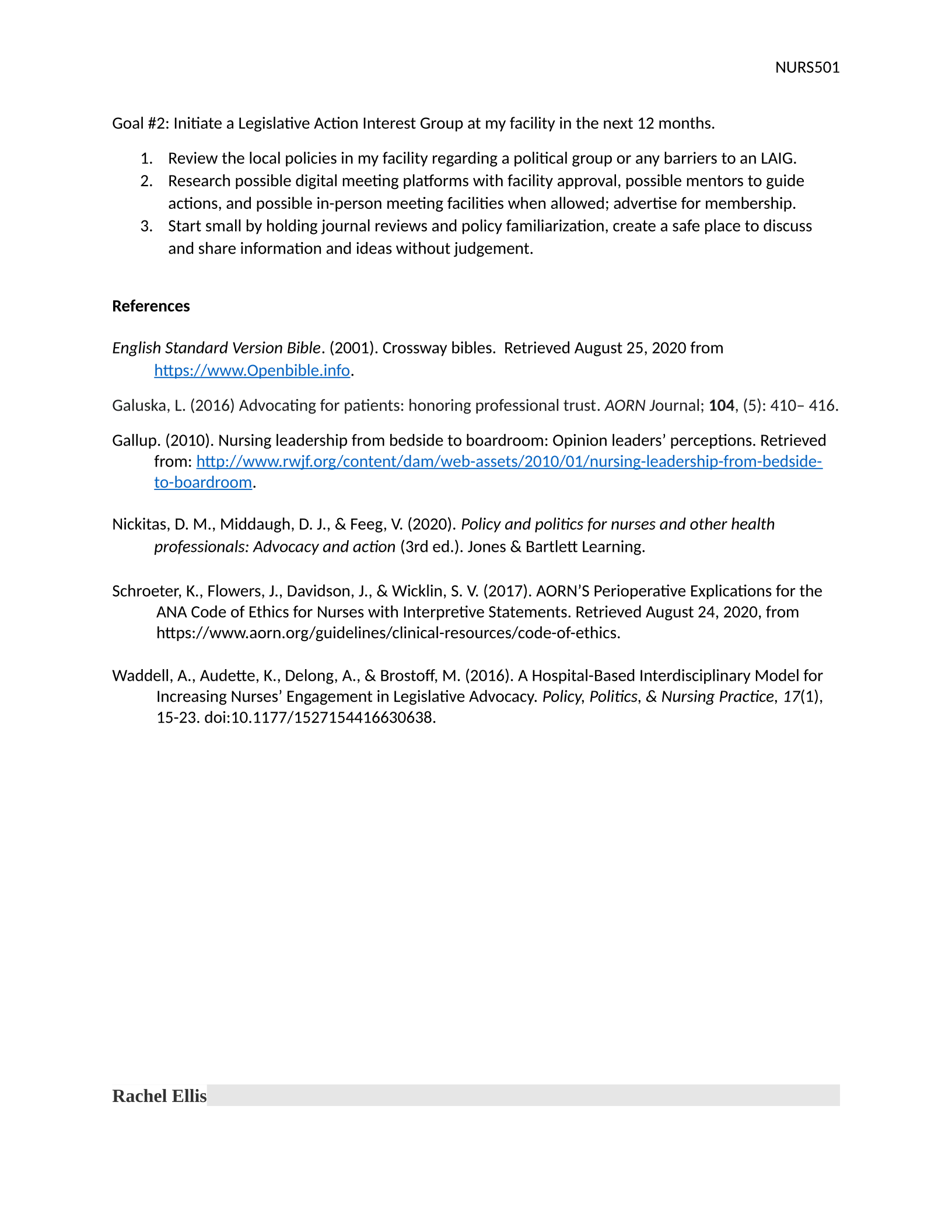
Goal #2: Initiate a Legislative Action Interest Group at my facility in the next 12 months.
1. Review the local policies in my facility regarding a political group or any barriers to an LAIG.
2. Research possible digital meeting platforms with facility approval, possible mentors to guide
actions, and possible in-person meeting facilities when allowed; advertise for membership.
3. Start small by holding journal reviews and policy familiarization, create a safe place to discuss
and share information and ideas without judgement.
References
English Standard Version Bible. (2001). Crossway bibles. Retrieved August 25, 2020 from
https://www.Openbible.info.
Galuska, L. (2016) Advocating for patients: honoring professional trust. AORN Journal; 104, (5): 410– 416.
Gallup. (2010). Nursing leadership from bedside to boardroom: Opinion leaders’ perceptions. Retrieved
from: http://www.rwjf.org/content/dam/web-assets/2010/01/nursing-leadership-from-bedside-
to-boardroom.
Nickitas, D. M., Middaugh, D. J., & Feeg, V. (2020). Policy and politics for nurses and other health
professionals: Advocacy and action (3rd ed.). Jones & Bartlett Learning.
Schroeter, K., Flowers, J., Davidson, J., & Wicklin, S. V. (2017). AORN’S Perioperative Explications for the
ANA Code of Ethics for Nurses with Interpretive Statements. Retrieved August 24, 2020, from
https://www.aorn.org/guidelines/clinical-resources/code-of-ethics.
Waddell, A., Audette, K., Delong, A., & Brostoff, M. (2016). A Hospital-Based Interdisciplinary Model for
Increasing Nurses’ Engagement in Legislative Advocacy. Policy, Politics, & Nursing Practice, 17(1),
15-23. doi:10.1177/1527154416630638.
Rachel Ellis
NURS501
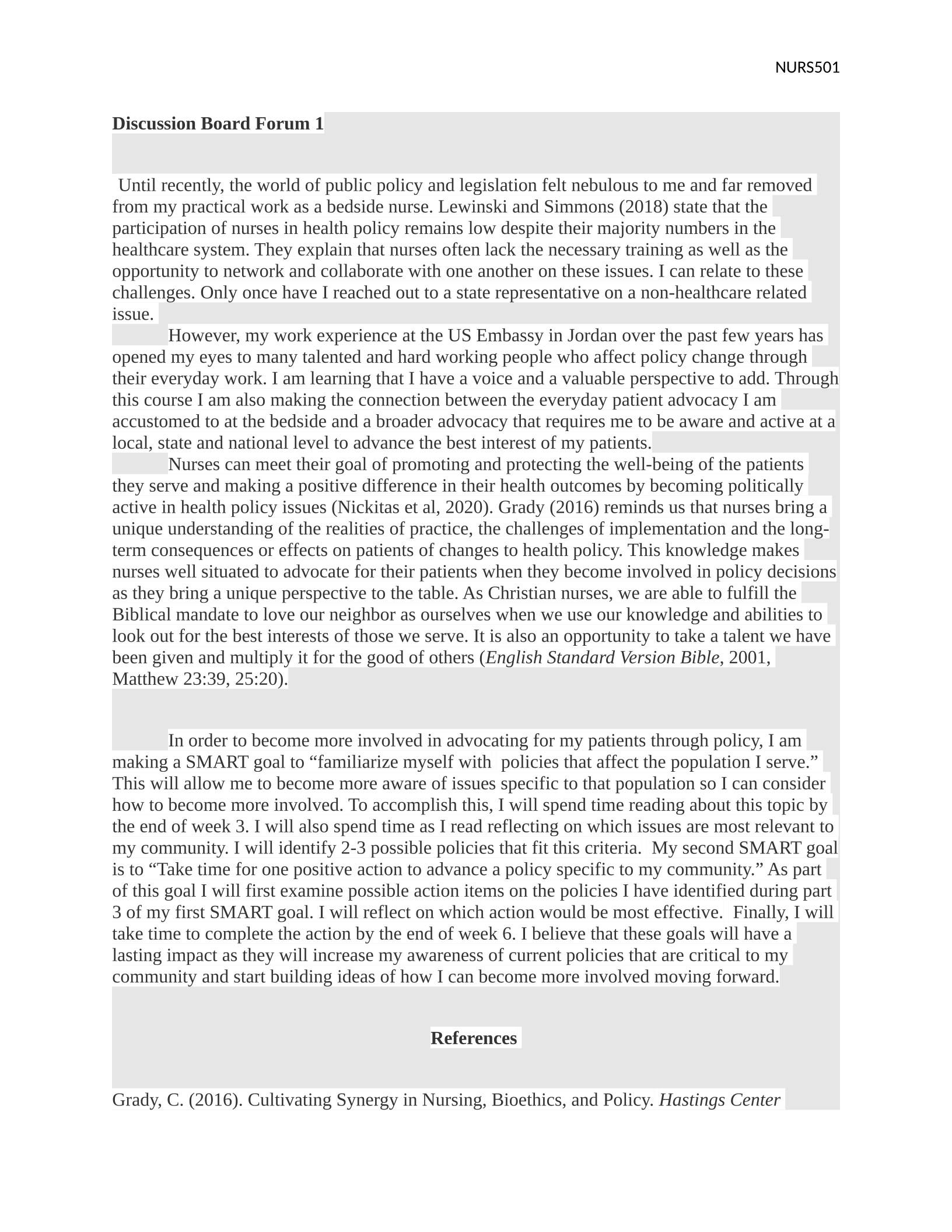
Discussion Board Forum 1
Until recently, the world of public policy and legislation felt nebulous to me and far removed
from my practical work as a bedside nurse. Lewinski and Simmons (2018) state that the
participation of nurses in health policy remains low despite their majority numbers in the
healthcare system. They explain that nurses often lack the necessary training as well as the
opportunity to network and collaborate with one another on these issues. I can relate to these
challenges. Only once have I reached out to a state representative on a non-healthcare related
issue.
However, my work experience at the US Embassy in Jordan over the past few years has
opened my eyes to many talented and hard working people who affect policy change through
their everyday work. I am learning that I have a voice and a valuable perspective to add. Through
this course I am also making the connection between the everyday patient advocacy I am
accustomed to at the bedside and a broader advocacy that requires me to be aware and active at a
local, state and national level to advance the best interest of my patients.
Nurses can meet their goal of promoting and protecting the well-being of the patients
they serve and making a positive difference in their health outcomes by becoming politically
active in health policy issues (Nickitas et al, 2020). Grady (2016) reminds us that nurses bring a
unique understanding of the realities of practice, the challenges of implementation and the long-
term consequences or effects on patients of changes to health policy. This knowledge makes
nurses well situated to advocate for their patients when they become involved in policy decisions
as they bring a unique perspective to the table. As Christian nurses, we are able to fulfill the
Biblical mandate to love our neighbor as ourselves when we use our knowledge and abilities to
look out for the best interests of those we serve. It is also an opportunity to take a talent we have
been given and multiply it for the good of others (English Standard Version Bible, 2001,
Matthew 23:39, 25:20).
In order to become more involved in advocating for my patients through policy, I am
making a SMART goal to “familiarize myself with policies that affect the population I serve.”
This will allow me to become more aware of issues specific to that population so I can consider
how to become more involved. To accomplish this, I will spend time reading about this topic by
the end of week 3. I will also spend time as I read reflecting on which issues are most relevant to
my community. I will identify 2-3 possible policies that fit this criteria. My second SMART goal
is to “Take time for one positive action to advance a policy specific to my community.” As part
of this goal I will first examine possible action items on the policies I have identified during part
3 of my first SMART goal. I will reflect on which action would be most effective. Finally, I will
take time to complete the action by the end of week 6. I believe that these goals will have a
lasting impact as they will increase my awareness of current policies that are critical to my
community and start building ideas of how I can become more involved moving forward.
References
Grady, C. (2016). Cultivating Synergy in Nursing, Bioethics, and Policy. Hastings Center
NURS501
Report, 46, S5–S8. https://doi-org.ezproxy.liberty.edu/10.1002/hast.623
English Standard Version Bible. (2001). ESV Online. https://esv.literalword.com/
Nickitas, D. M., Middaugh, D. J., & Feeg, V. D. (2020). Policy and politics for Nurses and
Other
Health Professionals: Advocacy and Action (3rd ed.). Burlington, MA: Jones & Bartlett
Learning.
Lewinski, A. A. & Simmons, L. A. (2018). Nurse Knowledge and Engagement in Health Policy
Making: Findings from a Pilot Study. The Journal of Continuing Education in Nursing,
49 (9), 407. https://www-proquest-com.ezproxy.liberty.edu/docview/2093234456?
accountid=12085
Wonderful post Rachel! I am fascinated by your job at the Embassy in Jordan and how that might
compare to nursing practices in the States, especially regarding this subject. I was particularly drawn to
the article you found on nursing participation in healthcare policy by Lewinski & Simmons (2018) as that
topic served as a large portion of my own discussion post. Even though the sample size was small, they
conceded a bias in how their data was collected to lean toward those with political interest and yet still
the percentage of nurses politically engaged was only 33% (Lewinski, 2018, Limitations). This is just my
own (unsupported) observation, but there seems to be more of a collaborative, educational spirit in
other healthcare professions that seems lacking in nursing in general. I have a theory that the lack of
political advocacy in nursing is rooted in our culture. For example, I feel that most nurses are fierce
advocates for their patient at the bedside, true embodiments of Proverbs 8, “Speak up for those who
cannot speak for themselves, for the rights of all who are destitute” (New International Version, 2011,
Proverbs 8), but for whatever reason it does not seem to translate into the political arena. Perhaps it has
never occurred to most nurses that they could affect change through political action because they have
not seen it modeled? Has your experience in Jordan been different in this regard, as you allude to the
fact that people are affecting policy change through their everyday work. Are you referencing the other
healthcare staff that you are working with at the Embassy? I know that there are a few hospitals that
support a culture of advocacy, perhaps this is true for you in Jordan?
References:
Catallo C., Spalding K., Haghiri-Vijeh R. (2014). Nursing professional organizations: What are they doing
to engage nurses in health policy? SAGE Open, 4,1– 9. 10.1177/2158244014560534
Lewinski, A. A. & Simmons, L. A. (2018). Nurse Knowledge and Engagement in Health Policy
New International Version. (2011). The NIV Bible.
Discussion Board Module 1
NURS501
COLLA PSE
I believe I have a basic understanding of government and how policies and regulations are passed but no real
firsthand experience. Whether it is because of lack of understanding or an embedded believe that nurses are
expected to be neutral at least when it comes to our professional presence. We are taught not to impose our beliefs
on to others. Instead, nurses are expected to learn what our patients’ needs are. We are essentially to prevent our own
beliefs and bias from interfering with getting the help or care they need. Along these same lines of teaching nurses
often distance themselves from politics. (Nickitas, 2020, p. 38)
However, you start to realize that policy, legislation, and politics do effect everything we do on a day-to-day basis.
In my previous job I worked as a CNO and one of my primary duties was to ensure along with our Quality Officer
that we were compliant with state and federal regulations. This was a fulltime job between the numerous different
meetings, auditing, and staff re-education. In my currently role it is no different we have multiple different timelines
and documentation to ensure that we are compliant. Implementation of these different broader governmental policy
and regulations are at the core of how we deliver care, internal policies we develop, and standards developed to
measure outcomes. As healthcare professionals, we need to take a more active role, demand a seat at the table within
different commissions and organizations, and not allow those who may not have a relevant background in healthcare
make decision without us (Fowler, 2016, p. s12).
We need to change our mindset and see advocating on larger scale. I know that personally, I have advocated for
patients and staff. I have changed policies and procedures internally to better meet our organization needs. Often
times this meant getting buy-in from others within the organization that did not necessarily have a healthcare
background. We can apply these same principles and ethics of advocating to the broader population. The revisions to
the 2015 Code of Ethics demands “participation in national and global health policy” (Fowler, 2016, p. s10) as a
moral obligation.
Stakeholders and experts can help us to advocate and make the changes that we what to see (Nickitas, 2020). Within
a small-scale hospital, the experts and stakeholders were easier to identify like the physicians, CEO, staff, etc. but on
a larger scale the stakeholders’ maybe professional nursing groups, pharmaceutical companies, certain patient
populations, etc. depending on the issue. Collaboration with these stakeholders and experts are often needed to
“change unjust social structures and processes” (Fowler, 2017, p. 233).
Nursing ethics reinforce the values of the Christian nurse to be good stewards of the earth and to care for our
“neighbor, near and far” (Fowler, 2017, p. 233). Ensuring that we take an active role in developing policies allows
nurses to “promote and restore health, prevent illness and injury, and alleviate pain and suffering…within the
holistic context of healing the world” (Fowler, 2017, p. 233). God gave us this commandment “This is my
commandment, That ye love one another, as I have loved you. (King James Bible, John 15:12). By ensuring that we
have public health policies that are in the best interest of our neighbors we are carrying out this commandment and
being good servants of God.
The ways that I plan to improve my knowledge with political advocacy and strengthen my path of severance is I
would like to have a more thorough understanding of how regulations are enacted at the state level, who the key
people are within our local government, and identify some local stakeholders. I will do this through independent
studies and research. I will brainstorm and research about who all the possible stakeholders are within our area. I
will complete this by the end our 8-week class so that I feel more comfortable and have a framework understanding.
As for a long-term goal once I have finished my degree I would like to join and be an active member of one of these
organizations that is best aligned with my personal values and beliefs.
References
Fowler, M.D. (2016), Nursing's Code of Ethics, Social Ethics, and Social Policy. Hastings Center Report, 46: S9-
S12.
Fowler, M. D. (2017). Faith and Ethics, Covenant and Code. Journal of Christian Nursing : a Quarterly
Publication of Nurses Christian Fellowship., 34(4), 216–224
King James Bible. (2017). King James Bible Online. https://www.kingjamesbibleonline.org/ (Original work
published 1769)
Nickitas, D. M., Middaugh, D. J., & Feeg, V. (2020). Policy and politics for nurses and other health
professionals: Advocacy and action (3rd ed.). Jones & Bartlett Learning.
Good evening, Alicia. I totally agree with your point regarding stakeholders, and their ability to
contribute to mobilizing change. I also noticed that Nickitas, Middaugh and Feeg (2020) emphasized
nurses as stakeholders exert less expert power than other professions, even though we are the largest
NURS501
stakeholder by volume. Your post made me contemplate if that is possibly due to the “embedded belief
that nurses are expected to be neutral” and support what our patients’ needs are, as you described in
the beginning of your post. Perhaps these feelings of neutrality unintentionally bleed over to our
dealings with administration in our facilities.
The discussion of stakeholders and experts motivated me to review chapter 3 of Policy and politics,
again, which discusses stakeholders and experts. After reviewing the chapter, it brought up Nickitas et al
(2020) discussion regarding the American Nurses Credentialing Center’s Magnet Recognition Program,
which the textbook presented as “controversial” (p 50). When first reading this passage, I glanced over
it, determining to look more in-depth at this issue at a later time, but after reading your post, I couldn’t
help but think back on their characterization of this nursing-backed credential as “controversial”. I
wondered, is Magnet recognition considered so because of the limited number of hospitals that hold it
(6.61% according to nursingworld.org), or because it is backed by a nursing credentialing body? It
appears that facilities that hold Magnet accreditation enjoy lower mortality rates and improved patient
outcomes according to McHugh et al (2013); a statistic that would make any credential worth the effort.
Why then are not more hospitals pursuing this credential? It seems that the cost is perceived higher
than the return on investment, but no definitive answers were out there to support my interest.
References
Nickitas, D. M., Middaugh, D. J., & Feeg, V. (2020). Policy and politics for nurses and other health
professionals: Advocacy and action (3rd ed.). Jones & Bartlett Learning.
McHugh, M., Kelly, L., Smith, H., Wu, E., Vanak, J., & Aiken, L. (2013). Lower Mortality in Magnet
Hospitals. Medical Care., 51(5), 382–388. https://doi.org/10.1097/MLR.0b013e3182726cc5
Powered by TCPDF (www.tcpdf.org)

