


Fluid & Electrolytes Chart
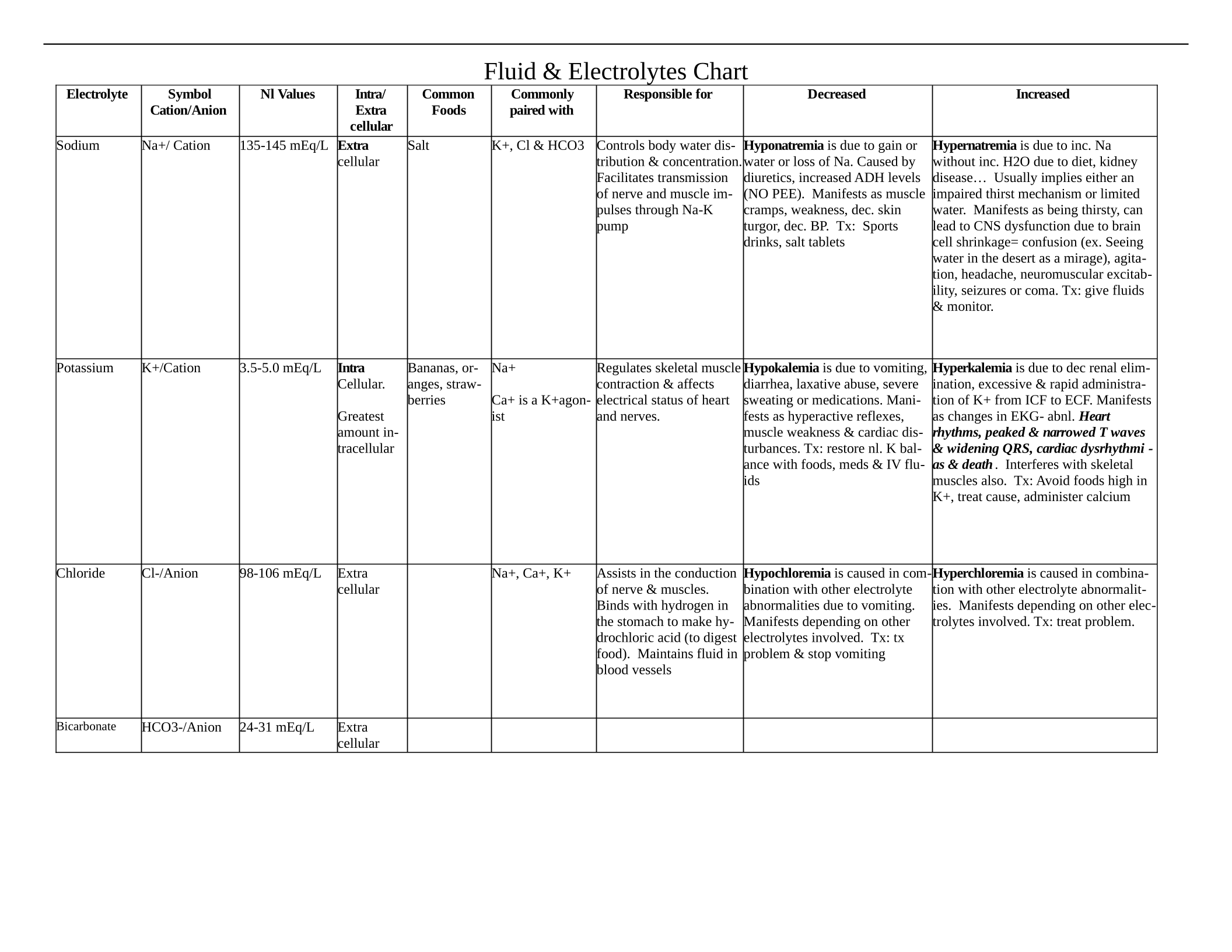
Electrolyte Symbol
Cation/Anion
Nl Values Intra/
Extra
cellular
Common
Foods
Commonly
paired with
Responsible for Decreased Increased
Sodium Na+/ Cation 135-145 mEq/L Extra
cellular
Salt K+, Cl & HCO3 Controls body water dis-
tribution & concentration.
Facilitates transmission
of nerve and muscle im-
pulses through Na-K
pump
Hyponatremia is due to gain or
water or loss of Na. Caused by
diuretics, increased ADH levels
(NO PEE). Manifests as muscle
cramps, weakness, dec. skin
turgor, dec. BP. Tx: Sports
drinks, salt tablets
Hypernatremia is due to inc. Na
without inc. H2O due to diet, kidney
disease… Usually implies either an
impaired thirst mechanism or limited
water. Manifests as being thirsty, can
lead to CNS dysfunction due to brain
cell shrinkage= confusion (ex. Seeing
water in the desert as a mirage), agita-
tion, headache, neuromuscular excitab-
ility, seizures or coma. Tx: give fluids
& monitor.
Potassium K+/Cation 3.5-5.0 mEq/L Intra
Cellular.
Greatest
amount in-
tracellular
Bananas, or-
anges, straw-
berries
Na+
Ca+ is a K+agon-
ist
Regulates skeletal muscle
contraction & affects
electrical status of heart
and nerves.
Hypokalemia is due to vomiting,
diarrhea, laxative abuse, severe
sweating or medications. Mani-
fests as hyperactive reflexes,
muscle weakness & cardiac dis-
turbances. Tx: restore nl. K bal-
ance with foods, meds & IV flu-
ids
Hyperkalemia is due to dec renal elim-
ination, excessive & rapid administra-
tion of K+ from ICF to ECF. Manifests
as changes in EKG- abnl. Heart
rhythms, peaked & narrowed T waves
& widening QRS, cardiac dysrhythmi -
as & death . Interferes with skeletal
muscles also. Tx: Avoid foods high in
K+, treat cause, administer calcium
Chloride Cl-/Anion 98-106 mEq/L Extra
cellular
Na+, Ca+, K+ Assists in the conduction
of nerve & muscles.
Binds with hydrogen in
the stomach to make hy-
drochloric acid (to digest
food). Maintains fluid in
blood vessels
Hypochloremia is caused in com-
bination with other electrolyte
abnormalities due to vomiting.
Manifests depending on other
electrolytes involved. Tx: tx
problem & stop vomiting
Hyperchloremia is caused in combina-
tion with other electrolyte abnormalit-
ies. Manifests depending on other elec-
trolytes involved. Tx: treat problem.
Bicarbonate HCO3-/Anion 24-31 mEq/L Extra
cellular
Fluid & Electrolytes Chart
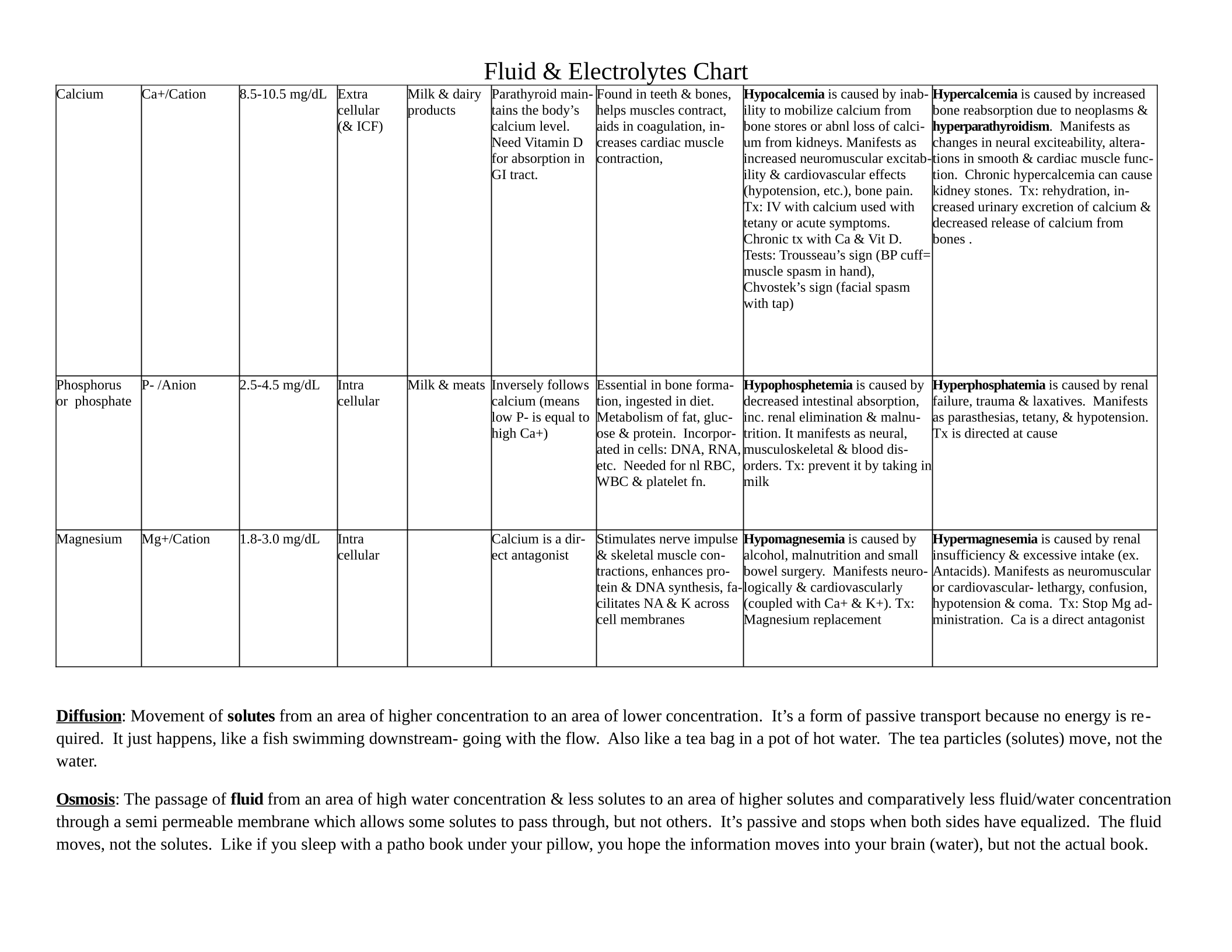
Calcium Ca+/Cation 8.5-10.5 mg/dL Extra
cellular
(& ICF)
Milk & dairy
products
Parathyroid main-
tains the body’s
calcium level.
Need Vitamin D
for absorption in
GI tract.
Found in teeth & bones,
helps muscles contract,
aids in coagulation, in-
creases cardiac muscle
contraction,
Hypocalcemia is caused by inab-
ility to mobilize calcium from
bone stores or abnl loss of calci-
um from kidneys. Manifests as
increased neuromuscular excitab-
ility & cardiovascular effects
(hypotension, etc.), bone pain.
Tx: IV with calcium used with
tetany or acute symptoms.
Chronic tx with Ca & Vit D.
Tests: Trousseau’s sign (BP cuff=
muscle spasm in hand),
Chvostek’s sign (facial spasm
with tap)
Hypercalcemia is caused by increased
bone reabsorption due to neoplasms &
hyperparathyroidism. Manifests as
changes in neural exciteability, altera-
tions in smooth & cardiac muscle func-
tion. Chronic hypercalcemia can cause
kidney stones. Tx: rehydration, in-
creased urinary excretion of calcium &
decreased release of calcium from
bones .
Phosphorus
or phosphate
P- /Anion 2.5-4.5 mg/dL Intra
cellular
Milk & meats Inversely follows
calcium (means
low P- is equal to
high Ca+)
Essential in bone forma-
tion, ingested in diet.
Metabolism of fat, gluc-
ose & protein. Incorpor-
ated in cells: DNA, RNA,
etc. Needed for nl RBC,
WBC & platelet fn.
Hypophosphetemia is caused by
decreased intestinal absorption,
inc. renal elimination & malnu-
trition. It manifests as neural,
musculoskeletal & blood dis-
orders. Tx: prevent it by taking in
milk
Hyperphosphatemia is caused by renal
failure, trauma & laxatives. Manifests
as parasthesias, tetany, & hypotension.
Tx is directed at cause
Magnesium Mg+/Cation 1.8-3.0 mg/dL Intra
cellular
Calcium is a dir-
ect antagonist
Stimulates nerve impulse
& skeletal muscle con-
tractions, enhances pro-
tein & DNA synthesis, fa-
cilitates NA & K across
cell membranes
Hypomagnesemia is caused by
alcohol, malnutrition and small
bowel surgery. Manifests neuro-
logically & cardiovascularly
(coupled with Ca+ & K+). Tx:
Magnesium replacement
Hypermagnesemia is caused by renal
insufficiency & excessive intake (ex.
Antacids). Manifests as neuromuscular
or cardiovascular- lethargy, confusion,
hypotension & coma. Tx: Stop Mg ad-
ministration. Ca is a direct antagonist
Diffusion: Movement of solutes from an area of higher concentration to an area of lower concentration. It’s a form of passive transport because no energy is re-
quired. It just happens, like a fish swimming downstream- going with the flow. Also like a tea bag in a pot of hot water. The tea particles (solutes) move, not the
water.
Osmosis: The passage of fluid from an area of high water concentration & less solutes to an area of higher solutes and comparatively less fluid/water concentration
through a semi permeable membrane which allows some solutes to pass through, but not others. It’s passive and stops when both sides have equalized. The fluid
moves, not the solutes. Like if you sleep with a patho book under your pillow, you hope the information moves into your brain (water), but not the actual book.
Fluid & Electrolytes Chart
Tonicity: The tension or effect that solutes exert on the SIZE because of water moving across the cell membrane.
1. Isotonic- cells stay the same size
2. Hypotonic- cells swell as water is poured into them
3. Hypertonic- cells shrink because water is pulled out of them
Edema:
Powered by TCPDF (www.tcpdf.org)

