


CHARACTERISTICS OF CLASSICAL MUSIC
Contracts of moods
●
Contrasts both between and within movements
Flexibility of rhythm
●
Multiple rhythmic patterns for variety
Texture
●
Most homophonic, but with frequent shifts
Melody
●
Tuneful, easy to remember
●
Composers borrowed popular tunes
Dynamics
●
Emotions expressed in shades of dynamics
●
Use of gradual dynamic changes
THE CLASSICAL ERA
●
Scientific advance changed worldview
-Faith in the power of reason
-Undermining of traditional authority
Social organization
Religious establishment
-Age of Enlightenment
-Rise of the middle class workers
●
Visual art
-Moved away from ornate baroque style
-Favored light colors, curved lines, and graceful
ornaments
CH.1 - CLASSICAL STYLE
●
Transition to Period (1730-1750)
-C.P.F and J.C. Bach - Early pioneers
-Concentrated on simplicity and clarity
●
Term classical
-Greek and Roman antiquity
-Anything that is not rock, jazz, folk, or popular
●
Music and visual arts stress balance and clarity of
structure
●
Three main composers
-Joseph Hadyn
-Wolfgang Amadeus Mozart
-Ludwig van Beethoven
●Related to development of the piano(Soft/loud)
-End of basso continuo (circa 1775)
CLASSICAL FORM
●
Instrumental works consist of several movements that
contrast in tempo and character
1.1st (fast)
2.2nd (Slow)
3.3rd (Dance related)
4.4th (fast)
●
The movements might use different forms
-A B A
-Theme and Variations
- Sonata
-Minuet and trio
- Rondo
●
Movements often contrast themes vividly
●
By movement’s end, musical tensions are resolved
COMPOSERS, PATRON, AND PUBLIC
●
Changing society affected musicians
-Haydn: Worked 30 years for aristocrat family
-Mozart: Began at court, went freelance, died broke
-Beethoven: Successful as independent musician
THE CLASSICAL ORCHESTRA
●
Orchestra size increased; standard group of 4 sections
-Strings: First and Second violin, violas, cellos,
double bass
-Woodwinds: Flutes, oboes, clarinets, bassoons, (2 of
each)
-Brass: french horn, trumpets (2 of each)
-Percussion: 2 timpani
●
Composers exploited individual tone colors
●
Each section had a special role
-Strings most important with violins taking the melody
-Woodwinds added contrasting tones
-Horns and trumpets brought power to loud passages
-Timpani used for rhythmic bite and emphasis
●
●
●
●
●
Notes:
-Sonata Form
LISTENING
Symphony No.40 in G minor, k.550
By: Wolfgang Amadeus Mozart
First movement
Prospering middle class wanted aristocratic pleasures
(theater, literature, music)
Public, ticket buying concerts became common
Demand for printed music, instruments, and music lessons
Composers wrote playable music that would sell
Serious compositions flavored by folk and popular music
VIENNA
●
Became musical capital of Europe
●
Musicians came to study and seek recognition
●
Aristocrats wintering there would bring their orchestra
●
Musicians including Mozart and Beethoven frequently played
gigs in wealthy homes
●
Many musicians also play in serenading street bands
Sonata Form
●
Also called sonata allegro form
●
Refers to form of a single movement
●
Ternary form (ABA)- 3 main sections
●
Exposition
-Initial statement of first and second themes
-Entire section usually repeated
●
Development
-Tension building section
-Themes broken into fragments - motives
●
Recapitulation
-Resolution of tension
-Re statement of first and second themes
●
Often concludes with a “tag” or tail Coda (States again the
tonic key)
LISTENING
Symphony No.94 in G major (Surprise; 1791) By
Frank Joseph Haydn
Second movement
THEME AND VARIATION
●
SIngle part form: no longer contrast “B” section
(A A’ A” A”)
●
Basic idea presented then repeated over and over
●
Each repeat alters (varies) musical idea
●
Each variation is the same length as the original idea
●
Variation may alter melody, harmony, rhythm, dynamics,
timbre, or all of these
QUESTION:
Theme and Variation
Changing the theme but only slightly so each section sounds
familiar to the theme but not exactly
Notes:
-Theme and Variation form
- Countermelody
-Variation 3 part b (Color changes because oboe takes over
melody)
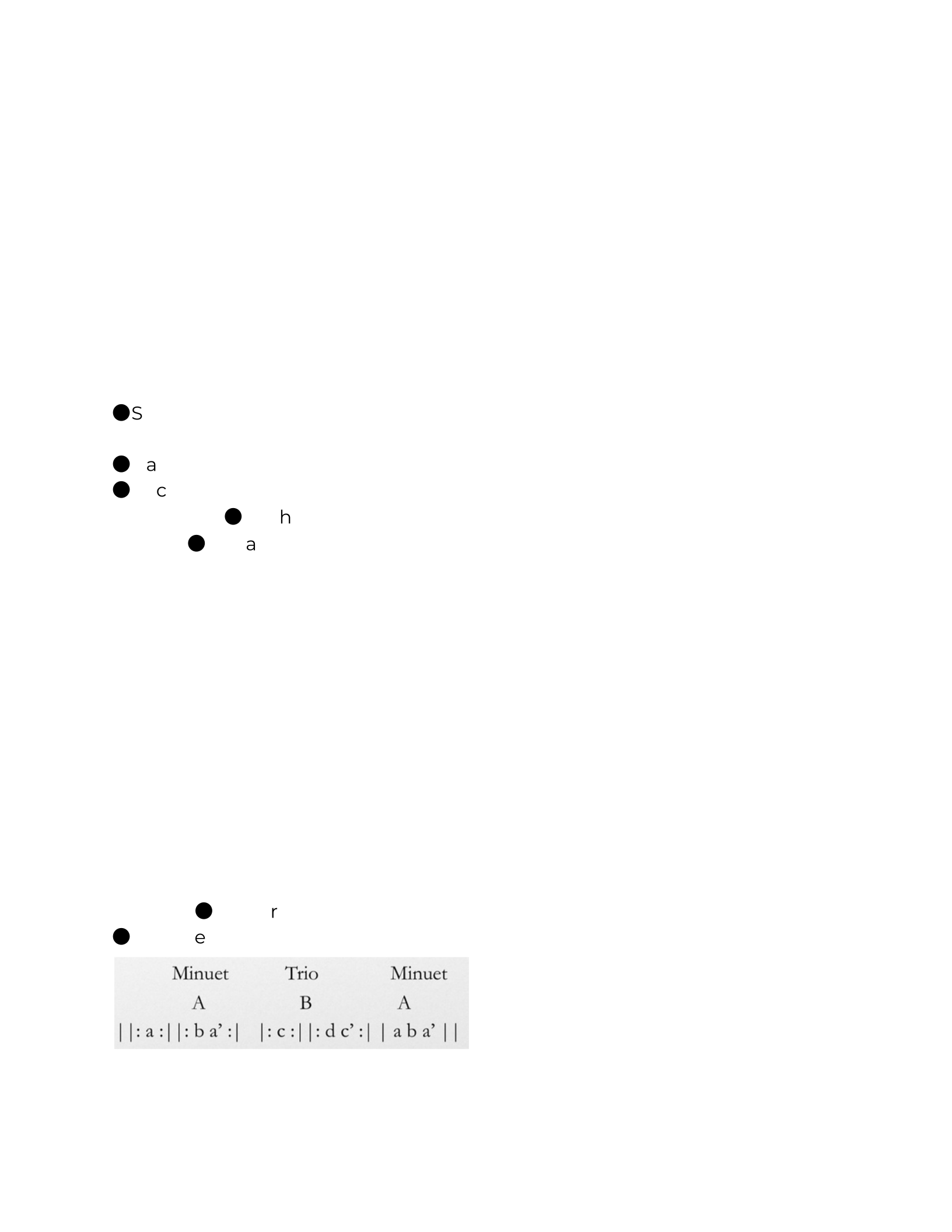
Return of the Minuet is usually marked on the music asda
capo(from the top)
CH.5 - MINUET AND TRIO
●
Ternary form based upon stately court dance of the baroque
●
Eacb ternary part is itself ternary:
-Exposition, development, Recapitulation, coda
-Everything begins with the same three notes (Always a three
note motive)
-Tonic is G minor
-2nd theme changes key in REcapitulation
●
Notes:
-Rodo Form (A B A C A B A)
LISTENING
String Quartet in C Minor, Op.18, No.4 (1798 - 1800) By
Ludwig Beethovevn
Form Movement
LISTENING
Eine kleine Nachtmusik (A little Night Music; 1787) K. 525 By
Wolfgang Mozart
THird movement
Note: Minuet and Trio Form
ROndo
●
Features a tuneful main theme which returns over and over
●
Main theme alternates with other
●
Common rondo pattern
-A B A C A (Small rondo form)
-A B A C C A B A (large rondo
Note the similarity to modern pop-music form

