


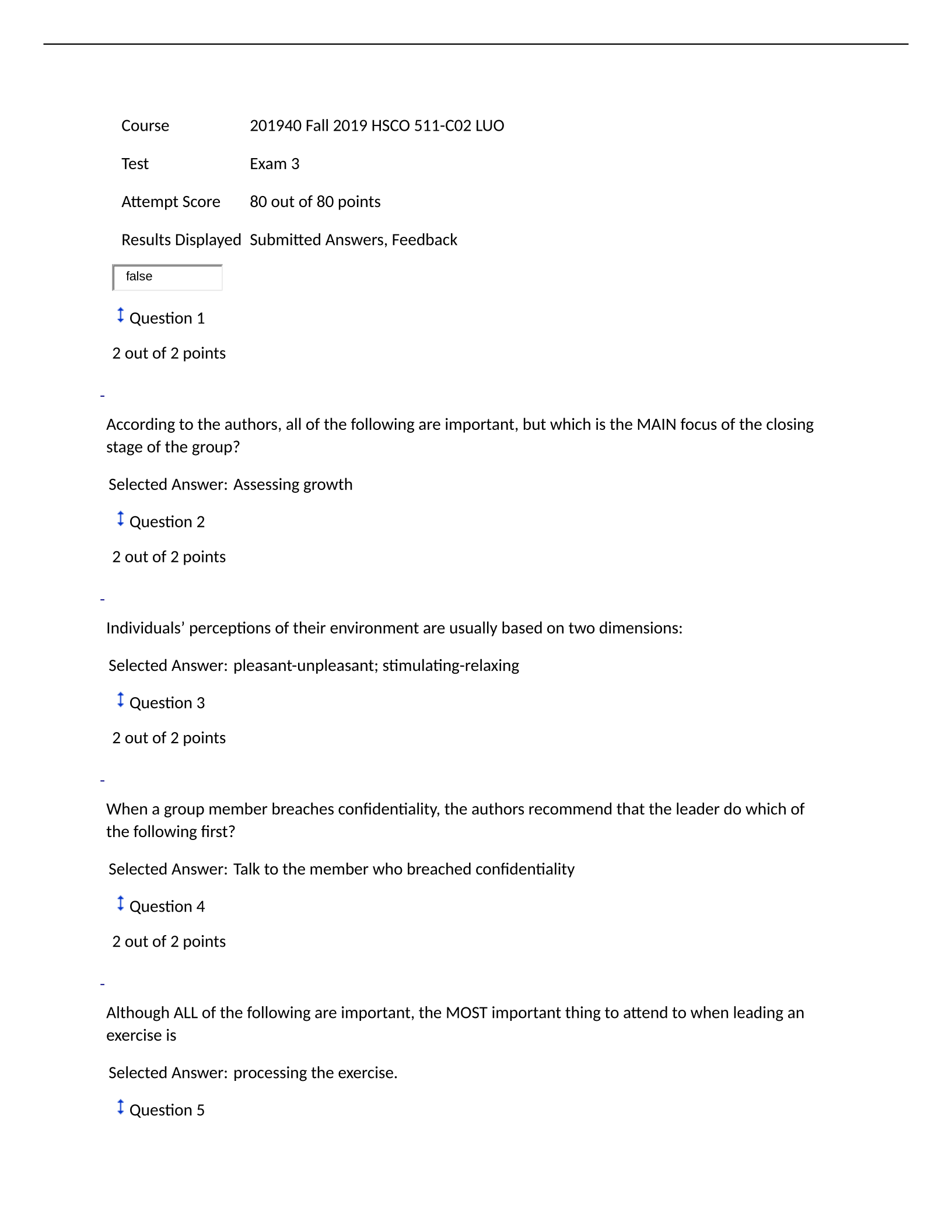
Course 201940 Fall 2019 HSCO 511-C02 LUO
Test Exam 3
Attempt Score 80 out of 80 points
Results Displayed Submitted Answers, Feedback
Question 1
2 out of 2 points
According to the authors, all of the following are important, but which is the MAIN focus of the closing
stage of the group?
Selected Answer: Assessing growth
Question 2
2 out of 2 points
Individuals’ perceptions of their environment are usually based on two dimensions:
Selected Answer: pleasant-unpleasant; stimulating-relaxing
Question 3
2 out of 2 points
When a group member breaches confidentiality, the authors recommend that the leader do which of
the following first?
Selected Answer: Talk to the member who breached confidentiality
Question 4
2 out of 2 points
Although ALL of the following are important, the MOST important thing to attend to when leading an
exercise is
Selected Answer: processing the exercise.
Question 5
false
2 out of 2 points
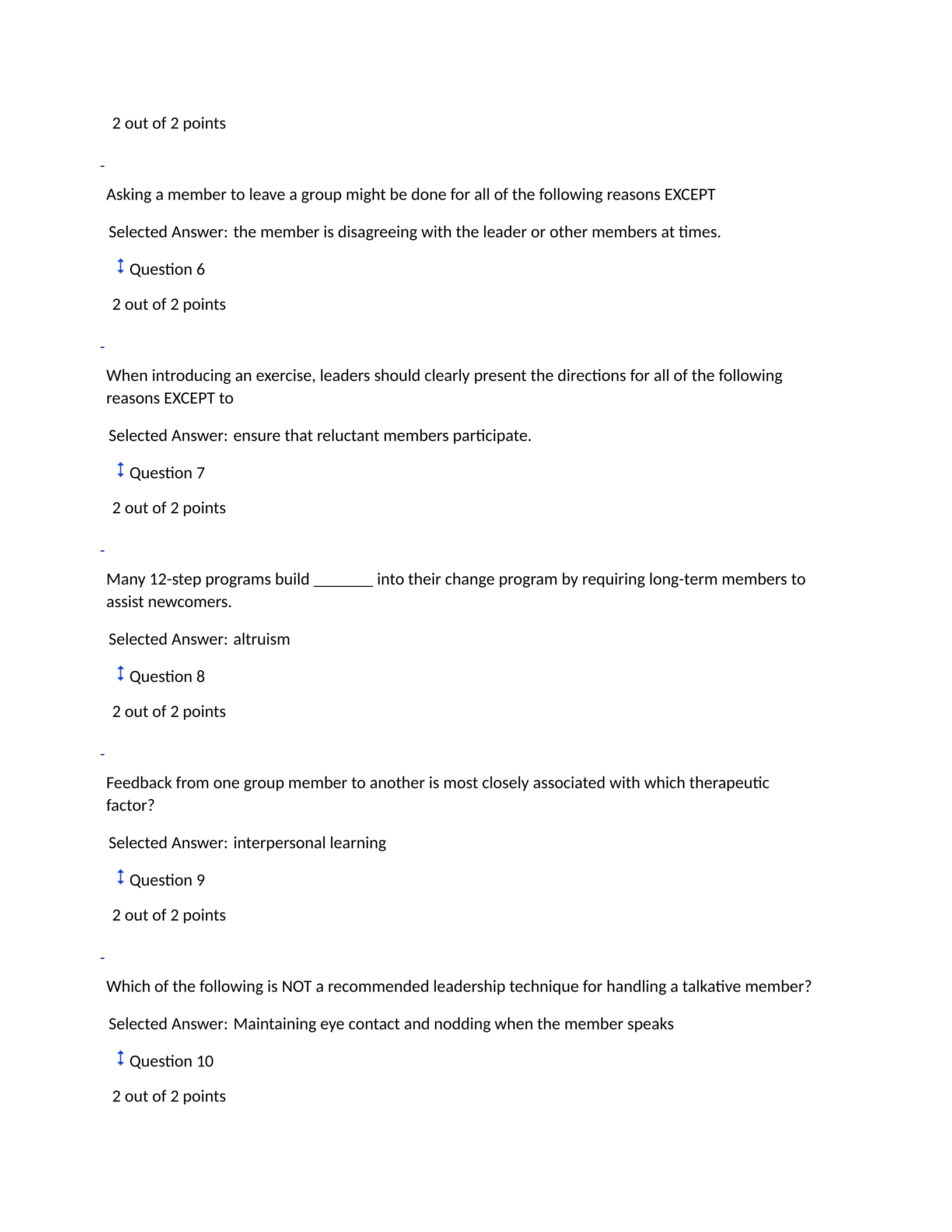
Asking a member to leave a group might be done for all of the following reasons EXCEPT
Selected Answer: the member is disagreeing with the leader or other members at times.
Question 6
2 out of 2 points
When introducing an exercise, leaders should clearly present the directions for all of the following
reasons EXCEPT to
Selected Answer: ensure that reluctant members participate.
Question 7
2 out of 2 points
Many 12-step programs build _______ into their change program by requiring long-term members to
assist newcomers.
Selected Answer: altruism
Question 8
2 out of 2 points
Feedback from one group member to another is most closely associated with which therapeutic
factor?
Selected Answer: interpersonal learning
Question 9
2 out of 2 points
Which of the following is NOT a recommended leadership technique for handling a talkative member?
Selected Answer: Maintaining eye contact and nodding when the member speaks
Question 10
2 out of 2 points
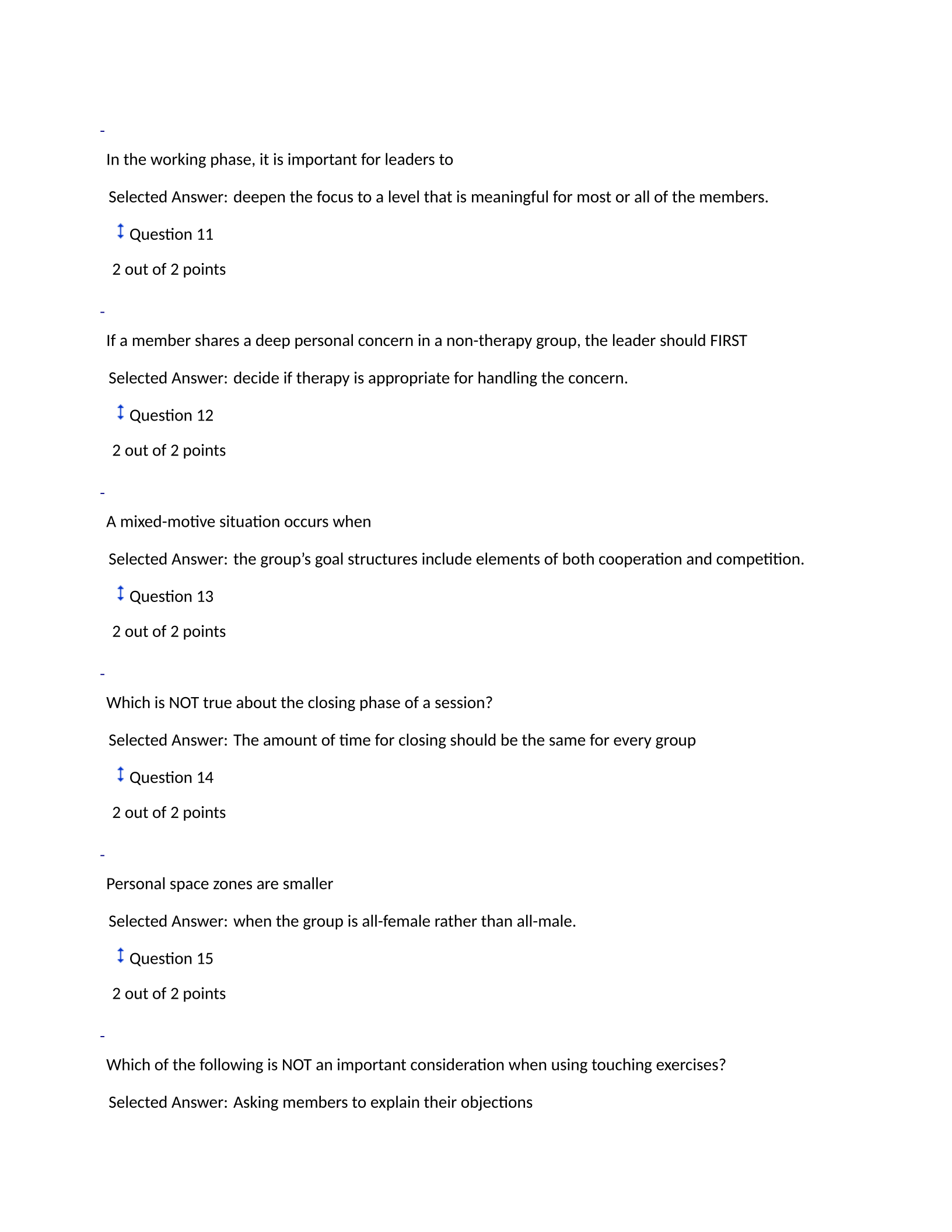
In the working phase, it is important for leaders to
Selected Answer: deepen the focus to a level that is meaningful for most or all of the members.
Question 11
2 out of 2 points
If a member shares a deep personal concern in a non-therapy group, the leader should FIRST
Selected Answer: decide if therapy is appropriate for handling the concern.
Question 12
2 out of 2 points
A mixed-motive situation occurs when
Selected Answer: the group’s goal structures include elements of both cooperation and competition.
Question 13
2 out of 2 points
Which is NOT true about the closing phase of a session?
Selected Answer: The amount of time for closing should be the same for every group
Question 14
2 out of 2 points
Personal space zones are smaller
Selected Answer: when the group is all-female rather than all-male.
Question 15
2 out of 2 points
Which of the following is NOT an important consideration when using touching exercises?
Selected Answer: Asking members to explain their objections
Question 16
2 out of 2 points
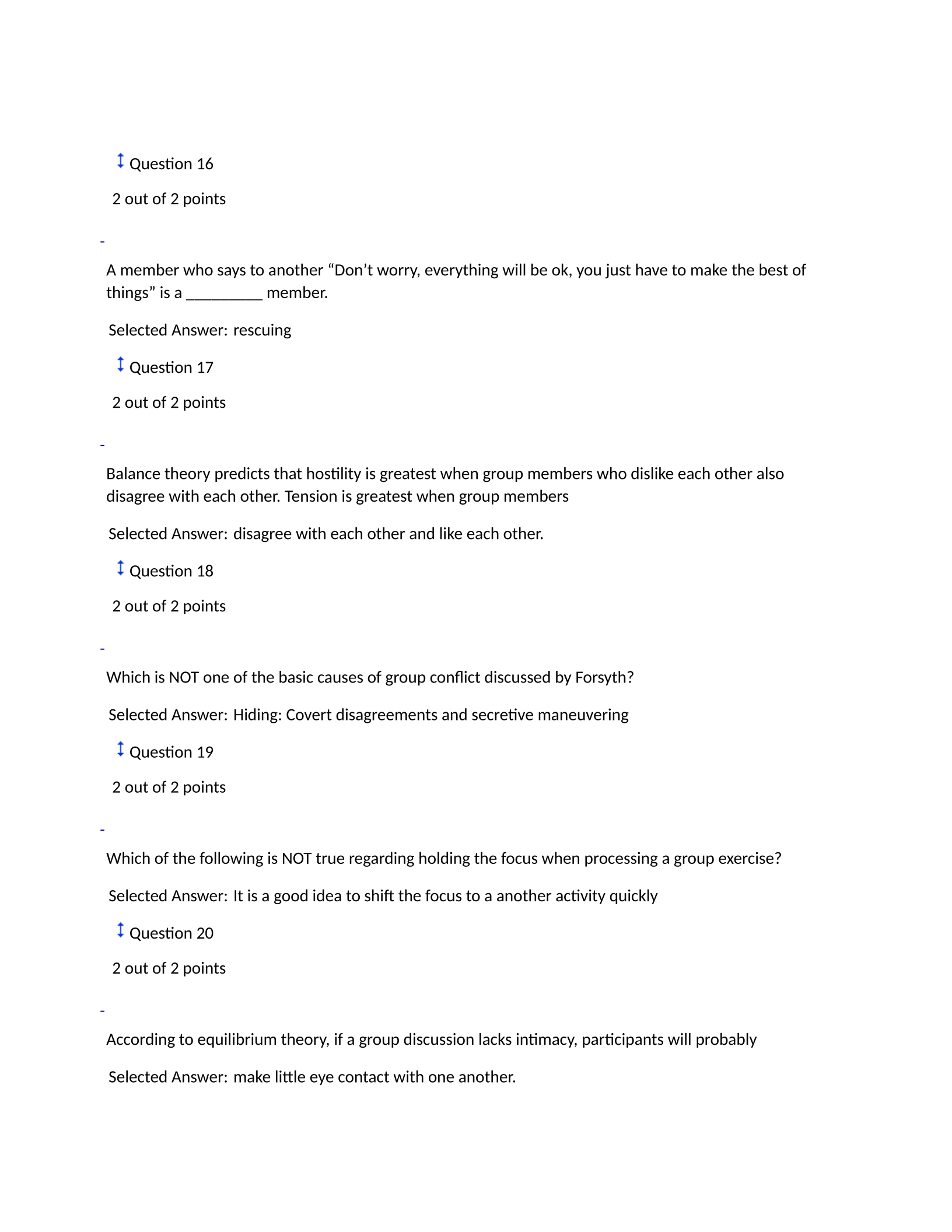
A member who says to another “Don’t worry, everything will be ok, you just have to make the best of
things” is a _________ member.
Selected Answer: rescuing
Question 17
2 out of 2 points
Balance theory predicts that hostility is greatest when group members who dislike each other also
disagree with each other. Tension is greatest when group members
Selected Answer: disagree with each other and like each other.
Question 18
2 out of 2 points
Which is NOT one of the basic causes of group conflict discussed by Forsyth?
Selected Answer: Hiding: Covert disagreements and secretive maneuvering
Question 19
2 out of 2 points
Which of the following is NOT true regarding holding the focus when processing a group exercise?
Selected Answer: It is a good idea to shift the focus to a another activity quickly
Question 20
2 out of 2 points
According to equilibrium theory, if a group discussion lacks intimacy, participants will probably
Selected Answer: make little eye contact with one another.

Question 21
2 out of 2 points
To deepen the focus of the group and the level of commitment of members, Jacobs et al. suggest all of
the following EXCEPT
Selected Answer: suggesting that the group take the topics and their participation more seriously.
Question 22
2 out of 2 points
All of the following represent common mistakes made in middle sessions EXCEPT?
Selected Answer: Moving group’s focus to deeper, more meaningful content
Question 23
2 out of 2 points
Spinning-off is appropriate for the following reasons, EXCEPT
Selected Answer: it gives the leader a break.
Question 24
2 out of 2 points
Which of the following is NOT recommended as a way to handle a member’s emotional reaction to an
exercise?
Selected Answer: Refer the member to another group that is less intense
Question 25
2 out of 2 points
Asking members to position themselves somewhere between two walls in the room that represents
their level of comfort in the group in an example of conducting a _________exercise.
Selected Answer: Movement
Question 26
2 out of 2 points
All of the following is true about distracting members EXCEPT
Selected Answer: they are always intentionally trying to distract the group
Question 27
2 out of 2 points
Which of the following is NOT a purpose or goal of the closing phase of a session?
Selected Answer: To cover a planned topic that wasn’t previously discussed in the session
Question 28
2 out of 2 points
Which is NOT one of the characteristics of most support groups?
Selected Answer: Members have little experience with the problem the group focuses on
Question 29
2 out of 2 points
When a member begins crying during the session, the leader should
Selected
Answer:
attempt to determine whether he or she is in pain or trying to gain sympathy from
others.
Question 30
2 out of 2 points
Interpersonal psychotherapy groups stress dealing with issues that occur within the group itself, rather
than reviewing what the members are experiencing outside of the group or what they experienced in
the past. This focus is usually referred to as a(n) _______ orientation.
Selected Answer: “here and
now”
Question 31
2 out of 2 points
Which of the following is a good reason for leaders to participate in an exercise?
Selected Answer: To allow the members to get to know the leader better
Question 32
2 out of 2 points
Which of the following is true regarding apportioning time to members?
Selected Answer: It is okay to occasionally give more time to one member.
Question 33
2 out of 2 points
Which is FALSE about leading the middle stage of a group?
Selected Answer: It is okay for the leader to plan only one exercise or activity.
Question 34
2 out of 2 points
During conflicts, people are most likely to misinterpret and misperceive ________ behavior.
Selected Answer: altruistic
Question 35
2 out of 2 points
Which of the following is NOT true regarding the use of feedback during the closing stage of group?
Selected Answer: Feedback should not be given during the closing stage, as it could be hurtful.
Question 36
2 out of 2 points
According to the dual concern model, which conflict management strategy reflects low concern for
both self and other?
Selected Answer: Avoiding
Question 37
2 out of 2 points
Feedback exercises are most valuable when
Selected Answer: a member wants to know what others think of him or her.
Question 38
2 out of 2 points
Studies of the impact of noise on people indicate that
Selected Answer: people can cope with noise for short periods of time.
Question 39
2 out of 2 points
These are reasons for using exercises in a group, EXCEPT:
Selected Answer: Testing members’ boundaries
Question 40
2 out of 2 points
According to Jacobs et al., which of the following is FALSE about the focus on process in a therapy
group?
Selected Answer: It should be the main purpose of a therapy group
Powered by TCPDF (www.tcpdf.org)

