


HLTH645: Meal Plan Specifics
Liberty University
Master of Exercise Science
HLTH 645
MEAL PLAN SPECIFICS
Kennedy Mills
ID: 27484490
November 10, 2023
1

HLTH645: Meal Plan Specifics
Review General Description of Athlete and Sport
Rachel is a 20-year-old Caucasian collegiate basketball player. She plays at Liberty
University and is a second-year student. Rachel is on a partial athletic scholarship and partial
academic scholarship. She plays shooting guard right now and is consistently starting in games.
Her statistics are impressive, and she was named as an All-Conference player last season. Rachel
is currently 5’11” tall and weighs 140 pounds at the beginning of the Fall semester. She would
like to build muscle and strength before the beginning of pre-season training in November, just
three months away. More specifically, she would like to gain ten pounds prior to day one of pre-
season. In order to do this, Rachel will need to follow a strict training and nutrition plan. For
weight training, Rachel will focus on lower body strength to feel stronger on the court for the
upcoming season. For nutrition programming, Rachel will want to be in a calorie surplus to gain
weight and counteract current energy expenditures.
Menu Charts
The menus created for Rachel reflect a regular practice day (off-season) and game day (2-
hour event). Rachel’s programs focus on protein and carbohydrate intake. These two
macronutrients are crucial for building muscle and having energy for exercise. Rachel has a 1.5-
2-hour low-intensity training session every day during the off-season. Because of this, her
carbohydrate intake should be consistent throughout the day to keep her energy levels raised and
increase her fuel stores for practices and games. During exercise, glycogen stores are depleted.
Therefore, it is important to replenish these stores following exercise through intaking
carbohydrates. Rachel’s diet should include 60% carbohydrates, 20% protein and 20% fat.1
During the off-season, Rachel should intake 0.8-1.0 g/kgBW of protein, or 51-64g based on her
body weight.1 In season, the recommendation for female athletes’ protein intake is 1.4 g/kgBW,
2

HLTH645: Meal Plan Specifics
or 89g per day based on Rachel’s size.1 Rachel’s off-season caloric intake should be 2,500
kcal/day based on her activity level and attempt to gain weight.1 This allows her to have a caloric
surplus based on her workouts. While in season, she needs to intake 3,300 kcal/day to offset the
more intense training sessions and games.1
Off- Season
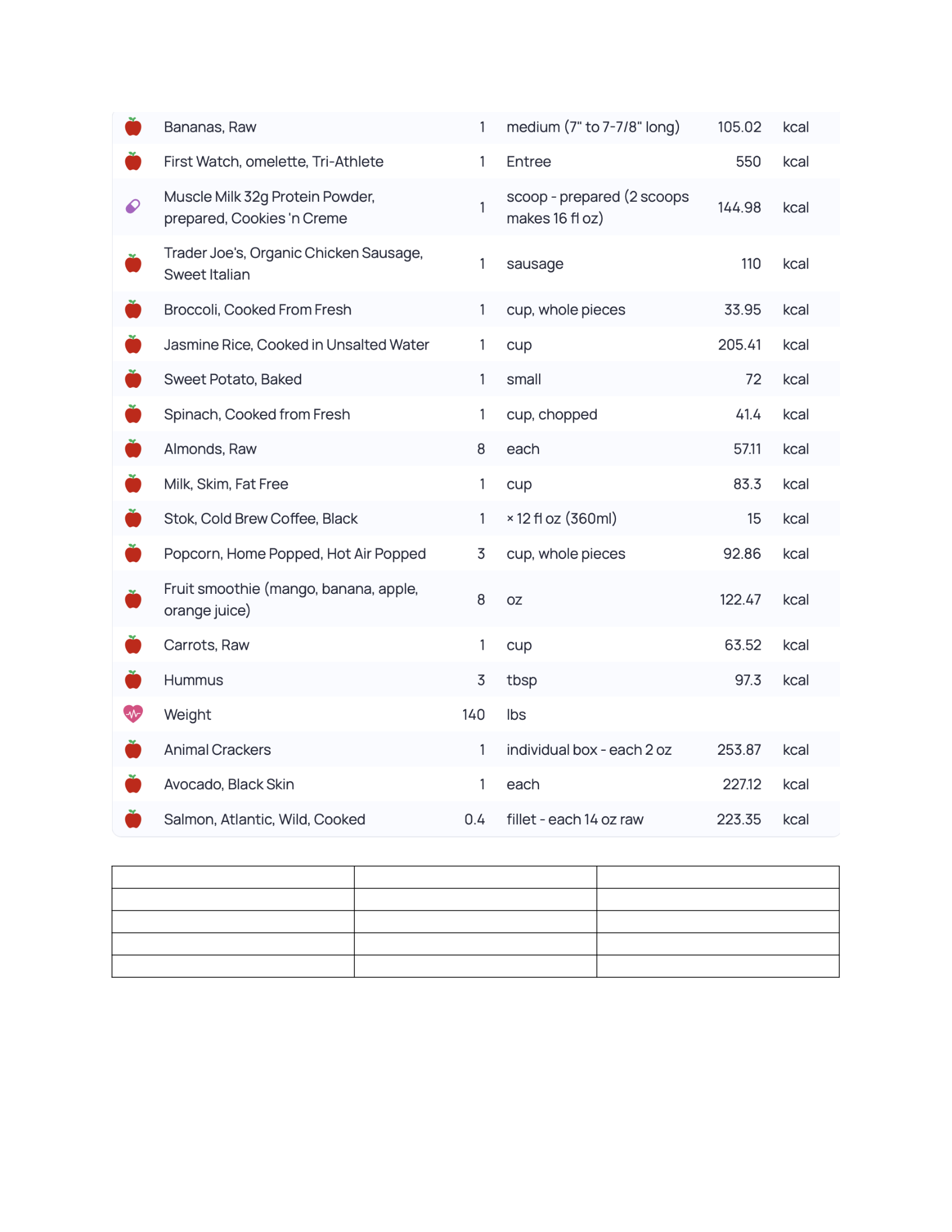
Rachel will eat three meals per day in the off season with a snack in between meals.
Breakfast for an off-season day will be a Tri-Athlete omelet from First Watch which includes egg
whites, mushrooms, onions and tomatoes. Her side will be a banana. Rachel will also have a
mango, banana, apple, and orange juice smoothie. She will be able to drink black coffee with
breakfast as well, as per her usual morning routine. It is important for her to begin drinking water
in the morning and should consume at least 8oz with breakfast. Based on her schedule, breakfast
should be at 8:30 in the morning. Two hours later, at 10:30 am, Rachel will have her first snack
of eight almonds and popcorn. Two hours after that her lunch should be eaten. Lunch will be a
Trader Joe’s chicken sausage, Jasmine rice, an avocado, and cooked broccoli. Rachel’s afternoon
snack will be at 2:00pm and consist of animal crackers and skim milk. Her off-season practice
will take place from 3:00-4:30pm. After practice, she will consume a Muscle Milk protein drink
to begin to rebuild muscle from her exercise and act as a protein supplement. Her dinner will be
consumed at 6:30pm and will be a salmon fillet, cooked spinach, a sweet potato, carrots and
hummus. Rachel’s snack and meal plan keeps her body fueled at evenly spaced intervals
throughout the day. She will make sure to drink plenty of water prior to and after her exercise.
Ideally, Rachel should consume at least 70 ounces of water in one day which is half of her body
weight in ounces.1 It is important for Rachel to consume enough calories in the day to prepare
herself for exercise and gain weight. Having enough energy and the capability to build muscle
3
HLTH645: Meal Plan Specifics
through carbohydrate and protein intakes will allow Rachel to meet her goals before the
beginning of the season.
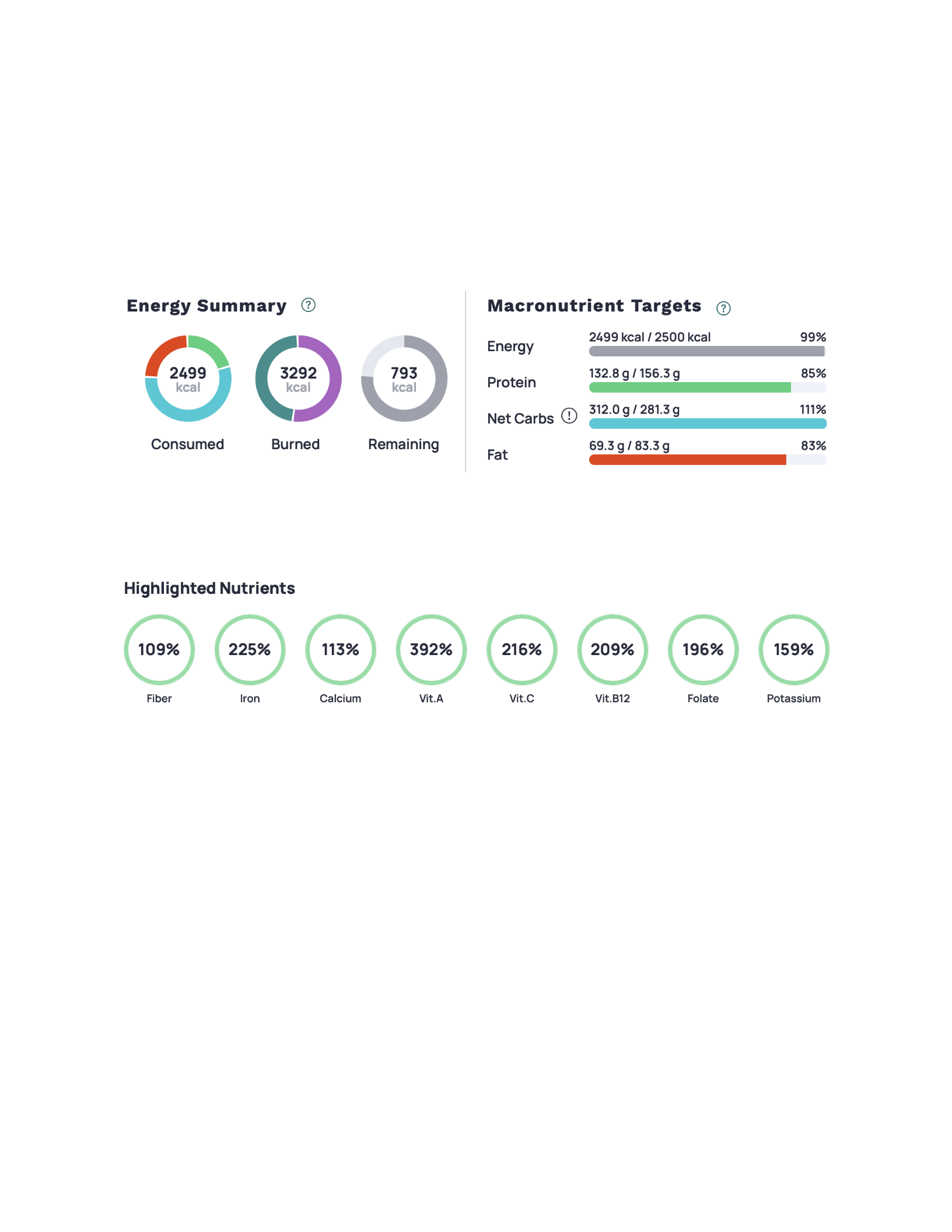
Using Chronometer.com:
4
HLTH645: Meal Plan Specifics
Nutrient Total Goal Met?
Calories 2499 kcal No, under by 1 kcal
Carbs (g) 312.0 g Yes, over by 31 g
Protein (g) 132.8 g No, under by 23.5 g
Fat (g) 69.3 g No, under by 14 g
Rachel basically met her calorie goal of 2500 kcal/day, is just missing one single calorie
according to the Chronometer calculations. She is over intaking carbohydrates and could
potentially lower this by lowering some of her fruits and vegetable intakes. To increase her
5

HLTH645: Meal Plan Specifics
protein intake, since she was low by 23.5g, Rachel could add more protein in the form of bacon
or sausage to her breakfast. To add healthy fats and increase her intake by 14g to reach the goal,
Rachel could eat another avocado during the day or add more salmon to her dinner.
Game Day
Rachel’s game is at 7:00pm and is a home game with no travel required. The game should
end around 9:00pm. She has practice at 9:00am on gamedays which lasts only an hour. Rachel
should make sure that her intakes of each nutrient differ from training days. Her overall calorie
intake is increased to 3,300 kcal, and her protein and carbohydrate intakes are raised as well to
prepare her body for the game.1 Prior to competition, Rachel should stop intaking food four
hours prior to the start of activity.1 Rachel should drink lots of water and sports drinks on
gameday to increase hydration and electrolyte levels.
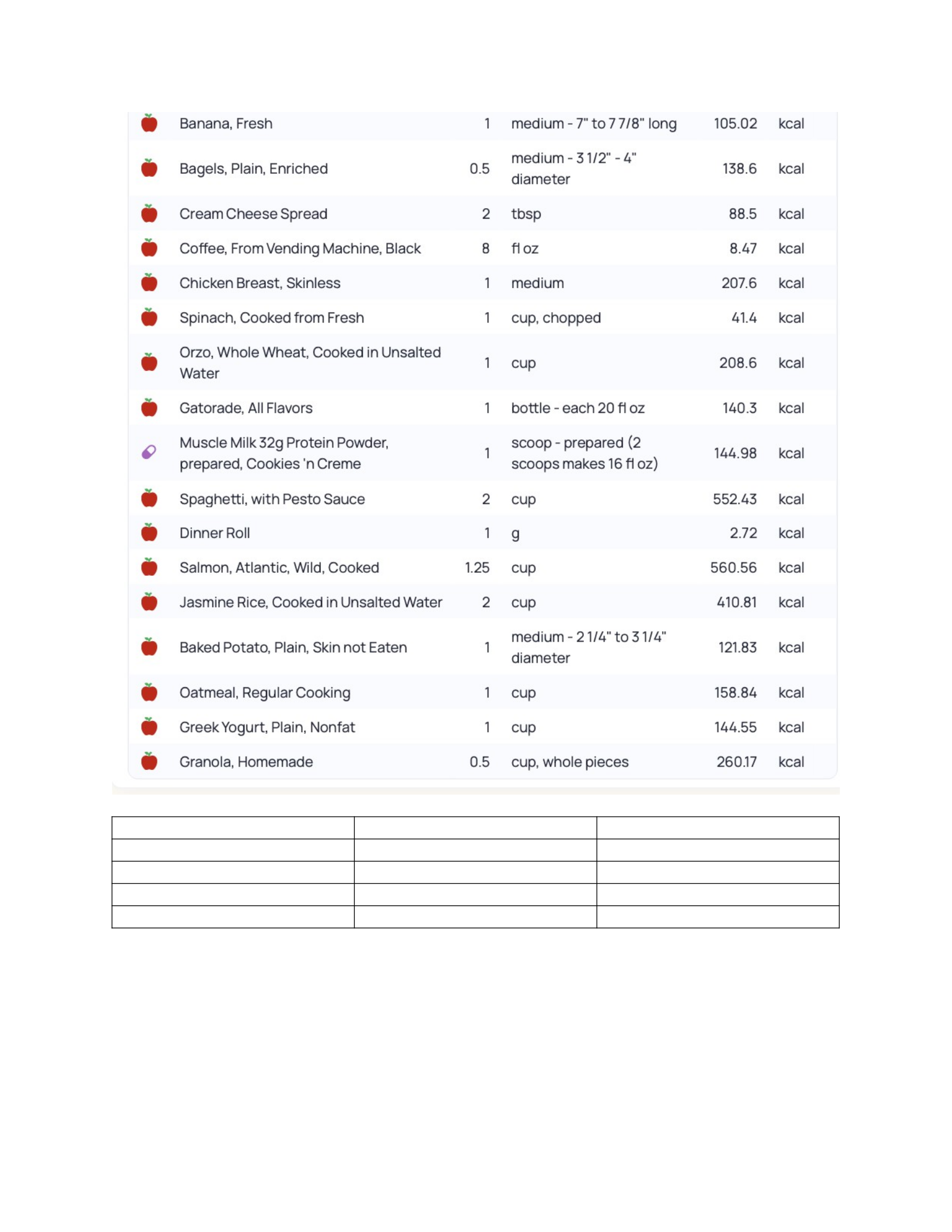
For breakfast, Rachel will eat a banana, bagel and cream cheese, and black coffee at
8:00am. After her morning practice, she will have already consumed a sports drink and can have
a morning snack. Her snack will be Greek yogurt and granola. At 1:00pm, Rachel will eat lunch.
Her lunch will be chicken breast, rice, spinach, orzo pasta, and lots of water. Three hours later,
she will have a pre-game snack. This will be oatmeal. At the game, she will consume another
sports drink. After the game, she will have a protein shake to begin to rebuild muscle. At
10:00pm she will eat a dinner consisting of spaghetti, salmon, baked potato, and a roll.
6
ee
ee
re
oe
pe
we
eee
eee
ne
nee
Energy
Summary
©
Macronutrient
Targets
@
Energy
«)
Sr
Protein
©
Net
Carbs
Consumed
Burned
Over
Fat
Highlighted
Nutrients
Fiber
Iron
Calcium
Vit.c
3295
kcal
/
3300
kcal
99%
EEE
219.8g/165.0g
133%
=
394.6.
g/495.0g
80%
@&,-,,:,::S::SF
79.0
9173.39
108%
eee
Vit.B12
Folate
Potassium
HLTH645: Meal Plan Specifics
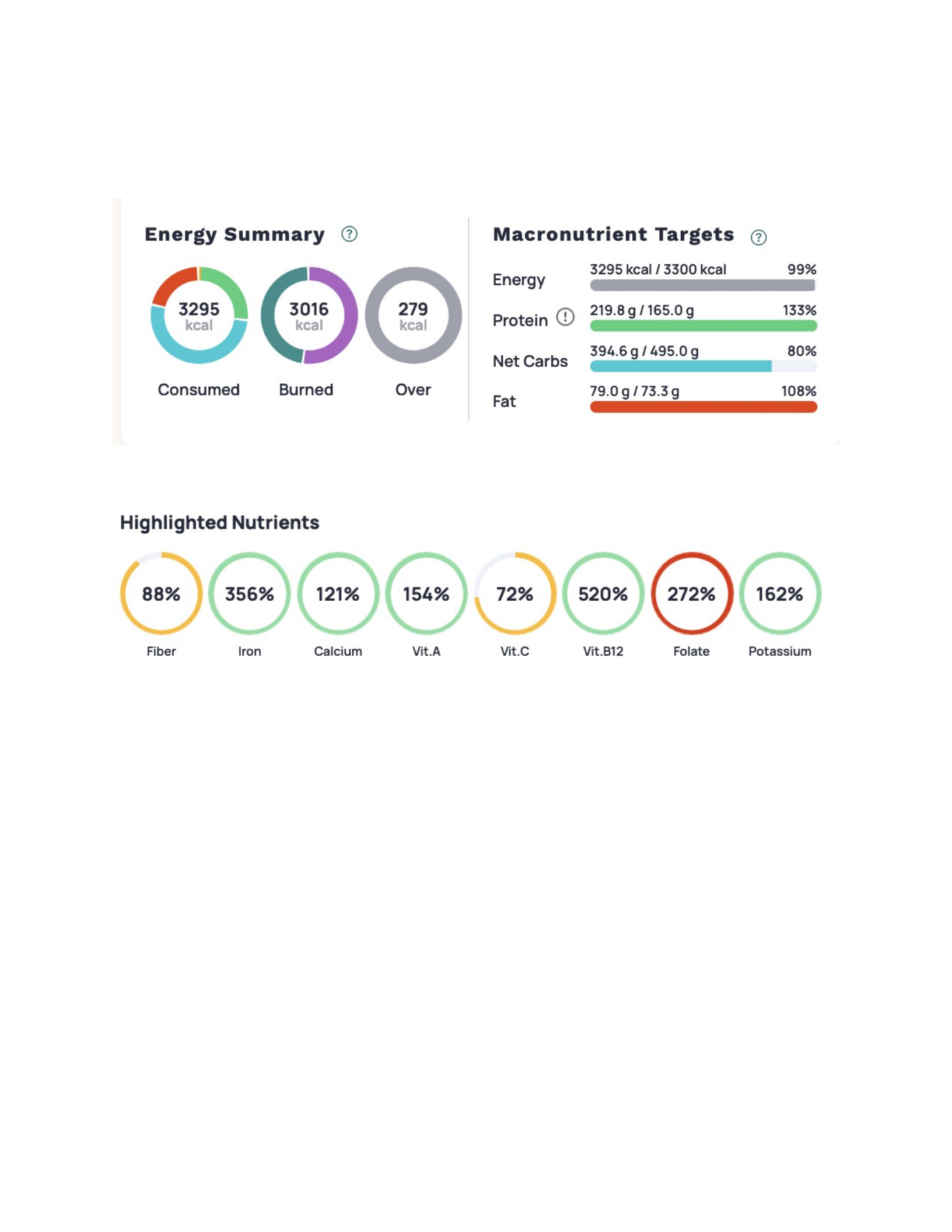
Using Chronometer.com:
7
HLTH645: Meal Plan Specifics
Nutrient Total Goal Met?
Calories 3300 kcal No, under by 5 kcals
Carbs (g) 495.0 g No, under by 100 g
Protein (g) 165.0 g Yes, over by 65 g
Fat (g) 73.3 g Yes, over by 6 g
Rachel basically meets her calorie intake for a game day. Having enough calories allows her to
perform well and be properly nourished. She was very below the carbohydrate goal. However,
not all of the sports drinks were taken into account while building her meal plan on
Chronometer.com. Therefore, this number would have increased. It is important to take in
8

HLTH645: Meal Plan Specifics
enough carbohydrates prior to exercise since they are the body’s main energy source. Without
enough carbohydrates, Rachel will not have enough energy for an endurance activity such as
basketball. Rachel had an abundance of protein. However, this is not necessarily a bad thing
since most of it is planned to be consumed after her game. This post-game protein intake is an
important part of recovery and muscle rebuilding. She has a little bit too much fat in this game
day diet. Fat is used as a backup source of energy if the body runs out of glycogen stores. Having
enough fat to use as an energy source is great!
Dietary Guidelines/Needs
In the off-season, Rachel has a goal of gaining 10 pounds and increasing strength. For
these months, her daily caloric intake is recommended to be 2,500 kcals.1 This is to give her
enough fuel for the few low-intensity practices as well as extra calories to aid in weight gain.
During the season and on game days, her calorie needs are greater. On these days, it is
recommended that she intakes 3,300 kcal in order to support her high-intensity training and
competitions.1 The timing of nutrient intake is important. During the off-season, Rachel wants to
eat throughout the day and keep her body’s blood sugar levels stable. She wants to eat at spaced
increments to help her to feel full through the whole day and not intake too many calories to the
point of gaining too much weight. On game days, Rachel should stop eating about four hours
prior to competition in order to let the food digest and not have negative impacts on her
performance.1 Her intake of carbohydrates should be greater on game days than on off-season
practice days. She needs more energy availability to play in a game than she does for low-
intensity practices. She will also need to replace glycogen stores at greater rates following games
(through a carb-rich post-game meal) than after an off-season practice. Protein is an important
macronutrient responsible for muscle building and recovery. During the off-season, Rachel
9

HLTH645: Meal Plan Specifics
wanted to gain muscle and so her protein intake should be consistent in these months to support
that goal. In the season, her protein intake will be used for recovery and should be monitored as
well. Rachel’s diet should include 60% carbohydrates, 20% protein and 20% fat.1 During the off-
season, Rachel should intake 0.8-1.0 g/kgBW of protein, or 51-64g based on her body weight.1 In
season, the recommendation for female athletes’ protein intake is 1.4 g/kgBW.1
Training Day:
BW (lbs) = 140
BW (kg)= 63.5
Protein needs (0.8-1.0 g/kgBW):
0.8 g/kgBW = 0.8*63.5 = 50.8 g
1.0 g/kgBW = 1.0*63.5 = 63.5 g
Total protein needs 51-64 g per day
Calorie needs:
Activity factor (AF) (3-5 days exercise)= 1.55
655 + (4.4*140) + (4.7*71) – (4.7*20) = BMR
655+616+333.7-94 = 1510.7 kcal BMR
1510.7 (BMR) * 1.55 (AF) = 2,341.6 kcal
Game Day:
BW (lbs) = 140
BW (kg)= 63.5
Protein needs (1.4 g/kgBW):
1.4 g/kgBW = 1.4*63.5 = 89 g
Total protein needs 89 g per day
Calorie needs:
Activity factor (AF) (6-7 days exercise)= 1.725
655 + (4.4*140) + (4.7*71) – (4.7*20) = BMR
655+616+333.7-94 = 1510.7 kcal BMR
1510.7 (BMR) * 1.725 (AF) = 2,605.9 kcal
Carbohydrates are the predominate source of energy that the body uses for oxidative
phosphorylation during moderate to high-intensity aerobic exercise, such as basketball.2 During
this athlete’s long endurance exercises, her carbohydrate stores become depleted which leads to
10

HLTH645: Meal Plan Specifics
fatigue and lower quality performance. To combat this depletion, carbohydrate-loading is a
technique to increase stores prior to exercise through a carbohydrate-heavy diet.2 On the day of
the event, it is shown that carbohydrate intake up to 1-4 hours prior to endurance exercise is
helpful.2 Athletes should be aware of their timing for carbohydrate intake to avoid
gastrointestinal distress during competition.
Protein intake helps to maintain a positive nitrogen balance and promotes skeletal muscle
synthesis.2 The more intense or longer duration a training is, the higher the need for protein
intake. Ammonia is the product of amino acid breakdown. This product is toxic to the body and
is converted to urea for excretion.1 There is a maximal rate for urea synthesis which may be
reached when athletes consume too much protein. If this limit is met it could lead to high
ammonia levels in the blood. Rachel should consume carbohydrates to replenish muscle
glycogen stores and insulin levels (which is an inhibitor of muscle degradation).1
Hydration Guidelines
It is important for athletes to hydrate prior to, during, and following exercise. Heat and
humidity are big factors that impact hydration for many athletes.2 Since Rachel plays basketball,
however, this is not a big concern for her. Athletes should be properly hydrated at the start of an
exercise bout by consuming enough fluids on the previous day.2 The general rule for day-of
hydration is to intake 5-10 mL/kg of fluid in a 2–4-hour timeframe leading up to the exercise
bout.2 For Rachel, this would equal 317mL-635mL based on her bodyweight. This is best done
closer to the 4-hour mark from start of the event to prevent needing to urinate during
competition. Typically, water is a sufficient fluid to maintain hydration. However, adding sodium
stimulates thirst, helps retain body water, and encourages people to drink more.2 Having a
beverage with carbohydrates in it (like a sports drink) will help the athlete hydrate and build
11

HLTH645: Meal Plan Specifics
carbohydrate stores at the same time. The timing of hydration is dependent on the athlete and
should be toyed with until the athlete finds a routine that works for them. Lacking hydration
during exercise allows for greater risk of dehydration and poorer performance.2 Having too much
fluid in the body leads to feeling bloated and gastrointestinal problems, as well as need to
urinate.2
During the exercise bout, athletes should consume 150-350mL of fluid at 15–20-minute
intervals.2 This is not an ideal range for some athletes, however, and so the hydration approach
should be individualized. After exercising, rehydration goals include restoring lost body water,
replacing lost sodium, consuming carbohydrates to restore muscle glycogen, intaking protein to
repair skeletal muscle, and avoiding gastrointestinal upset.2 It is recommended that athletes drink
1.25-1.5L of fluid per kg of body weight lost during exercise starting immediately after exercise
ends.2 Sports drinks and water help to replace lost nutrients and restore the body’s nutrient levels
to pre-exercise stability.
Specific Nutrition Recommendation
Female athletes typically have a calorie underconsumption issue. This could be caused by
social media’s unrealistic body image ideas, lack of hunger, or lack of time. However, it is
important for Rachel to follow the menus above in order to intake proper number of calories and
nutrients for all body systems to function properly. As stated above by the menus, there are subtle
changes that can be made to increase or decrease specific nutrients to reach targets. If Rachel
wants to substitute foods for ones that she enjoys more, she is able to do so. I would encourage
Rachel to look into their nutrient contents and try to replace foods with ones that have similar
levels of nutrients. These plans can also be tailored for Rachel based on how she performs
12

HLTH645: Meal Plan Specifics
following the plan. The ultimate goal is an individualized plan that Rachel enjoys and is able to
successfully follow that leads to her reaching her goals and maximizes performance.
Supplements/ Ergogenic Aids
-Protein powder: will help with muscle building and weight gain in the off-season
-Vitamin D: promotes calcium absorption and enables bone mineralization, growth, and
remodeling and most Americans are deficient3
13

HLTH645: Meal Plan Specifics
References
1. Cole MB.LBasketball: The Ultimate Guide to Basketball Skills, Strategies, and Performance.
BornIncredible.com
2. Dunford M, Doyle JA, Killian L.LNutrition for Sport and Exercise. 5th ed. Engage
Learning; 2022.L
3. Office of dietary supplements - vitamin D. NIH Office of Dietary Supplements. Accessed
October 25, 2023. https://ods.od.nih.gov/factsheets/VitaminD-HealthProfessional/.L
14

