


PEER-BASED COMMUNITY PHYSICAL ACTIVITY
PROGRAMMES FOR MENTAL HEALTH SERVICE
USERS
Introduction
The increasing prevalence of mental health problems is a growing concern,
with one in four people in the UK experiencing mental health problems each year
(Rosenbaum, Tiedemann, Ward, Curtis, & Sherrington, 2015a) and one in six having
a clinical diagnosis (Mental Health Federation, 2016). Consequently, mental illness is
thought to be the UK’s biggest and most costly public health problem, with costs
estimating around £22.5 billion per year in the UK alone (Rosenbaum, Tiedemann,
Ward, Curtis, & Sherrington, 2015).
Mental health and mental illness are two separate, yet related concepts (WHO,
2014). Mental health has been defined as “a state of well-being in which every
individual realises his or her own potential, can cope with the normal stresses of life,
can work productively and fruitfully, and is able to make a contribution to her or his
community” (WHO, 2014).
Therefore, mental health is concerned with emotions, thoughts, feelings, one’s
ability to problem solve and overcome difficulties, social connections and
understanding of the world (WHO, 2014). When a set of symptoms are present for a
specified duration and this constellation of symptoms coincides with distinctive
cognitive and social functioning, an individual may experience and be diagnosed
with a mental illness (WHO, 2014). Both individuals with poor mental health and
mental illness will be included in this review if they utilise mental healthcare
services. These individuals will be referred to as ‘mental health service users
(MHSU)’.
MHSU experience substantial disparities in health, including rates of
morbidity and mortality (Stubbs, Williams, Gaughran, & Craig, 2016; Vancampfort et
al., 2016). Evidence has shown life expectancy reduction of 10-25 years in those with
mental illness due to health inequalities (Rosenbaum et al., 2015). Physical activity

(PA) can play an important role in closing the physical inequalities gap, with lifestyle
modifications such as diet and exercise being recommended for improvement of
chronic disease outcomes (Black et al., 2015; de Rezende, Rey-López, Matsudo, &
Luiz, 2014). Meeting the international recommendation of 150 minutes of moderate
intensity PA in bouts of 10 minutes per week, or 75 minutes of vigorous intensity PA
across the week, has important physical health (Firth et al., 2016) and mental health
benefits (McDowell, MacDonncha, & Herring, 2017). Compared to individuals who
are physically active, individuals with serious mental illnesses are at a substantially
increased risk of developing obesity, type 2 diabetes, cancer, heart disease, high blood
pressure and other prevalent/chronic conditions (Stubbs, Vancampfort, De Hert, &
Mitchell, 2015; Vancampfort et al., 2015). There is also an increased risk of
developing cardiovascular disease as a side-effect to taking antipsychotic medications
to treat a variety of mental illnesses (Vancampfort et al., 2017).
However, research has identified that MHSU continue to engage in
significantly lower levels of PA compared to the general population (Schuch et al.,
2017). Given the positive benefits of PA for physical wellbeing, it is essential to
consider how to engage mental health service users in PA, by overcoming existing
barriers to PA. If MHSU increase levels of PA, they may facilitate recovery from
mental illness, and further reduce rates of mortality (Ashdown-Franks et al., 2018;
Firth et al., 2016). Incorporating PA into the plans for recovery among MHSU can
help to mitigate the financial costs attached to this worldwide economic health issue
and help aid individuals’ recovery.
Significant positive associations have also been found between PA and mental
wellbeing for those with depression (Schuch et al., 2017; Stubbs, Rosenbaum,
Vancampfort, Ward, & Schuch, 2016; Vancampfort et al., 2017) and anxiety
(McDowell, MacDonncha, & Herring, 2017). PA can be implemented by individuals
within their daily routines as a form of self-care (Geneen et al., 2017; Vancampfort,
Stubbs, Sienaert, et al., 2015) (Geneen et al., 2017; Vancampfort, Stubbs, Venigalla,
& Probst, 2015). Failure to seek help for mental health distress can escalate leading to
more intensive long-term treatment (Quirk, Crank, Harrop, Hock, & Copeland, 2017)
which in turn adds to the burden and financial cost of poor mental health on the

economy and individuals (Rosenbaum et al., 2015). Given that it has been emphasised
that more can be done to intervene and improve health risk profiles of individuals
with chronic psychiatric and mental illness (Brymer & Davids, 2016), purposeful
leisure and PA interventions might afford opportunities to help MHSU in their
recovery plans (Harvey, Delamere, Prupas, & Wilkinson, 2010).
Understanding factors associated with the compliance of PA recommendations
is an important focus for public health (Vancampfort, Stubbs, Mitchell, et al., 2015).
Currently, PA interventions for MHSU have shown varying success (Harrold et al.,
2017; Stubbs, et al., 2016). A recent scoping review found similarities between the
barriers and facilitators of PA engagement among the general population, and among
individuals with depression (Glowacki et al., 2017). However, individuals with
depression seemed reliant on the emotion domain within behaviour change processes
(Cane et al., 2012). Traditional behaviour change theories (e.g. Theory of planned
behaviour (Ajzen, 1991) and Transtheoretical model for behaviour change (Prochaska
& Di Clemente, 1982) provide little guidance for the impact of emotion on behaviour
change processes or how it can be effectively managed or targeted, therefore unlikely
to be adequate for promoting PA among MHSU (Glowacki et al., 2017).
For example, low mood, lack of energy and fatigue are barriers reported in the
emotion domain that are all symptoms of mood disorders such as depression
(Vancampfort et al., 2015). From a practical perspective, this represents a unique
barrier with regards to the importance and challenge due to the symptomatic nature
of mood and emotional dysregulation present in this population (Ekkekakis &
Dafermos, 2012). PA therefore, is not just related to individuals’ intentions and
beliefs but may be influenced by automatic processes such as emotion (Rebar et al.,
2016).
Research has highlighted the importance that societal, cultural and natural
contexts can have on behaviour change processes, and how system-level changes
may be required to make regular PA engagement more achievable among
individuals with mental health issues (Vancampfort et al., 2017). Prescribing PA
does not directly lead to mental health and wellbeing benefits, but efficacy of these
efforts are entirely reliant on individuals’ current states, past and context (Rebar &

Taylor, 2017). Given this consideration, this current scoping review will focus on
how community-based PA programmes are delivered for MHSU.
Evaluating programmes can improve our understanding of the barriers and
facilitators of PA engagement (Vancampfort, Stubbs, Venigalla, et al., 2015). When
considering the design of interventions, it is important to consider the socio-contextual
factors and surrounding environment that can influence an individual’s engagement in
PA (Brand et al., 2014). Community interventions help to increase health and
wellbeing on a community-wide scale, with an emphasis on social interaction rather
than a focus on the individual (Quirk et al., 2017). Typically, community-based
approaches to health promotion emphasise that an individual’s behaviour is shaped by
dynamic interplay of the social environment including interpersonal, organisational,
cultural, socioeconomic, and environmental and policy influences (Sallis, Owen, &
Fisher, 2008). A social ecological perspective on health promotion is based not on a
single theory but rather a broad, overarching paradigm that bridges several different
fields of research (Stokols, 1996). Social ecology views behaviour as both the result
of knowledge, values, and attitudes of individuals (Sallis et al., 2008). The result of
social influences, including the people individuals associate with, the organisations to
which they belong, and the communities in which they live are all considered within
the social ecological perspective (Sallis et al., 2008).
Behaviour change is expected to be maximised when environments and policies
support positive health behaviour choices, when social norms and social support for
positive heath behaviour choices are strong, and when individuals are motivated and
educated to make those choices (McLeroy, Norton, Kegler, Burdine, & Sumaya,
2003). Therefore, changing behaviour may require using social influence, for
example family, social networks and peers, as strategies for change (McLeroy et al.,
2003).
PA in community-based settings carries benefits of social support that may
encourage activity engagement (Quirk et al., 2017). A specific form of social support
that is a relatively new addition but growing in popularity within health programmes
for MHSU is peer support (Davidson, Bellamy, Guy, & Miller, 2012). Within the
context of mental health, peer support is support provided to individuals with poor

mental health or mental illness by other individuals who also have a lived experience
of mental health problems or illness (Lloyd- Evans et al., 2014). Such support has
been proposed as a way to promote recovery for individuals who have experienced
poor mental health or mental illness, irrespective of their diagnosis (Repper & Carter,
2011). Peers’ lived experience of mental illness is the fundamental element of the
support offered towards motivating PA engagement of fellow MHSU (Soundy,
Stubbs, Probst, Hemmings, & Vancampfort, 2014).
Peer-led and peer-delivered interventions have been used with success across
the chronic illness literature, including evidence that peer support delivered by
mentors can have a positive effect on increasing PA levels, self-efficacy, perceived
social support and decreasing depression (Dale, Brassington, & King, 2014).
However, the effectiveness of, and context in which, peer support interventions can
better promote PA for MHSU is not well understood (Quirk et al., 2017).
Community-based approaches to PA involve community members and leaders
from a variety of backgrounds coming together to promote PA in both an organised
and integrated way (Bopp & Fallon, 2008). A large number of individuals can be
reached via limited resources, often resulting in greater improvements and increased
sustainability over time (Bopp & Fallon, 2008). Community interventions are
important and appropriate for PA and MHSU whose health is influenced by complex
individual-level and system-level factors (Quirk et al., 2017). Findings of a recent
systematic review of community-based interventions have been important for going
beyond measurable PA outcomes and demonstrating broader psychosocial and
environmental factors influencing PA experiences of MHSU (Soundy et al., 2014).
However, further exploration is needed to consider the role of peer support within
community-based PA programmes particularly to help understand and overcome
barriers to promoting PA participation in MHSU (Quirk et al., 2017; Soundy et al.,
2014). Therefore, the aim of this systematic scoping review is to explore the current
literature on the inclusion of peer support in community-based PA programmes for
MHSU.
Due to the relative infancy of research on peer support for mental health
within community-based PA programmes, the research question was best answered

by evidence from a range of study designs, and a systematic scoping review was
considered appropriate. A systematic scoping review is a type of literature review
that aims to rapidly map the relevant research in a field of interest (Colquhoun et al.,
2014). Therefore, it adopts an approach that seeks to present an overview of a
potentially broad and diverse body of literature which has not yet been
comprehensively reviewed. They are a systematic means of questioning the ‘who,
where and how?’ to consider the influence of context on practical developments and
behaviour change (Pham et al., 2014). This enables the informing of practice,
programmes and provide a direction for future research (Colquhoun et al., 2014).
Method
A five-stage methodological framework proposed by Arksey & O’Malley
(2005) was adopted for this review. The five stages adopted for this review were:
identifying the research question, identifying relevant studies, study selection,
charting the data, and collating, summarising and reporting the results (Arksey &
O’Malley, 2005).
Stage 1. Identifying the research question. The scoping review
addressed the question: ‘What is known from published research about using a
peer support approach within community-based physical activity programmes
to promote physical activity for MHSU?’
Stage 2. Identifying relevant studies. A literature search strategy was
developed by the first author and co-author in collaboration. The key terms identified
were ‘mental health’, ‘physical activity’, ‘peer support’, ‘peer led’, ‘peer*’,
‘community-based intervention*’, ‘psychological wellbeing’, ‘exercise’, ‘mental
illness’, ‘communit*’ and ‘mental wellbeing’. The first author conducted separate
searches which covered the listed search terms across four different databases;
SportDiscus, Web of Science, PsycINFO and MEDLINE.
Stage 3. Study selection. Titles and abstracts identified by the search
strategy were scanned to determine if the study met the review inclusion and
exclusion criteria. A second reviewer assessed the title and abstracts independently
against the inclusion and exclusion criteria as a quality check.
The inclusion criteria that were generated to guide the search and review of

articles that included; adults aged 18 and over, a community-based intervention, PA
and/or sport, a peer support component, participants with a mental health diagnoses,
research published in the last 12 years (2007-2019) to capture the recent and most
relevant literature, peer-reviewed and written in English. The exclusion criteria
identified studies that included children and
adolescents, and research not using English as a first language. These criteria were
deliberated throughout the search process and modified as the nature of the literature
became apparent. This iterative approach is consistent with recommendations that
within a scoping review, where the researcher should not place any restrictions on the
initial searches or search parameters (Arksey & O’Malley, 2005).
Within this second stage of Arksey and O’Malley’s (2005) framework, a step
by step process was conducted to ensure a systematic/
Database specific folders were created, and all articles were saved to their
corresponding sub-folder according to the search terms. Duplicate articles were identified and
removed from these folders. Reference lists from the articles were scanned and a hand search
via Google Scholar was conducted for any additional relevant articles. Three studies were
returned from the search process that had proposed their programme plans. However, outcome
data was not available and therefore these studies were not included. Figure 2.1 outlines the
search process through each stage of the scoping review.
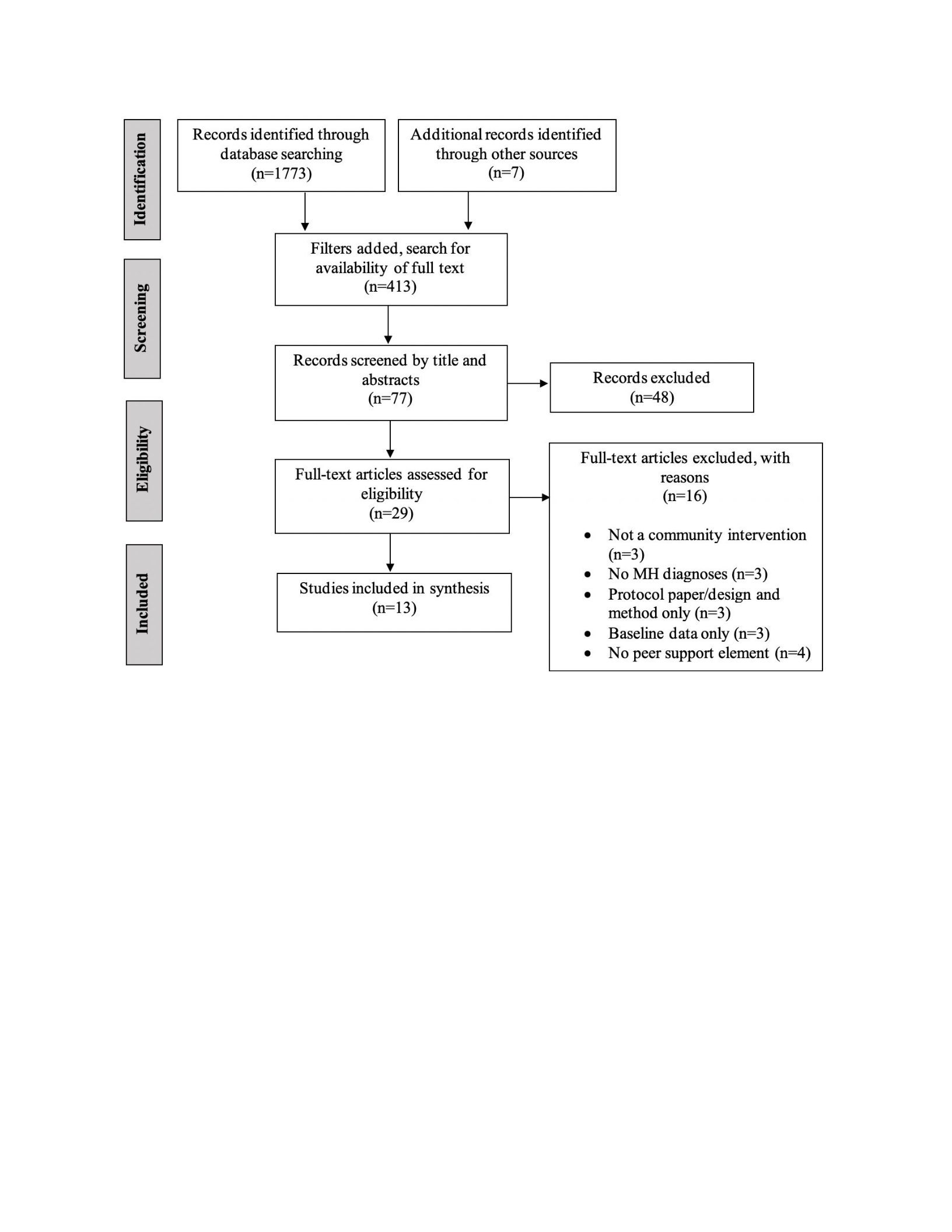
Figure 2.1. A diagram to show the flow of the information through the different stages of the
scoping review
Stage 4. Charting the data. A charting table was produced to record data from the
included studies (Table 2). The first author extracted and charted the following data from each
article: author(s), year of publication, research aim, participants and community setting, study
design, intervention, intervention length including follow ups, element of peer support,
outcome measures, and key findings to address the scoping review research question.
Where full papers could not be obtained, the researcher made efforts to obtain full
electronic copies via the University Library and contacted corresponding authors to request
copies of papers.
Stage 5. Collating, summarising and reporting the results. Data were summarised and
reported based on themes that emerged from the charting data process. The methods employed
in the scoping review enabled the researchers to collate and summarise existing knowledge on

the topic of community-based programmes for MHSU.
Results
The computerised search yielded a total of 1773 studies. After following the systematic
process (Figure 1) of searching, adding filters, checking for full text availability, removing
duplicates and reviewing articles against the inclusion and exclusion criteria, a total of 13
studies were submitted for data extraction. Table 2.2 presents the key components of the
intervention studies included.
References
Ainsworth, B. E., Caspersen, C. J., Matthews, C. E., Mâsse, L. C., Baranowski, T., & Zhu,
W. (2016). Recommendations to Improve the Accuracy of Estimates of Physical
Activity Derived from Self Report. Journal of Physical Activity and Health.
https://doi.org/10.1123/jpah.9.s1.s76
Aknin, L. B., Dunn, E. W., Sandstrom, G. M., & Norton, M. I. (2013). Does social
connection turn good deeds into good feelings? On the value of putting the “social” in
prosocial spending. International Journal of Happiness and Development.
https://doi.org/10.1504/ijhd.2013.055643
Ali, K., Farrer, L., Gulliver, A., & Griffiths, K. M. (2015). Online Peer-to-Peer Support for
Young People With Mental Health Problems: A Systematic Review. JMIR Mental
Health, 2(2), e19. https://doi.org/10.2196/mental.4418
Allen, J., Balfour, R., Bell, R., & Marmot, M. (2014). Social determinants of mental health.
International Review of Psychiatry, 26(4), 392–
407.
https://doi.org/10.3109/09540261.2014.928270
Andersen, S. M., & Berk, M. S. (1998). Transference in everyday experience:
Implications of experimental research for relevant clinical phenomena. Review of
General Psychology. https://doi.org/10.1037/1089-2680.2.1.81
Anderson, K., Laxhman, N., & Priebe, S. (2015). Can mental health interventions change
social networks? A systematic review. BMC Psychiatry, 15(1).
https://doi.org/10.1186/s12888- 015-0684-6
Andrew, S., & Halcomb, E. J. (2006). Mixed methods research is an effective method of
enquiry for community health research. Contemporary Nurse.
https://doi.org/10.5172/conu.2006.23.2.145
Ashida, S., & Heaney, C. A. (2008). Differential associations of social support and
social connectedness with structural features of social networks and the health
status of older adults. Journal of Aging and Health.

https://doi.org/10.1177/0898264308324626
Bellamy, C., Schmutte, T., & Davidson, L. (2017). An update on the growing evidence base
for peer support. Mental Health and Social Inclusion. https://doi.org/10.1108/MHSI-
03-2017- 0014
Berger, M., Wagner, T. H., & Baker, L. C. (2005). Internet use and stigmatized illness.
Social Science and Medicine. https://doi.org/10.1016/j.socscimed.2005.03.025
Berry, K., Rana, R., Lockwood, A., Fletcher, L., & Pratt, D. (2019). Factors associated
with inattentive responding in online survey research. Personality and Individual
Differences. https://doi.org/10.1016/j.paid.2019.05.043
Bidee, J., Vantilborgh, T., Pepermans, R., Huybrechts, G., Willems, J., Jegers, M., & Hofmans,
J. (2013). Autonomous Motivation Stimulates Volunteers’ Work Effort: A
Self- Determination Theory Approach to Volunteerism. Voluntas, 24(1), 32–
47. https://doi.org/10.1007/s11266-012-9269-x
Bledin, K., Loat, M., Caffrey, A., Evans, K. B., Taylor, B., & Nitsun, M. (2016). ‘Most
Important Events’ and Therapeutic Factors: An Evaluation of Inpatient Groups for
Peoplewith Severe and Enduring Mental Health Difficulties. Group Analysis.
https://doi.org/10.1177/0533316416675442
Bopp, M., & Fallon, E. (2008). Community-based interventions to promote increased
physical activity: A primer. Applied Health Economics and Health Policy, 6(4), 173–
187. https://doi.org/10.2165/00148365-200806040-00001
Bowling, N. A., Huang, J. L., Bragg, C. B., Khazon, S., Liu, M., & Blackmore, C. E.
(2016). who cares and who is careless? Insufficient effort responding as a reflection of
respondent personality. Journal of Personality and Social Psychology, 111(2), 218–
229. https://doi.org/10.1037/pspp0000085
Brand, T., Pischke, C. R., Steenbock, B., Schoenbach, J., Poettgen, S., Samkange-Zeeb, F.,
& Zeeb, H. (2014). What works in community-based interventions promoting physical
activity and healthy eating? A review of reviews. International Journal of
Environmental Research and Public Health. https://doi.org/10.3390/ijerph110605866
Braun, V., & Clarke, V. (2006). Using thematic analysis in psychology. Using
Qualitative Research in Psychology, 3, 77–101. https://doi.org/The publisher’s
URL is: http://dx.doi.org/10.1191/1478088706qp063oa
Braun, V., & Clarke, V. (2006). Using thematic analysis in psychology. Qualitative
Research in Psychology, 3(May 2015), 77–101.
https://doi.org/10.1191/1478088706qp063oa
Braun, V., & Clarke, V. (2014). What can “thematic analysis” offer health and wellbeing
researchers? International Journal of Qualitative Studies on Health and Well-
Being, 9. https://doi.org/10.3402/qhw.v9.26152
Braun, V., & Clarke, V. (2019). Reflecting on reflexive thematic analysis. Qualitative
Research in Sport, Exercise and Health.

https://doi.org/10.1080/2159676X.2019.1628806
Bryant, W., Tibbs, A., & Clark, J. (2011). Visualising a safe space: The perspective of
people using mental health day services. Disability and Society.
https://doi.org/10.1080/09687599.2011.589194
Burr, J. A., Han, S. H., & Tavares, J. L. (2016). Volunteering and Cardiovascular Disease
Risk: Does Helping Others Get “under the Skin?” Gerontologist, 56(5), 937–947.
https://doi.org/10.1093/geront/gnv032
Burton, E., Farrier, K., Hill, K. D., Codde, J., Airey, P., & Hill, A. M. (2018). Effectiveness
of peers in delivering programs or motivating older people to increase their
participation in physical activity: Systematic review and meta-analysis. Journal of
Sports Sciences, 36(6), 666–678. https://doi.org/10.1080/02640414.2017.1329549
Carey, E. C., & Weissman, D. E. (2010). Understanding and finding mentorship: A review
for junior faculty. Journal of Palliative Medicine.
https://doi.org/10.1089/jpm.2010.0091
Carless, D., & Douglas, K. (2008a). Social support for and through exercise and sport in a
sample of men with serious mental illness. Issues in Mental Health Nursing, 29(11),
1179– 1199. https://doi.org/10.1080/01612840802370640
Carless, D., & Douglas, K. (2008b). The contribution of exercise and sport to mental
health promotion in serious mental illness: An interpretive project. International
Journal of Mental Health Promotion, 10(4), 5–12.
https://doi.org/10.1080/14623730.2008.9721771
Carless, D., Douglas, K., & D., C. (2012). The ethos of physical activity delivery in
mental health: A narrative study of service user experiences. Issues in Mental
Health Nursing, 33(3), 165–171.
https://doi.org/http://dx.doi.org/10.3109/01612840.2011.637659
Carneiro, L. S. F., Fonseca, A. M., Vieira-Coelho, M. A., Mota, M. P., & Vasconcelos-Raposo,
J. (2015). Effects of structured exercise and pharmacotherapy vs. pharmacotherapy
for adults with depressive symptoms: A randomized clinical trial. Journal of
Psychiatric Research, 71(July), 48–55.
https://doi.org/10.1016/j.jpsychires.2015.09.007
Cattan, M., Kime, N., & Bagnall, A. M. (2011). The use of telephone befriending in low
level support for socially isolated older people - an evaluation. Health and Social
Care in the Community, 19(2), 198–206. https://doi.org/10.1111/j.1365-
2524.2010.00967.x
Charlesworth, G., Sinclair, J. B., Brooks, A., Sullivan, T., Ahmad, S., & Poland, F. (2017).
The impact of volunteering on the volunteer: findings from a peer support programme
for family carers of people with dementia. Health and Social Care in the Community,
25(2), 548–558. https://doi.org/10.1111/hsc.12341


