


2
Artificial Intelligence has been around for decades and continues to be developed to provide a
system for decision-making and analyzing data. With Artificial Intelligence being developed at a
rapid pace, it has helped society advance in many ways such as diagnosing and treating patients
in healthcare, providing better learning tools in education, and helping employers hire employees
in business. Opponents argue against Artificial Intelligence because they believe it can be used to
help students with writing their essays and cheating, they feel uncomfortable with AI being used
in hiring processes, and in helping healthcare providers diagnose and help patients (Faverio &
Tyson, 2023). With this negative view, individuals fail to see how AI has helped better society in
many ways. There is a middle ground that can help ensure AI is not misused in education and
make employees and patients comfortable in work and healthcare settings. Schools using
plagiarism checkers and AI detectors would discourage students from attempting to use AI to
cheat. Healthcare facilities and workplaces can monitor and supervise the AI they use to ensure it
works correctly and enters data that is not biased. Therefore, humans should be allowed to test
the limits of Artificial intelligence because it does more to help society than to harm it and all the
negative aspects can be fixed and controlled.
Many individuals argue that allowing artificial intelligence to provide better learning tools in
education leads to students engaging in unethical behavior because it helps students cheat and be
academically dishonest. This has led to many individuals believing AI will increase the number
of students cheating and lead to a lack of study where students will not know what they are
supposed to be learning. Turnitin's data reveals that when scanning for plagiarism, around 11%
of submitted assignments show that 20% of their content was flagged as potentially generated by
artificial intelligence tools (Prothero, 2024, para.5). And “When students cheat or plagiarize in
3
academic activities, instructors cannot accurately assess student performance or evaluate
students' mastery of the knowledge, skills, and applications necessary in their field” (NIU, 2024.
para.3). Without students learning way they need to, cheating will continue to happen and AI
will be used to help.
Many argue artificial intelligence should not be used to help in the hiring process as it makes
them uncomfortable because of a major ethical concern that AI can be biased and discriminative.
“An algorithm can be tainted by historical bias or discrimination. AI algorithms are trained using
past data. A recruitment algorithm takes data from past candidates and there will always be a risk
of under-representation of particular groups in that training data” (Davies, 2023. para. 10).
Certain people refrain from applying for jobs where artificial intelligence is involved in the
hiring process. They have concerns about the quality, fairness, and accuracy of employment
decisions made through this method of the hiring process. “One line of criticism considers it
problematic that important decisions affecting people’s lives are outsourced to AI, which is
especially problematic if mistakes are made. One of the best-known real-world examples is the
case of Amazon in 2018, where a tested AI software systematically discriminated against women
in the hiring process” (Hunkenschroer & Kriebitz, 2023). With mistakes like these, it makes it
hard for people to trust or rely on Artficial Intelligence.
In addition to individuals not trusting AI in schools and workplaces, they also do not feel
comfortable with healthcare providers using artificial intelligence to diagnose and find ways to
treat patients. Trusting AI to diagnose and treat patients raises a cause for concern because “in
the event of an accidental error, misconception or even a well-intended misinterpretation of the
4
data-response that causes harm directly or facilitates harm indirectly, the question of
accountability may be widely dispersed” (Toth et al, 2022. p.903). Individuals argue that the data
employed to train artificial intelligence may contain biases, resulting in misleading or erroneous
information that could jeopardize health, fairness, and inclusivity. (WHO, 2023). This raises
concerns about the potential ethical risks associated with AI used in healthcare settings. “One
reason for healthcare algorithm and AI bias is the lack of diversity in the data used to train
computer programs” (Rodriguez, 2023). By not properly giving diverse data to train AI,
individuals' health could be at risk.
The concerns expressed when it comes to AI being involved in schools, businesses, and
healthcare environments are not unreasonable. There are negative aspects when it comes to using
Al to make decisions, analyze data, and help people. It is not wrong to have concerns and suggest
that AI should not be used when it comes to important things such as education, work, and
health. Trusting artificial intelligence to be accurate all the time is not realistic. The arguments
made against the use of AI are understandable because AI is not able to know without being
trained with certain data. AI is reliable but not something to be trusted one hundred percent
because it can not be held responsible for anything and it is not in control of what it knows or can
do.“In the normative account, the trustee must be held responsible for its actions, which AI
cannot. Whereas, reliable AI places the burden of responsibility on those developing, deploying,
and using these technologies” (Mark, 2020. p.17). For these reasons, it is within reason to argue
that AI does have negative aspects when it comes to using it in schools, workplaces, and
healthcare settings.
5
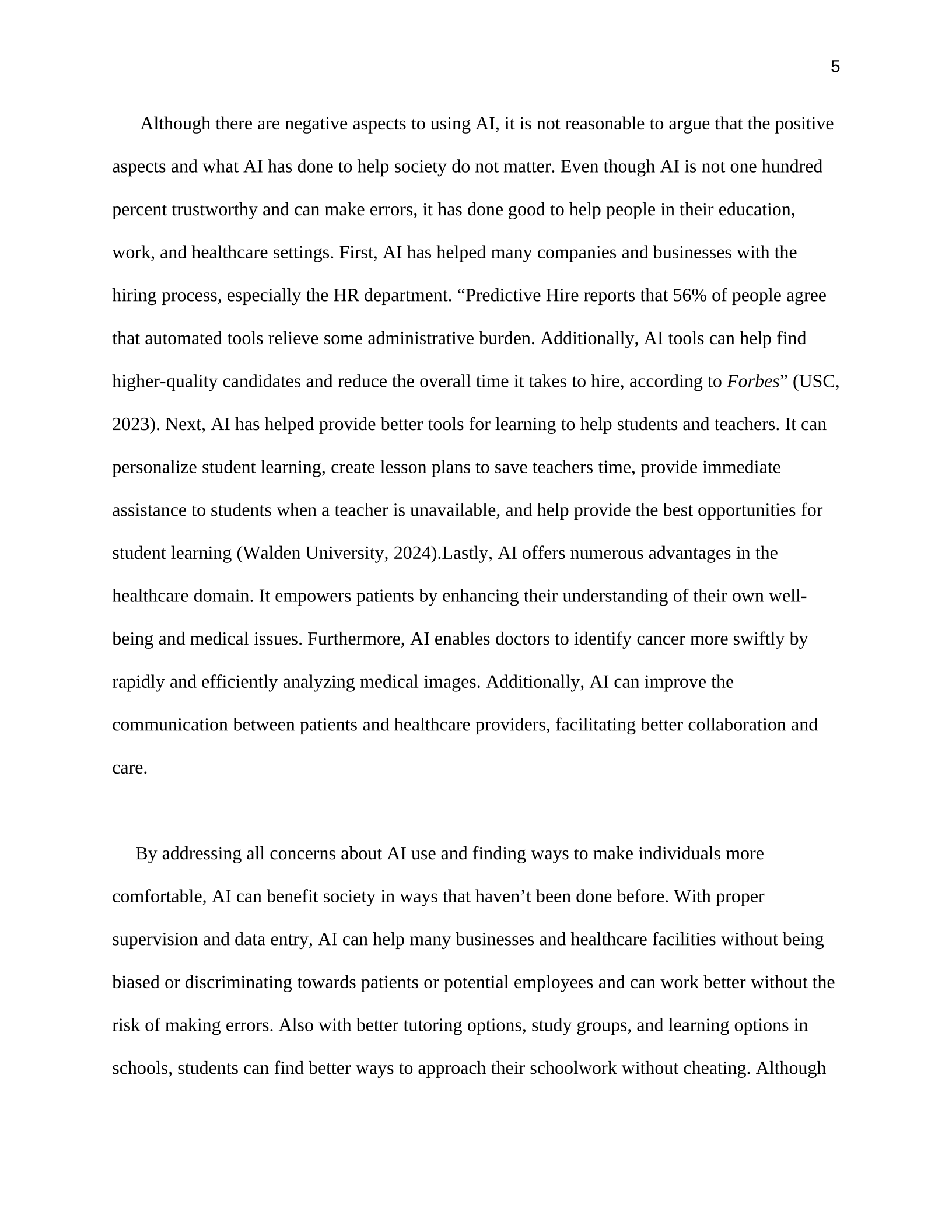
Although there are negative aspects to using AI, it is not reasonable to argue that the positive
aspects and what AI has done to help society do not matter. Even though AI is not one hundred
percent trustworthy and can make errors, it has done good to help people in their education,
work, and healthcare settings. First, AI has helped many companies and businesses with the
hiring process, especially the HR department. “Predictive Hire reports that 56% of people agree
that automated tools relieve some administrative burden. Additionally, AI tools can help find
higher-quality candidates and reduce the overall time it takes to hire, according to Forbes” (USC,
2023). Next, AI has helped provide better tools for learning to help students and teachers. It can
personalize student learning, create lesson plans to save teachers time, provide immediate
assistance to students when a teacher is unavailable, and help provide the best opportunities for
student learning (Walden University, 2024).Lastly, AI offers numerous advantages in the
healthcare domain. It empowers patients by enhancing their understanding of their own well-
being and medical issues. Furthermore, AI enables doctors to identify cancer more swiftly by
rapidly and efficiently analyzing medical images. Additionally, AI can improve the
communication between patients and healthcare providers, facilitating better collaboration and
care.
By addressing all concerns about AI use and finding ways to make individuals more
comfortable, AI can benefit society in ways that haven’t been done before. With proper
supervision and data entry, AI can help many businesses and healthcare facilities without being
biased or discriminating towards patients or potential employees and can work better without the
risk of making errors. Also with better tutoring options, study groups, and learning options in
schools, students can find better ways to approach their schoolwork without cheating. Although
6
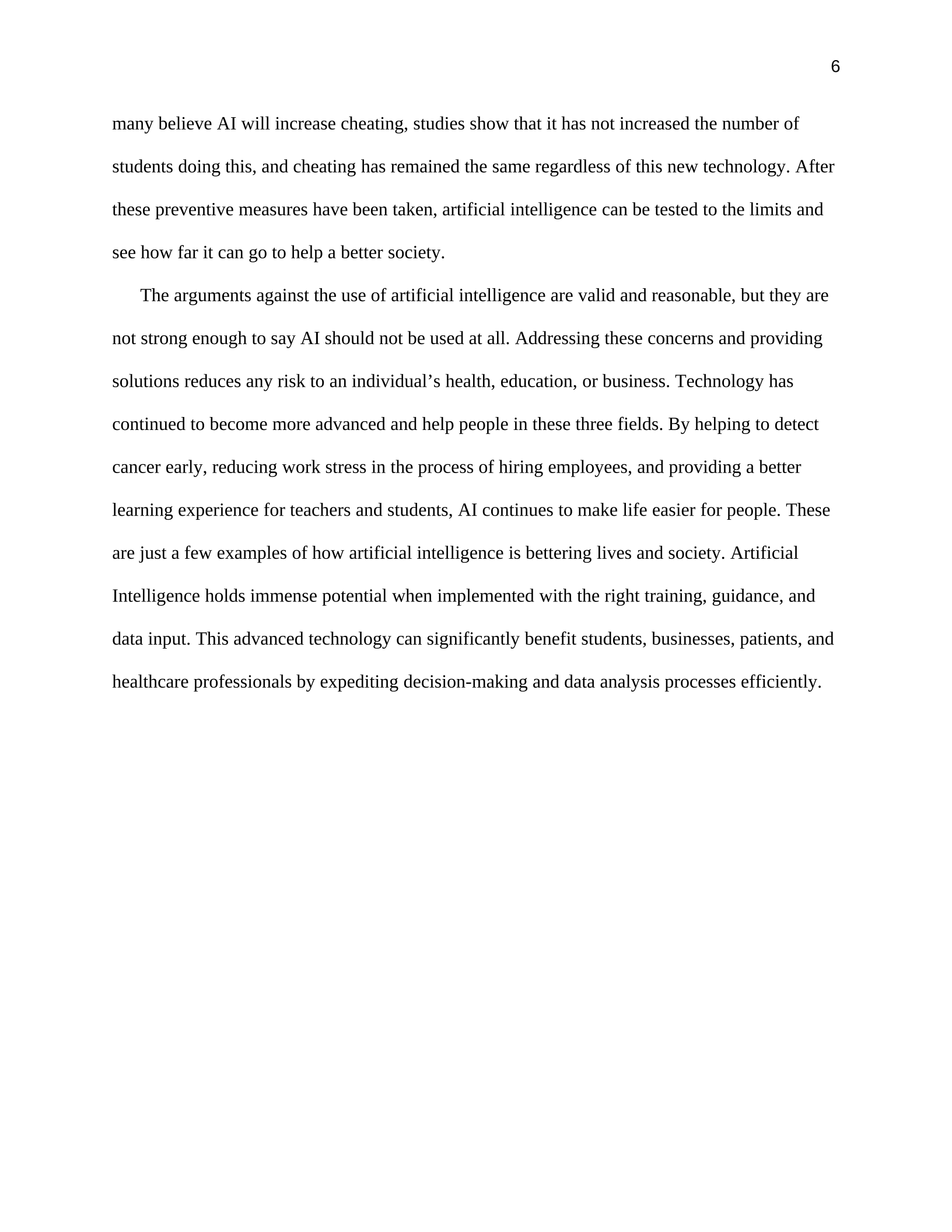
many believe AI will increase cheating, studies show that it has not increased the number of
students doing this, and cheating has remained the same regardless of this new technology. After
these preventive measures have been taken, artificial intelligence can be tested to the limits and
see how far it can go to help a better society.
The arguments against the use of artificial intelligence are valid and reasonable, but they are
not strong enough to say AI should not be used at all. Addressing these concerns and providing
solutions reduces any risk to an individual’s health, education, or business. Technology has
continued to become more advanced and help people in these three fields. By helping to detect
cancer early, reducing work stress in the process of hiring employees, and providing a better
learning experience for teachers and students, AI continues to make life easier for people. These
are just a few examples of how artificial intelligence is bettering lives and society. Artificial
Intelligence holds immense potential when implemented with the right training, guidance, and
data input. This advanced technology can significantly benefit students, businesses, patients, and
healthcare professionals by expediting decision-making and data analysis processes efficiently.
7
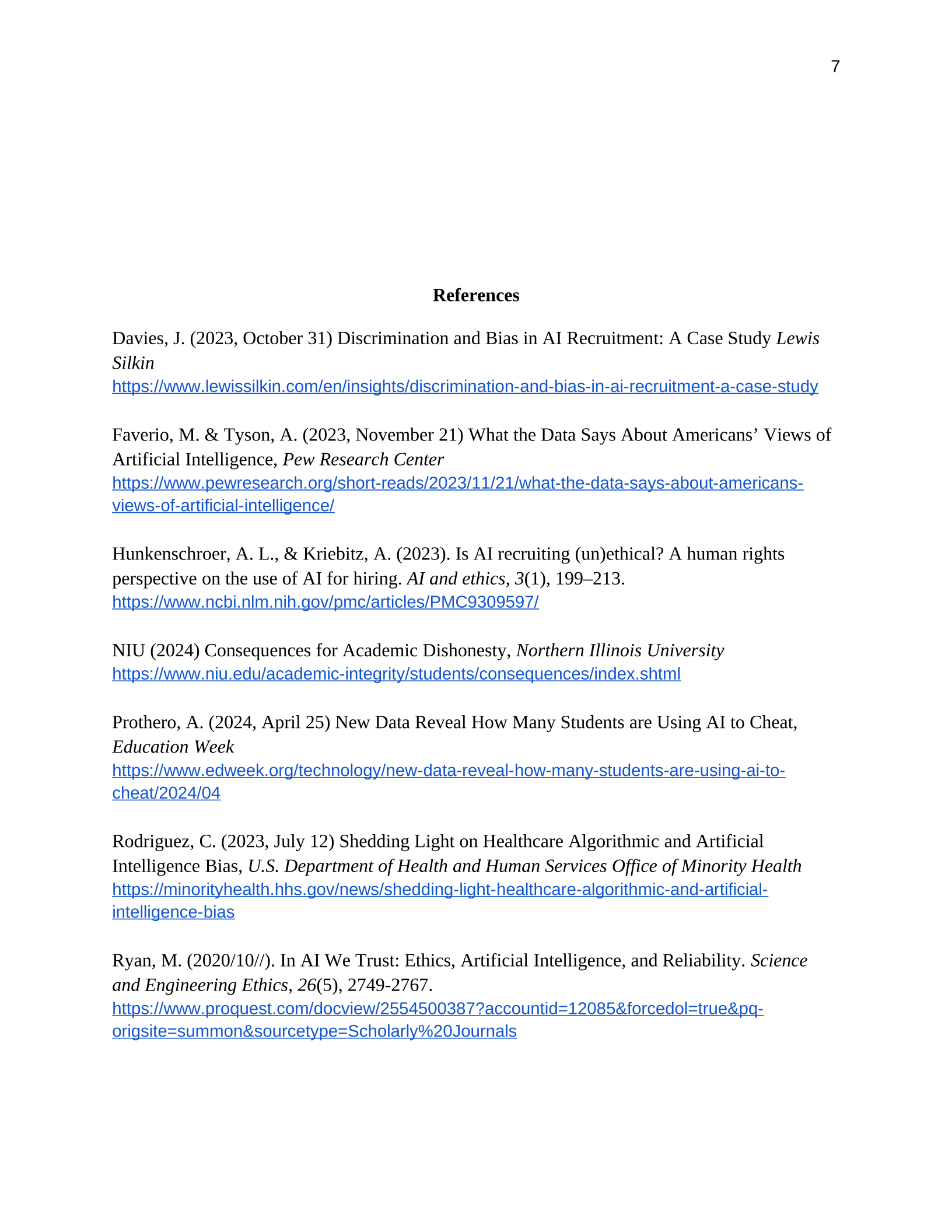
References
Davies, J. (2023, October 31) Discrimination and Bias in AI Recruitment: A Case Study Lewis
Silkin
https://www.lewissilkin.com/en/insights/discrimination-and-bias-in-ai-recruitment-a-case-study
Faverio, M. & Tyson, A. (2023, November 21) What the Data Says About Americans’ Views of
Artificial Intelligence, Pew Research Center
https://www.pewresearch.org/short-reads/2023/11/21/what-the-data-says-about-americans-
views-of-artificial-intelligence/
Hunkenschroer, A. L., & Kriebitz, A. (2023). Is AI recruiting (un)ethical? A human rights
perspective on the use of AI for hiring. AI and ethics, 3(1), 199–213.
https://www.ncbi.nlm.nih.gov/pmc/articles/PMC9309597/
NIU (2024) Consequences for Academic Dishonesty, Northern Illinois University
https://www.niu.edu/academic-integrity/students/consequences/index.shtml
Prothero, A. (2024, April 25) New Data Reveal How Many Students are Using AI to Cheat,
Education Week
https://www.edweek.org/technology/new-data-reveal-how-many-students-are-using-ai-to-
cheat/2024/04
Rodriguez, C. (2023, July 12) Shedding Light on Healthcare Algorithmic and Artificial
Intelligence Bias, U.S. Department of Health and Human Services Office of Minority Health
https://minorityhealth.hhs.gov/news/shedding-light-healthcare-algorithmic-and-artificial-
intelligence-bias
Ryan, M. (2020/10//). In AI We Trust: Ethics, Artificial Intelligence, and Reliability. Science
and Engineering Ethics, 26(5), 2749-2767.
https://www.proquest.com/docview/2554500387?accountid=12085&forcedol=true&pq-
origsite=summon&sourcetype=Scholarly%20Journals
8
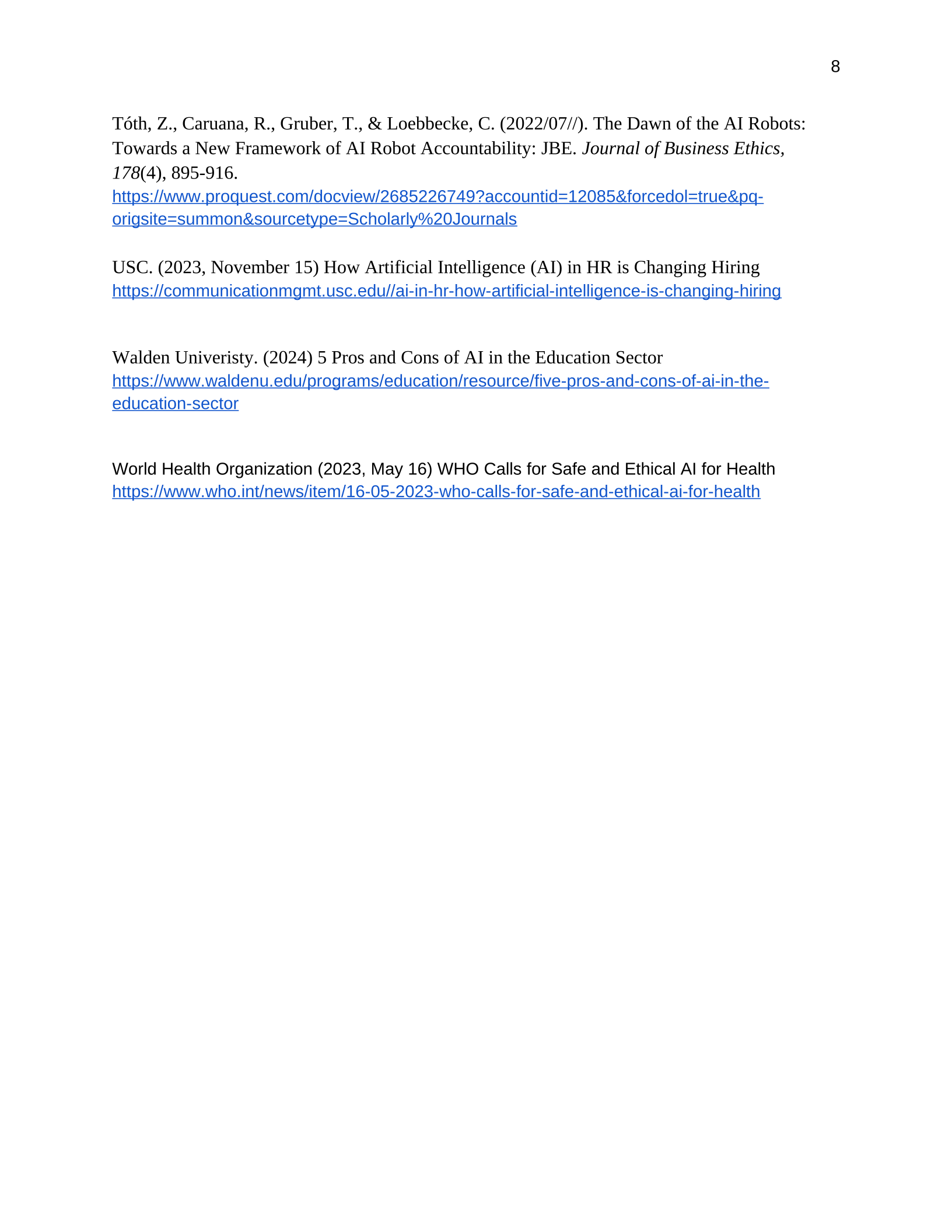
Tóth, Z., Caruana, R., Gruber, T., & Loebbecke, C. (2022/07//). The Dawn of the AI Robots:
Towards a New Framework of AI Robot Accountability: JBE. Journal of Business Ethics,
178(4), 895-916.
https://www.proquest.com/docview/2685226749?accountid=12085&forcedol=true&pq-
origsite=summon&sourcetype=Scholarly%20Journals
USC. (2023, November 15) How Artificial Intelligence (AI) in HR is Changing Hiring
https://communicationmgmt.usc.edu//ai-in-hr-how-artificial-intelligence-is-changing-hiring
Walden Univeristy. (2024) 5 Pros and Cons of AI in the Education Sector
https://www.waldenu.edu/programs/education/resource/five-pros-and-cons-of-ai-in-the-
education-sector
World Health Organization (2023, May 16) WHO Calls for Safe and Ethical AI for Health
https://www.who.int/news/item/16-05-2023-who-calls-for-safe-and-ethical-ai-for-health
Powered by TCPDF (www.tcpdf.org)

