


Running head: TWO WAY ANOVA 1
GROUP # 3 WRITE-UP:
TWO WAY BETWEEN-SUBJECTS ANALYSIS OF VARIANCE
by
authur
Liberty University
Partial Fulfillment
Of the Requirements for EDUC 812
Liberty University
TWO WAY ANOVA 2
FINDINGS
Research Question
The research question for this study was:
RQ1: Is there a difference in the amount of time fathers spend playing with their children
with no disability, a physical disability, or an intellectual disability?
Null Hypothesis
The null hypotheses for this study is:
H01: There is no significant difference among the amount of time fathers play with their
children with no disability, a physical disability, or an intellectual disability.
H02: There is no significant difference between the amount of time fathers play with their
male or female children.
H03: There is no significant interaction among the amount of time fathers play with their
male or female children with no disability, a physical disability, or an intellectual disability.
.Descriptive Statistics
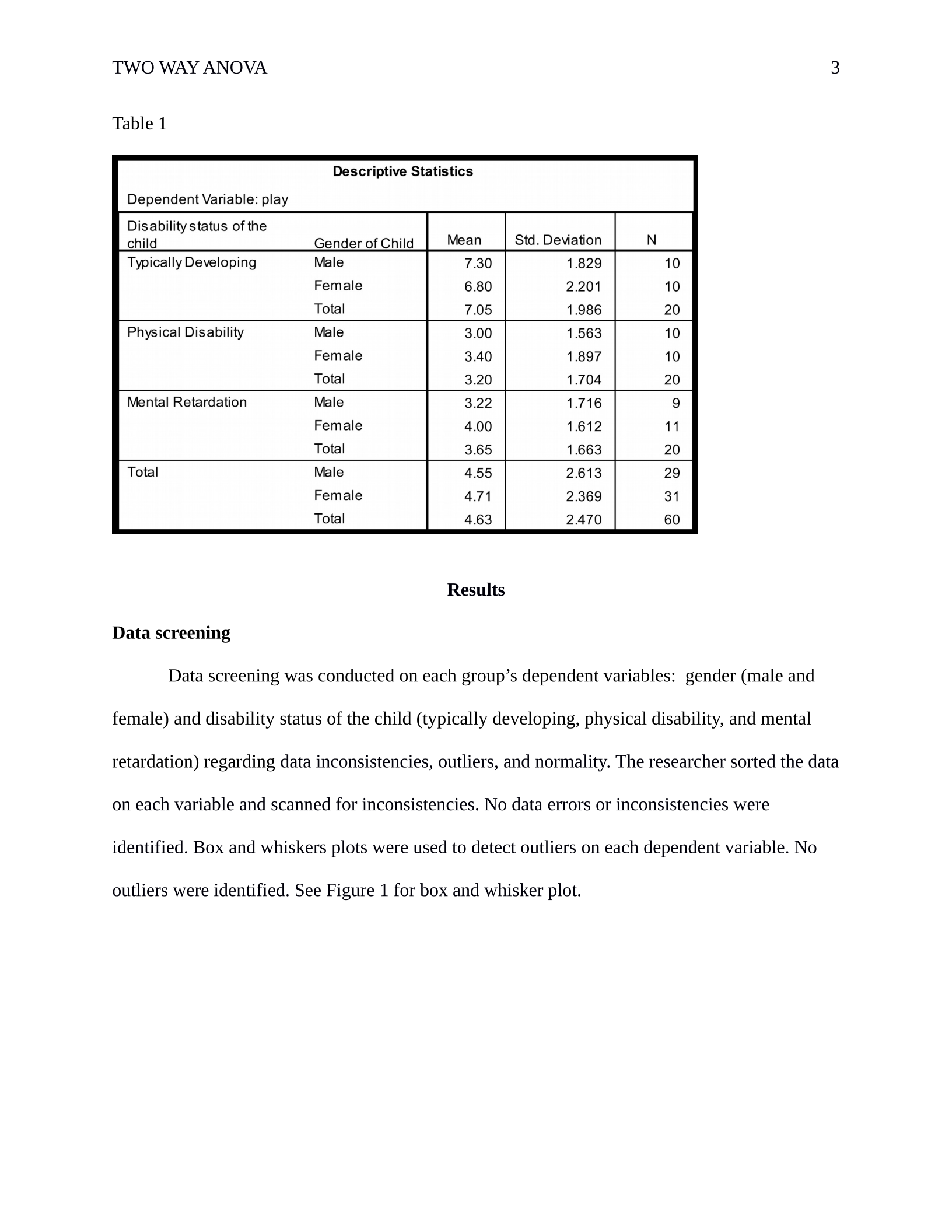
According to Table 1, there were a total of 60 participants within the study. Each level of
disability idenitified: typically developing, physical disability, and mental retardation, consisted
of 20 participants. Each group was further divided by gender. The variable that was measured
was the amount of playtime fathers spent with children of each level of disability. Table 1
idenitifies the mean, standard deviation, and numbers for each group.
TWO WAY ANOVA 3
Table 1
Results
Data screening
Data screening was conducted on each group’s dependent variables: gender (male and
female) and disability status of the child (typically developing, physical disability, and mental
retardation) regarding data inconsistencies, outliers, and normality. The researcher sorted the data
on each variable and scanned for inconsistencies. No data errors or inconsistencies were
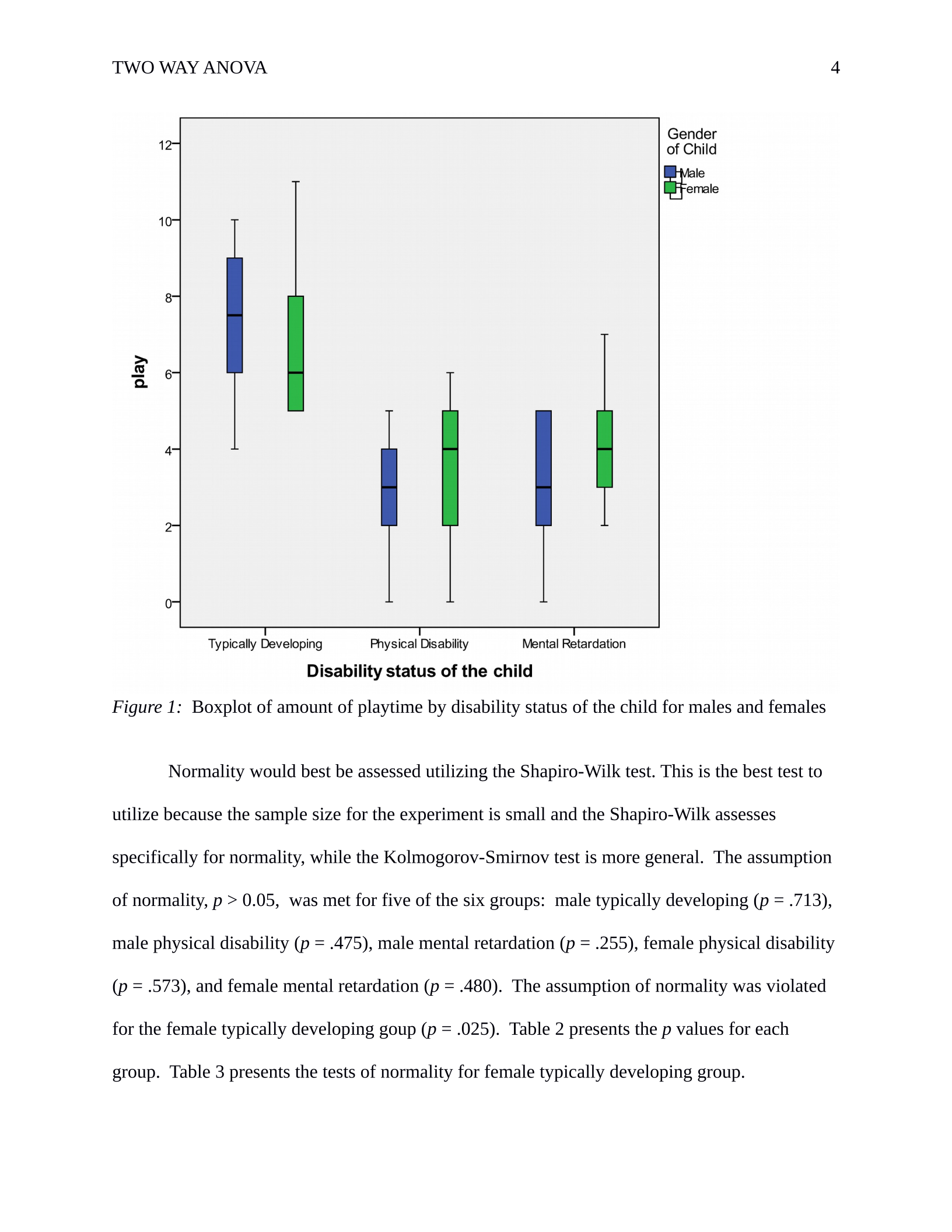
identified. Box and whiskers plots were used to detect outliers on each dependent variable. No
outliers were identified. See Figure 1 for box and whisker plot.
TWO WAY ANOVA 4
Figure 1: Boxplot of amount of playtime by disability status of the child for males and females
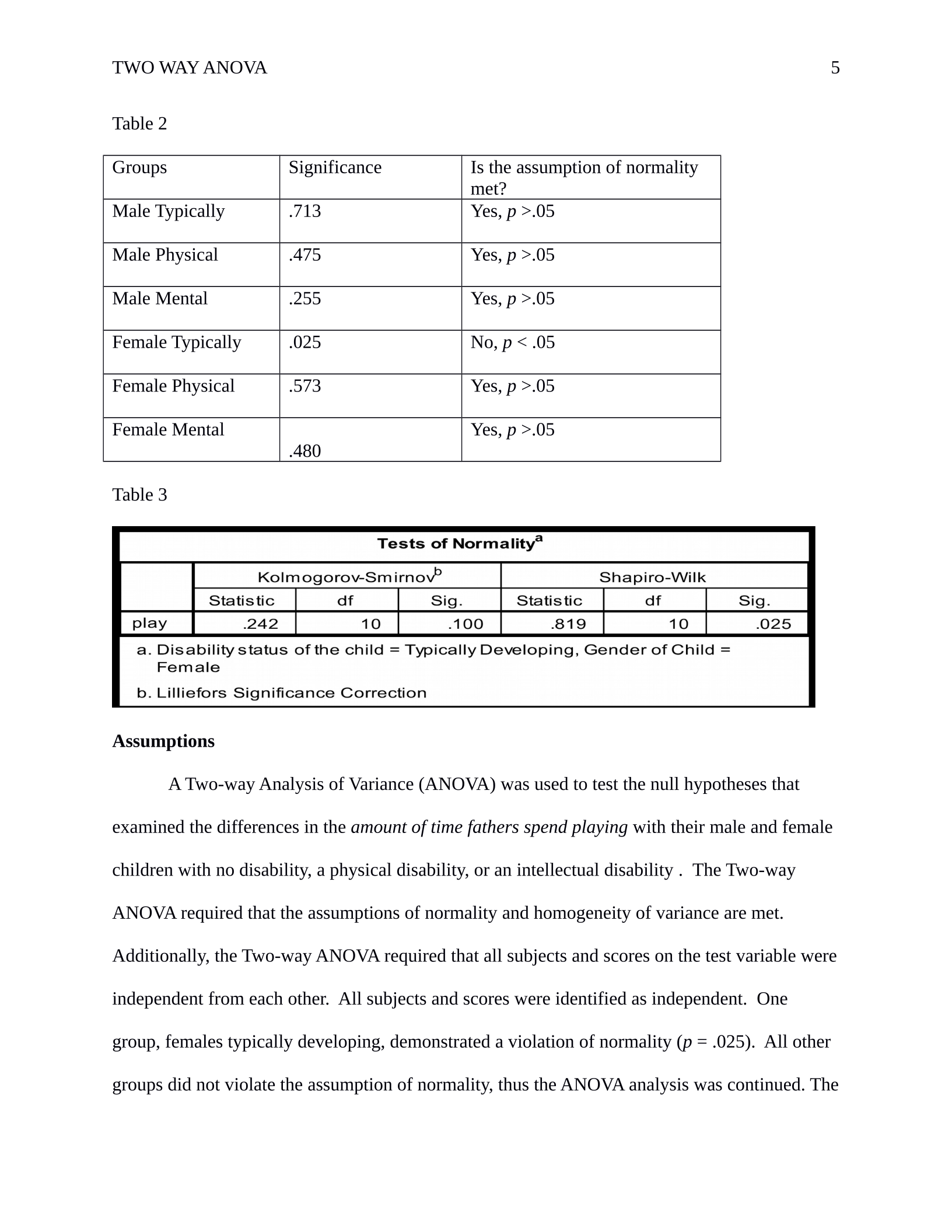
Normality would best be assessed utilizing the Shapiro-Wilk test. This is the best test to
utilize because the sample size for the experiment is small and the Shapiro-Wilk assesses
specifically for normality, while the Kolmogorov-Smirnov test is more general. The assumption
of normality, p > 0.05, was met for five of the six groups: male typically developing (p = .713),
male physical disability (p = .475), male mental retardation (p = .255), female physical disability
(p = .573), and female mental retardation (p = .480). The assumption of normality was violated
for the female typically developing goup (p = .025). Table 2 presents the p values for each
group. Table 3 presents the tests of normality for female typically developing group.
TWO WAY ANOVA 5
Table 2
Groups Significance Is the assumption of normality
met?
Male Typically .713 Yes, p >.05
Male Physical .475 Yes, p >.05
Male Mental .255 Yes, p >.05
Female Typically .025 No, p < .05
Female Physical .573 Yes, p >.05
Female Mental
.480
Yes, p >.05
Table 3
Assumptions
A Two-way Analysis of Variance (ANOVA) was used to test the null hypotheses that
examined the differences in the amount of time fathers spend playing with their male and female
children with no disability, a physical disability, or an intellectual disability . The Two-way
ANOVA required that the assumptions of normality and homogeneity of variance are met.
Additionally, the Two-way ANOVA required that all subjects and scores on the test variable were
independent from each other. All subjects and scores were identified as independent. One
group, females typically developing, demonstrated a violation of normality (p = .025). All other
groups did not violate the assumption of normality, thus the ANOVA analysis was continued. The
TWO WAY ANOVA 6
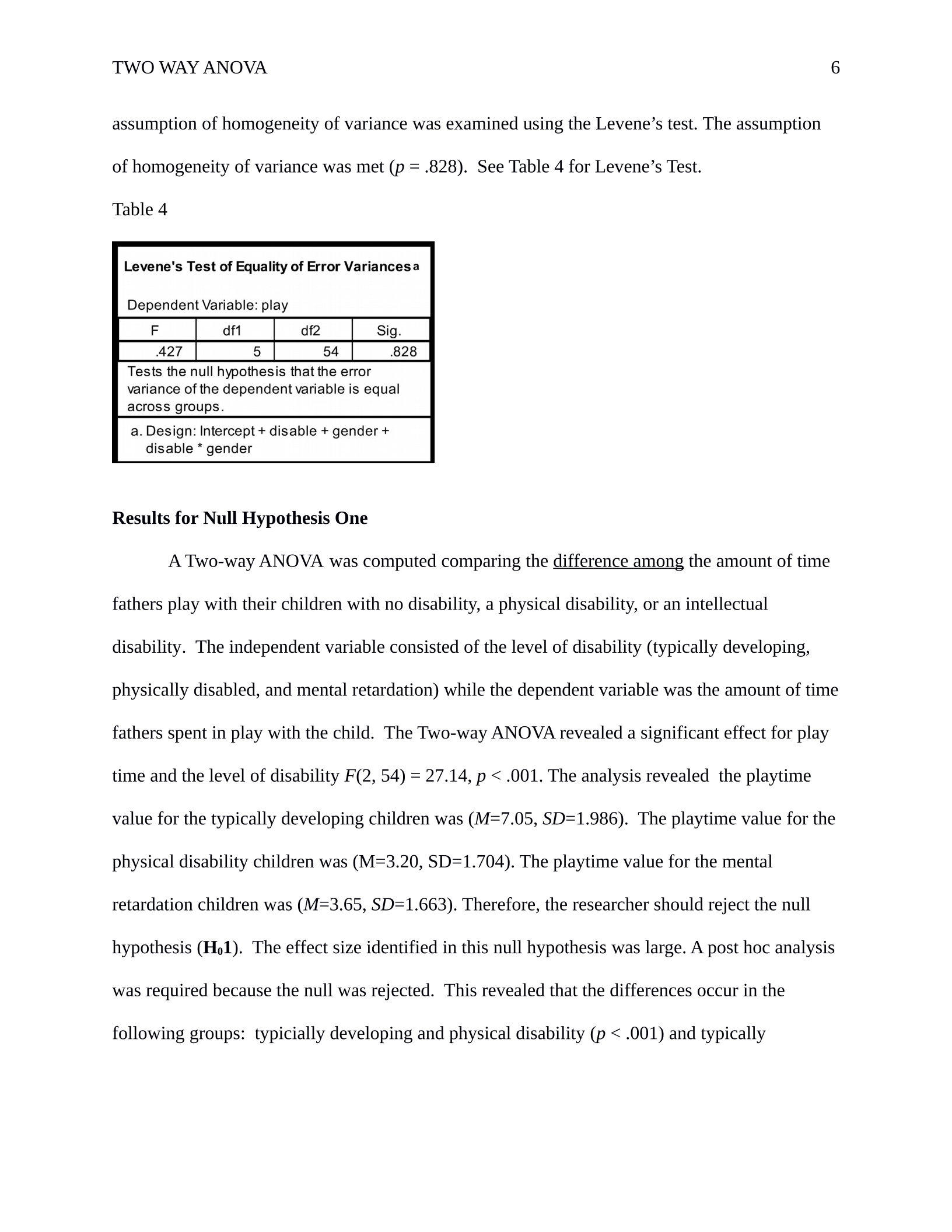
assumption of homogeneity of variance was examined using the Levene’s test. The assumption
of homogeneity of variance was met (p = .828). See Table 4 for Levene’s Test.
Table 4
Results for Null Hypothesis One
A Two-way ANOVA was computed comparing the difference among the amount of time
fathers play with their children with no disability, a physical disability, or an intellectual
disability. The independent variable consisted of the level of disability (typically developing,
physically disabled, and mental retardation) while the dependent variable was the amount of time
fathers spent in play with the child. The Two-way ANOVA revealed a significant effect for play
time and the level of disability F(2, 54) = 27.14, p < .001. The analysis revealed the playtime
value for the typically developing children was (M=7.05, SD=1.986). The playtime value for the
physical disability children was (M=3.20, SD=1.704). The playtime value for the mental
retardation children was (M=3.65, SD=1.663). Therefore, the researcher should reject the null
hypothesis (H01). The effect size identified in this null hypothesis was large. A post hoc analysis
was required because the null was rejected. This revealed that the differences occur in the
following groups: typicially developing and physical disability (p < .001) and typically
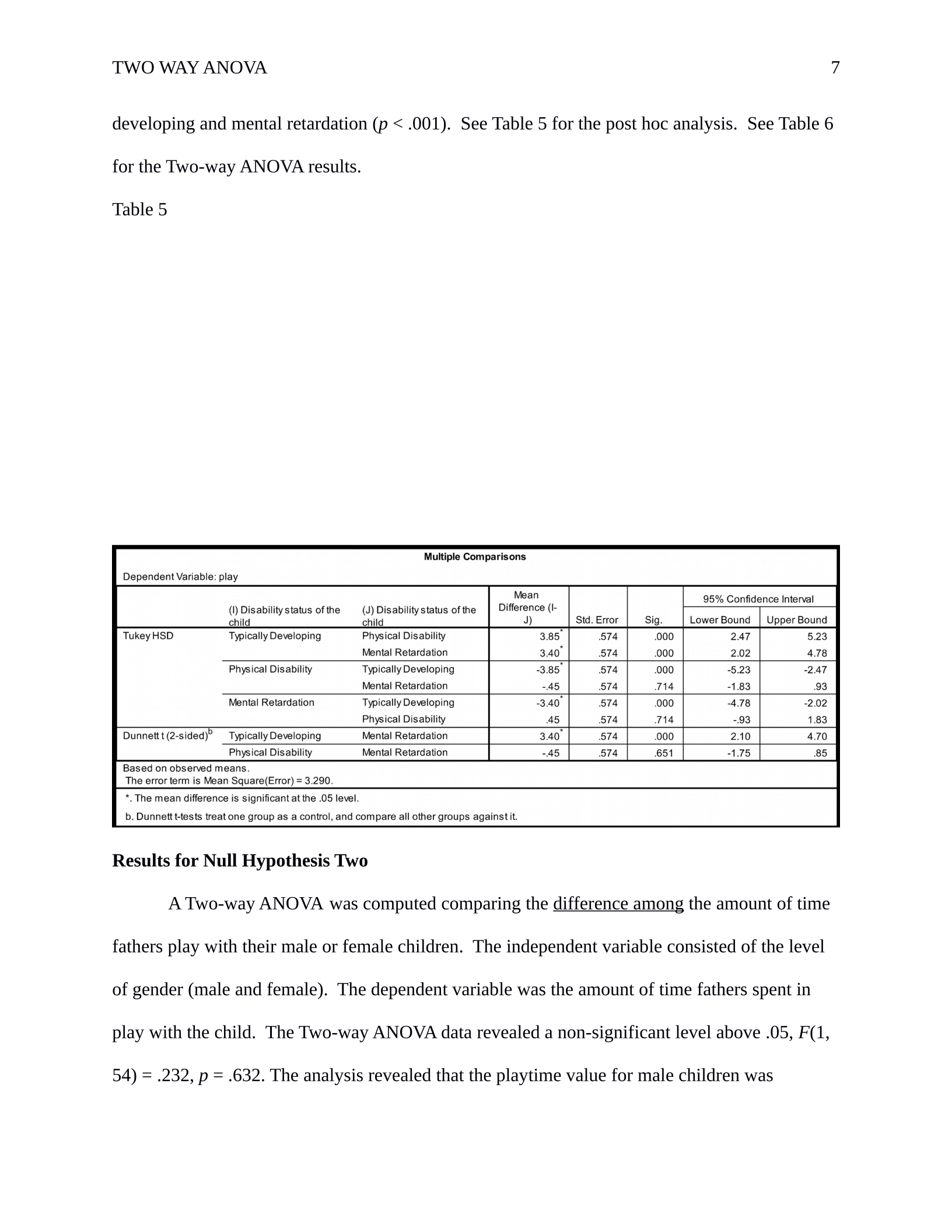
TWO WAY ANOVA 7
developing and mental retardation (p < .001). See Table 5 for the post hoc analysis. See Table 6
for the Two-way ANOVA results.
Table 5
Results for Null Hypothesis Two
A Two-way ANOVA was computed comparing the difference among the amount of time
fathers play with their male or female children. The independent variable consisted of the level
of gender (male and female). The dependent variable was the amount of time fathers spent in
play with the child. The Two-way ANOVA data revealed a non-significant level above .05, F(1,
54) = .232, p = .632. The analysis revealed that the playtime value for male children was
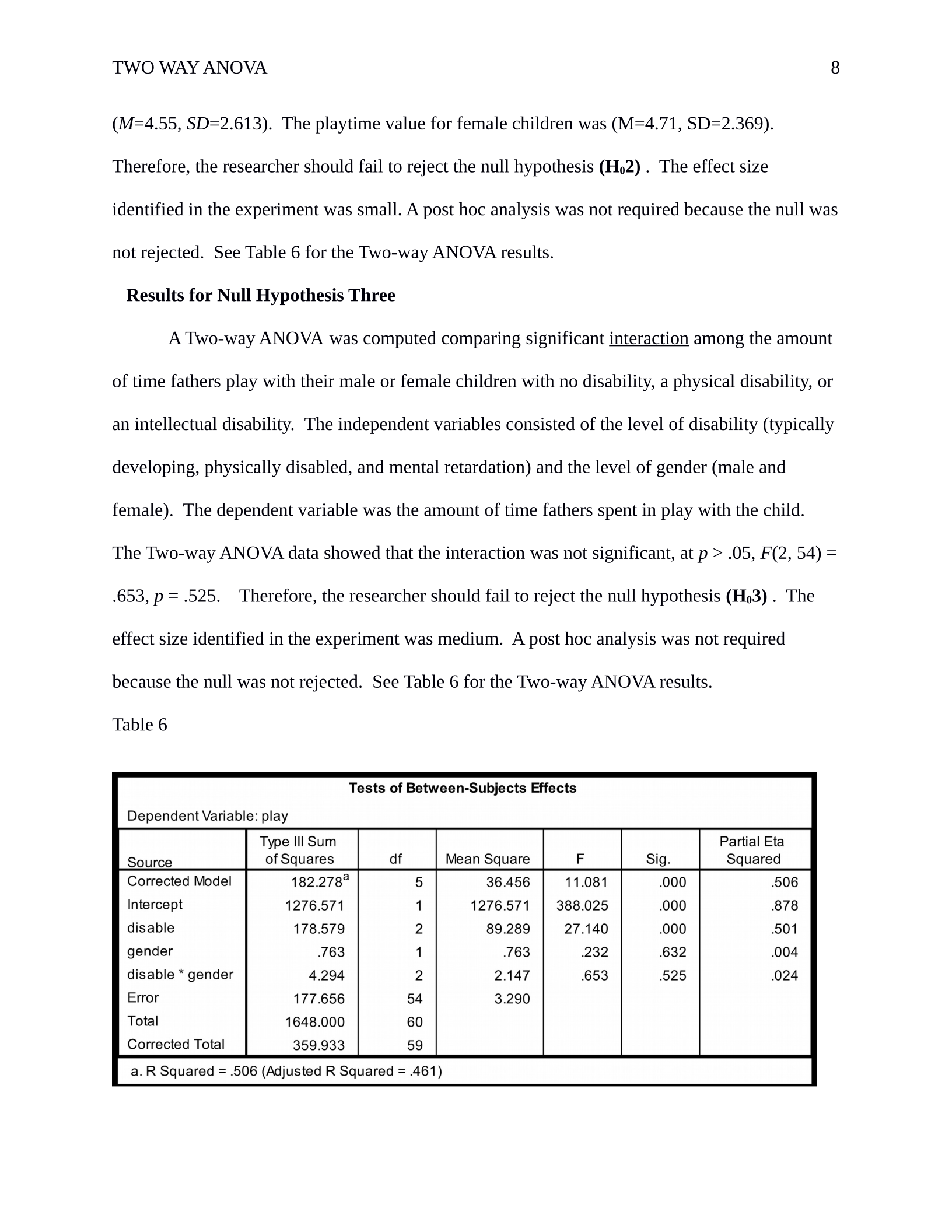
TWO WAY ANOVA 8
(M=4.55, SD=2.613). The playtime value for female children was (M=4.71, SD=2.369).
Therefore, the researcher should fail to reject the null hypothesis (H02) . The effect size
identified in the experiment was small. A post hoc analysis was not required because the null was
not rejected. See Table 6 for the Two-way ANOVA results.
Results for Null Hypothesis Three
A Two-way ANOVA was computed comparing significant interaction among the amount
of time fathers play with their male or female children with no disability, a physical disability, or
an intellectual disability. The independent variables consisted of the level of disability (typically
developing, physically disabled, and mental retardation) and the level of gender (male and
female). The dependent variable was the amount of time fathers spent in play with the child.
The Two-way ANOVA data showed that the interaction was not significant, at p > .05, F(2, 54) =
.653, p = .525. Therefore, the researcher should fail to reject the null hypothesis (H03) . The
effect size identified in the experiment was medium. A post hoc analysis was not required
because the null was not rejected. See Table 6 for the Two-way ANOVA results.
Table 6

