


Lesson Plan 1 Instructions
Using the provided template, construct a lesson plan addressing how to teach listening skills within your
content area. Make sure to address each area on the template in detail.
Grade level is 4 and the content are is Social studies.
Please follow the rubric.

Chapter 6 Planning Instruction—Appropriate and Interdisciplinary
Objectives
After reading and thinking about this chapter on planning IDI in middle schools, you should be able to
explain the importance of instructional planning;
identify the developmental characteristics of young adolescents that should be considered when
planning instruction;
explain the role that curriculum guides and state and national mandates, textbooks, and individual
teachers play in instructional planning;
define interdisciplinary teams and explain their importance;
discuss some of the problems of interdisciplinary teams that may impact on their ability to plan IDI;
explain the relationships that exist among interdisciplinary team members and other educators
throughout the school;
discuss the general process of instructional planning and the instructional pyramid of team involvement;
discuss the things to keep in mind during instructional planning; and
discuss the hidden curriculum and planning for diverse students and those at risk of failure.
Scenario—Karyn Rothmer’s Blog August 23
I can’t believe I’m blogging! This is part of a staff development project I’m in. It may seem strange, but
Dr. Manningly, our consultant, suggested that we blog about the process we’ll be going through this
year at Washington Peaks Middle School. He told us just to pretend we’re writing to friends, so here
goes. I’ve been a teacher at WP, as we refer to it, for 6 years now. Five of them have been on the
seventh-grade Osprey Team. Although we’ve been organized into interdisciplinary teams, we’ve never
really done any interdisciplinary instruction (IDI). Now there’s a push for us to integrate our instruction,
and the school district hired Dr. M. to help us out. When I first started teaching, I was frustrated because
nobody at WP was doing the kind of teaching that I had learned about in college. But now that I’ve been
a successful language arts teacher for 6 years, I’m not sure I want to change. After all, I have all my
lesson plans and I’ve worked hard to develop some really neat units. I’ve even involved the students in
planning and evaluation. They seem to enjoy what we do, and they score well on all the tests. I guess I
don’t see any need to change what we have. After all, “if it ain’t broke, don’t fix it” is my motto. Oh well,
I’ll at least listen to what Dr. M. says about IDI. August 25 Wow, I can’t believe that people are really
reading this edublog and responding. Some of you feel the same way I do, but most told me to keep an
open mind. Well, I’ll try, but it will be hard after today! It would take a saint to try to teach with a person
I’ll call “the dictator.” She might have been teaching for over 15 years, but she has no idea about what
goes on outside her subject. Furthermore, she’s not about to learn!!!! Saying that she has to teach to

her standards and that the rest of us could build something on those standards if we wanted to was not
a way to win friends. I may have to sit in these meetings, but I don’t have to let another person dictate
what I teach!!!!!!! August 30 Now I understand what my students mean when they complain about
having to keep a journal every day. With getting ready for the students to come back to school and
attending these IDI meetings, I haven’t been blogging very faithfully. Things are looking a little better. It
seems we all have been very defensive about giving up our autonomy in the classroom. Dr. M. has been
helping us build a team atmosphere of trust and respect, and he’s also trying to tie these new IDI
concepts to what we already know about teaching. Today, one of the math teachers spoke out for the
first time. Maybe we really are beginning to build that trust Dr. M. keeps mentioning. September 8
Today was my day to shadow a sixth-grade student. That meant I followed her from the time she came
to school until she went home and observed what she did. I can see what Dr. M. means when he said
our students need to see connections. “Verlene” has so much she has to remember that it’s no wonder
she seemed lost at times. She has a different assigned seat in each class and even a different way to put
the heading on the paper for each teacher. I also saw lots of curriculum ties that could have been made
but weren’t. For example, I wanted to tell Mr. Gilbertson about some good novels that would tie into his
social studies unit and Ms. Abi that she should consider combining her journal-writing activities with the
journal the students were keeping in science. But I remembered that I was just to be a shadow, not a
participant, and I kept quiet. “Verlene” was great and even liked the little thank-you present I gave her.
Overview
In Chapters 4 and 5 of this book, you read about the curriculum of the middle school. Now you are ready
to turn your attention to planning and implementing instruction. Entire books have been written about
these topics, and our intent is not to try to cover them in depth in two chapters. Rather, we assume that
you have had or will take a course on instructional strategies. In this chapter, we want you to look first
at the reasons for planning instruction and then at the factors that affect planning in middle schools,
including the developmental needs of young adolescents, curriculum standards and textbooks, and the
characteristics of individual teachers. Then we will turn your attention to IDI. Although we discussed
interdisciplinary team organization (ITO) in Chapter 5 as an organizational feature of middle schools, in
this chapter we want you to look at the planning that is sometimes done by those teams. As Karyn
Rothmer pointed out in this chapter’s opening scenario, serving as a member of an interdisciplinary
team does not necessarily mean engaging in IDI. However, we hope to show you the benefits of IDI for
both young adolescents and teachers.
Rationale for Detailed and Methodical Planning
A middle school teacher is responsible for designing authentic classroom instruction that allows
students to gain knowledge, engage in disciplined inquiry, develop attitudes, and learn skills they can
use outside of school. This instruction must allow young adolescents to explain, explore, analyze, reflect,
and apply learning. In addition, classroom learning should extend to advisory programs, exploratories,
and student–community service projects. In order for these things to occur, instruction must be
planned. It does not just happen. Planning provides continuity of instruction and efficient use of time. As
one teacher told us, “Planning eliminates the dead time in my classroom that becomes dread time.

There’s nothing worse in a class of seventh graders than having 15 minutes left and nothing to do.” In
addition to maintaining a realistic flow of instruction, planning helps educators keep in mind the needs
of their students, including their developmental needs, learning styles, ability levels (especially in
reading), special learning needs, and cognitive skills. It also helps educators adhere to local, state, and
national curricular guidelines and standards. On a more practical level, when teachers plan, they are
able to identify and schedule resources such as library materials, computer labs, or additional help
needed from other teachers and specialists. They can also identify possible links across disciplines. One
teacher we talked to had an interesting concept of planning. “My plan is my professional portrait. We
have to turn in our plans each week, so I use mine to show our assistant principal for instruction the
things that happen in my classroom. Then, during parent–teacher conferences, I can show the parents
what we’ve tried to accomplish and what I hope we can do for the rest of the term. I even let the
students see the outline of my plans. They call it our road map because it lets all of us see what we’ve
done and know where we’re going.”
Factors Affecting Middle School Instructional Planning
Development, Needs, and Interests When you are trying to plan instruction that will increase the
motivation and academic achievement of your students, you naturally must consider the tremendous
diversity of young adolescents as well as the level of parental encouragement that each student
receives. Although you read about the developmental characteristics of 10- to 15-year-olds in Chapter 2,
let us review a few things you must keep in mind in your quest to plan developmentally responsive
instruction. Young adolescents are diverse. As they begin to develop their individual identities, they may
question their physical changes, challenge adult authority, and try to establish their own place in the
communities in which they live. Cognitively, most of them arrive at middle school as concrete thinkers
and gradually gain the ability to engage in more abstract operations. Many become efficient problem
solvers with the ability to analyze and evaluate information. Making connections between their prior
knowledge and the new things that they are learning, young adolescents are developing their own
learning strategies. Moving away from egocentrism, they are also beginning to accept the views of
others and to evaluate their own views. Although teachers are often concerned with cognitive
development when planning instruction, you must also keep in mind physical and psychosocial
development. Physically, 10- to 15-year-olds want to move and be active. Psychosocially, they enjoy
collaboration and cooperation. As one teacher said, “They really like to walk and talk.” All these
developmental changes are happening at the same time that young adolescents are going to a new
school, making new friends, and adjusting to an entire team of new teachers instead of one familiar
classroom teacher. Educators expect them to organize their lives at the same time that the only life they
have ever known is vanishing or falling apart. How do these characteristics relate to instructional
planning? As you plan, you must keep in mind these developmental needs. For example, increased
reasoning skills, shortened listening attention spans, and increasingly important peer group
relationships call for inquiry-based instruction (Zwart & Falk-Ross, 2008) and small-group work. To help
determine the strengths of individual learners, you can administer diagnostic tests, check school records
(e.g., previous grades and teachers’ comments), interview each student, and request input from
parents. Learning and cultural inventories also provide information on students’ learning styles and

cultural traits (Brodhagen & Gorud, 2005). However, no matter how conscientious you may be, young
adolescents’ wide range of developmental and individual differences usually makes whole-class teaching
a very difficult task. You need to create a positive climate so that young adolescents have a sense of
belonging and feel emotionally secure. It is important to design instruction so that students can be
challenged, yet feel successful in what they do. Although you should involve the students in decision
making, it is your responsibility to provide structure and guidelines for the instructional process. You
should also help young adolescents feel free to take risks when investigating problems, because they
know that you and other adults in the school are there to help them, not ridicule them. They need a
place where they can make mistakes and not be crushed by them, a place where risk is accepted and it
is okay to ask questions. As we heard one middle school language arts teacher say at the beginning of a
book discussion, “It’s fine to disagree with me as long as you can support your answers with information
or passages from the novel we’re discussing. Don’t worry about trying to come up with the ‘right
answers.’ I want your ideas.”
Abilities and Achievement
Although many educators and advocacy groups have serious concerns about using achievement test
scores as the single defining measure of success or failure, most citizens believe that schools need to be
held to a higher standard of accountability (Mulhall, Flowers, & Mertens, 2002). Unfortunately, whether
due to lack of ability, lack of motivation, lack of appropriate testing instruments, or lack of compatibility
between students’ learning styles and teachers’ instructional styles (or a combination of these and other
factors), significant numbers of young adolescents appear to experience difficulties with academic
achievement as measured by achievement tests.
A number of individual, family, school, and community factors, many of which began earlier in life, have
an impact on middle school academic achievement. Parental involvement, which may decrease when a
young adolescent enters middle school, almost always conveys values, attitudes, and support for
education. During the middle school years, educational expectations are rapidly changing as young
adolescents begin to understand their abilities, options, and opportunities for the future. In addition,
literacy and academic efficacy, or the degree to which students have a strong sense that they can be
successful in meeting academic and school demands, influence academic achievement (Mulhall et al.,
2002).
What does this mean for you as a middle school teacher? You must include parents and families in your
effort to build on students’ strengths and areas of expertise. In addition, you must understand the need
for carefully planned instruction that emphasizes high expectations for all learners and accommodates a
wide array of abilities. However, you should realize that not all learners will meet the same
expectations. Finally, you should provide instruction that offers all students some degree of success in
their educational attempts.
Interest and Relevance

“I don’t understand why we do some of the things we do in school. Like the math we’re doing now. My
dad says he doesn’t know how to do it and he’s pretty successful. So why do I have to learn it? I’ll never
use it once I get out of school.” An eighth-grade student Although it is impossible to make all
educational experiences relevant to the needs, desires, and viewpoints of young adolescents, you
should try to show learners how educational experiences relate to their lives. For example, teachers can
show how young adolescents can use communication skills such as reading, listening, speaking, and
Theory into Practice 6–1 Teaching for Social and Economic Justice Young adolescents are often
interested in contemporary causes. Lucey and Laney (2009) investigated the use of art and music along
with social commentary and other expressions of social protest to teach concepts of social and
economic justice. Using the Discipline-based Arts Education model to organize the instruction, the
authors developed a detailed middle school lesson plan that encourages students to engage in the
“sharing, critiquing, and synthesizing of social ideas” (p. 262) and that fosters “innovative
interpretations, and engender[s] classroom connections” (p. 262). The entire lesson plan is contained in
the article. Source: Lucey, T. A., & Laney, J. D. (2009). This land was made for you and me: Teaching for
economic justice in upper elementary and middle school grades. Social Studies, 100(6), 260–272. writing
(as well as viewing and visually representing). Let them practice those skills with topics they enjoy or are
interested in. Mathematics teachers can explain how mathematics relates to everyday life, from
budgeting money to computing the percentage of discounts at sales. In social studies, teachers can have
students study justice, equality, and democratic ideals from both historical and contemporary
perspectives. Theory into Practice 6–1 shows how teachers can make the curriculum relevant and bring
sensitive social issues into the classroom.
Culture and Gender
Behind the official school curriculum is the hidden curriculum, or the “norms, values and social
expectations indirectly conveyed to students by the styles of teaching, unarticulated assumptions in
teaching materials and the organization characteristics of educational institutions” (Online Dictionary of
the Social Sciences, n.d.). “In schools that serve lower income, and racial and ethnic minority students,
the hidden curriculum is transmitted largely through the rule-oriented disciplinary code” (Langhout &
Mitchell, 2008, p. 595). The idea is to control students and make them conform to a standard code of
conduct. However, when students are not provided opportunities for self-expression in the classroom,
they become at risk for academic disengagement.
Thus, to plan effective middle school instruction, you must provide classroom management and
instructional approaches that recognize cultural and gender differences. In order to do that, you must
first learn about those cultural and gender characteristics and the perceptions of each group concerning
competition, group welfare, sharing, motivation, and success. Although we cannot provide detailed
information on all gender preferences as well as racial, ethnic, religious, social, and other cultural
groups, we can suggest, in Keeping Current with Technology 6–1, some Internet sites that you can visit
to find information about a variety of cultural groups and to learn about gender differences.
Keeping Current with Technology 6–1

Learning about the cultural groups and the gender differences of young adolescents is very important
for middle school educators. First, select a major cultural or gender group, such as African Americans or
Asian Americans. Then, visit some of the following Web sites and their links to prepare a short
description of that group. If possible, develop a list of at least five characteristics that you believe middle
school educators should keep in mind when working with individuals (students and parents) from that
cultural group.
American Association of University Women—Where the Girls Are—the Facts about Gender Equity in
Education
http://www.aauw.org/learn/research/
Brigham Young University—Information on specific cultural groups
http://education.byu.edu/diversity/culture.html
Center for Applied Linguistics—Information on language and culture
http://www.cal.org/
Center for Multilingual Multicultural Research, University of Southern California
http://www.usc.edu/dept/education/CMMR/
Council of Great City Schools, an organization of the nation’s largest urban public school systems
http://www.cgcs.org/
Management Sciences for Health—Provider’s Guide to Quality and Culture—cultural groups
http://erc.msh.org/mainpage.cfm? file=5.0.htm&module=provider& language=English&ggroup=&
mgroup=
Multicultural Pavilion, University of Virginia
http://www.edchange.org/ multicultural/
Multicultural Review, a quarterly journal for teachers at all grade levels
http://www.mcreview.com/
North Central Regional Educational Laboratory—multicultural education
http://www.ncrel.org/sdrs/areas/issues/educatrs/presrvce/pe3lk1.htm
Women and Gender Research from the National Institute on Drug Abuse
http://www.nida.nih.gov/WHGD/WHGDHome.html

If you visit a few of these Internet sites or do any reading about cultural and gender diversity, you will
learn that not everyone responds the same way to things such as competition. For example, some
Native American learners may favor sharing and helping peers over competitive learning activities, and
some Puerto Rican students may not wish to excel or be set apart from the group as being different. In
terms of learning styles and preferences, some African American students prefer to respond to things in
terms of the whole picture rather than its parts and tend to approximate space, numbers, and time
rather than strive for accuracy. To work with gender differences, you need to provide learning
experiences such as peer tutoring and other small learning groups and to encourage open dialogue and
collaboration rather than competition (Manning & Baruth, 2009). However, even with considerable
research and writing on cultural differences, it is still important for middle school educators to consider
each student as an individual rather than to rely on generalizations.
District Curriculum Guides and State and National Mandates
We have talked about the developmental needs of young adolescents that should become the basis for
planning developmentally responsive instructional experiences. However, these developmental needs
are not the only forces that affect instruction. As you read in Chapter 4, there are national standards and
guidelines that identify topics and concepts that should be taught for each of the core curriculum
subjects as well as the related domains. Some states also have very specific curriculum documents, such
as the Standards of Learning developed by the Virginia State Department of Education. In the case of
Virginia, not only are these documents provided to guide instruction throughout the state, but students
are also tested on their knowledge of the designated content, and the results are used to determine the
accreditation of the individual schools. In addition to the national and state curriculum guidelines and
standards, individual school districts may develop their own curricula. Although these may reinforce the
state or national mandates, they may call for additional instruction in a number of areas. To make things
even more complicated, school districts vary on the leeway that they give individual teachers in teaching
the curricular content. We know of one school district in which the district social studies coordinator
dictates the pages in the district’s social studies curriculum guide that each teacher should be on each
week. This makes it difficult for the middle school social studies teachers to plan developmentally
responsive interdisciplinary instruction that reflects the interests, motivation, and ability levels of young
adolescents in a specific classroom.
Textbooks
Why worry about planning? Why not just use a textbook and the teacher’s guide? Some of the worst
experiences we have seen in middle school classrooms have been the result of a teacher’s not planning
ahead and trying blindly to follow a teacher’s guide without making the necessary adjustments for his or
her students and the school’s curriculum. Teachers who “plan” by sticking strictly to the teacher’s guide
are usually not providing developmentally responsive instruction, nor are they willing to make the
modifications and adjustments required by interdisciplinary instruction. Problems also arise when the
textbook does not match the state or local curriculum. Finally, textbooks often emphasize isolated facts
and decontextualized skills (Duerr, 2008) and can be dull, poorly organized, and unappealing to students
(Vacca & Vacca, 2005).

Individual Teachers
Individual teachers can influence middle school instructional planning. Depending on the background
and professional training of a middle school teacher, he or she can be more interested in a discipline-
specific approach to instruction than in either integrated instruction or teaching to the developmental
needs of young adolescents. There are also teachers who fail to use the instructional resources of the
total school and community and rely instead only on the resources in their individual classrooms. These
teachers and their students miss the benefits that school librarians and other resource teachers can
provide. Then too, there are some educators who do not use newer technologies. “I’m a good teacher
and I don’t have to use the school library or the Internet,” remarked one science teacher. She thought
she was boasting, whereas we could only think about the rich experiences that the young adolescents in
her classroom were missing.
Thankfully, for each of the negative teachers, there are many other excellent middle school teachers
who put the idea of developmentally responsive education for young adolescents first in their minds
when planning instruction. These are the educators who take advantage of staff-development
opportunities and are willing to risk trying new techniques of instruction and assessment. They are
willing to change and modify their instruction based on the learning styles of their students and feel
comfortable working within the interdisciplinary team organization pattern of a middle school. We hope
you will become this type of middle school teacher.
Interdisciplinary Team Organization
The organization of teachers into interdisciplinary teams is integral to the middle school concept and is
the most common type of middle school organization. Usually each team consists of one teacher from
each of the core curriculum disciplines, including language arts, science, math, and social studies. Some
teams also include special education teachers and teachers from the related domains. Because team
members know all the students in their team, they can ease the students’ transition to middle school,
reduce the feeling of isolation, and help create a more positive school climate that, in turn, fosters
learning (Mertens & Flowers, 2004). Team members also know what is being taught in each team
classroom and can support that instruction from the viewpoint of their discipline as they model best
teaching strategies. According to the NMSA (2010), teaming and IDI build relationships between
students and teachers, among students, between students and the content, and within the content
itself.
Benchmarks of Effective Teams
What do effective interdisciplinary teams look like? In effective, mature teams, members:
have compatible personalities (Applebee, Adler, & Flihan, 2007) and good interpersonal skills;
are willing to collaborate with other teachers to build community and cohesiveness (Wilson, 2007);\

are willing to make compromises and build for a long-term gain rather than a quick fix even though their
individual educational philosophies are different;
are confident, express job satisfaction, and are proud of their school;
nurture the relationships among team members and develop a team identity. Even when team
members do not mesh personally, mature teams can still function effectively;
are curriculum risk takers who are thoughtful in their planning, interactive in their discussions, rigorous
in their academic expectations, and clear in their communications. They endorse each other’s content
area in their teaching just as they do their own;
work with a school administration that supports ITO and that leads by example by laying the
groundwork, demonstrating credibility, and sharing the ITO vision with all stakeholders (Balli, 2007);
have a balance in teachers’ expertise, age, sex, and race; and
select team leaders with specific responsibilities and develop an established team decision-making
process (e.g., goals, grouping, scheduling, homework, and discipline).
Team Organization: Multiage Teams and Looping
Although most teams are organized by grade level, there are two other team structures that are used to
meet the cognitive and social needs of young adolescents. The first is multiage, developmental, or
nongraded teams. Although they consist of several teachers who share the same planning time and the
same students, multiage teams are made up of students from a number of grade levels (George, 2009).
Because students of different ages and abilities are taught together without being divided into grade
designations, teachers on multiage teams can use a number of collaborative small-group instructional
techniques such as peer learning, including teacher-led small groups (based on common student
learning needs, guided practice, and task-focused help), student-led shared-task groups (based on
supported practice, shared tasks, collaborative responses, and common student interests), and dyads or
partners (based on supported practice, mentoring, tutoring, and shared tasks [Hoffman, 2002]). In
multiage teams, the age range of students is commonly 3 or more years. Thus, a multiage team of 90
students might have 30 students from sixth grade, 30 from seventh grade, and 30 from eighth grade.
Students would stay on the same team for each of the 3 years they are in middle school, with new
students joining the team each year. Although it might be possible to organize multiage teams by the
developmental stages of the students, the complexity and multiple developmental characteristics of
young adolescents would make it difficult to assign students to a specific team for 3 years. Instead,
students are usually assigned to multiage teams on a random basis.
A second organizational concept is looping, or the practice of having a core group of students and
teachers remain together for several years. In this arrangement, sometimes referred to as family
grouping, multiyear teaching, or multiyear placement, teachers are “promoted” with their students for 2
or 3 years (George, 2009). McCowan and Sherman (2002) suggested that looping can contribute to
better performance in the middle grades and can increase student growth and development. With

“insights into each student’s interests and academic needs” (Baran, 2008, p. 191), teachers can motivate
students and provide a positive learning environment. When teachers remain with their students for
several years, they know and understand the academic needs of each student, build relationships with
families (Kasak & Uskali, 2005), personalize instruction and increase student productivity, and develop
strong rapport with parents. In addition, students know the teacher’s expectations and seem to be less
apprehensive about beginning a new school year.
According to Nichols and Nichols (2002), parents have different opinions about looping. Some, who
remember wanting to stay with a favorite teacher, support looping, whereas those who are glad they
did not have to stay with a teacher they disliked are less inclined to favor looping. Although there is a
chance of being with an undesirable teacher for more than 1 year, research indicates that the benefits
outweigh the risks (Nichols & Nichols, 2002).
The Role of Teams in Interdisciplinary Instructional Planning
With IDI (sometimes called interdisciplinary teaching, multidisciplinary instruction, interdisciplinary
thematic instruction, or integrated instruction), two or more teachers on a team collaborate to plan,
teach, and assess a group of students. In doing so, they use a number of instructional strategies and a
variety of student-grouping patterns. Maintaining their relationships with other members of the team
and developing successful relationships with teachers in the related domains, teams use IDI to provide
developmentally responsive educational experiences that allow students to make connections across
subjects. We will discuss implementing IDI further in Chapter 7.
But merely having a team organization does not guarantee that IDI will take place. Frequently, teams
play only an incidental role in planning instruction, with individual teachers making all of the decisions
for their specific disciplines. Some teachers find that it is difficult to give up their autonomy. Isolated in
their own classrooms, they were free to make their own plans. IDI asks teachers to give up some of that
independence for the openness and vulnerability of cooperation and IDI. Many teachers, such as “the
dictator” in this chapter’s opening scenario, find that difficult to do.
In addition, strong instructional teams may detract from the sense of community in the school and may
alienate other teachers. Problems may arise because everyone in a school belongs to a number of
groups that may have conflicting goals. For example, a social studies teacher might belong to her sixth-
grade Sharks interdisciplinary team, to the overall sixth-grade teachers’ group, to the group of all social
studies teachers in the middle school, and to the whole middle school faculty.
Figure 6-1 shows some of the relationships between two teams on one grade level in a middle school.
Remember, as you look at this drawing, that similar relationships exist among other teams in each grade
and throughout the school. Notice that we have included the related domains in this figure. Although
the teachers in the related domains are usually not core members of the grade-level instructional teams,
we believe that those teachers have a great deal to contribute to the instruction of young adolescents.
Too many times we have seen those teachers left out of instructional planning, and too many times we
have heard those teachers explain how they could have helped with an instructional unit if they had
only known about it.
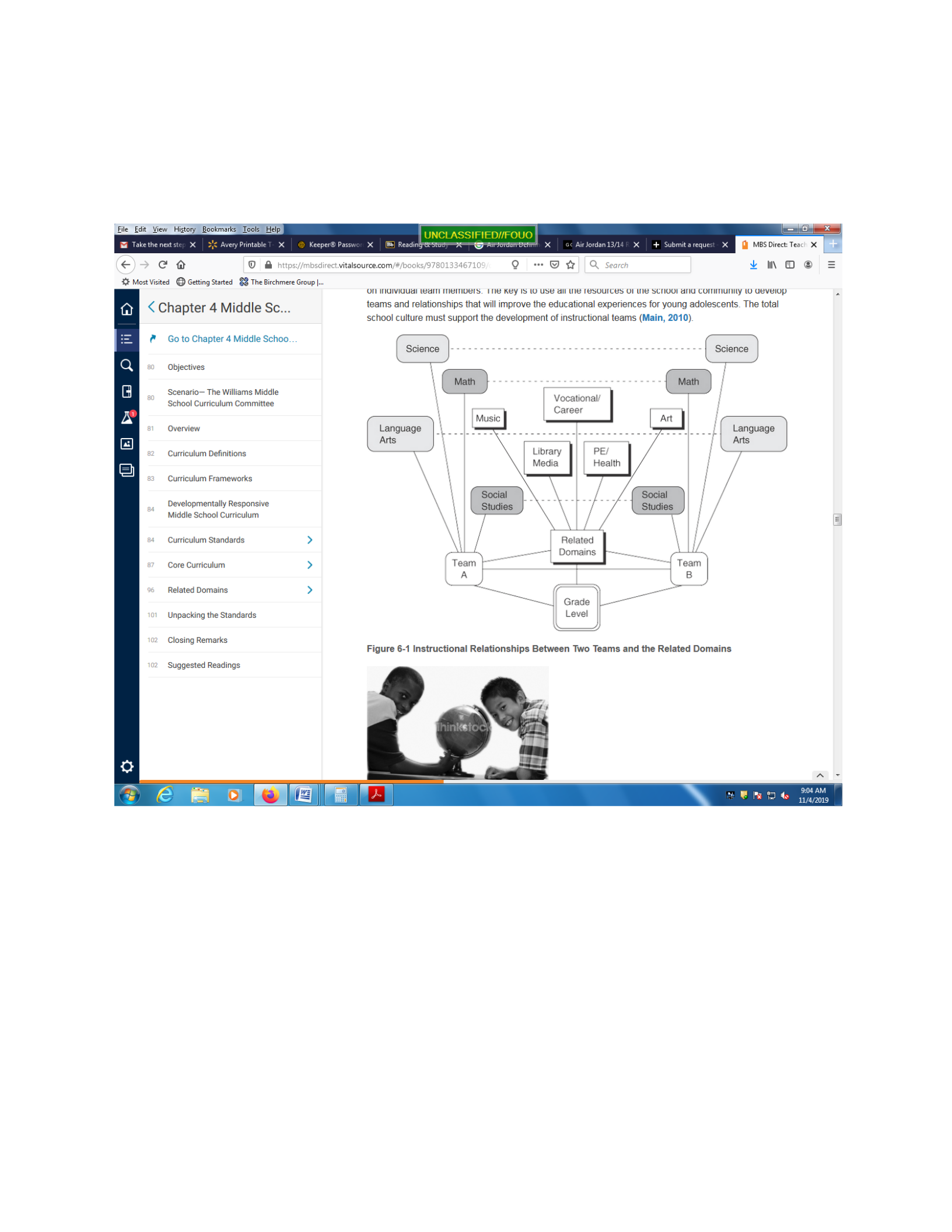
Without careful coordination and open communication, various groups can place conflicting pressures
on individual team members. The key is to use all the resources of the school and community to develop
teams and relationships that will improve the educational experiences for young adolescents. The total
school culture must support the development of instructional teams (Main, 2010).
Interdisciplinary Instructional Planning
IDI is one of a number of instructional methods for middle school teachers, but not the only one. Indeed,
not even the most successful teams engage in IDI all the time. But IDI does offer rewards, especially for
young adolescents. With IDI, students can become involved in their learning and teachers can work
toward elimination of discipline lines. Students can become independent and confident, “learn how to
learn,” and develop lifelong learning skills.
The development of young adolescents prepares them for IDI. Their cognitive development allows them
to see relationships among content areas and understand principles that cross curricular lines. Their
psychosocial development gives them the ability to understand people and to look at situations from
various viewpoints. They can also confront questions and engage in experiences that are personally
meaningful to them. Successful curriculum integration and IDI allow young adolescents to see
wholeness rather than fragmentation.
Planning Instruction—An Overview
Before we examine the components of IDI in detail, we want to take a general look at the instructional
planning process. As you read earlier in this chapter, effective instruction needs to be planned.
Educators use factors such as curriculum mandates and national standards to determine what should be
covered in a year in a specific grade. This content is then broken down into units of study that may vary
in length and depth and that consist of a series of lessons based on the same topic or theme. Finally,
each unit is divided into weekly and/or daily plans. Both individual teachers and interdisciplinary teams
use variations on this basic process when planning instruction.
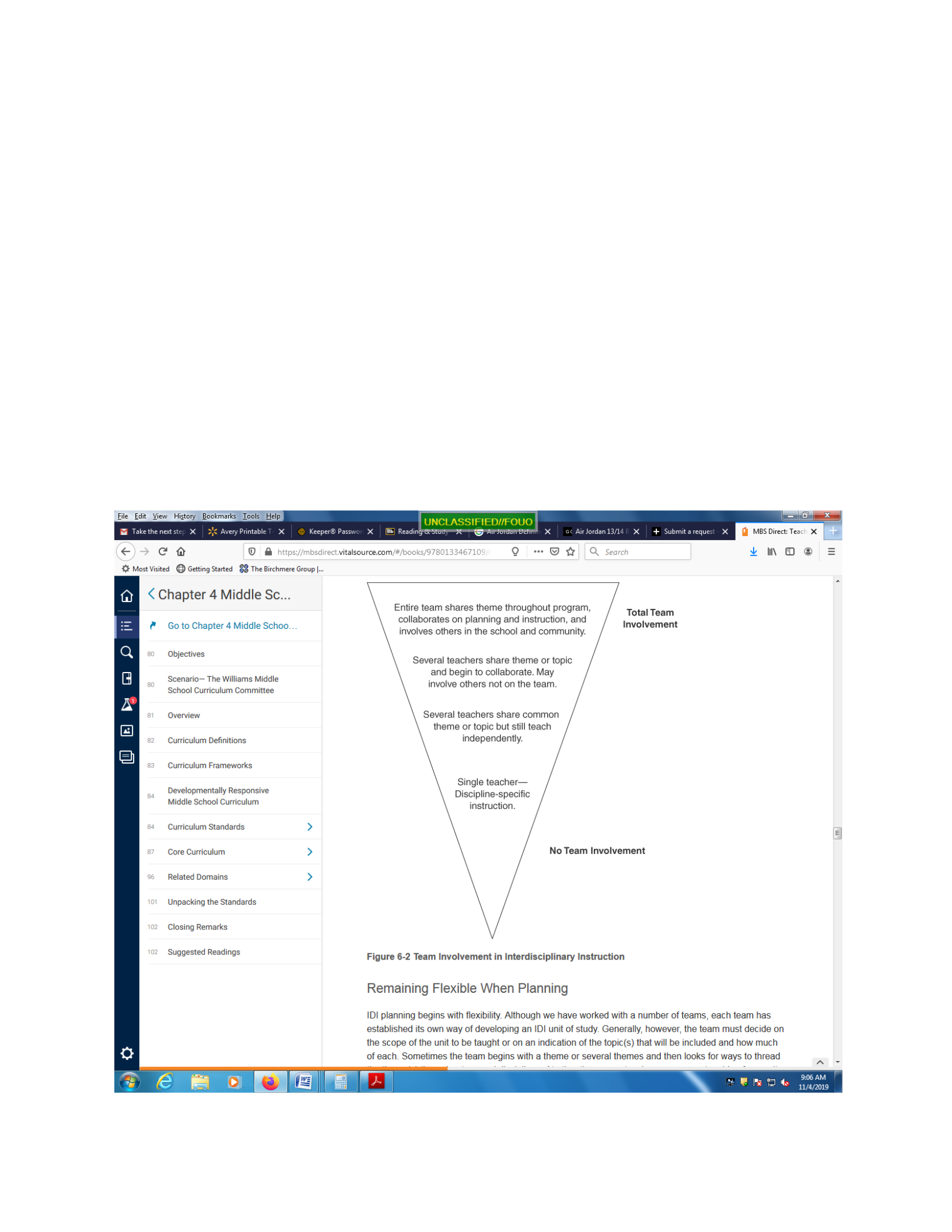
Figure 6-2 shows an instructional pyramid of team involvement in IDI. Remember, no team will function
at the same level all the time. Each teacher on a team may teach some units independently, whereas
pairs of teachers or even the entire team may combine for other units of instruction. The extent and
frequency of IDI will depend on the individual team.
Remaining Flexible When Planning
IDI planning begins with flexibility. Although we have worked with a number of teams, each team has
established its own way of developing an IDI unit of study. Generally, however, the team must decide on
the scope of the unit to be taught or on an indication of the topic(s) that will be included and how much
of each. Sometimes the team begins with a theme or several themes and then looks for ways to thread
the theme(s) throughout several disciplines. At other times, one teacher may present an idea for a unit,
and the other teachers may look for relationships and build on that basis. The process of writing,
discussing, and revising instructional plans as a team strengthens the interdisciplinary instruction.
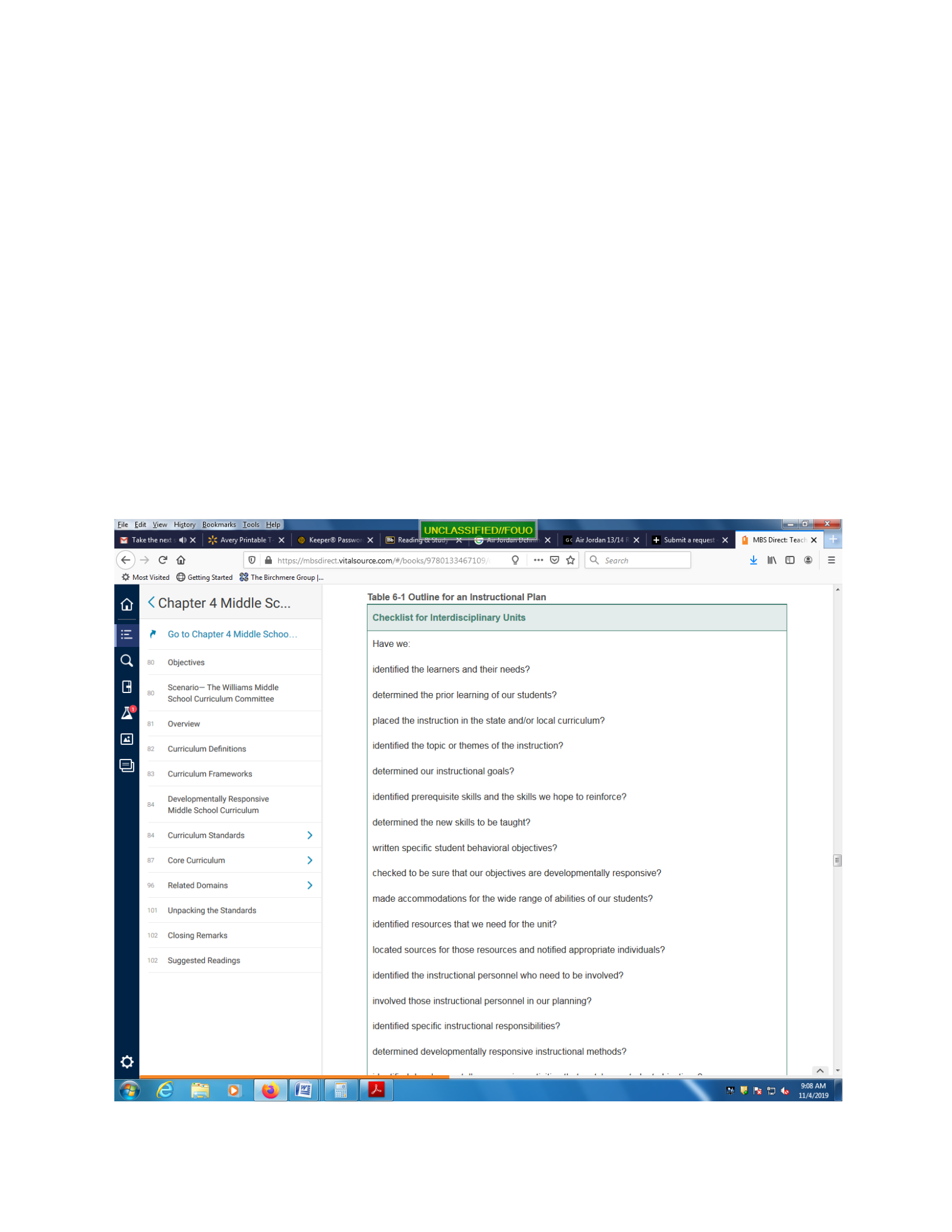
There are a number of planning models that teachers use in designing instruction. Kasak and Uskali
(2005) note that many successful teachers are using a backward design model or “understanding by
design” (Wiggins & McTighe, 2005), which begins with curriculum standards and student needs and
focuses on student learning outcomes in planning instruction and assessments. McTighe (2010)
maintains that “intentional use of backward design results in more clearly defined goals, more
appropriate assessments, and more purposeful teaching” (274). Whichever guide you decide to use, be
sure that it includes the items in Table 6-1.
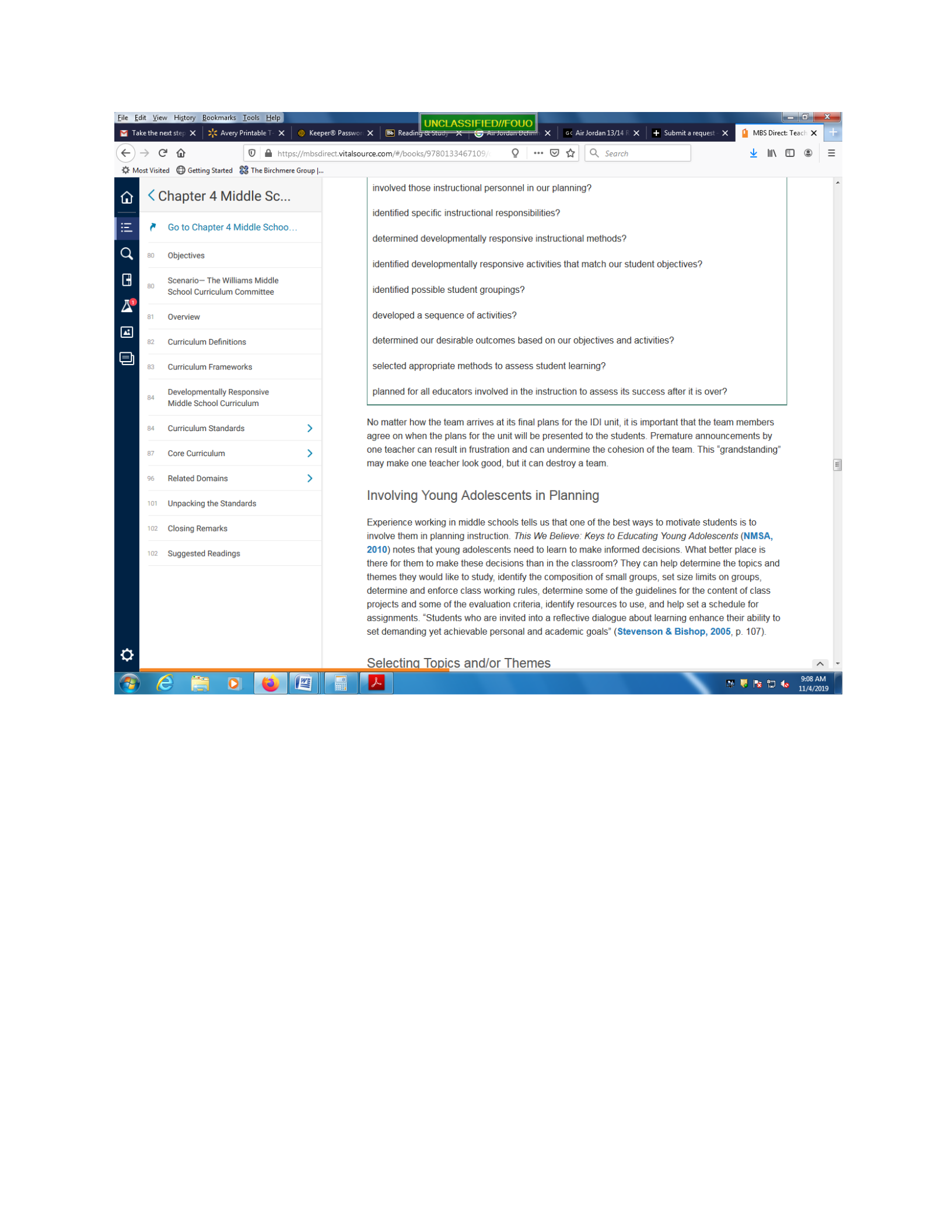
No matter how the team arrives at its final plans for the IDI unit, it is important that the team members
agree on when the plans for the unit will be presented to the students. Premature announcements by
one teacher can result in frustration and can undermine the cohesion of the team. This “grandstanding”
may make one teacher look good, but it can destroy a team.
Involving Young Adolescents in Planning
Experience working in middle schools tells us that one of the best ways to motivate students is to
involve them in planning instruction. This We Believe: Keys to Educating Young Adolescents (NMSA,
2010) notes that young adolescents need to learn to make informed decisions. What better place is
there for them to make these decisions than in the classroom? They can help determine the topics and
themes they would like to study, identify the composition of small groups, set size limits on groups,
determine and enforce class working rules, determine some of the guidelines for the content of class
projects and some of the evaluation criteria, identify resources to use, and help set a schedule for
assignments. “Students who are invited into a reflective dialogue about learning enhance their ability to
set demanding yet achievable personal and academic goals” (Stevenson & Bishop, 2005, p. 107).
Selecting Topics and/or Themes

Although units can be based on a topic, they can also be developed around one or more themes.
Whereas a topic approach is usually subject centered and may come directly from a curriculum guide of
a single discipline (i.e., weather, the Great Depression, or bridges), a theme may be either subject
centered or interdisciplinary. In contrast to topics, themes tend to be more dynamic and convey an
underlying meaning or identify a problem. A few of the popular topics and themes that we have
discovered are “Making a Difference in the Community,” “Surviving Against the Odds,” “It’s Easy Going
Green,” “Integrating Math and Landscaping,” and “Terra-cotta Soldiers of Ancient China.” Keeping
Current with Technology 6–2 points you toward sources of additional information about IDI in general as
well as toward sources that have practical examples of specific IDI units that you can examine and
evaluate.
Determining Goals and Objectives
Usually an IDI unit has global goals, as well as student-centered learning objectives, for the entire unit.
Clearly defined goals and objectives are essential to the success of IDI. Although the objectives can
describe the behaviors or learning outcomes that the students should exhibit by the end of the unit,
some teachers find it helpful to identify the specific objectives for each week or day of instruction. These
objectives should include each of the three instructional domains (cognitive or intellectual, affective or
psychosocial, and psychomotor or physical) and should be developmentally responsive for young
adolescents. The goals and objectives then become the basis for the criterion-referenced measurement,
which we describe in Chapter 8.
Keeping Current with Technology 6–2
For an overview of interdisciplinary learning, visit:
Interdisciplinary Learning in Your Classroom
http://www.thirteen.org/edonline/ concept2class/interdisciplinary/index.html
Then, go to several lesson plan Web sites and do the following:
Select a unit of instruction from one of the Web sites that is designated for middle school students.
Does the unit meet the developmental needs of young adolescents?
Select an interdisciplinary unit from one of the Web sites. Use the checklist for IDI (Table 6-1) to
evaluate the unit. If there are items missing from the unit, modify the unit to include those items that
you believe are necessary to make this a good interdisciplinary unit.
Select a unit from one of the Web sites that is not truly interdisciplinary. Indicate how you would
modify or add to the unit to make it a good middle school interdisciplinary unit.
Lesson Plan Web Sites
Education World—interdisciplinary lessons

http://www.education-world.com/a_lesson/archives/inter.shtml
Educator’s Reference Desk—interdisciplinary lesson plans
http://www.eduref.org/cgi-bin/ lessons.cgi/Interdisciplinary
Galveston Bay Curriculum for Middle School Students, Texas
http://www.rice.edu/armadillo/ Galveston/Curriculum/
Interdisciplinary Middle Years Multimedia Project, Manitoba, Canada
http://www.edu.gov.mb.ca/ks4/tech/imym/index.html
Switcheroo Zoo
http://www.switchzoo.com/ livingplans.htm
The Gateway—Internet lesson plans, curriculum units, and other educational resources. Search for
integrated lessons.
http://www.thegateway.org/
Wetland: Past, Present, Future
http://www.ncrtec.org/tl/camp/ wetlands/wtlnds1.htm
Tying the Interdisciplinary Unit Together
There are a number of ways to tie an IDI together. Some educators suggest using language arts as a
thread that can move across the disciplines. Others begin with a focus on math, science, social studies,
or a combination of two of the disciplines. Remember, IDI can occur at various levels on the
interdisciplinary pyramid and can involve two or more teachers on the team. For example, the
description of a science fair project can become an English writing assignment, and an exploration of
green technology can include all of the core disciplines.
Planning Instructional Strategies for Young Adolescents
“Memorize, memorize, memorize. All Casey does is memorize lists of things. First the capitals, now
the elements. I thought middle schools were supposed to be different. But that’s the same kind of thing
I did in junior high school.”
The parent of an eighth-grade student
As we preach to our students, memorize is not a synonym for understand. Middle school teachers
should build on the natural curiosity of young adolescents and their exploratory nature and should try to
integrate real-life experiences into their instruction (Sevenson & Bishop, 2005). Developmentally
responsive instruction includes learning how to learn, think, and cooperate. It also includes collaborative

learning projects and hands-on activities that address many of the needs of 10- to 15-year-olds. That is
why many middle school classrooms are student centered or group centered and project oriented
(Kellough & Kellough, 2008).
Although IDI asks teachers on a team to share common curricular goals, the instructional methods that
they use to reach those goals do not have to be identical. What is important is that the instruction is
planned so that students make connections across the disciplines. The holistic approach found in IDI
helps students, especially those who are at risk of failure. This is true, in part, because the IDI unit
examines a theme from more than one perspective.
Allowing for Individual Differences
When planning instruction, you must take into consideration the developmental and cultural differences
of your students. For example, the society and cultural community in which they live influence young
adolescents. Sometimes the culture of the student and the culture of the school or the hidden
curriculum are radically different. However, culturally responsive teaching can lessen the resulting
tensions and dissonance. Also, with increasing numbers of new immigrants from non-English-speaking
countries, many middle schools struggle to educate language-minority students (Major, 2006). This calls
for the use of a wide variety of instructional styles to meet the needs of all learners.
Some student differences will result from the diversity of adolescent development. For example, in
Chapter 2, we mentioned Gardner’s theory of multiple intelligences as a part of cognitive diversity. It is
important to identify these intelligences as strengths and use them as the basis for instruction.
As part of the developmental differences among your students, you will also find a wide range of
exceptionalities, such as students with learning disabilities, attention-deficit/ hyperactivity disorder,
limited English proficiency, and emotional disturbances. Although a discussion of these exceptionalities
is beyond the scope of this book, we want you to realize that, at times, you will be responsible for
identifying specific exceptionalities. At other times, you will assist others in providing educational
experiences that address the exceptionalities, perhaps through the use of an individualized education
plan (IEP). When planning instruction, you will often need to plan appropriate educational experiences
for students with a number of exceptional conditions and behaviors. Diversity Perspectives 6–1 explores
partnerships between general and special education teachers.
Diversity Perspectives 6–1 Partnerships Between General and Special Education
Jones, Michael, Mandala, and Colachico (2008) stress the need for general and special educators to
“work in a coactive and coordinated fashion to jointly teach academically and behaviorally
heterogeneous groups of students in educationally integrated settings (i.e. the general classrooms)” (p.
204). “Each member of the team is aware of the content that is being taught and is able to support the
instruction that occurs from one another’s viewpoints” (p. 205). Together the teachers design the main
instructional plan and alternatives, modify materials to make the content more accessible to all learners,

and delineate the roles of each teacher. They ensure that there is a “close connection between the
accommodations made for [a] student’s success and the assessment procedures used to evaluate
progress” (p. 206).
Benefits from a general–special education collaboration include (a) improved education in the general
classroom with learning opportunities for all students, (b) shared responsibility for the planning and
delivery of instruction to both general and special education students, and (c) opportunities to “combine
subject area knowledge with special education techniques” (p. 207).
Source: Jones, M., Michael, C., Mandala, J., & Colachico, D. (2008). Collaborative teaching: Creating a
partnership between general and special education. International Journal of Learning, 15(7), 203–207.
Selecting Resources for IDI
One way to meet the diverse needs of young adolescents is to use a variety of instructional resources to
appeal to visual, verbal, and auditory learners and to appeal to the multiple intelligences of young
adolescents. These resources should also provide a multicultural and multidimensional look at the topics
or themes that you teach. Photographs, videos, recordings, computer software, books, magazines,
newspapers, prints, games, sculpture, and even live animals are just a few of the resources that you can
use in your instruction.
You should not, however, use resources just to use them. You must select resources carefully to be sure
that they enrich the unit, not detract from it. The librarian in your school is an excellent person to
consult to determine appropriate resources. Your librarian can help you locate materials within the
school library and point you to a number of sources that review instructional materials. Remember,
never select instructional materials on the basis of a publisher’s catalog. The materials you use must be
developmentally responsive for your students and must coincide with your instructional objectives.
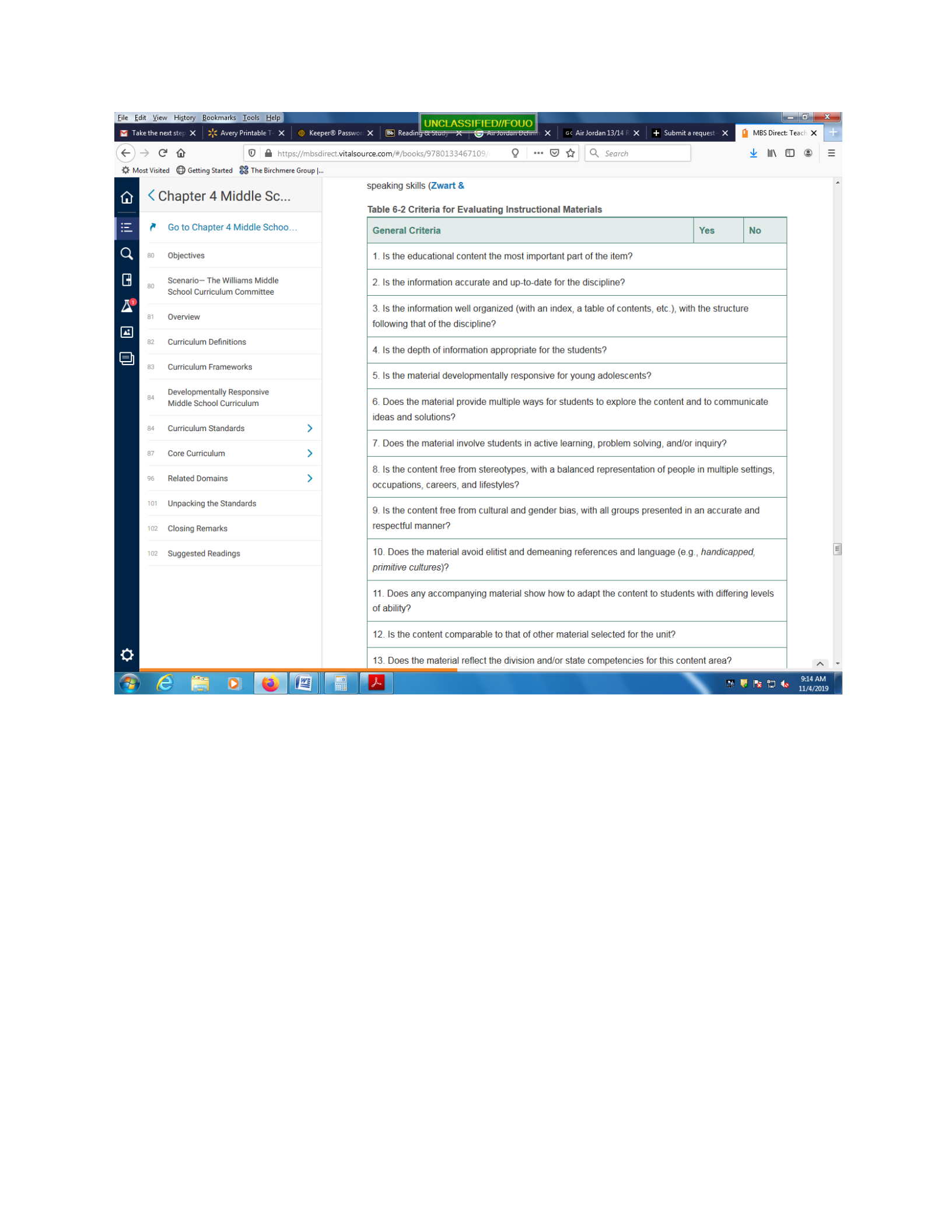
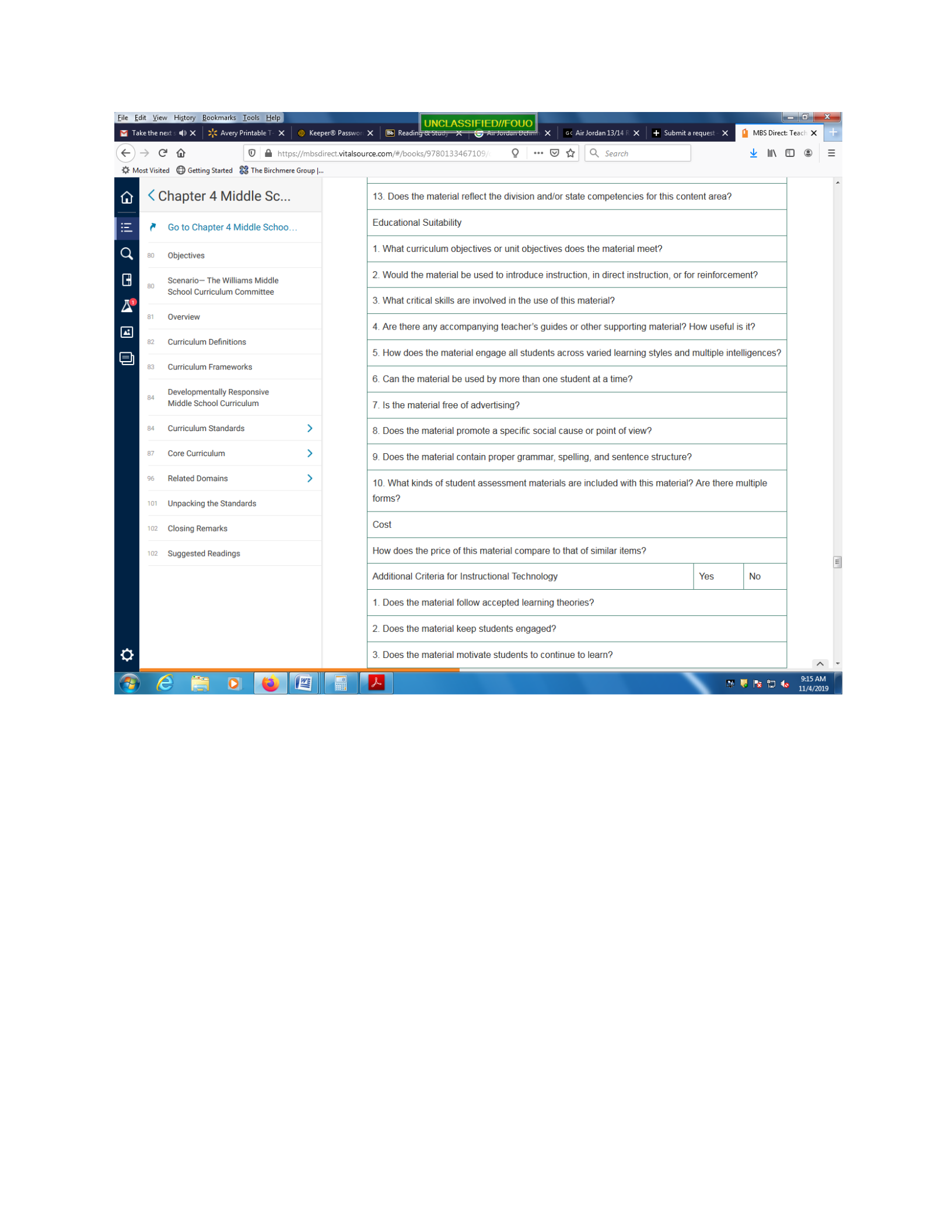
Table 6-2 lists some evaluation criteria for instructional materials.
Resources can often become the basis for collaboration. In fact, the resources of the school library can
become the foundation of interdisciplinary teaching and bring diversity into instruction. For example, in
an interdisciplinary unit “Escape to Freedom,” language arts, social science, and fine arts teachers used a
variety of historical fiction books on a number of reading levels along with audio texts. Not only did
students learn history and study art and music, they also improved their reading, writing, listening, and
speaking skills (Zwart &
MBS
Direct
Teac!
se
|
We
Q
Search
LINO
©
=
€
ca
© &
hitps;//mbsdirect.vitalsource.com/#/books/978013346710'
XE
Most
Visited
©
Getting
Started
@Q
The
Birchmere
Group
|..
ki
kills
(Zwart
&
.
fag
<
Chapter
4
Middle
Sc.
speaking
skills
(Zwai
Table
6-2
Criteria
for
Evaluating
Instructional
Materials
?
Goto
Chapter
4
Middle
Schoo...
General
Criteria
|
Yes
|
No
20
Objectives
1.
Is
the
educational
content
the
most
important
part
of
the
item?
go
Scenario~
The
Williams
Middle
2.
Is
the
information
accurate
and
up-to-date
for
the
discipline?
‘School
Curriculum
Committee
3.
Is
the
information
well
organized
(with
an
index,
a
table of
contents,
etc.), with
the
structure
following
that
of
the
discipline?
81
Overview
82
Curriculum
Definitions
4.
Is
the
depth
of
information
appropriate
for
the
students?
OH
eaO
83
Curriculum
Frameworks
5.
Is
the
material
developmentally responsive
for
young
adolescents?
aq
Developmentally
Responsive
Middle
School
Curriculum
6.
Does
the
material
provide
multiple
ways
for
students
to
explore
the
content
and
to
communicate
ideas
and
solutions?
84
Curriculum
Standards
>
7.
Does
the
material
involve
students
in
active
learning,
problem
solving,
and/or
inquiry?
87
Core
Curriculum
>
8.
Is
the
content
free
from
stereotypes,
with
a balanced
representation
of
people
in
multiple
settings,
96
Related
Domains
>
occupations,
careers,
and
lifestyles?
101
Unpacking
the
Standards
9.
Is
the
content
free
from
cultural
and
gender
bias,
with
all
groups
presented
in
an
accurate
and
102
Closing
Remarks
respectful
manner?
102
Suggested
Readings
10.
Does
the
material
avoid
elitist
and
demeaning
references
and
language
(e.9.,
handicapped,
primitive
cultures)?
11.
Does
any
accompanying
material
show
how
to
adapt
the
content
to
students
with
differing
levels
of
ability?
12.
Is
the
content
comparable
to
that
of
other
material
selected
for
the
unit?
13.
Does
the
material
reflect
the
division
and/or
state
competencies
for
this
content
area?
A
+
a
erry
11/4/2019
MBS
Direct
Teac!
se
|
We
Q
Search
LINO
©
=
47
e¢o
HF
Most
Visited
©
Getting
Stated
B
The
Birchmere
Group
|
©
@
hitpsi//mbsdirect.vitalsource.com/#/books/978013346710
fag
<
Chapter
4
Middle
Sc
13.
Does
the
material
reflect
the
division
and/or
state
competencies
for
this
content
area?
Goto
Chapter
4
Middle
Schoo...
Educational
Suitability
1.
What
curriculum
objectives or
unit
objectives
does
the
material
meet?
80
Objectives
‘Scenario—
The
Williams
Middle
2.
Would
the
material
be
used
to
introduce
instruction,
in
direct
instruction,
or
for
reinforcement?
‘School
Curriculum
Committee
3.
What
critical
skills
are
involved
in
the
use
of
this
material?
81
Overview
4.
Are
there
any
accompanying
teacher's
guides
or
other supporting
material?
How
useful
is
it?
82
Curriculum
Definitions
5.
How
does
the
material
engage
all
students
across
varied
learning
styles
and
multiple
intelligences?
OH
eaO
83
Curriculum
Frameworks
6.
Can
the
material
be
used by
more
than
one
student
at
a
time?
nq
Developmentally
Responsive
Middle
School
Curriculum
7.
Is
the
material
free
of
advertising?
84
Curriculum
Standards
a
96
101
102
102
Core
Curriculum
Related
Domains
Unpacking
the
Standards
Closing
Remarks
‘Suggested
Readings
8.
Does
the
material promote
a
specific
social
cause
or
point
of
view?
9.
Does
the
material
contain
proper
grammar,
spelling,
and
sentence
structure?
10.
What
kinds
of
student
assessment
materials
are
included
with
this
material?
Are
there
multiple
forms?
Cost
How
does
the
price
of
this
material
compare
to
that
of
similar
items?
Additional
Criteria
for
Instructional
Technology
|
‘Yes
|
No
1.
Does
the
material
follow accepted
learning
theories?
2.
Does
the
material
keep
students
engaged?
3.
Does
the
material
motivate
students
to
continue
to
learn?
a
Eon
ee
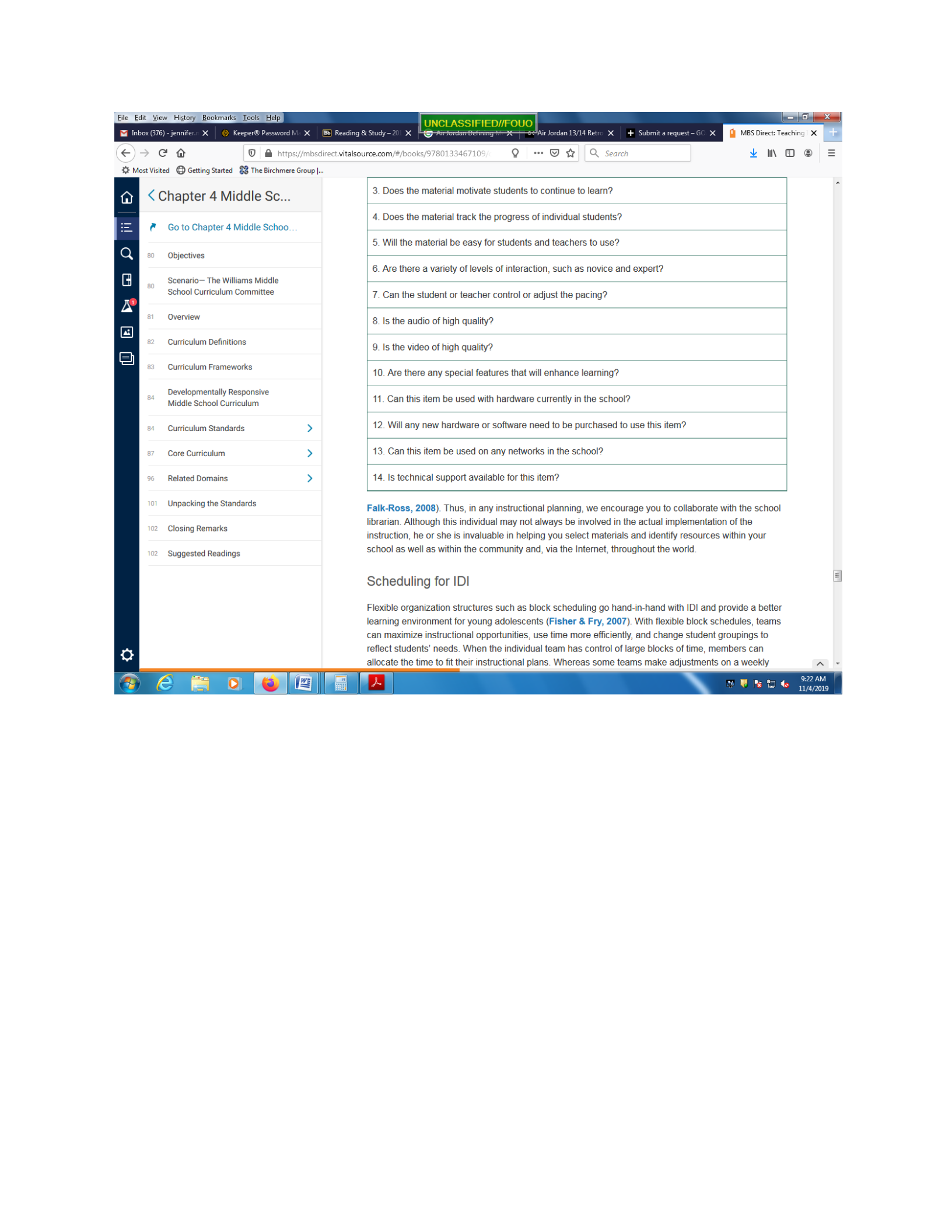
Falk-Ross, 2008). Thus, in any instructional planning, we encourage you to collaborate with the school
librarian. Although this individual may not always be involved in the actual implementation of the
instruction, he or she is invaluable in helping you select materials and identify resources within your
school as well as within the community and, via the Internet, throughout the world.
Scheduling for IDI
Flexible organization structures such as block scheduling go hand-in-hand with IDI and provide a better
learning environment for young adolescents (Fisher & Fry, 2007). With flexible block schedules, teams
can maximize instructional opportunities, use time more efficiently, and change student groupings to
reflect students’ needs. When the individual team has control of large blocks of time, members can
allocate the time to fit their instructional plans. Whereas some teams make adjustments on a weekly
basis, others may modify the schedule daily.
By now you should have a general idea of the things that must be considered when planning instruction.
There is still more to learn about implementing instruction and assessing students in other chapters of
this book. However, before we leave the subject of overall instructional planning, we want to take a look

at how one seventh-grade team planned an IDI unit. In Case Study 6–1, we revisit Karyn Rothmer from
the opening scenario and her team a few years later.
Planning for Students at Risk of Failure
“I don’t know what to do with Ravenia. She’s in seventh grade but she can’t read.”
A middle school teacher
There is a great deal of concern about the performance of middle school students, especially those in
“high-poverty urban schools with student bodies primarily made up of minority students” (Balfanz,
Herzog, & MacIver, 2007, p. 223). Often low academic expectations; lack
Case Study 6–1 The Osprey Team Plans a Unit
A few years ago, the teachers at Washington Peaks Middle School had begun work on interdisciplinary
teaching. A consultant had even been hired by the central school administration to help with the effort.
Of all the teams, the seventh-grade Osprey Team had been most successful. That is not to say that
things had been easy for them. One teacher had felt uncomfortable giving up the autonomy of her own
classroom and had difficulty teaching with an interdisciplinary approach. As a result, she had asked for
and received a transfer to the senior high school. Her position as a science teacher had been filled by
Alysha McQueen, a new graduate, who was welcomed by Karyn Rothmer, language arts; Auggie
Anderson, math; and Sandy Labyak, social studies.
The Osprey Team members had worked hard to develop trust and mutual respect and had successfully
taught two or three units each year using an interdisciplinary approach. At other times, one or two of
the teachers cooperated in planning joint activities or coordinated some of their instruction. Overall,
they were pleased and thought that both they and their students had benefited from the units.
Now they were ready to plan another interdisciplinary unit. They began by brainstorming ideas for
possible themes and then asked their students during homeroom for ideas or issues they would like to
explore. Over and over the word survival kept popping up, so the team members began to examine the
existing curriculum, textbooks, and state guidelines to see if they could identify possible topics to tie into
survival or any of the other suggested issues. Their plan was to look for commonalities and ideas related
to survival that could be taught across the disciplines within their curricular framework. In addition,
when the team members met with others in their disciplines across the grade levels and during their
semiweekly team meeting with the school librarian and teachers of art, music, and physical education,
they mentioned the theme and asked for suggestions. Finally, they decided to name the unit “Surviving
Against the Odds” and to focus on the Holocaust.
Their next step was to identify individual teacher responsibilities for the unit. They came up with the
following chart:
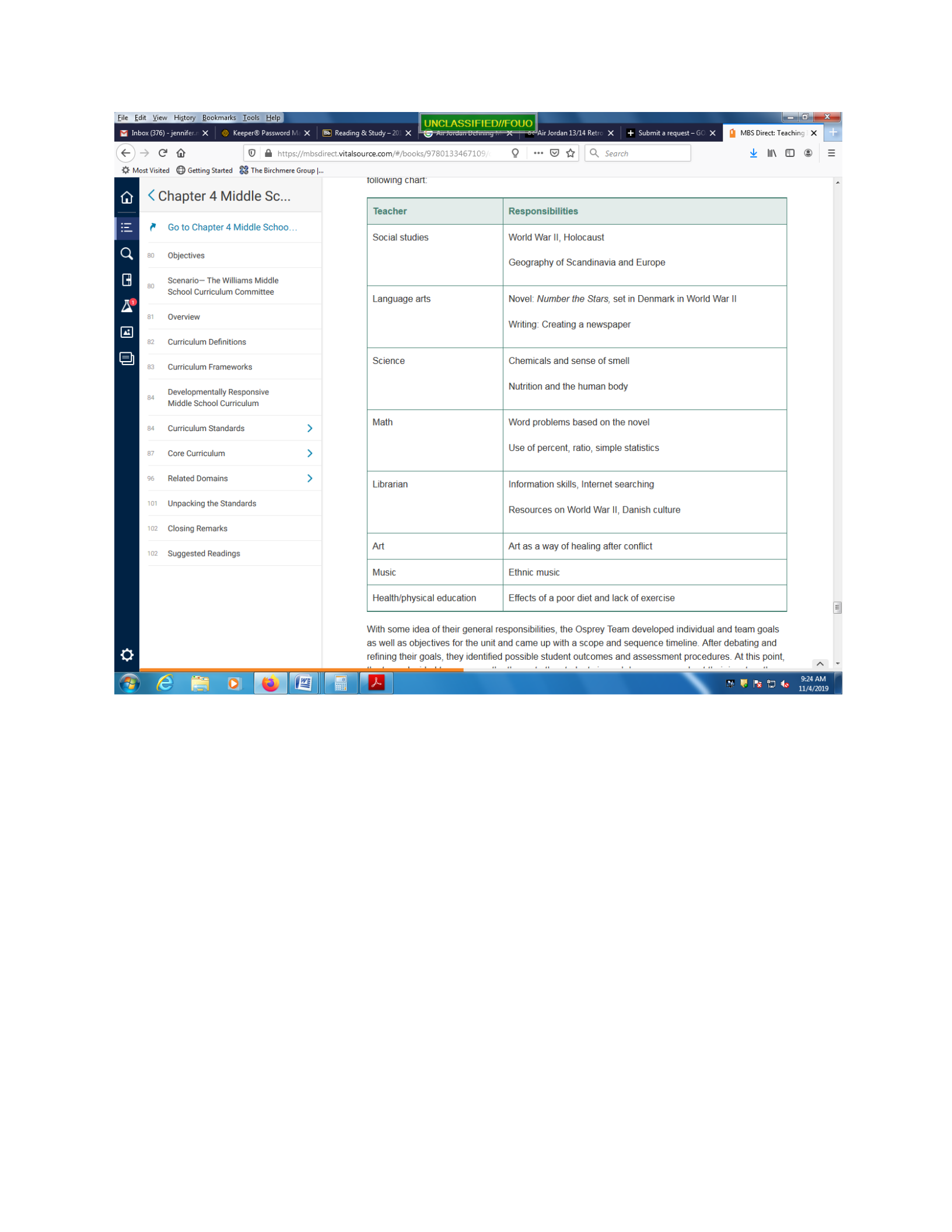
With some idea of their general responsibilities, the Osprey Team developed individual and team goals
as well as objectives for the unit and came up with a scope and sequence timeline. After debating and
refining their goals, they identified possible student outcomes and assessment procedures. At this point,
the team decided to announce the theme to the students in each homeroom and get their input on the
projects and the assessment. Naturally, there were some lively discussions, and when the team met
again, they modified their original plans based on some of the suggestions. After finalizing the student
outcomes and the assessment, the team worked on developing specific lesson plans for the unit. Some
of the plans were developed by the whole group, whereas others were done by individual teachers and
then brought back to the group for discussion. As the plans were being finalized, the team also tried to
see how they could best arrange their block schedule to fit the instructional plans.
Finally, it was time to teach the unit. Throughout the teaching process, the Osprey Team continued to
meet with all the participating teachers and specialists to modify their plans as necessary and to make
adjustments in the block schedule. At the conclusion of the unit, the team held a final meeting with
everyone who had participated in the teaching or planning to discuss what happened, what they liked,
and what they would change the next time they taught the unit.

Questions for Consideration
Evaluate the plan devised by the Osprey Team. Have they considered all parts of the Checklist for
Interdisciplinary Units (Table 6-1)? If not, what should be included?
Consider this unit from the perspective of your discipline. What could you add to the unit? How could
this be done?
of academic, social, and emotional supports for all students; and unqualified middle school teachers are
cited as major reasons for middle school failure (NYC Coalition for Educational Justice, 2007). “If they fail
to develop the intellectual, emotional, and moral capacities they need to negotiate adolescence
successfully, middle-grade students can drift into self-destructive trajectories—risk-taking behaviors,
dropping out of school, or pathways to prison” (p. 4). How, then, can middle school educators work with
students who are at risk of failure?
As a middle school teacher, your planning must consider the young adolescents’ psychological, social,
and emotional needs. That means you need to plan instruction that will ensure success, build a positive
atmosphere, let students know you think they can succeed, encourage them, use positive comments,
and provide genuine praise. Build on your students’ skills in art, music, drama, sports, dance, and
technology, not just their academic skills. You should strive for a task-focused rather than an ability-
focused learning environment by emphasizing task mastery rather than how students compare with
their peers. Realize, too, that parental involvement can be a key to student success (Brown & Beckett,
2007).
Many educators argue against special programs for students at risk, citing teachers who have developed
programs that meet the needs of all students rather than creating special programs for specific groups
of students who might be labeled as different. In most cases, programs designed to meet the needs of
middle school students who are at risk of failing are also the best programs for all middle school
students. The difference is that although students at risk need the same things that other middle school
students need, they may also need individualized help with academic work and with building self-
esteem and achieving academic success. Collaborative planning and IDI can help, especially when
teachers coordinate projects and homework assignments, use examples from young adolescent
literature to focus on student problems and to discuss coping strategies, or base problem-solving
activities on historical situations.
Closing Remarks
The instruction of young adolescents in middle schools is too important to be haphazard. For instruction
to be developmentally responsive and effective, it must be systematically planned to meet the needs of
the learners and the demands of the school’s curriculum. Whether you are planning for your own
classroom or for IDI with other members of your middle school team, you need to keep in mind the
principles contained in this chapter. In Chapters 7 and 8, respectively, of this book, “Implementing
Instruction—Methods and Materials” and “Assessment of Learning—Methods and Issues,” we will build

on this foundation. Although you, as an educator, will benefit from good instructional planning, the
ultimate benefits will go to the young adolescents whom you teach.
Suggested Readings
ACT. (2009). The forgotten middle: Ensuring that all students are on target for college and career
readiness before high school. Education Digest, 74(9), 37–41. This article underlines the importance of
successful middle school experiences.
Childre, A., Sands, J. R., & Pope, S. T. (2009). Backward design. Teaching Exceptional Children, 41(5),
6–14. The authors discuss the use of backward design in planning.
Larsen, D. E., & Akmal, T. T. (2010). Help wanted: Enthusiastic middle-level teacher. Principal, 89(4),
62–63. The authors explore the characteristics of successful middle level teachers, including their
instructional planning skills.
Main, K. (2010). Jumping the hurdles: Establishing middle school teams. Pedagogies, 5(2), 118–129.
Small teaching teams are a critical issue for middle school reform.
Reed, D. K., & Groth, C. (2009). Academic teams promote cross-curricular applications that improve
learning outcomes. Middle School Journal, 40(3), 12–19. The authors discuss the use of team meeting
time to improve IDI planning.
Developing Your Portfolio Chapter 6: Planning Instruction
Appropriate and Interdisciplinary
The following are some activities that you might complete to add documentation to your professional
teaching portfolio.
NMSA Standard 4 Middle Level Teaching Fields: Middle level teacher candidates understand and use the
central concepts, tools of inquiry, standards, and structures in their chosen teaching fields, and they
create meaningful learning experiences that develop all young adolescents’ competence in subject
matter and skills.
Idea 1 Prepare a learning module that incorporates at least two content areas. It should be
multidisciplinary and encompass major areas within the content area. Then, explain your teaching and
assessment strategies, demonstrate that your instructional techniques are developmentally responsive,
and explain how technologies will improve or enhance your instruction. (Knowledge)
Idea 2 Write a brief position paper on the importance of staying current in your content area(s)
as well as in middle school education in general. In your paper, also mention your commitment to
integrating curricular content, developmentally responsive technologies, and effective instructional
skills. (Dispositions)

Idea 3 Include in your portfolio documentation of your teaching effectiveness: for example,
evaluations of cooperating teachers, administrators, and college supervisors. Make sure your
evaluations include evidence of your ability to use effective instruction, technology, and assessment;
your knowledge of the content area; and your commitment and ability to incorporate young
adolescents’ interests, ideas, and experiences. (Performances)
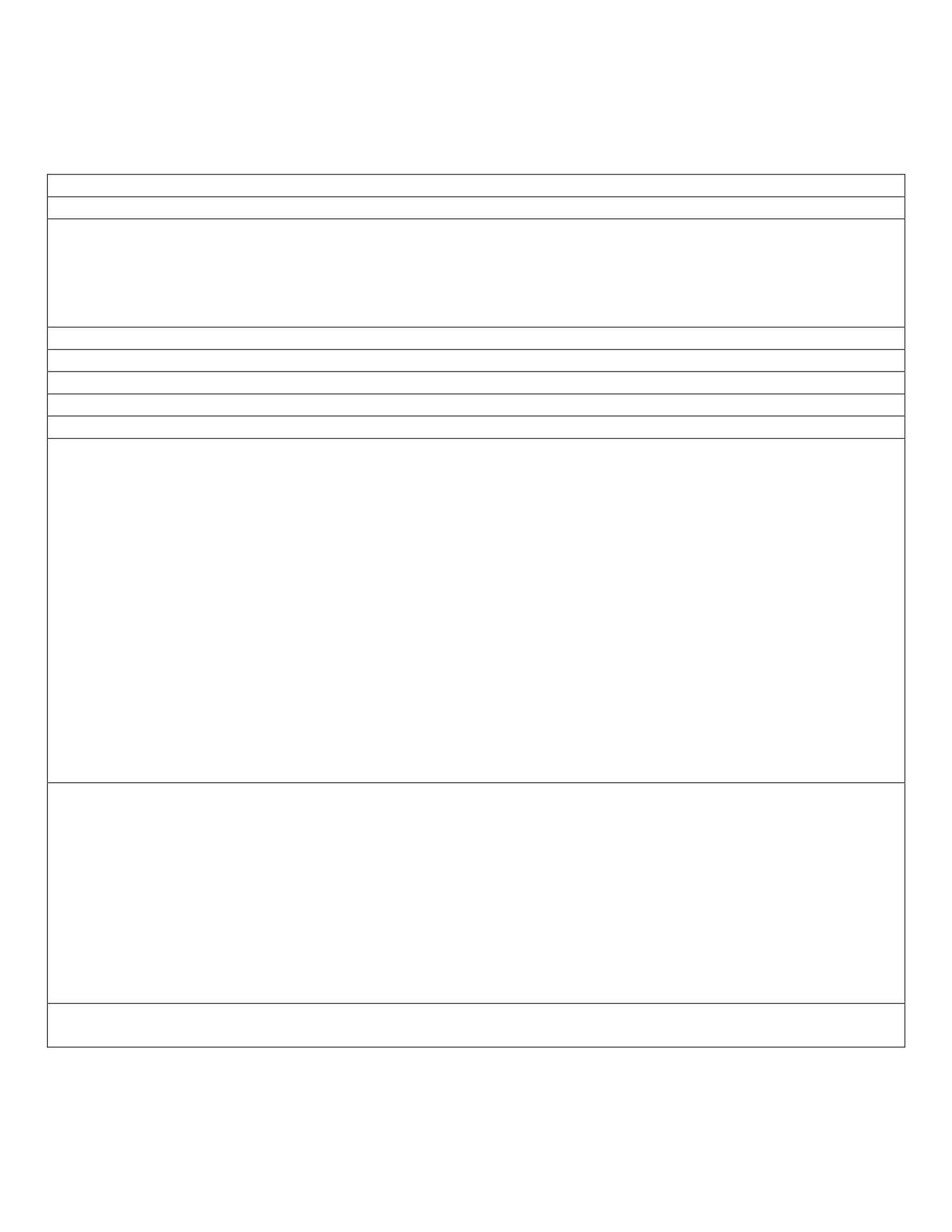
EDUC 676
LESSON PLAN TEMPLATE
Name: Date:
Subject and Grade Level:
Topic:
STANDARDS
A. State’s Standard of Learning:
B. State’s Aligned Standards of Learning:
Objective:
Materials:
Technology Connection:
Character Education Principle:
Pre Assessment:
Procedures
a. Set:
b. Developmental Activities
1. Instruction:
a. ..
b. ..
c. ..
2. Guided Practice:
3. Independent Practice:
c. Closure:
Diversity / Differentiation for Exceptionalities
Description of Class:
Learning Styles (modalities / multiple intelligences) -
LEP -
LD, ED, ADD, ID –
Multicultural Connections –
Impact on Instructional Design:
Evaluation:
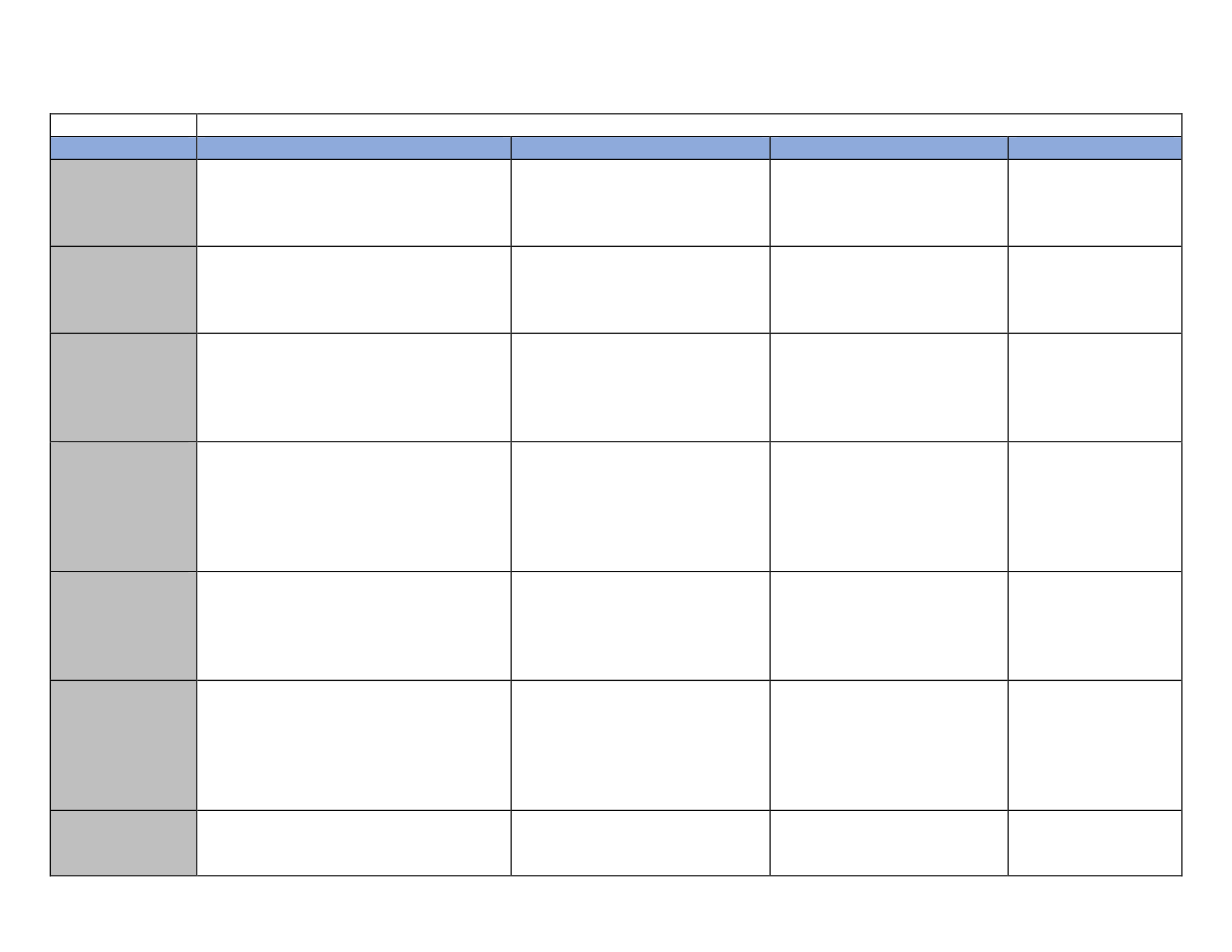
EDUC 625
LESSON PLAN GRADING RUBRIC
Criteria
Levels of Achievement
Content 70%
Advanced
Proficient
Developing
Not present
Subject/Grade
Level
3 points
Both subject and grade level are
identified and are placed in the
correct cells.
2 points
Both subject and grade level
are identified.
1 point
Subject and/or grade level
are identified.
0 points
This section of the
Lesson Plan is not
completed.
Topic
5 points
Lesson plan topic is identified and is
placed in the correct cell.
4 points
Lesson plan topic is identified.
1 to 3 points
Lesson plan topic is not
clearly identified.
0 points
This section of the
Lesson Plan is not
completed.
State Standards
and/or
Common Core
Standards
5 points
State and/or Common Core Standards
and special education standards are
written out in their entirety (including
the standard’s number and title).
4 points
State and/or Common Core
Standards and special education
standards are written out in their
entirety.
1 to 3 points
State and/or Common Core
Standards and special
education standards are not
written out in their entirety.
0 points
Standards are not
present.
Objectives
5 points
Objective is written in the proper
condition, performance, criteria format.
Performance is written in a
measureable term.
4 points
Objective is written in the
proper condition, performance,
criteria format. Performance is
written; however measurable
terms are not included.
1 to 3 points
Objective and performance is
written in the proper
condition, criteria format.
0 points
This section of the
Lesson Plan is not
completed.
Material List
4 points
A complete list of materials is given
that will allow the student to
successfully complete each aspect the
lesson.
3 points
An incomplete list of materials
is given that will allow the
student to successfully complete
only part of the lesson.
1 to 2 points
A limited list of materials is
given that will not allow the
student to successfully
complete the lesson.
0 points
This section of the
Lesson Plan is not
completed.
Technology
Connection
5 points
A specific technology connection is
identified, including web address
and/or name of computer program to
be used.
4 points
A specific technology
connection is identified, but the
web address and/or name of
computer program is not
identified.
1 to 3 points
General technology
connections are identified,
but web addresses are not
identified.
0 points
This section of the
Lesson Plan is not
completed.
Biblical
Support
5 points
Specific scriptures and reference are
provided that relate to the principle
4 points
Specific scriptures and
reference are provided that
1 to 3 points
Unrelated scriptures and
reference are provided. No
0 points
This section of the
Lesson Plan is not
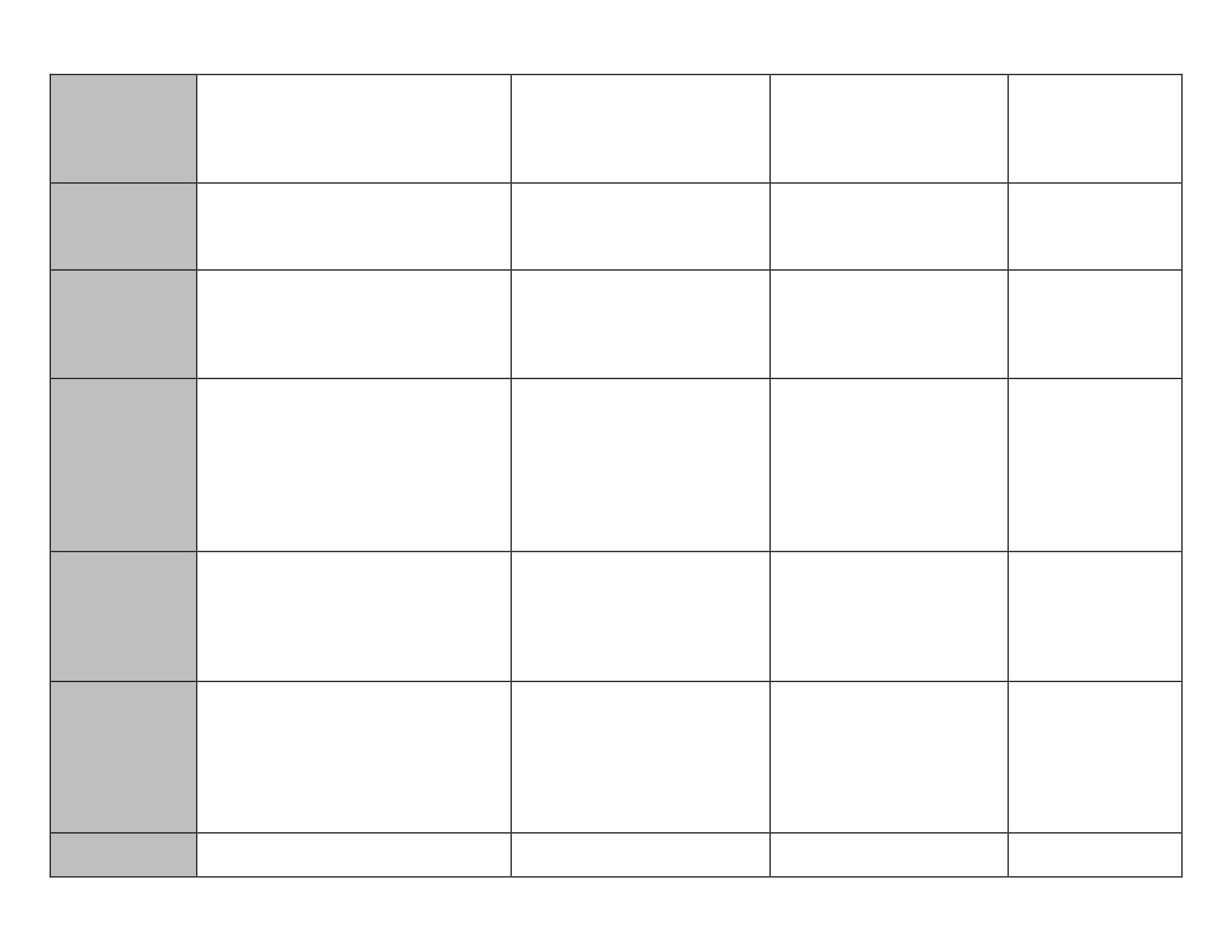
EDUC 625
being taught in the lesson. Descriptions
are given as to how the principle is
taught in the lesson.
relate to the principle being
taught in the lesson. Limited
descriptions are given as to how
the principle is taught in the
lesson.
descriptions are given as to
how the principle is taught in
the lesson.
completed.
Pre-Assessment
4 points
Pre-assessment tool is identified and is
appropriate for the assignment.
3 points
Pre-assessment tool is identified
but is not appropriate for the
assignment.
1 to 2 points
Pre-assessment tool not
identified.
0 points
This section of the
Lesson Plan is not
completed.
Lesson
Introduction
4 points
Introduces the lesson and provides a
creative way to engage students in the
lesson.
3 points
Introduces the lesson and
provides a somewhat creative
way to engage students in the
lesson.
1 to 2 points
Introduces the lesson and
provides no way to engage
students in the lesson.
0 points
This section of the
Lesson Plan is not
completed.
Skill Modeling
5 points
Detailed description of how the teacher
candidate plans to teach the skill. How
the skill will be modeled is fully
explained. All components of objective
are addressed.
4 points
Detailed description of how the
teacher candidate plans to teach
the skill. How the skill will be
modeled is mostly explained.
Most all components of
objective are addressed.
1 to 3 points
Vague description of how the
teacher candidate plans to
teach the skill. How the skill
will be modeled is loosely
explained. Some of the
components of objective are
addressed.
0 points
This section of the
Lesson Plan is not
completed.
Guided Activity
4 points
A practice activity where the teacher
guides the class is provided. All
components of objective are addressed.
3 points
A practice activity where the
teacher guides the class is
provided. Most all components
of objective are addressed.
1 to 2 points
A practice activity where the
teacher guides the class is
provided. Some of the
components of objective are
addressed.
0 points
This section of the
Lesson Plan is not
completed.
Independent
Activity
4 points
A practice activity where the teacher
allows students to work independently
is provided. All components of
objective are addressed.
3 points
A practice activity where the
teacher allows students to work
independently is provided. Most
all of the components of
objective are addressed.
1 to 2 points
A practice activity where the
teacher allows students to
work independently is
provided. Some of the
components of objective are
addressed.
0 points
This section of the
Lesson Plan is not
completed.
Closure
4 points
Closure recaps all the main points of
3 points
Closure recaps most of the main
1 to 2 points
Closure recaps some of the
0 points
This section of the
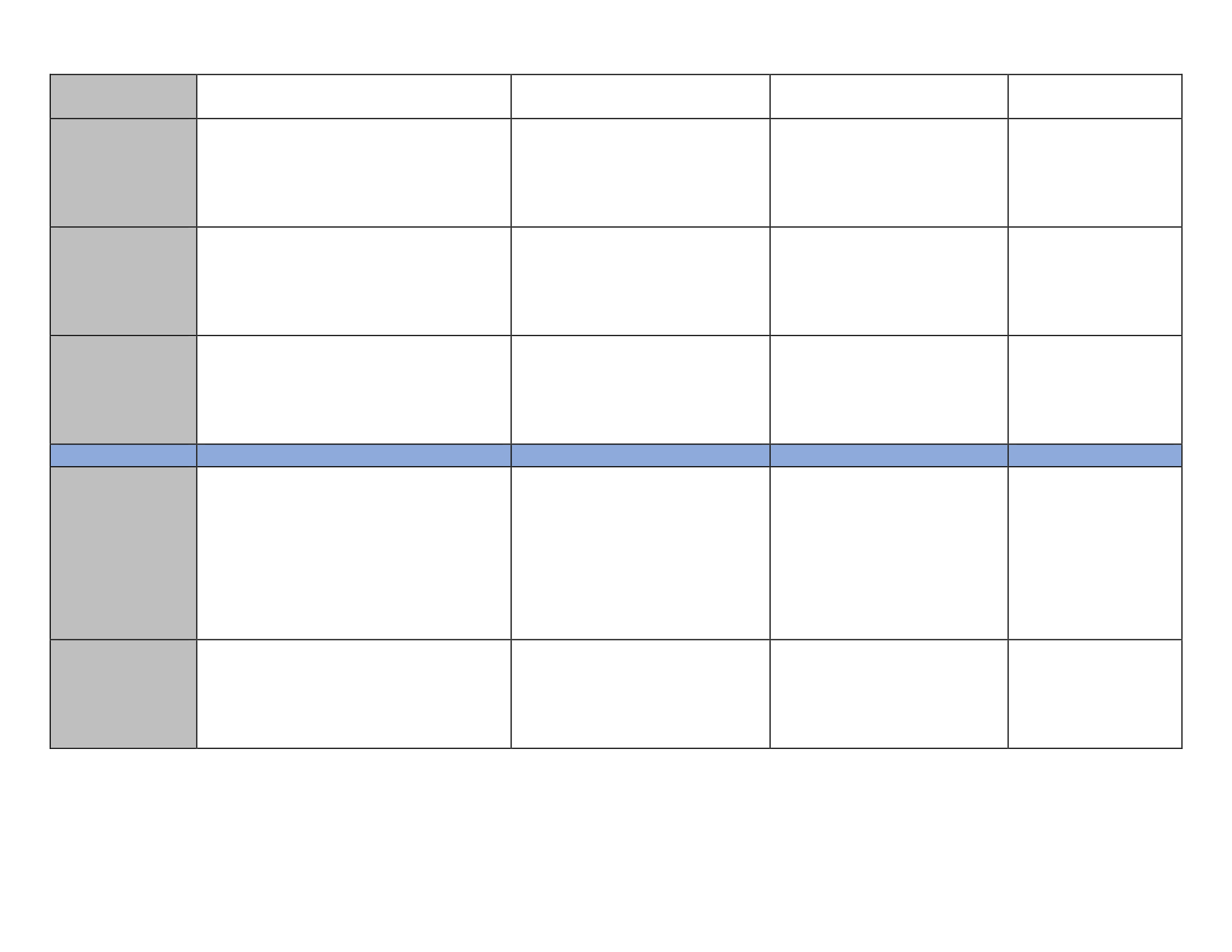
EDUC 625
the lesson.
points of the lesson.
main points of the lesson
Lesson Plan is not
completed.
Differentiation
4 points
Teacher candidate describes what
portions of the lesson is differentiated
for each subgroup.
3 points
Teacher candidate describes
what portions of the lesson is
differentiated for most of the
subgroup.
1 to 2 points
Teacher candidate describes
what portions of the lesson is
differentiated for some
subgroups.
0 points
This section of the
Lesson Plan is not
completed.
Modifications
5 points
In-depth detail is given on how lesson
is modified for students with
exceptionalities.
4 points
Thorough detail is given on
how lesson is modified for
students with exceptionalities.
1 to 3 points
Sketchy detail is given on
how lesson is modified for
students with
exceptionalities.
0 points
This section of the
Lesson Plan is not
completed.
Assessment
4 points
A tool to assess the objective is
provided. Expected mastery level is
thoroughly stated.
3 points
A tool to assess the objective is
provided. Expected mastery
level is adequately stated.
1 to 2 points
A tool to assess the objective
is provided. Expected
mastery level is loosely
stated.
0 points
This section of the
Lesson Plan is not
completed.
Structure 30%
Advanced
Proficient
Developing
Not present
Professional
Writing Skills
14 to 15 points
Lesson Plan uses correct grammar and
punctuation, spelling, and sentence
structure throughout
13 points
Lesson Plan contains between
1–3 errors in grammar and
punctuation, spelling, and
sentence structure throughout
1 to 12 points
Lesson Plan contains
between 4–5 errors in
grammar and punctuation,
spelling, and sentence
structure throughout.
0 points
Lesson Plan
contains at least 6
errors in grammar
and punctuation,
spelling, and
sentence structure
throughout.
Work Ethic
14 to 15 points
Candidate fully completes every area
of Lesson Template
13 points
Candidate completes most of
the areas of the Template fully
(1–2 areas vaguely completed).
1 to 12 points
Candidate completes some of
the areas of the Template
fully (3–4 areas vaguely
completed).
0 points
Student fails to
complete more than
4 areas of the
template completely.
EDUC 676
Name: Date:
Subject and Grade Level: Social Studies, grade 4
Topic: Christmas around the world
STANDARDS
State’s Standard of Learning: CCSS.ELA-LITERACY.RI.3.9 - Compare and contrast the most important
points and key details presented in two texts on the same topic.
State’s Aligned Standards of Learning: Visual arts and Language Arts.
Objective: Students will compare and contrast the most important points and key details presented in two texts
on the same topic. Students will demonstrate understanding of a text through creative interpretation
Materials:
A worksheet describing how Christmas is celebrated in 5 locations around the world
Construction paper
Art supplies such as paint or colored pencils
Technology Connection: Smartboard to illustrate Christmas celebrated in different parts of the world.
Students will identiy these regions. Also students will have the hoice to use IPad or Chromebook for further
research. Could also be an extention activity.
Character Education Principle: Effective character education requires an intentional proactive and
comprehensive approach that promotes the core values in all phases of school life
Pre Assessment: informal dicssuion about what is Christmas to them and how they celebrate it. Write some
keys points in their workbook.
Procedures
1) Explain to students that Christmas is a holiday that is celebrated all around the world. Some families
celebrate it with their church in a religious way, some families celebrate with their families without any relation
to religion, and some families do not celebrate at all.
2)Ask students if they celebrate Christmas at their house and ask them what they d
Modeling
Project Worksheet 1, Christmas in the United States on the board for students to see.
Call on a student to read about how Christmas is celebrated in the United States.
On a world map, show students where Germany, Mexico, Trinidad and Tobago, and Australia are and
ask students what they know about these countries.
Developmental Activities
1. Students will watch a Youclip on how different parts of the world celebrate Christmas. They
should be taking notes during this time.
https://www.youtube.com/watch?v=da2Q2wQBiCA

EDUC 676
2. Instruction: Students will then play a jigsaw game where half the class will have the names of
the countries and half the class will have the ritual or picture associated with the country. It will
be the students reponsibility to match the picture with the country from what they learned from
the you tube clip.
Guided Practice: Display a compare and contrast worksheet on the smartboard while using an example such as
Mexico versus the United States. Teacher will discuss similarities and differences. Teacher will tell students to
listen carefully to all the details and how the teachers compares and contrast.
Independent Practice:
Refer to the first worksheet with the images of a typical United States Christmas Celebration and tell students
that they will complete a venn diagram on the country they were pvovided with, comparing to their home
country.
Follow-up Task: Have students choose, or assign students to draw a scene or symbol depicting the country’s
celebration of Christmas.
Closure:
Students will do a gallery walk seeing what other countries other students have compared.
Let students show their pictures to the class (If completed, from follow-up task)
Discuss the similarities and the differences of the way Christmas is celebrated around the world.
Diversity / Differentiation for Exceptionalities
Description of Class:
Learning Styles (modalities / multiple intelligences) – Audioty, listening to others present. and Visual-seeing
others present and looking at the worksheet. Kinestetic learners can get up and present their findings.
LEP -
LD, ED, ADD, ID – (LD, ED, ID) Pairing of students, independently, choice is the students. Chunking
work. Small group instruction when desired. (ADD) providing body breaks or stand up seating, frequent
breaks when needed
Multicultural Connections – Different ways to celebrate Christmas, looking at different cultures
around the world.
Impact on Instructional Design:
Evaluation:
Formative: Students will hand in their drawing and present their drawings to the class

EDUC 676
Informal assessment: Direct observation: Teacher will watch as students listen to their peers and record their
findings on how they presented and how they listend to others.
EDUC 676
Name: Date:
Subject and Grade Level: Social Studies, grade 4
Topic: Christmas around the world
STANDARDS
State’s Standard of Learning: CCSS.ELA-LITERACY.RI.3.9 - Compare and contrast the most important
points and key details presented in two texts on the same topic.
State’s Aligned Standards of Learning: Visual arts and Language Arts.
Objective: Students will compare and contrast the most important points and key details for two countries.
Students will demonstrate understanding of a text through creative interpretation.
Materials:
A worksheet on how Christmas is celebrated in countries all around the world
Paper
Paint or colored pencils
Technology Connection: Smartboard to illustrate Christmas celebrated in different parts of the world.
Students will identiy these regions. Also students will have the choice to use IPad or Chromebook for further
research. Could also be an extention activity.
Character Education Principle: Effective character education requires an intentional proactive and
comprehensive approach that promotes the core values in all phases of school life
Pre Assessment: informal dicssuion about what is Christmas to them and how they celebrate it. Write some
keys points in their workbook or journal
Procedures
1) Explain to students that Christmas is a holiday that is celebrated all around the world. Some families
celebrate it with their church in a religious way, some families celebrate with their families without any relation
to religion, and some families do not celebrate at all.
2) Think, pair and share: Ask students if they celebrate Christmas at their house and ask them what their
traditions are. Discuss with your shoulder partner.
Modeling
Project Worksheet 1, Christmas in the United States on the board for students to see.
Call on a student to read about how Christmas is celebrated in the United States. Students will listen
attentively.
On a world map, show students where Germany, Mexico, Trinidad and Tobago, and Australia are and
ask students what they know about these countries.
Developmental Activities
1. Students will watch a Youclip on how different parts of the world celebrate Christmas. They
should be taking notes during this time.

EDUC 676
https://www.youtube.com/watch?v=da2Q2wQBiCA
2. Instruction: Students will then play a jigsaw game where half the class will have the names of
the countries and half the class will have the ritual or picture associated with the country. It will
be the students reponsibility to match the picture with the country from what they learned from
the you tube clip.
Guided Practice: Display a compare and contrast worksheet on the smartboard while using an example such as
Mexico versus the United States. Teacher will discuss similarities and differences. Teacher will tell students to
listen carefully to all the details and how the teachers compares and contrast.
Independent Practice:
Refer to the first worksheet with the images of a typical United States Christmas Celebration and tell students
that they will complete a venn diagram on the country they were pvovided with, comparing to their home
country.
Follow-up Task: Have students choose, or assign students to draw a scene or symbol depicting the country’s
celebration of Christmas.
Closure:
Students will do a gallery walk seeing what other countries other students have compared.
Let students show their pictures to the class (If completed, from follow-up task)
Discuss the similarities and the differences of the way Christmas is celebrated around the world.
Diversity / Differentiation for Exceptionalities
Description of Class:
Learning Styles (modalities / multiple intelligences) – Audioty, listening to others present. and Visual-seeing
others present and looking at the worksheet. Kinestetic learners can get up and present their findings.
LEP -
LD, ED, ADD, ID – (LD, ED, ID) Pairing of students, independently, choice is the students. Chunking
work. Small group instruction when desired. (ADD) providing body breaks or stand up seating, frequent
breaks when needed
Multicultural Connections – Different ways to celebrate Christmas, looking at different cultures
around the world.
Impact on Instructional Design:
Evaluation:

EDUC 676
Formative: Students will hand in their drawing and present their drawings to the class
Informal assessment: Direct observation: Teacher will watch as students listen to their peers and record their
findings on how they presented and how they listend to others.

EDUC 676
Name: Date:
Subject and Grade Level: Social Studies, grade 4
Topic: Christmas around the world
STANDARDS
State’s Standard of Learning: CCSS.ELA-LITERACY.RI.3.9 - Compare and contrast the most important
points and key details presented in two texts on the same topic.
State’s Aligned Standards of Learning: Visual arts and Language Arts.
Objective: Students will compare and contrast the most important points and key details for two countries.
Students will demonstrate understanding of a text through creative interpretation.
Materials:
A worksheet on how Christmas is celebrated in countries all around the world
Paper
Paint or colored pencils
Technology Connection: Smartboard to illustrate Christmas celebrated in different parts of the world.
Students will identiy these regions. Also students will have the choice to use IPad or Chromebook for further
research. Could also be an extention activity.
Character Education Principle: Effective character education requires an intentional proactive and
comprehensive approach that promotes the core values in all phases of school life.
Biblical Reference: Titus 2:7-8 Show yourself in all respects to be a model of good works, and in your
teaching show integrity, dignity, and sound speech that cannot be condemned, so that an opponent may be put
to shame, having nothing evil to say about us. (This will be taught through various acts of goodness presented
through various forms of worhsips during Christmas)
Pre Assessment: informal dicssuion about what is Christmas to them and how they celebrate it. Write some
keys points in their workbook or journal
Procedures
1) Explain to students that Christmas is a holiday that is celebrated all around the world. Some families
celebrate it with their church in a religious way, some families celebrate with their families without any relation
to religion, and some families do not celebrate at all.
2) Think, pair and share: Ask students if they celebrate Christmas at their house and ask them what their
traditions are. Discuss with your shoulder partner.
Modeling
Project Worksheet 1, Christmas in the United States on the board for students to see.
Call on a student to read about how Christmas is celebrated in the United States. Students will listen
attentively.
On a world map, show students where Germany, Mexico, Trinidad and Tobago, and Australia are and

EDUC 676
ask students what they know about these countries.
Developmental Activities
1. Students will watch a Youclip on how different parts of the world celebrate Christmas. They
should be taking notes during this time.
https://www.youtube.com/watch?v=da2Q2wQBiCA
2. Instruction: Students will then play a jigsaw game where half the class will have the names of
the countries and half the class will have the ritual or picture associated with the country. It will
be the students reponsibility to match the picture with the country from what they learned from
the you tube clip.
Guided Practice: Display a compare and contrast worksheet on the smartboard while using an example such as
Mexico versus the United States. Teacher will discuss similarities and differences. Teacher will tell students to
listen carefully to all the details and how the teachers compares and contrast.
Independent Practice:
Refer to the first worksheet with the images of a typical United States Christmas Celebration and tell students
that they will complete a venn diagram on the country they were pvovided with, comparing to their home
country.
Follow-up Task: Have students choose, or assign students to draw a scene or symbol depicting the country’s
celebration of Christmas.
Closure:
Students will do a gallery walk seeing what other countries other students have compared.
Let students show their pictures to the class (If completed, from follow-up task)
Discuss the similarities and the differences of the way Christmas is celebrated around the world.
Diversity / Differentiation for Exceptionalities
Description of Class:
Learning Styles (modalities / multiple intelligences) – Audioty, listening to others present. and Visual-seeing
others present and looking at the worksheet. Kinestetic learners can get up and present their findings.
LEP -
LD, ED, ADD, ID – (LD, ED, ID) Pairing of students, independently, choice is the students. Chunking
work. Small group instruction when desired. (ADD) providing body breaks or stand up seating, frequent
breaks when needed
Multicultural Connections – Different ways to celebrate Christmas, looking at different cultures
around the world.

EDUC 676
Impact on Instructional Design:
Evaluation:
Formative: Students will hand in their drawing and present their drawings to the class
Informal assessment: Direct observation: Teacher will watch as students listen to their peers and record their
findings on how they presented and how they listend to others.

