


Please use template and attached lesson plan to build the mini lesson
Topic 3 - Extending and Applying Knowledge
Teacher candidates will use the readings and material included in the course to locate and match a
learning strategy with a chosen content area reading for each mini lesson. Candidates will determine
and identify the strategy and provide an explanation for its potential use in the classroom. Candidates
should provide a research-based and substantiated explanation for the appropriate application of the
topic.
Learning Strategy lesson plans are to all relate to your Learning Window topic in Week 2. Yours was
"Protecting Rights" in the content area of Social Studies. Your Strategy Lesson plans need to focus on
this topic

Learning Strategy Portfolio
Throughout the term you will develop a notebook of disciplinary-literacy strategies that I hope
you will find useful as you enter the field. This notebook will consist of reading and writing
strategies we read about and discuss in class. The purpose of this assignment is for students to
demonstrate what they have learned about how to select appropriate texts for their classrooms as
well as how to select, develop, and implement appropriate instructional strategies for content
area classrooms. For this assignment, students will develop six “mini lesson” strategy activities
using the provided template.
Each submission will include:
(1) An introductory overview of the content and relevance including the name of the
strategy, a citation for both the strategy and the pertinent text selection, content area and
standards that are addressed, and the age/grade level targeted:
(2) A research-based explanation of the strategy, including its purpose, how the teacher
would prepare the strategy, steps for teaching the strategy, and at least three ways to help
extend this strategy to different learners if it were necessary;
(3) a visual (if applicable) or an example, including any necessary rubrics or answers keys
that might be necessary for grading purposes;
(4) a copy of the reading or sample of the reading for which the strategy would be used.
You will begin to compile these strategies over the course of the term as it relates to the specific
learning targets each week. Each of these lessons will be worth a total of 50 points.
The focus of each strategy will be as follows:
a. Vocabulary strategies – DUE: Week 3
b. Developing Understanding/Guided Practice Strategies – DUE: Week 4
c. Extending and Applying Knowledge – DUE: Week 5
Your final set of three additional mini lessons will be composed of any combination in these
three areas and will be due on Week 7 of our course for a total of 150 points.
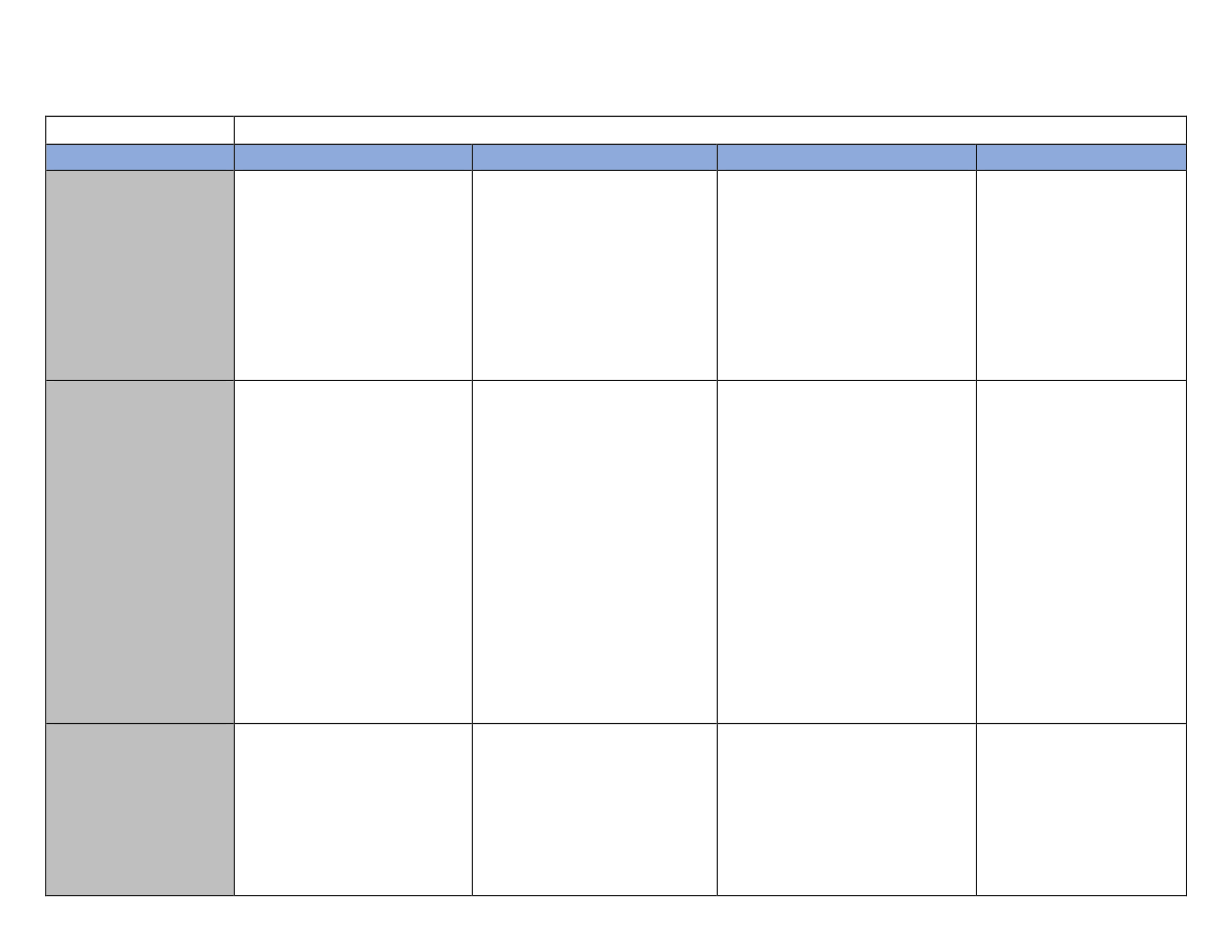
Learning Strategies Mini Lesson Rubric
Criteria
Levels of Achievement
Content 70%
Advanced
Proficient
Developing
Not present
Introduction
10 points
Strategy is CLEARLY named and
identified and include necessary
APA formatted references. Both
state and national standards are
named and identified. Strategy is
an OUTSTANDING match for the
listed content standards and
age/grade.
9 points
Strategy is named and identified
and includes necessary APA
formatted references. State
standards are identified. Strategies
are a GOOD match for the content
standards and age/grade.
1 to 8 points
Strategies is named but references
are not present AND/OR standards
are not identified for this work
AND/OR strategies are a poor match
with for the listed content strategies
OR age/grade.
0 points
Not present.
Descriptions and
Implementation Plan
14 to 15 points
Description provides a CLEAR,
CONCISE summary of the strategy,
its relevance, an explanation of
when/how it is used, and WHY it
supports learning in the content
area. Steps for constructing the
strategy are VERY detailed and
accurate, but CONCISE. Steps for
implementing the strategy are
detailed and broken down into
logical steps that include all of the
components. At least THREE
logical ways that strategy could be
used beyond what is described OR
realistic variations for different
learners are included.
13 points
Description provides a summary of
the strategy, its relevance, an
explanation of when/how it is used,
AND why it supports learning in the
content area. Steps for constructing
the strategy are SOMEWHAT
detailed and accurate and FAIRLY
concise. Steps for implementing the
strategy are SOMEWHAT detailed
and broken down into
MANAGEABLE steps while
remaining fairly concise. At least
TWO logical ways that the strategy
can be extended beyond what is
described OR realistic variations for
different learners are listed.
1 to 12 points
Description may not provide a
summary of the strategy, its
relevance, an explanation of
when/how it is used, or why it
supports learning in the content area.
Steps for preparing and implementing
the strategy are not detailed or
accurate; they are NOT concise OR
are missing some or all of the
implementation components.
Includes only one or no ways that the
strategy could be extended beyond
what is listed on the primary page.
0 points
Not present.
Instructional
Components
5 points
Handout or teachers guide has
VERY clear directions and
expectations; visual aids or
handouts are very visually
appealing; Answer key/rubric
CLEARLY shows how the students
might respond.
4 points
Handout or teachers guide has
SOMEWHAT clear directions and
expectations; Answer key/rubric is
present but may not show how
students might respond.
1 to 3 points
Handout or teachers guide is missing
or has UNCLEAR directions; Answer
key/rubric MAY BE missing or
UNCLEAR.
0 points
Not present.

Text
5 points
Text is VERY GOOD match for the
strategy, standards, and
age/grade.
4 points
Text is a GOOD match for the
strategy, standards, and age/grade.
1 to 3 points
Text is NOT a match for the strategy,
standards, and age/grade.
0 points
Text is not present.
Structure 30%
Advanced
Proficient
Developing
Not present
Mechanics
5 points
No spelling, grammar, and/or
punctuation errors are present.
4 points
Candidate makes three or fewer
spelling, grammar, and/or
punctuation errors.
1 to 3 points
Candidate makes more than four
spelling, grammar, and/or
punctuation errors.
0 points
Organization
5 points
A correctly formatted title page is
included. APA formatted citations
are provided in a reference page
at the conclusion of the paper
with references of selected texts
as well as any substantiating
works. No errors in APA
formatting are present.
4 points
A correctly formatted title page is
included. APA formatted citations
are provided in a reference page at
the conclusion of the paper with
references of selected texts as well
as any substantiating works. Minor
errors in APA formatting are
present.
1 to 3 points
A title page and references section
are included but may have multiple
(more than 5) errors throughout OR
references and correctly formatted
title page are missing from final
document.
0 points
APA Formatting
5 points
Final paper is well organized.
Headings are used throughout to
help with the overall organization
and writing is clear and concise.
4 points
Overall arrangement is logical but
can be difficult to follow at times.
Headings are present throughout to
help with overall organization.
Writing is mostly clear and concise.
1 to 3 points
Writing lacks clarity or conciseness.
Lack of focus makes the presented
points hard to understand or your
ideas are not fully developed. There
are multiple readability and
organization issues throughout that
make the work difficult to
understand.
0 points

Learning Window Lesson Plan
SAMPLE
EDUC 656
Section 1. Standards information.
Subject:
Physical Science
Grade Level:
8th
Topic:
Motion
Standards I intend to address:
State: Content
S8P3.a. Analyze and interpret data to identify patterns in the relationships
between speed and distance, and velocity and acceleration.
Literacy:
CCSS.ELA-LITERACY.RST.6-8.7
Integrate quantitative or technical information expressed in words in a text
with a version of that information expressed visually (e.g. in a flowchart,
diagram, model, graph, or table).
http://www.corestandards.org/ELA-literacy
Section 2. Learning Window Considerations
What will the students need to KNOW?
(terms, facts, formulas, events, procedures,
etc.)
- Students will need to calculate the
speed and acceleration of different
objects when given the variables and
formulas.
- Students will need to be able to create
and interpret both speed graphs (d vs.
t) as well as acceleration graphs (v vs
t).
What TERMS will the students need to
know?
- Speed
- Velocity
- Acceleration
- Rate
- Scalar
- Vector
- Distance
- Displacement
What will students need to UNDERSTAND?
(big ideas, concepts, principles, “hows &
whys”)
Students will need to understand…
- That speed is a scalar quantity that
includes only a number, while velocity
is a vector quantity due to the
direction.
- That an unbalanced force can create a
change in the overall motion of an
object.
- That acceleration can be classified by
either speeding up, slowing down, or
changing directions.
- That acceleration can occur even when
an object is moving at constant speed
if it is changing direction as well.

What will the students need to BE ABLE TO
DO? (thinking and learning skills like
summarizing, researching, and data analysis,
as well as products and performances that the
students will need to create)
Students need to be able to:
- Use given formulas to calculate the
speed and acceleration of objects in
word problems.
- Use given data regarding speed,
distance, and time to create a speed
and acceleration graphs. (literacy
standards)
- Classify given examples as either a
speed, velocity, or acceleration given
the units or a description.
Section 3. Standards-Based Learning Targets
Based on the breakdown of the standard above, write THREE standards-based Learning
Targets, or Learning Objectives, that you may use to teach this standard.
Learning Objective 1: Students will understand the effect of balanced and unbalanced
forces on the motion of an object.
Learning Objective 2: Analyze the motion of objects using both mathematical and
graphical models.
Learning Objective 3: Obtain, evaluate, and communicate scientific data using
various types of charts and graphs.
Learning Objective 4: Students will understand the correct tools and units for making
and communicating measurements in science.

Running head: LEARNING WINDOW LESSON PLAN 1
Learning Window Lesson Plan
Student
Liberty University
LEARNING WINDOW LESSON PLAN 2
Section 1. Standards information.
Subject:
Social Studies
Grade Level:
Grade 4
Topic:
Protecting Rights and Maintaining Order
Standards I intend to address:
State:
Maryland
Literacy:
http://www.corestandards.org/ELA-literacy
Section 2. Learning Window Considerations
What will the students need to KNOW?
(terms, facts, formulas, events,
procedures, etc.)
Rights of a Maryland citizen.
Responsibilities of a Maryland citizen
Freedoms of a Maryland citizen
Functions of the Maryland Judiciary system
Impact of the rule of law
What TERMS will the students need to
know?
State Agency, Interpretation, Translation, Civil,
Constitution, Article, Immunity, Amendment,
Citizenship, Judiciary, Rule of Law, Volunteering,
Violation
What will students need to
UNDERSTAND?
(big ideas, concepts, principles, “hows
& whys”)
The students need to understand that every citizen in
Maryland has rights and responsibilities, which the
constitution protects.

LEARNING WINDOW LESSON PLAN 3
The students need to understand that it is a
requirement to uphold each right also, why a
violation of civil rights is a crime.
The students also need to understand why a citizen's
rights, responsibilities, and freedoms are essential.
The students need to understand how the
government protects the citizens’ rights.
What will the students need to BE
ABLE TO DO? (thinking and learning
skills like summarizing, researching,
and data analysis, as well as products
and performances that the students will
need to create)
The students will need to develop an ability to
distinguish rights from responsibilities of a
Maryland citizen while identifying the different
types of human rights.
The student will need learning skills such as
researching to identify the different rights and the
importance of protecting them.
The students will be able to participate actively in
community activities such as voting, cleaning, and
abiding by laws.
Section 3. Standards-Based Learning Targets
The learning is meant to understand and identify the different types of rights and
freedoms and the responsibilities attached. Human rights exist in various categories, which
include civil, political, economic, social, and cultural rights. Civil rights include the right to

LEARNING WINDOW LESSON PLAN 4
government services, while political reasons include the right to vote. Collective freedoms
available to Maryland citizens include freedom of press, religion, and speech. The first objective
involves identifying all these categories and understanding them.
The second objective involves identifying the responsibilities attached to the mentioned
rights and freedoms while understanding the rule of law. Maryland citizens are expected to
exercise their rights and liberties decently. Maryland citizens have a responsibility to use their
freedom of speech without inciting violence. The second objective also involves understanding
that every citizen is subject to the fair application of the law protecting the rights and freedoms.
(Palley, Bright & Afkinich, 2017).
The third objective involves understanding the government’s role in protecting its
citizens’ rights. The local government has a role in promoting the respect of civil rights through
the formation of legal provisions and clear guidelines regarding violations. Also, understanding
the role of Maryland's judicial system in upholding the rule of law. The Judicial system ensures
the protection of rights without prejudice by presiding fairly in cases of violation.

LEARNING WINDOW LESSON PLAN 5
References
Maryland Public Schools. (n.d.). Retrieved from
http://www.marylandpublicschools.org/about/Pages/DCAA/Social-Studies/MSSS.aspx
Palley, H. A., Bright, C. L., & Afkinich, J. (2017). DNA, Privacy, and Social Justice: The
Policy-making Process in the State of Maryland. Journal of Social Welfare and Human
Rights, 5(1), 1-14.
The People’s Law Library of Maryland. (n.d.). Civil Rights. Retrieved from
https://www.peoples-law.org/cat/other-legal-issues/civil-rights

Learning Strategy Portfolio
Throughout the term you will develop a notebook of disciplinary-literacy strategies that I hope
you will find useful as you enter the field. This notebook will consist of reading and writing
strategies we read about and discuss in class. The purpose of this assignment is for students to
demonstrate what they have learned about how to select appropriate texts for their classrooms as
well as how to select, develop, and implement appropriate instructional strategies for content
area classrooms. For this assignment, students will develop six “mini lesson” strategy activities
using the provided template.
Each submission will include:
(1) An introductory overview of the content and relevance including the name of the
strategy, a citation for both the strategy and the pertinent text selection, content area and
standards that are addressed, and the age/grade level targeted:
(2) A research-based explanation of the strategy, including its purpose, how the teacher
would prepare the strategy, steps for teaching the strategy, and at least three ways to help
extend this strategy to different learners if it were necessary;
(3) a visual (if applicable) or an example, including any necessary rubrics or answers keys
that might be necessary for grading purposes;
(4) a copy of the reading or sample of the reading for which the strategy would be used.
You will begin to compile these strategies over the course of the term as it relates to the specific
learning targets each week. Each of these lessons will be worth a total of 50 points.
The focus of each strategy will be as follows:
a. Vocabulary strategies – DUE: Week 3
b. Developing Understanding/Guided Practice Strategies – DUE: Week 4
c. Extending and Applying Knowledge – DUE: Week 5
Your final set of three additional mini lessons will be composed of any combination in these
three areas and will be due on Week 7 of our course for a total of 150 points.

Learning Strategy #
Student Name
EDUC 656

A. Introduction
a. Name of strategy
b. Citation for the strategy and for the included pertinent reading/text selected to which the
strategy will be applied.
c. Content area
d. Standards addressed – should include both State-specific and National - see common core
standards for literacy.
e. Age/Grade Level targeted
B. Description
In this area you should provide a research-based (read: citations MUST be included) explanation
of the strategy that was chosen, including how the strategy increases student
understanding/knowledge for this field and standard. You should include a description of the
strategy as well as the steps for teaching the strategy in a brief lesson outline (i.e. is this a student-
led, guided, independent, or teacher-led activity). This area should make up the bulk of your mini
lesson and should include extensive detail throughout in order to meet the requirements of the
assignment and rubric. Be sure that you also address modifications and adaptions that may be
made to the lesson to extend this lesson or to provide differentiation among students.
C. Examples/Guidelines
Include here a visual (if applicable) or an example of the strategy or handouts. If creating a digital
assignment be sure to include any teacher guides or instructions that might be relevant when
using in a lesson. Be sure to include any necessary rubrics or answer keys that might be necessary
for evaluative purposes.
D. Text Sample
Be sure to include a copy of the reading or a sample of the reading on which the strategy will be
used. This should be the reading to which the students would apply the strategy. It is hard to
determine the appropriateness of the chosen strategy without the reading itself. This may be
comprised of text pages, subject/content-specific articles, text-sets or pairs that may be relevant,
websites, etc.
References Page
Do not forget to include any pertinent citations throughout. A good researcher and teacher rely on
building from others knowledge. They also make sure that they are giving credit where it is due. Be sure
that you include citations from anywhere you may have gotten information. References should be
formatted using APA guidelines, should be on their own page at the end of the text, and should be
formatted using a hanging indent. Your APA manual, or websites like Purdue OWL can help with
correctly formatting your citations.
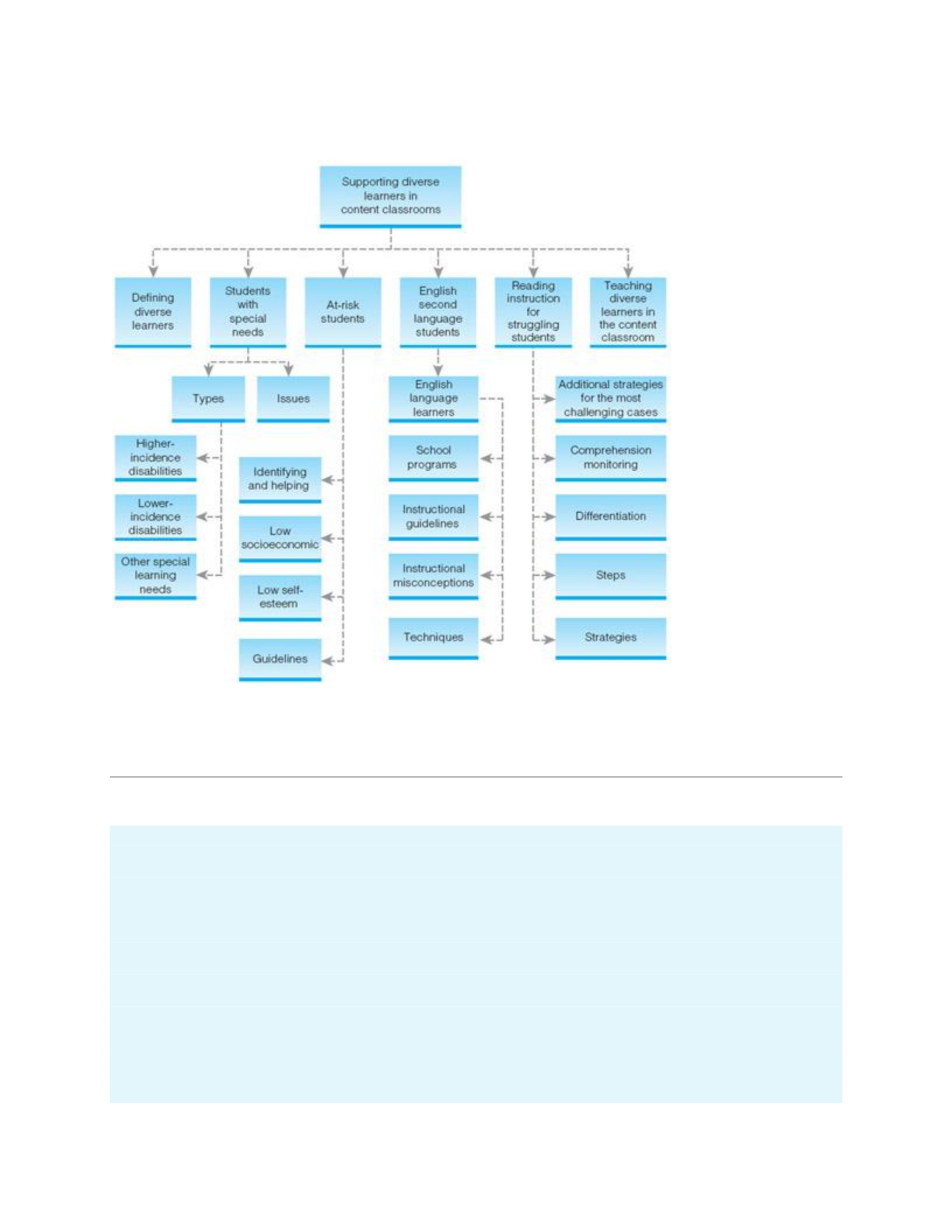
Chapter 11 : Supporting Diverse Learners in Content Classrooms (pp. 317-352)
Supporting Diverse Learners in Content Classrooms: Chapter Objectives
There will never be a single solution that will be a perfect fit for our diverse society. Don't wish for a unilateral answer
to our educational dilemmas. Instead, we should work toward partnerships of families, communities, and educators
who will enjoy the process of problem solving.
ELAINE GRIFFIN, 1995 UNITED STATES TEACHER OF THE YEAR
P. 317
VOICES FROM THE CLASSROOM
Mr. Johnson was beginning his second year as a fifth grade teacher at Horseshoe Elementary. The community
attracted migrant workers because there were a few large orchards on the edge of town and a poultry business. He
had two new Hispanic students, Laticia and Maria, from south Texas. They each had enough knowledge of English to
speak socially and understand typical day-to-day conversation but had little knowledge of the form and subtleties of
academic language. The previous year Mr. Johnson had not had any English as a second language (ESL) learners in
his classroom, so he was both delighted and a little apprehensive about the possibilities. He asked Mrs. Carson, a
seasoned teacher, what special accommodations and considerations he should make to provide the best learning
experience for these students. Mrs. Carson assured him that they just needed good instruction to help them get ready
for the standards exam at the end of the year. She told him to be patient and not to expect too much from them. One
or two others in the class were always willing to work with them. She advised that children of migrant workers are
generally shy and don't contribute much even when asked questions directly. She suggested that he bring in special
materials in May to highlight Cinco de Mayo to help them feel included. After this conversation, Mr. Johnson felt
somewhat discouraged but not daunted. He knew there must be techniques and strategies he could use that would
make a positive difference for these students.
Why do you think Mrs. Carson had such low expectations for these students? What, beyond “just good instruction,”
should Mr. Johnson consider when planning lessons? What suggestions would you give Mr. Johnson?

PREPARING TO READ
1. Answer the following statements thoughtfully and be ready to respond about your instruction for diverse students:
______ I know how to accommodate instructional practices in my classroom—or future classroom—for learners with
a wide range of needs.
______ I do not (or expect I will not) encounter students with cultural or language diversity in my classroom.
______ I can use student interests, reading abilities, and backgrounds to plan highly successful content lessons, no
matter how diverse the students might be.
2. Some of the terms that follow may be familiar to you in a general context, but in this chapter, they may be used in
unfamiliar ways. Using prior knowledge, decide how you could group the terms in four or five sets and give each
group an appropriate label. There may be several ways to group them, so there is no single right answer. Be ready to
explain your selections. Next, using a piece of paper, make a threecolumn organizer with the following headings:
“Terms,” “Predicted Definitions,” and “Chapter Definitions.” Select 10 terms with which you are least familiar, record
them in your organizer, and predict how they might be defined for this chapter. As you read the chapter, verify your
predictions and rewrite your definitions as necessary.
______ diverse learners
______ equity pedagogy
______ Individuals with Disabilities Education Act (IDEA)
______ inclusion
______ response to intervention (RTI)
______ differentiated instruction
______ universal design for learning (UDL)
______ at-risk students
______ resilient students
______ self-efficacy
______ English as a second language (ESL)
______ immigrants
______ refugees
______ acculturating
______ assimilate
______ basic interpersonal communication skills (BICs)
______ cognitive academic language proficiency (CALP)
______ Improving America's Schools Act
______ cultural discontinuity
______ culturally responsive instruction (CRI)
______ English language learner (ELL)
______ teaching English to speakers of other languages (TESOL)
______ bilingual education
______ comprehension monitoring
______ language experience approach (LEA)
P. 318
OBJECTIVES
As you read this chapter, focus your attention on the following purposes. You will
1. Understand and identify characteristics of students with special education needs.
2. Identify teacher-directed reading strategies for aiding students with special education needs.
3. Identify characteristics of at-risk students.
4. Describe why teachers have to discourage passive approaches to reading.
5. Identify teacher-directed reading strategies for aiding atrisk, low-socioeconomic, and low-self-esteem learners.
6. Identify and clarify common misconceptions concerning instruction for English language learners.
7. Identify culturally responsive teacher-directed reading strategies for aiding English language learners.
8. Identify teacher-directed reading strategies for aiding struggling readers.
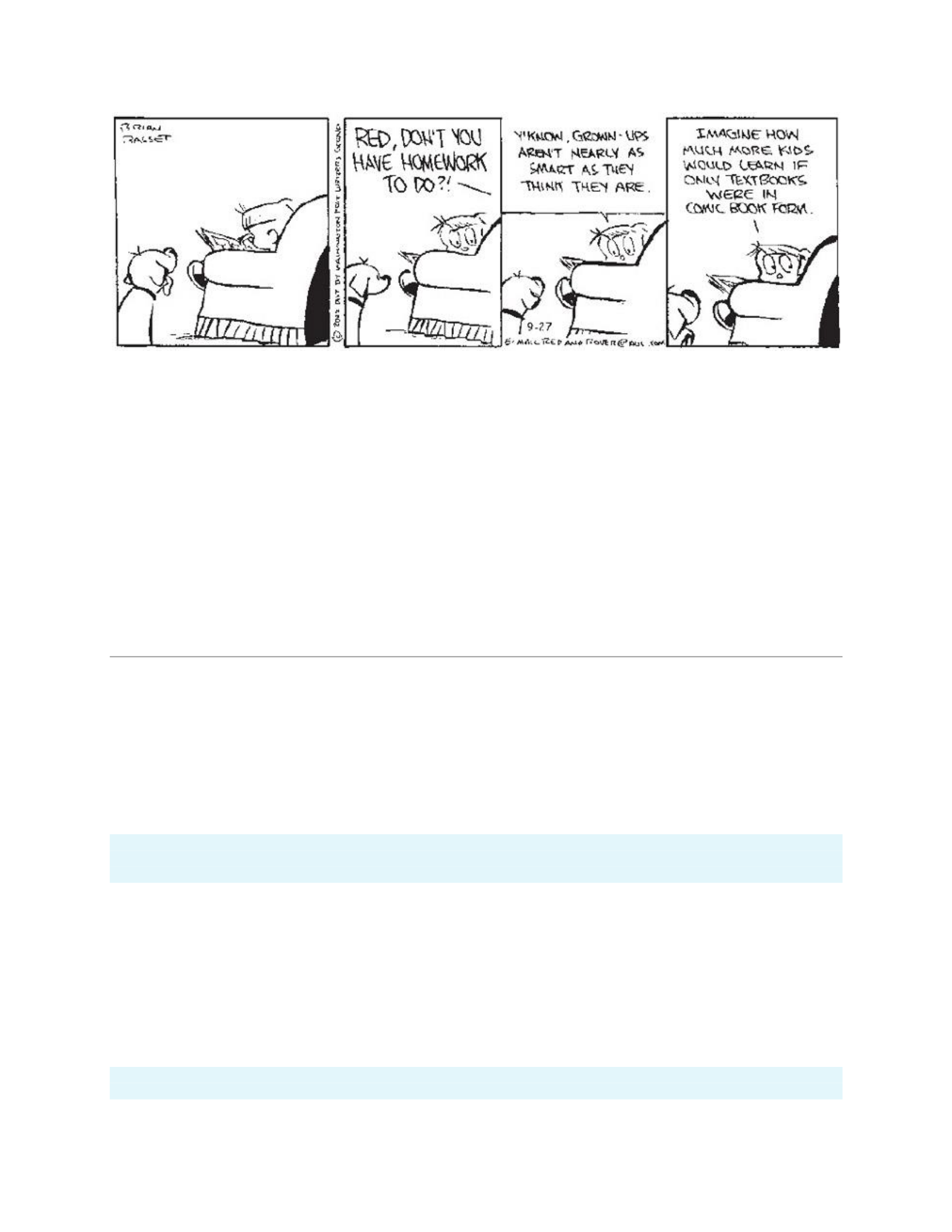
Red and Rover © Brian Basset. Used by permission of Universal Uclick. All rights reserved.
Diverse Learners
All learners are unique. Even in classrooms that may be designated as “homogeneous”—that is, where all learners
are supposed to be grouped by a like factor such as giftedness or advanced or deficient academic ability—we
discover a great range of diversity. Educators often define diverse learners as those who might be at risk for
academic failure and who need special understanding and attention. In every classroom, teachers find students who
are diverse in intellectual ability, social and emotional background, language proficiency, racial background, cultural
background, and physical attributes. Teachers must be prepared to deal effectively with these individual differences
(Au, 1992; Carolan & Guinn, 2007; Hammerberg, 2004; Heilman & Williams, 2006). Today's classrooms are a
reflection of a changing American population. Learning to appreciate and work collaboratively with students different
from themselves offers rich opportunities for preparing students for living in a global society.
Current trends in the United States indicate that our population will continue to diversify. The population in the United
States has experienced pattern shifts reflecting larger proportions of cultural, linguistic, and socioeconomic
differences in recent years, and literacy as it relates to diversity has gained new attention (Au & Raphael, 2000; Xu,
2001). Achievement gaps between students in the mainstream population and their diverse peers remain a
challenge. “A fundamental shift in teachers’ knowledge, skills, and assumptions about children in high-poverty
schools and students who are culturally and socioeconomically diverse is needed for the achievement gap to narrow”
P. 319
(Williams, 2006, p. 11). Content area teachers must practice equity pedagogy (Au, 2001; Banks, 1995), striving to
educate all students, no matter what their heterogeneous or diverse qualities. This often means not treating or
instructing each individual in the same way—but rather with respect to their differences and needs to provide effective
instruction and ultimate learning success for them all. Equity pedagogy stresses instructional opportunity for all
learners. In this chapter, we discuss students with special or diverse needs, including those diagnosed and requiring
accommodations under the law and gifted students; we also discuss those who need consideration because of their
status as at-risk students, their cultural and linguistic differences, or their reading difficulties. We offer some strategies
that can help content teachers teach diverse learners effectively.
Go to CourseMate to see a video showing how an elementary language arts teacher designs instruction that meets
the needs of different types of learners. This elementary school teacher uses “task-analysis,” differentiated and
directed instruction, and buddy reading.
Students with Special Needs
Students with special needs are a heterogeneous group who may need special education with instructional
accommodations in order to learn successfully. Special education is defined as “a specially designed and coordinated
set of comprehensive, research-based instructional and assessment practices and related services to students with
learning, behavioral, emotional, physical health, or sensory disabilities” (Salend, 2011, p. 7). Specifically, special
education involves the following key features: individualized assessment and planning; specialized, intensive, and
goal-directed instruction; research-based instructional practices; collaborative partnerships; and student performance
evaluation (Heward, 2009). Today, most students with special needs receive their education in general education
classrooms.
In the academic year 2007 to 2008, about 95 percent of U.S. students ages 6 to 21 served under the Individuals
with Disabilities Education Act (IDEA) were enrolled in regular schools (U.S. Department of Education, 2010). The

percentage of these students who received more than 80 percent of their school day in inclusive classrooms was
increased from 32 percent in 1989 to 1990 to 57 percent in 2007 to 2008.
Inclusion is a philosophy that values all students’ right to receive appropriate education within the general education
classroom. It recognizes that all students are able to learn and benefit from a “meaningful, challenging, and
appropriate curriculum delivered within the general education classroom” (Salend, 2010, p. 7).
This section on special education was revised by Yaoying Xu, PhD, associate professor in the Department of Special
Education and Disability Policy, School of Education at Virginia Commonwealth University.
When students are included in general education classrooms, content teachers must understand the special
education needs that their students possess and how to provide appropriate accommodations. In this section, we will
introduce types of students with special needs, legal issues in special education, and evidence-based strategies for
content teachers in inclusive classrooms.
Types of Students with Special Needs
Students served by IDEA are distributed among 13 disability categories. (For the specific definition of each category,
see IDEA 2004, pp. 46,756–46,757.) IDEA provides special education and related services to students who are
eligible under these disability areas. Each type of disability may be described as higher incidence disability or lower
incidence disability based on its prevalence. In addition to these IDEA categories and definitions, other sources of
classroom diversity may include culturally and linguistically diverse groups, gifted and talented groups, and at-risk
groups. Students with any of these characteristics or backgrounds may need individualized accommodations to
succeed at school.
STUDENTS WITH HIGHER INCIDENCE DISABILITIES
Higher incidence disabilities refer to the disabilities that are more commonly seen in schools. Individuals who have
higher incidence disabilities are a diverse group with a wide range of abilities and disabilities from mild to severe in
intensity. Disabilities
P. 320
under IDEA include the following areas: speech or language impairments, specific learning disabilities, mild or
moderate intellectual disabilities, and emotional disturbance (U.S. Department of Education, 2007). Higher incidence
disabilities make up more than 80 percent of the total population of students ages 6 to 21 years. In addition to these
categories identified under IDEA, students with attention deficit hyperactivity disorder (ADHD) make up approximately
3 to 5 percent of the total student population (Kauffman & Landrum, 2009). Most of these students are served in
general education classrooms with appropriate accommodations. These students may or may not qualify for special
education and related services under IDEA.
STUDENTS WITH LOWER INCIDENCE DISABILITIES
Lower incidence disabilities refer to disabilities that are far less commonly represented in schools compared with
higher incidence disabilities. Lower incidence disabilities may be present at birth or acquired later in life and may be
temporary or permanent or life threatening (Mastropieri & Scruggs, 2010). Lower incidence disabilities involve a wide
range of disabilities, including physical and other health impairments, autism, severe and multiple disabilities, visual
impairments, and hearing impairments. Traditionally, most students with lower incidence disabilities were served in
separate schools or programs. With the advances in assistive technology and creative adaptations, individuals with
lower incidence disabilities can succeed in inclusive classrooms.
STUDENTS WITH OTHER SPECIAL LEARNING NEEDS
Individuals with other special learning needs may not have a diagnosed disability, but curriculum adaptations or
material accommodations may be necessary to ensure the success of these students. Individuals with other special
learning needs also represent a wide range of abilities, including students who are gifted and talented, students from
culturally and linguistically diverse backgrounds, and students who are at risk for school failure because of
environmental or biological risk factors. All of these students are served in general education classrooms; however,
their unique needs may or may not be identified because these characteristics are not included in the IDEA category.
Issues in Special Education
The first special education law, Public Law (PL) 94-142, the Education of All Handicapped Children Act, was renamed
as the Individuals with Disabilities Education Act (IDEA) in 1990. This law states that all children with disabilities
will receive a free and appropriate public education in the least restrictive environment. In 1997, the Act was
amended with several important new provisions to strengthen the implementation of the essential principles included
in the initial Act. One of the most important new provisions added to IDEA 1997 was that the law recognized that
most students with disabilities spend all or most of their school time in general education settings; it included a
provision requiring that a general education teacher become a member of the team for a student's individualized
education program (IEP).

The most recent reauthorization of the special education law, P.L. 108-446, the Individuals with Disabilities Education
Improvement Act (IDEIA)—often referred to as IDEA 2004—was to provide more educational opportunities for
students with disabilities. This new special education law seeks multiple innovative ways to improve educational
results for students with disabilities. For example, IDEIA or IDEA 2004
P. 321
does not require the use of discrepancy models (IQ vs. achievement) for determining specific learning disabilities
(SLDs) (Harris-Murri, King, & Rostenberg, 2006). Instead, the response to intervention (RTI) model was proposed
as an alternative approach to determining the eligibility for special education and related services.
RTI is referred to as tiered instruction, or intervention, because of its different levels of intervention. Most school
districts that are using RTI have implemented a threetier intervention process. Tier 1 refers to high-quality
instructional and behavioral supports for all children in general education settings by measuring the rate of academic
growth of all students in comparison to other classes in the school or district or nation. Curriculum-based
measurement (CBM) would be used to determine the overall achievement level and growth in achievement for the
classroom of the struggling student. Tier 1 attempts to rectify the previous difficulty in assessing the quality of past
educational experiences to rule out inadequate instruction as a possible reason for underachievement (Drame & Xu,
2008). Interventions at Tier 2 are still provided within general education settings. If students are not making
satisfactory performance with the more intensive, specialized intervention, they will be moved to Tier 3, which
provides even more individualized intervention but is not yet special education and offers no related services. This
intervention level could occur within the general education curriculum or in a setting outside the classroom that is
more appropriate for individualized instruction.
Some programs have proposed an additional level, Tier 4 intervention, before a student is referred. The continuous
progress monitoring that measures how adequately students respond to an intervention is particularly important in an
RTI model. Instead of keeping a student in a specific tier level for a fixed period of time, most programs use the rate
of progress as a means of determining whether a student should move from one tier to the next. For example, in
moving a student from Tier 2 to Tier 3, instead of a 15-week fixed schedule, the student may be moved to a Tier 3
intervention after the ongoing documentation shows consistent the student's nonresponsiveness to a scientific,
research-based intervention. After Tier 3, the nonresponsiveness could be the cause to suspect that a student has a
disability and should be referred for a comprehensive special education evaluation.
Research has demonstrated that the use of IQ–achievement discrepancy models for determining SLD contributes to
the disproportionate minority representation in special education programs (Donovan & Cross, 2002). One of the
fundamental differences between the RTI and the discrepancy model is in early intervention. Unlike the discrepancy
model, which is primarily an assessment system for eligibility requirement, RTI is an intervention delivery system that
is provided for all children, regardless of their ability level. Additionally, instead of looking for within-child deficits as
evidence of a disability, RTI targets a broader and more contextual analysis by considering day-to-day interpersonal
and institutional factors that may impact student achievement and behavior (Harris-Murri et al, 2006).
At which tier would intervention for Trinka be referred for special services? Why do you think so? Are there any
advantages or disadvantages to RTI for Trinka?
Despite the existing and potential benefits of the RTI model, various concerns about this model exist. One particular
concern is related to its outcome-focused approach that could lead to systematic errors in identifying students with
learning disabilities. Students with learning disabilities are a heterogeneous group with a wide range of abilities
(Vaughn, Bos, & Schumm, 2011). Some high-ability students with learning disabilities may not be identified and may
therefore be excluded from special education and related services. These students may achieve well within the
normal range by using their intellectual strengths and coping strategies as well as support services. For example, if
they respond well to an intervention by achieving at an average or above average level
P. 322
at Tier 1 within the large group, they are less likely to be moved to Tier 2 or 3 for more individualized intervention and
thus may miss the opportunity to reach the level consistent with their abilities. On the other hand, some students who
do not respond to the intervention for cultural or linguistic reasons rather than a disability may be identified
inappropriately as having a learning disability at the end of the intervention process.
Please visit the Education CourseMate website at www.cengagebrain.com to find links for IDEA and
other resources related to teaching students with learning disabilities.
Teaching Students with Special Needs in the Content Classroom
Teachers of content subjects teach students with special needs in the general education or inclusive classrooms. The
goal is to provide appropriate instruction to all students (with or without disabilities) in the classroom, including
students who are gifted or talented. To reach this goal, it is essential to provide effective differentiated instruction
(DI) to meet the diverse educational needs, learning styles, and interests of all learners in the inclusive classroom.
(DI) is an alternative approach to teaching and learning that allows teachers options of varying learning contents,
contexts, and modes of assessment to meet the individual needs of each student (Stanford & Reeves, 2009;
Thousand, Villa, & Nevin, 2007).
Universal design for learning (UDL) is one way to implement DI. UDL is a theoretical framework designed to guide
the development of curricula that are flexible and supportive of all students (Dolan & Hall, 2001; Meyer & Rose, 1998;
Pisha & Coyne, 2001; Rose, 2001). Within the framework of UDL, the individual needs of all children in the setting
can be addressed, including students who have disabilities, students who are gifted or talented, and students who are
from culturally and linguistically diverse backgrounds. All learners can use the methods, materials, and assessment.
UDL helps meet the challenges of diversity by suggesting flexible instructional materials, techniques, and strategies
that empower educators to meet the various individual needs within the general education curriculum. Three
principles of the UDL framework guide the development of adaptable curricula: multiple means of representation,
multiple means of expression, and multiple means of engagement (CAST, 2008). Instead of adapting the existing
curriculum to meet the individual needs of students, UDL promotes flexible accessibility for diverse learners through
multiple options of materials in representation, expression, and engagement.
Gifted students have unique needs that must be considered for them to reach their full potential. Please
visit the Education CourseMate website at www.cengagebrain.com to find resources for gifted students.
Refer to these chapters for more information:
Brain research tells us that when learners receive information in more than one way, they process it more
effectively (Chapter 2).
A multimodal approach helps to differentiate instruction. Lankutis (2001) encourages teachers to provide
instruction in more than one mode (Chapter 6).
Using technology can be an aid to multimode presentation (Chapter 10).
Contrary to popular beliefs, gifted students also need support so that appropriate individualized instruction is provided
to accommodate their unique needs. These students may not be able to identify for themselves their unique learning
needs even though they may realize that the regular classroom does not meet their needs; therefore, they need
guidance to reach their potential capabilities (Manning, Stanford, & Reeves, 2010). Gifted students may benefit both
cognitively and affectively from working in homogeneous groups rather than cooperative groups (Feldhusen, 1989;
Fiedler, Lange, & Winebrenner, 2002; Kulik & Kulik, 1990). Some experts are concerned that it is unfair to expect
these students to always be the tutors taking on the role of teacher (Robinson, 2003). Boaler (2006) found that higher
ability students initially complained about having to spend too much time explaining things to peers but thought about
it differently over time. Students reported that their own understanding deepening through the explanations and
examples they devised to help their peers. They also gained new respect for their peers because they recognized the
strengths and talents of classmates as they worked on a variety
P. 323
of projects. Many of Slavin's (1990) and Johnson and Johnson's (1974) structures are designed to work with a
transmission model of instruction, letting students practice and master skills and information. Other structures are
open ended and lend themselves to a transformation model, letting students solve problems and create products and
ideas. Huss (2006) contends that when working with gifted students, “heterogeneous groups should be reserved for
challenging, creative, open-ended, and higher-order thinking tasks” (p. 20). Teachers can gather basic information to
make decisions and design solutions that provide a challenge for all the learners. “Collaborative formats that
emphasize the development of higher levels of understanding and that require students to explain and justify their
ideas can promote the learning of both gifted and nongifted students as they interact together” (Patrick, Bangel, Jeon,
& Townsend, 2005, p. 103).

Co-Writer 4000, a software program (Don Johnston, Inc.), helps students who have difficulty moving ideas
from thought to print. The program “guesses” what word the student might mean to write from clues given so the
student can make good writing choices: “I want to r-” might be translated as “I want to read.” L & H Kurweil 3000 is a
program that scans and reads text to students. It also has study skills features.
What information in this section helps you to understand Trinka and would allow you to help students with learning
disabilities in your classroom?
Maroney (1990) advises teachers to tell students exactly what is expected; teach by modeling; watch students in
action to see if they understand; coach students who seem unsure; remind students frequently; and encourage them
to practice, practice, practice to make perfect!
At-Risk Students
At-risk Students are students in danger of dropping out of school because of low achievement, usually because of
educational disadvantages, low socioeconomic status (SES), or underachievement. They are often disengaged and
silent in school; score low on standardized tests; and are unfulfilled, believing that they lack control of their own
destiny. Ma'ayan (2010) presents such a student, Erika, who describes herself as frustrated and failing middle school.
Of the many terms used to describe at-risk students, two less desirable terms are “hard to reach” and “hard to teach,”
which resound negatively and seem to place responsibility on the students. The designation “students who present
special challenges” may come closer to expressing the challenge to teachers rather than the deficiencies of students;
for the present, the term “at risk” seems to be accepted as the popular terminology.
Recommended reading: Ma'ayan, “Erika's Stories: Literacy Solutions for a Failing Middle School Student.” The article
provides a very good description of an at-risk student.
Although poor minority children may be at greatest risk, many other students in our classrooms are also at risk of
school failure. The reasons are varied: poverty, drug and alcohol abuse, crime, teen pregnancy, low self-esteem, ill
health, poor school attendance, welfare dependence, and others. The concern about at-risk learners is not new;
Pellicano warned in 1987 that at-risk students might become “unproductive, underdeveloped, and noncompetitive” (p.
47) in our technological and complex world. He called for a national policy agenda that “legitimates the school as a
mediating structure for those who are powerless to develop their own potential” (p. 49).
Recent statistics from the National Assessment of Educational Progress (NAEP) show a troubling and continuing
trend. The National Center for Education Statistics (NCES) report “Status and Trends in the Education of Racial and
Ethnic Groups” (Aud, Fox, & KewalRamani, 2010) notes that fewer Hispanics, American Indians, and blacks
graduated from high school than did other groups in 2003 to 2004. Forty-eight percent of public school fourth graders
were eligible for free or reduced lunch in 2009, and of this group, 77 percent were Hispanics, 74 percent were blacks,
68 percent were American Indian or Alaska Natives, 34 percent were Asian or Pacific Islanders, and 29 percent were
white. Although reading scores for fourth and eighth graders rose
P. 324
slightly between 1998 and 2009, those eligible for free or reduced lunch continue to score about 30 points lower than
others.
Refer to Chapter 2 to refresh your understanding of motivation and external locus of control. Why do you think
JaNette reacts as she does to the academic world?
At-risk learners manifest the poorest reading behaviors and are so fearful and negative that they often cannot be
motivated, especially by threats. Psychologists tell us that when an organism is threatened, its perception narrows to
the source of the threat. This may be why so many poor students “take it out” on the teacher. Feeling threatened,
they do not pay attention to coursework, to commands, or to anything but how to repay the teacher for all the failure
and frustration they feel. At-risk students tend to focus entirely too much on the teacher, thus developing an external
locus of control. Therefore, a teacher's attitude toward students and learning can be powerful.
Identifying and Helping At-Risk Students
Attention to at-risk students can help educators focus on identifying and helping these students so they become
successful learners. It is important, however, not to interpret the term “at risk” to be a prediction of failure, resulting in
a negative label that perpetuates a self-fulfilling prophecy (Gambrell, 1990). In fact, studies have demonstrated that
with careful attention and instruction, many “at-risk” students overcome this label to graduate from high school and
attend college (Ferguson, 2000). Out-of-school-time programs (OST) sponsored by schools and offered after school
or in summers can make a difference in supplementing and building success for at-risk learners (Lauer, Akiba,
Wilkerson, Apthor; Snow, & Martin-Glenn, 2006).

Please visit the Education CourseMate website at www.cengagebrain.com to find links to websites with
examples of OST.
Mark Twain once said, “A habit cannot be tossed out the window. It must be coaxed down the stairs a step at a time.”
What do you think he meant by this?
First and foremost, teachers need to be positive and caring enough to realize that behaviors putting these students at
risk cannot be changed quickly. At-risk students may have acquired bad study habits and negative thinking. There
are no absolute critical periods with human beings; it is never too late to learn.
Resilient Students
Unless students can be resilient to challenges such as difficult environmental and academic challenges, as well as
stress and setbacks in education, they will face great difficulty in school (Martin, 2002). Students who are resilient can
adapt successfully to such challenges despite the difficult circumstances they may face (Borman & Overman,
2004). Resilient students are those who, despite hardships and at-risk factors, bounce back and succeed in school
(Harvey, 2007; Howard & Johnson, 2000; Patterson, 2001). These students have chosen and learned to cope and
respond positively to situations that often spawn anxiety, depression, withdrawal, and underachievement. They are
persistent. Research has provided evidence that positive social relationships, positive attitudes and feelings, taking
responsibility for controlling personal behaviors, and feelings of competence all encourage resilience (Harvey, 2007).
Refer to Chapter 9 for more information on homework and its role in student study.
Aud, Fox, and KewalRamani (2010) note that:
Asian students spend the most hours per week on homework (about 10 hours); if teachers can find ways to provide
relevant homework and places to do it (OST), more at-risk learners might increase their time doing homework.
Black and Hispanic students work more hours per week than others.
The unemployment rate is higher for those who did not finish high school: 8 percent for Hispanics, 9 percent for
blacks, 10 percent for American Indians
P. 325
and Alaska Natives, and 10 percent of people of two or more races compared with 4 percent each for whites and
Asians. Working more during school may increase the odds of earning less later.
Including students in conversations on expectations, rules, and goals can give them a sense of responsibility and
respect while encouraging self-regulation. Recognizing and supporting students’ talents contributes to increased
feelings of confidence.
Teachers and administrators can encourage resilience by fostering positive teacher–student communication. Harvey
(2007) emphasizes the importance of giving praise in public and criticism in private. Teachers can help students
develop prosocial behaviors and attitudes of respect for peers and others by providing opportunities for cooperation,
decision making, and collaborative problem solving. Listening to and allowing students time to recognize, name, and
express emotions while discussing appropriate means for dealing with those emotions can validate feelings and
produce positive outcomes. Cook and Kaffenberger (2003) describe an intensive counseling program for at-risk
students that netted very positive results for 75 percent of the 35 middle school students enrolled in the areas of
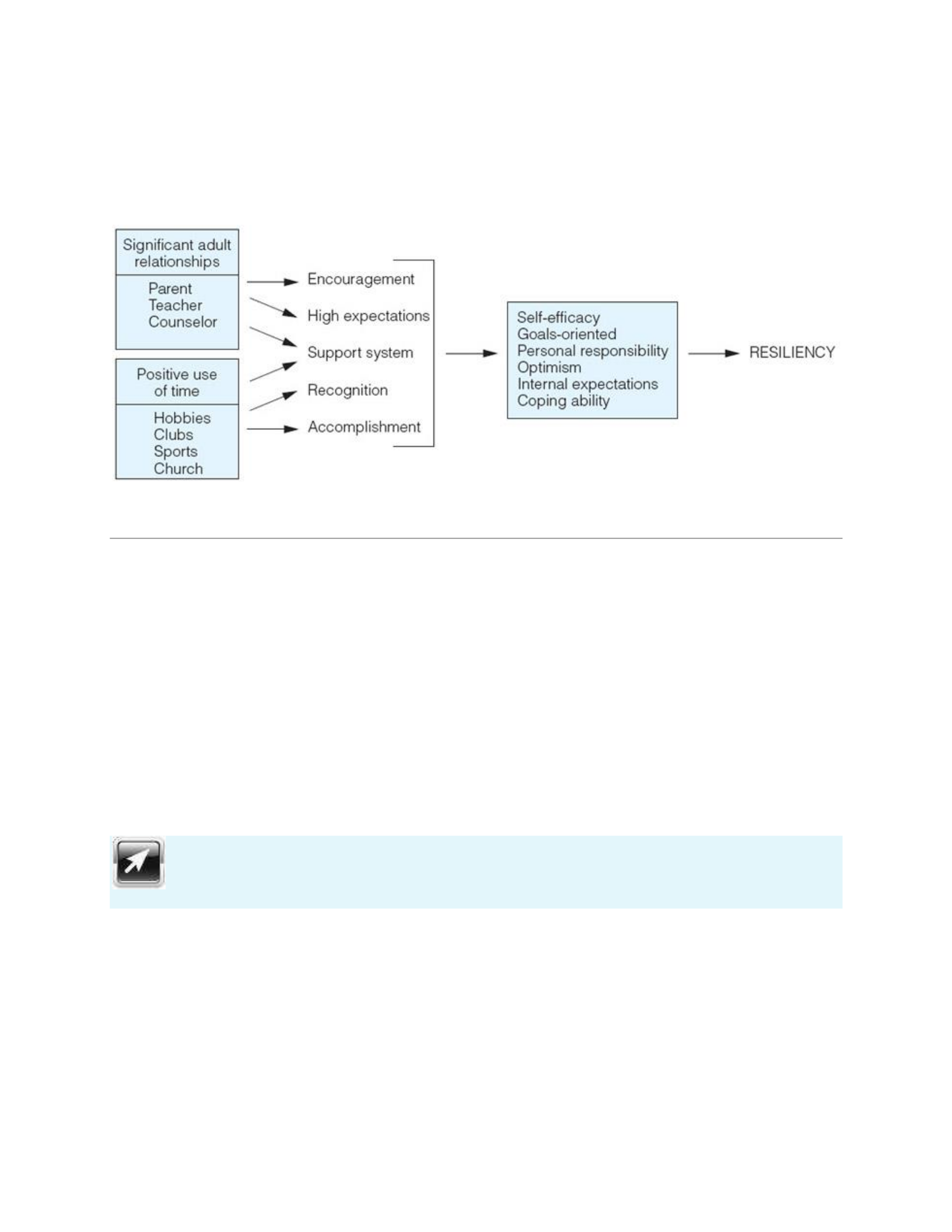
strengthening the home-school connection and academic performance. (Figure 11.1 depicts a model of factors
influencing resilient students, developed by McMillan and Reed, 1994.)
Harvey (2007) offers seven ways of promoting resilience in school settings: (1) provide a caring, supportive learning
environment; (2) foster positive attitudes; (3) nurture positive emotions; (4) foster academic self-determination and
feelings of competence; (5) encourage volunteerism; (6) teach peace-building skills; and (7) ensure healthy habits. (p.
12).
This chapter could not possibly present all the characteristics and problems associated with at-risk learners. Physical
and mental disabilities, substance abuse, and many other issues are beyond the scope of this textbook. However,
characteristics associated with at-risk learners and school failure that are critically linked to reading to learn are
relevant: low-socioeconomic environments, low self-esteem, issues concerning English language learners (ELLs),
and struggles with reading. These characteristics are not independent of one another. An at-risk student who speaks
English as a second language may come from a low-socioeconomic environment or have low self-esteem. Rarely is a
student at risk of school failure as a result of only one of these characteristics.
Using the techniques and strategies described in this chapter will not solve all problems with at-risk students. The
task is arduous and often frustrating for teachers, and no single set of strategies will solve such an overwhelming
problem. However, the PAR (preparation, assistance, and reflection) Lesson Framework and the techniques
explained in this text, along with much attention to the affective domain of teaching, are steps in the right direction.
Certainly, studies such as Borman and Overman's (2004)
FIGURE 11.1 A Conceptual Model of Factors Influencing Resilient Students at Risk From The Journal of At-Risk
Issues, Vol. 1, No. 2 (Fall 1994), Fig. 1, p. 32. Used with permission.
P. 326
look at mathematics students who “beat the odds,” and McMillan and Reed's (1994) interviews with resilient students
indicate that this is true. Resilient students often do not receive the support of parents and family and look to and
receive needed help from teachers or other school personnel (Lessard, Fortin, Marcotte, Potvin, & Royer, 2009).
Teachers must endeavor to enable this sizable group of failing students to become successful.
Students from Low-Socioeconomic Environments
These students usually come from impoverished neighborhoods and often score poorly on standardized tests. Their
families do not have much extra money for anything beyond food and basic clothing. Most of these students are
interested in school and are eager to learn but lack educational or cultural exposure outside the classroom.
By all accounts, far too many students in classrooms today suffer from the effects of living in poverty. The impact of
poverty on students’ lives is profound, and the consequences are complex. Pogrow (2006) decries the necessity for
school reform and a call to action:
We must confront the fact that, despite a century of alternating progressive and traditional reforms and despite the
unselfish and creative efforts of many in highpoverty schools and of the profession as a whole, such schools
generally remain highly ineffective in terms of their ability to reduce the learning gap or to accelerate their students
after the third grade (p. 233).
Please visit the Education CourseMate website at www.cengagebrain.com for a link to NCES, which
provides an excellent website where one can view study reports and charts that summarize data.
The conditions in poor students’ surroundings put them at serious risk of school failure. Low performance, seemingly
influenced by poverty, contributes to continuing literacy struggles for adolescents (Hinchman, Alvermann, Boyd,
Brozo, & Vacca, 2004). The differences between low- and middle-income homes indicate that poverty leads to many
fewer literacy resources for children (Neuman & Celano, 2001). “The problem of meeting students’ individual needs is
compounded in high-poverty schools by student mobility and absenteeism, which make it difficult for teachers to
establish continuity” (Pogrow, 2006, p. 225). Their literacy is at peril (Noll & Watkins, 2003).
In a now classic study, Adams (1990) reports that children raised in high-literacy homes may experience more than
1,000 hours of reading and writing activities before even arriving at school. Many students from low-socioeconomic
families come from homes characterized by oral literacy rather than books, magazines, and adults who read.
Although these are rich language experiences, they are not the ones many teachers assume that children possess.
Schools often fail to recognize the cultural and linguistic strengths of students from an oral literacy environment.
Children raised in middle or upper socioeconomic homes are often accustomed to print-rich environments
characterized by literacy materials such as newspapers, library books, periodicals, and computers, as well as cultural

experiences such as museums and theaters; access to such an environment may give children an advantage for
negotiating the discourse expected in classroom environments. For students living in poverty, the ways of talking and
responding learned in the home or community may conflict with or be a mismatch for the discourse expected in
school. Not being familiar with academic discourse may require an additional layer of learning for them and may also
serve as a source of tension between home and school communities (Williams, 2005, 2006). Such a disadvantage is
a high-stakes proposition. As Williams points out, “Access to power
P. 327
and cultural capital is why academic discourses that reflect the values of the dominant culture are the foundation for
most literacy pedagogy” (p. 344).
Even though communities in most parts of the country are becoming more diverse, such diversity of interactions and
relationships often do not exist in settings where there are many people of color (Seidi, 2007). Smaller concentrations
and less exposure to those of other cultures and socioeconomic levels may dilute or distort the differences and can
create the illusion that we are all the same in how we think, act, and believe. Thus, a teacher may mistakenly expect
that a student from poverty should respond to prompts, praise, admonitions, directions, and instruction in the same
way as those from middle- or upper-income homes. Some may also hold preconceived notions about poor students’
capacity to learn that may result in less effective instruction for them (Lazar, 2006). “A fundamental shift in teachers’
knowledge, skills, and assumptions about children in high-poverty schools and students who are culturally and
socioeconomically diverse is needed for the achievement gap to narrow” (Williams, 2006, p. 11).
Many students come to school with a future orientation—able to set goals and to set smaller subgoals to reach the
larger goals. Some students from low-socioeconomic environments, however, have not been exposed to and
therefore have not developed the traditional goal orientation associated with school achievement. These students
have had little experience with the type of success in which most teachers believe. Teachers must understand that
lack of goal orientation does not necessarily mean that these students are lazy; the teacher must try a variety of ways
to motivate them. Behavior management techniques that require the teacher and student to establish short-range
goals may help these students develop the skills necessary for successful school learning.
Instructional Guidelines for Working with Students from Low-Socioeconomic
Environments
Richard Rhodes, recipient of the Pulitzer Prize and the National Book Award for his 1987 book The Making of the
Atomic Bomb, suffered the effects of physical abuse and poverty during early adolescence. Rhodes survived with his
capacity to love intact because others not only cared but also acted. He cites several teachers who helped him.
Rhodes tells us: “Don't be a bystander” (1990).
The following guidelines will help teachers work with students from lowsocioeconomic environments:
1. Be sensitive to the conditions that may influence students’ behavior and achievements. Students from
deprived environments tend to have poor selfconcepts and low aspirational levels, to be tardy and absent frequently,
to be poorly oriented to school tasks, to display hostility toward school and authorities, and to resist or reject values
that are foreign to them.
2. Be aware of the effect of poor nutrition and health on learning. Students without sound diets and with health
problems are not likely to be able to concentrate and may lack the feeling of well-being that is essential to learning.
Teachers can work with families and community social service agencies to diagnose and address the diet and health
care needs of students.
3. Take action to change students’ lives for the better. Teachers should not be bystanders when they see
students who suffer from the consequences of poverty.
Many resources are available so teachers can help at-risk students: social service agencies that can address the
basic needs of families, including health care, shelter, nutrition, and counseling; youth agencies, such as Big Brothers
and Big Sisters, that can offer enrichment programs after school, on weekends, and during summers; and adult
tutors, particularly senior citizens, who can work with individual students. Timely teacher intervention can make a
decisive difference.
P. 328
Students with Low Self-esteem
The literature continually stresses the relationship between self-esteem and learning for at-risk students (Patterson,
2001). Lack of self-esteem manifests itself most obviously during adolescence, when students are in a state of flux,
constantly searching, focusing, and reevaluating themselves. Unfortunately, by the time some students enter middle
school, they have a negative self-image, viewing themselves as helpless and without control over their level of
achievement. They behave in ways that cause teachers to label them unmotivated, immature, uncooperative, and
even hostile. Although the behavior of these students may be inappropriate, it most likely reflects their distress at
facing failure in the classroom day after day (Hinchman, Alvermann, Boyd, Brozo, & Vacca, 2004).

Motivation is related to self-esteem. Motivation has been defined as the process of initiating, directing, and sustaining
behavior or as the force that causes the “arousal, selection, direction and continuation of behavior” (Biehler &
Snowman, 1997, p. 399). Motivation is viewed as a drive toward competence that is sustained and augmented by the
feelings of efficacy that accompany competent interaction with the environment (Connell & Ryan, 1984). Bandura
(1977, 2001) popularized the term self-efficacy—an individual's belief in her or his own effectiveness to cope with
given situations. Selfefficacy determines the degree and quality of effort and the limits of persistence of which an
individual is capable. It is more than self-esteem, which is a perception of self-worth; rather, it is what one perceives
about being able to achieve a goal.
Please visit the Education CourseMate website at www.cengagebrain.com for a link to an interesting discussion of
self-efficacy, including its history, definitions, and place in social cognitive theory.
Building Positive Relationships
The importance of teachers building positive relationships with at-risk students who have low self-esteem cannot be
stressed too much. Caring is real concern for the life and growth of the student. Knowledge is genuine understanding
of the students’ feelings even if they are not readily apparent. Respect is the ability to see and appreciate students as
they are. Responsibility means being ready to act to meet the needs of the student.
Brendtro, Brokenleg, and Bockern (1990, pp. 62–63) offer guidelines for building relationships that promote self-
esteem, including crisis as opportunity, caring, and earning trust. Think back to Chapter 2 as you read about these
characteristics.
CRISIS AS OPPORTUNITY
The struggling students who are most difficult to work with are those who create trouble rather than friendships.
These students are often labeled “hard to reach.” If a teacher waited for such a student to warm up, he or she might
wait forever. Many effective teachers have long recognized the great hidden potential of turning crisis into
opportunity, as in the following story shared by a high school teacher:
Rob entered first period class 10 minutes after the bell, looking disheveled and agitated. I asked for his late pass, and
he swore and stormed from the room. I stepped into the hall to confront him about his behavior but recalled our
discussion of “crisis as opportunity.” I called him back and asked simply, “What's wrong, Rob?” “What's wrong!” he
exclaimed. “I'm driving to school and my car gets hit. After I get through with the police, I'm late into the building and
get stopped by the principal. When I tell him what happened, he tells me to get to class. Now you send me out of
class!” He whirled around, starting down to the office. “Where are you going?” I asked. “To get a pass!” he replied.
“That's OK, Rob. Enough has gone wrong for one day; you're welcome in class.” His hostility melted in tears. After a
moment, he regained his composure and thanked me, and we went back in the room. (Brendtro, Brokenleg, &
Bockern, 1990, p. 62).
P. 329
Literature can give teachers a good view of at-risk learners and how to care for them; examples include Stand By Me,
the novella by Stephen King; Teacher by Tracy Kidder; Lives on the Boundary by Mike Rose; and I Hate English by
Ellen Levine.
The teacher in this example could easily have responded in a manner that would have alienated this student. Instead,
the teacher used this crisis situation as an opportunity for relationship building. When a teacher manages a crisis with
sensitivity, relationship bonds become more secure.
CARING FOR ALL STUDENTS
Struggling students—students who suffer from low self-esteem, those who are withdrawn, or those from a different
economic or cultural background—may not find others lining up to build relationships with them. These are the
students who are sometimes ignored or rejected. These students often believe that teachers are uncaring, unfair, and
ineffective. Teachers need to take affirmative action to enhance the standing of these students with their peers. Doing
this requires that teachers actively focus on identifying the strengths of these at-risk students. Harvey (2007)
recommends encouraging students to develop individual talents that will build feelings of competence and
confidence. Talents such as dancing, illustrating, or even rock climbing can provide multifaceted benefits that may
serve as a source of joy and help when dealing with stress.
Lipsitz (1995) points out that “we are not being respectful or caring when we fail to teach children to read, compute,
and write; nor are we respectful or caring when we hold different expectations for children because of their race,
gender, or economic status” (p. 666). It is common for children from adverse backgrounds to expect negative or
apathetic responses from adults based on their past experiences. Harvey (2007) emphasizes that if we hope “to
reverse this pattern, adults must deliberately, repeatedly, and genuinely communicate positive regard” (p. 11).
EARNING TRUST
Perhaps the central ingredient in building positive and effective relationships is trust. According to Brendtro,
Brokenleg, and Bockern (1990), trust between a student and teacher develops over time in three predictable stages:
Casing: In this stage, the student needs to “check out” the teacher. The student observes how the teacher behaves,
how much power the teacher wields, and how others respond to this adult. All of these observations are crucial data
to students who may view virtually all teachers and adults as threatening.
Limit testing: During this stage, the student will “test out” interactions with the teacher. A student who distrusts a
teacher's friendly manner may misbehave or provoke the teacher to determine whether this person is really different.
In this situation, the teacher should take a calm but firm approach to avoid either “giving in” or confirming the
student's view that this adult is really just like all the others and not to be trusted.
Predictability: The first two stages provide a foundation for developing a more secure relationship between the
student and the teacher. Consistency is important to building a trusting relationship. In such a relationship, each
party—the student and the teacher—knows what to expect from the other. In some situations when trust building is
difficult, it may be better for the teacher to simply acknowledge, “I know you don't feel you can trust me yet, and that's
all right.” It takes patience and persistence to build trust, and it is important to remember that trust begets trust.
P. 330
Guidelines for Working with Students with Low Self-esteem
Improving the self-esteem of students is a major concern of most teachers but especially for teachers of at-risk
students.
1. Focus on the strengths of students with low self-esteem. At-risk students typically have low self-esteem
because they have not been successful in school. These students, however, may have had many successful
experiences outside the classroom. With some discussion and probing, students often identify successful aspects of
their lives that they may not have recognized before. Spend time having students recall, write about, draw, and share
their past achievements. Teachers must plan instruction that allows students with low self-esteem to demonstrate
their strengths.
2. Make sure these students are given opportunities to read from materials that are within their reading
proficiency level. Students need to be successful in their reading in order to build positive self-concepts as readers.
This means that the material should be familiar enough so that the student can use sense-making strategies. When
readers continually have to deal with text that is too difficult, they expend their energy constructing a hazy model of
meaning and do not have the opportunity to elaborate on the content or strategies needed to enhance
comprehension.
3. Provide opportunities for students to engage in cooperative learning. As presented in Chapter 3, cooperative
learning promotes higher self-esteem, greater social acceptance, more friendships, and higher achievement than
competitive or individual learning activities. Cooperative learning experiences are beneficial for all students but
especially for those with low self-esteem. Students can be organized into small groups that are monitored and
rewarded for both individual and group accomplishments. Cooperative learning can be used in any content area, as
well as for reading and writing lessons and activities. The major principle of cooperative learning is that members of a
team can succeed only if all members of the group are successful. Students have a vested interest in ensuring that
the other group members learn.
What information in this section helps you to understand JaNette and would allow you to help students at
risk in your classroom?
As you read the information and strategies in the next few sections make notes for ideas important to remember
when teaching Gustavo, our ESL student.
English as a Second Language Students
Increasing numbers of students whose first language is not English arrive in classrooms daily (National
Clearinghouse for English Language Acquisition, 2010). ESL students are diverse members of our population, but
they are not necessarily at risk. Unfortunately, false assumptions are sometimes made when these children have
difficulty demonstrating knowledge and skills considered “normal” at the grade level in which they are placed when
they are assessed using traditional assessment measures (Williams, 2006). As a result, ESL students may be
inappropriately categorized, labeled, and identified for special education or alternative education. Many teachers do
not understand ESL students, so this section explains several issues that may affect their school performance. First
we introduce some important situations that have an impact on ESL students and their instruction.
Please visit the Education CourseMate website at www.cengagebrain.com to read a story about an ESL
student who “beat the odds” by graduating from high school in four years rather than needing extra time to manage
his new language and content requirements. Although his story is not typical, it is encouraging.
Families from other countries come to the United States for various reasons. Students who left their home countries
with families who purposefully chose to move, seeking a different way of life, are immigrants. Other families fled their
home
P. 331
countries because of unstable and dangerous conditions in their homeland; they might not have wanted to move but
left because they were no longer safe in their own countries. They are refugees. In either case, students might be
confused and intimidated by their new surroundings, but refugees may have more challenges to overcome.
What is the difference between an immigrant and a refugee? How might this difference influence how or how much a
student learns?
How well ESL students settle into their new environment depends on several factors. First, students should be
encouraged to feel proud of and retain their cultural heritage; when they integrate by maintaining their first language
and culture and integrating as necessary, they are acculturating to English and the new country. If they feel forced
to give up or deny their traditions, they may assimilate—or become much similar to others in this country—but lose
an important part of themselves. In the case of assimilation, students may begin to resent the forced choice and
develop low selfesteem. Students who can balance between the two cultures and find positive attitudes toward both
cultures will find it easier to acculturate.
What is the difference between acculturation and assimilation? How might this difference influence learning?
Stephen Krashen, an expert on language acquisition and its impact on learning English, developed a model that
many ESL teachers refer to frequently. In his monitor model, Krashen (1982, 1989) argues for a balance between
determinism and environmental factors as contributors to second language acquisition. His model includes five
hypotheses:
1. Any language is acquired unconsciously more than through direct learning. The power of acquisition ought
to be used more effectively in teaching ESL. For instance, less reliance on organized learning through workbooks and
more reliance on learner environment are necessary components of effective ESL instruction.
2. and 3. The next two hypotheses are interrelated. Learners monitor their learning, but they need sufficient time
to focus on form and specific knowledge of when to apply rules. Because these conditions are difficult to meet
during most communication—which demands quick responses—explicit rule teaching and error correction slow down
or impede progress. The natural order hypothesis suggests that language learners acquire language “rules” in a
natural, predictable sequence rather than by direct instruction. Grammatical features evolve despite a prescribed
sequence.
4. As a logical extension, natural communication seems to provide a relaxed setting for language
learning. Learners do best when language input is comprehensible and just beyond their current level of knowledge.
Krashen calls this comprehensible input “i + 1,” whereby i is input and 1 is the challenge level.
5. Socioemotional factors strongly influence language learning and may account for older learners who
master a second language despite the critical age factor. Krashen calls this the affective filter hypothesis; he
writes that this is the single most important variable in language learning. When the filter is high, it represents a tense,
highly anxious socioemotional climate, which impedes learning.
Revisit Principles 4 and 5 in Chapter 1 to refresh your memory about different versions of
discourse in students’ lives. Please visit the Education CourseMate website at www.cengagebrain.com to find a link
to the journal English for Academic Purposes. This journal features issues about discourse and helps teachers find
effective ways to communicate with ESL learners.
ESL students may learn an informal version of English before they learn an academic version. Cummins (1979, 1994,
2000) argued for a distinction between conversational language proficiency, which he labeled basic interpersonal
communication skills (BICs), and cognitive academic language proficiency (CALP), which is more formal
academic instruction. Learning English for conversational and functional purposes is less cognitively stressful and
more immediately practical than is learning English for academic purposes. This notion supports Krashen's fourth
hypothesis: natural communication in a relaxed setting is the best vehicle for learning English as a starting point for
ESL students.
P. 332
Several second language experts discuss the variable of time in language acquisition. Achieving conversational
proficiency might take approximately two years, but achieving academic proficiency might take as much as five to
seven years (Cummins, 1994; Thomas & Collier, 2003). Mora (2009) reports that English language learner (ELL)
students need about six years to reach a level of English proficiency. Leki (1992), an established expert on ESL,
wrote that time is the single most important factor in learning ESL; more recent experts echo this (Bult, Housen,
Pierrard, & Van Daele, 2008; Peregoy and Boyle, 2009). Helping students make the transition from a first to a second
language involves special attention to “linguistic bridges” that show the learner how the languages are similar and
different (Gibbons, 2003). The process takes time.
Please visit the Education CourseMate website at www.cengagebrain.com to find a link to a website that
discusses the amount of time required to learn a new language.
English Language Learners
Some ESL students have little difficulty learning English, perhaps because of positive acculturation, facility with
academic English, previous experiences, and time to practice English; however, many have difficulty. PL 93-380
(enacted in 1974) stipulates that there be provisions for bilingual education in virtually every aspect of the educational
process. This law recognizes that students with limited English proficiency (LEP) have special educational needs and
requires that teachers take into account the cultural heritage into which each student was born (Harris & Smith,
1986). The Office for Civil Rights Memorandum (1991) is intended to ensure that schools comply with Title VI of the
Civil Rights Act, requiring them to provide language programs so that minority students with LEP
“have meaningful access to the schools’ programs.” And in 1994, PL 103-382, Improving America's Schools Act,
reauthorized Title VII to fund initiatives and programs to meet the educational needs of culturally and linguistically
diverse students. Considering these laws and with demographers continuing to predict increasing numbers of
immigrant and refugee students from Central and South America, western Europe, and Asia, teachers must consider
how instruction can be modified to meet the special needs of those with LEP.
Please visit the Education CourseMate website at www.cengagebrain.com to find a link to the “Policy
Update on Schools’ Obligations Toward National Origin Minority Students With Limited English Proficiency (LEP
students).”
Many issues have an impact on effective instruction for ELL students. The term cultural discontinuity (Cholewa &
West-Olatunji, 2008; Ledlow, 1992; Lovelace & Wheeler, 2006) describes the serious internal conflict brought about
by a disparity between the language and the culture of the home and of the school. Both immigrants and refugees
may experience a language and cultural environment in the home that differs significantly from the language and
cultural environment of the school. The differences may be so pronounced that, for some students, there is serious
conflict. A student may be placed in the position of having to choose between the school's or the home's language
and culture. Such a choice is counterproductive to the educational development of the student. Rejection of the home
background may result in a serious loss of self-esteem, and rejection of the language and culture of the school may
result in a serious loss of educational opportunities (Williams, 2005, 2006). This dilemma is called culture
shock. When learners are refugees, the rejection is compounded by a deep sense of loss and guilt about fleeing,
often called survivor guilt.
Please visit the Education CourseMate website at www.cengagebrain.com to find a link to articles by
Katherine Au about CRI.
Teachers should learn about the different cultures represented in their classrooms and provide instruction that
encourages acceptance of native languages and cultures while facilitating the learning of English (Au, 2001; Mohr,
2004). When teachers understand cultural and language differences, they can create examples and analogies in
lessons to clarify meaning for students. Such lessons build community and respect within the classroom. When
teachers prepare lessons, it is important that
P. 333
they pay attention to vocabulary, figurative language, and multiple-meaning words that may cause confusion so that
appropriate background can be built. Making these considerations (among others) is culturally responsive
instruction (CRI):
Successfully teaching students from culturally and linguistically diverse backgrounds—especially students from
historically marginalized groups—involves more than just applying specialized teaching techniques. It demands a
new way of looking at teaching that is grounded in an understanding of the role of culture and language in learning.
(Villegas & Lucas, 2007, p. 29)
Please visit the Education CourseMate website at www.cengagebrain.com and read Nagel's (2002)
article about the ABCs of the cultural and communication model.
Differences among cultures related to social style and attitudes also have implications for instruction. Past studies
(Downing, 1973; Downing, Ollila, & Oliver, 1975; Heath, 1986; Schieffelin & Cochran-Smith, 1984) as well as current
ones (Ma'ayan, 2010; Perry 2008) confirm that students from non–school-oriented cultures do not have the same
literacy skills as students from school-oriented cultures. The value and utility of literacy in the culture, particularly in
the home environment, influence the development of literacy skills (Sheets, 2005).
One model that can raise cultural awareness levels of both teachers and students within a classroom or school
community is the ABCs of cultural understanding and communication, developed by Schmidt (1998) (see Activity 11.1
for an example that could be used in a social studies classroom). Everyone has a life story, and this gives us
permission to thoughtfully consider and tell that story, learn about the stories of others, and discover in what ways we
are alike and different. The steps of Schmidt's model are adaptable for a variety of grade levels. This type of
experience helps students
ACTIVITY 11.1: Model: ABCs of Cultural Understanding and
Communication for Middle or High School Social Studies
1. Autobiography: Students can talk with family members, reflect, and record events that have shaped their own life
stories. They can include descriptions of personal, educational, athletic, or other accomplishments; special family,
holiday, and religious traditions; successes and disappointments; and even accounts of family or ancestral
milestones.
2. Biography: Students select and interview someone from a culture other than their own. Depending on the
confidence and ability of the students, these interviews could be unstructured or semistructured. In small or large
groups, students could brainstorm possible questions to select from, modify, or add to for an interview framework.
The interview could be recorded and conducted over more than one sitting. After the interview is completed, students
write a biography, including key events and important details to best describe the individual and his or her culture.
The student should then give the person interviewed the opportunity to read what was written to clarify or correct
misinformation or misinterpretations.
3. Cross-cultural analysis and appreciation of differences: Students consider and chart the similarities and differences
between their own life stories and those of the people interviewed. This can be done independently or with the people
interviewed.
4. Cultural self-analysis of differences: Students reflect on and react to the findings in the chart created in Step 3. As
differences and similarities are uncovered, students think about their feelings of comfort or discomfort and examine
the causes. The results can be written or simply discussed.
5. Communication and home–school connections: Findings and understandings resulting from previous steps can be
used to modify classroom activities and communication with the home and community to build relationships and
acceptance.
Adapted from Nagle's ABC model, Building cultural understanding and communication: A model in seven
situations. Reading Online, 6(4). 2002.
P. 334
better understand their own and others’ cultures. Nagel (2002) found that when she paired students in the classroom,
they discovered that they had much in common with their partners, as well as many interesting and admirable
qualities they had not known about each other. The assignments in Activity 11.1 build awareness and appreciation of
many cultures. Students learn to listen with a caring attitude and come to value new perspectives and viewpoints by
seeing the world through another's eyes.
School Programs for English Language Learners
When ESL students arrive at school with some proficiency, but not fluency, in English, they are often labeled as
limited English proficient (LEP) or as students with limited English proficiency (SLEP). Also, some designate these
ESL students as “speakers of other languages.” However, a more recent and less deficit-implying term is ELL.
Two types of programs are prevalent in American schools for ELLs: an ESL or teaching English to speakers of other
languages (TESOL) approach or a bilingual approach. These programs are usually conducted by a specialist in
teaching ESL. When students receive language instruction in special programs, classroom teachers should be aware
of what the specialist is doing and monitor student progress to ensure that students receive adequate classroom
opportunities to develop English, reading, and writing skills (Mohr, 2004).
The first type of program is ESL or TESOL. Instruction in English progresses from oral skills (listening and speaking)
to written skills (reading and writing). The methodology emphasizes English language skills and learner-centered
activities that stress meaningful communication. ESL or TESOL is somewhat similar to programs that teach English-
speaking students a second language. Whereas the latter usually focus more on CALP, the former focuses on basic
communication. The main goal of ESL or TESOL is to help students attain the language skills needed for success in
school as quickly as possible. Most ESL and TESOL programs now include not only oral but also reading and writing
skills. The goal of ESL and TESOL classes is to move students to the regular classroom as soon as possible. Many
ESL and TESOL classrooms have learners from 10 or more different countries, and the only common language is
English.
The second type of program is bilingual education, which provides instruction in both English and the native
language in the same classroom. Separate instructional periods are provided, one in English and one in the students’
native language. In a variation of this approach—transitional bilingual education—bilingual teachers begin instruction
in the students’ native language and gradually introduce English. A review of the history of bilingual education
indicates that this approach can be very effective (Rothstein, 1998; Thomas & Collier, 2003). Of course, it works only
when all learners speak a common language and need to learn English as their second language. Teachers must be
aware of the view of the community and school system concerning bilingual education. In some communities, parents
may feel strongly that their children's education should emphasize bilingual competence; in other communities,
parents want their children to speak and read only in English.
Instructional Guidelines for Working with English Language Learner Students
Sheltered content instruction focuses on “teaching subject matter through the principles of second language
acquisition” (Russell, 1995, p. 30). Russell advocated making
P. 335
sure that ELLs learn content along with learning English. The Sheltered Instruction Observation Protocol (SIOP)
developed by Echevvar1a, Vogt, and Short (2008) is intended to coordinate language instruction in content area
teaching. SIOP is similar to PAR in that it incorporates preparation; instruction that builds background, explanation,
strategies, and interaction; plus practice and review.
Go to CourseMate to view a video that can help you understand how helpless a middle school ELL student and her
teacher feel, and how the teacher patiently works to find ways to help the student learn English.
When ELL students are included in regular classrooms, teachers of content subjects will also be their instructors. In
consultation with the ESL teacher, they can prepare effective lessons. Bauer, Manyal, & Cook (2010) describe how to
design content lessons that incorporate language.
For instance, when studying in science and learning to follow steps in an experiment, students should tune in on the
words that identify sequence, such as first, next, and then. Mohr and Mohr (2007) recommend that teachers
proactively scaffold classroom talk for ESL students to encourage language and content. Their response protocol
offers specific examples and ways for building language skills within the general classroom. To avoid instructional
traps when working with ELL students, teachers should keep the following guidelines in mind:
1. ESL students should be assessed and placed in appropriate programs. Specialists should perform this kind of
assessment and communicate with content teachers. Furthermore, teachers should maximize ELL learning
opportunities (Mohr, 2004).
Culturegrams—brief descriptions of a culture—can be obtained by visiting a country's embassy website or
by linking to sites we recommend on the Education CourseMate website at www.cengagebrain.com .
2. Teachers should become as knowledgeable as possible about the native cultures of students (Bauer,
Manyak, & Cook, 2010). Teachers should ask the following questions: Is a student's native culture literate? What is
the common method of instruction in this native culture? Are the relatives living in the present home literate in
English? Is English spoken in the home? Is reading (in any language) a part of their home activities? It is relatively
easy for a teacher to determine answers to these questions by interviewing the student, parents, relatives, or other
members of the culture. Using local reference sources such as community groups, libraries, and knowledgeable
professionals can also provide insights about other cultures.
3. Teachers should model how oral language ability precedes reading. Students can read what they can say and
understand. Accordingly, students should begin reading instruction in their native language, or they should receive
instruction that focuses on language development before formal reading instruction.
4. Whenever possible, use reading materials for instruction that reflect the backgrounds and cultures of
students by supplementing existing materials with literature about the native cultures represented in the classroom
or reading aloud from books that feature minority cultures. Students can be encouraged to contribute proverbs,
recipes, and stories from parents and grandparents that can be used as the basis for experience stories (see Activity
11.1).
5. Create learning situations in which students can develop a sense of security and acceptance. Language
proficiency is developed through oral and written activities that direct students’ attention to significant features of
English. Students can gain fluency in English by working with proficient English-speaking peers, learning key phrases
for school tasks, and reading predictable texts.
Use threaded discussion boards to facilitate practice in meaningful use of English in the content context
(Bikowski & Kessler, 2002).
6. Use thematic units (see Chapter 6) and literature so ELL students can explore their own identities as they
learn about content (Vann & Fairbairn, 2003; Vyas, 2004). Use group or partner work so language and content are
integrated in an informal manner (Bauer, Manyak, & Cook, 2010; Ogle & Correa-Kovtun, 2010).
P. 336
7. Practice patience. Time is the single greatest factor influencing success for ESL learners; they need time to
acculturate, learn language, and apply that learning to the act of reading. Teachers need to be willing to provide ELL
students enough time, to get to know them, to consult with them often, and to adapt their curricula as needed.
Instructional Misconceptions about English Language Learner Students
It is easy to fall into the trap of believing that teaching ELL students is just a matter of good teaching. Harper and de
Jong (2004) explain four commonly held misconceptions:
1. Exposure and interaction will result in English language learning. Although daily exposure and opportunities
for verbal exchange are important for language development, they are not sufficient. Social interchange with native
Englishspeaking peers in small-group exercises is frequently reduced to one- or two-word exchanges that limit
language development. Frequent practice and appropriate feedback are needed to extend and develop both
language and content development.
2. All ELL students learn English in the same way and at the same rate. Young learners often readily develop
social language skills as they work on building their understanding of more formal academic language. Learners who
have well-developed academic language skills in their first languages may instead learn to read and write formal
English first as they grapple with affective and sociocultural issues experienced by adolescents. The rate is as
individual as it is with other skills and concepts.
3. Good teaching for native speakers is good teaching for ELL students. Although good research-based
instructional strategies used with native speakers are important for ELL students, the demands imposed by the terms
and language inherent to the subject or topic, as well as the procedures for activities and assignments, must be
recognized and reconciled.
Although strategies that work well for native English-speaking students may also work well for ELL students, teachers
should give additional consideration to particular needs and instructional demands posed by language.
4. Effective instruction means nonverbal support. Although visuals and graphic organizers can be valuable tools
for decreasing the language demands of instruction, care should be taken as well to use nonverbal aids as a means
to encourage vocabulary and concept development.
Techniques That Work Well with English Language Learner Students
The majority of techniques and approaches that ESL experts propose are centered around language arts, of course.
These approaches use some of the strategies that we stress throughout this book, such as cooperative learning,
response journals, higher level thinking skills, use of visuals to teach vocabulary and concepts, directed readings, and
use of predictions in reading. As discussed in Chapter 8, writing is an excellent tool for content teachers. Cook and
Gonzales (1995) suggest that ESL students be encouraged to visualize and manipulate literature they read because

“second language learners need a social context for both understanding and producing English.” Although such
activities are not new—visualization through drawing is similar to postgraphic
P. 337
ACTIVITY 11.2: Group Frame for Elementary Mathematics
Dictation from Students
Dictation from Students
We use a series of steps to solve a
problem.
Usamos una serie de pasos para resolver un
problema.
We can make a chart showing how we
solved the problem.
Podemos hacer un esquema que nos muestra cómo
resoldimos el problema.
The answer to the problem should be at the
end of the chart.
La solución del problema debería estar al final del
esquema.
Revised Dictation
Revised Dictation
A series of steps to solve a problem is
called an algorithm.
Una serie de pasos para resolver un problema se
llama un “algorithm.”
The picture of this is called a flowchart.
El diagrama se llama un “flowchart.”
Shapes of things in the flowchart tell you
something.
Las formas de los pasos en el esquema te indican
algo.
organizers—they encourage students to use what they already know in making connections to the new language and
culture.
The group frame from the guided language experience model is recommended for reading and writing and is directly
applicable to content area material (Brechtel, 1992). Using this strategy, the teacher takes dictation (pertaining to the
content area) from the class and records the information on a chart. This information is used to model revising and
editing for the group. The revised dictation is reproduced and used for the reading lesson. Activity 11.2 shows a
group frame from an elementary mathematics lesson about flowcharts and algorithms. In this example, the teacher
can begin with the child's native language (in this case, Spanish) or start with English and dictate later in the second
language.
A modified anticipation guide (Activity 11.3) provides more hints or visual elements and can net very positive results.
A group of 10 adult ESL students (seven men and three women) from Vietnam, Egypt, Bangladesh, China, El
Salvador, Colombia, and Hong Kong, reacted to the statements shown in Activity 11.3. First the teacher presented
the statements to encourage reading in English. Class members discussed their opinions based on their experiences
in the United States. After discussion, a passage about an American family was read. The students were eager to
volunteer information and were interested in finding out about family life in each other's cultures as well as in the
United States. The teacher noted that she had fewer requests to explain the vocabulary during the reading time, and
she speculated that approaching the passage with a good idea of the concepts helped the students use context clues
to make sense of unfamiliar vocabulary. This activity engaged ESL students in listening, speaking, and reading in
English, and it respected their various cultures.
Ogle & Correa-Kovtun (2010) suggest “Partner Reading and Content Too” (PRC2) to support ELLs as
they practice literacy skills while learning content. Students should have similar reading levels, share a textbook, and
use silent and oral reading as they discuss and share content. In PRC2, a lot of rereading occurs; enough time for
previewing and rereading is available. The climate is friendly and comfortable for students. Ultimately, partners
participate in whole class discussion.
P. 338

ACTIVITY 11.3: Modified Anticipation Guide for English as a Second
Language Adults
MOST MARRIAGES LAST A LONG TIME
Most students believed that marriages in the United States do not last a long time. Discussion turned to the question:
“What is a long time?” The students decided it meant a lifetime. We talked about divorce in the United States and
how divorce is viewed in other cultures.
TELEVISION IS BAD FOR CHILDREN
Although the class generally disagreed with the statement, several students commented that television can be both
good and bad for children. We talked about the need for parents to be selective and to monitor programs. Watching
TV is one way to learn English.
WOMEN ARE EQUAL TO MEN IN THE UNITED STATES
Most students agreed that women are equal to men in the United States. After much laughter, the Vietnamese men
commented that American women seem to be superior to American men because they always get to go first!
WORKING MOTHERS NEGLECT THEIR CHILDREN
This statement generated the most controversy and debate among the students. The student from Egypt believed
that mothers needed to be with children for long times; other students brought up the idea of quality time.
Developed by Karen Curling.
Multitext activities are especially important for ESL learners. When books are provided at many levels and on many
topics, ESL learners have opportunities to select, read, reread, and practice (Ogle & Correa-Kovtun, 2010). Hadaway
and Mundy (1999) share how they used picture books about science topics to create compare/contrast maps, poetry,
semantic maps, and jot charts with secondary ESL students. Watching videos and movies and then discussing the
content and American culture depicted in them is a good way to combine oral and written media (Pally, 1998).
Multimodal resources, as presented in Chapter 6, are especially good bridges to success for ELL students.
Rance-Roney (2010) guided her students—pre- and in-service teachers—in creating digital storytelling via iMovie.
These “digital jump-starts” (p. 386) used imagery to develop prereading schema, facilitate vocabulary, and provide
factual information. Thus, ELLs could read challenging text. Smythe & Neufeld (2010) report their observations of a
podcast project that gave seventh graders a nontraditional way to learn content. Although success was somewhat
limited when measured by traditional means, ELLs gained both language skills and content information.
What information in this section can help you to understand Gustavo and would allow you to help ESL learners in
your classroom?
Podcasting as a Bridge to Success
To Record and Publish: Use iMovie, PowerPoint with Voice, or Mac Garage
Band or Audacity
To Do: Read challenging text and report about it digitally.
Time Commitment: Unit combining several lessons; can be used over and over!
Why Do It? Timeshifting → Anytime learning
Values: Practicing language skills; using comprehension, imagery, and writing; repeated listening and learning with
familiar devices; creativity
P. 339
Reading Instruction for Struggling Students
Proficiency in reading stands at the center of academic learning. Students who struggle in reading avoid reading at all
costs. Such students read when instructed to do so but only to “get through” the assignments. Negative perspectives
toward book reading and low expectations for themselves are common among these students. Vlach and Burcie
(2010) explain that struggling readers “expect rejection” and even invite it. Some choose to withdraw and become
“invisible,” and others act out in frustration. Bad behavior and poor reading habits are difficult to break. Often, these
students adopt a “poor” reader identity and a defeatist attitude that affect both in-school and out-of-school behaviors
(Greenleaf & Hinchman, 2009).
Why would students invite rejection?
The earlier work of Allington (1991) and of Pallas, Natriello, and McDill (1989) suggested that improving the teaching
and learning of struggling students does not result from special remedial programs. Scripted and highly structured
programs may help students learn decoding and some of the basic skills, but such programs make few or no
allowances for individual needs or differences (Pitcher, Martinez, Dicembre, Fewster, & McCormick, 2010). When the
focus of instruction does not go beyond decoding and literal questions, “this surface-level approach to reading does
not teach students how to engage or interact with text” (Dennis, 2010, p. 284). Greenleaf and Hinchman (2009) and
Pitcher et al (2010) found that the source of reading problems for struggling adolescent learners is more often related
to aspects of comprehension associated with understanding specialized vocabulary, background knowledge, and the
organization of texts. Deep thinking necessary for problem solving and analytical reasoning involves dynamic
processes beyond formulaic drill and practice. Techniques such as those listed in Table 11.1 can change the reading
patterns of many students who are experiencing difficulties. Using a think-aloud, a teacher can model, explain steps
in detail, and provide clear purposes for using strategies to help students understand the importance and appropriate
use of each strategy before, during, and after reading a story or text (Kamil, Borman, Dole, Kral, Salinger, &
Torgesen, 2008).
Comprehension Monitoring
Because they lack experience in constructing meaning, struggling learners read words passively instead of actively
questioning their understanding (Walker, 1990, 2003). When readers begin to scrutinize their comprehension
processes and actively evaluate and regulate them, comprehension monitoring occurs. Comprehension
monitoring is the conscious control of one's own level of reading comprehension (Brown, 1980). Struggling learners
need frequent feedback that is detailed enough to encourage indepth thinking and risk taking (Kamil et al, 2008).
Selecting materials that challenge without frustrating learners serves to help with this process and to keep them
moving forward. It is well worth the effort to model how to reflect on the learning process, asking oneself: “How did I
learn this? What did I do well? What do I still need to work on?” These readers just need to think about their own
comprehension and learn to recognize when it falls apart. This awareness of processing allows readers to take
remedial action to rectify comprehension failure.
Please visit the Education CourseMate website at www.cengagebrain.com to find the website for
EurekAlert. Read the article “Warm-blooded Giants of the Ancient Seas” about scientists’ conclusions from the
oxygen levels in reptile teeth: Similar to certain modern ocean reptiles, some ancient ocean reptiles may have had
“homeothermic” capabilities. Compare the article to the Text Mapping Plus example in Activity 11.4. Would mapping
help you retell the key ideas in this article?
One strategy that can assist students in thinking about their comprehension is Text Mapping Plus, a strategy
developed by Lapp, Fischer, and Johnson (2010) to support students in recalling and retelling what they have read.
Retelling offers a venue for reflecting on the reading and organizing the main points to explain the essence of the
story, article,
P. 340
TABLE 11.1 Becoming a Self-Regulating, Strategic Reader: An Incomplete List of What to Do
When
Prereading
Reading
Postreading
As you select or consider a text …
Now that you're in the
midst of it …
Now that you have read the
entire text …
Consider your purpose:
Consider the assigned purpose.
Develop a self-selected purpose.
Predict, monitor, and
regulate:
Anticipate the “next
Deepen your sense of the text:
Pose new questions, revisit
same text.

TABLE 11.1 Becoming a Self-Regulating, Strategic Reader: An Incomplete List of What to Do
When
Prereading
Reading
Postreading
Pose umbrella questions.
Consider what you bring to the
text:
Recall the key players.
Recall the key point of view.
Recall the key jargon or vocabulary.
Recall key facts, concepts, and
relations.
Search for gaps in your
understanding.
Find the outer limits of your own
knowledge.
Create a framework (e.g., web,
outline).
Consider what the text offers you:
Will it support your purpose?
Preview title and overall focus.
Preview the table of contents,
headings, subheadings.
Preview pictures and graphics.
Preview organizational patterns.
Preview author's biography.
move.”
Anticipate relationships
among concepts.
Ask if it is making sense.
Read to confirm or
reject.
Adjust your reading
pace.
Look back in the text.
Look forward in the text.
Look inside your
thinking.
Plan for gist or
summary retrieval:
Attend to key
vocabulary.
Attend to textual and
graphic cues.
Attend to the author's
style and angle.
Select important ideas or
delete trivia.
Make connections within
the text.
Make connections
outside the text.
Summarize segments, if
needed.
Reduce the information
(e.g., web).
Visualize the
relationships.
Discuss or debate it with
someone.
Write about it.
Search for its significance or
impact.
Reduce or summarize it.
Rehearse and study it.
Find a place in your mind for
the text:
Assess it in light of original
purpose.
Place this author among others.
Place this text among others.
Extend your thinking along the
same purpose or question.
Develop a new purpose or
question.
TABLE 11.1 Becoming a Self-Regulating, Strategic Reader: An Incomplete List of What to Do When From
O'Flanahan, J. F. & McDonell. G. M. (1990). Is practice keeping pace with research? Reading in Virginia, XV, 1–9. Reprinted
with permission of the Virginia State Reading Association.
or other type of text. Although the format and retelling of a story may be quite familiar to students, recalling key ideas
from a nonfiction selection involves understanding very different organizational structures (e.g., cause and effect,
sequence of steps, time order, classification). Text Mapping Plus provides a framework for jotting down important
terms and adding symbols, sketches, or clip art. The arrangement of the content words and visuals, along with
connecting words for recalling relationships, provides students support when recalling the passage. Modeling,
guidance, and practice are critical to the success of this strategy. Visual and directional components can help
struggling students grapple with the meaning, explanation, and personal connections important for understanding the
concepts to be learned. See an example of this strategy in Activity 11.4.
What information in this section helps you to understand Mark and would allow you to help struggling readers in your
classroom?
Ivey and Broaddus (2000) encourage teachers to “tailor the fit” of their instruction by being responsive to the needs
and interests of their students. Dennis (2010) stresses the need to recognize and make use of the strengths and
cultural capital struggling students bring to the classroom for designing meaningful instruction.
Differentiation for Struggling Learners
Please visit the Education CourseMate website at www.cengagebrain.com to find tips and example
instructional units to help with differentiation.
An already full instructional schedule and high-stakes assessment pressures have teachers feeling overwhelmed by
expectations and responsibilities. Teachers sometimes mistakenly assume that differentiating instruction to address
various needs and learning styles means creating separate and multiple ways for teaching every concept (Carolan &
Guinn, 2007). But differentiation for these students can be accomplished in small and subtle ways using student
interests, cultural backgrounds, flexible grouping, visual
P. 341
ACTIVITY 11.4: Text Mapping Plus for Elementary/Middle School Science
Warm Blooded Giants of the Ancient Seas?
Text Map Plus based on the online article, “Warm-blooded giants of the ancient seas?” posted on the EurekAlert!:
Science Reporting for KIDS! website sponsored by the American Association for the Advancement of Science.
and tactile experiences, and peer discussion that fit naturally into a lesson (Kelley & Clausen-Grace, 2009).
Tomlinson (2005) explains that “in effectively differentiated classrooms, teachers use a variety of graphic organizers,
reading materials at different levels of complexity, direct instruction in small groups, curriculum compacting, upfront
teaching of vocabulary to support reading success, and so on” (p. 10).
Please visit the Education CourseMate website at www.cengagebrain.com to find a link to EurekAlert!
It is often easy to incorporate topics of student interest without sacrificing specific skills, strategy, and concept
objectives. Research has shown that effective teachers create a safe environment, use consistent routines, and set
high expectations for all learners (Kamil et al, 2008; Lazar, 2006; Lee & Spratley, 2010). Lee and Spratley
recommend key components for successfully integrating content and literacy strategies:
1. Ensure that students understand that reading is a “meaning making” process.
2. Build in ways of helping students make sense of the text while they are actively engaged in reading.
3. Use gradual release to provide appropriate support as students gain confidence and proficiency to become
independent readers.
4. Provide a variety of discipline specific readings and related activities that develop understanding of the concepts
while developing strategies “good” readers use.
5. Use classroom discussion to encourage students to explain how their thinking and use of strategies helped them to
understand and learn from the texts and tasks related to the discipline.
Please visit the Education CourseMate website at www.cengagebrain.com to find links to sites that offer
interesting news stories related to various content areas.
P. 342
Well-developed discussion can serve to motivate and actively engage struggling learners while positively impacting
their comprehension and learning (Kamil et al, 2008). Sustained interaction that probes or explores a topic in depth
elicits greater understanding than brief “question–response–move on” types of teacher–student talk. Open-ended
questions that can have multiple answers followed by prompts that ask students to defend or explain their answers
can reveal misunderstanding and clarify meanings. Provocative texts that can often be found on the Internet,
accompanied by “I wonder” and “What if” kinds of questions, can energize and enrich topics of study in any of the
disciplines. For these types of discussions to be effective with struggling readers, the environment must be one that is
supportive and encourages risk taking. Students need to believe that mistakes are learning opportunities, not times
for derision or “put downs.”
Forgan and Mangrum (1997) remind content teachers that there are many possible causes of reading failure. They
use the acronym PLEASE to remind teachers to consider:
1. Physical factors may have caused difficulties, such as poor vision, hearing, or health at an early age.
2. Language problems or delays may cause a child to fall behind in development.
3. Environment—the home or the community—may not stress literacy or may distract from learning.
4. Aptitude may be over- or underestimated, causing lower or higher expectations than are fair.
5. SES may influence the will to learn; interests and attitudes may conflict with learning.
6. Educational factors may play a role—for example, poor educational facilities, teachers without the proper
background, or lack of materials.
Use PLEASE to help guide understanding of struggling readers.
Steps for Content Teachers
To help struggling readers, the first step is for content teachers to consult the reading specialists in their schools. Yes,
every school should have a reading specialist on board! According to Tatum (2004), the reading specialist should be
ready to assess students who are struggling and share assessment results along with suggestions that incorporate
appropriate strategies within content classrooms. Also, this specialist can assist by selecting and demonstrating
curriculum materials and resources that aid content teachers. Dole (2004) suggests that reading teachers should
coach teachers in how to teach reading within their subject areas.
Second, content teachers need to understand how their students view literacy. The story of Jacques (Knobel, 2001)
provides a sobering illustration. Jacques declared that he was “not a pencil man” (p. 407). He used many avoidance
strategies, such as fooling around to distract attention from the reading task assigned; remarking on “how boring” the
assignment was; and not listening—or pretending not to listen. When teachers realize what these avoidance
behaviors might be, they can counter them with relevant use of text and activities that pull these “nonpencil” students
into literacy.
Third, when teaching struggling learners, content teachers need to ask hard questions and seek answers rather than
abdicating responsibility. Ganske, Monroe,
P. 343
and Strickland (2003) pose some of these hard questions and provide brief responses. One question posed is: “Why
don't students come to each grade level more prepared?” (p. 126). The answer is not easy, but the authors point out
that early literacy experiences (see Chapter 1), background knowledge (see Chapter 3), choice of materials used in

classrooms (see Chapter 6), and difficulty of tests (see Chapter 12) are all contributors. The next section provides
some specific suggestions to address some of the needs of struggling learners.
Strategies for Struggling Readers
REQUEST
Manzo (1969) describes a questioning strategy called ReQuest that encourages students to ask informed questions.
This procedure has worked and continues to work especially well in a remedial situation or with poor readers (Jones
& Leahy, 2006; Whalon & Hanline, 2008). The key to this technique is that it requires students to “open up” their
thinking—to question and think critically. A short selection is read, usually a paragraph, which is quite manageable for
a struggling reader.
With this technique, the teacher and students first read silently a selected portion of the text (usually one or two
paragraphs). The students then ask the teacher questions about what they read. The teacher must keep the book
closed during this phase. When the students exhaust their questions, the teacher begins asking questions. During
this phase, the students must also keep their books closed. The activity can be repeated with other paragraphs as
time allows. The teacher then sets purposes for reading the remainder of the lesson, referring to the questions asked
and information received during the ReQuest.
How would you adapt ReQuest for your content area?
Because Manzo (1969) had remedial readers and small groups in mind when designing ReQuest, some
modifications for the content class are in order. The teacher should probably select a small but representative portion
of text and not try to use ReQuest for a long period. The teacher also might want to limit the questioning time. It is
likely that students’ questions will be mainly literal; the teacher can then concentrate on inferences and applications. If
ReQuest is used often, students will readily adapt to asking more sophisticated questions. After focusing on listening,
speaking, and reading in this activity, teachers can follow the same steps using written rather than oral questions.
Written questions tend to be more intricate than oral questions and thus enhance students’ levels of sophistication
with writing as well. The results of a sixth grade mathematics teacher using ReQuest are reported in Activity 11.5.
Ciardiello (1998) added a training model to ReQuest that encourages formal questioning. In Stage 1, divergent
questions are identified; in Stage 2, divergent questions are classified; and in Stage 3, divergent questions are
generated. The model enhances ReQuest by enabling struggling readers to comprehend at higher levels.
For follow-up, students received an ordered copy of the clues, which they cut apart and then pasted in correct
sequence again. The teacher found that her students, often distracted, paid attention and participated
enthusiastically. She thought that their understanding was greatly enhanced.
MYSTERY CLUE GAME
The mystery clue game, described in Chapter 4, is useful for helping students understand the sequential listing
organizational pattern. Because this activity is particularly
P. 344
ACTIVITY 11.5: ReQuest for Middle School Mathematics
ReQuest was used to introduce the chapter about integers. Students read the first two pages of the chapter and then
asked the teacher questions directly pertaining to those pages. The students referred to their pages, but the teacher
could not. After two minutes, the teacher had students close their books, and she asked questions. The teacher
explained that even students who are often reluctant to participate joined in for this “stump the teacher” opportunity.
Their engagement resulted in increased comprehension compared with previous lessons.
STUDENTS’ SAMPLE QUESTIONS
What was the coldest temperature recorded in the United States? (–80°F)
What was the name of the weather station?
(Prospect Creek Camp)
In what state was the weather station located?
(Alaska)
How do you write a negative integer? (–4)
TEACHER'S SAMPLE QUESTIONS
What are some examples other than those on these pages where integers are used? (profit/loss; elevation …)
Which number is larger, 0 or –5? (0: it is farther to the right on the number line)
Describe the locations of 2 and 2 on the number line. (+2 is two units to the right of 0, and –2 is two units to the left of
0.)
Developed by Beverly Marshall.
useful for oral language development, it is important to revisit it in this chapter. The example provided in Activity 11.6
is adapted for first graders in an inner-city school. The teacher used this activity to help students recognize the
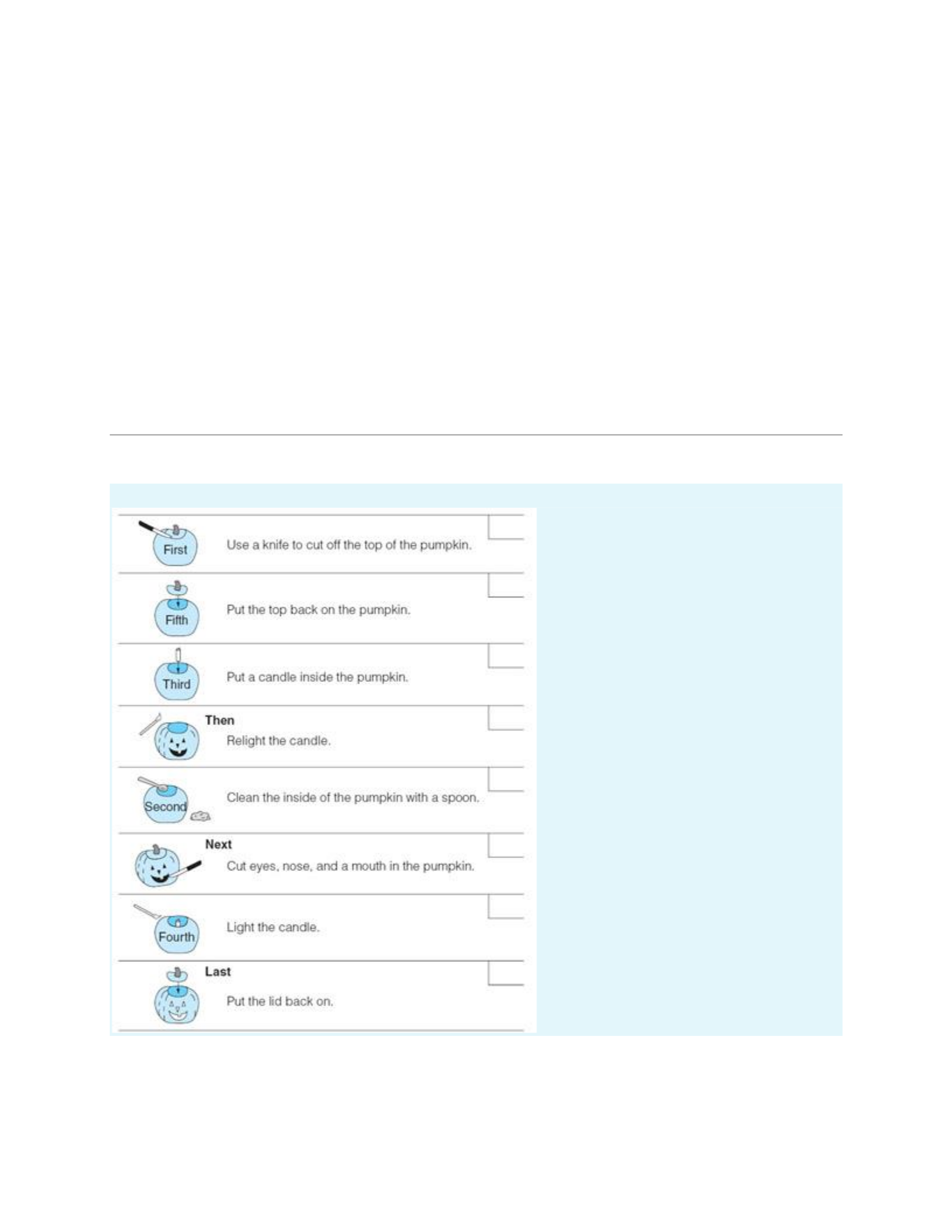
sequence of steps in a science experiment about fire and air. The question they were to answer was: “Can fire burn
without air?” The teacher wrote each step on a different card. When she presented the cards to the students, she
said that she had “dropped them and needed to get the cards back in order.” She had “found” the first card and
placed it at the top of the pile. Their job was to put the rest of the cards in order. She read each card aloud, pointing
to the picture and word clues. After the students reread, discussed, and sequenced the cards, they completed the
experiment.
ANALOGIES
Analogies (see Chapter 3) are especially helpful to struggling readers, who often require relational (concrete, gestalt,
example-oriented, relevant) rather than analytical (abstract, detail- and lecture-oriented, definitional) learning
experiences (Anderson & Adams, 1992). At-risk readers might be better equipped to understand what they read after
hearing analogies such as these:
When I begin a new year of teaching mathematics, I always draw a little house on the board, starting with a
foundation of bricks, and I explain that the foundation in math is being able to do the four basic operations—first with
whole numbers, then with decimals, then with fractions. As we get into time, measurement, money, percents, and
geometry, having a good foundation is absolutely necessary in order to do the work. So I tell my students that we
cannot have any “loose bricks,” or else doing multistep problems, story problems, solving for one or more unknowns,
and graphing will be impossible. Students seem to appreciate the foundation analogy and can accept that doing
calculations well is as important as grasping the new concept.
P. 345
ACTIVITY 11.6: Mystery Clue Game for Primary Students
Developed by Megan K. Houston.
The teaching of the new concepts must be “laid down” on a solid understanding of old concepts and the ability to
apply them.
—Kerry Blum, middle school mathematics teacher

When a student does not understand new words or does not have any prior knowledge to link with new content, the
student is likely to reject the new information. Deoxyribonucleic acid is a very complex molecule made up of different
nucleotides linked together and is very difficult to understand. However, Watson
P. 346
and Crick's double helix model of DNA can be taught easily by taking the very basic approach of comparing it to
something the students already know. By drawing a picture in students’ minds of a circular staircase, and by
describing the links of nucleotides as building blocks that can match up only in specific pairs (cytosine to guanine and
adenine to thymine), the mystery of the DNA molecule dissolves.
—Diana Freeman, high school biology teacher
Additional Strategies for the Most Challenging Cases
What can the content area teacher do with a student who can barely read or who is a nonreader? The teacher can (1)
pretend such a student is really not that bad a reader and do nothing, (2) get help from a reading specialist, or (3)
assign extra work to help a student in this situation. Ideally, content area teachers do both (2) and (3). The reading
specialist can help with basic skills while aiding the content teacher in adapting assignments for this type of student.
Most of the techniques described in this book will help very poor readers and nonreaders. But the following
techniques are especially important for the success of such students.
LANGUAGE EXPERIENCE APPROACH
The language experience approach (LEA) has been used by reading specialists for a long time (Ashton-Warner,
1959). Fisher and Frey (2003) suggest its use again as part of what they term a “gradual release model.” In this
model, teachers move from teacher-controlled to student-directed writing. Students dictate to a teacher or another
individual their thoughts about a topic; then they copy to their own notebooks the words they have said and now see.
The words next become the topic of discussion, which can also generate new words, phrases, and sentences. Next,
students are encouraged to try to write just a few more sentences. In the Fisher and Frey model, students go on to
interactive writing, relying on models of good writing to expand their own writing, and generating sentences.
Eventually, students are able to expand their writing and move beyond the teacher's help with dictation. The model
can also apply to reading. In the same way, by having struggling readers dictate their impressions about a subject
and then use that dictation to talk about the subject and add to it, a very beginning reader—even in a content
classroom—will have some text material to read and use for study. Landis, Umolu, and Mancha (2010) describe the
use and effectiveness of the LEA for students with language and cultural differences. The strategy validates their
language and perspectives while addressing the curriculum.
CONCEPT FORMATION STUDY GUIDES
The ability to create superordinate generalizations is a skill often completely lacking in reluctant readers and at-risk
learners. Concept formation study guides (Thompson & Morgan, 1976) are excellent motivational tools for such
readers. Such guides use a fundamental learning operation: the categorization of facts (subordinate concepts) under
more inclusive, superordinate concepts. Thompson and Morgan note that “once a key concept has been acquired, we
use it at different levels of abstraction, complexity, and generality, depending upon our stage of motivation” (p. 132).
The function of this type of study guide is to teach the key concepts of a passage and to provide practice in applying
those concepts to more complex and more general situations.
Activities 11.7 and 11.8 present two examples of concept formation study guides. The first is for elementary students,
and the second is for high school social studies.
P. 347
ACTIVITY 11.7: Concept Formation Study Guide For Elementary
Students
I. Read the story. Put an X before each statement you think is true.
______ 1. A person should find out how the neighborhood feels about pets.
______ 2. Some small pets grow into large pets.
______ 3. Someone must care for your pet if you are sick.
______ 4. A kangaroo will not make a good pet.
______ 5. Do not read about a pet before you buy it.
______ 6. It is hard to keep a pet in a small apartment in the city.
II. Put true statements from Part I where they fit below.
Choosing a pet depends on:
Size Care Space
III. When you are finished, get together with a classmate and discuss your answers.
EMBEDDED QUESTIONS
Weir (1998) encourages the use of questions embedded in reading material to engage struggling readers. When they
are confronted with questions during reading, they will be more likely to practice metacognitive strategies. Weir
actually cut up reading material and inserted questions and response slots to keep students’ attention while reading.
Students began to make more and more elaborate responses as they answered embedded questions. Their test
scores reflected increased comprehension.
Embedded questions must be carefully considered to maintain balance and variety. Reading selections found on the
Internet or created by the teacher can lend themselves well to this strategy. Questions could be placed within the text,
or portions of the text could be “clickable,” linking students to questions. This is a fix-up activity that is best reserved
for struggling readers, but the investment of time does help students become active, more proficient readers.
BEGINNER-ORIENTED TEXTS
The texts used in content classes are too difficult for many struggling readers. Texts that are high in interest, contain
fewer words per sentence and page, use less metaphoric language, and have illustrations that provide context will be
more successful (Cole, 1998). Graphic novels have gained popularity, and publishers now include some selections in
this genre. Media specialists can help content teachers locate these texts. Low-interest, low-readability, content-
oriented books are also available from a few publishers. Most provide Lexile, as well as interest levels, to assist
teachers in matching readers with appropriate texts. Activity 11.9 lists some high-interest, low-readability book series
and publishers.
Please visit the Education CourseMate website at www.cengagebrain.com to find a link to information
and cautions for using graphic novels for instruction.
INTERACTIVE NOTEBOOKS
Interactive notebooks have been used for a variety of purposes but may be best known for their use in science and
social studies. As Chesbro (2006) notes when discussing the value of interactive science notebooks, they
“encapsulate and promote the most cutting-edge constructivist teaching strategies while simultaneously addressing
standards, differentiation of instruction, literacy development, and maintenance of an
P. 348
ACTIVITY 11.8: Concept Formation Study Guide for High School Social
Studies
THE MOVE TO WINTER GRASSLANDS
Key Concept: Social transience
Main idea: Interactions among people and the physical and social environment that surrounds them influence how
they meet the basic needs of life.
PART I
Directions: Think of a family that you know who recently moved. What reasons did this family have for moving? In
the chart below, complete a list of reasons American families and Al'Azab families have for moving from one place to
another.
Reasons for Moving
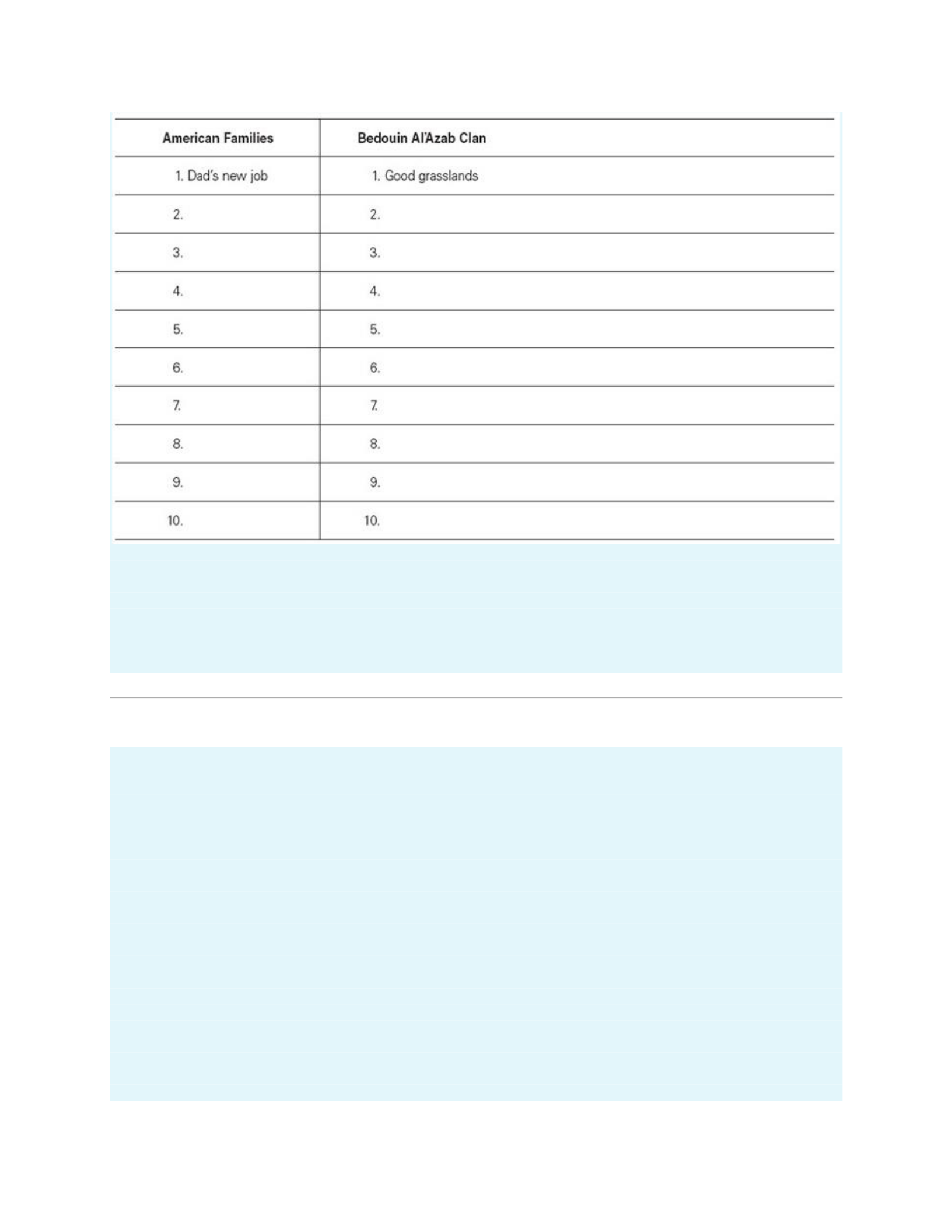
PART II
Directions: From your list in Part I, answer the following questions:
1. Select those items under the “American” list that are related to making a living. Do the same thing for the Al'Azabs.
How are the reasons different? Alike?
2. Based on the information you have organized above, make a list of the Al'Azab family's basic needs of life. Are
they different from the American family's basic needs?
3. Based on the information you have organized above, define in your own words what you think social transience is.
P. 349
ACTIVITY 11.9: Resources for High-Interest, Low-Readability Content
Series
From Follet Educational Services (Follett Educational Services, 1433 Internationale Parkway, Woodridge, IL
60517-494)
Capstone You Choose: Interactive History Adventure
On the Front Line
Astonishing Headlines
Extreme Environmental Threats
From Capstone Publishers (Capstone Publishers, 151 Good Counsel Drive, PO Box 669, Mankato, MN 56002):
Graphic Science
Graphic Expeditions
Voices of War
Wild Outdoors
From High Noon Books (Academic Therapy Publications, 20 Commercial Boulevard, Novato, CA 94949)
Illustrated Classics
Great Medical Milestones
Strange (but True) Stories
Disasters Collections
Great Trials in History
The Horn Book Guide: Interactive database, reviews more than 79,000 books, searchable by level and topic (The
Horn Book, Inc., 56 Roland Street, Suite 200, Boston, MA 02129).
An alternative to beginner-oriented texts is rewriting (see Chapter 3). This requires teacher time, but it tailors the text
to the specific content to be taught.
Please visit the Education CourseMate website at www.cengagebrain.com to find links to all these
publishers and sources for high-interest, low readability materials.
organized notebook as laboratory and field scientists do” (p. 31). The concept of an interactive notebook provides a
great deal of flexibility for teachers to structure designs and parameters to reflect the needs and organization of the
content and skills to be learned. Pages on the right side of the notebook are used for “input” or incoming information
in the form of notes taken from lectures, presentations, textbook or other readings, podcasts, CDs, video clips, lab
sessions, or class activities. Pages on the left are reserved for “output” in the form of student responses or
connections to the information on the right. These could be charts, graphs, webs, tables, illustrations, diagrams,
poems, cartoons, reflections, or the like. Entries may be written or drawn right on the page or taped in and folded to
the size of the page. Interactive notebooks are in some ways quite similar to double-entry journals, except that
instead of dividing a page in half, the entire left page is used for student responses and the entire right page is used
for notes or information. An interactive notebook allows creativity and modification appropriate to the various needs
and differences among students. Assessment can be based on rubrics and criteria provided by the teacher or
decided collaboratively among students and teachers.
P. 350
Teaching Diverse Learners in the Content Classroom
Some alternative ways of reaching diverse learners include:
Multimodalilty, as discussed in Chapter 6
Technology, as discussed in Chapter 10
Horn and Tynan (2001) state that the most effective educational strategies for special education students are the
same ones that help most students in regular education. This may be true, but teachers need also to understand that
diverse learners often “reside” outside of a traditional academic space that relies on a print-focused model. Benson
(2010) observed students over an academic year in a language arts course. She describes one student, Bud, who
devised ways to circumvent print-based assignments. For instance, he started out enthusiastically on a term paper,
selecting to research Guns N’ Roses, but he faltered when he had to write about his findings. He needed a “third
space” where he could transform an academic assignment into something closer to his own interests. She
encourages teachers to find ways to use the “third space” that disaffiliated students often create for themselves;
teachers can develop opportunities where students can use their expertise in the digital world—often not the
teachers’ expertise!—to create non-print products that demonstrate knowledge and encourage deep learning.
Supporting Diverse Learners in Content Classrooms: One-Minute Summary
This chapter has considered several groups of diverse learners: students at risk, students from low-socioeconomic
environments, students with low self-esteem, students with LEP, special education students, and struggling readers.
We suggested that at-risk learners can become successful, as studies of resilient students indicate. The types of
intervention suggested for all diverse learners include cooperative grouping; teacher interaction and high
expectations; boosting students’ confidence and encouraging an internal locus of control; and interesting, systematic,
and strategy-based learning. Most of the techniques presented in this textbook are appropriate with some
modifications for diverse learners. Some additional strategies that are especially effective for these learners were
suggested in this chapter.
The population in U.S. classrooms has changed considerably in the past decade, reflecting the increasingly diverse
population of the nation. The teacher's perspective and attitudes are critical for shaping the approach and benefits of
working with and teaching diverse learners. When diversity is regarded as an enrichment opportunity for all, the
teacher's approach is to use those differences as instructional advantage. It may take extra effort and require myriad
strategies, but all learners benefit from the respect and understanding developed in the process.
Supporting Diverse Learners in Content Classrooms: End-of-Chapter
Activities
Assisting Comprehension
1. This activity could be done in an online environment in preparation for a class meeting or in its entirety
during a class meeting. Using a cooperative learning jigsaw strategy, students read, share, and teach each other.
Students in a base group (numbers 1–4) are given unique information about one or more types of learners. After
reading the material, students meet in “expert” groups (all As together, all Bs together, and so forth) to discuss and
plan how to teach the information. Students share their “expert” knowledge in their base groups, each taking a turn. In
this way, the puzzle is completed. The following diagram illustrates the structure of this activity. Expert groups can be
structured as follows:
Group A: Special education students
Group B: At-risk, resilient, low-socioeconomic, and low self-esteem students
Group C: ESL and ELL students
Group D: Struggling readers
P. 351
2. Consider the diverse learners presented in other chapters (JaNette, Trinka, Gustavo, and Mark) and create a table
to identify specific areas of need and appropriate PAR strategies that you might use for each of them. Then think of
two or three students with special needs in your classroom and complete the table with information about them.
Reflecting on Your Reading
1. Read Among Schoolchildren by Tracy Kidder (1989), particularly the chapter titled “The Science Fair,” in which
Chris, the teacher, confronts Robert about his failed science project. Supporting Struggling Readers by Barbara
Walker (2003) gives many practical instructional suggestions. Rosa Hernandez Sheets’ Diversity Pedagogy:
Examining the Role of Culture in the Teaching-Learning Process builds understanding and offers practical classroom
applications. Make a table listing instructional ideas you found in these readings and match them with content or
concepts you will be teaching.
2. Your content organization (e.g., National Council of Teachers of Mathematics, National Council of Teachers of
English, National Council for the Social Studies, National Science Teachers Association, International Reading
Association) has most likely developed a set of standards that identify the performance criteria relevant to classroom
teachers. Standards usually delineate elements of foundational knowledge that a classroom teacher should possess.
Locate and become familiar with what the organization recommends. For instance, teachers should:
Use a variety of strategies and materials, including appropriate technology applications to address the diverse
learning needs and abilities of students from different cultures, languages, and backgrounds.
Develop a positive learning environment that encourages risk taking and holds high expectations for all learners.
3. How were these elements addressed in this chapter? How does being informed about these elements aid in
content instruction?
P. 352
© 2007 Cengage Learning Inc. All rights reserved. No part of this work may by reproduced or used in any
form or by any means - graphic, electronic, or mechanical, or in any other manner - without the written
permission of the copyright holder.

Running head: MINI LESSON PLAN 1
Learning Strategy # Discussion Learning Strategy
Student Name
EDUC 656

MINI LESSON PLAN 2
A. Introduction
a. Name of strategy: Discussion Learning Strategy
b. Citation for the strategy: This is based on the discussion requirements and
material used
c. Content area: Protecting Rights-Social Studies
d. Standards addressed: CCSS.ELA-LITERACY.SL.8.1
e. Age/Grade Level targeted: 8th
B. Description
This learning strategy is based on discussion setups, which is an effective method for
auditory learners. For such auditory learners, they learn and generate information best when they
talk things through. The strategy can help to focus on large and small group discussions.
Discussions help the learners to highlight or list critical points, emerging issues, or formulate
questions arising from the allocated readings (Fulton, 2019). On the part of the instructor or
teacher, we should communicate the core purpose of discussion to the students from the first day
of the given classwork. The communication provides the instructor with the chance to pass the
information or communication on time. The necessary steps of consideration while engaging this
learning strategy primarily on the instructor's side are first by identifying the objective which
should be clearly stated or written where everyone can see it.
It should also be read out aloud prior to the discussion. There should also be well
established, and clear guidelines and parameters for class discussions. It sets or stipulates the
maximum time frame for sharing and the number of times a student can contribute to the
discussion. The instructor also should take note of the learner's interests and integrate them into

MINI LESSON PLAN 3
the discussion as it begins. The learners also get a chance or opportunity to prepare for the
discussion, too, which ensures its success. There should also be engaging learner’s discussion
strategies, summarize and redirect as required, offer alternative periods for off-the topic
discussions, and also encourage by calling upon the quieter learners to contribute too.
C. Examples/Guidelines
In the discussion regarding this topic, Protecting Rights: These guidelines will be applied
in the course of the discussion:
What are the learners required to know and understand?-
The meaning of Protecting Rights in social studies
What are human rights?
The establishment of these rights
The process of enacting these rights in the law system.
Requirements to understand this topic:
Learners need to be able, in the discussion, to identify the difference between rights
and responsibilities.
Participate actively in the group discussion generating key points from provided
information by the instructor and also from research studies.
Terminologies that the student should understand
Amendment, Citizenship, Rule of Law, Interpretation, and State Agency
Importance of the Rights

MINI LESSON PLAN 4
Who is responsible for upholding human rights.
Characteristics of human rights
Infringement of human rights.
D. Text Sample
The process of learning this topic in social studies on protecting rights is to enlighten
the learners of their constitutional rights and privileges. It helps them to understand their
country or nation better. Vital reading material in this discussion is the extract of the
constitution of the First Amendment. There is also the use of websites from trusted sources
such as the United Nations, the state government' s websites, and numerous scholarly articles
that are used in this discussion, such as Challenging Hate and Protecting rights by Corey
Brettschneider (Brettschneider, 2017). Another vital article to be integrated into the
discussion strategy is the “Human Rights Defenders: Protecting the Right to Defend Human
Rights” from the United Nations extract retrieved from
https://www.ohchr.org/Documents/Publications/FactSheet29en.pdf, and also the students can
utilize information from the Human Rights Foundation. It is important to note that these
materials are used through the guidance of the instructor and even from researcher guidelines
conducted by learners.

MINI LESSON PLAN 5
References
Brettschneider, C. (2017). Challenging Hate, Protecting Rights.
Fulton, Jenny. (2019). How to use discussion as a teaching strategy. classcraft.

Learning Strategy # Discussion Learning Strategy
Thesis statement: The necessary steps of consideration while engaging this learning strategy
primarily on the instructor's side are first by identifying the objective which should be clearly
stated or written where everyone can see it.
1. Introduction
2. Description
3. Examples/Guidelines
4. Text Sample

