


Case Study - Emma
Correspondence concerning this article should be addressed to Susann
Palmerchuck. Email:Spalmerchuck@liberty.edu
PK-2 Project
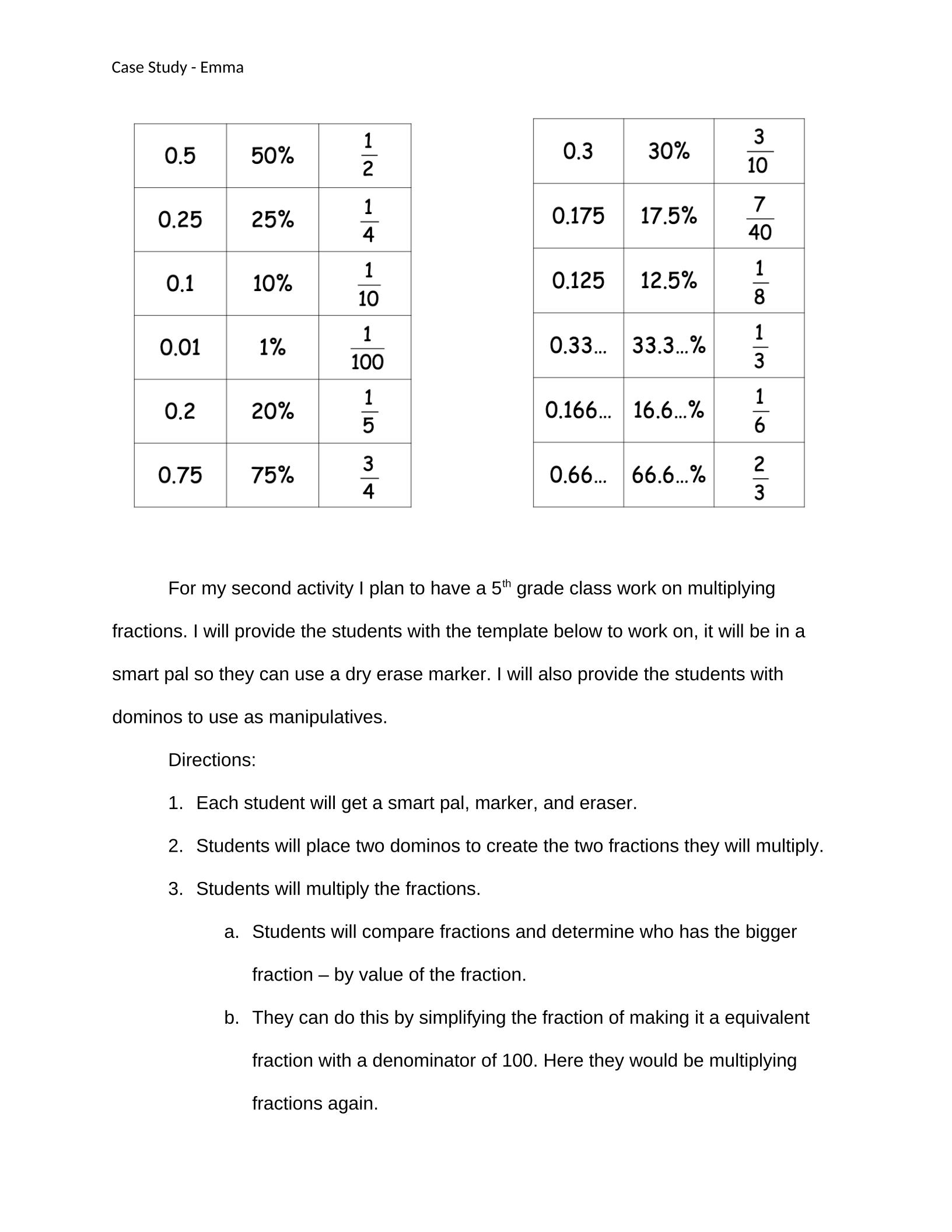
For my first activity I plan to have a 6th grade class practice and demonstrate their ability
to convert between fractions, decimals and percentages. I have a set of cards that have
3 cards for each problem (one is the fraction, one is the decimal, and the third one is the
percent). The cards will have a hole punched in the top and bottom so they can be hung
and connected to other cards with paper clips. I will have a piece of string hanging
across the board and one card from each set will be hanging on the line prior to
students' arrival. As students are working, I will be moving around the students watching
them work so I can observe what they are doing to convert the numbers and giving
them guidance when they are struggling.
Directions given to students:
1. Take one card at a time and solve for the other two forms of the number. (ex:
if it is a fraction, figure out the percent and the decimal).
2. Once you know the other forms, find your match on the string and hang it on
the matching card.
3. Get another card and repeat the process.
a. If you go to hang a card and it already has that form double check your
work before changing the card.
b. You may move another student's card if it is not correct, but you then
need to determine where it should be hung.
4. Repeat these steps until all the cards are hung correctly.
Case Study - Emma
For my second activity I plan to have a 5th grade class work on multiplying
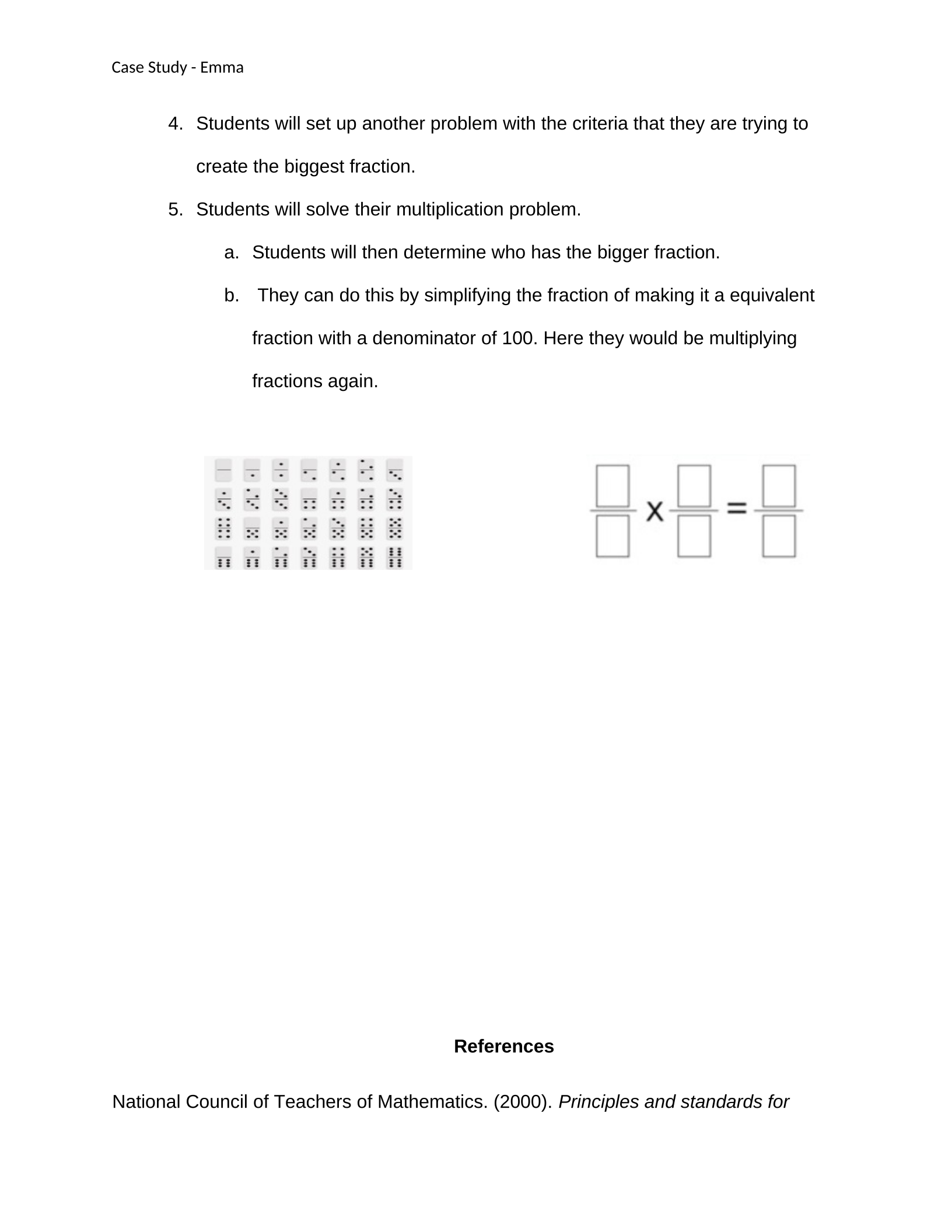
fractions. I will provide the students with the template below to work on, it will be in a
smart pal so they can use a dry erase marker. I will also provide the students with
dominos to use as manipulatives.
Directions:
1. Each student will get a smart pal, marker, and eraser.
2. Students will place two dominos to create the two fractions they will multiply.
3. Students will multiply the fractions.
a. Students will compare fractions and determine who has the bigger
fraction – by value of the fraction.
b. They can do this by simplifying the fraction of making it a equivalent
fraction with a denominator of 100. Here they would be multiplying
fractions again.
Case Study - Emma
4. Students will set up another problem with the criteria that they are trying to
create the biggest fraction.
5. Students will solve their multiplication problem.
a. Students will then determine who has the bigger fraction.
b. They can do this by simplifying the fraction of making it a equivalent
fraction with a denominator of 100. Here they would be multiplying
fractions again.
References
National Council of Teachers of Mathematics. (2000). Principles and standards for
Case Study - Emma
school mathematics - with CD. NCTM
Stein, M. K., Smith, M. S., Henningsen, M. A., & Silver , E. A. (2009). Implementing
standards-based mathematics instruction: A casebook for professional
development. Reston, VA: National Council of Teachers of Mathematics. ISBN
978087749579.
Powered by TCPDF (www.tcpdf.org)

