


VOCABULARY NOTEBOK 1
Vocabulary Notebook Assignment
Shante Ellison
Liberty University
Education 634

VOCABULARY NOTEBOK 2
Abstract
This paper will focus on teaching vocabulary to students in multiple ways. When teaching
students new material, it is just as important to take the time to teach the meaning of some of the
key terms. Vocabulary words are defined, put into sentences, pictures, and used in a scientific
class to help create and understand the words. By teaching vocabulary, it activates the students
background knowledge and creates a learning environment that allows for learning new
information as they can comprehend essential words beforehand. Learning the vocabulary allows
the new information to have something to stick to. Students all learn differently which means the
way that vocabulary is taught needs to be done with the thought process of variety in mind. This
allows students to be able to understand a word in a variety of ways. These can include
definitions, pictures, hands on activities, mapping, or a graphic organizer such as the Frayer
Model.
VOCABULARY NOTEBOK 3
VOCABULARY NOTEBOOK TEMPLATE
Vocabulary
Word
Define the
word.
(Use a scholarly
source as a
reference).
Use the word in
a sentence
(Include the
definition of the
word in the
sentence).
Provide a description,
explanation, or
illustration of the word.
Provide an
example of
how a
teacher
would use
this concept
(word) in
science
class.
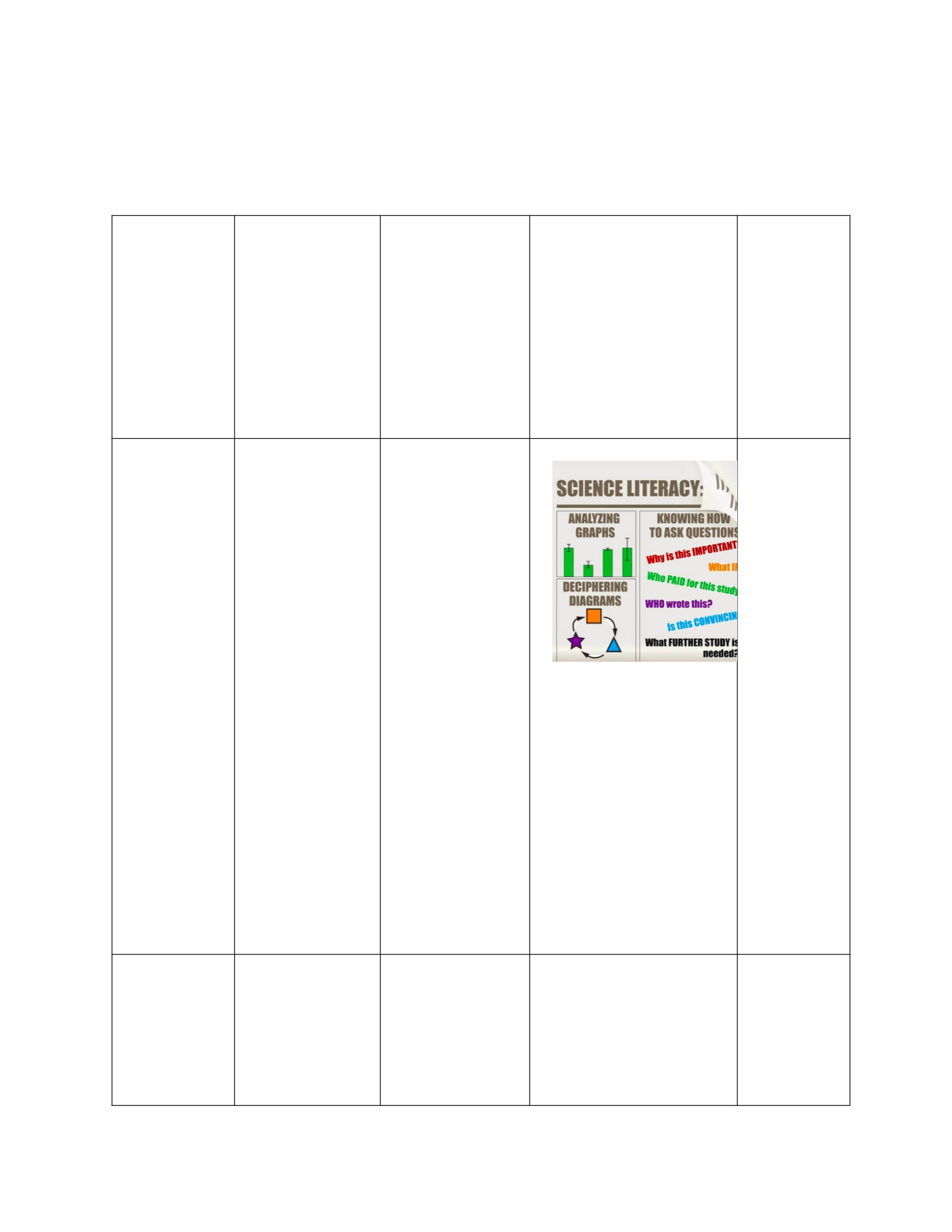
Scientific
literacy
2“Science
literacy is
knowledge of
science, as well
as the scientific
framework by
which people
make decisions
based on facts,
research and
knowledge, not
on opinion or
hearsay”
(Garbacz, p.2).
2The Next
Generation
Science
Standards create
useful ways to
teach scientific
literacy to
students so that
they have a
knowledge of
science.
2 Teach the
students the
content
knowledge
of the states
of matter.
Then have
them do an
experiment
on
temperature
effects of
changing
matter to
different
states. Have
students
create a
hypothesis
to help the
understandi
ng of
scientific
practices. 2
Content
standards
“What teachers
are supposed to
teach, and
students are
expected to
know (content
standards) and
The Virginia
Standards of
Learning were
created to show
teachers what
they are expected
to instruct
Creates a clear
purpose of
lesson.
Helpful to
students to
understand
criteria of work.
When
teaching a
new unit,
the teacher
could list
the standard
that she is
VOCABULARY NOTEBOK 4
be able to do”
(Chapin,2013,
p.7).
students so that
students know
and understand
the material.
about to
teach. This
would allow
the students
to know the
content that
they will be
required to
know.
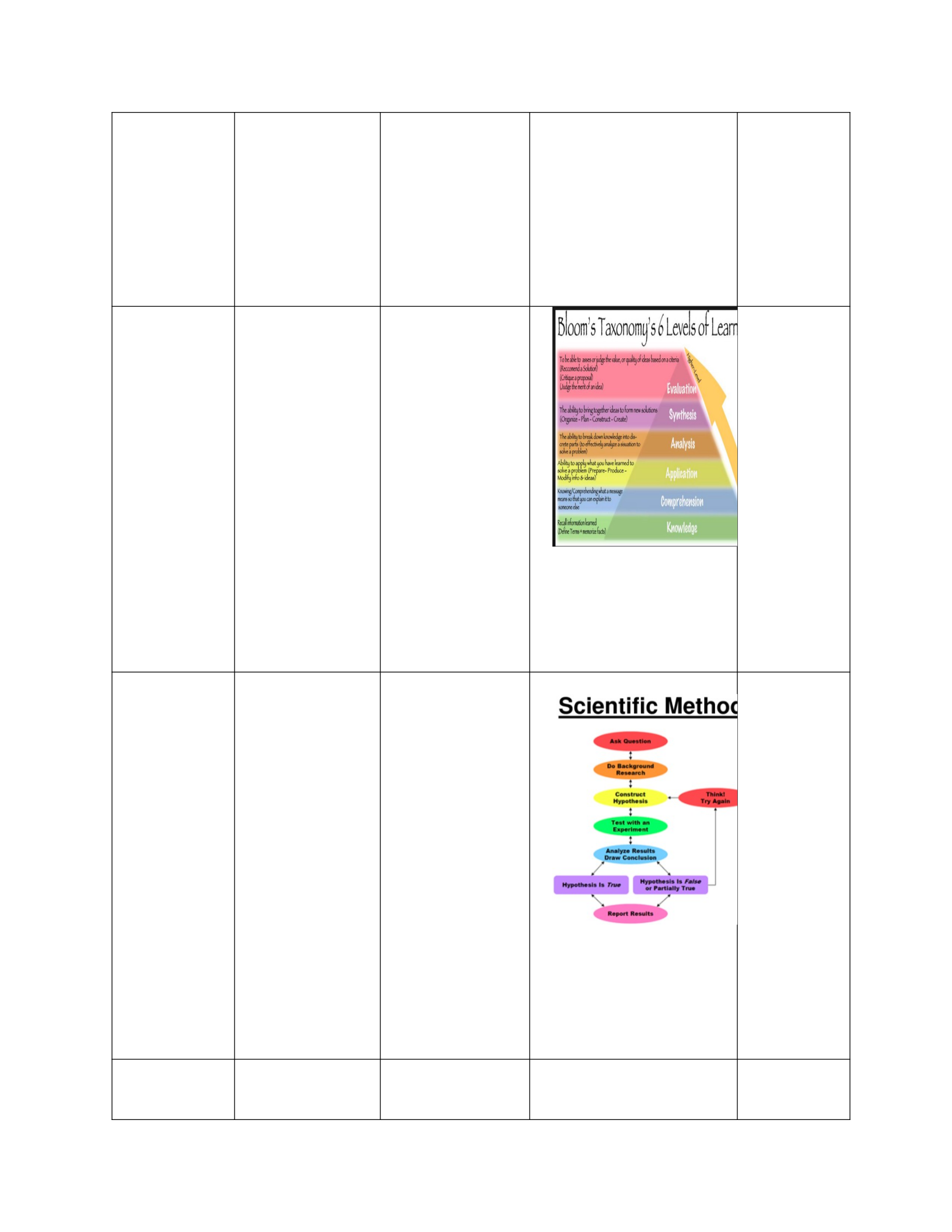
Measurable
learning
objective
“Learning
objectives are
clearly written,
specific
statements of
observable
learner behavior
or action that
can be measured
upon completion
of an educational
activity”
(Chatterjee,
2017, p.1).
Bloom’s
Taxonomy is an
effective way to
measure the
learning
objective.
A
measurable
learning
objective
would be
used in the
unit on the
animal
kingdom.
The students
will be able
to list which
animals are
classified as
invertebrate
and
vertebrate.
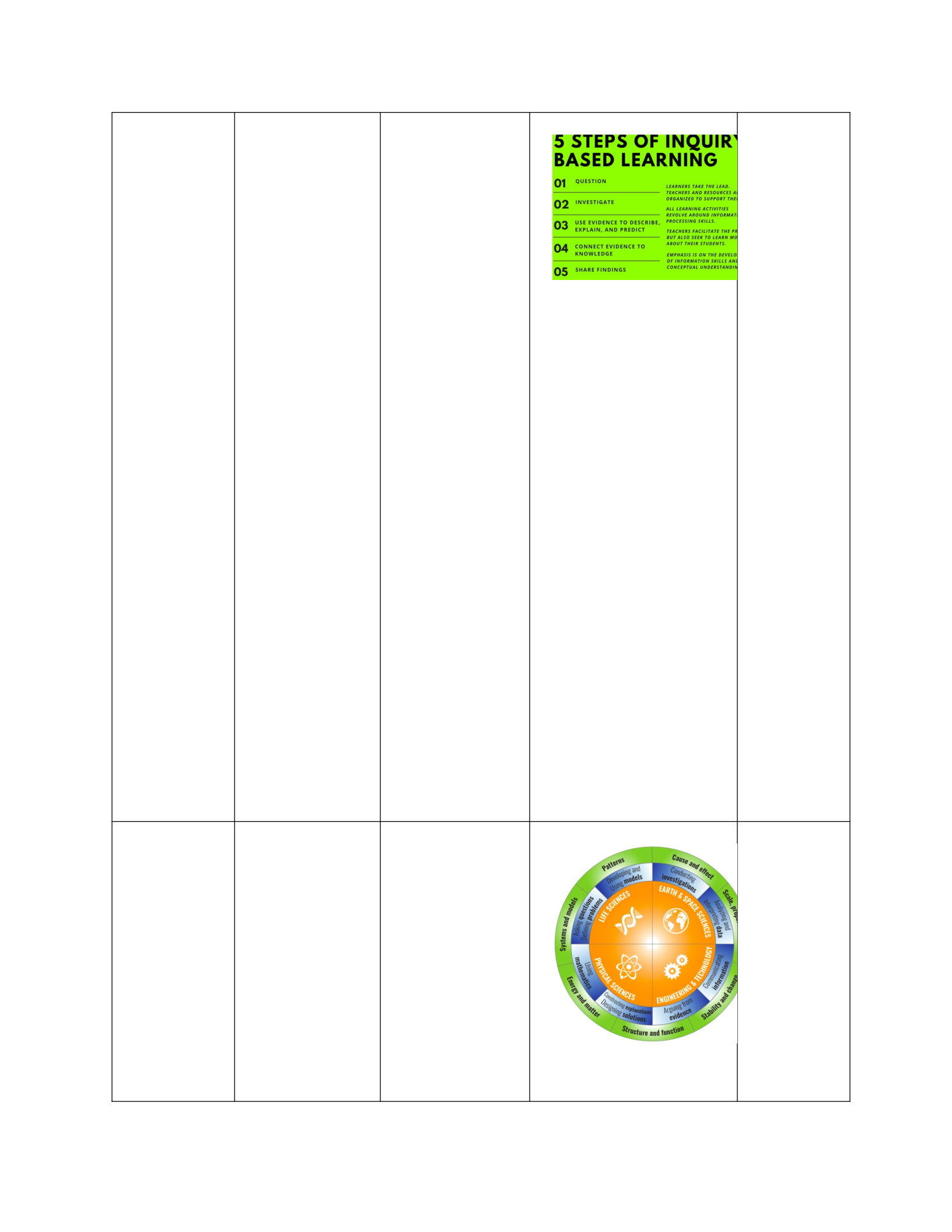
Scientific
method
2The Scientific
methods reads as
“ask a question,
form a
hypothesis,
make a
prediction, test
the prediction,
analyze results,
make a
conclusion”
(DeRosa, 2019,
p.6). The method
that is used to
acquire the
knowledge to
answer the
question.
2
The students will
use the scientific
method to
answer the
question, “What
type of bread
molds the
fastest.”
2 2Have the
students
conduct an
experiment
on moldy
bread and
what types
of bread
molds the
fastest. This
allows them
to use the
scientific
method
throughout
the
experiment.
Inquiry-
based
2“An
investigative
2To help students
understand the
2flexible
instruction
Ask the
students
VOCABULARY NOTEBOK 5
learning process of
learning in
which students
are asked to pose
questions,
analyze data,
and develop
conclusions or
generalizations”
(Orlich, 2018,
p.357).
life cycle of a
butterfly we will
use an inquiry-
based learning
approach to
allow the
students to ask
questions,
analyze and
observe the data
and make
conclusions.
Student focused what they
know about
the life
cycle of a
butterfly.
Then we
would read
“The Very
Hungry
Caterpillar”
and discuss
how the
caterpillar
changes
throughout
the story.
Write down
what we
wonder and
want to
know about
butterflies.
Present
butterfly life
cycle. End
with
creating a
butterfly
garden to
watch the
life cycle of
butterflies in
action.
Next
Generation
Science
Standards
2“Standards
developed by
teams of
scientists and
educators to
identify what
students in
grades K
through 12
should know and
be able to do
upon completion
of each grade
2
The students will
learn about the
“Patterns in the
Sky” with Next
Generation
Science
Standards
guiding the
lesson.
2 Learn about
sun, moon,
and stars.
Observe the
patterns that
can be
predicted.
They will
observe the
sun daily
and make
predictions
based off

VOCABULARY NOTEBOK 6
with respect to
science and
engineering
(DeRosa, 2019,
p.6).
the patterns.
Constructivi
sm
2“Constructivism
is a psychology
of learning that
sees children,
through their
interactions with
the environment,
constructing
their own
meaning of the
experience
rather than
appropriating
those presented
to them by
others” (Gutek,
2014, p. 383).
By teaching with
a constructivism
approach, it
allows the
students to learn
from experience.
2group activities
Constructing
knowledge
Learning by
doing (hands on)
2The teacher
could
conduct and
experiment
on density.
For the
children to
better
understand
what exactly
density is
they could
do an
experiment
on what
happens
when you
soak a
gummie
bear in
water.
Observation
would
stretch over
48 hours
(about 2
days).
Differentiate
d instruction
2“A means of
devising or
creating multiple
paths to achieve
learning goals or
objectives”
(Orlich, 2018,
p.355).
2The teacher
could use
differentiated
instruction when
teaching the life
cycle of a seed
by creating
multiple paths to
achieve the
objective of the
2allows access to
learning for all
students with
diverse needs.
Multiple options
for instruction
and content in
lessons
Considered the
design approach
When
students are
reading a
passage
about the
life cycle of
seed have 3
distinct
levels of the
passage
VOCABULARY NOTEBOK 7
lesson. in a lesson. based on
the students
reading
levels. Then
creating a
follow up
assignment
that is on
the reading
level the
students are
currently
on. This
could
include
filling in the
blanks to
their level of
vocabulary
words.
Write about
the life cycle
using their
transition
words.2
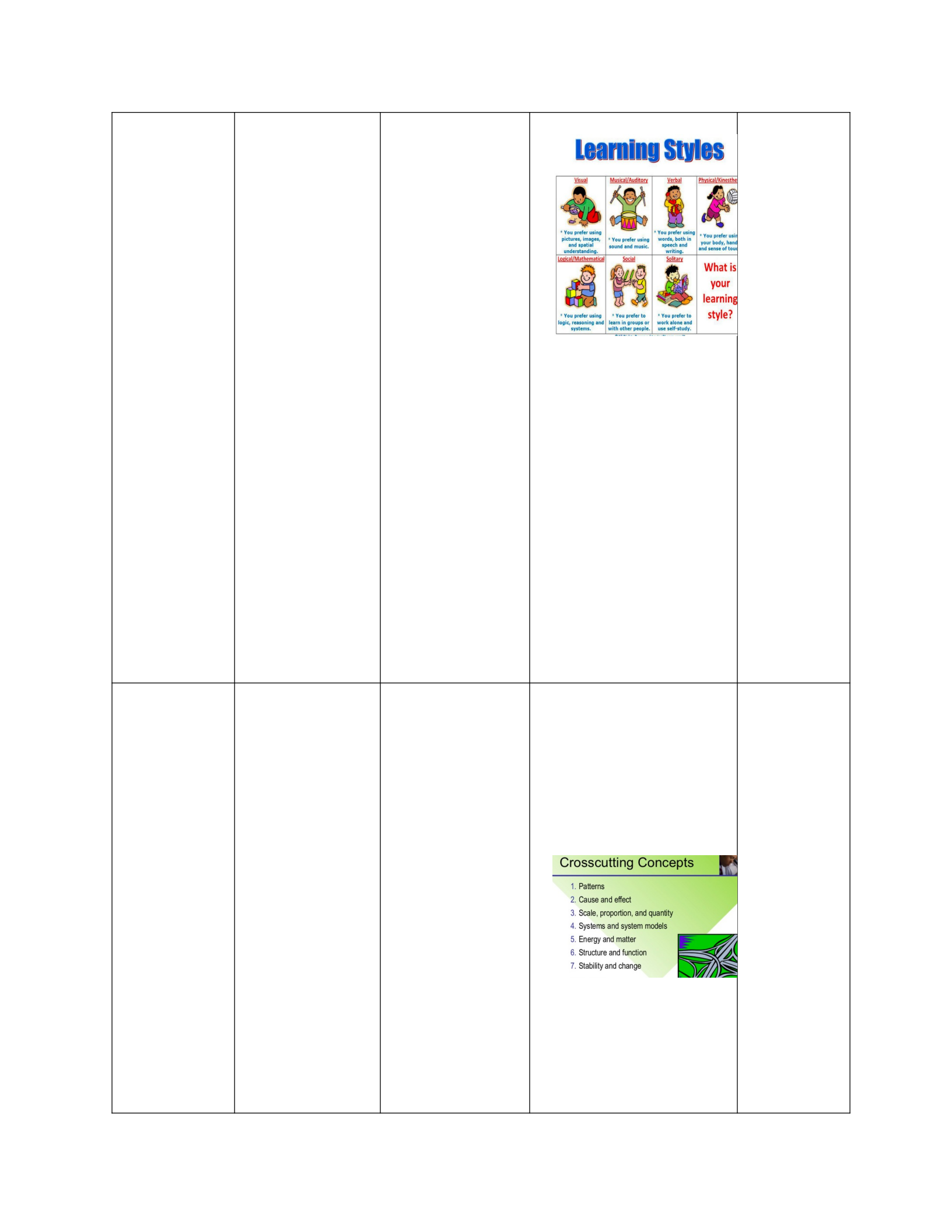
Crosscutting
concepts
2“Crosscutting
concepts are the
big ideas
common across
the domains of
science and
engineering:
Patterns; Cause
and effect;
Scale,
proportion, and
quantity;
Systems and
system models;
Energy and
matter; Structure
and function;
Stability and
change”
(DeRosa, 2019,
2Using
Crosscutting
concepts in
teaching science
allows students
to make
connections
across
disciplines.
Think about the
topic.
2organize ideas.
Make
connections.
Part of three-
dimensional
instruction
Use
crosscutting
to find the
cause and
effect of
sitting ice
cream in the
sun.
Determine
what was
the cause
and effect of
leaving ice
crema in the
sun. 2

VOCABULARY NOTEBOK 8
p.6).
Cooperative
learning
2“Cooperative
learning is
learning based
on a small-group
approach to
teaching that
holds students
accountable for
both individual
and group
achievement”
(Orlich, 2018,
p.263).
2
Cooperative
Learning will be
used to foster
social skills and
teach the
students to hold
each other
accountable for
their part of the
assignment.
2Small groups
work together to
achieve a
common learning
goal.
Fosters
interdependence.
Aids in student
problem solving.
2Have
students
break into
small
groups to
work
together
marshmallo
w catapults
that will
create
enough
force to
launch a
marshmallo
w.
Formative
assessment
“Formative
tests/assessments
are intended to
assess the
effectiveness of
instruction on an
ongoing basis,
and inform day-
to-day
instructional
decision
making”
(Kubiszyn,
2016, p.5).
I will use a
formative
assessment to
make sure the
students
understand the
order of
scientific method
and effectiveness
of the instruction
method.
Day-to-day instruction
evaluation.
Constant checks on
progress
Used to ensure that a
certain skill has been
taught and understood.
Allows the teacher to
know if they can go on to
the next step in the
lesson or if another
approach to teaching the
material is needed.
Give a
formative
assessment
that has
student fill
in the blanks
of the order
of the
scientific
method.
Summative
Assessment
“Summative
tests are
intended to
provide a
measure r gauge
of student
learning
following the
completion of a
unit of
instruction”
(Kubiszyn,
2016, p. 5). They
are a larger scale
The Standards of
Learning are a
summative
assessment
intended to
gauge the
students' learning
after the
completion of a
grade.
The students
will be
given the
science
Standards of
Learning
(SOL) test
to see if
they have
gained the
knowledge
following
the
completion

VOCABULARY NOTEBOK 9
test and usually
done to meet the
state and federal
requirements to
evaluate the
performance of
the students,
teachers, and
schools.
of the fifth
grade.
Integrated
lesson plans
“Correlation
may be as slight
as casual
attention to
related materials
in other subject
areas . . . a bit
more intense
when teachers
plan it to make
the materials of
one subject
interpret the
problems or
topics of
another.
Fusion
designates the
combination of
two subjects,
usually under the
same instructor
or instructors.
Integration: the
unification of all
subjects and
experiences”
(Drake, 2004,
p.2).
Integrating
science into an
English lesson on
bees and
pollination so
that students can
learn both
subjects.
Reading a
book on
bees while
reading.
Have a
lesson on
pollination
on flowers.

VOCABULARY NOTEBOK 10
Science,
Technology,
Engineering
and Math
(STEM)
“STEM
education can be
viewed with a
broad and
inclusive
perspective to
include
education in the
individual
disciplines of
STEM, i.e.,
science
education,
technology
education,
engineering
education, and
mathematics
education, as
well as
interdisciplinary
or cross-
disciplinary
combinations of
the individual
STEM
disciplines” (Li,
2020, p.6).
Science,
Technology,
Engineering, and
Math (STEM) is
growing in
importance in
education as
these disciplines
are becoming
more prominent
in today day and
age.
Students
will learn
kinetic
energy and
potential
energy.
Have the
student
engineer a
functional
paper roller
coaster.
Science,
Technology,
Engineering,
Arts and
Math
(STEAM)
Welcomes
standards from
the disciplines:
Science,
Technology,
Engerineering,
Arts, and Math.
“Integration of
the arts as an
enhancement of
science,
technology,
engineering, and
mathematics and
genuine
integration
intended to give
equal intention
Science,
Technology,
Engineering,
Arts and Math
(STEAM) allows
for creativity
when learning
about science.
Visual arts
Music
Humanities
Science
Technology
Engineering
Math
Using music
to teach a
lesson on
vibrations in
sounds. Use
instruments
to model the
vibrations.
VOCABULARY NOTEBOK 11
to art and STEM
disciplines”
(DeRosa, 2019,
p.123).
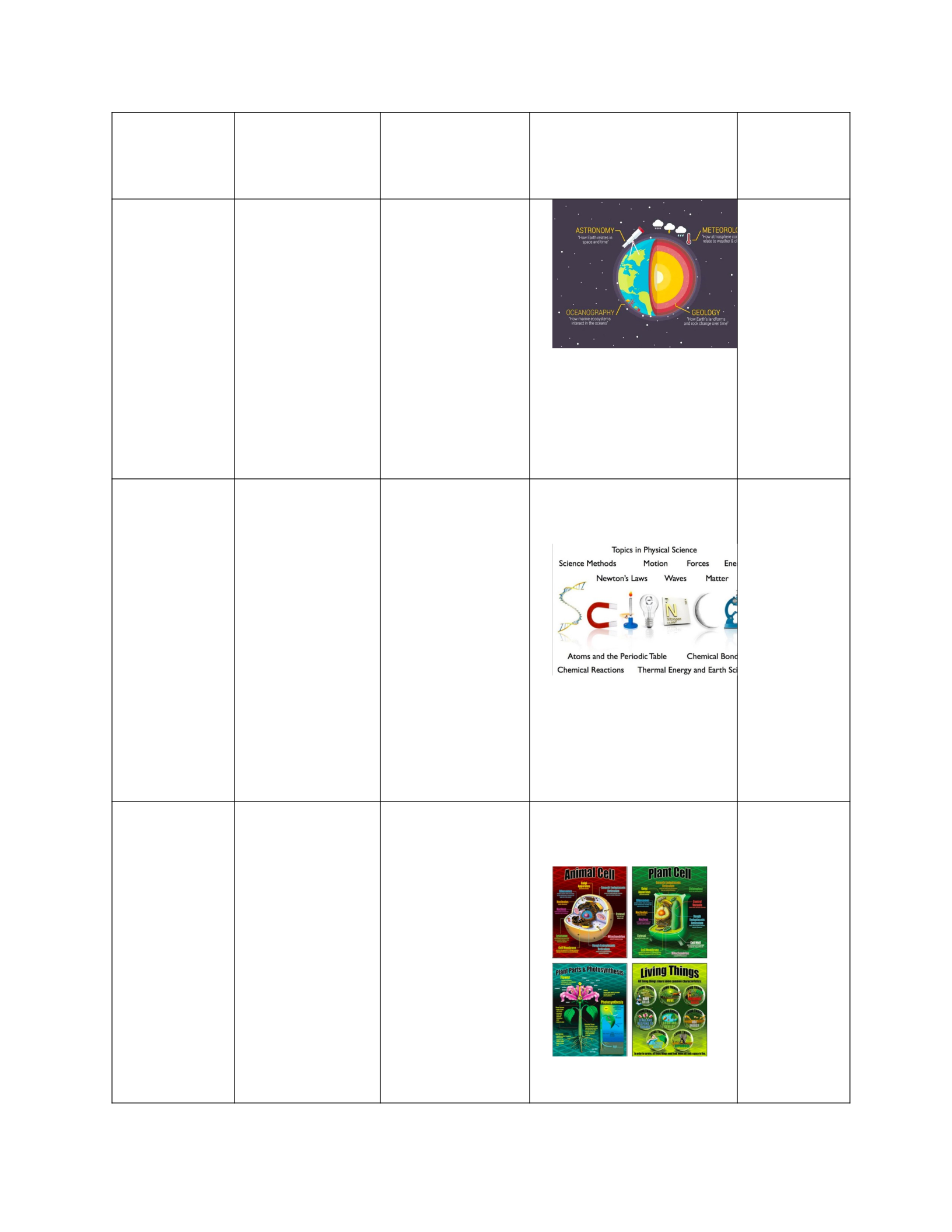
Earth
science
Science that
“searches for
answers to the
puzzles of our
world, so we
will eventually
understand what
really lies above
and below”
(DeRosa, 2019,
p.130). Studies
of the Earth and
space.
Earth science
teaches the
importance of
subjects such as
the weather and
our solar system.
The students
will learn
about the
weather and
the several
types of
clouds and
their
functions.
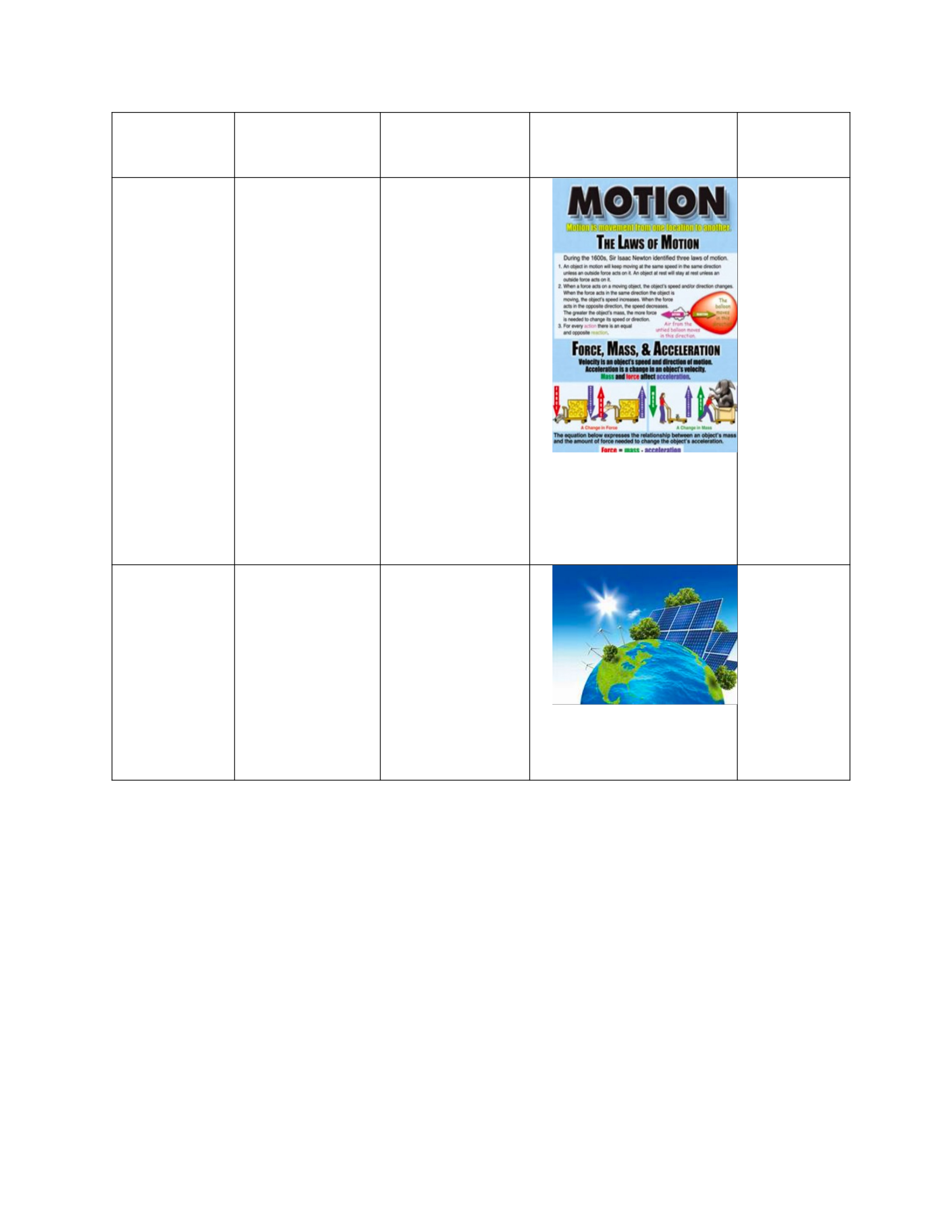
Physical
science
Physical science
explores matter
and energy and
the nature of it.
All science
comes from this
knowledge.
(Derosa, 2019).
There are many
career choices
that come from
studying physical
science such as a
chemist.
Chemist
Physicist
Engineer
Instructing
the students
about
chemical
reactions.
Have them
do the bottle
rocket
experiment.
This shows
how baking
soda and
vinegar
react when
put together.
Life science Life Science is
the
understanding of
how and why
living things
capture energy,
cells grow, and
species
reproduce”
(DeRosa, 2019,
p.165).
The students are
learning about
life science when
studying the
parts of an
animal and plant
cell.
Biologists, zoologists,
botanists, and medical
researchers.
Life Science
could be
used to help
understand
the makeup
of an animal
and plant
cell. Having
the students
create
models of
either an
animal or
plant cell

VOCABULARY NOTEBOK 12
and labeling
all the parts.
Plant
kingdom
“Living things
that are
multicellular and
have a cell
nuclei and cell
walls” (DeRosa,
2019, p.183).
Originally all
living things
were classified
under the plant
kingdom or
animal kingdom.
Have
students
learn about
the
classificatio
n of plants
that are in
the plant
kingdom.
Then have
the students
dig deeper
by having
them
analyze the
unique
needs of the
plants.
Animal
kingdom
Organisms that
are multicellular
and ingest food
that comes from
their
environment.
Most members
reproduce
sexually and are
also able to
move freely.
(DeRosa, 2019)
Scientists use a
classification
system that
includes
Animalia
(Animal
Kingdom) as one
of the six
kingdoms.
Breathe
Move
Grow
Maintain
homeostasis.
Teach
students
about
classificatio
n of animals
and how
some are
invertebrate
and
vertebrate.
Have them
create a
chart with
animals that
go into each
category.
Matter
Matter is created
of molecules,
and everything is
made of matter.
If it takes up
space and has
mass, it is
considered
matter. (DeRosa,
2019)
Every living
thing is made up
of matter.
Learn about
the states of
matter.
Have the
students
experiment
using an ice
cube and
show how
temperature
VOCABULARY NOTEBOK 13
influences
the state of
matter.
Motion
“Scientists
define velocity
as both speed
and direction, an
object that
moves with
constant speed
yet changes
direction is
accelerating.
With this
information in
mind, we can
now consider
objects in
motion”
(DeRosa, 2019,
p.216).
Newton has three
laws that define
motion and can
give you an
understanding of
how and why
objects move.
Newton’s Laws of
Motion
Have the
students
build cars
with
household
items to
understand
motion
regarding
force and
mass.
Energy “Energy is
defined as the
capacity to do
work” (DeRosa,
2019, p.223).
There are many
forms of energy
that produce
different ways to
do work.
Have the
kids make a
fruit battery.
Teaching
them about
turning
chemical
energy into
electrical
energy.
5
5

VOCABULARY NOTEBOK 14
References
Chapin, J. R. (2013). Elementary social studies: a practical guide. Pearson/Allyn and Bacon
Publishers.
Chatterjee D, Corral J. How to Write Well-Defined Learning Objectives. J Educ Perioper Med.
2017 Oct 1;19(4):E610. PMID: 29766034; PMCID: PMC5944406.
DeRosa, D. A., & Abruscato, J. (2019). Teaching children science: a discovery approach.
Pearson.
Drake, S., & Burns, R. (2004). Meeting standards through integrated curriculum. Alexandria Va.:
Association for Supervision and Curriculum Development
Garbacz, M. (n.d.). What is Science Literacy and Why is it Important? What is Science Literacy
and Why is it Important? | Strategic Discussions for Nebraska.
https://sdn.unl.edu/article/what-science-literacy-and-why-it-important.
Gutek, G. L. (2014). Philosophical, ideological, and theoretical perspectives on education.
Pearson.
Kubiszyn, T., & Borich, G. D. (2016). Educational testing and measurement: classroom
application and practice. J. Wiley & Sons.
Li, Y., Wang, K., Xiao, Y. et al. Research and trends in STEM education: a systematic review of
journal publications. IJ STEM Ed 7, 11 (2020). https://doi.org/10.1186/s40594-020-
00207-6
Orlich, D. C., Harder, R. J., Brown, A., Trevisan, M. S., & Miller, D. (2018). Teaching
strategies: a guide to effective instruction. Cengage Learning.

