


EDUC 623
FUNCTIONAL ASSESSMENT INTERVIEW (FAI) FORM
Person of concern JILL SMITH Age 12 Gender: Female
Date of interview July 10, 2018 Interviewer Sarah Gallagher
Respondents Zachary Mayhew, , Justin Roberts, Jennifer Miller, Rochelle Brookins,
A. DESCRIBE THE BEHAVIORS.
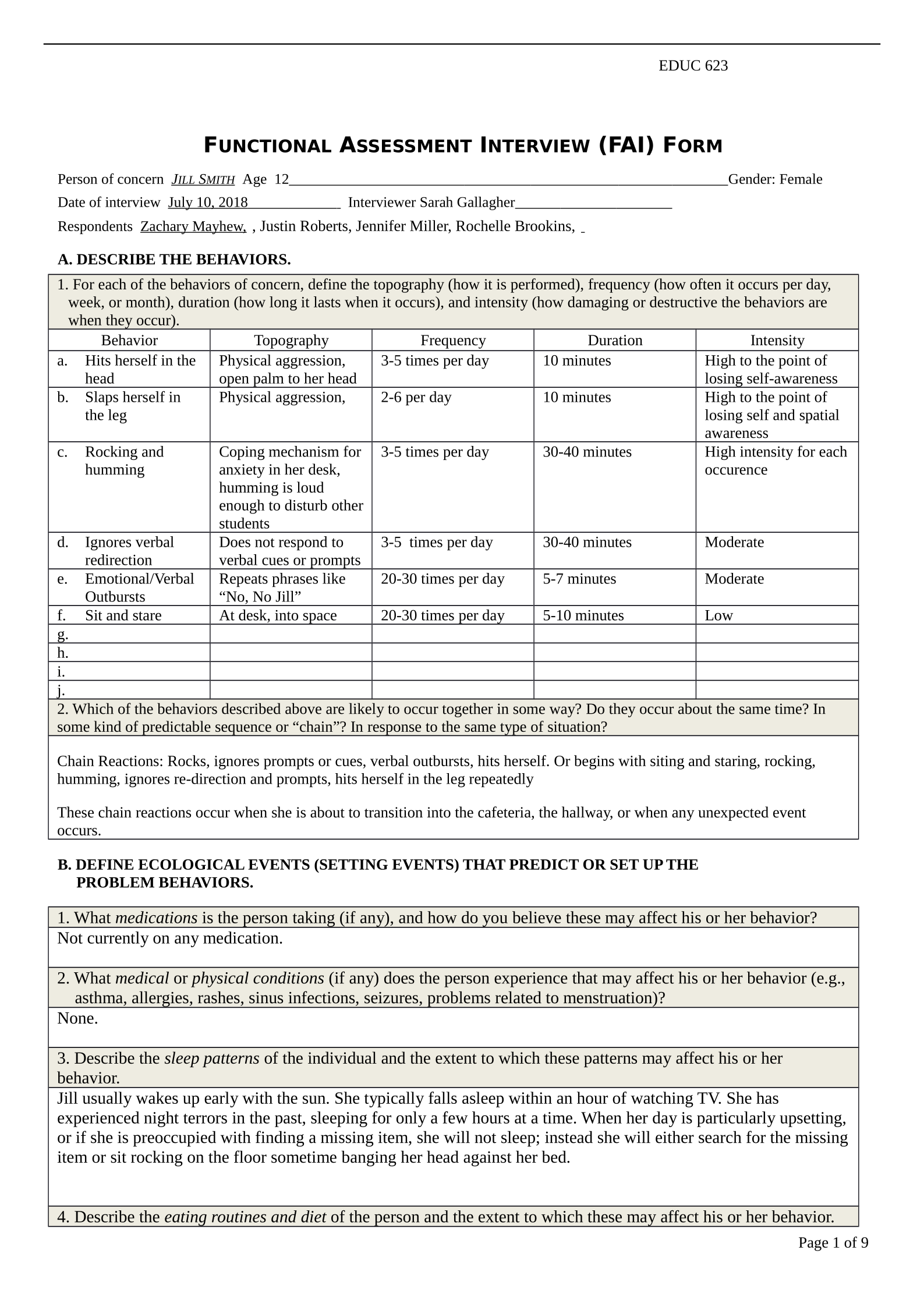
1. For each of the behaviors of concern, define the topography (how it is performed), frequency (how often it occurs per day,
week, or month), duration (how long it lasts when it occurs), and intensity (how damaging or destructive the behaviors are
when they occur).
Behavior Topography Frequency Duration Intensity
a. Hits herself in the
head
Physical aggression,
open palm to her head
3-5 times per day 10 minutes High to the point of
losing self-awareness
b. Slaps herself in
the leg
Physical aggression, 2-6 per day 10 minutes High to the point of
losing self and spatial
awareness
c. Rocking and
humming
Coping mechanism for
anxiety in her desk,
humming is loud
enough to disturb other
students
3-5 times per day 30-40 minutes High intensity for each
occurence
d. Ignores verbal
redirection
Does not respond to
verbal cues or prompts
3-5 times per day 30-40 minutes Moderate
e. Emotional/Verbal
Outbursts
Repeats phrases like
“No, No Jill”
20-30 times per day 5-7 minutes Moderate
f. Sit and stare At desk, into space 20-30 times per day 5-10 minutes Low
g.
h.
i.
j.
2. Which of the behaviors described above are likely to occur together in some way? Do they occur about the same time? In
some kind of predictable sequence or “chain”? In response to the same type of situation?
Chain Reactions: Rocks, ignores prompts or cues, verbal outbursts, hits herself. Or begins with siting and staring, rocking,
humming, ignores re-direction and prompts, hits herself in the leg repeatedly
These chain reactions occur when she is about to transition into the cafeteria, the hallway, or when any unexpected event
occurs.
B. DEFINE ECOLOGICAL EVENTS (SETTING EVENTS) THAT PREDICT OR SET UP THE
PROBLEM BEHAVIORS.
1. What medications is the person taking (if any), and how do you believe these may affect his or her behavior?
Not currently on any medication.
2. What medical or physical conditions (if any) does the person experience that may affect his or her behavior (e.g.,
asthma, allergies, rashes, sinus infections, seizures, problems related to menstruation)?
None.
3. Describe the sleep patterns of the individual and the extent to which these patterns may affect his or her
behavior.
Jill usually wakes up early with the sun. She typically falls asleep within an hour of watching TV. She has
experienced night terrors in the past, sleeping for only a few hours at a time. When her day is particularly upsetting,
or if she is preoccupied with finding a missing item, she will not sleep; instead she will either search for the missing
item or sit rocking on the floor sometime banging her head against her bed.
4. Describe the eating routines and diet of the person and the extent to which these may affect his or her behavior.
Page 1 of 9
EDUC 623
Jill’s parents have not sought pharmaceutical interventions for Jill’s ASD symptoms. Instead, they have
altered the family diet to include only organic, all natural foods and dietary supplements. Jill is only
offered healthy, organic food options at home and school. She has very little access to sweets and treats.
Jill prefers to eat white rice to anything else. She does not like foods with a loose consistency such as
pudding or sauces.
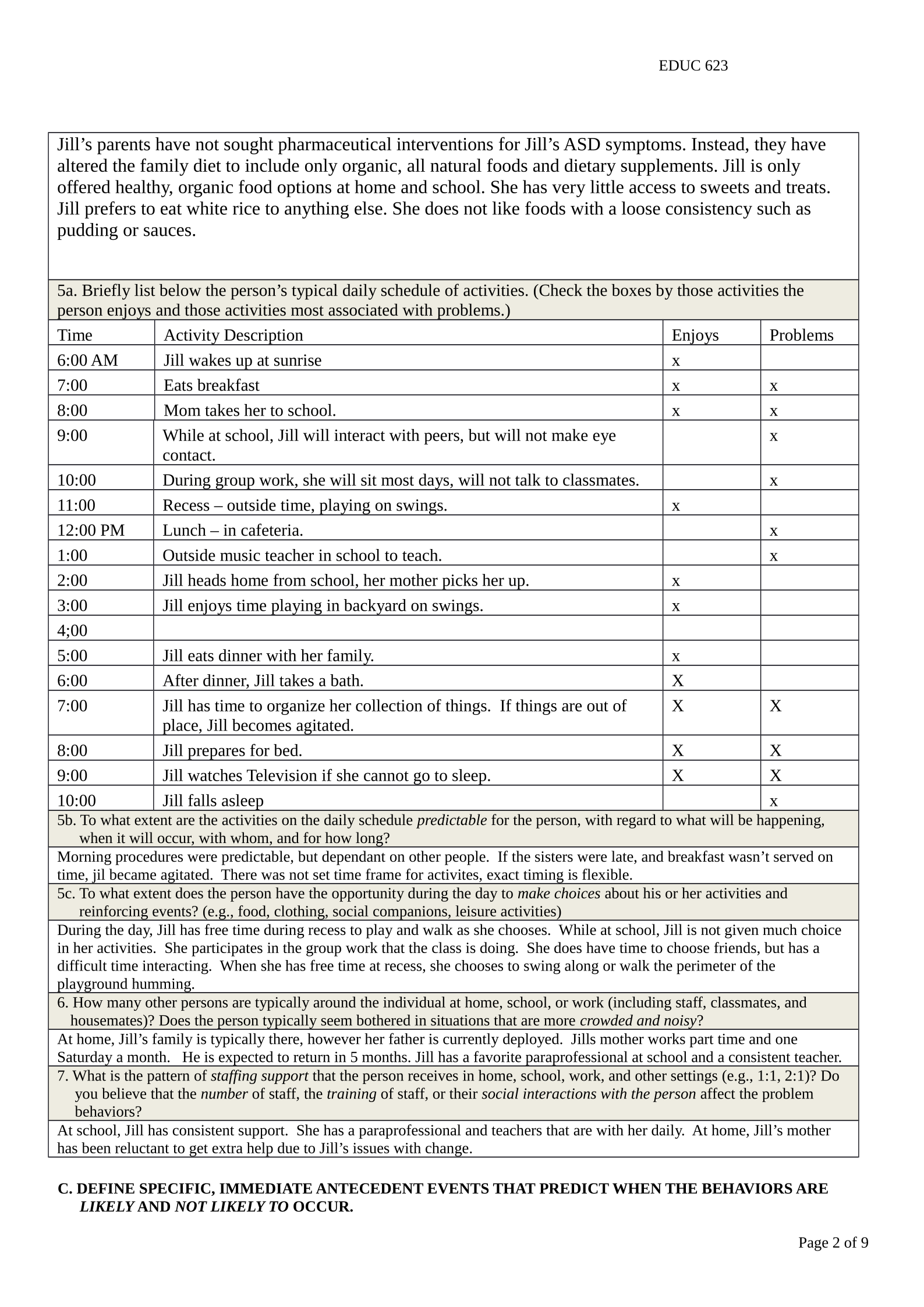
5a. Briefly list below the person’s typical daily schedule of activities. (Check the boxes by those activities the
person enjoys and those activities most associated with problems.)
Time Activity Description Enjoys Problems
6:00 AM Jill wakes up at sunrise x
7:00 Eats breakfast x x
8:00 Mom takes her to school. x x
9:00 While at school, Jill will interact with peers, but will not make eye
contact.
x
10:00 During group work, she will sit most days, will not talk to classmates. x
11:00 Recess – outside time, playing on swings. x
12:00 PM Lunch – in cafeteria. x
1:00 Outside music teacher in school to teach. x
2:00 Jill heads home from school, her mother picks her up. x
3:00 Jill enjoys time playing in backyard on swings. x
4;00
5:00 Jill eats dinner with her family. x
6:00 After dinner, Jill takes a bath. X
7:00 Jill has time to organize her collection of things. If things are out of
place, Jill becomes agitated.
X X
8:00 Jill prepares for bed. X X
9:00 Jill watches Television if she cannot go to sleep. X X
10:00 Jill falls asleep x
5b. To what extent are the activities on the daily schedule predictable for the person, with regard to what will be happening,
when it will occur, with whom, and for how long?
Morning procedures were predictable, but dependant on other people. If the sisters were late, and breakfast wasn’t served on
time, jil became agitated. There was not set time frame for activites, exact timing is flexible.
5c. To what extent does the person have the opportunity during the day to make choices about his or her activities and
reinforcing events? (e.g., food, clothing, social companions, leisure activities)
During the day, Jill has free time during recess to play and walk as she chooses. While at school, Jill is not given much choice
in her activities. She participates in the group work that the class is doing. She does have time to choose friends, but has a
difficult time interacting. When she has free time at recess, she chooses to swing along or walk the perimeter of the
playground humming.
6. How many other persons are typically around the individual at home, school, or work (including staff, classmates, and
housemates)? Does the person typically seem bothered in situations that are more crowded and noisy?
At home, Jill’s family is typically there, however her father is currently deployed. Jills mother works part time and one
Saturday a month. He is expected to return in 5 months. Jill has a favorite paraprofessional at school and a consistent teacher.
7. What is the pattern of staffing support that the person receives in home, school, work, and other settings (e.g., 1:1, 2:1)? Do
you believe that the number of staff, the training of staff, or their social interactions with the person affect the problem
behaviors?
At school, Jill has consistent support. She has a paraprofessional and teachers that are with her daily. At home, Jill’s mother
has been reluctant to get extra help due to Jill’s issues with change.
C. DEFINE SPECIFIC, IMMEDIATE ANTECEDENT EVENTS THAT PREDICT WHEN THE BEHAVIORS ARE
LIKELY AND NOT LIKELY TO OCCUR.
Page 2 of 9
EDUC 623
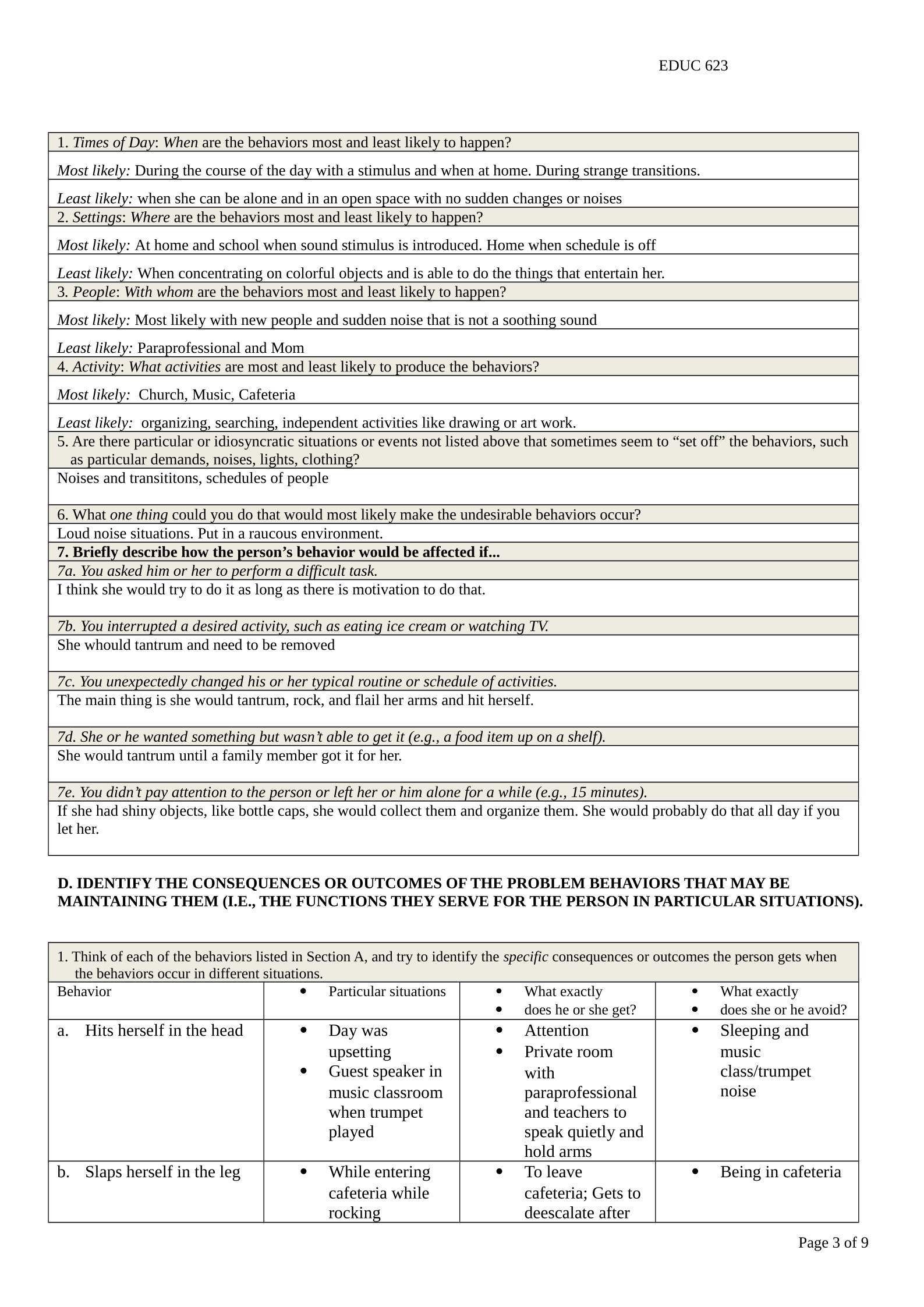
1. Times of Day: When are the behaviors most and least likely to happen?
Most likely: During the course of the day with a stimulus and when at home. During strange transitions.
Least likely: when she can be alone and in an open space with no sudden changes or noises
2. Settings: Where are the behaviors most and least likely to happen?
Most likely: At home and school when sound stimulus is introduced. Home when schedule is off
Least likely: When concentrating on colorful objects and is able to do the things that entertain her.
3. People: With whom are the behaviors most and least likely to happen?
Most likely: Most likely with new people and sudden noise that is not a soothing sound
Least likely: Paraprofessional and Mom
4. Activity: What activities are most and least likely to produce the behaviors?
Most likely: Church, Music, Cafeteria
Least likely: organizing, searching, independent activities like drawing or art work.
5. Are there particular or idiosyncratic situations or events not listed above that sometimes seem to “set off” the behaviors, such
as particular demands, noises, lights, clothing?
Noises and transititons, schedules of people
6. What one thing could you do that would most likely make the undesirable behaviors occur?
Loud noise situations. Put in a raucous environment.
7. Briefly describe how the person’s behavior would be affected if...
7a. You asked him or her to perform a difficult task.
I think she would try to do it as long as there is motivation to do that.
7b. You interrupted a desired activity, such as eating ice cream or watching TV.
She whould tantrum and need to be removed
7c. You unexpectedly changed his or her typical routine or schedule of activities.
The main thing is she would tantrum, rock, and flail her arms and hit herself.
7d. She or he wanted something but wasn’t able to get it (e.g., a food item up on a shelf).
She would tantrum until a family member got it for her.
7e. You didn’t pay attention to the person or left her or him alone for a while (e.g., 15 minutes).
If she had shiny objects, like bottle caps, she would collect them and organize them. She would probably do that all day if you
let her.
D. IDENTIFY THE CONSEQUENCES OR OUTCOMES OF THE PROBLEM BEHAVIORS THAT MAY BE
MAINTAINING THEM (I.E., THE FUNCTIONS THEY SERVE FOR THE PERSON IN PARTICULAR SITUATIONS).
1. Think of each of the behaviors listed in Section A, and try to identify the specific consequences or outcomes the person gets when
the behaviors occur in different situations.
Behavior Particular situations What exactly
does he or she get?
What exactly
does she or he avoid?
a. Hits herself in the head Day was
upsetting
Guest speaker in
music classroom
when trumpet
played
Attention
Private room
with
paraprofessional
and teachers to
speak quietly and
hold arms
Sleeping and
music
class/trumpet
noise
b. Slaps herself in the leg While entering
cafeteria while
rocking
To leave
cafeteria; Gets to
deescalate after
Being in cafeteria
Page 3 of 9
EDUC 623
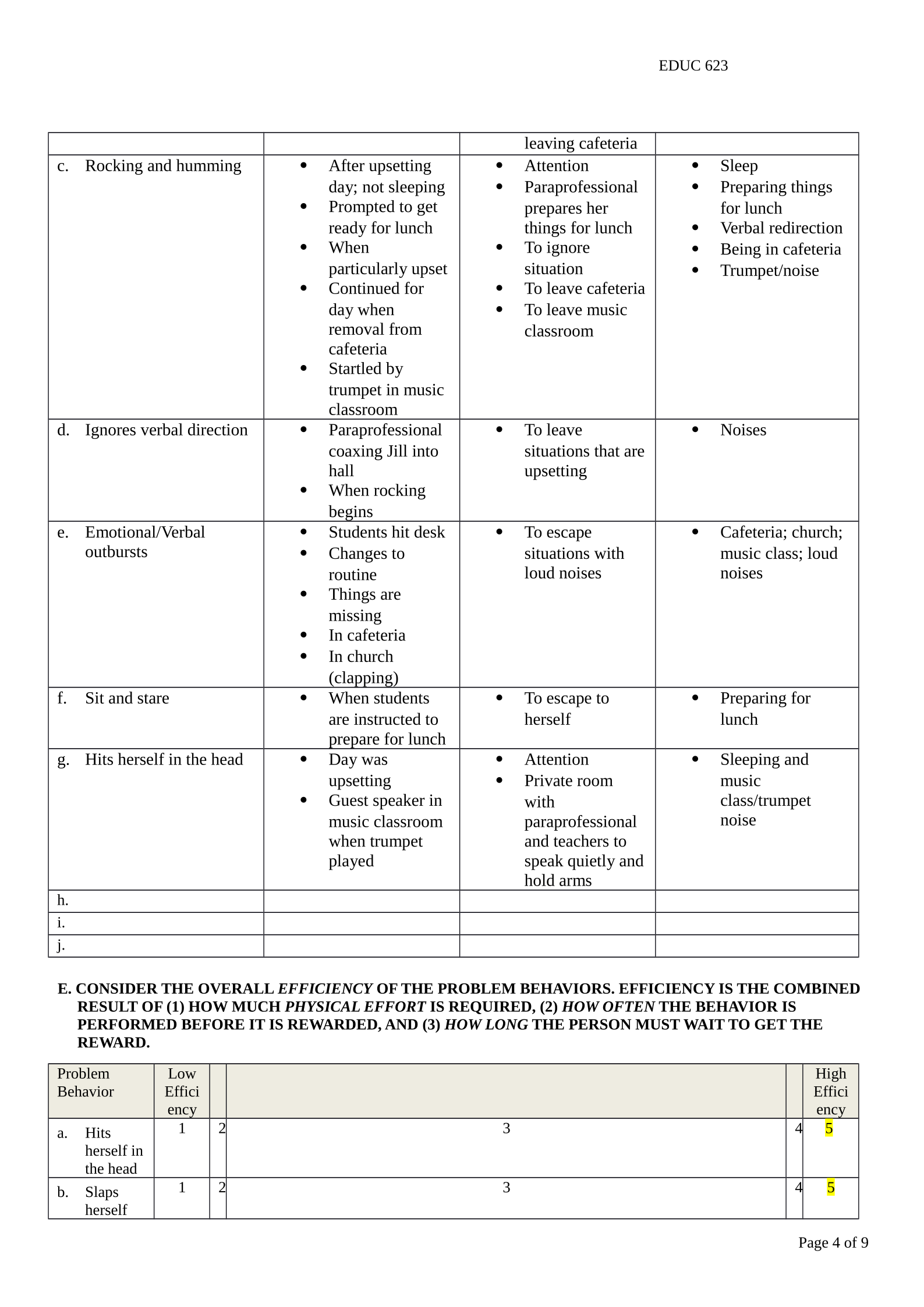
leaving cafeteria
c. Rocking and humming After upsetting
day; not sleeping
Prompted to get
ready for lunch
When
particularly upset
Continued for
day when
removal from
cafeteria
Startled by
trumpet in music
classroom
Attention
Paraprofessional
prepares her
things for lunch
To ignore
situation
To leave cafeteria
To leave music
classroom
Sleep
Preparing things
for lunch
Verbal redirection
Being in cafeteria
Trumpet/noise
d. Ignores verbal direction Paraprofessional
coaxing Jill into
hall
When rocking
begins
To leave
situations that are
upsetting
Noises
e. Emotional/Verbal
outbursts
Students hit desk
Changes to
routine
Things are
missing
In cafeteria
In church
(clapping)
To escape
situations with
loud noises
Cafeteria; church;
music class; loud
noises
f. Sit and stare When students
are instructed to
prepare for lunch
To escape to
herself
Preparing for
lunch
g. Hits herself in the head Day was
upsetting
Guest speaker in
music classroom
when trumpet
played
Attention
Private room
with
paraprofessional
and teachers to
speak quietly and
hold arms
Sleeping and
music
class/trumpet
noise
h.
i.
j.
E. CONSIDER THE OVERALL EFFICIENCY OF THE PROBLEM BEHAVIORS. EFFICIENCY IS THE COMBINED
RESULT OF (1) HOW MUCH PHYSICAL EFFORT IS REQUIRED, (2) HOW OFTEN THE BEHAVIOR IS
PERFORMED BEFORE IT IS REWARDED, AND (3) HOW LONG THE PERSON MUST WAIT TO GET THE
REWARD.
Problem
Behavior
Low
Effici
ency
High
Effici
ency
a. Hits
herself in
the head
1 2 3 4 5
b. Slaps
herself
1 2 3 4 5
Page 4 of 9
EDUC 623
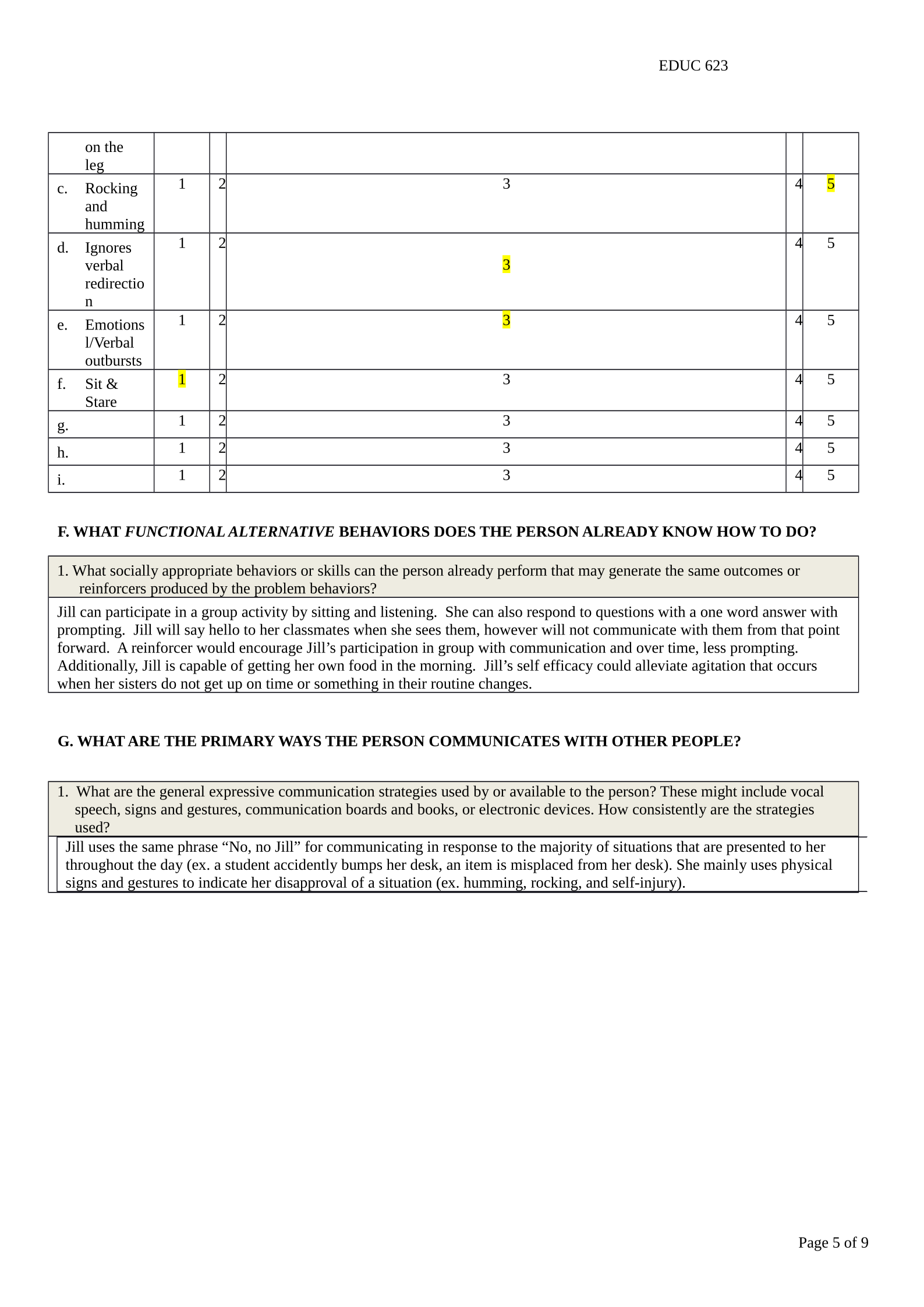
on the
leg
c. Rocking
and
humming
1 2 3 4 5
d. Ignores
verbal
redirectio
n
1 2
3
4 5
e. Emotions
l/Verbal
outbursts
1 2 3 4 5
f. Sit &
Stare
1 2 3 4 5
g. 1 2 3 4 5
h. 1 2 3 4 5
i. 1 2 3 4 5
F. WHAT FUNCTIONAL ALTERNATIVE BEHAVIORS DOES THE PERSON ALREADY KNOW HOW TO DO?
1. What socially appropriate behaviors or skills can the person already perform that may generate the same outcomes or
reinforcers produced by the problem behaviors?
Jill can participate in a group activity by sitting and listening. She can also respond to questions with a one word answer with
prompting. Jill will say hello to her classmates when she sees them, however will not communicate with them from that point
forward. A reinforcer would encourage Jill’s participation in group with communication and over time, less prompting.
Additionally, Jill is capable of getting her own food in the morning. Jill’s self efficacy could alleviate agitation that occurs
when her sisters do not get up on time or something in their routine changes.
G. WHAT ARE THE PRIMARY WAYS THE PERSON COMMUNICATES WITH OTHER PEOPLE?
1. What are the general expressive communication strategies used by or available to the person? These might include vocal
speech, signs and gestures, communication boards and books, or electronic devices. How consistently are the strategies
used?
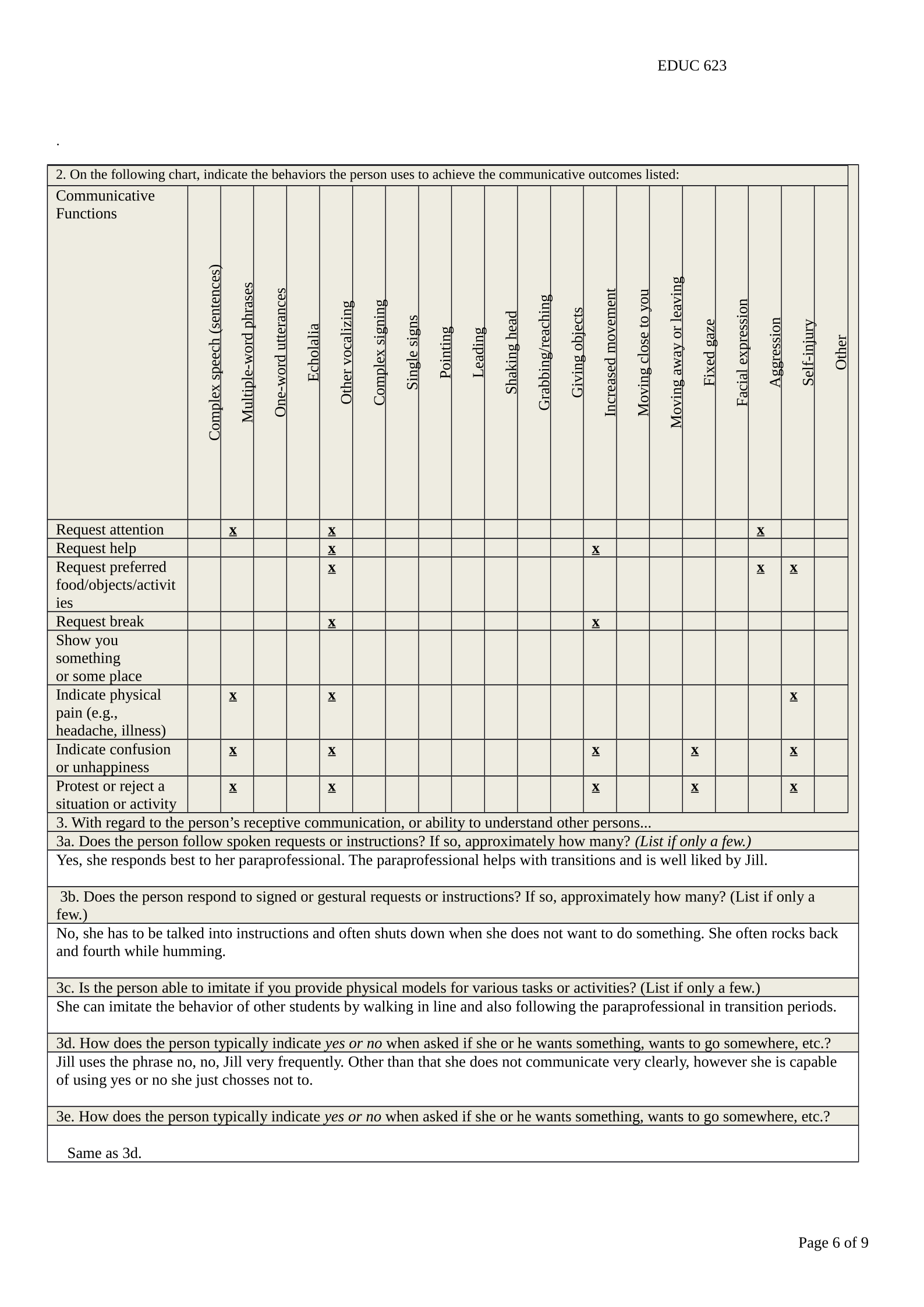
Jill uses the same phrase “No, no Jill” for communicating in response to the majority of situations that are presented to her
throughout the day (ex. a student accidently bumps her desk, an item is misplaced from her desk). She mainly uses physical
signs and gestures to indicate her disapproval of a situation (ex. humming, rocking, and self-injury).
Page 5 of 9
EDUC 623
.
3. With regard to the person’s receptive communication, or ability to understand other persons...
3a. Does the person follow spoken requests or instructions? If so, approximately how many? (List if only a few.)
Yes, she responds best to her paraprofessional. The paraprofessional helps with transitions and is well liked by Jill.
3b. Does the person respond to signed or gestural requests or instructions? If so, approximately how many? (List if only a
few.)
No, she has to be talked into instructions and often shuts down when she does not want to do something. She often rocks back
and fourth while humming.
3c. Is the person able to imitate if you provide physical models for various tasks or activities? (List if only a few.)
She can imitate the behavior of other students by walking in line and also following the paraprofessional in transition periods.
3d. How does the person typically indicate yes or no when asked if she or he wants something, wants to go somewhere, etc.?
Jill uses the phrase no, no, Jill very frequently. Other than that she does not communicate very clearly, however she is capable
of using yes or no she just chosses not to.
3e. How does the person typically indicate yes or no when asked if she or he wants something, wants to go somewhere, etc.?
Same as 3d.
Page 6 of 9
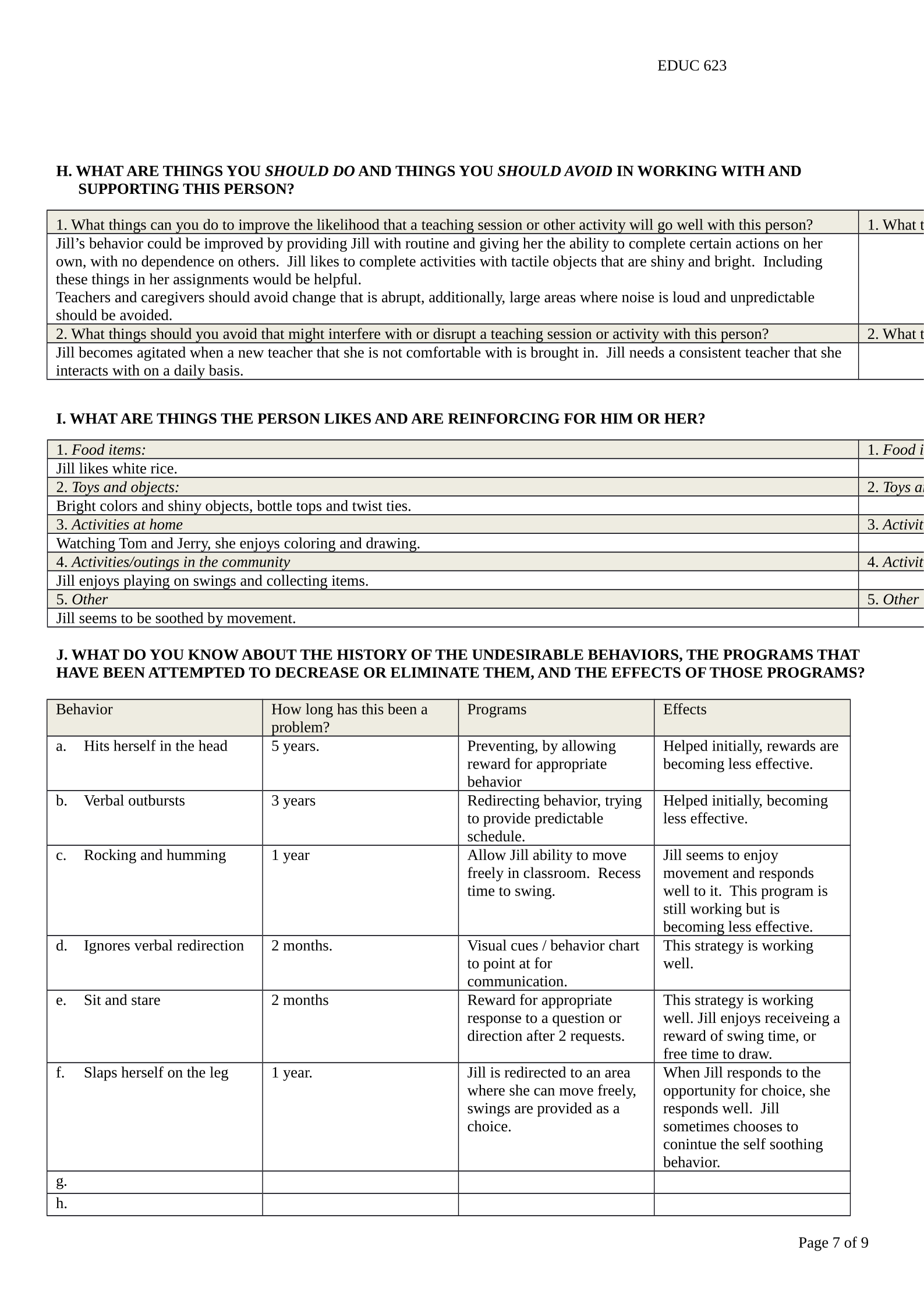
2. On the following chart, indicate the behaviors the person uses to achieve the communicative outcomes listed:
Communicative
Functions
Complex speech (sentences)
Multiple-word phrases
One-word utterances
Echolalia
Other vocalizing
Complex signing
Single signs
Pointing
Leading
Shaking head
Grabbing/reaching
Giving objects
Increased movement
Moving close to you
Moving away or leaving
Fixed gaze
Facial expression
Aggression
Self-injury
Other
Request attention x x x
Request help x x
Request preferred
food/objects/activit
ies
x x x
Request break x x
Show you
something
or some place
Indicate physical
pain (e.g.,
headache, illness)
x x x
Indicate confusion
or unhappiness
x x x x x
Protest or reject a
situation or activity
x x x x x
EDUC 623
H. WHAT ARE THINGS YOU SHOULD DO AND THINGS YOU SHOULD AVOID IN WORKING WITH AND
SUPPORTING THIS PERSON?
1. What things can you do to improve the likelihood that a teaching session or other activity will go well with this person? 1. What things can you do to improve the likelihood that a teaching session or other activity will go well with this person?
Jill’s behavior could be improved by providing Jill with routine and giving her the ability to complete certain actions on her
own, with no dependence on others. Jill likes to complete activities with tactile objects that are shiny and bright. Including
these things in her assignments would be helpful.
Teachers and caregivers should avoid change that is abrupt, additionally, large areas where noise is loud and unpredictable
should be avoided.
2. What things should you avoid that might interfere with or disrupt a teaching session or activity with this person? 2. What things should you avoid that might interfere with or disrupt a teaching session or activity with this person?
Jill becomes agitated when a new teacher that she is not comfortable with is brought in. Jill needs a consistent teacher that she
interacts with on a daily basis.
I. WHAT ARE THINGS THE PERSON LIKES AND ARE REINFORCING FOR HIM OR HER?
1. Food items: 1. Food items:
Jill likes white rice.
2. Toys and objects: 2. Toys and objects:
Bright colors and shiny objects, bottle tops and twist ties.
3. Activities at home 3. Activities at home
Watching Tom and Jerry, she enjoys coloring and drawing.
4. Activities/outings in the community 4. Activities/outings in the community
Jill enjoys playing on swings and collecting items.
5. Other 5. Other
Jill seems to be soothed by movement.
J. WHAT DO YOU KNOW ABOUT THE HISTORY OF THE UNDESIRABLE BEHAVIORS, THE PROGRAMS THAT
HAVE BEEN ATTEMPTED TO DECREASE OR ELIMINATE THEM, AND THE EFFECTS OF THOSE PROGRAMS?
Behavior How long has this been a
problem?
Programs Effects
a. Hits herself in the head 5 years. Preventing, by allowing
reward for appropriate
behavior
Helped initially, rewards are
becoming less effective.
b. Verbal outbursts 3 years Redirecting behavior, trying
to provide predictable
schedule.
Helped initially, becoming
less effective.
c. Rocking and humming 1 year Allow Jill ability to move
freely in classroom. Recess
time to swing.
Jill seems to enjoy
movement and responds
well to it. This program is
still working but is
becoming less effective.
d. Ignores verbal redirection 2 months. Visual cues / behavior chart
to point at for
communication.
This strategy is working
well.
e. Sit and stare 2 months Reward for appropriate
response to a question or
direction after 2 requests.
This strategy is working
well. Jill enjoys receiveing a
reward of swing time, or
free time to draw.
f. Slaps herself on the leg 1 year. Jill is redirected to an area
where she can move freely,
swings are provided as a
choice.
When Jill responds to the
opportunity for choice, she
responds well. Jill
sometimes chooses to
conintue the self soothing
behavior.
g.
h.
Page 7 of 9
EDUC 623
i.
j.
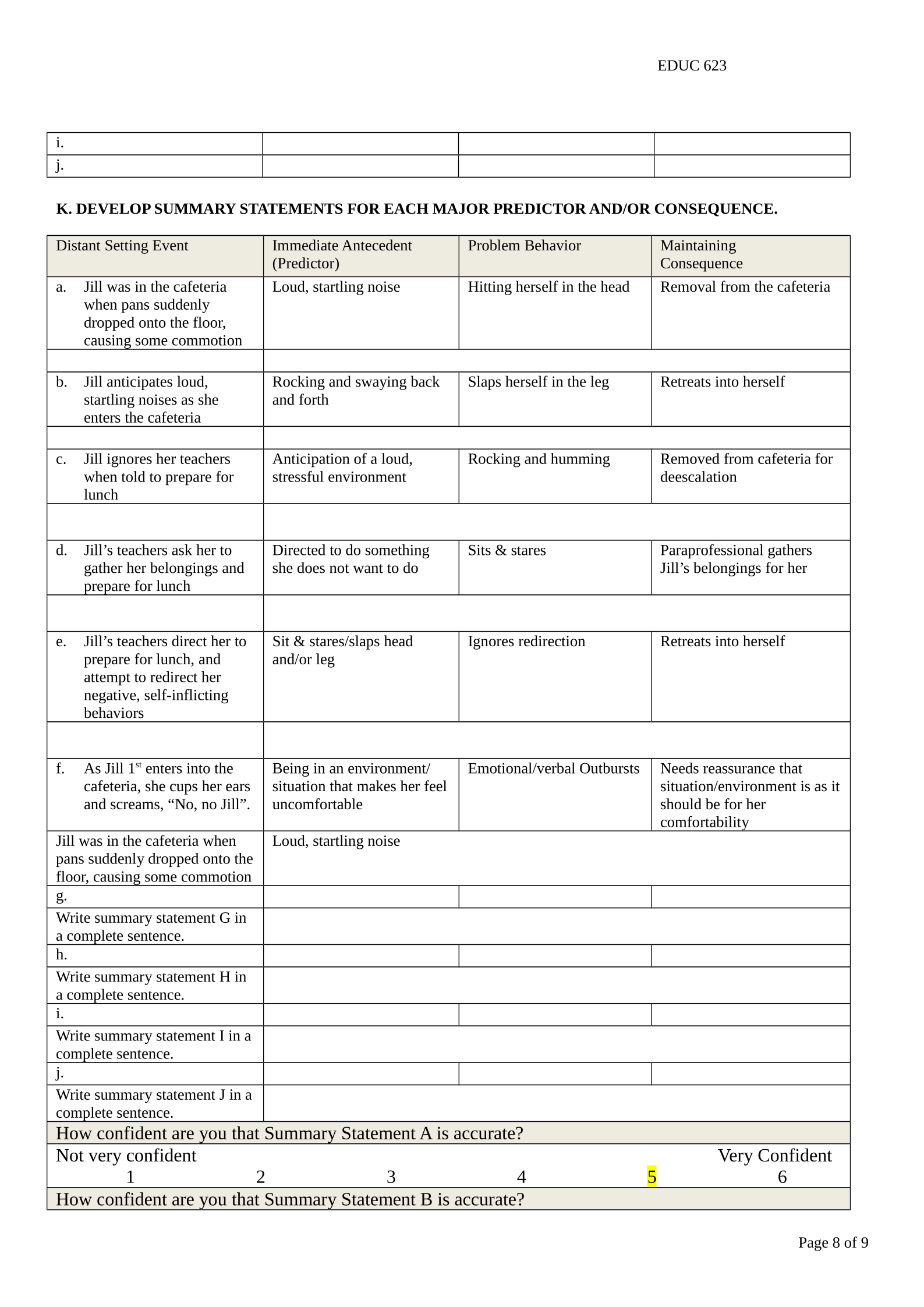
K. DEVELOP SUMMARY STATEMENTS FOR EACH MAJOR PREDICTOR AND/OR CONSEQUENCE.
Distant Setting Event Immediate Antecedent
(Predictor)
Problem Behavior Maintaining
Consequence
a. Jill was in the cafeteria
when pans suddenly
dropped onto the floor,
causing some commotion
Loud, startling noise Hitting herself in the head Removal from the cafeteria
b. Jill anticipates loud,
startling noises as she
enters the cafeteria
Rocking and swaying back
and forth
Slaps herself in the leg Retreats into herself
c. Jill ignores her teachers
when told to prepare for
lunch
Anticipation of a loud,
stressful environment
Rocking and humming Removed from cafeteria for
deescalation
d. Jill’s teachers ask her to
gather her belongings and
prepare for lunch
Directed to do something
she does not want to do
Sits & stares Paraprofessional gathers
Jill’s belongings for her
e. Jill’s teachers direct her to
prepare for lunch, and
attempt to redirect her
negative, self-inflicting
behaviors
Sit & stares/slaps head
and/or leg
Ignores redirection Retreats into herself
f. As Jill 1st enters into the
cafeteria, she cups her ears
and screams, “No, no Jill”.
Being in an environment/
situation that makes her feel
uncomfortable
Emotional/verbal Outbursts Needs reassurance that
situation/environment is as it
should be for her
comfortability
Jill was in the cafeteria when
pans suddenly dropped onto the
floor, causing some commotion
Loud, startling noise
g.
Write summary statement G in
a complete sentence.
h.
Write summary statement H in
a complete sentence.
i.
Write summary statement I in a
complete sentence.
j.
Write summary statement J in a
complete sentence.
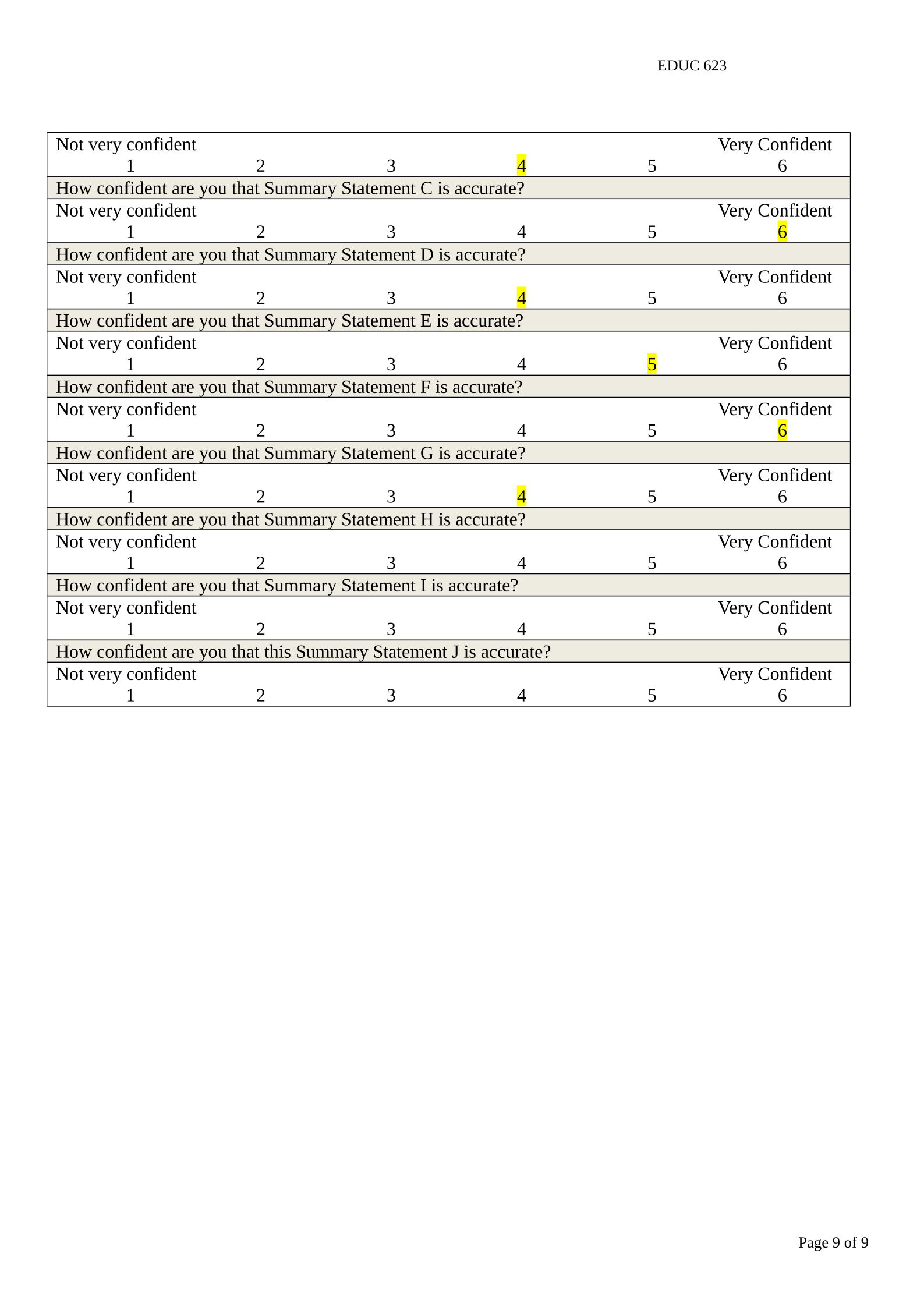
How confident are you that Summary Statement A is accurate?
Not very confident Very Confident
123456
How confident are you that Summary Statement B is accurate?
Page 8 of 9
EDUC 623
Not very confident Very Confident
123456
How confident are you that Summary Statement C is accurate?
Not very confident Very Confident
123456
How confident are you that Summary Statement D is accurate?
Not very confident Very Confident
123456
How confident are you that Summary Statement E is accurate?
Not very confident Very Confident
123456
How confident are you that Summary Statement F is accurate?
Not very confident Very Confident
123456
How confident are you that Summary Statement G is accurate?
Not very confident Very Confident
123456
How confident are you that Summary Statement H is accurate?
Not very confident Very Confident
123456
How confident are you that Summary Statement I is accurate?
Not very confident Very Confident
123456
How confident are you that this Summary Statement J is accurate?
Not very confident Very Confident
123456
Page 9 of 9
Powered by TCPDF (www.tcpdf.org)

