


MENU OF INTERVENTIONS 2
Menu of Interventions
READING INTERVENTIONS
Name of
Intervention
Specific
Subject Area
(within
reading)
What Tiers can
this
intervention be
used for?
Explain the
purpose of this
intervention.
How do you monitor
progress with this
intervention?
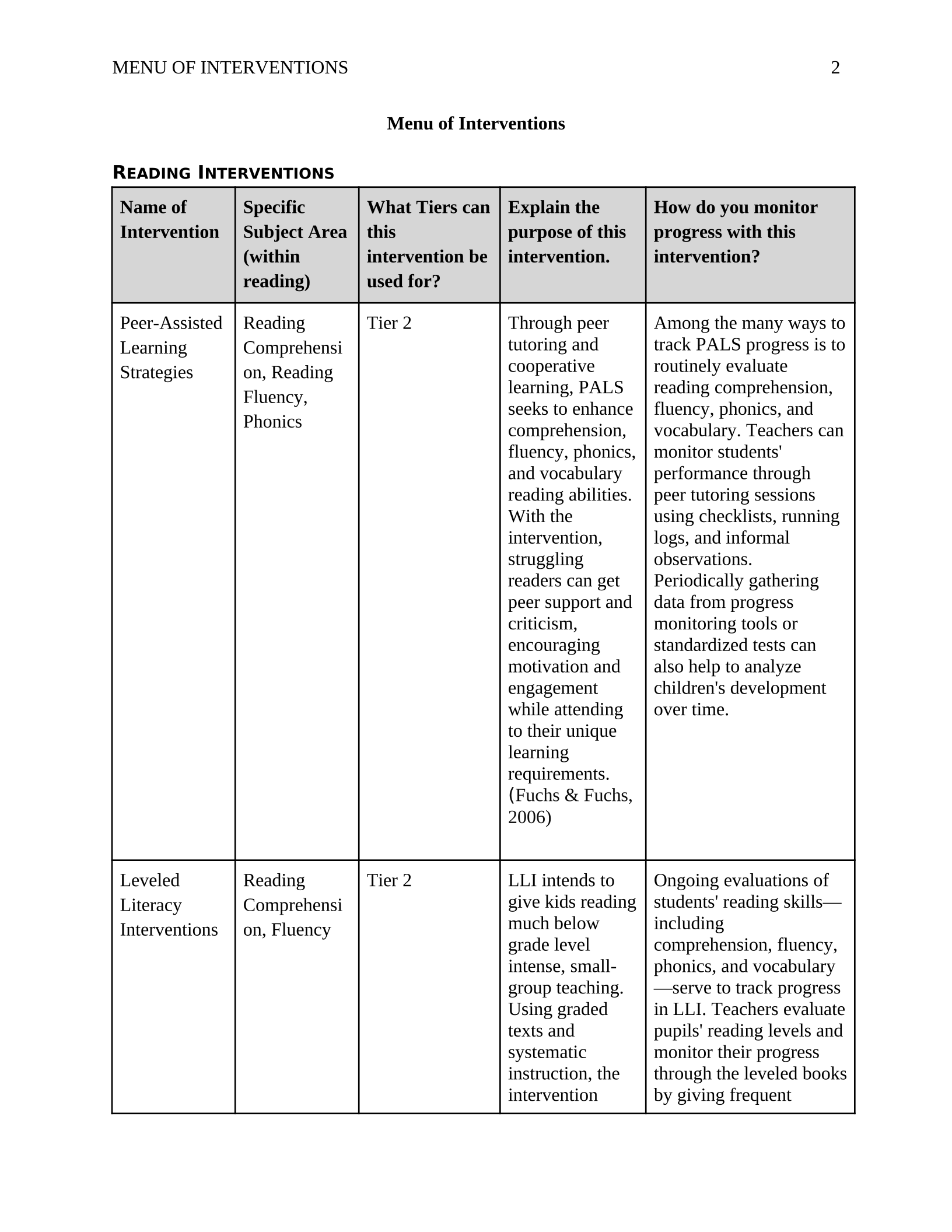
Peer-Assisted
Learning
Strategies
Reading
Comprehensi
on, Reading
Fluency,
Phonics
Tier 2 Through peer
tutoring and
cooperative
learning, PALS
seeks to enhance
comprehension,
fluency, phonics,
and vocabulary
reading abilities.
With the
intervention,
struggling
readers can get
peer support and
criticism,
encouraging
motivation and
engagement
while attending
to their unique
learning
requirements.
(Fuchs & Fuchs,
2006)
Among the many ways to
track PALS progress is to
routinely evaluate
reading comprehension,
fluency, phonics, and
vocabulary. Teachers can
monitor students'
performance through
peer tutoring sessions
using checklists, running
logs, and informal
observations.
Periodically gathering
data from progress
monitoring tools or
standardized tests can
also help to analyze
children's development
over time.
Leveled
Literacy
Interventions
Reading
Comprehensi
on, Fluency
Tier 2 LLI intends to
give kids reading
much below
grade level
intense, small-
group teaching.
Using graded
texts and
systematic
instruction, the
intervention
Ongoing evaluations of
students' reading skills—
including
comprehension, fluency,
phonics, and vocabulary
—serve to track progress
in LLI. Teachers evaluate
pupils' reading levels and
monitor their progress
through the leveled books
by giving frequent
MENU OF INTERVENTIONS 3
tackles
comprehension,
fluency, phonics,
and vocabulary,
accelerating the
reading progress
of struggling
readers.
(Fountas &
Pinnell, 2009)
benchmark tests, such as
running records. The
results of these tests are
used to group children,
modify instruction, and
measure how well the
intervention has sped up
kids' reading
development.
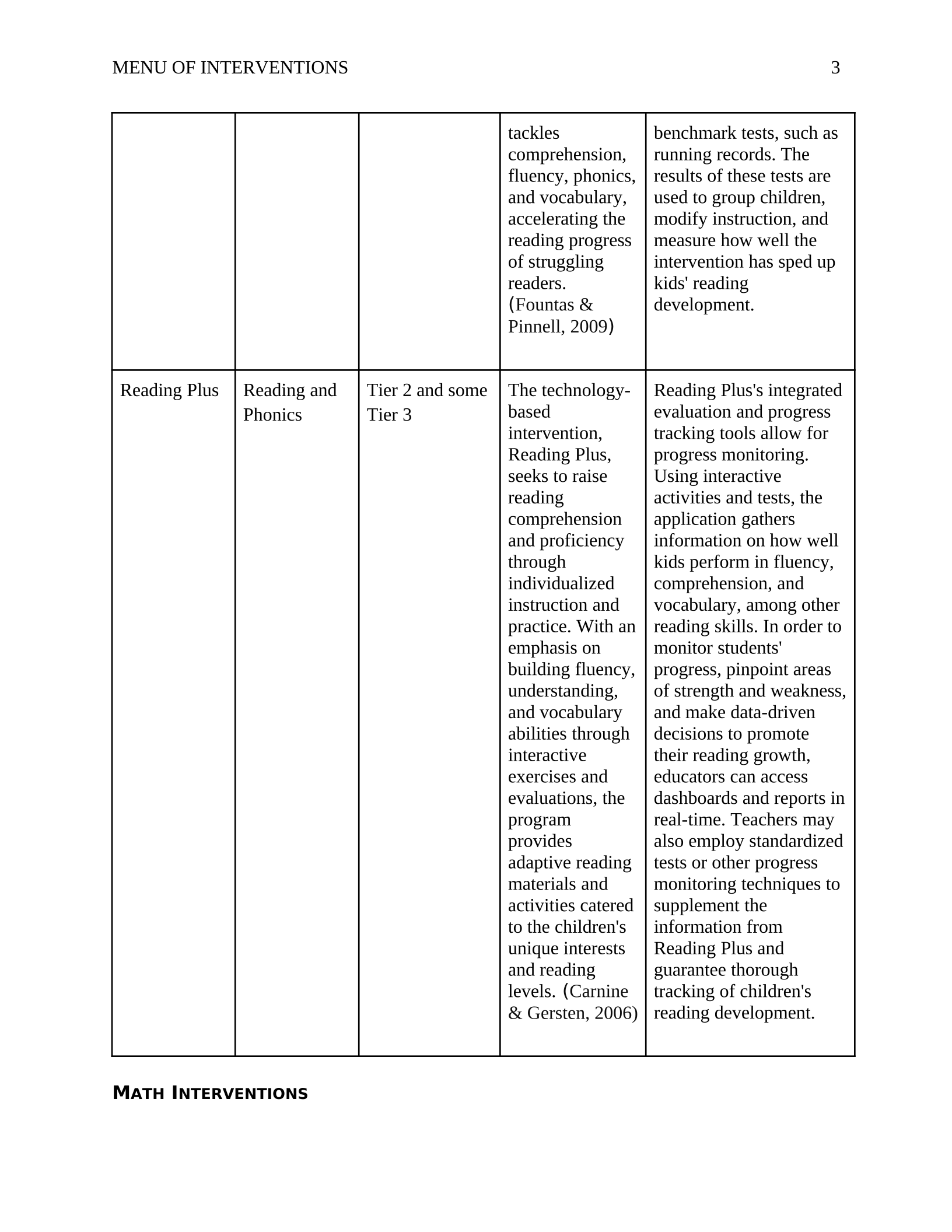
Reading Plus Reading and
Phonics
Tier 2 and some
Tier 3
The technology-
based
intervention,
Reading Plus,
seeks to raise
reading
comprehension
and proficiency
through
individualized
instruction and
practice. With an
emphasis on
building fluency,
understanding,
and vocabulary
abilities through
interactive
exercises and
evaluations, the
program
provides
adaptive reading
materials and
activities catered
to the children's
unique interests
and reading
levels. (Carnine
& Gersten, 2006)
Reading Plus's integrated
evaluation and progress
tracking tools allow for
progress monitoring.
Using interactive
activities and tests, the
application gathers
information on how well
kids perform in fluency,
comprehension, and
vocabulary, among other
reading skills. In order to
monitor students'
progress, pinpoint areas
of strength and weakness,
and make data-driven
decisions to promote
their reading growth,
educators can access
dashboards and reports in
real-time. Teachers may
also employ standardized
tests or other progress
monitoring techniques to
supplement the
information from
Reading Plus and
guarantee thorough
tracking of children's
reading development.
MATH INTERVENTIONS
MENU OF INTERVENTIONS 4
Name of
Intervention
Specific
Subject Area
(within math)
What Tiers can
this intervention
be used for?
Explain the purpose
of this intervention.
How do you
monitor
progress with
this
intervention?
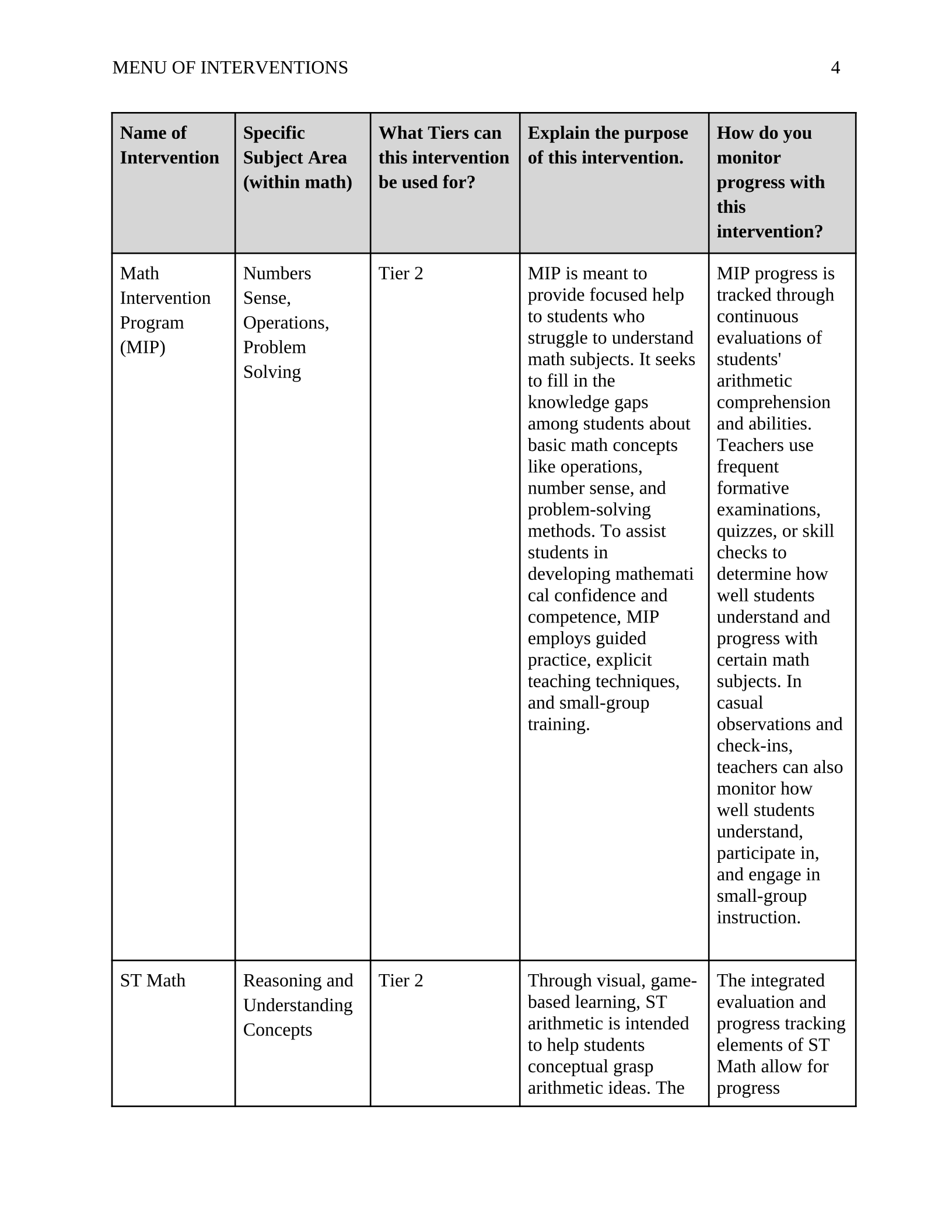
Math
Intervention
Program
(MIP)
Numbers
Sense,
Operations,
Problem
Solving
Tier 2 MIP is meant to
provide focused help
to students who
struggle to understand
math subjects. It seeks
to fill in the
knowledge gaps
among students about
basic math concepts
like operations,
number sense, and
problem-solving
methods. To assist
students in
developing=mathemati
cal confidence and
competence, MIP
employs guided
practice, explicit
teaching techniques,
and small-group
training.
MIP progress is
tracked through
continuous
evaluations of
students'
arithmetic
comprehension
and abilities.
Teachers use
frequent
formative
examinations,
quizzes, or skill
checks to
determine how
well students
understand and
progress with
certain math
subjects. In
casual
observations and
check-ins,
teachers can also
monitor how
well students
understand,
participate in,
and engage in
small-group
instruction.
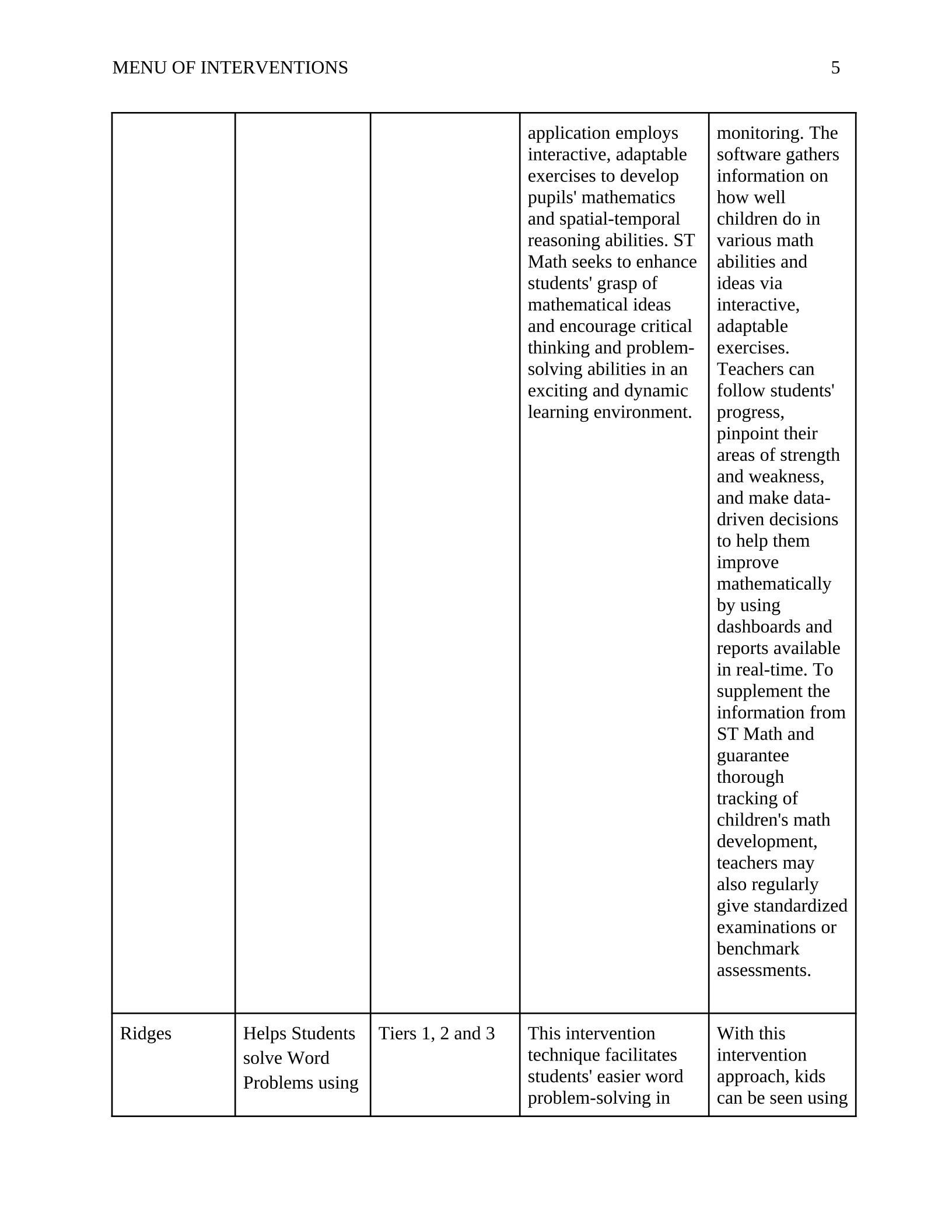
ST Math Reasoning and
Understanding
Concepts
Tier 2 Through visual, game-
based learning, ST
arithmetic is intended
to help students
conceptual grasp
arithmetic ideas. The
The integrated
evaluation and
progress tracking
elements of ST
Math allow for
progress
MENU OF INTERVENTIONS 5
application employs
interactive, adaptable
exercises to develop
pupils' mathematics
and spatial-temporal
reasoning abilities. ST
Math seeks to enhance
students' grasp of
mathematical ideas
and encourage critical
thinking and problem-
solving abilities in an
exciting and dynamic
learning environment.
monitoring. The
software gathers
information on
how well
children do in
various math
abilities and
ideas via
interactive,
adaptable
exercises.
Teachers can
follow students'
progress,
pinpoint their
areas of strength
and weakness,
and make data-
driven decisions
to help them
improve
mathematically
by using
dashboards and
reports available
in real-time. To
supplement the
information from
ST Math and
guarantee
thorough
tracking of
children's math
development,
teachers may
also regularly
give standardized
examinations or
benchmark
assessments.
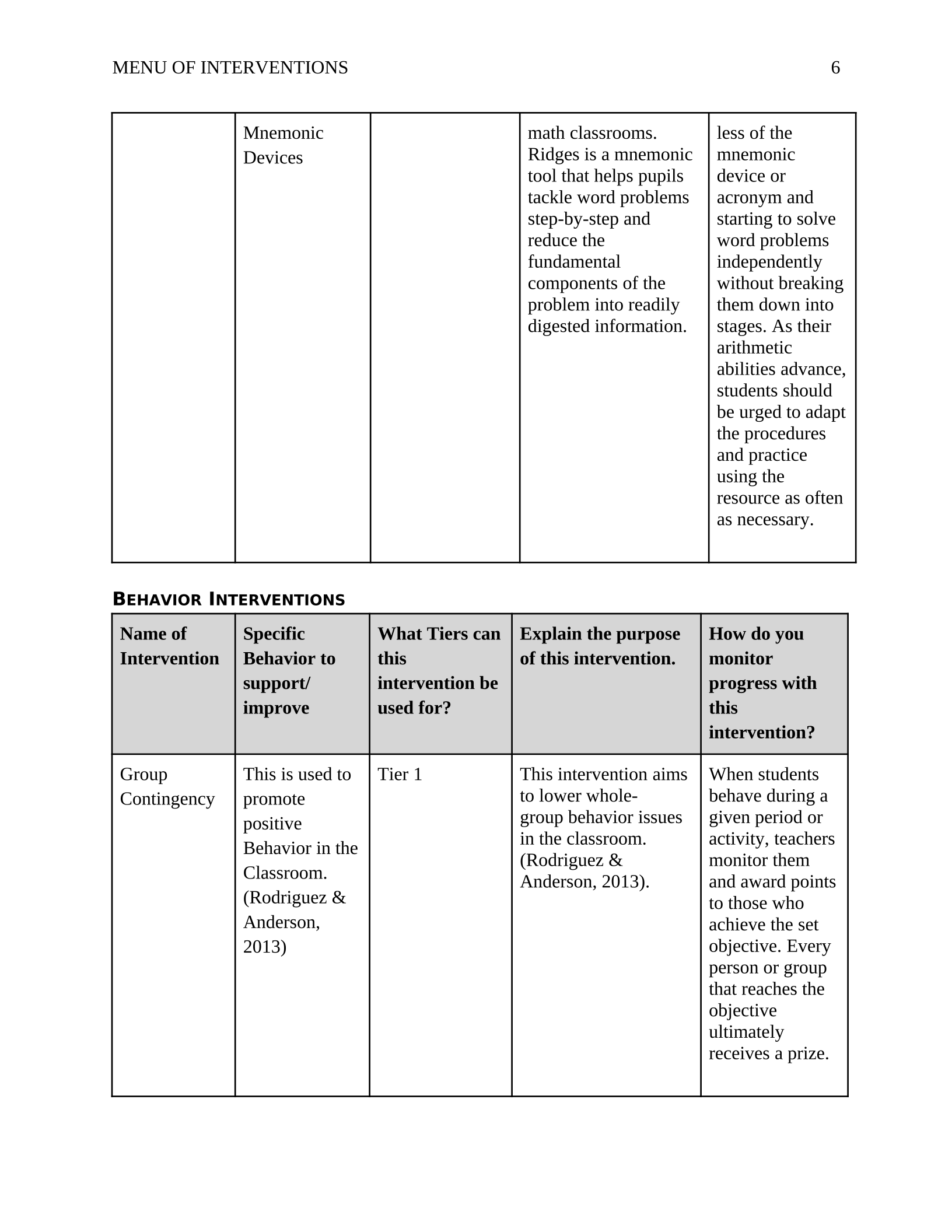
Ridges Helps Students
solve Word
Problems using
Tiers 1, 2 and 3 This intervention
technique facilitates
students' easier word
problem-solving in
With this
intervention
approach, kids
can be seen using
MENU OF INTERVENTIONS 6
Mnemonic
Devices
math classrooms.
Ridges is a mnemonic
tool that helps pupils
tackle word problems
step-by-step and
reduce the
fundamental
components of the
problem into readily
digested information.
less of the
mnemonic
device or
acronym and
starting to solve
word problems
independently
without breaking
them down into
stages. As their
arithmetic
abilities advance,
students should
be urged to adapt
the procedures
and practice
using the
resource as often
as necessary.
BEHAVIOR INTERVENTIONS
Name of
Intervention
Specific
Behavior to
support/
improve
What Tiers can
this
intervention be
used for?
Explain the purpose
of this intervention.
How do you
monitor
progress with
this
intervention?
Group
Contingency
This is used to
promote
positive
Behavior in the
Classroom.
(Rodriguez &
Anderson,
2013)
Tier 1 This intervention aims
to lower whole-
group=behavior issues
in the classroom.
(Rodriguez &
Anderson, 2013).
When students
behave during a
given period or
activity, teachers
monitor them
and award points
to those who
achieve the set
objective. Every
person or group
that reaches the
objective
ultimately
receives a prize.

MENU OF INTERVENTIONS 7
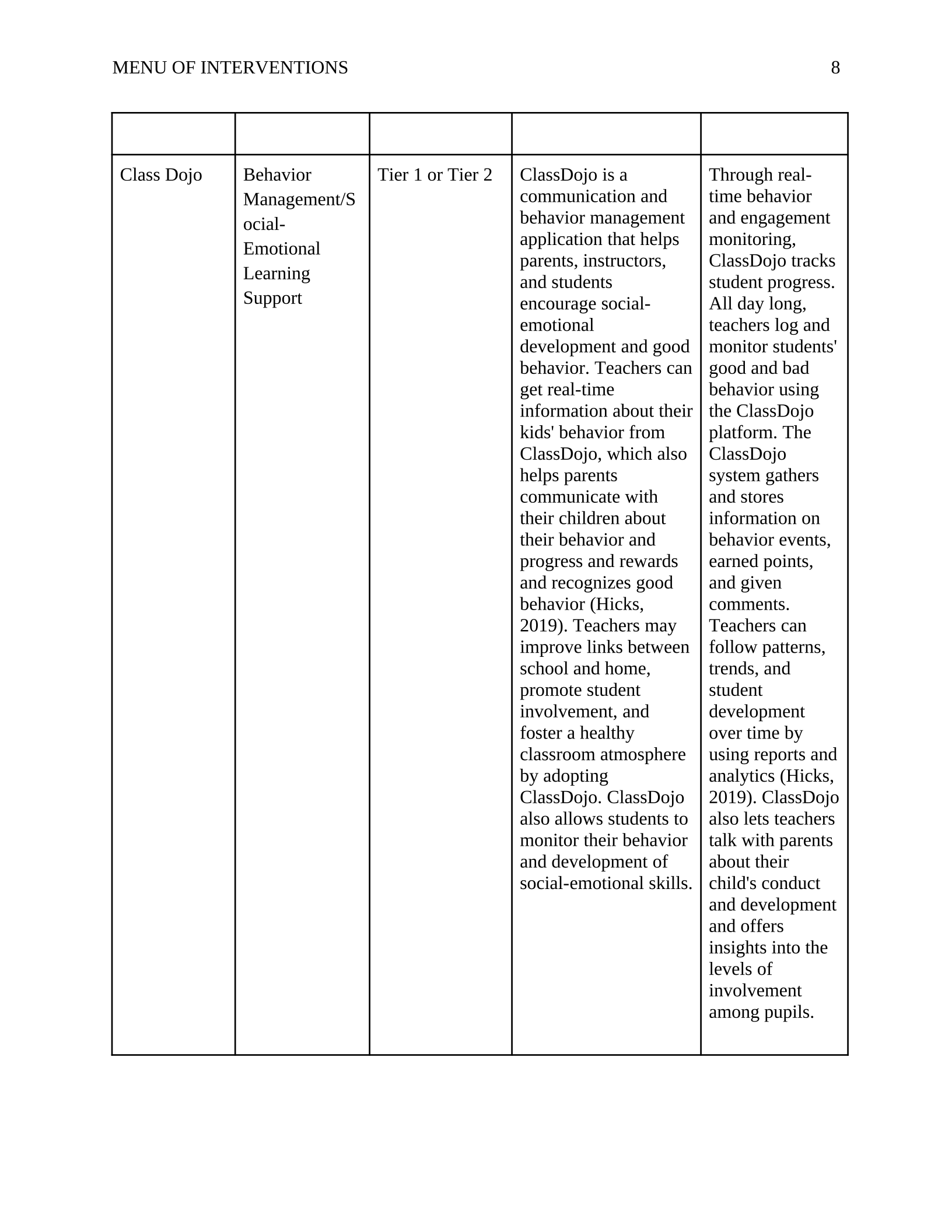
PBIS
(Positive
Behavioral
Intervention
and Support)
Behavior/
Social-
Emotional
Learning
Support
Tier 1 PBIS seeks to
encourage good
behavior and avoid
undesirable conduct by
creating a school-wide
framework of
proactive tactics and
supports. PBIS aims to
foster a welcoming
and encouraging
learning environment
where students feel
secure, encouraged,
and interested in their
studies. PBIS stresses
setting clear
expectations, teaching
and rewarding good
behavior and enforcing
consistent penalties for
misbehavior (Sugai &
Horner, 2009). By
implementing PBIS,
schools can lessen
disruptive conduct,
raise children's social-
emotional skills, and
make the classroom
more comfortable for
all students.
Continuous data
collecting and
analysis of
behavior-related
results track
PBIS progress.
Schools gather
information on a
range of
behavior
indicators to
evaluate the
success of PBIS
implementation
and pinpoint
areas for
development,
including
attendance,
school climate
surveys, and
referrals for
office discipline.
To assess the
effectiveness of
interventions,
make data-driven
decisions, and
modify tactics as
necessary, the
PBIS team
routinely reviews
data (Bradshaw
et al., 2008).
Schools can also
evaluate how
PBIS
components are
implemented and
guarantee
uniformity
among staff
members and
situations using
fidelity metrics.
MENU OF INTERVENTIONS 8
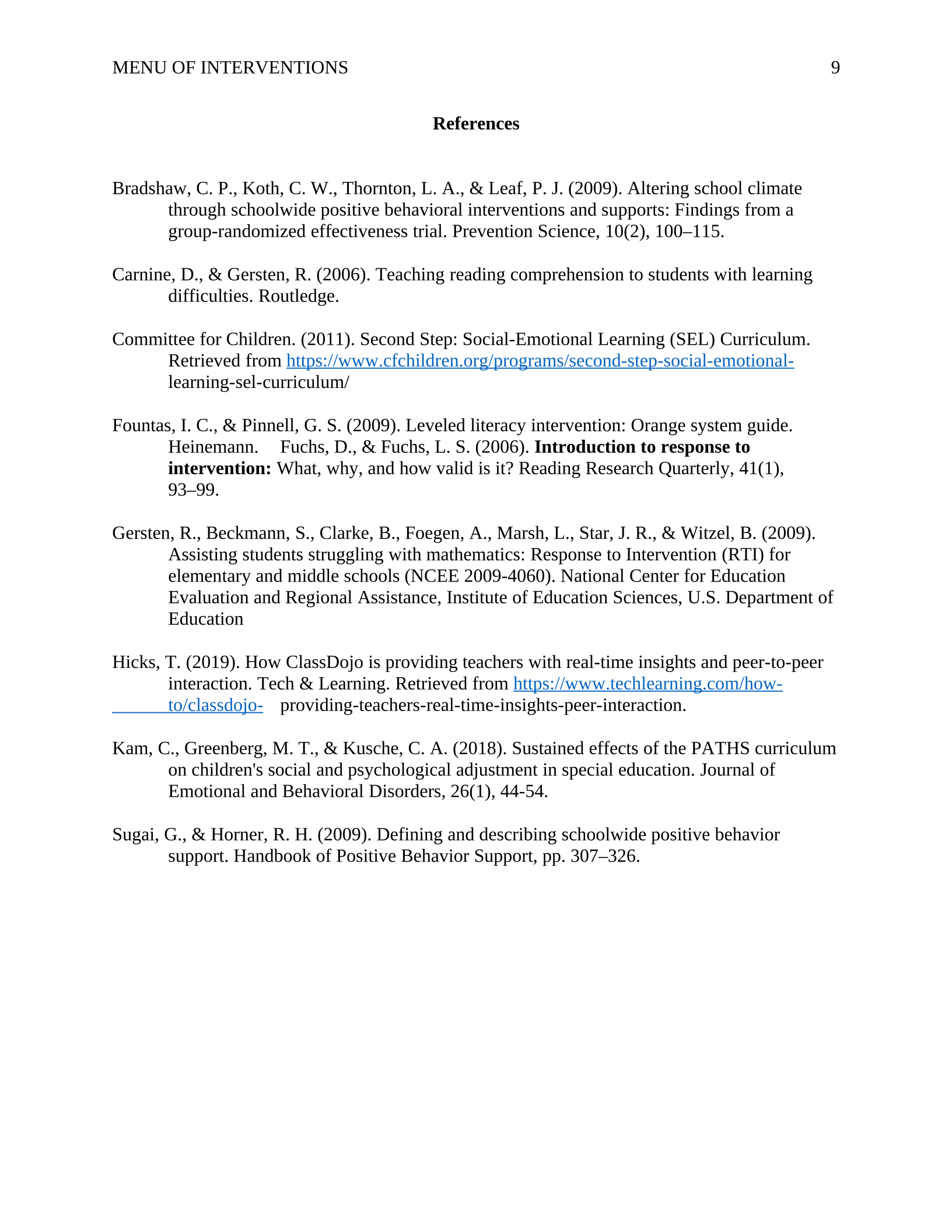
Class Dojo Behavior
Management/S
ocial-
Emotional
Learning
Support
Tier 1 or Tier 2 ClassDojo is a
communication and
behavior management
application that helps
parents, instructors,
and students
encourage social-
emotional
development and good
behavior. Teachers can
get real-time
information about their
kids' behavior from
ClassDojo, which also
helps parents
communicate with
their children about
their behavior and
progress and rewards
and recognizes good
behavior (Hicks,
2019). Teachers may
improve links between
school and home,
promote student
involvement, and
foster a healthy
classroom atmosphere
by adopting
ClassDojo. ClassDojo
also allows students to
monitor their behavior
and development of
social-emotional skills.
Through real-
time behavior
and engagement
monitoring,
ClassDojo tracks
student progress.
All day long,
teachers log and
monitor students'
good and bad
behavior using
the ClassDojo
platform. The
ClassDojo
system gathers
and stores
information on
behavior events,
earned points,
and given
comments.
Teachers can
follow patterns,
trends, and
student
development
over time by
using reports and
analytics (Hicks,
2019). ClassDojo
also lets teachers
talk with parents
about their
child's conduct
and development
and offers
insights into the
levels of
involvement
among pupils.
MENU OF INTERVENTIONS 9
References
Bradshaw, C. P., Koth, C. W., Thornton, L. A., & Leaf, P. J. (2009). Altering school climate
through schoolwide positive behavioral interventions and supports: Findings from a
group-randomized effectiveness trial. Prevention Science, 10(2), 100–115.
Carnine, D., & Gersten, R. (2006). Teaching reading comprehension to students with learning
difficulties. Routledge.
Committee for Children. (2011). Second Step: Social-Emotional Learning (SEL) Curriculum.
Retrieved from https://www.cfchildren.org/programs/second-step-social-emotional-
learning-sel-curriculum/
Fountas, I. C., & Pinnell, G. S. (2009). Leveled literacy intervention: Orange system guide.
Heinemann. Fuchs, D., & Fuchs, L. S. (2006).=Introduction to response to
intervention:=What, why, and how valid is it? Reading Research Quarterly, 41(1),
93–99.
Gersten, R., Beckmann, S., Clarke, B., Foegen, A., Marsh, L., Star, J. R., & Witzel, B. (2009).
Assisting students struggling with mathematics: Response to Intervention (RTI) for
elementary and middle schools (NCEE 2009-4060). National Center for Education
Evaluation and Regional Assistance, Institute of Education Sciences, U.S. Department of
Education
Hicks, T. (2019). How ClassDojo is providing teachers with real-time insights and peer-to-peer
interaction. Tech & Learning. Retrieved from https://www.techlearning.com/how-
to/classdojo- providing-teachers-real-time-insights-peer-interaction.
Kam, C., Greenberg, M. T., & Kusche, C. A. (2018). Sustained effects of the PATHS curriculum
on children's social and psychological adjustment in special education. Journal of
Emotional and Behavioral Disorders, 26(1), 44-54.
Sugai, G., & Horner, R. H. (2009). Defining and describing schoolwide positive behavior
support. Handbook of Positive Behavior Support, pp. 307–326.
Powered by TCPDF (www.tcpdf.org)

