


IRIS MODULE: UNIVERSAL DESIGN FOR LEARNING 3
IRIS Module: Universal Design for Learning: Creating a Learning Environment that
Challenges and Engages All Students
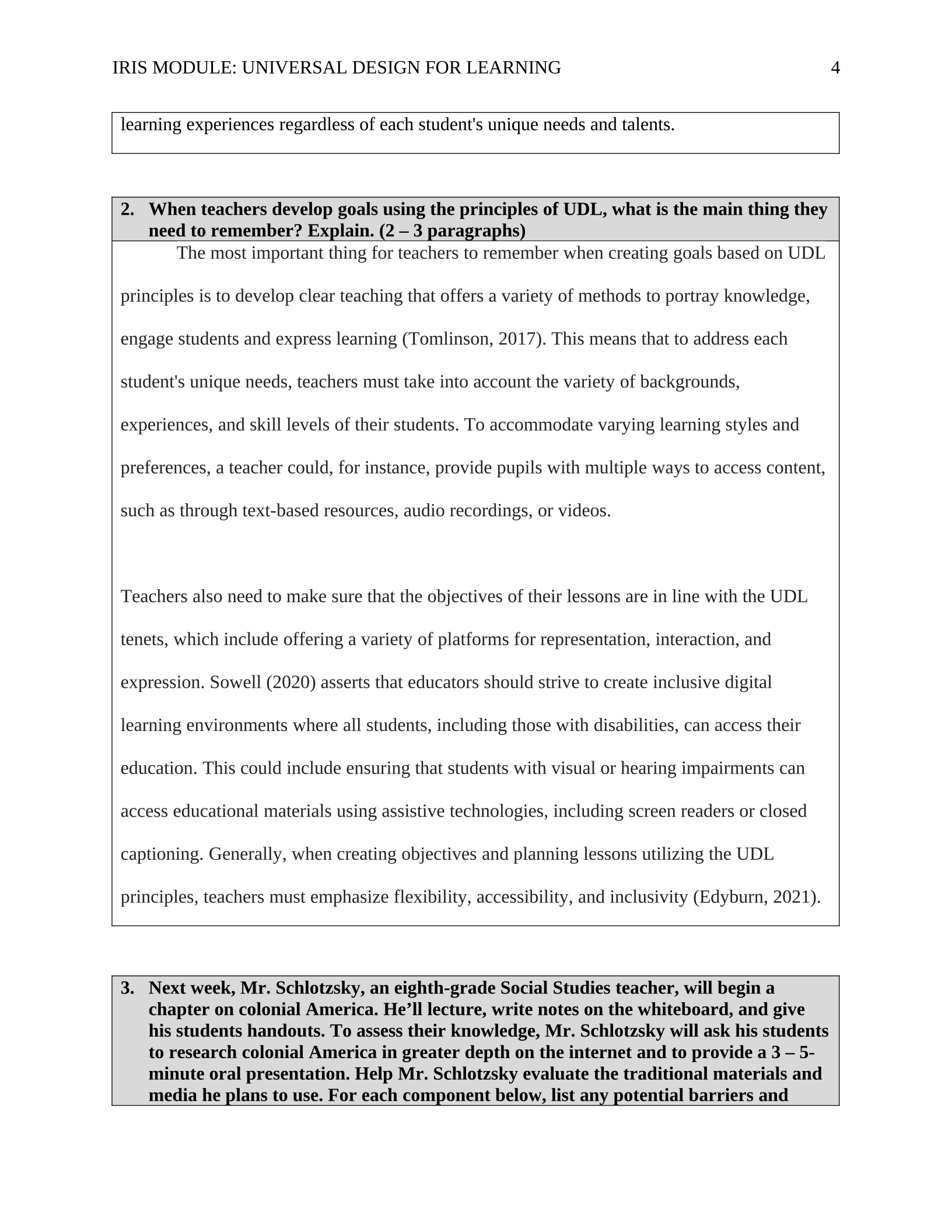
1. Briefly describe Universal Design for Learning (UDL). In your response, include the
three principles of UDL. (2 – 3 paragraphs)
A framework for creating and delivering teaching that considers the various needs and
capacities of all learners is known as the Universal Design for Learning or UDL. Universal
Design for Learning (UDL) 's tenets seek to offer various modes of engagement,
representation, and expression to guarantee that all students can access and participate in
learning activities. The following are the three UDL principles per Tomlinson (2017):
1. Multiple Means of Representation: According to this idea, teachers should give their pupils
access to information through various mediums, including textual texts, audio files, and visual
aids. Students with varying learning styles and preferences can interact with the material more
successfully if this is done.
2. Multiple Means of Action and Expression: This principle encourages teachers to provide
students with various ways to show that they have understood the subject matter, including
multimedia projects, oral presentations, and writing assignments. This allows students to select
the best approach for their skills and characteristics.
3. Multiple Means of Engagement: This principle aims to give students various ways to
engage with the content and one another. Opportunities for cooperation, introspection, and
active engagement in the educational process might all fall under this category.
By implementing UDL principles, teachers can design relevant, interesting, and accessible
IRIS MODULE: UNIVERSAL DESIGN FOR LEARNING 4
learning experiences regardless of each student's unique needs and talents.
2. When teachers develop goals using the principles of UDL, what is the main thing they
need to remember? Explain. (2 – 3 paragraphs)
The most important thing for teachers to remember when creating goals based on UDL
principles is to develop clear teaching that offers a variety of methods to portray knowledge,
engage students and express learning (Tomlinson, 2017). This means that to address each
student's unique needs, teachers must take into account the variety of backgrounds,
experiences, and skill levels of their students. To accommodate varying learning styles and
preferences, a teacher could, for instance, provide pupils with multiple ways to access content,
such as through text-based resources, audio recordings, or videos.
Teachers also need to make sure that the objectives of their lessons are in line with the UDL
tenets, which include offering a variety of platforms for representation, interaction, and
expression. Sowell (2020) asserts that educators should strive to create inclusive digital
learning environments where all students, including those with disabilities, can access their
education. This could include ensuring that students with visual or hearing impairments can
access educational materials using assistive technologies, including screen readers or closed
captioning. Generally, when creating objectives and planning lessons utilizing the UDL
principles, teachers must emphasize flexibility, accessibility, and inclusivity (Edyburn, 2021).
3. Next week, Mr. Schlotzsky, an eighth-grade Social Studies teacher, will begin a
chapter on colonial America. He’ll lecture, write notes on the whiteboard, and give
his students handouts. To assess their knowledge, Mr. Schlotzsky will ask his students
to research colonial America in greater depth on the internet and to provide a 3 – 5-
minute oral presentation. Help Mr. Schlotzsky evaluate the traditional materials and
media he plans to use. For each component below, list any potential barriers and
IRIS MODULE: UNIVERSAL DESIGN FOR LEARNING 5
suggest UDL solutions. Answer each component fully with at least one complete
sentence. Use citations where needed.
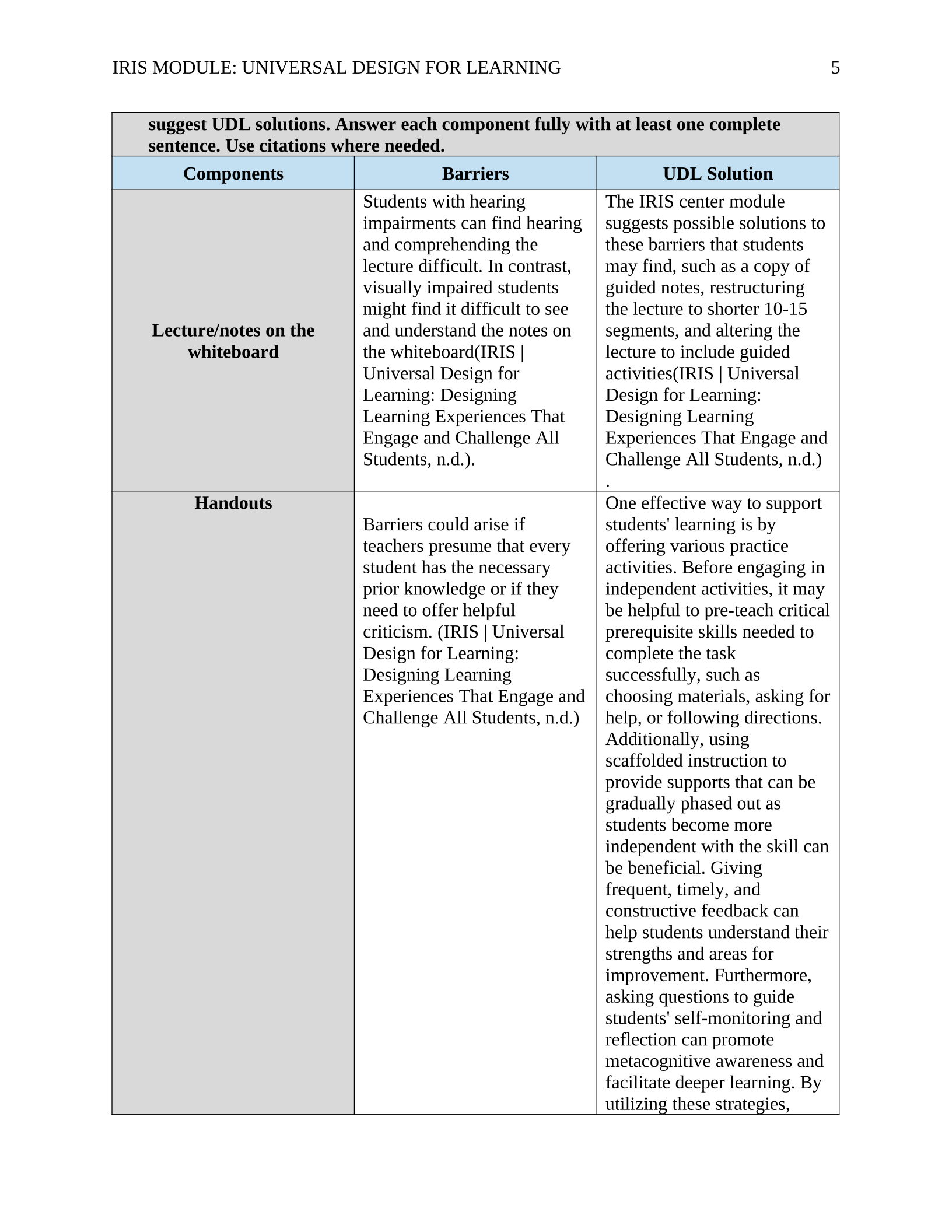
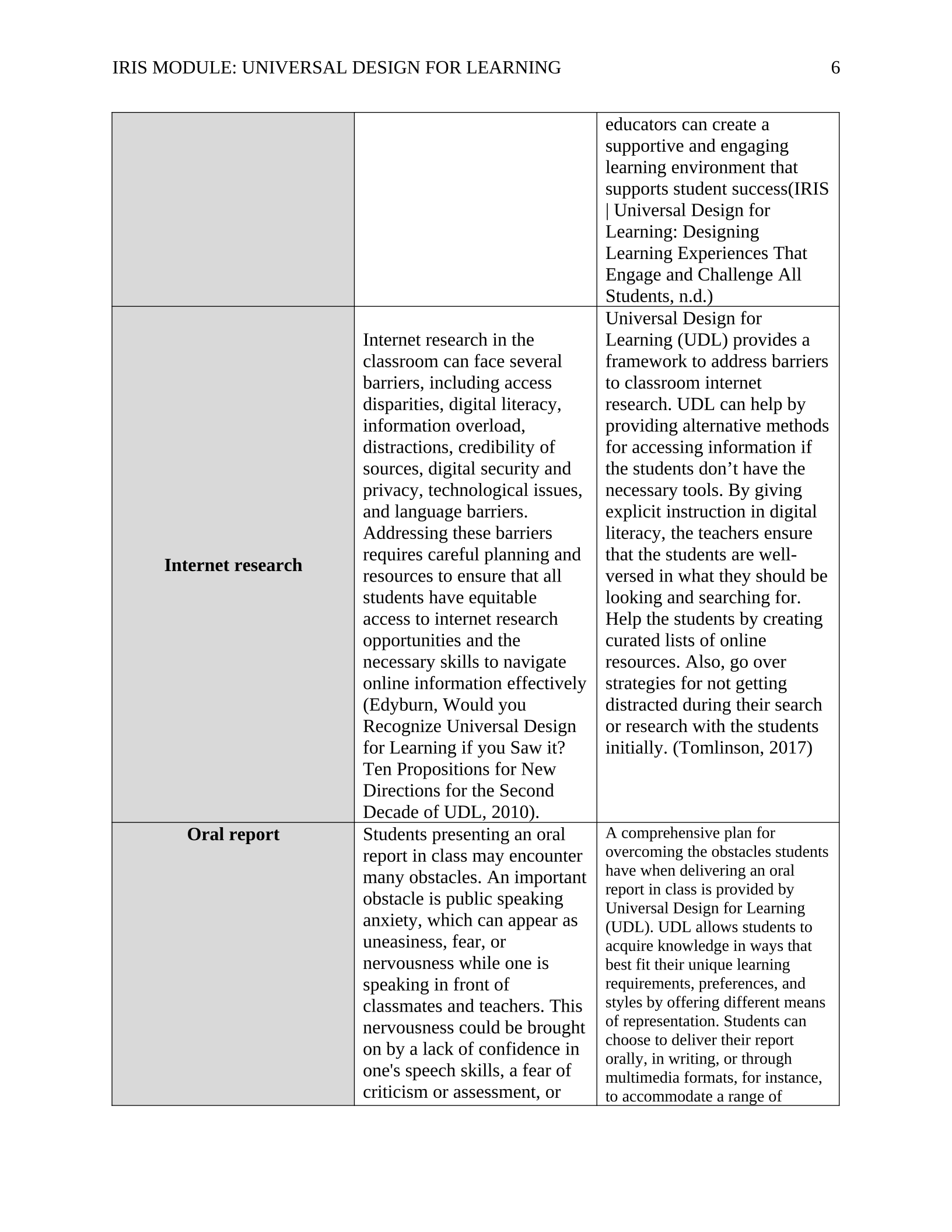
Components Barriers UDL Solution
Lecture/notes on the
whiteboard
Students with hearing
impairments can find hearing
and comprehending the
lecture difficult. In contrast,
visually impaired students
might find it difficult to see
and understand the notes on
the whiteboard(IRIS |
Universal Design for
Learning: Designing
Learning Experiences That
Engage and Challenge All
Students, n.d.).
The IRIS center module
suggests possible solutions to
these barriers that students
may find, such as a copy of
guided notes, restructuring
the lecture to shorter 10-15
segments, and altering the
lecture to include guided
activities(IRIS | Universal
Design for Learning:
Designing Learning
Experiences That Engage and
Challenge All Students, n.d.)
.
Handouts
Barriers could arise if
teachers presume that every
student has the necessary
prior knowledge or if they
need to offer helpful
criticism. (IRIS | Universal
Design for Learning:
Designing Learning
Experiences That Engage and
Challenge All Students, n.d.)
One effective way to support
students' learning is by
offering various practice
activities. Before engaging in
independent activities, it may
be helpful to pre-teach critical
prerequisite skills needed to
complete the task
successfully, such as
choosing materials, asking for
help, or following directions.
Additionally, using
scaffolded instruction to
provide supports that can be
gradually phased out as
students become more
independent with the skill can
be beneficial. Giving
frequent, timely, and
constructive feedback can
help students understand their
strengths and areas for
improvement. Furthermore,
asking questions to guide
students' self-monitoring and
reflection can promote
metacognitive awareness and
facilitate deeper learning. By
utilizing these strategies,
IRIS MODULE: UNIVERSAL DESIGN FOR LEARNING 6
educators can create a
supportive and engaging
learning environment that
supports student success(IRIS
| Universal Design for
Learning: Designing
Learning Experiences That
Engage and Challenge All
Students, n.d.)
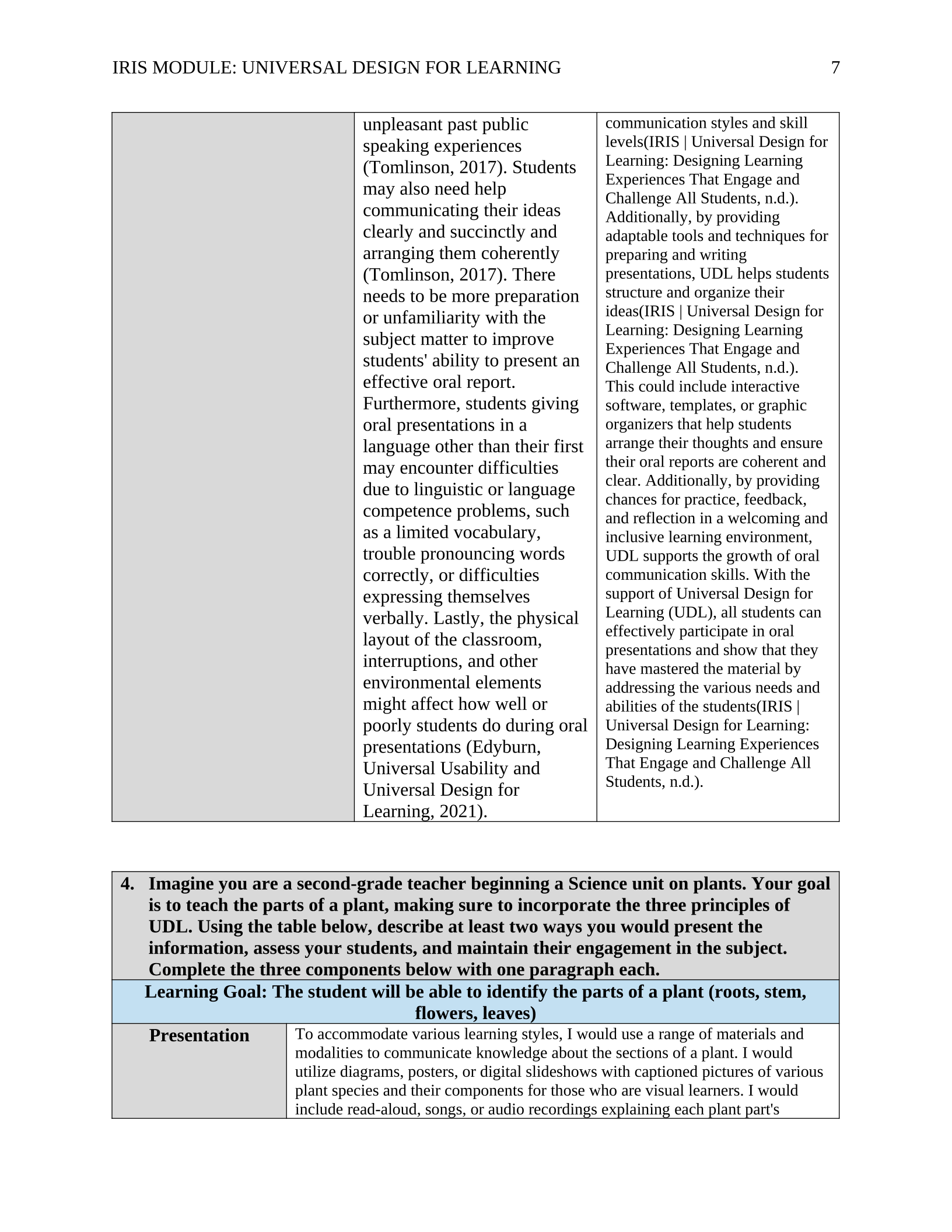
Internet research
Internet research in the
classroom can face several
barriers, including access
disparities, digital literacy,
information overload,
distractions, credibility of
sources, digital security and
privacy, technological issues,
and language barriers.
Addressing these barriers
requires careful planning and
resources to ensure that all
students have equitable
access to internet research
opportunities and the
necessary skills to navigate
online information effectively
(Edyburn, Would you
Recognize Universal Design
for Learning if you Saw it?
Ten Propositions for New
Directions for the Second
Decade of UDL, 2010).
Universal Design for
Learning (UDL) provides a
framework to address barriers
to classroom internet
research. UDL can help by
providing alternative methods
for accessing information if
the students don’t have the
necessary tools. By giving
explicit instruction in digital
literacy, the teachers ensure
that the students are well-
versed in what they should be
looking and searching for.
Help the students by creating
curated lists of online
resources. Also, go over
strategies for not getting
distracted during their search
or research with the students
initially. (Tomlinson, 2017)
Oral report Students presenting an oral
report in class may encounter
many obstacles. An important
obstacle is public speaking
anxiety, which can appear as
uneasiness, fear, or
nervousness while one is
speaking in front of
classmates and teachers. This
nervousness could be brought
on by a lack of confidence in
one's speech skills, a fear of
criticism or assessment, or
A comprehensive plan for
overcoming the obstacles students
have when delivering an oral
report in class is provided by
Universal Design for Learning
(UDL). UDL allows students to
acquire knowledge in ways that
best fit their unique learning
requirements, preferences, and
styles by offering different means
of representation. Students can
choose to deliver their report
orally, in writing, or through
multimedia formats, for instance,
to accommodate a range of
IRIS MODULE: UNIVERSAL DESIGN FOR LEARNING 7
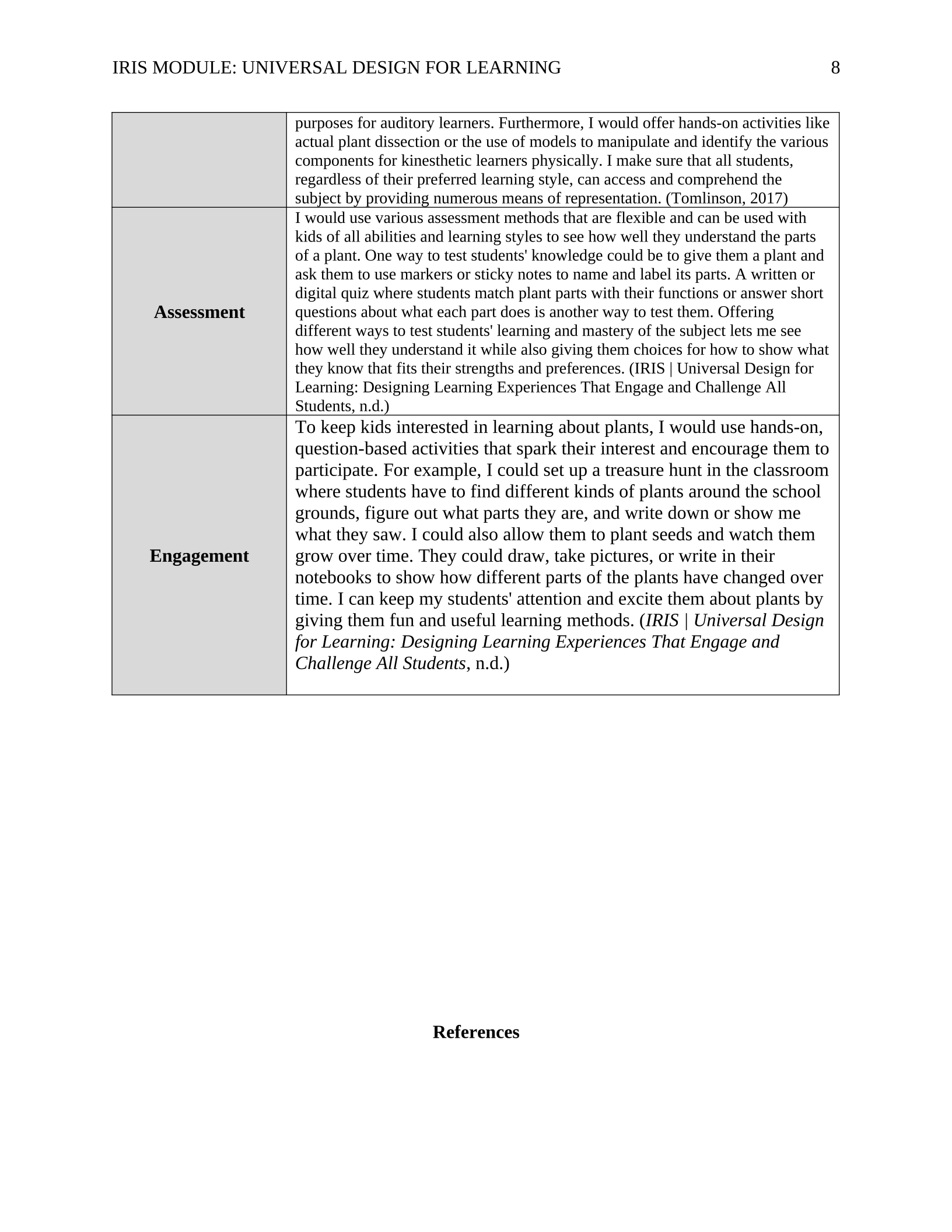
unpleasant past public
speaking experiences
(Tomlinson, 2017). Students
may also need help
communicating their ideas
clearly and succinctly and
arranging them coherently
(Tomlinson, 2017). There
needs to be more preparation
or unfamiliarity with the
subject matter to improve
students' ability to present an
effective oral report.
Furthermore, students giving
oral presentations in a
language other than their first
may encounter difficulties
due to linguistic or language
competence problems, such
as a limited vocabulary,
trouble pronouncing words
correctly, or difficulties
expressing themselves
verbally. Lastly, the physical
layout of the classroom,
interruptions, and other
environmental elements
might affect how well or
poorly students do during oral
presentations (Edyburn,
Universal Usability and
Universal Design for
Learning, 2021).
communication styles and skill
levels(IRIS | Universal Design for
Learning: Designing Learning
Experiences That Engage and
Challenge All Students, n.d.).
Additionally, by providing
adaptable tools and techniques for
preparing and writing
presentations, UDL helps students
structure and organize their
ideas(IRIS | Universal Design for
Learning: Designing Learning
Experiences That Engage and
Challenge All Students, n.d.).
This could include interactive
software, templates, or graphic
organizers that help students
arrange their thoughts and ensure
their oral reports are coherent and
clear. Additionally, by providing
chances for practice, feedback,
and reflection in a welcoming and
inclusive learning environment,
UDL supports the growth of oral
communication skills. With the
support of Universal Design for
Learning (UDL), all students can
effectively participate in oral
presentations and show that they
have mastered the material by
addressing the various needs and
abilities of the students(IRIS |
Universal Design for Learning:
Designing Learning Experiences
That Engage and Challenge All
Students, n.d.).
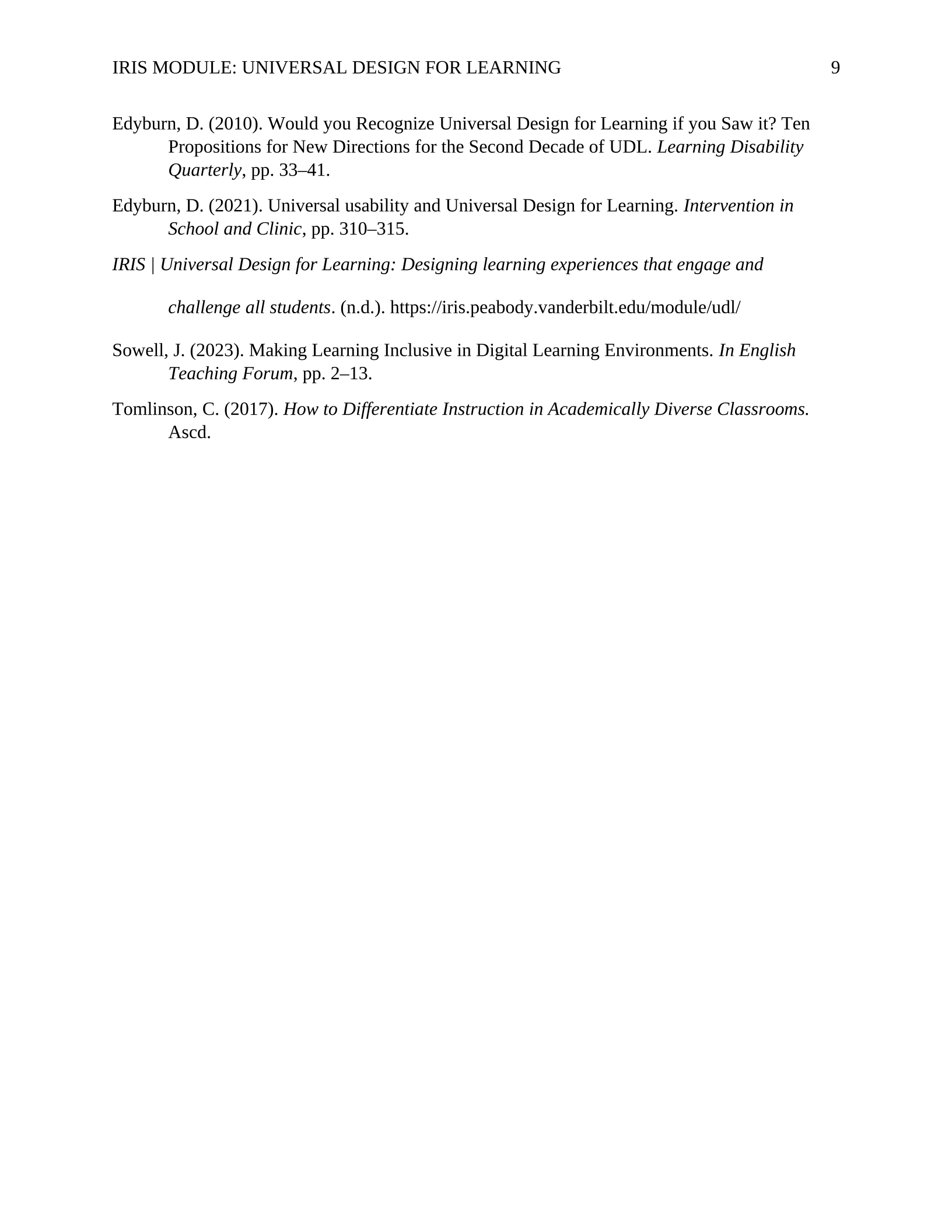
4. Imagine you are a second-grade teacher beginning a Science unit on plants. Your goal
is to teach the parts of a plant, making sure to incorporate the three principles of
UDL. Using the table below, describe at least two ways you would present the
information, assess your students, and maintain their engagement in the subject.
Complete the three components below with one paragraph each.
Learning Goal: The student will be able to identify the parts of a plant (roots, stem,
flowers, leaves)
Presentation To accommodate various learning styles, I would use a range of materials and
modalities to communicate knowledge about the sections of a plant. I would
utilize diagrams, posters, or digital slideshows with captioned pictures of various
plant species and their components for those who are visual learners. I would
include read-aloud, songs, or audio recordings explaining each plant part's
IRIS MODULE: UNIVERSAL DESIGN FOR LEARNING 8
purposes for auditory learners. Furthermore, I would offer hands-on activities like
actual plant dissection or the use of models to manipulate and identify the various
components for kinesthetic learners physically. I make sure that all students,
regardless of their preferred learning style, can access and comprehend the
subject by providing numerous means of representation. (Tomlinson, 2017)
Assessment
I would use various assessment methods that are flexible and can be used with
kids of all abilities and learning styles to see how well they understand the parts
of a plant. One way to test students' knowledge could be to give them a plant and
ask them to use markers or sticky notes to name and label its parts. A written or
digital quiz where students match plant parts with their functions or answer short
questions about what each part does is another way to test them. Offering
different ways to test students' learning and mastery of the subject lets me see
how well they understand it while also giving them choices for how to show what
they know that fits their strengths and preferences. (IRIS | Universal Design for
Learning: Designing Learning Experiences That Engage and Challenge All
Students, n.d.)
Engagement
To keep kids interested in learning about plants, I would use hands-on,
question-based activities that spark their interest and encourage them to
participate. For example, I could set up a treasure hunt in the classroom
where students have to find different kinds of plants around the school
grounds, figure out what parts they are, and write down or show me
what they saw. I could also allow them to plant seeds and watch them
grow over time. They could draw, take pictures, or write in their
notebooks to show how different parts of the plants have changed over
time. I can keep my students' attention and excite them about plants by
giving them fun and useful learning methods. (IRIS | Universal Design
for Learning: Designing Learning Experiences That Engage and
Challenge All Students, n.d.)
References
IRIS MODULE: UNIVERSAL DESIGN FOR LEARNING 9
Edyburn, D. (2010). Would you Recognize Universal Design for Learning if you Saw it? Ten
Propositions for New Directions for the Second Decade of UDL. Learning Disability
Quarterly, pp. 33–41.
Edyburn, D. (2021). Universal usability and Universal Design for Learning. Intervention in
School and Clinic, pp. 310–315.
IRIS | Universal Design for Learning: Designing learning experiences that engage and
challenge all students. (n.d.). https://iris.peabody.vanderbilt.edu/module/udl/
Sowell, J. (2023). Making Learning Inclusive in Digital Learning Environments. In English
Teaching Forum, pp. 2–13.
Tomlinson, C. (2017). How to Differentiate Instruction in Academically Diverse Classrooms.
Ascd.
Powered by TCPDF (www.tcpdf.org)

