


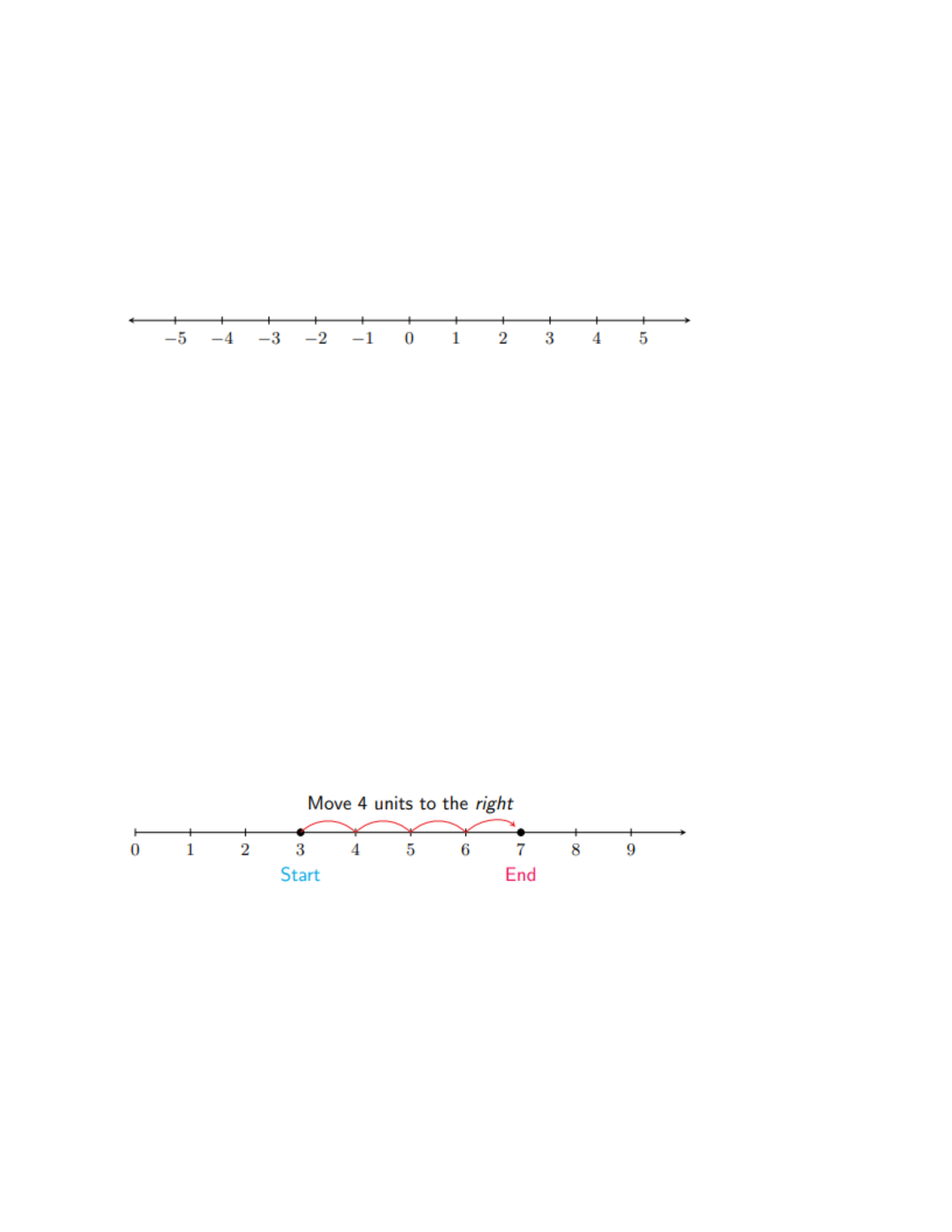
Advanced Algebra – The arithmetic with
integers
A brief review of arithmetic with integers i.e. …,−3,−2,−1,0,1,2,3,……,−3,−2,−1,0,1,2,3,…
Any number has a weight and a sign.
The magnitude (or weight) of a number is the distance it is from 0 on the number line.
Example 1.1
For example, the weight of -5 is 5 and the weight of 7 is 7 .
Two numbers are opposites if, on the number line, they are on opposite sides of zero, but
the same distance away from zero.
So, −5 is the opposite of 5, and 7 is the opposite of −7 and so on.
Addition
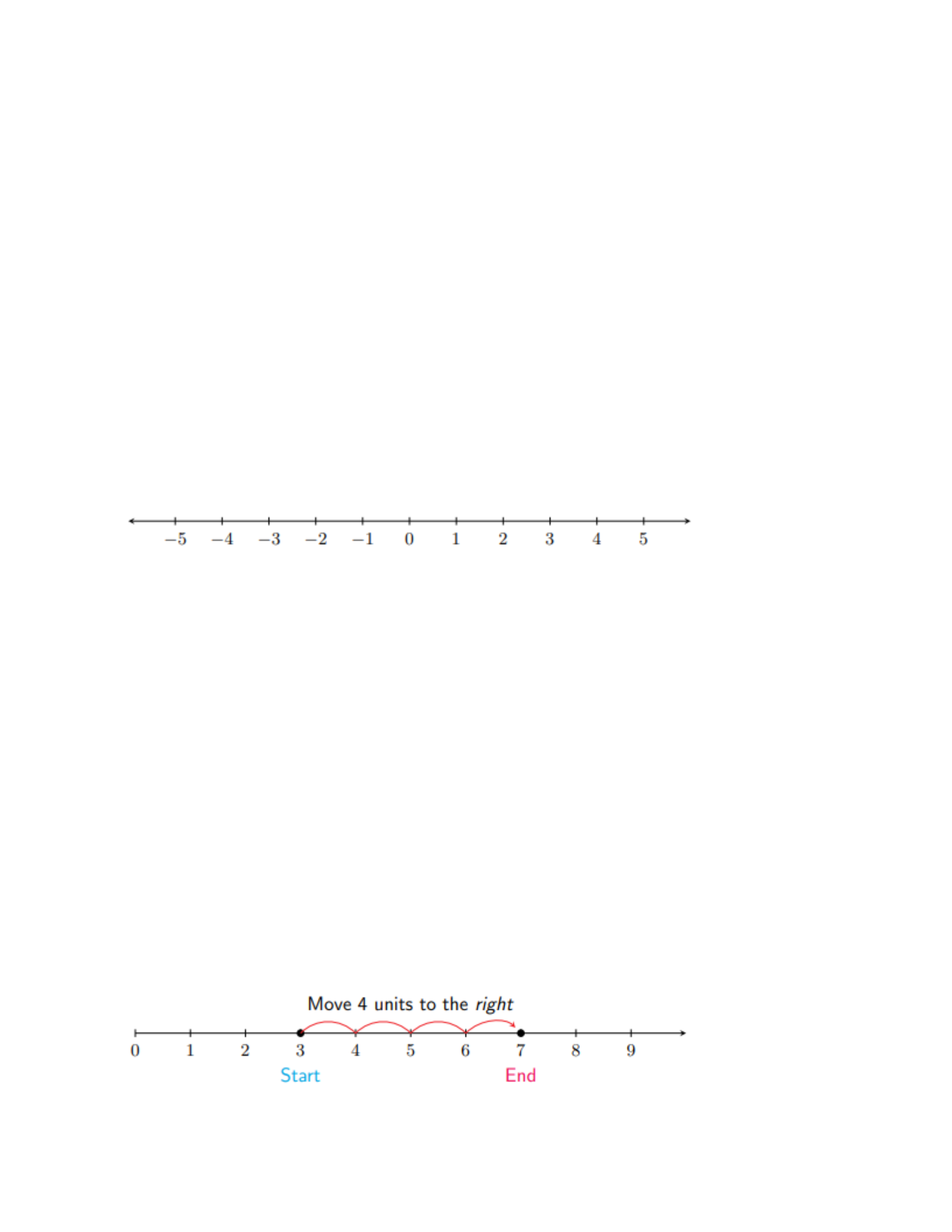
We can add two numbers with the help of a number line .
Example 1.2
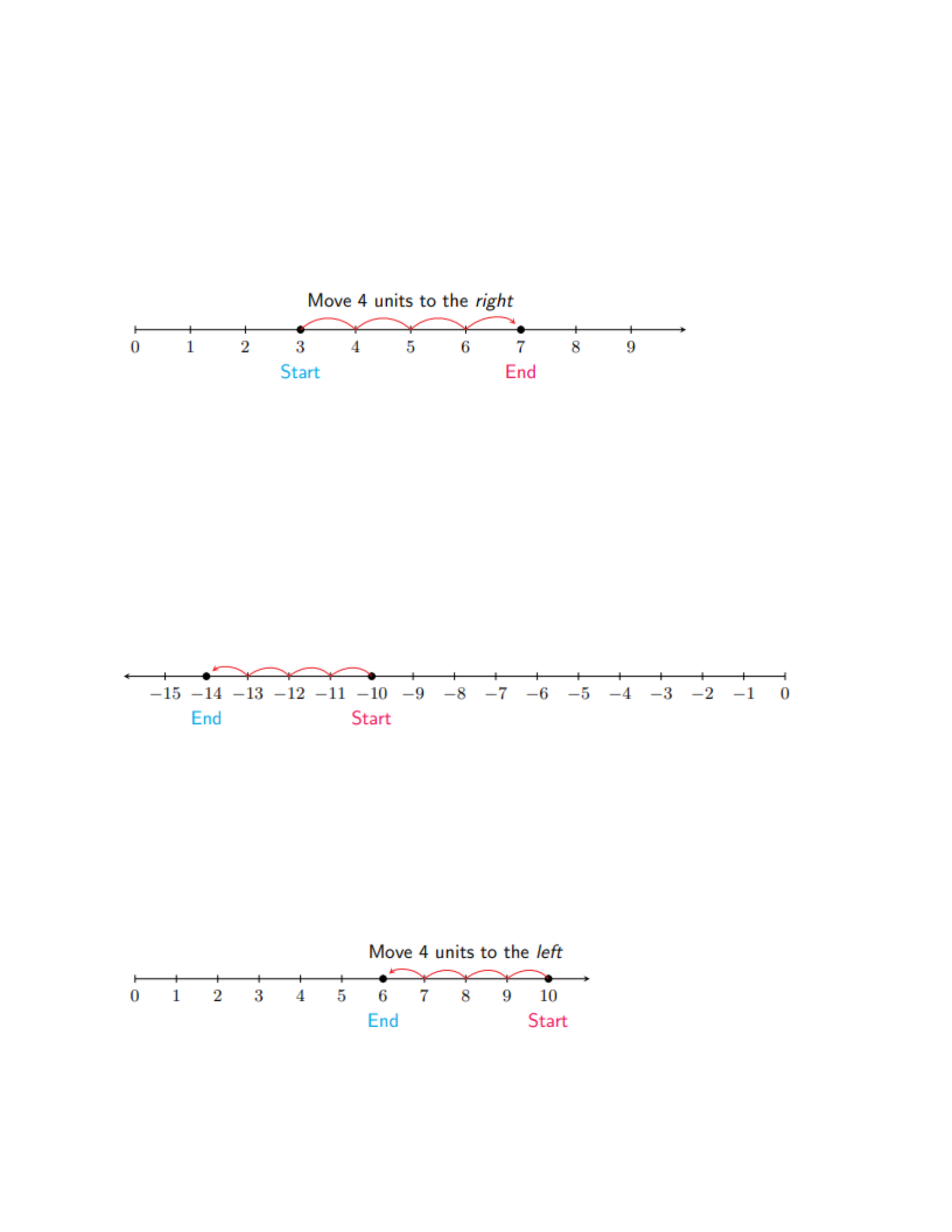
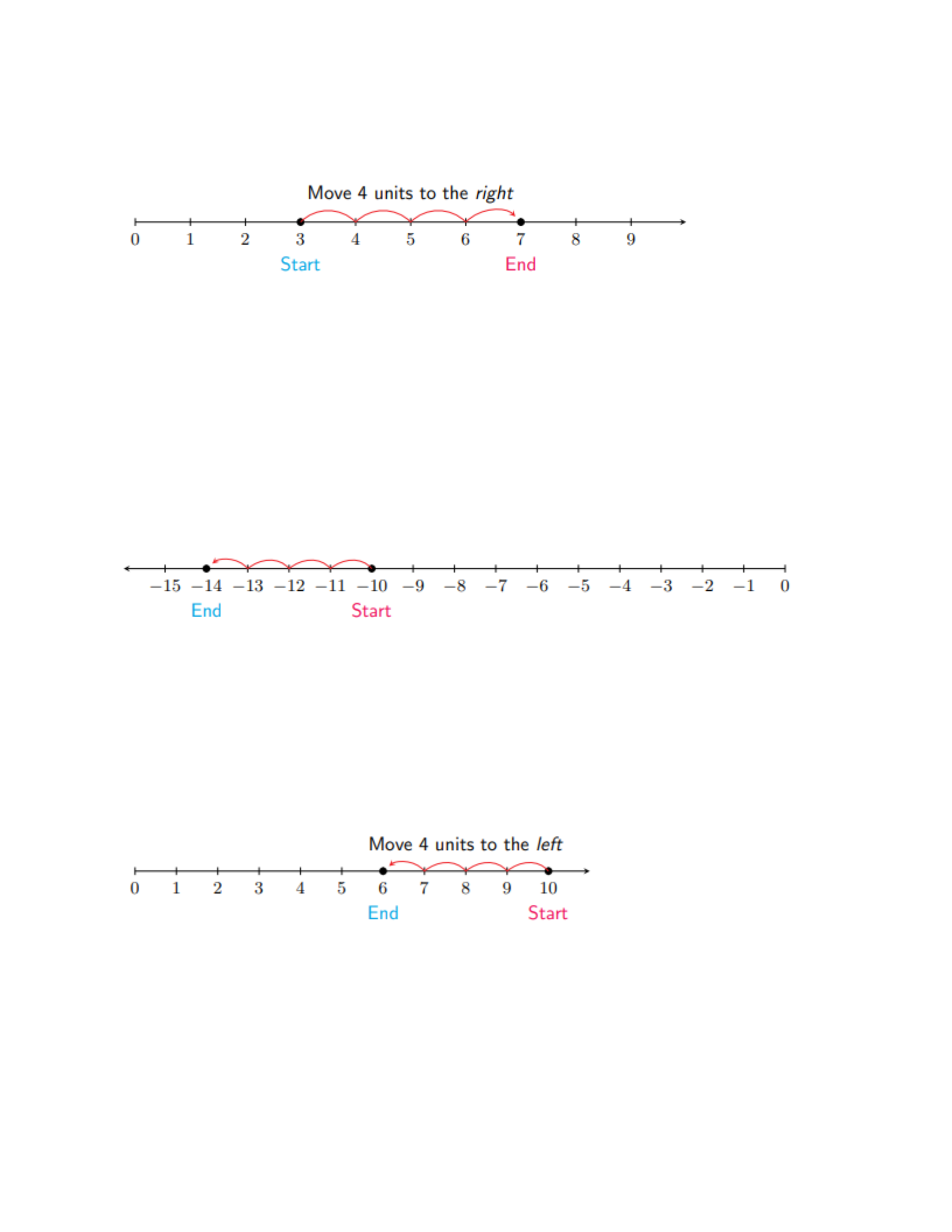
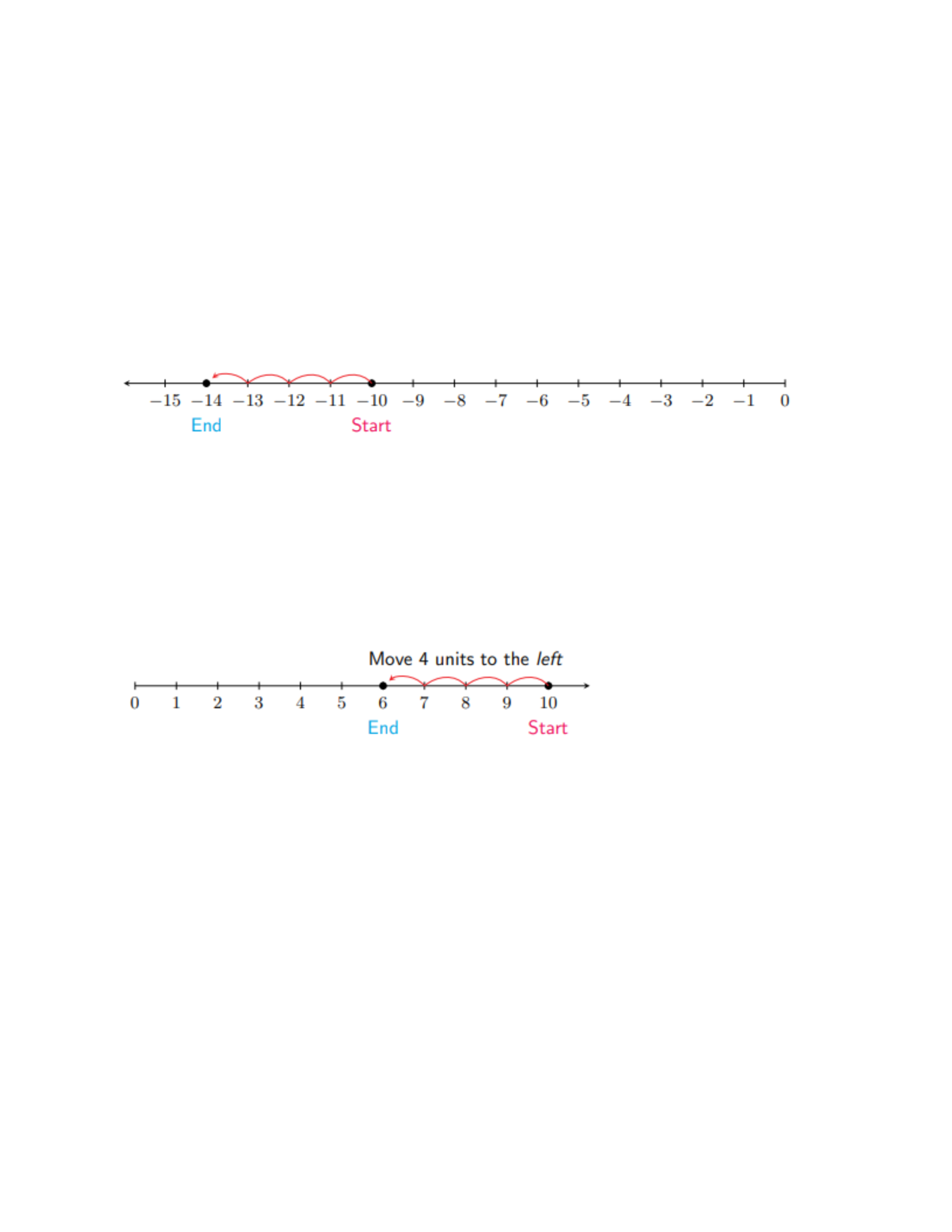
Adding two positive numbers: For example to add 3+43+4, we start with 3 on the number
line then move 4 units to the right. We land at 7 which is our answer.
So, 3+4=73+4=7. Notice that the answer has the same sign as the signs of 3 and 4 (both
positive) and its weight comes from adding the weights of 3 and 4.
You always move to the right when you add a positive number
Example 1.3
Adding two negative numbers: For example, −10+(−4)−10+(−4) means you are adding a
debt of $4$4 to an already existing debt of $10.$10. So, we start at -10 on the number line
and move 4 units to the left, to land at −14,−14, which is the answer.
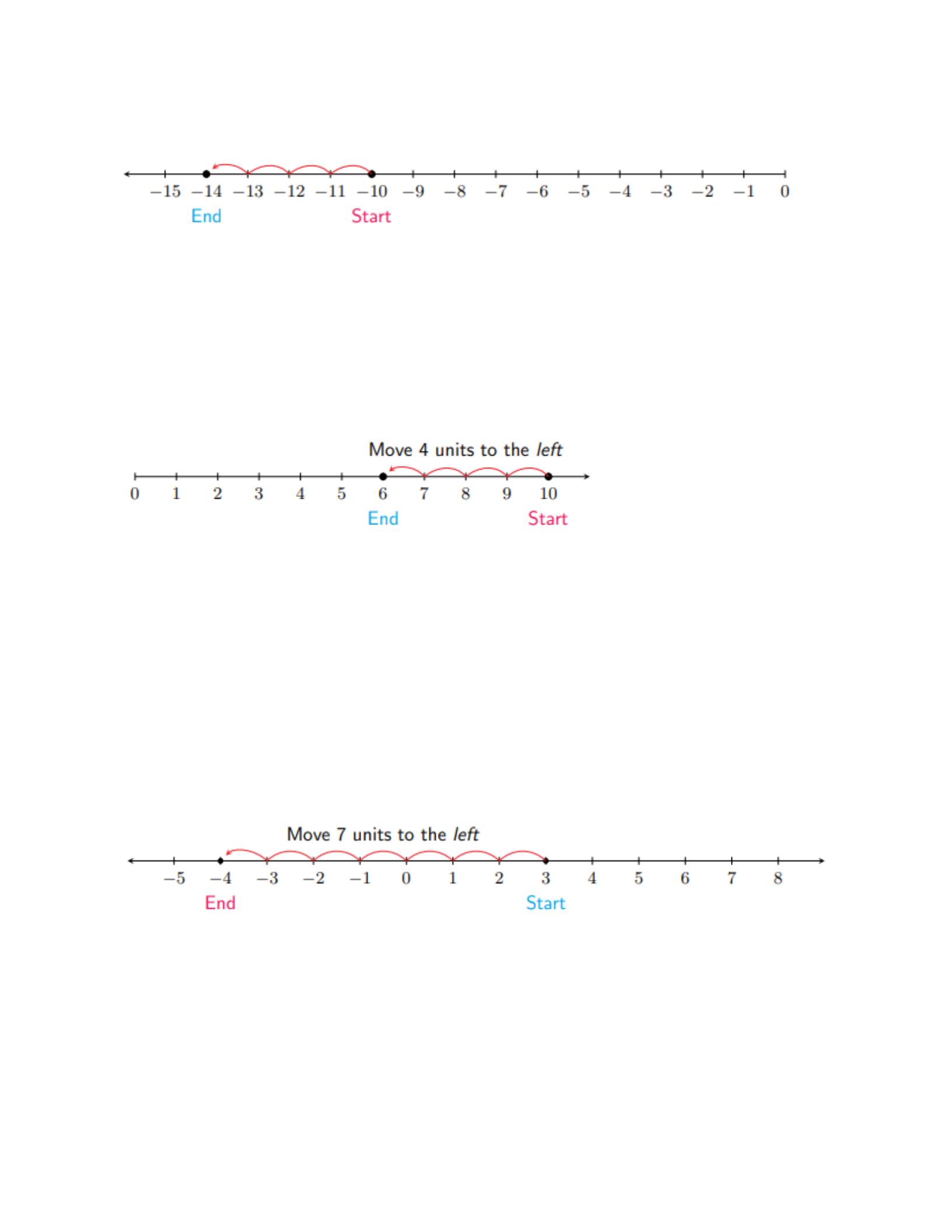
You always move to the left when you add a negative number (a debt)
So, −10+(−4)=−14−10+(−4)=−14. Notice that the answer has the same sign as the signs of -
10 and -4 (both negative) and its weight comes from adding the weights of -10 and -4
To add numbers of opposite signs, that is, a positive and a negative number, we can also
use the number line. For example, to perform 10+(−4),10+(−4), we start at 10 on the
number line and then move 4 units to the left. We land at 6,6, which is the answer. Think
of 10+(−4)10+(−4) as having $10$10 and adding a $4$4 debt. Because we are adding a
debt, we move to the left on the number line!
So, 10+(−4)=6.10+(−4)=6. Notice that the answer has the same sign as the sign of 10
(positive) because it is the number of larger weight, and its weight comes from finding the
difference of the weights of 10 and -4
Notice that because we were adding two numbers of opposite signs, the answer ended up
being the difference in weight (6) along with the sign of the number of larger weight
(positive).
Example 1.4
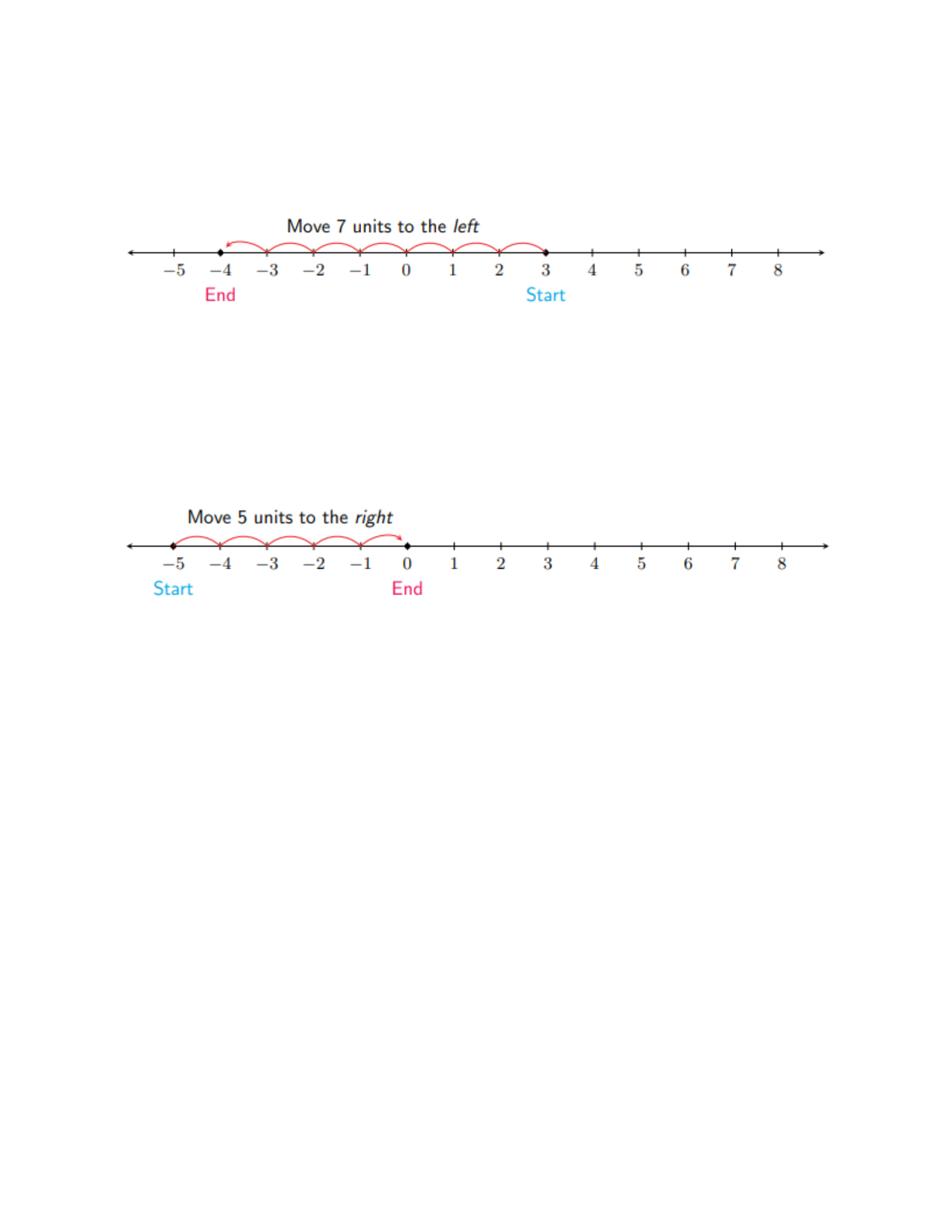
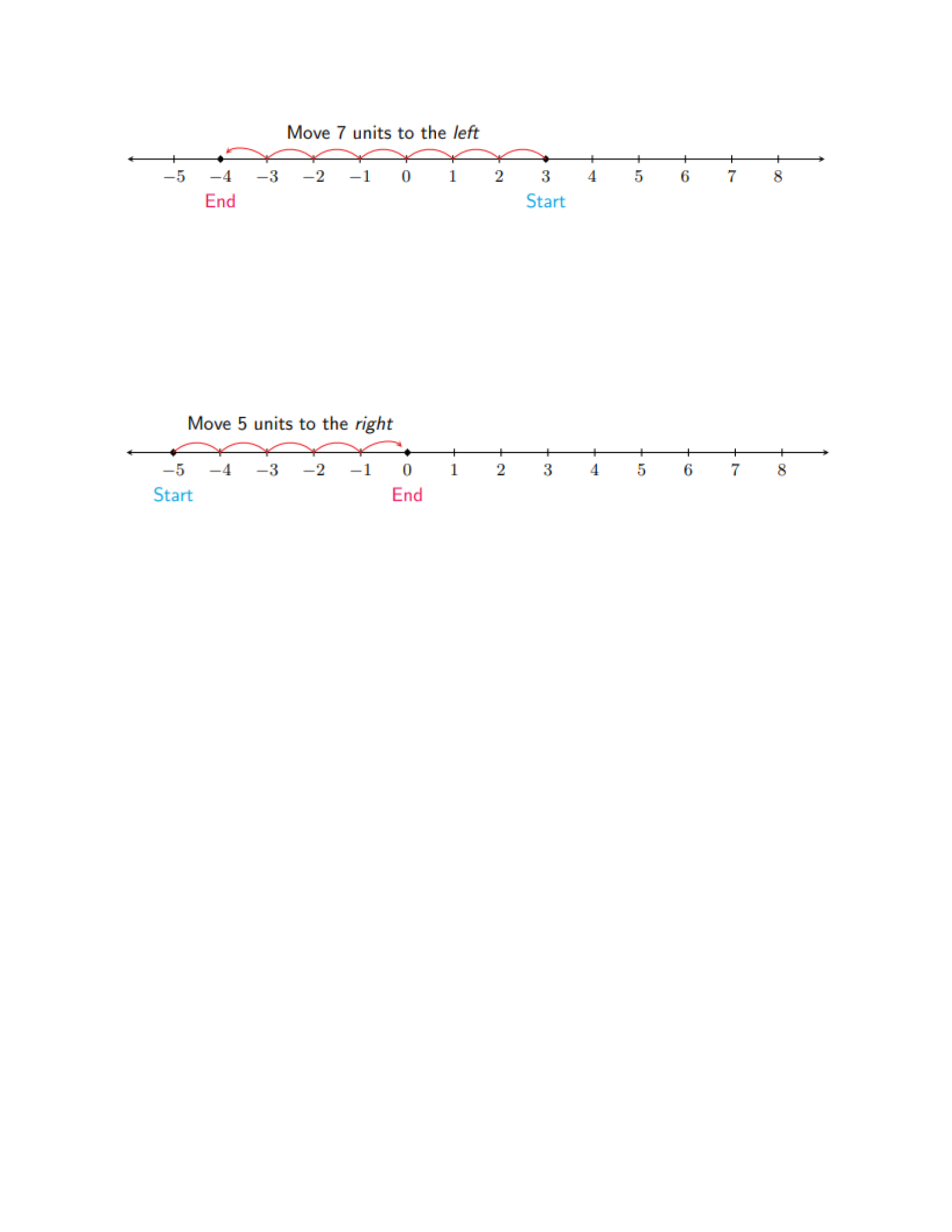
Adding two numbers of opposite signs: For example, 3+(−7)3+(−7). We start at 3 and move
toward 7 units to the left, and we land at −4,−4, which is our answer.
So, 3+(−7)=−4.3+(−7)=−4. Notice that the answer has the same sign as the signs of -7
(negative) because it is the number of larger weight, and its weight comes from finding the
difference of the weights of 3 and -7.
Example 1.5
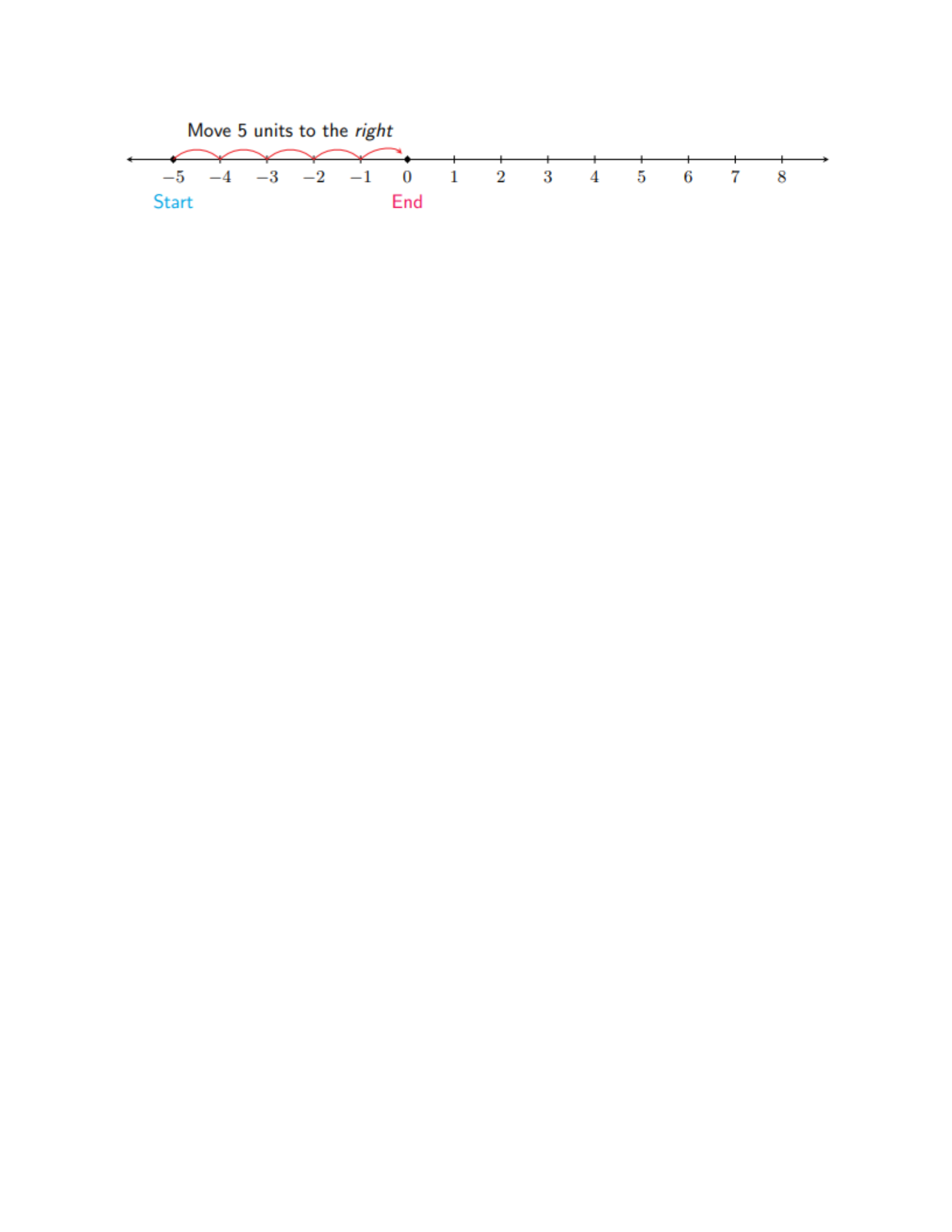
Adding opposites: We start at -5 on the number line and jump to the right 5 units to land
finally at 00. So −5+5=0−5+5=0.
Note 1.6
Two opposite numbers are called a zero-pair, because adding them always results in 0.
So, −5 and 5 are a zero-pair.
Adding Intergers
1. To add two numbers of the same sign, add their weights and place it after the
sign.
2. To add two numbers of opposite signs, find the difference of their weights and
place it after the sign of the number with the greater weight.
Example 1.7
Add:
a. −8+19=11−8+19=11
b. −8+4=−4−8+4=−4
c. 6+(−9)=−36+(−9)=−3
d. 7+(−2)=57+(−2)=5
e. (−4)+(−7)=−11(−4)+(−7)=−11
f. 8+7=158+7=15
Note 1.8
While we can add in any order: 4+2=2+44+2=2+4, it is sometimes convenient to add up all
of the negative numbers and add up all of the positive numbers, and then add the results.
There are also times when it is best to notice certain simplifications if the numbers are
added in a different order.
For example
−5+4+5+(−8)=−5+(−8)+4+5( by reordering )−5+4+5+(−8)=−5+(−8)+4+5( by reordering )
so,
−5+4+5+(−8)=−5+(−8)+4+5=−13+9=−4−5+4+5+(−8)=−5+(−8)+4+5=−13+9=−4
We could have also simplified this by noting that (-5) and 5 are zero-pair, so we are left
with 4+(−8)4+(−8) which is -4.
Example 1.9
We can calculate
(−4)+(−5)+7+(−3)=(−4)+(−5)+(−3)+7=(−12)+7=−5(−4)+(−5)+7+(−3)=(−4)+(−5)+(−3)+7=
(−12)+7=−5
We could have simplified this by noting that (-4) and (-3) make -7, and -7 and 7 are zero-
pair, so the total is -5.
Subtraction (as Addition of the Opposite)
Once we know how to add numbers, we are set to subtract numbers because subtraction is
nothing but addition of the opposite. That is, subtracting 8 − 3 (which reads: subtracting 3
from 8) is the same as 8 + (−3) (which reads: Adding −3 to 8.).
Example 1.10
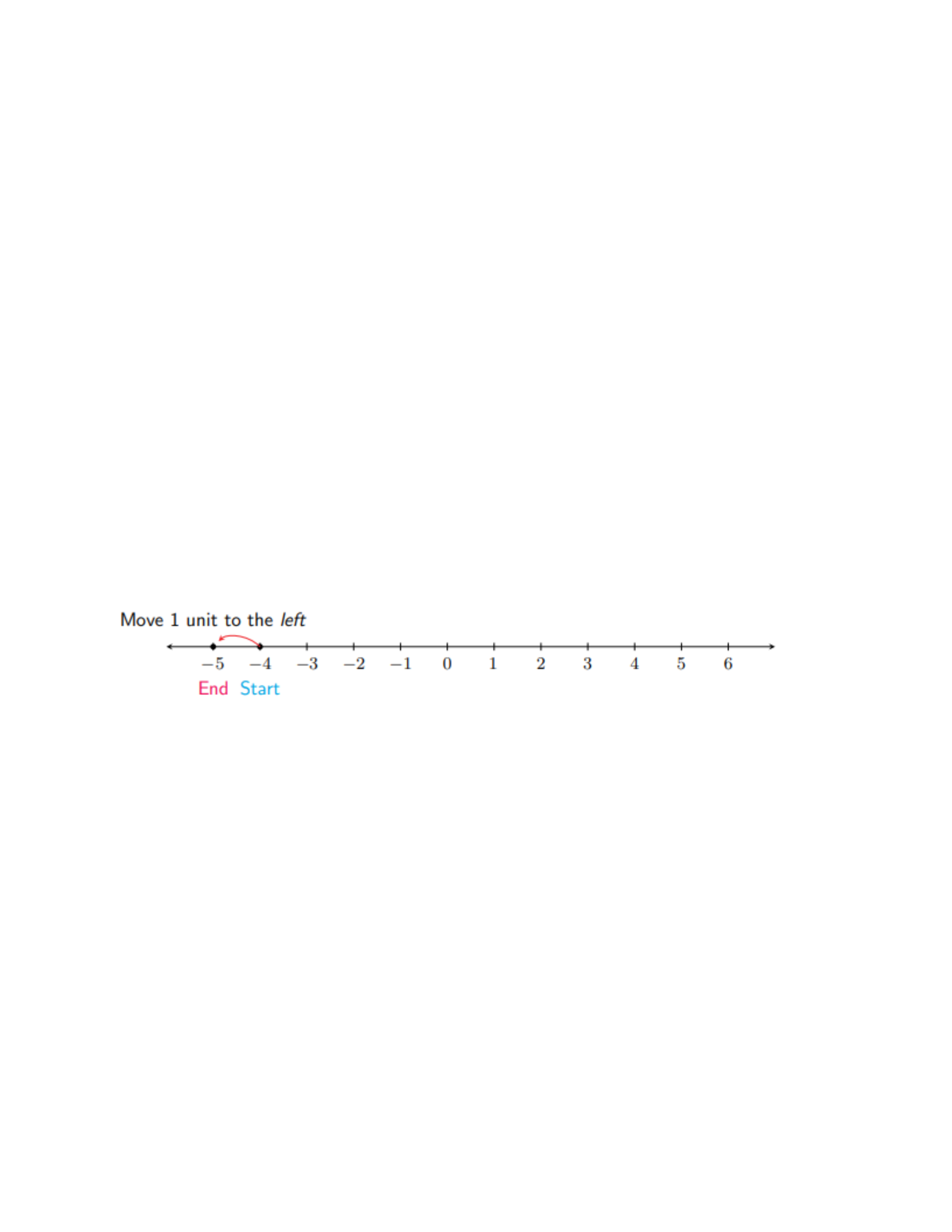
So, 8−3=8+(−3),8−3=8+(−3), and, we can use the rules of adding two numbers of opposite
signs to find out that the answer is 5.5. We can also use the number line. We start at 8 and
move 3 units to the left (adding -3 is adding a debt, so we move to the left).
So 8−3=5.−4−3−2−10123456788−3=5.−4−3−2−1012345678 End Start Move 3 units to the
left
Example 1.11
To calculate 3−73−7 we first rewrite it as an addition
problem. 3−7=3+(−7).3−7=3+(−7). We can either use the number line, or the rules of
adding two numbers of opposite signs. And, 50,3−7=3+(−7)=−450,3−7=3+(−7)=−4
Example 1.12
To calculate −4−1,−4−1, we first rewrite it as an addition
problem. −4−1=−4+(−1).−4−1=−4+(−1). We can either use the number line, or the rules of
adding two numbers of the same signs. If we want to use the rules, both numbers are
negative, so our answer will be negative, and, adding the weights of -4 and -1
is 5.50,−4−1=−4+(−1)=−55.50,−4−1=−4+(−1)=−5
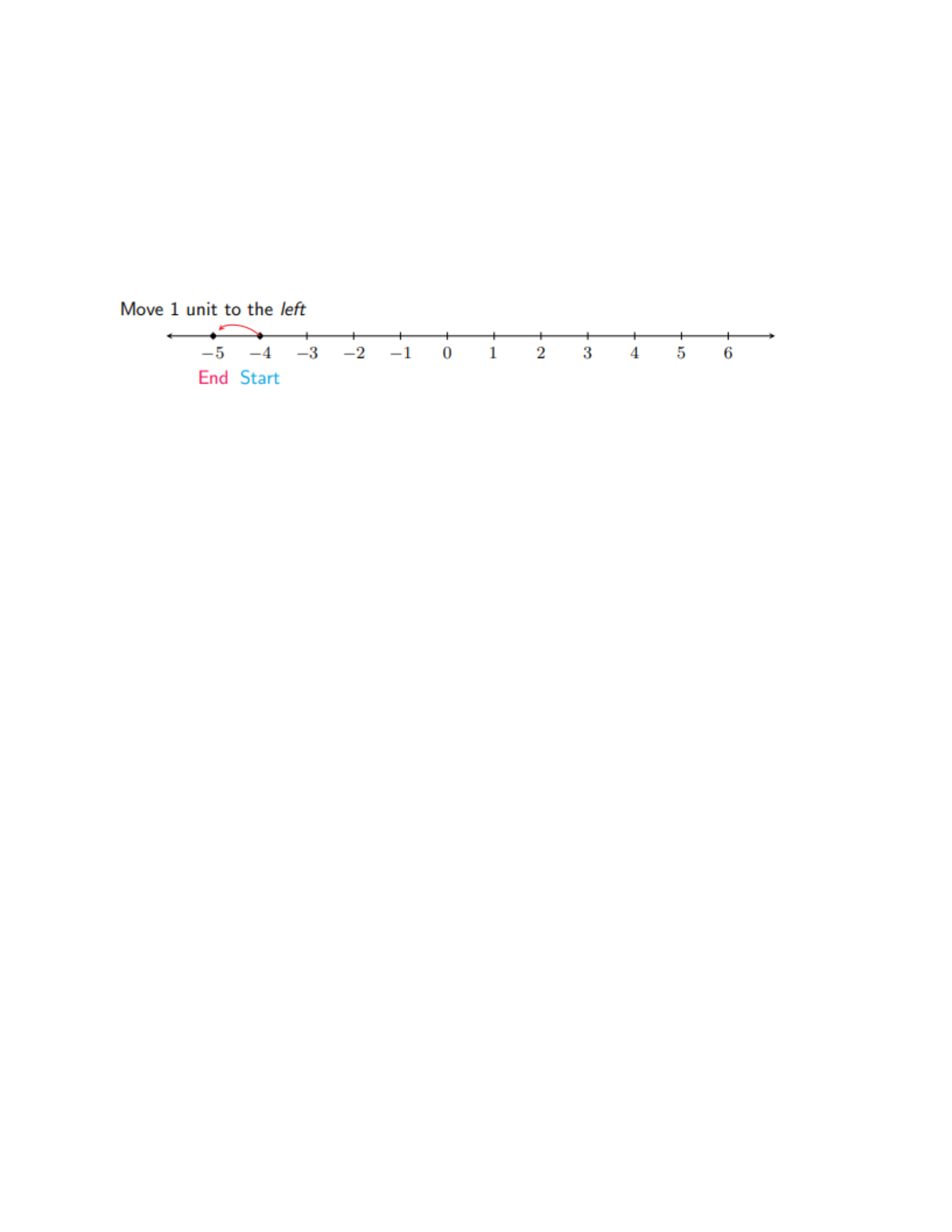
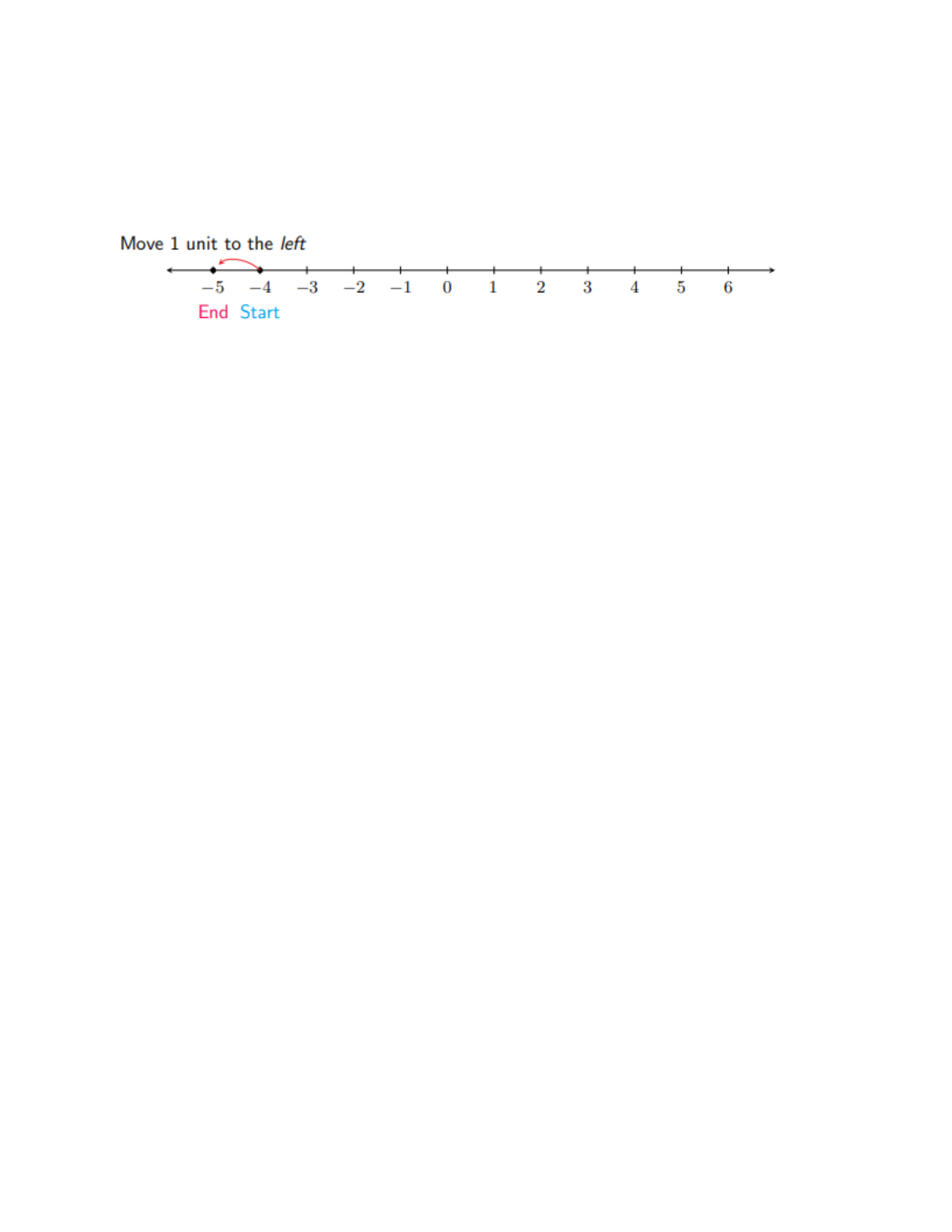
On the number line, we start at -4 and move 1 unit to the left, to land on -5 which is our
answer.
Changing the subtractions to additions in this way is particularly useful when adding or
subtracting several numbers (because we can add in any order).
Example 1.13
===−3−7+5+7+13−6−(−9)−3+(−7)+5+7+13+(−6)+9−3+(−7)+(−6)+5+7+13+918−3−7+5+7
+13−6−(−9)=−3+(−7)+5+7+13+(−6)+9=−3+(−7)+(−6)+5+7+13+9=18
===−3−7+5+7+13−6−(−9)−3+(−7)+5+7+13+(−6)+95+1318−3−7+5+7+13−6−(−9)=−3+(−7
)+5+7+13+(−6)+9=5+13=18
Remark 1.14
Warning: The symbol "-" is used in two different ways. When it is between two expressions,
it means subtract (e.g., 3−43−4 ). Otherwise, it means 'opposite' or 'negative'
(e.g., −3+4−3+4 ). So in the expression −4−(−3)−4−(−3), the first and last "-" means
opposite and the one in the middle one means subtract. The importance of understanding
this can not be overestimated.
Multiplication and Division of Positive Numbers
Multiplication of integers is adding in the sense that 3×4=4+4+43×4=4+4+4
To multiply larger numbers, it is better to use the usual scheme of multiplication. For
example:
Example 1.15
Let us multiply 152 by 34. We will for convenience sake put the smaller number on the
bottom (though it is not necessary). We have
+×4516515306624808152×34608+45605168
And division is the opposite of multiplication in the sense that to compute 45÷945÷9 is to
find a number so that when we multiply by 9 we get 45. We run through our multiplication
tables (which are hopefully in our head) to discover that 5 does the
trick: 5×9=455×9=45 so that 45÷9=5.45÷9=5. We will discuss division from a different
point of view when we discuss fractions.
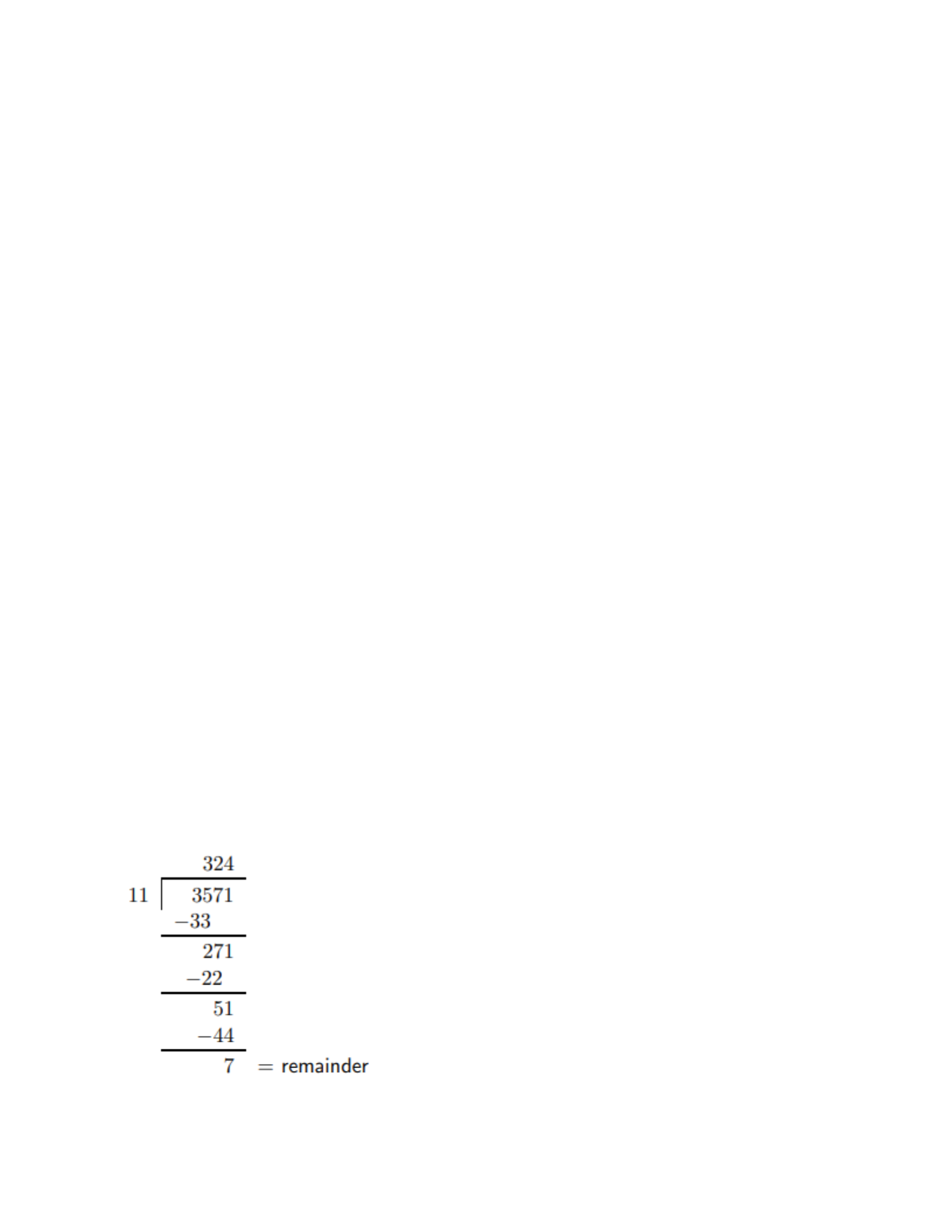
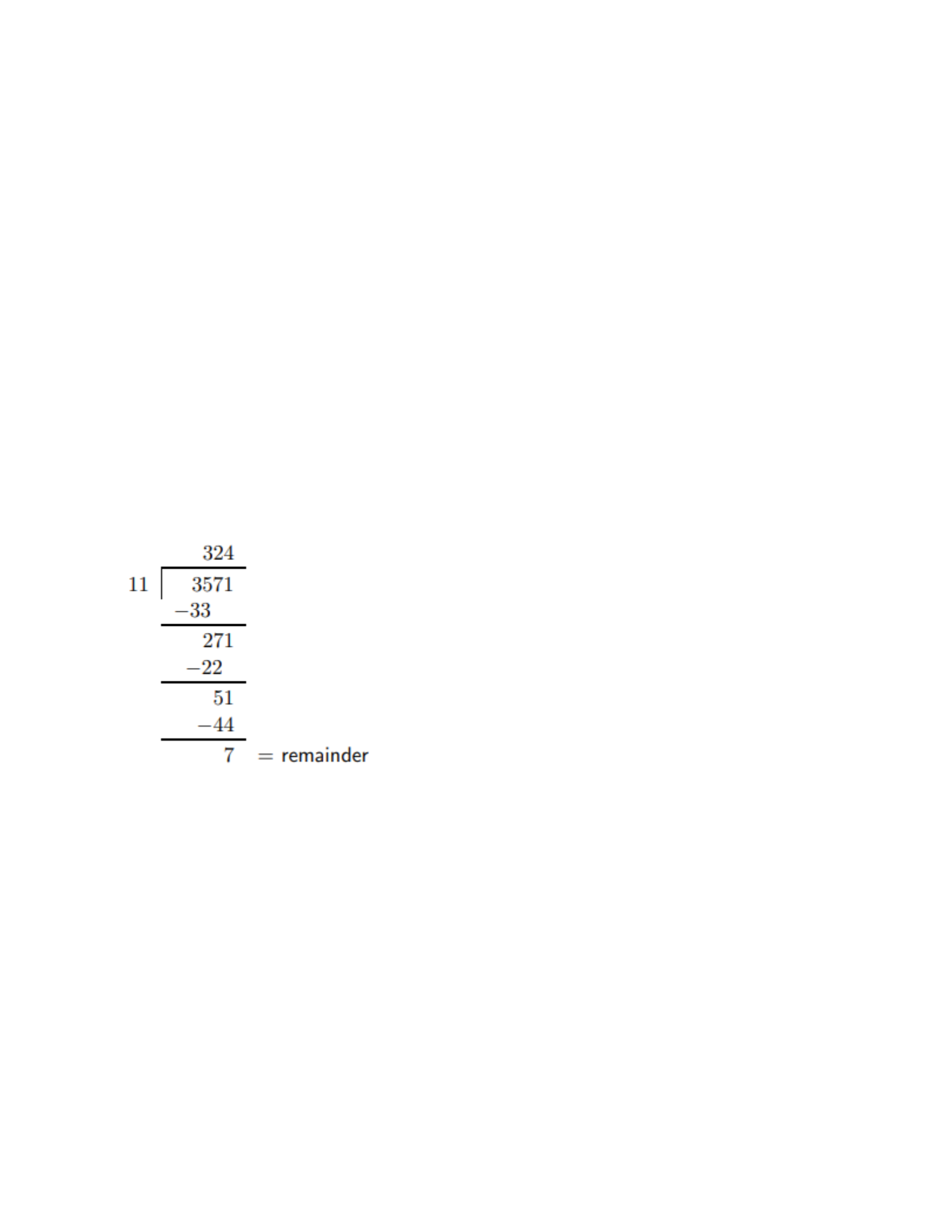
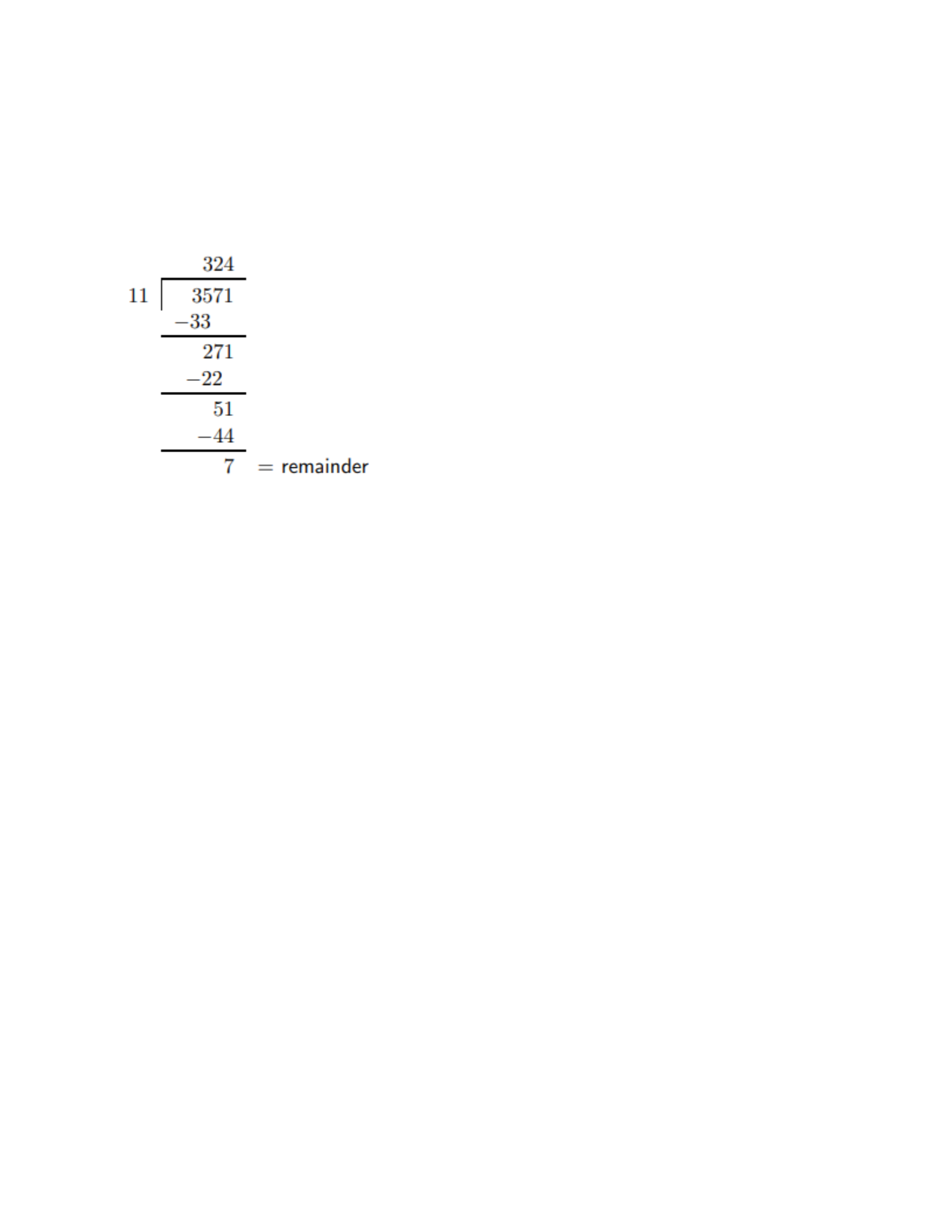
To divide larger numbers, we can use long division. For example, let’s divide 3571 by 11.
Example 1.16

Multiplication involving negative numbers
Multiplication is a little tricky to understand without the notion of distribution (discussed
later). We will begin with noting again what it means to multiply a number by a positive
number: So if we want to compute 4⋅(−7)4⋅(−7) we note
4⋅(−7)=(−7)+(−7)+(−7)+(−7)=−284⋅(−7)=(−7)+(−7)+(−7)+(−7)=−28
Note that since 4⋅7=28,4⋅(−7)=−(4⋅7).4⋅7=28,4⋅(−7)=−(4⋅7). We can multiply positive
numbers in any order: 4⋅7=7⋅44⋅7=7⋅4. The same is true of positive and negative numbers:
(−7)⋅4=4⋅(−7)=−(4⋅7)=−28(−7)⋅4=4⋅(−7)=−(4⋅7)=−28
Example 1.17
5⋅(−12)=−(5⋅12)=−605⋅(−12)=−(5⋅12)=−60 and (−3)⋅(−2)=−(3⋅(−2))=−(−(3⋅2))=6(−3)⋅(−2)
=−(3⋅(−2))=−(−(3⋅2))=6
Example 1.18
So the size of the product of two numbers is the product of their sizes. The sign is positive if
the signs are the same and negative if they are different.
Example 1.19
Two quantities right next to each other, with no symbol between them (except for
parentheses around either or both numbers), has an implicit multiplication. For
example, 3(2)=3×23(2)=3×2.
Example 1.20
Multiply:
a. (−5)(−8)=40(−5)(−8)=40
b. (−6)⋅7=−42(−6)⋅7=−42
c. 4⋅12=484⋅12=48
d. (−3)(−6)⋅4(−3)=18⋅4(−3)=72(−3)=−216( multiplying from left to
right )(−3)(−6)⋅4(−3)=18⋅4(−3)=72(−3)=−216( multiplying from left to right )
e. (−3)(−5)⋅4(−2)=(−3)⋅4⋅(−5)(−2)=−12⋅10=−120((−3)(−5)⋅4(−2)=(−3)⋅4⋅(−5)(−2)=−1
2⋅10=−120( since we can multiply in any order it is convenient to see
that −5⋅−2=10.−5⋅−2=10. )
Exponents of integers
Recall that a positive exponent represents the number of times a number is multiplied by
itself.
Example 1.21

Evaluate:
a. 52=5⋅5=2552=5⋅5=25
b. (−4)3=(−4)⋅(−4)⋅(−4)=16⋅(−4)=−64(−4)3=(−4)⋅(−4)⋅(−4)=16⋅(−4)=−64
c. (−7)1=−7(−7)1=−7
d. −24=−2⋅2⋅2⋅2=−16−24=−2⋅2⋅2⋅2=−16 Note: The exponent here is for 2 not −2!
e. (−3)4=(−3)⋅(−3)⋅(−3)⋅(−3)=9⋅(−3)⋅(−3)=−27⋅(−3)=81(−3)4=(−3)⋅(−3)⋅(−3)⋅(−3)=9⋅(
−3)⋅(−3)=−27⋅(−3)=81
f. (−2)5=(−2)⋅(−2)⋅(−2)⋅(−2)⋅(−2)=−32(−2)5=(−2)⋅(−2)⋅(−2)⋅(−2)⋅(−2)=−32
Exponent rules in details will be further discussed in Chapter 5.
Division involving negative numbers
Division is just a question of knowing multiplication and therefore has the same rule: The
size of the quotient of two numbers is the quotient of the sizes. The sign is positive if the
signs are the same and negative if they are different.
Example 1.22
Divide:
a. (−42)÷7=−6(−42)÷7=−6
b. 81÷(−9)=−981÷(−9)=−9
c. (−35)÷(−7)=5(−35)÷(−7)=5
d. 14÷2=714÷2=7
e. 0÷5=00÷5=0. Note When dividing 0 by any number, the answer is always 0.
f. −10÷0=−10÷0= undefined.
Note 1.23
Any number divided by 0 is undefined!
Multiplying and Dividing Integers
Consider two numbers at a time.
1. If the signs of the two numbers are the same, then the sign of the answer is positive.
2. If the signs of the two numbers are different, then the sign of the answer is negative.
We begin with a brief review of arithmetic with integers
i.e. …,−3,−2,−1,0,1,2,3,……,−3,−2,−1,0,1,2,3,…
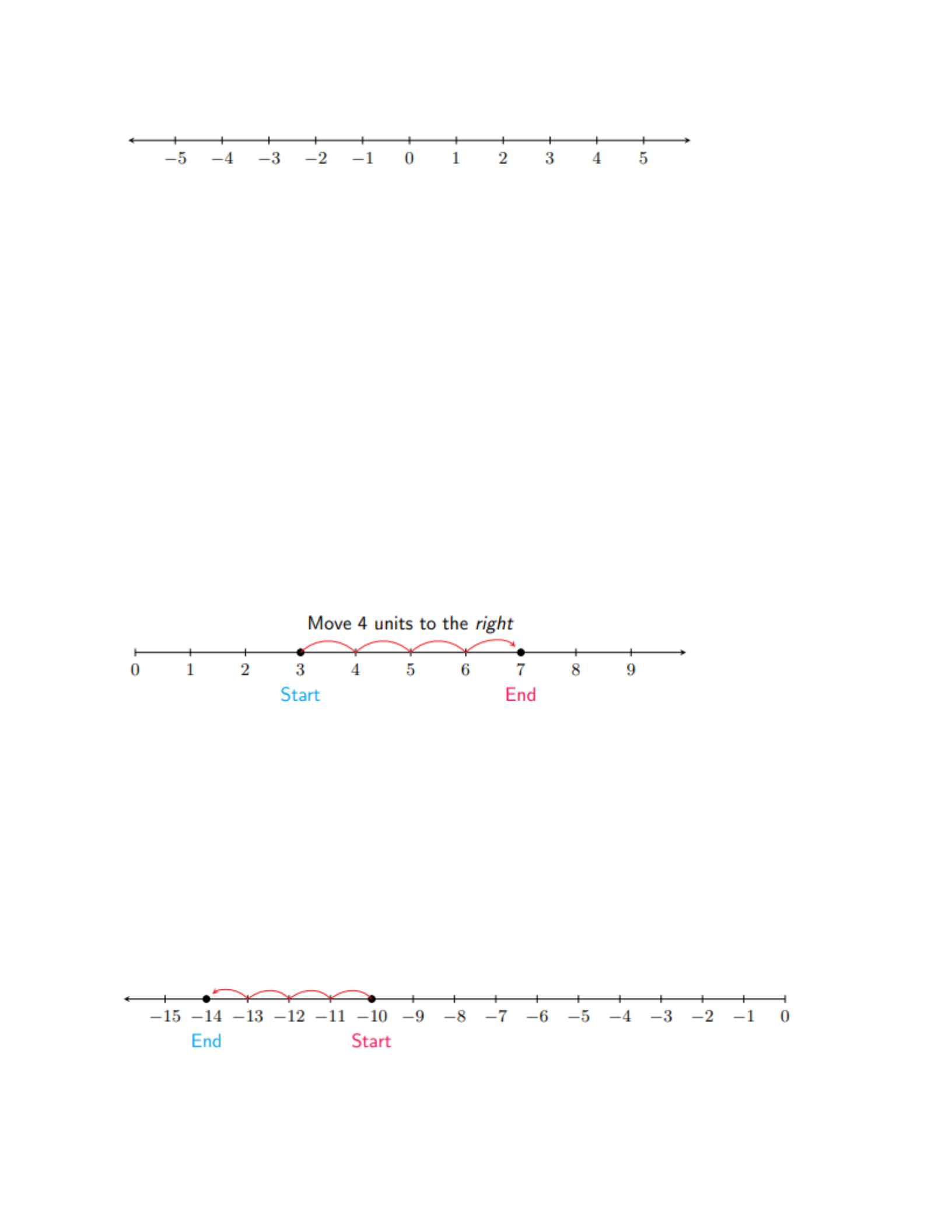
Any number has a weight and a sign.
The magnitude (or weight) of a number is the distance it is from 0 on the number line.
Example 1.1
For example, the weight of -5 is 5 and the weight of 7 is 7 .
Two numbers are opposites if, on the number line, they are on opposite sides of zero, but
the same distance away from zero.
So, −5 is the opposite of 5, and 7 is the opposite of −7 and so on.
Addition
We can add two numbers with the help of a number line .
Example 1.2
Adding two positive numbers: For example to add 3+43+4, we start with 3 on the number
line then move 4 units to the right. We land at 7 which is our answer.
So, 3+4=73+4=7. Notice that the answer has the same sign as the signs of 3 and 4 (both
positive) and its weight comes from adding the weights of 3 and 4.
You always move to the right when you add a positive number
Example 1.3
Adding two negative numbers: For example, −10+(−4)−10+(−4) means you are adding a
debt of $4$4 to an already existing debt of $10.$10. So, we start at -10 on the number line
and move 4 units to the left, to land at −14,−14, which is the answer.
You always move to the left when you add a negative number (a debt)
So, −10+(−4)=−14−10+(−4)=−14. Notice that the answer has the same sign as the signs of -
10 and -4 (both negative) and its weight comes from adding the weights of -10 and -4
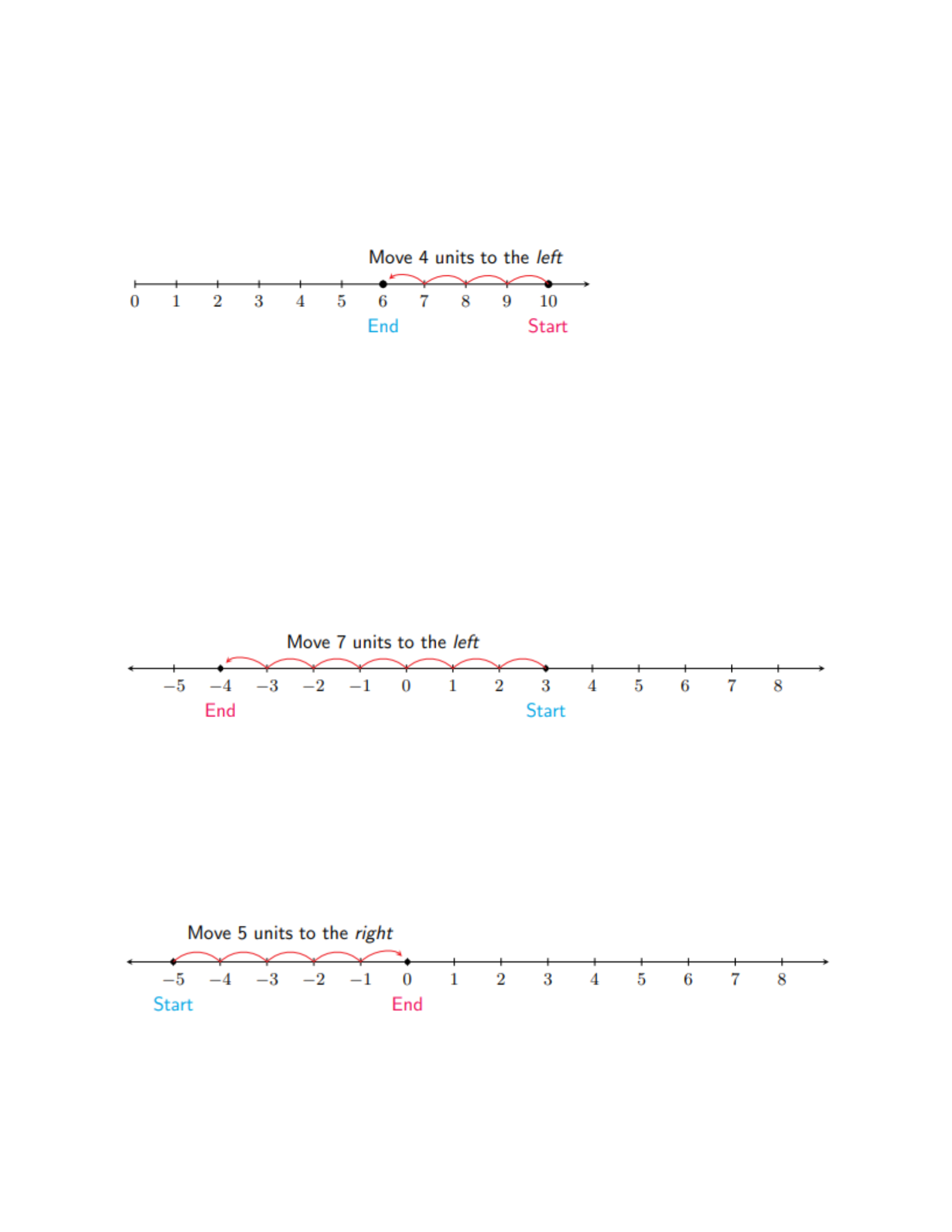
To add numbers of opposite signs, that is, a positive and a negative number, we can also
use the number line. For example, to perform 10+(−4),10+(−4), we start at 10 on the
number line and then move 4 units to the left. We land at 6,6, which is the answer. Think
of 10+(−4)10+(−4) as having $10$10 and adding a $4$4 debt. Because we are adding a
debt, we move to the left on the number line!
So, 10+(−4)=6.10+(−4)=6. Notice that the answer has the same sign as the sign of 10
(positive) because it is the number of larger weight, and its weight comes from finding the
difference of the weights of 10 and -4
Notice that because we were adding two numbers of opposite signs, the answer ended up
being the difference in weight (6) along with the sign of the number of larger weight
(positive).
Example 1.4
Adding two numbers of opposite signs: For example, 3+(−7)3+(−7). We start at 3 and move
toward 7 units to the left, and we land at −4,−4, which is our answer.
So, 3+(−7)=−4.3+(−7)=−4. Notice that the answer has the same sign as the signs of -7
(negative) because it is the number of larger weight, and its weight comes from finding the
difference of the weights of 3 and -7.
Example 1.5
Adding opposites: We start at -5 on the number line and jump to the right 5 units to land
finally at 00. So −5+5=0−5+5=0.
Note 1.6
Two opposite numbers are called a zero-pair, because adding them always results in 0.

So, −5 and 5 are a zero-pair.
Adding Intergers
3. To add two numbers of the same sign, add their weights and place it after the
sign.
4. To add two numbers of opposite signs, find the difference of their weights and
place it after the sign of the number with the greater weight.
Example 1.7
Add:
g. −8+19=11−8+19=11
h. −8+4=−4−8+4=−4
i. 6+(−9)=−36+(−9)=−3
j. 7+(−2)=57+(−2)=5
k. (−4)+(−7)=−11(−4)+(−7)=−11
l. 8+7=158+7=15
Note 1.8
While we can add in any order: 4+2=2+44+2=2+4, it is sometimes convenient to add up all
of the negative numbers and add up all of the positive numbers, and then add the results.
There are also times when it is best to notice certain simplifications if the numbers are
added in a different order.
For example
−5+4+5+(−8)=−5+(−8)+4+5( by reordering )−5+4+5+(−8)=−5+(−8)+4+5( by reordering )
so,
−5+4+5+(−8)=−5+(−8)+4+5=−13+9=−4−5+4+5+(−8)=−5+(−8)+4+5=−13+9=−4
We could have also simplified this by noting that (-5) and 5 are zero-pair, so we are left
with 4+(−8)4+(−8) which is -4.
Example 1.9
We can calculate
(−4)+(−5)+7+(−3)=(−4)+(−5)+(−3)+7=(−12)+7=−5(−4)+(−5)+7+(−3)=(−4)+(−5)+(−3)+7=
(−12)+7=−5
We could have simplified this by noting that (-4) and (-3) make -7, and -7 and 7 are zero-
pair, so the total is -5.
Subtraction (as Addition of the Opposite)
Once we know how to add numbers, we are set to subtract numbers because subtraction is
nothing but addition of the opposite. That is, subtracting 8 − 3 (which reads: subtracting 3
from 8) is the same as 8 + (−3) (which reads: Adding −3 to 8.).
Example 1.10
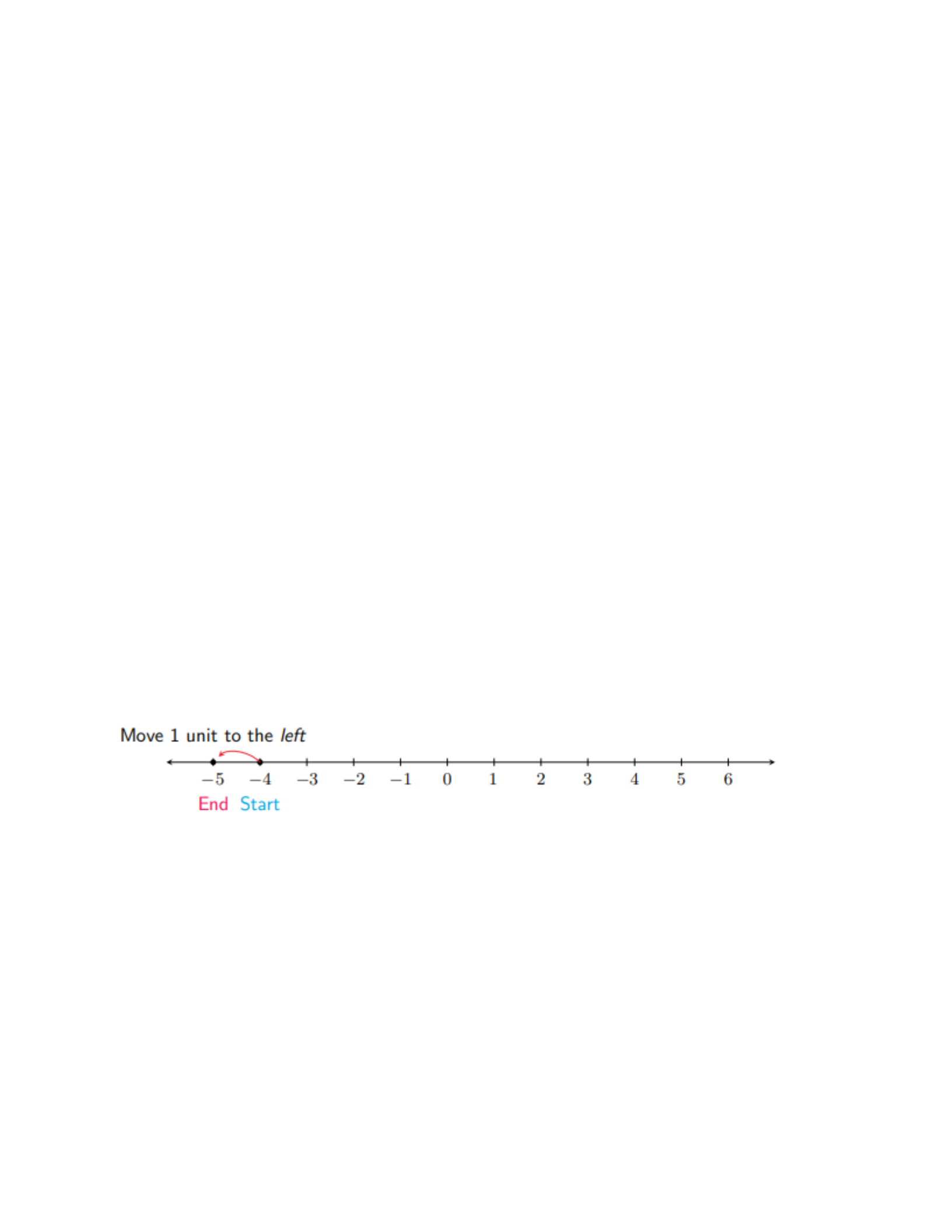
So, 8−3=8+(−3),8−3=8+(−3), and, we can use the rules of adding two numbers of opposite
signs to find out that the answer is 5.5. We can also use the number line. We start at 8 and
move 3 units to the left (adding -3 is adding a debt, so we move to the left).
So 8−3=5.−4−3−2−10123456788−3=5.−4−3−2−1012345678 End Start Move 3 units to the
left
Example 1.11
To calculate 3−73−7 we first rewrite it as an addition
problem. 3−7=3+(−7).3−7=3+(−7). We can either use the number line, or the rules of
adding two numbers of opposite signs. And, 50,3−7=3+(−7)=−450,3−7=3+(−7)=−4
Example 1.12
To calculate −4−1,−4−1, we first rewrite it as an addition
problem. −4−1=−4+(−1).−4−1=−4+(−1). We can either use the number line, or the rules of
adding two numbers of the same signs. If we want to use the rules, both numbers are
negative, so our answer will be negative, and, adding the weights of -4 and -1
is 5.50,−4−1=−4+(−1)=−55.50,−4−1=−4+(−1)=−5
On the number line, we start at -4 and move 1 unit to the left, to land on -5 which is our
answer.
Changing the subtractions to additions in this way is particularly useful when adding or
subtracting several numbers (because we can add in any order).
Example 1.13
===−3−7+5+7+13−6−(−9)−3+(−7)+5+7+13+(−6)+9−3+(−7)+(−6)+5+7+13+918−3−7+5+7
+13−6−(−9)=−3+(−7)+5+7+13+(−6)+9=−3+(−7)+(−6)+5+7+13+9=18
===−3−7+5+7+13−6−(−9)−3+(−7)+5+7+13+(−6)+95+1318−3−7+5+7+13−6−(−9)=−3+(−7
)+5+7+13+(−6)+9=5+13=18
Remark 1.14
Warning: The symbol "-" is used in two different ways. When it is between two expressions,
it means subtract (e.g., 3−43−4 ). Otherwise, it means 'opposite' or 'negative'
(e.g., −3+4−3+4 ). So in the expression −4−(−3)−4−(−3), the first and last "-" means
opposite and the one in the middle one means subtract. The importance of understanding
this can not be overestimated.
Multiplication and Division of Positive Numbers
Multiplication of integers is adding in the sense that 3×4=4+4+43×4=4+4+4
To multiply larger numbers, it is better to use the usual scheme of multiplication. For
example:
Example 1.15
Let us multiply 152 by 34. We will for convenience sake put the smaller number on the
bottom (though it is not necessary). We have
+×4516515306624808152×34608+45605168
And division is the opposite of multiplication in the sense that to compute 45÷945÷9 is to
find a number so that when we multiply by 9 we get 45. We run through our multiplication
tables (which are hopefully in our head) to discover that 5 does the
trick: 5×9=455×9=45 so that 45÷9=5.45÷9=5. We will discuss division from a different
point of view when we discuss fractions.
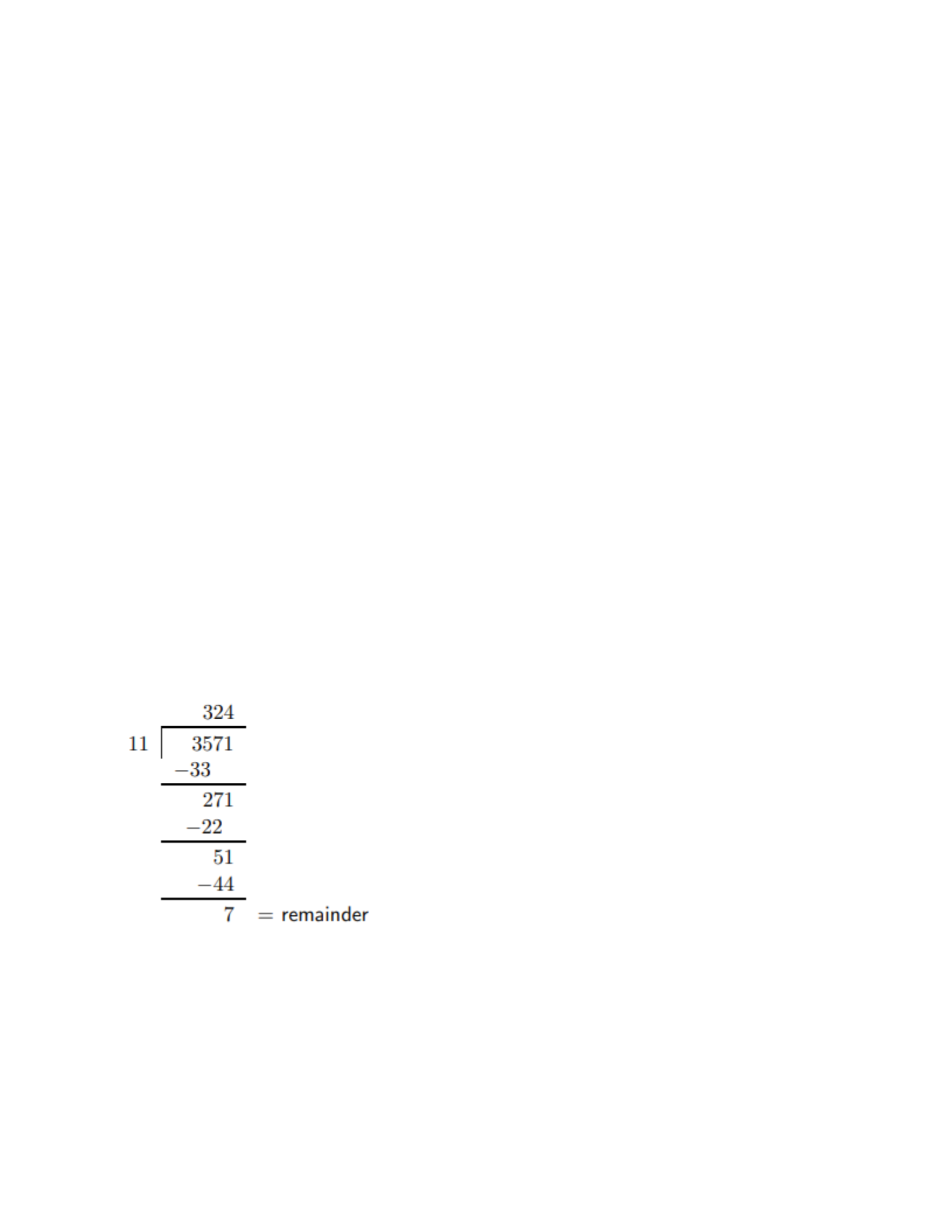
To divide larger numbers, we can use long division. For example, let’s divide 3571 by 11.
Example 1.16
Multiplication involving negative numbers
Multiplication is a little tricky to understand without the notion of distribution (discussed
later). We will begin with noting again what it means to multiply a number by a positive
number: So if we want to compute 4⋅(−7)4⋅(−7) we note
4⋅(−7)=(−7)+(−7)+(−7)+(−7)=−284⋅(−7)=(−7)+(−7)+(−7)+(−7)=−28

Note that since 4⋅7=28,4⋅(−7)=−(4⋅7).4⋅7=28,4⋅(−7)=−(4⋅7). We can multiply positive
numbers in any order: 4⋅7=7⋅44⋅7=7⋅4. The same is true of positive and negative numbers:
(−7)⋅4=4⋅(−7)=−(4⋅7)=−28(−7)⋅4=4⋅(−7)=−(4⋅7)=−28
Example 1.17
5⋅(−12)=−(5⋅12)=−605⋅(−12)=−(5⋅12)=−60 and (−3)⋅(−2)=−(3⋅(−2))=−(−(3⋅2))=6(−3)⋅(−2)
=−(3⋅(−2))=−(−(3⋅2))=6
Example 1.18
So the size of the product of two numbers is the product of their sizes. The sign is positive if
the signs are the same and negative if they are different.
Example 1.19
Two quantities right next to each other, with no symbol between them (except for
parentheses around either or both numbers), has an implicit multiplication. For
example, 3(2)=3×23(2)=3×2.
Example 1.20
Multiply:
f. (−5)(−8)=40(−5)(−8)=40
g. (−6)⋅7=−42(−6)⋅7=−42
h. 4⋅12=484⋅12=48
i. (−3)(−6)⋅4(−3)=18⋅4(−3)=72(−3)=−216( multiplying from left to
right )(−3)(−6)⋅4(−3)=18⋅4(−3)=72(−3)=−216( multiplying from left to right )
j. (−3)(−5)⋅4(−2)=(−3)⋅4⋅(−5)(−2)=−12⋅10=−120((−3)(−5)⋅4(−2)=(−3)⋅4⋅(−5)(−2)=−1
2⋅10=−120( since we can multiply in any order it is convenient to see
that −5⋅−2=10.−5⋅−2=10. )
Exponents of integers
Recall that a positive exponent represents the number of times a number is multiplied by
itself.
Example 1.21
Evaluate:
g. 52=5⋅5=2552=5⋅5=25
h. (−4)3=(−4)⋅(−4)⋅(−4)=16⋅(−4)=−64(−4)3=(−4)⋅(−4)⋅(−4)=16⋅(−4)=−64
i. (−7)1=−7(−7)1=−7
j. −24=−2⋅2⋅2⋅2=−16−24=−2⋅2⋅2⋅2=−16 Note: The exponent here is for 2 not −2!
k. (−3)4=(−3)⋅(−3)⋅(−3)⋅(−3)=9⋅(−3)⋅(−3)=−27⋅(−3)=81(−3)4=(−3)⋅(−3)⋅(−3)⋅(−3)=9⋅(
−3)⋅(−3)=−27⋅(−3)=81
l. (−2)5=(−2)⋅(−2)⋅(−2)⋅(−2)⋅(−2)=−32(−2)5=(−2)⋅(−2)⋅(−2)⋅(−2)⋅(−2)=−32
Exponent rules in details will be further discussed in Chapter 5.
Division involving negative numbers
Division is just a question of knowing multiplication and therefore has the same rule: The
size of the quotient of two numbers is the quotient of the sizes. The sign is positive if the
signs are the same and negative if they are different.
Example 1.22
Divide:
g. (−42)÷7=−6(−42)÷7=−6
h. 81÷(−9)=−981÷(−9)=−9
i. (−35)÷(−7)=5(−35)÷(−7)=5
j. 14÷2=714÷2=7
k. 0÷5=00÷5=0. Note When dividing 0 by any number, the answer is always 0.
l. −10÷0=−10÷0= undefined.
Note 1.23
Any number divided by 0 is undefined!
Multiplying and Dividing Integers
Consider two numbers at a time.
3. If the signs of the two numbers are the same, then the sign of the answer is positive.
4. If the signs of the two numbers are different, then the sign of the answer is negative.
We begin with a brief review of arithmetic with integers
i.e. …,−3,−2,−1,0,1,2,3,……,−3,−2,−1,0,1,2,3,…
Any number has a weight and a sign.
The magnitude (or weight) of a number is the distance it is from 0 on the number line.
Example 1.1
For example, the weight of -5 is 5 and the weight of 7 is 7 .
Two numbers are opposites if, on the number line, they are on opposite sides of zero, but
the same distance away from zero.
So, −5 is the opposite of 5, and 7 is the opposite of −7 and so on.
Addition
We can add two numbers with the help of a number line .
Example 1.2
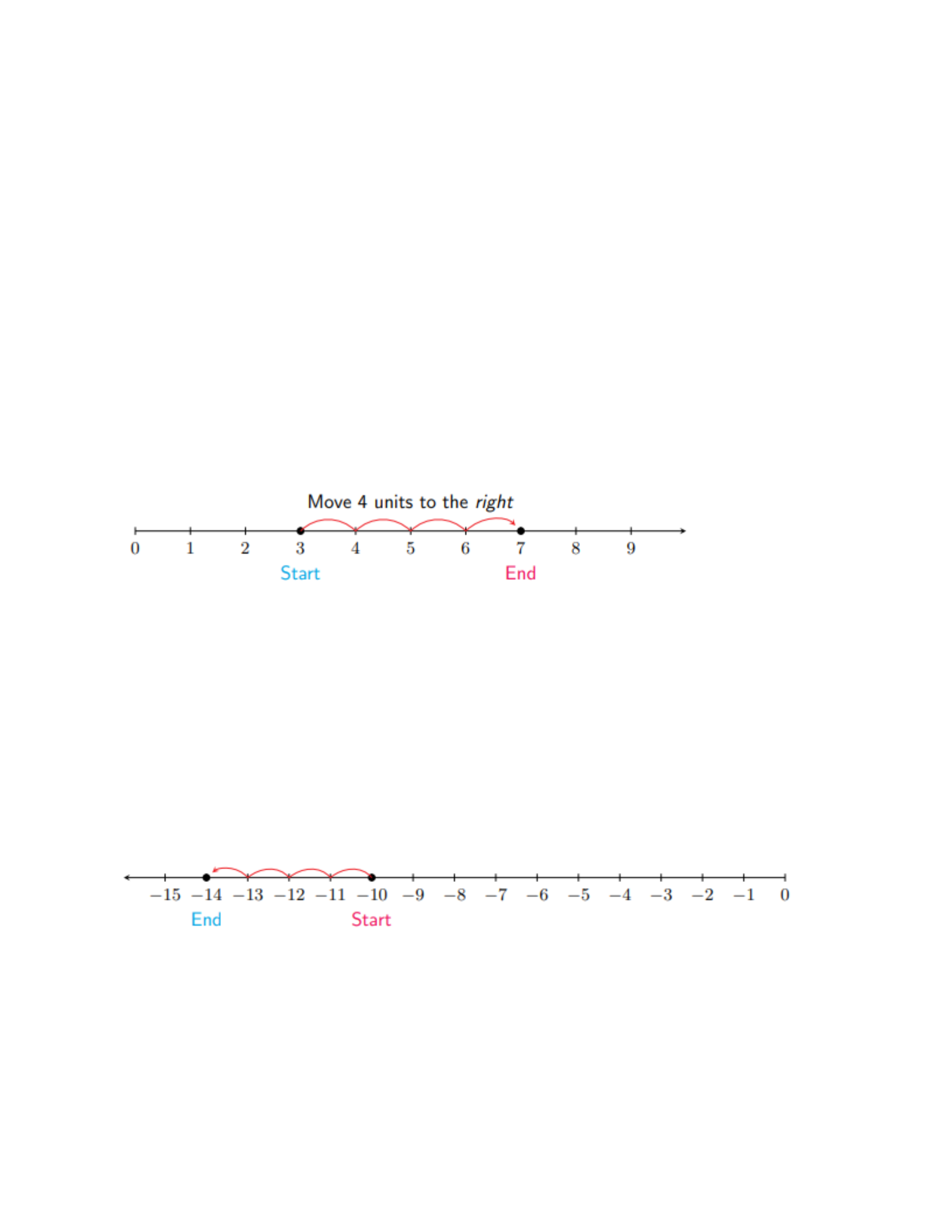
Adding two positive numbers: For example to add 3+43+4, we start with 3 on the number
line then move 4 units to the right. We land at 7 which is our answer.
So, 3+4=73+4=7. Notice that the answer has the same sign as the signs of 3 and 4 (both
positive) and its weight comes from adding the weights of 3 and 4.
You always move to the right when you add a positive number
Example 1.3
Adding two negative numbers: For example, −10+(−4)−10+(−4) means you are adding a
debt of $4$4 to an already existing debt of $10.$10. So, we start at -10 on the number line
and move 4 units to the left, to land at −14,−14, which is the answer.
You always move to the left when you add a negative number (a debt)
So, −10+(−4)=−14−10+(−4)=−14. Notice that the answer has the same sign as the signs of -
10 and -4 (both negative) and its weight comes from adding the weights of -10 and -4
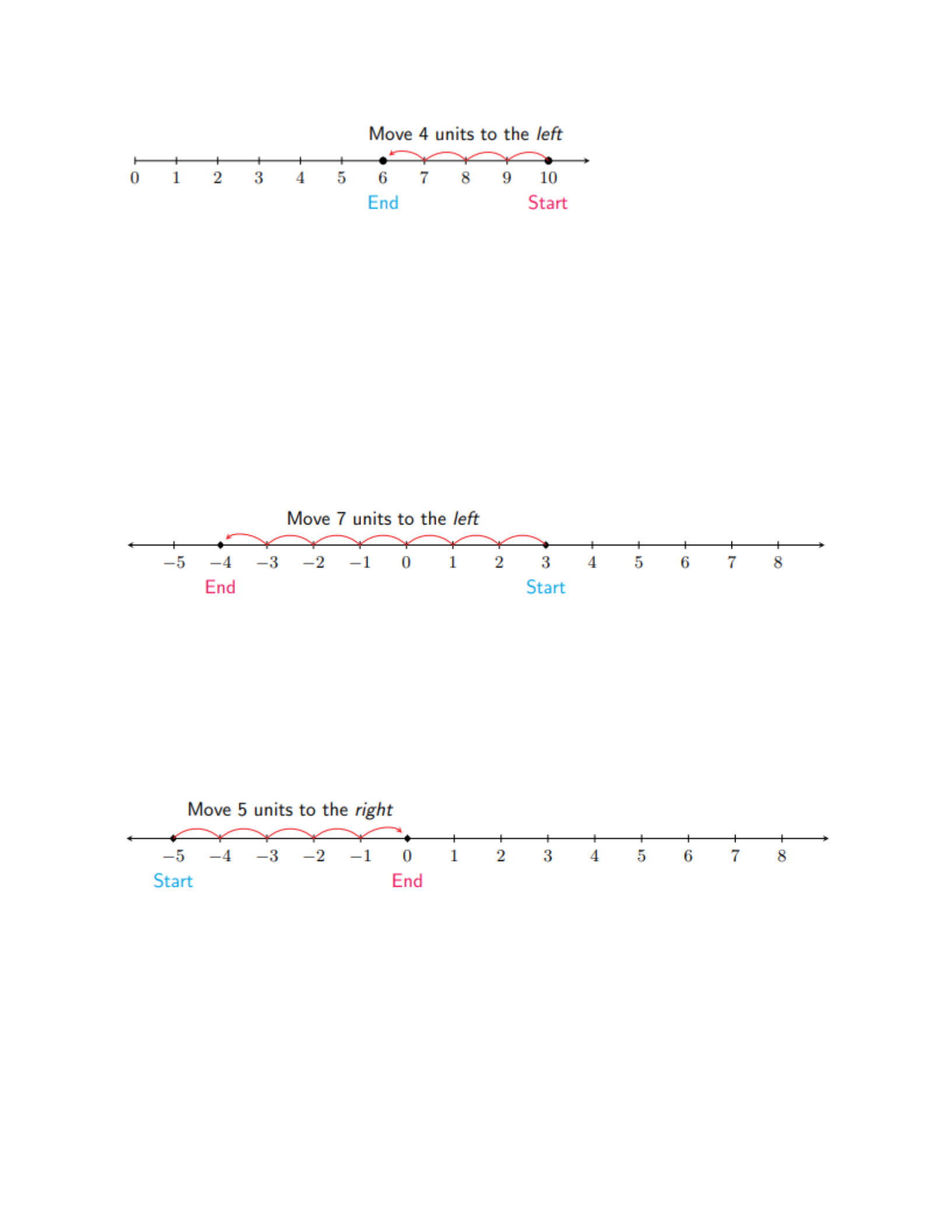
To add numbers of opposite signs, that is, a positive and a negative number, we can also
use the number line. For example, to perform 10+(−4),10+(−4), we start at 10 on the
number line and then move 4 units to the left. We land at 6,6, which is the answer. Think
of 10+(−4)10+(−4) as having $10$10 and adding a $4$4 debt. Because we are adding a
debt, we move to the left on the number line!
So, 10+(−4)=6.10+(−4)=6. Notice that the answer has the same sign as the sign of 10
(positive) because it is the number of larger weight, and its weight comes from finding the
difference of the weights of 10 and -4
Notice that because we were adding two numbers of opposite signs, the answer ended up
being the difference in weight (6) along with the sign of the number of larger weight
(positive).
Example 1.4
Adding two numbers of opposite signs: For example, 3+(−7)3+(−7). We start at 3 and move
toward 7 units to the left, and we land at −4,−4, which is our answer.
So, 3+(−7)=−4.3+(−7)=−4. Notice that the answer has the same sign as the signs of -7
(negative) because it is the number of larger weight, and its weight comes from finding the
difference of the weights of 3 and -7.
Example 1.5
Adding opposites: We start at -5 on the number line and jump to the right 5 units to land
finally at 00. So −5+5=0−5+5=0.
Note 1.6
Two opposite numbers are called a zero-pair, because adding them always results in 0.
So, −5 and 5 are a zero-pair.
Adding Intergers
5. To add two numbers of the same sign, add their weights and place it after the
sign.

6. To add two numbers of opposite signs, find the difference of their weights and
place it after the sign of the number with the greater weight.
Example 1.7
Add:
m. −8+19=11−8+19=11
n. −8+4=−4−8+4=−4
o. 6+(−9)=−36+(−9)=−3
p. 7+(−2)=57+(−2)=5
q. (−4)+(−7)=−11(−4)+(−7)=−11
r. 8+7=158+7=15
Note 1.8
While we can add in any order: 4+2=2+44+2=2+4, it is sometimes convenient to add up all
of the negative numbers and add up all of the positive numbers, and then add the results.
There are also times when it is best to notice certain simplifications if the numbers are
added in a different order.
For example
−5+4+5+(−8)=−5+(−8)+4+5( by reordering )−5+4+5+(−8)=−5+(−8)+4+5( by reordering )
so,
−5+4+5+(−8)=−5+(−8)+4+5=−13+9=−4−5+4+5+(−8)=−5+(−8)+4+5=−13+9=−4
We could have also simplified this by noting that (-5) and 5 are zero-pair, so we are left
with 4+(−8)4+(−8) which is -4.
Example 1.9
We can calculate
(−4)+(−5)+7+(−3)=(−4)+(−5)+(−3)+7=(−12)+7=−5(−4)+(−5)+7+(−3)=(−4)+(−5)+(−3)+7=
(−12)+7=−5
We could have simplified this by noting that (-4) and (-3) make -7, and -7 and 7 are zero-
pair, so the total is -5.
Subtraction (as Addition of the Opposite)
Once we know how to add numbers, we are set to subtract numbers because subtraction is
nothing but addition of the opposite. That is, subtracting 8 − 3 (which reads: subtracting 3
from 8) is the same as 8 + (−3) (which reads: Adding −3 to 8.).
Example 1.10
So, 8−3=8+(−3),8−3=8+(−3), and, we can use the rules of adding two numbers of opposite
signs to find out that the answer is 5.5. We can also use the number line. We start at 8 and
move 3 units to the left (adding -3 is adding a debt, so we move to the left).
So 8−3=5.−4−3−2−10123456788−3=5.−4−3−2−1012345678 End Start Move 3 units to the
left
Example 1.11
To calculate 3−73−7 we first rewrite it as an addition
problem. 3−7=3+(−7).3−7=3+(−7). We can either use the number line, or the rules of
adding two numbers of opposite signs. And, 50,3−7=3+(−7)=−450,3−7=3+(−7)=−4
Example 1.12
To calculate −4−1,−4−1, we first rewrite it as an addition
problem. −4−1=−4+(−1).−4−1=−4+(−1). We can either use the number line, or the rules of
adding two numbers of the same signs. If we want to use the rules, both numbers are
negative, so our answer will be negative, and, adding the weights of -4 and -1
is 5.50,−4−1=−4+(−1)=−55.50,−4−1=−4+(−1)=−5
On the number line, we start at -4 and move 1 unit to the left, to land on -5 which is our
answer.
Changing the subtractions to additions in this way is particularly useful when adding or
subtracting several numbers (because we can add in any order).
Example 1.13
===−3−7+5+7+13−6−(−9)−3+(−7)+5+7+13+(−6)+9−3+(−7)+(−6)+5+7+13+918−3−7+5+7
+13−6−(−9)=−3+(−7)+5+7+13+(−6)+9=−3+(−7)+(−6)+5+7+13+9=18
===−3−7+5+7+13−6−(−9)−3+(−7)+5+7+13+(−6)+95+1318−3−7+5+7+13−6−(−9)=−3+(−7
)+5+7+13+(−6)+9=5+13=18
Remark 1.14
Warning: The symbol "-" is used in two different ways. When it is between two expressions,
it means subtract (e.g., 3−43−4 ). Otherwise, it means 'opposite' or 'negative'
(e.g., −3+4−3+4 ). So in the expression −4−(−3)−4−(−3), the first and last "-" means
opposite and the one in the middle one means subtract. The importance of understanding
this can not be overestimated.
Multiplication and Division of Positive Numbers
Multiplication of integers is adding in the sense that 3×4=4+4+43×4=4+4+4
To multiply larger numbers, it is better to use the usual scheme of multiplication. For
example:
Example 1.15
Let us multiply 152 by 34. We will for convenience sake put the smaller number on the
bottom (though it is not necessary). We have
+×4516515306624808152×34608+45605168
And division is the opposite of multiplication in the sense that to compute 45÷945÷9 is to
find a number so that when we multiply by 9 we get 45. We run through our multiplication
tables (which are hopefully in our head) to discover that 5 does the
trick: 5×9=455×9=45 so that 45÷9=5.45÷9=5. We will discuss division from a different
point of view when we discuss fractions.
To divide larger numbers, we can use long division. For example, let’s divide 3571 by 11.
Example 1.16
Multiplication involving negative numbers
Multiplication is a little tricky to understand without the notion of distribution (discussed
later). We will begin with noting again what it means to multiply a number by a positive
number: So if we want to compute 4⋅(−7)4⋅(−7) we note
4⋅(−7)=(−7)+(−7)+(−7)+(−7)=−284⋅(−7)=(−7)+(−7)+(−7)+(−7)=−28
Note that since 4⋅7=28,4⋅(−7)=−(4⋅7).4⋅7=28,4⋅(−7)=−(4⋅7). We can multiply positive
numbers in any order: 4⋅7=7⋅44⋅7=7⋅4. The same is true of positive and negative numbers:
(−7)⋅4=4⋅(−7)=−(4⋅7)=−28(−7)⋅4=4⋅(−7)=−(4⋅7)=−28
Example 1.17
5⋅(−12)=−(5⋅12)=−605⋅(−12)=−(5⋅12)=−60 and (−3)⋅(−2)=−(3⋅(−2))=−(−(3⋅2))=6(−3)⋅(−2)
=−(3⋅(−2))=−(−(3⋅2))=6

Example 1.18
So the size of the product of two numbers is the product of their sizes. The sign is positive if
the signs are the same and negative if they are different.
Example 1.19
Two quantities right next to each other, with no symbol between them (except for
parentheses around either or both numbers), has an implicit multiplication. For
example, 3(2)=3×23(2)=3×2.
Example 1.20
Multiply:
k. (−5)(−8)=40(−5)(−8)=40
l. (−6)⋅7=−42(−6)⋅7=−42
m. 4⋅12=484⋅12=48
n. (−3)(−6)⋅4(−3)=18⋅4(−3)=72(−3)=−216( multiplying from left to
right )(−3)(−6)⋅4(−3)=18⋅4(−3)=72(−3)=−216( multiplying from left to right )
o. (−3)(−5)⋅4(−2)=(−3)⋅4⋅(−5)(−2)=−12⋅10=−120((−3)(−5)⋅4(−2)=(−3)⋅4⋅(−5)(−2)=−1
2⋅10=−120( since we can multiply in any order it is convenient to see
that −5⋅−2=10.−5⋅−2=10. )
Exponents of integers
Recall that a positive exponent represents the number of times a number is multiplied by
itself.
Example 1.21
Evaluate:
m. 52=5⋅5=2552=5⋅5=25
n. (−4)3=(−4)⋅(−4)⋅(−4)=16⋅(−4)=−64(−4)3=(−4)⋅(−4)⋅(−4)=16⋅(−4)=−64
o. (−7)1=−7(−7)1=−7
p. −24=−2⋅2⋅2⋅2=−16−24=−2⋅2⋅2⋅2=−16 Note: The exponent here is for 2 not −2!
q. (−3)4=(−3)⋅(−3)⋅(−3)⋅(−3)=9⋅(−3)⋅(−3)=−27⋅(−3)=81(−3)4=(−3)⋅(−3)⋅(−3)⋅(−3)=9⋅(
−3)⋅(−3)=−27⋅(−3)=81
r. (−2)5=(−2)⋅(−2)⋅(−2)⋅(−2)⋅(−2)=−32(−2)5=(−2)⋅(−2)⋅(−2)⋅(−2)⋅(−2)=−32
Exponent rules in details will be further discussed in Chapter 5.
Division involving negative numbers
Division is just a question of knowing multiplication and therefore has the same rule: The
size of the quotient of two numbers is the quotient of the sizes. The sign is positive if the
signs are the same and negative if they are different.
Example 1.22
Divide:
m. (−42)÷7=−6(−42)÷7=−6
n. 81÷(−9)=−981÷(−9)=−9
o. (−35)÷(−7)=5(−35)÷(−7)=5
p. 14÷2=714÷2=7
q. 0÷5=00÷5=0. Note When dividing 0 by any number, the answer is always 0.
r. −10÷0=−10÷0= undefined.
Note 1.23
Any number divided by 0 is undefined!
Multiplying and Dividing Integers
Consider two numbers at a time.
5. If the signs of the two numbers are the same, then the sign of the answer is positive.
6. If the signs of the two numbers are different, then the sign of the answer is negative.
We begin with a brief review of arithmetic with integers
i.e. …,−3,−2,−1,0,1,2,3,……,−3,−2,−1,0,1,2,3,…
Any number has a weight and a sign.
The magnitude (or weight) of a number is the distance it is from 0 on the number line.
Example 1.1
For example, the weight of -5 is 5 and the weight of 7 is 7 .
Two numbers are opposites if, on the number line, they are on opposite sides of zero, but
the same distance away from zero.
So, −5 is the opposite of 5, and 7 is the opposite of −7 and so on.
Addition
We can add two numbers with the help of a number line .
Example 1.2
Adding two positive numbers: For example to add 3+43+4, we start with 3 on the number
line then move 4 units to the right. We land at 7 which is our answer.
So, 3+4=73+4=7. Notice that the answer has the same sign as the signs of 3 and 4 (both
positive) and its weight comes from adding the weights of 3 and 4.
You always move to the right when you add a positive number
Example 1.3
Adding two negative numbers: For example, −10+(−4)−10+(−4) means you are adding a
debt of $4$4 to an already existing debt of $10.$10. So, we start at -10 on the number line
and move 4 units to the left, to land at −14,−14, which is the answer.
You always move to the left when you add a negative number (a debt)
So, −10+(−4)=−14−10+(−4)=−14. Notice that the answer has the same sign as the signs of -
10 and -4 (both negative) and its weight comes from adding the weights of -10 and -4
To add numbers of opposite signs, that is, a positive and a negative number, we can also
use the number line. For example, to perform 10+(−4),10+(−4), we start at 10 on the
number line and then move 4 units to the left. We land at 6,6, which is the answer. Think
of 10+(−4)10+(−4) as having $10$10 and adding a $4$4 debt. Because we are adding a
debt, we move to the left on the number line!
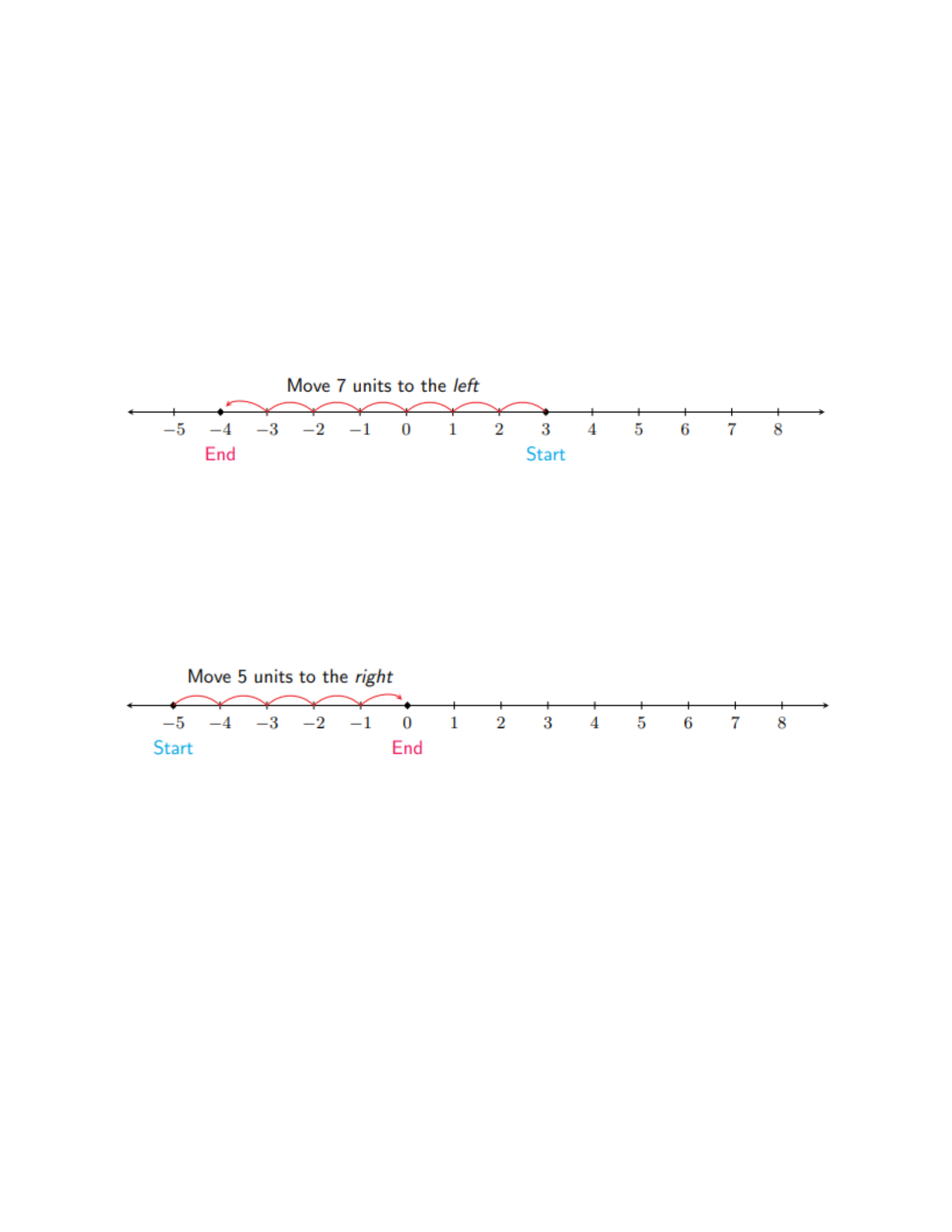
So, 10+(−4)=6.10+(−4)=6. Notice that the answer has the same sign as the sign of 10
(positive) because it is the number of larger weight, and its weight comes from finding the
difference of the weights of 10 and -4
Notice that because we were adding two numbers of opposite signs, the answer ended up
being the difference in weight (6) along with the sign of the number of larger weight
(positive).
Example 1.4
Adding two numbers of opposite signs: For example, 3+(−7)3+(−7). We start at 3 and move
toward 7 units to the left, and we land at −4,−4, which is our answer.
So, 3+(−7)=−4.3+(−7)=−4. Notice that the answer has the same sign as the signs of -7
(negative) because it is the number of larger weight, and its weight comes from finding the
difference of the weights of 3 and -7.
Example 1.5
Adding opposites: We start at -5 on the number line and jump to the right 5 units to land
finally at 00. So −5+5=0−5+5=0.
Note 1.6
Two opposite numbers are called a zero-pair, because adding them always results in 0.
So, −5 and 5 are a zero-pair.
Adding Intergers
7. To add two numbers of the same sign, add their weights and place it after the
sign.
8. To add two numbers of opposite signs, find the difference of their weights and
place it after the sign of the number with the greater weight.
Example 1.7
Add:

s. −8+19=11−8+19=11
t. −8+4=−4−8+4=−4
u. 6+(−9)=−36+(−9)=−3
v. 7+(−2)=57+(−2)=5
w. (−4)+(−7)=−11(−4)+(−7)=−11
x. 8+7=158+7=15
Note 1.8
While we can add in any order: 4+2=2+44+2=2+4, it is sometimes convenient to add up all
of the negative numbers and add up all of the positive numbers, and then add the results.
There are also times when it is best to notice certain simplifications if the numbers are
added in a different order.
For example
−5+4+5+(−8)=−5+(−8)+4+5( by reordering )−5+4+5+(−8)=−5+(−8)+4+5( by reordering )
so,
−5+4+5+(−8)=−5+(−8)+4+5=−13+9=−4−5+4+5+(−8)=−5+(−8)+4+5=−13+9=−4
We could have also simplified this by noting that (-5) and 5 are zero-pair, so we are left
with 4+(−8)4+(−8) which is -4.
Example 1.9
We can calculate
(−4)+(−5)+7+(−3)=(−4)+(−5)+(−3)+7=(−12)+7=−5(−4)+(−5)+7+(−3)=(−4)+(−5)+(−3)+7=
(−12)+7=−5
We could have simplified this by noting that (-4) and (-3) make -7, and -7 and 7 are zero-
pair, so the total is -5.
Subtraction (as Addition of the Opposite)
Once we know how to add numbers, we are set to subtract numbers because subtraction is
nothing but addition of the opposite. That is, subtracting 8 − 3 (which reads: subtracting 3
from 8) is the same as 8 + (−3) (which reads: Adding −3 to 8.).
Example 1.10
So, 8−3=8+(−3),8−3=8+(−3), and, we can use the rules of adding two numbers of opposite
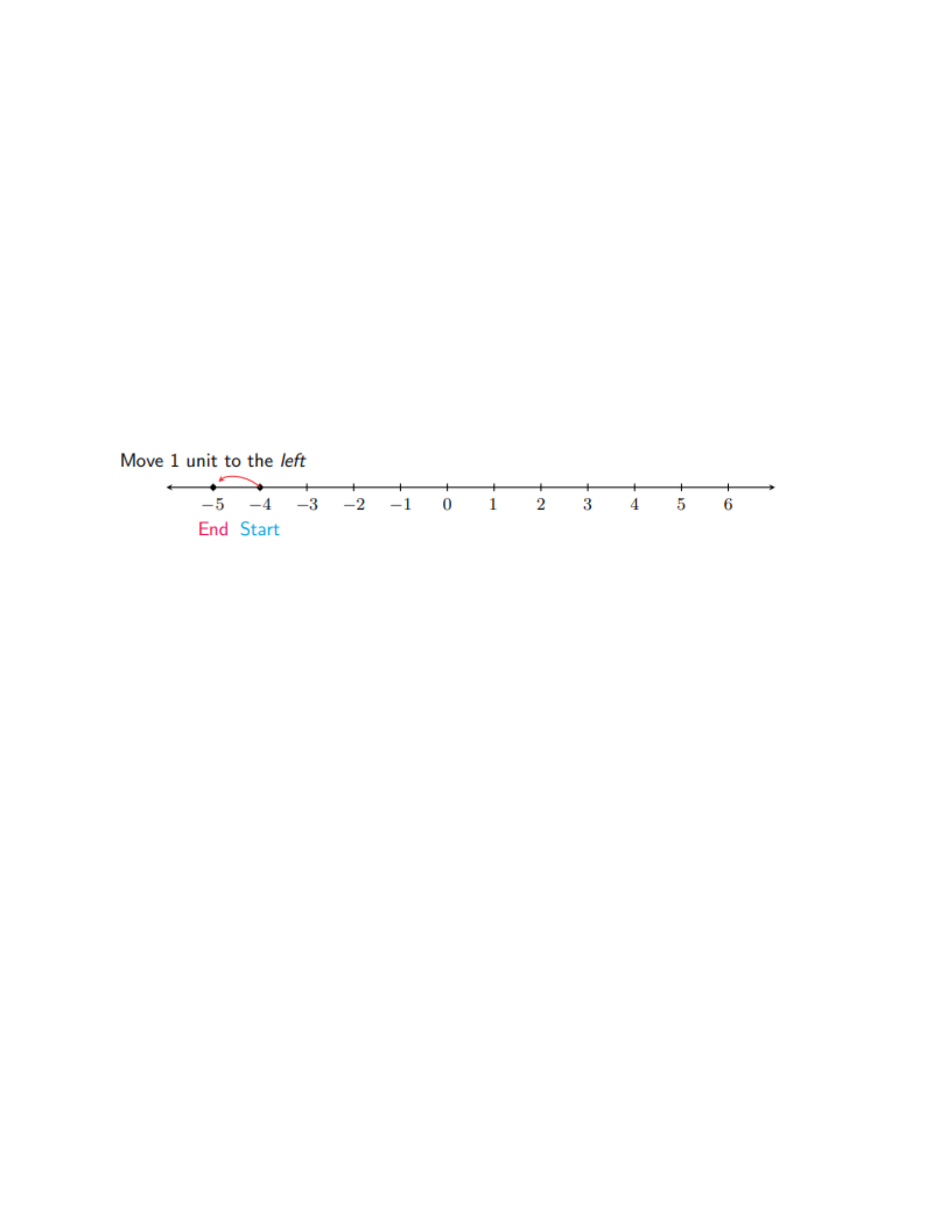
signs to find out that the answer is 5.5. We can also use the number line. We start at 8 and
move 3 units to the left (adding -3 is adding a debt, so we move to the left).
So 8−3=5.−4−3−2−10123456788−3=5.−4−3−2−1012345678 End Start Move 3 units to the
left
Example 1.11
To calculate 3−73−7 we first rewrite it as an addition
problem. 3−7=3+(−7).3−7=3+(−7). We can either use the number line, or the rules of
adding two numbers of opposite signs. And, 50,3−7=3+(−7)=−450,3−7=3+(−7)=−4
Example 1.12
To calculate −4−1,−4−1, we first rewrite it as an addition
problem. −4−1=−4+(−1).−4−1=−4+(−1). We can either use the number line, or the rules of
adding two numbers of the same signs. If we want to use the rules, both numbers are
negative, so our answer will be negative, and, adding the weights of -4 and -1
is 5.50,−4−1=−4+(−1)=−55.50,−4−1=−4+(−1)=−5
On the number line, we start at -4 and move 1 unit to the left, to land on -5 which is our
answer.
Changing the subtractions to additions in this way is particularly useful when adding or
subtracting several numbers (because we can add in any order).
Example 1.13
===−3−7+5+7+13−6−(−9)−3+(−7)+5+7+13+(−6)+9−3+(−7)+(−6)+5+7+13+918−3−7+5+7
+13−6−(−9)=−3+(−7)+5+7+13+(−6)+9=−3+(−7)+(−6)+5+7+13+9=18
===−3−7+5+7+13−6−(−9)−3+(−7)+5+7+13+(−6)+95+1318−3−7+5+7+13−6−(−9)=−3+(−7
)+5+7+13+(−6)+9=5+13=18
Remark 1.14
Warning: The symbol "-" is used in two different ways. When it is between two expressions,
it means subtract (e.g., 3−43−4 ). Otherwise, it means 'opposite' or 'negative'
(e.g., −3+4−3+4 ). So in the expression −4−(−3)−4−(−3), the first and last "-" means
opposite and the one in the middle one means subtract. The importance of understanding
this can not be overestimated.
Multiplication and Division of Positive Numbers
Multiplication of integers is adding in the sense that 3×4=4+4+43×4=4+4+4
To multiply larger numbers, it is better to use the usual scheme of multiplication. For
example:
Example 1.15
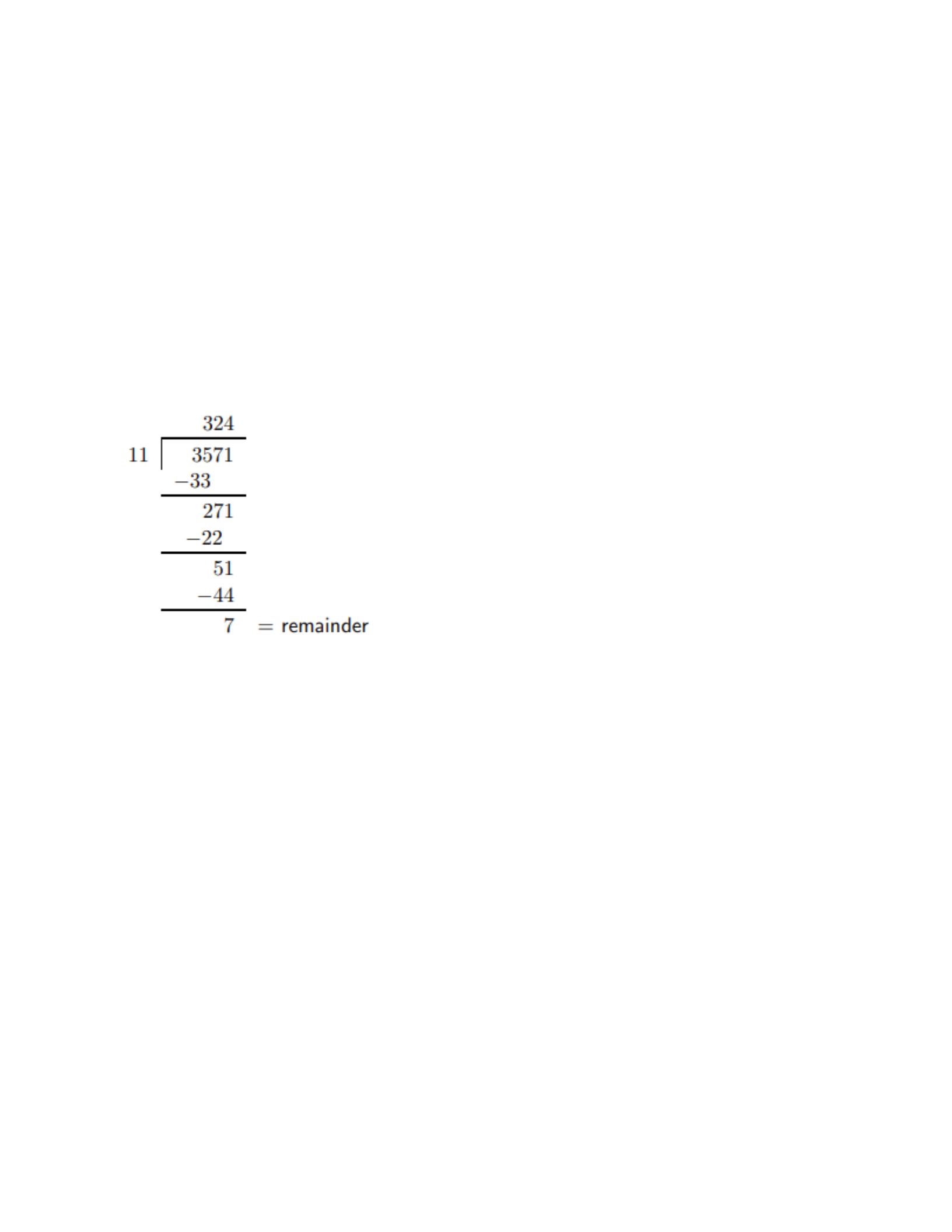
Let us multiply 152 by 34. We will for convenience sake put the smaller number on the
bottom (though it is not necessary). We have
+×4516515306624808152×34608+45605168
And division is the opposite of multiplication in the sense that to compute 45÷945÷9 is to
find a number so that when we multiply by 9 we get 45. We run through our multiplication
tables (which are hopefully in our head) to discover that 5 does the
trick: 5×9=455×9=45 so that 45÷9=5.45÷9=5. We will discuss division from a different
point of view when we discuss fractions.
To divide larger numbers, we can use long division. For example, let’s divide 3571 by 11.
Example 1.16
Multiplication involving negative numbers
Multiplication is a little tricky to understand without the notion of distribution (discussed
later). We will begin with noting again what it means to multiply a number by a positive
number: So if we want to compute 4⋅(−7)4⋅(−7) we note
4⋅(−7)=(−7)+(−7)+(−7)+(−7)=−284⋅(−7)=(−7)+(−7)+(−7)+(−7)=−28
Note that since 4⋅7=28,4⋅(−7)=−(4⋅7).4⋅7=28,4⋅(−7)=−(4⋅7). We can multiply positive
numbers in any order: 4⋅7=7⋅44⋅7=7⋅4. The same is true of positive and negative numbers:
(−7)⋅4=4⋅(−7)=−(4⋅7)=−28(−7)⋅4=4⋅(−7)=−(4⋅7)=−28
Example 1.17
5⋅(−12)=−(5⋅12)=−605⋅(−12)=−(5⋅12)=−60 and (−3)⋅(−2)=−(3⋅(−2))=−(−(3⋅2))=6(−3)⋅(−2)
=−(3⋅(−2))=−(−(3⋅2))=6
Example 1.18
So the size of the product of two numbers is the product of their sizes. The sign is positive if
the signs are the same and negative if they are different.
Example 1.19

Two quantities right next to each other, with no symbol between them (except for
parentheses around either or both numbers), has an implicit multiplication. For
example, 3(2)=3×23(2)=3×2.
Example 1.20
Multiply:
p. (−5)(−8)=40(−5)(−8)=40
q. (−6)⋅7=−42(−6)⋅7=−42
r. 4⋅12=484⋅12=48
s. (−3)(−6)⋅4(−3)=18⋅4(−3)=72(−3)=−216( multiplying from left to
right )(−3)(−6)⋅4(−3)=18⋅4(−3)=72(−3)=−216( multiplying from left to right )
t. (−3)(−5)⋅4(−2)=(−3)⋅4⋅(−5)(−2)=−12⋅10=−120((−3)(−5)⋅4(−2)=(−3)⋅4⋅(−5)(−2)=−1
2⋅10=−120( since we can multiply in any order it is convenient to see
that −5⋅−2=10.−5⋅−2=10. )
Exponents of integers
Recall that a positive exponent represents the number of times a number is multiplied by
itself.
Example 1.21
Evaluate:
s. 52=5⋅5=2552=5⋅5=25
t. (−4)3=(−4)⋅(−4)⋅(−4)=16⋅(−4)=−64(−4)3=(−4)⋅(−4)⋅(−4)=16⋅(−4)=−64
u. (−7)1=−7(−7)1=−7
v. −24=−2⋅2⋅2⋅2=−16−24=−2⋅2⋅2⋅2=−16 Note: The exponent here is for 2 not −2!
w. (−3)4=(−3)⋅(−3)⋅(−3)⋅(−3)=9⋅(−3)⋅(−3)=−27⋅(−3)=81(−3)4=(−3)⋅(−3)⋅(−3)⋅(−3)=9⋅(
−3)⋅(−3)=−27⋅(−3)=81
x. (−2)5=(−2)⋅(−2)⋅(−2)⋅(−2)⋅(−2)=−32(−2)5=(−2)⋅(−2)⋅(−2)⋅(−2)⋅(−2)=−32
Exponent rules in details will be further discussed in Chapter 5.
Division involving negative numbers
Division is just a question of knowing multiplication and therefore has the same rule: The
size of the quotient of two numbers is the quotient of the sizes. The sign is positive if the
signs are the same and negative if they are different.
Example 1.22
Divide:
s. (−42)÷7=−6(−42)÷7=−6
t. 81÷(−9)=−981÷(−9)=−9
u. (−35)÷(−7)=5(−35)÷(−7)=5
v. 14÷2=714÷2=7
w. 0÷5=00÷5=0. Note When dividing 0 by any number, the answer is always 0.
x. −10÷0=−10÷0= undefined.
Note 1.23
Any number divided by 0 is undefined!
Multiplying and Dividing Integers
Consider two numbers at a time.
7. If the signs of the two numbers are the same, then the sign of the answer is positive.
8. If the signs of the two numbers are different, then the sign of the answer is negative.
We begin with a brief review of arithmetic with integers
i.e. …,−3,−2,−1,0,1,2,3,……,−3,−2,−1,0,1,2,3,…
Any number has a weight and a sign.
The magnitude (or weight) of a number is the distance it is from 0 on the number line.
Example 1.1
For example, the weight of -5 is 5 and the weight of 7 is 7 .
Two numbers are opposites if, on the number line, they are on opposite sides of zero, but
the same distance away from zero.
So, −5 is the opposite of 5, and 7 is the opposite of −7 and so on.
Addition
We can add two numbers with the help of a number line .
Example 1.2
Adding two positive numbers: For example to add 3+43+4, we start with 3 on the number
line then move 4 units to the right. We land at 7 which is our answer.
So, 3+4=73+4=7. Notice that the answer has the same sign as the signs of 3 and 4 (both
positive) and its weight comes from adding the weights of 3 and 4.
You always move to the right when you add a positive number
Example 1.3
Adding two negative numbers: For example, −10+(−4)−10+(−4) means you are adding a
debt of $4$4 to an already existing debt of $10.$10. So, we start at -10 on the number line
and move 4 units to the left, to land at −14,−14, which is the answer.
You always move to the left when you add a negative number (a debt)
So, −10+(−4)=−14−10+(−4)=−14. Notice that the answer has the same sign as the signs of -
10 and -4 (both negative) and its weight comes from adding the weights of -10 and -4
To add numbers of opposite signs, that is, a positive and a negative number, we can also
use the number line. For example, to perform 10+(−4),10+(−4), we start at 10 on the
number line and then move 4 units to the left. We land at 6,6, which is the answer. Think
of 10+(−4)10+(−4) as having $10$10 and adding a $4$4 debt. Because we are adding a
debt, we move to the left on the number line!
So, 10+(−4)=6.10+(−4)=6. Notice that the answer has the same sign as the sign of 10
(positive) because it is the number of larger weight, and its weight comes from finding the
difference of the weights of 10 and -4
Notice that because we were adding two numbers of opposite signs, the answer ended up
being the difference in weight (6) along with the sign of the number of larger weight
(positive).
Example 1.4
Adding two numbers of opposite signs: For example, 3+(−7)3+(−7). We start at 3 and move
toward 7 units to the left, and we land at −4,−4, which is our answer.
So, 3+(−7)=−4.3+(−7)=−4. Notice that the answer has the same sign as the signs of -7
(negative) because it is the number of larger weight, and its weight comes from finding the
difference of the weights of 3 and -7.
Example 1.5
Adding opposites: We start at -5 on the number line and jump to the right 5 units to land
finally at 00. So −5+5=0−5+5=0.
Note 1.6
Two opposite numbers are called a zero-pair, because adding them always results in 0.
So, −5 and 5 are a zero-pair.
Adding Intergers
9. To add two numbers of the same sign, add their weights and place it after the
sign.
10. To add two numbers of opposite signs, find the difference of their weights and
place it after the sign of the number with the greater weight.
Example 1.7
Add:
y. −8+19=11−8+19=11
z. −8+4=−4−8+4=−4
aa. 6+(−9)=−36+(−9)=−3
bb. 7+(−2)=57+(−2)=5
cc. (−4)+(−7)=−11(−4)+(−7)=−11

dd. 8+7=158+7=15
Note 1.8
While we can add in any order: 4+2=2+44+2=2+4, it is sometimes convenient to add up all
of the negative numbers and add up all of the positive numbers, and then add the results.
There are also times when it is best to notice certain simplifications if the numbers are
added in a different order.
For example
−5+4+5+(−8)=−5+(−8)+4+5( by reordering )−5+4+5+(−8)=−5+(−8)+4+5( by reordering )
so,
−5+4+5+(−8)=−5+(−8)+4+5=−13+9=−4−5+4+5+(−8)=−5+(−8)+4+5=−13+9=−4
We could have also simplified this by noting that (-5) and 5 are zero-pair, so we are left
with 4+(−8)4+(−8) which is -4.
Example 1.9
We can calculate
(−4)+(−5)+7+(−3)=(−4)+(−5)+(−3)+7=(−12)+7=−5(−4)+(−5)+7+(−3)=(−4)+(−5)+(−3)+7=
(−12)+7=−5
We could have simplified this by noting that (-4) and (-3) make -7, and -7 and 7 are zero-
pair, so the total is -5.
Subtraction (as Addition of the Opposite)
Once we know how to add numbers, we are set to subtract numbers because subtraction is
nothing but addition of the opposite. That is, subtracting 8 − 3 (which reads: subtracting 3
from 8) is the same as 8 + (−3) (which reads: Adding −3 to 8.).
Example 1.10
So, 8−3=8+(−3),8−3=8+(−3), and, we can use the rules of adding two numbers of opposite
signs to find out that the answer is 5.5. We can also use the number line. We start at 8 and
move 3 units to the left (adding -3 is adding a debt, so we move to the left).
So 8−3=5.−4−3−2−10123456788−3=5.−4−3−2−1012345678 End Start Move 3 units to the
left
Example 1.11
To calculate 3−73−7 we first rewrite it as an addition
problem. 3−7=3+(−7).3−7=3+(−7). We can either use the number line, or the rules of
adding two numbers of opposite signs. And, 50,3−7=3+(−7)=−450,3−7=3+(−7)=−4
Example 1.12
To calculate −4−1,−4−1, we first rewrite it as an addition
problem. −4−1=−4+(−1).−4−1=−4+(−1). We can either use the number line, or the rules of
adding two numbers of the same signs. If we want to use the rules, both numbers are
negative, so our answer will be negative, and, adding the weights of -4 and -1
is 5.50,−4−1=−4+(−1)=−55.50,−4−1=−4+(−1)=−5
On the number line, we start at -4 and move 1 unit to the left, to land on -5 which is our
answer.
Changing the subtractions to additions in this way is particularly useful when adding or
subtracting several numbers (because we can add in any order).
Example 1.13
===−3−7+5+7+13−6−(−9)−3+(−7)+5+7+13+(−6)+9−3+(−7)+(−6)+5+7+13+918−3−7+5+7
+13−6−(−9)=−3+(−7)+5+7+13+(−6)+9=−3+(−7)+(−6)+5+7+13+9=18
===−3−7+5+7+13−6−(−9)−3+(−7)+5+7+13+(−6)+95+1318−3−7+5+7+13−6−(−9)=−3+(−7
)+5+7+13+(−6)+9=5+13=18
Remark 1.14
Warning: The symbol "-" is used in two different ways. When it is between two expressions,
it means subtract (e.g., 3−43−4 ). Otherwise, it means 'opposite' or 'negative'
(e.g., −3+4−3+4 ). So in the expression −4−(−3)−4−(−3), the first and last "-" means
opposite and the one in the middle one means subtract. The importance of understanding
this can not be overestimated.
Multiplication and Division of Positive Numbers
Multiplication of integers is adding in the sense that 3×4=4+4+43×4=4+4+4
To multiply larger numbers, it is better to use the usual scheme of multiplication. For
example:
Example 1.15
Let us multiply 152 by 34. We will for convenience sake put the smaller number on the
bottom (though it is not necessary). We have
+×4516515306624808152×34608+45605168
And division is the opposite of multiplication in the sense that to compute 45÷945÷9 is to
find a number so that when we multiply by 9 we get 45. We run through our multiplication
tables (which are hopefully in our head) to discover that 5 does the
trick: 5×9=455×9=45 so that 45÷9=5.45÷9=5. We will discuss division from a different
point of view when we discuss fractions.
To divide larger numbers, we can use long division. For example, let’s divide 3571 by 11.
Example 1.16
Multiplication involving negative numbers
Multiplication is a little tricky to understand without the notion of distribution (discussed
later). We will begin with noting again what it means to multiply a number by a positive
number: So if we want to compute 4⋅(−7)4⋅(−7) we note
4⋅(−7)=(−7)+(−7)+(−7)+(−7)=−284⋅(−7)=(−7)+(−7)+(−7)+(−7)=−28
Note that since 4⋅7=28,4⋅(−7)=−(4⋅7).4⋅7=28,4⋅(−7)=−(4⋅7). We can multiply positive
numbers in any order: 4⋅7=7⋅44⋅7=7⋅4. The same is true of positive and negative numbers:
(−7)⋅4=4⋅(−7)=−(4⋅7)=−28(−7)⋅4=4⋅(−7)=−(4⋅7)=−28
Example 1.17
5⋅(−12)=−(5⋅12)=−605⋅(−12)=−(5⋅12)=−60 and (−3)⋅(−2)=−(3⋅(−2))=−(−(3⋅2))=6(−3)⋅(−2)
=−(3⋅(−2))=−(−(3⋅2))=6
Example 1.18
So the size of the product of two numbers is the product of their sizes. The sign is positive if
the signs are the same and negative if they are different.
Example 1.19
Two quantities right next to each other, with no symbol between them (except for
parentheses around either or both numbers), has an implicit multiplication. For
example, 3(2)=3×23(2)=3×2.
Example 1.20
Multiply:

u. (−5)(−8)=40(−5)(−8)=40
v. (−6)⋅7=−42(−6)⋅7=−42
w. 4⋅12=484⋅12=48
x. (−3)(−6)⋅4(−3)=18⋅4(−3)=72(−3)=−216( multiplying from left to
right )(−3)(−6)⋅4(−3)=18⋅4(−3)=72(−3)=−216( multiplying from left to right )
y. (−3)(−5)⋅4(−2)=(−3)⋅4⋅(−5)(−2)=−12⋅10=−120((−3)(−5)⋅4(−2)=(−3)⋅4⋅(−5)(−2)=−1
2⋅10=−120( since we can multiply in any order it is convenient to see
that −5⋅−2=10.−5⋅−2=10. )
Exponents of integers
Recall that a positive exponent represents the number of times a number is multiplied by
itself.
Example 1.21
Evaluate:
y. 52=5⋅5=2552=5⋅5=25
z. (−4)3=(−4)⋅(−4)⋅(−4)=16⋅(−4)=−64(−4)3=(−4)⋅(−4)⋅(−4)=16⋅(−4)=−64
aa. (−7)1=−7(−7)1=−7
bb. −24=−2⋅2⋅2⋅2=−16−24=−2⋅2⋅2⋅2=−16 Note: The exponent here is for 2 not −2!
cc. (−3)4=(−3)⋅(−3)⋅(−3)⋅(−3)=9⋅(−3)⋅(−3)=−27⋅(−3)=81(−3)4=(−3)⋅(−3)⋅(−3)⋅(−3)=9⋅(
−3)⋅(−3)=−27⋅(−3)=81
dd. (−2)5=(−2)⋅(−2)⋅(−2)⋅(−2)⋅(−2)=−32(−2)5=(−2)⋅(−2)⋅(−2)⋅(−2)⋅(−2)=−32
Exponent rules in details will be further discussed in Chapter 5.
Division involving negative numbers
Division is just a question of knowing multiplication and therefore has the same rule: The
size of the quotient of two numbers is the quotient of the sizes. The sign is positive if the
signs are the same and negative if they are different.
Example 1.22
Divide:
y. (−42)÷7=−6(−42)÷7=−6
z. 81÷(−9)=−981÷(−9)=−9
aa. (−35)÷(−7)=5(−35)÷(−7)=5
bb. 14÷2=714÷2=7
cc. 0÷5=00÷5=0. Note When dividing 0 by any number, the answer is always 0.
dd. −10÷0=−10÷0= undefined.
Note 1.23
Any number divided by 0 is undefined!
Multiplying and Dividing Integers
Consider two numbers at a time.
9. If the signs of the two numbers are the same, then the sign of the answer is positive.
10. If the signs of the two numbers are different, then the sign of the answer is negative.
We begin with a brief review of arithmetic with integers
i.e. …,−3,−2,−1,0,1,2,3,……,−3,−2,−1,0,1,2,3,…
Any number has a weight and a sign.
The magnitude (or weight) of a number is the distance it is from 0 on the number line.
Example 1.1
For example, the weight of -5 is 5 and the weight of 7 is 7 .
Two numbers are opposites if, on the number line, they are on opposite sides of zero, but
the same distance away from zero.
So, −5 is the opposite of 5, and 7 is the opposite of −7 and so on.
Addition
We can add two numbers with the help of a number line .
Example 1.2
Adding two positive numbers: For example to add 3+43+4, we start with 3 on the number
line then move 4 units to the right. We land at 7 which is our answer.
So, 3+4=73+4=7. Notice that the answer has the same sign as the signs of 3 and 4 (both
positive) and its weight comes from adding the weights of 3 and 4.
You always move to the right when you add a positive number
Example 1.3
Adding two negative numbers: For example, −10+(−4)−10+(−4) means you are adding a
debt of $4$4 to an already existing debt of $10.$10. So, we start at -10 on the number line
and move 4 units to the left, to land at −14,−14, which is the answer.
You always move to the left when you add a negative number (a debt)
So, −10+(−4)=−14−10+(−4)=−14. Notice that the answer has the same sign as the signs of -
10 and -4 (both negative) and its weight comes from adding the weights of -10 and -4
To add numbers of opposite signs, that is, a positive and a negative number, we can also
use the number line. For example, to perform 10+(−4),10+(−4), we start at 10 on the
number line and then move 4 units to the left. We land at 6,6, which is the answer. Think
of 10+(−4)10+(−4) as having $10$10 and adding a $4$4 debt. Because we are adding a
debt, we move to the left on the number line!
So, 10+(−4)=6.10+(−4)=6. Notice that the answer has the same sign as the sign of 10
(positive) because it is the number of larger weight, and its weight comes from finding the
difference of the weights of 10 and -4
Notice that because we were adding two numbers of opposite signs, the answer ended up
being the difference in weight (6) along with the sign of the number of larger weight
(positive).
Example 1.4
Adding two numbers of opposite signs: For example, 3+(−7)3+(−7). We start at 3 and move
toward 7 units to the left, and we land at −4,−4, which is our answer.
So, 3+(−7)=−4.3+(−7)=−4. Notice that the answer has the same sign as the signs of -7
(negative) because it is the number of larger weight, and its weight comes from finding the
difference of the weights of 3 and -7.
Example 1.5
Adding opposites: We start at -5 on the number line and jump to the right 5 units to land
finally at 00. So −5+5=0−5+5=0.
Note 1.6
Two opposite numbers are called a zero-pair, because adding them always results in 0.
So, −5 and 5 are a zero-pair.
Adding Intergers
11. To add two numbers of the same sign, add their weights and place it after the
sign.
12. To add two numbers of opposite signs, find the difference of their weights and
place it after the sign of the number with the greater weight.
Example 1.7
Add:
ee. −8+19=11−8+19=11
ff. −8+4=−4−8+4=−4
gg. 6+(−9)=−36+(−9)=−3
hh. 7+(−2)=57+(−2)=5
ii. (−4)+(−7)=−11(−4)+(−7)=−11
jj. 8+7=158+7=15
Note 1.8

While we can add in any order: 4+2=2+44+2=2+4, it is sometimes convenient to add up all
of the negative numbers and add up all of the positive numbers, and then add the results.
There are also times when it is best to notice certain simplifications if the numbers are
added in a different order.
For example
−5+4+5+(−8)=−5+(−8)+4+5( by reordering )−5+4+5+(−8)=−5+(−8)+4+5( by reordering )
so,
−5+4+5+(−8)=−5+(−8)+4+5=−13+9=−4−5+4+5+(−8)=−5+(−8)+4+5=−13+9=−4
We could have also simplified this by noting that (-5) and 5 are zero-pair, so we are left
with 4+(−8)4+(−8) which is -4.
Example 1.9
We can calculate
(−4)+(−5)+7+(−3)=(−4)+(−5)+(−3)+7=(−12)+7=−5(−4)+(−5)+7+(−3)=(−4)+(−5)+(−3)+7=
(−12)+7=−5
We could have simplified this by noting that (-4) and (-3) make -7, and -7 and 7 are zero-
pair, so the total is -5.
Subtraction (as Addition of the Opposite)
Once we know how to add numbers, we are set to subtract numbers because subtraction is
nothing but addition of the opposite. That is, subtracting 8 − 3 (which reads: subtracting 3
from 8) is the same as 8 + (−3) (which reads: Adding −3 to 8.).
Example 1.10
So, 8−3=8+(−3),8−3=8+(−3), and, we can use the rules of adding two numbers of opposite
signs to find out that the answer is 5.5. We can also use the number line. We start at 8 and
move 3 units to the left (adding -3 is adding a debt, so we move to the left).
So 8−3=5.−4−3−2−10123456788−3=5.−4−3−2−1012345678 End Start Move 3 units to the
left
Example 1.11
To calculate 3−73−7 we first rewrite it as an addition
problem. 3−7=3+(−7).3−7=3+(−7). We can either use the number line, or the rules of
adding two numbers of opposite signs. And, 50,3−7=3+(−7)=−450,3−7=3+(−7)=−4
Example 1.12
To calculate −4−1,−4−1, we first rewrite it as an addition
problem. −4−1=−4+(−1).−4−1=−4+(−1). We can either use the number line, or the rules of
adding two numbers of the same signs. If we want to use the rules, both numbers are
negative, so our answer will be negative, and, adding the weights of -4 and -1
is 5.50,−4−1=−4+(−1)=−55.50,−4−1=−4+(−1)=−5
On the number line, we start at -4 and move 1 unit to the left, to land on -5 which is our
answer.
Changing the subtractions to additions in this way is particularly useful when adding or
subtracting several numbers (because we can add in any order).
Example 1.13
===−3−7+5+7+13−6−(−9)−3+(−7)+5+7+13+(−6)+9−3+(−7)+(−6)+5+7+13+918−3−7+5+7
+13−6−(−9)=−3+(−7)+5+7+13+(−6)+9=−3+(−7)+(−6)+5+7+13+9=18
===−3−7+5+7+13−6−(−9)−3+(−7)+5+7+13+(−6)+95+1318−3−7+5+7+13−6−(−9)=−3+(−7
)+5+7+13+(−6)+9=5+13=18
Remark 1.14
Warning: The symbol "-" is used in two different ways. When it is between two expressions,
it means subtract (e.g., 3−43−4 ). Otherwise, it means 'opposite' or 'negative'
(e.g., −3+4−3+4 ). So in the expression −4−(−3)−4−(−3), the first and last "-" means
opposite and the one in the middle one means subtract. The importance of understanding
this can not be overestimated.
Multiplication and Division of Positive Numbers
Multiplication of integers is adding in the sense that 3×4=4+4+43×4=4+4+4
To multiply larger numbers, it is better to use the usual scheme of multiplication. For
example:
Example 1.15
Let us multiply 152 by 34. We will for convenience sake put the smaller number on the
bottom (though it is not necessary). We have
+×4516515306624808152×34608+45605168
And division is the opposite of multiplication in the sense that to compute 45÷945÷9 is to
find a number so that when we multiply by 9 we get 45. We run through our multiplication
tables (which are hopefully in our head) to discover that 5 does the
trick: 5×9=455×9=45 so that 45÷9=5.45÷9=5. We will discuss division from a different
point of view when we discuss fractions.
To divide larger numbers, we can use long division. For example, let’s divide 3571 by 11.
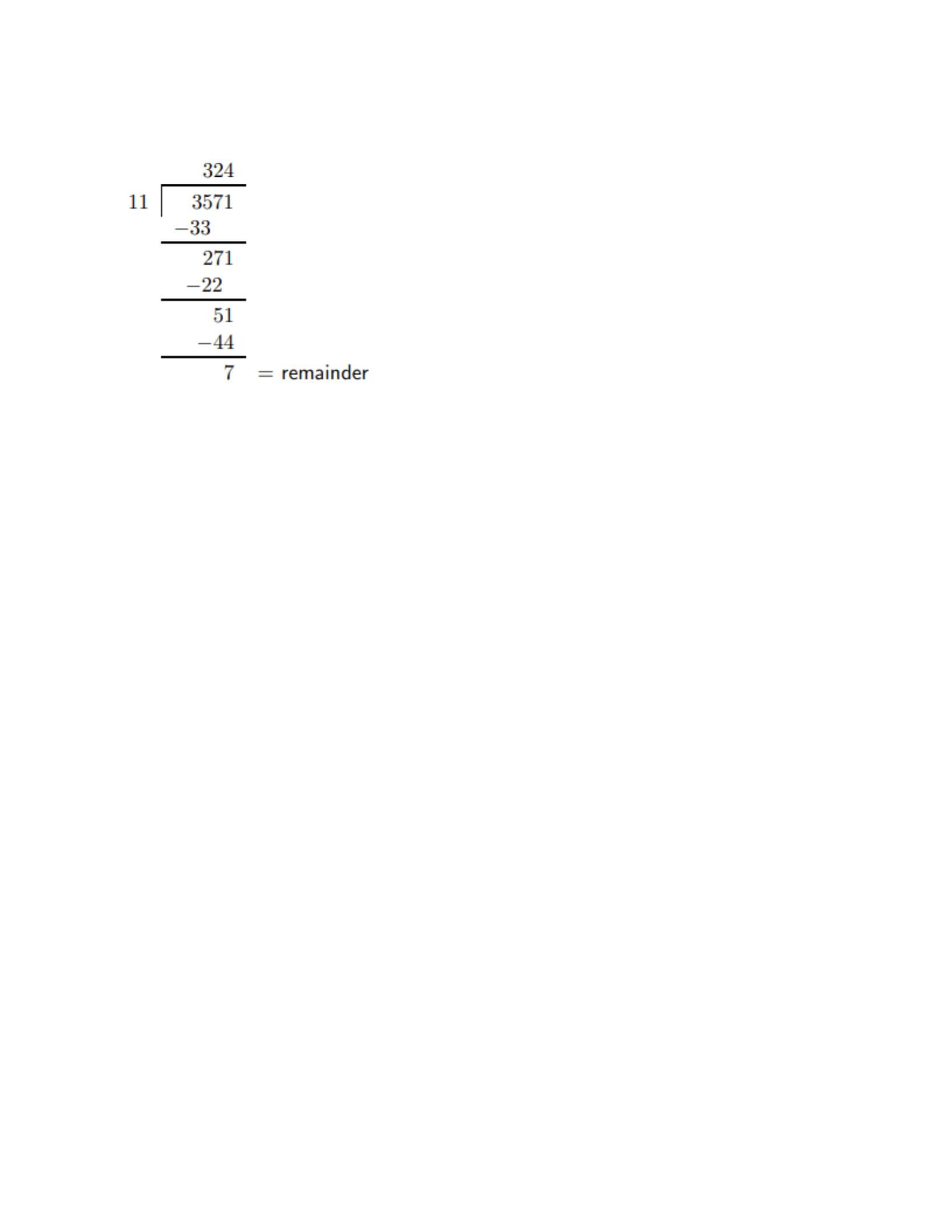
Example 1.16
Multiplication involving negative numbers
Multiplication is a little tricky to understand without the notion of distribution (discussed
later). We will begin with noting again what it means to multiply a number by a positive
number: So if we want to compute 4⋅(−7)4⋅(−7) we note
4⋅(−7)=(−7)+(−7)+(−7)+(−7)=−284⋅(−7)=(−7)+(−7)+(−7)+(−7)=−28
Note that since 4⋅7=28,4⋅(−7)=−(4⋅7).4⋅7=28,4⋅(−7)=−(4⋅7). We can multiply positive
numbers in any order: 4⋅7=7⋅44⋅7=7⋅4. The same is true of positive and negative numbers:
(−7)⋅4=4⋅(−7)=−(4⋅7)=−28(−7)⋅4=4⋅(−7)=−(4⋅7)=−28
Example 1.17
5⋅(−12)=−(5⋅12)=−605⋅(−12)=−(5⋅12)=−60 and (−3)⋅(−2)=−(3⋅(−2))=−(−(3⋅2))=6(−3)⋅(−2)
=−(3⋅(−2))=−(−(3⋅2))=6
Example 1.18
So the size of the product of two numbers is the product of their sizes. The sign is positive if
the signs are the same and negative if they are different.
Example 1.19
Two quantities right next to each other, with no symbol between them (except for
parentheses around either or both numbers), has an implicit multiplication. For
example, 3(2)=3×23(2)=3×2.
Example 1.20
Multiply:
z. (−5)(−8)=40(−5)(−8)=40
aa. (−6)⋅7=−42(−6)⋅7=−42

bb. 4⋅12=484⋅12=48
cc. (−3)(−6)⋅4(−3)=18⋅4(−3)=72(−3)=−216( multiplying from left to
right )(−3)(−6)⋅4(−3)=18⋅4(−3)=72(−3)=−216( multiplying from left to right )
dd. (−3)(−5)⋅4(−2)=(−3)⋅4⋅(−5)(−2)=−12⋅10=−120((−3)(−5)⋅4(−2)=(−3)⋅4⋅(−5)(−2)=−1
2⋅10=−120( since we can multiply in any order it is convenient to see
that −5⋅−2=10.−5⋅−2=10. )
Exponents of integers
Recall that a positive exponent represents the number of times a number is multiplied by
itself.
Example 1.21
Evaluate:
ee. 52=5⋅5=2552=5⋅5=25
ff. (−4)3=(−4)⋅(−4)⋅(−4)=16⋅(−4)=−64(−4)3=(−4)⋅(−4)⋅(−4)=16⋅(−4)=−64
gg. (−7)1=−7(−7)1=−7
hh. −24=−2⋅2⋅2⋅2=−16−24=−2⋅2⋅2⋅2=−16 Note: The exponent here is for 2 not −2!
ii. (−3)4=(−3)⋅(−3)⋅(−3)⋅(−3)=9⋅(−3)⋅(−3)=−27⋅(−3)=81(−3)4=(−3)⋅(−3)⋅(−3)⋅(−3)=9⋅(
−3)⋅(−3)=−27⋅(−3)=81
jj. (−2)5=(−2)⋅(−2)⋅(−2)⋅(−2)⋅(−2)=−32(−2)5=(−2)⋅(−2)⋅(−2)⋅(−2)⋅(−2)=−32
Exponent rules in details will be further discussed in Chapter 5.
Division involving negative numbers
Division is just a question of knowing multiplication and therefore has the same rule: The
size of the quotient of two numbers is the quotient of the sizes. The sign is positive if the
signs are the same and negative if they are different.
Example 1.22
Divide:
ee. (−42)÷7=−6(−42)÷7=−6
ff. 81÷(−9)=−981÷(−9)=−9
gg. (−35)÷(−7)=5(−35)÷(−7)=5
hh. 14÷2=714÷2=7
ii. 0÷5=00÷5=0. Note When dividing 0 by any number, the answer is always 0.
jj. −10÷0=−10÷0= undefined.
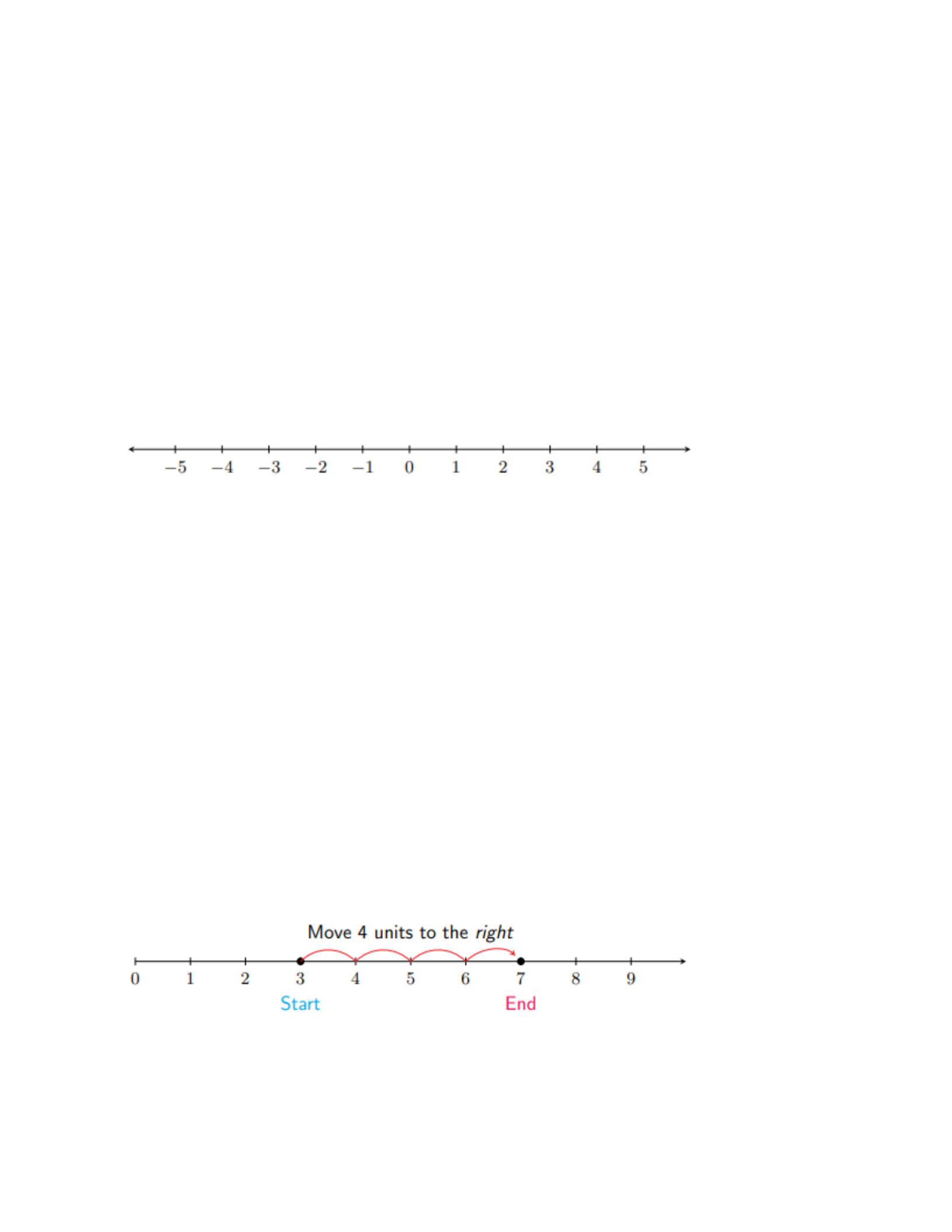
Note 1.23
Any number divided by 0 is undefined!
Multiplying and Dividing Integers
Consider two numbers at a time.
11. If the signs of the two numbers are the same, then the sign of the answer is positive.
12. If the signs of the two numbers are different, then the sign of the answer is negative.
We begin with a brief review of arithmetic with integers
i.e. …,−3,−2,−1,0,1,2,3,……,−3,−2,−1,0,1,2,3,…
Any number has a weight and a sign.
The magnitude (or weight) of a number is the distance it is from 0 on the number line.
Example 1.1
For example, the weight of -5 is 5 and the weight of 7 is 7 .
Two numbers are opposites if, on the number line, they are on opposite sides of zero, but
the same distance away from zero.
So, −5 is the opposite of 5, and 7 is the opposite of −7 and so on.
Addition
We can add two numbers with the help of a number line .
Example 1.2
Adding two positive numbers: For example to add 3+43+4, we start with 3 on the number
line then move 4 units to the right. We land at 7 which is our answer.
So, 3+4=73+4=7. Notice that the answer has the same sign as the signs of 3 and 4 (both
positive) and its weight comes from adding the weights of 3 and 4.
You always move to the right when you add a positive number
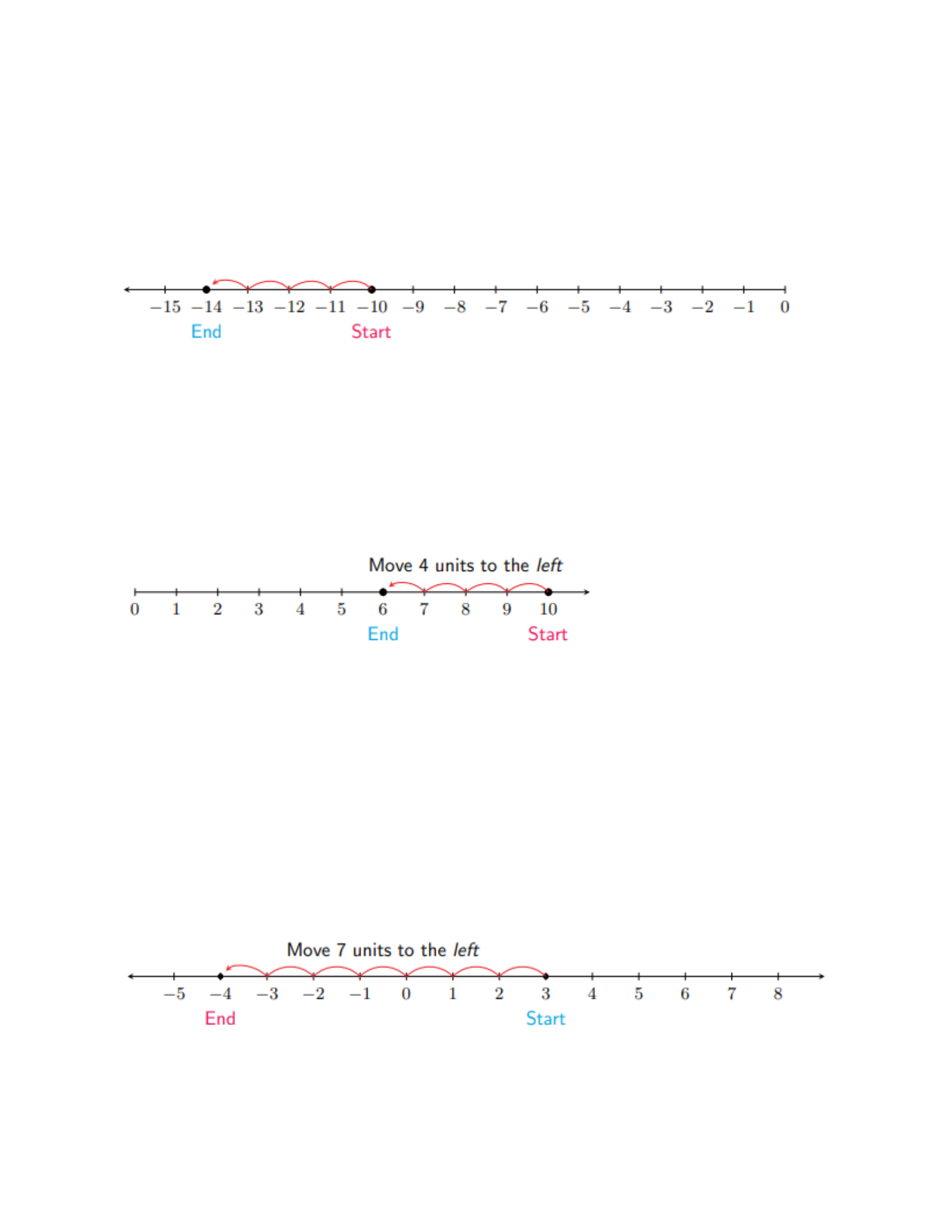
Example 1.3
Adding two negative numbers: For example, −10+(−4)−10+(−4) means you are adding a
debt of $4$4 to an already existing debt of $10.$10. So, we start at -10 on the number line
and move 4 units to the left, to land at −14,−14, which is the answer.
You always move to the left when you add a negative number (a debt)
So, −10+(−4)=−14−10+(−4)=−14. Notice that the answer has the same sign as the signs of -
10 and -4 (both negative) and its weight comes from adding the weights of -10 and -4
To add numbers of opposite signs, that is, a positive and a negative number, we can also
use the number line. For example, to perform 10+(−4),10+(−4), we start at 10 on the
number line and then move 4 units to the left. We land at 6,6, which is the answer. Think
of 10+(−4)10+(−4) as having $10$10 and adding a $4$4 debt. Because we are adding a
debt, we move to the left on the number line!
So, 10+(−4)=6.10+(−4)=6. Notice that the answer has the same sign as the sign of 10
(positive) because it is the number of larger weight, and its weight comes from finding the
difference of the weights of 10 and -4
Notice that because we were adding two numbers of opposite signs, the answer ended up
being the difference in weight (6) along with the sign of the number of larger weight
(positive).
Example 1.4
Adding two numbers of opposite signs: For example, 3+(−7)3+(−7). We start at 3 and move
toward 7 units to the left, and we land at −4,−4, which is our answer.
So, 3+(−7)=−4.3+(−7)=−4. Notice that the answer has the same sign as the signs of -7
(negative) because it is the number of larger weight, and its weight comes from finding the
difference of the weights of 3 and -7.
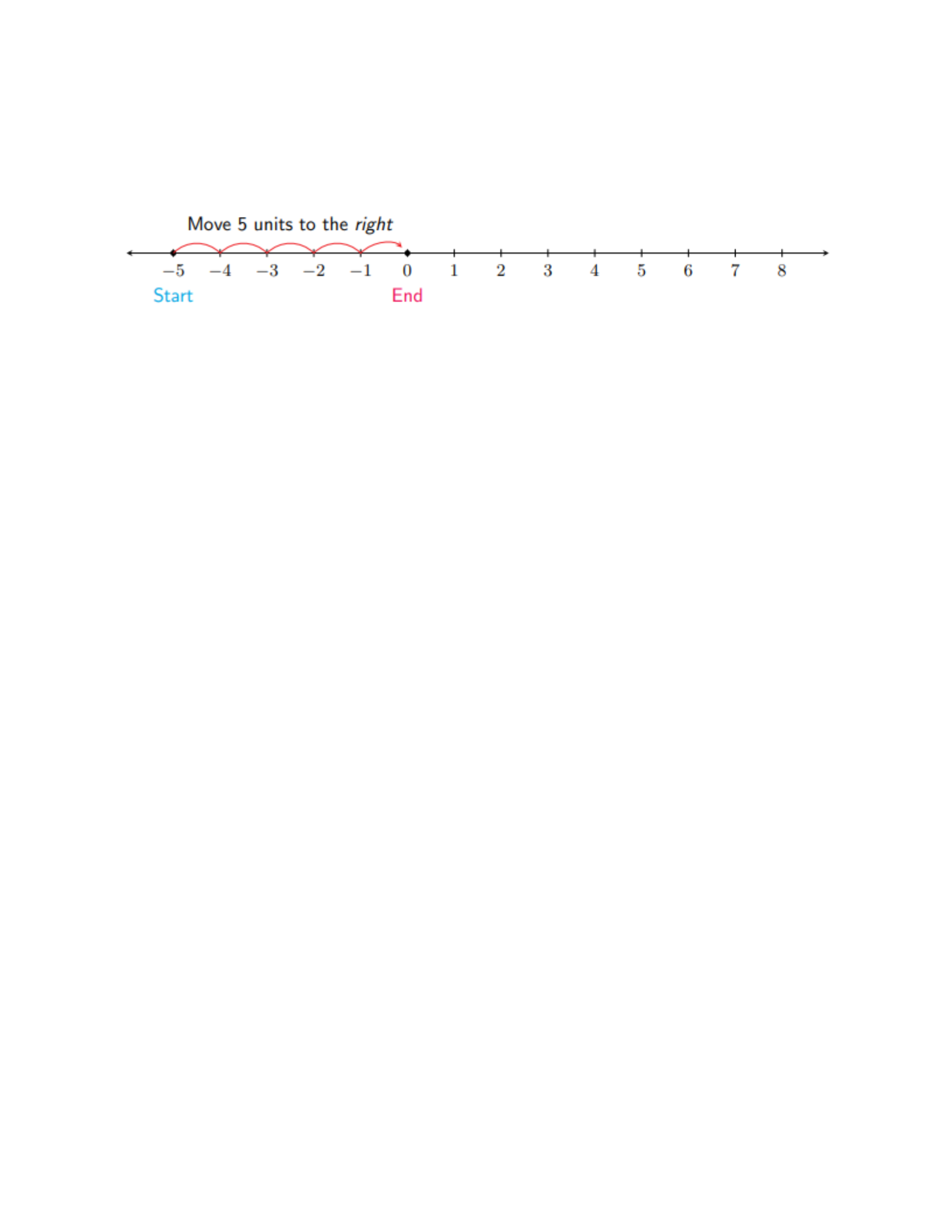
Example 1.5
Adding opposites: We start at -5 on the number line and jump to the right 5 units to land
finally at 00. So −5+5=0−5+5=0.
Note 1.6
Two opposite numbers are called a zero-pair, because adding them always results in 0.
So, −5 and 5 are a zero-pair.
Adding Intergers
13. To add two numbers of the same sign, add their weights and place it after the
sign.
14. To add two numbers of opposite signs, find the difference of their weights and
place it after the sign of the number with the greater weight.
Example 1.7
Add:
kk. −8+19=11−8+19=11
ll. −8+4=−4−8+4=−4
mm. 6+(−9)=−36+(−9)=−3
nn. 7+(−2)=57+(−2)=5
oo. (−4)+(−7)=−11(−4)+(−7)=−11
pp. 8+7=158+7=15
Note 1.8
While we can add in any order: 4+2=2+44+2=2+4, it is sometimes convenient to add up all
of the negative numbers and add up all of the positive numbers, and then add the results.
There are also times when it is best to notice certain simplifications if the numbers are
added in a different order.
For example
−5+4+5+(−8)=−5+(−8)+4+5( by reordering )−5+4+5+(−8)=−5+(−8)+4+5( by reordering )
so,
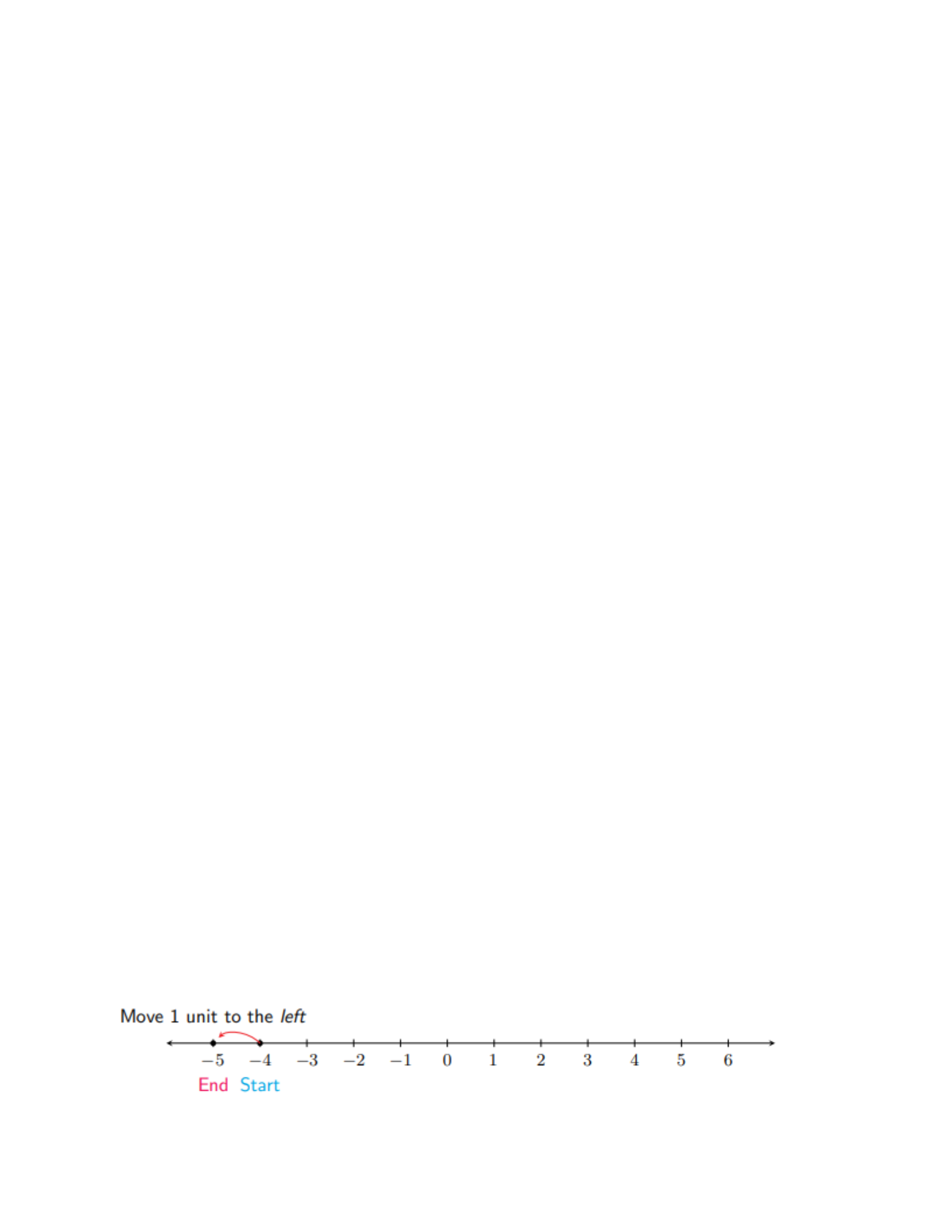
−5+4+5+(−8)=−5+(−8)+4+5=−13+9=−4−5+4+5+(−8)=−5+(−8)+4+5=−13+9=−4
We could have also simplified this by noting that (-5) and 5 are zero-pair, so we are left
with 4+(−8)4+(−8) which is -4.
Example 1.9
We can calculate
(−4)+(−5)+7+(−3)=(−4)+(−5)+(−3)+7=(−12)+7=−5(−4)+(−5)+7+(−3)=(−4)+(−5)+(−3)+7=
(−12)+7=−5
We could have simplified this by noting that (-4) and (-3) make -7, and -7 and 7 are zero-
pair, so the total is -5.
Subtraction (as Addition of the Opposite)
Once we know how to add numbers, we are set to subtract numbers because subtraction is
nothing but addition of the opposite. That is, subtracting 8 − 3 (which reads: subtracting 3
from 8) is the same as 8 + (−3) (which reads: Adding −3 to 8.).
Example 1.10
So, 8−3=8+(−3),8−3=8+(−3), and, we can use the rules of adding two numbers of opposite
signs to find out that the answer is 5.5. We can also use the number line. We start at 8 and
move 3 units to the left (adding -3 is adding a debt, so we move to the left).
So 8−3=5.−4−3−2−10123456788−3=5.−4−3−2−1012345678 End Start Move 3 units to the
left
Example 1.11
To calculate 3−73−7 we first rewrite it as an addition
problem. 3−7=3+(−7).3−7=3+(−7). We can either use the number line, or the rules of
adding two numbers of opposite signs. And, 50,3−7=3+(−7)=−450,3−7=3+(−7)=−4
Example 1.12
To calculate −4−1,−4−1, we first rewrite it as an addition
problem. −4−1=−4+(−1).−4−1=−4+(−1). We can either use the number line, or the rules of
adding two numbers of the same signs. If we want to use the rules, both numbers are
negative, so our answer will be negative, and, adding the weights of -4 and -1
is 5.50,−4−1=−4+(−1)=−55.50,−4−1=−4+(−1)=−5
On the number line, we start at -4 and move 1 unit to the left, to land on -5 which is our
answer.

Changing the subtractions to additions in this way is particularly useful when adding or
subtracting several numbers (because we can add in any order).
Example 1.13
===−3−7+5+7+13−6−(−9)−3+(−7)+5+7+13+(−6)+9−3+(−7)+(−6)+5+7+13+918−3−7+5+7
+13−6−(−9)=−3+(−7)+5+7+13+(−6)+9=−3+(−7)+(−6)+5+7+13+9=18
===−3−7+5+7+13−6−(−9)−3+(−7)+5+7+13+(−6)+95+1318−3−7+5+7+13−6−(−9)=−3+(−7
)+5+7+13+(−6)+9=5+13=18
Remark 1.14
Warning: The symbol "-" is used in two different ways. When it is between two expressions,
it means subtract (e.g., 3−43−4 ). Otherwise, it means 'opposite' or 'negative'
(e.g., −3+4−3+4 ). So in the expression −4−(−3)−4−(−3), the first and last "-" means
opposite and the one in the middle one means subtract. The importance of understanding
this can not be overestimated.
Multiplication and Division of Positive Numbers
Multiplication of integers is adding in the sense that 3×4=4+4+43×4=4+4+4
To multiply larger numbers, it is better to use the usual scheme of multiplication. For
example:
Example 1.15
Let us multiply 152 by 34. We will for convenience sake put the smaller number on the
bottom (though it is not necessary). We have
+×4516515306624808152×34608+45605168
And division is the opposite of multiplication in the sense that to compute 45÷945÷9 is to
find a number so that when we multiply by 9 we get 45. We run through our multiplication
tables (which are hopefully in our head) to discover that 5 does the
trick: 5×9=455×9=45 so that 45÷9=5.45÷9=5. We will discuss division from a different
point of view when we discuss fractions.
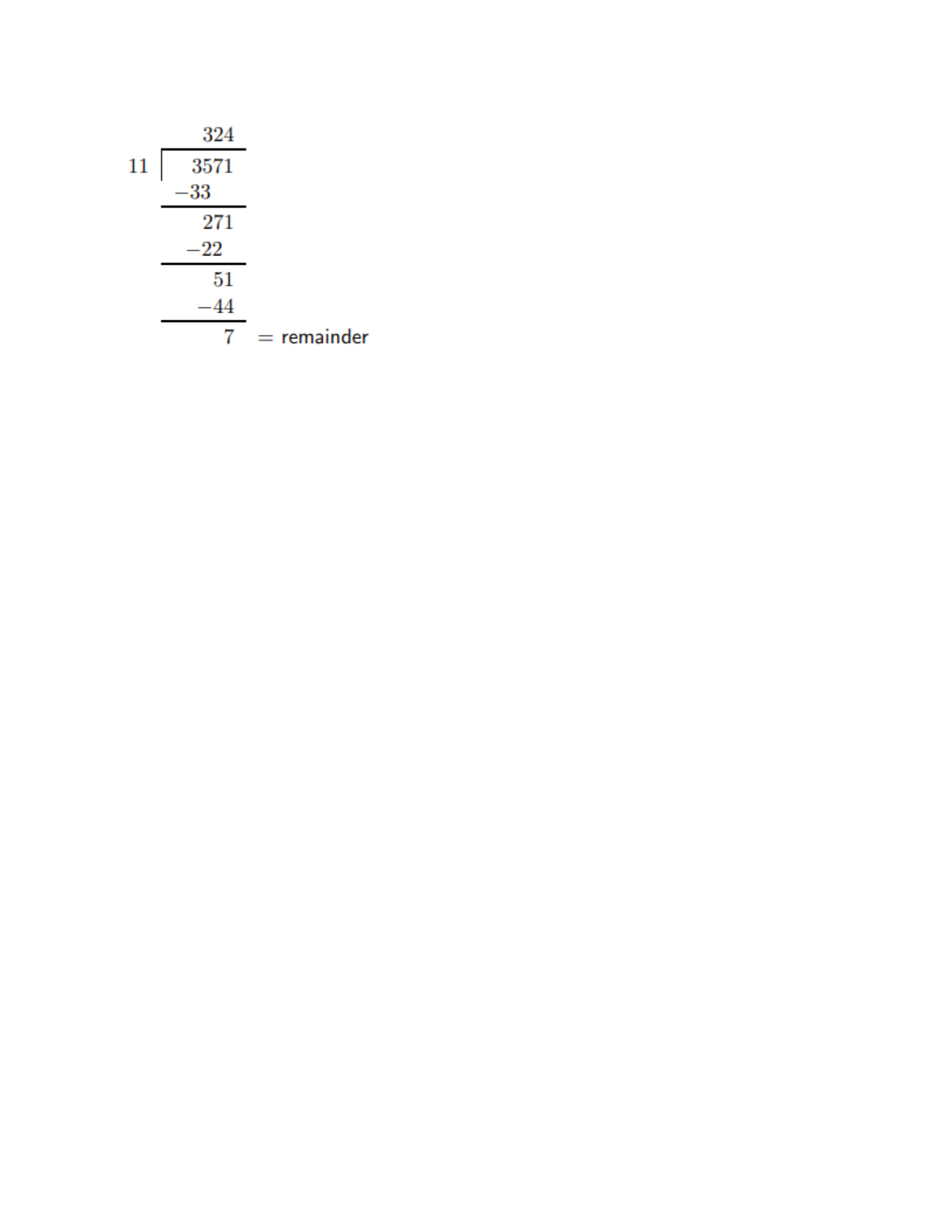
To divide larger numbers, we can use long division. For example, let’s divide 3571 by 11.
Example 1.16
Multiplication involving negative numbers
Multiplication is a little tricky to understand without the notion of distribution (discussed
later). We will begin with noting again what it means to multiply a number by a positive
number: So if we want to compute 4⋅(−7)4⋅(−7) we note
4⋅(−7)=(−7)+(−7)+(−7)+(−7)=−284⋅(−7)=(−7)+(−7)+(−7)+(−7)=−28
Note that since 4⋅7=28,4⋅(−7)=−(4⋅7).4⋅7=28,4⋅(−7)=−(4⋅7). We can multiply positive
numbers in any order: 4⋅7=7⋅44⋅7=7⋅4. The same is true of positive and negative numbers:
(−7)⋅4=4⋅(−7)=−(4⋅7)=−28(−7)⋅4=4⋅(−7)=−(4⋅7)=−28
Example 1.17
5⋅(−12)=−(5⋅12)=−605⋅(−12)=−(5⋅12)=−60 and (−3)⋅(−2)=−(3⋅(−2))=−(−(3⋅2))=6(−3)⋅(−2)
=−(3⋅(−2))=−(−(3⋅2))=6
Example 1.18
So the size of the product of two numbers is the product of their sizes. The sign is positive if
the signs are the same and negative if they are different.
Example 1.19
Two quantities right next to each other, with no symbol between them (except for
parentheses around either or both numbers), has an implicit multiplication. For
example, 3(2)=3×23(2)=3×2.
Example 1.20
Multiply:
ee. (−5)(−8)=40(−5)(−8)=40
ff. (−6)⋅7=−42(−6)⋅7=−42
gg. 4⋅12=484⋅12=48

hh. (−3)(−6)⋅4(−3)=18⋅4(−3)=72(−3)=−216( multiplying from left to
right )(−3)(−6)⋅4(−3)=18⋅4(−3)=72(−3)=−216( multiplying from left to right )
ii. (−3)(−5)⋅4(−2)=(−3)⋅4⋅(−5)(−2)=−12⋅10=−120((−3)(−5)⋅4(−2)=(−3)⋅4⋅(−5)(−2)=−1
2⋅10=−120( since we can multiply in any order it is convenient to see
that −5⋅−2=10.−5⋅−2=10. )
Exponents of integers
Recall that a positive exponent represents the number of times a number is multiplied by
itself.
Example 1.21
Evaluate:
kk. 52=5⋅5=2552=5⋅5=25
ll. (−4)3=(−4)⋅(−4)⋅(−4)=16⋅(−4)=−64(−4)3=(−4)⋅(−4)⋅(−4)=16⋅(−4)=−64
mm. (−7)1=−7(−7)1=−7
nn. −24=−2⋅2⋅2⋅2=−16−24=−2⋅2⋅2⋅2=−16 Note: The exponent here is for 2 not −2!
oo. (−3)4=(−3)⋅(−3)⋅(−3)⋅(−3)=9⋅(−3)⋅(−3)=−27⋅(−3)=81(−3)4=(−3)⋅(−3)⋅(−3)⋅(−3)=9⋅(
−3)⋅(−3)=−27⋅(−3)=81
pp. (−2)5=(−2)⋅(−2)⋅(−2)⋅(−2)⋅(−2)=−32(−2)5=(−2)⋅(−2)⋅(−2)⋅(−2)⋅(−2)=−32
Exponent rules in details will be further discussed in Chapter 5.
Division involving negative numbers
Division is just a question of knowing multiplication and therefore has the same rule: The
size of the quotient of two numbers is the quotient of the sizes. The sign is positive if the
signs are the same and negative if they are different.
Example 1.22
Divide:
kk. (−42)÷7=−6(−42)÷7=−6
ll. 81÷(−9)=−981÷(−9)=−9
mm. (−35)÷(−7)=5(−35)÷(−7)=5
nn. 14÷2=714÷2=7
oo. 0÷5=00÷5=0. Note When dividing 0 by any number, the answer is always 0.
pp. −10÷0=−10÷0= undefined.
Note 1.23
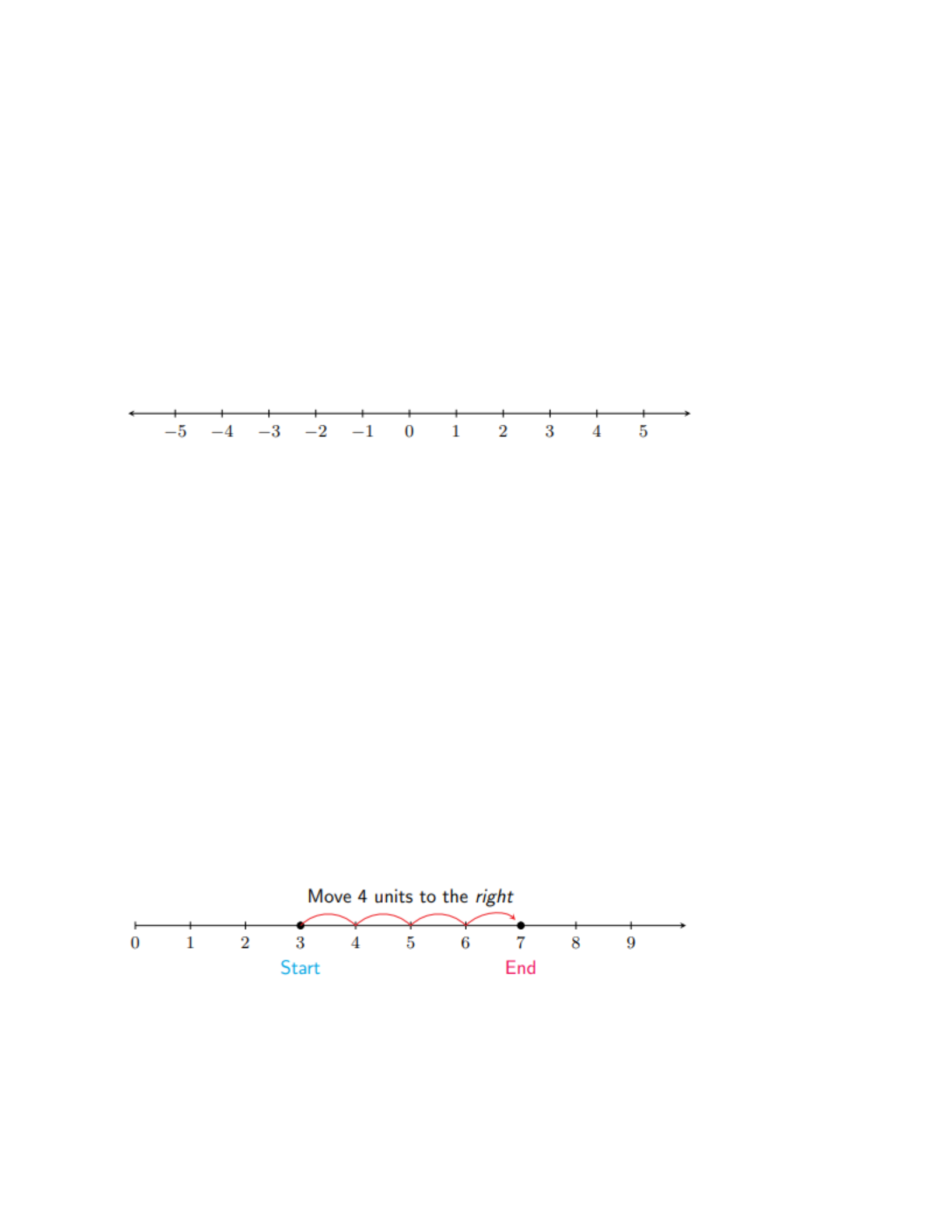
Any number divided by 0 is undefined!
Multiplying and Dividing Integers
Consider two numbers at a time.
13. If the signs of the two numbers are the same, then the sign of the answer is positive.
14. If the signs of the two numbers are different, then the sign of the answer is negative.
We begin with a brief review of arithmetic with integers
i.e. …,−3,−2,−1,0,1,2,3,……,−3,−2,−1,0,1,2,3,…
Any number has a weight and a sign.
The magnitude (or weight) of a number is the distance it is from 0 on the number line.
Example 1.1
For example, the weight of -5 is 5 and the weight of 7 is 7 .
Two numbers are opposites if, on the number line, they are on opposite sides of zero, but
the same distance away from zero.
So, −5 is the opposite of 5, and 7 is the opposite of −7 and so on.
Addition
We can add two numbers with the help of a number line .
Example 1.2
Adding two positive numbers: For example to add 3+43+4, we start with 3 on the number
line then move 4 units to the right. We land at 7 which is our answer.
So, 3+4=73+4=7. Notice that the answer has the same sign as the signs of 3 and 4 (both
positive) and its weight comes from adding the weights of 3 and 4.
You always move to the right when you add a positive number
Example 1.3
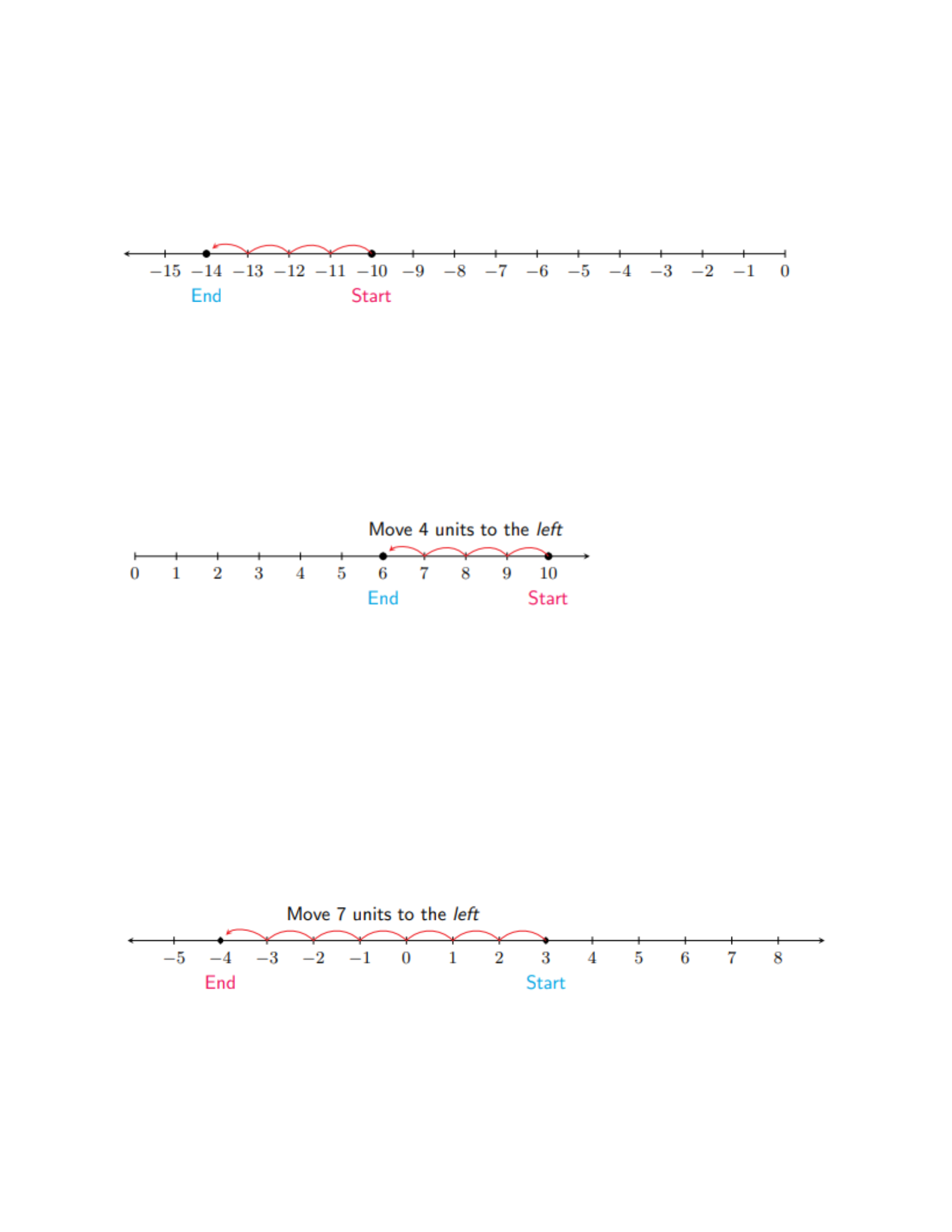
Adding two negative numbers: For example, −10+(−4)−10+(−4) means you are adding a
debt of $4$4 to an already existing debt of $10.$10. So, we start at -10 on the number line
and move 4 units to the left, to land at −14,−14, which is the answer.
You always move to the left when you add a negative number (a debt)
So, −10+(−4)=−14−10+(−4)=−14. Notice that the answer has the same sign as the signs of -
10 and -4 (both negative) and its weight comes from adding the weights of -10 and -4
To add numbers of opposite signs, that is, a positive and a negative number, we can also
use the number line. For example, to perform 10+(−4),10+(−4), we start at 10 on the
number line and then move 4 units to the left. We land at 6,6, which is the answer. Think
of 10+(−4)10+(−4) as having $10$10 and adding a $4$4 debt. Because we are adding a
debt, we move to the left on the number line!
So, 10+(−4)=6.10+(−4)=6. Notice that the answer has the same sign as the sign of 10
(positive) because it is the number of larger weight, and its weight comes from finding the
difference of the weights of 10 and -4
Notice that because we were adding two numbers of opposite signs, the answer ended up
being the difference in weight (6) along with the sign of the number of larger weight
(positive).
Example 1.4
Adding two numbers of opposite signs: For example, 3+(−7)3+(−7). We start at 3 and move
toward 7 units to the left, and we land at −4,−4, which is our answer.
So, 3+(−7)=−4.3+(−7)=−4. Notice that the answer has the same sign as the signs of -7
(negative) because it is the number of larger weight, and its weight comes from finding the
difference of the weights of 3 and -7.
Example 1.5
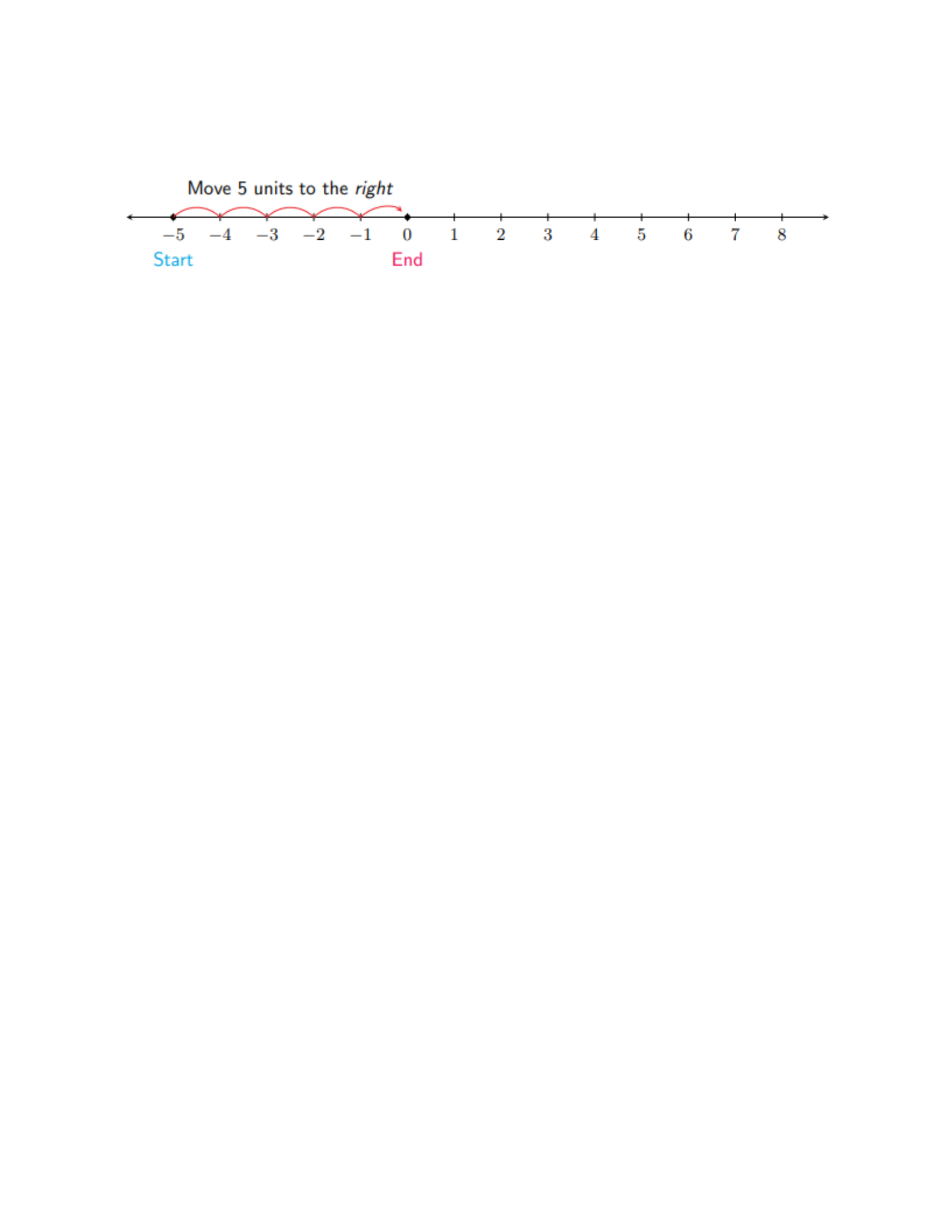
Adding opposites: We start at -5 on the number line and jump to the right 5 units to land
finally at 00. So −5+5=0−5+5=0.
Note 1.6
Two opposite numbers are called a zero-pair, because adding them always results in 0.
So, −5 and 5 are a zero-pair.
Adding Intergers
15. To add two numbers of the same sign, add their weights and place it after the
sign.
16. To add two numbers of opposite signs, find the difference of their weights and
place it after the sign of the number with the greater weight.
Example 1.7
Add:
qq. −8+19=11−8+19=11
rr. −8+4=−4−8+4=−4
ss. 6+(−9)=−36+(−9)=−3
tt. 7+(−2)=57+(−2)=5
uu. (−4)+(−7)=−11(−4)+(−7)=−11
vv. 8+7=158+7=15
Note 1.8
While we can add in any order: 4+2=2+44+2=2+4, it is sometimes convenient to add up all
of the negative numbers and add up all of the positive numbers, and then add the results.
There are also times when it is best to notice certain simplifications if the numbers are
added in a different order.
For example
−5+4+5+(−8)=−5+(−8)+4+5( by reordering )−5+4+5+(−8)=−5+(−8)+4+5( by reordering )
so,
−5+4+5+(−8)=−5+(−8)+4+5=−13+9=−4−5+4+5+(−8)=−5+(−8)+4+5=−13+9=−4

We could have also simplified this by noting that (-5) and 5 are zero-pair, so we are left
with 4+(−8)4+(−8) which is -4.
Example 1.9
We can calculate
(−4)+(−5)+7+(−3)=(−4)+(−5)+(−3)+7=(−12)+7=−5(−4)+(−5)+7+(−3)=(−4)+(−5)+(−3)+7=
(−12)+7=−5
We could have simplified this by noting that (-4) and (-3) make -7, and -7 and 7 are zero-
pair, so the total is -5.
Subtraction (as Addition of the Opposite)
Once we know how to add numbers, we are set to subtract numbers because subtraction is
nothing but addition of the opposite. That is, subtracting 8 − 3 (which reads: subtracting 3
from 8) is the same as 8 + (−3) (which reads: Adding −3 to 8.).
Example 1.10
So, 8−3=8+(−3),8−3=8+(−3), and, we can use the rules of adding two numbers of opposite
signs to find out that the answer is 5.5. We can also use the number line. We start at 8 and
move 3 units to the left (adding -3 is adding a debt, so we move to the left).
So 8−3=5.−4−3−2−10123456788−3=5.−4−3−2−1012345678 End Start Move 3 units to the
left
Example 1.11
To calculate 3−73−7 we first rewrite it as an addition
problem. 3−7=3+(−7).3−7=3+(−7). We can either use the number line, or the rules of
adding two numbers of opposite signs. And, 50,3−7=3+(−7)=−450,3−7=3+(−7)=−4
Example 1.12
To calculate −4−1,−4−1, we first rewrite it as an addition
problem. −4−1=−4+(−1).−4−1=−4+(−1). We can either use the number line, or the rules of
adding two numbers of the same signs. If we want to use the rules, both numbers are
negative, so our answer will be negative, and, adding the weights of -4 and -1
is 5.50,−4−1=−4+(−1)=−55.50,−4−1=−4+(−1)=−5
On the number line, we start at -4 and move 1 unit to the left, to land on -5 which is our
answer.

Changing the subtractions to additions in this way is particularly useful when adding or
subtracting several numbers (because we can add in any order).
Example 1.13
===−3−7+5+7+13−6−(−9)−3+(−7)+5+7+13+(−6)+9−3+(−7)+(−6)+5+7+13+918−3−7+5+7
+13−6−(−9)=−3+(−7)+5+7+13+(−6)+9=−3+(−7)+(−6)+5+7+13+9=18
===−3−7+5+7+13−6−(−9)−3+(−7)+5+7+13+(−6)+95+1318−3−7+5+7+13−6−(−9)=−3+(−7
)+5+7+13+(−6)+9=5+13=18
Remark 1.14
Warning: The symbol "-" is used in two different ways. When it is between two expressions,
it means subtract (e.g., 3−43−4 ). Otherwise, it means 'opposite' or 'negative'
(e.g., −3+4−3+4 ). So in the expression −4−(−3)−4−(−3), the first and last "-" means
opposite and the one in the middle one means subtract. The importance of understanding
this can not be overestimated.
Multiplication and Division of Positive Numbers
Multiplication of integers is adding in the sense that 3×4=4+4+43×4=4+4+4
To multiply larger numbers, it is better to use the usual scheme of multiplication. For
example:
Example 1.15
Let us multiply 152 by 34. We will for convenience sake put the smaller number on the
bottom (though it is not necessary). We have
+×4516515306624808152×34608+45605168
And division is the opposite of multiplication in the sense that to compute 45÷945÷9 is to
find a number so that when we multiply by 9 we get 45. We run through our multiplication
tables (which are hopefully in our head) to discover that 5 does the
trick: 5×9=455×9=45 so that 45÷9=5.45÷9=5. We will discuss division from a different
point of view when we discuss fractions.
To divide larger numbers, we can use long division. For example, let’s divide 3571 by 11.
Example 1.16
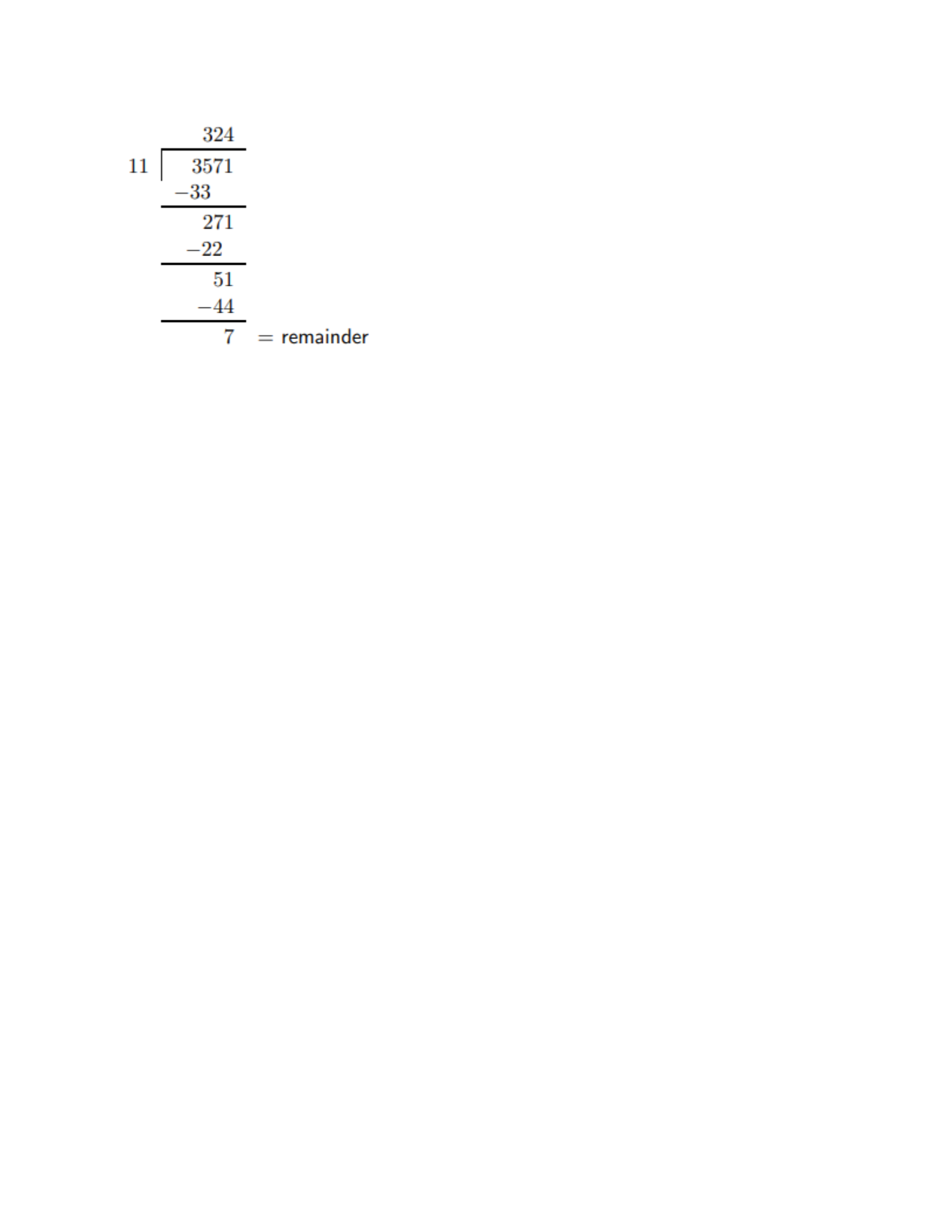
Multiplication involving negative numbers
Multiplication is a little tricky to understand without the notion of distribution (discussed
later). We will begin with noting again what it means to multiply a number by a positive
number: So if we want to compute 4⋅(−7)4⋅(−7) we note
4⋅(−7)=(−7)+(−7)+(−7)+(−7)=−284⋅(−7)=(−7)+(−7)+(−7)+(−7)=−28
Note that since 4⋅7=28,4⋅(−7)=−(4⋅7).4⋅7=28,4⋅(−7)=−(4⋅7). We can multiply positive
numbers in any order: 4⋅7=7⋅44⋅7=7⋅4. The same is true of positive and negative numbers:
(−7)⋅4=4⋅(−7)=−(4⋅7)=−28(−7)⋅4=4⋅(−7)=−(4⋅7)=−28
Example 1.17
5⋅(−12)=−(5⋅12)=−605⋅(−12)=−(5⋅12)=−60 and (−3)⋅(−2)=−(3⋅(−2))=−(−(3⋅2))=6(−3)⋅(−2)
=−(3⋅(−2))=−(−(3⋅2))=6
Example 1.18
So the size of the product of two numbers is the product of their sizes. The sign is positive if
the signs are the same and negative if they are different.
Example 1.19
Two quantities right next to each other, with no symbol between them (except for
parentheses around either or both numbers), has an implicit multiplication. For
example, 3(2)=3×23(2)=3×2.
Example 1.20
Multiply:
jj. (−5)(−8)=40(−5)(−8)=40
kk. (−6)⋅7=−42(−6)⋅7=−42
ll. 4⋅12=484⋅12=48

mm. (−3)(−6)⋅4(−3)=18⋅4(−3)=72(−3)=−216( multiplying from left to
right )(−3)(−6)⋅4(−3)=18⋅4(−3)=72(−3)=−216( multiplying from left to right )
nn. (−3)(−5)⋅4(−2)=(−3)⋅4⋅(−5)(−2)=−12⋅10=−120((−3)(−5)⋅4(−2)=(−3)⋅4⋅(−5)(−2)=−1
2⋅10=−120( since we can multiply in any order it is convenient to see
that −5⋅−2=10.−5⋅−2=10. )
Exponents of integers
Recall that a positive exponent represents the number of times a number is multiplied by
itself.
Example 1.21
Evaluate:
qq. 52=5⋅5=2552=5⋅5=25
rr. (−4)3=(−4)⋅(−4)⋅(−4)=16⋅(−4)=−64(−4)3=(−4)⋅(−4)⋅(−4)=16⋅(−4)=−64
ss. (−7)1=−7(−7)1=−7
tt. −24=−2⋅2⋅2⋅2=−16−24=−2⋅2⋅2⋅2=−16 Note: The exponent here is for 2 not −2!
uu. (−3)4=(−3)⋅(−3)⋅(−3)⋅(−3)=9⋅(−3)⋅(−3)=−27⋅(−3)=81(−3)4=(−3)⋅(−3)⋅(−3)⋅(−3)=9⋅(
−3)⋅(−3)=−27⋅(−3)=81
vv. (−2)5=(−2)⋅(−2)⋅(−2)⋅(−2)⋅(−2)=−32(−2)5=(−2)⋅(−2)⋅(−2)⋅(−2)⋅(−2)=−32
Exponent rules in details will be further discussed in Chapter 5.
Division involving negative numbers
Division is just a question of knowing multiplication and therefore has the same rule: The
size of the quotient of two numbers is the quotient of the sizes. The sign is positive if the
signs are the same and negative if they are different.
Example 1.22
Divide:
qq. (−42)÷7=−6(−42)÷7=−6
rr. 81÷(−9)=−981÷(−9)=−9
ss. (−35)÷(−7)=5(−35)÷(−7)=5
tt. 14÷2=714÷2=7
uu. 0÷5=00÷5=0. Note When dividing 0 by any number, the answer is always 0.
vv. −10÷0=−10÷0= undefined.
Note 1.23
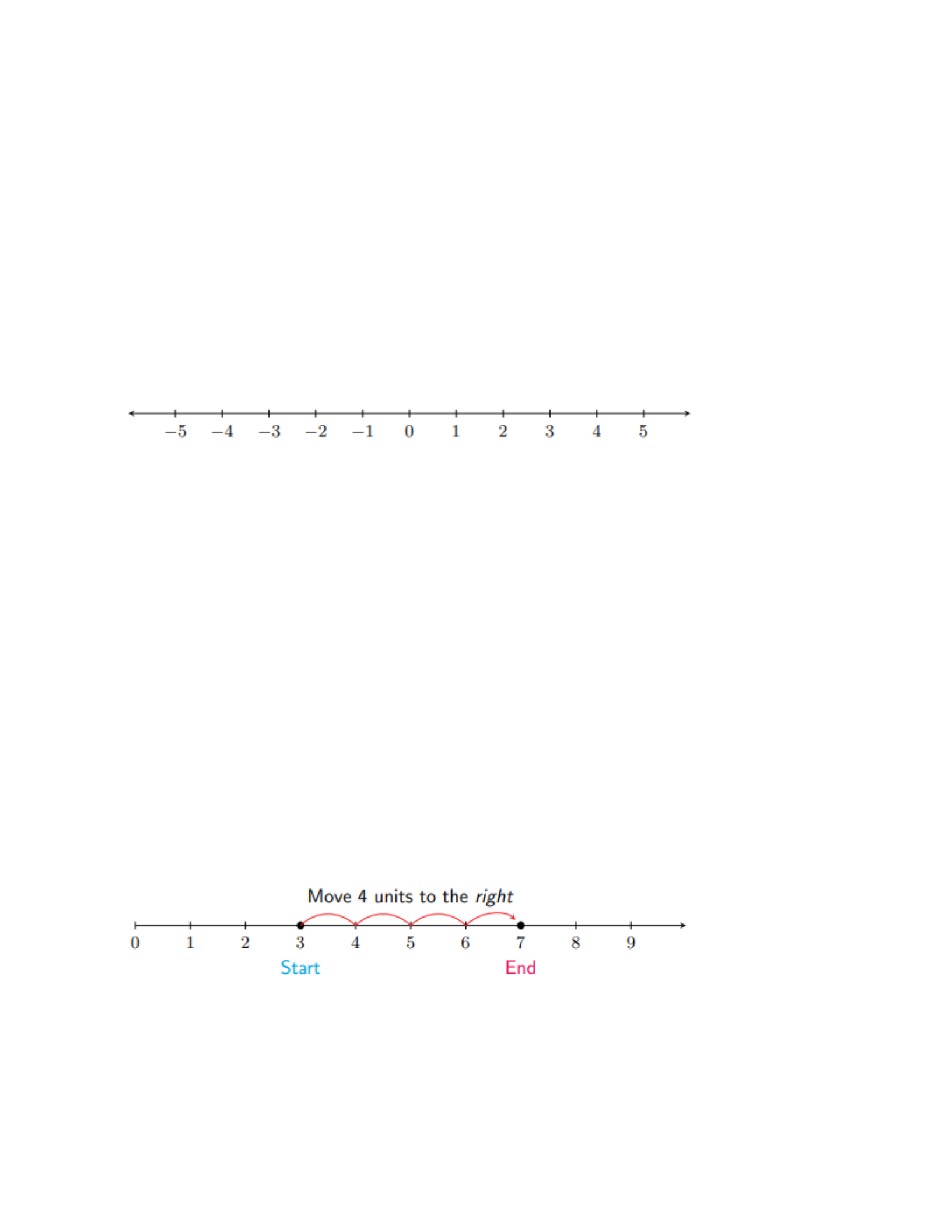
Any number divided by 0 is undefined!
Multiplying and Dividing Integers
Consider two numbers at a time.
15. If the signs of the two numbers are the same, then the sign of the answer is positive.
16. If the signs of the two numbers are different, then the sign of the answer is negative.
We begin with a brief review of arithmetic with integers
i.e. …,−3,−2,−1,0,1,2,3,……,−3,−2,−1,0,1,2,3,…
Any number has a weight and a sign.
The magnitude (or weight) of a number is the distance it is from 0 on the number line.
Example 1.1
For example, the weight of -5 is 5 and the weight of 7 is 7 .
Two numbers are opposites if, on the number line, they are on opposite sides of zero, but
the same distance away from zero.
So, −5 is the opposite of 5, and 7 is the opposite of −7 and so on.
Addition
We can add two numbers with the help of a number line .
Example 1.2
Adding two positive numbers: For example to add 3+43+4, we start with 3 on the number
line then move 4 units to the right. We land at 7 which is our answer.
So, 3+4=73+4=7. Notice that the answer has the same sign as the signs of 3 and 4 (both
positive) and its weight comes from adding the weights of 3 and 4.
You always move to the right when you add a positive number
Example 1.3
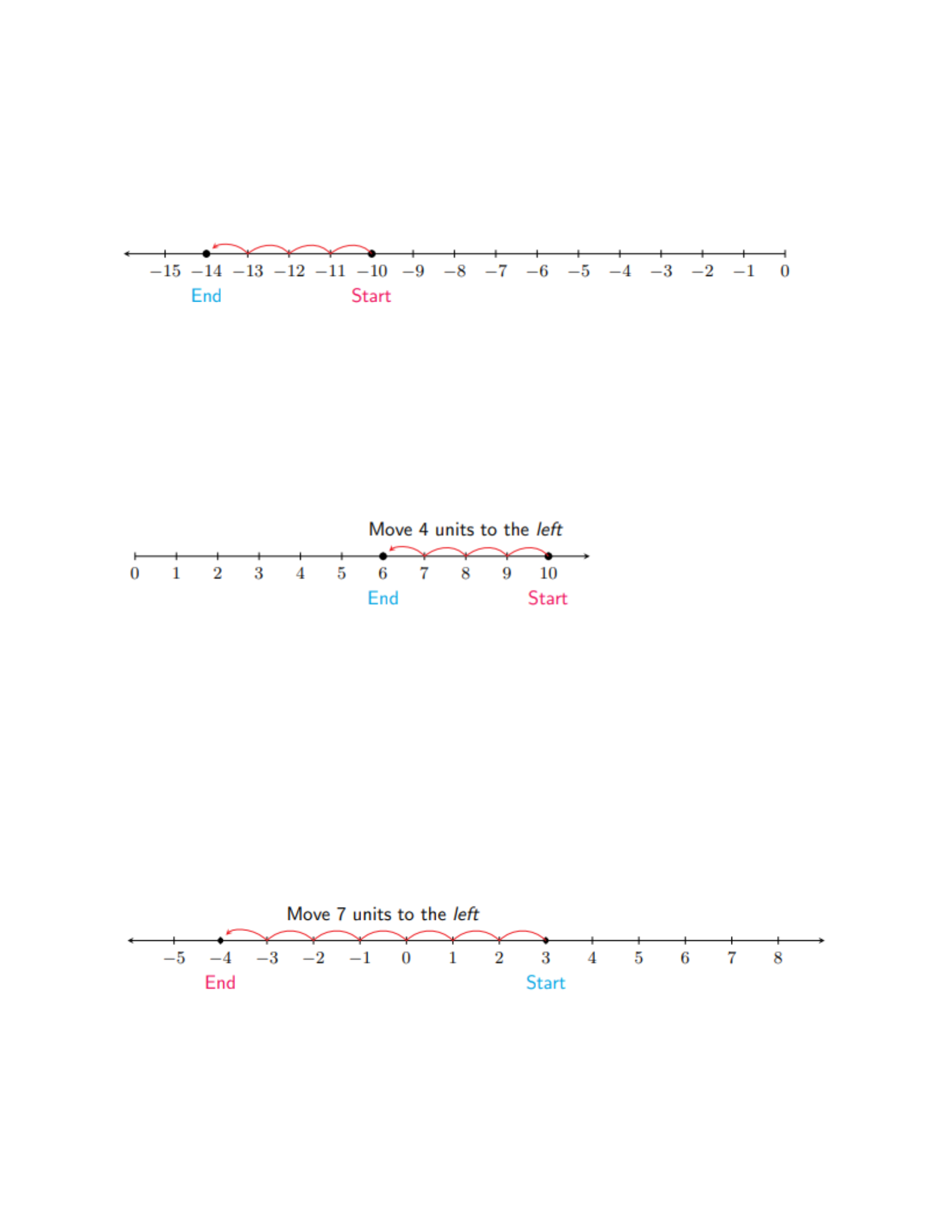
Adding two negative numbers: For example, −10+(−4)−10+(−4) means you are adding a
debt of $4$4 to an already existing debt of $10.$10. So, we start at -10 on the number line
and move 4 units to the left, to land at −14,−14, which is the answer.
You always move to the left when you add a negative number (a debt)
So, −10+(−4)=−14−10+(−4)=−14. Notice that the answer has the same sign as the signs of -
10 and -4 (both negative) and its weight comes from adding the weights of -10 and -4
To add numbers of opposite signs, that is, a positive and a negative number, we can also
use the number line. For example, to perform 10+(−4),10+(−4), we start at 10 on the
number line and then move 4 units to the left. We land at 6,6, which is the answer. Think
of 10+(−4)10+(−4) as having $10$10 and adding a $4$4 debt. Because we are adding a
debt, we move to the left on the number line!
So, 10+(−4)=6.10+(−4)=6. Notice that the answer has the same sign as the sign of 10
(positive) because it is the number of larger weight, and its weight comes from finding the
difference of the weights of 10 and -4
Notice that because we were adding two numbers of opposite signs, the answer ended up
being the difference in weight (6) along with the sign of the number of larger weight
(positive).
Example 1.4
Adding two numbers of opposite signs: For example, 3+(−7)3+(−7). We start at 3 and move
toward 7 units to the left, and we land at −4,−4, which is our answer.
So, 3+(−7)=−4.3+(−7)=−4. Notice that the answer has the same sign as the signs of -7
(negative) because it is the number of larger weight, and its weight comes from finding the
difference of the weights of 3 and -7.
Example 1.5
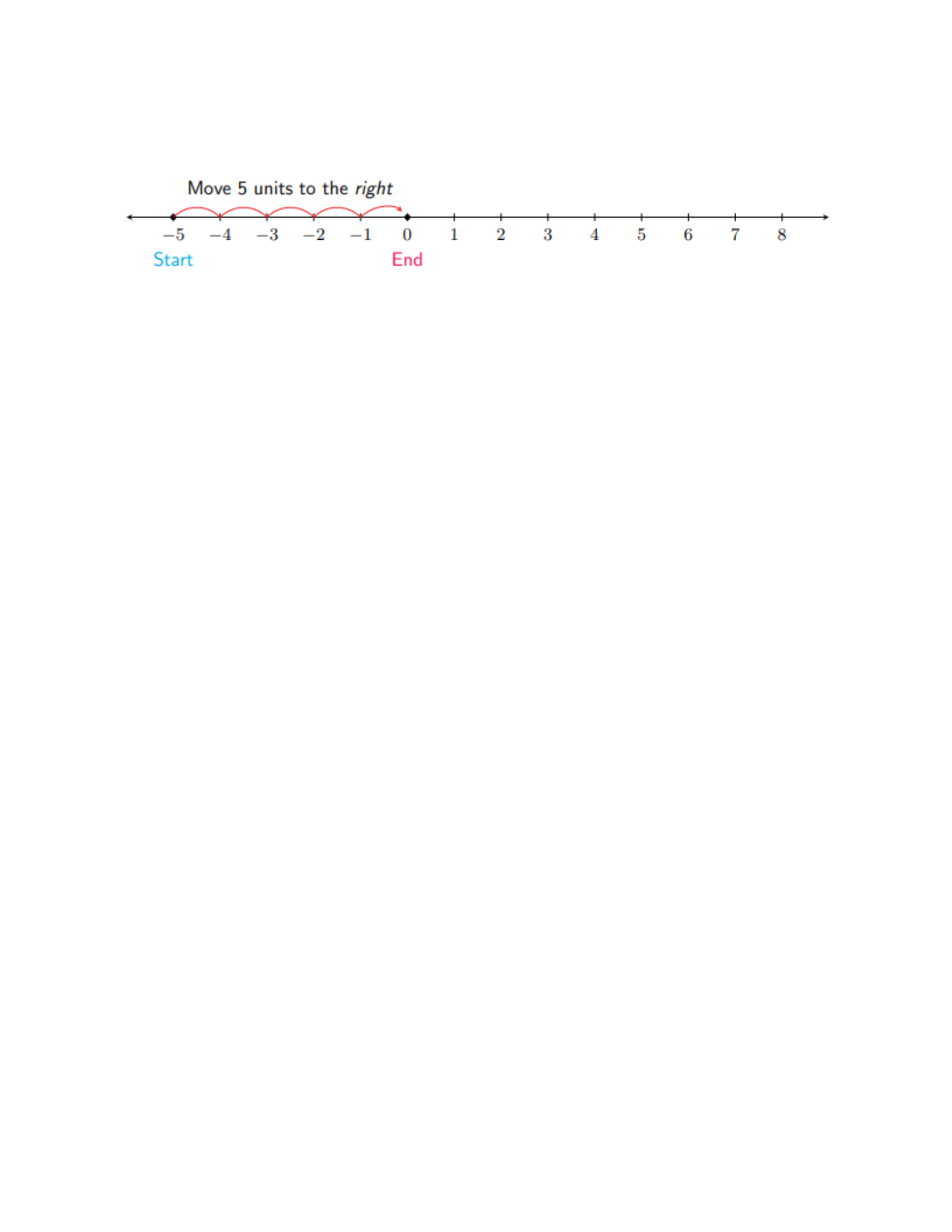
Adding opposites: We start at -5 on the number line and jump to the right 5 units to land
finally at 00. So −5+5=0−5+5=0.
Note 1.6
Two opposite numbers are called a zero-pair, because adding them always results in 0.
So, −5 and 5 are a zero-pair.
Adding Intergers
17. To add two numbers of the same sign, add their weights and place it after the
sign.
18. To add two numbers of opposite signs, find the difference of their weights and
place it after the sign of the number with the greater weight.
Example 1.7
Add:
ww. −8+19=11−8+19=11
xx. −8+4=−4−8+4=−4
yy. 6+(−9)=−36+(−9)=−3
zz. 7+(−2)=57+(−2)=5
aaa. (−4)+(−7)=−11(−4)+(−7)=−11
bbb. 8+7=158+7=15
Note 1.8
While we can add in any order: 4+2=2+44+2=2+4, it is sometimes convenient to add up all
of the negative numbers and add up all of the positive numbers, and then add the results.
There are also times when it is best to notice certain simplifications if the numbers are
added in a different order.
For example
−5+4+5+(−8)=−5+(−8)+4+5( by reordering )−5+4+5+(−8)=−5+(−8)+4+5( by reordering )
so,
−5+4+5+(−8)=−5+(−8)+4+5=−13+9=−4−5+4+5+(−8)=−5+(−8)+4+5=−13+9=−4

We could have also simplified this by noting that (-5) and 5 are zero-pair, so we are left
with 4+(−8)4+(−8) which is -4.
Example 1.9
We can calculate
(−4)+(−5)+7+(−3)=(−4)+(−5)+(−3)+7=(−12)+7=−5(−4)+(−5)+7+(−3)=(−4)+(−5)+(−3)+7=
(−12)+7=−5
We could have simplified this by noting that (-4) and (-3) make -7, and -7 and 7 are zero-
pair, so the total is -5.
Subtraction (as Addition of the Opposite)
Once we know how to add numbers, we are set to subtract numbers because subtraction is
nothing but addition of the opposite. That is, subtracting 8 − 3 (which reads: subtracting 3
from 8) is the same as 8 + (−3) (which reads: Adding −3 to 8.).
Example 1.10
So, 8−3=8+(−3),8−3=8+(−3), and, we can use the rules of adding two numbers of opposite
signs to find out that the answer is 5.5. We can also use the number line. We start at 8 and
move 3 units to the left (adding -3 is adding a debt, so we move to the left).
So 8−3=5.−4−3−2−10123456788−3=5.−4−3−2−1012345678 End Start Move 3 units to the
left
Example 1.11
To calculate 3−73−7 we first rewrite it as an addition
problem. 3−7=3+(−7).3−7=3+(−7). We can either use the number line, or the rules of
adding two numbers of opposite signs. And, 50,3−7=3+(−7)=−450,3−7=3+(−7)=−4
Example 1.12
To calculate −4−1,−4−1, we first rewrite it as an addition
problem. −4−1=−4+(−1).−4−1=−4+(−1). We can either use the number line, or the rules of
adding two numbers of the same signs. If we want to use the rules, both numbers are
negative, so our answer will be negative, and, adding the weights of -4 and -1
is 5.50,−4−1=−4+(−1)=−55.50,−4−1=−4+(−1)=−5
On the number line, we start at -4 and move 1 unit to the left, to land on -5 which is our
answer.

Changing the subtractions to additions in this way is particularly useful when adding or
subtracting several numbers (because we can add in any order).
Example 1.13
===−3−7+5+7+13−6−(−9)−3+(−7)+5+7+13+(−6)+9−3+(−7)+(−6)+5+7+13+918−3−7+5+7
+13−6−(−9)=−3+(−7)+5+7+13+(−6)+9=−3+(−7)+(−6)+5+7+13+9=18
===−3−7+5+7+13−6−(−9)−3+(−7)+5+7+13+(−6)+95+1318−3−7+5+7+13−6−(−9)=−3+(−7
)+5+7+13+(−6)+9=5+13=18
Remark 1.14
Warning: The symbol "-" is used in two different ways. When it is between two expressions,
it means subtract (e.g., 3−43−4 ). Otherwise, it means 'opposite' or 'negative'
(e.g., −3+4−3+4 ). So in the expression −4−(−3)−4−(−3), the first and last "-" means
opposite and the one in the middle one means subtract. The importance of understanding
this can not be overestimated.
Multiplication and Division of Positive Numbers
Multiplication of integers is adding in the sense that 3×4=4+4+43×4=4+4+4
To multiply larger numbers, it is better to use the usual scheme of multiplication. For
example:
Example 1.15
Let us multiply 152 by 34. We will for convenience sake put the smaller number on the
bottom (though it is not necessary). We have
+×4516515306624808152×34608+45605168
And division is the opposite of multiplication in the sense that to compute 45÷945÷9 is to
find a number so that when we multiply by 9 we get 45. We run through our multiplication
tables (which are hopefully in our head) to discover that 5 does the
trick: 5×9=455×9=45 so that 45÷9=5.45÷9=5. We will discuss division from a different
point of view when we discuss fractions.
To divide larger numbers, we can use long division. For example, let’s divide 3571 by 11.
Example 1.16
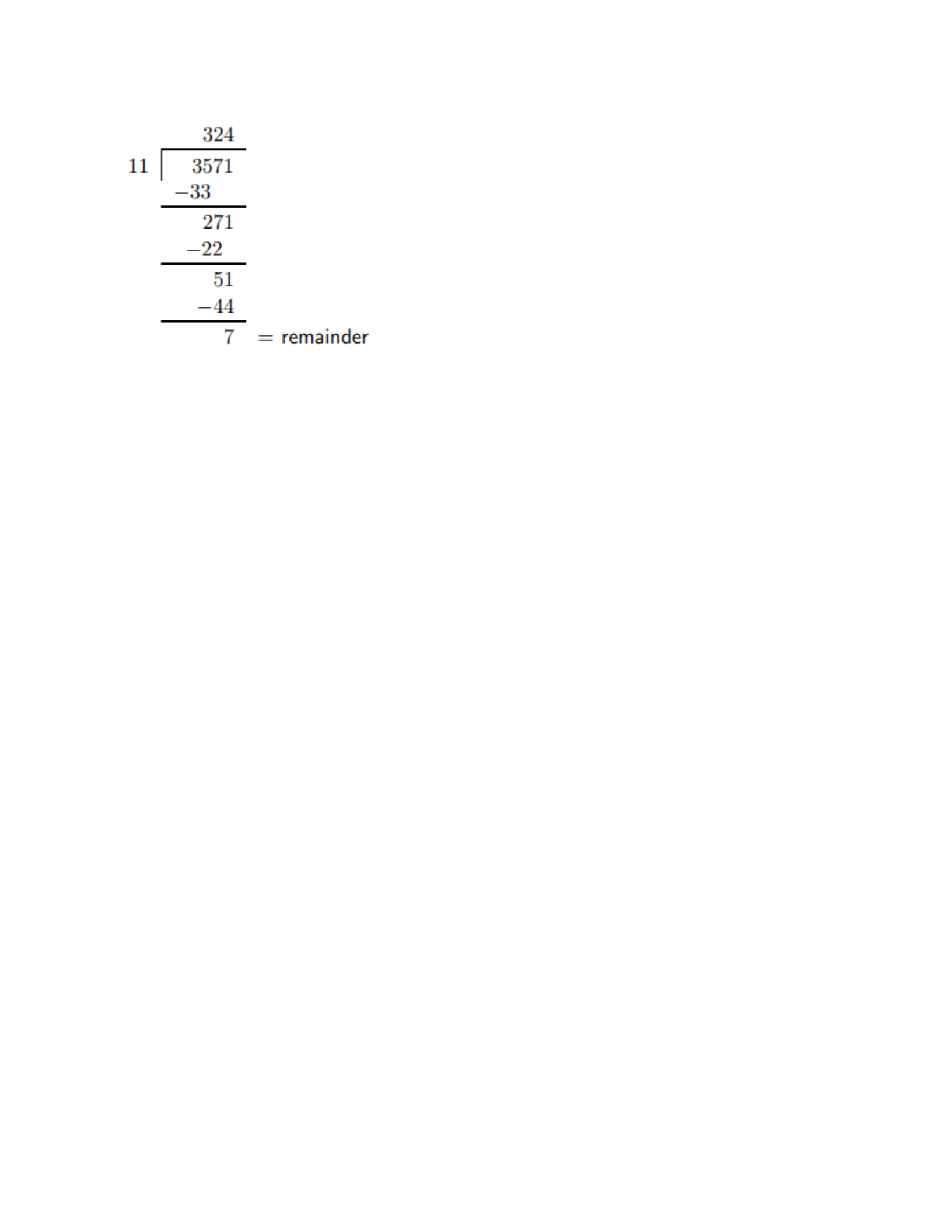
Multiplication involving negative numbers
Multiplication is a little tricky to understand without the notion of distribution (discussed
later). We will begin with noting again what it means to multiply a number by a positive
number: So if we want to compute 4⋅(−7)4⋅(−7) we note
4⋅(−7)=(−7)+(−7)+(−7)+(−7)=−284⋅(−7)=(−7)+(−7)+(−7)+(−7)=−28
Note that since 4⋅7=28,4⋅(−7)=−(4⋅7).4⋅7=28,4⋅(−7)=−(4⋅7). We can multiply positive
numbers in any order: 4⋅7=7⋅44⋅7=7⋅4. The same is true of positive and negative numbers:
(−7)⋅4=4⋅(−7)=−(4⋅7)=−28(−7)⋅4=4⋅(−7)=−(4⋅7)=−28
Example 1.17
5⋅(−12)=−(5⋅12)=−605⋅(−12)=−(5⋅12)=−60 and (−3)⋅(−2)=−(3⋅(−2))=−(−(3⋅2))=6(−3)⋅(−2)
=−(3⋅(−2))=−(−(3⋅2))=6
Example 1.18
So the size of the product of two numbers is the product of their sizes. The sign is positive if
the signs are the same and negative if they are different.
Example 1.19
Two quantities right next to each other, with no symbol between them (except for
parentheses around either or both numbers), has an implicit multiplication. For
example, 3(2)=3×23(2)=3×2.
Example 1.20
Multiply:
oo. (−5)(−8)=40(−5)(−8)=40
pp. (−6)⋅7=−42(−6)⋅7=−42
qq. 4⋅12=484⋅12=48

rr. (−3)(−6)⋅4(−3)=18⋅4(−3)=72(−3)=−216( multiplying from left to
right )(−3)(−6)⋅4(−3)=18⋅4(−3)=72(−3)=−216( multiplying from left to right )
ss. (−3)(−5)⋅4(−2)=(−3)⋅4⋅(−5)(−2)=−12⋅10=−120((−3)(−5)⋅4(−2)=(−3)⋅4⋅(−5)(−2)=−1
2⋅10=−120( since we can multiply in any order it is convenient to see
that −5⋅−2=10.−5⋅−2=10. )
Exponents of integers
Recall that a positive exponent represents the number of times a number is multiplied by
itself.
Example 1.21
Evaluate:
ww. 52=5⋅5=2552=5⋅5=25
xx. (−4)3=(−4)⋅(−4)⋅(−4)=16⋅(−4)=−64(−4)3=(−4)⋅(−4)⋅(−4)=16⋅(−4)=−64
yy. (−7)1=−7(−7)1=−7
zz. −24=−2⋅2⋅2⋅2=−16−24=−2⋅2⋅2⋅2=−16 Note: The exponent here is for 2 not −2!
aaa. (−3)4=(−3)⋅(−3)⋅(−3)⋅(−3)=9⋅(−3)⋅(−3)=−27⋅(−3)=81(−3)4=(−3)⋅(−3)⋅(−3)⋅(
−3)=9⋅(−3)⋅(−3)=−27⋅(−3)=81
bbb. (−2)5=(−2)⋅(−2)⋅(−2)⋅(−2)⋅(−2)=−32(−2)5=(−2)⋅(−2)⋅(−2)⋅(−2)⋅(−2)=−32
Exponent rules in details will be further discussed in Chapter 5.
Division involving negative numbers
Division is just a question of knowing multiplication and therefore has the same rule: The
size of the quotient of two numbers is the quotient of the sizes. The sign is positive if the
signs are the same and negative if they are different.
Example 1.22
Divide:
ww. (−42)÷7=−6(−42)÷7=−6
xx. 81÷(−9)=−981÷(−9)=−9
yy. (−35)÷(−7)=5(−35)÷(−7)=5
zz. 14÷2=714÷2=7
aaa. 0÷5=00÷5=0. Note When dividing 0 by any number, the answer is always 0.
bbb. −10÷0=−10÷0= undefined.
Note 1.23
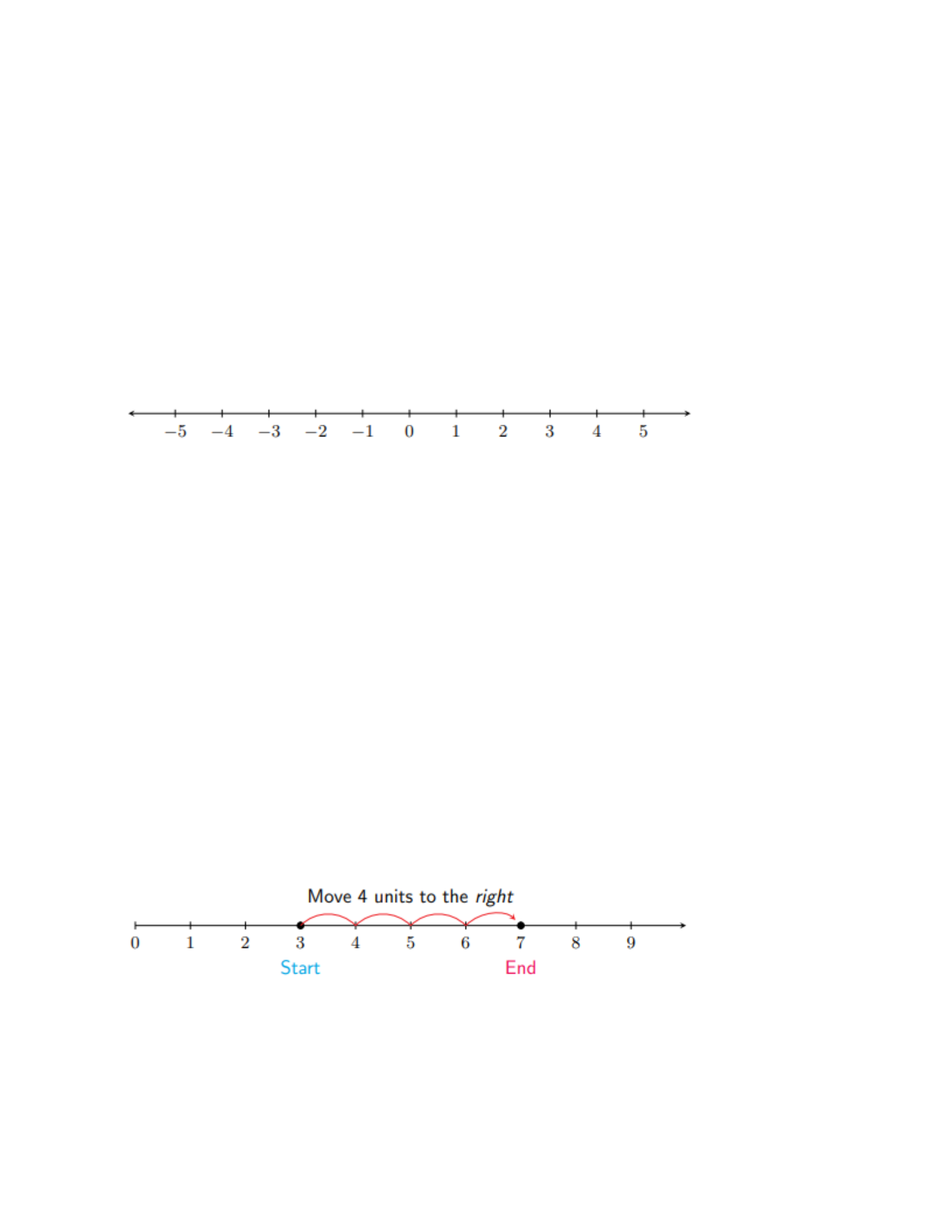
Any number divided by 0 is undefined!
Multiplying and Dividing Integers
Consider two numbers at a time.
17. If the signs of the two numbers are the same, then the sign of the answer is positive.
18. If the signs of the two numbers are different, then the sign of the answer is negative.
We begin with a brief review of arithmetic with integers
i.e. …,−3,−2,−1,0,1,2,3,……,−3,−2,−1,0,1,2,3,…
Any number has a weight and a sign.
The magnitude (or weight) of a number is the distance it is from 0 on the number line.
Example 1.1
For example, the weight of -5 is 5 and the weight of 7 is 7 .
Two numbers are opposites if, on the number line, they are on opposite sides of zero, but
the same distance away from zero.
So, −5 is the opposite of 5, and 7 is the opposite of −7 and so on.
Addition
We can add two numbers with the help of a number line .
Example 1.2
Adding two positive numbers: For example to add 3+43+4, we start with 3 on the number
line then move 4 units to the right. We land at 7 which is our answer.
So, 3+4=73+4=7. Notice that the answer has the same sign as the signs of 3 and 4 (both
positive) and its weight comes from adding the weights of 3 and 4.
You always move to the right when you add a positive number
Example 1.3
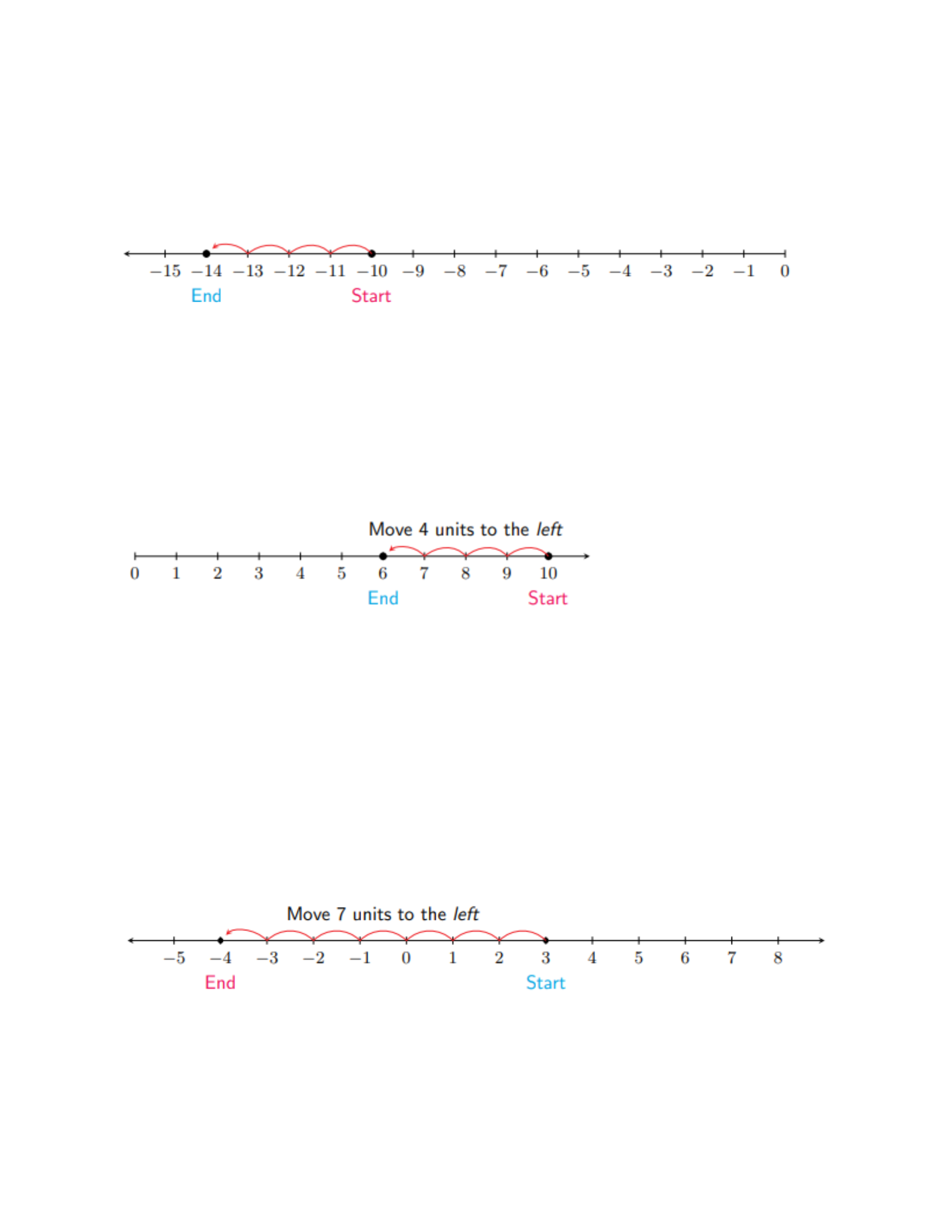
Adding two negative numbers: For example, −10+(−4)−10+(−4) means you are adding a
debt of $4$4 to an already existing debt of $10.$10. So, we start at -10 on the number line
and move 4 units to the left, to land at −14,−14, which is the answer.
You always move to the left when you add a negative number (a debt)
So, −10+(−4)=−14−10+(−4)=−14. Notice that the answer has the same sign as the signs of -
10 and -4 (both negative) and its weight comes from adding the weights of -10 and -4
To add numbers of opposite signs, that is, a positive and a negative number, we can also
use the number line. For example, to perform 10+(−4),10+(−4), we start at 10 on the
number line and then move 4 units to the left. We land at 6,6, which is the answer. Think
of 10+(−4)10+(−4) as having $10$10 and adding a $4$4 debt. Because we are adding a
debt, we move to the left on the number line!
So, 10+(−4)=6.10+(−4)=6. Notice that the answer has the same sign as the sign of 10
(positive) because it is the number of larger weight, and its weight comes from finding the
difference of the weights of 10 and -4
Notice that because we were adding two numbers of opposite signs, the answer ended up
being the difference in weight (6) along with the sign of the number of larger weight
(positive).
Example 1.4
Adding two numbers of opposite signs: For example, 3+(−7)3+(−7). We start at 3 and move
toward 7 units to the left, and we land at −4,−4, which is our answer.
So, 3+(−7)=−4.3+(−7)=−4. Notice that the answer has the same sign as the signs of -7
(negative) because it is the number of larger weight, and its weight comes from finding the
difference of the weights of 3 and -7.
Example 1.5
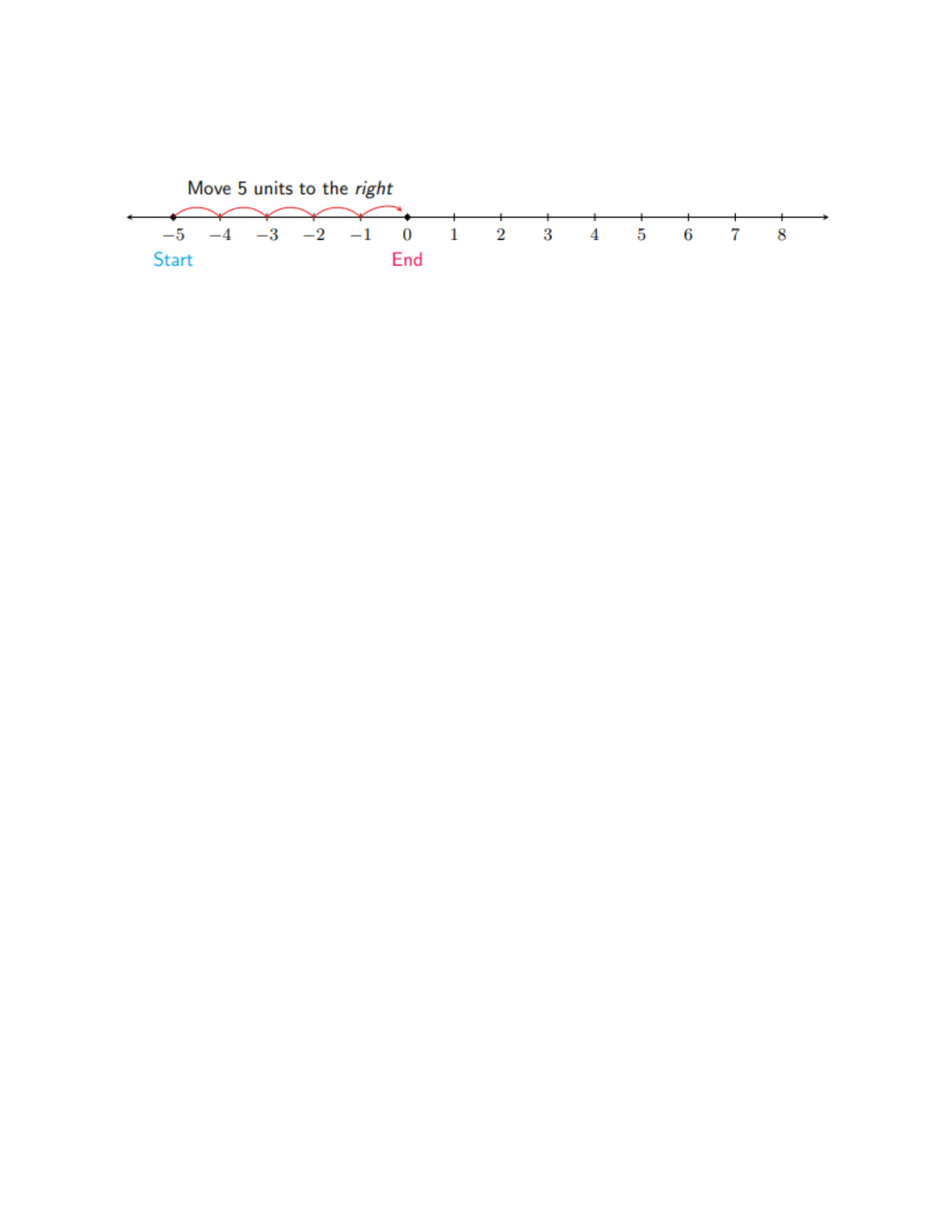
Adding opposites: We start at -5 on the number line and jump to the right 5 units to land
finally at 00. So −5+5=0−5+5=0.
Note 1.6
Two opposite numbers are called a zero-pair, because adding them always results in 0.
So, −5 and 5 are a zero-pair.
Adding Intergers
19. To add two numbers of the same sign, add their weights and place it after the
sign.
20. To add two numbers of opposite signs, find the difference of their weights and
place it after the sign of the number with the greater weight.
Example 1.7
Add:
ccc. −8+19=11−8+19=11
ddd. −8+4=−4−8+4=−4
eee. 6+(−9)=−36+(−9)=−3
fff. 7+(−2)=57+(−2)=5
ggg. (−4)+(−7)=−11(−4)+(−7)=−11
hhh. 8+7=158+7=15
Note 1.8
While we can add in any order: 4+2=2+44+2=2+4, it is sometimes convenient to add up all
of the negative numbers and add up all of the positive numbers, and then add the results.
There are also times when it is best to notice certain simplifications if the numbers are
added in a different order.
For example
−5+4+5+(−8)=−5+(−8)+4+5( by reordering )−5+4+5+(−8)=−5+(−8)+4+5( by reordering )
so,
−5+4+5+(−8)=−5+(−8)+4+5=−13+9=−4−5+4+5+(−8)=−5+(−8)+4+5=−13+9=−4

We could have also simplified this by noting that (-5) and 5 are zero-pair, so we are left
with 4+(−8)4+(−8) which is -4.
Example 1.9
We can calculate
(−4)+(−5)+7+(−3)=(−4)+(−5)+(−3)+7=(−12)+7=−5(−4)+(−5)+7+(−3)=(−4)+(−5)+(−3)+7=
(−12)+7=−5
We could have simplified this by noting that (-4) and (-3) make -7, and -7 and 7 are zero-
pair, so the total is -5.
Subtraction (as Addition of the Opposite)
Once we know how to add numbers, we are set to subtract numbers because subtraction is
nothing but addition of the opposite. That is, subtracting 8 − 3 (which reads: subtracting 3
from 8) is the same as 8 + (−3) (which reads: Adding −3 to 8.).
Example 1.10
So, 8−3=8+(−3),8−3=8+(−3), and, we can use the rules of adding two numbers of opposite
signs to find out that the answer is 5.5. We can also use the number line. We start at 8 and
move 3 units to the left (adding -3 is adding a debt, so we move to the left).
So 8−3=5.−4−3−2−10123456788−3=5.−4−3−2−1012345678 End Start Move 3 units to the
left
Example 1.11
To calculate 3−73−7 we first rewrite it as an addition
problem. 3−7=3+(−7).3−7=3+(−7). We can either use the number line, or the rules of
adding two numbers of opposite signs. And, 50,3−7=3+(−7)=−450,3−7=3+(−7)=−4
Example 1.12
To calculate −4−1,−4−1, we first rewrite it as an addition
problem. −4−1=−4+(−1).−4−1=−4+(−1). We can either use the number line, or the rules of
adding two numbers of the same signs. If we want to use the rules, both numbers are
negative, so our answer will be negative, and, adding the weights of -4 and -1
is 5.50,−4−1=−4+(−1)=−55.50,−4−1=−4+(−1)=−5
On the number line, we start at -4 and move 1 unit to the left, to land on -5 which is our
answer.

Changing the subtractions to additions in this way is particularly useful when adding or
subtracting several numbers (because we can add in any order).
Example 1.13
===−3−7+5+7+13−6−(−9)−3+(−7)+5+7+13+(−6)+9−3+(−7)+(−6)+5+7+13+918−3−7+5+7
+13−6−(−9)=−3+(−7)+5+7+13+(−6)+9=−3+(−7)+(−6)+5+7+13+9=18
===−3−7+5+7+13−6−(−9)−3+(−7)+5+7+13+(−6)+95+1318−3−7+5+7+13−6−(−9)=−3+(−7
)+5+7+13+(−6)+9=5+13=18
Remark 1.14
Warning: The symbol "-" is used in two different ways. When it is between two expressions,
it means subtract (e.g., 3−43−4 ). Otherwise, it means 'opposite' or 'negative'
(e.g., −3+4−3+4 ). So in the expression −4−(−3)−4−(−3), the first and last "-" means
opposite and the one in the middle one means subtract. The importance of understanding
this can not be overestimated.
Multiplication and Division of Positive Numbers
Multiplication of integers is adding in the sense that 3×4=4+4+43×4=4+4+4
To multiply larger numbers, it is better to use the usual scheme of multiplication. For
example:
Example 1.15
Let us multiply 152 by 34. We will for convenience sake put the smaller number on the
bottom (though it is not necessary). We have
+×4516515306624808152×34608+45605168
And division is the opposite of multiplication in the sense that to compute 45÷945÷9 is to
find a number so that when we multiply by 9 we get 45. We run through our multiplication
tables (which are hopefully in our head) to discover that 5 does the
trick: 5×9=455×9=45 so that 45÷9=5.45÷9=5. We will discuss division from a different
point of view when we discuss fractions.
To divide larger numbers, we can use long division. For example, let’s divide 3571 by 11.
Example 1.16
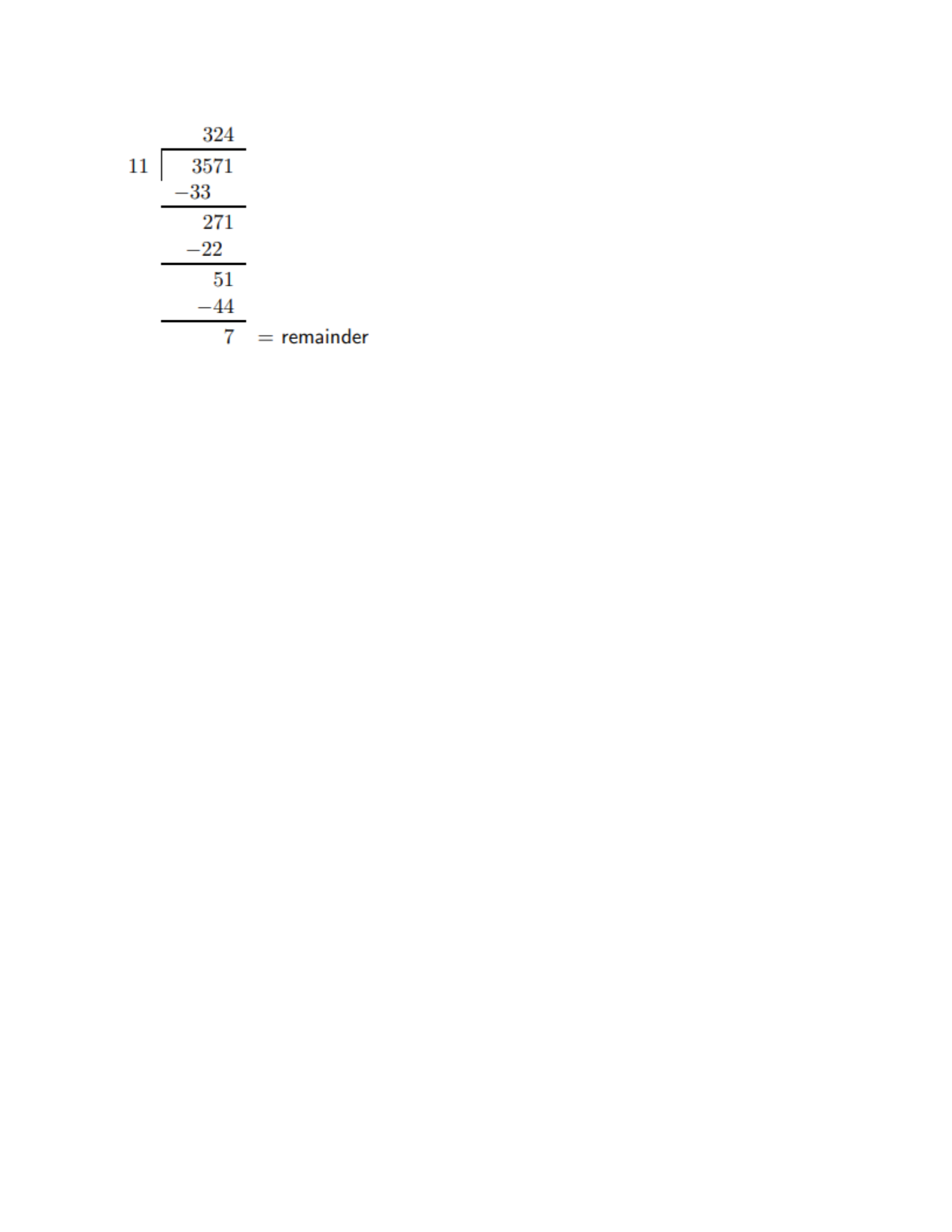
Multiplication involving negative numbers
Multiplication is a little tricky to understand without the notion of distribution (discussed
later). We will begin with noting again what it means to multiply a number by a positive
number: So if we want to compute 4⋅(−7)4⋅(−7) we note
4⋅(−7)=(−7)+(−7)+(−7)+(−7)=−284⋅(−7)=(−7)+(−7)+(−7)+(−7)=−28
Note that since 4⋅7=28,4⋅(−7)=−(4⋅7).4⋅7=28,4⋅(−7)=−(4⋅7). We can multiply positive
numbers in any order: 4⋅7=7⋅44⋅7=7⋅4. The same is true of positive and negative numbers:
(−7)⋅4=4⋅(−7)=−(4⋅7)=−28(−7)⋅4=4⋅(−7)=−(4⋅7)=−28
Example 1.17
5⋅(−12)=−(5⋅12)=−605⋅(−12)=−(5⋅12)=−60 and (−3)⋅(−2)=−(3⋅(−2))=−(−(3⋅2))=6(−3)⋅(−2)
=−(3⋅(−2))=−(−(3⋅2))=6
Example 1.18
So the size of the product of two numbers is the product of their sizes. The sign is positive if
the signs are the same and negative if they are different.
Example 1.19
Two quantities right next to each other, with no symbol between them (except for
parentheses around either or both numbers), has an implicit multiplication. For
example, 3(2)=3×23(2)=3×2.
Example 1.20
Multiply:
tt. (−5)(−8)=40(−5)(−8)=40
uu. (−6)⋅7=−42(−6)⋅7=−42
vv. 4⋅12=484⋅12=48

ww. (−3)(−6)⋅4(−3)=18⋅4(−3)=72(−3)=−216( multiplying from left to
right )(−3)(−6)⋅4(−3)=18⋅4(−3)=72(−3)=−216( multiplying from left to right )
xx. (−3)(−5)⋅4(−2)=(−3)⋅4⋅(−5)(−2)=−12⋅10=−120((−3)(−5)⋅4(−2)=(−3)⋅4⋅(−5)(−2)=−1
2⋅10=−120( since we can multiply in any order it is convenient to see
that −5⋅−2=10.−5⋅−2=10. )
Exponents of integers
Recall that a positive exponent represents the number of times a number is multiplied by
itself.
Example 1.21
Evaluate:
ccc. 52=5⋅5=2552=5⋅5=25
ddd. (−4)3=(−4)⋅(−4)⋅(−4)=16⋅(−4)=−64(−4)3=(−4)⋅(−4)⋅(−4)=16⋅(−4)=−64
eee. (−7)1=−7(−7)1=−7
fff. −24=−2⋅2⋅2⋅2=−16−24=−2⋅2⋅2⋅2=−16 Note: The exponent here is for 2 not −2!
ggg. (−3)4=(−3)⋅(−3)⋅(−3)⋅(−3)=9⋅(−3)⋅(−3)=−27⋅(−3)=81(−3)4=(−3)⋅(−3)⋅(−3)⋅(
−3)=9⋅(−3)⋅(−3)=−27⋅(−3)=81
hhh. (−2)5=(−2)⋅(−2)⋅(−2)⋅(−2)⋅(−2)=−32(−2)5=(−2)⋅(−2)⋅(−2)⋅(−2)⋅(−2)=−32
Exponent rules in details will be further discussed in Chapter 5.
Division involving negative numbers
Division is just a question of knowing multiplication and therefore has the same rule: The
size of the quotient of two numbers is the quotient of the sizes. The sign is positive if the
signs are the same and negative if they are different.
Example 1.22
Divide:
ccc. (−42)÷7=−6(−42)÷7=−6
ddd. 81÷(−9)=−981÷(−9)=−9
eee. (−35)÷(−7)=5(−35)÷(−7)=5
fff. 14÷2=714÷2=7
ggg. 0÷5=00÷5=0. Note When dividing 0 by any number, the answer is always 0.
hhh. −10÷0=−10÷0= undefined.
Note 1.23
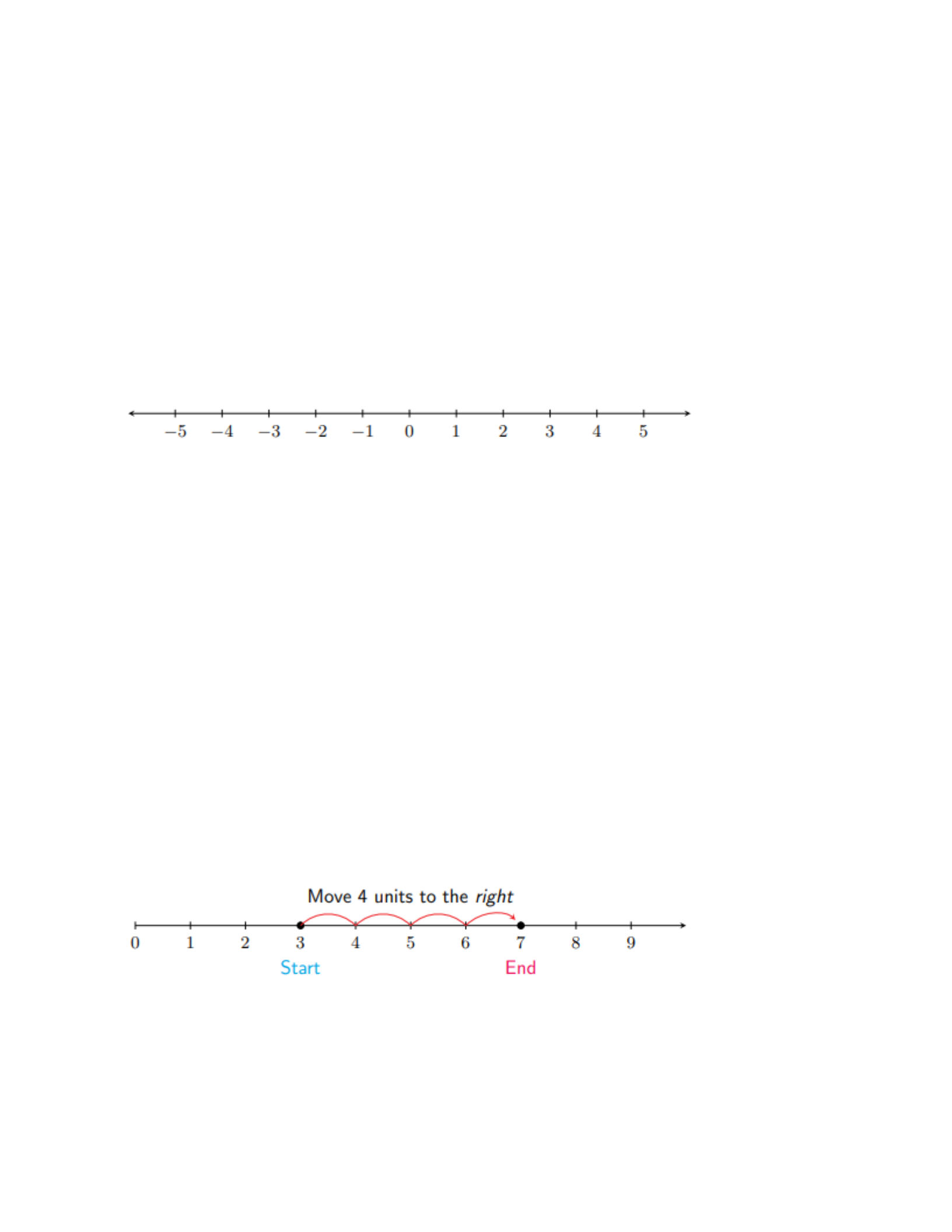
Any number divided by 0 is undefined!
Multiplying and Dividing Integers
Consider two numbers at a time.
19. If the signs of the two numbers are the same, then the sign of the answer is positive.
20. If the signs of the two numbers are different, then the sign of the answer is negative.
We begin with a brief review of arithmetic with integers
i.e. …,−3,−2,−1,0,1,2,3,……,−3,−2,−1,0,1,2,3,…
Any number has a weight and a sign.
The magnitude (or weight) of a number is the distance it is from 0 on the number line.
Example 1.1
For example, the weight of -5 is 5 and the weight of 7 is 7 .
Two numbers are opposites if, on the number line, they are on opposite sides of zero, but
the same distance away from zero.
So, −5 is the opposite of 5, and 7 is the opposite of −7 and so on.
Addition
We can add two numbers with the help of a number line .
Example 1.2
Adding two positive numbers: For example to add 3+43+4, we start with 3 on the number
line then move 4 units to the right. We land at 7 which is our answer.
So, 3+4=73+4=7. Notice that the answer has the same sign as the signs of 3 and 4 (both
positive) and its weight comes from adding the weights of 3 and 4.
You always move to the right when you add a positive number
Example 1.3
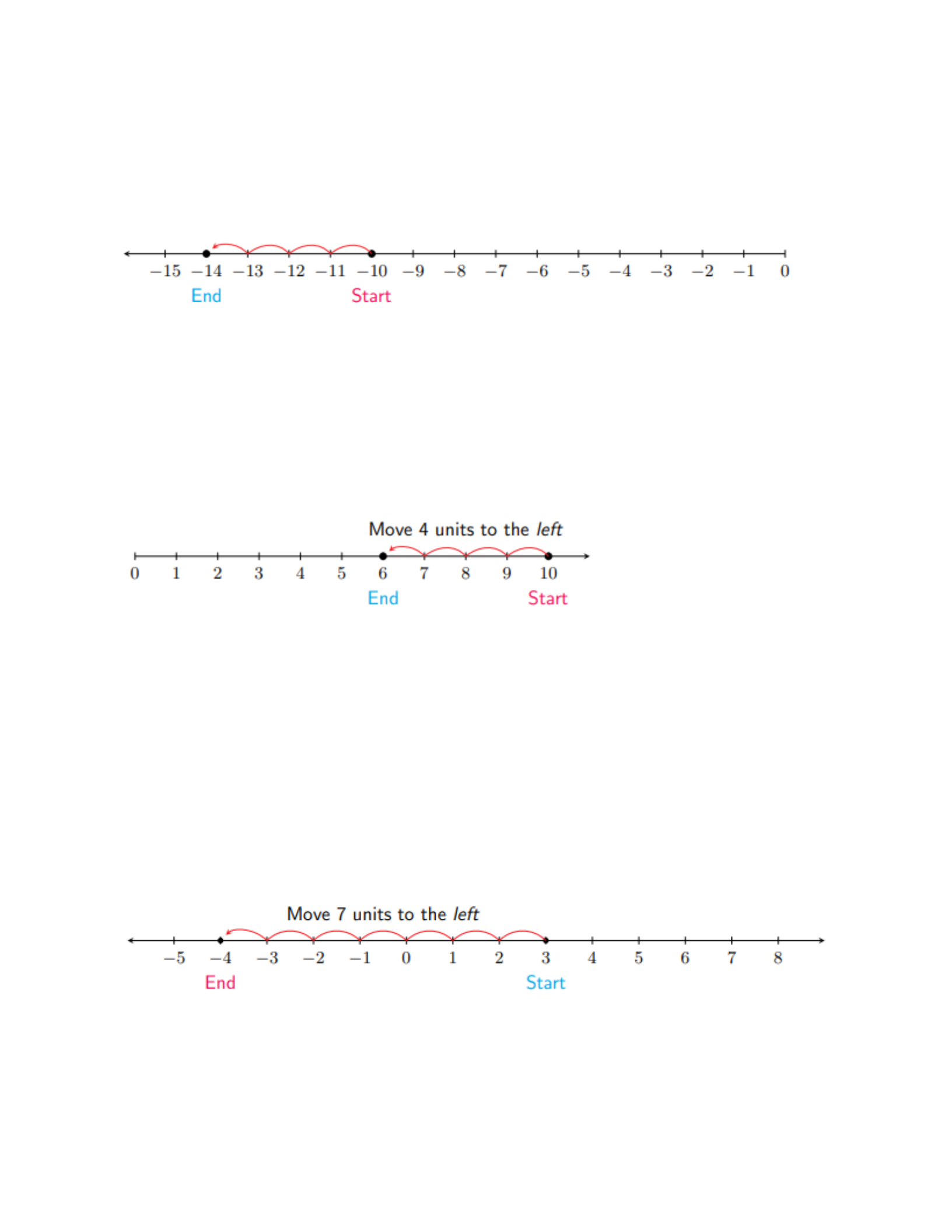
Adding two negative numbers: For example, −10+(−4)−10+(−4) means you are adding a
debt of $4$4 to an already existing debt of $10.$10. So, we start at -10 on the number line
and move 4 units to the left, to land at −14,−14, which is the answer.
You always move to the left when you add a negative number (a debt)
So, −10+(−4)=−14−10+(−4)=−14. Notice that the answer has the same sign as the signs of -
10 and -4 (both negative) and its weight comes from adding the weights of -10 and -4
To add numbers of opposite signs, that is, a positive and a negative number, we can also
use the number line. For example, to perform 10+(−4),10+(−4), we start at 10 on the
number line and then move 4 units to the left. We land at 6,6, which is the answer. Think
of 10+(−4)10+(−4) as having $10$10 and adding a $4$4 debt. Because we are adding a
debt, we move to the left on the number line!
So, 10+(−4)=6.10+(−4)=6. Notice that the answer has the same sign as the sign of 10
(positive) because it is the number of larger weight, and its weight comes from finding the
difference of the weights of 10 and -4
Notice that because we were adding two numbers of opposite signs, the answer ended up
being the difference in weight (6) along with the sign of the number of larger weight
(positive).
Example 1.4
Adding two numbers of opposite signs: For example, 3+(−7)3+(−7). We start at 3 and move
toward 7 units to the left, and we land at −4,−4, which is our answer.
So, 3+(−7)=−4.3+(−7)=−4. Notice that the answer has the same sign as the signs of -7
(negative) because it is the number of larger weight, and its weight comes from finding the
difference of the weights of 3 and -7.
Example 1.5
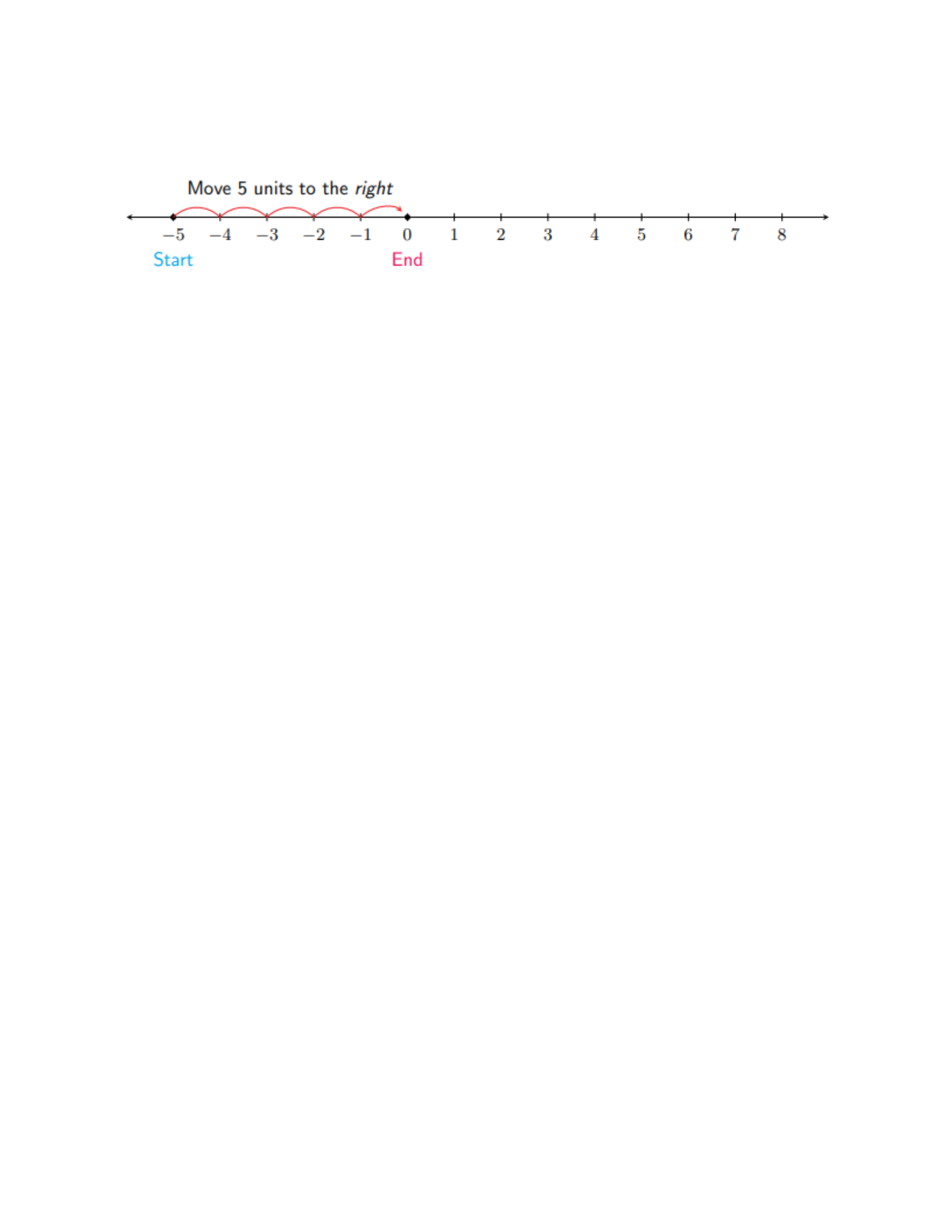
Adding opposites: We start at -5 on the number line and jump to the right 5 units to land
finally at 00. So −5+5=0−5+5=0.
Note 1.6
Two opposite numbers are called a zero-pair, because adding them always results in 0.
So, −5 and 5 are a zero-pair.
Adding Intergers
21. To add two numbers of the same sign, add their weights and place it after the
sign.
22. To add two numbers of opposite signs, find the difference of their weights and
place it after the sign of the number with the greater weight.
Example 1.7
Add:
iii. −8+19=11−8+19=11
jjj. −8+4=−4−8+4=−4
kkk. 6+(−9)=−36+(−9)=−3
lll. 7+(−2)=57+(−2)=5
mmm. (−4)+(−7)=−11(−4)+(−7)=−11
nnn. 8+7=158+7=15
Note 1.8
While we can add in any order: 4+2=2+44+2=2+4, it is sometimes convenient to add up all
of the negative numbers and add up all of the positive numbers, and then add the results.
There are also times when it is best to notice certain simplifications if the numbers are
added in a different order.
For example
−5+4+5+(−8)=−5+(−8)+4+5( by reordering )−5+4+5+(−8)=−5+(−8)+4+5( by reordering )
so,
−5+4+5+(−8)=−5+(−8)+4+5=−13+9=−4−5+4+5+(−8)=−5+(−8)+4+5=−13+9=−4

We could have also simplified this by noting that (-5) and 5 are zero-pair, so we are left
with 4+(−8)4+(−8) which is -4.
Example 1.9
We can calculate
(−4)+(−5)+7+(−3)=(−4)+(−5)+(−3)+7=(−12)+7=−5(−4)+(−5)+7+(−3)=(−4)+(−5)+(−3)+7=
(−12)+7=−5
We could have simplified this by noting that (-4) and (-3) make -7, and -7 and 7 are zero-
pair, so the total is -5.
Subtraction (as Addition of the Opposite)
Once we know how to add numbers, we are set to subtract numbers because subtraction is
nothing but addition of the opposite. That is, subtracting 8 − 3 (which reads: subtracting 3
from 8) is the same as 8 + (−3) (which reads: Adding −3 to 8.).
Example 1.10
So, 8−3=8+(−3),8−3=8+(−3), and, we can use the rules of adding two numbers of opposite
signs to find out that the answer is 5.5. We can also use the number line. We start at 8 and
move 3 units to the left (adding -3 is adding a debt, so we move to the left).
So 8−3=5.−4−3−2−10123456788−3=5.−4−3−2−1012345678 End Start Move 3 units to the
left
Example 1.11
To calculate 3−73−7 we first rewrite it as an addition
problem. 3−7=3+(−7).3−7=3+(−7). We can either use the number line, or the rules of
adding two numbers of opposite signs. And, 50,3−7=3+(−7)=−450,3−7=3+(−7)=−4
Example 1.12
To calculate −4−1,−4−1, we first rewrite it as an addition
problem. −4−1=−4+(−1).−4−1=−4+(−1). We can either use the number line, or the rules of
adding two numbers of the same signs. If we want to use the rules, both numbers are
negative, so our answer will be negative, and, adding the weights of -4 and -1
is 5.50,−4−1=−4+(−1)=−55.50,−4−1=−4+(−1)=−5
On the number line, we start at -4 and move 1 unit to the left, to land on -5 which is our
answer.

Changing the subtractions to additions in this way is particularly useful when adding or
subtracting several numbers (because we can add in any order).
Example 1.13
===−3−7+5+7+13−6−(−9)−3+(−7)+5+7+13+(−6)+9−3+(−7)+(−6)+5+7+13+918−3−7+5+7
+13−6−(−9)=−3+(−7)+5+7+13+(−6)+9=−3+(−7)+(−6)+5+7+13+9=18
===−3−7+5+7+13−6−(−9)−3+(−7)+5+7+13+(−6)+95+1318−3−7+5+7+13−6−(−9)=−3+(−7
)+5+7+13+(−6)+9=5+13=18
Remark 1.14
Warning: The symbol "-" is used in two different ways. When it is between two expressions,
it means subtract (e.g., 3−43−4 ). Otherwise, it means 'opposite' or 'negative'
(e.g., −3+4−3+4 ). So in the expression −4−(−3)−4−(−3), the first and last "-" means
opposite and the one in the middle one means subtract. The importance of understanding
this can not be overestimated.
Multiplication and Division of Positive Numbers
Multiplication of integers is adding in the sense that 3×4=4+4+43×4=4+4+4
To multiply larger numbers, it is better to use the usual scheme of multiplication. For
example:
Example 1.15
Let us multiply 152 by 34. We will for convenience sake put the smaller number on the
bottom (though it is not necessary). We have
+×4516515306624808152×34608+45605168
And division is the opposite of multiplication in the sense that to compute 45÷945÷9 is to
find a number so that when we multiply by 9 we get 45. We run through our multiplication
tables (which are hopefully in our head) to discover that 5 does the
trick: 5×9=455×9=45 so that 45÷9=5.45÷9=5. We will discuss division from a different
point of view when we discuss fractions.
To divide larger numbers, we can use long division. For example, let’s divide 3571 by 11.
Example 1.16
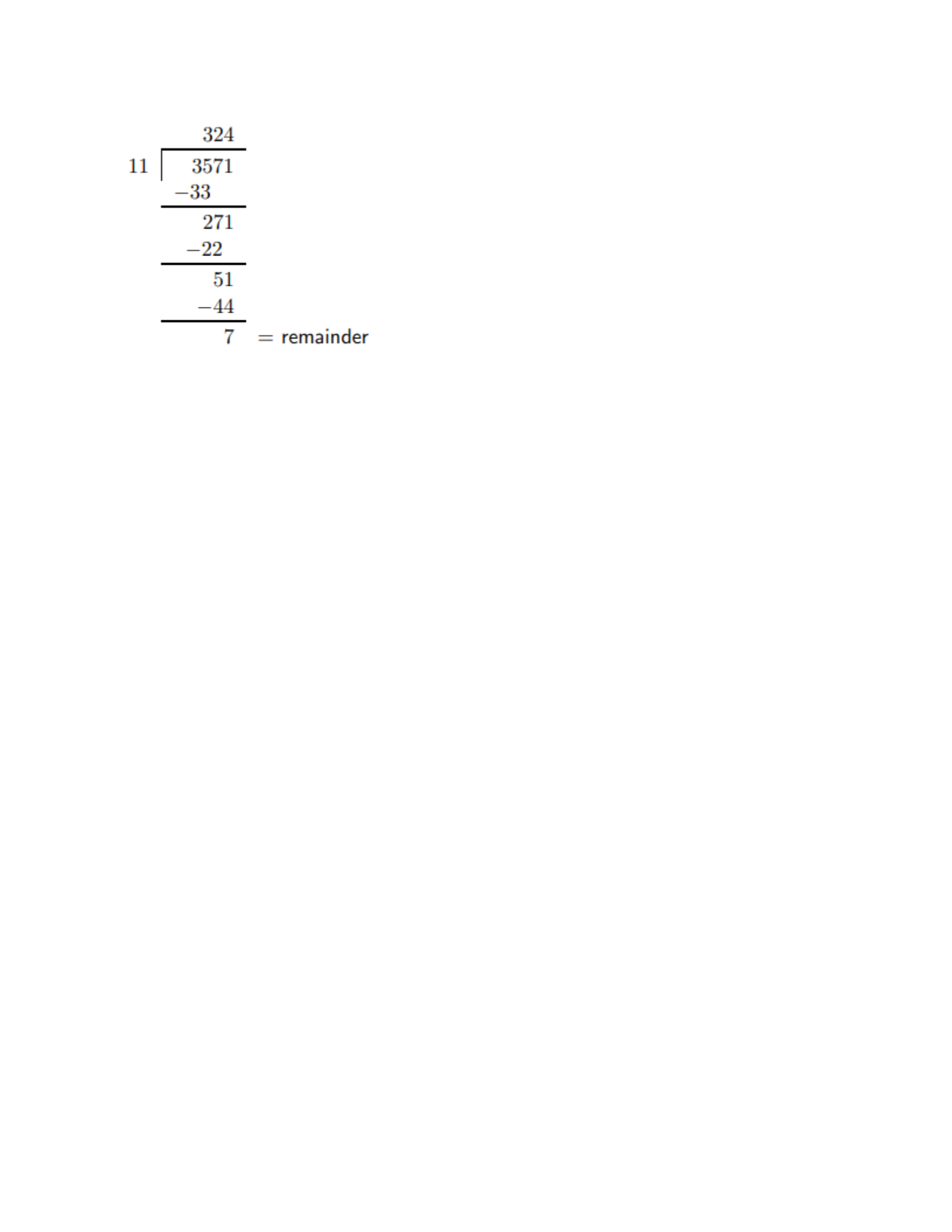
Multiplication involving negative numbers
Multiplication is a little tricky to understand without the notion of distribution (discussed
later). We will begin with noting again what it means to multiply a number by a positive
number: So if we want to compute 4⋅(−7)4⋅(−7) we note
4⋅(−7)=(−7)+(−7)+(−7)+(−7)=−284⋅(−7)=(−7)+(−7)+(−7)+(−7)=−28
Note that since 4⋅7=28,4⋅(−7)=−(4⋅7).4⋅7=28,4⋅(−7)=−(4⋅7). We can multiply positive
numbers in any order: 4⋅7=7⋅44⋅7=7⋅4. The same is true of positive and negative numbers:
(−7)⋅4=4⋅(−7)=−(4⋅7)=−28(−7)⋅4=4⋅(−7)=−(4⋅7)=−28
Example 1.17
5⋅(−12)=−(5⋅12)=−605⋅(−12)=−(5⋅12)=−60 and (−3)⋅(−2)=−(3⋅(−2))=−(−(3⋅2))=6(−3)⋅(−2)
=−(3⋅(−2))=−(−(3⋅2))=6
Example 1.18
So the size of the product of two numbers is the product of their sizes. The sign is positive if
the signs are the same and negative if they are different.
Example 1.19
Two quantities right next to each other, with no symbol between them (except for
parentheses around either or both numbers), has an implicit multiplication. For
example, 3(2)=3×23(2)=3×2.
Example 1.20
Multiply:
yy. (−5)(−8)=40(−5)(−8)=40
zz. (−6)⋅7=−42(−6)⋅7=−42
aaa. 4⋅12=484⋅12=48

bbb. (−3)(−6)⋅4(−3)=18⋅4(−3)=72(−3)=−216( multiplying from left to
right )(−3)(−6)⋅4(−3)=18⋅4(−3)=72(−3)=−216( multiplying from left to right )
ccc. (−3)(−5)⋅4(−2)=(−3)⋅4⋅(−5)(−2)=−12⋅10=−120((−3)(−5)⋅4(−2)=(−3)⋅4⋅(−5)(
−2)=−12⋅10=−120( since we can multiply in any order it is convenient to see
that −5⋅−2=10.−5⋅−2=10. )
Exponents of integers
Recall that a positive exponent represents the number of times a number is multiplied by
itself.
Example 1.21
Evaluate:
iii. 52=5⋅5=2552=5⋅5=25
jjj. (−4)3=(−4)⋅(−4)⋅(−4)=16⋅(−4)=−64(−4)3=(−4)⋅(−4)⋅(−4)=16⋅(−4)=−64
kkk. (−7)1=−7(−7)1=−7
lll. −24=−2⋅2⋅2⋅2=−16−24=−2⋅2⋅2⋅2=−16 Note: The exponent here is for 2 not −2!
mmm. (−3)4=(−3)⋅(−3)⋅(−3)⋅(−3)=9⋅(−3)⋅(−3)=−27⋅(−3)=81(−3)4=(−3)⋅(−3)⋅(−3)⋅(
−3)=9⋅(−3)⋅(−3)=−27⋅(−3)=81
nnn. (−2)5=(−2)⋅(−2)⋅(−2)⋅(−2)⋅(−2)=−32(−2)5=(−2)⋅(−2)⋅(−2)⋅(−2)⋅(−2)=−32
Exponent rules in details will be further discussed in Chapter 5.
Division involving negative numbers
Division is just a question of knowing multiplication and therefore has the same rule: The
size of the quotient of two numbers is the quotient of the sizes. The sign is positive if the
signs are the same and negative if they are different.
Example 1.22
Divide:
iii. (−42)÷7=−6(−42)÷7=−6
jjj. 81÷(−9)=−981÷(−9)=−9
kkk. (−35)÷(−7)=5(−35)÷(−7)=5
lll. 14÷2=714÷2=7
mmm. 0÷5=00÷5=0. Note When dividing 0 by any number, the answer is always 0.
nnn. −10÷0=−10÷0= undefined.
Note 1.23
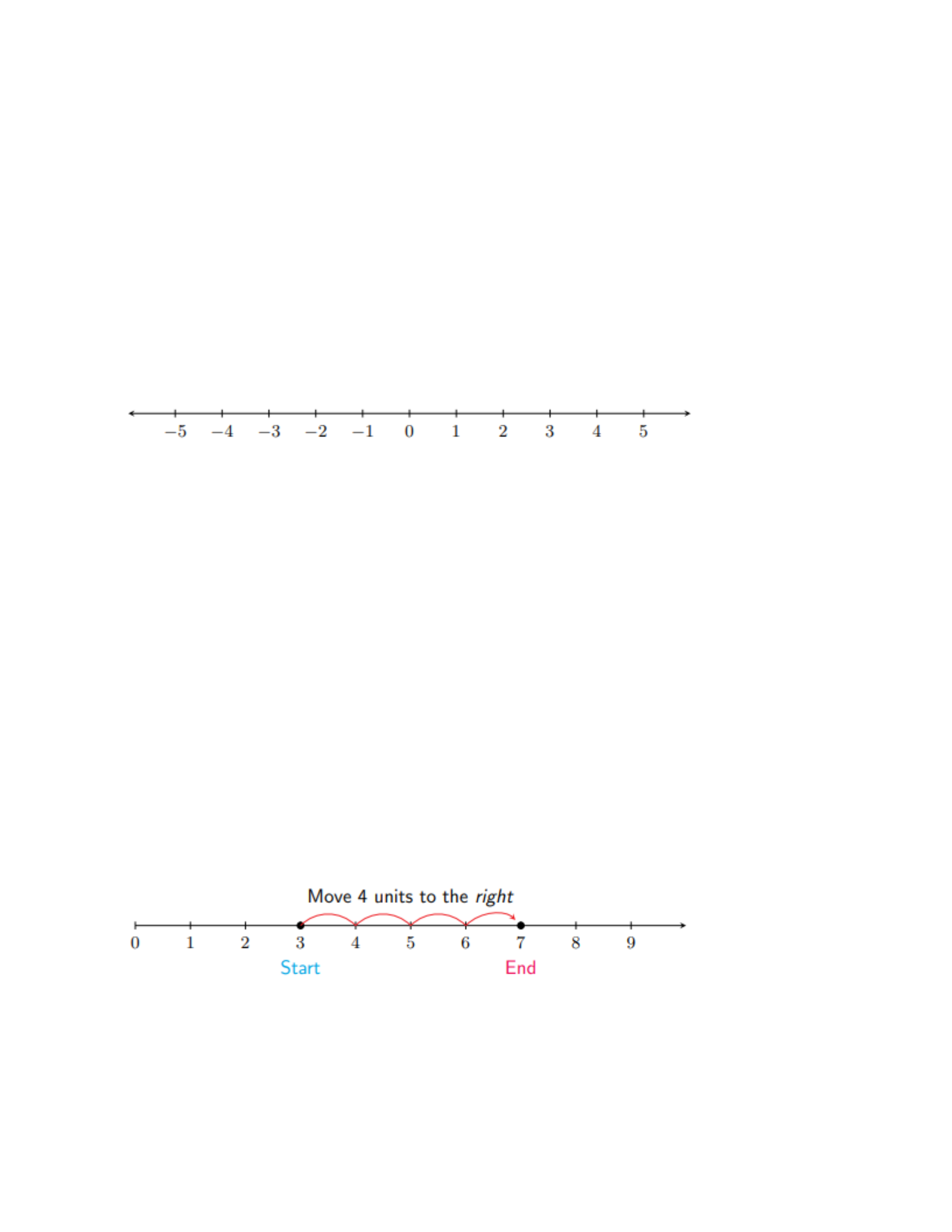
Any number divided by 0 is undefined!
Multiplying and Dividing Integers
Consider two numbers at a time.
21. If the signs of the two numbers are the same, then the sign of the answer is positive.
22. If the signs of the two numbers are different, then the sign of the answer is negative.
We begin with a brief review of arithmetic with integers
i.e. …,−3,−2,−1,0,1,2,3,……,−3,−2,−1,0,1,2,3,…
Any number has a weight and a sign.
The magnitude (or weight) of a number is the distance it is from 0 on the number line.
Example 1.1
For example, the weight of -5 is 5 and the weight of 7 is 7 .
Two numbers are opposites if, on the number line, they are on opposite sides of zero, but
the same distance away from zero.
So, −5 is the opposite of 5, and 7 is the opposite of −7 and so on.
Addition
We can add two numbers with the help of a number line .
Example 1.2
Adding two positive numbers: For example to add 3+43+4, we start with 3 on the number
line then move 4 units to the right. We land at 7 which is our answer.
So, 3+4=73+4=7. Notice that the answer has the same sign as the signs of 3 and 4 (both
positive) and its weight comes from adding the weights of 3 and 4.
You always move to the right when you add a positive number
Example 1.3
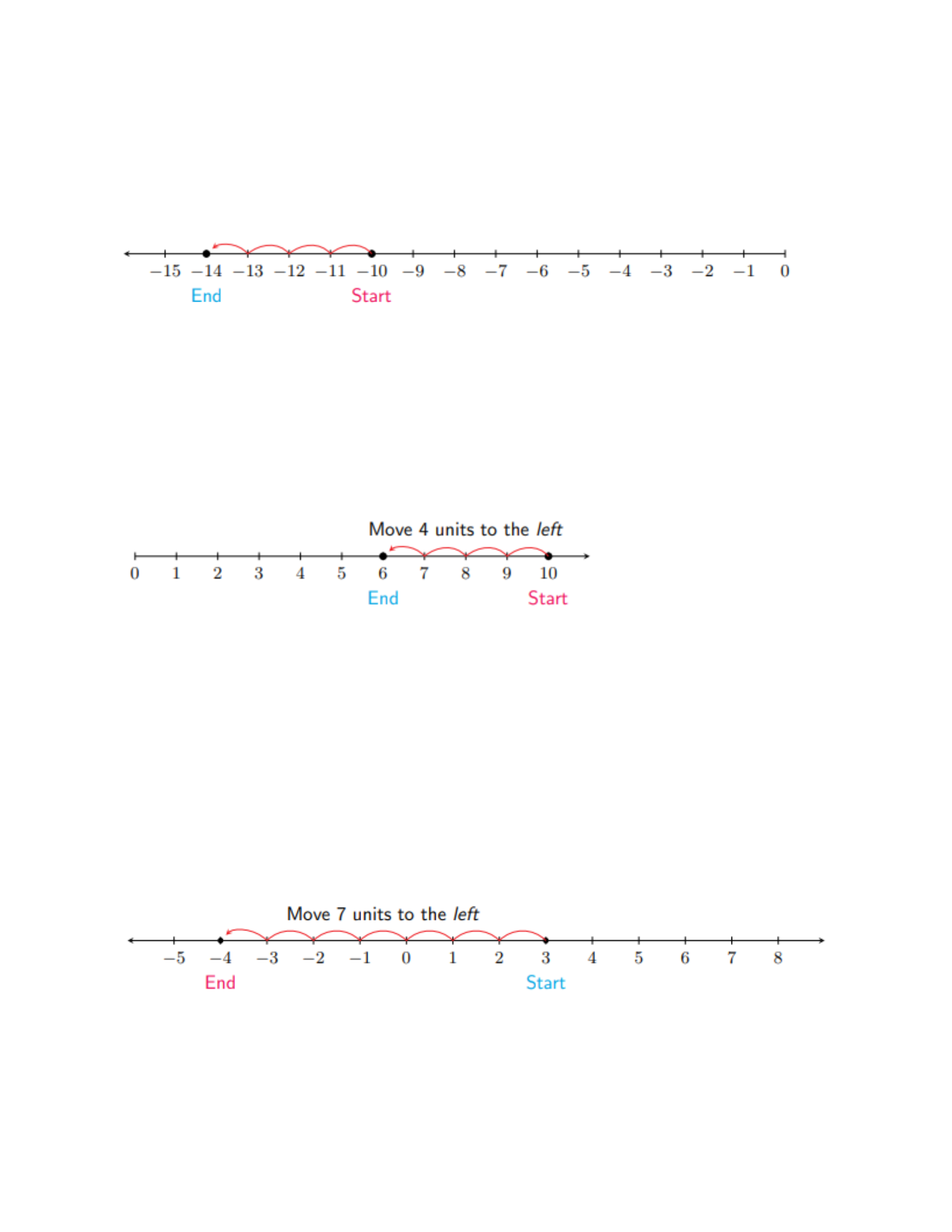
Adding two negative numbers: For example, −10+(−4)−10+(−4) means you are adding a
debt of $4$4 to an already existing debt of $10.$10. So, we start at -10 on the number line
and move 4 units to the left, to land at −14,−14, which is the answer.
You always move to the left when you add a negative number (a debt)
So, −10+(−4)=−14−10+(−4)=−14. Notice that the answer has the same sign as the signs of -
10 and -4 (both negative) and its weight comes from adding the weights of -10 and -4
To add numbers of opposite signs, that is, a positive and a negative number, we can also
use the number line. For example, to perform 10+(−4),10+(−4), we start at 10 on the
number line and then move 4 units to the left. We land at 6,6, which is the answer. Think
of 10+(−4)10+(−4) as having $10$10 and adding a $4$4 debt. Because we are adding a
debt, we move to the left on the number line!
So, 10+(−4)=6.10+(−4)=6. Notice that the answer has the same sign as the sign of 10
(positive) because it is the number of larger weight, and its weight comes from finding the
difference of the weights of 10 and -4
Notice that because we were adding two numbers of opposite signs, the answer ended up
being the difference in weight (6) along with the sign of the number of larger weight
(positive).
Example 1.4
Adding two numbers of opposite signs: For example, 3+(−7)3+(−7). We start at 3 and move
toward 7 units to the left, and we land at −4,−4, which is our answer.
So, 3+(−7)=−4.3+(−7)=−4. Notice that the answer has the same sign as the signs of -7
(negative) because it is the number of larger weight, and its weight comes from finding the
difference of the weights of 3 and -7.
Example 1.5
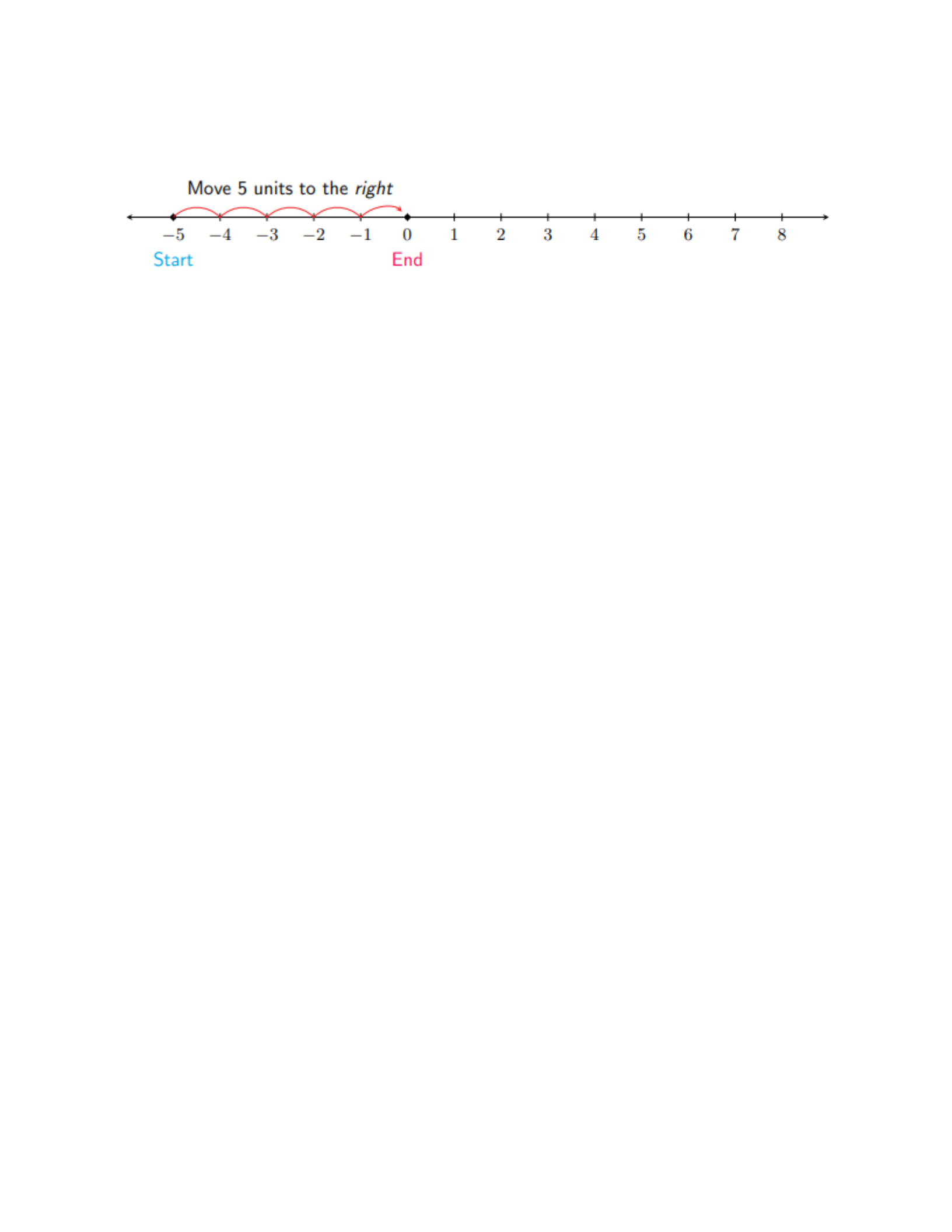
Adding opposites: We start at -5 on the number line and jump to the right 5 units to land
finally at 00. So −5+5=0−5+5=0.
Note 1.6
Two opposite numbers are called a zero-pair, because adding them always results in 0.
So, −5 and 5 are a zero-pair.
Adding Intergers
23. To add two numbers of the same sign, add their weights and place it after the
sign.
24. To add two numbers of opposite signs, find the difference of their weights and
place it after the sign of the number with the greater weight.
Example 1.7
Add:
ooo. −8+19=11−8+19=11
ppp. −8+4=−4−8+4=−4
qqq. 6+(−9)=−36+(−9)=−3
rrr. 7+(−2)=57+(−2)=5
sss. (−4)+(−7)=−11(−4)+(−7)=−11
ttt. 8+7=158+7=15
Note 1.8
While we can add in any order: 4+2=2+44+2=2+4, it is sometimes convenient to add up all
of the negative numbers and add up all of the positive numbers, and then add the results.
There are also times when it is best to notice certain simplifications if the numbers are
added in a different order.
For example
−5+4+5+(−8)=−5+(−8)+4+5( by reordering )−5+4+5+(−8)=−5+(−8)+4+5( by reordering )
so,
−5+4+5+(−8)=−5+(−8)+4+5=−13+9=−4−5+4+5+(−8)=−5+(−8)+4+5=−13+9=−4

We could have also simplified this by noting that (-5) and 5 are zero-pair, so we are left
with 4+(−8)4+(−8) which is -4.
Example 1.9
We can calculate
(−4)+(−5)+7+(−3)=(−4)+(−5)+(−3)+7=(−12)+7=−5(−4)+(−5)+7+(−3)=(−4)+(−5)+(−3)+7=
(−12)+7=−5
We could have simplified this by noting that (-4) and (-3) make -7, and -7 and 7 are zero-
pair, so the total is -5.
Subtraction (as Addition of the Opposite)
Once we know how to add numbers, we are set to subtract numbers because subtraction is
nothing but addition of the opposite. That is, subtracting 8 − 3 (which reads: subtracting 3
from 8) is the same as 8 + (−3) (which reads: Adding −3 to 8.).
Example 1.10
So, 8−3=8+(−3),8−3=8+(−3), and, we can use the rules of adding two numbers of opposite
signs to find out that the answer is 5.5. We can also use the number line. We start at 8 and
move 3 units to the left (adding -3 is adding a debt, so we move to the left).
So 8−3=5.−4−3−2−10123456788−3=5.−4−3−2−1012345678 End Start Move 3 units to the
left
Example 1.11
To calculate 3−73−7 we first rewrite it as an addition
problem. 3−7=3+(−7).3−7=3+(−7). We can either use the number line, or the rules of
adding two numbers of opposite signs. And, 50,3−7=3+(−7)=−450,3−7=3+(−7)=−4
Example 1.12
To calculate −4−1,−4−1, we first rewrite it as an addition
problem. −4−1=−4+(−1).−4−1=−4+(−1). We can either use the number line, or the rules of
adding two numbers of the same signs. If we want to use the rules, both numbers are
negative, so our answer will be negative, and, adding the weights of -4 and -1
is 5.50,−4−1=−4+(−1)=−55.50,−4−1=−4+(−1)=−5
On the number line, we start at -4 and move 1 unit to the left, to land on -5 which is our
answer.

Changing the subtractions to additions in this way is particularly useful when adding or
subtracting several numbers (because we can add in any order).
Example 1.13
===−3−7+5+7+13−6−(−9)−3+(−7)+5+7+13+(−6)+9−3+(−7)+(−6)+5+7+13+918−3−7+5+7
+13−6−(−9)=−3+(−7)+5+7+13+(−6)+9=−3+(−7)+(−6)+5+7+13+9=18
===−3−7+5+7+13−6−(−9)−3+(−7)+5+7+13+(−6)+95+1318−3−7+5+7+13−6−(−9)=−3+(−7
)+5+7+13+(−6)+9=5+13=18
Remark 1.14
Warning: The symbol "-" is used in two different ways. When it is between two expressions,
it means subtract (e.g., 3−43−4 ). Otherwise, it means 'opposite' or 'negative'
(e.g., −3+4−3+4 ). So in the expression −4−(−3)−4−(−3), the first and last "-" means
opposite and the one in the middle one means subtract. The importance of understanding
this can not be overestimated.
Multiplication and Division of Positive Numbers
Multiplication of integers is adding in the sense that 3×4=4+4+43×4=4+4+4
To multiply larger numbers, it is better to use the usual scheme of multiplication. For
example:
Example 1.15
Let us multiply 152 by 34. We will for convenience sake put the smaller number on the
bottom (though it is not necessary). We have
+×4516515306624808152×34608+45605168
And division is the opposite of multiplication in the sense that to compute 45÷945÷9 is to
find a number so that when we multiply by 9 we get 45. We run through our multiplication
tables (which are hopefully in our head) to discover that 5 does the
trick: 5×9=455×9=45 so that 45÷9=5.45÷9=5. We will discuss division from a different
point of view when we discuss fractions.
To divide larger numbers, we can use long division. For example, let’s divide 3571 by 11.
Example 1.16
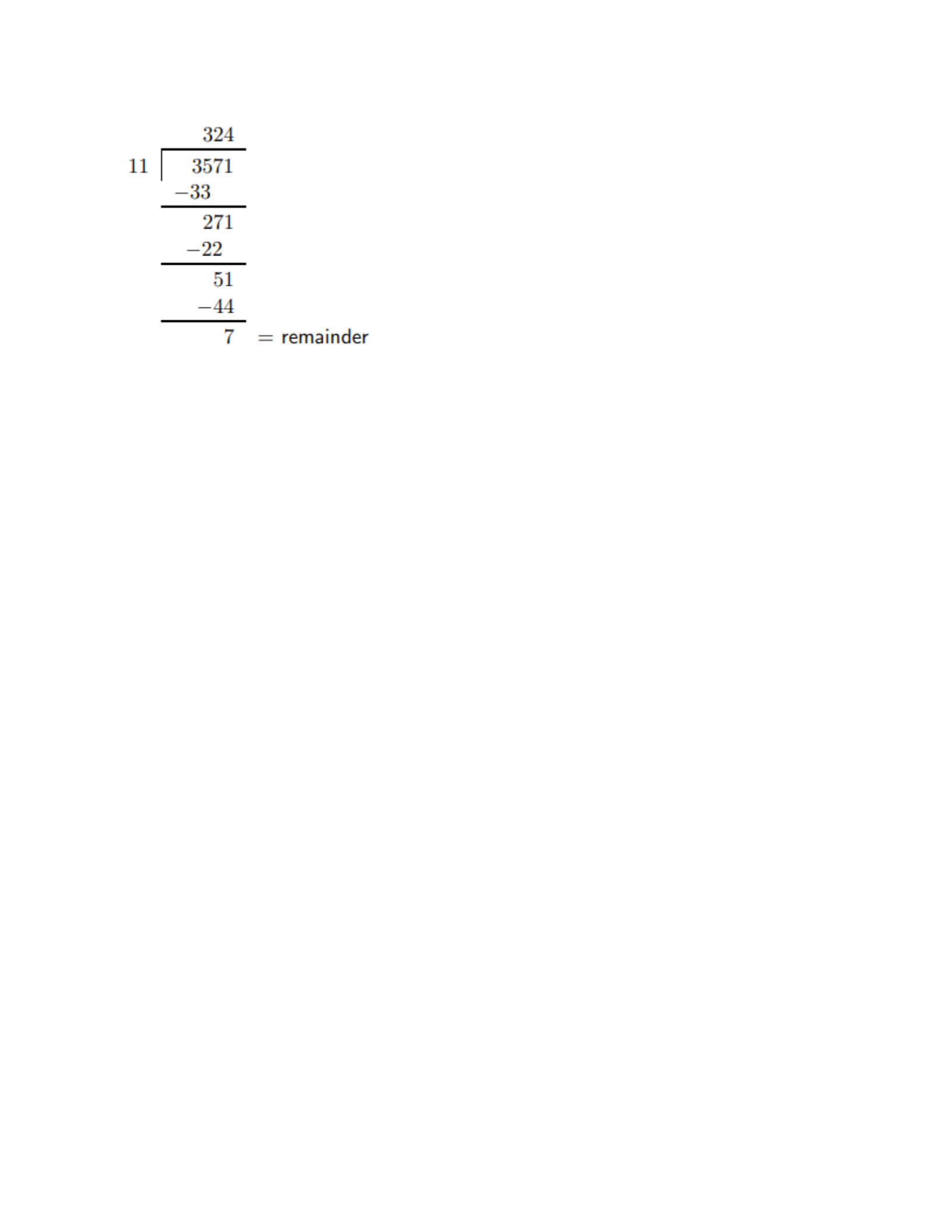
Multiplication involving negative numbers
Multiplication is a little tricky to understand without the notion of distribution (discussed
later). We will begin with noting again what it means to multiply a number by a positive
number: So if we want to compute 4⋅(−7)4⋅(−7) we note
4⋅(−7)=(−7)+(−7)+(−7)+(−7)=−284⋅(−7)=(−7)+(−7)+(−7)+(−7)=−28
Note that since 4⋅7=28,4⋅(−7)=−(4⋅7).4⋅7=28,4⋅(−7)=−(4⋅7). We can multiply positive
numbers in any order: 4⋅7=7⋅44⋅7=7⋅4. The same is true of positive and negative numbers:
(−7)⋅4=4⋅(−7)=−(4⋅7)=−28(−7)⋅4=4⋅(−7)=−(4⋅7)=−28
Example 1.17
5⋅(−12)=−(5⋅12)=−605⋅(−12)=−(5⋅12)=−60 and (−3)⋅(−2)=−(3⋅(−2))=−(−(3⋅2))=6(−3)⋅(−2)
=−(3⋅(−2))=−(−(3⋅2))=6
Example 1.18
So the size of the product of two numbers is the product of their sizes. The sign is positive if
the signs are the same and negative if they are different.
Example 1.19
Two quantities right next to each other, with no symbol between them (except for
parentheses around either or both numbers), has an implicit multiplication. For
example, 3(2)=3×23(2)=3×2.
Example 1.20
Multiply:
ddd. (−5)(−8)=40(−5)(−8)=40
eee. (−6)⋅7=−42(−6)⋅7=−42
fff. 4⋅12=484⋅12=48

ggg. (−3)(−6)⋅4(−3)=18⋅4(−3)=72(−3)=−216( multiplying from left to
right )(−3)(−6)⋅4(−3)=18⋅4(−3)=72(−3)=−216( multiplying from left to right )
hhh. (−3)(−5)⋅4(−2)=(−3)⋅4⋅(−5)(−2)=−12⋅10=−120((−3)(−5)⋅4(−2)=(−3)⋅4⋅(−5)(
−2)=−12⋅10=−120( since we can multiply in any order it is convenient to see
that −5⋅−2=10.−5⋅−2=10. )
Exponents of integers
Recall that a positive exponent represents the number of times a number is multiplied by
itself.
Example 1.21
Evaluate:
ooo. 52=5⋅5=2552=5⋅5=25
ppp. (−4)3=(−4)⋅(−4)⋅(−4)=16⋅(−4)=−64(−4)3=(−4)⋅(−4)⋅(−4)=16⋅(−4)=−64
qqq. (−7)1=−7(−7)1=−7
rrr. −24=−2⋅2⋅2⋅2=−16−24=−2⋅2⋅2⋅2=−16 Note: The exponent here is for 2 not −2!
sss. (−3)4=(−3)⋅(−3)⋅(−3)⋅(−3)=9⋅(−3)⋅(−3)=−27⋅(−3)=81(−3)4=(−3)⋅(−3)⋅(−3)⋅(−3)=9⋅(
−3)⋅(−3)=−27⋅(−3)=81
ttt. (−2)5=(−2)⋅(−2)⋅(−2)⋅(−2)⋅(−2)=−32(−2)5=(−2)⋅(−2)⋅(−2)⋅(−2)⋅(−2)=−32
Exponent rules in details will be further discussed in Chapter 5.
Division involving negative numbers
Division is just a question of knowing multiplication and therefore has the same rule: The
size of the quotient of two numbers is the quotient of the sizes. The sign is positive if the
signs are the same and negative if they are different.
Example 1.22
Divide:
ooo. (−42)÷7=−6(−42)÷7=−6
ppp. 81÷(−9)=−981÷(−9)=−9
qqq. (−35)÷(−7)=5(−35)÷(−7)=5
rrr. 14÷2=714÷2=7
sss. 0÷5=00÷5=0. Note When dividing 0 by any number, the answer is always 0.
ttt. −10÷0=−10÷0= undefined.
Note 1.23
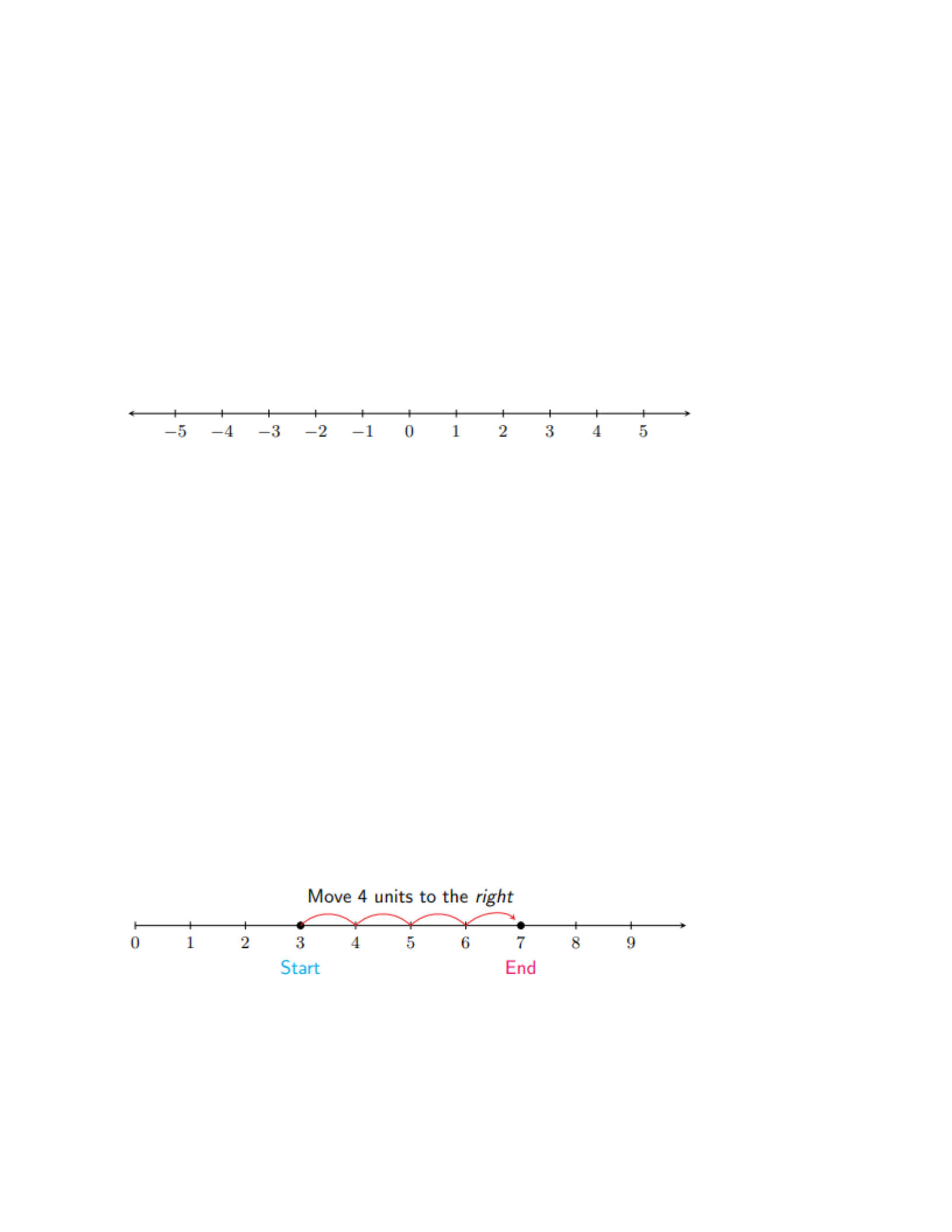
Any number divided by 0 is undefined!
Multiplying and Dividing Integers
Consider two numbers at a time.
23. If the signs of the two numbers are the same, then the sign of the answer is positive.
24. If the signs of the two numbers are different, then the sign of the answer is negative.
We begin with a brief review of arithmetic with integers
i.e. …,−3,−2,−1,0,1,2,3,……,−3,−2,−1,0,1,2,3,…
Any number has a weight and a sign.
The magnitude (or weight) of a number is the distance it is from 0 on the number line.
Example 1.1
For example, the weight of -5 is 5 and the weight of 7 is 7 .
Two numbers are opposites if, on the number line, they are on opposite sides of zero, but
the same distance away from zero.
So, −5 is the opposite of 5, and 7 is the opposite of −7 and so on.
Addition
We can add two numbers with the help of a number line .
Example 1.2
Adding two positive numbers: For example to add 3+43+4, we start with 3 on the number
line then move 4 units to the right. We land at 7 which is our answer.
So, 3+4=73+4=7. Notice that the answer has the same sign as the signs of 3 and 4 (both
positive) and its weight comes from adding the weights of 3 and 4.
You always move to the right when you add a positive number
Example 1.3
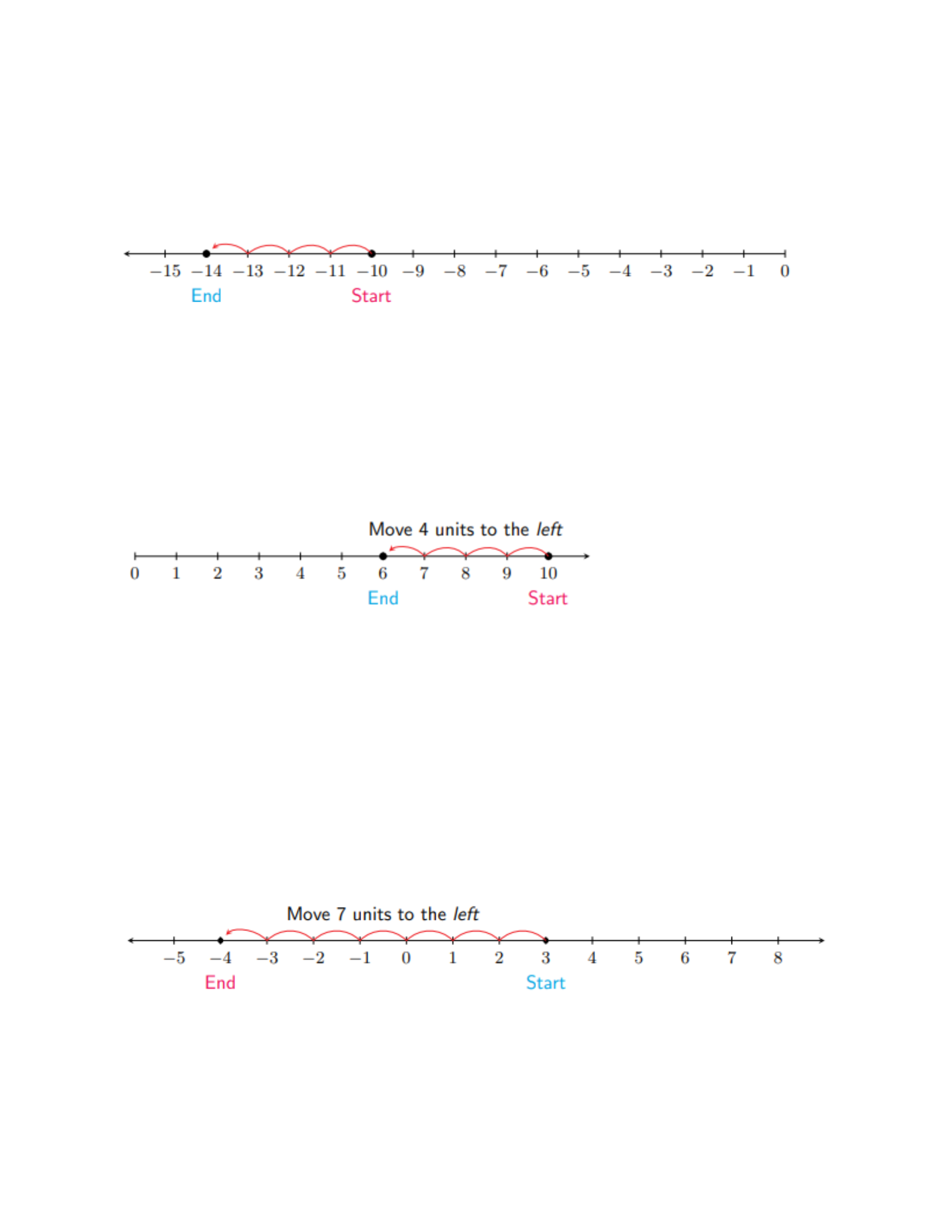
Adding two negative numbers: For example, −10+(−4)−10+(−4) means you are adding a
debt of $4$4 to an already existing debt of $10.$10. So, we start at -10 on the number line
and move 4 units to the left, to land at −14,−14, which is the answer.
You always move to the left when you add a negative number (a debt)
So, −10+(−4)=−14−10+(−4)=−14. Notice that the answer has the same sign as the signs of -
10 and -4 (both negative) and its weight comes from adding the weights of -10 and -4
To add numbers of opposite signs, that is, a positive and a negative number, we can also
use the number line. For example, to perform 10+(−4),10+(−4), we start at 10 on the
number line and then move 4 units to the left. We land at 6,6, which is the answer. Think
of 10+(−4)10+(−4) as having $10$10 and adding a $4$4 debt. Because we are adding a
debt, we move to the left on the number line!
So, 10+(−4)=6.10+(−4)=6. Notice that the answer has the same sign as the sign of 10
(positive) because it is the number of larger weight, and its weight comes from finding the
difference of the weights of 10 and -4
Notice that because we were adding two numbers of opposite signs, the answer ended up
being the difference in weight (6) along with the sign of the number of larger weight
(positive).
Example 1.4
Adding two numbers of opposite signs: For example, 3+(−7)3+(−7). We start at 3 and move
toward 7 units to the left, and we land at −4,−4, which is our answer.
So, 3+(−7)=−4.3+(−7)=−4. Notice that the answer has the same sign as the signs of -7
(negative) because it is the number of larger weight, and its weight comes from finding the
difference of the weights of 3 and -7.
Example 1.5
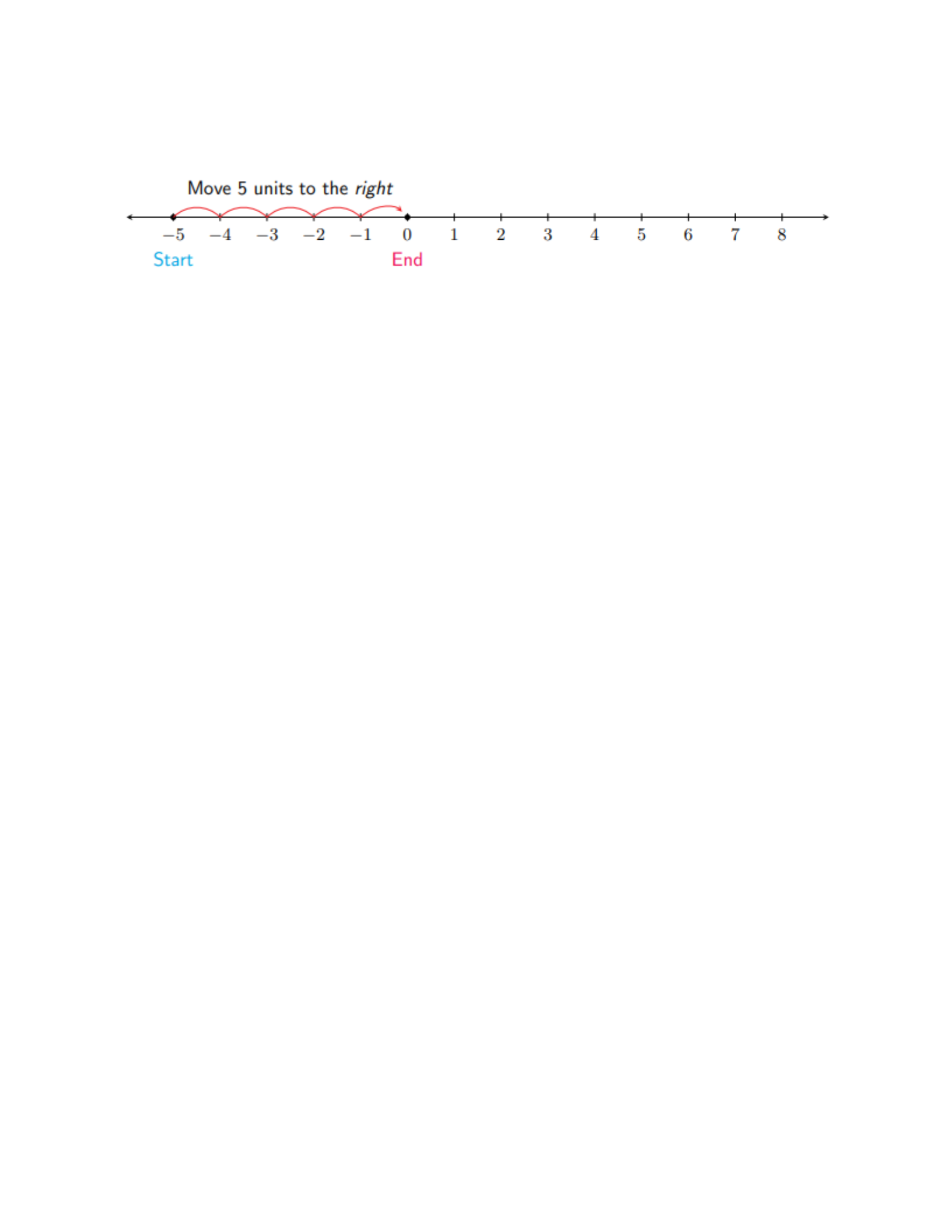
Adding opposites: We start at -5 on the number line and jump to the right 5 units to land
finally at 00. So −5+5=0−5+5=0.
Note 1.6
Two opposite numbers are called a zero-pair, because adding them always results in 0.
So, −5 and 5 are a zero-pair.
Adding Intergers
25. To add two numbers of the same sign, add their weights and place it after the
sign.
26. To add two numbers of opposite signs, find the difference of their weights and
place it after the sign of the number with the greater weight.
Example 1.7
Add:
uuu. −8+19=11−8+19=11
vvv. −8+4=−4−8+4=−4
www. 6+(−9)=−36+(−9)=−3
xxx. 7+(−2)=57+(−2)=5
yyy. (−4)+(−7)=−11(−4)+(−7)=−11
zzz. 8+7=158+7=15
Note 1.8
While we can add in any order: 4+2=2+44+2=2+4, it is sometimes convenient to add up all
of the negative numbers and add up all of the positive numbers, and then add the results.
There are also times when it is best to notice certain simplifications if the numbers are
added in a different order.
For example
−5+4+5+(−8)=−5+(−8)+4+5( by reordering )−5+4+5+(−8)=−5+(−8)+4+5( by reordering )
so,
−5+4+5+(−8)=−5+(−8)+4+5=−13+9=−4−5+4+5+(−8)=−5+(−8)+4+5=−13+9=−4

We could have also simplified this by noting that (-5) and 5 are zero-pair, so we are left
with 4+(−8)4+(−8) which is -4.
Example 1.9
We can calculate
(−4)+(−5)+7+(−3)=(−4)+(−5)+(−3)+7=(−12)+7=−5(−4)+(−5)+7+(−3)=(−4)+(−5)+(−3)+7=
(−12)+7=−5
We could have simplified this by noting that (-4) and (-3) make -7, and -7 and 7 are zero-
pair, so the total is -5.
Subtraction (as Addition of the Opposite)
Once we know how to add numbers, we are set to subtract numbers because subtraction is
nothing but addition of the opposite. That is, subtracting 8 − 3 (which reads: subtracting 3
from 8) is the same as 8 + (−3) (which reads: Adding −3 to 8.).
Example 1.10
So, 8−3=8+(−3),8−3=8+(−3), and, we can use the rules of adding two numbers of opposite
signs to find out that the answer is 5.5. We can also use the number line. We start at 8 and
move 3 units to the left (adding -3 is adding a debt, so we move to the left).
So 8−3=5.−4−3−2−10123456788−3=5.−4−3−2−1012345678 End Start Move 3 units to the
left
Example 1.11
To calculate 3−73−7 we first rewrite it as an addition
problem. 3−7=3+(−7).3−7=3+(−7). We can either use the number line, or the rules of
adding two numbers of opposite signs. And, 50,3−7=3+(−7)=−450,3−7=3+(−7)=−4
Example 1.12
To calculate −4−1,−4−1, we first rewrite it as an addition
problem. −4−1=−4+(−1).−4−1=−4+(−1). We can either use the number line, or the rules of
adding two numbers of the same signs. If we want to use the rules, both numbers are
negative, so our answer will be negative, and, adding the weights of -4 and -1
is 5.50,−4−1=−4+(−1)=−55.50,−4−1=−4+(−1)=−5
On the number line, we start at -4 and move 1 unit to the left, to land on -5 which is our
answer.

Changing the subtractions to additions in this way is particularly useful when adding or
subtracting several numbers (because we can add in any order).
Example 1.13
===−3−7+5+7+13−6−(−9)−3+(−7)+5+7+13+(−6)+9−3+(−7)+(−6)+5+7+13+918−3−7+5+7
+13−6−(−9)=−3+(−7)+5+7+13+(−6)+9=−3+(−7)+(−6)+5+7+13+9=18
===−3−7+5+7+13−6−(−9)−3+(−7)+5+7+13+(−6)+95+1318−3−7+5+7+13−6−(−9)=−3+(−7
)+5+7+13+(−6)+9=5+13=18
Remark 1.14
Warning: The symbol "-" is used in two different ways. When it is between two expressions,
it means subtract (e.g., 3−43−4 ). Otherwise, it means 'opposite' or 'negative'
(e.g., −3+4−3+4 ). So in the expression −4−(−3)−4−(−3), the first and last "-" means
opposite and the one in the middle one means subtract. The importance of understanding
this can not be overestimated.
Multiplication and Division of Positive Numbers
Multiplication of integers is adding in the sense that 3×4=4+4+43×4=4+4+4
To multiply larger numbers, it is better to use the usual scheme of multiplication. For
example:
Example 1.15
Let us multiply 152 by 34. We will for convenience sake put the smaller number on the
bottom (though it is not necessary). We have
+×4516515306624808152×34608+45605168
And division is the opposite of multiplication in the sense that to compute 45÷945÷9 is to
find a number so that when we multiply by 9 we get 45. We run through our multiplication
tables (which are hopefully in our head) to discover that 5 does the
trick: 5×9=455×9=45 so that 45÷9=5.45÷9=5. We will discuss division from a different
point of view when we discuss fractions.
To divide larger numbers, we can use long division. For example, let’s divide 3571 by 11.
Example 1.16
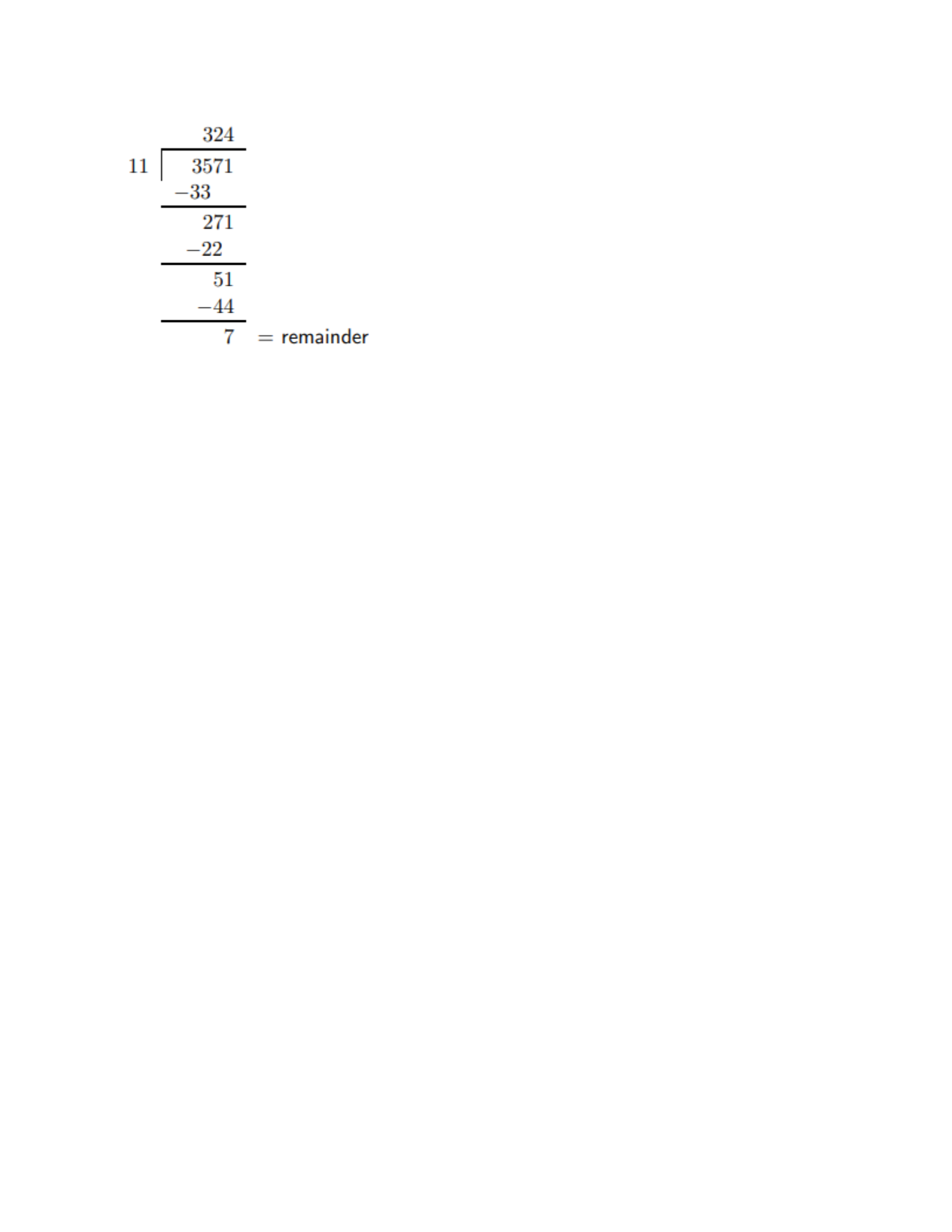
Multiplication involving negative numbers
Multiplication is a little tricky to understand without the notion of distribution (discussed
later). We will begin with noting again what it means to multiply a number by a positive
number: So if we want to compute 4⋅(−7)4⋅(−7) we note
4⋅(−7)=(−7)+(−7)+(−7)+(−7)=−284⋅(−7)=(−7)+(−7)+(−7)+(−7)=−28
Note that since 4⋅7=28,4⋅(−7)=−(4⋅7).4⋅7=28,4⋅(−7)=−(4⋅7). We can multiply positive
numbers in any order: 4⋅7=7⋅44⋅7=7⋅4. The same is true of positive and negative numbers:
(−7)⋅4=4⋅(−7)=−(4⋅7)=−28(−7)⋅4=4⋅(−7)=−(4⋅7)=−28
Example 1.17
5⋅(−12)=−(5⋅12)=−605⋅(−12)=−(5⋅12)=−60 and (−3)⋅(−2)=−(3⋅(−2))=−(−(3⋅2))=6(−3)⋅(−2)
=−(3⋅(−2))=−(−(3⋅2))=6
Example 1.18
So the size of the product of two numbers is the product of their sizes. The sign is positive if
the signs are the same and negative if they are different.
Example 1.19
Two quantities right next to each other, with no symbol between them (except for
parentheses around either or both numbers), has an implicit multiplication. For
example, 3(2)=3×23(2)=3×2.
Example 1.20
Multiply:
iii. (−5)(−8)=40(−5)(−8)=40
jjj. (−6)⋅7=−42(−6)⋅7=−42
kkk. 4⋅12=484⋅12=48

lll. (−3)(−6)⋅4(−3)=18⋅4(−3)=72(−3)=−216( multiplying from left to
right )(−3)(−6)⋅4(−3)=18⋅4(−3)=72(−3)=−216( multiplying from left to right )
mmm. (−3)(−5)⋅4(−2)=(−3)⋅4⋅(−5)(−2)=−12⋅10=−120((−3)(−5)⋅4(−2)=(−3)⋅4⋅(−5)(
−2)=−12⋅10=−120( since we can multiply in any order it is convenient to see
that −5⋅−2=10.−5⋅−2=10. )
Exponents of integers
Recall that a positive exponent represents the number of times a number is multiplied by
itself.
Example 1.21
Evaluate:
uuu. 52=5⋅5=2552=5⋅5=25
vvv. (−4)3=(−4)⋅(−4)⋅(−4)=16⋅(−4)=−64(−4)3=(−4)⋅(−4)⋅(−4)=16⋅(−4)=−64
www. (−7)1=−7(−7)1=−7
xxx. −24=−2⋅2⋅2⋅2=−16−24=−2⋅2⋅2⋅2=−16 Note: The exponent here is for 2 not
−2!
yyy. (−3)4=(−3)⋅(−3)⋅(−3)⋅(−3)=9⋅(−3)⋅(−3)=−27⋅(−3)=81(−3)4=(−3)⋅(−3)⋅(−3)⋅(
−3)=9⋅(−3)⋅(−3)=−27⋅(−3)=81
zzz. (−2)5=(−2)⋅(−2)⋅(−2)⋅(−2)⋅(−2)=−32(−2)5=(−2)⋅(−2)⋅(−2)⋅(−2)⋅(−2)=−32
Exponent rules in details will be further discussed in Chapter 5.
Division involving negative numbers
Division is just a question of knowing multiplication and therefore has the same rule: The
size of the quotient of two numbers is the quotient of the sizes. The sign is positive if the
signs are the same and negative if they are different.
Example 1.22
Divide:
uuu. (−42)÷7=−6(−42)÷7=−6
vvv. 81÷(−9)=−981÷(−9)=−9
www. (−35)÷(−7)=5(−35)÷(−7)=5
xxx. 14÷2=714÷2=7
yyy. 0÷5=00÷5=0. Note When dividing 0 by any number, the answer is always 0.
zzz. −10÷0=−10÷0= undefined.
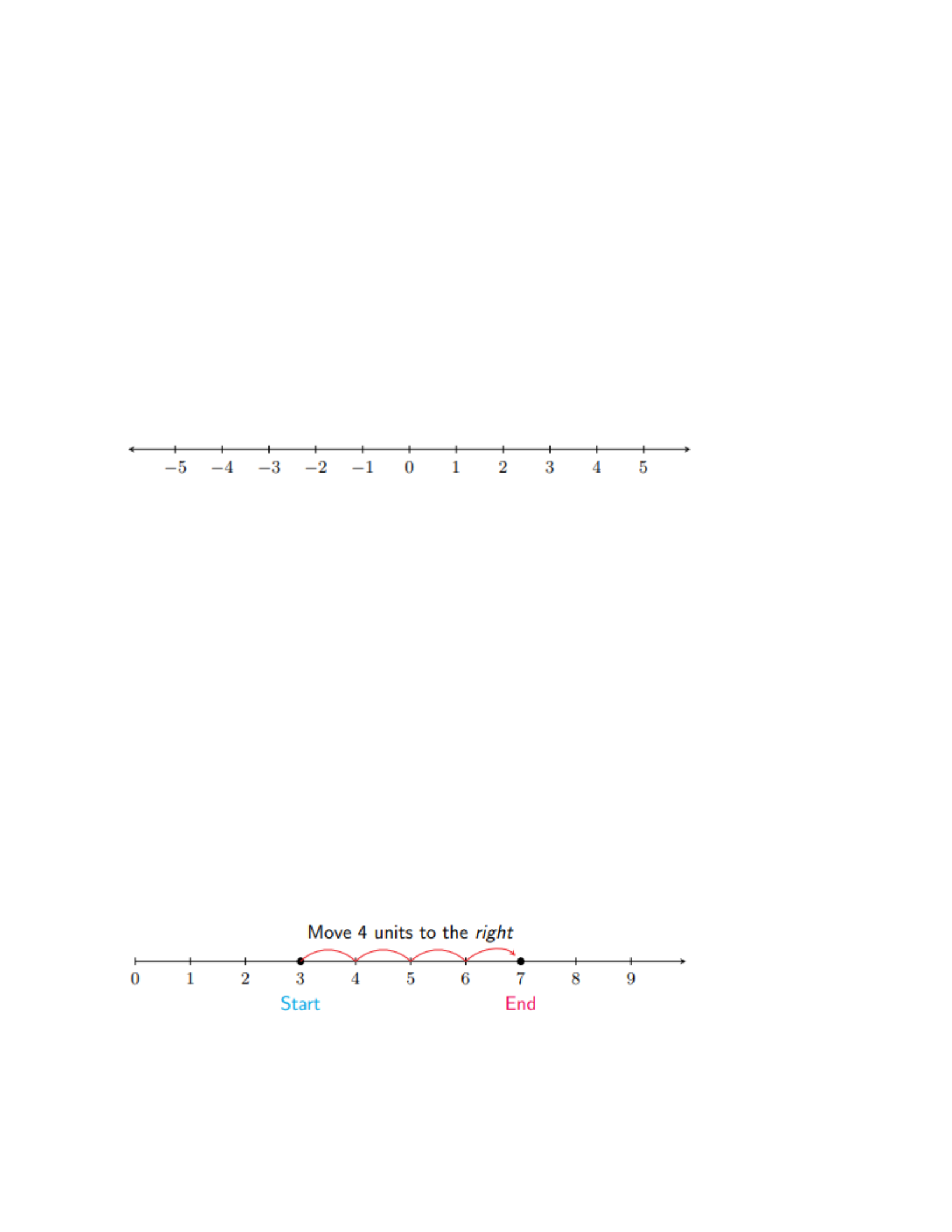
Note 1.23
Any number divided by 0 is undefined!
Multiplying and Dividing Integers
Consider two numbers at a time.
25. If the signs of the two numbers are the same, then the sign of the answer is positive.
26. If the signs of the two numbers are different, then the sign of the answer is negative.
We begin with a brief review of arithmetic with integers
i.e. …,−3,−2,−1,0,1,2,3,……,−3,−2,−1,0,1,2,3,…
Any number has a weight and a sign.
The magnitude (or weight) of a number is the distance it is from 0 on the number line.
Example 1.1
For example, the weight of -5 is 5 and the weight of 7 is 7 .
Two numbers are opposites if, on the number line, they are on opposite sides of zero, but
the same distance away from zero.
So, −5 is the opposite of 5, and 7 is the opposite of −7 and so on.
Addition
We can add two numbers with the help of a number line .
Example 1.2
Adding two positive numbers: For example to add 3+43+4, we start with 3 on the number
line then move 4 units to the right. We land at 7 which is our answer.
So, 3+4=73+4=7. Notice that the answer has the same sign as the signs of 3 and 4 (both
positive) and its weight comes from adding the weights of 3 and 4.
You always move to the right when you add a positive number
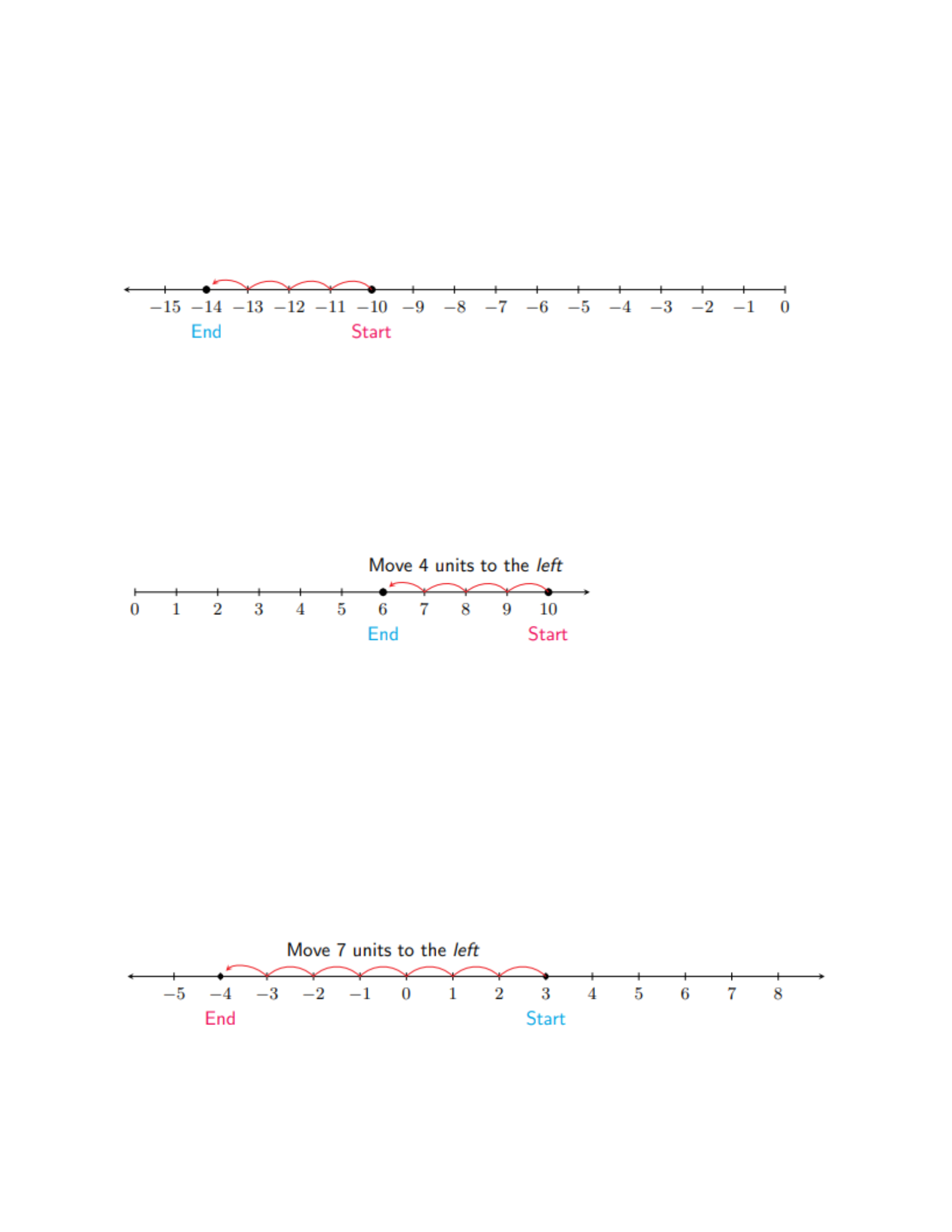
Example 1.3
Adding two negative numbers: For example, −10+(−4)−10+(−4) means you are adding a
debt of $4$4 to an already existing debt of $10.$10. So, we start at -10 on the number line
and move 4 units to the left, to land at −14,−14, which is the answer.
You always move to the left when you add a negative number (a debt)
So, −10+(−4)=−14−10+(−4)=−14. Notice that the answer has the same sign as the signs of -
10 and -4 (both negative) and its weight comes from adding the weights of -10 and -4
To add numbers of opposite signs, that is, a positive and a negative number, we can also
use the number line. For example, to perform 10+(−4),10+(−4), we start at 10 on the
number line and then move 4 units to the left. We land at 6,6, which is the answer. Think
of 10+(−4)10+(−4) as having $10$10 and adding a $4$4 debt. Because we are adding a
debt, we move to the left on the number line!
So, 10+(−4)=6.10+(−4)=6. Notice that the answer has the same sign as the sign of 10
(positive) because it is the number of larger weight, and its weight comes from finding the
difference of the weights of 10 and -4
Notice that because we were adding two numbers of opposite signs, the answer ended up
being the difference in weight (6) along with the sign of the number of larger weight
(positive).
Example 1.4
Adding two numbers of opposite signs: For example, 3+(−7)3+(−7). We start at 3 and move
toward 7 units to the left, and we land at −4,−4, which is our answer.
So, 3+(−7)=−4.3+(−7)=−4. Notice that the answer has the same sign as the signs of -7
(negative) because it is the number of larger weight, and its weight comes from finding the
difference of the weights of 3 and -7.
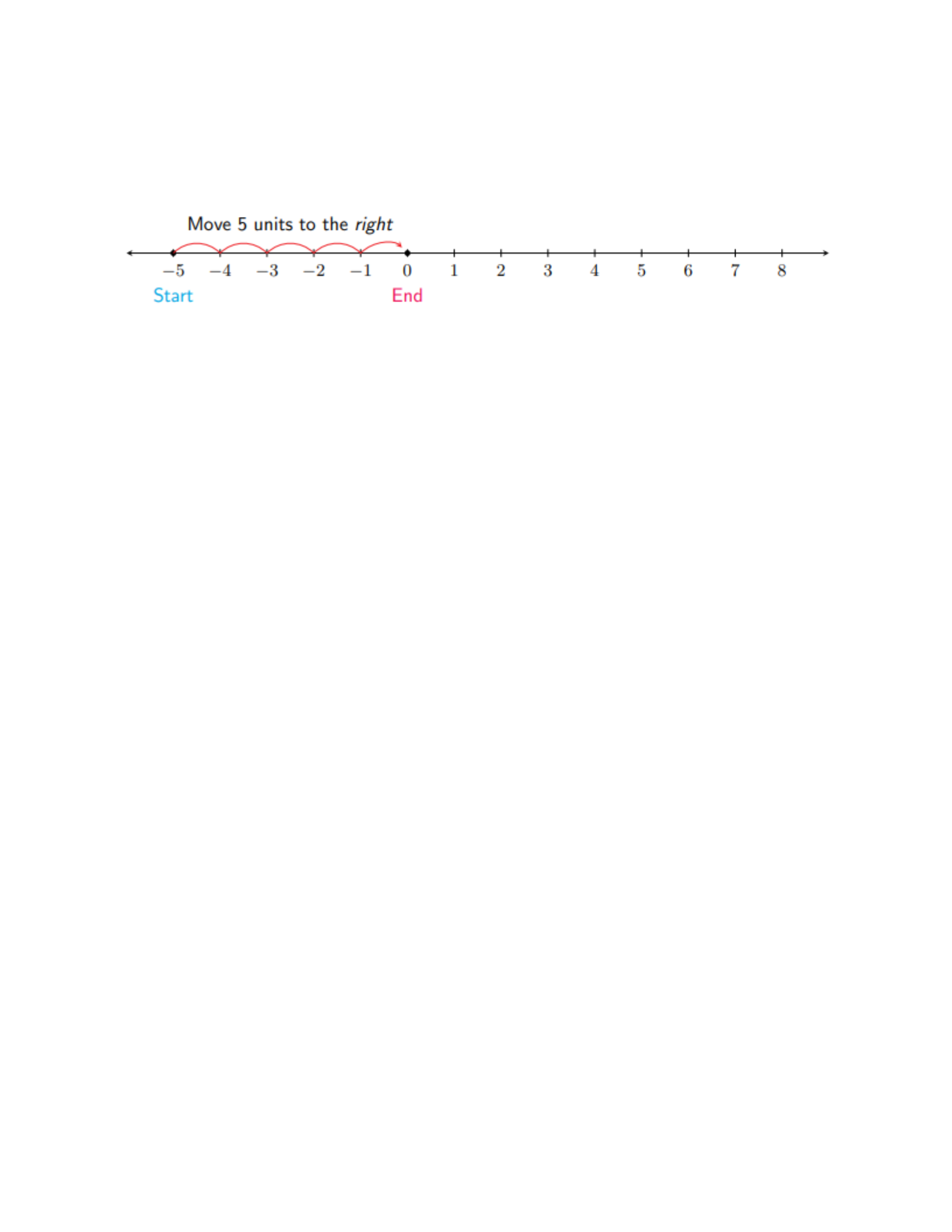
Example 1.5
Adding opposites: We start at -5 on the number line and jump to the right 5 units to land
finally at 00. So −5+5=0−5+5=0.
Note 1.6
Two opposite numbers are called a zero-pair, because adding them always results in 0.
So, −5 and 5 are a zero-pair.
Adding Intergers
27. To add two numbers of the same sign, add their weights and place it after the
sign.
28. To add two numbers of opposite signs, find the difference of their weights and
place it after the sign of the number with the greater weight.
Example 1.7
Add:
aaaa. −8+19=11−8+19=11
bbbb. −8+4=−4−8+4=−4
cccc. 6+(−9)=−36+(−9)=−3
dddd. 7+(−2)=57+(−2)=5
eeee. (−4)+(−7)=−11(−4)+(−7)=−11
ffff. 8+7=158+7=15
Note 1.8
While we can add in any order: 4+2=2+44+2=2+4, it is sometimes convenient to add up all
of the negative numbers and add up all of the positive numbers, and then add the results.
There are also times when it is best to notice certain simplifications if the numbers are
added in a different order.
For example
−5+4+5+(−8)=−5+(−8)+4+5( by reordering )−5+4+5+(−8)=−5+(−8)+4+5( by reordering )
so,
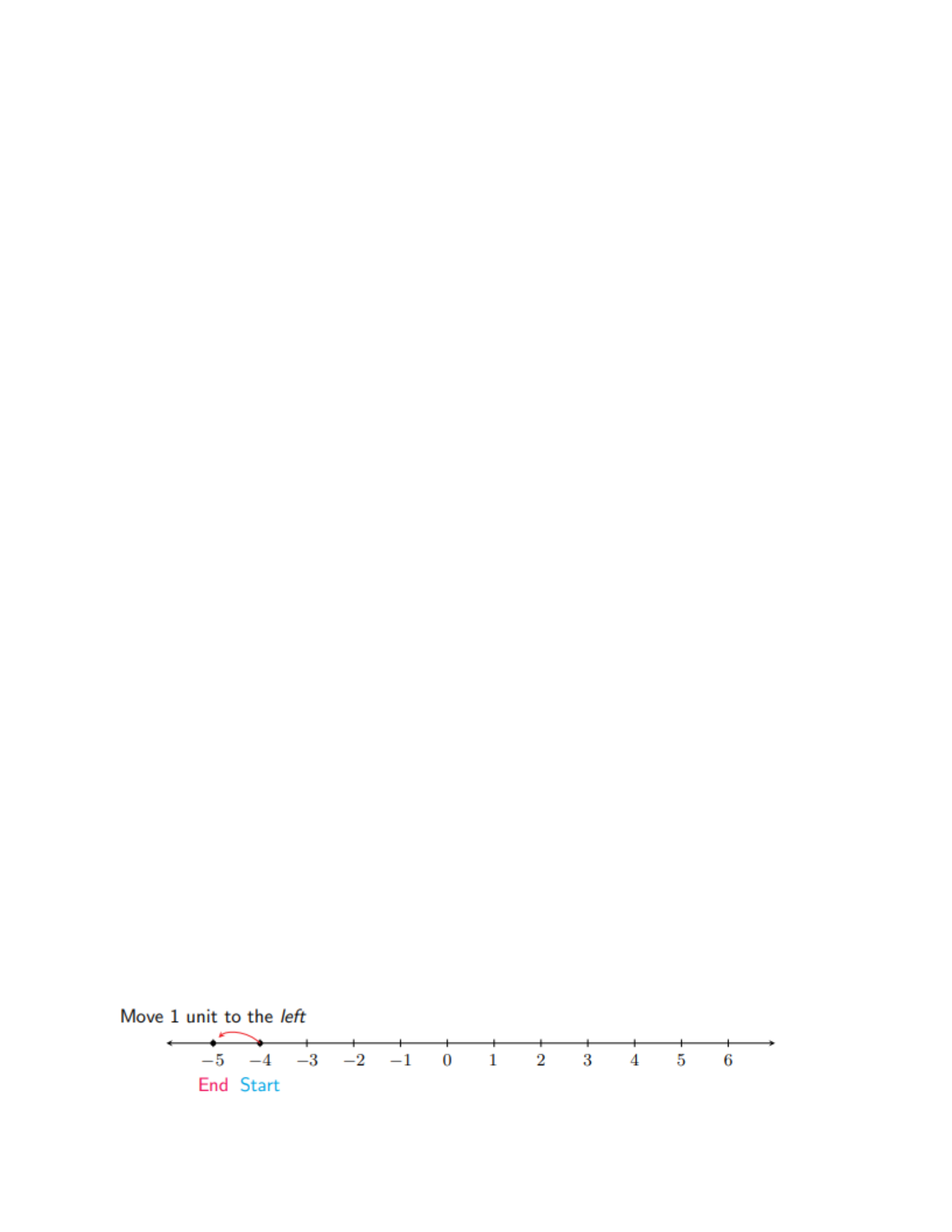
−5+4+5+(−8)=−5+(−8)+4+5=−13+9=−4−5+4+5+(−8)=−5+(−8)+4+5=−13+9=−4
We could have also simplified this by noting that (-5) and 5 are zero-pair, so we are left
with 4+(−8)4+(−8) which is -4.
Example 1.9
We can calculate
(−4)+(−5)+7+(−3)=(−4)+(−5)+(−3)+7=(−12)+7=−5(−4)+(−5)+7+(−3)=(−4)+(−5)+(−3)+7=
(−12)+7=−5
We could have simplified this by noting that (-4) and (-3) make -7, and -7 and 7 are zero-
pair, so the total is -5.
Subtraction (as Addition of the Opposite)
Once we know how to add numbers, we are set to subtract numbers because subtraction is
nothing but addition of the opposite. That is, subtracting 8 − 3 (which reads: subtracting 3
from 8) is the same as 8 + (−3) (which reads: Adding −3 to 8.).
Example 1.10
So, 8−3=8+(−3),8−3=8+(−3), and, we can use the rules of adding two numbers of opposite
signs to find out that the answer is 5.5. We can also use the number line. We start at 8 and
move 3 units to the left (adding -3 is adding a debt, so we move to the left).
So 8−3=5.−4−3−2−10123456788−3=5.−4−3−2−1012345678 End Start Move 3 units to the
left
Example 1.11
To calculate 3−73−7 we first rewrite it as an addition
problem. 3−7=3+(−7).3−7=3+(−7). We can either use the number line, or the rules of
adding two numbers of opposite signs. And, 50,3−7=3+(−7)=−450,3−7=3+(−7)=−4
Example 1.12
To calculate −4−1,−4−1, we first rewrite it as an addition
problem. −4−1=−4+(−1).−4−1=−4+(−1). We can either use the number line, or the rules of
adding two numbers of the same signs. If we want to use the rules, both numbers are
negative, so our answer will be negative, and, adding the weights of -4 and -1
is 5.50,−4−1=−4+(−1)=−55.50,−4−1=−4+(−1)=−5
On the number line, we start at -4 and move 1 unit to the left, to land on -5 which is our
answer.

Changing the subtractions to additions in this way is particularly useful when adding or
subtracting several numbers (because we can add in any order).
Example 1.13
===−3−7+5+7+13−6−(−9)−3+(−7)+5+7+13+(−6)+9−3+(−7)+(−6)+5+7+13+918−3−7+5+7
+13−6−(−9)=−3+(−7)+5+7+13+(−6)+9=−3+(−7)+(−6)+5+7+13+9=18
===−3−7+5+7+13−6−(−9)−3+(−7)+5+7+13+(−6)+95+1318−3−7+5+7+13−6−(−9)=−3+(−7
)+5+7+13+(−6)+9=5+13=18
Remark 1.14
Warning: The symbol "-" is used in two different ways. When it is between two expressions,
it means subtract (e.g., 3−43−4 ). Otherwise, it means 'opposite' or 'negative'
(e.g., −3+4−3+4 ). So in the expression −4−(−3)−4−(−3), the first and last "-" means
opposite and the one in the middle one means subtract. The importance of understanding
this can not be overestimated.
Multiplication and Division of Positive Numbers
Multiplication of integers is adding in the sense that 3×4=4+4+43×4=4+4+4
To multiply larger numbers, it is better to use the usual scheme of multiplication. For
example:
Example 1.15
Let us multiply 152 by 34. We will for convenience sake put the smaller number on the
bottom (though it is not necessary). We have
+×4516515306624808152×34608+45605168
And division is the opposite of multiplication in the sense that to compute 45÷945÷9 is to
find a number so that when we multiply by 9 we get 45. We run through our multiplication
tables (which are hopefully in our head) to discover that 5 does the
trick: 5×9=455×9=45 so that 45÷9=5.45÷9=5. We will discuss division from a different
point of view when we discuss fractions.
To divide larger numbers, we can use long division. For example, let’s divide 3571 by 11.
Example 1.16
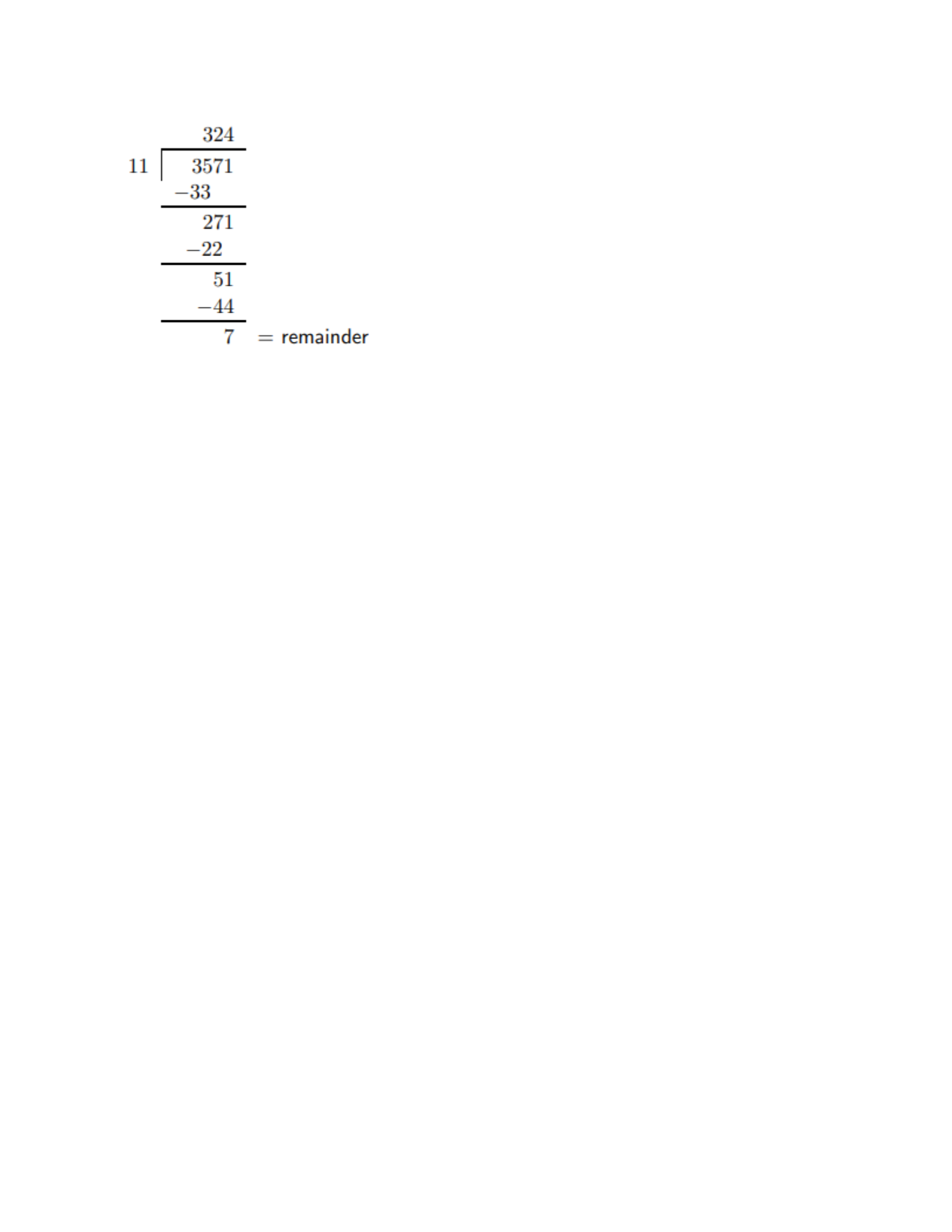
Multiplication involving negative numbers
Multiplication is a little tricky to understand without the notion of distribution (discussed
later). We will begin with noting again what it means to multiply a number by a positive
number: So if we want to compute 4⋅(−7)4⋅(−7) we note
4⋅(−7)=(−7)+(−7)+(−7)+(−7)=−284⋅(−7)=(−7)+(−7)+(−7)+(−7)=−28
Note that since 4⋅7=28,4⋅(−7)=−(4⋅7).4⋅7=28,4⋅(−7)=−(4⋅7). We can multiply positive
numbers in any order: 4⋅7=7⋅44⋅7=7⋅4. The same is true of positive and negative numbers:
(−7)⋅4=4⋅(−7)=−(4⋅7)=−28(−7)⋅4=4⋅(−7)=−(4⋅7)=−28
Example 1.17
5⋅(−12)=−(5⋅12)=−605⋅(−12)=−(5⋅12)=−60 and (−3)⋅(−2)=−(3⋅(−2))=−(−(3⋅2))=6(−3)⋅(−2)
=−(3⋅(−2))=−(−(3⋅2))=6
Example 1.18
So the size of the product of two numbers is the product of their sizes. The sign is positive if
the signs are the same and negative if they are different.
Example 1.19
Two quantities right next to each other, with no symbol between them (except for
parentheses around either or both numbers), has an implicit multiplication. For
example, 3(2)=3×23(2)=3×2.
Example 1.20
Multiply:
nnn. (−5)(−8)=40(−5)(−8)=40
ooo. (−6)⋅7=−42(−6)⋅7=−42
ppp. 4⋅12=484⋅12=48

qqq. (−3)(−6)⋅4(−3)=18⋅4(−3)=72(−3)=−216( multiplying from left to
right )(−3)(−6)⋅4(−3)=18⋅4(−3)=72(−3)=−216( multiplying from left to right )
rrr. (−3)(−5)⋅4(−2)=(−3)⋅4⋅(−5)(−2)=−12⋅10=−120((−3)(−5)⋅4(−2)=(−3)⋅4⋅(−5)(−2)=−1
2⋅10=−120( since we can multiply in any order it is convenient to see
that −5⋅−2=10.−5⋅−2=10. )
Exponents of integers
Recall that a positive exponent represents the number of times a number is multiplied by
itself.
Example 1.21
Evaluate:
aaaa. 52=5⋅5=2552=5⋅5=25
bbbb. (−4)3=(−4)⋅(−4)⋅(−4)=16⋅(−4)=−64(−4)3=(−4)⋅(−4)⋅(−4)=16⋅(−4)=−64
cccc. (−7)1=−7(−7)1=−7
dddd. −24=−2⋅2⋅2⋅2=−16−24=−2⋅2⋅2⋅2=−16 Note: The exponent here is for 2 not
−2!
eeee. (−3)4=(−3)⋅(−3)⋅(−3)⋅(−3)=9⋅(−3)⋅(−3)=−27⋅(−3)=81(−3)4=(−3)⋅(−3)⋅(−3)⋅(
−3)=9⋅(−3)⋅(−3)=−27⋅(−3)=81
ffff. (−2)5=(−2)⋅(−2)⋅(−2)⋅(−2)⋅(−2)=−32(−2)5=(−2)⋅(−2)⋅(−2)⋅(−2)⋅(−2)=−32
Exponent rules in details will be further discussed in Chapter 5.
Division involving negative numbers
Division is just a question of knowing multiplication and therefore has the same rule: The
size of the quotient of two numbers is the quotient of the sizes. The sign is positive if the
signs are the same and negative if they are different.
Example 1.22
Divide:
aaaa. (−42)÷7=−6(−42)÷7=−6
bbbb. 81÷(−9)=−981÷(−9)=−9
cccc. (−35)÷(−7)=5(−35)÷(−7)=5
dddd. 14÷2=714÷2=7
eeee. 0÷5=00÷5=0. Note When dividing 0 by any number, the answer is always 0.
ffff. −10÷0=−10÷0= undefined.
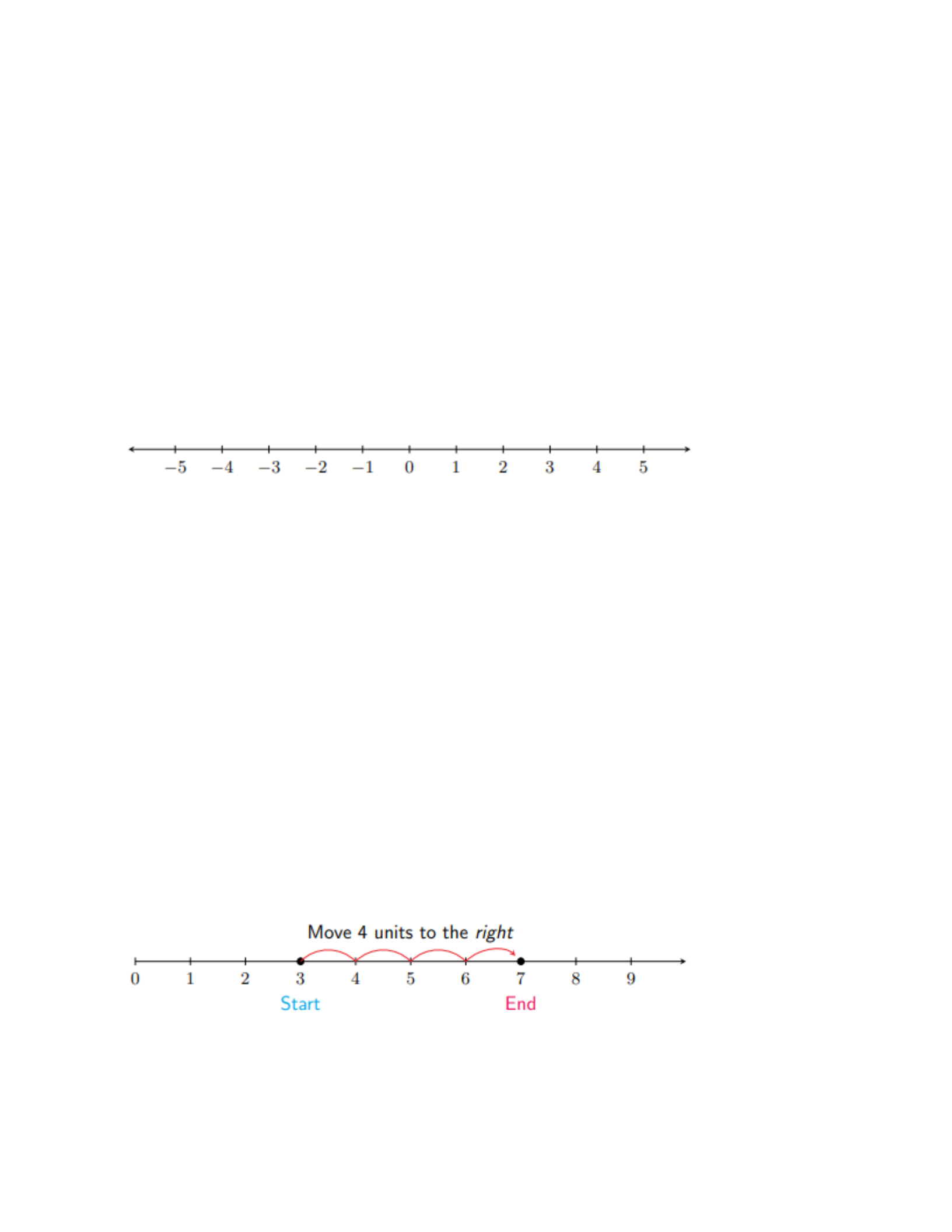
Note 1.23
Any number divided by 0 is undefined!
Multiplying and Dividing Integers
Consider two numbers at a time.
27. If the signs of the two numbers are the same, then the sign of the answer is positive.
28. If the signs of the two numbers are different, then the sign of the answer is negative.
We begin with a brief review of arithmetic with integers
i.e. …,−3,−2,−1,0,1,2,3,……,−3,−2,−1,0,1,2,3,…
Any number has a weight and a sign.
The magnitude (or weight) of a number is the distance it is from 0 on the number line.
Example 1.1
For example, the weight of -5 is 5 and the weight of 7 is 7 .
Two numbers are opposites if, on the number line, they are on opposite sides of zero, but
the same distance away from zero.
So, −5 is the opposite of 5, and 7 is the opposite of −7 and so on.
Addition
We can add two numbers with the help of a number line .
Example 1.2
Adding two positive numbers: For example to add 3+43+4, we start with 3 on the number
line then move 4 units to the right. We land at 7 which is our answer.
So, 3+4=73+4=7. Notice that the answer has the same sign as the signs of 3 and 4 (both
positive) and its weight comes from adding the weights of 3 and 4.
You always move to the right when you add a positive number
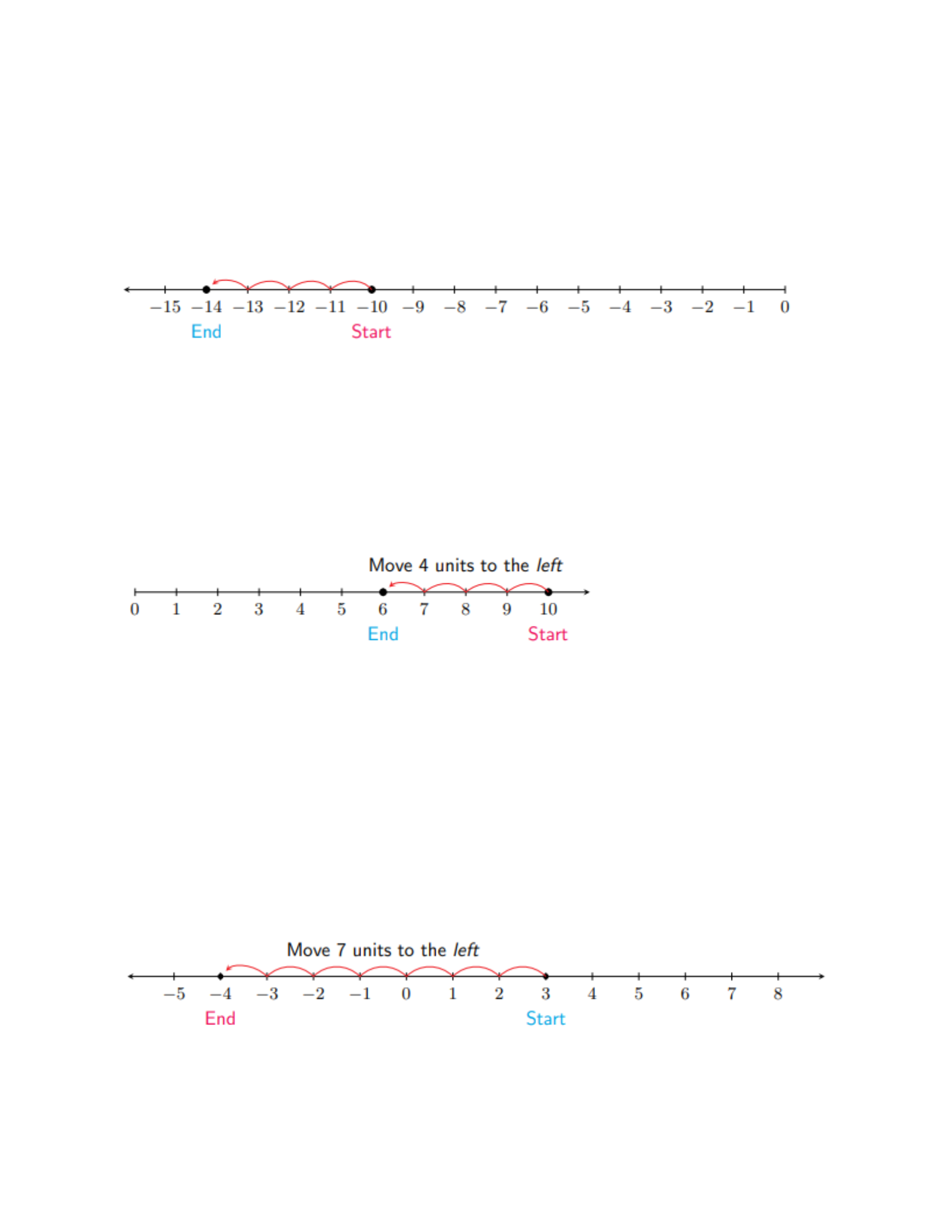
Example 1.3
Adding two negative numbers: For example, −10+(−4)−10+(−4) means you are adding a
debt of $4$4 to an already existing debt of $10.$10. So, we start at -10 on the number line
and move 4 units to the left, to land at −14,−14, which is the answer.
You always move to the left when you add a negative number (a debt)
So, −10+(−4)=−14−10+(−4)=−14. Notice that the answer has the same sign as the signs of -
10 and -4 (both negative) and its weight comes from adding the weights of -10 and -4
To add numbers of opposite signs, that is, a positive and a negative number, we can also
use the number line. For example, to perform 10+(−4),10+(−4), we start at 10 on the
number line and then move 4 units to the left. We land at 6,6, which is the answer. Think
of 10+(−4)10+(−4) as having $10$10 and adding a $4$4 debt. Because we are adding a
debt, we move to the left on the number line!
So, 10+(−4)=6.10+(−4)=6. Notice that the answer has the same sign as the sign of 10
(positive) because it is the number of larger weight, and its weight comes from finding the
difference of the weights of 10 and -4
Notice that because we were adding two numbers of opposite signs, the answer ended up
being the difference in weight (6) along with the sign of the number of larger weight
(positive).
Example 1.4
Adding two numbers of opposite signs: For example, 3+(−7)3+(−7). We start at 3 and move
toward 7 units to the left, and we land at −4,−4, which is our answer.
So, 3+(−7)=−4.3+(−7)=−4. Notice that the answer has the same sign as the signs of -7
(negative) because it is the number of larger weight, and its weight comes from finding the
difference of the weights of 3 and -7.
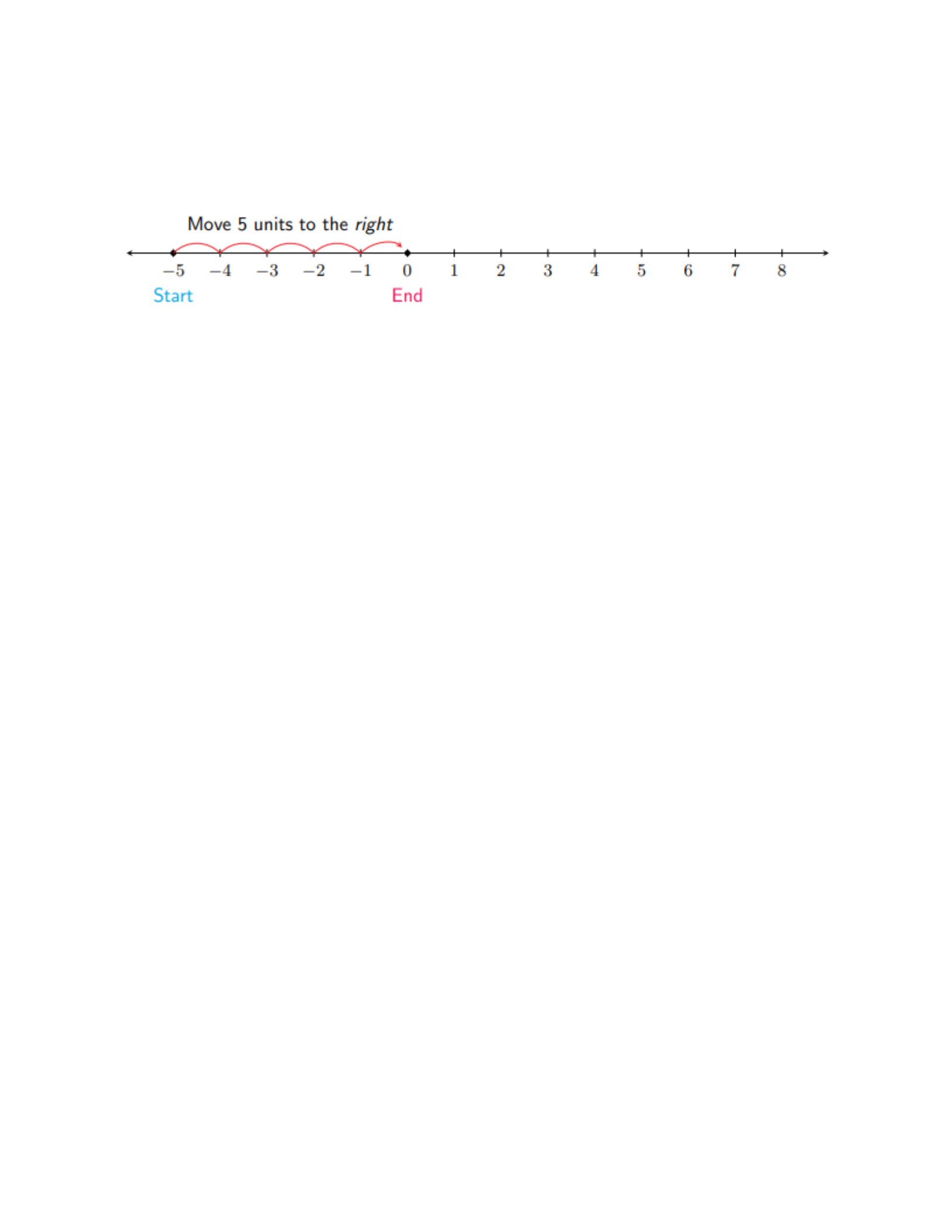
Example 1.5
Adding opposites: We start at -5 on the number line and jump to the right 5 units to land
finally at 00. So −5+5=0−5+5=0.
Note 1.6
Two opposite numbers are called a zero-pair, because adding them always results in 0.
So, −5 and 5 are a zero-pair.
Adding Intergers
29. To add two numbers of the same sign, add their weights and place it after the
sign.
30. To add two numbers of opposite signs, find the difference of their weights and
place it after the sign of the number with the greater weight.
Example 1.7
Add:
gggg. −8+19=11−8+19=11
hhhh. −8+4=−4−8+4=−4
iiii. 6+(−9)=−36+(−9)=−3
jjjj. 7+(−2)=57+(−2)=5
kkkk. (−4)+(−7)=−11(−4)+(−7)=−11
llll. 8+7=158+7=15
Note 1.8
While we can add in any order: 4+2=2+44+2=2+4, it is sometimes convenient to add up all
of the negative numbers and add up all of the positive numbers, and then add the results.
There are also times when it is best to notice certain simplifications if the numbers are
added in a different order.
For example
−5+4+5+(−8)=−5+(−8)+4+5( by reordering )−5+4+5+(−8)=−5+(−8)+4+5( by reordering )
so,
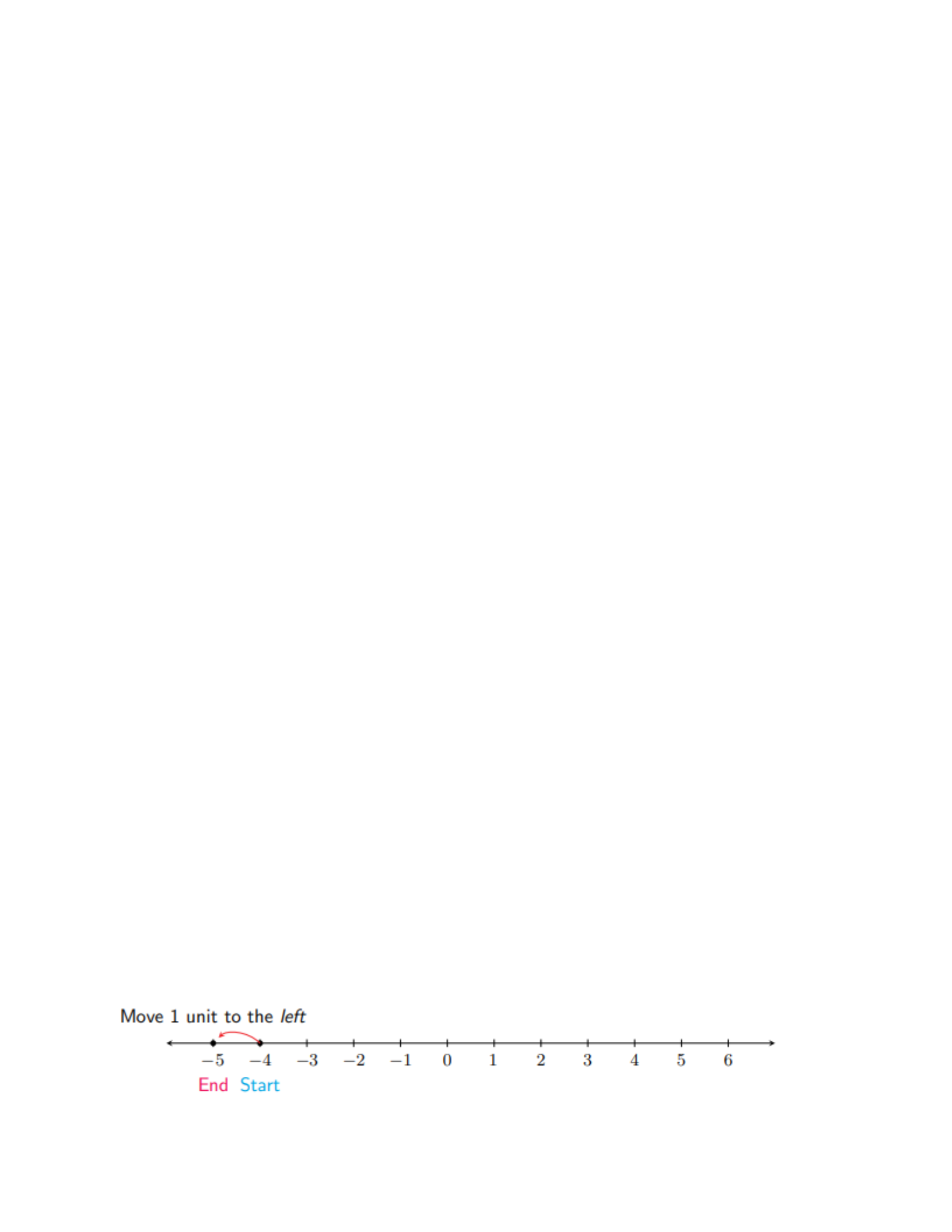
−5+4+5+(−8)=−5+(−8)+4+5=−13+9=−4−5+4+5+(−8)=−5+(−8)+4+5=−13+9=−4
We could have also simplified this by noting that (-5) and 5 are zero-pair, so we are left
with 4+(−8)4+(−8) which is -4.
Example 1.9
We can calculate
(−4)+(−5)+7+(−3)=(−4)+(−5)+(−3)+7=(−12)+7=−5(−4)+(−5)+7+(−3)=(−4)+(−5)+(−3)+7=
(−12)+7=−5
We could have simplified this by noting that (-4) and (-3) make -7, and -7 and 7 are zero-
pair, so the total is -5.
Subtraction (as Addition of the Opposite)
Once we know how to add numbers, we are set to subtract numbers because subtraction is
nothing but addition of the opposite. That is, subtracting 8 − 3 (which reads: subtracting 3
from 8) is the same as 8 + (−3) (which reads: Adding −3 to 8.).
Example 1.10
So, 8−3=8+(−3),8−3=8+(−3), and, we can use the rules of adding two numbers of opposite
signs to find out that the answer is 5.5. We can also use the number line. We start at 8 and
move 3 units to the left (adding -3 is adding a debt, so we move to the left).
So 8−3=5.−4−3−2−10123456788−3=5.−4−3−2−1012345678 End Start Move 3 units to the
left
Example 1.11
To calculate 3−73−7 we first rewrite it as an addition
problem. 3−7=3+(−7).3−7=3+(−7). We can either use the number line, or the rules of
adding two numbers of opposite signs. And, 50,3−7=3+(−7)=−450,3−7=3+(−7)=−4
Example 1.12
To calculate −4−1,−4−1, we first rewrite it as an addition
problem. −4−1=−4+(−1).−4−1=−4+(−1). We can either use the number line, or the rules of
adding two numbers of the same signs. If we want to use the rules, both numbers are
negative, so our answer will be negative, and, adding the weights of -4 and -1
is 5.50,−4−1=−4+(−1)=−55.50,−4−1=−4+(−1)=−5
On the number line, we start at -4 and move 1 unit to the left, to land on -5 which is our
answer.

Changing the subtractions to additions in this way is particularly useful when adding or
subtracting several numbers (because we can add in any order).
Example 1.13
===−3−7+5+7+13−6−(−9)−3+(−7)+5+7+13+(−6)+9−3+(−7)+(−6)+5+7+13+918−3−7+5+7
+13−6−(−9)=−3+(−7)+5+7+13+(−6)+9=−3+(−7)+(−6)+5+7+13+9=18
===−3−7+5+7+13−6−(−9)−3+(−7)+5+7+13+(−6)+95+1318−3−7+5+7+13−6−(−9)=−3+(−7
)+5+7+13+(−6)+9=5+13=18
Remark 1.14
Warning: The symbol "-" is used in two different ways. When it is between two expressions,
it means subtract (e.g., 3−43−4 ). Otherwise, it means 'opposite' or 'negative'
(e.g., −3+4−3+4 ). So in the expression −4−(−3)−4−(−3), the first and last "-" means
opposite and the one in the middle one means subtract. The importance of understanding
this can not be overestimated.
Multiplication and Division of Positive Numbers
Multiplication of integers is adding in the sense that 3×4=4+4+43×4=4+4+4
To multiply larger numbers, it is better to use the usual scheme of multiplication. For
example:
Example 1.15
Let us multiply 152 by 34. We will for convenience sake put the smaller number on the
bottom (though it is not necessary). We have
+×4516515306624808152×34608+45605168
And division is the opposite of multiplication in the sense that to compute 45÷945÷9 is to
find a number so that when we multiply by 9 we get 45. We run through our multiplication
tables (which are hopefully in our head) to discover that 5 does the
trick: 5×9=455×9=45 so that 45÷9=5.45÷9=5. We will discuss division from a different
point of view when we discuss fractions.
To divide larger numbers, we can use long division. For example, let’s divide 3571 by 11.
Example 1.16
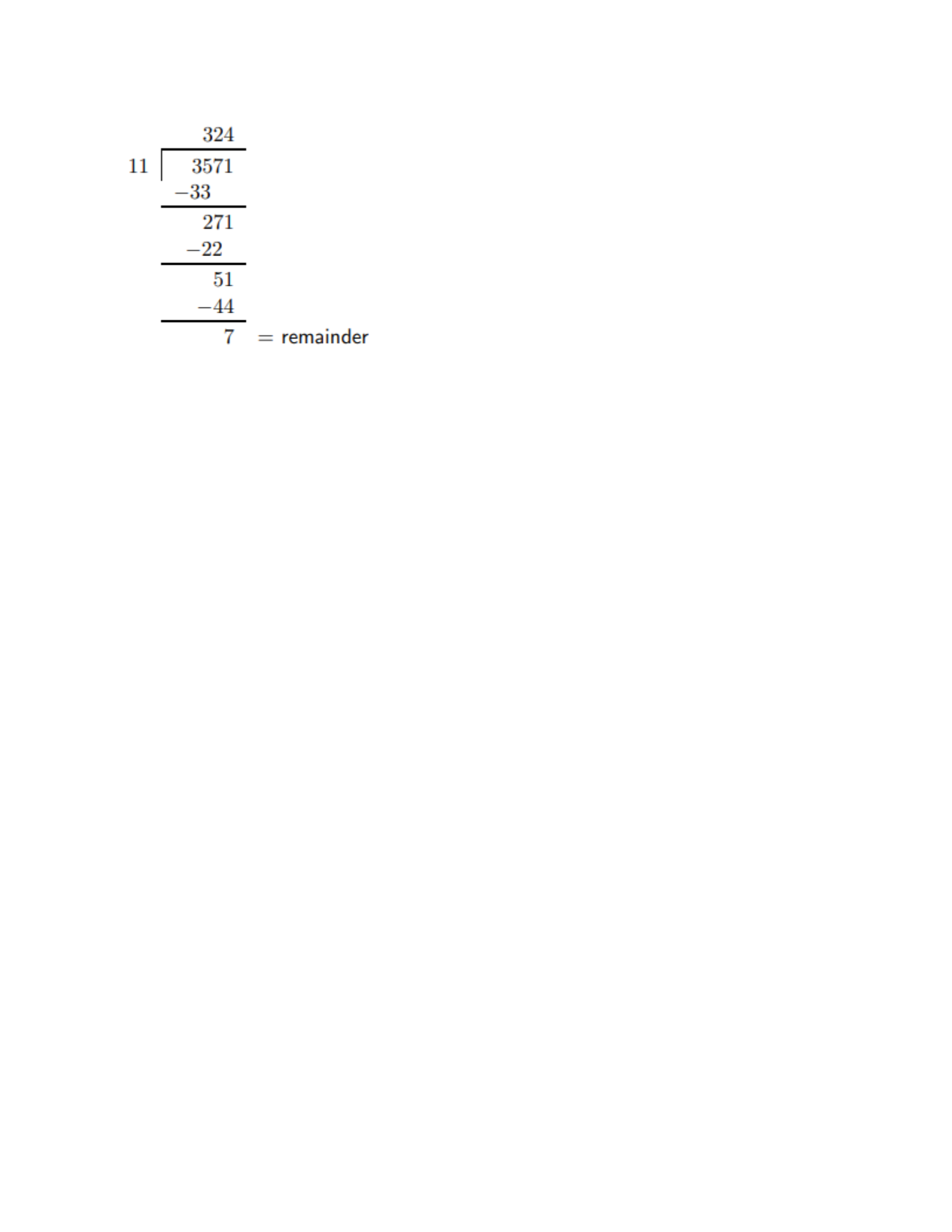
Multiplication involving negative numbers
Multiplication is a little tricky to understand without the notion of distribution (discussed
later). We will begin with noting again what it means to multiply a number by a positive
number: So if we want to compute 4⋅(−7)4⋅(−7) we note
4⋅(−7)=(−7)+(−7)+(−7)+(−7)=−284⋅(−7)=(−7)+(−7)+(−7)+(−7)=−28
Note that since 4⋅7=28,4⋅(−7)=−(4⋅7).4⋅7=28,4⋅(−7)=−(4⋅7). We can multiply positive
numbers in any order: 4⋅7=7⋅44⋅7=7⋅4. The same is true of positive and negative numbers:
(−7)⋅4=4⋅(−7)=−(4⋅7)=−28(−7)⋅4=4⋅(−7)=−(4⋅7)=−28
Example 1.17
5⋅(−12)=−(5⋅12)=−605⋅(−12)=−(5⋅12)=−60 and (−3)⋅(−2)=−(3⋅(−2))=−(−(3⋅2))=6(−3)⋅(−2)
=−(3⋅(−2))=−(−(3⋅2))=6
Example 1.18
So the size of the product of two numbers is the product of their sizes. The sign is positive if
the signs are the same and negative if they are different.
Example 1.19
Two quantities right next to each other, with no symbol between them (except for
parentheses around either or both numbers), has an implicit multiplication. For
example, 3(2)=3×23(2)=3×2.
Example 1.20
Multiply:
sss. (−5)(−8)=40(−5)(−8)=40
ttt. (−6)⋅7=−42(−6)⋅7=−42
uuu. 4⋅12=484⋅12=48

vvv. (−3)(−6)⋅4(−3)=18⋅4(−3)=72(−3)=−216( multiplying from left to
right )(−3)(−6)⋅4(−3)=18⋅4(−3)=72(−3)=−216( multiplying from left to right )
www. (−3)(−5)⋅4(−2)=(−3)⋅4⋅(−5)(−2)=−12⋅10=−120((−3)(−5)⋅4(−2)=(−3)⋅4⋅(−5)(
−2)=−12⋅10=−120( since we can multiply in any order it is convenient to see
that −5⋅−2=10.−5⋅−2=10. )
Exponents of integers
Recall that a positive exponent represents the number of times a number is multiplied by
itself.
Example 1.21
Evaluate:
gggg. 52=5⋅5=2552=5⋅5=25
hhhh. (−4)3=(−4)⋅(−4)⋅(−4)=16⋅(−4)=−64(−4)3=(−4)⋅(−4)⋅(−4)=16⋅(−4)=−64
iiii. (−7)1=−7(−7)1=−7
jjjj. −24=−2⋅2⋅2⋅2=−16−24=−2⋅2⋅2⋅2=−16 Note: The exponent here is for 2 not −2!
kkkk. (−3)4=(−3)⋅(−3)⋅(−3)⋅(−3)=9⋅(−3)⋅(−3)=−27⋅(−3)=81(−3)4=(−3)⋅(−3)⋅(−3)⋅(
−3)=9⋅(−3)⋅(−3)=−27⋅(−3)=81
llll. (−2)5=(−2)⋅(−2)⋅(−2)⋅(−2)⋅(−2)=−32(−2)5=(−2)⋅(−2)⋅(−2)⋅(−2)⋅(−2)=−32
Exponent rules in details will be further discussed in Chapter 5.
Division involving negative numbers
Division is just a question of knowing multiplication and therefore has the same rule: The
size of the quotient of two numbers is the quotient of the sizes. The sign is positive if the
signs are the same and negative if they are different.
Example 1.22
Divide:
gggg. (−42)÷7=−6(−42)÷7=−6
hhhh. 81÷(−9)=−981÷(−9)=−9
iiii. (−35)÷(−7)=5(−35)÷(−7)=5
jjjj. 14÷2=714÷2=7
kkkk. 0÷5=00÷5=0. Note When dividing 0 by any number, the answer is always 0.
llll. −10÷0=−10÷0= undefined.
Note 1.23
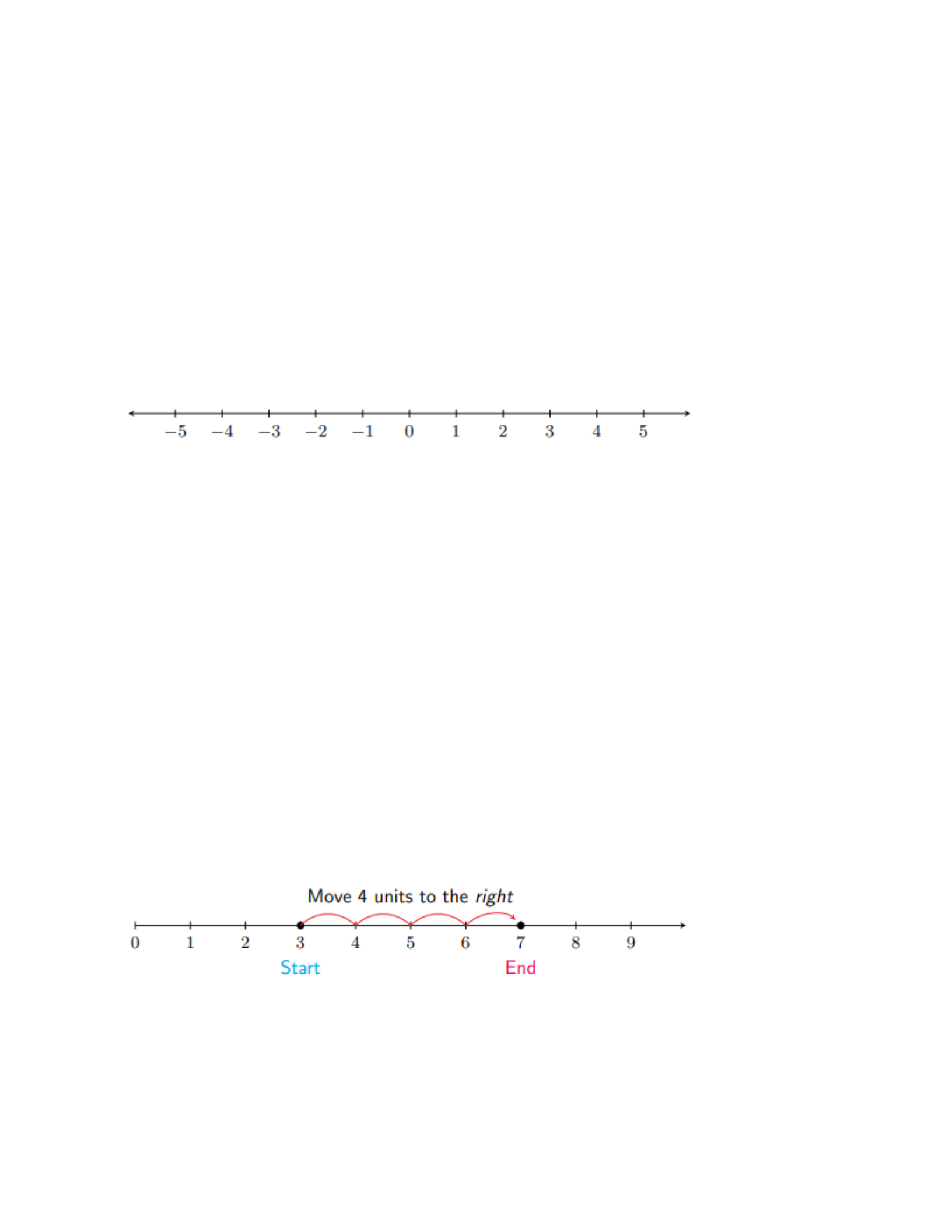
Any number divided by 0 is undefined!
Multiplying and Dividing Integers
Consider two numbers at a time.
29. If the signs of the two numbers are the same, then the sign of the answer is positive.
30. If the signs of the two numbers are different, then the sign of the answer is negative.
We begin with a brief review of arithmetic with integers
i.e. …,−3,−2,−1,0,1,2,3,……,−3,−2,−1,0,1,2,3,…
Any number has a weight and a sign.
The magnitude (or weight) of a number is the distance it is from 0 on the number line.
Example 1.1
For example, the weight of -5 is 5 and the weight of 7 is 7 .
Two numbers are opposites if, on the number line, they are on opposite sides of zero, but
the same distance away from zero.
So, −5 is the opposite of 5, and 7 is the opposite of −7 and so on.
Addition
We can add two numbers with the help of a number line .
Example 1.2
Adding two positive numbers: For example to add 3+43+4, we start with 3 on the number
line then move 4 units to the right. We land at 7 which is our answer.
So, 3+4=73+4=7. Notice that the answer has the same sign as the signs of 3 and 4 (both
positive) and its weight comes from adding the weights of 3 and 4.
You always move to the right when you add a positive number
Example 1.3
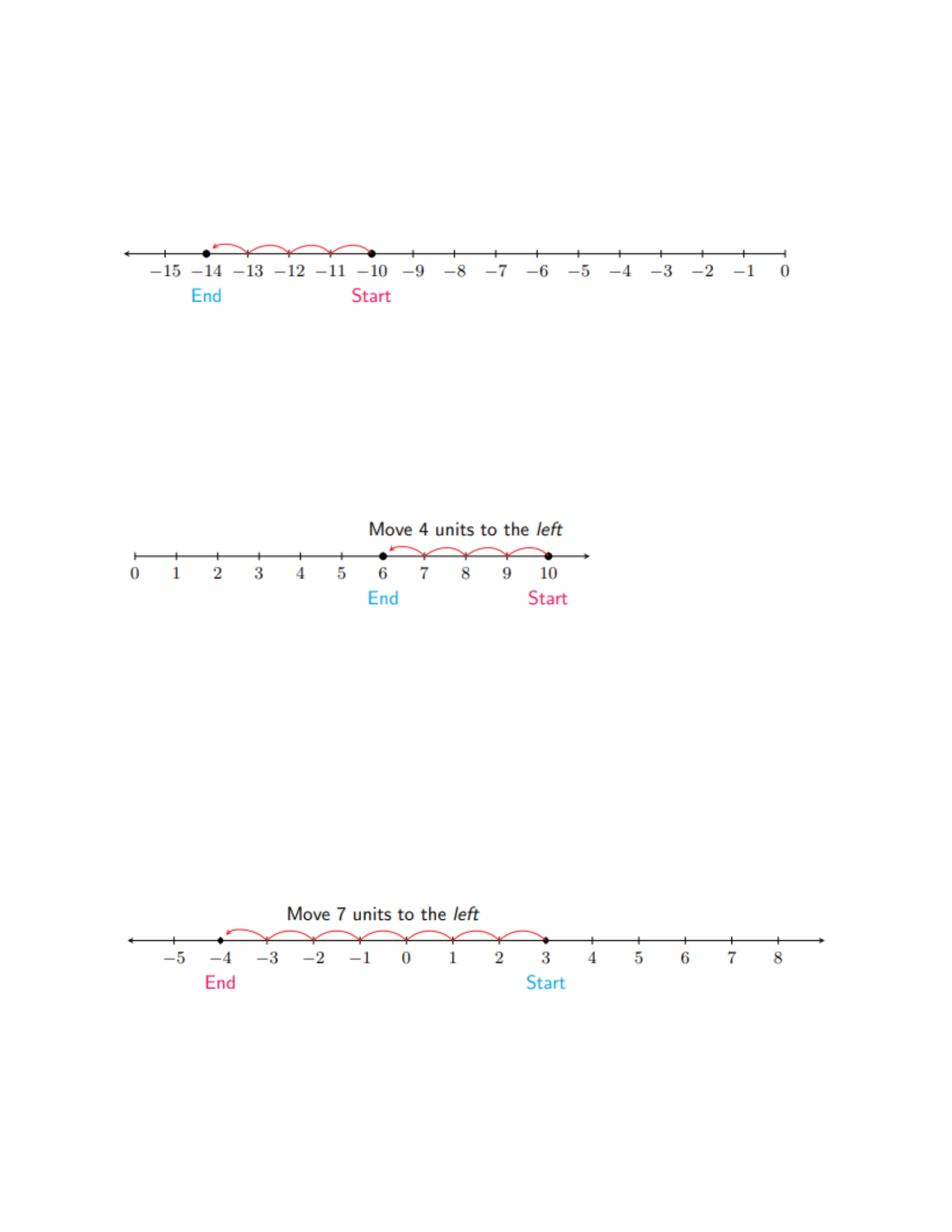
Adding two negative numbers: For example, −10+(−4)−10+(−4) means you are adding a
debt of $4$4 to an already existing debt of $10.$10. So, we start at -10 on the number line
and move 4 units to the left, to land at −14,−14, which is the answer.
You always move to the left when you add a negative number (a debt)
So, −10+(−4)=−14−10+(−4)=−14. Notice that the answer has the same sign as the signs of -
10 and -4 (both negative) and its weight comes from adding the weights of -10 and -4
To add numbers of opposite signs, that is, a positive and a negative number, we can also
use the number line. For example, to perform 10+(−4),10+(−4), we start at 10 on the
number line and then move 4 units to the left. We land at 6,6, which is the answer. Think
of 10+(−4)10+(−4) as having $10$10 and adding a $4$4 debt. Because we are adding a
debt, we move to the left on the number line!
So, 10+(−4)=6.10+(−4)=6. Notice that the answer has the same sign as the sign of 10
(positive) because it is the number of larger weight, and its weight comes from finding the
difference of the weights of 10 and -4
Notice that because we were adding two numbers of opposite signs, the answer ended up
being the difference in weight (6) along with the sign of the number of larger weight
(positive).
Example 1.4
Adding two numbers of opposite signs: For example, 3+(−7)3+(−7). We start at 3 and move
toward 7 units to the left, and we land at −4,−4, which is our answer.
So, 3+(−7)=−4.3+(−7)=−4. Notice that the answer has the same sign as the signs of -7
(negative) because it is the number of larger weight, and its weight comes from finding the
difference of the weights of 3 and -7.
Example 1.5
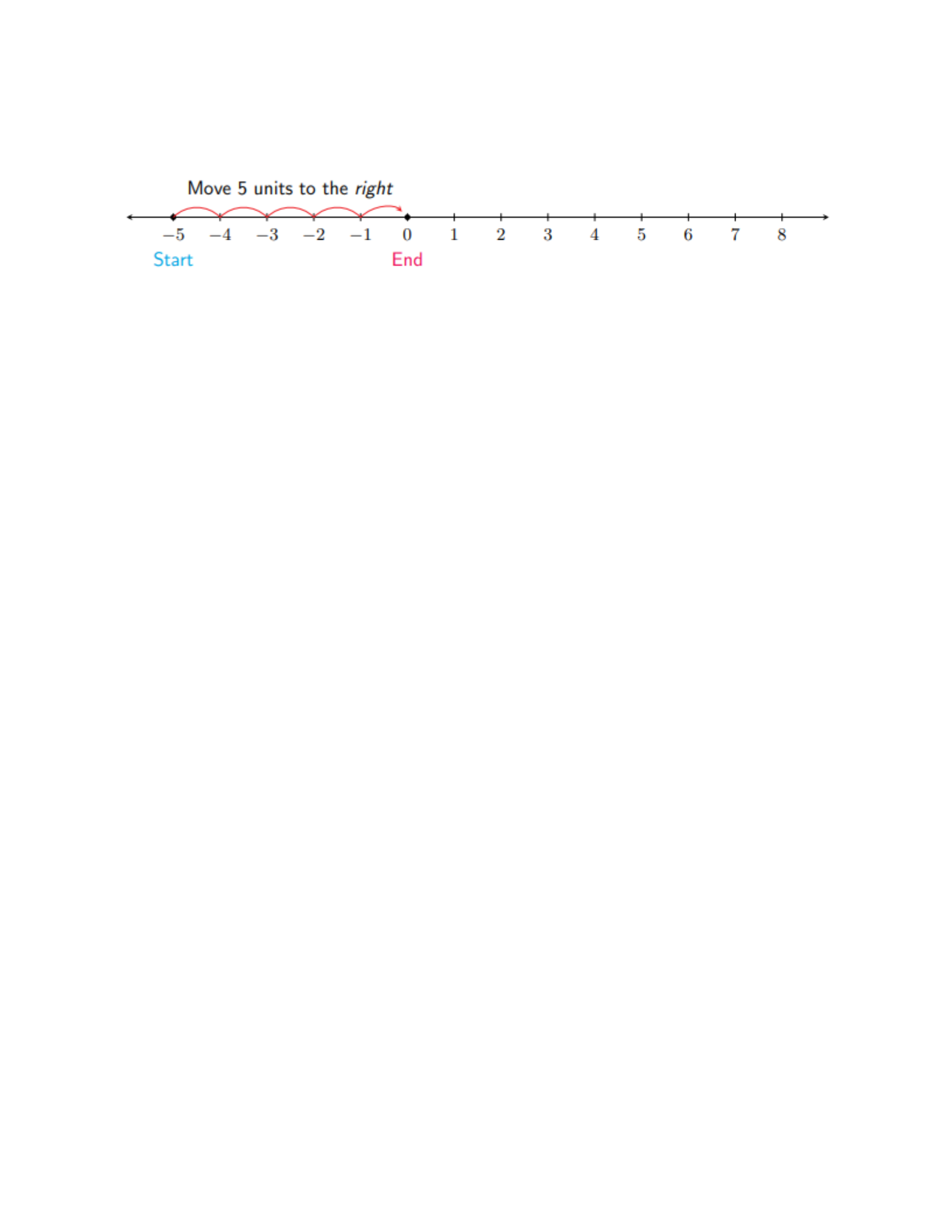
Adding opposites: We start at -5 on the number line and jump to the right 5 units to land
finally at 00. So −5+5=0−5+5=0.
Note 1.6
Two opposite numbers are called a zero-pair, because adding them always results in 0.
So, −5 and 5 are a zero-pair.
Adding Intergers
31. To add two numbers of the same sign, add their weights and place it after the
sign.
32. To add two numbers of opposite signs, find the difference of their weights and
place it after the sign of the number with the greater weight.
Example 1.7
Add:
mmmm. −8+19=11−8+19=11
nnnn. −8+4=−4−8+4=−4
oooo. 6+(−9)=−36+(−9)=−3
pppp. 7+(−2)=57+(−2)=5
qqqq. (−4)+(−7)=−11(−4)+(−7)=−11
rrrr. 8+7=158+7=15
Note 1.8
While we can add in any order: 4+2=2+44+2=2+4, it is sometimes convenient to add up all
of the negative numbers and add up all of the positive numbers, and then add the results.
There are also times when it is best to notice certain simplifications if the numbers are
added in a different order.
For example
−5+4+5+(−8)=−5+(−8)+4+5( by reordering )−5+4+5+(−8)=−5+(−8)+4+5( by reordering )
so,
−5+4+5+(−8)=−5+(−8)+4+5=−13+9=−4−5+4+5+(−8)=−5+(−8)+4+5=−13+9=−4

We could have also simplified this by noting that (-5) and 5 are zero-pair, so we are left
with 4+(−8)4+(−8) which is -4.
Example 1.9
We can calculate
(−4)+(−5)+7+(−3)=(−4)+(−5)+(−3)+7=(−12)+7=−5(−4)+(−5)+7+(−3)=(−4)+(−5)+(−3)+7=
(−12)+7=−5
We could have simplified this by noting that (-4) and (-3) make -7, and -7 and 7 are zero-
pair, so the total is -5.
Subtraction (as Addition of the Opposite)
Once we know how to add numbers, we are set to subtract numbers because subtraction is
nothing but addition of the opposite. That is, subtracting 8 − 3 (which reads: subtracting 3
from 8) is the same as 8 + (−3) (which reads: Adding −3 to 8.).
Example 1.10
So, 8−3=8+(−3),8−3=8+(−3), and, we can use the rules of adding two numbers of opposite
signs to find out that the answer is 5.5. We can also use the number line. We start at 8 and
move 3 units to the left (adding -3 is adding a debt, so we move to the left).
So 8−3=5.−4−3−2−10123456788−3=5.−4−3−2−1012345678 End Start Move 3 units to the
left
Example 1.11
To calculate 3−73−7 we first rewrite it as an addition
problem. 3−7=3+(−7).3−7=3+(−7). We can either use the number line, or the rules of
adding two numbers of opposite signs. And, 50,3−7=3+(−7)=−450,3−7=3+(−7)=−4
Example 1.12
To calculate −4−1,−4−1, we first rewrite it as an addition
problem. −4−1=−4+(−1).−4−1=−4+(−1). We can either use the number line, or the rules of
adding two numbers of the same signs. If we want to use the rules, both numbers are
negative, so our answer will be negative, and, adding the weights of -4 and -1
is 5.50,−4−1=−4+(−1)=−55.50,−4−1=−4+(−1)=−5
On the number line, we start at -4 and move 1 unit to the left, to land on -5 which is our
answer.

Changing the subtractions to additions in this way is particularly useful when adding or
subtracting several numbers (because we can add in any order).
Example 1.13
===−3−7+5+7+13−6−(−9)−3+(−7)+5+7+13+(−6)+9−3+(−7)+(−6)+5+7+13+918−3−7+5+7
+13−6−(−9)=−3+(−7)+5+7+13+(−6)+9=−3+(−7)+(−6)+5+7+13+9=18
===−3−7+5+7+13−6−(−9)−3+(−7)+5+7+13+(−6)+95+1318−3−7+5+7+13−6−(−9)=−3+(−7
)+5+7+13+(−6)+9=5+13=18
Remark 1.14
Warning: The symbol "-" is used in two different ways. When it is between two expressions,
it means subtract (e.g., 3−43−4 ). Otherwise, it means 'opposite' or 'negative'
(e.g., −3+4−3+4 ). So in the expression −4−(−3)−4−(−3), the first and last "-" means
opposite and the one in the middle one means subtract. The importance of understanding
this can not be overestimated.
Multiplication and Division of Positive Numbers
Multiplication of integers is adding in the sense that 3×4=4+4+43×4=4+4+4
To multiply larger numbers, it is better to use the usual scheme of multiplication. For
example:
Example 1.15
Let us multiply 152 by 34. We will for convenience sake put the smaller number on the
bottom (though it is not necessary). We have
+×4516515306624808152×34608+45605168
And division is the opposite of multiplication in the sense that to compute 45÷945÷9 is to
find a number so that when we multiply by 9 we get 45. We run through our multiplication
tables (which are hopefully in our head) to discover that 5 does the
trick: 5×9=455×9=45 so that 45÷9=5.45÷9=5. We will discuss division from a different
point of view when we discuss fractions.
To divide larger numbers, we can use long division. For example, let’s divide 3571 by 11.
Example 1.16
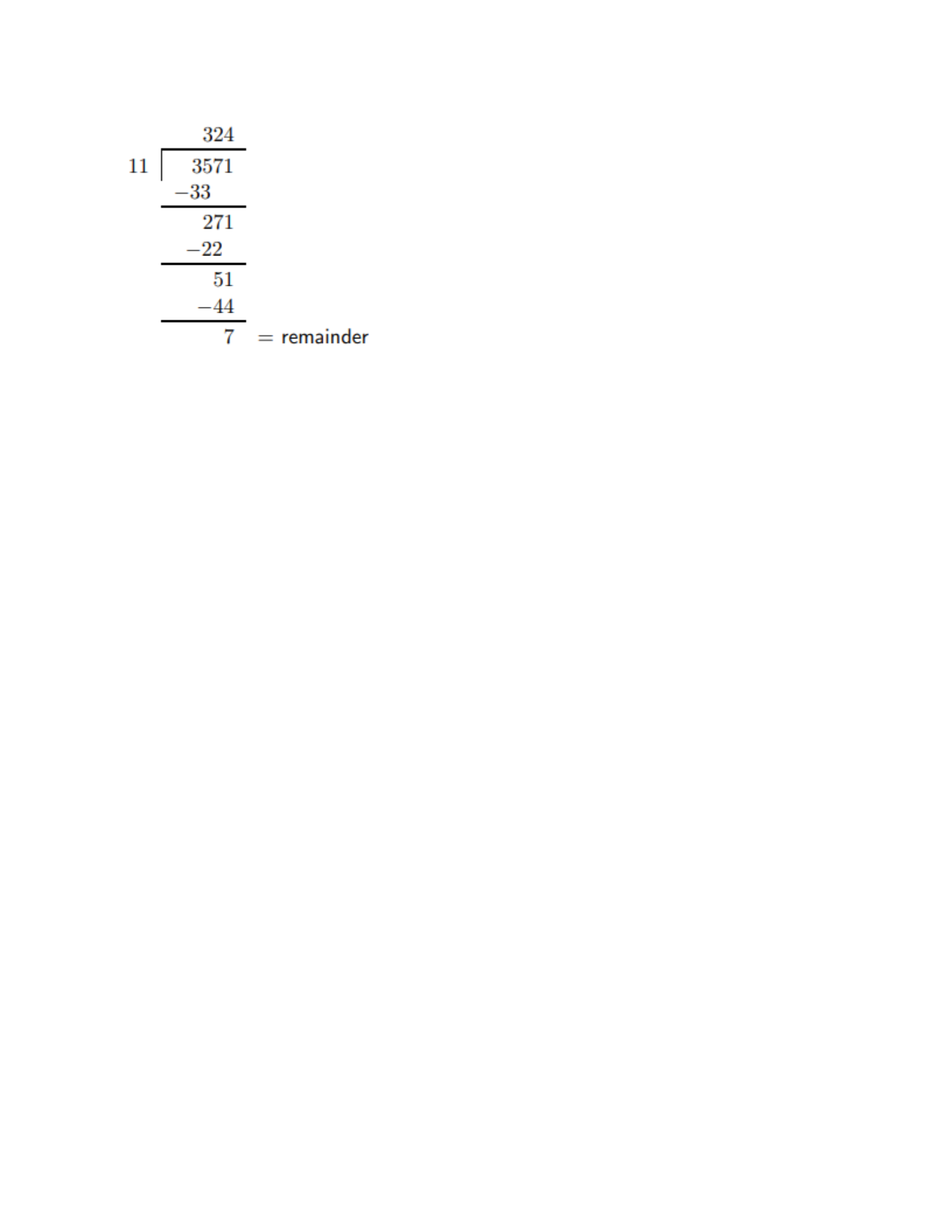
Multiplication involving negative numbers
Multiplication is a little tricky to understand without the notion of distribution (discussed
later). We will begin with noting again what it means to multiply a number by a positive
number: So if we want to compute 4⋅(−7)4⋅(−7) we note
4⋅(−7)=(−7)+(−7)+(−7)+(−7)=−284⋅(−7)=(−7)+(−7)+(−7)+(−7)=−28
Note that since 4⋅7=28,4⋅(−7)=−(4⋅7).4⋅7=28,4⋅(−7)=−(4⋅7). We can multiply positive
numbers in any order: 4⋅7=7⋅44⋅7=7⋅4. The same is true of positive and negative numbers:
(−7)⋅4=4⋅(−7)=−(4⋅7)=−28(−7)⋅4=4⋅(−7)=−(4⋅7)=−28
Example 1.17
5⋅(−12)=−(5⋅12)=−605⋅(−12)=−(5⋅12)=−60 and (−3)⋅(−2)=−(3⋅(−2))=−(−(3⋅2))=6(−3)⋅(−2)
=−(3⋅(−2))=−(−(3⋅2))=6
Example 1.18
So the size of the product of two numbers is the product of their sizes. The sign is positive if
the signs are the same and negative if they are different.
Example 1.19
Two quantities right next to each other, with no symbol between them (except for
parentheses around either or both numbers), has an implicit multiplication. For
example, 3(2)=3×23(2)=3×2.
Example 1.20
Multiply:
xxx. (−5)(−8)=40(−5)(−8)=40
yyy. (−6)⋅7=−42(−6)⋅7=−42
zzz. 4⋅12=484⋅12=48

aaaa. (−3)(−6)⋅4(−3)=18⋅4(−3)=72(−3)=−216( multiplying from left to
right )(−3)(−6)⋅4(−3)=18⋅4(−3)=72(−3)=−216( multiplying from left to right )
bbbb. (−3)(−5)⋅4(−2)=(−3)⋅4⋅(−5)(−2)=−12⋅10=−120((−3)(−5)⋅4(−2)=(−3)⋅4⋅(−5)(
−2)=−12⋅10=−120( since we can multiply in any order it is convenient to see
that −5⋅−2=10.−5⋅−2=10. )
Exponents of integers
Recall that a positive exponent represents the number of times a number is multiplied by
itself.
Example 1.21
Evaluate:
mmmm. 52=5⋅5=2552=5⋅5=25
nnnn. (−4)3=(−4)⋅(−4)⋅(−4)=16⋅(−4)=−64(−4)3=(−4)⋅(−4)⋅(−4)=16⋅(−4)=−64
oooo. (−7)1=−7(−7)1=−7
pppp. −24=−2⋅2⋅2⋅2=−16−24=−2⋅2⋅2⋅2=−16 Note: The exponent here is for 2 not
−2!
qqqq. (−3)4=(−3)⋅(−3)⋅(−3)⋅(−3)=9⋅(−3)⋅(−3)=−27⋅(−3)=81(−3)4=(−3)⋅(−3)⋅(−3)⋅(
−3)=9⋅(−3)⋅(−3)=−27⋅(−3)=81
rrrr. (−2)5=(−2)⋅(−2)⋅(−2)⋅(−2)⋅(−2)=−32(−2)5=(−2)⋅(−2)⋅(−2)⋅(−2)⋅(−2)=−32
Exponent rules in details will be further discussed in Chapter 5.
Division involving negative numbers
Division is just a question of knowing multiplication and therefore has the same rule: The
size of the quotient of two numbers is the quotient of the sizes. The sign is positive if the
signs are the same and negative if they are different.
Example 1.22
Divide:
mmmm. (−42)÷7=−6(−42)÷7=−6
nnnn. 81÷(−9)=−981÷(−9)=−9
oooo. (−35)÷(−7)=5(−35)÷(−7)=5
pppp. 14÷2=714÷2=7
qqqq. 0÷5=00÷5=0. Note When dividing 0 by any number, the answer is always 0.
rrrr. −10÷0=−10÷0= undefined.
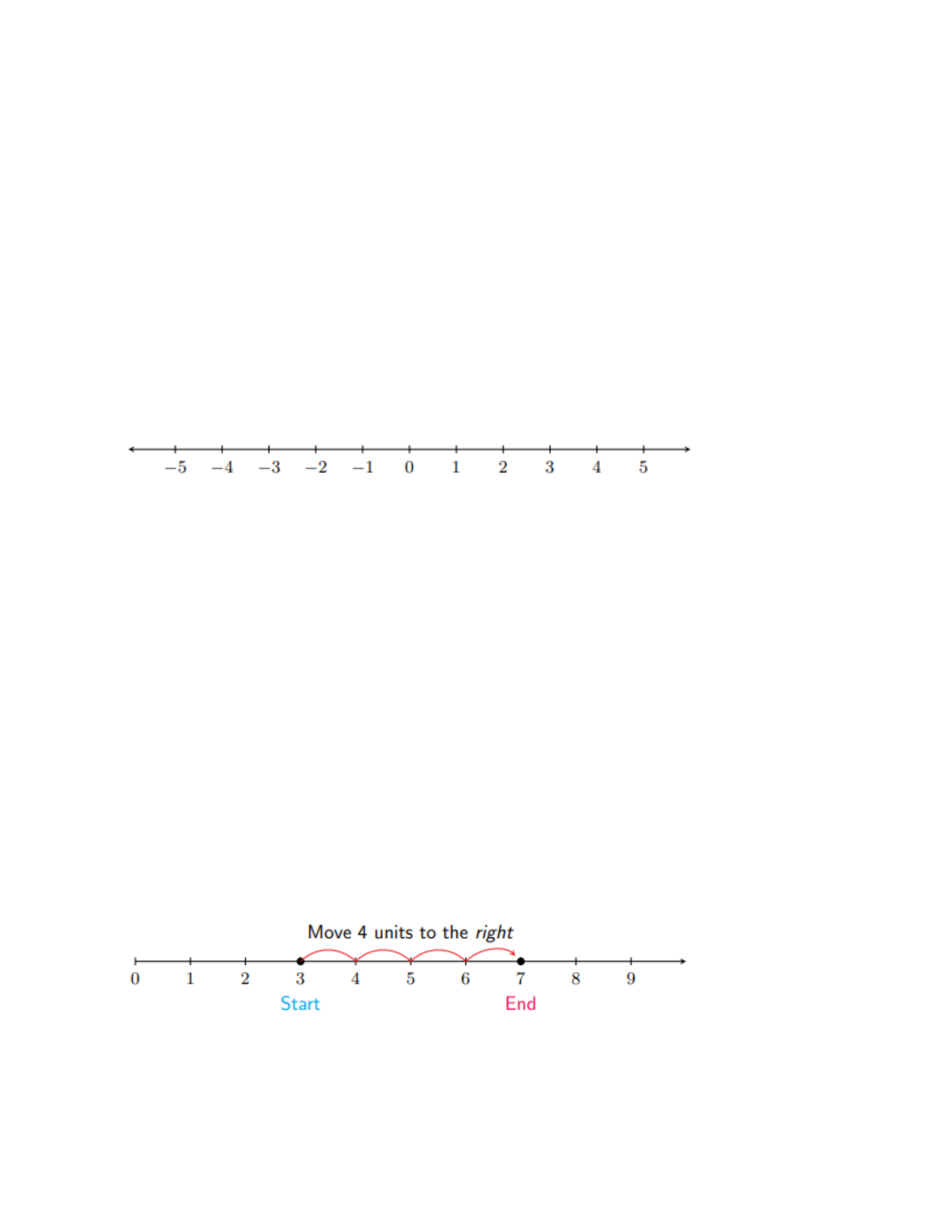
Note 1.23
Any number divided by 0 is undefined!
Multiplying and Dividing Integers
Consider two numbers at a time.
31. If the signs of the two numbers are the same, then the sign of the answer is positive.
32. If the signs of the two numbers are different, then the sign of the answer is negative.
We begin with a brief review of arithmetic with integers
i.e. …,−3,−2,−1,0,1,2,3,……,−3,−2,−1,0,1,2,3,…
Any number has a weight and a sign.
The magnitude (or weight) of a number is the distance it is from 0 on the number line.
Example 1.1
For example, the weight of -5 is 5 and the weight of 7 is 7 .
Two numbers are opposites if, on the number line, they are on opposite sides of zero, but
the same distance away from zero.
So, −5 is the opposite of 5, and 7 is the opposite of −7 and so on.
Addition
We can add two numbers with the help of a number line .
Example 1.2
Adding two positive numbers: For example to add 3+43+4, we start with 3 on the number
line then move 4 units to the right. We land at 7 which is our answer.
So, 3+4=73+4=7. Notice that the answer has the same sign as the signs of 3 and 4 (both
positive) and its weight comes from adding the weights of 3 and 4.
You always move to the right when you add a positive number
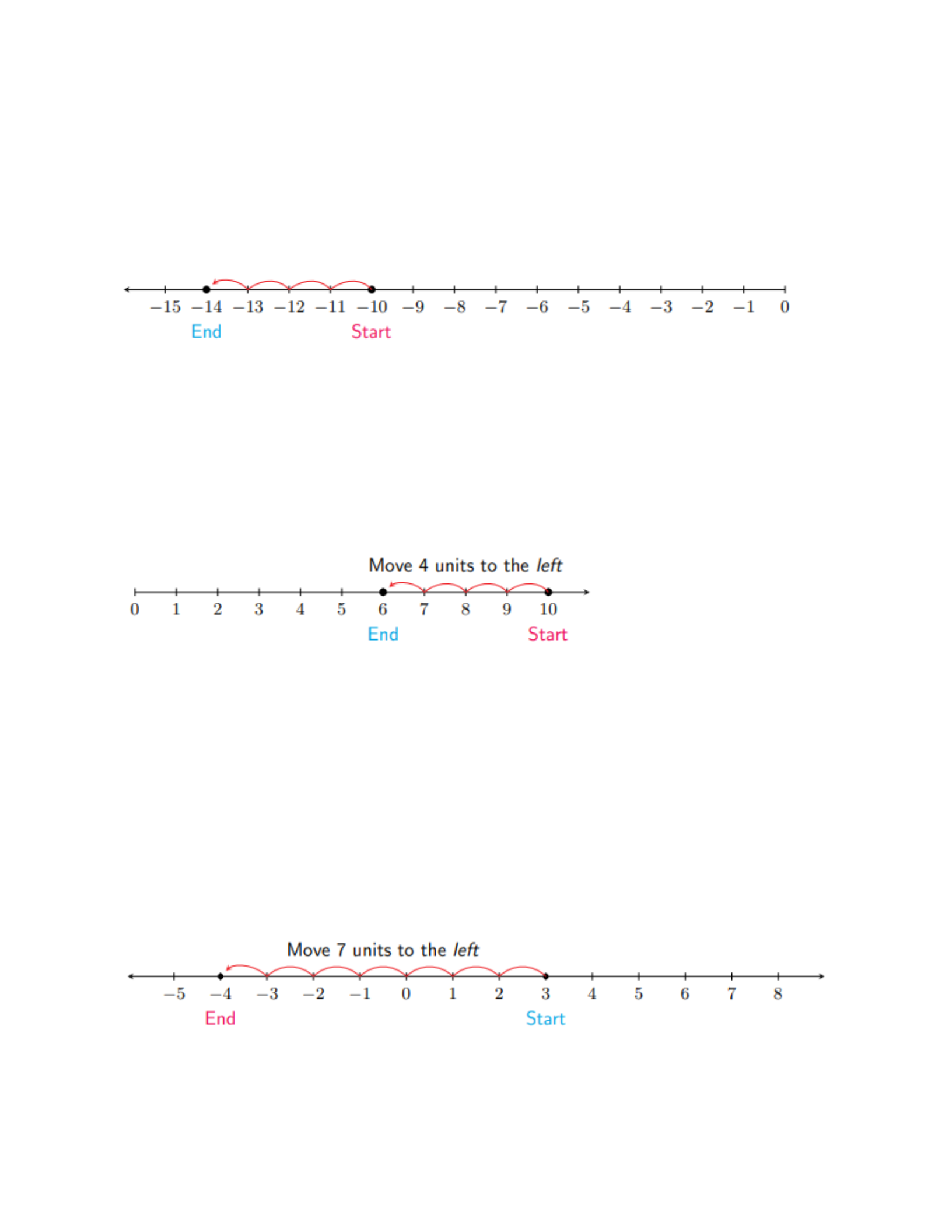
Example 1.3
Adding two negative numbers: For example, −10+(−4)−10+(−4) means you are adding a
debt of $4$4 to an already existing debt of $10.$10. So, we start at -10 on the number line
and move 4 units to the left, to land at −14,−14, which is the answer.
You always move to the left when you add a negative number (a debt)
So, −10+(−4)=−14−10+(−4)=−14. Notice that the answer has the same sign as the signs of -
10 and -4 (both negative) and its weight comes from adding the weights of -10 and -4
To add numbers of opposite signs, that is, a positive and a negative number, we can also
use the number line. For example, to perform 10+(−4),10+(−4), we start at 10 on the
number line and then move 4 units to the left. We land at 6,6, which is the answer. Think
of 10+(−4)10+(−4) as having $10$10 and adding a $4$4 debt. Because we are adding a
debt, we move to the left on the number line!
So, 10+(−4)=6.10+(−4)=6. Notice that the answer has the same sign as the sign of 10
(positive) because it is the number of larger weight, and its weight comes from finding the
difference of the weights of 10 and -4
Notice that because we were adding two numbers of opposite signs, the answer ended up
being the difference in weight (6) along with the sign of the number of larger weight
(positive).
Example 1.4
Adding two numbers of opposite signs: For example, 3+(−7)3+(−7). We start at 3 and move
toward 7 units to the left, and we land at −4,−4, which is our answer.
So, 3+(−7)=−4.3+(−7)=−4. Notice that the answer has the same sign as the signs of -7
(negative) because it is the number of larger weight, and its weight comes from finding the
difference of the weights of 3 and -7.
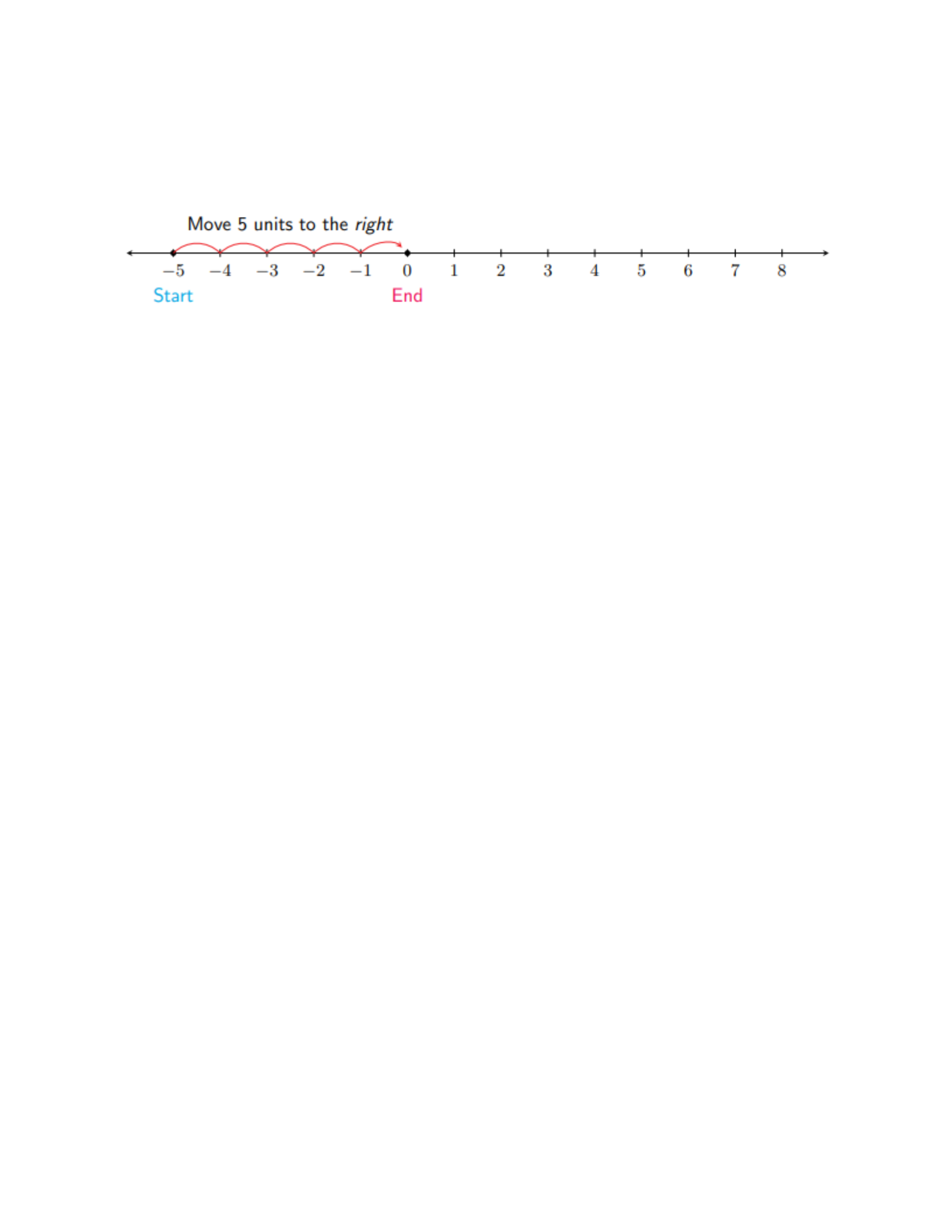
Example 1.5
Adding opposites: We start at -5 on the number line and jump to the right 5 units to land
finally at 00. So −5+5=0−5+5=0.
Note 1.6
Two opposite numbers are called a zero-pair, because adding them always results in 0.
So, −5 and 5 are a zero-pair.
Adding Intergers
33. To add two numbers of the same sign, add their weights and place it after the
sign.
34. To add two numbers of opposite signs, find the difference of their weights and
place it after the sign of the number with the greater weight.
Example 1.7
Add:
ssss. −8+19=11−8+19=11
tttt. −8+4=−4−8+4=−4
uuuu. 6+(−9)=−36+(−9)=−3
vvvv. 7+(−2)=57+(−2)=5
wwww. (−4)+(−7)=−11(−4)+(−7)=−11
xxxx. 8+7=158+7=15
Note 1.8
While we can add in any order: 4+2=2+44+2=2+4, it is sometimes convenient to add up all
of the negative numbers and add up all of the positive numbers, and then add the results.
There are also times when it is best to notice certain simplifications if the numbers are
added in a different order.
For example
−5+4+5+(−8)=−5+(−8)+4+5( by reordering )−5+4+5+(−8)=−5+(−8)+4+5( by reordering )
so,
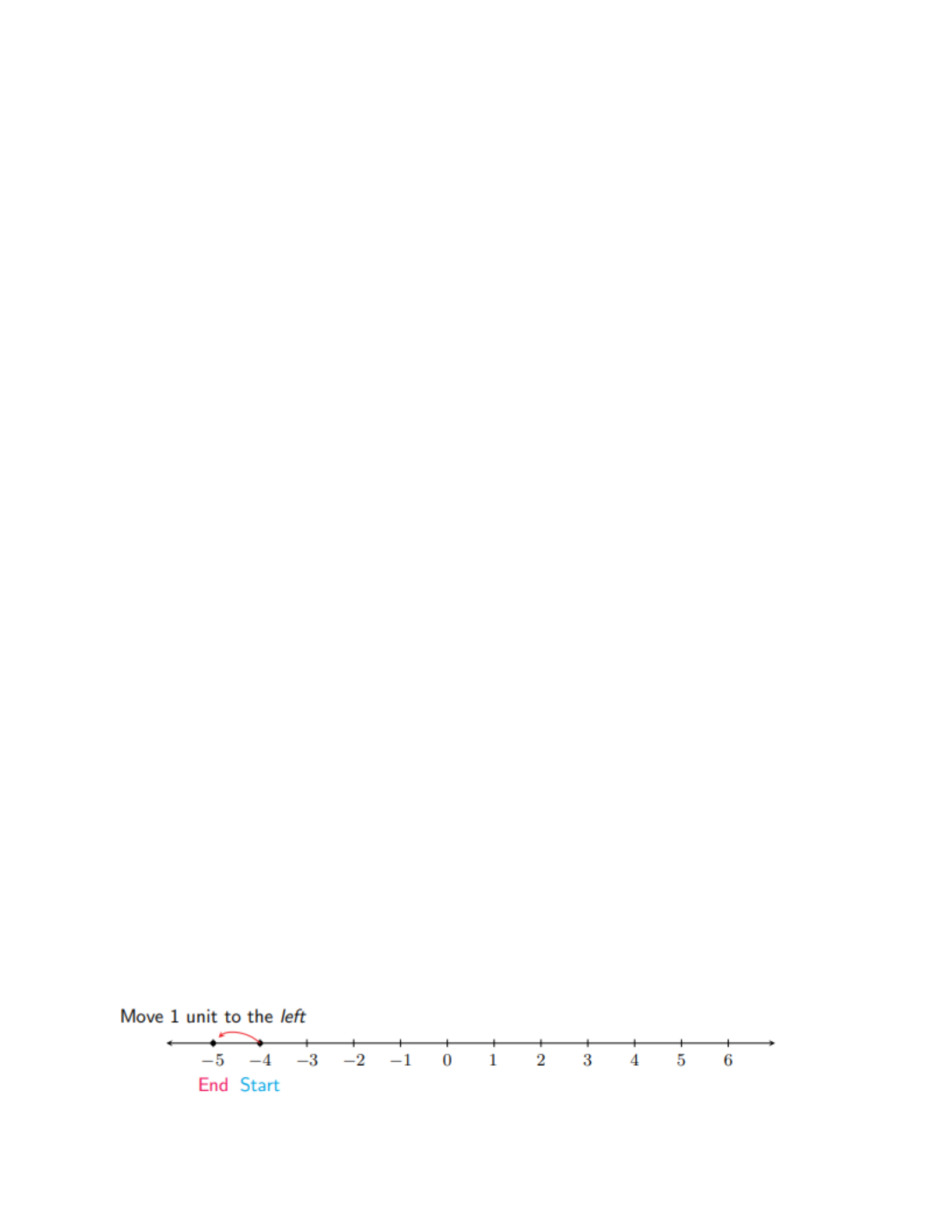
−5+4+5+(−8)=−5+(−8)+4+5=−13+9=−4−5+4+5+(−8)=−5+(−8)+4+5=−13+9=−4
We could have also simplified this by noting that (-5) and 5 are zero-pair, so we are left
with 4+(−8)4+(−8) which is -4.
Example 1.9
We can calculate
(−4)+(−5)+7+(−3)=(−4)+(−5)+(−3)+7=(−12)+7=−5(−4)+(−5)+7+(−3)=(−4)+(−5)+(−3)+7=
(−12)+7=−5
We could have simplified this by noting that (-4) and (-3) make -7, and -7 and 7 are zero-
pair, so the total is -5.
Subtraction (as Addition of the Opposite)
Once we know how to add numbers, we are set to subtract numbers because subtraction is
nothing but addition of the opposite. That is, subtracting 8 − 3 (which reads: subtracting 3
from 8) is the same as 8 + (−3) (which reads: Adding −3 to 8.).
Example 1.10
So, 8−3=8+(−3),8−3=8+(−3), and, we can use the rules of adding two numbers of opposite
signs to find out that the answer is 5.5. We can also use the number line. We start at 8 and
move 3 units to the left (adding -3 is adding a debt, so we move to the left).
So 8−3=5.−4−3−2−10123456788−3=5.−4−3−2−1012345678 End Start Move 3 units to the
left
Example 1.11
To calculate 3−73−7 we first rewrite it as an addition
problem. 3−7=3+(−7).3−7=3+(−7). We can either use the number line, or the rules of
adding two numbers of opposite signs. And, 50,3−7=3+(−7)=−450,3−7=3+(−7)=−4
Example 1.12
To calculate −4−1,−4−1, we first rewrite it as an addition
problem. −4−1=−4+(−1).−4−1=−4+(−1). We can either use the number line, or the rules of
adding two numbers of the same signs. If we want to use the rules, both numbers are
negative, so our answer will be negative, and, adding the weights of -4 and -1
is 5.50,−4−1=−4+(−1)=−55.50,−4−1=−4+(−1)=−5
On the number line, we start at -4 and move 1 unit to the left, to land on -5 which is our
answer.

Changing the subtractions to additions in this way is particularly useful when adding or
subtracting several numbers (because we can add in any order).
Example 1.13
===−3−7+5+7+13−6−(−9)−3+(−7)+5+7+13+(−6)+9−3+(−7)+(−6)+5+7+13+918−3−7+5+7
+13−6−(−9)=−3+(−7)+5+7+13+(−6)+9=−3+(−7)+(−6)+5+7+13+9=18
===−3−7+5+7+13−6−(−9)−3+(−7)+5+7+13+(−6)+95+1318−3−7+5+7+13−6−(−9)=−3+(−7
)+5+7+13+(−6)+9=5+13=18
Remark 1.14
Warning: The symbol "-" is used in two different ways. When it is between two expressions,
it means subtract (e.g., 3−43−4 ). Otherwise, it means 'opposite' or 'negative'
(e.g., −3+4−3+4 ). So in the expression −4−(−3)−4−(−3), the first and last "-" means
opposite and the one in the middle one means subtract. The importance of understanding
this can not be overestimated.
Multiplication and Division of Positive Numbers
Multiplication of integers is adding in the sense that 3×4=4+4+43×4=4+4+4
To multiply larger numbers, it is better to use the usual scheme of multiplication. For
example:
Example 1.15
Let us multiply 152 by 34. We will for convenience sake put the smaller number on the
bottom (though it is not necessary). We have
+×4516515306624808152×34608+45605168
And division is the opposite of multiplication in the sense that to compute 45÷945÷9 is to
find a number so that when we multiply by 9 we get 45. We run through our multiplication
tables (which are hopefully in our head) to discover that 5 does the
trick: 5×9=455×9=45 so that 45÷9=5.45÷9=5. We will discuss division from a different
point of view when we discuss fractions.
To divide larger numbers, we can use long division. For example, let’s divide 3571 by 11.
Example 1.16
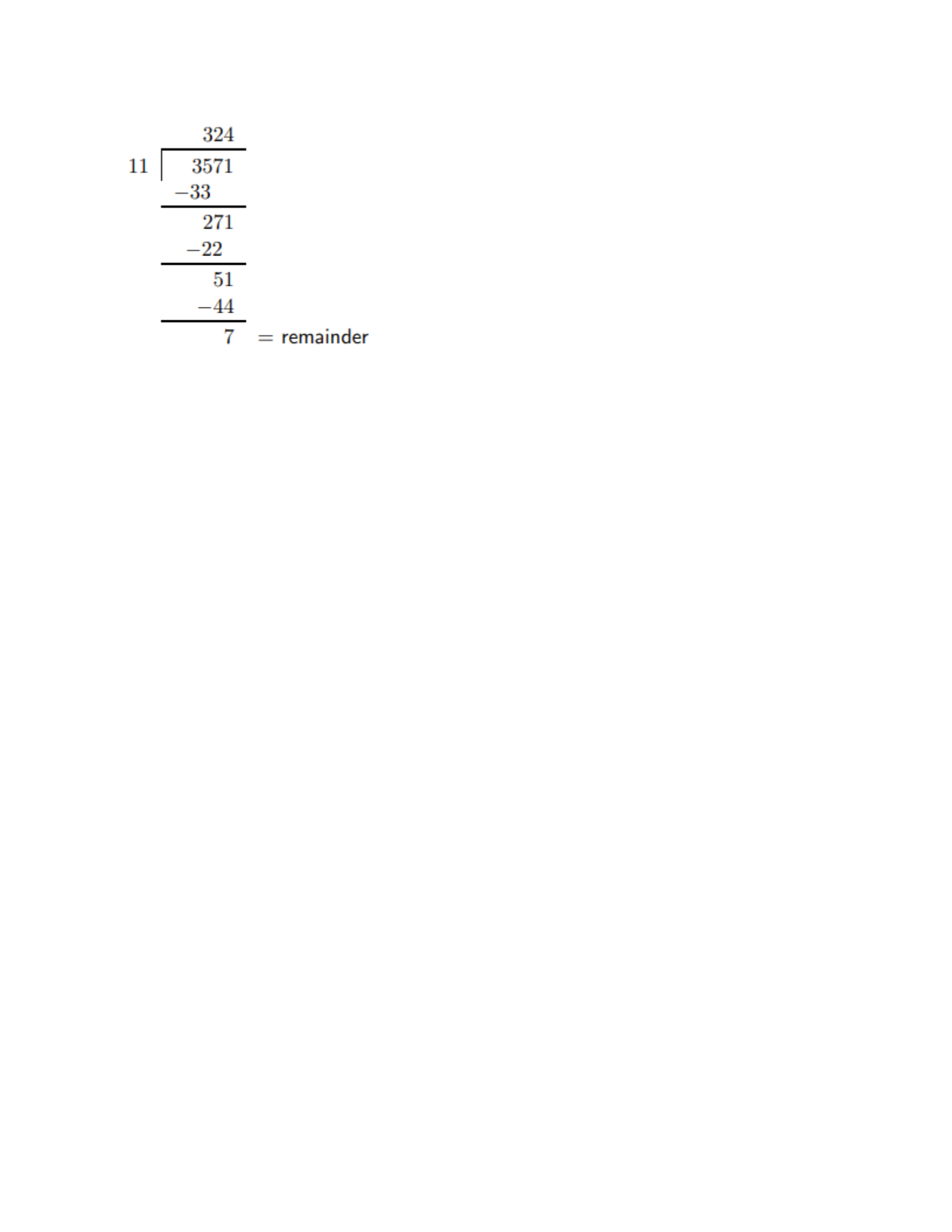
Multiplication involving negative numbers
Multiplication is a little tricky to understand without the notion of distribution (discussed
later). We will begin with noting again what it means to multiply a number by a positive
number: So if we want to compute 4⋅(−7)4⋅(−7) we note
4⋅(−7)=(−7)+(−7)+(−7)+(−7)=−284⋅(−7)=(−7)+(−7)+(−7)+(−7)=−28
Note that since 4⋅7=28,4⋅(−7)=−(4⋅7).4⋅7=28,4⋅(−7)=−(4⋅7). We can multiply positive
numbers in any order: 4⋅7=7⋅44⋅7=7⋅4. The same is true of positive and negative numbers:
(−7)⋅4=4⋅(−7)=−(4⋅7)=−28(−7)⋅4=4⋅(−7)=−(4⋅7)=−28
Example 1.17
5⋅(−12)=−(5⋅12)=−605⋅(−12)=−(5⋅12)=−60 and (−3)⋅(−2)=−(3⋅(−2))=−(−(3⋅2))=6(−3)⋅(−2)
=−(3⋅(−2))=−(−(3⋅2))=6
Example 1.18
So the size of the product of two numbers is the product of their sizes. The sign is positive if
the signs are the same and negative if they are different.
Example 1.19
Two quantities right next to each other, with no symbol between them (except for
parentheses around either or both numbers), has an implicit multiplication. For
example, 3(2)=3×23(2)=3×2.
Example 1.20
Multiply:
cccc. (−5)(−8)=40(−5)(−8)=40
dddd. (−6)⋅7=−42(−6)⋅7=−42
eeee. 4⋅12=484⋅12=48

ffff. (−3)(−6)⋅4(−3)=18⋅4(−3)=72(−3)=−216( multiplying from left to
right )(−3)(−6)⋅4(−3)=18⋅4(−3)=72(−3)=−216( multiplying from left to right )
gggg. (−3)(−5)⋅4(−2)=(−3)⋅4⋅(−5)(−2)=−12⋅10=−120((−3)(−5)⋅4(−2)=(−3)⋅4⋅(−5)(
−2)=−12⋅10=−120( since we can multiply in any order it is convenient to see
that −5⋅−2=10.−5⋅−2=10. )
Exponents of integers
Recall that a positive exponent represents the number of times a number is multiplied by
itself.
Example 1.21
Evaluate:
ssss. 52=5⋅5=2552=5⋅5=25
tttt. (−4)3=(−4)⋅(−4)⋅(−4)=16⋅(−4)=−64(−4)3=(−4)⋅(−4)⋅(−4)=16⋅(−4)=−64
uuuu. (−7)1=−7(−7)1=−7
vvvv. −24=−2⋅2⋅2⋅2=−16−24=−2⋅2⋅2⋅2=−16 Note: The exponent here is for 2 not
−2!
wwww. (−3)4=(−3)⋅(−3)⋅(−3)⋅(−3)=9⋅(−3)⋅(−3)=−27⋅(−3)=81(−3)4=(−3)⋅(−3)⋅(−3)⋅(
−3)=9⋅(−3)⋅(−3)=−27⋅(−3)=81
xxxx. (−2)5=(−2)⋅(−2)⋅(−2)⋅(−2)⋅(−2)=−32(−2)5=(−2)⋅(−2)⋅(−2)⋅(−2)⋅(−2)=−32
Exponent rules in details will be further discussed in Chapter 5.
Division involving negative numbers
Division is just a question of knowing multiplication and therefore has the same rule: The
size of the quotient of two numbers is the quotient of the sizes. The sign is positive if the
signs are the same and negative if they are different.
Example 1.22
Divide:
ssss. (−42)÷7=−6(−42)÷7=−6
tttt. 81÷(−9)=−981÷(−9)=−9
uuuu. (−35)÷(−7)=5(−35)÷(−7)=5
vvvv. 14÷2=714÷2=7
wwww. 0÷5=00÷5=0. Note When dividing 0 by any number, the answer is always 0.
xxxx. −10÷0=−10÷0= undefined.
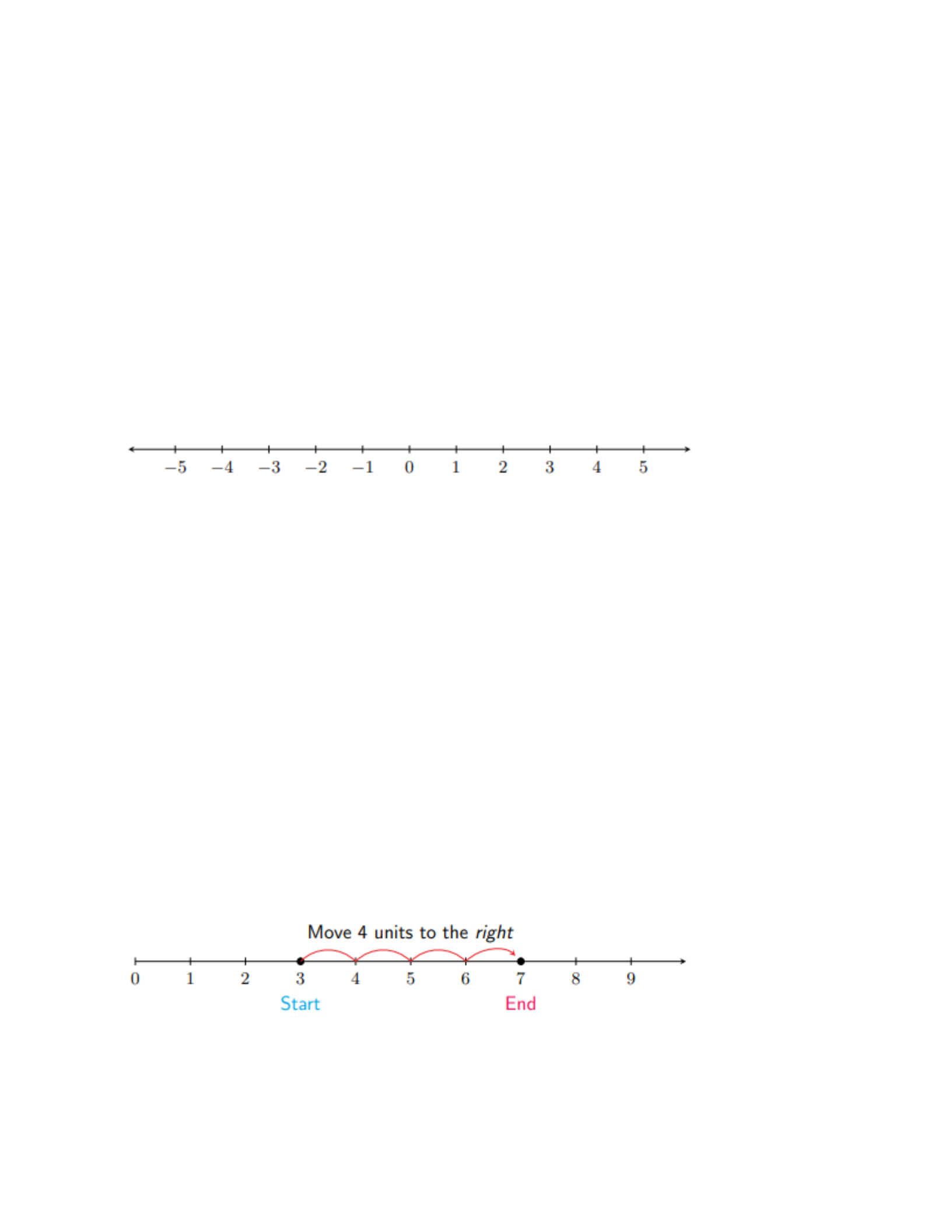
Note 1.23
Any number divided by 0 is undefined!
Multiplying and Dividing Integers
Consider two numbers at a time.
33. If the signs of the two numbers are the same, then the sign of the answer is positive.
34. If the signs of the two numbers are different, then the sign of the answer is negative.
We begin with a brief review of arithmetic with integers
i.e. …,−3,−2,−1,0,1,2,3,……,−3,−2,−1,0,1,2,3,…
Any number has a weight and a sign.
The magnitude (or weight) of a number is the distance it is from 0 on the number line.
Example 1.1
For example, the weight of -5 is 5 and the weight of 7 is 7 .
Two numbers are opposites if, on the number line, they are on opposite sides of zero, but
the same distance away from zero.
So, −5 is the opposite of 5, and 7 is the opposite of −7 and so on.
Addition
We can add two numbers with the help of a number line .
Example 1.2
Adding two positive numbers: For example to add 3+43+4, we start with 3 on the number
line then move 4 units to the right. We land at 7 which is our answer.
So, 3+4=73+4=7. Notice that the answer has the same sign as the signs of 3 and 4 (both
positive) and its weight comes from adding the weights of 3 and 4.
You always move to the right when you add a positive number
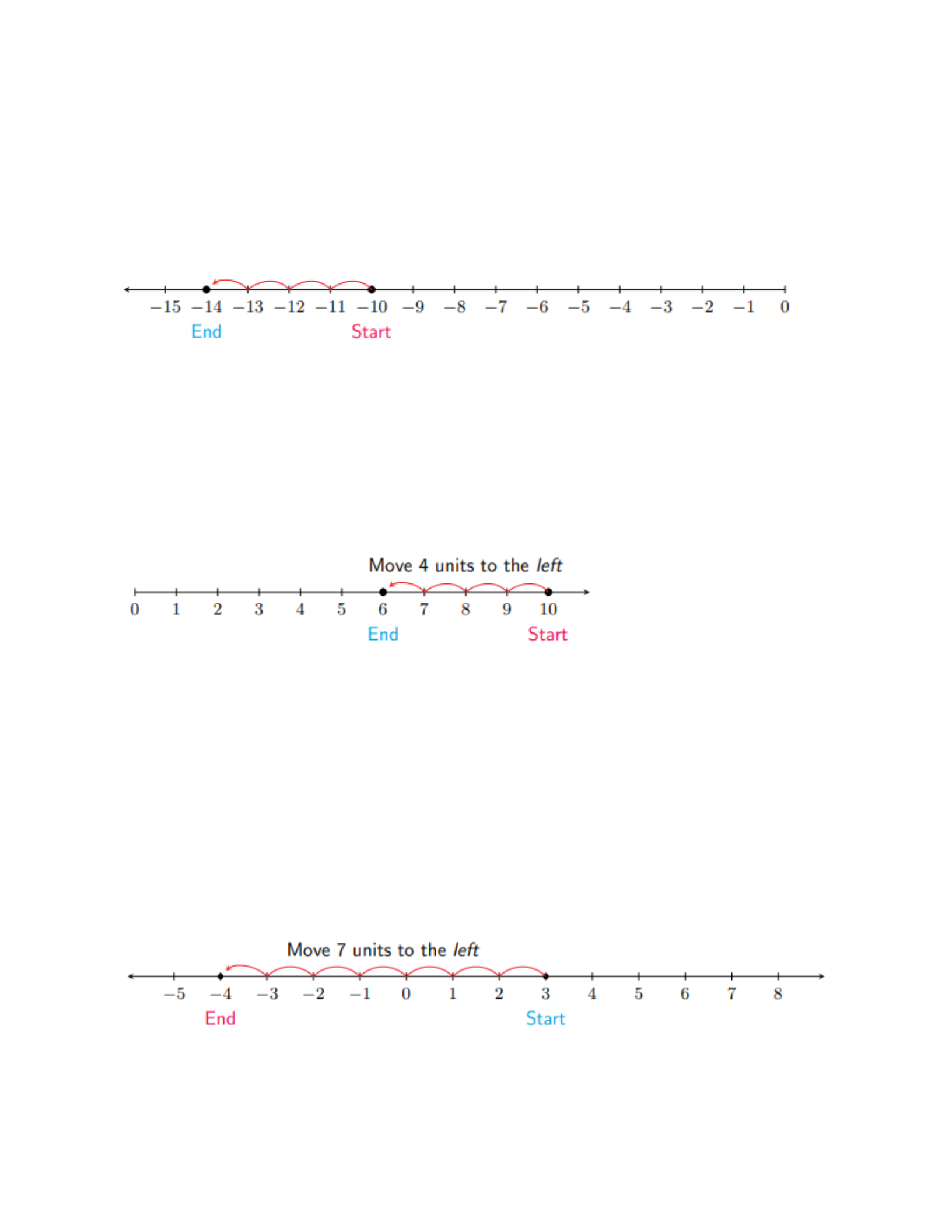
Example 1.3
Adding two negative numbers: For example, −10+(−4)−10+(−4) means you are adding a
debt of $4$4 to an already existing debt of $10.$10. So, we start at -10 on the number line
and move 4 units to the left, to land at −14,−14, which is the answer.
You always move to the left when you add a negative number (a debt)
So, −10+(−4)=−14−10+(−4)=−14. Notice that the answer has the same sign as the signs of -
10 and -4 (both negative) and its weight comes from adding the weights of -10 and -4
To add numbers of opposite signs, that is, a positive and a negative number, we can also
use the number line. For example, to perform 10+(−4),10+(−4), we start at 10 on the
number line and then move 4 units to the left. We land at 6,6, which is the answer. Think
of 10+(−4)10+(−4) as having $10$10 and adding a $4$4 debt. Because we are adding a
debt, we move to the left on the number line!
So, 10+(−4)=6.10+(−4)=6. Notice that the answer has the same sign as the sign of 10
(positive) because it is the number of larger weight, and its weight comes from finding the
difference of the weights of 10 and -4
Notice that because we were adding two numbers of opposite signs, the answer ended up
being the difference in weight (6) along with the sign of the number of larger weight
(positive).
Example 1.4
Adding two numbers of opposite signs: For example, 3+(−7)3+(−7). We start at 3 and move
toward 7 units to the left, and we land at −4,−4, which is our answer.
So, 3+(−7)=−4.3+(−7)=−4. Notice that the answer has the same sign as the signs of -7
(negative) because it is the number of larger weight, and its weight comes from finding the
difference of the weights of 3 and -7.
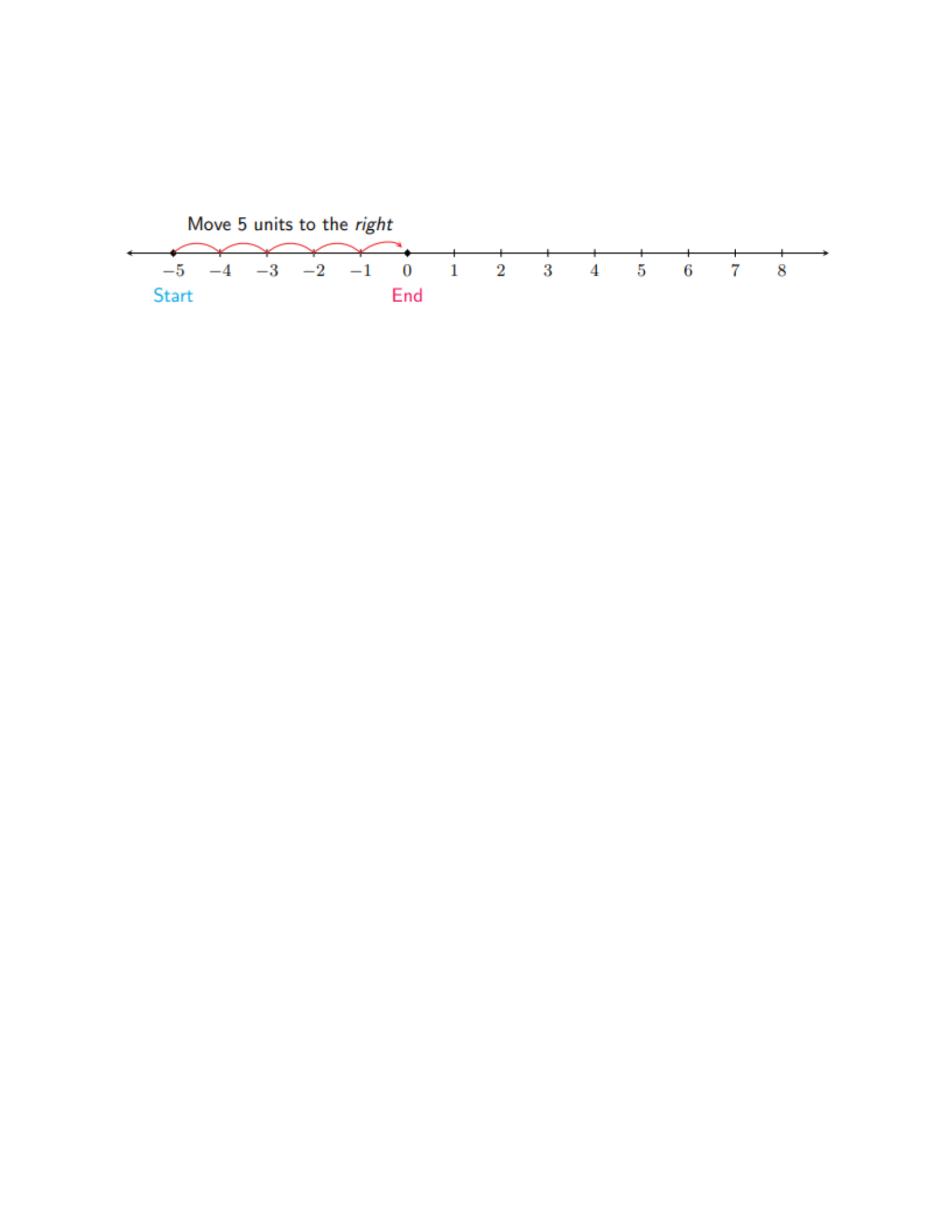
Example 1.5
Adding opposites: We start at -5 on the number line and jump to the right 5 units to land
finally at 00. So −5+5=0−5+5=0.
Note 1.6
Two opposite numbers are called a zero-pair, because adding them always results in 0.
So, −5 and 5 are a zero-pair.
Adding Intergers
35. To add two numbers of the same sign, add their weights and place it after the
sign.
36. To add two numbers of opposite signs, find the difference of their weights and
place it after the sign of the number with the greater weight.
Example 1.7
Add:
yyyy. −8+19=11−8+19=11
zzzz. −8+4=−4−8+4=−4
aaaaa. 6+(−9)=−36+(−9)=−3
bbbbb. 7+(−2)=57+(−2)=5
ccccc. (−4)+(−7)=−11(−4)+(−7)=−11
ddddd. 8+7=158+7=15
Note 1.8
While we can add in any order: 4+2=2+44+2=2+4, it is sometimes convenient to add up all
of the negative numbers and add up all of the positive numbers, and then add the results.
There are also times when it is best to notice certain simplifications if the numbers are
added in a different order.
For example
−5+4+5+(−8)=−5+(−8)+4+5( by reordering )−5+4+5+(−8)=−5+(−8)+4+5( by reordering )
so,
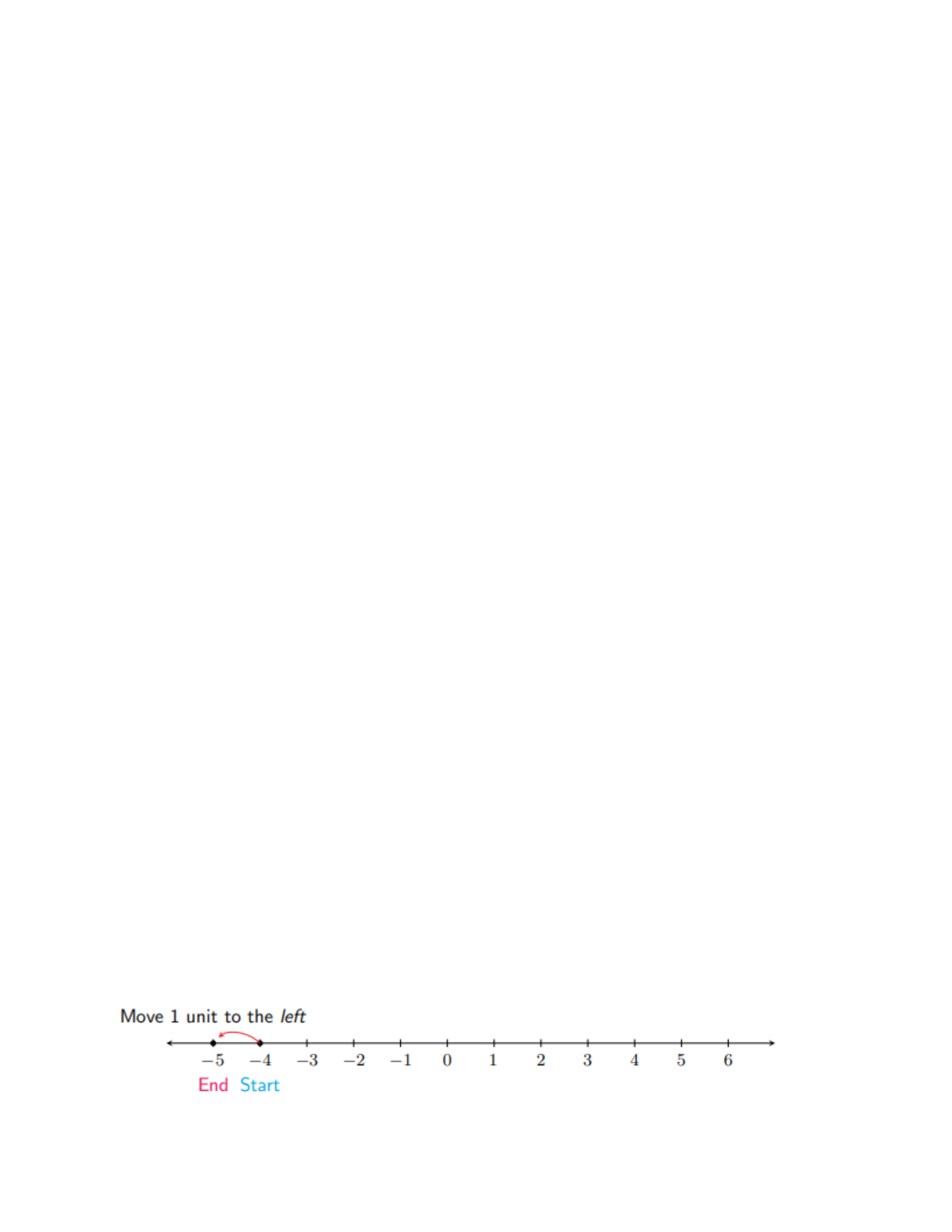
−5+4+5+(−8)=−5+(−8)+4+5=−13+9=−4−5+4+5+(−8)=−5+(−8)+4+5=−13+9=−4
We could have also simplified this by noting that (-5) and 5 are zero-pair, so we are left
with 4+(−8)4+(−8) which is -4.
Example 1.9
We can calculate
(−4)+(−5)+7+(−3)=(−4)+(−5)+(−3)+7=(−12)+7=−5(−4)+(−5)+7+(−3)=(−4)+(−5)+(−3)+7=
(−12)+7=−5
We could have simplified this by noting that (-4) and (-3) make -7, and -7 and 7 are zero-
pair, so the total is -5.
Subtraction (as Addition of the Opposite)
Once we know how to add numbers, we are set to subtract numbers because subtraction is
nothing but addition of the opposite. That is, subtracting 8 − 3 (which reads: subtracting 3
from 8) is the same as 8 + (−3) (which reads: Adding −3 to 8.).
Example 1.10
So, 8−3=8+(−3),8−3=8+(−3), and, we can use the rules of adding two numbers of opposite
signs to find out that the answer is 5.5. We can also use the number line. We start at 8 and
move 3 units to the left (adding -3 is adding a debt, so we move to the left).
So 8−3=5.−4−3−2−10123456788−3=5.−4−3−2−1012345678 End Start Move 3 units to the
left
Example 1.11
To calculate 3−73−7 we first rewrite it as an addition
problem. 3−7=3+(−7).3−7=3+(−7). We can either use the number line, or the rules of
adding two numbers of opposite signs. And, 50,3−7=3+(−7)=−450,3−7=3+(−7)=−4
Example 1.12
To calculate −4−1,−4−1, we first rewrite it as an addition
problem. −4−1=−4+(−1).−4−1=−4+(−1). We can either use the number line, or the rules of
adding two numbers of the same signs. If we want to use the rules, both numbers are
negative, so our answer will be negative, and, adding the weights of -4 and -1
is 5.50,−4−1=−4+(−1)=−55.50,−4−1=−4+(−1)=−5
On the number line, we start at -4 and move 1 unit to the left, to land on -5 which is our
answer.

Changing the subtractions to additions in this way is particularly useful when adding or
subtracting several numbers (because we can add in any order).
Example 1.13
===−3−7+5+7+13−6−(−9)−3+(−7)+5+7+13+(−6)+9−3+(−7)+(−6)+5+7+13+918−3−7+5+7
+13−6−(−9)=−3+(−7)+5+7+13+(−6)+9=−3+(−7)+(−6)+5+7+13+9=18
===−3−7+5+7+13−6−(−9)−3+(−7)+5+7+13+(−6)+95+1318−3−7+5+7+13−6−(−9)=−3+(−7
)+5+7+13+(−6)+9=5+13=18
Remark 1.14
Warning: The symbol "-" is used in two different ways. When it is between two expressions,
it means subtract (e.g., 3−43−4 ). Otherwise, it means 'opposite' or 'negative'
(e.g., −3+4−3+4 ). So in the expression −4−(−3)−4−(−3), the first and last "-" means
opposite and the one in the middle one means subtract. The importance of understanding
this can not be overestimated.
Multiplication and Division of Positive Numbers
Multiplication of integers is adding in the sense that 3×4=4+4+43×4=4+4+4
To multiply larger numbers, it is better to use the usual scheme of multiplication. For
example:
Example 1.15
Let us multiply 152 by 34. We will for convenience sake put the smaller number on the
bottom (though it is not necessary). We have
+×4516515306624808152×34608+45605168
And division is the opposite of multiplication in the sense that to compute 45÷945÷9 is to
find a number so that when we multiply by 9 we get 45. We run through our multiplication
tables (which are hopefully in our head) to discover that 5 does the
trick: 5×9=455×9=45 so that 45÷9=5.45÷9=5. We will discuss division from a different
point of view when we discuss fractions.
To divide larger numbers, we can use long division. For example, let’s divide 3571 by 11.
Example 1.16
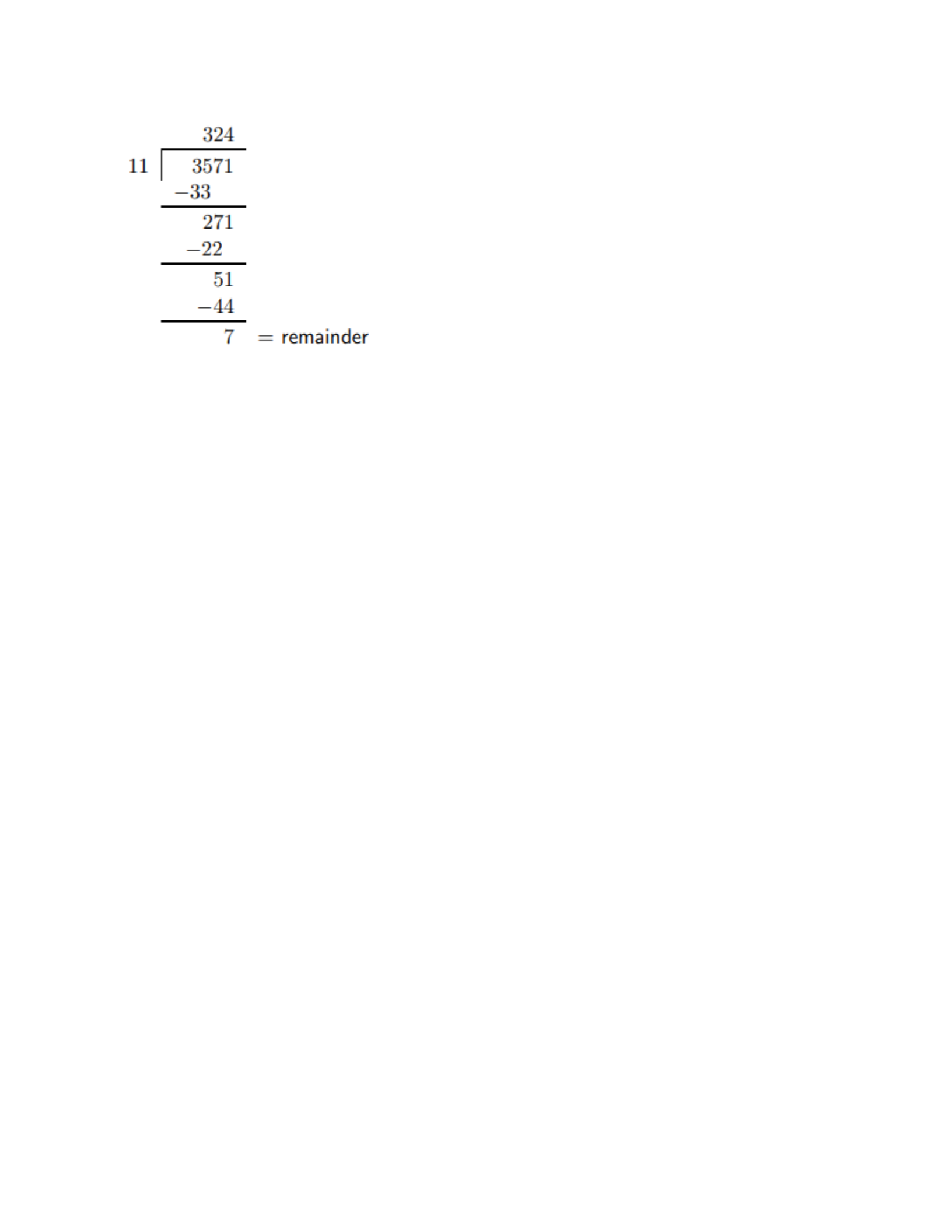
Multiplication involving negative numbers
Multiplication is a little tricky to understand without the notion of distribution (discussed
later). We will begin with noting again what it means to multiply a number by a positive
number: So if we want to compute 4⋅(−7)4⋅(−7) we note
4⋅(−7)=(−7)+(−7)+(−7)+(−7)=−284⋅(−7)=(−7)+(−7)+(−7)+(−7)=−28
Note that since 4⋅7=28,4⋅(−7)=−(4⋅7).4⋅7=28,4⋅(−7)=−(4⋅7). We can multiply positive
numbers in any order: 4⋅7=7⋅44⋅7=7⋅4. The same is true of positive and negative numbers:
(−7)⋅4=4⋅(−7)=−(4⋅7)=−28(−7)⋅4=4⋅(−7)=−(4⋅7)=−28
Example 1.17
5⋅(−12)=−(5⋅12)=−605⋅(−12)=−(5⋅12)=−60 and (−3)⋅(−2)=−(3⋅(−2))=−(−(3⋅2))=6(−3)⋅(−2)
=−(3⋅(−2))=−(−(3⋅2))=6
Example 1.18
So the size of the product of two numbers is the product of their sizes. The sign is positive if
the signs are the same and negative if they are different.
Example 1.19
Two quantities right next to each other, with no symbol between them (except for
parentheses around either or both numbers), has an implicit multiplication. For
example, 3(2)=3×23(2)=3×2.
Example 1.20
Multiply:
hhhh. (−5)(−8)=40(−5)(−8)=40
iiii. (−6)⋅7=−42(−6)⋅7=−42
jjjj. 4⋅12=484⋅12=48

kkkk. (−3)(−6)⋅4(−3)=18⋅4(−3)=72(−3)=−216( multiplying from left to
right )(−3)(−6)⋅4(−3)=18⋅4(−3)=72(−3)=−216( multiplying from left to right )
llll. (−3)(−5)⋅4(−2)=(−3)⋅4⋅(−5)(−2)=−12⋅10=−120((−3)(−5)⋅4(−2)=(−3)⋅4⋅(−5)(−2)=−1
2⋅10=−120( since we can multiply in any order it is convenient to see
that −5⋅−2=10.−5⋅−2=10. )
Exponents of integers
Recall that a positive exponent represents the number of times a number is multiplied by
itself.
Example 1.21
Evaluate:
yyyy. 52=5⋅5=2552=5⋅5=25
zzzz. (−4)3=(−4)⋅(−4)⋅(−4)=16⋅(−4)=−64(−4)3=(−4)⋅(−4)⋅(−4)=16⋅(−4)=−64
aaaaa. (−7)1=−7(−7)1=−7
bbbbb. −24=−2⋅2⋅2⋅2=−16−24=−2⋅2⋅2⋅2=−16 Note: The exponent here is for 2 not
−2!
ccccc. (−3)4=(−3)⋅(−3)⋅(−3)⋅(−3)=9⋅(−3)⋅(−3)=−27⋅(−3)=81(−3)4=(−3)⋅(−3)⋅(−3)⋅(
−3)=9⋅(−3)⋅(−3)=−27⋅(−3)=81
ddddd. (−2)5=(−2)⋅(−2)⋅(−2)⋅(−2)⋅(−2)=−32(−2)5=(−2)⋅(−2)⋅(−2)⋅(−2)⋅(−2)=−32
Exponent rules in details will be further discussed in Chapter 5.
Division involving negative numbers
Division is just a question of knowing multiplication and therefore has the same rule: The
size of the quotient of two numbers is the quotient of the sizes. The sign is positive if the
signs are the same and negative if they are different.
Example 1.22
Divide:
yyyy. (−42)÷7=−6(−42)÷7=−6
zzzz. 81÷(−9)=−981÷(−9)=−9
aaaaa. (−35)÷(−7)=5(−35)÷(−7)=5
bbbbb. 14÷2=714÷2=7
ccccc. 0÷5=00÷5=0. Note When dividing 0 by any number, the answer is always 0.
ddddd. −10÷0=−10÷0= undefined.
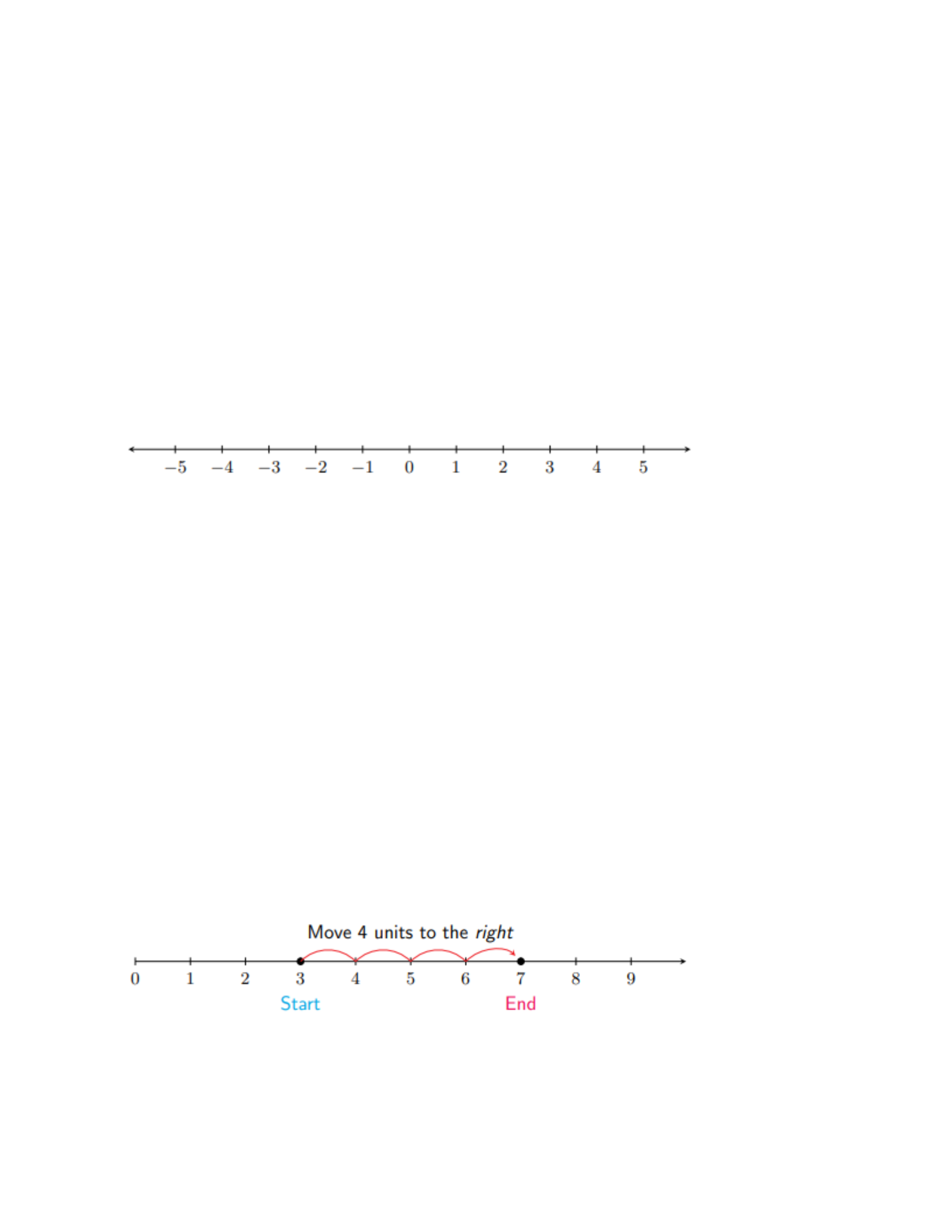
Note 1.23
Any number divided by 0 is undefined!
Multiplying and Dividing Integers
Consider two numbers at a time.
35. If the signs of the two numbers are the same, then the sign of the answer is positive.
36. If the signs of the two numbers are different, then the sign of the answer is negative.
We begin with a brief review of arithmetic with integers
i.e. …,−3,−2,−1,0,1,2,3,……,−3,−2,−1,0,1,2,3,…
Any number has a weight and a sign.
The magnitude (or weight) of a number is the distance it is from 0 on the number line.
Example 1.1
For example, the weight of -5 is 5 and the weight of 7 is 7 .
Two numbers are opposites if, on the number line, they are on opposite sides of zero, but
the same distance away from zero.
So, −5 is the opposite of 5, and 7 is the opposite of −7 and so on.
Addition
We can add two numbers with the help of a number line .
Example 1.2
Adding two positive numbers: For example to add 3+43+4, we start with 3 on the number
line then move 4 units to the right. We land at 7 which is our answer.
So, 3+4=73+4=7. Notice that the answer has the same sign as the signs of 3 and 4 (both
positive) and its weight comes from adding the weights of 3 and 4.
You always move to the right when you add a positive number
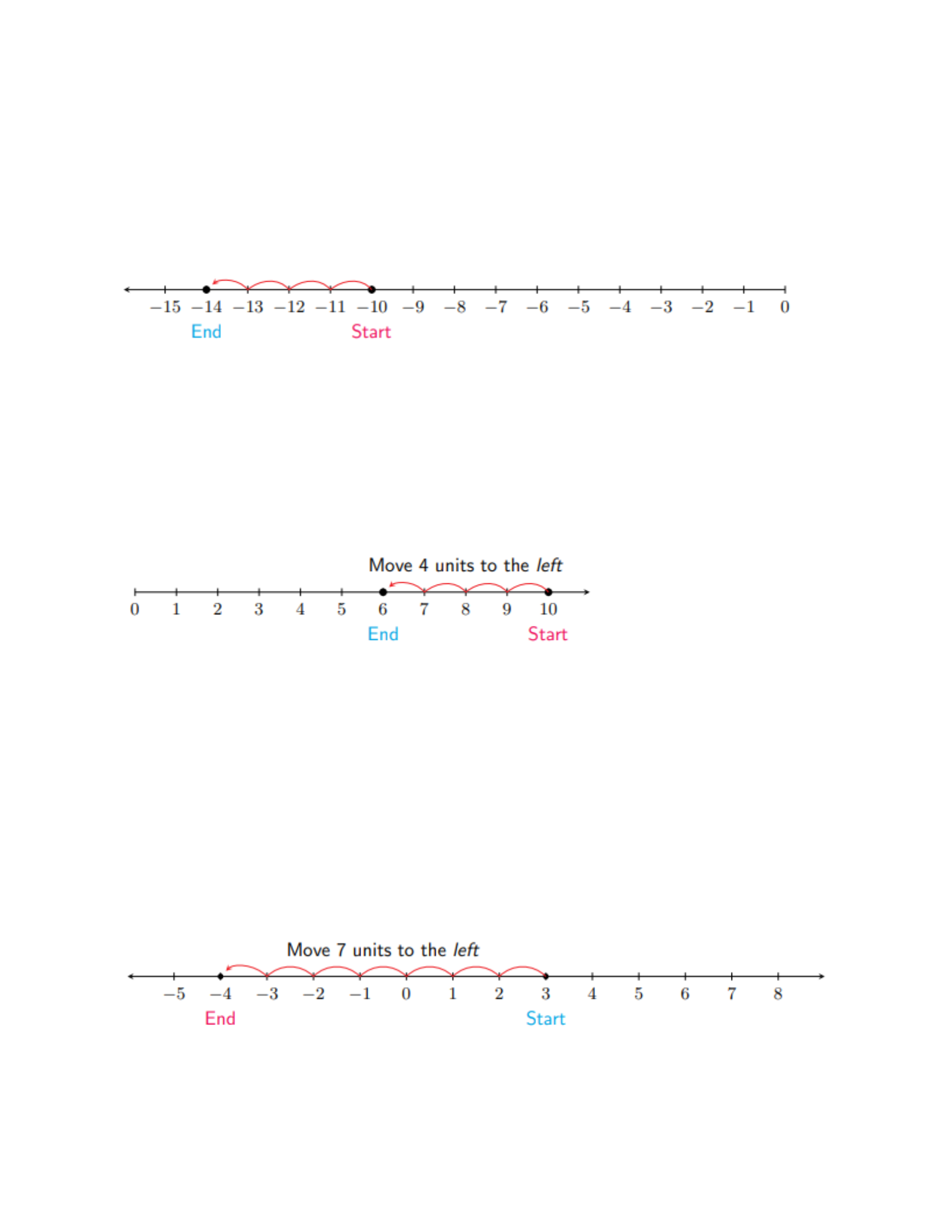
Example 1.3
Adding two negative numbers: For example, −10+(−4)−10+(−4) means you are adding a
debt of $4$4 to an already existing debt of $10.$10. So, we start at -10 on the number line
and move 4 units to the left, to land at −14,−14, which is the answer.
You always move to the left when you add a negative number (a debt)
So, −10+(−4)=−14−10+(−4)=−14. Notice that the answer has the same sign as the signs of -
10 and -4 (both negative) and its weight comes from adding the weights of -10 and -4
To add numbers of opposite signs, that is, a positive and a negative number, we can also
use the number line. For example, to perform 10+(−4),10+(−4), we start at 10 on the
number line and then move 4 units to the left. We land at 6,6, which is the answer. Think
of 10+(−4)10+(−4) as having $10$10 and adding a $4$4 debt. Because we are adding a
debt, we move to the left on the number line!
So, 10+(−4)=6.10+(−4)=6. Notice that the answer has the same sign as the sign of 10
(positive) because it is the number of larger weight, and its weight comes from finding the
difference of the weights of 10 and -4
Notice that because we were adding two numbers of opposite signs, the answer ended up
being the difference in weight (6) along with the sign of the number of larger weight
(positive).
Example 1.4
Adding two numbers of opposite signs: For example, 3+(−7)3+(−7). We start at 3 and move
toward 7 units to the left, and we land at −4,−4, which is our answer.
So, 3+(−7)=−4.3+(−7)=−4. Notice that the answer has the same sign as the signs of -7
(negative) because it is the number of larger weight, and its weight comes from finding the
difference of the weights of 3 and -7.
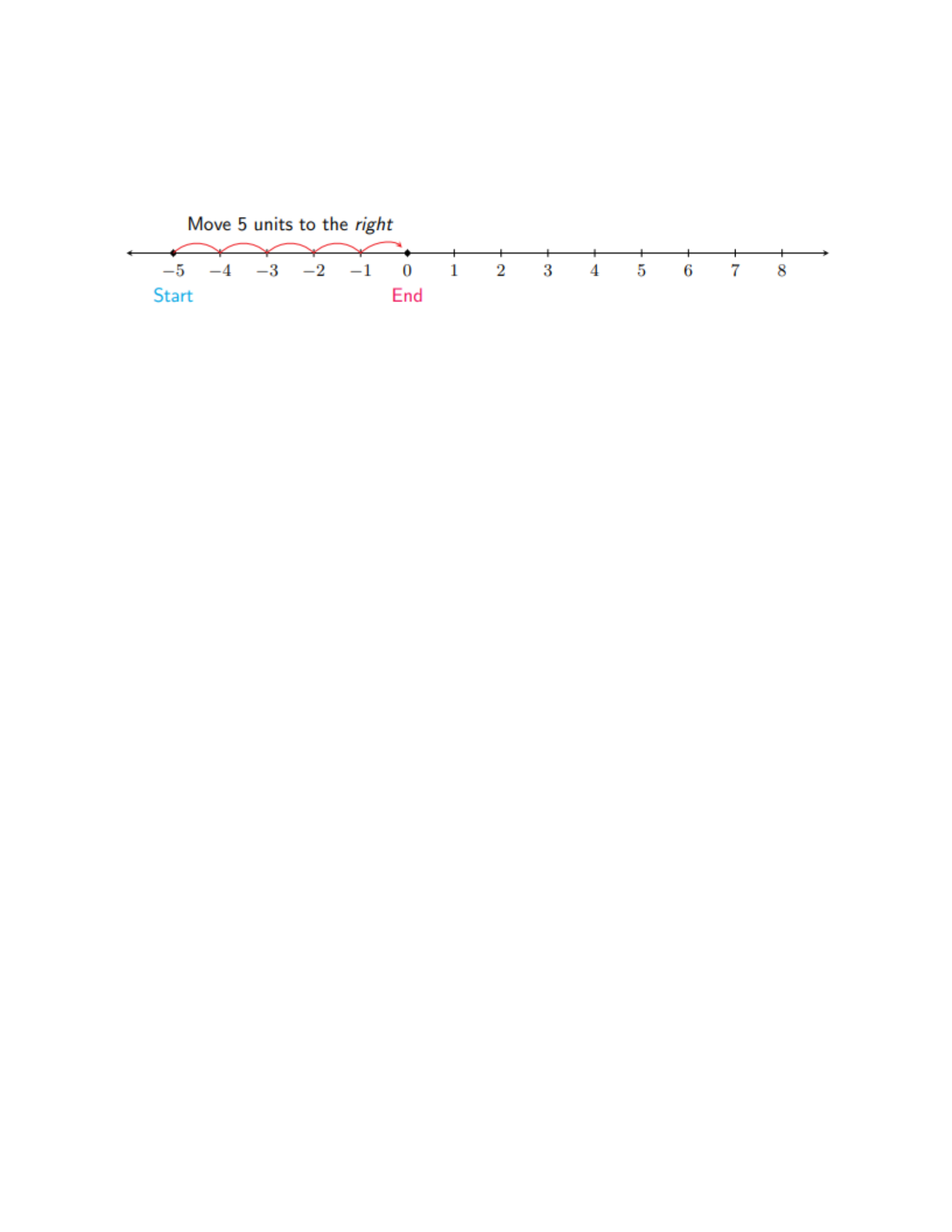
Example 1.5
Adding opposites: We start at -5 on the number line and jump to the right 5 units to land
finally at 00. So −5+5=0−5+5=0.
Note 1.6
Two opposite numbers are called a zero-pair, because adding them always results in 0.
So, −5 and 5 are a zero-pair.
Adding Intergers
37. To add two numbers of the same sign, add their weights and place it after the
sign.
38. To add two numbers of opposite signs, find the difference of their weights and
place it after the sign of the number with the greater weight.
Example 1.7
Add:
eeeee. −8+19=11−8+19=11
fffff. −8+4=−4−8+4=−4
ggggg. 6+(−9)=−36+(−9)=−3
hhhhh. 7+(−2)=57+(−2)=5
iiiii. (−4)+(−7)=−11(−4)+(−7)=−11
jjjjj. 8+7=158+7=15
Note 1.8
While we can add in any order: 4+2=2+44+2=2+4, it is sometimes convenient to add up all
of the negative numbers and add up all of the positive numbers, and then add the results.
There are also times when it is best to notice certain simplifications if the numbers are
added in a different order.
For example
−5+4+5+(−8)=−5+(−8)+4+5( by reordering )−5+4+5+(−8)=−5+(−8)+4+5( by reordering )
so,
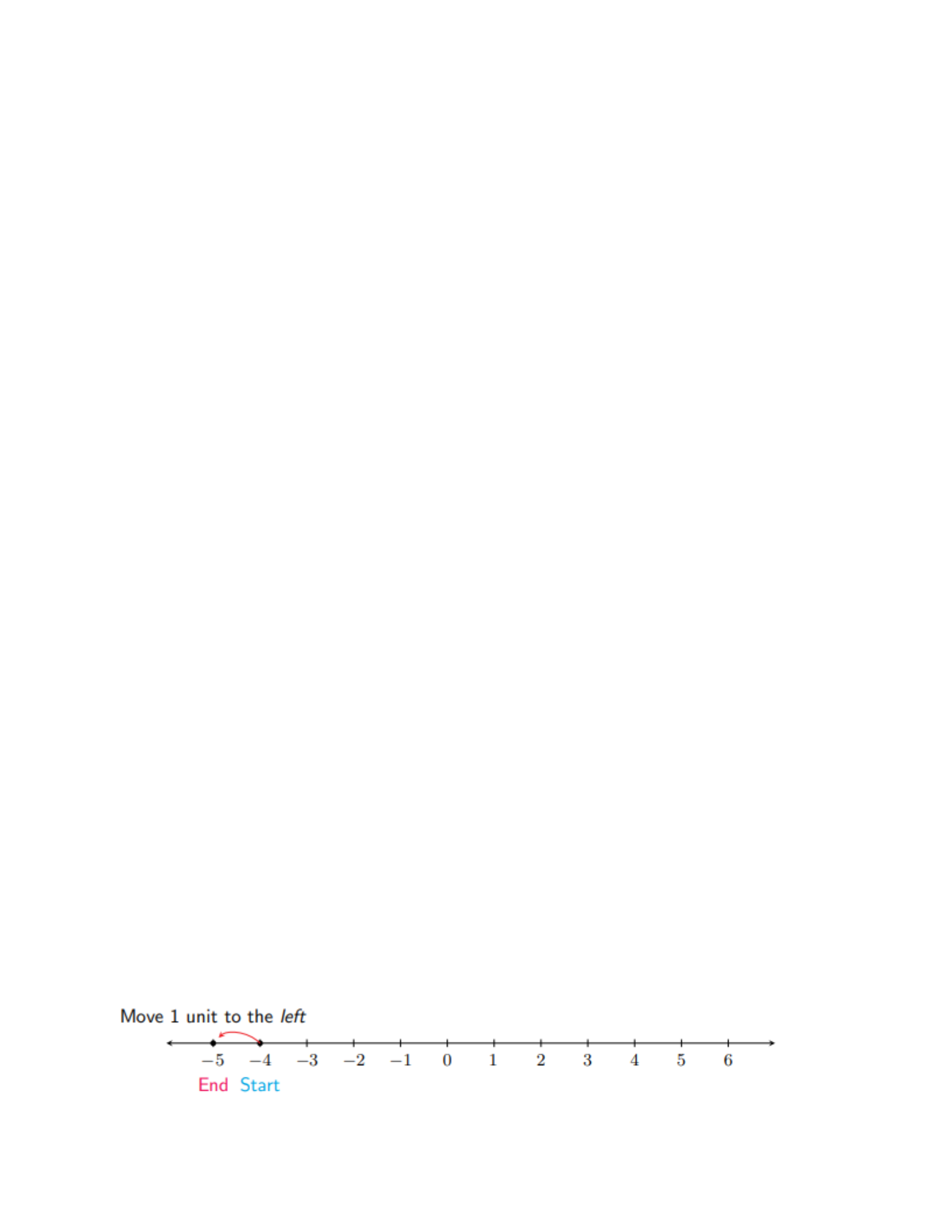
−5+4+5+(−8)=−5+(−8)+4+5=−13+9=−4−5+4+5+(−8)=−5+(−8)+4+5=−13+9=−4
We could have also simplified this by noting that (-5) and 5 are zero-pair, so we are left
with 4+(−8)4+(−8) which is -4.
Example 1.9
We can calculate
(−4)+(−5)+7+(−3)=(−4)+(−5)+(−3)+7=(−12)+7=−5(−4)+(−5)+7+(−3)=(−4)+(−5)+(−3)+7=
(−12)+7=−5
We could have simplified this by noting that (-4) and (-3) make -7, and -7 and 7 are zero-
pair, so the total is -5.
Subtraction (as Addition of the Opposite)
Once we know how to add numbers, we are set to subtract numbers because subtraction is
nothing but addition of the opposite. That is, subtracting 8 − 3 (which reads: subtracting 3
from 8) is the same as 8 + (−3) (which reads: Adding −3 to 8.).
Example 1.10
So, 8−3=8+(−3),8−3=8+(−3), and, we can use the rules of adding two numbers of opposite
signs to find out that the answer is 5.5. We can also use the number line. We start at 8 and
move 3 units to the left (adding -3 is adding a debt, so we move to the left).
So 8−3=5.−4−3−2−10123456788−3=5.−4−3−2−1012345678 End Start Move 3 units to the
left
Example 1.11
To calculate 3−73−7 we first rewrite it as an addition
problem. 3−7=3+(−7).3−7=3+(−7). We can either use the number line, or the rules of
adding two numbers of opposite signs. And, 50,3−7=3+(−7)=−450,3−7=3+(−7)=−4
Example 1.12
To calculate −4−1,−4−1, we first rewrite it as an addition
problem. −4−1=−4+(−1).−4−1=−4+(−1). We can either use the number line, or the rules of
adding two numbers of the same signs. If we want to use the rules, both numbers are
negative, so our answer will be negative, and, adding the weights of -4 and -1
is 5.50,−4−1=−4+(−1)=−55.50,−4−1=−4+(−1)=−5
On the number line, we start at -4 and move 1 unit to the left, to land on -5 which is our
answer.

Changing the subtractions to additions in this way is particularly useful when adding or
subtracting several numbers (because we can add in any order).
Example 1.13
===−3−7+5+7+13−6−(−9)−3+(−7)+5+7+13+(−6)+9−3+(−7)+(−6)+5+7+13+918−3−7+5+7
+13−6−(−9)=−3+(−7)+5+7+13+(−6)+9=−3+(−7)+(−6)+5+7+13+9=18
===−3−7+5+7+13−6−(−9)−3+(−7)+5+7+13+(−6)+95+1318−3−7+5+7+13−6−(−9)=−3+(−7
)+5+7+13+(−6)+9=5+13=18
Remark 1.14
Warning: The symbol "-" is used in two different ways. When it is between two expressions,
it means subtract (e.g., 3−43−4 ). Otherwise, it means 'opposite' or 'negative'
(e.g., −3+4−3+4 ). So in the expression −4−(−3)−4−(−3), the first and last "-" means
opposite and the one in the middle one means subtract. The importance of understanding
this can not be overestimated.
Multiplication and Division of Positive Numbers
Multiplication of integers is adding in the sense that 3×4=4+4+43×4=4+4+4
To multiply larger numbers, it is better to use the usual scheme of multiplication. For
example:
Example 1.15
Let us multiply 152 by 34. We will for convenience sake put the smaller number on the
bottom (though it is not necessary). We have
+×4516515306624808152×34608+45605168
And division is the opposite of multiplication in the sense that to compute 45÷945÷9 is to
find a number so that when we multiply by 9 we get 45. We run through our multiplication
tables (which are hopefully in our head) to discover that 5 does the
trick: 5×9=455×9=45 so that 45÷9=5.45÷9=5. We will discuss division from a different
point of view when we discuss fractions.
To divide larger numbers, we can use long division. For example, let’s divide 3571 by 11.
Example 1.16
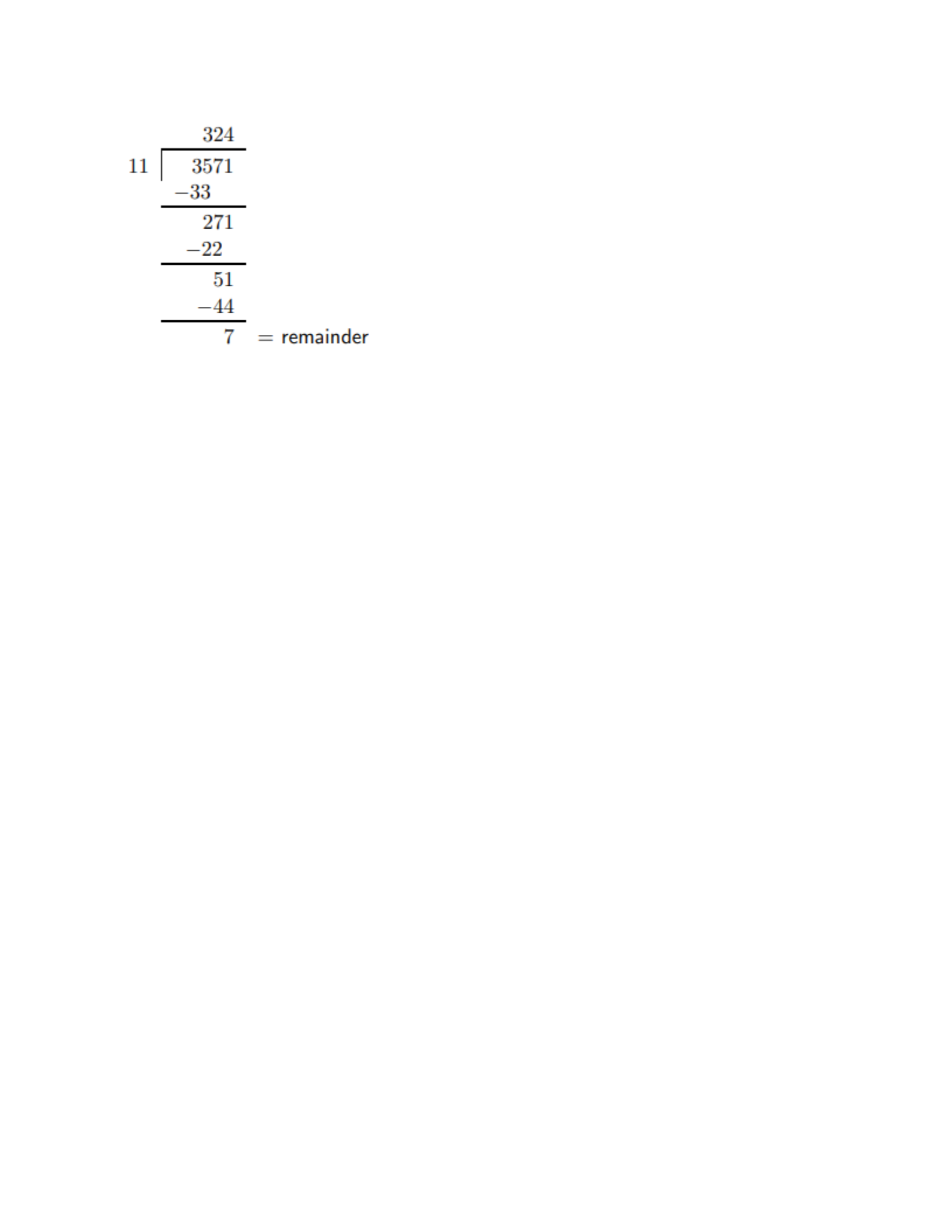
Multiplication involving negative numbers
Multiplication is a little tricky to understand without the notion of distribution (discussed
later). We will begin with noting again what it means to multiply a number by a positive
number: So if we want to compute 4⋅(−7)4⋅(−7) we note
4⋅(−7)=(−7)+(−7)+(−7)+(−7)=−284⋅(−7)=(−7)+(−7)+(−7)+(−7)=−28
Note that since 4⋅7=28,4⋅(−7)=−(4⋅7).4⋅7=28,4⋅(−7)=−(4⋅7). We can multiply positive
numbers in any order: 4⋅7=7⋅44⋅7=7⋅4. The same is true of positive and negative numbers:
(−7)⋅4=4⋅(−7)=−(4⋅7)=−28(−7)⋅4=4⋅(−7)=−(4⋅7)=−28
Example 1.17
5⋅(−12)=−(5⋅12)=−605⋅(−12)=−(5⋅12)=−60 and (−3)⋅(−2)=−(3⋅(−2))=−(−(3⋅2))=6(−3)⋅(−2)
=−(3⋅(−2))=−(−(3⋅2))=6
Example 1.18
So the size of the product of two numbers is the product of their sizes. The sign is positive if
the signs are the same and negative if they are different.
Example 1.19
Two quantities right next to each other, with no symbol between them (except for
parentheses around either or both numbers), has an implicit multiplication. For
example, 3(2)=3×23(2)=3×2.
Example 1.20
Multiply:
mmmm. (−5)(−8)=40(−5)(−8)=40
nnnn. (−6)⋅7=−42(−6)⋅7=−42
oooo. 4⋅12=484⋅12=48

pppp. (−3)(−6)⋅4(−3)=18⋅4(−3)=72(−3)=−216( multiplying from left to
right )(−3)(−6)⋅4(−3)=18⋅4(−3)=72(−3)=−216( multiplying from left to right )
qqqq. (−3)(−5)⋅4(−2)=(−3)⋅4⋅(−5)(−2)=−12⋅10=−120((−3)(−5)⋅4(−2)=(−3)⋅4⋅(−5)(
−2)=−12⋅10=−120( since we can multiply in any order it is convenient to see
that −5⋅−2=10.−5⋅−2=10. )
Exponents of integers
Recall that a positive exponent represents the number of times a number is multiplied by
itself.
Example 1.21
Evaluate:
eeeee. 52=5⋅5=2552=5⋅5=25
fffff. (−4)3=(−4)⋅(−4)⋅(−4)=16⋅(−4)=−64(−4)3=(−4)⋅(−4)⋅(−4)=16⋅(−4)=−64
ggggg. (−7)1=−7(−7)1=−7
hhhhh. −24=−2⋅2⋅2⋅2=−16−24=−2⋅2⋅2⋅2=−16 Note: The exponent here is for 2 not
−2!
iiiii. (−3)4=(−3)⋅(−3)⋅(−3)⋅(−3)=9⋅(−3)⋅(−3)=−27⋅(−3)=81(−3)4=(−3)⋅(−3)⋅(−3)⋅(
−3)=9⋅(−3)⋅(−3)=−27⋅(−3)=81
jjjjj. (−2)5=(−2)⋅(−2)⋅(−2)⋅(−2)⋅(−2)=−32(−2)5=(−2)⋅(−2)⋅(−2)⋅(−2)⋅(−2)=−32
Exponent rules in details will be further discussed in Chapter 5.
Division involving negative numbers
Division is just a question of knowing multiplication and therefore has the same rule: The
size of the quotient of two numbers is the quotient of the sizes. The sign is positive if the
signs are the same and negative if they are different.
Example 1.22
Divide:
eeeee. (−42)÷7=−6(−42)÷7=−6
fffff. 81÷(−9)=−981÷(−9)=−9
ggggg. (−35)÷(−7)=5(−35)÷(−7)=5
hhhhh. 14÷2=714÷2=7
iiiii. 0÷5=00÷5=0. Note When dividing 0 by any number, the answer is always 0.
jjjjj. −10÷0=−10÷0= undefined.
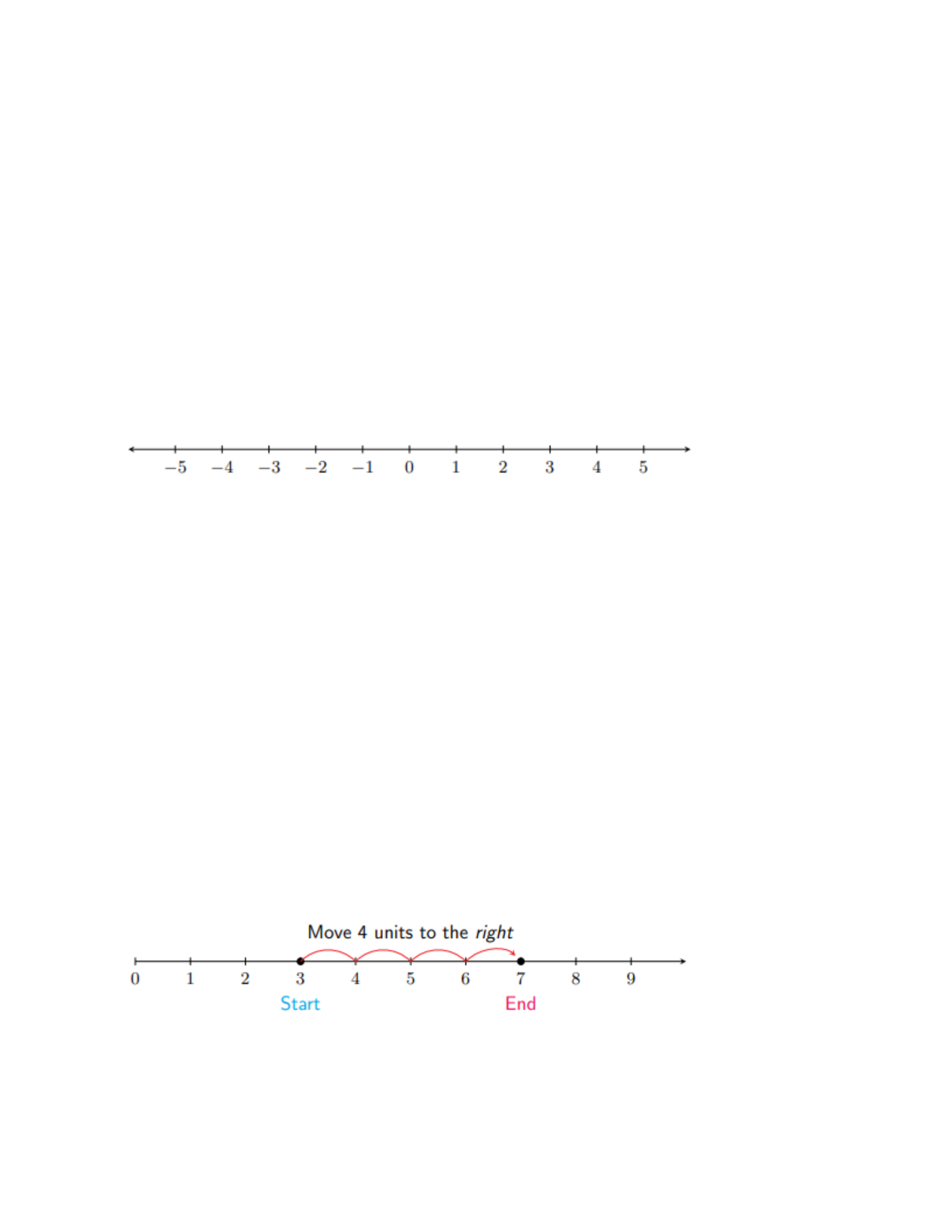
Note 1.23
Any number divided by 0 is undefined!
Multiplying and Dividing Integers
Consider two numbers at a time.
37. If the signs of the two numbers are the same, then the sign of the answer is positive.
38. If the signs of the two numbers are different, then the sign of the answer is negative.
We begin with a brief review of arithmetic with integers
i.e. …,−3,−2,−1,0,1,2,3,……,−3,−2,−1,0,1,2,3,…
Any number has a weight and a sign.
The magnitude (or weight) of a number is the distance it is from 0 on the number line.
Example 1.1
For example, the weight of -5 is 5 and the weight of 7 is 7 .
Two numbers are opposites if, on the number line, they are on opposite sides of zero, but
the same distance away from zero.
So, −5 is the opposite of 5, and 7 is the opposite of −7 and so on.
Addition
We can add two numbers with the help of a number line .
Example 1.2
Adding two positive numbers: For example to add 3+43+4, we start with 3 on the number
line then move 4 units to the right. We land at 7 which is our answer.
So, 3+4=73+4=7. Notice that the answer has the same sign as the signs of 3 and 4 (both
positive) and its weight comes from adding the weights of 3 and 4.
You always move to the right when you add a positive number
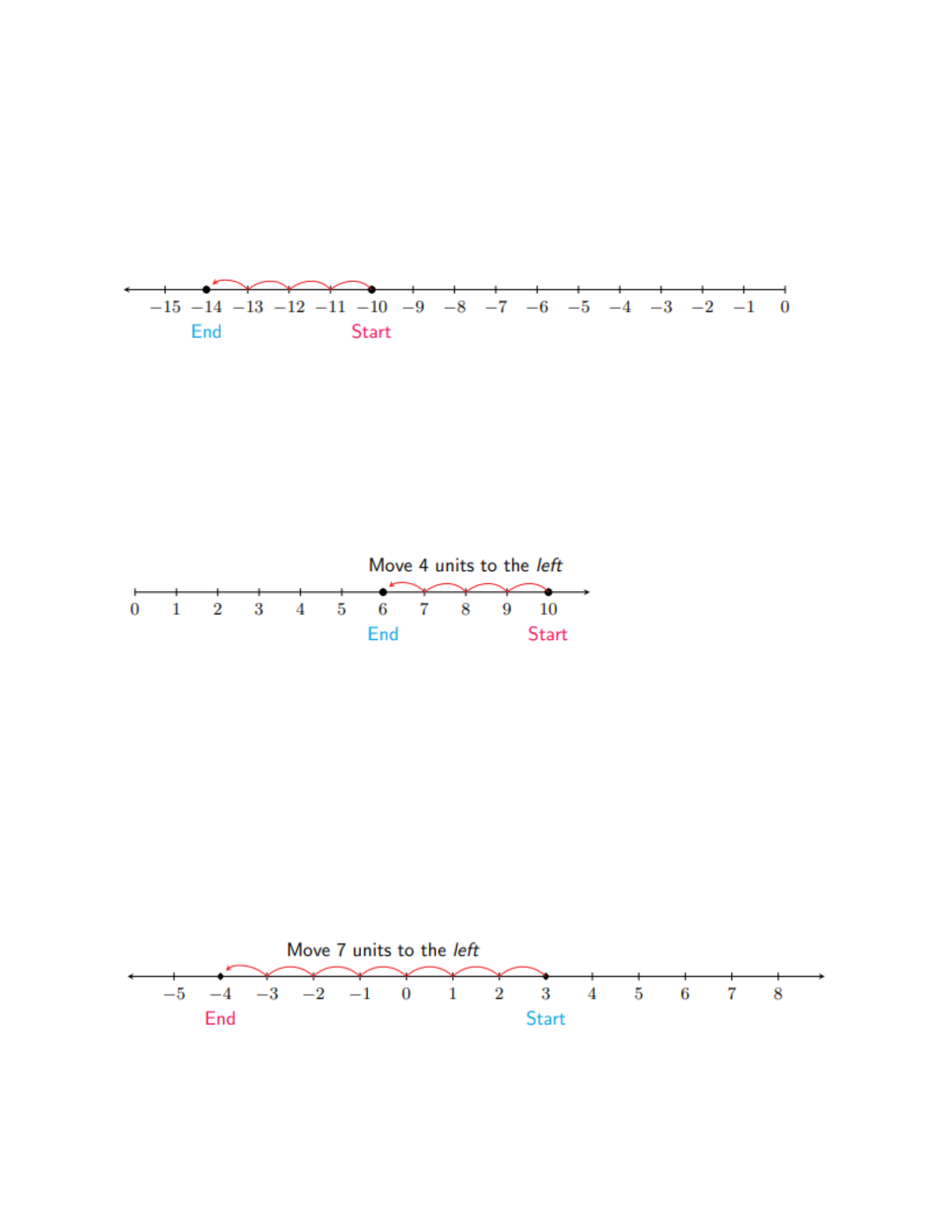
Example 1.3
Adding two negative numbers: For example, −10+(−4)−10+(−4) means you are adding a
debt of $4$4 to an already existing debt of $10.$10. So, we start at -10 on the number line
and move 4 units to the left, to land at −14,−14, which is the answer.
You always move to the left when you add a negative number (a debt)
So, −10+(−4)=−14−10+(−4)=−14. Notice that the answer has the same sign as the signs of -
10 and -4 (both negative) and its weight comes from adding the weights of -10 and -4
To add numbers of opposite signs, that is, a positive and a negative number, we can also
use the number line. For example, to perform 10+(−4),10+(−4), we start at 10 on the
number line and then move 4 units to the left. We land at 6,6, which is the answer. Think
of 10+(−4)10+(−4) as having $10$10 and adding a $4$4 debt. Because we are adding a
debt, we move to the left on the number line!
So, 10+(−4)=6.10+(−4)=6. Notice that the answer has the same sign as the sign of 10
(positive) because it is the number of larger weight, and its weight comes from finding the
difference of the weights of 10 and -4
Notice that because we were adding two numbers of opposite signs, the answer ended up
being the difference in weight (6) along with the sign of the number of larger weight
(positive).
Example 1.4
Adding two numbers of opposite signs: For example, 3+(−7)3+(−7). We start at 3 and move
toward 7 units to the left, and we land at −4,−4, which is our answer.
So, 3+(−7)=−4.3+(−7)=−4. Notice that the answer has the same sign as the signs of -7
(negative) because it is the number of larger weight, and its weight comes from finding the
difference of the weights of 3 and -7.
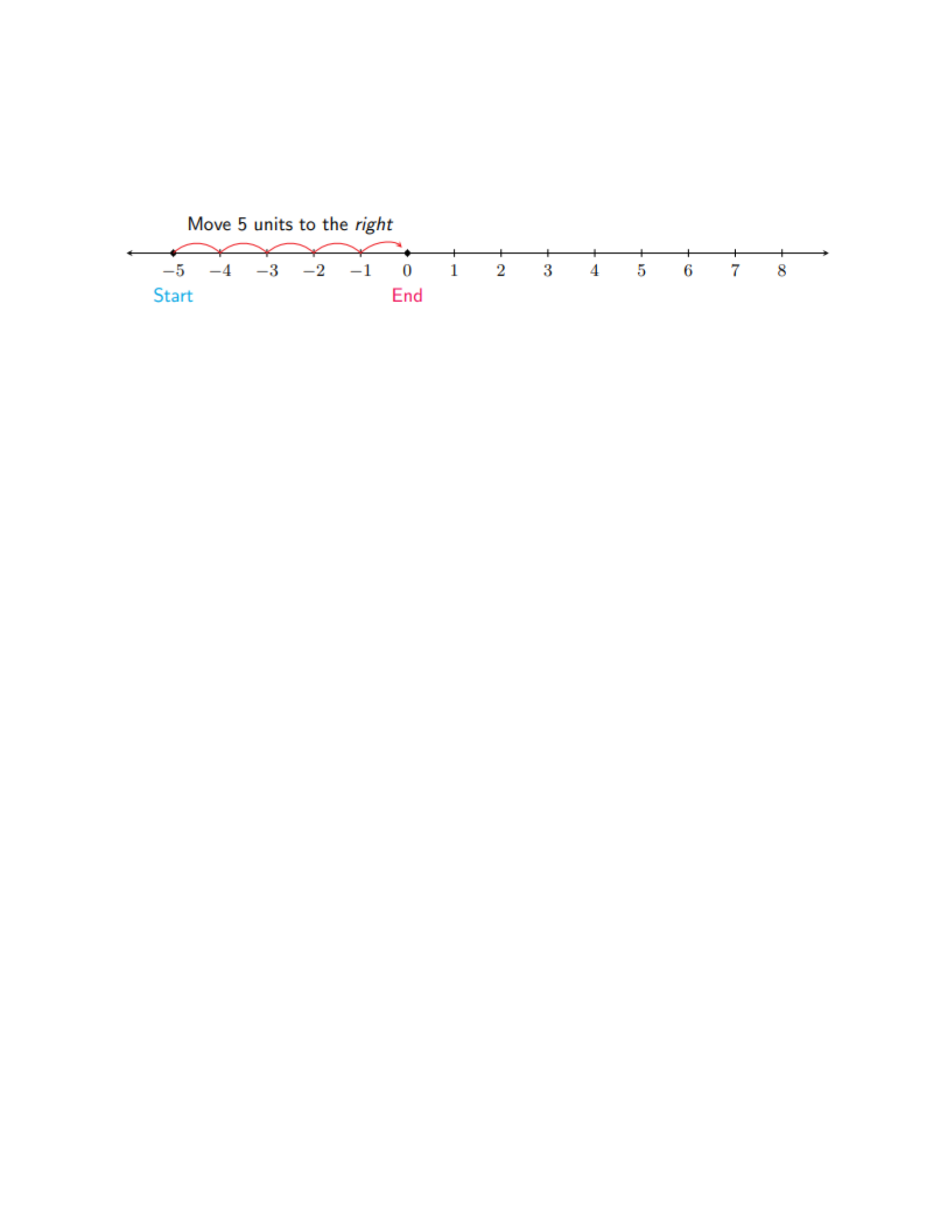
Example 1.5
Adding opposites: We start at -5 on the number line and jump to the right 5 units to land
finally at 00. So −5+5=0−5+5=0.
Note 1.6
Two opposite numbers are called a zero-pair, because adding them always results in 0.
So, −5 and 5 are a zero-pair.
Adding Intergers
39. To add two numbers of the same sign, add their weights and place it after the
sign.
40. To add two numbers of opposite signs, find the difference of their weights and
place it after the sign of the number with the greater weight.
Example 1.7
Add:
kkkkk. −8+19=11−8+19=11
lllll. −8+4=−4−8+4=−4
mmmmm. 6+(−9)=−36+(−9)=−3
nnnnn. 7+(−2)=57+(−2)=5
ooooo. (−4)+(−7)=−11(−4)+(−7)=−11
ppppp. 8+7=158+7=15
Note 1.8
While we can add in any order: 4+2=2+44+2=2+4, it is sometimes convenient to add up all
of the negative numbers and add up all of the positive numbers, and then add the results.
There are also times when it is best to notice certain simplifications if the numbers are
added in a different order.
For example
−5+4+5+(−8)=−5+(−8)+4+5( by reordering )−5+4+5+(−8)=−5+(−8)+4+5( by reordering )
so,
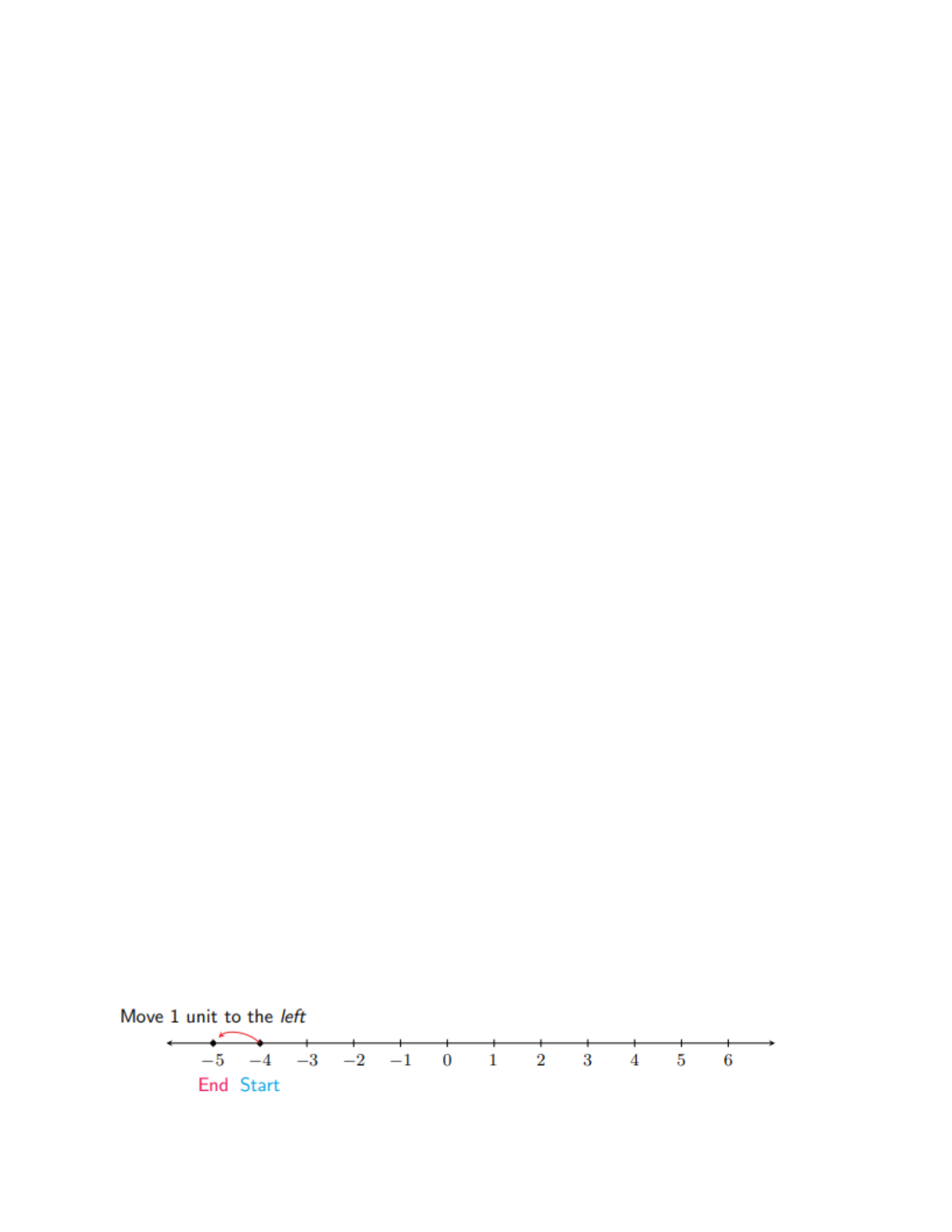
−5+4+5+(−8)=−5+(−8)+4+5=−13+9=−4−5+4+5+(−8)=−5+(−8)+4+5=−13+9=−4
We could have also simplified this by noting that (-5) and 5 are zero-pair, so we are left
with 4+(−8)4+(−8) which is -4.
Example 1.9
We can calculate
(−4)+(−5)+7+(−3)=(−4)+(−5)+(−3)+7=(−12)+7=−5(−4)+(−5)+7+(−3)=(−4)+(−5)+(−3)+7=
(−12)+7=−5
We could have simplified this by noting that (-4) and (-3) make -7, and -7 and 7 are zero-
pair, so the total is -5.
Subtraction (as Addition of the Opposite)
Once we know how to add numbers, we are set to subtract numbers because subtraction is
nothing but addition of the opposite. That is, subtracting 8 − 3 (which reads: subtracting 3
from 8) is the same as 8 + (−3) (which reads: Adding −3 to 8.).
Example 1.10
So, 8−3=8+(−3),8−3=8+(−3), and, we can use the rules of adding two numbers of opposite
signs to find out that the answer is 5.5. We can also use the number line. We start at 8 and
move 3 units to the left (adding -3 is adding a debt, so we move to the left).
So 8−3=5.−4−3−2−10123456788−3=5.−4−3−2−1012345678 End Start Move 3 units to the
left
Example 1.11
To calculate 3−73−7 we first rewrite it as an addition
problem. 3−7=3+(−7).3−7=3+(−7). We can either use the number line, or the rules of
adding two numbers of opposite signs. And, 50,3−7=3+(−7)=−450,3−7=3+(−7)=−4
Example 1.12
To calculate −4−1,−4−1, we first rewrite it as an addition
problem. −4−1=−4+(−1).−4−1=−4+(−1). We can either use the number line, or the rules of
adding two numbers of the same signs. If we want to use the rules, both numbers are
negative, so our answer will be negative, and, adding the weights of -4 and -1
is 5.50,−4−1=−4+(−1)=−55.50,−4−1=−4+(−1)=−5
On the number line, we start at -4 and move 1 unit to the left, to land on -5 which is our
answer.

Changing the subtractions to additions in this way is particularly useful when adding or
subtracting several numbers (because we can add in any order).
Example 1.13
===−3−7+5+7+13−6−(−9)−3+(−7)+5+7+13+(−6)+9−3+(−7)+(−6)+5+7+13+918−3−7+5+7
+13−6−(−9)=−3+(−7)+5+7+13+(−6)+9=−3+(−7)+(−6)+5+7+13+9=18
===−3−7+5+7+13−6−(−9)−3+(−7)+5+7+13+(−6)+95+1318−3−7+5+7+13−6−(−9)=−3+(−7
)+5+7+13+(−6)+9=5+13=18
Remark 1.14
Warning: The symbol "-" is used in two different ways. When it is between two expressions,
it means subtract (e.g., 3−43−4 ). Otherwise, it means 'opposite' or 'negative'
(e.g., −3+4−3+4 ). So in the expression −4−(−3)−4−(−3), the first and last "-" means
opposite and the one in the middle one means subtract. The importance of understanding
this can not be overestimated.
Multiplication and Division of Positive Numbers
Multiplication of integers is adding in the sense that 3×4=4+4+43×4=4+4+4
To multiply larger numbers, it is better to use the usual scheme of multiplication. For
example:
Example 1.15
Let us multiply 152 by 34. We will for convenience sake put the smaller number on the
bottom (though it is not necessary). We have
+×4516515306624808152×34608+45605168
And division is the opposite of multiplication in the sense that to compute 45÷945÷9 is to
find a number so that when we multiply by 9 we get 45. We run through our multiplication
tables (which are hopefully in our head) to discover that 5 does the
trick: 5×9=455×9=45 so that 45÷9=5.45÷9=5. We will discuss division from a different
point of view when we discuss fractions.
To divide larger numbers, we can use long division. For example, let’s divide 3571 by 11.
Example 1.16
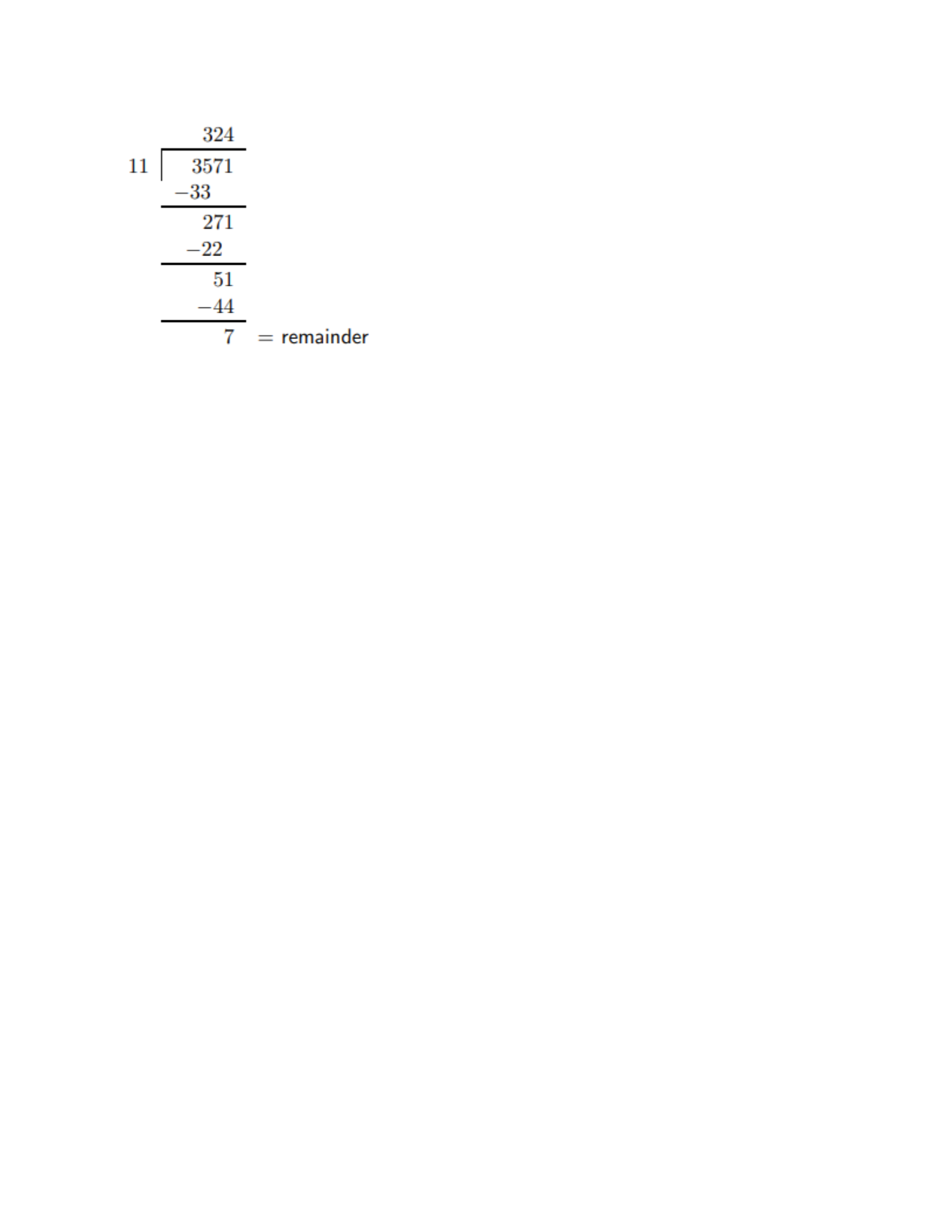
Multiplication involving negative numbers
Multiplication is a little tricky to understand without the notion of distribution (discussed
later). We will begin with noting again what it means to multiply a number by a positive
number: So if we want to compute 4⋅(−7)4⋅(−7) we note
4⋅(−7)=(−7)+(−7)+(−7)+(−7)=−284⋅(−7)=(−7)+(−7)+(−7)+(−7)=−28
Note that since 4⋅7=28,4⋅(−7)=−(4⋅7).4⋅7=28,4⋅(−7)=−(4⋅7). We can multiply positive
numbers in any order: 4⋅7=7⋅44⋅7=7⋅4. The same is true of positive and negative numbers:
(−7)⋅4=4⋅(−7)=−(4⋅7)=−28(−7)⋅4=4⋅(−7)=−(4⋅7)=−28
Example 1.17
5⋅(−12)=−(5⋅12)=−605⋅(−12)=−(5⋅12)=−60 and (−3)⋅(−2)=−(3⋅(−2))=−(−(3⋅2))=6(−3)⋅(−2)
=−(3⋅(−2))=−(−(3⋅2))=6
Example 1.18
So the size of the product of two numbers is the product of their sizes. The sign is positive if
the signs are the same and negative if they are different.
Example 1.19
Two quantities right next to each other, with no symbol between them (except for
parentheses around either or both numbers), has an implicit multiplication. For
example, 3(2)=3×23(2)=3×2.
Example 1.20
Multiply:
rrrr. (−5)(−8)=40(−5)(−8)=40
ssss. (−6)⋅7=−42(−6)⋅7=−42
tttt. 4⋅12=484⋅12=48

uuuu. (−3)(−6)⋅4(−3)=18⋅4(−3)=72(−3)=−216( multiplying from left to
right )(−3)(−6)⋅4(−3)=18⋅4(−3)=72(−3)=−216( multiplying from left to right )
vvvv. (−3)(−5)⋅4(−2)=(−3)⋅4⋅(−5)(−2)=−12⋅10=−120((−3)(−5)⋅4(−2)=(−3)⋅4⋅(−5)(
−2)=−12⋅10=−120( since we can multiply in any order it is convenient to see
that −5⋅−2=10.−5⋅−2=10. )
Exponents of integers
Recall that a positive exponent represents the number of times a number is multiplied by
itself.
Example 1.21
Evaluate:
kkkkk. 52=5⋅5=2552=5⋅5=25
lllll. (−4)3=(−4)⋅(−4)⋅(−4)=16⋅(−4)=−64(−4)3=(−4)⋅(−4)⋅(−4)=16⋅(−4)=−64
mmmmm. (−7)1=−7(−7)1=−7
nnnnn. −24=−2⋅2⋅2⋅2=−16−24=−2⋅2⋅2⋅2=−16 Note: The exponent here is for 2 not
−2!
ooooo. (−3)4=(−3)⋅(−3)⋅(−3)⋅(−3)=9⋅(−3)⋅(−3)=−27⋅(−3)=81(−3)4=(−3)⋅(−3)⋅(−3)⋅(
−3)=9⋅(−3)⋅(−3)=−27⋅(−3)=81
ppppp. (−2)5=(−2)⋅(−2)⋅(−2)⋅(−2)⋅(−2)=−32(−2)5=(−2)⋅(−2)⋅(−2)⋅(−2)⋅(−2)=−32
Exponent rules in details will be further discussed in Chapter 5.
Division involving negative numbers
Division is just a question of knowing multiplication and therefore has the same rule: The
size of the quotient of two numbers is the quotient of the sizes. The sign is positive if the
signs are the same and negative if they are different.
Example 1.22
Divide:
kkkkk. (−42)÷7=−6(−42)÷7=−6
lllll. 81÷(−9)=−981÷(−9)=−9
mmmmm. (−35)÷(−7)=5(−35)÷(−7)=5
nnnnn. 14÷2=714÷2=7
ooooo. 0÷5=00÷5=0. Note When dividing 0 by any number, the answer is always 0.
ppppp. −10÷0=−10÷0= undefined.
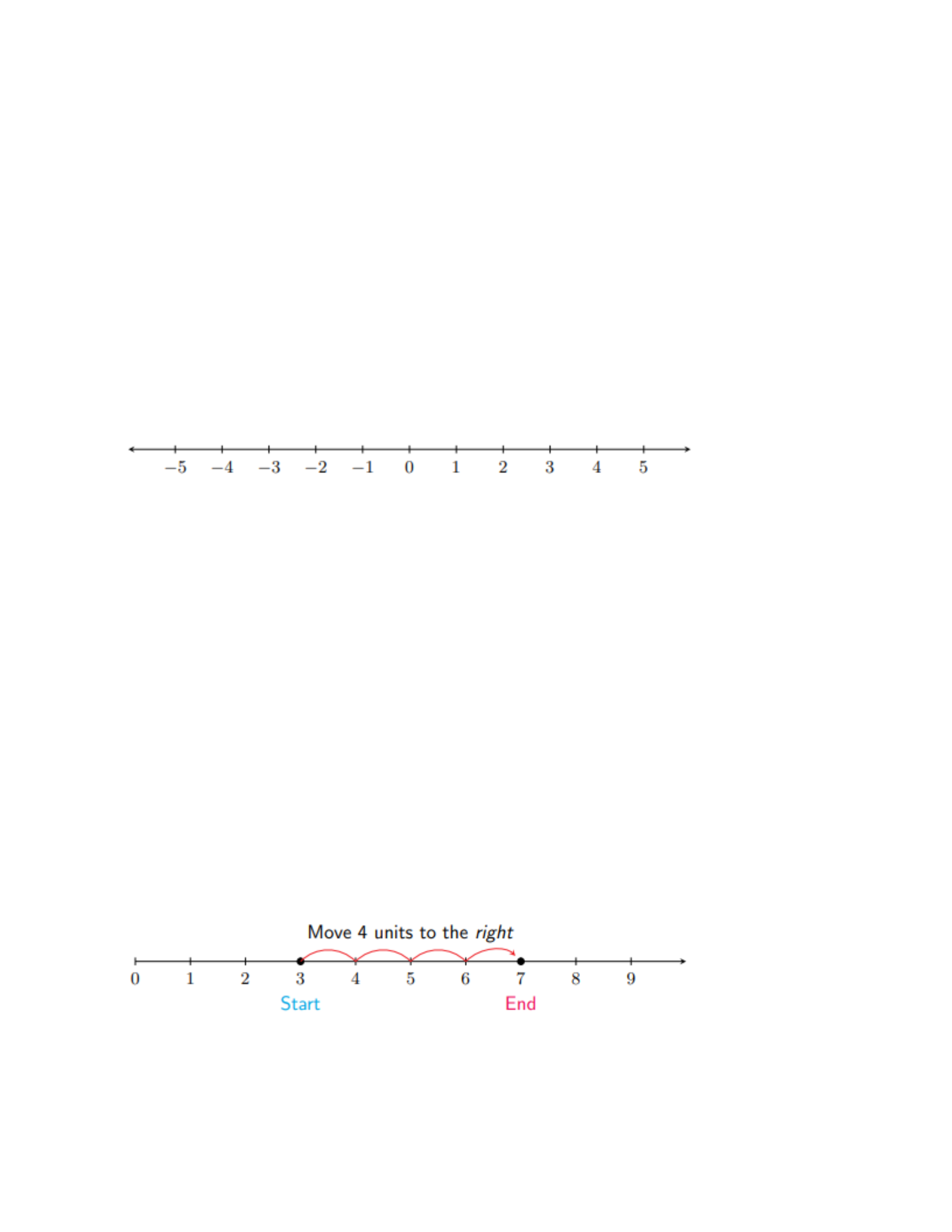
Note 1.23
Any number divided by 0 is undefined!
Multiplying and Dividing Integers
Consider two numbers at a time.
39. If the signs of the two numbers are the same, then the sign of the answer is positive.
40. If the signs of the two numbers are different, then the sign of the answer is negative.
We begin with a brief review of arithmetic with integers
i.e. …,−3,−2,−1,0,1,2,3,……,−3,−2,−1,0,1,2,3,…
Any number has a weight and a sign.
The magnitude (or weight) of a number is the distance it is from 0 on the number line.
Example 1.1
For example, the weight of -5 is 5 and the weight of 7 is 7 .
Two numbers are opposites if, on the number line, they are on opposite sides of zero, but
the same distance away from zero.
So, −5 is the opposite of 5, and 7 is the opposite of −7 and so on.
Addition
We can add two numbers with the help of a number line .
Example 1.2
Adding two positive numbers: For example to add 3+43+4, we start with 3 on the number
line then move 4 units to the right. We land at 7 which is our answer.
So, 3+4=73+4=7. Notice that the answer has the same sign as the signs of 3 and 4 (both
positive) and its weight comes from adding the weights of 3 and 4.
You always move to the right when you add a positive number
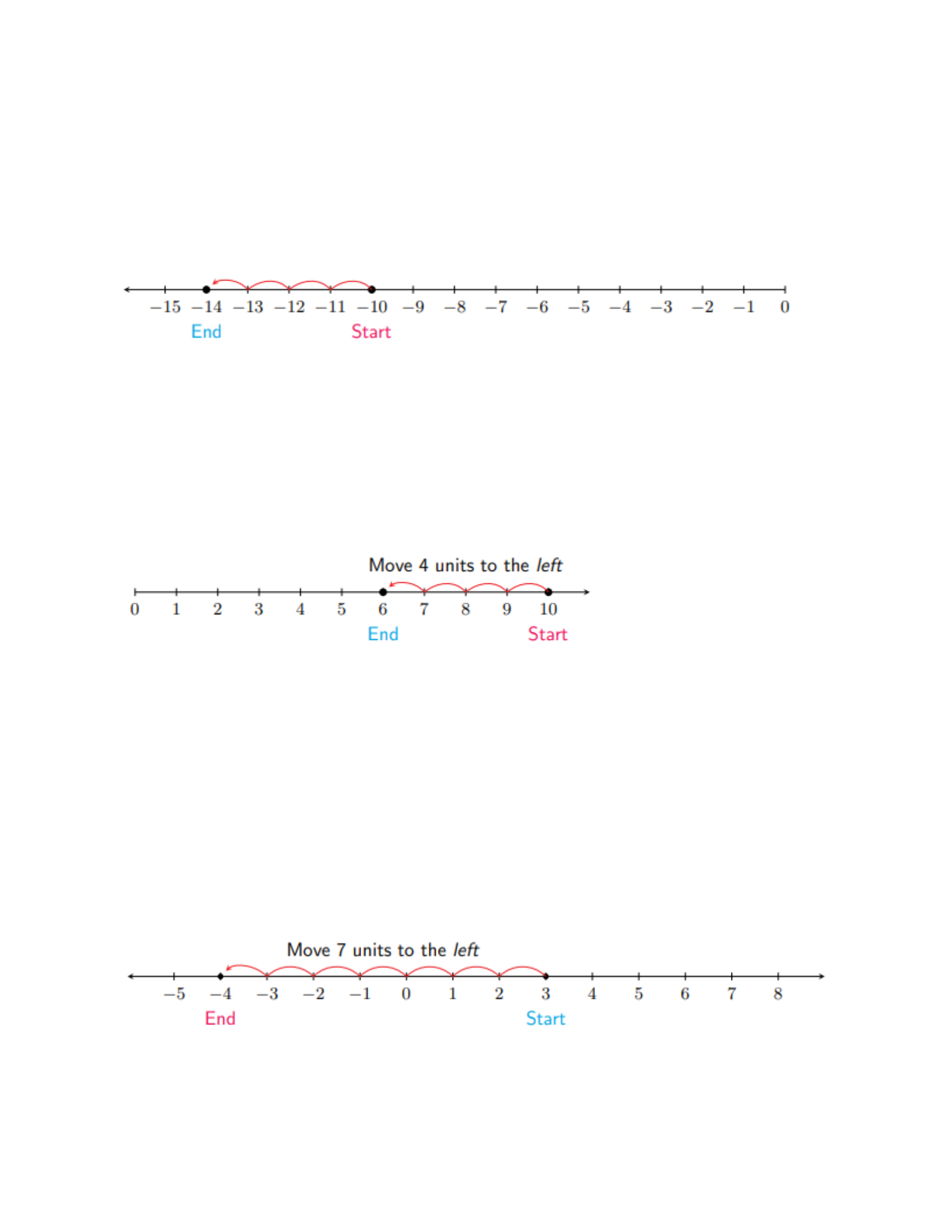
Example 1.3
Adding two negative numbers: For example, −10+(−4)−10+(−4) means you are adding a
debt of $4$4 to an already existing debt of $10.$10. So, we start at -10 on the number line
and move 4 units to the left, to land at −14,−14, which is the answer.
You always move to the left when you add a negative number (a debt)
So, −10+(−4)=−14−10+(−4)=−14. Notice that the answer has the same sign as the signs of -
10 and -4 (both negative) and its weight comes from adding the weights of -10 and -4
To add numbers of opposite signs, that is, a positive and a negative number, we can also
use the number line. For example, to perform 10+(−4),10+(−4), we start at 10 on the
number line and then move 4 units to the left. We land at 6,6, which is the answer. Think
of 10+(−4)10+(−4) as having $10$10 and adding a $4$4 debt. Because we are adding a
debt, we move to the left on the number line!
So, 10+(−4)=6.10+(−4)=6. Notice that the answer has the same sign as the sign of 10
(positive) because it is the number of larger weight, and its weight comes from finding the
difference of the weights of 10 and -4
Notice that because we were adding two numbers of opposite signs, the answer ended up
being the difference in weight (6) along with the sign of the number of larger weight
(positive).
Example 1.4
Adding two numbers of opposite signs: For example, 3+(−7)3+(−7). We start at 3 and move
toward 7 units to the left, and we land at −4,−4, which is our answer.
So, 3+(−7)=−4.3+(−7)=−4. Notice that the answer has the same sign as the signs of -7
(negative) because it is the number of larger weight, and its weight comes from finding the
difference of the weights of 3 and -7.
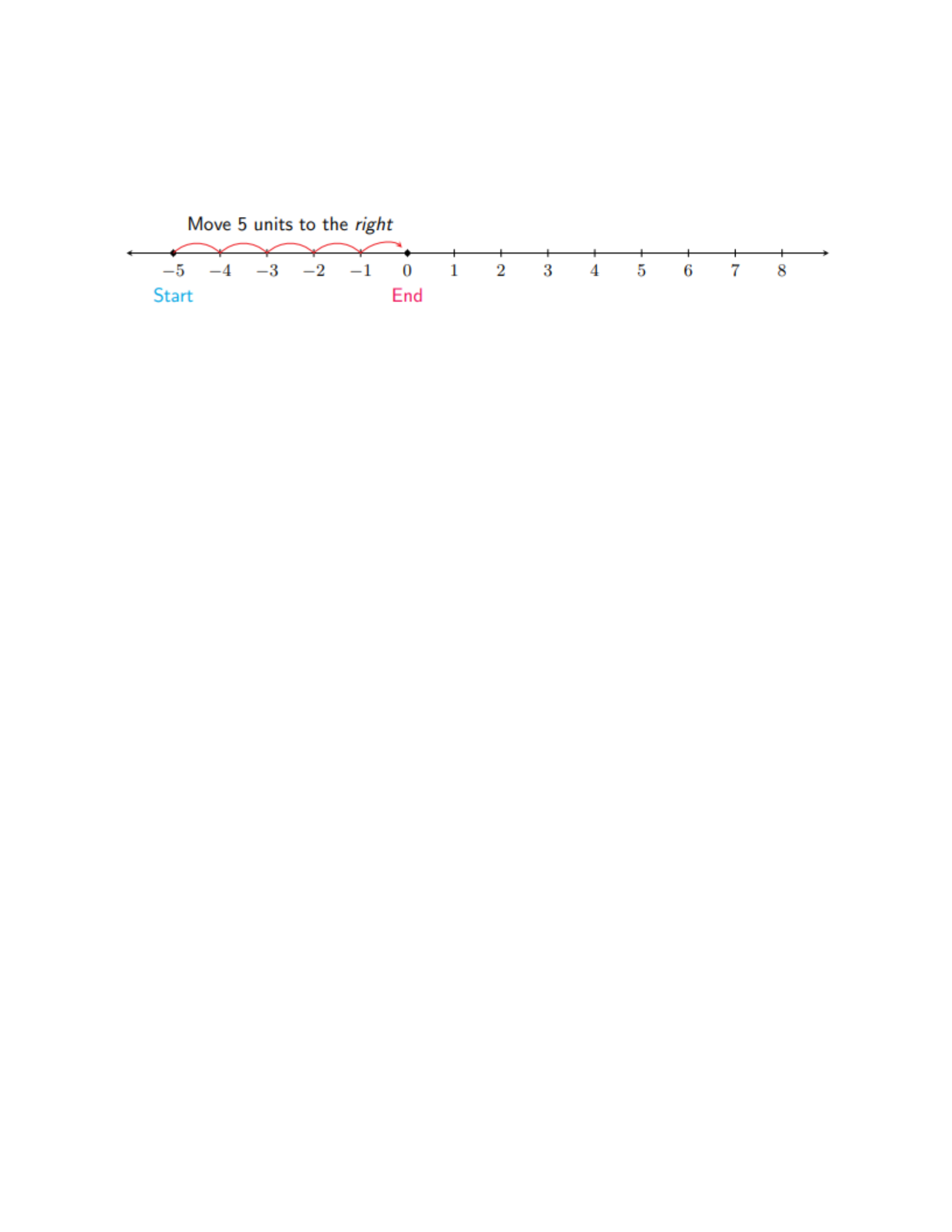
Example 1.5
Adding opposites: We start at -5 on the number line and jump to the right 5 units to land
finally at 00. So −5+5=0−5+5=0.
Note 1.6
Two opposite numbers are called a zero-pair, because adding them always results in 0.
So, −5 and 5 are a zero-pair.
Adding Intergers
41. To add two numbers of the same sign, add their weights and place it after the
sign.
42. To add two numbers of opposite signs, find the difference of their weights and
place it after the sign of the number with the greater weight.
Example 1.7
Add:
qqqqq. −8+19=11−8+19=11
rrrrr. −8+4=−4−8+4=−4
sssss. 6+(−9)=−36+(−9)=−3
ttttt. 7+(−2)=57+(−2)=5
uuuuu. (−4)+(−7)=−11(−4)+(−7)=−11
vvvvv. 8+7=158+7=15
Note 1.8
While we can add in any order: 4+2=2+44+2=2+4, it is sometimes convenient to add up all
of the negative numbers and add up all of the positive numbers, and then add the results.
There are also times when it is best to notice certain simplifications if the numbers are
added in a different order.
For example
−5+4+5+(−8)=−5+(−8)+4+5( by reordering )−5+4+5+(−8)=−5+(−8)+4+5( by reordering )
so,
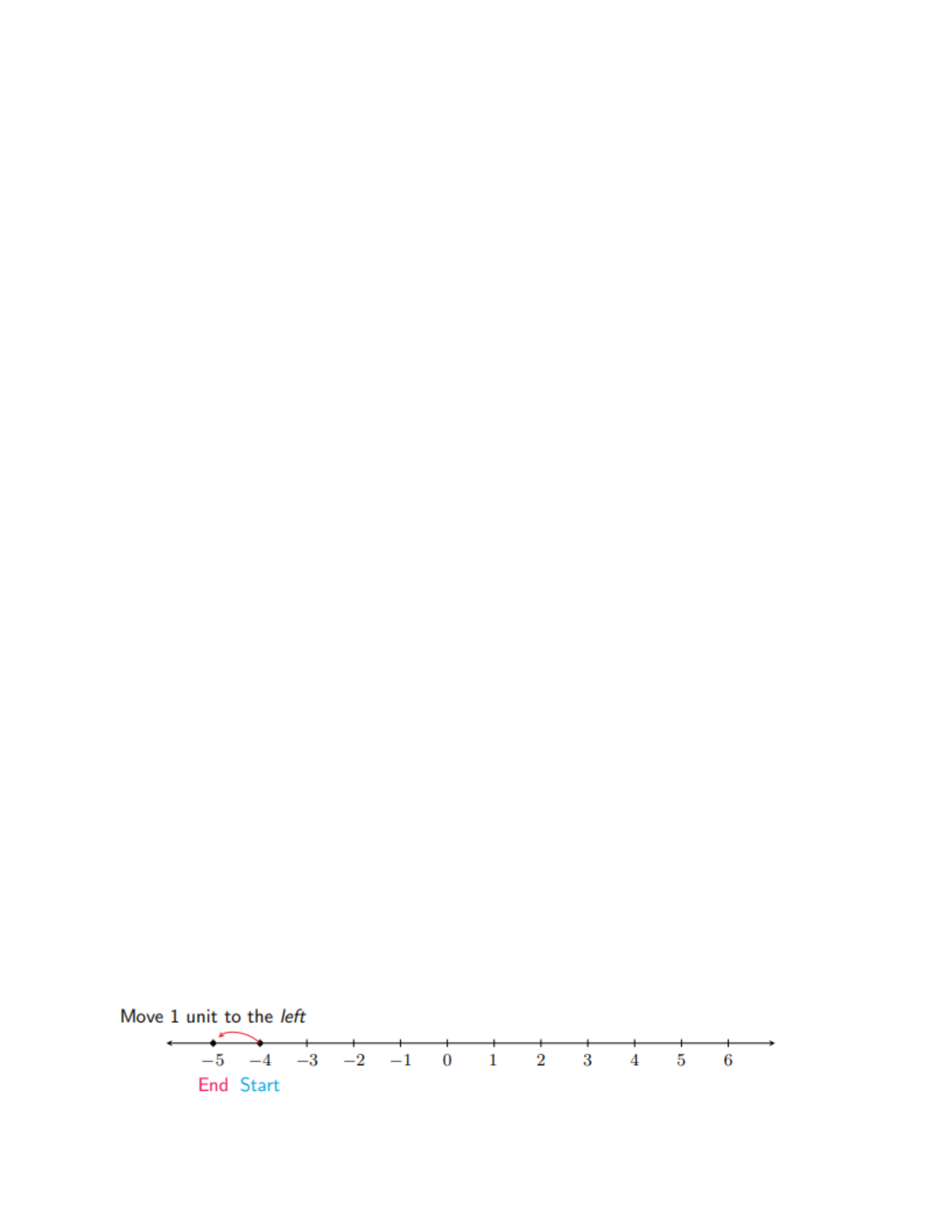
−5+4+5+(−8)=−5+(−8)+4+5=−13+9=−4−5+4+5+(−8)=−5+(−8)+4+5=−13+9=−4
We could have also simplified this by noting that (-5) and 5 are zero-pair, so we are left
with 4+(−8)4+(−8) which is -4.
Example 1.9
We can calculate
(−4)+(−5)+7+(−3)=(−4)+(−5)+(−3)+7=(−12)+7=−5(−4)+(−5)+7+(−3)=(−4)+(−5)+(−3)+7=
(−12)+7=−5
We could have simplified this by noting that (-4) and (-3) make -7, and -7 and 7 are zero-
pair, so the total is -5.
Subtraction (as Addition of the Opposite)
Once we know how to add numbers, we are set to subtract numbers because subtraction is
nothing but addition of the opposite. That is, subtracting 8 − 3 (which reads: subtracting 3
from 8) is the same as 8 + (−3) (which reads: Adding −3 to 8.).
Example 1.10
So, 8−3=8+(−3),8−3=8+(−3), and, we can use the rules of adding two numbers of opposite
signs to find out that the answer is 5.5. We can also use the number line. We start at 8 and
move 3 units to the left (adding -3 is adding a debt, so we move to the left).
So 8−3=5.−4−3−2−10123456788−3=5.−4−3−2−1012345678 End Start Move 3 units to the
left
Example 1.11
To calculate 3−73−7 we first rewrite it as an addition
problem. 3−7=3+(−7).3−7=3+(−7). We can either use the number line, or the rules of
adding two numbers of opposite signs. And, 50,3−7=3+(−7)=−450,3−7=3+(−7)=−4
Example 1.12
To calculate −4−1,−4−1, we first rewrite it as an addition
problem. −4−1=−4+(−1).−4−1=−4+(−1). We can either use the number line, or the rules of
adding two numbers of the same signs. If we want to use the rules, both numbers are
negative, so our answer will be negative, and, adding the weights of -4 and -1
is 5.50,−4−1=−4+(−1)=−55.50,−4−1=−4+(−1)=−5
On the number line, we start at -4 and move 1 unit to the left, to land on -5 which is our
answer.

Changing the subtractions to additions in this way is particularly useful when adding or
subtracting several numbers (because we can add in any order).
Example 1.13
===−3−7+5+7+13−6−(−9)−3+(−7)+5+7+13+(−6)+9−3+(−7)+(−6)+5+7+13+918−3−7+5+7
+13−6−(−9)=−3+(−7)+5+7+13+(−6)+9=−3+(−7)+(−6)+5+7+13+9=18
===−3−7+5+7+13−6−(−9)−3+(−7)+5+7+13+(−6)+95+1318−3−7+5+7+13−6−(−9)=−3+(−7
)+5+7+13+(−6)+9=5+13=18
Remark 1.14
Warning: The symbol "-" is used in two different ways. When it is between two expressions,
it means subtract (e.g., 3−43−4 ). Otherwise, it means 'opposite' or 'negative'
(e.g., −3+4−3+4 ). So in the expression −4−(−3)−4−(−3), the first and last "-" means
opposite and the one in the middle one means subtract. The importance of understanding
this can not be overestimated.
Multiplication and Division of Positive Numbers
Multiplication of integers is adding in the sense that 3×4=4+4+43×4=4+4+4
To multiply larger numbers, it is better to use the usual scheme of multiplication. For
example:
Example 1.15
Let us multiply 152 by 34. We will for convenience sake put the smaller number on the
bottom (though it is not necessary). We have
+×4516515306624808152×34608+45605168
And division is the opposite of multiplication in the sense that to compute 45÷945÷9 is to
find a number so that when we multiply by 9 we get 45. We run through our multiplication
tables (which are hopefully in our head) to discover that 5 does the
trick: 5×9=455×9=45 so that 45÷9=5.45÷9=5. We will discuss division from a different
point of view when we discuss fractions.
To divide larger numbers, we can use long division. For example, let’s divide 3571 by 11.
Example 1.16
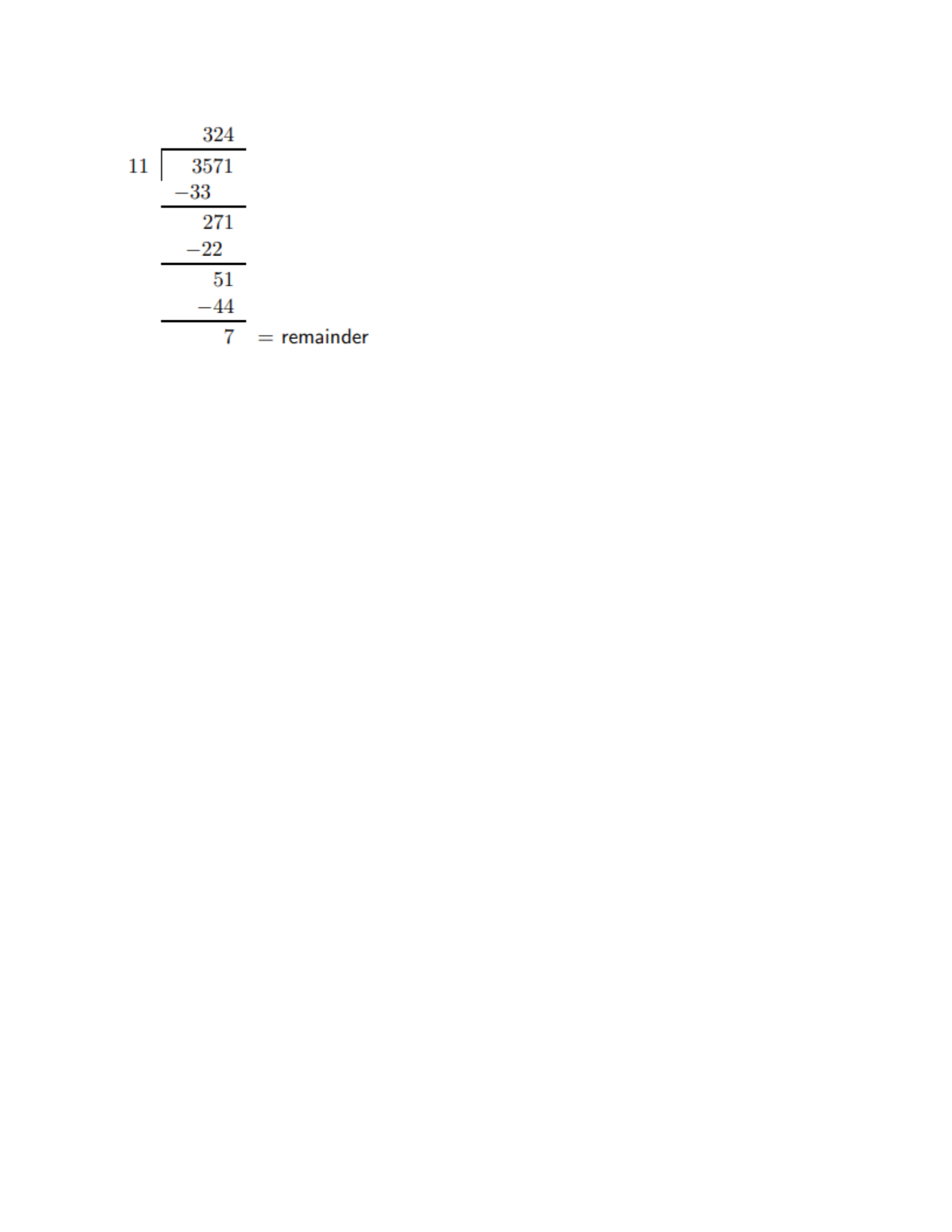
Multiplication involving negative numbers
Multiplication is a little tricky to understand without the notion of distribution (discussed
later). We will begin with noting again what it means to multiply a number by a positive
number: So if we want to compute 4⋅(−7)4⋅(−7) we note
4⋅(−7)=(−7)+(−7)+(−7)+(−7)=−284⋅(−7)=(−7)+(−7)+(−7)+(−7)=−28
Note that since 4⋅7=28,4⋅(−7)=−(4⋅7).4⋅7=28,4⋅(−7)=−(4⋅7). We can multiply positive
numbers in any order: 4⋅7=7⋅44⋅7=7⋅4. The same is true of positive and negative numbers:
(−7)⋅4=4⋅(−7)=−(4⋅7)=−28(−7)⋅4=4⋅(−7)=−(4⋅7)=−28
Example 1.17
5⋅(−12)=−(5⋅12)=−605⋅(−12)=−(5⋅12)=−60 and (−3)⋅(−2)=−(3⋅(−2))=−(−(3⋅2))=6(−3)⋅(−2)
=−(3⋅(−2))=−(−(3⋅2))=6
Example 1.18
So the size of the product of two numbers is the product of their sizes. The sign is positive if
the signs are the same and negative if they are different.
Example 1.19
Two quantities right next to each other, with no symbol between them (except for
parentheses around either or both numbers), has an implicit multiplication. For
example, 3(2)=3×23(2)=3×2.
Example 1.20
Multiply:
wwww. (−5)(−8)=40(−5)(−8)=40
xxxx. (−6)⋅7=−42(−6)⋅7=−42
yyyy. 4⋅12=484⋅12=48

zzzz. (−3)(−6)⋅4(−3)=18⋅4(−3)=72(−3)=−216( multiplying from left to
right )(−3)(−6)⋅4(−3)=18⋅4(−3)=72(−3)=−216( multiplying from left to right )
aaaaa. (−3)(−5)⋅4(−2)=(−3)⋅4⋅(−5)(−2)=−12⋅10=−120((−3)(−5)⋅4(−2)=(−3)⋅4⋅(−5)(
−2)=−12⋅10=−120( since we can multiply in any order it is convenient to see
that −5⋅−2=10.−5⋅−2=10. )
Exponents of integers
Recall that a positive exponent represents the number of times a number is multiplied by
itself.
Example 1.21
Evaluate:
qqqqq. 52=5⋅5=2552=5⋅5=25
rrrrr. (−4)3=(−4)⋅(−4)⋅(−4)=16⋅(−4)=−64(−4)3=(−4)⋅(−4)⋅(−4)=16⋅(−4)=−64
sssss. (−7)1=−7(−7)1=−7
ttttt. −24=−2⋅2⋅2⋅2=−16−24=−2⋅2⋅2⋅2=−16 Note: The exponent here is for 2 not
−2!
uuuuu. (−3)4=(−3)⋅(−3)⋅(−3)⋅(−3)=9⋅(−3)⋅(−3)=−27⋅(−3)=81(−3)4=(−3)⋅(−3)⋅(−3)⋅(
−3)=9⋅(−3)⋅(−3)=−27⋅(−3)=81
vvvvv. (−2)5=(−2)⋅(−2)⋅(−2)⋅(−2)⋅(−2)=−32(−2)5=(−2)⋅(−2)⋅(−2)⋅(−2)⋅(−2)=−32
Exponent rules in details will be further discussed in Chapter 5.
Division involving negative numbers
Division is just a question of knowing multiplication and therefore has the same rule: The
size of the quotient of two numbers is the quotient of the sizes. The sign is positive if the
signs are the same and negative if they are different.
Example 1.22
Divide:
qqqqq. (−42)÷7=−6(−42)÷7=−6
rrrrr. 81÷(−9)=−981÷(−9)=−9
sssss. (−35)÷(−7)=5(−35)÷(−7)=5
ttttt. 14÷2=714÷2=7
uuuuu. 0÷5=00÷5=0. Note When dividing 0 by any number, the answer is always 0.
vvvvv. −10÷0=−10÷0= undefined.
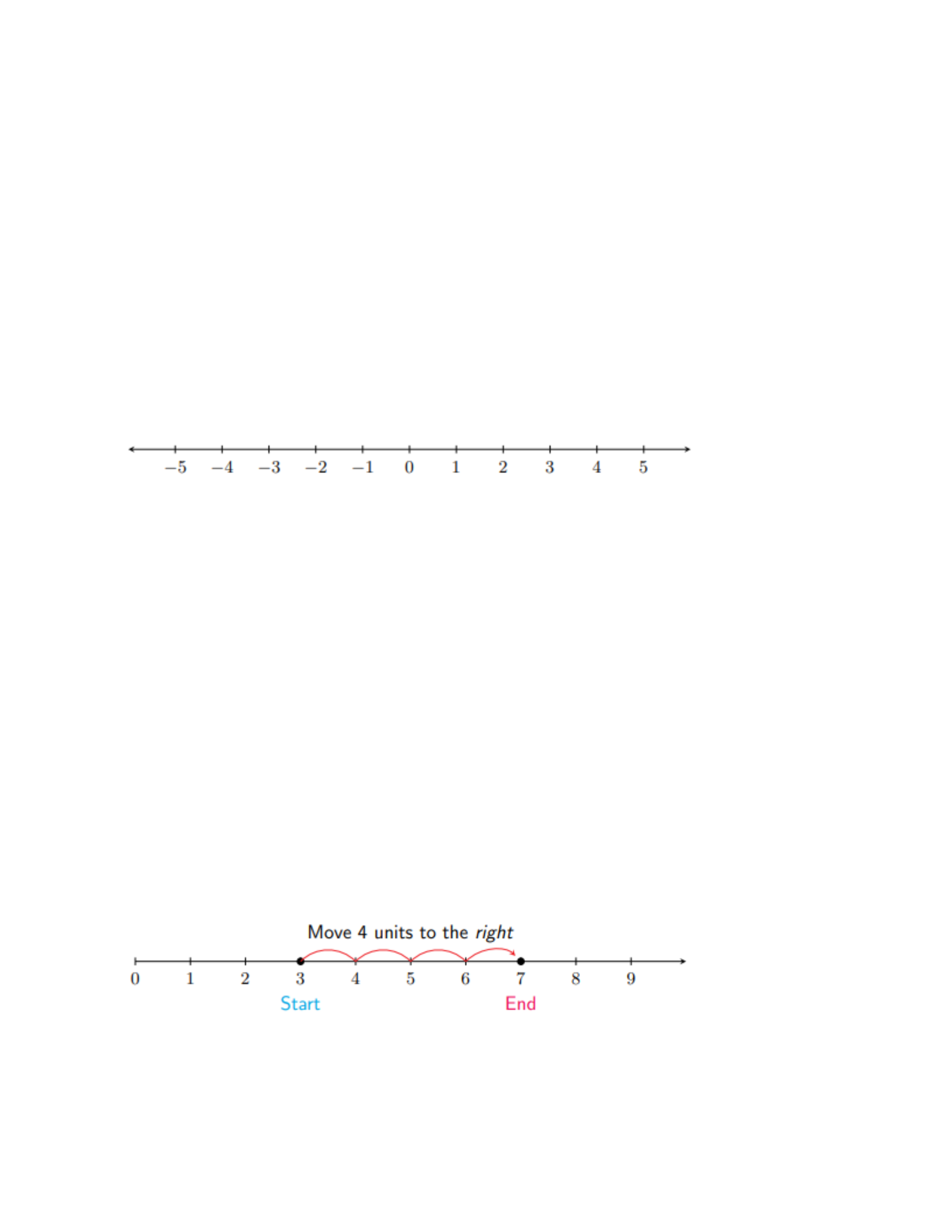
Note 1.23
Any number divided by 0 is undefined!
Multiplying and Dividing Integers
Consider two numbers at a time.
41. If the signs of the two numbers are the same, then the sign of the answer is positive.
42. If the signs of the two numbers are different, then the sign of the answer is negative.
We begin with a brief review of arithmetic with integers
i.e. …,−3,−2,−1,0,1,2,3,……,−3,−2,−1,0,1,2,3,…
Any number has a weight and a sign.
The magnitude (or weight) of a number is the distance it is from 0 on the number line.
Example 1.1
For example, the weight of -5 is 5 and the weight of 7 is 7 .
Two numbers are opposites if, on the number line, they are on opposite sides of zero, but
the same distance away from zero.
So, −5 is the opposite of 5, and 7 is the opposite of −7 and so on.
Addition
We can add two numbers with the help of a number line .
Example 1.2
Adding two positive numbers: For example to add 3+43+4, we start with 3 on the number
line then move 4 units to the right. We land at 7 which is our answer.
So, 3+4=73+4=7. Notice that the answer has the same sign as the signs of 3 and 4 (both
positive) and its weight comes from adding the weights of 3 and 4.
You always move to the right when you add a positive number
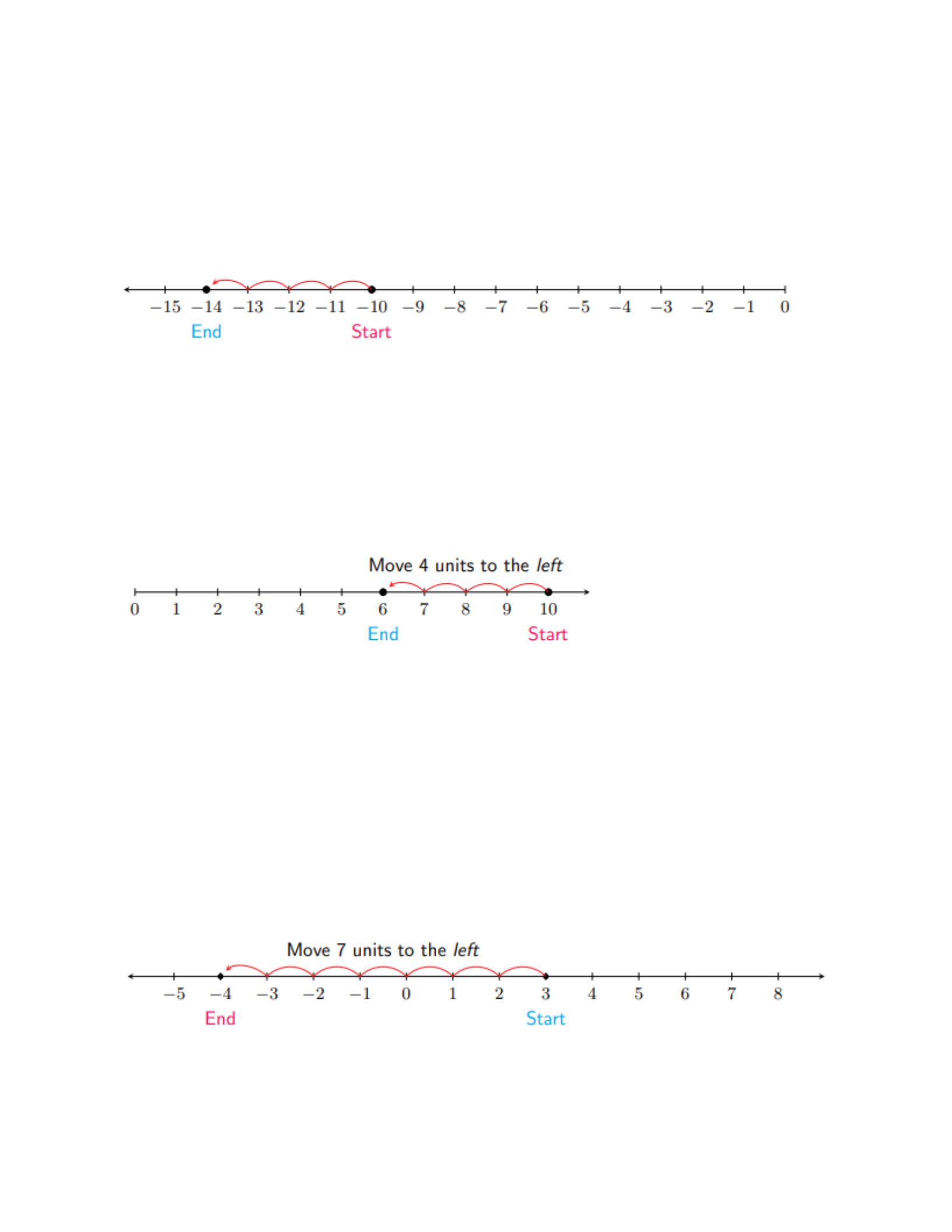
Example 1.3
Adding two negative numbers: For example, −10+(−4)−10+(−4) means you are adding a
debt of $4$4 to an already existing debt of $10.$10. So, we start at -10 on the number line
and move 4 units to the left, to land at −14,−14, which is the answer.
You always move to the left when you add a negative number (a debt)
So, −10+(−4)=−14−10+(−4)=−14. Notice that the answer has the same sign as the signs of -
10 and -4 (both negative) and its weight comes from adding the weights of -10 and -4
To add numbers of opposite signs, that is, a positive and a negative number, we can also
use the number line. For example, to perform 10+(−4),10+(−4), we start at 10 on the
number line and then move 4 units to the left. We land at 6,6, which is the answer. Think
of 10+(−4)10+(−4) as having $10$10 and adding a $4$4 debt. Because we are adding a
debt, we move to the left on the number line!
So, 10+(−4)=6.10+(−4)=6. Notice that the answer has the same sign as the sign of 10
(positive) because it is the number of larger weight, and its weight comes from finding the
difference of the weights of 10 and -4
Notice that because we were adding two numbers of opposite signs, the answer ended up
being the difference in weight (6) along with the sign of the number of larger weight
(positive).
Example 1.4
Adding two numbers of opposite signs: For example, 3+(−7)3+(−7). We start at 3 and move
toward 7 units to the left, and we land at −4,−4, which is our answer.
So, 3+(−7)=−4.3+(−7)=−4. Notice that the answer has the same sign as the signs of -7
(negative) because it is the number of larger weight, and its weight comes from finding the
difference of the weights of 3 and -7.
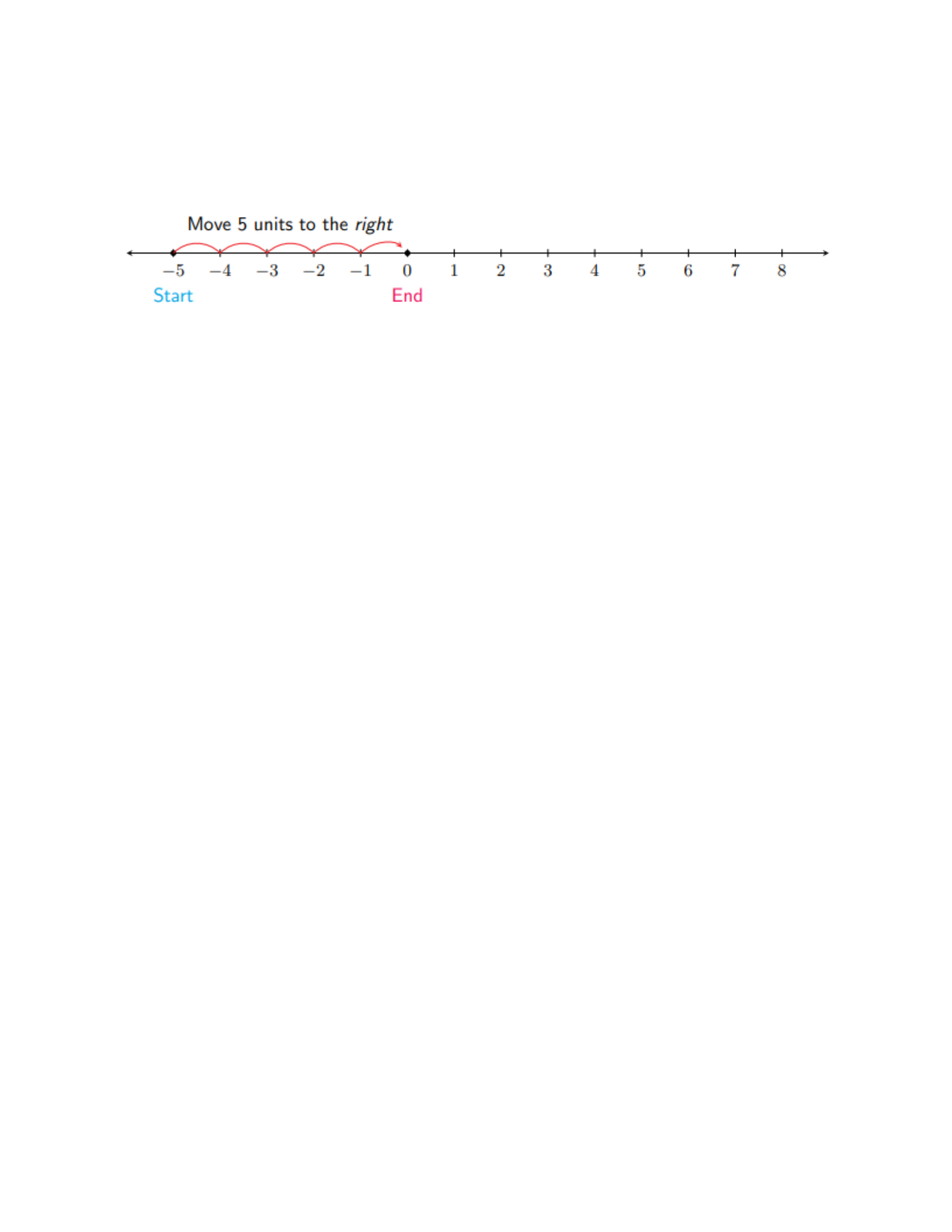
Example 1.5
Adding opposites: We start at -5 on the number line and jump to the right 5 units to land
finally at 00. So −5+5=0−5+5=0.
Note 1.6
Two opposite numbers are called a zero-pair, because adding them always results in 0.
So, −5 and 5 are a zero-pair.
Adding Intergers
43. To add two numbers of the same sign, add their weights and place it after the
sign.
44. To add two numbers of opposite signs, find the difference of their weights and
place it after the sign of the number with the greater weight.
Example 1.7
Add:
wwwww. −8+19=11−8+19=11
xxxxx. −8+4=−4−8+4=−4
yyyyy. 6+(−9)=−36+(−9)=−3
zzzzz. 7+(−2)=57+(−2)=5
aaaaaa. (−4)+(−7)=−11(−4)+(−7)=−11
bbbbbb. 8+7=158+7=15
Note 1.8
While we can add in any order: 4+2=2+44+2=2+4, it is sometimes convenient to add up all
of the negative numbers and add up all of the positive numbers, and then add the results.
There are also times when it is best to notice certain simplifications if the numbers are
added in a different order.
For example
−5+4+5+(−8)=−5+(−8)+4+5( by reordering )−5+4+5+(−8)=−5+(−8)+4+5( by reordering )
so,
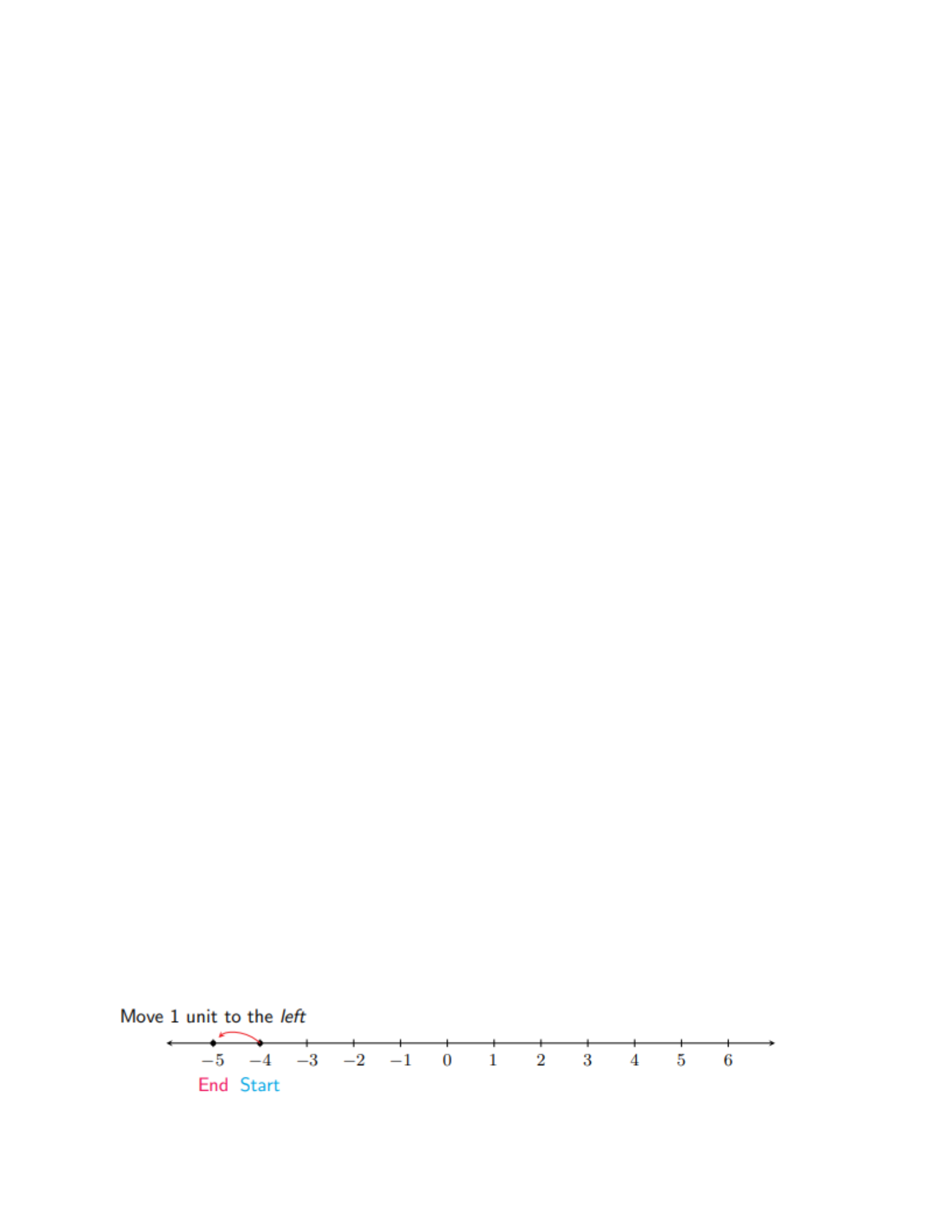
−5+4+5+(−8)=−5+(−8)+4+5=−13+9=−4−5+4+5+(−8)=−5+(−8)+4+5=−13+9=−4
We could have also simplified this by noting that (-5) and 5 are zero-pair, so we are left
with 4+(−8)4+(−8) which is -4.
Example 1.9
We can calculate
(−4)+(−5)+7+(−3)=(−4)+(−5)+(−3)+7=(−12)+7=−5(−4)+(−5)+7+(−3)=(−4)+(−5)+(−3)+7=
(−12)+7=−5
We could have simplified this by noting that (-4) and (-3) make -7, and -7 and 7 are zero-
pair, so the total is -5.
Subtraction (as Addition of the Opposite)
Once we know how to add numbers, we are set to subtract numbers because subtraction is
nothing but addition of the opposite. That is, subtracting 8 − 3 (which reads: subtracting 3
from 8) is the same as 8 + (−3) (which reads: Adding −3 to 8.).
Example 1.10
So, 8−3=8+(−3),8−3=8+(−3), and, we can use the rules of adding two numbers of opposite
signs to find out that the answer is 5.5. We can also use the number line. We start at 8 and
move 3 units to the left (adding -3 is adding a debt, so we move to the left).
So 8−3=5.−4−3−2−10123456788−3=5.−4−3−2−1012345678 End Start Move 3 units to the
left
Example 1.11
To calculate 3−73−7 we first rewrite it as an addition
problem. 3−7=3+(−7).3−7=3+(−7). We can either use the number line, or the rules of
adding two numbers of opposite signs. And, 50,3−7=3+(−7)=−450,3−7=3+(−7)=−4
Example 1.12
To calculate −4−1,−4−1, we first rewrite it as an addition
problem. −4−1=−4+(−1).−4−1=−4+(−1). We can either use the number line, or the rules of
adding two numbers of the same signs. If we want to use the rules, both numbers are
negative, so our answer will be negative, and, adding the weights of -4 and -1
is 5.50,−4−1=−4+(−1)=−55.50,−4−1=−4+(−1)=−5
On the number line, we start at -4 and move 1 unit to the left, to land on -5 which is our
answer.

Changing the subtractions to additions in this way is particularly useful when adding or
subtracting several numbers (because we can add in any order).
Example 1.13
===−3−7+5+7+13−6−(−9)−3+(−7)+5+7+13+(−6)+9−3+(−7)+(−6)+5+7+13+918−3−7+5+7
+13−6−(−9)=−3+(−7)+5+7+13+(−6)+9=−3+(−7)+(−6)+5+7+13+9=18
===−3−7+5+7+13−6−(−9)−3+(−7)+5+7+13+(−6)+95+1318−3−7+5+7+13−6−(−9)=−3+(−7
)+5+7+13+(−6)+9=5+13=18
Remark 1.14
Warning: The symbol "-" is used in two different ways. When it is between two expressions,
it means subtract (e.g., 3−43−4 ). Otherwise, it means 'opposite' or 'negative'
(e.g., −3+4−3+4 ). So in the expression −4−(−3)−4−(−3), the first and last "-" means
opposite and the one in the middle one means subtract. The importance of understanding
this can not be overestimated.
Multiplication and Division of Positive Numbers
Multiplication of integers is adding in the sense that 3×4=4+4+43×4=4+4+4
To multiply larger numbers, it is better to use the usual scheme of multiplication. For
example:
Example 1.15
Let us multiply 152 by 34. We will for convenience sake put the smaller number on the
bottom (though it is not necessary). We have
+×4516515306624808152×34608+45605168
And division is the opposite of multiplication in the sense that to compute 45÷945÷9 is to
find a number so that when we multiply by 9 we get 45. We run through our multiplication
tables (which are hopefully in our head) to discover that 5 does the
trick: 5×9=455×9=45 so that 45÷9=5.45÷9=5. We will discuss division from a different
point of view when we discuss fractions.
To divide larger numbers, we can use long division. For example, let’s divide 3571 by 11.
Example 1.16
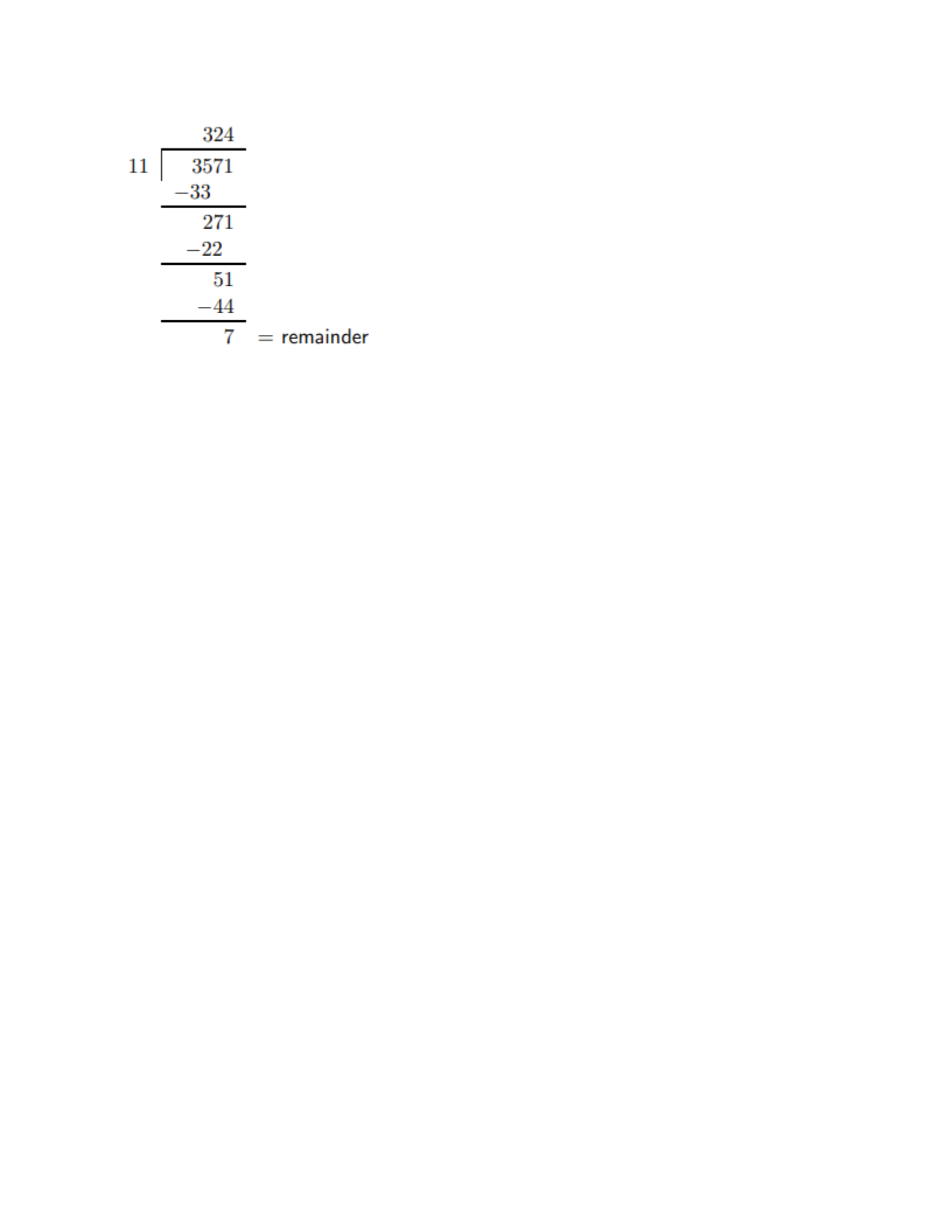
Multiplication involving negative numbers
Multiplication is a little tricky to understand without the notion of distribution (discussed
later). We will begin with noting again what it means to multiply a number by a positive
number: So if we want to compute 4⋅(−7)4⋅(−7) we note
4⋅(−7)=(−7)+(−7)+(−7)+(−7)=−284⋅(−7)=(−7)+(−7)+(−7)+(−7)=−28
Note that since 4⋅7=28,4⋅(−7)=−(4⋅7).4⋅7=28,4⋅(−7)=−(4⋅7). We can multiply positive
numbers in any order: 4⋅7=7⋅44⋅7=7⋅4. The same is true of positive and negative numbers:
(−7)⋅4=4⋅(−7)=−(4⋅7)=−28(−7)⋅4=4⋅(−7)=−(4⋅7)=−28
Example 1.17
5⋅(−12)=−(5⋅12)=−605⋅(−12)=−(5⋅12)=−60 and (−3)⋅(−2)=−(3⋅(−2))=−(−(3⋅2))=6(−3)⋅(−2)
=−(3⋅(−2))=−(−(3⋅2))=6
Example 1.18
So the size of the product of two numbers is the product of their sizes. The sign is positive if
the signs are the same and negative if they are different.
Example 1.19
Two quantities right next to each other, with no symbol between them (except for
parentheses around either or both numbers), has an implicit multiplication. For
example, 3(2)=3×23(2)=3×2.
Example 1.20
Multiply:
bbbbb. (−5)(−8)=40(−5)(−8)=40
ccccc. (−6)⋅7=−42(−6)⋅7=−42
ddddd. 4⋅12=484⋅12=48

eeeee. (−3)(−6)⋅4(−3)=18⋅4(−3)=72(−3)=−216( multiplying from left to
right )(−3)(−6)⋅4(−3)=18⋅4(−3)=72(−3)=−216( multiplying from left to right )
fffff. (−3)(−5)⋅4(−2)=(−3)⋅4⋅(−5)(−2)=−12⋅10=−120((−3)(−5)⋅4(−2)=(−3)⋅4⋅(−5)(
−2)=−12⋅10=−120( since we can multiply in any order it is convenient to see
that −5⋅−2=10.−5⋅−2=10. )
Exponents of integers
Recall that a positive exponent represents the number of times a number is multiplied by
itself.
Example 1.21
Evaluate:
wwwww. 52=5⋅5=2552=5⋅5=25
xxxxx. (−4)3=(−4)⋅(−4)⋅(−4)=16⋅(−4)=−64(−4)3=(−4)⋅(−4)⋅(−4)=16⋅(−4)=−64
yyyyy. (−7)1=−7(−7)1=−7
zzzzz. −24=−2⋅2⋅2⋅2=−16−24=−2⋅2⋅2⋅2=−16 Note: The exponent here is for 2 not
−2!
aaaaaa. (−3)4=(−3)⋅(−3)⋅(−3)⋅(−3)=9⋅(−3)⋅(−3)=−27⋅(−3)=81(−3)4=(−3)⋅(−3)⋅(−3)⋅(
−3)=9⋅(−3)⋅(−3)=−27⋅(−3)=81
bbbbbb. (−2)5=(−2)⋅(−2)⋅(−2)⋅(−2)⋅(−2)=−32(−2)5=(−2)⋅(−2)⋅(−2)⋅(−2)⋅(−2)=−32
Exponent rules in details will be further discussed in Chapter 5.
Division involving negative numbers
Division is just a question of knowing multiplication and therefore has the same rule: The
size of the quotient of two numbers is the quotient of the sizes. The sign is positive if the
signs are the same and negative if they are different.
Example 1.22
Divide:
wwwww. (−42)÷7=−6(−42)÷7=−6
xxxxx. 81÷(−9)=−981÷(−9)=−9
yyyyy. (−35)÷(−7)=5(−35)÷(−7)=5
zzzzz. 14÷2=714÷2=7
aaaaaa. 0÷5=00÷5=0. Note When dividing 0 by any number, the answer is always 0.
bbbbbb. −10÷0=−10÷0= undefined.
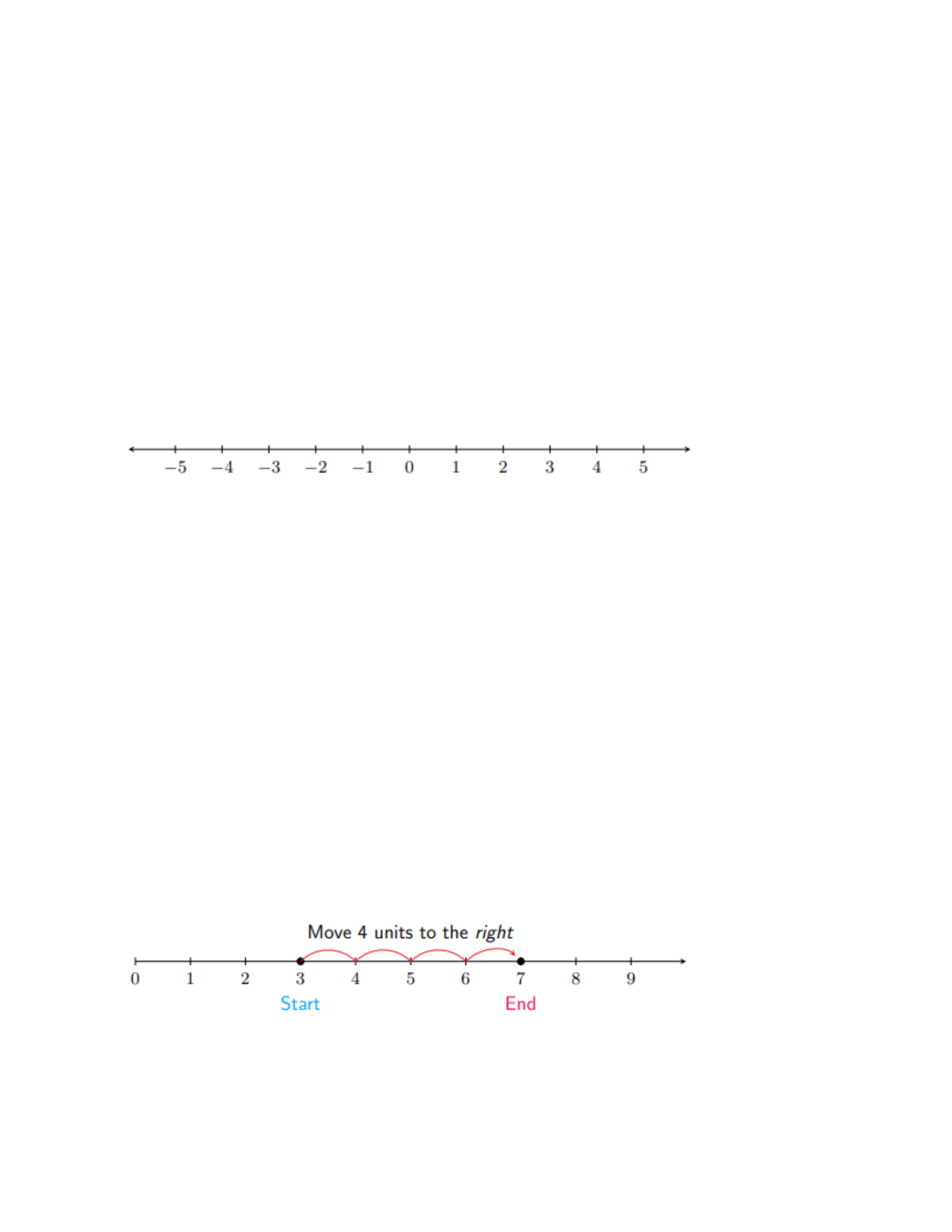
Note 1.23
Any number divided by 0 is undefined!
Multiplying and Dividing Integers
Consider two numbers at a time.
43. If the signs of the two numbers are the same, then the sign of the answer is positive.
44. If the signs of the two numbers are different, then the sign of the answer is negative.
We begin with a brief review of arithmetic with integers
i.e. …,−3,−2,−1,0,1,2,3,……,−3,−2,−1,0,1,2,3,…
Any number has a weight and a sign.
The magnitude (or weight) of a number is the distance it is from 0 on the number line.
Example 1.1
For example, the weight of -5 is 5 and the weight of 7 is 7 .
Two numbers are opposites if, on the number line, they are on opposite sides of zero, but
the same distance away from zero.
So, −5 is the opposite of 5, and 7 is the opposite of −7 and so on.
Addition
We can add two numbers with the help of a number line .
Example 1.2
Adding two positive numbers: For example to add 3+43+4, we start with 3 on the number
line then move 4 units to the right. We land at 7 which is our answer.
So, 3+4=73+4=7. Notice that the answer has the same sign as the signs of 3 and 4 (both
positive) and its weight comes from adding the weights of 3 and 4.
You always move to the right when you add a positive number
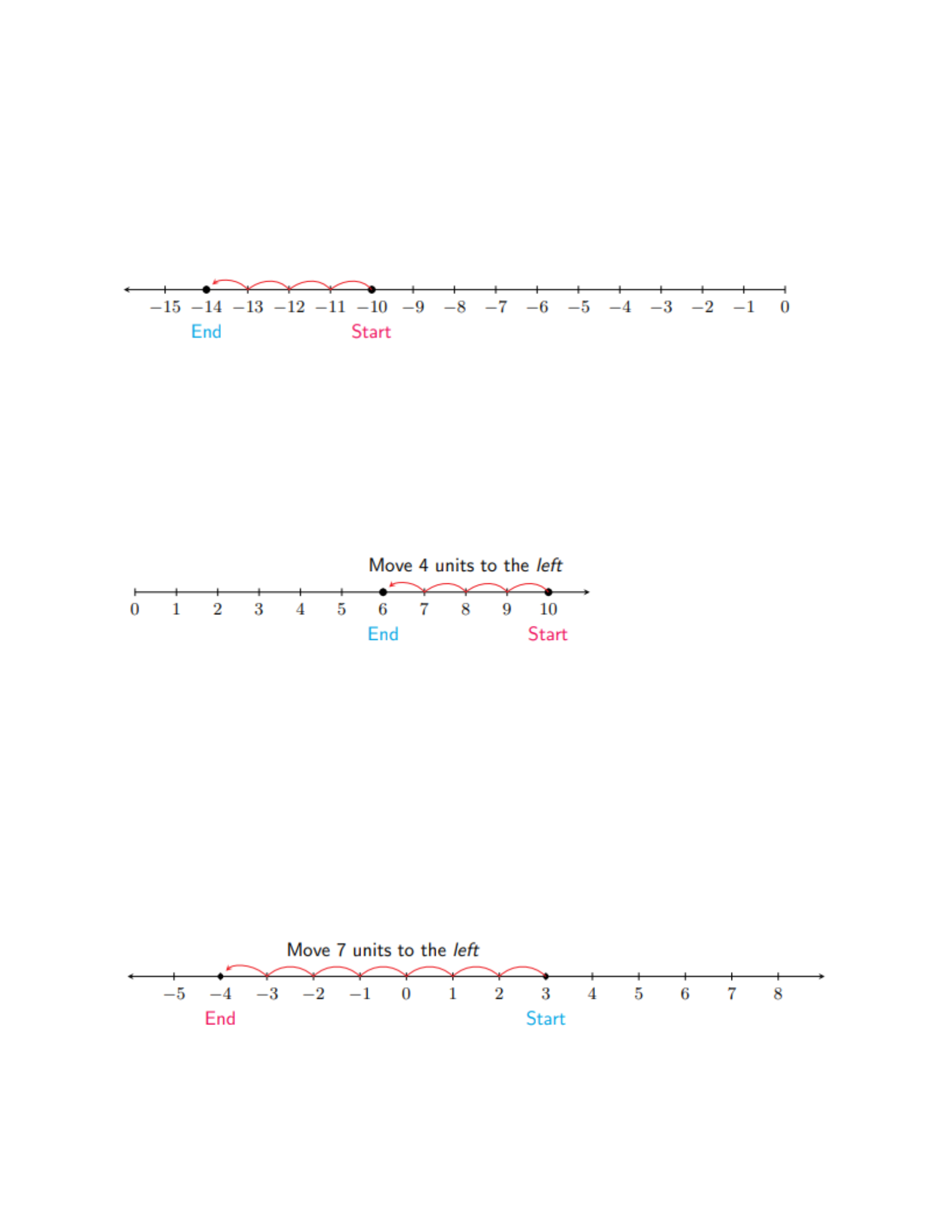
Example 1.3
Adding two negative numbers: For example, −10+(−4)−10+(−4) means you are adding a
debt of $4$4 to an already existing debt of $10.$10. So, we start at -10 on the number line
and move 4 units to the left, to land at −14,−14, which is the answer.
You always move to the left when you add a negative number (a debt)
So, −10+(−4)=−14−10+(−4)=−14. Notice that the answer has the same sign as the signs of -
10 and -4 (both negative) and its weight comes from adding the weights of -10 and -4
To add numbers of opposite signs, that is, a positive and a negative number, we can also
use the number line. For example, to perform 10+(−4),10+(−4), we start at 10 on the
number line and then move 4 units to the left. We land at 6,6, which is the answer. Think
of 10+(−4)10+(−4) as having $10$10 and adding a $4$4 debt. Because we are adding a
debt, we move to the left on the number line!
So, 10+(−4)=6.10+(−4)=6. Notice that the answer has the same sign as the sign of 10
(positive) because it is the number of larger weight, and its weight comes from finding the
difference of the weights of 10 and -4
Notice that because we were adding two numbers of opposite signs, the answer ended up
being the difference in weight (6) along with the sign of the number of larger weight
(positive).
Example 1.4
Adding two numbers of opposite signs: For example, 3+(−7)3+(−7). We start at 3 and move
toward 7 units to the left, and we land at −4,−4, which is our answer.
So, 3+(−7)=−4.3+(−7)=−4. Notice that the answer has the same sign as the signs of -7
(negative) because it is the number of larger weight, and its weight comes from finding the
difference of the weights of 3 and -7.
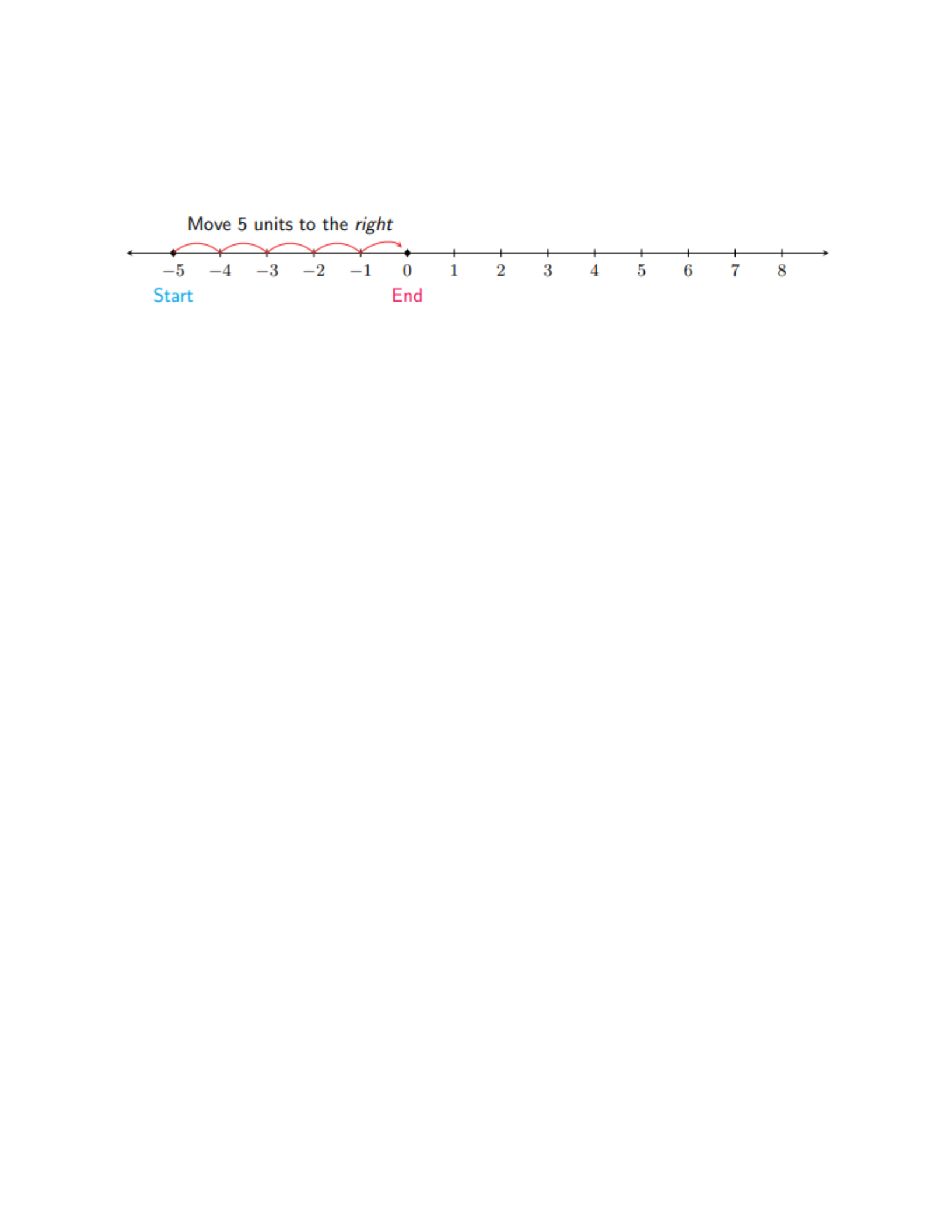
Example 1.5
Adding opposites: We start at -5 on the number line and jump to the right 5 units to land
finally at 00. So −5+5=0−5+5=0.
Note 1.6
Two opposite numbers are called a zero-pair, because adding them always results in 0.
So, −5 and 5 are a zero-pair.
Adding Intergers
45. To add two numbers of the same sign, add their weights and place it after the
sign.
46. To add two numbers of opposite signs, find the difference of their weights and
place it after the sign of the number with the greater weight.
Example 1.7
Add:
cccccc. −8+19=11−8+19=11
dddddd. −8+4=−4−8+4=−4
eeeeee. 6+(−9)=−36+(−9)=−3
ffffff. 7+(−2)=57+(−2)=5
gggggg. (−4)+(−7)=−11(−4)+(−7)=−11
hhhhhh. 8+7=158+7=15
Note 1.8
While we can add in any order: 4+2=2+44+2=2+4, it is sometimes convenient to add up all
of the negative numbers and add up all of the positive numbers, and then add the results.
There are also times when it is best to notice certain simplifications if the numbers are
added in a different order.
For example
−5+4+5+(−8)=−5+(−8)+4+5( by reordering )−5+4+5+(−8)=−5+(−8)+4+5( by reordering )
so,
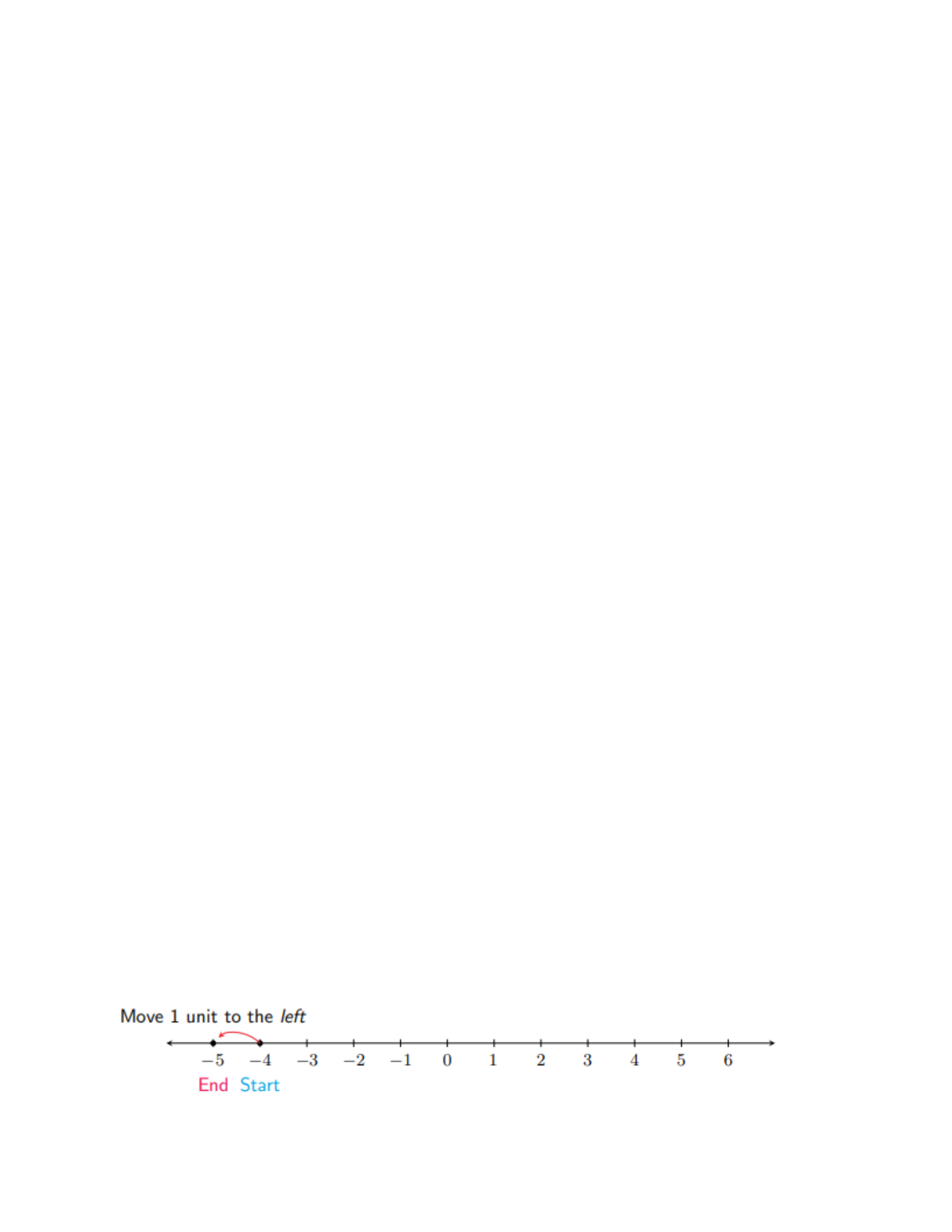
−5+4+5+(−8)=−5+(−8)+4+5=−13+9=−4−5+4+5+(−8)=−5+(−8)+4+5=−13+9=−4
We could have also simplified this by noting that (-5) and 5 are zero-pair, so we are left
with 4+(−8)4+(−8) which is -4.
Example 1.9
We can calculate
(−4)+(−5)+7+(−3)=(−4)+(−5)+(−3)+7=(−12)+7=−5(−4)+(−5)+7+(−3)=(−4)+(−5)+(−3)+7=
(−12)+7=−5
We could have simplified this by noting that (-4) and (-3) make -7, and -7 and 7 are zero-
pair, so the total is -5.
Subtraction (as Addition of the Opposite)
Once we know how to add numbers, we are set to subtract numbers because subtraction is
nothing but addition of the opposite. That is, subtracting 8 − 3 (which reads: subtracting 3
from 8) is the same as 8 + (−3) (which reads: Adding −3 to 8.).
Example 1.10
So, 8−3=8+(−3),8−3=8+(−3), and, we can use the rules of adding two numbers of opposite
signs to find out that the answer is 5.5. We can also use the number line. We start at 8 and
move 3 units to the left (adding -3 is adding a debt, so we move to the left).
So 8−3=5.−4−3−2−10123456788−3=5.−4−3−2−1012345678 End Start Move 3 units to the
left
Example 1.11
To calculate 3−73−7 we first rewrite it as an addition
problem. 3−7=3+(−7).3−7=3+(−7). We can either use the number line, or the rules of
adding two numbers of opposite signs. And, 50,3−7=3+(−7)=−450,3−7=3+(−7)=−4
Example 1.12
To calculate −4−1,−4−1, we first rewrite it as an addition
problem. −4−1=−4+(−1).−4−1=−4+(−1). We can either use the number line, or the rules of
adding two numbers of the same signs. If we want to use the rules, both numbers are
negative, so our answer will be negative, and, adding the weights of -4 and -1
is 5.50,−4−1=−4+(−1)=−55.50,−4−1=−4+(−1)=−5
On the number line, we start at -4 and move 1 unit to the left, to land on -5 which is our
answer.

Changing the subtractions to additions in this way is particularly useful when adding or
subtracting several numbers (because we can add in any order).
Example 1.13
===−3−7+5+7+13−6−(−9)−3+(−7)+5+7+13+(−6)+9−3+(−7)+(−6)+5+7+13+918−3−7+5+7
+13−6−(−9)=−3+(−7)+5+7+13+(−6)+9=−3+(−7)+(−6)+5+7+13+9=18
===−3−7+5+7+13−6−(−9)−3+(−7)+5+7+13+(−6)+95+1318−3−7+5+7+13−6−(−9)=−3+(−7
)+5+7+13+(−6)+9=5+13=18
Remark 1.14
Warning: The symbol "-" is used in two different ways. When it is between two expressions,
it means subtract (e.g., 3−43−4 ). Otherwise, it means 'opposite' or 'negative'
(e.g., −3+4−3+4 ). So in the expression −4−(−3)−4−(−3), the first and last "-" means
opposite and the one in the middle one means subtract. The importance of understanding
this can not be overestimated.
Multiplication and Division of Positive Numbers
Multiplication of integers is adding in the sense that 3×4=4+4+43×4=4+4+4
To multiply larger numbers, it is better to use the usual scheme of multiplication. For
example:
Example 1.15
Let us multiply 152 by 34. We will for convenience sake put the smaller number on the
bottom (though it is not necessary). We have
+×4516515306624808152×34608+45605168
And division is the opposite of multiplication in the sense that to compute 45÷945÷9 is to
find a number so that when we multiply by 9 we get 45. We run through our multiplication
tables (which are hopefully in our head) to discover that 5 does the
trick: 5×9=455×9=45 so that 45÷9=5.45÷9=5. We will discuss division from a different
point of view when we discuss fractions.
To divide larger numbers, we can use long division. For example, let’s divide 3571 by 11.
Example 1.16
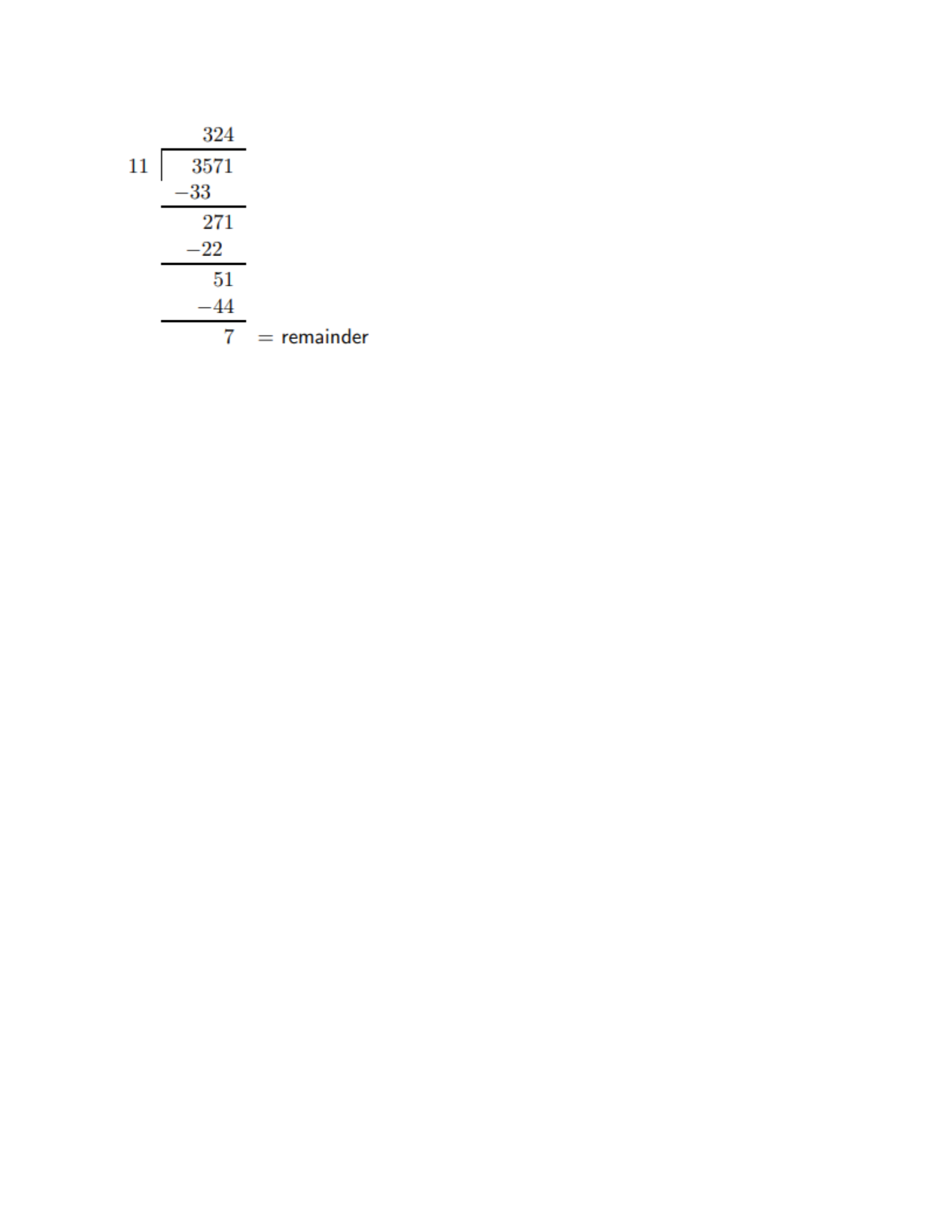
Multiplication involving negative numbers
Multiplication is a little tricky to understand without the notion of distribution (discussed
later). We will begin with noting again what it means to multiply a number by a positive
number: So if we want to compute 4⋅(−7)4⋅(−7) we note
4⋅(−7)=(−7)+(−7)+(−7)+(−7)=−284⋅(−7)=(−7)+(−7)+(−7)+(−7)=−28
Note that since 4⋅7=28,4⋅(−7)=−(4⋅7).4⋅7=28,4⋅(−7)=−(4⋅7). We can multiply positive
numbers in any order: 4⋅7=7⋅44⋅7=7⋅4. The same is true of positive and negative numbers:
(−7)⋅4=4⋅(−7)=−(4⋅7)=−28(−7)⋅4=4⋅(−7)=−(4⋅7)=−28
Example 1.17
5⋅(−12)=−(5⋅12)=−605⋅(−12)=−(5⋅12)=−60 and (−3)⋅(−2)=−(3⋅(−2))=−(−(3⋅2))=6(−3)⋅(−2)
=−(3⋅(−2))=−(−(3⋅2))=6
Example 1.18
So the size of the product of two numbers is the product of their sizes. The sign is positive if
the signs are the same and negative if they are different.
Example 1.19
Two quantities right next to each other, with no symbol between them (except for
parentheses around either or both numbers), has an implicit multiplication. For
example, 3(2)=3×23(2)=3×2.
Example 1.20
Multiply:
ggggg. (−5)(−8)=40(−5)(−8)=40
hhhhh. (−6)⋅7=−42(−6)⋅7=−42
iiiii. 4⋅12=484⋅12=48

jjjjj. (−3)(−6)⋅4(−3)=18⋅4(−3)=72(−3)=−216( multiplying from left to
right )(−3)(−6)⋅4(−3)=18⋅4(−3)=72(−3)=−216( multiplying from left to right )
kkkkk. (−3)(−5)⋅4(−2)=(−3)⋅4⋅(−5)(−2)=−12⋅10=−120((−3)(−5)⋅4(−2)=(−3)⋅4⋅(−5)(
−2)=−12⋅10=−120( since we can multiply in any order it is convenient to see
that −5⋅−2=10.−5⋅−2=10. )
Exponents of integers
Recall that a positive exponent represents the number of times a number is multiplied by
itself.
Example 1.21
Evaluate:
cccccc. 52=5⋅5=2552=5⋅5=25
dddddd. (−4)3=(−4)⋅(−4)⋅(−4)=16⋅(−4)=−64(−4)3=(−4)⋅(−4)⋅(−4)=16⋅(−4)=−64
eeeeee. (−7)1=−7(−7)1=−7
ffffff. −24=−2⋅2⋅2⋅2=−16−24=−2⋅2⋅2⋅2=−16 Note: The exponent here is for 2 not
−2!
gggggg. (−3)4=(−3)⋅(−3)⋅(−3)⋅(−3)=9⋅(−3)⋅(−3)=−27⋅(−3)=81(−3)4=(−3)⋅(−3)⋅(−3)⋅(
−3)=9⋅(−3)⋅(−3)=−27⋅(−3)=81
hhhhhh. (−2)5=(−2)⋅(−2)⋅(−2)⋅(−2)⋅(−2)=−32(−2)5=(−2)⋅(−2)⋅(−2)⋅(−2)⋅(−2)=−32
Exponent rules in details will be further discussed in Chapter 5.
Division involving negative numbers
Division is just a question of knowing multiplication and therefore has the same rule: The
size of the quotient of two numbers is the quotient of the sizes. The sign is positive if the
signs are the same and negative if they are different.
Example 1.22
Divide:
cccccc. (−42)÷7=−6(−42)÷7=−6
dddddd. 81÷(−9)=−981÷(−9)=−9
eeeeee. (−35)÷(−7)=5(−35)÷(−7)=5
ffffff. 14÷2=714÷2=7
gggggg. 0÷5=00÷5=0. Note When dividing 0 by any number, the answer is always 0.
hhhhhh. −10÷0=−10÷0= undefined.
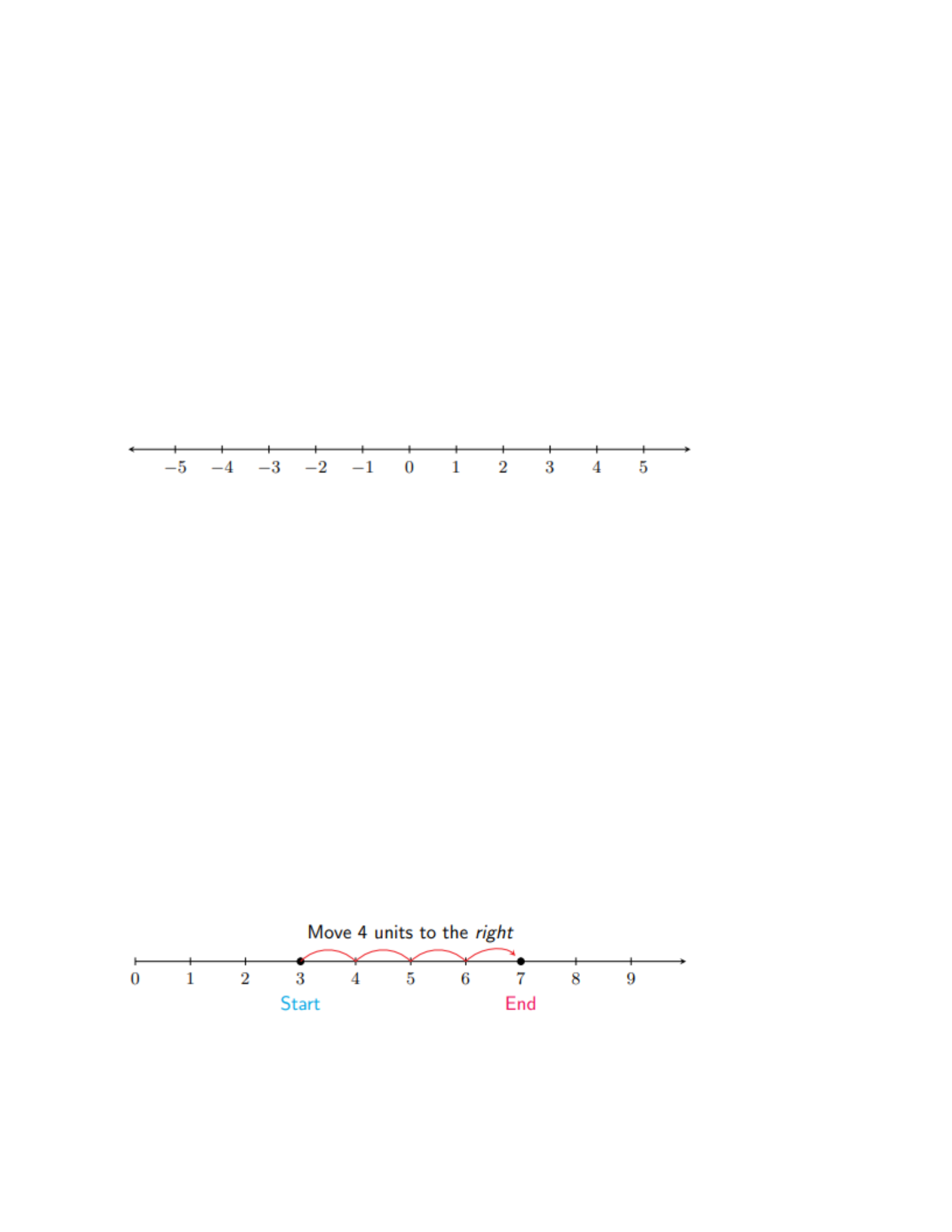
Note 1.23
Any number divided by 0 is undefined!
Multiplying and Dividing Integers
Consider two numbers at a time.
45. If the signs of the two numbers are the same, then the sign of the answer is positive.
46. If the signs of the two numbers are different, then the sign of the answer is negative.
We begin with a brief review of arithmetic with integers
i.e. …,−3,−2,−1,0,1,2,3,……,−3,−2,−1,0,1,2,3,…
Any number has a weight and a sign.
The magnitude (or weight) of a number is the distance it is from 0 on the number line.
Example 1.1
For example, the weight of -5 is 5 and the weight of 7 is 7 .
Two numbers are opposites if, on the number line, they are on opposite sides of zero, but
the same distance away from zero.
So, −5 is the opposite of 5, and 7 is the opposite of −7 and so on.
Addition
We can add two numbers with the help of a number line .
Example 1.2
Adding two positive numbers: For example to add 3+43+4, we start with 3 on the number
line then move 4 units to the right. We land at 7 which is our answer.
So, 3+4=73+4=7. Notice that the answer has the same sign as the signs of 3 and 4 (both
positive) and its weight comes from adding the weights of 3 and 4.
You always move to the right when you add a positive number
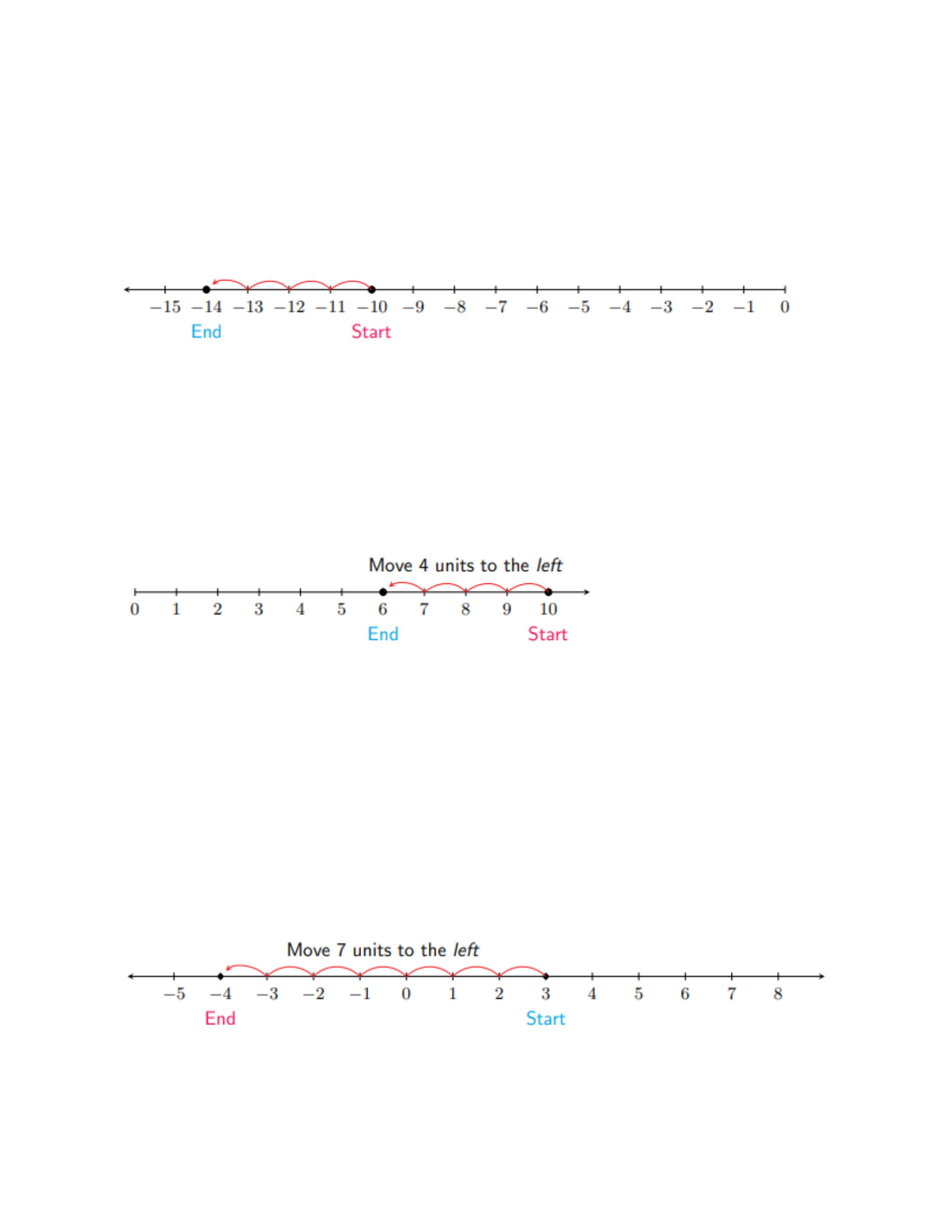
Example 1.3
Adding two negative numbers: For example, −10+(−4)−10+(−4) means you are adding a
debt of $4$4 to an already existing debt of $10.$10. So, we start at -10 on the number line
and move 4 units to the left, to land at −14,−14, which is the answer.
You always move to the left when you add a negative number (a debt)
So, −10+(−4)=−14−10+(−4)=−14. Notice that the answer has the same sign as the signs of -
10 and -4 (both negative) and its weight comes from adding the weights of -10 and -4
To add numbers of opposite signs, that is, a positive and a negative number, we can also
use the number line. For example, to perform 10+(−4),10+(−4), we start at 10 on the
number line and then move 4 units to the left. We land at 6,6, which is the answer. Think
of 10+(−4)10+(−4) as having $10$10 and adding a $4$4 debt. Because we are adding a
debt, we move to the left on the number line!
So, 10+(−4)=6.10+(−4)=6. Notice that the answer has the same sign as the sign of 10
(positive) because it is the number of larger weight, and its weight comes from finding the
difference of the weights of 10 and -4
Notice that because we were adding two numbers of opposite signs, the answer ended up
being the difference in weight (6) along with the sign of the number of larger weight
(positive).
Example 1.4
Adding two numbers of opposite signs: For example, 3+(−7)3+(−7). We start at 3 and move
toward 7 units to the left, and we land at −4,−4, which is our answer.
So, 3+(−7)=−4.3+(−7)=−4. Notice that the answer has the same sign as the signs of -7
(negative) because it is the number of larger weight, and its weight comes from finding the
difference of the weights of 3 and -7.
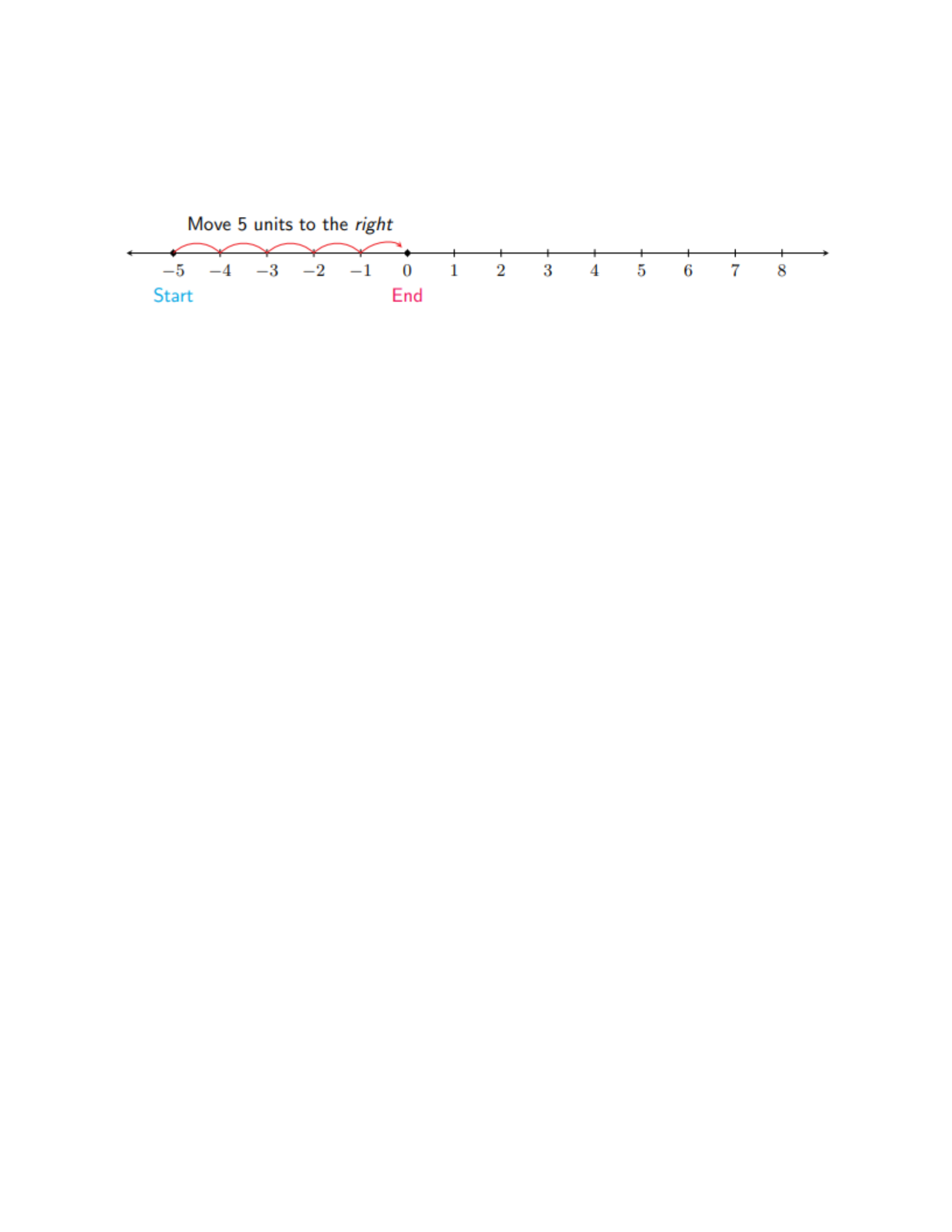
Example 1.5
Adding opposites: We start at -5 on the number line and jump to the right 5 units to land
finally at 00. So −5+5=0−5+5=0.
Note 1.6
Two opposite numbers are called a zero-pair, because adding them always results in 0.
So, −5 and 5 are a zero-pair.
Adding Intergers
47. To add two numbers of the same sign, add their weights and place it after the
sign.
48. To add two numbers of opposite signs, find the difference of their weights and
place it after the sign of the number with the greater weight.
Example 1.7
Add:
iiiiii. −8+19=11−8+19=11
jjjjjj. −8+4=−4−8+4=−4
kkkkkk. 6+(−9)=−36+(−9)=−3
llllll. 7+(−2)=57+(−2)=5
mmmmmm. (−4)+(−7)=−11(−4)+(−7)=−11
nnnnnn. 8+7=158+7=15
Note 1.8
While we can add in any order: 4+2=2+44+2=2+4, it is sometimes convenient to add up all
of the negative numbers and add up all of the positive numbers, and then add the results.
There are also times when it is best to notice certain simplifications if the numbers are
added in a different order.
For example
−5+4+5+(−8)=−5+(−8)+4+5( by reordering )−5+4+5+(−8)=−5+(−8)+4+5( by reordering )
so,
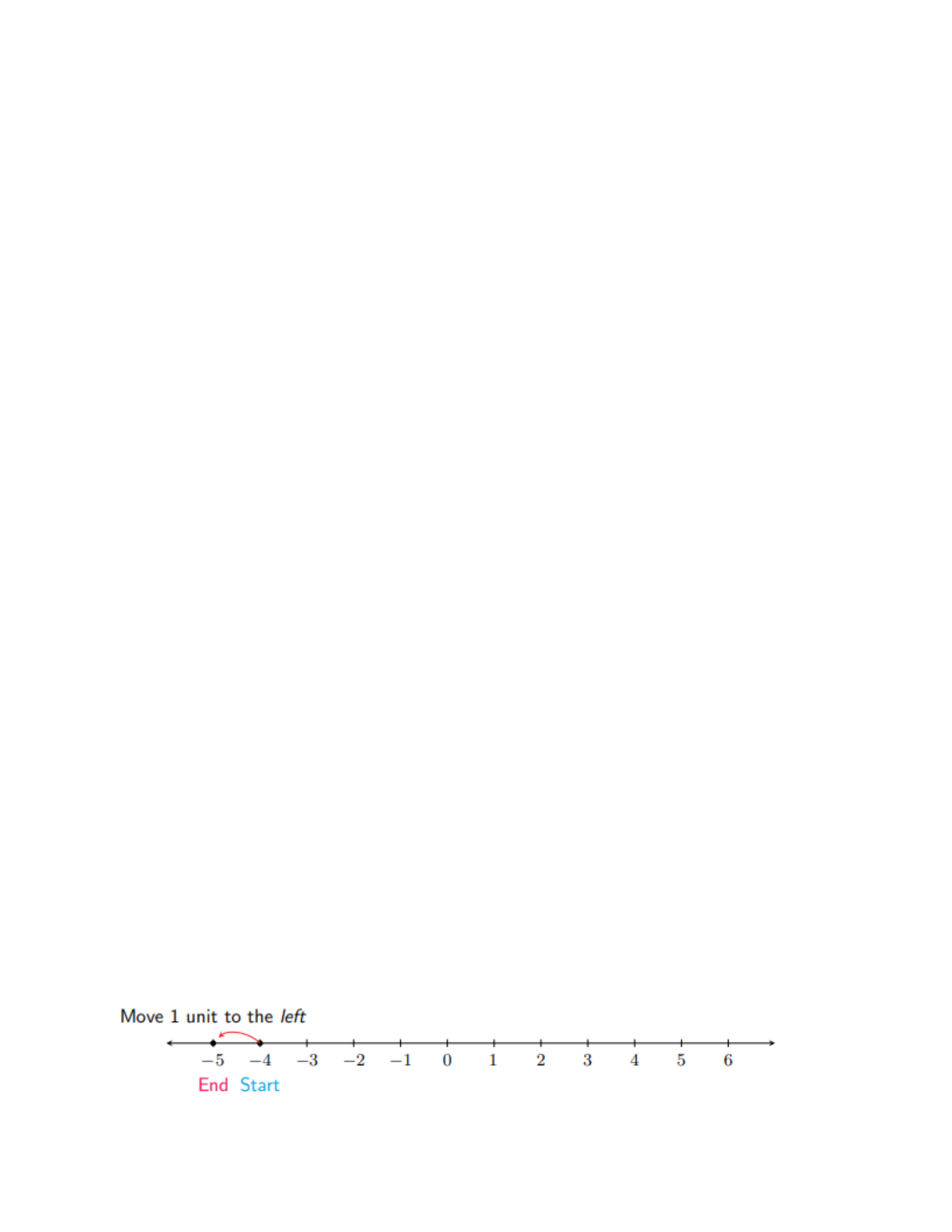
−5+4+5+(−8)=−5+(−8)+4+5=−13+9=−4−5+4+5+(−8)=−5+(−8)+4+5=−13+9=−4
We could have also simplified this by noting that (-5) and 5 are zero-pair, so we are left
with 4+(−8)4+(−8) which is -4.
Example 1.9
We can calculate
(−4)+(−5)+7+(−3)=(−4)+(−5)+(−3)+7=(−12)+7=−5(−4)+(−5)+7+(−3)=(−4)+(−5)+(−3)+7=
(−12)+7=−5
We could have simplified this by noting that (-4) and (-3) make -7, and -7 and 7 are zero-
pair, so the total is -5.
Subtraction (as Addition of the Opposite)
Once we know how to add numbers, we are set to subtract numbers because subtraction is
nothing but addition of the opposite. That is, subtracting 8 − 3 (which reads: subtracting 3
from 8) is the same as 8 + (−3) (which reads: Adding −3 to 8.).
Example 1.10
So, 8−3=8+(−3),8−3=8+(−3), and, we can use the rules of adding two numbers of opposite
signs to find out that the answer is 5.5. We can also use the number line. We start at 8 and
move 3 units to the left (adding -3 is adding a debt, so we move to the left).
So 8−3=5.−4−3−2−10123456788−3=5.−4−3−2−1012345678 End Start Move 3 units to the
left
Example 1.11
To calculate 3−73−7 we first rewrite it as an addition
problem. 3−7=3+(−7).3−7=3+(−7). We can either use the number line, or the rules of
adding two numbers of opposite signs. And, 50,3−7=3+(−7)=−450,3−7=3+(−7)=−4
Example 1.12
To calculate −4−1,−4−1, we first rewrite it as an addition
problem. −4−1=−4+(−1).−4−1=−4+(−1). We can either use the number line, or the rules of
adding two numbers of the same signs. If we want to use the rules, both numbers are
negative, so our answer will be negative, and, adding the weights of -4 and -1
is 5.50,−4−1=−4+(−1)=−55.50,−4−1=−4+(−1)=−5
On the number line, we start at -4 and move 1 unit to the left, to land on -5 which is our
answer.

Changing the subtractions to additions in this way is particularly useful when adding or
subtracting several numbers (because we can add in any order).
Example 1.13
===−3−7+5+7+13−6−(−9)−3+(−7)+5+7+13+(−6)+9−3+(−7)+(−6)+5+7+13+918−3−7+5+7
+13−6−(−9)=−3+(−7)+5+7+13+(−6)+9=−3+(−7)+(−6)+5+7+13+9=18
===−3−7+5+7+13−6−(−9)−3+(−7)+5+7+13+(−6)+95+1318−3−7+5+7+13−6−(−9)=−3+(−7
)+5+7+13+(−6)+9=5+13=18
Remark 1.14
Warning: The symbol "-" is used in two different ways. When it is between two expressions,
it means subtract (e.g., 3−43−4 ). Otherwise, it means 'opposite' or 'negative'
(e.g., −3+4−3+4 ). So in the expression −4−(−3)−4−(−3), the first and last "-" means
opposite and the one in the middle one means subtract. The importance of understanding
this can not be overestimated.
Multiplication and Division of Positive Numbers
Multiplication of integers is adding in the sense that 3×4=4+4+43×4=4+4+4
To multiply larger numbers, it is better to use the usual scheme of multiplication. For
example:
Example 1.15
Let us multiply 152 by 34. We will for convenience sake put the smaller number on the
bottom (though it is not necessary). We have
+×4516515306624808152×34608+45605168
And division is the opposite of multiplication in the sense that to compute 45÷945÷9 is to
find a number so that when we multiply by 9 we get 45. We run through our multiplication
tables (which are hopefully in our head) to discover that 5 does the
trick: 5×9=455×9=45 so that 45÷9=5.45÷9=5. We will discuss division from a different
point of view when we discuss fractions.
To divide larger numbers, we can use long division. For example, let’s divide 3571 by 11.
Example 1.16
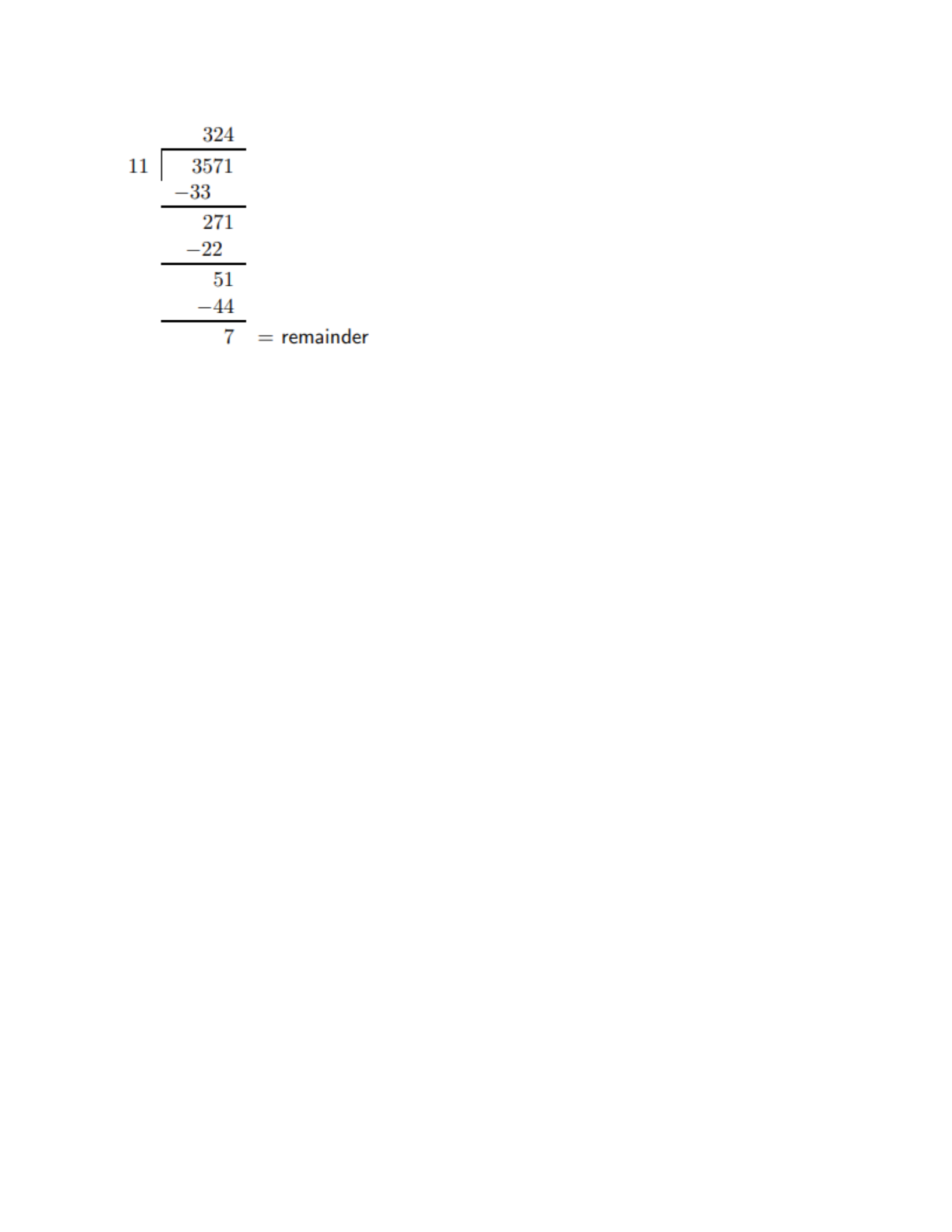
Multiplication involving negative numbers
Multiplication is a little tricky to understand without the notion of distribution (discussed
later). We will begin with noting again what it means to multiply a number by a positive
number: So if we want to compute 4⋅(−7)4⋅(−7) we note
4⋅(−7)=(−7)+(−7)+(−7)+(−7)=−284⋅(−7)=(−7)+(−7)+(−7)+(−7)=−28
Note that since 4⋅7=28,4⋅(−7)=−(4⋅7).4⋅7=28,4⋅(−7)=−(4⋅7). We can multiply positive
numbers in any order: 4⋅7=7⋅44⋅7=7⋅4. The same is true of positive and negative numbers:
(−7)⋅4=4⋅(−7)=−(4⋅7)=−28(−7)⋅4=4⋅(−7)=−(4⋅7)=−28
Example 1.17
5⋅(−12)=−(5⋅12)=−605⋅(−12)=−(5⋅12)=−60 and (−3)⋅(−2)=−(3⋅(−2))=−(−(3⋅2))=6(−3)⋅(−2)
=−(3⋅(−2))=−(−(3⋅2))=6
Example 1.18
So the size of the product of two numbers is the product of their sizes. The sign is positive if
the signs are the same and negative if they are different.
Example 1.19
Two quantities right next to each other, with no symbol between them (except for
parentheses around either or both numbers), has an implicit multiplication. For
example, 3(2)=3×23(2)=3×2.
Example 1.20
Multiply:
lllll. (−5)(−8)=40(−5)(−8)=40
mmmmm. (−6)⋅7=−42(−6)⋅7=−42
nnnnn. 4⋅12=484⋅12=48

ooooo. (−3)(−6)⋅4(−3)=18⋅4(−3)=72(−3)=−216( multiplying from left to
right )(−3)(−6)⋅4(−3)=18⋅4(−3)=72(−3)=−216( multiplying from left to right )
ppppp. (−3)(−5)⋅4(−2)=(−3)⋅4⋅(−5)(−2)=−12⋅10=−120((−3)(−5)⋅4(−2)=(−3)⋅4⋅(−5)(
−2)=−12⋅10=−120( since we can multiply in any order it is convenient to see
that −5⋅−2=10.−5⋅−2=10. )
Exponents of integers
Recall that a positive exponent represents the number of times a number is multiplied by
itself.
Example 1.21
Evaluate:
iiiiii. 52=5⋅5=2552=5⋅5=25
jjjjjj. (−4)3=(−4)⋅(−4)⋅(−4)=16⋅(−4)=−64(−4)3=(−4)⋅(−4)⋅(−4)=16⋅(−4)=−64
kkkkkk. (−7)1=−7(−7)1=−7
llllll. −24=−2⋅2⋅2⋅2=−16−24=−2⋅2⋅2⋅2=−16 Note: The exponent here is for 2 not
−2!
mmmmmm. (−3)4=(−3)⋅(−3)⋅(−3)⋅(−3)=9⋅(−3)⋅(−3)=−27⋅(−3)=81(−3)4=(−3)⋅(−3)
⋅(−3)⋅(−3)=9⋅(−3)⋅(−3)=−27⋅(−3)=81
nnnnnn. (−2)5=(−2)⋅(−2)⋅(−2)⋅(−2)⋅(−2)=−32(−2)5=(−2)⋅(−2)⋅(−2)⋅(−2)⋅(−2)=−32
Exponent rules in details will be further discussed in Chapter 5.
Division involving negative numbers
Division is just a question of knowing multiplication and therefore has the same rule: The
size of the quotient of two numbers is the quotient of the sizes. The sign is positive if the
signs are the same and negative if they are different.
Example 1.22
Divide:
iiiiii. (−42)÷7=−6(−42)÷7=−6
jjjjjj. 81÷(−9)=−981÷(−9)=−9
kkkkkk. (−35)÷(−7)=5(−35)÷(−7)=5
llllll. 14÷2=714÷2=7
mmmmmm. 0÷5=00÷5=0. Note When dividing 0 by any number, the answer is
always 0.
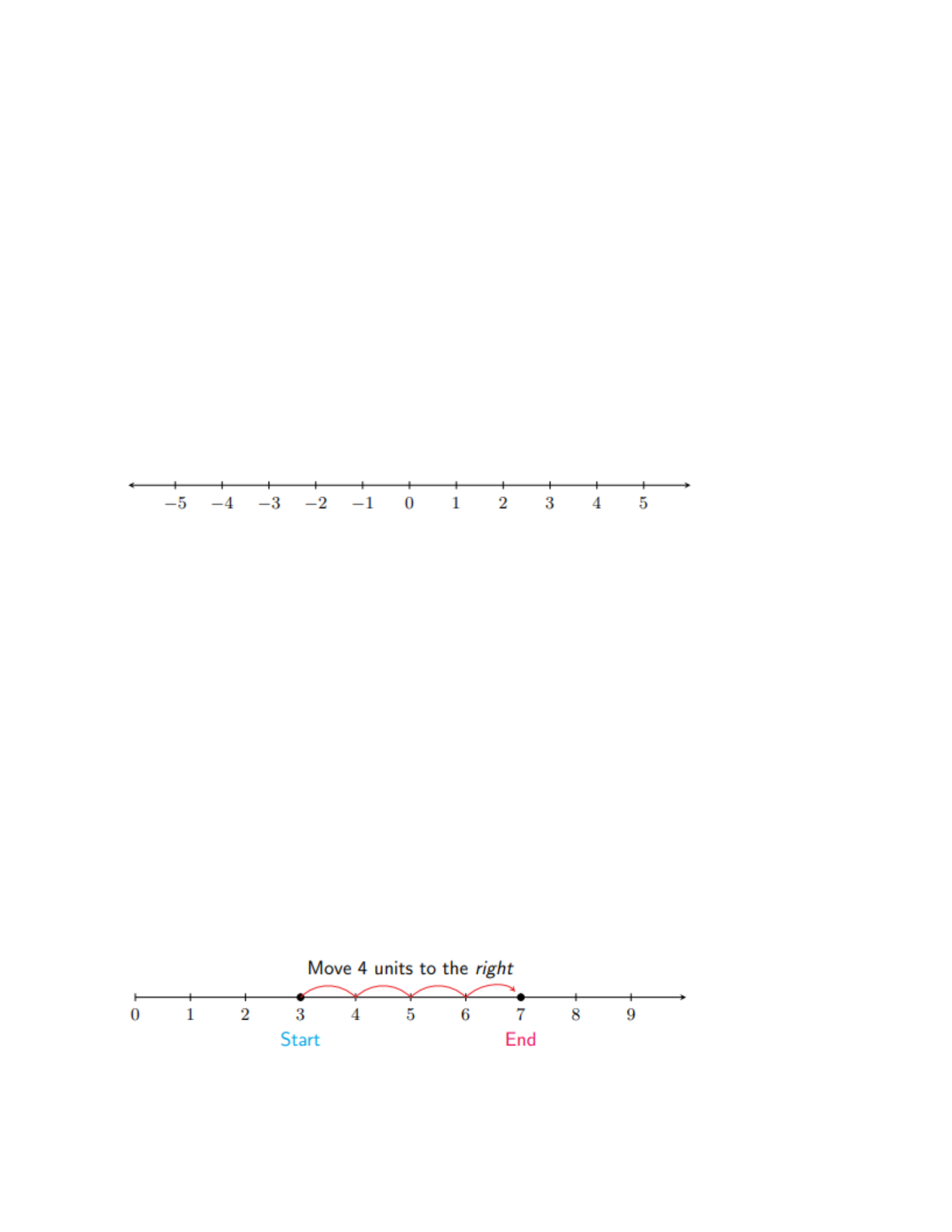
nnnnnn. −10÷0=−10÷0= undefined.
Note 1.23
Any number divided by 0 is undefined!
Multiplying and Dividing Integers
Consider two numbers at a time.
47. If the signs of the two numbers are the same, then the sign of the answer is positive.
48. If the signs of the two numbers are different, then the sign of the answer is negative.
We begin with a brief review of arithmetic with integers
i.e. …,−3,−2,−1,0,1,2,3,……,−3,−2,−1,0,1,2,3,…
Any number has a weight and a sign.
The magnitude (or weight) of a number is the distance it is from 0 on the number line.
Example 1.1
For example, the weight of -5 is 5 and the weight of 7 is 7 .
Two numbers are opposites if, on the number line, they are on opposite sides of zero, but
the same distance away from zero.
So, −5 is the opposite of 5, and 7 is the opposite of −7 and so on.
Addition
We can add two numbers with the help of a number line .
Example 1.2
Adding two positive numbers: For example to add 3+43+4, we start with 3 on the number
line then move 4 units to the right. We land at 7 which is our answer.
So, 3+4=73+4=7. Notice that the answer has the same sign as the signs of 3 and 4 (both
positive) and its weight comes from adding the weights of 3 and 4.
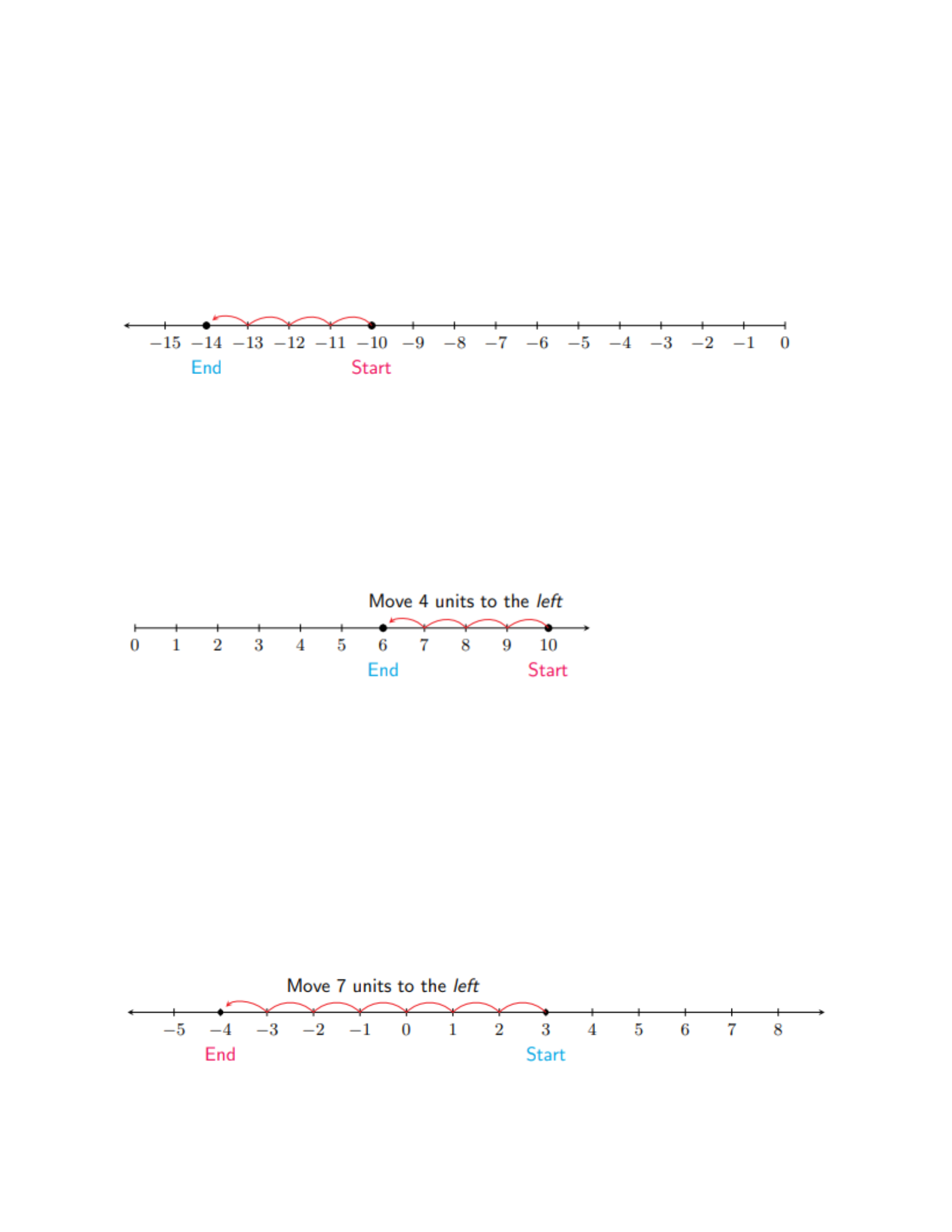
You always move to the right when you add a positive number
Example 1.3
Adding two negative numbers: For example, −10+(−4)−10+(−4) means you are adding a
debt of $4$4 to an already existing debt of $10.$10. So, we start at -10 on the number line
and move 4 units to the left, to land at −14,−14, which is the answer.
You always move to the left when you add a negative number (a debt)
So, −10+(−4)=−14−10+(−4)=−14. Notice that the answer has the same sign as the signs of -
10 and -4 (both negative) and its weight comes from adding the weights of -10 and -4
To add numbers of opposite signs, that is, a positive and a negative number, we can also
use the number line. For example, to perform 10+(−4),10+(−4), we start at 10 on the
number line and then move 4 units to the left. We land at 6,6, which is the answer. Think
of 10+(−4)10+(−4) as having $10$10 and adding a $4$4 debt. Because we are adding a
debt, we move to the left on the number line!
So, 10+(−4)=6.10+(−4)=6. Notice that the answer has the same sign as the sign of 10
(positive) because it is the number of larger weight, and its weight comes from finding the
difference of the weights of 10 and -4
Notice that because we were adding two numbers of opposite signs, the answer ended up
being the difference in weight (6) along with the sign of the number of larger weight
(positive).
Example 1.4
Adding two numbers of opposite signs: For example, 3+(−7)3+(−7). We start at 3 and move
toward 7 units to the left, and we land at −4,−4, which is our answer.
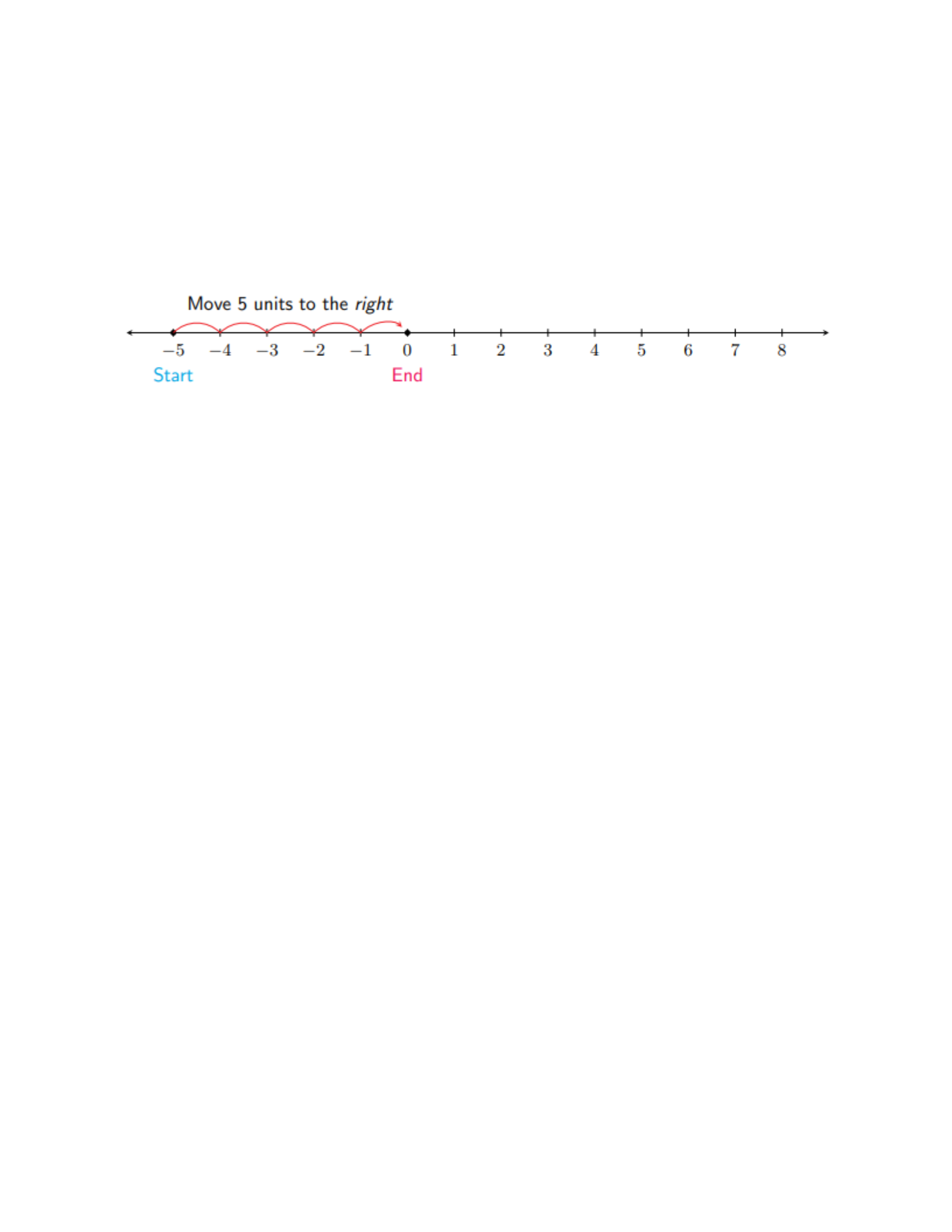
So, 3+(−7)=−4.3+(−7)=−4. Notice that the answer has the same sign as the signs of -7
(negative) because it is the number of larger weight, and its weight comes from finding the
difference of the weights of 3 and -7.
Example 1.5
Adding opposites: We start at -5 on the number line and jump to the right 5 units to land
finally at 00. So −5+5=0−5+5=0.
Note 1.6
Two opposite numbers are called a zero-pair, because adding them always results in 0.
So, −5 and 5 are a zero-pair.
Adding Intergers
49. To add two numbers of the same sign, add their weights and place it after the
sign.
50. To add two numbers of opposite signs, find the difference of their weights and
place it after the sign of the number with the greater weight.
Example 1.7
Add:
oooooo. −8+19=11−8+19=11
pppppp. −8+4=−4−8+4=−4
qqqqqq. 6+(−9)=−36+(−9)=−3
rrrrrr. 7+(−2)=57+(−2)=5
ssssss. (−4)+(−7)=−11(−4)+(−7)=−11
tttttt. 8+7=158+7=15
Note 1.8
While we can add in any order: 4+2=2+44+2=2+4, it is sometimes convenient to add up all
of the negative numbers and add up all of the positive numbers, and then add the results.
There are also times when it is best to notice certain simplifications if the numbers are
added in a different order.
For example

−5+4+5+(−8)=−5+(−8)+4+5( by reordering )−5+4+5+(−8)=−5+(−8)+4+5( by reordering )
so,
−5+4+5+(−8)=−5+(−8)+4+5=−13+9=−4−5+4+5+(−8)=−5+(−8)+4+5=−13+9=−4
We could have also simplified this by noting that (-5) and 5 are zero-pair, so we are left
with 4+(−8)4+(−8) which is -4.
Example 1.9
We can calculate
(−4)+(−5)+7+(−3)=(−4)+(−5)+(−3)+7=(−12)+7=−5(−4)+(−5)+7+(−3)=(−4)+(−5)+(−3)+7=
(−12)+7=−5
We could have simplified this by noting that (-4) and (-3) make -7, and -7 and 7 are zero-
pair, so the total is -5.
Subtraction (as Addition of the Opposite)
Once we know how to add numbers, we are set to subtract numbers because subtraction is
nothing but addition of the opposite. That is, subtracting 8 − 3 (which reads: subtracting 3
from 8) is the same as 8 + (−3) (which reads: Adding −3 to 8.).
Example 1.10
So, 8−3=8+(−3),8−3=8+(−3), and, we can use the rules of adding two numbers of opposite
signs to find out that the answer is 5.5. We can also use the number line. We start at 8 and
move 3 units to the left (adding -3 is adding a debt, so we move to the left).
So 8−3=5.−4−3−2−10123456788−3=5.−4−3−2−1012345678 End Start Move 3 units to the
left
Example 1.11
To calculate 3−73−7 we first rewrite it as an addition
problem. 3−7=3+(−7).3−7=3+(−7). We can either use the number line, or the rules of
adding two numbers of opposite signs. And, 50,3−7=3+(−7)=−450,3−7=3+(−7)=−4
Example 1.12
To calculate −4−1,−4−1, we first rewrite it as an addition
problem. −4−1=−4+(−1).−4−1=−4+(−1). We can either use the number line, or the rules of
adding two numbers of the same signs. If we want to use the rules, both numbers are
negative, so our answer will be negative, and, adding the weights of -4 and -1
is 5.50,−4−1=−4+(−1)=−55.50,−4−1=−4+(−1)=−5
On the number line, we start at -4 and move 1 unit to the left, to land on -5 which is our
answer.
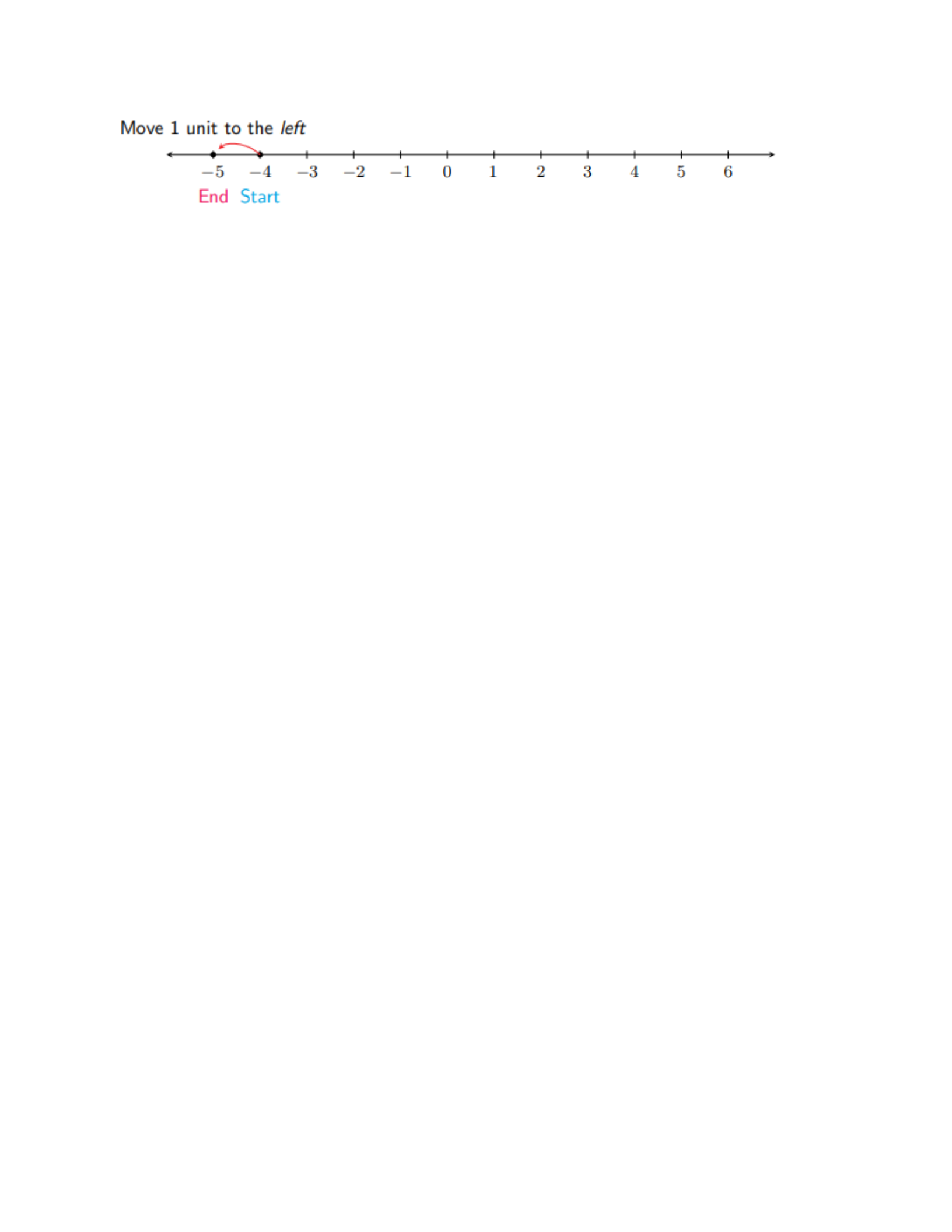
Changing the subtractions to additions in this way is particularly useful when adding or
subtracting several numbers (because we can add in any order).
Example 1.13
===−3−7+5+7+13−6−(−9)−3+(−7)+5+7+13+(−6)+9−3+(−7)+(−6)+5+7+13+918−3−7+5+7
+13−6−(−9)=−3+(−7)+5+7+13+(−6)+9=−3+(−7)+(−6)+5+7+13+9=18
===−3−7+5+7+13−6−(−9)−3+(−7)+5+7+13+(−6)+95+1318−3−7+5+7+13−6−(−9)=−3+(−7
)+5+7+13+(−6)+9=5+13=18
Remark 1.14
Warning: The symbol "-" is used in two different ways. When it is between two expressions,
it means subtract (e.g., 3−43−4 ). Otherwise, it means 'opposite' or 'negative'
(e.g., −3+4−3+4 ). So in the expression −4−(−3)−4−(−3), the first and last "-" means
opposite and the one in the middle one means subtract. The importance of understanding
this can not be overestimated.
Multiplication and Division of Positive Numbers
Multiplication of integers is adding in the sense that 3×4=4+4+43×4=4+4+4
To multiply larger numbers, it is better to use the usual scheme of multiplication. For
example:
Example 1.15
Let us multiply 152 by 34. We will for convenience sake put the smaller number on the
bottom (though it is not necessary). We have
+×4516515306624808152×34608+45605168
And division is the opposite of multiplication in the sense that to compute 45÷945÷9 is to
find a number so that when we multiply by 9 we get 45. We run through our multiplication
tables (which are hopefully in our head) to discover that 5 does the
trick: 5×9=455×9=45 so that 45÷9=5.45÷9=5. We will discuss division from a different
point of view when we discuss fractions.
To divide larger numbers, we can use long division. For example, let’s divide 3571 by 11.
Example 1.16
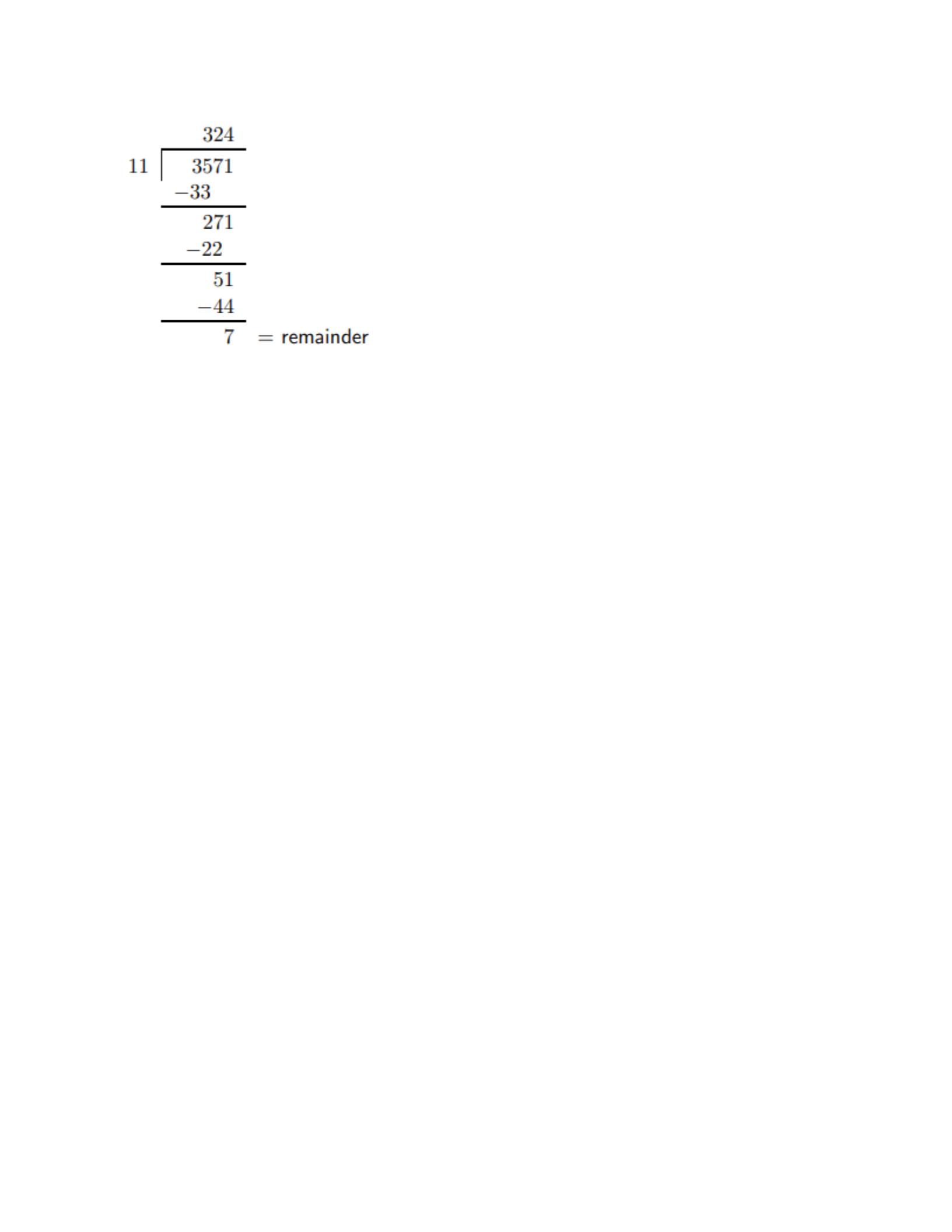
Multiplication involving negative numbers
Multiplication is a little tricky to understand without the notion of distribution (discussed
later). We will begin with noting again what it means to multiply a number by a positive
number: So if we want to compute 4⋅(−7)4⋅(−7) we note
4⋅(−7)=(−7)+(−7)+(−7)+(−7)=−284⋅(−7)=(−7)+(−7)+(−7)+(−7)=−28
Note that since 4⋅7=28,4⋅(−7)=−(4⋅7).4⋅7=28,4⋅(−7)=−(4⋅7). We can multiply positive
numbers in any order: 4⋅7=7⋅44⋅7=7⋅4. The same is true of positive and negative numbers:
(−7)⋅4=4⋅(−7)=−(4⋅7)=−28(−7)⋅4=4⋅(−7)=−(4⋅7)=−28
Example 1.17
5⋅(−12)=−(5⋅12)=−605⋅(−12)=−(5⋅12)=−60 and (−3)⋅(−2)=−(3⋅(−2))=−(−(3⋅2))=6(−3)⋅(−2)
=−(3⋅(−2))=−(−(3⋅2))=6
Example 1.18
So the size of the product of two numbers is the product of their sizes. The sign is positive if
the signs are the same and negative if they are different.
Example 1.19
Two quantities right next to each other, with no symbol between them (except for
parentheses around either or both numbers), has an implicit multiplication. For
example, 3(2)=3×23(2)=3×2.
Example 1.20
Multiply:
qqqqq. (−5)(−8)=40(−5)(−8)=40
rrrrr. (−6)⋅7=−42(−6)⋅7=−42
sssss. 4⋅12=484⋅12=48

ttttt. (−3)(−6)⋅4(−3)=18⋅4(−3)=72(−3)=−216( multiplying from left to
right )(−3)(−6)⋅4(−3)=18⋅4(−3)=72(−3)=−216( multiplying from left to right )
uuuuu. (−3)(−5)⋅4(−2)=(−3)⋅4⋅(−5)(−2)=−12⋅10=−120((−3)(−5)⋅4(−2)=(−3)⋅4⋅(−5)(
−2)=−12⋅10=−120( since we can multiply in any order it is convenient to see
that −5⋅−2=10.−5⋅−2=10. )
Exponents of integers
Recall that a positive exponent represents the number of times a number is multiplied by
itself.
Example 1.21
Evaluate:
oooooo. 52=5⋅5=2552=5⋅5=25
pppppp. (−4)3=(−4)⋅(−4)⋅(−4)=16⋅(−4)=−64(−4)3=(−4)⋅(−4)⋅(−4)=16⋅(−4)=−64
qqqqqq. (−7)1=−7(−7)1=−7
rrrrrr. −24=−2⋅2⋅2⋅2=−16−24=−2⋅2⋅2⋅2=−16 Note: The exponent here is for 2 not
−2!
ssssss. (−3)4=(−3)⋅(−3)⋅(−3)⋅(−3)=9⋅(−3)⋅(−3)=−27⋅(−3)=81(−3)4=(−3)⋅(−3)⋅(−3)⋅(
−3)=9⋅(−3)⋅(−3)=−27⋅(−3)=81
tttttt. (−2)5=(−2)⋅(−2)⋅(−2)⋅(−2)⋅(−2)=−32(−2)5=(−2)⋅(−2)⋅(−2)⋅(−2)⋅(−2)=−32
Exponent rules in details will be further discussed in Chapter 5.
Division involving negative numbers
Division is just a question of knowing multiplication and therefore has the same rule: The
size of the quotient of two numbers is the quotient of the sizes. The sign is positive if the
signs are the same and negative if they are different.
Example 1.22
Divide:
oooooo. (−42)÷7=−6(−42)÷7=−6
pppppp. 81÷(−9)=−981÷(−9)=−9
qqqqqq. (−35)÷(−7)=5(−35)÷(−7)=5
rrrrrr. 14÷2=714÷2=7
ssssss. 0÷5=00÷5=0. Note When dividing 0 by any number, the answer is always 0.
tttttt. −10÷0=−10÷0= undefined.
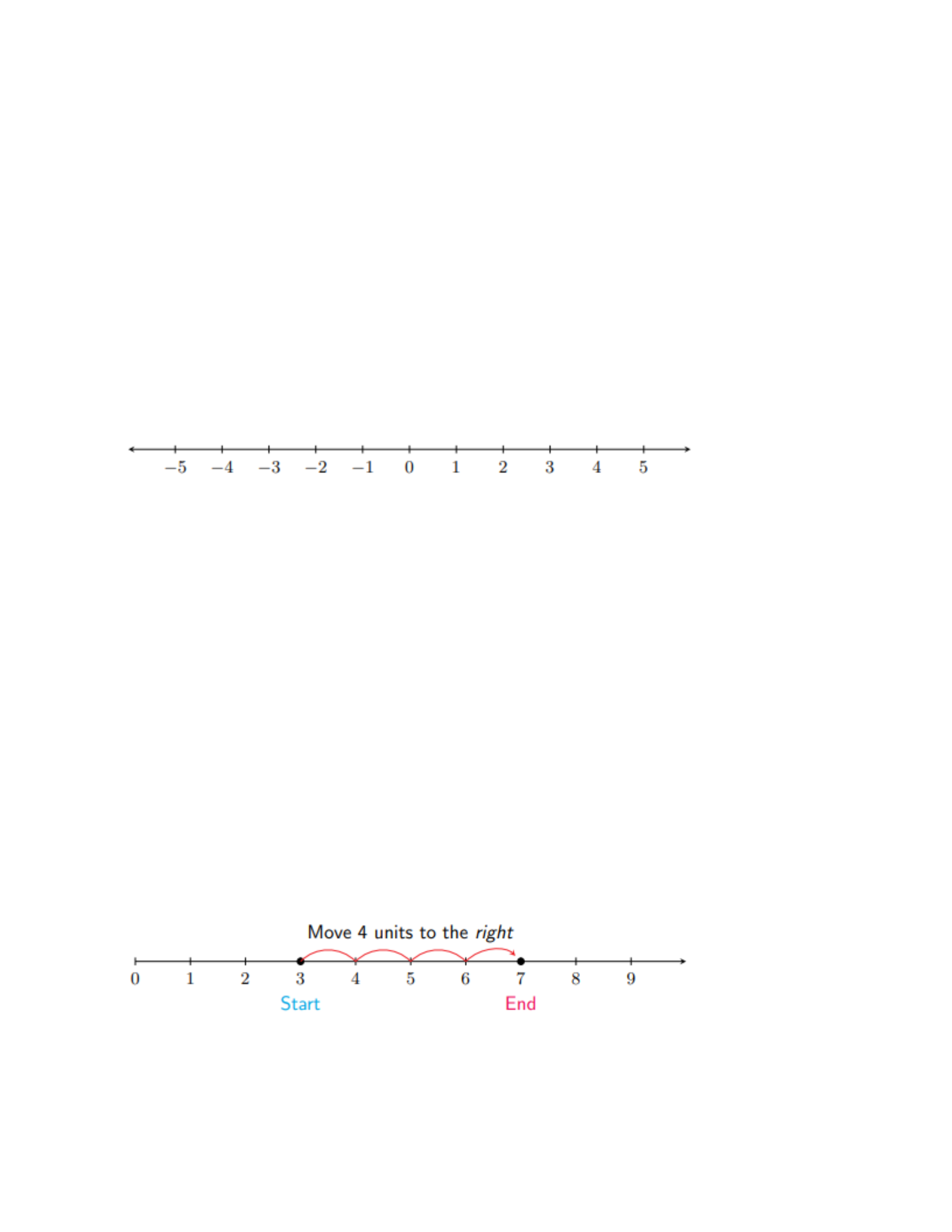
Note 1.23
Any number divided by 0 is undefined!
Multiplying and Dividing Integers
Consider two numbers at a time.
49. If the signs of the two numbers are the same, then the sign of the answer is positive.
50. If the signs of the two numbers are different, then the sign of the answer is negative.
We begin with a brief review of arithmetic with integers
i.e. …,−3,−2,−1,0,1,2,3,……,−3,−2,−1,0,1,2,3,…
Any number has a weight and a sign.
The magnitude (or weight) of a number is the distance it is from 0 on the number line.
Example 1.1
For example, the weight of -5 is 5 and the weight of 7 is 7 .
Two numbers are opposites if, on the number line, they are on opposite sides of zero, but
the same distance away from zero.
So, −5 is the opposite of 5, and 7 is the opposite of −7 and so on.
Addition
We can add two numbers with the help of a number line .
Example 1.2
Adding two positive numbers: For example to add 3+43+4, we start with 3 on the number
line then move 4 units to the right. We land at 7 which is our answer.
So, 3+4=73+4=7. Notice that the answer has the same sign as the signs of 3 and 4 (both
positive) and its weight comes from adding the weights of 3 and 4.
You always move to the right when you add a positive number
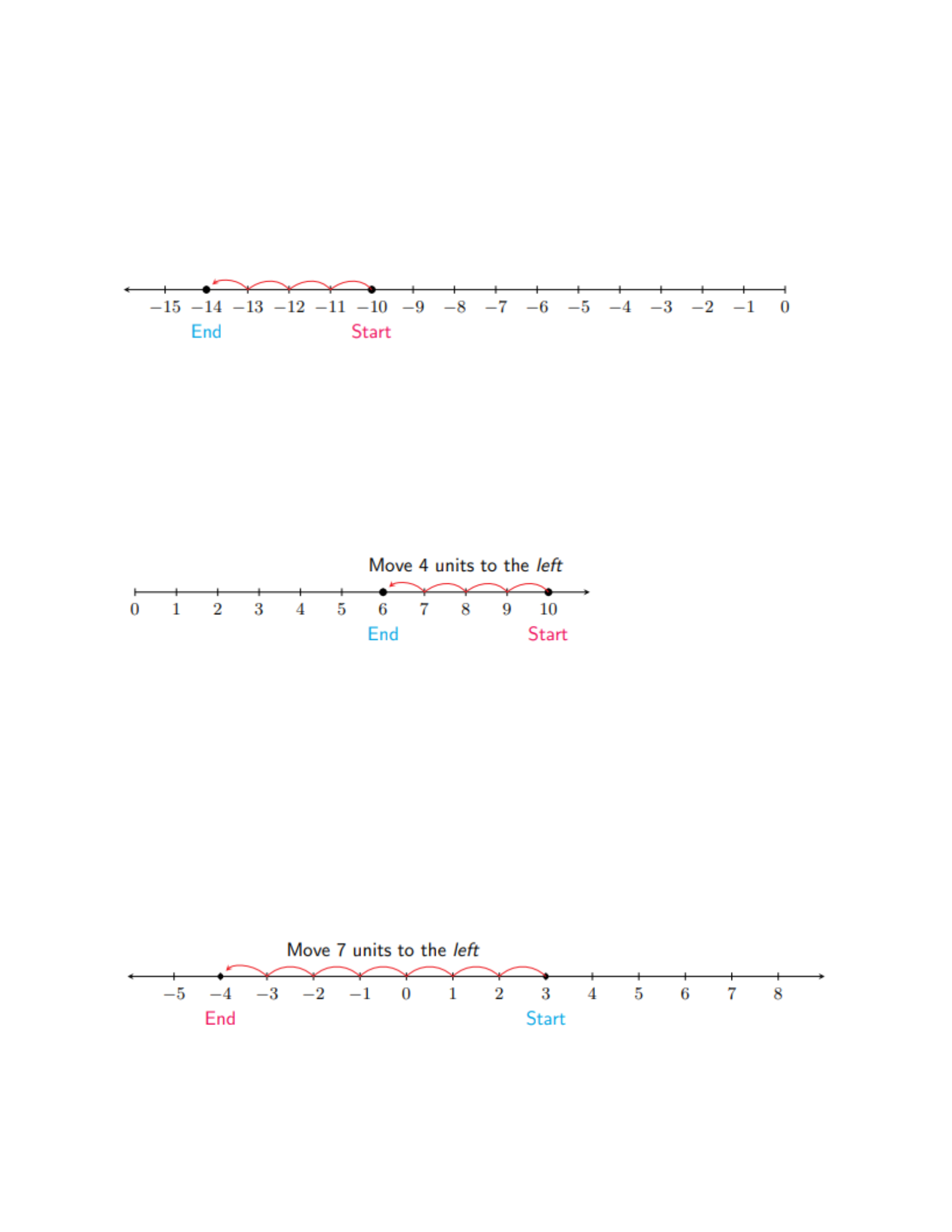
Example 1.3
Adding two negative numbers: For example, −10+(−4)−10+(−4) means you are adding a
debt of $4$4 to an already existing debt of $10.$10. So, we start at -10 on the number line
and move 4 units to the left, to land at −14,−14, which is the answer.
You always move to the left when you add a negative number (a debt)
So, −10+(−4)=−14−10+(−4)=−14. Notice that the answer has the same sign as the signs of -
10 and -4 (both negative) and its weight comes from adding the weights of -10 and -4
To add numbers of opposite signs, that is, a positive and a negative number, we can also
use the number line. For example, to perform 10+(−4),10+(−4), we start at 10 on the
number line and then move 4 units to the left. We land at 6,6, which is the answer. Think
of 10+(−4)10+(−4) as having $10$10 and adding a $4$4 debt. Because we are adding a
debt, we move to the left on the number line!
So, 10+(−4)=6.10+(−4)=6. Notice that the answer has the same sign as the sign of 10
(positive) because it is the number of larger weight, and its weight comes from finding the
difference of the weights of 10 and -4
Notice that because we were adding two numbers of opposite signs, the answer ended up
being the difference in weight (6) along with the sign of the number of larger weight
(positive).
Example 1.4
Adding two numbers of opposite signs: For example, 3+(−7)3+(−7). We start at 3 and move
toward 7 units to the left, and we land at −4,−4, which is our answer.
So, 3+(−7)=−4.3+(−7)=−4. Notice that the answer has the same sign as the signs of -7
(negative) because it is the number of larger weight, and its weight comes from finding the
difference of the weights of 3 and -7.
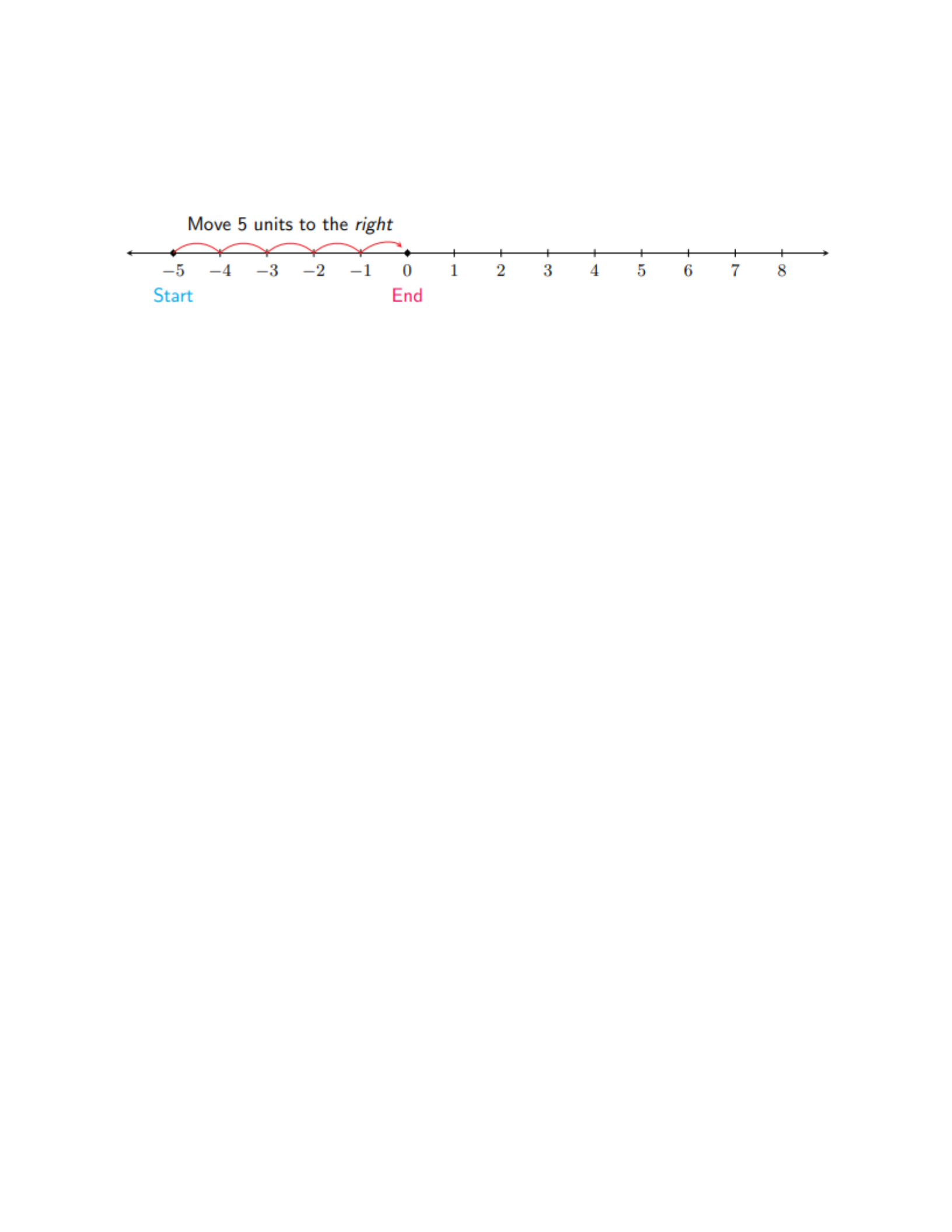
Example 1.5
Adding opposites: We start at -5 on the number line and jump to the right 5 units to land
finally at 00. So −5+5=0−5+5=0.
Note 1.6
Two opposite numbers are called a zero-pair, because adding them always results in 0.
So, −5 and 5 are a zero-pair.
Adding Intergers
51. To add two numbers of the same sign, add their weights and place it after the
sign.
52. To add two numbers of opposite signs, find the difference of their weights and
place it after the sign of the number with the greater weight.
Example 1.7
Add:
uuuuuu. −8+19=11−8+19=11
vvvvvv. −8+4=−4−8+4=−4
wwwwww. 6+(−9)=−36+(−9)=−3
xxxxxx. 7+(−2)=57+(−2)=5
yyyyyy. (−4)+(−7)=−11(−4)+(−7)=−11
zzzzzz. 8+7=158+7=15
Note 1.8
While we can add in any order: 4+2=2+44+2=2+4, it is sometimes convenient to add up all
of the negative numbers and add up all of the positive numbers, and then add the results.
There are also times when it is best to notice certain simplifications if the numbers are
added in a different order.
For example
−5+4+5+(−8)=−5+(−8)+4+5( by reordering )−5+4+5+(−8)=−5+(−8)+4+5( by reordering )
so,
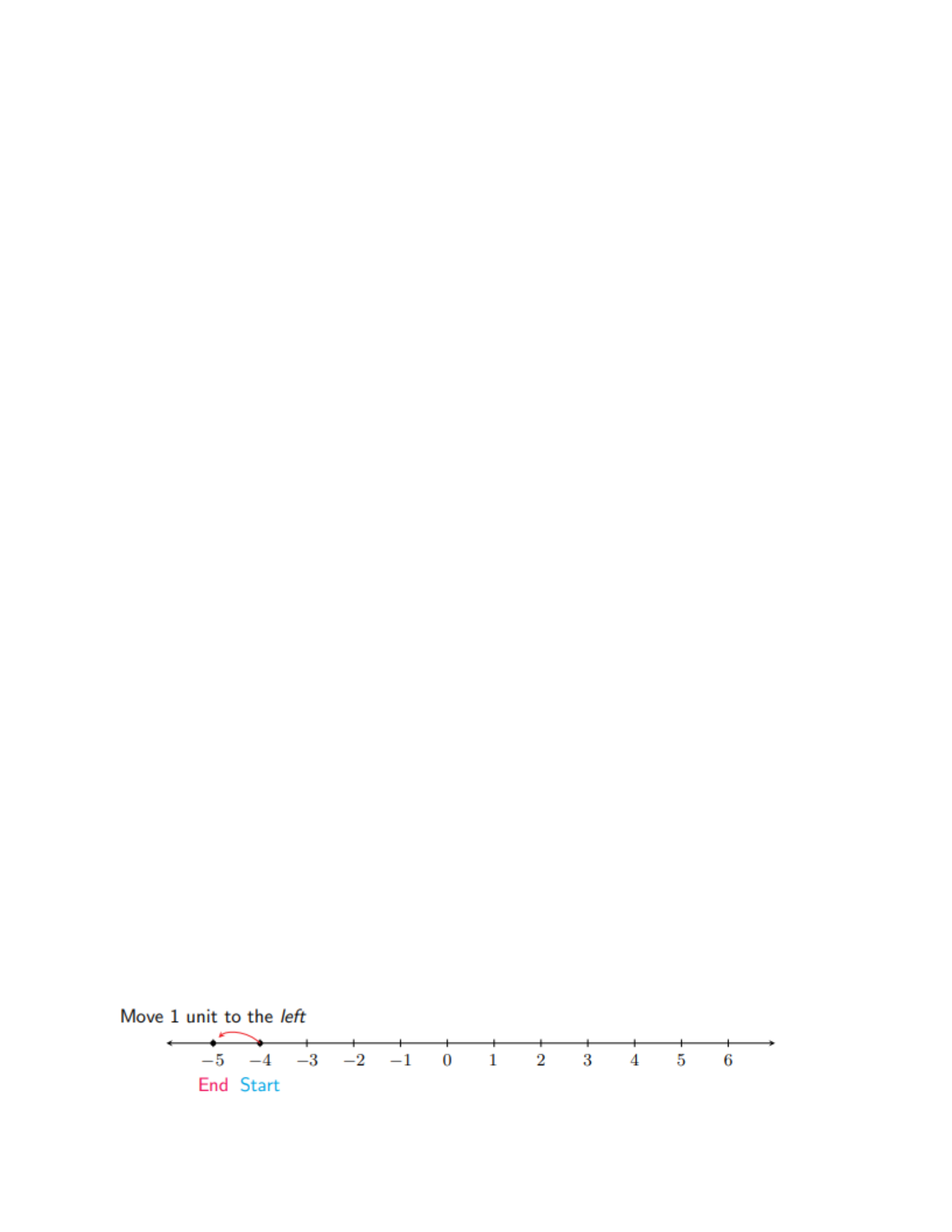
−5+4+5+(−8)=−5+(−8)+4+5=−13+9=−4−5+4+5+(−8)=−5+(−8)+4+5=−13+9=−4
We could have also simplified this by noting that (-5) and 5 are zero-pair, so we are left
with 4+(−8)4+(−8) which is -4.
Example 1.9
We can calculate
(−4)+(−5)+7+(−3)=(−4)+(−5)+(−3)+7=(−12)+7=−5(−4)+(−5)+7+(−3)=(−4)+(−5)+(−3)+7=
(−12)+7=−5
We could have simplified this by noting that (-4) and (-3) make -7, and -7 and 7 are zero-
pair, so the total is -5.
Subtraction (as Addition of the Opposite)
Once we know how to add numbers, we are set to subtract numbers because subtraction is
nothing but addition of the opposite. That is, subtracting 8 − 3 (which reads: subtracting 3
from 8) is the same as 8 + (−3) (which reads: Adding −3 to 8.).
Example 1.10
So, 8−3=8+(−3),8−3=8+(−3), and, we can use the rules of adding two numbers of opposite
signs to find out that the answer is 5.5. We can also use the number line. We start at 8 and
move 3 units to the left (adding -3 is adding a debt, so we move to the left).
So 8−3=5.−4−3−2−10123456788−3=5.−4−3−2−1012345678 End Start Move 3 units to the
left
Example 1.11
To calculate 3−73−7 we first rewrite it as an addition
problem. 3−7=3+(−7).3−7=3+(−7). We can either use the number line, or the rules of
adding two numbers of opposite signs. And, 50,3−7=3+(−7)=−450,3−7=3+(−7)=−4
Example 1.12
To calculate −4−1,−4−1, we first rewrite it as an addition
problem. −4−1=−4+(−1).−4−1=−4+(−1). We can either use the number line, or the rules of
adding two numbers of the same signs. If we want to use the rules, both numbers are
negative, so our answer will be negative, and, adding the weights of -4 and -1
is 5.50,−4−1=−4+(−1)=−55.50,−4−1=−4+(−1)=−5
On the number line, we start at -4 and move 1 unit to the left, to land on -5 which is our
answer.

Changing the subtractions to additions in this way is particularly useful when adding or
subtracting several numbers (because we can add in any order).
Example 1.13
===−3−7+5+7+13−6−(−9)−3+(−7)+5+7+13+(−6)+9−3+(−7)+(−6)+5+7+13+918−3−7+5+7
+13−6−(−9)=−3+(−7)+5+7+13+(−6)+9=−3+(−7)+(−6)+5+7+13+9=18
===−3−7+5+7+13−6−(−9)−3+(−7)+5+7+13+(−6)+95+1318−3−7+5+7+13−6−(−9)=−3+(−7
)+5+7+13+(−6)+9=5+13=18
Remark 1.14
Warning: The symbol "-" is used in two different ways. When it is between two expressions,
it means subtract (e.g., 3−43−4 ). Otherwise, it means 'opposite' or 'negative'
(e.g., −3+4−3+4 ). So in the expression −4−(−3)−4−(−3), the first and last "-" means
opposite and the one in the middle one means subtract. The importance of understanding
this can not be overestimated.
Multiplication and Division of Positive Numbers
Multiplication of integers is adding in the sense that 3×4=4+4+43×4=4+4+4
To multiply larger numbers, it is better to use the usual scheme of multiplication. For
example:
Example 1.15
Let us multiply 152 by 34. We will for convenience sake put the smaller number on the
bottom (though it is not necessary). We have
+×4516515306624808152×34608+45605168
And division is the opposite of multiplication in the sense that to compute 45÷945÷9 is to
find a number so that when we multiply by 9 we get 45. We run through our multiplication
tables (which are hopefully in our head) to discover that 5 does the
trick: 5×9=455×9=45 so that 45÷9=5.45÷9=5. We will discuss division from a different
point of view when we discuss fractions.
To divide larger numbers, we can use long division. For example, let’s divide 3571 by 11.
Example 1.16
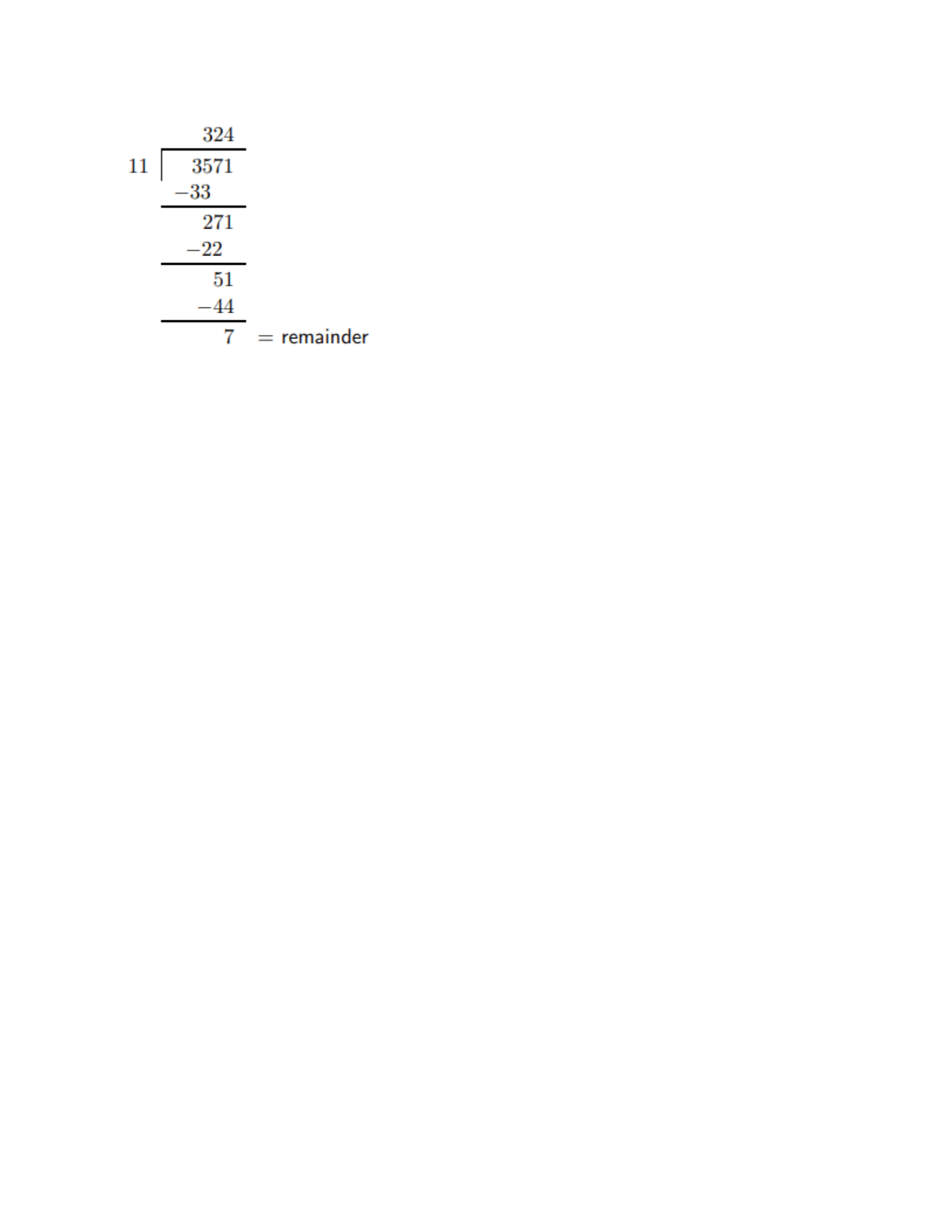
Multiplication involving negative numbers
Multiplication is a little tricky to understand without the notion of distribution (discussed
later). We will begin with noting again what it means to multiply a number by a positive
number: So if we want to compute 4⋅(−7)4⋅(−7) we note
4⋅(−7)=(−7)+(−7)+(−7)+(−7)=−284⋅(−7)=(−7)+(−7)+(−7)+(−7)=−28
Note that since 4⋅7=28,4⋅(−7)=−(4⋅7).4⋅7=28,4⋅(−7)=−(4⋅7). We can multiply positive
numbers in any order: 4⋅7=7⋅44⋅7=7⋅4. The same is true of positive and negative numbers:
(−7)⋅4=4⋅(−7)=−(4⋅7)=−28(−7)⋅4=4⋅(−7)=−(4⋅7)=−28
Example 1.17
5⋅(−12)=−(5⋅12)=−605⋅(−12)=−(5⋅12)=−60 and (−3)⋅(−2)=−(3⋅(−2))=−(−(3⋅2))=6(−3)⋅(−2)
=−(3⋅(−2))=−(−(3⋅2))=6
Example 1.18
So the size of the product of two numbers is the product of their sizes. The sign is positive if
the signs are the same and negative if they are different.
Example 1.19
Two quantities right next to each other, with no symbol between them (except for
parentheses around either or both numbers), has an implicit multiplication. For
example, 3(2)=3×23(2)=3×2.
Example 1.20
Multiply:
vvvvv. (−5)(−8)=40(−5)(−8)=40
wwwww. (−6)⋅7=−42(−6)⋅7=−42
xxxxx. 4⋅12=484⋅12=48

yyyyy. (−3)(−6)⋅4(−3)=18⋅4(−3)=72(−3)=−216( multiplying from left to
right )(−3)(−6)⋅4(−3)=18⋅4(−3)=72(−3)=−216( multiplying from left to right )
zzzzz. (−3)(−5)⋅4(−2)=(−3)⋅4⋅(−5)(−2)=−12⋅10=−120((−3)(−5)⋅4(−2)=(−3)⋅4⋅(−5)(
−2)=−12⋅10=−120( since we can multiply in any order it is convenient to see
that −5⋅−2=10.−5⋅−2=10. )
Exponents of integers
Recall that a positive exponent represents the number of times a number is multiplied by
itself.
Example 1.21
Evaluate:
uuuuuu. 52=5⋅5=2552=5⋅5=25
vvvvvv. (−4)3=(−4)⋅(−4)⋅(−4)=16⋅(−4)=−64(−4)3=(−4)⋅(−4)⋅(−4)=16⋅(−4)=−64
wwwwww. (−7)1=−7(−7)1=−7
xxxxxx. −24=−2⋅2⋅2⋅2=−16−24=−2⋅2⋅2⋅2=−16 Note: The exponent here is for 2 not
−2!
yyyyyy. (−3)4=(−3)⋅(−3)⋅(−3)⋅(−3)=9⋅(−3)⋅(−3)=−27⋅(−3)=81(−3)4=(−3)⋅(−3)⋅(−3)⋅(
−3)=9⋅(−3)⋅(−3)=−27⋅(−3)=81
zzzzzz. (−2)5=(−2)⋅(−2)⋅(−2)⋅(−2)⋅(−2)=−32(−2)5=(−2)⋅(−2)⋅(−2)⋅(−2)⋅(−2)=−32
Exponent rules in details will be further discussed in Chapter 5.
Division involving negative numbers
Division is just a question of knowing multiplication and therefore has the same rule: The
size of the quotient of two numbers is the quotient of the sizes. The sign is positive if the
signs are the same and negative if they are different.
Example 1.22
Divide:
uuuuuu. (−42)÷7=−6(−42)÷7=−6
vvvvvv. 81÷(−9)=−981÷(−9)=−9
wwwwww. (−35)÷(−7)=5(−35)÷(−7)=5
xxxxxx. 14÷2=714÷2=7
yyyyyy. 0÷5=00÷5=0. Note When dividing 0 by any number, the answer is always 0.
zzzzzz. −10÷0=−10÷0= undefined.
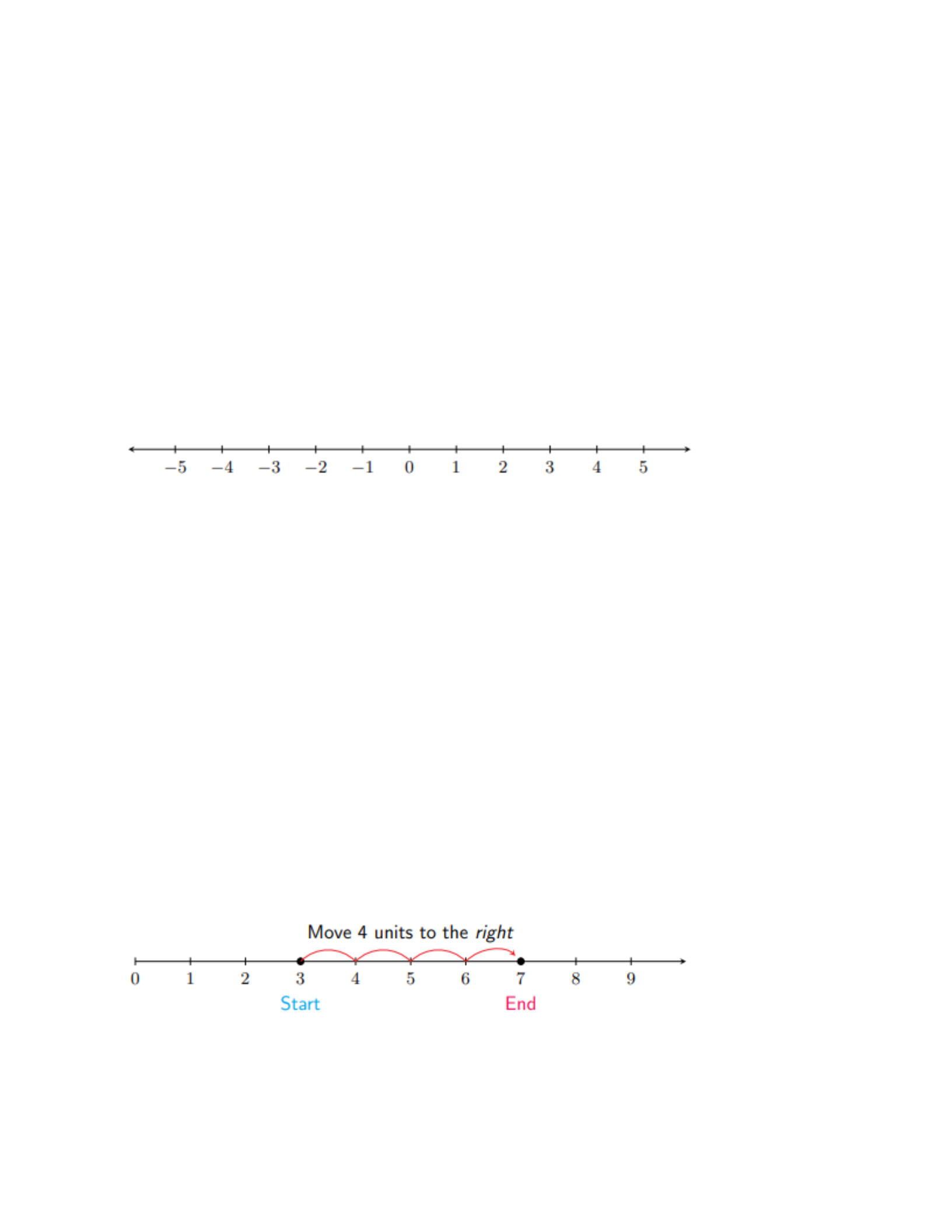
Note 1.23
Any number divided by 0 is undefined!
Multiplying and Dividing Integers
Consider two numbers at a time.
51. If the signs of the two numbers are the same, then the sign of the answer is positive.
52. If the signs of the two numbers are different, then the sign of the answer is negative.
We begin with a brief review of arithmetic with integers
i.e. …,−3,−2,−1,0,1,2,3,……,−3,−2,−1,0,1,2,3,…
Any number has a weight and a sign.
The magnitude (or weight) of a number is the distance it is from 0 on the number line.
Example 1.1
For example, the weight of -5 is 5 and the weight of 7 is 7 .
Two numbers are opposites if, on the number line, they are on opposite sides of zero, but
the same distance away from zero.
So, −5 is the opposite of 5, and 7 is the opposite of −7 and so on.
Addition
We can add two numbers with the help of a number line .
Example 1.2
Adding two positive numbers: For example to add 3+43+4, we start with 3 on the number
line then move 4 units to the right. We land at 7 which is our answer.
So, 3+4=73+4=7. Notice that the answer has the same sign as the signs of 3 and 4 (both
positive) and its weight comes from adding the weights of 3 and 4.
You always move to the right when you add a positive number
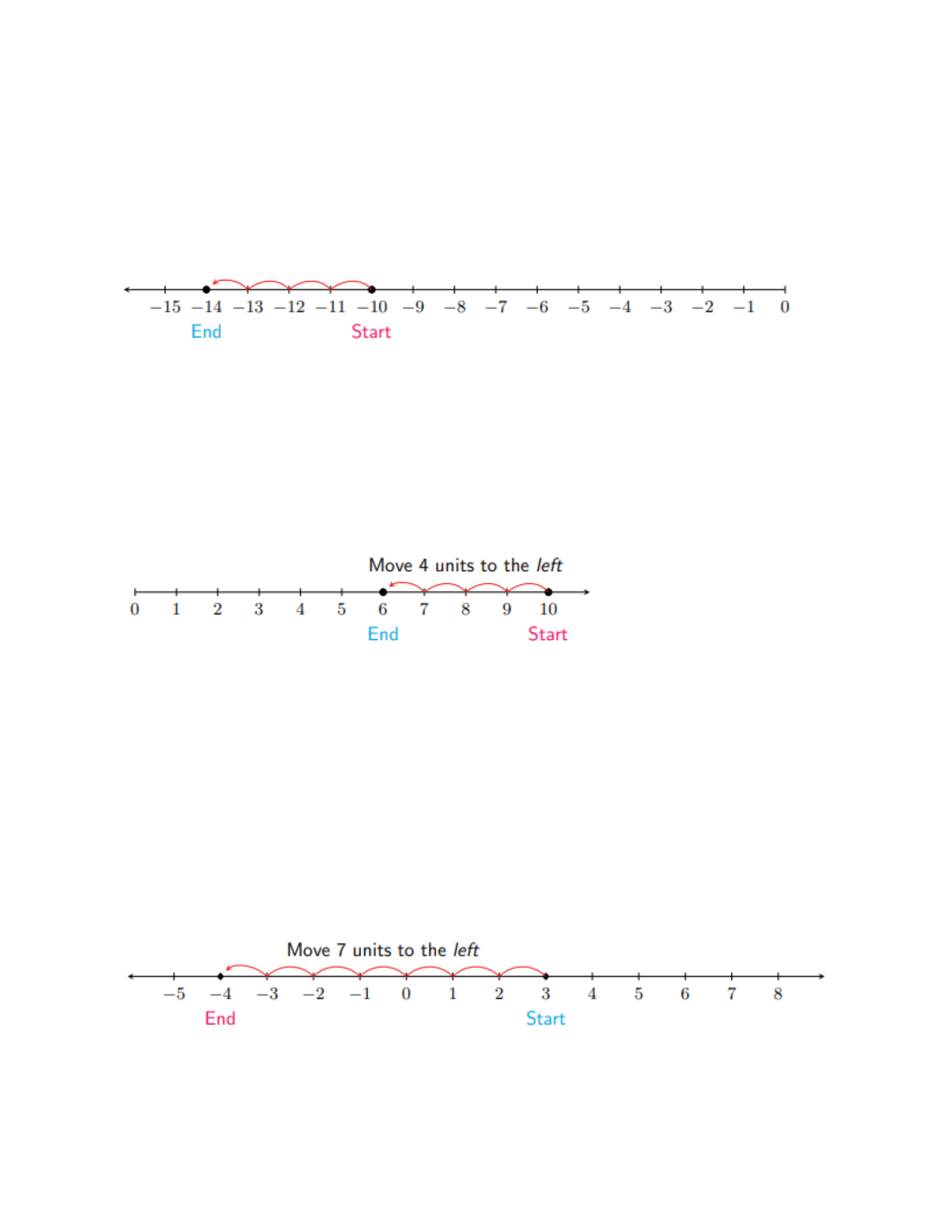
Example 1.3
Adding two negative numbers: For example, −10+(−4)−10+(−4) means you are adding a
debt of $4$4 to an already existing debt of $10.$10. So, we start at -10 on the number line
and move 4 units to the left, to land at −14,−14, which is the answer.
You always move to the left when you add a negative number (a debt)
So, −10+(−4)=−14−10+(−4)=−14. Notice that the answer has the same sign as the signs of -
10 and -4 (both negative) and its weight comes from adding the weights of -10 and -4
To add numbers of opposite signs, that is, a positive and a negative number, we can also
use the number line. For example, to perform 10+(−4),10+(−4), we start at 10 on the
number line and then move 4 units to the left. We land at 6,6, which is the answer. Think
of 10+(−4)10+(−4) as having $10$10 and adding a $4$4 debt. Because we are adding a
debt, we move to the left on the number line!
So, 10+(−4)=6.10+(−4)=6. Notice that the answer has the same sign as the sign of 10
(positive) because it is the number of larger weight, and its weight comes from finding the
difference of the weights of 10 and -4
Notice that because we were adding two numbers of opposite signs, the answer ended up
being the difference in weight (6) along with the sign of the number of larger weight
(positive).
Example 1.4
Adding two numbers of opposite signs: For example, 3+(−7)3+(−7). We start at 3 and move
toward 7 units to the left, and we land at −4,−4, which is our answer.
So, 3+(−7)=−4.3+(−7)=−4. Notice that the answer has the same sign as the signs of -7
(negative) because it is the number of larger weight, and its weight comes from finding the
difference of the weights of 3 and -7.
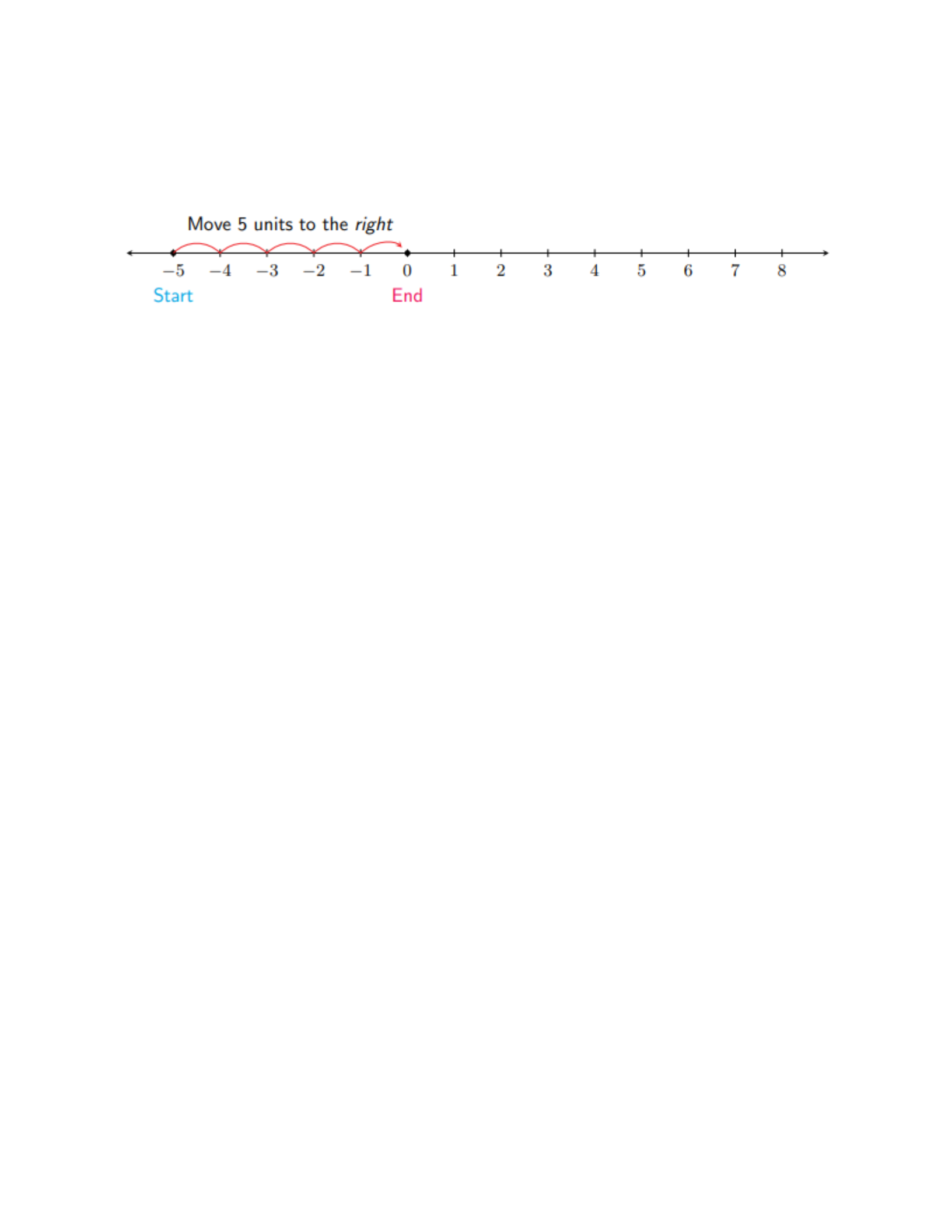
Example 1.5
Adding opposites: We start at -5 on the number line and jump to the right 5 units to land
finally at 00. So −5+5=0−5+5=0.
Note 1.6
Two opposite numbers are called a zero-pair, because adding them always results in 0.
So, −5 and 5 are a zero-pair.
Adding Intergers
53. To add two numbers of the same sign, add their weights and place it after the
sign.
54. To add two numbers of opposite signs, find the difference of their weights and
place it after the sign of the number with the greater weight.
Example 1.7
Add:
aaaaaaa. −8+19=11−8+19=11
bbbbbbb. −8+4=−4−8+4=−4
ccccccc. 6+(−9)=−36+(−9)=−3
ddddddd. 7+(−2)=57+(−2)=5
eeeeeee. (−4)+(−7)=−11(−4)+(−7)=−11
fffffff. 8+7=158+7=15
Note 1.8
While we can add in any order: 4+2=2+44+2=2+4, it is sometimes convenient to add up all
of the negative numbers and add up all of the positive numbers, and then add the results.
There are also times when it is best to notice certain simplifications if the numbers are
added in a different order.
For example
−5+4+5+(−8)=−5+(−8)+4+5( by reordering )−5+4+5+(−8)=−5+(−8)+4+5( by reordering )
so,
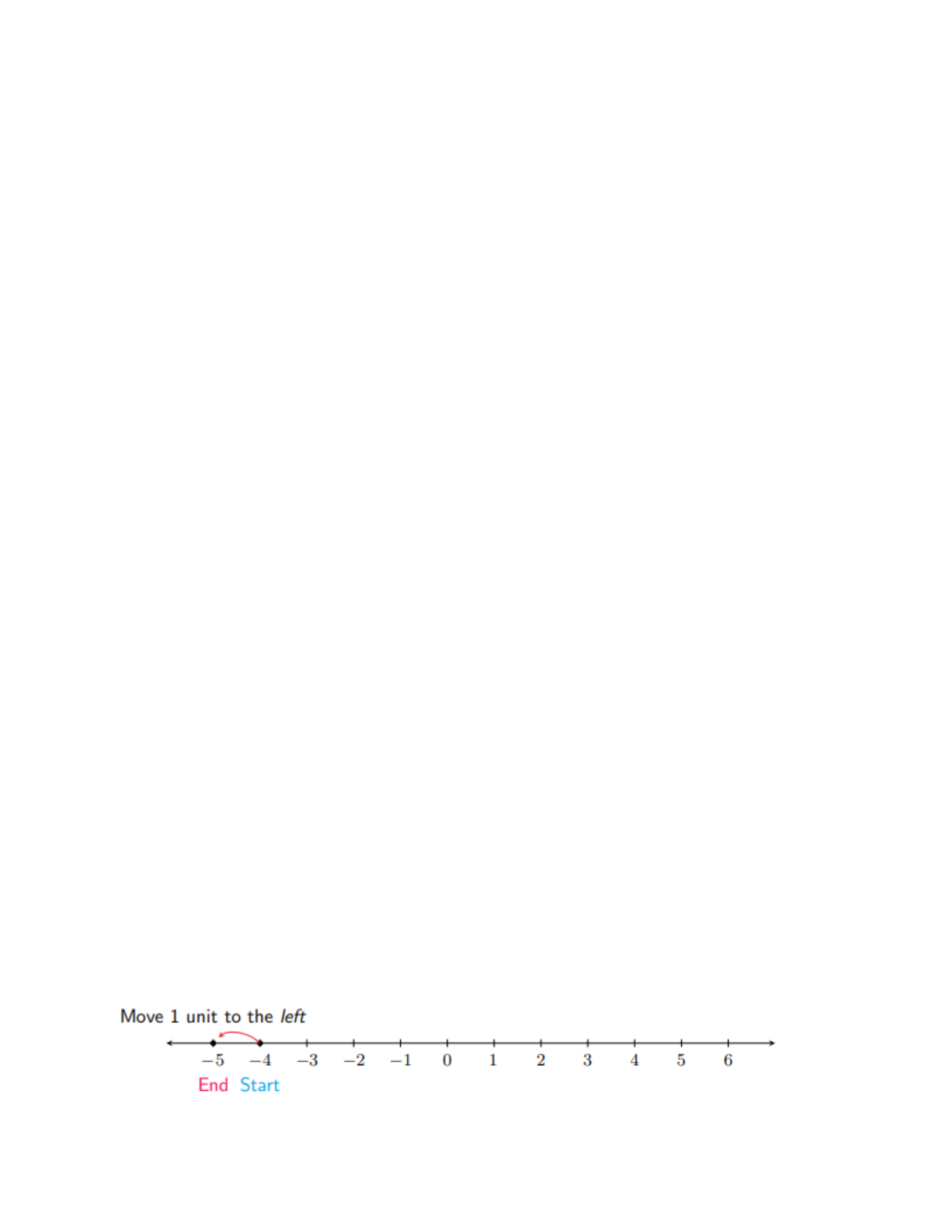
−5+4+5+(−8)=−5+(−8)+4+5=−13+9=−4−5+4+5+(−8)=−5+(−8)+4+5=−13+9=−4
We could have also simplified this by noting that (-5) and 5 are zero-pair, so we are left
with 4+(−8)4+(−8) which is -4.
Example 1.9
We can calculate
(−4)+(−5)+7+(−3)=(−4)+(−5)+(−3)+7=(−12)+7=−5(−4)+(−5)+7+(−3)=(−4)+(−5)+(−3)+7=
(−12)+7=−5
We could have simplified this by noting that (-4) and (-3) make -7, and -7 and 7 are zero-
pair, so the total is -5.
Subtraction (as Addition of the Opposite)
Once we know how to add numbers, we are set to subtract numbers because subtraction is
nothing but addition of the opposite. That is, subtracting 8 − 3 (which reads: subtracting 3
from 8) is the same as 8 + (−3) (which reads: Adding −3 to 8.).
Example 1.10
So, 8−3=8+(−3),8−3=8+(−3), and, we can use the rules of adding two numbers of opposite
signs to find out that the answer is 5.5. We can also use the number line. We start at 8 and
move 3 units to the left (adding -3 is adding a debt, so we move to the left).
So 8−3=5.−4−3−2−10123456788−3=5.−4−3−2−1012345678 End Start Move 3 units to the
left
Example 1.11
To calculate 3−73−7 we first rewrite it as an addition
problem. 3−7=3+(−7).3−7=3+(−7). We can either use the number line, or the rules of
adding two numbers of opposite signs. And, 50,3−7=3+(−7)=−450,3−7=3+(−7)=−4
Example 1.12
To calculate −4−1,−4−1, we first rewrite it as an addition
problem. −4−1=−4+(−1).−4−1=−4+(−1). We can either use the number line, or the rules of
adding two numbers of the same signs. If we want to use the rules, both numbers are
negative, so our answer will be negative, and, adding the weights of -4 and -1
is 5.50,−4−1=−4+(−1)=−55.50,−4−1=−4+(−1)=−5
On the number line, we start at -4 and move 1 unit to the left, to land on -5 which is our
answer.

Changing the subtractions to additions in this way is particularly useful when adding or
subtracting several numbers (because we can add in any order).
Example 1.13
===−3−7+5+7+13−6−(−9)−3+(−7)+5+7+13+(−6)+9−3+(−7)+(−6)+5+7+13+918−3−7+5+7
+13−6−(−9)=−3+(−7)+5+7+13+(−6)+9=−3+(−7)+(−6)+5+7+13+9=18
===−3−7+5+7+13−6−(−9)−3+(−7)+5+7+13+(−6)+95+1318−3−7+5+7+13−6−(−9)=−3+(−7
)+5+7+13+(−6)+9=5+13=18
Remark 1.14
Warning: The symbol "-" is used in two different ways. When it is between two expressions,
it means subtract (e.g., 3−43−4 ). Otherwise, it means 'opposite' or 'negative'
(e.g., −3+4−3+4 ). So in the expression −4−(−3)−4−(−3), the first and last "-" means
opposite and the one in the middle one means subtract. The importance of understanding
this can not be overestimated.
Multiplication and Division of Positive Numbers
Multiplication of integers is adding in the sense that 3×4=4+4+43×4=4+4+4
To multiply larger numbers, it is better to use the usual scheme of multiplication. For
example:
Example 1.15
Let us multiply 152 by 34. We will for convenience sake put the smaller number on the
bottom (though it is not necessary). We have
+×4516515306624808152×34608+45605168
And division is the opposite of multiplication in the sense that to compute 45÷945÷9 is to
find a number so that when we multiply by 9 we get 45. We run through our multiplication
tables (which are hopefully in our head) to discover that 5 does the
trick: 5×9=455×9=45 so that 45÷9=5.45÷9=5. We will discuss division from a different
point of view when we discuss fractions.
To divide larger numbers, we can use long division. For example, let’s divide 3571 by 11.
Example 1.16
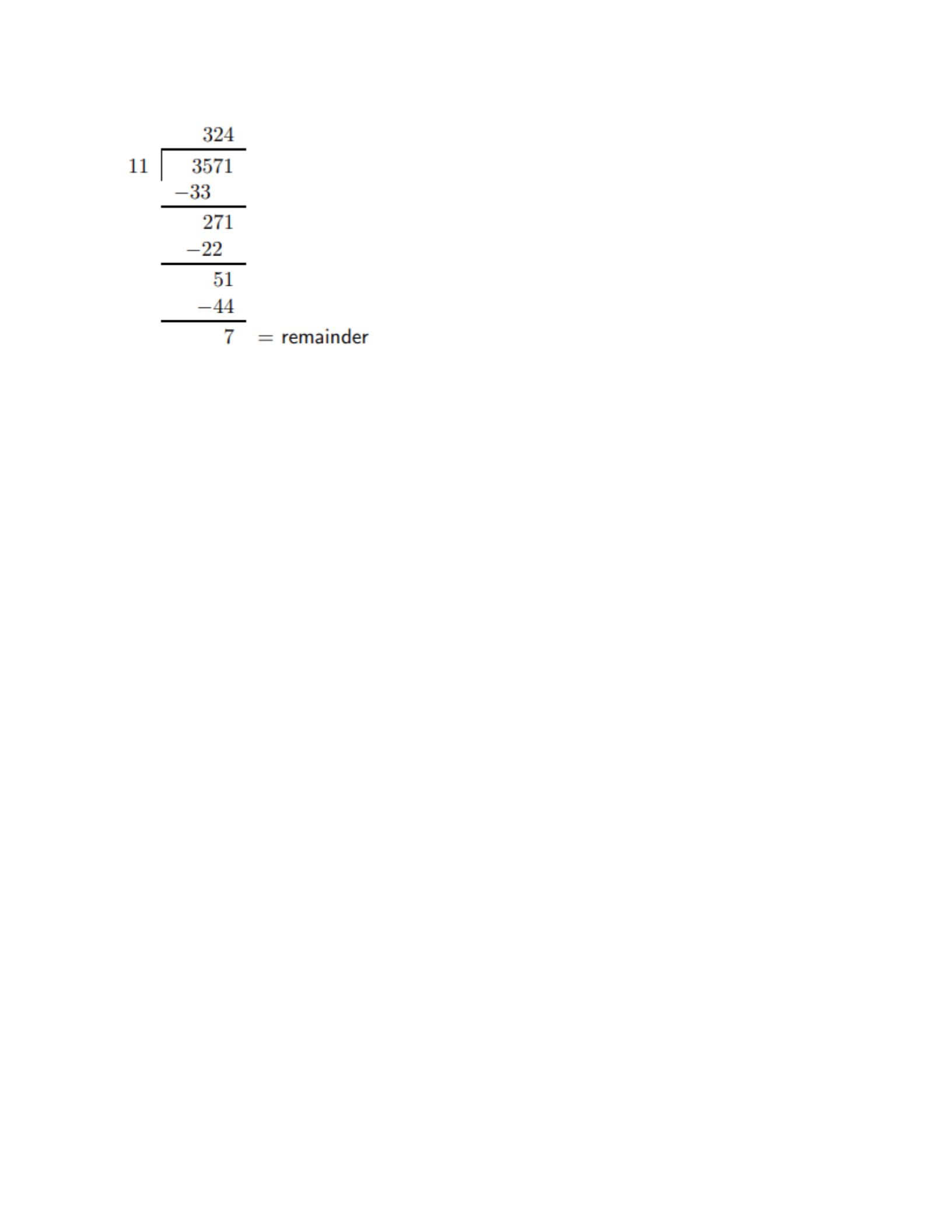
Multiplication involving negative numbers
Multiplication is a little tricky to understand without the notion of distribution (discussed
later). We will begin with noting again what it means to multiply a number by a positive
number: So if we want to compute 4⋅(−7)4⋅(−7) we note
4⋅(−7)=(−7)+(−7)+(−7)+(−7)=−284⋅(−7)=(−7)+(−7)+(−7)+(−7)=−28
Note that since 4⋅7=28,4⋅(−7)=−(4⋅7).4⋅7=28,4⋅(−7)=−(4⋅7). We can multiply positive
numbers in any order: 4⋅7=7⋅44⋅7=7⋅4. The same is true of positive and negative numbers:
(−7)⋅4=4⋅(−7)=−(4⋅7)=−28(−7)⋅4=4⋅(−7)=−(4⋅7)=−28
Example 1.17
5⋅(−12)=−(5⋅12)=−605⋅(−12)=−(5⋅12)=−60 and (−3)⋅(−2)=−(3⋅(−2))=−(−(3⋅2))=6(−3)⋅(−2)
=−(3⋅(−2))=−(−(3⋅2))=6
Example 1.18
So the size of the product of two numbers is the product of their sizes. The sign is positive if
the signs are the same and negative if they are different.
Example 1.19
Two quantities right next to each other, with no symbol between them (except for
parentheses around either or both numbers), has an implicit multiplication. For
example, 3(2)=3×23(2)=3×2.
Example 1.20
Multiply:
aaaaaa. (−5)(−8)=40(−5)(−8)=40
bbbbbb. (−6)⋅7=−42(−6)⋅7=−42
cccccc. 4⋅12=484⋅12=48

dddddd. (−3)(−6)⋅4(−3)=18⋅4(−3)=72(−3)=−216( multiplying from left to
right )(−3)(−6)⋅4(−3)=18⋅4(−3)=72(−3)=−216( multiplying from left to right )
eeeeee. (−3)(−5)⋅4(−2)=(−3)⋅4⋅(−5)(−2)=−12⋅10=−120((−3)(−5)⋅4(−2)=(−3)⋅4⋅(−5)(
−2)=−12⋅10=−120( since we can multiply in any order it is convenient to see
that −5⋅−2=10.−5⋅−2=10. )
Exponents of integers
Recall that a positive exponent represents the number of times a number is multiplied by
itself.
Example 1.21
Evaluate:
aaaaaaa. 52=5⋅5=2552=5⋅5=25
bbbbbbb. (−4)3=(−4)⋅(−4)⋅(−4)=16⋅(−4)=−64(−4)3=(−4)⋅(−4)⋅(−4)=16⋅(−4)=−64
ccccccc. (−7)1=−7(−7)1=−7
ddddddd. −24=−2⋅2⋅2⋅2=−16−24=−2⋅2⋅2⋅2=−16 Note: The exponent here is for 2 not
−2!
eeeeeee. (−3)4=(−3)⋅(−3)⋅(−3)⋅(−3)=9⋅(−3)⋅(−3)=−27⋅(−3)=81(−3)4=(−3)⋅(−3)⋅(−3)⋅(
−3)=9⋅(−3)⋅(−3)=−27⋅(−3)=81
fffffff. (−2)5=(−2)⋅(−2)⋅(−2)⋅(−2)⋅(−2)=−32(−2)5=(−2)⋅(−2)⋅(−2)⋅(−2)⋅(−2)=−32
Exponent rules in details will be further discussed in Chapter 5.
Division involving negative numbers
Division is just a question of knowing multiplication and therefore has the same rule: The
size of the quotient of two numbers is the quotient of the sizes. The sign is positive if the
signs are the same and negative if they are different.
Example 1.22
Divide:
aaaaaaa. (−42)÷7=−6(−42)÷7=−6
bbbbbbb. 81÷(−9)=−981÷(−9)=−9
ccccccc. (−35)÷(−7)=5(−35)÷(−7)=5
ddddddd. 14÷2=714÷2=7
eeeeeee. 0÷5=00÷5=0. Note When dividing 0 by any number, the answer is always 0.
fffffff. −10÷0=−10÷0= undefined.
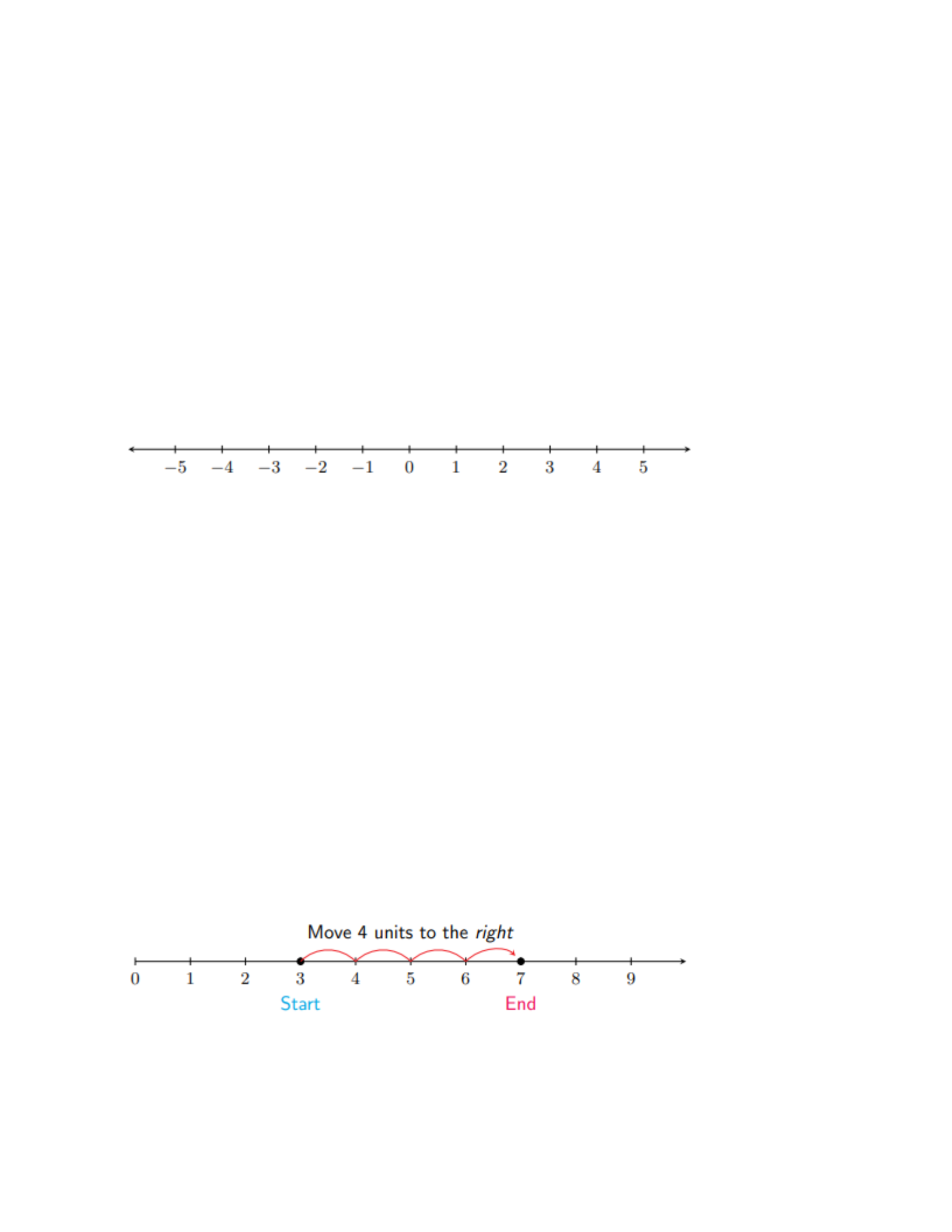
Note 1.23
Any number divided by 0 is undefined!
Multiplying and Dividing Integers
Consider two numbers at a time.
53. If the signs of the two numbers are the same, then the sign of the answer is positive.
54. If the signs of the two numbers are different, then the sign of the answer is negative.
We begin with a brief review of arithmetic with integers
i.e. …,−3,−2,−1,0,1,2,3,……,−3,−2,−1,0,1,2,3,…
Any number has a weight and a sign.
The magnitude (or weight) of a number is the distance it is from 0 on the number line.
Example 1.1
For example, the weight of -5 is 5 and the weight of 7 is 7 .
Two numbers are opposites if, on the number line, they are on opposite sides of zero, but
the same distance away from zero.
So, −5 is the opposite of 5, and 7 is the opposite of −7 and so on.
Addition
We can add two numbers with the help of a number line .
Example 1.2
Adding two positive numbers: For example to add 3+43+4, we start with 3 on the number
line then move 4 units to the right. We land at 7 which is our answer.
So, 3+4=73+4=7. Notice that the answer has the same sign as the signs of 3 and 4 (both
positive) and its weight comes from adding the weights of 3 and 4.
You always move to the right when you add a positive number
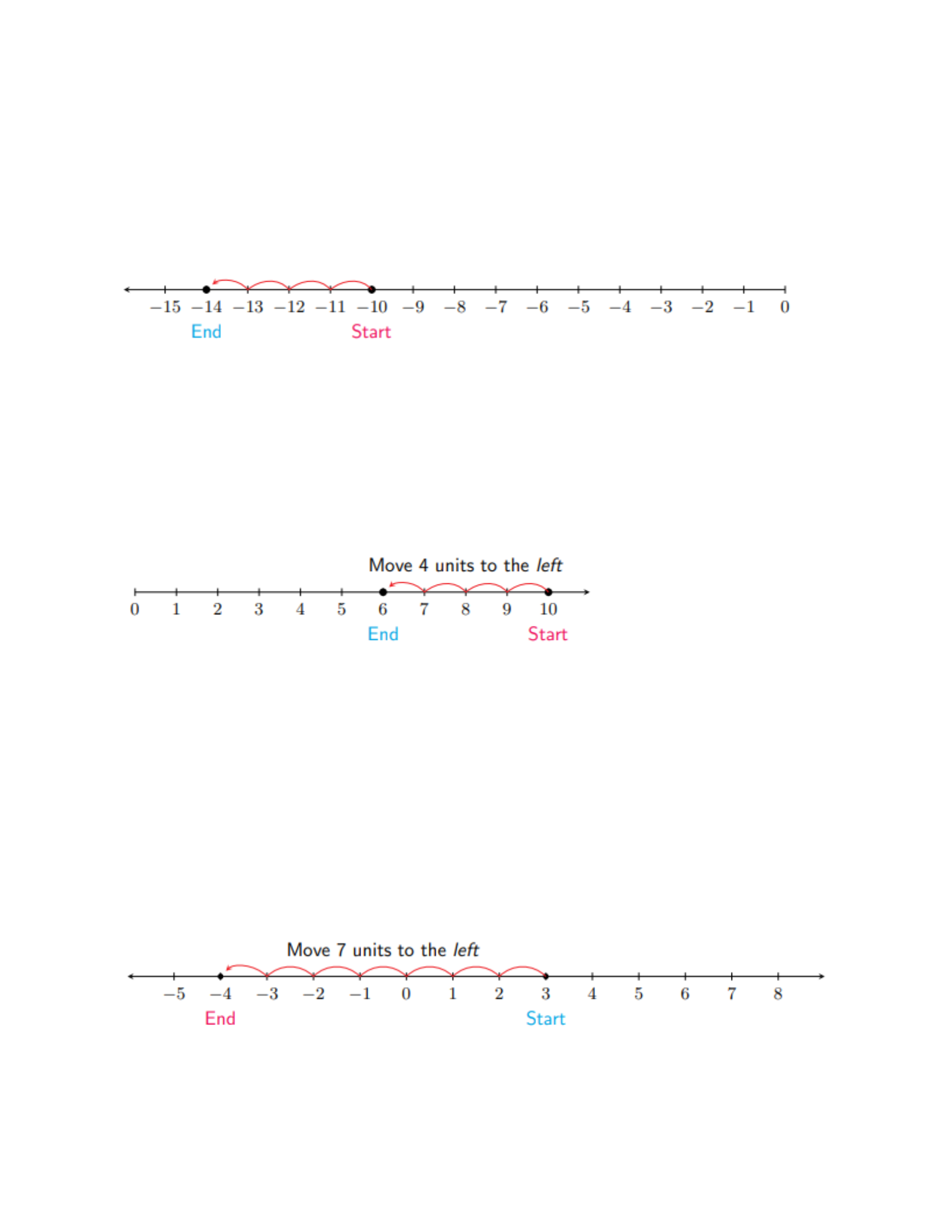
Example 1.3
Adding two negative numbers: For example, −10+(−4)−10+(−4) means you are adding a
debt of $4$4 to an already existing debt of $10.$10. So, we start at -10 on the number line
and move 4 units to the left, to land at −14,−14, which is the answer.
You always move to the left when you add a negative number (a debt)
So, −10+(−4)=−14−10+(−4)=−14. Notice that the answer has the same sign as the signs of -
10 and -4 (both negative) and its weight comes from adding the weights of -10 and -4
To add numbers of opposite signs, that is, a positive and a negative number, we can also
use the number line. For example, to perform 10+(−4),10+(−4), we start at 10 on the
number line and then move 4 units to the left. We land at 6,6, which is the answer. Think
of 10+(−4)10+(−4) as having $10$10 and adding a $4$4 debt. Because we are adding a
debt, we move to the left on the number line!
So, 10+(−4)=6.10+(−4)=6. Notice that the answer has the same sign as the sign of 10
(positive) because it is the number of larger weight, and its weight comes from finding the
difference of the weights of 10 and -4
Notice that because we were adding two numbers of opposite signs, the answer ended up
being the difference in weight (6) along with the sign of the number of larger weight
(positive).
Example 1.4
Adding two numbers of opposite signs: For example, 3+(−7)3+(−7). We start at 3 and move
toward 7 units to the left, and we land at −4,−4, which is our answer.
So, 3+(−7)=−4.3+(−7)=−4. Notice that the answer has the same sign as the signs of -7
(negative) because it is the number of larger weight, and its weight comes from finding the
difference of the weights of 3 and -7.
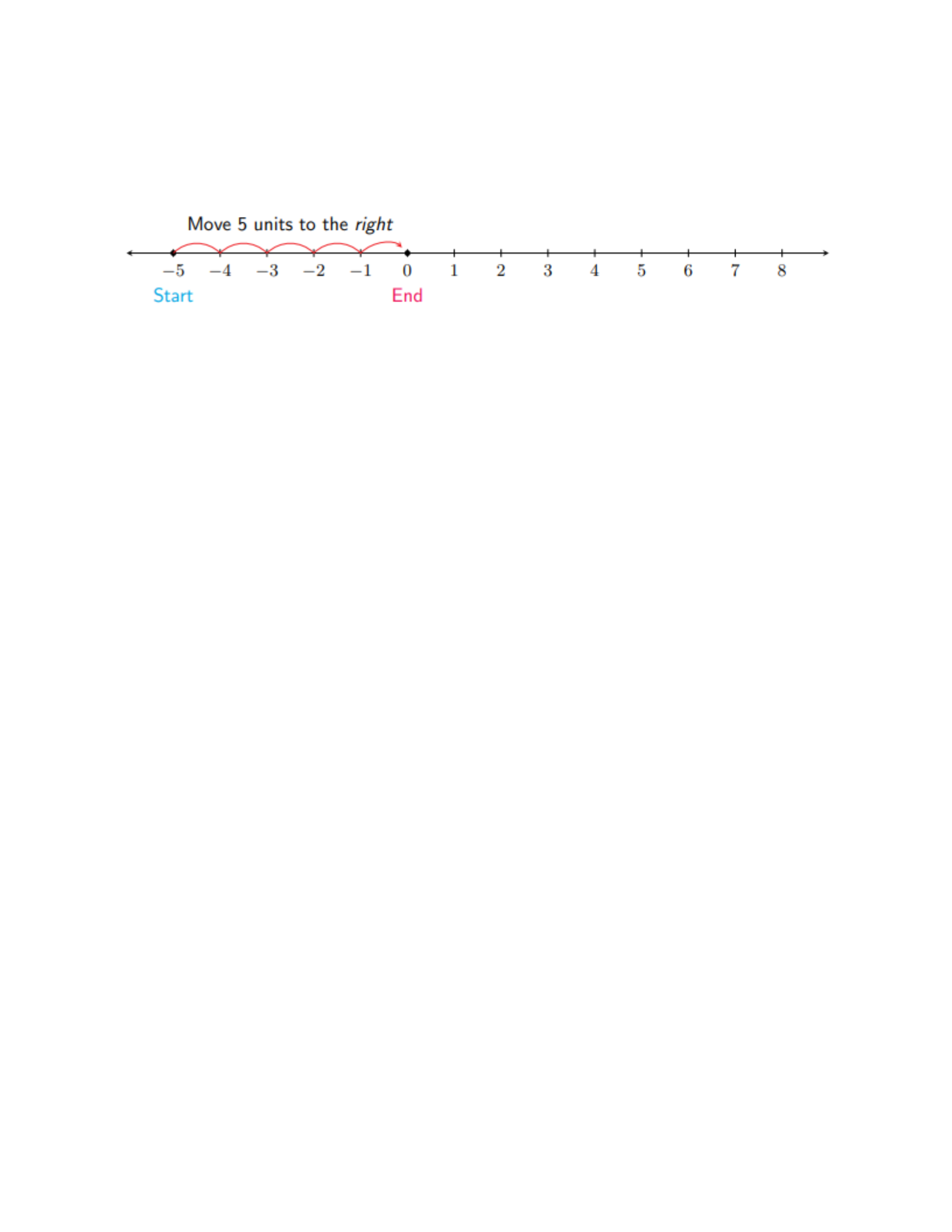
Example 1.5
Adding opposites: We start at -5 on the number line and jump to the right 5 units to land
finally at 00. So −5+5=0−5+5=0.
Note 1.6
Two opposite numbers are called a zero-pair, because adding them always results in 0.
So, −5 and 5 are a zero-pair.
Adding Intergers
55. To add two numbers of the same sign, add their weights and place it after the
sign.
56. To add two numbers of opposite signs, find the difference of their weights and
place it after the sign of the number with the greater weight.
Example 1.7
Add:
ggggggg. −8+19=11−8+19=11
hhhhhhh. −8+4=−4−8+4=−4
iiiiiii. 6+(−9)=−36+(−9)=−3
jjjjjjj. 7+(−2)=57+(−2)=5
kkkkkkk. (−4)+(−7)=−11(−4)+(−7)=−11
lllllll. 8+7=158+7=15
Note 1.8
While we can add in any order: 4+2=2+44+2=2+4, it is sometimes convenient to add up all
of the negative numbers and add up all of the positive numbers, and then add the results.
There are also times when it is best to notice certain simplifications if the numbers are
added in a different order.
For example
−5+4+5+(−8)=−5+(−8)+4+5( by reordering )−5+4+5+(−8)=−5+(−8)+4+5( by reordering )
so,
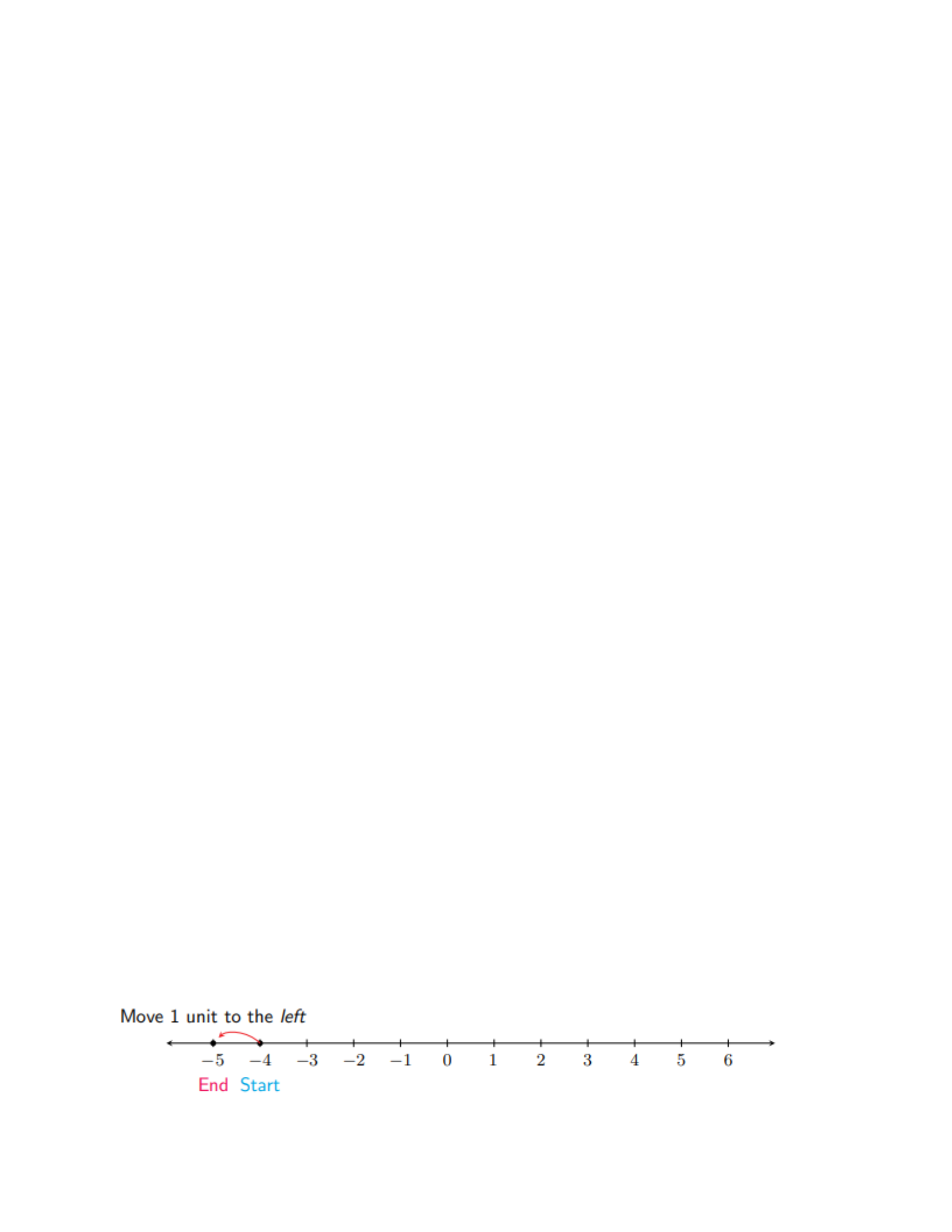
−5+4+5+(−8)=−5+(−8)+4+5=−13+9=−4−5+4+5+(−8)=−5+(−8)+4+5=−13+9=−4
We could have also simplified this by noting that (-5) and 5 are zero-pair, so we are left
with 4+(−8)4+(−8) which is -4.
Example 1.9
We can calculate
(−4)+(−5)+7+(−3)=(−4)+(−5)+(−3)+7=(−12)+7=−5(−4)+(−5)+7+(−3)=(−4)+(−5)+(−3)+7=
(−12)+7=−5
We could have simplified this by noting that (-4) and (-3) make -7, and -7 and 7 are zero-
pair, so the total is -5.
Subtraction (as Addition of the Opposite)
Once we know how to add numbers, we are set to subtract numbers because subtraction is
nothing but addition of the opposite. That is, subtracting 8 − 3 (which reads: subtracting 3
from 8) is the same as 8 + (−3) (which reads: Adding −3 to 8.).
Example 1.10
So, 8−3=8+(−3),8−3=8+(−3), and, we can use the rules of adding two numbers of opposite
signs to find out that the answer is 5.5. We can also use the number line. We start at 8 and
move 3 units to the left (adding -3 is adding a debt, so we move to the left).
So 8−3=5.−4−3−2−10123456788−3=5.−4−3−2−1012345678 End Start Move 3 units to the
left
Example 1.11
To calculate 3−73−7 we first rewrite it as an addition
problem. 3−7=3+(−7).3−7=3+(−7). We can either use the number line, or the rules of
adding two numbers of opposite signs. And, 50,3−7=3+(−7)=−450,3−7=3+(−7)=−4
Example 1.12
To calculate −4−1,−4−1, we first rewrite it as an addition
problem. −4−1=−4+(−1).−4−1=−4+(−1). We can either use the number line, or the rules of
adding two numbers of the same signs. If we want to use the rules, both numbers are
negative, so our answer will be negative, and, adding the weights of -4 and -1
is 5.50,−4−1=−4+(−1)=−55.50,−4−1=−4+(−1)=−5
On the number line, we start at -4 and move 1 unit to the left, to land on -5 which is our
answer.

Changing the subtractions to additions in this way is particularly useful when adding or
subtracting several numbers (because we can add in any order).
Example 1.13
===−3−7+5+7+13−6−(−9)−3+(−7)+5+7+13+(−6)+9−3+(−7)+(−6)+5+7+13+918−3−7+5+7
+13−6−(−9)=−3+(−7)+5+7+13+(−6)+9=−3+(−7)+(−6)+5+7+13+9=18
===−3−7+5+7+13−6−(−9)−3+(−7)+5+7+13+(−6)+95+1318−3−7+5+7+13−6−(−9)=−3+(−7
)+5+7+13+(−6)+9=5+13=18
Remark 1.14
Warning: The symbol "-" is used in two different ways. When it is between two expressions,
it means subtract (e.g., 3−43−4 ). Otherwise, it means 'opposite' or 'negative'
(e.g., −3+4−3+4 ). So in the expression −4−(−3)−4−(−3), the first and last "-" means
opposite and the one in the middle one means subtract. The importance of understanding
this can not be overestimated.
Multiplication and Division of Positive Numbers
Multiplication of integers is adding in the sense that 3×4=4+4+43×4=4+4+4
To multiply larger numbers, it is better to use the usual scheme of multiplication. For
example:
Example 1.15
Let us multiply 152 by 34. We will for convenience sake put the smaller number on the
bottom (though it is not necessary). We have
+×4516515306624808152×34608+45605168
And division is the opposite of multiplication in the sense that to compute 45÷945÷9 is to
find a number so that when we multiply by 9 we get 45. We run through our multiplication
tables (which are hopefully in our head) to discover that 5 does the
trick: 5×9=455×9=45 so that 45÷9=5.45÷9=5. We will discuss division from a different
point of view when we discuss fractions.
To divide larger numbers, we can use long division. For example, let’s divide 3571 by 11.
Example 1.16
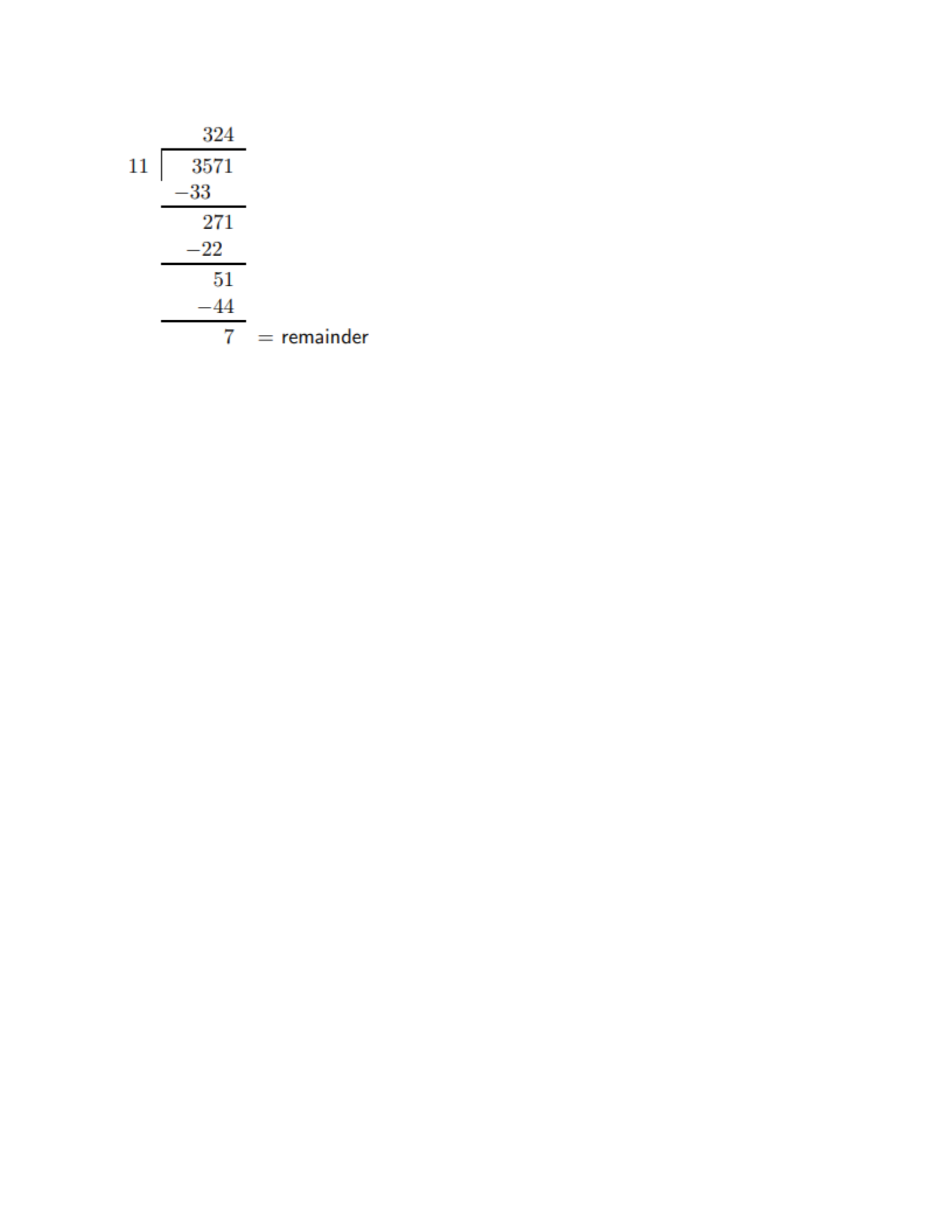
Multiplication involving negative numbers
Multiplication is a little tricky to understand without the notion of distribution (discussed
later). We will begin with noting again what it means to multiply a number by a positive
number: So if we want to compute 4⋅(−7)4⋅(−7) we note
4⋅(−7)=(−7)+(−7)+(−7)+(−7)=−284⋅(−7)=(−7)+(−7)+(−7)+(−7)=−28
Note that since 4⋅7=28,4⋅(−7)=−(4⋅7).4⋅7=28,4⋅(−7)=−(4⋅7). We can multiply positive
numbers in any order: 4⋅7=7⋅44⋅7=7⋅4. The same is true of positive and negative numbers:
(−7)⋅4=4⋅(−7)=−(4⋅7)=−28(−7)⋅4=4⋅(−7)=−(4⋅7)=−28
Example 1.17
5⋅(−12)=−(5⋅12)=−605⋅(−12)=−(5⋅12)=−60 and (−3)⋅(−2)=−(3⋅(−2))=−(−(3⋅2))=6(−3)⋅(−2)
=−(3⋅(−2))=−(−(3⋅2))=6
Example 1.18
So the size of the product of two numbers is the product of their sizes. The sign is positive if
the signs are the same and negative if they are different.
Example 1.19
Two quantities right next to each other, with no symbol between them (except for
parentheses around either or both numbers), has an implicit multiplication. For
example, 3(2)=3×23(2)=3×2.
Example 1.20
Multiply:
ffffff. (−5)(−8)=40(−5)(−8)=40
gggggg. (−6)⋅7=−42(−6)⋅7=−42
hhhhhh. 4⋅12=484⋅12=48

iiiiii. (−3)(−6)⋅4(−3)=18⋅4(−3)=72(−3)=−216( multiplying from left to
right )(−3)(−6)⋅4(−3)=18⋅4(−3)=72(−3)=−216( multiplying from left to right )
jjjjjj. (−3)(−5)⋅4(−2)=(−3)⋅4⋅(−5)(−2)=−12⋅10=−120((−3)(−5)⋅4(−2)=(−3)⋅4⋅(−5)(
−2)=−12⋅10=−120( since we can multiply in any order it is convenient to see
that −5⋅−2=10.−5⋅−2=10. )
Exponents of integers
Recall that a positive exponent represents the number of times a number is multiplied by
itself.
Example 1.21
Evaluate:
ggggggg. 52=5⋅5=2552=5⋅5=25
hhhhhhh. (−4)3=(−4)⋅(−4)⋅(−4)=16⋅(−4)=−64(−4)3=(−4)⋅(−4)⋅(−4)=16⋅(−4)=−64
iiiiiii. (−7)1=−7(−7)1=−7
jjjjjjj. −24=−2⋅2⋅2⋅2=−16−24=−2⋅2⋅2⋅2=−16 Note: The exponent here is for 2 not
−2!
kkkkkkk. (−3)4=(−3)⋅(−3)⋅(−3)⋅(−3)=9⋅(−3)⋅(−3)=−27⋅(−3)=81(−3)4=(−3)⋅(−3)⋅(−3)⋅(
−3)=9⋅(−3)⋅(−3)=−27⋅(−3)=81
lllllll. (−2)5=(−2)⋅(−2)⋅(−2)⋅(−2)⋅(−2)=−32(−2)5=(−2)⋅(−2)⋅(−2)⋅(−2)⋅(−2)=−32
Exponent rules in details will be further discussed in Chapter 5.
Division involving negative numbers
Division is just a question of knowing multiplication and therefore has the same rule: The
size of the quotient of two numbers is the quotient of the sizes. The sign is positive if the
signs are the same and negative if they are different.
Example 1.22
Divide:
ggggggg. (−42)÷7=−6(−42)÷7=−6
hhhhhhh. 81÷(−9)=−981÷(−9)=−9
iiiiiii. (−35)÷(−7)=5(−35)÷(−7)=5
jjjjjjj. 14÷2=714÷2=7
kkkkkkk. 0÷5=00÷5=0. Note When dividing 0 by any number, the answer is always 0.
lllllll. −10÷0=−10÷0= undefined.
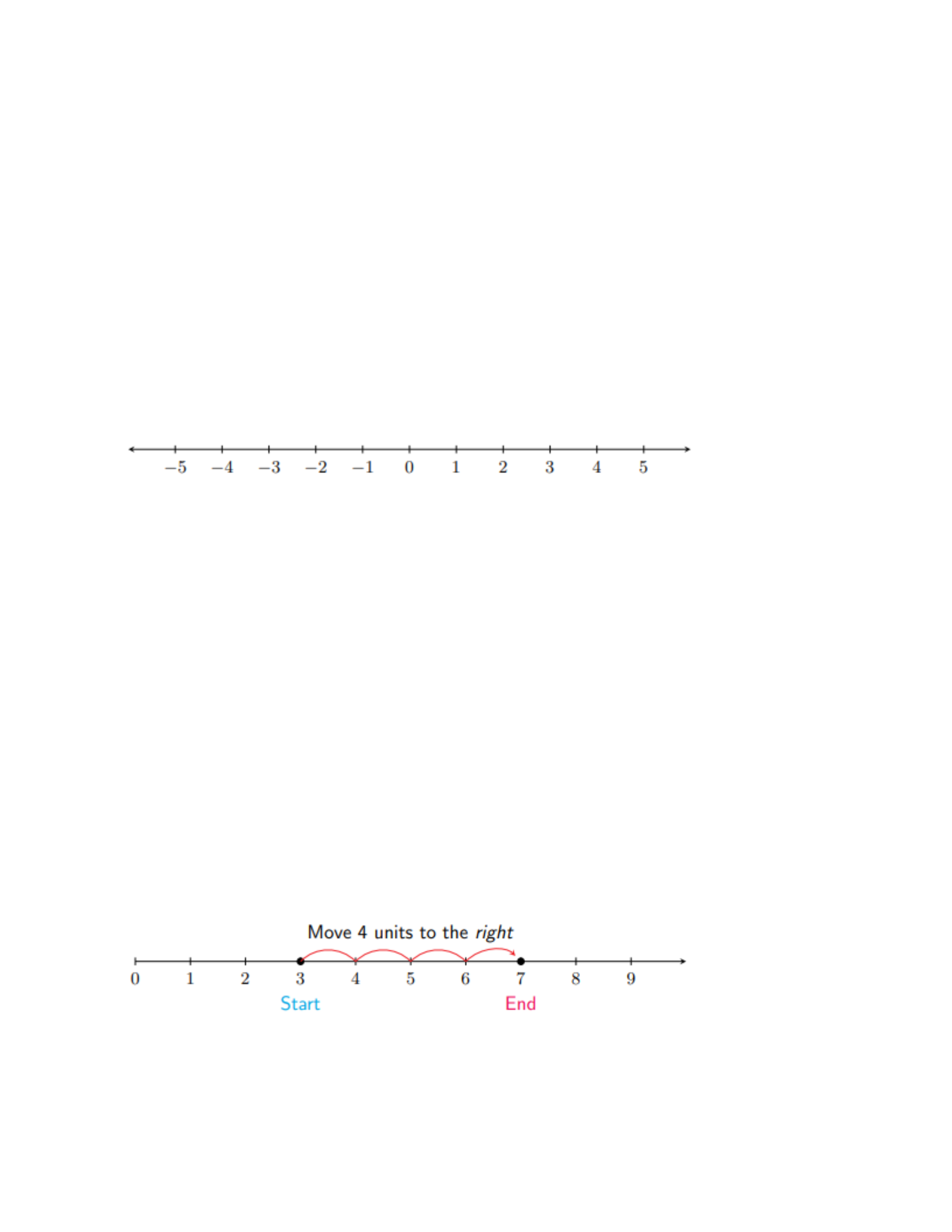
Note 1.23
Any number divided by 0 is undefined!
Multiplying and Dividing Integers
Consider two numbers at a time.
55. If the signs of the two numbers are the same, then the sign of the answer is positive.
56. If the signs of the two numbers are different, then the sign of the answer is negative.
We begin with a brief review of arithmetic with integers
i.e. …,−3,−2,−1,0,1,2,3,……,−3,−2,−1,0,1,2,3,…
Any number has a weight and a sign.
The magnitude (or weight) of a number is the distance it is from 0 on the number line.
Example 1.1
For example, the weight of -5 is 5 and the weight of 7 is 7 .
Two numbers are opposites if, on the number line, they are on opposite sides of zero, but
the same distance away from zero.
So, −5 is the opposite of 5, and 7 is the opposite of −7 and so on.
Addition
We can add two numbers with the help of a number line .
Example 1.2
Adding two positive numbers: For example to add 3+43+4, we start with 3 on the number
line then move 4 units to the right. We land at 7 which is our answer.
So, 3+4=73+4=7. Notice that the answer has the same sign as the signs of 3 and 4 (both
positive) and its weight comes from adding the weights of 3 and 4.
You always move to the right when you add a positive number
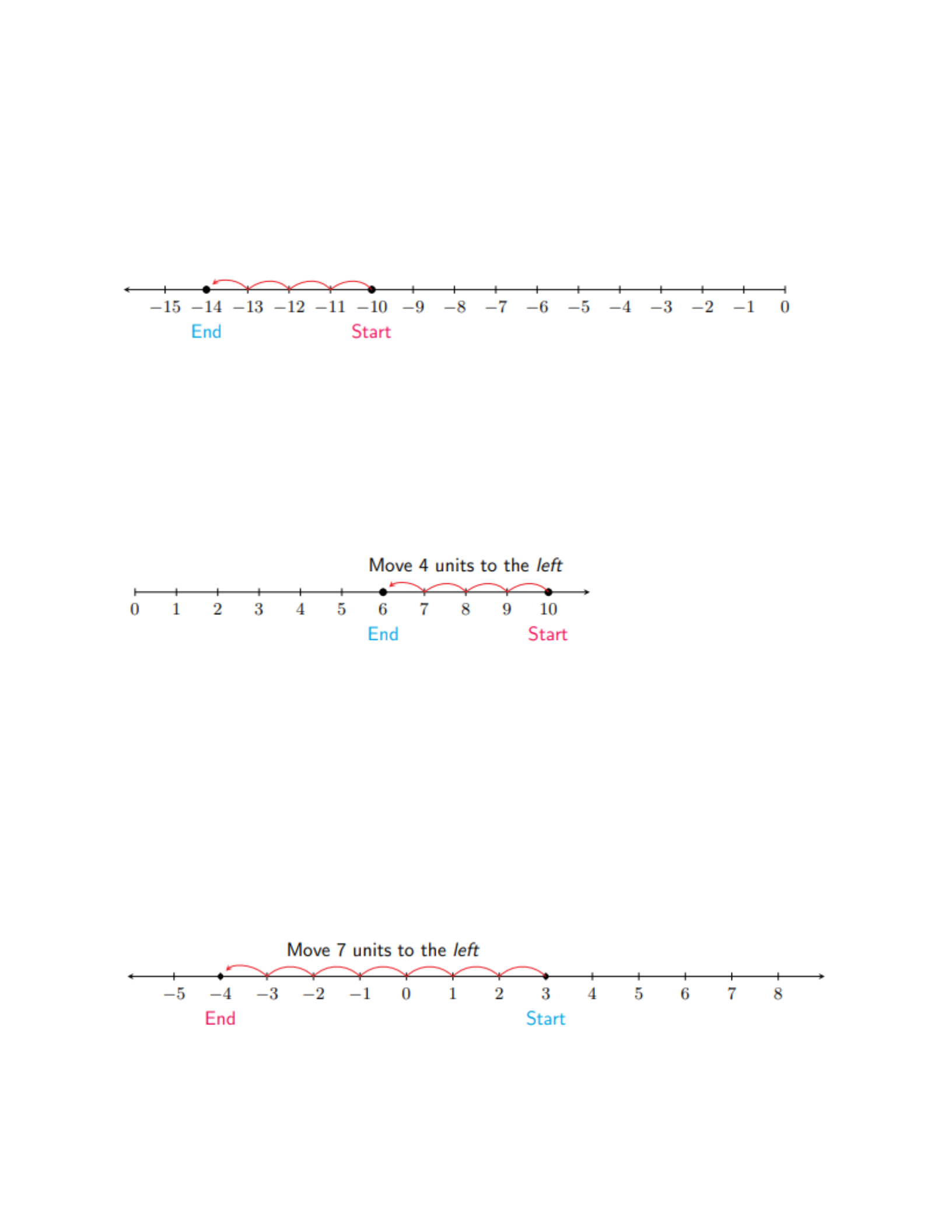
Example 1.3
Adding two negative numbers: For example, −10+(−4)−10+(−4) means you are adding a
debt of $4$4 to an already existing debt of $10.$10. So, we start at -10 on the number line
and move 4 units to the left, to land at −14,−14, which is the answer.
You always move to the left when you add a negative number (a debt)
So, −10+(−4)=−14−10+(−4)=−14. Notice that the answer has the same sign as the signs of -
10 and -4 (both negative) and its weight comes from adding the weights of -10 and -4
To add numbers of opposite signs, that is, a positive and a negative number, we can also
use the number line. For example, to perform 10+(−4),10+(−4), we start at 10 on the
number line and then move 4 units to the left. We land at 6,6, which is the answer. Think
of 10+(−4)10+(−4) as having $10$10 and adding a $4$4 debt. Because we are adding a
debt, we move to the left on the number line!
So, 10+(−4)=6.10+(−4)=6. Notice that the answer has the same sign as the sign of 10
(positive) because it is the number of larger weight, and its weight comes from finding the
difference of the weights of 10 and -4
Notice that because we were adding two numbers of opposite signs, the answer ended up
being the difference in weight (6) along with the sign of the number of larger weight
(positive).
Example 1.4
Adding two numbers of opposite signs: For example, 3+(−7)3+(−7). We start at 3 and move
toward 7 units to the left, and we land at −4,−4, which is our answer.
So, 3+(−7)=−4.3+(−7)=−4. Notice that the answer has the same sign as the signs of -7
(negative) because it is the number of larger weight, and its weight comes from finding the
difference of the weights of 3 and -7.
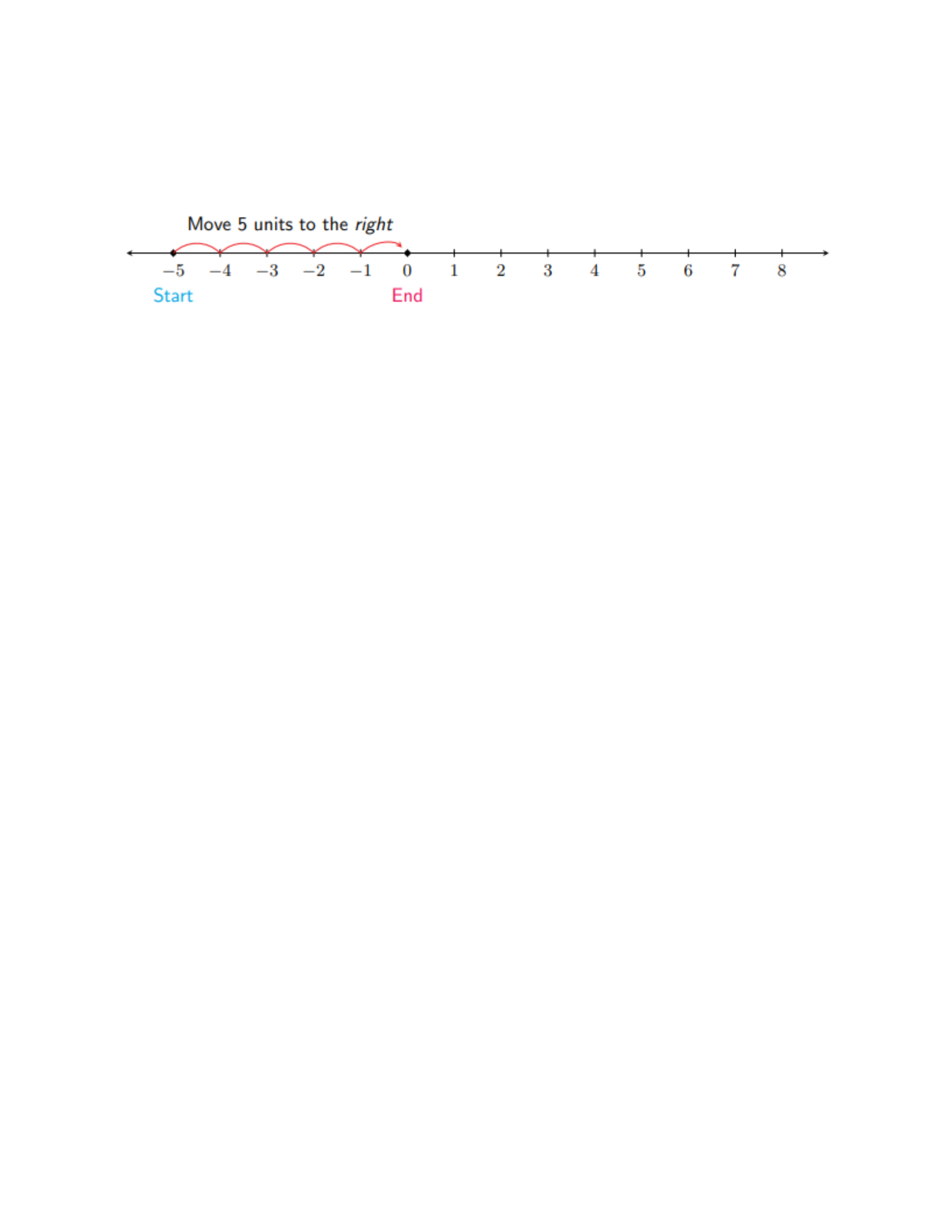
Example 1.5
Adding opposites: We start at -5 on the number line and jump to the right 5 units to land
finally at 00. So −5+5=0−5+5=0.
Note 1.6
Two opposite numbers are called a zero-pair, because adding them always results in 0.
So, −5 and 5 are a zero-pair.
Adding Intergers
57. To add two numbers of the same sign, add their weights and place it after the
sign.
58. To add two numbers of opposite signs, find the difference of their weights and
place it after the sign of the number with the greater weight.
Example 1.7
Add:
mmmmmmm. −8+19=11−8+19=11
nnnnnnn. −8+4=−4−8+4=−4
ooooooo. 6+(−9)=−36+(−9)=−3
ppppppp. 7+(−2)=57+(−2)=5
qqqqqqq. (−4)+(−7)=−11(−4)+(−7)=−11
rrrrrrr. 8+7=158+7=15
Note 1.8
While we can add in any order: 4+2=2+44+2=2+4, it is sometimes convenient to add up all
of the negative numbers and add up all of the positive numbers, and then add the results.
There are also times when it is best to notice certain simplifications if the numbers are
added in a different order.
For example
−5+4+5+(−8)=−5+(−8)+4+5( by reordering )−5+4+5+(−8)=−5+(−8)+4+5( by reordering )
so,
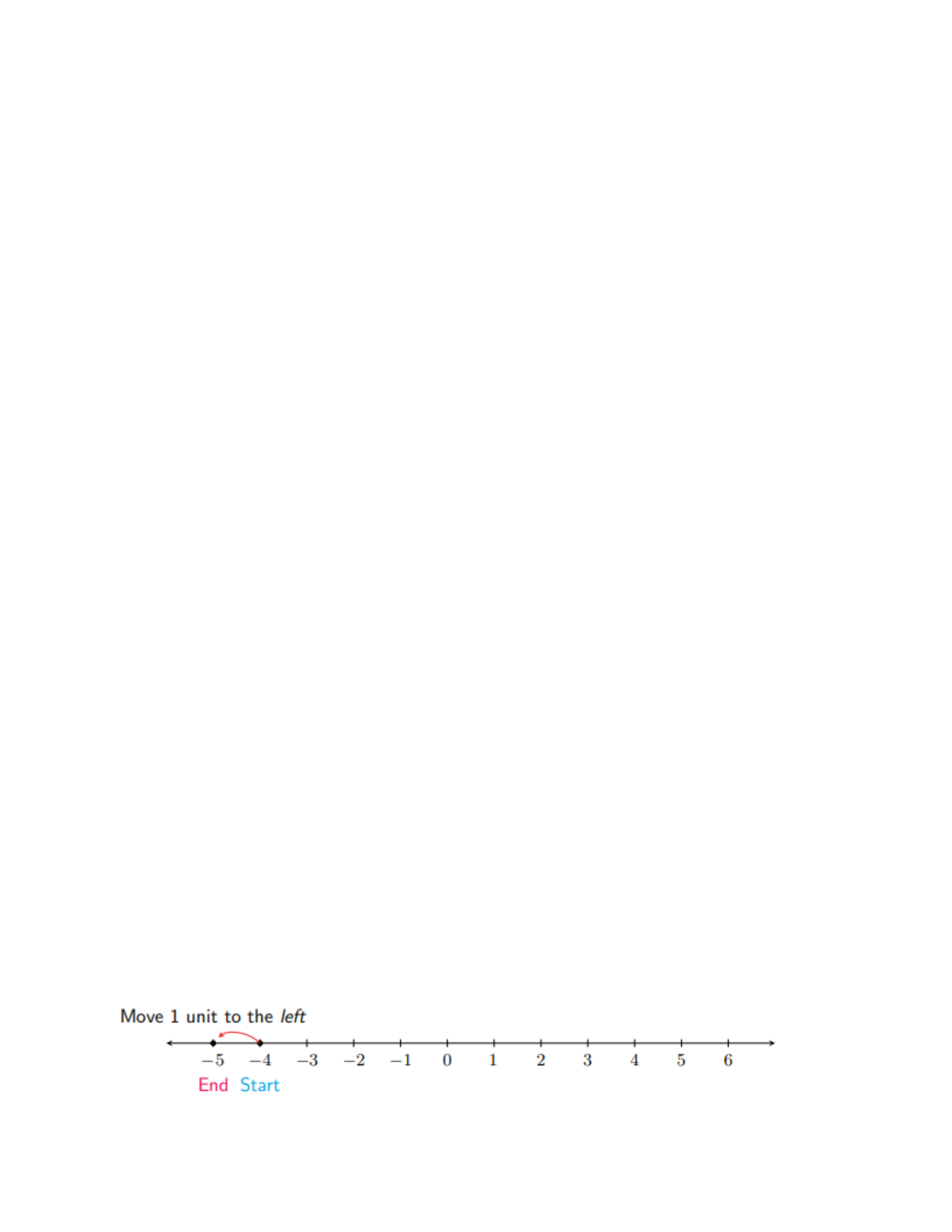
−5+4+5+(−8)=−5+(−8)+4+5=−13+9=−4−5+4+5+(−8)=−5+(−8)+4+5=−13+9=−4
We could have also simplified this by noting that (-5) and 5 are zero-pair, so we are left
with 4+(−8)4+(−8) which is -4.
Example 1.9
We can calculate
(−4)+(−5)+7+(−3)=(−4)+(−5)+(−3)+7=(−12)+7=−5(−4)+(−5)+7+(−3)=(−4)+(−5)+(−3)+7=
(−12)+7=−5
We could have simplified this by noting that (-4) and (-3) make -7, and -7 and 7 are zero-
pair, so the total is -5.
Subtraction (as Addition of the Opposite)
Once we know how to add numbers, we are set to subtract numbers because subtraction is
nothing but addition of the opposite. That is, subtracting 8 − 3 (which reads: subtracting 3
from 8) is the same as 8 + (−3) (which reads: Adding −3 to 8.).
Example 1.10
So, 8−3=8+(−3),8−3=8+(−3), and, we can use the rules of adding two numbers of opposite
signs to find out that the answer is 5.5. We can also use the number line. We start at 8 and
move 3 units to the left (adding -3 is adding a debt, so we move to the left).
So 8−3=5.−4−3−2−10123456788−3=5.−4−3−2−1012345678 End Start Move 3 units to the
left
Example 1.11
To calculate 3−73−7 we first rewrite it as an addition
problem. 3−7=3+(−7).3−7=3+(−7). We can either use the number line, or the rules of
adding two numbers of opposite signs. And, 50,3−7=3+(−7)=−450,3−7=3+(−7)=−4
Example 1.12
To calculate −4−1,−4−1, we first rewrite it as an addition
problem. −4−1=−4+(−1).−4−1=−4+(−1). We can either use the number line, or the rules of
adding two numbers of the same signs. If we want to use the rules, both numbers are
negative, so our answer will be negative, and, adding the weights of -4 and -1
is 5.50,−4−1=−4+(−1)=−55.50,−4−1=−4+(−1)=−5
On the number line, we start at -4 and move 1 unit to the left, to land on -5 which is our
answer.

Changing the subtractions to additions in this way is particularly useful when adding or
subtracting several numbers (because we can add in any order).
Example 1.13
===−3−7+5+7+13−6−(−9)−3+(−7)+5+7+13+(−6)+9−3+(−7)+(−6)+5+7+13+918−3−7+5+7
+13−6−(−9)=−3+(−7)+5+7+13+(−6)+9=−3+(−7)+(−6)+5+7+13+9=18
===−3−7+5+7+13−6−(−9)−3+(−7)+5+7+13+(−6)+95+1318−3−7+5+7+13−6−(−9)=−3+(−7
)+5+7+13+(−6)+9=5+13=18
Remark 1.14
Warning: The symbol "-" is used in two different ways. When it is between two expressions,
it means subtract (e.g., 3−43−4 ). Otherwise, it means 'opposite' or 'negative'
(e.g., −3+4−3+4 ). So in the expression −4−(−3)−4−(−3), the first and last "-" means
opposite and the one in the middle one means subtract. The importance of understanding
this can not be overestimated.
Multiplication and Division of Positive Numbers
Multiplication of integers is adding in the sense that 3×4=4+4+43×4=4+4+4
To multiply larger numbers, it is better to use the usual scheme of multiplication. For
example:
Example 1.15
Let us multiply 152 by 34. We will for convenience sake put the smaller number on the
bottom (though it is not necessary). We have
+×4516515306624808152×34608+45605168
And division is the opposite of multiplication in the sense that to compute 45÷945÷9 is to
find a number so that when we multiply by 9 we get 45. We run through our multiplication
tables (which are hopefully in our head) to discover that 5 does the
trick: 5×9=455×9=45 so that 45÷9=5.45÷9=5. We will discuss division from a different
point of view when we discuss fractions.
To divide larger numbers, we can use long division. For example, let’s divide 3571 by 11.
Example 1.16
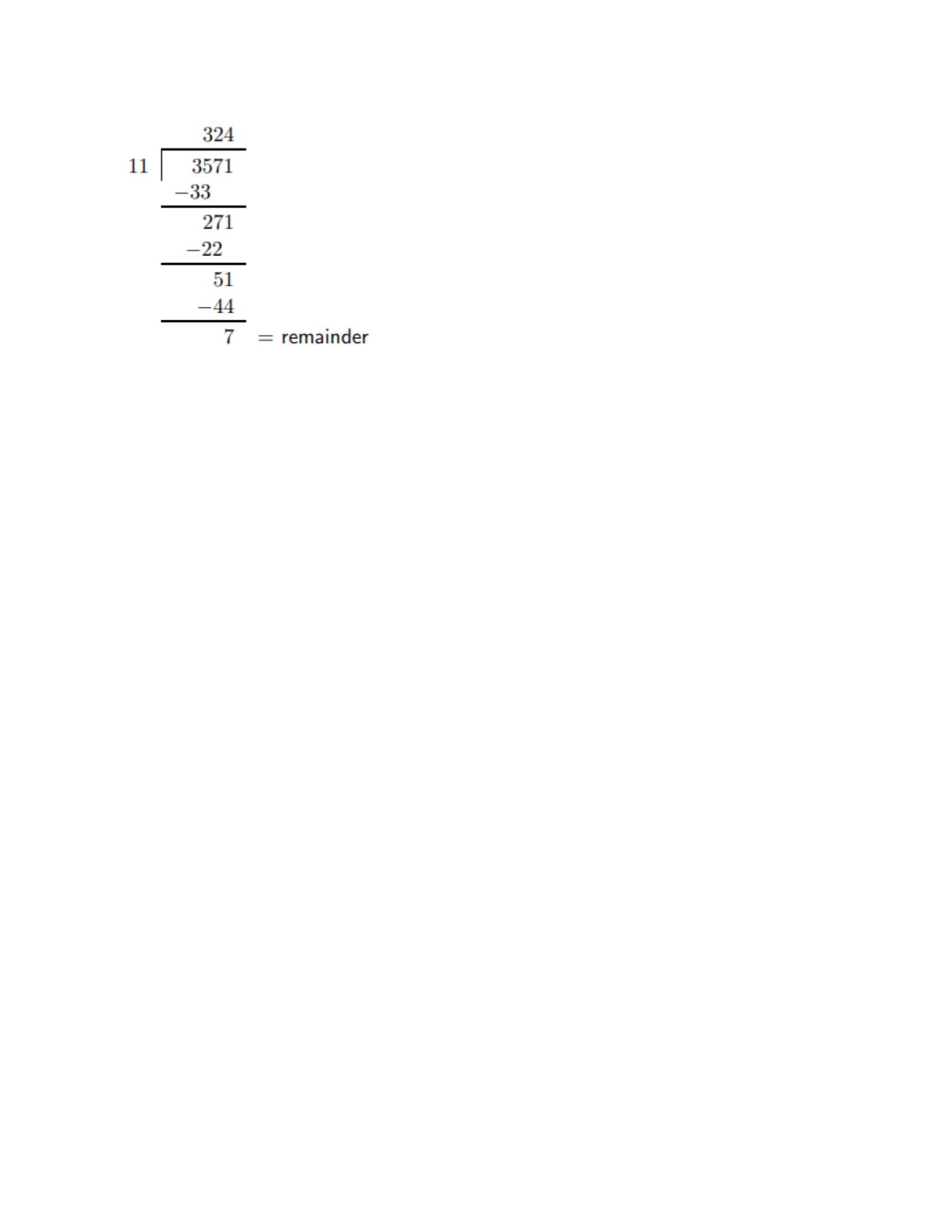
Multiplication involving negative numbers
Multiplication is a little tricky to understand without the notion of distribution (discussed
later). We will begin with noting again what it means to multiply a number by a positive
number: So if we want to compute 4⋅(−7)4⋅(−7) we note
4⋅(−7)=(−7)+(−7)+(−7)+(−7)=−284⋅(−7)=(−7)+(−7)+(−7)+(−7)=−28
Note that since 4⋅7=28,4⋅(−7)=−(4⋅7).4⋅7=28,4⋅(−7)=−(4⋅7). We can multiply positive
numbers in any order: 4⋅7=7⋅44⋅7=7⋅4. The same is true of positive and negative numbers:
(−7)⋅4=4⋅(−7)=−(4⋅7)=−28(−7)⋅4=4⋅(−7)=−(4⋅7)=−28
Example 1.17
5⋅(−12)=−(5⋅12)=−605⋅(−12)=−(5⋅12)=−60 and (−3)⋅(−2)=−(3⋅(−2))=−(−(3⋅2))=6(−3)⋅(−2)
=−(3⋅(−2))=−(−(3⋅2))=6
Example 1.18
So the size of the product of two numbers is the product of their sizes. The sign is positive if
the signs are the same and negative if they are different.
Example 1.19
Two quantities right next to each other, with no symbol between them (except for
parentheses around either or both numbers), has an implicit multiplication. For
example, 3(2)=3×23(2)=3×2.
Example 1.20
Multiply:
kkkkkk. (−5)(−8)=40(−5)(−8)=40
llllll. (−6)⋅7=−42(−6)⋅7=−42
mmmmmm. 4⋅12=484⋅12=48

nnnnnn. (−3)(−6)⋅4(−3)=18⋅4(−3)=72(−3)=−216( multiplying from left to
right )(−3)(−6)⋅4(−3)=18⋅4(−3)=72(−3)=−216( multiplying from left to right )
oooooo. (−3)(−5)⋅4(−2)=(−3)⋅4⋅(−5)(−2)=−12⋅10=−120((−3)(−5)⋅4(−2)=(−3)⋅4⋅(−5)(
−2)=−12⋅10=−120( since we can multiply in any order it is convenient to see
that −5⋅−2=10.−5⋅−2=10. )
Exponents of integers
Recall that a positive exponent represents the number of times a number is multiplied by
itself.
Example 1.21
Evaluate:
mmmmmmm. 52=5⋅5=2552=5⋅5=25
nnnnnnn. (−4)3=(−4)⋅(−4)⋅(−4)=16⋅(−4)=−64(−4)3=(−4)⋅(−4)⋅(−4)=16⋅(−4)=−64
ooooooo. (−7)1=−7(−7)1=−7
ppppppp. −24=−2⋅2⋅2⋅2=−16−24=−2⋅2⋅2⋅2=−16 Note: The exponent here is for 2 not
−2!
qqqqqqq. (−3)4=(−3)⋅(−3)⋅(−3)⋅(−3)=9⋅(−3)⋅(−3)=−27⋅(−3)=81(−3)4=(−3)⋅(−3)⋅(−3)⋅(
−3)=9⋅(−3)⋅(−3)=−27⋅(−3)=81
rrrrrrr. (−2)5=(−2)⋅(−2)⋅(−2)⋅(−2)⋅(−2)=−32(−2)5=(−2)⋅(−2)⋅(−2)⋅(−2)⋅(−2)=−32
Exponent rules in details will be further discussed in Chapter 5.
Division involving negative numbers
Division is just a question of knowing multiplication and therefore has the same rule: The
size of the quotient of two numbers is the quotient of the sizes. The sign is positive if the
signs are the same and negative if they are different.
Example 1.22
Divide:
mmmmmmm. (−42)÷7=−6(−42)÷7=−6
nnnnnnn. 81÷(−9)=−981÷(−9)=−9
ooooooo. (−35)÷(−7)=5(−35)÷(−7)=5
ppppppp. 14÷2=714÷2=7
qqqqqqq. 0÷5=00÷5=0. Note When dividing 0 by any number, the answer is always 0.
rrrrrrr. −10÷0=−10÷0= undefined.
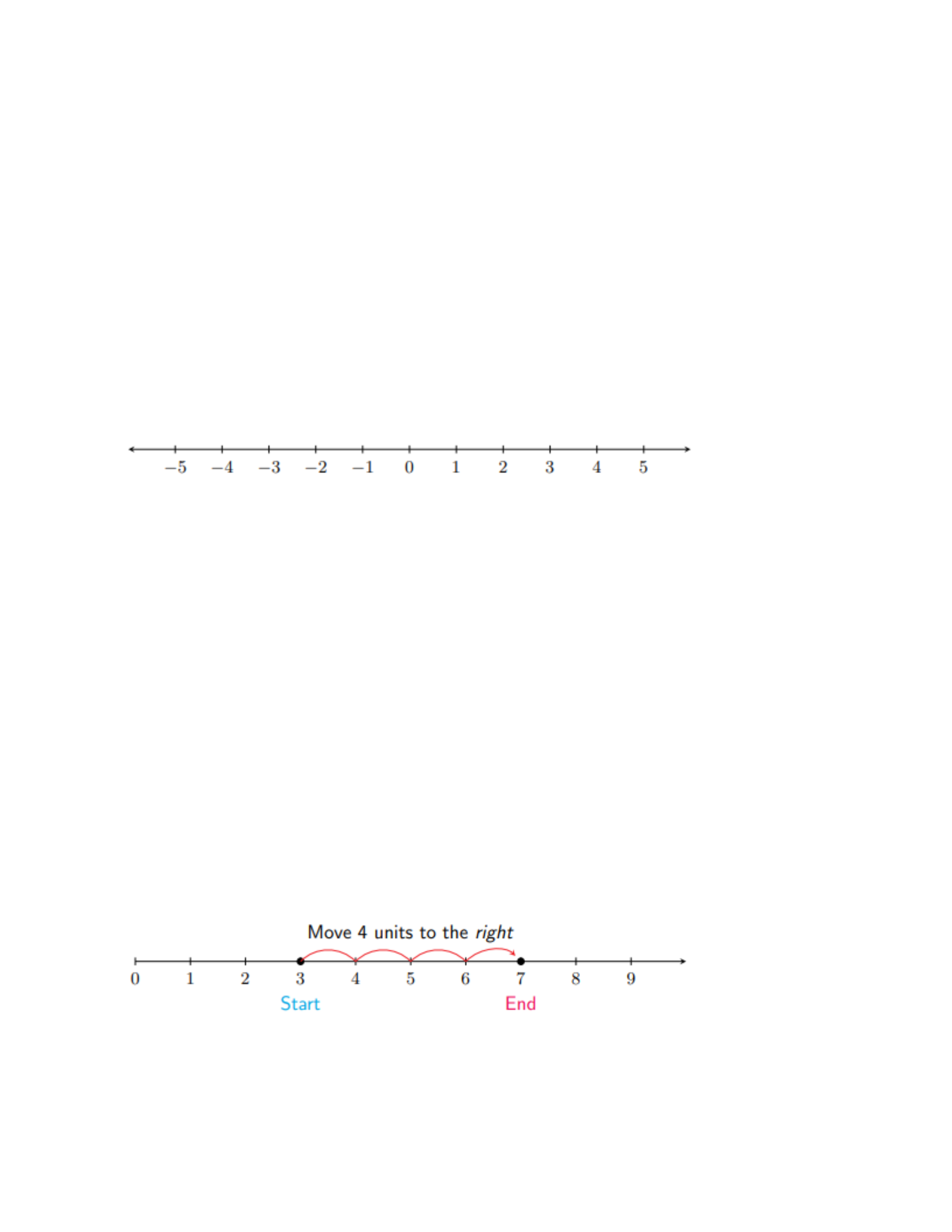
Note 1.23
Any number divided by 0 is undefined!
Multiplying and Dividing Integers
Consider two numbers at a time.
57. If the signs of the two numbers are the same, then the sign of the answer is positive.
58. If the signs of the two numbers are different, then the sign of the answer is negative.
We begin with a brief review of arithmetic with integers
i.e. …,−3,−2,−1,0,1,2,3,……,−3,−2,−1,0,1,2,3,…
Any number has a weight and a sign.
The magnitude (or weight) of a number is the distance it is from 0 on the number line.
Example 1.1
For example, the weight of -5 is 5 and the weight of 7 is 7 .
Two numbers are opposites if, on the number line, they are on opposite sides of zero, but
the same distance away from zero.
So, −5 is the opposite of 5, and 7 is the opposite of −7 and so on.
Addition
We can add two numbers with the help of a number line .
Example 1.2
Adding two positive numbers: For example to add 3+43+4, we start with 3 on the number
line then move 4 units to the right. We land at 7 which is our answer.
So, 3+4=73+4=7. Notice that the answer has the same sign as the signs of 3 and 4 (both
positive) and its weight comes from adding the weights of 3 and 4.
You always move to the right when you add a positive number
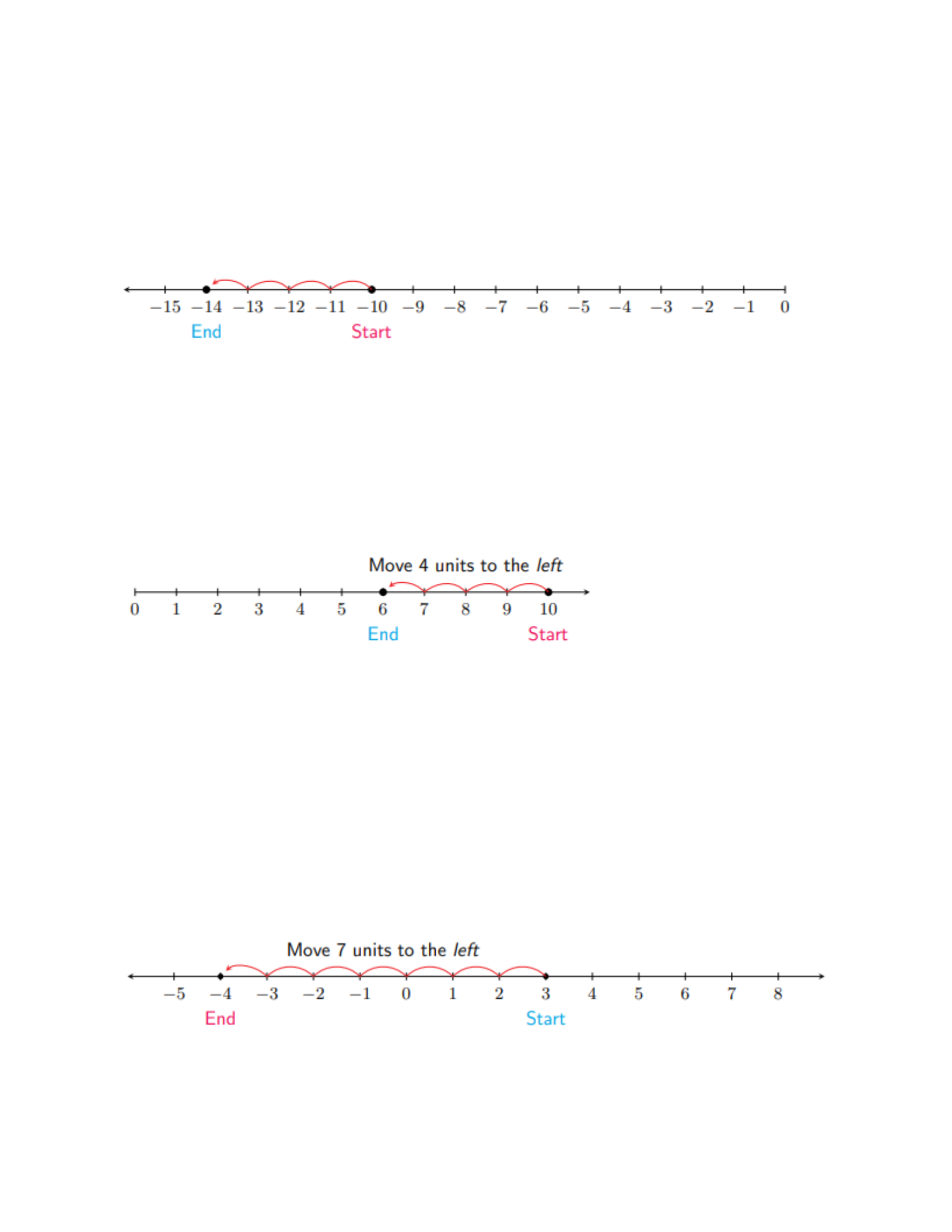
Example 1.3
Adding two negative numbers: For example, −10+(−4)−10+(−4) means you are adding a
debt of $4$4 to an already existing debt of $10.$10. So, we start at -10 on the number line
and move 4 units to the left, to land at −14,−14, which is the answer.
You always move to the left when you add a negative number (a debt)
So, −10+(−4)=−14−10+(−4)=−14. Notice that the answer has the same sign as the signs of -
10 and -4 (both negative) and its weight comes from adding the weights of -10 and -4
To add numbers of opposite signs, that is, a positive and a negative number, we can also
use the number line. For example, to perform 10+(−4),10+(−4), we start at 10 on the
number line and then move 4 units to the left. We land at 6,6, which is the answer. Think
of 10+(−4)10+(−4) as having $10$10 and adding a $4$4 debt. Because we are adding a
debt, we move to the left on the number line!
So, 10+(−4)=6.10+(−4)=6. Notice that the answer has the same sign as the sign of 10
(positive) because it is the number of larger weight, and its weight comes from finding the
difference of the weights of 10 and -4
Notice that because we were adding two numbers of opposite signs, the answer ended up
being the difference in weight (6) along with the sign of the number of larger weight
(positive).
Example 1.4
Adding two numbers of opposite signs: For example, 3+(−7)3+(−7). We start at 3 and move
toward 7 units to the left, and we land at −4,−4, which is our answer.
So, 3+(−7)=−4.3+(−7)=−4. Notice that the answer has the same sign as the signs of -7
(negative) because it is the number of larger weight, and its weight comes from finding the
difference of the weights of 3 and -7.
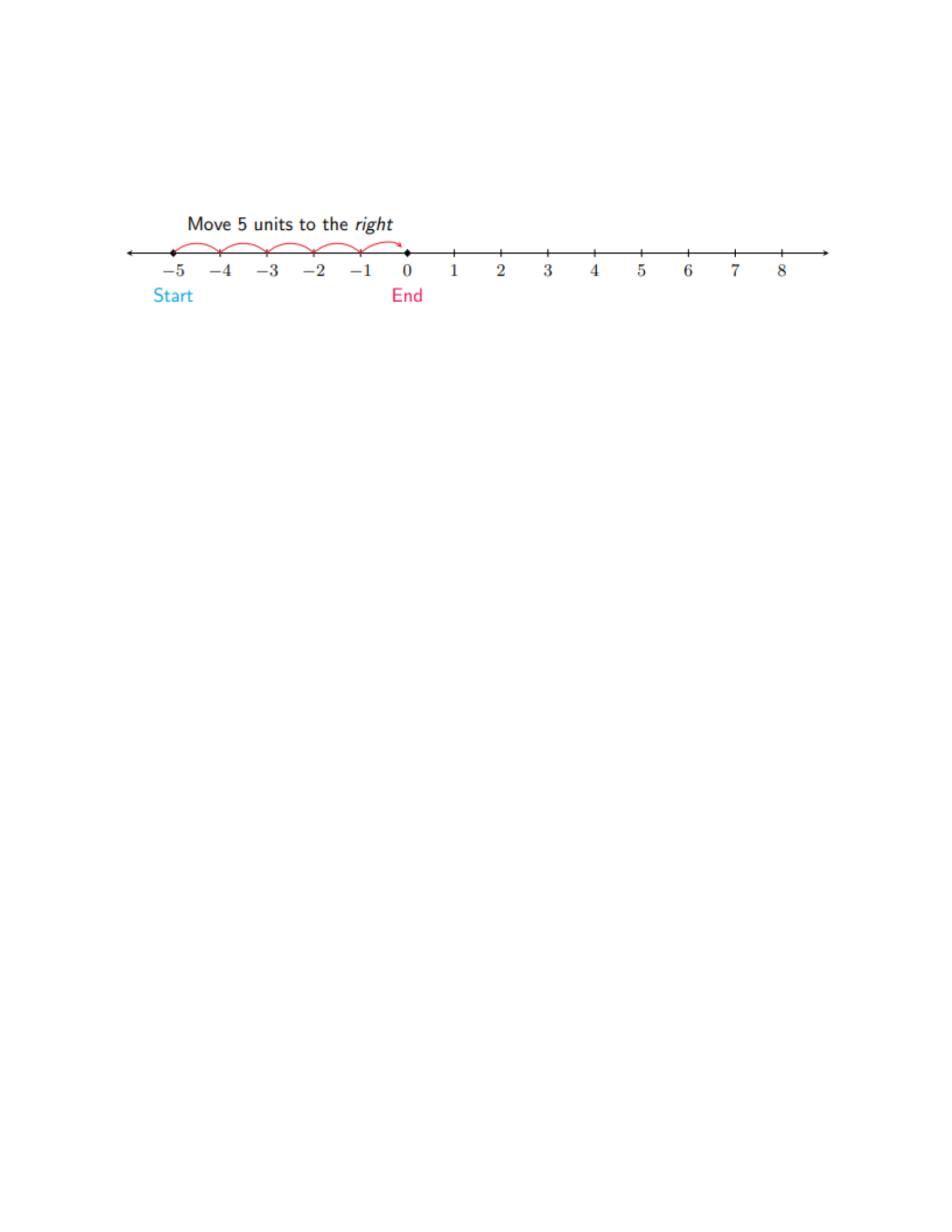
Example 1.5
Adding opposites: We start at -5 on the number line and jump to the right 5 units to land
finally at 00. So −5+5=0−5+5=0.
Note 1.6
Two opposite numbers are called a zero-pair, because adding them always results in 0.
So, −5 and 5 are a zero-pair.
Adding Intergers
59. To add two numbers of the same sign, add their weights and place it after the
sign.
60. To add two numbers of opposite signs, find the difference of their weights and
place it after the sign of the number with the greater weight.
Example 1.7
Add:
sssssss. −8+19=11−8+19=11
ttttttt. −8+4=−4−8+4=−4
uuuuuuu. 6+(−9)=−36+(−9)=−3
vvvvvvv. 7+(−2)=57+(−2)=5
wwwwwww. (−4)+(−7)=−11(−4)+(−7)=−11
xxxxxxx. 8+7=158+7=15
Note 1.8
While we can add in any order: 4+2=2+44+2=2+4, it is sometimes convenient to add up all
of the negative numbers and add up all of the positive numbers, and then add the results.
There are also times when it is best to notice certain simplifications if the numbers are
added in a different order.
For example
−5+4+5+(−8)=−5+(−8)+4+5( by reordering )−5+4+5+(−8)=−5+(−8)+4+5( by reordering )
so,
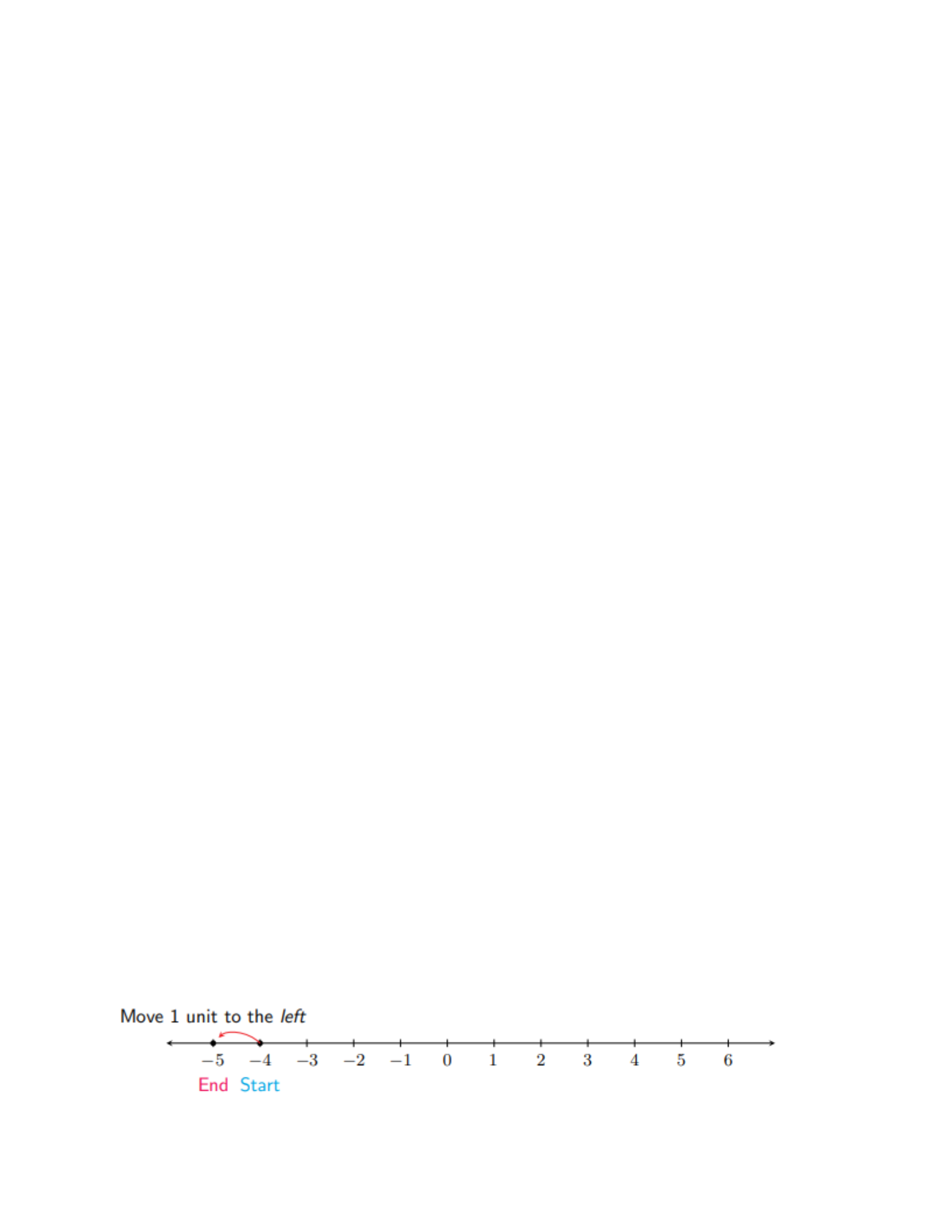
−5+4+5+(−8)=−5+(−8)+4+5=−13+9=−4−5+4+5+(−8)=−5+(−8)+4+5=−13+9=−4
We could have also simplified this by noting that (-5) and 5 are zero-pair, so we are left
with 4+(−8)4+(−8) which is -4.
Example 1.9
We can calculate
(−4)+(−5)+7+(−3)=(−4)+(−5)+(−3)+7=(−12)+7=−5(−4)+(−5)+7+(−3)=(−4)+(−5)+(−3)+7=
(−12)+7=−5
We could have simplified this by noting that (-4) and (-3) make -7, and -7 and 7 are zero-
pair, so the total is -5.
Subtraction (as Addition of the Opposite)
Once we know how to add numbers, we are set to subtract numbers because subtraction is
nothing but addition of the opposite. That is, subtracting 8 − 3 (which reads: subtracting 3
from 8) is the same as 8 + (−3) (which reads: Adding −3 to 8.).
Example 1.10
So, 8−3=8+(−3),8−3=8+(−3), and, we can use the rules of adding two numbers of opposite
signs to find out that the answer is 5.5. We can also use the number line. We start at 8 and
move 3 units to the left (adding -3 is adding a debt, so we move to the left).
So 8−3=5.−4−3−2−10123456788−3=5.−4−3−2−1012345678 End Start Move 3 units to the
left
Example 1.11
To calculate 3−73−7 we first rewrite it as an addition
problem. 3−7=3+(−7).3−7=3+(−7). We can either use the number line, or the rules of
adding two numbers of opposite signs. And, 50,3−7=3+(−7)=−450,3−7=3+(−7)=−4
Example 1.12
To calculate −4−1,−4−1, we first rewrite it as an addition
problem. −4−1=−4+(−1).−4−1=−4+(−1). We can either use the number line, or the rules of
adding two numbers of the same signs. If we want to use the rules, both numbers are
negative, so our answer will be negative, and, adding the weights of -4 and -1
is 5.50,−4−1=−4+(−1)=−55.50,−4−1=−4+(−1)=−5
On the number line, we start at -4 and move 1 unit to the left, to land on -5 which is our
answer.

Changing the subtractions to additions in this way is particularly useful when adding or
subtracting several numbers (because we can add in any order).
Example 1.13
===−3−7+5+7+13−6−(−9)−3+(−7)+5+7+13+(−6)+9−3+(−7)+(−6)+5+7+13+918−3−7+5+7
+13−6−(−9)=−3+(−7)+5+7+13+(−6)+9=−3+(−7)+(−6)+5+7+13+9=18
===−3−7+5+7+13−6−(−9)−3+(−7)+5+7+13+(−6)+95+1318−3−7+5+7+13−6−(−9)=−3+(−7
)+5+7+13+(−6)+9=5+13=18
Remark 1.14
Warning: The symbol "-" is used in two different ways. When it is between two expressions,
it means subtract (e.g., 3−43−4 ). Otherwise, it means 'opposite' or 'negative'
(e.g., −3+4−3+4 ). So in the expression −4−(−3)−4−(−3), the first and last "-" means
opposite and the one in the middle one means subtract. The importance of understanding
this can not be overestimated.
Multiplication and Division of Positive Numbers
Multiplication of integers is adding in the sense that 3×4=4+4+43×4=4+4+4
To multiply larger numbers, it is better to use the usual scheme of multiplication. For
example:
Example 1.15
Let us multiply 152 by 34. We will for convenience sake put the smaller number on the
bottom (though it is not necessary). We have
+×4516515306624808152×34608+45605168
And division is the opposite of multiplication in the sense that to compute 45÷945÷9 is to
find a number so that when we multiply by 9 we get 45. We run through our multiplication
tables (which are hopefully in our head) to discover that 5 does the
trick: 5×9=455×9=45 so that 45÷9=5.45÷9=5. We will discuss division from a different
point of view when we discuss fractions.
To divide larger numbers, we can use long division. For example, let’s divide 3571 by 11.
Example 1.16
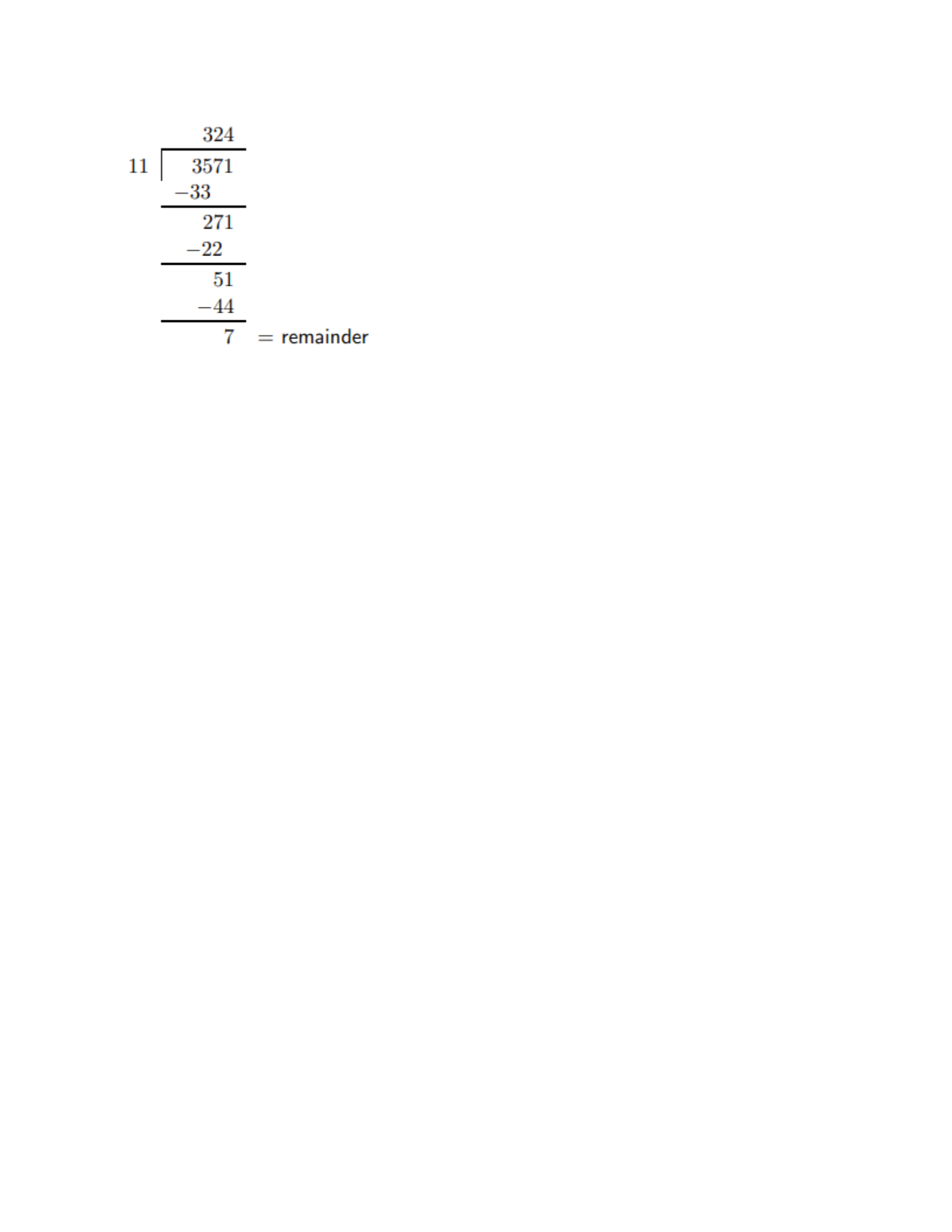
Multiplication involving negative numbers
Multiplication is a little tricky to understand without the notion of distribution (discussed
later). We will begin with noting again what it means to multiply a number by a positive
number: So if we want to compute 4⋅(−7)4⋅(−7) we note
4⋅(−7)=(−7)+(−7)+(−7)+(−7)=−284⋅(−7)=(−7)+(−7)+(−7)+(−7)=−28
Note that since 4⋅7=28,4⋅(−7)=−(4⋅7).4⋅7=28,4⋅(−7)=−(4⋅7). We can multiply positive
numbers in any order: 4⋅7=7⋅44⋅7=7⋅4. The same is true of positive and negative numbers:
(−7)⋅4=4⋅(−7)=−(4⋅7)=−28(−7)⋅4=4⋅(−7)=−(4⋅7)=−28
Example 1.17
5⋅(−12)=−(5⋅12)=−605⋅(−12)=−(5⋅12)=−60 and (−3)⋅(−2)=−(3⋅(−2))=−(−(3⋅2))=6(−3)⋅(−2)
=−(3⋅(−2))=−(−(3⋅2))=6
Example 1.18
So the size of the product of two numbers is the product of their sizes. The sign is positive if
the signs are the same and negative if they are different.
Example 1.19
Two quantities right next to each other, with no symbol between them (except for
parentheses around either or both numbers), has an implicit multiplication. For
example, 3(2)=3×23(2)=3×2.
Example 1.20
Multiply:
pppppp. (−5)(−8)=40(−5)(−8)=40
qqqqqq. (−6)⋅7=−42(−6)⋅7=−42
rrrrrr. 4⋅12=484⋅12=48

ssssss. (−3)(−6)⋅4(−3)=18⋅4(−3)=72(−3)=−216( multiplying from left to
right )(−3)(−6)⋅4(−3)=18⋅4(−3)=72(−3)=−216( multiplying from left to right )
tttttt. (−3)(−5)⋅4(−2)=(−3)⋅4⋅(−5)(−2)=−12⋅10=−120((−3)(−5)⋅4(−2)=(−3)⋅4⋅(−5)(
−2)=−12⋅10=−120( since we can multiply in any order it is convenient to see
that −5⋅−2=10.−5⋅−2=10. )
Exponents of integers
Recall that a positive exponent represents the number of times a number is multiplied by
itself.
Example 1.21
Evaluate:
sssssss. 52=5⋅5=2552=5⋅5=25
ttttttt. (−4)3=(−4)⋅(−4)⋅(−4)=16⋅(−4)=−64(−4)3=(−4)⋅(−4)⋅(−4)=16⋅(−4)=−64
uuuuuuu. (−7)1=−7(−7)1=−7
vvvvvvv. −24=−2⋅2⋅2⋅2=−16−24=−2⋅2⋅2⋅2=−16 Note: The exponent here is for 2 not
−2!
wwwwwww. (−3)4=(−3)⋅(−3)⋅(−3)⋅(−3)=9⋅(−3)⋅(−3)=−27⋅(−3)=81(−3)4=(−3)⋅(−3)
⋅(−3)⋅(−3)=9⋅(−3)⋅(−3)=−27⋅(−3)=81
xxxxxxx. (−2)5=(−2)⋅(−2)⋅(−2)⋅(−2)⋅(−2)=−32(−2)5=(−2)⋅(−2)⋅(−2)⋅(−2)⋅(−2)=−32
Exponent rules in details will be further discussed in Chapter 5.
Division involving negative numbers
Division is just a question of knowing multiplication and therefore has the same rule: The
size of the quotient of two numbers is the quotient of the sizes. The sign is positive if the
signs are the same and negative if they are different.
Example 1.22
Divide:
sssssss. (−42)÷7=−6(−42)÷7=−6
ttttttt. 81÷(−9)=−981÷(−9)=−9
uuuuuuu. (−35)÷(−7)=5(−35)÷(−7)=5
vvvvvvv. 14÷2=714÷2=7
wwwwwww. 0÷5=00÷5=0. Note When dividing 0 by any number, the answer is
always 0.
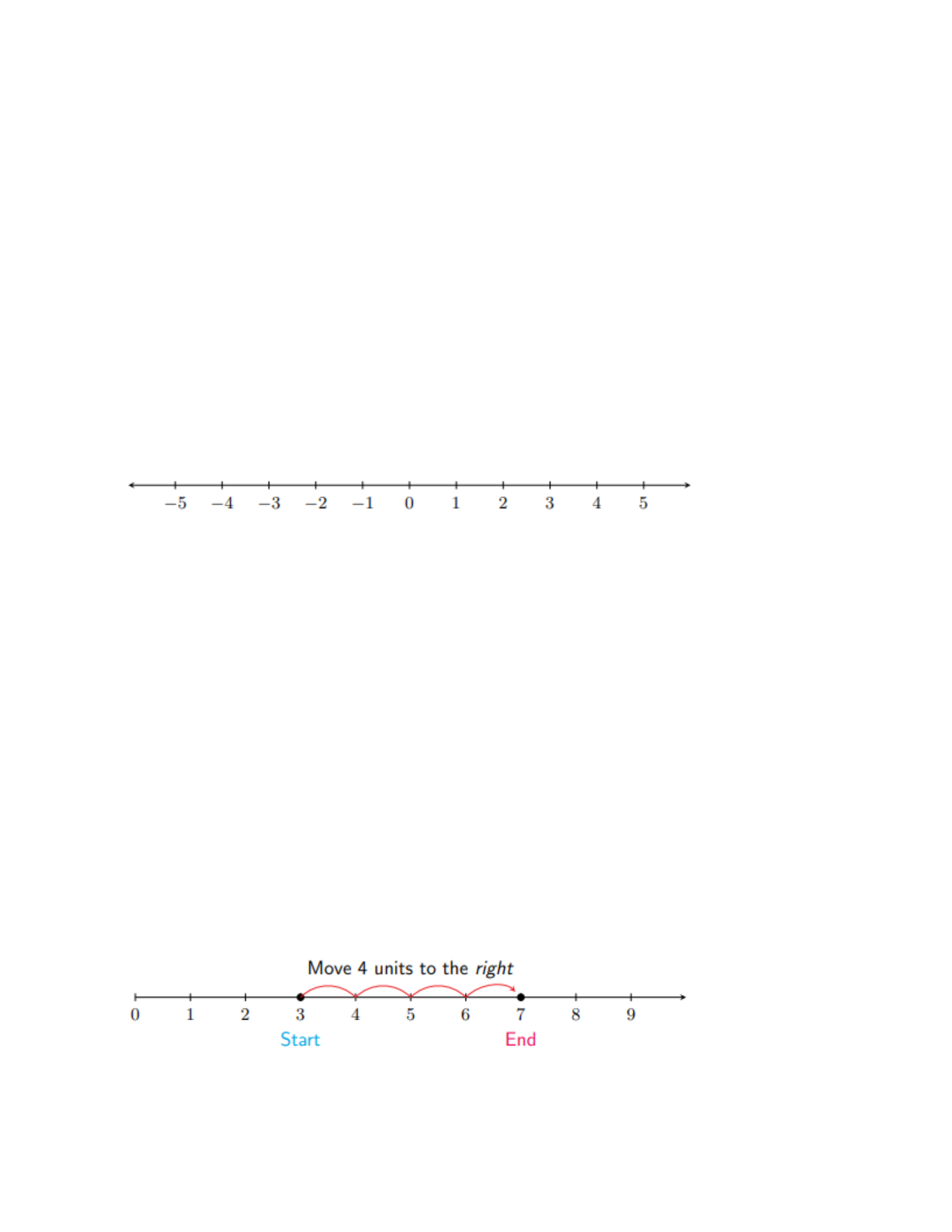
xxxxxxx. −10÷0=−10÷0= undefined.
Note 1.23
Any number divided by 0 is undefined!
Multiplying and Dividing Integers
Consider two numbers at a time.
59. If the signs of the two numbers are the same, then the sign of the answer is positive.
60. If the signs of the two numbers are different, then the sign of the answer is negative.
We begin with a brief review of arithmetic with integers
i.e. …,−3,−2,−1,0,1,2,3,……,−3,−2,−1,0,1,2,3,…
Any number has a weight and a sign.
The magnitude (or weight) of a number is the distance it is from 0 on the number line.
Example 1.1
For example, the weight of -5 is 5 and the weight of 7 is 7 .
Two numbers are opposites if, on the number line, they are on opposite sides of zero, but
the same distance away from zero.
So, −5 is the opposite of 5, and 7 is the opposite of −7 and so on.
Addition
We can add two numbers with the help of a number line .
Example 1.2
Adding two positive numbers: For example to add 3+43+4, we start with 3 on the number
line then move 4 units to the right. We land at 7 which is our answer.
So, 3+4=73+4=7. Notice that the answer has the same sign as the signs of 3 and 4 (both
positive) and its weight comes from adding the weights of 3 and 4.
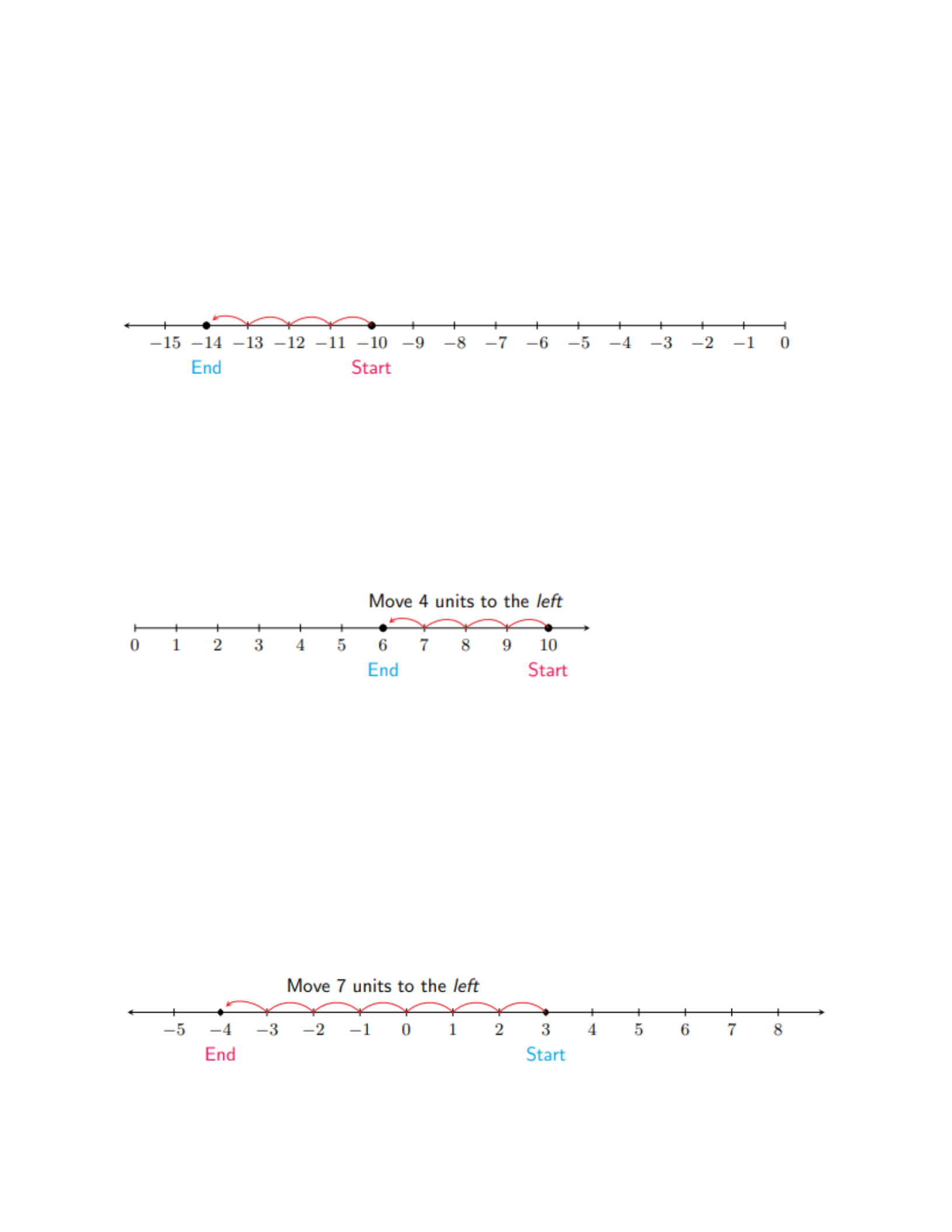
You always move to the right when you add a positive number
Example 1.3
Adding two negative numbers: For example, −10+(−4)−10+(−4) means you are adding a
debt of $4$4 to an already existing debt of $10.$10. So, we start at -10 on the number line
and move 4 units to the left, to land at −14,−14, which is the answer.
You always move to the left when you add a negative number (a debt)
So, −10+(−4)=−14−10+(−4)=−14. Notice that the answer has the same sign as the signs of -
10 and -4 (both negative) and its weight comes from adding the weights of -10 and -4
To add numbers of opposite signs, that is, a positive and a negative number, we can also
use the number line. For example, to perform 10+(−4),10+(−4), we start at 10 on the
number line and then move 4 units to the left. We land at 6,6, which is the answer. Think
of 10+(−4)10+(−4) as having $10$10 and adding a $4$4 debt. Because we are adding a
debt, we move to the left on the number line!
So, 10+(−4)=6.10+(−4)=6. Notice that the answer has the same sign as the sign of 10
(positive) because it is the number of larger weight, and its weight comes from finding the
difference of the weights of 10 and -4
Notice that because we were adding two numbers of opposite signs, the answer ended up
being the difference in weight (6) along with the sign of the number of larger weight
(positive).
Example 1.4
Adding two numbers of opposite signs: For example, 3+(−7)3+(−7). We start at 3 and move
toward 7 units to the left, and we land at −4,−4, which is our answer.
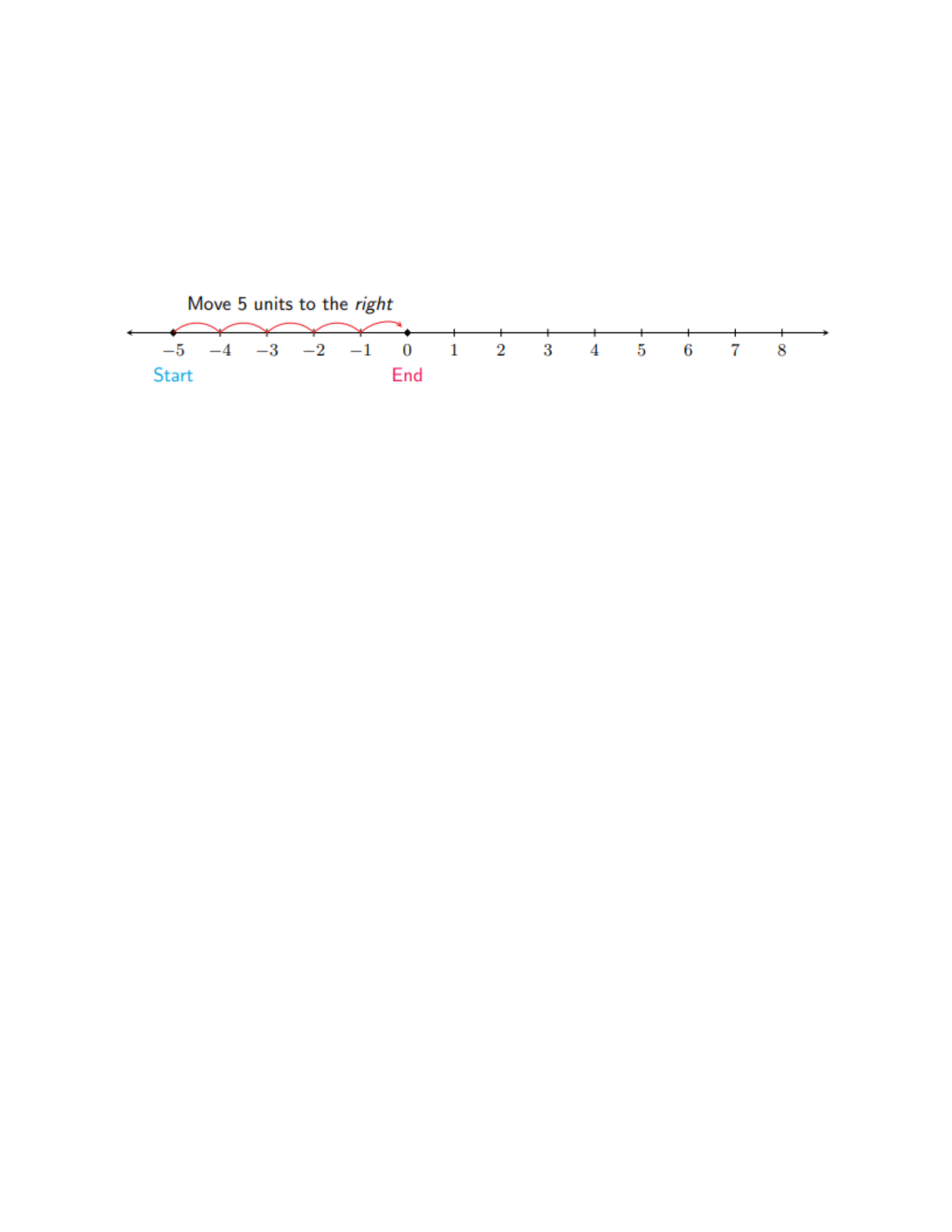
So, 3+(−7)=−4.3+(−7)=−4. Notice that the answer has the same sign as the signs of -7
(negative) because it is the number of larger weight, and its weight comes from finding the
difference of the weights of 3 and -7.
Example 1.5
Adding opposites: We start at -5 on the number line and jump to the right 5 units to land
finally at 00. So −5+5=0−5+5=0.
Note 1.6
Two opposite numbers are called a zero-pair, because adding them always results in 0.
So, −5 and 5 are a zero-pair.
Adding Intergers
61. To add two numbers of the same sign, add their weights and place it after the
sign.
62. To add two numbers of opposite signs, find the difference of their weights and
place it after the sign of the number with the greater weight.
Example 1.7
Add:
yyyyyyy. −8+19=11−8+19=11
zzzzzzz. −8+4=−4−8+4=−4
aaaaaaaa. 6+(−9)=−36+(−9)=−3
bbbbbbbb. 7+(−2)=57+(−2)=5
cccccccc. (−4)+(−7)=−11(−4)+(−7)=−11
dddddddd. 8+7=158+7=15
Note 1.8
While we can add in any order: 4+2=2+44+2=2+4, it is sometimes convenient to add up all
of the negative numbers and add up all of the positive numbers, and then add the results.
There are also times when it is best to notice certain simplifications if the numbers are
added in a different order.
For example

−5+4+5+(−8)=−5+(−8)+4+5( by reordering )−5+4+5+(−8)=−5+(−8)+4+5( by reordering )
so,
−5+4+5+(−8)=−5+(−8)+4+5=−13+9=−4−5+4+5+(−8)=−5+(−8)+4+5=−13+9=−4
We could have also simplified this by noting that (-5) and 5 are zero-pair, so we are left
with 4+(−8)4+(−8) which is -4.
Example 1.9
We can calculate
(−4)+(−5)+7+(−3)=(−4)+(−5)+(−3)+7=(−12)+7=−5(−4)+(−5)+7+(−3)=(−4)+(−5)+(−3)+7=
(−12)+7=−5
We could have simplified this by noting that (-4) and (-3) make -7, and -7 and 7 are zero-
pair, so the total is -5.
Subtraction (as Addition of the Opposite)
Once we know how to add numbers, we are set to subtract numbers because subtraction is
nothing but addition of the opposite. That is, subtracting 8 − 3 (which reads: subtracting 3
from 8) is the same as 8 + (−3) (which reads: Adding −3 to 8.).
Example 1.10
So, 8−3=8+(−3),8−3=8+(−3), and, we can use the rules of adding two numbers of opposite
signs to find out that the answer is 5.5. We can also use the number line. We start at 8 and
move 3 units to the left (adding -3 is adding a debt, so we move to the left).
So 8−3=5.−4−3−2−10123456788−3=5.−4−3−2−1012345678 End Start Move 3 units to the
left
Example 1.11
To calculate 3−73−7 we first rewrite it as an addition
problem. 3−7=3+(−7).3−7=3+(−7). We can either use the number line, or the rules of
adding two numbers of opposite signs. And, 50,3−7=3+(−7)=−450,3−7=3+(−7)=−4
Example 1.12
To calculate −4−1,−4−1, we first rewrite it as an addition
problem. −4−1=−4+(−1).−4−1=−4+(−1). We can either use the number line, or the rules of
adding two numbers of the same signs. If we want to use the rules, both numbers are
negative, so our answer will be negative, and, adding the weights of -4 and -1
is 5.50,−4−1=−4+(−1)=−55.50,−4−1=−4+(−1)=−5
On the number line, we start at -4 and move 1 unit to the left, to land on -5 which is our
answer.
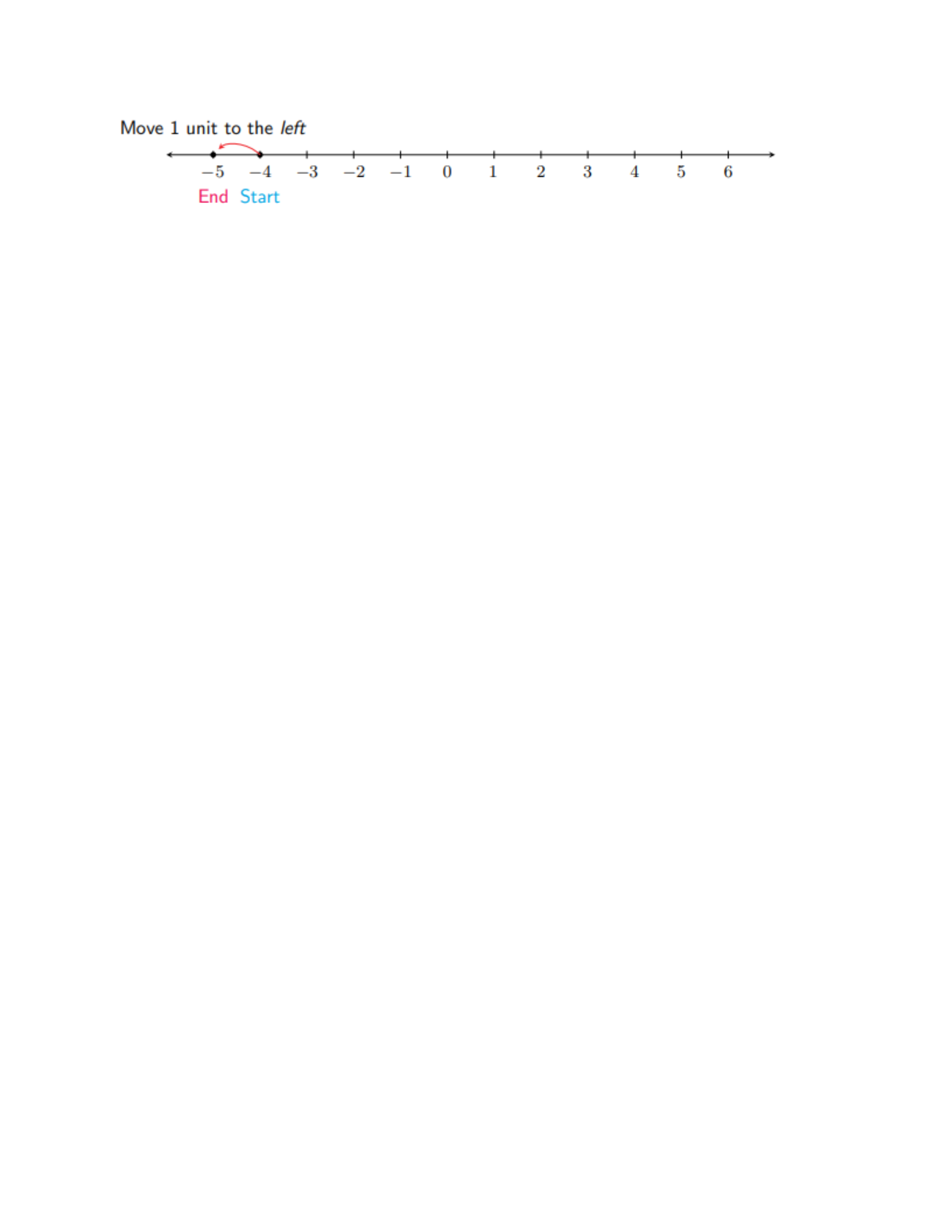
Changing the subtractions to additions in this way is particularly useful when adding or
subtracting several numbers (because we can add in any order).
Example 1.13
===−3−7+5+7+13−6−(−9)−3+(−7)+5+7+13+(−6)+9−3+(−7)+(−6)+5+7+13+918−3−7+5+7
+13−6−(−9)=−3+(−7)+5+7+13+(−6)+9=−3+(−7)+(−6)+5+7+13+9=18
===−3−7+5+7+13−6−(−9)−3+(−7)+5+7+13+(−6)+95+1318−3−7+5+7+13−6−(−9)=−3+(−7
)+5+7+13+(−6)+9=5+13=18
Remark 1.14
Warning: The symbol "-" is used in two different ways. When it is between two expressions,
it means subtract (e.g., 3−43−4 ). Otherwise, it means 'opposite' or 'negative'
(e.g., −3+4−3+4 ). So in the expression −4−(−3)−4−(−3), the first and last "-" means
opposite and the one in the middle one means subtract. The importance of understanding
this can not be overestimated.
Multiplication and Division of Positive Numbers
Multiplication of integers is adding in the sense that 3×4=4+4+43×4=4+4+4
To multiply larger numbers, it is better to use the usual scheme of multiplication. For
example:
Example 1.15
Let us multiply 152 by 34. We will for convenience sake put the smaller number on the
bottom (though it is not necessary). We have
+×4516515306624808152×34608+45605168
And division is the opposite of multiplication in the sense that to compute 45÷945÷9 is to
find a number so that when we multiply by 9 we get 45. We run through our multiplication
tables (which are hopefully in our head) to discover that 5 does the
trick: 5×9=455×9=45 so that 45÷9=5.45÷9=5. We will discuss division from a different
point of view when we discuss fractions.
To divide larger numbers, we can use long division. For example, let’s divide 3571 by 11.
Example 1.16
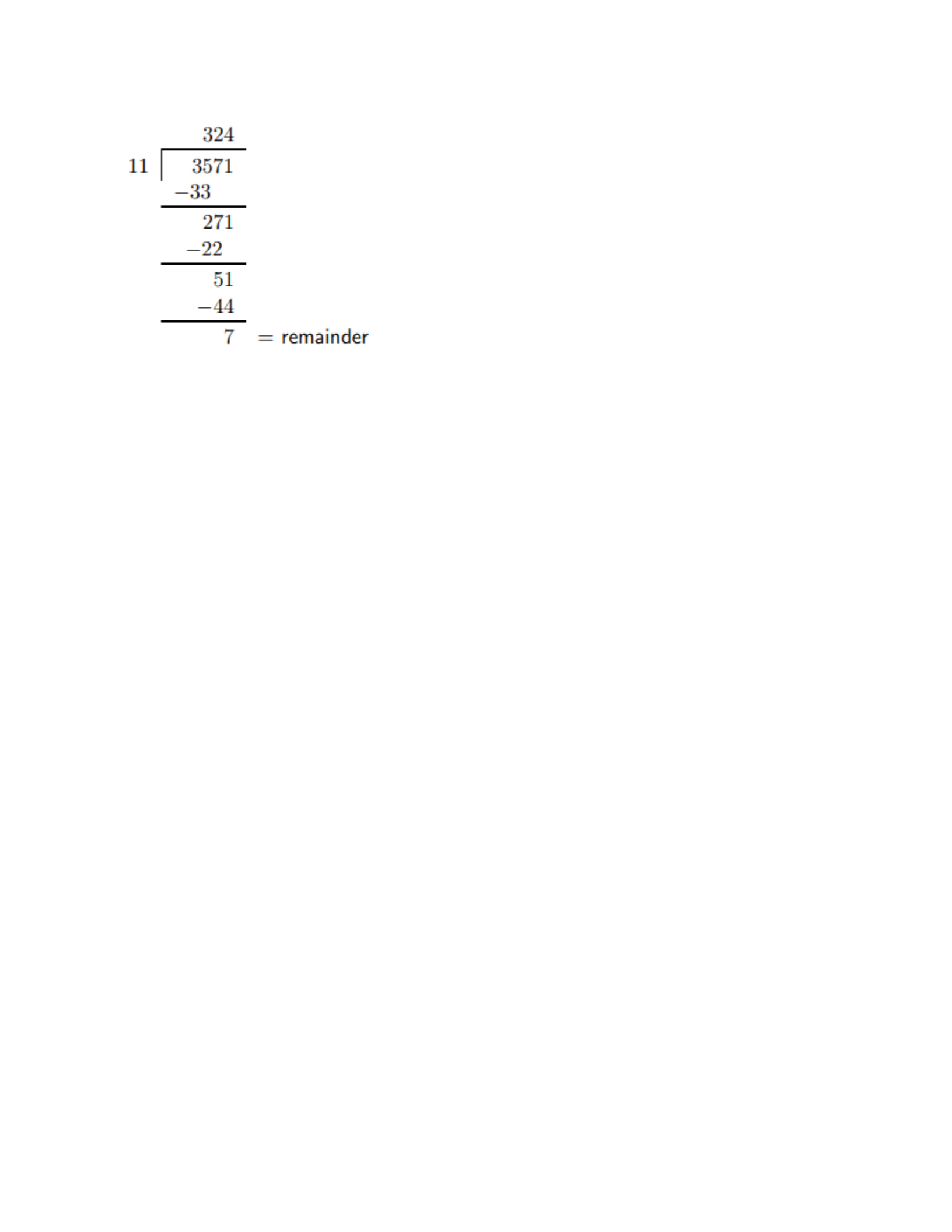
Multiplication involving negative numbers
Multiplication is a little tricky to understand without the notion of distribution (discussed
later). We will begin with noting again what it means to multiply a number by a positive
number: So if we want to compute 4⋅(−7)4⋅(−7) we note
4⋅(−7)=(−7)+(−7)+(−7)+(−7)=−284⋅(−7)=(−7)+(−7)+(−7)+(−7)=−28
Note that since 4⋅7=28,4⋅(−7)=−(4⋅7).4⋅7=28,4⋅(−7)=−(4⋅7). We can multiply positive
numbers in any order: 4⋅7=7⋅44⋅7=7⋅4. The same is true of positive and negative numbers:
(−7)⋅4=4⋅(−7)=−(4⋅7)=−28(−7)⋅4=4⋅(−7)=−(4⋅7)=−28
Example 1.17
5⋅(−12)=−(5⋅12)=−605⋅(−12)=−(5⋅12)=−60 and (−3)⋅(−2)=−(3⋅(−2))=−(−(3⋅2))=6(−3)⋅(−2)
=−(3⋅(−2))=−(−(3⋅2))=6
Example 1.18
So the size of the product of two numbers is the product of their sizes. The sign is positive if
the signs are the same and negative if they are different.
Example 1.19
Two quantities right next to each other, with no symbol between them (except for
parentheses around either or both numbers), has an implicit multiplication. For
example, 3(2)=3×23(2)=3×2.
Example 1.20
Multiply:
uuuuuu. (−5)(−8)=40(−5)(−8)=40
vvvvvv. (−6)⋅7=−42(−6)⋅7=−42
wwwwww. 4⋅12=484⋅12=48

xxxxxx. (−3)(−6)⋅4(−3)=18⋅4(−3)=72(−3)=−216( multiplying from left to
right )(−3)(−6)⋅4(−3)=18⋅4(−3)=72(−3)=−216( multiplying from left to right )
yyyyyy. (−3)(−5)⋅4(−2)=(−3)⋅4⋅(−5)(−2)=−12⋅10=−120((−3)(−5)⋅4(−2)=(−3)⋅4⋅(−5)(
−2)=−12⋅10=−120( since we can multiply in any order it is convenient to see
that −5⋅−2=10.−5⋅−2=10. )
Exponents of integers
Recall that a positive exponent represents the number of times a number is multiplied by
itself.
Example 1.21
Evaluate:
yyyyyyy. 52=5⋅5=2552=5⋅5=25
zzzzzzz. (−4)3=(−4)⋅(−4)⋅(−4)=16⋅(−4)=−64(−4)3=(−4)⋅(−4)⋅(−4)=16⋅(−4)=−64
aaaaaaaa. (−7)1=−7(−7)1=−7
bbbbbbbb. −24=−2⋅2⋅2⋅2=−16−24=−2⋅2⋅2⋅2=−16 Note: The exponent here is for
2 not −2!
cccccccc. (−3)4=(−3)⋅(−3)⋅(−3)⋅(−3)=9⋅(−3)⋅(−3)=−27⋅(−3)=81(−3)4=(−3)⋅(−3)⋅(−3)⋅(
−3)=9⋅(−3)⋅(−3)=−27⋅(−3)=81
dddddddd. (−2)5=(−2)⋅(−2)⋅(−2)⋅(−2)⋅(−2)=−32(−2)5=(−2)⋅(−2)⋅(−2)⋅(−2)⋅(−2)=
−32
Exponent rules in details will be further discussed in Chapter 5.
Division involving negative numbers
Division is just a question of knowing multiplication and therefore has the same rule: The
size of the quotient of two numbers is the quotient of the sizes. The sign is positive if the
signs are the same and negative if they are different.
Example 1.22
Divide:
yyyyyyy. (−42)÷7=−6(−42)÷7=−6
zzzzzzz. 81÷(−9)=−981÷(−9)=−9
aaaaaaaa. (−35)÷(−7)=5(−35)÷(−7)=5
bbbbbbbb. 14÷2=714÷2=7
cccccccc. 0÷5=00÷5=0. Note When dividing 0 by any number, the answer is always 0.
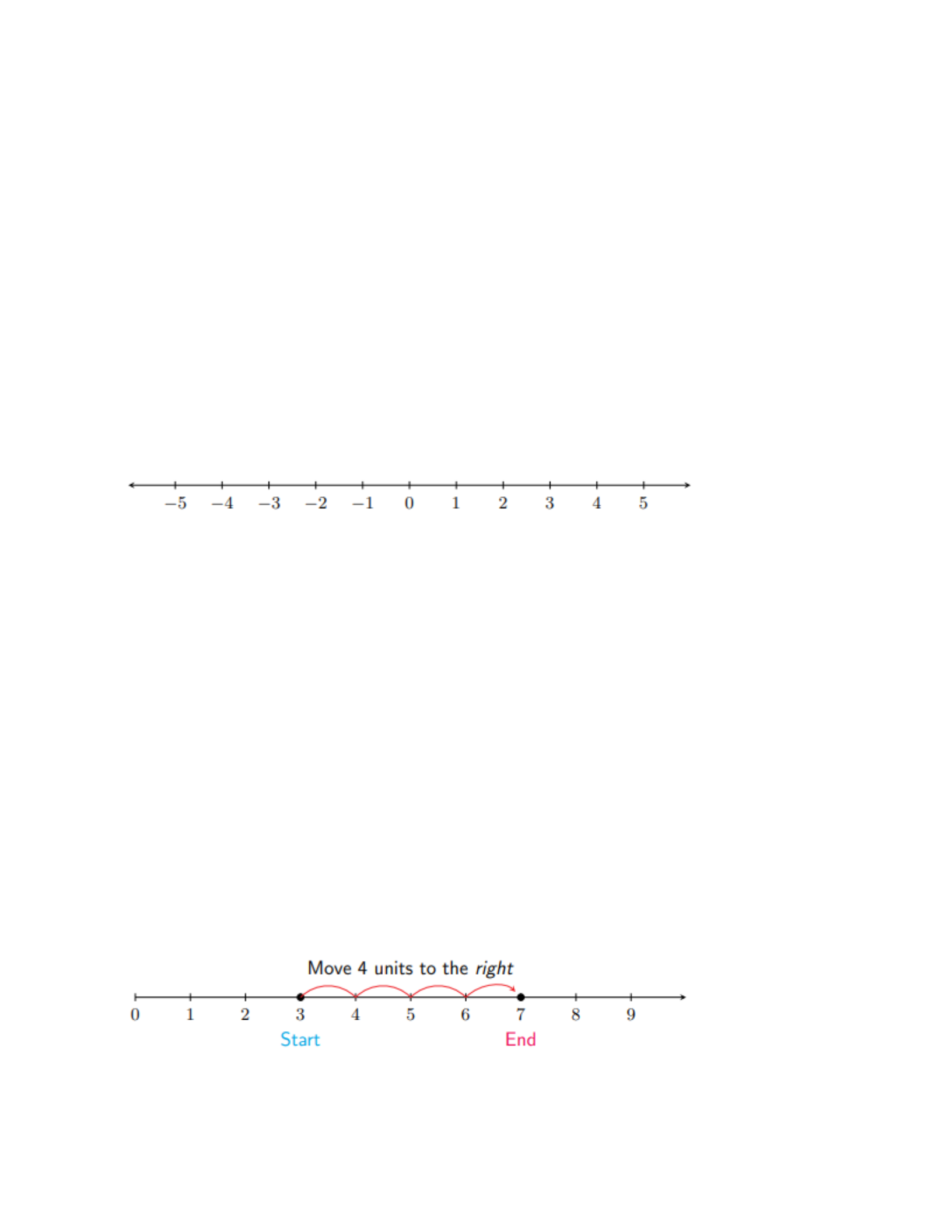
dddddddd. −10÷0=−10÷0= undefined.
Note 1.23
Any number divided by 0 is undefined!
Multiplying and Dividing Integers
Consider two numbers at a time.
61. If the signs of the two numbers are the same, then the sign of the answer is positive.
62. If the signs of the two numbers are different, then the sign of the answer is negative.
We begin with a brief review of arithmetic with integers
i.e. …,−3,−2,−1,0,1,2,3,……,−3,−2,−1,0,1,2,3,…
Any number has a weight and a sign.
The magnitude (or weight) of a number is the distance it is from 0 on the number line.
Example 1.1
For example, the weight of -5 is 5 and the weight of 7 is 7 .
Two numbers are opposites if, on the number line, they are on opposite sides of zero, but
the same distance away from zero.
So, −5 is the opposite of 5, and 7 is the opposite of −7 and so on.
Addition
We can add two numbers with the help of a number line .
Example 1.2
Adding two positive numbers: For example to add 3+43+4, we start with 3 on the number
line then move 4 units to the right. We land at 7 which is our answer.
So, 3+4=73+4=7. Notice that the answer has the same sign as the signs of 3 and 4 (both
positive) and its weight comes from adding the weights of 3 and 4.
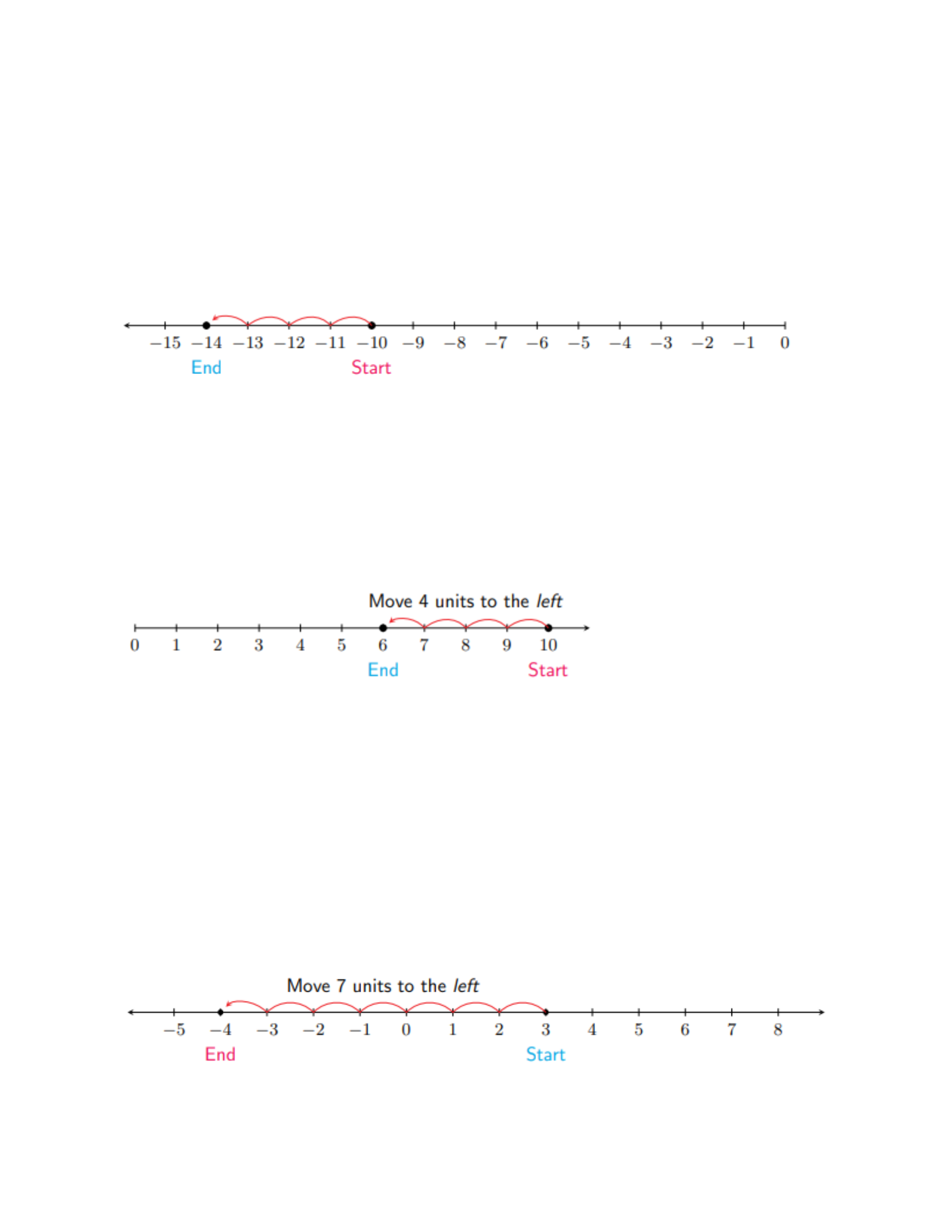
You always move to the right when you add a positive number
Example 1.3
Adding two negative numbers: For example, −10+(−4)−10+(−4) means you are adding a
debt of $4$4 to an already existing debt of $10.$10. So, we start at -10 on the number line
and move 4 units to the left, to land at −14,−14, which is the answer.
You always move to the left when you add a negative number (a debt)
So, −10+(−4)=−14−10+(−4)=−14. Notice that the answer has the same sign as the signs of -
10 and -4 (both negative) and its weight comes from adding the weights of -10 and -4
To add numbers of opposite signs, that is, a positive and a negative number, we can also
use the number line. For example, to perform 10+(−4),10+(−4), we start at 10 on the
number line and then move 4 units to the left. We land at 6,6, which is the answer. Think
of 10+(−4)10+(−4) as having $10$10 and adding a $4$4 debt. Because we are adding a
debt, we move to the left on the number line!
So, 10+(−4)=6.10+(−4)=6. Notice that the answer has the same sign as the sign of 10
(positive) because it is the number of larger weight, and its weight comes from finding the
difference of the weights of 10 and -4
Notice that because we were adding two numbers of opposite signs, the answer ended up
being the difference in weight (6) along with the sign of the number of larger weight
(positive).
Example 1.4
Adding two numbers of opposite signs: For example, 3+(−7)3+(−7). We start at 3 and move
toward 7 units to the left, and we land at −4,−4, which is our answer.
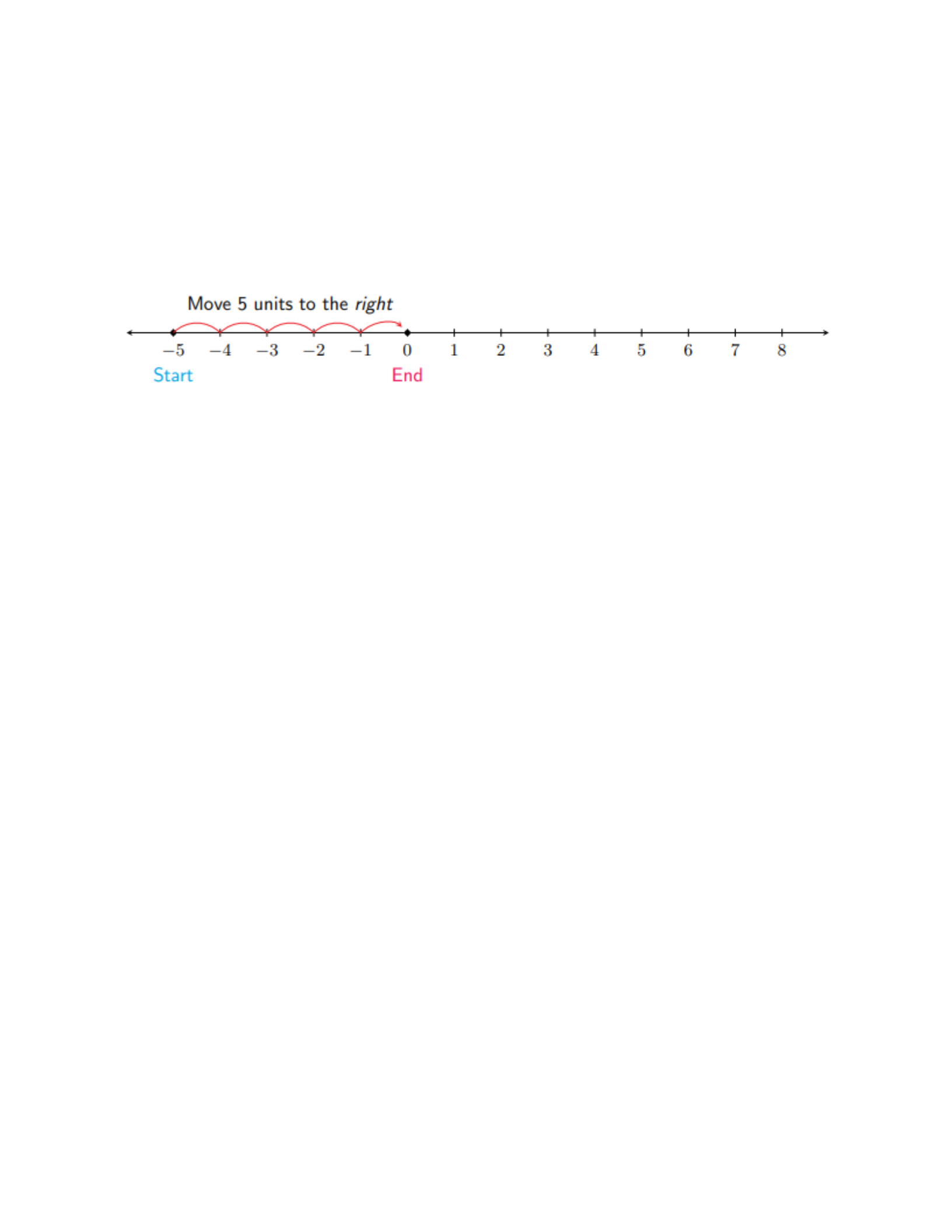
So, 3+(−7)=−4.3+(−7)=−4. Notice that the answer has the same sign as the signs of -7
(negative) because it is the number of larger weight, and its weight comes from finding the
difference of the weights of 3 and -7.
Example 1.5
Adding opposites: We start at -5 on the number line and jump to the right 5 units to land
finally at 00. So −5+5=0−5+5=0.
Note 1.6
Two opposite numbers are called a zero-pair, because adding them always results in 0.
So, −5 and 5 are a zero-pair.
Adding Intergers
63. To add two numbers of the same sign, add their weights and place it after the
sign.
64. To add two numbers of opposite signs, find the difference of their weights and
place it after the sign of the number with the greater weight.
Example 1.7
Add:
eeeeeeee. −8+19=11−8+19=11
ffffffff. −8+4=−4−8+4=−4
gggggggg. 6+(−9)=−36+(−9)=−3
hhhhhhhh. 7+(−2)=57+(−2)=5
iiiiiiii. (−4)+(−7)=−11(−4)+(−7)=−11
jjjjjjjj. 8+7=158+7=15
Note 1.8
While we can add in any order: 4+2=2+44+2=2+4, it is sometimes convenient to add up all
of the negative numbers and add up all of the positive numbers, and then add the results.
There are also times when it is best to notice certain simplifications if the numbers are
added in a different order.
For example

−5+4+5+(−8)=−5+(−8)+4+5( by reordering )−5+4+5+(−8)=−5+(−8)+4+5( by reordering )
so,
−5+4+5+(−8)=−5+(−8)+4+5=−13+9=−4−5+4+5+(−8)=−5+(−8)+4+5=−13+9=−4
We could have also simplified this by noting that (-5) and 5 are zero-pair, so we are left
with 4+(−8)4+(−8) which is -4.
Example 1.9
We can calculate
(−4)+(−5)+7+(−3)=(−4)+(−5)+(−3)+7=(−12)+7=−5(−4)+(−5)+7+(−3)=(−4)+(−5)+(−3)+7=
(−12)+7=−5
We could have simplified this by noting that (-4) and (-3) make -7, and -7 and 7 are zero-
pair, so the total is -5.
Subtraction (as Addition of the Opposite)
Once we know how to add numbers, we are set to subtract numbers because subtraction is
nothing but addition of the opposite. That is, subtracting 8 − 3 (which reads: subtracting 3
from 8) is the same as 8 + (−3) (which reads: Adding −3 to 8.).
Example 1.10
So, 8−3=8+(−3),8−3=8+(−3), and, we can use the rules of adding two numbers of opposite
signs to find out that the answer is 5.5. We can also use the number line. We start at 8 and
move 3 units to the left (adding -3 is adding a debt, so we move to the left).
So 8−3=5.−4−3−2−10123456788−3=5.−4−3−2−1012345678 End Start Move 3 units to the
left
Example 1.11
To calculate 3−73−7 we first rewrite it as an addition
problem. 3−7=3+(−7).3−7=3+(−7). We can either use the number line, or the rules of
adding two numbers of opposite signs. And, 50,3−7=3+(−7)=−450,3−7=3+(−7)=−4
Example 1.12
To calculate −4−1,−4−1, we first rewrite it as an addition
problem. −4−1=−4+(−1).−4−1=−4+(−1). We can either use the number line, or the rules of
adding two numbers of the same signs. If we want to use the rules, both numbers are
negative, so our answer will be negative, and, adding the weights of -4 and -1
is 5.50,−4−1=−4+(−1)=−55.50,−4−1=−4+(−1)=−5
On the number line, we start at -4 and move 1 unit to the left, to land on -5 which is our
answer.
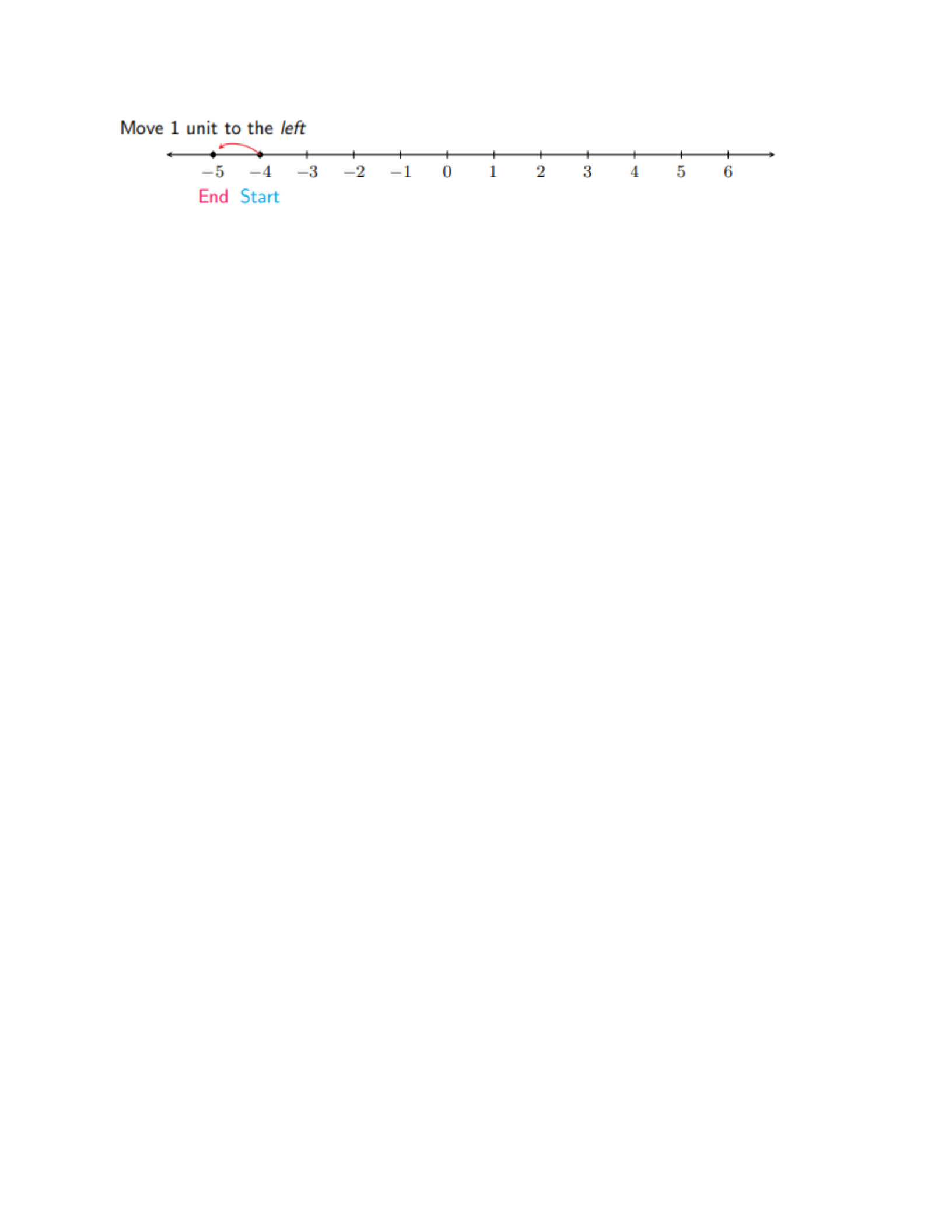
Changing the subtractions to additions in this way is particularly useful when adding or
subtracting several numbers (because we can add in any order).
Example 1.13
===−3−7+5+7+13−6−(−9)−3+(−7)+5+7+13+(−6)+9−3+(−7)+(−6)+5+7+13+918−3−7+5+7
+13−6−(−9)=−3+(−7)+5+7+13+(−6)+9=−3+(−7)+(−6)+5+7+13+9=18
===−3−7+5+7+13−6−(−9)−3+(−7)+5+7+13+(−6)+95+1318−3−7+5+7+13−6−(−9)=−3+(−7
)+5+7+13+(−6)+9=5+13=18
Remark 1.14
Warning: The symbol "-" is used in two different ways. When it is between two expressions,
it means subtract (e.g., 3−43−4 ). Otherwise, it means 'opposite' or 'negative'
(e.g., −3+4−3+4 ). So in the expression −4−(−3)−4−(−3), the first and last "-" means
opposite and the one in the middle one means subtract. The importance of understanding
this can not be overestimated.
Multiplication and Division of Positive Numbers
Multiplication of integers is adding in the sense that 3×4=4+4+43×4=4+4+4
To multiply larger numbers, it is better to use the usual scheme of multiplication. For
example:
Example 1.15
Let us multiply 152 by 34. We will for convenience sake put the smaller number on the
bottom (though it is not necessary). We have
+×4516515306624808152×34608+45605168
And division is the opposite of multiplication in the sense that to compute 45÷945÷9 is to
find a number so that when we multiply by 9 we get 45. We run through our multiplication
tables (which are hopefully in our head) to discover that 5 does the
trick: 5×9=455×9=45 so that 45÷9=5.45÷9=5. We will discuss division from a different
point of view when we discuss fractions.
To divide larger numbers, we can use long division. For example, let’s divide 3571 by 11.
Example 1.16
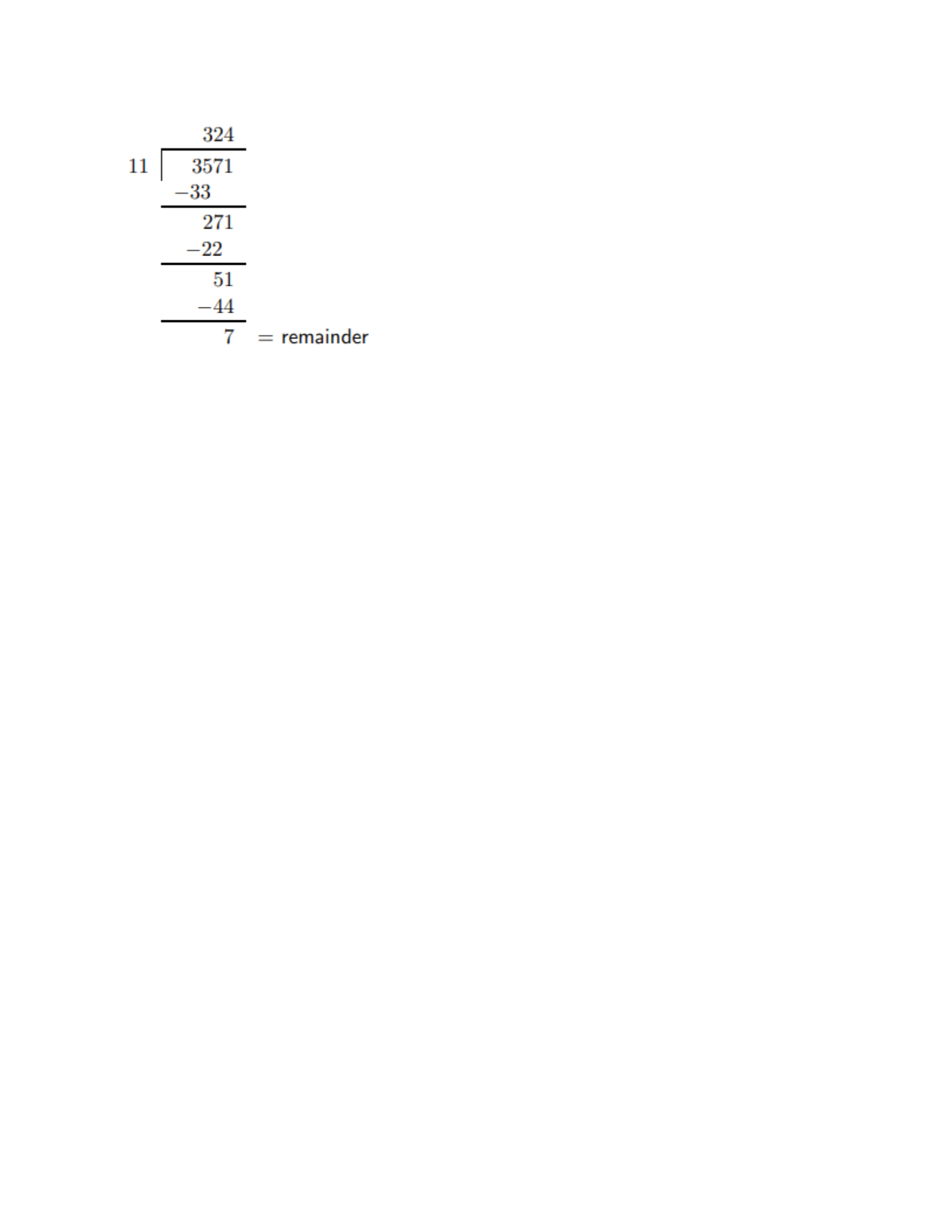
Multiplication involving negative numbers
Multiplication is a little tricky to understand without the notion of distribution (discussed
later). We will begin with noting again what it means to multiply a number by a positive
number: So if we want to compute 4⋅(−7)4⋅(−7) we note
4⋅(−7)=(−7)+(−7)+(−7)+(−7)=−284⋅(−7)=(−7)+(−7)+(−7)+(−7)=−28
Note that since 4⋅7=28,4⋅(−7)=−(4⋅7).4⋅7=28,4⋅(−7)=−(4⋅7). We can multiply positive
numbers in any order: 4⋅7=7⋅44⋅7=7⋅4. The same is true of positive and negative numbers:
(−7)⋅4=4⋅(−7)=−(4⋅7)=−28(−7)⋅4=4⋅(−7)=−(4⋅7)=−28
Example 1.17
5⋅(−12)=−(5⋅12)=−605⋅(−12)=−(5⋅12)=−60 and (−3)⋅(−2)=−(3⋅(−2))=−(−(3⋅2))=6(−3)⋅(−2)
=−(3⋅(−2))=−(−(3⋅2))=6
Example 1.18
So the size of the product of two numbers is the product of their sizes. The sign is positive if
the signs are the same and negative if they are different.
Example 1.19
Two quantities right next to each other, with no symbol between them (except for
parentheses around either or both numbers), has an implicit multiplication. For
example, 3(2)=3×23(2)=3×2.
Example 1.20
Multiply:
zzzzzz. (−5)(−8)=40(−5)(−8)=40
aaaaaaa. (−6)⋅7=−42(−6)⋅7=−42
bbbbbbb. 4⋅12=484⋅12=48

ccccccc. (−3)(−6)⋅4(−3)=18⋅4(−3)=72(−3)=−216( multiplying from left to
right )(−3)(−6)⋅4(−3)=18⋅4(−3)=72(−3)=−216( multiplying from left to right )
ddddddd. (−3)(−5)⋅4(−2)=(−3)⋅4⋅(−5)(−2)=−12⋅10=−120((−3)(−5)⋅4(−2)=(−3)⋅4⋅(−5)(
−2)=−12⋅10=−120( since we can multiply in any order it is convenient to see
that −5⋅−2=10.−5⋅−2=10. )
Exponents of integers
Recall that a positive exponent represents the number of times a number is multiplied by
itself.
Example 1.21
Evaluate:
eeeeeeee. 52=5⋅5=2552=5⋅5=25
ffffffff. (−4)3=(−4)⋅(−4)⋅(−4)=16⋅(−4)=−64(−4)3=(−4)⋅(−4)⋅(−4)=16⋅(−4)=−64
gggggggg. (−7)1=−7(−7)1=−7
hhhhhhhh. −24=−2⋅2⋅2⋅2=−16−24=−2⋅2⋅2⋅2=−16 Note: The exponent here is for
2 not −2!
iiiiiiii. (−3)4=(−3)⋅(−3)⋅(−3)⋅(−3)=9⋅(−3)⋅(−3)=−27⋅(−3)=81(−3)4=(−3)⋅(−3)⋅(−3)⋅(
−3)=9⋅(−3)⋅(−3)=−27⋅(−3)=81
jjjjjjjj. (−2)5=(−2)⋅(−2)⋅(−2)⋅(−2)⋅(−2)=−32(−2)5=(−2)⋅(−2)⋅(−2)⋅(−2)⋅(−2)=−32
Exponent rules in details will be further discussed in Chapter 5.
Division involving negative numbers
Division is just a question of knowing multiplication and therefore has the same rule: The
size of the quotient of two numbers is the quotient of the sizes. The sign is positive if the
signs are the same and negative if they are different.
Example 1.22
Divide:
eeeeeeee. (−42)÷7=−6(−42)÷7=−6
ffffffff. 81÷(−9)=−981÷(−9)=−9
gggggggg. (−35)÷(−7)=5(−35)÷(−7)=5
hhhhhhhh. 14÷2=714÷2=7
iiiiiiii. 0÷5=00÷5=0. Note When dividing 0 by any number, the answer is always 0.
jjjjjjjj. −10÷0=−10÷0= undefined.
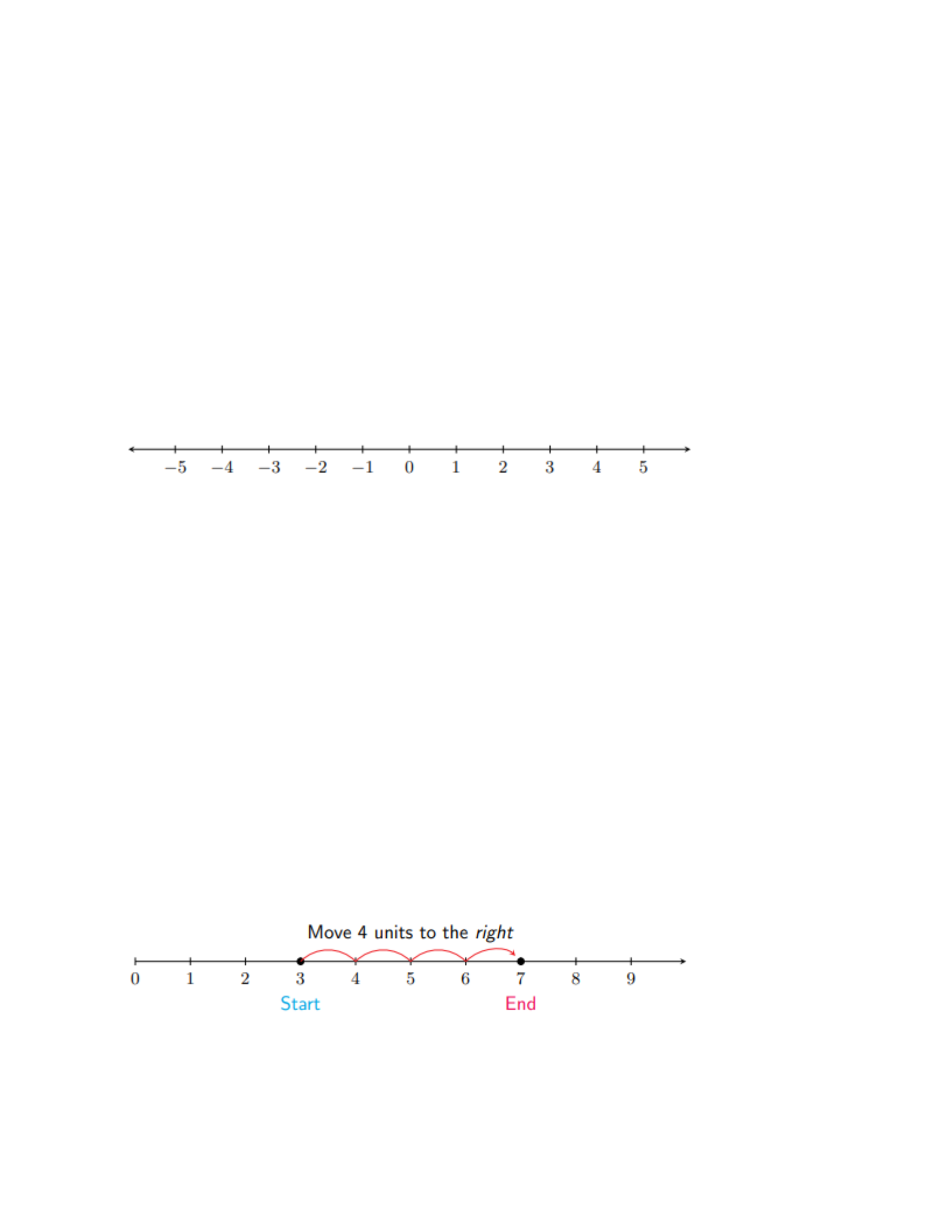
Note 1.23
Any number divided by 0 is undefined!
Multiplying and Dividing Integers
Consider two numbers at a time.
63. If the signs of the two numbers are the same, then the sign of the answer is positive.
64. If the signs of the two numbers are different, then the sign of the answer is negative.
We begin with a brief review of arithmetic with integers
i.e. …,−3,−2,−1,0,1,2,3,……,−3,−2,−1,0,1,2,3,…
Any number has a weight and a sign.
The magnitude (or weight) of a number is the distance it is from 0 on the number line.
Example 1.1
For example, the weight of -5 is 5 and the weight of 7 is 7 .
Two numbers are opposites if, on the number line, they are on opposite sides of zero, but
the same distance away from zero.
So, −5 is the opposite of 5, and 7 is the opposite of −7 and so on.
Addition
We can add two numbers with the help of a number line .
Example 1.2
Adding two positive numbers: For example to add 3+43+4, we start with 3 on the number
line then move 4 units to the right. We land at 7 which is our answer.
So, 3+4=73+4=7. Notice that the answer has the same sign as the signs of 3 and 4 (both
positive) and its weight comes from adding the weights of 3 and 4.
You always move to the right when you add a positive number
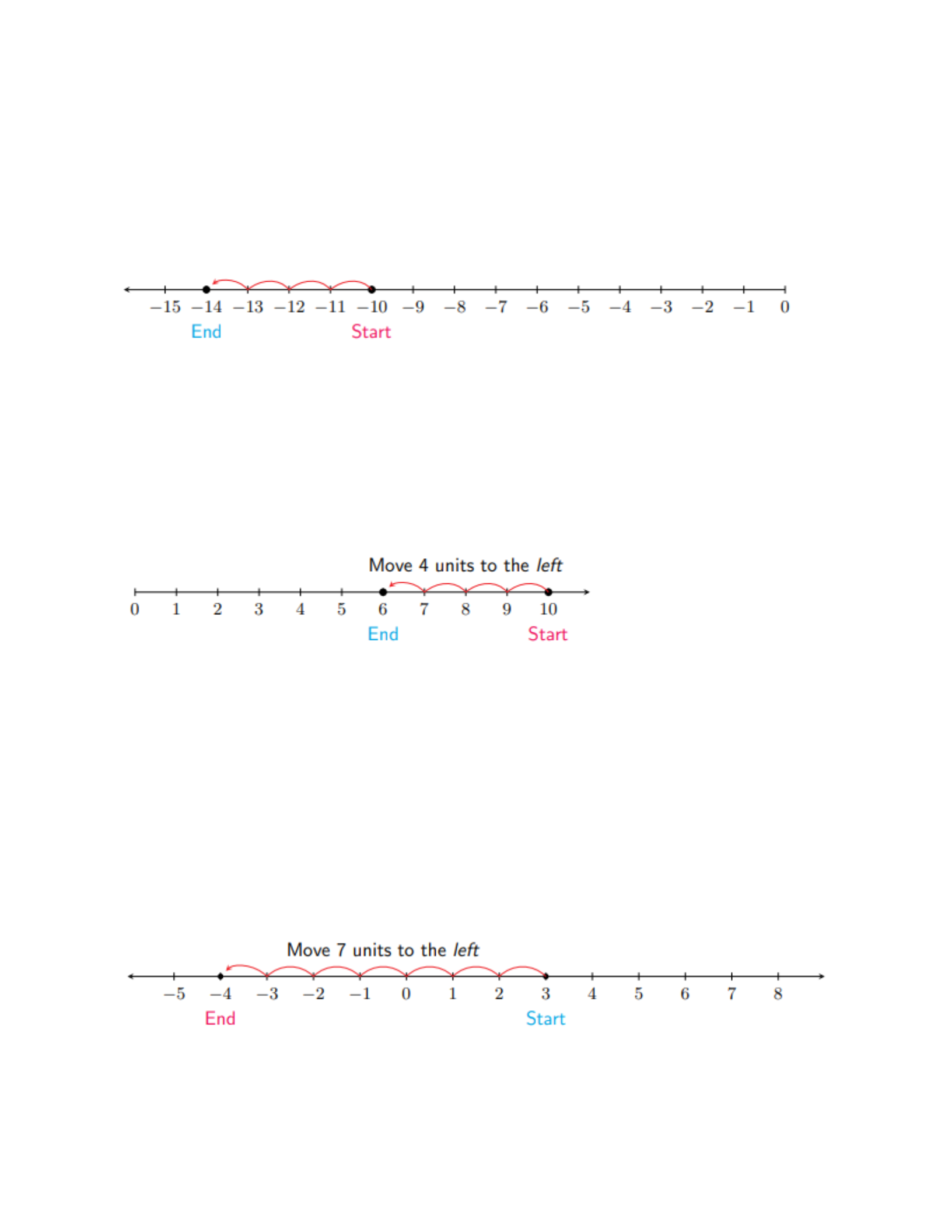
Example 1.3
Adding two negative numbers: For example, −10+(−4)−10+(−4) means you are adding a
debt of $4$4 to an already existing debt of $10.$10. So, we start at -10 on the number line
and move 4 units to the left, to land at −14,−14, which is the answer.
You always move to the left when you add a negative number (a debt)
So, −10+(−4)=−14−10+(−4)=−14. Notice that the answer has the same sign as the signs of -
10 and -4 (both negative) and its weight comes from adding the weights of -10 and -4
To add numbers of opposite signs, that is, a positive and a negative number, we can also
use the number line. For example, to perform 10+(−4),10+(−4), we start at 10 on the
number line and then move 4 units to the left. We land at 6,6, which is the answer. Think
of 10+(−4)10+(−4) as having $10$10 and adding a $4$4 debt. Because we are adding a
debt, we move to the left on the number line!
So, 10+(−4)=6.10+(−4)=6. Notice that the answer has the same sign as the sign of 10
(positive) because it is the number of larger weight, and its weight comes from finding the
difference of the weights of 10 and -4
Notice that because we were adding two numbers of opposite signs, the answer ended up
being the difference in weight (6) along with the sign of the number of larger weight
(positive).
Example 1.4
Adding two numbers of opposite signs: For example, 3+(−7)3+(−7). We start at 3 and move
toward 7 units to the left, and we land at −4,−4, which is our answer.
So, 3+(−7)=−4.3+(−7)=−4. Notice that the answer has the same sign as the signs of -7
(negative) because it is the number of larger weight, and its weight comes from finding the
difference of the weights of 3 and -7.
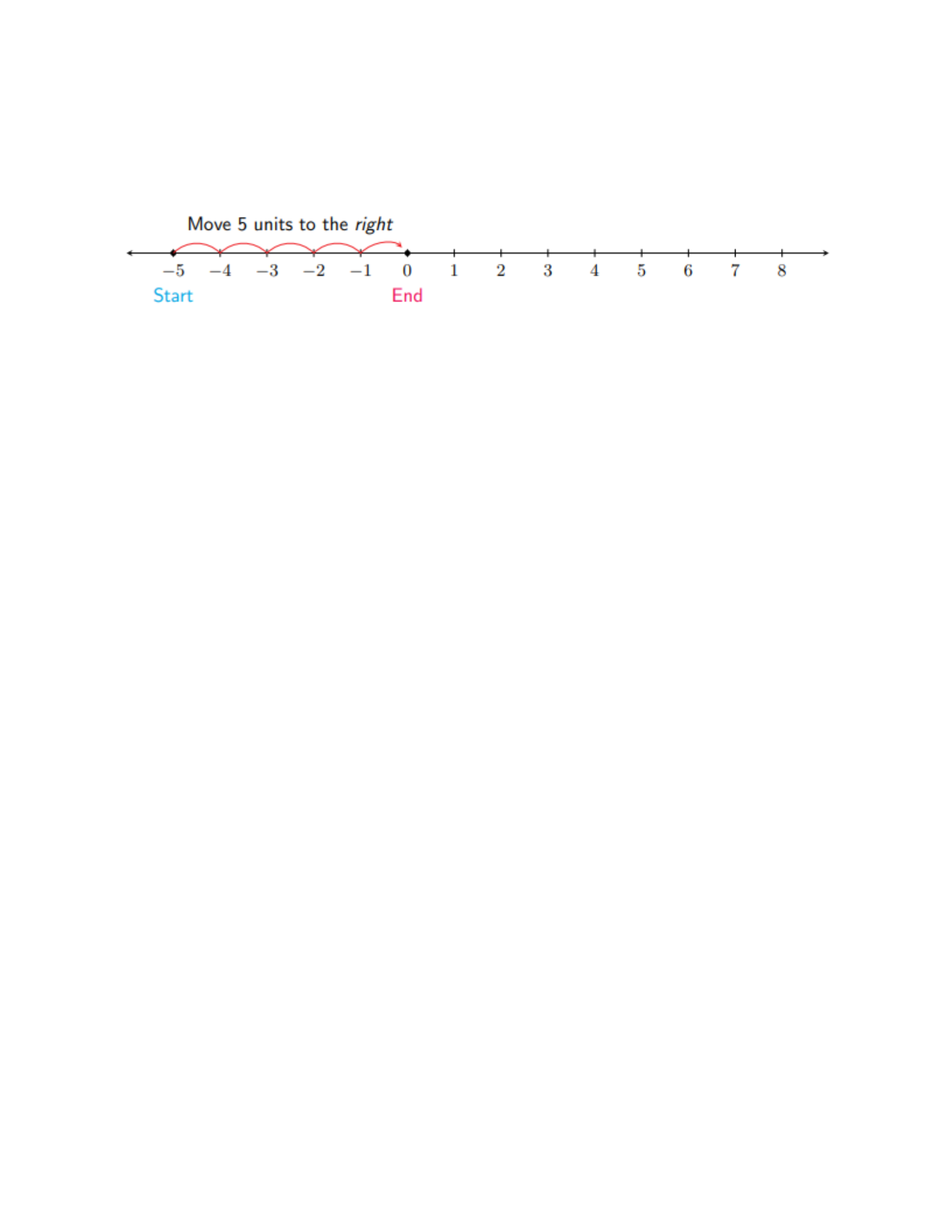
Example 1.5
Adding opposites: We start at -5 on the number line and jump to the right 5 units to land
finally at 00. So −5+5=0−5+5=0.
Note 1.6
Two opposite numbers are called a zero-pair, because adding them always results in 0.
So, −5 and 5 are a zero-pair.
Adding Intergers
65. To add two numbers of the same sign, add their weights and place it after the
sign.
66. To add two numbers of opposite signs, find the difference of their weights and
place it after the sign of the number with the greater weight.
Example 1.7
Add:
kkkkkkkk. −8+19=11−8+19=11
llllllll. −8+4=−4−8+4=−4
mmmmmmmm. 6+(−9)=−36+(−9)=−3
nnnnnnnn. 7+(−2)=57+(−2)=5
oooooooo. (−4)+(−7)=−11(−4)+(−7)=−11
pppppppp. 8+7=158+7=15
Note 1.8
While we can add in any order: 4+2=2+44+2=2+4, it is sometimes convenient to add up all
of the negative numbers and add up all of the positive numbers, and then add the results.
There are also times when it is best to notice certain simplifications if the numbers are
added in a different order.
For example
−5+4+5+(−8)=−5+(−8)+4+5( by reordering )−5+4+5+(−8)=−5+(−8)+4+5( by reordering )
so,
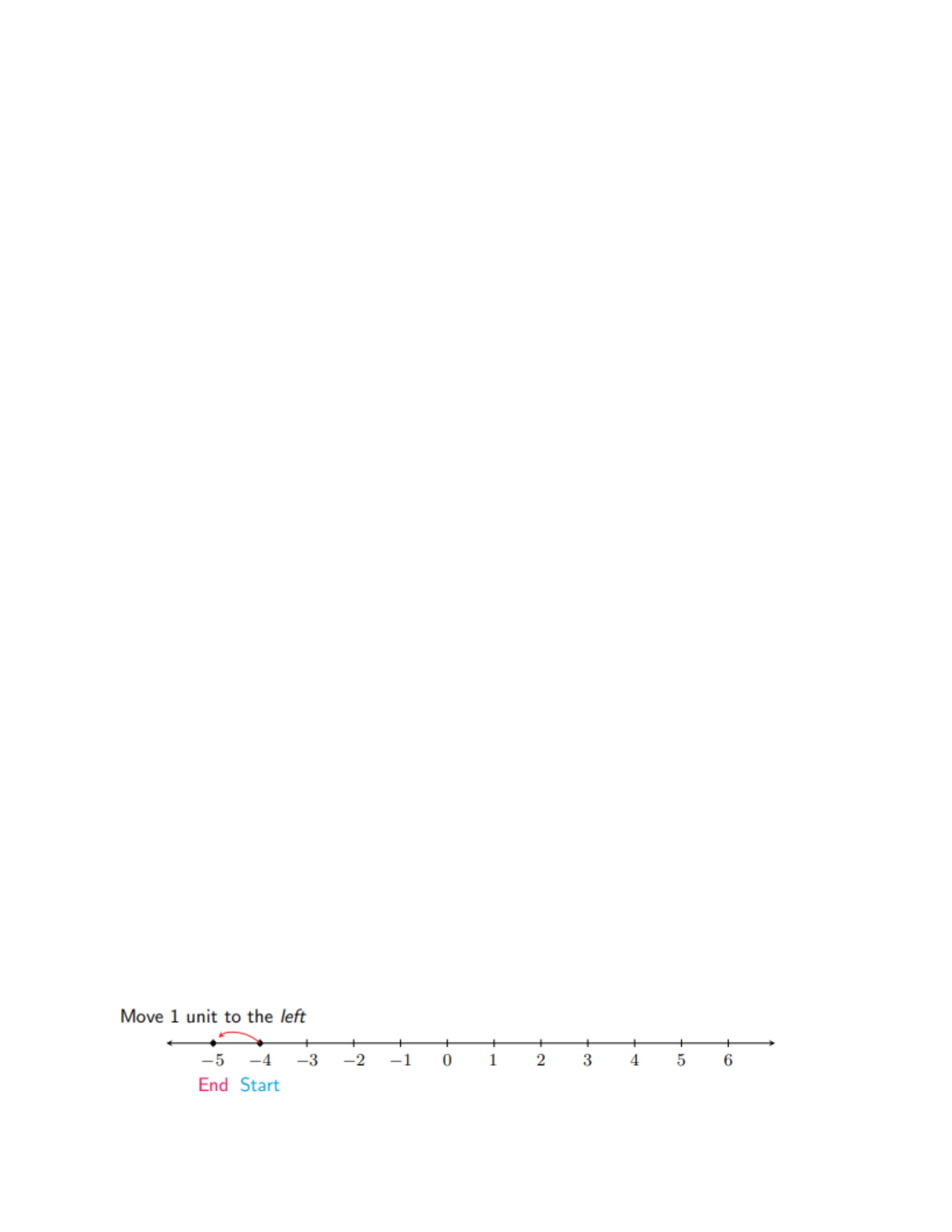
−5+4+5+(−8)=−5+(−8)+4+5=−13+9=−4−5+4+5+(−8)=−5+(−8)+4+5=−13+9=−4
We could have also simplified this by noting that (-5) and 5 are zero-pair, so we are left
with 4+(−8)4+(−8) which is -4.
Example 1.9
We can calculate
(−4)+(−5)+7+(−3)=(−4)+(−5)+(−3)+7=(−12)+7=−5(−4)+(−5)+7+(−3)=(−4)+(−5)+(−3)+7=
(−12)+7=−5
We could have simplified this by noting that (-4) and (-3) make -7, and -7 and 7 are zero-
pair, so the total is -5.
Subtraction (as Addition of the Opposite)
Once we know how to add numbers, we are set to subtract numbers because subtraction is
nothing but addition of the opposite. That is, subtracting 8 − 3 (which reads: subtracting 3
from 8) is the same as 8 + (−3) (which reads: Adding −3 to 8.).
Example 1.10
So, 8−3=8+(−3),8−3=8+(−3), and, we can use the rules of adding two numbers of opposite
signs to find out that the answer is 5.5. We can also use the number line. We start at 8 and
move 3 units to the left (adding -3 is adding a debt, so we move to the left).
So 8−3=5.−4−3−2−10123456788−3=5.−4−3−2−1012345678 End Start Move 3 units to the
left
Example 1.11
To calculate 3−73−7 we first rewrite it as an addition
problem. 3−7=3+(−7).3−7=3+(−7). We can either use the number line, or the rules of
adding two numbers of opposite signs. And, 50,3−7=3+(−7)=−450,3−7=3+(−7)=−4
Example 1.12
To calculate −4−1,−4−1, we first rewrite it as an addition
problem. −4−1=−4+(−1).−4−1=−4+(−1). We can either use the number line, or the rules of
adding two numbers of the same signs. If we want to use the rules, both numbers are
negative, so our answer will be negative, and, adding the weights of -4 and -1
is 5.50,−4−1=−4+(−1)=−55.50,−4−1=−4+(−1)=−5
On the number line, we start at -4 and move 1 unit to the left, to land on -5 which is our
answer.

Changing the subtractions to additions in this way is particularly useful when adding or
subtracting several numbers (because we can add in any order).
Example 1.13
===−3−7+5+7+13−6−(−9)−3+(−7)+5+7+13+(−6)+9−3+(−7)+(−6)+5+7+13+918−3−7+5+7
+13−6−(−9)=−3+(−7)+5+7+13+(−6)+9=−3+(−7)+(−6)+5+7+13+9=18
===−3−7+5+7+13−6−(−9)−3+(−7)+5+7+13+(−6)+95+1318−3−7+5+7+13−6−(−9)=−3+(−7
)+5+7+13+(−6)+9=5+13=18
Remark 1.14
Warning: The symbol "-" is used in two different ways. When it is between two expressions,
it means subtract (e.g., 3−43−4 ). Otherwise, it means 'opposite' or 'negative'
(e.g., −3+4−3+4 ). So in the expression −4−(−3)−4−(−3), the first and last "-" means
opposite and the one in the middle one means subtract. The importance of understanding
this can not be overestimated.
Multiplication and Division of Positive Numbers
Multiplication of integers is adding in the sense that 3×4=4+4+43×4=4+4+4
To multiply larger numbers, it is better to use the usual scheme of multiplication. For
example:
Example 1.15
Let us multiply 152 by 34. We will for convenience sake put the smaller number on the
bottom (though it is not necessary). We have
+×4516515306624808152×34608+45605168
And division is the opposite of multiplication in the sense that to compute 45÷945÷9 is to
find a number so that when we multiply by 9 we get 45. We run through our multiplication
tables (which are hopefully in our head) to discover that 5 does the
trick: 5×9=455×9=45 so that 45÷9=5.45÷9=5. We will discuss division from a different
point of view when we discuss fractions.
To divide larger numbers, we can use long division. For example, let’s divide 3571 by 11.
Example 1.16
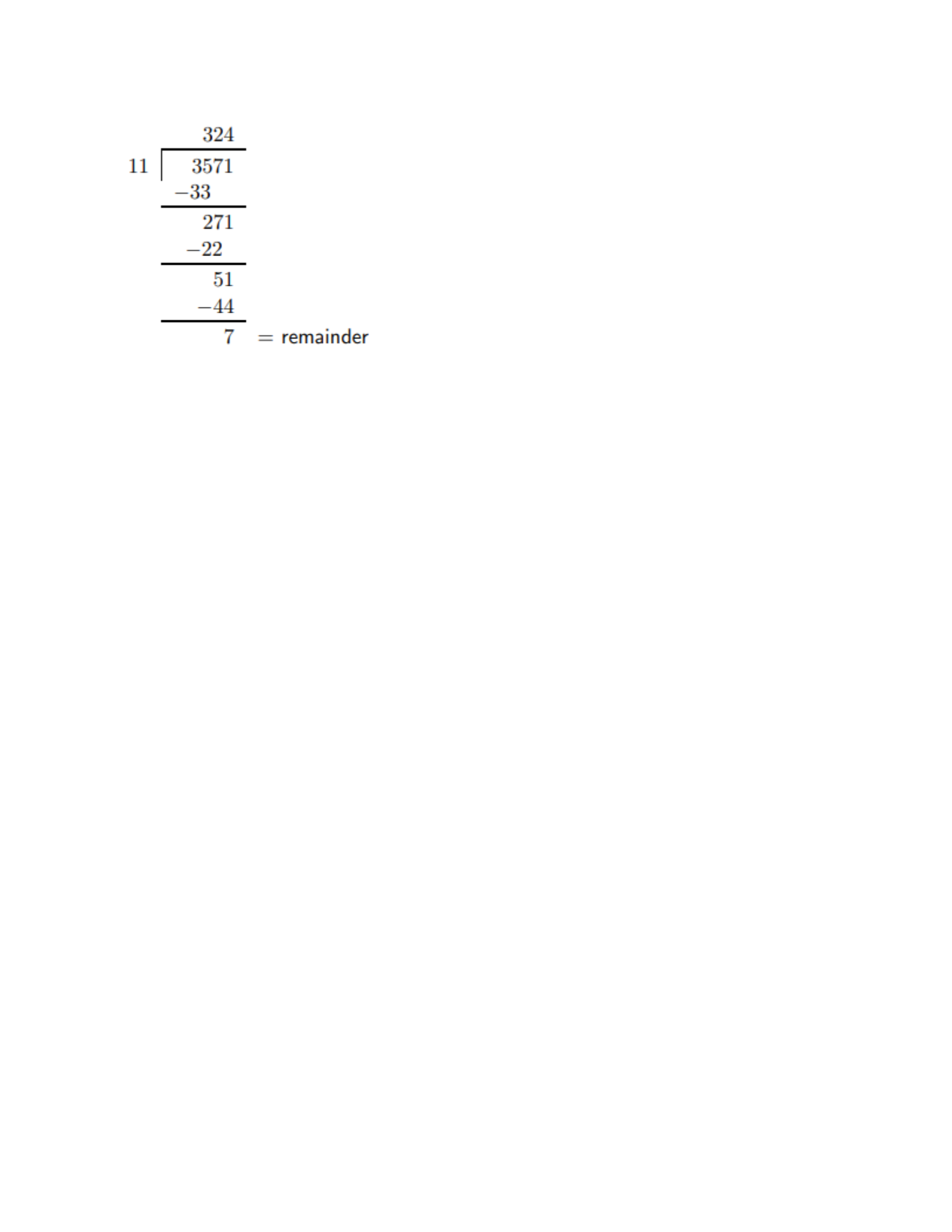
Multiplication involving negative numbers
Multiplication is a little tricky to understand without the notion of distribution (discussed
later). We will begin with noting again what it means to multiply a number by a positive
number: So if we want to compute 4⋅(−7)4⋅(−7) we note
4⋅(−7)=(−7)+(−7)+(−7)+(−7)=−284⋅(−7)=(−7)+(−7)+(−7)+(−7)=−28
Note that since 4⋅7=28,4⋅(−7)=−(4⋅7).4⋅7=28,4⋅(−7)=−(4⋅7). We can multiply positive
numbers in any order: 4⋅7=7⋅44⋅7=7⋅4. The same is true of positive and negative numbers:
(−7)⋅4=4⋅(−7)=−(4⋅7)=−28(−7)⋅4=4⋅(−7)=−(4⋅7)=−28
Example 1.17
5⋅(−12)=−(5⋅12)=−605⋅(−12)=−(5⋅12)=−60 and (−3)⋅(−2)=−(3⋅(−2))=−(−(3⋅2))=6(−3)⋅(−2)
=−(3⋅(−2))=−(−(3⋅2))=6
Example 1.18
So the size of the product of two numbers is the product of their sizes. The sign is positive if
the signs are the same and negative if they are different.
Example 1.19
Two quantities right next to each other, with no symbol between them (except for
parentheses around either or both numbers), has an implicit multiplication. For
example, 3(2)=3×23(2)=3×2.
Example 1.20
Multiply:
eeeeeee. (−5)(−8)=40(−5)(−8)=40
fffffff. (−6)⋅7=−42(−6)⋅7=−42
ggggggg. 4⋅12=484⋅12=48

hhhhhhh. (−3)(−6)⋅4(−3)=18⋅4(−3)=72(−3)=−216( multiplying from left to
right )(−3)(−6)⋅4(−3)=18⋅4(−3)=72(−3)=−216( multiplying from left to right )
iiiiiii. (−3)(−5)⋅4(−2)=(−3)⋅4⋅(−5)(−2)=−12⋅10=−120((−3)(−5)⋅4(−2)=(−3)⋅4⋅(−5)(
−2)=−12⋅10=−120( since we can multiply in any order it is convenient to see
that −5⋅−2=10.−5⋅−2=10. )
Exponents of integers
Recall that a positive exponent represents the number of times a number is multiplied by
itself.
Example 1.21
Evaluate:
kkkkkkkk. 52=5⋅5=2552=5⋅5=25
llllllll. (−4)3=(−4)⋅(−4)⋅(−4)=16⋅(−4)=−64(−4)3=(−4)⋅(−4)⋅(−4)=16⋅(−4)=−64
mmmmmmmm. (−7)1=−7(−7)1=−7
nnnnnnnn. −24=−2⋅2⋅2⋅2=−16−24=−2⋅2⋅2⋅2=−16 Note: The exponent here is for
2 not −2!
oooooooo. (−3)4=(−3)⋅(−3)⋅(−3)⋅(−3)=9⋅(−3)⋅(−3)=−27⋅(−3)=81(−3)4=(−3)⋅(−3)⋅(−3)⋅(
−3)=9⋅(−3)⋅(−3)=−27⋅(−3)=81
pppppppp. (−2)5=(−2)⋅(−2)⋅(−2)⋅(−2)⋅(−2)=−32(−2)5=(−2)⋅(−2)⋅(−2)⋅(−2)⋅(−2)=
−32
Exponent rules in details will be further discussed in Chapter 5.
Division involving negative numbers
Division is just a question of knowing multiplication and therefore has the same rule: The
size of the quotient of two numbers is the quotient of the sizes. The sign is positive if the
signs are the same and negative if they are different.
Example 1.22
Divide:
kkkkkkkk. (−42)÷7=−6(−42)÷7=−6
llllllll. 81÷(−9)=−981÷(−9)=−9
mmmmmmmm. (−35)÷(−7)=5(−35)÷(−7)=5
nnnnnnnn. 14÷2=714÷2=7
oooooooo. 0÷5=00÷5=0. Note When dividing 0 by any number, the answer is always 0.
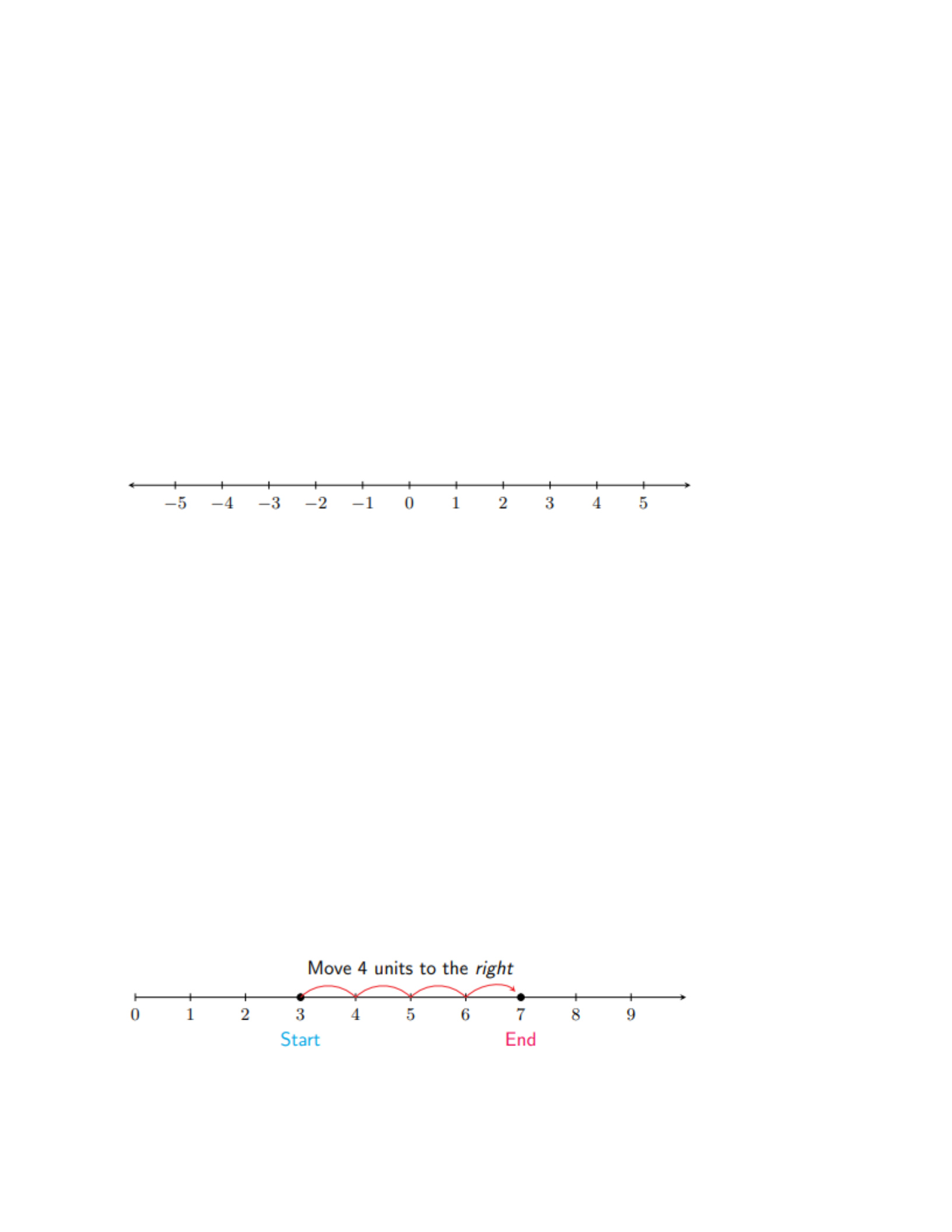
pppppppp. −10÷0=−10÷0= undefined.
Note 1.23
Any number divided by 0 is undefined!
Multiplying and Dividing Integers
Consider two numbers at a time.
65. If the signs of the two numbers are the same, then the sign of the answer is positive.
66. If the signs of the two numbers are different, then the sign of the answer is negative.
We begin with a brief review of arithmetic with integers
i.e. …,−3,−2,−1,0,1,2,3,……,−3,−2,−1,0,1,2,3,…
Any number has a weight and a sign.
The magnitude (or weight) of a number is the distance it is from 0 on the number line.
Example 1.1
For example, the weight of -5 is 5 and the weight of 7 is 7 .
Two numbers are opposites if, on the number line, they are on opposite sides of zero, but
the same distance away from zero.
So, −5 is the opposite of 5, and 7 is the opposite of −7 and so on.
Addition
We can add two numbers with the help of a number line .
Example 1.2
Adding two positive numbers: For example to add 3+43+4, we start with 3 on the number
line then move 4 units to the right. We land at 7 which is our answer.
So, 3+4=73+4=7. Notice that the answer has the same sign as the signs of 3 and 4 (both
positive) and its weight comes from adding the weights of 3 and 4.
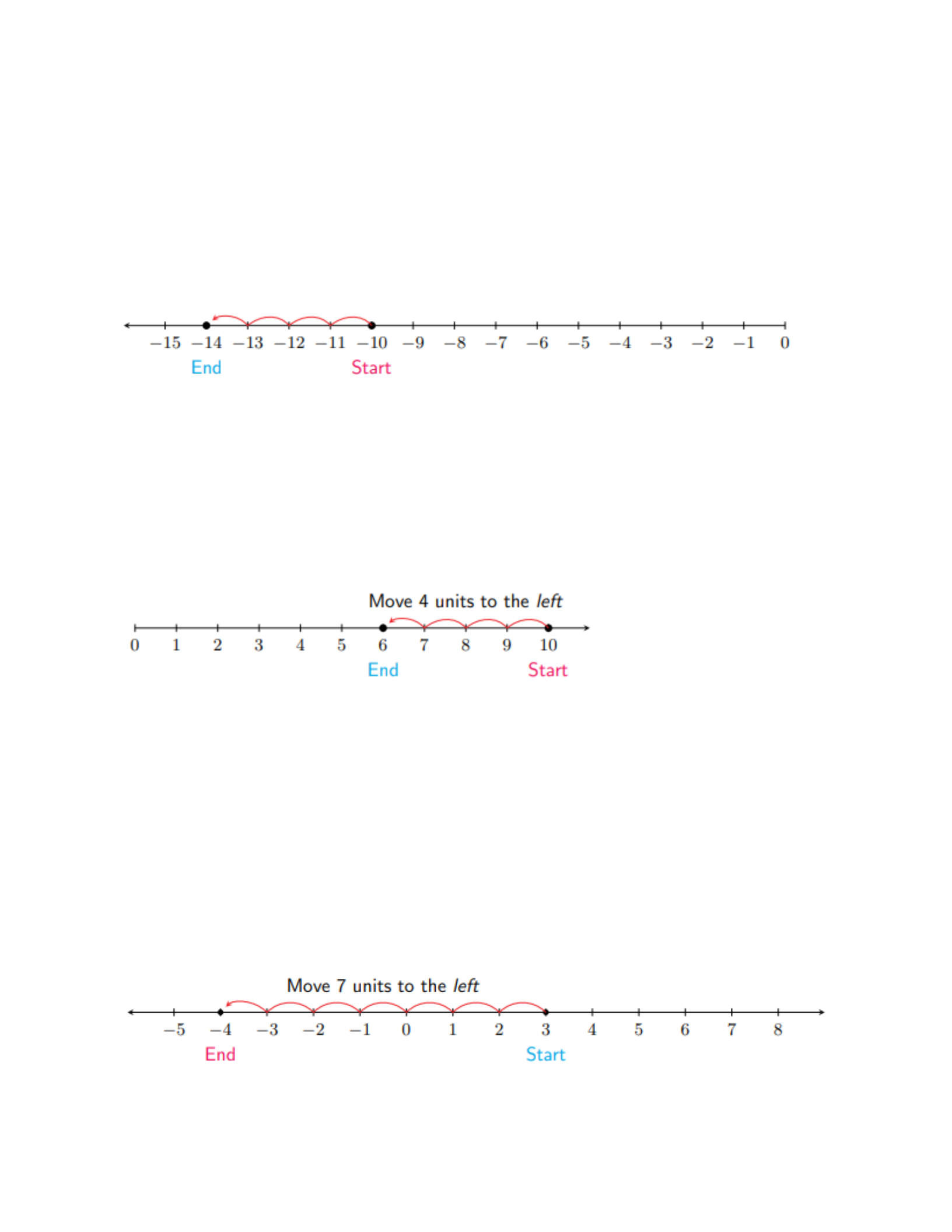
You always move to the right when you add a positive number
Example 1.3
Adding two negative numbers: For example, −10+(−4)−10+(−4) means you are adding a
debt of $4$4 to an already existing debt of $10.$10. So, we start at -10 on the number line
and move 4 units to the left, to land at −14,−14, which is the answer.
You always move to the left when you add a negative number (a debt)
So, −10+(−4)=−14−10+(−4)=−14. Notice that the answer has the same sign as the signs of -
10 and -4 (both negative) and its weight comes from adding the weights of -10 and -4
To add numbers of opposite signs, that is, a positive and a negative number, we can also
use the number line. For example, to perform 10+(−4),10+(−4), we start at 10 on the
number line and then move 4 units to the left. We land at 6,6, which is the answer. Think
of 10+(−4)10+(−4) as having $10$10 and adding a $4$4 debt. Because we are adding a
debt, we move to the left on the number line!
So, 10+(−4)=6.10+(−4)=6. Notice that the answer has the same sign as the sign of 10
(positive) because it is the number of larger weight, and its weight comes from finding the
difference of the weights of 10 and -4
Notice that because we were adding two numbers of opposite signs, the answer ended up
being the difference in weight (6) along with the sign of the number of larger weight
(positive).
Example 1.4
Adding two numbers of opposite signs: For example, 3+(−7)3+(−7). We start at 3 and move
toward 7 units to the left, and we land at −4,−4, which is our answer.
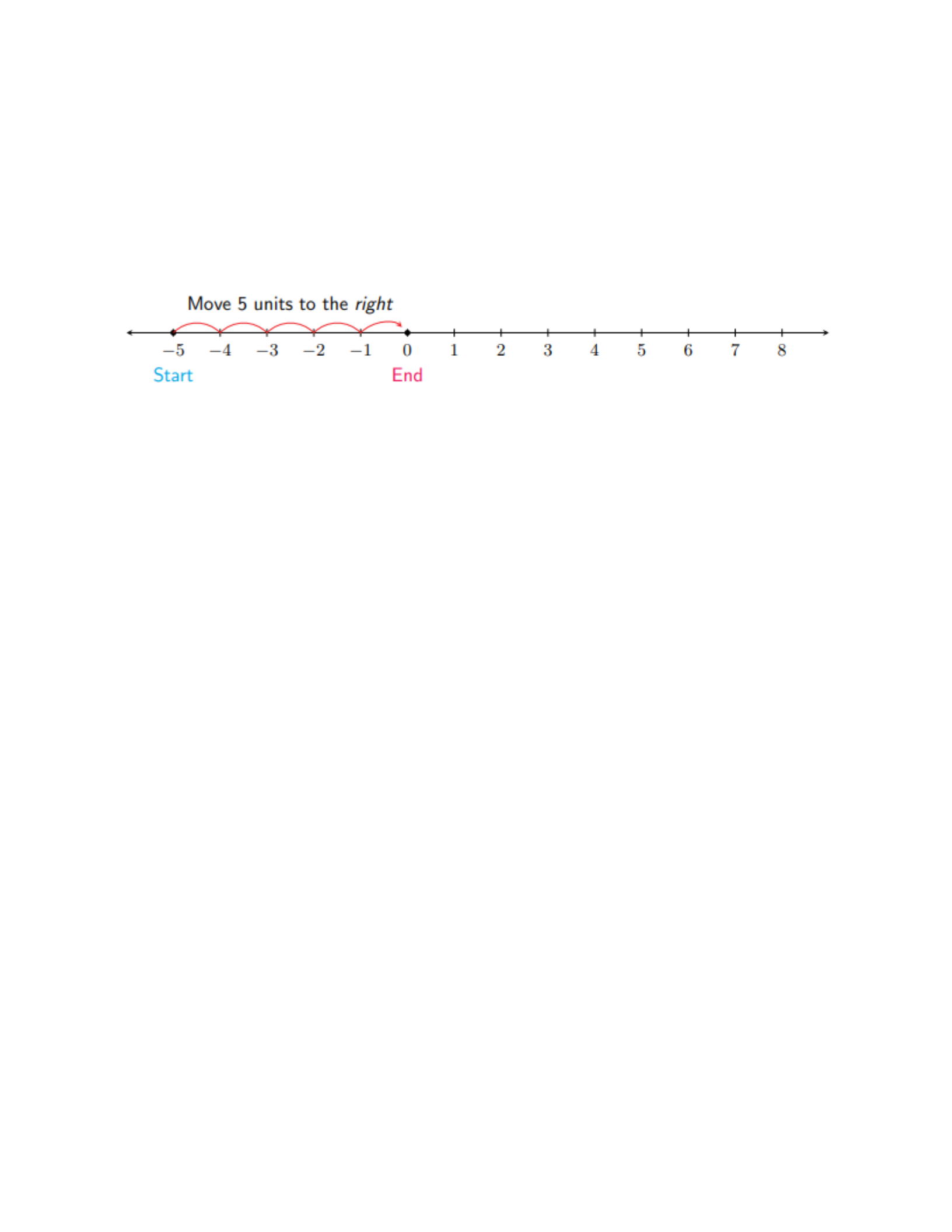
So, 3+(−7)=−4.3+(−7)=−4. Notice that the answer has the same sign as the signs of -7
(negative) because it is the number of larger weight, and its weight comes from finding the
difference of the weights of 3 and -7.
Example 1.5
Adding opposites: We start at -5 on the number line and jump to the right 5 units to land
finally at 00. So −5+5=0−5+5=0.
Note 1.6
Two opposite numbers are called a zero-pair, because adding them always results in 0.
So, −5 and 5 are a zero-pair.
Adding Intergers
67. To add two numbers of the same sign, add their weights and place it after the
sign.
68. To add two numbers of opposite signs, find the difference of their weights and
place it after the sign of the number with the greater weight.
Example 1.7
Add:
qqqqqqqq. −8+19=11−8+19=11
rrrrrrrr. −8+4=−4−8+4=−4
ssssssss. 6+(−9)=−36+(−9)=−3
tttttttt. 7+(−2)=57+(−2)=5
uuuuuuuu. (−4)+(−7)=−11(−4)+(−7)=−11
vvvvvvvv. 8+7=158+7=15
Note 1.8
While we can add in any order: 4+2=2+44+2=2+4, it is sometimes convenient to add up all
of the negative numbers and add up all of the positive numbers, and then add the results.
There are also times when it is best to notice certain simplifications if the numbers are
added in a different order.
For example

−5+4+5+(−8)=−5+(−8)+4+5( by reordering )−5+4+5+(−8)=−5+(−8)+4+5( by reordering )
so,
−5+4+5+(−8)=−5+(−8)+4+5=−13+9=−4−5+4+5+(−8)=−5+(−8)+4+5=−13+9=−4
We could have also simplified this by noting that (-5) and 5 are zero-pair, so we are left
with 4+(−8)4+(−8) which is -4.
Example 1.9
We can calculate
(−4)+(−5)+7+(−3)=(−4)+(−5)+(−3)+7=(−12)+7=−5(−4)+(−5)+7+(−3)=(−4)+(−5)+(−3)+7=
(−12)+7=−5
We could have simplified this by noting that (-4) and (-3) make -7, and -7 and 7 are zero-
pair, so the total is -5.
Subtraction (as Addition of the Opposite)
Once we know how to add numbers, we are set to subtract numbers because subtraction is
nothing but addition of the opposite. That is, subtracting 8 − 3 (which reads: subtracting 3
from 8) is the same as 8 + (−3) (which reads: Adding −3 to 8.).
Example 1.10
So, 8−3=8+(−3),8−3=8+(−3), and, we can use the rules of adding two numbers of opposite
signs to find out that the answer is 5.5. We can also use the number line. We start at 8 and
move 3 units to the left (adding -3 is adding a debt, so we move to the left).
So 8−3=5.−4−3−2−10123456788−3=5.−4−3−2−1012345678 End Start Move 3 units to the
left
Example 1.11
To calculate 3−73−7 we first rewrite it as an addition
problem. 3−7=3+(−7).3−7=3+(−7). We can either use the number line, or the rules of
adding two numbers of opposite signs. And, 50,3−7=3+(−7)=−450,3−7=3+(−7)=−4
Example 1.12
To calculate −4−1,−4−1, we first rewrite it as an addition
problem. −4−1=−4+(−1).−4−1=−4+(−1). We can either use the number line, or the rules of
adding two numbers of the same signs. If we want to use the rules, both numbers are
negative, so our answer will be negative, and, adding the weights of -4 and -1
is 5.50,−4−1=−4+(−1)=−55.50,−4−1=−4+(−1)=−5
On the number line, we start at -4 and move 1 unit to the left, to land on -5 which is our
answer.
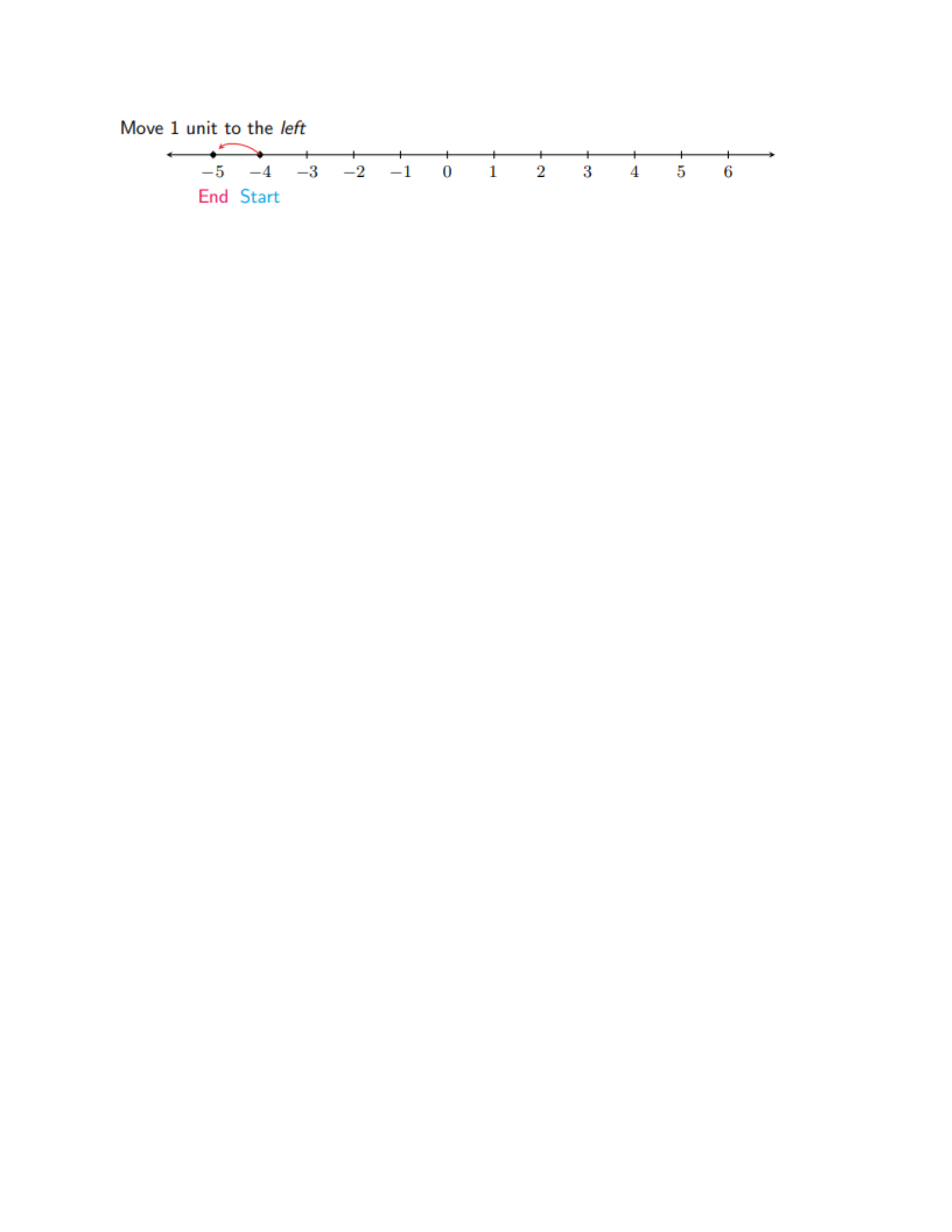
Changing the subtractions to additions in this way is particularly useful when adding or
subtracting several numbers (because we can add in any order).
Example 1.13
===−3−7+5+7+13−6−(−9)−3+(−7)+5+7+13+(−6)+9−3+(−7)+(−6)+5+7+13+918−3−7+5+7
+13−6−(−9)=−3+(−7)+5+7+13+(−6)+9=−3+(−7)+(−6)+5+7+13+9=18
===−3−7+5+7+13−6−(−9)−3+(−7)+5+7+13+(−6)+95+1318−3−7+5+7+13−6−(−9)=−3+(−7
)+5+7+13+(−6)+9=5+13=18
Remark 1.14
Warning: The symbol "-" is used in two different ways. When it is between two expressions,
it means subtract (e.g., 3−43−4 ). Otherwise, it means 'opposite' or 'negative'
(e.g., −3+4−3+4 ). So in the expression −4−(−3)−4−(−3), the first and last "-" means
opposite and the one in the middle one means subtract. The importance of understanding
this can not be overestimated.
Multiplication and Division of Positive Numbers
Multiplication of integers is adding in the sense that 3×4=4+4+43×4=4+4+4
To multiply larger numbers, it is better to use the usual scheme of multiplication. For
example:
Example 1.15
Let us multiply 152 by 34. We will for convenience sake put the smaller number on the
bottom (though it is not necessary). We have
+×4516515306624808152×34608+45605168
And division is the opposite of multiplication in the sense that to compute 45÷945÷9 is to
find a number so that when we multiply by 9 we get 45. We run through our multiplication
tables (which are hopefully in our head) to discover that 5 does the
trick: 5×9=455×9=45 so that 45÷9=5.45÷9=5. We will discuss division from a different
point of view when we discuss fractions.
To divide larger numbers, we can use long division. For example, let’s divide 3571 by 11.
Example 1.16
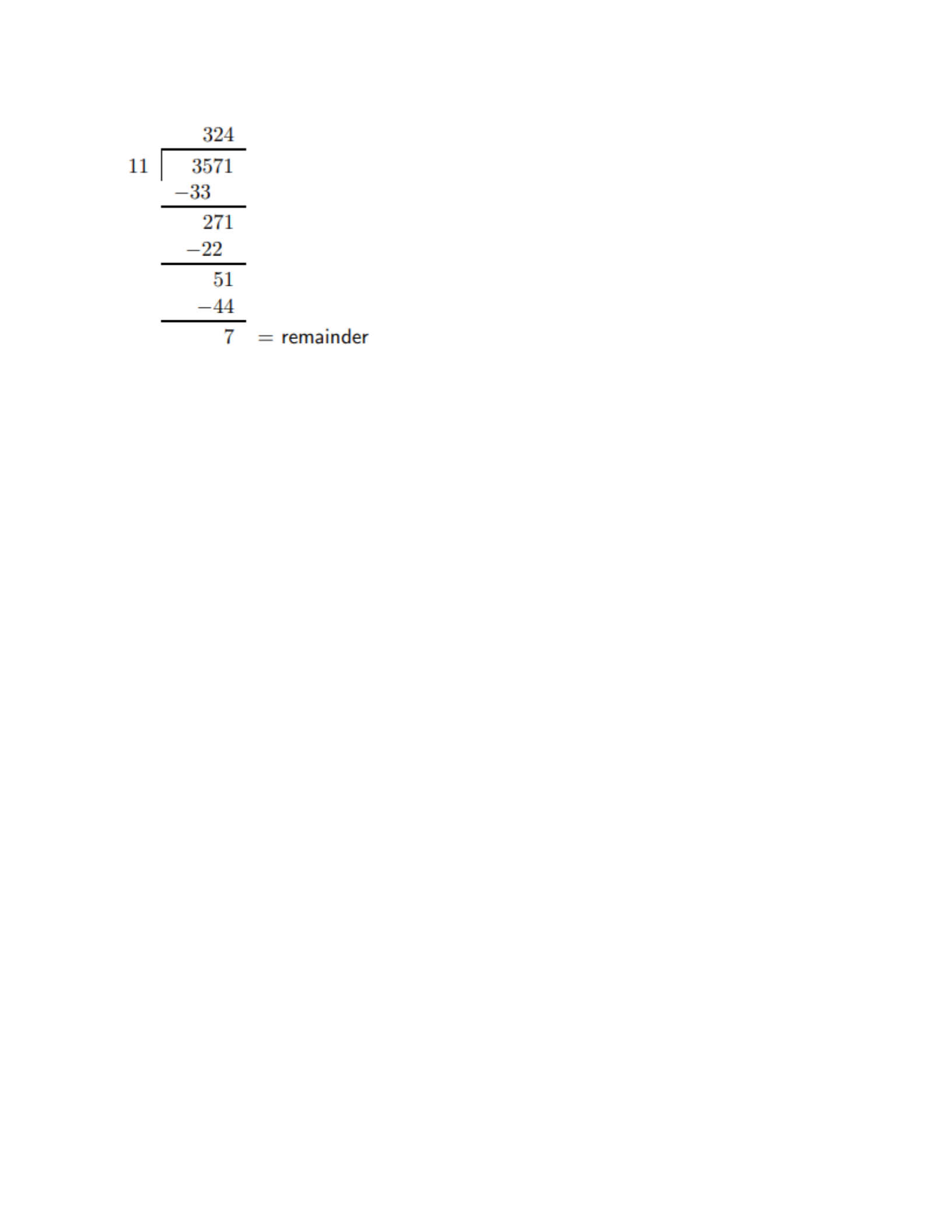
Multiplication involving negative numbers
Multiplication is a little tricky to understand without the notion of distribution (discussed
later). We will begin with noting again what it means to multiply a number by a positive
number: So if we want to compute 4⋅(−7)4⋅(−7) we note
4⋅(−7)=(−7)+(−7)+(−7)+(−7)=−284⋅(−7)=(−7)+(−7)+(−7)+(−7)=−28
Note that since 4⋅7=28,4⋅(−7)=−(4⋅7).4⋅7=28,4⋅(−7)=−(4⋅7). We can multiply positive
numbers in any order: 4⋅7=7⋅44⋅7=7⋅4. The same is true of positive and negative numbers:
(−7)⋅4=4⋅(−7)=−(4⋅7)=−28(−7)⋅4=4⋅(−7)=−(4⋅7)=−28
Example 1.17
5⋅(−12)=−(5⋅12)=−605⋅(−12)=−(5⋅12)=−60 and (−3)⋅(−2)=−(3⋅(−2))=−(−(3⋅2))=6(−3)⋅(−2)
=−(3⋅(−2))=−(−(3⋅2))=6
Example 1.18
So the size of the product of two numbers is the product of their sizes. The sign is positive if
the signs are the same and negative if they are different.
Example 1.19
Two quantities right next to each other, with no symbol between them (except for
parentheses around either or both numbers), has an implicit multiplication. For
example, 3(2)=3×23(2)=3×2.
Example 1.20
Multiply:
jjjjjjj. (−5)(−8)=40(−5)(−8)=40
kkkkkkk. (−6)⋅7=−42(−6)⋅7=−42
lllllll. 4⋅12=484⋅12=48

mmmmmmm. (−3)(−6)⋅4(−3)=18⋅4(−3)=72(−3)=−216( multiplying from left to
right )(−3)(−6)⋅4(−3)=18⋅4(−3)=72(−3)=−216( multiplying from left to right )
nnnnnnn. (−3)(−5)⋅4(−2)=(−3)⋅4⋅(−5)(−2)=−12⋅10=−120((−3)(−5)⋅4(−2)=(−3)⋅4⋅(−5)(
−2)=−12⋅10=−120( since we can multiply in any order it is convenient to see
that −5⋅−2=10.−5⋅−2=10. )
Exponents of integers
Recall that a positive exponent represents the number of times a number is multiplied by
itself.
Example 1.21
Evaluate:
qqqqqqqq. 52=5⋅5=2552=5⋅5=25
rrrrrrrr. (−4)3=(−4)⋅(−4)⋅(−4)=16⋅(−4)=−64(−4)3=(−4)⋅(−4)⋅(−4)=16⋅(−4)=−64
ssssssss. (−7)1=−7(−7)1=−7
tttttttt. −24=−2⋅2⋅2⋅2=−16−24=−2⋅2⋅2⋅2=−16 Note: The exponent here is for 2 not
−2!
uuuuuuuu. (−3)4=(−3)⋅(−3)⋅(−3)⋅(−3)=9⋅(−3)⋅(−3)=−27⋅(−3)=81(−3)4=(−3)⋅(−3)
⋅(−3)⋅(−3)=9⋅(−3)⋅(−3)=−27⋅(−3)=81
vvvvvvvv. (−2)5=(−2)⋅(−2)⋅(−2)⋅(−2)⋅(−2)=−32(−2)5=(−2)⋅(−2)⋅(−2)⋅(−2)⋅(−2)=−32
Exponent rules in details will be further discussed in Chapter 5.
Division involving negative numbers
Division is just a question of knowing multiplication and therefore has the same rule: The
size of the quotient of two numbers is the quotient of the sizes. The sign is positive if the
signs are the same and negative if they are different.
Example 1.22
Divide:
qqqqqqqq. (−42)÷7=−6(−42)÷7=−6
rrrrrrrr. 81÷(−9)=−981÷(−9)=−9
ssssssss. (−35)÷(−7)=5(−35)÷(−7)=5
tttttttt. 14÷2=714÷2=7
uuuuuuuu. 0÷5=00÷5=0. Note When dividing 0 by any number, the answer is
always 0.
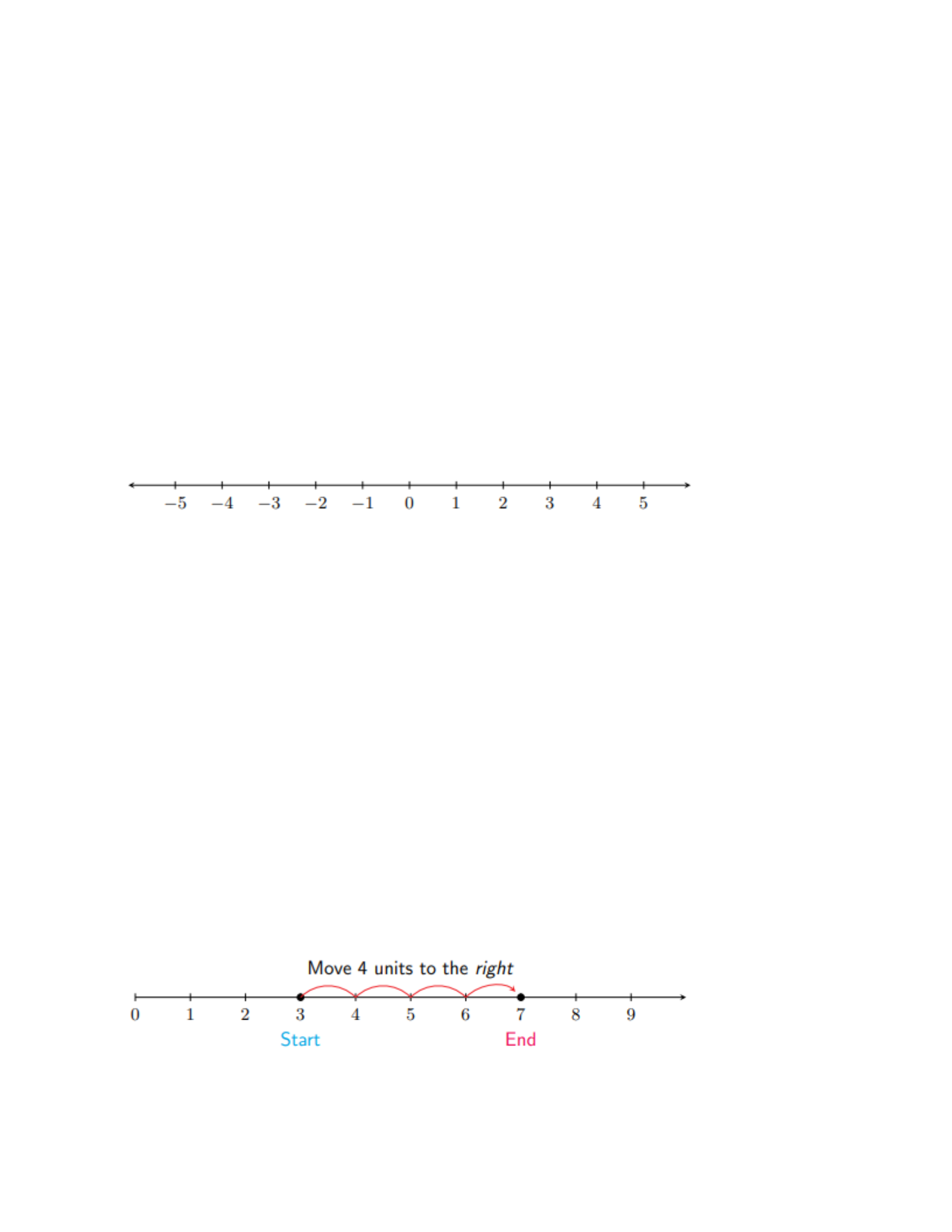
vvvvvvvv. −10÷0=−10÷0= undefined.
Note 1.23
Any number divided by 0 is undefined!
Multiplying and Dividing Integers
Consider two numbers at a time.
67. If the signs of the two numbers are the same, then the sign of the answer is positive.
68. If the signs of the two numbers are different, then the sign of the answer is negative.
We begin with a brief review of arithmetic with integers
i.e. …,−3,−2,−1,0,1,2,3,……,−3,−2,−1,0,1,2,3,…
Any number has a weight and a sign.
The magnitude (or weight) of a number is the distance it is from 0 on the number line.
Example 1.1
For example, the weight of -5 is 5 and the weight of 7 is 7 .
Two numbers are opposites if, on the number line, they are on opposite sides of zero, but
the same distance away from zero.
So, −5 is the opposite of 5, and 7 is the opposite of −7 and so on.
Addition
We can add two numbers with the help of a number line .
Example 1.2
Adding two positive numbers: For example to add 3+43+4, we start with 3 on the number
line then move 4 units to the right. We land at 7 which is our answer.
So, 3+4=73+4=7. Notice that the answer has the same sign as the signs of 3 and 4 (both
positive) and its weight comes from adding the weights of 3 and 4.
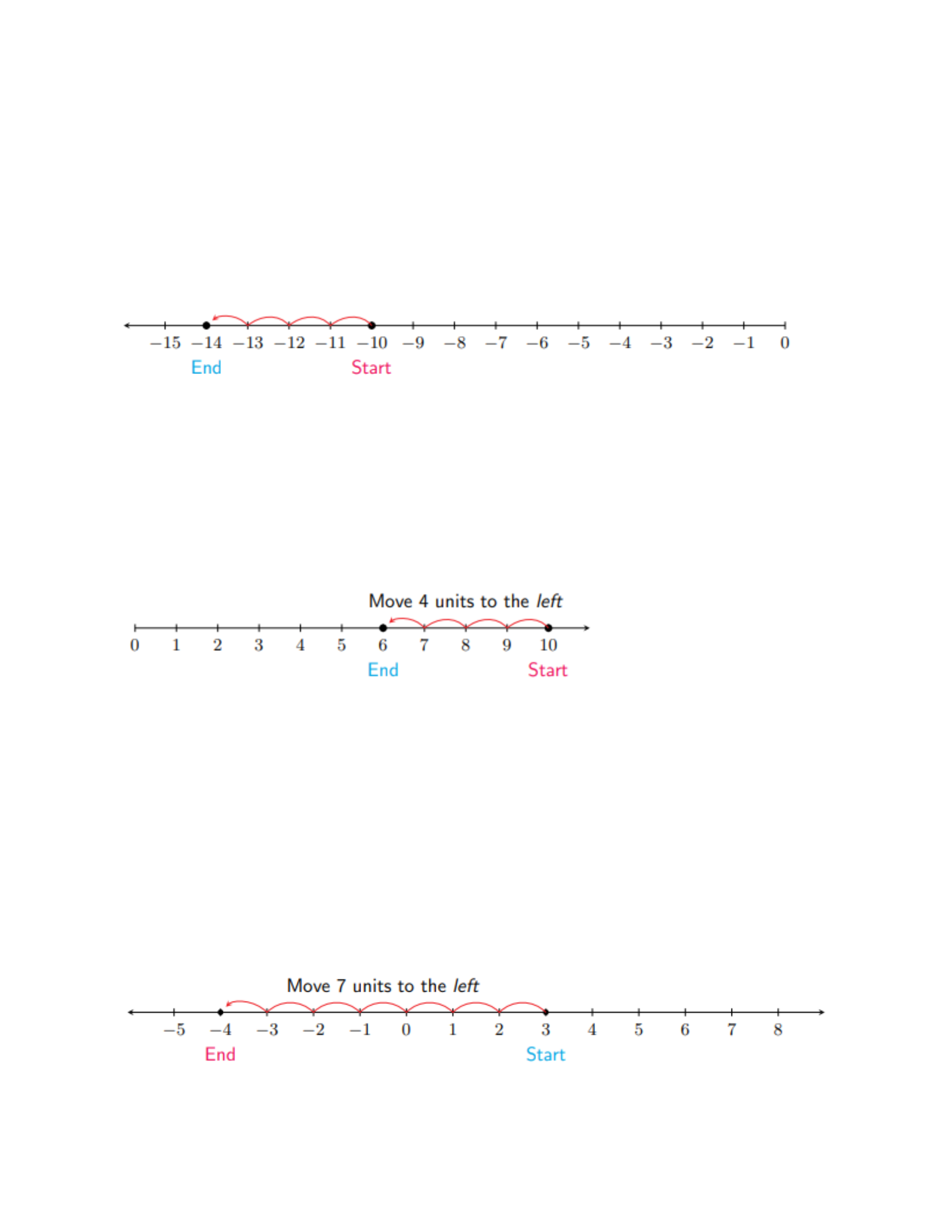
You always move to the right when you add a positive number
Example 1.3
Adding two negative numbers: For example, −10+(−4)−10+(−4) means you are adding a
debt of $4$4 to an already existing debt of $10.$10. So, we start at -10 on the number line
and move 4 units to the left, to land at −14,−14, which is the answer.
You always move to the left when you add a negative number (a debt)
So, −10+(−4)=−14−10+(−4)=−14. Notice that the answer has the same sign as the signs of -
10 and -4 (both negative) and its weight comes from adding the weights of -10 and -4
To add numbers of opposite signs, that is, a positive and a negative number, we can also
use the number line. For example, to perform 10+(−4),10+(−4), we start at 10 on the
number line and then move 4 units to the left. We land at 6,6, which is the answer. Think
of 10+(−4)10+(−4) as having $10$10 and adding a $4$4 debt. Because we are adding a
debt, we move to the left on the number line!
So, 10+(−4)=6.10+(−4)=6. Notice that the answer has the same sign as the sign of 10
(positive) because it is the number of larger weight, and its weight comes from finding the
difference of the weights of 10 and -4
Notice that because we were adding two numbers of opposite signs, the answer ended up
being the difference in weight (6) along with the sign of the number of larger weight
(positive).
Example 1.4
Adding two numbers of opposite signs: For example, 3+(−7)3+(−7). We start at 3 and move
toward 7 units to the left, and we land at −4,−4, which is our answer.
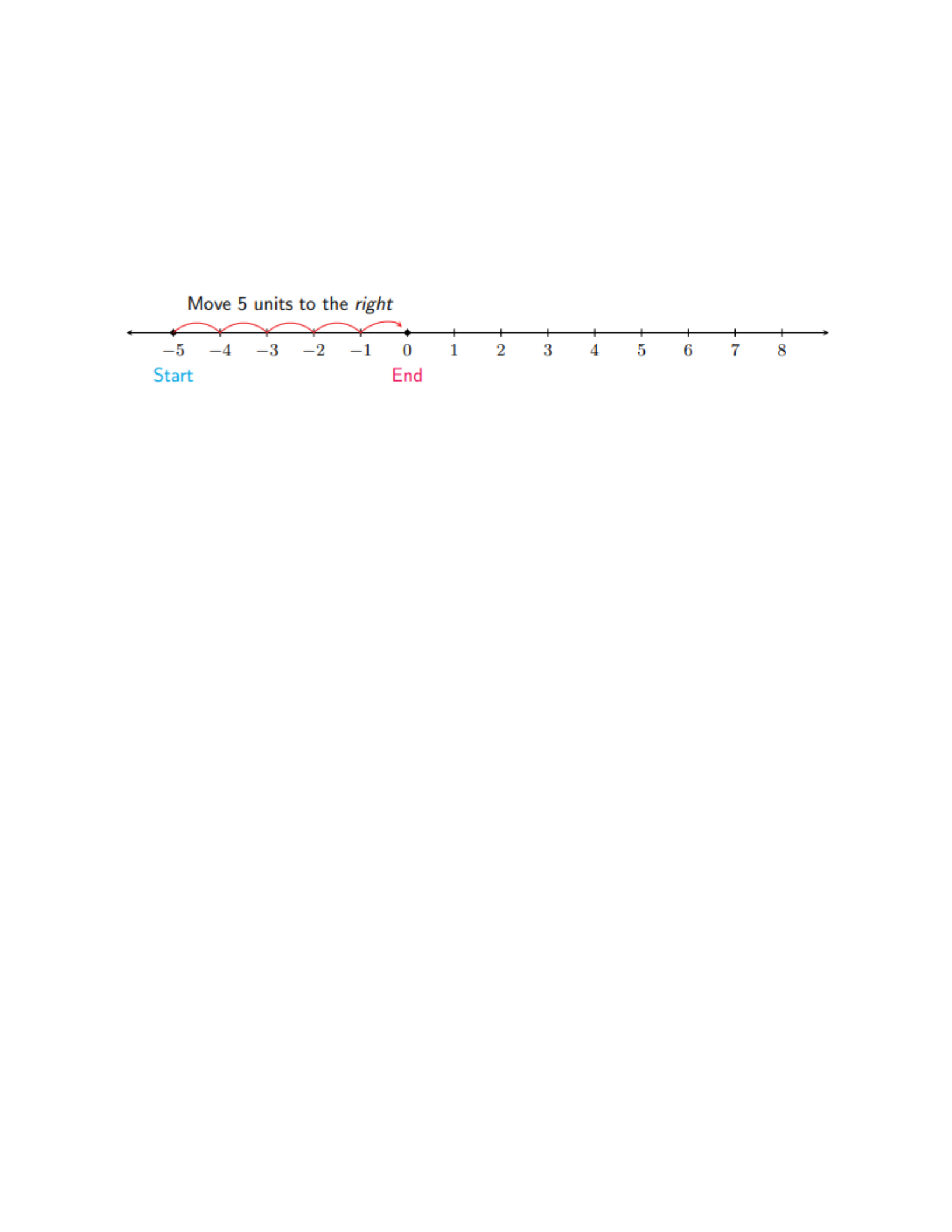
So, 3+(−7)=−4.3+(−7)=−4. Notice that the answer has the same sign as the signs of -7
(negative) because it is the number of larger weight, and its weight comes from finding the
difference of the weights of 3 and -7.
Example 1.5
Adding opposites: We start at -5 on the number line and jump to the right 5 units to land
finally at 00. So −5+5=0−5+5=0.
Note 1.6
Two opposite numbers are called a zero-pair, because adding them always results in 0.
So, −5 and 5 are a zero-pair.
Adding Intergers
69. To add two numbers of the same sign, add their weights and place it after the
sign.
70. To add two numbers of opposite signs, find the difference of their weights and
place it after the sign of the number with the greater weight.
Example 1.7
Add:
wwwwwwww. −8+19=11−8+19=11
xxxxxxxx. −8+4=−4−8+4=−4
yyyyyyyy. 6+(−9)=−36+(−9)=−3
zzzzzzzz. 7+(−2)=57+(−2)=5
aaaaaaaaa. (−4)+(−7)=−11(−4)+(−7)=−11
bbbbbbbbb. 8+7=158+7=15
Note 1.8
While we can add in any order: 4+2=2+44+2=2+4, it is sometimes convenient to add up all
of the negative numbers and add up all of the positive numbers, and then add the results.
There are also times when it is best to notice certain simplifications if the numbers are
added in a different order.
For example

−5+4+5+(−8)=−5+(−8)+4+5( by reordering )−5+4+5+(−8)=−5+(−8)+4+5( by reordering )
so,
−5+4+5+(−8)=−5+(−8)+4+5=−13+9=−4−5+4+5+(−8)=−5+(−8)+4+5=−13+9=−4
We could have also simplified this by noting that (-5) and 5 are zero-pair, so we are left
with 4+(−8)4+(−8) which is -4.
Example 1.9
We can calculate
(−4)+(−5)+7+(−3)=(−4)+(−5)+(−3)+7=(−12)+7=−5(−4)+(−5)+7+(−3)=(−4)+(−5)+(−3)+7=
(−12)+7=−5
We could have simplified this by noting that (-4) and (-3) make -7, and -7 and 7 are zero-
pair, so the total is -5.
Subtraction (as Addition of the Opposite)
Once we know how to add numbers, we are set to subtract numbers because subtraction is
nothing but addition of the opposite. That is, subtracting 8 − 3 (which reads: subtracting 3
from 8) is the same as 8 + (−3) (which reads: Adding −3 to 8.).
Example 1.10
So, 8−3=8+(−3),8−3=8+(−3), and, we can use the rules of adding two numbers of opposite
signs to find out that the answer is 5.5. We can also use the number line. We start at 8 and
move 3 units to the left (adding -3 is adding a debt, so we move to the left).
So 8−3=5.−4−3−2−10123456788−3=5.−4−3−2−1012345678 End Start Move 3 units to the
left
Example 1.11
To calculate 3−73−7 we first rewrite it as an addition
problem. 3−7=3+(−7).3−7=3+(−7). We can either use the number line, or the rules of
adding two numbers of opposite signs. And, 50,3−7=3+(−7)=−450,3−7=3+(−7)=−4
Example 1.12
To calculate −4−1,−4−1, we first rewrite it as an addition
problem. −4−1=−4+(−1).−4−1=−4+(−1). We can either use the number line, or the rules of
adding two numbers of the same signs. If we want to use the rules, both numbers are
negative, so our answer will be negative, and, adding the weights of -4 and -1
is 5.50,−4−1=−4+(−1)=−55.50,−4−1=−4+(−1)=−5
On the number line, we start at -4 and move 1 unit to the left, to land on -5 which is our
answer.
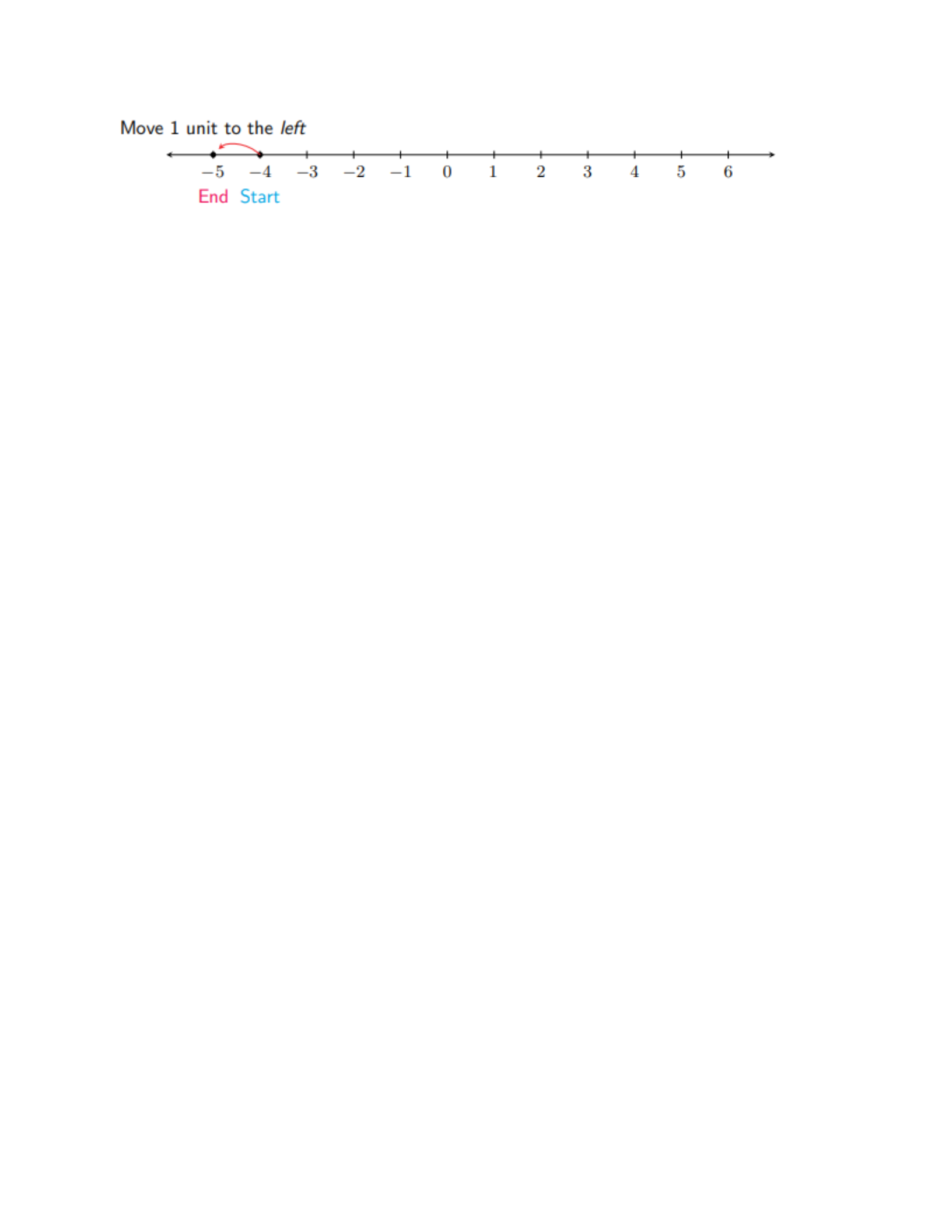
Changing the subtractions to additions in this way is particularly useful when adding or
subtracting several numbers (because we can add in any order).
Example 1.13
===−3−7+5+7+13−6−(−9)−3+(−7)+5+7+13+(−6)+9−3+(−7)+(−6)+5+7+13+918−3−7+5+7
+13−6−(−9)=−3+(−7)+5+7+13+(−6)+9=−3+(−7)+(−6)+5+7+13+9=18
===−3−7+5+7+13−6−(−9)−3+(−7)+5+7+13+(−6)+95+1318−3−7+5+7+13−6−(−9)=−3+(−7
)+5+7+13+(−6)+9=5+13=18
Remark 1.14
Warning: The symbol "-" is used in two different ways. When it is between two expressions,
it means subtract (e.g., 3−43−4 ). Otherwise, it means 'opposite' or 'negative'
(e.g., −3+4−3+4 ). So in the expression −4−(−3)−4−(−3), the first and last "-" means
opposite and the one in the middle one means subtract. The importance of understanding
this can not be overestimated.
Multiplication and Division of Positive Numbers
Multiplication of integers is adding in the sense that 3×4=4+4+43×4=4+4+4
To multiply larger numbers, it is better to use the usual scheme of multiplication. For
example:
Example 1.15
Let us multiply 152 by 34. We will for convenience sake put the smaller number on the
bottom (though it is not necessary). We have
+×4516515306624808152×34608+45605168
And division is the opposite of multiplication in the sense that to compute 45÷945÷9 is to
find a number so that when we multiply by 9 we get 45. We run through our multiplication
tables (which are hopefully in our head) to discover that 5 does the
trick: 5×9=455×9=45 so that 45÷9=5.45÷9=5. We will discuss division from a different
point of view when we discuss fractions.
To divide larger numbers, we can use long division. For example, let’s divide 3571 by 11.
Example 1.16
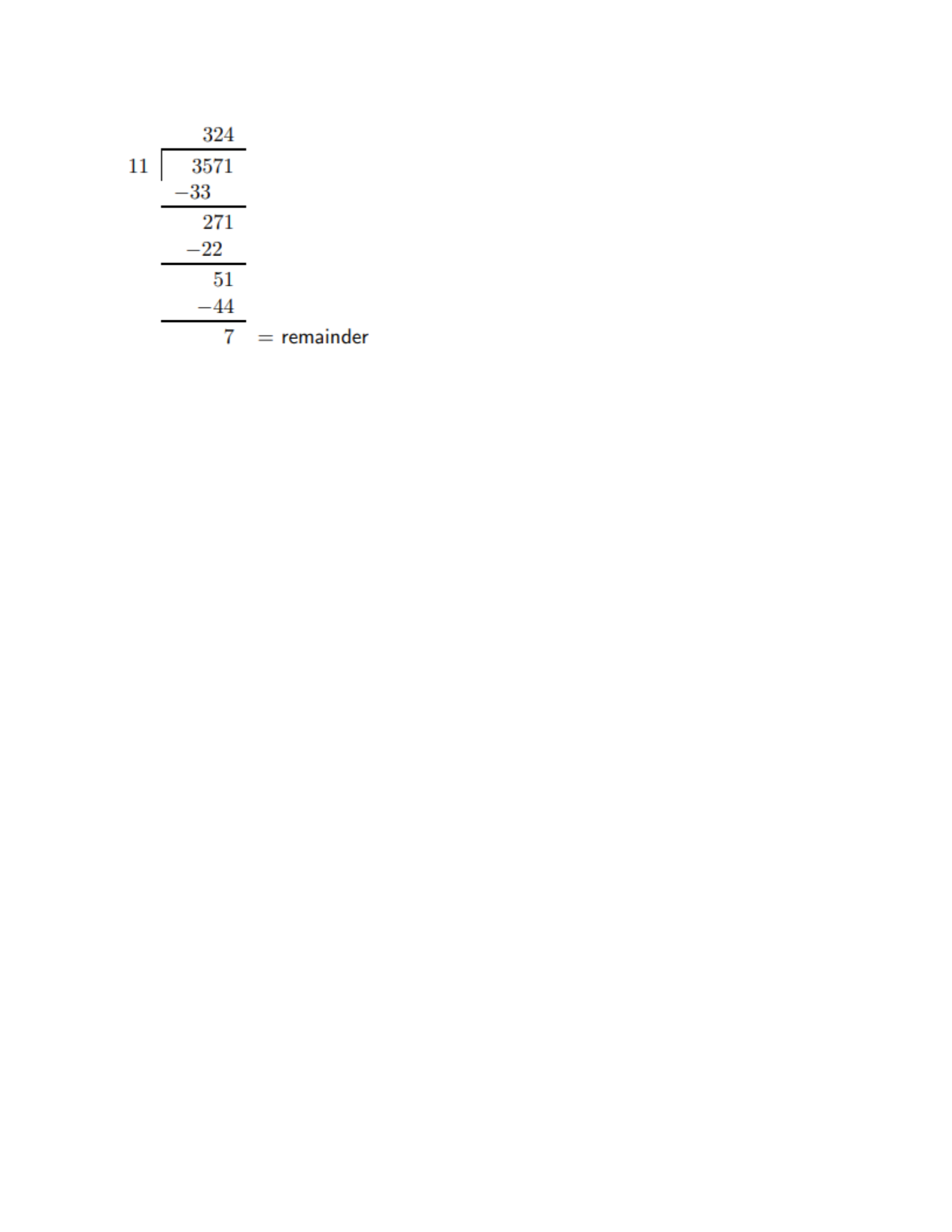
Multiplication involving negative numbers
Multiplication is a little tricky to understand without the notion of distribution (discussed
later). We will begin with noting again what it means to multiply a number by a positive
number: So if we want to compute 4⋅(−7)4⋅(−7) we note
4⋅(−7)=(−7)+(−7)+(−7)+(−7)=−284⋅(−7)=(−7)+(−7)+(−7)+(−7)=−28
Note that since 4⋅7=28,4⋅(−7)=−(4⋅7).4⋅7=28,4⋅(−7)=−(4⋅7). We can multiply positive
numbers in any order: 4⋅7=7⋅44⋅7=7⋅4. The same is true of positive and negative numbers:
(−7)⋅4=4⋅(−7)=−(4⋅7)=−28(−7)⋅4=4⋅(−7)=−(4⋅7)=−28
Example 1.17
5⋅(−12)=−(5⋅12)=−605⋅(−12)=−(5⋅12)=−60 and (−3)⋅(−2)=−(3⋅(−2))=−(−(3⋅2))=6(−3)⋅(−2)
=−(3⋅(−2))=−(−(3⋅2))=6
Example 1.18
So the size of the product of two numbers is the product of their sizes. The sign is positive if
the signs are the same and negative if they are different.
Example 1.19
Two quantities right next to each other, with no symbol between them (except for
parentheses around either or both numbers), has an implicit multiplication. For
example, 3(2)=3×23(2)=3×2.
Example 1.20
Multiply:
ooooooo. (−5)(−8)=40(−5)(−8)=40
ppppppp. (−6)⋅7=−42(−6)⋅7=−42
qqqqqqq. 4⋅12=484⋅12=48

rrrrrrr. (−3)(−6)⋅4(−3)=18⋅4(−3)=72(−3)=−216( multiplying from left to
right )(−3)(−6)⋅4(−3)=18⋅4(−3)=72(−3)=−216( multiplying from left to right )
sssssss. (−3)(−5)⋅4(−2)=(−3)⋅4⋅(−5)(−2)=−12⋅10=−120((−3)(−5)⋅4(−2)=(−3)⋅4⋅(−5)(
−2)=−12⋅10=−120( since we can multiply in any order it is convenient to see
that −5⋅−2=10.−5⋅−2=10. )
Exponents of integers
Recall that a positive exponent represents the number of times a number is multiplied by
itself.
Example 1.21
Evaluate:
wwwwwwww. 52=5⋅5=2552=5⋅5=25
xxxxxxxx. (−4)3=(−4)⋅(−4)⋅(−4)=16⋅(−4)=−64(−4)3=(−4)⋅(−4)⋅(−4)=16⋅(−4)=−64
yyyyyyyy. (−7)1=−7(−7)1=−7
zzzzzzzz. −24=−2⋅2⋅2⋅2=−16−24=−2⋅2⋅2⋅2=−16 Note: The exponent here is for 2 not
−2!
aaaaaaaaa. (−3)4=(−3)⋅(−3)⋅(−3)⋅(−3)=9⋅(−3)⋅(−3)=−27⋅(−3)=81(−3)4=(−3)⋅(−3)
⋅(−3)⋅(−3)=9⋅(−3)⋅(−3)=−27⋅(−3)=81
bbbbbbbbb. (−2)5=(−2)⋅(−2)⋅(−2)⋅(−2)⋅(−2)=−32(−2)5=(−2)⋅(−2)⋅(−2)⋅(−2)⋅(−2)=
−32
Exponent rules in details will be further discussed in Chapter 5.
Division involving negative numbers
Division is just a question of knowing multiplication and therefore has the same rule: The
size of the quotient of two numbers is the quotient of the sizes. The sign is positive if the
signs are the same and negative if they are different.
Example 1.22
Divide:
wwwwwwww. (−42)÷7=−6(−42)÷7=−6
xxxxxxxx. 81÷(−9)=−981÷(−9)=−9
yyyyyyyy. (−35)÷(−7)=5(−35)÷(−7)=5
zzzzzzzz. 14÷2=714÷2=7
aaaaaaaaa. 0÷5=00÷5=0. Note When dividing 0 by any number, the answer is
always 0.
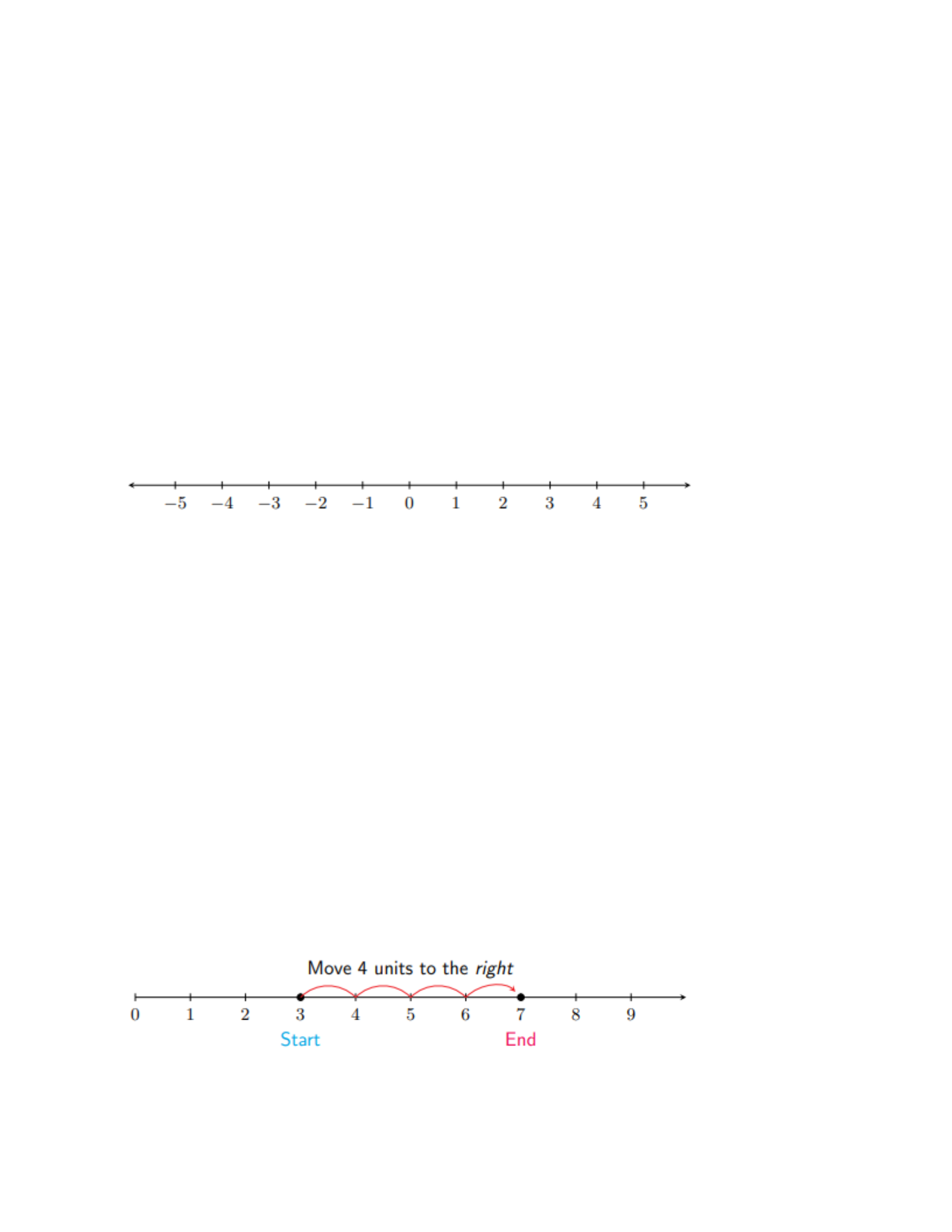
bbbbbbbbb. −10÷0=−10÷0= undefined.
Note 1.23
Any number divided by 0 is undefined!
Multiplying and Dividing Integers
Consider two numbers at a time.
69. If the signs of the two numbers are the same, then the sign of the answer is positive.
70. If the signs of the two numbers are different, then the sign of the answer is negative.
We begin with a brief review of arithmetic with integers
i.e. …,−3,−2,−1,0,1,2,3,……,−3,−2,−1,0,1,2,3,…
Any number has a weight and a sign.
The magnitude (or weight) of a number is the distance it is from 0 on the number line.
Example 1.1
For example, the weight of -5 is 5 and the weight of 7 is 7 .
Two numbers are opposites if, on the number line, they are on opposite sides of zero, but
the same distance away from zero.
So, −5 is the opposite of 5, and 7 is the opposite of −7 and so on.
Addition
We can add two numbers with the help of a number line .
Example 1.2
Adding two positive numbers: For example to add 3+43+4, we start with 3 on the number
line then move 4 units to the right. We land at 7 which is our answer.
So, 3+4=73+4=7. Notice that the answer has the same sign as the signs of 3 and 4 (both
positive) and its weight comes from adding the weights of 3 and 4.
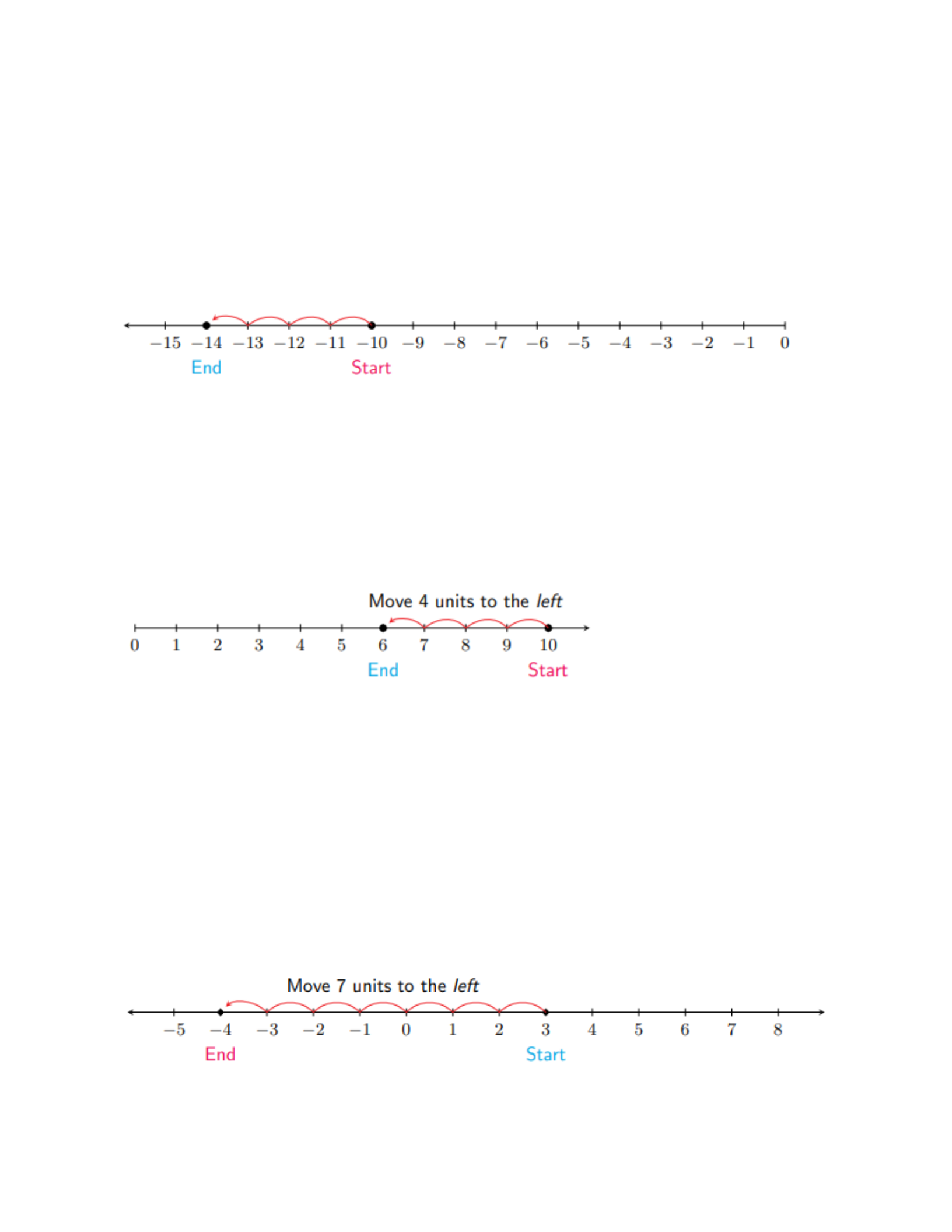
You always move to the right when you add a positive number
Example 1.3
Adding two negative numbers: For example, −10+(−4)−10+(−4) means you are adding a
debt of $4$4 to an already existing debt of $10.$10. So, we start at -10 on the number line
and move 4 units to the left, to land at −14,−14, which is the answer.
You always move to the left when you add a negative number (a debt)
So, −10+(−4)=−14−10+(−4)=−14. Notice that the answer has the same sign as the signs of -
10 and -4 (both negative) and its weight comes from adding the weights of -10 and -4
To add numbers of opposite signs, that is, a positive and a negative number, we can also
use the number line. For example, to perform 10+(−4),10+(−4), we start at 10 on the
number line and then move 4 units to the left. We land at 6,6, which is the answer. Think
of 10+(−4)10+(−4) as having $10$10 and adding a $4$4 debt. Because we are adding a
debt, we move to the left on the number line!
So, 10+(−4)=6.10+(−4)=6. Notice that the answer has the same sign as the sign of 10
(positive) because it is the number of larger weight, and its weight comes from finding the
difference of the weights of 10 and -4
Notice that because we were adding two numbers of opposite signs, the answer ended up
being the difference in weight (6) along with the sign of the number of larger weight
(positive).
Example 1.4
Adding two numbers of opposite signs: For example, 3+(−7)3+(−7). We start at 3 and move
toward 7 units to the left, and we land at −4,−4, which is our answer.
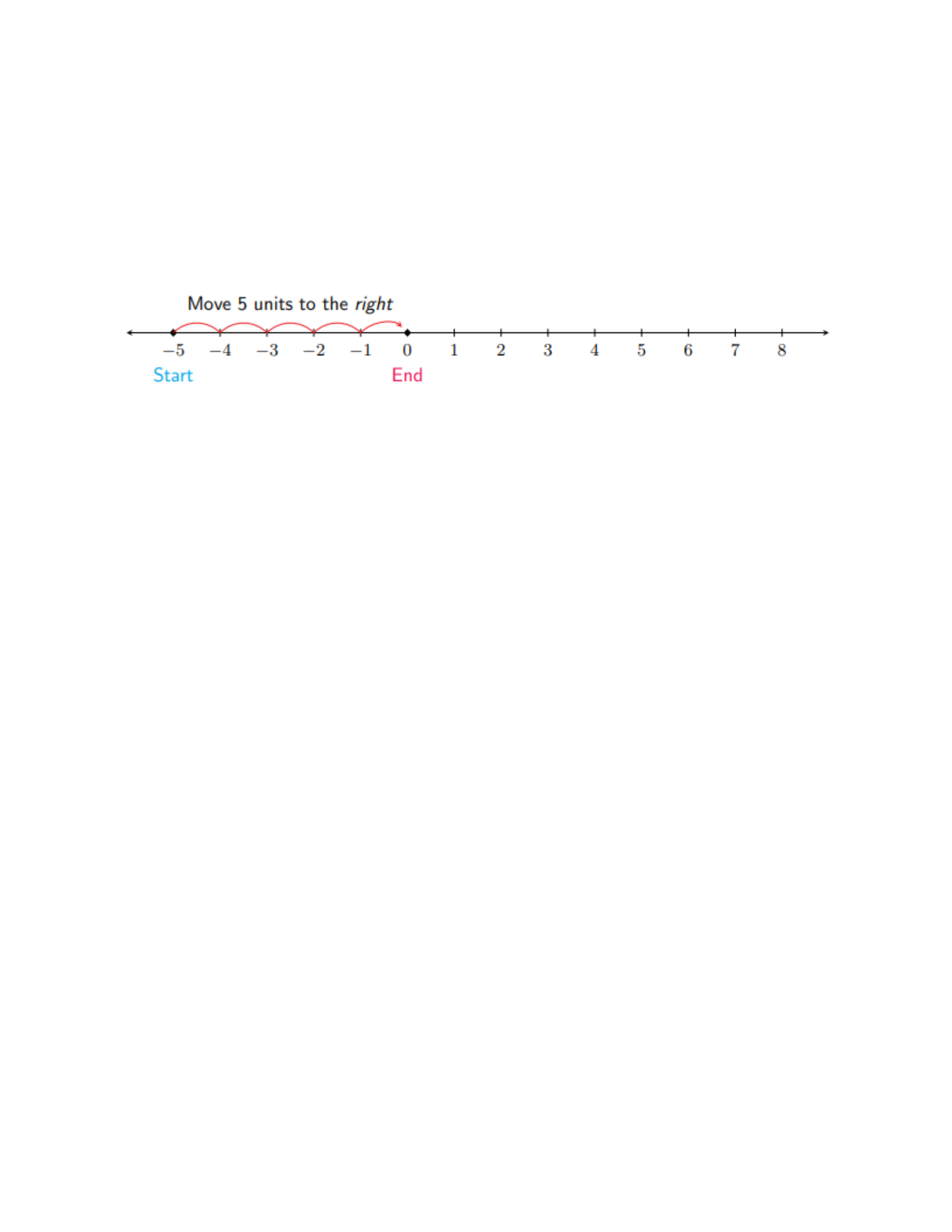
So, 3+(−7)=−4.3+(−7)=−4. Notice that the answer has the same sign as the signs of -7
(negative) because it is the number of larger weight, and its weight comes from finding the
difference of the weights of 3 and -7.
Example 1.5
Adding opposites: We start at -5 on the number line and jump to the right 5 units to land
finally at 00. So −5+5=0−5+5=0.
Note 1.6
Two opposite numbers are called a zero-pair, because adding them always results in 0.
So, −5 and 5 are a zero-pair.
Adding Intergers
71. To add two numbers of the same sign, add their weights and place it after the
sign.
72. To add two numbers of opposite signs, find the difference of their weights and
place it after the sign of the number with the greater weight.
Example 1.7
Add:
ccccccccc. −8+19=11−8+19=11
ddddddddd. −8+4=−4−8+4=−4
eeeeeeeee. 6+(−9)=−36+(−9)=−3
fffffffff. 7+(−2)=57+(−2)=5
ggggggggg. (−4)+(−7)=−11(−4)+(−7)=−11
hhhhhhhhh. 8+7=158+7=15
Note 1.8
While we can add in any order: 4+2=2+44+2=2+4, it is sometimes convenient to add up all
of the negative numbers and add up all of the positive numbers, and then add the results.
There are also times when it is best to notice certain simplifications if the numbers are
added in a different order.
For example

−5+4+5+(−8)=−5+(−8)+4+5( by reordering )−5+4+5+(−8)=−5+(−8)+4+5( by reordering )
so,
−5+4+5+(−8)=−5+(−8)+4+5=−13+9=−4−5+4+5+(−8)=−5+(−8)+4+5=−13+9=−4
We could have also simplified this by noting that (-5) and 5 are zero-pair, so we are left
with 4+(−8)4+(−8) which is -4.
Example 1.9
We can calculate
(−4)+(−5)+7+(−3)=(−4)+(−5)+(−3)+7=(−12)+7=−5(−4)+(−5)+7+(−3)=(−4)+(−5)+(−3)+7=
(−12)+7=−5
We could have simplified this by noting that (-4) and (-3) make -7, and -7 and 7 are zero-
pair, so the total is -5.
Subtraction (as Addition of the Opposite)
Once we know how to add numbers, we are set to subtract numbers because subtraction is
nothing but addition of the opposite. That is, subtracting 8 − 3 (which reads: subtracting 3
from 8) is the same as 8 + (−3) (which reads: Adding −3 to 8.).
Example 1.10
So, 8−3=8+(−3),8−3=8+(−3), and, we can use the rules of adding two numbers of opposite
signs to find out that the answer is 5.5. We can also use the number line. We start at 8 and
move 3 units to the left (adding -3 is adding a debt, so we move to the left).
So 8−3=5.−4−3−2−10123456788−3=5.−4−3−2−1012345678 End Start Move 3 units to the
left
Example 1.11
To calculate 3−73−7 we first rewrite it as an addition
problem. 3−7=3+(−7).3−7=3+(−7). We can either use the number line, or the rules of
adding two numbers of opposite signs. And, 50,3−7=3+(−7)=−450,3−7=3+(−7)=−4
Example 1.12
To calculate −4−1,−4−1, we first rewrite it as an addition
problem. −4−1=−4+(−1).−4−1=−4+(−1). We can either use the number line, or the rules of
adding two numbers of the same signs. If we want to use the rules, both numbers are
negative, so our answer will be negative, and, adding the weights of -4 and -1
is 5.50,−4−1=−4+(−1)=−55.50,−4−1=−4+(−1)=−5
On the number line, we start at -4 and move 1 unit to the left, to land on -5 which is our
answer.
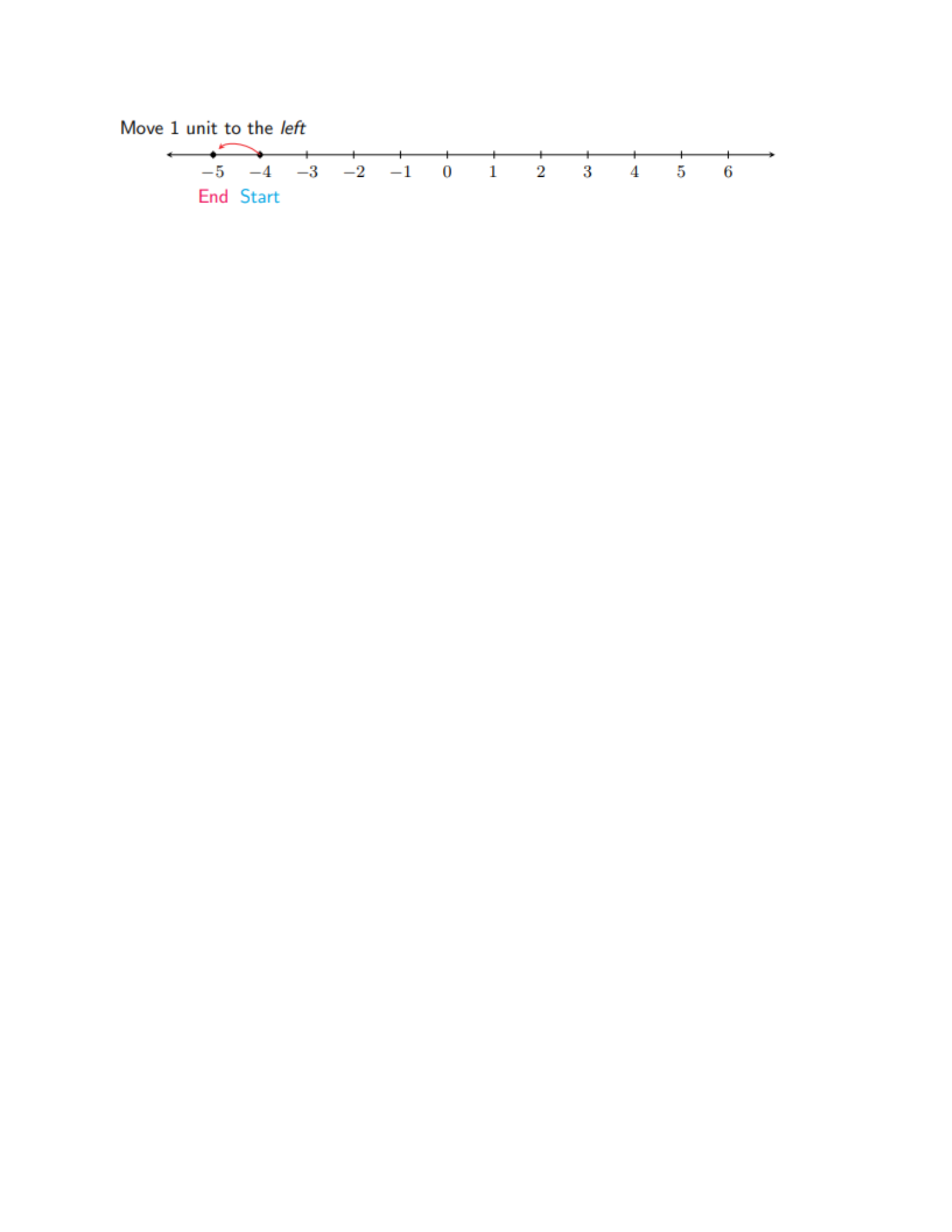
Changing the subtractions to additions in this way is particularly useful when adding or
subtracting several numbers (because we can add in any order).
Example 1.13
===−3−7+5+7+13−6−(−9)−3+(−7)+5+7+13+(−6)+9−3+(−7)+(−6)+5+7+13+918−3−7+5+7
+13−6−(−9)=−3+(−7)+5+7+13+(−6)+9=−3+(−7)+(−6)+5+7+13+9=18
===−3−7+5+7+13−6−(−9)−3+(−7)+5+7+13+(−6)+95+1318−3−7+5+7+13−6−(−9)=−3+(−7
)+5+7+13+(−6)+9=5+13=18
Remark 1.14
Warning: The symbol "-" is used in two different ways. When it is between two expressions,
it means subtract (e.g., 3−43−4 ). Otherwise, it means 'opposite' or 'negative'
(e.g., −3+4−3+4 ). So in the expression −4−(−3)−4−(−3), the first and last "-" means
opposite and the one in the middle one means subtract. The importance of understanding
this can not be overestimated.
Multiplication and Division of Positive Numbers
Multiplication of integers is adding in the sense that 3×4=4+4+43×4=4+4+4
To multiply larger numbers, it is better to use the usual scheme of multiplication. For
example:
Example 1.15
Let us multiply 152 by 34. We will for convenience sake put the smaller number on the
bottom (though it is not necessary). We have
+×4516515306624808152×34608+45605168
And division is the opposite of multiplication in the sense that to compute 45÷945÷9 is to
find a number so that when we multiply by 9 we get 45. We run through our multiplication
tables (which are hopefully in our head) to discover that 5 does the
trick: 5×9=455×9=45 so that 45÷9=5.45÷9=5. We will discuss division from a different
point of view when we discuss fractions.
To divide larger numbers, we can use long division. For example, let’s divide 3571 by 11.
Example 1.16
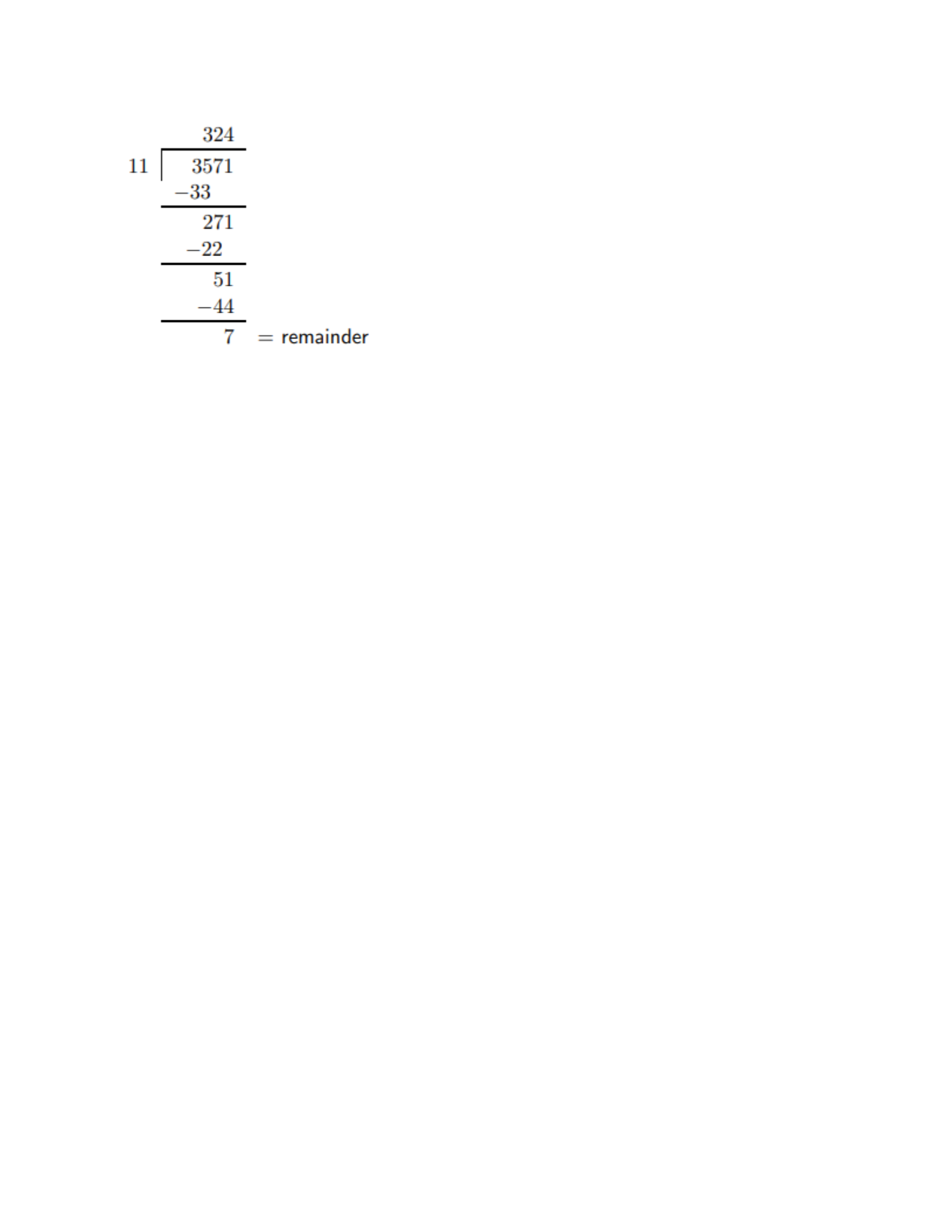
Multiplication involving negative numbers
Multiplication is a little tricky to understand without the notion of distribution (discussed
later). We will begin with noting again what it means to multiply a number by a positive
number: So if we want to compute 4⋅(−7)4⋅(−7) we note
4⋅(−7)=(−7)+(−7)+(−7)+(−7)=−284⋅(−7)=(−7)+(−7)+(−7)+(−7)=−28
Note that since 4⋅7=28,4⋅(−7)=−(4⋅7).4⋅7=28,4⋅(−7)=−(4⋅7). We can multiply positive
numbers in any order: 4⋅7=7⋅44⋅7=7⋅4. The same is true of positive and negative numbers:
(−7)⋅4=4⋅(−7)=−(4⋅7)=−28(−7)⋅4=4⋅(−7)=−(4⋅7)=−28
Example 1.17
5⋅(−12)=−(5⋅12)=−605⋅(−12)=−(5⋅12)=−60 and (−3)⋅(−2)=−(3⋅(−2))=−(−(3⋅2))=6(−3)⋅(−2)
=−(3⋅(−2))=−(−(3⋅2))=6
Example 1.18
So the size of the product of two numbers is the product of their sizes. The sign is positive if
the signs are the same and negative if they are different.
Example 1.19
Two quantities right next to each other, with no symbol between them (except for
parentheses around either or both numbers), has an implicit multiplication. For
example, 3(2)=3×23(2)=3×2.
Example 1.20
Multiply:
ttttttt. (−5)(−8)=40(−5)(−8)=40
uuuuuuu. (−6)⋅7=−42(−6)⋅7=−42
vvvvvvv. 4⋅12=484⋅12=48

wwwwwww. (−3)(−6)⋅4(−3)=18⋅4(−3)=72(−3)=−216( multiplying from left to
right )(−3)(−6)⋅4(−3)=18⋅4(−3)=72(−3)=−216( multiplying from left to right )
xxxxxxx. (−3)(−5)⋅4(−2)=(−3)⋅4⋅(−5)(−2)=−12⋅10=−120((−3)(−5)⋅4(−2)=(−3)⋅4⋅(−5)(
−2)=−12⋅10=−120( since we can multiply in any order it is convenient to see
that −5⋅−2=10.−5⋅−2=10. )
Exponents of integers
Recall that a positive exponent represents the number of times a number is multiplied by
itself.
Example 1.21
Evaluate:
ccccccccc. 52=5⋅5=2552=5⋅5=25
ddddddddd. (−4)3=(−4)⋅(−4)⋅(−4)=16⋅(−4)=−64(−4)3=(−4)⋅(−4)⋅(−4)=16⋅(−4)=−6
4
eeeeeeeee. (−7)1=−7(−7)1=−7
fffffffff. −24=−2⋅2⋅2⋅2=−16−24=−2⋅2⋅2⋅2=−16 Note: The exponent here is for 2 not
−2!
ggggggggg. (−3)4=(−3)⋅(−3)⋅(−3)⋅(−3)=9⋅(−3)⋅(−3)=−27⋅(−3)=81(−3)4=(−3)⋅(−3)
⋅(−3)⋅(−3)=9⋅(−3)⋅(−3)=−27⋅(−3)=81
hhhhhhhhh. (−2)5=(−2)⋅(−2)⋅(−2)⋅(−2)⋅(−2)=−32(−2)5=(−2)⋅(−2)⋅(−2)⋅(−2)⋅(−2)=
−32
Exponent rules in details will be further discussed in Chapter 5.
Division involving negative numbers
Division is just a question of knowing multiplication and therefore has the same rule: The
size of the quotient of two numbers is the quotient of the sizes. The sign is positive if the
signs are the same and negative if they are different.
Example 1.22
Divide:
ccccccccc. (−42)÷7=−6(−42)÷7=−6
ddddddddd. 81÷(−9)=−981÷(−9)=−9
eeeeeeeee. (−35)÷(−7)=5(−35)÷(−7)=5
fffffffff. 14÷2=714÷2=7
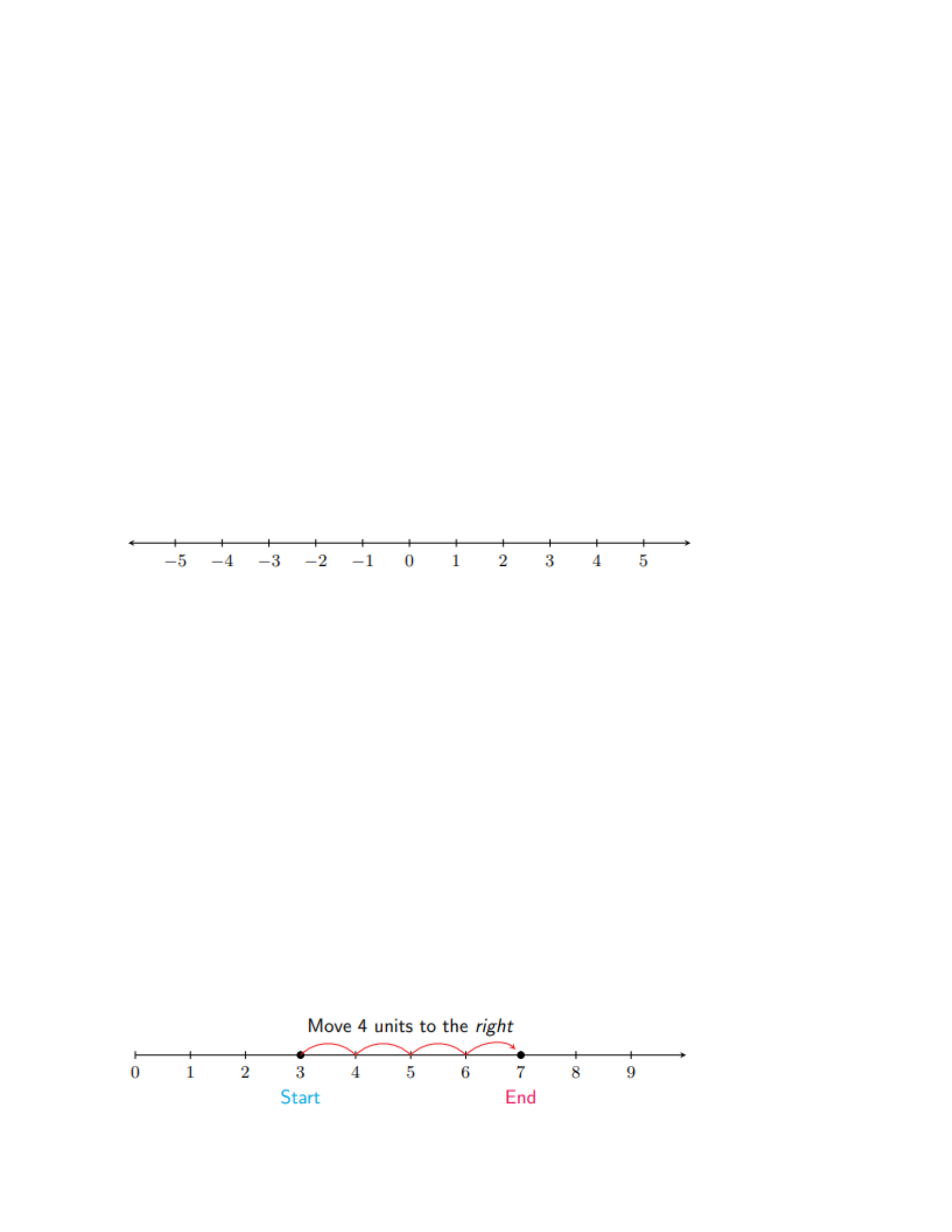
ggggggggg. 0÷5=00÷5=0. Note When dividing 0 by any number, the answer is
always 0.
hhhhhhhhh. −10÷0=−10÷0= undefined.
Note 1.23
Any number divided by 0 is undefined!
Multiplying and Dividing Integers
Consider two numbers at a time.
71. If the signs of the two numbers are the same, then the sign of the answer is positive.
72. If the signs of the two numbers are different, then the sign of the answer is negative.
We begin with a brief review of arithmetic with integers
i.e. …,−3,−2,−1,0,1,2,3,……,−3,−2,−1,0,1,2,3,…
Any number has a weight and a sign.
The magnitude (or weight) of a number is the distance it is from 0 on the number line.
Example 1.1
For example, the weight of -5 is 5 and the weight of 7 is 7 .
Two numbers are opposites if, on the number line, they are on opposite sides of zero, but
the same distance away from zero.
So, −5 is the opposite of 5, and 7 is the opposite of −7 and so on.
Addition
We can add two numbers with the help of a number line .
Example 1.2
Adding two positive numbers: For example to add 3+43+4, we start with 3 on the number
line then move 4 units to the right. We land at 7 which is our answer.
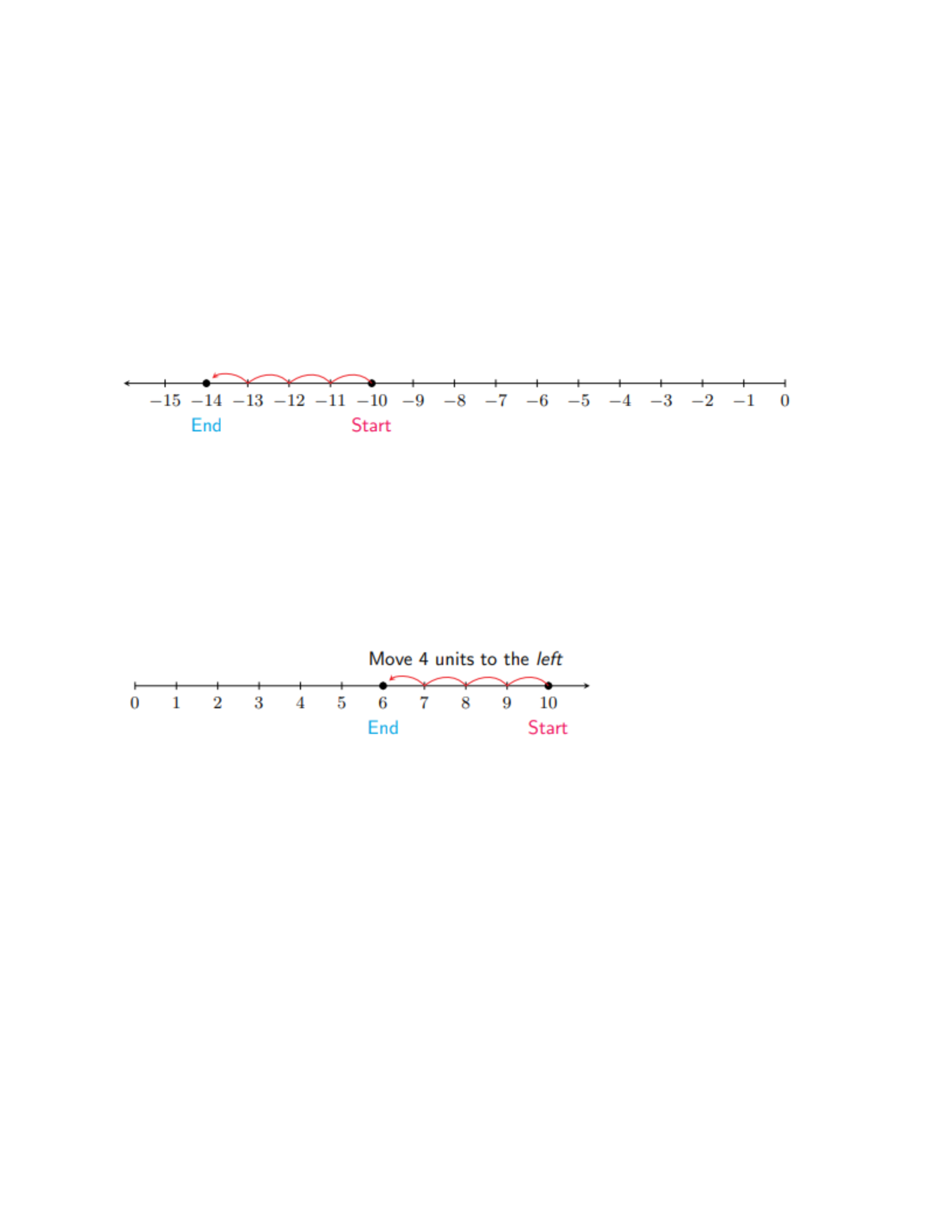
So, 3+4=73+4=7. Notice that the answer has the same sign as the signs of 3 and 4 (both
positive) and its weight comes from adding the weights of 3 and 4.
You always move to the right when you add a positive number
Example 1.3
Adding two negative numbers: For example, −10+(−4)−10+(−4) means you are adding a
debt of $4$4 to an already existing debt of $10.$10. So, we start at -10 on the number line
and move 4 units to the left, to land at −14,−14, which is the answer.
You always move to the left when you add a negative number (a debt)
So, −10+(−4)=−14−10+(−4)=−14. Notice that the answer has the same sign as the signs of -
10 and -4 (both negative) and its weight comes from adding the weights of -10 and -4
To add numbers of opposite signs, that is, a positive and a negative number, we can also
use the number line. For example, to perform 10+(−4),10+(−4), we start at 10 on the
number line and then move 4 units to the left. We land at 6,6, which is the answer. Think
of 10+(−4)10+(−4) as having $10$10 and adding a $4$4 debt. Because we are adding a
debt, we move to the left on the number line!
So, 10+(−4)=6.10+(−4)=6. Notice that the answer has the same sign as the sign of 10
(positive) because it is the number of larger weight, and its weight comes from finding the
difference of the weights of 10 and -4
Notice that because we were adding two numbers of opposite signs, the answer ended up
being the difference in weight (6) along with the sign of the number of larger weight
(positive).
Example 1.4
Adding two numbers of opposite signs: For example, 3+(−7)3+(−7). We start at 3 and move
toward 7 units to the left, and we land at −4,−4, which is our answer.
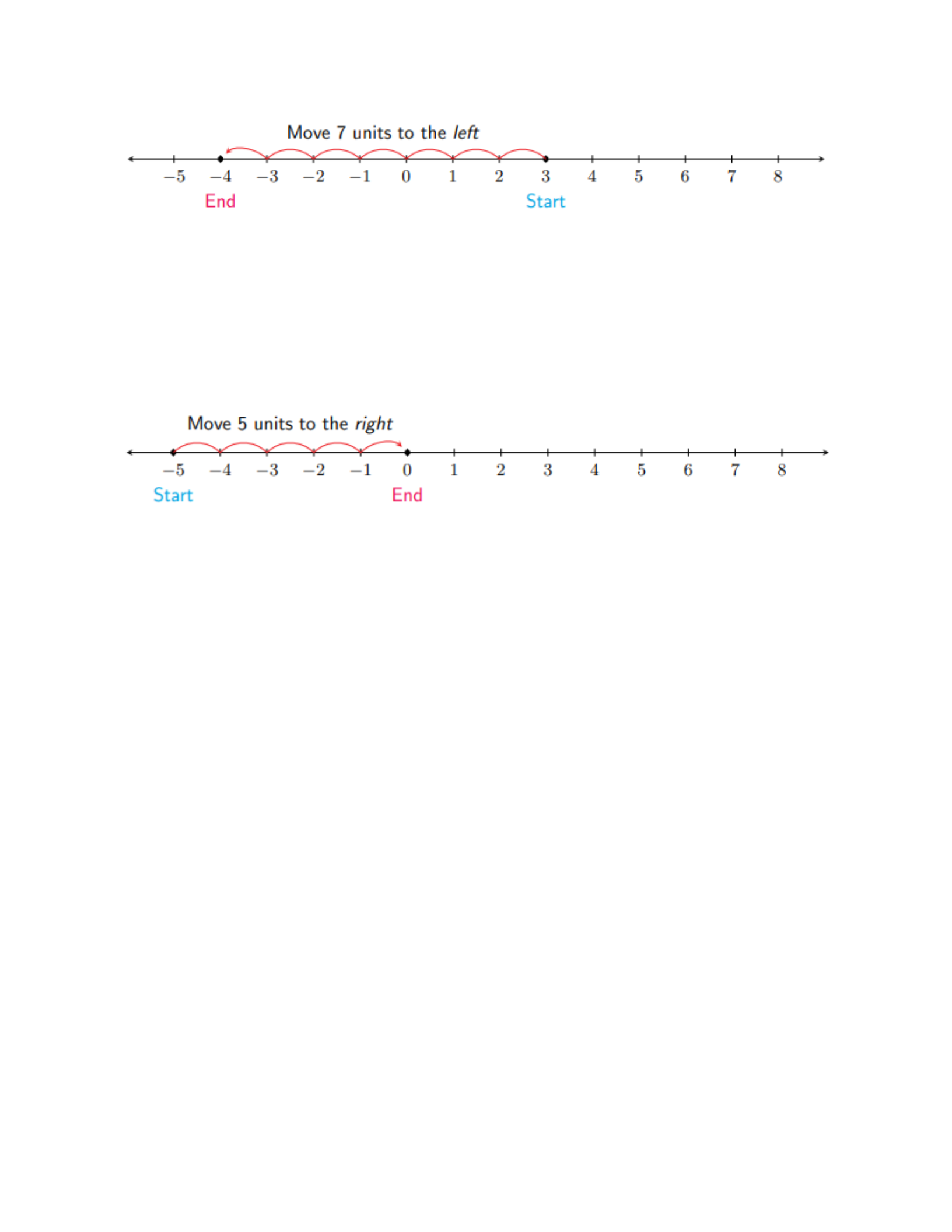
So, 3+(−7)=−4.3+(−7)=−4. Notice that the answer has the same sign as the signs of -7
(negative) because it is the number of larger weight, and its weight comes from finding the
difference of the weights of 3 and -7.
Example 1.5
Adding opposites: We start at -5 on the number line and jump to the right 5 units to land
finally at 00. So −5+5=0−5+5=0.
Note 1.6
Two opposite numbers are called a zero-pair, because adding them always results in 0.
So, −5 and 5 are a zero-pair.
Adding Intergers
73. To add two numbers of the same sign, add their weights and place it after the
sign.
74. To add two numbers of opposite signs, find the difference of their weights and
place it after the sign of the number with the greater weight.
Example 1.7
Add:
iiiiiiiii. −8+19=11−8+19=11
jjjjjjjjj. −8+4=−4−8+4=−4
kkkkkkkkk. 6+(−9)=−36+(−9)=−3
lllllllll. 7+(−2)=57+(−2)=5
mmmmmmmmm. (−4)+(−7)=−11(−4)+(−7)=−11
nnnnnnnnn. 8+7=158+7=15
Note 1.8

While we can add in any order: 4+2=2+44+2=2+4, it is sometimes convenient to add up all
of the negative numbers and add up all of the positive numbers, and then add the results.
There are also times when it is best to notice certain simplifications if the numbers are
added in a different order.
For example
−5+4+5+(−8)=−5+(−8)+4+5( by reordering )−5+4+5+(−8)=−5+(−8)+4+5( by reordering )
so,
−5+4+5+(−8)=−5+(−8)+4+5=−13+9=−4−5+4+5+(−8)=−5+(−8)+4+5=−13+9=−4
We could have also simplified this by noting that (-5) and 5 are zero-pair, so we are left
with 4+(−8)4+(−8) which is -4.
Example 1.9
We can calculate
(−4)+(−5)+7+(−3)=(−4)+(−5)+(−3)+7=(−12)+7=−5(−4)+(−5)+7+(−3)=(−4)+(−5)+(−3)+7=
(−12)+7=−5
We could have simplified this by noting that (-4) and (-3) make -7, and -7 and 7 are zero-
pair, so the total is -5.
Subtraction (as Addition of the Opposite)
Once we know how to add numbers, we are set to subtract numbers because subtraction is
nothing but addition of the opposite. That is, subtracting 8 − 3 (which reads: subtracting 3
from 8) is the same as 8 + (−3) (which reads: Adding −3 to 8.).
Example 1.10
So, 8−3=8+(−3),8−3=8+(−3), and, we can use the rules of adding two numbers of opposite
signs to find out that the answer is 5.5. We can also use the number line. We start at 8 and
move 3 units to the left (adding -3 is adding a debt, so we move to the left).
So 8−3=5.−4−3−2−10123456788−3=5.−4−3−2−1012345678 End Start Move 3 units to the
left
Example 1.11
To calculate 3−73−7 we first rewrite it as an addition
problem. 3−7=3+(−7).3−7=3+(−7). We can either use the number line, or the rules of
adding two numbers of opposite signs. And, 50,3−7=3+(−7)=−450,3−7=3+(−7)=−4
Example 1.12
To calculate −4−1,−4−1, we first rewrite it as an addition
problem. −4−1=−4+(−1).−4−1=−4+(−1). We can either use the number line, or the rules of
adding two numbers of the same signs. If we want to use the rules, both numbers are
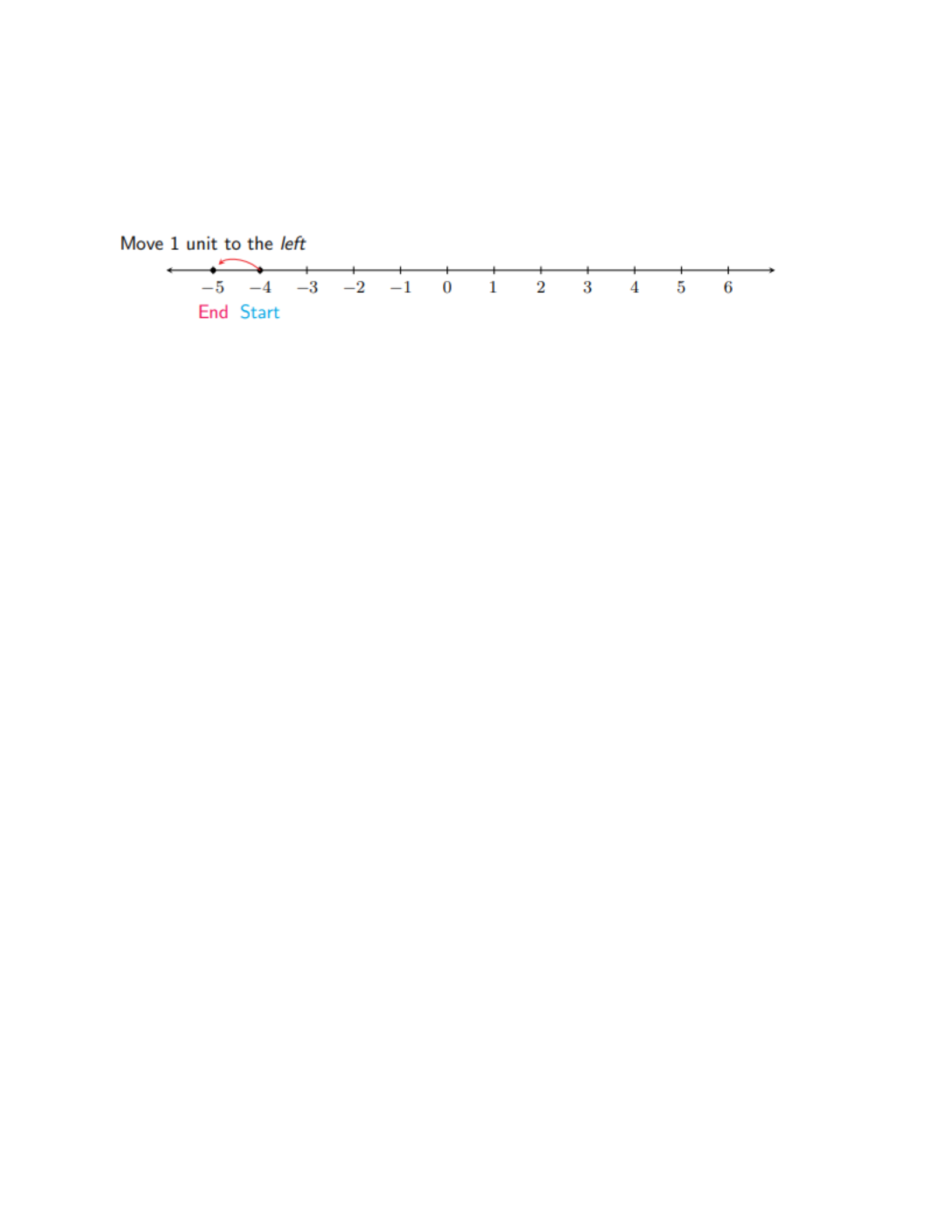
negative, so our answer will be negative, and, adding the weights of -4 and -1
is 5.50,−4−1=−4+(−1)=−55.50,−4−1=−4+(−1)=−5
On the number line, we start at -4 and move 1 unit to the left, to land on -5 which is our
answer.
Changing the subtractions to additions in this way is particularly useful when adding or
subtracting several numbers (because we can add in any order).
Example 1.13
===−3−7+5+7+13−6−(−9)−3+(−7)+5+7+13+(−6)+9−3+(−7)+(−6)+5+7+13+918−3−7+5+7
+13−6−(−9)=−3+(−7)+5+7+13+(−6)+9=−3+(−7)+(−6)+5+7+13+9=18
===−3−7+5+7+13−6−(−9)−3+(−7)+5+7+13+(−6)+95+1318−3−7+5+7+13−6−(−9)=−3+(−7
)+5+7+13+(−6)+9=5+13=18
Remark 1.14
Warning: The symbol "-" is used in two different ways. When it is between two expressions,
it means subtract (e.g., 3−43−4 ). Otherwise, it means 'opposite' or 'negative'
(e.g., −3+4−3+4 ). So in the expression −4−(−3)−4−(−3), the first and last "-" means
opposite and the one in the middle one means subtract. The importance of understanding
this can not be overestimated.
Multiplication and Division of Positive Numbers
Multiplication of integers is adding in the sense that 3×4=4+4+43×4=4+4+4
To multiply larger numbers, it is better to use the usual scheme of multiplication. For
example:
Example 1.15
Let us multiply 152 by 34. We will for convenience sake put the smaller number on the
bottom (though it is not necessary). We have
+×4516515306624808152×34608+45605168
And division is the opposite of multiplication in the sense that to compute 45÷945÷9 is to
find a number so that when we multiply by 9 we get 45. We run through our multiplication
tables (which are hopefully in our head) to discover that 5 does the
trick: 5×9=455×9=45 so that 45÷9=5.45÷9=5. We will discuss division from a different
point of view when we discuss fractions.
To divide larger numbers, we can use long division. For example, let’s divide 3571 by 11.
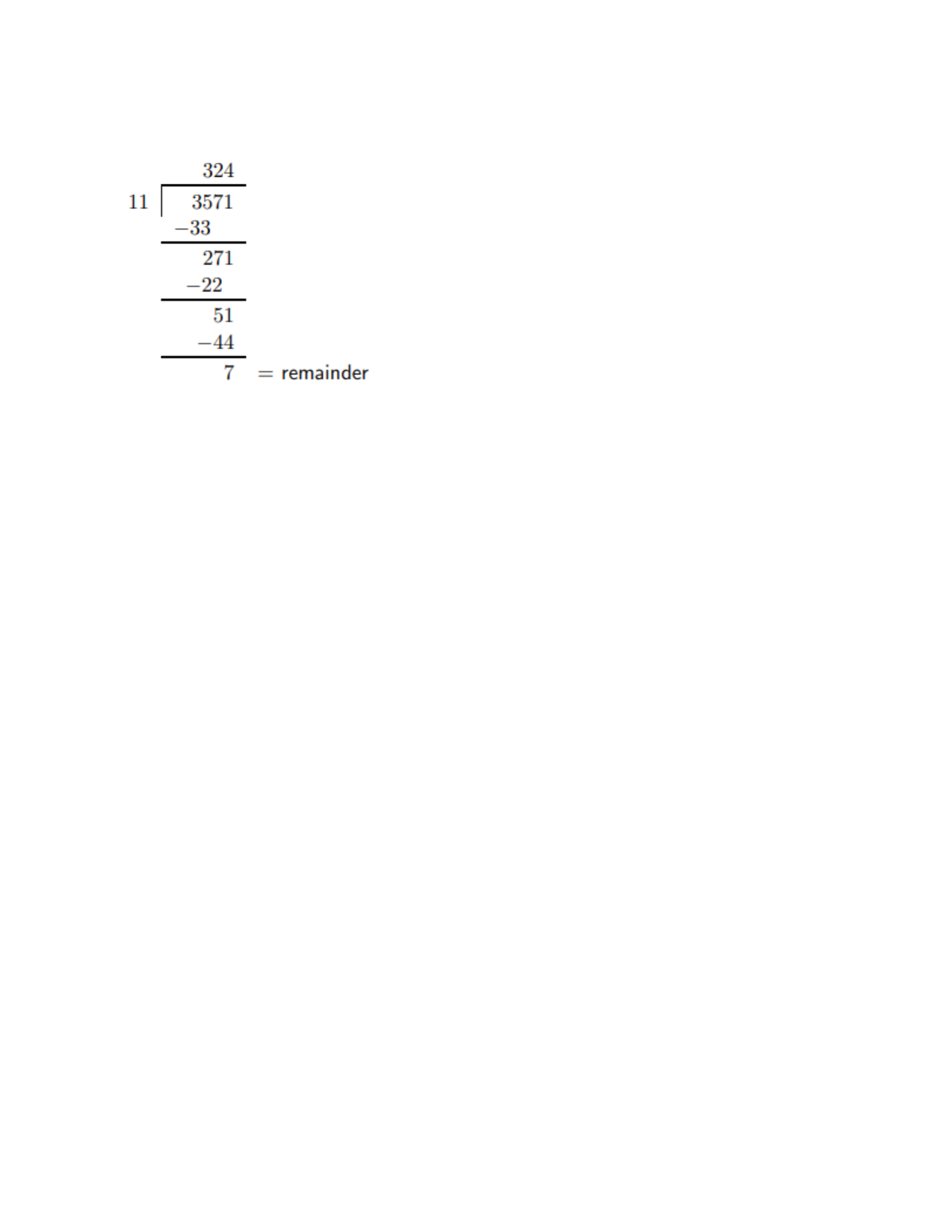
Example 1.16
Multiplication involving negative numbers
Multiplication is a little tricky to understand without the notion of distribution (discussed
later). We will begin with noting again what it means to multiply a number by a positive
number: So if we want to compute 4⋅(−7)4⋅(−7) we note
4⋅(−7)=(−7)+(−7)+(−7)+(−7)=−284⋅(−7)=(−7)+(−7)+(−7)+(−7)=−28
Note that since 4⋅7=28,4⋅(−7)=−(4⋅7).4⋅7=28,4⋅(−7)=−(4⋅7). We can multiply positive
numbers in any order: 4⋅7=7⋅44⋅7=7⋅4. The same is true of positive and negative numbers:
(−7)⋅4=4⋅(−7)=−(4⋅7)=−28(−7)⋅4=4⋅(−7)=−(4⋅7)=−28
Example 1.17
5⋅(−12)=−(5⋅12)=−605⋅(−12)=−(5⋅12)=−60 and (−3)⋅(−2)=−(3⋅(−2))=−(−(3⋅2))=6(−3)⋅(−2)
=−(3⋅(−2))=−(−(3⋅2))=6
Example 1.18
So the size of the product of two numbers is the product of their sizes. The sign is positive if
the signs are the same and negative if they are different.
Example 1.19
Two quantities right next to each other, with no symbol between them (except for
parentheses around either or both numbers), has an implicit multiplication. For
example, 3(2)=3×23(2)=3×2.
Example 1.20
Multiply:
yyyyyyy. (−5)(−8)=40(−5)(−8)=40
zzzzzzz. (−6)⋅7=−42(−6)⋅7=−42

aaaaaaaa. 4⋅12=484⋅12=48
bbbbbbbb. (−3)(−6)⋅4(−3)=18⋅4(−3)=72(−3)=−216( multiplying from left to
right )(−3)(−6)⋅4(−3)=18⋅4(−3)=72(−3)=−216( multiplying from left to right )
cccccccc. (−3)(−5)⋅4(−2)=(−3)⋅4⋅(−5)(−2)=−12⋅10=−120((−3)(−5)⋅4(−2)=(−3)⋅4⋅(−5)(
−2)=−12⋅10=−120( since we can multiply in any order it is convenient to see
that −5⋅−2=10.−5⋅−2=10. )
Exponents of integers
Recall that a positive exponent represents the number of times a number is multiplied by
itself.
Example 1.21
Evaluate:
iiiiiiiii. 52=5⋅5=2552=5⋅5=25
jjjjjjjjj. (−4)3=(−4)⋅(−4)⋅(−4)=16⋅(−4)=−64(−4)3=(−4)⋅(−4)⋅(−4)=16⋅(−4)=−64
kkkkkkkkk. (−7)1=−7(−7)1=−7
lllllllll. −24=−2⋅2⋅2⋅2=−16−24=−2⋅2⋅2⋅2=−16 Note: The exponent here is for 2 not
−2!
mmmmmmmmm. (−3)4=(−3)⋅(−3)⋅(−3)⋅(−3)=9⋅(−3)⋅(−3)=−27⋅(−3)=81(−3)4=(−
3)⋅(−3)⋅(−3)⋅(−3)=9⋅(−3)⋅(−3)=−27⋅(−3)=81
nnnnnnnnn. (−2)5=(−2)⋅(−2)⋅(−2)⋅(−2)⋅(−2)=−32(−2)5=(−2)⋅(−2)⋅(−2)⋅(−2)⋅(−2)=
−32
Exponent rules in details will be further discussed in Chapter 5.
Division involving negative numbers
Division is just a question of knowing multiplication and therefore has the same rule: The
size of the quotient of two numbers is the quotient of the sizes. The sign is positive if the
signs are the same and negative if they are different.
Example 1.22
Divide:
iiiiiiiii. (−42)÷7=−6(−42)÷7=−6
jjjjjjjjj. 81÷(−9)=−981÷(−9)=−9
kkkkkkkkk. (−35)÷(−7)=5(−35)÷(−7)=5
lllllllll. 14÷2=714÷2=7
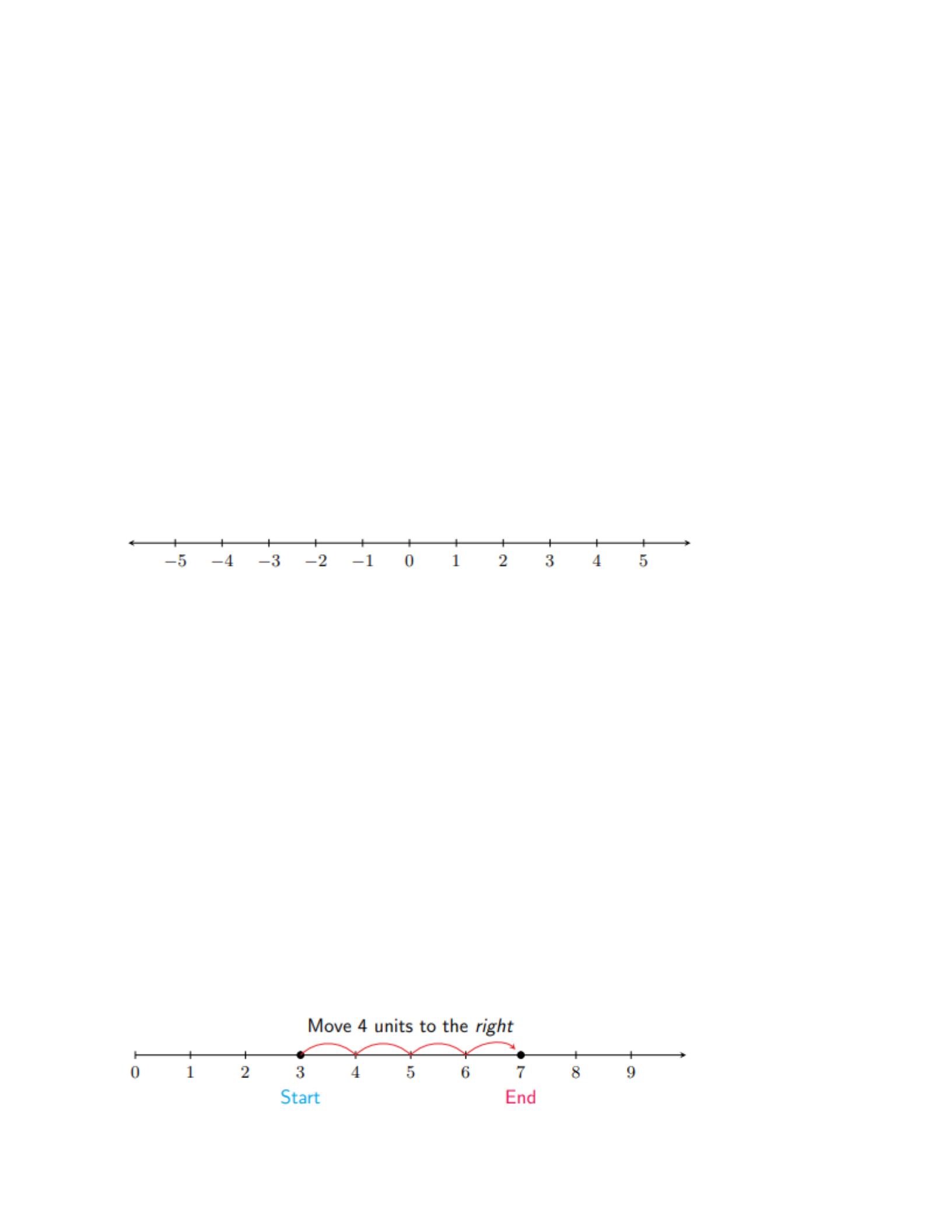
mmmmmmmmm. 0÷5=00÷5=0. Note When dividing 0 by any number, the
answer is always 0.
nnnnnnnnn. −10÷0=−10÷0= undefined.
Note 1.23
Any number divided by 0 is undefined!
Multiplying and Dividing Integers
Consider two numbers at a time.
73. If the signs of the two numbers are the same, then the sign of the answer is positive.
74. If the signs of the two numbers are different, then the sign of the answer is negative.
We begin with a brief review of arithmetic with integers
i.e. …,−3,−2,−1,0,1,2,3,……,−3,−2,−1,0,1,2,3,…
Any number has a weight and a sign.
The magnitude (or weight) of a number is the distance it is from 0 on the number line.
Example 1.1
For example, the weight of -5 is 5 and the weight of 7 is 7 .
Two numbers are opposites if, on the number line, they are on opposite sides of zero, but
the same distance away from zero.
So, −5 is the opposite of 5, and 7 is the opposite of −7 and so on.
Addition
We can add two numbers with the help of a number line .
Example 1.2
Adding two positive numbers: For example to add 3+43+4, we start with 3 on the number
line then move 4 units to the right. We land at 7 which is our answer.
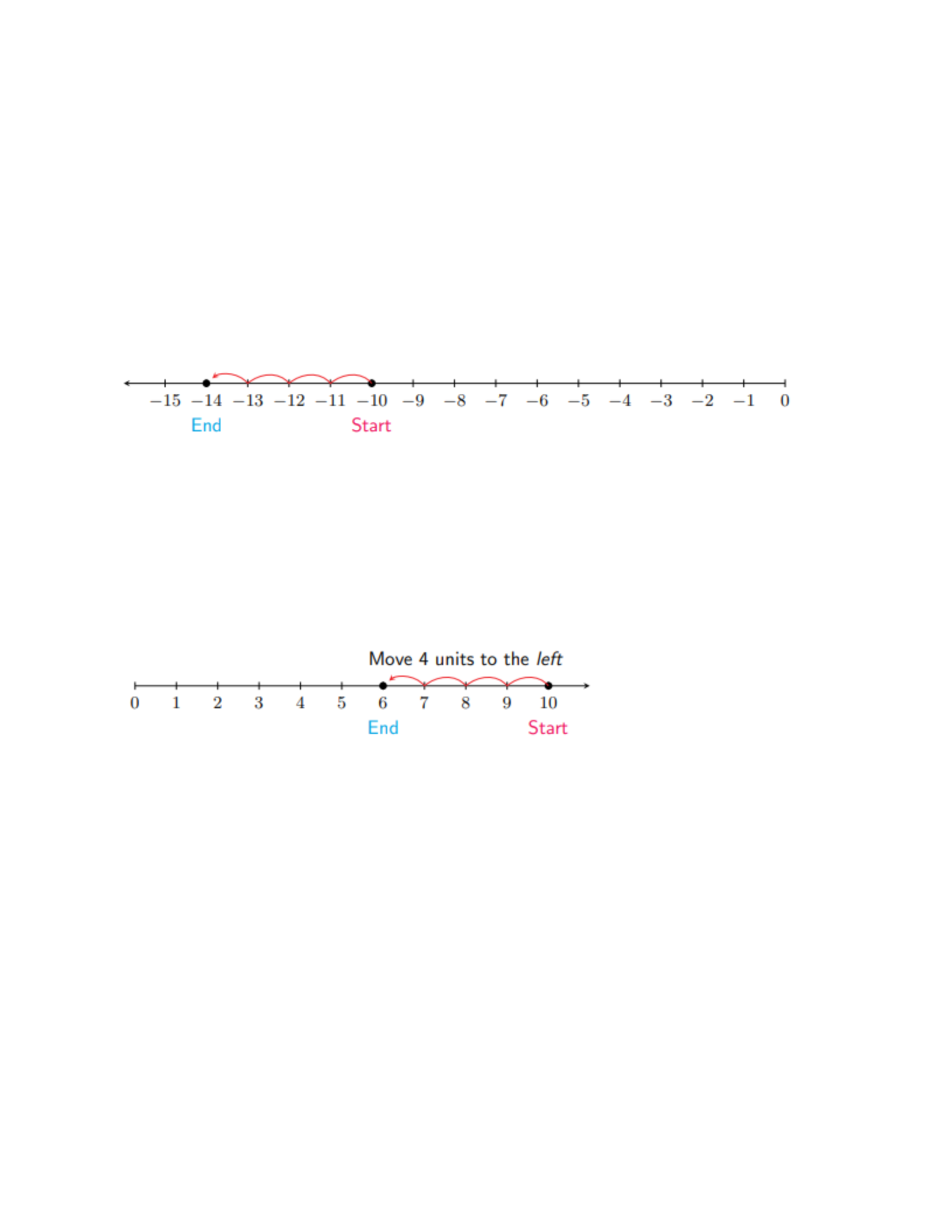
So, 3+4=73+4=7. Notice that the answer has the same sign as the signs of 3 and 4 (both
positive) and its weight comes from adding the weights of 3 and 4.
You always move to the right when you add a positive number
Example 1.3
Adding two negative numbers: For example, −10+(−4)−10+(−4) means you are adding a
debt of $4$4 to an already existing debt of $10.$10. So, we start at -10 on the number line
and move 4 units to the left, to land at −14,−14, which is the answer.
You always move to the left when you add a negative number (a debt)
So, −10+(−4)=−14−10+(−4)=−14. Notice that the answer has the same sign as the signs of -
10 and -4 (both negative) and its weight comes from adding the weights of -10 and -4
To add numbers of opposite signs, that is, a positive and a negative number, we can also
use the number line. For example, to perform 10+(−4),10+(−4), we start at 10 on the
number line and then move 4 units to the left. We land at 6,6, which is the answer. Think
of 10+(−4)10+(−4) as having $10$10 and adding a $4$4 debt. Because we are adding a
debt, we move to the left on the number line!
So, 10+(−4)=6.10+(−4)=6. Notice that the answer has the same sign as the sign of 10
(positive) because it is the number of larger weight, and its weight comes from finding the
difference of the weights of 10 and -4
Notice that because we were adding two numbers of opposite signs, the answer ended up
being the difference in weight (6) along with the sign of the number of larger weight
(positive).
Example 1.4
Adding two numbers of opposite signs: For example, 3+(−7)3+(−7). We start at 3 and move
toward 7 units to the left, and we land at −4,−4, which is our answer.
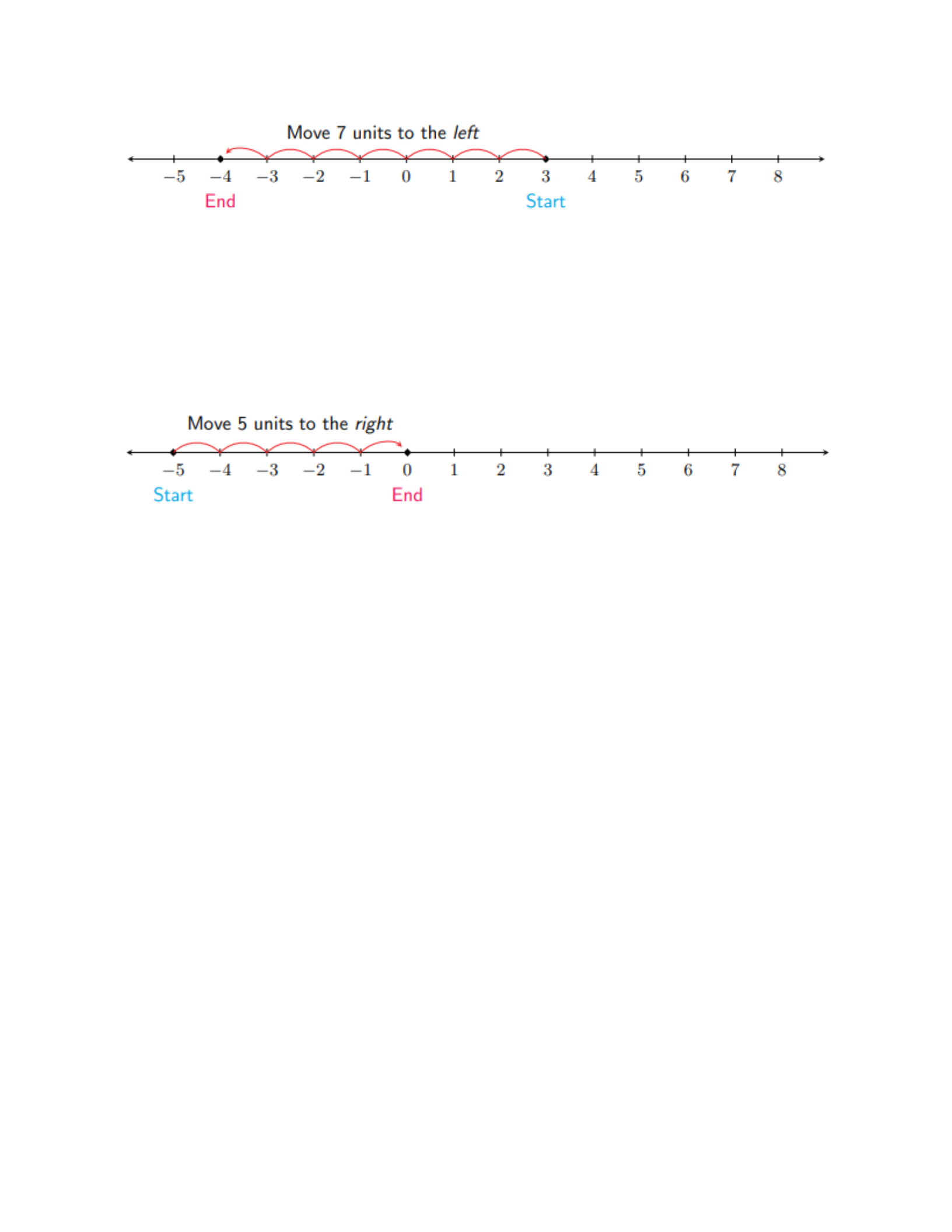
So, 3+(−7)=−4.3+(−7)=−4. Notice that the answer has the same sign as the signs of -7
(negative) because it is the number of larger weight, and its weight comes from finding the
difference of the weights of 3 and -7.
Example 1.5
Adding opposites: We start at -5 on the number line and jump to the right 5 units to land
finally at 00. So −5+5=0−5+5=0.
Note 1.6
Two opposite numbers are called a zero-pair, because adding them always results in 0.
So, −5 and 5 are a zero-pair.
Adding Intergers
75. To add two numbers of the same sign, add their weights and place it after the
sign.
76. To add two numbers of opposite signs, find the difference of their weights and
place it after the sign of the number with the greater weight.
Example 1.7
Add:
ooooooooo. −8+19=11−8+19=11
ppppppppp. −8+4=−4−8+4=−4
qqqqqqqqq. 6+(−9)=−36+(−9)=−3
rrrrrrrrr. 7+(−2)=57+(−2)=5
sssssssss. (−4)+(−7)=−11(−4)+(−7)=−11
ttttttttt. 8+7=158+7=15
Note 1.8

While we can add in any order: 4+2=2+44+2=2+4, it is sometimes convenient to add up all
of the negative numbers and add up all of the positive numbers, and then add the results.
There are also times when it is best to notice certain simplifications if the numbers are
added in a different order.
For example
−5+4+5+(−8)=−5+(−8)+4+5( by reordering )−5+4+5+(−8)=−5+(−8)+4+5( by reordering )
so,
−5+4+5+(−8)=−5+(−8)+4+5=−13+9=−4−5+4+5+(−8)=−5+(−8)+4+5=−13+9=−4
We could have also simplified this by noting that (-5) and 5 are zero-pair, so we are left
with 4+(−8)4+(−8) which is -4.
Example 1.9
We can calculate
(−4)+(−5)+7+(−3)=(−4)+(−5)+(−3)+7=(−12)+7=−5(−4)+(−5)+7+(−3)=(−4)+(−5)+(−3)+7=
(−12)+7=−5
We could have simplified this by noting that (-4) and (-3) make -7, and -7 and 7 are zero-
pair, so the total is -5.
Subtraction (as Addition of the Opposite)
Once we know how to add numbers, we are set to subtract numbers because subtraction is
nothing but addition of the opposite. That is, subtracting 8 − 3 (which reads: subtracting 3
from 8) is the same as 8 + (−3) (which reads: Adding −3 to 8.).
Example 1.10
So, 8−3=8+(−3),8−3=8+(−3), and, we can use the rules of adding two numbers of opposite
signs to find out that the answer is 5.5. We can also use the number line. We start at 8 and
move 3 units to the left (adding -3 is adding a debt, so we move to the left).
So 8−3=5.−4−3−2−10123456788−3=5.−4−3−2−1012345678 End Start Move 3 units to the
left
Example 1.11
To calculate 3−73−7 we first rewrite it as an addition
problem. 3−7=3+(−7).3−7=3+(−7). We can either use the number line, or the rules of
adding two numbers of opposite signs. And, 50,3−7=3+(−7)=−450,3−7=3+(−7)=−4
Example 1.12
To calculate −4−1,−4−1, we first rewrite it as an addition
problem. −4−1=−4+(−1).−4−1=−4+(−1). We can either use the number line, or the rules of
adding two numbers of the same signs. If we want to use the rules, both numbers are
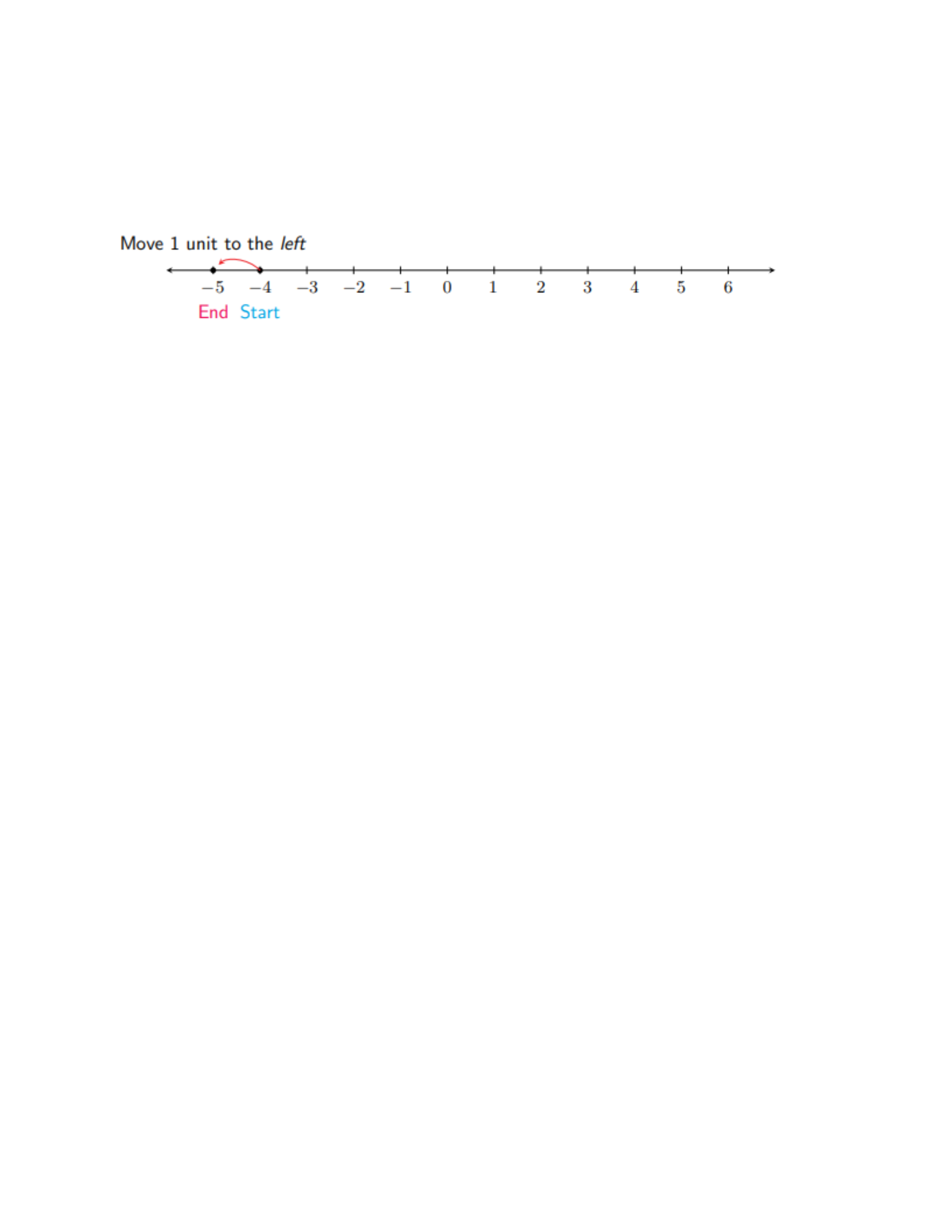
negative, so our answer will be negative, and, adding the weights of -4 and -1
is 5.50,−4−1=−4+(−1)=−55.50,−4−1=−4+(−1)=−5
On the number line, we start at -4 and move 1 unit to the left, to land on -5 which is our
answer.
Changing the subtractions to additions in this way is particularly useful when adding or
subtracting several numbers (because we can add in any order).
Example 1.13
===−3−7+5+7+13−6−(−9)−3+(−7)+5+7+13+(−6)+9−3+(−7)+(−6)+5+7+13+918−3−7+5+7
+13−6−(−9)=−3+(−7)+5+7+13+(−6)+9=−3+(−7)+(−6)+5+7+13+9=18
===−3−7+5+7+13−6−(−9)−3+(−7)+5+7+13+(−6)+95+1318−3−7+5+7+13−6−(−9)=−3+(−7
)+5+7+13+(−6)+9=5+13=18
Remark 1.14
Warning: The symbol "-" is used in two different ways. When it is between two expressions,
it means subtract (e.g., 3−43−4 ). Otherwise, it means 'opposite' or 'negative'
(e.g., −3+4−3+4 ). So in the expression −4−(−3)−4−(−3), the first and last "-" means
opposite and the one in the middle one means subtract. The importance of understanding
this can not be overestimated.
Multiplication and Division of Positive Numbers
Multiplication of integers is adding in the sense that 3×4=4+4+43×4=4+4+4
To multiply larger numbers, it is better to use the usual scheme of multiplication. For
example:
Example 1.15
Let us multiply 152 by 34. We will for convenience sake put the smaller number on the
bottom (though it is not necessary). We have
+×4516515306624808152×34608+45605168
And division is the opposite of multiplication in the sense that to compute 45÷945÷9 is to
find a number so that when we multiply by 9 we get 45. We run through our multiplication
tables (which are hopefully in our head) to discover that 5 does the
trick: 5×9=455×9=45 so that 45÷9=5.45÷9=5. We will discuss division from a different
point of view when we discuss fractions.
To divide larger numbers, we can use long division. For example, let’s divide 3571 by 11.
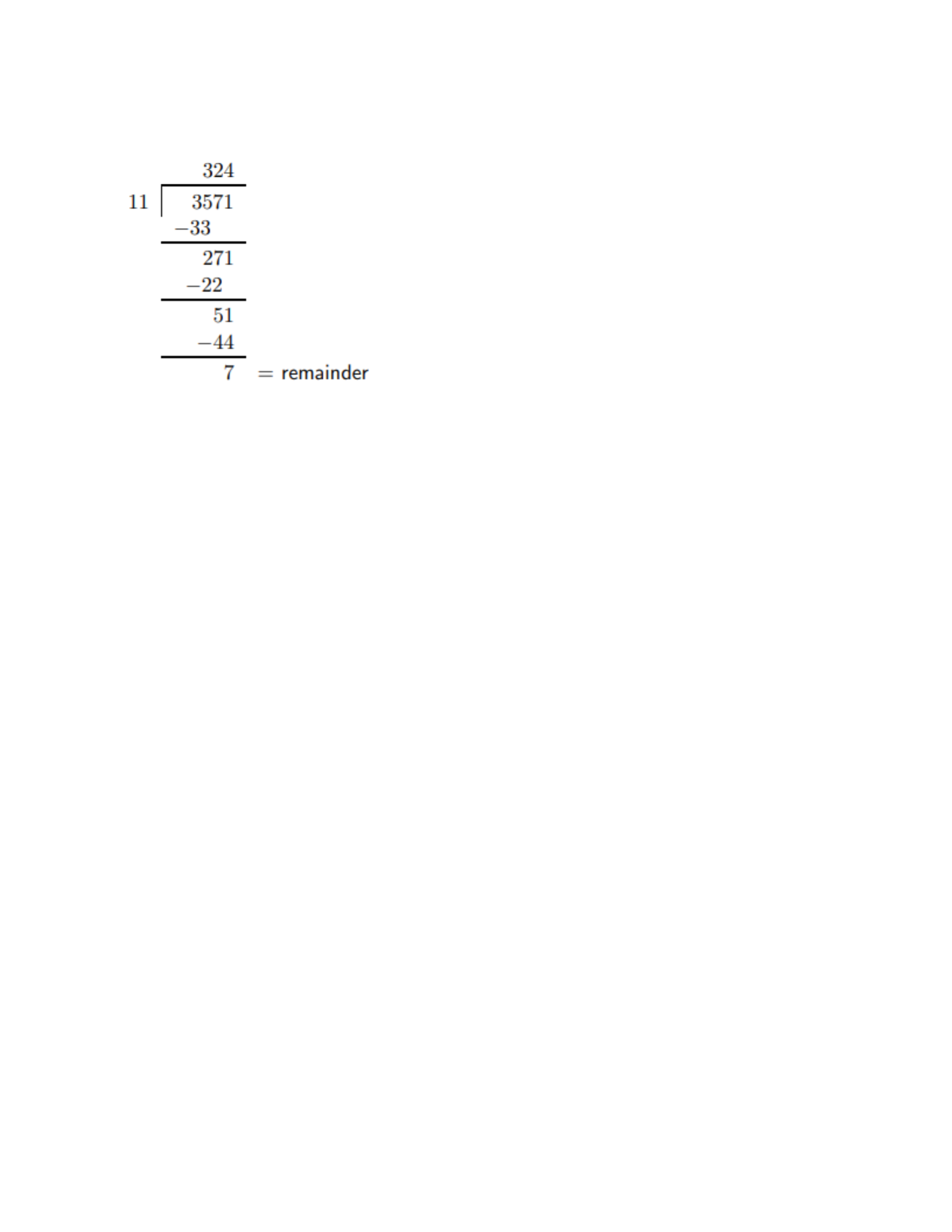
Example 1.16
Multiplication involving negative numbers
Multiplication is a little tricky to understand without the notion of distribution (discussed
later). We will begin with noting again what it means to multiply a number by a positive
number: So if we want to compute 4⋅(−7)4⋅(−7) we note
4⋅(−7)=(−7)+(−7)+(−7)+(−7)=−284⋅(−7)=(−7)+(−7)+(−7)+(−7)=−28
Note that since 4⋅7=28,4⋅(−7)=−(4⋅7).4⋅7=28,4⋅(−7)=−(4⋅7). We can multiply positive
numbers in any order: 4⋅7=7⋅44⋅7=7⋅4. The same is true of positive and negative numbers:
(−7)⋅4=4⋅(−7)=−(4⋅7)=−28(−7)⋅4=4⋅(−7)=−(4⋅7)=−28
Example 1.17
5⋅(−12)=−(5⋅12)=−605⋅(−12)=−(5⋅12)=−60 and (−3)⋅(−2)=−(3⋅(−2))=−(−(3⋅2))=6(−3)⋅(−2)
=−(3⋅(−2))=−(−(3⋅2))=6
Example 1.18
So the size of the product of two numbers is the product of their sizes. The sign is positive if
the signs are the same and negative if they are different.
Example 1.19
Two quantities right next to each other, with no symbol between them (except for
parentheses around either or both numbers), has an implicit multiplication. For
example, 3(2)=3×23(2)=3×2.
Example 1.20
Multiply:
dddddddd. (−5)(−8)=40(−5)(−8)=40
eeeeeeee. (−6)⋅7=−42(−6)⋅7=−42

ffffffff. 4⋅12=484⋅12=48
gggggggg. (−3)(−6)⋅4(−3)=18⋅4(−3)=72(−3)=−216( multiplying from left to
right )(−3)(−6)⋅4(−3)=18⋅4(−3)=72(−3)=−216( multiplying from left to right )
hhhhhhhh. (−3)(−5)⋅4(−2)=(−3)⋅4⋅(−5)(−2)=−12⋅10=−120((−3)(−5)⋅4(−2)=(−3)⋅
4⋅(−5)(−2)=−12⋅10=−120( since we can multiply in any order it is convenient to see
that −5⋅−2=10.−5⋅−2=10. )
Exponents of integers
Recall that a positive exponent represents the number of times a number is multiplied by
itself.
Example 1.21
Evaluate:
ooooooooo. 52=5⋅5=2552=5⋅5=25
ppppppppp. (−4)3=(−4)⋅(−4)⋅(−4)=16⋅(−4)=−64(−4)3=(−4)⋅(−4)⋅(−4)=16⋅(−4)=−6
4
qqqqqqqqq. (−7)1=−7(−7)1=−7
rrrrrrrrr. −24=−2⋅2⋅2⋅2=−16−24=−2⋅2⋅2⋅2=−16 Note: The exponent here is for 2 not
−2!
sssssssss. (−3)4=(−3)⋅(−3)⋅(−3)⋅(−3)=9⋅(−3)⋅(−3)=−27⋅(−3)=81(−3)4=(−3)⋅(−3)⋅(−3)⋅(
−3)=9⋅(−3)⋅(−3)=−27⋅(−3)=81
ttttttttt. (−2)5=(−2)⋅(−2)⋅(−2)⋅(−2)⋅(−2)=−32(−2)5=(−2)⋅(−2)⋅(−2)⋅(−2)⋅(−2)=−32
Exponent rules in details will be further discussed in Chapter 5.
Division involving negative numbers
Division is just a question of knowing multiplication and therefore has the same rule: The
size of the quotient of two numbers is the quotient of the sizes. The sign is positive if the
signs are the same and negative if they are different.
Example 1.22
Divide:
ooooooooo. (−42)÷7=−6(−42)÷7=−6
ppppppppp. 81÷(−9)=−981÷(−9)=−9
qqqqqqqqq. (−35)÷(−7)=5(−35)÷(−7)=5
rrrrrrrrr. 14÷2=714÷2=7
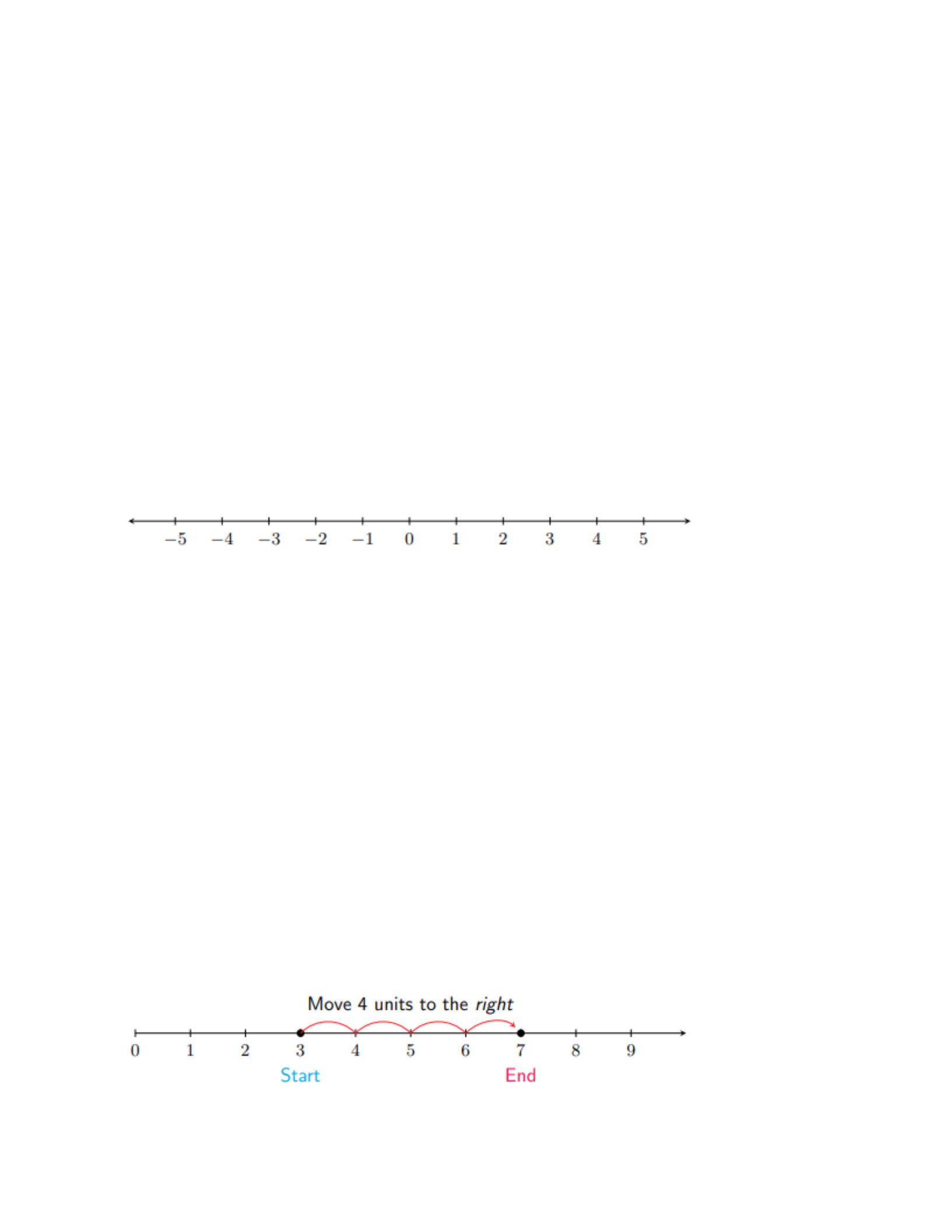
sssssssss. 0÷5=00÷5=0. Note When dividing 0 by any number, the answer is always 0.
ttttttttt. −10÷0=−10÷0= undefined.
Note 1.23
Any number divided by 0 is undefined!
Multiplying and Dividing Integers
Consider two numbers at a time.
75. If the signs of the two numbers are the same, then the sign of the answer is positive.
76. If the signs of the two numbers are different, then the sign of the answer is negative.
We begin with a brief review of arithmetic with integers
i.e. …,−3,−2,−1,0,1,2,3,……,−3,−2,−1,0,1,2,3,…
Any number has a weight and a sign.
The magnitude (or weight) of a number is the distance it is from 0 on the number line.
Example 1.1
For example, the weight of -5 is 5 and the weight of 7 is 7 .
Two numbers are opposites if, on the number line, they are on opposite sides of zero, but
the same distance away from zero.
So, −5 is the opposite of 5, and 7 is the opposite of −7 and so on.
Addition
We can add two numbers with the help of a number line .
Example 1.2
Adding two positive numbers: For example to add 3+43+4, we start with 3 on the number
line then move 4 units to the right. We land at 7 which is our answer.
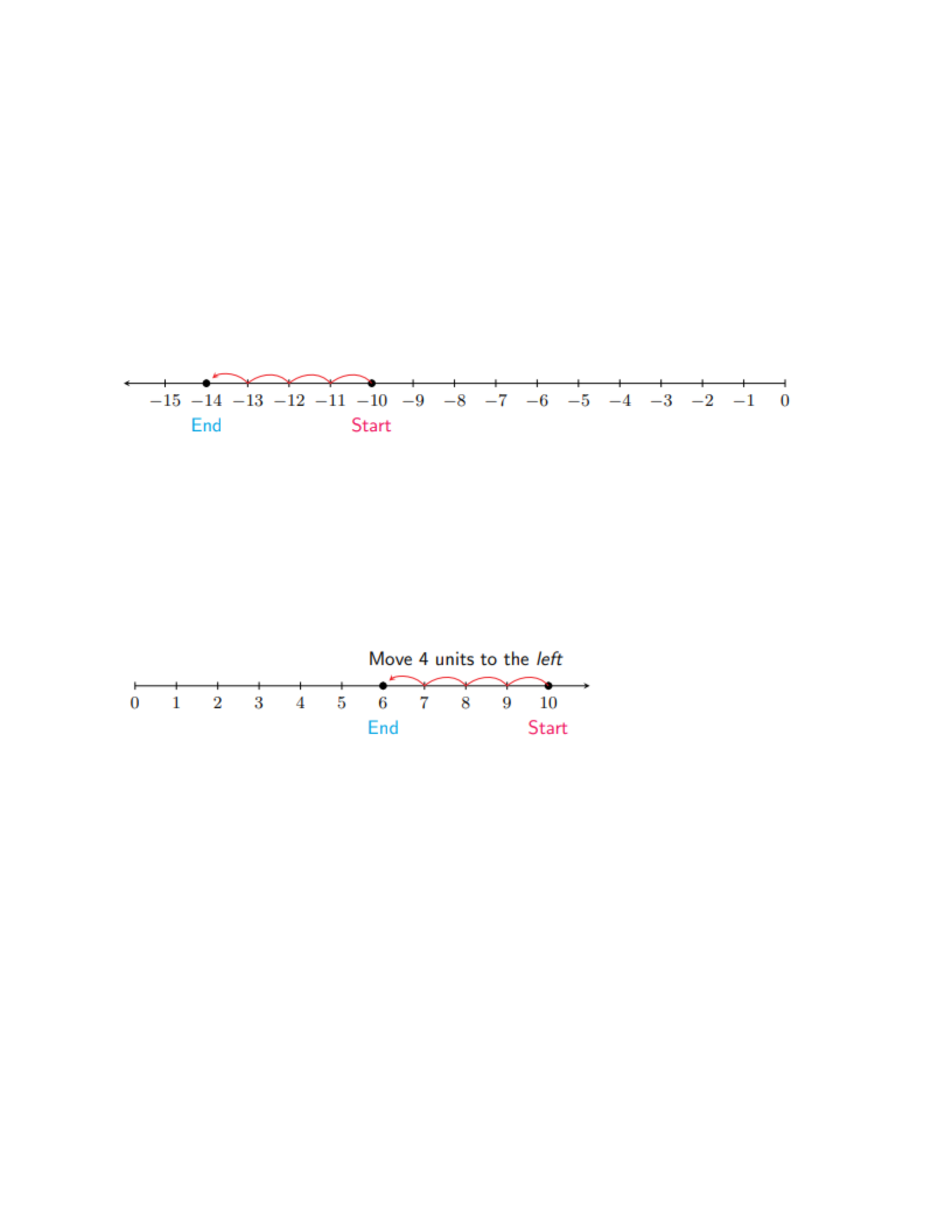
So, 3+4=73+4=7. Notice that the answer has the same sign as the signs of 3 and 4 (both
positive) and its weight comes from adding the weights of 3 and 4.
You always move to the right when you add a positive number
Example 1.3
Adding two negative numbers: For example, −10+(−4)−10+(−4) means you are adding a
debt of $4$4 to an already existing debt of $10.$10. So, we start at -10 on the number line
and move 4 units to the left, to land at −14,−14, which is the answer.
You always move to the left when you add a negative number (a debt)
So, −10+(−4)=−14−10+(−4)=−14. Notice that the answer has the same sign as the signs of -
10 and -4 (both negative) and its weight comes from adding the weights of -10 and -4
To add numbers of opposite signs, that is, a positive and a negative number, we can also
use the number line. For example, to perform 10+(−4),10+(−4), we start at 10 on the
number line and then move 4 units to the left. We land at 6,6, which is the answer. Think
of 10+(−4)10+(−4) as having $10$10 and adding a $4$4 debt. Because we are adding a
debt, we move to the left on the number line!
So, 10+(−4)=6.10+(−4)=6. Notice that the answer has the same sign as the sign of 10
(positive) because it is the number of larger weight, and its weight comes from finding the
difference of the weights of 10 and -4
Notice that because we were adding two numbers of opposite signs, the answer ended up
being the difference in weight (6) along with the sign of the number of larger weight
(positive).
Example 1.4
Adding two numbers of opposite signs: For example, 3+(−7)3+(−7). We start at 3 and move
toward 7 units to the left, and we land at −4,−4, which is our answer.
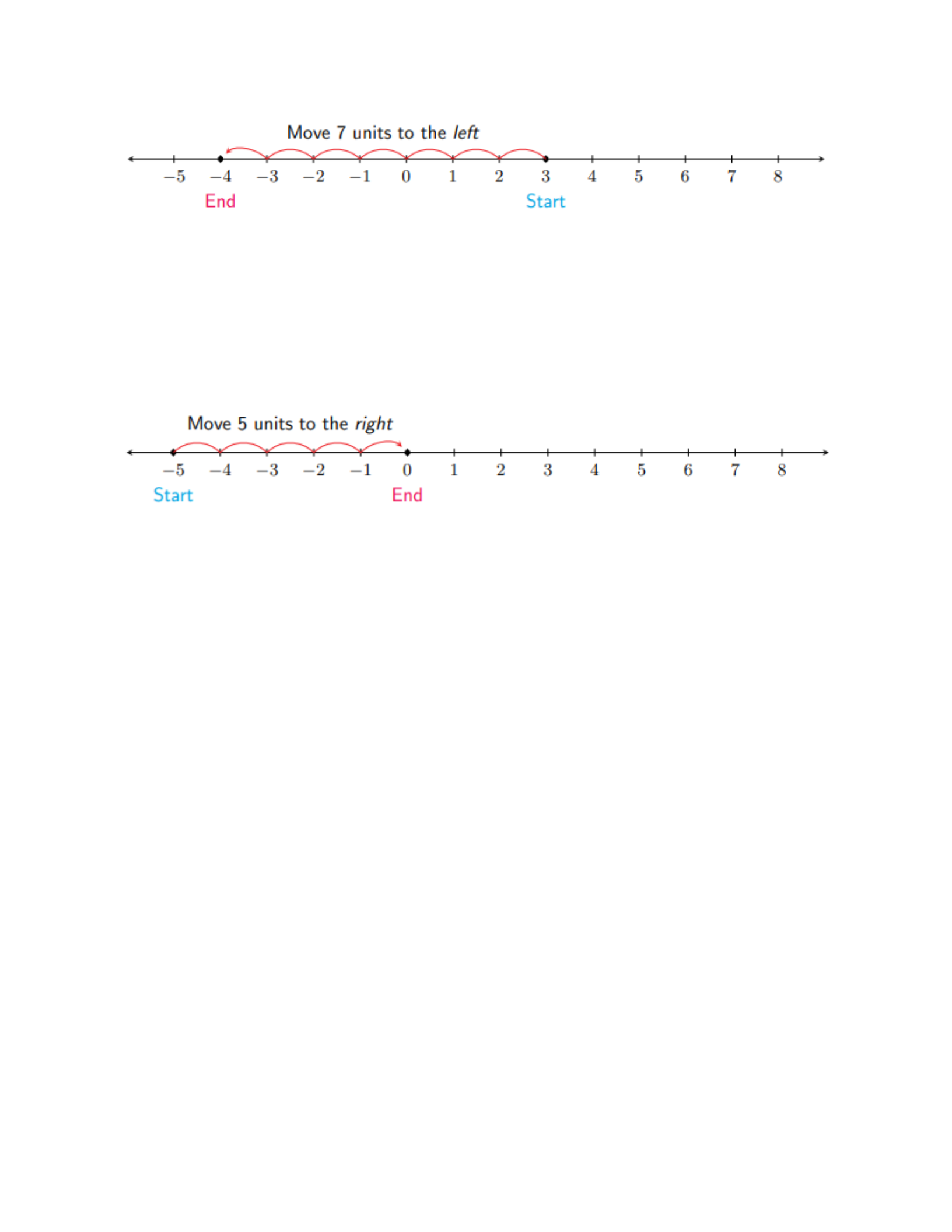
So, 3+(−7)=−4.3+(−7)=−4. Notice that the answer has the same sign as the signs of -7
(negative) because it is the number of larger weight, and its weight comes from finding the
difference of the weights of 3 and -7.
Example 1.5
Adding opposites: We start at -5 on the number line and jump to the right 5 units to land
finally at 00. So −5+5=0−5+5=0.
Note 1.6
Two opposite numbers are called a zero-pair, because adding them always results in 0.
So, −5 and 5 are a zero-pair.
Adding Intergers
77. To add two numbers of the same sign, add their weights and place it after the
sign.
78. To add two numbers of opposite signs, find the difference of their weights and
place it after the sign of the number with the greater weight.
Example 1.7
Add:
uuuuuuuuu. −8+19=11−8+19=11
vvvvvvvvv. −8+4=−4−8+4=−4
wwwwwwwww. 6+(−9)=−36+(−9)=−3
xxxxxxxxx. 7+(−2)=57+(−2)=5
yyyyyyyyy. (−4)+(−7)=−11(−4)+(−7)=−11
zzzzzzzzz. 8+7=158+7=15
Note 1.8

While we can add in any order: 4+2=2+44+2=2+4, it is sometimes convenient to add up all
of the negative numbers and add up all of the positive numbers, and then add the results.
There are also times when it is best to notice certain simplifications if the numbers are
added in a different order.
For example
−5+4+5+(−8)=−5+(−8)+4+5( by reordering )−5+4+5+(−8)=−5+(−8)+4+5( by reordering )
so,
−5+4+5+(−8)=−5+(−8)+4+5=−13+9=−4−5+4+5+(−8)=−5+(−8)+4+5=−13+9=−4
We could have also simplified this by noting that (-5) and 5 are zero-pair, so we are left
with 4+(−8)4+(−8) which is -4.
Example 1.9
We can calculate
(−4)+(−5)+7+(−3)=(−4)+(−5)+(−3)+7=(−12)+7=−5(−4)+(−5)+7+(−3)=(−4)+(−5)+(−3)+7=
(−12)+7=−5
We could have simplified this by noting that (-4) and (-3) make -7, and -7 and 7 are zero-
pair, so the total is -5.
Subtraction (as Addition of the Opposite)
Once we know how to add numbers, we are set to subtract numbers because subtraction is
nothing but addition of the opposite. That is, subtracting 8 − 3 (which reads: subtracting 3
from 8) is the same as 8 + (−3) (which reads: Adding −3 to 8.).
Example 1.10
So, 8−3=8+(−3),8−3=8+(−3), and, we can use the rules of adding two numbers of opposite
signs to find out that the answer is 5.5. We can also use the number line. We start at 8 and
move 3 units to the left (adding -3 is adding a debt, so we move to the left).
So 8−3=5.−4−3−2−10123456788−3=5.−4−3−2−1012345678 End Start Move 3 units to the
left
Example 1.11
To calculate 3−73−7 we first rewrite it as an addition
problem. 3−7=3+(−7).3−7=3+(−7). We can either use the number line, or the rules of
adding two numbers of opposite signs. And, 50,3−7=3+(−7)=−450,3−7=3+(−7)=−4
Example 1.12
To calculate −4−1,−4−1, we first rewrite it as an addition
problem. −4−1=−4+(−1).−4−1=−4+(−1). We can either use the number line, or the rules of
adding two numbers of the same signs. If we want to use the rules, both numbers are
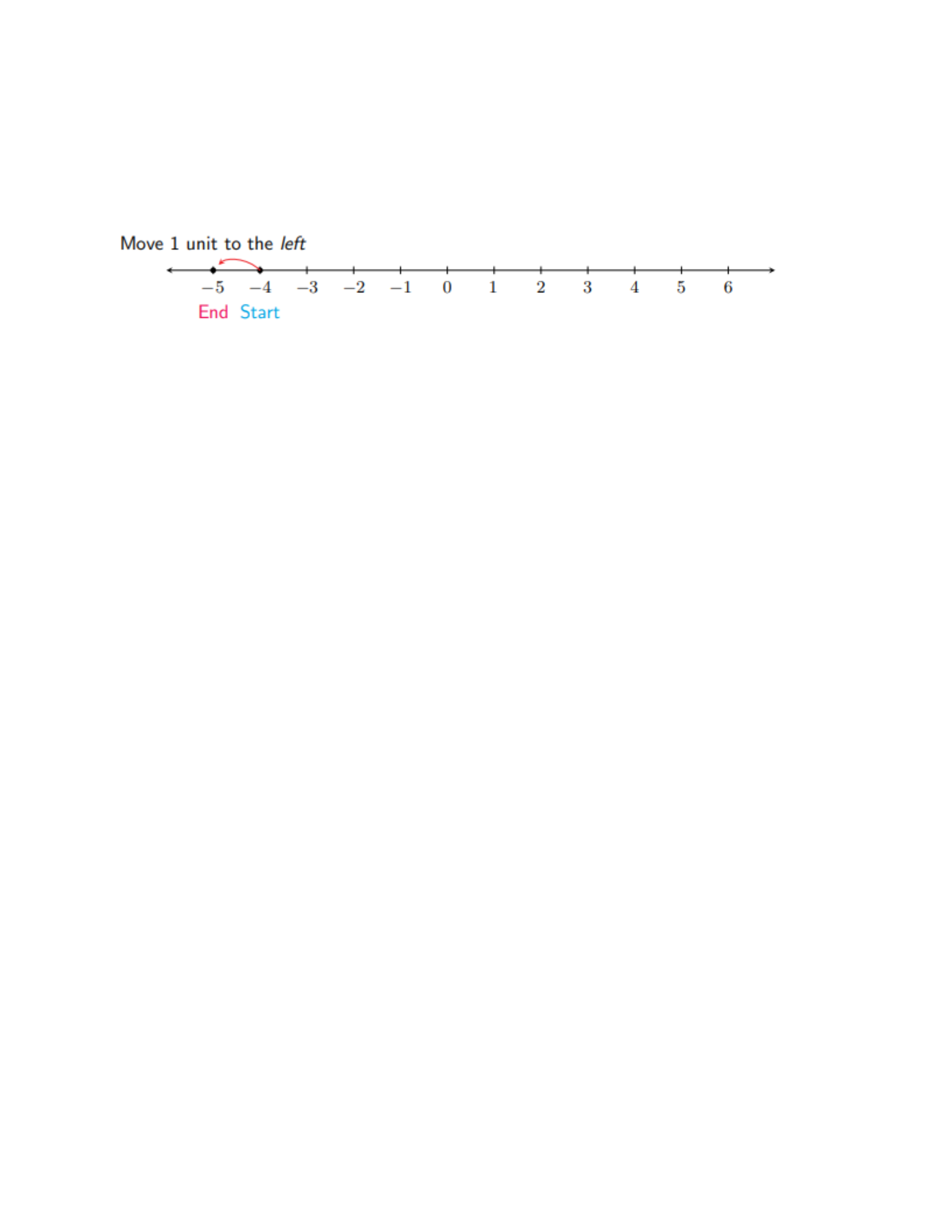
negative, so our answer will be negative, and, adding the weights of -4 and -1
is 5.50,−4−1=−4+(−1)=−55.50,−4−1=−4+(−1)=−5
On the number line, we start at -4 and move 1 unit to the left, to land on -5 which is our
answer.
Changing the subtractions to additions in this way is particularly useful when adding or
subtracting several numbers (because we can add in any order).
Example 1.13
===−3−7+5+7+13−6−(−9)−3+(−7)+5+7+13+(−6)+9−3+(−7)+(−6)+5+7+13+918−3−7+5+7
+13−6−(−9)=−3+(−7)+5+7+13+(−6)+9=−3+(−7)+(−6)+5+7+13+9=18
===−3−7+5+7+13−6−(−9)−3+(−7)+5+7+13+(−6)+95+1318−3−7+5+7+13−6−(−9)=−3+(−7
)+5+7+13+(−6)+9=5+13=18
Remark 1.14
Warning: The symbol "-" is used in two different ways. When it is between two expressions,
it means subtract (e.g., 3−43−4 ). Otherwise, it means 'opposite' or 'negative'
(e.g., −3+4−3+4 ). So in the expression −4−(−3)−4−(−3), the first and last "-" means
opposite and the one in the middle one means subtract. The importance of understanding
this can not be overestimated.
Multiplication and Division of Positive Numbers
Multiplication of integers is adding in the sense that 3×4=4+4+43×4=4+4+4
To multiply larger numbers, it is better to use the usual scheme of multiplication. For
example:
Example 1.15
Let us multiply 152 by 34. We will for convenience sake put the smaller number on the
bottom (though it is not necessary). We have
+×4516515306624808152×34608+45605168
And division is the opposite of multiplication in the sense that to compute 45÷945÷9 is to
find a number so that when we multiply by 9 we get 45. We run through our multiplication
tables (which are hopefully in our head) to discover that 5 does the
trick: 5×9=455×9=45 so that 45÷9=5.45÷9=5. We will discuss division from a different
point of view when we discuss fractions.
To divide larger numbers, we can use long division. For example, let’s divide 3571 by 11.
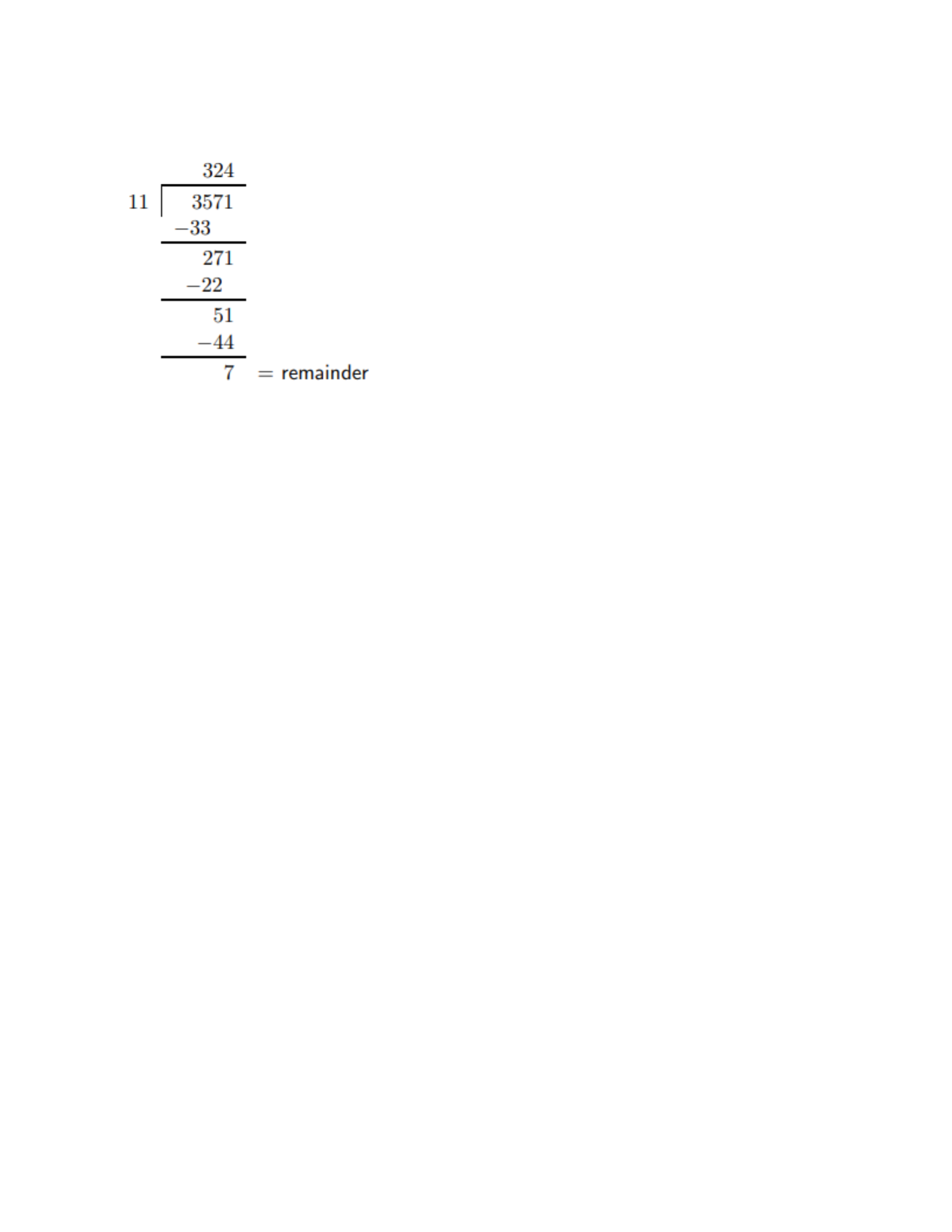
Example 1.16
Multiplication involving negative numbers
Multiplication is a little tricky to understand without the notion of distribution (discussed
later). We will begin with noting again what it means to multiply a number by a positive
number: So if we want to compute 4⋅(−7)4⋅(−7) we note
4⋅(−7)=(−7)+(−7)+(−7)+(−7)=−284⋅(−7)=(−7)+(−7)+(−7)+(−7)=−28
Note that since 4⋅7=28,4⋅(−7)=−(4⋅7).4⋅7=28,4⋅(−7)=−(4⋅7). We can multiply positive
numbers in any order: 4⋅7=7⋅44⋅7=7⋅4. The same is true of positive and negative numbers:
(−7)⋅4=4⋅(−7)=−(4⋅7)=−28(−7)⋅4=4⋅(−7)=−(4⋅7)=−28
Example 1.17
5⋅(−12)=−(5⋅12)=−605⋅(−12)=−(5⋅12)=−60 and (−3)⋅(−2)=−(3⋅(−2))=−(−(3⋅2))=6(−3)⋅(−2)
=−(3⋅(−2))=−(−(3⋅2))=6
Example 1.18
So the size of the product of two numbers is the product of their sizes. The sign is positive if
the signs are the same and negative if they are different.
Example 1.19
Two quantities right next to each other, with no symbol between them (except for
parentheses around either or both numbers), has an implicit multiplication. For
example, 3(2)=3×23(2)=3×2.
Example 1.20
Multiply:
iiiiiiii. (−5)(−8)=40(−5)(−8)=40
jjjjjjjj. (−6)⋅7=−42(−6)⋅7=−42

kkkkkkkk. 4⋅12=484⋅12=48
llllllll. (−3)(−6)⋅4(−3)=18⋅4(−3)=72(−3)=−216( multiplying from left to
right )(−3)(−6)⋅4(−3)=18⋅4(−3)=72(−3)=−216( multiplying from left to right )
mmmmmmmm. (−3)(−5)⋅4(−2)=(−3)⋅4⋅(−5)(−2)=−12⋅10=−120((−3)(−5)⋅4(−2)=(−3)⋅
4⋅(−5)(−2)=−12⋅10=−120( since we can multiply in any order it is convenient to see
that −5⋅−2=10.−5⋅−2=10. )
Exponents of integers
Recall that a positive exponent represents the number of times a number is multiplied by
itself.
Example 1.21
Evaluate:
uuuuuuuuu. 52=5⋅5=2552=5⋅5=25
vvvvvvvvv. (−4)3=(−4)⋅(−4)⋅(−4)=16⋅(−4)=−64(−4)3=(−4)⋅(−4)⋅(−4)=16⋅(−4)=−6
4
wwwwwwwww. (−7)1=−7(−7)1=−7
xxxxxxxxx. −24=−2⋅2⋅2⋅2=−16−24=−2⋅2⋅2⋅2=−16 Note: The exponent here is for
2 not −2!
yyyyyyyyy. (−3)4=(−3)⋅(−3)⋅(−3)⋅(−3)=9⋅(−3)⋅(−3)=−27⋅(−3)=81(−3)4=(−3)⋅(−3)
⋅(−3)⋅(−3)=9⋅(−3)⋅(−3)=−27⋅(−3)=81
zzzzzzzzz. (−2)5=(−2)⋅(−2)⋅(−2)⋅(−2)⋅(−2)=−32(−2)5=(−2)⋅(−2)⋅(−2)⋅(−2)⋅(−2)=−32
Exponent rules in details will be further discussed in Chapter 5.
Division involving negative numbers
Division is just a question of knowing multiplication and therefore has the same rule: The
size of the quotient of two numbers is the quotient of the sizes. The sign is positive if the
signs are the same and negative if they are different.
Example 1.22
Divide:
uuuuuuuuu. (−42)÷7=−6(−42)÷7=−6
vvvvvvvvv. 81÷(−9)=−981÷(−9)=−9
wwwwwwwww. (−35)÷(−7)=5(−35)÷(−7)=5
xxxxxxxxx. 14÷2=714÷2=7
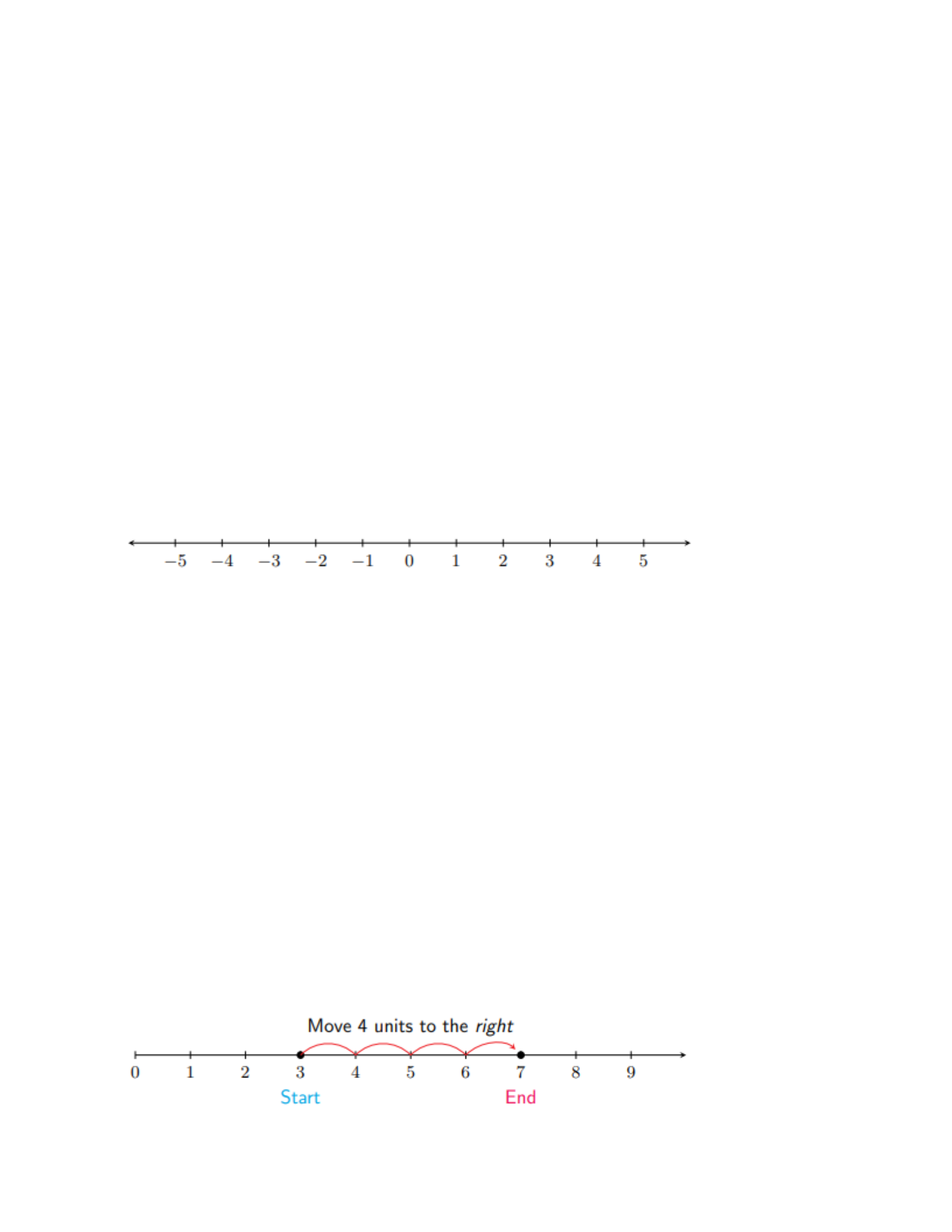
yyyyyyyyy. 0÷5=00÷5=0. Note When dividing 0 by any number, the answer is
always 0.
zzzzzzzzz. −10÷0=−10÷0= undefined.
Note 1.23
Any number divided by 0 is undefined!
Multiplying and Dividing Integers
Consider two numbers at a time.
77. If the signs of the two numbers are the same, then the sign of the answer is positive.
78. If the signs of the two numbers are different, then the sign of the answer is negative.
We begin with a brief review of arithmetic with integers
i.e. …,−3,−2,−1,0,1,2,3,……,−3,−2,−1,0,1,2,3,…
Any number has a weight and a sign.
The magnitude (or weight) of a number is the distance it is from 0 on the number line.
Example 1.1
For example, the weight of -5 is 5 and the weight of 7 is 7 .
Two numbers are opposites if, on the number line, they are on opposite sides of zero, but
the same distance away from zero.
So, −5 is the opposite of 5, and 7 is the opposite of −7 and so on.
Addition
We can add two numbers with the help of a number line .
Example 1.2
Adding two positive numbers: For example to add 3+43+4, we start with 3 on the number
line then move 4 units to the right. We land at 7 which is our answer.
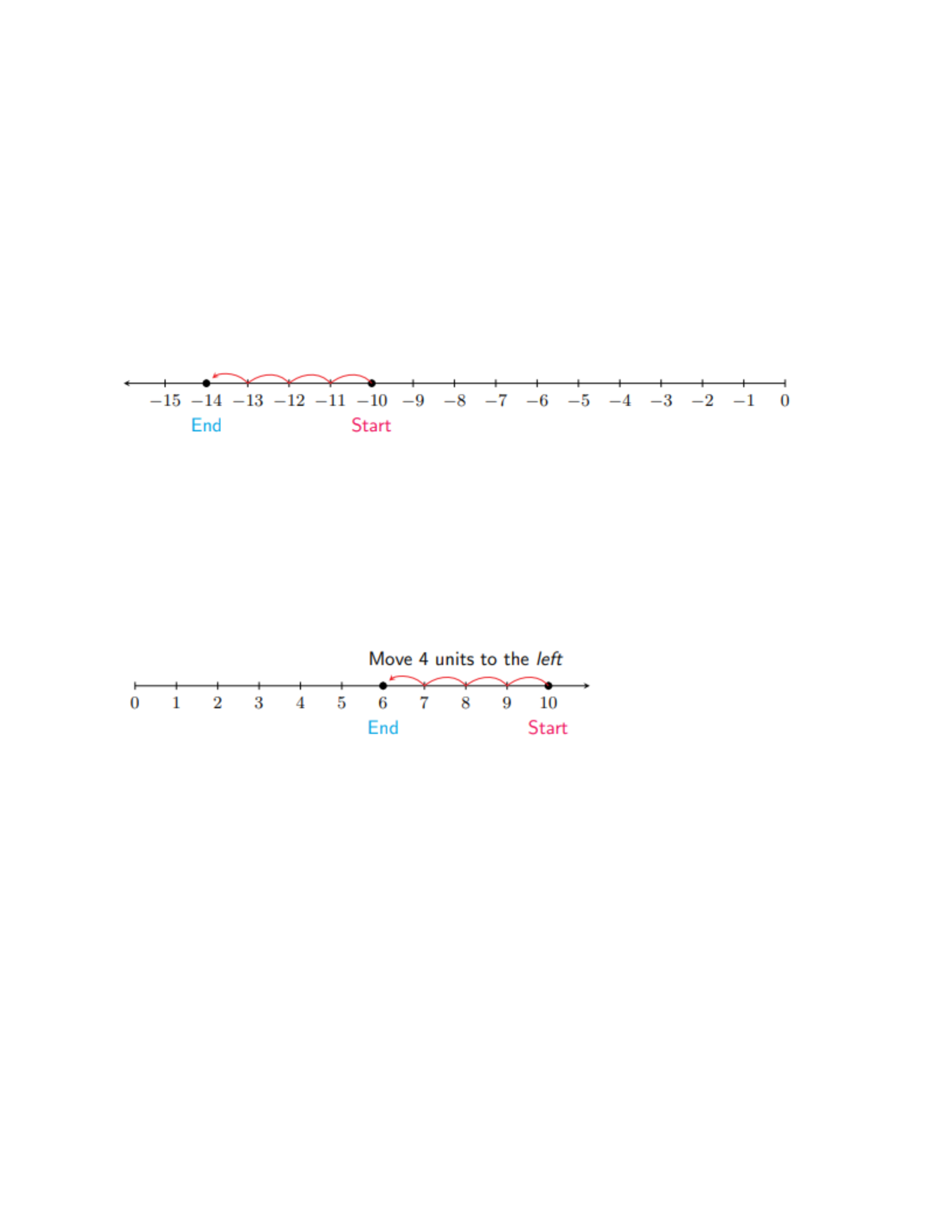
So, 3+4=73+4=7. Notice that the answer has the same sign as the signs of 3 and 4 (both
positive) and its weight comes from adding the weights of 3 and 4.
You always move to the right when you add a positive number
Example 1.3
Adding two negative numbers: For example, −10+(−4)−10+(−4) means you are adding a
debt of $4$4 to an already existing debt of $10.$10. So, we start at -10 on the number line
and move 4 units to the left, to land at −14,−14, which is the answer.
You always move to the left when you add a negative number (a debt)
So, −10+(−4)=−14−10+(−4)=−14. Notice that the answer has the same sign as the signs of -
10 and -4 (both negative) and its weight comes from adding the weights of -10 and -4
To add numbers of opposite signs, that is, a positive and a negative number, we can also
use the number line. For example, to perform 10+(−4),10+(−4), we start at 10 on the
number line and then move 4 units to the left. We land at 6,6, which is the answer. Think
of 10+(−4)10+(−4) as having $10$10 and adding a $4$4 debt. Because we are adding a
debt, we move to the left on the number line!
So, 10+(−4)=6.10+(−4)=6. Notice that the answer has the same sign as the sign of 10
(positive) because it is the number of larger weight, and its weight comes from finding the
difference of the weights of 10 and -4
Notice that because we were adding two numbers of opposite signs, the answer ended up
being the difference in weight (6) along with the sign of the number of larger weight
(positive).
Example 1.4
Adding two numbers of opposite signs: For example, 3+(−7)3+(−7). We start at 3 and move
toward 7 units to the left, and we land at −4,−4, which is our answer.
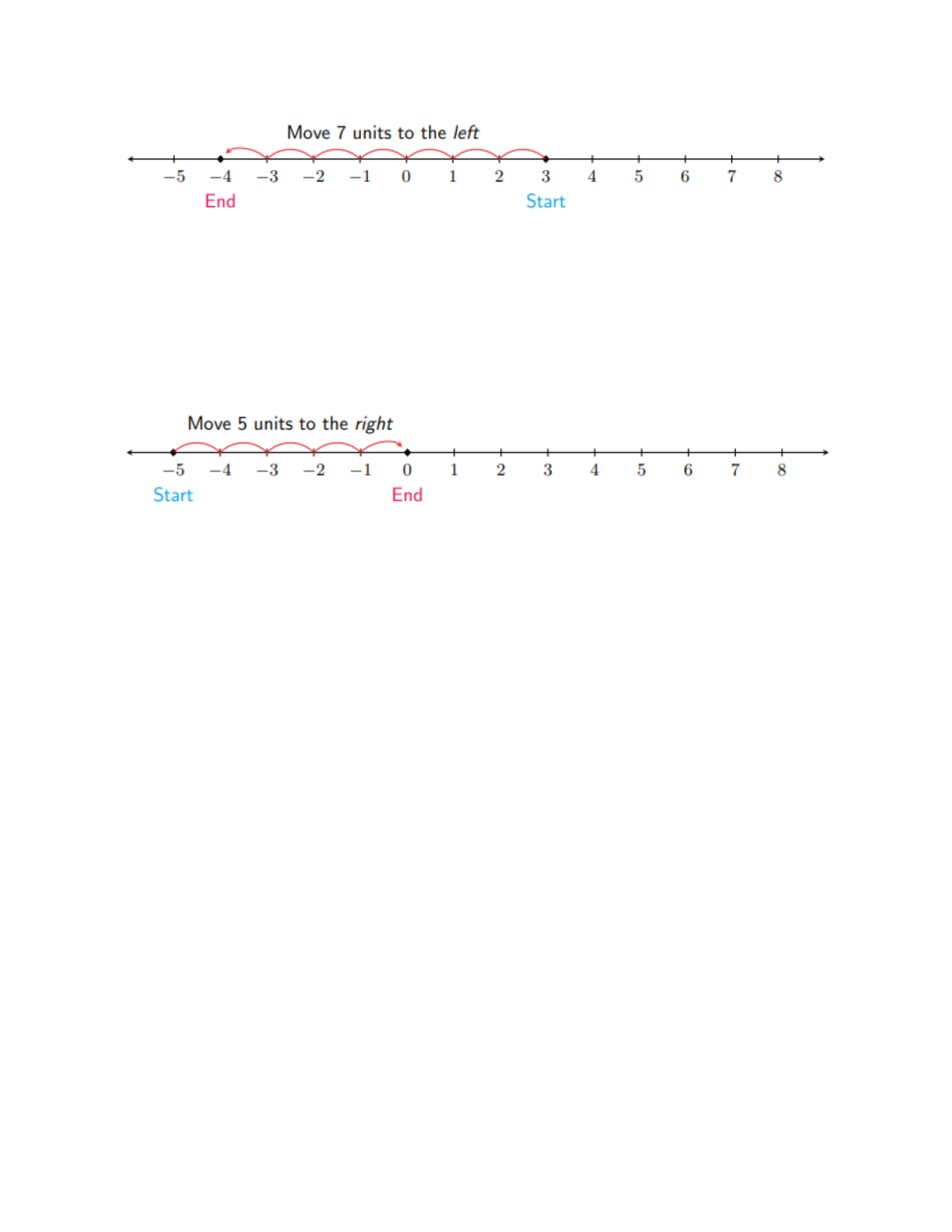
So, 3+(−7)=−4.3+(−7)=−4. Notice that the answer has the same sign as the signs of -7
(negative) because it is the number of larger weight, and its weight comes from finding the
difference of the weights of 3 and -7.
Example 1.5
Adding opposites: We start at -5 on the number line and jump to the right 5 units to land
finally at 00. So −5+5=0−5+5=0.
Note 1.6
Two opposite numbers are called a zero-pair, because adding them always results in 0.
So, −5 and 5 are a zero-pair.
Adding Intergers
79. To add two numbers of the same sign, add their weights and place it after the
sign.
80. To add two numbers of opposite signs, find the difference of their weights and
place it after the sign of the number with the greater weight.
Example 1.7
Add:
aaaaaaaaaa. −8+19=11−8+19=11
bbbbbbbbbb. −8+4=−4−8+4=−4
cccccccccc. 6+(−9)=−36+(−9)=−3
dddddddddd. 7+(−2)=57+(−2)=5
eeeeeeeeee. (−4)+(−7)=−11(−4)+(−7)=−11
ffffffffff. 8+7=158+7=15
Note 1.8

While we can add in any order: 4+2=2+44+2=2+4, it is sometimes convenient to add up all
of the negative numbers and add up all of the positive numbers, and then add the results.
There are also times when it is best to notice certain simplifications if the numbers are
added in a different order.
For example
−5+4+5+(−8)=−5+(−8)+4+5( by reordering )−5+4+5+(−8)=−5+(−8)+4+5( by reordering )
so,
−5+4+5+(−8)=−5+(−8)+4+5=−13+9=−4−5+4+5+(−8)=−5+(−8)+4+5=−13+9=−4
We could have also simplified this by noting that (-5) and 5 are zero-pair, so we are left
with 4+(−8)4+(−8) which is -4.
Example 1.9
We can calculate
(−4)+(−5)+7+(−3)=(−4)+(−5)+(−3)+7=(−12)+7=−5(−4)+(−5)+7+(−3)=(−4)+(−5)+(−3)+7=
(−12)+7=−5
We could have simplified this by noting that (-4) and (-3) make -7, and -7 and 7 are zero-
pair, so the total is -5.
Subtraction (as Addition of the Opposite)
Once we know how to add numbers, we are set to subtract numbers because subtraction is
nothing but addition of the opposite. That is, subtracting 8 − 3 (which reads: subtracting 3
from 8) is the same as 8 + (−3) (which reads: Adding −3 to 8.).
Example 1.10
So, 8−3=8+(−3),8−3=8+(−3), and, we can use the rules of adding two numbers of opposite
signs to find out that the answer is 5.5. We can also use the number line. We start at 8 and
move 3 units to the left (adding -3 is adding a debt, so we move to the left).
So 8−3=5.−4−3−2−10123456788−3=5.−4−3−2−1012345678 End Start Move 3 units to the
left
Example 1.11
To calculate 3−73−7 we first rewrite it as an addition
problem. 3−7=3+(−7).3−7=3+(−7). We can either use the number line, or the rules of
adding two numbers of opposite signs. And, 50,3−7=3+(−7)=−450,3−7=3+(−7)=−4
Example 1.12
To calculate −4−1,−4−1, we first rewrite it as an addition
problem. −4−1=−4+(−1).−4−1=−4+(−1). We can either use the number line, or the rules of
adding two numbers of the same signs. If we want to use the rules, both numbers are
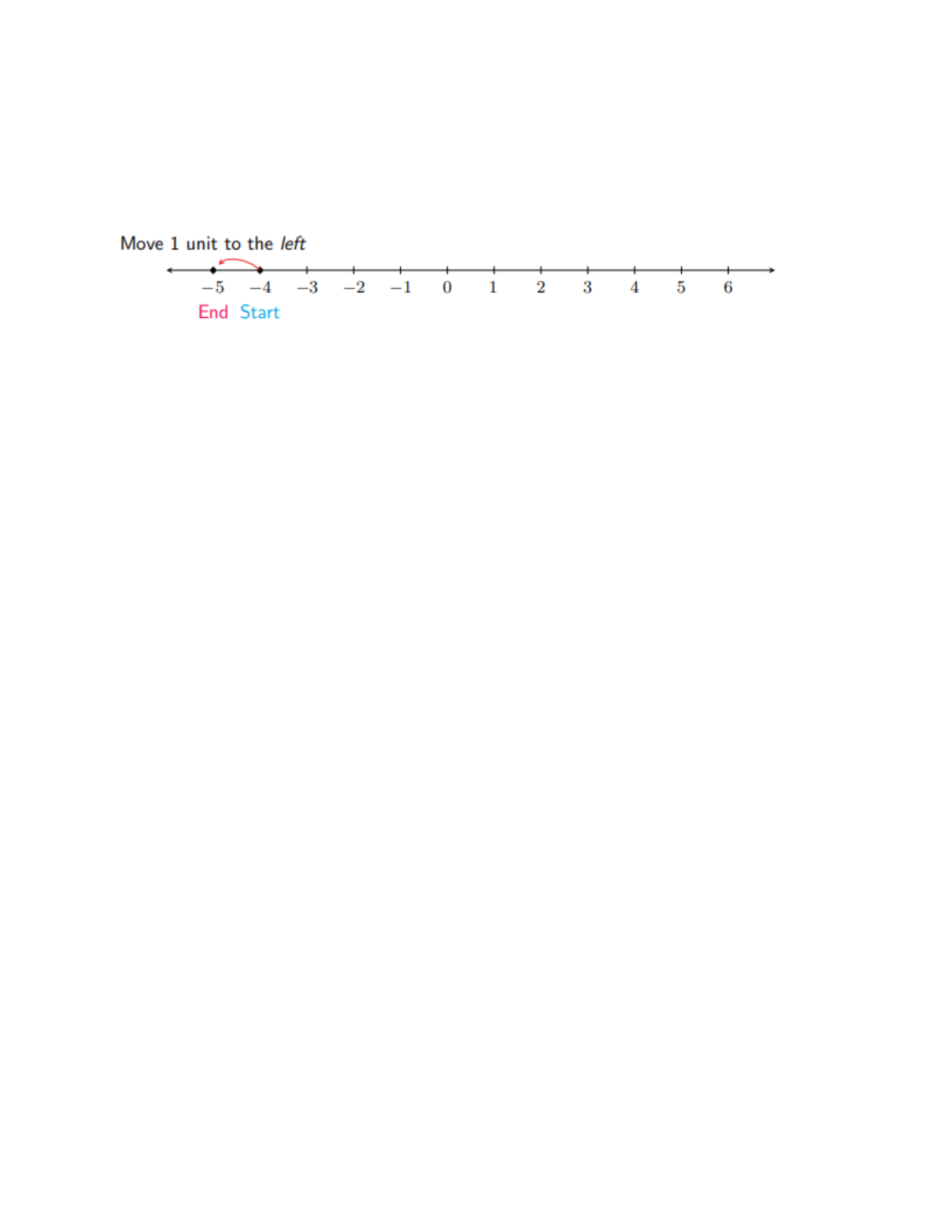
negative, so our answer will be negative, and, adding the weights of -4 and -1
is 5.50,−4−1=−4+(−1)=−55.50,−4−1=−4+(−1)=−5
On the number line, we start at -4 and move 1 unit to the left, to land on -5 which is our
answer.
Changing the subtractions to additions in this way is particularly useful when adding or
subtracting several numbers (because we can add in any order).
Example 1.13
===−3−7+5+7+13−6−(−9)−3+(−7)+5+7+13+(−6)+9−3+(−7)+(−6)+5+7+13+918−3−7+5+7
+13−6−(−9)=−3+(−7)+5+7+13+(−6)+9=−3+(−7)+(−6)+5+7+13+9=18
===−3−7+5+7+13−6−(−9)−3+(−7)+5+7+13+(−6)+95+1318−3−7+5+7+13−6−(−9)=−3+(−7
)+5+7+13+(−6)+9=5+13=18
Remark 1.14
Warning: The symbol "-" is used in two different ways. When it is between two expressions,
it means subtract (e.g., 3−43−4 ). Otherwise, it means 'opposite' or 'negative'
(e.g., −3+4−3+4 ). So in the expression −4−(−3)−4−(−3), the first and last "-" means
opposite and the one in the middle one means subtract. The importance of understanding
this can not be overestimated.
Multiplication and Division of Positive Numbers
Multiplication of integers is adding in the sense that 3×4=4+4+43×4=4+4+4
To multiply larger numbers, it is better to use the usual scheme of multiplication. For
example:
Example 1.15
Let us multiply 152 by 34. We will for convenience sake put the smaller number on the
bottom (though it is not necessary). We have
+×4516515306624808152×34608+45605168
And division is the opposite of multiplication in the sense that to compute 45÷945÷9 is to
find a number so that when we multiply by 9 we get 45. We run through our multiplication
tables (which are hopefully in our head) to discover that 5 does the
trick: 5×9=455×9=45 so that 45÷9=5.45÷9=5. We will discuss division from a different
point of view when we discuss fractions.
To divide larger numbers, we can use long division. For example, let’s divide 3571 by 11.
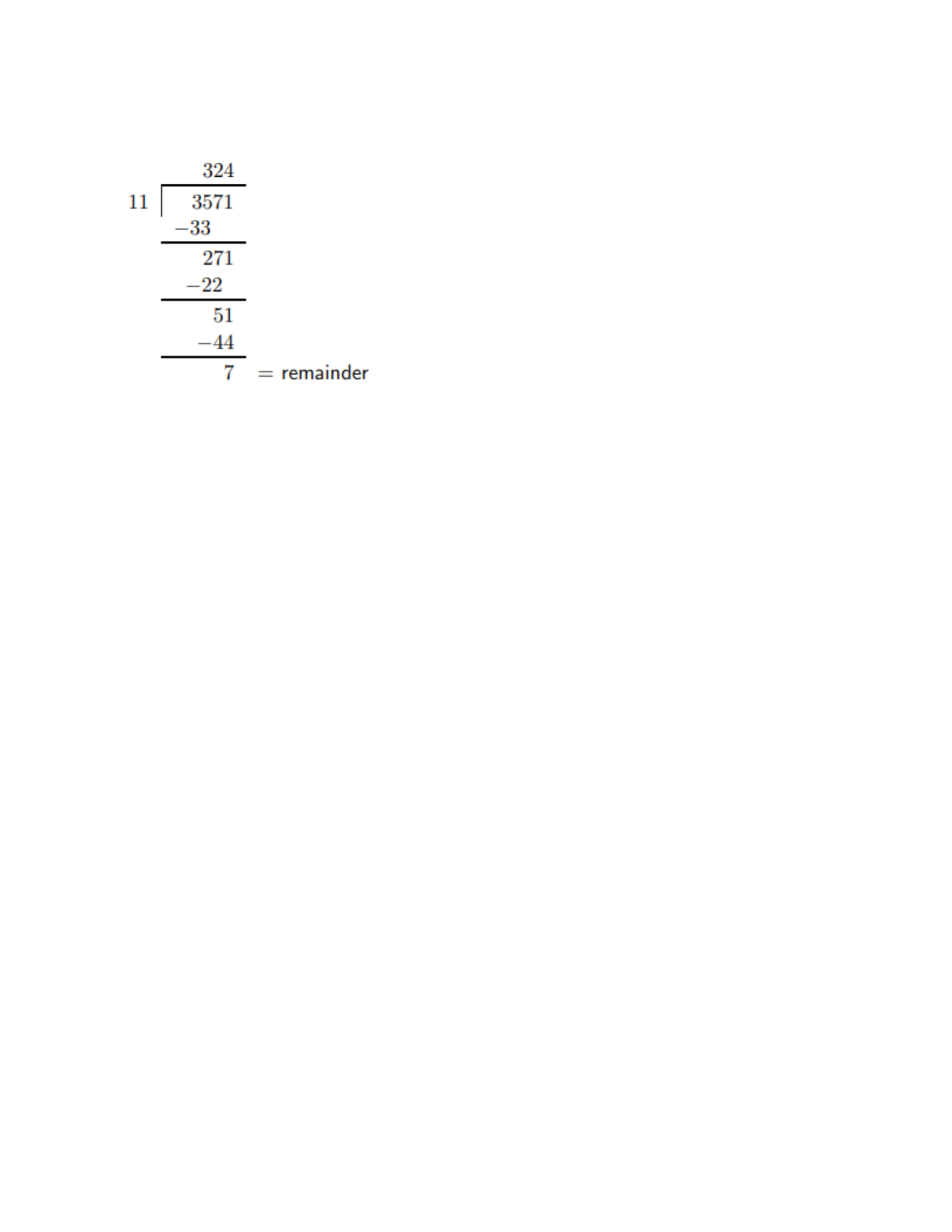
Example 1.16
Multiplication involving negative numbers
Multiplication is a little tricky to understand without the notion of distribution (discussed
later). We will begin with noting again what it means to multiply a number by a positive
number: So if we want to compute 4⋅(−7)4⋅(−7) we note
4⋅(−7)=(−7)+(−7)+(−7)+(−7)=−284⋅(−7)=(−7)+(−7)+(−7)+(−7)=−28
Note that since 4⋅7=28,4⋅(−7)=−(4⋅7).4⋅7=28,4⋅(−7)=−(4⋅7). We can multiply positive
numbers in any order: 4⋅7=7⋅44⋅7=7⋅4. The same is true of positive and negative numbers:
(−7)⋅4=4⋅(−7)=−(4⋅7)=−28(−7)⋅4=4⋅(−7)=−(4⋅7)=−28
Example 1.17
5⋅(−12)=−(5⋅12)=−605⋅(−12)=−(5⋅12)=−60 and (−3)⋅(−2)=−(3⋅(−2))=−(−(3⋅2))=6(−3)⋅(−2)
=−(3⋅(−2))=−(−(3⋅2))=6
Example 1.18
So the size of the product of two numbers is the product of their sizes. The sign is positive if
the signs are the same and negative if they are different.
Example 1.19
Two quantities right next to each other, with no symbol between them (except for
parentheses around either or both numbers), has an implicit multiplication. For
example, 3(2)=3×23(2)=3×2.
Example 1.20
Multiply:
nnnnnnnn. (−5)(−8)=40(−5)(−8)=40
oooooooo. (−6)⋅7=−42(−6)⋅7=−42

pppppppp. 4⋅12=484⋅12=48
qqqqqqqq. (−3)(−6)⋅4(−3)=18⋅4(−3)=72(−3)=−216( multiplying from left to
right )(−3)(−6)⋅4(−3)=18⋅4(−3)=72(−3)=−216( multiplying from left to right )
rrrrrrrr. (−3)(−5)⋅4(−2)=(−3)⋅4⋅(−5)(−2)=−12⋅10=−120((−3)(−5)⋅4(−2)=(−3)⋅4⋅(−5)(
−2)=−12⋅10=−120( since we can multiply in any order it is convenient to see
that −5⋅−2=10.−5⋅−2=10. )
Exponents of integers
Recall that a positive exponent represents the number of times a number is multiplied by
itself.
Example 1.21
Evaluate:
aaaaaaaaaa. 52=5⋅5=2552=5⋅5=25
bbbbbbbbbb. (−4)3=(−4)⋅(−4)⋅(−4)=16⋅(−4)=−64(−4)3=(−4)⋅(−4)⋅(−4)=16⋅(−4)=−6
4
cccccccccc. (−7)1=−7(−7)1=−7
dddddddddd. −24=−2⋅2⋅2⋅2=−16−24=−2⋅2⋅2⋅2=−16 Note: The exponent here is for
2 not −2!
eeeeeeeeee. (−3)4=(−3)⋅(−3)⋅(−3)⋅(−3)=9⋅(−3)⋅(−3)=−27⋅(−3)=81(−3)4=(−3)⋅(−3)
⋅(−3)⋅(−3)=9⋅(−3)⋅(−3)=−27⋅(−3)=81
ffffffffff. (−2)5=(−2)⋅(−2)⋅(−2)⋅(−2)⋅(−2)=−32(−2)5=(−2)⋅(−2)⋅(−2)⋅(−2)⋅(−2)=−32
Exponent rules in details will be further discussed in Chapter 5.
Division involving negative numbers
Division is just a question of knowing multiplication and therefore has the same rule: The
size of the quotient of two numbers is the quotient of the sizes. The sign is positive if the
signs are the same and negative if they are different.
Example 1.22
Divide:
aaaaaaaaaa. (−42)÷7=−6(−42)÷7=−6
bbbbbbbbbb. 81÷(−9)=−981÷(−9)=−9
cccccccccc. (−35)÷(−7)=5(−35)÷(−7)=5
dddddddddd. 14÷2=714÷2=7
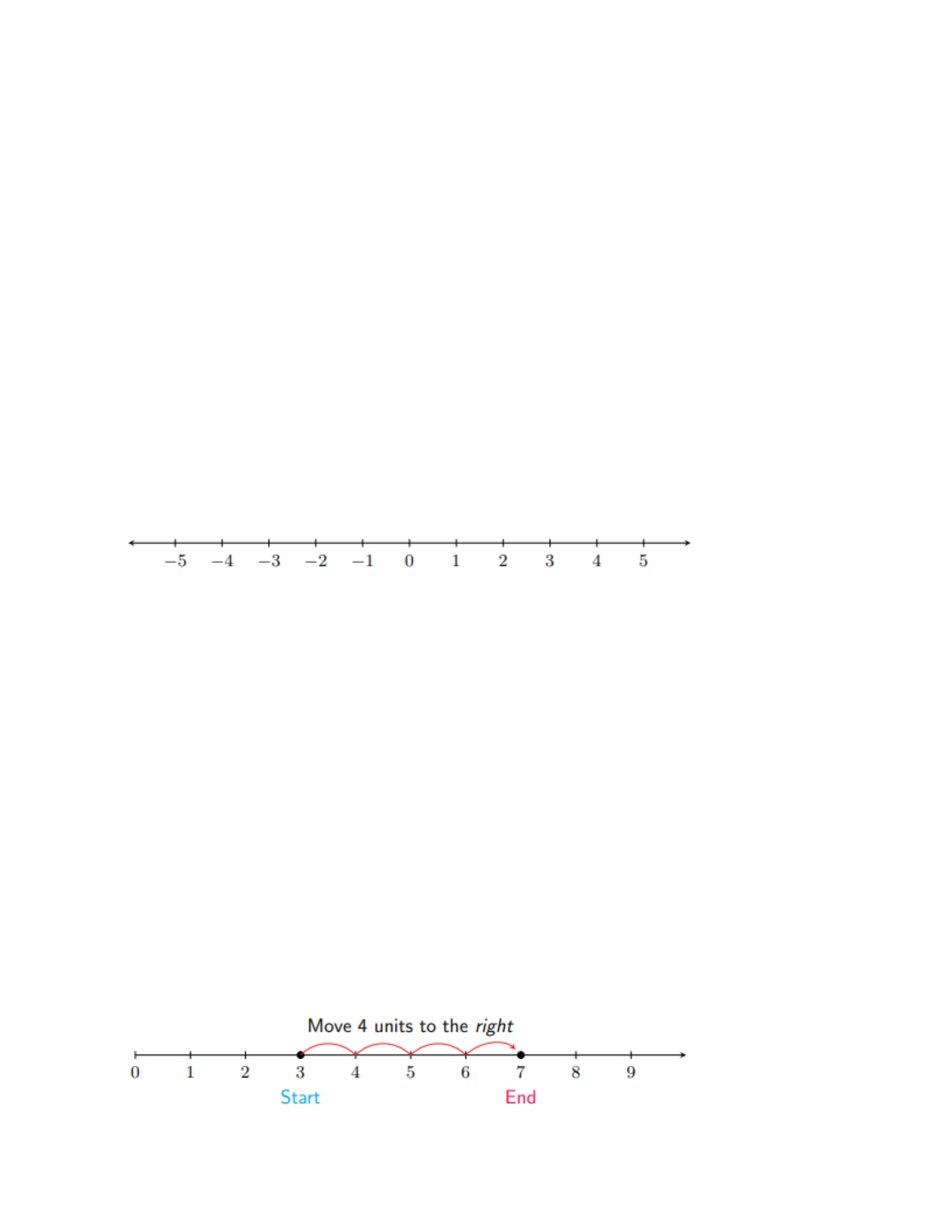
eeeeeeeeee. 0÷5=00÷5=0. Note When dividing 0 by any number, the answer is
always 0.
ffffffffff. −10÷0=−10÷0= undefined.
Note 1.23
Any number divided by 0 is undefined!
Multiplying and Dividing Integers
Consider two numbers at a time.
79. If the signs of the two numbers are the same, then the sign of the answer is positive.
80. If the signs of the two numbers are different, then the sign of the answer is negative.
We begin with a brief review of arithmetic with integers
i.e. …,−3,−2,−1,0,1,2,3,……,−3,−2,−1,0,1,2,3,…
Any number has a weight and a sign.
The magnitude (or weight) of a number is the distance it is from 0 on the number line.
Example 1.1
For example, the weight of -5 is 5 and the weight of 7 is 7 .
Two numbers are opposites if, on the number line, they are on opposite sides of zero, but
the same distance away from zero.
So, −5 is the opposite of 5, and 7 is the opposite of −7 and so on.
Addition
We can add two numbers with the help of a number line .
Example 1.2
Adding two positive numbers: For example to add 3+43+4, we start with 3 on the number
line then move 4 units to the right. We land at 7 which is our answer.
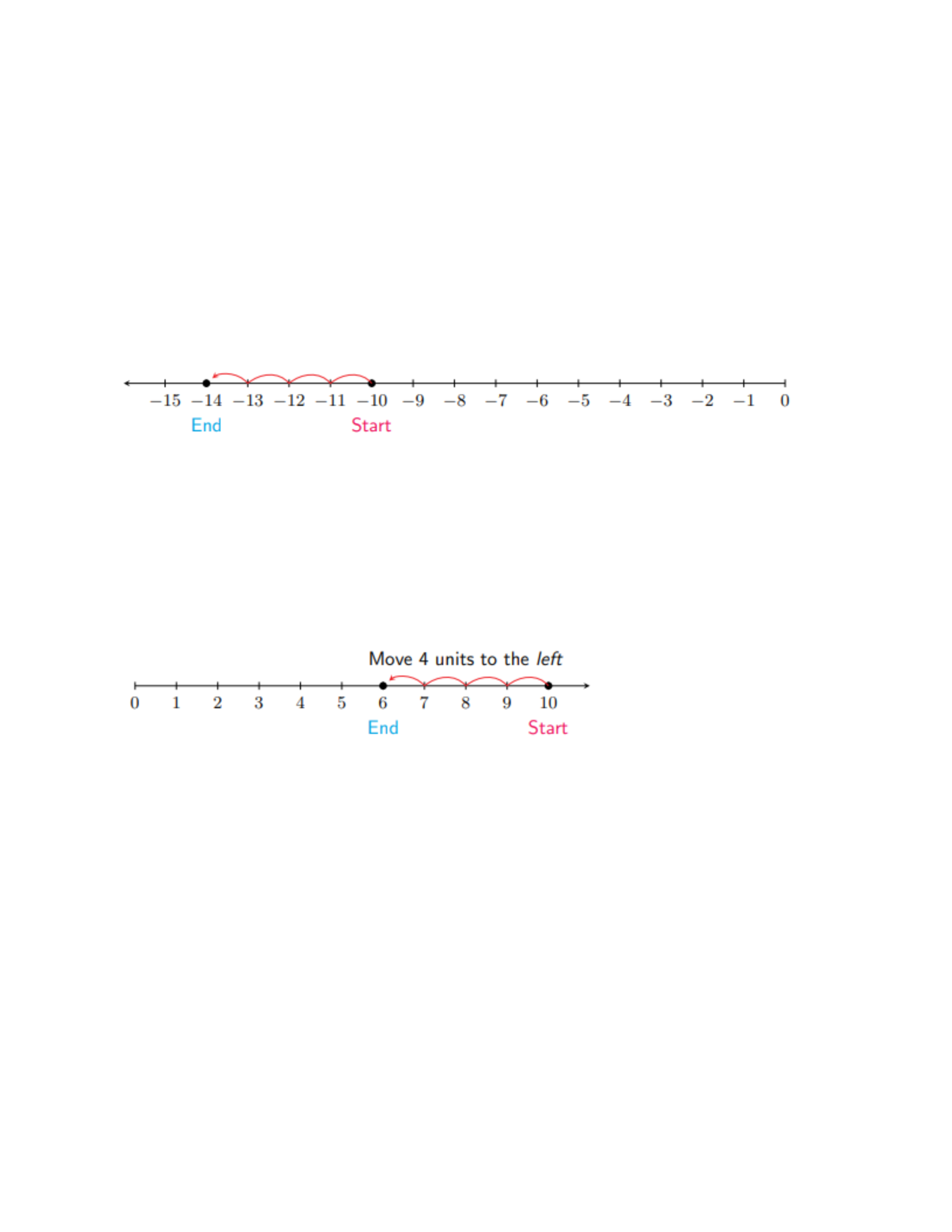
So, 3+4=73+4=7. Notice that the answer has the same sign as the signs of 3 and 4 (both
positive) and its weight comes from adding the weights of 3 and 4.
You always move to the right when you add a positive number
Example 1.3
Adding two negative numbers: For example, −10+(−4)−10+(−4) means you are adding a
debt of $4$4 to an already existing debt of $10.$10. So, we start at -10 on the number line
and move 4 units to the left, to land at −14,−14, which is the answer.
You always move to the left when you add a negative number (a debt)
So, −10+(−4)=−14−10+(−4)=−14. Notice that the answer has the same sign as the signs of -
10 and -4 (both negative) and its weight comes from adding the weights of -10 and -4
To add numbers of opposite signs, that is, a positive and a negative number, we can also
use the number line. For example, to perform 10+(−4),10+(−4), we start at 10 on the
number line and then move 4 units to the left. We land at 6,6, which is the answer. Think
of 10+(−4)10+(−4) as having $10$10 and adding a $4$4 debt. Because we are adding a
debt, we move to the left on the number line!
So, 10+(−4)=6.10+(−4)=6. Notice that the answer has the same sign as the sign of 10
(positive) because it is the number of larger weight, and its weight comes from finding the
difference of the weights of 10 and -4
Notice that because we were adding two numbers of opposite signs, the answer ended up
being the difference in weight (6) along with the sign of the number of larger weight
(positive).
Example 1.4
Adding two numbers of opposite signs: For example, 3+(−7)3+(−7). We start at 3 and move
toward 7 units to the left, and we land at −4,−4, which is our answer.
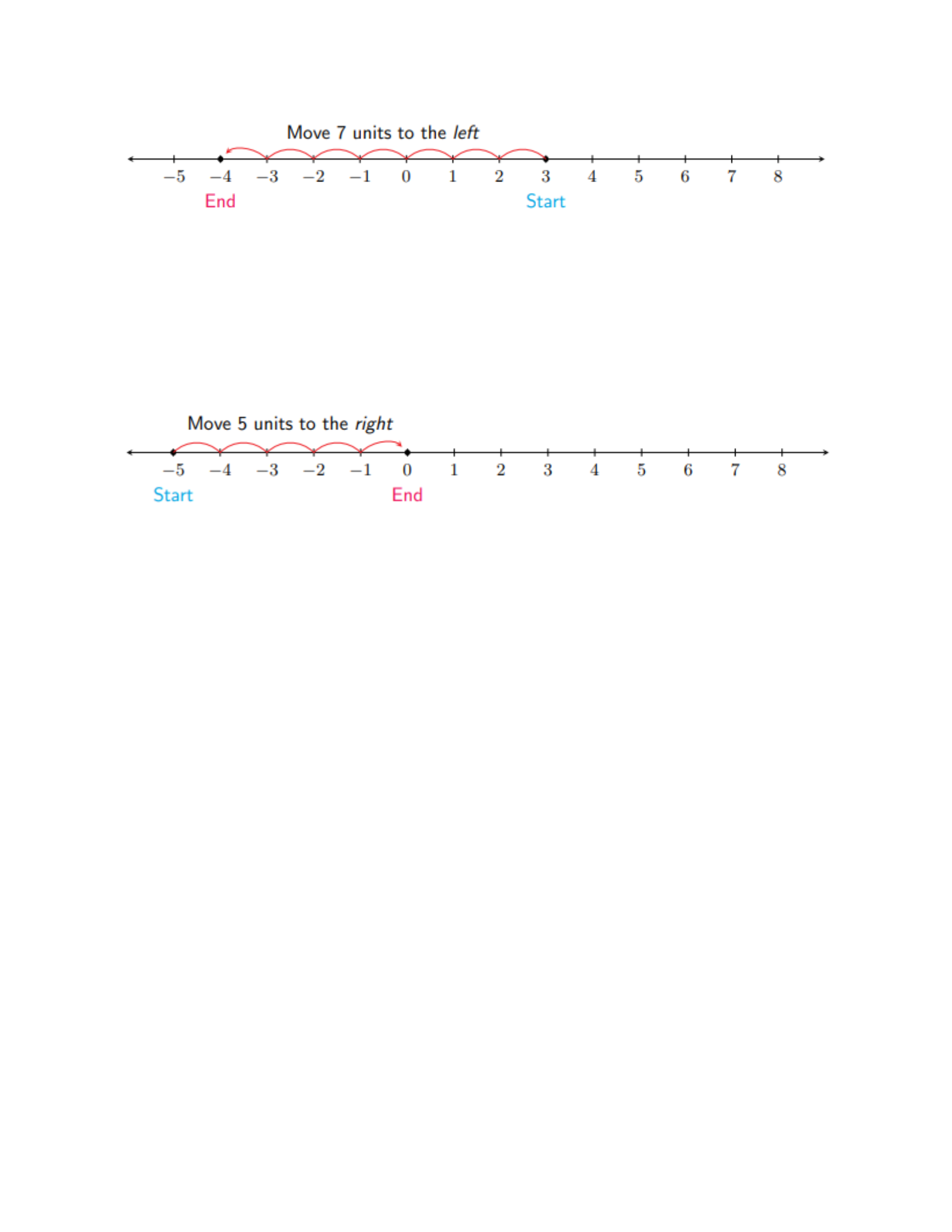
So, 3+(−7)=−4.3+(−7)=−4. Notice that the answer has the same sign as the signs of -7
(negative) because it is the number of larger weight, and its weight comes from finding the
difference of the weights of 3 and -7.
Example 1.5
Adding opposites: We start at -5 on the number line and jump to the right 5 units to land
finally at 00. So −5+5=0−5+5=0.
Note 1.6
Two opposite numbers are called a zero-pair, because adding them always results in 0.
So, −5 and 5 are a zero-pair.
Adding Intergers
81. To add two numbers of the same sign, add their weights and place it after the
sign.
82. To add two numbers of opposite signs, find the difference of their weights and
place it after the sign of the number with the greater weight.
Example 1.7
Add:
gggggggggg. −8+19=11−8+19=11
hhhhhhhhhh. −8+4=−4−8+4=−4
iiiiiiiiii. 6+(−9)=−36+(−9)=−3
jjjjjjjjjj. 7+(−2)=57+(−2)=5
kkkkkkkkkk. (−4)+(−7)=−11(−4)+(−7)=−11
llllllllll. 8+7=158+7=15
Note 1.8

While we can add in any order: 4+2=2+44+2=2+4, it is sometimes convenient to add up all
of the negative numbers and add up all of the positive numbers, and then add the results.
There are also times when it is best to notice certain simplifications if the numbers are
added in a different order.
For example
−5+4+5+(−8)=−5+(−8)+4+5( by reordering )−5+4+5+(−8)=−5+(−8)+4+5( by reordering )
so,
−5+4+5+(−8)=−5+(−8)+4+5=−13+9=−4−5+4+5+(−8)=−5+(−8)+4+5=−13+9=−4
We could have also simplified this by noting that (-5) and 5 are zero-pair, so we are left
with 4+(−8)4+(−8) which is -4.
Example 1.9
We can calculate
(−4)+(−5)+7+(−3)=(−4)+(−5)+(−3)+7=(−12)+7=−5(−4)+(−5)+7+(−3)=(−4)+(−5)+(−3)+7=
(−12)+7=−5
We could have simplified this by noting that (-4) and (-3) make -7, and -7 and 7 are zero-
pair, so the total is -5.
Subtraction (as Addition of the Opposite)
Once we know how to add numbers, we are set to subtract numbers because subtraction is
nothing but addition of the opposite. That is, subtracting 8 − 3 (which reads: subtracting 3
from 8) is the same as 8 + (−3) (which reads: Adding −3 to 8.).
Example 1.10
So, 8−3=8+(−3),8−3=8+(−3), and, we can use the rules of adding two numbers of opposite
signs to find out that the answer is 5.5. We can also use the number line. We start at 8 and
move 3 units to the left (adding -3 is adding a debt, so we move to the left).
So 8−3=5.−4−3−2−10123456788−3=5.−4−3−2−1012345678 End Start Move 3 units to the
left
Example 1.11
To calculate 3−73−7 we first rewrite it as an addition
problem. 3−7=3+(−7).3−7=3+(−7). We can either use the number line, or the rules of
adding two numbers of opposite signs. And, 50,3−7=3+(−7)=−450,3−7=3+(−7)=−4
Example 1.12
To calculate −4−1,−4−1, we first rewrite it as an addition
problem. −4−1=−4+(−1).−4−1=−4+(−1). We can either use the number line, or the rules of
adding two numbers of the same signs. If we want to use the rules, both numbers are
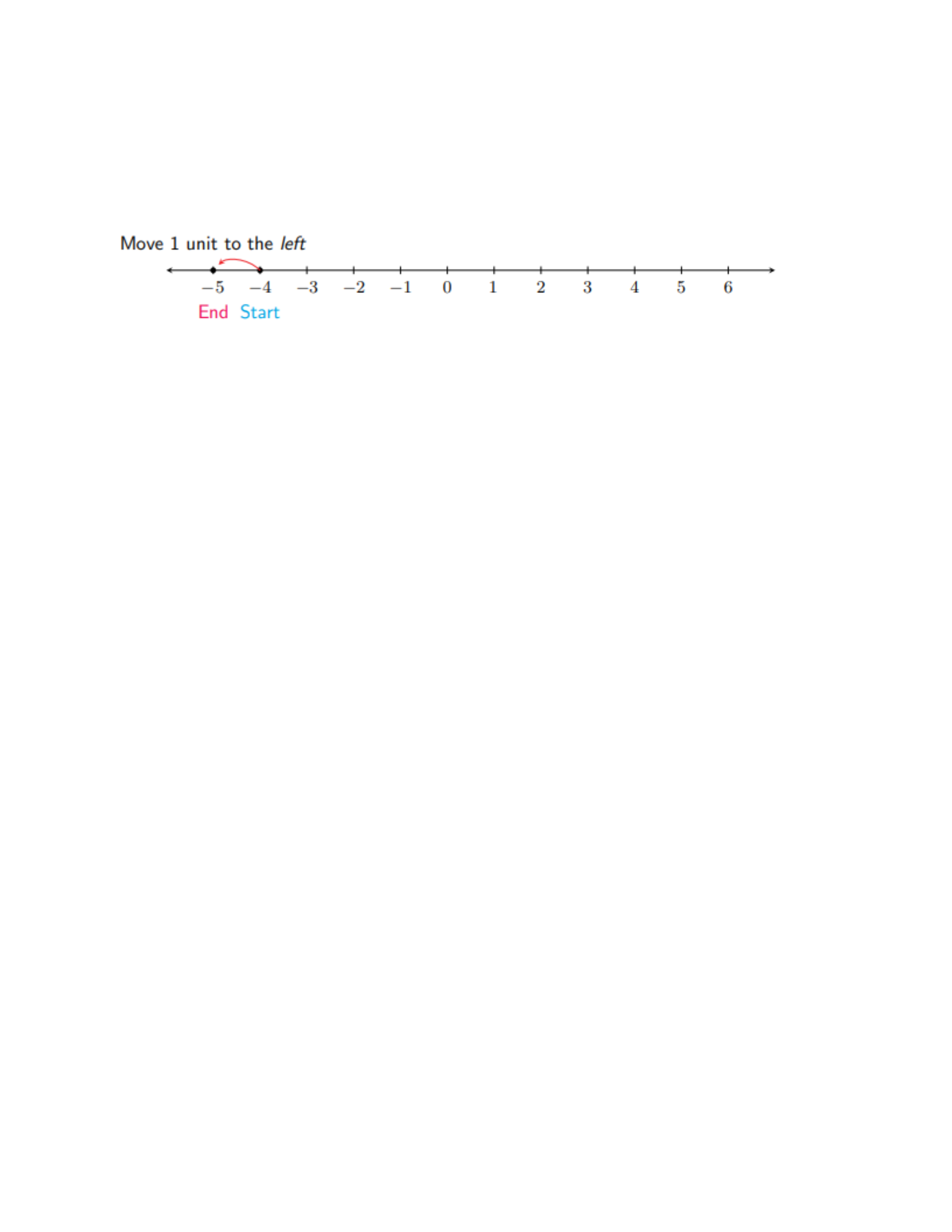
negative, so our answer will be negative, and, adding the weights of -4 and -1
is 5.50,−4−1=−4+(−1)=−55.50,−4−1=−4+(−1)=−5
On the number line, we start at -4 and move 1 unit to the left, to land on -5 which is our
answer.
Changing the subtractions to additions in this way is particularly useful when adding or
subtracting several numbers (because we can add in any order).
Example 1.13
===−3−7+5+7+13−6−(−9)−3+(−7)+5+7+13+(−6)+9−3+(−7)+(−6)+5+7+13+918−3−7+5+7
+13−6−(−9)=−3+(−7)+5+7+13+(−6)+9=−3+(−7)+(−6)+5+7+13+9=18
===−3−7+5+7+13−6−(−9)−3+(−7)+5+7+13+(−6)+95+1318−3−7+5+7+13−6−(−9)=−3+(−7
)+5+7+13+(−6)+9=5+13=18
Remark 1.14
Warning: The symbol "-" is used in two different ways. When it is between two expressions,
it means subtract (e.g., 3−43−4 ). Otherwise, it means 'opposite' or 'negative'
(e.g., −3+4−3+4 ). So in the expression −4−(−3)−4−(−3), the first and last "-" means
opposite and the one in the middle one means subtract. The importance of understanding
this can not be overestimated.
Multiplication and Division of Positive Numbers
Multiplication of integers is adding in the sense that 3×4=4+4+43×4=4+4+4
To multiply larger numbers, it is better to use the usual scheme of multiplication. For
example:
Example 1.15
Let us multiply 152 by 34. We will for convenience sake put the smaller number on the
bottom (though it is not necessary). We have
+×4516515306624808152×34608+45605168
And division is the opposite of multiplication in the sense that to compute 45÷945÷9 is to
find a number so that when we multiply by 9 we get 45. We run through our multiplication
tables (which are hopefully in our head) to discover that 5 does the
trick: 5×9=455×9=45 so that 45÷9=5.45÷9=5. We will discuss division from a different
point of view when we discuss fractions.
To divide larger numbers, we can use long division. For example, let’s divide 3571 by 11.
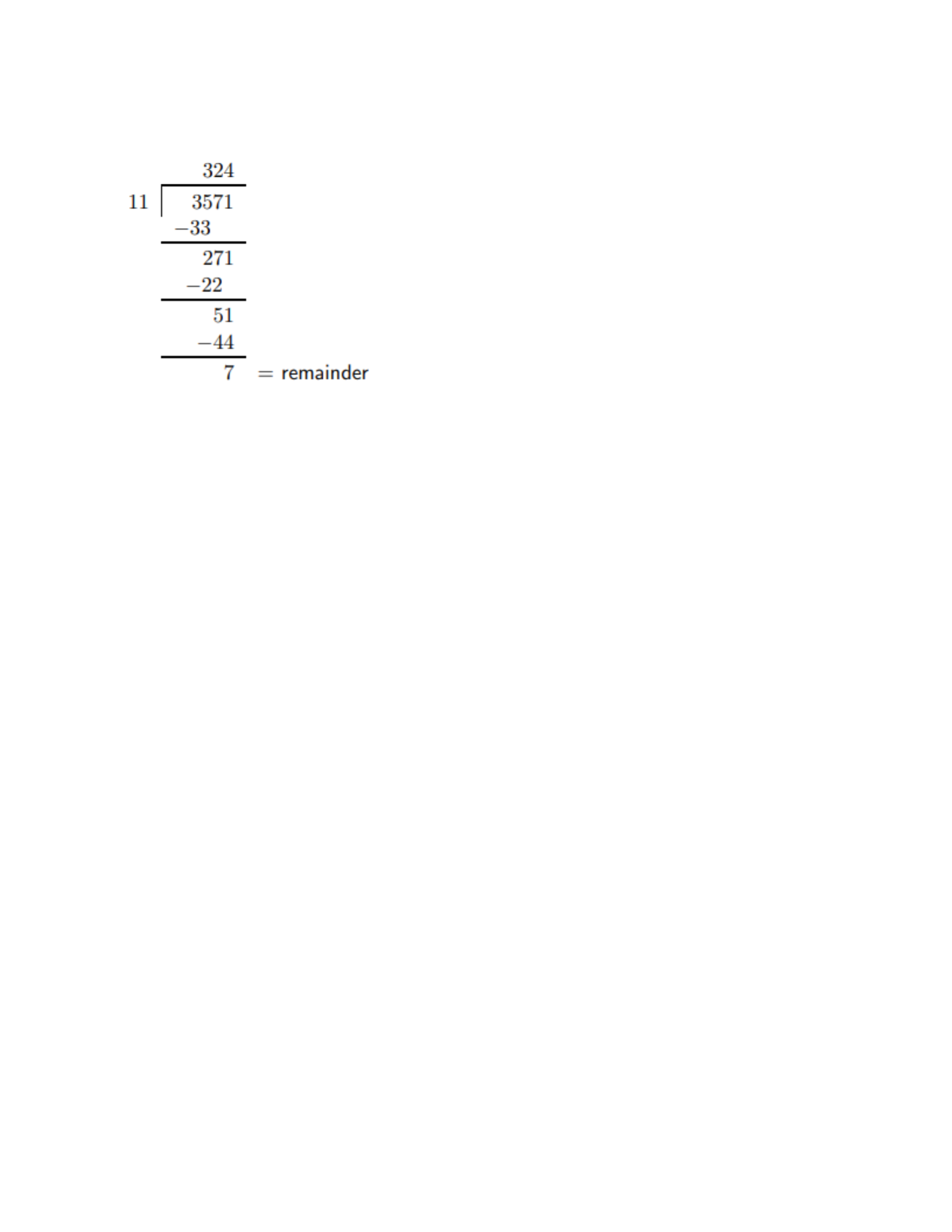
Example 1.16
Multiplication involving negative numbers
Multiplication is a little tricky to understand without the notion of distribution (discussed
later). We will begin with noting again what it means to multiply a number by a positive
number: So if we want to compute 4⋅(−7)4⋅(−7) we note
4⋅(−7)=(−7)+(−7)+(−7)+(−7)=−284⋅(−7)=(−7)+(−7)+(−7)+(−7)=−28
Note that since 4⋅7=28,4⋅(−7)=−(4⋅7).4⋅7=28,4⋅(−7)=−(4⋅7). We can multiply positive
numbers in any order: 4⋅7=7⋅44⋅7=7⋅4. The same is true of positive and negative numbers:
(−7)⋅4=4⋅(−7)=−(4⋅7)=−28(−7)⋅4=4⋅(−7)=−(4⋅7)=−28
Example 1.17
5⋅(−12)=−(5⋅12)=−605⋅(−12)=−(5⋅12)=−60 and (−3)⋅(−2)=−(3⋅(−2))=−(−(3⋅2))=6(−3)⋅(−2)
=−(3⋅(−2))=−(−(3⋅2))=6
Example 1.18
So the size of the product of two numbers is the product of their sizes. The sign is positive if
the signs are the same and negative if they are different.
Example 1.19
Two quantities right next to each other, with no symbol between them (except for
parentheses around either or both numbers), has an implicit multiplication. For
example, 3(2)=3×23(2)=3×2.
Example 1.20
Multiply:
ssssssss. (−5)(−8)=40(−5)(−8)=40
tttttttt. (−6)⋅7=−42(−6)⋅7=−42

uuuuuuuu. 4⋅12=484⋅12=48
vvvvvvvv. (−3)(−6)⋅4(−3)=18⋅4(−3)=72(−3)=−216( multiplying from left to
right )(−3)(−6)⋅4(−3)=18⋅4(−3)=72(−3)=−216( multiplying from left to right )
wwwwwwww. (−3)(−5)⋅4(−2)=(−3)⋅4⋅(−5)(−2)=−12⋅10=−120((−3)(−5)⋅4(−2)=(−3)⋅
4⋅(−5)(−2)=−12⋅10=−120( since we can multiply in any order it is convenient to see
that −5⋅−2=10.−5⋅−2=10. )
Exponents of integers
Recall that a positive exponent represents the number of times a number is multiplied by
itself.
Example 1.21
Evaluate:
gggggggggg. 52=5⋅5=2552=5⋅5=25
hhhhhhhhhh. (−4)3=(−4)⋅(−4)⋅(−4)=16⋅(−4)=−64(−4)3=(−4)⋅(−4)⋅(−4)=16⋅(−4)=−6
4
iiiiiiiiii. (−7)1=−7(−7)1=−7
jjjjjjjjjj. −24=−2⋅2⋅2⋅2=−16−24=−2⋅2⋅2⋅2=−16 Note: The exponent here is for 2 not
−2!
kkkkkkkkkk. (−3)4=(−3)⋅(−3)⋅(−3)⋅(−3)=9⋅(−3)⋅(−3)=−27⋅(−3)=81(−3)4=(−3)⋅(−3)
⋅(−3)⋅(−3)=9⋅(−3)⋅(−3)=−27⋅(−3)=81
llllllllll. (−2)5=(−2)⋅(−2)⋅(−2)⋅(−2)⋅(−2)=−32(−2)5=(−2)⋅(−2)⋅(−2)⋅(−2)⋅(−2)=−32
Exponent rules in details will be further discussed in Chapter 5.
Division involving negative numbers
Division is just a question of knowing multiplication and therefore has the same rule: The
size of the quotient of two numbers is the quotient of the sizes. The sign is positive if the
signs are the same and negative if they are different.
Example 1.22
Divide:
gggggggggg. (−42)÷7=−6(−42)÷7=−6
hhhhhhhhhh. 81÷(−9)=−981÷(−9)=−9
iiiiiiiiii. (−35)÷(−7)=5(−35)÷(−7)=5
jjjjjjjjjj. 14÷2=714÷2=7
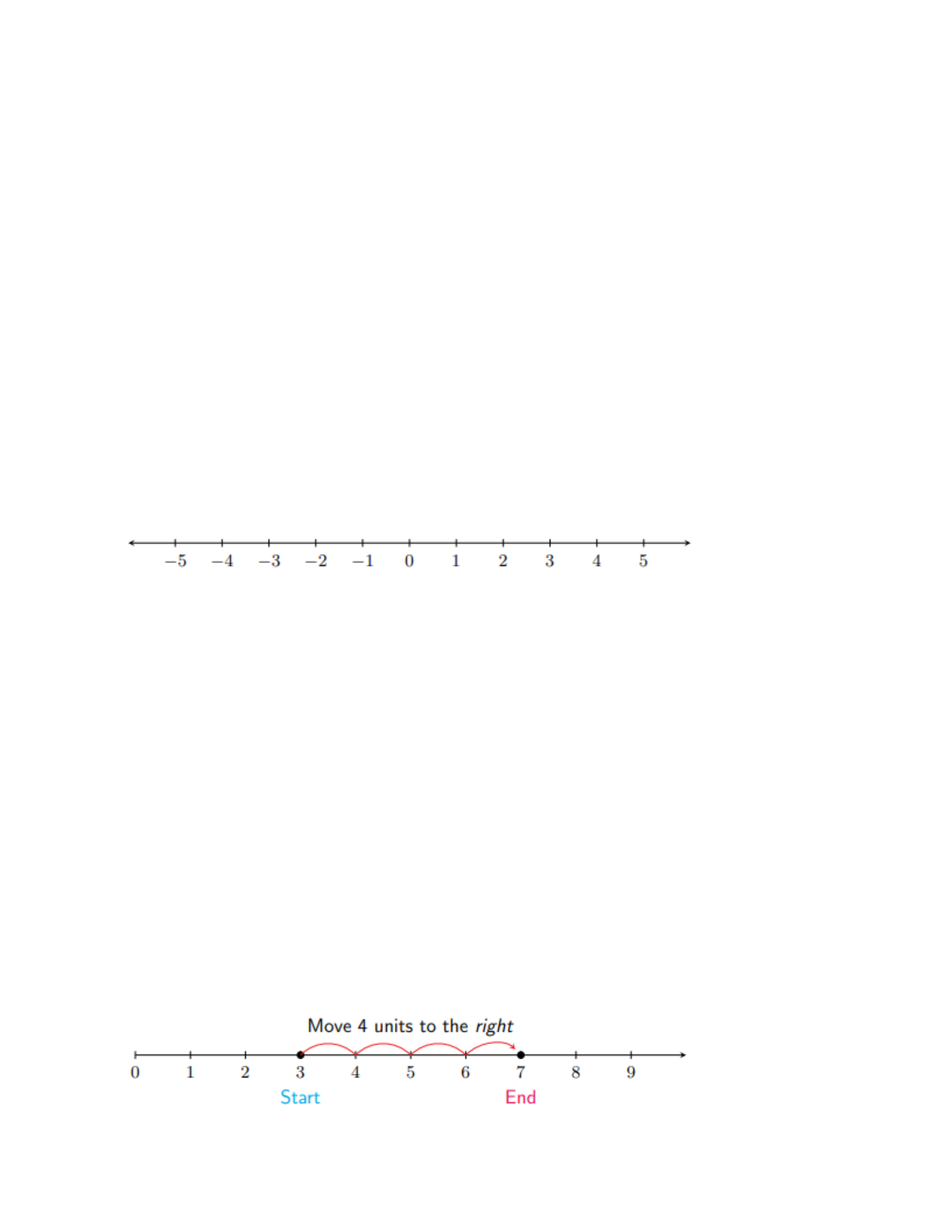
kkkkkkkkkk. 0÷5=00÷5=0. Note When dividing 0 by any number, the answer is
always 0.
llllllllll. −10÷0=−10÷0= undefined.
Note 1.23
Any number divided by 0 is undefined!
Multiplying and Dividing Integers
Consider two numbers at a time.
81. If the signs of the two numbers are the same, then the sign of the answer is positive.
82. If the signs of the two numbers are different, then the sign of the answer is negative.
We begin with a brief review of arithmetic with integers
i.e. …,−3,−2,−1,0,1,2,3,……,−3,−2,−1,0,1,2,3,…
Any number has a weight and a sign.
The magnitude (or weight) of a number is the distance it is from 0 on the number line.
Example 1.1
For example, the weight of -5 is 5 and the weight of 7 is 7 .
Two numbers are opposites if, on the number line, they are on opposite sides of zero, but
the same distance away from zero.
So, −5 is the opposite of 5, and 7 is the opposite of −7 and so on.
Addition
We can add two numbers with the help of a number line .
Example 1.2
Adding two positive numbers: For example to add 3+43+4, we start with 3 on the number
line then move 4 units to the right. We land at 7 which is our answer.
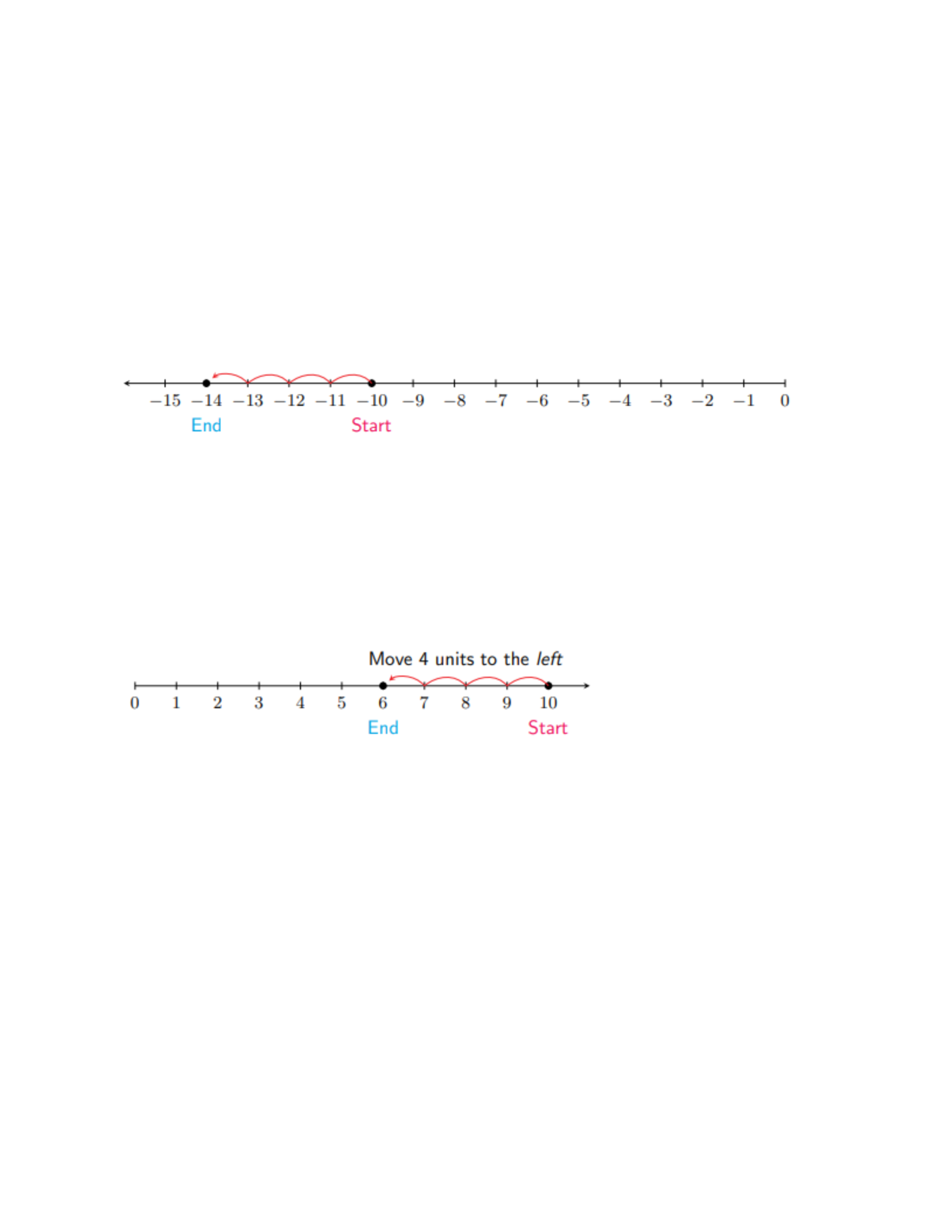
So, 3+4=73+4=7. Notice that the answer has the same sign as the signs of 3 and 4 (both
positive) and its weight comes from adding the weights of 3 and 4.
You always move to the right when you add a positive number
Example 1.3
Adding two negative numbers: For example, −10+(−4)−10+(−4) means you are adding a
debt of $4$4 to an already existing debt of $10.$10. So, we start at -10 on the number line
and move 4 units to the left, to land at −14,−14, which is the answer.
You always move to the left when you add a negative number (a debt)
So, −10+(−4)=−14−10+(−4)=−14. Notice that the answer has the same sign as the signs of -
10 and -4 (both negative) and its weight comes from adding the weights of -10 and -4
To add numbers of opposite signs, that is, a positive and a negative number, we can also
use the number line. For example, to perform 10+(−4),10+(−4), we start at 10 on the
number line and then move 4 units to the left. We land at 6,6, which is the answer. Think
of 10+(−4)10+(−4) as having $10$10 and adding a $4$4 debt. Because we are adding a
debt, we move to the left on the number line!
So, 10+(−4)=6.10+(−4)=6. Notice that the answer has the same sign as the sign of 10
(positive) because it is the number of larger weight, and its weight comes from finding the
difference of the weights of 10 and -4
Notice that because we were adding two numbers of opposite signs, the answer ended up
being the difference in weight (6) along with the sign of the number of larger weight
(positive).
Example 1.4
Adding two numbers of opposite signs: For example, 3+(−7)3+(−7). We start at 3 and move
toward 7 units to the left, and we land at −4,−4, which is our answer.
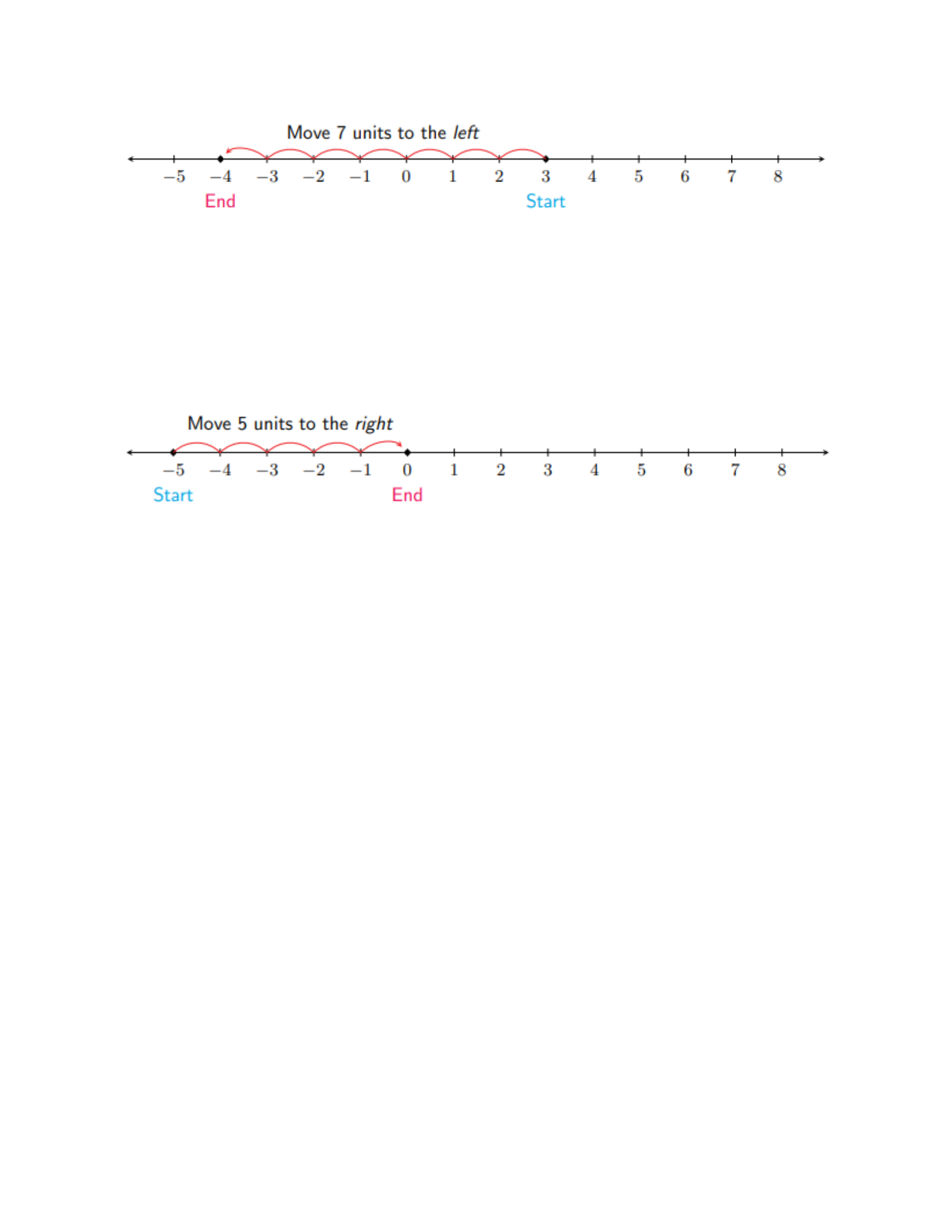
So, 3+(−7)=−4.3+(−7)=−4. Notice that the answer has the same sign as the signs of -7
(negative) because it is the number of larger weight, and its weight comes from finding the
difference of the weights of 3 and -7.
Example 1.5
Adding opposites: We start at -5 on the number line and jump to the right 5 units to land
finally at 00. So −5+5=0−5+5=0.
Note 1.6
Two opposite numbers are called a zero-pair, because adding them always results in 0.
So, −5 and 5 are a zero-pair.
Adding Intergers
83. To add two numbers of the same sign, add their weights and place it after the
sign.
84. To add two numbers of opposite signs, find the difference of their weights and
place it after the sign of the number with the greater weight.
Example 1.7
Add:
mmmmmmmmmm. −8+19=11−8+19=11
nnnnnnnnnn. −8+4=−4−8+4=−4
oooooooooo. 6+(−9)=−36+(−9)=−3
pppppppppp. 7+(−2)=57+(−2)=5
qqqqqqqqqq. (−4)+(−7)=−11(−4)+(−7)=−11
rrrrrrrrrr. 8+7=158+7=15
Note 1.8

While we can add in any order: 4+2=2+44+2=2+4, it is sometimes convenient to add up all
of the negative numbers and add up all of the positive numbers, and then add the results.
There are also times when it is best to notice certain simplifications if the numbers are
added in a different order.
For example
−5+4+5+(−8)=−5+(−8)+4+5( by reordering )−5+4+5+(−8)=−5+(−8)+4+5( by reordering )
so,
−5+4+5+(−8)=−5+(−8)+4+5=−13+9=−4−5+4+5+(−8)=−5+(−8)+4+5=−13+9=−4
We could have also simplified this by noting that (-5) and 5 are zero-pair, so we are left
with 4+(−8)4+(−8) which is -4.
Example 1.9
We can calculate
(−4)+(−5)+7+(−3)=(−4)+(−5)+(−3)+7=(−12)+7=−5(−4)+(−5)+7+(−3)=(−4)+(−5)+(−3)+7=
(−12)+7=−5
We could have simplified this by noting that (-4) and (-3) make -7, and -7 and 7 are zero-
pair, so the total is -5.
Subtraction (as Addition of the Opposite)
Once we know how to add numbers, we are set to subtract numbers because subtraction is
nothing but addition of the opposite. That is, subtracting 8 − 3 (which reads: subtracting 3
from 8) is the same as 8 + (−3) (which reads: Adding −3 to 8.).
Example 1.10
So, 8−3=8+(−3),8−3=8+(−3), and, we can use the rules of adding two numbers of opposite
signs to find out that the answer is 5.5. We can also use the number line. We start at 8 and
move 3 units to the left (adding -3 is adding a debt, so we move to the left).
So 8−3=5.−4−3−2−10123456788−3=5.−4−3−2−1012345678 End Start Move 3 units to the
left
Example 1.11
To calculate 3−73−7 we first rewrite it as an addition
problem. 3−7=3+(−7).3−7=3+(−7). We can either use the number line, or the rules of
adding two numbers of opposite signs. And, 50,3−7=3+(−7)=−450,3−7=3+(−7)=−4
Example 1.12
To calculate −4−1,−4−1, we first rewrite it as an addition
problem. −4−1=−4+(−1).−4−1=−4+(−1). We can either use the number line, or the rules of
adding two numbers of the same signs. If we want to use the rules, both numbers are
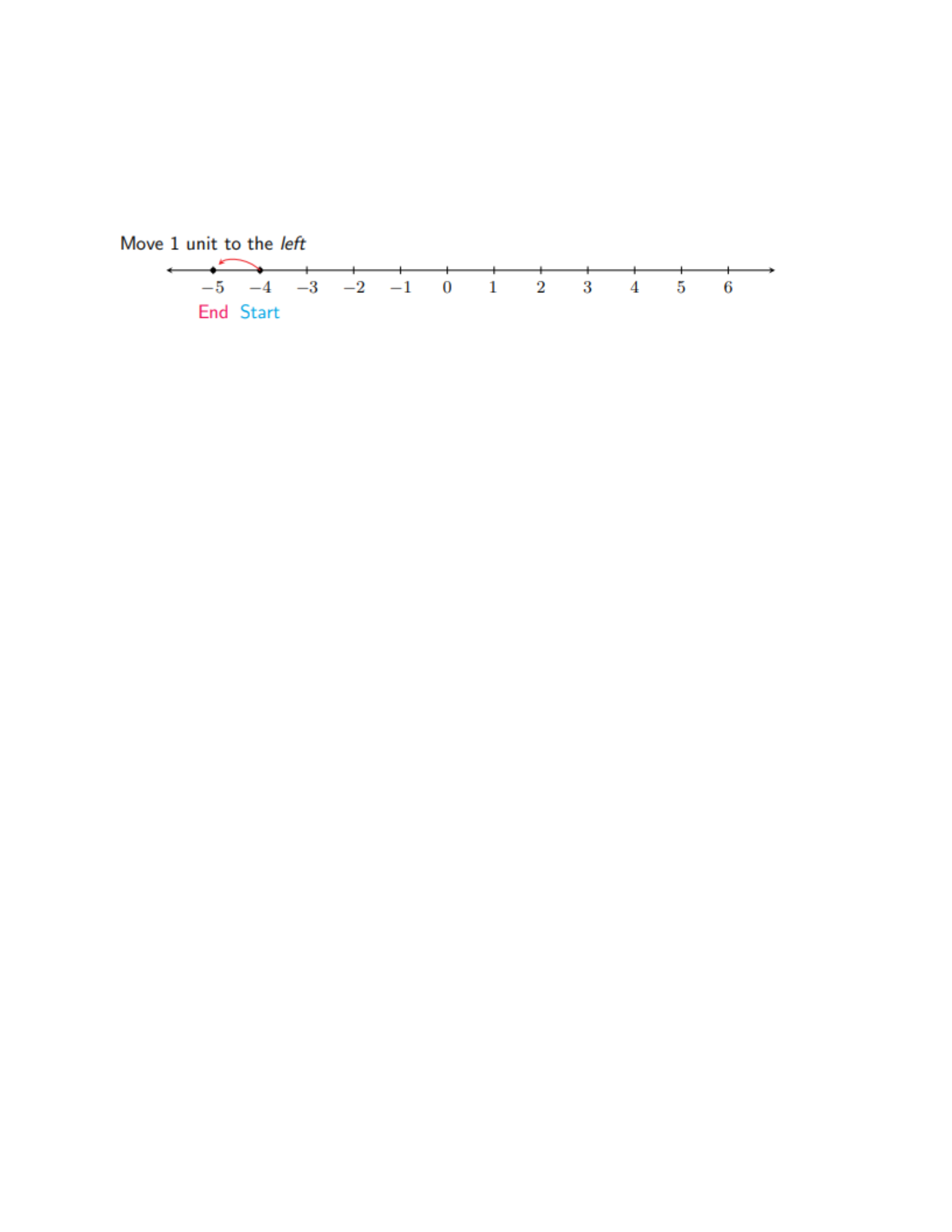
negative, so our answer will be negative, and, adding the weights of -4 and -1
is 5.50,−4−1=−4+(−1)=−55.50,−4−1=−4+(−1)=−5
On the number line, we start at -4 and move 1 unit to the left, to land on -5 which is our
answer.
Changing the subtractions to additions in this way is particularly useful when adding or
subtracting several numbers (because we can add in any order).
Example 1.13
===−3−7+5+7+13−6−(−9)−3+(−7)+5+7+13+(−6)+9−3+(−7)+(−6)+5+7+13+918−3−7+5+7
+13−6−(−9)=−3+(−7)+5+7+13+(−6)+9=−3+(−7)+(−6)+5+7+13+9=18
===−3−7+5+7+13−6−(−9)−3+(−7)+5+7+13+(−6)+95+1318−3−7+5+7+13−6−(−9)=−3+(−7
)+5+7+13+(−6)+9=5+13=18
Remark 1.14
Warning: The symbol "-" is used in two different ways. When it is between two expressions,
it means subtract (e.g., 3−43−4 ). Otherwise, it means 'opposite' or 'negative'
(e.g., −3+4−3+4 ). So in the expression −4−(−3)−4−(−3), the first and last "-" means
opposite and the one in the middle one means subtract. The importance of understanding
this can not be overestimated.
Multiplication and Division of Positive Numbers
Multiplication of integers is adding in the sense that 3×4=4+4+43×4=4+4+4
To multiply larger numbers, it is better to use the usual scheme of multiplication. For
example:
Example 1.15
Let us multiply 152 by 34. We will for convenience sake put the smaller number on the
bottom (though it is not necessary). We have
+×4516515306624808152×34608+45605168
And division is the opposite of multiplication in the sense that to compute 45÷945÷9 is to
find a number so that when we multiply by 9 we get 45. We run through our multiplication
tables (which are hopefully in our head) to discover that 5 does the
trick: 5×9=455×9=45 so that 45÷9=5.45÷9=5. We will discuss division from a different
point of view when we discuss fractions.
To divide larger numbers, we can use long division. For example, let’s divide 3571 by 11.
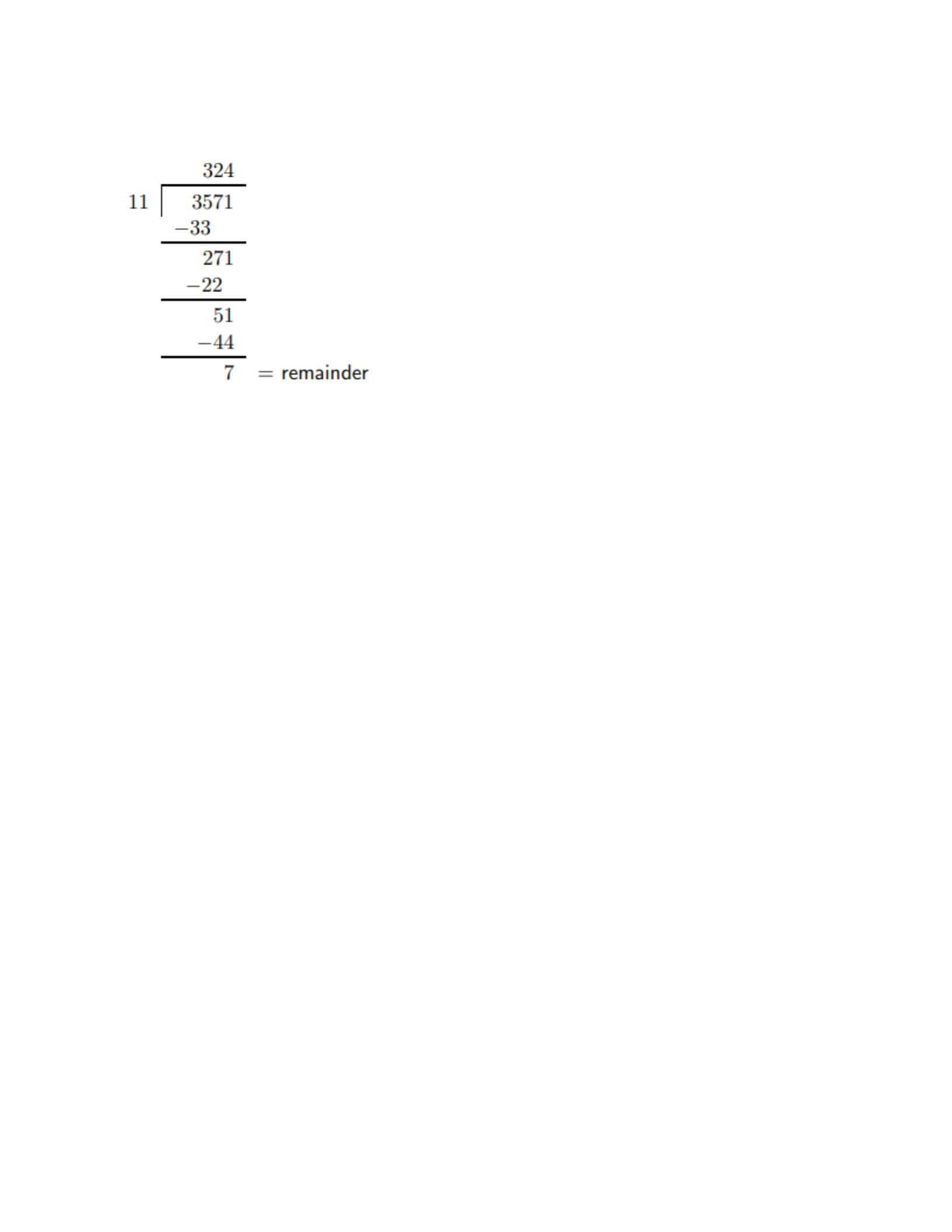
Example 1.16
Multiplication involving negative numbers
Multiplication is a little tricky to understand without the notion of distribution (discussed
later). We will begin with noting again what it means to multiply a number by a positive
number: So if we want to compute 4⋅(−7)4⋅(−7) we note
4⋅(−7)=(−7)+(−7)+(−7)+(−7)=−284⋅(−7)=(−7)+(−7)+(−7)+(−7)=−28
Note that since 4⋅7=28,4⋅(−7)=−(4⋅7).4⋅7=28,4⋅(−7)=−(4⋅7). We can multiply positive
numbers in any order: 4⋅7=7⋅44⋅7=7⋅4. The same is true of positive and negative numbers:
(−7)⋅4=4⋅(−7)=−(4⋅7)=−28(−7)⋅4=4⋅(−7)=−(4⋅7)=−28
Example 1.17
5⋅(−12)=−(5⋅12)=−605⋅(−12)=−(5⋅12)=−60 and (−3)⋅(−2)=−(3⋅(−2))=−(−(3⋅2))=6(−3)⋅(−2)
=−(3⋅(−2))=−(−(3⋅2))=6
Example 1.18
So the size of the product of two numbers is the product of their sizes. The sign is positive if
the signs are the same and negative if they are different.
Example 1.19
Two quantities right next to each other, with no symbol between them (except for
parentheses around either or both numbers), has an implicit multiplication. For
example, 3(2)=3×23(2)=3×2.
Example 1.20
Multiply:
xxxxxxxx. (−5)(−8)=40(−5)(−8)=40
yyyyyyyy. (−6)⋅7=−42(−6)⋅7=−42

zzzzzzzz. 4⋅12=484⋅12=48
aaaaaaaaa. (−3)(−6)⋅4(−3)=18⋅4(−3)=72(−3)=−216( multiplying from left to
right )(−3)(−6)⋅4(−3)=18⋅4(−3)=72(−3)=−216( multiplying from left to right )
bbbbbbbbb. (−3)(−5)⋅4(−2)=(−3)⋅4⋅(−5)(−2)=−12⋅10=−120((−3)(−5)⋅4(−2)=(−3)⋅
4⋅(−5)(−2)=−12⋅10=−120( since we can multiply in any order it is convenient to see
that −5⋅−2=10.−5⋅−2=10. )
Exponents of integers
Recall that a positive exponent represents the number of times a number is multiplied by
itself.
Example 1.21
Evaluate:
mmmmmmmmmm. 52=5⋅5=2552=5⋅5=25
nnnnnnnnnn. (−4)3=(−4)⋅(−4)⋅(−4)=16⋅(−4)=−64(−4)3=(−4)⋅(−4)⋅(−4)=16⋅(−4)=−6
4
oooooooooo. (−7)1=−7(−7)1=−7
pppppppppp. −24=−2⋅2⋅2⋅2=−16−24=−2⋅2⋅2⋅2=−16 Note: The exponent here is for
2 not −2!
qqqqqqqqqq. (−3)4=(−3)⋅(−3)⋅(−3)⋅(−3)=9⋅(−3)⋅(−3)=−27⋅(−3)=81(−3)4=(−3)⋅(−3)
⋅(−3)⋅(−3)=9⋅(−3)⋅(−3)=−27⋅(−3)=81
rrrrrrrrrr. (−2)5=(−2)⋅(−2)⋅(−2)⋅(−2)⋅(−2)=−32(−2)5=(−2)⋅(−2)⋅(−2)⋅(−2)⋅(−2)=−32
Exponent rules in details will be further discussed in Chapter 5.
Division involving negative numbers
Division is just a question of knowing multiplication and therefore has the same rule: The
size of the quotient of two numbers is the quotient of the sizes. The sign is positive if the
signs are the same and negative if they are different.
Example 1.22
Divide:
mmmmmmmmmm. (−42)÷7=−6(−42)÷7=−6
nnnnnnnnnn. 81÷(−9)=−981÷(−9)=−9
oooooooooo. (−35)÷(−7)=5(−35)÷(−7)=5
pppppppppp. 14÷2=714÷2=7
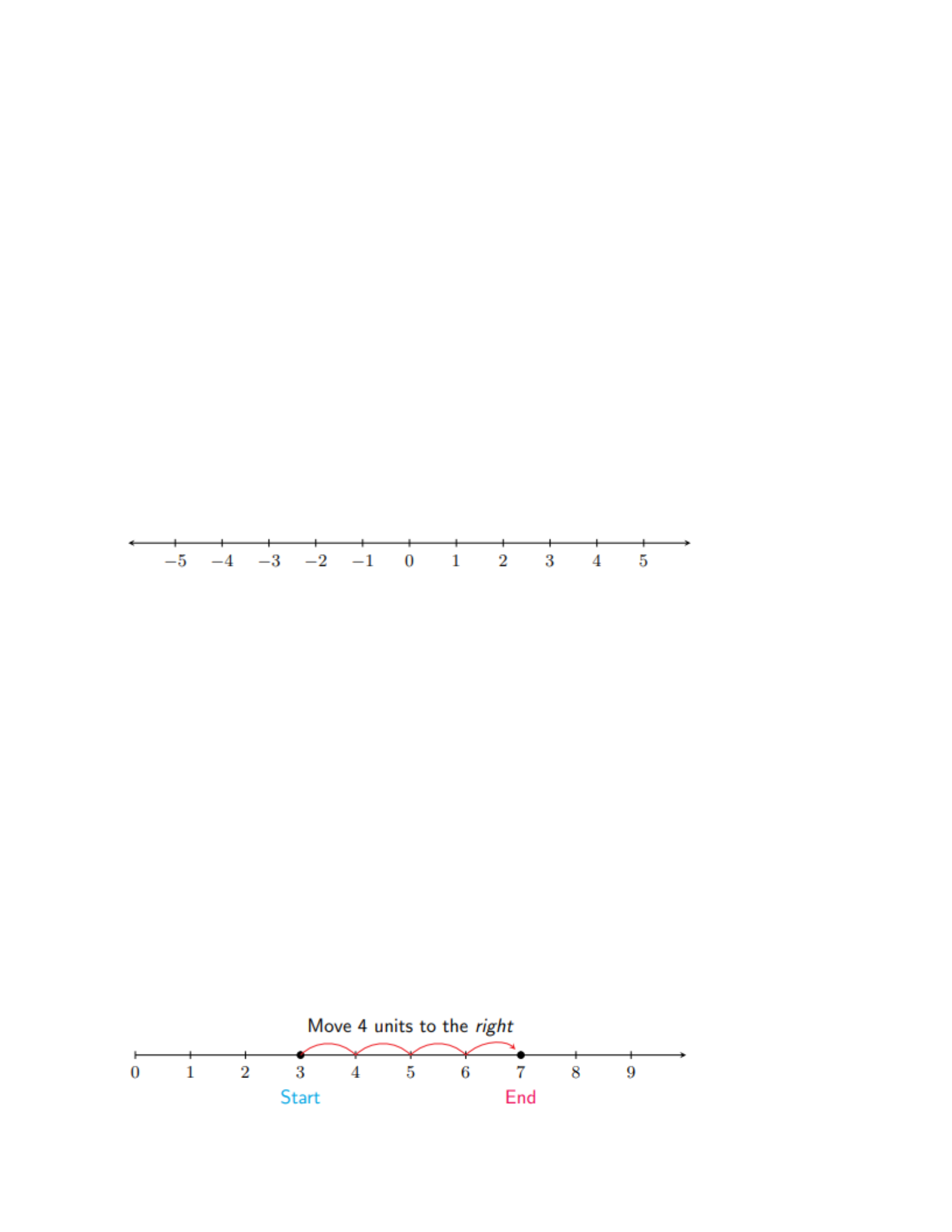
qqqqqqqqqq. 0÷5=00÷5=0. Note When dividing 0 by any number, the answer is
always 0.
rrrrrrrrrr. −10÷0=−10÷0= undefined.
Note 1.23
Any number divided by 0 is undefined!
Multiplying and Dividing Integers
Consider two numbers at a time.
83. If the signs of the two numbers are the same, then the sign of the answer is positive.
84. If the signs of the two numbers are different, then the sign of the answer is negative.
We begin with a brief review of arithmetic with integers
i.e. …,−3,−2,−1,0,1,2,3,……,−3,−2,−1,0,1,2,3,…
Any number has a weight and a sign.
The magnitude (or weight) of a number is the distance it is from 0 on the number line.
Example 1.1
For example, the weight of -5 is 5 and the weight of 7 is 7 .
Two numbers are opposites if, on the number line, they are on opposite sides of zero, but
the same distance away from zero.
So, −5 is the opposite of 5, and 7 is the opposite of −7 and so on.
Addition
We can add two numbers with the help of a number line .
Example 1.2
Adding two positive numbers: For example to add 3+43+4, we start with 3 on the number
line then move 4 units to the right. We land at 7 which is our answer.
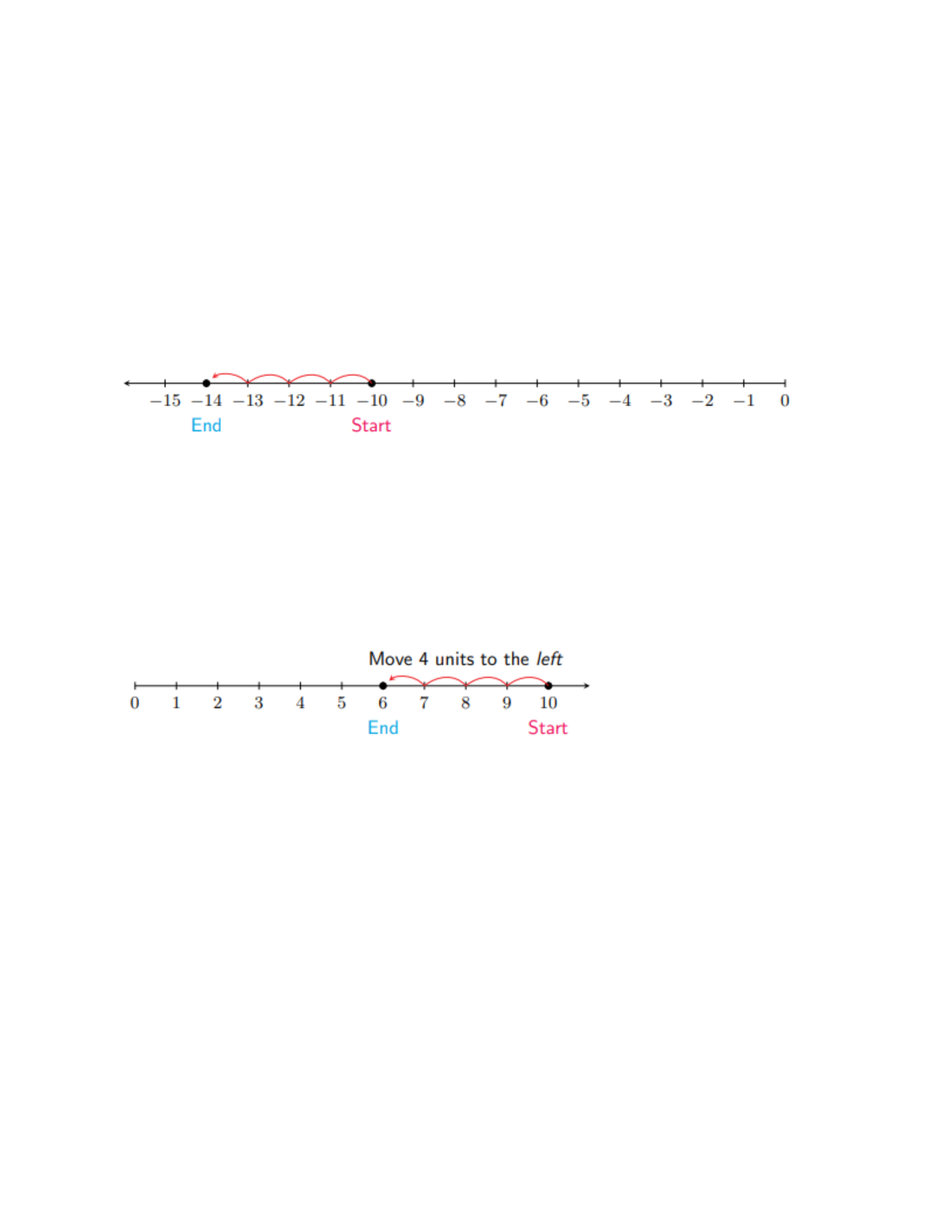
So, 3+4=73+4=7. Notice that the answer has the same sign as the signs of 3 and 4 (both
positive) and its weight comes from adding the weights of 3 and 4.
You always move to the right when you add a positive number
Example 1.3
Adding two negative numbers: For example, −10+(−4)−10+(−4) means you are adding a
debt of $4$4 to an already existing debt of $10.$10. So, we start at -10 on the number line
and move 4 units to the left, to land at −14,−14, which is the answer.
You always move to the left when you add a negative number (a debt)
So, −10+(−4)=−14−10+(−4)=−14. Notice that the answer has the same sign as the signs of -
10 and -4 (both negative) and its weight comes from adding the weights of -10 and -4
To add numbers of opposite signs, that is, a positive and a negative number, we can also
use the number line. For example, to perform 10+(−4),10+(−4), we start at 10 on the
number line and then move 4 units to the left. We land at 6,6, which is the answer. Think
of 10+(−4)10+(−4) as having $10$10 and adding a $4$4 debt. Because we are adding a
debt, we move to the left on the number line!
So, 10+(−4)=6.10+(−4)=6. Notice that the answer has the same sign as the sign of 10
(positive) because it is the number of larger weight, and its weight comes from finding the
difference of the weights of 10 and -4
Notice that because we were adding two numbers of opposite signs, the answer ended up
being the difference in weight (6) along with the sign of the number of larger weight
(positive).
Example 1.4
Adding two numbers of opposite signs: For example, 3+(−7)3+(−7). We start at 3 and move
toward 7 units to the left, and we land at −4,−4, which is our answer.
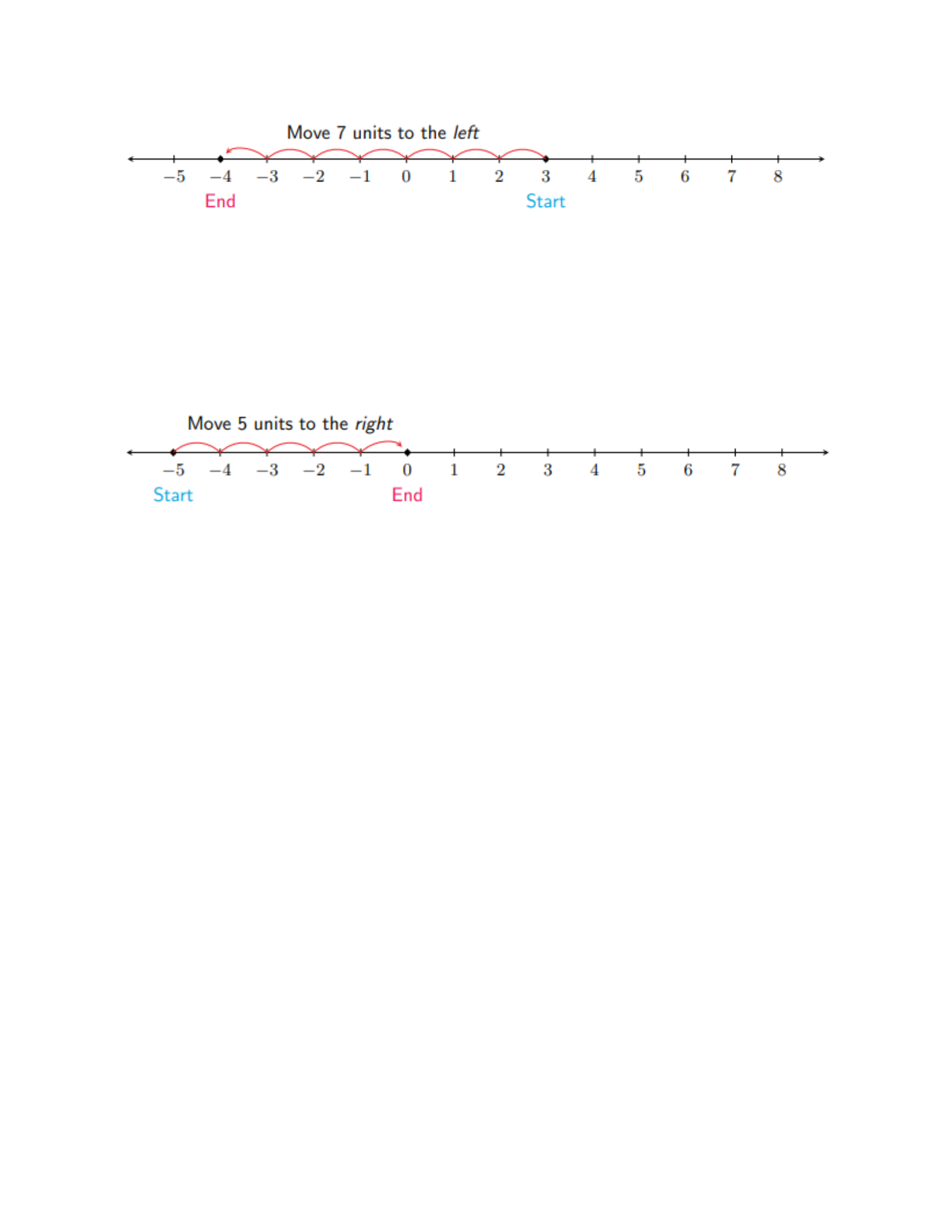
So, 3+(−7)=−4.3+(−7)=−4. Notice that the answer has the same sign as the signs of -7
(negative) because it is the number of larger weight, and its weight comes from finding the
difference of the weights of 3 and -7.
Example 1.5
Adding opposites: We start at -5 on the number line and jump to the right 5 units to land
finally at 00. So −5+5=0−5+5=0.
Note 1.6
Two opposite numbers are called a zero-pair, because adding them always results in 0.
So, −5 and 5 are a zero-pair.
Adding Intergers
85. To add two numbers of the same sign, add their weights and place it after the
sign.
86. To add two numbers of opposite signs, find the difference of their weights and
place it after the sign of the number with the greater weight.
Example 1.7
Add:
ssssssssss. −8+19=11−8+19=11
tttttttttt. −8+4=−4−8+4=−4
uuuuuuuuuu. 6+(−9)=−36+(−9)=−3
vvvvvvvvvv. 7+(−2)=57+(−2)=5
wwwwwwwwww. (−4)+(−7)=−11(−4)+(−7)=−11
xxxxxxxxxx. 8+7=158+7=15
Note 1.8

While we can add in any order: 4+2=2+44+2=2+4, it is sometimes convenient to add up all
of the negative numbers and add up all of the positive numbers, and then add the results.
There are also times when it is best to notice certain simplifications if the numbers are
added in a different order.
For example
−5+4+5+(−8)=−5+(−8)+4+5( by reordering )−5+4+5+(−8)=−5+(−8)+4+5( by reordering )
so,
−5+4+5+(−8)=−5+(−8)+4+5=−13+9=−4−5+4+5+(−8)=−5+(−8)+4+5=−13+9=−4
We could have also simplified this by noting that (-5) and 5 are zero-pair, so we are left
with 4+(−8)4+(−8) which is -4.
Example 1.9
We can calculate
(−4)+(−5)+7+(−3)=(−4)+(−5)+(−3)+7=(−12)+7=−5(−4)+(−5)+7+(−3)=(−4)+(−5)+(−3)+7=
(−12)+7=−5
We could have simplified this by noting that (-4) and (-3) make -7, and -7 and 7 are zero-
pair, so the total is -5.
Subtraction (as Addition of the Opposite)
Once we know how to add numbers, we are set to subtract numbers because subtraction is
nothing but addition of the opposite. That is, subtracting 8 − 3 (which reads: subtracting 3
from 8) is the same as 8 + (−3) (which reads: Adding −3 to 8.).
Example 1.10
So, 8−3=8+(−3),8−3=8+(−3), and, we can use the rules of adding two numbers of opposite
signs to find out that the answer is 5.5. We can also use the number line. We start at 8 and
move 3 units to the left (adding -3 is adding a debt, so we move to the left).
So 8−3=5.−4−3−2−10123456788−3=5.−4−3−2−1012345678 End Start Move 3 units to the
left
Example 1.11
To calculate 3−73−7 we first rewrite it as an addition
problem. 3−7=3+(−7).3−7=3+(−7). We can either use the number line, or the rules of
adding two numbers of opposite signs. And, 50,3−7=3+(−7)=−450,3−7=3+(−7)=−4
Example 1.12
To calculate −4−1,−4−1, we first rewrite it as an addition
problem. −4−1=−4+(−1).−4−1=−4+(−1). We can either use the number line, or the rules of
adding two numbers of the same signs. If we want to use the rules, both numbers are
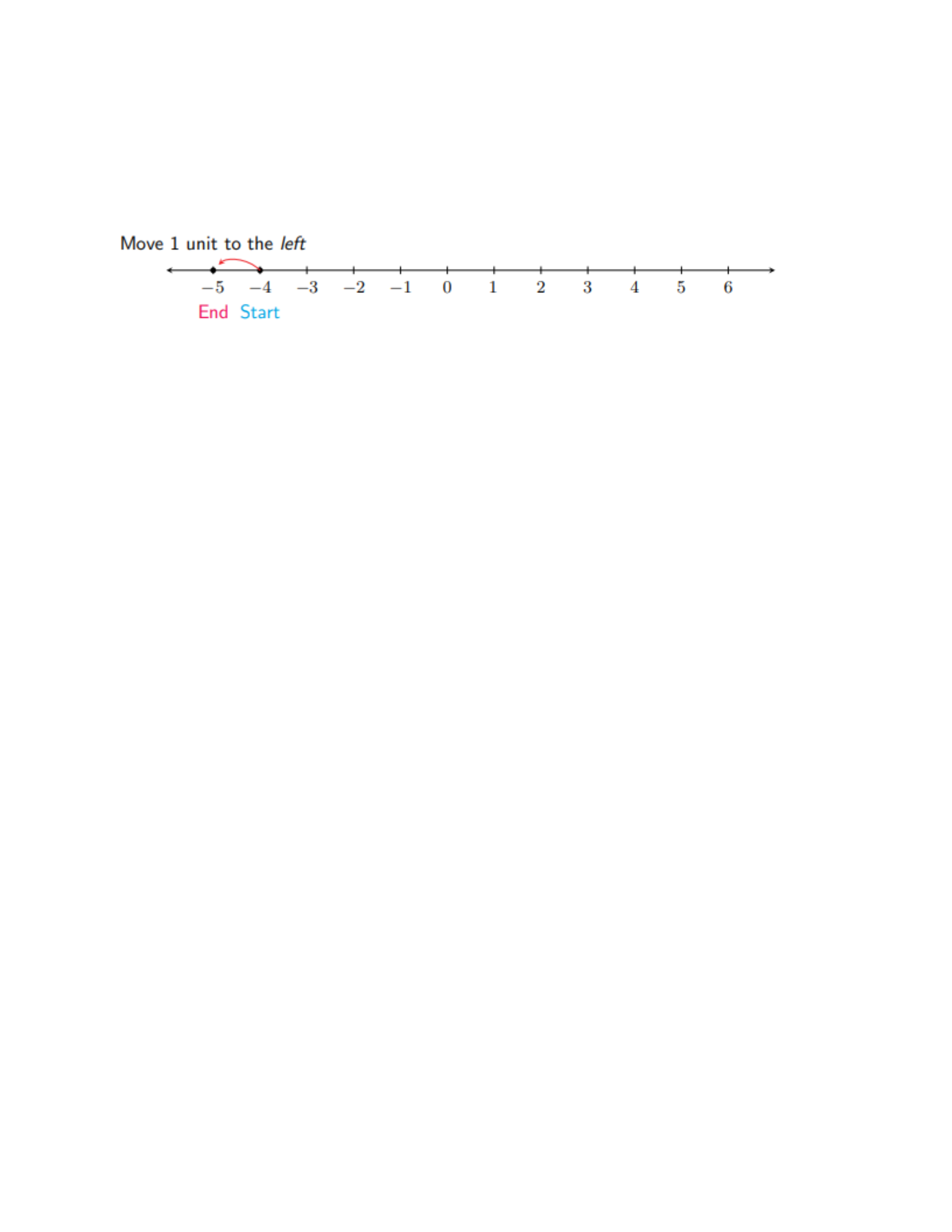
negative, so our answer will be negative, and, adding the weights of -4 and -1
is 5.50,−4−1=−4+(−1)=−55.50,−4−1=−4+(−1)=−5
On the number line, we start at -4 and move 1 unit to the left, to land on -5 which is our
answer.
Changing the subtractions to additions in this way is particularly useful when adding or
subtracting several numbers (because we can add in any order).
Example 1.13
===−3−7+5+7+13−6−(−9)−3+(−7)+5+7+13+(−6)+9−3+(−7)+(−6)+5+7+13+918−3−7+5+7
+13−6−(−9)=−3+(−7)+5+7+13+(−6)+9=−3+(−7)+(−6)+5+7+13+9=18
===−3−7+5+7+13−6−(−9)−3+(−7)+5+7+13+(−6)+95+1318−3−7+5+7+13−6−(−9)=−3+(−7
)+5+7+13+(−6)+9=5+13=18
Remark 1.14
Warning: The symbol "-" is used in two different ways. When it is between two expressions,
it means subtract (e.g., 3−43−4 ). Otherwise, it means 'opposite' or 'negative'
(e.g., −3+4−3+4 ). So in the expression −4−(−3)−4−(−3), the first and last "-" means
opposite and the one in the middle one means subtract. The importance of understanding
this can not be overestimated.
Multiplication and Division of Positive Numbers
Multiplication of integers is adding in the sense that 3×4=4+4+43×4=4+4+4
To multiply larger numbers, it is better to use the usual scheme of multiplication. For
example:
Example 1.15
Let us multiply 152 by 34. We will for convenience sake put the smaller number on the
bottom (though it is not necessary). We have
+×4516515306624808152×34608+45605168
And division is the opposite of multiplication in the sense that to compute 45÷945÷9 is to
find a number so that when we multiply by 9 we get 45. We run through our multiplication
tables (which are hopefully in our head) to discover that 5 does the
trick: 5×9=455×9=45 so that 45÷9=5.45÷9=5. We will discuss division from a different
point of view when we discuss fractions.
To divide larger numbers, we can use long division. For example, let’s divide 3571 by 11.
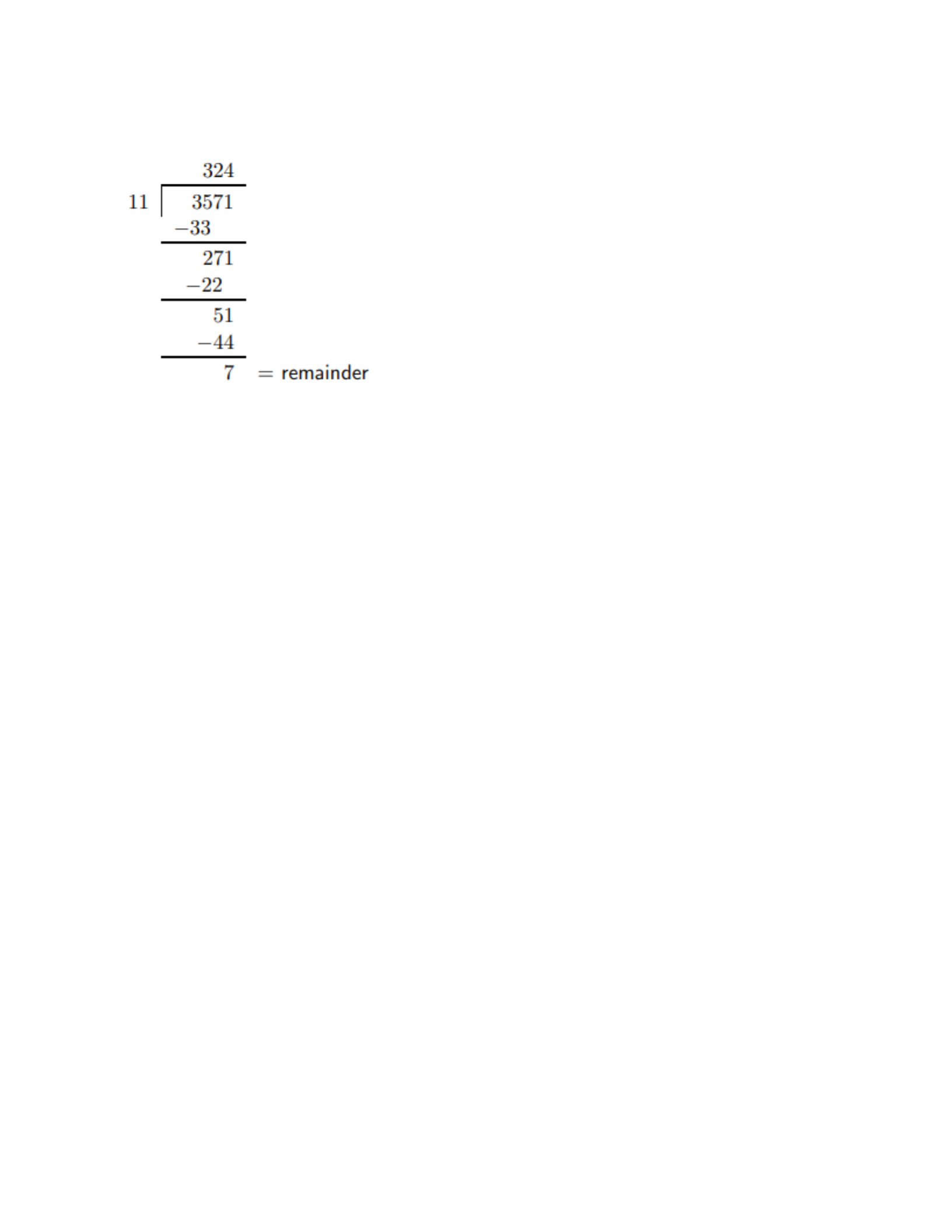
Example 1.16
Multiplication involving negative numbers
Multiplication is a little tricky to understand without the notion of distribution (discussed
later). We will begin with noting again what it means to multiply a number by a positive
number: So if we want to compute 4⋅(−7)4⋅(−7) we note
4⋅(−7)=(−7)+(−7)+(−7)+(−7)=−284⋅(−7)=(−7)+(−7)+(−7)+(−7)=−28
Note that since 4⋅7=28,4⋅(−7)=−(4⋅7).4⋅7=28,4⋅(−7)=−(4⋅7). We can multiply positive
numbers in any order: 4⋅7=7⋅44⋅7=7⋅4. The same is true of positive and negative numbers:
(−7)⋅4=4⋅(−7)=−(4⋅7)=−28(−7)⋅4=4⋅(−7)=−(4⋅7)=−28
Example 1.17
5⋅(−12)=−(5⋅12)=−605⋅(−12)=−(5⋅12)=−60 and (−3)⋅(−2)=−(3⋅(−2))=−(−(3⋅2))=6(−3)⋅(−2)
=−(3⋅(−2))=−(−(3⋅2))=6
Example 1.18
So the size of the product of two numbers is the product of their sizes. The sign is positive if
the signs are the same and negative if they are different.
Example 1.19
Two quantities right next to each other, with no symbol between them (except for
parentheses around either or both numbers), has an implicit multiplication. For
example, 3(2)=3×23(2)=3×2.
Example 1.20
Multiply:
ccccccccc. (−5)(−8)=40(−5)(−8)=40
ddddddddd. (−6)⋅7=−42(−6)⋅7=−42

eeeeeeeee. 4⋅12=484⋅12=48
fffffffff. (−3)(−6)⋅4(−3)=18⋅4(−3)=72(−3)=−216( multiplying from left to
right )(−3)(−6)⋅4(−3)=18⋅4(−3)=72(−3)=−216( multiplying from left to right )
ggggggggg. (−3)(−5)⋅4(−2)=(−3)⋅4⋅(−5)(−2)=−12⋅10=−120((−3)(−5)⋅4(−2)=(−3)⋅
4⋅(−5)(−2)=−12⋅10=−120( since we can multiply in any order it is convenient to see
that −5⋅−2=10.−5⋅−2=10. )
Exponents of integers
Recall that a positive exponent represents the number of times a number is multiplied by
itself.
Example 1.21
Evaluate:
ssssssssss. 52=5⋅5=2552=5⋅5=25
tttttttttt. (−4)3=(−4)⋅(−4)⋅(−4)=16⋅(−4)=−64(−4)3=(−4)⋅(−4)⋅(−4)=16⋅(−4)=−64
uuuuuuuuuu. (−7)1=−7(−7)1=−7
vvvvvvvvvv. −24=−2⋅2⋅2⋅2=−16−24=−2⋅2⋅2⋅2=−16 Note: The exponent here is for
2 not −2!
wwwwwwwwww. (−3)4=(−3)⋅(−3)⋅(−3)⋅(−3)=9⋅(−3)⋅(−3)=−27⋅(−3)=81(−3)4=(−
3)⋅(−3)⋅(−3)⋅(−3)=9⋅(−3)⋅(−3)=−27⋅(−3)=81
xxxxxxxxxx. (−2)5=(−2)⋅(−2)⋅(−2)⋅(−2)⋅(−2)=−32(−2)5=(−2)⋅(−2)⋅(−2)⋅(−2)⋅(−2)=
−32
Exponent rules in details will be further discussed in Chapter 5.
Division involving negative numbers
Division is just a question of knowing multiplication and therefore has the same rule: The
size of the quotient of two numbers is the quotient of the sizes. The sign is positive if the
signs are the same and negative if they are different.
Example 1.22
Divide:
ssssssssss. (−42)÷7=−6(−42)÷7=−6
tttttttttt. 81÷(−9)=−981÷(−9)=−9
uuuuuuuuuu. (−35)÷(−7)=5(−35)÷(−7)=5
vvvvvvvvvv. 14÷2=714÷2=7
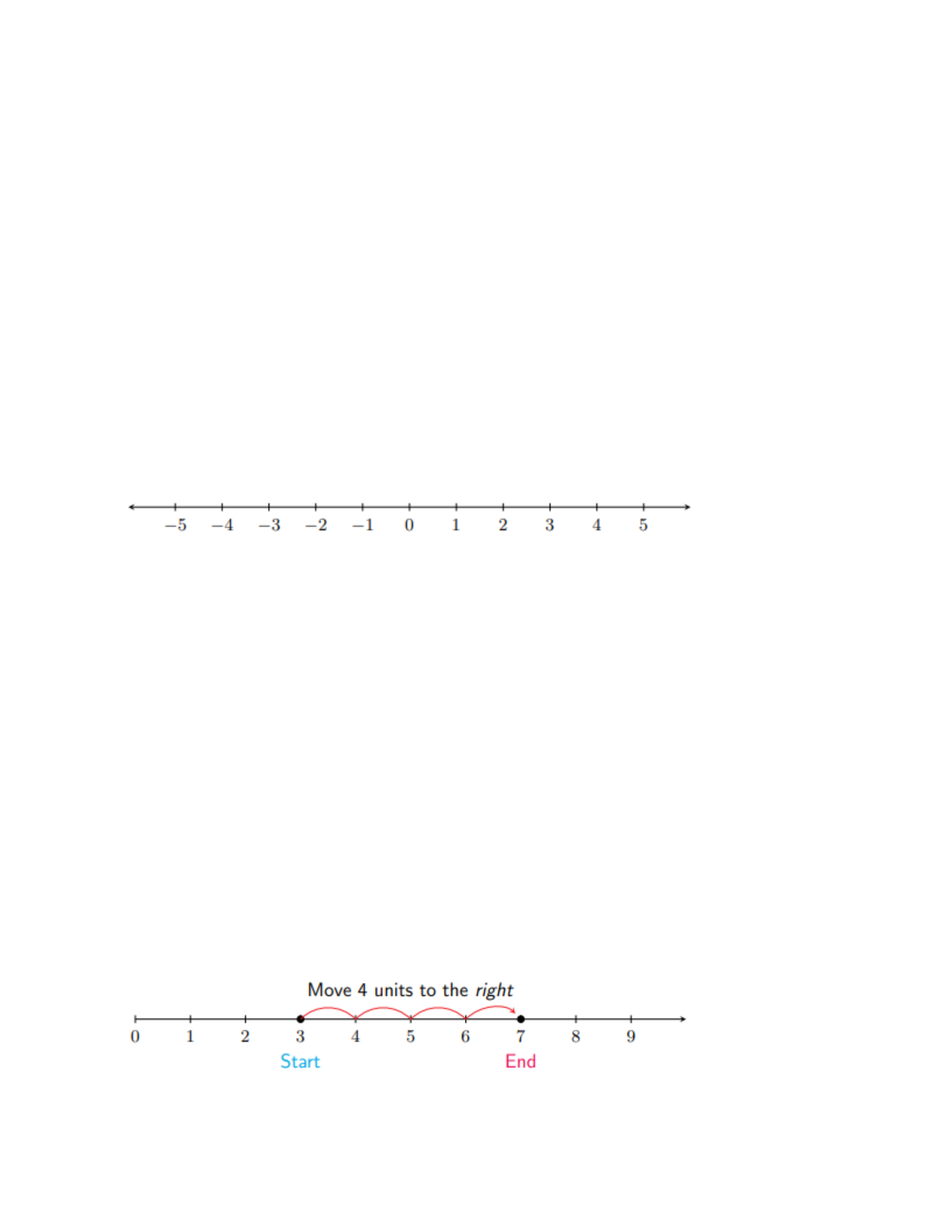
wwwwwwwwww. 0÷5=00÷5=0. Note When dividing 0 by any number, the
answer is always 0.
xxxxxxxxxx. −10÷0=−10÷0= undefined.
Note 1.23
Any number divided by 0 is undefined!
Multiplying and Dividing Integers
Consider two numbers at a time.
85. If the signs of the two numbers are the same, then the sign of the answer is positive.
86. If the signs of the two numbers are different, then the sign of the answer is negative.
We begin with a brief review of arithmetic with integers
i.e. …,−3,−2,−1,0,1,2,3,……,−3,−2,−1,0,1,2,3,…
Any number has a weight and a sign.
The magnitude (or weight) of a number is the distance it is from 0 on the number line.
Example 1.1
For example, the weight of -5 is 5 and the weight of 7 is 7 .
Two numbers are opposites if, on the number line, they are on opposite sides of zero, but
the same distance away from zero.
So, −5 is the opposite of 5, and 7 is the opposite of −7 and so on.
Addition
We can add two numbers with the help of a number line .
Example 1.2
Adding two positive numbers: For example to add 3+43+4, we start with 3 on the number
line then move 4 units to the right. We land at 7 which is our answer.
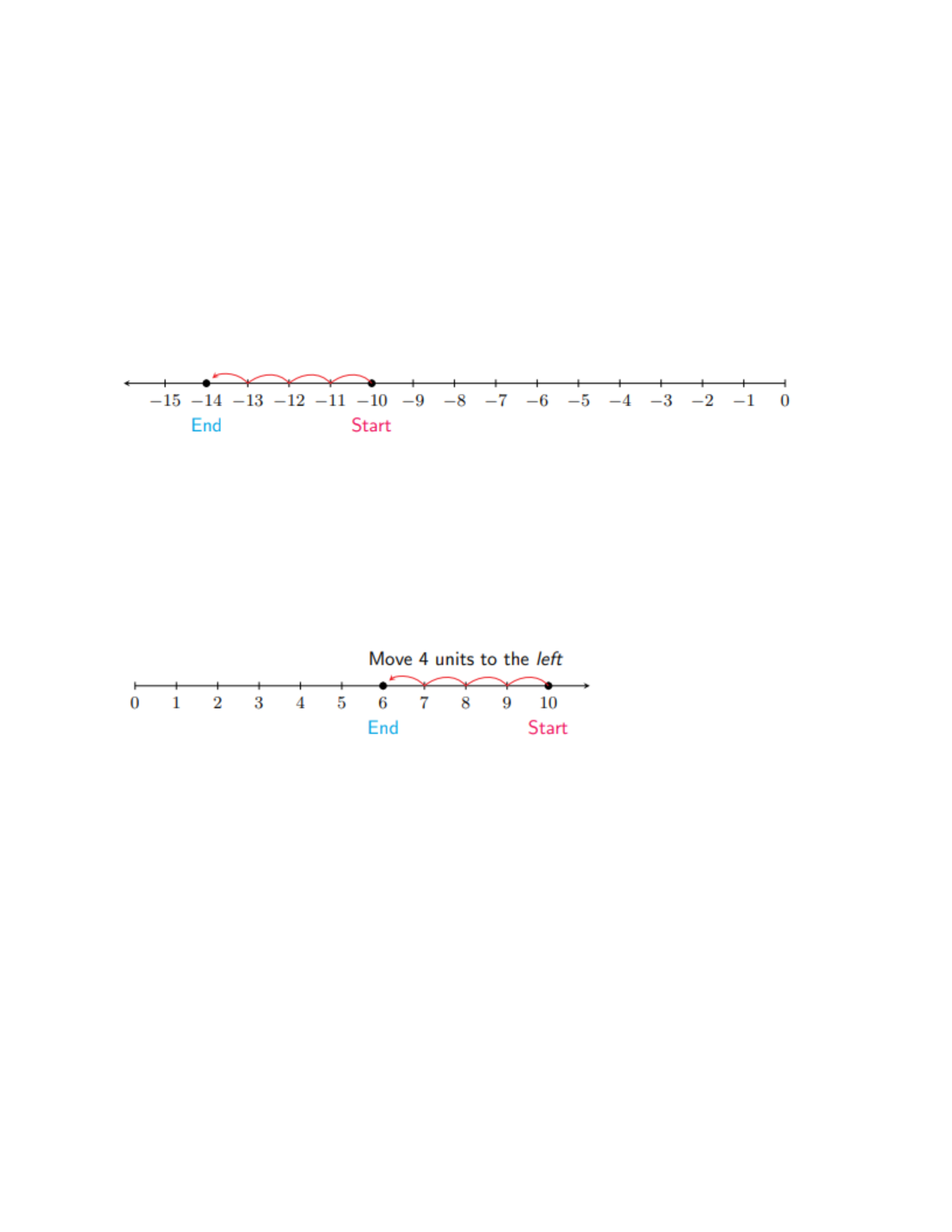
So, 3+4=73+4=7. Notice that the answer has the same sign as the signs of 3 and 4 (both
positive) and its weight comes from adding the weights of 3 and 4.
You always move to the right when you add a positive number
Example 1.3
Adding two negative numbers: For example, −10+(−4)−10+(−4) means you are adding a
debt of $4$4 to an already existing debt of $10.$10. So, we start at -10 on the number line
and move 4 units to the left, to land at −14,−14, which is the answer.
You always move to the left when you add a negative number (a debt)
So, −10+(−4)=−14−10+(−4)=−14. Notice that the answer has the same sign as the signs of -
10 and -4 (both negative) and its weight comes from adding the weights of -10 and -4
To add numbers of opposite signs, that is, a positive and a negative number, we can also
use the number line. For example, to perform 10+(−4),10+(−4), we start at 10 on the
number line and then move 4 units to the left. We land at 6,6, which is the answer. Think
of 10+(−4)10+(−4) as having $10$10 and adding a $4$4 debt. Because we are adding a
debt, we move to the left on the number line!
So, 10+(−4)=6.10+(−4)=6. Notice that the answer has the same sign as the sign of 10
(positive) because it is the number of larger weight, and its weight comes from finding the
difference of the weights of 10 and -4
Notice that because we were adding two numbers of opposite signs, the answer ended up
being the difference in weight (6) along with the sign of the number of larger weight
(positive).
Example 1.4
Adding two numbers of opposite signs: For example, 3+(−7)3+(−7). We start at 3 and move
toward 7 units to the left, and we land at −4,−4, which is our answer.
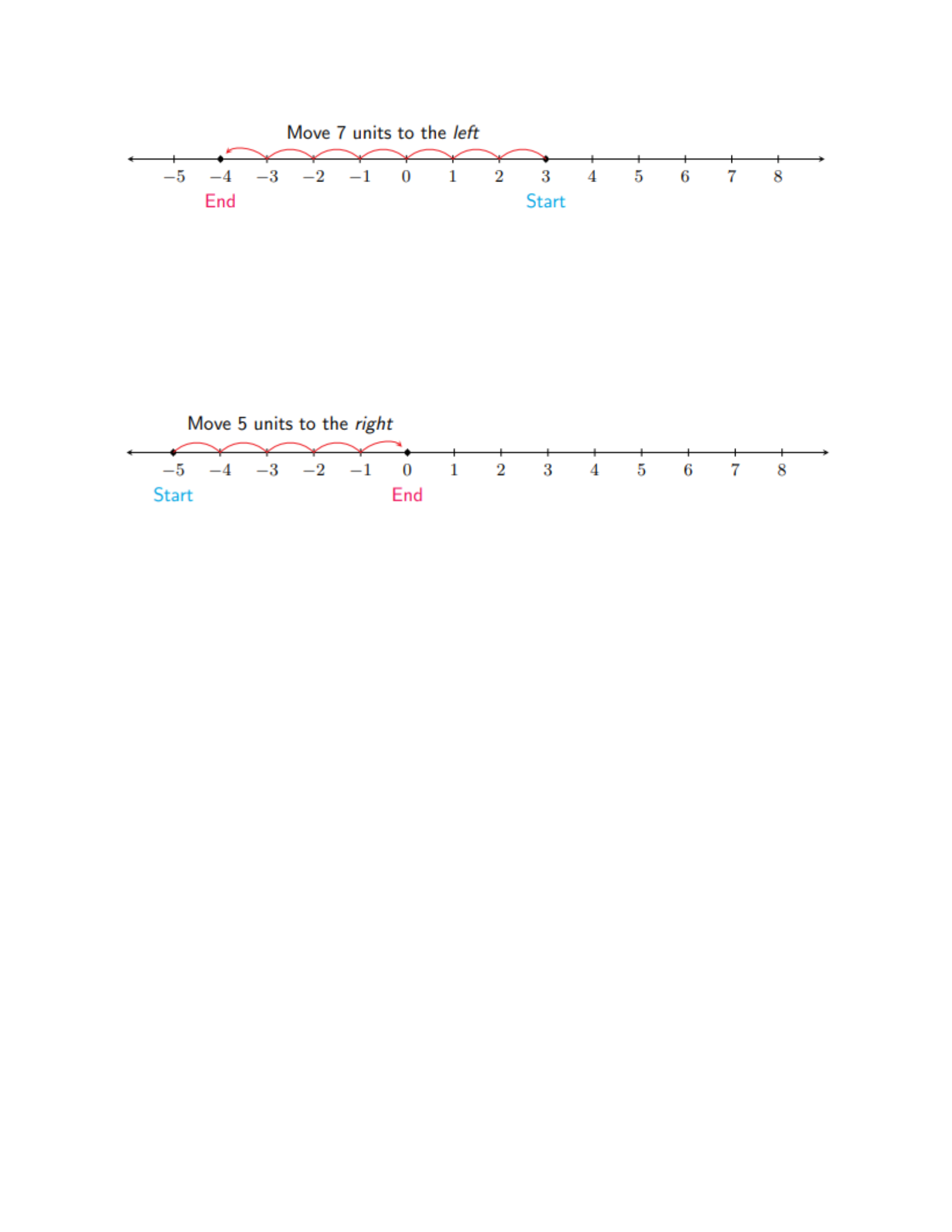
So, 3+(−7)=−4.3+(−7)=−4. Notice that the answer has the same sign as the signs of -7
(negative) because it is the number of larger weight, and its weight comes from finding the
difference of the weights of 3 and -7.
Example 1.5
Adding opposites: We start at -5 on the number line and jump to the right 5 units to land
finally at 00. So −5+5=0−5+5=0.
Note 1.6
Two opposite numbers are called a zero-pair, because adding them always results in 0.
So, −5 and 5 are a zero-pair.
Adding Intergers
87. To add two numbers of the same sign, add their weights and place it after the
sign.
88. To add two numbers of opposite signs, find the difference of their weights and
place it after the sign of the number with the greater weight.
Example 1.7
Add:
yyyyyyyyyy. −8+19=11−8+19=11
zzzzzzzzzz. −8+4=−4−8+4=−4
aaaaaaaaaaa. 6+(−9)=−36+(−9)=−3
bbbbbbbbbbb. 7+(−2)=57+(−2)=5
ccccccccccc. (−4)+(−7)=−11(−4)+(−7)=−11
ddddddddddd. 8+7=158+7=15
Note 1.8

While we can add in any order: 4+2=2+44+2=2+4, it is sometimes convenient to add up all
of the negative numbers and add up all of the positive numbers, and then add the results.
There are also times when it is best to notice certain simplifications if the numbers are
added in a different order.
For example
−5+4+5+(−8)=−5+(−8)+4+5( by reordering )−5+4+5+(−8)=−5+(−8)+4+5( by reordering )
so,
−5+4+5+(−8)=−5+(−8)+4+5=−13+9=−4−5+4+5+(−8)=−5+(−8)+4+5=−13+9=−4
We could have also simplified this by noting that (-5) and 5 are zero-pair, so we are left
with 4+(−8)4+(−8) which is -4.
Example 1.9
We can calculate
(−4)+(−5)+7+(−3)=(−4)+(−5)+(−3)+7=(−12)+7=−5(−4)+(−5)+7+(−3)=(−4)+(−5)+(−3)+7=
(−12)+7=−5
We could have simplified this by noting that (-4) and (-3) make -7, and -7 and 7 are zero-
pair, so the total is -5.
Subtraction (as Addition of the Opposite)
Once we know how to add numbers, we are set to subtract numbers because subtraction is
nothing but addition of the opposite. That is, subtracting 8 − 3 (which reads: subtracting 3
from 8) is the same as 8 + (−3) (which reads: Adding −3 to 8.).
Example 1.10
So, 8−3=8+(−3),8−3=8+(−3), and, we can use the rules of adding two numbers of opposite
signs to find out that the answer is 5.5. We can also use the number line. We start at 8 and
move 3 units to the left (adding -3 is adding a debt, so we move to the left).
So 8−3=5.−4−3−2−10123456788−3=5.−4−3−2−1012345678 End Start Move 3 units to the
left
Example 1.11
To calculate 3−73−7 we first rewrite it as an addition
problem. 3−7=3+(−7).3−7=3+(−7). We can either use the number line, or the rules of
adding two numbers of opposite signs. And, 50,3−7=3+(−7)=−450,3−7=3+(−7)=−4
Example 1.12
To calculate −4−1,−4−1, we first rewrite it as an addition
problem. −4−1=−4+(−1).−4−1=−4+(−1). We can either use the number line, or the rules of
adding two numbers of the same signs. If we want to use the rules, both numbers are
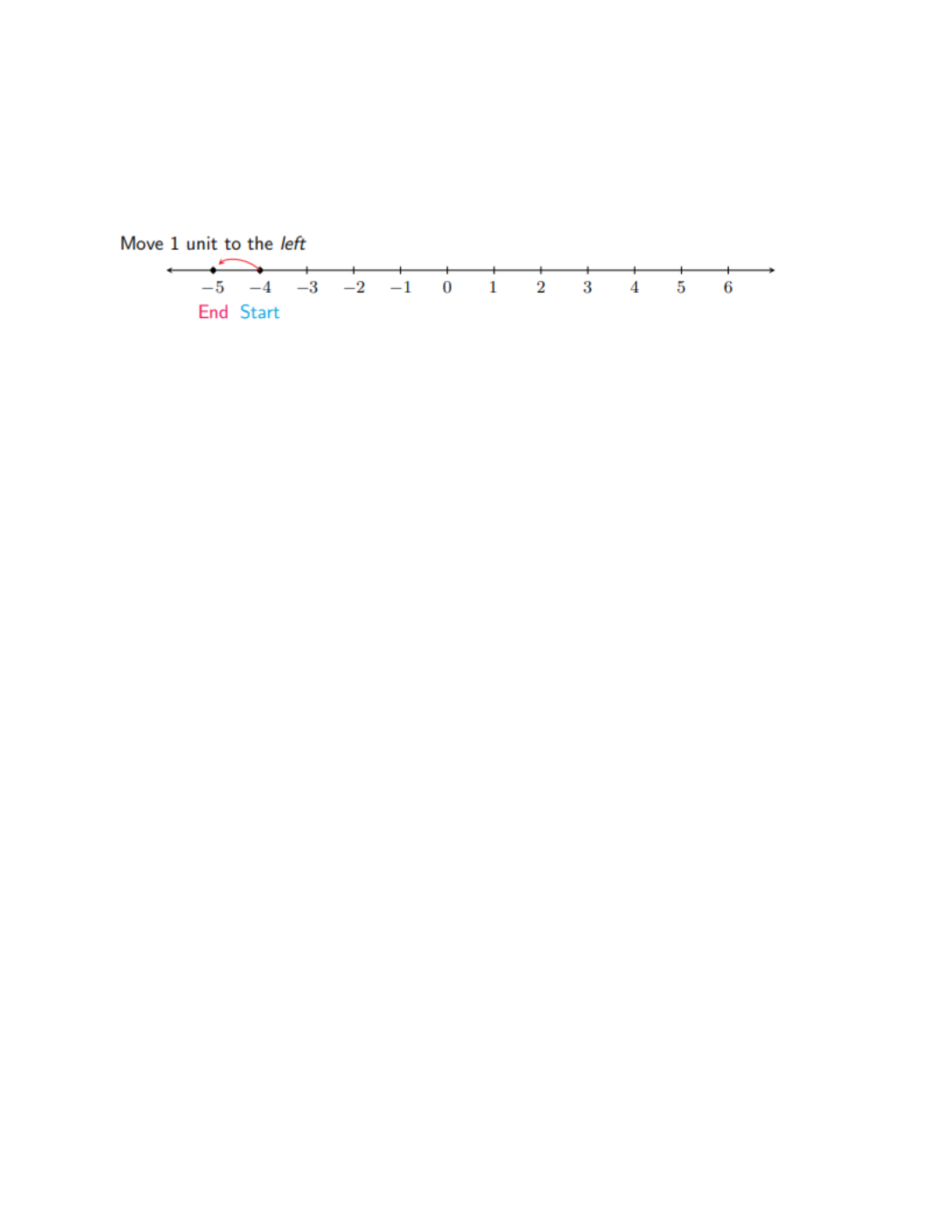
negative, so our answer will be negative, and, adding the weights of -4 and -1
is 5.50,−4−1=−4+(−1)=−55.50,−4−1=−4+(−1)=−5
On the number line, we start at -4 and move 1 unit to the left, to land on -5 which is our
answer.
Changing the subtractions to additions in this way is particularly useful when adding or
subtracting several numbers (because we can add in any order).
Example 1.13
===−3−7+5+7+13−6−(−9)−3+(−7)+5+7+13+(−6)+9−3+(−7)+(−6)+5+7+13+918−3−7+5+7
+13−6−(−9)=−3+(−7)+5+7+13+(−6)+9=−3+(−7)+(−6)+5+7+13+9=18
===−3−7+5+7+13−6−(−9)−3+(−7)+5+7+13+(−6)+95+1318−3−7+5+7+13−6−(−9)=−3+(−7
)+5+7+13+(−6)+9=5+13=18
Remark 1.14
Warning: The symbol "-" is used in two different ways. When it is between two expressions,
it means subtract (e.g., 3−43−4 ). Otherwise, it means 'opposite' or 'negative'
(e.g., −3+4−3+4 ). So in the expression −4−(−3)−4−(−3), the first and last "-" means
opposite and the one in the middle one means subtract. The importance of understanding
this can not be overestimated.
Multiplication and Division of Positive Numbers
Multiplication of integers is adding in the sense that 3×4=4+4+43×4=4+4+4
To multiply larger numbers, it is better to use the usual scheme of multiplication. For
example:
Example 1.15
Let us multiply 152 by 34. We will for convenience sake put the smaller number on the
bottom (though it is not necessary). We have
+×4516515306624808152×34608+45605168
And division is the opposite of multiplication in the sense that to compute 45÷945÷9 is to
find a number so that when we multiply by 9 we get 45. We run through our multiplication
tables (which are hopefully in our head) to discover that 5 does the
trick: 5×9=455×9=45 so that 45÷9=5.45÷9=5. We will discuss division from a different
point of view when we discuss fractions.
To divide larger numbers, we can use long division. For example, let’s divide 3571 by 11.
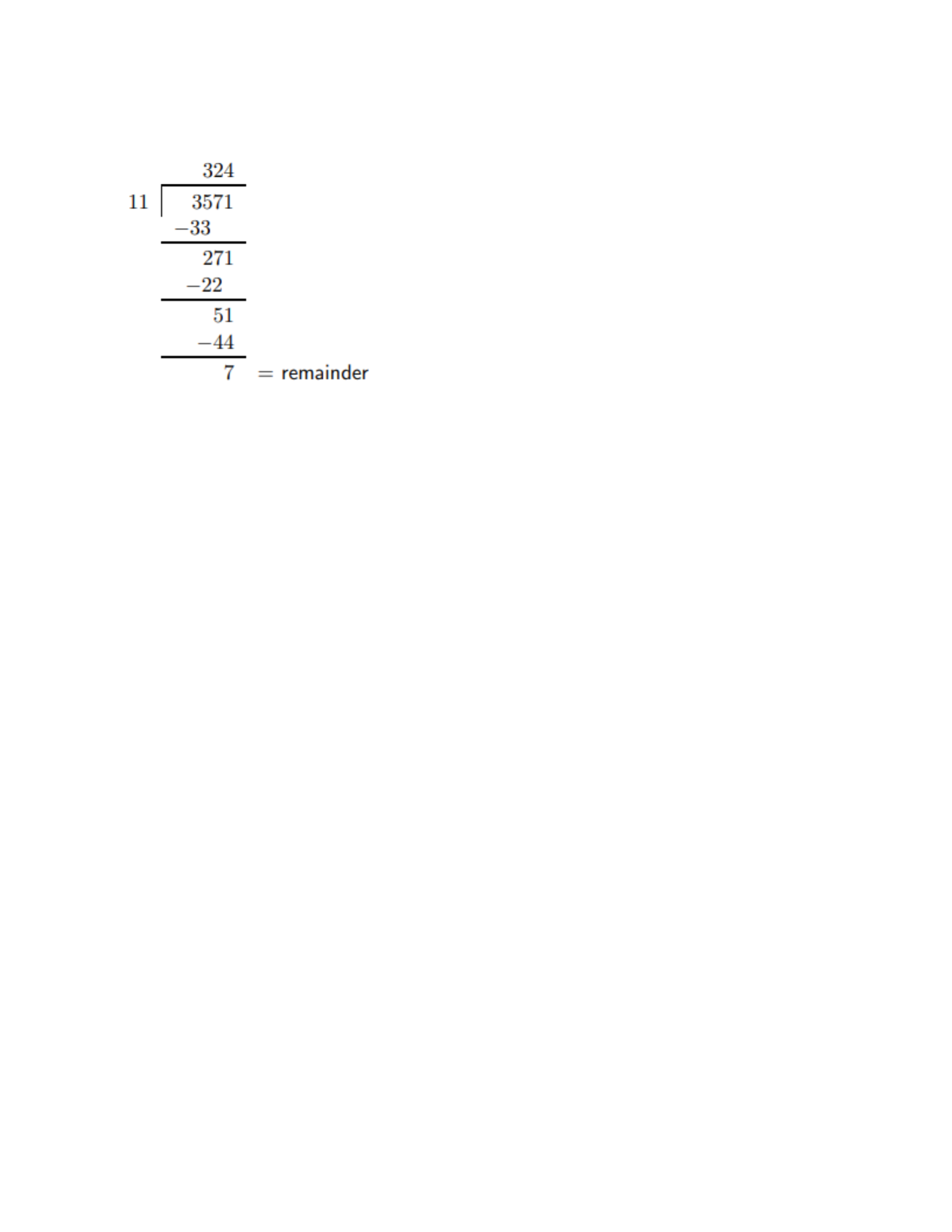
Example 1.16
Multiplication involving negative numbers
Multiplication is a little tricky to understand without the notion of distribution (discussed
later). We will begin with noting again what it means to multiply a number by a positive
number: So if we want to compute 4⋅(−7)4⋅(−7) we note
4⋅(−7)=(−7)+(−7)+(−7)+(−7)=−284⋅(−7)=(−7)+(−7)+(−7)+(−7)=−28
Note that since 4⋅7=28,4⋅(−7)=−(4⋅7).4⋅7=28,4⋅(−7)=−(4⋅7). We can multiply positive
numbers in any order: 4⋅7=7⋅44⋅7=7⋅4. The same is true of positive and negative numbers:
(−7)⋅4=4⋅(−7)=−(4⋅7)=−28(−7)⋅4=4⋅(−7)=−(4⋅7)=−28
Example 1.17
5⋅(−12)=−(5⋅12)=−605⋅(−12)=−(5⋅12)=−60 and (−3)⋅(−2)=−(3⋅(−2))=−(−(3⋅2))=6(−3)⋅(−2)
=−(3⋅(−2))=−(−(3⋅2))=6
Example 1.18
So the size of the product of two numbers is the product of their sizes. The sign is positive if
the signs are the same and negative if they are different.
Example 1.19
Two quantities right next to each other, with no symbol between them (except for
parentheses around either or both numbers), has an implicit multiplication. For
example, 3(2)=3×23(2)=3×2.
Example 1.20
Multiply:
hhhhhhhhh. (−5)(−8)=40(−5)(−8)=40
iiiiiiiii. (−6)⋅7=−42(−6)⋅7=−42

jjjjjjjjj. 4⋅12=484⋅12=48
kkkkkkkkk. (−3)(−6)⋅4(−3)=18⋅4(−3)=72(−3)=−216( multiplying from left to
right )(−3)(−6)⋅4(−3)=18⋅4(−3)=72(−3)=−216( multiplying from left to right )
lllllllll. (−3)(−5)⋅4(−2)=(−3)⋅4⋅(−5)(−2)=−12⋅10=−120((−3)(−5)⋅4(−2)=(−3)⋅4⋅(−5)(
−2)=−12⋅10=−120( since we can multiply in any order it is convenient to see
that −5⋅−2=10.−5⋅−2=10. )
Exponents of integers
Recall that a positive exponent represents the number of times a number is multiplied by
itself.
Example 1.21
Evaluate:
yyyyyyyyyy. 52=5⋅5=2552=5⋅5=25
zzzzzzzzzz. (−4)3=(−4)⋅(−4)⋅(−4)=16⋅(−4)=−64(−4)3=(−4)⋅(−4)⋅(−4)=16⋅(−4)=−6
4
aaaaaaaaaaa. (−7)1=−7(−7)1=−7
bbbbbbbbbbb. −24=−2⋅2⋅2⋅2=−16−24=−2⋅2⋅2⋅2=−16 Note: The exponent here is for
2 not −2!
ccccccccccc. (−3)4=(−3)⋅(−3)⋅(−3)⋅(−3)=9⋅(−3)⋅(−3)=−27⋅(−3)=81(−3)4=(−3)⋅(−3)
⋅(−3)⋅(−3)=9⋅(−3)⋅(−3)=−27⋅(−3)=81
ddddddddddd. (−2)5=(−2)⋅(−2)⋅(−2)⋅(−2)⋅(−2)=−32(−2)5=(−2)⋅(−2)⋅(−2)⋅(−2)⋅(−2)=
−32
Exponent rules in details will be further discussed in Chapter 5.
Division involving negative numbers
Division is just a question of knowing multiplication and therefore has the same rule: The
size of the quotient of two numbers is the quotient of the sizes. The sign is positive if the
signs are the same and negative if they are different.
Example 1.22
Divide:
yyyyyyyyyy. (−42)÷7=−6(−42)÷7=−6
zzzzzzzzzz. 81÷(−9)=−981÷(−9)=−9
aaaaaaaaaaa. (−35)÷(−7)=5(−35)÷(−7)=5
bbbbbbbbbbb. 14÷2=714÷2=7
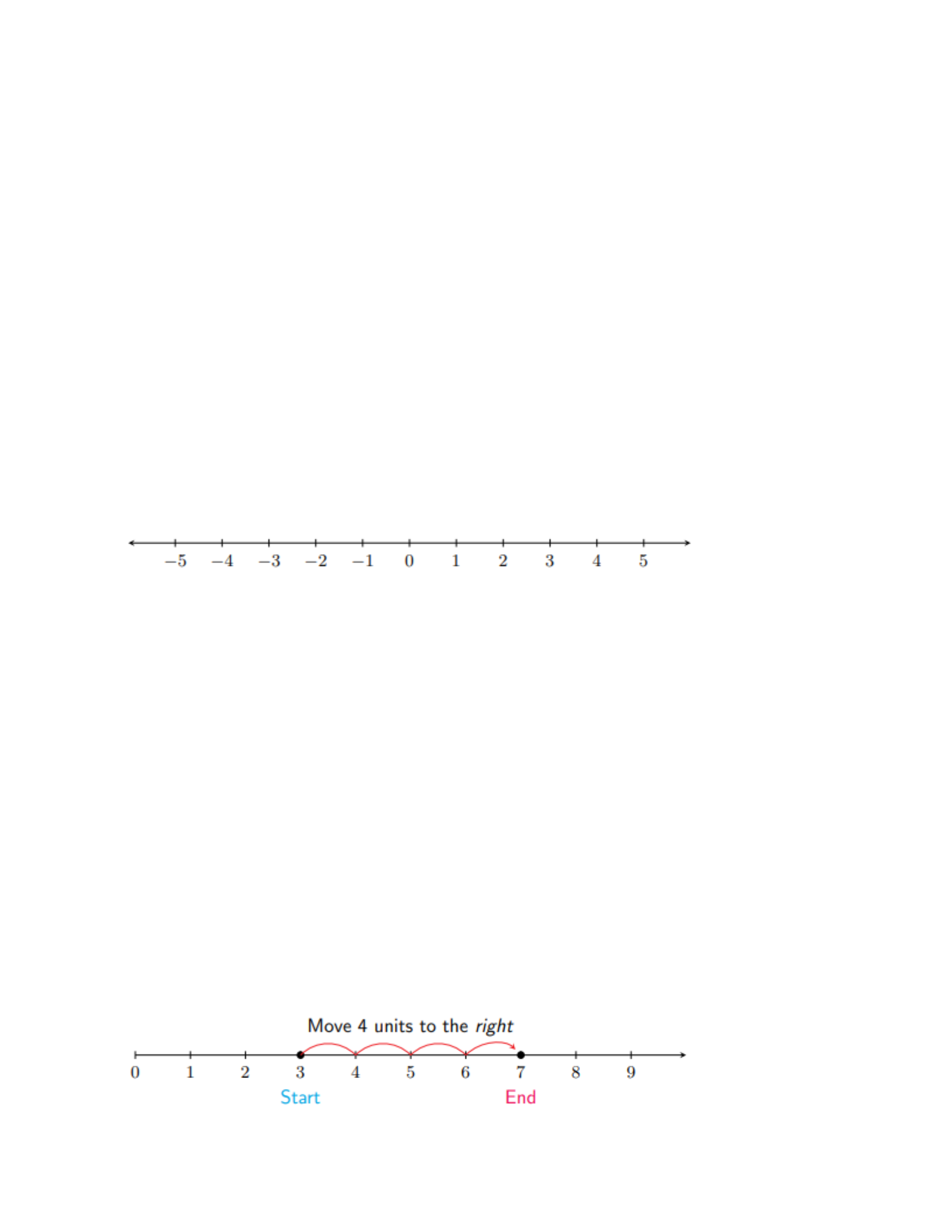
ccccccccccc. 0÷5=00÷5=0. Note When dividing 0 by any number, the answer is
always 0.
ddddddddddd. −10÷0=−10÷0= undefined.
Note 1.23
Any number divided by 0 is undefined!
Multiplying and Dividing Integers
Consider two numbers at a time.
87. If the signs of the two numbers are the same, then the sign of the answer is positive.
88. If the signs of the two numbers are different, then the sign of the answer is negative.
We begin with a brief review of arithmetic with integers
i.e. …,−3,−2,−1,0,1,2,3,……,−3,−2,−1,0,1,2,3,…
Any number has a weight and a sign.
The magnitude (or weight) of a number is the distance it is from 0 on the number line.
Example 1.1
For example, the weight of -5 is 5 and the weight of 7 is 7 .
Two numbers are opposites if, on the number line, they are on opposite sides of zero, but
the same distance away from zero.
So, −5 is the opposite of 5, and 7 is the opposite of −7 and so on.
Addition
We can add two numbers with the help of a number line .
Example 1.2
Adding two positive numbers: For example to add 3+43+4, we start with 3 on the number
line then move 4 units to the right. We land at 7 which is our answer.
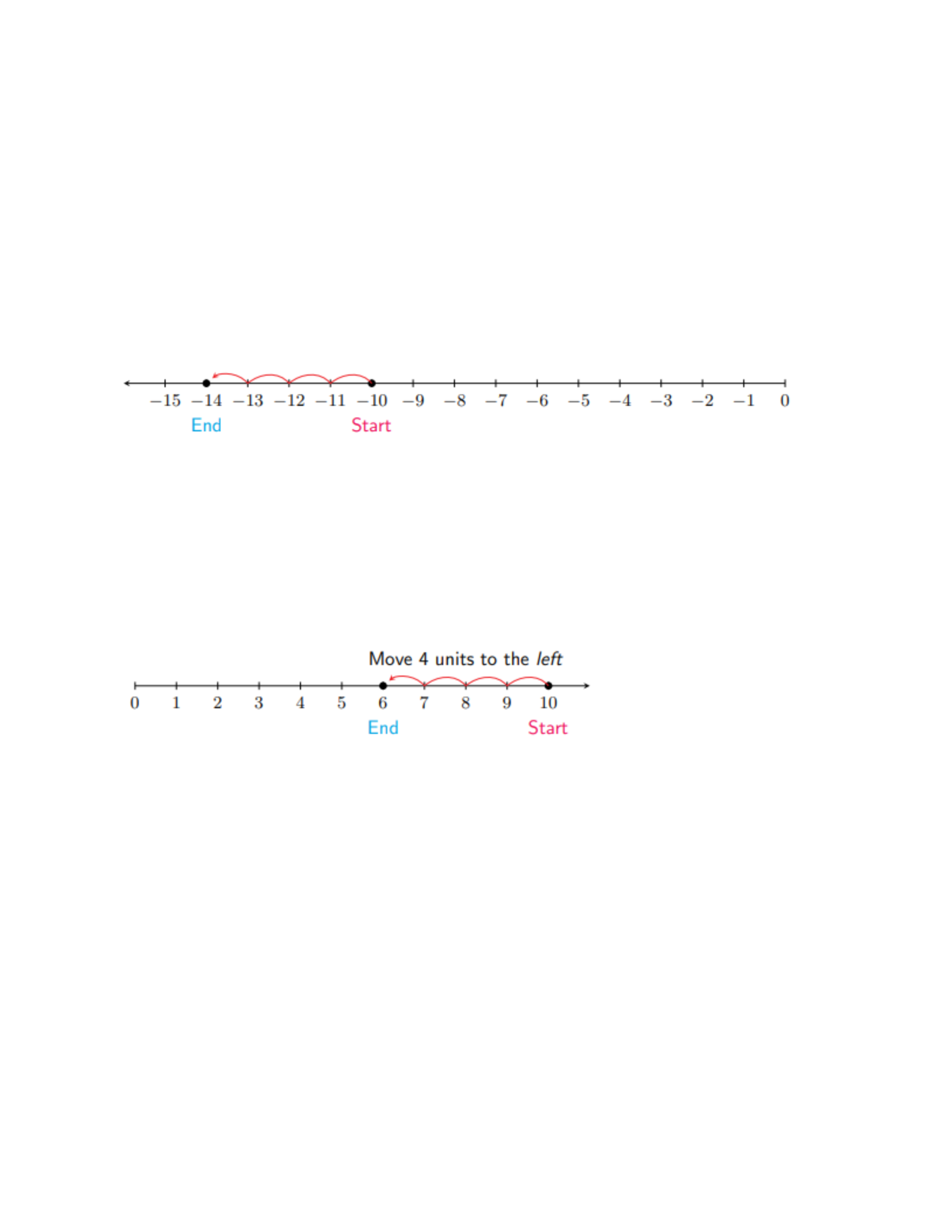
So, 3+4=73+4=7. Notice that the answer has the same sign as the signs of 3 and 4 (both
positive) and its weight comes from adding the weights of 3 and 4.
You always move to the right when you add a positive number
Example 1.3
Adding two negative numbers: For example, −10+(−4)−10+(−4) means you are adding a
debt of $4$4 to an already existing debt of $10.$10. So, we start at -10 on the number line
and move 4 units to the left, to land at −14,−14, which is the answer.
You always move to the left when you add a negative number (a debt)
So, −10+(−4)=−14−10+(−4)=−14. Notice that the answer has the same sign as the signs of -
10 and -4 (both negative) and its weight comes from adding the weights of -10 and -4
To add numbers of opposite signs, that is, a positive and a negative number, we can also
use the number line. For example, to perform 10+(−4),10+(−4), we start at 10 on the
number line and then move 4 units to the left. We land at 6,6, which is the answer. Think
of 10+(−4)10+(−4) as having $10$10 and adding a $4$4 debt. Because we are adding a
debt, we move to the left on the number line!
So, 10+(−4)=6.10+(−4)=6. Notice that the answer has the same sign as the sign of 10
(positive) because it is the number of larger weight, and its weight comes from finding the
difference of the weights of 10 and -4
Notice that because we were adding two numbers of opposite signs, the answer ended up
being the difference in weight (6) along with the sign of the number of larger weight
(positive).
Example 1.4
Adding two numbers of opposite signs: For example, 3+(−7)3+(−7). We start at 3 and move
toward 7 units to the left, and we land at −4,−4, which is our answer.
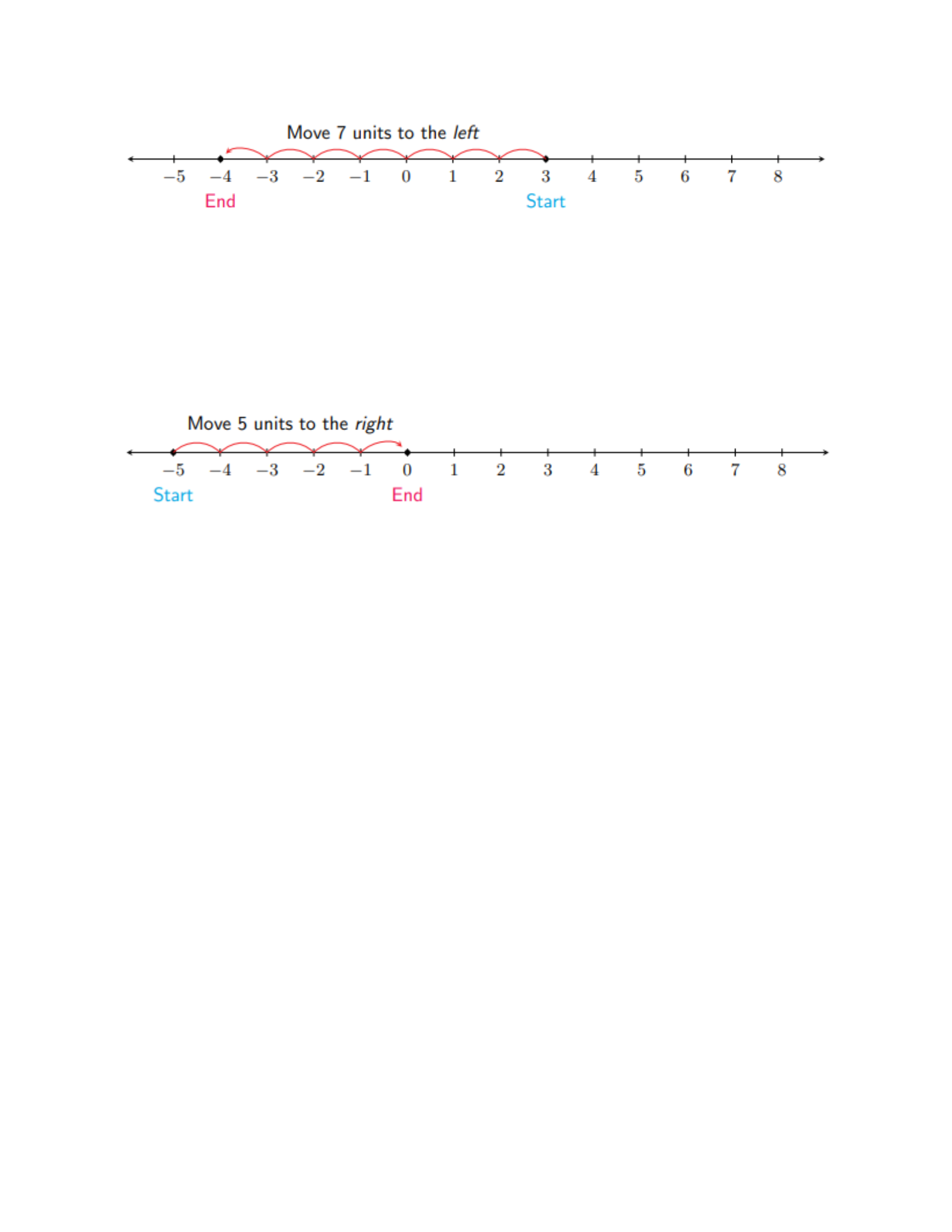
So, 3+(−7)=−4.3+(−7)=−4. Notice that the answer has the same sign as the signs of -7
(negative) because it is the number of larger weight, and its weight comes from finding the
difference of the weights of 3 and -7.
Example 1.5
Adding opposites: We start at -5 on the number line and jump to the right 5 units to land
finally at 00. So −5+5=0−5+5=0.
Note 1.6
Two opposite numbers are called a zero-pair, because adding them always results in 0.
So, −5 and 5 are a zero-pair.
Adding Intergers
89. To add two numbers of the same sign, add their weights and place it after the
sign.
90. To add two numbers of opposite signs, find the difference of their weights and
place it after the sign of the number with the greater weight.
Example 1.7
Add:
eeeeeeeeeee. −8+19=11−8+19=11
fffffffffff. −8+4=−4−8+4=−4
ggggggggggg. 6+(−9)=−36+(−9)=−3
hhhhhhhhhhh. 7+(−2)=57+(−2)=5
iiiiiiiiiii. (−4)+(−7)=−11(−4)+(−7)=−11
jjjjjjjjjjj. 8+7=158+7=15
Note 1.8

While we can add in any order: 4+2=2+44+2=2+4, it is sometimes convenient to add up all
of the negative numbers and add up all of the positive numbers, and then add the results.
There are also times when it is best to notice certain simplifications if the numbers are
added in a different order.
For example
−5+4+5+(−8)=−5+(−8)+4+5( by reordering )−5+4+5+(−8)=−5+(−8)+4+5( by reordering )
so,
−5+4+5+(−8)=−5+(−8)+4+5=−13+9=−4−5+4+5+(−8)=−5+(−8)+4+5=−13+9=−4
We could have also simplified this by noting that (-5) and 5 are zero-pair, so we are left
with 4+(−8)4+(−8) which is -4.
Example 1.9
We can calculate
(−4)+(−5)+7+(−3)=(−4)+(−5)+(−3)+7=(−12)+7=−5(−4)+(−5)+7+(−3)=(−4)+(−5)+(−3)+7=
(−12)+7=−5
We could have simplified this by noting that (-4) and (-3) make -7, and -7 and 7 are zero-
pair, so the total is -5.
Subtraction (as Addition of the Opposite)
Once we know how to add numbers, we are set to subtract numbers because subtraction is
nothing but addition of the opposite. That is, subtracting 8 − 3 (which reads: subtracting 3
from 8) is the same as 8 + (−3) (which reads: Adding −3 to 8.).
Example 1.10
So, 8−3=8+(−3),8−3=8+(−3), and, we can use the rules of adding two numbers of opposite
signs to find out that the answer is 5.5. We can also use the number line. We start at 8 and
move 3 units to the left (adding -3 is adding a debt, so we move to the left).
So 8−3=5.−4−3−2−10123456788−3=5.−4−3−2−1012345678 End Start Move 3 units to the
left
Example 1.11
To calculate 3−73−7 we first rewrite it as an addition
problem. 3−7=3+(−7).3−7=3+(−7). We can either use the number line, or the rules of
adding two numbers of opposite signs. And, 50,3−7=3+(−7)=−450,3−7=3+(−7)=−4
Example 1.12
To calculate −4−1,−4−1, we first rewrite it as an addition
problem. −4−1=−4+(−1).−4−1=−4+(−1). We can either use the number line, or the rules of
adding two numbers of the same signs. If we want to use the rules, both numbers are
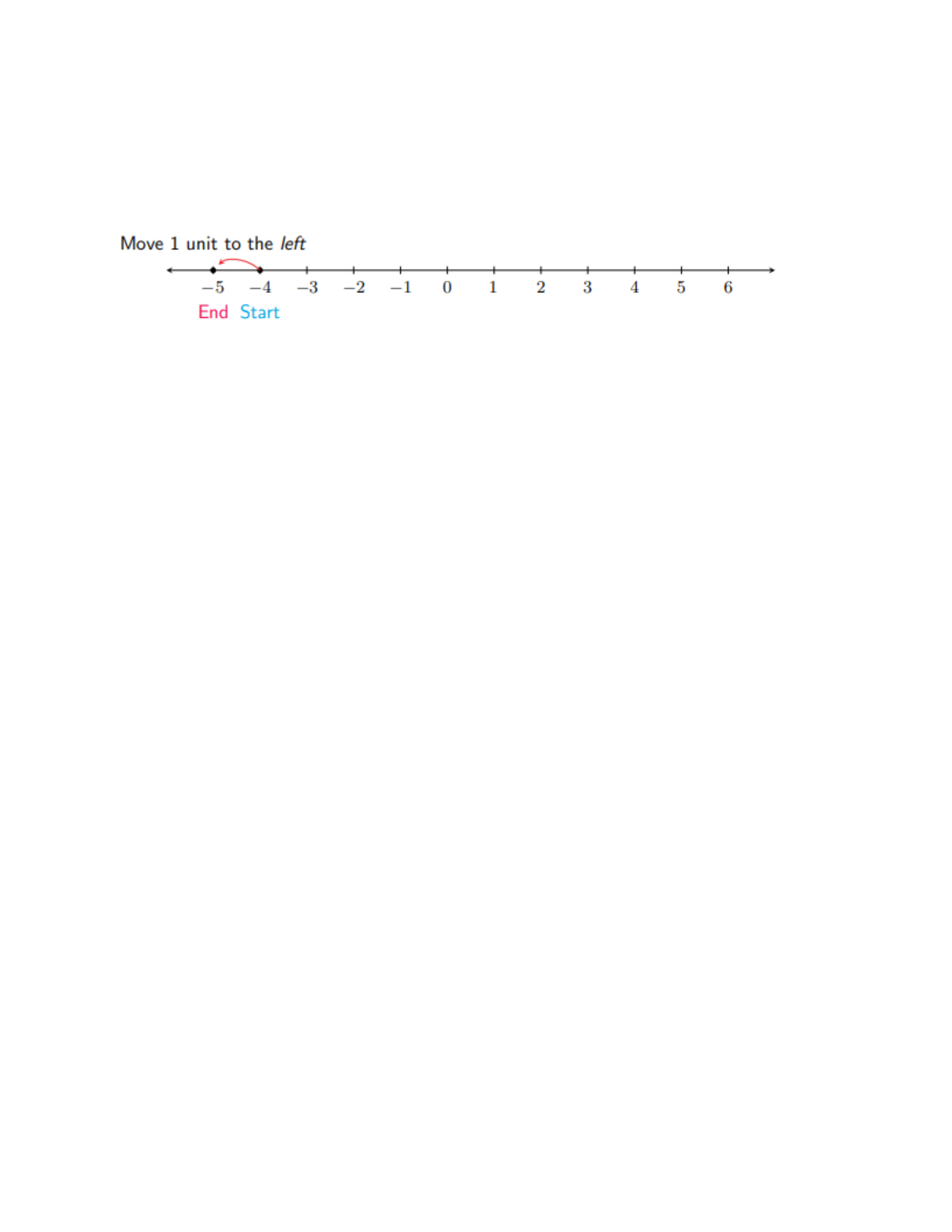
negative, so our answer will be negative, and, adding the weights of -4 and -1
is 5.50,−4−1=−4+(−1)=−55.50,−4−1=−4+(−1)=−5
On the number line, we start at -4 and move 1 unit to the left, to land on -5 which is our
answer.
Changing the subtractions to additions in this way is particularly useful when adding or
subtracting several numbers (because we can add in any order).
Example 1.13
===−3−7+5+7+13−6−(−9)−3+(−7)+5+7+13+(−6)+9−3+(−7)+(−6)+5+7+13+918−3−7+5+7
+13−6−(−9)=−3+(−7)+5+7+13+(−6)+9=−3+(−7)+(−6)+5+7+13+9=18
===−3−7+5+7+13−6−(−9)−3+(−7)+5+7+13+(−6)+95+1318−3−7+5+7+13−6−(−9)=−3+(−7
)+5+7+13+(−6)+9=5+13=18
Remark 1.14
Warning: The symbol "-" is used in two different ways. When it is between two expressions,
it means subtract (e.g., 3−43−4 ). Otherwise, it means 'opposite' or 'negative'
(e.g., −3+4−3+4 ). So in the expression −4−(−3)−4−(−3), the first and last "-" means
opposite and the one in the middle one means subtract. The importance of understanding
this can not be overestimated.
Multiplication and Division of Positive Numbers
Multiplication of integers is adding in the sense that 3×4=4+4+43×4=4+4+4
To multiply larger numbers, it is better to use the usual scheme of multiplication. For
example:
Example 1.15
Let us multiply 152 by 34. We will for convenience sake put the smaller number on the
bottom (though it is not necessary). We have
+×4516515306624808152×34608+45605168
And division is the opposite of multiplication in the sense that to compute 45÷945÷9 is to
find a number so that when we multiply by 9 we get 45. We run through our multiplication
tables (which are hopefully in our head) to discover that 5 does the
trick: 5×9=455×9=45 so that 45÷9=5.45÷9=5. We will discuss division from a different
point of view when we discuss fractions.
To divide larger numbers, we can use long division. For example, let’s divide 3571 by 11.
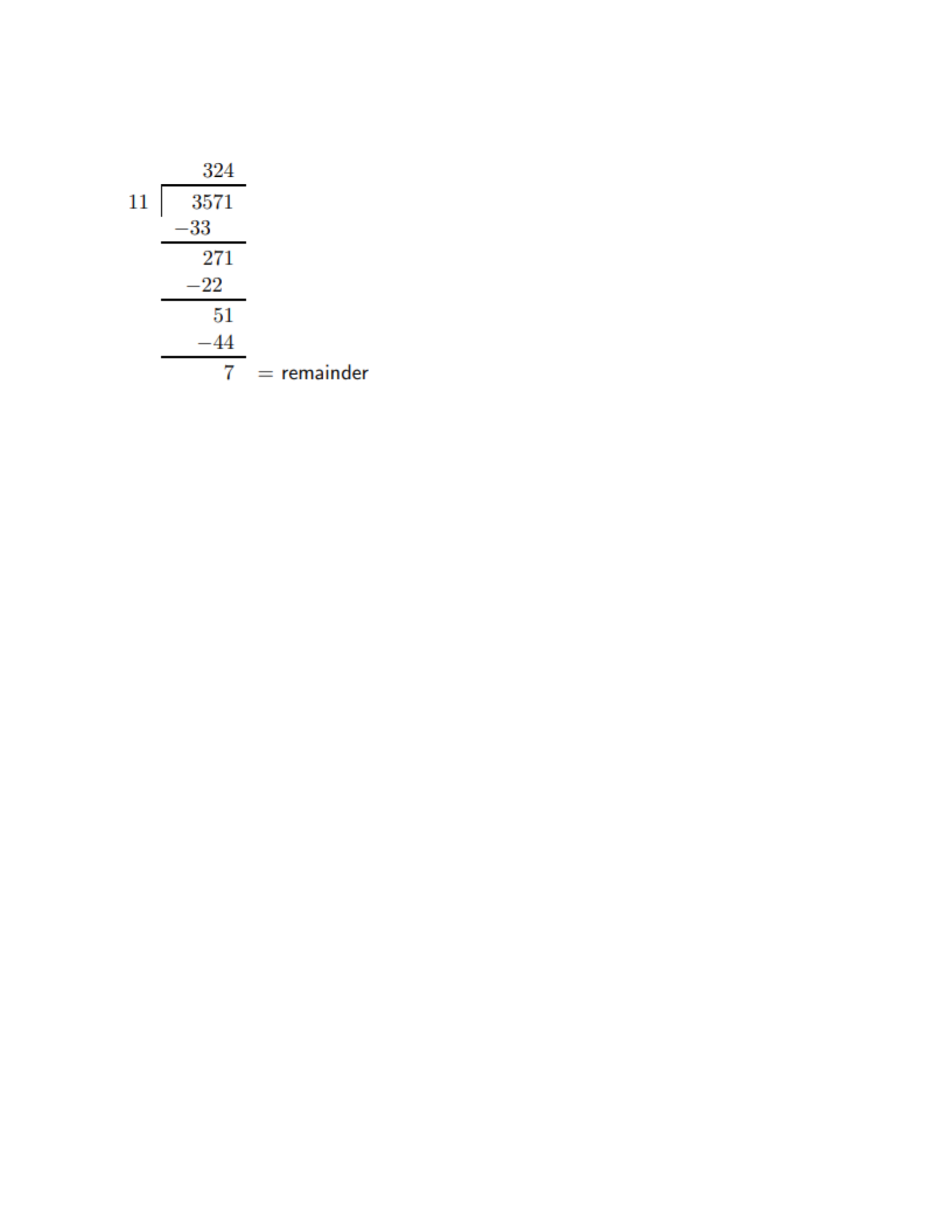
Example 1.16
Multiplication involving negative numbers
Multiplication is a little tricky to understand without the notion of distribution (discussed
later). We will begin with noting again what it means to multiply a number by a positive
number: So if we want to compute 4⋅(−7)4⋅(−7) we note
4⋅(−7)=(−7)+(−7)+(−7)+(−7)=−284⋅(−7)=(−7)+(−7)+(−7)+(−7)=−28
Note that since 4⋅7=28,4⋅(−7)=−(4⋅7).4⋅7=28,4⋅(−7)=−(4⋅7). We can multiply positive
numbers in any order: 4⋅7=7⋅44⋅7=7⋅4. The same is true of positive and negative numbers:
(−7)⋅4=4⋅(−7)=−(4⋅7)=−28(−7)⋅4=4⋅(−7)=−(4⋅7)=−28
Example 1.17
5⋅(−12)=−(5⋅12)=−605⋅(−12)=−(5⋅12)=−60 and (−3)⋅(−2)=−(3⋅(−2))=−(−(3⋅2))=6(−3)⋅(−2)
=−(3⋅(−2))=−(−(3⋅2))=6
Example 1.18
So the size of the product of two numbers is the product of their sizes. The sign is positive if
the signs are the same and negative if they are different.
Example 1.19
Two quantities right next to each other, with no symbol between them (except for
parentheses around either or both numbers), has an implicit multiplication. For
example, 3(2)=3×23(2)=3×2.
Example 1.20
Multiply:
mmmmmmmmm. (−5)(−8)=40(−5)(−8)=40
nnnnnnnnn. (−6)⋅7=−42(−6)⋅7=−42

ooooooooo. 4⋅12=484⋅12=48
ppppppppp. (−3)(−6)⋅4(−3)=18⋅4(−3)=72(−3)=−216( multiplying from left to
right )(−3)(−6)⋅4(−3)=18⋅4(−3)=72(−3)=−216( multiplying from left to right )
qqqqqqqqq. (−3)(−5)⋅4(−2)=(−3)⋅4⋅(−5)(−2)=−12⋅10=−120((−3)(−5)⋅4(−2)=(−3)⋅
4⋅(−5)(−2)=−12⋅10=−120( since we can multiply in any order it is convenient to see
that −5⋅−2=10.−5⋅−2=10. )
Exponents of integers
Recall that a positive exponent represents the number of times a number is multiplied by
itself.
Example 1.21
Evaluate:
eeeeeeeeeee. 52=5⋅5=2552=5⋅5=25
fffffffffff. (−4)3=(−4)⋅(−4)⋅(−4)=16⋅(−4)=−64(−4)3=(−4)⋅(−4)⋅(−4)=16⋅(−4)=−64
ggggggggggg. (−7)1=−7(−7)1=−7
hhhhhhhhhhh. −24=−2⋅2⋅2⋅2=−16−24=−2⋅2⋅2⋅2=−16 Note: The exponent here is for
2 not −2!
iiiiiiiiiii. (−3)4=(−3)⋅(−3)⋅(−3)⋅(−3)=9⋅(−3)⋅(−3)=−27⋅(−3)=81(−3)4=(−3)⋅(−3)⋅(−3)⋅(
−3)=9⋅(−3)⋅(−3)=−27⋅(−3)=81
jjjjjjjjjjj. (−2)5=(−2)⋅(−2)⋅(−2)⋅(−2)⋅(−2)=−32(−2)5=(−2)⋅(−2)⋅(−2)⋅(−2)⋅(−2)=−32
Exponent rules in details will be further discussed in Chapter 5.
Division involving negative numbers
Division is just a question of knowing multiplication and therefore has the same rule: The
size of the quotient of two numbers is the quotient of the sizes. The sign is positive if the
signs are the same and negative if they are different.
Example 1.22
Divide:
eeeeeeeeeee. (−42)÷7=−6(−42)÷7=−6
fffffffffff. 81÷(−9)=−981÷(−9)=−9
ggggggggggg. (−35)÷(−7)=5(−35)÷(−7)=5
hhhhhhhhhhh. 14÷2=714÷2=7
iiiiiiiiiii. 0÷5=00÷5=0. Note When dividing 0 by any number, the answer is always 0.
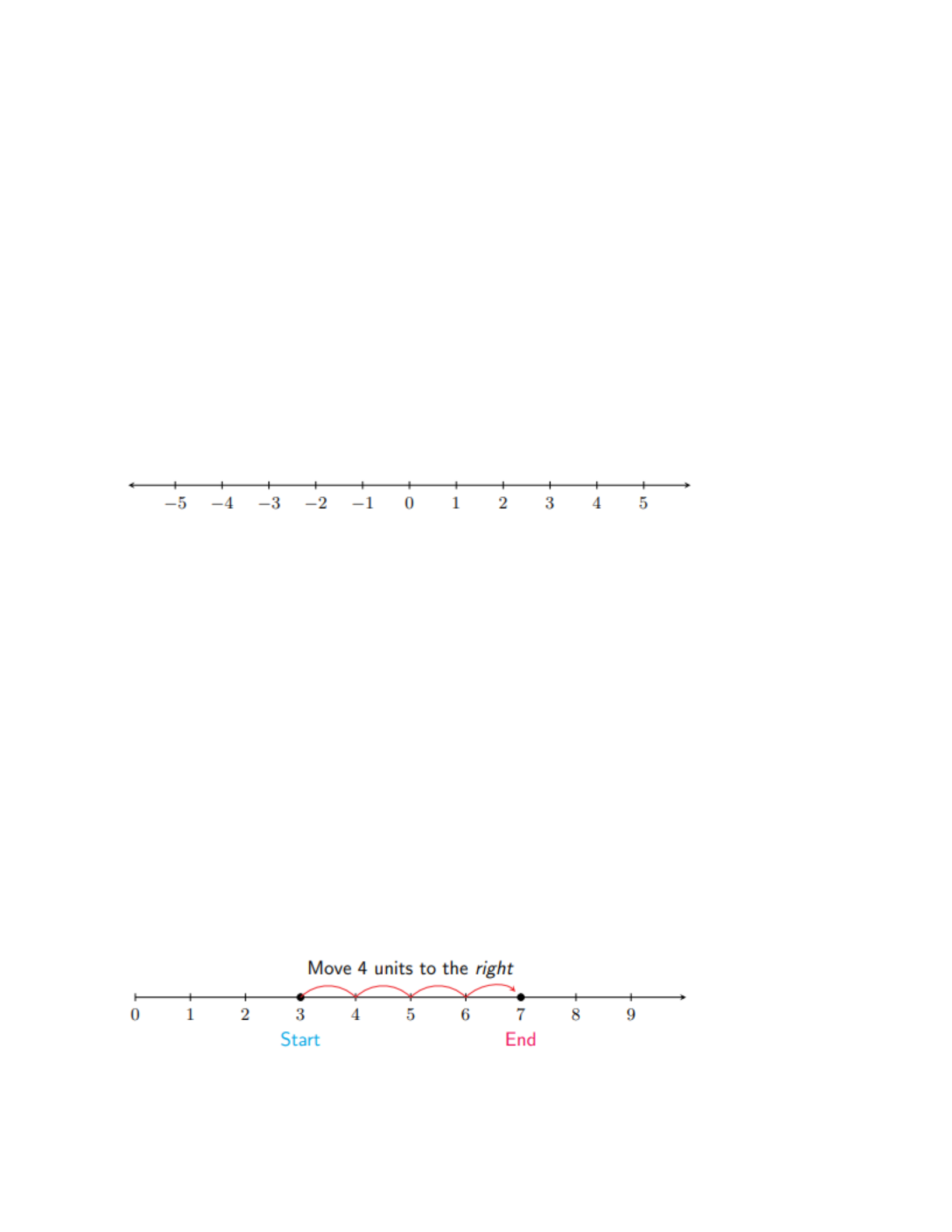
jjjjjjjjjjj. −10÷0=−10÷0= undefined.
Note 1.23
Any number divided by 0 is undefined!
Multiplying and Dividing Integers
Consider two numbers at a time.
89. If the signs of the two numbers are the same, then the sign of the answer is positive.
90. If the signs of the two numbers are different, then the sign of the answer is negative.
We begin with a brief review of arithmetic with integers
i.e. …,−3,−2,−1,0,1,2,3,……,−3,−2,−1,0,1,2,3,…
Any number has a weight and a sign.
The magnitude (or weight) of a number is the distance it is from 0 on the number line.
Example 1.1
For example, the weight of -5 is 5 and the weight of 7 is 7 .
Two numbers are opposites if, on the number line, they are on opposite sides of zero, but
the same distance away from zero.
So, −5 is the opposite of 5, and 7 is the opposite of −7 and so on.
Addition
We can add two numbers with the help of a number line .
Example 1.2
Adding two positive numbers: For example to add 3+43+4, we start with 3 on the number
line then move 4 units to the right. We land at 7 which is our answer.
So, 3+4=73+4=7. Notice that the answer has the same sign as the signs of 3 and 4 (both
positive) and its weight comes from adding the weights of 3 and 4.
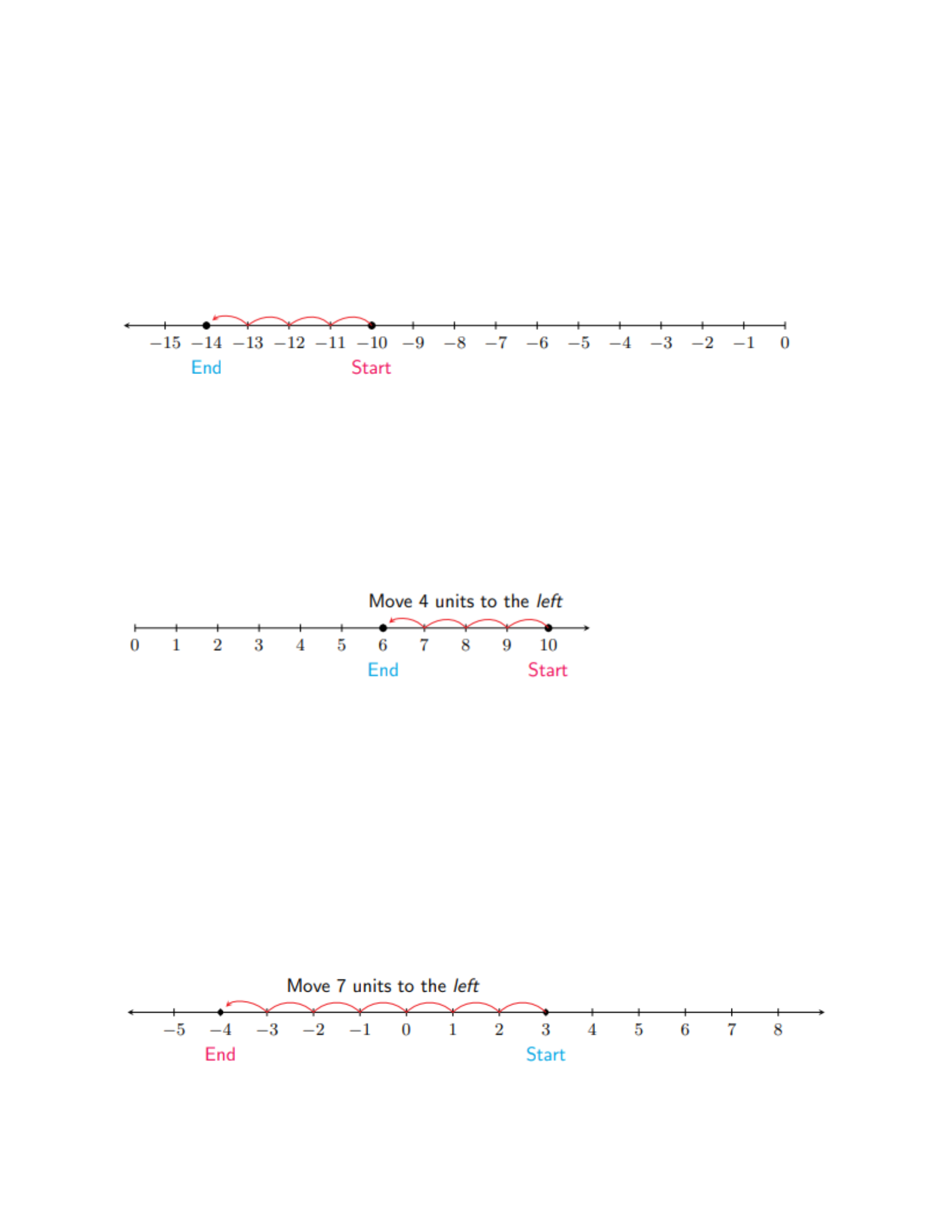
You always move to the right when you add a positive number
Example 1.3
Adding two negative numbers: For example, −10+(−4)−10+(−4) means you are adding a
debt of $4$4 to an already existing debt of $10.$10. So, we start at -10 on the number line
and move 4 units to the left, to land at −14,−14, which is the answer.
You always move to the left when you add a negative number (a debt)
So, −10+(−4)=−14−10+(−4)=−14. Notice that the answer has the same sign as the signs of -
10 and -4 (both negative) and its weight comes from adding the weights of -10 and -4
To add numbers of opposite signs, that is, a positive and a negative number, we can also
use the number line. For example, to perform 10+(−4),10+(−4), we start at 10 on the
number line and then move 4 units to the left. We land at 6,6, which is the answer. Think
of 10+(−4)10+(−4) as having $10$10 and adding a $4$4 debt. Because we are adding a
debt, we move to the left on the number line!
So, 10+(−4)=6.10+(−4)=6. Notice that the answer has the same sign as the sign of 10
(positive) because it is the number of larger weight, and its weight comes from finding the
difference of the weights of 10 and -4
Notice that because we were adding two numbers of opposite signs, the answer ended up
being the difference in weight (6) along with the sign of the number of larger weight
(positive).
Example 1.4
Adding two numbers of opposite signs: For example, 3+(−7)3+(−7). We start at 3 and move
toward 7 units to the left, and we land at −4,−4, which is our answer.
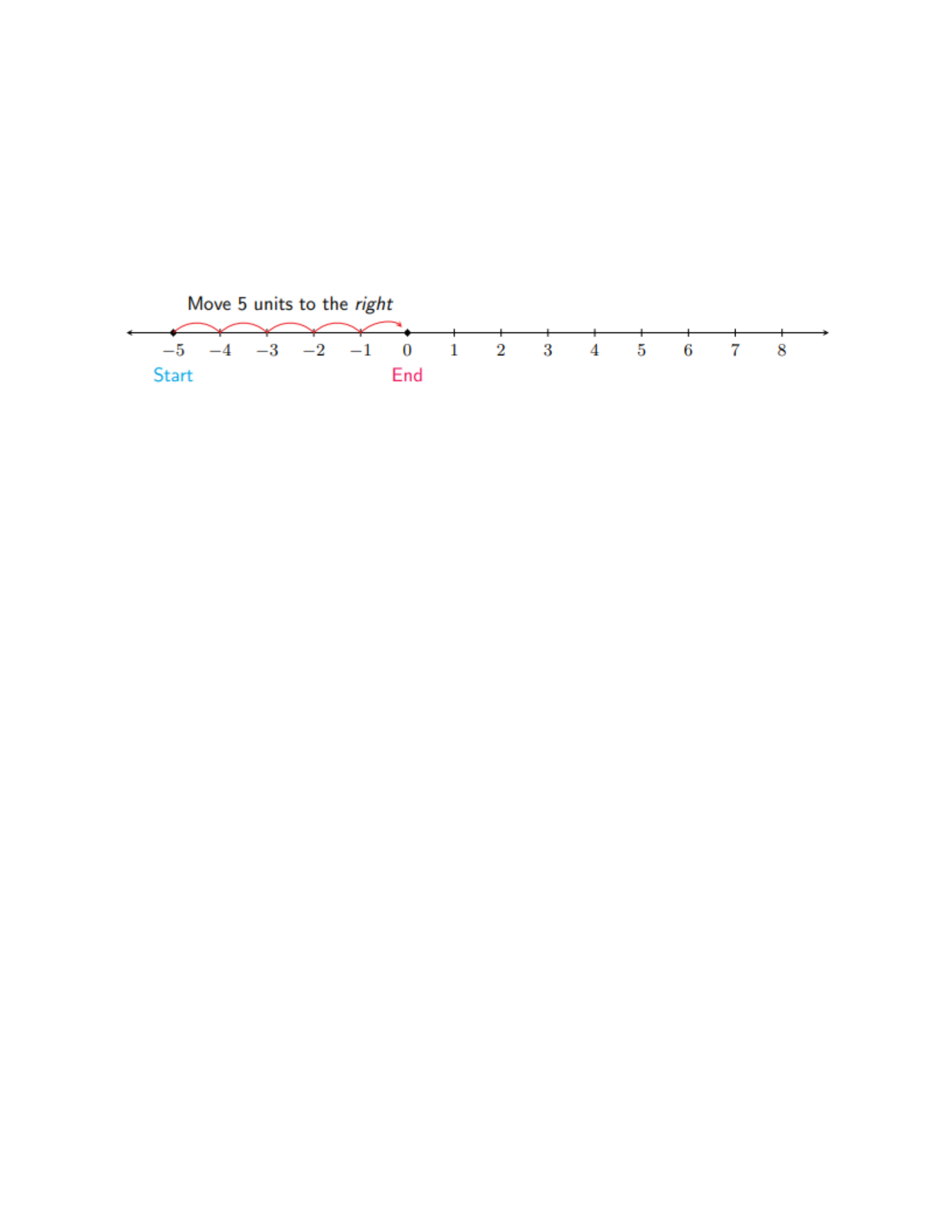
So, 3+(−7)=−4.3+(−7)=−4. Notice that the answer has the same sign as the signs of -7
(negative) because it is the number of larger weight, and its weight comes from finding the
difference of the weights of 3 and -7.
Example 1.5
Adding opposites: We start at -5 on the number line and jump to the right 5 units to land
finally at 00. So −5+5=0−5+5=0.
Note 1.6
Two opposite numbers are called a zero-pair, because adding them always results in 0.
So, −5 and 5 are a zero-pair.
Adding Intergers
91. To add two numbers of the same sign, add their weights and place it after the
sign.
92. To add two numbers of opposite signs, find the difference of their weights and
place it after the sign of the number with the greater weight.
Example 1.7
Add:
kkkkkkkkkkk. −8+19=11−8+19=11
lllllllllll. −8+4=−4−8+4=−4
mmmmmmmmmmm. 6+(−9)=−36+(−9)=−3
nnnnnnnnnnn. 7+(−2)=57+(−2)=5
ooooooooooo. (−4)+(−7)=−11(−4)+(−7)=−11
ppppppppppp. 8+7=158+7=15
Note 1.8
While we can add in any order: 4+2=2+44+2=2+4, it is sometimes convenient to add up all
of the negative numbers and add up all of the positive numbers, and then add the results.
There are also times when it is best to notice certain simplifications if the numbers are
added in a different order.
For example

−5+4+5+(−8)=−5+(−8)+4+5( by reordering )−5+4+5+(−8)=−5+(−8)+4+5( by reordering )
so,
−5+4+5+(−8)=−5+(−8)+4+5=−13+9=−4−5+4+5+(−8)=−5+(−8)+4+5=−13+9=−4
We could have also simplified this by noting that (-5) and 5 are zero-pair, so we are left
with 4+(−8)4+(−8) which is -4.
Example 1.9
We can calculate
(−4)+(−5)+7+(−3)=(−4)+(−5)+(−3)+7=(−12)+7=−5(−4)+(−5)+7+(−3)=(−4)+(−5)+(−3)+7=
(−12)+7=−5
We could have simplified this by noting that (-4) and (-3) make -7, and -7 and 7 are zero-
pair, so the total is -5.
Subtraction (as Addition of the Opposite)
Once we know how to add numbers, we are set to subtract numbers because subtraction is
nothing but addition of the opposite. That is, subtracting 8 − 3 (which reads: subtracting 3
from 8) is the same as 8 + (−3) (which reads: Adding −3 to 8.).
Example 1.10
So, 8−3=8+(−3),8−3=8+(−3), and, we can use the rules of adding two numbers of opposite
signs to find out that the answer is 5.5. We can also use the number line. We start at 8 and
move 3 units to the left (adding -3 is adding a debt, so we move to the left).
So 8−3=5.−4−3−2−10123456788−3=5.−4−3−2−1012345678 End Start Move 3 units to the
left
Example 1.11
To calculate 3−73−7 we first rewrite it as an addition
problem. 3−7=3+(−7).3−7=3+(−7). We can either use the number line, or the rules of
adding two numbers of opposite signs. And, 50,3−7=3+(−7)=−450,3−7=3+(−7)=−4
Example 1.12
To calculate −4−1,−4−1, we first rewrite it as an addition
problem. −4−1=−4+(−1).−4−1=−4+(−1). We can either use the number line, or the rules of
adding two numbers of the same signs. If we want to use the rules, both numbers are
negative, so our answer will be negative, and, adding the weights of -4 and -1
is 5.50,−4−1=−4+(−1)=−55.50,−4−1=−4+(−1)=−5
On the number line, we start at -4 and move 1 unit to the left, to land on -5 which is our
answer.
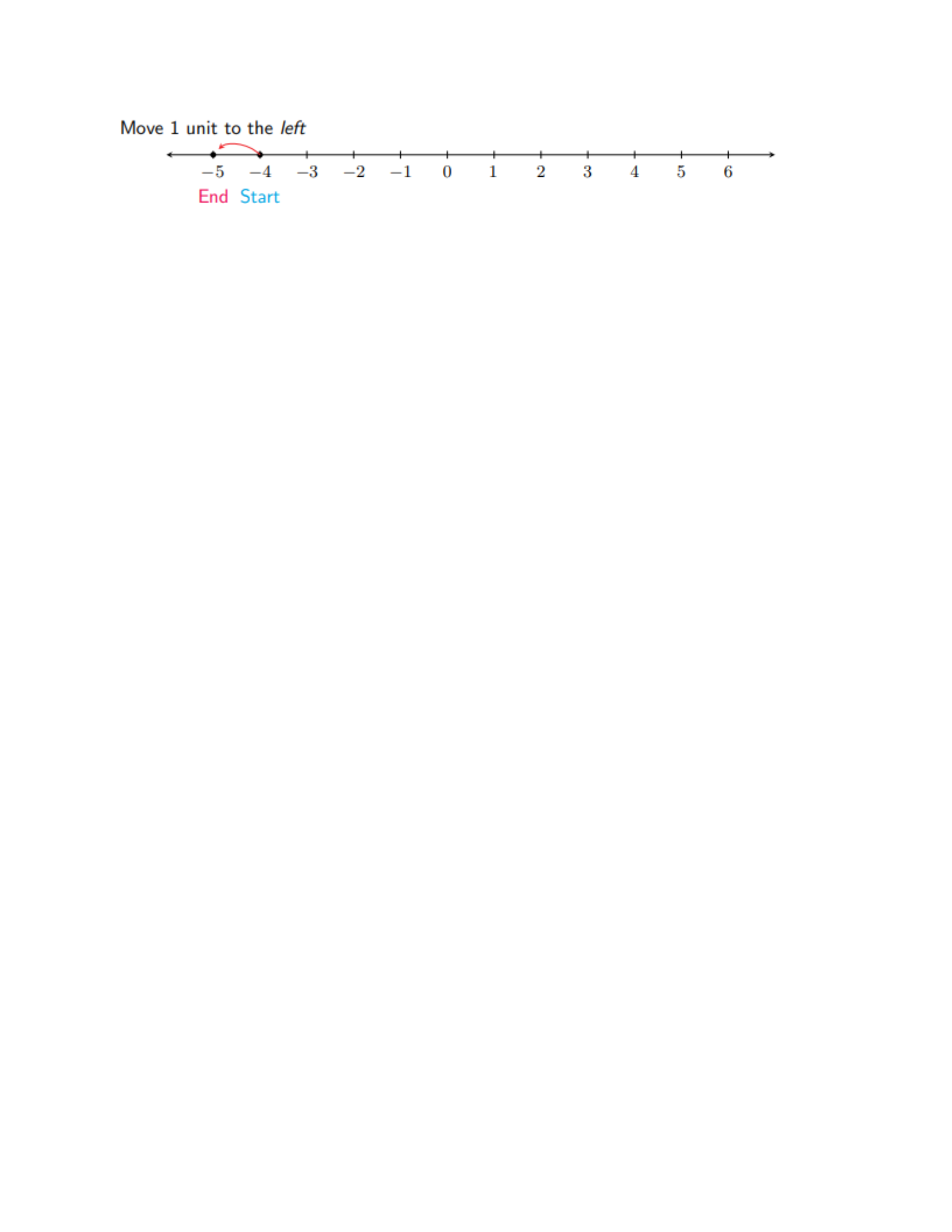
Changing the subtractions to additions in this way is particularly useful when adding or
subtracting several numbers (because we can add in any order).
Example 1.13
===−3−7+5+7+13−6−(−9)−3+(−7)+5+7+13+(−6)+9−3+(−7)+(−6)+5+7+13+918−3−7+5+7
+13−6−(−9)=−3+(−7)+5+7+13+(−6)+9=−3+(−7)+(−6)+5+7+13+9=18
===−3−7+5+7+13−6−(−9)−3+(−7)+5+7+13+(−6)+95+1318−3−7+5+7+13−6−(−9)=−3+(−7
)+5+7+13+(−6)+9=5+13=18
Remark 1.14
Warning: The symbol "-" is used in two different ways. When it is between two expressions,
it means subtract (e.g., 3−43−4 ). Otherwise, it means 'opposite' or 'negative'
(e.g., −3+4−3+4 ). So in the expression −4−(−3)−4−(−3), the first and last "-" means
opposite and the one in the middle one means subtract. The importance of understanding
this can not be overestimated.
Multiplication and Division of Positive Numbers
Multiplication of integers is adding in the sense that 3×4=4+4+43×4=4+4+4
To multiply larger numbers, it is better to use the usual scheme of multiplication. For
example:
Example 1.15
Let us multiply 152 by 34. We will for convenience sake put the smaller number on the
bottom (though it is not necessary). We have
+×4516515306624808152×34608+45605168
And division is the opposite of multiplication in the sense that to compute 45÷945÷9 is to
find a number so that when we multiply by 9 we get 45. We run through our multiplication
tables (which are hopefully in our head) to discover that 5 does the
trick: 5×9=455×9=45 so that 45÷9=5.45÷9=5. We will discuss division from a different
point of view when we discuss fractions.
To divide larger numbers, we can use long division. For example, let’s divide 3571 by 11.
Example 1.16
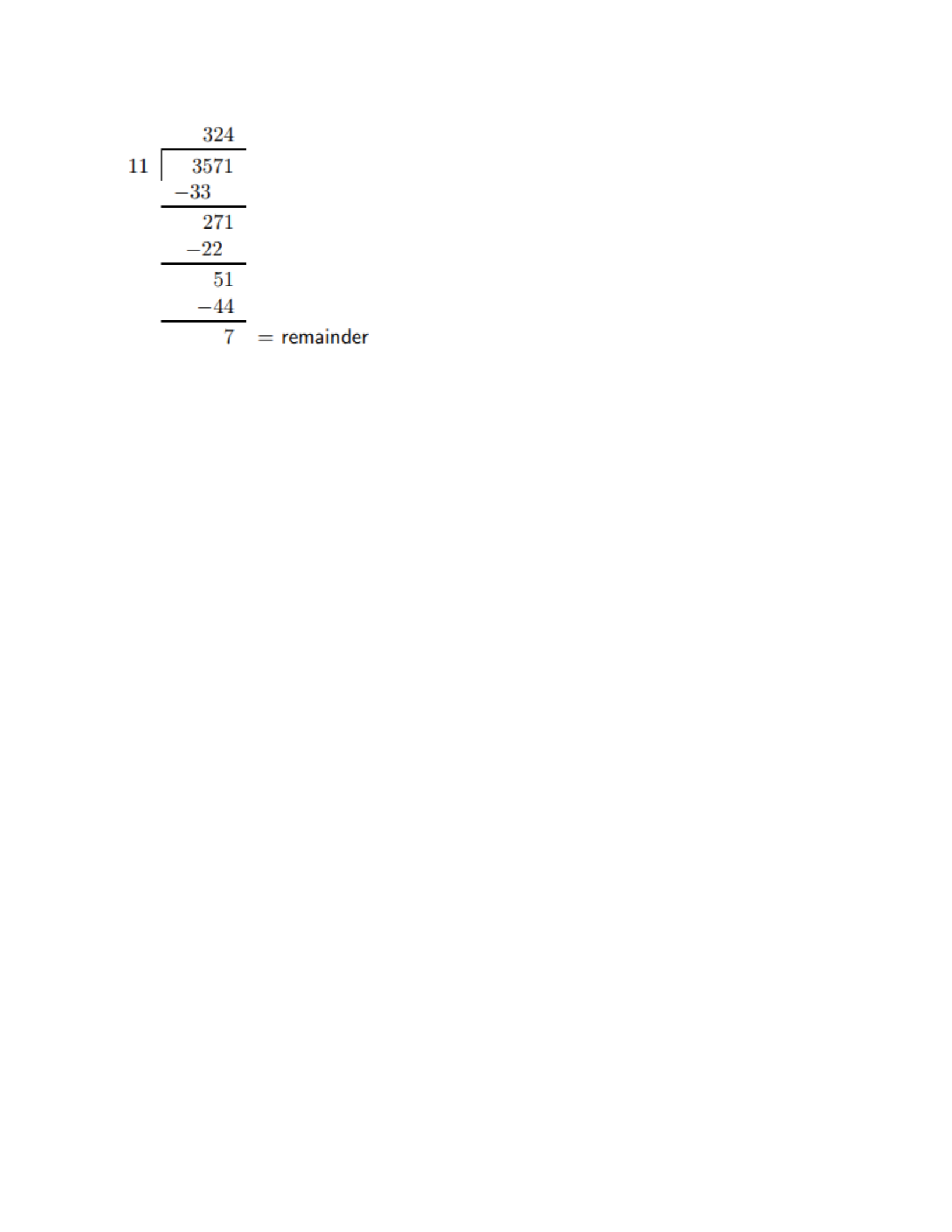
Multiplication involving negative numbers
Multiplication is a little tricky to understand without the notion of distribution (discussed
later). We will begin with noting again what it means to multiply a number by a positive
number: So if we want to compute 4⋅(−7)4⋅(−7) we note
4⋅(−7)=(−7)+(−7)+(−7)+(−7)=−284⋅(−7)=(−7)+(−7)+(−7)+(−7)=−28
Note that since 4⋅7=28,4⋅(−7)=−(4⋅7).4⋅7=28,4⋅(−7)=−(4⋅7). We can multiply positive
numbers in any order: 4⋅7=7⋅44⋅7=7⋅4. The same is true of positive and negative numbers:
(−7)⋅4=4⋅(−7)=−(4⋅7)=−28(−7)⋅4=4⋅(−7)=−(4⋅7)=−28
Example 1.17
5⋅(−12)=−(5⋅12)=−605⋅(−12)=−(5⋅12)=−60 and (−3)⋅(−2)=−(3⋅(−2))=−(−(3⋅2))=6(−3)⋅(−2)
=−(3⋅(−2))=−(−(3⋅2))=6
Example 1.18
So the size of the product of two numbers is the product of their sizes. The sign is positive if
the signs are the same and negative if they are different.
Example 1.19
Two quantities right next to each other, with no symbol between them (except for
parentheses around either or both numbers), has an implicit multiplication. For
example, 3(2)=3×23(2)=3×2.
Example 1.20
Multiply:
rrrrrrrrr. (−5)(−8)=40(−5)(−8)=40
sssssssss. (−6)⋅7=−42(−6)⋅7=−42
ttttttttt. 4⋅12=484⋅12=48

uuuuuuuuu. (−3)(−6)⋅4(−3)=18⋅4(−3)=72(−3)=−216( multiplying from left to
right )(−3)(−6)⋅4(−3)=18⋅4(−3)=72(−3)=−216( multiplying from left to right )
vvvvvvvvv. (−3)(−5)⋅4(−2)=(−3)⋅4⋅(−5)(−2)=−12⋅10=−120((−3)(−5)⋅4(−2)=(−3)⋅
4⋅(−5)(−2)=−12⋅10=−120( since we can multiply in any order it is convenient to see
that −5⋅−2=10.−5⋅−2=10. )
Exponents of integers
Recall that a positive exponent represents the number of times a number is multiplied by
itself.
Example 1.21
Evaluate:
kkkkkkkkkkk. 52=5⋅5=2552=5⋅5=25
lllllllllll. (−4)3=(−4)⋅(−4)⋅(−4)=16⋅(−4)=−64(−4)3=(−4)⋅(−4)⋅(−4)=16⋅(−4)=−64
mmmmmmmmmmm. (−7)1=−7(−7)1=−7
nnnnnnnnnnn. −24=−2⋅2⋅2⋅2=−16−24=−2⋅2⋅2⋅2=−16 Note: The exponent here is for
2 not −2!
ooooooooooo. (−3)4=(−3)⋅(−3)⋅(−3)⋅(−3)=9⋅(−3)⋅(−3)=−27⋅(−3)=81(−3)4=(−3)⋅(−3)
⋅(−3)⋅(−3)=9⋅(−3)⋅(−3)=−27⋅(−3)=81
ppppppppppp. (−2)5=(−2)⋅(−2)⋅(−2)⋅(−2)⋅(−2)=−32(−2)5=(−2)⋅(−2)⋅(−2)⋅(−2)⋅(−2)=
−32
Exponent rules in details will be further discussed in Chapter 5.
Division involving negative numbers
Division is just a question of knowing multiplication and therefore has the same rule: The
size of the quotient of two numbers is the quotient of the sizes. The sign is positive if the
signs are the same and negative if they are different.
Example 1.22
Divide:
kkkkkkkkkkk. (−42)÷7=−6(−42)÷7=−6
lllllllllll. 81÷(−9)=−981÷(−9)=−9
mmmmmmmmmmm. (−35)÷(−7)=5(−35)÷(−7)=5
nnnnnnnnnnn. 14÷2=714÷2=7
ooooooooooo. 0÷5=00÷5=0. Note When dividing 0 by any number, the answer is
always 0.
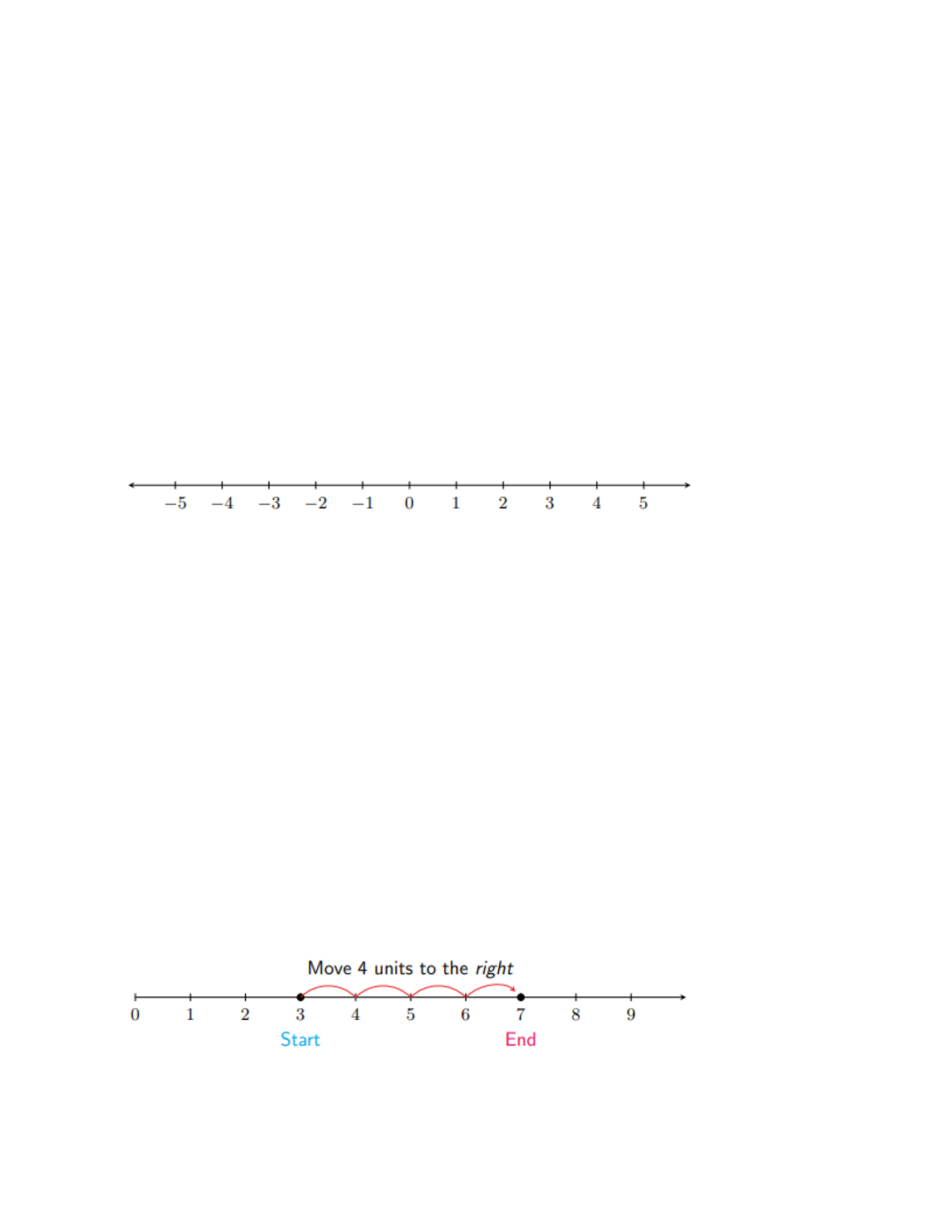
ppppppppppp. −10÷0=−10÷0= undefined.
Note 1.23
Any number divided by 0 is undefined!
Multiplying and Dividing Integers
Consider two numbers at a time.
91. If the signs of the two numbers are the same, then the sign of the answer is positive.
92. If the signs of the two numbers are different, then the sign of the answer is negative.
We begin with a brief review of arithmetic with integers
i.e. …,−3,−2,−1,0,1,2,3,……,−3,−2,−1,0,1,2,3,…
Any number has a weight and a sign.
The magnitude (or weight) of a number is the distance it is from 0 on the number line.
Example 1.1
For example, the weight of -5 is 5 and the weight of 7 is 7 .
Two numbers are opposites if, on the number line, they are on opposite sides of zero, but
the same distance away from zero.
So, −5 is the opposite of 5, and 7 is the opposite of −7 and so on.
Addition
We can add two numbers with the help of a number line .
Example 1.2
Adding two positive numbers: For example to add 3+43+4, we start with 3 on the number
line then move 4 units to the right. We land at 7 which is our answer.
So, 3+4=73+4=7. Notice that the answer has the same sign as the signs of 3 and 4 (both
positive) and its weight comes from adding the weights of 3 and 4.
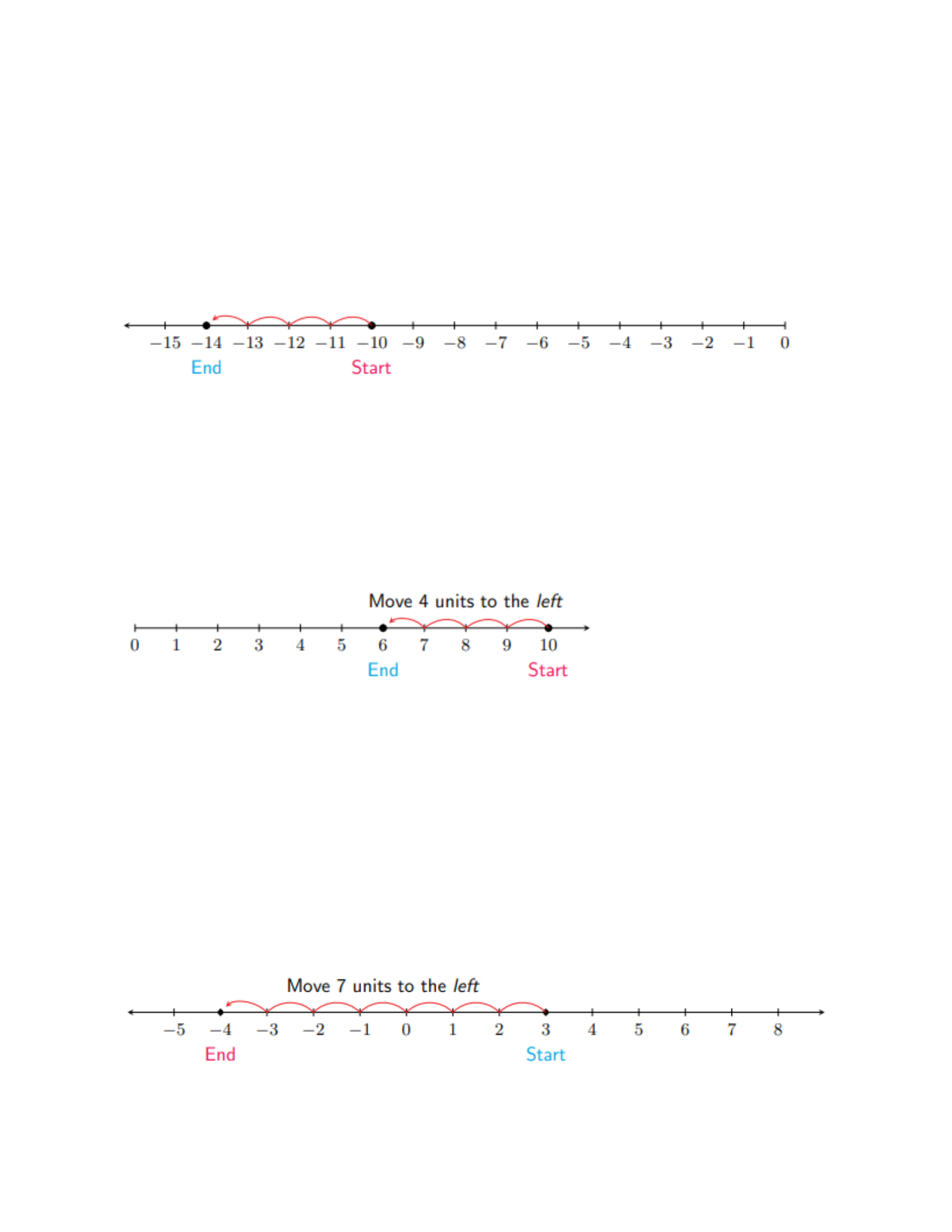
You always move to the right when you add a positive number
Example 1.3
Adding two negative numbers: For example, −10+(−4)−10+(−4) means you are adding a
debt of $4$4 to an already existing debt of $10.$10. So, we start at -10 on the number line
and move 4 units to the left, to land at −14,−14, which is the answer.
You always move to the left when you add a negative number (a debt)
So, −10+(−4)=−14−10+(−4)=−14. Notice that the answer has the same sign as the signs of -
10 and -4 (both negative) and its weight comes from adding the weights of -10 and -4
To add numbers of opposite signs, that is, a positive and a negative number, we can also
use the number line. For example, to perform 10+(−4),10+(−4), we start at 10 on the
number line and then move 4 units to the left. We land at 6,6, which is the answer. Think
of 10+(−4)10+(−4) as having $10$10 and adding a $4$4 debt. Because we are adding a
debt, we move to the left on the number line!
So, 10+(−4)=6.10+(−4)=6. Notice that the answer has the same sign as the sign of 10
(positive) because it is the number of larger weight, and its weight comes from finding the
difference of the weights of 10 and -4
Notice that because we were adding two numbers of opposite signs, the answer ended up
being the difference in weight (6) along with the sign of the number of larger weight
(positive).
Example 1.4
Adding two numbers of opposite signs: For example, 3+(−7)3+(−7). We start at 3 and move
toward 7 units to the left, and we land at −4,−4, which is our answer.
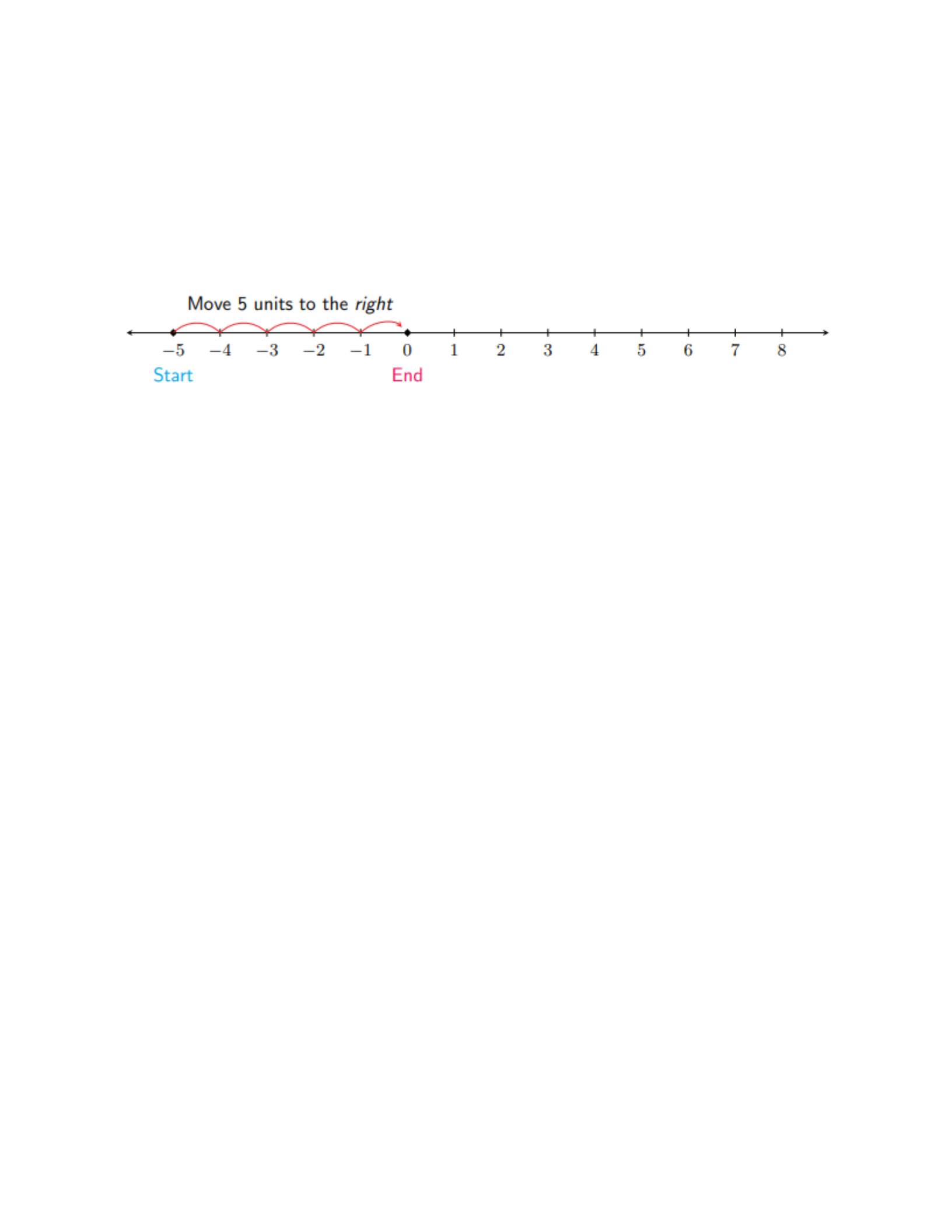
So, 3+(−7)=−4.3+(−7)=−4. Notice that the answer has the same sign as the signs of -7
(negative) because it is the number of larger weight, and its weight comes from finding the
difference of the weights of 3 and -7.
Example 1.5
Adding opposites: We start at -5 on the number line and jump to the right 5 units to land
finally at 00. So −5+5=0−5+5=0.
Note 1.6
Two opposite numbers are called a zero-pair, because adding them always results in 0.
So, −5 and 5 are a zero-pair.
Adding Intergers
93. To add two numbers of the same sign, add their weights and place it after the
sign.
94. To add two numbers of opposite signs, find the difference of their weights and
place it after the sign of the number with the greater weight.
Example 1.7
Add:
qqqqqqqqqqq. −8+19=11−8+19=11
rrrrrrrrrrr. −8+4=−4−8+4=−4
sssssssssss. 6+(−9)=−36+(−9)=−3
ttttttttttt. 7+(−2)=57+(−2)=5
uuuuuuuuuuu. (−4)+(−7)=−11(−4)+(−7)=−11
vvvvvvvvvvv. 8+7=158+7=15
Note 1.8
While we can add in any order: 4+2=2+44+2=2+4, it is sometimes convenient to add up all
of the negative numbers and add up all of the positive numbers, and then add the results.
There are also times when it is best to notice certain simplifications if the numbers are
added in a different order.
For example

−5+4+5+(−8)=−5+(−8)+4+5( by reordering )−5+4+5+(−8)=−5+(−8)+4+5( by reordering )
so,
−5+4+5+(−8)=−5+(−8)+4+5=−13+9=−4−5+4+5+(−8)=−5+(−8)+4+5=−13+9=−4
We could have also simplified this by noting that (-5) and 5 are zero-pair, so we are left
with 4+(−8)4+(−8) which is -4.
Example 1.9
We can calculate
(−4)+(−5)+7+(−3)=(−4)+(−5)+(−3)+7=(−12)+7=−5(−4)+(−5)+7+(−3)=(−4)+(−5)+(−3)+7=
(−12)+7=−5
We could have simplified this by noting that (-4) and (-3) make -7, and -7 and 7 are zero-
pair, so the total is -5.
Subtraction (as Addition of the Opposite)
Once we know how to add numbers, we are set to subtract numbers because subtraction is
nothing but addition of the opposite. That is, subtracting 8 − 3 (which reads: subtracting 3
from 8) is the same as 8 + (−3) (which reads: Adding −3 to 8.).
Example 1.10
So, 8−3=8+(−3),8−3=8+(−3), and, we can use the rules of adding two numbers of opposite
signs to find out that the answer is 5.5. We can also use the number line. We start at 8 and
move 3 units to the left (adding -3 is adding a debt, so we move to the left).
So 8−3=5.−4−3−2−10123456788−3=5.−4−3−2−1012345678 End Start Move 3 units to the
left
Example 1.11
To calculate 3−73−7 we first rewrite it as an addition
problem. 3−7=3+(−7).3−7=3+(−7). We can either use the number line, or the rules of
adding two numbers of opposite signs. And, 50,3−7=3+(−7)=−450,3−7=3+(−7)=−4
Example 1.12
To calculate −4−1,−4−1, we first rewrite it as an addition
problem. −4−1=−4+(−1).−4−1=−4+(−1). We can either use the number line, or the rules of
adding two numbers of the same signs. If we want to use the rules, both numbers are
negative, so our answer will be negative, and, adding the weights of -4 and -1
is 5.50,−4−1=−4+(−1)=−55.50,−4−1=−4+(−1)=−5
On the number line, we start at -4 and move 1 unit to the left, to land on -5 which is our
answer.
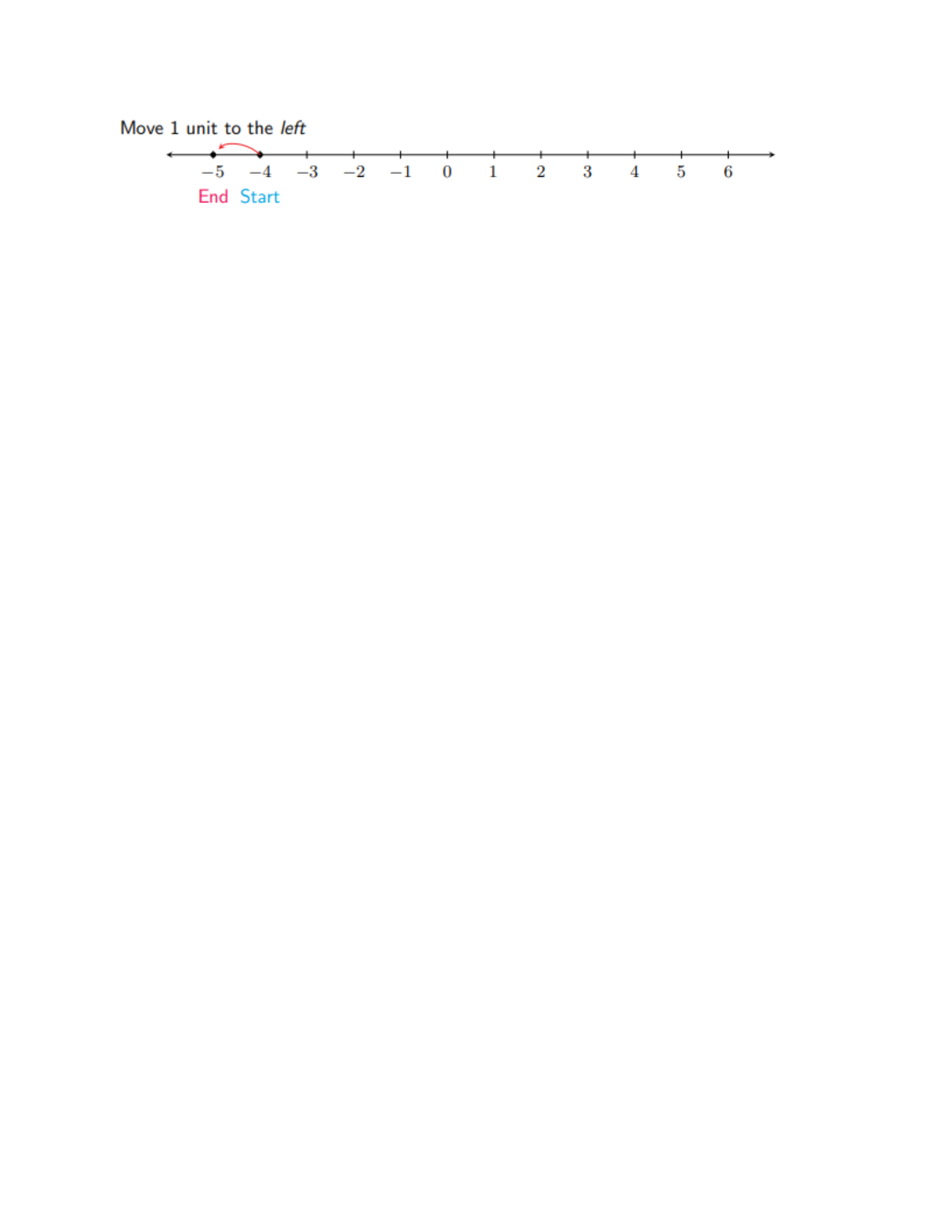
Changing the subtractions to additions in this way is particularly useful when adding or
subtracting several numbers (because we can add in any order).
Example 1.13
===−3−7+5+7+13−6−(−9)−3+(−7)+5+7+13+(−6)+9−3+(−7)+(−6)+5+7+13+918−3−7+5+7
+13−6−(−9)=−3+(−7)+5+7+13+(−6)+9=−3+(−7)+(−6)+5+7+13+9=18
===−3−7+5+7+13−6−(−9)−3+(−7)+5+7+13+(−6)+95+1318−3−7+5+7+13−6−(−9)=−3+(−7
)+5+7+13+(−6)+9=5+13=18
Remark 1.14
Warning: The symbol "-" is used in two different ways. When it is between two expressions,
it means subtract (e.g., 3−43−4 ). Otherwise, it means 'opposite' or 'negative'
(e.g., −3+4−3+4 ). So in the expression −4−(−3)−4−(−3), the first and last "-" means
opposite and the one in the middle one means subtract. The importance of understanding
this can not be overestimated.
Multiplication and Division of Positive Numbers
Multiplication of integers is adding in the sense that 3×4=4+4+43×4=4+4+4
To multiply larger numbers, it is better to use the usual scheme of multiplication. For
example:
Example 1.15
Let us multiply 152 by 34. We will for convenience sake put the smaller number on the
bottom (though it is not necessary). We have
+×4516515306624808152×34608+45605168
And division is the opposite of multiplication in the sense that to compute 45÷945÷9 is to
find a number so that when we multiply by 9 we get 45. We run through our multiplication
tables (which are hopefully in our head) to discover that 5 does the
trick: 5×9=455×9=45 so that 45÷9=5.45÷9=5. We will discuss division from a different
point of view when we discuss fractions.
To divide larger numbers, we can use long division. For example, let’s divide 3571 by 11.
Example 1.16
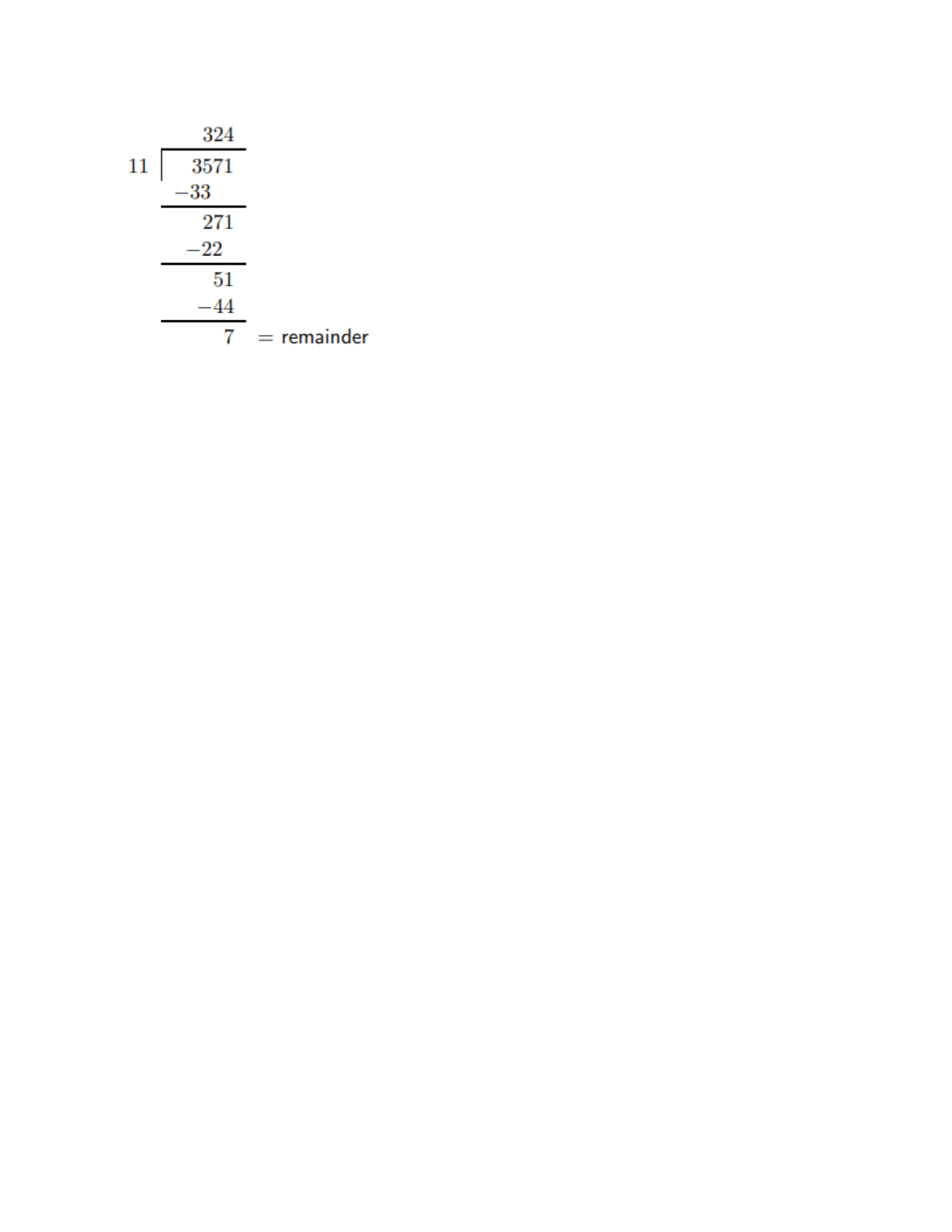
Multiplication involving negative numbers
Multiplication is a little tricky to understand without the notion of distribution (discussed
later). We will begin with noting again what it means to multiply a number by a positive
number: So if we want to compute 4⋅(−7)4⋅(−7) we note
4⋅(−7)=(−7)+(−7)+(−7)+(−7)=−284⋅(−7)=(−7)+(−7)+(−7)+(−7)=−28
Note that since 4⋅7=28,4⋅(−7)=−(4⋅7).4⋅7=28,4⋅(−7)=−(4⋅7). We can multiply positive
numbers in any order: 4⋅7=7⋅44⋅7=7⋅4. The same is true of positive and negative numbers:
(−7)⋅4=4⋅(−7)=−(4⋅7)=−28(−7)⋅4=4⋅(−7)=−(4⋅7)=−28
Example 1.17
5⋅(−12)=−(5⋅12)=−605⋅(−12)=−(5⋅12)=−60 and (−3)⋅(−2)=−(3⋅(−2))=−(−(3⋅2))=6(−3)⋅(−2)
=−(3⋅(−2))=−(−(3⋅2))=6
Example 1.18
So the size of the product of two numbers is the product of their sizes. The sign is positive if
the signs are the same and negative if they are different.
Example 1.19
Two quantities right next to each other, with no symbol between them (except for
parentheses around either or both numbers), has an implicit multiplication. For
example, 3(2)=3×23(2)=3×2.
Example 1.20
Multiply:
wwwwwwwww. (−5)(−8)=40(−5)(−8)=40
xxxxxxxxx. (−6)⋅7=−42(−6)⋅7=−42
yyyyyyyyy. 4⋅12=484⋅12=48

zzzzzzzzz. (−3)(−6)⋅4(−3)=18⋅4(−3)=72(−3)=−216( multiplying from left to
right )(−3)(−6)⋅4(−3)=18⋅4(−3)=72(−3)=−216( multiplying from left to right )
aaaaaaaaaa. (−3)(−5)⋅4(−2)=(−3)⋅4⋅(−5)(−2)=−12⋅10=−120((−3)(−5)⋅4(−2)=(−3)⋅
4⋅(−5)(−2)=−12⋅10=−120( since we can multiply in any order it is convenient to see
that −5⋅−2=10.−5⋅−2=10. )
Exponents of integers
Recall that a positive exponent represents the number of times a number is multiplied by
itself.
Example 1.21
Evaluate:
qqqqqqqqqqq. 52=5⋅5=2552=5⋅5=25
rrrrrrrrrrr. (−4)3=(−4)⋅(−4)⋅(−4)=16⋅(−4)=−64(−4)3=(−4)⋅(−4)⋅(−4)=16⋅(−4)=−6
4
sssssssssss. (−7)1=−7(−7)1=−7
ttttttttttt. −24=−2⋅2⋅2⋅2=−16−24=−2⋅2⋅2⋅2=−16 Note: The exponent here is for 2 not
−2!
uuuuuuuuuuu. (−3)4=(−3)⋅(−3)⋅(−3)⋅(−3)=9⋅(−3)⋅(−3)=−27⋅(−3)=81(−3)4=(−3)⋅(−3)
⋅(−3)⋅(−3)=9⋅(−3)⋅(−3)=−27⋅(−3)=81
vvvvvvvvvvv. (−2)5=(−2)⋅(−2)⋅(−2)⋅(−2)⋅(−2)=−32(−2)5=(−2)⋅(−2)⋅(−2)⋅(−2)⋅(−2)=
−32
Exponent rules in details will be further discussed in Chapter 5.
Division involving negative numbers
Division is just a question of knowing multiplication and therefore has the same rule: The
size of the quotient of two numbers is the quotient of the sizes. The sign is positive if the
signs are the same and negative if they are different.
Example 1.22
Divide:
qqqqqqqqqqq. (−42)÷7=−6(−42)÷7=−6
rrrrrrrrrrr. 81÷(−9)=−981÷(−9)=−9
sssssssssss. (−35)÷(−7)=5(−35)÷(−7)=5
ttttttttttt. 14÷2=714÷2=7
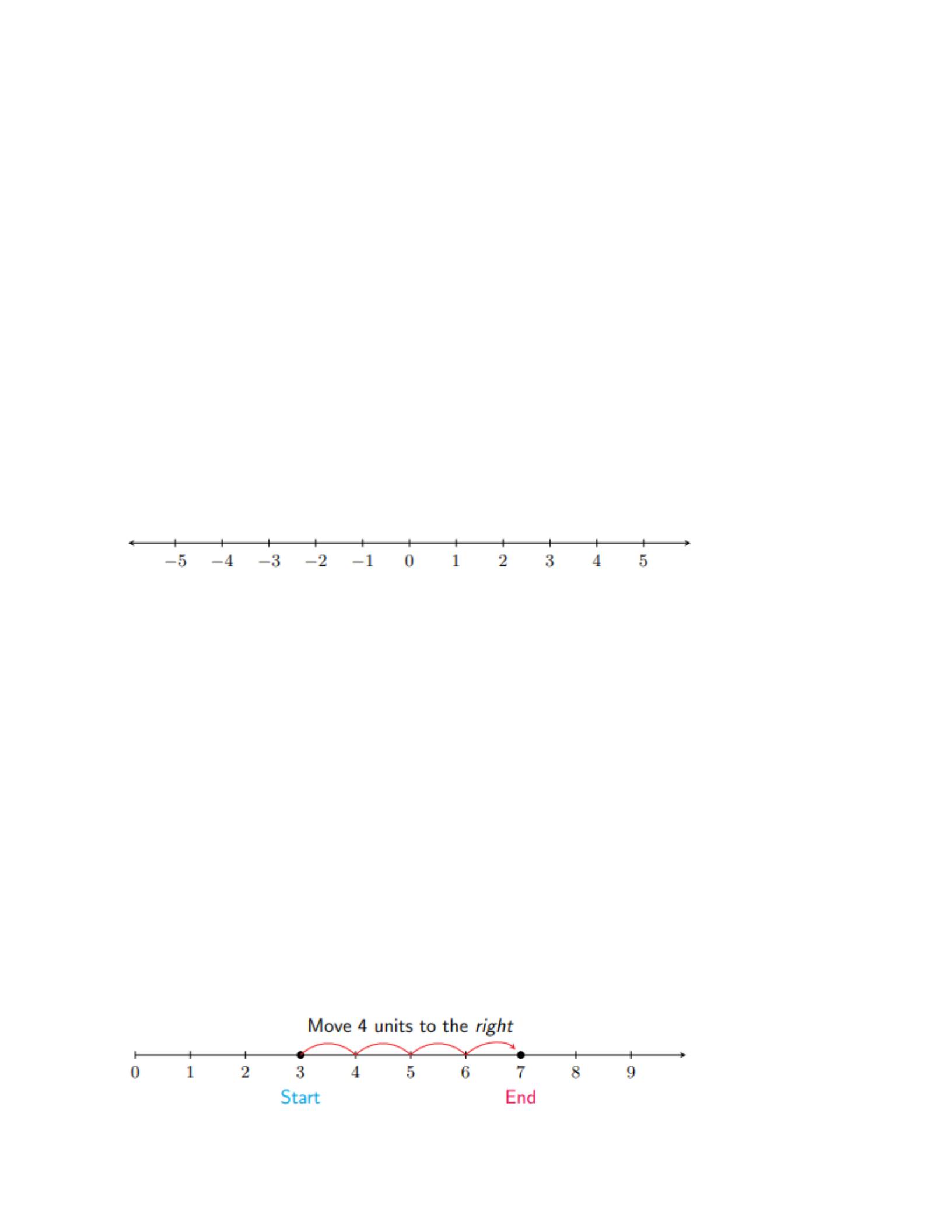
uuuuuuuuuuu. 0÷5=00÷5=0. Note When dividing 0 by any number, the answer is
always 0.
vvvvvvvvvvv. −10÷0=−10÷0= undefined.
Note 1.23
Any number divided by 0 is undefined!
Multiplying and Dividing Integers
Consider two numbers at a time.
93. If the signs of the two numbers are the same, then the sign of the answer is positive.
94. If the signs of the two numbers are different, then the sign of the answer is negative.
We begin with a brief review of arithmetic with integers
i.e. …,−3,−2,−1,0,1,2,3,……,−3,−2,−1,0,1,2,3,…
Any number has a weight and a sign.
The magnitude (or weight) of a number is the distance it is from 0 on the number line.
Example 1.1
For example, the weight of -5 is 5 and the weight of 7 is 7 .
Two numbers are opposites if, on the number line, they are on opposite sides of zero, but
the same distance away from zero.
So, −5 is the opposite of 5, and 7 is the opposite of −7 and so on.
Addition
We can add two numbers with the help of a number line .
Example 1.2
Adding two positive numbers: For example to add 3+43+4, we start with 3 on the number
line then move 4 units to the right. We land at 7 which is our answer.
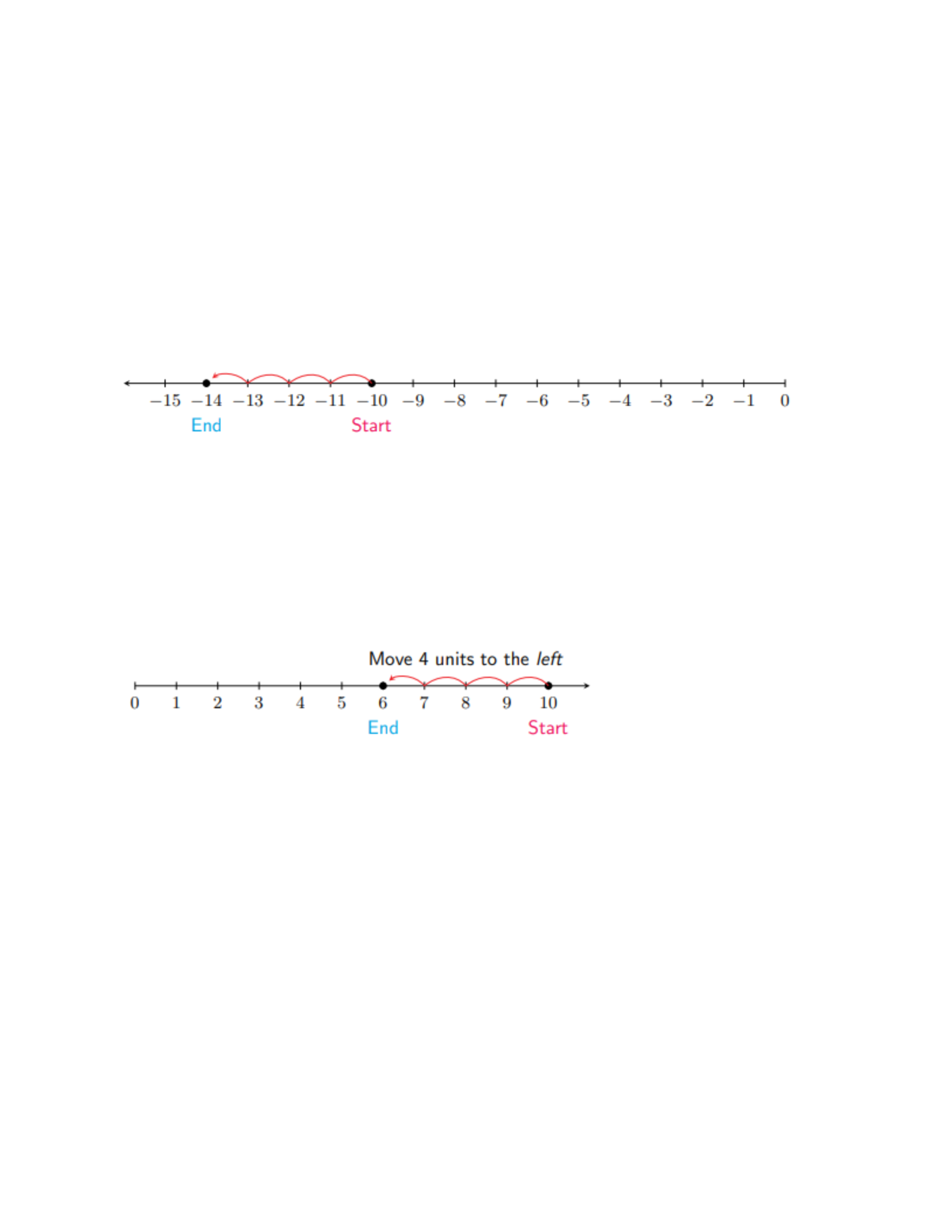
So, 3+4=73+4=7. Notice that the answer has the same sign as the signs of 3 and 4 (both
positive) and its weight comes from adding the weights of 3 and 4.
You always move to the right when you add a positive number
Example 1.3
Adding two negative numbers: For example, −10+(−4)−10+(−4) means you are adding a
debt of $4$4 to an already existing debt of $10.$10. So, we start at -10 on the number line
and move 4 units to the left, to land at −14,−14, which is the answer.
You always move to the left when you add a negative number (a debt)
So, −10+(−4)=−14−10+(−4)=−14. Notice that the answer has the same sign as the signs of -
10 and -4 (both negative) and its weight comes from adding the weights of -10 and -4
To add numbers of opposite signs, that is, a positive and a negative number, we can also
use the number line. For example, to perform 10+(−4),10+(−4), we start at 10 on the
number line and then move 4 units to the left. We land at 6,6, which is the answer. Think
of 10+(−4)10+(−4) as having $10$10 and adding a $4$4 debt. Because we are adding a
debt, we move to the left on the number line!
So, 10+(−4)=6.10+(−4)=6. Notice that the answer has the same sign as the sign of 10
(positive) because it is the number of larger weight, and its weight comes from finding the
difference of the weights of 10 and -4
Notice that because we were adding two numbers of opposite signs, the answer ended up
being the difference in weight (6) along with the sign of the number of larger weight
(positive).
Example 1.4
Adding two numbers of opposite signs: For example, 3+(−7)3+(−7). We start at 3 and move
toward 7 units to the left, and we land at −4,−4, which is our answer.
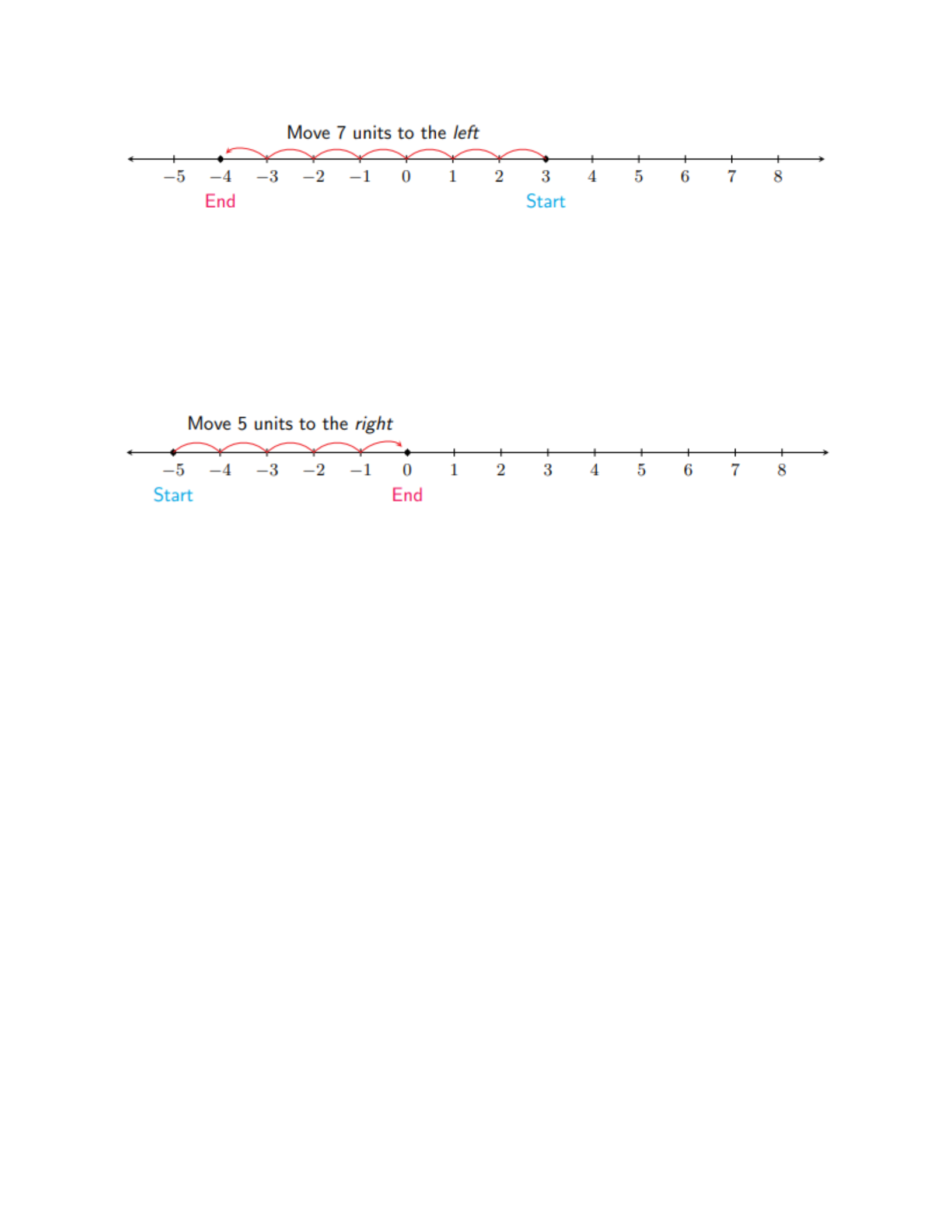
So, 3+(−7)=−4.3+(−7)=−4. Notice that the answer has the same sign as the signs of -7
(negative) because it is the number of larger weight, and its weight comes from finding the
difference of the weights of 3 and -7.
Example 1.5
Adding opposites: We start at -5 on the number line and jump to the right 5 units to land
finally at 00. So −5+5=0−5+5=0.
Note 1.6
Two opposite numbers are called a zero-pair, because adding them always results in 0.
So, −5 and 5 are a zero-pair.
Adding Intergers
95. To add two numbers of the same sign, add their weights and place it after the
sign.
96. To add two numbers of opposite signs, find the difference of their weights and
place it after the sign of the number with the greater weight.
Example 1.7
Add:
wwwwwwwwwww. −8+19=11−8+19=11
xxxxxxxxxxx. −8+4=−4−8+4=−4
yyyyyyyyyyy. 6+(−9)=−36+(−9)=−3
zzzzzzzzzzz. 7+(−2)=57+(−2)=5
aaaaaaaaaaaa. (−4)+(−7)=−11(−4)+(−7)=−11
bbbbbbbbbbbb. 8+7=158+7=15
Note 1.8

While we can add in any order: 4+2=2+44+2=2+4, it is sometimes convenient to add up all
of the negative numbers and add up all of the positive numbers, and then add the results.
There are also times when it is best to notice certain simplifications if the numbers are
added in a different order.
For example
−5+4+5+(−8)=−5+(−8)+4+5( by reordering )−5+4+5+(−8)=−5+(−8)+4+5( by reordering )
so,
−5+4+5+(−8)=−5+(−8)+4+5=−13+9=−4−5+4+5+(−8)=−5+(−8)+4+5=−13+9=−4
We could have also simplified this by noting that (-5) and 5 are zero-pair, so we are left
with 4+(−8)4+(−8) which is -4.
Example 1.9
We can calculate
(−4)+(−5)+7+(−3)=(−4)+(−5)+(−3)+7=(−12)+7=−5(−4)+(−5)+7+(−3)=(−4)+(−5)+(−3)+7=
(−12)+7=−5
We could have simplified this by noting that (-4) and (-3) make -7, and -7 and 7 are zero-
pair, so the total is -5.
Subtraction (as Addition of the Opposite)
Once we know how to add numbers, we are set to subtract numbers because subtraction is
nothing but addition of the opposite. That is, subtracting 8 − 3 (which reads: subtracting 3
from 8) is the same as 8 + (−3) (which reads: Adding −3 to 8.).
Example 1.10
So, 8−3=8+(−3),8−3=8+(−3), and, we can use the rules of adding two numbers of opposite
signs to find out that the answer is 5.5. We can also use the number line. We start at 8 and
move 3 units to the left (adding -3 is adding a debt, so we move to the left).
So 8−3=5.−4−3−2−10123456788−3=5.−4−3−2−1012345678 End Start Move 3 units to the
left
Example 1.11
To calculate 3−73−7 we first rewrite it as an addition
problem. 3−7=3+(−7).3−7=3+(−7). We can either use the number line, or the rules of
adding two numbers of opposite signs. And, 50,3−7=3+(−7)=−450,3−7=3+(−7)=−4
Example 1.12
To calculate −4−1,−4−1, we first rewrite it as an addition
problem. −4−1=−4+(−1).−4−1=−4+(−1). We can either use the number line, or the rules of
adding two numbers of the same signs. If we want to use the rules, both numbers are
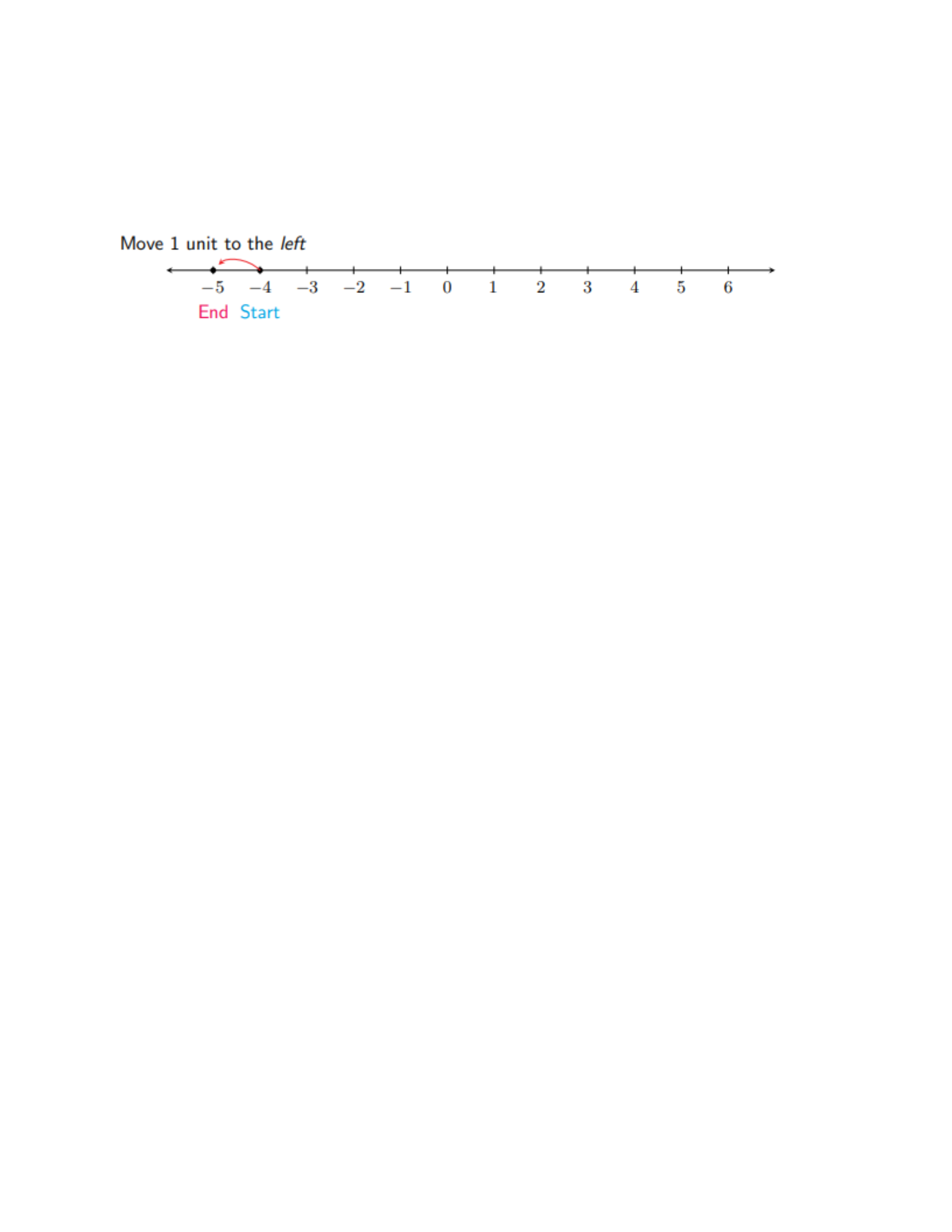
negative, so our answer will be negative, and, adding the weights of -4 and -1
is 5.50,−4−1=−4+(−1)=−55.50,−4−1=−4+(−1)=−5
On the number line, we start at -4 and move 1 unit to the left, to land on -5 which is our
answer.
Changing the subtractions to additions in this way is particularly useful when adding or
subtracting several numbers (because we can add in any order).
Example 1.13
===−3−7+5+7+13−6−(−9)−3+(−7)+5+7+13+(−6)+9−3+(−7)+(−6)+5+7+13+918−3−7+5+7
+13−6−(−9)=−3+(−7)+5+7+13+(−6)+9=−3+(−7)+(−6)+5+7+13+9=18
===−3−7+5+7+13−6−(−9)−3+(−7)+5+7+13+(−6)+95+1318−3−7+5+7+13−6−(−9)=−3+(−7
)+5+7+13+(−6)+9=5+13=18
Remark 1.14
Warning: The symbol "-" is used in two different ways. When it is between two expressions,
it means subtract (e.g., 3−43−4 ). Otherwise, it means 'opposite' or 'negative'
(e.g., −3+4−3+4 ). So in the expression −4−(−3)−4−(−3), the first and last "-" means
opposite and the one in the middle one means subtract. The importance of understanding
this can not be overestimated.
Multiplication and Division of Positive Numbers
Multiplication of integers is adding in the sense that 3×4=4+4+43×4=4+4+4
To multiply larger numbers, it is better to use the usual scheme of multiplication. For
example:
Example 1.15
Let us multiply 152 by 34. We will for convenience sake put the smaller number on the
bottom (though it is not necessary). We have
+×4516515306624808152×34608+45605168
And division is the opposite of multiplication in the sense that to compute 45÷945÷9 is to
find a number so that when we multiply by 9 we get 45. We run through our multiplication
tables (which are hopefully in our head) to discover that 5 does the
trick: 5×9=455×9=45 so that 45÷9=5.45÷9=5. We will discuss division from a different
point of view when we discuss fractions.
To divide larger numbers, we can use long division. For example, let’s divide 3571 by 11.
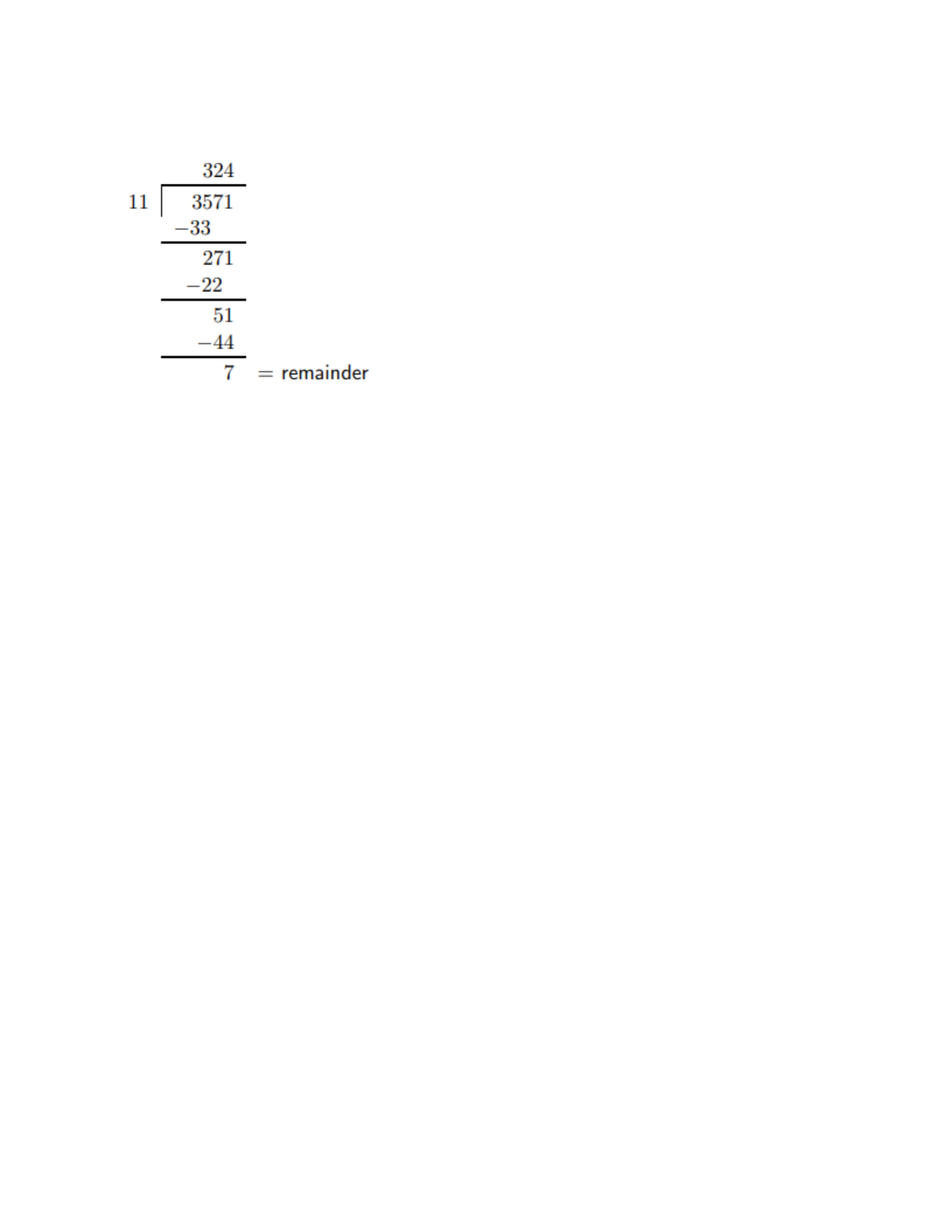
Example 1.16
Multiplication involving negative numbers
Multiplication is a little tricky to understand without the notion of distribution (discussed
later). We will begin with noting again what it means to multiply a number by a positive
number: So if we want to compute 4⋅(−7)4⋅(−7) we note
4⋅(−7)=(−7)+(−7)+(−7)+(−7)=−284⋅(−7)=(−7)+(−7)+(−7)+(−7)=−28
Note that since 4⋅7=28,4⋅(−7)=−(4⋅7).4⋅7=28,4⋅(−7)=−(4⋅7). We can multiply positive
numbers in any order: 4⋅7=7⋅44⋅7=7⋅4. The same is true of positive and negative numbers:
(−7)⋅4=4⋅(−7)=−(4⋅7)=−28(−7)⋅4=4⋅(−7)=−(4⋅7)=−28
Example 1.17
5⋅(−12)=−(5⋅12)=−605⋅(−12)=−(5⋅12)=−60 and (−3)⋅(−2)=−(3⋅(−2))=−(−(3⋅2))=6(−3)⋅(−2)
=−(3⋅(−2))=−(−(3⋅2))=6
Example 1.18
So the size of the product of two numbers is the product of their sizes. The sign is positive if
the signs are the same and negative if they are different.
Example 1.19
Two quantities right next to each other, with no symbol between them (except for
parentheses around either or both numbers), has an implicit multiplication. For
example, 3(2)=3×23(2)=3×2.
Example 1.20
Multiply:
bbbbbbbbbb. (−5)(−8)=40(−5)(−8)=40
cccccccccc. (−6)⋅7=−42(−6)⋅7=−42

dddddddddd. 4⋅12=484⋅12=48
eeeeeeeeee. (−3)(−6)⋅4(−3)=18⋅4(−3)=72(−3)=−216( multiplying from left to
right )(−3)(−6)⋅4(−3)=18⋅4(−3)=72(−3)=−216( multiplying from left to right )
ffffffffff. (−3)(−5)⋅4(−2)=(−3)⋅4⋅(−5)(−2)=−12⋅10=−120((−3)(−5)⋅4(−2)=(−3)⋅4⋅(−5)(
−2)=−12⋅10=−120( since we can multiply in any order it is convenient to see
that −5⋅−2=10.−5⋅−2=10. )
Exponents of integers
Recall that a positive exponent represents the number of times a number is multiplied by
itself.
Example 1.21
Evaluate:
wwwwwwwwwww. 52=5⋅5=2552=5⋅5=25
xxxxxxxxxxx. (−4)3=(−4)⋅(−4)⋅(−4)=16⋅(−4)=−64(−4)3=(−4)⋅(−4)⋅(−4)=16⋅(−4)=−6
4
yyyyyyyyyyy. (−7)1=−7(−7)1=−7
zzzzzzzzzzz. −24=−2⋅2⋅2⋅2=−16−24=−2⋅2⋅2⋅2=−16 Note: The exponent here is for
2 not −2!
aaaaaaaaaaaa. (−3)4=(−3)⋅(−3)⋅(−3)⋅(−3)=9⋅(−3)⋅(−3)=−27⋅(−3)=81(−3)4=(−3)⋅(−3)
⋅(−3)⋅(−3)=9⋅(−3)⋅(−3)=−27⋅(−3)=81
bbbbbbbbbbbb. (−2)5=(−2)⋅(−2)⋅(−2)⋅(−2)⋅(−2)=−32(−2)5=(−2)⋅(−2)⋅(−2)⋅(−2)⋅(−2)=
−32
Exponent rules in details will be further discussed in Chapter 5.
Division involving negative numbers
Division is just a question of knowing multiplication and therefore has the same rule: The
size of the quotient of two numbers is the quotient of the sizes. The sign is positive if the
signs are the same and negative if they are different.
Example 1.22
Divide:
wwwwwwwwwww. (−42)÷7=−6(−42)÷7=−6
xxxxxxxxxxx. 81÷(−9)=−981÷(−9)=−9
yyyyyyyyyyy. (−35)÷(−7)=5(−35)÷(−7)=5
zzzzzzzzzzz. 14÷2=714÷2=7
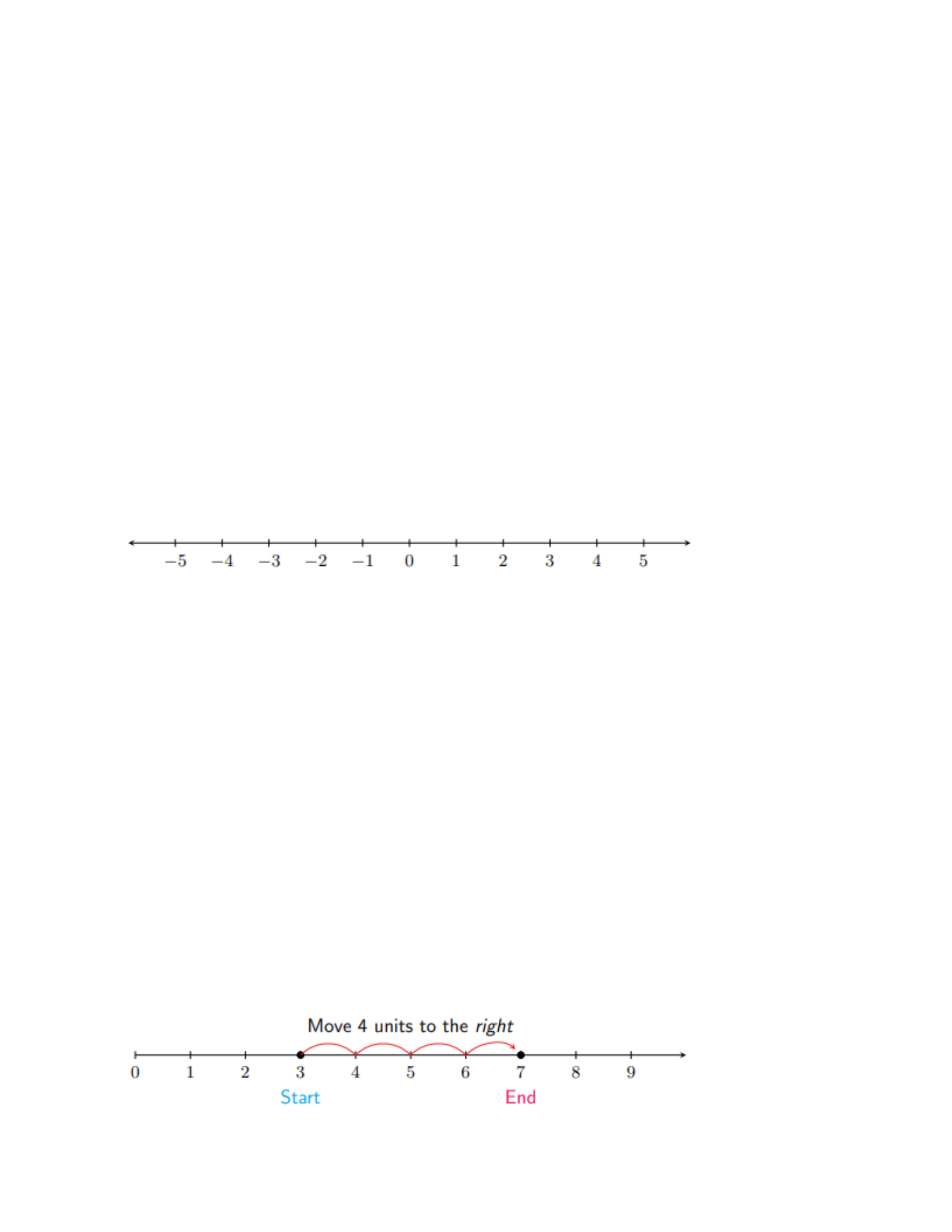
aaaaaaaaaaaa. 0÷5=00÷5=0. Note When dividing 0 by any number, the answer is
always 0.
bbbbbbbbbbbb. −10÷0=−10÷0= undefined.
Note 1.23
Any number divided by 0 is undefined!
Multiplying and Dividing Integers
Consider two numbers at a time.
95. If the signs of the two numbers are the same, then the sign of the answer is positive.
96. If the signs of the two numbers are different, then the sign of the answer is negative.
We begin with a brief review of arithmetic with integers
i.e. …,−3,−2,−1,0,1,2,3,……,−3,−2,−1,0,1,2,3,…
Any number has a weight and a sign.
The magnitude (or weight) of a number is the distance it is from 0 on the number line.
Example 1.1
For example, the weight of -5 is 5 and the weight of 7 is 7 .
Two numbers are opposites if, on the number line, they are on opposite sides of zero, but
the same distance away from zero.
So, −5 is the opposite of 5, and 7 is the opposite of −7 and so on.
Addition
We can add two numbers with the help of a number line .
Example 1.2
Adding two positive numbers: For example to add 3+43+4, we start with 3 on the number
line then move 4 units to the right. We land at 7 which is our answer.
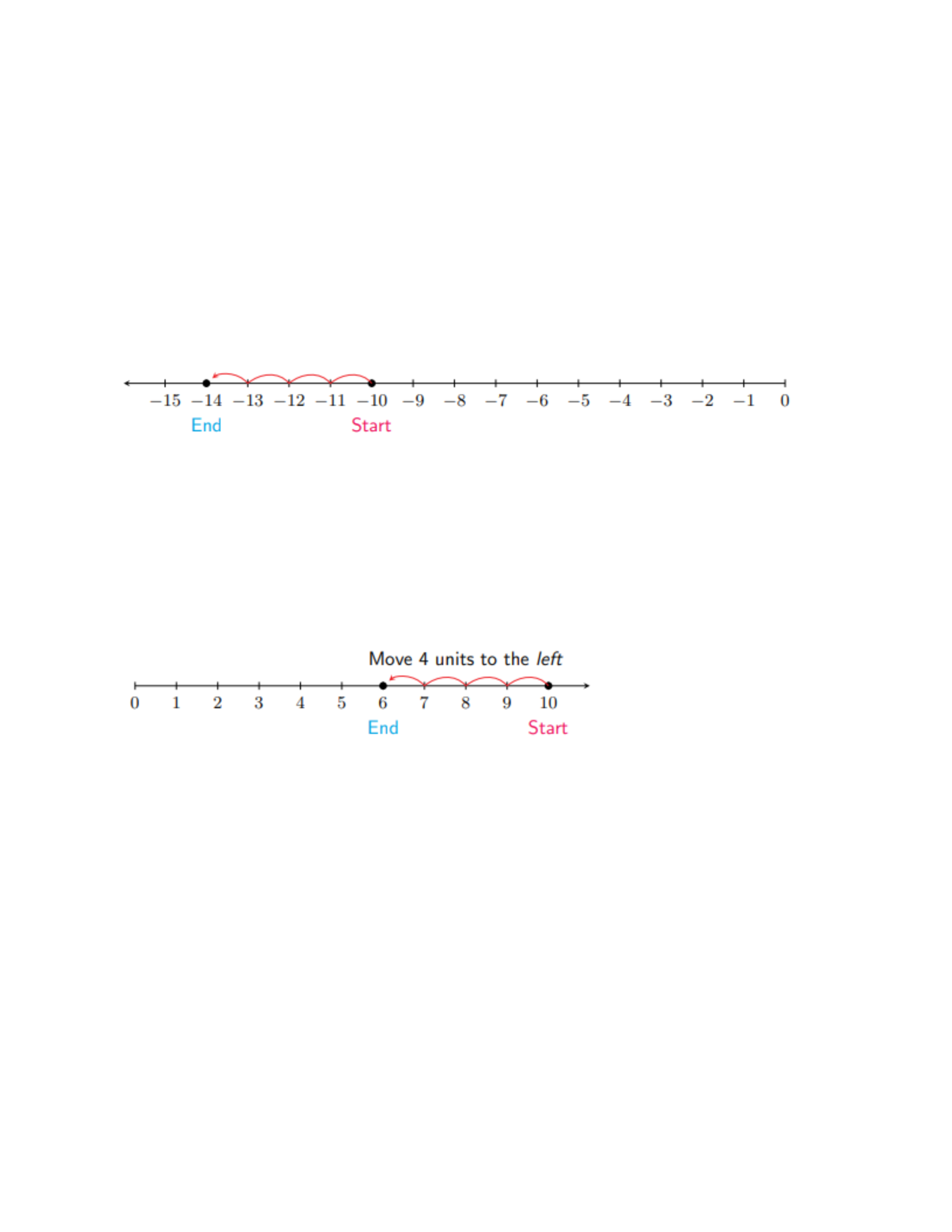
So, 3+4=73+4=7. Notice that the answer has the same sign as the signs of 3 and 4 (both
positive) and its weight comes from adding the weights of 3 and 4.
You always move to the right when you add a positive number
Example 1.3
Adding two negative numbers: For example, −10+(−4)−10+(−4) means you are adding a
debt of $4$4 to an already existing debt of $10.$10. So, we start at -10 on the number line
and move 4 units to the left, to land at −14,−14, which is the answer.
You always move to the left when you add a negative number (a debt)
So, −10+(−4)=−14−10+(−4)=−14. Notice that the answer has the same sign as the signs of -
10 and -4 (both negative) and its weight comes from adding the weights of -10 and -4
To add numbers of opposite signs, that is, a positive and a negative number, we can also
use the number line. For example, to perform 10+(−4),10+(−4), we start at 10 on the
number line and then move 4 units to the left. We land at 6,6, which is the answer. Think
of 10+(−4)10+(−4) as having $10$10 and adding a $4$4 debt. Because we are adding a
debt, we move to the left on the number line!
So, 10+(−4)=6.10+(−4)=6. Notice that the answer has the same sign as the sign of 10
(positive) because it is the number of larger weight, and its weight comes from finding the
difference of the weights of 10 and -4
Notice that because we were adding two numbers of opposite signs, the answer ended up
being the difference in weight (6) along with the sign of the number of larger weight
(positive).
Example 1.4
Adding two numbers of opposite signs: For example, 3+(−7)3+(−7). We start at 3 and move
toward 7 units to the left, and we land at −4,−4, which is our answer.
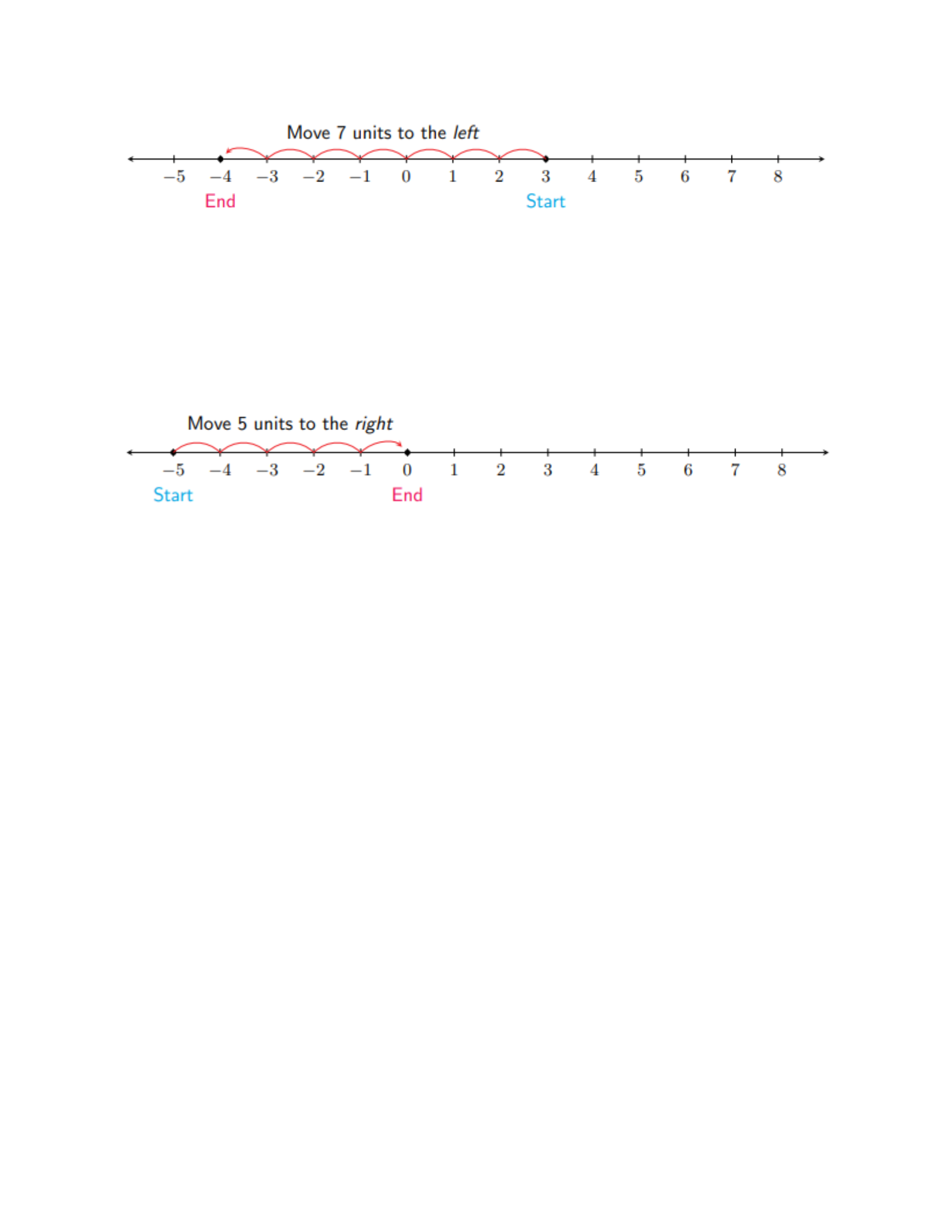
So, 3+(−7)=−4.3+(−7)=−4. Notice that the answer has the same sign as the signs of -7
(negative) because it is the number of larger weight, and its weight comes from finding the
difference of the weights of 3 and -7.
Example 1.5
Adding opposites: We start at -5 on the number line and jump to the right 5 units to land
finally at 00. So −5+5=0−5+5=0.
Note 1.6
Two opposite numbers are called a zero-pair, because adding them always results in 0.
So, −5 and 5 are a zero-pair.
Adding Intergers
97. To add two numbers of the same sign, add their weights and place it after the
sign.
98. To add two numbers of opposite signs, find the difference of their weights and
place it after the sign of the number with the greater weight.
Example 1.7
Add:
cccccccccccc. −8+19=11−8+19=11
dddddddddddd. −8+4=−4−8+4=−4
eeeeeeeeeeee. 6+(−9)=−36+(−9)=−3
ffffffffffff. 7+(−2)=57+(−2)=5
gggggggggggg. (−4)+(−7)=−11(−4)+(−7)=−11
hhhhhhhhhhhh. 8+7=158+7=15
Note 1.8

While we can add in any order: 4+2=2+44+2=2+4, it is sometimes convenient to add up all
of the negative numbers and add up all of the positive numbers, and then add the results.
There are also times when it is best to notice certain simplifications if the numbers are
added in a different order.
For example
−5+4+5+(−8)=−5+(−8)+4+5( by reordering )−5+4+5+(−8)=−5+(−8)+4+5( by reordering )
so,
−5+4+5+(−8)=−5+(−8)+4+5=−13+9=−4−5+4+5+(−8)=−5+(−8)+4+5=−13+9=−4
We could have also simplified this by noting that (-5) and 5 are zero-pair, so we are left
with 4+(−8)4+(−8) which is -4.
Example 1.9
We can calculate
(−4)+(−5)+7+(−3)=(−4)+(−5)+(−3)+7=(−12)+7=−5(−4)+(−5)+7+(−3)=(−4)+(−5)+(−3)+7=
(−12)+7=−5
We could have simplified this by noting that (-4) and (-3) make -7, and -7 and 7 are zero-
pair, so the total is -5.
Subtraction (as Addition of the Opposite)
Once we know how to add numbers, we are set to subtract numbers because subtraction is
nothing but addition of the opposite. That is, subtracting 8 − 3 (which reads: subtracting 3
from 8) is the same as 8 + (−3) (which reads: Adding −3 to 8.).
Example 1.10
So, 8−3=8+(−3),8−3=8+(−3), and, we can use the rules of adding two numbers of opposite
signs to find out that the answer is 5.5. We can also use the number line. We start at 8 and
move 3 units to the left (adding -3 is adding a debt, so we move to the left).
So 8−3=5.−4−3−2−10123456788−3=5.−4−3−2−1012345678 End Start Move 3 units to the
left
Example 1.11
To calculate 3−73−7 we first rewrite it as an addition
problem. 3−7=3+(−7).3−7=3+(−7). We can either use the number line, or the rules of
adding two numbers of opposite signs. And, 50,3−7=3+(−7)=−450,3−7=3+(−7)=−4
Example 1.12
To calculate −4−1,−4−1, we first rewrite it as an addition
problem. −4−1=−4+(−1).−4−1=−4+(−1). We can either use the number line, or the rules of
adding two numbers of the same signs. If we want to use the rules, both numbers are
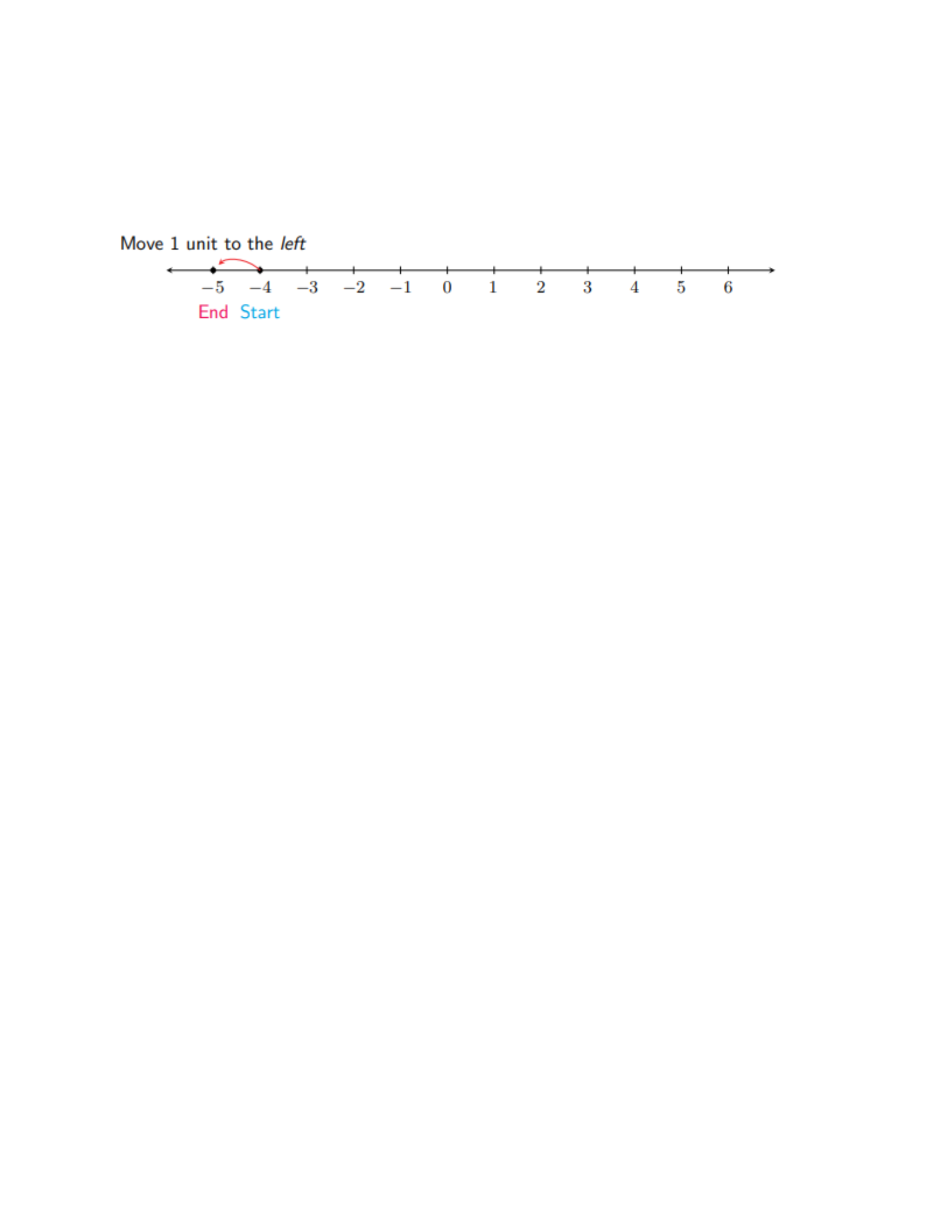
negative, so our answer will be negative, and, adding the weights of -4 and -1
is 5.50,−4−1=−4+(−1)=−55.50,−4−1=−4+(−1)=−5
On the number line, we start at -4 and move 1 unit to the left, to land on -5 which is our
answer.
Changing the subtractions to additions in this way is particularly useful when adding or
subtracting several numbers (because we can add in any order).
Example 1.13
===−3−7+5+7+13−6−(−9)−3+(−7)+5+7+13+(−6)+9−3+(−7)+(−6)+5+7+13+918−3−7+5+7
+13−6−(−9)=−3+(−7)+5+7+13+(−6)+9=−3+(−7)+(−6)+5+7+13+9=18
===−3−7+5+7+13−6−(−9)−3+(−7)+5+7+13+(−6)+95+1318−3−7+5+7+13−6−(−9)=−3+(−7
)+5+7+13+(−6)+9=5+13=18
Remark 1.14
Warning: The symbol "-" is used in two different ways. When it is between two expressions,
it means subtract (e.g., 3−43−4 ). Otherwise, it means 'opposite' or 'negative'
(e.g., −3+4−3+4 ). So in the expression −4−(−3)−4−(−3), the first and last "-" means
opposite and the one in the middle one means subtract. The importance of understanding
this can not be overestimated.
Multiplication and Division of Positive Numbers
Multiplication of integers is adding in the sense that 3×4=4+4+43×4=4+4+4
To multiply larger numbers, it is better to use the usual scheme of multiplication. For
example:
Example 1.15
Let us multiply 152 by 34. We will for convenience sake put the smaller number on the
bottom (though it is not necessary). We have
+×4516515306624808152×34608+45605168
And division is the opposite of multiplication in the sense that to compute 45÷945÷9 is to
find a number so that when we multiply by 9 we get 45. We run through our multiplication
tables (which are hopefully in our head) to discover that 5 does the
trick: 5×9=455×9=45 so that 45÷9=5.45÷9=5. We will discuss division from a different
point of view when we discuss fractions.
To divide larger numbers, we can use long division. For example, let’s divide 3571 by 11.
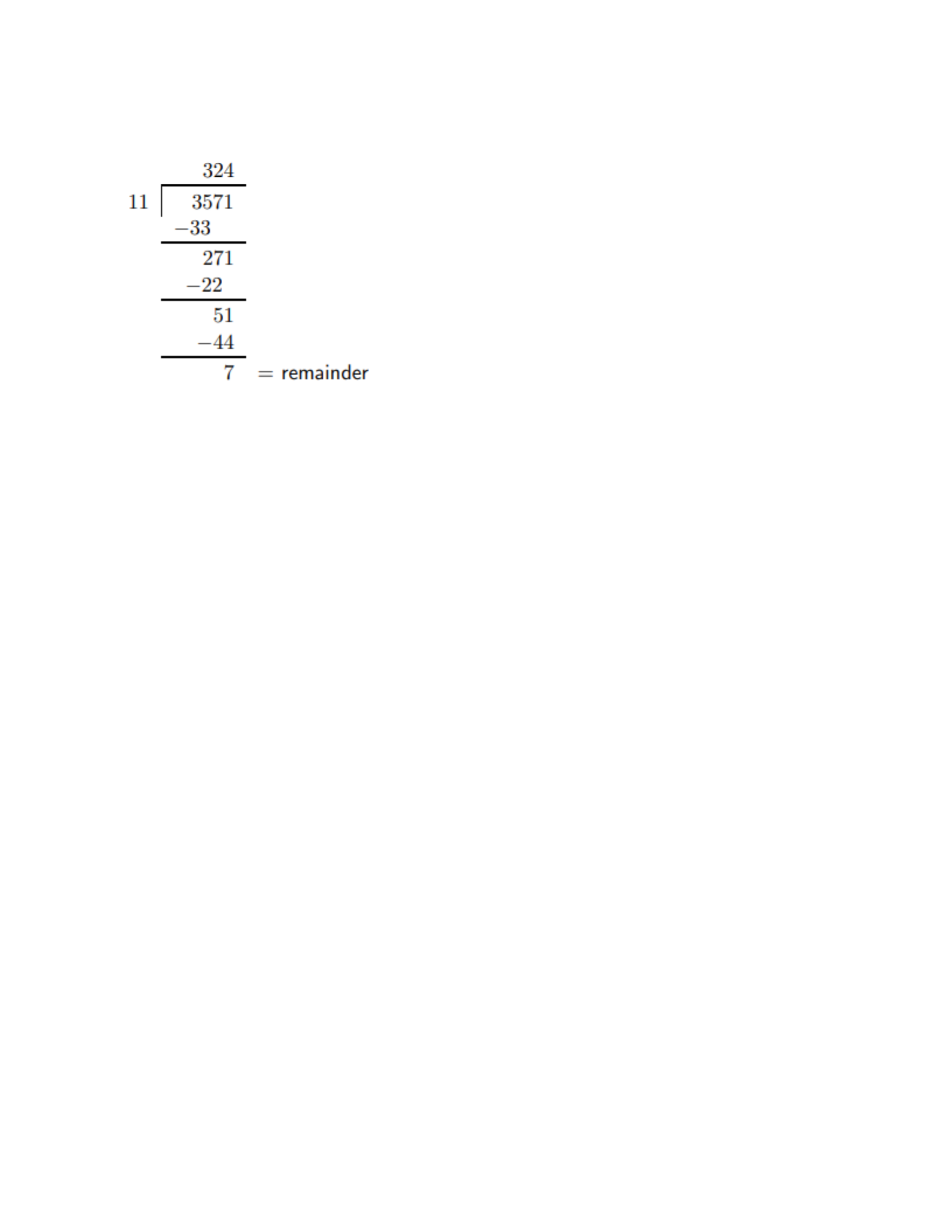
Example 1.16
Multiplication involving negative numbers
Multiplication is a little tricky to understand without the notion of distribution (discussed
later). We will begin with noting again what it means to multiply a number by a positive
number: So if we want to compute 4⋅(−7)4⋅(−7) we note
4⋅(−7)=(−7)+(−7)+(−7)+(−7)=−284⋅(−7)=(−7)+(−7)+(−7)+(−7)=−28
Note that since 4⋅7=28,4⋅(−7)=−(4⋅7).4⋅7=28,4⋅(−7)=−(4⋅7). We can multiply positive
numbers in any order: 4⋅7=7⋅44⋅7=7⋅4. The same is true of positive and negative numbers:
(−7)⋅4=4⋅(−7)=−(4⋅7)=−28(−7)⋅4=4⋅(−7)=−(4⋅7)=−28
Example 1.17
5⋅(−12)=−(5⋅12)=−605⋅(−12)=−(5⋅12)=−60 and (−3)⋅(−2)=−(3⋅(−2))=−(−(3⋅2))=6(−3)⋅(−2)
=−(3⋅(−2))=−(−(3⋅2))=6
Example 1.18
So the size of the product of two numbers is the product of their sizes. The sign is positive if
the signs are the same and negative if they are different.
Example 1.19
Two quantities right next to each other, with no symbol between them (except for
parentheses around either or both numbers), has an implicit multiplication. For
example, 3(2)=3×23(2)=3×2.
Example 1.20
Multiply:
gggggggggg. (−5)(−8)=40(−5)(−8)=40
hhhhhhhhhh. (−6)⋅7=−42(−6)⋅7=−42

iiiiiiiiii. 4⋅12=484⋅12=48
jjjjjjjjjj. (−3)(−6)⋅4(−3)=18⋅4(−3)=72(−3)=−216( multiplying from left to
right )(−3)(−6)⋅4(−3)=18⋅4(−3)=72(−3)=−216( multiplying from left to right )
kkkkkkkkkk. (−3)(−5)⋅4(−2)=(−3)⋅4⋅(−5)(−2)=−12⋅10=−120((−3)(−5)⋅4(−2)=(−3)⋅
4⋅(−5)(−2)=−12⋅10=−120( since we can multiply in any order it is convenient to see
that −5⋅−2=10.−5⋅−2=10. )
Exponents of integers
Recall that a positive exponent represents the number of times a number is multiplied by
itself.
Example 1.21
Evaluate:
cccccccccccc. 52=5⋅5=2552=5⋅5=25
dddddddddddd. (−4)3=(−4)⋅(−4)⋅(−4)=16⋅(−4)=−64(−4)3=(−4)⋅(−4)⋅(−4)=16⋅(−4)=−6
4
eeeeeeeeeeee. (−7)1=−7(−7)1=−7
ffffffffffff. −24=−2⋅2⋅2⋅2=−16−24=−2⋅2⋅2⋅2=−16 Note: The exponent here is for 2 not
−2!
gggggggggggg. (−3)4=(−3)⋅(−3)⋅(−3)⋅(−3)=9⋅(−3)⋅(−3)=−27⋅(−3)=81(−3)4=(−3)⋅(−3)
⋅(−3)⋅(−3)=9⋅(−3)⋅(−3)=−27⋅(−3)=81
hhhhhhhhhhhh. (−2)5=(−2)⋅(−2)⋅(−2)⋅(−2)⋅(−2)=−32(−2)5=(−2)⋅(−2)⋅(−2)⋅(−2)⋅(−2)=
−32
Exponent rules in details will be further discussed in Chapter 5.
Division involving negative numbers
Division is just a question of knowing multiplication and therefore has the same rule: The
size of the quotient of two numbers is the quotient of the sizes. The sign is positive if the
signs are the same and negative if they are different.
Example 1.22
Divide:
cccccccccccc. (−42)÷7=−6(−42)÷7=−6
dddddddddddd. 81÷(−9)=−981÷(−9)=−9
eeeeeeeeeeee. (−35)÷(−7)=5(−35)÷(−7)=5
ffffffffffff. 14÷2=714÷2=7
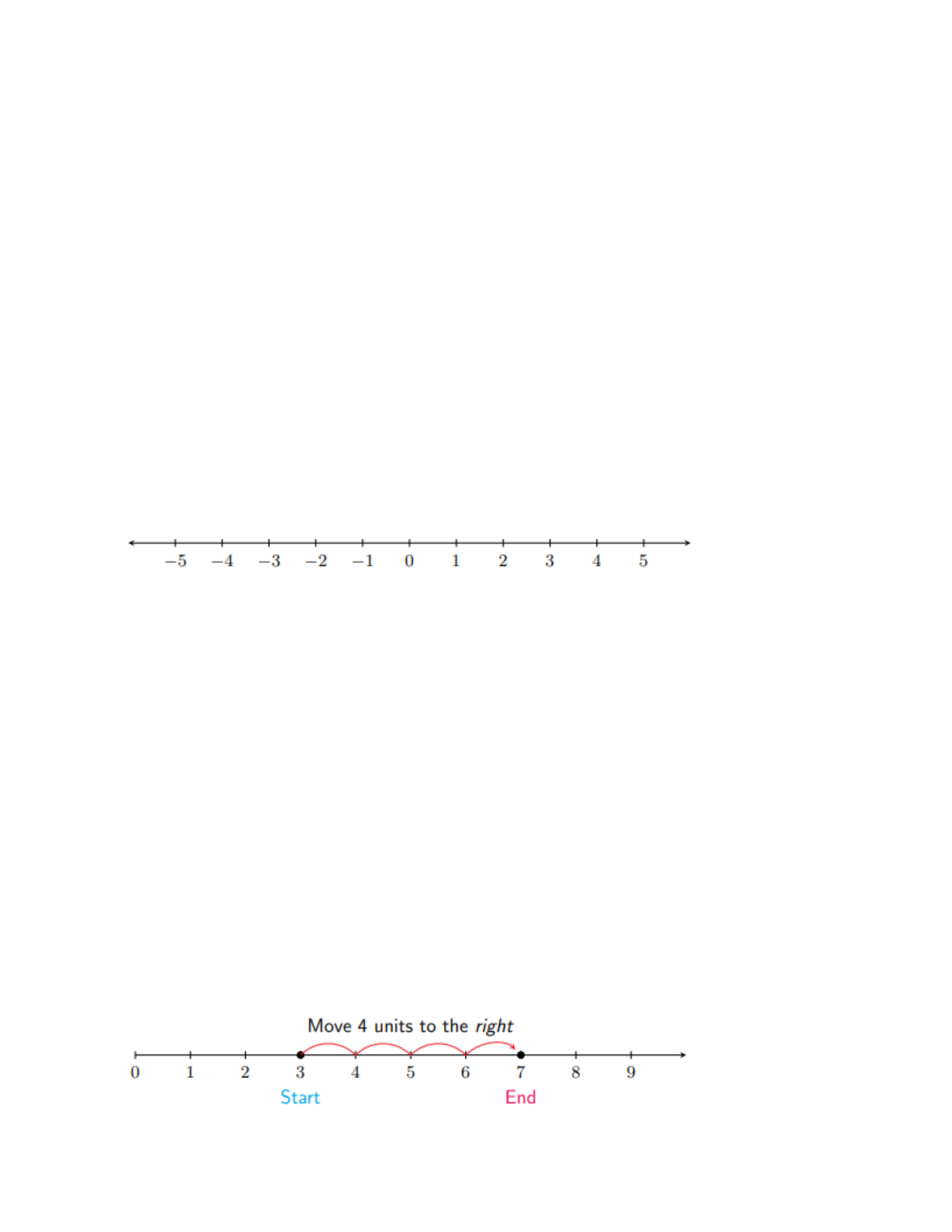
gggggggggggg. 0÷5=00÷5=0. Note When dividing 0 by any number, the answer is
always 0.
hhhhhhhhhhhh. −10÷0=−10÷0= undefined.
Note 1.23
Any number divided by 0 is undefined!
Multiplying and Dividing Integers
Consider two numbers at a time.
97. If the signs of the two numbers are the same, then the sign of the answer is positive.
98. If the signs of the two numbers are different, then the sign of the answer is negative.
We begin with a brief review of arithmetic with integers
i.e. …,−3,−2,−1,0,1,2,3,……,−3,−2,−1,0,1,2,3,…
Any number has a weight and a sign.
The magnitude (or weight) of a number is the distance it is from 0 on the number line.
Example 1.1
For example, the weight of -5 is 5 and the weight of 7 is 7 .
Two numbers are opposites if, on the number line, they are on opposite sides of zero, but
the same distance away from zero.
So, −5 is the opposite of 5, and 7 is the opposite of −7 and so on.
Addition
We can add two numbers with the help of a number line .
Example 1.2
Adding two positive numbers: For example to add 3+43+4, we start with 3 on the number
line then move 4 units to the right. We land at 7 which is our answer.
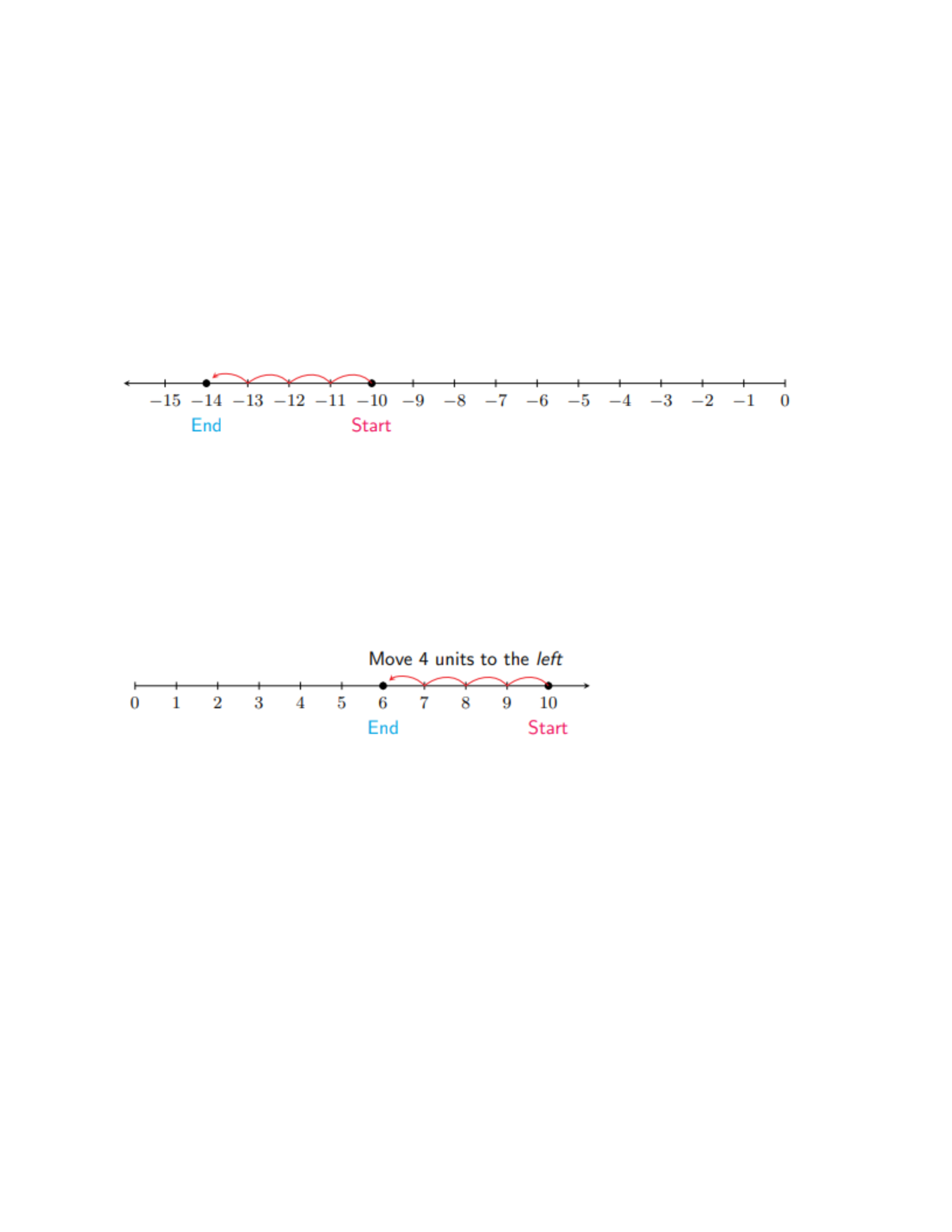
So, 3+4=73+4=7. Notice that the answer has the same sign as the signs of 3 and 4 (both
positive) and its weight comes from adding the weights of 3 and 4.
You always move to the right when you add a positive number
Example 1.3
Adding two negative numbers: For example, −10+(−4)−10+(−4) means you are adding a
debt of $4$4 to an already existing debt of $10.$10. So, we start at -10 on the number line
and move 4 units to the left, to land at −14,−14, which is the answer.
You always move to the left when you add a negative number (a debt)
So, −10+(−4)=−14−10+(−4)=−14. Notice that the answer has the same sign as the signs of -
10 and -4 (both negative) and its weight comes from adding the weights of -10 and -4
To add numbers of opposite signs, that is, a positive and a negative number, we can also
use the number line. For example, to perform 10+(−4),10+(−4), we start at 10 on the
number line and then move 4 units to the left. We land at 6,6, which is the answer. Think
of 10+(−4)10+(−4) as having $10$10 and adding a $4$4 debt. Because we are adding a
debt, we move to the left on the number line!
So, 10+(−4)=6.10+(−4)=6. Notice that the answer has the same sign as the sign of 10
(positive) because it is the number of larger weight, and its weight comes from finding the
difference of the weights of 10 and -4
Notice that because we were adding two numbers of opposite signs, the answer ended up
being the difference in weight (6) along with the sign of the number of larger weight
(positive).
Example 1.4
Adding two numbers of opposite signs: For example, 3+(−7)3+(−7). We start at 3 and move
toward 7 units to the left, and we land at −4,−4, which is our answer.
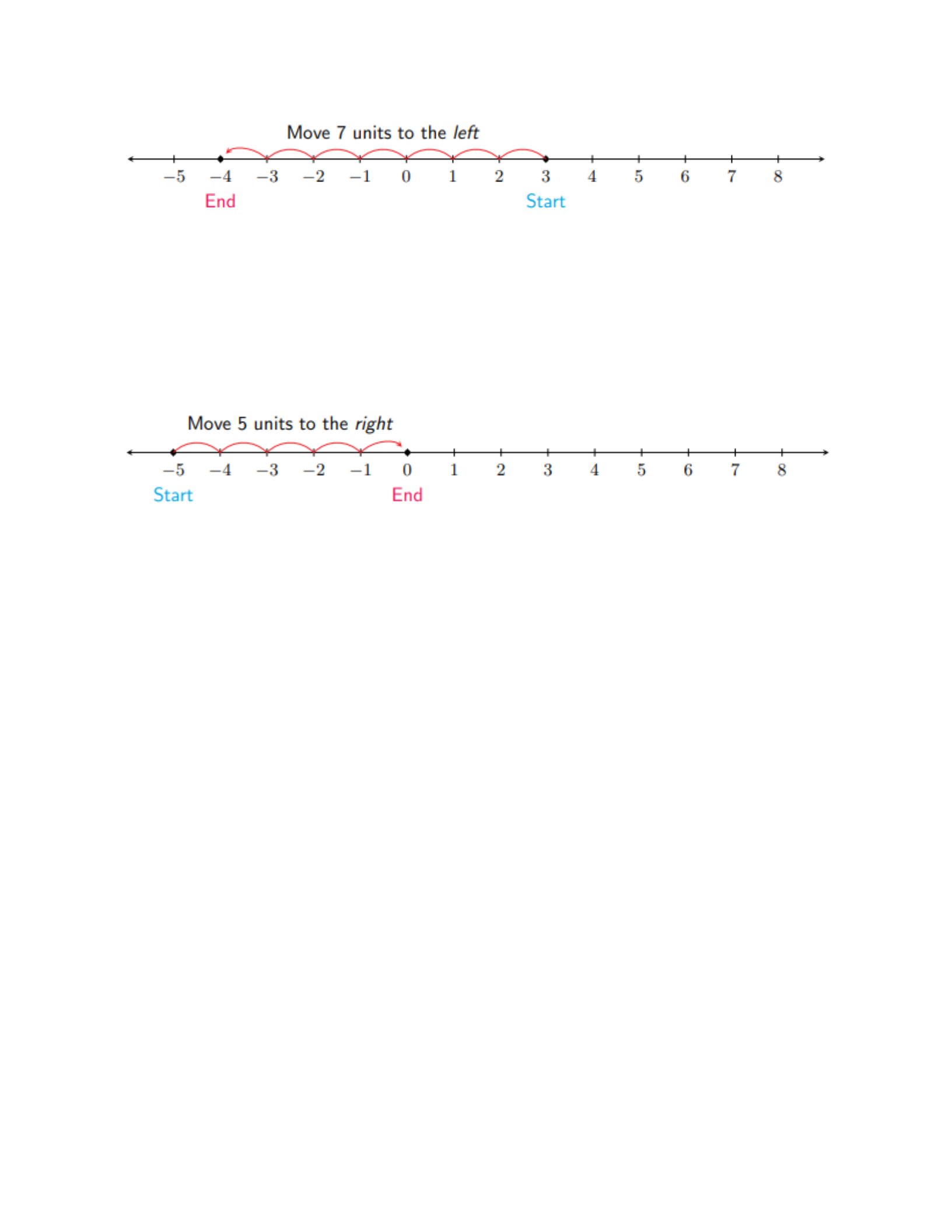
So, 3+(−7)=−4.3+(−7)=−4. Notice that the answer has the same sign as the signs of -7
(negative) because it is the number of larger weight, and its weight comes from finding the
difference of the weights of 3 and -7.
Example 1.5
Adding opposites: We start at -5 on the number line and jump to the right 5 units to land
finally at 00. So −5+5=0−5+5=0.
Note 1.6
Two opposite numbers are called a zero-pair, because adding them always results in 0.
So, −5 and 5 are a zero-pair.
Adding Intergers
99. To add two numbers of the same sign, add their weights and place it after the
sign.
100. To add two numbers of opposite signs, find the difference of their weights
and place it after the sign of the number with the greater weight.
Example 1.7
Add:
iiiiiiiiiiii. −8+19=11−8+19=11
jjjjjjjjjjjj. −8+4=−4−8+4=−4
kkkkkkkkkkkk. 6+(−9)=−36+(−9)=−3
llllllllllll. 7+(−2)=57+(−2)=5
mmmmmmmmmmmm. (−4)+(−7)=−11(−4)+(−7)=−11
nnnnnnnnnnnn. 8+7=158+7=15
Note 1.8

While we can add in any order: 4+2=2+44+2=2+4, it is sometimes convenient to add up all
of the negative numbers and add up all of the positive numbers, and then add the results.
There are also times when it is best to notice certain simplifications if the numbers are
added in a different order.
For example
−5+4+5+(−8)=−5+(−8)+4+5( by reordering )−5+4+5+(−8)=−5+(−8)+4+5( by reordering )
so,
−5+4+5+(−8)=−5+(−8)+4+5=−13+9=−4−5+4+5+(−8)=−5+(−8)+4+5=−13+9=−4
We could have also simplified this by noting that (-5) and 5 are zero-pair, so we are left
with 4+(−8)4+(−8) which is -4.
Example 1.9
We can calculate
(−4)+(−5)+7+(−3)=(−4)+(−5)+(−3)+7=(−12)+7=−5(−4)+(−5)+7+(−3)=(−4)+(−5)+(−3)+7=
(−12)+7=−5
We could have simplified this by noting that (-4) and (-3) make -7, and -7 and 7 are zero-
pair, so the total is -5.
Subtraction (as Addition of the Opposite)
Once we know how to add numbers, we are set to subtract numbers because subtraction is
nothing but addition of the opposite. That is, subtracting 8 − 3 (which reads: subtracting 3
from 8) is the same as 8 + (−3) (which reads: Adding −3 to 8.).
Example 1.10
So, 8−3=8+(−3),8−3=8+(−3), and, we can use the rules of adding two numbers of opposite
signs to find out that the answer is 5.5. We can also use the number line. We start at 8 and
move 3 units to the left (adding -3 is adding a debt, so we move to the left).
So 8−3=5.−4−3−2−10123456788−3=5.−4−3−2−1012345678 End Start Move 3 units to the
left
Example 1.11
To calculate 3−73−7 we first rewrite it as an addition
problem. 3−7=3+(−7).3−7=3+(−7). We can either use the number line, or the rules of
adding two numbers of opposite signs. And, 50,3−7=3+(−7)=−450,3−7=3+(−7)=−4
Example 1.12
To calculate −4−1,−4−1, we first rewrite it as an addition
problem. −4−1=−4+(−1).−4−1=−4+(−1). We can either use the number line, or the rules of
adding two numbers of the same signs. If we want to use the rules, both numbers are
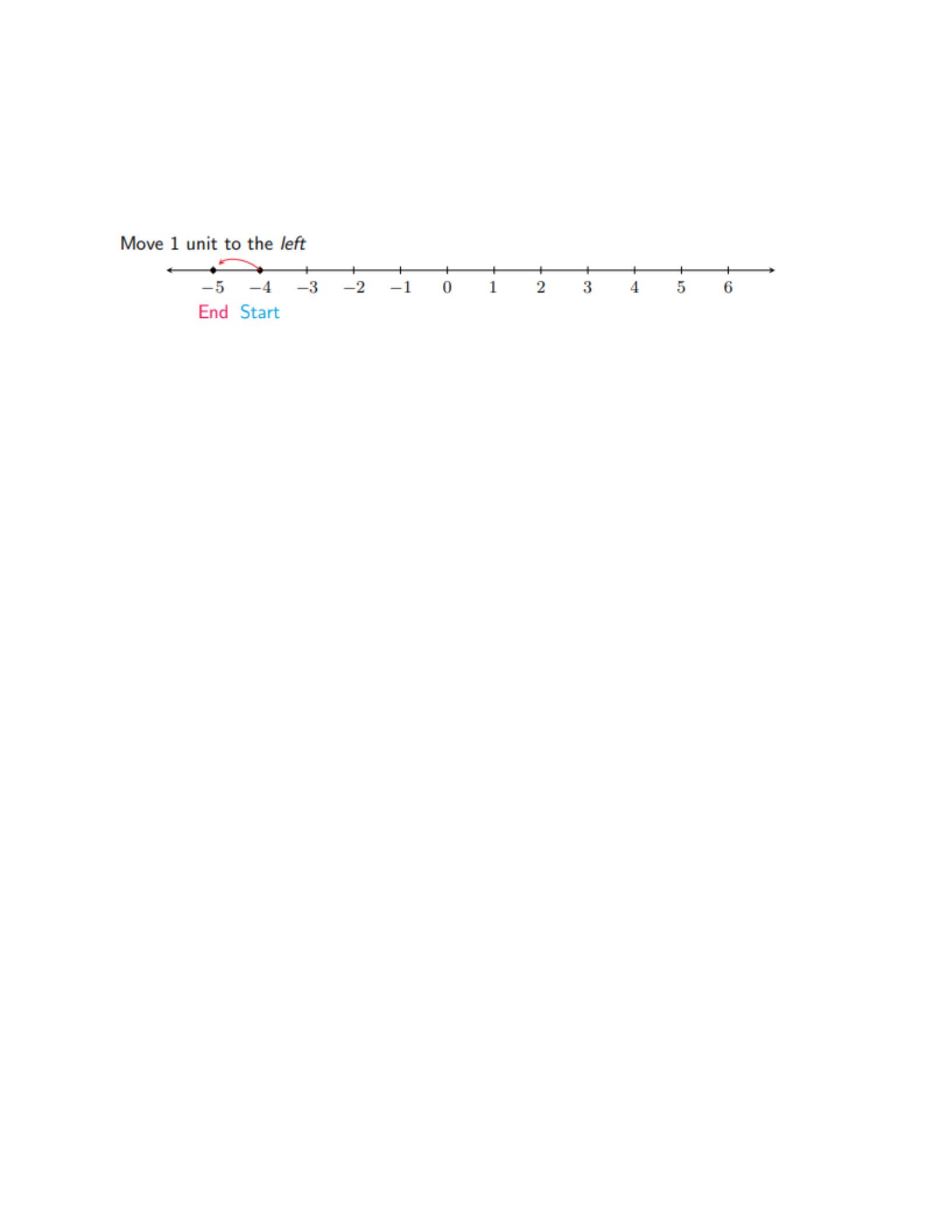
negative, so our answer will be negative, and, adding the weights of -4 and -1
is 5.50,−4−1=−4+(−1)=−55.50,−4−1=−4+(−1)=−5
On the number line, we start at -4 and move 1 unit to the left, to land on -5 which is our
answer.
Changing the subtractions to additions in this way is particularly useful when adding or
subtracting several numbers (because we can add in any order).
Example 1.13
===−3−7+5+7+13−6−(−9)−3+(−7)+5+7+13+(−6)+9−3+(−7)+(−6)+5+7+13+918−3−7+5+7
+13−6−(−9)=−3+(−7)+5+7+13+(−6)+9=−3+(−7)+(−6)+5+7+13+9=18
===−3−7+5+7+13−6−(−9)−3+(−7)+5+7+13+(−6)+95+1318−3−7+5+7+13−6−(−9)=−3+(−7
)+5+7+13+(−6)+9=5+13=18
Remark 1.14
Warning: The symbol "-" is used in two different ways. When it is between two expressions,
it means subtract (e.g., 3−43−4 ). Otherwise, it means 'opposite' or 'negative'
(e.g., −3+4−3+4 ). So in the expression −4−(−3)−4−(−3), the first and last "-" means
opposite and the one in the middle one means subtract. The importance of understanding
this can not be overestimated.
Multiplication and Division of Positive Numbers
Multiplication of integers is adding in the sense that 3×4=4+4+43×4=4+4+4
To multiply larger numbers, it is better to use the usual scheme of multiplication. For
example:
Example 1.15
Let us multiply 152 by 34. We will for convenience sake put the smaller number on the
bottom (though it is not necessary). We have
+×4516515306624808152×34608+45605168
And division is the opposite of multiplication in the sense that to compute 45÷945÷9 is to
find a number so that when we multiply by 9 we get 45. We run through our multiplication
tables (which are hopefully in our head) to discover that 5 does the
trick: 5×9=455×9=45 so that 45÷9=5.45÷9=5. We will discuss division from a different
point of view when we discuss fractions.
To divide larger numbers, we can use long division. For example, let’s divide 3571 by 11.
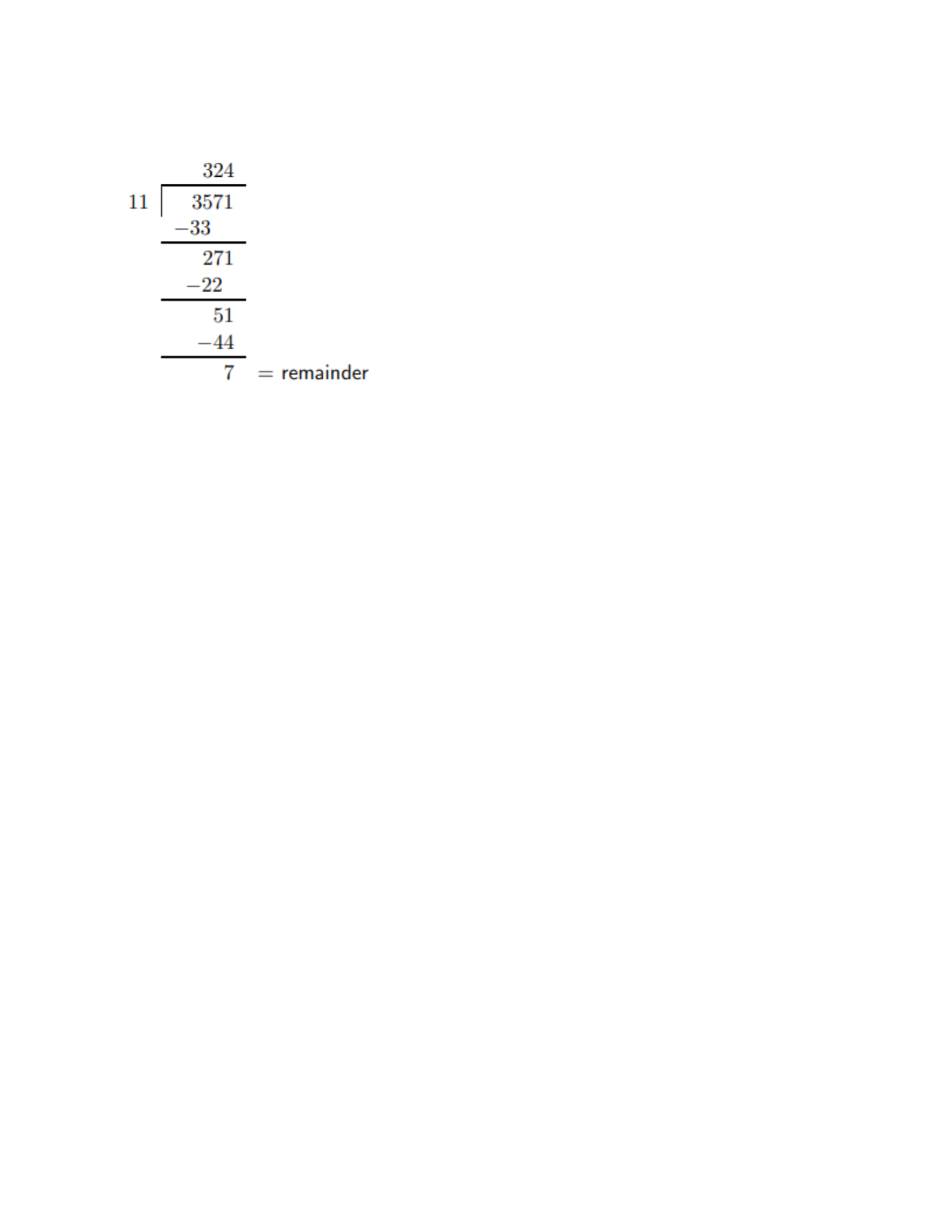
Example 1.16
Multiplication involving negative numbers
Multiplication is a little tricky to understand without the notion of distribution (discussed
later). We will begin with noting again what it means to multiply a number by a positive
number: So if we want to compute 4⋅(−7)4⋅(−7) we note
4⋅(−7)=(−7)+(−7)+(−7)+(−7)=−284⋅(−7)=(−7)+(−7)+(−7)+(−7)=−28
Note that since 4⋅7=28,4⋅(−7)=−(4⋅7).4⋅7=28,4⋅(−7)=−(4⋅7). We can multiply positive
numbers in any order: 4⋅7=7⋅44⋅7=7⋅4. The same is true of positive and negative numbers:
(−7)⋅4=4⋅(−7)=−(4⋅7)=−28(−7)⋅4=4⋅(−7)=−(4⋅7)=−28
Example 1.17
5⋅(−12)=−(5⋅12)=−605⋅(−12)=−(5⋅12)=−60 and (−3)⋅(−2)=−(3⋅(−2))=−(−(3⋅2))=6(−3)⋅(−2)
=−(3⋅(−2))=−(−(3⋅2))=6
Example 1.18
So the size of the product of two numbers is the product of their sizes. The sign is positive if
the signs are the same and negative if they are different.
Example 1.19
Two quantities right next to each other, with no symbol between them (except for
parentheses around either or both numbers), has an implicit multiplication. For
example, 3(2)=3×23(2)=3×2.
Example 1.20
Multiply:
llllllllll. (−5)(−8)=40(−5)(−8)=40
mmmmmmmmmm. (−6)⋅7=−42(−6)⋅7=−42

nnnnnnnnnn. 4⋅12=484⋅12=48
oooooooooo. (−3)(−6)⋅4(−3)=18⋅4(−3)=72(−3)=−216( multiplying from left to
right )(−3)(−6)⋅4(−3)=18⋅4(−3)=72(−3)=−216( multiplying from left to right )
pppppppppp. (−3)(−5)⋅4(−2)=(−3)⋅4⋅(−5)(−2)=−12⋅10=−120((−3)(−5)⋅4(−2)=(−3)⋅
4⋅(−5)(−2)=−12⋅10=−120( since we can multiply in any order it is convenient to see
that −5⋅−2=10.−5⋅−2=10. )
Exponents of integers
Recall that a positive exponent represents the number of times a number is multiplied by
itself.
Example 1.21
Evaluate:
iiiiiiiiiiii. 52=5⋅5=2552=5⋅5=25
jjjjjjjjjjjj. (−4)3=(−4)⋅(−4)⋅(−4)=16⋅(−4)=−64(−4)3=(−4)⋅(−4)⋅(−4)=16⋅(−4)=−64
kkkkkkkkkkkk. (−7)1=−7(−7)1=−7
llllllllllll. −24=−2⋅2⋅2⋅2=−16−24=−2⋅2⋅2⋅2=−16 Note: The exponent here is for 2 not
−2!
mmmmmmmmmmmm. (−3)4=(−3)⋅(−3)⋅(−3)⋅(−3)=9⋅(−3)⋅(−3)=−27⋅(−3)=81(−3)4=(−
3)⋅(−3)⋅(−3)⋅(−3)=9⋅(−3)⋅(−3)=−27⋅(−3)=81
nnnnnnnnnnnn. (−2)5=(−2)⋅(−2)⋅(−2)⋅(−2)⋅(−2)=−32(−2)5=(−2)⋅(−2)⋅(−2)⋅(−2)⋅(−2)=
−32
Exponent rules in details will be further discussed in Chapter 5.
Division involving negative numbers
Division is just a question of knowing multiplication and therefore has the same rule: The
size of the quotient of two numbers is the quotient of the sizes. The sign is positive if the
signs are the same and negative if they are different.
Example 1.22
Divide:
iiiiiiiiiiii. (−42)÷7=−6(−42)÷7=−6
jjjjjjjjjjjj. 81÷(−9)=−981÷(−9)=−9
kkkkkkkkkkkk. (−35)÷(−7)=5(−35)÷(−7)=5
llllllllllll. 14÷2=714÷2=7
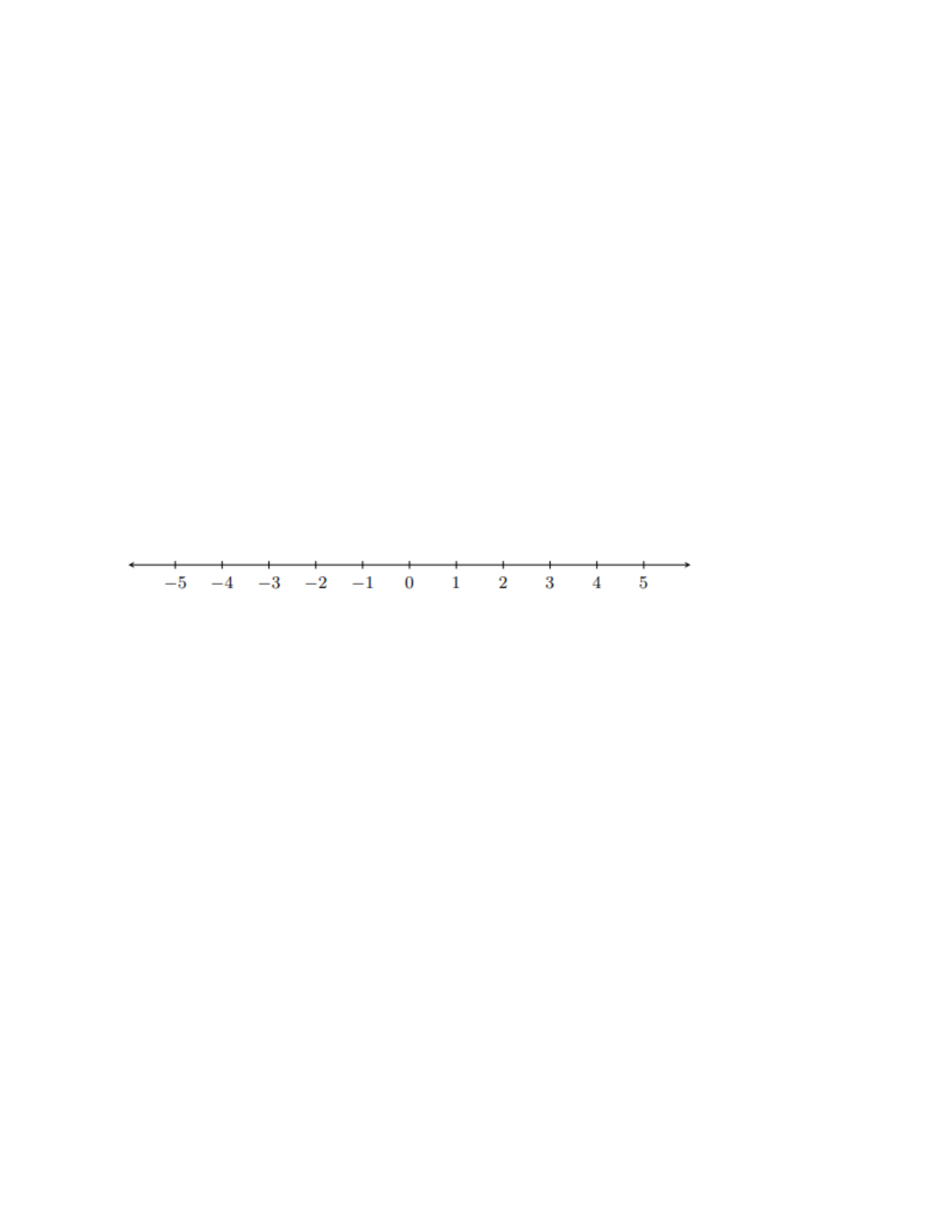
mmmmmmmmmmmm. 0÷5=00÷5=0. Note When dividing 0 by any number, the
answer is always 0.
nnnnnnnnnnnn. −10÷0=−10÷0= undefined.
Note 1.23
Any number divided by 0 is undefined!
Multiplying and Dividing Integers
Consider two numbers at a time.
99. If the signs of the two numbers are the same, then the sign of the answer is positive.
100. If the signs of the two numbers are different, then the sign of the answer is
negative.
We begin with a brief review of arithmetic with integers
i.e. …,−3,−2,−1,0,1,2,3,……,−3,−2,−1,0,1,2,3,…
Any number has a weight and a sign.
The magnitude (or weight) of a number is the distance it is from 0 on the number line.
Example 1.1
For example, the weight of -5 is 5 and the weight of 7 is 7 .
Two numbers are opposites if, on the number line, they are on opposite sides of zero, but
the same distance away from zero.
So, −5 is the opposite of 5, and 7 is the opposite of −7 and so on.
Addition
We can add two numbers with the help of a number line .
Example 1.2
Adding two positive numbers: For example to add 3+43+4, we start with 3 on the number
line then move 4 units to the right. We land at 7 which is our answer.
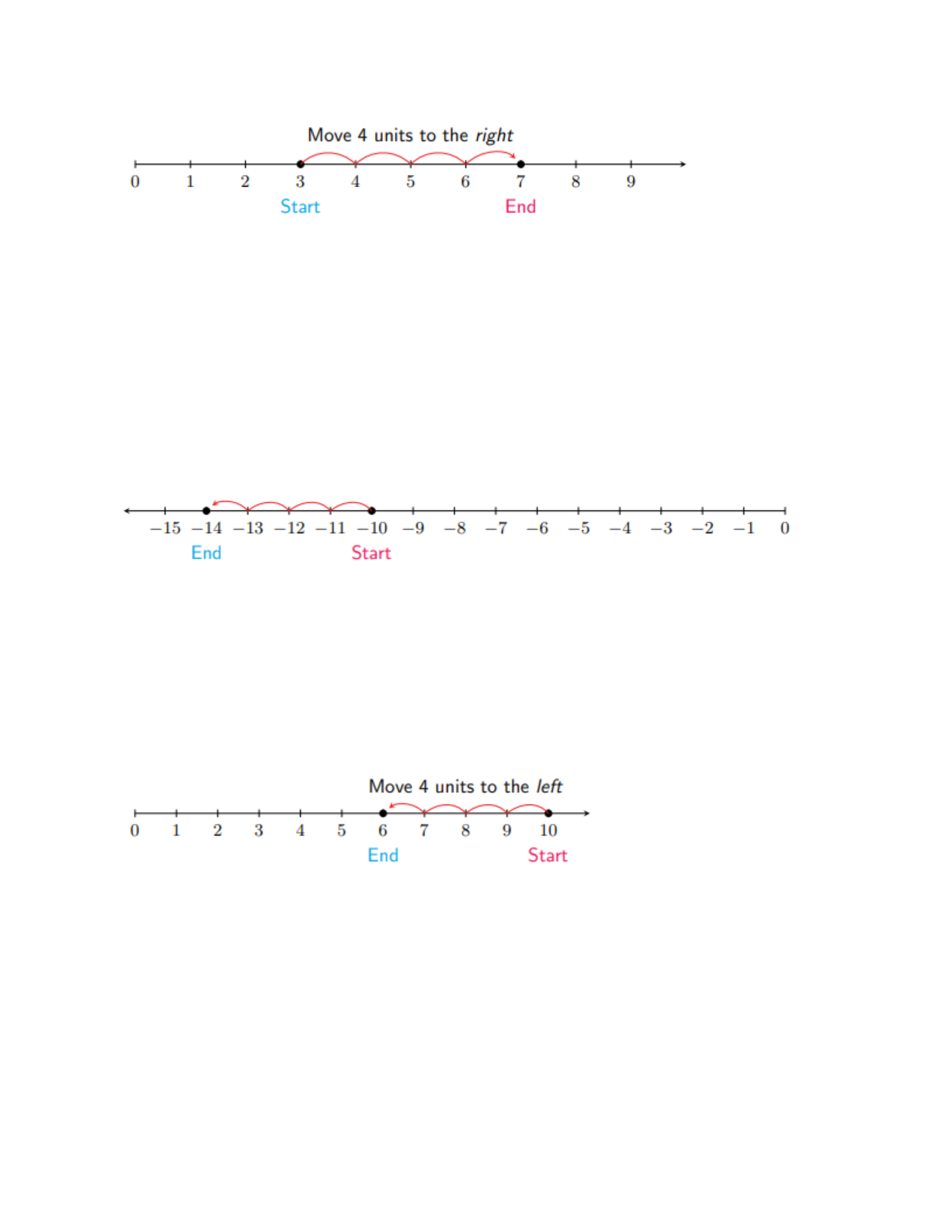
So, 3+4=73+4=7. Notice that the answer has the same sign as the signs of 3 and 4 (both
positive) and its weight comes from adding the weights of 3 and 4.
You always move to the right when you add a positive number
Example 1.3
Adding two negative numbers: For example, −10+(−4)−10+(−4) means you are adding a
debt of $4$4 to an already existing debt of $10.$10. So, we start at -10 on the number line
and move 4 units to the left, to land at −14,−14, which is the answer.
You always move to the left when you add a negative number (a debt)
So, −10+(−4)=−14−10+(−4)=−14. Notice that the answer has the same sign as the signs of -
10 and -4 (both negative) and its weight comes from adding the weights of -10 and -4
To add numbers of opposite signs, that is, a positive and a negative number, we can also
use the number line. For example, to perform 10+(−4),10+(−4), we start at 10 on the
number line and then move 4 units to the left. We land at 6,6, which is the answer. Think
of 10+(−4)10+(−4) as having $10$10 and adding a $4$4 debt. Because we are adding a
debt, we move to the left on the number line!
So, 10+(−4)=6.10+(−4)=6. Notice that the answer has the same sign as the sign of 10
(positive) because it is the number of larger weight, and its weight comes from finding the
difference of the weights of 10 and -4
Notice that because we were adding two numbers of opposite signs, the answer ended up
being the difference in weight (6) along with the sign of the number of larger weight
(positive).
Example 1.4
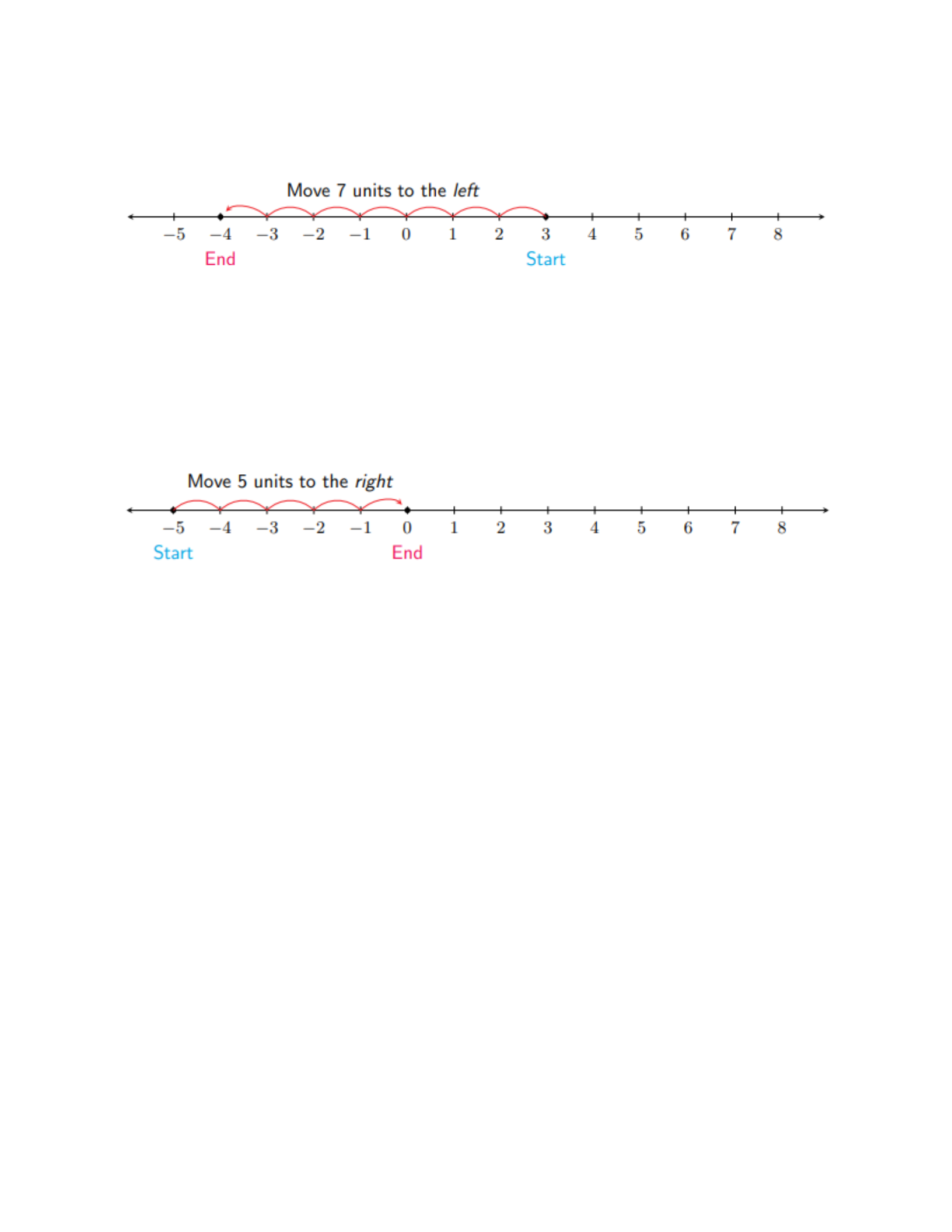
Adding two numbers of opposite signs: For example, 3+(−7)3+(−7). We start at 3 and move
toward 7 units to the left, and we land at −4,−4, which is our answer.
So, 3+(−7)=−4.3+(−7)=−4. Notice that the answer has the same sign as the signs of -7
(negative) because it is the number of larger weight, and its weight comes from finding the
difference of the weights of 3 and -7.
Example 1.5
Adding opposites: We start at -5 on the number line and jump to the right 5 units to land
finally at 00. So −5+5=0−5+5=0.
Note 1.6
Two opposite numbers are called a zero-pair, because adding them always results in 0.
So, −5 and 5 are a zero-pair.
Adding Intergers
101. To add two numbers of the same sign, add their weights and place it after
the sign.
102. To add two numbers of opposite signs, find the difference of their weights
and place it after the sign of the number with the greater weight.
Example 1.7
Add:
oooooooooooo. −8+19=11−8+19=11
pppppppppppp. −8+4=−4−8+4=−4
qqqqqqqqqqqq. 6+(−9)=−36+(−9)=−3
rrrrrrrrrrrr. 7+(−2)=57+(−2)=5
ssssssssssss. (−4)+(−7)=−11(−4)+(−7)=−11
tttttttttttt. 8+7=158+7=15

Note 1.8
While we can add in any order: 4+2=2+44+2=2+4, it is sometimes convenient to add up all
of the negative numbers and add up all of the positive numbers, and then add the results.
There are also times when it is best to notice certain simplifications if the numbers are
added in a different order.
For example
−5+4+5+(−8)=−5+(−8)+4+5( by reordering )−5+4+5+(−8)=−5+(−8)+4+5( by reordering )
so,
−5+4+5+(−8)=−5+(−8)+4+5=−13+9=−4−5+4+5+(−8)=−5+(−8)+4+5=−13+9=−4
We could have also simplified this by noting that (-5) and 5 are zero-pair, so we are left
with 4+(−8)4+(−8) which is -4.
Example 1.9
We can calculate
(−4)+(−5)+7+(−3)=(−4)+(−5)+(−3)+7=(−12)+7=−5(−4)+(−5)+7+(−3)=(−4)+(−5)+(−3)+7=
(−12)+7=−5
We could have simplified this by noting that (-4) and (-3) make -7, and -7 and 7 are zero-
pair, so the total is -5.
Subtraction (as Addition of the Opposite)
Once we know how to add numbers, we are set to subtract numbers because subtraction is
nothing but addition of the opposite. That is, subtracting 8 − 3 (which reads: subtracting 3
from 8) is the same as 8 + (−3) (which reads: Adding −3 to 8.).
Example 1.10
So, 8−3=8+(−3),8−3=8+(−3), and, we can use the rules of adding two numbers of opposite
signs to find out that the answer is 5.5. We can also use the number line. We start at 8 and
move 3 units to the left (adding -3 is adding a debt, so we move to the left).
So 8−3=5.−4−3−2−10123456788−3=5.−4−3−2−1012345678 End Start Move 3 units to the
left
Example 1.11
To calculate 3−73−7 we first rewrite it as an addition
problem. 3−7=3+(−7).3−7=3+(−7). We can either use the number line, or the rules of
adding two numbers of opposite signs. And, 50,3−7=3+(−7)=−450,3−7=3+(−7)=−4
Example 1.12
To calculate −4−1,−4−1, we first rewrite it as an addition
problem. −4−1=−4+(−1).−4−1=−4+(−1). We can either use the number line, or the rules of
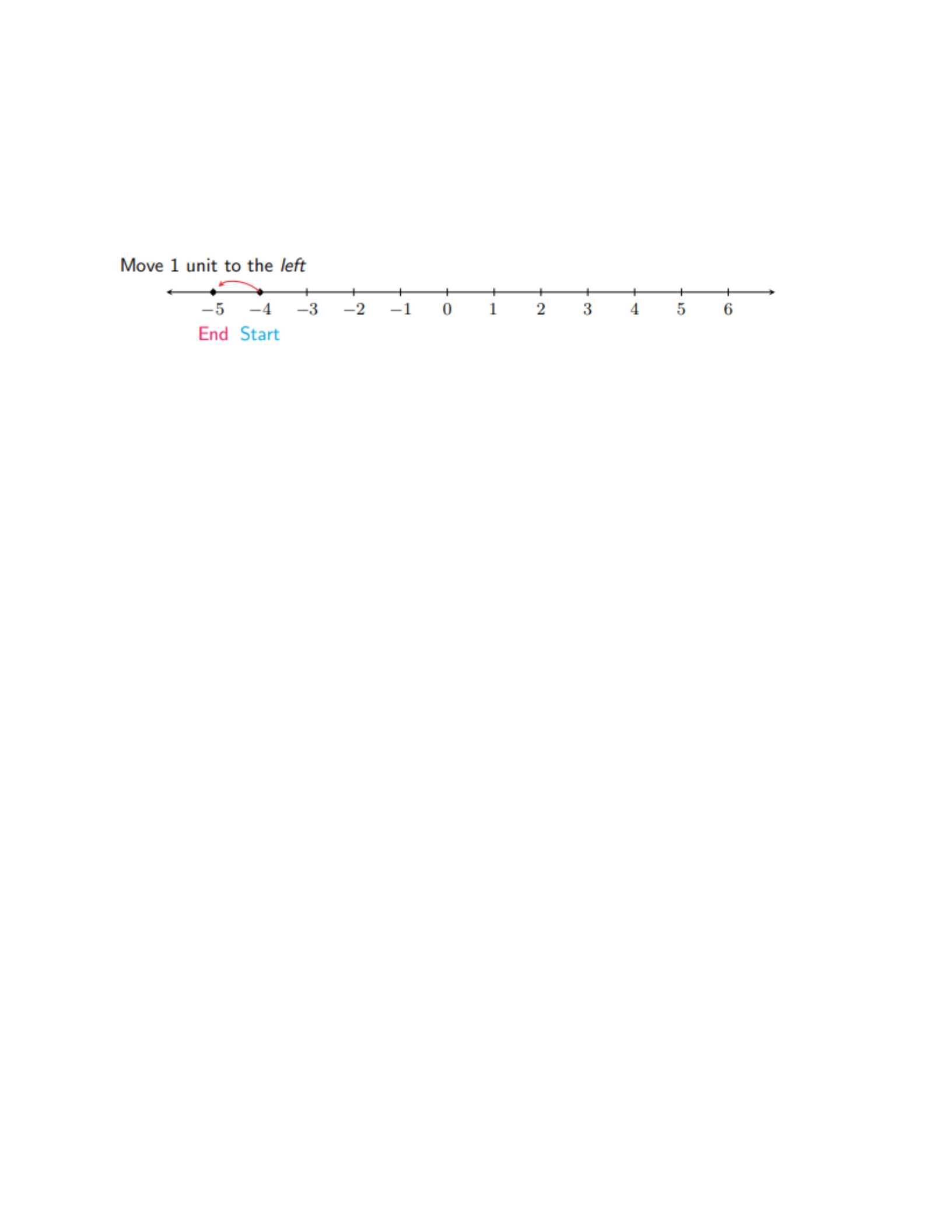
adding two numbers of the same signs. If we want to use the rules, both numbers are
negative, so our answer will be negative, and, adding the weights of -4 and -1
is 5.50,−4−1=−4+(−1)=−55.50,−4−1=−4+(−1)=−5
On the number line, we start at -4 and move 1 unit to the left, to land on -5 which is our
answer.
Changing the subtractions to additions in this way is particularly useful when adding or
subtracting several numbers (because we can add in any order).
Example 1.13
===−3−7+5+7+13−6−(−9)−3+(−7)+5+7+13+(−6)+9−3+(−7)+(−6)+5+7+13+918−3−7+5+7
+13−6−(−9)=−3+(−7)+5+7+13+(−6)+9=−3+(−7)+(−6)+5+7+13+9=18
===−3−7+5+7+13−6−(−9)−3+(−7)+5+7+13+(−6)+95+1318−3−7+5+7+13−6−(−9)=−3+(−7
)+5+7+13+(−6)+9=5+13=18
Remark 1.14
Warning: The symbol "-" is used in two different ways. When it is between two expressions,
it means subtract (e.g., 3−43−4 ). Otherwise, it means 'opposite' or 'negative'
(e.g., −3+4−3+4 ). So in the expression −4−(−3)−4−(−3), the first and last "-" means
opposite and the one in the middle one means subtract. The importance of understanding
this can not be overestimated.
Multiplication and Division of Positive Numbers
Multiplication of integers is adding in the sense that 3×4=4+4+43×4=4+4+4
To multiply larger numbers, it is better to use the usual scheme of multiplication. For
example:
Example 1.15
Let us multiply 152 by 34. We will for convenience sake put the smaller number on the
bottom (though it is not necessary). We have
+×4516515306624808152×34608+45605168
And division is the opposite of multiplication in the sense that to compute 45÷945÷9 is to
find a number so that when we multiply by 9 we get 45. We run through our multiplication
tables (which are hopefully in our head) to discover that 5 does the
trick: 5×9=455×9=45 so that 45÷9=5.45÷9=5. We will discuss division from a different
point of view when we discuss fractions.
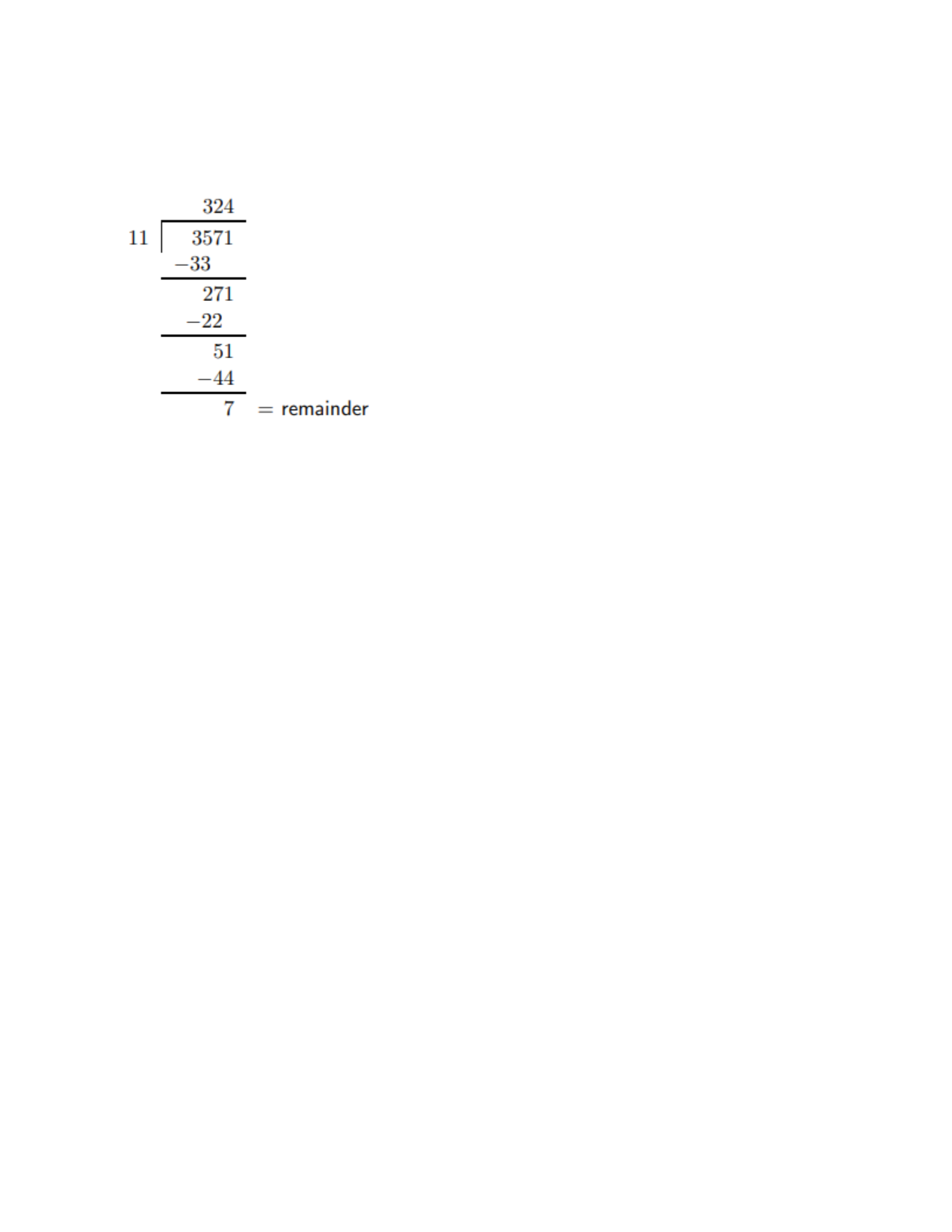
To divide larger numbers, we can use long division. For example, let’s divide 3571 by 11.
Example 1.16
Multiplication involving negative numbers
Multiplication is a little tricky to understand without the notion of distribution (discussed
later). We will begin with noting again what it means to multiply a number by a positive
number: So if we want to compute 4⋅(−7)4⋅(−7) we note
4⋅(−7)=(−7)+(−7)+(−7)+(−7)=−284⋅(−7)=(−7)+(−7)+(−7)+(−7)=−28
Note that since 4⋅7=28,4⋅(−7)=−(4⋅7).4⋅7=28,4⋅(−7)=−(4⋅7). We can multiply positive
numbers in any order: 4⋅7=7⋅44⋅7=7⋅4. The same is true of positive and negative numbers:
(−7)⋅4=4⋅(−7)=−(4⋅7)=−28(−7)⋅4=4⋅(−7)=−(4⋅7)=−28
Example 1.17
5⋅(−12)=−(5⋅12)=−605⋅(−12)=−(5⋅12)=−60 and (−3)⋅(−2)=−(3⋅(−2))=−(−(3⋅2))=6(−3)⋅(−2)
=−(3⋅(−2))=−(−(3⋅2))=6
Example 1.18
So the size of the product of two numbers is the product of their sizes. The sign is positive if
the signs are the same and negative if they are different.
Example 1.19
Two quantities right next to each other, with no symbol between them (except for
parentheses around either or both numbers), has an implicit multiplication. For
example, 3(2)=3×23(2)=3×2.
Example 1.20
Multiply:
qqqqqqqqqq. (−5)(−8)=40(−5)(−8)=40

rrrrrrrrrr. (−6)⋅7=−42(−6)⋅7=−42
ssssssssss. 4⋅12=484⋅12=48
tttttttttt. (−3)(−6)⋅4(−3)=18⋅4(−3)=72(−3)=−216( multiplying from left to
right )(−3)(−6)⋅4(−3)=18⋅4(−3)=72(−3)=−216( multiplying from left to right )
uuuuuuuuuu. (−3)(−5)⋅4(−2)=(−3)⋅4⋅(−5)(−2)=−12⋅10=−120((−3)(−5)⋅4(−2)=(−3)⋅
4⋅(−5)(−2)=−12⋅10=−120( since we can multiply in any order it is convenient to see
that −5⋅−2=10.−5⋅−2=10. )
Exponents of integers
Recall that a positive exponent represents the number of times a number is multiplied by
itself.
Example 1.21
Evaluate:
oooooooooooo. 52=5⋅5=2552=5⋅5=25
pppppppppppp. (−4)3=(−4)⋅(−4)⋅(−4)=16⋅(−4)=−64(−4)3=(−4)⋅(−4)⋅(−4)=16⋅(−4)=−6
4
qqqqqqqqqqqq. (−7)1=−7(−7)1=−7
rrrrrrrrrrrr. −24=−2⋅2⋅2⋅2=−16−24=−2⋅2⋅2⋅2=−16 Note: The exponent here is for
2 not −2!
ssssssssssss. (−3)4=(−3)⋅(−3)⋅(−3)⋅(−3)=9⋅(−3)⋅(−3)=−27⋅(−3)=81(−3)4=(−3)⋅(−3)
⋅(−3)⋅(−3)=9⋅(−3)⋅(−3)=−27⋅(−3)=81
tttttttttttt. (−2)5=(−2)⋅(−2)⋅(−2)⋅(−2)⋅(−2)=−32(−2)5=(−2)⋅(−2)⋅(−2)⋅(−2)⋅(−2)=−32
Exponent rules in details will be further discussed in Chapter 5.
Division involving negative numbers
Division is just a question of knowing multiplication and therefore has the same rule: The
size of the quotient of two numbers is the quotient of the sizes. The sign is positive if the
signs are the same and negative if they are different.
Example 1.22
Divide:
oooooooooooo. (−42)÷7=−6(−42)÷7=−6
pppppppppppp. 81÷(−9)=−981÷(−9)=−9
qqqqqqqqqqqq. (−35)÷(−7)=5(−35)÷(−7)=5
rrrrrrrrrrrr. 14÷2=714÷2=7
ssssssssssss. 0÷5=00÷5=0. Note When dividing 0 by any number, the answer is
always 0.
tttttttttttt. −10÷0=−10÷0= undefined.
Note 1.23
Any number divided by 0 is undefined!
Multiplying and Dividing Integers
Consider two numbers at a time.
101. If the signs of the two numbers are the same, then the sign of the answer is
positive.
102. If the signs of the two numbers are different, then the sign of the answer is
negative.
We begin with a brief review of arithmetic with integers
i.e. …,−3,−2,−1,0,1,2,3,……,−3,−2,−1,0,1,2,3,…
Any number has a weight and a sign.
The magnitude (or weight) of a number is the distance it is from 0 on the number line.
Example 1.1
For example, the weight of -5 is 5 and the weight of 7 is 7 .
Two numbers are opposites if, on the number line, they are on opposite sides of zero, but
the same distance away from zero.
So, −5 is the opposite of 5, and 7 is the opposite of −7 and so on.
Addition
We can add two numbers with the help of a number line .
Example 1.2
Adding two positive numbers: For example to add 3+43+4, we start with 3 on the number
line then move 4 units to the right. We land at 7 which is our answer.
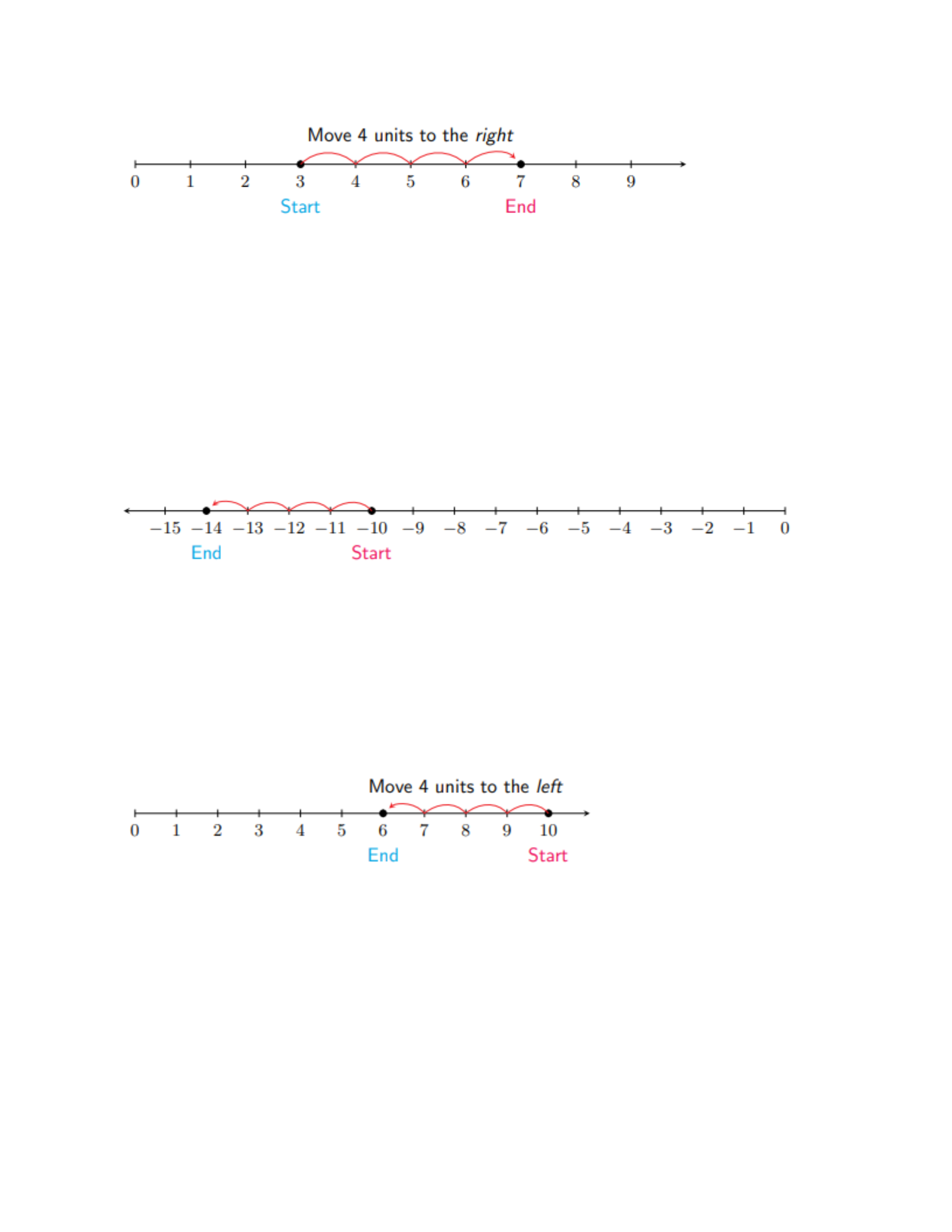
So, 3+4=73+4=7. Notice that the answer has the same sign as the signs of 3 and 4 (both
positive) and its weight comes from adding the weights of 3 and 4.
You always move to the right when you add a positive number
Example 1.3
Adding two negative numbers: For example, −10+(−4)−10+(−4) means you are adding a
debt of $4$4 to an already existing debt of $10.$10. So, we start at -10 on the number line
and move 4 units to the left, to land at −14,−14, which is the answer.
You always move to the left when you add a negative number (a debt)
So, −10+(−4)=−14−10+(−4)=−14. Notice that the answer has the same sign as the signs of -
10 and -4 (both negative) and its weight comes from adding the weights of -10 and -4
To add numbers of opposite signs, that is, a positive and a negative number, we can also
use the number line. For example, to perform 10+(−4),10+(−4), we start at 10 on the
number line and then move 4 units to the left. We land at 6,6, which is the answer. Think
of 10+(−4)10+(−4) as having $10$10 and adding a $4$4 debt. Because we are adding a
debt, we move to the left on the number line!
So, 10+(−4)=6.10+(−4)=6. Notice that the answer has the same sign as the sign of 10
(positive) because it is the number of larger weight, and its weight comes from finding the
difference of the weights of 10 and -4
Notice that because we were adding two numbers of opposite signs, the answer ended up
being the difference in weight (6) along with the sign of the number of larger weight
(positive).
Example 1.4
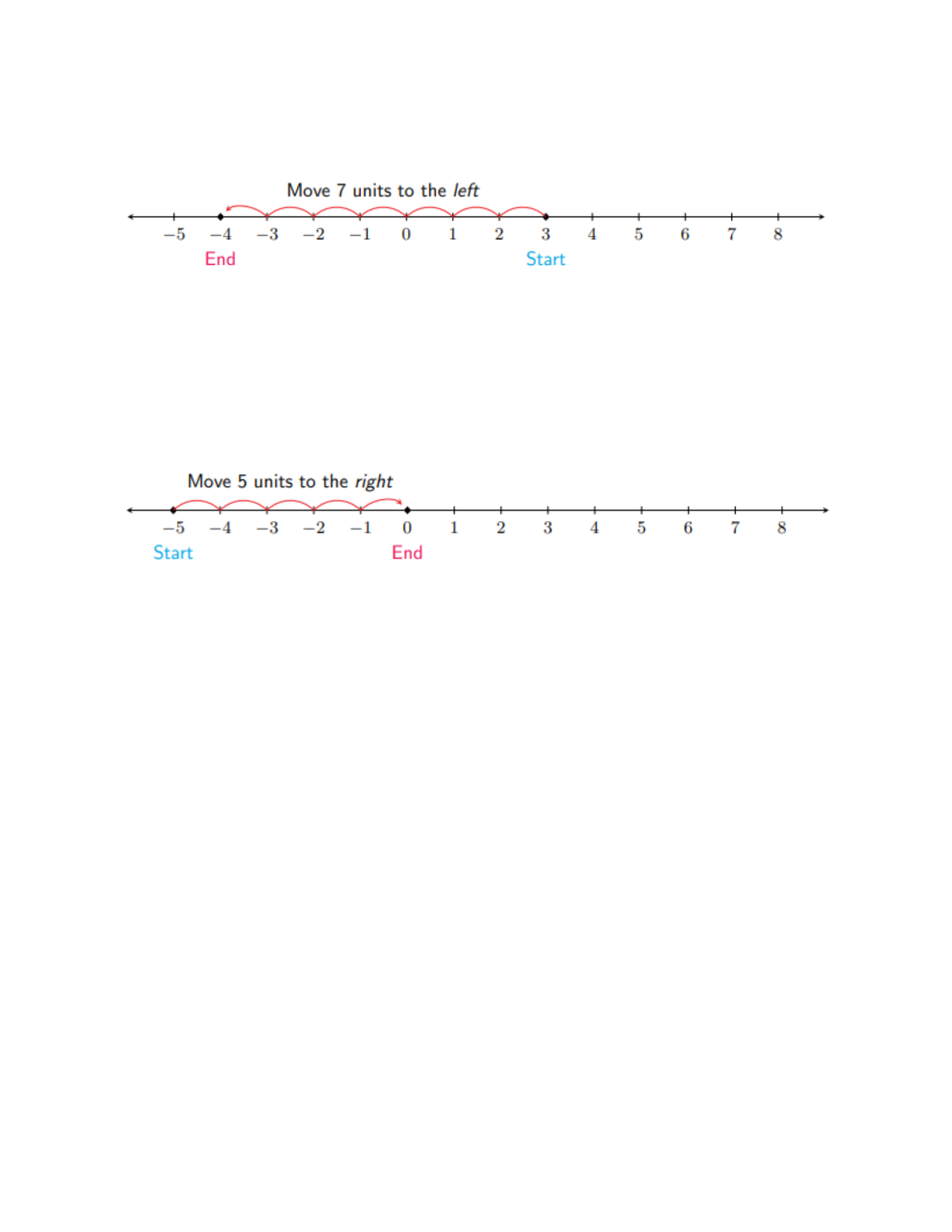
Adding two numbers of opposite signs: For example, 3+(−7)3+(−7). We start at 3 and move
toward 7 units to the left, and we land at −4,−4, which is our answer.
So, 3+(−7)=−4.3+(−7)=−4. Notice that the answer has the same sign as the signs of -7
(negative) because it is the number of larger weight, and its weight comes from finding the
difference of the weights of 3 and -7.
Example 1.5
Adding opposites: We start at -5 on the number line and jump to the right 5 units to land
finally at 00. So −5+5=0−5+5=0.
Note 1.6
Two opposite numbers are called a zero-pair, because adding them always results in 0.
So, −5 and 5 are a zero-pair.
Adding Intergers
103. To add two numbers of the same sign, add their weights and place it after
the sign.
104. To add two numbers of opposite signs, find the difference of their weights
and place it after the sign of the number with the greater weight.
Example 1.7
Add:
uuuuuuuuuuuu. −8+19=11−8+19=11
vvvvvvvvvvvv. −8+4=−4−8+4=−4
wwwwwwwwwwww. 6+(−9)=−36+(−9)=−3
xxxxxxxxxxxx. 7+(−2)=57+(−2)=5
yyyyyyyyyyyy. (−4)+(−7)=−11(−4)+(−7)=−11
zzzzzzzzzzzz. 8+7=158+7=15

Note 1.8
While we can add in any order: 4+2=2+44+2=2+4, it is sometimes convenient to add up all
of the negative numbers and add up all of the positive numbers, and then add the results.
There are also times when it is best to notice certain simplifications if the numbers are
added in a different order.
For example
−5+4+5+(−8)=−5+(−8)+4+5( by reordering )−5+4+5+(−8)=−5+(−8)+4+5( by reordering )
so,
−5+4+5+(−8)=−5+(−8)+4+5=−13+9=−4−5+4+5+(−8)=−5+(−8)+4+5=−13+9=−4
We could have also simplified this by noting that (-5) and 5 are zero-pair, so we are left
with 4+(−8)4+(−8) which is -4.
Example 1.9
We can calculate
(−4)+(−5)+7+(−3)=(−4)+(−5)+(−3)+7=(−12)+7=−5(−4)+(−5)+7+(−3)=(−4)+(−5)+(−3)+7=
(−12)+7=−5
We could have simplified this by noting that (-4) and (-3) make -7, and -7 and 7 are zero-
pair, so the total is -5.
Subtraction (as Addition of the Opposite)
Once we know how to add numbers, we are set to subtract numbers because subtraction is
nothing but addition of the opposite. That is, subtracting 8 − 3 (which reads: subtracting 3
from 8) is the same as 8 + (−3) (which reads: Adding −3 to 8.).
Example 1.10
So, 8−3=8+(−3),8−3=8+(−3), and, we can use the rules of adding two numbers of opposite
signs to find out that the answer is 5.5. We can also use the number line. We start at 8 and
move 3 units to the left (adding -3 is adding a debt, so we move to the left).
So 8−3=5.−4−3−2−10123456788−3=5.−4−3−2−1012345678 End Start Move 3 units to the
left
Example 1.11
To calculate 3−73−7 we first rewrite it as an addition
problem. 3−7=3+(−7).3−7=3+(−7). We can either use the number line, or the rules of
adding two numbers of opposite signs. And, 50,3−7=3+(−7)=−450,3−7=3+(−7)=−4
Example 1.12
To calculate −4−1,−4−1, we first rewrite it as an addition
problem. −4−1=−4+(−1).−4−1=−4+(−1). We can either use the number line, or the rules of
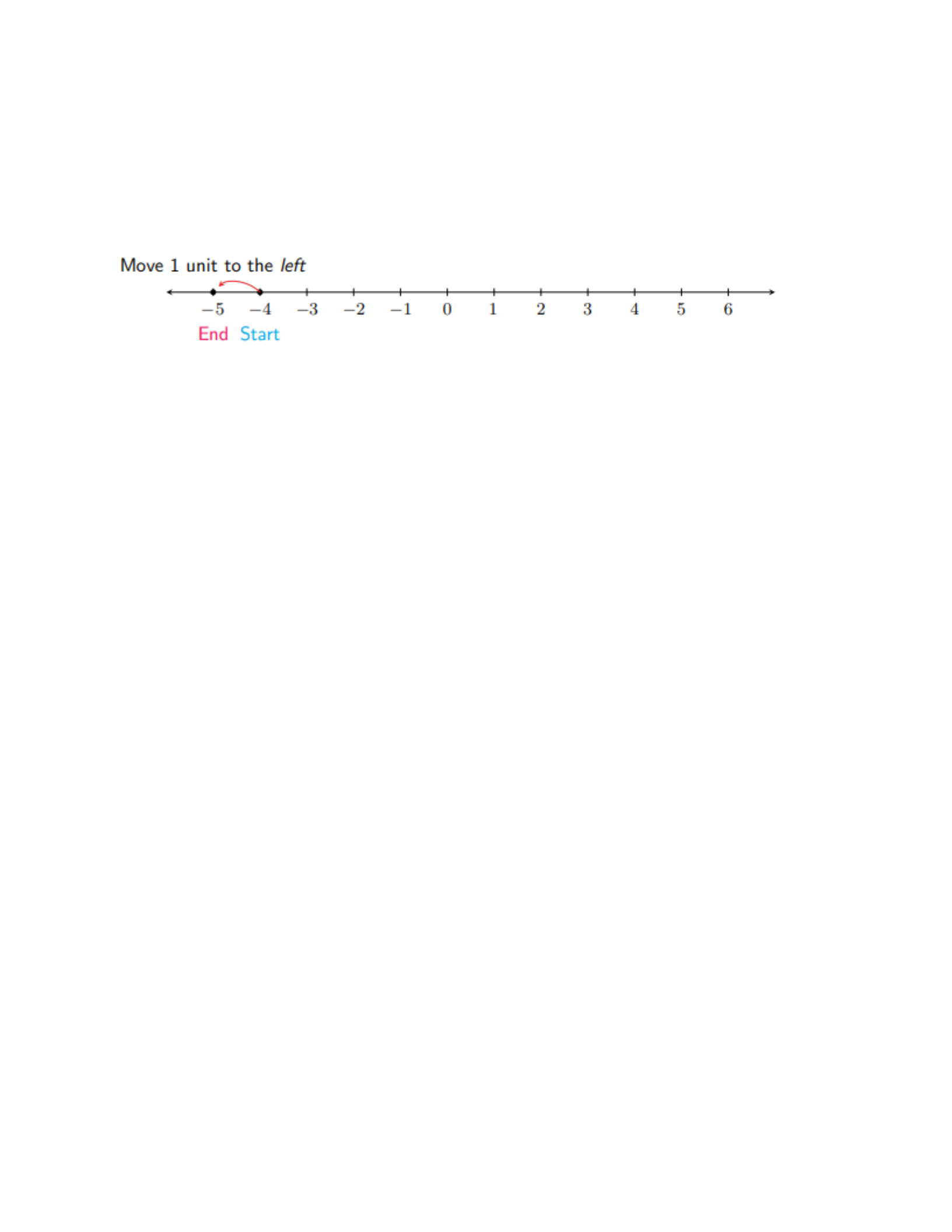
adding two numbers of the same signs. If we want to use the rules, both numbers are
negative, so our answer will be negative, and, adding the weights of -4 and -1
is 5.50,−4−1=−4+(−1)=−55.50,−4−1=−4+(−1)=−5
On the number line, we start at -4 and move 1 unit to the left, to land on -5 which is our
answer.
Changing the subtractions to additions in this way is particularly useful when adding or
subtracting several numbers (because we can add in any order).
Example 1.13
===−3−7+5+7+13−6−(−9)−3+(−7)+5+7+13+(−6)+9−3+(−7)+(−6)+5+7+13+918−3−7+5+7
+13−6−(−9)=−3+(−7)+5+7+13+(−6)+9=−3+(−7)+(−6)+5+7+13+9=18
===−3−7+5+7+13−6−(−9)−3+(−7)+5+7+13+(−6)+95+1318−3−7+5+7+13−6−(−9)=−3+(−7
)+5+7+13+(−6)+9=5+13=18
Remark 1.14
Warning: The symbol "-" is used in two different ways. When it is between two expressions,
it means subtract (e.g., 3−43−4 ). Otherwise, it means 'opposite' or 'negative'
(e.g., −3+4−3+4 ). So in the expression −4−(−3)−4−(−3), the first and last "-" means
opposite and the one in the middle one means subtract. The importance of understanding
this can not be overestimated.
Multiplication and Division of Positive Numbers
Multiplication of integers is adding in the sense that 3×4=4+4+43×4=4+4+4
To multiply larger numbers, it is better to use the usual scheme of multiplication. For
example:
Example 1.15
Let us multiply 152 by 34. We will for convenience sake put the smaller number on the
bottom (though it is not necessary). We have
+×4516515306624808152×34608+45605168
And division is the opposite of multiplication in the sense that to compute 45÷945÷9 is to
find a number so that when we multiply by 9 we get 45. We run through our multiplication
tables (which are hopefully in our head) to discover that 5 does the
trick: 5×9=455×9=45 so that 45÷9=5.45÷9=5. We will discuss division from a different
point of view when we discuss fractions.
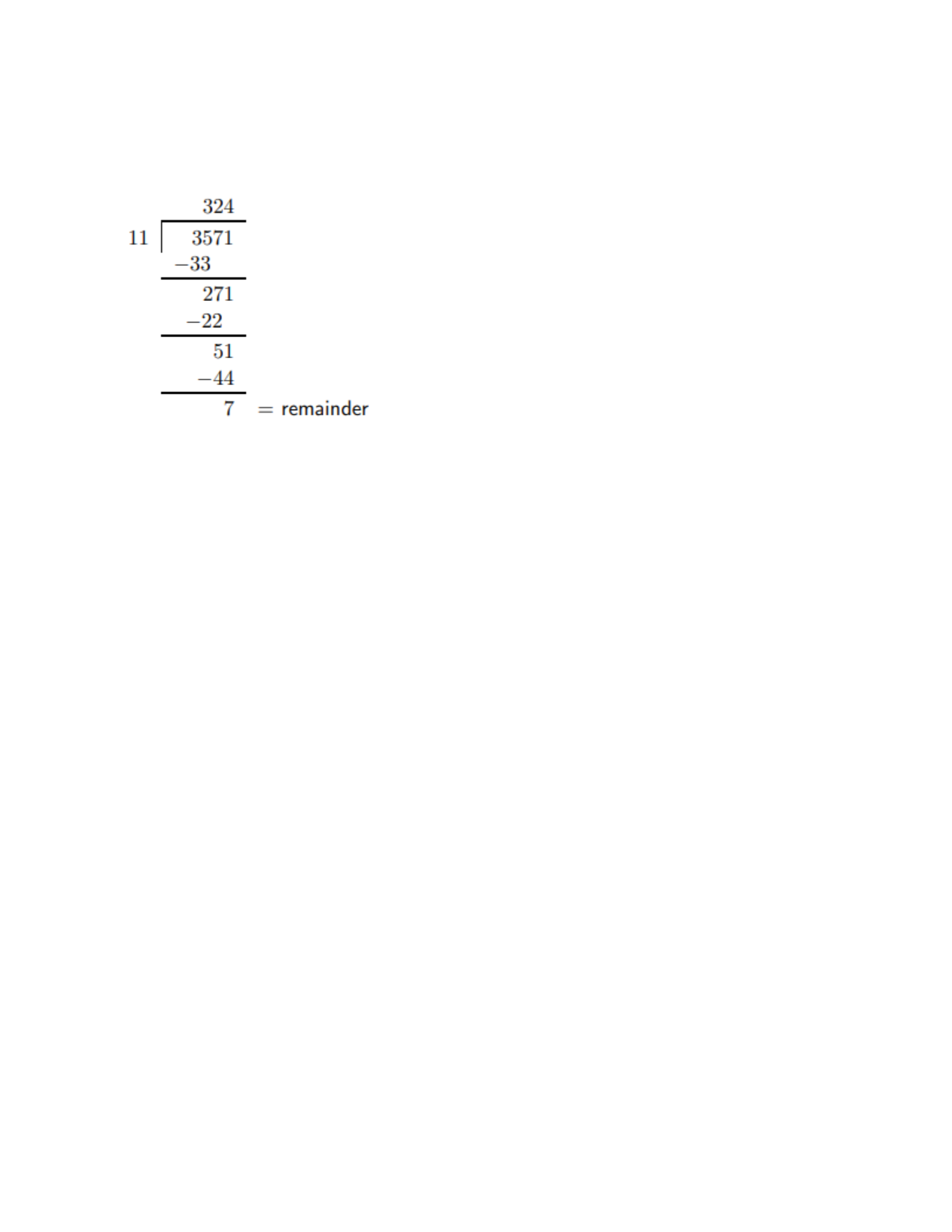
To divide larger numbers, we can use long division. For example, let’s divide 3571 by 11.
Example 1.16
Multiplication involving negative numbers
Multiplication is a little tricky to understand without the notion of distribution (discussed
later). We will begin with noting again what it means to multiply a number by a positive
number: So if we want to compute 4⋅(−7)4⋅(−7) we note
4⋅(−7)=(−7)+(−7)+(−7)+(−7)=−284⋅(−7)=(−7)+(−7)+(−7)+(−7)=−28
Note that since 4⋅7=28,4⋅(−7)=−(4⋅7).4⋅7=28,4⋅(−7)=−(4⋅7). We can multiply positive
numbers in any order: 4⋅7=7⋅44⋅7=7⋅4. The same is true of positive and negative numbers:
(−7)⋅4=4⋅(−7)=−(4⋅7)=−28(−7)⋅4=4⋅(−7)=−(4⋅7)=−28
Example 1.17
5⋅(−12)=−(5⋅12)=−605⋅(−12)=−(5⋅12)=−60 and (−3)⋅(−2)=−(3⋅(−2))=−(−(3⋅2))=6(−3)⋅(−2)
=−(3⋅(−2))=−(−(3⋅2))=6
Example 1.18
So the size of the product of two numbers is the product of their sizes. The sign is positive if
the signs are the same and negative if they are different.
Example 1.19
Two quantities right next to each other, with no symbol between them (except for
parentheses around either or both numbers), has an implicit multiplication. For
example, 3(2)=3×23(2)=3×2.
Example 1.20
Multiply:
vvvvvvvvvv. (−5)(−8)=40(−5)(−8)=40

wwwwwwwwww. (−6)⋅7=−42(−6)⋅7=−42
xxxxxxxxxx. 4⋅12=484⋅12=48
yyyyyyyyyy. (−3)(−6)⋅4(−3)=18⋅4(−3)=72(−3)=−216( multiplying from left to
right )(−3)(−6)⋅4(−3)=18⋅4(−3)=72(−3)=−216( multiplying from left to right )
zzzzzzzzzz. (−3)(−5)⋅4(−2)=(−3)⋅4⋅(−5)(−2)=−12⋅10=−120((−3)(−5)⋅4(−2)=(−3)⋅
4⋅(−5)(−2)=−12⋅10=−120( since we can multiply in any order it is convenient to see
that −5⋅−2=10.−5⋅−2=10. )
Exponents of integers
Recall that a positive exponent represents the number of times a number is multiplied by
itself.
Example 1.21
Evaluate:
uuuuuuuuuuuu. 52=5⋅5=2552=5⋅5=25
vvvvvvvvvvvv. (−4)3=(−4)⋅(−4)⋅(−4)=16⋅(−4)=−64(−4)3=(−4)⋅(−4)⋅(−4)=16⋅(−4)=−6
4
wwwwwwwwwwww. (−7)1=−7(−7)1=−7
xxxxxxxxxxxx. −24=−2⋅2⋅2⋅2=−16−24=−2⋅2⋅2⋅2=−16 Note: The exponent here is for
2 not −2!
yyyyyyyyyyyy. (−3)4=(−3)⋅(−3)⋅(−3)⋅(−3)=9⋅(−3)⋅(−3)=−27⋅(−3)=81(−3)4=(−3)⋅(−3)
⋅(−3)⋅(−3)=9⋅(−3)⋅(−3)=−27⋅(−3)=81
zzzzzzzzzzzz. (−2)5=(−2)⋅(−2)⋅(−2)⋅(−2)⋅(−2)=−32(−2)5=(−2)⋅(−2)⋅(−2)⋅(−2)⋅(−2)=
−32
Exponent rules in details will be further discussed in Chapter 5.
Division involving negative numbers
Division is just a question of knowing multiplication and therefore has the same rule: The
size of the quotient of two numbers is the quotient of the sizes. The sign is positive if the
signs are the same and negative if they are different.
Example 1.22
Divide:
uuuuuuuuuuuu. (−42)÷7=−6(−42)÷7=−6
vvvvvvvvvvvv. 81÷(−9)=−981÷(−9)=−9
wwwwwwwwwwww. (−35)÷(−7)=5(−35)÷(−7)=5
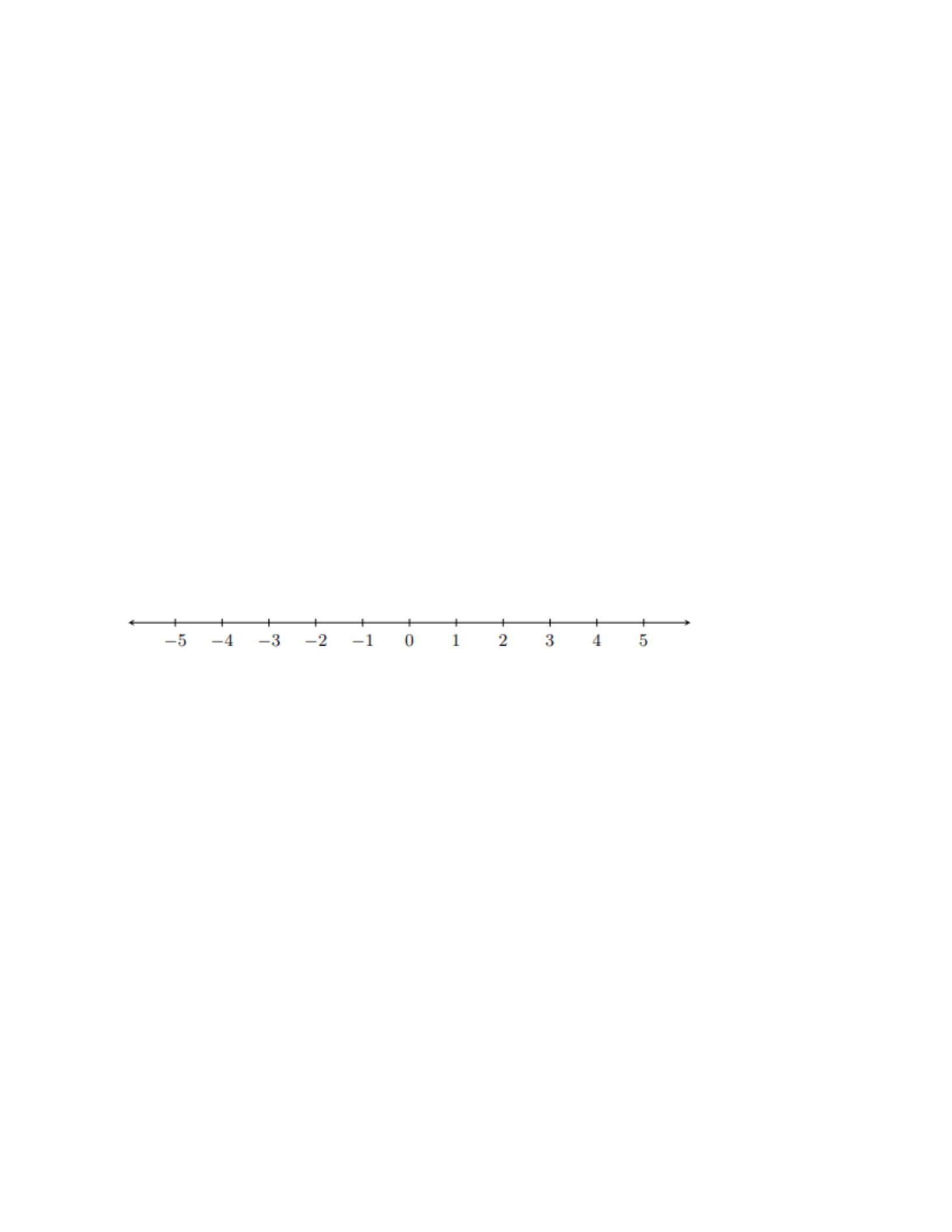
xxxxxxxxxxxx. 14÷2=714÷2=7
yyyyyyyyyyyy. 0÷5=00÷5=0. Note When dividing 0 by any number, the answer is
always 0.
zzzzzzzzzzzz. −10÷0=−10÷0= undefined.
Note 1.23
Any number divided by 0 is undefined!
Multiplying and Dividing Integers
Consider two numbers at a time.
103. If the signs of the two numbers are the same, then the sign of the answer is
positive.
104. If the signs of the two numbers are different, then the sign of the answer is
negative.
We begin with a brief review of arithmetic with integers
i.e. …,−3,−2,−1,0,1,2,3,……,−3,−2,−1,0,1,2,3,…
Any number has a weight and a sign.
The magnitude (or weight) of a number is the distance it is from 0 on the number line.
Example 1.1
For example, the weight of -5 is 5 and the weight of 7 is 7 .
Two numbers are opposites if, on the number line, they are on opposite sides of zero, but
the same distance away from zero.
So, −5 is the opposite of 5, and 7 is the opposite of −7 and so on.
Addition
We can add two numbers with the help of a number line .
Example 1.2
Adding two positive numbers: For example to add 3+43+4, we start with 3 on the number
line then move 4 units to the right. We land at 7 which is our answer.
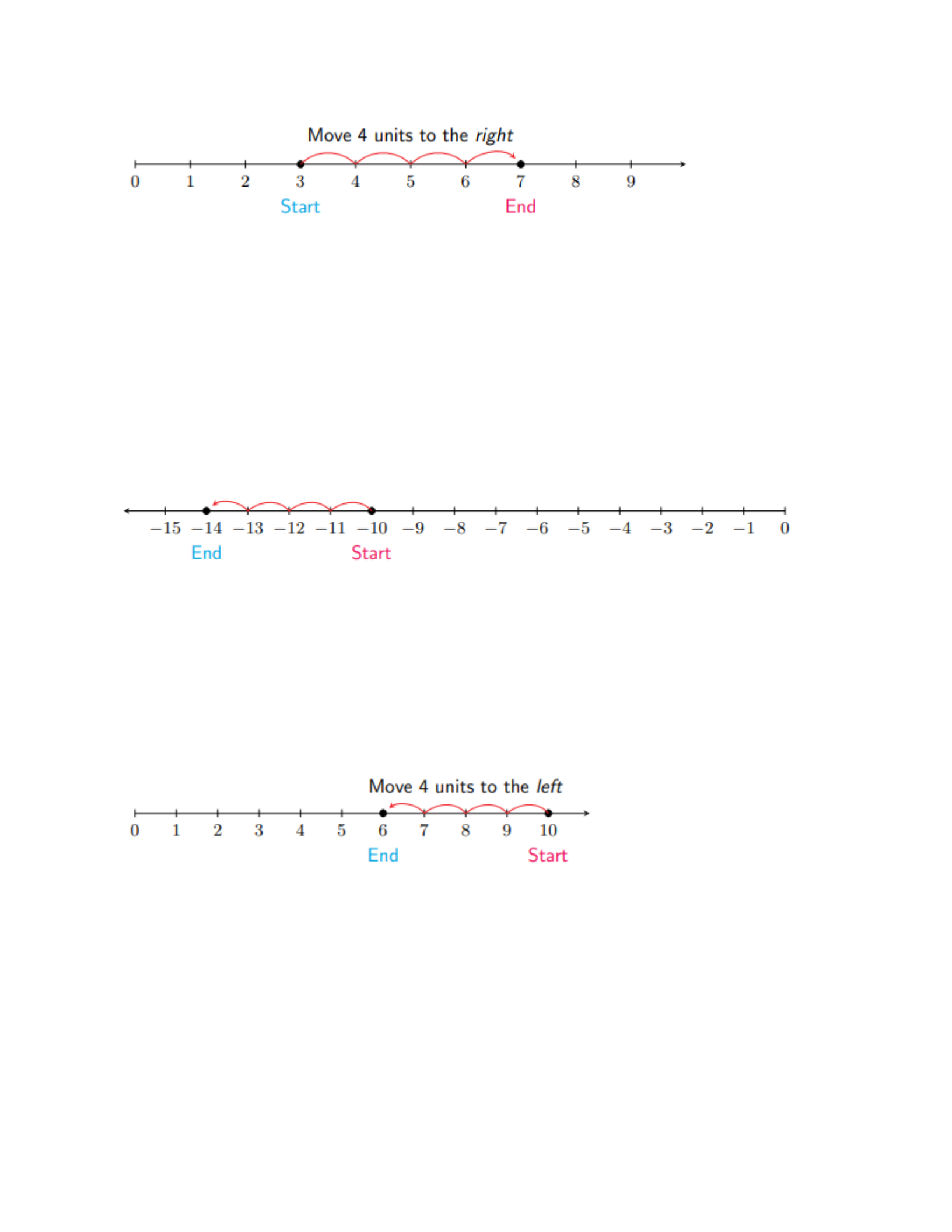
So, 3+4=73+4=7. Notice that the answer has the same sign as the signs of 3 and 4 (both
positive) and its weight comes from adding the weights of 3 and 4.
You always move to the right when you add a positive number
Example 1.3
Adding two negative numbers: For example, −10+(−4)−10+(−4) means you are adding a
debt of $4$4 to an already existing debt of $10.$10. So, we start at -10 on the number line
and move 4 units to the left, to land at −14,−14, which is the answer.
You always move to the left when you add a negative number (a debt)
So, −10+(−4)=−14−10+(−4)=−14. Notice that the answer has the same sign as the signs of -
10 and -4 (both negative) and its weight comes from adding the weights of -10 and -4
To add numbers of opposite signs, that is, a positive and a negative number, we can also
use the number line. For example, to perform 10+(−4),10+(−4), we start at 10 on the
number line and then move 4 units to the left. We land at 6,6, which is the answer. Think
of 10+(−4)10+(−4) as having $10$10 and adding a $4$4 debt. Because we are adding a
debt, we move to the left on the number line!
So, 10+(−4)=6.10+(−4)=6. Notice that the answer has the same sign as the sign of 10
(positive) because it is the number of larger weight, and its weight comes from finding the
difference of the weights of 10 and -4
Notice that because we were adding two numbers of opposite signs, the answer ended up
being the difference in weight (6) along with the sign of the number of larger weight
(positive).
Example 1.4
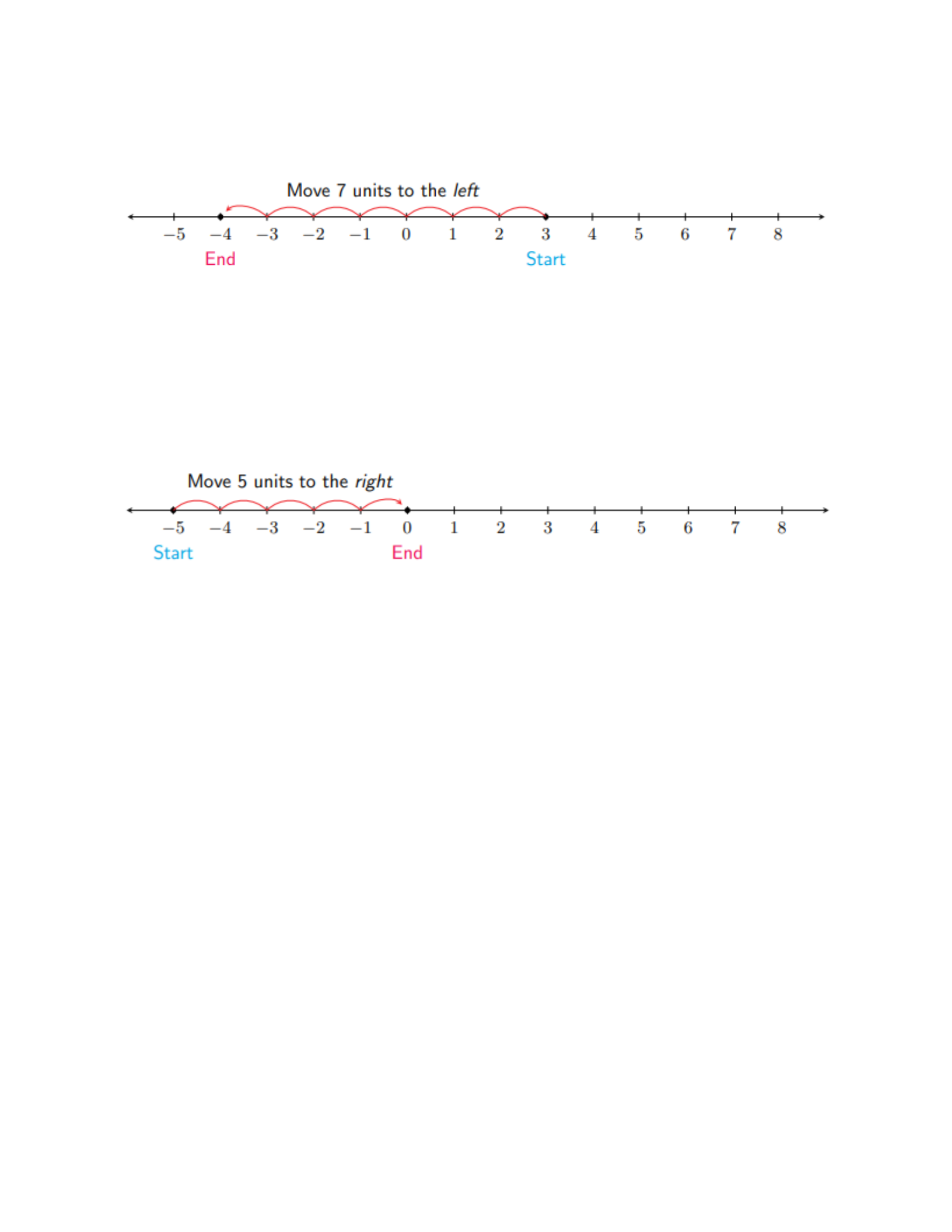
Adding two numbers of opposite signs: For example, 3+(−7)3+(−7). We start at 3 and move
toward 7 units to the left, and we land at −4,−4, which is our answer.
So, 3+(−7)=−4.3+(−7)=−4. Notice that the answer has the same sign as the signs of -7
(negative) because it is the number of larger weight, and its weight comes from finding the
difference of the weights of 3 and -7.
Example 1.5
Adding opposites: We start at -5 on the number line and jump to the right 5 units to land
finally at 00. So −5+5=0−5+5=0.
Note 1.6
Two opposite numbers are called a zero-pair, because adding them always results in 0.
So, −5 and 5 are a zero-pair.
Adding Intergers
105. To add two numbers of the same sign, add their weights and place it after
the sign.
106. To add two numbers of opposite signs, find the difference of their weights
and place it after the sign of the number with the greater weight.
Example 1.7
Add:
aaaaaaaaaaaaa. −8+19=11−8+19=11
bbbbbbbbbbbbb. −8+4=−4−8+4=−4
ccccccccccccc. 6+(−9)=−36+(−9)=−3
ddddddddddddd. 7+(−2)=57+(−2)=5
eeeeeeeeeeeee. (−4)+(−7)=−11(−4)+(−7)=−11
fffffffffffff. 8+7=158+7=15

Note 1.8
While we can add in any order: 4+2=2+44+2=2+4, it is sometimes convenient to add up all
of the negative numbers and add up all of the positive numbers, and then add the results.
There are also times when it is best to notice certain simplifications if the numbers are
added in a different order.
For example
−5+4+5+(−8)=−5+(−8)+4+5( by reordering )−5+4+5+(−8)=−5+(−8)+4+5( by reordering )
so,
−5+4+5+(−8)=−5+(−8)+4+5=−13+9=−4−5+4+5+(−8)=−5+(−8)+4+5=−13+9=−4
We could have also simplified this by noting that (-5) and 5 are zero-pair, so we are left
with 4+(−8)4+(−8) which is -4.
Example 1.9
We can calculate
(−4)+(−5)+7+(−3)=(−4)+(−5)+(−3)+7=(−12)+7=−5(−4)+(−5)+7+(−3)=(−4)+(−5)+(−3)+7=
(−12)+7=−5
We could have simplified this by noting that (-4) and (-3) make -7, and -7 and 7 are zero-
pair, so the total is -5.
Subtraction (as Addition of the Opposite)
Once we know how to add numbers, we are set to subtract numbers because subtraction is
nothing but addition of the opposite. That is, subtracting 8 − 3 (which reads: subtracting 3
from 8) is the same as 8 + (−3) (which reads: Adding −3 to 8.).
Example 1.10
So, 8−3=8+(−3),8−3=8+(−3), and, we can use the rules of adding two numbers of opposite
signs to find out that the answer is 5.5. We can also use the number line. We start at 8 and
move 3 units to the left (adding -3 is adding a debt, so we move to the left).
So 8−3=5.−4−3−2−10123456788−3=5.−4−3−2−1012345678 End Start Move 3 units to the
left
Example 1.11
To calculate 3−73−7 we first rewrite it as an addition
problem. 3−7=3+(−7).3−7=3+(−7). We can either use the number line, or the rules of
adding two numbers of opposite signs. And, 50,3−7=3+(−7)=−450,3−7=3+(−7)=−4
Example 1.12
To calculate −4−1,−4−1, we first rewrite it as an addition
problem. −4−1=−4+(−1).−4−1=−4+(−1). We can either use the number line, or the rules of
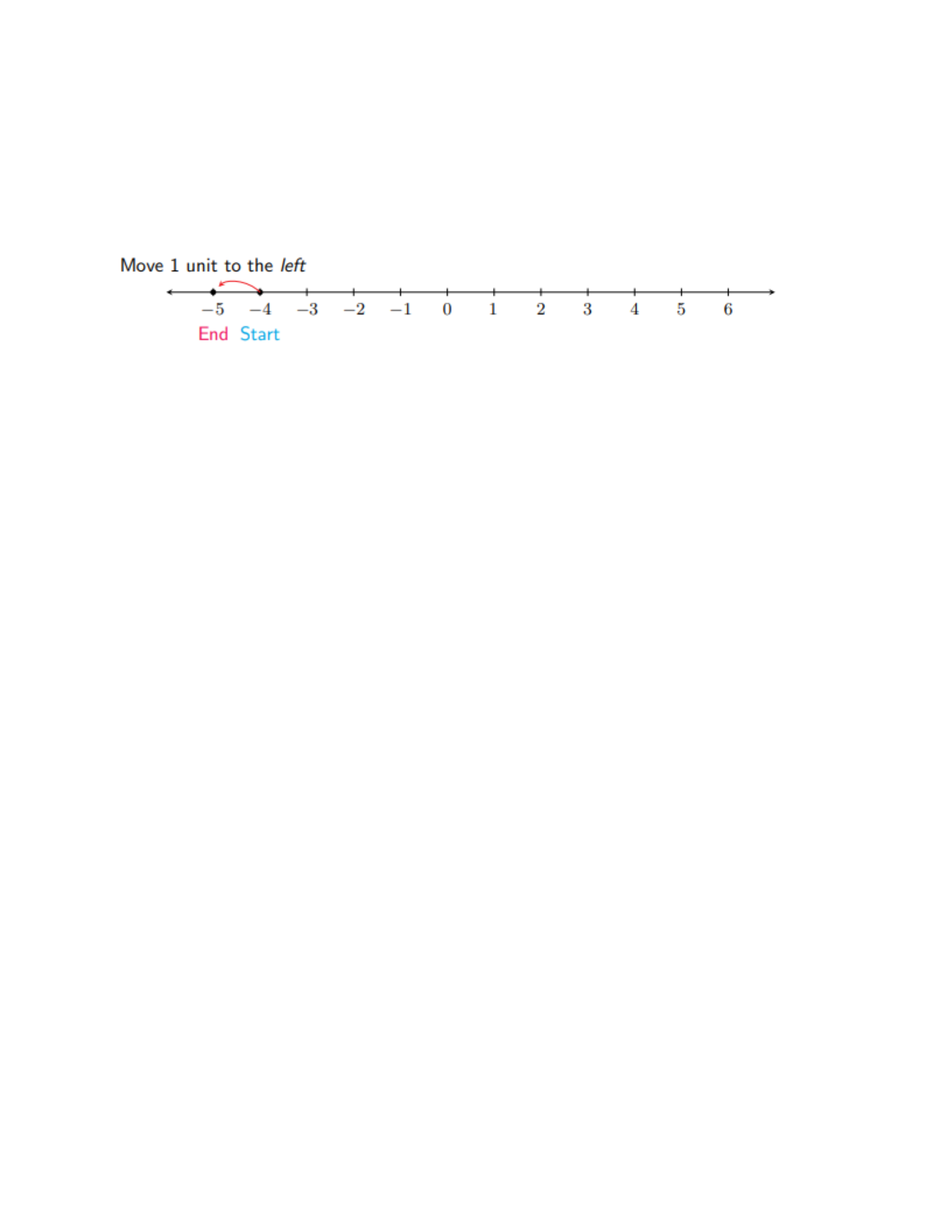
adding two numbers of the same signs. If we want to use the rules, both numbers are
negative, so our answer will be negative, and, adding the weights of -4 and -1
is 5.50,−4−1=−4+(−1)=−55.50,−4−1=−4+(−1)=−5
On the number line, we start at -4 and move 1 unit to the left, to land on -5 which is our
answer.
Changing the subtractions to additions in this way is particularly useful when adding or
subtracting several numbers (because we can add in any order).
Example 1.13
===−3−7+5+7+13−6−(−9)−3+(−7)+5+7+13+(−6)+9−3+(−7)+(−6)+5+7+13+918−3−7+5+7
+13−6−(−9)=−3+(−7)+5+7+13+(−6)+9=−3+(−7)+(−6)+5+7+13+9=18
===−3−7+5+7+13−6−(−9)−3+(−7)+5+7+13+(−6)+95+1318−3−7+5+7+13−6−(−9)=−3+(−7
)+5+7+13+(−6)+9=5+13=18
Remark 1.14
Warning: The symbol "-" is used in two different ways. When it is between two expressions,
it means subtract (e.g., 3−43−4 ). Otherwise, it means 'opposite' or 'negative'
(e.g., −3+4−3+4 ). So in the expression −4−(−3)−4−(−3), the first and last "-" means
opposite and the one in the middle one means subtract. The importance of understanding
this can not be overestimated.
Multiplication and Division of Positive Numbers
Multiplication of integers is adding in the sense that 3×4=4+4+43×4=4+4+4
To multiply larger numbers, it is better to use the usual scheme of multiplication. For
example:
Example 1.15
Let us multiply 152 by 34. We will for convenience sake put the smaller number on the
bottom (though it is not necessary). We have
+×4516515306624808152×34608+45605168
And division is the opposite of multiplication in the sense that to compute 45÷945÷9 is to
find a number so that when we multiply by 9 we get 45. We run through our multiplication
tables (which are hopefully in our head) to discover that 5 does the
trick: 5×9=455×9=45 so that 45÷9=5.45÷9=5. We will discuss division from a different
point of view when we discuss fractions.
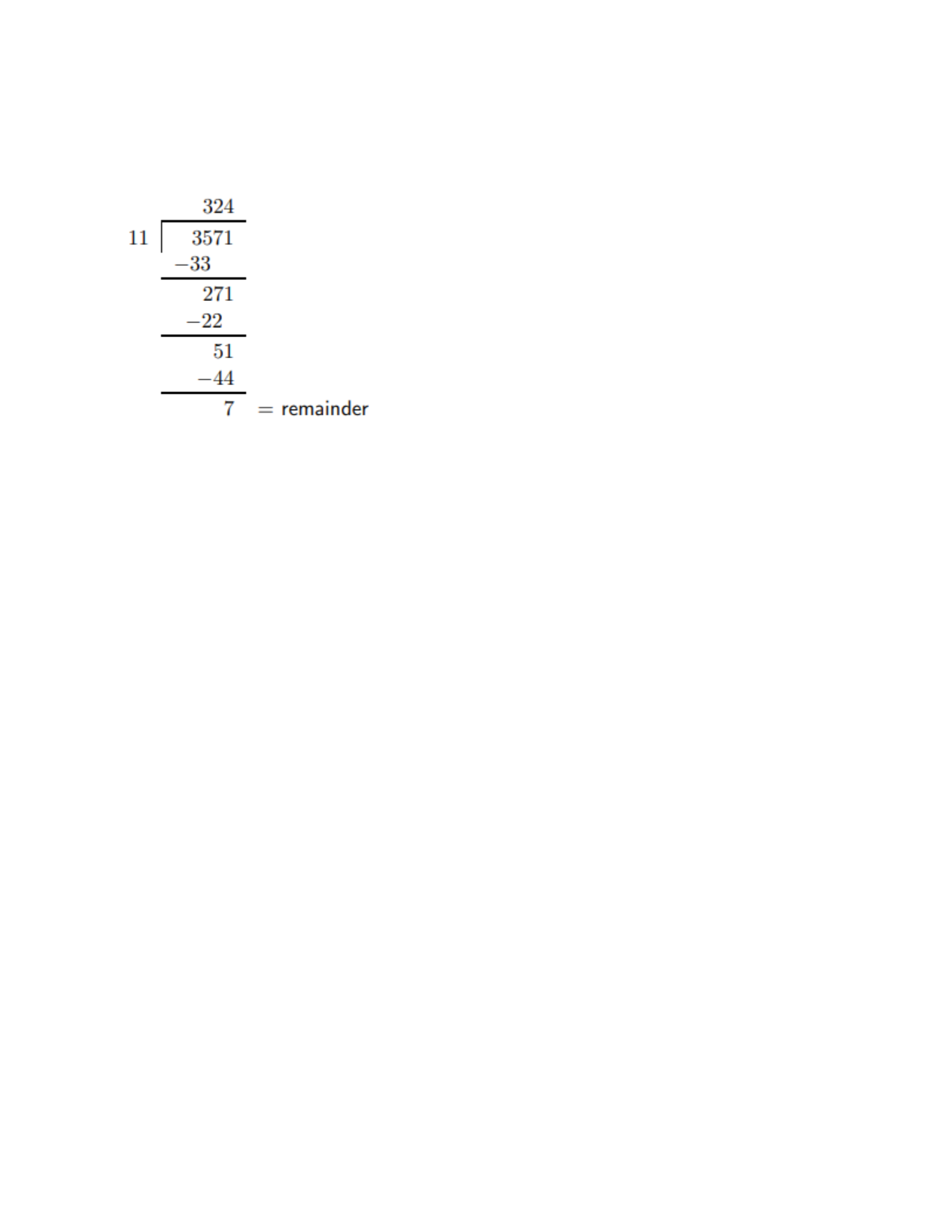
To divide larger numbers, we can use long division. For example, let’s divide 3571 by 11.
Example 1.16
Multiplication involving negative numbers
Multiplication is a little tricky to understand without the notion of distribution (discussed
later). We will begin with noting again what it means to multiply a number by a positive
number: So if we want to compute 4⋅(−7)4⋅(−7) we note
4⋅(−7)=(−7)+(−7)+(−7)+(−7)=−284⋅(−7)=(−7)+(−7)+(−7)+(−7)=−28
Note that since 4⋅7=28,4⋅(−7)=−(4⋅7).4⋅7=28,4⋅(−7)=−(4⋅7). We can multiply positive
numbers in any order: 4⋅7=7⋅44⋅7=7⋅4. The same is true of positive and negative numbers:
(−7)⋅4=4⋅(−7)=−(4⋅7)=−28(−7)⋅4=4⋅(−7)=−(4⋅7)=−28
Example 1.17
5⋅(−12)=−(5⋅12)=−605⋅(−12)=−(5⋅12)=−60 and (−3)⋅(−2)=−(3⋅(−2))=−(−(3⋅2))=6(−3)⋅(−2)
=−(3⋅(−2))=−(−(3⋅2))=6
Example 1.18
So the size of the product of two numbers is the product of their sizes. The sign is positive if
the signs are the same and negative if they are different.
Example 1.19
Two quantities right next to each other, with no symbol between them (except for
parentheses around either or both numbers), has an implicit multiplication. For
example, 3(2)=3×23(2)=3×2.
Example 1.20
Multiply:
aaaaaaaaaaa. (−5)(−8)=40(−5)(−8)=40

bbbbbbbbbbb. (−6)⋅7=−42(−6)⋅7=−42
ccccccccccc. 4⋅12=484⋅12=48
ddddddddddd. (−3)(−6)⋅4(−3)=18⋅4(−3)=72(−3)=−216( multiplying from left to
right )(−3)(−6)⋅4(−3)=18⋅4(−3)=72(−3)=−216( multiplying from left to right )
eeeeeeeeeee. (−3)(−5)⋅4(−2)=(−3)⋅4⋅(−5)(−2)=−12⋅10=−120((−3)(−5)⋅4(−2)=(−3)⋅
4⋅(−5)(−2)=−12⋅10=−120( since we can multiply in any order it is convenient to see
that −5⋅−2=10.−5⋅−2=10. )
Exponents of integers
Recall that a positive exponent represents the number of times a number is multiplied by
itself.
Example 1.21
Evaluate:
aaaaaaaaaaaaa. 52=5⋅5=2552=5⋅5=25
bbbbbbbbbbbbb. (−4)3=(−4)⋅(−4)⋅(−4)=16⋅(−4)=−64(−4)3=(−4)⋅(−4)⋅(−4)=16⋅(−4)=−6
4
ccccccccccccc. (−7)1=−7(−7)1=−7
ddddddddddddd. −24=−2⋅2⋅2⋅2=−16−24=−2⋅2⋅2⋅2=−16 Note: The exponent here is for
2 not −2!
eeeeeeeeeeeee. (−3)4=(−3)⋅(−3)⋅(−3)⋅(−3)=9⋅(−3)⋅(−3)=−27⋅(−3)=81(−3)4=(−3)⋅(−3)
⋅(−3)⋅(−3)=9⋅(−3)⋅(−3)=−27⋅(−3)=81
fffffffffffff. (−2)5=(−2)⋅(−2)⋅(−2)⋅(−2)⋅(−2)=−32(−2)5=(−2)⋅(−2)⋅(−2)⋅(−2)⋅(−2)=−32
Exponent rules in details will be further discussed in Chapter 5.
Division involving negative numbers
Division is just a question of knowing multiplication and therefore has the same rule: The
size of the quotient of two numbers is the quotient of the sizes. The sign is positive if the
signs are the same and negative if they are different.
Example 1.22
Divide:
aaaaaaaaaaaaa. (−42)÷7=−6(−42)÷7=−6
bbbbbbbbbbbbb. 81÷(−9)=−981÷(−9)=−9
ccccccccccccc. (−35)÷(−7)=5(−35)÷(−7)=5
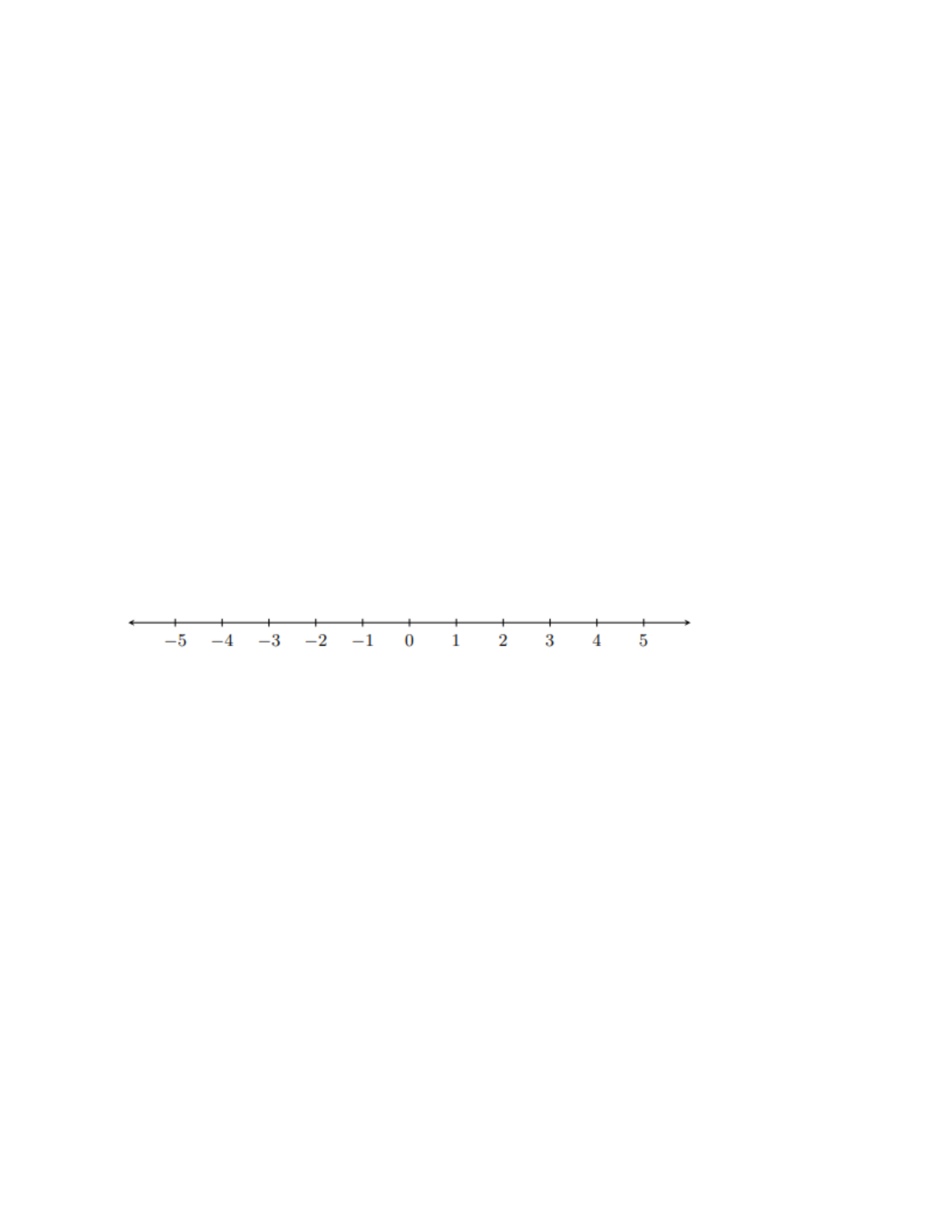
ddddddddddddd. 14÷2=714÷2=7
eeeeeeeeeeeee. 0÷5=00÷5=0. Note When dividing 0 by any number, the answer is
always 0.
fffffffffffff. −10÷0=−10÷0= undefined.
Note 1.23
Any number divided by 0 is undefined!
Multiplying and Dividing Integers
Consider two numbers at a time.
105. If the signs of the two numbers are the same, then the sign of the answer is
positive.
106. If the signs of the two numbers are different, then the sign of the answer is
negative.
We begin with a brief review of arithmetic with integers
i.e. …,−3,−2,−1,0,1,2,3,……,−3,−2,−1,0,1,2,3,…
Any number has a weight and a sign.
The magnitude (or weight) of a number is the distance it is from 0 on the number line.
Example 1.1
For example, the weight of -5 is 5 and the weight of 7 is 7 .
Two numbers are opposites if, on the number line, they are on opposite sides of zero, but
the same distance away from zero.
So, −5 is the opposite of 5, and 7 is the opposite of −7 and so on.
Addition
We can add two numbers with the help of a number line .
Example 1.2
Adding two positive numbers: For example to add 3+43+4, we start with 3 on the number
line then move 4 units to the right. We land at 7 which is our answer.
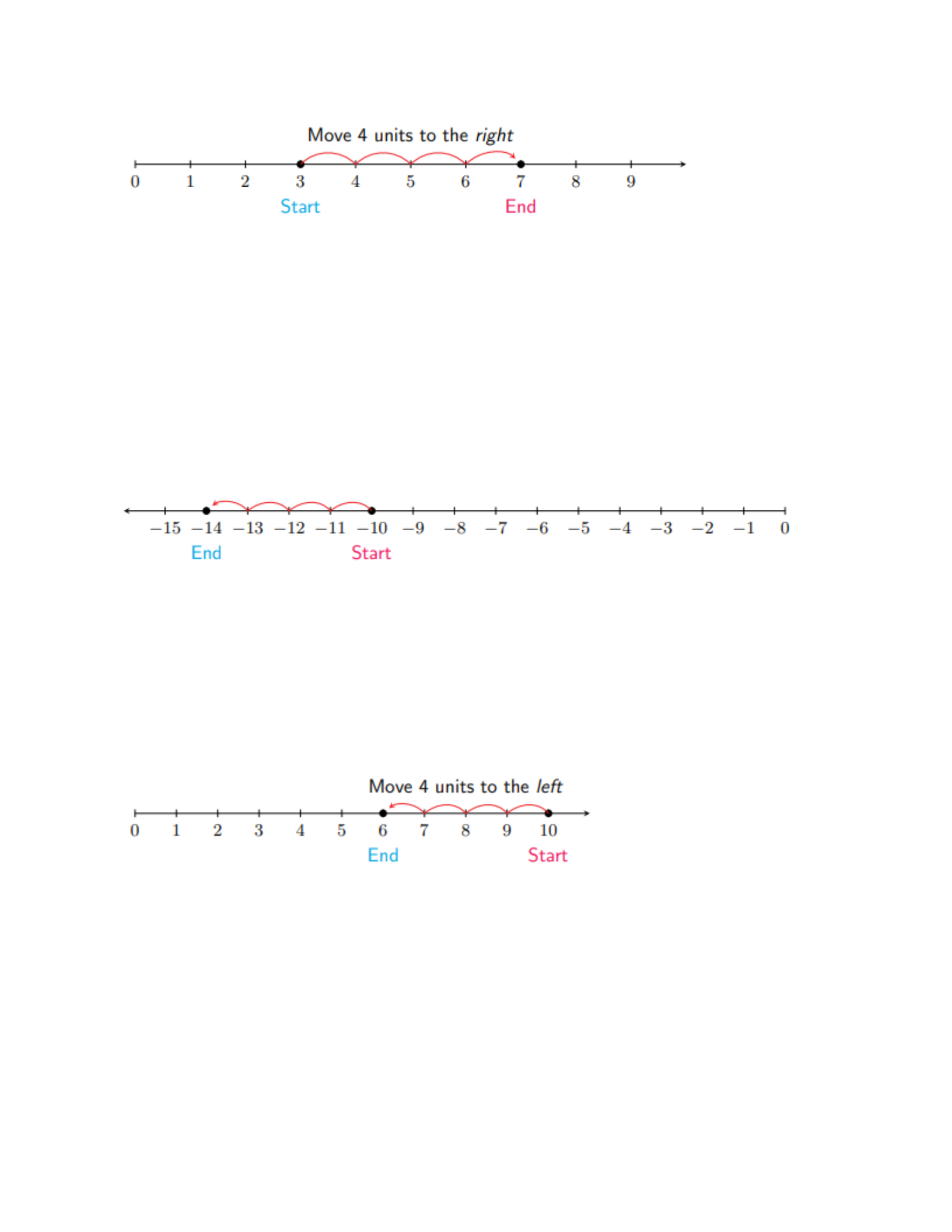
So, 3+4=73+4=7. Notice that the answer has the same sign as the signs of 3 and 4 (both
positive) and its weight comes from adding the weights of 3 and 4.
You always move to the right when you add a positive number
Example 1.3
Adding two negative numbers: For example, −10+(−4)−10+(−4) means you are adding a
debt of $4$4 to an already existing debt of $10.$10. So, we start at -10 on the number line
and move 4 units to the left, to land at −14,−14, which is the answer.
You always move to the left when you add a negative number (a debt)
So, −10+(−4)=−14−10+(−4)=−14. Notice that the answer has the same sign as the signs of -
10 and -4 (both negative) and its weight comes from adding the weights of -10 and -4
To add numbers of opposite signs, that is, a positive and a negative number, we can also
use the number line. For example, to perform 10+(−4),10+(−4), we start at 10 on the
number line and then move 4 units to the left. We land at 6,6, which is the answer. Think
of 10+(−4)10+(−4) as having $10$10 and adding a $4$4 debt. Because we are adding a
debt, we move to the left on the number line!
So, 10+(−4)=6.10+(−4)=6. Notice that the answer has the same sign as the sign of 10
(positive) because it is the number of larger weight, and its weight comes from finding the
difference of the weights of 10 and -4
Notice that because we were adding two numbers of opposite signs, the answer ended up
being the difference in weight (6) along with the sign of the number of larger weight
(positive).
Example 1.4
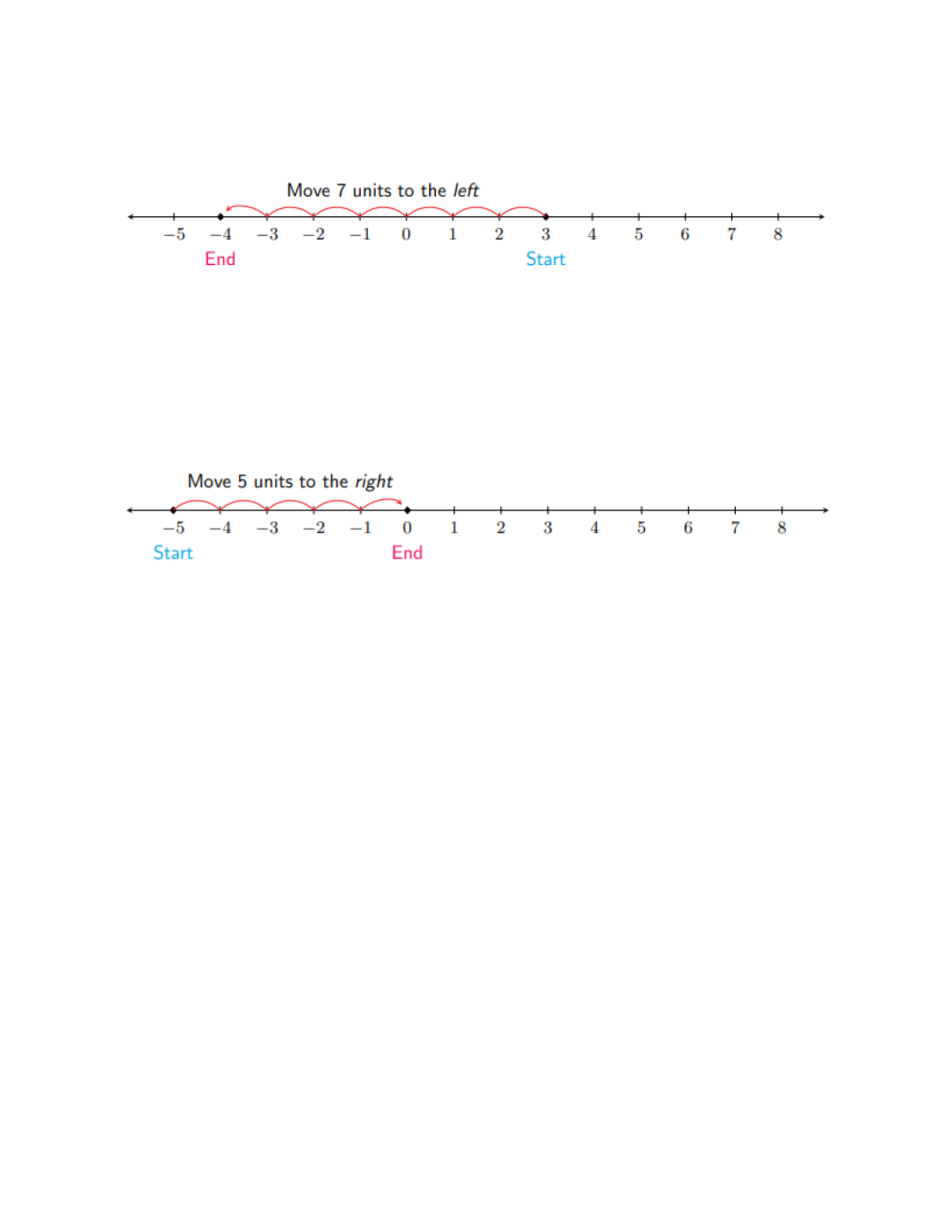
Adding two numbers of opposite signs: For example, 3+(−7)3+(−7). We start at 3 and move
toward 7 units to the left, and we land at −4,−4, which is our answer.
So, 3+(−7)=−4.3+(−7)=−4. Notice that the answer has the same sign as the signs of -7
(negative) because it is the number of larger weight, and its weight comes from finding the
difference of the weights of 3 and -7.
Example 1.5
Adding opposites: We start at -5 on the number line and jump to the right 5 units to land
finally at 00. So −5+5=0−5+5=0.
Note 1.6
Two opposite numbers are called a zero-pair, because adding them always results in 0.
So, −5 and 5 are a zero-pair.
Adding Intergers
107. To add two numbers of the same sign, add their weights and place it after
the sign.
108. To add two numbers of opposite signs, find the difference of their weights
and place it after the sign of the number with the greater weight.
Example 1.7
Add:
ggggggggggggg. −8+19=11−8+19=11
hhhhhhhhhhhhh. −8+4=−4−8+4=−4
iiiiiiiiiiiii. 6+(−9)=−36+(−9)=−3
jjjjjjjjjjjjj. 7+(−2)=57+(−2)=5
kkkkkkkkkkkkk. (−4)+(−7)=−11(−4)+(−7)=−11
lllllllllllll. 8+7=158+7=15

Note 1.8
While we can add in any order: 4+2=2+44+2=2+4, it is sometimes convenient to add up all
of the negative numbers and add up all of the positive numbers, and then add the results.
There are also times when it is best to notice certain simplifications if the numbers are
added in a different order.
For example
−5+4+5+(−8)=−5+(−8)+4+5( by reordering )−5+4+5+(−8)=−5+(−8)+4+5( by reordering )
so,
−5+4+5+(−8)=−5+(−8)+4+5=−13+9=−4−5+4+5+(−8)=−5+(−8)+4+5=−13+9=−4
We could have also simplified this by noting that (-5) and 5 are zero-pair, so we are left
with 4+(−8)4+(−8) which is -4.
Example 1.9
We can calculate
(−4)+(−5)+7+(−3)=(−4)+(−5)+(−3)+7=(−12)+7=−5(−4)+(−5)+7+(−3)=(−4)+(−5)+(−3)+7=
(−12)+7=−5
We could have simplified this by noting that (-4) and (-3) make -7, and -7 and 7 are zero-
pair, so the total is -5.
Subtraction (as Addition of the Opposite)
Once we know how to add numbers, we are set to subtract numbers because subtraction is
nothing but addition of the opposite. That is, subtracting 8 − 3 (which reads: subtracting 3
from 8) is the same as 8 + (−3) (which reads: Adding −3 to 8.).
Example 1.10
So, 8−3=8+(−3),8−3=8+(−3), and, we can use the rules of adding two numbers of opposite
signs to find out that the answer is 5.5. We can also use the number line. We start at 8 and
move 3 units to the left (adding -3 is adding a debt, so we move to the left).
So 8−3=5.−4−3−2−10123456788−3=5.−4−3−2−1012345678 End Start Move 3 units to the
left
Example 1.11
To calculate 3−73−7 we first rewrite it as an addition
problem. 3−7=3+(−7).3−7=3+(−7). We can either use the number line, or the rules of
adding two numbers of opposite signs. And, 50,3−7=3+(−7)=−450,3−7=3+(−7)=−4
Example 1.12
To calculate −4−1,−4−1, we first rewrite it as an addition
problem. −4−1=−4+(−1).−4−1=−4+(−1). We can either use the number line, or the rules of
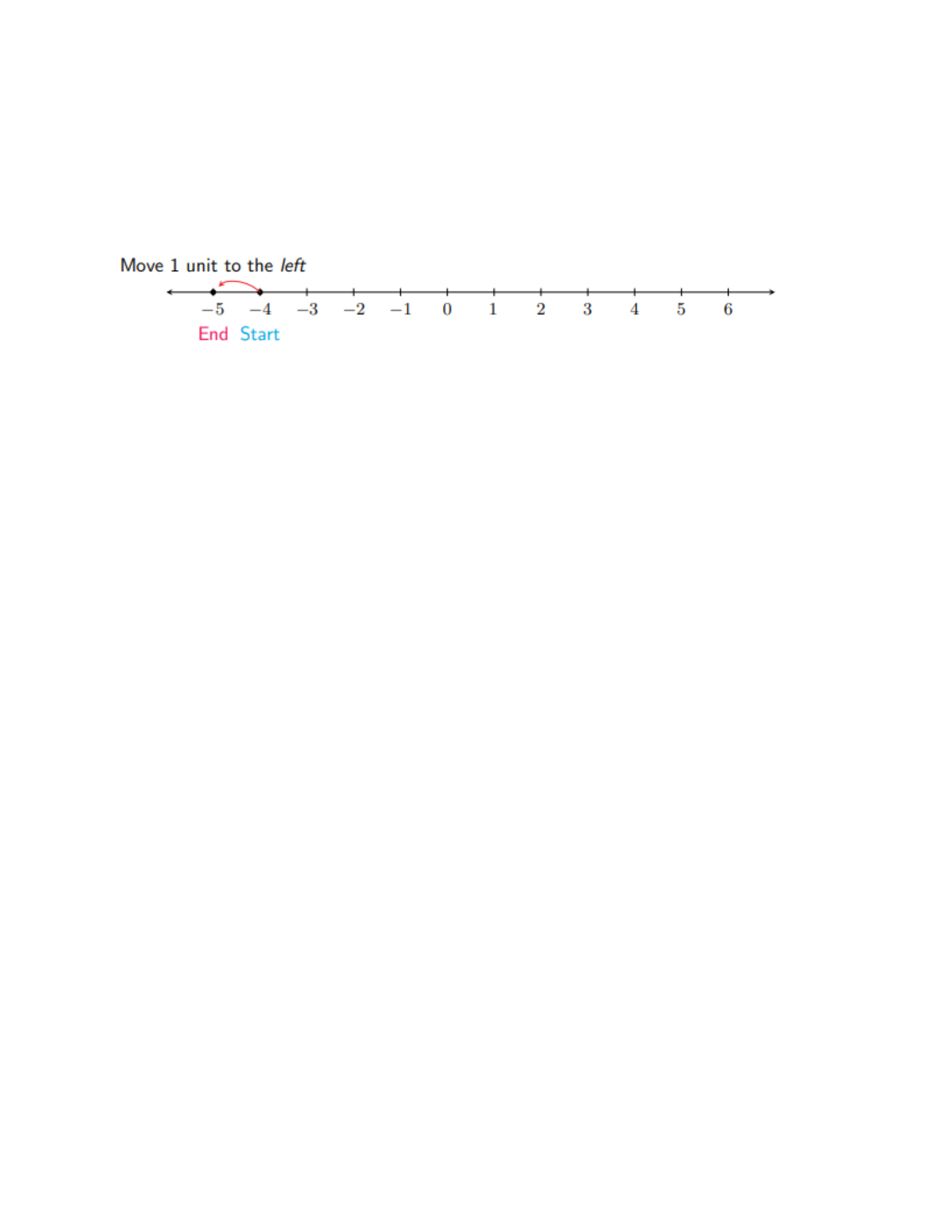
adding two numbers of the same signs. If we want to use the rules, both numbers are
negative, so our answer will be negative, and, adding the weights of -4 and -1
is 5.50,−4−1=−4+(−1)=−55.50,−4−1=−4+(−1)=−5
On the number line, we start at -4 and move 1 unit to the left, to land on -5 which is our
answer.
Changing the subtractions to additions in this way is particularly useful when adding or
subtracting several numbers (because we can add in any order).
Example 1.13
===−3−7+5+7+13−6−(−9)−3+(−7)+5+7+13+(−6)+9−3+(−7)+(−6)+5+7+13+918−3−7+5+7
+13−6−(−9)=−3+(−7)+5+7+13+(−6)+9=−3+(−7)+(−6)+5+7+13+9=18
===−3−7+5+7+13−6−(−9)−3+(−7)+5+7+13+(−6)+95+1318−3−7+5+7+13−6−(−9)=−3+(−7
)+5+7+13+(−6)+9=5+13=18
Remark 1.14
Warning: The symbol "-" is used in two different ways. When it is between two expressions,
it means subtract (e.g., 3−43−4 ). Otherwise, it means 'opposite' or 'negative'
(e.g., −3+4−3+4 ). So in the expression −4−(−3)−4−(−3), the first and last "-" means
opposite and the one in the middle one means subtract. The importance of understanding
this can not be overestimated.
Multiplication and Division of Positive Numbers
Multiplication of integers is adding in the sense that 3×4=4+4+43×4=4+4+4
To multiply larger numbers, it is better to use the usual scheme of multiplication. For
example:
Example 1.15
Let us multiply 152 by 34. We will for convenience sake put the smaller number on the
bottom (though it is not necessary). We have
+×4516515306624808152×34608+45605168
And division is the opposite of multiplication in the sense that to compute 45÷945÷9 is to
find a number so that when we multiply by 9 we get 45. We run through our multiplication
tables (which are hopefully in our head) to discover that 5 does the
trick: 5×9=455×9=45 so that 45÷9=5.45÷9=5. We will discuss division from a different
point of view when we discuss fractions.
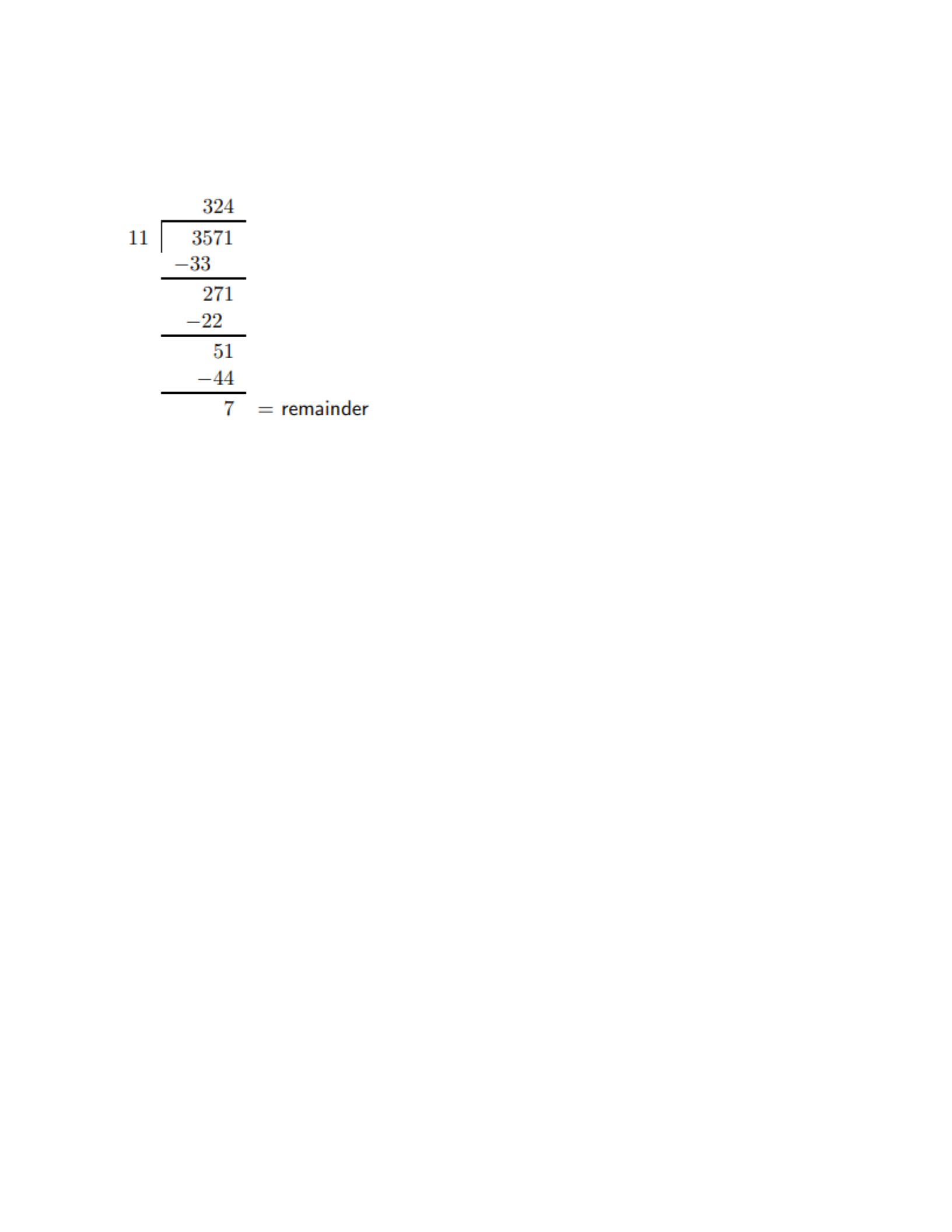
To divide larger numbers, we can use long division. For example, let’s divide 3571 by 11.
Example 1.16
Multiplication involving negative numbers
Multiplication is a little tricky to understand without the notion of distribution (discussed
later). We will begin with noting again what it means to multiply a number by a positive
number: So if we want to compute 4⋅(−7)4⋅(−7) we note
4⋅(−7)=(−7)+(−7)+(−7)+(−7)=−284⋅(−7)=(−7)+(−7)+(−7)+(−7)=−28
Note that since 4⋅7=28,4⋅(−7)=−(4⋅7).4⋅7=28,4⋅(−7)=−(4⋅7). We can multiply positive
numbers in any order: 4⋅7=7⋅44⋅7=7⋅4. The same is true of positive and negative numbers:
(−7)⋅4=4⋅(−7)=−(4⋅7)=−28(−7)⋅4=4⋅(−7)=−(4⋅7)=−28
Example 1.17
5⋅(−12)=−(5⋅12)=−605⋅(−12)=−(5⋅12)=−60 and (−3)⋅(−2)=−(3⋅(−2))=−(−(3⋅2))=6(−3)⋅(−2)
=−(3⋅(−2))=−(−(3⋅2))=6
Example 1.18
So the size of the product of two numbers is the product of their sizes. The sign is positive if
the signs are the same and negative if they are different.
Example 1.19
Two quantities right next to each other, with no symbol between them (except for
parentheses around either or both numbers), has an implicit multiplication. For
example, 3(2)=3×23(2)=3×2.
Example 1.20
Multiply:
fffffffffff. (−5)(−8)=40(−5)(−8)=40

ggggggggggg. (−6)⋅7=−42(−6)⋅7=−42
hhhhhhhhhhh. 4⋅12=484⋅12=48
iiiiiiiiiii. (−3)(−6)⋅4(−3)=18⋅4(−3)=72(−3)=−216( multiplying from left to
right )(−3)(−6)⋅4(−3)=18⋅4(−3)=72(−3)=−216( multiplying from left to right )
jjjjjjjjjjj. (−3)(−5)⋅4(−2)=(−3)⋅4⋅(−5)(−2)=−12⋅10=−120((−3)(−5)⋅4(−2)=(−3)⋅4⋅(−5)(
−2)=−12⋅10=−120( since we can multiply in any order it is convenient to see
that −5⋅−2=10.−5⋅−2=10. )
Exponents of integers
Recall that a positive exponent represents the number of times a number is multiplied by
itself.
Example 1.21
Evaluate:
ggggggggggggg. 52=5⋅5=2552=5⋅5=25
hhhhhhhhhhhhh. (−4)3=(−4)⋅(−4)⋅(−4)=16⋅(−4)=−64(−4)3=(−4)⋅(−4)⋅(−4)=16⋅(−4)=−6
4
iiiiiiiiiiiii. (−7)1=−7(−7)1=−7
jjjjjjjjjjjjj. −24=−2⋅2⋅2⋅2=−16−24=−2⋅2⋅2⋅2=−16 Note: The exponent here is for 2 not
−2!
kkkkkkkkkkkkk. (−3)4=(−3)⋅(−3)⋅(−3)⋅(−3)=9⋅(−3)⋅(−3)=−27⋅(−3)=81(−3)4=(−3)⋅(−3)
⋅(−3)⋅(−3)=9⋅(−3)⋅(−3)=−27⋅(−3)=81
lllllllllllll. (−2)5=(−2)⋅(−2)⋅(−2)⋅(−2)⋅(−2)=−32(−2)5=(−2)⋅(−2)⋅(−2)⋅(−2)⋅(−2)=−32
Exponent rules in details will be further discussed in Chapter 5.
Division involving negative numbers
Division is just a question of knowing multiplication and therefore has the same rule: The
size of the quotient of two numbers is the quotient of the sizes. The sign is positive if the
signs are the same and negative if they are different.
Example 1.22
Divide:
ggggggggggggg. (−42)÷7=−6(−42)÷7=−6
hhhhhhhhhhhhh. 81÷(−9)=−981÷(−9)=−9
iiiiiiiiiiiii. (−35)÷(−7)=5(−35)÷(−7)=5
jjjjjjjjjjjjj. 14÷2=714÷2=7
kkkkkkkkkkkkk. 0÷5=00÷5=0. Note When dividing 0 by any number, the answer is
always 0.
lllllllllllll. −10÷0=−10÷0= undefined.
Note 1.23
Any number divided by 0 is undefined!
Multiplying and Dividing Integers
Consider two numbers at a time.
107. If the signs of the two numbers are the same, then the sign of the answer is
positive.
108. If the signs of the two numbers are different, then the sign of the answer is
negative.
We begin with a brief review of arithmetic with integers
i.e. …,−3,−2,−1,0,1,2,3,……,−3,−2,−1,0,1,2,3,…
Any number has a weight and a sign.
The magnitude (or weight) of a number is the distance it is from 0 on the number line.
Example 1.1
For example, the weight of -5 is 5 and the weight of 7 is 7 .
Two numbers are opposites if, on the number line, they are on opposite sides of zero, but
the same distance away from zero.
So, −5 is the opposite of 5, and 7 is the opposite of −7 and so on.
Addition
We can add two numbers with the help of a number line .
Example 1.2
Adding two positive numbers: For example to add 3+43+4, we start with 3 on the number
line then move 4 units to the right. We land at 7 which is our answer.
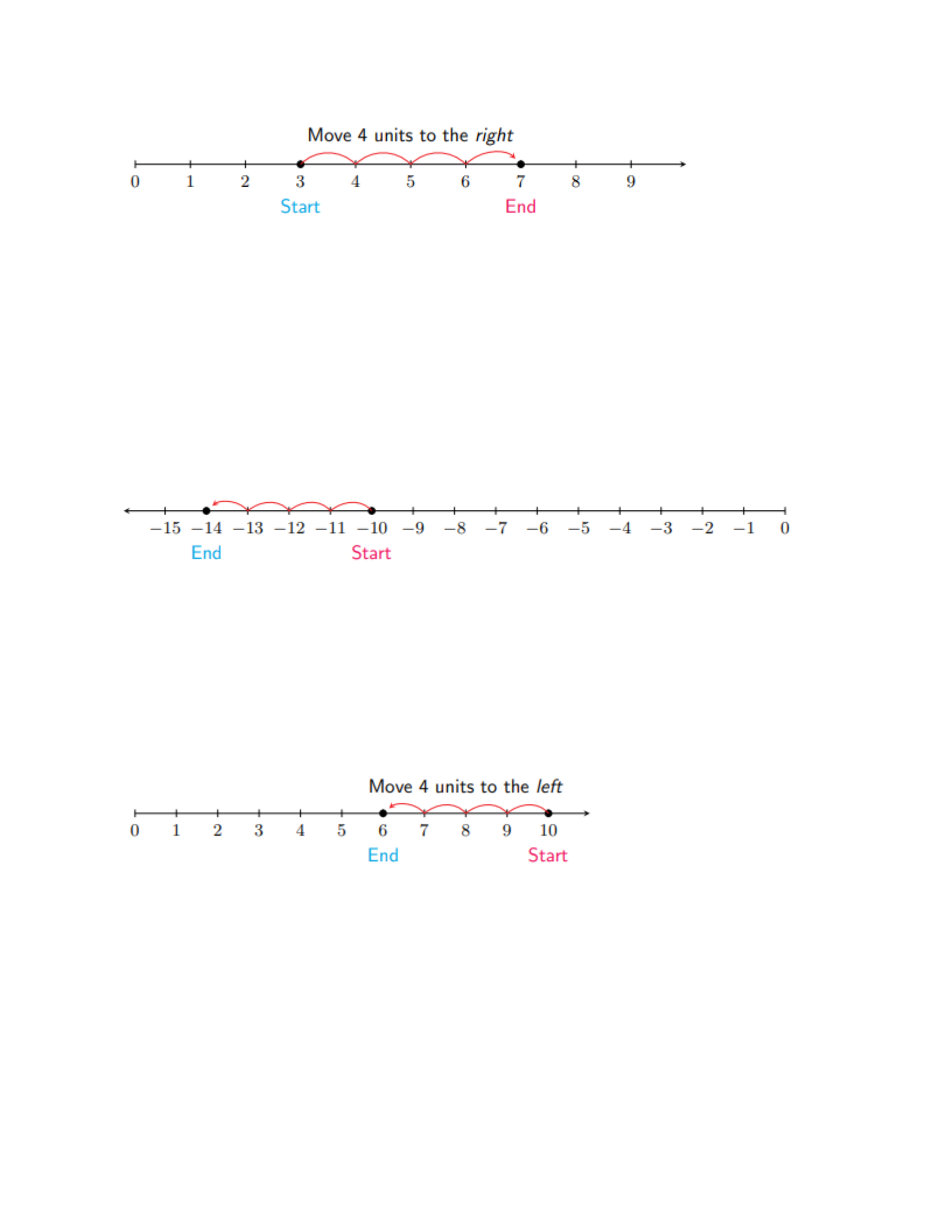
So, 3+4=73+4=7. Notice that the answer has the same sign as the signs of 3 and 4 (both
positive) and its weight comes from adding the weights of 3 and 4.
You always move to the right when you add a positive number
Example 1.3
Adding two negative numbers: For example, −10+(−4)−10+(−4) means you are adding a
debt of $4$4 to an already existing debt of $10.$10. So, we start at -10 on the number line
and move 4 units to the left, to land at −14,−14, which is the answer.
You always move to the left when you add a negative number (a debt)
So, −10+(−4)=−14−10+(−4)=−14. Notice that the answer has the same sign as the signs of -
10 and -4 (both negative) and its weight comes from adding the weights of -10 and -4
To add numbers of opposite signs, that is, a positive and a negative number, we can also
use the number line. For example, to perform 10+(−4),10+(−4), we start at 10 on the
number line and then move 4 units to the left. We land at 6,6, which is the answer. Think
of 10+(−4)10+(−4) as having $10$10 and adding a $4$4 debt. Because we are adding a
debt, we move to the left on the number line!
So, 10+(−4)=6.10+(−4)=6. Notice that the answer has the same sign as the sign of 10
(positive) because it is the number of larger weight, and its weight comes from finding the
difference of the weights of 10 and -4
Notice that because we were adding two numbers of opposite signs, the answer ended up
being the difference in weight (6) along with the sign of the number of larger weight
(positive).
Example 1.4
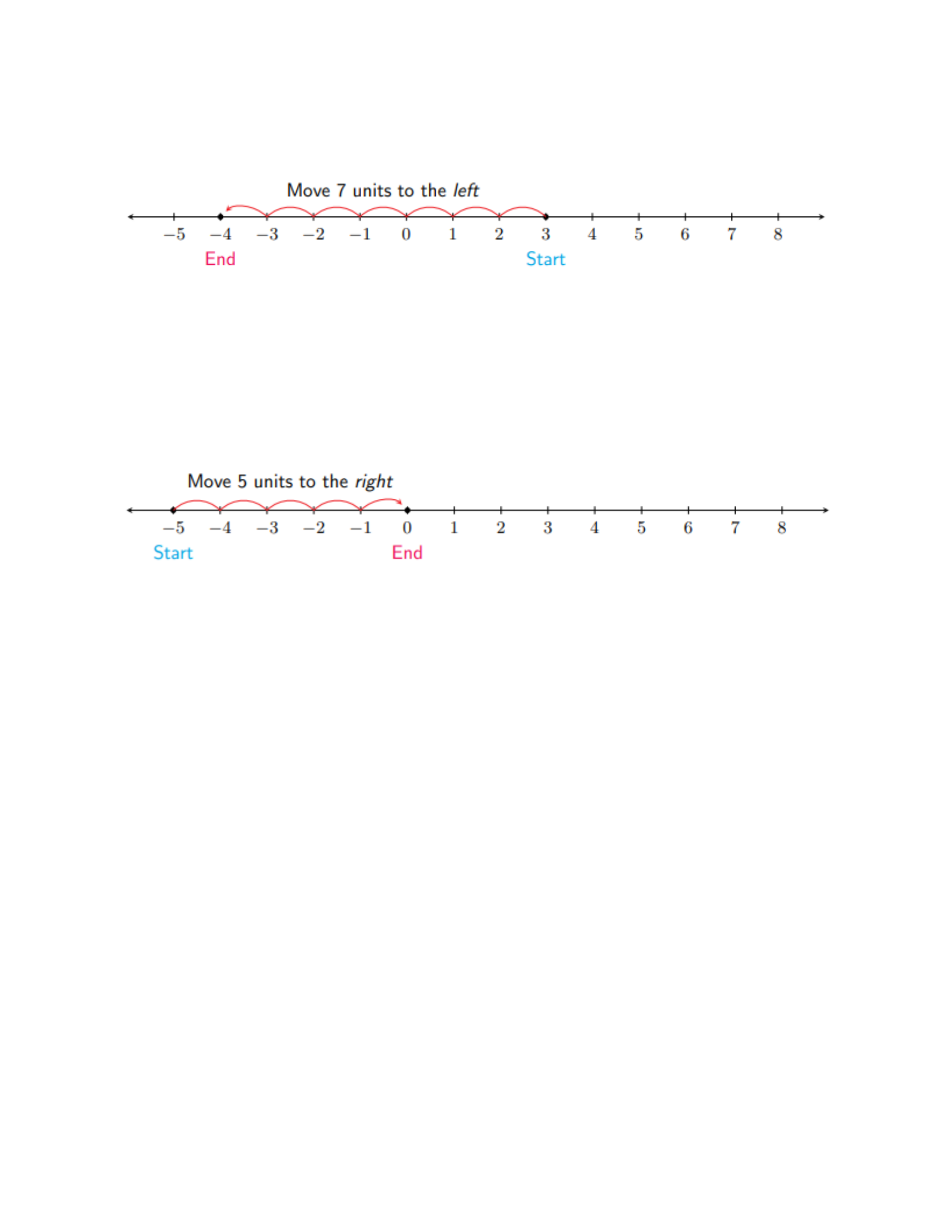
Adding two numbers of opposite signs: For example, 3+(−7)3+(−7). We start at 3 and move
toward 7 units to the left, and we land at −4,−4, which is our answer.
So, 3+(−7)=−4.3+(−7)=−4. Notice that the answer has the same sign as the signs of -7
(negative) because it is the number of larger weight, and its weight comes from finding the
difference of the weights of 3 and -7.
Example 1.5
Adding opposites: We start at -5 on the number line and jump to the right 5 units to land
finally at 00. So −5+5=0−5+5=0.
Note 1.6
Two opposite numbers are called a zero-pair, because adding them always results in 0.
So, −5 and 5 are a zero-pair.
Adding Intergers
109. To add two numbers of the same sign, add their weights and place it after
the sign.
110. To add two numbers of opposite signs, find the difference of their weights
and place it after the sign of the number with the greater weight.
Example 1.7
Add:
mmmmmmmmmmmmm. −8+19=11−8+19=11
nnnnnnnnnnnnn. −8+4=−4−8+4=−4
ooooooooooooo. 6+(−9)=−36+(−9)=−3
ppppppppppppp. 7+(−2)=57+(−2)=5
qqqqqqqqqqqqq. (−4)+(−7)=−11(−4)+(−7)=−11
rrrrrrrrrrrrr. 8+7=158+7=15

Note 1.8
While we can add in any order: 4+2=2+44+2=2+4, it is sometimes convenient to add up all
of the negative numbers and add up all of the positive numbers, and then add the results.
There are also times when it is best to notice certain simplifications if the numbers are
added in a different order.
For example
−5+4+5+(−8)=−5+(−8)+4+5( by reordering )−5+4+5+(−8)=−5+(−8)+4+5( by reordering )
so,
−5+4+5+(−8)=−5+(−8)+4+5=−13+9=−4−5+4+5+(−8)=−5+(−8)+4+5=−13+9=−4
We could have also simplified this by noting that (-5) and 5 are zero-pair, so we are left
with 4+(−8)4+(−8) which is -4.
Example 1.9
We can calculate
(−4)+(−5)+7+(−3)=(−4)+(−5)+(−3)+7=(−12)+7=−5(−4)+(−5)+7+(−3)=(−4)+(−5)+(−3)+7=
(−12)+7=−5
We could have simplified this by noting that (-4) and (-3) make -7, and -7 and 7 are zero-
pair, so the total is -5.
Subtraction (as Addition of the Opposite)
Once we know how to add numbers, we are set to subtract numbers because subtraction is
nothing but addition of the opposite. That is, subtracting 8 − 3 (which reads: subtracting 3
from 8) is the same as 8 + (−3) (which reads: Adding −3 to 8.).
Example 1.10
So, 8−3=8+(−3),8−3=8+(−3), and, we can use the rules of adding two numbers of opposite
signs to find out that the answer is 5.5. We can also use the number line. We start at 8 and
move 3 units to the left (adding -3 is adding a debt, so we move to the left).
So 8−3=5.−4−3−2−10123456788−3=5.−4−3−2−1012345678 End Start Move 3 units to the
left
Example 1.11
To calculate 3−73−7 we first rewrite it as an addition
problem. 3−7=3+(−7).3−7=3+(−7). We can either use the number line, or the rules of
adding two numbers of opposite signs. And, 50,3−7=3+(−7)=−450,3−7=3+(−7)=−4
Example 1.12
To calculate −4−1,−4−1, we first rewrite it as an addition
problem. −4−1=−4+(−1).−4−1=−4+(−1). We can either use the number line, or the rules of
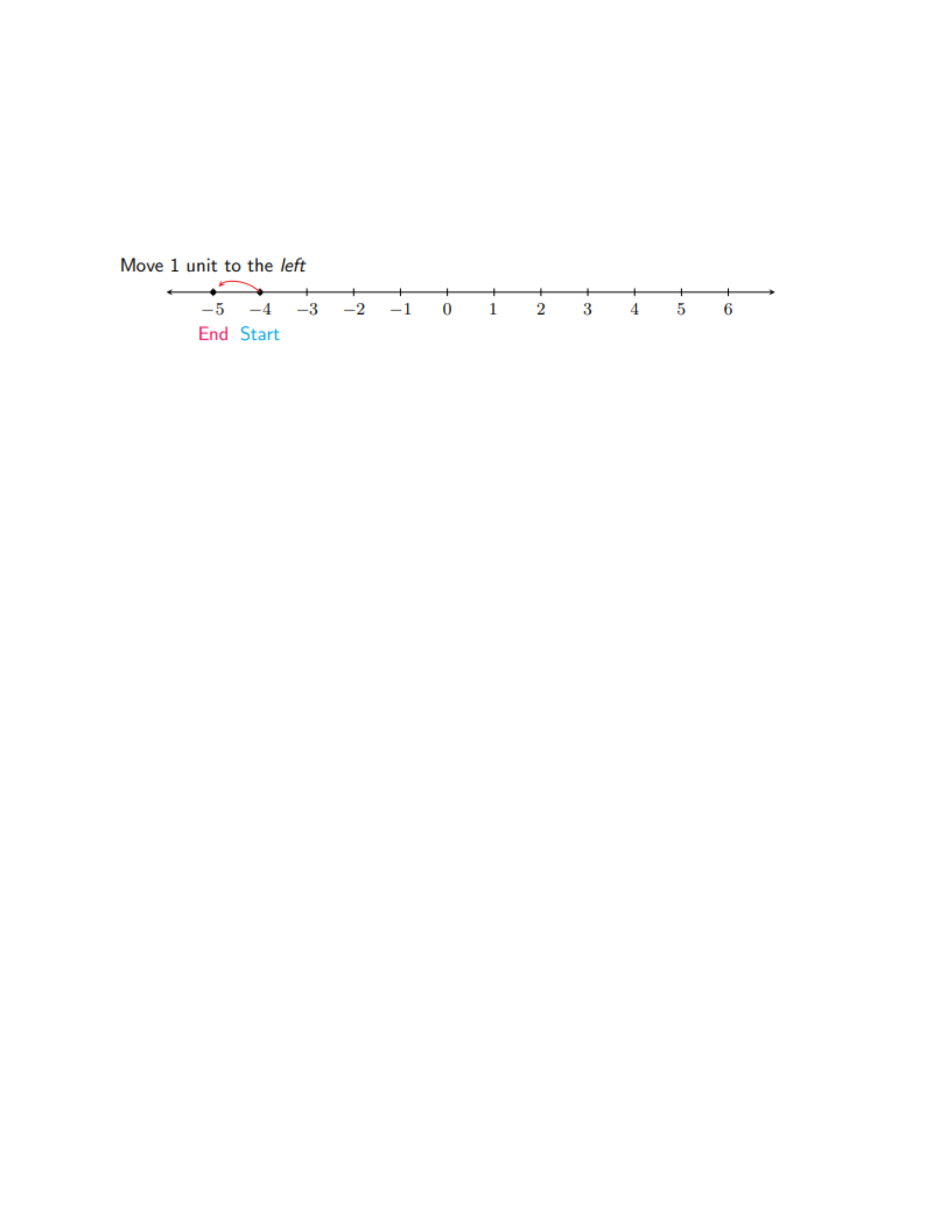
adding two numbers of the same signs. If we want to use the rules, both numbers are
negative, so our answer will be negative, and, adding the weights of -4 and -1
is 5.50,−4−1=−4+(−1)=−55.50,−4−1=−4+(−1)=−5
On the number line, we start at -4 and move 1 unit to the left, to land on -5 which is our
answer.
Changing the subtractions to additions in this way is particularly useful when adding or
subtracting several numbers (because we can add in any order).
Example 1.13
===−3−7+5+7+13−6−(−9)−3+(−7)+5+7+13+(−6)+9−3+(−7)+(−6)+5+7+13+918−3−7+5+7
+13−6−(−9)=−3+(−7)+5+7+13+(−6)+9=−3+(−7)+(−6)+5+7+13+9=18
===−3−7+5+7+13−6−(−9)−3+(−7)+5+7+13+(−6)+95+1318−3−7+5+7+13−6−(−9)=−3+(−7
)+5+7+13+(−6)+9=5+13=18
Remark 1.14
Warning: The symbol "-" is used in two different ways. When it is between two expressions,
it means subtract (e.g., 3−43−4 ). Otherwise, it means 'opposite' or 'negative'
(e.g., −3+4−3+4 ). So in the expression −4−(−3)−4−(−3), the first and last "-" means
opposite and the one in the middle one means subtract. The importance of understanding
this can not be overestimated.
Multiplication and Division of Positive Numbers
Multiplication of integers is adding in the sense that 3×4=4+4+43×4=4+4+4
To multiply larger numbers, it is better to use the usual scheme of multiplication. For
example:
Example 1.15
Let us multiply 152 by 34. We will for convenience sake put the smaller number on the
bottom (though it is not necessary). We have
+×4516515306624808152×34608+45605168
And division is the opposite of multiplication in the sense that to compute 45÷945÷9 is to
find a number so that when we multiply by 9 we get 45. We run through our multiplication
tables (which are hopefully in our head) to discover that 5 does the
trick: 5×9=455×9=45 so that 45÷9=5.45÷9=5. We will discuss division from a different
point of view when we discuss fractions.
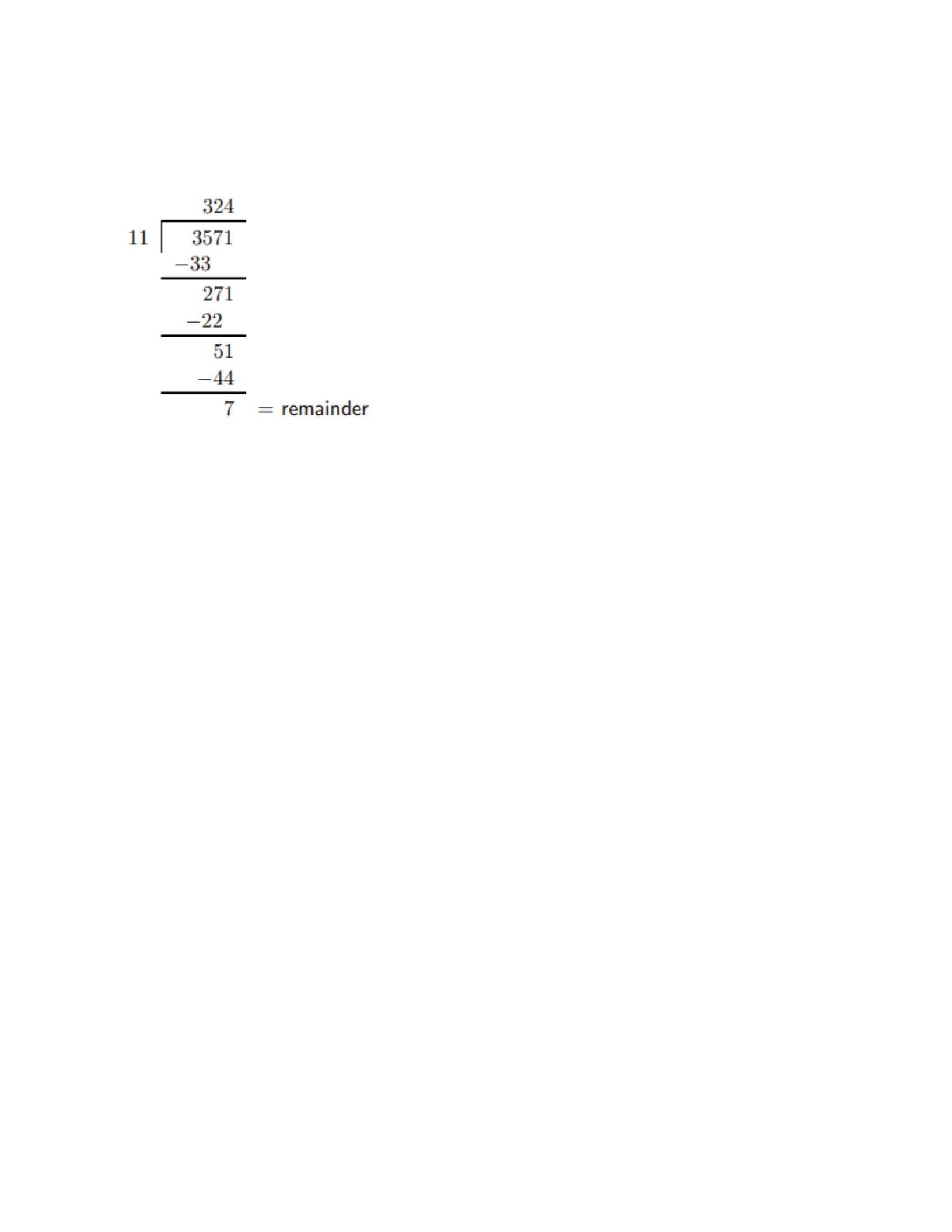
To divide larger numbers, we can use long division. For example, let’s divide 3571 by 11.
Example 1.16
Multiplication involving negative numbers
Multiplication is a little tricky to understand without the notion of distribution (discussed
later). We will begin with noting again what it means to multiply a number by a positive
number: So if we want to compute 4⋅(−7)4⋅(−7) we note
4⋅(−7)=(−7)+(−7)+(−7)+(−7)=−284⋅(−7)=(−7)+(−7)+(−7)+(−7)=−28
Note that since 4⋅7=28,4⋅(−7)=−(4⋅7).4⋅7=28,4⋅(−7)=−(4⋅7). We can multiply positive
numbers in any order: 4⋅7=7⋅44⋅7=7⋅4. The same is true of positive and negative numbers:
(−7)⋅4=4⋅(−7)=−(4⋅7)=−28(−7)⋅4=4⋅(−7)=−(4⋅7)=−28
Example 1.17
5⋅(−12)=−(5⋅12)=−605⋅(−12)=−(5⋅12)=−60 and (−3)⋅(−2)=−(3⋅(−2))=−(−(3⋅2))=6(−3)⋅(−2)
=−(3⋅(−2))=−(−(3⋅2))=6
Example 1.18
So the size of the product of two numbers is the product of their sizes. The sign is positive if
the signs are the same and negative if they are different.
Example 1.19
Two quantities right next to each other, with no symbol between them (except for
parentheses around either or both numbers), has an implicit multiplication. For
example, 3(2)=3×23(2)=3×2.
Example 1.20
Multiply:
kkkkkkkkkkk. (−5)(−8)=40(−5)(−8)=40

lllllllllll. (−6)⋅7=−42(−6)⋅7=−42
mmmmmmmmmmm. 4⋅12=484⋅12=48
nnnnnnnnnnn. (−3)(−6)⋅4(−3)=18⋅4(−3)=72(−3)=−216( multiplying from left to
right )(−3)(−6)⋅4(−3)=18⋅4(−3)=72(−3)=−216( multiplying from left to right )
ooooooooooo. (−3)(−5)⋅4(−2)=(−3)⋅4⋅(−5)(−2)=−12⋅10=−120((−3)(−5)⋅4(−2)=(−3)⋅
4⋅(−5)(−2)=−12⋅10=−120( since we can multiply in any order it is convenient to see
that −5⋅−2=10.−5⋅−2=10. )
Exponents of integers
Recall that a positive exponent represents the number of times a number is multiplied by
itself.
Example 1.21
Evaluate:
mmmmmmmmmmmmm. 52=5⋅5=2552=5⋅5=25
nnnnnnnnnnnnn. (−4)3=(−4)⋅(−4)⋅(−4)=16⋅(−4)=−64(−4)3=(−4)⋅(−4)⋅(−4)=16⋅(−4)=−6
4
ooooooooooooo. (−7)1=−7(−7)1=−7
ppppppppppppp. −24=−2⋅2⋅2⋅2=−16−24=−2⋅2⋅2⋅2=−16 Note: The exponent here is for
2 not −2!
qqqqqqqqqqqqq. (−3)4=(−3)⋅(−3)⋅(−3)⋅(−3)=9⋅(−3)⋅(−3)=−27⋅(−3)=81(−3)4=(−3)⋅(−3)
⋅(−3)⋅(−3)=9⋅(−3)⋅(−3)=−27⋅(−3)=81
rrrrrrrrrrrrr. (−2)5=(−2)⋅(−2)⋅(−2)⋅(−2)⋅(−2)=−32(−2)5=(−2)⋅(−2)⋅(−2)⋅(−2)⋅(−2)=
−32
Exponent rules in details will be further discussed in Chapter 5.
Division involving negative numbers
Division is just a question of knowing multiplication and therefore has the same rule: The
size of the quotient of two numbers is the quotient of the sizes. The sign is positive if the
signs are the same and negative if they are different.
Example 1.22
Divide:
mmmmmmmmmmmmm. (−42)÷7=−6(−42)÷7=−6
nnnnnnnnnnnnn. 81÷(−9)=−981÷(−9)=−9
ooooooooooooo. (−35)÷(−7)=5(−35)÷(−7)=5
ppppppppppppp. 14÷2=714÷2=7
qqqqqqqqqqqqq. 0÷5=00÷5=0. Note When dividing 0 by any number, the answer is
always 0.
rrrrrrrrrrrrr. −10÷0=−10÷0= undefined.
Note 1.23
Any number divided by 0 is undefined!
Multiplying and Dividing Integers
Consider two numbers at a time.
109. If the signs of the two numbers are the same, then the sign of the answer is
positive.
110. If the signs of the two numbers are different, then the sign of the answer is
negative.
We begin with a brief review of arithmetic with integers
i.e. …,−3,−2,−1,0,1,2,3,……,−3,−2,−1,0,1,2,3,…
Any number has a weight and a sign.
The magnitude (or weight) of a number is the distance it is from 0 on the number line.
Example 1.1
For example, the weight of -5 is 5 and the weight of 7 is 7 .
Two numbers are opposites if, on the number line, they are on opposite sides of zero, but
the same distance away from zero.
So, −5 is the opposite of 5, and 7 is the opposite of −7 and so on.
Addition
We can add two numbers with the help of a number line .
Example 1.2
Adding two positive numbers: For example to add 3+43+4, we start with 3 on the number
line then move 4 units to the right. We land at 7 which is our answer.
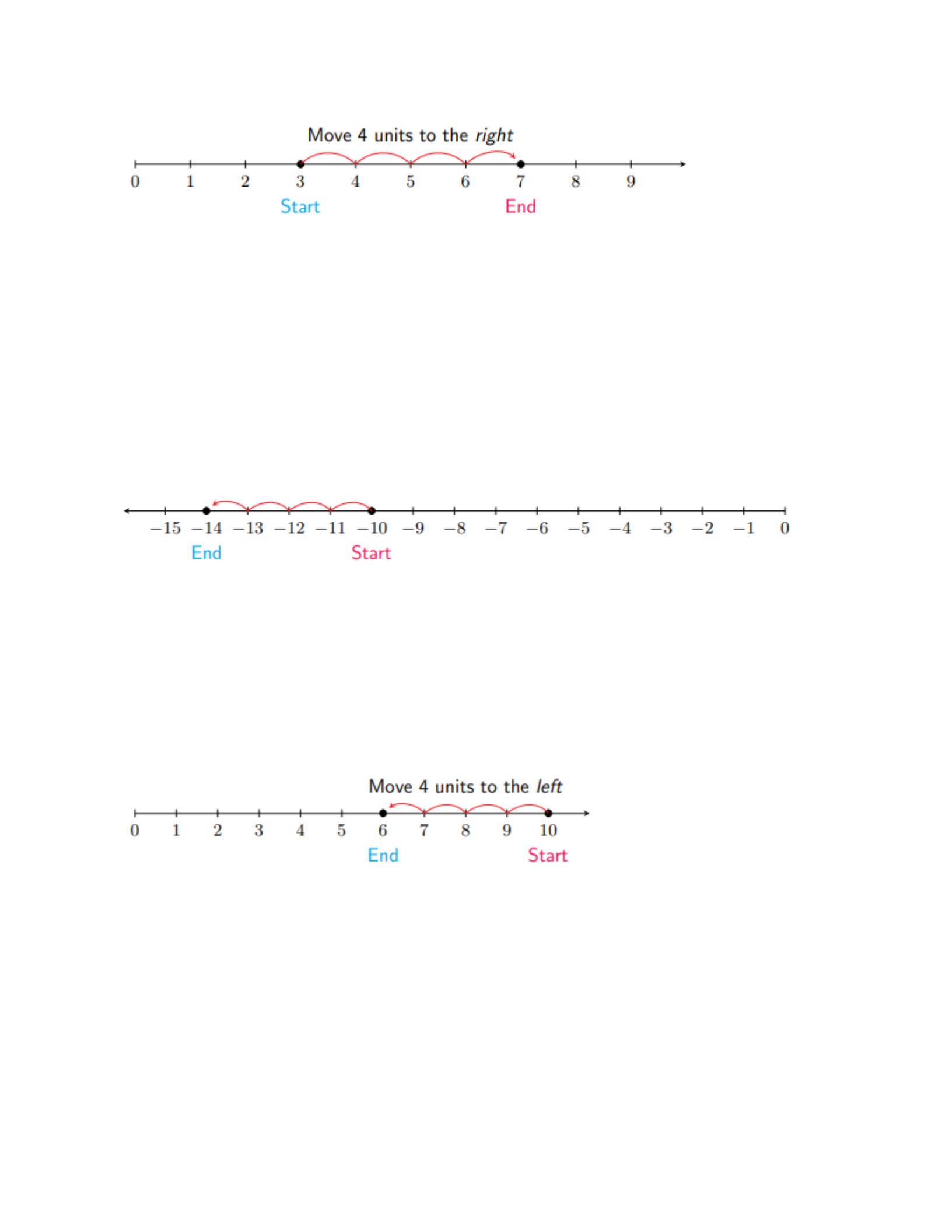
So, 3+4=73+4=7. Notice that the answer has the same sign as the signs of 3 and 4 (both
positive) and its weight comes from adding the weights of 3 and 4.
You always move to the right when you add a positive number
Example 1.3
Adding two negative numbers: For example, −10+(−4)−10+(−4) means you are adding a
debt of $4$4 to an already existing debt of $10.$10. So, we start at -10 on the number line
and move 4 units to the left, to land at −14,−14, which is the answer.
You always move to the left when you add a negative number (a debt)
So, −10+(−4)=−14−10+(−4)=−14. Notice that the answer has the same sign as the signs of -
10 and -4 (both negative) and its weight comes from adding the weights of -10 and -4
To add numbers of opposite signs, that is, a positive and a negative number, we can also
use the number line. For example, to perform 10+(−4),10+(−4), we start at 10 on the
number line and then move 4 units to the left. We land at 6,6, which is the answer. Think
of 10+(−4)10+(−4) as having $10$10 and adding a $4$4 debt. Because we are adding a
debt, we move to the left on the number line!
So, 10+(−4)=6.10+(−4)=6. Notice that the answer has the same sign as the sign of 10
(positive) because it is the number of larger weight, and its weight comes from finding the
difference of the weights of 10 and -4
Notice that because we were adding two numbers of opposite signs, the answer ended up
being the difference in weight (6) along with the sign of the number of larger weight
(positive).
Example 1.4
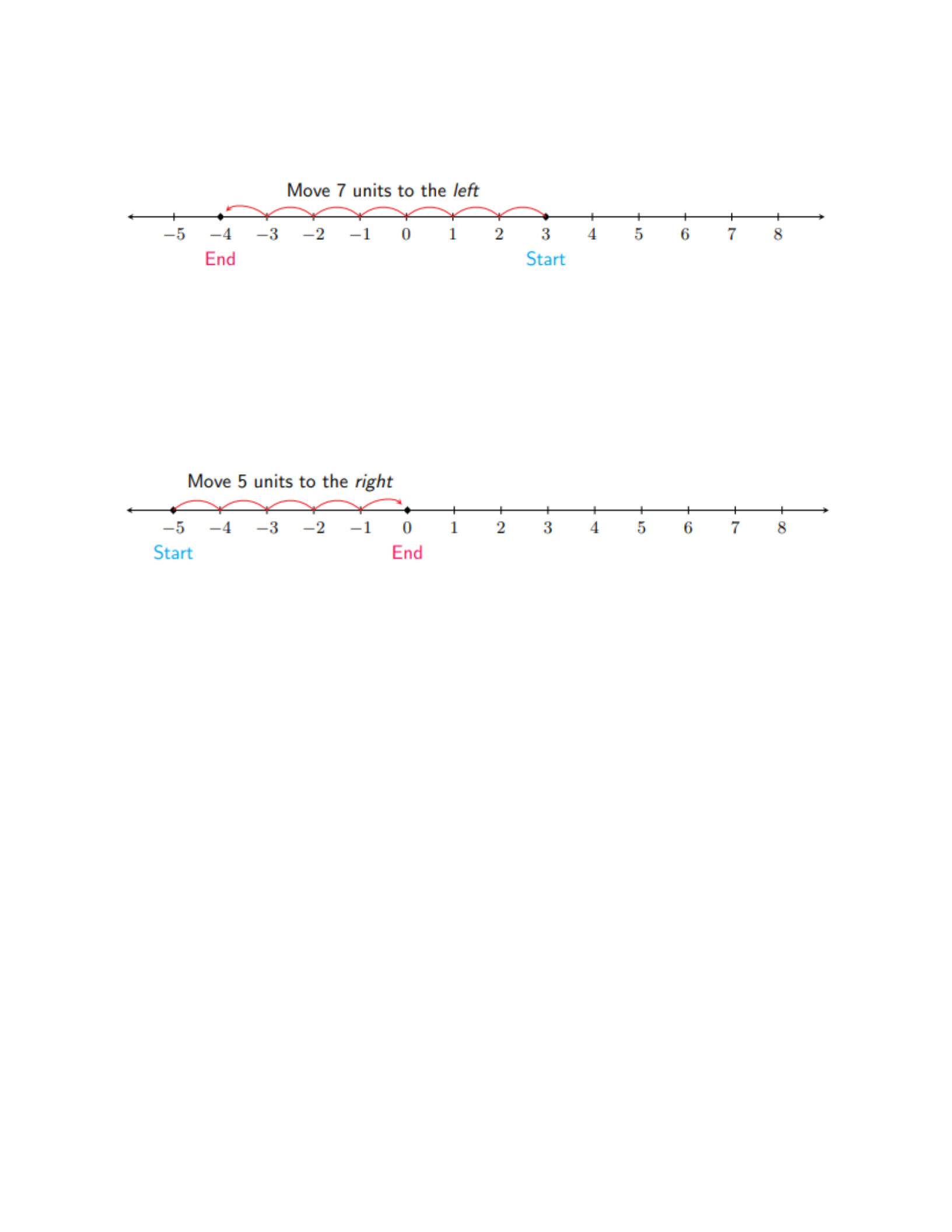
Adding two numbers of opposite signs: For example, 3+(−7)3+(−7). We start at 3 and move
toward 7 units to the left, and we land at −4,−4, which is our answer.
So, 3+(−7)=−4.3+(−7)=−4. Notice that the answer has the same sign as the signs of -7
(negative) because it is the number of larger weight, and its weight comes from finding the
difference of the weights of 3 and -7.
Example 1.5
Adding opposites: We start at -5 on the number line and jump to the right 5 units to land
finally at 00. So −5+5=0−5+5=0.
Note 1.6
Two opposite numbers are called a zero-pair, because adding them always results in 0.
So, −5 and 5 are a zero-pair.
Adding Intergers
111. To add two numbers of the same sign, add their weights and place it after
the sign.
112. To add two numbers of opposite signs, find the difference of their weights
and place it after the sign of the number with the greater weight.
Example 1.7
Add:
sssssssssssss. −8+19=11−8+19=11
ttttttttttttt. −8+4=−4−8+4=−4
uuuuuuuuuuuuu. 6+(−9)=−36+(−9)=−3
vvvvvvvvvvvvv. 7+(−2)=57+(−2)=5
wwwwwwwwwwwww. (−4)+(−7)=−11(−4)+(−7)=−11
xxxxxxxxxxxxx. 8+7=158+7=15

Note 1.8
While we can add in any order: 4+2=2+44+2=2+4, it is sometimes convenient to add up all
of the negative numbers and add up all of the positive numbers, and then add the results.
There are also times when it is best to notice certain simplifications if the numbers are
added in a different order.
For example
−5+4+5+(−8)=−5+(−8)+4+5( by reordering )−5+4+5+(−8)=−5+(−8)+4+5( by reordering )
so,
−5+4+5+(−8)=−5+(−8)+4+5=−13+9=−4−5+4+5+(−8)=−5+(−8)+4+5=−13+9=−4
We could have also simplified this by noting that (-5) and 5 are zero-pair, so we are left
with 4+(−8)4+(−8) which is -4.
Example 1.9
We can calculate
(−4)+(−5)+7+(−3)=(−4)+(−5)+(−3)+7=(−12)+7=−5(−4)+(−5)+7+(−3)=(−4)+(−5)+(−3)+7=
(−12)+7=−5
We could have simplified this by noting that (-4) and (-3) make -7, and -7 and 7 are zero-
pair, so the total is -5.
Subtraction (as Addition of the Opposite)
Once we know how to add numbers, we are set to subtract numbers because subtraction is
nothing but addition of the opposite. That is, subtracting 8 − 3 (which reads: subtracting 3
from 8) is the same as 8 + (−3) (which reads: Adding −3 to 8.).
Example 1.10
So, 8−3=8+(−3),8−3=8+(−3), and, we can use the rules of adding two numbers of opposite
signs to find out that the answer is 5.5. We can also use the number line. We start at 8 and
move 3 units to the left (adding -3 is adding a debt, so we move to the left).
So 8−3=5.−4−3−2−10123456788−3=5.−4−3−2−1012345678 End Start Move 3 units to the
left
Example 1.11
To calculate 3−73−7 we first rewrite it as an addition
problem. 3−7=3+(−7).3−7=3+(−7). We can either use the number line, or the rules of
adding two numbers of opposite signs. And, 50,3−7=3+(−7)=−450,3−7=3+(−7)=−4
Example 1.12
To calculate −4−1,−4−1, we first rewrite it as an addition
problem. −4−1=−4+(−1).−4−1=−4+(−1). We can either use the number line, or the rules of
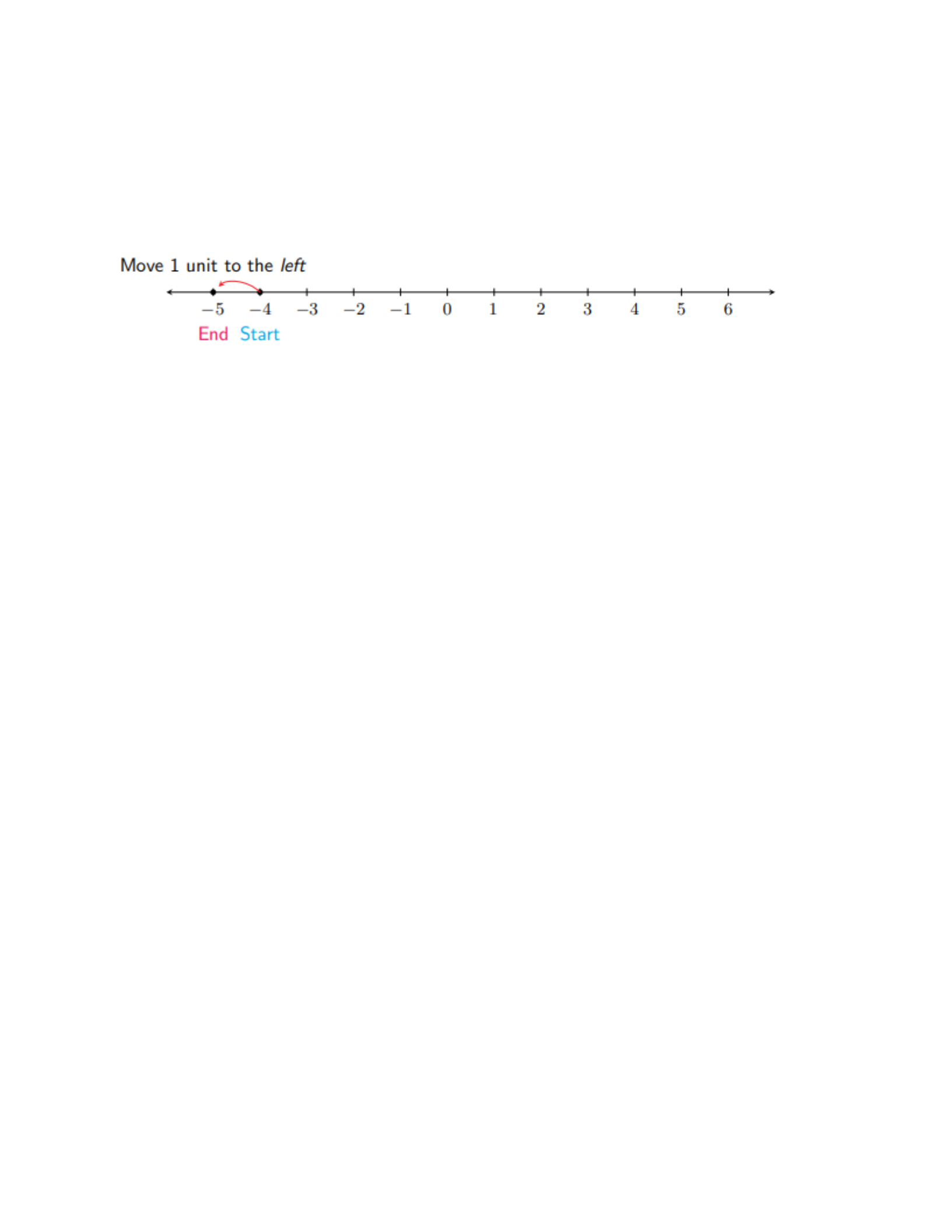
adding two numbers of the same signs. If we want to use the rules, both numbers are
negative, so our answer will be negative, and, adding the weights of -4 and -1
is 5.50,−4−1=−4+(−1)=−55.50,−4−1=−4+(−1)=−5
On the number line, we start at -4 and move 1 unit to the left, to land on -5 which is our
answer.
Changing the subtractions to additions in this way is particularly useful when adding or
subtracting several numbers (because we can add in any order).
Example 1.13
===−3−7+5+7+13−6−(−9)−3+(−7)+5+7+13+(−6)+9−3+(−7)+(−6)+5+7+13+918−3−7+5+7
+13−6−(−9)=−3+(−7)+5+7+13+(−6)+9=−3+(−7)+(−6)+5+7+13+9=18
===−3−7+5+7+13−6−(−9)−3+(−7)+5+7+13+(−6)+95+1318−3−7+5+7+13−6−(−9)=−3+(−7
)+5+7+13+(−6)+9=5+13=18
Remark 1.14
Warning: The symbol "-" is used in two different ways. When it is between two expressions,
it means subtract (e.g., 3−43−4 ). Otherwise, it means 'opposite' or 'negative'
(e.g., −3+4−3+4 ). So in the expression −4−(−3)−4−(−3), the first and last "-" means
opposite and the one in the middle one means subtract. The importance of understanding
this can not be overestimated.
Multiplication and Division of Positive Numbers
Multiplication of integers is adding in the sense that 3×4=4+4+43×4=4+4+4
To multiply larger numbers, it is better to use the usual scheme of multiplication. For
example:
Example 1.15
Let us multiply 152 by 34. We will for convenience sake put the smaller number on the
bottom (though it is not necessary). We have
+×4516515306624808152×34608+45605168
And division is the opposite of multiplication in the sense that to compute 45÷945÷9 is to
find a number so that when we multiply by 9 we get 45. We run through our multiplication
tables (which are hopefully in our head) to discover that 5 does the
trick: 5×9=455×9=45 so that 45÷9=5.45÷9=5. We will discuss division from a different
point of view when we discuss fractions.
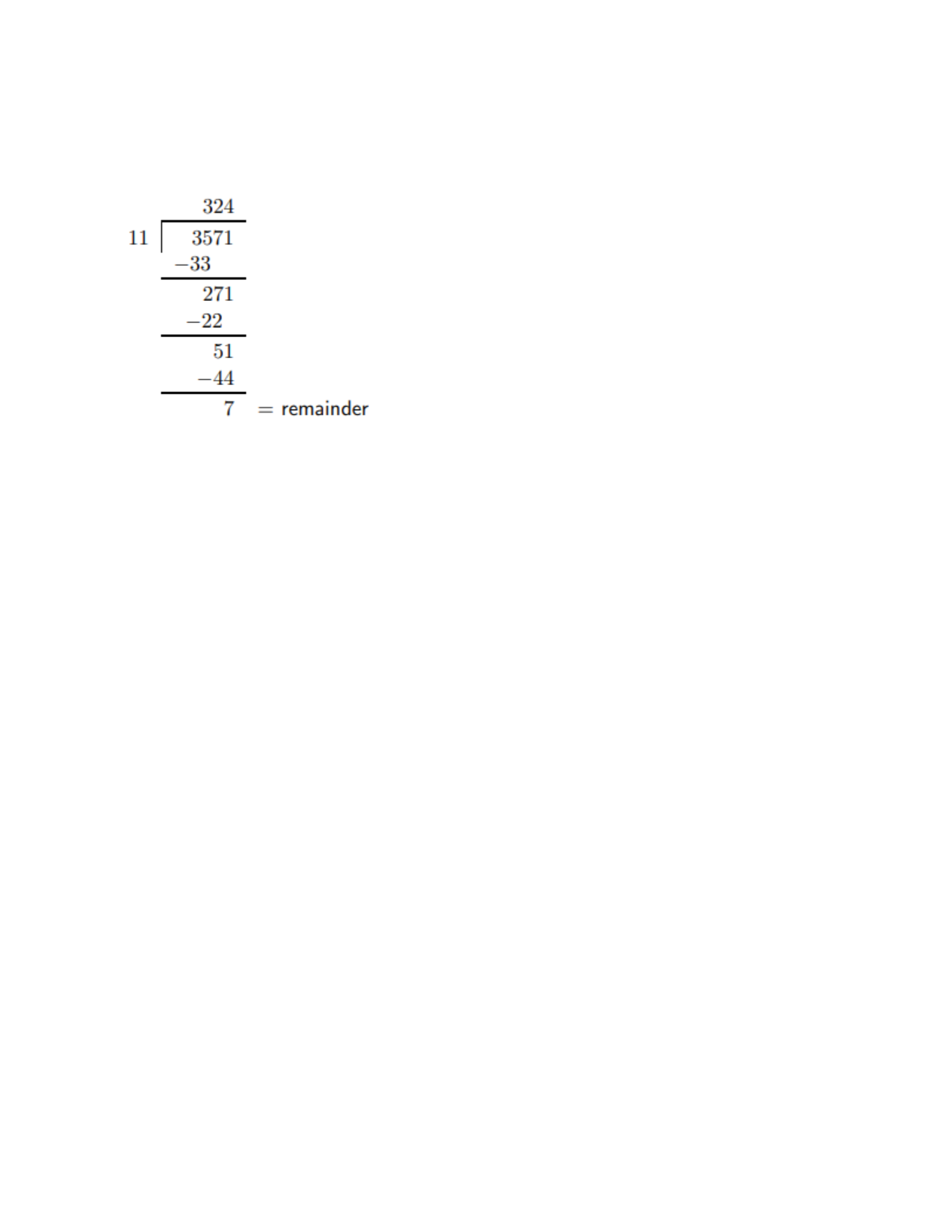
To divide larger numbers, we can use long division. For example, let’s divide 3571 by 11.
Example 1.16
Multiplication involving negative numbers
Multiplication is a little tricky to understand without the notion of distribution (discussed
later). We will begin with noting again what it means to multiply a number by a positive
number: So if we want to compute 4⋅(−7)4⋅(−7) we note
4⋅(−7)=(−7)+(−7)+(−7)+(−7)=−284⋅(−7)=(−7)+(−7)+(−7)+(−7)=−28
Note that since 4⋅7=28,4⋅(−7)=−(4⋅7).4⋅7=28,4⋅(−7)=−(4⋅7). We can multiply positive
numbers in any order: 4⋅7=7⋅44⋅7=7⋅4. The same is true of positive and negative numbers:
(−7)⋅4=4⋅(−7)=−(4⋅7)=−28(−7)⋅4=4⋅(−7)=−(4⋅7)=−28
Example 1.17
5⋅(−12)=−(5⋅12)=−605⋅(−12)=−(5⋅12)=−60 and (−3)⋅(−2)=−(3⋅(−2))=−(−(3⋅2))=6(−3)⋅(−2)
=−(3⋅(−2))=−(−(3⋅2))=6
Example 1.18
So the size of the product of two numbers is the product of their sizes. The sign is positive if
the signs are the same and negative if they are different.
Example 1.19
Two quantities right next to each other, with no symbol between them (except for
parentheses around either or both numbers), has an implicit multiplication. For
example, 3(2)=3×23(2)=3×2.
Example 1.20
Multiply:
ppppppppppp. (−5)(−8)=40(−5)(−8)=40

qqqqqqqqqqq. (−6)⋅7=−42(−6)⋅7=−42
rrrrrrrrrrr. 4⋅12=484⋅12=48
sssssssssss. (−3)(−6)⋅4(−3)=18⋅4(−3)=72(−3)=−216( multiplying from left to
right )(−3)(−6)⋅4(−3)=18⋅4(−3)=72(−3)=−216( multiplying from left to right )
ttttttttttt. (−3)(−5)⋅4(−2)=(−3)⋅4⋅(−5)(−2)=−12⋅10=−120((−3)(−5)⋅4(−2)=(−3)⋅4⋅(−5)(
−2)=−12⋅10=−120( since we can multiply in any order it is convenient to see
that −5⋅−2=10.−5⋅−2=10. )
Exponents of integers
Recall that a positive exponent represents the number of times a number is multiplied by
itself.
Example 1.21
Evaluate:
sssssssssssss. 52=5⋅5=2552=5⋅5=25
ttttttttttttt. (−4)3=(−4)⋅(−4)⋅(−4)=16⋅(−4)=−64(−4)3=(−4)⋅(−4)⋅(−4)=16⋅(−4)=−6
4
uuuuuuuuuuuuu. (−7)1=−7(−7)1=−7
vvvvvvvvvvvvv. −24=−2⋅2⋅2⋅2=−16−24=−2⋅2⋅2⋅2=−16 Note: The exponent here is for
2 not −2!
wwwwwwwwwwwww. (−3)4=(−3)⋅(−3)⋅(−3)⋅(−3)=9⋅(−3)⋅(−3)=−27⋅(−3)=81(−3)4=(−
3)⋅(−3)⋅(−3)⋅(−3)=9⋅(−3)⋅(−3)=−27⋅(−3)=81
xxxxxxxxxxxxx. (−2)5=(−2)⋅(−2)⋅(−2)⋅(−2)⋅(−2)=−32(−2)5=(−2)⋅(−2)⋅(−2)⋅(−2)⋅(−2)=
−32
Exponent rules in details will be further discussed in Chapter 5.
Division involving negative numbers
Division is just a question of knowing multiplication and therefore has the same rule: The
size of the quotient of two numbers is the quotient of the sizes. The sign is positive if the
signs are the same and negative if they are different.
Example 1.22
Divide:
sssssssssssss. (−42)÷7=−6(−42)÷7=−6
ttttttttttttt. 81÷(−9)=−981÷(−9)=−9
uuuuuuuuuuuuu. (−35)÷(−7)=5(−35)÷(−7)=5
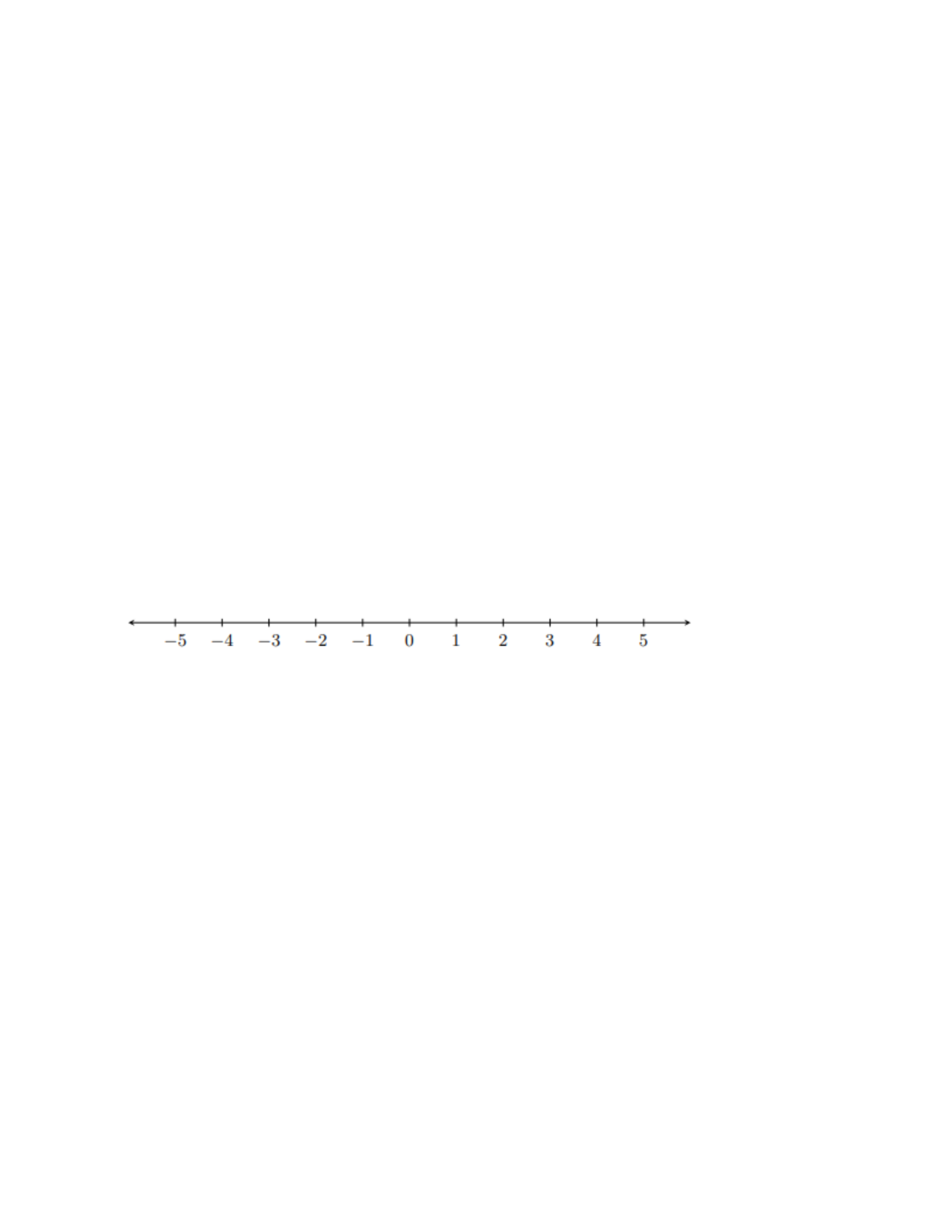
vvvvvvvvvvvvv. 14÷2=714÷2=7
wwwwwwwwwwwww. 0÷5=00÷5=0. Note When dividing 0 by any number, the
answer is always 0.
xxxxxxxxxxxxx. −10÷0=−10÷0= undefined.
Note 1.23
Any number divided by 0 is undefined!
Multiplying and Dividing Integers
Consider two numbers at a time.
111. If the signs of the two numbers are the same, then the sign of the answer is
positive.
112. If the signs of the two numbers are different, then the sign of the answer is
negative.
We begin with a brief review of arithmetic with integers
i.e. …,−3,−2,−1,0,1,2,3,……,−3,−2,−1,0,1,2,3,…
Any number has a weight and a sign.
The magnitude (or weight) of a number is the distance it is from 0 on the number line.
Example 1.1
For example, the weight of -5 is 5 and the weight of 7 is 7 .
Two numbers are opposites if, on the number line, they are on opposite sides of zero, but
the same distance away from zero.
So, −5 is the opposite of 5, and 7 is the opposite of −7 and so on.
Addition
We can add two numbers with the help of a number line .
Example 1.2
Adding two positive numbers: For example to add 3+43+4, we start with 3 on the number
line then move 4 units to the right. We land at 7 which is our answer.
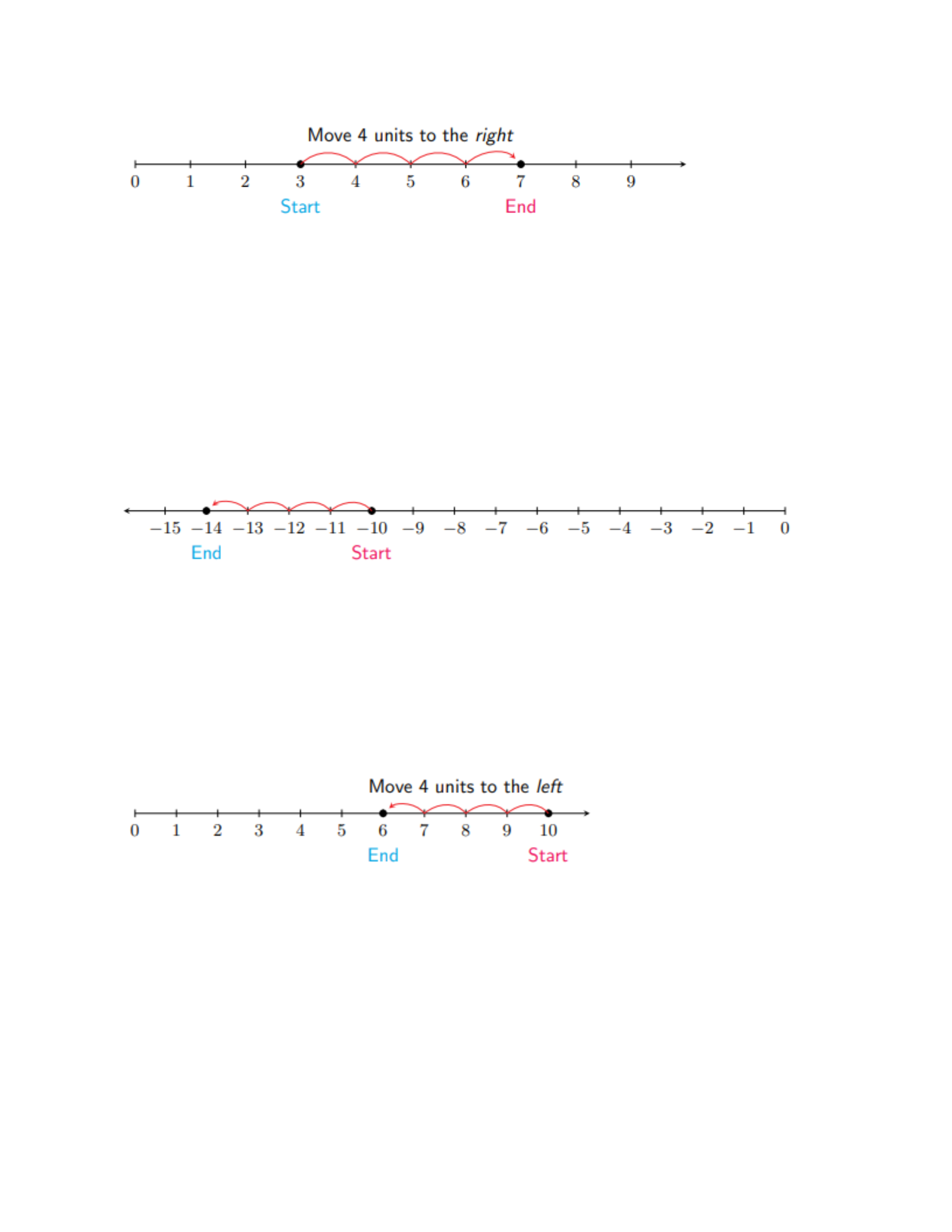
So, 3+4=73+4=7. Notice that the answer has the same sign as the signs of 3 and 4 (both
positive) and its weight comes from adding the weights of 3 and 4.
You always move to the right when you add a positive number
Example 1.3
Adding two negative numbers: For example, −10+(−4)−10+(−4) means you are adding a
debt of $4$4 to an already existing debt of $10.$10. So, we start at -10 on the number line
and move 4 units to the left, to land at −14,−14, which is the answer.
You always move to the left when you add a negative number (a debt)
So, −10+(−4)=−14−10+(−4)=−14. Notice that the answer has the same sign as the signs of -
10 and -4 (both negative) and its weight comes from adding the weights of -10 and -4
To add numbers of opposite signs, that is, a positive and a negative number, we can also
use the number line. For example, to perform 10+(−4),10+(−4), we start at 10 on the
number line and then move 4 units to the left. We land at 6,6, which is the answer. Think
of 10+(−4)10+(−4) as having $10$10 and adding a $4$4 debt. Because we are adding a
debt, we move to the left on the number line!
So, 10+(−4)=6.10+(−4)=6. Notice that the answer has the same sign as the sign of 10
(positive) because it is the number of larger weight, and its weight comes from finding the
difference of the weights of 10 and -4
Notice that because we were adding two numbers of opposite signs, the answer ended up
being the difference in weight (6) along with the sign of the number of larger weight
(positive).
Example 1.4
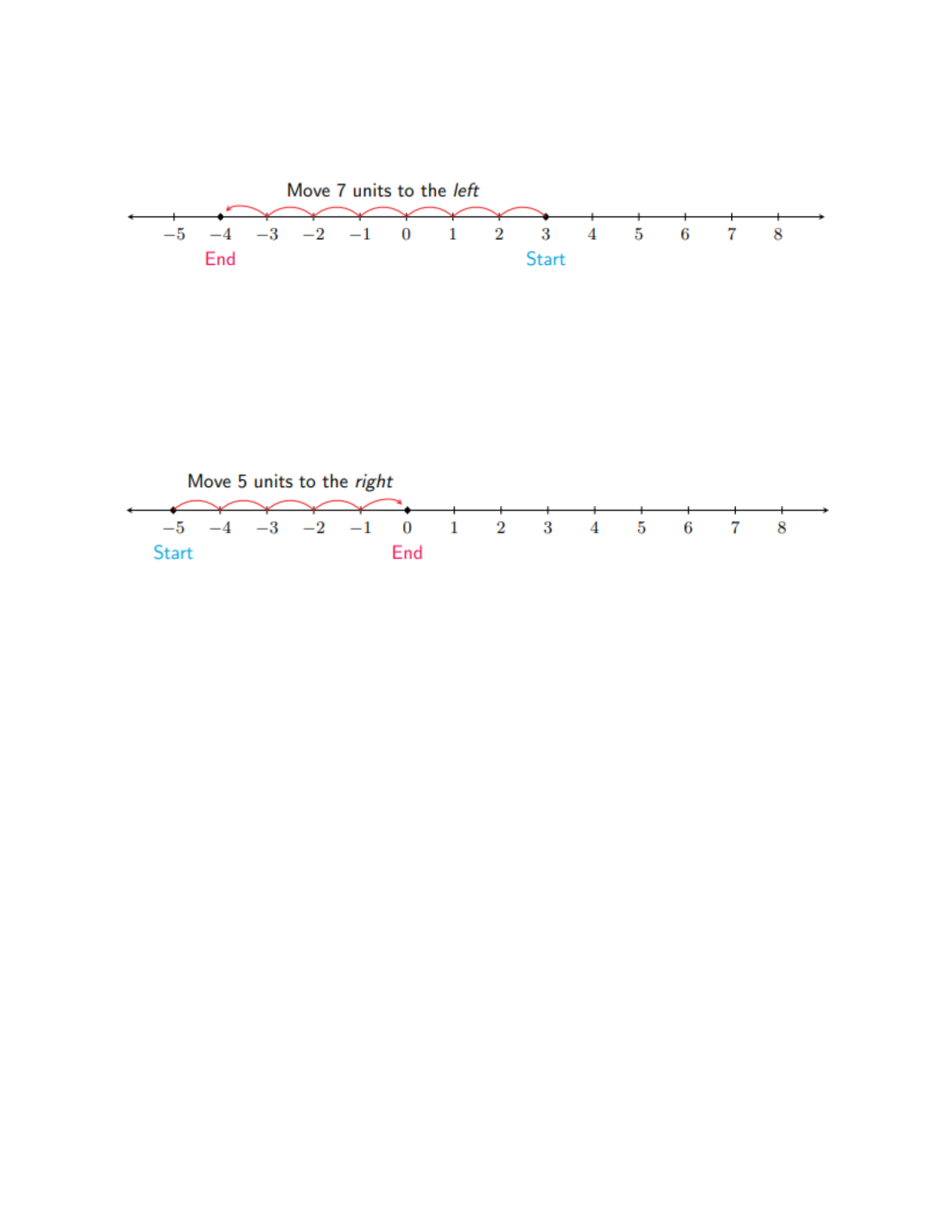
Adding two numbers of opposite signs: For example, 3+(−7)3+(−7). We start at 3 and move
toward 7 units to the left, and we land at −4,−4, which is our answer.
So, 3+(−7)=−4.3+(−7)=−4. Notice that the answer has the same sign as the signs of -7
(negative) because it is the number of larger weight, and its weight comes from finding the
difference of the weights of 3 and -7.
Example 1.5
Adding opposites: We start at -5 on the number line and jump to the right 5 units to land
finally at 00. So −5+5=0−5+5=0.
Note 1.6
Two opposite numbers are called a zero-pair, because adding them always results in 0.
So, −5 and 5 are a zero-pair.
Adding Intergers
113. To add two numbers of the same sign, add their weights and place it after
the sign.
114. To add two numbers of opposite signs, find the difference of their weights
and place it after the sign of the number with the greater weight.
Example 1.7
Add:
yyyyyyyyyyyyy. −8+19=11−8+19=11
zzzzzzzzzzzzz. −8+4=−4−8+4=−4
aaaaaaaaaaaaaa. 6+(−9)=−36+(−9)=−3
bbbbbbbbbbbbbb. 7+(−2)=57+(−2)=5
cccccccccccccc. (−4)+(−7)=−11(−4)+(−7)=−11
dddddddddddddd. 8+7=158+7=15

Note 1.8
While we can add in any order: 4+2=2+44+2=2+4, it is sometimes convenient to add up all
of the negative numbers and add up all of the positive numbers, and then add the results.
There are also times when it is best to notice certain simplifications if the numbers are
added in a different order.
For example
−5+4+5+(−8)=−5+(−8)+4+5( by reordering )−5+4+5+(−8)=−5+(−8)+4+5( by reordering )
so,
−5+4+5+(−8)=−5+(−8)+4+5=−13+9=−4−5+4+5+(−8)=−5+(−8)+4+5=−13+9=−4
We could have also simplified this by noting that (-5) and 5 are zero-pair, so we are left
with 4+(−8)4+(−8) which is -4.
Example 1.9
We can calculate
(−4)+(−5)+7+(−3)=(−4)+(−5)+(−3)+7=(−12)+7=−5(−4)+(−5)+7+(−3)=(−4)+(−5)+(−3)+7=
(−12)+7=−5
We could have simplified this by noting that (-4) and (-3) make -7, and -7 and 7 are zero-
pair, so the total is -5.
Subtraction (as Addition of the Opposite)
Once we know how to add numbers, we are set to subtract numbers because subtraction is
nothing but addition of the opposite. That is, subtracting 8 − 3 (which reads: subtracting 3
from 8) is the same as 8 + (−3) (which reads: Adding −3 to 8.).
Example 1.10
So, 8−3=8+(−3),8−3=8+(−3), and, we can use the rules of adding two numbers of opposite
signs to find out that the answer is 5.5. We can also use the number line. We start at 8 and
move 3 units to the left (adding -3 is adding a debt, so we move to the left).
So 8−3=5.−4−3−2−10123456788−3=5.−4−3−2−1012345678 End Start Move 3 units to the
left
Example 1.11
To calculate 3−73−7 we first rewrite it as an addition
problem. 3−7=3+(−7).3−7=3+(−7). We can either use the number line, or the rules of
adding two numbers of opposite signs. And, 50,3−7=3+(−7)=−450,3−7=3+(−7)=−4
Example 1.12
To calculate −4−1,−4−1, we first rewrite it as an addition
problem. −4−1=−4+(−1).−4−1=−4+(−1). We can either use the number line, or the rules of
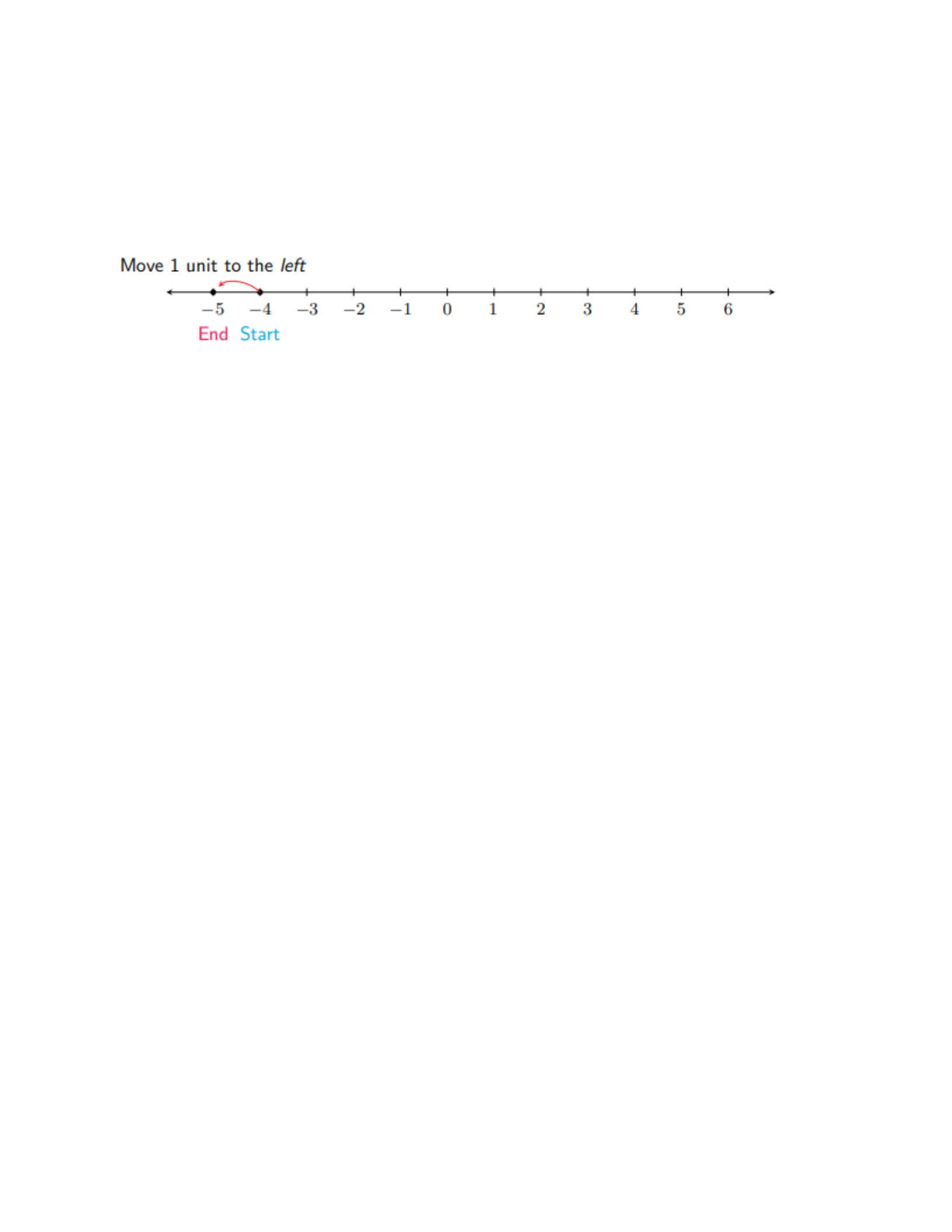
adding two numbers of the same signs. If we want to use the rules, both numbers are
negative, so our answer will be negative, and, adding the weights of -4 and -1
is 5.50,−4−1=−4+(−1)=−55.50,−4−1=−4+(−1)=−5
On the number line, we start at -4 and move 1 unit to the left, to land on -5 which is our
answer.
Changing the subtractions to additions in this way is particularly useful when adding or
subtracting several numbers (because we can add in any order).
Example 1.13
===−3−7+5+7+13−6−(−9)−3+(−7)+5+7+13+(−6)+9−3+(−7)+(−6)+5+7+13+918−3−7+5+7
+13−6−(−9)=−3+(−7)+5+7+13+(−6)+9=−3+(−7)+(−6)+5+7+13+9=18
===−3−7+5+7+13−6−(−9)−3+(−7)+5+7+13+(−6)+95+1318−3−7+5+7+13−6−(−9)=−3+(−7
)+5+7+13+(−6)+9=5+13=18
Remark 1.14
Warning: The symbol "-" is used in two different ways. When it is between two expressions,
it means subtract (e.g., 3−43−4 ). Otherwise, it means 'opposite' or 'negative'
(e.g., −3+4−3+4 ). So in the expression −4−(−3)−4−(−3), the first and last "-" means
opposite and the one in the middle one means subtract. The importance of understanding
this can not be overestimated.
Multiplication and Division of Positive Numbers
Multiplication of integers is adding in the sense that 3×4=4+4+43×4=4+4+4
To multiply larger numbers, it is better to use the usual scheme of multiplication. For
example:
Example 1.15
Let us multiply 152 by 34. We will for convenience sake put the smaller number on the
bottom (though it is not necessary). We have
+×4516515306624808152×34608+45605168
And division is the opposite of multiplication in the sense that to compute 45÷945÷9 is to
find a number so that when we multiply by 9 we get 45. We run through our multiplication
tables (which are hopefully in our head) to discover that 5 does the
trick: 5×9=455×9=45 so that 45÷9=5.45÷9=5. We will discuss division from a different
point of view when we discuss fractions.
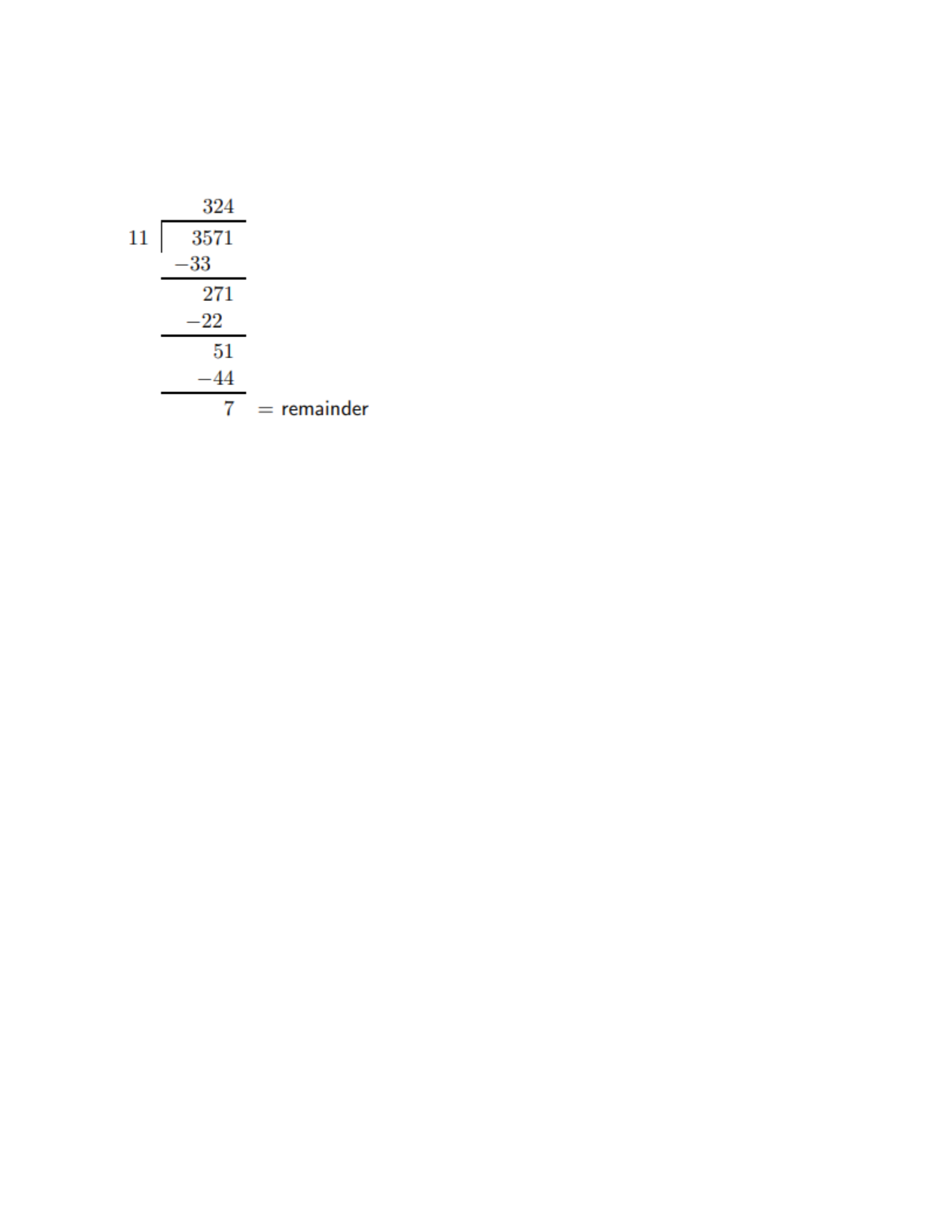
To divide larger numbers, we can use long division. For example, let’s divide 3571 by 11.
Example 1.16
Multiplication involving negative numbers
Multiplication is a little tricky to understand without the notion of distribution (discussed
later). We will begin with noting again what it means to multiply a number by a positive
number: So if we want to compute 4⋅(−7)4⋅(−7) we note
4⋅(−7)=(−7)+(−7)+(−7)+(−7)=−284⋅(−7)=(−7)+(−7)+(−7)+(−7)=−28
Note that since 4⋅7=28,4⋅(−7)=−(4⋅7).4⋅7=28,4⋅(−7)=−(4⋅7). We can multiply positive
numbers in any order: 4⋅7=7⋅44⋅7=7⋅4. The same is true of positive and negative numbers:
(−7)⋅4=4⋅(−7)=−(4⋅7)=−28(−7)⋅4=4⋅(−7)=−(4⋅7)=−28
Example 1.17
5⋅(−12)=−(5⋅12)=−605⋅(−12)=−(5⋅12)=−60 and (−3)⋅(−2)=−(3⋅(−2))=−(−(3⋅2))=6(−3)⋅(−2)
=−(3⋅(−2))=−(−(3⋅2))=6
Example 1.18
So the size of the product of two numbers is the product of their sizes. The sign is positive if
the signs are the same and negative if they are different.
Example 1.19
Two quantities right next to each other, with no symbol between them (except for
parentheses around either or both numbers), has an implicit multiplication. For
example, 3(2)=3×23(2)=3×2.
Example 1.20
Multiply:
uuuuuuuuuuu. (−5)(−8)=40(−5)(−8)=40

vvvvvvvvvvv. (−6)⋅7=−42(−6)⋅7=−42
wwwwwwwwwww. 4⋅12=484⋅12=48
xxxxxxxxxxx. (−3)(−6)⋅4(−3)=18⋅4(−3)=72(−3)=−216( multiplying from left to
right )(−3)(−6)⋅4(−3)=18⋅4(−3)=72(−3)=−216( multiplying from left to right )
yyyyyyyyyyy. (−3)(−5)⋅4(−2)=(−3)⋅4⋅(−5)(−2)=−12⋅10=−120((−3)(−5)⋅4(−2)=(−3)⋅
4⋅(−5)(−2)=−12⋅10=−120( since we can multiply in any order it is convenient to see
that −5⋅−2=10.−5⋅−2=10. )
Exponents of integers
Recall that a positive exponent represents the number of times a number is multiplied by
itself.
Example 1.21
Evaluate:
yyyyyyyyyyyyy. 52=5⋅5=2552=5⋅5=25
zzzzzzzzzzzzz. (−4)3=(−4)⋅(−4)⋅(−4)=16⋅(−4)=−64(−4)3=(−4)⋅(−4)⋅(−4)=16⋅(−4)=−6
4
aaaaaaaaaaaaaa. (−7)1=−7(−7)1=−7
bbbbbbbbbbbbbb. −24=−2⋅2⋅2⋅2=−16−24=−2⋅2⋅2⋅2=−16 Note: The exponent here
is for 2 not −2!
cccccccccccccc. (−3)4=(−3)⋅(−3)⋅(−3)⋅(−3)=9⋅(−3)⋅(−3)=−27⋅(−3)=81(−3)4=(−3)⋅(−3)
⋅(−3)⋅(−3)=9⋅(−3)⋅(−3)=−27⋅(−3)=81
dddddddddddddd. (−2)5=(−2)⋅(−2)⋅(−2)⋅(−2)⋅(−2)=−32(−2)5=(−2)⋅(−2)⋅(−2)⋅(−2)
⋅(−2)=−32
Exponent rules in details will be further discussed in Chapter 5.
Division involving negative numbers
Division is just a question of knowing multiplication and therefore has the same rule: The
size of the quotient of two numbers is the quotient of the sizes. The sign is positive if the
signs are the same and negative if they are different.
Example 1.22
Divide:
yyyyyyyyyyyyy. (−42)÷7=−6(−42)÷7=−6
zzzzzzzzzzzzz. 81÷(−9)=−981÷(−9)=−9
aaaaaaaaaaaaaa. (−35)÷(−7)=5(−35)÷(−7)=5
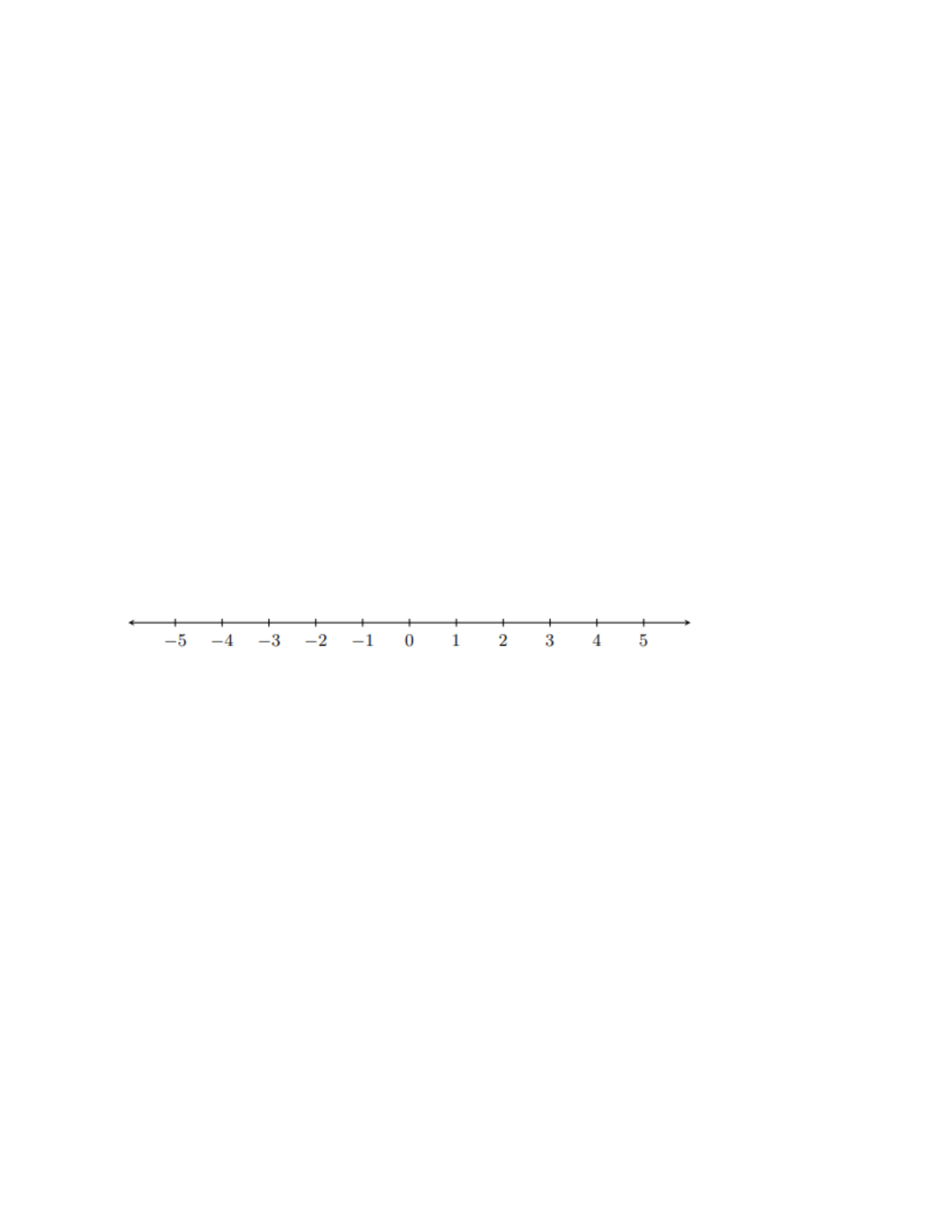
bbbbbbbbbbbbbb. 14÷2=714÷2=7
cccccccccccccc. 0÷5=00÷5=0. Note When dividing 0 by any number, the answer is
always 0.
dddddddddddddd. −10÷0=−10÷0= undefined.
Note 1.23
Any number divided by 0 is undefined!
Multiplying and Dividing Integers
Consider two numbers at a time.
113. If the signs of the two numbers are the same, then the sign of the answer is
positive.
114. If the signs of the two numbers are different, then the sign of the answer is
negative.
We begin with a brief review of arithmetic with integers
i.e. …,−3,−2,−1,0,1,2,3,……,−3,−2,−1,0,1,2,3,…
Any number has a weight and a sign.
The magnitude (or weight) of a number is the distance it is from 0 on the number line.
Example 1.1
For example, the weight of -5 is 5 and the weight of 7 is 7 .
Two numbers are opposites if, on the number line, they are on opposite sides of zero, but
the same distance away from zero.
So, −5 is the opposite of 5, and 7 is the opposite of −7 and so on.
Addition
We can add two numbers with the help of a number line .
Example 1.2
Adding two positive numbers: For example to add 3+43+4, we start with 3 on the number
line then move 4 units to the right. We land at 7 which is our answer.
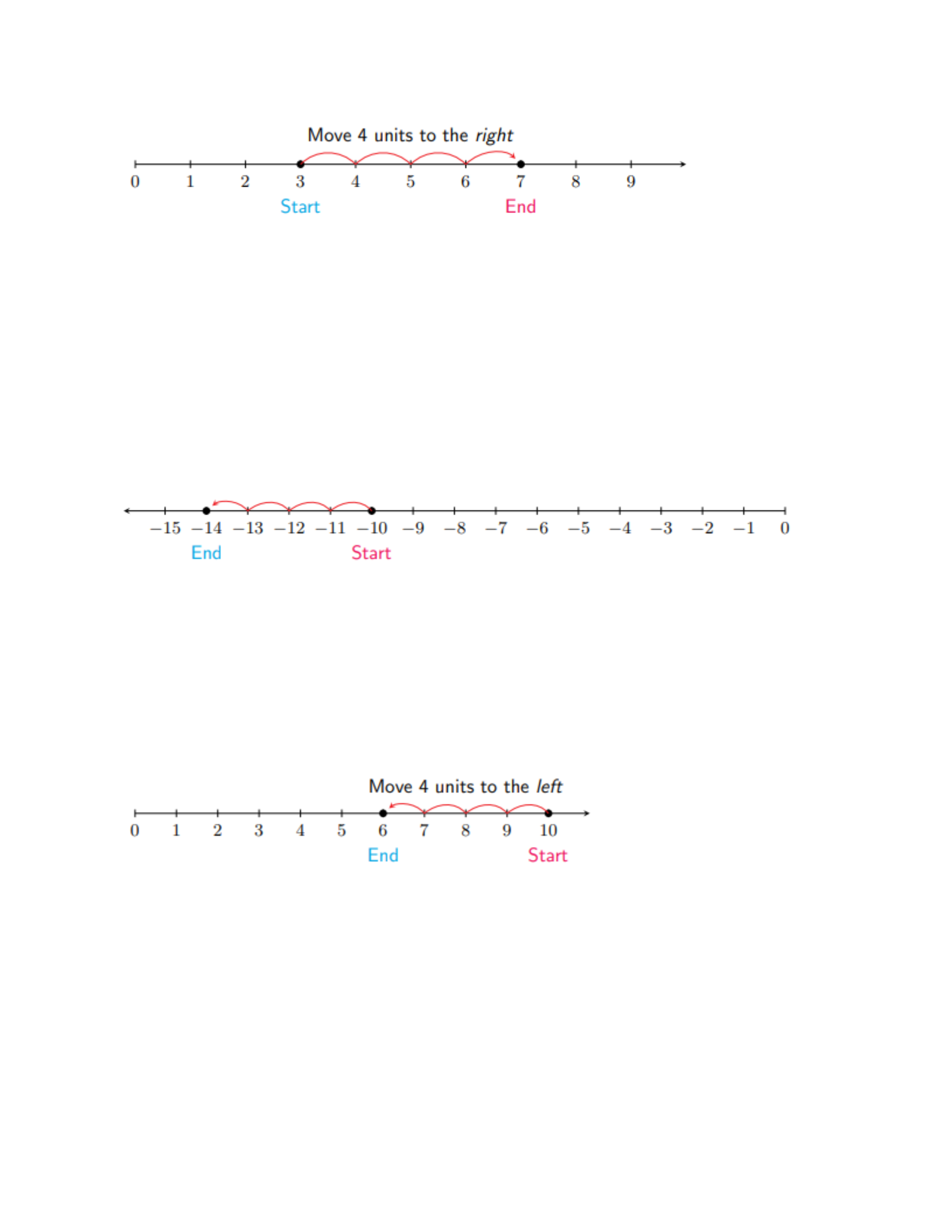
So, 3+4=73+4=7. Notice that the answer has the same sign as the signs of 3 and 4 (both
positive) and its weight comes from adding the weights of 3 and 4.
You always move to the right when you add a positive number
Example 1.3
Adding two negative numbers: For example, −10+(−4)−10+(−4) means you are adding a
debt of $4$4 to an already existing debt of $10.$10. So, we start at -10 on the number line
and move 4 units to the left, to land at −14,−14, which is the answer.
You always move to the left when you add a negative number (a debt)
So, −10+(−4)=−14−10+(−4)=−14. Notice that the answer has the same sign as the signs of -
10 and -4 (both negative) and its weight comes from adding the weights of -10 and -4
To add numbers of opposite signs, that is, a positive and a negative number, we can also
use the number line. For example, to perform 10+(−4),10+(−4), we start at 10 on the
number line and then move 4 units to the left. We land at 6,6, which is the answer. Think
of 10+(−4)10+(−4) as having $10$10 and adding a $4$4 debt. Because we are adding a
debt, we move to the left on the number line!
So, 10+(−4)=6.10+(−4)=6. Notice that the answer has the same sign as the sign of 10
(positive) because it is the number of larger weight, and its weight comes from finding the
difference of the weights of 10 and -4
Notice that because we were adding two numbers of opposite signs, the answer ended up
being the difference in weight (6) along with the sign of the number of larger weight
(positive).
Example 1.4
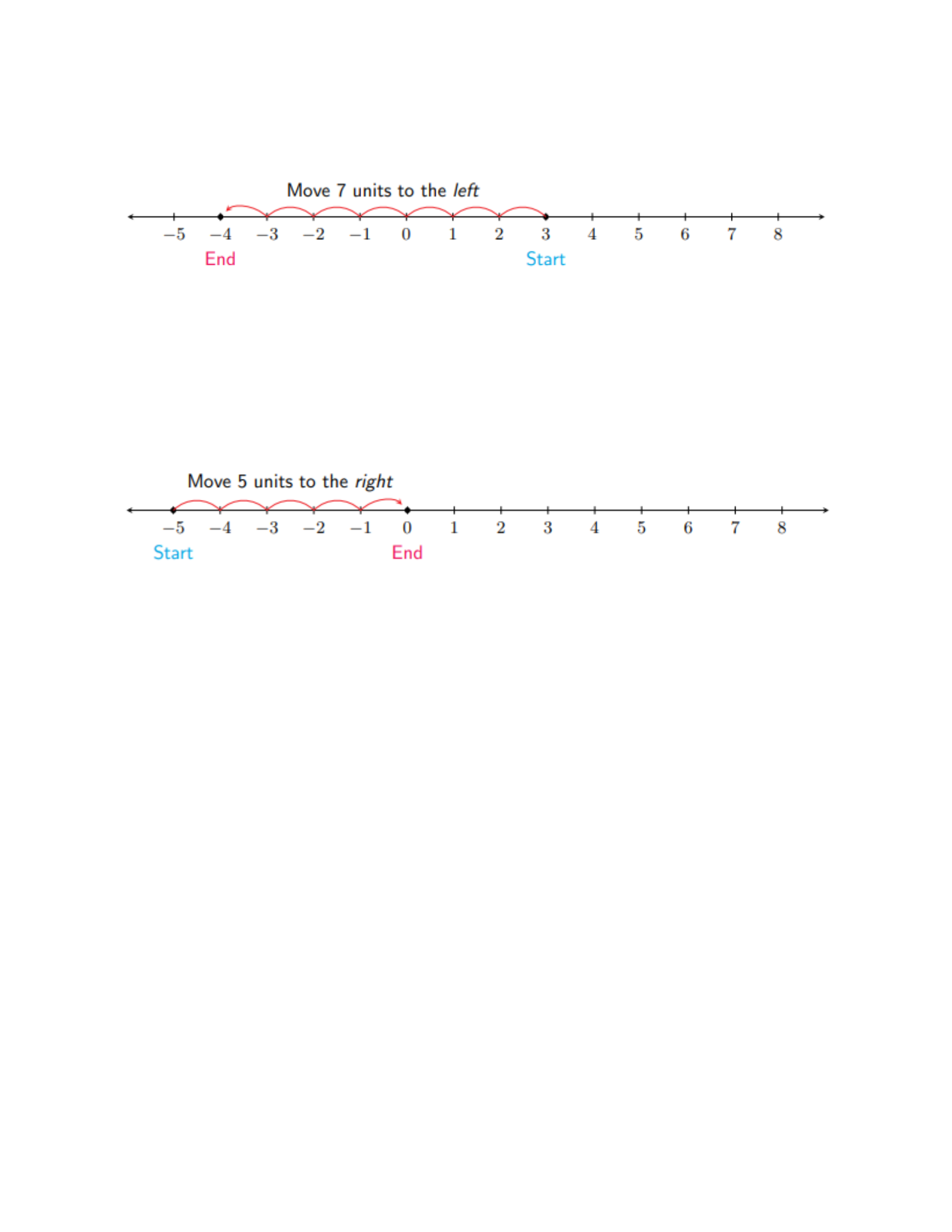
Adding two numbers of opposite signs: For example, 3+(−7)3+(−7). We start at 3 and move
toward 7 units to the left, and we land at −4,−4, which is our answer.
So, 3+(−7)=−4.3+(−7)=−4. Notice that the answer has the same sign as the signs of -7
(negative) because it is the number of larger weight, and its weight comes from finding the
difference of the weights of 3 and -7.
Example 1.5
Adding opposites: We start at -5 on the number line and jump to the right 5 units to land
finally at 00. So −5+5=0−5+5=0.
Note 1.6
Two opposite numbers are called a zero-pair, because adding them always results in 0.
So, −5 and 5 are a zero-pair.
Adding Intergers
115. To add two numbers of the same sign, add their weights and place it after
the sign.
116. To add two numbers of opposite signs, find the difference of their weights
and place it after the sign of the number with the greater weight.
Example 1.7
Add:
eeeeeeeeeeeeee. −8+19=11−8+19=11
ffffffffffffff. −8+4=−4−8+4=−4
gggggggggggggg. 6+(−9)=−36+(−9)=−3
hhhhhhhhhhhhhh. 7+(−2)=57+(−2)=5
iiiiiiiiiiiiii. (−4)+(−7)=−11(−4)+(−7)=−11
jjjjjjjjjjjjjj. 8+7=158+7=15

Note 1.8
While we can add in any order: 4+2=2+44+2=2+4, it is sometimes convenient to add up all
of the negative numbers and add up all of the positive numbers, and then add the results.
There are also times when it is best to notice certain simplifications if the numbers are
added in a different order.
For example
−5+4+5+(−8)=−5+(−8)+4+5( by reordering )−5+4+5+(−8)=−5+(−8)+4+5( by reordering )
so,
−5+4+5+(−8)=−5+(−8)+4+5=−13+9=−4−5+4+5+(−8)=−5+(−8)+4+5=−13+9=−4
We could have also simplified this by noting that (-5) and 5 are zero-pair, so we are left
with 4+(−8)4+(−8) which is -4.
Example 1.9
We can calculate
(−4)+(−5)+7+(−3)=(−4)+(−5)+(−3)+7=(−12)+7=−5(−4)+(−5)+7+(−3)=(−4)+(−5)+(−3)+7=
(−12)+7=−5
We could have simplified this by noting that (-4) and (-3) make -7, and -7 and 7 are zero-
pair, so the total is -5.
Subtraction (as Addition of the Opposite)
Once we know how to add numbers, we are set to subtract numbers because subtraction is
nothing but addition of the opposite. That is, subtracting 8 − 3 (which reads: subtracting 3
from 8) is the same as 8 + (−3) (which reads: Adding −3 to 8.).
Example 1.10
So, 8−3=8+(−3),8−3=8+(−3), and, we can use the rules of adding two numbers of opposite
signs to find out that the answer is 5.5. We can also use the number line. We start at 8 and
move 3 units to the left (adding -3 is adding a debt, so we move to the left).
So 8−3=5.−4−3−2−10123456788−3=5.−4−3−2−1012345678 End Start Move 3 units to the
left
Example 1.11
To calculate 3−73−7 we first rewrite it as an addition
problem. 3−7=3+(−7).3−7=3+(−7). We can either use the number line, or the rules of
adding two numbers of opposite signs. And, 50,3−7=3+(−7)=−450,3−7=3+(−7)=−4
Example 1.12
To calculate −4−1,−4−1, we first rewrite it as an addition
problem. −4−1=−4+(−1).−4−1=−4+(−1). We can either use the number line, or the rules of
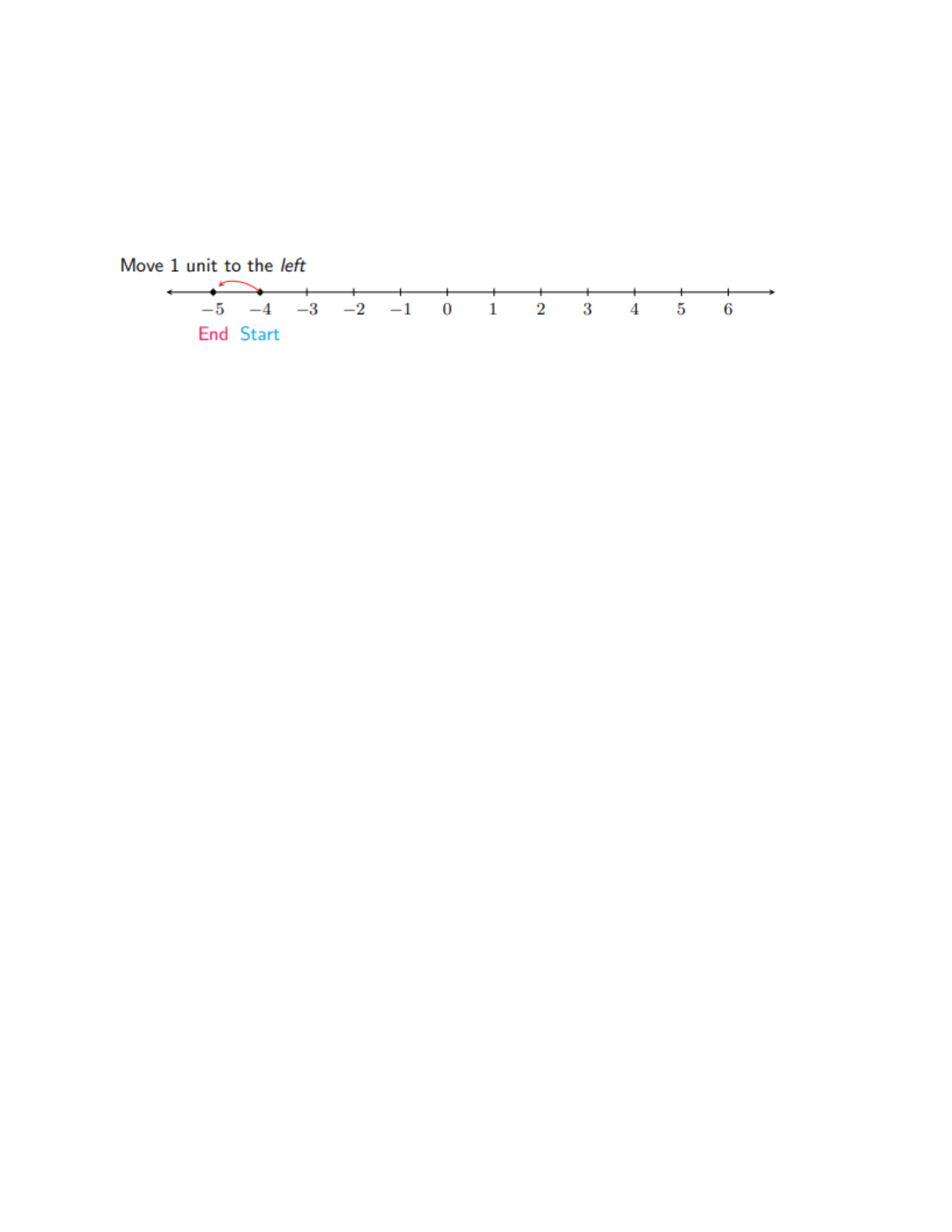
adding two numbers of the same signs. If we want to use the rules, both numbers are
negative, so our answer will be negative, and, adding the weights of -4 and -1
is 5.50,−4−1=−4+(−1)=−55.50,−4−1=−4+(−1)=−5
On the number line, we start at -4 and move 1 unit to the left, to land on -5 which is our
answer.
Changing the subtractions to additions in this way is particularly useful when adding or
subtracting several numbers (because we can add in any order).
Example 1.13
===−3−7+5+7+13−6−(−9)−3+(−7)+5+7+13+(−6)+9−3+(−7)+(−6)+5+7+13+918−3−7+5+7
+13−6−(−9)=−3+(−7)+5+7+13+(−6)+9=−3+(−7)+(−6)+5+7+13+9=18
===−3−7+5+7+13−6−(−9)−3+(−7)+5+7+13+(−6)+95+1318−3−7+5+7+13−6−(−9)=−3+(−7
)+5+7+13+(−6)+9=5+13=18
Remark 1.14
Warning: The symbol "-" is used in two different ways. When it is between two expressions,
it means subtract (e.g., 3−43−4 ). Otherwise, it means 'opposite' or 'negative'
(e.g., −3+4−3+4 ). So in the expression −4−(−3)−4−(−3), the first and last "-" means
opposite and the one in the middle one means subtract. The importance of understanding
this can not be overestimated.
Multiplication and Division of Positive Numbers
Multiplication of integers is adding in the sense that 3×4=4+4+43×4=4+4+4
To multiply larger numbers, it is better to use the usual scheme of multiplication. For
example:
Example 1.15
Let us multiply 152 by 34. We will for convenience sake put the smaller number on the
bottom (though it is not necessary). We have
+×4516515306624808152×34608+45605168
And division is the opposite of multiplication in the sense that to compute 45÷945÷9 is to
find a number so that when we multiply by 9 we get 45. We run through our multiplication
tables (which are hopefully in our head) to discover that 5 does the
trick: 5×9=455×9=45 so that 45÷9=5.45÷9=5. We will discuss division from a different
point of view when we discuss fractions.
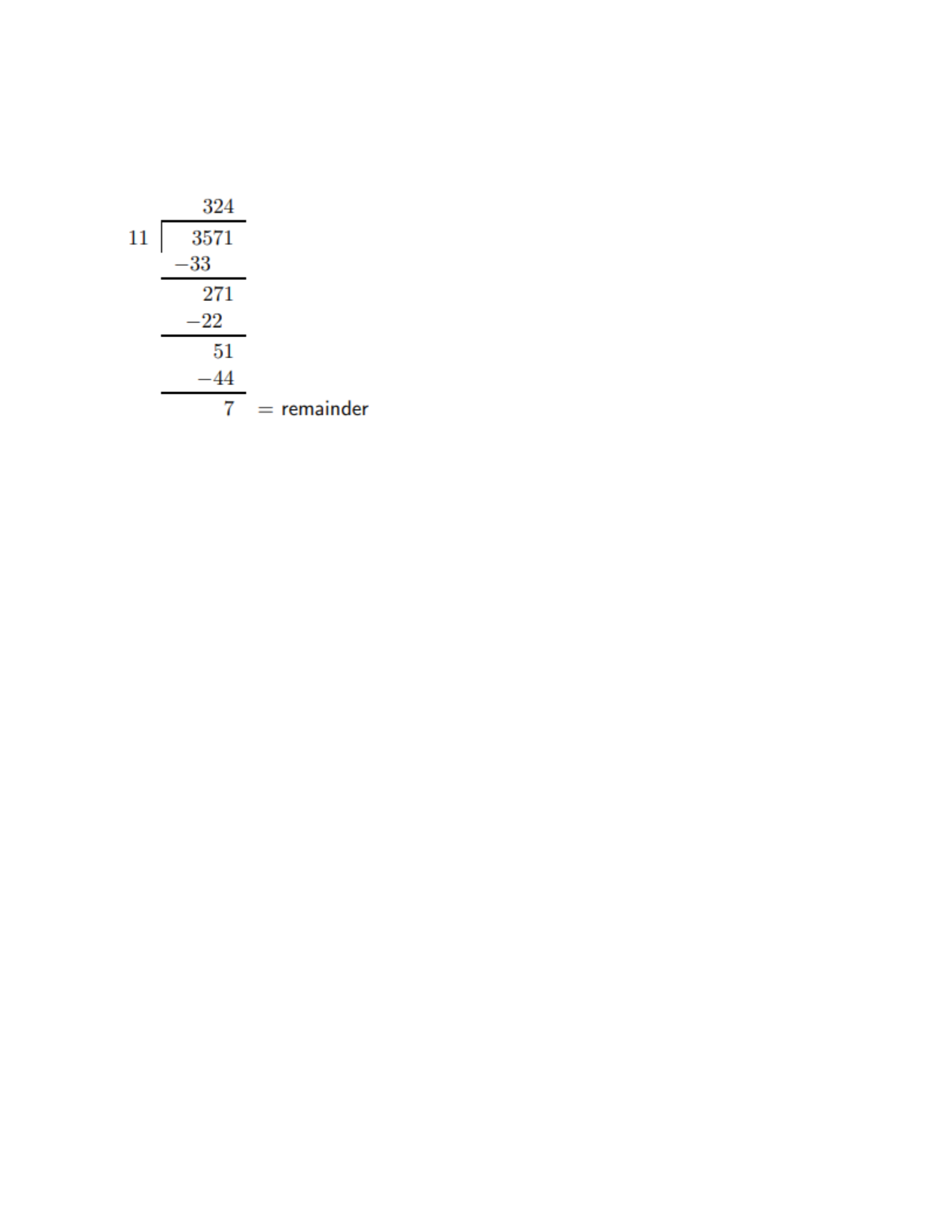
To divide larger numbers, we can use long division. For example, let’s divide 3571 by 11.
Example 1.16
Multiplication involving negative numbers
Multiplication is a little tricky to understand without the notion of distribution (discussed
later). We will begin with noting again what it means to multiply a number by a positive
number: So if we want to compute 4⋅(−7)4⋅(−7) we note
4⋅(−7)=(−7)+(−7)+(−7)+(−7)=−284⋅(−7)=(−7)+(−7)+(−7)+(−7)=−28
Note that since 4⋅7=28,4⋅(−7)=−(4⋅7).4⋅7=28,4⋅(−7)=−(4⋅7). We can multiply positive
numbers in any order: 4⋅7=7⋅44⋅7=7⋅4. The same is true of positive and negative numbers:
(−7)⋅4=4⋅(−7)=−(4⋅7)=−28(−7)⋅4=4⋅(−7)=−(4⋅7)=−28
Example 1.17
5⋅(−12)=−(5⋅12)=−605⋅(−12)=−(5⋅12)=−60 and (−3)⋅(−2)=−(3⋅(−2))=−(−(3⋅2))=6(−3)⋅(−2)
=−(3⋅(−2))=−(−(3⋅2))=6
Example 1.18
So the size of the product of two numbers is the product of their sizes. The sign is positive if
the signs are the same and negative if they are different.
Example 1.19
Two quantities right next to each other, with no symbol between them (except for
parentheses around either or both numbers), has an implicit multiplication. For
example, 3(2)=3×23(2)=3×2.
Example 1.20
Multiply:
zzzzzzzzzzz. (−5)(−8)=40(−5)(−8)=40

aaaaaaaaaaaa. (−6)⋅7=−42(−6)⋅7=−42
bbbbbbbbbbbb. 4⋅12=484⋅12=48
cccccccccccc. (−3)(−6)⋅4(−3)=18⋅4(−3)=72(−3)=−216( multiplying from left to
right )(−3)(−6)⋅4(−3)=18⋅4(−3)=72(−3)=−216( multiplying from left to right )
dddddddddddd. (−3)(−5)⋅4(−2)=(−3)⋅4⋅(−5)(−2)=−12⋅10=−120((−3)(−5)⋅4(−2)=(−3)⋅
4⋅(−5)(−2)=−12⋅10=−120( since we can multiply in any order it is convenient to see
that −5⋅−2=10.−5⋅−2=10. )
Exponents of integers
Recall that a positive exponent represents the number of times a number is multiplied by
itself.
Example 1.21
Evaluate:
eeeeeeeeeeeeee. 52=5⋅5=2552=5⋅5=25
ffffffffffffff. (−4)3=(−4)⋅(−4)⋅(−4)=16⋅(−4)=−64(−4)3=(−4)⋅(−4)⋅(−4)=16⋅(−4)=−64
gggggggggggggg. (−7)1=−7(−7)1=−7
hhhhhhhhhhhhhh. −24=−2⋅2⋅2⋅2=−16−24=−2⋅2⋅2⋅2=−16 Note: The exponent here
is for 2 not −2!
iiiiiiiiiiiiii. (−3)4=(−3)⋅(−3)⋅(−3)⋅(−3)=9⋅(−3)⋅(−3)=−27⋅(−3)=81(−3)4=(−3)⋅(−3)⋅(−3)⋅(
−3)=9⋅(−3)⋅(−3)=−27⋅(−3)=81
jjjjjjjjjjjjjj. (−2)5=(−2)⋅(−2)⋅(−2)⋅(−2)⋅(−2)=−32(−2)5=(−2)⋅(−2)⋅(−2)⋅(−2)⋅(−2)=−32
Exponent rules in details will be further discussed in Chapter 5.
Division involving negative numbers
Division is just a question of knowing multiplication and therefore has the same rule: The
size of the quotient of two numbers is the quotient of the sizes. The sign is positive if the
signs are the same and negative if they are different.
Example 1.22
Divide:
eeeeeeeeeeeeee. (−42)÷7=−6(−42)÷7=−6
ffffffffffffff. 81÷(−9)=−981÷(−9)=−9
gggggggggggggg. (−35)÷(−7)=5(−35)÷(−7)=5
hhhhhhhhhhhhhh. 14÷2=714÷2=7
iiiiiiiiiiiiii. 0÷5=00÷5=0. Note When dividing 0 by any number, the answer is always 0.
jjjjjjjjjjjjjj. −10÷0=−10÷0= undefined.
Note 1.23
Any number divided by 0 is undefined!
Multiplying and Dividing Integers
Consider two numbers at a time.
115. If the signs of the two numbers are the same, then the sign of the answer is
positive.
116. If the signs of the two numbers are different, then the sign of the answer is
negative.
We begin with a brief review of arithmetic with integers
i.e. …,−3,−2,−1,0,1,2,3,……,−3,−2,−1,0,1,2,3,…
Any number has a weight and a sign.
The magnitude (or weight) of a number is the distance it is from 0 on the number line.
Example 1.1
For example, the weight of -5 is 5 and the weight of 7 is 7 .
Two numbers are opposites if, on the number line, they are on opposite sides of zero, but
the same distance away from zero.
So, −5 is the opposite of 5, and 7 is the opposite of −7 and so on.
Addition
We can add two numbers with the help of a number line .
Example 1.2
Adding two positive numbers: For example to add 3+43+4, we start with 3 on the number
line then move 4 units to the right. We land at 7 which is our answer.
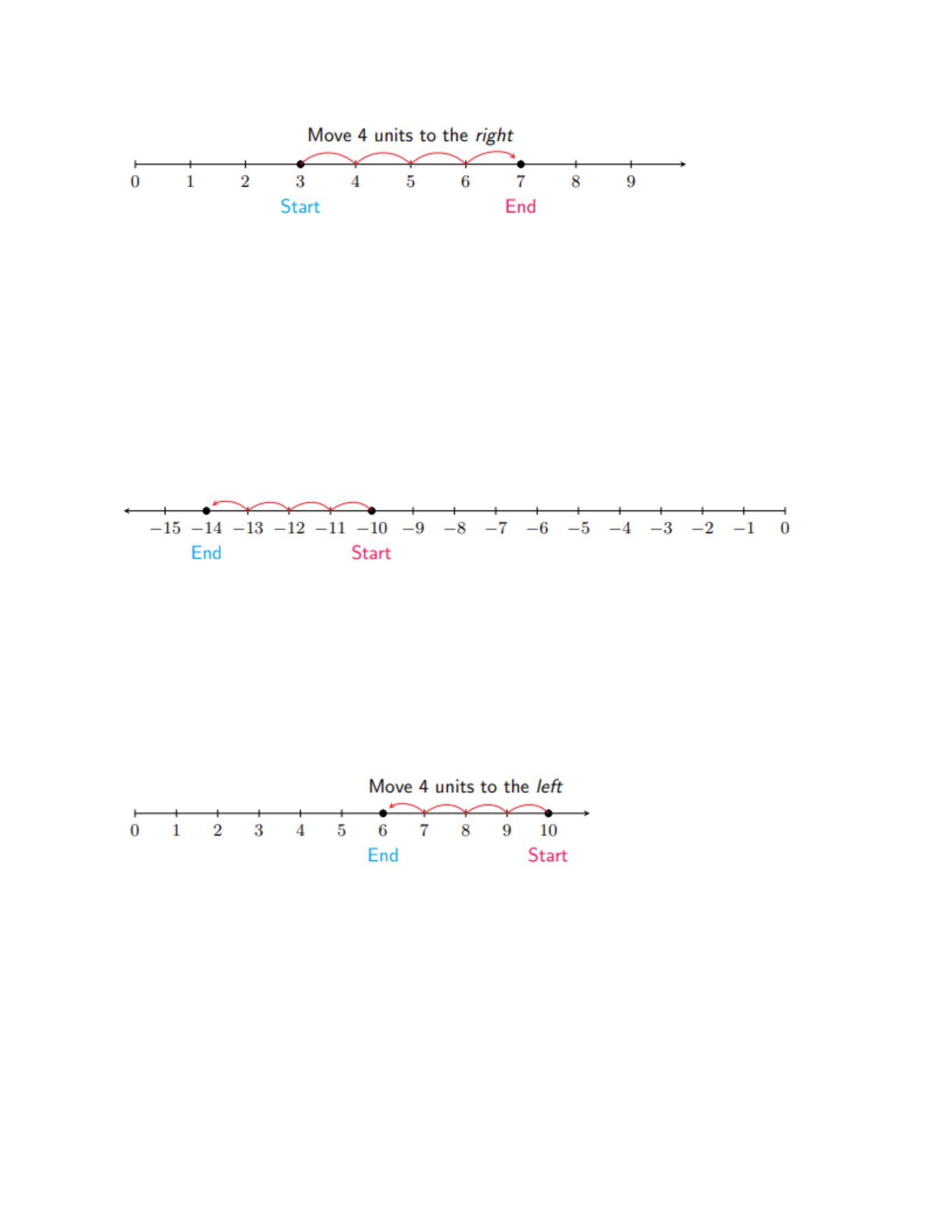
So, 3+4=73+4=7. Notice that the answer has the same sign as the signs of 3 and 4 (both
positive) and its weight comes from adding the weights of 3 and 4.
You always move to the right when you add a positive number
Example 1.3
Adding two negative numbers: For example, −10+(−4)−10+(−4) means you are adding a
debt of $4$4 to an already existing debt of $10.$10. So, we start at -10 on the number line
and move 4 units to the left, to land at −14,−14, which is the answer.
You always move to the left when you add a negative number (a debt)
So, −10+(−4)=−14−10+(−4)=−14. Notice that the answer has the same sign as the signs of -
10 and -4 (both negative) and its weight comes from adding the weights of -10 and -4
To add numbers of opposite signs, that is, a positive and a negative number, we can also
use the number line. For example, to perform 10+(−4),10+(−4), we start at 10 on the
number line and then move 4 units to the left. We land at 6,6, which is the answer. Think
of 10+(−4)10+(−4) as having $10$10 and adding a $4$4 debt. Because we are adding a
debt, we move to the left on the number line!
So, 10+(−4)=6.10+(−4)=6. Notice that the answer has the same sign as the sign of 10
(positive) because it is the number of larger weight, and its weight comes from finding the
difference of the weights of 10 and -4
Notice that because we were adding two numbers of opposite signs, the answer ended up
being the difference in weight (6) along with the sign of the number of larger weight
(positive).
Example 1.4
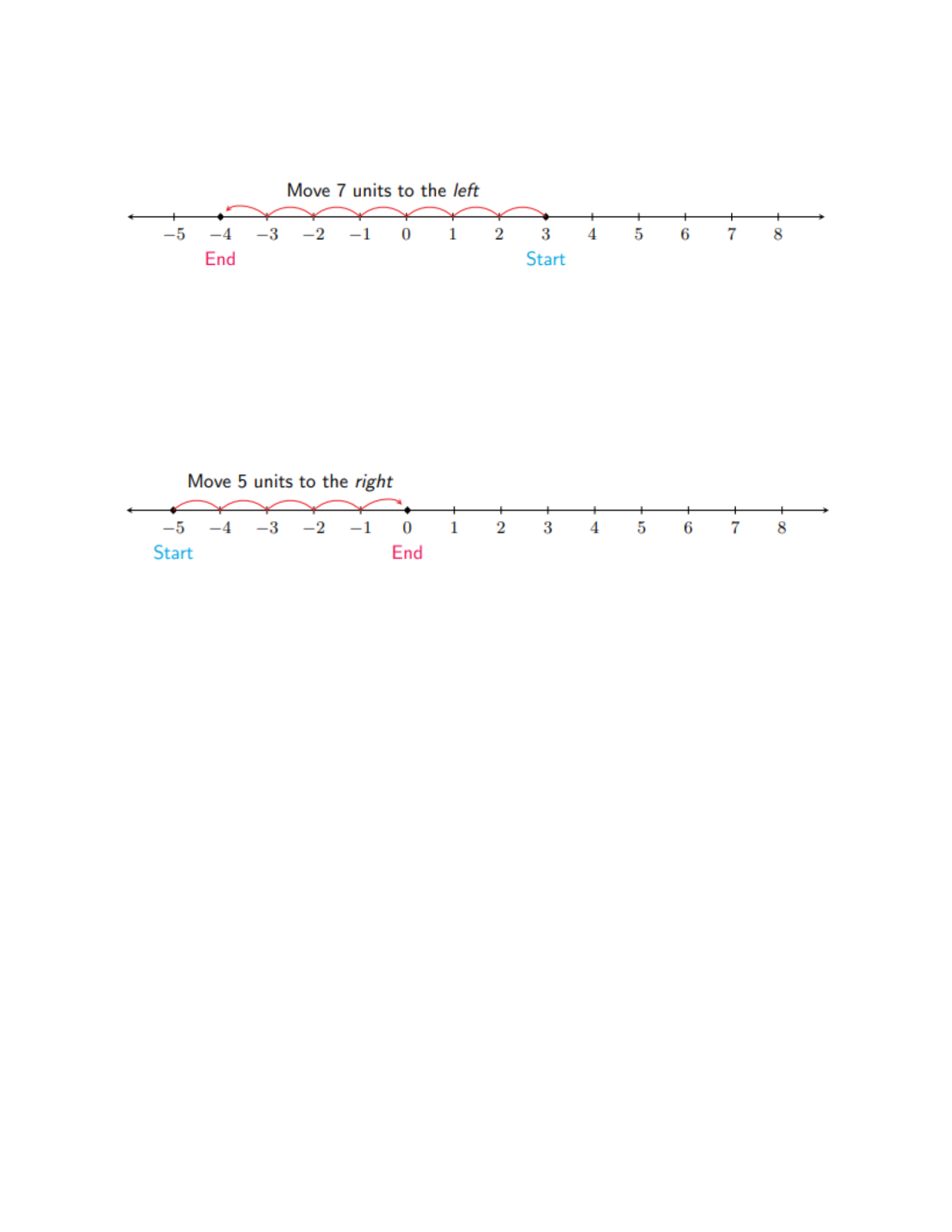
Adding two numbers of opposite signs: For example, 3+(−7)3+(−7). We start at 3 and move
toward 7 units to the left, and we land at −4,−4, which is our answer.
So, 3+(−7)=−4.3+(−7)=−4. Notice that the answer has the same sign as the signs of -7
(negative) because it is the number of larger weight, and its weight comes from finding the
difference of the weights of 3 and -7.
Example 1.5
Adding opposites: We start at -5 on the number line and jump to the right 5 units to land
finally at 00. So −5+5=0−5+5=0.
Note 1.6
Two opposite numbers are called a zero-pair, because adding them always results in 0.
So, −5 and 5 are a zero-pair.
Adding Intergers
117. To add two numbers of the same sign, add their weights and place it after
the sign.
118. To add two numbers of opposite signs, find the difference of their weights
and place it after the sign of the number with the greater weight.
Example 1.7
Add:
kkkkkkkkkkkkkk. −8+19=11−8+19=11
llllllllllllll. −8+4=−4−8+4=−4
mmmmmmmmmmmmmm. 6+(−9)=−36+(−9)=−3
nnnnnnnnnnnnnn. 7+(−2)=57+(−2)=5
oooooooooooooo. (−4)+(−7)=−11(−4)+(−7)=−11
pppppppppppppp. 8+7=158+7=15

Note 1.8
While we can add in any order: 4+2=2+44+2=2+4, it is sometimes convenient to add up all
of the negative numbers and add up all of the positive numbers, and then add the results.
There are also times when it is best to notice certain simplifications if the numbers are
added in a different order.
For example
−5+4+5+(−8)=−5+(−8)+4+5( by reordering )−5+4+5+(−8)=−5+(−8)+4+5( by reordering )
so,
−5+4+5+(−8)=−5+(−8)+4+5=−13+9=−4−5+4+5+(−8)=−5+(−8)+4+5=−13+9=−4
We could have also simplified this by noting that (-5) and 5 are zero-pair, so we are left
with 4+(−8)4+(−8) which is -4.
Example 1.9
We can calculate
(−4)+(−5)+7+(−3)=(−4)+(−5)+(−3)+7=(−12)+7=−5(−4)+(−5)+7+(−3)=(−4)+(−5)+(−3)+7=
(−12)+7=−5
We could have simplified this by noting that (-4) and (-3) make -7, and -7 and 7 are zero-
pair, so the total is -5.
Subtraction (as Addition of the Opposite)
Once we know how to add numbers, we are set to subtract numbers because subtraction is
nothing but addition of the opposite. That is, subtracting 8 − 3 (which reads: subtracting 3
from 8) is the same as 8 + (−3) (which reads: Adding −3 to 8.).
Example 1.10
So, 8−3=8+(−3),8−3=8+(−3), and, we can use the rules of adding two numbers of opposite
signs to find out that the answer is 5.5. We can also use the number line. We start at 8 and
move 3 units to the left (adding -3 is adding a debt, so we move to the left).
So 8−3=5.−4−3−2−10123456788−3=5.−4−3−2−1012345678 End Start Move 3 units to the
left
Example 1.11
To calculate 3−73−7 we first rewrite it as an addition
problem. 3−7=3+(−7).3−7=3+(−7). We can either use the number line, or the rules of
adding two numbers of opposite signs. And, 50,3−7=3+(−7)=−450,3−7=3+(−7)=−4
Example 1.12
To calculate −4−1,−4−1, we first rewrite it as an addition
problem. −4−1=−4+(−1).−4−1=−4+(−1). We can either use the number line, or the rules of
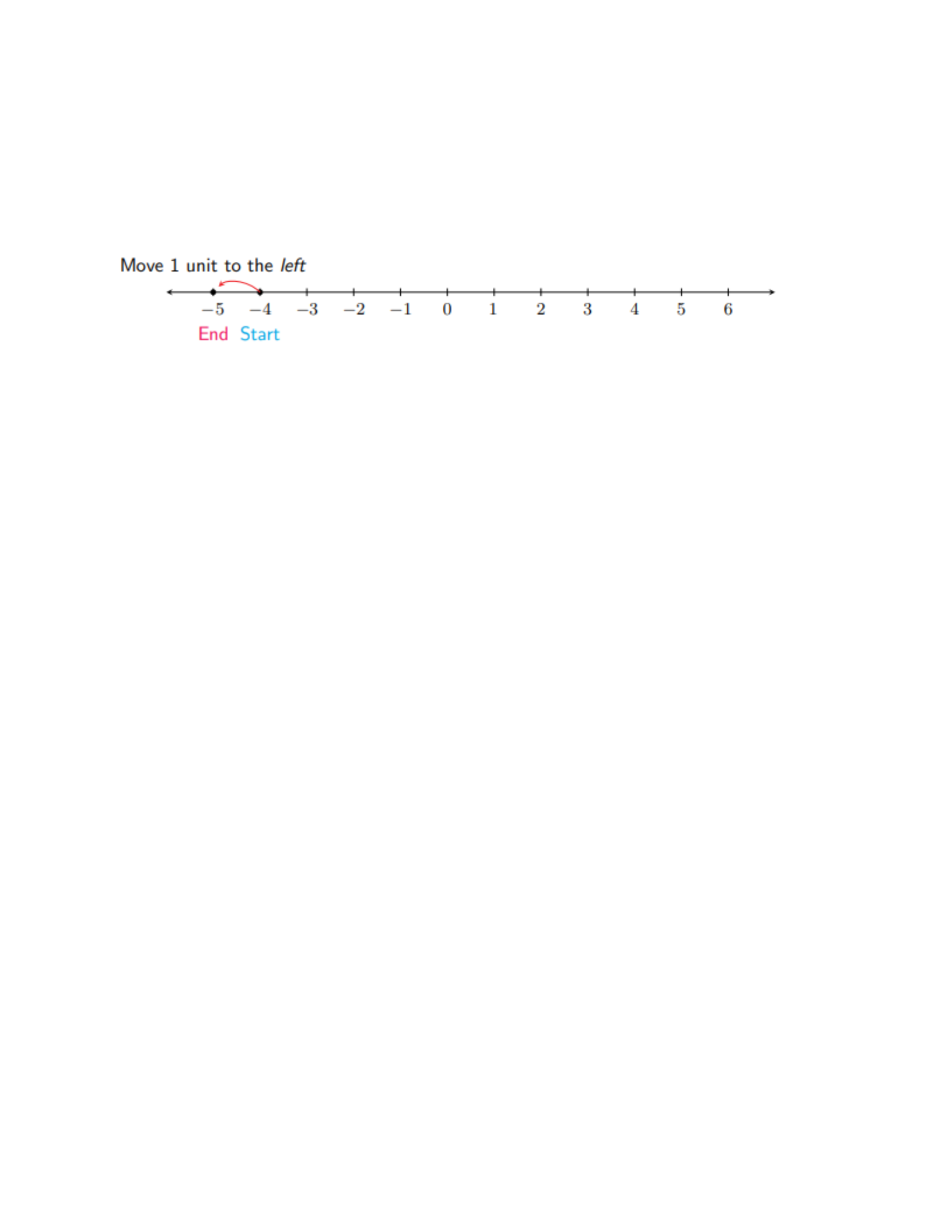
adding two numbers of the same signs. If we want to use the rules, both numbers are
negative, so our answer will be negative, and, adding the weights of -4 and -1
is 5.50,−4−1=−4+(−1)=−55.50,−4−1=−4+(−1)=−5
On the number line, we start at -4 and move 1 unit to the left, to land on -5 which is our
answer.
Changing the subtractions to additions in this way is particularly useful when adding or
subtracting several numbers (because we can add in any order).
Example 1.13
===−3−7+5+7+13−6−(−9)−3+(−7)+5+7+13+(−6)+9−3+(−7)+(−6)+5+7+13+918−3−7+5+7
+13−6−(−9)=−3+(−7)+5+7+13+(−6)+9=−3+(−7)+(−6)+5+7+13+9=18
===−3−7+5+7+13−6−(−9)−3+(−7)+5+7+13+(−6)+95+1318−3−7+5+7+13−6−(−9)=−3+(−7
)+5+7+13+(−6)+9=5+13=18
Remark 1.14
Warning: The symbol "-" is used in two different ways. When it is between two expressions,
it means subtract (e.g., 3−43−4 ). Otherwise, it means 'opposite' or 'negative'
(e.g., −3+4−3+4 ). So in the expression −4−(−3)−4−(−3), the first and last "-" means
opposite and the one in the middle one means subtract. The importance of understanding
this can not be overestimated.
Multiplication and Division of Positive Numbers
Multiplication of integers is adding in the sense that 3×4=4+4+43×4=4+4+4
To multiply larger numbers, it is better to use the usual scheme of multiplication. For
example:
Example 1.15
Let us multiply 152 by 34. We will for convenience sake put the smaller number on the
bottom (though it is not necessary). We have
+×4516515306624808152×34608+45605168
And division is the opposite of multiplication in the sense that to compute 45÷945÷9 is to
find a number so that when we multiply by 9 we get 45. We run through our multiplication
tables (which are hopefully in our head) to discover that 5 does the
trick: 5×9=455×9=45 so that 45÷9=5.45÷9=5. We will discuss division from a different
point of view when we discuss fractions.
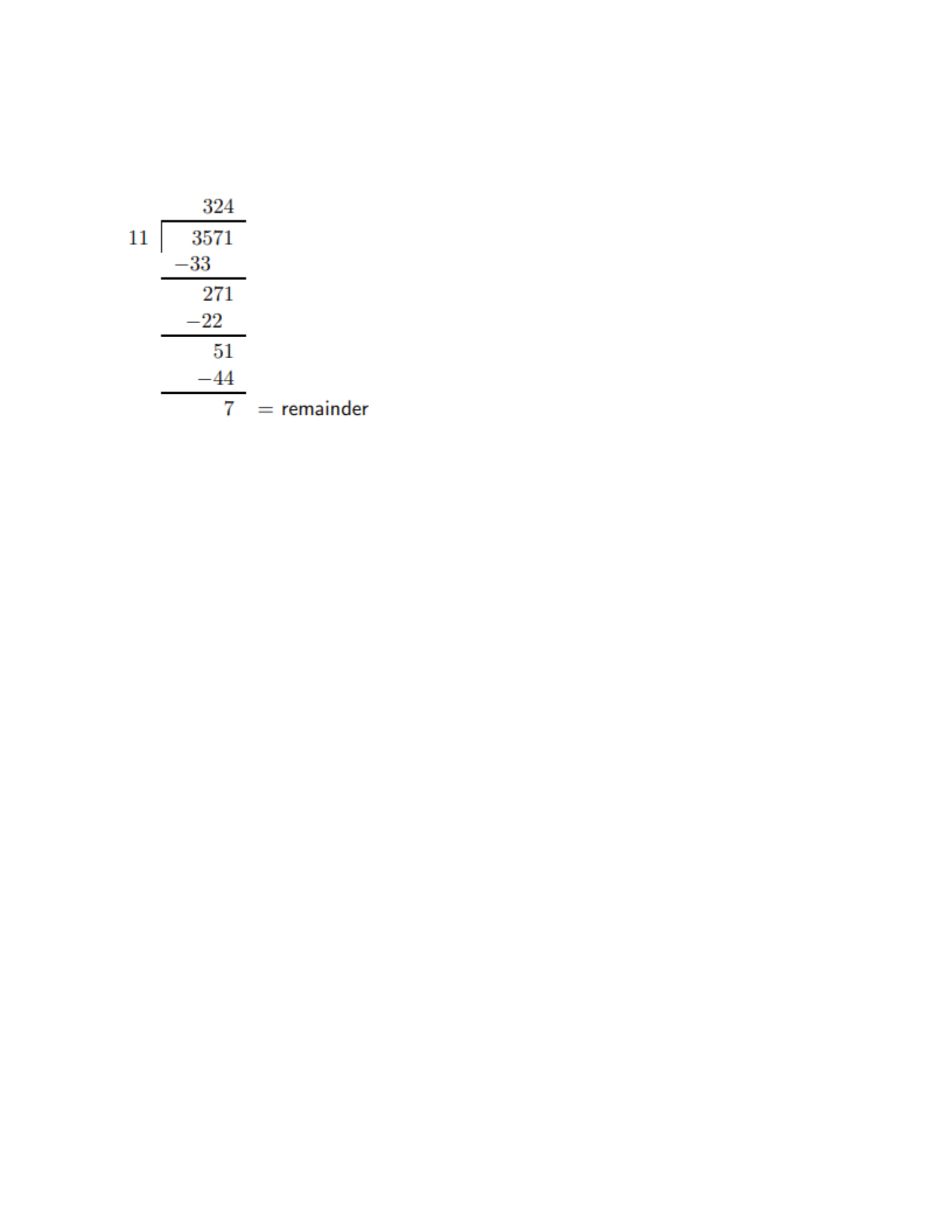
To divide larger numbers, we can use long division. For example, let’s divide 3571 by 11.
Example 1.16
Multiplication involving negative numbers
Multiplication is a little tricky to understand without the notion of distribution (discussed
later). We will begin with noting again what it means to multiply a number by a positive
number: So if we want to compute 4⋅(−7)4⋅(−7) we note
4⋅(−7)=(−7)+(−7)+(−7)+(−7)=−284⋅(−7)=(−7)+(−7)+(−7)+(−7)=−28
Note that since 4⋅7=28,4⋅(−7)=−(4⋅7).4⋅7=28,4⋅(−7)=−(4⋅7). We can multiply positive
numbers in any order: 4⋅7=7⋅44⋅7=7⋅4. The same is true of positive and negative numbers:
(−7)⋅4=4⋅(−7)=−(4⋅7)=−28(−7)⋅4=4⋅(−7)=−(4⋅7)=−28
Example 1.17
5⋅(−12)=−(5⋅12)=−605⋅(−12)=−(5⋅12)=−60 and (−3)⋅(−2)=−(3⋅(−2))=−(−(3⋅2))=6(−3)⋅(−2)
=−(3⋅(−2))=−(−(3⋅2))=6
Example 1.18
So the size of the product of two numbers is the product of their sizes. The sign is positive if
the signs are the same and negative if they are different.
Example 1.19
Two quantities right next to each other, with no symbol between them (except for
parentheses around either or both numbers), has an implicit multiplication. For
example, 3(2)=3×23(2)=3×2.
Example 1.20
Multiply:
eeeeeeeeeeee. (−5)(−8)=40(−5)(−8)=40

ffffffffffff. (−6)⋅7=−42(−6)⋅7=−42
gggggggggggg. 4⋅12=484⋅12=48
hhhhhhhhhhhh. (−3)(−6)⋅4(−3)=18⋅4(−3)=72(−3)=−216( multiplying from left to
right )(−3)(−6)⋅4(−3)=18⋅4(−3)=72(−3)=−216( multiplying from left to right )
iiiiiiiiiiii. (−3)(−5)⋅4(−2)=(−3)⋅4⋅(−5)(−2)=−12⋅10=−120((−3)(−5)⋅4(−2)=(−3)⋅4⋅(−5)(
−2)=−12⋅10=−120( since we can multiply in any order it is convenient to see
that −5⋅−2=10.−5⋅−2=10. )
Exponents of integers
Recall that a positive exponent represents the number of times a number is multiplied by
itself.
Example 1.21
Evaluate:
kkkkkkkkkkkkkk. 52=5⋅5=2552=5⋅5=25
llllllllllllll. (−4)3=(−4)⋅(−4)⋅(−4)=16⋅(−4)=−64(−4)3=(−4)⋅(−4)⋅(−4)=16⋅(−4)=−64
mmmmmmmmmmmmmm. (−7)1=−7(−7)1=−7
nnnnnnnnnnnnnn. −24=−2⋅2⋅2⋅2=−16−24=−2⋅2⋅2⋅2=−16 Note: The exponent here
is for 2 not −2!
oooooooooooooo. (−3)4=(−3)⋅(−3)⋅(−3)⋅(−3)=9⋅(−3)⋅(−3)=−27⋅(−3)=81(−3)4=(−
3)⋅(−3)⋅(−3)⋅(−3)=9⋅(−3)⋅(−3)=−27⋅(−3)=81
pppppppppppppp. (−2)5=(−2)⋅(−2)⋅(−2)⋅(−2)⋅(−2)=−32(−2)5=(−2)⋅(−2)⋅(−2)⋅(−2)
⋅(−2)=−32
Exponent rules in details will be further discussed in Chapter 5.
Division involving negative numbers
Division is just a question of knowing multiplication and therefore has the same rule: The
size of the quotient of two numbers is the quotient of the sizes. The sign is positive if the
signs are the same and negative if they are different.
Example 1.22
Divide:
kkkkkkkkkkkkkk. (−42)÷7=−6(−42)÷7=−6
llllllllllllll. 81÷(−9)=−981÷(−9)=−9
mmmmmmmmmmmmmm. (−35)÷(−7)=5(−35)÷(−7)=5
nnnnnnnnnnnnnn. 14÷2=714÷2=7
oooooooooooooo. 0÷5=00÷5=0. Note When dividing 0 by any number, the
answer is always 0.
pppppppppppppp. −10÷0=−10÷0= undefined.
Note 1.23
Any number divided by 0 is undefined!
Multiplying and Dividing Integers
Consider two numbers at a time.
117. If the signs of the two numbers are the same, then the sign of the answer is
positive.
118. If the signs of the two numbers are different, then the sign of the answer is
negative.
We begin with a brief review of arithmetic with integers
i.e. …,−3,−2,−1,0,1,2,3,……,−3,−2,−1,0,1,2,3,…
Any number has a weight and a sign.
The magnitude (or weight) of a number is the distance it is from 0 on the number line.
Example 1.1
For example, the weight of -5 is 5 and the weight of 7 is 7 .
Two numbers are opposites if, on the number line, they are on opposite sides of zero, but
the same distance away from zero.
So, −5 is the opposite of 5, and 7 is the opposite of −7 and so on.
Addition
We can add two numbers with the help of a number line .
Example 1.2
Adding two positive numbers: For example to add 3+43+4, we start with 3 on the number
line then move 4 units to the right. We land at 7 which is our answer.
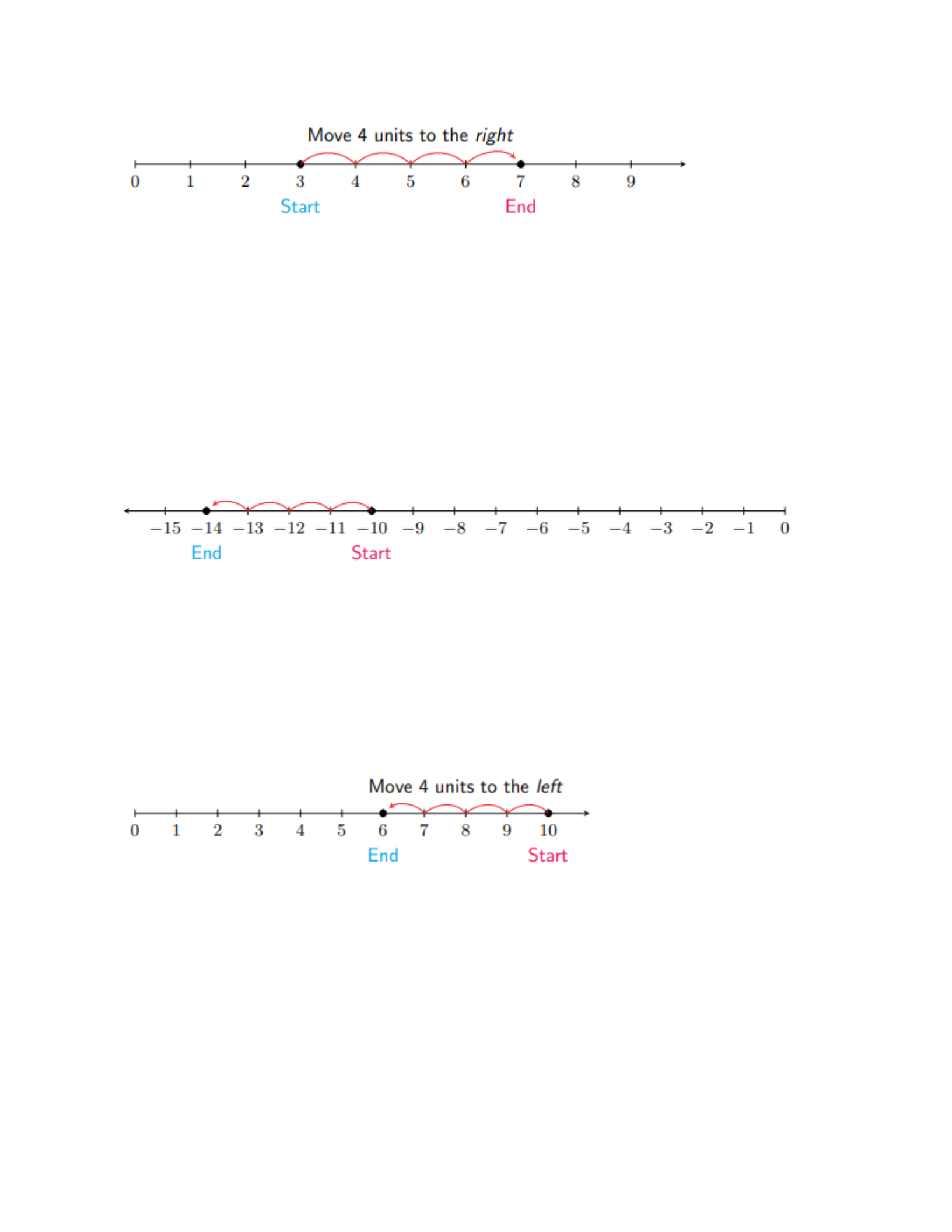
So, 3+4=73+4=7. Notice that the answer has the same sign as the signs of 3 and 4 (both
positive) and its weight comes from adding the weights of 3 and 4.
You always move to the right when you add a positive number
Example 1.3
Adding two negative numbers: For example, −10+(−4)−10+(−4) means you are adding a
debt of $4$4 to an already existing debt of $10.$10. So, we start at -10 on the number line
and move 4 units to the left, to land at −14,−14, which is the answer.
You always move to the left when you add a negative number (a debt)
So, −10+(−4)=−14−10+(−4)=−14. Notice that the answer has the same sign as the signs of -
10 and -4 (both negative) and its weight comes from adding the weights of -10 and -4
To add numbers of opposite signs, that is, a positive and a negative number, we can also
use the number line. For example, to perform 10+(−4),10+(−4), we start at 10 on the
number line and then move 4 units to the left. We land at 6,6, which is the answer. Think
of 10+(−4)10+(−4) as having $10$10 and adding a $4$4 debt. Because we are adding a
debt, we move to the left on the number line!
So, 10+(−4)=6.10+(−4)=6. Notice that the answer has the same sign as the sign of 10
(positive) because it is the number of larger weight, and its weight comes from finding the
difference of the weights of 10 and -4
Notice that because we were adding two numbers of opposite signs, the answer ended up
being the difference in weight (6) along with the sign of the number of larger weight
(positive).
Example 1.4
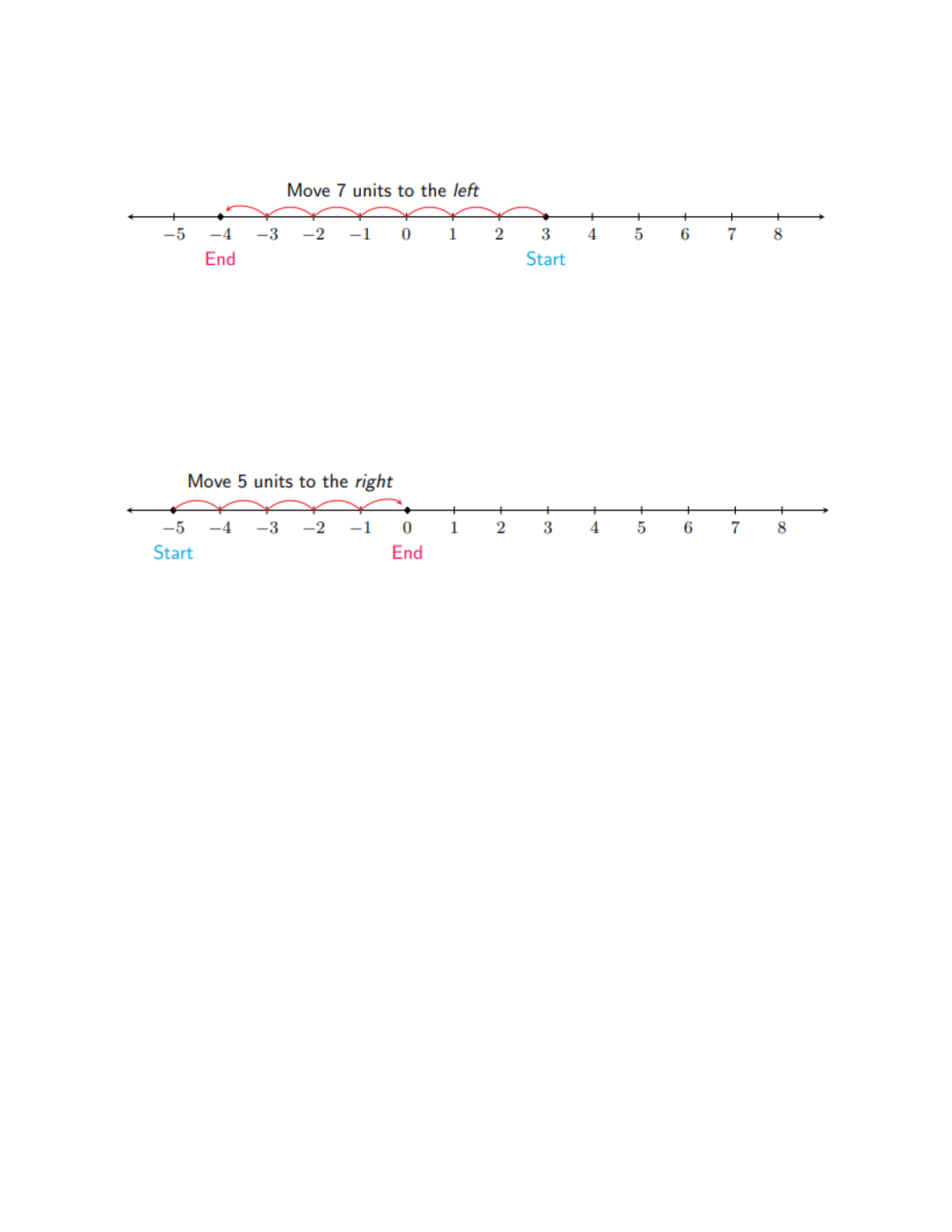
Adding two numbers of opposite signs: For example, 3+(−7)3+(−7). We start at 3 and move
toward 7 units to the left, and we land at −4,−4, which is our answer.
So, 3+(−7)=−4.3+(−7)=−4. Notice that the answer has the same sign as the signs of -7
(negative) because it is the number of larger weight, and its weight comes from finding the
difference of the weights of 3 and -7.
Example 1.5
Adding opposites: We start at -5 on the number line and jump to the right 5 units to land
finally at 00. So −5+5=0−5+5=0.
Note 1.6
Two opposite numbers are called a zero-pair, because adding them always results in 0.
So, −5 and 5 are a zero-pair.
Adding Intergers
119. To add two numbers of the same sign, add their weights and place it after
the sign.
120. To add two numbers of opposite signs, find the difference of their weights
and place it after the sign of the number with the greater weight.
Example 1.7
Add:
qqqqqqqqqqqqqq. −8+19=11−8+19=11
rrrrrrrrrrrrrr. −8+4=−4−8+4=−4
ssssssssssssss. 6+(−9)=−36+(−9)=−3
tttttttttttttt. 7+(−2)=57+(−2)=5
uuuuuuuuuuuuuu. (−4)+(−7)=−11(−4)+(−7)=−11
vvvvvvvvvvvvvv. 8+7=158+7=15

Note 1.8
While we can add in any order: 4+2=2+44+2=2+4, it is sometimes convenient to add up all
of the negative numbers and add up all of the positive numbers, and then add the results.
There are also times when it is best to notice certain simplifications if the numbers are
added in a different order.
For example
−5+4+5+(−8)=−5+(−8)+4+5( by reordering )−5+4+5+(−8)=−5+(−8)+4+5( by reordering )
so,
−5+4+5+(−8)=−5+(−8)+4+5=−13+9=−4−5+4+5+(−8)=−5+(−8)+4+5=−13+9=−4
We could have also simplified this by noting that (-5) and 5 are zero-pair, so we are left
with 4+(−8)4+(−8) which is -4.
Example 1.9
We can calculate
(−4)+(−5)+7+(−3)=(−4)+(−5)+(−3)+7=(−12)+7=−5(−4)+(−5)+7+(−3)=(−4)+(−5)+(−3)+7=
(−12)+7=−5
We could have simplified this by noting that (-4) and (-3) make -7, and -7 and 7 are zero-
pair, so the total is -5.
Subtraction (as Addition of the Opposite)
Once we know how to add numbers, we are set to subtract numbers because subtraction is
nothing but addition of the opposite. That is, subtracting 8 − 3 (which reads: subtracting 3
from 8) is the same as 8 + (−3) (which reads: Adding −3 to 8.).
Example 1.10
So, 8−3=8+(−3),8−3=8+(−3), and, we can use the rules of adding two numbers of opposite
signs to find out that the answer is 5.5. We can also use the number line. We start at 8 and
move 3 units to the left (adding -3 is adding a debt, so we move to the left).
So 8−3=5.−4−3−2−10123456788−3=5.−4−3−2−1012345678 End Start Move 3 units to the
left
Example 1.11
To calculate 3−73−7 we first rewrite it as an addition
problem. 3−7=3+(−7).3−7=3+(−7). We can either use the number line, or the rules of
adding two numbers of opposite signs. And, 50,3−7=3+(−7)=−450,3−7=3+(−7)=−4
Example 1.12
To calculate −4−1,−4−1, we first rewrite it as an addition
problem. −4−1=−4+(−1).−4−1=−4+(−1). We can either use the number line, or the rules of
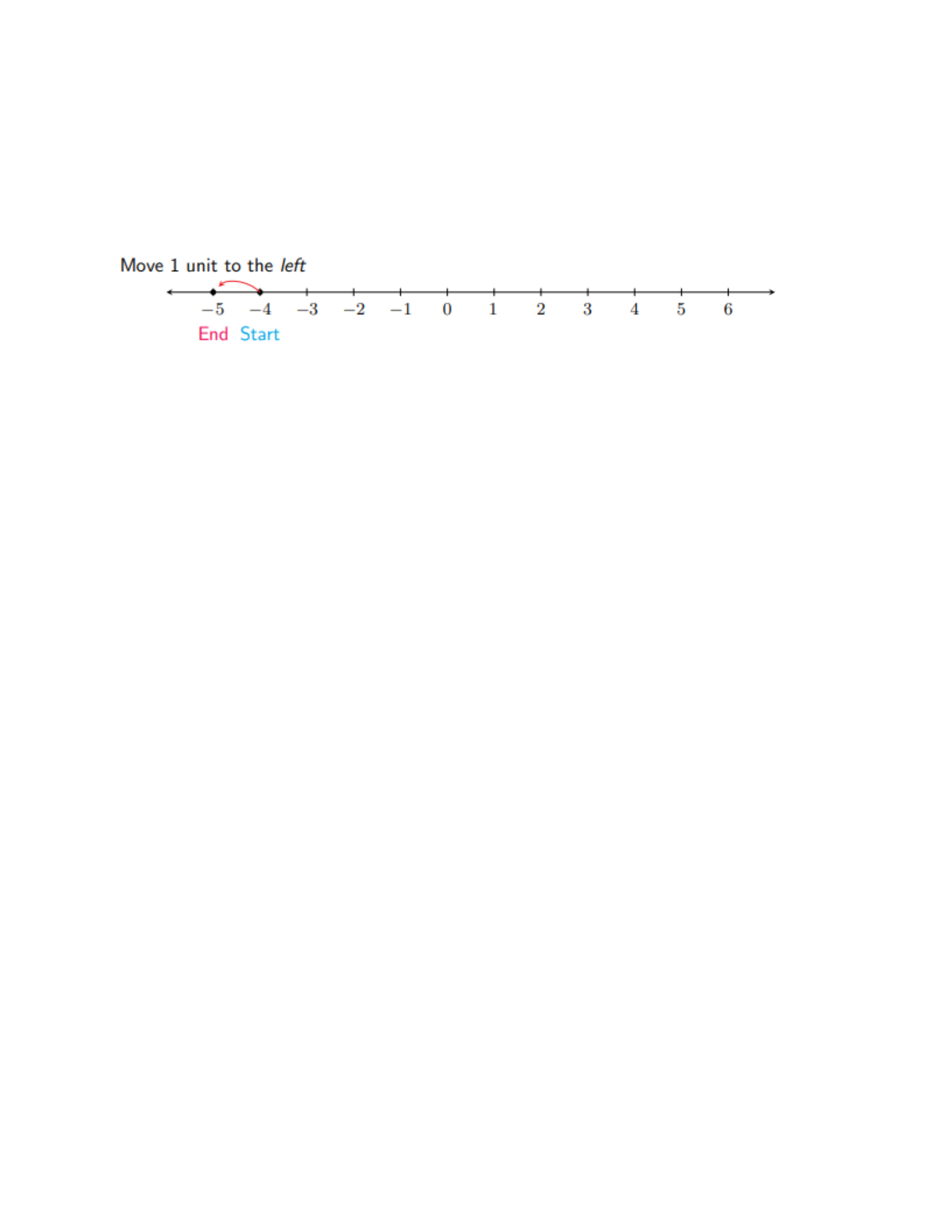
adding two numbers of the same signs. If we want to use the rules, both numbers are
negative, so our answer will be negative, and, adding the weights of -4 and -1
is 5.50,−4−1=−4+(−1)=−55.50,−4−1=−4+(−1)=−5
On the number line, we start at -4 and move 1 unit to the left, to land on -5 which is our
answer.
Changing the subtractions to additions in this way is particularly useful when adding or
subtracting several numbers (because we can add in any order).
Example 1.13
===−3−7+5+7+13−6−(−9)−3+(−7)+5+7+13+(−6)+9−3+(−7)+(−6)+5+7+13+918−3−7+5+7
+13−6−(−9)=−3+(−7)+5+7+13+(−6)+9=−3+(−7)+(−6)+5+7+13+9=18
===−3−7+5+7+13−6−(−9)−3+(−7)+5+7+13+(−6)+95+1318−3−7+5+7+13−6−(−9)=−3+(−7
)+5+7+13+(−6)+9=5+13=18
Remark 1.14
Warning: The symbol "-" is used in two different ways. When it is between two expressions,
it means subtract (e.g., 3−43−4 ). Otherwise, it means 'opposite' or 'negative'
(e.g., −3+4−3+4 ). So in the expression −4−(−3)−4−(−3), the first and last "-" means
opposite and the one in the middle one means subtract. The importance of understanding
this can not be overestimated.
Multiplication and Division of Positive Numbers
Multiplication of integers is adding in the sense that 3×4=4+4+43×4=4+4+4
To multiply larger numbers, it is better to use the usual scheme of multiplication. For
example:
Example 1.15
Let us multiply 152 by 34. We will for convenience sake put the smaller number on the
bottom (though it is not necessary). We have
+×4516515306624808152×34608+45605168
And division is the opposite of multiplication in the sense that to compute 45÷945÷9 is to
find a number so that when we multiply by 9 we get 45. We run through our multiplication
tables (which are hopefully in our head) to discover that 5 does the
trick: 5×9=455×9=45 so that 45÷9=5.45÷9=5. We will discuss division from a different
point of view when we discuss fractions.
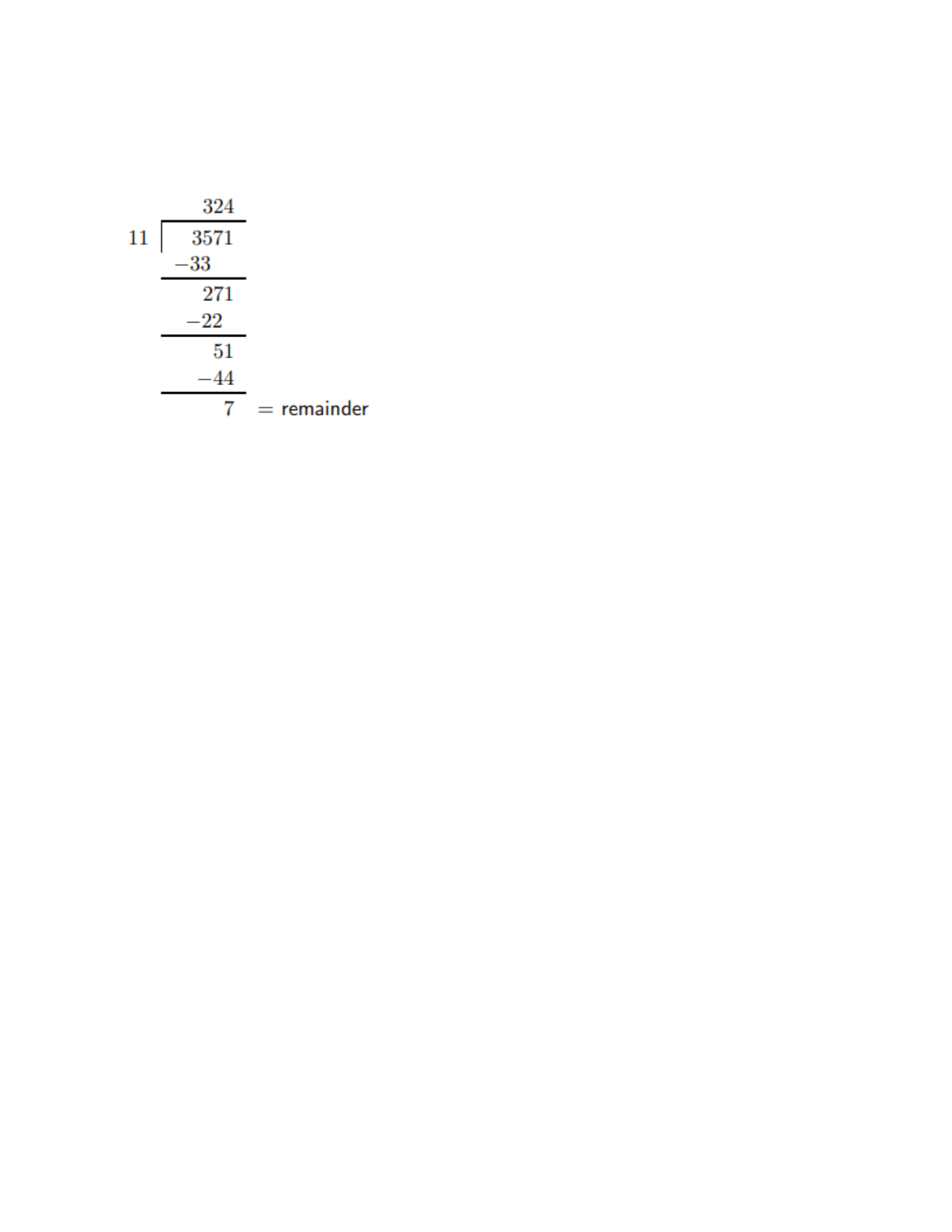
To divide larger numbers, we can use long division. For example, let’s divide 3571 by 11.
Example 1.16
Multiplication involving negative numbers
Multiplication is a little tricky to understand without the notion of distribution (discussed
later). We will begin with noting again what it means to multiply a number by a positive
number: So if we want to compute 4⋅(−7)4⋅(−7) we note
4⋅(−7)=(−7)+(−7)+(−7)+(−7)=−284⋅(−7)=(−7)+(−7)+(−7)+(−7)=−28
Note that since 4⋅7=28,4⋅(−7)=−(4⋅7).4⋅7=28,4⋅(−7)=−(4⋅7). We can multiply positive
numbers in any order: 4⋅7=7⋅44⋅7=7⋅4. The same is true of positive and negative numbers:
(−7)⋅4=4⋅(−7)=−(4⋅7)=−28(−7)⋅4=4⋅(−7)=−(4⋅7)=−28
Example 1.17
5⋅(−12)=−(5⋅12)=−605⋅(−12)=−(5⋅12)=−60 and (−3)⋅(−2)=−(3⋅(−2))=−(−(3⋅2))=6(−3)⋅(−2)
=−(3⋅(−2))=−(−(3⋅2))=6
Example 1.18
So the size of the product of two numbers is the product of their sizes. The sign is positive if
the signs are the same and negative if they are different.
Example 1.19
Two quantities right next to each other, with no symbol between them (except for
parentheses around either or both numbers), has an implicit multiplication. For
example, 3(2)=3×23(2)=3×2.
Example 1.20
Multiply:
jjjjjjjjjjjj. (−5)(−8)=40(−5)(−8)=40

kkkkkkkkkkkk. (−6)⋅7=−42(−6)⋅7=−42
llllllllllll. 4⋅12=484⋅12=48
mmmmmmmmmmmm. (−3)(−6)⋅4(−3)=18⋅4(−3)=72(−3)=−216( multiplying from left
to right )(−3)(−6)⋅4(−3)=18⋅4(−3)=72(−3)=−216( multiplying from left to right )
nnnnnnnnnnnn. (−3)(−5)⋅4(−2)=(−3)⋅4⋅(−5)(−2)=−12⋅10=−120((−3)(−5)⋅4(−2)=(−3)⋅
4⋅(−5)(−2)=−12⋅10=−120( since we can multiply in any order it is convenient to see
that −5⋅−2=10.−5⋅−2=10. )
Exponents of integers
Recall that a positive exponent represents the number of times a number is multiplied by
itself.
Example 1.21
Evaluate:
qqqqqqqqqqqqqq. 52=5⋅5=2552=5⋅5=25
rrrrrrrrrrrrrr. (−4)3=(−4)⋅(−4)⋅(−4)=16⋅(−4)=−64(−4)3=(−4)⋅(−4)⋅(−4)=16⋅(−4)=−6
4
ssssssssssssss. (−7)1=−7(−7)1=−7
tttttttttttttt. −24=−2⋅2⋅2⋅2=−16−24=−2⋅2⋅2⋅2=−16 Note: The exponent here is for
2 not −2!
uuuuuuuuuuuuuu. (−3)4=(−3)⋅(−3)⋅(−3)⋅(−3)=9⋅(−3)⋅(−3)=−27⋅(−3)=81(−3)4=(−
3)⋅(−3)⋅(−3)⋅(−3)=9⋅(−3)⋅(−3)=−27⋅(−3)=81
vvvvvvvvvvvvvv. (−2)5=(−2)⋅(−2)⋅(−2)⋅(−2)⋅(−2)=−32(−2)5=(−2)⋅(−2)⋅(−2)⋅(−2)⋅(−2)=
−32
Exponent rules in details will be further discussed in Chapter 5.
Division involving negative numbers
Division is just a question of knowing multiplication and therefore has the same rule: The
size of the quotient of two numbers is the quotient of the sizes. The sign is positive if the
signs are the same and negative if they are different.
Example 1.22
Divide:
qqqqqqqqqqqqqq. (−42)÷7=−6(−42)÷7=−6
rrrrrrrrrrrrrr. 81÷(−9)=−981÷(−9)=−9
ssssssssssssss. (−35)÷(−7)=5(−35)÷(−7)=5

tttttttttttttt. 14÷2=714÷2=7
uuuuuuuuuuuuuu. 0÷5=00÷5=0. Note When dividing 0 by any number, the
answer is always 0.
vvvvvvvvvvvvvv. −10÷0=−10÷0= undefined.
Note 1.23
Any number divided by 0 is undefined!
Multiplying and Dividing Integers
Consider two numbers at a time.
119. If the signs of the two numbers are the same, then the sign of the answer is
positive.
120. If the signs of the two numbers are different, then the sign of the answer is
negative.

