


1
Science Resource Chart: Literature
Gracie Frame
EDUC 324 Teaching Elementary and Middle School Science
Professor Kirk
October 9, 2023
2
Science Resource Chart: Literature
Part One – Book Review
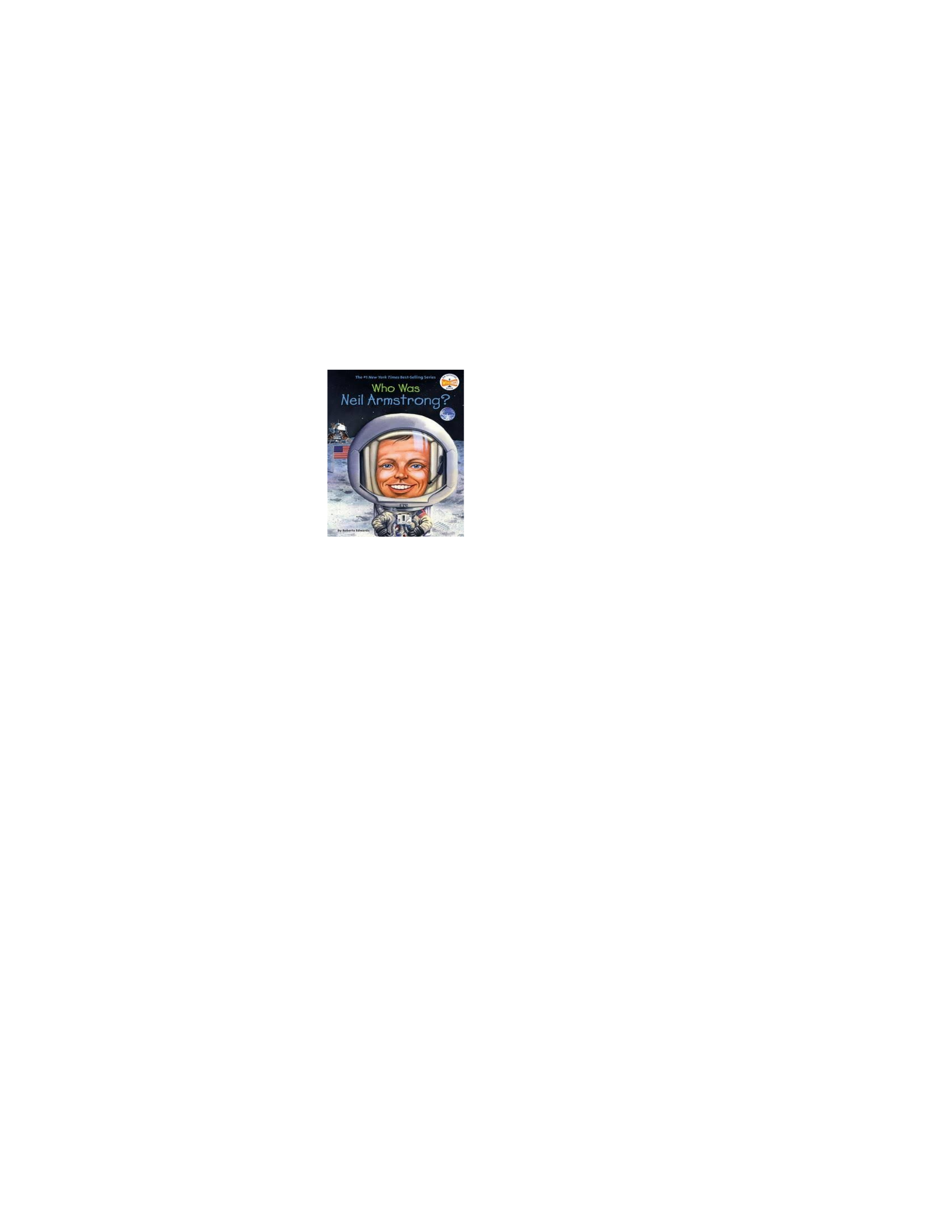
1. Title of Book: [Who was Neil Armstrong?]
Author: [Roberta Edwards]
Illustrator: [Stephen Marchesi]
Category of Book: [Biography]
Photo of Cover of Book:
Grade Level: [4th grade]
Virginia Science Standard of Learning: [4.6 The student will investigate and understand that there
are relationships among Earth, the moon, and the sun. Key relationships include
c) the causes for the four major phases of the moon and the relationship to the tide cycles;]
Topic: [Astronomy.]
Book Summary: [The book Who was Neal Armstrong? Is a great chapter book for young
readers that contains 112 pages. The book contains different fonts as it portrays letters from
other people and illustrations. There are black and white drawings throughout the book that
show different scenes. The book gives a great description on Neil Armstrong, his impact on
science, and information from his life. This would be an interesting story for young boys and
girls who have an interest in space or rockets.
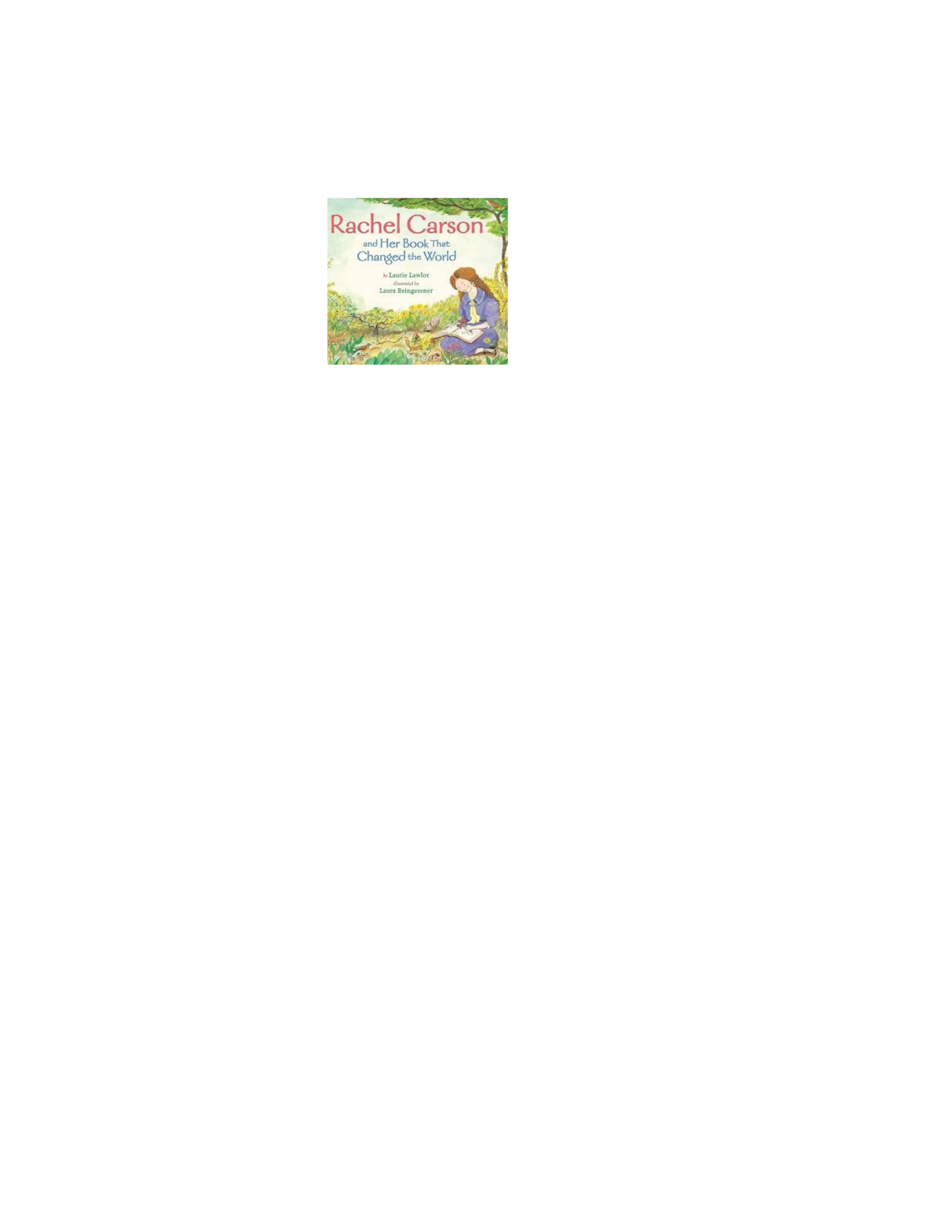
2. Title of Book: [Rachel Carson and Her Book that Changed the World]
Author: [Laurie Lawlor]
3
Illustrator: [Laura Beingessner]
Category of Book: [Biography]
Photo of Cover of Book:
Grade Level: [3rd grade]
Virginia Science Standard of Learning: 3.8 The student will investigate and understand that
natural events and humans influence ecosystems
a) human activity affects the quality of air, water, and habitats;
Topic: [Ecology.]
Book Summary: [This book contains 32 pages and would be a great book to use in the
classroom to learn about the harmful effects of pesticides. Rachel Carson’s book was known
of changing the world as she exposed chemical pesticides and how they were degrading the
environment. There are many colorful pictures on each page and the font is easy to read. This
book would encourage young girls and show them that they can be scientist too.]
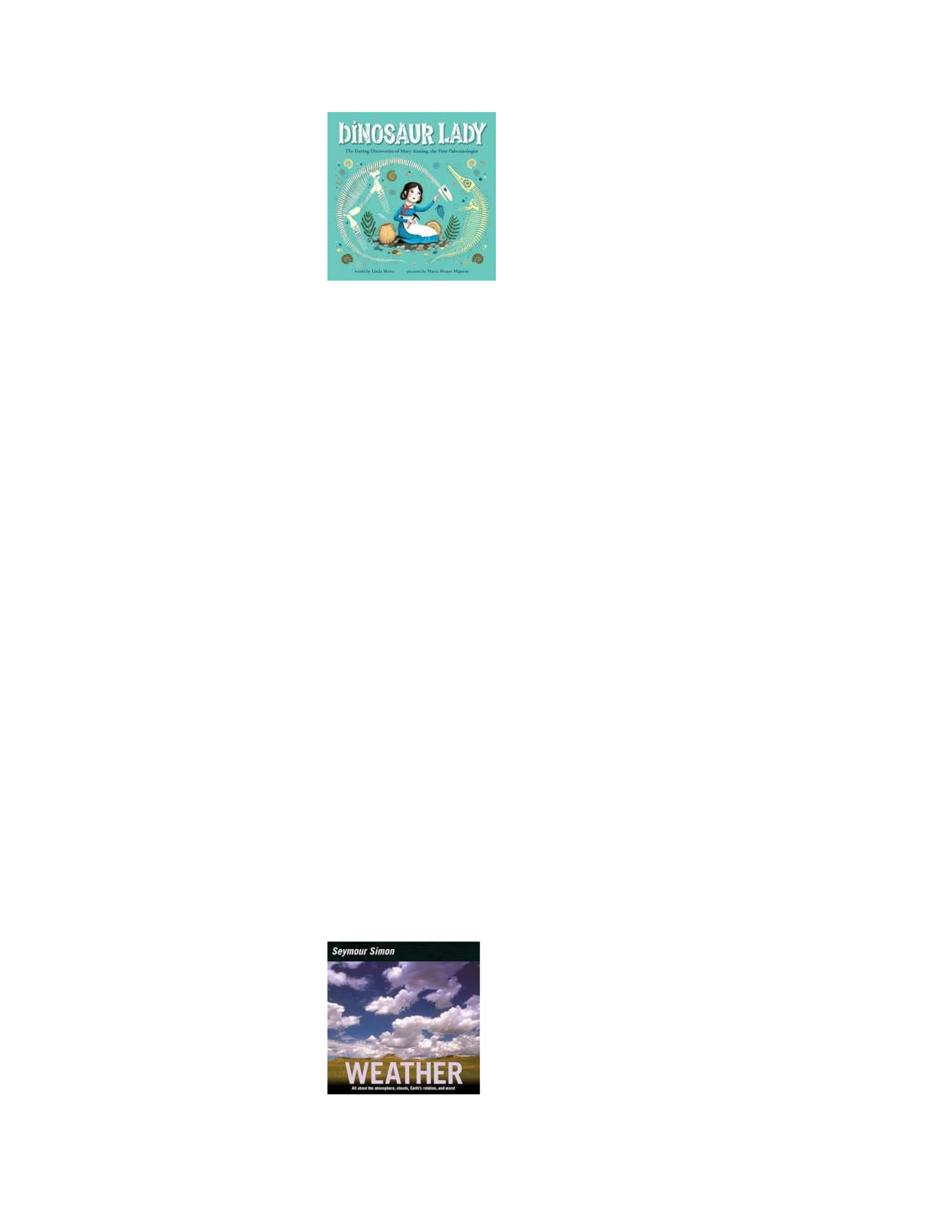
3. Title of Book: [Dinosaur Lady]
Author: [Linda Skeers]
Illustrator: [Marta Alvarez Miguens]
Category of Book: [Biography]
4
Photo of Cover of Book:
Grade Level: [5th grade]
Virginia Science Standard of Learning: 5.8 The student will investigate and understand that Earth
constantly changes. Key ideas include
e) fossils and geologic patterns provide evidence of Earth’s change
Topic: [Zoology]
Book Summary: [This book is about the story of Mary Anning who was an English fossil
hunter and credited with having discovered several dinosaur species. The book contains 40
pages and would be appropriate for a 5th grade level. This book would be a great book for a
fifth-grade class to read because it contains fun and descriptive pictures and context, the font
is easy to read, and the story is interesting. This book could interest boys because they are
learning about dinosaurs, and the girls would be interested because it was a female scientist
who discovered the dinosaur fossils.
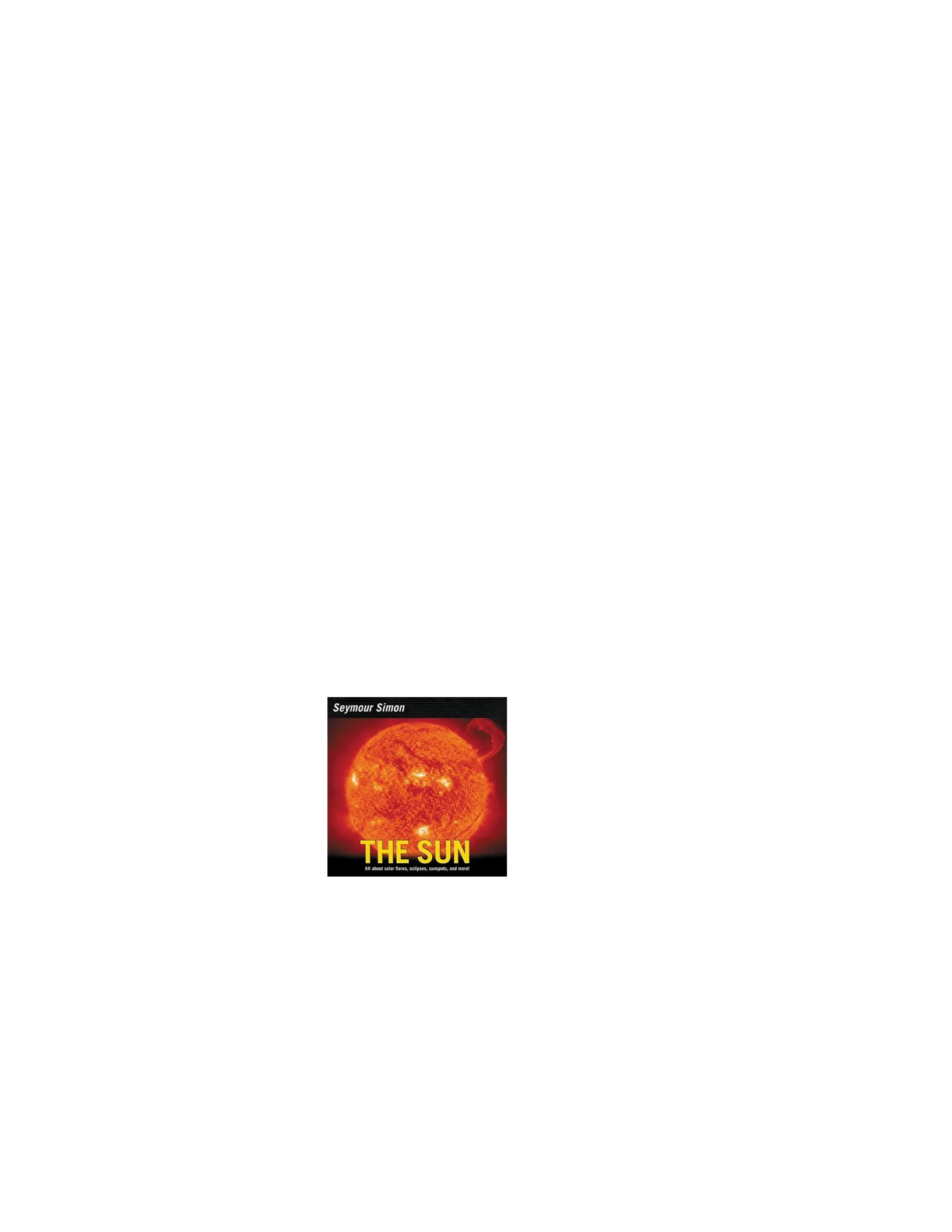
4. Title of Book:[Weather (Smithsonian-science)]
Author: [Seymour Simon]
Category of Book: [Seymour Simon]
Photo of Cover of Book:
5
Grade Level: [2nd grade]
Virginia Science Standard of Learning: 2.7 The student will investigate and understand that
weather patterns and seasonal changes affect plants, animals, and their surroundings. Key ideas
include
a) weather and seasonal changes affect the growth and behavior of living things;
b) wind and weather can change the land; and c) changes can happen quickly or slowly over time.
Topic: [Earth Science]
Book Summary: [This book provides students with phenomenal pictures of different types of
weather. Students learn the properties of weather, how it occurs, and what to look for when
making observations. The book contains 40 pages and students would have no problem
staying engaged while reading this exciting book.
5. Title of Book: [The Sun]
Author: [Seymour Simon]
Category of Book: [Seymour Simon]
Photo of Cover of Book:
Grade Level: [1st grade]
Virginia Science Standard of Learning: 1.6 The student will investigate and understand that there
is a relationship between the sun and Earth. Key ideas include
a) the sun is the source of energy and light that warms the Earth’s land, air, and water;
b) the sun’s relative position changes in the Earth’s sky throughout the day
6
Topic: [Astronomy]
Book Summary: [This is a fascinating book that explains how amazing the sun truly is.
Students are challenged to dig deeper into what they already know about the sun. The book
contains 32 pages and has many colorful and descriptive pictures throughout the book to
keep students engaged.]
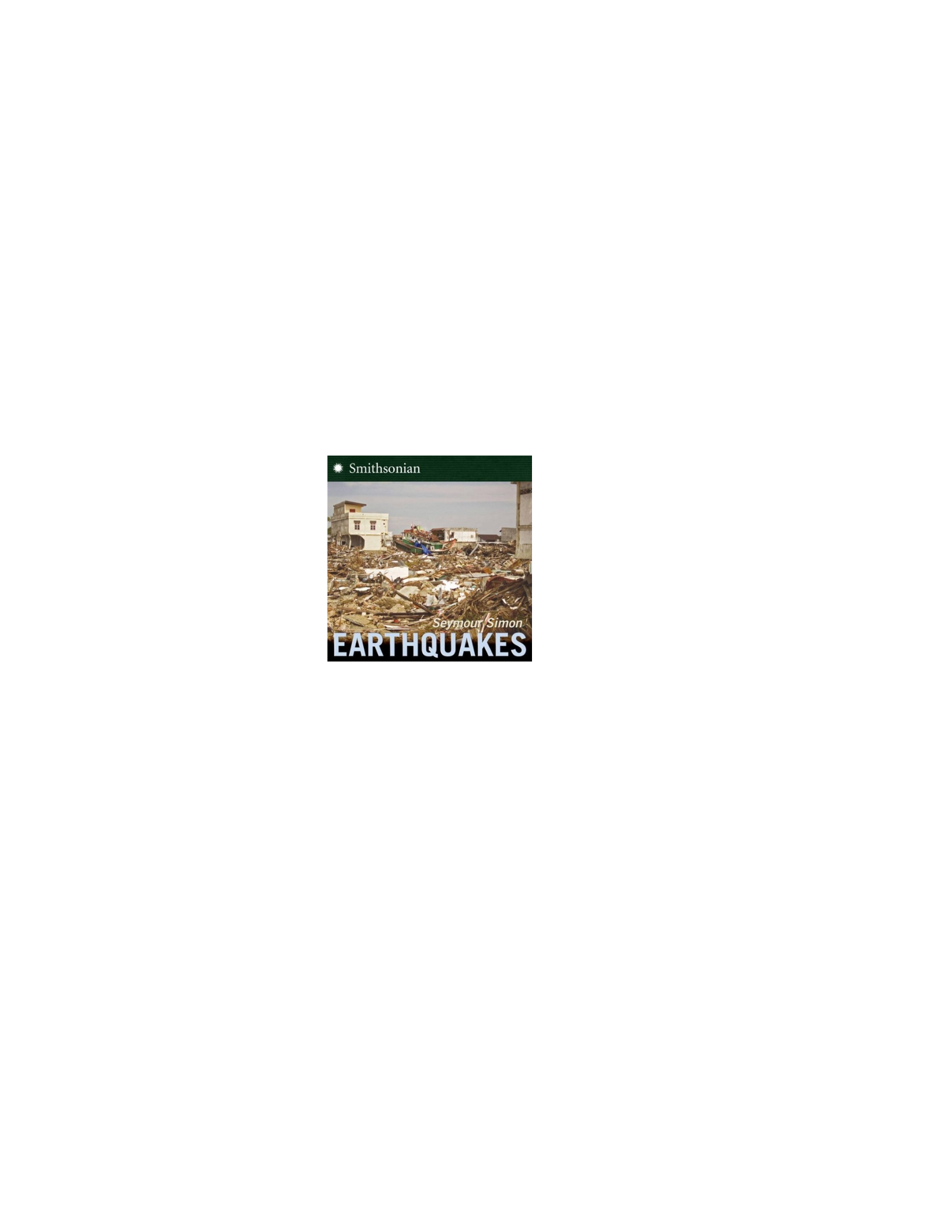
6. Title of Book: [Earthquakes]
Author: [Seymour Simon]
Category of Book: [Seymour Simon]
Photo of Cover of Book:
Grade Level: [3rd grade]
Virginia Science Standard of Learning: 3.8 The student will investigate and understand that
natural events and humans influence ecosystems. Key ideas include
a) human activity affects the quality of air, water, and habitats;
b) water is limited and needs to be conserved;
c) fire, flood, disease, and erosion affect ecosystems
Topic: [Earth Science]
Book Summary: [Students are introduced to the science behind earthquakes with this colorful
book containing 32 pages. This would be an interesting book for students because it contains

7
real-life pictures and examples of earthquakes that have happened over history. The text in
the book is perfect for the grade level and would be great to use in the classroom.]
7. Title of Book: [Everything Space]
Author: [Helaine Becker]
Category of Book: [National Geographic reader]
Photo of Cover of Book:
Grade Level: [5th grade]
Virginia Science Standard of Learning: 4.5 The student will investigate and understand that the
planets have characteristics and a specific place in the solar system. Key ideas include
a) planets rotate on their axes and revolve around the sun;
b) planets have characteristics and a specific order in the solar system; and
c) the sizes of the sun and planets can be compared to one another.
Topic: [Astronomy]
Book Summary: [This is an exciting book with over 100 pictures of space. The books colorful
and engaging pictures and easy to read text keeps students interested in the book. This book
would be great for a 5th grade class because it would interest both boys and girls and would
challenge them to learn more about space. The story contains 64 pages and there are many
great activities that can be drawn from the book.]
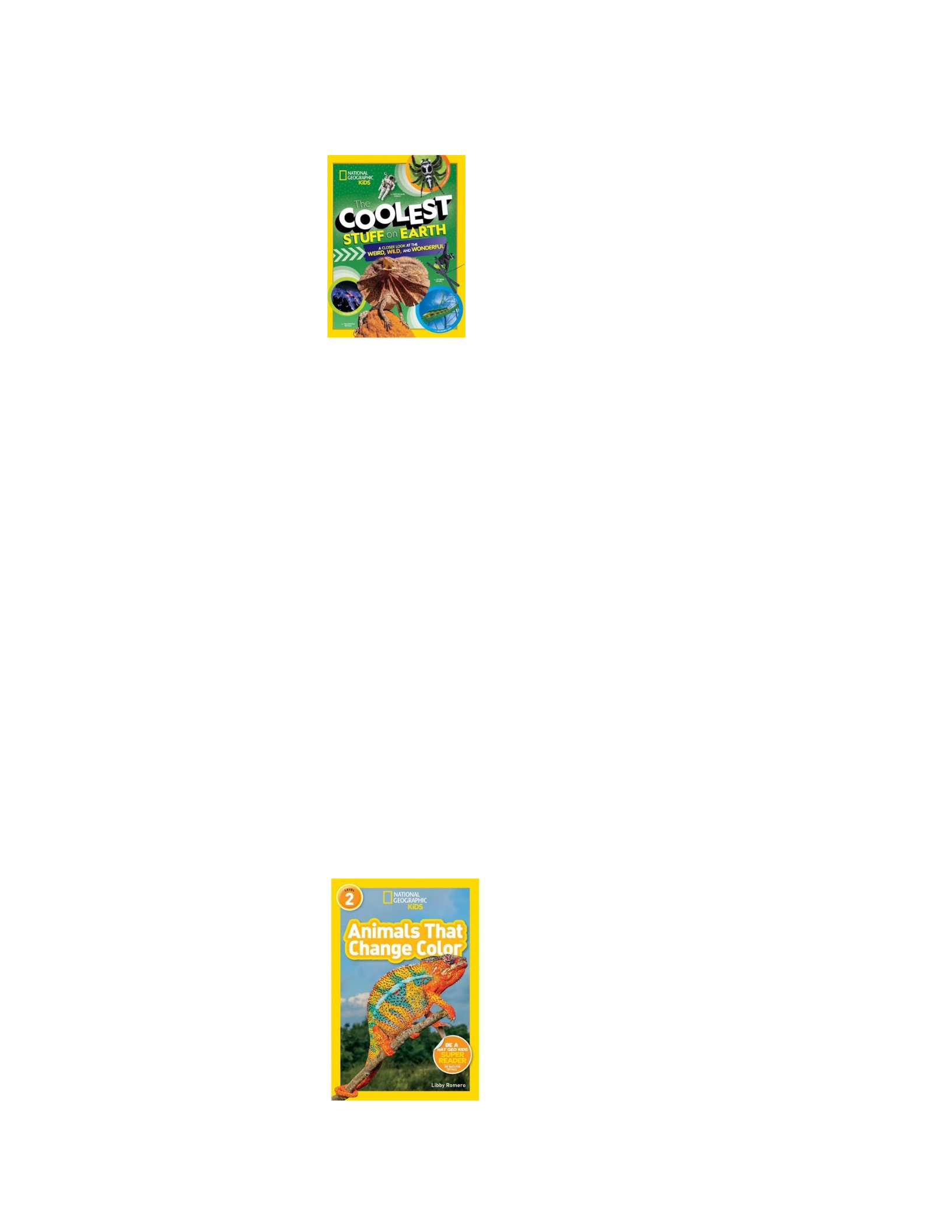
8. Title of Book: [The Coolest Stuff on Earth]
Author: [National Geographic Kids]
8
Category of Book: [National Geographic reader.]
Photo of Cover of Book:
Grade Level: [3rd grade]
Virginia Science Standard of Learning: 3.1 The student will demonstrate an understanding of
scientific and engineering practices by
a) asking questions and defining problems
Topic: [General Science]
Book Summary: [This would be a great book to allow students to have a brain break.
Students can look through the book and discuss with a partner some of the interesting facts
they learned. The book contains 192 pictures and exciting Q&As. Kids will enjoy learning
these interesting facts about the earth.]
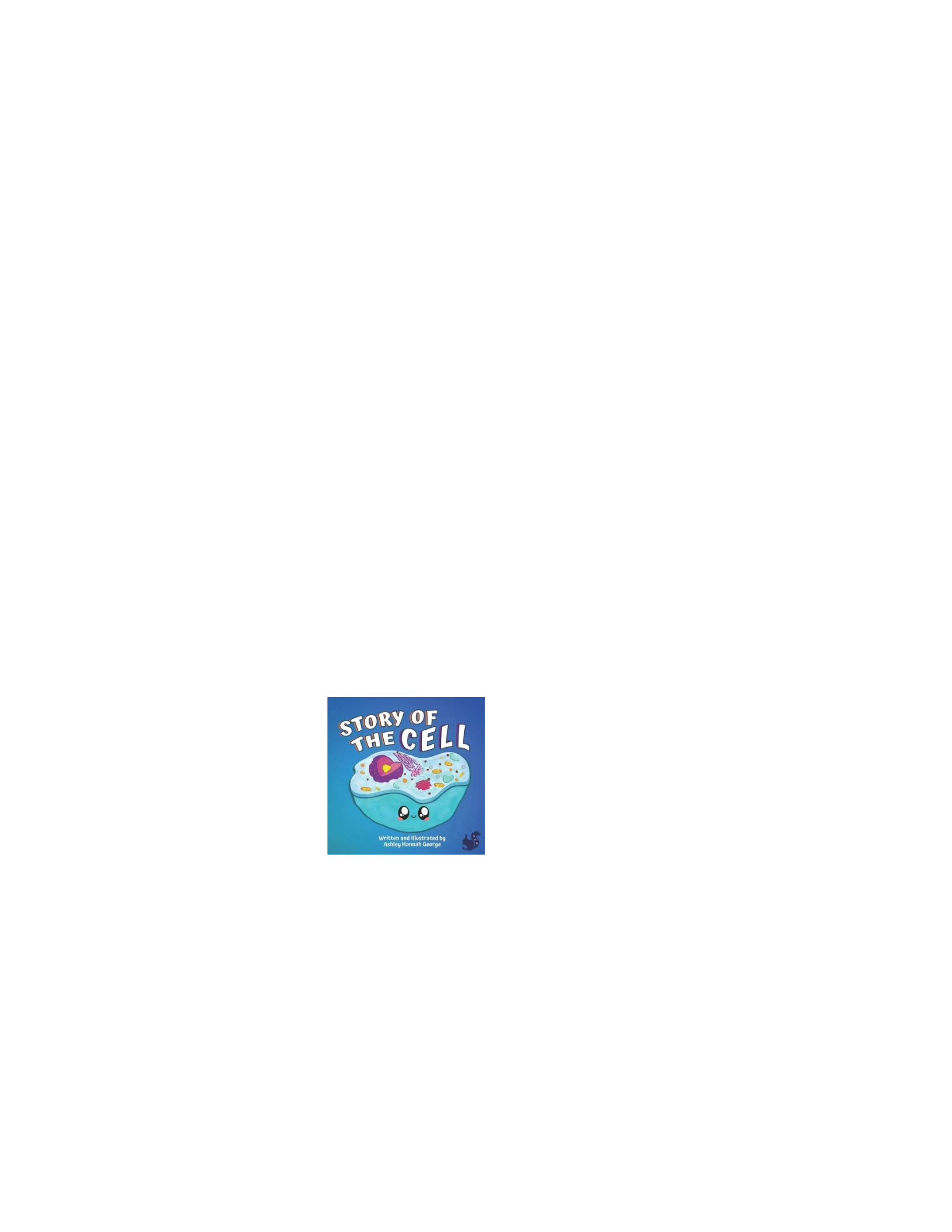
9. Title of Book: [Animals that Change Color]
Author: [Libby Romero]
Category of Book: [National Geographic reader]
Photo of Cover of Book:
9
Grade Level: [2nd grade.]
Virginia Science Standard of Learning: 2.5 The student will investigate and understand that living
things are part of a system. Key ideas include
a) plants and animals are interdependent with their living and nonliving surroundings;
b) an animal’s habitat provides all of its basic needs; and
c) habitats change over time due to many influences.
Topic: [Zoology]
Book Summary: [With this book, students get to learn about all the animals around the world
that change color and how they do it. The book contains 32 pages full of pictures and easy to
read font. The book will spark excitement in the classroom as students learn about these
intriguing animals.]
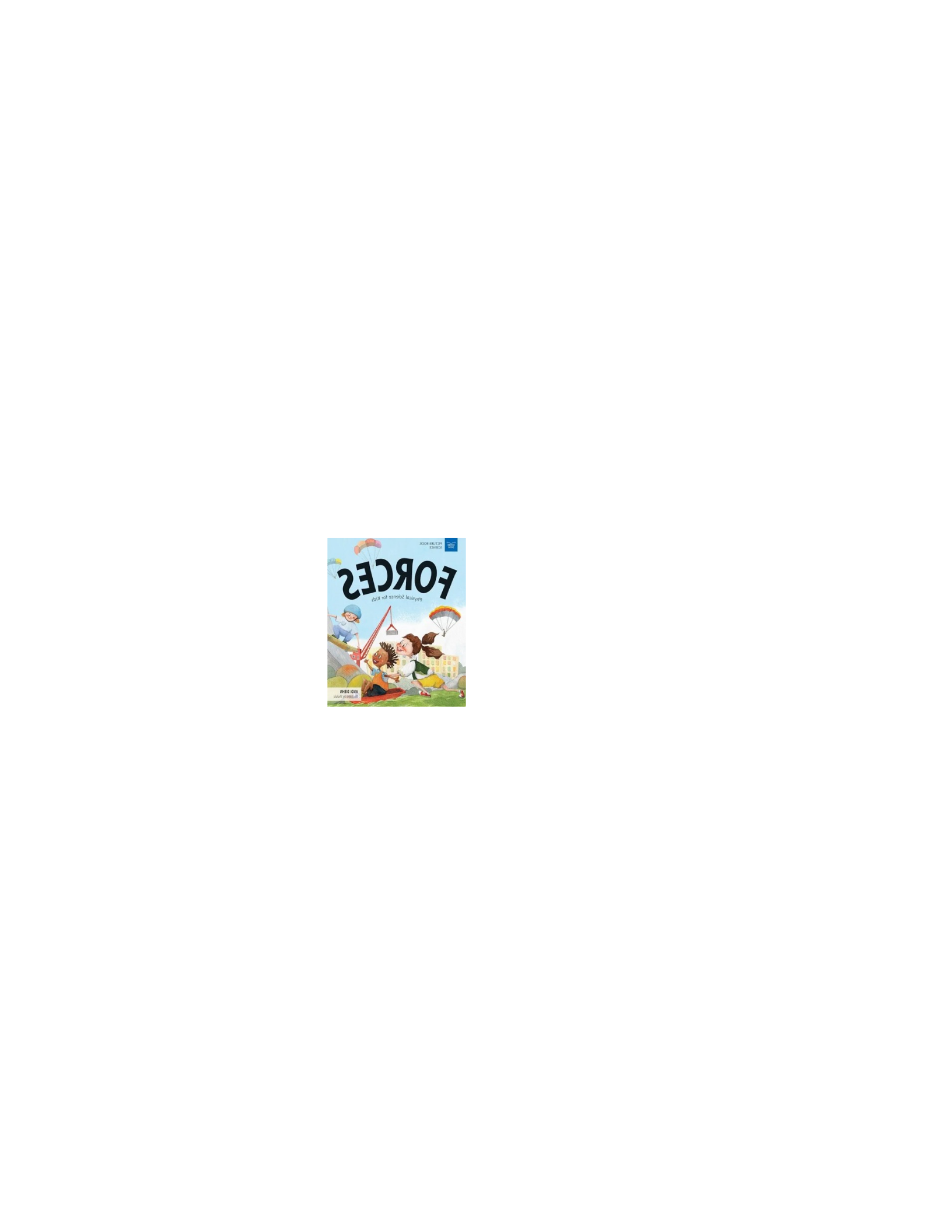
10. Title of Book: [The Story of the Cell]
Author: [AHG Squirrel, Ashley Hannah George]
Category of Book: [Personal]
Photo of Cover of Book:
Grade Level: [7th grade]
Virginia Science Standard of Learning: BIO.3 The student will investigate and understand that
cells have structure and function. Key ideas include
a) the cell theory is supported by evidence;
b) structures in unicellular and multicellular organisms work interdependently to carry out life
processes;
10
c) cell structures and processes are involved in cell growth and division;
Topic: [Microbiology]
Book Summary: [This book creates a fun experience of learning about the cell. Students take
part in a 41 page, rhyming book, containing text of all the parts of the cell. The story uses
easy analogies to easily teach students about the tiny world of cells in an exciting way. The
pictures and rhyming text make the book easy to stay engaged with.]
11. Title of Book: [Forces]
Author: [Andi Diehn]
Illustrator: [Hui Li]
Category of Book: [Personal]
Photo of Cover of Book:
Grade Level: [2nd grade]
Virginia Science Standard of Learning: 2.2 The student will investigate and understand that
different types of forces may cause an object’s motion to change. Key ideas include
a) forces from direct contact can cause an object to move;
b) some forces, including gravity and magnetism, can cause objects to move from a distance; and
c) forces have applications in our lives.
Topic: [Physical Science.]
Book Summary: [In this book students learn about forces and how they are used in our
everyday lives. The book uses pictures with real-world experiences to help students gain a
11
better understanding of physical science. Through this book the students expand their
vocabulary and learn new terms with explanations and pictures. The book contains 28
exciting pages.]
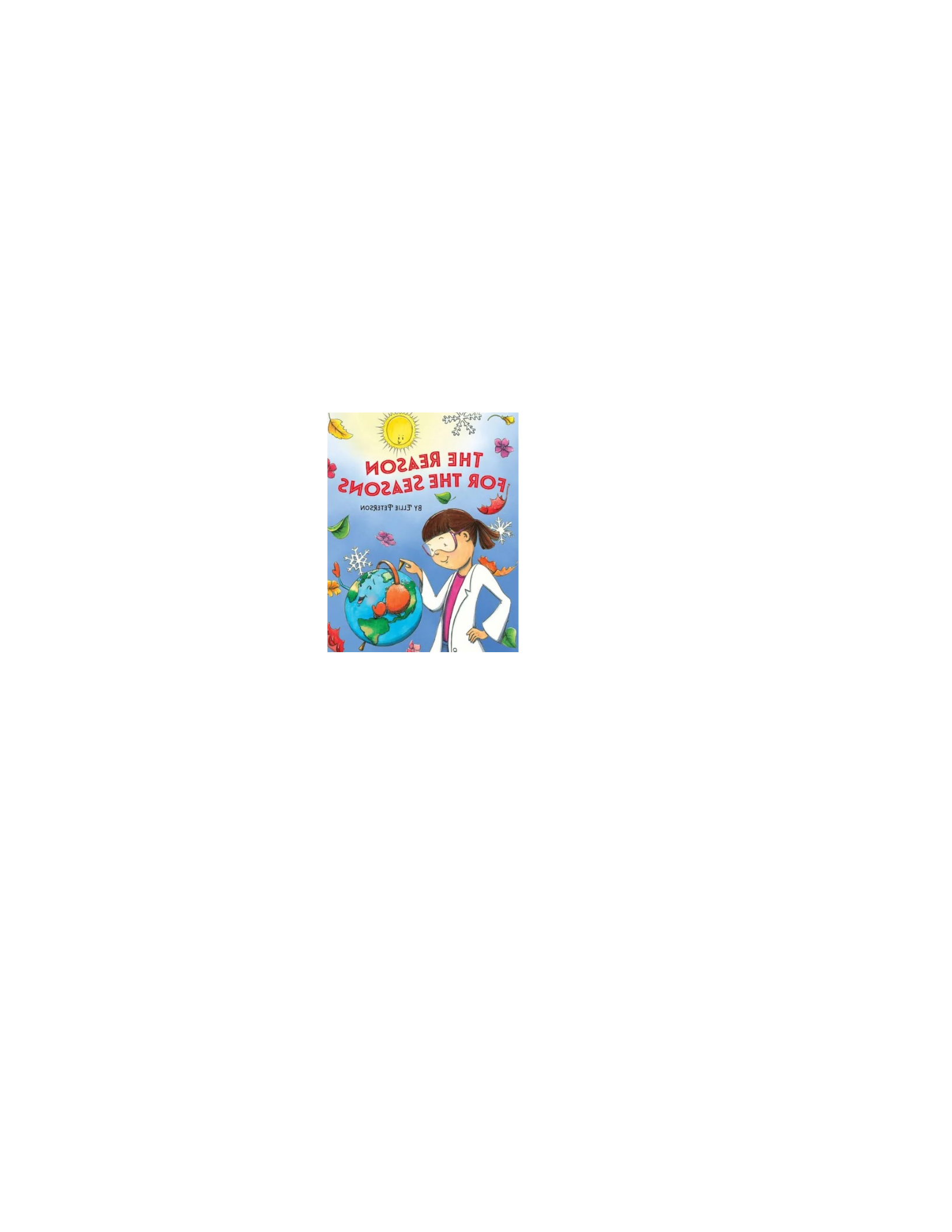
12. Title of Book: [The Reasons for the Seasons]
Author: [Ellie Peterson]
Illustrator: [Ellie Peterson.]
Category of Book: [Personal]
Photo of Cover of Book:
Grade Level: [2nd grade]
Virginia Science Standard of Learning: 2.7 The student will investigate and understand that
weather patterns and seasonal changes affect plants, animals, and their surroundings. Key ideas
include
a) weather and seasonal changes affect the growth and behavior of living things;
Topic: [Earth Science]
Book Summary: [This is a fun book to use in the classroom. By this age students have learned
their seasons, but with the help of this book, they learn how the seasons happen in the first
place. The kid-friendly language and illustrations allow students to learn about the science
behind the changing of seasons. The book contains 40 pages and is intriguing for both
genders.]
12
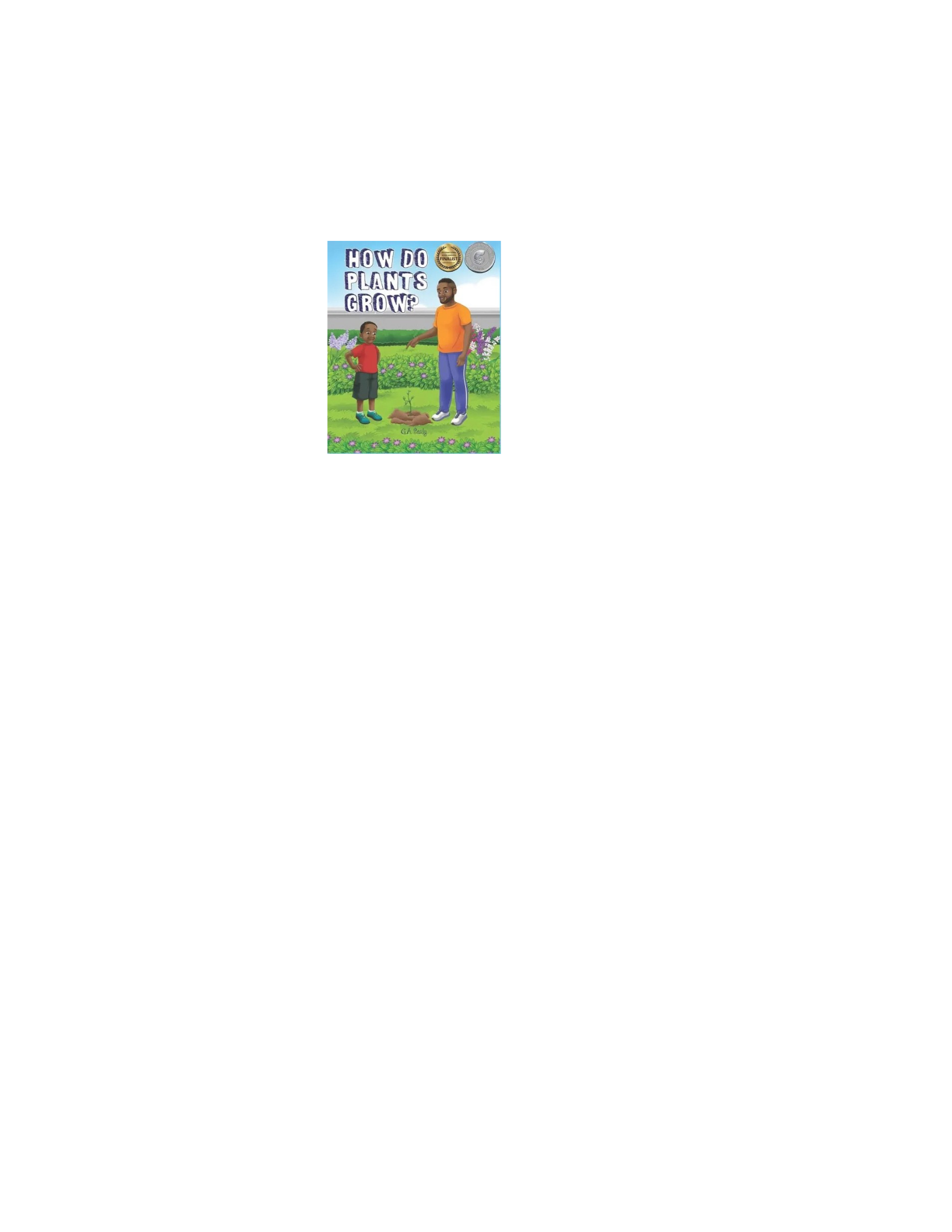
13. Title of Book: How Do Plants Grow?
Author: [G.A. Sealy]
Category of Book: [Personal]
Photo of Cover of Book:
Grade Level: [1st grade]
Virginia Science Standard of Learning: 2.8 The student will investigate and understand that plants
are important natural resources. Key ideas include
a) the availability of plant products affects the development of a geographic area;
b) plants provide oxygen, homes, and food for many animals; and
c) plants can help reduce the impact of wind and water.
Topic: [Earth Science]
Book Summary: [This book contains 36 pages, lots of pictures, and a real-life scenario of
how plants grow. This book follows a story line of a father and son having a conversation
about the process of photosynthesis. The book contains a rhyme scheme and teaches students
the science behind growing a plant.]
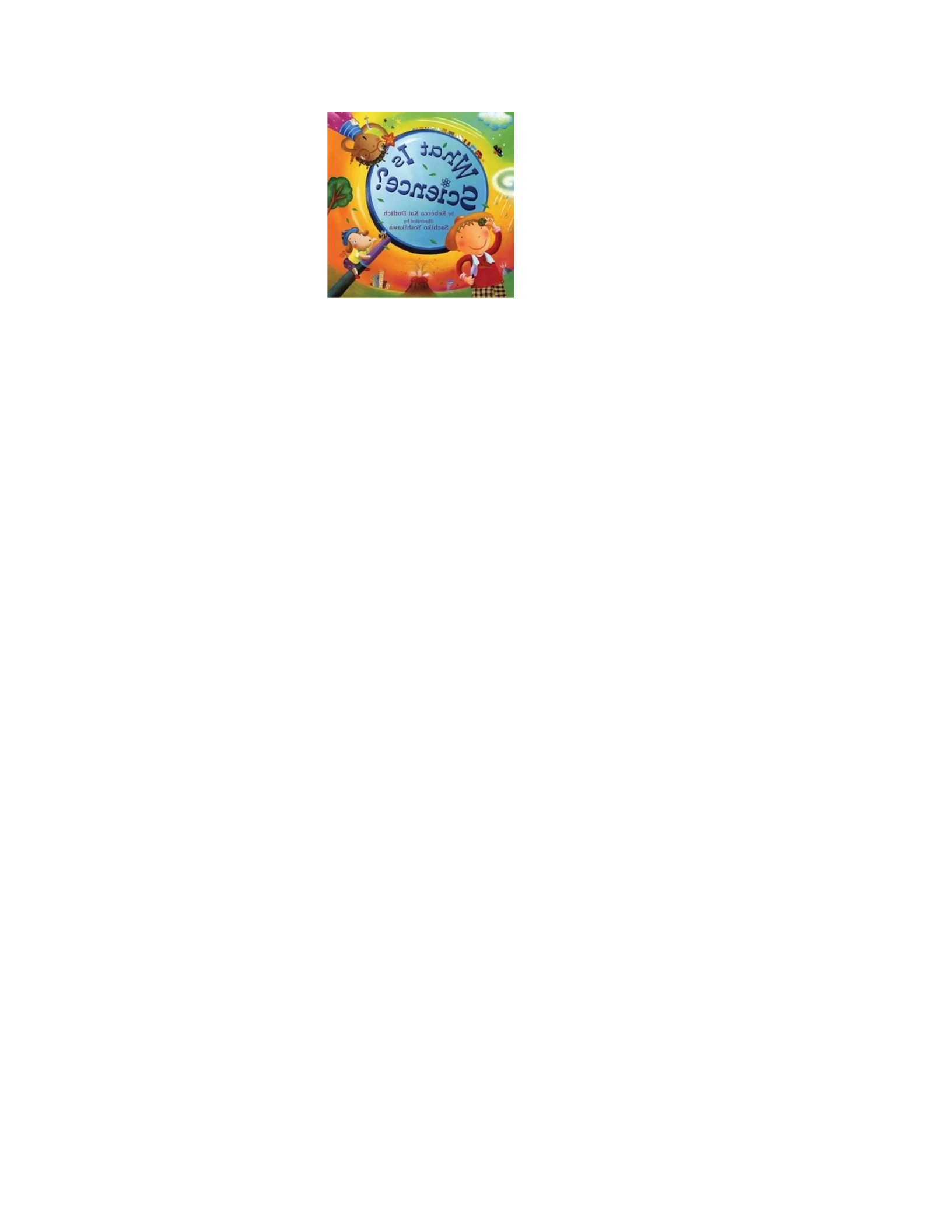
14. Title of Book: [What is Science?]
Author: [Rebecca Kai Dotlich]
Illustrator: [Sachiko Yoshikawa.]
Category of Book: [Personal]
13
Photo of Cover of Book:
Grade Level: [1st grade]
Virginia Science Standard of Learning: [1.1 The student will demonstrate an understanding of
scientific and engineering practices by
a) asking questions and defining problems
ask questions and make predictions based on observations
identify a simple problem that can be solved through the development of a new tool or
improved object
Topic: [General Science]
Book Summary: [This is a great book to introduce to young scientist. As students begin to
learn what science really is, this book will help guide them of all the science contains.
Students will learn about the different areas of science and how each section is important.
Students will come to realize that science is involved in just about everything. The book
contains 32 pages with exciting pictures to engage the students.]
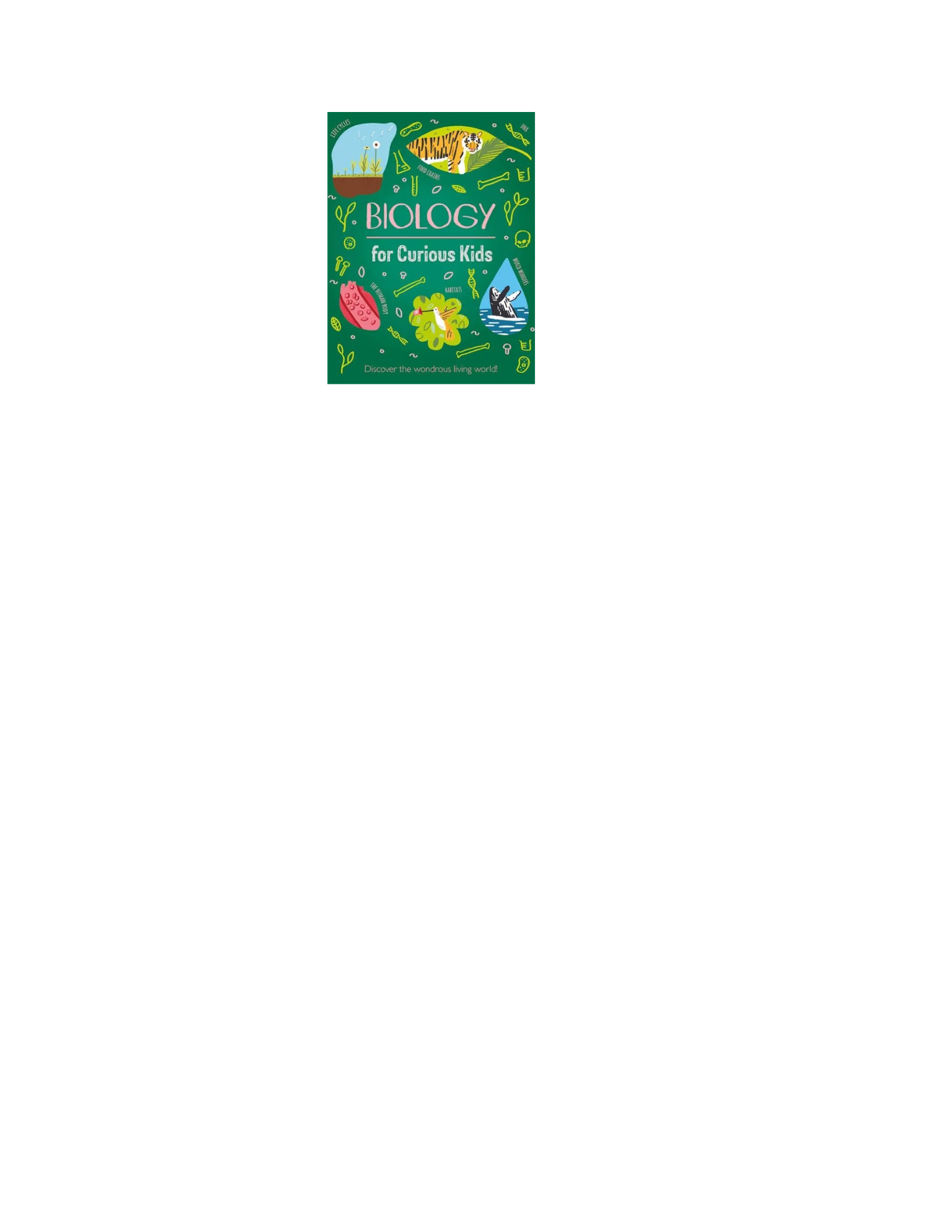
15. Title of Book: [Biology for Curious Kids]
Author: [Laura Baker]
Illustrator: [Alex Foster]
Category of Book: [Personal]
14
Photo of Cover of Book:
Grade Level: [4th grade]
Virginia Science Standard of Learning: [4.2 The student will investigate and understand that
plants and animals have structures that distinguish them from one another and play vital roles
in their ability to survive. Key ideas include
a) the survival of plants and animals depends on photosynthesis;
b) plants and animals have different structures and processes for obtaining energy; and
c) plants and animals have different structures and processes for creating offspring]
Topic: [Biology]
Book Summary: [Throughout this book, students are introduced to the many areas of biology
including: The human body and its organs, animals, plants, and other living things, cells, and
ecology and biodiversity. This book provides clear explanations of these topics of the natural
world and the science behind it. Throughout the book there are vibrant diagrams and
energetic text. The book contains 128 pages and would be suitable for any classroom.]
Part Two – Reflection
1. What did you like about finding literature resources connected to science?
[Finding literature resources connected to science was great practice for when I have
my own class. I enjoyed seeing all the different types of resources as it assured me

15
there are plenty of resources ranging over all categories to use in the classroom. Many
of the books I found had great reviews and feedback. Incorporating literature into
science is a great example of students can learn in multiple subjects at once without
even knowing it.]
2. If you had to complete this same activity again, what would you change?
[Something I would change is the type of resources that I found. Locating the
physical book resources is helpful, but searching for digital ones would have been
more beneficial. In this day, most students have their own school iPad. Having
resources that they can work on their iPad would be great because they could also use
them at home.]
3. What did you learn about yourself during this assignment?
[After finishing this assignment, I have learned that I like learning and teaching
science. It is exciting to find new resources to present to the children. Seeing them
engaged in their work and enjoying their lessons makes school worth it. I also learned
that being a teacher is a lot of work and takes a lot of planning, but it is worth it.]
4. What was your favorite book that you found? Explain why.
[My favorite book that I found was The Coolest Stuff on Earth. This book shows kids
that science is not always boring and comes with so many interesting facts. The
pictures in the book keep the students excited to flip the page. Having a book like this
in the classroom is a great way to spark questions and have more scientific interest in
the classroom.]
5. If you were the professor of this course, what changes would you make to this
assignment?

16
[If I were a professor, I would not require so many resources. Instead of the 15. Book
resources I would encourage finding a video or activity to pull from the resource. So,
instead of choosing 15 books, I would require 5 and challenge the students to go
deeper into the resource and explore the learning opportunities with that resource.
Having resources is important, but deciding how to use the resources plays the
biggest part in the classroom.]

